Alicia Sharp of Upfront Cosmetics: “Beauty doesn’t come in the products we use; it’s rather how we…

Alicia Sharp of Upfront Cosmetics: “Beauty doesn’t come in the products we use; it’s rather how we think about ourselves”

Beauty doesn’t have to come in the products we use; it’s how we think about ourselves. Don’t ever let a company make you think you need to buy their product to feel beautiful. It comes from the inside, and YOU have control over it. Not the retailers.

As a part of our series about how technology will be changing the beauty industry over the next five years, I had the pleasure of interviewing Alicia Sharp, Founder of Upfront Cosmetics.

Alicia Sharp is the Founder of Upfront Cosmetics. Upfront Cosmetics are the makers of salon quality shampoo and conditioner bars without the plastic waste. To date, they have kept over 30K plastic shampoo bottles out of oceans and landfills. Their products are vegan, sulphate-free, paraben-free and Leaping Bunny certified. Alicia was inspired to start the company after the birth of her first son when she began looking for shampoo products that were safe to use on her baby. She couldn’t find any products that were sulphate-free, so she decided to do her research and create her own product. Today, Upfront Cosmetics ships shampoo bars to stores and customers across North America. You can learn more at www.upfrontcosmetics.ca

Thank you so much for doing this with us! Before we dive in, our readers would love to learn a bit more about you. Can you tell us a story about what brought you to this specific career path?

My path to becoming an entrepreneur in the beauty space was unconventional. It all started when my oldest son Eli was just a baby. As a new mother, I was looking for safer alternatives to use on him. While there were many “safer” brands, none of them was doing things the plastic-free way, and many were still using harsh ingredients such as sulphates.

Before I knew it, I was doing a lot of reading and researching what cosmetic formulators were doing. I guess you could say; I was a prime example of “If there’s a will, there’s a way.” But I also knew that whatever I created, wouldn’t come in a plastic bottle. I mean, just because shampoo has always come in a plastic container, doesn’t mean that’s the only way. Not to mention, when you have a baby, everything comes in plastic bottles from the baby oil to powders.

Not long after, Upfront Cosmetics was born, and I was on a mission to keep our customers safe from harmful chemicals while protecting our environment from unnecessary plastic waste.

In short, a passion for creating something without plastic waste and something safer for my babies brought me to where I am today. And I’m proud to share that Upfront Cosmetics has kept over 30,000 shampoo bottles out of our oceans and landfills to date.

Can you share the most interesting story that happened to you since you began your career?

I think the most interesting moment in the story of Upfront Cosmetics is we suddenly started landing wholesale customers from cities and places we had never even heard of. When you’re beginning, it’s only normal to start selling to local stores and entrepreneurs that you know. You can usually trace every new stockist back to where the interest originated.

When orders started coming in from all over Canada and the US, that was pretty wild. Strangers were signing up to be wholesalers on our website, without any outreach or business development on our end. Growing beyond our degrees of separation was the moment where we realized we had created something much bigger than just a hobby business.

Are you able to identify a “tipping point” in your career when you started to see success? Did you start doing anything different? Are there takeaways or lessons that others can learn from that?

Our tipping point began when we featured in Vogue. The article was published, and of course, our local media outlets took an interest in hearing from us because it’s not very often a small business from a rural town gets featured in Vogue. After completing a few local interviews, we came into the office and overnight, we had all of these inquiries from stores wanting to carry our products. So, of course, we started fulfilling these requests, opened more wholesale accounts and just kept doing our thing.

It wasn’t until this summer that it hit me. A year ago, we were only in three stores. Today, we’re in over 140 stores across North America. We were so busy doing what we love and focused on consistent growth, we never even realized how much we had grown and how much we had to celebrate.

The lesson I learned from this experience is that as entrepreneurs, we tend always to be thinking about the next big thing, the next significant milestone. Don’t be afraid to stop and smell the roses and to celebrate the wins along the way. Trust me when I say it goes by so fast!

None of us are able to achieve success without some help along the way. Is there a particular person to whom you are grateful who helped get you to where you are? Can you share a story about that?

I definitely owe so much gratitude to the Summer Institute at the University of New Brunswick. The Summer Institute is a three-month intensive accelerator for entrepreneurs with an innovative idea and the passion needed to turn that idea into a sustainable venture. It’s also a member of the Global Accelerator Network (GAN), an invite-only community of the world’s most respected organizations that provide startups with the best resources to create and grow their businesses, wherever they are.

Being a part of the Summer Institute and having access to all of the mentors was invaluable. It was like being accepted into a whole community of people that just wanted to see me succeed. They saw a vision and a passion in me that I didn’t even know that I had.

A year and three months ago, I did not think I would be sitting here doing this. I knew I wanted to do big things and go big, but I could never have expected this, and I credit the Summer Institute with helping me get to this place.

Ok super. Let’s now shift to the main part of our discussion. The beauty industry today has access to technology that was inconceivable only a short time ago. Can you tell us about the “cutting edge” (pardon the pun) technologies that you are working with or introducing? How do you think that will help people?

For starters, we’re a little unconventional at Upfront Cosmetics in that we believe that while there is more cutting edge technology to choose from than ever before available to entrepreneurs and creators; we’re focused on taking beauty back to the basics. It’s now more than ever incredibly crucial that companies leverage technology to help them be more sustainably-minded going forward. Whether that means finding ways to create 100% biodegradable packaging or plant-based alternatives to preservatives or common ingredients. If we’re unable to embrace sustainability and make real changes for our planet, we and our businesses are not going to survive.

We chose to use technology and the internet to educate consumers on our product and how we have chosen our ingredients. We believe that consumer knowledge is power, and we want to help consumers make informed decisions about the products they buy and the businesses they support. Not enough companies are talking about the ingredients behind their products.

Keeping “Black Mirror” and the “Law of Unintended Consequences” in mind, can you see any potential drawbacks about this technology that people should think more deeply about?

Here’s where things can get dangerous on the internet! It’s a little thing called greenwashing. It’s when companies claim their products are “natural” or “green” so that they look good on the internet, but in reality, their products contain hidden chemicals and harmful ingredients. As with anything on the internet, false information can travel fast and next thing you know, people are touting products as good for your health and the planet, when really, they’re not.

There is also a lot of fear-mongering going on when it comes to the proper names of ingredients. You will hear people saying “If you can’t pronounce an ingredient name, it’s not good for you.” There isn’t an ounce of fact to that statement. Take shea butter, for example. It has a long proper ingredient name, but it’s still good for you and a healthy ingredient. We need to put an end to people thinking if they can’t pronounce an ingredient, it’s not safe. It turns out; it just means you’re not proficient in Latin, and that’s OK! Not many of us are!

Can you share 3 things that most excite you about the “beauty-tech” industry?

One: I love seeing people moving towards creating more eco-friendly, sustainable products. It’s reassuring to have people finally start questioning what’s in our products and choosing to be more informed in their purchasing decision.

Two: I’m very excited to see more of a push for handmade products over mass manufactured. Some people think that handmade means lesser quality but makers of handmade products have the time to provide better quality products and with more quality control over the end product. Mass manufacturing doesn’t always mean good. We are conditioned to think that.

Three: I’m very excited about what Chinova Bioworks is doing. They’re creating a mushroom-based preservative that is looking to be very promising. They were even a part of the Sephora Accelerate Program!

Can you share 3 things that most concern you about the industry? If you had the ability to implement 3 ways to reform or improve the industry, what would you suggest?

One: Most definitely greenwashing. There are too many companies now claiming to be green or eco-friendly when in reality, they’re not. Their products are still full of chemicals and harmful ingredients. A simple solution to this would be to educate consumers to be comfortable asking questions about the ingredients in the products their purchasing. To push the businesses, they support to be more forthcoming about what’s really in their products.

Two: The overuse of sulphates in beauty products. At Upfront Cosmetics, one of our key selling points is our “no sulphate” promise as studies have determined most sulphates to be cancer-causing. We use coconut and plant-based surfactants that are less likely to irritate and that provide a more gentle and skin-friendly cleanse. We believe you should never have to compromise the health of your hair for a quality shampoo!

Three: Synthetic fragrances. The problem with synthetic fragrances is that companies don’t have to disclose what’s in them, so consumers have no idea if the products they’re purchasing are harmful or not.

Overall, I think North America needs to embrace regulations more similar to the EU. All beauty products in the EU are third party tested. You can’t have products that aren’t stable, and you can’t do things the wrong way. Your product will never get approved and put on the shelves. While we’re making strides in Canada and the US, we still have a long way to go over here.

You are an expert about beauty. Can you share 5 ideas that anyone can use “to feel beautiful”? (Please share a story or example for each.)

One: Embrace natural, sustainable products. When you’re reducing your ecological footprint with the products you choose to buy, you’re making an impact, and I promise you, you’ll feel more beautiful in doing so.

Two: Prioritize self-care. One sure way to feel beautiful? Is to take care of yourself and recognize when you need a little self-care. Maybe that’s running yourself a hot bath. Perhaps it’s booking a massage. Whatever that might look like for you, no matter how big or little, make sure to prioritize it.

Three: Be more mindful. This goes back to embracing sustainable products, but overall, being more conscious of the companies and small businesses you choose to support.

Four: Beauty doesn’t have to come in the products we use; it’s how we think about ourselves. Don’t ever let a company make you think you need to buy their product to feel beautiful. It comes from the inside, and YOU have control over it. Not the retailers.

Five: Invest in businesses investing in people. There are so many companies that you can choose to purchase your beauty products from these days. Why not choose companies that are giving back to their communities and investing in people?

You are a person of great influence. If you could inspire a movement that would bring the most amount of good to the most amount of people, what would that be? You never know what your idea can trigger. 🙂

That one is easy. I would love to see a world-wide ban on single-use plastic waste. With research suggesting that by 2050, we’re going to have more plastic than fish in our oceans, we need to take these predictions seriously. Single-use plastic affects everyone: we as humans and our planet. It’s time to put a stop to them.

Can you please give us your favorite “Life Lesson Quote”? Can you share how that was relevant to you in your life?

Just start somewhere. It doesn’t have to be perfect, but it’s crucial that you just do it. I had absolutely no idea two years ago, where I would be today and that my product would be sold in stores across North America. I could never have guessed we would be in the pages of Vogue. We are where we are today because I was brave enough to identify a problem (lack of sulphate-free shampoo for my baby) and create a solution.

How can our readers follow you online?

Upfront Cosmetics on Facebook: https://www.facebook.com/UpfrontCosmetics/

Upfront Cosmetics on Instagram: https://www.instagram.com/upfrontcosmetics/

www.upfrontcosmetics.ca

Thank you so much for joining us. This was very inspirational.


Alicia Sharp of Upfront Cosmetics: “Beauty doesn’t come in the products we use; it’s rather how we… was originally published in Authority Magazine on Medium, where people are continuing the conversation by highlighting and responding to this story.

Larry Kotch: How to Use LinkedIn To Dramatically Improve Your Business

Track your leads: Use LinkedIn Tools like sales navigators to track individuals from your target accounts. Whenever you log in each day you can see what your target accounts have been up to. Make sure you are always commenting, liking and or sharing their posts which will increase your visibility with them greatly over time. So if you were trying to land Vodafone as a client for your HR software you would identify all the HR heads across the territories you serve and save them as leads within sales navigator. By doing this you will create a personalized feed of all their LinkedIn interactions

As part of my series of interviews about “How to Use LinkedIn To Dramatically Improve Your Business”, I had the pleasure of interviewing Larry Kotch. Larry is a Lead Generation expert based in London. He marketing agency The Brains and is also host of the YouTube Channel Brainy Marketing. He’s a LinkedIn addict and regularly tops the B2B marketing and LinkedIn marketing rankings on YouTube.

Thank you so much for doing this with us! Can you tell us a story about what brought you to this specific career path?

I used to work in Corporate Finance as an analyst but felt my creativity was being stifled so I began getting interested in the Tech Startup space which felt was full of creativity. I started a business on the side trying to raise money for clients. Really it was trying to make that business grow which caused me to discover how difficult that was and the need for an automated lead generation system. Since I was attending startup events each week I began to get slowly introduced to Digital Advertising and Marketing Automation and basically became progressively obsessed. After a few years I had quietly become very proficient in generating leads for my business and decided to start adding marketing services to my capital raising clients. The rest as they say is history and the Brains was born!

Can you share the most interesting story that happened to you since you started this career?

I was brought in to help one of the largest political parties in the world (in terms of members) win an election through targeted Ads. This took me on a whirlwind trip around the world and I started to understand the incredibly fine line between persuasion and manipulation online as well as the very real internal politics of huge organizations. At one point I was mediating between the campaign manager of the party and the communications strategist because they refused to talk anymore. Call it a crash course in organizational psychology — not something I ever thought I would have to contend with to that scale!

Can you share a story about the funniest mistake you made when you were first starting? Can you tell us what lesson you learned from that?

I remember pitching for work with a big Tech company for a big SEO project before The Brains had an SEO department. Because I was keen to get the account and we had proposed other services, I brought in a contractor who I had only had a 30-minute vetting conversation with a week before. I met the contractor outside the potential client’s office, and he turned up in jeans and a hoodie. In the meeting he was so talkative and awkward that the client started repeatedly shushing him every time he started talking. We lost the entire pitch. I learned sometimes when the resources are not on your side just pass on the opportunity or refer it to someone else, hastily assembled teams always end up letting you down and potentially losing a client if you aren’t careful and that’s no way to build a sustainable business.

Which social media platform have you found to be most effective to use to increase business revenues? Can you share a story from your experience?

For B2B companies I think LinkedIn is the most criminally underused advertising platform yet is incredibly powerful. Your ability to target business executives and target accounts is laser specific. Obviously Facebook and Instagram are superior when it comes to B2C products and if you have a large customer or marketing database you can always use custom audiences on Facebook for B2B which has a lower CPA than a custom audience on LinkedIn. We worked with the largest satellite imagery company in Europe who were looking for senior execs in the forestry and infrastructure sectors. While they were convinced it would be difficult to find this audience anywhere online, within 4 weeks they were gob smacked at the number of Leads and the CPL coming from LinkedIn. You would be incredibly surprised how many seemingly obscure and niche industries can be zoned in on through LinkedIn’s Ad manager. With a strong Lead magnet and email automation strategy you can hoover up the top of funnel audience on LinkedIn very fast.

Let’s talk about LinkedIn specifically, now. Can you share 5 ways to leverage LinkedIn to dramatically improve your business? Please share a story or example for each.

LinkedIn Ads: LinkedIn’s Ad manager can help you target at an exceptionally fine level of detail. I think my story above probably serves as a great example of how niche you can get.

Use a LinkedIn bot: I helped a media company acquire Siemens Europe and a Large Charity as a client through a LinkedIn message. Technology exits now that can help you totally automate your connecting with and messaging of ideal prospects on LinkedIn — while you sleep. Just type Linkedin bot into YouTube and you will see my videos about it at the top of the list It is an immensely powerful outbound channel.

Rank your site content: If you are creating loads of content for SEO across your site then bear in mind that social links are considered in Google’s ranking algorithms.

Track your leads: Use LinkedIn Tools like sales navigators to track individuals from your target accounts. Whenever you log in each day you can see what your target accounts have been up to. Make sure you are always commenting, liking and or sharing their posts which will increase your visibility with them greatly over time. So if you were trying to land Vodafone as a client for your HR software you would identify all the HR heads across the territories you serve and save them as leads within sales navigator. By doing this you will create a personalized feed of all their LinkedIn interactions. The aim is to interject yourself in these conversations as and when to keep you top of mind before or during outreach efforts. If you are following an Account Based Marketing strategy this will be a great tool for you.

Get maximum free views on your posts: If you use a marketing automation tool like HubSpot you can schedule LinkedIn posts to go out using their tool. You can set up email notifications to all your staff asking them to share and like and comment on the post to massively boost its reach. At the end of the month the person with the most shares will get a prize. You can increase the average post vies by 100x doing this depending on the size of your company.

Because of the position that you are in, you are a person of great influence. If you could inspire a movement that would bring the most amount of good to the most amount of people, what would that be? You never know what your idea can trigger. 🙂

Given my time in political advertising and interest in politics and philosophy I would urge people to consider the movement already outlined by Brett Weinstein called Unity 2020. I think the political climate has become very divisive. My movement would try bring people to the center ground like Unity 2020.

Some of the biggest names in Business, VC funding, Sports, and Entertainment read this column. Is there a person in the world, or in the US with whom you would love to have a private breakfast or lunch with, and why? He or she might just see this if we tag them 🙂

I’d love to sit down with Russell Brunson. I think he is one of the only people that really gets modern persuasive advertising. Almost every online business guru follows his science and theory behind online persuasion. I have studied his work and others to develop a theory of content marketing for B2B brands that is far more effective than what I see 99% of B2B brands doing. I would love to know his thoughts and pick his brains on how to improve it.

Thank you so much for these great insights. This was very enlightening!

— –


Larry Kotch: How to Use LinkedIn To Dramatically Improve Your Business was originally published in Authority Magazine on Medium, where people are continuing the conversation by highlighting and responding to this story.

Paul Bender of American Adventure Insurance: The Future Of Travel In The Post COVID World

A piece of advice I would offer to others is to genuinely care about your people. Don’t manipulate them into thinking you care, but actually care about them. Ask how they’re doing and ask about their families. Learn and know what makes them tick, then guide and direct their efforts so they’re performing a task in your business which motivates them personally.

As part of my series about “exciting developments in the travel industry over the next five years”, I had the pleasure of interviewing Paul Bender.

Paul is the Founder and CEO of American Adventure Insurance, the nation’s leading provider of RV, boat and motorcycle insurance. For 28 years, AAI has led the industry with its speed of service, with “insurance in 12 minutes,” along with its capabilities to bundle services with low rates. With more than 25 employees in its Newbury Park, California office, and 10 regional salespeople, Bender anticipates that AAI will grow its national footprint from 2,500 dealer partnerships to 3,000 dealers by the end of 2020. Born and raised in Northern Minnesota, Bender takes a blue-collar approach to his desire for business growth, with employees and managers at the forefront of his focus, who Bender believes when treated correctly perform beyond expectation. His future strategic goals are reached when he can help others attain their full potential.

Thank you so much for joining us! Can you tell us a story about what brought you to this specific career path?

It’s strange the winding path we take though life, isn’t it? Ask those you view as successful and I expect you’ll rarely hear, “I laid out a plan for success 20 years ago and it went just as I expected. I’m exactly where I had planned to be.” As for me, I’m nowhere near where I expected to be.

Graduating from a small college in Wisconsin with a degree in Secondary Education, I taught high school speech, acting and dramatic production for ten years. The eventual intention was to pursue a Master’s Degree (and perhaps more) and teach on the college level. During that time as a teacher, my instincts to think big and harness creative freedom led me to dream up and produce huge dramatic productions (huge for a high school theater department, I suppose). Over the years budgets grew significantly, and cast sizes went from single digits to well over 60, and more than 100 if you include the full crew.

In 1992, while still teaching full time, my think-big entrepreneurial spirit led me to run a side insurance business out of my home. About a year in, as I was reviewing my book of policies — at the time sold through Foremost and Progressive, the primary providers of recreational products insurance for independent agents in those days — I realized that I ​wouldn’t​ grow the business fast enough through ads in the Yellow Pages and waiting for the phone to ring.

So, I started visiting local RV dealerships in an effort to introduce myself and my company, asking owners if they would refer their customers to my small agency. Eventually, my partnerships with one dealership turned into two, then four, and eventually that grassroots work fueled consistent, steady growth of what became a national footprint with RV America Insurance, founded in 19​​9​2​. Known for returning insurance quotes within 12 minutes of the request, my reputation for fast service and low rates gained me quick access into dealer circles.

In 2009, I changed the company name to American Adventure Insurance to reflect my expertise in all recreational products including boats, motorcycles, ATVs, RVs and travel trailers.

Can you share the most interesting story that happened to you since you started your career?

In 2004, I had just bought a brand new Malibu Wakesetter to use at a vacation home we had on a lake in Northern California. My family and I had a trip scheduled, but a buddy of mine was going camping in the area a couple of weeks prior, and asked if he could take the boat with him. I said yes, but asked him to please avoid the shallow end of the lake. Sure enough, that’s where he went looking for calm water — right over a barely-submerged massive tree stump — and the boat was totaled.

I have to admit I was upset, but thankful there had been no injuries. With a specialized policy through Progressive and the accompanying coverage called Total Loss Replacement, there was a brand new boat delivered to the lake for me within the two weeks, just before we arrived. Actually, it was better than brand new; it was honestly a little nicer than what I’d had before, and I even felt a bit guilty as I pushed that throttle lever ​forward​ to pick up speed when I took it out on the water the first time. That experience of being the customer helped me realize the true value of my business. I was upside down on the loan at that time, so without Total Loss Replacement ​we​ would have been required to hand over about $6,000 to the lending bank, plus there was a hefty down payment should we have wanted to acquire another boat. Total cash out of pocket for me would have been about $20,000, but Total Loss Replacement made me whole.

Can you share a story about the funniest mistake you made when you were first starting? Can you tell us what lesson you learned from that?

I’ll go way back to when I was a young pup of just 16 years and got my first real job at an A&W restaurant flipping hamburgers. Not two weeks into my tenure, after making a Papa Burger for a coworker going on break, I placed it on a piece of wax paper on the break table instead of creating waste by putting it in the standard A&W foil bag. My shift supervisor — a role I would soon inhabit — scolded me for not following the established protocol and reported me to the owner. When the owner was informed of the situation, however, she commended me on my ability to think like a business owner, and then had a few unpleasant words with the supervisor. (Needless to say that supervisor didn’t really care much for me after that.) My “polite rebelliousness” was maybe a foreshadowing of that future entrepreneurial path, eventually leading to the founding of American Adventure Insurance, now the nation’s the leading provider of RV, boat and motorcycle insurance through dealerships.​ ​

What do you think makes your company stand out? Can you share a story?

I think I can truly say I disrupted the insurance agency model 25 years ago. Our company stands out because we changed the insurance game at point of sale. I set about to make sure that dealers nationwide could instantly obtain insurance for their customers and close a deal. This had never been done before on such a scale, nor was insurance ever instantly available by fax and email in a matter of minutes.

…And these were the dial-up internet days! I had a dial-up modem in the computer under my desk, a cell modem in my laptop, and WordPerfect 5.1. I was able to program WordPerfect to request keyboard input, and I reformatted major insurance company applications into my program. I was so fast that I was ready to click the send button and deliver the quote to a dealer in about 90 seconds.

It was about this time that I read a little paperback called “The 22 Immutable Laws of Marketing.” The golden nugget I took from it was that an organization should choose one narrow marketing word or phrase and concept, then take that one word or phrase, own it, build your business around it, and burn your way into the mind of the prospect. Also, if you can be the first to own that word in your industry, you have then created your market leader status. One thing I did not do was ask for the opinions of others on how to market my new business. Looking to others or doing market research would have been more of a hindrance than a help to me because new ideas are simply not measurable, right?

I began the process of finding my word and phrase and thought to myself, “What is the biggest need for the national dealership community?” It’s speed. They endeavor to move units quickly and they don’t want to be slowed down during the close. I narrowed my focus to a single word — FAST. And then I chose a phrase that would best earn dealers’ attention and respect and landed on “Insurance in 12 Minutes!” This meant nothing to the buying public, but it wasn’t meant for them. I had to trust my gut and push forward, and I did so with national marketing campaigns, trade shows and national sales representatives. This nationwide model does not exist elsewhere today except for the brands I have built — RV America Insurance and American Adventure Insurance — and we’re still doing it many years later.

Which tips would you recommend to your colleagues in your industry to help them to thrive and not “burn out”? Can you share a story about that?

I suppose I manage my life and business by working incredibly hard for fixed periods of time, then taking a short break. One of the smartest things I ever read was, “Adjust your six year plan every six months.” So, I let the business consume me for a period of time and work like a dog to reorganize and implement adjusted strategies, then I sit back and observe the results through the buying season. Then, like a bear waking from hibernation, I evaluate the numbers and pivot in a new direction to make sure I’m staying on course. I’m never static.

I remember back in the late 90s, I had just come out of teaching, and I was experiencing some of the early years of financial success. I said to one of my hockey buddies, “In about five years I’m going to retire early.” Looking back, I was dreaming! Not a chance. In business, you can NEVER just sit back and think you’ve got it all figured out. The business world moves forward quickly; the competition pushes you and you’ve got to respond.

None of us are able to achieve success without some help along the way. Is there a particular person who you are grateful towards who helped get you to where you are? Can you share a story?

Tough question. Coming from a small town in northern Minnesota, I didn’t really have someone I looked up to as a titan of business, let’s say. There is a sage old man out there, however, and his name is Experience. Experience has been my biggest teacher, and he didn’t take it easy on me. I’ve made some mistakes along the way, but you learn valuable lessons through the hills and valleys. I’ve never been the least bit afraid of failure; taking calculated risks is part of what makes me thrive. I tend to be fairly — maybe overly — optimistic, meaning I don’t ever feel like there are hurdles I can’t overcome, but that can bring its share of troubles, or what I’ll call learning opportunities. I adjust based on these virtual beatings and the next decision is more calculated, more focused. I think I’m much better at understanding people and what motivates them than I was years ago. Watching other industry pros taught me what I want to emulate, as well as what I don’t, and all of this shapes how I make business decisions today.

A piece of advice I would offer to others is to genuinely care about your people. Don’t manipulate them into thinking you care, but actually care about them. Ask how they’re doing and ask about their families. Learn and know what makes them tick, then guide and direct their efforts so they’re performing a task in your business which motivates them personally.

I place a great deal of trust in the “Strengths Finder” model. This is a valuable tool I use to be sure my people are doing a job that naturally fits the foundations from which they operate. When your people know you care about them, they will care about your business, and isn’t that what you really want, someone who cares about your business as much as you do? During the COVID-19 crisis, even though our new business had dropped off significantly, I kept every single employee’s full hours and pay because I was thankful for the efforts and care they had put into my business.

Let’s jump to the core of our discussion. Can you share with our readers about the innovations that you are bringing to the travel and hospitality industries?

In addition to speed of service and the human touch that goes into customer relations, American Adventure Insurance also differentiates from the typical auto insurance agency because of the number of specialized insurance carriers we represent. This allows us to offer low rates, and a breadth of coverage including unlimited towing and roadside assistance, total loss replacement, personal belongings replacement, campsite liability, disappearing deductibles and more.

As a critical point of understanding, AAI limits financial risks for policyholders in two ways. First, we make sure they don’t insure a recreational purchase with an auto policy, which is designed for autos not travel trailers, motorcycles or boats. Auto policies leave significant gaps in coverage. We also limit financial risk by providing a policy that covers nearly every potential hazard that can be encountered by those who travel far from home on vacation.

Can you imagine the total eventual cost of a vacation where your motorhome was damaged a thousand miles from home and the repairs will take two weeks to complete? It doesn’t take long to calculate two weeks of hotel stay and rental car, and what about the potential plane flight home you didn’t plan for? Towing or trailering a broken down motorhome can cost thousands, and most auto policies cover a mere $75 of the total expense. This happened to me on my very first motorhome trip and the nature of the disablement required that the motorhome be loaded onto a flatbed. The cost was over $2,000, but we had towing coverage through Foremost.

Which “pain point” are you trying to address by introducing this innovation?

A pain point for dealers (and buyers) when closing the sale is obtaining that verification of insurance document. All too often, the local Farmers or State Farm agent is out playing golf, and they can hold up the deal. American Adventure Insurance plays a key role in the loan process; the loan can’t be funded until the insurance provider is in place, so it’s incumbent on us to provide service in an expeditious manner. Focusing on our speed of service is how we grew our national footprint, and we will continue to develop new partnerships with dealers across the U.S. to reach our goal of 3,000 using our service by the end of 2021.

How do you envision that this might disrupt the status quo?

Oh, we already disrupted the status quo of auto insurance carriers and auto insurance agents a long time ago! It’s fair to say that most insurance agents nationwide truly don’t know how to provide quotes and issue a policy in mere minutes.

When the majority of U.S. states went into lockdown after the outbreak of COVID-19, it also forced a paradigm shift which I believe will not go away anytime soon. This forced shift has led to the opportunity for families to spend more quality time together. Why not social distance while spending time in nature in your new travel trailer or boat? Even with the inevitable challenges of schools and offices being closed, many parents have appreciated the extra time spent with their children and are already looking for ways to create new family adventures when restrictions are lifted. For families who are considering becoming first-time RV owners, partnering with an agency that specializes in recreational vehicles can help them rest easy knowing that they will be protected from financial disaster as they embark on new adventures.

If RV owners choose a basic auto insurance policy, they’ll be missing out on important coverage options and spending more money when a claim is filed. These extra coverage options usually result in a few extra dollars a month, but most times the overall premium is lower than what would be charged by a typical auto carrier.​

Can you share 5 examples of how travel and hospitality companies will be adjusting over the next five years to the new ways that consumers like to travel?

The wholesale RV shipping numbers provided by the RVIA website show that sales were up early in 2020 compared with the 2019 numbers, even before COVID-19 cases began increasing exponentially in the U.S. By March and April 2020, the dramatic effect of the pandemic on RV sales was clear from the rising number of units being shipped to dealers. Markets in states that have deemed RV sales essential have stayed busy through April and May.​ Currently, many dealerships are experiencing low inventory levels and are unable to meet the demand

​​The buzz within the RV industry is extremely positive. The dealers that American Adventure Insurance works with are almost universally echoing that sentiment in markets across the country. Even in the most stringent locked-down states, dealers are seeing a major increase in sales as they slowly start to ease restrictions.

While forecasting seems like a fool’s errand with so many lingering unknowns, sales trends suggest that the remainder of the year will be good for the industry, should manufacturers be able to ramp up production to meet demand.​

In the long-term, the RV industry will see major growth within the millennial generation. This will likely have a significant impact, as these younger generations shop differently and demand innovative amenities. This has also had a positive effect on the products themselves, with dealers looking into technology-driven forms of marketing and sales. Additionally, in 2025 there will be 15% more people between the ages of 55 and 74 in this country than there were in 2015. This is a major demographic within the RV industry and will likely result in an increase in sales.

For these types of products — travel trailers and motorhomes — people don’t shop locally, they shop the entire nation. If there’s something someone​ want​s​ to buy and it’s based in Florida, ​they will​ find a way to get it home. Some dealerships even have programs​s​ where they’ll pay for an overnight hotel stay or an airline ticket​ for the customer. Dealers have adapted their websites to be more user-friendly​with inventory being updated accurately and consistently. If it’s not online, dealers are probably missing out on hundreds, maybe thousands, of qualified buyers.

You are a “travel insider”. How would you describe your “perfect vacation experience”?

Promise not to tell my secret? I’m not much into the RV lifestyle at the moment. I did it, I loved it, but I’m over it for now. Hailing from Northern Minnesota, I’ve spent considerable time camping and out on the lake, and when the kids were young, we had a motorhome and spent a lot of time “roughing it.”

What has become our perfect travel experience is to fly our airplane to explore a whole new area. We like to stay in a perfectly manicured little Airbnb and immerse ourselves in the local culture. Among other things, we’ve recently spent time wine tasting in Napa, skiing in Lake Tahoe, relaxing on beautiful St. Pete Beach in Tampa, and have flown to play in multiple hockey tournaments across the nation. A recent trip took us to southern Oregon for a daughter’s wedding, as well as local wine tasting, after which we jumped 800 nautical miles to the east and took in Cheyenne, W​Y. Greece, Italy, Germany, France, and Switzerland are in the not too distant past as well.

All that being said about camping though, we do have a cute little Airstream, and I’m thinking we’ll head over to Sequoia National Park this fall.

Can you share with our readers how have you used your success to bring goodness to the world?

As human beings, I think it’s important to understand that we can’t personally solve every problem in the world today, but we can contribute by having influence in our small circle. We raised our kids to contribute to society, and they have gone on to pursue college degrees as well as Master’s Degrees. I take my familial relationships very seriously, as well as the relationships I have with my employees. I hope it can be said about me that I care about the people around me. I have a good friend who is a missionary to missionaries’ kids. I support him monthly with a contribution ​to his living expenses. He’s in Europe now and works with American missionary kids whose only friends are sometimes other missionary kids. They struggle with life decisions, and their parents often ignore their needs in their efforts to fulfill their own personal life endeavors. ​Todd​ works with these struggling kids and helps them find their paths in life.​ We have also contributed to local miscellaneous charities and youth programs.​

Specific to the current times, amid a global pandemic, ​I believe ​my business can allow families to have a special travel experience without having to risk being in an airport and on the airplane and the associated health implications.

You are a person of great influence. If you could start a movement that would bring the most amount of good to the most amount of people, what would that be? You never know what your idea can trigger. 🙂

Well, I’m not sure I would consider myself a person of great influence…just a guy with an idea and a good work ethic. But with these wisps of gray hair making their presence known on my temples, I’d start a virtual ‘College of Wisdom’ for young aspiring business professionals, with classes such as:

— Decision Making — Let’s not Rush into Things

— The Care, Feeding and Watering of Your Most Important Asset — Your People

— There’s More to Life than Your Business — Don’t Forget About Your Family (And Call your Mom)

— Future Business Planning — Never Stop Evaluating and Adjusting. NEVER.

— Wear a Smile — Be the Positive Leader Your People Need.

— Negotiation — Be Quiet, Wait, and Be Real.

— Finances & Happiness — Don’t Work to Obtain Possessions. Love What You Do or Change It.

And let’s bring in some high-level executives to teach these courses… I think I’ll sit in the back and take notes.

How can our readers follow you on social media?

Instagram: Aviation_Adventure_Couple

LinkedIn

AmericanAdventureInsurance.com


Paul Bender of American Adventure Insurance: The Future Of Travel In The Post COVID World was originally published in Authority Magazine on Medium, where people are continuing the conversation by highlighting and responding to this story.
Grammy Winning Recording Engineer Tommy Vicari: They Told Me It Was Impossible And I Did It Anyway

We make music that isn’t necessarily following the current trend or flavor of the month. We make music that as artists we are inspired by, and has relevance to what is happening in our own lives; not necessarily what we think the consumer will like. Our goal is to lift the narrative out of mediocrity, and to touch the listener with something personal.

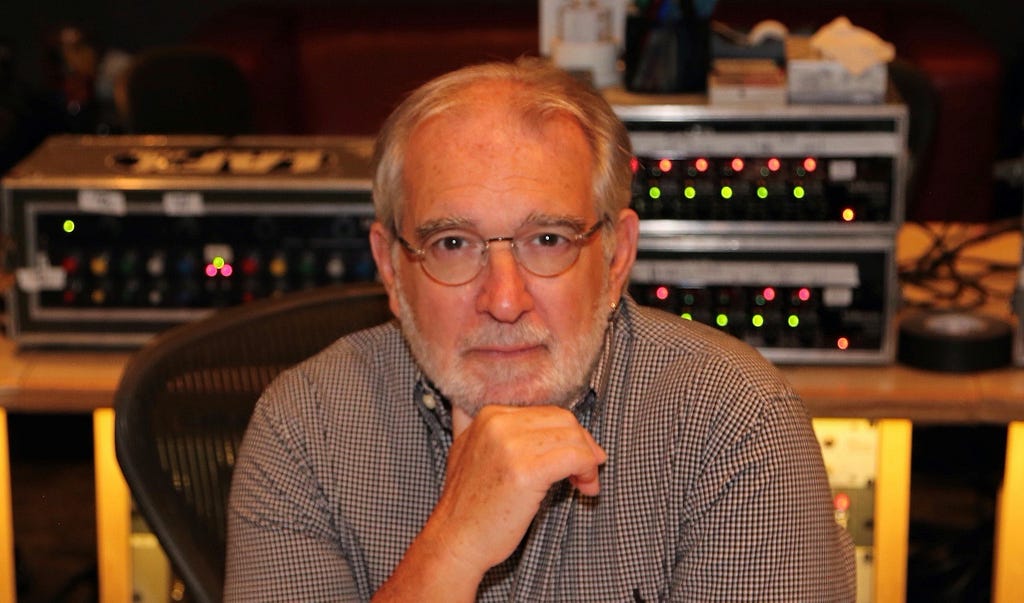
I had the pleasure of interviewing a Multi-Emmy and Grammy Award recipient, Tommy Vicari. Internationally recognized as one of Hollywood’s finest recording engineers and music mixers. During a forty plus year career, he has recorded music for every aspect of the entertainment industry. Billy Preston, Prince, George Duke, Jeffrey Osborne, Philip Bailey, Quincy Jones, Barbara Streisand, Pino Daniele, Sammy Nestico and the 2015 Grammy Award winning Gordon Goodwin’s Big Phat Band are just a few of the musicians he’s teamed with.

His television credits include: The Oscars, Six Feet Under, The Newsroom, Angels in America. His mix for HBO’s celebrated, Behind the Candelabra earned him both an Emmy and a Cinema Audio Society Award for excellence in sound mixing.

Vicari’s work on feature films ranges from the Brian DiPalma cult classic, Phantom of the Paradise, to the Pixar multi Academy Award™ winning classics, Finding Nemo and Wall-E. Along with longtime collaborator, Thomas Newman, Vicari worked on Road to Perdition, Little Children, Revolutionary Road, Cinderella Man, A series of Unfortunate Events, The Adjustment Bureau, Brothers, The Debt, Saving Mr. Banks, Get on Up, The Judge, Side Effects, The Help, He Named Me Malala, Bridge of Spies, Passengers, Thank You for Your Service and The Highwaymen. With composer Nicholas Britell, Vicari worked on Adam McKay’s The Big Short and his HBO series Succession, Barry Jenkins’ Academy Award winning Moonlight and his subsequent feature If Beal Street Could Talk, and David Michôd’s upcoming Netflix feature, The King.

Thank you so much for joining us! Our readers would love to ‘get to know you’ a bit better. Can you tell us your backstory?

My name is Tommy Vicari. I am a record producer, recording engineer, scoring music mixer, and a multi-award recipients; Grammy Awards (two wins — six nominations), Emmy Awards (seven wins — 24 nominations), Cinema Audio Society Awards (two wins — three nominations).

I began my career at 18 years young in the mailroom of the famous Capitol Records. At the end of my shift, I wouldn’t leave the building, but instead, attended any and all sessions I was allowed to sit in on. I basically lived there for two years. Then I made a move to A&M Records, the most successful independent company in the world at the time. It was an oasis of creative activities, the place to be. I began working as an assistant engineer, and after two years, made my way to engineering.

Since those early days, I have worked with such artists as: Paul Williams, Billy Preston, Gino Vannelli, Jeffrey Osborne, Joni Mitchell, George Harrison, Prince, Quincy Jones, George Duke, Philip Bailey, Barbra Streisand, Pino Daniele, Filippo Perbellini, Sammy Nestico, Gordon Goodwin’s, Big Phat Band, Brenda Russell, Teena Marie, The Dazz Band, Stanley Clarke, Santana, Bill Champlain, Seawind, Taste of Honey, Joan Baez, Howard Hewitt, David Foster, Atlantic Star, Stephanie Mills, Jimmy Cliff, Shanice, Ray Charles, and many more.

My television credits include: Succession, The Oscars, Six Feet Under, Angels in America, The Newsroom and Behind the Candelabra, to name a few.

My feature films credits include: the Brian DiPalma cult classic, Phantom of the Paradise, Paul Williams’ A Star is Born, to the Pixar multi Academy Award™ winning classics, Finding Nemo and Wall-E. Along with longtime collaborator Thomas Newman, I recorded and mixed scores for Road to Perdition, Little Children, Revolutionary Road, Cinderella Man, A Series Of Unfortunate Events, The Adjustment Bureau, Brothers, The Debt, Saving Mr. Banks, Get on Up, The Judge, Side Effects, The Help, He Named Me Malala, Bridge of Spies, Passengers, Thank You for Your Service and The Highwaymen.

In collaboration with composer Nicholas Britell, I scored Adam McKay’s The Big Short and his HBO series Succession; Barry Jenkins’ Academy Award winning film Moonlight and his subsequent feature If Beal Street Could Talk; as well as David Michôd’s Netflix feature, The King.

For a full list of credits visit: www.tommyvicari.com

Are you working on any new or exciting projects now? How do you think that will help people?

We make music that isn’t necessarily following the current trend or flavor of the month. We make music that as artists we are inspired by, and has relevance to what is happening in our own lives; not necessarily what we think the consumer will like. Our goal is to lift the narrative out of mediocrity, and to touch the listener with something personal.

I am currently re-mixing an album for World Goes Round that I produced almost 30 years ago, as it was just discovered. It is as relevant today.

World Goes Round is a band made up of respected songwriters, singers and musicians who teamed up to make an album during the late 1980s that never got released, and are finally issuing songs from the long-lost collection after a cassette copy of the project was recently discovered. The second single from the album titled “Round The World”, as well as a companion video, are now available; following the recent release of the song “Big House”.

World Goes Round features Frank Musker, Elizabeth Lamers, Jeff Hull and Marty Walsh, who collectively wrote, performed and/or recorded with such famous artists as Queen, Linda Ronstadt, Chaka Khan, Quincy Jones, Kenny Rogers, John Denver, Supertramp, John Fogerty, Donna Summer, Neil Diamond and Air Supply, among others.

Musker is a veteran British songwriter whose credits include co-writing such hits as The Babys’ “Back on My Feet Again” and Paul Nicholas’ “Heaven on the 7th Floor.” He and Lamers also teamed up with Queen guitarist Brian May to co-write “Too Much Love Will Kill You,” a 1996 U.K. hit for the legendary rock group Queen. Lamers’ resume also includes stints singing backing vocals for Denver and Jeffrey Osbourne. Hull has co-written songs for Khan, Patti LaBelle and many others. Walsh is an acclaimed guitarist whose many credits include Donna Summer’s “She Works Hard for the Money,” Dolly Parton’s “9 to 5” and Diamond’s “Heartlight.”

Musker, Lamers, Hull, Walsh and Vicari recently got together via Zoom to discuss the music they made together 30-plus years ago. For more info check out: https://www.worldgoesround.info/.

What do you think makes your company or organization stand out from the crowd

Since 1976, I have been an independent recording engineer. My company, VSO, inc. (Vicari Sound Organization), does not adhere to one genre of music. We record and mix music for records, motion picture scores, theme parks, television movies, television series, television variety shows, Super Bowl Half Time shows, commercials, and last but not least, documentaries.

I have worked in every sound recording studio around the world, be it on an eight channel Mackie to 100 channel Neve, to unlimited channels DAW (digital audio work station). I have been thrown into every situation you can think of, and my responsibility is to make it work. I approach every project with the same respect, knowing that at the tip-of my fingers, is someone else’s dream.

Has there ever been a time that someone told you something was impossible, but you did it anyway? Can you share the story with us? What was your idea? What was the reaction of the naysayers? And how did you overcome that?

There have been so many stories of this nature throughout the course of my career. However one stands out above all the rest: New Year’s Eve 1999, The Millennium Show, Washington DC.

I was commissioned by Quincy Jones to mix a 100 piece live orchestra on the steps of the Lincoln Memorial on December 31, 1999, featuring every major artist of the 20th Century.

The temperature was below freezing level. It was the turn of the century. Y2K was the belief that all computers would fail. Wide scale panic was pervasive across the country. What would happen if all computers failed? Concerned citizens stocked up on provisions in case of Armageddon.

Because it was such an historic event, all recording mobile trucks were booked…all analog trucks. The choices I had was an SSL (Solid State Logic) digital console. I was advised over and over by colleagues to under no circumstances, use a digital console. It would fail on the steps of the Lincoln Memorial with the President of the United States in attendance, beamed around the world on live TV. Y2K would wreak havoc on my broadcast.

After weeks of research in the U.S. and in Europe, I had to make a decision to go with the digital console, or use equipment that clearly could not handle the scope of this endeavor. In spite of the collective consensus, I made the decision to use the SSL digital console, and leave the outcome up to the recording Gods.

At the first rehearsal, all the microphone pre-amps froze. Not a great start. We acquired heaters to warm up the pre-amps, and they functioned as planned.

The show went live in front of an enormous crowd across the mall, with every popular artist of the 20th Century, with John Williams conducting a 100 piece orchestra, as well as a choir. The clock struck midnight, and as in a fairy tale, the show went on with no interruption. 2000 started with an unanticipated success. I followed my instinct, took the risk and the gamble paid off.

In the end, how were all the naysayers proven wrong? 🙂

Succeeding in the end speaks for itself.

Is there a particular person who you are grateful towards who helped get you to where you are? Can you share a story about that?

I have had mentors and have been inspired by the ones who preceded me every step of my career, and to this day, I am still learning. There are so many names and so many stories. I will focus on a few: Herb Alpert, Hank Cicalo, Bruce Botnick, Phil Ramone and Al Schmitt.

I left A&M Records as a young engineer with a secured staff position to pursue studying under Armin Steiner, owner of Sound Labs. Armin was at the time an innovator in orchestral recording and popular music. Armin Steiner is in a league of his own.

Quincy Jones called me in 1997 and requested that I attend a meeting at ABC Television. I had no idea what the meeting was about until unbeknownst to me, I was to mix the Oscars, live. I told Quincy: “I don’t know how to mix a live TV show, I’m a studio rat.” Quincy looked at me and replied: “Figure it out!” He knew that I would rise to the challenge and had the talent to do so. I have been mixing the Oscars for 24 years now.

Thomas Newman took a chance with me when I was hired to sub for his scoring mixer. I recorded and mixed the theme for Six Feet Under. Next thing I knew, he hired me to score Road to Perdition, one of his all time classics. I had worked on film before with Paul Williams on Phantom of the Paradise, A Star is Born and Yentl, but I was mostly experienced as recording engineer. We have had many successes together since.

Nicholas Britell asked me to help him mix this movie for Paramount. It turned out to be The Big Short. Since then, we have collaborated on Moonlight, If Beal Street Could Talk, The King, and HBO’s series Succession.

The list goes on and probably would be more fitting for a book.

It must not have been easy to ignore all the naysayers. Did you have any experiences growing up that have contributed to building your resiliency? Can you share the story with us.

First and foremost, for as long as I can remember, I have loved music. To this day, it is my driving force.

I remember clearly watching my father coming home one evening, his head down after being let go from his day job. I looked at his embarrassed face, and swore I would not allow that to happen to me. Ironically, it has happened to me, only I had the resilience and determination to get up, dust myself off and go back to doing what I do best.

Based on your experience, can you share 5 strategies that people can use to harness the sense of tenacity and do what naysayers think is impossible? (Please share a story or an example for each)

I have no strategy to share other than to pursue what you love. There is no easy path to any career and there is always a mountain to climb. A doctor needs to put in many years in residency before he can practice. A violinist must practice hours and hours before mastering his instrument. In his bestseller Outliers — The Story of Success, author Malcolm Gladewell writes that it takes roughly 10,000 hours of practice to achieve mastery in any field.

I am reminded of a quote Composer Bill Conti once shared with me during a session: “There are three reasons to take a job: 1) the project 2) the people 3) the money.” You must have one out of three to go to work. If you get all three, you’ve hit a home run.

What is your favorite quote or personal philosophy that relates to the concept of resilience?

In my earlier days I was taught: “you will be given a chance to sit in the seat. If you are not prepared, you might not get a second chance.” Quincy Jones once said: “If you can see it, you can be it.”

Commitment, preparation, persistence, and showing up will get you there.

You are a person of great influence. If you could inspire a movement that would bring the most amount of good for the greatest number of people, what would that be? You never know what your idea can trigger.

I must borrow a quote which still moves me. From his documentary film: Shadow Man, The Sammy Nestico Unfinished Story. Maestro Sammy Nestico says: “Never let anyone steal your dreams. If I can make it, so can you. We may not be changing the world dramatically, but we are improving it, one note at the time.”

Can our readers follow you on social media?

Of course. My website is: www.tommyvicari.com


Grammy Winning Recording Engineer Tommy Vicari: They Told Me It Was Impossible And I Did It Anyway was originally published in Authority Magazine on Medium, where people are continuing the conversation by highlighting and responding to this story.