Heroes Of The COVID Crisis: How Marissa Goldstein of Rafi Nova Donated Thousands Of Masks To Front…

Heroes Of The COVID Crisis: How Marissa Goldstein of Rafi Nova Donated Thousands Of Masks To Front Line Workers & People In Need
What’s really beautiful about this time is that we have been given an opportunity to hit pause. Our family is always out and about, and it has been so uplifting to see families walking together every night, or having a picnic in the lawn. Seeing kids riding around on their bikes instead of sitting on tablets gives me hope that we can all go back to the basics and find joy even in the simple moments.

As part of my series about people who stepped up to make a difference during the COVID19 Pandemic, I had the pleasure of interviewing Marissa Goldstein of Rafi Nova.

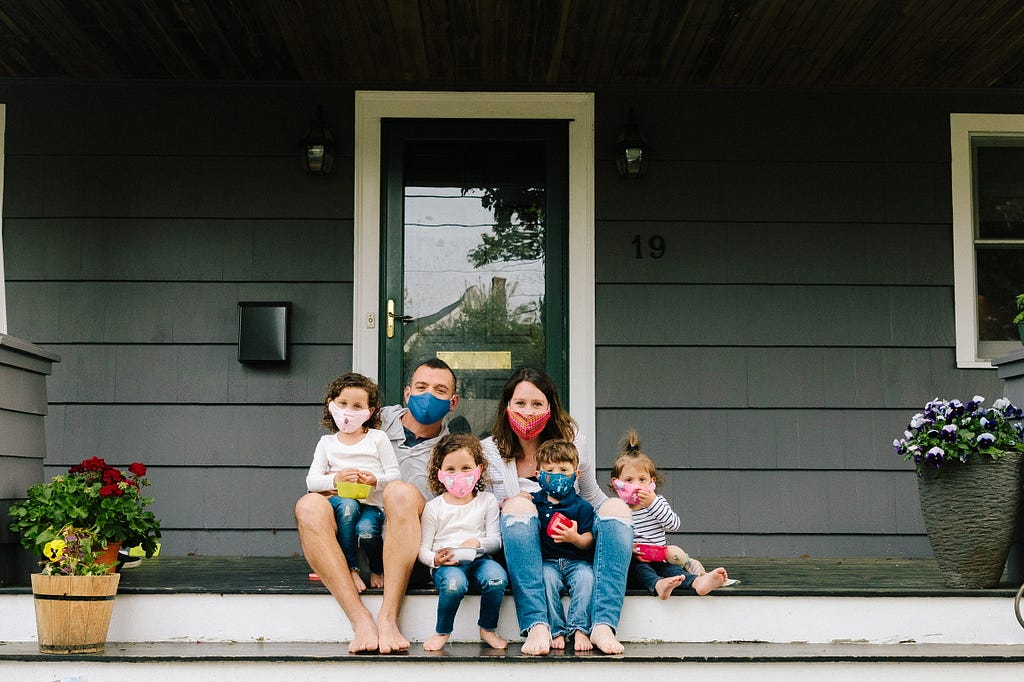
Rafi Nova is a social enterprise on a mission to create products that meet the ever-changing needs of families while connecting global communities. Founded as a fair-trade fashion brand to equip adventurous families with sustainably made travel bags, the company shifted focus to face masks to solve the urgent needs of families and communities.

Veterans of sustainable product manufacturing, Co-Founders Marissa and Adam Goldstein named the company after their two sets of twins and travel partners: Raya, Efi, Noa, and Eyva.

Thank you so much for doing this with us! Before we dig in, our readers would like to get to know you a bit. Can you tell us a bit about how and where you grew up?

My name is Marissa Goldstein and I grew up in Needham, MA, which is a suburb outside of Boston. I was the middle child with 2 siblings, and had two wonderful, hard working parents. My dad is a self-made entrepreneur and has always worked for himself, and my mom was a dedicated philanthropist. I was raised on the Jewish saying Tikkun Olam, which is essentially the notion that it is up to each of us to “repair the world” through social action, giving back to the community, and overall kindness.

Is there a particular book that made a significant impact on you? Can you share a story or explain why it resonated with you so much?

To be honest, as a mother of two sets of young twins who is also running a business, I don’t have a lot of time to read. But I do love listening to podcasts, How I Built This with Guy Raz in particular. I love learning from and about these other entrepreneurs and hearing their stories and what motivates them. It is always inspiring and motivating.

Do you have a favorite “Life Lesson Quote”? Do you have a story about how that was relevant in your life or your work?

I mentioned it already, but the phrase Tikkun Olam has taught me a lot, and inspired me throughout my life. The concept is very powerful to me. It has guided me throughout my childhood, and has continued to do so into my adult life.

Ok, thank you for all that. Now let’s move to the main focus of our interview. You are currently leading a social impact organization that has stepped up during the COVID-19 Pandemic. Can you tell us a bit about what you and your organization are trying to address?

Generally speaking, Rafi Nova is working hard to address the fact that communities and front line workers are in need of protective face coverings. When Covid-19 hit, we completely shifted our production to focus almost entirely on face masks, and we are really proud to say that we have sold over 500,000 masks and donated 40,000 along with monetary donations to TransParent USA, the ACLU and the NAACP. We really believe that wearing a mask is a simple act of kindness, and are passionate about our work surrounding that idea.

In your opinion, what does it mean to be a hero?

To me, being a hero is all about helping those around you who need it. Being able to notice when someone needs to be listened to, cared for, or lifted up. Heroic acts could be small, but they are always centered around others.

In your opinion or experience, what are “5 characteristics of a hero? Please share a story or example for each.

Kindness, sense of community, inclusivity, empathy, and motivation.

Kindness feels obvious, but I strongly believe that every act of kindness is a heroic action. We need to be filled with love to support each other. Having a sense of community is also huge. It allows people to know who they are helping and what their goals are.

Speaking of goals, inclusivity should always be something we strive towards. So many communities are ostracized, and by opening our arms and ears to them, there is so much good we can do.

I also think empathy is important, and is closely tied to motivation. Both are characteristics that I think are necessary, because without either, there is no impulsion to help others or do the right thing.

If heroism is rooted in doing something difficult, scary, or even self-sacrificing, what do you think drives some people — ordinary people — to become heroes?

First, and probably most importantly, I think people need to be empathetic. If you are empathetic, then you are able to see when something needs to be changed, if someone needs help, an organization needs support, or if a voice needs to be heard. Empathy drives the motivation to step up, even if it is difficult or scary.

What was the specific catalyst for you or your organization to take heroic action? At what point did you personally decide that heroic action needed to be taken?

When we first started, we knew we wanted Rafi Nova to have a social component. It was really important to us, so I studied case study after case study of social businesses that were an inspiration to us. Personally, everything I’ve ever done has had a social component. Even when I was starting Rafi Nova, I was also a co-founder of a startup that designed solar systems for off the grid communities in rural India. I have always wanted to give back, or help in some way, so Rafi Nova needed to do that too.

We were very drawn to the ethnic tribes in Vietnam, and when we saw the textiles they were making and the tradition behind them, we knew we wanted to shine a light on these wonderful communities by incorporating them into our designs. We started by purchasing the textiles at fair trade costs, but as the business continues to grow, we want to give back in a sustainable way. For example: we hope to one day donate educational materials!

Of course, when Covid-19 hit, we realized we needed to help in a different way, and when our daughter Eyva came up with the idea to make masks we immediately decided to put our resources towards this effort. I don’t think of ourselves as heroes, but I think our donations are heroic in the sense that we are supporting our heroes on the frontline.

Who are your heroes, or who do you see as heroes today?

There are so many heroes today, it is hard to pick just one. Right now there are frontline workers who are sacrificing their health for others, and there are also parents who are making sacrifices for their children during a confusing and scary quarantine. Both of those examples and everyone who is putting others before themselves are heroes to me.

Let’s talk a bit about what is happening in the world today. What specifically frightened or frightens you most about the pandemic?

I think what frightens me most is the thought of getting my parents or loved ones sick. I know that we are exposed, and even though we are taking every precaution possible, I’m definitely aware that there is still a possibility of getting someone sick.

I think it has also been scary for us to be unable to physically interact with our friends and family. Those relationships are so important to us, so distancing ourselves has been a challenge.

Despite that, what gives you hope for the future? Can you explain?

What’s really beautiful about this time is that we have been given an opportunity to hit pause. Our family is always out and about, and it has been so uplifting to see families walking together every night, or having a picnic in the lawn. Seeing kids riding around on their bikes instead of sitting on tablets gives me hope that we can all go back to the basics and find joy even in the simple moments.

What has inspired you the most about the behavior of people during the pandemic, and what behaviors do you find most disappointing?

I have been so inspired seeing communities come together! Seeing teenagers and young adults volunteering their time to grocery shop for the elderly has been incredible. It has definitely reinforced the idea that even though we are socially distant, we have never been more connected to each other.

What disappoints me the most is people that don’t wear a mask. Face coverings limit other people’s exposure, so by wearing a mask it is really a simple act of kindness. We aren’t asking for a large over the top gesture, so I do wish people would be more willing to help in this way.

Has this crisis caused you to reassess your view of the world or of society? We would love to hear what you mean.

There are many aspects of this crisis that have given me a restored faith in humanity. It has reinforced the idea that we don’t need a lot of extraneous things to thrive and be happy. It has created a closeness with those around me, and I honestly feel more connected with my friends and family than ever before.

All in all it has given me a new appreciation for the simple things in life, and inspired me to partake in things like small acts of kindness and being more creative.

What permanent societal changes would you like to see come out of this crisis?

I really hope to see all the kindness towards others and community building continue. Even when life “returns to normal” I hope that we return to a more simplified life. It’s great seeing everyone order food from their local restaurants and eat dinner together as a family, so I hope that doesn’t stop.

If you could tell other young people one thing about why they should consider making a positive impact on our environment or society, like you, what would you tell them?

I would tell them that it’s up to them! I would ask them what kind of world they want to live in, and what kind of a world they want to leave for their children in years to come. I really believe it is up to everyone individually to be a positive influence, and that we are all capable of making a difference.

You are a person of great influence. If you could start a movement that would bring the most amount of good to the most amount of people, what would that be? You never know what your idea can trigger. 🙂

If I could start a movement, it would be completely focused on inclusivity. This is a central focus for our brand, but I also know that this seemingly simple act can have strong ripple effects. When people come together, despite their differences, we are met with new perspectives, ideas, opinions, and relationships. All of these things can lead to widespread change for good.

Is there a person in the world, or in the US, with whom you would like to have a private breakfast or lunch, and why? He or she might just see this, especially if we tag them. 🙂

I would absolutely love to meet with Ruth Bader Ginsberg. As a female entrepreneur, I am consistently inspired by her dedication to equality for both genders and more. She is such a powerful female leader, and I would be honored to speak with and learn from her.

How can our readers follow you online?

You can find us at @RafiNova_Go, and @TwinsOnTheGox2 on Instagram!

This was very meaningful, thank you so much. We wish you only continued success on your great work!


Heroes Of The COVID Crisis: How Marissa Goldstein of Rafi Nova Donated Thousands Of Masks To Front… was originally published in Authority Magazine on Medium, where people are continuing the conversation by highlighting and responding to this story.

Chenelle McGee of ShelbyKY Tourism: The Future Of Travel In Our Post COVID World

One should always find purpose in leaving the world, industry, state or neighborhood park a better place. Now, more than ever before, small acts of kindness are needed to reinvigorate and reignite all that is good.

As part of my series about “exciting developments in the travel industry over the next five years”, I had the pleasure of interviewing Chenelle McGee. She is the President / CEO of ShelbyKY Tourism in the Bluegrass State. McGee earned a Travel Marketing Professional Degree from STS Marketing College at the Univ. of North Georgia and is also a Certified Tourism Industry Specialist. She also earned the designation of Executive Bourbon Steward from the Stave & Thief Society Moonshine Univ. and serves on the Board of Directors for the Kentucky Black Bourbon Guild. McGee is also a Veteran of the U.S. Marine Corps.

Thank you so much for joining us! Can you tell us a story about what brought you to this specific career path?

From fine art to military boots and now the travel industry, I am always excited to take on new challenges and explorations. The Art Institute of California is where I first embraced a need for structure. Instead of taking a more traditional path of ad agency life, I jumped on the opportunity to have an adventure as an Intel Analyst with the United State Marine Corps.

When my husband and I got out of the military, the Marketing position at the ShelbyKY Tourism Commission introduced me to this community in a way I could have never imagined. When one of my mentors — Katie Fussenegger — left the role of President | CEO of ShelbyKY Tourism, I knew applying for the position was the challenge I needed to continue the economic growth of the tourism office and our community partnerships.

Can you share the most interesting story that happened to you since you started your career?

There is never a dull moment and no day is ever the same! From strategizing and implementing marketing, to jumping over culverts to get the perfect shot of horses meandering in the fields.

Most people may find it interesting that, growing up, I never liked bourbon. Living in California before the big bourbon boom, I used to tell my Kentuckian husband all bourbon tasted like wood or burnt wood! Today, I serve on the Board of Directors for the Kentucky Black Bourbon Guild, went to Moonshine University to complete the Executive Bourbon Steward program and am always on the hunt for my next delicious bourbon!

Can you share a story about the funniest mistake you made when you were first starting? Can you tell us what lesson you learned from that?

Just one? I’ve slipped in front of a parking lot full of travel writers, gotten lost on more backroads than you can imagine, forgot my script during a presentation, and the list goes on. I learned very early on that things don’t always work out the way you plan them. You just can’t take things too seriously!

What do you think makes your company stand out? Can you share a story?

There is a sense of community pride and hospitality that I am so pleased to say the ShelbyKY Tourism Team all buy into. I’ve overheard our Receptionist Sonja Craft help travelers with some of the strangest requests or complaints and they always leave happier than they walked in. Sonja exhibits true southern hospitality and is the first one to offer a helping hand. I couldn’t imagine a better fit for the face of Shelby County to our visitors.

Which tips would you recommend to your colleagues in your industry to help them to thrive and not “burn out”? Can you share a story about that?

Like many around the world, COVID-19 devastated our community. With reports of the U.S. Travel Industry set to lose $500 Billion in 2020, the continued progression of this virus proves to be a challenge to our industry. However, there’s also opportunity. As we continue to develop and recreate how we do business during this “new norm,” we must be willing and eager to evolve and always be cognitive of the effects our decisions will make on our community. We see this in virtual tours, the increase in video conferencing and the sheer number of entertainment innovations.

None of us can achieve success without some help along the way. Is there a particular person who you are grateful towards who helped get you to where you are? Can you share a story?

In the tourism industry, I have been so fortunate to have so many mentors such as Katie Fussenegger, Saundra Robertson and Dawn Przystal. I have also been inspired and mentored by individuals I’ve never met through my love for reading and the ever-present realm of social media.

Let’s jump to the core of our discussion. Can you share with our readers about the innovations that you are bringing to the travel and hospitality industries?

As we plan for the coming years, it is my intention to focus more attention on partnerships, data and innovation to assist with the economic growth and recovery of our community. One way we are looking to pursue this strategy is through our Community-Based Committees, which will participate in the development of ShelbyKY. They are intentionally diverse and bring together a vast array of industries, ages, race and experience. These committees will focus on the five main pillars of our strategic plan: Marketing, Development, Enhancement, Workforce and Advocacy.

Which “pain point” are you trying to address by introducing this innovation?

Tourism promotion is a tool that helps our local community by putting people to work and making our communities a great place to live. As an industry, we are so focused on our mission to bring outside dollars and tourists into our community, we rarely explain or share our story to the communities we represent. These community-based committees open the conversation on how to grow our recovering economy, improve our community and, in doing so, drive tourism.

How do you envision that this might disrupt the status quo?

Tourism is an investment in our community and our people. By investing time in these community-based committees we build upon our transparency, accountability and create ambassadors for the tourism industry.

Can you share 5 examples of how travel and hospitality companies will be adjusting over the next five years to the new ways that consumers like to travel?

-Safety will be a leading factor in travel for some time.

-Diversity is no longer a luxury, it’s an expectation.

-With budget cuts and a recovering industry, businesses will need data to back every decision moving forward.

-Good customer service is no longer an option. Reviews will continue to play a strong role in the travelers’ mindset when selecting a destination to visit.

-Technology will continue to change faster than ever. Employees at every level must continue to learn and evolve.

You are a “travel insider”. How would you describe your “perfect vacation experience”?

I love to “hub and spoke” when I travel. Selecting one main city for a vacation while doing day trips to the surrounding cities is a worthwhile way to explore a region.

A great catalyst for that is the Kentucky Bourbon Trail. The distilleries provide visitors with a taste of Kentucky’s native spirit while offering a full scope of what this picturesque state has to offer. From heritage brands that have called this great state home, to rolling pastures and backroads that make you want to stay lost, I recommend visitors pick a few spots and see what adventures may come.

If bourbon isn’t your thing, try one of the many culinary trails found in Kentucky. From tacos to Hot Browns, you’ll be sure to thank me later!

Can you share with our readers how have you used your success to bring goodness to the world?

One should always find purpose in leaving the world, industry, state or neighborhood park a better place. Now, more than ever before, small acts of kindness are needed to reinvigorate and reignite all that is good.

On a professional level, I am currently the Committee Chair for the Freddie Johnson Scholarship Fund. After receiving approval in 2020, the Kentucky Black Bourbon Guild is developing a Scholarship Fund in honor of Freddie Johnson. Johnson is the third generation of his family to work at Buffalo Trace Distillery. He is a true legend not only to the bourbon industry, but the African American heritage. The Freddie Johnson scholarship was created to assist minorities interested in entering spirits related industries.

You are a person of great influence. If you could start a movement that would bring the most amount of good to the most amount of people, what would that be? You never know what your idea can trigger. 🙂

One of the key things I will continue to hold onto after COVID is the return to investing and buying local. So, my movement would be one that urges people to always support local.

How can our readers follow you on social media?

This was very inspiring. Thank you so much for joining us!


Chenelle McGee of ShelbyKY Tourism: The Future Of Travel In Our Post COVID World was originally published in Authority Magazine on Medium, where people are continuing the conversation by highlighting and responding to this story.

Emmy Winning Producer Brian Johnson: “How to write a book that sparks a movement”

Books have been around for thousands of years, and provide a certain mystique and truth that can’t be always explained outside of the front and back cover. A book has the ability to establish a perspective that doesn’t always translate as powerfully in other forms of communication. I think for a lot of people, reading is an inherently personal experience that can’t be duplicated with other forms of entertainment. The words on the page can resonate deeply and inspire change.

As part of my series about “How to write a book that sparks a movement” I had the pleasure of interviewing Brian Johnson.

Brian Johnson is quickly becoming one of the most inspirational thought leaders of his generation. Brian is an Emmy winning TV producer and an Amazon #1 best-selling author, host and inspirational speaker. As an Emmy winning talent producer; his rolodex reads like a who’s who in Hollywood. As a personal coach; Johnson’s clients have included notable Fortune 500 companies and some of the largest nonprofits in the U.S. As an in-demand speaker, Brian has shared his message in front of executives and entrepreneurs around the country. Brian’s webinars and coaching sessions regularly sell out to students across the globe.

Thank you so much for joining us Brian! Can you share the “backstory” about how you grew up?

I grew up in a small town called Skipperville, Alabama. Population of 600 people, where the rooster wakes up every morning religiously. The town has one caution light and is about 15 minutes from your nearest town. It was my dream to play in the NBA so my adolescence was consumed with playing sports and trying to figure out how to take care of my Mom. She was a single parent and her constant workload took a toll on me emotionally by wanting to help her financially.

When you were younger, was there a book that you read that inspired you to take action or changed your life? Can you share a story?

When I was younger, I didn’t like to read. I only read or skimmed through books in order to qualify for a local promotion where students could win a Pizza Hut Personal Pan Pizza after reading a certain number of books. Reading wasn’t a passion for me when I was younger. The only books I was interested in were sports books about people like Michael Jordan, Bo Jackson, Walter Payton and Wayne Gretzky. Although at that time I have to admit I wasn’t an avid reader, I vividly remember the photos in those books. I loved the pictures in them and that really helped me get comfortable with books and led me to become a voracious reader.

What was the moment or series of events that made you decide to bring your message to the greater world? Can you share a story about that?

My personal story of wanting to commit suicide coupled with my pursuit of moving to Los Angeles to live my dreams. I realized that my personal journey affected so many people when I talked about it, that I felt responsible to share it to inspire others.

What impact did you hope to make when you wrote this book?

My book is titled “ Live Your Dreams Out Loud”, and with my book I hoped to bring a message to the world that extended beyond the traditional aspect of just living your dreams. I wanted to craft a more tangible process around the “How.” Also, I wanted people to be doers and that’s what the “Out Loud” is for.

Did the actual results align with your expectations? Can you explain?

The actual results exceeded my expectations. I didn’t think that I would become an Amazon Best Seller and sell thousands of copies as a self-published author. I’m a kid from Skipperville Alabama, having just moved to Los Angeles with $325 and a red suitcase and just finished working on The Arsenio Hall show. It was my dream to get this in the hands of as many people as possible, but I didn’t know that it would have these results.

What moment let you know that your book had started a movement? Please share a story.

I knew that my book had started a movement when I got asked to speak at a national convention. I didn’t think that it would happen all so fast but I went from a broke Uber driver to a best-selling author in a few months. As an African American man; the fact that I had been transparent with my mental health struggles created a great amount of support and mobilized people to want to share and support. My story reached individuals at the corporate level and organizations brought me in to speak. When I was on my book tour, I did media across the country and I was able to not only remove the stigma of mental health issues, but to inspire and motivate people.

What kinds of things did you hear right away from readers? What are the most frequent things you hear from readers about your book now? Are they the same? Different?

When people who knew me learned that I had dealt with depression and a suicide attempt, it started conversations among families and friends that became more aware of mental health issues and identified either struggles they had personally, or it shed light on the actions of people they knew. A lot of people said “ I had no idea you were struggling like that”

The things that I heard the most from readers who didn’t know me before is that they thanked me for sharing my story. I had a lot of readers tell me they loved the book because it was easy to understand, and it made them realize they could build structure to their dream thoughts and get started immediately. The most frequent thing that I hear now is that this book is inspirational and really helped them with a plan and framework, and that they are ready for the next book.

What is the most moving or fulfilling experience you’ve had as a result of writing this book? Can you share a story?

The most moving and fulfilling experience that I’ve gotten from this book is readers telling me that this book saved their life. I don’t think that there is anything that can top that. Because I have had so many readers talk to me about how my transparency around my suicide attempt helped them talk to people about theirs, In 2019 I put out a short video during suicide prevention month. A young man in Europe reached out to me that he was contemplating taking his life and we began to communicate online. When he stopped communicating with me, I reached out to his family via social media. After much back and forth they went to check on him and found that he was very close to taking his life. If I never had one moment of success with this book, that moment alone would have made it all worth it.

Have you experienced anything negative? Do you feel there are drawbacks to writing a book that starts such colossal conversation and change?

I personally haven’t experienced anything negative. That’s all about perspective too. I’m a pretty positive guy and always try to see the good in things that may not seem so desirable to most. I don’t think that there is anything wrong with writing any book. The thoughts and ideas not fully unleashed do humanity a disservice by not bringing that energy to the world.

Can you articulate why you think books in particular have the power to create movements, revolutions, and true change?

Books have been around for thousands of years, and provide a certain mystique and truth that can’t be always explained outside of the front and back cover. A book has the ability to establish a perspective that doesn’t always translate as powerfully in other forms of communication. I think for a lot of people, reading is an inherently personal experience that can’t be duplicated with other forms of entertainment. The words on the page can resonate deeply and inspire change.

What is the one habit you believe contributed the most to you becoming a bestselling writer? (i.e. perseverance, discipline, play, craft study) Can you share a story or example?

The habits that contributed to me becoming a bestselling author is strategy and consistency. It was also a necessity of mine. Because of necessity I had to be strategic and consistent in order to survive. The energy that propelled this book forward was survival. When I was making my way in Hollywood, I worked as an Uber driver. I would start at 6am and work until 10pm 7 days per week. When I had downtime I was either parked on the side of the road writing, or I was at a coffee shop writing. I did that until the book was completely finished, marketing strategy was created and the book had successfully launched.

What challenge or failure did you learn the most from in your writing career? Can you share the lesson(s) that you learned?

The biggest lesson that I’ve learned is that you don’t have to be a great writer to author a book. I know that sounds contradictory, but there are plenty of people that can help you with the administration of getting the book written. I was never a strong writer, but I had a great idea and the determination to get it written. The example I like to give is that some of the greatest musical artists and performers have never written a single song.

I’ve also learned that if done strategically, self-publishing can really be lucrative.

Many aspiring authors would love to make an impact similar to what you have done. What are the 5 things writers needs to know if they want to spark a movement with a book? (please include a story or example for each)

5 Things:

  1. Make the DECISION to Get Started
  2. Develop a plan and strategy
  3. Determine what your accountability will look like
  4. Model somebody else.
  5. Understand how to utilize the internet as your best friend

The world, of course, needs progress in many areas. What movement do you hope someone (or you!) starts next? Can you explain why that is so important?

My next movement is continuing and building on the one that I already have. Also, teaching others how to self publish a book. It’s important to me to teach others to do what I’ve been really successful at doing as it relates to self-publishing. In terms of a movement; the world needs a lot of progress in a lot of different areas. I’m adamant about staying inspired in all facets of life. It’s vital to always have a positive outlook and perspective on life. I’m launching a new web-based show called The Daily Inspiration which will release 7 days a week that will give you the necessary steps to being inspired daily. This is important because we are in the middle of a pandemic, race relations, and uncertainty about most aspects of life.

How can our readers follow you on social media?

I’m everywhere as @BJTheDreamer

Thank you so much for these insights. It was a true pleasure to do this with you.


Emmy Winning Producer Brian Johnson: “How to write a book that sparks a movement” was originally published in Authority Magazine on Medium, where people are continuing the conversation by highlighting and responding to this story.
Andrew Morgans of Marknology: How To Thrive Despite Experiencing Impostor Syndrome

There are many downsides of Imposter Syndrome, but the short answer is that it can limit your ability to perform and keep you from realizing your potential. A real-life example would be not speaking confidently during a speaking event or an important pitch because you have doubts about your intellectual competence.

As a part of our series about how very accomplished leaders were able to succeed despite experiencing Imposter Syndrome, I had the pleasure of interviewing Andrew Morgans.

Andrew Morgans is a thought leader in the Amazon Branding space. He is a resident mentor at UMKC’s Regnier Institute for Entrepreneurship and Innovation, and guest lectures at the Henry W. Bloch School of Management. Andrew found early success as an internal corporate e-commerce manager. In less than a year he launched and scaled corporate brands new to Amazon topping over $1 million in new sales and repeated this more than once with several different businesses. With this success, he launched both the Landlocked Co Apparel brand, and Marknology™ (www.marknology.com), an Amazon Brand Accelerator. Marknology™ has worked with over 300+ global brands and managed sales of over $150 million. Marknology is also an Amazon Advertising Partner and has worked with clients all across the globe. Andrew is featured on a weekly podcast, Startup Hustle and speaks on e-commerce, branding and Amazon at conferences and events all over the United States.

Thank you so much for joining us! Our readers would love to “get to know you” a bit better. Can you tell us a bit about your ‘backstory’?

I was born in Canada, then raised in Africa until the age of 16. I returned to the United States, where I lived in Hawaii for my first two years in University. I moved to Kansas City in 2006 and started my degree in computer science and my first business. I was touring the United States in a band, but it was there that I first learned about branding, product development, marketing, b2b marketing, and sales. 2011 — present could really be summarized as falling in and out of love, trying a career in networking and security that I hated. Picking myself up time and time again, and ultimately going from a bartender to educating CEOs and founders on e-commerce best practices in 2020. Even with a lot of blanks in my story, I’m sure you can see how one could deal with Imposter Syndrome in a big way, and why I want to share some of my tips and mindset to overcome it.

Can you share with us the most interesting story from your career? Can you tell us what lessons or ‘take away’ you learned from that?

In the particular space that I am in (Amazon Consulting), there has been a lot of doubt in regard to its importance in e-commerce. It seems so straightforward now, but in the early days, my enthusiasm for this platform was met by naysayers constantly. Oftentimes, I was confronted by someone with more experience, more knowledge, more education, more social status, or simply more financial success. Proven success allowed me to slowly gain more confidence to speak to my area of expertise, and regardless of who I was speaking to, speak confidently and boldly about my experience and belief in the Amazon platform as a major player in many consumer goods e-commerce strategy. I started in corporate America and was an E-Commerce manager by title for a medium-sized company. The story that stands out, is one that had me leave that job and its safety, for entrepreneurship and uncertainty. The company was showering me with false promises of further education, or leadership positions, and at the same time ignoring much of the advice I was giving around e-commerce. I was falling in love with e-commerce. It was the perfect blend of creativity and data for me, and my experience made me a natural fit for it. The owner would shoot down my ideas, then go to a conference six months later and come back with a master plan. I knew that if I wanted to be great in this industry, I needed to take a leap into the unknown and that meant working on my own. Brands and companies everywhere were overlooking Amazon, but I was lucky enough to find enough brands to keep me going in those early years as an early adopter of Amazon. I look back at my time at this company as one full of learning, and I look back with pride because it was there that I gathered enough courage to believe in myself and choose to invest in myself when no one else would.

What do you think makes your company stand out? Can you share a story?

Marknology stands out because we operate with integrity and continue to innovate where others dare not go. Amazon is hard, and because of that, we have found a lot of success taking on these hard challenges on behalf of brands worldwide. I can’t begin to tell you the number of “firsts” that we have been a part of on Amazon. We are one of the first Amazon Advertising Partner Agencies. We were the first to put high-end neckties on Amazon; the first to add fresh steaks on Amazon; the first to expand internationally with clients. The list goes on and on. I think that by being a company that keeps innovation and hard work at its core, you will always stand out in a crowd where “easy” is the easy path to take.

No one achieves success without some help along the way. Is there a particular person who you are grateful to who helped get you to where you are? Can you share a story?

I am thankful for my sisters Veronika, Brooklyn and RhoDana. They are absolute geniuses and we have built this great team and company on their backs. Yes, we are a family team, and I wouldn’t have it any other way. When they decided to give up their careers to move to Kansas City and help me scale this agency is when we really started to grow, and the vision grew exponentially.

Ok thank you for all that. Now let’s shift to the main focus of this interview. We would like to explore and flesh out the experience of Impostor Syndrome. How would you define Impostor Syndrome? What do people with Imposter Syndrome feel?

I would define Imposter Syndrome as “Feelings of inadequacy despite evident successes.” People that have Imposter Syndrome feel like they don’t belong where they are figuratively or literally. They feel unusually high amounts of self-doubt, or intellectual fraudulence despite there being proof of their competence.

What are the downsides of Imposter Syndrome? How can it limit people?

There are many downsides of Imposter Syndrome, but the short answer is that it can limit your ability to perform and keep you from realizing your potential. A real-life example would be not speaking confidently during a speaking event or an important pitch because you have doubts about your intellectual competence.

How can the experience of Imposter Syndrome impacts how one treats others?

I think most of us would agree that the way someone treats others stems from the way that a particular person feels about themselves. We project onto others our feelings, our insecurities, our bias, and once you are aware of this, it becomes so easy to see in others. I can see areas of insecurity in others because I myself have had to overcome so many. When I see people not being confident with their words, or how they’re perceived, it reminds me of my own insecurities and my own internal struggle with Imposter Syndrome. For me, I think it makes me a better listener and allows me to remove my judgments of a person and allow me to hear them fully. If someone hasn’t overcome Imposter Syndrome, it can cause them to question others, force justifying answers, and create an environment with others that’s not open and safe.

We would love to hear your story about your experience with Imposter Syndrome. Would you be able to share that with us?

I have done a lot of things in my life, and pitching to 100-Million-dollar CEO’s, or companies like Adidas or Marvel is not anywhere I thought I would end up. Imposter syndrome is very real and depending on how far you’ve had to climb to where you are now, the effects can be even stronger. Even as a serial entrepreneur now, I deal with imposter syndrome and I’m not sure that it ever goes away. In order to keep growing and keep moving forward, I have come up with little habits or techniques that help me get confidence for that million-dollar pitch. When you’ve been a warehouse worker, or a bartender making $3 an hour, and make the leap to $200+ an hour or even more, the leap mentally that you deserve to be in the spot you are in is overwhelming at times. As someone trailblazing an industry, I face a little bit of Imposter Syndrome every single day. What if I give this CEO the wrong advice, or I claim to be an Amazon expert, but I get my facts mixed up, or what if I don’t know the answer to how to deal with a global pandemic? Does that make me an intellectual fraud? We know that everyone makes mistakes, but for many competitive people that are really hard on themselves, this is our worst nightmare. As I said, I battle Imposter Syndrome and other insecurities every single day, as I think many of us do. The key is to gain perspective around knowing that the real battle is internal, and no one can stop you but your own mind. If you are able to control your thoughts, and just keep putting one foot in front of the other, you can accomplish anything you set your mind to.

Did you ever shake the feeling off? If yes, what have you done to mitigate it or eliminate it?

Yes, I did get rid of the feeling! I used to be unable to speak in front of people, and now I speak at conferences around the world and with very successful CEO’s almost daily.

I am not sure that I will ever eliminate it, but I do know how to mitigate it. I surround myself with people that encourage me and have developed daily habits that strengthen my fortitude as well. Simple things like positive affirmations and continued education play a big part in my growth.

In your opinion, what are 5 steps that someone who is experiencing Imposter Syndrome takes to move forward despite feeling like an “Imposter”? Please share a story or an example for each.

1. Be as Authentic as possible. Try to only speak to what you know for certain, and don’t let anyone force your conversations to have you speak things that are not true.

2. Write down the negative things that you say to yourself in your head. Even if you write one a day, you will quickly gather quite the list. Now read over those things and tell yourself the counter of each one. Focus on the next time that it happens, or you hear yourself whisper that self-doubt internally, and this time bring awareness to it, and try not to say it!

3. Practice answering people’s objections. Sometimes the fear comes from someone saying something that we won’t know the answer to. This is inevitable and will happen eventually if it hasn’t already. What we can do though, is preparing for the unexpected. Get someone you trust and go over your topic and have them try to pick it apart. Any questions or objections that you didn’t have an answer for, study, and find ways to steer conversations in the direction you want them to go.

4. Focus on your strengths. For me, this was a hard one, but once I got it, I really saw a ton of improvement in all areas of my life. Instead of focusing on all of the things I was bad at (Like public speaking, or the written word), I focused on what I was good at. Building relationships, storytelling, being authentic, the list goes on. Maybe I’m not always the best speaker in the room, but I do have knowledge that they don’t have on a topic that they all need to know! When I focused on being able to help people, by sharing my knowledge with them, it allowed me mentally to move forward. If I made mistakes it was okay because I knew my intentions were in the right place.

5. “Comparison is the thief of joy”: A cliché quote, but one that I think carries so much value. If you can stop comparing yourself to others, you will find so much more confidence in yourself. There are people that started businesses in college years before I did or didn’t get married and then divorced before their thirtieth birthday, or that don’t have kids, or that found success in their first year of business. That doesn’t matter to me, and it shouldn’t to you either. What matters is: “Are you a better version of yourself today, than you were yesterday?” Can you do better, achieve more happiness, work harder, relax harder, dream bigger? For me, the answer has always been, Yes. When people say I work too much, I simply smile, and respond with: “Compared to who?”. I know what it will take to achieve my dream and looking at someone else’s dream has never helped me one bit.

You are a person of great influence. If you could inspire a movement that would bring the most amount of good to the greatest amount of people, what would that be? You never know what your idea can trigger. 🙂

If I could inspire a movement, it would be one perhaps with VR capabilities. Where we as Americans could live in the shoes of others for a single day and experience their perspectives. I believe it would educate so many people and open hearts and minds for more understanding than ever before.

We are blessed that some very prominent leaders read this column. Is there a person in the world, or in the US, with whom you would love to have a private breakfast or lunch, and why? He or she might just see this, especially if we tag them 🙂

Gary Vee — I want to know his personal and company’s approach to selling and branding on the Amazon platform. Specifically, around his endeavors to get his wine into the Amazon marketplace.

How can our readers follow you on social media?

Instagram: @andrewmorgans

Facebook: https://www.facebook.com/andrew.morgans

Youtube: https://www.youtube.com/channel/UCuFlipj-HkO0whZJPVyCgSw

LinkedIN: https://www.linkedin.com/in/amorgans/

This was very inspiring. Thank you so much for joining us!


Andrew Morgans of Marknology: How To Thrive Despite Experiencing Impostor Syndrome was originally published in Authority Magazine on Medium, where people are continuing the conversation by highlighting and responding to this story.