
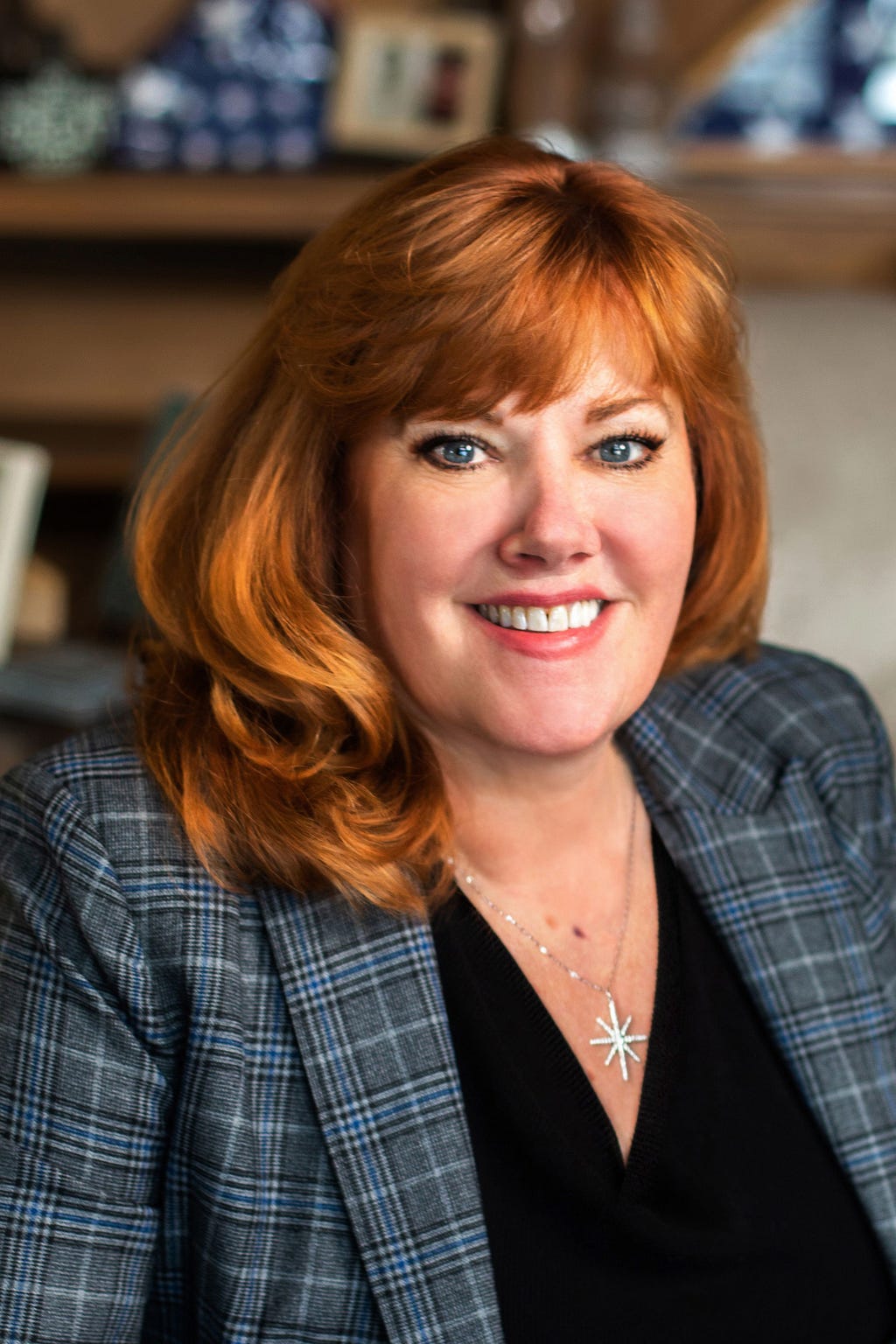
Tami Bonnell of EXIT Realty Corp: Giving Feedback; How To Be Honest Without Being Hurtful

A great boss empowers people. Being a boss is 10% input and the rest is encouragement, direction and whispering from the sidelines. When we were a young company going through a challenging time during the recession, Steve always seemed to share the right words at the right time. He and I had made a bet — which I lost — and he gave me the book, The Last Samurai, in which he wrote, “When you say you’re going to do something, it’s already done.” It was the smartest thing he could have done because his faith inspired me to keep my commitment.

I had the pleasure of interviewing Tami Bonnell. Tami is an internationally renowned speaker and 30-plus-year veteran in the real estate industry. She is an information junkie and is passionate about investing in people. Tami is an active member of the National Women’s Council of REALTORS®, NAWRB’s Diversity & Inclusion Leadership Council and was honored by STEMconnector® as one of its 100 Corporate Women Leaders in STEM (science, technology, engineering and math). Instrumental in building 3 major brands, Tami joined EXIT Realty Corp. International in 1999 and was appointed CEO in 2012.

Thank you so much for joining us Tami! Our readers would love to “get to know you” a bit better. Can you tell us a bit about your ‘backstory’ and how you got started?

I sold my first house when I was 13 years old. I had a job cleaning homes for a builder, and a REALTOR® made the mistake of causing a wall to be added between the dining room and the kitchen in one of the builder’s listings. As I was scraping the window and the parties were yelling, I was thinking, please make me invisible. After everyone stormed out, the builder slammed the door and put his fist through the wall. I jumped through the window and said, “I think you just hit a stud and broke your hand.” He told me to drive him to the hospital. I was obviously too young to drive but I drove him anyway and during the drive he told me how incompetent everyone was on the job. He later hired me and that’s how I started selling real estate.

I used to ride around with my Dad who was a builder and developer. I would plead with him to attend planning board meetings and watch how he operated. I used to love how he remembered people and what was going on in their lives. And every time we were in the car together, he would say, “Always watch for opportunities”. He probably said it to me 10,000 times in my life and it stuck with me.

I’ve always been curious about how things work. I’m a very systems-oriented person and strategic by nature. I found that I didn’t really like listing and selling real estate, so I entered the field of finance and the company I worked for started acquiring real estate companies. That piqued my interest. From there I went into franchise sales and negotiating and teaching mergers and acquisitions. That’s how I came across the opportunity with EXIT Realty. I started as a Regional Owner, then I became Vice President over the US the following year, President over the US the year after that, and in 2012, I became CEO.

What do you think makes your company stand out? Can you share a story?

Tami: EXIT Realty Corp. International is built on human potential. Our Founder and Chairman, Steve Morris, focuses on the best interest of our people. He created our unique business model, the EXIT Formula, which includes the opportunity to earn single-level residual income, so people are rewarded for the percentage of the company they help build. If you think about it, that’s a brilliant idea for any industry. What if everyone were rewarded for the percentage of their company they helped build so no one would be punching a clock, sitting on the sidelines and not participating? The EXIT Formula enables a culture where everybody has a vested interest in the success of the company.

My favorite thing Steve asks is, “Is it the right thing to do?” It touches me every time because it isn’t something you hear very often from businesspeople. And he even asked it during the worst recession since the depression. We’re a Canadian based company with a brilliant — probably the best — banking system in the world, but the majority of our people are in the United States, and during the recession, we were running out of money. Erika Gileo, our Chief Operating Officer, Steve Morris and I were talking on the phone about the significant challenges we faced, and all of us at the same time asked, “Who are we as a company?” Not, “Where do we need to cut staff? Whose paycheck do we have to cut? Where can we cut costs?”, but “Who are we as a company?” We are a company built on human potential and we needed to outsell and outthink our way out of this recession and in doing so, we didn’t lay off a single person at our corporate head office. I think that built the trust that you can see company-wide today. I could share stories from agents, brokers, regional owners, and almost everybody at corporate headquarters, but the trust stems from top down leadership; knowing who you are as a person, what your values are, who you are as a company and making sure that conviction spreads throughout the entire organization.

Can you share the most interesting story that happened to you since you started your career?

Tami: Long before my days at EXIT Realty, I was working for a gentleman named John Burchette and his company had a lot less money than I realized. I was in a position about two rungs higher on the ladder than my skillset warranted, so I had to learn my way into it. A couple of years into my employment there, my youngest brother was in a terrible accident. His car broke down on the highway in the passing lane. He had enough room to pull over and when he went to cross, a truck blocked his view of an oncoming RX7 and he was hit. He lost his leg and underwent 23 reconstructive surgeries and passed away as a result of complications suffered from the last surgery.

I lost my mother when she was young, and I became the matriarch of the family. I told John I was going to resign my leadership position or take leave of absence because I was needed at the hospital as my brother’s advocate. He had recently left the Marine Corps and was a single guy, so I felt responsible. John said, “Tami, you have always made me more money than I will ever make you because I’m a really good businessperson. You’re going to keep your title and your income. Take as long as you need, and when you have time, I’d appreciate it if you would do some homework for me (the library was close to the hospital).”

When I got to the hospital, a call came for me to the nurse’s station from one of the backers of John’s company asking how I was holding up. The backer was 90 years old and one of the coolest guys I’d ever had the privilege to meet. The hospital had been fighting with me to move my brother to a veteran’s hospital, and I told the backer that we were going to have to move him. The backer replied, “Your brother will not be moved and you will not be sleeping at the hospital any more. You will be going to a hotel that’s right around the corner and you don’t have to worry about a thing.” I didn’t understand. He replied, “Do me a favor. When you take a break to get some fresh air, look at the top of the building.” I went outside and looked up to see his name emblazoned on the side of the building. I never knew he was one of the benefactors of the hospital. I decided right then that was the caliber of person and kind of leader I wanted to be.

Can you share a story about the funniest mistake you made when you were first starting? Can you tell us what lesson you learned from that?

Tami: I was working for a very conservative company at the time selling franchises and negotiating mergers and acquisitions, and the opportunity arose for me to sponsor a speaker for the board of REALTORS® in a market we wanted to enter. On the weekend prior to the event, a hairdresser friend asked if I would model for a hair show. She told me they would cut my hair, maybe color it, nothing too unusual, so I agreed. This happened at the time when asymmetrical hairstyles were in fashion and much to my surprise and dismay, they completely shaved off on one side of my hair and left the other long. Not exactly conservative!

I had arranged for the well-known personality, Loretta LaRoche, to speak, and on the morning of the event she called to tell me she had to go to the hospital for emergency surgery and wouldn’t be able to attend. Disaster! I wasn’t a public speaker at the time, and I was a complete basket case. From time to time my Dad would swing by my house at 7am for a cup of coffee. That day he found me pacing the floor, freaking out over the speaker canceling. This was the first time they had ever allowed a company to come in and sponsor a speaker and it was an unbelievable foot in the door. My Dad listened, paused, and said, “I feel really bad about that, but I don’t know if you know it or not, I think your haircut’s crooked.”

I ended up being the speaker that night. I introduced my haircut and shared my story. I went on to talk about the top things the audience could do to increase their business and awareness in the marketplace. The evening was a success. In the weeks and months to come, more people called me for advice and I sold more franchises. Having the chance to speak that night confirmed in their mind that I knew what I was doing. The lesson is, always be prepared because sometimes mistakes open up new opportunities.

What advice would you give to other CEOs and business leaders to help their employees to thrive and avoid burnout?

Tami: Get to know your people. Put yourself in their shoes and know them on a personal level. Find out their dreams and help them aim for the stars, not just professionally, but personally, too. Find out what really make them tick. Use the simple acronym, FORM, to guide you: F-family, O-occupation, R-recreation, and M-motivation. People leave leaders, they don’t usually leave companies. They really want to matter, so show them they do.

How do you define “Leadership”? Can you explain what you mean or give an example?

Tami: Leadership is influence. My job as a leader isn’t to turn the flashlight on me. My job is to highlight others, so I need to empower them. If I can catch them doing something good and I can add value to their life, they will feel safe and they will constantly want to grow.

People become what we tell them they can be. Often, they simply haven’t been exposed to an opportunity to learn that. A leader’s job is to be a positive influence, add value and, more than anything, empower people. Empower doesn’t mean enable. One of the biggest mistakes I see leaders make is they enable people by doing the work themselves instead of showing their people how to do it. Empowering people provides opportunities for them to really shine and discover their gifts.

In my work, I often talk about how to release and relieve stress. As a busy leader, what do you do to prepare your mind and body before a stressful or high stakes meeting, talk, or decision? Can you share a story or some examples?

Tami: Every day I practice The Miracle Morning™ routine based on Hal Elrod’s book of the same name: Silence, Affirmations, Visualization, Exercise, Reading and Scribing (SAVERS). This routine sets me up for success regardless of what the day might hold.

Before a tough meeting or difficult conversation, if time allows, I ask myself effective questions and sleep on it so I’m not having that conversation in an emotional state.

Every day, before I leave the house or hotel room, I take 120 seconds to close my eyes and visualize how I want the day to unfold. For instance, if there is a stressful meeting on my schedule, I visualize the meeting’s successful conclusion and all parties in agreement. Before I walk into the meeting, I take a couple of deep breaths to slow my pulse. My day typically evolves the way I visualize it.

Several years ago, I walked into my office and my assistant looked up from her work and said, “Sorry about Rhode Island.” A little further in, someone else remarked, “Sorry about Rhode Island”, and then during a phone call with our corporate offices, someone there said, “Sorry about Rhode Island”. To all of them, I replied, “I don’t know what you’re talking about. Rhode Island is closing,” to which they responded, “You’re good, but you’re not that good”. I had been negotiating a contract for the sale of the subfranchisor rights for EXIT Realty in Rhode Island and, while I was away, faxed to my office were nine pages of new conditions for the deal to close. Everyone in my office believed this to be in insurmountable hurdle, but I knew better. Because I had taken the time to get to know the potential buyer well, I also knew his two biggest concerns: one, if something happened to him, his wife would be taken care of, and two, he wanted to leave a legacy. All the other conditions had been added by his lawyer.

I invited the buyer to my office and before our meeting, I visualized our being able to successfully get to the heart of the matter. We met the next day and light-heartedly worked through the clauses one-by-one, dismissing most of them and modifying others to address his core concerns. We closed 10 days later. I believe this result was achieved because I remained calm and didn’t let my emotions interfere.

Ok, let’s jump to the core of our interview. Can you briefly tell our readers about your experience with managing a team and giving feedback?

Tami: I believe that strong leaders are those who humanize and personalize interactions with people as much as possible. I always try and give people a way out and not paint them into a corner. If they’ve done something wrong, I ask, “Honestly, how do you feel this is going? How do you feel about your performance? How do you feel about your effort?” Often they will open up about a distraction in their personal life or other concerns.

We conduct a DISC personality profile assessment on all of our headquarters personnel and those in regional and brokerage ownership. DISC is a common language we speak at EXIT which helps us understand how people are likely to react in various circumstances and deal with challenges. So, when I’m about to give feedback on major issue, I will refer to the person’s DISC profile so I can relate to them from their perspective. For example, an “S” personality type (steady and stable) wants to feel secure so I am careful not to give them the impression that their job is at risk if I’m simply helping to correct them.

This might seem intuitive but it will be constructive to spell it out. Can you share with us a few reasons why giving honest and direct feedback is essential to being an effective leader?

Tami: People will stay where they feel valued and are growing. They truly want to matter and be part of something better. If they don’t feel that way, they will leave. A plugged-in leader who wants to support that growth might say, “I can see you reaching your goal but here are a few things you need to work on in order to get from here to there.”

A conversation I once had with our Founder and Chairman, Steve Morris, illustrates this point. At the time, I wasn’t doing a lot of public speaking, and the speaking I did was educational in nature. Steve told me that although he believed I was an expert in the field of franchise sales and building companies, when it came to public speaking I gave too much information and I sounded like a college professor. His comments came during a year I was doing incredibly well business-wise for us. I had sold 50% of our regional rights by population in the entire United States, and I was feeling good about what I had accomplished. So, when Steve told me I had to work on my public speaking, I felt frustrated and aggravated. I flew home, slept on it, and the next morning I asked myself, “If I’m not good at it, how do I get good at it?” I read books on how to deliver speeches, I watched films and talks by people whose presentation styles I admired and I tried to learn from the experience. And I practiced — a lot.

A year later, I was offered $10,000 to speak for an hour. I didn’t charge them because it was speaking on behalf of EXIT, but it was so rewarding to realize how far I had grown. I didn’t think it was possible for me to respect Steve more, but through this process, I did. He knew where he wanted the company to go, and he had a vision for where he wanted me to go, too. He knew that my underdeveloped public speaking skills would get in our way if I didn’t make a shift. It was a great exercise for me in both skill building and humility.

One of the trickiest parts of managing a team is giving honest feedback, in a way that doesn’t come across as too harsh. Can you please share with us five suggestions about how to best give constructive criticism to a remote employee? Kindly share a story or example for each.

Tami: Our Corporate Head Quarters is in Canada and we have many people who work remotely across the United States. Sometimes they feel like they’re on an island by themselves, so it’s very important for us to stay in regular contact with them, not just when we’re confronted with a challenging situation.

First, there is nothing better than being live and in person, so if you can travel to deliver the feedback, do so. Failing that, use Zoom, Skype or another video conferencing platform where you can see each other. I can’t emphasize strongly enough how important this is. Acknowledge that you understand how difficult it is to hear feedback from a distance. A comment like, “I wish we could be sitting together in person having this conversation, but I feel like it’s important enough to address it now,” can go a long way to start the meeting on the right foot.

Second, don’t paint them into a corner. Ask, “How do you feel this is going?” Help them to self-realize where they made the mistake, caused the concern or didn’t give the project their full effort.

Third, get to know people. Tell them, “I care enough about you and the success of our mission for us to have this conversation.” They will believe you if you’ve taken the time to get to know them and celebrated their successes along the way.

Fourth, it’s difficult to give effective feedback by email, but if you must, keep it short and sweet. Don’t use a lot of upper case text or exclamations marks which can imply negative emotion and may cause your message to be misinterpreted.

Most of the time they’ll admit they were rushing, overbooked or emotional. If they’ve lost their cool with someone, it’s important to address it right away. So, fifth, be sure to restate what is and isn’t acceptable and close the meeting with something like, “This isn’t the person I see in you. Let’s get back to that person.”

Can you address how to give constructive feedback over email? If someone is in front of you much of the nuance can be picked up in facial expressions and body language. But not when someone is remote. How do you prevent the email from sounding too critical or harsh?

Tami: If you must address the situation by email and not video conference, then keep it as simple as possible. I always start with something about the person that I appreciate. Even if the project didn’t go according to a plan, I recognize their effort. I remind them of the importance of the mission and what we’re trying to accomplish as a whole.

In your experience, is there a best time to give feedback or critique? Should it be immediately after an incident? Should it be at a different time? Should it be at set intervals? Can you explain what you mean?

Tami: Right away and in person is best. The only circumstances under which I deliver feedback later are when I have to give my response careful thought or if I have to calm down.

If the situation is volatile or emotional, rather than addressing it right away, I schedule an appointment for the next day because the other person is likely emotional too. The delay gives us a chance to sleep on it. I ask the other person to come to the table with some solutions, and often this helps them to grow. I start the meeting by saying, “We want to come to a solution today. We’re not going to get personal; we just want to find a solution.”

How would you define what it is to “be a great boss”? Can you share a story?

Tami: A great boss empowers people. Being a boss is 10% input and the rest is encouragement, direction and whispering from the sidelines.

When we were a young company going through a challenging time during the recession, Steve always seemed to share the right words at the right time. He and I had made a bet — which I lost — and he gave me the book, The Last Samurai, in which he wrote, “When you say you’re going to do something, it’s already done.” It was the smartest thing he could have done because his faith inspired me to keep my commitment.

You are a person of great influence. If you could inspire a movement that would bring the most amount of good to the most amount of people, what would that be? You never know what your idea can trigger. 🙂

Tami: I would love for everyone to be exposed to a vision of who they could become. We’re all born under the same sky, but we’re not all born in the same country. We don’t all have the same opportunities.

I’ve spoken to more than a thousand Girls Scouts during the pandemic and I’ve asked all of them how many have met a female CEO. Not one single girl has raised her hand. That really struck a nerve with me. It’s not that everyone necessarily wants to become a CEO, but the key is to open their eyes to the fact that they could become a nurse, or a doctor, or a teacher. They need the exposure to it to be able to see it for themselves. I believe this would help us grow and be so much more connected around the world.

Can you please give us your favorite “Life Lesson Quote”? Can you share how that was relevant to you in your life?

Tami: Fear is a feeling, not a fact. Every time I’m afraid to do something — emotional, breaking new ground, speaking on a major stage — I remind myself that fear is a feeling, not a fact. I remind my kids and our people of this, too. I remind them how great they’re going to feel when they come through the fear to the other side.

How can our readers further follow your work online?

Visit tamibonnell.com or joinexitrealty.com.


Tami Bonnell of EXIT Realty Corp: Giving Feedback; How To Be Honest Without Being Hurtful was originally published in Authority Magazine on Medium, where people are continuing the conversation by highlighting and responding to this story.

Janna Willoughby-Lohr of Papercraft Miracles: “They Told Me It Was Impossible And I Did It Anyway”

I would inspire a movement of interconnections. When people see how their lives are directly affected by the action or inaction of others and vice versa, I believe that there is hope for a better world. Our society has developed a “not my problem” attitude. In the words of Denis Leary, “I didn’t break it, it was this way when I found it.” Whether this relates to caring for the environment, improving social programs to lift up those in poverty or directly combating racism and white supremacy, the vast majority of our world chooses to stand back and watch instead of taking action.

I had the pleasure of interviewing Janna Willoughby-Lohr, of Papercraft Miracles. While in college in 2003, Janna came up with the idea of a business that made handmade paper and books that ALSO made people feel special. This was around the time that social media and e-books became popular, and much of the world started going online. Many people told her she was completely insane to start a stationery business at that time. They told her “Everything is moving online!” and “Everything is gonna be on LiveJournal!” (Actual quote from a nay-sayer). But Janna knew that her dream was real. She knew that the tactile feeling of the written word has an impact on the reader. She knew that messages conveyed with the physical act of writing letters and journaling would never go away. Somehow, she knew that people would come back to the paper and pen, but in a much more meaningful way. Now that the world has adopted online connection, people are figurately (and maybe even literally) starving for ways to connect physically. Janna believes that people need this type of connection to thrive, and that’s why Papercraft Miracles has been so successful in creating meaningful paper gifts (that are also biodegradable and made from truly sustainable products).

Thank you so much for joining us! Our readers would love to ‘get to know you’ a bit better. Can you tell us your ‘backstory’?

I always knew that I wanted to make art, but I didn’t want to be a starving artist, so I created my own major in college bringing business and art together. It was during that time that I learned to make paper and books, and I came up with the idea for my company. It was hard to jump right out of college into being a full-time artist, even though I was technically prepared to do it. The renaissance in Buffalo wasn’t quite happening yet and I didn’t have the social connections to really make it work. I ended up working as an assistant manager at a gas station for 5 years, then working as a photo editor for an online jewelry company for 5 more years after that, and just making and selling art in my free time. It did feel, at times, like I would never actually get to the point where I could do what I love full-time, but I kept at it anyway.

And though it felt like I was wasting my time doing something that wasn’t my passion, I learned a lot about running a business during those 10 years that I wouldn’t have learned if I didn’t spend them helping run someone else’s business. I learned about management at the gas station, running reports, doing inventory, managing employees and such. At the jewelry company, I learned how to take and edit photos to sell products online and that experience has proved very valuable in creating a successful business for myself. So, you never know what you might be learning today that could help you in the future.

The most prolific time in my life for learning to create through struggle came while I was a junior at Warren Wilson College. My mom died on Friday the 13th and then 4 months later (on what would have been her 55th birthday) my dorm burnt to the ground with all of my stuff in it. Poof! Toast! Everything. Yes. Everything. I lost all of my journals from my whole life, all of my artwork and supplies, and everything my mom had given me in the last 5 years of her life. And then they cut my financial aid because I couldn’t put my mom on the FAFSA. Almost overnight I went from being a carefree kid to a totally unprepared adult. I had inherited a house that needed a ton of work that I couldn’t afford, and I had a year and a half left of school that I couldn’t afford. I kept thinking…where’s the cancer and the bus that’s coming to hit me…cause I’m ready.

Three days after the fire, I was sitting with my roommate and I just looked at her and said, “Dude…all our s**t burnt up.” And we immediately started laughing, like that roll on the ground because life is so effing absurd kind of laughing. It was all funny. It had to be funny or I was not going to survive. The next day I began to create again. My whole life I had kept journals and written poetry and made art to try to capture who I was inside. When all of it was gone, I suddenly realized that I had no idea who I was, and I had to start over again. I had always been afraid of losing my things and after it actually happened, I saw that it was the most freeing thing to get a chance to create a whole new life for myself from scratch. It was right after that when I really started to focus on creating my business because I knew that life was short, and I didn’t want to end up like my mom who loved to create but never found a way to make a living doing what she loved. That’s why I picked the name Papercraft Miracles. This business saved me when I literally had nothing. It is and has always been my miracle; the sparkle in the darkness. I create because I can, because I’m able. Not because anyone is going to make me.

I somehow managed to continue school and keep my house from falling down and I graduated on time with a 3.94 GPA. No clue how I did any of that. The whole time was a blur. After graduation, I bought a small papermaking kit and a big cutting mat from Michael’s Arts & Crafts, set up a table in my attic bedroom and got to work creating some inventory. I knew the basics of starting a business, but I really wasn’t prepared yet. I also still had a house that needed lots of work that I couldn’t afford, and I ended up taking the job at the gas station because I really needed steady paychecks and health insurance. I worked my crappy job with a smile, all while wearing a button on my uniform that said, “Damn straight I’m a college grad. Paper or plastic?” I got promoted quickly and got good enough at my job to negotiate a schedule that would allow me to have my evenings free to do poetry readings and play music out around town and I slowly built up my social network.

The more places I went, the more people I met, the more people I told about my little business making books, the more doubt I heard from people. I even had a guy working the counter at Barnes & Noble question why I was buying a copy of the unabridged version of the Oxford English Dictionary. “Why would you buy a dictionary? Don’t you have the internet?” From the guy WORKING at the bookstore. I told him, “You can’t just flip the pages of the internet looking for words. You have to know what you want to look up.” He stared at me. “And when the world ends, I can burn this s**t to stay warm.” He stared at me some more. But I was not deterred. I kept telling more people about my dream of making paper and books that make people happy.

I started having friends old enough to get married and have kids, so I started making their guest books and invitations as my gifts to them because I was too broke to buy stuff off their registries and I knew I could make something they wouldn’t forget. And it worked. People at their weddings saw the things that I had made, and word started getting around that I was creating some cool stuff.

I had a friend offer to help me open up a venue for poetry, music, and art, and I jumped at the chance. We named it Bon Vivant (loosely translated as an appreciation for the good things in life). I was in business! I now had a place to foster creation in my community and I was so excited! I worked so many late nights getting it ready and setting up events and the creativity was just pouring out of my veins. We opened on the first day of the Infringement Festival 2008 and we were booked solid for months.

At the same time, I had an offer to become a teaching-artist and to teach poetry to middle school kids. I had a problem with saying no to opportunities, so I stretched myself very thin. I was never home and hardly ever got more than 4 hours of sleep. Right in the middle of all of that, my brother was diagnosed with leukemia. He found out on a Friday, started treatment on Monday. By Wednesday he was in a medically induced coma because he couldn’t breathe without a ventilator. I was already beyond overscheduled and all of a sudden, I was spending every free second I had in the waiting room at Roswell waiting to see if he would come out of his coma. And then the city zoning board shut my venue down. You know the cancer and the bus coming to hit me I talked about earlier? It was here.

Two weeks later, my brother died. Feeling really lost and searching for something distracting I retreated to the darkness and spent my free time on MySpace, listening to music by people I knew. An IM pops up from Bryan Lohr, the man that had provided furniture for my arts venue. “Hey, how are you?” I unloaded, “I’m not good. My brother died last week. Not sure what to do now.” He wrote back, “I just got laid off, so I have lots of free time if you want to hang out.” So, we made plans to play Scrabble. Within a few weeks we were creating plans for our future. When I told him about my paper and book business and he said, “That’s cool.” No judging. No pessimism about the digital future. Just support. And he’s believed in me ever since.

In the next decade, we joined a band together, I got a new job at the jewelry company, we got married, sold my house and bought a different building. This new one had space for us to live, a room to play music together, space for each of us to have a studio and a space for me to make paper for real. We had our first son in 2015 and shortly after that I quit my jobby-job to run Papercraft Miracles full time and stay home with our kids. We now have two little boys and my studio has grown into a 2-story solar-powered workshop with a fully functional papermaking studio in the basement. All because we took a chance on creating something. We trusted that we could create a life together that would allow both of us to keep creating successfully. We’re 10 years into our 15-year plan and things are moving right along in that direction. The goal is to get to the point where he can quit his jobby-job too, so he can also pursue art full-time.

Quitting my job to stay home with my kids and run my own business was simultaneously the easiest decision and the hardest transition I’ve ever had to make though. I had to adjust my perspective on my business which had always been my fun side-gig where if I made money, cool. If not, I made art and that was also cool. Now it was my career and I had to get serious about it. But I kept creating, I kept asking for help. I kept telling people about my dream. And here we are, 2.5 years later, and people are finally starting to see that I wasn’t crazy to want to make paper all those years ago. I was just ahead of my time…seeing the future? Maybe. Believing in myself. Fo’ sho.

Are you working on any new or exciting projects now? How do you think that will help people?

Yes! I just started a new podcast called “Reach the Stars Podcast.” It is a collection of conversations with cool people who do cool things. Each week we’ll bring inspiring stories of persistence, passion and purpose. I have dreamed of having a show of my own for years and because of my lack of connection during the pandemic, I knew that now was the right time to dive in. I know that my own story of overcoming tragedy and continuing to pursue what I love in the face of struggle has helped to inspire others over the years. I also know that one of my biggest assets in my life are the amazing people I know and love. I find so much inspiration in sharing stories with other people and this show is my way of spreading that excitement on a wider scale. As I say in the trailer for the show: “A single interaction has the power to change your life forever. This is a place for the stories of those moments — stories of pursuing dreams, of overcoming tragedy and failure, of coming back to life after so much of what feels like dying, of continuing on with only a vision as a map. This is the place where those moments live on. Come sit by the fire. Look up at the stars…and be forever changed too.” Check it out at www.papercraftmiracles.com/reachthestarspodcast (and on all major podcast platforms).

In your opinion, what do you think makes your company or organization stand out from the crowd?

Papercraft Miracles was founded on my love of connecting with people and sharing stories, and making those stories come to life in tangible ways. Our ability to create handmade paper art that conveys a sentiment that is often so hard to capture is what makes us different. We make meaningful and unique gifts that make a moment unforgettable.

Ok, thank you for that. I’d like to jump to the main focus of this interview. Has there ever been a time that someone told you something was impossible, but you did it anyway? Can you share the story with us? What was your idea? What was the reaction of the naysayers? And how did you overcome that?

There’s something about handling paper that sends me to the moon and brings me back to earth at the same time. In the 18 years since I came up with the idea to start a business making paper and books that make people happy, I have heard a whole lot of “That is CRAZY!” from a whole lot of people. When I first started out, social media didn’t yet exist and neither did e-commerce, but the world was becoming more and more digital every day. I told people that I wanted to make handmade stationery and journals and my classmates said, “Psssh! No one is going to write in a paper book again! Everyone is going to be on LiveJournal!” And that was the trend for several years as the world of e-vites and e-books came to life. But I just kept on working toward my dream of having this company because I knew that the physicality of writing on paper had a different feel than typing on a screen. I knew that there was nothing that could take the place of that feeling. As the world of social media and smartphones exploded a few years later, I noticed people becoming more and more disconnected from each other. And with this separation came a deep sadness and a constant need to boost our moods with “likes” and intangible attempts at connection. It didn’t happen all at once, but at some point, around 2016, people started to trend back towards appreciation of physical connection. It started to be “cool” to have a unique planner or a journal in your bag. People started to realize how special a real handwritten letter can make you feel when it shows up in your mailbox when so much of their communication was so impersonal. And then the world of weddings took a giant swing back towards fancy paper invitations instead of e-vites. And here I was, still promoting the power of paper to change people’s perspectives on life just like I had quietly been doing for years. None of the negative things anyone ever said to me about creating a business making paper and books ever deterred me from my passion. I knew that nothing could replace the way handling paper makes me feel.

In the end, how were all the naysayers proven wrong? 🙂

LiveJournal is history and I’m still making paper, and I will keep doing this work for the rest of my life. Connecting people is going to get more and more important as the effects of our lifestyles on the earth keep pushing people apart.

None of us are able to achieve success without some help along the way. Is there a particular person who you are grateful towards who helped get you to where you are? Can you share a story about that?

I couldn’t be where I am right now without my husband, Bryan. He integrated my dream into our reality and has always been supportive of me pursuing my passions. We purchased a building that used to be a department store in the 1890s. We converted part of the building into my storefront and papermaking studio and we live above it with our two boys. Whether it was flying to Indiana and driving a truck back full of equipment I bought or putting our kids to bed alone night after night while I am working on growing this business, he’s been there for me. I can’t lie and say it’s all been easy on him or on our relationship, but he knew from day one how important it was to me to share my love of creating with the world. I am so grateful that he agreed to come along for the ride.

It must not have been easy to ignore all the naysayers. Did you have any experiences growing up that have contributed to building your resiliency? Can you share the story with us?

My childhood was really different from a lot of people’s experiences because my parents were still married to other people when I was born. A situation that could have been disastrous for me, turned out to be an extraordinary way to grow up. Shortly after I was born, both my biological parents got divorced but didn’t get together with each other. My mother’s husband signed his name on my birth certificate and legally became my father anyway. Two years later, my birth father got remarried and he and his wife came back into my life. I had five parents throughout my life, all of whom had been divorced at least once, so I got to learn so much about just how different people can be. Not to mention that I lived with three separate families throughout the course of a week. Monday through Friday with my mom and my older brother, Friday night and Saturday with my legal dad and his family, and Saturday night and Sunday with my biological father and his family. I grew up with seven brothers and sisters but I’m technically an only child and somehow, I ended up being the oldest at one house, the middle child at another and the baby at the other. All of these experiences, living, learning and growing with so many different people, has essentially given me three lives in one. I learned how to adapt to changing situations, how to make a place for myself and also how to be really independent. I have always been the link that ties all of my families together, kind of like a lone traveler going between separate worlds.

Based on your experience, can you share 5 strategies that people can use to harness the sense of tenacity and do what naysayers think is impossible? (Please share a story or an example for each)

First, would definitely be something that my mom told me when I was being bullied at school by kids who were making up stories about me. She told me to remember that people are entitled to their own opinions, but they’re also entitled to be wrong. As long as you believe in your dream and you know what you’re doing is right, it doesn’t matter what anyone else says.

Second, remember why you want to do the impossible in the first place. Is it to help people solve problems? To fix something that desperately needs fixing that no one else seems to be able to fix? Keep your focus on the reasons you do what you do, and the naysayers will just fade into the background. Every single thing that has ever been accomplished in human history started as something that someone said was impossible. And now look, we fly around on airplanes with tiny computers in our pockets every day.

Third, there are plenty of people who will consistently find reasons that something won’t work without putting any effort into figuring out how it could work. People who aren’t willing to do the work aren’t worth your time or energy. As they say on one of my favorite podcasts, Being Boss, “Do the work!” and you’ll be the one on top. Focus that energy on finding ways that things can work and filtering out all the rest. Negativity is even more contagious than positivity and it can be hard not to get sucked into the downward spiral of it. Surround yourself with other “possible people” — others who believe, who have goals and want more out of this life. They will boost your mood, help you brainstorm, and will buy you a drink when the haters get you down.

Fourth, being a female entrepreneur inherently comes with a lot of naysaying, especially from men. I have repeatedly had male business owners tell me that it isn’t possible to make a profit in my business, but the only years I didn’t make a profit are the years I invested my earnings back into my business, so it could grow without taking loans or selling off pieces of my company in exchange for financing. In the face of this kind of blatant discrimination and stereotyping of my abilities, I simply prove them the hell wrong. When they say I’ll never make a profit, I tell them I already did at 22.

Fifth, and probably most importantly, be your own biggest fan. If you don’t wholeheartedly believe that what you’re working towards is possible, then no one else will either. Make vision boards with everything that you are working to achieve and hang them where you can see them every day. Tape little notes on your bathroom mirror that say, “YOU’RE KILLIN’ IT!” Be consistent about praising yourself and your accomplishments to yourself and also to others. It is strange that in our society, men are praised for being confident but for women, it’s a detriment. But I say, buck that trend, and be proud of what you’re doing. Your excitement will be infectious and other people will happily jump on board once they get a taste of what confidence feels like. Tell yourself (and everyone else, for that matter), “I’m not conceited. I’m convinced.” It makes all the difference in the world.

And always remember, “Haters gonna hate. Potaters gonna potate.” Laughing at them is way more fun than crying.

What is your favorite quote or personal philosophy that relates to the concept of resilience?

I know that my love for creating comes from my mother. She was such a creative person. But my drive to work hard and push myself also comes from her influence. I remember on the first day of kindergarten, they wanted me to color in a dinosaur. By this point, I was already writing poems and learning cursive, so dino coloring? Hella boring. I came home and said, “Mama! Kindergarten is BORING!” I’ll never forget her response, she said “If you’re bored, you’re not trying hard enough.” That made me stop right in my tracks. She followed up with, “Do it because you CAN, and not because anyone is going to make you.” This advice has stuck with me and I think daily about what things I can do in this world because I am ABLE to not because I’m forced to. I believe that this one little phrase drives my creative entrepreneurial energy. I don’t need a boss telling me what to do, I just tackle what I’m able to do each day because I can. I know it sounds hokey to have a “can-do” spirit but I sure as hell do because you have to create despite the struggles of life.

You are a person of great influence. If you could inspire a movement that would bring the most amount of good for the greatest number of people, what would that be? You never know what your idea can trigger.

I would inspire a movement of interconnectedness. When people see how their lives are directly affected by the action or inaction of others and vice versa, I believe that there is hope for a better world. Our society has developed a “not my problem” attitude. In the words of Denis Leary, “I didn’t break it, it was this way when I found it.” Whether this relates to caring for the environment, improving social programs to lift up those in poverty or directly combating racism and white supremacy, the vast majority of our world chooses to stand back and watch instead of taking action.

That is one thing that I think the global pandemic has helped to bring to light, just how much we all depend on each other to keep this society going. We are literally seeing with our own eyes how our actions can either protect others from spreading this virus, or our inaction can fuel the fire across the globe.

For the first time in my life, I saw people being willing to sacrifice their livelihoods, their homes, their businesses, their mental and physical health and more, for the sake of those who are older, sicker and weaker. I’ve never seen anything that looked more like love than that. I saw neighbors reaching out to tape gift cards for groceries on the front doors of those who couldn’t afford food. I saw groups on Facebook springing up to share resources with those who needed them. I saw the artists and crafters working night and day with blisters on their fingers to make masks when our society failed to provide us with the things we needed to survive. Watching people come together in that way gave me hope that we could learn to see how we are all interconnected. When one of us is harmed, we all bleed.

I wrote a little poem about this idea and would love to share it with you:

FOREST WISDOM

Things in the forest

have a certain way

of growing together

so they depend

on each other

to survive.

We should all live

like things

in the forest do —

together.

Can our readers follow you on social media?

Yup!

Business:

www.instagram.com/papercraftmiracles

www.facebook.com/papercraftmiracles

www.twitter.com/papermiracle

Podcast:

www.instagram.com/reachthestars.podcast

https://www.youtube.com/channel/UCD-Jz9RgAwJGfd0x_vm-Cwg

Poetry/Music:

www.instagram.com/mcvendetta5

www.bloodthirstyvegans.bandcamp.com


Janna Willoughby-Lohr of Papercraft Miracles: “They Told Me It Was Impossible And I Did It Anyway” was originally published in Authority Magazine on Medium, where people are continuing the conversation by highlighting and responding to this story.

Interior Designer Tamara Day: 5 Things You Can Do To Help Your Living Space Spark More Joy

I believe that kindness and acceptance can change everything. Choosing to love even what you might not understand is the start to making a difference in the world. You never know what struggle someone might be going through and choosing kindness and love and acceptance makes all the difference.

As part of my series on the “5 Things You Can Do To Help Your Living Space Spark More Joy”, I had the pleasure of interviewing Tamara Day

Interior designer Tamara Day, is the host of HGTV’s hit show “Bargain Mansions” and owner of Growing Days Home, a 2,500 square foot retail store, showroom and design studio in Prairie Village, Kansas. As a busy wife and mother of four, Tamara’s “laid back luxe” style is synonymous with blending glamour, comfort and family into the look and function of the spaces she designs. On Bargain Mansions, Tamara brings old Kansas City mansions back to life with modern design, function and style — giving these large, neglected homes a second life for families to enjoy for years to come. She has redone everything from great big houses to little homes, transforming them into a beautiful blend of original character and modern amenities.

Thank you so much for joining us in this series Tamara! Before we dive in, our readers would love to learn a bit more about you. Can you tell us a story about what brought you to this specific career path?

I’m thrilled to be joining the series! Growing up working on my family’s farm in the Midwestern plains of Salina, Kansas, my passion for all things design and restoration came at an early age. I inherited my “do-it-yourself” attitude and hands on skills from my father and Bargain Mansions co-host, Ward Schraeder, while helping him maintain and refurbish the homes we lived in growing up. I never thought that the years of hanging sheetrock as punishment for missing curfew would eventually lead to a career of transforming run-down properties into gorgeous dream homes.

In 2008, my husband and I bought our first true “bargain mansion” — a neglected 5,000+ square foot 1980’s foreclosure with a lot of hidden character that we transformed into our forever family home. We originally planned to enlist the help of hired contractors for the renovation but the economic crash of 2008 left us with little wiggle room financially and caused a change of plans. With my husband working fulltime, I was chasing after three toddlers around-the-clock, and I decided to take on the project myself. I rolled up my sleeves with a baby strapped to my back and the others crawling around the playpen, and poured my heart into our home working 12-hour days for months. From sanding down floors to tearing down rotting walls and wallpaper, I did it all.

Sticking to a tight budget when it came time to decorate and furnish our home, I visited local estate and garage sales to seek out diamonds in the rough. I purchased a combination of old and new furniture and décor pieces that I would then breathe new life into by sanding and painting them in our driveway to fit my vision. Long after I finished furnishing our home, my newfound passion for restoring furniture landed me a space at our local market where I sold my specially curated pieces. Eventually I outgrew the space and relocated from the market to open houses at our home where over 1,000 people would visit in a single weekend to walk through and buy anything they saw on the first floor. This is where my interior design, furniture, décor and lifestyle brand, Growing Days was born — a clever play on my name, thriving businesses and growing family.

In 2013, with a new baby making her debut, I decided to take a break from selling vintage furniture to stay at home with my four children. My loyal Growing Days shoppers eventually came calling in need of my interior design and home renovation expertise. I started small, taking on a few clients at a time, however I eventually found myself with yet another rapidly growing business, in full-service home renovations.

In 2019, I opened Growing Days Home, a 2,500 square foot retail store, showroom and studio in Prairie Village, Kansas. Expanding into retail allowed fans and shoppers to visit from all of the country or order online to take home a piece of my style. Today, in addition to selling furniture, accessories, home furnishings, original art and much more, Growing Days Home offers an e-design service, which allows clients to virtually work with me and my team to custom create a design at a fraction of the time and cost of a traditional in-home consultation. We work with just about any room, style, and budget to help clients select furniture, accessories and artwork, and decide the perfect placement.

My career as a designer was kind of a ‘take me by surprise, little by little’ path. I always loved design and building things, but I didn’t know it was a career path that I could follow. As I got older and a little wiser, I started turning my passion into a business and before I knew it, I was living my dream. You never know where life will take you.

Can you share the most interesting story that happened to you since you started this career?

Without a doubt one of the most interesting and exciting things that’s ever happened to me was being contacted by an HGTV producer who wanted to make a TV show about what I was doing. I’m still blown away.

Can you share a story about the funniest mistake you made when you were first starting? Can you tell us what lesson you learned from that?

Oh goodness, just one? There were so many mistakes along the way, but I like to think of them as learning opportunities. Some of the most difficult situations have led to the most growth in my business. One of the funniest things that’s happened in a while was when my dad and I were cleaning up a fireplace and he got a bit too aggressive with it and the entire thing came tumbling down! It was the only time I have ever been bleeped on TV! It was truly an oh s%&^ kind of moment that scared us both.

What are some of the most interesting or exciting projects you are working on now? How do you think that might help people?

I have so many fun projects happening right now. From the six houses that I’m renovating around Kansas City for the next installment of my TV show “Bargain Mansions” to client projects through my design company, Growing Days there are so many exciting projects and even a few top-secret projects as well. I hope that through my design, people are inspired and realize that great design doesn’t have to be out of reach — it can be attainable but aspirational all at the same time. Never be afraid to try something a little bit outside the box. That’s when really good design becomes great. So just go for it!

Can you please give us your favorite “Life Lesson Quote”? Can you share how that was relevant to you in your life?

My favorite life lesson quote is “perfection is the enemy of done.” Just like with great art, sometimes you can overthink design. Sometimes walking away and letting something be a little imperfect is actually exactly what the design needed.

None of us are able to achieve success without some help along the way. Is there a particular person who you are grateful towards who helped get you to where you are? Can you share a story about that?

There have been so many people along the way that have helped in my career, from great designers that have inspired me, to friends that have supported me, but at the end of the day without my mom and dad teaching me everything I know, I wouldn’t of made it anywhere. My dad taught me everything I know about construction and my mom taught me everything I know about being a mom and between the two of them, I learned how to do both very

Thank you for that. Here is the main question of our discussion. What are your “5 Things You Can Do To Help Your Living Space Spark More Joy” and why. Please share a story or example for each.

Five things to help your living space spark more joy… what a fun question. I like to say there’s a fine line between a collector and a hoarder, and I like to walk that line very carefully.

-Every room should have a little bit of sentimental value. Whether it’s an heirloom handed down from family, a plant that you’ve been nursing and caring for years, or that special something that you saved your pennies to purchase, it’s important to have something that you consider valuable.

-To me, being comfortable in a space equals joy. I am known for creating a “laid back luxe” style, which is synonymous with blending glamour, comfort and family into the look and function of the spaces I design. A couch you can curl up on or a blanket to wrap up in definitely makes me happy.

-Books, books, and more books! Every single room should have books. They tell the story of your interests, they add color and personality to the space and they’re a really great way to display a fun accessory that you love.

-Sunlight through a window.

-A little bit of a mess in every room means that the people I love live here. Even though it may not be perfect, that room means home which to me equals joy.

You are a person of great influence. If you could start a movement that would bring the most amount of good to the most amount of people, what would that be? You never know what your idea can trigger. 🙂

I believe that kindness and acceptance can change everything. Choosing to love even what you might not understand is the start to making a difference in the world. You never know what struggle someone might be going through and choosing kindness and love and acceptance makes all the difference.

We are very blessed that some of the biggest names in Business, VC funding, Sports, and Entertainment read this column. Is there a person in the world, or in the US whom you would love to have a private breakfast or lunch with, and why? He or she might see this, especially if we tag them 🙂

I’ve always said that when I grew up I either wanted to be a mom or Martha Stewart. So if I could spend a morning walking through Martha’s gardens or making breakfast in her kitchen that would be a dream come true.

How can our readers follow you on social media?

Instagram: https://www.instagram.com/tamaraday/

Facebook: https://www.facebook.com/TamaraDayHGTV/

Thank you so much for joining us. This was very inspirational!


Interior Designer Tamara Day: 5 Things You Can Do To Help Your Living Space Spark More Joy was originally published in Authority Magazine on Medium, where people are continuing the conversation by highlighting and responding to this story.