Female Disruptors: Ashley Bolling of Closet Freekz International On The Three Things You Need To…

Female Disruptors: Ashley Bolling of Closet Freekz International On The Three Things You Need To Shake Up Your Industry
It takes money to make money. — One of my bigger business lessons has been to not be afraid to spend money. Most people starting their first start ups have never maneuvered with anything over a few thousand dollars before in their life. So naturally with starting a business, you nickel and dime everything just to get it moving not even realizing that at some point, the quality of what you can produce in a lot of circumstances require a certain quantity of capital just to function at a healthy operational capacity. I say all the time that I definitely appreciated the learning curve of when I was running a business on nickels, especially because most times if you’ve never done something before, you don’t even know how to spend the money most effectively even if you did get it.

As a part of our series about women who are shaking things up in their industry, I had the pleasure of interviewing Ashley Bolling, President of Closet Freekz International.

Ashley Bolling is an emerging business curator with an eye for creative business concepts. She has become a successful entrepreneur with the launch of her sustainable fashion brand, Closet Freekz International in Orlando, Florida. This motivated young businesswomen is on the forefront of becoming a multi-faceted entrepreneur and investor with her ultimate focus on launching her business management firm, Adventureous Jill. Many of Ashley’s best attributes can be accredited to her years as a collegiate athlete at the University of Central Florida and years of service in the U.S. Army. While in the military she began pursing her entrepreneurial interest. She started “Closet Freekz” and steadily gained traction by combining innovative elements of fashion with cutting-edge style. Ashley’s determination helped her endure many early challenges as she continued to expand.

Ashley has been able to use her growing business influence to reach a broader audience, while using savvy business tactics to gain more notoriety.

The Closet Freekz International brand offers unique selections of vintage and repurposed fashion options for Men and Women. The future of the store includes an addition of 10–20 unique locations across the country. She wants her brand to represent the freedom to dress how you want, and be as different as you want. She believes, “depending on the day, either create your fashion or let your fashion create you. Either way, fully commit and fully submit.

​Ashley Bolling defines success as an ability to manifest ideas into reality. This savvy, independent entrepreneur has shown that she is capable of conquering any endeavor. While Closet Freekz International continues to blossom, she has several new ventures on the horizon. This fearless, businesswoman has successfully developed a solid foundation to build on for years to come. She is focused on creating a legacy and being a good role model to both young men and women.

Thank you so much for doing this with us! Before we dig in, our readers would like to get to know you a bit more. Can you tell us a bit about your “backstory”? What led you to this particular career path?

I got in the business of resale apparel observing the need in the traditional fashion market space for a high-turnover fashion option that could allow customers access to large quantities of low-cost fashion options that could also be sustainable. Overall, just a DIFFERENT way to shop. For the last 25 years, I saw little advancement in how sellers (especially brick and mortar) enhanced customer’s shopping process and engagement. At the time I started, fast fashion brands dominated the millennial and gen-z attention span and shopping dollar. Meanwhile, textile pollution was holding strong as the world’s #2 largest global polluter. I needed a retail answer that could compete with the allure of popular fast fashion culture; including the ability to bring seasonal trend-relevant collections, stock a supply consistent with fast turnovers, brick and mortar access where big fast fashion stores are typically found, and all while, still achieving a competitive price point to win over the customer. The challenge of that amazing task, (especially during a changing fashion industry and shopping culture over the last 5 years) has advanced us in a unique space where we have become a front facing favorite as an alternative to traditional retail shopping.

Can you tell our readers what it is about the work you’re doing that’s disruptive?

It’s our obsession with the growing uses for the technology industry as a whole and how we can use new concepts to enhance how a young person shops. Our proprietary ‘Silent Shopping’ was one of our first major tech integrations we adopted inside the mall. Having customers access stimulating audio and video channels of their choice via headphones increased the average shopping time of a customer by 60%. Shoppers could even venture around the mall area with to continue their experience shopping and return before leaving. Corporate partners of the mall reached out about how to adopt a further partnership with us based on the talk of the experience by customers. This concept was developed from the original playlist option we launched on eCommerce years ago that let customers shop the website via music. The increase of average time spent on pages was remarkable, and I knew we had to develop something like it for brick and mortar. That is just 1 of 7 concepts so far that makes the way Closet Freekz sells its product to the customer different. We like to encourage the customer to get back into physical shopping more by making it more than shopping but a Retail Attraction. Now that is how you get disruptive.

When it comes to What we sell, we have spent 3 years developing a proprietary sourcing method to gather unique selections of secondhand fashion from all around the world and bringing them in seasonal collections into a store near you. Unlike your traditional second hand retailors like Plato’s Closet or Goodwill, our inventory isn’t just a smorgasbord of discarded trends from your local area. Our fashion is hand selected for rarity, style, and uniqueness from fashion markets globally. Not to mention including products from past trends cross-generationally. How we source has allowed us to develop and bring some of the wildest most unique fashion collections each season to our shelves. Shopper’s love the variety of the selection and the exclusiveness of it being a one of a kind piece. Nothing feeds a millennials’ sense of individuality less than a rack of 30 of the same item. We found that people want the excursion of thrifting, without the work and aimlessness of it. But still the uniqueness and thrill of the find. So when it comes to our inventory and merchandising, That’s us! That is the fine and unique line of the Closet Freekz product experience.

We all need a little help along the journey. Who have been some of your mentors? Can you share a story about how they made an impact?

One of my biggest mentors thus far has been a business and spiritual mentor of mine named Preston Willingham. Preston’s success and expertise, which comes from a lifetime of success in patent and product development, has helped give me raw guidance and honest support throughout my years in business. When I met Preston, he was just at the tail end of finalizing a buyout for his company and the patent he’d created for the design of a global shoe company called Crocs. Since I’ve met Preston, he has only ever spoke to me about the importance of being innovative and about ways to disrupt your marketspace starting from the conception phase. As a serial patent expert, He’s always seen business as a creative space and encouraged me to always start from out of the box when strategizing, and not be afraid to put things in conception that seem different or new.

Preston’s business perspective continues to help me be impactful when growing and scaling my companies. I have grown to appreciate the freedom that Preston’s stratospheric approaches guides me in developing my business.

Can you share 3 of the best words of advice you’ve gotten along your journey? Please give a story or example for each.

The Bigger the problem the bigger the opportunity.

Some of the most widely known entrepreneurs started off just doing something that they were interested in, but were able to pivot the concept to scale because they were able to tap into a larger need for what it was they were providing. When I started my company, originally it was because of my interest in fashion and the brilliance of using resources that already existed. But the ah ha moment that I could make a chain to compete nationally with retail leaders in my price point when I realized there was such a greater need for what my company was doing. Pollution is not just a niche problem. It is an ALL OF US problem. The pollution of textiles will have global effects if likeable, usable, and realistic sustainable alternatives are not developed to substitute them. Thus a global problem will always need a global size network of solutions. Which will leave you a wide-open market space for opportunity.

It takes money to make money.

One of my bigger business lessons has been to not be afraid to spend money. Most people starting their first start ups have never maneuvered with anything over a few thousand dollars before in their life. So naturally with starting a business, you nickel and dime everything just to get it moving not even realizing that at some point, the quality of what you can produce in a lot of circumstances require a certain quantity of capital just to function at a healthy operational capacity. I say all the time that I definitely appreciated the learning curve of when I was running a business on nickels, especially because most times if you’ve never done something before, you don’t even know how to spend the money most effectively even if you did get it. But hearing the advice not to be afraid to spend money to produce the most adequate model for success was kind of like a weight off my shoulders and opened a new perspective about how I saw the function on money to a busines. Learning that concepts need money just to spend on making mistakes just to get to the best product was revelation. So when I talk to new entrepreneurs about setting sights for their businesses, the plan to spend money is always in the cards.

Problems are apart of the process.

Back when I was first really growing my business, I was about 23 and still really learning on the fly about cash flow and how to build and raise finances for our operations. We had gotten behind on our rent one month after having the lease a little over a year. There had been so much press and pressure around us opening in this particular location because I was not only the youngest, but the only African American, and the only African American women to get approved by the city to open a business in this very regulated retail area of Downtown Orlando. In fact, the building had denied my application twice originally, deeming our products and the company “too urban”. At the time it required me to reach out to my contacts all the way up to the Mayor in order to shake our approval to gain that level of visibility. So at the first sight of falling behind on our rent, I completely began to panic. At the time I wasn’t really saving much, I was putting everything right back into testing concepts within the company. A month went by, and 2 months went by and I couldn’t support our expenses or my own at the apartment I was living in a block or so away. I had begun looking for someone who could give us a loan, but the process was being drawn out. I stopped by to see one of my mentors one evening on the brink of just feeling unprepared for the opportunity I had fought to get. And I learned one of my biggest lessons that moment when he told problems are apart of the process. And as simple as it sounded, it was the realization that problems weren’t just a phenomenon limited to my experience. That everyone involved, including him, and all the agents working in my leasing offices were not foreign to the idea that I could be experiencing an unplanned problem and just need to simply communicate it to them. It lifted a weight off my shoulders and my life because it lifted the shame in messing up, coming up short, changing the plan, or making mistakes. From there, it empowered my ability to avoid rifts in business altogether moving forward, just by simply communicating when a problem has arisen and that a bit more grace might be needed while we find the solution.

We are sure you aren’t done. How are you going to shake things up next?

Well, one thing I love of about Closet Freekz is its endless canvas of integrations that challenge how we shop for and how we collect our fashion as consumers. More immediately, we’ll be live streaming the first virtual fashion show in Central Florida from our live shopping experience Labor Day Weekend. Customers who usually shop via the live shopping feature online, will be able to watch the show across the world as we premier our Fall line. Guest of the show will be experiencing all the sounds of the show via our silent shopping headphones which will allow them to watch the same show, but interchangeably with the music audio of their choice. Guests online will have the option to toggle between camera feeds with either sound track as well. After which, we’ll be doing a virtual press conference explaining the line, that both inhouse and online guests can tune into on a 3rd headphone channel. That’s just one example of how we love to embed tech to enhance how customers can experience a brand. In addition to our up and coming stores in Miami and Atlanta for 2020, we have a few ecommerce enhancements rolling out in 2021 that we hope will help launch sustainable fashion into the subscription market.

Do you have a book/podcast/talk that’s had a deep impact on your thinking? Can you share a story with us?

When it comes to the “staple” books of my library, of course reads like The Alchemist, The Magic Ladder to Success, The Power of your Subconscious Mind, and many others were pivotal in helping me though the PROCESS of grass roots entrepreneurship. But I think ironically, it’s been the most random of reads that stick with me in my craft on the day to day. For instance, there is a book entitled There Is a River, The Story of Edger Cayce. And it’s and irrelevant little book in the context of business or entrepreneurship. And quite frankly a dry and drawn out read. But it’s the true story of a man, one of the earliest most documented clairvoyants in America. He’s very average, uneducated, simple, and otherwise carrying no particular talents or skills at all. Yet he lives life in the discovery of a gift that in his sleep he can access all the knowledge of the universe, even though when awakes, he can’t remember or is even intelligent enough to understand the brilliant teachings he’d just given in his readings while being asleep. I liked the book because by the ending of both his life and the book, he’d been the vehicle of information for a lot of other brilliant minds in the medical field who went on to start research and develop cures that changed how we use medicine here today. But the take away from it for me is that at any time, at all times, even the most simple man (women), without needing to be the most educated, have the most talent, or be the most equipped in business.. You can always access the power of the all-knowing source inside you to guide you and help you though along the way. Whatever for you that may be. And I think it’s the overall trust in oneself that makes a disruptor a disruptor. Because even when you’re pursuing a path not yet uncovered or going up against changing the way something has always been… you can trust that there is indeed “a river, whose streams make glad where the most high dwells”. He entitled the book after Psalms 46, which after reading it, becomes one of the last most brilliant and inspiring things I realized he did.

You are a person of great influence. If you could inspire a movement that would bring the most amount of good to the most amount of people, what would that be? You never know what your idea can trigger. 🙂

I’ve been intentional on the idea of strengthening a generation of women and minorities in business. I believe there is an uprising renegade wave of brilliant disruptive business concepts that would come from the watering and nurturing of traditionally dispositioned entrepreneurs. For instance, In February 2021, I’ll be publicly launching my business management and investment firm. Part of the ideal I developed the firm around, was my past success in taking first time entrepreneurs who were either athletes, army veterans, and convicted felons on as clients. What I’ve found from this, that for different reasons, each of these types of individuals tend to carry unique sets of mental discipline, resilience, and networking skills that breed valuable traits for successful entrepreneurship. The only problem is really their positioning to knowing where to get resources to operate their concept to scale. With the structure and resources my firm provides, these innovative creators can have the opportunity to access a vehicle for ideas they have had time to put thought into, without necessarily needing the skill set and training in that industry to see it develop and scale. I like the empowerment that gives non-traditional entrepreneurs in the market space.

I’d also like to see younger women become exposed to more glorified ideals of businesswomen as well. As pretentious as it sounds even to me, as if Women in business don’t have enough to do as it is to be successful. But adding and exposing a level of “rock stardom” and glamour to the ideal of what it is to be a women in business can influence the younger generation greatly into choosing that path over more saturated lanes like beauty, and entertainment. I think women can be much more instrumental and dynamic in the big business ecosystem if they could potentially be groomed up that way. If I could choose an impact to leave, it would be to influence future generations of young women into this life. To give more support, stability, and power for women in the business world altogether. A “Girls club” per say to balance out the “Boy’s Club”. If I have daughters one day… my hope is that that barrier of entry in business will be more than broken. In fact, quite the opposite. That “being in business” for young girls, would be right up there with wanting to be a Disney princess or a ballerina.

Can you please give us your favorite “Life Lesson Quote”? Can you share how that was relevant to you in your life?

We build our businesses as we build ourselves

This is one of the most relevant truths that I heard from one of my favorite shows, Billions on Showtime. I thought it was the most wise and true quote that any true entrepreneur could know. Many of the short falls I’ve experienced in my company so far, and even the most accomplished moments were direct correlations to my own life and how I was growing out as an owner and growing up as an individual. The tempo of how I’ve had to build my own character is intertwined with the times that my company really needed those qualities from me as a leader. And in times where I felt like I had failed or hit a bottom… the way I built my company back up for it’s return was the same tools that I built myself up to return. I really do feel that an entrepreneur’s business overtime becomes nothing but a reflection on a canvas of who that person is creatively, in talent, in morals, and in leadership. So absolutely I believe that we build our businesses as we build ourselves. And quite possible just having that reflection as a guide can mirror back to you strength, courage, and insight as you continue to build along the way.

How can our readers follow you online?

You can visit my personal website www.jillbillion.com which will direct you to my social media. Closet Freekz International can be found at www.shopclosetfreekz.com.

This was very inspiring. Thank you so much for joining us!


Female Disruptors: Ashley Bolling of Closet Freekz International On The Three Things You Need To… was originally published in Authority Magazine on Medium, where people are continuing the conversation by highlighting and responding to this story.

Female Disruptors: Jennifer Ernst of Tivic Health On The Three Things You Need To Shake Up Your…

Female Disruptors: Jennifer Ernst of Tivic Health On The Three Things You Need To Shake Up Your Industry

Curiosity — the sense of openness and wonder that leads to continuous learning. Curiosity matters whether talking about scientific exploration or how a team can more effectively work together. Encourage your teams to say more! Explore, find out more and learn.

As a part of our series about strong women leaders who are shaking things up in their industry, I had the pleasure of interviewing Jennifer Ernst.

Jennifer Ernst is CEO and co-founder of Tivic Health, a commercial phase bioelectronic company that is developing microcurrent therapy solutions to treat chronic diseases and conditions. She has more than 20 years’ experience developing markets from new technologies. As CEO of the US subsidiary and chief strategy officer at Thin Film Electronics, Jennifer grew the company from eight to 130 people, achieved a $480M market cap in five years and launched international award-winning products.

Thank you so much for doing this with us! Before we dig in, our readers would like to get to know you a bit more. Can you tell us a bit about your “backstory”? What led you to this particular career path?

I started my career at Xerox PARC, a world-leading technology research lab. I spent most of my early years focused in the white space where new technologies were developed, and markets are created.

I worked in a variety of positions while at Xerox PARC and that involved getting emerging science and technologies out of the lab and into commercial applications. Importantly, PARC was the home of many technologies we associate with modern computing, including the Ethernet and other advances in networking.

In 2011, I joined Thin Film Electronics ASA, a Norwegian company, that was fundamentally redefining the way electronics are manufactured. As part of the international management team, I helped successfully build the company to a half billion market cap through a combination of organic growth, licensing and acquisition.

It was in 2016, that I first came across the field of electronic medicine. It was in the form of a unique approach for sinus treatment. During this time I was looking for something I could sink my teeth into and build from the ground up into a substantial company. The potential for the emerging area of bioelectronic medicine enthralled me.

Using tiny electrical signals to positively influence the body’s electrical signaling patterns and molecular functions was fascinating. It aligned with my prior experience in computation networking, taken to the highest levels. The area is so nascent and has so much potential in both the application space and scientific space.

In other words, it’s a field dominated by white space where disruptive solutions can be developed.

Can you tell our readers what it is about the work you’re doing that’s disruptive?

Tivic Health is part of a wave of companies harnessing the power of body’s electrical network to provide safe, non-drug options for patients with a variety of medical conditions.

Scientific research on the use of electrical stimulation of the nervous system has accelerated in the last 15 years. One of the biggest advantages of these new device therapies is their safety profile, which, when compared with pharmaceuticals, is excellent. They are also often able to address conditions where pharmaceuticals have had limited impact because bioelectronic medicine is using a different part of the biological system to target disease pathways.

Our focus at Tivic Health is non-invasive uses of bioelectronic medicine.

Bioelectronic medicine is part of the larger neuromodulation market and one of the fastest growing segments. According to TIME, bioelectronic medicine is, “The remarkable convergence of advances in bioengineering and neurology that has resulted in a fast-developing way to treat chronic diseases.” McKinsey & Company calls it an under-recognized, multi-billion-dollar opportunity.

For decades, medicine has focused on drug therapies. But the body is an electrochemical system (i.e. electrical and chemical). We’ve largely ignored the “electro” part of the system until fairly recently.

Bioelectronic therapies are available for (or are being developed for) conditions like Parkinson’s, Crohn’s Disease, rheumatoid arthritis, sinus pain, nausea, and more. Results indicate that bioelectronic medicine treatments may become as important and effective as drug therapies as the field continues to progress.

There are many companies using cutting edge bioelectronics to create next generation microcurrent devices for the mainstream market and are led by innovative entrepreneurs from Cala Health, Galvani Bioelectronics, Setpoint and Theranica.

Our first product, ClearUP Sinus Pain Relief, is part of the $130 billion category for over-the-counter sinus, cold, cough and allergy — a field dominated by drugs and sorely lacking in innovation. ClearUP is a game-changer and is poised to disrupt allergy-related sinus pain relief.

We developed ClearUP out of robust scientific and consumer research. We profiled and segmented our target, conducted multiple designs and tests, and conducted two robust clinical studies published in leading peer-reviewed journals. We believe in evidence-based products that are evaluated using rigorous methods. ClearUP has been thoroughly tested and designed to meet all medical device standards for safety and efficacy, from both the FDA and international regulatory bodies.

Our team is committed to bringing innovation to consumers via well-designed, safe and effective medical devices that improve their quality of life.

Can you share a story about the funniest mistake you made when you were first starting? Can you tell us what lesson you learned from that?

This one is less a mistake, and more an example of the extreme lengths an entrepreneur needs to go to in pursuit of their dream.

When we started working on ClearUP, we saw that the device was having some pretty profound effects, but we didn’t know exactly why. One theory was that the microcurrent might be liquifying the mucus through an electrical interaction.

John Claude, the inventor, and I joked that if only we had some “snot,” we could run some bench tests. Wouldn’t you know, the next day my son woke up with a head cold. We had our samples and I had the dubious distinction of electrocuting “snot” on video.

There were a few takeaways, though:

  • First… be careful what you ask for. Seriously.
  • Second,… uncontrolled experiments generate more questions than answers.
  • Third,… as a human being and as an entrepreneur, it’s important to maintain both a sense of humor and a dose of humility. Successfully navigating the entrepreneurial path requires appreciating what you don’t yet know.

We all need a little help along the journey. Who have been some of your mentors? Can you share a story about how they made an impact?

There have been so many people who have influenced my career over the years.

Early in my career I met a human relations consultant Jack Lawrence whom I greatly admired. I learned so much from Jack as a first-time manager. He was the not stereotype of an HR person. When he saw potential and real willingness to learn, he invested in you. With coaching, would help you discover your own ways to teams, build relationships and think about how people inter-relate to each other and to you. He taught me to think in systems.

From Jack I got an appreciation about what may work for one person doesn’t necessarily work for another. There is no one size fits all when it comes to managing a team. Working with him was a very formative experience.

An important mentor on the company-building journey has been Karen Drexler and the entire Astia community. The non-profit organization provides capital and guidance to ventures led by women and under-represented entrepreneurs. When I was considering founding Tivic Health I had a lot of questions — in particular whether or not I could succeed at this challenge.

I began to attend Astia events and met other female entrepreneurs. Some were starting out and others were building their second and third companies. Others were taking companies down the IPO path. The Astia community and its environment was incredibly supportive and gave me the courage to start and build Tivic Health.

In today’s parlance, being disruptive is usually a positive adjective. But is disrupting always good? When do we say the converse, that a system or structure has ‘withstood the test of time’? Can you articulate to our readers when disrupting an industry is positive, and when disrupting an industry is ‘not so positive’? Can you share some examples of what you mean?

I love this question. First, disruption is not a universally positive adjective. Many investors would prefer to see incremental advances for which the exit paths are tried and true. Disruptive is an overused term. Coming from a research lab early in my career, I would hear all the time about disruptive technology. There is no such thing.

Technology itself is never the disruption. It’s how you apply it, how you use it, what it enables and how a consumer, a buyer or the world at large embraces what you’ve done.

Speaking more directly to the idea of systems or structures that have withstood the test of time… any system that has withstood the test of time is a system that has evolved and adapted.

Any system that gets locked into a status quo, believes that the way it’s currently done is (a) the way it’s always been done and (b) the way it must be done — is a system that will break.

When a company, and especially an industry, becomes internally focused on preserving the status quo, competition within the industry and advancement of individual careers — rather than focusing on the people it serves — the space is ripe for disruption.

I’d argue that the pharmaceutical industry is ripe for disruption.

Can you share 3 of the best words of advice you’ve gotten along your journey? Please give a story or example for each.

How do we net all the valuable advice down to three words?

  1. Intention — work, act and speak with a sense of purpose
  2. Service — When I polled my team about the values they’d like instilled in Tivic Health, service appeared on several lists. It made me ask who is our company in service of? We are in service to our customers and to our community. People can lose sight of the fact that small companies are the engine of job creation. Demonizing companies discounts the role, particularly small companies, of creating new jobs. Almost all new jobs created in last eight years are from small companies.
  3. Curiosity — the sense of openness and wonder that leads to continuous learning. Curiosity matters whether talking about scientific exploration or how a team can more effectively work together. Encourage your teams to say more! Explore, find out more and learn.

We are sure you aren’t done. How are you going to shake things up next?

There is so much more to be done in the field of non-invasive neuromodulation. We started with a simple product, ClearUP, that directly solved allergy-related sinus pain for more than 50 million Americans suffering from seasonal and year-round allergies. We were able to obtain FDA clearance and bring ClearUP to market quickly.

We know that using electrical stimulation in select ways to target the body’s cellular mechanisms can provide a therapeutic benefit in a non-pharmaceutical and highly targeted fashion. There is a rich territory particularly around inflammation that extends from inflammation of the sinus membranes through to the systemic inflammation of the entire body. There’s also much opportunity in pain conditions linked to hypersensitization of the nerves, from migraine to fibromyalgia.

I see Tivic Health becoming a significant contributor to delivering non-invasive electronic medicine to the health care marketplace.

In your opinion, what are the biggest challenges faced by ‘women disruptors’ that aren’t typically faced by their male counterparts?

The Harvard Business Review has published some interesting research studies on women entrepreneurs and the funding gap.

Research on how women and men are questioned when looking to secure capital funding for their companies showed key differences. The authors of Male and Female Entrepreneurs get asked Different Questions by VCs and it Affects how much Funding They Get, cite question orientation. For example, “promotion” questions were directed to male entrepreneurs and focused on hopes, achievements, advancements, and ideals. “Prevention” questions were directed to female entrepreneurs and focused on safety, responsibility, security, and vigilance.

I’ve seen this in sessions I’ve participated in where I’m much more frequently asked, “What is the minimum you need,” and the male entrepreneurs are more frequently asked, “What could you do with more?”

Women historically have to defend their ideas much more aggressively with data. In another study published in the Harvard Business Review, Women and the Vision Thing, addressed women leaders being told that they have don’t have “vision,” because they rely on data. (Well worth a read for anyone, male or female, looking to instill more parity in promotion and evaluations.)

So it’s the combination of what kinds of questions are asked of women as they present their ideas, what kind of encouragement is given and how it’s perceived downstream when it comes to be given real power to execute on a business. Are the questions being posed designed to enhance and be informative or are the questions directed at paring down or homing in on an idea.

Many women sense that when presenting ourselves and our business, every line item on the spreadsheet must be perfect.

Do you have a book, podcast, or talk that’s had a deep impact on your thinking? Can you share a story with us? Can you explain why it was so resonant with you?

There’s one talk I can say had a profound effect on my thinking, not the usual innovation talk.

It was a presentation from a statewide regional planner who was responsible for long-term planning. When he talked about 20-year plans, they included moving freeways and major thoroughfares, moving cities, redirecting rivers, and, in general, changing things that fundamentally seemed permanent and immutable.

What stuck with me was that profound difference in perspective… between what he considered “permanent and immutable” and what I did. To him, a skyscraper could be moved from one location to another if it allowed a more effective train route. Historic districts could be uprooted and replanted 10 miles away. A river could be forced to flow north instead of south if it created a more efficient flow of water over a dam and opened up arable land.

The ah-ha moment: where you sit gives you a whole different perspective on what can be changed.

Many years ago, I was in a meeting with two engineers arguing about an exchange voltage issue. One argued that a specific voltage had to be used because that was the standard in conventional electronics.

The second engineer pointed out that our electronics were anything but conventional and we were, in fact, in the position to define new standards. His comment: “That’s not a law of physics. It’s just convention.”

The difference between convention and the laws of physics is a pretty profound thing to contemplate when you are looking at the question of what is possible, whether talking about technical innovation or societal change.

On the point of societal change, we’ve all heard some phrase about “leveling the playing field.” Those on the playing field are no more able to level the field while playing the game than the commuter sitting on a congested freeway can pick it up and move it. But someone can. We each have a responsibility in our lives to understand what we can change to make the whole better.

Can you please give us your favorite “Life Lesson Quote”? Can you share how that was relevant to you in your life?

One of my favorites is a quote from Amelia Earhart: “The most difficult thing is the decision to act, the rest is merely tenacity. The fears are paper tigers.”

You are a person of great influence. If you could inspire a movement that would bring the most amount of good to the most amount of people, what would that be? You never know what your idea can trigger. 🙂

It’s not a new movement I’d focus on, but one that is underway and needs to accelerate at 10–100x the current rate of change.

Creating and GROWING new businesses is essential to economic growth. Now more than ever, as we as a country claw our way out of COVID-19’s impact, growth-oriented companies will be essential to rebuilding jobs.

Data has shown time and again that diversity and inclusivity are determinative factors in company performance, enough so that Wall Street investors have put down mandates for publicly listed companies. Nothing even remotely similar to EOE or shareholder activism exists in the world of venture capital.

The inequities in representation and investment have been well documented by others, so here I prefer to focus on actionable solutions.

  1. Activation of new pools of capital. Women are often generous philanthropic donors, but very few have been exposed to the high-reward world of angel investing. Several of our angel investor groups are focused on activating capital in support of women and under-represented entrepreneurs. And they earn exceptional returns, better than top VCs. To learn more: Astia.org, GoldenSeeds.org, Portfolia.org. If you are new to angel investing, Portfolia offers a good learn-as-you-invest model.
  2. Activation of larger pools of capital. Funds focused on women and under-represented entrepreneurs tend to be much smaller than general venture funds. With venture capital extremely biased to investing in White and, to a lesser degree, Asian males, securing growth capital remains a challenge. Yet there is capital to be activated. Every venture fund that wants to raise capital will approach Stanford’s endowment fund. George Washington Carver University’s endowment fund not so often. Every endowment fund for institutions focused on historically female or minority education should get involved with National Venture Capital Association. Putting money to work can drive change and net exceptional returns.
  3. Limited partners in venture funds. The need to become activist shareholders. If the funds you’ve invested in are not investing in gender and ethnically diverse teams, you are missing out on the best investments. The data is clear, and if you don’t advocate, you are letting venture funds squander your money. Want to learn more: contact Astia.org for the data.

There are lots of opportunities for entrepreneurs to inspire individuals to activate their capital and create the world they want. You’ll see that you can make a return on your investment as well as help build to a better world.

How can our readers follow you online?

@ErnstJen

@TivicHealth

This was very inspiring. Thank you so much for joining us!


Female Disruptors: Jennifer Ernst of Tivic Health On The Three Things You Need To Shake Up Your… was originally published in Authority Magazine on Medium, where people are continuing the conversation by highlighting and responding to this story.

Female Disruptors: Ilinca Sipos of RARA CLUB On The Three Things You Need To Shake Up Your Industry

Write down your goals and make sure they’re measurable and actionable. I have a vision board and I look at my goals every day. Then I make a list of things to finish each day to make sure I’m setting myself up to achieve those goals. The only difference between a dream and a goal is whether or not you have a plan in place.

As a part of our series about strong women leaders who are shaking things up in their industry, I had the pleasure of interviewing Ilinca Sipos.

Ilinca Sipos is the CEO and Founder of RARA CLUB, a beauty lifestyle company on a mission to spread positivity and inspiration. She’s passionate about beauty, people, and leaving a positive mark on the world.

Thank you so much for doing this with us! Before we dig in, our readers would like to get to know you a bit more. Can you tell us a bit about your “backstory”? What led you to this particular career path?

Thank you so much for having me!

I’ve always loved skincare, beauty, and personal care, as well as all things self-improvement. RARA CLUB is a mission-driven beauty lifestyle brand, so when the idea “clicked” that I could combine my passion for beauty and my passion for personal growth in order to make people happier, more confident, and more inspired, I knew I had to pursue it.

My professional background is in Tech Sales and eCommerce, which helped me understand the ins-and-outs of running a DTC based business. Being in sales also helped me develop grit and I quickly learned not to take anything in business personally (I’m sure anyone who has worked in sales will understand that!). I’ve always been Entrepreneurial but didn’t want to start a business unless I believed in its positive impact, and when I was in the early stages of starting RARA CLUB I knew I had to pursue it.

Can you tell our readers what it is about the work you’re doing that’s disruptive?

I like to think that RARA CLUB is like an “anti-brand.” We’re not doing things “the typical away” according to marketing textbooks. Instead, we’re doing things our way, and it’s working! Our bottom line is our mission and we execute on that by doing things like donating all profits or sharing minority owned businesses for readers to support through our marketing channels. We’re going to keep this mentality as we scale, in an effort to change the way businesses operate.

Can you share a story about the funniest mistake you made when you were first starting? Can you tell us what lesson you learned from that?

There were sooo many! Everything is a learning experience. Off the top of my head (and this was not super funny in the moment), the payment processor we were using decided to shut down the week before launch. This means we could not accept payments and no one would be able to purchase! I actually debated either giving products for free or having people Venmo (lol). But finally, we got PayPal up and running and saved the day (or month rather) until we were able to get an inline payment solution up and running.

We all need a little help along the journey. Who have been some of your mentors? Can you share a story about how they made an impact?

Mentors have been critical for me. I met a handful of female mentors through work and more through a startup accelerator that RARA CLUB participated in (Create-X with my alma mater, Georgia Tech). My mentors push me to set bigger, more ambitious goals than I’d like and that has led to faster growth. It’s also incredibly helpful to have a network of other founders who can really understand the highs and lows you experience in starting a business to talk to. One of my mentors always tells me to keep going, no matter what. It’s simple, but profound advice that’s always helpful to hear.

In today’s parlance, being disruptive is usually a positive adjective. But is disrupting always good? When do we say the converse, that a system or structure has ‘withstood the test of time’? Can you articulate to our readers when disrupting an industry is positive, and when disrupting an industry is ‘not so positive’? Can you share some examples of what you mean?

It’s positive because you can get a group of early adopters who are super excited and see your vision and help you share that vision. On the contrary, some people may ask you “why” you choose to do things the way you’re doing and question the feasibility of your unique business model. I think it’s human nature to want to compare you to something that already exists, but then the unique value prop of the brand gets lost. If we’re going to do things differently than how they have been done in the past, then we need to be disruptive — RARA CLUB is founded on the idea of disrupting how beauty brands typically operate.

Can you share 3 of the best words of advice you’ve gotten along your journey? Please give a story or example for each.

1 — Don’t take advice from people you would not trade lives with. In business, you can get a lot of unsolicited advice. While most people have the best intentions, I’d definitely recommend filtering and really honing in on feedback you get from either your customers, your investors, your mentors, or someone who has built a successful business. No need to listen to anyone who is not in your target audience.

2 — No matter what, keep going. It’s going to be incredibly easy to get discouraged, especially at first. Spoiler alert: everything will go wrong times. I was once told that one of the biggest reasons businesses fail is because the founder gives up. So no matter what, KEEP GOING!

3 — Write down your goals and make sure they’re measurable and actionable. I have a vision board and I look at my goals every day. Then I make a list of things to finish each day to make sure I’m setting myself up to achieve those goals. The only difference between a dream and a goal is whether or not you have a plan in place.

We are sure you aren’t done. How are you going to shake things up next?

RARA CLUB has a long way to go! We’re going to expand into more products. We’re going to build out features on our app and change the way people interact with brands. Maybe we’ll go into retail in a few years too.

In your opinion, what are the biggest challenges faced by ‘women disruptors’ that aren’t typically faced by their male counterparts?

Though I am grateful for and inspired by the women who started to pave the way in business, there is still a lack of female representation in leadership and investing. It’s nice to pitch to someone who is similar to your end user and “gets” the brand.

Do you have a book, podcast, or talk that’s had a deep impact on your thinking? Can you share a story with us? Can you explain why it was so resonant with you?

I love reading so I have a lot!! Shoe Dog is my favorite book of all time and completely changed my life. When reading it, I realized what an unbelievably exciting, difficult, and emotional journey starting a business can be. It also gave me incredible insights on the power of refusing to give up. I really do use the motto, “Just Do It” at least 5x a day.

Simon Sinek’s Start with Why book and TED Talk also helped me define how to create a mission-first business. I’m a big fan of Girlboss by Sophia Amoruso because she’s an incredible inspiration to female entrepreneurs and really the ultimate girl boss!

Can you please give us your favorite “Life Lesson Quote”? Can you share how that was relevant to you in your life?

I like to say my mantra is “perpetual growth while staying grateful for what I have.” I will always have goals and strive to be better in some way, but I also think it’s important to live in the moment, enjoy the journey, and stay grateful for what I have now.

You are a person of great influence. If you could inspire a movement that would bring the most amount of good to the most amount of people, what would that be? You never know what your idea can trigger. 🙂

Making people feel genuinely happy with themselves. The power of a happy person is limitless, and I can only imagine how our world looked if we all felt good. It’s a simple, yet significant, idea.

How can our readers follow you online?

@ilincasipos and @shopraraclub on all social platforms!


Female Disruptors: Ilinca Sipos of RARA CLUB On The Three Things You Need To Shake Up Your Industry was originally published in Authority Magazine on Medium, where people are continuing the conversation by highlighting and responding to this story.
Female Disruptors: Liz Benditt of Balm Box On The Three Things You Need To Shake Up Your Industry

Balm Box is disrupting the cancer gift market by connecting these two groups: Well-meaning adults purchasing gifts, with recipients who need functional help. Providing cancer patients with functional items BEFORE they start their treatments is a phenomenal, thoughtful, gift.

As a part of our series about business leaders who are shaking things up in their industry, I had the pleasure of interviewing Liz Benditt.

Liz Benditt is a FOUR time cancer survivor — therefore she knows a thing or two about cancer treatments. She channeled that experience to curate ideal subscription boxes and gifts that aim to help and heal. She’s using her 20+ years of marketing experience to completely re-think cancer-care gifting.

Thank you so much for doing this with us! Before we dig in, our readers would like to get to know you a bit more. Can you tell us a bit about your “backstory”? What led you to this particular career path?

I like to think of myself as a medical miracle. I survived four cancers over 8 years:

2009: Melanoma Skin Cancer

2010: Thyroid Cancer

2015: Basal Cell Skin Cancer

2017: Breast Cancer

By necessity, my approach to treating myself and my illnesses have changed over time. After experiencing VERY RARE side effects from thyroid surgery, I stopped automatically following ‘standard treatment’ protocols and took back control of my care and recovery process. I found that when I contributed to my treatment plans, I was better prepared for the inevitable side effects.

Although the melanoma was by far my most potentially lethal cancer, and the facial plastic surgeries for basal cell were incredibly painful, the breast cancer experience and treatment were the absolute worst. Perhaps I was overconfident about my youth and ability to fight it / overcome it, or it’s possible my fair skin was destined to react badly to radiation — it’s impossible to know. Regardless, despite thinking I would knock out radiation and be able to continue working full time and running half-marathons my body failed me and I was flabbergasted by my situation. There were two concurrent issues:

1. It was incredibly difficult to predict what tools I would need to go through and recover from radiation until I was in the middle of it, scrambling for bra-alternatives, aluminum-free deodorant, and burn salves. A nurse made me a mini-pillow to hold between my seatbelt and breast so that the belt wouldn’t chafe. There was no central resource, website, or retailer known for all this ‘stuff’ and I found myself up late at night researching page 20 searches on google and amazon looking for solutions. Most of the cancer-treatments and gifts online were pink ribboned cute/sassy t-shirts and mugs — I wanted relief not stuff.

2. Friends and neighbors all want to DO something … and they predominantly bring food/cook. It’s super nice and appreciated, but honestly my husband and son are extremely picky eaters and would have preferred takeout. I wasn’t able to exercise and would have preferred lighter / lower calorie fare. It was frustrating because it was all so WELL MEANING but in reality, not awesome to receive.

I’ve been contemplating various forms of Balm Box since 2017. After developing a business plan and gaining initial funding to support the hard costs associated with the startup expenses, I made the (oh so terrifying!) decision to keep my part time teaching position at the University of Kansas School of Business, but leave my full time job as a marketing executive and focus on Balm Box full time in Spring 2020. Who could have known that would coincide with a global pandemic?!

Can you tell our readers what it is about the work you’re doing that’s disruptive?

If you google “get well soon cancer gift” you’ll find countless pink-ribboned shirts and tote bags, chocolate, and flowers. American adults spend thousands of dollars a year on gifting; according to primary market research conducted by Balm Box, about one-third of adults 18+ have purchased a gift for a cancer patient in the past, spending on average $50-$80.

People undergoing cancer treatments need myriad functional items — and rarely do they realize they need those items, until they need them IMMEDIATELY.

Balm Box is disrupting the cancer gift market by connecting these two groups: Well-meaning adults purchasing gifts, with recipients who need functional help. Providing cancer patients with functional items BEFORE they start their treatments is a phenomenal, thoughtful, gift.

Can you share a story about the funniest mistake you made when you were first starting? Can you tell us what lesson you learned from that?

As part of our new business launch we conducted market research with almost 600 respondents. We asked cancer patients what items helped them through their healing journey. The idea of essential oil resonated heavily with many respondents. So — I ordered “Lavender Essential Oil” from a questionable website — after all, it was 30% cheaper than other varieties! Sadly, when it arrived it turned out it was “Fragrance Oil” NOT “Essential Oil” — with explicit warnings not to use topically. Oops! I re-ordered organic essential oil from a domestic manufacturer and now am the owner of 90+ bottles of Lavender Fragrance Oil. Friends and family now know what they are getting for the Holidays!

We all need a little help along the journey. Who have been some of your mentors? Can you share a story about how they made an impact?

My grandmother, Anna, was a Holocaust survivor. Before the war, she was married and had a son — both died in the camps, along with her 5 sisters and their families. She was the sole survivor from a tight-knit family of over 30 people. After the war she re-married and had my mother — they immigrated to the United States when my mother was 9 years old.

Anna had every right to be bitter — she lost EVERYONE and EVERYTHING. And yet — she was one of the most joyous, grateful people I’ve ever known. She never wallowed in self-pity — she celebrated her new life, our family, and her second chance. She was warm, loving, and FUN!

Living with cancer four times as a working mother was tough — but I learned through my grandmother’s example to embrace the good and let go of the bad. There is no value in feeling bitter or questioning “Why Me?” When I was at my weakest, I could still be grateful for my incredible support network — my darling husband, healthy children, dedicated parents, and fabulous girlfriends. Seeing the good, even when you are at your lowest, is a gift — courtesy of my grandmother Anna.

In today’s parlance, being disruptive is usually a positive adjective. But is disrupting always good? When do we say the converse, that a system or structure has ‘withstood the test of time’? Can you articulate to our readers when disrupting an industry is positive, and when disrupting an industry is ‘not so positive’? Can you share some examples of what you mean?

In general, I’m a fan of being disruptive. I’ve made a career as a change agent, brought into a variety of companies to challenge the status quo and/or create a strategic marketing function from scratch. Challenging legacy organizations, questioning the value of processes, spending, or business functions are my jam. The key is to start with “the why” and keep asking why, until the insight is revealed. Insofar as I am a fan of change, I’m not a fan of change for no reason. Unless we’re improving a process, product, or industry there is generally NOT a good reason to make disruptive changes.

Henry Ford changed the transportation industry with the automobile — while we all benefit in myriad ways from the speed of our cars vs. horse drawn carriages, we did not anticipate the environmental impact to the air we breathe.

I like to think the net benefit of disruption in most industries is good, or at least well meaning. The trick is being prepared for the inevitable unintended consequences of industries turned upside down and owning the resolution. To counter the problem they helped to create, the automobile industry is investing heavily in alternative fuel powered cars. I am hopeful we can enjoy both mass transportation AND breathable air!

Can you share 3 of the best words of advice you’ve gotten along your journey? Please give a story or example for each.

Take. A. Breath.

I am well known for being passionate. I get excited easily — it can be a blessing and a curse. When facing a steep challenge, I can rally the troops, and press forward with positivity and hope. I am known for my perseverance and intensity. However. That passion can also be a vice. Getting emotional — especially as a female executive — is a recipe for disaster. When faced with unwelcome news, impossible odds, or disagreeable assignments my passion can lead me astray. It’s necessary to STOP and “Take. A. Breath.” before speaking. I’ve avoided more than a few disasters with this advice.

We are sure you aren’t done. How are you going to shake things up next?

The idea of functional gifting does not end with breast cancer patients — we’re already looking at other ailments to expand and grow. From colon cancer to knee surgery to heart replacement, there are myriad opportunities to expand this concept — the challenge will be in deciding what to pursue first!

In your opinion, what are the biggest challenges faced by ‘women disruptors’ that aren’t typically faced by their male counterparts?

I know it’s very cliché, but women still contribute more overall time and mental energy to housework and childcare than men at home, limiting their ability to invest in themselves and their careers. This pandemic has shown the monstrous gap in childcare needs among US households — I look forward to the next Woman Disruptor to solve that problem!!

Do you have a book, podcast, or talk that’s had a deep impact on your thinking? Can you share a story with us? Can you explain why it was so resonant with you?

I simply LOVE podcasts. My favorite way to start the morning is to take my dog on a 3–4 mile walk and listen to podcasts. The combination of fresh morning air, moving my legs, and listening to interesting and/or thought-provoking news and stories is the best way for me to feel informed and get my brain warmed up for the day ahead. I am a HUGE fan of “The Daily” — the New York Times daily morning podcast. It is an ideal blend of topical and feature article news, often presented by the brilliant Michael Barbaro. I arrive in my office, alert and contemplative, ready to hit the day ahead.

Can you please give us your favorite “Life Lesson Quote”? Can you share how that was relevant to you in your life?

I recently came across this unattributed quote, “Fear has 2 meanings — Forget everything and Run, or Face everything and Rise.” I actually jotted it down on a sticky note for my office and look at it daily. I am at a crossroads in my life and career, taking a huge leap of faith based on an idea that I could fundamentally change ‘get well soon’ gifting, making it better for patients and gift buyers alike. Leaving the security of full-time employment, cutting our household income in half, with two kids still in the house who will eventually need college tuition, in the middle of a global pandemic… it is A LOT to take on. It is terrifying and exhilarating. Run or Rise — those are the options — and every day, I proactively choose to Rise.

You are a person of great influence. If you could inspire a movement that would bring the most amount of good to the most amount of people, what would that be? You never know what your idea can trigger. 🙂

I am a huge advocate for public education — teaching children to read, write, and think critically are foundational to living in a progressive society. If we churn out students without the skills to ask questions, think for themselves, and participate in their communities we will turn into a nation of mindless drones with limited capacity for creativity or innovation — essentially the antithesis of the American Dream.

I sit on the board of directors for Education First Shawnee Mission, an 100% volunteer organization with the goal of electing pro-public education candidates to public office in our community. There are special interest groups working to de-fund our public schools in favor of privatization. Privatizing public education would be a disaster, especially for lower income and special needs students. If I could inspire a movement it would be to gain universal support for public education.

How can our readers follow you online?

As the President of a small business, I also happen to be the Social Media Manager, Janitor, and Lunch Lady, depending on the time of day! Find me on Facebook @TheBalmBox, Twitter @BoxBalm, and Instagram @BalmBoxIG.

This was very inspiring. Thank you so much for joining us!


Female Disruptors: Liz Benditt of Balm Box On The Three Things You Need To Shake Up Your Industry was originally published in Authority Magazine on Medium, where people are continuing the conversation by highlighting and responding to this story.

Female Disruptors: Rose Adkins Hulse of ScreenHits On The Three Things You Need To Shake Up Your…

Female Disruptors: Rose Adkins Hulse of ScreenHits On The Three Things You Need To Shake Up Your Industry

ScreenHits TV is positioned to transform the future of television. The streaming wars are heating up and the television landscape is experiencing one of the most disruptive periods in its history. As we all sit back and watch with excitement the launch of new streaming platforms, such as Peacock, Disney +, Starz Play and HBO Max — to an already buzzing marketplace filled with online content from Netflix, Amazon Prime, and Apple +, not to mention niche platforms like Acorn TV, Kidoodle or Shudder — we find ourselves spoiled with choice and wondering if the abundance of content will exceed consumer demand or be just enough to get us to cut the cord.

As a part of our series about business leaders who are shaking things up in their industry, I had the pleasure of interviewing Rose Adkins Hulse.

Rose Adkins Hulse is the founder and CEO of ScreenHits. Having worked for such noted organizations as The Hollywood Reporter, NBC Universal, The Sundance Institute and her brand, The Adkins Group, Rose has taken her experiences in sales, marketing and production and crafted ScreenHits to focus on programming distribution for worldwide content creators, as well as unique and highly curated platforms for consumer content consumption and aggregation.

ScreenHits allows producers, global broadcasters and distributors to not only engage in sales of programming during markets (MIP-Com, MIPTV, Cannes, AFM, Banff) but provides research and curation for major broadcasters seeking to fill programming gaps. She and her team have also created an interface for consumers (ScreenHits TV) to build their own curated, on-demand streaming service incorporating all of their favourite streaming platforms.

Rose has spoken at various enclaves including MIP and Digital Hollywood. She is married to George Hulse and they live in London with their two daughters and a dog.

Thank you so much for doing this with us! Before we dig in, our readers would like to get to know you a bit more. Can you tell us a bit about your “backstory”? What led you to this particular career path?

I grew up in Santa Monica with successful parents who owned and operated their own businesses. I saw from an early age what went into setting up your own company and growing it into a successful enterprise. It was this that made me realise I did not want to open up a business and that I should be an actress instead.

Well, that didn’t work out the way I had intended it to and so off to University I went. After graduating with a degree in Business Administration from California State University, Northridge, I got a job at Weider Publications, followed by analyst jobs at Merryl Lynch, Miller Publishing and PROMAX & BDA. It was at these companies that I really came into my own. They were all “sink or swim” situations and I had to use my own resources and knowledge to navigate through my job description. I remember being 21 and having the role of a business analyst and on my first day I was placed into an office with boxes of data and I had no idea what I was supposed to do with them … but I somehow figured it out, used my resources and found a way. Before I knew it, I was promoted to managing people that had been in the business for over ten years.

Being such a young manager, I started to dream big and thought maybe one day I could be the head of a film studio, like Paramount. I wasn’t sure how I would get there, but I just knew I wanted to get there.

Sadly, I was never groomed for those opportunities and the harder I tried and more successful I became, the more I alienated my co-workers and found it increasingly hard to advance into more senior positions.

This led me to leave the media industry in 2005 after a stint at The Hollywood Reporter, The Sundance Institute and Universal Pictures (NBC Universal). I decided to go to Buenos Aires to study for the GMAT, as I knew I would need a master’s degree to have a chance at doing anything in senior management in corporate America.

But I got distracted, seriously distracted and decided not to come back to the US. I was thinking of ways to build a new life in the Tango capital of the world, but as life would have it, the media industry found me hiding out on the polo fields of Buenos Aires. I ended up working for a production company in a small town outside of Buenos Aires and heading up their international sales and co-productions. This role led me to meet Ralph Farquhar, a leading Hollywood producer that said my talents were being wasted and to come back to Hollywood and work for him.

I worked for Ralph Farquhar for years and he inspired me to think outside the box and start my own company. I was ready at the time, but a few years later, I moved to New York and after working for a few small startup companies, I started my own business and decided to do it in London of all places. Why? I wanted to eliminate my plan B and focus 100% on making ScreenHits TV a reality.

Can you tell our readers what it is about the work you’re doing that’s disruptive?

ScreenHits TV is positioned to transform the future of television. The streaming wars are heating up and the television landscape is experiencing one of the most disruptive periods in its history. As we all sit back and watch with excitement the launch of new streaming platforms, such as Peacock, Disney +, Starz Play and HBO Max — to an already buzzing marketplace filled with online content from Netflix, Amazon Prime, and Apple +, not to mention niche platforms like Acorn TV, Kidoodle or Shudder — we find ourselves spoiled with choice and wondering if the abundance of content will exceed consumer demand or be just enough to get us to cut the cord.

Viewers are starting to consume their content off cable and online and the media industry has responded by creating their own streaming platforms and going direct to consumers, thus resulting in the streaming wars.

Content discovery, endless scrolling, switching between apps, subscription fatigue, and customer retention are just some of the challenges that are presented to everyone while navigating the streaming jungle.

ScreenHits TV has found an easy and cost-effective way for consumers to find, stream and binge their favorite shows, as well as discover new ones — all in one place.

Can you share a story about the funniest mistake you made when you were first starting? Can you tell us what lesson you learned from that?

I didn’t find this funny at the time, but now when I look back I really wonder what in the world I was thinking for me to blank the most important thing about this wonderful journey I have been on now for 8 years.

When I decided to leave my job in New York and start working full time for ScreenHits, I had to make a key decision. Do I go back to LA (my hometown and the birthplace of media) and set up ScreenHits TV where all my contacts are or do I go somewhere completely foreign to me where I can’t fall back on my contacts or look for a job if things don’t go to plan. For whatever reason, I chose to go somewhere completely foreign and chose London. So, I packed up, shipped over my American car, rented an apartment unseen, signed a lease to an office off of Liverpool Street, opened up an international bank account, gave up my fabulous Park Avenue apartment and organised a going away party for myself. Then ten days before I was about to leave, I met a friend to get some advice on London. After listening to my grand plan for a whole 15 minutes and looking dumbfounded, she said “do you have the right to live and work in the UK?” I replied, “Hmmm, I didn’t even think of that. No.” She turned and ordered another coffee and tried to change the subject…. But for about 30 seconds my heart dropped and I realised, how could I have completely uprooted my whole life and miss out on the most important piece of this journey. Now, it all worked out in the end, but for those 10 days, I had to scramble and use every bit of resource available to me to make this happen. Lesson learned: Don’t run before you can walk. Check every box. Review your plan over and over again and make sure you are not missing anything. One mistake, no matter how innocent, can destroy your dreams before you even have a chance at realising them.

We all need a little help along the journey. Who have been some of your mentors? Can you share a story about how they made an impact?

I learned extensively from Lynne Segall, former Associate Publisher of The Hollywood Reporter. She was fired three times at The Hollywood Reporter and they brought her back each time because they knew she was indispensable. She dedicated her whole life to The Hollywood Reporter. She was ruthless. Strong. Powerful and knew how to build something great. People were afraid of her, but I admired her and I watched her and applied her strength to the running of my business today. Throughout my journey of starting a business she supported me, advised me on how to keep my company alive long enough for it to have a chance and I even had the support of The Hollywood Reporter who has helped to shape my career and bring awareness to the work I have been doing throughout the years. I am very thankful for my time at The Hollywood Reporter and I am very grateful to Lynne for teaching me how to take responsibility for my actions and to fight for my position in the industry and the right to be heard.

In today’s parlance, being disruptive is usually a positive adjective. But is disrupting always good? When do we say the converse, that a system or structure has ‘withstood the test of time’? Can you articulate to our readers when disrupting an industry is positive, and when disrupting an industry is ‘not so positive’? Can you share some examples of what you mean?

Change is never easy. No one likes the unknown or to disrupt things that have been previously proven to work; however, change is inevitable, and industries are constantly changing and adapting to their environments. Adjusting to big changes can be challenging and for many, seemingly impossible. The Industrial Revolution that took place between 1820 and 1840 saw a shift in hand production methods to machines. Those that embraced that change generated an abundance of wealth while those who did not…well we all know what happened. Just goes to show, those that adjust to change will be at the forefront of success and those who do not embrace change are often left behind. Everyone always worries that change will eliminate jobs, but on the contrary, it creates jobs and allows people to advance their skills and grow in their professions. Staying stationary can be safe but staying safe does not move the world forward.

Can you share 3 of the best words of advice you’ve gotten along your journey? Please give a story or example for each.

  1. “Don’t wait another year to start your own business, you will want that year back. Go for it now. If you fail, you can always get another job,” — John Morayniss, former CEO of Eone. This is the sentence that made me buy that ticket and start my business when I didn’t feel I was ready. And that year, John was 100% right. It has made all the difference. I will be forever grateful.
  2. “It is your duty in life to save your dream” — Amadeo Modigliani — He is my favourite artist and I cherish the words he once said. No one can carry and deliver your dreams for you. Only you can do that. And whenever I find the whole affair too much to bear, I think to myself, if I don’t fight for my dreams, who else will. Never let your dreams die.
  3. “Each time that you have doubts about your future, think of where you have been, remember what you have faced, all the battles that you have won and all the fears you have overcome.” — This quote was shared with me via a good friend and it helped me during some of my darkest days as an entrepreneur. It has not been an easy journey, but during these moments, we must remember how far we have come and what we have achieved.

We are sure you aren’t done. How are you going to shake things up next?

I still have a while to go before I get the chance to ring the NASDAQ opening bell in celebration of ScreenHits’ IPO, but once that day comes, I would then like to take a break and spend time with my family and then start to re-invest in those who have found similar struggles on their journey in fulfilling their dreams. It is very hard to do it all by yourself and if I can help in any way, whether through mentorship, investment or support, I will do it. I would like to help other people save their dreams and hopefully continue to change the world by helping and supporting the next generation of innovators.

In your opinion, what are the biggest challenges faced by ‘women disruptors’ that aren’t typically faced by their male counterparts?

My parents told me as a child not to worry about other people. Focus on yourself. Everyone has their own set of problems, and you have yours. I know that men are still the leaders in this world based on the leadership positions they hold and the income they generate. They were born at a time with a “good” deck of cards. But life consists not in holding “good” cards but in playing those you hold well. And I think us women are playing them quite well. Thanks to Madam CJ Walker, Angela Merkel, Oprah Winfrey, Michelle Obama, Arianna Huffington, Beyonce, Sheryl Sandberg, Anna Wintour, Margaret Thatcher, Harriet Tubman, Condoleezza Rice and all the other women who are paving the way for others to follow. We are eliminating those challenges one exit at a time, and I have no doubt my daughters will continue to pave that path forward. So yes, there may be challenges, but nothing that can’t be overcome.

Do you have a book, podcast, or talk that’s had a deep impact on your thinking? Can you share a story with us? Can you explain why it was so resonant with you?

There is not one book in particular. I would say that it is history in itself that has had a deep impact on my thinking. As a young girl growing up in America and learning about slavery and the civil war, these acts in history repositioned my way of thinking from a very early age. I remember asking myself, how is it possible for someone to be stolen from their homeland and family. Chained to a boat. Taken to a foreign land. To see death all around. A language removed. A culture lost. To cry for a family that you know you will never see again. The fear of not knowing what was going to happen to you or your offspring. The complete disregard of your human life. I think of all these horrors that happened. And to see the descendants of these same people rise above all of it to rebuild a life for themselves. It shows me an incredible strength. An incredible force of nature. And instills in me that nothing is too great to overcome.

Can you please give us your favorite “Life Lesson Quote”? Can you share how that was relevant to you in your life?

“Not all storms come to disrupt your life. Some come to clear your path.” This is a very important quote for me. We all will face storms in our lives; that is a known truth. While we are going through these storms, it can be unbearable and impossible to see a way through. What is important to remember is that that storm is there for a reason. It is there to wash away and/or destroy all the things that stand in your path. I had to lose everything in order to gain everything. If one can just hold on during a storm, once it passes, they will clearly see the road ahead.

You are a person of great influence. If you could inspire a movement that would bring the most amount of good to the most amount of people, what would that be? You never know what your idea can trigger.

We must learn to create opportunities for all people. Society has used certain things such as college degrees or pedigree to prevent certain people from rising “above their station” or entering certain professions. I wholeheartedly disagree in these roadblocks. Imagine all the talent and innovation that has been lost. I feel all major companies should create entry level programs that let employees train on site and work their way up into management positions. Not everyone can afford college and not everyone is book smart, but that doesn’t mean you don’t have a top executive on your hands if you allow them to be educated in their craft/profession. Loyalty is everything and it is being lost with these new generations. If companies can re-instill trust and loyalty in their workers and give everyone, no matter their position, a chance to grow and excel, we will advance as a human race faster than we could ever imagined.

Lastly, if I could inspire any movement that would bring the most amount of good to the most amount of people, it would be to stop stereotyping. People are people. We all have different gifts. And at the end of the day, we all crave the same thing. Let’s give each other a chance. It is sometimes your exact opposite that will change your life for the better in work, love and life.

How can our readers follow you online?

You can visit www.screenhitstv.com or follow @screenhitstv on Instagram.

This was very inspiring. Thank you so much for joining us!


Female Disruptors: Rose Adkins Hulse of ScreenHits On The Three Things You Need To Shake Up Your… was originally published in Authority Magazine on Medium, where people are continuing the conversation by highlighting and responding to this story.
Female Disruptors: Amanda Hudes of ‘Smiling Through Chaos’ On The Three Things You Need To Shake Up

Female Disruptors: Amanda Hudes of ‘Smiling Through Chaos’ On The Three Things You Need To Shake Up Your Industry

I am disrupting the Event Planning industry by being different. I’m not just an Event Planner. I’m not just a Wedding Planner. But I’m also not just a Wellness Coach. I am an all-in-one Planner and Coach, and that can be confusing to those who don’t yet understand me or Smiling Through Chaos. We CAN be more than one thing. We CAN be knowledgeable, and crazily enough, we can have expertise in more than one area.

As a part of our series about women who are shaking things up in their industry, I had the pleasure of interviewing Amanda Hudes.

Event and Wedding Planning Expert and Wellness Coach, Amanda Hudes, helps women and couples smile more, stress less, and look and feel their best during their event planning experience. She is the Founder of Smiling Through Chaos LLC, as well as the author of Amazon Bestseller, “Smiling Through The Chaos of Wedding Planning.” Amanda utilizes her passion, experience and education to help people celebrate life to the fullest, focusing on the positive and the solution to any challenge.

Thank you so much for doing this with us! Before we dig in, our readers would like to get to know you a bit more. Can you tell us a bit about your “backstory”? What led you to this particular career path?

I’ve had an extremely diverse career. We don’t know why we are led down certain paths until we reach a point where we say, “Aaah, this is why.”

Earlier in my career, I worked in Media Planning, Fashion, Office Management, and as a Senior Executive Assistant, and each opportunity allowed me to learn new skills, from managing several projects simultaneously to hiring office staff to focusing on each number in a spreadsheet to the highest level of detail, for if one number was wrong, the entire project would need to be started over again. If I hadn’t worked in the corporate world, I would not have the organizational and professional acumen I have today in order to run a successful business.

But let’s go even further back, back to where the passion stems from. I grew up in a very happy and stable household, with a wonderful support system. It wasn’t until later in high school when I went through a major change. I was in an unhealthy relationship, my friendships were changing, my dog passed away, and my siblings were off to college. I became depressed. As I grew stronger and came out of the depression, I realized how precious life is, and it became very important to me that I help others celebrate life. I did a lot of self-reflection, which I realized will be a lifelong priority to continue doing, and I started focusing on the positive, on the “happy.” I had to go through that challenging time in my life to really appreciate what I had and to go after everything I want in life. Nothing should be off limits. We are here for a reason, so why not “make it happen?”

“Smiling Through Chaos” was developed as I decided to leave the corporate world and focus on using my experience planning corporate and personal events, creating customized and unique weddings and events, along with my expertise in nutrition and wellness, to help people enjoy the experience and release the stress. My clients feel my passion from the first time we speak. And I will go above and beyond to make sure they are excited about their event and confident in themselves.

Can you tell our readers what it is about the work you’re doing that’s disruptive?

I am disrupting the Event Planning industry by being different. I’m not just an Event Planner. I’m not just a Wedding Planner. But I’m also not just a Wellness Coach. I am an all-in-one Planner and Coach, and that can be confusing to those who don’t yet understand me or Smiling Through Chaos. We CAN be more than one thing. We CAN be knowledgeable, and crazily enough, we can have expertise in more than one area. When I first founded Smiling Through Chaos, I had several people try to sway me into separating my business because “Some people won’t get it,” or, “It’s too confusing online.” You see, I had combined my experience in Event Planning and my former business in Nutrition and Exercise Guidance to create one that would help people have gorgeous and enjoyable events while also helping clients feel and look their best, and that isn’t something you see every day. But that’s what I bring to the table. That’s what makes Smiling Through Chaos so different.

When it comes to social media, I’ve also had marketing experts guide me to separating out Event Planning from Wellness, creating different social media handles. But a few months ago I was asked to look internally again, and I brought them back together in social media, because that’s what Smiling Through Chaos is all about, helping people celebrate life. When you view and follow Smiling Through Chaos, you can instantly see that it isn’t like most of the Event and Wedding Planning social media handles. And that’s intentional. If you know me, you know I have never EVER had the desire to be like everyone else. There is only one you, so why try to be like someone else? Smiling Through Chaos is more than just a brand, it’s a lifestyle, so when you follow Smiling Through Chaos, I want you to feel happier, I want you to feel inspired, I want you to feel empowered, and sure, I want you to eat healthier and work with me on planning your next event, but it’s just so much more than that. We all have a reason for being here, and mine is to help you smile bigger.

Can you share a story about the funniest mistake you made when you were first starting? Can you tell us what lesson you learned from that?

I remember coordinating a wedding at a vineyard. I was hired only a few weeks before the big day, so I didn’t do a walk through at the venue with my clients, and when we drove in, I realized that it was much colder than I had thought it would be. Coming from a fashion background and education, I don’t dress in the usual Wedding Planner black outfit. I wear an outfit that goes with the theme or style of the event, so for this wedding, I was wearing a long floral dress that was fitting for the setting. My client loved it. But as the night progressed, I started getting really cold! It was an outdoor wedding in the Fall, but I had been so focused on what I needed for my client that I hadn’t thought about what I needed so I could focus on my clients and not on being freezing! I ended up wearing my faux fur coat over my dress, but that wasn’t the worst of it. I don’t drink much coffee (Kale is my coffee), but that night, I can’t even tell you how many cups of coffee I was drinking to stay warm as I moved around the wedding, making sure guests were enjoying themselves and the couple was having the best time.

I realized from that experience that when we consider ourselves in the mix, we can make everyone happier. Now, as part of my list of items to bring to a wedding, I have 2–3 pairs of shoes in case I get blisters, something to layer with so I am not wearing a coat around, and other practical items. If I am not set with the items I need, I cannot be as good to my clients. As in any relationship, we are at our best for others when we also treat ourselves right.

We all need a little help along the journey. Who have been some of your mentors? Can you share a story about how they made an impact?

My biggest mentors have been my parents, without a doubt. I come from a family of entrepreneurs, so I think it’s in my blood that I have a strong work ethic and am self-motivated enough to run my business. I have not met anyone who can match my father. He started his own practice, growing it to be very successful, all while supporting a family, donating his time to charities and organizations, as he continues to do to this day, and always “making it happen.” If I have a business question, I know that he is there to listen, to offer his guidance and recommendations, and to provide constructive advice. My mother is so warm, genuine, and supportive that I get emotional just thinking about the possibility of becoming half of the woman she is. She helps push me when I need more balance between my professional and family life, and she cheers me on through all of my endeavors. I could not ask for better parents, for a better example of a true partnership in life, and two people who prove that nice people don’t finish last.

In today’s parlance, being disruptive is usually a positive adjective. But is disrupting always good? When do we say the converse, that a system or structure has ‘withstood the test of time’? Can you articulate to our readers when disrupting an industry is positive, and when disrupting an industry is ‘not so positive’? Can you share some examples of what you mean?

Being disruptive in a way that is positive can be very powerful! By standing up for what’s right, helping empower others to be themselves, and being true to yourself, you are helping make a difference. Some companies try to “stay out of it,” which is their own choice, but I am a big believer in, “If you don’t stand for something, you stand for nothing,” and I’d much rather be known as someone who stands for something, especially when it comes to standing up for people. I do believe that some companies have lost trust from clients and customers over the past few months, when so many discussions over racism, police brutality, and mask-wearing or the refusal to wear them have fueled such strong emotions and they have chosen not to take a stand. I also noticed that some businesses chose to stand up for certain politicians over the past few months and that type of disruption was not widely accepted and it negatively affected their business. Everything is a choice, and I cannot say the right stance for other companies, only for my own.

Can you share 3 of the best words of advice you’ve gotten along your journey? Please give a story or example for each.

Be open to different ideas.” When I was first starting out, I kept hearing that Event Planners have a reputation of being bossy and set in their ways. When I heard that, I told myself right then and there that I would not fit that mold and I would be different from the stereotype. When I develop ideas and share them to clients and vendors, I do so in a way that does not feel intimidating. I ask for their input and opinion, and if they would like something changed, I am not offended because it’s not about me, it’s about the idea. Brainstorming ideas with vendors also creates a stronger professional relationship and respect for one another, and the developments that form from creatives working together is magical!

Remember, you could have 99 out of 100 people who love you, but that 1 who has a negative experience is the first to write a review and shout their experience to the world.” I know I’m not the norm. When I have a great experience with a business, I promote the heck out of them just because I want to help their business grow and help them succeed even more. When I was told that most people will not give a testimonial, even if they are so thrilled with the results and the experience, unless you give them a little push, I was surprised. I form relationships with my clients, so if there is anything they aren’t happy with, I work to make sure they feel comfortable speaking to me. The last thing I want is to find out someone wasn’t happy by reading a review online. Communication and trust are huge factors in creating great client relationships.

Focus on your strengths rather than looking at your competition and trying to be like them.” I remember, at the start of my full-time career as an Event and Wedding Planner, I did a lot of competitive research. What did each have that set them apart? Why were they successful? I do think it’s important to learn what makes certain businesses successful, but we each have qualities about us that make us unique, and isn’t that so much more fun to focus on? There’s room for all of us, so I say, “Lose the competitiveness and focus on what makes you stand out.

We are sure you aren’t done. How are you going to shake things up next?

I’m always shaking things up because I’m just me!

During 2020 alone, I’m launching a new website, I have a new logo, I have developed 2 new services, one for statement-making clients who have up to 50 guests and the other package for couples who want to get married now in a small ceremony and then plan forward with a larger wedding in the next year or two, I am now on the Board of Advisors of a breast cancer organization called, “Evolve Pink,” I’ve been featured in several media outlets and formats, and I’m just getting started during a year when we can just sit around and wait or we can go after our goals! I am choosing to follow my intuition and not allowing the environment around me to determine what I do in my life.

In your opinion, what are the biggest challenges faced by ‘women disruptors’ that aren’t typically faced by their male counterparts?

One of the biggest challenges is disrupting the home life by also wanting a satisfying career. I cannot say this for everyone, since there are definitely families with complete opposite situations, but for so many women, we are still expected to handle all of the children’s activities and school tasks, many of the household tasks, and more, while running and building our businesses, and balance can be very challenging.

Do you have a book/podcast/talk that’s had a deep impact on your thinking? Can you share a story with us?

FireBuilders Live is a new podcast that I’ve been following. I have to say that I have genuinely been interested in every guest Josh Koerpel has had on his show. The difference with FireBuilders is this, and I can say this because I was also featured on this show, but Josh shows sincere interest in what his guests are saying. He isn’t trying to have them finish so he can speak. He is truly listening, which you can tell in his follow up questions. He prepares for his interviews, he makes sure to have guests that have inspirational, motivational, and / or educational value, and he is very clearly just being himself, not trying to be anyone else. It’s one of those podcasts that you watch and know you need to have a pen and paper nearby because there are going to be quotes that are said that you’ll want to read over and over again.

You are a person of great influence. If you could inspire a movement that would bring the most amount of good to the most amount of people, what would that be? You never know what your idea can trigger. 🙂

I started a Facebook group called, “Bringing nice back,” and I’d love to get even more people involved. There is so much negativity online that having a place you can go to, like this Facebook page, where everything you read is positive and uplifting, can make such a big difference in your day. Join and add beautiful happenings from your day too!

Can you please give us your favorite “Life Lesson Quote”? Can you share how that was relevant to you in your life?

“Think positively and positive things will happen.” Absolutely nothing good comes from complaining or talking about bad things that “could happen.” It takes the same amount of energy to focus on the great things that can happen as the bad things that can happen, so why not focus our energy towards the great and fill our lives with more joy?

How can our readers follow you online?

Come follow me at @SmilingThroughChaos on Instagram, Facebook and YouTube! I’m also on LinkedIn, Pinterest, and I’d love to get to know you!

This was very inspiring. Thank you so much for joining us!

Thank you so much as well!


Female Disruptors: Amanda Hudes of ‘Smiling Through Chaos’ On The Three Things You Need To Shake Up was originally published in Authority Magazine on Medium, where people are continuing the conversation by highlighting and responding to this story.
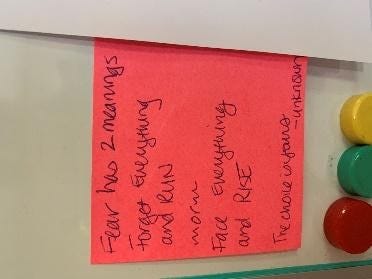
Female Disruptors: Kirsten Lambert of Beantown Bedding On The Three Things You Need To Shake Up…

Female Disruptors: Kirsten Lambert of Beantown Bedding On The Three Things You Need To Shake Up Your Industry

Kill it in the niche. It’s easy to be tempted by the deluge of opportunities that arise when starting a business. Thanks to an unexpected wave of media coverage, we were pulled into retail and wholesale distribution right out of the gate. As a team of two with a bare bones budget, we were spread thin. An advisor had cautioned that we “kill it in the niche” first. He recommended a grassroots initiative in our hometown of Boston, home to many of the nation’s top colleges where our linens had gained traction for orientations and summer events. It was good advice that we didn’t take. It’s easier to do something really well in a bubble and scale it, than to convert the masses all at once.

As a part of our series about strong women leaders who are shaking things up in their industry, I had the pleasure of interviewing Kirsten Lambert.

Kirsten is CEO of Beantown Bedding®, the Boston startup that introduced Laundry-Free Linens®. She and her co-founder, Joan Ripple, turned a college care package idea for their kids into an industry game-changer. Named among “17 Women to Watch in 2017,” their biodegradable bedding has been recognized as “visionary” by industry professionals, international media, and innovation-loving celebrities.

Thank you so much for doing this with us! Before we dig in, our readers would like to get to know you a bit more. Can you tell us a bit about your “backstory”? What led you to this particular career path?

My co-founder Joan and I met when our children dated each other in high school. Once they went to college we learned that, like most college kids, they rarely took time to wash their dirty sheets. As moms, we were concerned about their health and wanted to find an easier way for them to have clean bedding. After more than a year of R&D, we developed a new kind of bed sheet that was convenient, comfortable and compostable. With our backgrounds in business, Joan’s in management consulting and mine in consumer research, we saw an opportunity to change the way people get clean sheets on and off campus. It’s a Swiffer-like concept for beds.

Can you tell our readers what it is about the work you’re doing that’s disruptive?

Beantown Bedding®’s Laundry-Free Linens® are disrupting the bedding industry with an easy and planet-friendly new way to get clean sheets. What started as a college time-saver grew into a go-to solution for hundreds of organizations in hospitality, healthcare and higher ed. These remarkably soft linens, made from eucalyptus, can be used for days or weeks and discarded or composted instead of laundering. The savings of time, water and energy appeals to consumers and businesses alike. It not only cuts out half of the steps involved with managing a linen service or laundry operation, but guarantees clean new sheets for every user. Now in light of COVID, hygiene and infection control are more important than ever.

Can you share a story about the funniest mistake you made when you were first starting? Can you tell us what lesson you learned from that?

There’s a funny radio commercial playing since COVID became part of our lives. It features two women having a conversation in gibberish, and the announcer explains that these are weird times and nothing makes sense. It reminds me of one of our first meetings when Joan and I were starting the business. A global transportation company reached out to discuss our shipping needs. We sat at a local Dunkin Donuts for the better part of an hour staring at two men who appeared to be speaking the same language as the women in the commercial; gibberish. Their tone indicated that they were asking questions, but we didn’t understand a single thing they said as they threw around acronyms like LTL, FCL, HTC and CBM. Once the coffee ran out, we ran out. It was a humbling experience, but serves as a good reminder of how far we’ve come.

We all need a little help along the journey. Who have been some of your mentors? Can you share a story about how they made an impact?

Some of the most meaningful guidance we received was from mentors we met through a global accelerator called MassChallenge. The highly regarded program provided access to world-class experts from academia, industry and government. We benefited from the wisdom of rock star founders, famous authors and revered CEO’s, esteemed professors and impressive investors. One notable mentor was one of the earliest employees at Facebook. As fascinating as his story was, his feedback felt a little harsh. Our first whiteboard session took place in a stylish suite in a swanky New England seaside town. I showed up with my daughter’s hand-me-down Mac from high school. We were rookie founders and it showed. When he asked about goals, we offered safe, achievable projections. He challenged us to expand our vision and own it, however aspirational it seemed at the time. It lit a fire. We began to reach higher and make a plan to get there. As it turned out, we far exceeded the goals written on the whiteboard that first day. Looking back, his advice was some of the most valuable we received.

In today’s parlance, being disruptive is usually a positive adjective. But is disrupting always good? When do we say the converse, that a system or structure has ‘withstood the test of time’? Can you articulate to our readers when disrupting an industry is positive, and when disrupting an industry is ‘not so positive’? Can you share some examples of what you mean?

I believe disruption in the context of innovation occurs precisely because there is room for improvement. By definition, a problem is being solved, but that doesn’t mean every outcome of the solution will be positive. Sometimes disruption is tainted by people with negative intentions. Ride-sharing services have improved safety and convenience in many ways, but there are people who use them to commit crimes. Unintentional consequences can also be less than positive, such as decreased social interaction due to the popularity of handheld devices. Even so, it shouldn’t keep us from continuing to innovate.

Can you share 3 of the best words of advice you’ve gotten along your journey? Please give a story or example for each.

  1. Kill it in the niche. It’s easy to be tempted by the deluge of opportunities that arise when starting a business. Thanks to an unexpected wave of media coverage, we were pulled into retail and wholesale distribution right out of the gate. As a team of two with a bare bones budget, we were spread thin. An advisor had cautioned that we “kill it in the niche” first. He recommended a grassroots initiative in our hometown of Boston, home to many of the nation’s top colleges where our linens had gained traction for orientations and summer events. It was good advice that we didn’t take. It’s easier to do something really well in a bubble and scale it, than to convert the masses all at once.
  2. Trust your gut. This was very nearly a company-killer for Beantown. We almost lost our business, because we trusted the advice of experts more than our own gut. It bit us hard when we delegated the sales organization to someone who was recommended by mentors, but set off our internal alarms. By the time we discovered the false reporting, sales had tanked and we lost the peak buying season. Although we eventually recovered, disaster could have been avoided if we had simply trusted our instincts. Lesson learned…painfully.
  3. Fail until you don’t. One of the most true maxims I’ve heard is, “I never lose. I only win or learn.” Perseverance served us well when we sat at a long conference table with executives from a national retailer and a prestigious university. After making our pitch and fielding a few polite questions, we read their silence and facial expressions as our cue to leave. As everyone awkwardly began to get up, I stayed seated and just kept talking. Joan was probably kicking me under the table, but whether cluelessly or comically, I talked until the lightbulb went off for one of them. His enthusiasm grew as he brought the others onboard to his great idea of placing the linens in the travel section instead of the bedding department. Our startup story, like most, includes countless disappointments, disasters and even deaths. Those failures not only make the successes seem sweeter, but keeping pushing us forward. It’s true that whatever doesn’t kill you makes you stronger.

We are sure you aren’t done. How are you going to shake things up next?

New products will pave the road to “help the world live laundry-free”. Working in conjunction with one of the country’s premiere hospitals on leading edge infection control measures, we’re designing a completely “eco-disposable” room.

In your opinion, what are the biggest challenges faced by ‘women disruptors’ that aren’t typically faced by their male counterparts?

After comparing notes with other female entrepreneurs, regardless of education or qualification, it seems that we’re not always taken as seriously. On occasion Joan and I have been asked if this is our full-time job, if we have other “hobbies”, or what our husbands think about our business. I suspect those questions aren’t asked of our male counterparts. While it’s insulting, tough skin is a job requirement for any entrepreneur.

Do you have a book, podcast, or talk that’s had a deep impact on your thinking? Can you share a story with us? Can you explain why it was so resonant with you?

I’ve turned to “The Hard Thing About Hard Things,” by Ben Horowitz time and time again. Startups are just hard, and it helps to know how other founders remained resilient. If the answer could be summed up in one word, I’d say it’s tenacity. My favorite quote from the book is, “Whenever I meet a successful CEO, I ask them how they did it…The great CEOs tend to be markedly consistent in their answers. They all say, ‘I didn’t quit’.”

Can you please give us your favorite “Life Lesson Quote”? Can you share how that was relevant to you in your life?

My dad often repeated a saying attributed to John Lydgate: “You can please some of the people all of the time, you can please all of the people some of the time, but you can’t please all of the people all of the time”. It’s exhausting and futile to try to please everyone. In any business, the most important person to please is the customer. It sounds simplistic and cliché, but if you can do that, everything else will follow. When customers are happy, investors are happy, employees are happy, and founders are happy.

You are a person of great influence. If you could inspire a movement that would bring the most amount of good to the most amount of people, what would that be? You never know what your idea can trigger. 🙂

Say No To Status Quo: Things, and by that I mean EVERY thing, can be better. Whether it’s easier, faster, more enjoyable or more efficient, less expensive or less painful, the status quo always has room for improvement. It doesn’t require a high tech innovation; just a little ingenuity. Simple step changes and thinking outside the box can be the first ripples of a tsunami.

How can our readers follow you online?

Web: www.beantownbedding.com

LinkedIn: https://www.linkedin.com/company/3325953?trk=tyah&trkInfo=idx%3A1-1-1%2CtarId%3A1425350402097%2Ctas%3Abeantown+bedding

Facebook: https://www.facebook.com/pages/Beantown-Bedding-LLC/265401140172734?ref=hl

Instagram: https://www.instagram.com/beantownbedding/

Twitter: https://twitter.com/BeantownBedding

This was very inspiring. Thank you so much for joining us!


Female Disruptors: Kirsten Lambert of Beantown Bedding On The Three Things You Need To Shake Up… was originally published in Authority Magazine on Medium, where people are continuing the conversation by highlighting and responding to this story.

Female Disruptors: Daniela Corrente of Reel On The Three Things You Need To Shake Up Your Industry

I founded Reel to debunk the myth that credit is the only way to achieve our goals, a myth that has caused so much harm to this society. Showing people that they can buy the things they want with their own cash flow is the first step towards achieving a better financial future. Whatever it is, a new computer, a pair of shoes, a comfy couch, at Reel we give the power to the consumer to achieve their aspirations, debt-free. We have taken a different approach to saving, connecting saving with shopping so we can ease people into feeling more comfortable with their cashflow. We have helped thousands of people save millions of dollars and I’m proud to say a high percentage of our users are Latinas like myself.

As a part of our series about business leaders who are shaking things up in their industry, I had the pleasure of interviewing Daniela Corrente.

Daniela is the founder and CEO of Reel, since she was a kid, she has always been passionate about understanding human behavior, why and how we choose to do things. That fascination led her to start a business that focuses on making it easy for people to achieve their aspirations without going into debt. She is a Latina founder that believes real change and equal opportunity come from investing in not only social, but also economic empowerment.

Thank you so much for doing this with us! Before we dig in, our readers would like to get to know you a bit more. Can you tell us a bit about your “backstory”? What led you to this particular career path?

Ever since I can remember I’ve been a curious human being. I like to understand what motivates people, plus I love fast-paced environments, because they challenge me to constantly evolve. So, it was natural for me to choose a career in advertising and moving to New York City after college. My rationale at the time was “If I left my country to move here, I better be playing in NY.” My interest in consumer behavior led me to work for incredible brands on the agency side at Saatchi & Saatchi and Grey NY. While working there, I had the opportunity to learn more about how consumers thought about their finances and brands. Not only I had personally struggle with my own credit card debt for years, but I also saw first-hand how consumers, specially the millennial market, were growing more opposed to credit cards. That’s when my co-founder, Alejandro Quilici and I brought the idea of Reel to life. Instead of encouraging people to swipe a credit card, we set out to create a new debt-free shopping experience.

Can you tell our readers what it is about the work you’re doing that’s disruptive?

As a society, we have been led to believe that the only way to achieve our goals is to go into debt. The financial system is incredibly predatory, from credit cards to loans at the point of purchase, it seems it’s all built to drive us into a vicious cycle of unnecessary debt. I myself struggled with credit card debt for years. The U.S. has $14.3 trillion in consumer debt. I founded Reel to debunk the myth that credit is the only way to achieve our goals, a myth that has caused so much harm to this society. Showing people that they can buy the things they want with their own cash flow is the first step towards achieving a better financial future. Whatever it is, a new computer, a pair of shoes, a comfy couch, at Reel we give the power to the consumer to achieve their aspirations, debt-free. We have taken a different approach to saving, connecting saving with shopping so we can ease people into feeling more comfortable with their cashflow. We have helped thousands of people save millions of dollars and I’m proud to say a high percentage of our users are Latinas like myself.

Can you share a story about the funniest mistake you made when you were first starting? Can you tell us what lesson you learned from that?

It was my first ever investor meeting and I had no idea it was supposed to be a full pitch. I was so excited the first time an investor asked me to meet up, that I didn’t ask all the details, and it ended up being quite a mess. I learned to always ask details ahead of a meeting, to do full research on the person before I show up, and to always, always be ready to sell when the situation calls for it.

We all need a little help along the journey. Who have been some of your mentors? Can you share a story about how they made an impact?

Running a business requires a lot of mental space and it pays to have someone to guide you along the journey when need it. A big part of being a good CEO is investing time developing your personal skills so you can evolve as your company evolves. The founder you are when you have one employee has to be fundamentally different to the founder you need to be when you have 50 employees. One of the smartest moves I made early on was hiring a business coach, mine is Robyn Ward from Founder Forward. We meet on a weekly basis to discuss everything from hiring strategy, to fundraising, to establishing company values. She was the first person to tell me I should really focus on EQ instead of IQ when hiring, and that has been a huge learning. I’ve also learned a ton from my investors, Will Hsu from Mucker, is a person I highly respect and someone that always pushes for more. He was the first VC to write me a check. I appreciate his ambition; he is someone that will never think an idea is too crazy or too big to go after. I like a good dare.

In today’s parlance, being disruptive is usually a positive adjective. But is disrupting always good? When do we say the converse, that a system or structure has ‘withstood the test of time’? Can you articulate to our readers when disrupting an industry is positive, and when disrupting an industry is ‘not so positive’? Can you share some examples of what you mean?

Disrupting just to be a contrarian is counterproductive. Disruption is fantastic when it leads to evolution. I particularly like when companies disrupt a market because they see that the “traditional” way of doing things it’s not enough anymore. Look at Stripe, Square, Amazon, Instagram, Uber, they are all big disruptors, they challenged the way we transact, buy, interact with each other, and even move around (I have not owned a car in a year, and I live in LA). All this companies came to life in moments where businesses, and consumers were looking for alternatives to the norm. In many cases, companies that successfully disrupt a market have convenience as one of their biggest attributes, it might seem simple, however convenience is a big incentive for consumers.

Can you share 3 of the best words of advice you’ve gotten along your journey? Please give a story or example for each.

Good stories shape the world: the biggest lesson working in advertising taught me was the importance of storytelling. I remember my first pitches to clients, they were very transactional and solely focused on the idea, I was missing the narrative behind them. Stories forge connections, culture; they shape the world around us. We have the power to create our narrative; focusing on what you have to bring to the table not only makes your ideas stronger, it also makes you mentally stronger. I love listening to stories and crafting stories, making any topic interesting for the listener forces me to stay creative.

You give life to what you give energy to: I’m selective with what, and whom I give my energy to. I learned from an early age that we control more than we think. The concept of reframing thoughts and doing self-affirmation came from my parents. When I was upset about something as a kid they would force me to think, why is what happened so important that you would choose to stay angry over playing with your friends? What can you do to solve it so you are not upset anymore? Honestly, it’s one of the best things they could have thought me. We have the power to be selective with our time and our brain space. Some people say I’m extremely positive, but the reality is that I just like to focus on doing things that fulfill me or finding solutions instead of problems.

Find moments of boredom: I heard this one a couple of years ago and it really got to me, because in an era where we are 1000% connected to a screen all the time, taking a step back and urging the need to be always “doing something” actually opens your brain to amazing ideas and it’s extremely relaxing and disorienting at the same time. When was the last time that you sat down and didn’t do anything for 10 minutes? I have to constantly force myself to step back and do nothing, let just thoughts flow. Some of the best ideas for Reel have come during this moments where I just decide to be.

We are sure you aren’t done. How are you going to shake things up next?

My vison is to give people the power to own what they love debt-free, to disrupt the way we shop online and offline. We have amazing partnerships in the works, so stay tuned.

Do you have a book, podcast, or talk that’s had a deep impact on your thinking? Can you share a story with us? Can you explain why it was so resonant with you?

The book Measure What Matters was a huge catalyst to ignite a better structure around goal setting for my team. It helped me build a solid framework around what we prioritize on. Another book I recommend to everyone is Shoe Dog, Phil Knight’s journey of hustle, learnings and evolution is one of my old-time favorites. It reminds me that most people just see the tip of the iceberg, and thinking about his hustle gives me comfort.

Can you please give us your favorite “Life Lesson Quote”? Can you share how that was relevant to you in your life?

It’s actually a poem: “There is freedom waiting for you, on the breezes of the sky. And you ask, “What if I fall?” Oh, but my darling, “What if you fly?” I adore that poem, there is no chance of knowing what wou can achieve if you don’t try. That mentality lead me to start my company. I think there are no limits to what we can achieve if we set our mind to it. If you try and fail, congratulations, most people won’t even try. So, I say jump, the worse thing that can happen is that you learn from your mistakes and you move on stronger. Nelson Mandela said it best, “It always seems impossible until it’s done.”

You are a person of great influence. If you could inspire a movement that would bring the most amount of good to the most amount of people, what would that be? You never know what your idea can trigger. 🙂

I would inspire people prioritize on themselves. Humans tend to deprioritize their own needs and put themselves second. There is too much goodness being wasted for lack of selflove, it’s truly a shame. Invest in you, get a coach, book the massage, do something at least once a month that is good for you. When you feel good everything is better. always remember, in your world, you are the absolute boss.

How can our readers follow you online?

Daniela Corrente on linked in and @danicorrente on twitter also @joinreel on all social, of course.

This was very inspiring. Thank you so much for joining us!


Female Disruptors: Daniela Corrente of Reel On The Three Things You Need To Shake Up Your Industry was originally published in Authority Magazine on Medium, where people are continuing the conversation by highlighting and responding to this story.
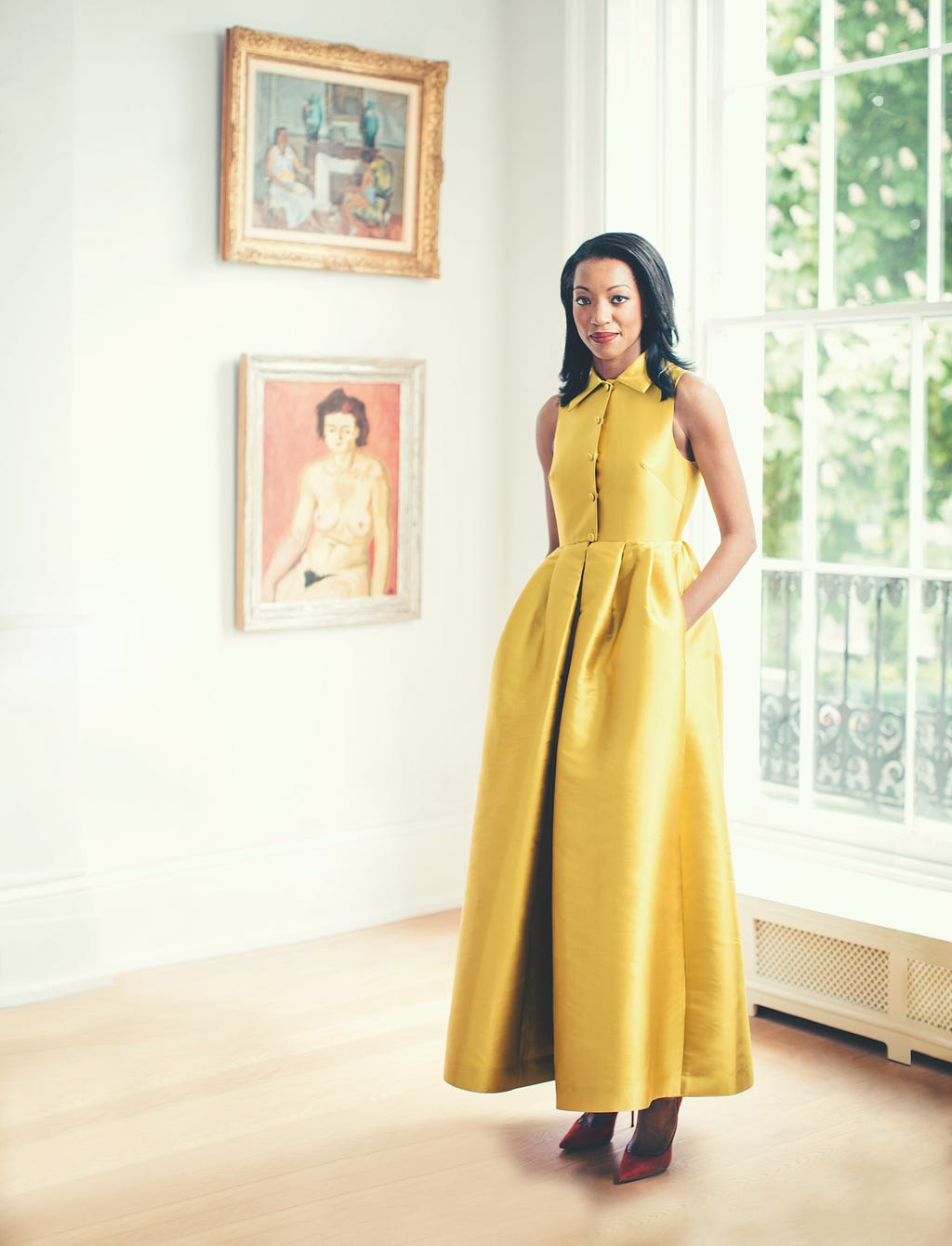
Female Disruptors: Sahara Rose De Vore of The Travel Coach Network On The Three Things You Need To…

Female Disruptors: Sahara Rose De Vore of The Travel Coach Network On The Three Things You Need To Shake Up Your Industry

I created the The Travel Coach Network to bridge the gap between travel coaches and travel experts with those who wish to travel better, more effectively, and from experts who best relate to their specific needs. It is also a platform for travelers and companies to find and hire a travel coach who specializes in the niche that they are looking for.

As a part of our series about women who are shaking things up in their industry, I had the pleasure of interviewing Sahara Rose De Vore.

Sahara Rose De Vore is a Travel Coach and founder of The Travel Coach Network™. After receiving a degree in Hospitality and Tourism Management, she spent over a decade traveling to more than 84 countries by the age of 31. She is the founder and owner of the world’s very first certification program for travel coaches called the Travel Coach Certification Program™. Sahara Rose helps business travelers and corporate employees have more meaningful experiences that improve their wellbeing through her own travel coaching services. She is also a business coach for other travel coaches and entrepreneurs through her various programs, events, and courses. A published author and global speaker, Sahara Rose is passionate about empowering people to take control over their travel experiences and have trips that boost their overall wellbeing and give them the transformative outcomes that they crave. She is a pioneer in the travel coaching industry and has been featured in over 45 media outlets including Forbes, Business Insider, Thrive Global, Yahoo! Finance, Best Company, Corporate Wellness Magazine, USA Today, U.S World News & Report, and Skift. She is also the founder of the #ThriveThroughTravel initiative which inspires people to travel in a way that helps them thrive in all aspects of their life. She was a 2019 nominee by career-changing women in the travel industry for rising female leader, best female coach, and best innovative trailblazer. You can learn more about Sahara Rose and The Travel Coach Network at https://thetravelcoachnetwork.com/

Thank you so much for doing this with us! Before we dig in, our readers would like to get to know you a bit more. Can you tell us a bit about your “backstory”? What led you to this particular career path?

I grew up as an only child to a single mom. We could hardly afford to keep food in the cabinets, let alone see the world. Therefore, travel seemed so far out of reach for someone like myself. Plus, no one in our family or community was a traveler. Our idea of traveling was family road trips from the north of the U.S to the south Texas to visit my grandmother’s family near Mexico but, I was so young that I only remember bits and pieces of those adventures. I had a wanderlust soul and no idea where it came from.

I have always had an artistic eye so every time that I would see beautiful photos of lush green rainforests and colorful tropical birds in Costa Rica and other incredible places around the world, I was simply in awe. I saw movies with sky-high waterfalls and the most stunning white sand beaches. I knew that there was a whole world out there that I needed to explore but, how could I ever make that happen?

Well, I was determined to and I did.

When I graduated over a decade ago from university with a degree in hospitality and tourism management, I was very underwhelmed by the lack of diversity in career options. At the age of 22 I was unsure of the life that I wanted to have and what my passions were. I was struggling with anxiety and bouts of depression and knew that whatever it was that I was going to do with my life, I wanted it to bring me happiness, purpose, and I wanted to make an impact on the lives of others and the world.

I decided to take a very unconventional route and ignore what pressures society and family were placing on me. I booked a one-way ticket to Europe, packed a suitcase, and set off to find the answers that I was looking for.

I wound up falling in love with how much travel was helping and healing me that I spent over a ten years traveling on and off to over 84 countries by the age of 31.

The first half of my worldly adventure was the most difficult. The amount of travel resources, tools, and technology was limited. I remember traveling with a flip phone, paying to use internet wherever I could find a computer, and using a paper map to navigate around new cities.

Throughout the years, I got hands on experience with shifts in the travel industry. Talking with other travelers and having my own experiences, I learned what travelers used, liked, desired, and didn’t like. I also learned what problems, voids, and shortages existed in the travel industry and for travelers. Being a millennial in the mist of the rise of social media, it shown a light on how and why people were traveling as well as the growing desire for more freedom-based jobs.

Despite having a degree in tourism and years of traveling under my belt, I struggled for many years trying to figure out what travel-related career I wanted. I was aware of what existed; travel agents, booking managers, working for a company that paid me to travel for business, becoming a blogger, or growing my social media to become an influencer just to get free trips.

I wanted to do and be some more. I believed that my travel experiences, skills, knowledge, and perspectives were far more valuable and impactful than what I was told I could use them for.

I knew that since I couldn’t find what I was looking for, I had to create it myself.

That is when I decided to become a travel coach and specialize in helping business travelers and corporate employees have better and more meaningful travel experiences while bringing a fresh take on wellness travel

I am also pioneering the path for other ambitious and passionate travelers who desire to become certified travel coaches. I founded The Travel Coach Network™ because I wanted a place for travel coaches around the world to connect with other like-minded travel coaches and experts, list their business and niche, and for people and companies to find and hire a travel coach. I designed and accredited the very first travel coach certification program to make their journey easier and clearer as a travel coach and entrepreneur.

Can you tell our readers what it is about the work you’re doing that’s disruptive?

After graduating from a hospitality and tourism program in university and then spending over a decade traveling the globe as a millennial, I was well aware of the types of careers that existed in the travel industry. Nothing felt authentic enough or worth spending my knowledge of travel on. Diving into the online world, I then became aware of what types of digital nomad or ‘freedom-based” jobs existed as well. I was getting tired of seeing the same things being posted about working from anywhere in the world or having a job in travel as an influencer or other already-done-before options.

I wanted to be something greater. I wanted to do something more authentic. I wanted to make more money doing something that I loved with something that I knew a lot about. I wanted to make a bigger impact.

The online coaching industry was talking about business coaches, life coaches, health coaches, and fitness coaches. I wasn’t seeing what felt right to me which was a way to help others through my knowledge, passion, skills, and experience in travel.

That is when I decided to break the mold of what is possible in a travel career and start a travel coaching business. It is a very new niche in the travel industry but is quickly gaining momentum. I recognized this at a very early stage which is what inspired me to create The Travel Coach Network™ (TCN), a place for travel coaches around the world to learn, connect, and grow.

I created the TCN to bridge the gap between travel coaches and travel experts with those who wish to travel better, more effectively, and from experts who best relate to their specific needs. It is also a platform for travelers and companies to find and hire a travel coach who specializes in the niche that they are looking for.

Within the TCN, I designed the world’s very first certification program for travel coaches called the Travel Coach Certification Program™. It is an accredited program by the International Coach Federation (ICF) that not only helps ambitious travelers start and grow a travel coaching business but it also is an all-encompassed program that focuses on the necessities for running an online business plus a community to connect and network with other travel coaches in a private online group.

Travel coaching not only disrupts the travel career or coaching industry but it also causes disruption across many industries. This is due to the need for experts like travel coaches. Every company has employees, employees have paid time off or vacation days to use. With most vacation days usually going to waste or not being used properly, travel coaches can help teach, guide, and empower employees on how to travel on their desired budgets, time frame, and to have the experiences that they need to thrive in both their personal and work-life. Post covid workplace will include more remote work jobs as well. Not everyone is accustomed to working remotely or traveling while working. This is also a place for travel coaches to come in with their expertise on adjustments, culture, and more. Travel coaches can shift the way that travel is viewed for improving wellbeing, boosting work performance, decreasing burnout, and helping companies succeed overall with happier employees, a healthier workplace, and a more creative and productive workforce.

I have always been someone who went against the grain on things. After college I decided to skip the typical corporate route and ignore society’s and family’s expectations and packed a bag to solo travel the globe for a decade. I never gave into jobs just because others were doing them or because they were already proven to be possible or easy. Therefore, being a pioneer in the travel coaching industry and paving a path for other passionate travelers is exactly what I was meant to do.

Can you share a story about the funniest mistake you made when you were first starting? Can you tell us what lesson you learned from that?

One of the silliest things that I did when starting my business was when I launched a new group program and offered a payment plan, I accidently set it as a one-time payment which meant that I had to contact each client each month for that month’s payment until the three months were over. I learned to double check everything before making it available to my audience.

We all need a little help along the journey. Who have been some of your mentors? Can you share a story about how they made an impact?

One of my mentors, Minna Whitman, the Global Knowledge and Collaboration Lead at American Express Global Business Travel, is someone who has helped me tremendously in my business. I connected with Minna through the Global Business Travel Association’s Women in Travel organization because I was seeking someone to help and guide me through my own business journey. My favorite thing about having Minna as a mentor is how open she is to hearing my ideas and helping me break through my mental blocks. She made such an impact on me because she made me feel like my vision mattered and that I mattered. It’s important as a solopreneur to have adequate and genuine support and guidance. I also love hearing about her beautiful location of Nova Scotia, a place that I have always wanted to travel to.

In today’s parlance, being disruptive is usually a positive adjective. But is disrupting always good? When do we say the converse, that a system or structure has ‘withstood the test of time’? Can you articulate to our readers when disrupting an industry is positive, and when disrupting an industry is ‘not so positive’? Can you share some examples of what you mean?

One of the most successful and most disruptive companies ever is Amazon. Amazon is a great example of a combined positive and not so positive disruption of an industry.

A positive disruption makes people think in a way that is going to provide new opportunities and the betterment of an industry. Amazon changed the way that people do their shopping, allowing people to simply place an order online for practically anything that they need and then receive it at their doorstep without ever having to leave their home. This brings convenience, it saves time, and it lowers stress levels of running one more errand or having to go out in public. Consumers love Amazon for these reasons. The way that Amazon changed the commerce world is a game-changer and can be seen as a positive disruption.

At the same time, Amazon is also a good example of a not so positive disruption as well. It’s not so good to disrupt an industry in a way that is going to bring negative energy and influence over it. With the rise in ecommerce and Amazon came the downfall of brick and mortar stores. These stores and companies provided jobs for millions of people. There are now empty shopping malls and buildings where stores once stood. Companies must compete with online competitors like Amazon in order to stay afloat but most of them fail. Amazon isn’t loved by everyone. Not everyone prefers to shop online, not everyone wants to have an online business or job, and not everyone wants huge companies like Amazon to have so much control.

As industries evolve, innovation and disruption is inevitable.

Can you share 3 of the best words of advice you’ve gotten along your journey? Please give a story or example for each.

  1. My mentor, David Meltzer’s, mentor is Gary V. He shared something that Gary V told him that really resonated with me. Gary told him that if you think you’re putting out too much content, put out more. As an online business owner, posting content is important but it’s easy to feel like you are annoying people with how often you post. Truth is, not everyone will see what you post every day plus, the people who aren’t your ideal clients or your supporters don’t need to be in your audience anyways.
  2. David Meltzer, one of my mentors, always says to “be more interested than interesting”. People tend to try to impress or share their thoughts because they want to prove that they are capable or to convince someone of something. Instead, one of the best ways to really get to know your ideal clients or get the promotion or job that you want is to be more interested by asking questions, doing research, and simply just listening.
  3. Another mentor of mine, Minna Whitman, told me how important it is to simplify the user experience. Although this sounds like an obvious to know and do, it’s easy to overcomplicate things. As a business owner, you might be overly excited and try to fit everything in one spot, or include every idea that you have, or give too many pieces of information. The user experience is what is most important. Keep things simple. Whether that is for a website, program, or any experience that a consumer has with your business. Simplify things.

We are sure you aren’t done. How are you going to shake things up next?

I am so excited for the future of my business. My platform is going to evolve into something that has never been done before. It will be a prime go-to place for travelers to change how and why they travel and it will provide opportunities for travel coaches to be hired and for companies to partner with my TCN. I will also infiltrate the travel agent industry with my signature travel coach approach and change how travel is viewed in business travel and the corporate world as well. My vision is big but my heart and passion is even bigger.

In your opinion, what are the biggest challenges faced by ‘women disruptors’ that aren’t typically faced by their male counterparts?

Where do I even begin? Although it is 2020, there is still an imbalance between how men and women are viewed in leadership roles. Some of the biggest challenges faced by women disruptors that aren’t typically faced by men are credibility and being taken seriously. It seems that women need to prove themselves more than men do. What is her background? What are her credentials? What has she accomplished? Even when that is established, it’s still a matter of women being taken seriously enough. Is she as capable as a man is for this opportunity or role? Does she know as much? Will she take control well enough? Will she be as confident?

I love seeing more women in leadership and power positions, especially within the travel and hospitality industries. Those are two male dominated industries but seeing more and more women stand on stages, become decision-makers, and be in control, is inspiring for women entrepreneurs across all fields.

Do you have a book/podcast/talk that’s had a deep impact on your thinking? Can you share a story with us?

I remember sitting on a plane flying from Thailand to India in the mist of my aimless solo backpacking journey. Beside me sat a man in a business suit. We sparked conversation and he asked me why I was heading to India. I told him that I had always wanted to visit India but I had no specific reason for going other than I was just traveling for fun. I told him that I was just in Thailand for a month and shared some of my beautiful adventures with him. He said that he had been traveling for business for several years but never experienced anything like I had. He then expressed how envious he was of my life. I couldn’t believe it. There I sat, a dirty backpacking girl in her early 20’s with no direction or structure in life yet and this man in a business suit was telling me that he was envious of my life and wanted to do what I was doing. This was someone who had everything perfect on paper. He had a wife, family, great-paying corporate job, and traveled for business but, he was not happy with his life. This is when I knew that there must be another way for business travelers to have more meaningful experiences than what they were having. I knew how healing, joyous, and impactful having actual experiences around the world had on the mind, body, and the soul that it was obvious that there was a missing piece to this man’s life. This experience of mine made me think about the change that I would one day try to make in the business travel industry and for travelers in general.

You are a person of great influence. If you could inspire a movement that would bring the most amount of good to the most amount of people, what would that be? You never know what your idea can trigger. 🙂

It is part of my mission to inspire people to use travel as a way to thrive in their personal and work life. My movement is called the #ThriveThroughTravel initiative and represents the idea that travel can be used to help people do and be their best in all aspects of their life, work, and wellbeing.

Can you please give us your favorite “Life Lesson Quote”? Can you share how that was relevant to you in your life?

My favorite “life lesson quote” is “everything happens when it’s meant to happen”. The reason that this quote really hits home for me is because it proved to be consistent throughout my entire travel and business journey.

I was never one to have a clear idea on what my passions or my career path was. Even after graduating with a degree in tourism, I still had no clue what I want to do with my life. This sparked my desire to see the world. I began traveling before the fancy travel apps, resources, blogs, and tools that now exist. This forced me to see travel in a different and more skillful point of view. I learned many challenges and really got to see what travelers liked, wanted, used, and didn’t like about the travel industry. My age also came in handy because as a millennial, I had a perspective and experience with the rise in social media and digital nomad jobs than other generations. I was still struggling for many years trying to figure out what my dream career path and my purpose was. I knew that there must be a more meaningful way for me to put my travel knowledge and skills to better and a more lucrative use. I chose to continue to travel and learn even more about the travel industry in the meantime.

When I turned 30, I told myself that it was time to put on my thinking cap and figure out what I wanted to do in life. I knew that since I couldn’t find what I was looking for, I had to create it myself. By that time, social media was more evolved, the online world was booming, and there were unlimited amounts of platforms to learn how to start and grow an online business. It was also when I discovered the surge in the online coaching industry and everything just clicked. I wanted to become a travel coach.

If I was born at a different time in life, if I began my journey around the world earlier or later in life, or if I never pushed myself to keep on waiting, learning, and experiencing even more about travel, I know that I would not have created what I created in business. I was meant to be challenged. I was meant to be the pioneer that I am. I was meant to create my business exactly when I did.

That’s why everything happens when it’s mean to happen. So, be patient, trust the universe, and believe in your own journey.

How can our readers follow you online?

Facebook: https://www.facebook.com/SaharaRoseTheTravelCoach
Instagram: https://www.instagram.com/thetravelcoachnetwork/

Linkedin: https://www.linkedin.com/in/sahara-rose-de-vore-4b8bb394/

This was very inspiring. Thank you so much for joining us!


Female Disruptors: Sahara Rose De Vore of The Travel Coach Network On The Three Things You Need To… was originally published in Authority Magazine on Medium, where people are continuing the conversation by highlighting and responding to this story.

David Kessler of Grief.com: “Five Things We Can Do To Develop Serenity And Support Each Other…

David Kessler of Grief.com: “Five Things We Can Do To Develop Serenity And Support Each Other During These Anxious Times”

Come into the present. Living in the future or the past can take away the good and safety of this moment. You are okay now

As a part of my series about the the things we can do to develop serenity and support each other during anxious times, I had the pleasure of interviewing David Kessler.

David Kessler is the world’s foremost expert on healing after loss. His experience with thousands of people on the edge of life and death has taught him the secrets to living a happy and fulfilled life, even afterlife’s tragedies. He is the author of six books, including the new bestselling book, Finding Meaning: The Sixth Stage of Grief. He coauthored two books with Elisabeth Kubler Ross, including On Grief and Grieving updated her 5 stages for grief. His first book, The Needs of The Dying received praise from Saint (Mother) Teresa.

Thank you so much for doing this with us! Our readers would love to “get to know you” a bit better. Can you share with us the backstory about what brought you to your specific career path? Can you share the most interesting story that happened to you since you started your career?

As a child witnessing a mass shooting while my mother was dying in a hospital, it helped me begin my journey. For most of my life, I have taught physicians, nurses, counselors, police, and first responders about the end of life, trauma, and grief. However, despite my vast knowledge on grief, my life was turned upside down by the sudden death of my twenty-one-year-old son. It inspired me to write my newest book, Finding Meaning: The Sixth Stage of Grief.

What advice would you suggest to your colleagues in your industry to thrive and avoid burnout?

Try to balance work and off time. It’s not easy to do and one you must keep rebalancing. Work to live, not live to work. No one’s last words were ever, “I’m so glad I finished that report for work early or stayed at work late.”

Is there a particular book that made a significant impact on you? Can you share a story or explain why it resonated with you so much?

How to Stop Worrying and Start Living by Dale Carnegie was one of the first self help books I read, it helped me to see our mind can work against us.

Ok, thank you for all that. Now let’s move to the main focus of our interview. Many people have become anxious just from the dramatic jolts of the news cycle. The fears related to the coronavirus pandemic have only heightened a sense of uncertainty, fear, and loneliness. From your experience or research what are five steps that each of us can take to develop serenity during such uncertain times? Can you please share a story or example for each.

1. Learn what is in your control and what is not. Focus on what you can do. Wear a mask, stay six feet away from others.

2. Come into the present. Living in the future or the past can take away the good and safety of this moment. You are okay now

3. Don’t keep watching the bad movie in our minds. Our mind can picture the worst scenario and scare us. It can be helpful to think of the best scenario. We can stay safe until a vaccine comes.

4. Connect with those who are more optimistic than you. We often gravitate to those who agree with our fears. Try to find those who are more helpful.

5. Go outside. Just being inside all the time can increase our anxiety. Going outside can be very helpful

From your experience or research what are five steps that each of us can take to effectively offer support to those around us who are feeling anxious? Can you explain?

1. Validate what they are feeling

2. Don’t tell them not to be anxious

3. Don’t minimize what they are feeling

4. Let your state of mind be contagious

5. Stock up on compassion

Can you please give us your favorite “Life Lesson Quote”? Do you have a story about how that was relevant in your life?

Be kind, for everyone is fighting a battle you know nothing about.

— Anonymous

You are a person of great influence. If you could start a movement that would bring the most amount of good to the most amount of people, what would that be? You never know what your idea can trigger. 🙂

Contagious Compassion

What is the best way our readers can follow you online?

www.Facebook.com/IamDavidkessler

www.twitter.com/IamDavidKessler

www.instagram.com/IamDavidKessler

Thank you David, for these fantastic insights. We wish you only continued success in your great work!


David Kessler of Grief.com: “Five Things We Can Do To Develop Serenity And Support Each Other… was originally published in Authority Magazine on Medium, where people are continuing the conversation by highlighting and responding to this story.