

Jim Lamancusa of Cusa Tea: 5 Things I Wish Someone Told Me Before I Became a CEO

Hire fast and fire faster. With a small team, each person’s impact on the business is multiplied 100 fold. Hiring is tough for every company, but a mediocre employee won’t sink the ship in a medium or large company. It will in a small company. I hired a Director or Sales and within 2 weeks, I could tell that it wasn’t what we needed, so I made the tough decision to move on immediately. It was a hard discussion, but the ramifications of having an underperforming employee were even harder to accept.

As part of my series about the leadership lessons of accomplished business leaders, I had the pleasure of interviewing Jim Lamancusa, Founder and CEO.

Jim Lamacusa is the Founder and CEO of Cusa Tea & Coffee. A lifelong outdoorsman and accomplished Eagle Scout, Jim’s love of nature led him from his hometown of Cleveland to the Colorado Rockies, where — in between epic hikes and rock climbing excursions — he earned his B.S. in Business Administration from the University of Colorado and then MBA from Argosy University. As an undergraduate, Jim spent a semester abroad studying international business in Hong Kong, where he first fell in love with the world’s beloved beverage, tea.

Driven by his sense of adventure, after graduation Jim taught English in Thailand and spent a year meditating and exploring the Himalayan peaks of Nepal before moving back to Boulder for an entry-level job as a salesman for Eco-Products, maker of eco-friendly foodservice products. He worked his way up to VP of Sales, followed by VP of Sales and Marketing positions at GoodBelly, Dynafit/Salewa and, later, a small water bottle startup, but he always dreamed of following in his grandfather and father’s footsteps and starting his own company.

The opportunity to take the leap came after a round of unexpected layoffs at the water bottle startup, and in 2017 Jim launched Cusa Tea & Coffee with the goal of bringing truly delicious instant beverages to the world. As CEO, Jim oversees the brand’s growth and beverage R&D, and the company has rapidly grown to over 2,500 retailers, with a robust direct-to-consumer business.

Jim continues to spend every moment he can outdoors in Boulder, CO, where he lives with his family. He also teaches meditation, serves as Executive Director at a meditation center in Denver and (when he’s not drinking Cusa Tea) enjoys a smoky whisky.

Thank you so much for joining us! Can you tell us a story about what brought you to this specific career path?

My grandfather, father, and mother were all entrepreneurs, so I guess I have a bit of it in my blood. But after working at three fast-growing startups in Boulder, CO over the past 15 years, I’ve gotten a good sense of what it’s like to be an emerging company. My roles at these companies were always in Sales and Marketing, but as at any startup, you end up wearing every hat at some point. I love so many things about the startup world, but my favorite thing is the ability to take an idea from inception to reality in a matter of days, versus years, at a larger company.

Can you tell us a story about the hard times that you faced when you first started your journey?

Where do I start? I think the hardest time was when I was trying to create the product itself. I tried all of the methods that currently existed to make instant beverages, spending $75,000 of my wife and my savings, and they all completely failed to make a good tasting cup of tea. I experienced two weeks of depression and self doubt, questioning why I had blown so much of our money on a pipe-dream. Then I discovered botanical extraction technology and found a partner willing to work with me to modify it for a food purpose for the first time. As they say, the rest is history!

Where did you get the drive to continue even though things were so hard?

There are two areas in my life that help me continue, even when things are hard: meditation and mountaineering. I meditate daily for 45 minutes to 1.5 hours. The benefits are too numerous to list, but it is also really hard to meditate that long and make it a daily habit. Part of the “meditation” is to continue to stay in the present moment, even when your body hurts, you’re bored, you’re tired, etc. I have been doing this for 20 years, so I guess I have gotten used to just continuing even when it gets tough. I also do a lot of mountaineering and it’s a similar story here. People tend to remember the exhilaration of the summit, but the journey to get there can be really hard. You have to keep moving even when you’re cold, hungry, and tired. I have learned to keep my head down and put one foot in front of the other

So, how are things going today? How did grit and resilience lead to your eventual success?

I like to say that entrepreneurship is similar to a game of whack-a-mole. If anyone tells you that “everything is great”, they’re lying! Even when sales are great, you have to watch inventory and cash. You will order what you think is your most popular item, and then some other flavor will take off. Things are going well for us at the moment, but there is always another mole to whack! As for grit and resilience, both are the reasons we are still in business. It is extremely rare for a startup to find their way right out of the gate. The key is to always look for new opportunities that arise, test small and then go big, and don’t think that just because you “think” it should be a certain way that it will be. For example, I thought the easiest path to success for Cusa Tea would be with grocery stores. It turns out that getting a customer’s attention in a 25ft tea section is a lot harder than it sounds. We have found a much easier path with our eCommerce line.

Can you share a story about the funniest mistake you made when you were first starting? Can you tell us what lesson you learned from that?

When I first started, I was running things very bootstrapped, so I couldn’t afford a big, expensive photo shoot. So, I hired a friend to take our first round of pictures focused on outdoors and camping. We had a small window of time, so we went to a local Boulder park, pitched a tent and started taking pictures. Within 20 minutes, rangers showed up and gave me a $100 dollar ticket for “setting up a structure” in the park. I tried to pay them off with free tea, but they weren’t having it! I learned from that experience that we need to be a bit more detailed and research local rules before we try to do something like that in the future.

What do you think makes your company stand out? Can you share a story?

I think that we stand out because of how nimble and innovative we are. I refuse to do things a certain way because that’s what has always been done. I could have easily given up when my initial R&D work failed miserably. Even though my background is in sales and marketing, that didn’t stop me from searching for a technology that I could use to achieve my dream. When I found a botanical extraction process that could work for a food purpose, I jumped in and didn’t stop until we had something that would blow our customers away.

Which tips would you recommend to your colleagues in your industry to help them to thrive and not “burn out”?

I know it has become a lot more widely known, but the benefits of daily meditation are incredible and I would recommend it to everyone. Most people I know have tried it and felt like they weren’t doing it right, so they stopped. It is really hard to do it wrong and you won’t see a benefit from just doing it every once and a while. Just like training for a 10K or a marathon, training the mind takes commitment and dedication. The end result I have experienced is far less anxiety and stress, and a huge boost in innovation and creativity.

None of us are able to achieve success without some help along the way. Is there a particular person who you are grateful towards who helped get you to where you are? Can you share a story?

There are so many people that have helped me along the way, but no one more than my wife. She has been the best partner I could imagine in this process. She believed in my vision and was willing to let me spend our savings on my pipe dream. She has also been my sounding board, shoulder to cry on, and biggest source of support and love during all the hard days. Let’s face it, starting a business from scratch is really hard. There are more bad days than good, and if you don’t have support from your spouse, it can be difficult for the relationship. I will say that I have seen other entrepreneurs throw everything they have into the business and forgotten their spouse. That usually doesn’t end well. I have made a goal of at least one date night a week, and I try to work smart versus work long hours so I can keep our relationship strong. I think we are doing something right after 17 years!

How have you used your success to bring goodness to the world?

I think this comes from all the small things you do and small decisions you make that add up to a bigger benefit. For example, I try to treat my employees how I have always wanted to be treated. Even though we are a small company, everyone starts with 4 weeks of PTO, a very flexible schedule, health insurance, retirement savings, and a one month sabbatical after 5 years of employment. I have also tried to make environmental responsibility a pillar of the company. We compost all of the used tea and coffee, use recyclable and compostable packaging, and our manufacturing facility is 75% powered by solar. I think all of these small things add up to a lot when you put them all together!

What are your “5 things I wish someone told me before I started leading my company” and why. Please share a story or example for each.

1. You are going to need to raise a lot more money than what your original business plan says. As I said earlier, it is rare for startups to find their way immediately. We have had to make multiple pivots to find the right customers, the right products, and the right pricing strategy. Unfortunately those learnings come with a cost, and you are going to burn some money. For Cusa Tea and Coffee, we invested heavily into grocery stores for the first few years and spent a lot of money to push velocity only to realize that it was going to cost a lot more money to go this path than what we expected originally. Once we pivoted to direct-to-consumer, the business has skyrocketed and we are seeing a great return on investment for every marketing dollar we spend.

2. Early feedback from first customers is indicative of the future. Don’t ignore it. When I started Cusa Tea, I did everything, including hundreds of demos at grocery stores. Our original price was $9.99 for 10 servings because that’s what Starbucks Via sold for. Many people said they loved the taste, but told me that it was too expensive. It took me a while to drop my own ideas of what should be and take a hard look at what the reality was. We were too expensive. We are now at $5.99 and selling like crazy. So it’s a lower margin, but sales are phenomenal.

3. Entrepreneurship is like a game of whack-a-mole. You will never feel completely at peace with the state of the business. When I started, I kept thinking that once I got through our Series A fundraising, or once we got into REI, or once we launched coffee, everything would be easy. Unfortunately that’s not the way it works. Once you solve one problem, another will take its place. The challenge in a leadership position is to determine which problem is the biggest deterrent for growth and focus there, then go to the next, and then the next.

4. Yes, your business is important, but it does not define who you are. I’ve seen many entrepreneurs in our community throw their entire life into their company and define themselves on their success or failure. From what I’ve seen, having a successful startup comes from three main things. A great idea, a lot of hustle, and a bunch of luck. There are a ton of companies with great ideas and strong work ethic that didn’t have the luck in market demand to make them a success. I try to constantly remind myself that even if this doesn’t work, it doesn’t mean I am a failure. It doesn’t define who I am.

5. Hire fast and fire faster. With a small team, each person’s impact on the business is multiplied 100 fold. Hiring is tough for every company, but a mediocre employee won’t sink the ship in a medium or large company. It will in a small company. I hired a Director or Sales and within 2 weeks, I could tell that it wasn’t what we needed, so I made the tough decision to move on immediately. It was a hard discussion, but the ramifications of having an underperforming employee were even harder to accept.

How can our readers follow you on social media?

You can follow us at @drinkcusa on IG!


Jim Lamancusa of Cusa Tea: 5 Things I Wish Someone Told Me Before I Became a CEO was originally published in Authority Magazine on Medium, where people are continuing the conversation by highlighting and responding to this story.

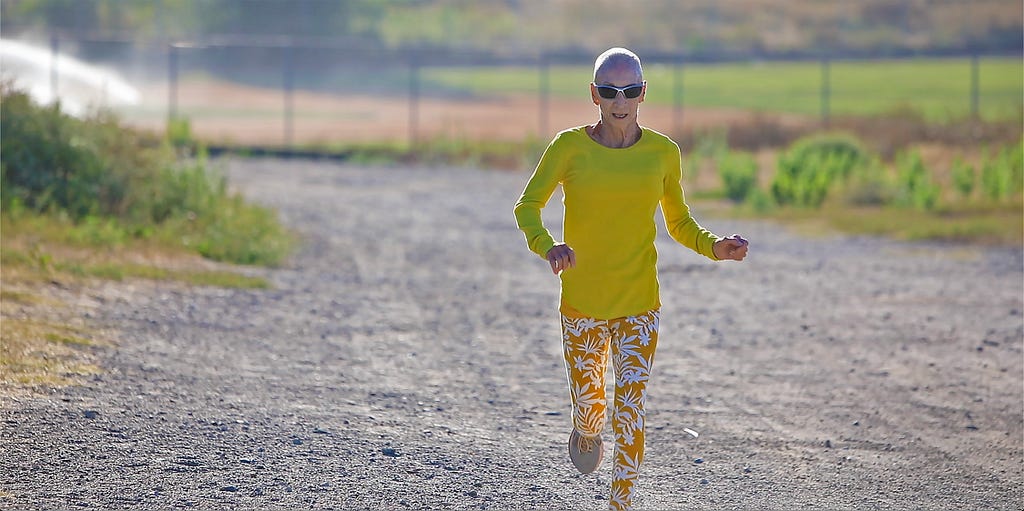
Running and Fitness Expert Bonnie Frankel: 5 Ways To Develop Serenity During Anxious Times

Listen to Others — This is a lost art and probably one of the most important things to do. You can phone, text, or email someone who needs to vent. Listen and don’t interrupt them until they give you the signal to do so. Everyone needs to have someone they can communicate with.

As part of my series about the leadership lessons of accomplished business leaders, I had the pleasure of interviewing Bonnie Frankel.

Bonnie Frankel is an author, athlete and inspirational exercise/sports training specialist. With her experience in instructing others, she has developed a unique plan utilizing the elements of Fire, Air, Earth and Water that are shared in her book, Bonnie’s Theory — Finding the Right Exercise.

She made history by changing an N.C.A.A. (National Collegiate Athletic Association) rule, now known as “The Bonnie Rule.” Ms. Frankel became the oldest woman to compete in a Division 1 women’s sport — swimming. She is also known as a world-class runner, and trained to quality for the Olympics, as she still trains today.

Thank you so much for joining us! Can you tell us a story about what brought you to this specific career path?

I returned back to school as an older student. I was attempting to triumph in something that I had failed at before, and this made me feel very anxious and insecure. I took on this challenge in the hopes of succeeding. And quite happily, I found that this decision led me on an unexpected new career path called running/fitness.

I was also healing from breast cancer, and six other surgeries affiliated with this condition, with an attempt of suicide during my divorce. I went to court, and the judge asked me knowing my background, “What are you going to do with your life?” I replied, “I didn’t know.” I had been in art school and taking classical piano lessons at that time. He suggested that I return to school, and find out what I wanted to do with my life. That thought rummaged through my brain, and I decided to go back to the same college and try again. Talk about a stressful situation. I was also saying good-bye to living in an entitled environment, with the rich and famous.

I was going back to college with kids half my age, and adapting to a whole new lifestyle that was far from the wealthy and the privileged, to an entirely different atmosphere of how the average person lives. I was overwhelmed and not necessarily resonating with it. One of my new young chums suggested that I carry a tape recorder and capture my lectures. I was having trouble absorbing the information, as I had an undiagnosed learning disability. Because of my unstable situation and temperament, the kids called me “Bonster the Monster”.

One of my new friends suggested that we take a running class given by the activist (Tommie Smith) a gold medalist in the 1968 Olympics. When accepting his award on the podium, he put his arm up with a black glove in a gesture to salute black power. He was a legend in his own right. I then decided to try something that was new for me. He saw me run, and asked me if I would join the track team at Santa Monica College (SMC), and compete with other schools. I said that I would try it. He referred to me as the George Foreman of running. I was around forty-six years old, and competing with a younger generation that could have been my own kids.

This thing called running not only shaped me up physically, but it brought serenity to my life, and helped with the way I processed information. It aided my learning, it enhanced the way I communicated with the students and the teachers, and it even helped to downplay my ego. My classmates starting calling me “the Energizer Bunny”.

This new career path emerged through uncertain times, and had I not gone back to school, and pursued this change, I would have never found my beloved career in exercise/fitness.

Can you share the most interesting story that happened to you since you started your career path?

I have many interesting stories to tell, but this one was so unexpected. I had been anxious before, but now I thrived with the results.

Once I began my career in running, I was able to change a National Collegiate Athletic Association (NCAA) eligibility rule for women that were returning back to college, in a Division 1 sport. It was named the “Bonnie Rule.” This was a challenge, and brought me much uncertainty and anxiety. I felt the run was worth the fight, because it improved me as a human being in many ways. If it did this for me, it could also do so for many others of all generations.

As I transferred from SMC to Loyola Marymount University, I approached their coach to see if I could continue running. He told me my time clock had run out. I thought what a silly rule. So, I fought it by having the media behind me, and spoke with the Athletic Director to back me up. I also reached out to the Vice-President of Student Affairs. and finally, to the West Coast Conference Commissioner. We worked as a team, and the rule was changed. I became the oldest woman to compete in the NCAA Division 1 sport. Originally, they said I wouldn’t win, it was a waste of time, but instead, I did it anyway.

The uncertainty of going through this process was well worth it, as it brought tranquility to not only me but to others as well. Women now could compete in a Division 1 collegiate sport, where they were once denied. I wanted to have women of all ages be able to compete and learn from one another. This rule engaged all races, and no one was left out. Every woman matters. Satisfaction and peace prevailed.

What advice would you suggest to your colleagues in your industry to thrive and avoid burnout?

The most important thing you can do to thrive in your exercise is to use an activity that you resonate with. It’s like having a BFF. I mention in my new book Bonnie’s Theory Finding the Right Exercise, of how to find the most appropriate form of exercise for you. When you execute this activity, you can look forward to doing it because you will enjoy it, and not lose your enthusiasm. In fact, it will bring you the best fitness, not only psychologically, but physically as well.

It is very important to diversify your fitness routine, and it’s also smart to vary your workout with your exercise of choice. Don’t do the same routine every day. Also, the body and the mind get too used to it, and your fitness regime doesn’t reach its fullest potential.

I am a firm believer in cross training, because it not only is a change, but it also helps your body not get injured, and promotes your exercise of choice to be a stronger one. Indeed, it strengthens the muscles you don’t use, and often can add tranquility to your mind/body. And you also then acclimate to the changes in our world. Cross training is a good example of this. Burnout teaches us that we must make a change, which can lead to thriving in your exercise. It abstractly crosses over to other areas in your life that enhance your psychological make up, and will bring you a sense of serenity and peace.

What advice would you give other leaders about how to create a fantastic work culture

Make your work environment open and user-friendly. I think it’s important to listen to others that are under your supervision or that work with you. Never use a “my way or highway” approach.

Just because I was a head coach, I didn’t know all the answers. If I did, there would be no way I would be on this earth. Always keep an open mind to others’ suggestions. Treat each person as though they were the most important human being in the world. People like to know that they make a difference. I gladly had open communication with the students that I coached and the adults as well. If I felt that something didn’t feel right, I would let them know. It’s important to be careful of your ego.

Intimidation scares people that have unique ideas. Listening to others is a lost art, and we should try and rekindle it.

One of the most important things you can share with them is that they are winners, and belong to a win-win team. Attitude is so important. Accomplishment goes a long way.

In today’s world, we have so much change which can create anxiety. It is important to emphasize that through this uncertain time, tranquility will come if you hang in there. Challenge the change, and peace will eventually flow in.

Is there a particular book that made a significant impact on you? Can you share a story or explain why it resonated with you so much?

One of my favorite books that still makes a significant impact on me is the Power of Now, by Eckhart Tolle.

This is a book everyone should read and especially through this unpredictable anxious time we are living in.

His message is so powerful as he teaches us to transform our human consciousness. This is how I interpret his message. It’s essential to drop the ego, which is not the true self you are meant to be. The past is gone, don’t live there, the future is something that we can’t predict, as we are seeing now in our global world. The present moment is all we have. Live in today. Find the joys in the now like adopting a dog you never had the time to do before, or exercising with your loved ones or friends. Read different books, and be grateful that you are able to be a part of history.

I interpret this that the now is all we have. It quiets the mind into delving into thoughts of worry by anticipating what will happen next. The past is the past, and there is nothing we can do about what already was done. There is something about living in the present moment that you can find joyfulness and serenity in. This is what gives us our freedom, and allows us to feel good about ourselves.

I will share a story with you. I once tried to qualify for the Olympic Trials with an artificial hip at 60 years of age. (I had sickle cell anemia which is also referred to as Bo Jackson’s disease). I was training with Coach John Carlos (1968 Olympian Bronze Medalist who put up his hand in a salute for black power in the Olympics, as did Tommie Smith mentioned earlier) and I failed to accomplish my goal. I had the talent, but my mind was locked into the past from previous failures. It took me a long time to forgive myself, and accept in the present moment that I did the best that I could do. So, I recommend to stop going backwards. This moment it is all we have.

Ok, thank you for all that. Now let’s move to the main focus of our interview. Many people have become anxious just from the dramatic jolts of the news cycle. The fears related to the coronavirus pandemic have only heightened a sense of uncertainty, fear, and loneliness. From your experience or research what are five steps that each of us can take to develop serenity during such uncertain times? Can you please share a story or example for each.

A. Exercise Outdoors

Exercise outdoors because it helps you to boost your emotions from negative to positive. As an example, Katy was a workaholic. When the Covid-19 pandemic hit, the world shut down, as well as Katy’s job. She locked herself up in her apartment, and did all her shopping online. I finally persuaded Katy to go out with me to a nearby park where we could walk into the wee early hours of the morning.

As we continued this routine, her emotions changed from fearful/depressed to a happier and more peaceful mindset. A difference happened because of exercising.

B. Healthy Nourishment

As you integrate outdoor exercise into your daily routine, your body will crave a healthier diet. When you exercise, you don’t eat to relieve your emotions, you express them by moving.

My friend Luigi was pumped up to becoming a Rock Star tennis player. The coronavirus hit, and locked everything down, including Luigi. He became the masked hermit, not exercising or eating, or drinking healthy as he normally did. His buddy begged him to jog with him late in the evenings, so when his tennis club would open, he would be in shape. Luigi followed his advice, and was soon back in a healthy condition. When you exercise, your dopamine levels can reduce the inclination for high fatty foods, liquor, and drugs. He stopped watching the news, and found other ways to cross-train in exercise. Adversity and uncertainty can guide you to a calm place, if you exercise and nourish your system well.

C. Journaling

Journaling is a valuable tool to use when faced with uncertainty, with your emotions in disarray. When you write your feelings down you are expressing as well as discharging them. Someone I know named Lane was living in a nursing home and was immobile. She kept the television on to hear the news that hit our world. The uncertainty displeased and scared her because there was nothing she could do about it. She lost her appetite and didn’t want to communicate with others. One of the nurses gave her a diary, and a pen and tissues. The nurse told her to write down her concerns and her gratefulness. Lane got her appetite back, and was chatting up a storm. She also passed on the valuable information that was given to her to inspire others to journal.

D. Reading

This is a golden opportunity to shift your mind from feeling the negative vibrations of experiencing uncertainty, to more positive ones that certainty can bring in an unexpected way.

Mary Nell is a member of a book club which helps her to read various works. It is a process that she thoroughly loves. When the corona virus pandemic hit, the book club closed its doors. Her husband came up with the idea to try Zoom, and the book club resumed meeting. Mary Nell went back to reading, and her personality shifted from irritable to placid.

E. Sleeping

Sleeping is one of the components of healthy living that we cannot function without. The way you feel while you are awake can depend on the quality of sleep you get. Young Timmy was having trouble with his stay-at-home schooling because he missed friends and teachers. His mother was concerned about his welfare because he was not sleeping and she couldn’t reassure him. What she did do was take him out to adopt a furry little kitten. This brought Timmy joy and a new found responsibility. His mom set a regular time schedule for him to sleep with his new furry friend.

From your experience or research what are five steps each of us can take to effectively offer support to those around us who are feeling anxious? Can you explain?

A. Do shopping/errands for others or just accompany them.

Reach out to people especially the senior and disabled population. Offer to help shop for them, or do an errand or two.

B. Listen to Others

This is a lost art and probably one of the most important things to do. You can phone, text, or email someone who needs to vent. Listen and don’t interrupt them until they give you the signal to do so. Everyone needs to have someone they can communicate with.

C. Exercise with Someone Else

This is one of the most important things to do with another person. I recommend participating in outdoor activities with someone, or just share time together in silence without saying a word. Just knowing that you are with a person, and actively doing an activity outdoors is so healthy for your mind and body.

D. Eating Out

Grab a bite with people, as it is a welcomed thing to do, because it will give you a chance to visit your favorite restaurant and rekindle memories. If you don’t feel comfortable doing this, then just get a take-out.

E. Do Something Different with a Friend

This can include a place, or an activity you have wanted to do or to go to but never had the time to. Change can bring joy when you incorporate something different in your life.

What are the best resources you would suggest to a person who is feeling anxious?

Find the right exercise you like and go outside and practice it daily. You also can do the following: Journal, play music, read or listen to podcasts, play cards or board games. Do things with your kids that you normally wouldn’t think of. Make sure you are on a regular sleep schedule. Limit your alcohol/caffeine or sugar intake. Enjoy the company of good friends.

Can you please give us your favorite “Life Lesson Quote”? Do you have a story about how that was relevant in your life?

“Your worst years are your best years, because you do the most growing”. When I went through a painful divorce, I tried my hand at suicide and fortunately for me I lived. As mentioned, when my divorce was finalized, I went back to school at Santa Monica College where the great Tommie Smith discovered my talent for running. I then transferred to Loyola Marymount University where I changed an NCAA Division I collegiate rule. I became the oldest woman to compete in a Division 1 sport. Finding the right exercise not only helped me get through the uncertainty, but I was driven to inspire others to follow suit.

You are a person of great influence, if you could start a movement that would bring the most amount of good to the most amount of people, what would that be?

Your health is your wealth. Your emotional, mental, physical, and spirituality is encompassed in your finding the right exercise. It prepares you to challenge uncertainty and grow from it. Not knowing is the root of all growth, certainty is fleeting. The right exercise empowers you to deal with any unknowns and brings you to serenity.

What is the best way our readers can follow you online?

Website: https://www.bonniefrankel.com/

Bonnie’s Theory-Finding the Right Exercise is available on:

Amazon (paperback) $14.99 (kindle) $6.99.
Barnes & Noble
Good Reads
Book Bub

Thank you for these fantastic insights. We wish you only continued success in your great work!


Running and Fitness Expert Bonnie Frankel: 5 Ways To Develop Serenity During Anxious Times was originally published in Authority Magazine on Medium, where people are continuing the conversation by highlighting and responding to this story.