Female Disruptors: Amanda Rolat of Bramble On The Three Things You Need To Shake Up Your Industry

Andy’s second bit of advice is to stop comparing Bramble to other companies. I have a habit of looking at where other companies are — how many stores they’re in, how many followers they have on Instagram, how much money they’ve raised. Andy hears me do this and immediately tells me to stop and just focus on getting people to love Bramble. If people love your product, the rest will follow. Not the other way around!

As a part of our series about women who are shaking things up in their industry, I had the pleasure of interviewing Amanda Rolat.

Amanda Rolat is the Founder and CEO of Bramble, the first and only pet food company that serves dogs a fresh, whole food plant-based diet developed by board-certified veterinary nutritionists. When her search for high quality, sustainable, and ethical options for her two rescue dogs left her dissatisfied, she was compelled to hire a board-certified veterinary nutritionist to develop something she could trust. This early creation in her kitchen ultimately fueled the development of her own direct-to-consumer brand. In 2020, Bramble was 1 of the 8 companies, out of more than 450 applications, accepted into the esteemed Food-X accelerator. Before starting Bramble, Amanda practiced law in New York City for a decade.

Thank you so much for doing this with us! Before we dig in, our readers would like to get to know you a bit more. Can you tell us a bit about your “backstory”? What led you to this particular career path?

My current career path as a founder grew organically out of my interests and personal pursuits. Ever since I was a child, I have always deeply empathized with and loved animals. But I always viewed animal rescue and welfare as a hobby as I pursued other things professionally.

I knew I wanted a career that I deemed impactful, which ultimately led me to work in wrongful convictions as an attorney. Throughout my time as an attorney, I was becoming more involved with animal rescue work and was moved by the injustices I saw playing out in my career to my clients, as well as in my personal work with animals.

In addition to animal welfare, I grew to be very passionate about health and wellness — specifically, the connection between diet and degenerative diseases. The more I learned, the more I understood that the food we eat is making us sick; and, the food we eat can also operate as medicine. This led me to adopt a more plant-based lifestyle, which was so much less restrictive and more enjoyable than I ever imagined. I think people look at “healthy” eaters as deprived, but I find that people who are mindful about what they eat have a real passion for food and cooking. These hobbies and interests collided when my dog, Harry, got cancer, and I started to apply all of the knowledge and concerns about my own diet to my dogs. I could never have imagined turning what I was cooking for my dogs into a business, but I just started putting the pieces together and figuring it out.

My parents were both immigrants; my father is from Poland, and my mother is from England. They placed a lot of emphasis on education and provided me with a lot of opportunities. However, as immigrants, they were not opening doors for me and making introductions because they didn’t have that. So I learned from an early age how to go after what I wanted on my own and make it happen. That served me very well during my first job after college as an assistant in the movie business: whatever your boss wants or needs, you figure it out and deliver. I applied this same grit to my work as an attorney, and now to Bramble.

Can you tell our readers what it is about the work you’re doing that’s disruptive?

We’re giving pet parents the first opportunity to feed their fur children in the healthiest way, through a whole-food, plant-based diet. We’ve worked with expert animal nutritionists and board-certified veterinary nutritionists to ensure our recipes are packed with protein and yummy superfoods that dogs go crazy for. We’re making it convenient and delicious for dogs to eat in a way that’s healthier and also better for the environment and other animals.

The bulk of the commercial pet food industry consists of dry, highly processed kibble. Like all processed food, it’s loaded with chemicals and preservatives. Even “premium” kibble can contain unbelievably low-quality meat, which can contain what is known as the “4 D’s:” dead, dying, diseased, and disabled animals.

In much the same way we have become savvier and more thoughtful in our own diets, we need to do this with respect to our pets’ diets by reading ingredient labels and questioning slick marketing. Words like “holistic” and “human-grade” don’t carry any meaning, and they often mask inferior ingredients.

We’re taking what we know from our own diets — that we thrive on non-processed food, full of high-quality ingredients from plant rich sources — and applying that to our pets.

Can you share a story about the funniest mistake you made when you were first starting? Can you tell us what lesson you learned from that?

I don’t know how funny it is, but when I first decided to make homemade plant-based dog food, I looked online for recipes. My dogs loved being fed real food, but one of my dogs lost a lot of weight fast, likely due to the higher fiber content. I quickly realized that I needed to hire a board-certified veterinary nutritionist to do this properly. It made me understand the importance of a carefully and expertly formulated diet for pets that balances all of the specific nutrients needed to live healthily. It’s very well-intended to prepare homemade meals for your dogs, but I learned firsthand why veterinary nutritionists caution against it and favor commercial pet food.

One of my favorite moments, which actually happens quite often, is how many Bramble customers have told me that they also tasted the food! It’s not a mistake, but I love how people are curious about what their dogs are eating!

We all need a little help along the journey. Who have been some of your mentors? Can you share a story about how they made an impact?

I have had some incredible mentors, and I realize that the best professional mentors are also the greatest personal ones. My former boss, Claudia, who hired me to work for her in wrongful convictions, has had one of the most significant impacts on my life. I learned so much from watching her in all aspects of her life, not just as my boss and colleague, but also as a mother, wife, friend, professional, and writer. She is so thoughtful and consistent in her morals and beliefs in all these areas. Claudia had confidence in herself and her judgment, so she was able to mentor people and allow them to be themselves without making it about her or a reflection of her. When I think about what kind of environment I’d like to create for my employees and what type of boss and person I try to be, I think of Claudia.

Because I believe mentors are so important, one of the very first things I did when I hatched the idea for Bramble was seek out great mentors. In fact, I cold-emailed Andy Levitt, the founder and CEO of Purple Carrot, to tell him what I was attempting to do, and asked for his advice. I couldn’t believe that he emailed me back, and ever since then, he has been so generous with his time and has become one of my biggest champions. I approached Ethan Brown, the founder and CEO of Beyond Meat, and similarly told him my plans for Bramble. The fact that both Andy and Ethan have helped me and mentored me speaks volumes about what incredible people they both are and how committed they are to the mission of changing our food system for the greater good of health, the environment, and animal welfare.

In today’s parlance, being disruptive is usually a positive adjective. But is disrupting always good? When do we say the converse, that a system or structure has ‘withstood the test of time’? Can you articulate to our readers when disrupting an industry is positive, and when disrupting an industry is ‘not so positive’? Can you share some examples of what you mean?

Testing norms, being thought-provoking, and shedding truth and light onto something is positive. But it has to be grounded in honesty and genuine concern for well-being.

I think Bramble is a great example. Animal agriculture is a pretty devastating industry. It operates largely in secrecy, punishing whistleblowers via Ag-Gag laws. It involves systemic abuse of both people and animals and wreaks havoc on both local communities and the environment at large. And the end product, factory-farmed meat, is making people — and pets — unhealthy. The pet food industry is responsible for up to 35% of the meat that is consumed in this country; yet, the pet food industry is often left out of the conversation that we have to reduce our overconsumption of animal products for the sake of health, the planet, and animal welfare.

We are looking to change that by offering a super healthy, savory alternative that dogs love. We seek to educate consumers on the dangers associated with commercial pet food, and some of the falsehoods underlying clever marketing. And our mission is grounded in truth and compassion.

Being disruptive just for the sake of grabbing attention or making money, in my mind, is not productive. Especially because it can be difficult to tease out intentions early on, these kinds of disruptors can gain a lot of traction and following, and ultimately not for the overall good.

Can you share 3 of the best words of advice you’ve gotten along your journey? Please give a story or example for each.

Andy Levitt has given me two of the best pieces of advice I’ve received thus far. First, he tells me to focus on getting 20 people to love your product. When raising money, you’ll be asked about additional product lines, scaling into multiple channels, search engine optimization, among many other things. It’s important to think these things through early on, but they can also distract from the most important thing: make your product outstanding and get consumers to love your product; then get those consumers to tell their friends and so on.

Andy’s second bit of advice is to stop comparing Bramble to other companies. I have a habit of looking at where other companies are — how many stores they’re in, how many followers they have on Instagram, how much money they’ve raised. Andy hears me do this and immediately tells me to stop and just focus on getting people to love Bramble. If people love your product, the rest will follow. Not the other way around!

Last, hire people better than you and different from you. Every kind of diversity — in race, gender, personality, thinking — drives a company’s success.

We are sure you aren’t done. How are you going to shake things up next?

It’s just beginning! We are launching our first two fresh dog food recipes, followed by our treats and supplements. I can’t wait for more dogs to try Bramble and show their parents how much they love it!

In your opinion, what are the biggest challenges faced by ‘women disruptors’ that aren’t typically faced by their male counterparts?

I think that the bar is still set higher for women to have to prove themselves and their product. We have to show a bit more to get people to believe in us. It shouldn’t be the case, but it is.

On the other hand, I see a real camaraderie among female founders that I find so inspiring, and I think it outweighs the challenges I’ve experienced as a woman thus far.

Do you have a book/podcast/talk that’s had a deep impact on your thinking? Can you share a story with us?

There’s a Masters of Scale episode, the Ten Commandments of Startup Success, that is so full of incredible advice and stories from founders such as Facebook’s Mark Zuckerberg and Airbnb’s Brian Chesky. I have listened to it so many times. Brian Chesky tells a great story about the early days of Airbnb when he would personally show up to rented apartments to get to know his customers. I think startups can sometimes want to make themselves look bigger than they are in the early days. But in the early days, you can access your customer and get to know what they want in a way that you won’t be able to scale. His story about showing up to talk to his customers, asking about their Airbnb experiences, made me realize how founders should use the early days to build a better product and company going forward.

You are a person of great influence. If you could inspire a movement that would bring the most amount of good to the most amount of people, what would that be? You never know what your idea can trigger. 🙂

The movement that I am just a small part of is animal liberation. People are so disconnected from the way we treat and view animals, and the consequences are so far-reaching.

I don’t know any other issue that touches on all of the following:

Health — disease prevention and treatment, which implicates healthcare costs and over-reliance on antibiotics and pharmaceuticals;

Environment — everything from deforestation to climate change; and

Animal welfare — the horrific pain and suffering inflicted upon sentient farm animals.

People are becoming more and more concerned about these issues individually, yet still, resist acknowledging that the solution runs across their plates. Eating less meat could yield strikingly positive effects on all these fronts.

Can you please give us your favorite “Life Lesson Quote”? Can you share how that was relevant to you in your life?

Right where you are in this moment is where you are supposed to be. I’m not one to get complacent, and I often question decisions and choices I have made, but I always come back to this. It reminds me that, despite the imperfections or hard times, where you are is the product of choices and thoughts and mistakes and achievements, and you really are always right where you are meant to be.

How can our readers follow you online?

On twitter and instagram: @amandarolat and @bramblepets

https://bramblepets.com/

This was very inspiring. Thank you so much for joining us!


Female Disruptors: Amanda Rolat of Bramble On The Three Things You Need To Shake Up Your Industry was originally published in Authority Magazine on Medium, where people are continuing the conversation by highlighting and responding to this story.

Women Of The C-Suite: Cory Jo Vasquez of Realty ONE Group On The Five Things You Need To Succeed…

Women Of The C-Suite: Cory Jo Vasquez of Realty ONE Group On The Five Things You Need To Succeed As A Senior Executive

I would remind other women leaders that you are valuable. You have experience, great ideas and so much to offer that no one else can. Don’t fear making mistakes and pass your success on.

Mentors, career coaches, life coaches, books, friends, workout buddies, whatever it is — you need a healthy support system. Make sure you surround yourself with people who lift you up so can lift up others.

As a part of our series about strong women leaders, we had the pleasure of interviewing Cory Vasquez.

Cory Vasquez is a 23-year communication professional whose experience spans across non-profit fundraising, media relations, digital marketing, crisis communication, social media and beyond. She’s a national speaker and published author, and has won a number of awards for integrated public relations and marketing campaigns.

Thank you so much for doing this with us! Before we dig in, our readers would like to get to know you a bit more. Can you tell us a bit about your “backstory”? What led you to this particular career path?

I began pursuing my undergraduate degree at the University of Colorado as a Political Science major, believing I had an ambitious political career ahead of me. But, during a long night studying in the library I had a gut check. I realized I had no chance of passing the Bar exam — I’m a fabulous essay writer but a miserable test-taker — and that I cared incredibly (and still do, to a fault) what people think of me. That a politician does not make. Eventually, I graduated with a double major in Political Science and Journalism and started a career that I have loved and cherished in the always-changing world of communications.

Can you share the most interesting story that happened to you since you joined Realty ONE?

See below for the same answer!

Can you share a story about the funniest mistake you made when you were first starting? Can you tell us what lesson you learned from that?

I had been with Realty ONE Group for only a year when our CEO and Founder, Kuba Jewgieniew, and President, Vinnie Tracey, called me in to a meeting unexpectedly. Kuba asked me if I wanted to be an executive of the company, at which point I launched into a long diatribe about my professional goals and the steps I was taking to one day join the C-Suite.

I mistook their question as hypothetical but, I soon realized — after a long, awkward pause — that they meant now. Like now, I would become an executive. They were promoting me to Chief Marketing Officer after only a year with the company.

I learned two important lessons that day. One — it won’t take long for the right people to recognize your potential and to see your worth. And two — I still don’t have enough faith in myself. I have a lot of work to do to believe in myself as much as others do.

None of us are able to achieve success without some help along the way. Is there a particular person who you are grateful towards who helped get you to where you are? Can you share a story about that?

My family and my faith are the reason I’m able to do what I do every day. I would not be here without them. But beyond that and an amazing group of friends, I’ve made it a point to have spirited, insightful mentors who coach and guide me along the way.

One of those mentors is a successful entrepreneur, a devoted family man and a spiritual leader. But Kerron Stokes is also what I would call a fire-starter. I’ve seen him repeatedly ignite flames in people that become all-out brush fires. He’s certainly done that for me.

He’s taught me that I have certain God-given talents that I need to share with the world, and that I have no excuse to not use them. Because of him, I know that I have an obligation to explore those paths that I’m passionate about and that will help me impact others.

Kerron and other mentors, like Kathy Baker, who I’m privileged to work with at Realty ONE Group, have immeasurably influenced my career and my life. And because of them, I will continue to plead with others to seek out their own mentors.

In my work, I often talk about how to release and relieve stress. As a busy leader, what do you do to prepare your mind and body before a stressful or high stakes meeting, talk, or decision? Can you share a story or some examples?

One of the keys for me in learning how to deal with stress has been to accept it. It sounds simple, but it’s been a game-changer for me. I used to absolutely dread the onslaught of stress, and I know now that looking for ways to avoid it and waiting for it to hit probably only made it worse.

Now, I tell myself daily that I will encounter stress, while at the same time, reminding myself that I can manage it. Stress, in the form of challenges and change, actually helps us grow. It’s a simple affirmation, but it’s made all the difference for me.

Also, I believe in the Laws of Attraction and that we create our own reality. So, I spend a lot of time focusing on the world I create. Some of my favorite authors, Jen Sincero, Joseph Murphy, and Joyce Meyer, will help you build the world around you too if you believe in it and work at it.

As you know, the United States is currently facing a very important self-reckoning about race, diversity, equality and inclusion. This may be obvious to you, but it will be helpful to spell this out. Can you articulate to our readers a few reasons why it is so important for a business or organization to have a diverse executive team?

U.S. companies and organizations serve a beautifully diverse nation, and I believe, whole-heartedly, that we can’t do that without representing and promoting that same diversity from the inside out.

For example, Realty ONE Group recruits thousands (soon to be bazillions) of real estate professionals in markets everywhere, and we seek to represent them in everything we do, just as they seek to represent their very diverse buyers and sellers. But we can’t do that if we don’t fully represent them in our messaging, branding and really, in our purpose and beliefs.

It’s my job to continue to encourage this through our company and brand, and I take that responsibility very seriously. It’s a challenge because the only minority population I represent is women in business. So again, I can’t possibly assume how others feel and what they want to see from our brand. I’ve spent a lot of this past year just listening, and I encourage others to do the same.

I believe the self-reckoning we’ve had to do this year was a reminder that we can’t passively tackle issues of diversity, equality, race, and inclusion. It needs to be an active, always-on mentality. We have a lot of work to do.

As a business leader, can you please share a few steps we must take to truly create an inclusive, representative, and equitable society? Kindly share a story or example for each.

One of the theories I’ve heard and whole-heartedly subscribe to is, “we can’t think we know.” We can’t think we know how it feels to be someone of a different race, sexual preference, religious ideology, etc. It’s that assumption that blinds us to their realities.

So, step number one for me is to talk less, listen more. One of the most powerful things I’ve heard and will continue to share is that we need to ask to hear from others; ask them to share their experiences and their perspective.

For example, when George Floyd was killed in Minneapolis, the outstanding Broker/Owner of our Andover, MN, Realty ONE Group office didn’t rush to make a statement or even take action. He listened. He simply listened as his agents came to him with their thoughts and concerns. He created coffee meetings, even virtual, to allow all of his agents to have a voice. He and his wife have since invited them to take action together, creating a foundation called ONE Voice, meant to help close the racial homeownership gap. I couldn’t be prouder of what they’ve done and of their ongoing commitment to change.

(A recent REALTOR® Magazine article on Realty ONE Group Choice.)

And that, is step two — to take action. But it can be the most difficult. Knowing how to make real change — change that can even save lives — is daunting. But we have to try.

Ok, thank you for that. Let’s now jump to the primary focus of our interview. Most of our readers — in fact, most people — think they have a pretty good idea of what a CEO or executive does. But in just a few words can you explain what an executive does that is different from the responsibilities of the other leaders?

An executive of a company has to be more than just a doer, implementer, executer. An executive has to be the influencer, innovator, motivator, riser-upper, inventor, level-setter, budgeter, sometimes therapist, never a friend (ahh shucks!) and more.

One of my beloved teammates recently sent me a graphic that you can find all over the internet. It has two pie graphs. The first pie graph is completely filled in with grey and is titled “What people think leadership is.” The one, full piece is ‘telling people what to do.’ Juxtaposed, is the second pie graph which is cut in varying pieces of all different colors and is titled ‘What leadership really is.” The legend of colors shows the various attributes as integrity, cast a vision, use of influence, use of power, praise your team, self-awareness, listen first and speak last, and empathy.

I’ll be vulnerable and tell you that leadership is scary, and I’m not convinced I’ve got it right. But if I can do all these things on this pie chart, I hope I can affect people positively and permanently while helping this company and all of our beautiful, talented real estate professionals succeed. What an accomplishment that would be!

What are the “myths” that you would like to dispel about being an executive. Can you explain what you mean?

I think one of the biggest myths about being an executive is that it’s all first-class flying and fine dining. I’m sure in some circumstances it is, but I think for most of us, it’s a lot of hard work, late hours, and stress. I can tell you this, I’ve been in a VIP hotel suite maybe once or twice, and was way too tired to enjoy it.

Another myth about being an executive is that we’re all done learning. I’ve actually found a tremendous amount of joy in getting older. I never thought I’d say that, but I have. As we get older, we get wiser and for me that’s led to a lot more peace in who I am and what I’m doing. I know more and more every day that a higher power is in control and that I have survived rough waters and can do so in the future.

In fact, the older I get, the more I know how much more I have (get) to know and learn.

I see myself helping teammates through challenges that don’t feel that difficult to me. Then I imagine my grandma, at 97, laughing at the things I think are challenging and scary. It actually makes me excited about getting older as it’s a chance to learn and do more and be even more at peace.

In your opinion, what are the biggest challenges faced by women executives that aren’t typically faced by their male counterparts?

This may sound crazy, but it still frustrates me to board a plane and see the entire first class filled with middle-aged businessmen. I mean look, I know they’ve earned their place there- if first class is still a seat to be coveted — but I’ll celebrate the day when I get on a flight where first class is even half filled with gritty, ambitious, slightly salty women professionals.

I’m grateful for a number of women I know personally, as well those with a prominent, public platform who have put splinters in the glass ceiling. But we still have some work to do.

First, while I think women are slowly finding their seat at the table, it’s still difficult for us to be heard when we’re there. We need to be strong, be brave and to continue to speak up. Some of us are born ready to do this and others, like me, have to learn. I have a career coach who is teaching me actual strategies so that I can be a more assertive and meaningful part of the conversations. By the way, my friends, it’s not a weakness to have a career coach. I think it’s a weakness to not seek out others who can make you better.

Second, we have to ask for what we know we deserve. You know what I’m talking about. It’s money. The right pay for the job. I’ve read so many articles and so many chapters in books that explain how women make less because we don’t ask for it.

Third, we need to not accept being treated any less than we deserve. I actually had a salesman visit last year who did not want to shake my hand. Cleary he was hoping that he would be meeting with a male executive “who’s in charge of decision-making.” I spent a brief 15 minutes with him, thanked him for his time, ushered him out, and will not be doing business with him.

What is the most striking difference between your actual job and how you thought the job would be?

I devote an exceptional amount of time to encouraging, mentoring and sometimes even counseling members of my team and organization mostly because I love them and want them to succeed. (PS — it’s also not a weakness to love your team members and people who work for you). But also, I do this because I sincerely believe if they feel needed and appreciated, they’ll give the very best of themselves and be the kind of employees, and people, I know they can be. While it is something I absolutely take the most pride and joy in doing, it is one of the most challenging parts of my job and that is building up my team and others.

Beyond this, being an executive is a lot more challenging than I imagined it would be. Always looking at the bigger, broader picture, knowing that most of your decisions matter and that the success of your department and the company begin and end with you, and knowing that you can and probably should make mistakes is a boatload of pressure. Luckily, like I said, age and wisdom has afforded me a sort of peace about it. Knowing that unless you actually have a person on an operating table, your decisions are most likely not life or death.

Certainly, not everyone is cut out to be an executive. In your opinion, which specific traits increase the likelihood that a person will be a successful executive and what type of person should avoid aspiring to be an executive? Can you explain what you mean?

I’d really hate to think that someone doesn’t have it in them to be an executive. Maybe it’s naïve, but I feel like people can do just about anything if they really want to.

I do think some of the characteristics of an executive are, as mentioned before, to be a constant learner, empathetic, decisive, innovative, and impassioned among others. But, just like other members of the team, I think a diverse team of Executives can really move a company forward. Like our Realty ONE Group Executives, who bring their own, individual flavor of experience, wisdom, and leadership to the table. We each contribute in our own meaningful way and complement each other so well. I’m so proud to be a part of this awesome team.

What advice would you give to other women leaders to help their team to thrive?

I would remind other women leaders that you are valuable. You have experience, great ideas and so much to offer that no one else can. Don’t fear making mistakes and pass your success on.

Mentors, career coaches, life coaches, books, friends, workout buddies, whatever it is — you need a healthy support system. Make sure you surround yourself with people who lift you up so can lift up others.

How have you used your success to make the world a better place?

I once worked as a Development Director at an animal shelter and became a foster for dogs needing a home. At one point, a lovely woman and her husband from Greely, Colorado, adopt a beautiful black chow I was fostering. Years later, she wrote me and said that not only was the dog thriving in her new home, but that the woman had become an active volunteer at the local shelter. In fact, she began driving the spay and neuter van, recruiting more fosters and volunteers and served on the shelter’s board of directors. My one act of fostering that dog and connecting with her new owner somehow exponentially, positively impacted so many others — dogs and people!

So, while I’d love to be helping so many on a much bigger scale, saving the world doing something incredible, I’m hopeful that there are things I’m doing now, and will do, that will make an impact.

What are your “5 Things I Wish Someone Told Me Before I Started” and why? (Please share a story or example for each.)

№1 — Mistakes are a must. You literally have to make mistakes to learn and grow. If not, we’re stagnant. I was a figure skater for nearly twenty years and realized that I spent my life training to get a perfect score. And while that works for the sport, that doesn’t work in life.

№2 — By letting go, we’re empowering others. I’m both a people-pleaser and a lifelong codependent, which I learned, only years ago, is not serving myself or others. In fact, I’m usually doing more harm than good. I’m still working on shedding these qualities, but I hope to enlighten others like me in the process.

№3 — Confidence looks different on different people. I spent so much of my young professional career trying to mimic the characteristics and mannerisms of other professionals who I thought embodied confidence. Learning that confidence looks different on different people has literally changed my life. I’ve cried at work. I’m a hugger (of course not now, during the pandemic). And, I have no problem admitting when I’m wrong (and will do it sometimes even when I’m not). Now I know clearly that confidence comes from within and that none of these things that I do or even say determine my level of confidence.

№4 — Getting older is pretty freaking cool. It really is. Normally we just think of our physical and mental decline when we think about getting old. I still believe a lot of that is within our control. But now I know that getting old means we’ve had more adventures, made more beautiful memories, learned more, and had more time to grow and to be at peace with who we are.

№5 — Kindness matters — We’ve actually always been told that, but it’s something I wish we could all live every day. And while it’s also cliché, no act of kindness is too small. Period.

You are a person of great influence. If you could inspire a movement that would bring the most amount of good for the greatest number of people, what would that be? You never know what your idea can trigger.

See, even then, I shudder. I don’t consider myself a person of great influence and yet, I do think we all have the power to influence and do something monumental.

Because we all have passions and causes near and dear to our heart, if I could contribute to the greater good, it would be uniting people with shelter pets. I’d love to find a way to end pet overpopulation, not only in the US but across the globe. Obviously, we’d save animal lives but also, I’ve seen so many people become better human beings with fuller, richer lives because of their pets.

Can you please give us your favorite “Life Lesson Quote”? Can you share how that was relevant to you in your life?

We are very blessed that some very prominent names in Business, VC funding, Sports, and Entertainment read this column. Is there a person in the world, or in the US with whom you would love to have a private breakfast or lunch with, and why? He or she might just see this if we tag them

Brian Buffini is one of the preeminent coaches in real estate, but his words truly touch my soul. I’ve watched him speak in large auditoriums before and I’ve literally been the last one sitting, softly crying. I’ve read his books and listen to his podcast because he literally just speaks to me. My friends tease me that I may be a bit of a stalker but when you find someone that moves you, you follow.

Thank you for these fantastic insights. We greatly appreciate the time you spent on this.


Women Of The C-Suite: Cory Jo Vasquez of Realty ONE Group On The Five Things You Need To Succeed… was originally published in Authority Magazine on Medium, where people are continuing the conversation by highlighting and responding to this story.
Roula Selinas: 5 Things Anyone Can Do To Optimize Their Mental Wellness

Be in the here and now. Most of us tend to live in the past, present in our problems or the future. It’s really important to become aware of your thoughts and observe them for what they are. Be mindful, accept them and stop resisting them. When we learn to observe them from a distance, we learn to detach. We can get back to focusing on the here and now the present- what we are doing.

As a part of my series about the “5 Things Anyone Can Do To Optimize Their Mental Wellness”, I had the pleasure of interviewing Roula Selinas.

Roula Selinas is an author, inspirational speaker and life coach. Roula’s tenacity is evident in the huge adversity she has faced with two cancers, facing complications, setbacks physical, mental and emotional challenges. What could have easily broken her made her stronger. Having triumphed in the face of adversities Roula inspires and empowers with techniques to overcome self-limiting beliefs and challenges helping you overcome any crisis and transform your life to thrive again.

Thank you so much for doing this with us! Our readers would love to “get to know you” a bit better. Can you share with us the backstory about what brought you to your specific career path?

After I got leukemia in 2007 I wanted to write a book to help people overcome crises, and their darkest days to have hope that things do get better if we are committed, resilient, persistent and determined. We can thrive again. Stronger, You Can Overcome and Bounce Back from Adversity is a 7 step guide to heal from within was published in 2015. I spent years training to become a speaker and had to overcome my fear of public speaking. Since then my aim is to help others, inspire and empower them to have self-belief and learn tools and resilience techniques to reach their goals. If I can do it so can they. Mental health, depression, anxiety and substance abuse are at all time highs. We can learn ways to become unstuck and move forward. It took me many years to learn these techniques and I am a real-life experience teacher with a diploma in life skills counselling. I know the dark days, I know what it’s like to be physically weak and have to deal with chronic fatigue and two cancers, constant setbacks, complications with the bone marrow transplant, viruses, infections, almost going blind having to have four eye operations, damage to my kidney, a near-death from pneumonia, a mini-stroke and a second cancer ten years post-transplant due to the radiation to name just a few. The list is exhaustive and I have built resilience. I believe resilience is a skill that needs to be learnt it’s not something we are born with. It’s a skill we can cultivate and build just like a muscle. The life skills are essential to cope with life and any crisis and be able to thrive again. I am living proof they work. I have spoken at Herstory Women’s Global Empowerment conference, Ignite Brisbane, podcasts, radio, webinars and other platforms. I have just released my second book ‘The Perfect Storm’ it’s a book of hope part of an anthology for the Herstory Women’s Empowerment Conference.

None of us can achieve success without some help along the way. Was there a particular person who you feel gave you the most help or encouragement to be who you are today? Can you share a story about that?

My parents are my rocks they were there for me during my hardest times, their emotional support helped me. I read a lot and got inspiration from many authors. Leon Nacson from Balboa Press was very helpful in publishing my first book. Rostrum GC Club 27 were very encouraging and offered a lot of support when I started public speaking and so did Sam Cawthorn from Speakers Institute.

Can you share the most interesting story that happened to you since you started your career?

I had a girl come up to me once after I had spoken at an event and she asked me if it was really true did I go through all of the things I said as she couldn’t believe it as I looked so healthy. I started laughing and said ‘Why would I make that up, I wish it wasn’t true’ and she said I was so inspiring and it had given her hope again.

Can you share a story with us about the most humorous mistake you made when you were first starting? What lesson or take-away did you learn from that?

I never had a book launch I was going through a very traumatic and difficult time as I was separating from my husband and moved house three times. It would have been better to have a book launch to promote the book but I had too many things going on.

None of us are able to achieve success without some help along the way. Is there a particular person who you are grateful towards who helped get you to where you are? Can you share a story about that?

My parents are my rocks they were there for me during my hardest times. I read a lot and got inspiration from many authors. Leon Nacson from Balboa Press was very helpful in publishing my first book. Rostrum GC Club 27 were very encouraging and offered a lot of support when I started public speaking and so did Sam Cawthorn from Speakers Institute.

What advice would you suggest to your colleagues in your industry to thrive and avoid burnout?

I had to learn to press the stop button, because I am a very goal orientated, driven and motivated person. Learn to take time out, rest if you’re too tired or exhausted. Remember there is always tomorrow. I have chronic fatigue but it’s better than it was after the cancer it took a long time for that to get better. Take some down time and listen to your body as clues whether you’re pushing yourself too hard.

What advice would you give to other leaders about how to create a fantastic work culture?

Be encouraging and if you want to get the best out of people, be thankful and appreciative for everything they do for you or your company. Praise and show your appreciation instead of constantly picking the faults. Treat others the way you want to be treated. In counselling the client is the expert, recognise the divinity and strengths of those around you.

Ok thank you for all that. Now let’s move to the main focus of our interview. Mental health is often looked at in binary terms; those who are healthy and those who have mental illness. The truth, however, is that mental wellness is a huge spectrum. Even those who are “mentally healthy” can still improve their mental wellness. From your experience or research, what are five steps that each of us can take to improve or optimize our mental wellness. Can you please share a story or example for each.

  1. Be in the here and now. Most of us tend to live in the past, present in our problems or the future. It’s really important to become aware of your thoughts and observe them for what they are. Be mindful, accept them and stop resisting them. When we learn to observe them from a distance, we learn to detach. We can get back to focusing on the here and now the present- what we are doing.
  2. Let things go — don’t sweat the small stuff it’s not worth it. I have learnt not to waste my time on trivial petty things and waste my energy on them. Life is too short.
  3. Eat a balanced diet, increase wholesome and natural foods. I know we have all heard this but it’s so important to help us feel better and clearer and have more energy and mental wellness. I find I can concentrate longer and better when I eat well, I feel clearer and I am more productive when I eat well.
  4. Exercise or do something active. I find I cope better with things when I exercise. Doing yoga, Pilates, going to the gym or walking helps my mental and emotional state and I feel better for it and I find I am in a much better mood. Also I am not as anxious or stressed when I exercise, so for me exercising helps me mentally as much as physically and emotionally. So whether it’s zumba, kayaking, getting on your bike or walking, do what you enjoy.
  5. Acceptance — learn to accept the things that have happened in our life that we may not like, or wished they didn’t happen. It doesn’t mean we have to like what’s happened to us, but we must eventually accept them to make peace with it and move forward. Don’t play the victim. It’s not what happens to us, but who we become that is the most important in life. You will find you will be a lot happier and peaceful when you can do this.

Much of my expertise focuses on helping people to plan for after retirement. Retirement is a dramatic ‘life course transition’ that can impact one’s health. In addition to the ideas you mentioned earlier, are there things that one should do to optimize mental wellness after retirement? Please share a story or an example for each.

  1. Keep busy doing something you enjoy. Have a hobby, it so important whether it’s gardening, sewing or painting.
  2. Keep active physically, use it or lose it.
  3. Read or learn something new, you’re never too old to learn.
  4. Don’t focus on the past, live in the present. Accept and make peace and forgive people, not for them but for you, so you can have happiness and peace.
  5. Don’t isolate yourself, join a social group

I worked for My Aged care for a while and the healthiest, happiest people did most of the things themselves, they were active, they walked or exercised, they cooked and cleaned their house or kept their garden, and went to social groups or had family help and interaction. Those who didn’t have help had interaction with others socially in meetup groups. Those were physically challenged or couldn’t do all of the things or drive anymore had help and went to social groups. We all need each other for survival and support.

How about teens and pre teens. Are there any specific new ideas you would suggest for teens and pre teens to optimize their mental wellness?

  1. Learn life skills and resilience skills. Resilience is a skill we can learn to build and cultivate. Life is not fair or easy and we need to have the coping skills to be able to endure, overcome and get through life’s challenges, crisis and obstacles to reach the goals that we want. Remember the bad days don’t last, things really do get better when we persist and find a light at the end of a dark tunnel. Believe, hold onto hope and have faith and you can do anything you set your mind to, you are much stronger than you think, I am living proof of this. Don’t believe your negative thoughts they are just thoughts, it doesn’t mean they are real, your mind will trick you to believe things. Many times they are irrational thoughts.
  2. Find what you want to do and go for it.

Is there a particular book that made a significant impact on you? Can you share a story?

There are so many books that made an impact on me. Jim Rohn ‘The Five Major Piece of Life’s Jigsaw Puzzle’, Napoleon Hill, Florence Scovel Shinn, made a big impact on me and resonated with me. I have read their books over and over. Every time I read it I understood it better, or it just reminded me. Study and find out everything you can about what you want to learn.

You are a person of great influence. If you could start a movement that would bring the most amount of good to the most amount of people, what would that be? You never know what your idea can trigger. 🙂

It’s really important to teach young children, pre-teens and teens life skills and resilience skills. I had to learn all these things myself through years of study and also through life experience. It will help decrease suicide, help with mental health to be happier and give them the tools they need to cope with life, because life is not fair and it’s not easy. There are many obstacles, challenges and mountains to climb to achieve what we want in life.

My resilience program would be in schools as part of the curriculum and my books would also be available in primary, high schools and universities as part of the curriculum across Australia. To help arm children and teens with life skills and resilience skills to be able to deal with life better. Our children are our future these skills need to be taught as young as possible. Achieving our dreams and goals also has many obstacles and challenges to overcome.

Can you please give us your favorite “Life Lesson Quote”? Do you have a story about how that was relevant in your life?

‘Stand Guard at the Door of Your Mind’ Jim Rohn. It’s really important what you let into your mental computer as this affects the way you feel, which determines your outcomes. I’ve been through very dark days in my life, losing my friend, in school my brother and also when I was going through cancer twice and the separation from my partner of 28years and the family unit after cancer. This resonates with me because we can manage what we let into our mental computer. We can become aware of things so when we recognize when we are having negative thoughts we can slowly change them back to better feeling thoughts. We are human and we have a range of emotions, awareness is key to changing what we let into our mind and what we focus on.

What is the best way our readers can follow you on social media?

facebook https://www.facebook.com/profile.php?id=100011677152856

https://instagram.com/roulaselinas/ and LinkedIn https://linkedin/in/roulaselinas/

and they can subscribe to my website www.roulaselinas.com and YouTube channel under roula selinas

Thank you for these fantastic insights. We wish you only continued success in your great work!


Roula Selinas: 5 Things Anyone Can Do To Optimize Their Mental Wellness was originally published in Authority Magazine on Medium, where people are continuing the conversation by highlighting and responding to this story.

Female Disruptors: Maria Raquel Thomas On The Three Things You Need To Shake Up Your Industry

“Give the people what they want.” Sometimes it is not always about you. For instance, when I was determining what I wanted to post on my Instagram cosmetics page, I wanted to post things that had cool videos and effects, but these days people are more focused on the actual product. So, I learned to give the people what they want.

As a part of our series about women who are shaking things up in their industry, I had the pleasure of interviewing Maria Raquel Thomas.

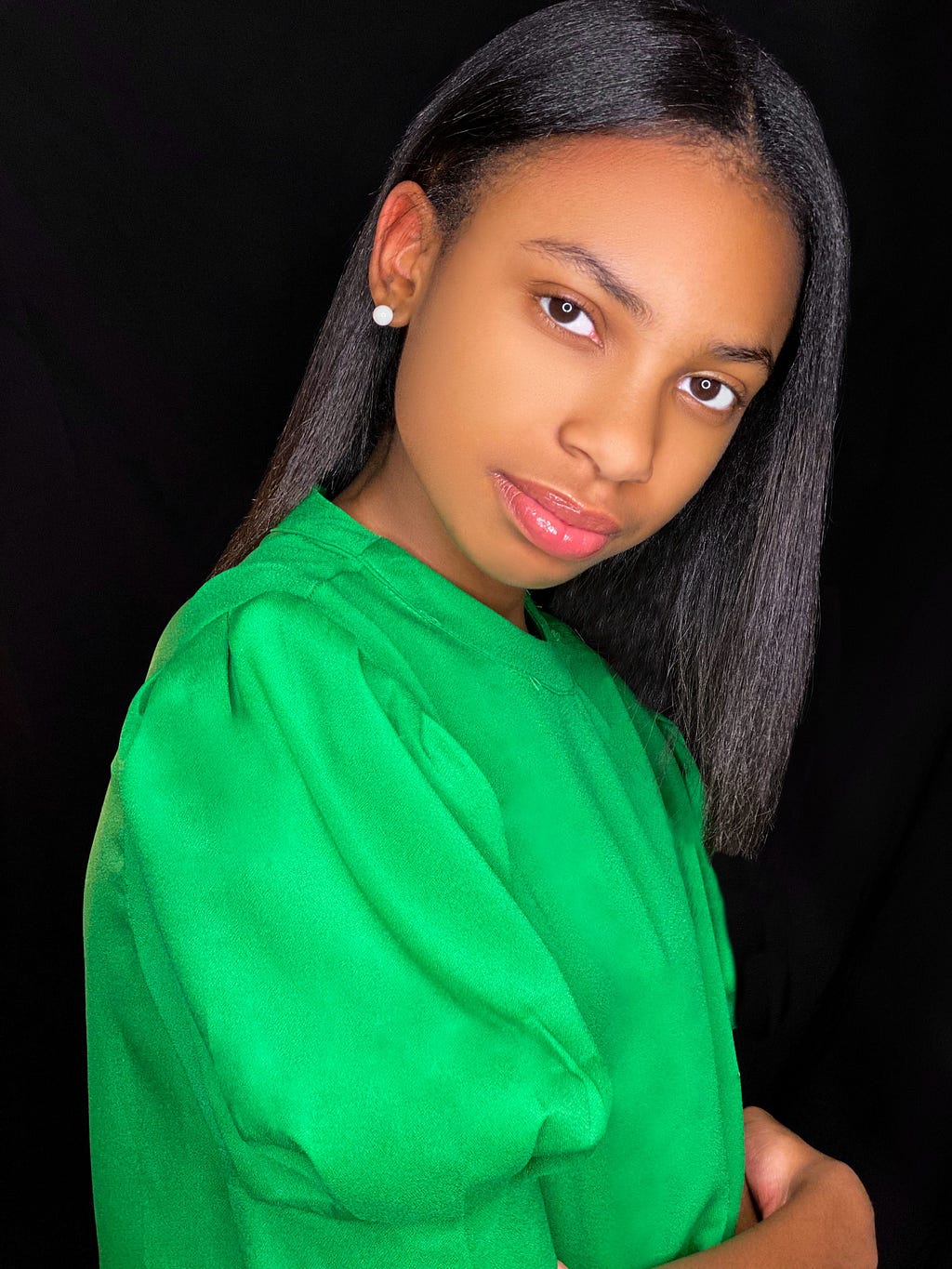
Maria Raquel Thomas is a 14-year-old Entrepreneur, Youtuber and Philanthropist. She is the owner of Maria Raquel Thomas Cosmetics.

Thank you so much for doing this with us! Before we dig in, our readers would like to get to know you a bit more. Can you tell us a bit about your “backstory”?

Hello, my name is Maria Raquel Thomas, and I am a 14-year-old teen entrepreneur. I own a beauty brand called Maria Raquel Thomas Cosmetics. I am also the National Youth Ambassador for an organization called Stand-Up for Kids. It is a non-profit that focuses on combatting youth homelessness. In my spare time, I like to build robots and roller coasters.

What led you to this path at such a young age?

In January 2018, I started my first company, Ria’s Slime Shop. My goal was to produce products that helped calm anxiety amongst the Z-generation. As my business geared up, I noticed I started to have problems with my lips chapping. It was embarrassing for me and it did not make me feel confident. So, I came up with a solution. I went back into my business “science lab” and started developing items to help with chapping. In 2020, I started Maria Raquel Thomas Cosmetics. I am proud to state my first collection sold out in a week! I now have a second collection called Girl Power that has eyeshadows, lip glosses and lip care products.

Can you tell our readers what it is about the work you are doing that is disruptive?

I am disrupting society’s views on beauty. My goal with Maria Raquel Thomas Cosmetics is to enhance the natural beauty of girls and build up their self-confidence. For example, I used positive adjectives in the naming of the products to give girls reminders of how amazing the really are. I use words such as Beautiful, Confident, Adventurous, Dreamer, Determined, etc.

Can you share a story about the funniest mistake you made when you were first starting? Can you tell us what lesson you learned from that?

When I first started my beauty line, my first collection, the D.R.I.P. Collection, was all handmade and I would have trouble filling the tubes up. There is an unwritten rule that when you fill up your lipgloss tubes, you only fill them up to a certain amount. If you do not, they could overflow. I did not know that until afterward and when I closed the lipgloss tubes, they would squirt out and get everywhere. I made a big mess of lipgloss all over my ‘science lab’. After the lipgloss spilled everywhere it was hard to clean up. Lesson learned, study up on your products.

We all need a little help along the journey. Who have been some of your mentors? Can you share a story about how they made an impact?

My parents have been my mentors and they have really helped me grow my business. My parents are Veterans, and, in our household, there is a rule that if you have a problem, you must come up with a few solutions. This was extremely helpful when it came to my lipgloss filling tube incident. My solutions were to buy a lipgloss filling machine, continue to use a filling tube, or have them professionally manufactured.

Can you articulate to our readers when disrupting an industry is positive, and when disrupting an industry is ‘not so positive’? Can you share some examples of what you mean?

Disrupting an industry can be both a positive and a negative thing. Disrupting an industry in a positive way is a good thing and it shows that you are doing something at a higher level. I am doing just that. I believe everyone is beautiful. So, my products are geared toward enhancing their natural beauty. Disrupting an industry in a negative way could hurt others. For example, if a company has a skin care line that does not protect the environment, it could cause a negative impact on our planet.

Can you share 3 of the best words of advice you have gotten along your journey? Please give a story or example for each.

1) “Give the people what they want.” Sometimes it is not always about you. For instance, when I was determining what I wanted to post on my Instagram cosmetics page, I wanted to post things that had cool videos and effects, but these days people are more focused on the actual product. So, I learned to give the people what they want.

2) “If it were easy everyone would be doing it. Having a business and then trying to grow your business is not the easiest thing in the world. There have been times when I felt down but once I received that advice, it motivated me. To be successful, I know I must work at it and keep working at it.

3) “Follow my heart and you’ll do great.” I believe that if you are passionate about something and you love doing it, nothing can stand in your way.

We are sure you are not done. How are you going to shake things up next?

We are now working on my new beauty collection. My goal is to continue to build girl’s self-confidence through my products. I am also working with Stand-Up for Kids to bring more awareness to the public about how we can combat youth homelessness.

In your opinion, what are the biggest challenges faced by ‘women disruptors’ that aren’t typically faced by their male counterparts?

Women disrupters are more judged. Through my product line, I am telling girls that they are powerful and beautiful. Some people may feel that not every girl is beautiful and powerful. I disagree. Yes, we are.

Do you have a book/podcast/talk that has had a deep impact on your thinking? Can you share a story with us?

‘Reach for the Skai’ by Skai Jackson was a very inspirational book for me. It really motivated me to do something I love. This book told me that EVERYONE goes through ups and downs in life to be successful. Sometimes we do not always get to see the journey it takes for that successful person to be in the place that they are in. I think it is amazing to see another person’s point of view on success. The bottom line is that we must take the stairs and not the elevator to success.

You are a person of great influence. If you could inspire a movement that would bring the most amount of good to the most amount of people, what would that be? You never know what your idea can trigger. 🙂

If I could inspire a movement it would be to help combat youth homelessness. I believe all kids should have an education because it will benefit not only the child but the planet. Who knows, one day they could be a scientist and find the cure for a disease.

Can you please give us your favorite “Life Lesson Quote”? Can you share how that was relevant to you in your life?

My favorite life lesson quote is “If it was easy, everyone would be doing it.” This is relevant to me because this quote constantly reminds me that having a business may not be easy but if I keep pushing myself it will be worth it.

How can our readers follow you online?

You can find Maria Raquel Thomas Cosmetics products at www.mariaraquelthomas.com. To see all the products in action, check out my Instagram and Facebook @mariaraquelthomas!

This was very inspiring. Thank you so much for joining us!


Female Disruptors: Maria Raquel Thomas On The Three Things You Need To Shake Up Your Industry was originally published in Authority Magazine on Medium, where people are continuing the conversation by highlighting and responding to this story.

Katie Wagner of KWSM: 5 Things I Wish Someone Told Me Before I Became A Founder or CEO

No one is going to tell you that you’re doing a good job.

As CEO, you don’t have a boss who can give you feedback about how you’re doing. It’s hard to find external guidance for how to improve, but for me it’s been even more challenging that there’s no one to praise you or celebrate with you when you’re doing a good job. You have to find that pride and motivation within yourself. That’s one reason that it’s been so important for me to regularly step away from my company — so that I can reflect on all the things I’ve accomplished.

As part of my series about the leadership lessons of accomplished business leaders, I had the pleasure of interviewing Katie Wagner.

Katie is the CEO and Founder of KWSM: a digital marketing agency. KWSM is a full-service digital agency specializing in content creation, social media management, digital advertising, videography, website design and SEO. Clients include Mitsubishi, Anthem Blue Cross, F45 Fitness Studios, Rakuten, Caesar’s Entertainment, and small to mid-sized companies across the country. The agency has offices in Orange Country, CA, San Diego, CA, Atlanta, GA and Las Vegas, NV.

Before starting KWSM, Katie spent 15 years as a television and radio journalist, working for news outlets including ABC, CBS, Fox, CNN & National Public Radio.

Katie lives in San Diego, CA with her husband and their 5 rescue dogs.

Thank you so much for joining us! Can you tell us a story about what brought you to this specific career path?

I was working as a television journalist when social media started to gain popularity. We realized that people weren’t watching the 5 o’clock news the way they used to because they could get headlines on Facebook and Twitter and see videos on YouTube. It became part of my job to use these new channels regularly and try to engage our audience there. As more consumers embraced social media, I realized that business owners would need to understand how to tell their story there, and I could use the skills I learned as a journalist to help them. When I left my TV job, I thought I would become a consultant and had no idea I was building an agency.

Can you tell us a story about the hard times that you faced when you first started your journey?

Because my entire career had been in TV news, I had never run a company or been anyone’s boss before. I wasn’t well versed in how to find and hire the right people. The agency was growing quickly, and I needed to expand our staff in order to meet client demand. I ended up making some really poor choices. Once, while I was away on vacation, my team of 4 employees conspired to each take time off while I was gone, and cover for each other. (Ironically, I found out because they posted pictures of their trips on social media!) I knew I could no longer trust them and had to fire the whole team on the same day. I thought it would be the end of the agency, but my clients understood and trusted me to continue to serve them while I hired a new team. After that, I took hiring and training a lot more seriously, and learned that not everyone who accepts a job will be loyal to the company.

Where did you get the drive to continue even though things were so hard?

I was really inspired by my clients’ faith in me and the agency. I had worked hard to build relationships with them, and I was transparent with them about what had happened. They trusted me to recover quickly and keep moving forward — and that gave me the confidence that I could do it. I knew a lot about digital marketing, but I still had a lot to learn about building a company. I accepted that challenge and did everything I could to educate myself about management and leadership.

So, how are things going today? How did grit and resilience lead to your eventual success?

Today, I have a team of more than 35 employees that I trust and respect. Over the years we have refined our hiring process to include a personality test that tells us much more than what’s on a candidate’s resume. We’ve put strong core values in place for the agency, and we hire based on those traits, and not just on job qualifications. I can teach people the skills they need to excel at digital marketing, but I can’t teach them loyalty, integrity and to be a team player. At the end of the day, those qualities are what allow us to build a strong staff and do our best work for clients. I’ve also learned to be a much better boss and leader, and I’m grateful for the self-development that owning the agency has made possible.

Can you share a story about the funniest mistake you made when you were first starting? Can you tell us what lesson you learned from that?

When I first started the company in 2010, I named it Katie Wagner Social Media, Inc. I really believed I would just be a consultant and teach business owners how to use social media. That ended up being short-sighted, and as the agency grew it didn’t feel right to use my name in the title of the company. The work we do is made possible by a team of people — and I could never accomplish alone what we are capable of together. Also, we now do so much more than social media! So, in 2018, we rebranded as KWSM. As the agency continued to grow, clients didn’t have as much interaction with me because they were well taken care of by the team. One day, the team was onboarding a new client and I happened to walk by the conference room. I wanted to introduce myself and thank him for choosing the agency, so I popped in and stuck out my hand and said “Hi, I’m Katie. Thanks for being here.” The client looked very confused — he had no idea that I was the CEO! It was embarrassing at the time, but I also know it’s a sign of the strong company we’ve built and the fact that clients no longer hire us because of a connection to me, they hire us because of the work we produce and the relationships they build with every person on the team. Today we tell people the initials stand for Know Why Stories Matter!

What do you think makes your company stand out? Can you share a story?

From the very beginning, I’ve been committed to building a company with strong values and a people-first focus. When I started the agency a decade ago, digital was a new field, and there was a very low barrier to entry. Anyone who had a Facebook page could be an ‘expert.’ I was determined that we would be genuinely knowledgeable and helpful to our clients, and always treat them fairly. We work in an industry that sometimes takes advantage of the fact that digital is a foreign language to most clients, or charges companies more for services just because they have money. I don’t want to be that kind of agency. Internally, we are guided by the phrase ‘Integrity. Always.’ and I’m very proud of that. One way that’s shown up recently is that when the pandemic happened, we decided to let any client that was struggling out of their contract. I didn’t want to add to the financial stress and uncertainty that so many business owners were facing. We released 20 clients in the first few weeks of the pandemic, and many of them have come back now that things have become a bit more predictable.

I’ve also worked to maintain integrity with my staff over the years. I try to make decisions for the company we will be 5 years from now, not the company we are today. That means, from day one, team members were employees instead of contractors. (Because I knew that as the agency grew, providing good salaries and benefits would be important for attracting the kind of people we wanted to work with.) It’s unusual for an agency to have full-time, salaried employees instead of freelancers and contractors, but I believe that we do our best work because we all work together every day, and don’t assemble piecemeal teams — pulling in people only when we need them. Our cohesiveness is important for the work we do, and I am proud that we were able to honor those commitments to all our employees throughout the pandemic and didn’t lay anyone off.

Doing the right thing is hard sometimes and I’m sure we could have grown faster or made more money if we had cut corners, but I feel good about the company we’ve built.

Which tips would you recommend to your colleagues in your industry to help them to thrive and not “burn out”?

One of the best things I’ve done for both the company, and my own energy level, is carve out time to step away. Every 6 months I take 3 weeks off to work on strategic planning. This allows me to focus on the big picture and fine-tune our systems and processes — but it also gives me the opportunity to remove myself from the day-to-day duties of my job and remember why I started the agency and reflect on how far we’ve come and the good work we are doing. I always go back to work with a renewed sense of drive.

I also think it’s important as a leader to set boundaries. Digital is not a 9–5 job. The tools we use are ‘always on’ and we often work outside of regular hours. It’s easy to be pulled in a lot of different directions — either a client or a team member will always need you for something. I try to schedule white space in my calendar so I can focus on important projects and initiatives for the company, instead of responding to everyone else’s needs all the time. Otherwise, some of the most important work I do will be tackled at night or on the weekend, when I’m less productive. It’s hard to say ‘no’ sometimes, but it actually improves my team’s problem-solving abilities and boosts their confidence.

Also, for me, it’s been very important to continue my own education. As the world changes, leadership also changes and being the best CEO for my agency means continuing to learn new tactics, and constantly evaluate my own strengths and weaknesses. Knowing that I have the tools I need to perform well keeps me invigorated.

None of us are able to achieve success without some help along the way. Is there a particular person who you are grateful towards who helped get you to where you are? Can you share a story?

When I retired from TV, I had been married to my husband for a year, but we lived in different states because of our jobs. When I moved to be with him, I knew I wanted to help business owners use the new digital tools, but I didn’t know what that would look like. Stephen was the one who pushed me to start a company. He believed that I could do it and supported me every step of the way. In fact, about a year after I started the agency, he quit his job to become KWSM’s Director of Operations! We’ve now worked together for more than 10 years, and I could not have built the agency without him. When he first joined the company, I offered to make him a partner. However, he reminded me that there could only be one chief decision-maker and that was me. He joined as an employee instead. His trust in me as not only a colleague, but as a boss, still helps me find strength on the tough days.

How have you used your success to bring goodness to the world?

At the agency, the majority of our staff is female, and many of them are in the millennial generation. My personal sense of purpose and fulfillment comes from training, mentoring and promoting these young women in the workplace. I teach an in-house leadership program for members of our team and helping them navigate their career paths and become the leaders of tomorrow is one of the most important parts of my job.

What are your “5 things I wish someone told me before I started leading my company” and why. Please share a story or example for each.

Starting and leading my company has been one of the most fulfilling experiences of my life, but also one of the most difficult. I have learned a lot about my own strengths and weaknesses, what’s important to me, and how I want to contribute in the world. I don’t know if there’s any list that would have prepared me for this journey, but here are some of the things I wish I had known:

1.) Finding a peer group should be a top priority.

Being the CEO can be a lonely job. When you’re having a bad day or facing big decision, there’s no one on your staff that you can talk things over with. Being a good leader means reassuring your staff that everything is OK, and their jobs are stable, and that means you don’t complain to them or put your decisions on their shoulders.

I’ve found that it’s very helpful to have a group of peers — leaders at other companies — that I can confide in and look to for advice. About 5 years into my role as CEO, I joined a Vistage peer group, and that made a huge difference in feeling less alone and having resources for improving my leadership. No matter what the industry, many of the challenges CEOs face are the same, and I could not have built the company I have today without the friendship and support of my Vistage peers.

2.) No one is going to tell you that you’re doing a good job.

As CEO, you don’t have a boss who can give you feedback about how you’re doing. It’s hard to find external guidance for how to improve, but for me it’s been even more challenging that there’s no one to praise you or celebrate with you when you’re doing a good job. You have to find that pride and motivation within yourself. That’s one reason that it’s been so important for me to regularly step away from my company — so that I can reflect on all the things I’ve accomplished.

3.) The learning curve is steep, and continuous. Be ready.

Running a company will force you to use every skill you have and develop new ones very quickly. When I started the agency, I knew about digital marketing. But I had to quickly learn about hiring and people management, finances and balance sheets, sales, contracts, negotiating real estate, and numerous other aspects of running an organization. It can be exhausting and sometimes feel like you can’t get on top of everything. Because the world is always changing, and we always have new clients and team members, I am constantly learning and refining my skills as the business grows and evolves. Whether it’s tackling an interpersonal communication challenge I haven’t faced before, or implementing a new HR law, there are new problems to solve daily.

4.) This will be the hardest work you have ever done.

People sometimes say they want to own a business because of the freedom it provides — they envision doing only the work they love, working when they want to, and taking plenty of time off to spend with family and friends. That may be true if you’re a solopreneur, but when building a company, I find that this is the biggest myth of entrepreneurship. I work harder and longer hours now than at any point in my career. There is also added pressure on me to do good work and make wise decisions because dozens of families rely on their loved ones having stable jobs at the agency. This responsibility, coupled with the loneliness and constant learning mentioned in #1 and #3, makes the role of CEO the most challenging position I have ever held. It’s also the most rewarding — but that sense of accomplishment is earned through a lot of hard work. When you have a job, success is about your output on a daily basis. As the leader of the company, your focus is on long-term results, and success is about what happens over time. When the days get stressful, it can be hard to maintain that focus on the future.

5.) People and relationships are more important than systems or the work you produce.

I used to think that the agency would grow if we had the right systems and processes to keep things running smoothly, and we produced the best work in our field. While those things matter, I’ve learned that the true heart of a business is the people that work there, and the people that hire you. The relationships I have with my staff and clients are fuel for agency growth, and at the end of the day, how you treat people is the most important aspect of success. If you have mutual trust and respect with a client or an employee, it’s easy for them to forgive you when a mistake is made and keep moving forward. But no amount of outstanding work will make someone want to join your team or hire your company if they don’t believe you are operating with integrity.

You are a person of great influence. If you could start a movement that would bring the most amount of good to the most amount of people, what would that be? You never know what your idea can trigger. 🙂

I would like to see more resilience training in the workplace. As I mentioned, I work with a lot of younger team members and they haven’t yet learned how to care for their own energy levels and rebound after tough times. I see a lot of people quit their jobs and look for something new the first time things get stressful or difficult, because they think it will never change. I would love to see more transparent conversations in the workplace around stress and workload — and more training about how to recognize your own emotional needs and take steps to meet them, instead of pushing through because you feel like that’s what’s expected. We hear a lot about burnout, but that’s simply the result of depleting your energy stores and not feeling like you have anything left to give. Burnout is a serious condition, but it isn’t permanent or irreversible. I think better communication and leadership around these issues could build a workforce that is able to recognize the signs of depleted energy sooner and take steps so that burnout is avoided.

How can our readers follow you on social media?

I would love to connect and continue the conversation on any of these channels:

https://www.facebook.com/kwsmteam

https://www.linkedin.com/company/1873511

https://www.linkedin.com/in/kwsocialmedia/

https://twitter.com/kwsmteam

https://www.instagram.com/kwsmteam/

This was very inspiring. Thank you so much for joining us!


Katie Wagner of KWSM: 5 Things I Wish Someone Told Me Before I Became A Founder or CEO was originally published in Authority Magazine on Medium, where people are continuing the conversation by highlighting and responding to this story.

Female Disruptors: Chelsea Rana of Chelsea Rana Art Advisory On The Three Things You Need To Shake…

Female Disruptors: Chelsea Rana of Chelsea Rana Art Advisory On The Three Things You Need To Shake Up Your Industry

I’ve been really blessed to have had a number of mentors in my life. I spent years living in Europe and Asia which allowed me to cultivate deep relationships with different types of people from all around the world. Each has taught me something different, whether about art, or business, or even just life, and I feel that I carry a little bit of each of their philosophies with me. The most impactful advice that I’ve received is that there is no need to rush into things. By taking the time to be truly thoughtful before acting, I will always be happy with the end result.

As a part of our series about women who are shaking things up in their industry, I had the pleasure of interviewing Chelsea Rana.

In her capacity as an Art Advisor, Chelsea acts as a natural catalyst between the collector and Gallery. In the community’s best interest, it is their function to provide maxim exposure for the artist but also uphold its integrity for long term ownership, rather than quick flips — a current trend plaguing the veracity of the art industry. Remaining a trusted source to both galleries and collectors alike is essential business strategy for CRAA. Upholding genuine relationships give Chelsea the insider edge that her clients need to protect their investment and uphold the value in each piece.

In celebration of the launch of CRAA and a culmination in her art advisory journey, Chelsea will soon embark on another cross-cultural visual endeavor entitled L.A.: Views, with international partner Maki Gallery. Opening in Omotesando, Japan on December 4th, 2020, the L.A.: Views show will feature Los Angeles based Mid-Career and Early Bluechip artists. Running until January 16th, the inaugural show focuses on Angelenos that Rana is drawn to in a cultivating artist.

Innovation is key is in her artist discover. Rana seeks out artists who create new techniques or builds upon the existing. She looks for new ways that they express their subjects. Her ability to recognize innovation is due only to her in depth of knowledge in the Masters. Following the Tokyo exhibition with Maki’s own collection featuring L.A. based artist Mungo Thomson as one of the first shows outside of Japanese artists, this show featuring the likes of Sayre Gomez’s modern art and Gabriella Sanchez’ graphic and Latinx typography and double entendres at Maki’s second location. It will be only the first non post war avant-garde Japanese shows held in the 2003 brand gallery.

This distinct honor of bringing in American art prior to auction houses, which inflates value making in difficult for Japanese patrons to acquire, gives CRAA the trusted responsibility to help shape the contemporary art scene in Japan. It is Chelsea Rana Art Advisory eye, expertise and ultimately experiences, of whom the show exhibits, will define the representation of Los Angeles work as it appears in Japanese Culture.

Thank you so much for doing this with us! Before we dig in, our readers would like to get to know you a bit more. Can you tell us a bit about your “backstory”? What led you to this particular career path?

Thank you for having me! I am the founder of Chelsea Rana Art Advisory. Prior to founding my own company, I worked in galleries and then later co-founded an advisory firm. I developed my passion for art long before I was fortunate to get my start working in galleries. I had an opportunity to live in Europe and Asia for an extended period of time and that opened my eyes and ears to the diversity of art. Throughout my career path, I’ve always held onto my basic principles, which is working with kindness, transparency, empathy and honesty. My clients know that I work to get the best results for them, rather than just making a sale, which has translated into long-lasting relationships.

Can you tell our readers what it is about the work you’re doing that’s disruptive?

The exhibition that I recently curated, L.A.: Views, which is currently on view at MAKI Gallery in Tokyo Japan, is a group show comprised of paintings and sculptures by Los Angeles-based artists. Many of the artists in the show are early to mid-career so Japanese collectors are getting early exposure to these artists that they wouldn’t have otherwise. Japanese collectors typically learn about Western artists from auction houses, and by the time an artist has work in an auction, their prices are already quite high which excludes many would-be-collectors. MAKI Gallery is the perfect gallery for this exhibition. I say this not only have I known and worked with the founders for quite some time, but also because MAKI Gallery is very forward-thinking and highly-esteemed, with collectors looking to MAKI Gallery for early talent.

We all need a little help along the journey. Who have been some of your mentors? Can you share a story about how they made an impact?

I’ve been really blessed to have had a number of mentors in my life. I spent years living in Europe and Asia which allowed me to cultivate deep relationships with different types of people from all around the world. Each has taught me something different, whether about art, or business, or even just life, and I feel that I carry a little bit of each of their philosophies with me. The most impactful advice that I’ve received is that there is no need to rush into things. By taking the time to be truly thoughtful before acting, I will always be happy with the end result.

In today’s parlance, being disruptive is usually a positive adjective. But is disrupting always good? When do we say the converse, that a system or structure has ‘withstood the test of time’? Can you articulate to our readers when disrupting an industry is positive, and when disrupting an industry is ‘not so positive’? Can you share some examples of what you mean?

Absolutely. An example of disruption being positive that relates back to my L.A.: Views exhibition at MAKI Gallery is that by bridging the gap between Tokyo and Los Angeles via an art exhibition making the world a little smaller. It’s a net positive result for everyone. The Japanese collectors are able to see, learn about, and collect artwork by talented artists that they otherwise wouldn’t have known about until much later in that artist’s career. Through this exposure, the artist is able to acquire new patrons which can lead to career-changing opportunities such as more recognition and inclusion in museums. With that being said, disruption can be negative when done thoughtlessly. Even though the goal of showing an artist’s work to a new market is to gain new collectors for that artist, we have to make sure that these new collectors have good intentions. In today’s speculative market, it’s more important than ever to take time with placements and make sure that the artworks enter collections where they will remain and be appreciated without being flipped.

We are sure you aren’t done. How are you going to shake things up next?

Even though L.A.: Views is still on view, I’m already thinking about curating another show. I also have a few more projects with MAKI Gallery in the works.

Can you please give us your favorite “Life Lesson Quote”? Can you share how that was relevant to you in your life?

“We need art to remind us why life is worth living. We need art to reawaken our sense of the wonder of being, to remind us of our freedom, and to highlight the things in our culture that enable us to withstand the dreaded visage of death.” By Ben Okri.

How can our readers follow you online?

http://www.chelsearanaartadvisory.com/

https://www.instagram.com/chelsea.petronko/

This was very inspiring. Thank you so much for joining us!


Female Disruptors: Chelsea Rana of Chelsea Rana Art Advisory On The Three Things You Need To Shake… was originally published in Authority Magazine on Medium, where people are continuing the conversation by highlighting and responding to this story.

David Allred of SPERO CBD: 5 Things I Wish Someone Told Me Before I Started Leading a CBD Business

The best advice I can give is to be curious and go deep into a subject or interest. Not only with regards to your core business, but also in life. In today’s environment it seems like most people’s attention spans are shrinking and everyone is looking for quick hits. My curiosity in biochemistry twenty years ago gave me the foundation to study CBD and ESC on a deep level, and now that knowledge is being applied to Spero.

As part of my series about “5 Things I Wish Someone Told Me Before I Started Leading a Cannabis Business” I had the pleasure of interviewing David Allred, Co-Founder/CEO, created SPERO CBD, a non-GMO organically-produced CBD brand that is completely sustainably made and a brand that consumers TRUST. SPERO CBD is committed to spreading a new standard of CBD wellness the highest quality ingredients available on the market. Each product is rigorously tested for potency, pesticides, microbials, heavy metals and solvents, and then tested AGAIN with a third party for total assurance, so you get all of the good stuff and none of the bad. SPERO CBD is known to be the perfect way to integrate ultimate health + wellness this year with their pure CBD line that contains zero TCH and zero impurities.

Thank you so much for doing this with us! Can you share with us the story about what brought you to this specific career path?

No problem at all, I am happy to share. My path to this point has been a long and winding one but the idea for Spero began when I was living in Brazil. My partner at the time had an old dog that was suffering from seizures. It was heart-wrenching to watch a dog go through this because the seizures are intense and cause the dog immense anxiety. The vet recommended a medication to help stop the seizures but said it would have a lot of negative side effects and was not guaranteed to work. I decided to research alternatives which lead me to CBD and the endocannabinoid system (ECS) since CBD can help with epilepsy and anxiety in both dogs and humans.

I went down the rabbit hole and studied everything I could about CBD and the ECS. Once I really understood how important the ECS is to our health and well-being I started taking CBD and was shocked by how well it worked for me. I saw that there was an opportunity in a new industry for something that I really believed in. My project in Brazil had ended, I had previously launched companies and have a degree in both biochemistry and business management, so it just made sense to me to launch Spero. I reached out to my personal network of talented people I have known throughout the years and started putting a team together. Once the 2018 Farm Bill passed legalizing hemp production and CBD we got to work.

Can you share the most interesting story that happened to you since you began SPERO CBD? Can you tell us what lesson you learned from that?

We formed and opened the company with funding from our founding team. We were in conversations with some institutional investors about raising capital when I received an unexpected call from Start Engine, an equity crowdfunding site, about raising capital through crowdfunding. They had seen our pitch deck and thought we could do well on their platform. Equity crowdfunding is still relatively new and differs from platforms like KickStarter or Indiegogo in that people can invest money into your company in return for actual shares in the company, so they have a long-term interest in the company rather than only receiving a one-time discounted product.

We ended up being one of the few companies that maxed out our Reg CF raise which allows you to raise up to $1,070,000 in a twelve-month period. We have over two thousand investors with investment amounts ranging from $250 to $10,000. That one phone call and one decision to go for crowdfunding completely changed our entire company structure and strategy. The lesson here is that you have to be open to new ideas and be willing to adapt your strategy if you find opportunities that you believe could help the business grow. This can even include pivoting your initial business proposition if you find opportunities you didn’t know existed beforehand. Most of today’s most successful companies started off as something different than what they are today. Amazon started off as an online bookstore and now they are one of the world’s largest retailers and their most profitable business is in cloud-based internet services. You only need to compare Barnes & Noble’s 2019 revenue of about $3.5 billion (down $2 billion since 2012) to Amazon’s $280 billion (up $220 billion since 2012) to see what happens if you don’t adapt your business along the way.

Can you share a story about the funniest mistake you made when you were first starting SPERO CBD? Can you tell us what lesson you learned from that?

I can think of a particularly funny moment. Once we decided to do equity crowdfunding, we needed to create a video for our campaign. Turns out, everyone on our founding team is camera shy. Not only was it difficult to get everyone to agree to be on camera but watching everyone film was quite funny because of how many takes we needed to do. We couldn’t even get through saying our names without having to start over. If you want to start a company from the ground up, you are going to have to do some things that may not come naturally or easy to you. That video helped us raise 1 million dollars.

Are you working on any exciting projects now? How do you think that will help people?

Yes, we will soon be launching new exciting gel cap products to give people more wellness options when it comes to productive sleep and keeping your immune system functioning in top shape along with your endocannabinoid system. I think people will be surprised at how well they feel and how less often they get sick when both their immune system and endocannabinoid systems are functioning at peak levels.

We also are finalizing the formulation for a new plant-based skin cream infused with our CBD and arnica that athletes can apply directly to sore areas and joints. We have had to go through many formulations to get a cream that is infused with our whole-plant extract rather than needing to use CBD isolate, which most skin creams on the market currently utilize.

None of us are able to achieve success without some help along the way. Is there a particular person who you are grateful towards who helped get you to where you are? Can you share a story?

Well, I first need to give credit and thanks to our founding team, my family, and the more than two thousand investors that believed in the idea of Spero to create a CBD company focused on quality, education, and the long term. Without them Spero would not exist.

There have been numerous teachers, professors, mentors, authors, and entrepreneurs that have inspired me to get to where I am today. If I had to try and focus on one in particular, I would mention Dr. Sarah Green who was a new associate professor at MTU and taught my analytic chemistry course. I have applied her analytical process to attack difficult problems to so many of my own projects in life, including Spero.

Dr. Green hired me to do field research for a new research program she was launching to study the environmental effects on Michigan’s Lake Superior. It was amazing to watch her launch this program because she had to design it, raise the funds for it and bring together a team of top researchers from multiple universities. If it sounds pretty similar to launching a startup you would be right.

Her research program was a huge success and spawned numerous studies on the Great Lakes that are still happening today. She then went on to become the chair of the chemistry department at MTU and is now a world-renowned climate scientist working with the United Nations. She taught me more about chemistry than any other professor by far and without her help I never would have graduated with honors.

There’s a funny story associated with my work with Dr. Green. To gather lake data, Dr. Green secured the use of Michigan University’s 120-foot research vessel for a week. There were about ten of us on board and all of us research assistants had to operate lab equipment in the bottom area of the ship. One day was particularly stormy and wavy and all five of us in the bottom got extremely seasick but we had to continue because we needed to utilize every day of the boat. Imagine five seasick people trying to run lab equipment and read gauges while constantly vomiting for about eight hours! That was over twenty years ago, and I still remember that day very well.

This industry is young, dynamic and creative. Do you use any clever and innovative marketing strategies that you think large legacy companies should consider adopting?

Marketing is extremely difficult in the CBD space because you are not able to directly advertise and sell anything cannabis-related on any of the usual major sales platforms — even if our products contain 0.0% THC. Instead of sensationalist marketing tactics, we’re focused on sharing accurate and up to date educational content about CBD and the ECS with our community.

We’ve worked diligently to provide our current customers and anyone who is thinking about adding CBD to their wellness regimen the opportunity to hear directly from our dedicated advisor team that currently includes Dr. James Talley (Johns Hopkins trained doctor with a specialty in pain management), James Blake (tennis champion and Olympian), and Carlene Thomas (renowned dietitian nutritionist). Our advisors are experts in their respective industries and it’s fantastic to know that they believe in what Spero stands for while fully supporting our mission to set the CBD standard in a largely unregulated industry.

Can you share 3 things that most excite you about the CBD industry? Can you share 3 things that most concern you?

Three things that excite me about the CBD industry:

  1. The potential to help so many people feel better and be healthier with a natural plant supplement. I am constantly amazed by how many people have said that CBD has changed their life and hearing that never gets old. Some people have also been able to stop using some medications that can cause harmful side effects over prolonged use. Many think that CBD is something new, but in reality, humans have been using it for thousands of years and it is only recently we stopped because of prohibition laws which were meant to target THC and would not even allow the production of hemp with almost no THC content.
  2. The industry is still nascent with tremendous growth potential. It’s still illegal to sell CBD in many countries including some of the world’s biggest markets. However, many of these countries already have legislation moving forward to allow CBD sales which will provide opportunities into large virgin markets.
  3. The expansion into other cannabinoids. CBD and THC are the most widely known but are only two of the more than one hundred and forty known cannabinoids. Research is constantly coming out showing the benefits of other cannabinoids that are non-intoxicating like CBD and I believe in the near future you will have more options to choose from. You are already probably hearing about CBG and CBC.

Three things that concern me about the CBD industry

  1. Low-quality products without testing. This is by far my biggest concern for the industry. It is currently flooded with low-quality products that have not been tested. Many products don’t contain what they have labeled on the bottle and some even contain dangerous toxins. Low-quality products can really turn somebody off from CBD because they try them and don’t see any benefits and then think that all CBD products are the same. It’s probably funny that as the CEO of a CBD company I am actually hoping for federal regulation. We already third-party test for potency, heavy metals, pesticides, and residual solvents even though we are not required to.
  2. False claims about what CBD can and cannot help with. CBD can do some amazing things so there is no reason to say it can do things that it can’t. There is a lot of misleading information out there just trying to sell people products and this can have dangerous consequences especially if someone is taking CBD for something, they should be getting medical treatment for. I have even seen claims that CBD can help prevent COVID-19 which is completely false.
  3. Prohibition. Yes, even though the 2018 farm bill signed in December legalized CBD, it has only been two years after decades of prohibition and there are still some grey areas within its legalization. There are still some lawmakers that don’t believe CBD should be legal and it would be naïve to think that it would not be possible for CBD to become illegal again.

Can you share your “5 Things I Wish Someone Told Me Before I Started Leading a CBD Business”? Please share a story or example for each.

1.) Forget everything you know about marketing.

Planning on marketing with Facebook, Google, Instagram, etc? Good luck. Most major platforms will not allow CBD ads on their platforms yet so getting your name out there is going to be tricky and there is a lot of competition for few spaces you can market on. You will need to get creative on how to market and build a customer base. Yes, you may have seen some ads on those platforms, but that doesn’t mean they didn’t get an ad account ban a few days later.

2.) Regulations can change rapidly.

You will have to be nimble and adapt quickly to a constantly changing environment. What is legal today may not be tomorrow and many of the regulations won’t make any sense at all. For our launch, we were excited to have several dispensaries carry our products; but the agency that controls dispensary licenses sent a letter to all dispensary owners in California saying that CBD produced from hemp cannot be sold in dispensaries and doing so would jeopardize their license. So, you can buy federally illegal cannabis with THC in a dispensary but you cannot buy federally legal CBD without THC, go figure.

3.) Banking is an issue.

Many banks will still not allow accounts tied to any business related to cannabis even if you only sell CBD. This will catch many people off guard especially when it comes to online payment processing. If you think you can just throw up a Shopify site and start selling CBD, you will want to think again. You could build your entire site out, stock your inventory, drive traffic to your site, get your first sales, then wake up to find out Shopify has closed down your payment processing because they don’t allow CBD sales. You will need to use a third-party processor that specializes in allowing CBD sales and the process can take a while. Our launch was delayed for some time while we had to switch payment processors.

4.) You can’t say the best things about your product and can’t share your best customer success stories.

We have so many amazing testimonials and stories from customers that have said our products have improved their lives and we can’t share them. If a customer references any sort of ailment that your product helped them with you cannot share it publicly. By doing so the FDA will consider it making a false medical claim and send you a cease-and-desist letter. This is not something you want to receive, and it will be there in the permanent record. We have never had any issues because we are very careful about what we share and what information we put out about our products. You are also very limited to what you can say your product can help with.

5.) People still don’t know what CBD is.

If you know about CBD you probably see it everywhere, however, most people still have no idea what it is and why you would take it. Don’t believe me? Ask ten random people what CBD is, why you take it, and what it does. You might get one that can answer all three of those and there will be some that have never heard about it. For a bonus question ask what the endocannabinoid system is. You will have to do a lot of education about CBD especially about why a high-quality CBD product is different from a low-quality one, assuming you will only be working with a high-quality product.

What advice would you give to other CEOs or founders to help them thrive?

The best advice I can give is to be curious and go deep into a subject or interest. Not only with regards to your core business but also in life. In today’s environment, it seems like most people’s attention spans are shrinking and everyone is looking for quick hits. My curiosity in biochemistry twenty years ago gave me the foundation to study CBD and ESC on a deep level, and now that knowledge is being applied to Spero.

If you could inspire a movement that would bring the most amount of good to the most amount of people, what would that be?

I wish I could convince everyone to live in a foreign country where they don’t speak the language for a couple of years. After studying in England, I knew I wanted to live abroad again someday and, in a country, where I could learn a new language. I ended up choosing Brazil where I learned to speak Portuguese fluently, met my fiancé, and got the idea for Spero. Leaving your comfort zone opens up your world view, enriches your life, and humbles you in a way that I think everyone could benefit from. We need to find ways to get out of our tribes and bridge the gap with people we consider different from ourselves. Only by working together are we going to be able to start solving some of the pressing global issues we are currently facing.

What is the best way our readers can follow you on social media?


David Allred of SPERO CBD: 5 Things I Wish Someone Told Me Before I Started Leading a CBD Business was originally published in Authority Magazine on Medium, where people are continuing the conversation by highlighting and responding to this story.

Female Disruptors: Dakota Hills and Sierra Brashear of Moon Bath On The Three Things You Need To…

Female Disruptors: Dakota Hills and Sierra Brashear of Moon Bath On The Three Things You Need To Shake Up Your Industry

We’d say that the best word of advice we’ve received is that sometimes it’s better to just let things go than to seek restitution in the event that we feel crossed or disappointed in a business partnership. Most likely, it’s not worth the personal and professional energy it would take to resolve and we would rather continue building momentum in support of the greater vision than to dwell in details of the past.

As a part of our series about women who are shaking things up in their industry, I had the pleasure of interviewing Dakota Hills and Sierra Brashear.

Dakota Hills and Sierra Brashear who founded Moon Bath, are female entrepreneurs who fully embody their brand. They shared a mission to ignite the modern bathing renaissance. Together, they combined the ancient wisdom of Ayurveda with modern intuitive alchemy to bring you earth integrated bathing rituals that inspire you to tune in and reconnect. Moon Bath represents the exploration of ancient healing modalities, elevation of the diverse global community and stewardship of our precious earth — it is their opportunity to use small business as a force for good in the world. Being good stewards of the earth and its inhabitants is rooted in both of their core beliefs.

Thank you so much for doing this with us! Before we dig in, our readers would like to get to know you a bit more. Can you tell us a bit about your “backstory”? What led you to the launch of Moon Bath?

We weren’t always such avid bathers. We were inspired by a dear friend — a true self care enthusiast — whose out of this world bathing rituals seemed to transport her to other realms, and she came back glowing. We needed to know EVERYTHING — we wondered, can bathing actually connect us to the cosmos?

Then we tried it. And, honestly, who knew?! Turns out that tuning in to the guiding force of the moon, setting an aligned intention, and immersing ourselves in warm, herbaceous waters was the medicine we never knew we needed.

Dakota was on her yoga mat during the height of a Scorpio Full Moon when it struck her — she recognized that this was it. For her next mission, she would inspire others to create space for these epic bathing rituals, and the name Moon Bath was beamed in from the stars.

Meanwhile, Sierra was on a weekend getaway at her childhood home in the Rocky Mountains, having a bath, and blissing out. She recalled an Ayurvedic teaching that hailed the benefits of immersing in water, salt and intention, and she thought to herself…the world needs to know about this healing magic!

Our company Moon Bath was created out of a desire to connect deeper with ourselves and the planet and we set out on a shared mission to help ignite the modern bathing renaissance. With our desire to absorb into our bodies the vast healing benefits of plants, we loved the idea of turning our bathtub into a warm tea, adding a little milk and honey, and then steeping our bodies to drink in the earthly goodness. Combining the ancient wisdom of Ayurveda with modern intuitive alchemy, we created earth integrated bathing rituals that inspire us to tune inward and reconnect.

Can you tell our readers what it is about the work you’re doing that’s disruptive?

We are being disruptive by simply taking a moment to consider our impact and making adjustments to our practices to cause the least harm. Moon Bath holds a deep reverence for the plants, materials and the people involved in the production of our products — and in a world that is so often driven by profit over people and planet, this in and of itself is an act of resistance.

We believe that social and environmental responsibility go hand in hand with running a business and that true success is attained with a triple bottom line approach — people, planet and profit. To us, the triple bottom line approach to business is an important way to create positive social and environmental change. With this in mind, we do our best to reduce our impact on the environment and to uplift our fellow human beings through facilitating sustainability, security and dignity throughout our supply chain.

We seek to support woman in business, create jobs for underrepresented populations and elevate social consciousness for the purpose of fostering more equality in the modern-day workforce. Our other initiatives include sustainable packaging, carbon neutrality, charitable partnerships, and working with mission driven vendors. Moon Bath is a proud member of 1% for the Planet, donating at least one percent of annual revenues to environmental nonprofits committed to creating a healthy planet.

Can you share a story about the funniest mistake you made when you were first creating Moon Bath? Can you tell us what lesson you learned from that?

The best part of running a small biz is you make mistakes all the time! We’re constantly learning from them and even discovering they were a blessing in the end, so it’s hard to even consider them an error! Generally, we like to approach things from a place of levity, so when something goes wrong, we’re pretty quick to crack a joke and move right along. Being a small business owner basically just entails problem solving all day every day. When we realize a misstep, it’s about being a quick pivot and rolling with the punches — same with life, amirite?!

We all need a little help along the journey. Who have been some of your mentors? Can you share a story about how they made an impact?

A big part of our vision is to uphold and elevate the ancient wisdom of Ayurveda — a wisdom that invites us to tune in more deeply to the rhythms and elements of nature. With this in mind, one of our favorite mentors is Maya Tiwari, Ayurveda pioneer and Vedic scholar. We have so much appreciation and reverence for her tireless commitment to inspiring health, wholeness and peace, and the way that she has made the potent wisdom of Ayurveda available in the West. Maya is tuned into the cosmos and the sanctity of life on Earth in a way that really speaks to us. As we formulated our Botanical Bath Teas, we gathered inspiration and guidance from the moon wisdom she offers in her book Women’s Power to Heal: Through Inner Medicine. In this book, she shares, “The ancients claimed that all substance of life is created from the dust of Mother Moon, the cosmic source. The Moon’s perpetual cycle determines all rhythms, desires, and possibilities on the Earth.” This idea resonates so deeply with us and continues to guide our inspiration as our business evolves.

In today’s parlance, being disruptive is usually a positive adjective. But is disrupting always good? Can you articulate to our readers when disrupting an industry is positive, and when disrupting an industry is ‘not so positive’? Can you share some examples of what you mean?

We take great pride in being positive industry disruptors. There is usually a well worn path that many have taken and then there’s opportunity to off-road basically everywhere. It’s not that we look for chances to make things harder on ourselves, but we definitely don’t feel the need to follow industry standards or norms. We’re interested in using business as a force for good and change, and that tends to mean paving a new way, with a higher level of integrity, whether that relates to our social or environmental impact.

The first instance that comes to mind is our packaging. We wanted our body oil to be in a large bottle that wasn’t glass, as we recommend storing in your shower, and didn’t want to risk the glass breaking. Virgin plastic just isn’t an option for our containers, so we scoured the world for the best possible solution. We were shocked by the amount of greenwashing (conveying a false impression or providing misleading information about how a company’s products are more environmentally sound) happening when we spoke with “sustainable” packaging sources. We FINALLY found a source that offered 100% USA curbside recycled plastic produced here in the USA in a facility powered by a solar array. Of course, you pay a premium for this level of sustainability and thus it isn’t something that is offered in lower quantities for small businesses. We decided it was worth it and made a very large purchase with the confidence that people will appreciate the integrity behind the bottle in their hand.

The second instance that comes to mind is ensuring that our retailers are in alignment with our values. Social justice is something we feel passionately about, and we want to make sure our retailers do too. During the application process we prompt them to confirm that they are in solidarity with our commitment to social justice action.

As far as the negative impacts of disruption, we think it’s always important to READ THE ROOM. Is it a moment for us to speak up or remain quiet? It’s a fine balance and something we’re regularly considering. Our business is an extension of who we are, and we want to use our brand voice as a way to uplift disenfranchised people groups and speak to issues that are critical to creating a world that works well for everyone.

Can you share 3 of the best words of advice you’ve gotten along your journey? Please give a story or example for each.

We have just one to share! We’d say that the best word of advice we’ve received is that sometimes it’s better to just let things go than to seek restitution in the event that we feel crossed or disappointed in a business partnership. Most likely, it’s not worth the personal and professional energy it would take to resolve and we would rather continue building momentum in support of the greater vision than to dwell in details of the past.

How is Moon Bath going to shake things up next?

Up next! We are excited to be releasing a new product called Mind Rise | Transcendent Nose Oil, which is inspired by the Ayurvedic practice called nasya. It’s intended to support you to clear and elevate your mind with soothing oil infused with the revered Ayurvedic botanicals brahmi and tulsi.

According to the Vedic wisdom, the nose is considered the doorway to consciousness, making the gentle application of herbally infused oil through the soft tissue of the inner nostrils a powerful way to support the mind. This clarifying detoxification technique helps to balance the air and ether elements (vata) and improve the flow of prana — the vital life force that flows in through the breath. It is said to improve intelligence and memory, release tension in the head, and promote mental clarity, in addition to protecting the nasal passages and strengthening the eyes. We are humbled and honored to get to share this ancient practice with the world, and we hope that it inspires more reflection

In your opinion, what are the biggest challenges faced by ‘woman disruptors’ that aren’t typically faced by their male counterparts?

Being women in biz has its advantages and disadvantages. These days consumers are generally more conscious about where they vote with their dollars, and we know that supporting women owned businesses is something many feel passionate about. We think as women in business you do encounter from time to time an old school mentality, that may not love taking direction from (younger) women and we have to navigate those situations from a place of gentle empowerment. Women who speak out or directly may be viewed as being bitchy, while a man in the same position might be viewed as a boss. Finding a balance with being confident in your stance, while staying true to some of the softer essences that might accompany a woman is the sweet spot.

Do you have a book/podcast/talk that’s had a deep impact on your thinking? Can you share a story with us?

Over the past year we have found a great deal of resonance with the podcast called Conspirituality, by Matthew Remski, Derek Beres and Julian Walker. It’s a weekly study of how spiritual beliefs and the new age wellness industry have converged with historically right-wing conspiracy theories. Because we live in the new age spiritual mecca of Boulder, Colorado, and because our business falls within the wellness industry, we have witnessed this phenomenon firsthand. This podcast has helped bring understanding to this landscape and helped us to further articulate our both personal and business values. For us, it is very important that our work is rooted in ancient wisdom and/or science, rather than self-proclaimed expertise. We also do not sell our products under the misguided pretense that they will support you to circumvent real-world health challenges, nor allow you to bypass your responsibility as an individual who is a member of the collective. Conspirituality has supported us to ground in with these values, and to offer our products as complementary to the life-long practice of tuning in with nature as a guide to what supports the whole.

You are a person of great influence. If you could inspire a movement that would bring the most amount of good to the most amount of people, what would that be?

As white women in wellness, we feel that we have a responsibility to dismantle the systems of oppression that this industry often perpetuates. With that in mind, we seek informed ways to build upon, not inspire, the movement that has already been in process by Black, Latinx and Indigenous communities for generations toward ending racial injustice in America. It is clear to us that the ongoing problem of white supremacy in this country impacts not just Black and brown communities, but ultimately, the white people who are perpetuating racism — either covertly or overtly. As Martin Luther King, Jr. said, the major stumbling block toward freedom is “the white moderate, who is more devoted to ‘order’ than to justice, who prefers a negative peace which is the absence of tension to a positive peace which is the presence of justice.” At Moon Bath we are committed to positive peace. For us, this means listening, learning, reflecting, engaging in tough conversations and taking action to support the voices and movements of communities of color. We invite you, especially if you’re white, to join us in thinking critically about how you can listen, learn and take action in your own ways.

Can you please give us your favorite “Life Lesson Quote”? Can you share how that was relevant to you in your life?

One of the phrases that we live by is, “If it’s not a f*ck yes, it’s a no.” This small but mighty phrase has been relevant to us in our life and work because it speaks to engaging fully and authentically with everything we do. We are both wildly passionate people — we know what matters to us, and we don’t settle for less. When we make choices from this level of clarity, we find that more and more we are surrounded with people and activities that are in full integrity.

How can our readers follow you online?


Female Disruptors: Dakota Hills and Sierra Brashear of Moon Bath On The Three Things You Need To… was originally published in Authority Magazine on Medium, where people are continuing the conversation by highlighting and responding to this story.
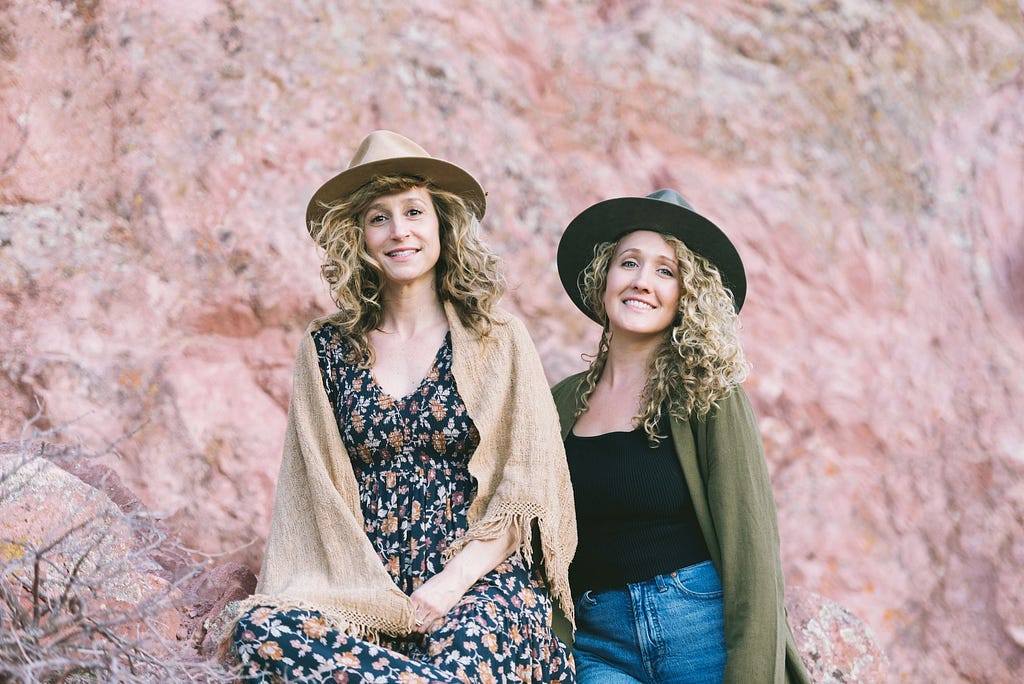
Alex Caslow of Red Beard Sailing: 5 Things I Wish Someone Told Me Before I Became A Founder

In my industry, people shouldn’t expect to get rich or make a fortune. This business is a way to make a good living while enjoying the line of work. You will have the freedom to enjoy sailing on a weekday. You will also become a Subject Matter Expert (SME) for the brands of boats you represent. The best piece of advice I can give is, you need passion. Passion is the best salesman in the world.

As part of my series about the leadership lessons of accomplished business leaders, I had the pleasure of interviewing Alex Caslow.

Alex was born and raised in Baltimore, Maryland. He earned an AA from a local community college and has had a job since he was 13 years old. He worked in a drive-in movie theater and then IKEA, where he learned marketing and retail practices. He then got a job working in the automotive industry where he learned operations and inventory management. In 2015 Alex started Red Beard Sailing, a portable boat dealer and online retailer based in Baltimore. It started with humble beginnings, but 5 years later he has carved out a new niche in the US sailboat market.

Thank you so much for joining us! Can you tell us a story about what brought you to this specific career path?

I have always wanted to own my own business, and work for myself. I always found myself frustrated at work by inefficient processes I had no power to change. I have always struggled with doing things for the sake of “because that is the way we have always done it.”

I wasn’t actively looking to start a business when I found our first product. I wanted to buy a portable sailboat. I did my research and picked the perfect fit for me, but I hit a wall when I found I it wasn’t being sold in the USA. I quickly realized that there might be a market for this type of product and if it was successful, I would be finally able to do what I love as a profession and work for myself.

Can you tell us a story about the hard times that you faced when you first started your journey?

After starting in August 2015 and getting only a couple sales under our belts, we attended the Baltimore Boat Show. It had recently snowed but foot traffic was up over the previous year (so they told me).

We couldn’t afford a booth big enough to set up a whole boat, so we built a PVC rig that held the boat at an angle (but without a mast).

We had some brochures, business cards and a picture collage of the boats in action. We nearly had someone on the hook for a discounted boat but ultimately, we ended the show having made zero sales.

We were crushed.

My wife and I talked about if this was just a bad idea and not worth putting more money or effort into, but we stuck it out until the Annapolis Spring Sailboat Show.

We killed it at the Annapolis show. With this proof of concept, we signed a local marketing firm with a plan of attack and things took off from there.

Where did you get the drive to continue even though things were so hard?

Because I am a passionate sailor at heart, and one that has owned larger boats, I knew that this was a product that would solve a pain point. I had to realize that the products I was trying to sell didn’t really have an existing market in the US. I needed to curb my expectations and try and think from the customer’s perspective and how to educate them on the options my products offered.

So, how are things going today? How did grit and resilience lead to your eventual success?

Things are going really well today. We finished 2020 with 150% higher sales than we had the year before. We’ve always been able to start a second related company to capture even more of the market. I have worked through months where we didn’t make enough profit to pay myself and I have taken minimal salary in months where we have had record profits. Seeing the larger picture and working towards long term goals help me keep a focus on what comes next. Owning a business is all about what is next, if you aren’t moving, you’re sinking.

Can you share a story about the funniest mistake you made when you were first starting? Can you tell us what lesson you learned from that?

It is really tough to laugh about mistakes that I make as an entrepreneur, at least in the moment. The funniest one would probably be the time I mistook a journalist for a customer at a boat show. I’m not sure how I missed his badge, but I knew right away he was an enthusiast. I was really doing my best to sell him a boat. It turned out he was an editor of SAIL Magazine looking for new products to feature. I spoke to him just like I would a customer at a boat show (we were at a boat show). It is hard to tell if that was the reason, but against all odds, the boat we were discussing won Best Daysailor of 2017!

The lesson I derived from that is: Be passionate and genuine, always. Had I known he was a journalist, I probably would have stuck to the spec sheet and talking points. My customer conversations tend to be more candid and usually include a number of my sailing stories. This experience taught me that whether I am talking to a customer or writing copy for the website, I need to be genuine and keep the marketing jargon to a minimum. Customers can read the spec sheet without me. They appreciate that they are talking to not just a salesman, but a fellow enthusiast, so don’t be afraid to be personal.

What do you think makes your company stand out? Can you share a story?

My company stands out by offering niche products that allow people greater access to the sport of sailing. Before we started our business, you needed to have a trailer or a slip (or both) to have a sailboat, but that’s ancient history now. We sell sailboats that fit under your bed or in your hall closet and that mean pretty much anyone can have one. We love sailing and we personally use all of our boats. We can provide specific experience to the customers for nearly any question and we do so with an apparent passion. That gives customers the confidence to buy from us and trust our recommendations.

I competed in the 2018 Everglades Challenge (EC) in one of our products, the XCAT. The XCAT is a 16ft boat that you can disassemble and strap to the roof of a sedan. The EC is a 300 mile unassisted expedition style race from Tampa Bay to Key Largo. It has a 60% drop out rate and is known as one of the most difficult small boat races in the US. I was willing to put my money where my mouth was and make a bid at the EC in one of our products to prove the durability and performance capability. I did end up dropping out of the race, but not until after travelling 130 miles from the start line, and in weather than even had Olympic medalist sailors needing a coast guard rescue!

Which tips would you recommend to your colleagues in your industry to help them to thrive and not “burn out”?

In my industry, people shouldn’t expect to get rich or make a fortune. This business is a way to make a good living while enjoying the line of work. You will have the freedom to enjoy sailing on a weekday. You will also become a Subject Matter Expert (SME) for the brands of boats you represent. The best piece of advice I can give is, you need passion. Passion is the best salesman in the world.

None of us are able to achieve success without some help along the way. Is there a particular person who you are grateful towards who helped get you to where you are? Can you share a story?

My wife has made all of this possible. She had a “real” job through the first 4 years of our business. In addition to her duties there, she also worked boat shows and helped me ship boats out when we got busy. I am very fortunate to have had the perfect conditions for my business to thrive in its early years.

How have you used your success to bring goodness to the world?

I have been able to donate boats to programs and charities that bring underprivileged children and people to the water. Sailing is widely thought of as an elitist sport, but with a partnership with ChesX Sailing Center, we have been able to help people who struggle with substance abuse by teaching them to sail and then equating those skills to real world skills. Through the same sailing center we have also been able to get hundreds of underprivileged kids on the water with no cost to them.

My mom always taught me the joy of helping others, and I intend to never stop paying it forward.

What are your “5 things I wish someone told me before I started leading my company” and why. Please share a story or example for each.

  1. If you are selling a physical product, then logistics will be your new least favorite thing in the world. Learn logistics, even take a class or read a book on supply chain logistics because it is a bear.
  2. Stay at your job. Your business is not going to grow as fast as you think and you will want to avoid taking any money out of your business in the first year. I actually held to this one pretty good, but my company could have used 6 more months of not paying my salary.
  3. If you do get overrun with opportunity and sell out, don’t overreact. Stay the course and work your plan for the year. You can get yourself into big trouble by spending funds to “keep riding the wave”.
  4. Ask your accountant about SEP IRA contributions. This is your 401k. Just because you are self-employed, doesn’t mean you don’t need to think about retirement. You can contribute to a SEP IRA and reduce your tax exposure all while saving for later in life.
  5. This one is a bit niche but… Keep an eye on that exchange rate. Because we buy most of our goods from Europe, we pay in Euro. The price of the Euro went from $1.03 to $1.30 in only a few months and it ended up costing us a bunch of money.

You are a person of great influence. If you could start a movement that would bring the most amount of good to the most amount of people, what would that be? You never know what your idea can trigger. 🙂

I have always believed that education is the key to our success as a society and our society is largely missing the mark. My wife and I intend to start a non-profit trade school that specifically offers education in the different trades to underprivileged people at little to no charge.

How can our readers follow you on social media?

You can follow me on social media by following:

FB: @redbeardsailing

IG: @redbeardsailing

YT: https://www.youtube.com/channel/UC-VBBsHz7VlxOOdgGtvSGTw

This was very inspiring. Thank you so much for joining us!


Alex Caslow of Red Beard Sailing: 5 Things I Wish Someone Told Me Before I Became A Founder was originally published in Authority Magazine on Medium, where people are continuing the conversation by highlighting and responding to this story.

Women Of The C-Suite: Shannon Clark of ‘Shades by Shan’ On The Five Things You Need To Succeed As A

Women Of The C-Suite: Shannon Clark of ‘Shades by Shan’ On The Five Things You Need To Succeed As A Senior Executive

Be kind, be compassionate, have fun, but also don’t be afraid to say no. Building a team is not easy, but we have been so lucky to find people that really believe in us. So if you have those ride or die people on your team, treat them like gold, because they are not easy to find.

As a part of our series about strong women leaders, we had the pleasure of interviewing Shannon Clark.

Shanberries was the Executive Producer & Midday host on 99.7 [NOW!] / KMVQ-FM, considered to be San Francisco’s biggest pop station reaching over 1 million listeners a week. She is the female voice of the top-ranked Fernando and Greg Morning Show (6–10am). She continues with her own Midday show from 10–2pm.

Shan was the TV host, Cal Hi Sports on NBC California and Gas Money on CBS. She also conducts interviews and hosts events with various celebrities and athletes.

A Bay Area Native, Shan was raised by her single Ecuadorian Mother aka Mamaberries, who instilled hard work ethic into her core. She enjoys music, fashion, makeup, discovering good eats, dancing, traveling, and of course her Flamin’ Hot Cheetos!

Shan is also a talented musician, having played the violin and drums since the age of three. She has since produced multiple songs with record-breaking ratings, including the Niners’ Anthem “Steal The Bowl,” which topped the 99.7[NOW!] charts at #1.

Shan attended college at Webster University in London, has lived in five countries and has visited close to 40 countries. She is a proud Latina, speaks Spanish fluently, and has some skills in French and Mandarin.

Shan’s love for makeup has led her to create a beautiful line that she is excited to share with the world. Shades by Shan is her brainchild and has worked hard to bring it to life. Each color has been carefully chosen and tested by her to create the perfect look. A portion of proceeds from each purchase goes to support single parents in need, through her nonprofit organization, The Mamaberries Nonprofit Foundation. Together, Shan is confident that we can make it a little easier to help them raise the next generation.

Thank you so much for doing this with us! Can you tell us a story about what brought you to this specific career path?

Of course, it was really my fans rallying behind me and asking when I was going to be coming out with Shan merchandise and I thought, would people actually buy my products? I’ve always loved makeup and I could catch myself aimlessly scrolling through Instagram and seeing all these influencers collaborating with makeup companies. I thought, could I cut out the middleman and start my own line directly to consumers? I spoke with my sister, who was a global sales & marketing director to see if she would be interesting in doing this with me. After she said yes & quit her job, the rest was history!

Can you share the most interesting story that happened to you since you began leading your company?

We really never expected how big this was going to turn out, we started it as a little side hustle & hobby, but now it’s really turned into a full-fledged organization, launching in 18 stores around California, with a full time team. We are super excited to continue to see the growth of SBS and now feel we are prepared for the future with our rock star team.

Can you share a story about the funniest mistake you made when you were first starting? Can you tell us what lesson you learned from that?

Mistakes happen, we are human, we are doing many things at once, it’s just bound to happen. It’s just a matter of how quickly you can rectify the situation and also try to keep costs low at the same time. One time I had to drive down to LA to put in the new displays in the Planet Beauty stores, I was driving down with my boyfriend and when we were about to arrive I realized we had forgotten the displays. I immediately called my sister, she found the closest 24 hour FedEx print shop near our LA hotel and she sent the order for us to pick up down there. It costs us extra money, which we hadn’t budgeted for, but we had to roll with it! Lesson learned: Always double check everything!

What do you think makes your company stand out? Can you share a story?

We knew we wanted to be impact driven, my community has helped me immensely and stands by me every day, that’s why it was so important to ensure we are a company that is out there making a difference in people’s lives. When we were thinking about what our mission should be, it was right under our nose, Single Parents. Our single mother raised my sister & I and we saw the first-hand struggles it takes. We feel that if the parents are ok, the children are going to see the benefits of a parent who is less stressed & really be able to embrace that quality time as a family. We started our research and really couldn’t find an organization at the time that focused solely on single parents, thus we pushed ourselves further in launching our own non-profit, The Mamaberries Nonprofit Foundation — in honor of our mother. Anyone can nominate single parents directly on our website:sbscosmetics.com — we were shocked with the hundreds of nominations that came in as soon as we launched. Experiencing that wave of nominations coming in, reading the stories, it completely validated we were on the right track with our mission!

Are you working on any exciting new projects now? How do you think that will help people?

We recently launched in Planet Beauty stores across California and being available for people to go in, try the makeup, test it out and purchase it on the spot was super important for us. It’s been amazing to see the brand growing so quickly, because at the end of the day, that means we can help even more single parents! End of March we launched our latest collection, The Dirty 30 Collection, since I just turned 30 years old! More new products are hitting the shelf and we are continuing to plan future product launches to drop very soon!

What advice would you give to other female leaders to help their team to thrive?

Be kind, be compassionate, have fun, but also don’t be afraid to say no. Building a team is not easy, but we have been so lucky to find people that really believe in us. So if you have those ride or die people on your team, treat them like gold, because they are not easy to find.

What advice would you give to other female leaders about the best way to manage a large team?

Trust your team, delegate and believe they have the best interest of the company in mind. Large or small, mistakes will happen, own up to them, and find a solution. I always tell my team, don’t tell me there is a problem before you’ve thought of a solution. I want my team to have a voice and feel comfortable using it.

None of us are able to achieve success without some help along the way. Is there a particular person who you are grateful towards who helped get you to where you are? Can you share a story about that?

You are right, there is no “I” in Success, it honestly takes a village! If I had to choose a couple people it would be my team, my sister — our COO, my mother, Juan — our Head of Creative & Gabby — our Head of Logistics & Inventory. They have been with me since day one and taking on this journey with me has meant the world. They rough it out day in and day out, donating their time & energy to building this organization. Honestly they are some of the smartest & hardworking people I have ever met. If it wasn’t for them, we would not have been able to accomplish even a tenth of what’s been achieved so far.

How have you used your success to bring goodness to the world?

It’s super important for me to ensure that our community is prospering, I want to use my platform for good and give a voice to those who need it most. Back in December 2018 we did a big fundraiser event for the survivors of the Paradise wild fires, bringing hot food for over 150 people, my buddy Myles Parrish performed, Santa paid a visit to the children, arts & crafts and the SF Bay Area community members donated over $10,000 in new goods for the survivors which we brought up in trucks & trailers. My team & I really wanted to do this to ensure the survivors had a chance to enjoy some holiday cheer. I want to make people happy, it’s part of why I love my job on the radio so much too.

What are your “5 Leadership Lessons I Learned From My Experience” and why. (Please share a story or example for each.)

I interviewed J.Lo a couple months ago, she has always been a huge influence in my life so when I asked her for advice she told me: Be ready to work harder than anyone else, that’s what it takes. Her words have stuck with me ever since.

Be Patient — Building out a collection takes months of planning, secret shoots & you just have to be patient so your customers can have that amazing experience when they see it for the first time.

Take care of your team — You are only as good as your team, take care of them. In any business you will have highs & lows, happy times & stressful times, therefore emotions are very valid. The best team will ride with you through it all when they trust you also have their best interests in mind.

Be positive — It’s a mindset — If you believe it, it will happen.

Always be ready for curve balls — because they will come, you just need to be ready & willing to react to them the best way possible.

You are a person of great influence. If you could inspire a movement that would bring the most amount of good to the most amount of people, what would that be? You never know what your idea can trigger. 🙂

We are actually working on our movement as we speak, which is to bring awareness to how difficult it is to be a single parent. We are able to gift single parents with financial support to ensure they have a little cushion and can keep on going! We award them through the nonprofit’s committee who reviews all the nominations that come in. Let me tell you each story is more heartbreaking than the next, and the committee has the difficult task of narrowing it down. Many of the people on the committee are or have been single parents at some point in their lives, so they know what it takes. About 10% of Shades By Shan sale proceeds goes to The Mamaberries Nonprofit Foundation, so as we grow, so does that pool of money that we can donate to single parents in need.

Can you please give us your favorite “Life Lesson Quote”? Can you share how that was relevant to you in your life?

“Where there is a will, there is a way” I live by this, you don’t know how many times I’ve been told “No”, but I try not to see it as the end all, it’s just a roadblock that you have to go around and try a different route. If you work hard, stay humble, are honest & don’t take “No” for an answer, you will be very successful!


Women Of The C-Suite: Shannon Clark of ‘Shades by Shan’ On The Five Things You Need To Succeed As A was originally published in Authority Magazine on Medium, where people are continuing the conversation by highlighting and responding to this story.