Female Disruptors: Kelly Riorda On The Three Things You Need To Shake Up Your In …

Female Disruptors: Kelly Riorda of Wewilldecide.com On The Three Things You Need To Shake Up Your Industry
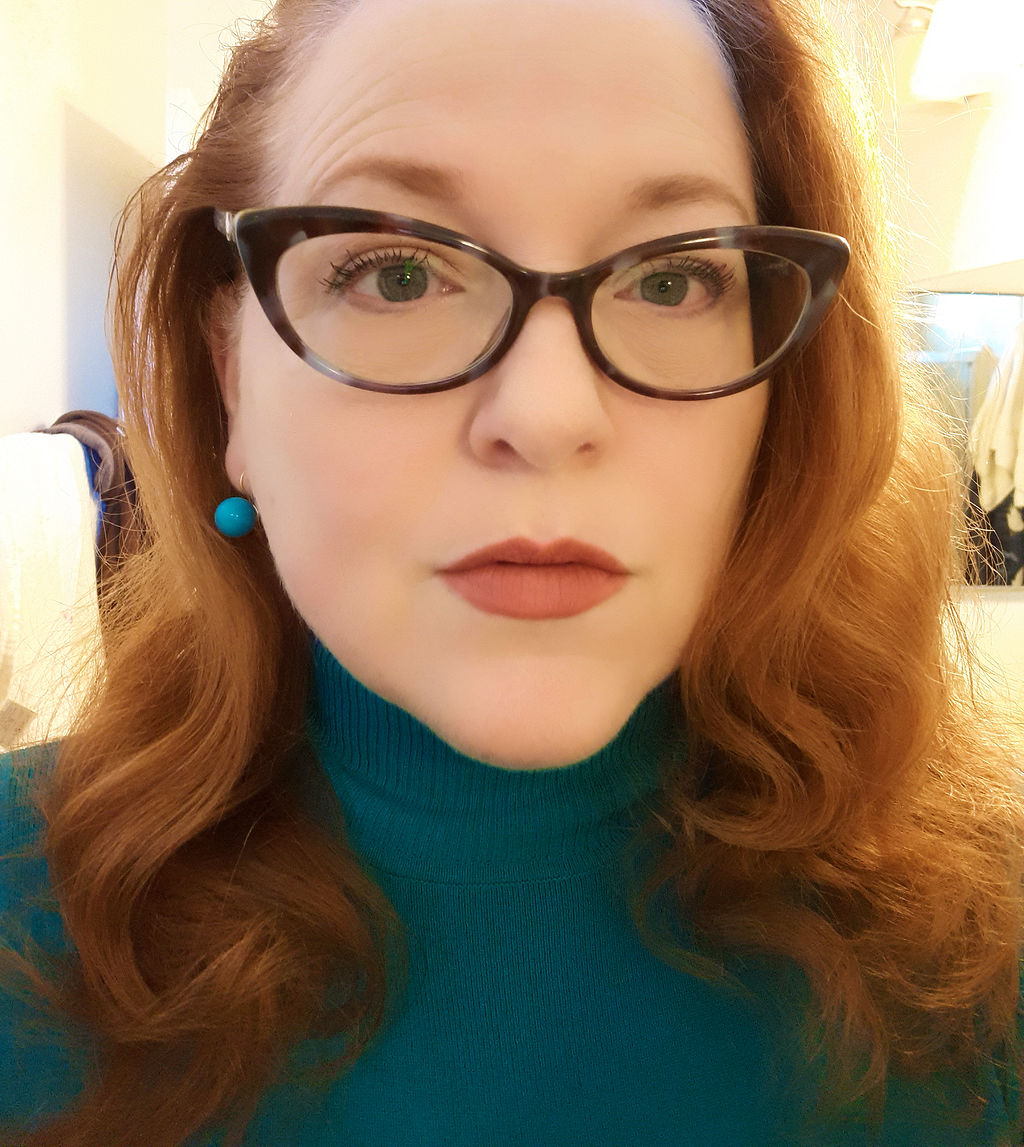
In other words, we all need to be involved and do our homework if we want to continue to enjoy the social and political freedoms that we have come to expect from our brilliant and unique democracy. I’ve created the syllabus and the ‘Cliff’s Notes’. The rest is up to all of us to implement them.

As a part of our series about women who are shaking things up in their industry, I had the pleasure of interviewing Kelly Riordan.

Kelly Riordan, Founder of Wewilldecide.com is a typical frustrated voter that knew she could create a better way for the average person to obtain their political information without bias. She has no experience in politics, which she feels is an advantage in several ways, and gives her a unique point of view over those who specialize in it.

Thank you so much for doing this with us! Before we dig in, our readers would like to get to know you a bit more. Can you tell us a bit about your “backstory”? What led you to this particular career path?

I’ve had all sorts of jobs, from being a Nordstrom manager, working in insurance, teaching ballet, tutoring anatomy and physiology, bartending, and now being a healthcare worker for the last 15 years. With all my varied employment, I never would’ve envisioned myself becoming involved in politics. As a regular voter in the U.S., I found myself sometimes voting, sometimes not. Several elections ago, I was feeling particularly guilty about not using my vote. I thought: so many have given up so much for me to have this right, and I was wasting it! That election I decided I was not only going to vote, but I was going to be an informed voter. That turned out to be a much bigger challenge than I thought it was going to be. I’m a research geek, give me enough time and I can get the answer to anything. Except this. There was no way I could search any database to find out if I agreed with my current elected representatives. There were no search engines that provided that information. There were and still are plenty of political sites, programs, and sources of opinion, but no real way to keep my own council. I was shocked that, with all my digging, I couldn’t make an informed decision. It was then that I came up with the idea for WeWillDecide.com.

Can you tell our readers what it is about the work you’re doing that’s disruptive?

Call me crazy, but I don’t think it should be such a monumental task to simply find out how your elected officials have actually voted on any given issue. Whether by design or accident, the general public being politically well-informed seems to be, at best, a low priority and, at worst, a calculated strategy. How is the average person that is constantly bombarded by opinionated information supposed to make any type of educated decision? The beauty of my site is that it is opinionated and free of advertising. I want to provide an uninterrupted stream of fact-based information that will become part of a user’s daily scrolling habits. It’s voting information: pure and simple, past and present, with access to upcoming proposed bills as well. In my opinion, seeing a representative’s proposed legislation is particularly telling. I’ve been shocked myself after spending just a few minutes here and there on the site, to see exactly how much I agree or disagree with each representative. I vote on what they vote on. If I need more information on a bill, I click on that bill and am taken directly to the Congressional page where I can read the bill myself. I can see how frequently each representative votes with their party, how many votes they’ve missed, as well as all their points of contact. It feels good to be able to access and process so much congressional information in an easy-to-understand format.

Ignorance is certainly not bliss in the long run, and the whole political process is much less frightening when you start to see how it actually functions. What do I intend to disrupt? Ignorance, abject ignorance.

Can you share a story about the funniest mistake you made when you were first starting? Can you tell us what lesson you learned from that?

I am not a particularly computer-literate person. I can get by, but I’m in no way any type of web designer. I had my concept and vision well defined; I knew most of what I wanted for my site but didn’t know any web design professionals. When I was shopping around for a web designer, I contacted a few different design firms. I’d start explaining what I wanted, and over and over again I’d get, “Whoa, whoa, whoa there…that’s going to require a massive amount of memory, like a Facebook level of memory”. My answer was always: “So? And?” It took several different contacts and conversations, but I eventually found my genius web designer. I started talking, and to everything I mentioned he just said, “Ok, sure, what else?” Nothing was a big deal. It was amazing! Maybe I wasn’t crazy after all. My initial site designs were drawings on copy paper, which I then took pictures of on my phone and sent to him. The early construction of this site had more challenges than I could’ve imagined, so the lessons were constant and often. The most important lesson was that there is ALWAYS a way. Next lesson was that things will NEVER go according to plan, so be prepared to change direction often. Lastly, just because you don’t know what you’re doing, doesn’t in any way preclude you from doing it.

We all need a little help along the journey. Who have been some of your mentors? Can you share a story about how they made an impact?

I haven’t really had any mentors per se, but I have been surrounded by a tribe of ridiculously intelligent people. It took me several years to get this site up and running the way I wanted, and without my numerous friends that acted as sounding boards for all my ideas, I don’t think I could’ve gotten through it. It’s particularly important, especially when tackling an entirely new concept to just talk, talk, talk about it to every brilliant person you can find. I’ve gotten so many great ideas and made so many changes just bouncing my concepts off the people in my circle. There is no substitute for super-smart, chatty friends.

In today’s parlance, being disruptive is usually a positive adjective. But is disrupting always good? When do we say the converse, that a system or structure has ‘withstood the test of time’? Can you articulate to our readers when disrupting an industry is positive, and when disrupting an industry is ‘not so positive’? Can you share some examples of what you mean?

This really can’t be generalized, as every best assessment will always be on a case-by-case basis. Disruption or change, for better or worse, has to be analyzed for every individual system and situation. Moreover, what’s good or bad is subjective and usually open to interpretation. What’s good for some people or interests isn’t for others. Therein lies the problem. More often than not people seem to want overly simplified, definitive, absolute answers to what are really very complicated issues and circumstances, and there’s no pleasing everyone. So even attempting to address these elements can be considered, by many, to be ‘disruptive’. As far as institutions and ideas that should be exempt from question or improvement: I feel that, in the final analysis, any system that cannot withstand a little disruption is obviously not a very robust one. Still: should In-N-Out expand its menu? I personally don’t think so. I think it is what it is supposed to be and does what it does very well, but I’m sure there are people that would disagree. If I want onion rings with my meal, I’ll go to Foster’s Freeze for a great burger and a delicious shake (not to mention a variety of different flavor options). My local Foster’s Freeze doesn’t have a drive-thru. Should they add one? I don’t know. I really don’t need them to, and it would drastically change the dynamic that I enjoy at that location in many ways that would ruin it for me, but once again, I’m sure there are people that eat there frequently that might disagree.

Can you share 3 of the best words of advice you’ve gotten along your journey? Please give a story or example for each.

When my grandmother took the cookie out of my hand, ate it, and said, “Never trust anyone.”

Hence my need for obtaining my own information. All of my many contacts, friends as well as strangers that, when I told them about my concept, said over and over again: “You have to finish this site. We all need it.” And finally, these are not words of advice, but a quote that I’ve kept in mind the whole time I’ve been working on this project: “Those who expect to reap the blessings of freedom must, like men, undergo the fatigue of supporting it.” — Thomas Paine. In other words, we all need to be involved and do our homework if we want to continue to enjoy the social and political freedoms that we have come to expect from our brilliant and unique democracy. I’ve created the syllabus and the ‘Cliff’s Notes’. The rest is up to all of us to implement them.

We are sure you aren’t done. How are you going to shake things up next?

I could tell you, but then some unscrupulous characters will just steal my ideas. It’s the beauty of a Free Market Economy. ?

In your opinion, what are the biggest challenges faced by ‘women disruptors’ that aren’t typically faced by their male counterparts?

I was chatting with a charming woman not too long ago as she showed me pictures of her daughter. Her daughter is in her early twenties, painfully intelligent in college, with a major in chemistry, and very beautiful. I couldn’t help but say: “Poor girl, she’s got a tough road ahead.” Being female with pointed opinions and ideas can be very intimidating to some. A great quote is: “Everyone will turn away from a scream, but they’ll strain to hear a whisper.” Presentation is everything. Sometimes, I’ve found that I’ve had to present my ideas delicately and as “no big deal” so as not to put others off. Also, using self-deprecation to disarm people can often make them more receptive. But it is a little sad that, even after all this time and the social progress we’ve made, that men and women alike have issues and insecurities about women having ambition and revolutionary ideas. However, gaining in years is very helpful, as you tend to care less and less what others think and to keep your own counsel as to what may be possible and feasible. My personal mantra is, “I am THAT b*tch!”

Do you have a book/podcast/talk that’s had a deep impact on your thinking? Can you share a story with us?*

I’ve always found Marlene Dietrich’s life most inspirational, as I’ve seen in the media and read in the book that bears her name as its title. Her journey of leaving Germany and touring with the USO on the frontlines during WWII is unreal. She was given the rank of Captain, and her army ID card carried her married name in the hopes that, if she was captured, she wouldn’t be killed. She tirelessly performed overseas and did an unbelievable amount of volunteer work in the United States. And she did it all with staggering style, glamour, and an indomitable sense of humor. That takes real courage. I’m just annoyed and stubborn.

You are a person of great influence. If you could inspire a movement that would bring the most amount of good to the most amount of people, what would that be? You never know what your idea can trigger. 🙂

In the vast possibilities of what my site could do, I would hope that someday the political parties might actually pay attention to the population’s opinions. It would be amazing if politicians weren’t packaged, managed, and thrust upon us as our only voting options. What if the powers that be could see which elected officials truly represent the public’s wants? In my smaller hopes, I’d love to hear people talking about political figures in the same way they tend to talk about sports figures: running down the stats and the scores. I nearly cried when my hairdresser asked me, “Did you know that Kamala Harris votes with her party 76% of the time?” after using the site. That’s exactly the type of information I want people to be able to glean from We Will Decide. I’ve been surprised myself seeing how much I have in common with some representatives and not with others.…Could you imagine if our system actually started to recognize parties other than Democrat and Republican?

Can you please give us your favorite “Life Lesson Quote”? Can you share how that was relevant to you in your life?

Winston Churchill’s quote, “Never give in. Never give in. Never, never, never, never! …in nothing, great or small, large or petty. Never give in, except to convictions of honor and good sense. Never yield to force. Never yield to the apparently overwhelming might of the enemy.”

It keeps me going through the worst resistance and opposition: to all the people who have ever told me that my ideas are silly or stupid, and to all the authoritarian voices that have ever tried to suppress the things that are not in their interest. The world would be a very different place today without that one person’s level of conviction. One person’s voice and drive can absolutely make a difference.

How can our readers follow you online?

My Facebook link for WeWillDecide.com is

https://www.facebook.com/RealVotingHistory

This was very inspiring. Thank you so much for joining us!


Female Disruptors: Kelly Riorda On The Three Things You Need To Shake Up Your In … was originally published in Authority Magazine on Medium, where people are continuing the conversation by highlighting and responding to this story.

Imani Francies of QuickQuote.com: 5 Things Anyone Can Do To Optimize Their Mental Wellness

Trade Caffeine for Sea Moss Smoothie — Caffeine is a stimulant, potentially causing jitters and anxiety. Sea moss gel contains naturally energizing nutrients like Vitamin B2, Vitamin B12, Calcium, Chromium, Magnesium, and Zinc. Consuming it daily mixed into a smoothie helps you stay healthy and alert.

As a part of my series about the “5 Things Anyone Can Do To Optimize Their Mental Wellness”, I had the pleasure of interviewing Imani Francies.

Imani Francies writes and researches for the life insurance comparison site, QuickQuote.com. As a parent and early childhood educator, she is passionate about helping parents, children, and other individuals figure out what is best for their mental and emotional well-being.

Thank you so much for doing this with us! Our readers would love to “get to know you” a bit better. Can you share with us the backstory about what brought you to your specific career path?

I grew up in Atlanta, Georgia, and attended a Performing Arts High School that gave me the opportunity to express my creative side. I had experienced some traumatizing events growing up, so partaking in the arts was a great form of therapy for me.

Storytelling gave me an opportunity to relieve stress, manage my anxiety, and bring a little bit of joy to others. Towards the end of my high school career, I realized I wanted to pursue a career that revolved around storytelling and helping or encouraging others.

Can you share the most interesting story that happened to you since you started your career?

Despite having worked as an early childhood educator, I began writing as a ghostwriter before taking on content writing full time. One of the gigs I picked up writing as a ghostwriter was for an erotica website.

Though I cannot mention the site because of a non-disclose, the individual used the site as a form of therapy for readers and clients. Those who benefited from the site struggled with their confidence in the dating world. This role allowed me to come out of my shell as a writer and has been the most interesting work I have done thus far.

Can you share a story with us about the most humorous mistake you made when you were first starting? What lesson or take-away did you learn from that?

During my last year in college, I did contract work with the non-profit organization, United Way. I was responsible for writing up various forms of content, but I also did filmography and editing.

I was tasked with interviewing veterans on camera in their homes, doing write-ups on the interview, and compiling the video interview into a short film. For my first project, my co-worker and I spent almost an hour driving around trying to find the correct home.

I did not do a good job verifying the address before heading to the interview and we could not get the interviewee on the phone. Due to us being on a deadline, we just kept driving and trying different homes until we found the right one.

Looking back, I recognize how dangerous driving around like that was but thinking about how panicked and unprepared we were is hilarious today. I learned how to better prepare, stay organized, and obtain detailed information from people after that day.

None of us are able to achieve success without some help along the way. Is there a particular person who you are grateful towards who helped get you to where you are? Can you share a story about that?

I would say that I am grateful for my old high school drama teacher, Mrs. Katie Grant Shalin. Unfortunately, she passed away because of cancer before I graduated, but she had this fire that was so inspirational.

No matter who you were, she pushed you to be the best version of yourself. Her impact led me down the road I am on today and to this day, I strive to have that impact on others one day.

What advice would you suggest to your colleagues in your industry to thrive and avoid burnout?

To not be so obsessed with the idea of being productive to where you forget to take care of yourself. You can only do your best work when you are well physically, emotionally, and mentally.

What advice would you give to other leaders about how to create a fantastic work culture?

You should not expect your employees to be robots. Life happens to everyone at any point in time and it can severely hinder one’s ability to produce the same quality of work each day. As long as someone is doing their job well, it is okay if they are not producing excellent and over-achieving results every day.

Ok thank you for all that. Now let’s move to the main focus of our interview. Mental health is often looked at in binary terms; those who are healthy and those who have mental illness. The truth, however, is that mental wellness is a huge spectrum. Even those who are “mentally healthy” can still improve their mental wellness. From your experience or research, what are five steps that each of us can take to improve or optimize our mental wellness. Can you please share a story or example for each.

Tip #1 — Move Your Body

Being physically active for at least 30 minutes a day supplies brain cells with oxygen, augmenting your brain function. Walking or even cleaning your house for 30 minutes straight is a good way to get your blood pumping.

Tip #2 — Trade Caffeine for Sea Moss Smoothie

Caffeine is a stimulant, potentially causing jitters and anxiety. Sea moss gel contains naturally energizing nutrients like Vitamin B2, Vitamin B12, Calcium, Chromium, Magnesium, and Zinc. Consuming it daily mixed into a smoothie helps you stay healthy and alert.

Tip #3 — Improve Sleep with Yoga and Meditation

Yoga and meditation enhance your quality of sleep by reducing stress. Stress causes a frequently heightened state of alertness that can delay the onset of sleep. Taking a class or following a video online three to five times a week is a good way to relax the body.

Tip #4 — Practice Breathing Exercises

Sitali Pranayama is a breathing exercise to help people relax when anxious or overheated. Deeply inhale through your tongue while it is rolled in a shape of a tube. Before exhaling through your nose, focus on the cool air flowing through your lungs. You repeat as needed until relaxed.

Tip #5 — Drink Water

You should drink at least half your body weight in ounces of water. So if you weigh 100 pounds, drink 50 ounces of water a day. Staying hydrated improves your energy levels and concentration.

Much of my expertise focuses on helping people to plan for after retirement. Retirement is a dramatic ‘life course transition’ that can impact one’s health. In addition to the ideas you mentioned earlier, are there things that one should do to optimize mental wellness after retirement? Please share a story or an example for each.

Tip #1 — Stay Connected with Other People

The best way to stay mentally and emotionally healthy is by staying connected with people. You can do this by socializing with friends that you can still contact and by spending time with your family and grandchildren.

Tip #2 — Make an Effort to Manage Medication

A decline in short-term memory is normal with aging and can result in you forgetting to take crucial medication. Using pill organizers or a note-pad can prevent you from missing medication helps with your mental, emotional, and physical well-being. You can even set up a recurring alarm on your phone to go off when it’s time to take your medicine.

Tip #3 — Eat Healthier Foods

Another common instance of aging is having the digestive system slow down. Your body cannot withstand the same amount of processed foods that it could in your younger years. So eating high-fiber fruits, whole grains, and vegetables help your digestive system to keep functioning well.

A good functioning digestive system supports mood stabilization and your ability to focus.

How about teens and pre teens. Are there any specific new ideas you would suggest for teens and pre teens to optimize their mental wellness?

Yes, creative therapy which supports mental wellness in pre-teens and teens.

Creative therapy can be completed through art journaling, sketching, making collages, or sculpting clay. There are endless ways to partake in creative therapy because art is self-expression. Here is a list of benefits associated with participating in creative therapy:

  • Relieve symptoms of depression
  • Improve Communication skills
  • Learn self-regulation and management
  • Confront past trauma
  • Reduce stress
  • Improve and develop problem-solving skills
  • Grow self-esteem
  • Provide a positive distraction

Is there a particular book that made a significant impact on you? Can you share a story?

“Girl, Wash Your Face” by Rachel Hollis is my favorite motivational book. I listened to the audio version after having my first child. My post-partum depression went untreated and turned into a series of depressive episodes for up to two years after delivery.

The book reminded me that I did not have to be perfect and that no family or relationship was perfect. It was what pushed me into loving myself at face value. Accepting who I am and loving that person helped me be present on a daily basis and helped my battle with anxiety.

You are a person of great influence. If you could start a movement that would bring the most amount of good to the most amount of people, what would that be? You never know what your idea can trigger. 🙂

The movement I would start would be revolved around it being a normal occurrence for companies to allow their employees to take days off to focus on their mental health. Going into work and ignoring the signals your body gives you when you need a day of rest is unhealthy and too normalized.

Can you please give us your favorite “Life Lesson Quote”? Do you have a story about how that was relevant in your life?

“Eventually, you will end up where you need to be” is a quote that keeps my anxiety in check and reminds me to be present. I sometimes focus on the future so much that I get overly anxious and spiral into a depressive episode, but this quote reminds me to take things day by day.

What is the best way our readers can follow you on social media?

You can follow my LinkedIn page.

Thank you for these fantastic insights. We wish you only continued success in your great work!


Imani Francies of QuickQuote.com: 5 Things Anyone Can Do To Optimize Their Mental Wellness was originally published in Authority Magazine on Medium, where people are continuing the conversation by highlighting and responding to this story.

Women In Wellness: Jennifer Bloom of Emerging Perspectives on the Five Lifestyle Tweaks That Will…

Women In Wellness: Jennifer Bloom of Emerging Perspectives on the Five Lifestyle Tweaks That Will Help Support People’s Journey Towards Better Wellbeing

Be open. — Life is full of ideas, experiences, and perspectives, and yet there is an aspect of our brains and nervous systems that craves predictability and certainty. Sometimes this need for certainty can create a sort of tunnel vision, one in which we see what we expect to see.

As a part of my series about the women in wellness, I had the pleasure of interviewing Jennifer Bloom.

Jennifer Bloom is a poet, singer, scholar, and mother who believes that well-being thrives when we recognize and embrace our interconnection with all beings and the ecosystem of the planet. Jennifer has published two collections of poetry and an album of music, and writes a weekly blog. She is the co-founder of Emerging Perspectives, a consulting group that facilitates experiences for people and organizations to embrace new ways of thinking, being, and doing. She holds degrees from Yale University and the Harvard School of Public Health.

Thank you so much for joining us in this interview series! Our readers would love to “get to know you” better. Can you share your “backstory” with us?

As a child, I was obsessed with the movie, “The Wizard of Oz.” I used to introduce myself to strangers as Dorothy and tell them I had a dog at home named Toto. Looking back on my journey of how I’ve gotten to where I am, I’d have to say it resembles traveling the yellow brick road. I explore opportunities as they arise, meet challenges that often take me in new directions, and make friends all along the way. I’ve always had a variety of interests, both intellectually and creatively, and I love learning. I’m thankful that my parents never told me I had to choose one thing to “be.” From pursuing theater, music, and creative writing to public health and leadership development, I’ve been able to weave my passions for science and creative expression in many different ways. I’ve spent twenty years consulting with public health programs, sung with choirs, and published and performed poetry and music. My growing edge, the area where I’m focused on charting new territory, is around integrating these multiple dimensions of myself in ways that enhance both my creative work and the work I do with people and organizations — like bringing poetry into spaces where it’s unexpected, and infusing my poetry spaces with some of what I’ve learned in my work with organizations and change.

Can you share the most interesting story that happened to you since you started your career? What were the main lessons or takeaways from that story?

Along this winding road, I’ve learned to follow my intuition and choose what was right for the moment, even when I didn’t know where it was leading me. In 2019, I had the strong urge that it was time to leave my job at the University of Texas at Austin, where I had worked for the past sixteen years. Even though I loved what I was doing, the people I worked with, and the security of that job, something inside me felt like my time there was complete. It was scary for sure! I didn’t know what I would do next, but I had so many creative ideas percolating and an overwhelming sense that it was time to make space to explore what was possible.

One of the ideas that had been a dream seed was to create a workshop around navigating change. On March 14, 2020, as life was shutting down because of the pandemic, and fear and uncertainty were rising, I shared this seed with a friend. She said, “I bet you could launch a class online in a month and have twenty people sign up. You can create the content as you go and it sounds like something people could use right now.” I shared the idea with my Emerging Perspectives colleagues and they were on board to try it. We launched our pilot series of Navigating the Now in April 2020 as a free offering with twenty people enrolled. It was a wonderful way to adapt the tools we had developed over years of working with organizations to help people build personal and professional resilience the early days of the pandemic. By the end of the short series, the group had bonded so much that they wanted to keep exploring new concepts, and we continued monthly sessions throughout the summer and fall. This all served as a major catalyst for developing our work and moving it from dream to reality in a way that felt fun and inspiring.

A big takeaway for me is to trust the timing of when to let go and when to move forward. It seems like there can be fear in both endings and beginnings, whether it’s a job, a relationship, a move — really anything that disrupts the status quote. We need to lean on communities of support during those times.

Can you share a story about the biggest mistake you made when you were first starting? Can you tell us what lesson you learned from that?

Early on in my writing life, a mentor encouraged me to send some of my short stories to literary journals. I never did. I was afraid of the judgment and rejection I might receive, so I kept my personal, creative work close to me and rarely shared it with others. I reveled in helping other people and organizations craft and share their stories, but I didn’t feel confident enough to share my own. It took me twenty years to feel comfortable to share my work. Even then, I could feel my heart racing every time I pressed the “submit” button on my computer. But once I started sharing, I began to feel the impact my creative expression could have. It seems like my poetry offerings open a portal to the heart. People, both friends and strangers, started sharing their own stories with me in response to my written work and my performances. I’ve learned that my vulnerability and open-heartedness can open a window for someone else to connect with something they’ve felt themselves. I’ve come to realize that it’s not about reaching the most people, but about having a deep impact on those I do reach. If a poem can impact one person, it’s worth sharing.

I don’t regret not sharing my work all those years ago; holding back led me down some interesting roads that I otherwise wouldn’t have traveled. I guess the lesson in that is: No matter what step I take, there is no wrong path.

None of us are able to achieve success without some help along the way. Is there a particular person who you are grateful towards who helped get you to where you are? Can you share a story about that?

I remember when KK Harris, one of my early mentors (and a current business partner), and I first started working together. We were talking on the phone, and my son, who was a toddler at the time, was babbling in the background. I apologized to her for the distraction. Her response: “You don’t ever need to apologize to me for being a mom.” Her presence and respect for my role as a mother in addition to that of a colleague empowered me to be true to my desire to both have a career and be a mom.

Ok perfect. Now let’s jump to our main focus. When it comes to health and wellness, how is the work you are doing helping to make a bigger impact in the world?

We are living at a time of change and growth. With that comes uncertainty, which can put pressure on our brains and nervous systems. My poetry has become a tool for slowing down and connecting with the heart. My consulting business, Emerging Perspectives, is focused on providing people and organizations with tools and practices for cultivating well-being through collaboration and flexible planning. We work with people who sense that there’s another way to do things, who are willing to shift the paradigm but don’t know how. Our work is grounded in science, and our approach is centered around building five capacities: Openness, Curiosity, Imagination, Focus, and Reflection. We’ve worked with organizations and individuals who are passionate and devoted to their lives and work and who want to move from intention to impactful action.

Can you share your top five “lifestyle tweaks” that you believe will help support people’s journey towards better wellbeing? Please give an example or story for each.

I’ll go back to the five capacities I mentioned earlier, which are really about becoming more flexible and adaptable in a complex and rapidly changing world.

  1. Be open.

Life is full of ideas, experiences, and perspectives, and yet there is an aspect of our brains and nervous systems that craves predictability and certainty. Sometimes this need for certainty can create a sort of tunnel vision, one in which we see what we expect to see. Openness is about paying attention to our experience and allowing thoughts, feelings, and sensations to exist without judging or reacting in the moment. I’ve noticed that my young daughter often asks if something was good or bad. Over time, my response has become: “It’s not good or bad; it just is.” From this vantage point, we can explore a situation from multiple dimensions.

2. Engage curiosity.

For me, openness naturally leads to curiosity, the desire to learn and explore from a place of not knowing. When confronted with something new or different from what we expect, we can start asking questions like: What do I notice happening? What else might be true? What concerns me about this situation? What excites me? Oftentimes, our built-in negativity bias, which serves a very important purpose to protect us from potential danger, can also keep us from seeing the opportunities available to us and realizing the ways that we’re supported.

3. Imagine more.

Imagination can us move past the status quo to envision the many pathways that might lead us toward what matters most. Imagination can also invite joy and play, which are really superpowers for creativity. When we are in a joyful and playful brain state, our minds enter the realm of possibility; we are more likely to have insights or aha moments that lead to creative solutions and ideas. Imagining gives us a chance to test out and explore possibilities before investing a lot of time, money, and energy in any one thing. One of my favorite ways to activate imagination personally and with groups is through storytelling. What are stores about the future that I (or we) would love to explore?

4. Focus on what matters to you.

Ultimately, we need to take action and focus on what helps us direct our attention in the ways that will have the most impact. These days, between texts, emails, and social media, our attention is pulled in so many directions, and it can be easy to just keep reacting to what’s coming at us rather than choosing to direct our attention. Or, there are so many seemingly competing interests in a group, that it can be unclear what direction to go. A few years ago, I took a trip with extended family to Teton National Park. Before the trip, I emailed everyone to ask, “What’s the one thing that you would most love to do on this trip? What’s something that will leave you feeling satisfied?” Of course, everyone had a different answer! My niece wanted to go swimming at the local recreation center, which has an amazing water slide. My mom wanted some one-on-one time with each of her grandchildren. My sister wanted to take a particular hike. We made it a priority to make sure everyone got to experience their one thing.

5. Reflect regularly.

Taking the time for regular reflection allows me to notice the impact of my thoughts or actions. I have a journal I write in every night. It gives me the opportunity to scan through my day, to remember and appreciate the fullness of my experiences, and not just focus on the last thing that happened. I write down what I’m grateful for, something I’m joyfully anticipating, an intention for the next day, and a request from the universe, which I guess you could say is something like a prayer. To me, this nightly reflection brings me back to myself and my heart.

If you could start a movement that would bring the most amount of wellness to the most amount of people, what would that be?

There are so many causes and ideas to get behind, so many ways to live a meaningful and fulfilled life, and so many ways to think about and achieve wellness that will be unique to the individual and community. But ultimately, we’re all spinning around on this planet together, so we have to find ways to honor and respect diversity while also cultivating loving and respectful relationships. Most people are in environments, whether it’s work or family or community, where they have to work towards a common goal. Often these groups are made up of people who have different perspectives, habits, or belief systems. I love to create spaces where groups can allow those differences to be present and still find a sense of shared purpose, with people feeling valued and energized along the way.

What are your “5 Things I Wish Someone Told Me Before I Started” and why?

I think I need to refer to a poem from my book, Within My Illusions, for this one. It’s called, “Four Things to Remember Before Jumping Out of an Airplane (or Doing Something Terrifying; or Doing Something Exciting; or Pretty Much Every Day)”.

  1. Life is a gift.

2. Anything is possible.

3. It’s happening.

4. Savor the unfolding.

I was inspired by my grandfather, Josey, who was a paratrooper in World War II and lived with the pain of an injury he endured during the D-Day battle. He also lived with a zest and enthusiasm for everyday life that seems rare to me. He used to tell me stories about how much he loved jumping out of airplanes, so much so that he used to volunteer to test parachutes! I can’t relate to jumping out of airplanes, but I can relate to the feeling of stepping into the unknown, taking personal and professional risks both big and small. This poem reminds me to stay grateful, open, present, and filled with wonder, just like Josey was.

Sustainability, veganism, mental health and environmental changes are big topics at the moment. Which one of these causes is dearest to you, and why?

To be honest, I think all of these topics are connected. I’ve come to wonder if our personal, collective, and planetary well-being might depend on recognizing and embracing our connections with everything in the universe. We need to tell a new story about what it means to be human that has the potential to change the way we relate to the environment and all life. So much of my family time as a child involved exploring mountains and beaches. My mom always loved to take us to quiet places where we could just “be.” My dad knew so much about all the other species of plants and animals that lived around us. Neither of them would have called themselves environmentalists, but I grew up with this sense of deep reverence for the Earth we call home and all of the other beings who share it with us. It occurred to me that while humans have a huge impact on the planet, we’re just a small fraction of all life. What do we do about that? How do we direct our impact in a way that allows all life to thrive? I don’t think there’s just one answer to this question, but I think we all have a part to play. It brings me back to Mary Oliver’s lines: “What does it mean that the Earth is so beautiful? And what shall I do about it? What are the gifts that I should bring to the world? What is the life that I should live?”

What is the best way our readers can follow you on social media?

The best way for readers to follow me is by subscribing to my blog at Jennifer-Bloom.com. I send emails with poetry, musings, and information about events and new releases, including my monthly Poetry Timeouts and future Navigating the Now courses. I do have Instagram and Facebook (@jenniferbloom.musings), but I rarely post.

Thank you for these fantastic insights!


Women In Wellness: Jennifer Bloom of Emerging Perspectives on the Five Lifestyle Tweaks That Will… was originally published in Authority Magazine on Medium, where people are continuing the conversation by highlighting and responding to this story.
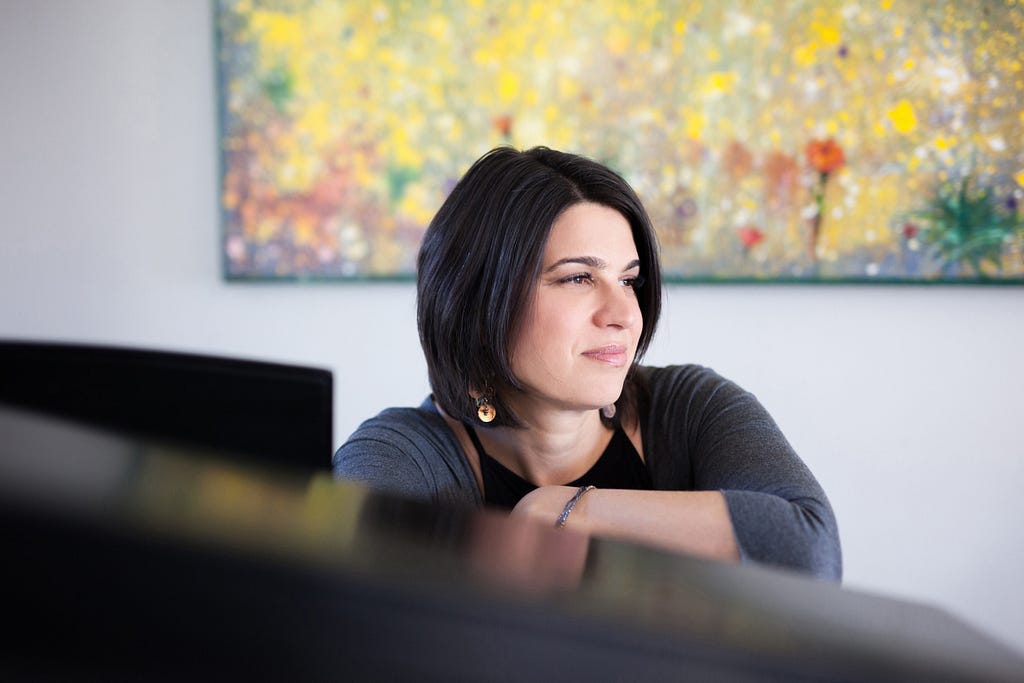
Ashley Hill of Winning Coaching and Green Light Project: 5 Things I Wish Someone Told Me Before I…

Ashley Hill of Winning Coaching and Green Light Project: 5 Things I Wish Someone Told Me Before I Started Leading a Cannabis or CBD Business

Invest in your team’s development! Make sure you have the right people in the right seats. Identify and play to their strengths and support their limitations. Create a common language that is understood by all. Hone in on what is important to them and how you can best support their values while having them support your business — it should always be a mutually beneficial agreement.

As part of my series about “5 Things I Wish Someone Told Me Before I Started Leading a Cannabis Business” I had the pleasure of interviewing Ashley Hill.

Ashley Hill is a native Californian who has been in the cannabis industry since 2013. Hill gained 5½ years of experience in cannabis cultivation and shares the behind-the-scenes operations. She has managed several multimillion-dollar commercial indoor and greenhouse facilities and produced a flower product entered into the High Times Awards.

She subsequently has transitioned to the culinary aspect of the industry as a Cannabis Entrepreneur, an International Selling Author, and the Co-Owner of Green Light Project (an infused catering and event service). Ms. Hill continues to advance her scientific research through her enrollment in the Medical Cannabis Science and Therapeutics Master’s Degree program. This is the first and only M.S. program of its kind in the United States of America.

Thank you so much for doing this with us! Can you share with us the story about what brought you to this specific career path?

Arriving in the cannabis industry was a total accident. I graduated with an undergrad degree in hospitality and was working at a hotel in San Jose. The GM of the hotel who hired me left the hotel to become the GM of a wellness dispensary that was down the street.

Around the same time, I got to a point where I was really unhappy working at the hotel. As I started my personal development journey, at the time I was listening to Les Brown, a motivational speaker. He would often share how 95% of people die on Sundays dreading Mondays because of their impending workweek. Because I started to relate and hated that feeling so immensely, I connected with the GM of the wellness dispensary and ended up getting a job there in member services.

When this happened almost ten years ago, I thought the gig was only going to be temporary because it wasn’t at all popular to earn an undergraduate degree to then work at a dispensary. I didn’t see longevity in the job initially because even though I consumed cannabis medicinally, the social stigma was so intensely negative due to the environment that surrounded cannabis.

Fast-forward eight years into the future and I am graduating with my master’s in Medicinal Cannabis Science and Therapeutics.

The interactions with our patients really flipped the script for me. It became quickly clear that this wasn’t your typical dispensary — it wasn’t cramped, dark, and gated, but rather it was bright, designed with an open concept, and offered educational classes in yoga, tai chi, massage therapy, growing marijuana, and cooking with cannabis. The educational aspect added a layer I had never been exposed to.

It became clear that cannabis helps improve people’s day-to-day lives. For some patients facing chronic pain and illness, taking the trip to the dispensary would be their only experience outside of their homes for the entire day. Being exposed to cannabis knowledge and the education behind it was extremely powerful for me.

Can you share the most interesting story that happened to you since you began leading your company? Can you tell us what lesson you learned from that?

About a year ago, I was reviewing my most recent DISC personality test assessment results from my company, Winning Coaching, and it hit me like a ton of bricks: up until this point, I had been in the industry for seven years, started two cannabis businesses, and was wrapping up the first year of my cannabis master’s program. I realized the reason I had been struggling to clearly identify my lane in the industry. What I read in the report that day was that due to my behavior tendencies and preferences, one of my limitations was that I tend to seek affirmation from others. I would like for others to approve of the things I’ve done, and only then do I feel the reward or acceptance.

I have hefty years of experience in the industry under my belt, I’m currently investing in the future of the industry by pursuing a master’s, and I’m dedicated to honing in on my advocacy in this plant’s medicinal benefits. But still, I have embodied centuries of social stigma around cannabis. I realized that I had created companies in an industry that is constantly going against my natural tendencies of approval. In that moment of developing my own self-awareness, I learned that I had to stop waiting on other people to approve what I have been assigned to build and create and start finding gratification on my own accord.

Can you share a story about the funniest mistake you made when you were first starting? Can you tell us what lesson you learned from that?

I once tried to sign up for a campaign of Instagram ads and couldn’t figure out why time and time again it wasn’t going through. My requests were denied over and over.

Getting into the industry, I thought that although it was a federally illegal business, it would be treated as a typical legal business by the State. I didn’t realize the implications that trickled down into taxes, advertising, payroll expenses, banking, and other normal advantages that other businesses operate under and leverage.

I realized I wasn’t eligible for digital marketing services on Instagram or any other platform because of the industry I was in. I quickly learned that in the cannabis industry, you’re never eligible. The system is often working against you.

Instead — an interesting byproduct of this issue — you are forced to grow completely organically. Your product stands alone. It doesn’t matter how much money you throw into online marketing or campaigns of any kind — you are forced to expand purely because people like your product, return for it, and spread the word about it completely organically. Only the best can survive.

Are you working on any exciting projects now? How do you think that will help people?

Yes! First off, we’re creating our second cookbook — a CBD, vegan and vegetarian cookbook.

Secondly, a goal of mine is to create an online course similar to “Cannabis 101.” It would align back to one of the core values and main missions of the Green Light Project: to help educate people about cannabis and share the knowledge about cannabis science I have obtained with my degree. We don’t set out to change our students’ perspectives or condition them to think any certain way, but to provide that honest education.

None of us are able to achieve success without some help along the way. Is there a particular person who you are grateful towards who helped get you to where you are? Can you share a story?

Neil Ruditsky was the GM of the hotel I worked at and is now the COO of Juvalife. He gave me the opportunity to be a part of my first indoor cultivation grow. He would call me at 6 am, bright-eyed and bushy-tailed, to make sure I was heading over to go check on the plants.

Straight out of college, 6 am was insanely early for me, but the responsibility was huge and I felt honored to be so deeply entrusted. I showed up day after day. Eight years later, 6 am is now late for me which illustrates the growth and the mindset he helped instill in me early on in my career to get up early, to invest in myself, to trust myself, and to work at it. After all, the early bird gets the worm.

This industry is young dynamic and creative. Do you use any clever and innovative marketing strategies that you think large legacy companies should consider adopting?

You have to have a pioneering mindset and be fearless to make it in this industry. Oftentimes, because the industry itself so new, everything must be innovative. You have to continue to adapt and change on a weekly, daily, or even hourly basis. Developing that spirit of innovation is something that could benefit larger corporations that are stuck in their way of existing.

You shouldn’t be afraid to be the first or create your own path.

Can you share 3 things that most excite you about the Cannabis industry? Can you share 3 things that most concern you?

Things that excite me about cannabis:

  • The possibilities are limitless: there is so much opportunity to be able to do or create anything your mind can fathom. That’s not typical with most industries!
  • None of this is new. Cannabis has been around for centuries. It is so rewarding to see the way people are going back to producing this incredibly old product while researching cannabis both in a historical context and applying modern technology to gain knowledge on newfound benefits from an old plant. It’s incredibly exciting — there’s so much more to be discovered!
  • I love being able to help and positively impact people with this education and provide a new perspective. Having a Master’s Degree in Cannabis Science provides me with a huge opportunity to impact the cannabis educational system which is just developing.

Things that concern me about cannabis: :

  • Social equity; many minorities and people of color are still in prison for cannabis crimes, even in locations where it is now legal.
  • I worry about the limited opportunity that is available for minorities and people of color when it comes to ownership within the industry. All states are different, but oftentimes there are certain entry barriers that involve high capital investments, licensing, and permits in order to secure or gain access to owning a dispensary or distribution/manufacturing facility which often disqualifies minorities due to lack of access to capital. Those aren’t the only entry points into the industry, but all points should have equal access, especially to the communities that were historically targeted during the war on drugs.
  • The quality of the product will be diluted over time and people will look for shortcuts that don’t benefit the consumers in the end; essentially, the prospect that cannabis will come to adopt a profit-over-people business model concerns me. As the industry starts to evolve, I hope that it stays true and authentic to the medicinal components and benefits the plant carries as best as possible.

Can you share your “5 Things I Wish Someone Told Me Before I Started Leading a Cannabis Business”? Please share a story or example for each.

1. This will not be easy. (We’re creating the rules as we go, you may be the first one to provide a product or service and that’s okay!)

2. Nor will it be fair. (You will not be treated the same as other businesses.)

3. Adapt/Pivot early. (Things are constantly changing as the industry is developing. What was a rule yesterday may not be a rule today. Accept it and adjust.)

4. Creativity and innovation are key. (Being able to problem solve quickly is extremely valuable.)

5. Cannabis is about community. (Creating products and providing service for your community will get you very far.)

What advice would you give to other CEOs or founders to help their employees to thrive?

Invest in your team’s development! Make sure you have the right people in the right seats. Identify and play to their strengths and support their limitations. Create a common language that is understood by all. Hone in on what is important to them and how you can best support their values while having them support your business — it should always be a mutually beneficial agreement.

You are a person of great influence. If you could inspire a movement that would bring the most amount of good to the most amount of people, what would that be? You never know what your idea can trigger. 🙂

I am a huge advocate for overall wellness and education. Questioning what we have been conditioned to think in health and wellness will always be a part of my life. I am to provide education around nutrition and access to healthy food options in lower-income communities.

I’d like to work towards making workshops and programs like the Food Tribe’s food and science symposium more accessible, providing education around the science of nutrition and what/how to consume to optimum results. A huge part of that is creating equitable opportunities for minorities and people of color in the cannabis business. I want to provide and support success by garnering access to education and resources.

What is the best way our readers can follow you on social media?

Winning Coaching: https://www.winning-1.com/

LinkedIn: https://www.linkedin.com/in/ashley-hill-012188166/

Facebook: https://www.facebook.com/TBAFITN3SS

Instagram: https://www.instagram.com/high3r_education/

This was very inspiring. Thank you so much for joining us!


Ashley Hill of Winning Coaching and Green Light Project: 5 Things I Wish Someone Told Me Before I… was originally published in Authority Magazine on Medium, where people are continuing the conversation by highlighting and responding to this story.

Female Disruptors: Marina Worre of Worre Studios On The Three Things You Need To Shake Up Your…

Female Disruptors: Marina Worre of Worre Studios On The Three Things You Need To Shake Up Your Industry

Think bigger faster! Thinking too small is one of the biggest challenges of our society in my opinion. Not believing in our own abilities and being afraid of failure stops a lot of people from living their best lives.

As a part of our series about women who are shaking things up in their industry, I had the pleasure of interviewing Marina Worre — Founder & CEO of Worre Studios; Creator of The Most Powerful Women in Network Marketing Event; Co-Founder & CEO of Network Marketing Pro, Inc.

When the global Covid-19 pandemic forced her to make a major pivot in her business, like all entrepreneurs do, she got creative and resourceful, and set out to bring Worre Studios to life. Without any prior experience, in just 10 impossibly short weeks, Marina single-handedly spearheaded a team of top audio/video production professionals in the business to construct a 25,000-square-foot state-of-the-art production studio in Las Vegas used to produce the ultimate interactive online virtual experiences.

Yes … everyone told her it couldn’t be done. There just wasn’t enough time or resources to make it happen. But little did they know, ‘impossible’ is not a word in Marina’s vocabulary. With a huge deadline looming, she rolled up her sleeves and went to work to make the ‘impossible’ … possible. Something she has done since she embraced her entrepreneurial spirit at a young age.

While studying for a degree in economics Marina opened her first business — a high-end children’s clothing store. Over the years, other business ventures would follow, but it was her involvement with the Network Marketing Profession that would change her business, her life, and her destiny.

Thank you so much for doing this with us! Before we dig in, our readers would like to get to know you a bit more. Can you tell us a bit about your “backstory”? What led you to this particular career path?

I have always been an entrepreneur. When I was 18 years old, I opened my first business and at 21 years old, I started my career in network marketing, and eventually moved into real estate development. In my mid 30’s I lost my business and all of my assets. I became a single mom and through the verbal abuse of my ex, I lost my confidence. That was the worse of them all. It took me time to find my voice and power back and Eric Worre, who later became my husband, was instrumental in that. In 2010, we formed Network Marketing Pro with a passion to give back to the industry we both evolved from. Our first event had 200 people and it grew geometrically every year. Our largest live event had 18k attendees. Late last year, looking for a solution to host our large event, we’ve built Worre Studios that hosted nearly 40k attendees over 3 days in a virtual super interactive environment.

Can you tell our readers what it is about the work you’re doing that’s disruptive?

During COVID, I was looking for a work around for some events we already had planned. We played with the live streams and webinar type of formats over the summer for 100,000 attendees. But we were really missing the connection piece — interacting with the people attending. It felt like we were just talking to a camera without any feedback, versus educating and making sure those we were teaching were fully engaged. Although they were successful events, I knew we could do better and that is when I started to think of how we could take online events to the next level. During the times of change or uncertainty, majority of people panic and go into defense mode. In my opinion, this is the time when you push on the gas harder and start innovating. What started as a temporary solution for my company, ended up being new way of doing virtual and hybrid events moving forward.

Can you share a story about the funniest mistake you made when you were first starting? Can you tell us what lesson you learned from that?

Not sure if it’s funny really, but I was always thinking too small and also thinking that certain things were reserved for just a lucky few. I guess with all that thinking you can say the funniest mistake was over-thinking! What I’ve learned through my life experiences, if your dreams don’t scare you out of your mind, you are not dreaming big enough. Dream bigger and move faster!

We all need a little help along the journey. Who have been some of your mentors? Can you share a story about how they made an impact?

Eric has always been a mentor to me. When we met, we were both coming out of bad relationships with our own “baggage”. I was so down that I lost my confidence and belief in myself, which I think happens to a lot of women. Through his love and patience, Eric helped me to build myself back up. He also introduced me to amazing personal development giants who became my mentors as well as my friends. Over the years, we were able to build our marriage on the solid foundation of love, trust and respect, which I think is crucial to a long-lasting relationship. When I finally found my confidence again, I made myself a promise, to help as many women as I possibly can to develop that strength and belief in themselves. I want to be that cheerleader for them in their lives and business where they might not have had someone in that role before.

In today’s parlance, being disruptive is usually a positive adjective. But is disrupting always good? When do we say the converse, that a system or structure has ‘withstood the test of time’? Can you articulate to our readers when disrupting an industry is positive, and when disrupting an industry is ‘not so positive’? Can you share some examples of what you mean?

I actually think being disruptive is always positive. It doesn’t mean something has to really change, but it’s about the thought process of seeing things differently and how a small change can mean big impact in the future. It doesn’t always seem like you are disrupting an entire category of business, but maybe making a small ripple that turns into a big wave!

Can you share 3 of the best words of advice you’ve gotten along your journey? Please give a story or example for each.

Think bigger faster! Thinking too small is one of the biggest challenges of our society in my opinion. Not believing in our own abilities and being afraid of failure stops a lot of people from living their best lives. Failure isn’t something to be afraid of. I actually welcome failure, because this is how we learn and grow. Without obstacles and challenges I had to go through in my life, I wouldn’t be who I am today. So if you’d ask me what my biggest advice to my younger self is, it would be — Think Bigger Faster. Another important one that goes hand and hand with it is “Success Loves Speed”. Thinking bigger and faster is very important, but make sure you also move fast. Just thinking isn’t going to get you far. Doing will.

We are sure you aren’t done. How are you going to shake things up next?

Launching Worre Studios was definitely step one, but that important first step has set the course for really exploring the uses of the studio. I can now host bigger events with greater reach which, in turn, allows me to help even more people grow their businesses and succeed. A big next step for us is booking a variety of events for the studio — we have already had people reach out to us to use as a potential live concert venue, host awards shows, create large-scale presentations and more, so I think the next few years will be exploring how we can best use the studio and then take it to the next level. But you are absolutely right, I’m just warming up.

In your opinion, what are the biggest challenges faced by ‘women disruptors’ that aren’t typically faced by their male counterparts?

In some cases, I think the biggest challenge is that women might not be taken as seriously as men. But honestly, it doesn’t bother me so much. I like prove people wrong and keep constantly raising standards for myself and others. I don’t mind playing with “big boys”, because I have confidence in who I am and what I’m doing.

Do you have a book/podcast/talk that’s had a deep impact on your thinking? Can you share a story with us?

I heard Ann Miura-Ko speak on a podcast and she spoke about being world-class in everything you do, even the smallest tasks, because it will lead to big things. That idea teaches you an important lesson, which is to not compare yourself to others, just be your best and do everything at the high level. That’s what I’ve been doing my entire life. I don’t compete with others. I compete with myself. I want to be better today than I was yesterday, and tomorrow better than I am today. That concept led me to a success I enjoy today. You might not always see it at first, but when it appears, it is life changing.

You are a person of great influence. If you could inspire a movement that would bring the most amount of good to the most amount of people, what would that be? You never know what your idea can trigger. 🙂

The movement I believe in most is women empowerment. For seven years now I’ve hosted a 3-day “The Most Powerful Women in Network Marketing” event. This year it will be live from Worre Studios. Not only do I get to meet and collaborate with amazing women from around the globe, but I get to share those role models with women in all stages of their lives. Regardless of the business they are in, by learning from these women, they can make changes in their lives to create even more success. It’s really cool to see that all my hard work is paying off in a way that keeps giving. This year with the new virtual format, we decided to make it a free event to reach even more women. Over 100,000 women will be connected from around the world. Regardless if you are a single mom, already successful woman or just getting started in the business, this event will empower you, help you to build the belief in yourself and give you strategies and ideas necessary to take your life and business to the next level.

Can you please give us your favorite “Life Lesson Quote”? Can you share how that was relevant to you in your life?

My favorite quote is “Live the Impossible” and it’s what I do every day. Be resourceful, figure it out, and even if it seems crazy, follow it through! It’s almost a dare to think of something that seems impossible and then conquer it!

How can our readers follow you online?

I’m very active on my Instagram at @MarinaWorre and we will be posting some fun content and behind-the-scenes looks on @WorreStudios as we move forward with some really special upcoming events!

This was very inspiring!


Female Disruptors: Marina Worre of Worre Studios On The Three Things You Need To Shake Up Your… was originally published in Authority Magazine on Medium, where people are continuing the conversation by highlighting and responding to this story.
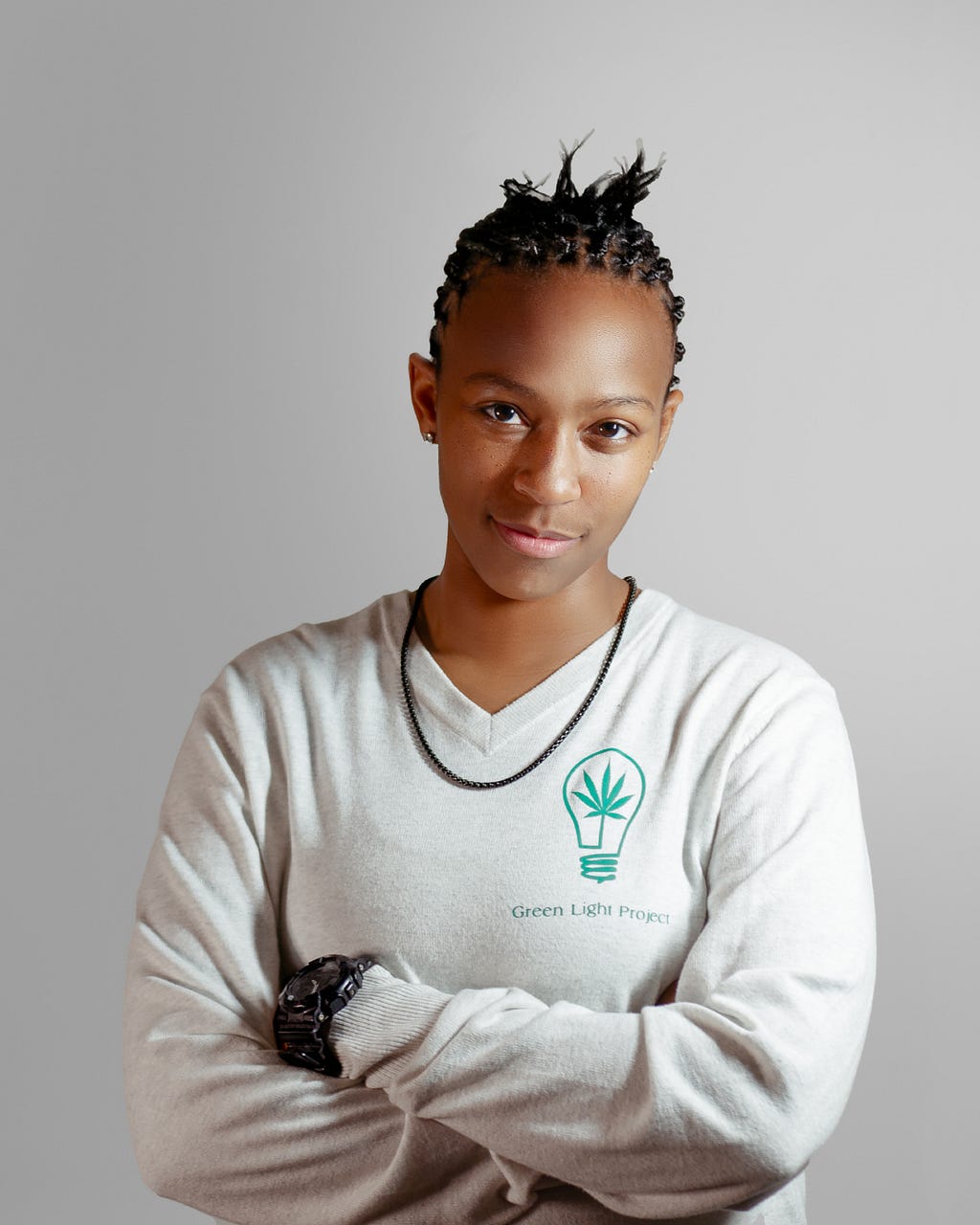
Female Disruptors: Jane Baker of Limitless Living International On The Three Things You Need To…

Female Disruptors: Jane Baker of Limitless Living International On The Three Things You Need To Shake Up Your Industry

“What’s simple to you is incredibly difficult or mind blowing for someone else”

As a part of our series about women who are shaking things up in their industry, I had the pleasure of interviewing Jane Baker.

Jane The High-Ticket Disruptor, is powerhouse high-ticket sales expert, 8-figure serial entrepreneur, two times №1 best selling author, was nominated as one of the UKs top100 female entrepreneur, and philanthropist who counts celebrities and FTSE/FORTUNE 500 companies as clients.

Thank you so much for doing this with us! Before we dig in, our readers would like to get to know you a bit more. Can you tell us a bit about your “backstory”? What led you to this particular career path?

Sure, I’m Jane. The High Ticket Sales Disruptor. I’ve been selling high-ticket offers and building businesses for over a decade. I left school at 15, just before my 16th birthday. Which also means I left school without a single qualification.

At 16 I briefly worked in a call centre for just under 8 weeks where I struggled to sell a single thing, in fact it was worse than that because I had to give one customer a refund, so I lost the company money ! Naturally, I left thinking I couldn’t sell and that I hated selling. Yet a few years later, aged 19, I’d started my first business on a total whim (I literally woke up one morning and decided to start one) and have since grown the business to be a worldwide 8 figure success.

I always knew I was destined for more, I just didn’t know what more was. I started my first business just because I thought I’d give it a go. It led me to where I am today, I love business and I absolutely love selling which is a lifetime away from where I was at 16. That’s why I’m on this path, because I believe everyone and anyone can make it, can love selling, can sell amazingly well and they totally deserve to achieve it all!

Can you tell our readers what it is about the work you’re doing that’s disruptive?

In my mind, everything about my work is disruptive. The way I started my first business was disruptive compared to how people say you should do it. The work I do now is disruptive because I’m encouraging people to ignore everything they’ve previously been told or think about selling and asking them to

Burn the sales scripts, throw away generic sales trainings and ditch the idea that you’re either born a natural salesperson or you’re not. Specifically in the High-Ticket market.

I teach my clients how to lean into their own unique way of selling based on their personality type and that of their prospect. In fact, those who work with me are asked to focus on making the buying experience for their offering the best it can for the client based on how they like to buy.

Hardly anyone talks about taking into consideration how people like to buy or sell. Which means many people end up believing that they don’t like selling or are rubbish at selling, when often the issue isn’t that they don’t like selling or can’t sell. What’s usually happened is that a bad experience around selling and buying has left them feeling the selling is icky.

Sales theory desperately needs a makeover, which I believe I have achieved with my DISRUPT method covered in my latest book.

I don’t use scripts or encourage people to market or sell in ways that don’t feel good to them. I teach people how to lean into their selling superpower.

I am my own best case study, having scaled to 8 figure turnover in business at just 31 years of age.

Once I learned how to lean into selling my own way, I was able to sell effortlessly. There is lots of talk about the fact women can’t sell as well as men. I and many of my clients are proof that is nonsense.

I went from dropping out of school as a teen with no qualifications to building a 6 figure business before scrapping that, starting again and scaling to where I am now.

I’m a serial entrepreneur who has the good fortune to be able to count celebs and FTSE/FORTUNE 500 companies as clients.

Can you share a story about the funniest mistake you made when you were first starting? Can you tell us what lesson you learned from that?

I think the funniest mistake I likely made when first starting was around how I started. I woke up one morning, decided I’d start a business and an hour later I had a business. Social media pages, website, the lot. No business plan, no strategy and not a clue what I was doing.

The lesson I learned was actually a good one, imperfect action trumps perfect action. If I had waited for the perfect moment I’d never have done what I did. Which would mean I’d never have made it here today.

I don’t actually believe we ever make mistakes, not really. Every mistake is just something that someone else may have done differently or that didn’t quite work out how you wanted. In the end there’s always a lesson to learn from it, which means it wasn’t a mistake it was a lesson we needed to experience or learn!

We all need a little help along the journey. Who have been some of your mentors? Can you share a story about how they made an impact?

Mentors come in all shapes and sizes, I’ve learnt more from just being out there engaging with my audience and with entrepreneur friends than I ever have in other areas. There’s a long list of people that have had an impact on my journey, if I were to name them all, we’d likely be here all day.

Some of the people who have had the most impact likely don’t even realise they’ve made an impact, they’re clients who have brightened my day just by allowing me the privilege of being on their journey with them. Friends who enable me to share in their celebrations with them. Those people who purchased from me in my first business and started this whole journey. The people who read my emails and take the time to reply.

The small everyday things impact and inspire me more than anything else!

But I wouldn’t be a multiple #1 best selling author without Abigail Horne. In the past year I’ve also totally transformed my life outside of business and gone on a powerful spiritual journey that’s enables me to step into a whole new level, where Sarah Stone, Nichola Sproson and Tina Pavlou have guided me and unlocked doors to a new level of success I never really thought possible previously.

In today’s parlance, being disruptive is usually a positive adjective. But is disrupting always good? When do we say the converse, that a system or structure has ‘withstood the test of time’? Can you articulate to our readers when disrupting an industry is positive, and when disrupting an industry is ‘not so positive’? Can you share some examples of what you mean?

I don’t think there is a negative, if there is a negative, it’ll be that person’s feeling towards it. There are things that I can think of that are classed as disrupting the industries that I don’t like but that others rave about.

I think the thing with disrupting is you’re just creating a new space for the right people to find something that’s right for them. Without the disrupting we all end up in the same box and quite frankly that’s not how life or business is supposed to be.

When you disrupt a space it’s not to say that everyone in that space must now come over to you and how you see or do things, but rather it’s just creating a space where the right people can come, people often describe it as “coming home” when they say they discover me, my theories and teachings.

Can you share 3 of the best words of advice you’ve gotten along your journey? Please give a story or example for each.

  1. “What’s simple to you is incredibly difficult or mind blowing for someone else”

What I do comes so naturally to me, I’ve definitely struggled with imposter syndrome. I operate outside of the box and my brain just thinks differently to almost everyone I know but to me it’s just me, it’s just incredibly simple. There have been times where I’ve thought I wasn’t as good or I shouldn’t share something because it’s just too simple. I was reminded that what is simple to me is not for others, they don’t know what I know, it’s not simple to them, they don’t operate with my brain either.

2. “You’ll never guide yourself wrong”

Learning to trust myself has been such a huge thing for me, I grew up being told I was always wrong and never good enough. So trusting myself hasn’t come naturally. I was once told that I could never guide myself wrong, I would never purposely put myself in a situation that was wrong, dangerous or do something that wasn’t right. Trusting yourself is really important and has definitely been such a game changer for me.

3. “You don’t need my permission”

This is actually one I share with my clients, almost all clients will message asking can they do something, can they do this or that and I reply the same to all of them. You don’t need my permission. You don’t need anyone’s permission and yet particularly in the online space you’ll find people feeling as if they do. Permission to say something, do something different, do it in their own way. The only permission you need is from yourself, there are no rules!

We are sure you aren’t done. How are you going to shake things up next?

I’m going to show the world that not only can a woman be successful but she can dominate a market that was once solely dominated by men and do it in a way that’s completely different to how it’s been done for decades.

That industry for me is Sales.

I’m currently in the process of buying an island in the Bahamas which I have some really exciting plans for. More will soon be revealed.

I’m going to continue to expand my business into a billion dollar empire and help others do the same.

I also intend to grow the Baker Wilkins Foundation which I launched in 2020 with my husband. The foundation was set up to provides funding to individuals and organizations in my home town, to assist individuals in starting/growing their own business, existing business currently in need of financial and/or mentoring support or providing funding to organizations to create/launch projects that benefit the local area and the individuals who reside within it.

In your opinion, what are the biggest challenges faced by ‘women disruptors’ that aren’t typically faced by their male counterparts?

Being totally honest, I’ve never considered the fact I’m a woman to be a disadvantage. I’ve never walked into any meeting or sales conversation and worried that I wouldn’t get it or be taken seriously because I’m a woman. So sometimes I think the biggest challenge women face is themselves and the beliefs they hold about what disadvantages they may have because they’re a woman.

Do you have a book/podcast/talk that’s had a deep impact on your thinking? Can you share a story with us?

Elizabeth Gilbert’s Big Magic

I learnt that fear isn’t always what we think it is. This book really transform my relationship with fear and the role it played in my life.

Another book that had an impact on my thinking, for another reason, was my first book — She Lives Limitlessly. When I was at school I was told by my English teacher that I’d never write anything. Once my book went live and became a bestseller, it was apparent that she was wrong and I was right.

One lady sent me a message to say she made £30,000 in her business in a matter of weeks after reading my book and that’s just feedback from one person.

Imagine if I had listened to that teacher or anyone else who projected their own limitations onto me.

Above all, becoming an author hammered home the point that the only belief about what any of us are capable of that matters is our own. It’s important to surround ourselves with people who buy into our vision no matter how off the wall it seems at the time.

You are a person of great influence. If you could inspire a movement that would bring the most amount of good to the most amount of people, what would that be? You never know what your idea can trigger. 🙂

I’d love to inspire a movement of people who just believe they can and go and do it, whatever ‘it’ is for them. Believing you can and taking that action is one of the biggest life changing things you could ever do.

My intention when I started my business was to live limitlessly. My company is called Limitless Living. I hope to inspire a movement of people who find their way of living limitlessly.

Can you please give us your favorite “Life Lesson Quote”? Can you share how that was relevant to you in your life?

“Worrying is like walking around with an umbrella waiting for it to rain”

I am a recovering over worrier, growing up I lived in an environment where I just worried about everything. But worrying just robs you of the now, it robs you of the amazing moments that surround you everyday and half the time what you worry about never happens anyway.

How can our readers follow you online?

I’m on all social media platforms as @IAmJaneBaker

This was very inspiring. Thank you so much for joining us!


Female Disruptors: Jane Baker of Limitless Living International On The Three Things You Need To… was originally published in Authority Magazine on Medium, where people are continuing the conversation by highlighting and responding to this story.

Women In Wellness: Kim Desch of Bravadough on the Five Lifestyle Tweaks That Will Help Support…

Women In Wellness: Kim Desch of Bravadough on the Five Lifestyle Tweaks That Will Help Support People’s Journey Towards Better Wellbeing

Do not be afraid to seek YOUR optimal health, not someone else’s definition thereof. Most of my patients were women who had seen many providers before seeking care a little outside of the standard medical model.

As a part of my series about the women in wellness, I had the pleasure of interviewing Kim Desch, NP, GM of Bravadough!.

Prior to starting her two companies Wild Flour Bakery and Bravadough!, Kim was a nurse practitioner for 28 years focusing on women’s health and autoimmune diseases. Her emphasis was on dietary intervention and the use of targeted nutraceuticals to help her patients calm autoimmune diseases and return to a state of balance and health. As someone who is also gluten intolerant, she knows first-hand how our gluten-centric culture wreaks havoc with our health and impacts our ability to enjoy the foods we love with our family and friends.

Thank you so much for joining us in this interview series! Our readers would love to “get to know you” better. Can you share your “backstory” with us?

I had a small practice in Southern California, primarily seeing patients that were dealing with chronic illnesses, autoimmune diseases, or had just not been able to achieve the level of health they felt they were capable of. I focused on diet, lifestyle modifications, and the use of targeted supplements to address imbalance and restore health based on blood test markers; typically referred to as functional medicine. In functional medicine, the goal is optimal health as opposed to being within a generic healthy range.

Then, the provider became the patient. I was diagnosed as having an autoimmune disease and gluten intolerance (the two go together as I will explain later). Suddenly, I had a profound appreciation of how difficult it was for my patients to comply with a gluten free diet. Pizza was off the table! This was 12 years ago when you had to go to a health food store to find gluten free foods — and pizza was not one of them! Shortly after being diagnosed, I learned my husband and both of my sons had early symptoms of gluten intolerance as well as having genes that predisposed them to gluten sensitivity.

As adults, we make choices. Mine was health or pizza. But as mother, we must also make choices for our families. This is where it got tough. Kids go to parties with pizza and birthday cake. Happy hours involve pizza and beer. Picnics often include sandwiches. Now, I had to be the bad guy and take all that wheat-centric, food fun away or sacrifice their health. Now, I can live without bread, pasta, and beer (barely), but my family LOVED pizza in a way that most people love their pets. And killing the family dog, so to speak, was not an option. There had to be a way to be gluten free without being pizza free, but I soon found out that GOOD gluten free pizza was non-existent. Good gluten free pizza did not exist in the grocery store, in restaurants or anywhere! Time to change that. Two years later, Wild Flour Bakery released the industry’s only living (yeast-raised), gluten free pizza dough that was indistinguishable from wheat.

Can you share the most interesting story that happened to you since you started your career? What were the main lessons or takeaways from that story?

I think the most interesting story came from Anthony, my very first pizza crust customer. Anthony was the head chef at a very popular local pizza and brew joint. We had just begun selling our gluten free pizza crust; prebaked and ready to top. I did a cold call to the restaurant and was delighted when Anthony agreed to give me a few minutes without an appointment. I had crusts in hand (frozen) and was prepared to leave a sample. He was using a popular pre-made crust, but admitted it was lack-luster at best. I offered to leave a few pizza crusts but instead he opened a frozen pizza shell, broke off a piece and popped it in his mouth. Instinctively, I blurted out “well, that can’t be any good, it’s frozen”. He looked up at me and said, “I’ll take 200, this is excellent”. Takeaway: when your mouth has an instinct, do not listen! He was right.

Can you share a story about the biggest mistake you made when you were first starting? Can you tell us what lesson you learned from that?

The biggest mistake I made early on was going after one of the biggest fish in the tank in terms of the pizza industry. They were too big for us to handle realistically, but they were very interested and excited about our product and I was more than eager to make a splash and secure a big win. As I learned, big customers come with big legal contracts that require big legal budgets to protect you from being swallowed up like a guppy by that big fish. Ten thousand dollars in legal fees later and we did not get the contract. Sure, we had the better product by far. But we lacked the infrastructure and distribution channels that would have ensured success. It was an expensive lesson, but it was not repeated. Make sure you can land the whale before you bait the hook.

None of us can achieve success without some help along the way. Is there a particular person who you are grateful towards who helped get you to where you are? Can you share a story about that?

As cliché as it may sound, I could not have done this without my family. My husband and kids ate more bad pizzas than anyone should have to. They even brought their friends over for pizza nights when I had left-over research and development dough (sharing the pain I suppose). Our kitchen was perpetually covered in flour. And my husband began to think that the only topics I could talk about were pizza and being gluten free. My mom was an angel investor when I needed to show some financial backing to play in the tank with that whale above. And as Wild Flour progressed, that working capital has been critical to keep us afloat.

Ok perfect. Now let’s jump to our main focus. When it comes to health and wellness, how is the work you are doing helping to make a bigger impact in the world?

I have always been compelled to help women live healthier lives. I started by delivering babies, then went into women’s healthcare, then into functional medicine and autoimmune disease, which impacts women more often than men. Food is not just for sustenance; it is an integral part of our culture. We celebrate, connect and comfort others with food. As odd as it may sound, making a food that supports physical health and mental well-being feels like a continuation of that for me. I like bringing people together, enjoying food without inflicting damage, and helping people enjoy a simple pleasure — pizza. Being able to enjoy food with others, as simple as that may be, gives us joy. Life is nothing without joy.

Can you share your top five “lifestyle tweaks” that you believe will help support people’s journey towards better wellbeing? Please give an example or story for each.

Lifestyle tweaks:

  1. Do not be afraid to seek YOUR optimal health, not someone else’s definition thereof.

Most of my patients were women who had seen many providers before seeking care a little outside of the standard medical model.

A very common example of this was women with ‘low thyroid’. These women had often been told their symptoms of fatigue, mental fogginess, weight gain, digestive issues, etc. were “normal aging” according to their health care provider, who checked their TSH levels. Their thyroid was “within normal limits” or borderline. Sometimes they were already on levothyroxine, but the symptoms never seemed to really improve. They knew something was off but traditional medicine had failed to offer a solution.

Many of these women had undiagnosed autoimmune thyroid disease or Hashimoto’s. TSH levels alone were insufficient to diagnose or treat the problem. When I ran a comprehensive thyroid panel on these women, they usually had one, if not two, thyroid antibodies present. Their thyroid may have been producing enough hormone, giving them a somewhat normal TSH level, but their own body was destroying the hormone before it made it to target organs. What is interesting about this is that gluten causes the same response for them; it triggers a release of anti-thyroid antibodies. So while the medical model of treatment for low thyroid is to supplement with natural or synthetic thyroid hormone, it fails to address WHY the thyroid hormone is not getting to its target organs and keeping us feeling like ourselves. If fails to fix the problem; instead, it just brings the TSH lab value back within range. But eliminating gluten from the diet stops the constant attack by thyroid antibodies and can greatly reduce the need for additional thyroid medication. They feel better, they reduce the autoimmune response and they reduce their symptoms by addressing the root cause.

2. Listen; to your gut, your instincts, your family — they are all on your side.

I should have listened when my gut told me I was in over my head with that business whale. I DID listen when six weeks after launching our pizza crusts, my chef customers said they wanted this same product as a dough so they could make it their own. People are inherent creators, give them the tools to do so. And when your family says, “you can do this”, listen…you can! And when they say “mom, all you talk about is work” — it is true, so stop!

3. Embrace your mistakes, that is the only way you learn and grow. See them as a necessary and beneficial part of your journey.

I would love to give an example here, but the list would be long.

4. Take time to spend with family and talk about ANYTHING besides work.

It is easy to become obsessed with the work at hand, but those around you need to connect with YOU more than with your obsession. See #2 again — listen!

5. Listen to your customer, they will tell you what they want and need if you listen.

In the beginning, we made pizza crusts for six weeks, then transitioned to dough. I listened to my customer. Who knows your customer better?

If you could start a movement that would bring the most amount of wellness to the most amount of people, what would that be?

Only eat it if you know what is in it and where it came from. Meat does not come from cellophane and styrofoam. Neither do veggies. Ingredients matter.

What are your “5 Things I Wish Someone Told Me Before I Started” and why?

I wish someone would have told me

  1. Startups take longer than you think to “start up”. I would have been more patient with myself and the process.
  2. Sleep is to be enjoyed and coveted. I gave it up too often.
  3. Selling mediocre products is hard. Selling a GREAT product is NOT easier. I thought it was a no-brainer that our dough tasted so much better than the competition but quality is not everyone’s primary motivation.
  4. A great bookkeeper or business manager will make life exponentially better so pay them well.
  5. Your story matters. It is as important as the product itself. In the beginning, I dropped the “NP” after my name, feeling that being a nurse practitioner was not relevant to manufacturing a food product. But that story is the motivation, the impetus, and the background as to why our product was created. I am proud of my background, and it is what got me here, so the “NP” stays.

Sustainability, veganism, mental health and environmental changes are big topics at the moment. Which one of these causes is dearest to you, and why?

Today, after a year of COVID, mental health is my big topic. Fear is more deadly than any virus. Education cures many ails and empowers one to remain calm and in control. Calmness creates clarity, analytical thought and reduces stress.

What is the best way our readers can follow you on social media?

Instagram is the best way to connect with Bravadough! We love sharing our love of good food and learning from our customers. Food is to be shared!

Thank you for these fantastic insights!


Women In Wellness: Kim Desch of Bravadough on the Five Lifestyle Tweaks That Will Help Support… was originally published in Authority Magazine on Medium, where people are continuing the conversation by highlighting and responding to this story.

Women In Wellness: Michelle Lemming of Texoma Health Foundation on the Five Lifestyle Tweaks That…

Women In Wellness: Michelle Lemming of Texoma Health Foundation on the Five Lifestyle Tweaks That Will Help Support People’s Journey Towards Better Wellbeing

Like physical wellness, mental wellness fluctuates. There are good and bad days, and there will be times when things get progressively worse to the point that requires urgent attention. We need to acknowledge the frequency, if not inevitability, of bad days so can address them when they do come and prevent mental illness from setting in as a result of delaying needed care. Silence can turn a mental issue into a mental illness.

As a part of my series about the women in wellness, I had the pleasure of interviewing Michelle Lemming of Texoma Health Foundation.

Michelle grew up in the small East Texas town of Kilgore. Soon after graduating from the University of Louisiana, Michelle served as a young executive director leading the first rural collaborative/network funded by the Health Resources and Services Administration (HRSA) in Louisiana. She shares that the opportunity was instrumental in her ability to identify and connect to her passions. She quickly learned the skills and power of collaborative efforts, surrounded by servant mentors and leaders. Their work in Southern Louisiana would ultimately be modeled and replicated in rural communities across the nation. Prior to serving in her current role as the founding CEO of a “new” public foundation established in 2007, she led the Health Services Recovery Council, created to move recovery efforts forward in nine rural parishes most devastated by hurricanes Katrina and Rita. Throughout her career she has maintained and implemented a continued passion for equity and developed a devotion to creating a culture of mental wellness in rural populations. She shares that Culture of Health Leaders is one of the best experiences in her career and looks forward to the continued work ahead.

Thank you so much for joining us in this interview series! Our readers would love to “get to know you” better. Can you share your “backstory” with us?

Thank you so much for including me!

I grew up in a small oil town in East Texas, a daughter of educators. Involvement in sports and the love of my grandparents were both instrumental in my childhood and the trajectory of my life.

The year I graduated from college I had just had my second child and my husband got his first head coaching job in a small southern town in South Louisiana. I applied for a position that I saw in the paper. I could not find any information about the company and walked in with no understanding of what it was or why it existed. It turned out to be a position in healthcare administration. I had never thought of entering the healthcare field outside of direct patient services and would, of course, never have imagined it would connect me to my purpose and my passion in life.

The organization was created through a grant by the U.S. Health Resources and Services Administration Office of Rural Health Policy — this is why there are so many acronyms in healthcare. The latter was investing in rural communities across the nation to provide incentives for organizations to come together and improve access to healthcare services for their service areas. Not long after accepting the position, I was offered the Executive Director position. The backstory of this promotion is not as glamorous as it might seem. The organization was failing and the founding Executive Director had transitioned. The board gave me two options — either take the position and try to save the organization or stay in my current position as long as funds were available while I looked for another job. I took the former with a mixture of confidence in where the company could go and fear of failing to learn fast enough.

What’s most unique about my career is that the nonprofit board was the collaborative. This meant I not only reported to the board of directors, as any other nonprofit would. It also meant that since the nonprofit was also a collaborative, I needed to find ways for the CEO’s representing key collaborative organizations to collaborate in ways that measurably improved the lives of the population’s most vulnerable.

Not long after I was hired, I attended a National Association of Community Health Centers conference in New Orleans. One of the keynotes was a physician who ran a mobile unit in the D.C. area. Her presentation uncovered statistical evidence of disparities and inequities in treatment of healthcare services: If you hold factors like age, insurance, and income constant, a person of color would not receive the same level of care. As I sat and cried while listening to the rest of the presentation, I realized this was where I was meant to be. The details of that “aha!” moment remain clear to this day — the ballroom, the décor, the chair I was sitting on, and the growing sense that my life’s purpose was unfolding.

The work later expanded to new areas — to collaborative efforts among hospital CEOs across the state, and to CEOs, physicians and psychiatrists following Hurricanes Katrina and Rita. And even today this history of collaboration continues to shape the work of our public foundation, which facilitates and supports collaboratives to create a culture of wellbeing across and beyond the communities we serve.

Can you share the most interesting story that happened to you since you started your career?

This is a hard question as my career overall has charted a unique, interesting path.

What comes to mind is the time I was asked to consult for the Health Resources and Services Administration and the Robert Wood Johnson Foundation — both helping rural communities across the nation — while I was also Executive Director for the healthcare organization in south Louisiana.

I loved the work, which taught me how vastly different communities could face the same roadblocks to sustained collaboration. Every community I’ve worked with has taught me something new and invaluable about how to collaborate effectively and how much we can all contribute to and learn from each other at the same time. While seemingly simple, this concept of exchange is often overlooked. Experts are brought in to help with no expectation they’ll come away having learned or benefited from the community. I attribute the success of my work today to learning the importance of this exchange early on in my career.

What were the main lessons or takeaways from that story?

The most important lesson from this experience: failed programs and initiatives can teach us a lot about how to ensure future programs work. Second, we can all learn and grow from the experience and passion of every person we work with. This is the foundation of my work and informs all the things I do to improve the wellbeing of a community. Collaborative efforts can build something far greater, smarter, and faster than anything one agency or individual can.

But for this to happen, you need to do two things. First, connect with people, and find out what they’re passionate about and what their projects are. This series is a good example of how to do that. Second, listen deeply. You’ll be able to connect dots and build. It is super fun work to do.

Can you share a story about the biggest mistake you made when you were first starting?

Twenty years ago, I knew little to nothing about how to build trust within an organization. Back then I thought being dependable, demonstrating how hard I worked, and achieving success earned people’s trust. Over the years I’ve realized that the best way to build trust is to show authenticity and vulnerability. The culture at Texoma Health Foundation reflects the “aha” moments of our failures and successes, which have all helped us course correct and get to where we are today.

Can you tell us what lesson you learned from that?

Our inner game is crucial to our effectiveness. We can’t create a culture of wellbeing without starting with ourselves. If I show up at work with stress from home I’ll make less of a positive impact or worse, make the wrong impact. Because the truth is, our work and home lives have always been enmeshed, and working remotely has only highlighted this fact. One of our cherished values is to create a healthy, happy work environment for our team to thrive and that, in turn, will enhance the health and happiness of our families. To make good on this value, we have regular check-ins to learn more and get to know each other, routinely participate in training sessions, such as emotional brain training (EBT), and read books together, among others. These efforts have not only buoyed us during a difficult year for mental health and wellbeing but improved our productivity as an organization. If our mission at Texoma Health Foundation is to help the communities we serve be their best selves, we need to ensure that we are.

None of us are able to achieve success without some help along the way. Is there a particular person who you are grateful towards who helped get you to where you are?

I have a growing list of people I’ve connected with and learned from over the years whose help I’ll never forget.

Although in hindsight just about everyone has taught me something one way or another, the people who have done the most to help me in my youth are my grandfather and a list of teachers and coaches, all of whom helped shape who I am. Coach Petty, in particular, a volunteer parent/coach was an angel sent to my door in some of my childhood’s darkest moments. Because he never knew just how much of an influence he had on my life, I make it a point to write letters to every teacher and coach who made a positive, lasting impact on my life. It’s an investment of time that’s well worth it.

When I became an Executive Director and needed to quickly learn how to be one, Iberia Comprehensive Community Health Center CEO Roderick Campbell was one of several board members who spent long hours helping me put together and manage budgets, understand checks and balances, and how human resources worked. More recently, Kent Black, a successful CEO, and Bill Wilson, a business owner, have helped me stretch and grow professionally.

Can you share a story about that?

Following my mother’s battle with mental illness, my parents divorced. As a child, I tried to make sense of what was happening and longed to provide my mother comfort and peace in her darkest days. Looking back, I see how I moved through various stages of depression up to the point where I not only planned but actually took steps to take my own life. As with most families at that time, ours never mentioned, much less discussed, mental illness, even though family, friends, and my parents’ colleagues knew of my mother’s bouts. No one checked in to find out how we were doing, as they would have had my mother been physically rather than mentally ill.

Sports were both my outlet and refuge. I played on an all-boys soccer team in the absence of a team for girls, and I also played softball. When coaches realized had had not signed up for softball again, Coach Petty called our house to let me know he had picked me to be on his team. After that, he would pick me up for every practice and each game. Long before he was scheduled to pick me up, I would sit by the window with my glove and eagerly wait for his little car to drive up to the end of the road where our house sat. He had little or no idea what lives we led in that house. Nor did he know that each time he picked me up, he gave me hope and a sense of purpose to keep on living.

Ok perfect. Now let’s jump to our main focus. When it comes to health and wellness, how is the work you are doing helping to make a bigger impact in the world?

Each day, I get to work with communities in different states to create a culture of mental health and wellbeing. Together, we help identify and address mental illness at its early stages and create safe spaces to talk about it so we can save lives and improve communities’ quality of life.

Like physical wellness, mental wellness fluctuates. There are good and bad days, and there will be times when things get progressively worse to the point that requires urgent attention. We need to acknowledge the frequency, if not inevitability, of bad days so can address them when they do come and prevent mental illness from setting in as a result of delaying needed care. Silence can turn a mental issue into a mental illness.

If we ourselves can openly discuss mental wellbeing, then we will help create the atmosphere for open communication for our families, friends, and communities.

Can you share your top five “lifestyle tweaks” that you believe will help support people’s journey towards better wellbeing? Please give an example or story for each.

Most definitely!

I’m fortunate to do work that motivates and drives me. Over the years, I’ve learned that my work on the health and happiness of others can exact a toll on my own wellbeing and that I need to strike a balance.

In addition to the list below I always seek to include activity, rest and healthy food as a focus in my day as I know these are critical to overall health.

  1. First, train the mind to de-stress through emotional brain training, a method for combating stress. By staying aware of my state of mind, I’m able to recognize when I need more self-care or support, as well as when I’m mentally at my best and should therefore seize the moment.
  2. Second, practice daily meditation and breathing. Guided mediations are a wonderful way to start each day, in particular compassion meditation, a favorite of mine.
  3. Third, choose joy. As I get older, I realize how important it is to choose my surroundings. I can connect to wellbeing when I’m in a space I’ve created for me. Sometimes this means surrounding myself with things that joy; sometimes it’s recognizing what things around me bring out goosebumps or even tears.
  4. Fourth, spend time outdoors. Simply being outside to breathe in fresh air or watch the rain is part of my wellbeing practice. I can incorporate meditation by asking myself: What do I hear around me and within me? What am I thinking about? What do I see around me and inside me? When I close my eyes, what images, memories, or plans run through my mind? That’s how I make best use of external and internal senses to stay mindful.
  5. Fifth, engage in journaling, drawing, and planning. This is, by far one of my favorite activities. I’ve always had a journal for drawing new ideas for the backyard, sketching what I see around me, or jotting down ideas for a conference or initiative; my mind relaxes when I make personal or professional plans.

If you could start a movement that would bring the most amount of wellness to the most amount of people, what would that be?

To give everyone the tools to recognize their levels of stress and hope so they can detect early warning signs of mental illness and receive the care they need, as well as to change our conversations around mental illness in a way that removes the stigma.

What are your “5 Things I Wish Someone Told Me Before I Started” and why?

I have a bit of a twist on this question I would love to share.

  1. First, what you don’t know can help rather than hurt you. I had to start from scratch when I began my career in improving communities’ access to healthcare. I had to learn the complex systems and the acronyms thrown around in meetings. What I did know from the start was how much change needed to happen. I listened, learned what had and hadn’t worked, and implemented ideas, including a few that some people said had failed miserably before. Not knowing what’s impossible has been a gift; in fact, I attribute much of my success to it, because it has freed me to try new things.
  2. Second, past isn’t always prologue. When I ask for advice, I listen for ideas. People have been generous to offer success stories and cautionary tales. What I’ve learned over the past 20 years, however, is that what didn’t work before could be exactly what will meet the moment. Timing and circumstances matter.
  3. Third, it’s OK not to be OK. I lugged with me the stigma of my childhood mental health issues well into my adulthood. Without the tools to tackle the stigma, I kept my experiences under lock and key, afraid I’d make people uncomfortable, avoiding being looked down on or pitied, even though I knew some people’s childhoods were dramatically worse than mine. Discussing mental health should be just as socially acceptable as talking about the flu. We all go through stages of sadness, and it’s OK to ask for help.
  4. Fourth, your life’s purpose will keep calling until you respond. In my first position as Executive Director, I ignored an opportunity to add mental health to our work with communities. Next, the governor established the hurricane recovery board of directors and included psychiatrists and added psychiatric services to the crisis response. Then our foundation made mental health a priority in 2012, shoving me into my current path of advocating for change in our conversations around mental health. After all, to borrow a phrase from Dr. Vikram Patel, “you can’t have overall health without mental health.”
  5. Fifth, joy returns in the morning. When I look back at all the joys and pains of my life, I realize just how much my childhood experience has led to not only my purpose but also hope and resilience. In my most difficult moments, I remind myself that nothing is permanent. Neither are hard times. Just when we feel we can’t take any more, joy has a way of making an appearance.

Sustainability, veganism, mental health and environmental changes are big topics at the moment. Which one of these causes is dearest to you, and why?

Mental health is dear to my heart. It has become my life’s purpose to change how we talk about mental health and make it a priority for everyone. We need to be just as comfortable discussing mental health as we are chatting about baseball.

Mental health issues make a greater impact on all of us than we care to admit. The numbers are staggering. As many as one in four Americans struggle with some form of mental illness. For some perspective, Kyle Field, the largest stadium in Texas (A&M), seats 103,000. It would take roughly five Kyle Fields to hold every adult in Texas with a mental health condition. Since the pandemic, that number has more than doubled.

Oklahoma has a population of approximately 3.9 million people. Close to 5.2% of adults in Oklahoma (according to SAMHSA) live with serious mental health conditions such as schizophrenia, bipolar disorder, and major depression. Pre-covid, it would have taken more than 3 average-sized NFL football stadiums to hold every one of those adults with serious mental health conditions. Today, it will take around 7 stadiums.

On a personal note, as I write this, I am putting together a behavioral conference for our region that creates a space for conversations, increases education about mental health and mental illness, and raises dollars for our community’s behavioral health leadership team. A few months into our planning, my husband’s sister called to tell us that our nephew committed suicide. Our hearts have been shattered and we’ve had to hold on while our grief takes over us.

We as a society can no longer afford to look away or remain silent about this issue, because it does hit home.

What is the best way our readers can follow you on social media?

@MichelleLemming — Linked-In and Twitter

Thank you for these fantastic insights!

My pleasure!


Women In Wellness: Michelle Lemming of Texoma Health Foundation on the Five Lifestyle Tweaks That… was originally published in Authority Magazine on Medium, where people are continuing the conversation by highlighting and responding to this story.

Female Disruptors: Hélène Bertrand and Marylene Kyriazis On The Three Things You Need To Shake Up…

Female Disruptors: Hélène Bertrand and Marylene Kyriazis On The Three Things You Need To Shake Up Your Industry

Dr. Bertrand: When you have a problem, don’t cover it up, look for its cause and fix that. My dad studied two years of engineering before he became a brain surgeon. As I was growing up, he would tell us about what he was working on, what had been done before and why it had failed, what was behind the problem and what needed to be done to fix it. He used to punish me for misbehavior by sending me up to my room, which was his library. When I was punished (which happened often), alone in my room, I would look into his textbooks and journals to check out what he was working on. That made my studies in medical school much easier and sent me on a lifelong voyage of discovery.

Dr. Kyriazis: Be yourself. I believe that it is important to be genuine, to have confidence in yourself and to be defined by who you are and not what you are. Know your strengths and limitations, don’t be afraid to say “I don’t know” and ask for help when you need to.

As a part of our series about women who are shaking things up in their industry, I had the pleasure of interviewing Hélène Bertrand, MD, CM, and Marylene Kyriazis, B. Pharm, Pharm D, two medical professionals from Vancouver who have a special interest helping people manage and relieve the pain that is impacting their quality of life.

Dr. Hélène Bertrand is a family physician with a special interest in treating pain. Since 2009, she has conducted research projects on new ways to treat painful conditions, first with injections, during which she discovered the superior pain-relieving effectiveness of mannitol, then with a mannitol containing cream. When she used the cream on 235 patients with different types of pain from headaches to sore toes, the pain relief was 53%, which is far superior to any other topical or systemic medication currently available. As a result, she and Dr. Marylene Kyriazis, who first developed the topical mannitol cream, have started manufacturing and marketing QR Cream with mannitol to help people relieve their pain.

Dr. Marylene Kyriazis is a Doctor of Pharmacy and has served as a community consultant and clinical pharmacist for more than 25 years. Since 2010, she has focused on palliative care and pain management. Her roles include consultant, mentor, product and program developer, public speaker, researcher and philanthropist.

Thank you so much for doing this with us! Before we dig in, our readers would like to get to know you a bit more. Can you tell us a bit about your “backstory”? What led you to this particular career path?

Dr. Bertrand: After 37 years of low back pain, I found relief with prolotherapy (injections that help rebuild and strengthen the ligaments that stabilize your joints and the tendons that hold your muscles to the bone. Overstretching of these structures is what causes most joint and tendon pain). I trained and started treating my patients with prolotherapy and attended conferences to learn more. At one of those conferences in 2011, Dr. John Lyftogt showed us how quickly dextrose (sugar) injections around nerves leading to painful areas would relieve the pain, so I started doing this. I had many diabetic patients with nerve pain, and I did not want to inject their nerves with sugar, which had already damaged their nerves, so I started injecting around the nerves with mannitol, sugar’s first cousin. Before the needle was out of the skin, their pain was gone! At that time, Dr. Marylene Kyriazis was observing my practice. We both realized that people don’t like getting injections all the time, so we decided to try incorporating the mannitol in a cream. After numerous attempts, we found one that allows the mannitol to go through the skin to reach and calm down painful nerves. I started testing this cream on all the people with pain who came to see me and found it worked much better than the creams or the medications they were taking to relieve their pain. After we realized how effective this mannitol cream was, we got to work, getting it manufactured so we could help millions of people beyond our own patients.

Dr. Kyriazis: In 2010, while completing a practicum for my doctoral degree, I had the privilege of shadowing a palliative care physician. It was at that point that I realized that I had missed the boat when it came to patient care and having a positive impact on the lives of others. So, after 20 years working in a pharmacy, I gave up my role as a traditional pharmacist, and empowered with knowledge, skills and experience, I started searching for and creating my own path forward.

Can you tell our readers what it is about the work you’re doing that’s disruptive?

Dr. Bertrand: The cream Dr. Kyriazis and I have created is highly effective in relieving both severe pain and itch. Mannitol, the new, proven, active ingredient it contains, is unique to QR Cream and will be for years, as QR Cream is patented. None of the topical pain relievers are as effective as our cream so it is likely to disrupt the current topical pain relief market, as more and more people discover it.

Dr. Kyriazis: We discovered a new use for an old ingredient. Mannitol, which has previously been used to retain moisture in cosmetics, as a sweetener in chewing gum and as a sugar substitute in confectionary and baking, is now, for the first time, being used for pain relief. We have developed, researched and brought to market a one-of-a-kind breakthrough product, QR Cream, which provides safe and effective pain relief.

Can you share a story about the funniest mistake you made when you were first starting? Can you tell us what lesson you learned from that?

Dr. Bertrand: This was a great learning experience. When I was first injecting people with mannitol around their painful nerves, with one of my colleagues observing the procedure, I wanted to make a good impression. Having run out of the mannitol solution, I had to make more. When I went to get my materials, I noticed I had run out of sterile water to dilute the mannitol solution, but I still had some sterile saline, which is just water with a bit of salt added, so I decided to create the mixture with sterile saline. As soon as I started injecting this solution around her nerve, my patient yelled, “Stop! Stop!” Flabbergasted, as everyone I had previously injected had instant pain relief, I removed the needle and asked her what the problem was. As my colleague watched with a smirk, she said, “You’ve made my pain much worse!” I felt awful for her and deeply embarrassed in front of my colleague who was visiting me because he wanted to know how well mannitol worked for pain relief. He was not impressed. I later learned that when the sodium in salt (which is sodium chloride) goes into the nerve, it starts transmitting a pain signal. No wonder I had made her pain worse; I had activated her pain signal! After that, I never injected anything containing sodium around painful nerves.

Dr. Kyriazis: Developing a product from scratch is not an easy feat. A good analogy would be baking a cake without a list of ingredients and a recipe. In addition to the final product being cosmetically elegant, we had to ensure that the active ingredient was able to penetrate through the skin to a level deep enough to provide pain relief. While experimenting in my kitchen, I dissolved the mannitol powder in a liquid, only to find out later that it had crystallized and the particles were now bigger and coarser than what I had started with. This taught me more about the sensitive properties of the ingredient and how to best work with it to achieve a stable product.

We all need a little help along the journey. Who have been some of your mentors? Can you share a story about how they made an impact?

Dr. Bertrand: Three people made an impact on my career. Dr. Murray Allen, who treated my back with prolotherapy and first taught me the prolotherapy techniques; Dr. Dean Reeves, who has guided me through my research projects, helped me with the statistics and taught me how to write them up; and Dr. John Lyftogt, who taught me how to inject dextrose around painful nerves to shut down the pain signal.

I was at a seminar on the diabetic foot with my friend, Dr. Murray Allen, when I told him, “My sacroiliac joints are killing me!” He said, “Come to my place, I’ll do prolotherapy on them.” To which I replied, “Prolo what?” I went, and three treatments later, I no longer had back pain. I started sending him all my joint and muscle pain patients. They came back happy, telling me how much better they were feeling. Six months later when he told me he was retiring, I said, “You can’t do this to me! What am I going to do with all my suffering patients?” He replied, “Don’t worry, I’ll teach you.” Every Friday for three months, he came to my office and guided me as I did prolotherapy injections on 6 to 10 of my patients. That is how I got started treating people in pain.

After doing prolotherapy for several years, and looking for articles on this treatment, I realized there weren’t that many. If you want doctors to adopt a technique, you need to test it first. You compare it to no treatment, a pretend (placebo) treatment or some other treatment. Doctors are more likely to adopt a new treatment if you can show that your treatment is better than what is currently being done. Since I couldn’t find any articles on using prolotherapy to treat shoulder problems, I decided to do research on this. I had met Dr. Dean Reeves, who has an encyclopedic knowledge of all the research projects that have been done on prolotherapy, at a prolotherapy meeting in Madison, Wisconsin. When I contacted him about doing this shoulder research, he supplied me with reams of information. When I had finished the study, he oversaw the statistics and helped me write the paper. I couldn’t have done it without him. Since then, I have completed many research projects, always with his help.

In April 2011 at a prolotherapy meeting, I attended an all-day seminar with Dr. John Lyftogt on how to inject a sugar solution around painful nerves to relieve them. Sugar? Around nerves? To relieve pain? The whole thing sounded very improbable. At the end of the day, a lot of people were questioning him about his results, so he asked, “How many of you here have severe chronic pain?” Seven doctors put up their hands, and he invited them to come on stage. One doctor had a bad headache, one had pain in his neck, one had shoulder pain, another had pain in his back and one had sore knees and burning feet. Dr. Lyftogt injected the space around the nerves supplying their painful areas with the sugar solution. He did not use a local anesthetic to dull sensation. Instantly, their pain disappeared. All seven doctors left the stage pain free and looking surprised. When I came back to my office and started injecting a sugar solution around nerves, I got the same results: instant pain relief! I have been using mannitol, a sugar alcohol, to do this ever since.

Dr. Kyriazis: Many months of observing and learning from Dr. Helene Bertrand led to years of collaboration with her. She readily shared her medical knowledge and skills. Her brilliant mind, passion and determination are truly inspiring, as was her success rate in treating patients with pain.

Dr. Paul Sugar’s selfless dedication, kind and caring approach, and deep personal connection had a profound impact on his patients. My observation of this was the catalyst that ignited my compassion and promoted change in my career, as well as a change in the way I interact with patients.

Herbert Grubel, retired professor of economics and our in-house economist, has been an integral part of our efforts to shake up the pain relief industry by providing perspective, insight and a balanced and measured approach to business.

In today’s parlance, being disruptive is usually a positive adjective. But is disrupting always good? When do we say the converse, that a system or structure has ‘withstood the test of time’? Can you articulate to our readers when disrupting an industry is positive, and when disrupting an industry is ‘not so positive’? Can you share some examples of what you mean?

Dr. Bertrand: You don’t want to disrupt something that is working well. If something is not working so well or is harmful, that is when you want to disrupt it.

I deal with pain treatments. The medications people take for pain are often dangerous: narcotics are addictive. Once you are addicted, you need more and more. On average, they relieve just 36% of pain. If you keep using narcotics, often they stop relieving your pain. Many anti-inflammatory medications can raise your blood pressure or damage your kidneys until they fail and can cause heart attacks, ulcers and stomach bleeds. Their ability to relieve pain is only 26%.

What about pain creams? Pain creams contain capsaicin, which causes a burning sensation, and with prolonged use, capsaicin can damage or kill the nerve fibers that control sweating, blood vessel tone and a sense of heat or cold. Menthol makes the skin feel cool, but it can produce a burning sensation near open wounds, near your eyes or in areas where the skin is thin and sensitive such as the anus or the vagina. Some people get an allergic reaction resulting in red, itchy or bumpy skin. Camphor, if accidentally eaten, say by a child, or if applied over too large an area, can be a deadly poison. Pain creams or gels containing salicylates have substances in them like ASA or aspirin. They do help relieve pain but can cause severe rashes or allergic reactions and other side effects, including blood problems.

Local anesthetic-containing pain creams shut down pain signals by anesthetizing the painful area but because they cause loss of sensation, a prick, a burn or other minor injuries can be aggravated. Applying too much local anesthetic or applying it under occlusion can injure the liver or even stop the heart.

On the other hand, mannitol in QR Cream has been proven, through clinical research, to provide quick and prolonged pain relief. Very rarely, some people who are allergic to it can get a rash. As it calms down the pain nerves it reaches, the longer you use it, the less you need it. Instead of creating dependency like narcotics do, it is designed to stop being needed gradually, as the pain subsides when you keep using it. Because it is effective, natural and has almost no side effects, QR Cream with mannitol is likely to disrupt the marketing of pain medications and pain creams. It will allow people to get relief from their pain without risking the dangers of these other products. In this case, the disruption caused by QR cream is good.

Dr. Kyriazis: I believe that disruption can be both positive and not so positive, depending on the lens you’re looking through. Even though disruption of an industry by an innovative product or service has a positive impact on the consumer, the same disruption may be an opportunity or a threat to competitors. For example, Amazon’s automation has provided a beneficial service to the consumer, while at the same time creating a threat to other online retailers and an opportunity for growth for some others eg. Voila by Sobeys.

Can you share 3 of the best words of advice you’ve gotten along your journey? Please give a story or example for each.

Dr. Bertrand:

  1. When you have a problem, don’t cover it up, look for its cause and fix that. My dad studied two years of engineering before he became a brain surgeon. As I was growing up, he would tell us about what he was working on, what had been done before and why it had failed, what was behind the problem and what needed to be done to fix it. He used to punish me for misbehavior by sending me up to my room, which was his library. When I was punished (which happened often), alone in my room, I would look into his textbooks and journals to check out what he was working on. That made my studies in medical school much easier and sent me on a lifelong voyage of discovery.
  2. Think outside the box! This is something else I learned from my dad: Whether it was inventing a new machine using X-rays at right angles to each other to be able to locate a needle going to a structured deep inside the brain (1949) or a new pair of ski boots where the laces were replaced by clips (in the early 1950s), he was always coming up with new ways to do things. Like him, depending on what my medical practice required, I always tried to find a different, better solution to whatever problem I was faced with. When I was treating breast-feeding mothers, I used a new way to deal with breast infections. When I worked with alcohol and drug treatment programs, I used the medication for Parkinson’s disease (a disease due to a deficiency of dopamine, which is treated with medication supplying dopamine) to treat people going through the withdrawal of smoking cigarettes, alcohol or drugs. Those substances force brain cells to release dopamine, your pleasure neurotransmitter, so addicts get deficient in dopamine. Supplying them with this medication relieved their withdrawal symptoms. When I found out mannitol shut down the pain signal when it was injected around a nerve, Dr. Kyriazis and I started experimenting to see if we could get mannitol to reach the nerves through the skin via a cream. The sacroiliac joints — the pelvic joints just below your spine — are full of bumps and hollows, which makes them impossible to see with medical imaging. I invented a way of examining them and judging their level, using a carpenter’s level. If they were not level, the direction of this joint could determine how to do the corrective exercise I invented to relieve low back pain.
  3. Know your limits! My husband Herbert Grubel and Dr. Kyriazis taught me that I couldn’t run a business if I tried. Together, Herb and Marylene are solving all the problems that come at you when you are starting a business

Dr. Kyriazis:

  1. Be yourself. I believe that it is important to be genuine, to have confidence in yourself and to be defined by who you are and not what you are. Know your strengths and limitations, don’t be afraid to say “I don’t know” and ask for help when you need to.
  2. Perspective matters. I have found this to be valuable in many situations. Having perspective allows for greater insight and context. Changing one’s way of thinking and seeing things from a different point-of-view can help to overcome challenges and create new opportunities.
  3. Do what you love. When you do what you love, you find purpose and meaning in what you do and work is no longer work.

We are sure you aren’t done. How are you going to shake things up next?

Dr. Bertrand: I have discovered a new way to examine for and treat low back pain, which is likely to be even more disruptive. It allows people to treat themselves using a two-minute stretch exercise and pelvic stabilization belt. No need for visits to the doctor, X-rays, CT scans or MRIs, and, above all, no need for surgery, chiropractic manipulation, massage, IMS, trigger point injections, acupuncture, core exercises, physiotherapy etc. I am about to publish the research I have done on this in a medical journal. My methods will provide relief to countless low back pain sufferers and seriously upset people who earn their living treating low back pain. You can find out more about this on YouTube: https://www.youtube.com/watch?v=h7w7OcLU290&t=25s and, for detailed explanations : https://www.youtube.com/watch?v=8bJF6JiSdm8&t=711s

QR cream is extremely effective in relieving itching. I had a patient who came in with severe pain in her shoulders, as she had been scratching her psoriasis-covered head constantly for the past 15 years, which put a great strain on her shoulders. She didn’t have any hair on her head (she had scratched it all off), only scabs. I treated her shoulders then gave her some of the mannitol cream we were testing at the time. She applied it to her scalp and after two minutes exclaimed, “This is the first time in 15 years I haven’t been itching!” I gave her some of the cream to take home and when she came back five weeks later, the psoriasis on her head was gone and her hair was starting to regrow. I want to do a research project comparing QR Cream without menthol — only mannitol — to what is currently being given for itchy psoriasis. Though QR Cream only has a tiny bit of menthol, menthol can cause burning when it is applied to an open wound, and people with that kind of itch often scratch to the blood. If it works, this inexpensive, over-the-counter cream is likely to shake up the very expensive prescription psoriasis creams that are currently on the market.

Dr. Kyriazis: I am shaking up the way we care for each other by creating a supportive community model to deal with emotional pain and suffering.

In your opinion, what are the biggest challenges faced by ‘women disruptors’ that aren’t typically faced by their male counterparts?

Dr. Bertrand: Men are currently in the top positions of power, such as chief executives, prime ministers and university presidents. They tend to mentor other men to succeed themselves. So few women are recognized for our scientific discoveries or for our success running businesses. That is finally changing, thankfully.

At the University of British Columbia, I am a clinical instructor, the lowest person on the teaching hierarchy, despite the fact that I have spoken at many hospital rounds and numerous conferences, and have published research articles in well-recognized medical journals. Men with backgrounds similar to mine are assistant professors or professors. I would have loved to be able to teach medical students new and effective ways to treat pain. Thankfully, many major companies and organizations now have programs in place to promote women’s advancement.

Dr. Kyriazis: I think the biggest and perhaps the only real challenge faced by women and not their male counterparts is the time constraint related to balancing responsibilities. I believe any other challenges, such as credibility, confidence, ability to prove themselves and respect for their competence, are perceived challenges that can be overcome.

Do you have a book/podcast/talk that’s had a deep impact on your thinking? Can you share a story with us?

Dr. Bertrand: When I was a teenager, I read “Man’s Search for Meaning” by Viktor Frankl. He recounted how his survival in a concentration camp had depended on finding meaning in his life — on having a goal. At that time, I already knew I wanted to be a doctor. I wanted to know more about the human body, how it worked and how to find ways to fix it when it didn’t work. I had a goal, and Viktor Frankl had just explained to me how important that was! I never forgot.

Dr. Kyriazis: The Art of Happiness by HH Dalai Lama. This book connected the dots among compassion, purpose and happiness. It has helped me to define both my personal and professional goals.

You are a person of great influence. If you could inspire a movement that would bring the most amount of good to the most amount of people, what would that be? You never know what your idea can trigger. 🙂

Dr. Bertrand: Eight out of 10 people will have low back pain at some time in their lives. Right now, low back pain causes more disability, time off work, costs to businesses, lost earnings and costs for care than any other condition. Not to mention all that pain people feel! According to the medical literature, the cause of low back pain is “idiopathic,” unknown in 84% of cases. If you don’t know what you are treating, you will try all kinds of treatments to see if one works. Right now, all those treatments provide relief only sometimes. The test I have developed allows people to find out in what direction the pelvic bones are displaced and the specific two-minute exercise that can be done to reposition them. It almost always relieves low back pain. I would like all those who have back pain and those who treat it to learn this new way of examining the back. Perhaps it needs a movement to convince the powers that be to start examining for and finding the cause of low back pain and adopting this easy and effective treatment

Dr. Kyriazis: A movement to mobilize communities to change the way we care for each other. To create compassionate communities by harnessing and leveraging the resources available in the community to provide compassionate supportive care to those in need. We live in a world where people living with serious illnesses often find themselves alone, isolated and in fear. Activating social conscience and creating supportive relationships could be helpful to many.

Can you please give us your favorite “Life Lesson Quote”? Can you share how that was relevant to you in your life?

Dr. Bertrand: The summer I was 10 years old, I was lying in the grass thinking of my 65-year-old grandfather, who had died of a heart attack that spring. It occurred to me that if I followed him, I had only 55 years left — not that long. I decided then and there that I would not waste a minute feeling bad, that I would try to enjoy every minute that was given to me. Since then, I have been grateful for what I have and always looked for the silver lining behind every cloud. That has served me well. I have no regrets.

Dr. Kyriazis: “You can do it!” Those were the words of my 12-year-old son, when I was struggling with an online statistics course. My teachings to him were being echoed back to me. At the time, those words were so empowering and liberating. Through the years, they have been a constant reminder to maintain an open mind without limits and boundaries.

How can our readers follow you online?

Drs. Bertrand and Kyriazis: For more information on our research, please visit us at www.qrcream.com and @QRCream on Facebook, Instagram and Twitter. QR Cream is also available on Amazon.com and Amazon.ca (Canada).

This was very inspiring. Thank you so much for joining us!

Drs. Bertrand and Kyriazis: Thank you! We are so grateful for your interest in our story and helping us reach people in pain to give them hope and help them find relief!


Female Disruptors: Hélène Bertrand and Marylene Kyriazis On The Three Things You Need To Shake Up… was originally published in Authority Magazine on Medium, where people are continuing the conversation by highlighting and responding to this story.
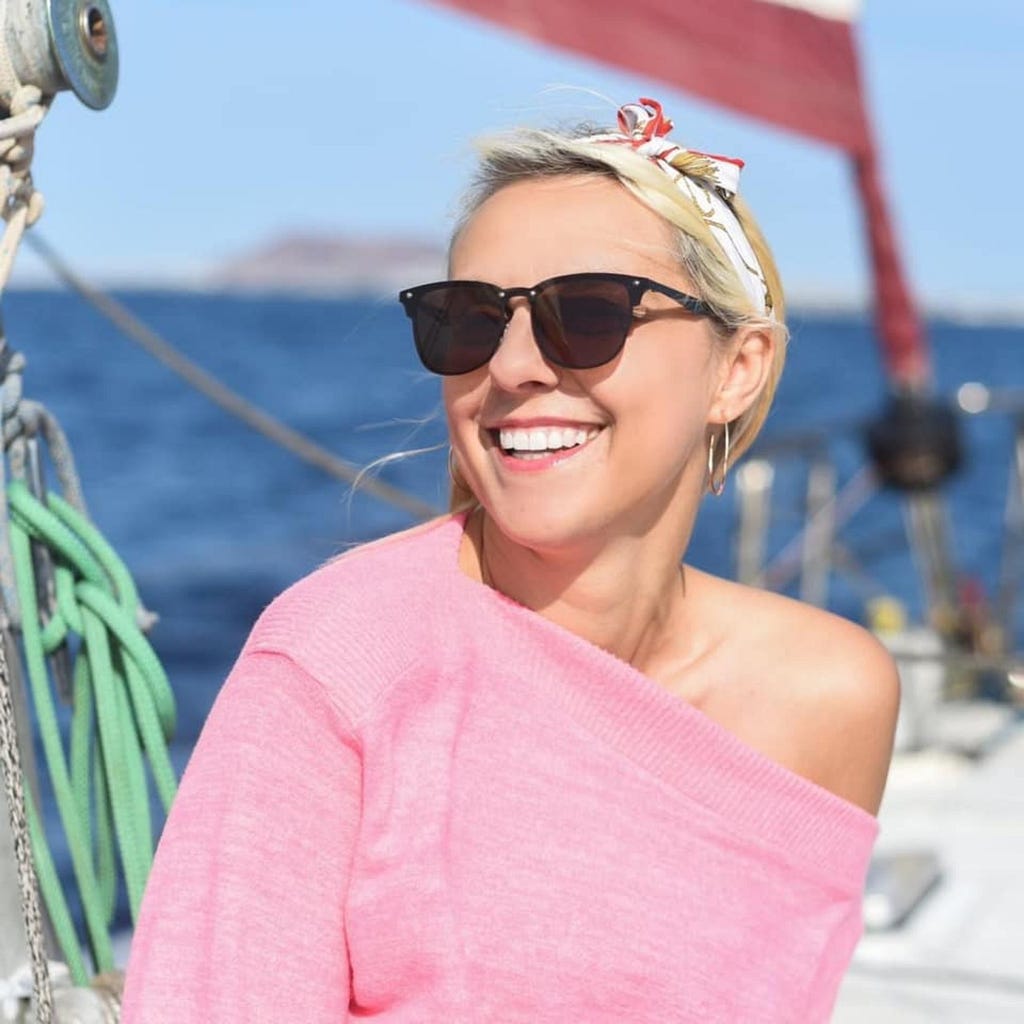
David Alwadish of ItsEasy Passport & Visa: The Future of Travel in The Post Covid World

Even with the mass introduction of the COVID-19 vaccine and potential herd immunity predicted in the coming months, the pandemic is going to continue to rule our travel plans for the next year or two. As travelers gear up for summer trips, it’s going to be important for them to become familiar with the destinations they’re interested in visiting — much more than they would need to be in a regular travel season.

As part of my series about “developments in the travel industry over the next five years”, I had the pleasure of interviewing David Alwadish, CEO and founder of ItsEasy Passport & Visa.

ItsEasy started in 1976 when David Alwadish dropped off a friend’s passport application because they couldn’t leave work. This simple gesture of friendship sparked an idea for an entire industry: How do you make passport and visa processes easier and more convenient for day-to-day travelers. Fast forward 40 years, with three offices in New York City, and service centers in Boston, Washington DC, Los Angeles, and Denver, and additional processing centers located in key cities, ItsEasy is one of the largest and most established names in the business.

David’s passion for customer service has driven ItsEasy to be at the forefront of the most advanced technology available, including real time order tracking, comprehensive communication channels including 24/7/365 live phone, chat, and text coverage, automated email updating, and the highest levels of digital security available. In addition, ItsEasy pushes industry leading technological breakthroughs like our award-winning smartphone app that makes passport renewals a breeze.

ItsEasy’s commitment to being the best in the business is driven by David’s desire to provide the highest quality passport and/or visa experience. We are reminded every day that ItsEasy is more than our name, it’s our promise to you.

Thank you so much for joining us! Can you tell us a story about what brought you to this specific career path?

My father was an entrepreneur growing up. He owned a group of auto schools in NYC. Of course, there were no computers 40 years ago, so one of the things he did was go to the DMV for people. I used to work at his auto school and gravitated toward the paperwork side of the business, much more so than the driving school. I really enjoyed renewing drivers licenses, auto registrations, and getting license plates and as I was graduating college in NYC I saw a need for helping people with their passports and visas as well.

There happened to be a passport agency a block away from his Rockefeller Center office and there were always lines, I knew I could help people avoid wasting their time. ItsEasy Passport and Visa was born.

Can you share the most interesting story that happened to you since you started your career?

Years ago, I had a young woman come into my office to drop off her boyfriend’s passport for expedited renewal. This woman was going on about how in love she was with this man, so she decided to surprise him with a cruise that was departing the following day — hence the need for the emergency passport renewal.

The next day, she came back with her boyfriend to pick up the renewed passport and depart for their trip. Unfortunately, it was rejected because the man had not paid child support. The worst part? The young woman didn’t know her boyfriend was previously married or had a child. Needless to say, the two of them did not end up going on the surprise vacation together.

From my 40+ years in the travel industry, I’ve met a lot of people, many with interesting stories to share. I have to say, this particular story falls under one of the most memorable experiences I’ve had in my career.

Can you share a story about the funniest mistake you made when you were first starting? Can you tell us what lesson you learned from that?

I remember in my second year of business, during a cold winter New York day in January, I was offered my first ever, high-level business meeting in New Jersey with the senior executives from Liberty Travel. They set up the meeting date and time and I confirmed that I would be there for the meeting. I was beyond excited. I couldn’t stop thinking about this dream opportunity to provide passport and visa services to one of the top travel agency groups.

As soon as I got home, I proceeded straight to my wonderful basement apartment to prepare the outfit I was going to wear for this executive meeting with Liberty Travel. I pulled out the only suit I had….a bright, 5-year-old royal blue suit, and matched it up to a white shirt and a big pink bow tie.

I put the outfit on, slipped into white socks to match my white shiny faux leather loafers and proceeded upstairs to ask my parents how they thought I looked for this important meeting. While my dad thought I looked “good”, I could immediately tell by my mom’s expression that while she absolutely adored her son, she thought I looked like a “total dork.”

It was quickly unanimous that I needed new business attire and a handsome pair of black shoes. That Saturday my mom took me to some fine stores and treated me to a new corporate outfit and shoes. I was beyond excited for my meeting.

So excited in fact, that on the following Thursday I woke up early, put on my new business outfit, drove to Ramsey, NJ and proceeded to enter the Liberty Travel Corporate Offices for my meeting. I sat down in the reception room and waited until I was told by the lovely receptionist that I was there a week early and I should return the same time the following Thursday which was the correct date of the meeting.

From that day forward, I always Dressed for Success and I never got an appointment date or due date wrong. I was always on time, and, until I found girlfriends with exceptionally good taste in men’s clothes I always had professional stylists at Bloomingdales or Saks help me dress for success.

Which tips would you recommend to your colleagues in your industry to help them to thrive and not “burn out”? Can you share a story about that?

I think in any industry, presenting a united front is key. In this particular line of business, everyone does their own thing, and we are victims of the whim of the Department of State which closed services for months on end.

If the industry were more united, we could have pressured the Department of State to open sooner or keep some services going throughout the pandemic.

None of us are able to achieve success without some help along the way. Is there a particular person who you are grateful towards who helped get you to where you are? Can you share a story?

I am very old school, and it is all because of my father and grandmother.

Because of my Grandmother who was too tough and too strong to be denied, we all lived in a 2 family house while I was growing up. She wouldn’t have it any other way.

And that made a huge impact on my childhood and I learned a lot from them.

She ran a business that was the largest manufacturer of children’s pajamas at the time. I inherited her work ethic, which was second to none. She used to tell stories about my grandfather walking across the Brooklyn bridge to sell a few aprons or anything he could to support the family.

My father owned many businesses including parking garages and auto schools. One day, right after I received my driver’s license, I went to work with my father at the auto school and one of the instructors didn’t show up. It was too late to call the customer, so as if it was an everyday thing, he took the keys off the wall and said give Mrs. Wilson a one hour lesson. She was definitely surprised given how young I was but he said if you don’t like Dave, we’ll give you a full refund.

I couldn’t believe what I was hearing but we had such a great lesson. When we got back to the office, she said, “I want to book another lesson and I want him!”

If I didn’t have them in my life I do not think I would have been so hungry or hardworking as I still am today.

Thank you for that. Let’s jump to the core of our discussion. Can you share with our readers about the innovations that you are bringing to the travel and hospitality industries?

ItsEasy Passport & Visa started in 1976 when I dropped off a friend’s passport application because they couldn’t leave work, and to everyone’s surprise it worked!

More than 40 years, with three offices in New York and service centers in Boston, Washington DC, Los Angeles, and Denver, and additional processing centers located in key cities, ItsEasy is one of the largest and most established companies in the industry.

We have continued to innovate, providing the most advanced technology in our industry including real time order tracking, on-line chat services, automated email updating, a fully dynamic website feeding off the most up-to-date requirement changes, and the highest levels of digital security available. ItsEasy has a dedicated team of specialists ready to assist you in any way they can 24/7 with the industry’s best and only primary and extended hours call center.

When the COVID-19 pandemic began, ItsEasy quickly pivoted to create the ItsEasy Passport App, the only COVID-safe way to renew a passport. For just $34.95, travelers can renew their passport, with photos included, all from the safety of their home.

Which “pain point” are you trying to address by introducing this innovation?

ItsEasy Passport & Visa was created to help people get time back in their day by renewing their passports and visas on their behalf. We offer this service at a much lower cost than other competitors in the industry because I am extremely passionate about giving back to others and helping them in any way I can. Too often, passport renewal services are hundreds of dollars for travelers, but it doesn’t need to be this way.

The ItsEasy Passport App solves the pain point of people trying to renew their passport in person. When the pandemic started, the Department of State shut down all passport renewals, other than life and death emergencies. As travel starts to reopen a year later, the renewal process is still extremely delayed — 10–12 weeks vs. the typical 4–6. For people looking to travel this year, the time to start the renewal process is now, and our Five-star rated app allows travelers to do this from the comfort and safety of their homes.

How do you envision that this might disrupt the status quo?

ItsEasy Passport & Visa provides a way for travelers to renew their passports without ever visiting a physical passport renewal office. By providing a simple, cost effective way for people to renew their passports, they will have more time to spend on the things they love — like traveling. It also makes expediting passports accessible for people across the country who live hundreds of miles from a passport office. We hand deliver their documents to the agency offices, so those in more remote areas do not have to fly or drive in order to get a passport renewal expedited.

ItsEasy is also disrupting the status quo by making this concierge service affordable and accessible for anyone. Other companies charge $180 and above for similar services that do not include photos or shipping. After the travel industry was hit so hard by the pandemic, it’s important for those of us in the industry to do what we can to get people traveling safely and affordably again when the time comes.

As you know, COVID19 changed the world as we know it. Can you share 5 examples of how travel and hospitality companies will be adjusting over the next five years to the new ways that consumers will prefer to travel?

Help People Become Their Own Travel Authorities

Even with the mass introduction of the COVID-19 vaccine and potential herd immunity predicted in the coming months, the pandemic is going to continue to rule our travel plans for the next year or two. As travelers gear up for summer trips, it’s going to be important for them to become familiar with the destinations they’re interested in visiting — much more than they would need to be in a regular travel season.

To ease the time-consuming nature of travel planning and research, travel and hospitality companies should get ready to provide essential information to customers looking to visit a particular destination. Travelers will want to know the rules and regulations, starting with what each airline is requiring, including mask requirements, as well as how long the flight is. People will also look at whether each destination or airline requires a COVID vaccination or quarantine on arrival to that city. As they consider visiting a particular resort, some will heavily consider those that make the quarantine or testing process simple — some places even offer free COVID testing a day before returning to the United States.

Supporting the Return of Travel

Working on passport renewals, I am often able to learn from my customers where they are planning to travel on their upcoming trips. Over the last month, ItsEasy Passport App has increased downloads by 277%, showing that people are getting ready to start traveling again. My friends who are travel agents have seen a similar increase in requests.

After the lockdown and last year in general, it’s clear that some people just need to get away for a vacation to refresh and reset. That being said, there are still concerns over catching the virus, so travel and hospitality industries should get ready to support this return of travel in a safe manner, when the time is right. Even once things go back to “normal,” there will still need to be health and safety measures in place to keep guests and employees safe at all times and provide a sense of security for those ready to travel again.

Prepare Now for a Smooth Transition to “Normal”

Once travel fully returns, travel and hospitality industries need to be prepared for the influx of bookings and requests that will likely flood in. By encouraging travelers to plan ahead and giving them all of the information they need in advance, companies will be better equipped to handle the increase in travel that’s headed our way.

A great example of this is in the passport industry, where expedited renewals that used to be completed in a matter of days are now taking 4–6 weeks. Non-expedited renewals are taking 10–12 weeks, rather than the usual 4–6 weeks processing time that most people are used to. For travelers who may have expedited their passports ahead of an international trip in the past, it is not an option right now. It’s important to understand current delays at passport agencies during the pandemic. At ItsEasy, we are doing everything we can to encourage people to renew their passports now, because it’s only going to get more delayed once travel opens up entirely again.

Vaccination Required?

As travel and hospitality companies prepare for increased travel, they should start considering what their plan is for vaccinated vs. unvaccinated travelers.

For example, Hawaii already announced that it is working to implement a digital health pass to allow vaccinated travelers to skip quarantine when entering the state, and Israel is implementing a similar idea to provide access to gyms, bars and other amenities. Conversations around digital health passes are coming up all the time in the travel industry, and it’s important that each destination adjust its plan to keep this ever-evolving discussion in mind.

You are a “travel insider”. How would you describe your “perfect vacation experience”?

For myself, the perfect vacation experience is being in love with the person you’re going with. Whether it’s a road trip across the country, which has always been on my bucket list, or a trip to a tropical destination, it’s most important for me to be there with a person I care about.

For others looking for the perfect vacation experience, I recommend going on a well-planned trip. Tours and other pre-planned activities are a great way to meet new people!

Can you share with our readers how have you used your success to bring goodness to the world?

While the service I offer at ItsEasy doesn’t bring direct goodness, I try to do the best I can to bring out the human side in others, to make things less stressful for people and help people in emergencies regardless of whether I am paid for it or not.

You are a person of great influence. If you could start a movement that would bring the most amount of good to the most amount of people, what would that be? You never know what your idea can trigger. 🙂

I have always been moved by those who haven’t had the proper parental leadership figures and when someone doesn’t have two parents, so many younger people grow up without a good role model and they don’t get the guidance they need. I work to inspire others on how to be more entrepreneurial and less self destructive, to develop what’s inside of them and give them the tools and information to become successful.

How can our readers follow you on social media?

Readers can follow ItsEasy updates on our website and social media channels, including Instagram, Facebook and Twitter.


David Alwadish of ItsEasy Passport & Visa: The Future of Travel in The Post Covid World was originally published in Authority Magazine on Medium, where people are continuing the conversation by highlighting and responding to this story.