Inspirational Women in STEM and Tech: Keiana Cave of Sublima Pharmaceuticals On The 5 Leadership…

Inspirational Women in STEM and Tech: Keiana Cave of Sublima Pharmaceuticals On The 5 Leadership Lessons She Learned From Her Experience

An Interview With Candice Georgiadis
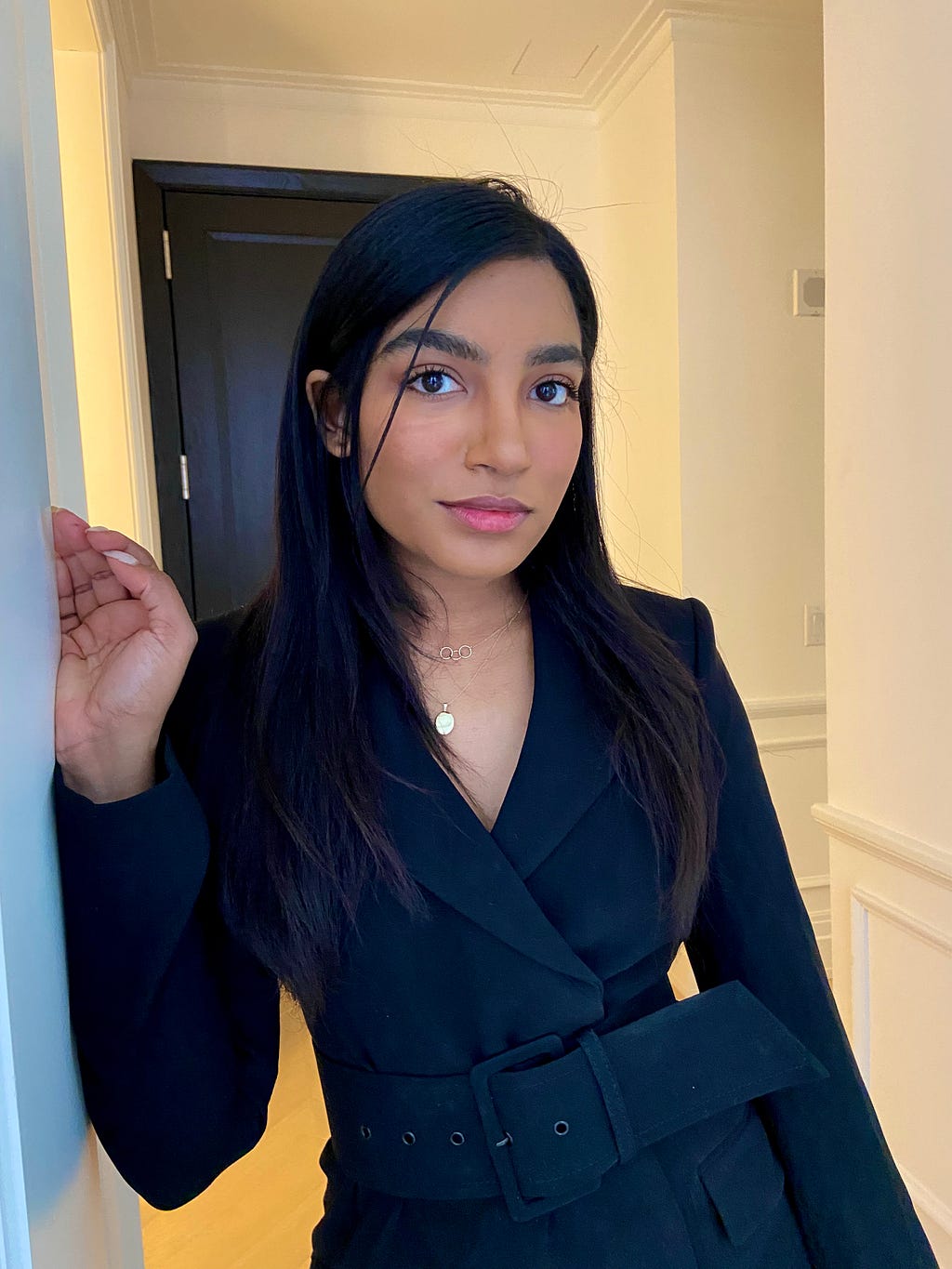
The most important piece of advice I could give to other women leaders is to try their hardest to stay grounded! Take care of yourself physically and mentally, and the rest of your team will follow that example.

As a part of my series about “Lessons From Inspirational Women in STEM and Tech”, I had the pleasure of interviewing Keiana Cave.

Keiana Cave is a 23-year old scientist and femtech entrepreneur. She is currently working on developing and launching the first non-hormonal birth control pill in the U.S., making her the youngest person in the world to pursue FDA approval on a drug. As her pill is in clinical trials, she hopes to launch a campaign for Sublima, as well utilize her platform to spread awareness and education around women’s health and hormones. Keiana’s goal is to advocate for better women’s healthcare by finding the intersection between being both a venture-backed founder and an advocate for social change.

Thank you so much for doing this with us! Can you tell us a story about what brought you to this specific career path?

Thank you for having me! I have always been a curious person, and during my sophomore year of high school, I learned that I also love chemistry and scientific research. I started working in a lab at Tulane University, and loved the process of solving big problems with tools I had right in front of me. Eventually, I was able to publish my work and by college, I was able to run my own lab. My career is essentially just a combination of my curiosity and love for chemical research!

Can you share the most interesting story that happened to you since you began at your company?

When I started Sublima, my days were filled with back-to-back calls with advisors and potential investors. One of the most interesting things I realized was that many of my investors/advisors all knew each other! The tech world is a very small place, and it makes for the most interesting connections.

Can you share a story about the funniest mistake you made when you were first starting? Can you tell us what lesson you learned from that?

The funniest mistake I made when I first started Sublima was actually that I put my personal email address on Sublima’s website. I didn’t realize that many people would even be looking at the website, but within weeks of launch I was being bombarded with emails from women all over the country asking when they could start using the drug. For a while, I didn’t understand how so many people knew my email until I finally asked one of them.

What do you think makes your company stand out? Can you share a story?

Sublima stands out because it is not only a female-led pharmaceutical company, but it also is on a mission to develop the first non-hormonal birth control pill in the U.S.

Ok super. Thank you for all that. Let’s now shift to the main focus of our interview. Are you currently satisfied with the status quo regarding women in STEM? What specific changes do you think are needed to change the status quo?

I am definitely not satisfied with the status quo regarding women in STEM. Did you know that women only make up 27% of the workforce in STEM fields? It’s the biggest reason why I choose to partner with brands like Olay- they are aiming to double the number of women and triple the number of women of color in STEM by 2030. They also just announced their second commitment of $1MM towards efforts to close the STEM gap through four innovative initiatives that will provide young girls with mentorship and role models. Not only does that mean a lot to the entire STEM community, it perfectly embodies the type of action that needs to be taken to improve the status quo around women in STEM.

In your opinion, what are the biggest challenges faced by women in STEM or Tech that aren’t typically faced by their male counterparts? What would you suggest to address this?

One of the biggest challenges faced by women in STEM is the lack of role models and enthusiasm around mentorship. A big reason that the number of women in STEM fields is so low is because they end up being discouraged that there aren’t many people in the field that look like them. Another reason I love partnering with Olay is that they are actively working to spread awareness about the importance of mentorship, especially for young women looking to enter STEM fields.

What are the “myths” that you would like to dispel about being a woman in STEM or Tech. Can you explain what you mean?

One of the biggest myths about being a woman in STEM is that we are somehow less adequately educated and worse at our jobs than our male counterparts. This leads to women having lower salaries than men doing the same job as them. I think that this couldn’t be further from the truth, because some of the girls I met in college consistently got the highest grades in all of their classes. Not to mention that some of the smartest people I know are women in STEM!

What advice would you give to other women leaders to help their team to thrive?

The most important piece of advice I could give to other women leaders is to try their hardest to stay grounded! Take care of yourself physically and mentally, and the rest of your team will follow that example.

What advice would you give to other women leaders about the best way to manage a large team?

As far as managing teams, I would also remind female leaders that it is okay to lean on that team. I personally like to hire people that are way smarter than me, so that I am learning things from them as opposed to only teaching them what I know. This means that, sometimes, the best thing to do is trust your team to get through the most stressful times.

None of us are able to achieve success without some help along the way. Is there a particular person who you are grateful towards who helped get you to where you are? Can you share a story about that?

I am particularly grateful for my first mentor, Deborah Elam, because she was one of the first people in a power position that took me seriously as a girl pursuing STEM. She encouraged me every step of the way, reassured me when I felt doubtful, helped me strategize when I had new ideas, and even helped make connections to other people that could help me.

How have you used your success to bring goodness to the world?

Both Sublima and my former company are social enterprises aimed at improving the world, but beyond that,this is exactly why I am working with brands like Olay to increase the number of women in STEM and spread awareness about the power of mentorship.

You are a person of enormous influence. If you could inspire a movement that would bring the most amount of good to the most amount of people, what would that be? You never know what your idea can trigger. 🙂

If I could inspire a movement, it would be one that empowers women to be fearless in the pursuit of their career goals! Olay is already doing such great work on building this type of movement, and I can’t wait to see what the world looks like as their message spreads.

Can you please give us your favorite “Life Lesson Quote”? Can you share how that was relevant to you in your life?

I don’t remember exactly who said this, but my favorite life lesson quote is “You’ll never succeed if you don’t try.” It’s cliche, but it reminds me every day that I’ll never reach my goals if I don’t work at them, as hard as some of them might be to achieve.

We are very blessed that very prominent leaders read this column. Is there a person in the world, or in the US with whom you would love to have a private breakfast or lunch with, and why? He or she might just see this if we tag them 🙂

I would love to have lunch with Sheryl Sandebrg. She is someone I have looked up to since I first knew I was interested in STEM. She has paved the way for more women to achieve success in STEM fields, and has raised the bar for what we can aspire to!

Thank you for these fantastic insights. We greatly appreciate the time you spent on this.


Inspirational Women in STEM and Tech: Keiana Cave of Sublima Pharmaceuticals On The 5 Leadership… was originally published in Authority Magazine on Medium, where people are continuing the conversation by highlighting and responding to this story.

Women In Wellness: Alpa Makan on the Five Lifestyle Tweaks That Will Help Support People’s Journey…

Women In Wellness: Alpa Makan on the Five Lifestyle Tweaks That Will Help Support People’s Journey Towards Better Wellbeing

An Interview With Candice Georgiadis

Always indulging in ways for Personal growth and development. — There is always room for growth and learning. Learning a new skill, taking up a new hobby, a passion, or something more personal for yourself, we should always be striving to learn new things. Keep that hunger alive. Personal growth and development are unique to each individual. Hence no one strategy works for all. But it is a transformational process where you make improvements in your mental, emotional, intellectual, physical, and /or financial state.

As a part of my series about the women in wellness, I had the pleasure of interviewing Alpa Makan .

Alpa Makan is a Holistic Health and Wellness Coach who empowers women to feel, live and eat better by providing them with effective tools, to improve their nutrition, mental wellbeing and have the power to make better lifestyle choices every day.

She has lived and worked in 3 different continents in the last decade exploring and absorbing the wealth of knowledge — how different cuisines and lifestyle habits affect our wellness journeys.

If you are healthy and happy, you are wealthy! is her motto and with that in mind, she founded ‘Alpa Makan Wellness World’ and has successfully helped women worldwide re-discover their energy, conquer stress, and find joy in their lives.

Thank you so much for doing this with us! Our readers would love to “get to know you” a bit better. Can you share with us the story about how you first got involved in fitness and wellness?

I appreciate this opportunity to connect with you as well! Taking care of my mental and physical health has always been of importance to me. But when I became a mother, my whole perspective of self-care and feeling happy and connected with oneself completely changed. The more I looked around, the more I saw that women were performing at their level best, being highly successful in their careers, being superheroes as stay home moms caring for their families, but they were stressed and overwhelmed.

They were Unhappy from within. Many had accepted the unhappiness in their lives and were living with it.

Many were depending on some external validation, materialistic acquisitions, and/or a number on the scale, which were not the parameters of joy according to me.

This is when I decided to take my passion for wellness professionally and founded the Alpa Makan Wellness World. I wanted to help women find what works best for them, to eat, feel and live better so they can experience their richest and most happiness-filled meaningful life now.

Happiness and positivity both internally and externally is something I have been associated with for as long as I can remember. A beautiful childhood is what I say I was blessed to have. My mathematician father took up meditation when I was very little and has been a meditation coach for a long time. His beliefs in living life with simplicity, appreciating mother nature in all its glory, and finding joy in everything big and small is something I learned early on. My mom’s powerful presence in the kitchen instilled a love for good food in my life, igniting my passion for cooking and starting my love relationship with fruits and vegetables.

Can you share the most interesting story that happened to you since you started your career?

I have traveled extensively across the globe in my previous jobs, and to think of it how much it has helped me to understand the struggles of my clients from different backgrounds and be able to support them on their wellness journey.

Interestingly, this is more on a very personal level that the more I got deeper into the wellness world, the more I realized how much I was meant to do this. Especially when more of my friends and family tell me that it comes so organically to me.

Can you share a story with us about the most humorous mistake you made when you were first starting? What lesson or take-away did you learn from that?

Imagine booking a 30 minutes free health discovery call with a new coach, and realizing that we have done a 1.5–2 hour session and planned and finished the next 6–12 months of your health journey life. Firstly, in my case, I really wouldn’t call it a mistake. Just a lesson to simply take one step at a time. When I started my practice, I was brimming with excitement and knowledge that I just couldn’t wait to share. I remember with some of my early clients when we would do our initial Health discovery call which is for about 30 minutes. So this is where we would discuss their health history, talk about their struggles and desires. Roadblocks in their wellness journey and how I can guide and support them. and this happens so we can decide if we are a good fit and they would like me to be their coach.

I am sure some clients loved it because they have come back for more and some others got overwhelmed with all the information that needed to be absorbed first and put into the application later.

My takeaway was simply that the ones who connected with me, came back and signed up and many even renewed their programs. A Coach-Client partnership has to be like a good relationship. If it fits, it works beautifully. If it doesn’t click, then it was not meant to be.

Can you share with our readers a bit about why you are an authority in the fitness and wellness field? In your opinion, what is your unique contribution to the world of wellness?

I believe in self-improvement and the power of knowledge. Never stop learning is what I say. I am always learning even while I’m helping others as an expert. Simply because no one knows everything and no two people are the same and I respect that bio-individuality. Hence, I keep learning so I can keep helping. One size doesn’t fit all!

I firmly believe that my personal and professional experiences have equally contributed to me being able to provide my own holistic, unique and organic approach.

I think my unique contribution lies in helping women realize that they don’t need any external validation, or materialistic acquisition or depend on a number on the scale to find the happiness that they have always dreamed of. I empower them by providing them with easy, effective, sustainable tools to bring balance in their life and build stronger bodies and minds with a healthy lifestyle they are proud of.

None of us are able to achieve success without some help along the way. Is there a particular person who you are grateful towards who helped get you to where you are? Can you share a story about that?

I always say that it’s unfair to credit one person. My parents and my elder sisters have forever been my idols and my pillars of strength. So many inspiring teachers, mentors, some of the coaches of my Crossfit gyms, so many of my friends spread all over the world- I cannot thank them enough. But today, it’s all because of my most

supportive and encouraging husband. To step out, and just do it and make it happen!

Ok thank you for all that. Now let’s move to the main focus of our interview. We all know that it’s important to eat more vegetables, eat less sugar, exercise more, and get better sleep etc. But while we know it intellectually, it’s often difficult to put it into practice and make it a part of our daily habits. In your opinion what are the 3 main blockages that prevent us from taking the information that we all know, and integrating it into our lives?

Too many to list. But here are my top 3 –

  1. If you’re missing a day, it’s ok, just don’t make it two and then forever. Don’t let that one day that you missed affect your progress. Consistency is key and just remembering messy actions is better than no action.
  2. There are no quick fixes for long-term health gains. So stop expecting instant gratification. Good things take time and for any habit to be a sustainable one, give it at least 21 days’ practice for it to stick.
  3. Pain is temporary and greatness is forever. (Words from Dwayne Johnson).
    We have to remember that when you’re asking for growth, you are also asking for struggles, uncomfortable situations, pain, and challenges. This is how we change and evolve as human beings. Forcing ourselves out of our comfort zone. We have to work through the pain and /or the struggle for our dream to become a reality. I’m not saying it will make it easier, but it can usually be a reminder that we are going through this for a reason. Get past that pain threshold- whether it’s physical or emotional or in terms of our mindset. And you will come out victorious.

Can you please share your “5 Non-Intuitive Lifestyle Tweaks That Will Dramatically Improve One’s Wellbeing”? (Please share a story or an example for each, and feel free to share ideas for mental, emotional and physical health.)

1. Incorporating a successful and productive morning routine.

This is my non-negotiable. When the day begins, especially as women we are ready to give. Give to our family, our work, our home .. what about yourself? So begin by scheduling in that extra hour before the usual routine. It will set you up for success. No devices at that time. Meditate, stretch, work out, read, journal, plan your day. Enjoy your morning coffee in peace. You truly give yourself the time and attention you cant give in your busy day. Lesser anxiety and stress is what you will experience. With that positive start to your day, you will be happier and more productive and you will surely make better lifestyle choices.

2. Figuring out the 3 why’s for eating — what, when, and why.

We all eat! And we eat because of several unconscious reasons like ending hunger, lifestyle habit, family traditions, or simply as an act of enjoying food.

In terms of managing your good eating habits, for better mental health always ask yourself these three. Firstly, what is it that I am eating, and is it going to help me to nourish my body or result in a feeling of guilt after consuming? Next is when are we eating. It’s funny how many of us reach for the snack cupboard just grazing after putting away our meal plates without even realizing it. The same goes for late-night snacking. Consider having a glass of water or herbal tea instead of reaching for the snacks that you controlled your urge for the whole day.

Last one, and probably most important! Every time you are about to reach for food, ask yourself why am I eating this? Am I really hungry? or am I just thirsty? or simply bored. In that case, get up, drink a glass of water and go take a short walk.

3. Scheduling in time to Rest and recharge.

A simple thing that I tell my clients all the time- You don’t have to be on Switch ‘On’ mode always, personally and professionally. Yes, we all lead busy lives so if I ask you that do you have the time to rest and relax, your first reply would be a no, of course, I don’t have time.

Ok, so try keeping a log for a few days to see where you spend your time each day. Write down how much time was spent working, watching television, surfing the internet, and so on. I bet you will be able to find a few minutes to meditate or practice deep breathing. Journaling your thoughts, or a short walk in the fresh air. Any restful practice that you will indulge in regularly will bring you health benefits.

4. Always indulging in ways for Personal growth and development.

There is always room for growth and learning. Learning a new skill, taking up a new hobby, a passion, or something more personal for yourself, we should always be striving to learn new things. Keep that hunger alive. Personal growth and development are unique to each individual. Hence no one strategy works for all. But it is a transformational process where you make improvements in your mental, emotional, intellectual, physical, and /or financial state.

5. Practicing Mindfulness and living in gratitude.

Mindfulness is simply focussing on being present in the moment, at any time. When you just observe and live without judgment, neither positive nor negative, recognize emotions or situations, you will be more purposeful with your words and your actions. Indulge in mindfulness practices like meditation, deep breathing. Follow mindful eating practices by enjoying every mouthful with love and gratitude. Simply being mindful of everything in and around us leads us to be more grateful for what we have. It surely leads on a path of positivity and appreciation with what we have been blessed with instead of letting stress, sadness, and anxiety be more prevalent for what we don’t have in our life. Gratitude journaling is a great way to begin the day.

As an expert, this might be obvious to you, but I think it would be instructive to articulate this for the public. Aside from weight loss, what are 3 benefits of daily exercise? Can you explain?

  1. Daily exercise does more than keep your muscles toned and your heart healthy, it increases your appetite for fruits and vegetables which improves your overall wellbeing.
  2. You will never regret doing that workout, no matter how hard it may have seemed at the time. With every exercise you are doing, you are only making yourself healthier and stronger.
  3. Daily exercise stimulates various chemicals in your brain, which in turn make more energized, feel happier, and less stressed.

For someone who is looking to add exercise to their daily routine, which 3 exercises would you recommend that are absolutely critical?

I always recommend these 3 bodyweight exercises, so there is no excuse for not having any equipment. And you can always level up with them as you progress.

  1. Squats
  2. Push-ups
  3. Sit-ups

Is there a particular book that made a significant impact on you? Can you share a story?

So about 13 years back when I met my husband I was not much of a reader, but at the time I was reading ‘Eat, Pray, Love’ by Elizabeth Gilbert. We both were living and working on different continents and since being married, we have moved continents so many times. But there has always been growth and we have always received more love than we had ever expected everywhere we have lived.

Relating this to her story, new place new people new struggles but always new learnings and new strangers turning into great friends. So a change is truly always for the good, even if it takes you across the globe.

You are a person of enormous influence. If you could start a movement that would bring the most amount of good to the most amount of people, what would that be? You never know what your idea can trigger. 🙂

Can we simply start every conversation we ever make with what’s good, great, happy, positive in our lives?

The pandemic surely has made a lot of us sit up and notice what’s good we already have in our lives. So let’s give momentum to that, and not go back to our

Can you please give us your favorite “Life Lesson Quote”? Do you have a story about how that was relevant in your life?

‘Love is the Answer, No matter what the question.’

I believe that personally or professionally there is nothing that can’t be solved and taken care of with love.

We are very blessed that some of the biggest names in Business, VC funding, Sports, and Entertainment read this column. Is there a person in the world, or in the US whom you would love to have a private breakfast or lunch with, and why? He or she might just see this if we tag them 🙂

Michelle Obama, hands down.

As a woman and as a mom of 2 girls myself, along with a whole generation, I have been totally inspired and have been in awe of her. The way she personifies grace, fearlessness, integrity.

What is the best way our readers can follow you online?

Instagram: Alpa Makan Wellness World

Private Facebook group: Wellness with Alpa

Thank you for these fantastic insights. We wish you only continued success in your great work!


Women In Wellness: Alpa Makan on the Five Lifestyle Tweaks That Will Help Support People’s Journey… was originally published in Authority Magazine on Medium, where people are continuing the conversation by highlighting and responding to this story.

Women In Wellness: Amanda Frolich of Action Amanda On The Five Lifestyle Tweaks That Will Help…

Women In Wellness: Amanda Frolich of Action Amanda On The Five Lifestyle Tweaks That Will Help Support People’s Journey Towards Better Wellbeing

An Interview With Candice Georgiadis

Look after yourself. There’s only one of me and I’ve often pushed myself to absolute exhaustion to reach my goals. I’ve always been into fitness and nutrition, but now I’m getting older this has become even more important to me — as has having some ‘me time’ every single day — to just breathe and be in the moment.

As a part of my series about the women in wellness, I had the pleasure of interviewing Action Amanda.

Amanda Frolich, aka Action Amanda, is an award-winning children’s entertainer, early years educator, health and fitness expert, best-selling author and Government advisor.

This year marks Amanda’s 30th year in business as the CEO of Amanda’s Action Club. From starting in a small community centre, Amanda has grown to working globally. Her impressive client list includes some well-known stars including; Brad and Angelina and The Beckhams… Peter Jones, Amanda Holden, The Beautiful South’s Alison Wheeler, Take That’s Mark Owen, Declan Donnelly, Sarah Beeny, Catherine Tate, Olympian Matthew Pincent… and many more…

In 2020, Amanda was invited to become a UK Children’s First Champion in Parliament, encouraging policymakers to put children first at the heart of all decision making. She previously worked as a children’s fitness consultant on the government’s Change4Life programme and was selected to run classes, events and training for Sure Start. Over the last 30 years Amanda has won multiple awards for her work, she is a number one best-selling author and iTunes number one chart topper — beating Baby Shark to the number one spot!

Thank you so much for joining us in this interview series! Our readers would love to “get to know you” better. Can you share your “backstory” with us?

I was born in Middlesex and brought up on the council estates of Northolt with grassroots sport as the main entertainment of the local children. Coming from a working class background, we didn’t have a lot and so my “happy place” became sport and generally being active.

I grew up playing any and every sport, in particular football and me and my cousins played rounders together, come rain or shine. I excelled in Track and Field at high school, winning the prestigious 5* Athletics Award and this meant everything to me.

After leaving school, I took a Sports Management course and in 1987 joined a Sport Development role with Playsport in London, offering free activities for children in parks and community centres through Ealing Borough Council — this was the early beginnings of my business, Action Amanda.

From there, I worked leisure centres and trained as a Fitness Instructor and Sports Coach. This was where I discovered my love for teaching preschool children and in 1991 I attended a Music and Movement Course with Jane Loukes which was an inspirational course. This firmly cemented my ambition for Amanda’s Action Club. This small idea began 30 years ago and has developed into a global brand, recognisable in the world of early years provision.

I got married in 1999 and my daughter was born in 2005. I did everything I could to practise what I preach, raising her to exercise and eat healthily with me. She would sit on the kitchen top, whilst I was cooking and try a wide range of fresh ingredients! She’s added to my belief that having an active, healthy life-style can enhance children from a young age.

As the business was beginning to grow and develop, I suffered a terrible blow when I was run-over by a car in 2011, breaking both my legs. I was wheelchair-bound and needed months of physio but I was determined to be active again and with plenty of hard work and commitment I was fully recovered within 17 ½ weeks. At the same time, I continued to attend all of my own Action Club classes, as the children and I needed continuity and positive experience. It really was a miracle recovery and I put this down to how active and fit I was as a person, along with my determination to prove the doctors wrong. Even now at aged 52, with pins in both legs, I am super active and haven’t suffered any prolonged pain from the breaks.

I now run children’s parties, and I’ve written a book and chart-topping children’s songs, we’ve launched an app and I’m a children’s champion for the UK Government working with them to shape policy which puts children at the heart of the decision-making process.

Can you share the most interesting story that happened to you since you started your career? What were the main lessons or takeaways from that story?

Oh, there are so, so many. Let me tell you this one … I was due to go on Dragon’s Den, for anyone who doesn’t know, this is a BBC programme where entrepreneurs enter ‘the den’ with a business idea or venture. They pitch the idea to a team of global multi-millionaires who, if they like the idea, offer to buy a stake in the business. I wanted to be everywhere, helping every child and parent, in every home in the country, but there was just me. So, I came up with the idea of making an app and selling prop bags — the ‘kit’ any parent, nanny or grannie would need to do my classes at home. I was so excited to be able to pitch this idea, having got through the audition stages, but the night before I was due to, I got a call from the BBC saying I’d have to withdraw as they’d found out I’d once entertained for Peter Jones (one of the Dragons) and the producers felt this was a conflict of interest. I was absolutely gutted. My dreams shattered in an instant. But I picked myself up and went on to create my app on my own — and the rest, as they say, is history.

Lesson learnt — you will always face hurdles in life and your career, but be strong, continue to believe in yourself and you will overcome them.

Can you share a story about the biggest mistake you made when you were first starting? Can you tell us what lesson you learned from that?

My Franchising Failures! My aim, when I started out was to franchise the business, across the UK and the world. I didn’t know it at the time, but no matter how hard I tried, I wasn’t going to go global. I’d never crack America. I wouldn’t even make it in Margate. I tried, oh boy, did I try. But I failed. Had I taken my own advice and trusted my gut, I’d never have set foot down this long and very windy road, but I did, and it’s shaped me. First came Fiona, (name changed for obvious reasons) a franchising guru, or so I’d been told. £25,000 later I had a website and 225 pages of franchising documents. Not one of those pages held water. Next came £20,000 on my mortgage and a £20,000 business loan. The heart was ripped out of my brand. “You can’t be Amanda’s Action Club” they told me, “you’ll never sell a franchise to anyone but an Amanda.” Stupidly, I believed them. They tried to woo me in Wuhan, yes Wuhan of all places. Wined and dined me. The food on my plate left as bad a taste in my mouth as the deal on the table. Next it was Egypt and then the Philippines and whilst my experience in Asia was beyond incredible, the same can’t be said for any of my forays into franchising. Deals abandoned, bank balance in the red and finally, finally, the realisation that I was better off alone. What did I learn from all this? To trust my gut and not be ‘wooed’ by people who think they know better than me. I know my business inside and out. It’s a part of me and I have to trust that I’m the one who knows what’s best for it — and for me.

Let’s jump to our main focus. When it comes to health and wellness, how is the work you are doing helping to make a bigger impact in the world?

When I look back, I can’t believe how much of an impact my work has had. From starting in a small community centre in 2003, Action Amanda now works globally. I’ve been asked to support high profile campaigns and this global enterprise has taken me all over the world, including; Dubai — where I entertained at The Dubai Marina Mall, The Atlantis on The Palm and the Jumeirah Beach hotel. Wuhan in 2010, I was invited to contribute to a centre for education… I am also speaking at a forthcoming conference in New York this year.

Over the last thirty years Action Amanda has grown, developed, pivoted and extended and I pride myself on supporting, educating and inspiring children.

In 2018 we launched the Amanda’s Action Club App so that parents could take Action Amanda ‘on the road’ to entertain and educate their children whenever and wherever and during the pandemic, like so many others, we broadcast daily from my living to families in need of support, fun, exercise and sanity! We’ve had so much incredible feedback from families who tell me that these sessions became a lifeline during lockdown.

In 2020, I was invited to become a Children’s First Champion in Parliament, encouraging policymakers to put children first at the heart of all decision making — this is a role I am hugely passionate about.

In 2021, we released ‘Time to Shine’, a song featuring The Beautiful South’s Alison Wheeler, to give children the confidence that despite the struggles they face, this is their time to shine. When we recorded this song we felt it held such an important message, and seeing it fly straight to the top of the children’s chart proved to us it’s something special and enabled us to raise money for charity as well as inspiring and uplifting children, and parents, globally.

We recently created the ‘Action Amanda’ cartoon character and I hope that she will continue my legacy — we have exciting plans in the pipeline with Cartoon Network and further development of the App and future Music videos.

Can you share your top five “lifestyle tweaks” that you believe will help support people’s journey towards better wellbeing? Please give an example or story for each.

  1. Get Outdoors — Don’t we all feel better for some fresh air and gentle exercise and no matter where we live, we can find green space. Even if it’s stepping outside into your garden, or wandering to your local shop for a paper or magazine. Everyday activity, fresh air and green spaces help us get stronger and feel better, sending those happy hormones whizzing round our bodies and energising us for whatever the day holds. I love to get out in the morning, giving me time to reflect, plan and appreciate what my body can do for me.
  2. Hold Your Own Kitchen Disco — Whether Radio 2 is your jam or asking Alexa to play your favourite ABBA or QUEEN song or DISCO playlist, you don’t have to be a diva to turn the music up! Music is fabulous for lightening your mood and giving you something to sing, smile and dance about to.
  3. Laughter — Children are our teachers. They are experts in laughing, we can learn from them. While there is nothing wrong with relying on comedy, humor and jokes, laughter becomes therapeutic, healing and transformative if we can learn to laugh just for laughter’s sake. Laughter offers us many mental, emotional, spiritual and social benefits, besides allowing us to live in the present. We all grew up knowing about “laughter is the best medicine. What are we supposed to do with medicine? Take it! Benefits will be innumerable, fun, healthy, create connections, allow us to be more creative and live a richer, more happier and fullfilled life.. All these benefits are available to us for free, anytime with plenty of teachers around. Laughter is our connection to the soul and is made love visible.
  4. Try out some new recipes Many of us often eat the same basic dishes week in and week out, but trying out new things can be so invigorating. Why not tantalise your tastebuds and have friends/family round for dinner — you could make a course each? Or, you could pop a number of your favourite recipe ideas in jar and then monthly/weekly pull one at random to be inspired and make. You could also create a ‘Taco Tuesday’ night or ‘Sundae Sunday’… any reason for people to get together for a feast of good food and great company — it truly is one of the best recipes for fun and laughter!
  5. Find your inner child Life can be challenging in so many ways but there is something delightful about revisiting your favourite childhood experiences. Did you play on the swings, eat ice-cream on a sea-wall, play a team sport or pull everything out of the dressing up box? You’re never too old to play! Check out your old haunts, visit a restaurant or special place, maybe even plan a road trip. The possibilities are endless and you’re never too old to enjoy them!

If you could start a movement that would bring the most amount of wellness to the most amount of people, what would that be?

Movement! That’s perfect. If I could encourage adults to respond like the children I’m with everyday, I really do think we’d be on the verge of a wellness revolution. We have to be prepared to move physically, and be prepared to move into spaces which are healthier for us mentally and emotionally. Whether, like my song, adopting positive messages which change self-destructive thought patterns and help us to believe it’s our time to shine too, to moving into healthier relationships, setting boundaries, … whatever it is, wellness starts with movement and there’s no better day to be intentional about that than today!

What are your “5 Things I Wish Someone Told Me Before I Started” and why?

  1. There isn’t always something or someone better out there. I’ve been taken for a ride so many times because I’ve trusted what people tell me. People have offered to help me take my business to the next level, promised me they’d make me a star or secure me a brilliant business deal and time after time they haven’t delivered. They’ve taken the money and run.
  2. Trust your gut. I know what’s best for me and my business and when I trust my gut things rarely go wrong. It’s all about self-confidence and believing that what you think, matters.
  3. It will be a roller-coaster of a ride. There have been so many ups and downs in my career, but I’ve learnt something from all of them. Running a business is never going to be plain sailing, no matter how good you are at it.
  4. You’ll meet some amazing people, see amazing sights. Savor every single one. I’ve had a blast running my business. I’ve met some inspirational people and been to some fantastic places, but I haven’t always stopped to appreciate this. I’m now making sure I do that every single day.
  5. Look after yourself. There’s only one of me and I’ve often pushed myself to absolute exhaustion to reach my goals. I’ve always been into fitness and nutrition, but now I’m getting older this has become even more important to me — as has having some ‘me time’ every single day — to just breathe and be in the moment.

Sustainability, veganism, mental health and environmental changes are big topics at the moment. Which one of these causes is dearest to you, and why?

Ultimately, I want to leave a legacy. I want to tackle childhood obesity and create global change so that all children can access fun and educational movement and physical development from early years and beyond so that they have strong bodies, confidence and understanding of health and self-care. The healthy boys and girls of today are the healthy men and women of the next generation.

I don’t think there’s a one-size-fits-all solution to that and I think we have to be responsible about seeing the broad picture here. We can’t choose any one of these big topics over another, we have to be prepared to play our part across them all.

What is the best way our readers can follow you online?

Thank you for these fantastic insights!


Women In Wellness: Amanda Frolich of Action Amanda On The Five Lifestyle Tweaks That Will Help… was originally published in Authority Magazine on Medium, where people are continuing the conversation by highlighting and responding to this story.
Female Founders: Amanda Freeman of SLT and Stretch*d On The Five Things You Need To Thrive and…

Female Founders: Amanda Freeman of SLT and Stretch*d On The Five Things You Need To Thrive and Succeed as a Woman Founder

An Interview With Candice Georgiadis

Don’t be so frugal — I’ve learned from years of experience that you often get what you pay for. I’m very good at controlling costs and running a lean business. But that doesn’t always serve you so well when in growth mode. Sometimes you have to take a chance on something costly to see if it pays off.

As a part of our series about “Why We Need More Women Founders”, I had the pleasure of interviewing Amanda Freeman.

Amanda Freeman is the founder and CEO of cult favorite workout brand SLT and recovery space, Stretch*d. Amanda is a graduate of Duke University and Harvard Business School. In addition to being founder of SLT and Stretch*d, Amanda is an investor in numerous wellness businesses and a wellness industry trend forecaster.

Thank you so much for doing this with us! Before we dig in, our readers would like to get to know you a bit more. Can you tell us a bit about your “backstory”? What led you to this particular career path?

I started my career as a trend forecaster. I conducted various types of market research and consulted with companies targeting the youth generations regarding the Macro and Micro trends affecting their consumers. I worked at The Intelligence Group for 6 years with a 2 year stint at Harvard Business School in the middle of those years. It was while working on a Macro Trend I called “The Rise of Well-consciousness” that I became aware of both my own and society’s shifting approach to their health. Prior to 2006, things like meditation, veganism and eco-conscious living were very fringe and extreme. People were more into treatment of ailments than prevention of them. But that all started to change in 2006 and so I left my job at CAA (they had purchased The Intelligence Group) to start a wellness-focused business.

In 2007, I co-founded a company called Vital Juice with a friend from business school. Vital Juice delivered the latest information in fitness, nutrition, beauty and wellness to women’s inboxes. It was while working on Vital Juice that I became very interested in an emerging fitness category: boutique fitness. It was a new and emerging idea at that time with a handful of brands and types of workouts. While I loved the idea of these studios (focusing on delivering the best version of one workout all day long), I didn’t like the results people would get from a spin class or barre class. What I wanted was the Pilates body, but in the experience of a group spin class. On a trip to LA, a friend told me to try a pilates-inspired studio in W Hollywood and I found exactly what I was looking for. I made a deal with the owner of that studio and the creator of the equipment to bring the workout to NYC and beyond, and that became SLT. SLT had grown to 26 studios largely in the Northeast prior to the pandemic and has shrunk a bit since then down to 16 studios.

Today, I still run SLT as well as another business I started nearly 4 years ago called Stretch*d. The idea for Stretch*d came from the insight that most people understand that stretching is good for you, yet they also don’t like stretching on their own. In fact, I observed at SLT that many clients don’t stay through the stretching part of class. However, people who work out with trainers love being stretched out by them. Why wasn’t there a place in NYC where you could go to be stretched out any time of the day for as long as you want? Thus, Stretch*d was born. In addition to stretching, we offer a variety of recovery services that people are desperate for in these crazy times.

Can you share the most interesting story that happened to you since you began leading your company?

It’s impossible to pick the single “most interesting” thing that has happened since the founding of SLT, it’s been over 10 years of craziness. Some of the more interesting (some more positive than others) experiences that I’ve had include: Surviving Covid (so far). Partnering with a private equity firm for the past 6 years. Evaluating many acquisition opportunities and making one.

Can you share a story about the funniest mistake you made when you were first starting? Can you tell us what lesson you learned from that?

This is another tough one given I’m 11 years out from starting the business. But I’ll never forget the first time I got a call from an instructor at 10 PM the night before the class she was supposed to teach at 6:30 AM. She was calling to tell me she had food poisoning and couldn’t teach her classes. No one else could step in to teach, so despite the fact that I’d never taught a fitness class in my life, I stepped in and taught her block of 3 classes. Stressful!

None of us are able to achieve success without some help along the way. Is there a particular person who you are grateful towards who helped get you to where you are? Can you share a story about that?

I’ve had a tremendous amount of help from people throughout my career: I’ve had amazing partners, colleagues, employees and supporters. And I’ve had only one boss: Jane Buckingham. Jane was the founder of the trend forecasting company I worked at early in my career. Not only has she been a great mentor to me, but she’s remained one of my closest friends who feels a lot like family. We’ve spent several Thanksgivings together over the course of the 20+ years I’ve known her.

Jane is dynamic, sharp, witty, brilliant, creative and entrepreneurial. She had written a book on teens when she was a teen and was dubbed “an expert” at 16. She was very hard working and ambitious, yet caring and kind. She was always my model for running a business. She’s often my sounding board for ideas.

Ok, thank you for that. Let’s now jump to the primary focus of our interview. According to this EY report, only about 20 percent of funded companies have women founders. This reflects great historical progress, but it also shows that more work still has to be done to empower women to create companies. In your opinion and experience what is currently holding back women from founding companies?

There are several things that hold women back from starting more companies, and I’ll focus on a few of them. First, in general, I believe women are more risk averse than men are when it comes to money. Entrepreneurship takes chutzpah, confidence (usually over confidence), risk and the willingness to fail. Women tend to have less of that then men. Women tend to be more conservative and underestimate themselves and their abilities. Second, most businesses require capital to start. Women tend to have less of their own money to invest and they have less access to networks of investors. Third, starting a business takes a tremendous amount of time and focus. Because of traditional gender roles when it comes to starting and having a family, women often prioritize their family and don’t think they can have both a family and a business.

Can you help articulate a few things that can be done as individuals, as a society, or by the government, to help overcome those obstacles?

I encourage more women to take risks, be brave and pursue their ideas for businesses with rigor, analysis, and confidence. I also encourage them to focus more on accumulating wealth and being financially independent.

This might be intuitive to you as a woman founder but I think it will be helpful to spell this out. Can you share a few reasons why more women should become founders?

Being a founder is amazing and I believe the pros tend to outweigh the cons. It is usually fun to be your own boss and to chart the future of a company. It’s also extremely rewarding to see how your company can create livelihoods for your employees and joy for your clients. I also believe that if more women started companies, we’d have more products and service companies that both create value and adhere to positive values.

What are the “myths” that you would like to dispel about being a founder? Can you explain what you mean?

People think being a founder of a company affords you more flexibility in your work schedule. I’ve seen the opposite of that. As the founder of a company you have to set an example for your staff and there is always work to be done and problems to solve.

Is everyone cut out to be a founder? In your opinion, which specific traits increase the likelihood that a person will be a successful founder and what type of person should perhaps seek a “regular job” as an employee? Can you explain what you mean?

Not everyone is cut out to be a founder. As mentioned above, you have to be a risk taker and be confident about your idea and the business, yet understand you may fail. You also have to be passionate about your idea and approach your job with grit. Being adaptive, yet decisive is another key to founder success.

Ok super. Here is the main question of our interview. What are your “5 Things I Wish Someone Told Me Before I Started” and why? (Please share a story or example for each.)

  1. Don’t take things personally — When dealing with so many people (employees, clients and partners), it’s hard not to take things that happen personally. It’s hard not to see the success or failure of your business as a reflection of who you are. Those feelings can cloud judgement and take up valuable time.
  2. Plan more for success, than for failure — When I first started SLT, I was too focused on: “But what if it doesn’t work out.” I signed a short term lease, didn’t raise a ton of money and didn’t invest enough in my brand and studio space. Had I been more confident that it would be a success I would have created something bigger and better.
  3. Don’t be so frugal — I’ve learned from years of experience that you often get what you pay for. I’m very good at controlling costs and running a lean business. But that doesn’t always serve you so well when in growth mode. Sometimes you have to take a chance on something costly to see if it pays off.
  4. Leading and managing are two different things — I think most people equate leading and managing in a business context. However, I’ve learned over time that there are two very different skill sets for each. I am a stronger leader than I am a manager, and had I realized that early on, I would have brought on a partner who excelled at management.
  5. Hire around your weaknesses — I tend to hire people who are similar to me and who I can relate to. But the best teams are made up of a diverse area of individuals who bring various perspectives to the company. While hiring similar types of people may get your more consensus, it will also limit your point of view and you may miss things.

How have you used your success to make the world a better place?

I strive to make my businesses great places to work, to make our employees’ lives fulfilled and happy. I also strive to create products and services that make people’s lives better through their health and wellbeing. I spend my non-working hours trying to make my children into good people who will contribute positively to society. And I support and get involved in causes that are important to me including Jewish Life at Duke University, mental health awareness and treatment and cancer prevention.

You are a person of great influence. If you could inspire a movement that would bring the most amount of good for the greatest number of people, what would that be? You never know what your idea can trigger.

When I was 25, my father took his life via suicide. Just 2 ½ years later, my mother died of stomach cancer which I am convinced was caused by her pain and suffering enduring my father’s passing. If I had more time and money, I’d like to focus on better understanding mental health and work towards decreasing the number of suicides in this country.

We are very blessed that some very prominent names in Business, VC funding, Sports, and Entertainment read this column. Is there a person in the world, or in the US with whom you would love to have a private breakfast or lunch with, and why? He or she might just see this if we tag them.

As a graduate of Duke, a huge college basketball fan and a leader of my businesses, my hero is Coach Mike Krzyzewski. The man is a legend, the greatest coach of all time and an amazing leader…not to mention he is not afraid to curse to get his point across. My kind of guy!

Thank you for these fantastic insights. We greatly appreciate the time you spent on this.


Female Founders: Amanda Freeman of SLT and Stretch*d On The Five Things You Need To Thrive and… was originally published in Authority Magazine on Medium, where people are continuing the conversation by highlighting and responding to this story.

Women In Wellness: Jeannie Lymath of SoleCare Healing On The Five Lifestyle Tweaks That Will Help…

Women In Wellness: Jeannie Lymath of SoleCare Healing On The Five Lifestyle Tweaks That Will Help Support People’s Journey Towards Better Wellbeing

An Interview With Candice Georgiadis

Do not expect someone else to make you happy — you are responsible for your own happiness — buy your own flowers, jewellery, weekends away, spa days. Nourish yourself with unconditional love!

As a part of my series about the women in wellness, I had the pleasure of interviewing Jeannie Lymath, founder of SoleCare Healing.

Jeannie Lymath is a mum-of-two from Portsmouth, UK, who runs a reflexology and healing business, SoleCare Healing.

Jeannie is a qualified ACHO registered crystal healer and AOR registered reflexologist. Her passion is helping others embark on their own crystal journey towards self-discovery and fulfillment.

She is a former forensic scientist and NHS worker, who switched careers to follow her passion 10 years ago alongside raising two children under the age of two.

She now offers traditional reflexology, crystal reflexology, crystal therapy, live meditation, several different workshops including crystal and moon magic, healing retreats and more. She also offers subscription packages to aid people in their path to mindfulness and with their meditation sessions.

She has been offering crystal healing for five years and reflexology for 10.

Her aim is to create a community, to help people look after their mental health and practice mindfulness — something she feels a lot of people need to focus on during lockdown, with added anxiety and stresses often creeping in heavily.

She hopes to make people feel stronger, sleep better, reduce anxiety and chronic pain, feel more content and gives them a stronger sense of wellbeing.

Thank you so much for joining us in this interview series! Our readers would love to “get to know you” better. Can you share your “backstory” with us?

I started my holistic journey when I was pregnant with my 2nd child. I was in and out of hospital with false labour and extremely anxious that my pregnancy would end in premature labour and NICU like my previous pregnancy. A midwife suggested reflexology and I began visiting reflexologist weekly. I had never experienced such relaxation and I truly believe this holistic therapy calmed my whole being down so that my daughter was born 5 days late and twice the size of my first born. This sowed the seed for wanting to help others and make a difference. It began with Reflexology and has evolved into crystal healing and moon cycles.

Can you share the most interesting story that happened to you since you started your career? What were the main lessons or takeaways from that story?

When my mother was seriously ill and admitted to the high dependency unit, I honestly thought she was going to die. I went home and created a crystal mandala to invoke healing, I called all my angels, guides, guardians and ancestors to help. I went to the hospital and taped healing sigils I had created on the back of photos of me, my sisters and grandchildren and I brought crystals for my mother to hold in her hand. I read healing stories about goddesses, ascended masters and anything that would help her believe in miracles and the power of healing. Three weeks later at the absolute disbelief that she had survived my mother, my Superhero was discharged and swears it was this continual healing that gave her the will to live.

You do not have to be an expert or a master within your passion, but you do need clear intent and the belief that you can make a difference. Never think you are not enough to make miracles happen!

Can you share a story about the biggest mistake you made when you were first starting? Can you tell us what lesson you learned from that?

I think every businesswoman will have made their share of small mistakes from advertising, renting rooms and collaborations. I haven’t made a huge mistake as I like to say yes to as many opportunities as possible but if they do not work out it is part of the learning curve and my journey.

Mistakes are the best way to learn!

Let’s jump to our main focus. When it comes to health and wellness, how is the work you are doing helping to make a bigger impact in the world?

The world we live in wants us to believe success is big houses, fancy cars and exotic holidays. My work is focused on what brings you happiness and creating a sustainable world around that, there are crystal meditations that will take you to every inch of the universe on the back of dragons. Deep relaxation is the first step to quietening your mind so that your soul can speak, understanding what YOU truly want and using crystals to empower these changes or beliefs. I hope that each person I reach can step forward confidently in their life away from societal expectations so that it inspires others to make that move to a more spiritual way of living.

Can you share your top five “lifestyle tweaks” that you believe will help support people’s journey towards better wellbeing? Please give an example or story for each.

1. Always set a part of your day that is just for YOU — half an hour of reading, an undisturbed bath, meditation, a nature walk. This gives you quiet time to reflect or prepare for your day.

2. Train your brain to pick up on the negative words you say about yourself and your life. Learn to reword what you are saying to yourself. You are what you say.

3. Journal as much as you can — subconscious writing is a simple tool that exposes your deepest fears and desires — all of it needs to be unearthed to heal.

4. Life is not meant to be easy, there will always be challenges and heartbreak — the key is always finding the positive and reminding yourself how to be grateful.

5. Do not expect someone else to make you happy — you are responsible for your own happiness — buy your own flowers, jewellery, weekends away, spa days. Nourish yourself with unconditional love!

If you could start a movement that would bring the most amount of wellness to the most amount of people, what would that be?

A free collective that is available for every gender, colour, age, sexuality that explores spirituality openly throughout the country and the world, from crystal healing to chanting, where there are funds available for study and self-improvement.

What are your “5 Things I Wish Someone Told Me Before I Started” and why?

1. Time is an illusion; it does not matter if everything happens in 5 weeks or 5 years — the key is to keep going and believe in yourself.

2. Patience is required.

3. To swap saying “I don’t have enough time” with “what are my priorities today” — that mantra is a game changer.

4. Being self-employed can be lonely, so find your work tribe for support.

5. To be kinder to myself and understand there are good days and bad days.

Sustainability, veganism, mental health and environmental changes are big topics at the moment. Which one of these causes is dearest to you, and why?

Mental health has always been a huge part of my life surrounded by people who suffer daily; there is not enough support that is available quickly enough and I have lost friends who have not felt they could be any more of this world.

What is the best way our readers can follow you online?

Instagram — @solecarehealing

Facebook Group — Solecare Healing Community — https://www.facebook.com/groups/solecarehealingcommunity

Website — www.solecare.org

Thank you for these fantastic insights!


Women In Wellness: Jeannie Lymath of SoleCare Healing On The Five Lifestyle Tweaks That Will Help… was originally published in Authority Magazine on Medium, where people are continuing the conversation by highlighting and responding to this story.
Female Founders: Cheryl Stabler of Just Faith TV On The Five Things You Need To Thrive and Succeed…

Female Founders: Cheryl Stabler of Just Faith TV On The Five Things You Need To Thrive and Succeed as a Woman Founder

An Interview With Candice Georgiadis

You can learn so much from Younger Minds — It use to bother me, when I saw friends in my industry with so much knowledge, not creating/nor sharing their decades of expertise with the next generation. I would also ask “How do you build a bridge with those coming up behind you?” I am so fortunate to work with some young brilliant and sharp minds. They have taught me a great deal in our short time together. I pray that I have shared some ‘wisdom’ with them as well.

As a part of our series about “Why We Need More Women Founders”, I had the pleasure of interviewing Cheryl Stabler of Just Faith TV for Vyre Network and Unshakeable Woman.

Cheryl Stabler is the Co-Founder of JUST FAITH TV (VYRE- Faith Global Content). JUST FAITH TV is a global streaming channel which distributes a diverse range of faith-based content to the spiritual and faith communities. Just Faith TV reaches all nations and demographics while keeping viewers engaged in family centered programming.

Thank you so much for doing this with us! Before we dig in, our readers would like to get to know you a bit more. Can you tell us a bit about your “backstory”? What led you to this particular career path?

My SHIFT (Story) started after ending almost 3 decades of marriage.

In November 2019, I began the process of writing my second book: The Unshakeable Woman: The SHIFT is Here! Foreword by Les Brown. The book is a “How to keep Unshakeable Faith”, when life throws you a curve ball.

During the process of writing, I discussed marketing options with by Publisher, Christian Faith Publishing. With the help and encouragement of a friend, I started The Unshakeable Woman Podcast, now strong in eight (8) countries. Each week, the podcast profiles women sharing their stories of triumph, in order to encourage other women on their journey. The Unshakeable Woman LLC is 100% owned by Cheryl Stabler. The end goal is to provide furnished rental homes for women and their children.

While the podcast picked up steam, the brand collaborated with The Uncommongospel Magazine brand, which started 30 minute LIVE shows on Facebook Mon-Fri, with a Sunday Brunch Edition with three (3) additional hosts. The LIVE show moved to Instagram LIVE, season 2, January 2022.

The summer of 2021, Cheryl went into partnerships with The Vyre Network and Harris Brown to create Faith Holdings LLC for JUST FAITH TV. The channel officially launched on January 9, 2022, providing TV, Film, Docuseries, Music and Live streaming content in over 200+ countries. Faith programming to serve people around the world.

The channel will also host “The Unshakeable Soul” TV Talk Show, season 1, which showcases Unshakeable Women having discussions about life, faith and overcoming difficult transitions, while enjoying soul food.

The Unshakeable Woman Podcast: Season 3, Jan 2022

https://anchor.fm/cheryl-stabler

Press Releases:

VYRE Network

https://www.pressrelease.com/news/cabo-verde-capital-inc-acquires-vyre-network-the-art-of-streaming-21566050

JUST FAITH TV

https://vyrenetwork.com/tag/cheryl-stabler/

Can you share the most interesting story that happened to you since you began leading your company?

The most interesting story is quite comical. I opened my heart to dating again in January 2021 and met a great friend. Dating wasn’t in the cards for us, but we had a blast discussing business. It was this friend that introduced me to the owner of the Network. We are in partnership with the Network for both the TV Talk Show and JUST FAITH TV. In addition, he was instrumental in creating the theme song for the network as well. God brought him in my life for something much bigger… a friendship and a global business.

Can you share a story about the funniest mistake you made when you were first starting? Can you tell us what lesson you learned from that?

The funniest story was driving home from the meeting where we discussed the vision of this network. I’ve never dreamed this big and I’ve never had someone look at me and see the possibility of such, until that day. My entire life, I have been a giver. To my children, my family, the community, my friends, the homeless and the church. That day the Network founder of Vyre asked, “can you handle a role of running a network similar to the size of BET?” I still laugh at that moment, knowing that I had the experience of managing large teams and projects… the exception, this would be MY baby to birth. The lesson… God takes us on amazing journeys to sometimes learn hard lessons to prepare us for BIGGER!

None of us are able to achieve success without some help along the way. Is there a particular person who you are grateful towards who helped get you to where you are? Can you share a story about that?

I can name three women:

My publicist, Classic Cauley. My daily encouragement, sister and friend in business. (Founder of Classic Public Relations)

My cousin, Dr. Andrea Best: My sister in life who is a contact reminder of how important it is to speak life over every situation and myself. (Physician/Holistic Psychiatrist)

My life coach, Rhona Bennet: My sister who helped me to dig deep, to get past hurt and trauma and who shared incredible tools of the HOW to move forward with purposeful thinking strategies. (Founder of Personal Power University and 1/3 of the group EnVogue0

Ok, thank you for that. Let’s now jump to the primary focus of our interview. According to this EY report, only about 20 percent of funded companies have women founders. This reflects great historical progress, but it also shows that more work still has to be done to empower women to create companies. In your opinion and experience what is currently holding back women from founding companies?

With my first company, The Unshakeable Woman LLC, I realized that most funders only fund if you have been in business for 2–3 years and have a certain amount of money in the bank. Traditional funding didn’t work for me and the grant process is exhausting and competitive. With God’s blessing, this company is still operating with plans of expansion from my own personal wealth. My end game is to reach back and teach other single women how to open and run business and to provide furnished rentals for single mothers.

Can you help articulate a few things that can be done as individuals, as a society, or by the government, to help overcome those obstacles?

As individuals, we can help a great number of women, more efficiently than government. If we start with just 50 businesswomen coming together to mentor others, it will change the way economics are viewed by newly developed companies. There is so much to cover from entity creations, attorneys, CPAs, accounting and staffing. In addition, further discussion of Black Women on Executive Boards for both profit and non-profit are another urgent platform of discussion. It’s time for businesswomen to start speaking to and creating relationships with each other and our younger business minds.

This might be intuitive to you as a woman founder but I think it will be helpful to spell this out. Can you share a few reasons why more women should become founders?

Being a Founder, simply put, is the ability to executive your vision. When working with teams, they respect your vision and lend their gifts to help you build it. In addition, being a Founder and owning most of your company creates a space for the company to receive more funding. Women Owned and Women Minority Women owned firms have a number of funding options.

What are the “myths” that you would like to dispel about being a founder? Can you explain what you mean?

Myth #1 — It’s another 8–5pm job. The biggest myth ever, when running your own company. There have been numerous situations where I work very late or on weekends and some friends don’t understand the ‘why’ I cannot join them. There is a BUILD with any company and its never an overnight process. The reality, it’s more of a 24/7 process, until critical teams are put in place to lend support to the vision.

Is everyone cut out to be a founder? In your opinion, which specific traits increase the likelihood that a person will be a successful founder and what type of person should perhaps seek a “regular job” as an employee? Can you explain what you mean?

Everyone is not cut out to be a founder. Just as every Founder is not cut out to work 8–5pm.

As a former Project Manager for both a large Media Company and an International software firm, I loved the work. I didn’t love the lack of flexibility. I left the corporate world in year 2000, when our second child was turning 2. With my ex-husband working for the Federal Government at the time, I had the crazy on-call schedule. Being a mother, I still had to fit in wife time, baby time, cook breakfast/dinner, health appointments, school drop off/pick up and each time my children were sick, I would take off to care for the babies. This isn’t the story for all mothers… it way my story. It was exhausting to balance it all.

I tried my hand at opening a company, without guidance or mentorship, after the third child was in grade school. It failed miserably. But, I still won, taking away some valuable lessons.

A founder is open to expect failure and to possibly lose money. It you aren’t a risk taker; you won’t be successful. If one is scared of taking risks, a “regular job” may be a better option.

A founder is ok with not having much time to be overly social. Starting a business and staying on top of it requires a lot more hours, than the traditional “regular job” schedule. If one enjoys hitting the clubs with friends after work, partying and hanging out all weekend, a 9–5 may be a better alternative.

A founder is a planner, who can forecast and save their earnings, for emergencies or unforeseen situations. A founder can also create their own wealth, without limits. If one enjoys a steady paycheck and paid benefits … well, you know the answer.

Ok super. Here is the main question of our interview. What are your “5 Things I Wish Someone Told Me Before I Started” and why? (Please share a story or example for each.)

Nail your accounting courses — In college i loved math. I really love writing algorithms. Accounting seemed like a foreign language. Looking back, I wish that I placed more hours into understanding P&L statements, budgeting and forecasting. I’m blessed to have an amazing CPA, who takes care of my accounting questions.

How to capture Expenses — It took a moment for me to balance work and admin, while working solo for so long. I created #financeFriday to review banking, budgets, planning and expenses

You can learn so much from Younger Minds — It use to bother me, when I saw friends in my industry with so much knowledge, not creating/nor sharing their decades of expertise with the next generation. I would also ask “How do you build a bridge with those coming up behind you?” I am so fortunate to work with some young brilliant and sharp minds. They have taught me a great deal in our short time together. I pray that I have shared some ‘wisdom’ with them as well.

Balance and Rest is important — I’ve learned to work and process more clearer, after a morning walk or bike ride. In this season, I make time to read a couple of chapters, walk to the lake, to shopping or sit in the quiet to give some rest to my mind. I rise with the sun and in bed by 9–10pm, to ensure that I have ample rest to move though each day.

You might freak out when it gets BIG… and ‘how’ to recover — I didn’t see this one coming. When the Network was birthed, I cried and danced all day. The cat is out of the bag and my partners now know, how I celebrated, while recovering from COVID19 and isolated. When you receive a BIG blessing, unlike any that you have ever dreamed, your emotions can get the best of you. The recovery and coming back to ‘earth’ took place with my cousin, Dr. Andrea Best. She also, is experiencing a great deal of BIG simultaneously. The come down: Prayer, walking outdoors and enjoying the space of gratefulness, sitting in IT and not walking in fear and ending the day with a nice meal and a hot bath.

How have you used your success to make the world a better place?

This is such a great question. I am so excited to answer this one.

As a former PTA President and community advocate, I have many sisters. Those who look like me and some not. My sisters are of many faiths, colors and nationalities. After my marriage ended, it was these women who encouraged me to keep going. They all know that Im Christian; yet we all love each other as women and children of God. First came the start of writing my second book, then the podcast. I am honored to share women’s stories from all over the world. Because of the podcast, the TV TALK show and JUST FAITH TV was birthed.

JUST FAITH TV is programming for the world. Content creators of different faiths and nationalities showing their perspectives of their world. It is an honor to provide a NYSE publicly traded platform home for content created to both share and receive payment for their work. My prayer is that people who come to the Vyre Network for business news, sports, Movies, etc, will click on JUST FAITH and explore family programming for their faith driven content and/or explore other views of Jewish faith, Mormons, Muslims in America, etc. The more we learn about each other…the more we learn to love each other.

You are a person of great influence. If you could inspire a movement that would bring the most amount of good for the greatest number of people, what would that be? You never know what your idea can trigger.

I have always envisioned having a Mass Youth Choir, bringing the faiths together to inspire the world. (The different types of christian faith across nationalities, “Catholic, Non-denominational, Southern Baptist….” Jewish, Mormon, etc.) A concert in everycity raising money to build tiny house communities for the homeless and providing home communities for single mothers and their children.

We are very blessed that some very prominent names in Business, VC funding, Sports, and Entertainment read this column. Is there a person in the world, or in the US with whom you would love to have a private breakfast or lunch with, and why? He or she might just see this if we tag them.

Oprah Winfrey hands down.

She is a smart business woman and a kind philanthropist. Also an author and known well from helping millions of men and women with her talk show. Her home is less than two hours north of me in Santa Barbara and each visit I make to the Four Seasons Biltmore for lunch, I pray that I run into her amazing presence. Most importantly, she gives back so much to people to encourage their spirit and their souls. I pray that JUST FAITH TV changes lives as well, as most of the country works and lives from home during the pandemic. “To Whom Much is Given, Much will be Required”.

Thank you for these fantastic insights. We greatly appreciate the time you spent on this.


Female Founders: Cheryl Stabler of Just Faith TV On The Five Things You Need To Thrive and Succeed… was originally published in Authority Magazine on Medium, where people are continuing the conversation by highlighting and responding to this story.

Inspirational Women in STEM and Tech: PETA’s Dr Emily Trunnell On The 5 Leadership Lessons She…

Inspirational Women in STEM and Tech: PETA’s Dr Emily Trunnell On The 5 Leadership Lessons She Learned From Her Experience

An Interview With Candice Georgiadis

Leaders should actively listen to team members, encourage thinking outside of the box and offer a safe space to share ideas without being judged. Cater job responsibilities to play to the team member’s strengths, not their weaknesses. Remember people’s individual contributions and thank them privately and publicly for those contributions. Make sure you tell team members when you are happy with their work, and offer specific feedback when you are not.

As a part of my series about “Lessons From Inspirational Women in STEM and Tech”, I had the pleasure of interviewing Dr. Emily Trunnell.

Dr. Emily Trunnell graduated magna cum laude from the University of Georgia with a degree in nutrition science and earned a doctorate in neuroscience from the University of Georgia in 2016. Dr. Trunnell is currently a senior scientist for People for the Ethical Treatment of Animals (PETA). She works with policy makers and other scientists to replace the use of animals in experimentation with superior research methods. Her peer-reviewed papers, letters, opinion pieces have appeared in numerous publications, including Drug Discovery Today and Scientific American.

Thank you so much for doing this with us! Can you tell us a story about what brought you to this specific career path?

In graduate school for neuroscience, I was given the task of designing a set of experiments that I could conduct and analyze in order to learn scientific techniques and write my dissertation. At the time, the laboratory I was in conducted experiments on animals and I was expected to do the same. As an animal lover, at first I was excited to work “with” animals, thinking that the animals would be treated with kindness and that what I was doing would benefit scientific knowledge and human health as a whole. But during my experience, I learned that the opposite is true: that animals used in experimentation routinely experience immense suffering and that the data gleaned from them almost never translates to humans. After graduating, I knew I needed to find a way to share this knowledge.

Can you share the most interesting story that happened to you since you began at your company?

I am trained as a scientist, so some of the tasks I took on when I came to PETA were a bit out of my wheelhouse at first, like doing media interviews and helping with demonstrations and fundraising events, including one where I got to meet Edie Falco! But mixing up my tasks keeps me on my toes, which I like. For example, I attended an Eli Lilly shareholder meeting to present a resolution for the company to ban forced swim tests on animals. The forced swim test is a cruel and scientifically invalid procedure where mice and rats, and sometimes hamsters, gerbils, or Guinea pigs, are dropped into beakers of water to see how long they struggle to stay afloat, an activity that is wrongly believed to be able to identify antidepressant drugs. After presenting my scientific argument at the shareholder meeting, I joined other PETA supporters standing in front of the company’s headquarters in a dramatic protest, which included an activist dressed as a mouse flailing in a large tank of water in a human-size version of the forced swim test.

Can you share a story about the funniest mistake you made when you were first starting? Can you tell us what lesson you learned from that?

Not exactly a humorous one, but a mistake I made at the beginning was assuming that people would not listen to me, considering I was young and voicing a dissenting opinion that was not popular in my field. I had to learn to shed the “imposter syndrome” and have confidence in my arguments, which are valid and evidence-based.

What do you think makes your company stand out? Can you share a story?

PETA is the best animal rights organization when it comes to two things: making changes for animals and standing out! Our eye-catching, and sometimes provocative, demonstrations inspire people to discuss animal issues that they might not otherwise think about. But PETA also stands out for a fact that not many people are aware of: We employ more PhD-level scientists than any other animal protection organization.

Are you working on any exciting new projects now? How do you think that will help people?

Yes! While some of my work involves ending individual animal tests that are particularly cruel or scientifically inept, right now I am working on a project that would change the biomedical research paradigm as a whole. Along with other scientists at PETA, I had the privilege of drafting our “Research Modernization Deal,” a strategy that governments and funding bodies can use to transition away from animal experimentation and toward human-relevant research. We have versions of the Research Modernization Deal for the U.S., Europe, and India and we are working with legislators and regulators to implement the plan, which would eliminate many of the worst animal experiments, facilitate evidence-based funding decisions, better support modern scientific methods, and harmonize global research practices.

Ok super. Thank you for all that. Let’s now shift to the main focus of our interview. Are you currently satisfied with the status quo regarding women in STEM? What specific changes do you think are needed to change the status quo?

Things have certainly gotten better as far as representation, but science does still feel like a “good old boys club” in many respects. Many of the older scientists who are still setting research policy, designing coursework, and mentoring students are not familiar with modern research tools — things like microfluidics and AI — which puts their trainees and students at a major disadvantage. I think a big hindrance to ending animal testing is that those people just won’t retire or give up their antiquated beliefs, which they impart on others.

In your opinion, what are the biggest challenges faced by women in STEM or Tech that aren’t typically faced by their male counterparts? What would you suggest to address this?

As much as the workplace has changed when it comes to women in STEM leadership roles, it often feels like less has changed in home life. Data show that women continue to handle the primary household tasks, with some studies estimating that women do two more hours of housework daily, compared to men. The COVID-19 pandemic has deepened this chasm as women are taking up additional childcare tasks when schools and daycares close. This means women are getting an entire month less per year to focus on work productivity, physical and/or mental health maintenance, and sleep, compared to men. I can’t pretend to know how to fix this on a societal level, but personally I am working on learning how to set boundaries and be explicit with what I need, instead of being a people-pleaser.

What are the “myths” that you would like to dispel about being a woman in STEM or Tech. Can you explain what you mean?

One myth that seems to persist is that women are not as interested in or proficient in STEM careers compared to men. Historically, STEM skills were not prioritized for women, who were more expected to take on caregiving roles like nursing or teaching, but gender has nothing to do with desire or aptitude in any field.

What are your “5 Leadership Lessons I Learned From My Experience as a Woman in STEM or Tech” and why. (Please share a story or example for each.)

Diverse and dissenting opinions should be welcomed. In his book, The Structure of Scientific Revolutions, philosopher of science Thomas Khun wrote: “Almost always the men [sic] who achieve…fundamental inventions of a new paradigm have been either very young or very new to the field whose paradigm they change…And perhaps that point need not have been made explicit, for obviously these are the men [sic] who, being little committed by prior practice to the traditional rules of normal science, are particularly likely to see that those rules no longer define a playable game and to conceive another set that can replace them.” In any field, but especially in science, there is a tendency for people to get bogged down by their own way of thinking and doing things or by their long-held current concepts and theories. More senior folks may consciously or unconsciously dismiss ideas and thoughts from young team members, which can hinder progress. Every team member brings a unique perspective and those perspectives should be valued. For example, when I was in graduate school, I became increasingly concerned about the welfare of the rats we were using for experiments. It turns out that poor welfare leads to poor data, equaling wasted time, money, and lives!

Be willing to change your mind. Going off the previous point, normalize being able to change your mind presented with new information about a situation and don’t be afraid to admit your mistakes. This is a real problem at places like the National Institutes of Health, where leaders refuse to step away from failed research methods like the use of many animal models of disease. Forward-thinkers must be nimble and willing to change course when the current strategy isn’t working.

Always remember your ultimate goal, and remind and inspire team members of that goal often. In science, it easy to get stuck in the minutia of day-to-day research activities: getting grants funded, getting papers published, getting protocols approved, advising students, preparing coursework, going to meetings, etc. The pressure to keep a research program going can actually detract from the goals of that research program and can lead to unethical behavior, like causing harm and suffering to animal in experiments that are known to be of poor quality. Too often, young scientists go into a field with the goal of answering a particular question, but end up on an academic treadmill that has them pushing out experiment after experiment with little understanding of the relevancy of those experiments to the larger world.

Encourage work-life balance. This is something that I think younger leaders are more aware of than ever. The generations coming up now don’t glamorize the “grind” as our elders did, which is a good thing. Happier team members are less likely to burn out, make mistakes, produce poor quality work, and are more likely to stick around. However, in my line of work, I also have to remember that the animals who are used in laboratories never get to have a day off. I do take time to recharge so that I can be at my best to advocate for them, but working hard and with great care and strategy is vital.

Encourage growth. Show your team members that they are valued by investing in their training. Support them in taking opportunities to expand their skillsets.

What advice would you give to other women leaders to help their team to thrive?

Leaders should actively listen to team members, encourage thinking outside of the box and offer a safe space to share ideas without being judged. Cater job responsibilities to play to the team member’s strengths, not their weaknesses. Remember people’s individual contributions and thank them privately and publicly for those contributions. Make sure you tell team members when you are happy with their work, and offer specific feedback when you are not.

What advice would you give to other women leaders about the best way to manage a large team?

Delegate and trust your team members to do their jobs properly. Stay apprised of team members’ workload and adjust accordingly. And set up a structure that team members to access each other for assistance where necessary.

None of us are able to achieve success without some help along the way. Is there a particular person who you are grateful towards who helped get you to where you are? Can you share a story about that?

I am grateful and humbled by the scientists who have come before me and pushed back against the status quo of animal experimentation, especially when there were fewer of us willing to do so. Their scholarship has paved the way for me to have the position I have today and to get a seat at the table for making changes.

How have you used your success to bring goodness to the world?

The best part about my job is knowing that I’m having an impact on the lives of animals and improving science at the same time. This is most directly observable when I have the opportunity to work on specific experiments, like ending animal starvation experiments that were occurring at St. Mary’s University in San Antonio or getting 15 companies, including most of the world’s top pharmaceutical companies, to ban the scientifically worthless and cruel forced swim test.

You are a person of enormous influence. If you could inspire a movement that would bring the most amount of good to the most amount of people, what would that be? You never know what your idea can trigger. 🙂

I would love to be able to snap my fingers and get rid of “otherism,” or the belief that someone we perceive as “different” from us doesn’t deserve the same respect that we do. This false notion causes so much harm to humans and animals alike and it is the reason that detrimental practices like animal experimentation continue. It’s also anti-scientific. Science has demonstrated that all humans and other animals feel pain, suffer in captivity, and desire autonomy over their own lives. But because other animals look different than us and cannot speak our language, we often overlook these similarities in favor of exploitation.

Can you please give us your favorite “Life Lesson Quote”? Can you share how that was relevant to you in your life?

Nelson Mandela said, “It always seems impossible until it’s done.” Trying to defeat the very large and well-resourced animal experimentation industry often seems impossible and the victories we have can feel like emptying the ocean with a spoon. But I know that, in the end, we will be on the right side of history.

We are very blessed that very prominent leaders read this column. Is there a person in the world, or in the US with whom you would love to have a private breakfast or lunch with, and why? He or she might just see this if we tag them 🙂

This is not a very original answer, but considering he currently has the task of appointing a new National Institutes of Health director, I would love to have the undivided attention of President Biden. The U.S. National Institutes of Health is the largest funder of biomedical research in the world. It needs leadership at the helm that is not only visionary, but also willing to make the tough, unpopular-to-some decisions necessary to put the U.S. back at the forefront of biomedical innovation and refocus the agency on its worthy goal of enhancing health, lengthening life, and reducing illness and disability, not propping up the failing paradigm of animal experimentation.

Thank you for these fantastic insights. We greatly appreciate the time you spent on this.


Inspirational Women in STEM and Tech: PETA’s Dr Emily Trunnell On The 5 Leadership Lessons She… was originally published in Authority Magazine on Medium, where people are continuing the conversation by highlighting and responding to this story.
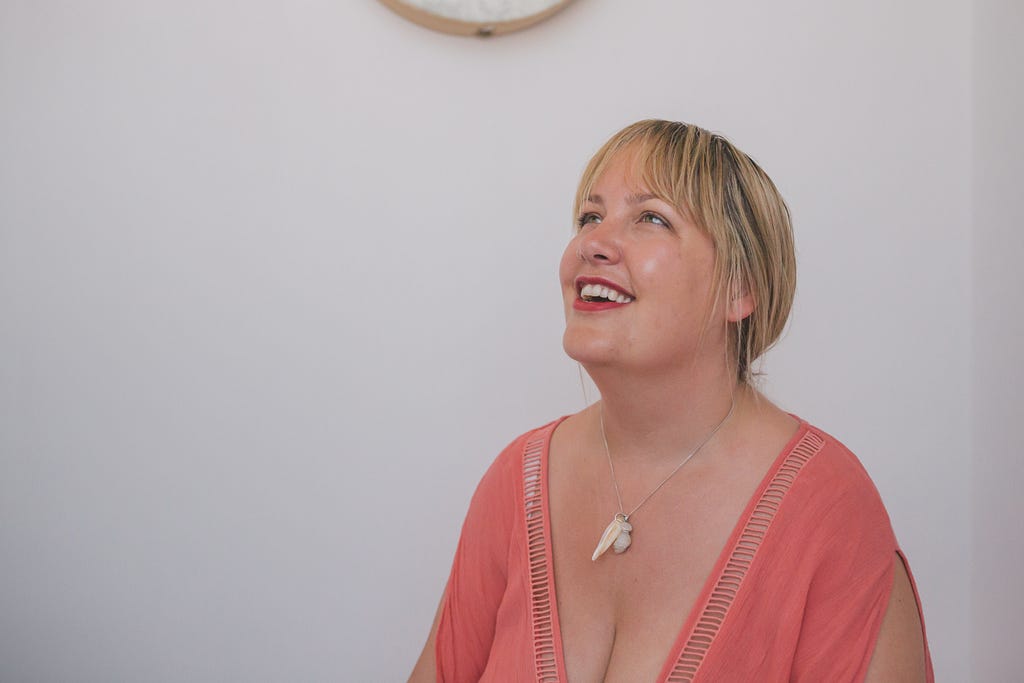
Inspirational Women in STEM and Tech: Raytheon’s Annabel Flores On The 5 Leadership Lessons She…

Inspirational Women in STEM and Tech: Raytheon’s Annabel Flores On The 5 Leadership Lessons She Learned From Her Experience

An Interview With Candice Georgiadis

Be a people watcher. This is a trait I began incorporating early in my career. I have found that it can be beneficial to take a look at the people around you and determine who has the coolest job or who has impressive leadership or technical skills. Then, work to understand how they chose that career path and how they developed the specific skills you admire.

As a part of my series about “Lessons From Inspirational Women in STEM and Tech”, I had the pleasure of interviewing Annabel Flores.

Annabel Flores is vice president of Electronic Warfare Systems for Raytheon Intelligence & Space, a business of Raytheon Technologies. She oversees the overall strategic direction and operation of a diverse portfolio of electronic warfare products such as the U.S. Navy’s Next Generation Jammer and the U.S. Army’s Electronic Warfare Planning and Management Tool, as well as the business’s high energy laser systems and Applied Signal Technology area. Most recently, Flores served as the vice president of Electronic Warfare Systems at Raytheon Company’s Space and Airborne Systems business prior to Raytheon Company’s merger with United Technologies Corporation in 2020.

She was previously director of the Airborne Early Warning and Reconnaissance Systems product line within the Space and Airborne Systems Secure Sensor Solutions mission area. She has also been the manager for the Silent Knight Radar product line and held various business development roles at Raytheon Company’s corporate team and with its Intelligence, Information and Services business. Flores was educated at the Massachusetts Institute of Technology in Cambridge, Massachusetts. She earned a dual master’s degree in mechanical engineering and a MBA through MIT’s Leaders for Global Operations program. She also earned a bachelor’s degree in mechanical engineering from the institution.

Thank you so much for doing this with us! Can you tell us a story about what brought you to this specific career path?

Growing up in a small town, I didn’t always feel like I “fit in.” Sometimes I was teased and called names because I loved math and science. My middle school math teacher had an engineering degree, and he saw something in me. He was the first person to suggest that I should become an engineer. I was about 12 years old at the time, and I wasn’t exactly sure what that meant. When he explained that engineers use math and science together to solve problems — he had my attention. So, after some initial research, the lightbulb went off in my head: engineering is what I wanted to pursue as a career. I got involved in extracurricular STEM programs and found other people like me. That led me to MIT and eventually to Raytheon Technologies, and I “fit in” so well here that I’ve been with Raytheon Intelligence & Space for more than 20 years. Looking back, it’s amazing to think that one teacher taking an interest in me could make such a strong impact on my life.

Can you share the most interesting story that happened to you since you began at your company?

One of the most memorable experiences of my professional career took place during my very first role at Raytheon Technologies as a program manager. My team was being asked to create and deliver a capability for a customer in record time — far less time than we normally spent on similar projects. Statistically, we had a zero percent chance of success, and my role was to be a leader for this team and rally the troops. It was an extremely daunting task. In the end, the team delivered on time. While it was a tough battle, I felt energized by the fact that I helped motivate this team to produce great results. Most people would never want to be in that type of situation and under that much pressure, but it’s the kind of experience that will teach you so much. For me, I learned that I was on the right career path.

Can you share a story about the funniest mistake you made when you were first starting? Can you tell us what lesson you learned from that?

Thinking back, I have been with this company for 23 years, and while I have made mistakes along the way, the good and bad experiences blur together. In my opinion, you learn from every experience. Even failures, or something that is perceived as a failure at that point in time, will allow you to find a silver lining and teach you a lesson that will help you better yourself. You have to learn from every mistake or misstep and then move forward. I think that looking forward is almost a superpower that helps you forget those small moments or mistakes.

What do you think makes your company stand out? Can you share a story?

When I first joined Raytheon Technologies as a summer intern, I was very engineering-focused and I wanted to work on cutting-edge projects. Thankfully, even as an intern, I was given the opportunity to have the types of experiences I was longing for. I wasn’t just given busy work, but rather concrete assignments that supported what both employees and customers needed to be successful. From that, I knew I could build a career here at Raytheon Technologies and would always be involved in the innovative projects that first drew me to the company.

One aspect of my work that I didn’t fully understand as a young engineer was how critical our technologies are to keeping our nation and our allies safe. Today, Raytheon Intelligence & Space does a phenomenal job at combining both innovation and protection. For example, innovation is what typically attracts engineering staff — we work on some of the most cutting-edge technologies in the world. But once on board, you also find a common purpose of knowing the work we do saves lives, and this becomes the driving reason behind why we come to work every day.

Are you working on any exciting new projects now? How do you think that will help people?

I have worked in this industry for a very long time and there are few things I can share about the work that I do. However, I am leading a team doing exciting work with high-energy laser weapons, which I am able to discuss.

Small, cheap drones are easily available today and they can be very dangerous weapons. Anyone can go online and buy a drone and potentially do something nefarious with it, and these threats are changing how we view the battlefield, airports and even large public events.

But drones can be very tricky to target, track, identify and take down, and we have to think creatively to defend against these threats. That’s why we are working with our customers and partners across the industry to develop lasers as a defensive weapon.

It sounds like science fiction or something from Star Wars, but at Raytheon Intelligence & Space, we’ve made defensive laser weapons a reality.

At RI&S, we have a phenomenal team with a diverse mix of talents that has quickly pulled together years of research and technology to create something entirely new. And we’ve proven that it works — on test ranges and in real life. Today, we have active laser weapon systems deployed with the U.S. military in the field to stop drones and protect lives.

And we are using that research while working on new systems to create new capabilities, which has been a great achievement of this team and a phenomenal testament to the innovation I mentioned earlier. High-energy laser technology is a game changer in how we defend and how we use resources to give the people on the front lines one more tool to keep them safe.

Ok super. Thank you for all that. Let’s now shift to the main focus of our interview. Are you currently satisfied with the status quo regarding women in STEM? What specific changes do you think are needed to change the status quo?

There is so much more room for improvement across the industry to make sure we have the right level of representation of women in STEM at all levels. My graduating class at MIT was 42% women, so I know there are strong candidates out there. Somehow, we are losing them as they enter the workforce.

Many young girls lose interest in math and science due to peer pressure and interests in other activities, so we have more work to do to help build confidence and foster a lifelong interest in this area. Raytheon Technologies proudly partners with organizations that cultivate STEM skills and critical thinking among students. We are committed to helping build and maintain a strong pipeline of female innovators, and know it’s important to communicate the career paths that STEM offers and how they are so useful in helping solve the world’s problems.

At the same time, we are doing more to increase the levels of active representation of women within our executive ranks. Knowing and seeing strong, diverse women at all levels of leadership is one of those factors that can help encourage other women to continue to pursue careers in STEM fields. The challenge is: how do we scale that to reach half of the world’s population? There is a lot of work that needs to be done to answer this question.

In your opinion, what are the biggest challenges faced by women in STEM or Tech that aren’t typically faced by their male counterparts? What would you suggest to address this?

There is a lot of research that shows most women are judged based on what they have achieved in comparison to how most men are judged based on their potential. This creates an uneven set of evaluation criteria when considering women for hiring and promotions, so we have to challenge preconceived notions as we evaluate candidates. Within Raytheon Technologies, we are continuing to create diverse hiring panels for our interview processes to overcome those challenges. We are mindful that we owe everyone equal opportunity.

What are the “myths” that you would like to dispel about being a woman in STEM or Tech. Can you explain what you mean?

Throughout my career, I have heard stereotypes that are harmful in so many ways. There are a lot of assumptions about what women want in terms of their careers so they are not given as many opportunities. “Mommy tracks” is a common term across industries, where people are trying to interpret and help women achieve “goals” that they might not necessarily have for themselves. This has proven to be harmful, and organizations are much better off if they sit down one-on-one with women in these positions and have an open conversation about what they want to achieve and how their organization can help them get there.

At Raytheon Technologies, we have a great program that helps women re-enter the workforce after taking time off. Providing women with these types of opportunities gives them a clear path to follow as they re-focus on their careers.

On the other hand, I think we need to normalize flexibility to support all employees who want more balance between their personal and professional lives.

Workplace flexibility should be offered to all employees. Allowing a workforce to be flexible with their priorities at any point in their career is only going to help retain people in the organization, while also keeping their minds as active as possible. If companies are more flexible and creative, it will allow for their employees to be their best selves at work.

What are your “5 Leadership Lessons I Learned From My Experience as a Woman in STEM or Tech” and why. (Please share a story or example for each.)

Be a people watcher. This is a trait I began incorporating early in my career. I have found that it can be beneficial to take a look at the people around you and determine who has the coolest job or who has impressive leadership or technical skills. Then, work to understand how they chose that career path and how they developed the specific skills you admire.

By doing this, I have identified strong mentors to help guide my career. I have found that the more open you are to talk about your gaps and areas for improvement within your network, the more willing the people around you are to help. I believe this is how I landed where I am today in my career — by being very open and by learning that it’s okay to be vulnerable with people. Those people very often end up in your corner and want to see you succeed.

I think this also applies to leadership styles. Reflecting on leaders you admire and their unique leadership styles can help you improve who you are as a leader. Doing this has made me more comfortable with who I am as a leader and has also helped me identify areas of improvement.

What advice would you give to other women leaders to help their team to thrive?

It is important for leaders to remember that yes, you are leading a team. But that team is made up of individuals. If you take the time to form individual relationships with each one of those people and understand their strengths, weaknesses, goals, and what makes them tick, you can determine what type of team environment will help those individuals flourish. Sometimes it is easy to lose sight of the fact that each individual person makes up a team, so pulling that knowledge from all of those individual relationships is one of the best ways for people to feel valued.

What advice would you give to other women leaders about the best way to manage a large team?

Remember that authenticity becomes more important the larger your team gets. When managing large teams, it is harder to get that one-on-one time that is more accessible with smaller teams. You develop a reputation for the type of leader you are. So, on a large team, your employees might not know you personally but they will know your reputation. Being authentic will help you succeed not only by enabling you to connect with your team, but people will want to work with you because of the personal brand you have created for yourself.

None of us are able to achieve success without some help along the way. Is there a particular person who you are grateful towards who helped get you to where you are? Can you share a story about that?

I was connected to my very first mentor at Raytheon Technologies through one of our Employee Resource Groups. She was a program manager who started her career as an engineer. At the time, I was an engineer and was working to figure out what I wanted to do next, and I remember thinking, “Wow, her job is so cool.” But I had been focused on engineering for so long, and it was not easy for me to shift to a new mindset. Seeing her in a project management role made it possible for me to see myself in a similar one. Thanks to her, I knew that I could still use my engineering skills to do something fundamentally different while also leading a team. So, I fully credit her for opening my mind and showing me how to use my background to do a job that was interesting, challenging and, ultimately, became my passion.

How have you used your success to bring goodness to the world?

Very early on in my career I joined multiple ERGs at Raytheon Technologies because I wanted to be a part of helping with STEM outreach for women and people of color — something I have been passionate about for a very long time.

There are so many people who helped me get to where I am today, and giving back is something I enjoy doing and feel a responsibility to do. I’ve been involved in mentoring, tutoring, and leading various science clubs, which has now evolved into being a part of the Texas Alliance for Minorities in Engineering, an organization that helps cultivate interest in engineering among underrepresented groups — including minorities, girls, and underserved rural communities like the one I grew up in.

You are a person of enormous influence. If you could inspire a movement that would bring the most amount of good to the most amount of people, what would that be? You never know what your idea can trigger. 🙂

Something that has been eye-opening to me, especially since the pandemic began, is how prevalent food insecurity is within our communities. During my time at Raytheon Intelligence & Space, I have enjoyed volunteering with Feeding America, which is one of our corporate partners. My team and I have helped fundraise for Feeding America and their community partners, in addition to distributing healthy fresh and non-perishable food to our neighbors in need. I am proud that Raytheon Intelligence & Space supports organizations and causes like this, and that employees like me are able to lend a helping hand in the communities where we live and work.

Can you please give us your favorite “Life Lesson Quote”? Can you share how that was relevant to you in your life?

Keep learning. This is something that has been important to me my whole life and a motto that I live by. Education does not stop when you graduate. As an engineer and as an engineering student, you learn how to tackle a problem. And, when you graduate and begin working, you learn how to apply those skills for the rest of your life. Even though I have been at Raytheon Technologies for 23 years, I have held about 15 different roles because I always have the desire to learn more. These experiences really helped me grow as both a person and a leader.

We are very blessed that very prominent leaders read this column. Is there a person in the world, or in the U.S. with whom you would love to have a private breakfast or lunch with, and why? He or she might just see this if we tag them 🙂

I really enjoy reading, and I recently read two autobiographies by very influential CEOs — one by Ursula Burns, the former CEO of Xerox, and the other by Indra Nooyi, former CEO of PepsiCo. What they were able to accomplish in their lives and careers is inspiring. Beyond their professional experiences, so many of their stories about their individual childhoods and families really resonated with me. I would love the opportunity to sit down with both women to learn more about them and to get guidance on my career journey.

Thank you for these fantastic insights. We greatly appreciate the time you spent on this.


Inspirational Women in STEM and Tech: Raytheon’s Annabel Flores On The 5 Leadership Lessons She… was originally published in Authority Magazine on Medium, where people are continuing the conversation by highlighting and responding to this story.

Female Disruptors: Jekkie Kim and Frances Stocks Allen Of Latham & Watkins On The Three Things You…

Female Disruptors: Jekkie Kim and Frances Stocks Allen Of Latham & Watkins On The Three Things You Need To Shake Up Your Industry

An Interview With Candice Georgiadis

Play by the rules. I’ve heard this often and from a number of supervisors and mentors over the years. I think this means more than the literal sense of complying with the written rules or the law, but broadly to honor basic social rules and norms, which are sometimes implied and unwritten. It’s similar to sportsmanship. Our duty is always to the client, but respecting all those involved, including the counterparties and acting fair, I think, is what this advice has always meant.

As a part of our series about women who are shaking things up in their industry, I had the pleasure of interviewing Jekkie Kim and Frances Stocks Allen, Latham & Watkins LLP.

Jekkie Kim advises healthcare, life sciences, and technology companies and their investors on a range of intellectual property transactional matters. She draws on her background as a medical doctor, and advises clients at all stages, from emerging companies to global market leaders in the pharmaceutical, biotechnology, and medical device sectors. In particular, she has developed a niche practice representing clients in the digital health and agricultural technology space, and on cross-border transactions, with a focus on the Greater China market.

Frances Stocks Allen advises leading life sciences companies and industry investors on a range of technology-based commercial matters, including complex licenses, collaborations, acquisitions, and divestments. She helps clients anticipate and navigate legal challenges by drawing on her secondment experience, including in-house at Allergan and at Latham & Watkins’ Silicon Valley office. Ms. Stocks Allen was identified as a Legal 500 Rising Star 2020–2022 in Life Sciences and Healthcare.

Thank you so much for doing this with us! Before we dig in, our readers would like to get to know you a bit more. Can you tell us a bit about your “backstory”? What led you to this particular career path?

Frances: A series of happy accidents led to me to practicing in biotech law. I originally studied Politics, Philosophy and Economics at Oxford, before converting to Law and completing an MBA as part of my training at my prior firm. Once on the job, I was inspired by clients developing new technologies with the potential to significantly improve health outcomes. That led me to track the constantly developing regulatory landscape keeping pace with those developments. Spending time working in-house at Allergan and then in Silicon Valley with cutting-edge biotech clients sealed the deal for me. I learned that even without a scientific background, I can still have an impact as a healthcare and life sciences lawyer and work with a cross-disciplinary team to guide clients through business, legal and commercial issues in high profile deals.

Jekkie: My path is quite different from Frances’. Prior to law school, I attended medical school in South Korea and practiced as a physician for a few years. We were required to take a medical ethics, policy and law class in medical school. There, I began to realize that “the practice of medicine” involved more than just patients and physicians (surprise!). Once I began my clinical rotations, a light bulb went off when I realized that there was an entire “healthcare and life sciences” industry, where scientists and engineers were researching and developing, regulators were reviewing and approving (and sometimes denying), and companies were manufacturing, distributing, marketing and selling new therapeutics, diagnostics and prophylactics for patients. Once the cat was out of the bag, there was no going back. I wanted to learn more, so I went to law school and business school and never looked back.

Can you tell our readers what it is about the work you’re doing that’s disruptive?

Jekkie: The firm and our Healthcare and Life Sciences Group have been very supportive of my practice platform, which leverages upon my medical expertise and my personal interests in technology. When the first generation of smartphones and tablets entered the consumer market, I had a strong sense that such devices and many others that would follow will likely disrupt the healthcare industry. Even before artificial intelligence/machine learning became household terminology, I volunteered to work on client matters that involved “big data” to learn about the industry. At Latham & Watkins, we now have a really strong (one of the best) digital health practice, and teams that consists of experts in each of healthcare life sciences, information technology, data privacy and regulatory. Personally, I believe that sustainable agriculture is important, so I actively volunteer to work with clients in the agricultural technology space, developing alternative food products.

Frances: Similarly to Jekkie, I see the disruptive part of our job as counseling our clients as they develop and manufacture therapies that do not yet exist but that can change the course of health and healthcare. In the healthcare and life sciences practice we see so many amazing innovations, from COVID-directed therapeutics to novel medical devices, AI and machine learning-based products to telehealth solutions, and gene editing to blood biopsy. Our role is to find ways for our clients to achieve their objectives, to bring their products to market or to grow, while identifying and mitigating risks. For example, through our work with Sobi, we’re helping facilitate the development of cutting-edge orphan drug treatments that will be made available to underserved patient populations. One of the most rewarding aspects of my work is the opportunity to help improve the lives of patients, and participate in an ecosystem that really does have the potential to change the world!

We all need a little help along the journey. Who have been some of your mentors? Can you share a story about how they made an impact?

Jekkie: There have been many who have helped me along my journey. At Latham & Watkins, two senior partners have particularly supported my growth. I was born in Korea, raised in Ethiopia and Pakistan, went back to Korea and became a physician and came to the US and became a lawyer, and ended up in the Bay Area after some twists and turns. When working with Judith Hasko, a senior partner in our Silicon Valley office, I feel like none of that matters, in a good way, because I know that I will be treated fairly regardless of who I am or what I am based on my performance and judgment. Judith allowed me to grow confidence in myself and challenged me to treat others with similar fairness. Tony Klein, another senior partner in our Silicon Valley office, encouraged me to work as a team by delegating where appropriate and growing into a strategic business advisor as well as a legal counselor. It’s still hard for me to know when to hold on and do the work myself versus when to ask for support and Tony has guided me through this process. Both partners are also absolute subject matter experts in each of their respective fields, who are there to solve clients’ problems in the most efficient and practical way.

Frances: I echo Jekkie’s praises of Judith, who is a phenomenal and pragmatic lawyer that I’ve had the good fortune to work with for many years. Her knowledge of the industry is second to none. Another important influence on me is Gail Crawford. She taught me by example that the best way to lead is to join your team in the trenches. Her management style is one I try to emulate with the lawyers I lead now. Last but not least, Robbie McLaren. Through his support and recognition of my good qualities, and his own inimitable personality, Robbie has taught me that being myself at work is a strength not a weakness and that when you bring your whole self to the office, people will trust you more, and you will have a lot more fun in the process.

I have had so many mentors, including a tremendous family of lawyers here at Latham as well as clients who share both their time and wisdom, so I can be a more effective lawyer for them.

Can you share 3 of the best words of advice you’ve gotten along your journey? Please give a story or example for each.

Jekkie: First, sit at the table. As a second year associate, I was asked to attend a meeting to take notes so that I could revise an agreement thereafter. As I entered the meeting room, I saw that all of the seats at the table were taken, so went to sit in the corner. The partner in the room turned around, noticed what I was about to do, and told me to pull up my chair to take a seat at the table next to him, while asking others to make room for me. As I dragged my chair to the table, he told me that I should always sit at the table, especially when I am the one doing the work. I truly appreciated the gesture and the advice. I think it’s a good advice for younger professionals to practice, and for more experienced professionals to consider when mentoring others.

Second, play by the rules. I’ve heard this often and from a number of supervisors and mentors over the years. I think this means more than the literal sense of complying with the written rules or the law, but broadly to honor basic social rules and norms, which are sometimes implied and unwritten. It’s similar to sportsmanship. Our duty is always to the client, but respecting all those involved, including the counterparties and acting fair, I think, is what this advice has always meant.

Third, spellcheck! In the literal sense, of course, but also more broadly speaking, always keep an eye on the final detail orientation. That’s advice my mentor Judith Hasko passed on — she reminded me that we are in a service industry, and paying attention to those small things in the final version isn’t just a cherry on top for clients, but a required final piece of the puzzle.

Frances: My first piece of advice also involves seating. As a junior lawyer, I once sat at the edge of the room and as attendees entered would make them coffee. The female partner I worked with beckoned me over to sit next to her, in the middle of the action, and let people find their own refreshments. As she put it, clients value lawyers for their brains, not their barista skills.

Another incredible piece of advice I received is that to get the most out of people, trust them. Right now I manage an incredible team, and part of my management philosophy is to give them space to develop, which creates self-motivation on their part. If you hire brilliant people, support them when they need it, they will learn and grow into their best selves.

Finally, as a female working with innovative clients, I’ve learned to bring my whole, authentic self to the office — given how much time we all spend working, it’s much more sustainable than trying to cultivate a separate work personality. I’ve also found that my clients respond well to that genuine nature, and we build a much stronger rapport and collaborative environment.

In your opinion, what are the biggest challenges faced by ‘women disruptors’ that aren’t typically faced by their male counterparts?

Jekkie: People who are willing to guide you and your growth are certainly out there, but connecting with a professional network, then growing and maintaining that network can be challenging. I’ve learned over the years that I am a mix of extrovert/introvert. While I am not particularly good at networking at large conferences, I absolutely enjoy meeting with people on an individual level or in a small group and learning about each person, then continuing that relationship. At the same time, I need the time to recover by myself and with my family after networking with people.

It took me many years to understand how I needed to network at my best, based on my preferences and personality, and not on industry norms, which until recently may have been more male-focused or driven.

Frances:. For women in disruptive industries, it’s essential to set boundaries and learn to switch off without guilt. I love what I do, and I find that I invest much more of myself in the work when I give myself permission to create space for other aspects of my life, and there’s not a sense of competition for my attention.

An additional note, and I’d say this probably rings true for people from all backgrounds, resist the pressure to assimilate. A lot of us experience the thought that you cannot excel in a room where no one looks, or sounds, or thinks like you, but embracing your uniqueness allows your authenticity to shine through. My advice for ‘women disruptors’ is to develop a strong support network and a work culture that embraces diversity and empowers people from all kinds of backgrounds. I’ve found that at Latham, where I sit in a room full of diverse faces, voices, and mindsets all working together to help each other excel.

This was very inspiring. Thank you so much for joining us!


Female Disruptors: Jekkie Kim and Frances Stocks Allen Of Latham & Watkins On The Three Things You… was originally published in Authority Magazine on Medium, where people are continuing the conversation by highlighting and responding to this story.