Women In Wellness: Wendie Colter of The Practical Path On The Five Lifestyle Tweaks That Will Help Support People’s Journey Towards Better Wellbeing
An Interview With Candice Georgiadis
Breathwork is a great way to relax the body and mind. My favorite stress-buster is taking a deep breath in to the count of 3, holding it for the count of 2, and then breathing out to the count of 4.
As a part of my series about the women in wellness, I had the pleasure of interviewing Wendie Colter.
Wendie Colter has been a professional medical intuitive for more than 20 years. The founder/CEO of The Practical Path®, Inc., she offers intuitive development programs to clinical health professionals, complementary and alternative practitioners, and the general public. She is an invited speaker and instructor at some of the premier integrative health centers in the US and the author of Essentials of Medical Intuition: A Visionary Path to Wellness (Watkins/PRHPS). For more information, visit www.thepracticalpath.com
Thank you so much for joining us in this interview series! Our readers would love to “get to know you” better. Can you share your “backstory” with us?
I was intuitive from a young age, as many children are. As I grew up, I became interested in biofield healing practices and began studying various energy modalities. As I developed my skills, I noticed that my intution grew as well. Eventually, I found I was able to “see” into a client’s physical body, both their anatomy and physiology, as well as their biofields (chakra and aura systems). I was interested in discerning the potential root causes of health imbalances, not only to support physical wellbeing, but also emotional, mental and spiritual wellbeing. My clients found these assessments deeply informative and useful “roadmaps” to help guide their health journeys.
Can you share the most interesting story that happened to you since you started your career? What were the main lessons or takeaways from that story?
Early in my career, I met a young woman with persistent, debilitating back pain. Her doctors could not find the cause of her distress and could only offer her opioid medications for her pain. In our medical intuitive session, I was able to discern a kidney issue that had been missed, and the details of the imbalance. After the session, she found a specialist who was able to successfully treat her issue. Sadly, she had become addicted to the opioids and died of an overdose. This tragic and heartbreaking outcome made me realize the importance of medical intuition, and how it could potentially save lives. It became my goal to teach healthcare professionals this paradigm-changing skill.
Can you share a story about the biggest mistake you made when you were first starting? Can you tell us what lesson you learned from that?
I was fortunate to work with directly with doctors fairly early on in my practice. Physicians would contact me when they had a challenging case, or when people weren’t healing despite best efforts. In retrospect, I could have asked them if they would be willing to share their experiences with their colleagues of working with a medical intuitive, and if so, would that have helped build more acceptance of the field.
Let’s jump to our main focus. When it comes to health and wellness, how is the work you are doing helping to make a bigger impact in the world?
My accredited certfication program, The Practical Path® Medical Intuitive Training™, has been pivotal in helping doctors, nurses and wellness professionals develop and optimize their intuition. I have taught and presented at some of the premier integrative health organizations in the U.S. I completed my pilot study, “Assessing the Accuracy of Medical Intuition,” which showed 94–98% accuracy rates, and was published in the peer-reviewed Journal of Alternative and Complementary Medicine. I also recently completed my book, “Essentials of Medical Intuition: A Visionary Path to Wellness.” The book presents a deep dive into the scientific literature on intuition in healthcare, and a vision for a future of healthcare that integrates medical intuition. It has been wonderful to see how many doctors, nurses and other healthcare professionals resonate with and appreciate this perspective.
Can you share your top five “lifestyle tweaks” that you believe will help support people’s journey towards better wellbeing? Please give an example or story for each.
There is much our bodies and energy systems would like us to know. Some great “tweaks” that can enhance the mind-body connection are:
A regular meditation practice. Quieting the mind can help us listen to our intuition more clearly.
Keep an intuition journal. Noting when your intuiton is present or active can help you to grow it naturally.
Breathwork is a great way to relax the body and mind. My favorite stress-buster is taking a deep breath in to the count of 3, holding it for the count of 2, and then breathing out to the count of 4.
Getting out in nature, even for a few minutes, can be very rejuvenating and help to build resilience.
I teach a workshop in how to intuitively tap into our body’s own wisdom for self-care and self-healing. The workshop, Medical Intuition for Healing™, is open to everyone who would like to learn how to create their own mind-body connection to support essential self-care. Please see more at www.thepracticalpath.com
If you could start a movement that would bring the most amount of wellness to the most amount of people, what would that be?
To have a certified medical intuitive practitioner in every hospital and clinic, and to incorporate medical intuition into healthcare education.
What is the best way our readers can follow you online?
Please visit the website at www.thepracticalpath.com for information on upcoming programs, classes and workshops. Join our newsletter and find us on Facebook, Instagram and LinkedIn.
Female Founders: Alice Bast of Beyond Celiac On The Five Things You Need To Thrive and Succeed as a Woman Founder
Be real. You are not superhuman, but this is all-consuming work. Be honest with yourself and have an honest understanding with your spouse if you are married about what it will take to be successful. It’s not easy to be married to a founder.
As a part of our series about “Why We Need More Women Founders”, I had the pleasure of interviewing Alice Bast.
Alice Bast’s personal experience with celiac disease ignited her passion to help the estimated three million Americans suffering from the disease receive a prompt and accurate diagnosis. Since then she has expanded the mission of her nonprofit Beyond Celiac to not only help people get diagnosed, but also to make it possible to live full and healthy lives after that diagnosis; to live, travel and eat without fear in a world Beyond Celiac.
Thank you so much for doing this with us! Before we dig in, our readers would like to get to know you a bit more. Can you tell us a bit about your “backstory”? What led you to this particular career path?
My story begins just prior to 1990, when my husband Will and I started our family. My first pregnancy was uneventful, but my second was the opposite. Early on, severe fatigue set in. I couldn’t get enough sleep because severe diarrhea, joint pain and migraines kept me awake through the nights. Two weeks before the due date, I could sense that something had changed with my baby. Unfortunately our worst fears were realized — I delivered a full-term stillborn daughter, whom we named Emily.
I continued on to have multiple miscarriages before finally delivering my youngest daughter, who weighed only 2 pounds at birth. I was grateful, but my problems didn’t go away. For the next eight years, I visited 22 doctors, none of whom could identify the source of my ailments. At 5’9″, I had wilted to a mere 105 pounds and was convinced that I was dying. I wondered if doctors would ever find the problem with enough time to treat me.
It wasn’t until talking to a family friend, a veterinarian, that I found the source of my pain: my diet. My friend mentioned “celiac disease,” and said that animals can have reactions to wheat. I went ahead and visited my 23rd doctor. He said I was too tall to have celiac disease. I knew there was a blood test, so I insisted. “Here’s my arm,” I remember saying. “Give me the blood test.” Sure enough, the results came back positive. After eight years of struggling, I finally had my answer: celiac disease.
So after learning of my diagnosis of this autoimmune disease, I began the difficult task of eating gluten-free. I joined and later led support groups for people diagnosed with celiac disease. But still… I wondered how many people were out there suffering for years without answers as I had. My illness had remained undetected for years in part because awareness among medical professionals is extremely low. I also did not fit the description of the “typical” person with celiac disease — I wasn’t short, wasn’t a child, and I looked “fine.”
I knew I needed to do more. I enrolled in a graduate program at University of Pennsylvania in nonprofit management. I did a SWOT analysis and gaps analysis to identify the best way to serve the patient community. Since no organizations were working on raising awareness, in 2003 I decided to create the National Foundation for Celiac Awareness, now called Beyond Celiac, with a dual mission: to increase awareness of celiac disease in order to make early diagnosis standard, and to raise funds to support medical research and education.
Can you share the most interesting story that happened to you since you began leading your company?
Maybe one of the most interesting things is that I’ve done some things that people said were impossible. For example, right when we were starting out, I landed an NIH grant to raise awareness about celiac disease. I was the primary investigator on the grant and it’s kind of rare for a layperson to get an NIH grant, but I am very persistent. The need was there, the idea was sound, I was able to recruit the right people who had experience who could help me, and I was so passionate to help other people get an accurate diagnosis that we were successful. Then we were told that there was no point in increasing diagnosis if the treatment — the gluten-free diet — was unavailable. So instead of just accepting that answer, we took on the project of increasing availability and affordability of gluten-free food. I learned that the lack of availability of gluten-free food was actually a barrier to diagnosis and research for additional treatments. So I set out on a quest to build a market when the naysayers said it was impossible. I camped out in Benton Arkansas at the Walmart headquarters to, over time, raise awareness about the need for the availability of affordable gluten-free food. Today, Walmart has shelves and sections labeled “gluten-free.” Additionally, we partnered and worked with Whole Foods, Wegmans, and even Anheuser Busch to bring all kinds of products to market. We helped introduce the first mainstream gluten-free beer!
Can you share a story about the funniest mistake you made when you were first starting? Can you tell us what lesson you learned from that?
We did a series of events called Appetite for Awareness. We traveled to cities all over the country and held events in which we paired high-end restaurant chefs and top doctors to do cooking demonstrations, talk about celiac disease and the need for safe gluten-free meals when dining out. It was a great campaign! But there was this one event in the Bay area that went a little off-plan. The event was on Treasure Island, a San Francisco neighborhood that is accessible only by one bridge. My team and I had arrived early to set up, and the doctors and chefs were on their way. As the event time approached and the guests had yet to arrive, I started getting a stream of texts — and pictures — from the guests who were en route. Turns out, the commute time happened to coincide with the local edition of the World Naked Bike Ride, and the naked bike route was across the same bridge! Hundreds of naked bike riders occupied most of the lanes of the bridge. Traffic there is always tough, but this caused an exceptional “gaper delay” for sure! Not only were we competing for the roadway, who do you think the press wanted to cover that day? The lesson learned was to be sure to know the landscape and competition, both metaphorically and literally.
None of us are able to achieve success without some help along the way. Is there a particular person who you are grateful towards who helped get you to where you are? Can you share a story about that?
I’m grateful for support from so many people! One is Ed Snider. I met Ed, then chairman of Comcast Spectacor and the owner of the Philadelphia Flyers Hockey team, in the early 2000’s. He’d had health issues and ultimately I helped him on his journey to a celiac disease diagnosis. As I was founding Beyond Celiac, he believed in me and became a mentor to me. He became a founding board member and committed both personal resources and corporate support. Even when others told him that he had no business getting involved in a little nonprofit startup, he did it anyway. He was the chairman of Comcast Spectacor which owned large sports arenas in Philadelphia. He donated space for fundraisers, paid for the event expenses. It was he believed in my vision that we were able to move so far so fast.
I also want to recognize Nancy Ginter, the Beyond Celiac Director of Administration. We actually met in nonprofit management program at Penn. She had already retired at that time, but soon found she wasn’t very good at being retired. We graduated together and she joined me at Beyond Celiac; she was my very first employee, although when there are only two of you it’s less of a boss-employee relationship and more of a partnership. I will always be grateful for her support and experience in those early days. She’s 80 years old and still with me today — I’m dreading the day she retires for a second time and we have to figure out how to keep our paperwork in order without her!
Ok, thank you for that. Let’s now jump to the primary focus of our interview. According to this EY report, only about 20 percent of funded companies have women founders. This reflects great historical progress, but it also shows that more work still has to be done to empower women to create companies. In your opinion and experience what is currently holding back women from founding companies?
In order to start a viable business or nonprofit, you have to be bold, take the risk, believe in yourself, believe you can do it. It’s easy to have doubts but do the mental work necessary to not be self-limiting and know that you are not an imposter. You need to be 100% focused. When you get distracted and are torn between work and non-work, it’s a lose-lose situation.
There are internal barriers that we have to address. I do think women are still cautious when it comes to work. It’s good to take calculated risks, but ultimately you have to take the plunge. Men of the world aren’t holding themselves back! It’s like being a parent: there are lots of self-help books and classes you can take, but nothing can truly prepare you for the experience except for, well, experiencing it! Dive in — you may be surprised at how much you can accomplish.
And, no matter how confident you are, if you lack support systems, it can be difficult to get started. If a woman can’t afford childcare or college, if she lacks generational wealth or access to networking events, or, more simply, if she lacks resources and community, it will be very difficult to start her own business. Not impossible, but very difficult and stressful, enough to discourage many women.
Can you help articulate a few things that can be done as individuals, as a society, or by the government, to help overcome those obstacles?
For individuals: Support working women. We’ve evolved our society to be centered around the nuclear family, with much less community and intergenerational support. For many women, it’s a no-win situation. While we need systemic support, informal networks can fill a gap. If you find a resource that could help, send it to her; buy from women-owned businesses; spread the word about her new business once it’s open; if you’re family, offer to pick up her kids from school on busy days.
For society and culture: We need to reframe the cultural mindset. Expect the same caretaker responsibilities if it’s a two-parent household. There’s an unequal expectation of who should care for the children and manage the household, with women shouldering the lion’s share of the work. Any adult can change diapers, pick up and drop off kids, take sick days to care for them, make appointments, and pack lunches, so let’s stop perpetuating the myth that men aren’t good at or aren’t appropriate for that sort of work. And when more men do it, it will, no doubt, become viewed as more valuable to society. And let’s work to overcome the subtle societal implications that working women are not also good mothers. Workplaces can make accommodations that support career and family life. Covid-19 has shown us that flexibility in the workplace and with schedules does not mean less productivity.
The government: Pass laws to support childcare, paternity leave, equal pay enforcement, and tax breaks for working parents. Further, we need to adopt a systemic approach to building equity for women in leadership positions. This has been proven effective in especially in Europe. In fact, more than 10 years ago, Norway successfully legislated that at least 40% of corporate board seats be occupied by women. Waiting for companies to achieve this on their own accord is taking too long.
This might be intuitive to you as a woman founder but I think it will be helpful to spell this out. Can you share a few reasons why more women should become founders?
I think there’s a distinction to be made between “I want to be a founder” and “I want to solve a problem.” I have always been a problem-solver. From my childhood, if I saw a problem I looked to solve it. I saw litter and organized clean-ups of the river bank near my home when I was in elementary school. It’s the mindset. I didn’t start out to start a business. I started out to solve a problem, which turned me into a founder, an agent of change, a social entrepreneur.
We need more women in leadership positions, just as we need better BIPOC representation at the heads of organizations. Women see the world through a lens that is unique to our gender. Women very likely are better equipped to solve problems that women and girls face. We need that perspective to effectively address the needs of those we are serving. We need leaders in all sectors to truly understand the challenges and needs of all our constituents, audiences and consumers. As we shift decision-making to being more inclusive, we will be closer to building a fair and equitable society.
Frankly, if not us, then who? I started Beyond Celiac because no one was doing the work I felt so passionately needed to be done. It wasn’t a gender thing, but after working within the structure that existed prior to the founding of Beyond Celiac, it was clear that waiting for someone else was going to take too long. I had a young family, but I had a supportive husband and I had this urgent calling to help other women avoid the suffering that I had gone through. To not take action did not feel like an option.
What are the “myths” that you would like to dispel about being a founder? Can you explain what you mean?
It’s a myth that “founder’s syndrome” is inevitable. Being a founder in itself doesn’t mean that you can’t delegate or surround yourself with smart and talented staff and collaborators. Founders absolutely need to hire the best people, and hire people with different strengths — complimentary skills, people who bring something different to the table.
This is related to the myth that founders are unbearable bosses, driven, unforgiving, and relentless. I strongly value a workplace that embraces the full lives of my employees, and I deeply appreciate the viewpoints of staff and many trusted advisers. We work hard, but we work collaboratively, and the experience is much more enjoyable because we are all in it together. A significant number of my staff of 17 have celiac disease or a family member with celiac disease, or a related autoimmune condition. We are in this for the common cause of driving research for treatments toward a cure by 2030, which will improve the lives of millions, including people on my team. I am the CEO, but it’s only with the work of this group of dedicated individuals that we will achieve that goal.
Another myth is the Steve Jobs/Bill Gates genius-inventor building stuff in his garage or dorm room image. The notion that a good idea fueled with a lot of imagination does have a basis in reality. But in the case of Beyond Celiac, the “good idea” wasn’t a bolt of lightning out of the sky, it was borne of a lot of research about what was available and not available to solve the problem that I had learned about first hand. And I didn’t work alone, toiling on the project. I had to get support and partners and collaborators. The first big donation to Beyond Celiac was from Ed Snider, the CEO of Comcast Spectacor and the owner of the Philadelphia Flyers who himself had lived with celiac disease for years. There was no going it alone and in secret.
Is everyone cut out to be a founder? In your opinion, which specific traits increase the likelihood that a person will be a successful founder and what type of person should perhaps seek a “regular job” as an employee? Can you explain what you mean?
Not everyone is born to be a founder, but I think that “founder characteristics” can be cultivated. Founders need conviction, need to believe in their mission even when tasks seem too difficult, too impossible. They need to stay calm, be resilient, to be able to get back up and attack an issue with the same vigor as the first time.
If you want to be a founder, you need to get used to standing your ground. If you dread conflict, disagreements, and making decisions, you may feel more comfortable in a regular job as an employee, but if that describes you, then I challenge you to explore under what conditions you might think dealing with conflict and making decisions is worth learning to manage your discomfort. I didn’t start out to be a founder. I didn’t look around for what business I could start. I started Beyond Celiac because there was a problem to solve and the work wasn’t being done anywhere else. I don’t love conflict, but I do love that I can learn from it and take those learnings and turn them into information to make better decisions for the future.
Ok super. Here is the main question of our interview. What are your “5 Things I Wish Someone Told Me Before I Started” and why? (Please share a story or example for each.)
Be able to reach out and ask questions. Ask and find answers. Surround yourself with really great advisors. You don’t need to be the smartest person in the room. Be yourself. Lead from your heart.
Recognize the need for and build in operational efficiencies. In the beginning, you might feel like you can fly by the seat of your pants, but before you know it, you’re going to need a better plan. You’ll need a balance between ideas and operations. Take time to develop your plan and budgets and how you’ll build the organization. As you grow, you need to have the processes in place.
Do your homework — market analysis, gaps analysis. Set your goals and stay with them. Focus is key. If you choose to pivot, be intentional. It can be tempting to chase shiny objects or deals that look too good to pass up, but if it’s not in line with your goals, it’s just a distraction in a nice suit of clothes.
Focus on what you’ve done well, and don’t look back too long. Sometimes you’ll get scooped and the second mouse gets the cheese. You can’t win them all, so learn and move forward. Maybe you’ll be someone else’s second mouse next time.
Be real. You are not superhuman, but this is all-consuming work. Be honest with yourself and have an honest understanding with your spouse if you are married about what it will take to be successful. It’s not easy to be married to a founder.
How have you used your success to make the world a better place?
The success of my organization, Beyond Celiac, has led to getting more people diagnosed with this insidious disease enabling them to live healthier and happier lives. Through the first-ever national celiac awareness campaign with CNN anchor Heidi Collins and a partnership with Quest Diagnostics, we helped increase the diagnosis rate from just 3% to an estimated 50% today. People are finding answers for health battles that have lasted for years, sometimes decades.
And part of living healthier and happier is making sure there is safe and affordable food. When I was first diagnosed with celiac disease, our community had to order gluten-free food from Canada. Gluten-free pasta was $12.99 a pound, and frankly, it was terrible. Through our work with food manufacturers and the restaurant industry, we’ve increased the availability and affordability of gluten-free food so that people can eat without fear.
However, we know that gluten-free diet isn’t always effective, and poses significant burdens to quality of life, travel, socializing, and dining out. Because of this, today we are accelerating research into celiac disease, which will have the future benefit of getting us to treatments beyond the gluten-free diet. Researchers are digging into how this disease works, which could lead to increased understanding of how all autoimmune diseases function, which ultimately could help the 50 million Americans living with autoimmune disease also live longer, healthier lives.
You are a person of great influence. If you could inspire a movement that would bring the most amount of good for the greatest number of people, what would that be? You never know what your idea can trigger.
Overhaul the healthcare system to yield better care for all. We can take so many lessons from Covid-19. When there is adequate financial support and an incentive for companies to work together or by using open source data to increase the brainpower to solve a problem, we can get there so much faster. We need to promote equality & ensure that systems are in place to optimize care and not be solely about driving revenue. For a country as wealthy as the United States, we should be the healthiest country in the world. Let’s set that goal and figure out what we need to do to get there. Let’s inspire a movement. Let’s fix the systems that are broken.
Specifically for celiac disease, we need health equity and more empathetic doctors. So many in our community are told that they “couldn’t have” celiac disease because they don’t look like they have it, or that their symptoms are not “typical.” Part of achieving this aim involves improving the health system here in America so doctors can really see their patients and not feel rushed and overwhelmed by paperwork and an unending stream of patients. It’s a big job, but you don’t realize how much poor health affects every aspect of your life until it’s clear you may not get better. It’s terrifying. Preventative measures like annual screening covered by insurance can catch diagnoses before they become debilitating. In the richest country in the world, everyone should be able to get the care and testing they need without having to worry about money. And, my big hairy audacious goal is to prevent autoimmune diseases in the first place.
We are very blessed that some very prominent names in Business, VC funding, Sports, and Entertainment read this column. Is there a person in the world, or in the US with whom you would love to have a private breakfast or lunch with, and why? He or she might just see this if we tag them.
I have two! Celiac disease has largely been underfunded, and as a health-related advocacy nonprofit, we need investment from philanthropic and government leaders. On the philanthropic side, I’d love to have a meal with Mackenzie Scott to share with her our work in health equity and to get her perspective on the role of philanthropy in creating a more fair and just world.
The other is Joni L. Rutter, PhD. She is the head of the National Center for Advancing Translational Sciences at the NIH. “Translational Science” is defined as moving basic research as quickly as is safe and feasible to treatments to help people. Celiac disease is the only autoimmune disease with a known trigger — gluten — and I’d love to get her perspective on how we might start thinking in new ways to synthesize the current body of research in autoimmunity with what we know about celiac disease, and through what avenues we could increase funding for celiac disease research.
Thank you for these fantastic insights. We greatly appreciate the time you spent on this.
Women In Wellness: Roxanne Wise of Rookie On The Five Lifestyle Tweaks That Will Help Support People’s Journey Towards Better Wellbeing
An Interview With Candice Georgiadis
There’s no roadmap for something that hasn’t been done before. Sometimes we want to copy other successful brand or campaign ideas because we saw them have success- but they are not you and you are not them. Try new things!
As a part of my series about the women in wellness, I had the pleasure of interviewing Roxanne Wise.
Rookie is a sustainable sourced, Vegan brand that is simplifying supplements so anyone can be well. Rookie is Non-GMO, Gluten free, soy free, dairy free and is made in the USA. The brand is committed to clean, kind practices through every part of the process. The brand partnered with wellness experts to include immune boosting supplements, along with morning/evening and pre-workout supplements all made with bioavailable super nutrients like Vitamins, Ginger, Elderberry, Magnesium, melatonin, Guarana and Ashwagandha to name a few.
Thank you so much for joining us in this interview series! Our readers would love to “get to know you” better. Can you share your “backstory” with us?
I am a mom of two busy boys, and started Rookie because I wanted to take care of myself. After 10+ years in advertising and ecommerce, I was tired. I had had two kids during that timeframe, scaled two successful businesses, and found myself depleted. I created Rookie because I wanted better options for me and my family that felt accessible, and fit into my lifestyle.
Can you share the most interesting story that happened to you since you started your career? What were the main lessons or takeaways from that story?
Two separate times in my career I vividly remember realizing that there wasn’t anything to be afraid of. I have pitched multi-million dollar accounts to boardrooms of executives, and stood toe-to-toe with C-levels and Presidents asking me for advice. Nobody has all of the answers. It doesn’t matter what your career “pedigree” or background says- anything is possible if you believe you can do it. Everybody is making it up as they go.
Can you share a story about the biggest mistake you made when you were first starting? Can you tell us what lesson you learned from that?
Wanting things to be perfect, and asking TOO many questions. Questions are good- trying is better. I figured this out early on, and believe it made me a better doer. Present ideas, present plans, and then ask for feedback. This has formed Rookie and every company I’ve been a part of.
Let’s jump to our main focus. When it comes to health and wellness, how is the work you are doing helping to make a bigger impact in the world?
The days of grandma’s portable pill holder are gone- people are fast-paced, complex, and unique. I wanted to offer supplements that matched that. Our blends are advanced level ingredients for on-the-go, meant to be built into whatever kind of lifestyle you have. Forget adding ashwagandha to your protein shake and taking a B complex along with your multivitamin- why not add a single stick to water and get all of the benefits of the above in one drink?
Can you share your top five “lifestyle tweaks” that you believe will help support people’s journey towards better wellbeing? Please give an example or story for each.
1. Stay true to you. Adapting a new personality or trying to take on a lifestyle you aren’t familiar with is not only unsustainable, it’ll set you up for failure.
2. Just try. Start today, try again tomorrow, make a change for good. Small consistent steps are better than getting up and training for a triathlon.
3. Get a buddy. If you are trying a new class, or making a commitment to a new workout regimen- find someone to go with you. It’s so much more enjoyable to do it with somebody else, and makes us feel more accountable to our commitments.
4. Try new things! Sometimes we prevent ourselves from trying because we are afraid of failing, or looking stupid. I encourage my kids all the time to try new things, but it’s some of the hardest advice to give adults. I recently got back into horseback riding after 15 years of not doing it and am loving it! I also took my first ski lesson with my 5 year old this year. I fell A LOT, but was so proud of myself for trying!
5. Ask questions! When we are learning the best course of action is application, and doing the movement you don’t understand in a class only opens ourselves up for injury or worse! How do I isolate in that movement? Is this right? How did you train for that? Nobody likes looking dumb- but to be honest nobody identifies with the know it all either. We like people who are open, so why not be that.
If you could start a movement that would bring the most amount of wellness to the most amount of people, what would that be?
I hope Rookie is it! I felt there was a gap in wellness where it caters a lot to the already fit, or already very well versed in adaptogens and blending their own nut milk. What about me? I am a regular mom trying to do my best, and I think there are a lot of women like me. I want to normalize being a ‘rookie’, no matter our experience levels so that we all feel like we have a place in wellness.
What are your “5 Things I Wish Someone Told Me Before I Started” and why?
1. Just because someone doesn’t like peanut butter and jelly doesn’t mean PB&J isn’t good. We are not for everyone, and that is okay.
2. Nobody has all of the answers (see above ;))
3. Be flexible. Ask for feedback. Make changes that better your business.
4. Find a mentor, or a sounding board. It’s so helpful to bounce ideas off of someone, or talk through hard times.
5. There’s no roadmap for something that hasn’t been done before. Sometimes we want to copy other successful brand or campaign ideas because we saw them have success- but they are not you and you are not them. Try new things!
Sustainability, veganism, mental health and environmental changes are big topics at the moment. Which one of these causes is dearest to you, and why?
Definitely mental health. I think mental health is equally as important as physical health, and love that we are able to talk about it. My mom’s generation wasn’t able to, and I think we saw a lot of silent suffering from that age group. Normalize it, talk about it, exercise it just as you would your body.
What is the best way our readers can follow you online?
Inspirational Women in STEM and Tech: Michelle Augustine Of W L Gore & Associates On The 5 Leadership Lessons She Learned from Her Experience
An Interview With Candice Georgiadis
To be a leader, you must have followers and followership is earned — This is a distinct difference between leading and managing. Leadership required authenticity and humility and a self-less focus on what your team needs to be successful and how you can enable that success.
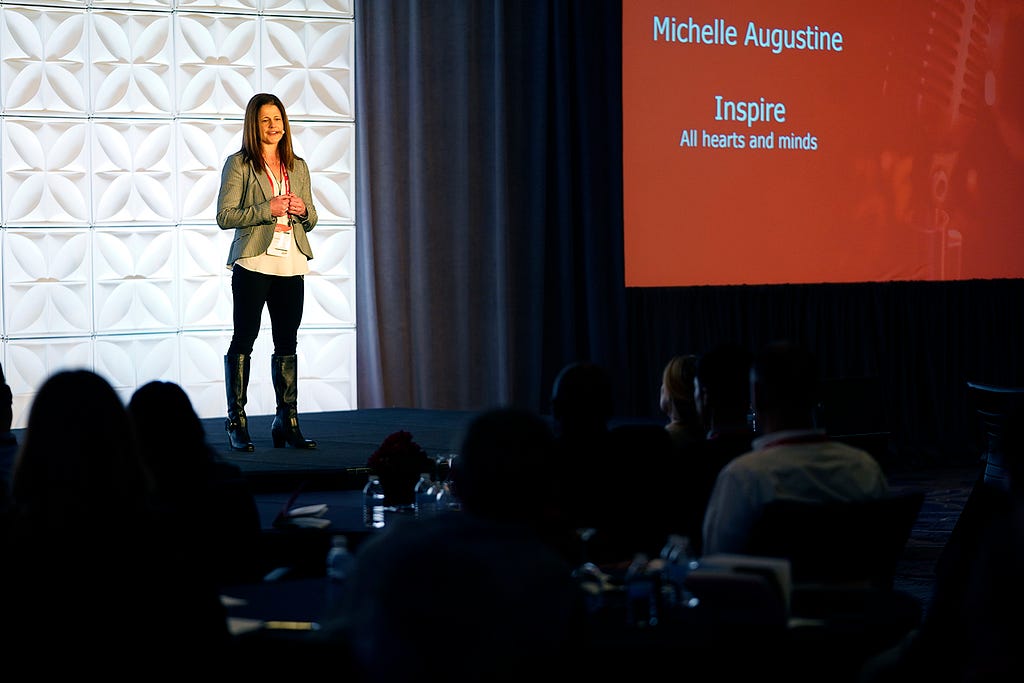
As a part of my series about “Lessons from Inspirational Women in STEM and Tech”, I had the pleasure of interviewing Michelle Augustine.
Michelle Augustine is a career technology and business development leader with W. L. Gore & Associates. After earning her Bachelor of Science Degree in Chemical Engineering from the University of Delaware, Michelle joined Merck Pharmaceuticals in 1992. Shortly thereafter, she joined Gore in 1993 and worked on early innovation and technology development for next generation GORE-TEX footwear and garments. Michelle has driven technology development through the entire product life cycle for both derivative and disruptive innovations, including serving as a global platform champion for the company’s proprietary chemical and biological protection capability. She has led numerous cross-functional development teams in Gore’s Fabrics, Medical, and Performance Solutions Divisions, requiring deep skills in business analysis, operations, product design and material technology. In 2007, Michelle helped build the Eastern U.S. technical and operations organization for the company’s Medical division, which included leading new business and new product development, and technical support for operations. In 2015, Michelle took the commitment to provide technical leadership for Gore’s emerging business focused on delivering unique high value products for the pharmaceutical and biologics industry.
She then transitioned to an Enterprise commitment to build business processes and digital capabilities, initiating and sponsoring a program to develop enhanced enterprise innovation portfolio governance and new product development capability. In 2018, Michelle became the business execution leader for the Performance Solutions Division, providing leadership for strategic and operational planning, business capability development, project and portfolio management, and strategy execution. In June of 2021, Michelle became the Global Business Group Leader for Gore’s new Clean Energy business. This new business is focused on delivering double digital growth through new products and solutions leveraging proprietary Gore materials to address challenges in the emerging Hydrogen Economy and Global Energy transition markets. Michelle resides in Landenberg, PA with her husband and two sons, ages 21 and 18. She enjoys sports, running, hiking, reading and cooking.
Thank you so much for doing this with us! Can you tell us a story about what brought you to this specific career path?
My path to becoming the Clean Energy Business Group Leader at W. L. Gore & Associates was an interesting one. I grew up always wanting to be a pediatrician. Not many people in my family had gone to college before me, so to those around me my aspirations were high. I didn’t have much opportunity for career exploration throughout my upbringing, but I always had a passion for math and science. In high school, I was selected to participate in an engineering Outreach program sponsored by DuPont. This acquainted me with what engineers do in a world-renowned science and materials company. At the same time, my high school chemistry teacher, who was very influential in my life, recommended that I pursue engineering as an undergrad. Even though I wanted to go to medical school, he convinced me that engineering would provide a strong foundation and would eventually open up other possibilities for me. I attribute a huge amount of my successful pursuit of a STEM career to the influences I received in high school, both from this teacher and the DuPont program.
Fast forward to after completing my undergraduate degree in engineering, I was debating whether I wanted to attend medical school. I knew I wanted to get experience in the workforce first, so I took a job at Merck Pharmaceuticals. I had interviewed at Gore and had received offers for a few different positions, but I chose to take an offer from Merck, seeking to gain experience in the medical field. About a year into my time at Merck, Gore approached me with a different opportunity. I decided to take the offer from Gore because the innovative company culture intrigued me and offered an opportunity to challenge myself as an engineer while being innovative in my pursuits — both areas that I found deeply satisfying.
Tell us a little about that company culture you mention. What do you think makes your company stand out? Can you share a story?
What makes Gore different is the fundamental belief in associates and their ability to do amazing things. Other companies try, unsuccessfully, to replicate this. Here, it’s a very real thing. Our brand promise makes it clear — “Together, improving life.”
Gore believes in dreaming big and acknowledges that success comes from creating an enterprise where risk-taking and creativity are promoted and encouraged. One of my favorite quotes from one of our founders Vieve Gore is, “Make someone a hero every day,” and I feel a strong commitment from Associates helping each other develop and grow and maximize their impact on the Enterprise throughout the company today.
Over the course of my 29-year career at Gore, I’ve had the opportunity to work in almost every division of our global Enterprise, and many times I was given “stretch” opportunities to do meaningful and challenging work long before I was probably ready for it.
In the Fabrics division, I was asked to champion one of the largest research and development investments for the division. We were working to win a contract for a U.S. government program that would be pivotal to building this new business. I had never been responsible for negotiating with a customer before, let alone such a massive undertaking as a contract with the U.S. government. Despite this, Gore offered unlimited support and trust and pushed me into this role where I was able to represent Gore and the product. While there was clearly a huge belief in my capability, I never once felt left on my own to navigate this new responsibility.
One other unique aspect of Gore is their commitment to “fitness for use.” We stand behind our products and our commitment that they will do what we say they will do. No matter the product, we go to great lengths to ensure they perform as promised in their intended application every time. For example, after launching GORE-TEX apparel, there were product performance issues and Gore effectively bought back all the garments and did not release new garments to the market until we had solved the problem. Our promise was for these products to keep you dry and we didn’t stop until we delivered on that promise.
Eventually, I transitioned to working in the Medical Products division, leading new product development and manufacturing support teams. This led me to new business development opportunities in both Medical and Performance Solutions divisions, followed by business execution leader as part of our Performance Solutions division leadership team.
My ability to explore so many facets of this global enterprise was due to both the company culture at Gore, as well as the solid STEM background I developed through my undergraduate degree in engineering. Engineering teaches you to think critically. That skill can apply seamlessly to life, communication, business, and so much more. With Gore believing heavily in the individual, and my STEM foundation opening many doors, I was well equipped to thrive within an otherwise competitive industry.
Can you share the most interesting story that happened to you since you began at your company?
A few years into my career at Gore, I received a page from a number I didn’t recognize. I answered and, lo and behold, it was the president and CEO of the company Bob Gore. I almost hung up, as I was so taken aback. He said, “What are you doing? I have an idea I want to test out.”
He knew I was working on a new material technology, and he asked me to meet him in the lab in one hour. He truly believed that the technology’s performance would be different than what had been originally presented. After working together in the lab to test his theory, we ended up disproving his hypothesis. His response? The same excitement that would have come had he been proven right.
It was through this experience that I learned that Gore has an unparalleled willingness to support Associates as they form their own ideas, testing and challenging them, and pivoting in the faith of disproving evidence, ultimately celebrating and applying their learning to new ideas and opportunities.
Can you share a story about a mistake you made when you were first starting? Can you tell us what lesson you learned from that?
I once submitted a new material solution to a government program for consideration. These programs are often defined by a detailed contract and are conducted over multiple phases. Our first step was to submit pieces of our material solution for testing, followed by submitting larger quantities to manufacture garments for field trials. After a year following the material submission, we were continuing to innovate and improve the material. We chose to submit the improved version for the field trials, not knowing that the contract stated that no changes could be made from the first phase submission. I took the situation to my leadership, sure that I would be reprimanded for not familiarizing myself with the contract. To my surprise, nobody was angry. There was no focus on the mistake I had made, but rather on how to rally and move forward. Gore made the decision to tell the government what had happened and offered to pay for a new first round of testing on the improved material, to take away any inconvenience put on them. Despite this being a costly fix, Gore’s commitment to providing the best product outweighed their concern about an honest mistake.
Are you working on any exciting new projects now? How do you think that will help people?
Gore decided as a company to invest in developing innovative material solutions to help enable the decarbonization of the planet. By trying to use our unique materials to create solutions that reduce carbon dioxide emissions, we are effectively contributing to cleaner energy and addressing one of the most pressing global challenges of our time.
One of our leading businesses in this space is driving the continued growth of fuel cell technology for vehicles. By investing in technical advancements in our materials, we’ve been able to enable the performance necessary for fuel cells to power all types of vehicles from passenger cars, commercial trucks, ships, trains, buses, and even airplanes. We are also actively trying to develop material solutions to produce green hydrogen from water with zero carbon dioxide emissions using electrolyzers that are powered with wind and solar energy — critical clean energy advancements that have enabled more than 40,000 fuel cell vehicles and have reduced more than 150,000 metric tons of CO2 emissions.
Ok super. Thank you for all that. Let’s now shift to the main focus of our interview. Are you currently satisfied with the status quo regarding women in STEM? What specific changes do you think are needed to change the status quo?
I don’t think anybody is satisfied with the current state of women in STEM. Although more women are going to college every year and we are making progress at the university level, it is not yet translating into organizations at all levels of leadership. Women are not reaching senior leadership levels in the same way men are, particularly when you look at minority women. What I think we need to do to help close the gap, especially for women represented in senior leadership of STEM roles, is to look at the early talent selection and development. There is a lot of inherent bias in internal talent selection processes in most organizations. Often, it’s men making these selections. We desperately need to integrate more women into the selection process who are empowered to advocate and sponsor women coming into the field early in their careers, to gain the experiences that position them as ready when some of these bigger leadership opportunities become available. It really needs to be a multifaceted approach to successfully increase the number of women in our talent pools and in our hiring teams, as well as increase representation of women in our internal talent and assessment process.
In your opinion, what are the biggest challenges faced by women in STEM or Tech that aren’t typically faced by their male counterparts? What would you suggest to address this?
Women, more often than men, face the situation where they are the only female in a room, especially within the STEM field. Oftentimes, women find themselves in a place where their perspective is different from everyone else, which can make you start to question your own point of view and might make it difficult to fit in. I think women make choices to hold back or change a piece of who they are to gain acceptance, and I don’t feel that men find themselves in these situations as much, as they are often surrounded by other men in business meetings.
Another important aspect is that women are often overlooked for stretch opportunities, or work that may be a bit of stretch for them based on their current skills and experiences. They are often held to standards that differ from their male counterparts. Women are expected to have demonstrated capability when they are being considered for some of these new opportunities, while men are more often afforded the benefit of the doubt and can be seen as having higher potential.
About 10 years into my career, I had a male leader who I felt held me back from challenging opportunities. I was always raising my hand saying, “I think I can do this in addition to what I’m currently doing,” or “I can tackle more,” and he always said I needed more experience. I finally reached my breaking point and brought my concerns to another technical leader. He told me, “You know what, Michelle, it’s not you. It’s this other person.”
He took it upon himself to address this with the individual I was having trouble with, and the leader that had been holding me back instantly shifted to giving me opportunities, trusting me, and treating me differently. I really believe that there’s a component of sponsorship and advocacy that is critical to closing the gender gap in STEM. Men, and women, in leadership roles need to call out biases when they arise to ensure all individuals can excel in this industry.
What are the “myths” that you would like to dispel about being a woman in STEM or Tech. Can you explain what you mean?
The biggest one is that people believe women are less likely to take on a stretch assignment because of their desire to focus on family. In my experience, this conversation generally takes place behind closed doors among leaders. These leaders make assumptions about an individual’s commitments to their work life vs. their home life. However, this rarely happens when considering a man for a role, even though they may be in a similar home life situation. Many times, the women being talked about don’t even know these conversations are happening and aren’t given an opportunity to weigh in.
The reality is that women are just as likely as men to take these opportunities and are oftentimes more motivated than their male counterparts. We need to present opportunities fairly to women and allow them to make the decision for themselves.
What are your “5 Leadership Lessons I Learned from My Experience as a Woman in STEM or Tech” and why. (Please share a story or example for each.)
To be a leader, you must have followers and followership is earned — This is a distinct difference between leading and managing. Leadership required authenticity and humility and a self-less focus on what your team needs to be successful and how you can enable that success.
Be curious, seek first to understand, thenact — I have been in situations where people made comments that someone was doing XYZ or that situation XYZ was very bad which painted that person or that situation in a very negative light. However, when I spoke to the person in question or probed the situation more deeply, their perspective or the situation was completely different. If you always lead with questions for understanding, you’ll find that your choices and actions are more aligned with the needs of the person or situation.
Encourage bold thinking and risk taking — celebrate mistakes that lead to learning. This is where innovation and new ideas come from which is critical any businesses long term sustainability and success.
Recruit great people, align them with their sweet spot, seek their commitment, and become a ‘snowplow” — find people whose passion, skills and goals align with that of your business. Find a place for them that allows them to use their unique skills and, as a leader, do everything in your power to remove the barriers that could keep them from achieving success.
You get what you walk by — you must be willing to step into messy situations that others avoid, if they impact your team, work environment, or your ability to deliver results. This requires a tremendous amount of courage to be a role model but when it comes to leadership, actions speak louder than words.
*Bonus lesson: Work yourself out of a job — Leaders should have a relentless focus on developing the people they lead. Empowering individuals on your team to take on aspects of your job to help them grow and develop is critical to engagement and ultimately to business success. Building a strong and capable team of talented individuals also allows you take on new opportunities and gain new experiences.
What advice would you give to other women leaders to help their team to thrive?
The most powerful teams are those that have clear objectives. When goals are clear, and a team operates in a way in which each member is empowered to bring their unique capabilities to achieve a common goal, the greatest successes are achieved. As a leader, you should create an environment where challenge and risk taking are encouraged, respect and humility are accepted, and diversity is sought out. Set clear priorities for your team to achieve the best results.
What advice would you give to other women leaders about the best way to manage a large team?
I currently manage a global team. I find that the best method for leading a large team is to be clear about the results that matter the most. There are a lot of ways to describe what winning is, but when the leader is clear about what is expected, the team can more effectively work to achieve that goal. Establish shared goals that are necessary to deliver results for the entire team. These goals should not be achievable by a single individual or function, but rather require multiple disciplines to work collaboratively to achieve.
None of us can achieve success without some help along the way. Is there a particular person who you are grateful towards who helped get you to where you are? Can you share a story about that?
One of my former engineering leaders — my very first leader at Gore — was one of the most impactful people in getting me to where I am today. When I first started at Gore, I viewed myself as a technologist. I wanted to drive discovery and my entire identity was tied up in being an expert. However, I have always gravitated towards helping others succeed and finding ways to monetize inventions. My engineering leader saw something in me. At one point he said, “Other people want to follow you. They view you as a leader. Other people believe in you more than you believe in yourself.”
This was a pivotal moment in my career because it gave me the courage to move into a leadership position — something I had never seen as an option for me. This helped launch into a trajectory towards becoming a business leader. Because of the confidence my former leader had in me, I am now able to fulfill my passion of bringing business, technology, and people together to solve meaningful challenges in society.
How have you used your success to bring goodness to the world?
I’ve always spent a lot of time coaching individuals one-on-one. About five years ago, I realized that I had amassed significant influence within the Gore enterprise. I was now able to do more than just help a few people. I started by reaching out to four women to discuss and address the systemic issues that were holding women back from advancing within the organization. Our company promises to “Together, improving life,” but that was not the reality that everyone was experiencing. We wanted the enterprise to live up to the promise it had made to its Associates. We banded together and created a proposal that we took to the Board of Directors that focused on increasing representation of women in disciplines that needed it as well as hiring women at all levels of leadership. We created goals around gender representation and established the Women’s Inclusion Council to hold the enterprise and leaders accountable.
You are a person of enormous influence. If you could inspire a movement that would bring the most amount of good to the most amount of people, what would that be? You never know what your idea can trigger. 🙂
I would love to drive a movement around curiosity. I believe that differences should be celebrated. If people could seek to understand one another’s differences, we could address so many issues in the world. It’s also a part of driving innovation. Curiosity for the sake of understanding could effectively eliminate bias across the globe.
Can you please give us your favorite “Life Lesson Quote”? Can you share how that was relevant to you in your life?
“I’ve learned that people will forget what you said, forget what you did, but people will never forget what you made them feel.” — Maya Angelou
This quote gives me the courage to be the person I want to be at work. I can be who I am at Gore, which is why I’ve stayed as long as I have. I believe that little moments of interaction and genuineness that you have with others make the biggest impact. People often perfect and rehearse what they are going to say, but at the end of the day, mistakes will be made. If you come from a good place, that is what will be remembered.
We are very blessed that very prominent leaders read this column. Is there a person in the world, or in the US with whom you would love to have a private breakfast or lunch with, and why? He or she might just see this if we tag them 🙂
I would love to share a meal with Melinda Gates. I recently read her book and was astounded by the work she is doing, tackling one of the longest standing societal issues surrounding gender. She is systemically using science and the human spirit to bring about change. I am very impressed with her methodology of getting to the root of issues and taking technology solutions and adapting them to be deployed against the individual needs of different cultures. Recognizing that what works in one culture might not work in another is essential to creating lasting broad change. If I could have breakfast with her, I would love to learn more about how she decides where to focus and prioritize her efforts and the efforts of her team.
Thank you for these fantastic insights. We greatly appreciate the time you spent on this.
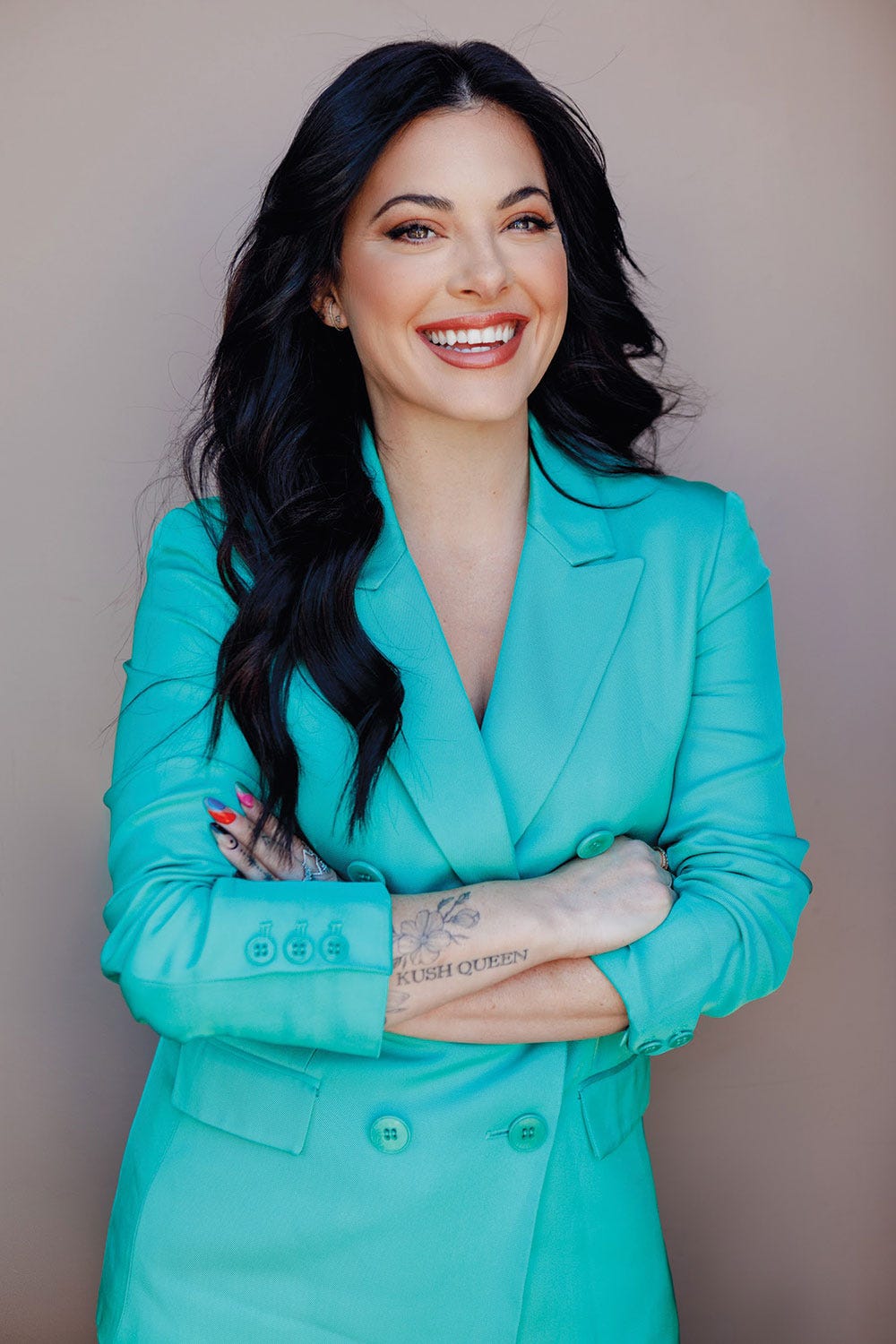
I believe in regulation of cannabis, but think it does this plant a disservice to compare it to tobacco. This plant has been around for thousands of years as a medicine. I believe it should be looked at like a preventive wellness tool and medicine.
As a part of my series about strong women leaders in the cannabis industry, I had the pleasure of interviewing Olivia Alexander.
Thank you so much for doing this with us! Can you tell us the “backstory” about what brought you to the cannabis industry?
When I was 18, I tried cannabis for the first time. I had a lifetime of mental health issues and severe relentless insomnia. With my first puff, I slept like a baby and knew cannabis would be a part of my life forever. A few months later, my boyfriend’s friend opened a medical cannabis shop and I got hired as a budtender. Behind the counter, I realized everything everyone knew about cannabis was wrong.
The majority of the people who came into the dispensary weren’t there to get high, but to feel better. A significant portion of our customers were dealing with severe diseases and disorders. I didn’t understand why people in cannabis didn’t want to focus on the medicinal and medical benefits. Over the years, I built a following online as an influencer and content creator while I worked at cannabis companies well before legalization hit. I always felt alone, as there were few women in the industry.
Cannabis has long been a boys club filled with misogyny and toxicity. Between my experiences with people who used cannabis for wellness and the lack of representation of women in cannabis, I decided to launch my own company in 2015. It’s sort of been a ride to the moon ever since.
Can you share the most interesting story that happened to you since you began leading your company? Can you tell us what lesson you learned from that?
There’s not one story in particular that sticks out, but my entire journey.
First and foremost, I am one of the few people who literally grew up in this industry. I started at the most entry-level position and now am a CEO.
I have been in cannabis for so long, I used to lie about my entire life. Everyone told me I was ruining my life by posting my cannabis use on social media but I knew I was changing the stigma. Then, things slowly changed and I was there to ride all the waves: the OG medical days in California, the hemp CBD boom of 2017, legalization in 2018, and now the next chapter in cannabis.
I did it all with my own funding, having only had a single angel investor back in 2018. For me, the lesson is longevity and commitment.
This industry has insane turnover and there’s always a new hot brand with tons of funding (who inevitably goes bankrupt). I am here to be the antithesis of it all and to show people that if you carve out your own lane, pay your dues, and frankly never give up, then you can do it too.
The industry has few people here for passion for the plant and the people that use it. For a lot of cannabis brands, its all about the bottom line and being the biggest company. For me, it’s about innovation, inspiration, and bringing people the best products every single day. I just want people (especially women) to know that you don’t need billions of dollars. All you need is passion. The cannabis space needs more people with a true passion for the plant.
Can you share a story about the funniest mistake you made when you were first starting? Can you tell us what lesson you learned from that?
The funniest moment I can remember was when we got our first $30,000 order. It was back in the early days of medical cannabis and we got picked up by a large dispensary chain Med Men. At that time, we had only been in business as Kush Queen for 6 months and our monthly sales were $30,000.
At the time we were still doing every part of the bath bomb process by hand. Our batch only made 12 bath bombs at a time. Needless to say, we had to stop everything we were doing, purchase equipment, and then begin the painful process of scaling our batches.
For weeks, every single batch failed. We had broken bath bombs and powder everywhere. Everyone was crying all the time, for about 3 straight weeks. I made a sign that said, “DON’T CRY OVER BROKEN BATH BOMBS” and another ”X days since broken bath bombs” (like the work accidents sign).
Everyone sort of broke down laughing and crying as I put them up. It literally shifted the energy in the production room and it’s almost like after that moment everything began to click.
For me, the lesson I learned was the value of humor and having fun, especially when your team is frustrated and down. It’s crazy because 6 years later, we don’t really have broken or rejected products from our line. My current product manager was an original member of our product team and we always laugh about it. He brings that spirit to our workflow and we pride ourselves on having fun in everything we do. Legal cannabis and hemp is actually an incredibly challenging industry to survive and thrive in so at Kush Queen, we put an emphasis on having fun.
Do you have a funny story about how someone you knew reacted when they first heard you were getting into the cannabis industry?
The funniest story is that as soon as I got into the industry, my mom joined me. My mom was my first employee and still works for my company to this day. I tell people that she’s the real Kush Queen.
Back in the medical days, she was the only mom at the Cannabis Cup. She would literally be at these festivals with people dabbing their faces off and she would be dancing at the booth. She was front and center in the cannabis community.
She would bring me pounds of weed, glitter pipes, and has never once judged me like the rest of the world. Who would have thought a pageant queen southern belle mother would be so eager to join me in cannabis?!
None of us are able to achieve success without some help along the way. Is there a particular person who you are grateful towards who helped get you to where you are? Can you share a story?
Back when I was just a content creator, I got a LinkedIn message from a girl named Rachel Wolfson. She was a comedian, meme creator and had a degree in marketing. She was pitching me to work for a marketing company, pre-Kush Queen. I met her in a strange work lunch in Studio City and we smoked a blunt in my car after. She was one of the few people I ever met that was making cannabis content from a female perspective. We just shared this passion for cannabis and this belief that women were being misrepresented in our community.
I immediately put her on my Youtube Channel The Budd and we started a podcast. Over the years, Kush Queen became relentless in its need for my time and she started being busier with her comedy.
Once we got in the Rolling Stone Cannabis Gift Guide and we couldn’t figure out how it happened. Weeks later, we realized she had done it. She did events for me, she helped roll joints, modeled in photoshoots, promoted KQ, and really just put me on to everyone at all times since the moment she met me.
Now, she’s the first woman to join the Jackass crew and is in the number one movie in America. You never ever know who that person is sliding into your DMs or your LinkedIn messages. So many people walk all over people, burn bridges, and get to the top in a non-collaborative way.
I am forever grateful to Rachel for believing in me and Kush Queen. I have always believed in her genius from the moment we met.
Are you working on any new or exciting projects now? How do you think that will help people?
Were always hard and at work in research and development. We’ve been developing our transdermally psychoactive cosmetics for years, which is undoubtedly the biggest undertaking of my career.
Our latest launch, BARE+ made with acidic cannabinoids is near and dear to my heart. Along with the latest study that came out a few weeks ago, which showed acidic cannabinoids have the ability to prevent covid-19, there is also a ton of other science to back acidic cannabinoid benefits.
As many in the cannabis industry continue to significantly focus on cannabis for recreation, at Kush Queen, we are instead staying focused on the wellness and scientific approach because that’s what will truly transform people’s lives.
Ok. Thank you for all that. Let’s now jump to the main core of our interview. Despite great progress that has been made we still have a lot more work to do to achieve gender parity in this industry. According to this report in Entrepreneur, less than 25 percent of cannabis businesses are run by women. In your opinion or experience, what 3 things can be done by a)individuals b)companies and/or c) society to support greater gender parity moving forward?
I recently saw this Instagram post that summed up this question perfectly for me. It was on a page called “The Future is Flower” and it said, “There is a battle going on for the soul of the cannabis industry. And every cannabis consumer is a soldier in that battle, consciously or unconsciously. Vote for your values. Vote with your dollars. And support companies that support our communities”.
We need consumers to be armed with the knowledge they are in control. In my new book, The Essential Guide to Cannabis for Women, I have a short guide on how to be an ethical cannabis consumer. It’s all in your own hands to support women-owned, BIPOC owned, independently owned, and LGBTQIA+ owned brands.
You are a “Cannabis Insider”. If you had to advise someone about 5 non intuitive things one should know to succeed in the cannabis industry, what would you say? Can you please give a story or an example for each.
Putting The Plant First Doesn’t Always Happen — With large corporations entering the market, having to answer investor demands, and remain competitive in the market, it’s easy to lose sight of honoring the plant and keeping her benefits front and center.
The Cannabis Industry Is Not That Different From The Tech Industry — As a woman in the industry for 16 years, at some point, I expected there to be more women and diversity at the proverbial table. Five years into legalization in California and there are now fewer women in leadership positions then when I began my career. Although we want things to be different, expect a “bro” like culture similar to the tech industry.
Your Ethics & Morals will be tested — This seems obvious however, you might think you have clear values, morals and a personal code of ethics. This industry will require you to speak up and call things out like you’ve never experienced before.
Not Every Smokes Weed — This used to bother me and calling people out for being a cannabis CEO but not smoking weed even turned into losing a potential investment deal. Be prepared to interact with people that are far removed from the actual plant medicine or don’t take the time to learn about the plant, its delivery methods, and the benefits of use.
Do This For You & Your Passion — The cannabis industry is full of challenges and unoriginal ideas. You couple those two things together and it can make your courage and strength to continue on the hard days very challenging. Before entering this industry, REALLY ask yourself why you are doing this and don’t ever lose sight of your passion.
Can you share 3 things that most excite you about the cannabis industry?
The first thing that most excites me about the cannabis industry is seeing more women, POC, and LQBTQIA+ people joining the space. The second is the hope of federal legalization within the next 5 or so years. And the third is the global expansion of the hemp market, I am so excited to see Kush Queen products making their way around the globe.
Can you share 3 things that most concern you about the industry? If you had the ability to implement 3 ways to reform or improve the industry, what would you suggest?
Monopolization. My first major concern for the cannabis industry is monopolization. Currently, the price of licensing is so high it is keeping so many small businesses from existing in the space. This creates problems for consumers and is especially bad for workers. The consolidation of the industry has begun and it’s truly scary to think the entire space could end up being owned by a small few. Cannabis should be an industry where businesses big and small can exist. Where the stakeholders represent the vast amount of people who use cannabis. Instead, it is owned by a few corporations that simply have the ability to lose billions in order to own the entire supply chain, cultivation, extraction and retail.
Taxation. Currently, in California, both consumers and businesses are being taxed to death on legal cannabis. The state has been warned repeatedly by the industry, activists and consumers that this is a house of cards. Over 80% of the cannabis market in California is still illicit and untaxed. Legal cannabis is failing in California because consumers are choosing unlicensed dispensaries to save money. By simply lowering the taxes they would drive both consumers and businesses to join the legal market.
Product Quality. As companies sought vertical integration, we saw the creation of massive operations. Hundreds of thousands of pounds of low-grade cannabis sit on the market in both California and Canada. Overall it’s all the same problem: poor product quality because commercial cultivation at a mass scale may be good for their business plans, but it leaves customers with a low-quality product. Conveniently (in the name of safety) large producers and corporations lobbied for regulations that do not allow the customer to be able to smell, touch, or even open the product they are buying. This is another thing driving people to the illicit market because frankly, you can get better cannabis at a lot of the unlicensed dispensaries.
What are your thoughts about federal legalization of cannabis? If you could speak to your Senator, what would be your most persuasive argument regarding why they should or should not pursue federal legalization?
The biggest reasons we need legalization at a federal level is banking and advertising. Without federal legalization, this industry will always be struggling with access to fair banking and advertising.
Even to this day, CBD companies do not have access to SMS texting platforms. To outsiders, the states legalizing is enough, but they do not see the issues around banking. What is also concerning is that we are so far behind other countries like Canada.
In fact, a good portion of the U.S. market is already owned by Canadian cannabis companies because they have had federal for some time. Ultimately, cannabis is a true American export and a huge part of our history.
Our industry shouldn’t be owned by Canadian cannabis companies because we couldn’t get progress at a federal level. The lack of federal legislation also goes back to the monopolization problem.
Currently, only large and extremely well funded companies can exist as multi-state operators. The need for a business to be licensed in each state, unable to cross state borders with products is another way to keep the small businesses out.
Today, cigarettes are legal, but they are heavily regulated, highly taxed, and they are somewhat socially marginalized. Would you like cannabis to have a similar status to cigarettes or different? Can you explain?
Cigarettes are poison. They cause cancer, disease, and do not interact with any system inside our body.
Cannabis is medicine. You, me, and animals all have a system inside our body called “ the endocannabinoid system” which interacts with our central nervous system, has receptors all over the body, and modulates our most important body functions.
Our body also produces endogenous cannabinoids (naturally occurring molecules). We have cannabinoid receptors all over the body and in the skin.
Cannabis is also generally psychoactive, so comparing it to cigarettes or even alcohol does not work for me.
I believe in regulation of cannabis, but think it does this plant a disservice to compare it to tobacco. This plant has been around for thousands of years as a medicine. I believe it should be looked at like a preventive wellness tool and medicine.
Can you please give us your favorite “Life Lesson Quote”? Can you share how that was relevant to you in your life?
In 2016, I lost 1.5 million followers on Instagram due to censorship.
At any given time, a social media platform can take your profile away for violating the TOS (which posting cannabis and cannabis content do).
My world was sorting burning down all around me. This is when I truly pivoted everything I had into Kush Queen.
The mantra and quote that guided me every day is, “They can’t stop you if you don’t stop”. For me, the greatest accomplishment I’ve had as an entrepreneur is never giving up. It’s my biggest advice to aspiring entrepreneurs and is my personal key to success. The only thing that can stop you…is you.
You are a person of great influence. If you could inspire a movement that would bring the most amount of good to the greatest amount of people, what would that be? You never know what your idea can trigger. 🙂
If I could inspire a movement, it would be a movement to inspire people to be their own medicine. I really believe that we are the cure and the cause of our own disease. That if we change the way we think about disease and sickness it could cause a great shift in the world.
Thank you so much for the time you spent with this. We wish you only continued success!
Women In Wellness: Shawnda Dorantes of Beauty Lounge Medical Spa On The Five Lifestyle Tweaks That Will Help Support People’s Journey Towards Better Wellbeing
An Interview With Candice Georgiadis
Not all money is good money. As an entrepreneur, it’s always been very important for me to consider longevity and for my team and I to be able to deliver an exceptional customer service. Even though we’ve experienced a very rapid growth fast, I’ve put boundaries in place to not grow too quickly that could destroy the ethics of my brand. That includes having to turn clients away when their expectations are not realistic or offering too many new services at once that can sacrifice quality.
As a part of my series about the women in wellness, I had the pleasure of interviewing Shawnda Dorantes, MSN, APRN, FNP-C, co-owner of Beauty Lounge Medical Spa in San Marcos, a suburb of San Diego, California.
Acclaimed female entrepreneur, Shawnda Dorantes, MSN, APRN, FNP-C (family nurse practitioner) is a master nurse injector, cosmetic tattooist and co-owner of Beauty Lounge Medical Spa, a leading, full-service aesthetic destination in San Marcos, Calif., a suburb of San Diego. A powerful force in the beauty industry for the past 14 years and registered nurse of over 11 years, Dorantes’ tailored expertise and innovative service offerings have paved the way for Beauty Lounge’s proven success. With an impressive 36,000 followers on Instagram, the popular med spa is best known for their non-surgical PDO thread lifts as well as their lip and nose transformations. Beauty Lounge’s service offerings include botox, fillers, laser treatments, microneedling, non-surgical face lifts, body contouring, teeth whitening and results-driven skincare treatments. In 2021, Beauty Lounge won four San Diego Union Tribune’s “San Diego’s Best” Reader’s Poll awards for: “Medical Spa,” “Cosmetic Dermatology Individual: Shawnda Dorantes, MSN, FNP-C,” “Cosmetic Dermatology Office,” and “Day Spa.”
A recipient of San Diego Metro Magazine’s “Women of Influence” and “40 Under 40” awards, both in 2021, and listed as a “Best Aesthetic Injector in America” in the Best Aesthetic Injectors in America’s National Directory of Recommended Providers, Dorantes is making a huge name for herself both locally and on a national level. In 2021, San Diego Business Journal announced Dorantes as a finalist for three of their prestigious community awards, “Rising CEO of the Year,” “40 Next Top Business Leaders Under 40” and “Business Women of the Year.” The acclaimed family nurse practitioner has treated thousands of patients including famed reality TV star, Farrah Abraham, Heather Minch of MTV’s “Young Moms Club,” Heather Martin of ABC’s “The Bachelor,” runner-up of season four of “MasterChef,” Natasha Crnjac and many more. Dorantes’ approach is to seamlessly enhance the natural beauty and self-confidence of all of her patients.
The renowned beauty expert’s entrepreneurial spirit was ingrained in her at an early age when she began helping her parents run their family-owned business, and she attributes their guidance to her robust career as a Latina entrepreneur. A longtime former in-demand makeup artist, Dorantes began as a Beauty Advisor for Estee Lauder and later became a freelance professional makeup artist for several other prestigious cosmetic lines. After securing multiple credits in film, print, and television for her work, she then joined Estee Lauder’s Regional Artistry Team while working her way through college. Upon triple majoring and earning baccalaureate degrees in Biological Sciences, Women’s Studies and Nursing from Cal State University San Marcos in 2007 and 2010, Dorantes worked as a nurse in the acute care setting for over eight years and specialized in medical, surgical, telemetry and hospice care before entering the permanent makeup industry and opening Beauty Lounge in 2018.
Since merging her background in cosmetics and nursing, Dorantes has become a licensed and certified cosmetic tattoo artist, has earned her Allergan Master injector certification, and has received aesthetic training in several advanced and masters level injector courses led by famed industry injectors, Kelly Choi NP-C, Rio Calvert, Dr. Gideon Kwok, Dr. Thuy Doan and Erika Berry NP-C. A huge proponent of education, Dorantes participates in ongoing seminars and attends medical conferences throughout the year to stay up to date on the latest non-surgical aesthetic techniques and evidence-based practices. Dedicated to expanding her already well-rounded skill set, Dorantes recently earned her Masters of Science in Nursing in April 2021 from the United States University in San Diego to become a certified Family Nurse Practitioner (FNP). As an FNP, Dorantes provides additional advanced services to her clients, including medical weight loss, medical management of acne, cryotherapy, and more.
Thank you so much for joining us in this interview series! Our readers would love to “get to know you” better. Can you share your “backstory” with us?
Thank you for this amazing opportunity to share my story. I’ve currently been a nurse for 12 years. I originally started my career in the beauty industry as a professional makeup artist, dabbling in film, print, television, and special event makeup. This was all way before Instagram and YouTube makeup artists were even a thing. Upon graduating from Nursing School I hit pause on the beauty industry and focused on my nursing career. I specialized in Hospice, Palliative Care, Med-Surgical, Telemetry, Ortho, Stroke, and Neuro Nursing for 9 years. I spent most of my bedside nursing career working on my hospital’s float team, requiring me to float to 20 plus units across three hospitals and additionally be competent in multiple specialties of Nursing. In 2017 I returned to the beauty industry simultaneously training in aesthetic medicine and cosmetic tattooing. I opened a small permanent makeup studio in early 2017, slowly building a clientele and following. Taking a huge leap of faith my husband and I signed a lease on a 1000 sq foot space and opened Beauty Lounge Medical Spa in the fall of 2018. I officially retired from bedside nursing in the summer of 2019 and never looked back. In just two short years we experienced tremendous growth and success leading us to building out our dream location. In November of 2021 we opened our beautiful state of the art 2100 sq. ft location featuring nine treatment rooms and a film studio. Since beginning my career in aesthetic medicine I have had the privilege of training under the best of the best in the aesthetic industry. In addition, I graduated in April 2021 earning my Masters of Science in Nursing and Family Nurse Practitioner degree. I am a huge proponent on education and have also devoted myself (and staff) to ongoing trainings so we can continue to provide the most innovative services and in-depth insight to our clients.
Can you share the most interesting story that happened to you since you started your career? What were the main lessons or takeaways from that story?
As a nurse entrepreneur I have had to unfortunately learn some lessons the hard way. First and foremost you cannot trust anyone. Never hire friends and family. Invest in a good lawyer and HR consultant. Always protect your hard work, money, and business. Develop solid employment contracts from the start. Clearly state all expectations, minimum length of employment required, reimbursement for training and other expenses. It is better to be “corporate” from the start. Unfortunately, getting burned along the way comes with the territory. However, what’s important is that we learn from these mistakes, and we refine our hiring processes and employment contracts as your business grows and evolves.
Can you share a story about the biggest mistake you made when you were first starting? Can you tell us what lesson you learned from that?
In hindsight I feel that I took on too much too fast. I was juggling my business full time, graduate school, and working part time nights at the hospital my first year in business. I wish I would have quit my hospital job sooner and put all that energy into growing my business and my family. If I could do a few things over I would have kept my business expenses low and waited to invest in lasers. I’m lucky that it all worked out for me despite how challenging it was at the time.
Let’s jump to our main focus. When it comes to health and wellness, how is the work you are doing helping to make a bigger impact in the world?
I would like to think I’m showing other young women, especially my fellow Latinas that there is space for them in healthcare and wellness. I recently founded Lifted Aesthetics Training Academy LLC with the goal of providing training and mentorship for aspiring aesthetic injectors, in addition to business and marketing consulting for my fellow aspiring aesthetic entrepreneurs. I love that the industry I am helps people feel more confident and beautiful.
Can you share your top five “lifestyle tweaks” that you believe will help support people’s journey towards better wellbeing? Please give an example or story for each.
Get your butt off the couch! Start moving! C’mon you can scroll Tik Tok literally while walking or riding a peloton. We all know exercise is good for our cardiovascular health, but it also helps prevent osteoporosis. We as a culture need to shift how we engage and spend time with one another. Instead of meeting up for happy hour with your friends, get your group together for a walk on the beach!
Nourish your body with what the Earth intended us humans to eat. It wasn’t until I embraced this concept that I was finally able to maintain my weight and not yo-yo. Although, I admittedly enjoy fried foods, sweets, and an adult beverages like the next person, these types of foods are not my primary diet. They are enjoyed as treats or on date night. Everything in moderation, right?!?!
Water! Drink up! It’s so vital for our overall health. And let’s not forget to mention its effect on our skin! Plus, all the other sugary drinks we sip on are nothing but empty calories! I make it a rule to drink a full glass of water with every meal. And let me tell you I feel a difference when I don’t get my water in!
Take time for you. Self-care is so important in reducing burn out and depression. Its ok to say NO and stay home in your PJs all weekend. Take your dog for a walk, read a book, get a facial, or whatever self-care looks like for you. My husband and I both own our own businesses and work long hours. We prioritize travel and taking off just the two of us or with the kids for an extended weekend every few months. It’s important that we disconnect from work and be present with one another and our kids.
Sleep. I can’t tell you how many times I thought my depression was creeping back in, but I was really in fact burning myself out and was sleep deprived. Coincidentally, as I’ve gotten older it has become glaringly apparent gone are the days of functioning well off little to no sleep. To be our best and give our best, we must prioritize sleep.
If you could start a movement that would bring the most amount of wellness to the most amount of people, what would that be?
Beauty Lounge Medical Spa is actually launching our brand new medical weight loss program in the next few months. I am so excited for it. As someone who has struggled with weight and obesity, majority of my life, I know firsthand how hard it is lose weight and to keep it off. We are very excited to be offering Semaglutide which was recently FDA approved for weight loss. The clinical studies have shown an average weight loss of 12.4% of body weight per person. Losing just 5% of your body weight has been shown to reduce cardiovascular disease! I’m excited to be able to help my local community achieve their weight loss goals and in turn improve their quality of life and self-confidence.
What are your “5 Things I Wish Someone Told Me Before I Started” and why?
Not all money is good money. As an entrepreneur, it’s always been very important for me to consider longevity and for my team and I to be able to deliver an exceptional customer service. Even though we’ve experienced a very rapid growth fast, I’ve put boundaries in place to not grow too quickly that could destroy the ethics of my brand. That includes having to turn clients away when their expectations are not realistic or offering too many new services at once that can sacrifice quality.
Its ok to say NO. Stand firm on your decisions (this applies both personally and professionally.) Don’t ever let anyone manipulate you into agreeing or doing something that you do not want to do.
Fill your own cup. We are in a culture that glamourizes hustling and burn out. To succeed and remain creative and passionate, it is imperative that you take time for yourself and your family.
There will be bumps in the road. It’s inevitable. Take everything as a learning experience and advance from it.
Always keep a sense of humor. Being able to stay positive and have a good laugh has helped keep me strong even through dark times.
Sustainability, veganism, mental health and environmental changes are big topics at the moment. Which one of these causes is dearest to you, and why?
Definitely mental health. Coming from a household where the attitude towards depression was that it wasn’t an actual condition, and people just need to get over it and carry on. I did not feel comfortable sharing my mental health struggles with my parents. I had high functioning depression and anxiety and those closest to me did not have a clue how much I was struggling. It wasn’t until my eating disorder and depression were really bad that I opened up asking for help as I was struggling so bad. I don’t even think my parents had a clue I had been on medication for almost two years for my depression. I still don’t think they truly comprehend the depths of my despair and how much I was hurting at that time. Looking back I definitely think I was already struggling with anxiety and depression in high school which continued into college before finally realizing what I was going through was more than I can handle and got the help I needed. I think as a society we are much more aware and educated about mental health than we were 20 years ago. Information and resources are more accessible. Having a good suppoe
What is the best way our readers can follow you online?
Female Founders: Isabel Echeverry of Kontakto On The Five Things You Need To Thrive and Succeed as a Woman Founder
An Interview With Candice Georgiadis
Keep overhead down. No fancy offices in the begging. Chanel a sense of humility and being humble are the best. I found myself spending way too much on networking. It’s worth it but also a balance.
As a part of our series about “Why We Need More Women Founders”, I had the pleasure of interviewing Isabel Echeverry.
Isabel Echeverry is the founder of Kontakto. She started her career in representation at ICM working with Jeff Berg and went on to become a respected director’s representative of A-list talent in the industry. In 2009, recognizing the vast potential in the Hispanic market, Echeverry opened Kontakto Talent Management and Entertainment Company. Now she is established as the market leader in Latinx Entertainment with an impressive roster composed of award-winning directors, actors, and powerhouse production companies. As a big believer in the concept of giving back and ‘paying it forward,’ her ability to navigate the Hispanic and global market has proved invaluable to all her clientele.
Thank you so much for doing this with us! Before we dig in, our readers would like to get to know you a bit more. Can you tell us a bit about your “backstory”? What led you to this particular career path?
First of all, thank you for having me! I was born in Queens, New York to Colombian immigrant parents. I grew up between New York Miami and Columbia. I started dreaming of being an actress in my teenage years watching Jessica Lange, Maryl Streep, Victoria Vaccaro, and Mexican star Veronica Castro. I dreamt of being a movie star. I didn’t know how to go about it and for years I looked up acting classes in the yellow pages everywhere I lived. I attended all that I found but still did not know what I needed to do to be on the big screen. When I moved to Miami in my early 20s, the same thing, I went to all the acting schools there. Then when I was 25 I met a real actress that told me I needed to move to New York. I was at Stella Adler then went to William Esper. So moving to Los Angeles as an actress helped me learn the trial and error back in the 1990s / the early 2000s about what being Latina in Hollywood was like. I was then given an opportunity to work as an agent trainee in one of the biggest talent agencies. So I left acting and instead became a talent manager helping Latinos in Hollywood.
Can you share the most interesting story that happened to you since you began leading your company?
I was able to book a series regular for a Latin Colombian actor who always played the drug dealer roles. And now he was playing a detective opposite, Bill Pullman. A role that had nothing to do with being Latin He was just playing an American detective. That was a big interesting Breakthrough for his career and I think Latinos in Hollywood
Can you share a story about the funniest mistake you made when you were first starting? Can you tell us what lesson you learned from that?
The funniest mistake was that I had long nails and I had to quickly write a letter for the CEO of the company where I was an agent trainee. I didn’t even have time to look at it and notice it didn’t make any sense. Everybody was laughing. A big producer read it and couldn’t believe it. Of course, that has always reminded me to check my work.
None of us are able to achieve success without some help along the way. Is there a particular person who you are grateful towards who helped get you to where you are? Can you share a story about that?
So many people have helped me. I wish I could name them all. I think my family and my parents have helped me by believing in me and supporting me. Especially with my kids as I was building my business. I really appreciate the support and faith my parents have for me. My family as a whole and my parents, my sister, my brother. They would take care of my kids while I would travel for screenings, seeing clients, business meetings while I traveled around the country and world. They were always there to help with my kids. And the kids always loved the homemade soups. A family win-win.
Ok, thank you for that. Let’s now jump to the primary focus of our interview. According to this EY report, only about 20 percent of funded companies have women founders. This reflects great historical progress, but it also shows that more work still has to be done to empower women to create companies. In your opinion and experience, what is currently holding back women from founding companies?
I think what may be holding women back is the fear of making the big leap and letting go of the comfort zone that they live in.
It’s important to have confidence in your experience, work ethic, and time and effort you put into your line of profession and career. Then you know that you have all the tools to have a successful business.
It may also be the fear of the unknown. But it’s also important to have a good support system and have people cheering you on. It takes a village. I would encourage any woman who wants to, to take the leap. If I can do it, you can do it.
Can you help articulate a few things that can be done as individuals, as a society, or by the government, to help overcome those obstacles?
Yes, I think there should be a forum for small business owners for women. An organization to help provide tools and support. For example, provide help with necessary documents, and checklists. It is essential that the government have programs to offer to women and others on entrepreneurial ventures.
This might be intuitive to you as a woman founder but I think it will be helpful to spell this out. Can you share a few reasons why more women should become founders?
More women should become founders to inspire the younger generation that gender equality is important. That women are capable of reaching tremendous goals. It shows that being a business owner gives independence and the power to control your life. You don’t want to underestimate a woman’s perspective.
What are the “myths” that you would like to dispel about being a founder? Can you explain what you mean?
I’ve heard that with any business, you either make it or break it in the first year. The truth is, if it doesn’t work one way, find a different strategy to reach your goal. This is why keeping your business open and successful is important. If it doesn’t work one way, then change your strategy. That is the equation of success. Change your strategy over and over until you reach your goal. That is a success. Your goals are different than mine. Another person’s business goals are different from mine. It’s your own personal business goals that are the focus.
Is everyone cut out to be a founder? In your opinion, which specific traits increase the likelihood that a person will be a successful founder, and what type of person should perhaps seek a “regular job” as an employee? Can you explain what you mean?
I believe that a person that loves people, shares their experience, can motivate and encourage people could make a good leader. The trick is to find the best in every person. When people are given encouragement, It can give them the power to take the leap they have always wanted to take.
It’s OK if people decide to just have a 9-to-5 job. and just observe leaders and admire them. I mean not everyone is meant to run a company or be a leader. They can be leaders in other ways. A leader in the home or being a parent. Maybe someone prefers to work 9 to 5 and not have to be stressed out because of their company. It is demanding to run your own company. But I love the challenge. I also love to expand and give opportunities to Latinos in Hollywood. That is my main goal. That will be my legacy. For example, today an actress that I helped book a lead role for a short film, Is now part of a film nominated for an Academy Award. That is what it means to be a leader. Helping others. That’s what I like to do with people’s careers. Help them reach their goals and achieve their dreams.
Ok super. Here is the main question of our interview. What are your “5 Things I Wish Someone Told Me Before I Started” and why? (Please share a story or example for each.)
Don’t be scared! (Giggling).
But seriously, do your due diligence when hiring staff. My experience was hiring a disgruntled employee for example. The association can be a problem. I wish someone would have told me not to hire just because someone was referred.
Keep overhead down. No fancy offices in the begging. Chanel a sense of humility and being humble are the best. I found myself spending way too much on networking. It’s worth it but also a balance.
It’s never too late to start and the time is always now. I had always wanted to do what I am doing now and wish I would have started sooner. That advice would have been helpful because I was insecure. It’s true, the time is now.
I wish someone would have told me to see my value at a company I was working for before I went on my own. To notice how much income I was generating earlier than when I did. I wish I would have heard Tony Robbins say that work should be seamless with your life.
How have you used your success to make the world a better place?
I have spoken on panels, love being a mentor to young people and I have sponsored lots of organizations for Latinos in Hollywood that help further their careers. For example, right now I am helping a young filmmaker, he’s 17 years old, to shadow a director on a big advertising campaign. Every day is an opportunity to help others and inspire them with my story. Share the notion that anything is possible. If I can do it, you can do it.
You are a person of great influence. If you could inspire a movement that would bring the most amount of good for the greatest number of people, what would that be? You never know what your idea can trigger.
To empower kids with the idea that they can be business owners. Teaching kids how to be conscious of money, and to start that education early. Education is very important but it’s also important to start dreaming early in life. For example, if it’s in the visual arts if it’s acting or athletics. Children should be able to understand that their dream could be a business. In other words, to help children discover their passion early and not wait until college. For example, I have my 13-year-old son who’s passion is art, and is with private art teachers and mentors. He now has one of his paintings in a museum in Norway. I would never pressure him but it is his dream and it would be amazing to see these types of opportunities for all children. Encouragement is very important.
We are very blessed that some very prominent names in Business, VC funding, Sports, and Entertainment read this column. Is there a person in the world, or in the US with whom you would love to have a private breakfast or lunch, and why? He or she might just see this if we tag them.
Ari Emmanuel. He is a visionary, who has made a huge impact in the entertainment business. And that’s why I would love to sit down and ask him for lots of advice based on some of my bigger ideas. I admire his leadership and expansion successes. companies. It’s his success in the entertainment business that I admire. His ability to manage success and integrity at the same time.
Thank you for these fantastic insights. We greatly appreciate the time you spent on this.
Inspirational Women in STEM and Tech: Samantha Du of Zai Lab On The 5 Leadership Lessons She Learned From Her Experience
An Interview With Candice Georgiadis
Have endurance and be tenacious, never giving up through the inevitable ups and downs in entrepreneurship.
As a part of my series about “Lessons From Inspirational Women in STEM and Tech”, I had the pleasure of interviewing Samantha Du.
Driven by her passion for drug development and entrepreneurship, Samantha Du, Ph.D. founded Zai Lab in 2014 with the goal of bringing innovative, transformative medicines to patients around the globe. Prior to founding Zai Lab, Samantha spent two years at Sequoia Capital China where she led four healthcare investments and served on the boards. From 2001 to 2011, Samantha co-founded Hutchison MediPharma and Hutchison China MediTech and served as their Chief Executive Officer and Chief Scientific Officer, respectively, since their inception. Samantha began her research career with Pfizer in the United States from 1994 till 2001 after receiving her Ph.D. in biochemistry from the University of Cincinnati.
Thank you so much for doing this with us! Can you tell us a story about what brought you to this specific career path?
My career has always been driven by a need to help others. From developing multiple early and late-stage products that treat a variety of bacterial infections to working on myriad innovative medicines at some of the world’s leading biopharmaceutical companies, I have always been driven by the need to strengthen access to treatments for the patients who need them the most. China is the largest population in the world and accounts for nearly 24% of newly diagnosed cancer cases globally. When I founded Zai Lab, I was inspired by the opportunity to close the healthcare innovation gap between the U.S. and China. It’s something that should be available to all and should not be limited by where you live or what you’re able to pay.
Can you share the most interesting story that happened to you since you began at your company?
As a “drug hunter”, I’ve been called the “Godmother of China’s Biotech Industry,” which has always been interesting to me because what I want, first and foremost, is to advocate for patients in need to bring them innovative therapies that make a difference in their lives. Since co-founding Hutchison Medipharma, I’ve learned so much about how the biopharmaceutical industry can be more collaborative and nimbler in its approach to innovation. I took that with me when I established Zai Lab in 2014, and I’m so proud of how we’re living that approach and the progress our global teams have made in accelerating global innovation.
What do you think makes your company stand out? Can you share a story?
Zai Lab has built a very innovative pipeline which can serve patients not only in China, but also potentially globally who have significant unmet medical need.
Are you working on any exciting new projects now? How do you think that will help people?
Zai Lab is in a unique position as a fully integrated global biopharmaceutical company. Our mission has always been to bring transformative medicines that address unmet medical need. Our open innovation model has attracted the biopharmaceutical companies to partner with Zai Lab to advance clinical stage product candidates and bring them to market. We’re excited to be working on a number of new collaborations within oncology, autoimmune diseases and neuroscience.
Ok super. Thank you for all that. Let’s now shift to the main focus of our interview. Are you currently satisfied with the status quo regarding women in STEM? What specific changes do you think are needed to change the status quo?
One of the things I have always loved about research is that scientists are — and always should be — recognized in this industry and by society by virtue of their research contributions rather than their gender.
We also need to “forget” gender roles and encourage others to be curious, to be problem-solvers and explorers, to wonder “what if.” Explore the sciences and become creators. The opportunities are limitless along the journey of exploration when we are supported and encouraged by those around us.
When I look at the biotech industry, I see so many opportunities for change. Within Zai Lab, women represent 57% of the workforce, with 53.8% of women in key management positions, including the Chief Compliance Officer, Head of Operations for Oncology, Head of Global Corporate Affairs, Deputy Chief Financial Officer and more.
I also encourage women entrepreneurship. I encourage everyone in STEM to dream, regardless of gender — then plan, execute, review, adjust and, ultimately, you will achieve.
What are the “myths” that you would like to dispel about being a woman in STEM or Tech. Can you explain what you mean?
I think everyone has equal potential for STEM, regardless of gender. People should be recognized by their talent and contribution, regardless of their gender.
What are your “5 Leadership Lessons I Learned from My Experience as a Woman in STEM or Tech” and why. (Please share a story or example for each.)
Have a clear vision in what you want to do and what you are passionate about
Have the courage to start with limited resources
Have endurance and be tenacious, never giving up through the inevitable ups and downs in entrepreneurship
Be confident in your ability to achieve great things and don’t let anyone stand in your way.
The higher your responsibility is, the bigger pain you must be able to take
None of us are able to achieve success without some help along the way. Is there a particular person who you are grateful towards who helped get you to where you are? Can you share a story about that?
My father was my greatest advocate and guide. From the time I was very young, he instilled in me the confidence, drive and compassion to go out into the world and to make a difference. For this, I cannot thank him enough.
As I was leaving China for the U.S. to study, my father gave me two plates with ancient Chinese quotes. The first one says, “The fragrance of plum blossoms come from the bitter cold,” which always reminded me that you need to earn your respect and success. The second plate says, “Always be noble and act with integrity” which reminds me how important integrity and ethics are and how they will guide you along the way.
How have you used your success to bring goodness to the world?
For my almost 30 years of experience in the biopharma industry, I was able to serve patients with unmet medical needs by the innovative medicines we developed.
Also served as a role model to inspire male and female scientific entrepreneurs. I take mentorship seriously and feel a responsibility to invest in the next generation of scientists and leaders.
You are a person of enormous influence. If you could inspire a movement that would bring the most amount of good to the most amount of people, what would that be? You never know what your idea can trigger. 🙂
We’ve made significant strides at Zai Lab to accelerate the access of innovative drug to patients in China and worldwide. I will continue to do this at Zai Lab and encourage everyone in biotech to drive innovation forward to save more lives around the world.
Can you please give us your favorite “Life Lesson Quote”? Can you share how that was relevant to you in your life?
“Leadership defines your own position.”
When I first joined Pfizer, one of the R&D leaders said to me, “Leadership defines your own position.” He asked me not to limit myself by my gender, title, my position on the team or my background.
As I grew in my career, I came to realize that more and more, the only limitations you have are set by yourself, not others. Although it perhaps will take longer as a female executive, continue to aim high and do not impose limitations on yourself.
We are very blessed that very prominent leaders read this column. Is there a person in the world, or in the US with whom you would love to have a private breakfast or lunch with, and why? He or she might just see this if we tag them 🙂
There are two leaders I greatly admire — Michael Jordan and Elon Musk.
I’m a huge basketball fan and when I came to the US in the 80s Michael Jordan’s game was truly inspirational to watch. I love his competitive spirit and his perseverance. He inspired his teammates to push forward when faced with obstacles and he made those around him better at what they do. That’s what successful leaders strive to do.
Elon Musk is a transformational leader who pushes the boundaries of what’s possible. He’s constantly innovating and improving. His work has purpose. He sets a bold vision and he inspires others to join him. Watching his vision come to life is both inspirational and motivational.
Thank you for these fantastic insights. We greatly appreciate the time you spent on this.
Think outside the box. The normal marketing playbook doesn’t really work in cannabis because of the many legalities and restrictions. It is necessary to spend time thinking, experimenting, and failing at new ideas. You may find a nugget of inspiration from experimenting that will help grow and transform your business.
As a part of my series about strong women leaders in the cannabis industry, I had the pleasure of interviewing Shannon Reed.
Shannon Reed is a brand marketer with a decade of experience building global consumer focused brands. She’s worked on some of the largest brands in the world including Samsung, Google, Tinder and Bacardi. Throughout her career Shannon has focused on marketing based on deep consumer insights, helping to launch first of its kind digital experiences for Google Star Wars as well as Tinder’s Swipe Night. She believes deeply in the power of cannabis to transform people’s lives and as CMO of Omura, she is focused on education and making cannabis more accessible to new consumers.
Thank you so much for doing this with us! Can you tell us the “backstory” about what brought you to the cannabis industry?
Thank you for having me! It’s wonderful to be a part of a series highlighting women in the industry. Cannabis and CBD have been a part of my wellness routine since I moved to California in 2014. I’ve truly seen the power of the plant work wonders for family members who were sick and in pain, and I’ve been an advocate for what it can do in my personal life as well. I spent over a decade at marketing and advertising agencies and one of my last roles before joining Omura included bringing the Cresco Labs brand to California. I realized during the project that I truly loved this industry and the people working in this business. When the chance to work with Omura popped up, it was a fantastic opportunity to blend my previous marketing experience in food and technology with my love for a plant and culture that I am truly passionate about.
Can you share the most interesting story that happened to you since you began leading your company? Can you tell us what lesson you learned from that?
Our customer feedback often provides the most interesting insights. It’s amazing hearing from consumers and learning how Omura products help them in their everyday lives. We have consumers who use our products for their daily medical conditions and hearing their stories about how Omura’s heat-not-burn technology offers them fast onset relief is the most rewarding part of my job. This can be a volatile industry with a lot of change, but it’s fulfilling to know that you are positively impacting someone’s life.
Do you have a funny story about how someone you knew reacted when they first heard you were getting into the cannabis industry?
When I started going to cannabis events and bringing home new samples from brands my partner was so excited! He has been incredibly supportive throughout this career change. Now whenever I get home, it’s always about what new innovations I’ve seen and what goodies I have. We also started home growing together and being able to ask amazing farmers and cultivators for growing tips has been so helpful and cool. Everyone I’ve spoken to in the industry has been very kind and open about teaching us how to get the most out of our plants.
None of us are able to achieve success without some help along the way. Is there a particular person who you are grateful towards who helped get you to where you are? Can you share a story?
I have had so many amazing female mentors in my life who pushed me to evolve, grow and become a better leader. My previous bosses Yen and Rhea helped me find my voice in large boardrooms filled with executives. They encouraged me to get executive coaching and even made me take vacation time when I needed it. Their guidance and support has had a truly large lasting impact that I can pass on to my own mentees.
Are you working on any new or exciting projects now? How do you think that will help people?
Omura is working on several new exciting products this year. We are releasing a new Home Fill system to make it easier for consumers to fill multiple empty flowersticks at once. This new offering will make Omura more accessible and easy to use for consumers who may home grow or buy flower in bulk. I’m really excited to see users experiment with their own recipes and see how they fill their flowersticks.
Ok. Thank you for all that. Let’s now jump to the main core of our interview. Despite great progress that has been made we still have a lot more work to do to achieve gender parity in this industry. According to this report in Entrepreneur, less than 25 percent of cannabis businesses are run by women. In your opinion or experience, what 3 things can be done by a)individuals b)companies and/or c) society to support greater gender parity moving forward?
It’s important to remember that Individuals all have the ability to make more space for women in the industry. Sometimes that’s as easy as making sure there’s space at the table for them, asking their opinion or insisting they join the big meeting to weigh in. Companies can also make female representation a priority by creating a top-down culture that values their input. Omura pursues partnerships with female-owned brands, influencers and content creators. We established a set of criteria for our brand partners and amplifying businesses run by women is a big part of that. As a society, I believe we need to find more ways for female-led businesses to secure funding. The cannabis industry is quite capital intensive. Licenses, permits, and inspections are so time consuming and expensive that it prices people out. We need to find accessible ways for women to operate in the cannabis industry and business world at large.
You are a “Cannabis Insider”. If you had to advise someone about 5 non intuitive things one should know to succeed in the cannabis industry, what would you say? Can you please give a story or an example for each.
Get comfortable with change. Regulations are constantly changing in this industry and being able to embrace and pivot is hugely important. Last year, we had a plan to launch in Michigan and unfortunately the products got caught up in the state’s testing process. It significantly pushed our launch out, but we persevered and will now be launching this year.
Pick Others Up. This industry is still relatively new and small. It can be overwhelming and being able to help someone make a connection or help them out of a difficult situation with skills you’ve learned in your own development always ends up being paid forward.
Keep some CBD on you for events. This is a pro-tip I learned at my first cannabis event. All the OGs had CBD tinctures in their pockets to help keep everything grounded during the event.
Think outside the box. The normal marketing playbook doesn’t really work in cannabis because of the many legalities and restrictions. It is necessary to spend time thinking, experimenting, and failing at new ideas. You may find a nugget of inspiration from experimenting that will help grow and transform your business.
Talk to People. Nearly everyone I have met in this industry is kind, thoughtful and will take time to have a conversation with you. Whether it’s farmers with their grow operation or budtenders at dispensaries telling you what consumers are really interested in. Take 5 minutes and ask some questions. You will be amazed at what you will learn.
Can you share 3 things that most excite you about the cannabis industry?
Expansion, education, and research. As more states legalize, more people are gaining access to safe and consistent products and recognizing the power of the plant. At this moment, many new consumers are still struggling with understanding the cannabis plant. I think as more people have access, we will need to improve education so people understand it and use it correctly. In the industry, we already have conversations around more nuanced topics like major and minor cannabinoids and terpenes. As consumers become more familiar with the industry, we should bring them along the journey and help them learn about the complexities of the plant. As legalization becomes more of a reality, we will have more significant scientific research on cannabis. With that knowledge, I believe we will see reforms in our criminal justice system that will undo many of the damages created by the War on Drugs.
Can you share 3 things that most concern you about the industry? If you had the ability to implement 3 ways to reform or improve the industry, what would you suggest?
Considering how expensive it can be to operate on the plant-touching side of the industry, it’s important to find new ways to make this space more accessible for entrepreneurs who don’t have access to capital.
I would also love to see reforms put in place so that businesses can operate with more freedom. Whether it’s the SAFE Banking Act, allowing the use of credit cards at the dispensary or posting images of cannabis online without accounts being removed from social media. These are the issues that really matter for a lot of small businesses just trying to make it.
Sustainability is a growing issue for brands, and we should start developing more forward-thinking solutions to comply with certain packaging and cultivation regulations that further contribute to the waste created by the industry. As a brand focused on sustainability, Omura is consistently trying to make sure that we offer high-quality products and safe packaging that also minimizes our environmental footprint.
What are your thoughts about federal legalization of cannabis? If you could speak to your Senator, what would be your most persuasive argument regarding why they should or should not pursue federal legalization?
I believe that we need federal legalization in order for this business to be sustainable and economically viable. The benefit of living in California is that both our senators are pro-legalization. However, I think the more important issue is how we legalize this industry. When the time comes, regulators need to ensure that small farmers and brands aren’t priced out of the market or unable to participate because of licensing and regulatory barriers.
Today, cigarettes are legal, but they are heavily regulated, highly taxed, and they are somewhat socially marginalized. Would you like cannabis to have a similar status to cigarettes or different? Can you explain?
In my personal opinion, I think we should look at cannabis in a holistic way since there are so many applications. Many forms of cannabis (and hemp CBD) are not inhalable and have medical benefits, unlike cigarettes. Additionally, taxes and regulations for adult-use products share more similarities with alcohol. Lawmakers should implement a broader framework as the industry’s knowledge of cannabis’ medical and adult-use benefits deepens and adapt these regulations accordingly.
Can you please give us your favorite “Life Lesson Quote”? Can you share how that was relevant to you in your life?
“Don’t believe everything you think.” In the cannabis industry, everything is changing constantly. It can be tough not to get bogged down or disappointed based on what happens. It is important to realize that your internal narrative may not be a reflection of the whole external narrative. Focus on what you can change and influence and don’t worry about the rest.
You are a person of great influence. If you could inspire a movement that would bring the most amount of good to the greatest amount of people, what would that be? You never know what your idea can trigger. 🙂
I am part of the movement I feel most strongly about. The growth of the cannabis industry continues for both medical and adult use purposes and has real potential to heal people and offer better alternatives while creating new jobs and stimulating local economies. I can’t wait to see what the next 10 years in the industry looks like in the US and globally! We are so lucky to be where we are today in California, and it is our aspiration and passion to promote the growth of the cannabis industry and legalization in the rest of the world.
Thank you so much for the time you spent with this. We wish you only continued success!
Lillee Jean: Five Things We Can Do To Develop Serenity And Support Each Other During These Anxious Times
An Interview With Candice Georgiadis
Make yourself available. While it may be easy for us to get caught up in our busy lives, when someone experiences distress, they need to know they can rely on you no matter what.
Lillee Jean is best known for her content on YouTube and for being an Instagram digital celebrity. Her accomplishments include modeling, acting, writing, producing, directing, makeup and lifestyle vlogging. Based on her own experience of online cyberbullying, she is currently working on a passion project called “Project Bullyish.”. She’s a longtime advocate of mental health awareness, online bullying, and global warming, educating the public through her online presence. She is currently filming the third season of “Lillee Jean TALKS!” Live, which is IMDB credited. Past shows can be viewed on her YouTube channel as well as her media website.
Thank you so much for doing this with us! Our readers would love to “get to know you” a bit better. Can you share with us the backstory about what brought you to your specific career path?
I’m a bit of a ham at heart, bringing enjoyment to people, through my artistry, has always been a passion of mine. There is nothing more satisfying than interacting with people, and making them smile.
Can you share the most interesting story that happened to you since you started your career?
So far in my career, I have had the privilege of meeting so many people. A highlight of my career has to be the creation of my show, “Lillee Jean TALKS! Live”. It has brought me in contact with many fascinating multi-talented entertainers and artists, such as Don Most, the well-known and beloved actor, or Academy Award winning director and writer Alan Swyer. I often reflect on how lucky I am to be able to meet such amazing people who have brought such joy to the public so far. Our upcoming shows will introduce people to some pretty amazing people, so I can’t wait for people to see them.
What advice would you suggest to your colleagues in your industry to thrive and avoid burnout?
Generally speaking, entertainment is a labor of love. You must learn to make time for yourself, or you will indeed lose steam. While I am always thinking of the public and wanting to please them, you must also be aware of yourself. It is highly recommended that everyone takes a few minutes to relax, and refocus. Meditating or taking a power nap can help me feel more energized, even for just ten minutes.
What advice would you give to other leaders about how to create a fantastic work culture?
You need to put your energy into yourself, and what you want to manifest in the world. In general, the work environment has been redefined rapidly since the pandemic, which is a good thing in my opinion. Change is good. Making the workplace a more diverse and healthy environment will improve everyone’s self-esteem and mental health.
Is there a particular book that made a significant impact on you? Can you share a story or explain why it resonated with you so much?
One of the most inspiring books I have ever read is “The Art of War”, written by Sun Tzu. The book was published in 1772 in English, and I refer to it frequently when dealing with issues in my life. It was written by one of the greatest military strategists of all time, Sun Tzu, back in the 5th century BC. Throughout the book, different skill sets are discussed in relation to warfare and how they apply to military strategy and tactics. You probably did not expect me to say that, but this is something that can be applied to business and legal strategy as well as lifestyle, and in my opinion, this book is one of the most important books in history. In the past, I have been relentlessly cyberbullied online by a group of people, without rhyme or reason. A favorite chapter of mine is Weak Points and Strong, in which the importance of grabbing opportunities is explained. Other than the military, The Art of War has been applied to many fields. Through it, you learn how to out-smart your opponent and avoid physical confrontations with them. This strategy has saved my mental health many times.
Ok, thank you for all that. Now let’s move to the main focus of our interview. Many people have become anxious just from the dramatic jolts of the news cycle. The fears related to the coronavirus pandemic have only heightened a sense of uncertainty, fear, and loneliness. From your experience or research what are five steps that each of us can take to develop serenity during such uncertain times? (Please share a story or example for each.)
As humans, we live in a real world with highs and lows, so uncertainty will always exist. The pandemic is just another experience we have all endured, or maybe I should say continue to endure, in our lives. During this period, I know a lot of people have felt extremely isolated, alone, and anxious, which has seriously affected their lives. What you will do in the face of a moment in time, in your life, such as what we all have experienced and continue to experience, is entirely your decision. To avoid sounding cliche and giving the usual answer, I will offer this on this subject. Talking to people you trust is important, even if it takes you out of your comfort zone. You should contact the people who know and love you best if you feel something isn’t quite right within you. Whether they are family or friends, the sooner you recognize this, I believe, the better. I found that taking the time to just breathe, as simple as that, and fill yourself with the moment that is causing you distress, helped a great deal. Just one breath, one moment at a time. Especially when facing anxiety, or uncertainty due to the stress of what we are all still going through, you can’t rush things. Fear will cripple your progress if you let it. I believe in the power of our own will to get through difficult situations.
From your experience or research, what are five steps that each of us can take to effectively offer support to those around us who are feeling anxious? Can you explain?
Take care of those around you. Make sure they are doing well. Watch out for problems and do not allow them to spiral out of control. If you love someone, sometimes it is best to intervene, instead of backing away from what you see might be a problem;
Assist the person in focusing. I learned this technique throughout the years. In order to overcome my anxiety and fear, I shrink the world in my mind when it feels too chaotic. It’s an easy technique to teach someone who feels distressed;
Make sure you are there to hear them out, no matter how long it may take. Fear and anxiety are real emotions, that can seriously affect your health, and make you unable to perform tasks;
Recognize that they need permission to experience this moment and provide it to them. Despite the fact that most people don’t talk about it, this is a normal reality we all face;
Make yourself available. While it may be easy for us to get caught up in our busy lives, when someone experiences distress, they need to know they can rely on you no matter what.
What are the best resources you would suggest to a person who is feeling anxious?
As well as your family and friends, you need to retrain yourself to rely and trust yourself. Everyone feels anxious from time to time. It is important to learn how to recognize those signs, and how to soothe ourselves when necessary.
Can you please give us your favorite “Life Lesson Quote”? Do you have a story about how that was relevant in your life?
As Sun Tzu said, “Know thyself, know thy enemy.” “A thousand battles, a thousand victories.” When you think about it, he doesn’t mean it violently. Understanding the person you are up against and being prepared for what lies ahead will enable you to win without violence.
You are a person of great influence. If you could start a movement that would bring the most amount of good to the most amount of people, what would that be? You never know what your idea can trigger. 🙂
No matter how good or how bad times are, the world remains unpredictable. Seeing people who ignore the feelings of others makes me sad. Many people refuse to move forward with their lives, as if they are the sole authority, the moral majority. I am saddened by the growing intolerance among people in the world today. Wouldn’t it be great if there were a new generation of mindful individuals? In my opinion, the digital age has exacerbated some forms of mental illness, regardless of how wonderful it has been. Using social media, while a great way to contact your friends and family, has been known to affect people’s judgment skills, as well as their social behavior in general. For example, people feel free to do things they wouldn’t usually do, like harassing someone online, just because they believe that they can do so anonymously. I believe that we should educate ourselves more about the effects of what we do online, digitally, so that we can use our social skills more in real life, instead of online. I believe we will continue to suffer a downward spiral with mental health if we don’t recognize we have become numb and do not believe we are not restricted at any time. In the future, I hope our country takes this issue more seriously. Despite this, I believe that this is an epidemic of immense proportions that has grown far worse than I had ever imagined. I believe that we should not use digital technology to controlour lives; instead, we should use it to improve them.
What is the best way our readers can follow you online?