

Female Disruptors: Anne Devereux-Mills of Parlay House On The Three Things You Need To Shake Up Your Industry
An Interview With Candice Georgiadis
The first lesson is never to negotiate or have tough conversations when you’re angry. Anger gets in the way of your ability to listen, and it creates the risk that what you intend to say will not be received because your tone will get in the way of your message. And while that was work advice, I’ve personally seen that it extends to personal relationships as well.
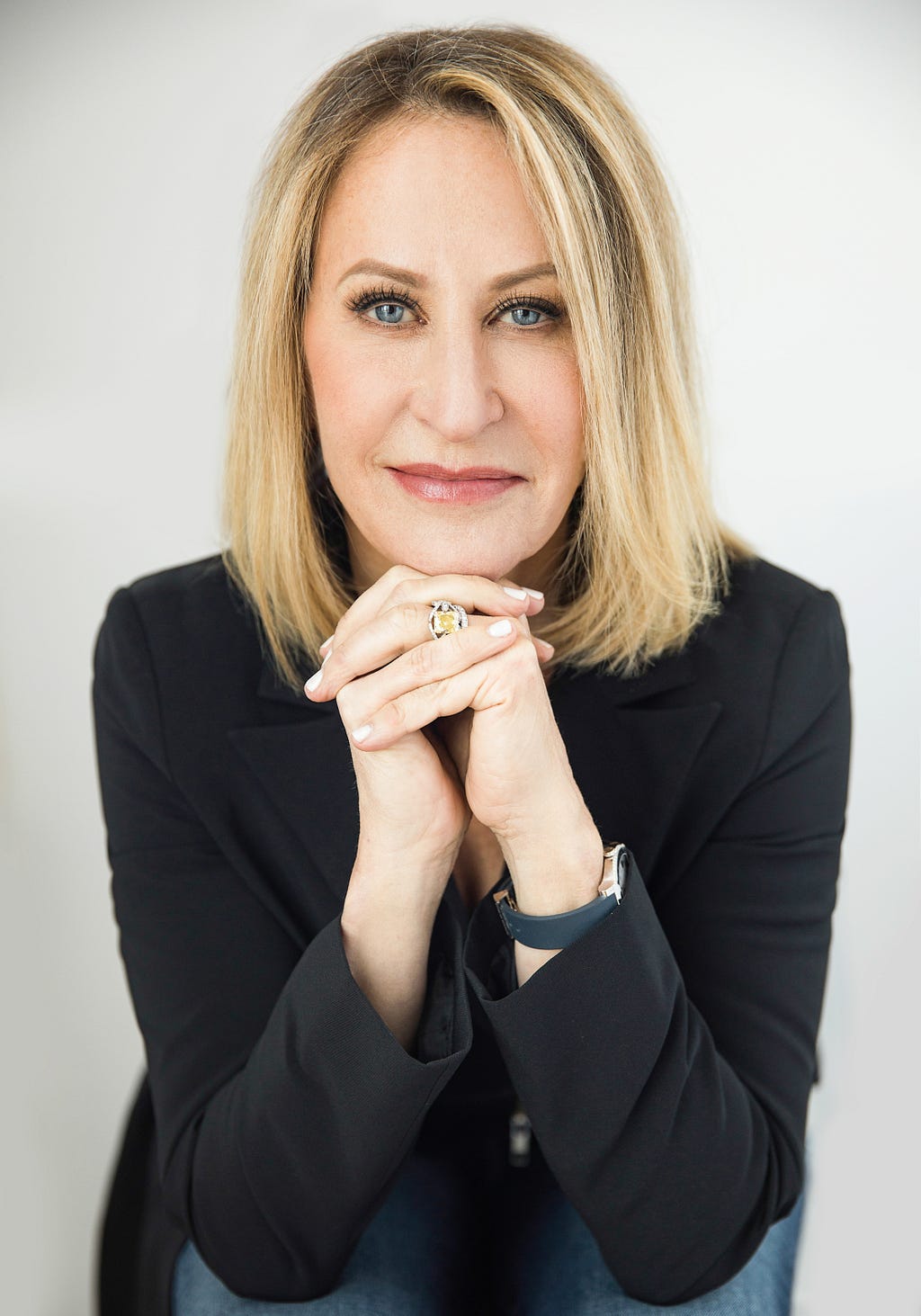
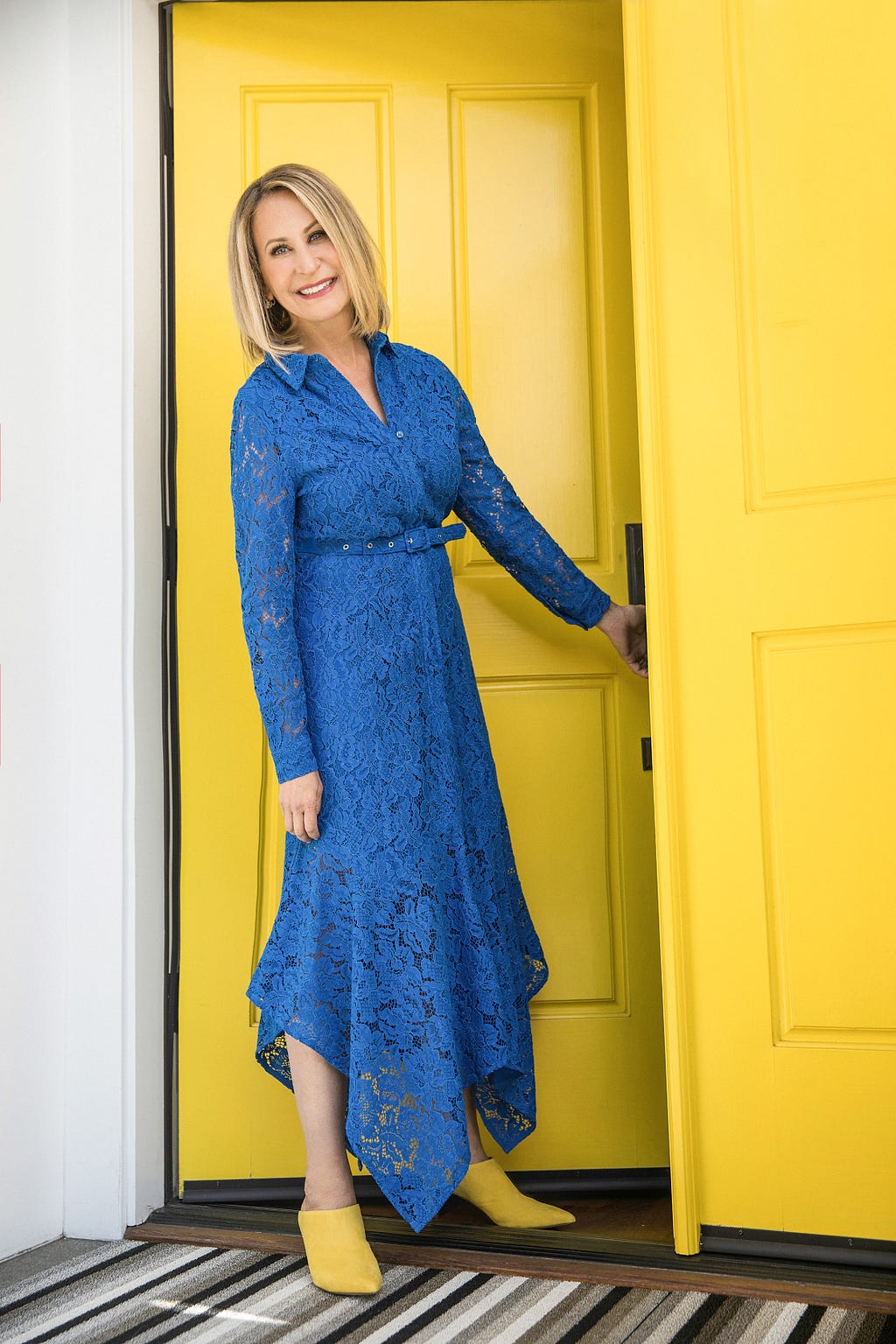
As a part of our series about women who are shaking things up in their industry, I had the pleasure of interviewing Anne Devereux-Mills.
After a 25-year career as one of the most influential women in the advertising industry, Anne Devereux-Mills founded Parlay House in 2012 in pursuit of authentic, non-transactional connection. Parlay House is a new form of inclusive community that helps thousands of women around the world find belonging far beyond their usual social circles. During the pandemic, Parlay House extended itself into the virtual arena in the form of Parlay from Away as well as the highly acclaimed podcast series Bring a Friend. Anne is also the author of the best-selling book, The Parlay Effect: How Female Connection Can Change the World.
Thank you so much for doing this with us! Before we dig in, our readers would like to get to know you a bit more. Can you tell us a bit about your “backstory”? What led you to this particular career path?
In 2009, I was at the peak of my career as an advertising industry executive and feeling like I’d “made it”. Not only was I a multiple time CEO, but I had been able to extricate myself from a very difficult marriage, raise two amazing daughters on my own, and win my battle with cancer.
But just as I expected smooth sailing, I received a call from my oncologist: the cancerous cells were back and I needed more surgery.
I walked into my boss’s office at corporate HQ to tell him that I needed to take a few weeks off, but instead of waiting for me to recover, he replaced me.
In one painful moment, I not only lost my job and my health, but my last child was leaving for college. Without the definition of myself as a strong woman, without my role as CEO and without the need to be a hands-on mother, I didn’t know who I was. That was a very dark place to be.
To add fuel to the fire, I found that most of the people who I knew through my business lens disappeared when I was out of the power seat, leaving me feeling even more disoriented and alone.
It was at that moment I decided to parlay the first fifty years of my life into something better for the next chapter. I wanted to form relationships that were deep, meaningful and lasting. I wanted to have conversations that were authentic and supportive, and to do that with women far more diverse than my usual work and social circles.
Parlay House was born from that moment.
Can you tell our readers what it is about the work you’re doing that’s disruptive?
There are many places for women to network, transact and extract.
There are many places for us to socialize.
But there are no places I know of where strangers are invited into private homes with the intention of having deep, meaningful and unexpected conversations that lift us all.
Whether we are talking about how to deal with the narcissists in our lives, hearing the personal story from a woman who climbed the steepest mountain in America on the cusp of her 70th birthday, or whether one of our members feels safe enough to tell us about her choice to be a dominatrix, we learn, exchange and grow together. What’s more, our members range from teenagers to octogenarians and across racial, sexual and political spectrums with everyone feeling that they belong.
To me, that not only feels disruptive, but also unifying in a way that so many of us need right now.
Can you share a story about the funniest mistake you made when you were first starting? Can you tell us what lesson you learned from that?
Back in the days when professional women wore stockings and skirts to work, I came out of the ladies room one day with the back of my skirt accidentally tucked into my stockings. My butt was completely on display as I walked out. But before I could make it to my meeting, a woman I didn’t know pulled me into her cubicle as I walked by, pointing out my predicament and giving me shelter to fix it.
By helping me save further embarrassment, I learned the value of small actions that are hugely meaningful to others, and how easy it is for us to support and protect each other.
We all need a little help along the journey. Who have been some of your mentors? Can you share a story about how they made an impact?
One of my greatest lessons came from a leadership coach who was brought in to help the senior team members of our company work better together. She had us all take the Strengths Finder assessment to understand ourselves better and to learn what our “superpowers” were.
She then had us write those five superpowers on a sheet of paper, without our names or any way of knowing that the attributes were ours. The papers were taped to the wall, and everyone was then asked to guess whose answers were whose.
Of course, some folks were easy to identify, and others were more mysterious. But through this process we could not only understand each other better, but we could learn who to go to for partnership and support when asked to perform tasks outside of our areas of competence. Professionals who we might have discounted became valued, and people who we might have misjudged became understood.
That was a huge lesson.
In today’s parlance, being disruptive is usually a positive adjective. But is disrupting always good? When do we say the converse, that a system or structure has ‘withstood the test of time’? Can you articulate to our readers when disrupting an industry is positive, and when disrupting an industry is ‘not so positive’? Can you share some examples of what you mean?
I believe that no industry can thrive in a constant state of disruption and yet few huge leaps can be made without finding ways to think differently.
When I was at TBWA/ChiatDay, one of our most prized clients was Apple.
If you look back on what the computer industry was like in the early days, IBM was a smooth-running company that dominated the market, effectively producing tools that enhanced work productivity. Then Apple came along and introduced computers that were designed not just as business systems, but as tools to enhance creativity at work and beyond. Our Agency created their celebrated “Think Different” campaign and the case study was always held up as a perfect example of a disruption that forever changed an industry.
Apple’s strategy and products were quantum advances in an industry that couldn’t have happened without disruptive thinking, and yet Apple as a company then needed to put systems in place to deftly execute on that creative strategy. The disruption needed to be implemented thoughtfully and systematically in order to withstand the test of time.
Now, with hindsight, we see that the advances that happened at Apple were not always better for us as a society. Critics blame companies like Apple for our society’s current addiction to technology which has had detrimental effects on our relationships with each other.
We may have become more efficient and more connected on a surface level, but the depth of our dealings with each other has been hurt by the same disruptions we celebrate.
Can you share 3 of the best words of advice you’ve gotten along your journey? Please give a story or example for each.
The first lesson is never to negotiate or have tough conversations when you’re angry. Anger gets in the way of your ability to listen, and it creates the risk that what you intend to say will not be received because your tone will get in the way of your message. And while that was work advice, I’ve personally seen that it extends to personal relationships as well.
If I had responded with anger when my boss fired me during a health crisis, I would not have been able to negotiate such a favorable exit package, and I might have damaged my reputation on the way out.
The second piece of advice was to find a career that aligns with what you are good at and what you love. I spent much of my early career in fields I thought I “should be” in, like the insurance industry (I was bored to tears) and in sales (I was horrific at wine-ing and dine-ing). But when I was able to bring my love of creativity and my strong strategic thinking and my natural leadership abilities into my work, my career began to sing.
The final insight? Untuck your skirt from your pantyhose before you leave the restroom. Enough said.
We are sure you aren’t done. How are you going to shake things up next?
Parlay House events take place “live” in 20 cities each month and we reach women around the world bi-weekly through our virtual events and our Bring a Friend podcast. But given the number of women out there who, like me, would be energized and supported by finding communities of women with whom they can have true connections, we’re just getting started on our path to launching local chapters and supporting women who support other women.
As Frida Khalo said, “I used to think I was the strangest person in the world. There must be someone just like me who feels bizarre and flawed in the same ways I do. I would imagine her, and imagine she must be out there thinking of me too.” We’re here for the Frida’s of the world who will feel a much greater sense of wholeness by knowing each other is there.
In your opinion, what are the biggest challenges faced by ‘women disruptors’ that aren’t typically faced by their male counterparts?
This is such an interesting question. I think we all know that women are still not represented at equal levels as leaders, board members and influencers. Female disruptors make men uncomfortable, and are often described as pushy, bossy, bitchy or worse. Disruptive women (and any women) are not always invited to the table or into the discussions where decisions are being made. We’re not always privy to the inside information and when the going gets tough, because we’re viewed as threatening. When the going gets tough, the men in charge seem to save the people they best relate to, which is more people like them.
But I can’t tell you how many men have asked me when I’m going to start a Parlay House for them. They point out that while it’s socially acceptable for women to confide in each other, to talk about weaknesses and vulnerabilities, that for men, those conversations are taboo.
So, while the cards are often stacked against those of us who are bold enough to disrupt systems that hold us back, we can use some of our natural instincts to form a new source of strength. That’s what Parlay House is all about.
Do you have a book/podcast/talk that’s had a deep impact on your thinking? Can you share a story with us?
When I was a freshman in high school, we had an amazing English teacher who would have “Friday Game Show” competitions where we would answer questions related to the books we had read and the topics they covered. While it was nearly 50 years ago, I still remember winning one of the week’s games by understanding the essence of Maya Angelou’s coming of age autobiography, I Know Why the Caged Bird Sings. That book, and Maya’s authentic voice helped me begin to understand the value of walking in other people’s shoes, understanding the difference in their experiences, and finding ways to pull people together. She was the first woman I was aware of who was not afraid to be bold and vulnerable, open and authentic.
Her voice, her style and her message have become a guidepost for how I try to live my life and how I have shaped the disruptive organization I’ve built.
You are a person of great influence. If you could inspire a movement that would bring the most amount of good to the most amount of people, what would that be? You never know what your idea can trigger. 🙂
When I was writing my book, The Parlay Effect, How Female Connection Can Change the World, I partnered with Dr. Serena Chen, a professor of psychology at Berkeley to research a phenomenon that I had started to observe among Parlay House members. That phenomenon was that small acts of kindness, inclusion and generosity had disproportionately positive effects on those that received them. The recipients went on to become givers of that same sort of generosity to other women they encountered. I was curious about whether I was witnessing a “pay it forward” phenomenon or whether something greater was happening.
While you’ll have to read the book to understand the whole study, what we found was that not only were these uplifting actions passed on from woman to woman, but as other people outside the chain witnessed what was happening, they started doing thoughtful, kind and generous things for others as well. The positive effect on those participating was not linear, but exponential in its impact!
Whether your “small acts of kindness” are done within our Parlay House movement, or just as you go through your life, you should know that not only will the people you lift go on to lift others, but that the world is watching, and you will have even greater impact than you might know.
Can you please give us your favorite “Life Lesson Quote”? Can you share how that was relevant to you in your life?
“Do one thing every day that scares you.” — Eleanor Roosevelt
I relate to Eleanor in so many ways, but in this single sentence she has provided two insights that have helped shape my approach to life. The first is about the value of single actions. “One thing” seems doable to me. It’s not one gr4eat thing or one meaningful thing. It’s one small thing that is achievable that day. You might succeed and you might fail, but the next day will be another chance at a small thing that is new for you.
The second is the idea of pushing yourself out of your comfort zone, even if only a little. Disruptions happen when we do just that — push boundaries, challenge ourselves and think differently.
How can our readers follow you online?
Most importantly, log into www.ParlayHouse.com and become a member!
You can also follow me on Instagram at annedevmills.com and occasionally on TikTok as annedevmills
Parlay House is worth following too! Our Parlayhouse TikTok is usually hilarious and we’re on Instagram a Parlay.House.
This was very inspiring. Thank you so much for joining us!
Female Disruptors: Anne Devereux-Mills of Parlay House On The Three Things You Need To Shake Up… was originally published in Authority Magazine on Medium, where people are continuing the conversation by highlighting and responding to this story.


