
An Interview With Candice Georgiadis
Educate yourself on the plant. People get really excited about entering a new market, but anyone who hopes to succeed in this industry needs to have a solid understanding of the cannabis plant itself and why we’re here in the first place. Once you’re a player in the industry, you become an advocate of a healing plant so the more you know about the plant itself, the better advocate you become.
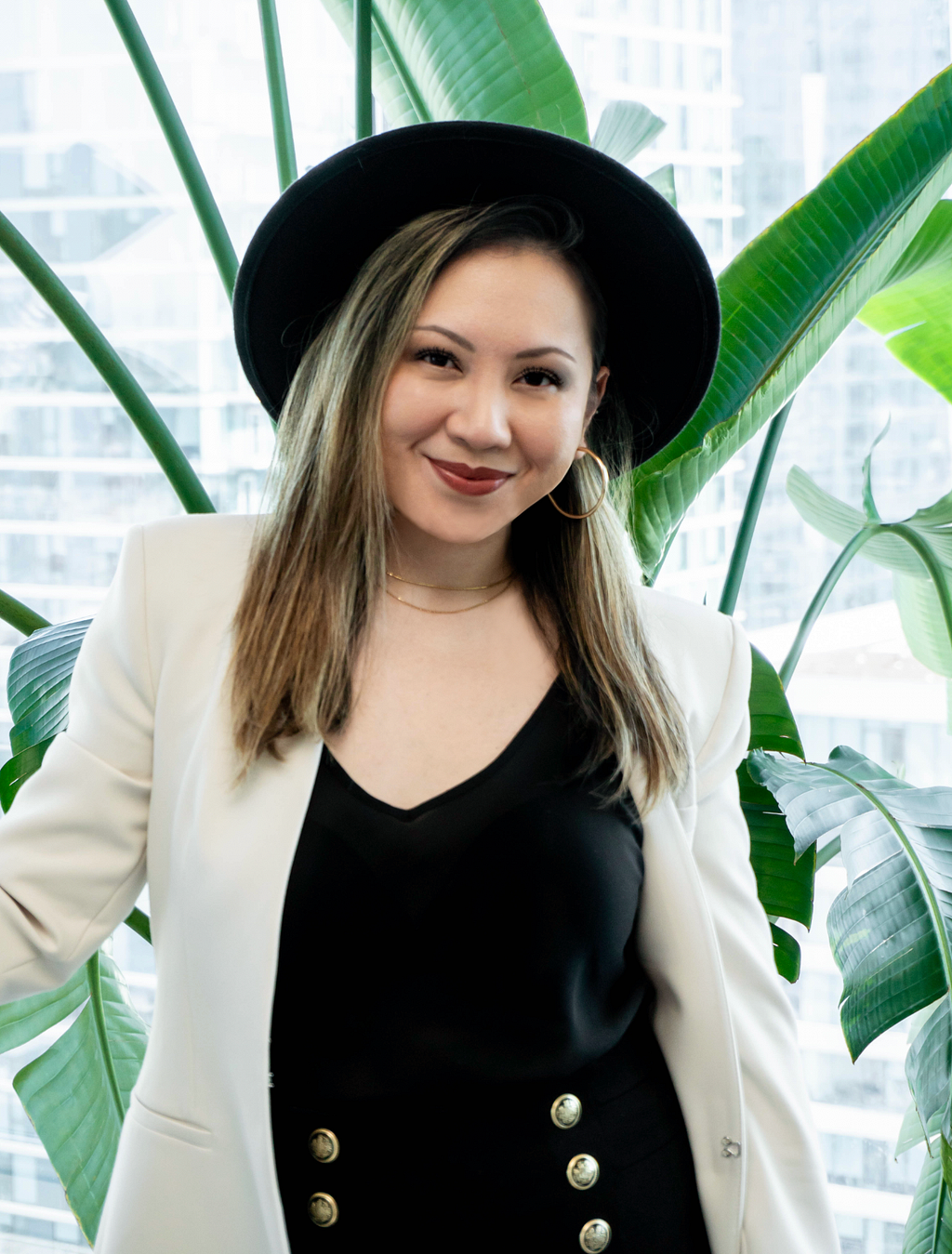
As a part of my series about strong women leaders in the cannabis industry, I had the pleasure of interviewing Kay Villamin of HUSH Chicago.
Small-business veteran Katherine “Kay” Villamin drives creative direction at HUSH Chicago, applying nearly two decades of marketing prowess with a commitment to help the regulated cannabis industry retain its culture while growing into a nationally recognized economic engine.
Her passion lies in serving minority business owners, startups and social equity operators in the cannabis industry. As an advocate and supporter of cannabis for more than 18 years, Kay entered the regulated cannabis market by providing photography services for a multistate operator. Seeing the gap between the regulated industry and legacy operators led her to co-create HUSH with Vanessa Valdovinos.
Before HUSH, Kay spent 15 years providing professional photography and creative marketing services. She launched her own wedding, event and portrait photography business in 2011 — quickly gaining recognition across multiple industries and diverse clients for event production, event marketing, media, business management, staff management, workflow automation and digital marketing.
Kay is a member of the National Cannabis Industry Association and serves on the State Regulations Committee. She also is a member of the Cannabis Equity Illinois Coalition, Albany Park Chamber of Commerce and the Chicago chapter of NORML (National Organization for the Reform of Marijuana Laws).
Thank you so much for doing this with us! Can you tell us the “backstory” about what brought you to the cannabis industry?
Cannabis has been a part of my life for over two decades now. I always say that it’s been my longest relationship and it has been with me throughout my entrepreneurial journey. I have spent most of my professional career in photography, and as a creative, this has been an integral part of my work. I eventually entered the regulated cannabis industry after many years of being behind the camera. I began photographing dispensaries, products, cultivation centers, and events for some of the top brands in the cannabis industry. The experience solidified my decision to build an agency that serves cannabis brands, with a focus on minority-owned brands and social equity operators.
Can you share the most interesting story that happened to you since you began leading your company? Can you tell us what lesson you learned from that?
We started our company without showing our faces or letting the public know who was behind Hush. From our background in events, marketing, and hospitality, we were used to making magic happen behind the scenes. Interestingly, with the release of our branding and marketing tactics all the way up to our launch party, people assumed we were men. Regardless how feminine our imagery and language were to promote our brand, I think it is very interesting that it was assumed men were responsible for our work. I learned that there is a lack of gender parity and female representation in the cannabis community, and that because it is a male-dominated industry, a lot of credit automatically goes to men. We must change that.
Do you have a funny story about how someone you knew reacted when they first heard you were getting into the cannabis industry?
I think the funniest and most repeated response was “You’re going to sell weed?!!! To this day, some of my friends and relatives still don’t know what I do in the industry, and when introduced to someone new, they tell them I know where the good weed is. And they’re not wrong.
None of us are able to achieve success without some help along the way. Is there a particular person who you are grateful towards who helped get you to where you are? Can you share a story?
I am very grateful for my friend, business partner, and co-founder, Vanessa Valdovinos. In our early 20s, we met on a plane to Italy in 2006. After just a few minutes of meeting, she told me that it was her first flight and that I needed to hold her hand. A little hesitant, I held her hand after ordering some wine from the flight attendant. Then we discovered that we were heading to the same summer program in Florence and, coincidentally, were going to live in the same apartment building over the summer.
We quickly bonded as solo travelers. Within one month, we traveled to 10 different Italian cities and experienced a life-changing adventure together. We explored art, shared music, made friends with strangers, took risks, and created memories that taught us valuable lessons. We didn’t know that those days spent together would lay the foundation of our friendship and partnership. Vanessa has supported me in every endeavor I’ve undertaken since then. In my early years as an entrepreneur, she has been an unwavering supporter, whether it was a party, a project, or a new business idea. She didn’t hesitate to join me in creating Hush. Vanessa has been by my side through all the ups and downs, laughs and tears, wins and losses, and I would not be where I am today without her. We are still holding hands 16 years later, and we are just getting started!
Are you working on any new or exciting projects now? How do you think that will help people?
Having established Hush in Chicago, we are expanding to other cities. This fall, we will launch during the MJ Biz Con week in Las Vegas. We provide immersive experiences that celebrate the plant in a safe and sophisticated environment in addition to providing a platform for cannabis brands to engage with the community. The level of production and the way we execute our events with purpose and intention provide a much-needed experience for the cannabis industry. We provide education on the plant and its consumption, bridge the gap between the industry and the community, and change how we celebrate cannabis.
Ok. Thank you for all that. Let’s now jump to the main core of our interview. Despite great progress that has been made we still have a lot more work to do to achieve gender parity in this industry. According to this report in Entrepreneur, less than 25 percent of cannabis businesses are run by women. In your opinion or experience, what 3 things can be done by a)individuals b)companies and/or c) society to support greater gender parity moving forward?
This new and fast-growing industry presents a great opportunity for more women to enter and shape it. Women have a great opportunity to change the way businesses operate and collectively, we can work to shift company culture in a way that benefits everyone. Now is the time to recognize our power as consumers, as decision makers, and to truly believe that leadership is in our nature. There are many paths left to be carved in this industry, and we can pave them.
I believe that companies need to shift away from current practices or beliefs that perpetuate gender disparity in leadership roles, such as the perception that women cannot handle money or have business relationships with men. Several studies have found that women in leadership positions are more competitive than their peers, thus outperforming them. In addition, women purchase over 85% of all consumer goods and have the world’s highest purchasing power, so we know the market from both perspectives. Companies need to understand that placing women, and especially women of color, in leadership positions provides diverse perspectives and is a great advantage for the company’s continued success and growth.
Racism, discrimination, and a lack of BIPOC leaders in the industry are among the many root causes of the gender disparity in C-suites and leadership roles. Our society needs to dissect and dismantle the current system that perpetuates oppression and discrimination. To address the issue of women and change the negative perceptions, we need more exposure, representation, and true stories on all media platforms. We need to work together and take action to create inclusive and equal opportunities.
You are a “Cannabis Insider”. If you had to advise someone about 5 nonintuitive things one should know to succeed in the cannabis industry, what would you say? Can you please give a story or an example for each.
- Educate yourself on the plant. People get really excited about entering a new market, but anyone who hopes to succeed in this industry needs to have a solid understanding of the cannabis plant itself and why we’re here in the first place. Once you’re a player in the industry, you become an advocate of a healing plant so the more you know about the plant itself, the better advocate you become.
- Learn about the history of the plant and the war on drugs. The industry and market were created by mostly Black and Brown people and cannabis became weaponized as a tool to marginalize and criminalize the same people. This plant, which was first used as medicine, became a scheduled drug. This will help you understand the current state of the industry.
- Determine your role and how you can contribute in shaping a new market. Find out how you can positively impact the industry with the information you’ve gathered after educating yourself on the plant and industry. Whether you’re working for someone else or starting your own business, having this clarity will give you the direction you need to navigate the waters.
- Ask yourself why you want to be in the cannabis industry. Some are intrinsically drawn to the industry. Others may not care, but I think it’s extremely important to think about why you’re doing what you’re doing. Why is cannabis important to you? Is it the chance to create generational wealth? Is it just about the money?
- Create a network of like-minded individuals. In any industry, connections are critical. After you’ve spent some time doing the above, you’ll be able to decide with whom you’d like to build. You will be more successful in this industry if you align yourself with people who share your values, principles, and purpose.
Can you share 3 things that most excite you about the cannabis industry?
More and more states are legalizing marijuana, and I am most excited for the amount of information we’ll be able to receive and share about the plant itself. It will be interesting to see how the plant can be used in new and interesting ways in the future.
Additionally, I look forward to learning more about new ways to consume and being informed about safe and proper dosage. As a believer in using cannabis for wellness, not intoxication, the invention and innovation of new ways to consume the plant will help patients and consumers integrate the plant into their regular health and wellness routines.
Last but not least, it is exciting to be at the forefront of a rapidly growing industry and that we have the power to shape and mold a healthy, diverse, and equitable landscape.
Can you share 3 things that most concern you about the industry? If you had the ability to implement 3 ways to reform or improve the industry, what would you suggest?
Hush continues to work hard to bridge the large gap between the industry and the culture/community, which is something that concerns me. There needs to be better integration of the culture and the community members who have created it with the regulation and corporatization of cannabis. We have organized fun, safe, educational events in person to close this gap and open up a dialogue between the community and regulators, brands and consumers, and service providers and patients.
Returning to the gender disparity issue, this is an ongoing concern since inequity isn’t just related to gender, but there is a lack of diversity and BIPOC representation within the industry. It is essential to create pathways for easier access to the industry, capital, and positions of power for people of color.
The use of cannabis tax revenue is another major concern. The money should be used to reform impacted neighborhoods, to expunge and rehab incarcerated individuals, to provide resources to communities without access to basic needs, and to reinvest in small businesses to boost economic development.
What are your thoughts about federal legalization of cannabis? If you could speak to your Senator, what would be your most persuasive argument regarding why they should or should not pursue federal legalization?
I think federal legalization will provide a lot of benefits for the industry and the country as a whole. It will provide economic benefits with billions of dollars in tax revenue, create job opportunities, and be able to increase growth in other industries such as tourism, real estate, construction, and food. Cannabis legalization will also encourage more research on the plant, so we can learn more about its medical benefits as well as provide education about safe consumption. Moreover, I believe legalizing cannabis will normalize consumption and make the general public feel safer. Banks would be more secure, and business owners would have greater access to capital. To ensure the benefits of marijuana, we need to hold our lawmakers accountable and ensure certain priorities are met — such as releasing those who have been incarcerated because of cannabis and using tax revenues to rehabilitate them.
Today, cigarettes are legal, but they are heavily regulated, highly taxed, and they are somewhat socially marginalized. Would you like cannabis to have a similar status to cigarettes or different? Can you explain?
I think we’re already seeing cannabis be treated similarly, if not regulated heavier than cigarettes, in states that have legalized sales of the plant. I believe sales taxes are necessary (even if they are excessively high in some states, like Illinois), but I also think there needs to be a better basis for taxation and a better plan for how the tax revenue will be spent. I’d like to see cannabis marketed as a medicine cabinet necessity rather than as a toxic product like cigarettes. I don’t think they belong on the same shelf.
Can you please give us your favorite “Life Lesson Quote”? Can you share how that was relevant to you in your life?
“How you do anything is how you do everything.” This quote is my number one principle. Implementing this mindset changed my life. It may seem simple, but if you really apply these words, it will have a positive impact on your actions and improve your life.
You are a person of great influence. If you could inspire a movement that would bring the most amount of good to the greatest amount of people, what would that be? You never know what your idea can trigger. 🙂
Hush started a movement that I will continue to be a part of for the rest of my life. We have developed a culture that embodies and demands higher standards from individuals in how we live our lives, how we conduct our businesses, and how we conduct business with each other. Any industry can benefit from this, as it will create a better ecosystem of self-aware individuals who can then create purposeful, inclusive, and value-driven brands. We’ve had a wild ride since we started, and being in the cannabis industry is the cherry on top!
Thank you for these fantastic insights. We wish you only continued success in your great work!
Wisdom From The Women Leading The Cannabis Industry, With Kay Villamin of HUSH Chicago was originally published in Authority Magazine on Medium, where people are continuing the conversation by highlighting and responding to this story.