
Ann Ranson: Five Things We Can Do To Develop Serenity And Support Each Other During These Anxious Times
An Interview With Candice Georgiadis
Be kind to yourself. My newest habit is thanking myself when I remember something that I had just forgotten. You know the drill — you walk into another room only to blank on your purpose for being there. Now, instead of berating myself when I make a mistake or forget something, I thank myself. I love the way it feels to have that small win.
As a part of my series about the things we can do to develop serenity and support each other during anxious times, I had the pleasure of interviewing Ann Ranson.
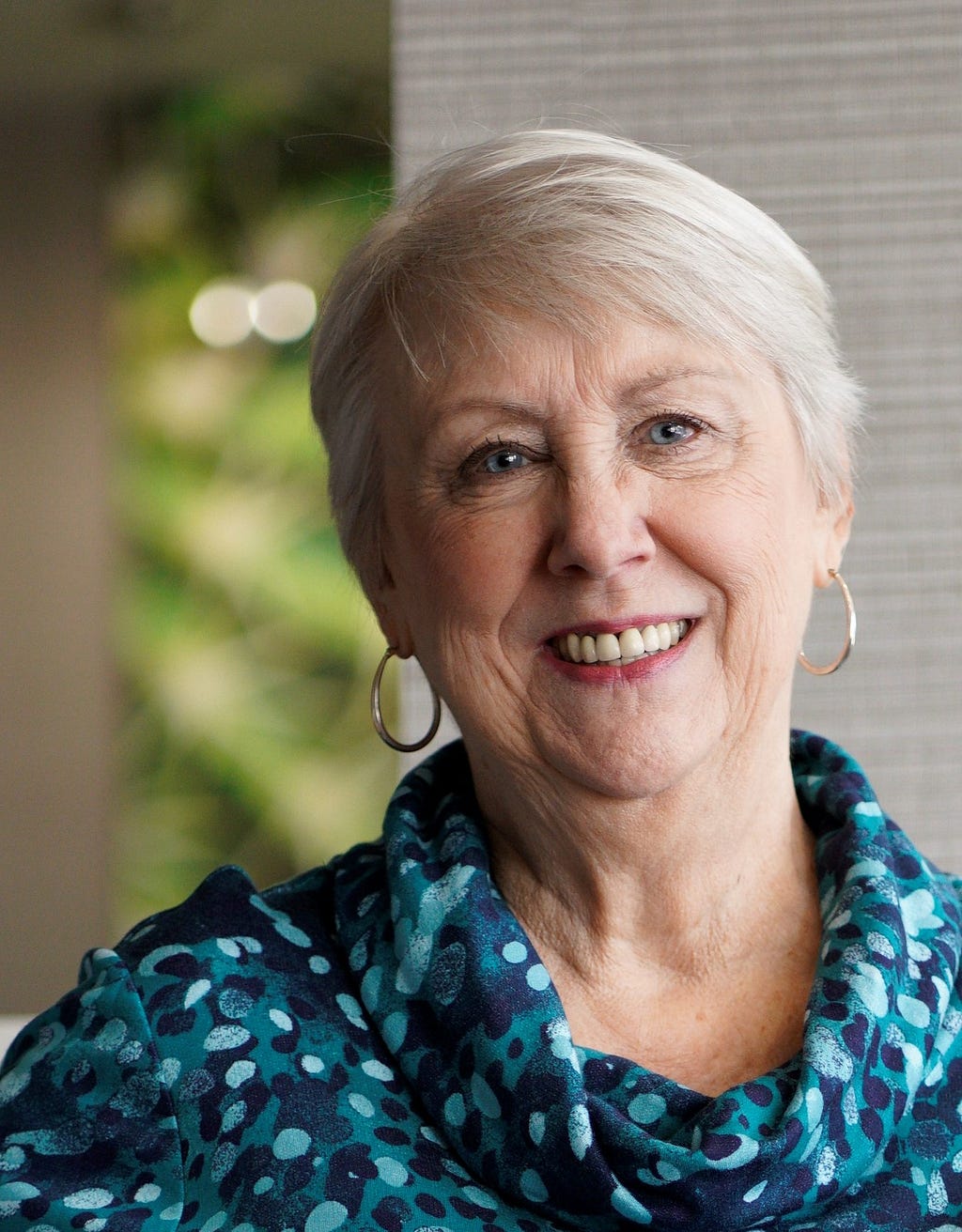
Ann Ranson is a teacher, facilitator, and coach guiding nonprofits and individuals to powerful breakthroughs. Her passion for helping others live life to the fullest has helped countless clients dig deep into the root of their situations and find ideal outcomes for happiness and success. As a two-time TEDx speaker, an Accredited Advanced Transformation Game Facilitator, and volunteer advocate for AARP Texas, Ann expertly tailors her strengths to any audience and gains insights that help provide solutions for strategic progress.
Thank you so much for doing this with us! Our readers would love to “get to know you” a bit better. Can you share with us the backstory about what brought you to your specific career path?
In 2005 as my son and I prepared to move back to Texas from Northern Virginia I was visiting with a few friends I’d made during our time living there. Reflecting on the many spiritual and life truths we’d discussed, one of them asked if I would work as her coach. In response, I heard myself say, ‘of course!
Later, I wondered. Was something new trying to emerge for or in me? For a while, I had questioned the value of my work as a radio marketing executive. Was helping sell more cars at GM going to make the world a better place? Probably not! Yet, that was my greatest desire.
It was becoming clear that I should pay more attention to the voice within. And while it was the first time I ‘heard myself say’, it wouldn’t be the last.
I came to realize that this voice would be a big part of my new life. Listening, then acting on that inner urging.
Can you share the most interesting story that happened to you since you started your career?
My work as a coach, consultant, and facilitator is actually my 2nd career. Before starting this business, I spent almost 30 years in the radio industry as a sales and marketing executive. I loved it. We worked hard and played hard. I met great people, some of whom were champions to me throughout my career. I was very blessed. But that urging I mentioned before was growing. I wanted to make the world a little bit better place. I needed a new purpose. Now seemed the time.
I guess it shouldn’t have been surprised then when, a few weeks later, in a conversation with the CEO of one of my marketing partners, she said, “you’re really good at coaching. Would you like to work with us?” Again, I heard myself say, “of course”.
At that moment I was not a trained coach, though I had always been that one in the office that people came to when they had problems or needed help. But it was obvious to me that I was being given a message, and while I’m not usually an ‘early adopter’, I felt it was right to jump in with both feet. Within weeks, I had quit my successful career, and begun researching coach’s training programs.
The best news is that I’ve never looked back, though I do miss all those great tickets.
What advice would you suggest to your colleagues in your industry to thrive and avoid burnout?
Have a touchstone; something that’s a foundation on which you can build your life. For me it’s my spiritual belief that things are always happening FOR me. I believe that in every situation there is a higher or spiritual truth, often hidden from plain site. My job is to find the unseen lesson within.
When you’re struggling or feel burnout, sit quietly, and contemplate the possible reasons for the difficulty. Consider that there are other, perhaps more positive explanation for the feelings. What if this ‘situation’ is actually a gift? What would be the surprise inside? Relax into that possibility.
What advice would you give to other leaders about how to create a fantastic work culture?
Be positive. Share Hope. Use strengths. Be open and authentic. Help people learn and do what they love. Create team values, then work every day to exemplify them. Engage everyone in creating a great work culture. Don’t make the mistake of setting a top-down strategy without contributions from the whole staff.
Is there a particular book that made a significant impact on you? Can you share a story or explain why it resonated with you so much?
Most recently, Love + Work by Marcus Buckingham. Together with Don Clifton, Marcus wrote the book Now Discover Your Strengths, the beginning of the Strengths Psychology movement. It’s the belief that when we identify and live life through our strengths, we are happier, more productive, and can more easily find inner peace.
I’ve been a fan of Marcus from the beginning. He is considered the world’s most prominent researcher on strengths and leadership at work. When Love + Work came out in Spring 2022, it felt like a gift. I was literally in the process of launching a new brand designed to integrate my work as a strategy consultant for nonprofits and my work as a coach and facilitator helping individuals live a more rewarding life. This integration exemplifies the Love + Work philosophy.
Marcus offered a series of webinars sharing a deeper dive into the wisdom the book offers. I ate it up! It seemed like it was written specifically to give me the courage to share my story. Marcus even shared that he sought Harvard Business Review as the publisher specifically because he felt it would add credibility to a topic that for some organizations might seem too ‘soft’. I was encouraged that even big guns like Marcus seek credibility.
So, I decided, if Marcus can do it and get HBR to publish it, then surely my blended offerings would reach more mainstream acceptance than I had feared. Check out my website and let me know what you think. (www.AnnRanson.com).

From your experience or research what are five steps that each of us can take to develop serenity during such uncertain times? (Please share a story or example for each.)
These are the steps that I use to find more peace.
- Sit. Ask myself questions. Listen for answers.
It may sound weird. It may even feel weird the first few times you try it. After all, we’re living in a time where FOMO is rampant, making quiet and alone time seem quaint. But I’ve found that the more I sit, the more I want to sit. I was someone who flipped on the TV after work automatically. During covid, it was hard for me to turn it off. I was sure there was something I needed to know or enjoy. Now I’m finding it easy to turn it off not even missing the adrenaline rush I was used to get. Instead, I’m learning to relax and more often now, letting the tension go.
I have found more peace and comfort from quiet contemplation that almost any other thing I’ve done to get through tough times and to expand my capacity for love and joy. It doesn’t have to be a long time. Sometimes 10 minutes is enough to break the negative energy. I’ve even found that pausing for a minute or two can reset my feelings, especially if those minutes are spent affirming something positive that I know to be true.
As you explore this practice, ask yourself for answers and insights. Ask, “what do I need to know about this situation?” Then sit and listen. Ask, “why has this event happened and what is it trying to teach me?” Then sit and listen. And, importantly, don’t judge the quantity or quality of what you hear. Remember, it’s a practice. Just develop the habit of quiet listening. Your gut will start revealing its musings. And if your critical judge shows up, politely tell her to go away.
- Feel the presence and goodness of The Divine. This has taken me a lot of practice. When my mother passed in 1985, I was furious with God, convinced that he had taken her from me, as if to deliberately cause me pain. A few years later I met a woman who showed me what it was like to love God. She taught me about God’s goodness and that this Divine being was always working for my best, never against me. Never punishing. Rather, the best champion a person could want. A far cry from the fire and brimstone God that I’d known growing up.
- Be kind to yourself. My newest habit is thanking myself when I remember something that I had just forgotten. You know the drill — you walk into another room only to blank on your purpose for being there. Now, instead of berating myself when I make a mistake or forget something, I thank myself. I love the way it feels to have that small win. In the beginning it was hard to be nice to me. Over time, it’s become easier. If I start obsessing over some supposed infraction, I give myself a limit of time to throw a pity party, then after that, it’s ‘be quiet’ or figure out how to do it differently next time. I’m grateful to be learning that it’s healthy to feel the full range of emotions, even the ones that make me uncomfortable. I just don’t have to wallow in them.
- Use heartfelt affirmations and intentions. To keep myself focused on my ideal outcomes, I use affirmations and intentions. By repeating them to myself every day, I’m opening my heart and training my mind to expect that achievement. For example, I’ve recently had rotator cuff surgery. To facilitate my recovery, I began to affirm and visualize me playing golf again. While at this moment I can barely lift a club, thinking about my backswing will help me manifest my dream to play. This intention of me hitting balls at Top Golf motivates me to do all the physical therapy even when I’m past ready to quit.
- Look for the good. There’s a saying that what we focus on expands. I’ve proven this to be true in my life. Instead of having negative thoughts about what’s wrong in society, or with my family, I focus on the good that I see around me. At least that’s my goal. I can’t always, but it is a habit I’ve worked hard to build. When I’m feeling anxious or stressed, I pause to look around for something that brings me joy, or that I like seeing. It can be two squirrels chasing each other in the yard, or a piece of art that I admire. It doesn’t matter what it is, only that you like it, and that it makes you feel good. And as a bonus, the more you look for the good, the more good you’ll see. It’s called ‘reticular activation’. There is good everywhere when we take a moment to look for it.
From your experience or research, what are five steps that each of us can take to effectively offer support to those around us who are feeling anxious? Can you explain?
I often share these 5 steps with other people who tell me they too have been helped by practicing them.
What are the best resources you would suggest to a person who is feeling anxious?
- Create a custom playlist of songs that make you happy or help you relax. Or choose one that’s already built. For quiet times, I’m partial to the playlist PEACE on Spotify.
- Read inspiring books or poetry. Consider The Prophet by Kahlil Gibran, the Bible, or The Presence, a chapter in Power Through Constructive Thinking by Emmet Fox.
- Download my Self-Discovery Workbook to learn more about what makes you tick. (https://annranson.com/free-tips-tools-self-discovery/)
Can you please give us your favorite “Life Lesson Quote”? Do you have a story about how that was relevant in your life?
“Be who you are and say what you feel, because those who mind don’t matter and those who matter don’t mind.” -Dr.Seuss
This lesson is the journey of my life. I am just now learning to live this truth and I’ve never felt so free.
You are a person of great influence. If you could start a movement that would bring the most amount of good to the most amount of people, what would that be? You never know what your idea can trigger. 🙂
Use your power for good. Have hope. Look for the positive possibilities that surround you. Learn to see the good.
What is the best way our readers can follow you online?
- www.AnnRanson.com
- www.ByTheGraceOfTea.com
- Twitter @AnnRanson: https://twitter.com/annranson
- FB: https://www.facebook.com/AnnRanson
- https://www.facebook.com/ByTheGraceOfTea
- https://www.facebook.com/TheCivilityPledge
- LinkedIn: https://www.linkedin.com/in/annranson/
- Pinterest: https://www.pinterest.com/annranson/_created/
- Instagram @annranson https://www.instagram.com/annranson/
- TEDx Talk, “Celebrating Age” https://youtu.be/cMhPOiuDzBc
- TEDx talk, “No Regrets” https://youtu.be/8_5OUE2bd2s
Thank you for these fantastic insights. We wish you only continued success in your great work!
Ann Ranson: Five Things We Can Do To Develop Serenity And Support Each Other During These Anxious… was originally published in Authority Magazine on Medium, where people are continuing the conversation by highlighting and responding to this story.