Women Of The C-Suite: Rachel Francine of Musical Health Technologies On The Five Things You Need To…

Women Of The C-Suite: Rachel Francine of Musical Health Technologies On The Five Things You Need To Succeed As A Senior Executive

An Interview With Candice Georgiadis
Being a bit of a word nerd, I looked up the exact definition of “executive” to answer this question and it’s “having the power to put plans, actions, or laws into effect.” When it comes to being a CEO in a startup, I would add that it also entails, coming up with exact plans, after taking into account, the ideas and options of your team, advisors and customers (current and/or future)…I have a bit of a maxim, which is that an idea is only as good as your ability to execute it well. If one aspires to be a CEO of a startup and is not comfortable starting with a blank page, then the gig is likely not for you. If someone is thinking about being an executive in a more traditional company and is not excited about the idea of having to marshal troops to bring that plan into action, then another role might be a better choice.

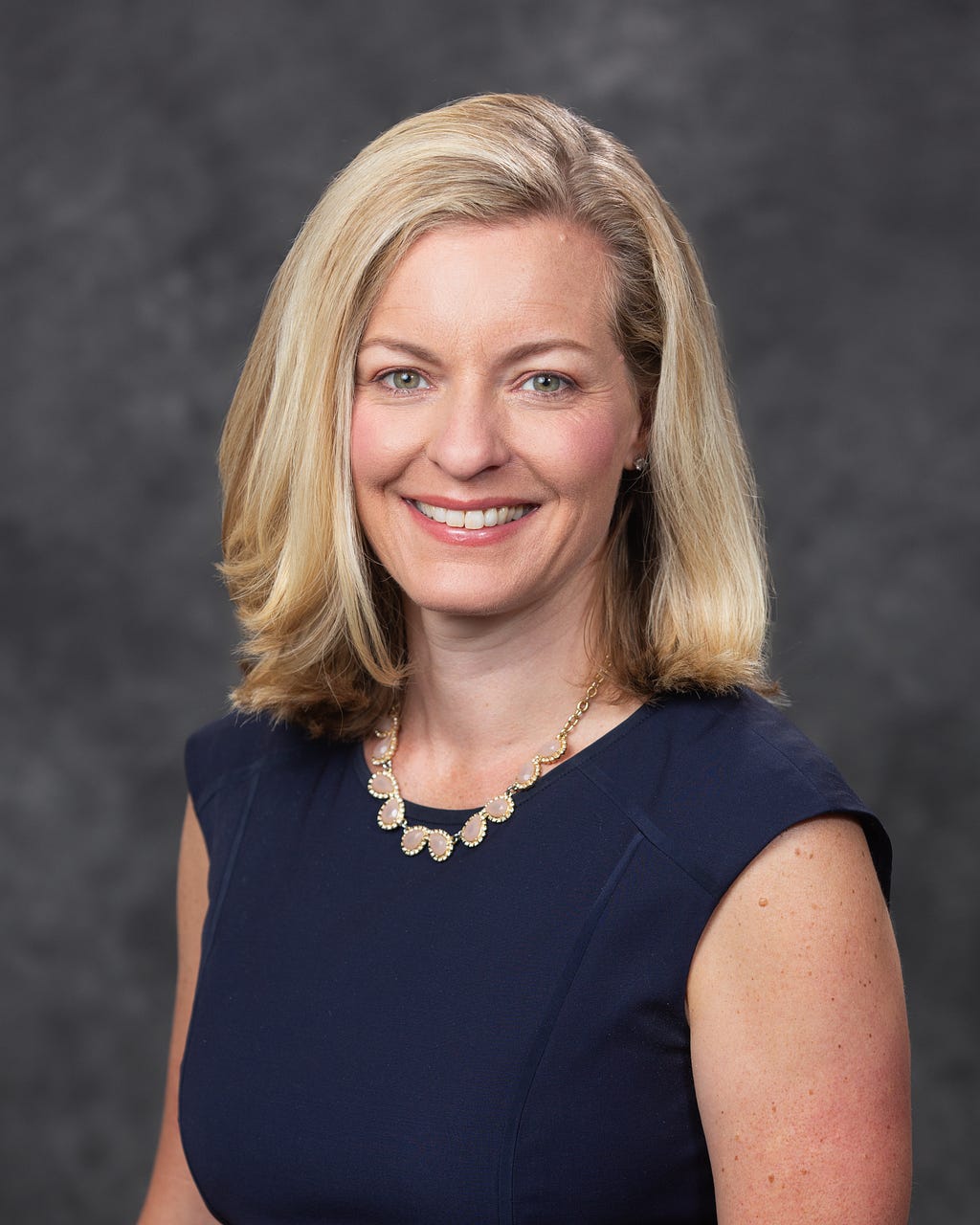
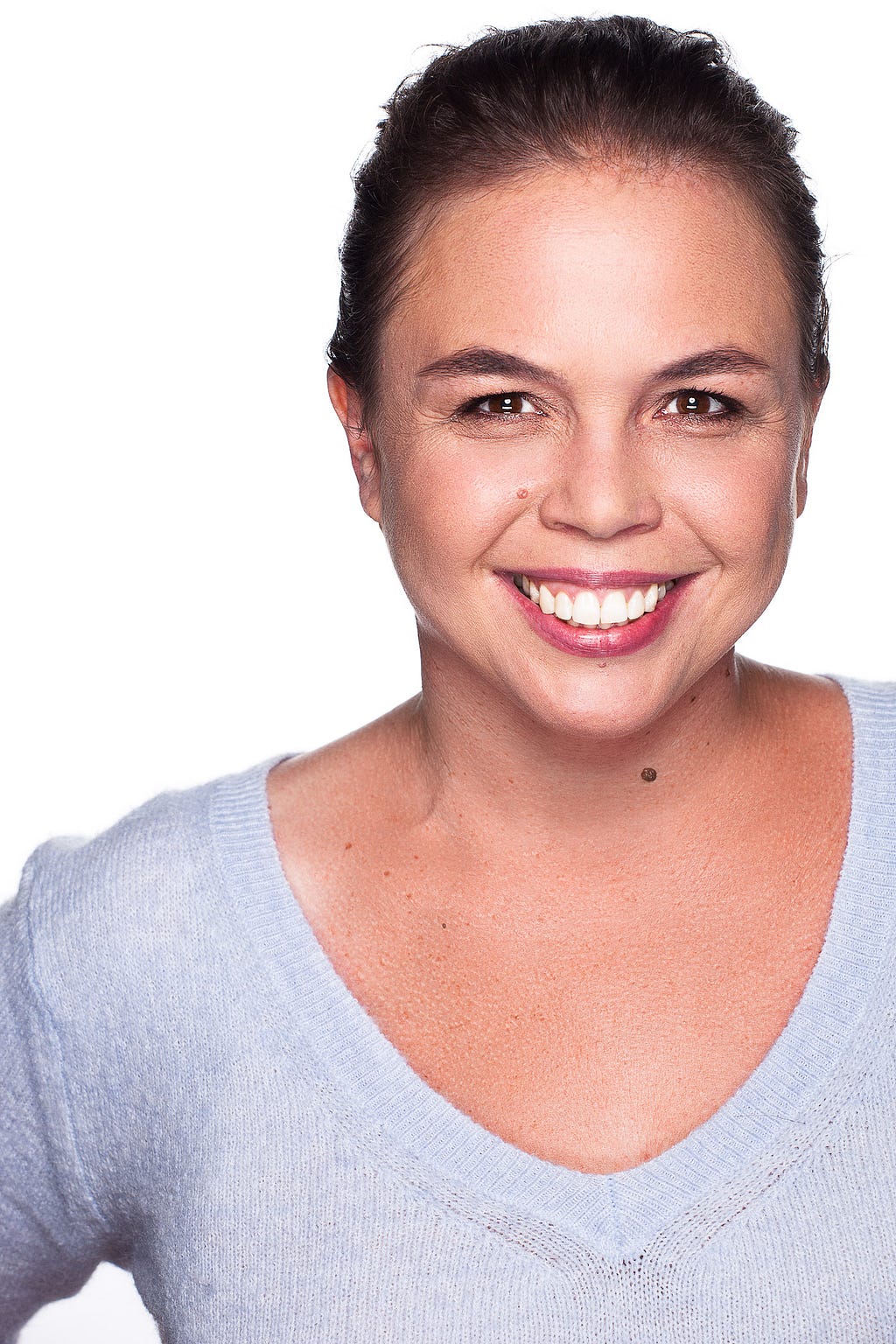
As a part of our interview series called “Women Of The C-Suite”, we had the pleasure of interviewing Rachel Francine.

Rachel Francine began her career in technology when the platform debate was VHS vs. Beta. Then, in 1996 Rachel kicked her career in tech into high gear as a member of the CitySearch.com New Markets team and spent the next decade leading teams that transformed brick & mortar businesses into digital, scalable solutions. In the 2000s, Rachel earned a master’s degree in Futures Studies from the University of Houston with a focus on transformative economics and then went on to found and become the CEO of Musical Health Technologies, whose award-winning SingFit digital health platform is successfully scaling music as medicine.

Thank you so much for joining us in this interview series! Before we dig in, our readers would like to get to know you a bit more. Can you tell us a bit about your “backstory”? What led you to this particular career path?

My dad was a serial entrepreneur back when that was called being a crazy inventor, so I grew up working at his businesses and going to the Consumer Electronics Show for vacation. When the internet came to be in 1996, I was able to get in early and thrive, because for me a blank page is more comfortable than following someone else’s path. As it happens the original core technology for our SingFit platform was first thought of by my dad in the 1960s who wanted a way to rehearse on his way to his opera lessons. You could say, I was socially and genetically engineered to do what I do.

Can you share the most interesting story that happened to you since you began leading your company?

The most interesting? Wow, so many possible answers…I got to speak at the United Nations on International Older Persons Day to talk about the statistic that in spite of the fact that the image of the ideal startup founder is someone in their 20s, founders who launch their companies in their 40s or after are statistically more successful.

It has been said that our mistakes can be our greatest teachers. Can you share a story about the funniest mistake you made when you were first starting? Can you tell us what lesson you learned from that?

Well, there was that time I tried to invent a time machine to rectify a mistake. When I was about 26 I got a promotion to the New Markets Rollout Team of CitySearch, which was the Yelp of its time. I’d been promoted about three months before and I was asked to attend a meeting with an important new client. Long story short, I overslept and missed the meeting. When I woke up and realized that my General Manager had to take the meeting on his own, I was devastated and convinced my career was over. For what seemed like five minutes, I sat there and seriously thought about how I could invent time travel. Somehow it seemed easier to figure out how to navigate space, time, and get to the meeting, than it would be to repair this horrendous mistake of oversleeping once. The GM took the meeting, all went well, and said that my work up until then had been exemplary so he wouldn’t judge me on one mistake. From that I learned that one mistake will only in the rarest circumstances define you, and also not to define someone else by one mistake.

None of us are able to achieve success without some help along the way. Is there a particular person who you are grateful towards who helped get you to where you are? Can you share a story about that?

Hazel Henderson, who just passed in mid-2022 at the age of 89. Hazel was a futurist, economist, and the godmother of modern social conscious capitalism. After a 15-year career on the internet, I’d become very disappointed with the trajectory of the sector. What began as a way to democratize media and bring people together had evolved into platforms to sell sugar water, so I went back to school and got a master’s in Futures Studies to figure out how to create businesses that could do well and do good at the same time. Every time I said something I thought was smart or innovative, my professor would say, “Hazel Henderson.” After reading her work, I got to interview her for a project. I asked her if she ever had a conflict between her morals and what a client asked her to do, she said “No.” She was in her late 70s at this point and Hazel explained to me she created an “electronic bird call” that told everyone who she was and what she believed in, and the people that she worked with “were either onboard with that or wanted to get on board.” Like everything, the reality wasn’t quite as simple as that, but Hazel became a true mentor for 15 years, right up until her passing. Her support has helped me navigate how to build a for profit business that is additive rather than destructive to society at large.

Leadership often entails making difficult decisions or hard choices between two apparently good paths. Can you share a story with us about a hard decision or choice you had to make as a leader?

When we started Musical Health Technologies, we were not sure what condition and demographic we would point our SingFit digital health platform to, in order to increase health outcomes. Singing as a therapeutic tool can be used to help a variety of conditions including dementia and autism, which is where many of the 10,000 music therapists focus. Ten years ago, the idea of the Silver Economy wasn’t really spoken about, whereas a lot of attention was focused on autism. There were many factors that went into choosing to focus on dementia and cognitive health. Part of it was simply because very few companies in digital health and healthcare overall were focused on dementia, and we thought there was a real need in that market even if it wasn’t the “hot” thing at the time. Now the older adult market is getting much more attention, because people now realize it’s an $800 trillion dollar industry worldwide.

Ok, thank you for that. Let’s now jump to the primary focus of our interview. Most of our readers — in fact, most people — think they have a pretty good idea of what a CEO or executive does. But in just a few words can you explain what an executive does that is different from the responsibilities of the other leaders?

Being a bit of a word nerd, I looked up the exact definition of “executive” to answer this question and it’s “having the power to put plans, actions, or laws into effect.” When it comes to being a CEO in a startup, I would add that it also entails, coming up with exact plans, after taking into account, the ideas and options of your team, advisors and customers (current and/or future)…I have a bit of a maxim, which is that an idea is only as good as your ability to execute it well. If one aspires to be a CEO of a startup and is not comfortable starting with a blank page, then the gig is likely not for you. If someone is thinking about being an executive in a more traditional company and is not excited about the idea of having to marshal troops to bring that plan into action, then another role might be a better choice.

What are the “myths” that you would like to dispel about being a CEO or executive? Can you explain what you mean?

There is a general perception that you need to have a big personality and be traditionally charismatic to be a CEO so people will “follow you”. The book “Good to Great” dispels this perfectly by delving into the data around the characteristics of great leaders as defined by those who took a good company and made it great, both in terms of revenue and worker satisfaction. The book defines a great leader as a Level Five or Servant Leader, meaning (paraphrasing greatly) it’s your job as leader to help everyone else do their job well and not vice versa. By studying hundreds of businesses, the author and his research team found that CEO’s who might not be the center of attention at a party, but the person spending their time listening to everyone else, are statistically more likely to build a truly great company.
In your opinion, what are the biggest challenges faced by women executives that aren’t typically faced by their male counterparts?

The potential answers here are almost too abundant and range from the fact that only 2% of venture funding goes to female founders, to the expectations of looking “put together” are so much higher than for men. For example, we put an average $8 worth of product on our faces a day. The time and expense of this cannot be underestimated. The list can go on and it can get disheartening. What I like to focus on in the 21st century, what advantages do women have over men in the workplace? The World Economic forum did a study on what traits are needed to be a successful leader as this century moves forward and found that emotional intelligence including empathy, listening skills, coaching, mentoring, and innovation/creativity are key. The ability to multi-task also often gets added to this list in studies. The research also shows that women tend to be better at these types of things than men. We all saw how much better countries with female leaders did at navigating the early days of COVID-19 epidemic than those with male leaders. In the past, women were encouraged to behave more like men in the workplace. I believe as time moves on, men will need to be taking on more female traits in order to compete.

What is the most striking difference between your actual job and how you thought the job would be?

I’ve worked in enough startups of various sizes that there really wasn’t much that surprised me. That said, I forget at times that there may be members of the staff that may be intimidated by me by virtue of my title/position, even though I don’t consider myself to have a particularly intimidating personality. Similarly, it’s hard to have the same kind of workplace friendships you had before because essentially, you’re viewed as “the boss.”

Is everyone cut out to be an executive? In your opinion, which specific traits increase the likelihood that a person will be a successful executive and what type of person should avoid aspiring to be an executive? Can you explain what you mean?

I think that the most essential characteristic of being a CEO/executive, especially in a startup, is grit, the ability not to give up no matter what is in your way. My dad used to say, “nothing’s ever easy” and believe me, behind every business success story, there are more obstacles and challenges than one can imagine. Certainly, not everyone has “grit” but I also believe most things can be learned if you really want to, though, of course, this takes a bit of grit. A good book to read on how to learn to do things that don’t come naturally is Playing Ball on Running Water.

What are your “5 Things I Wish Someone Told Me Before I Started” and why? (Please share a story or example for each.)

  1. When you start a business, if you aren’t in it for at least eight years, don’t start it.
  2. Enterprise sales cycles are slow.
  3. Not having competition can be a bad thing because it means you are growing the space on your own.
  4. Hiring will usually take longer than you want if you are looking for quality people.
  5. And, just for emphasis, when you start a business, if you aren’t in it for at least eight years, don’t start it.

In spite of years at startups, I don’t think I really got just how long it takes to build a business that is really running under its own steam. In our original projections, I’d had us conquering the healthcare space with our tech and moving on to the education sector in 3 years. Thankfully our investor was savvier in terms of enterprise sales cycles (I’d previously worked in direct-to-consumer) and was prepared for a longer haul.

You are a person of great influence. If you could inspire a movement that would bring the most amount of good for the greatest number of people, what would that be? You never know what your idea can trigger.

Anything involving the circular economy, which is essentially the opposite of planned obsolescence. The circular economy answers the question, how can we build things that don’t harm the environment in their manufacture and/or also stay in use longer. For example, I would love for there to be local one-stop repair shops/marketplace out there where I could bring my bags with broken zippers for someone to fix while dropping off the drawer full of cords and connectors for old electronics that I don’t need anymore. Someone else might need those cords, or they could be safely recycled, or I could get credit for them.

We are very blessed that some very prominent names in Business, VC funding, Sports, and Entertainment read this column. Is there a person in the world, or in the US with whom you would love to have a private breakfast or lunch with, and why? He or she might just see this if we tag them.

If we are shooting for the stars here, I’d say it’s a toss-up between Dolly Parton, Selena Gomez, and Lady Gaga or her mom Cynthia Germanotta, who started the Born This Way Foundation. All of these women obviously understand the power of music and are advocates for mental and cognitive health which we focus on at Musical Health Technologies.

Thank you for these fantastic insights. We greatly appreciate the time you spent on this.


Women Of The C-Suite: Rachel Francine of Musical Health Technologies On The Five Things You Need To… was originally published in Authority Magazine on Medium, where people are continuing the conversation by highlighting and responding to this story.

Lessons from a Thriving Power Couple, With Melissa and Seth Hanley of Blitz

An Interview With Candice Georgiadis

Travel. We’re very lucky that we get to travel quite a bit for work and a bit more for fun. Our international travels have taken us across Europe into parts of China, Japan, Australia and more. When we finally got to travel back to London to visit family and friends after lockdown we realized how much the energy of a new place and inspiration found in a new city means to us. It’s good for our creative process and gives us something to talk about besides the business. j/k. Kind of.

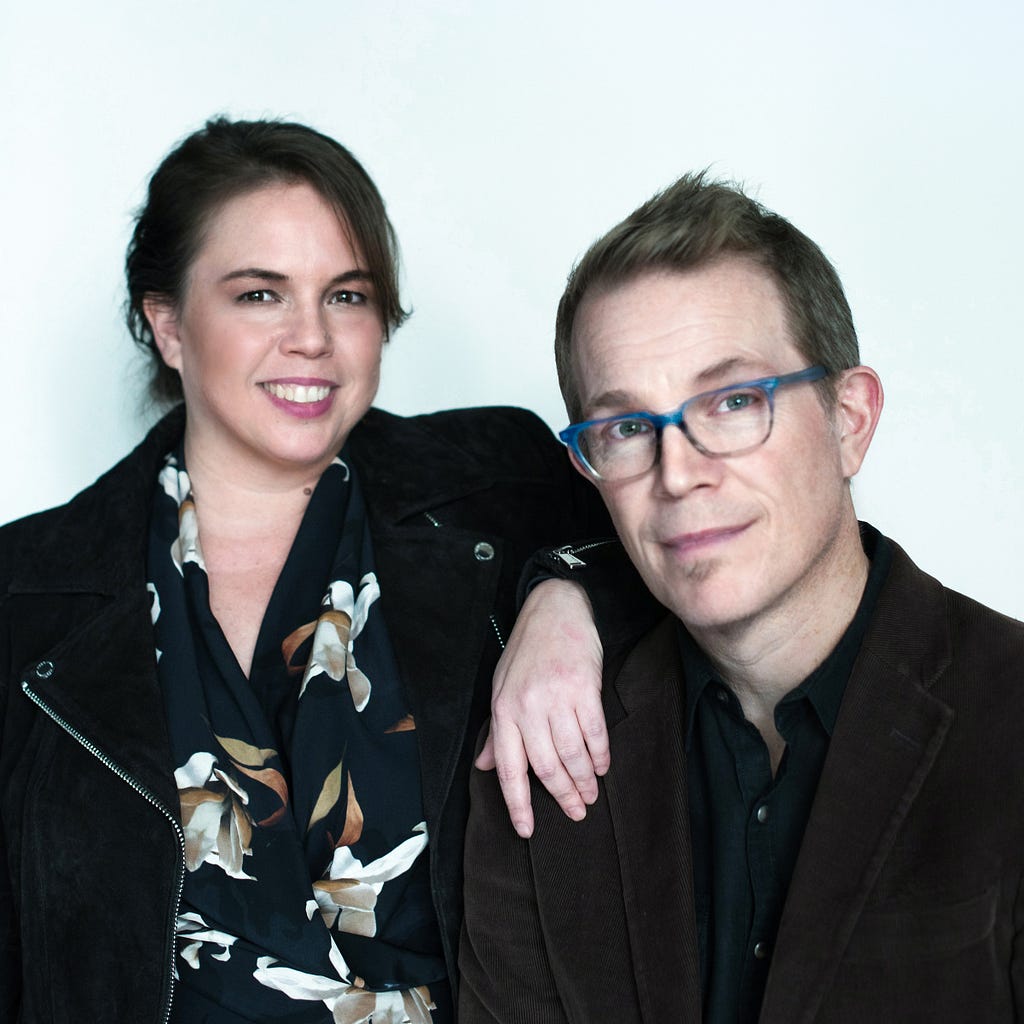
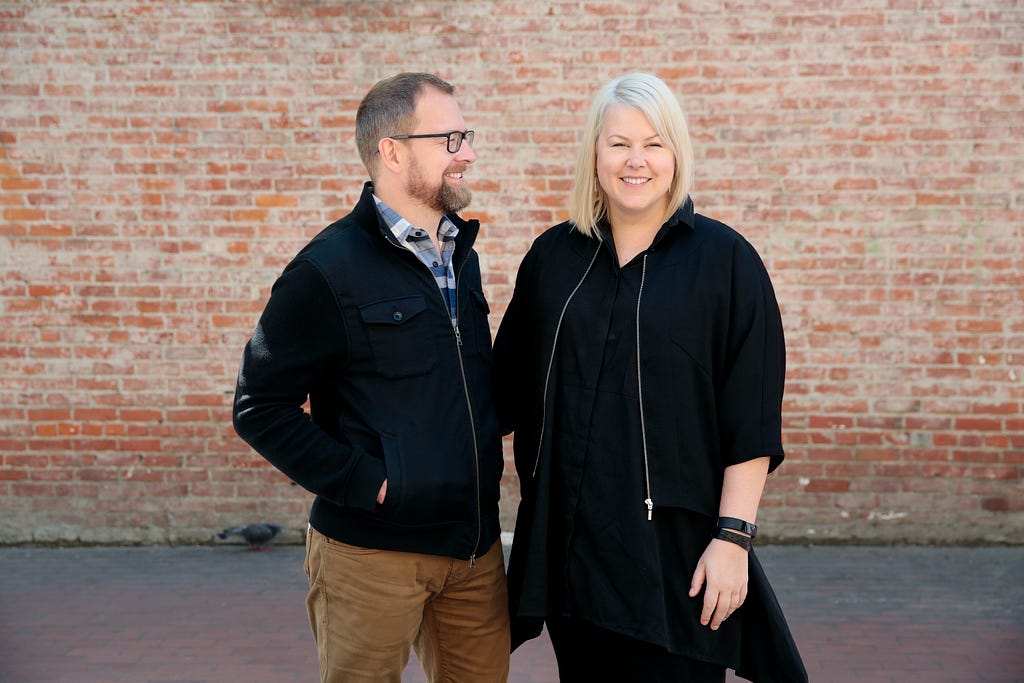
As a part of our series about lessons from Thriving Power Couples, I had the pleasure of interviewing Melissa and Seth Hanley of Blitz.

Melissa Hanley, principal and architect, co-founded award-winning commercial architecture firm, Blitz, in 2009 at the age of 26. Since then, the firm has grown to three studios (San Francisco, Los Angeles and Denver) and has undertaken commercial, retail, and hospitality projects across the world. Well-known clients include Google, Instacart, Microsoft, Levi’s, Skype, Webcor Builders, and Parachute Home. Her firm has been responsible for the design and implementation of more than 300 projects totaling over 5.5 million square feet. Melissa’s work includes many international commissions, as her firm has transformed whole buildings, complex technology campuses, and multiple offices and restaurants throughout the US, Europe, Australia, and Asia.

As an expert in commercial interior design with specific emphasis on workplace strategy, she regularly lectures at universities and contributes to technical and lifestyle publications such as Architect, Interior Design Magazine, Fast Company, Inc., SF Business Journal, Contract, Vanity Fair, GQ, The Atlantic, The New York Times, and the WSJ. Additionally she has been privileged to serve on several AIA and IIDA awards juries.

Melissa has authored Blitz’s ‘Hacker’s Guide to the Post-Covid Workplace’ and has spoken on the subject of re-entry strategy on panels for IIDA National, San Francisco Business Time Leadership Trust, Steelcase, and several real estate brokerage and venture capital firms. She lives in Sebastopol with her husband (and business partner), Seth, and two Frenchies, Beauregard and Bardot.

Seth Hanley, LEED AP Co-Founder, Principal, and Architect.

Seth, a co-founder and partner of Blitz, performs many roles in the studio and across the business, but his primary focus is assisting the Blitz team with technical feasibility and code compliance. Great design can be transformative, and getting it there requires a dedication to service and technical excellence. Seth’s day is a success when things run smoothly and clients are happy.

Seth grew up in London where he developed an early and strong interest in the built environment. That interest led him to Leeds Metropolitan University for a Bachelor’s degree in Architecture, and Oxford Brooks University for postgraduate diplomas in both Architecture and Urban Design. Seth re-settled in California in 2001. He’s been licensed to practice Architecture in California for nearly a decade and feels privileged to work everyday in an industry that he loves.

Seth has worked with leading technology companies like Skype, Comcast, Zendesk, SquareTrade, and Bandai to name a few. His work has been featured in over 100 publications around the world, including Interior Design Magazine, Vanity Fair, GQ Japan, and many international design blogs such as Contemporist, Designboom, and ArchDaily.

Thank you so much for doing this with us! Can you tell us a story about what brought you two to your respective career paths?

MH: I’m so envious of the people who say they knew they wanted to be an architect from the time they were four years old. For me, it wasn’t until my 20th birthday, but my interest in experimentation and creative design developed when I was a child. My father is a contractor and fine woodworker, and my earliest memories are of us drawing and painting together. My parents saw my interest in art and put me in after school art lessons from the age of six. Growing up in such a creative environment gave me the sense of exploration and freedom to test ideas without restraint — often to the detriment of the walls and furniture. My design epiphany came during my second year of college. At the time, I had convinced myself that I should sideline creative pursuits as hobbies only and should pursue law as my profession. I joined a mid-sized firm straight out of school doing mostly K-12 education projects. In 2006, I met my future business partner and now-husband, Seth, when he came to work at the same firm. He was in a separate studio and it took two years before we would finally get to work together on a project competition. It was on that project that we identified in each other an ally in design and a common attitude towards the world and the work.

SH: Hanley: My interest in architecture began as a child growing up in London. I was always designing and building things with LEGO as a kid, and I had my first drawing board when I was 12. After working in retail design, multi-family housing and health care I met Melissa at a mutual firm. Together we founded Blitz.

Can you share the most interesting story that happened to you since you two got married?

In mid-2009 at the height of the economic downturn, we were both laid off from the firm we were working at — along with ¾ of the staff. The next day, while nursing a serious tequila hangover, Blitz was born. There was a 40% unemployment rate in the A+E industry in San Francisco at the time and we knew that, if we wanted to stay in the profession, we were going to have to make our own way.

Within four months, through one of Seth’s connections back in the UK, we landed Skype’s North American headquarters in Palo Alto. The project quickly grew from a 10,000-square-foot space plan to a 90,000-square-foot building. We delivered the project from our dining room. It was an exhilarating and terrifying experience figuring out how to work together, build a business, and deliver what was one of the largest projects going in the Bay Area at the time. We remember pulling an all nighter until the taxi picked us up to go to the airport. We slept on the red-eye flight to London and then presented the design to the executive team that day. We completely forgot that they don’t have 11×17, they have A3 and there was quite the fluster of printing and presenting. It all worked out and that project was the springboard for the firm in many ways. While we didn’t set out to create a workplace interiors firm, we found the speed and sense of creative experimentation of the project typology aligned with the way we liked to work.

Can you share a story about the funniest mistake you made when you were first starting? Can you tell us what lesson you learned from that?

What do you think makes your company stand out? Can you share a story?

In our practice, we are looking to move the needle on progress, creativity, culture, and invention. It’s important to address meaning and value in our work while designing in a climate that prizes innovation and, foremost, speed. Our work must be more than just placing employees in workspaces to be truly valuable. This forces us to engage our clients in a conversation about why a project will be meaningful.

This is usually a new type of conversation for our clients and a new metric to judge their own work, which can be a rewarding challenge. Continuing to put the topic of “why this will be meaningful” at the center of our work is a constant challenge given the schedule and economic pressures.

Are you working on any exciting new projects now? How do you think that will help people?

We’ve been working on a new algorithm about time as a planning variable for commercial real estate. As the workforce has become more fluid and less location dependent taking into account this fluidity over time is critical to right-sizing the space requirement which, ultimately, will save our clients a lot of money in capital expenditures.

What advice would you give to other CEOs or founders to help their employees to thrive?

Taking a position of humility was critical to tackling the steep learning curve of starting a business very young (26 and 33 respectively). I’ve seen a lot of my peers act like they know more than they do and that just backfires. I’ve found more mentorship and support in this profession by honestly acknowledging what I don’t know and being open to standing on the shoulders of giants. This vulnerability signals to our staff that no one knows everything and we’re always learning. We are a team of curious people and that’s what makes our work as good as it is. We are always asking for the ‘why’ behind the ‘what’. If you already have all the answers then there is no reason to be curious which is antithetical to our values.

How do you define “Leadership”?

None of us are able to achieve success without some help along the way. Is there a particular person who you are grateful towards who helped get you to where you are? Can you share a story about that?

John Hunter, who is a prinicpal at our firm….We both worked with him at our prior firm and as soon as we could afford to hire him we did. He likes to remind us that he has been doing this for longer than we have been alive. A total sponge for details, materials and systems. He has been critical to the technical backbone of the firm. He has been critical to the cultural backbone as well as he has never shot down a crazy idea and has even developed a spec section for ‘the weird shit’ we put in projects. A 22’ dinosaur being the most banal.

What are the “5 Things You Need To Thrive As A Couple”? Please share a story or example for each.

  1. Our dogs. They are just little lights of delight and mischief and it’s hard to take anything too seriously when you have a frenchie snorting in the background.
  2. App-based support for the business of life. Instacart, grubhub, bonvoy, etc all make those annoying time-suck tasks much easier. Anything that gives us time back is huge. Since we both travel quite a bit for work (often in opposite directions — yes we’ve had airport dates while coming and going) any time we can spend together is important.
  3. Our housekeeper. We know this is super boujee but she has been with us for 12 years and we both swear that we would choose her over each other if pushed. She brings a level of care and attention to detail that any luxury business would kill for. Not spending time or emotional energy on figuring out who is going to clean the bathroom has been a game changer. After she’s been we honestly feel like someone has taken care of us — which is something of an anomaly given our roles at work and our roles within our extended families.
  4. An excellent couch. Don’t laugh. If you’ve ever spent 5 minutes in a furniture showroom observing any couple you know couch shopping is a divorce waiting to happen. We are lucky that we have very similar tastes. We just finished a 3 year renovation which had us using temporary and uncomfortable furniture and treated ourselves to an epic sectional. Being able to sprawl out with the dogs at the end of a crazy week is pretty perfect.
  5. Travel. We’re very lucky that we get to travel quite a bit for work and a bit more for fun. Our international travels have taken us across Europe into parts of China, Japan, Australia and more. When we finally got to travel back to London to visit family and friends after lockdown we realized how much the energy of a new place and inspiration found in a new city means to us. It’s good for our creative process and gives us something to talk about besides the business. j/k. Kind of.

You are people of great influence. If you could inspire a movement that would bring the most amount of good to the most amount of people, what would that be? You never know what your idea can trigger. 🙂

Carbon neutrality for all commercial real estate. Climate change is the number one threat to public health in the 21st century, anything you think of as a public health problem is probably made worse by climate change. It turns out that we in the building industry are responsible for at least 39% of human energy related climate emissions. 28% of that is running every building in existence, that’s our operational energy use. The other 11% is the structure and enclosure materials and the emissions from job site emissions from building. The only thing that humans use more of than concrete is water, not oil, not milk, not coffee. Water is the only thing we use more of than concrete. If cement production, just the cement part of concrete, was a country, it would be number three after the US and China in terms of global climate changing emissions. So if folks in the CRE industry could do one thing it would be to make their projects as close to carbon neutral as possible.

Can you please give us your favorite “Life Lesson Quote”? Can you share how that was relevant to you in your life?

MH: My mom always used to say, ‘this too shall pass’. It’s good to keep things in perspective and realize that that crisis which seems so pressing at the moment is really just a ripple in the ocean.

SH: It’s totally cheesy but Tony Robbins was interviewed on the BBC and said that ‘if you blame someone or something for the bad you also have to blame them for the good’. It reminds me that there are always two sides to a situation and we can choose to see the silver lining or dwell on the bad.

We are very blessed that some of the biggest names in Business, VC funding, Sports, and Entertainment read this column. Is there a person in the world, or in the US with whom you would love to have a private breakfast or lunch with, and why? He or she might just see this if we tag them 🙂

Cocktails with the Obamas please and thank you.

How can our readers follow your work online?

Our website studioblitz.com or our instagram @makeitblitz

Thank you so much for joining us. This was very inspirational.


Lessons from a Thriving Power Couple, With Melissa and Seth Hanley of Blitz was originally published in Authority Magazine on Medium, where people are continuing the conversation by highlighting and responding to this story.
Female Founders: Emma May of Sophie Grace On The Five Things You Need To Thrive and Succeed as a…

Female Founders: Emma May of Sophie Grace On The Five Things You Need To Thrive and Succeed as a Woman Founder

An Interview With Candice Georgiadis

It’s really lonely. As the founder the entire business lives in your head and generally your head alone. No one else knows all the details like you do. And its impossible for anyone else to know the pressure. So you get a bit stuck in your head with things. I have a few people who are my go to mentors for this. People who have been there. It isn’t something you can talk to friends or family about without overwhelming them and never being invited to dinner again. (Friends, if you are reading this I promise I won’t bore you with the story of crotchgate again).

As a part of our series about “Why We Need More Women Founders”, I had the pleasure of interviewing Emma May.

As a former corporate lawyer, senior staffer to a Premier in Canada, and founder of a boutique real estate agency, Emma May knows firsthand that getting dressed for work is way harder for women than it is for men; regrettably, women ask themselves daily questions such as, “Is this too sexy?” “Is this work appropriate?” and “Am I going to be taken seriously?”. To create clothing women their most comfortable and confident selves in, Emma May launched Sophie Grace, offering coordinated separates from comfortable, high-quality fabrics. With these pieces, women will always have cohesive, professional outfits too make them feel like their best self while tackling everything on their plate.

Thank you so much for doing this with us! Before we dig in, our readers would like to get to know you a bit more. Can you tell us a bit about your “backstory”? What led you to this particular career path?

This is now my fourth career. And it definitely was an evolution over the course of my life to get here. I started out as a lawyer, had kids in my late 20’s and spent much of my early career trying desperately to balance my need to be with my kids as much as possible with my raging ambition. And that was really effing hard. I didn’t do that well. And it was my career that took a back seat. So when I was around 38 I quit law and got licence to sell real estate. Much to the horror of my mother and husband- both of whom are lawyers. But that proved to be a really good career for me in that time of my life. I had flexibility, could use my legal skills and got to work with interesting people. Eventually a natural disaster in my town pulled me into community service. Which lead to be being promoted to a leadership position in government. When we lost the election I went back to real estate but had the drive to try something new / and a few years later I came up with the idea for SophieGrace.

Can you share the most interesting story that happened to you since you began leading your company?

I really think it was launching the it with no clue about the apparel industry and having 30 boxes of women’s workwear show up in my driveway Feb 2020 — One month before covid obliterated the need for my customer to go to the office.

Can you share a story about the funniest mistake you made when you were first starting? Can you tell us what lesson you learned from that?

We have paypal attached to our site and some customers pay us there. One day I went to log in to the account and saw that there was 60k sitting in it. I thought it was a mistake — until I realized I needed to transfer the money OUT of paypal and into my bank account. That was a stupid but lovely mistake.

None of us are able to achieve success without some help along the way. Is there a particular person who you are grateful towards who helped get you to where you are? Can you share a story about that?

There are a lot of them. I have a friend who taught me how to run a 16 week cash flow model. Product based businesses are cash flow beasts and this saved my ass. I also have an investor who looked at the deck, chatted to me for 20 min and cut a cheque. His faith in me — helped me gain faith in myself.

Ok, thank you for that. Let’s now jump to the primary focus of our interview. According to this EY report, only about 20 percent of funded companies have women founders. This reflects great historical progress, but it also shows that more work still has to be done to empower women to create companies. In your opinion and experience what is currently holding back women from founding companies?

I am not sure that women are held back from founding companies — women start small businesses at a faster rate than men. I think we have just struggled with getting money to scale them. Inherent bias mean people like to invest in things they know and understand, and people who remind them of themselves. Men are still the ones doing the funding. And until that changes — I think women and other underrepresented minorities will continue to struggle.

The funders also need to understand the problem we are trying to solve. I make clothes designed to make getting dressed as a professional woman a lot easier. Women immediately understand my concept. Men have no idea the problem even exists. Wool suit or a Patagonia vest and slacks and they are done.

Can you help articulate a few things that can be done as individuals, as a society, or by the government, to help overcome those obstacles?

Women who make money must fund other women.

This might be intuitive to you as a woman founder but I think it will be helpful to spell this out. Can you share a few reasons why more women should become founders?

Our world is not designed for us. It is still primarily constructed around men. Around their biological clocks, around their hormonal cycles, around their needs and desires. We have create a world that works just as well for us. No one else is going to build that world but us.

What are the “myths” that you would like to dispel about being a founder? Can you explain what you mean?

I think it is hard to be a founder unless you yourself are a half decent sales person. You are always selling — selling to employees, banks, customers, partners — all the time its sales.

Is everyone cut out to be a founder? In your opinion, which specific traits increase the likelihood that a person will be a successful founder and what type of person should perhaps seek a “regular job” as an employee? Can you explain what you mean?

The ability to be OK with uncertainty is probably the most important characteristic. There are things beyond my control that can go wrong at any minute. I have to trust that one way or another I will find my way through it. So the ability to stay sane and moving forward while accepting and managing risk isn’t for everyone. I have responsibility to my employees, to my investors, to my community and to my customers. This isn’t all about me anymore.

I can’t do a regular job. I never really have. So its hard for me to even imagine it anymore.

Ok super. Here is the main question of our interview. What are your “5 Things I Wish Someone Told Me Before I Started” and why? (Please share a story or example for each.)

  1. The fear doesn’t go away — but spreadsheets
  2. Make it manageable. Google Sheets is my friend. Ok, maybe more like frenemy…
  3. Why does everything seem to move so slowly when I want to move at light speed?
  4. It’s really lonely. As the founder the entire business lives in your head and generally your head alone. No one else knows all the details like you do. And its impossible for anyone else to know the pressure. So you get a bit stuck in your head with things. I have a few people who are my go to mentors for this. People who have been there. It isn’t something you can talk to friends or family about without overwhelming them and never being invited to dinner again. (Friends, if you are reading this I promise I won’t bore you with the story of crotchgate again).

How have you used your success to make the world a better place?

I am not sure I have yet. I try to make decisions that not only benefit the business but also my community, employees, the environment. We don’t make more than we need to. We have moved 80% of our production to local ethical manufacturing facilities. We have switched doing business with a supplier that fights against reproductive rights (look into where you get your shipping supplies — pro tip). Small decisions can add up over time. My hope is my small decision ends up having a larger impact.

You are a person of great influence. If you could inspire a movement that would bring the most amount of good for the greatest number of people, what would that be? You never know what your idea can trigger.

Free, well regulated childcare improves the lives of women and their children. Giving mothers the ability to get educated and work knowing their children are receiving educational care is the great gift that keeps on giving. Believing we should wait until kids are 6 years old to receive free education and care is antiquated. It sets women up to bear the economic burden of raising children (even when married) and children who receive quality early care do better in school.

We are very blessed that some very prominent names in Business, VC funding, Sports, and Entertainment read this column. Is there a person in the world, or in the US with whom you would love to have a private breakfast or lunch with, and why? He or she might just see this if we tag them.

Martha Stewart. She is balling it into her 80’s. She built incredible lifestyle brands. And she clearly has no intention of not living life to the fullest. I’m 50 now, and I want to be Martha when I grow up.

Thank you for these fantastic insights. We greatly appreciate the time you spent on this.


Female Founders: Emma May of Sophie Grace On The Five Things You Need To Thrive and Succeed as a… was originally published in Authority Magazine on Medium, where people are continuing the conversation by highlighting and responding to this story.

Tara Jackson of Empathpreneurs: 5 Things Anyone Can Do To Optimize Their Mental Wellness

An Interview With Candice Georgiadis

Regularly move your body and eat fresh fruits and vegetables daily. Taking the time to look after, and be in, your body will support you to get out of all the head thoughts, which is a support for physical and mental health.

As a part of my series about the “5 Things Anyone Can Do To Optimize Their Mental Wellness”, I had the pleasure of interviewing Tara Jackson.

Tara is an embodied business mentor, holistic health and wellness coach, author, illustrator and the founder of Empathpreneurs®, a business service for empath entrepreneurs.

Her work involves guiding sensitive and empathic entrepreneurs to create businesses they love on their terms, by healing and releasing any blocks, and aligning with their creative power.

She is the author of four books ‘Embodied — A self-care guide’, ‘Embodied Business’, ‘Embodied Creation’ and ‘Embodied Wealth’, plus the creator of the ‘Embodied Wisdom’ oracle deck.

Thank you so much for doing this with us! Our readers would love to “get to know you” a bit better. Can you share with us the backstory about what brought you to your specific career path?

I first began working in and with businesses over 20 years ago, working my way up in PR and marketing with global corporations and brands in the travel and tourism industry. I then started working in business operations, HR and new business development as I wanted to learn behind the scenes of how businesses worked knowing that I wanted my own business someday.

I have also been a virtual assistant and events manager, worked in food events and catering.

In all that time, I found myself hustling a lot, pushing, ignoring my body and I started to get burnt out, had a number of health issues — mind and body. So, I re-trained as a holistic health coach, which was my first business. As this evolved I was still doing a number of jobs in marketing and business admin, and wanted to bring it all together (along with the health and wellbeing as it’s essential to business), as I found I enjoyed doing all the various parts, and felt there must be a way to combine it all.

Then one day I had the magical idea to create something which leans on all my varied experience, and brings a holistic approach to supporting others with their businesses.

Can you share the most interesting story that happened to you since you started your career?

The most interesting thing that has happened in my career so far was feeling that I should totally let go of my first business as a health coach, even though I had just written my first book all about self-care and linking to my work then. It seemed so counterintuitive, but it was such a strong feeling that I honoured it and did let it go.

I then spent a few months in that space in between, wondering what was next. Then suddenly one day, the idea for my current business came in a flash, linking all the different parts of a business to the chakras, and still including wellbeing (along with a holistic approach to business).

Can you share a story with us about the most humorous mistake you made when you were first starting? What lesson or take-away did you learn from that?

There have definitely been a few mistakes, but I think one of the funniest (in hindsight) was in my early days in my new business as a business guide. I was sharing a free online session to invite people into a paid programme, and I had music playing for part of it as my work includes visualisations guiding people into their wisdom. Needless to say when I started to share more about the programme, after the visualisation was over, and make the offer, the music was still playing lightly in the background. Even though I had stopped sharing sound it still drowned out everything I was saying and nobody could hear a word I said. I couldn’t even see people typing in the chat to say they couldn’t hear me, as I had a slide covering it. So, I went through my first selling experience with nobody hearing a word I said. It was totally mortifying at the time and I was so embarrassed and annoyed at myself.

It taught me a lot about my own inner resistance to selling, and there was a part of me that didn’t want anyone to hear what I was saying. I’ve since done a lot of work here and had support. I also learned to double check all my tech beforehand, and make sure things are working, or how they work!

None of us are able to achieve success without some help along the way. Is there a particular person who you are grateful towards who helped get you to where you are? Can you share a story about that?

There are many people who have supported me in my business and I have had (and continue to have) some wonderful mentors and peers throughout. In all honesty, the person who has supported me throughout is my dad! He has read every single one of my email newsletters, he has believed in me and encouraged me to keep going even when there’s been seemingly nobody else. He’s the first person to have read the first draft of all my books and oracle card deck. He has just been there for me. Having that one person has made the biggest difference overall. Just having a little bit of feedback is invaluable and knowing that there is one person out there who believes in you, even if it is your dad, has kept me going.

What advice would you suggest to your colleagues in your industry to thrive and avoid burnout?

Listen to your body and its guidance. Pay attention to how you feel and do what you can to support yourself (or get help) to feel good. Our bodies are always talking to us, letting us know what’s going on inside and how they are. We are taught to ignore them and push against them, so we often don’t even recognise or receive their messages until it’s too late and we are burnt out or have other health issues.

You can start by looking after your body — physically and mentally, by eating well, moving regularly, getting into nature and incorporating practices which support your mental health such as journaling, meditation, sharing with others etc. As you do this you form a strong foundation from within and you are then also able to tell more easily when something is off or doesn’t feel good, and can change it or get support sooner.

What advice would you give to other leaders about how to create a fantastic work culture?

Listen to the people who work with and for you. Ask them how they feel and do what you can to support their needs (in ways that are realistic but also compassionate) in a working environment e.g. honouring the need for rest. Real human connection which includes care and empathy is what we are all after. If we feel seen and heard, we feel like we belong, which creates a much more inviting and supportive work culture.

Ok thank you for all that. Now let’s move to the main focus of our interview. Mental health is often looked at in binary terms; those who are healthy and those who have mental illness. The truth, however, is that mental wellness is a huge spectrum. Even those who are “mentally healthy” can still improve their mental wellness. From your experience or research, what are five steps that each of us can take to improve or optimize our mental wellness. Can you please share a story or example for each.

I find with health it often comes back to basics and really establishing a strong foundation from which to grow and add to. When you have this solid, healthy grounding in place, you are able to do and be more, and when things aren’t great it’s often less overwhelming to ‘come back’ from. This takes prioritising your wellbeing and supporting yourself with small regular things that add up. These can fit into your lifestyle and needs. I would personally do the following:

  1. Regularly move your body and eat fresh fruits and vegetables daily. Taking the time to look after, and be in, your body will support you to get out of all the head thoughts, which is a support for physical and mental health
  2. Regularly de-cluttering the mind can support mental wellness, as thoughts, especially negative ones, tend to spiral and make things appear much worse. This can be done by journaling and getting everything out, or talking to someone you trust.
  3. Getting into nature as often as you can is a huge support for mental wellness. Again it takes us out of the spiral of our own inner chatter, and connects us to the natural environment which is also grounding and calming on the nervous system.
  4. Nervous system support is also super helpful for mental (and overall) health. So many people live in stressful situations often with many demands that their nervous systems are on high alert. So doing what you can to support your nervous system will be a huge help. A couple of things that can help here are doing yoga postures with stimulate the parasympathetic nervous system and meditating. Rest is also included here, as it is so important for regenerating and resetting. A way to rest is to reduce the amount of stimulus in your life — coming in and going out. Slow down, say ‘no’ more, put more boundaries in place if needed, and allow yourself to just ‘be’ when you are able to.
  5. Finding and having an outlet for your creativity is a huge support for mental wellbeing as it allows you to connect to something beyond the day-to-day. I truly believe that everyone is creative, it is an innate part of our being and expression as humans. We have been taught that creativity needs to look or be a certain way, which is why so many people believe they aren’t creative. But actually creativity is an expression through you, and can take any form that appeals, e.g. drawing, painting, cooking, writing, pottery, dancing, acting, gardening, singing, colouring, moving, sewing, etc. There is no limit and it’s about letting yourself do it in a way that feels good to you, and is just for you (which can change later if you want).

How about teens and pre teens. Are there any specific new ideas you would suggest for teens and pre teens to optimize their mental wellness?

I would invite them (with support and guidance if needed) to look at what they are consuming when it comes to information. Social media is of course a huge trigger for mental health issues, so I would recommend curating their social feeds as much as possible to include things that are positive, motivating, feel good, inspiring and supportive of good mental health. Even though it might not seem like it, small things which are negative can build up and add to the overall picture of mental wellbeing being. It’s so easy to spiral and be impacted by what we are consuming, and with the information overload out there it is so important to be mindful of this.

The other thing that can help here is to reinforce positive self-beliefs and thoughts regularly (with support from parents/teachers/family members etc), so that there is a healthy positive foundation being put in place. This will help when/if the negative beliefs, comparing to others, and other things come up which affect mental wellbeing.

Is there a particular book that made a significant impact on you? Can you share a story?

Wild Power: Discover the Magic of Your Menstrual Cycle and Awaken the Feminine Path to Power by Alexandra Pope and Sjanie Hugo Wurlitzer.

This book totally confirmed what I had been feeling intuitively in my body and how the working world (in particular) needs to catch up and honour the varying monthly needs of people with a menstrual cycle. Reading this book gave me some added permission to really trust my body and its needs in accordance with the menstrual cycle and how it feels each week. When I do this I am able to be much more productive in my life and business, and able to work with my body not against it.

This is not to say those who don’t have a menstrual cycle aren’t included. They absolutely are, even if we have different hormones, we are all still human and NOT machines. We all need to pay more attention to the needs of our bodies and do what we can to work with them and not against them, which will have positive effects all around.

You are a person of great influence. If you could start a movement that would bring the most amount of good to the most amount of people, what would that be? You never know what your idea can trigger. 🙂

Connect to your body every single day. Our bodies are so wise and always on our side, guiding us and letting us know what’s going on. If we spend more time in and with them, learning to trust them and listen to their messages, we truly can feel amazing and be all we are capable of.

Can you please give us your favorite “Life Lesson Quote”? Do you have a story about how that was relevant in your life?

My favourite quote at the moment is ‘Slow down to do more’, as this has changed my life and my business. Rather than forcing, pushing ahead and taking action because that is what we have been taught, slowing down and doing less (even though seemingly counterintuitive) is actually more productive.

When I slow down I am more in tune with my intuition and know when something is right for me, or if it’s not, so I don’t do things that I often end up resenting, which used to happen in the past, as I was almost on autopilot saying yes to everything.

As someone with a menstrual cycle my body also needs to honour the seasons of rest in addition to action. If I push against this I end up burning out and feeling so out of balance. Whereas if I honour the times of rest, I am actually able to do, be and give more in the times when I am being called to take action.

This way has supported me in letting go of my first business, and then slowing down entirely to create the space for what my current business is today (as I shared above), which I don’t feel I would have been able to do if I had been pushing and trying to do things to be busy, productive and fill the space and my time.

What is the best way our readers can follow you on social media?

Instagram

https://www.instagram.com/empathpreneurs/

Facebook

https://www.facebook.com/groups/empathpreneurscommunity

Twitter

https://twitter.com/tara_jackson

Thank you for these fantastic insights. We wish you only continued success in your great work!


Tara Jackson of Empathpreneurs: 5 Things Anyone Can Do To Optimize Their Mental Wellness was originally published in Authority Magazine on Medium, where people are continuing the conversation by highlighting and responding to this story.
Women of the C-Suite: Vera Modenova of Flowwow on Five Things You Need to Succeed as a Senior…

Women of the C-Suite: Vera Modenova of Flowwow on Five Things You Need to Succeed as a Senior Executive

An Interview With Candice Georgiadis

Not everyone wants to climb the career ladder and you need to recognize it. Throughout my career, I have encountered several cases when a person took a managerial position and did not want to go higher professionally as they were okay with their current level. It always hurts me that it is not possible to unlock a person’s entire potential, but sometimes you have to accept it: it is much more important that a person enjoys the work they are doing.

As a part of our interview series called “Women Of The C-Suite”, we had the pleasure of interviewing Vera Modenova.

Vera Modenova is a 28-year-old COO of Flowwow, who started her journey when she was 21, handing out leaflets at the exhibition. Vera transformed from an inexperienced student into an ambitious COO with a “growth hacker” mindset. Her perseverance and burning desire to help local brands thrive is what drove her to grow the international team from 6 employees to 150, build the customer support department from scratch with a 98% of customers’ satisfaction rate, and manage operational processes to expand Flowwow internationally.

Thank you so much for joining us in this interview series! Before we dig in, our readers would like to get to know you a bit more. Can you tell us a bit about your “backstory”? What led you to this particular career path?

Since childhood, I was an energetic girl with tireless curiosity and creativity. As a 14-years-old, I strived to earn extra money; I was eager to be a professional photographer at the time. From being a sports photojournalist at football matches to selling photos on riverboats and leading corporate photoshoots, I received genuine satisfaction from the process. At the age of 16–17, I would run away to nightclubs without telling my parents: not to hang out with friends but to work as a photographer. In my student years, I was still on the lookout for part-time photography gigs as I wanted to be independent.

Perseverance and determination were the core elements that have contributed to my career and brought me to the COO position: Flowwow is a place where it is possible to fulfill my boldest ideas and ambitions.

Even now, when I am on maternity leave with a month-old child, I am involved in the working processes because I know a lot of exciting things are coming, and I want to direct my energy towards achieving them together with the team.

Can you share the most interesting story that happened to you since you began leading your company?

It was at the start of my career when I joined Flowwow in 2014 as a 21-year-old student. My friend and I worked at the exhibition, handing out leaflets. One day, the company’s founder was looking for a person to cover a support manager position for a day — we played “rock, paper, scissors” with my friend, I lost and was the one to help out in the office. This exhibition became a turning point in my career: this is when my Flowwow chapter began. From that moment, I poured my heart and soul into the company; combining work with studies and exploring a whole new world of Flowwow, I have learnt how to lead projects, what conversion is, why unit economics is important, and much, much more.

I have been working at Flowwow for 8 years now: I have built a customer support department from scratch, and we have expanded to 24 countries with the team. It is just the beginning, and I am extremely grateful to all the people who believed in me and gave me a chance to fulfill my goals.

It has been said that our mistakes can be our greatest teachers. Can you share a story about the funniest mistake you made when you were first starting? Can you tell us what lesson you learned from that?

If the following situation has never happened to you, you might know a colleague who had their microphone on at the wrong time during an important meeting. Once I participated in an interview while taking my dog to the dog wash. When I was at the reception, my microphone accidentally turned on, and everyone at the meeting heard me saying, “I have an appointment for grooming.” The interviewee did not pass the test, and I now check a hundred times whether my microphone is actually off.

None of us are able to achieve success without some help along the way. Is there a particular person who you are grateful towards who helped get you to where you are? Can you share a story about that?

I joined Flowwow as a student with no relevant experience, and there was one person who influenced me and greatly contributed to my development: Andrey Makeev, Flowwow’s co-founder. Working odd hours, I spent days with him; Andrey introduced me to a world of startups, unit economics, metrics and the product. Brainstorming the startups’ development, working 24/7, coming up with ideas to improve Flowwow during our get-togethers at the bar — it was a fascinating time that contributed to my growth as a COO and a professional. I am pleased to say our relationship with Andrey has transformed into a lifelong friendship.

Leadership often entails making difficult decisions or hard choices between two apparently good paths. Can you share a story with us about a hard decision or choice you had to make as a leader?

When forming a new department, I had a choice: hire a new head or promote a team leader. The team lead did not want to move up as the new range of duties did not interest him much, so we proceeded with hiring a new team member. Unfortunately, we had to say goodbye to each other after half a year because we had a mismatch in values and an approach. By that time, the team lead changed his mind and decided to take on new responsibilities. He has built a new department from scratch and has been actively developing it for more than a year.

Looking back, I reckon I could have made a bit more effort in promoting the team leader to the department’s head position; however, I realize it was a good lesson that helps me fulfill my employee potential as an executive.

Ok, thank you for that. Let’s now jump to the primary focus of our interview. Most of our readers — in fact, most people — think they have a pretty good idea of what a CEO or executive does. But in just a few words can you explain what an executive does that is different from the responsibilities of the other leaders?

I believe the key factors that distinguish a C-level executive are a strong sense of responsibility and tireless initiative. For instance, I’m eager to help my employees grow within the team, but I often see how they are afraid of making independent decisions, even when it comes to completing the simplest tasks. In some cases, it is enough to have an encouraging chat and reinforce the idea that one should not be afraid of making mistakes. That being said, I get very upset when it is not possible to help the person unlock their full potential.

What are the “myths” that you would like to dispel about being a CEO or executive? Can you explain what you mean?

I often came across the thought that a CEO/executive is a God who cannot be disturbed. A good C-level executive, in my opinion, is a person who knows how to find common ground with their employees and build trusting relationships. If your manager is an unattainable link in the company’s “communication chain,” you should reevaluate your choice of a workplace.

I do my best to have open communication with the entire team: whether it is a technical support specialist, a leading backend developer or a marketing director, my approach stays the same. If the head of the department does not share the same attitude, they will not stay in our team for too long. We followed this rule when there were 5 of us, and we continue to follow it today — when there are 150 team members.

In your opinion, what are the biggest challenges faced by women executives that aren’t typically faced by their male counterparts?

To be honest, I did not notice any particular challenges to this day. I was lucky enough to be in a supportive environment where men taught me how to run a business, manage operational processes, and lead a team. I am a believer that, if you have the determination and skills to build the departments from scratch, achieve new KPIs, and expand the company globally, you will become an executive in a man-dominated industry.

What is the most striking difference between your actual job and how you thought the job would be?

I have a feeling the COO position is one of the most absurd ones in our industry. On the one hand, C-level executives are expected to have primarily managerial skills: it may seem that C-level is all about delegating and focusing on your responsibilities. In reality, however, you tackle various tasks regarding the product, data, and team on a daily basis; you are at a C-level because you can effectively solve unconventional issues and adapt to the changing environment. Beware: if you do not have hundreds of employees, and the company has the startup spirit, you will not be able to delegate 100% of the tasks.

At the beginning of 2022, I was sure I would fall out of the usual work pace as I was expecting a child in the third quarter. Even though I hired new people and delegated tasks as much as possible, I found I could be in a “supervisor” mode only for the first month.

As we are entering new markets, workflow requires the most of my attention: it is essential to have a C-level person who knows all the operational processes inside out, from backend development to the marketing strategy.

Is everyone cut out to be an executive? In your opinion, which specific traits increase the likelihood that a person will be a successful executive and what type of person should avoid aspiring to be an executive? Can you explain what you mean?

Talking about traits, I will start with perseverance — for me, it is the core of any business leader. When I started my career at Flowwow, I was not the type of person who could sell anything. When you start building a product, it is essential to gather feedback and implement it to meet customers’ needs; however, you should know how to work with complaints and not take negative feedback personally. When I was responsible for attracting new customers, our co-founder would always address mistakes I made during cold calls. He even wrote them down on sticky notes and put them on my laptop. No jokes! I found it to be an insightful approach that worked for me. Then I moved on to selling: making a sale after 20 calls brought me into a euphoric state. I am 100% sure it was perseverance that helped me keep plugging away at my goals.

Always talk with your colleagues. I have to be frank with you: I do not particularly like communicating. In my ideal world, people are substituted by robots, whose work is analyzed based on reports and profound analytics; however, it would not work for a lot of positions. You should help every employee dive into the processes until you realize they have outgrown you in the field; it is particularly relevant if your employees are managers with soft skills.

Trust. Since it is impossible to replace 100% of people with robots, it is important to trust people. You cannot be everywhere and supervise each task. Your team must work independently — and for this, it is necessary to give them freedom.

What are your “5 Things I Wish Someone Told Me Before I Started” and why? (Please share a story or example for each.)

Throughout my experience, I have come up with several pieces of advice that could have assisted me in my job when I started:

  • Not everyone is like you. In my world, responsibility and initiative are a must for any person; however, I soon understood that people are divided into performers and independent workers. It is important to accept that you need both. In some situations, it is easier to formulate a transparent technical task and give it for execution, but sometimes you need a person, to whom you can say: “Mari, you need to do it — I do not know how, but you need to.” Then, a person will take over and come up with an incredible result.
  • Back up words with numbers. I had a relevant case that was very painful for me. I hired a sales manager who did not show any results for half a year. He wrote reports of such beauty and confidence for months, which I read — however, I did not delve into the operational part of the department he was building. As a result, we lost six months and, eventually, an employee. The new department was a complete mess, and all the processes had to be rebuilt. However, it was a lesson for me to back up beautiful words with beautiful numbers.
  • Not everyone wants to climb the career ladder and you need to recognize it. Throughout my career, I have encountered several cases when a person took a managerial position and did not want to go higher professionally as they were okay with their current level. It always hurts me that it is not possible to unlock a person’s entire potential, but sometimes you have to accept it: it is much more important that a person enjoys the work they are doing.
  • Delegate. I reckon it is a common problem for all managers. If your company is not a startup, and you still spend 12 hours a day at work, you need to urgently revise the processes. Even if everything suits you, the team may experience serious issues during your week-long absence. That is what has happened to me: I handed over 95% of my tasks, and within a week there was already a backlog of cases for several days ahead. It is important to distribute cases and objectively estimate your resources so as not to be a bottleneck in the entire company’s development.
  • Finding a good team is the bane of your professional existence. Believe me on this one — if you have a professional team that you trust, take them with you to new projects.

You are a person of great influence. If you could inspire a movement that would bring the most amount of good for the greatest number of people, what would that be? You never know what your idea can trigger.

My husband is developing a business that lies at the intersection of IT and medicine. That is why I know perfectly well how unideal the healthcare industry (in any country) is and how much can be changed to save lives and increase the average number of years lived, not to mention their quality. Most likely, I would start a movement to fight the most common cause of death, cardiovascular diseases. A simple installation of defibrillators in places of large social gatherings with an accessible manual can reduce mortality from an unexpected cardiac arrest by 30%.

We are very blessed that some very prominent names in Business, VC funding, Sports, and Entertainment read this column. Is there a person in the world, or in the US with whom you would love to have a private breakfast or lunch with, and why? He or she might just see this if we tag them.

I would be incredibly happy to meet with Erin Meyer, author of “The Culture Map.” Flowwow is currently making its first steps in entering markets in other countries. Whether it is about uniting sellers from different continents or making friends with customers all over the world, we strive to find common ground with people from various countries and backgrounds — and make them fall in love with our service.

Thank you for these fantastic insights. We greatly appreciate the time you spent on this.


Women of the C-Suite: Vera Modenova of Flowwow on Five Things You Need to Succeed as a Senior… was originally published in Authority Magazine on Medium, where people are continuing the conversation by highlighting and responding to this story.
Wisdom From The Women Leading The Cannabis Industry, With Carmen Brace of Aclara Research

An Interview With Candice Georgiadis

Develop a talent pipeline in your community: As an entrepreneur, connect with cannabis community groups to find employees that have the skill sets you need — and understand the culture and product.

As a part of my series about strong women leaders in the cannabis industry, I had the pleasure of interviewing Carmen Brace of Aclara Research.

Carmen Brace is an emerging trends expert with vast experience at the intersection of cannabis, wellness and the consumer packaged goods industry. She is a breakthrough strategic thinker with a successful career at the forefront of global CPG brands and entrepreneurship into emerging wellness trends.

Her futurist mindset and pioneer work ethic led to founding one of the first dedicated cannabis consumer insights companies, Aclara Research. She published the first studies on cannabis and wellness in 2017, identifying CBD as an emerging functional food ingredient.

She is a member of the Illinois Governor’s Committee on Cannabis and Health, serves on the board of directors for Chicago NORML, is an expert witness for the Illinois legislature and a featured speaker across many of the industry’s top conferences.

Thank you so much for doing this with us! Can you tell us the “backstory” about what brought you to the cannabis industry?

After a 20 year career in traditional CPG sales and consumer insights I took a year sabbatical in Spain and Mexico to explore how insights were applied across the globe. This experience led me to think about cannabis.

Can you share the most interesting story that happened to you since you began leading your company? Can you tell us what lesson you learned from that?

I quickly realized that the most valuable cannabis consumers were using cannabis to solve health and wellness needs that impact over 100 million adults. It was not about getting high, it was about getting well.

I fielded the first study of cannabis and health care in 2016 and predicted that CBD would become a functional food ingredient. At that time many didn’t believe my prediction, but it was spot on.

My foresight led to new partnerships, clients and legislative work in Illinois. And that work has directly led to more people realizing that cannabis use is driven by consumers that seek to improve their wellbeing and health.

This experience has taught me to persevere, to never give up and to take action in accordance with my convictions.

It has taught me that you must know your great skill and place big bets on yourself, no matter what. When you are ahead of the crowd, there are few that can validate your vision, but you’ve got to move forward.

Can you share a story about the funniest mistake you made when you were first starting? Can you tell us what lesson you learned from that?

I had to laugh at myself when I began shopping in dispensaries and had no idea what “flower” was. But I caught on quickly! It’s important to be willing to learn and ask questions.

Do you have a funny story about how someone you knew reacted when they first heard you were getting into the cannabis industry?

It made me realize how effective the stigma of cannabis had been on the American psyche. Colleagues that I truly respected made comments about ‘doobies’ with odd facial expressions when they found out I was working in cannabis. People never questioned what they had been told about cannabis, which was a bunch of lies.

None of us are able to achieve success without some help along the way. Is there a particular person who you are grateful towards who helped get you to where you are? Can you share a story?

I am thankful to have a community of business leaders across the CPG industry that have opened doors for me as I built a team and consulting practice in cannabis and emerging wellness trends. It’s not easy to start a business as a self-funded entrepreneur and few people understand how tough it is. I’m grateful to have clients and friends that have given me spot on counsel when I needed it.

Are you working on any new or exciting projects now? How do you think that will help people?

I’m interested in Global cannabis markets and emerging wellness trends. This year, I’ve spent most of the year in Latin America, learning more about legalization and market structure. It’s helpful to have a global perspective on the industry to see what may develop.

Ok. Thank you for all that. Let’s now jump to the main core of our interview. Despite great progress that has been made we still have a lot more work to do to achieve gender parity in this industry. According to this report in Entrepreneur, less than 25 percent of cannabis businesses are run by women. In your opinion or experience, what 3 things can be done by a)individuals b)companies and/or c) society to support greater gender parity moving forward?

This is all about access to capital. We’ve got to have capital to grow the business, and women and Black people are not getting the capital. 19% of cannabis businesses are owned by women and less than 2% are Black owned. Few women and far fewer people of color have access to the funding needed to scale a business.

There is one tradition in the funding community that hold these groups back from significant revenue growth –

The “Friends and Family” round.

Many women — and many more people of color — do not have access to family and friends with sufficient capital to raise a $500K seed round. And if the raise is for a plant touching business, capital requirements may exceed 8 figures.

Family offices and VCs are not in the business of seeding unfamiliar entrepreneurs with seed capital. These people live in a world where that task is completely attainable. But for many women and especially POC, it is not.

This is the greatest impediment to entrepreneurship. If we don’t have the initial capital to prove out the MVP, we will never be able to grow revenue and jobs.

You are a “Cannabis Insider”. If you had to advise someone about 5 non intuitive things one should know to succeed in the cannabis industry, what would you say? Can you please give a story or an example for each.

Know your regulations: working in US cannabis is similar to working internationally — the markets (states) are completely different.

Know your legislators: Develop relationships with your elected representatives that are writing the regulations that will impact your business. Regularly give them advice.

Develop a talent pipeline in your community: As an entrepreneur, connect with cannabis community groups to find employees that have the skill sets you need — and understand the culture and product.

Conduct market tours once a quarter: No matter what you do, consumer demand is the driver of the industry. Keep up with product and retail innovation through regular market visits.

Monitor the types of cannabis companies that are successfully raising capital: Subscribe to Pitchbook or New cannabis Ventures to understand capital flow shifts.

Can you share 3 things that most excite you about the cannabis industry?

Being on the leading edge of the fastest growing industry in the US

Cannabis is a $27 billion dollar industry in 2022 — the fastest growing industry in the US and it’s still federally illegal. Starting a cannabis consulting business has been a rollercoaster. It’s exciting to see the innovation, understand the history and grow the infrastructure of the industry for the last seven years.

The opportunity to help people understand the health benefits of cannabis

Over 62% Americans are more concerned about their health post-pandemic. People want to improve their well-being. It’s fun to educate people — consumers, legislators, clients — understand how these insights inform their work as the industry evolves.

Uncovering a level of resilience that I didn’t know I had

Being an entrepreneur in any industry isn’t easy — but cannabis has unique challenges. It’s satisfying to remember the successes and struggles that have led me here today.

Can you share 3 things that most concern you about the industry? If you had the ability to implement 3 ways to reform or improve the industry, what would you suggest?

The most pressing concern is to release the 40,000 people that are in prison for non-violent cannabis possession charges out of jail. And expunging everyone’s record of cannabis possession.

Most of us have read the history and know that cannabis criminalization was led by 2 political leaders that codified their racism into legislation — Harry Ainslinger and Richard Nixon. They knowingly lied about cannabis addiction to make it easier to imprison people of color.

And it worked. Black Americans represent 12% of the US population, 30% of all cannabis possession arrests and less than 2% of cannabis business owners.

With this history, we can’t allow anyone to be in jail for using cannabis. And now it’s the fastest growing industry $27B in the US.

From my home in Chicago, there are over 100 stores that sell cannabis or CBD products stores within 10 miles. Their shelves are loaded with flower and beverages and topical creams, which I can walk in and legally purchase in less than 5 minutes. Why do we have 40,000 in prison for convictions that are based on outdated laws that are in no way reflective of the current industry reality.

What are your thoughts about federal legalization of cannabis? If you could speak to your Senator, what would be your most persuasive argument regarding why they should or should not pursue federal legalization?

Many legislators don’t know the history of cannabis and why it was placed on Schedule I of the Controlled Substances Act. I’d start there.

And I’d keep talking to legislators about cannabis and health. Cannabis is an effective solution across health conditions that impact over 100 million adults. And right now, I’d focus on women’s health. Cannabis has shown to be an effective remedy from Autoimmune diseases which impact over 23 million people — and 82% are women. Clinical research on CBD and other cannabinoids will lead to more effective medications with fewer side effects.

Today, cigarettes are legal, but they are heavily regulated, highly taxed, and they are somewhat socially marginalized. Would you like cannabis to have a similar status to cigarettes or different? Can you explain?

Cannabis must be treated differently because cannabis doesn’t kill people. It’s been used since 2900 BC as a health aid. Unfortunately, this changed in the 1930s and 1970s due to the successful efforts of Harry Ainslinger and President Nixon who both chose to criminalize cannabis –I n order to codify their racist beliefs into legislation for personal gain.

In order to fully activate the power of cannabis as a health aid, regulatory treatment needs to be similar to health protocols and structure, not products that can cause sickness and death with prolonged use.

Can you please give us your favorite “Life Lesson Quote”? Can you share how that was relevant to you in your life?

I’m a fan of Daniel Burnham, who was an early futurist. His 1909 Plan for Chicago focused on transforming the city from a transportation hub to a culturally relevant, beautiful and business friendly city.

“Make no Small Plans; They Have no Magic to Stir people’s Blood. Make Big Plans, Aim High in Hope and Work, remembering that a noble, logical diagram once recorded will never die, but long after we are gone will be a living thing, asserting itself with ever growing insistency.”

You are a person of great influence. If you could inspire a movement that would bring the most amount of good to the greatest amount of people, what would that be? You never know what your idea can trigger. 🙂

I’d lead more colleagues to be the Buddha in the Boardroom. Nany of us realize that we can lead profitable businesses that do good in the world — by identifying scenarios where all can win together. Decide to win and commit to finding solutions that honor all stakeholders.

Thank you so much for the time you spent with this. We wish you only continued success!


Wisdom From The Women Leading The Cannabis Industry, With Carmen Brace of Aclara Research was originally published in Authority Magazine on Medium, where people are continuing the conversation by highlighting and responding to this story.

Inspirational Women in STEM and Tech: Christina Rebel of Wikifactory On The 5 Leadership Lessons…

Inspirational Women in STEM and Tech: Christina Rebel of Wikifactory On The 5 Leadership Lessons She Learned From Her Experience

An Interview With Candice Georgiadis

Make your mission your glue with co-founders. Most startups fail because the founders give up. What keeps us motivated is having a purpose deeply embedded in our founders’ DNA. Our glue has been our mission — we are building an infrastructure, not an application, and we are socially driven.

As a part of our series about “Lessons From Inspirational Women in STEM and Tech”, we had the pleasure of interviewing Christina Rebel.

Christina has worked at the intersection of digital fabrication, social innovation, and sustainability. As co-founder of Wikifactory she has grown the community to over 140,000 designers and engineers from around the world working on physical product innovation. She is also leading Wikifactory’s contribution to the EU-funded program Critical Making to promote diversity and inclusion in hardware development.

Thank you so much for doing this with us! Can you tell us a story about what brought you to this specific career path?

My interest in technology sparked around the age of 7. I was testing any software available on the market in the form of CDs, whether CAD design, spreadsheets, games or animation. As new hardware began to flood the markets, I would tinker with whatever I could get hold of. Growing up in China in the 90’s meant that over the years, I’d come to see how globalised production was transforming the markets and consumption worldwide. I had access to the brands and software the world was consuming at marginal prices from the street markets. Seeing how a new technology would first launch in China, gather critical mass in Europe and suddenly become part and parcel of society, made me wonder how technology could exponentially shape our lives.

Over the years, my family and I lived in different countries that suffered significant events that both shocked their economies and startled a greater interest in how societal, political and economic systems work — from the financial crises in Argentina to geopolitical tensions in the Middle East during the Afghanistan and Iraq wars. Living in many countries meant I had the opportunity to learn new languages like Chinese and Arabic, which I now appreciate for helping me understand and be more empathetic to other cultures at a deep level.

With many questions about how the world ticked and with hopes of developing my capabilities in qualitative and quantitative research methods at university, I moved to the UK to study a BA in European Politics and an MA Social and Global Justice at the University of Nottingham. Both courses were attractive to me because they offered the flexibility to combine my interest in politics, economics, philosophy, law, and even languages.

The turning point for me that sparked my interest in manufacturing technologies and the future of the production industry was when I opened up my laptop for the first time at University. I loaded up BBC news and stumbled upon an article about 3D printing and it blew my mind. From there, I would study these disciplines with the thought that the production systems of the future could be distributed, as a network.

Can you share the most interesting story that happened to you since you began at your company?

At the outset of COVID, it was simply remarkable to see the network of people with 3D printers coming together to design, test, and distribute supplies. As Spain was one of the first countries to exponentially spread the virus and where the maker network was strong across the country, the online coordination they demonstrated to engage hospitals and sanitary workers in providing emergency face shields, cloaks, and valve separators through to new ventilator systems was outstanding. In record time and out of a wish to support them with online infrastructure to manage their collaboration more effectively, we launched viralresponse.io to bring our tools for free to the community driving those efforts. But it was more than just tools that were needed.

Given the emerging growing network worldwide that followed, though locked in rural Toledo I found myself distributed around the world as I spoke to initiatives across continents about their efforts on the ground. Questions would emerge like, how could Wikifactory ensure that LATAM could learn of the early efforts from Spain, before things would spread there? We started to host webinars that are still available on YouTube to bring the global community together in the discussion around the difficult questions — like how to audit open medical supplies or how to build community through resilient supply chains.

More than 5 million face shields were supplied by the network of 100,000 in over 100 countries, a demonstration of epic collaboration. What we learned was just how fragile supply chains can be in the face of shocks and agility was made possible by the effort of a productive community. The last year has only accentuated this further. We need now more than ever, to build resilience.

It has been said that our mistakes can be our greatest teachers. Can you share a story about the funniest mistake you made when you were first starting? Can you tell us what lesson you learned from that?

When you first start learning how to use a 3D printer, failures are part of the iterative process of learning how to set it up for the material, 3D model, and machine settings that starts with huge blobs of strings but start to take form into precision. From this I learned the value of incremental, intentional improvements, and tweaks every day in the mastery of something. And just how, thanks to the 3D contributions of designers and engineers worldwide, I was able to learn how to take a 3D design to a product at hand.

But there was a particular 3D printed fail that I will never forget. At the start of our Wikifactory journey we tested a lot of things to raise some finance to keep us going whilst we built our MVP that we would pitch to investors. As part of this work, one of our activities included offering 3D printing courses in our early office in Chengdu. During these workshops, I would 3D print a batch of whistles that also served as a gift that attendees could take back with them. On one occasion, I was using copper filament and the 3D printer stalled halfway through. Though I cried ‘Fail!’, it took a student to turn around and say — ‘hey, it’s art, even for a necklace’, I was instantly inspired by that. The story of the failed print that in class opinion was named art, then became a special birthday gift whose receiver then proved that it could actually be functional by pure human ingenuity (it would actually work if you covered the side!). We then found out it ended up as a memento during a Glastonbury experience by one of her friends — it was simply absurd. But it isn’t just the absurdity of the story of the half-printed, copper whistle that makes me smile, it’s that you never know how far your failure can inspire you and others. Our 3D printing courses in China were short lived, but that was to make room for a greater focus on finally building the platform we always dreamed of.

What do you think makes your company stand out? Can you share a story?

Most online platforms for physical product design are just repositories to upload or download 3D files. However, on Wikifactory, not only can someone collaborate on product designs and seamlessly share files, but they can work together on product development, prototype and manufacture with other designers, engineers and makers virtually. Put simply, Wikifactory is creating the Internet of Production (IoP) which allows anyone anywhere to design and manufacture a product with just a laptop and an internet connection. It is about connecting the advances of smart manufacturing with the creative ingenuity of people. We believe it is about powering the human efforts and networks behind the designing, engineering and manufacturing of products with the online infrastructure to work together smarter, easier and faster. This enables us to gather unparalleled amounts of data at all stages of design to manufacturing, which can be used as ‘training sets’ for multiple high-value applications of AI and ML as well.

The IoP enables greater participation and accessibility, but it also opens the door for better innovation in design thanks to its ability to bring people together to collaborate on products. By giving everyone the tools to design, iterate and prototype their ideas we can attract a new wave of diverse and unique engineers into the sector. This increased accessibility means that the products being created are best suited to our society and provide fresh talent with skills and knowledge about technology and new tools that will appeal to companies large and small.

As companies embrace the opportunities available through the IoP by taking an integrated, collaborative approach, we can change the old way of doing things and create a futureproof global manufacturing ecosystem.

Are you working on any exciting new projects now? How do you think that will help people?

Earlier this year we launched our Marketplace, which completed the digital thread for design to production that enables our community of designers and engineers to connect with quality assured manufacturers from around the world to get their products to market. As such, our completely online platform is making it possible for anyone, anywhere to start and scale a hardware or product design company.

We will continue to improve the platform to help product companies iterate faster and easier on our platform. Further expanding our marketplace network with a greater penetration in Europe in terms of manufacturing capabilities and for materials to offer our European clients greater supply chain resilience. Beyond being able to be more agile when facing the supply chain crises with regionalised production, we also see an opportunity for greater sustainability and circularity as well.

Ok super. Thank you for all that. Let’s now shift to the main focus of our interview. Are you currently satisfied with the status quo regarding women in STEM? What specific changes do you think are needed to change the status quo?

While things are improving for women in STEM, there is still a lack of females especially within the manufacturing industry alone, currently, only 2.7% of companies worldwide are led by women.

It has been said that companies will always be in competition with each other, but perhaps success also can be guaranteed through collaboration. If we work together to improve diversity in the industry, we all end up winning. As well as having our own personal targets or those of the businesses we work for, it is important to adopt a wider view and take steps to create a more diverse and inclusive future. Wikifactory, for example, is part of the EU-funded program Critical Making — an initiative aimed at developing systematic methods to promote diversity and inclusion in open hardware development. So, whether it is in our daily interactions with our colleagues or our involvement with wider projects and schemes, there’s never been a better time to work together to create real and meaningful change through greater diversity.

It’s also crucial that organisations start introducing initiatives for women in order to appeal to them. About two years into developing Wikifactory with my co-founders, I fell pregnant with my son. It was an exciting yet very risky period in our startup journey and we were just a team of four, so naturally I was concerned about how it would impact my contribution to our company. Choosing to be open about my own fears and discussing these concerns as a team enabled us to build a true shared belief that rather than being an obstacle to success, becoming a mother was only going to make me a more creative and agile entrepreneur. This helped cement our core values of openness and diversity plus aided our path towards finding new ways of organising ourselves to accommodate each of our individual needs and strengths.

However, many women still don’t have such benefits, and companies accommodating the needs required for maternity leave is very much a new thing. There’s still much groundwork to be done in terms of formal policies and understanding. Whilst it’s incredible to celebrate and discuss the amazing work many inspirational women have done, and continue to do, these sectors are still very much on this journey.

While it may seem daunting entering heavily male-dominated industries as a female professional, it does help to get you noticed especially when you have a message to promote. I remember when I first started out in the industry, I was often one of the only women in the room at events and conferences, but I made sure I was seen and heard. Making this entrance means you can impact the accessibility and participation of women in that sector. Showing up in the sector with a purpose will rally women and men behind the change we all want to see in our industries. Today, I find myself surrounded by truly inspirational female founders, engineers and product designers from all backgrounds and parts of the globe.

Highlighting women champions also paves the way for younger girls to imagine themselves in STEM because the bias is still strong at an early age. This bias needs to be deconstructed because I would argue that many feminine qualities can be a gift for technology businesses. Women bring a new perspective, ideas and schools of thought that are invaluable in STEM roles. So while it will take more effort from women in spreading the word and talking about the opportunities to break down barriers and perceptions about women entering STEM roles, it will ultimately be worthwhile.

In your opinion, what are the biggest challenges faced by women in STEM or Tech that aren’t typically faced by their male counterparts? What would you suggest to address this?

Women face a lot of challenges in STEM that most of their male counterparts will rarely run into by virtue of their gender. This includes:

Unconscious bias

Unconscious biases frequently relate to identifying characteristics like gender, colour, age, and others that have little to do with how competent we are at our work. Unconscious prejudices affect how women in STEM advance professionally or the access they will have to leadership opportunities. This inturn creates the glass ceiling, something all women will have to experience and break through in order to progress.

Lack of support

One of the best methods to advance into leadership roles is by mentoring, coaching, or sponsorship, and a lot of women still lack this guidance. There is a general lack of senior-level women leaders which poses a significant challenge for women in more junior roles to seek advice on how to progress forward. Even when they do find mentors, women have to put in more effort and take more initiative to develop these relationships than their perceived male coworkers did.

What are the “myths” that you would like to dispel about being a woman in STEM or Tech. Can you explain what you mean?

There is a belief that women just aren’t interested in careers in STEM, but in my experience this isn’t true. Take Wikifactory for example — when we launched our Marketplace it was a team of five women who seeded the first processes to prove the acquisition, conversion, and retention of manufacturing orders we were managing between buyers and suppliers around the world. Young girls are typically not introduced to the wide range of careers in industries like scientific research, mathematics or engineering and manufacturing because of deep rooted gender stereotypes. When informed about the roles available to them though and encouraged to pursue their abilities and interests, I believe more and more young girls and women entering their careers will consider STEM roles.

What are your “5 Leadership Lessons I Learned From My Experience as a Woman in STEM or Tech” and why. (Please share a story or example for each.)

Find your Hub. It was in joining an innovative coworking space in London, the Impact Hub Westminster where I began to build relationships with members that shared the vision for a more sustainable, circular future for physical products. This is where I met my two co-founders and joined Espians, a Tech Agency that had supported Wikihouse in developing the software package that turned 3D models into sheets for CNC milling for affordable, custom-built housing that could be locally produced. The opportunity for digital fabrication machines to pave the way for global communities working together online, where their products could be produced by a distributed network was deeply inspiring.

Share early, share often. Writing a vision on paper might be the first step in giving your startup idea some weight, but it is easy to fall through in carrying beyond this first scary step. Striking the balance between perfect and sufficient is a tricky task, so remembering this mantra can help to remind you that the truth of whether your idea will stick is outside your door. With our first ideas penned to paper, it was thanks to a mentor from the Sustainability sector, that our first pitch landed in the inbox of Nicolai Peitersen. Nicolai had just co-authored the book The Ethical Economy, where distributed production was the subject of a key chapter. There was such an alignment in our values and vision for more ethical models of production that it was uncanny. Joining our efforts for societal and economic change through our entrepreneurial endeavours felt like the most natural thing.

Make your mission your glue with co-founders. Most startups fail because the founders give up. What keeps us motivated is having a purpose deeply embedded in our founders’ DNA. Our glue has been our mission — we are building an infrastructure, not an application, and we are socially driven.

Build Growth Teams. When my co-founder Tom mentioned his find of ‘Growth Hacking’ on Hackernews by Y Combinator, learning of these new methodologies became a real inspiration to face the challenge of maintaining growth differently. Discovering how to use experiment design to test hypotheses in marketing and to utilise data analyses to inform our product iterations was spot-on. Growth Hacking married concepts of management that I had come to learn through experience over the years with my love of science. These new methodologies were only beginning to emerge back then in 2018, but they sure helped us grow our community to over 140,000 strong.

Don’t isolate Technology from the Arts. Bridging the Arts into STEM so that it is STEAM is comprehensively a gain to science, technology and engineering. Inspiring science through literature and even theatre can only be of value to recognise that science needs to inspire, it is not devoid of narrative. For far too long have we sought to compartmentalise the world into categories, where a lab experiment has to be seen as something radically different to the perfection of a fermentation recipe because one is regarded as advances in science, and the other as home cooking of a more refined kind. The strict boxes are unnecessarily constraining, and I believe that in enthusing the next generation to connect these disparate areas of thinking, that we are more likely to find the solutions we need to current and future challenges.

What advice would you give to other women leaders to help their team to thrive?

It’s important for a team to feel supported and valued. As a leader, no matter if you are a man or woman, a team wants to feel that they can ask questions, be challenged and that their manager is invested in their development. With our team of five women, we were faced with a number of hurdles but together we connected the dots and found solutions for our clients in an agile way and with stellar customer support. This experience showed us the importance of the whole team feeling supported. Each individual should be given space to explore their ideas, ask questions and experiment and lean to data to help guide the path forward.

One of greatest uncertainties for any startup is how to prioritise tech, product, marketing with minimum resources, and organising this exercise in a data-driven way can breathe transparency and can help team members rally for new features on the basis of evidence. Women leaders can benefit from taking research and data analyses under their toolbelt so that we can back things up and relieve decision-making from unnecessary politics. In many contexts, we use the ICE (Impact, Confidence, Ease) method in Growth Hacking to team source a score on a set of experiments to be considered in a given sprint. I also find it an effective method to get team buy-in and be as agile as possible. Achieving alignment and consolidation as Byung-Chul Han, the best-seller Korean political theorist on power, is what is truly powerful — and this is something that feminine qualities can do very well in fostering. As Simon Sinek says about toxic leadership, champion those who build an environment for everyone to thrive, because they might not be the top performing, but we sure need their leadership to make things happen.

What advice would you give to other women leaders about the best way to manage a large team?

  • In the beginning, hire people that are better than you. You can learn with them.
  • Build an empowering internship programme that can offer youth opportunities to learn in the business.
  • Make learning a deep motivator, so that jumping in the deep end becomes part of coming out of your comfort zone.
  • Emphasize the greater WHY and purpose for alignment, breakdown into objectives and key results framework.

None of us are able to achieve success without some help along the way. Is there a particular person who you are grateful towards who helped get you to where you are? Can you share a story about that?

I almost went down an academic path, taking an assistant editor role for the journal for Local Economy at London South Bank University, but I came across a position to support a London-based entrepreneur Joseph Tenzin Oliver who was an early sustainability pioneer. I assisted him across dozens of sustainable innovation projects in events, fashion, food through to automotive. With the hype around 3D printing that was kicked off by the Rep-rap movement, with makerspaces and fablabs emerging as a network worldwide — we started helping companies like Daimler that wished to enthuse their companies with such inspirational spaces and a culture of product innovation. I wasn’t from an entrepreneurial family nor incentivised to do business, so I am very grateful to have been shown a path of purpose-led entrepreneurialism thanks to him.

How have you used your success to bring goodness to the world?

Whilst I saw what inequality meant in practice across the world as we explored the remote areas in the countries we lived in thanks to the geological explorations of my father, it was in the summers and winters spent in rural Spain where my grandparents were from that helped me grow roots and understand inequality within my own family. Whether that be access to education, job opportunities, and cultural experiences, even as a child it was obvious that these could have such an effect in determining your life circumstances. A deep sense of responsibility grew within me to commit my life’s work to give back, to make a change.

My university degree helped me define and refine my theory of social change, but it was in the practice of my entrepreneurial journey that I committed to only work in initiatives that furthered a social or environmental impact. This is why I am so grateful to be a member of the Board of the Internet of Production Foundation. The foundation’s objective is to contribute to and support the development and continuous improvement of global and decentralised ecosystems for design and product development, innovation, as well as manufacturing. With its recent establishment together with members Andrew Lamb, Niels Christian Nielsen, Martin Von Haller, and Henrik Skovby — I am extremely motivated to help drive this mission.

You are a person of enormous influence. If you could inspire a movement that would bring the most amount of good to the most amount of people, what would that be? You never know what your idea can trigger. 🙂

From wind turbines for clean energy, water filtration systems for clean water, and agricultural systems for biodiversity — product development teams were and are tackling the world’s most pressing social and environmental problems. The movement I am inspired to rally around is for universal access to the tools of creation. If we distribute access to the tools of design and fabrication towards a future where anyone that faces a problem can solve problems in their lives, then we empower local agency to have the productive tools to fabricate, test, and iterate quickly to arrive at a solution.

It is about resilient and inclusive communities where all, regardless of their gender, ethnicity, or (dis)ability, can take part in innovative problem-solving. The old adage of ‘giving a man a rod to feed him for a lifetime’ resonates with me. But it is the potential of digital fabrication to realise a more open, distributed, and circular model of design and production that has me thinking, about what if we could teach the man how to build a rod himself so that he could share with others the knowledge, and enable a whole community to feed themselves?

Can you please give us your favourite “Life Lesson Quote”? Can you share how that was relevant to you in your life?

Since I could reason with change as a child, every new adventure to a new country urged me to embrace uncertainty and challenges with hope and curiosity. I came to appreciate how much more effective it was to have an end-in-mind, over a plan. As my father always said, “The road from A to B is always under construction”.

I recently found the first career plan I ever jotted down in my storage boxes and chuckled to myself upon reading my young goals of working for the UN or becoming an Ambassador. When graduating from university with a 1st class distinction and speaking four languages I thought I could achieve my goal, but I was faced with a global financial crisis and the job market in NGOs and international institutions was heavily oversubscribed.

Thanks to this failure though, I concluded that I couldn’t wait for an organization or institution to offer me the path to meaningful work. Instead, I would set myself on the mission of creating it myself together with others that aligned with the cause. But which cause to contribute to with the thousands of social and environmental issues?

The efforts of my early entrepreneurial life in refining that end-in-mind started as broad as sustainability, and I began to need coherency and focus. In the run-up to Wikifactory, I felt that I finally had arrived at the core purpose that would be a guiding thread in every step I’d take as an entrepreneur. To realise a more sustainable, circular model of production that could empower the next generation of product innovators to distribute their ingenious hardware solutions to real-world problems. With that purpose in mind, the ‘plan from A to B’ would simply be about persistence, iteration, and greeting every day with love in my heart.

We are very blessed that very prominent leaders read this column. Is there a person in the world, or in the US with whom you would love to have a private breakfast or lunch with, and why? He or she might just see this if we tag them 🙂

It may be tricky to meet in person, but it would be fantastic even virtually to meet Christiana Figueres. Besides having heard wonders from people who have met her already, I’ve listened to her Climate Change podcast and would propose a topic on the Future of Manufacturing (which I saw she was missing). It’s one of the key questions to reduce carbon emissions — and it would be such a sincere pleasure to contribute to such a discussion with her and involve others in the fold to pave the way for a circular future for the industry. Who knows? Perhaps she would be motivated to have her country, Costa Rica, become the first circular country?

Thank you for these fantastic insights. We greatly appreciate the time you spent on this.


Inspirational Women in STEM and Tech: Christina Rebel of Wikifactory On The 5 Leadership Lessons… was originally published in Authority Magazine on Medium, where people are continuing the conversation by highlighting and responding to this story.
Thriving As A Woman In a Male-Dominated Industry: Elizabeth Eberle of Dealpath On The Five Things…

Thriving As A Woman In a Male-Dominated Industry: Elizabeth Eberle of Dealpath On The Five Things You Need To Thrive and Succeed as a Woman In a Male-Dominated Industry

An Interview With Candice Georgiadis

Share Victories: Win as a team. There is no better feeling than assembling a smart, creative, energetic group that focuses on one goal and crushes it! It builds a strong team and company culture all around.

In the United States in 2022, fields such as Aircraft piloting, Agriculture, Architecture, Construction, Finance, and Information technology, are still male-dominated industries. For a woman who is working in a male-dominated environment, what exactly does it take to thrive and succeed? In this interview series, we are talking to successful women who work in a Male-Dominated Industry who can share their stories and experiences about navigating work and life as strong women in a male-dominated industry. As a part of this series, we had the distinct pleasure of interviewing Elizabeth Eberle.

Elizabeth Eberle is Vice President of Marketing at Dealpath, the industry’s most trusted, purpose-built real estate platform, empowering hundreds of leading institutions including Blackstone, AEW, Oxford Properties, Nuveen, Principal Real Estate, and Bridge Investment Group to invest in the built world. Eberle brings more than 20 years of experience to this role, where she develops and manages product and corporate marketing strategies for Dealpath to generate company sustainability and profitability. She has held leadership roles in marketing across several industries and companies throughout her career, including VTS, Ecolab, General Mills, and IDEO.

Thank you so much for doing this with us! Before we dig in, our readers would like to get to know you a bit more. Can you tell us a bit about your childhood “backstory”?

I grew up in downtown Chicago- an incredibly vibrant, cultural mecca and wonderful city. My father was a corporate lawyer, and my mother was a creative copywriter for Marshall Fields before she stopped working to raise me and my two siblings. Back then, my dad would go off to the office and I was fascinated by what would happen at work. My mom is the most creative person I know- I often wonder if my mother had been encouraged to pursue a career what an advertising creative powerhouse she would have been. After I had my own children, I elected to keep working as I knew I would enjoy having both a family and the intellectual and creative outlet that working provides me. I am grateful every day that I get to immerse myself in business challenges, creatively solve problems and build something daily that solves real customer pain points.

Can you tell us the story about what led you to this particular career path?

I’ve always loved Marketing, starting from an early age. As a child of the 80’s, I watched a lot of TV, and particularly loved commercials and brands. My family and I would often say, “Did you see the new Coke commercial?” and talk about why we loved it. I went into advertising immediately out of college and loved working on iconic brands like DiGiorno Pizza and Gatorade. As I have continued in my career, I’ve truly enjoyed Marketing being one of the biggest drivers of a company’s financial growth and brand’s success. It’s not just about the creative output, but how marketing can serve as the strategic driver of growth for your business.

Can you share the most interesting story that happened to you since you began your career?

I’ve had so many wonderful career moments and stories, it’s hard to choose just one! I’ve met some really incredible people that have challenged me to think creatively and subsequently put me in positions where I had to get out of my comfort zone. One such career story is when I spent a year leading “Holistic Margin Management” for the Salty Snacks business at General Mills. I had the honor of working directly with the Chex Mix, Gardettos, and Bugles food plant in Milwaukee, WI to see how we could achieve cost savings in order to re-invest the savings back into advertising to drive top line growth for the P&L. Twice a month, I’d fly to Milwaukee, where I worked closely with the plant managers, line workers, procurement and supply chain leaders by donning a hard hat and steel-toed shoes to go hear directly from employees how different decisions and changes in packaging, ingredients, and SKU proliferation made at Headquarters had downstream negative impacts on margin management, efficiency, and profitability. I was able to take these insights by being in the plant, on the front lines with the workers to see where we could make improvements to the product for consumers, and save time and money in the production so I could reinvest the savings into topline growth initiatives like advertising and marketing to improve the overall P&L. I truly enjoyed my partnership with supply chain and manufacturing, which has made me a better general manager and business leader.

By the way, you should taste Bugles as they come off the line fresh! Absolutely delicious!

You are a successful business leader. Which three character traits do you think were most instrumental to your success? Can you please share a story or example for each?

Constant Learning & Evolution: I have taken a wide variety of Marketing roles in B2C, B2B, as well as industries such as Food, Design, Cleaning & Sanitation, and Commercial Real Estate. I often say that I’ve sold cereal, soap, and now software! I believe that by taking less traditional and interesting paths, I have become a “Great Marketing Athlete,” one who can see a business problem, define a customer or consumer pain point, and come up with solutions and messaging that help to solve those problems. This agility and curiosity have come from wanting to constantly grow and learn through new experiences.

Taking Risks: I haven’t followed one career path and have worked in a wide range and stages of companies. I’ve worked in Fortune 100s as well as early-stage start-ups. The risks I’ve taken are exciting and where I believe I’ve grown the most as a Marketer and Leader. In 2019, I moved to New York to go from Fortune 100 companies to tech start-ups. I contracted for a while with a few start-ups and learned that I enjoyed bringing my marketing toolbox from large companies and applying the strategy, structure, and frameworks to smaller, entrepreneurial companies. When I started at Dealpath, I was employee #38 at their Series B level of financing. I’ve had the privilege of growing this company 2x over my time here, raised our Series C, and just surpassed 100 employees. It’s really exciting, and I’m glad I took the leap from a big to smaller company!

Self-Awareness: To me, the biggest marker of an employee with potential is self-awareness. I am keenly self-aware of my strengths and weaknesses and intentionally hire people on my team who can elevate our game in areas where I do not have expertise. Not only that, but self-awareness holds you accountable, and challenges you to seek out others who can help you develop your weaknesses into strengths.

Ok, thank you for that. Let’s now jump to the primary focus of our interview. Can you help articulate a few of the biggest obstacles or challenges you’ve had to overcome while working in a male-dominated industry?

I actually see more opportunities than obstacles for women working in a male-dominated industry in this day and age. Within Commercial Real Estate, there is an impressive group of women who are strong leaders, businesspeople, and role models. Because we are a smaller group, I get access to this invaluable network of high-powered CRE women because we are so few. For example, I arrived early to a Real Estate Tech conference recently in New York City to help put up our Dealpath booth and had every intention of leaving once the conference started to get back to the office. But once I was there, I had the opportunity to meet with so many women in Real Estate who walked up to our booth to engage me in conversation and wanted to learn more. I ended up staying the entire two days and was able to make connections and build relationships that were really informative and meaningful.

Can you share a few of the things you have done to gain acceptance among your male peers and the general work community? What did your female co-workers do? Can you share some stories or examples?

The biggest thing you can do to earn trust with anyone is to follow through on your commitments- doesn’t matter whether the person is male or female. If you say you are going to do something- it’s simple- follow through and do it. When starting in a new organization, I like to put together a 90-day plan which entails a listening tour with the executive team, cross-functional leaders, and really everyone I can get to. I have a set list of 8 questions that I ask everyone. The fascinating part is to hear how different people in different functions at all levels answer the questions. I look for key themes, discrepancies, and the biggest areas where I can make an impact. I then create a “90-day action plan” and share it with every person I interviewed as my way of saying, “Thank you for taking your precious time to onboard me. I heard you, and here’s where I believe I can make the biggest impact on the organization quickly.” From there, it’s “go-time,” and I execute like mad to deliver on my commitments. It sets the tone from the beginning, and you gain acceptance, trust, and understanding of yourself as a leader, your approach, and what change and impact you will make both in the immediate and over time.

What do you think male-oriented organizations can do to enhance their recruiting efforts to attract more women?

Work Flexibility Is Key: Let’s be clear, there is no such thing as work/life balance, but rather there are work/life choices, and great talent is going to gravitate to where they are able to make the best choices for their current life situation. Organizations should understand that both women and men need to have the ability to go to life events. If you are a parent, you may have parent-teacher conferences, kid’s sports events, or, more often than we’d like, a sick kid. If you are flexible on working hours, I guarantee your employees will give you 120% back, and it might be early mornings or later evenings. Personally, I’ve appreciated how Dealpath has unlimited PTO and a flexible/hybrid work environment which allows me the flexibility to bring my whole self to work.

Ask For A Diverse Slate Of Candidates With Your Recruiting Teams From The Start: Like a marketing demand gen funnel, recruiting funnels start with the quality of the candidates from the beginning of the recruiting process. I always ask my recruiters for a diverse slate from the first round of interviews. It sets the tone of the search from the start and guarantees that we meet people of different professional and personal backgrounds who can bring new perspectives to our business.

Ok thank you for all of that. Here is the main question of our interview. Based on your opinion and experience, what are the “Five Things You Need To Thrive and Succeed as a Woman In a Male-Dominated Industry?” (Please share a story or example for each.)

  1. Collaborate: Working as a team is essential to a business’s success. No business, or team within that business, can run as a one-man or woman show. In conjunction with that, don’t be afraid to speak up about your ideas, regardless of your gender. Everyone has something to bring to the table, and it’s important that one feels they have the freedom to share their ideas with their peers. Historically, women haven’t had a seat at the table, but times have changed. The more opportunities we as women take to collaborate, the more we are seen and heard by our peers.
  2. Share Victories: Win as a team. There is no better feeling than assembling a smart, creative, energetic group that focuses on one goal and crushes it! It builds a strong team and company culture all around.
  3. Bring Creative Solutions, Not Problems: There will always be challenges that need to be faced, but the key to overcoming them is to be solution oriented. It’s easy to become overwhelmed by a problem and then create more problems in the heat of the moment to try and fix it right away. Stop, take a deep breath, and take the time to think and present a solution to the problem rather than scrambling to make it right in an instant or just focusing on the issue, which can lead to more headaches.
  4. Radical Candor: It’s incredibly important to be honest with your colleagues, and sometimes those honest conversations can be tough. It should never be someone’s goal to dwell on a mistake. Radical Candor means you are coming from a place of caring, but also want to challenge that person to do better. I’ve made a point of instilling this idea of Radical Candor in my team, and it’s allowed us to have clear lines of communication, as well as holding us accountable for our work, without being aggressive or demeaning.
  5. “Make The Soup Better”: What I mean by this is to respect and appreciate what has been built at a company, particularly when you first join. I had a mentor at a very male-dominated company once say to me, “The Soup here is really good, your job is to come in and make it better.” I loved this phrase because when you come into a new organization, you want to first seek to understand what has been built, what is really working, and then what you see that can elevate the team, the product, the brand, and the marketing to make it even better. By recognizing what is great about an organization that’s already in place, it makes you more approachable and more valuable to the organization from the get-go.

If you had a close woman friend who came to you with a choice of entering a field that is male-dominated or female-dominated, what would you advise her? Would you advise a woman friend to start a career in a field or industry that’s traditionally been mostly men? Can you explain what you mean?

I’ve always looked for opportunities that would yield the most growth, both personally and professionally. I would advise my friend that if the best opportunity currently presented to you has business momentum and you are going to learn a lot, then take it. Bonus if it is in a male-dominated field. That will allow her to catalyze even more change by bringing a different perspective that will make the company grow faster. My last three roles have been in male-dominated industries and companies where my male counterparts were great supporters and champions. I believe most hiring managers- male or female- want to find the best talent and have all the best intentions to hire a diverse team.

Have you seen things change for women working in male-dominated industries, over the past ten years? How do you anticipate that it might improve in the future? Can you please explain what you mean?

I have. Ten years ago, I didn’t see as much emphasis on diversity, equity & inclusion within companies from leadership or, better yet, coming organically from employees. Today, you see more leaders and teams realizing strong business results from assembling diverse teams. With these successes, more companies will push for culture, recruiting and retention practices, and employee networks that bring in a wide range of diverse experiences and people to drive exponential growth. There is still work to be done, but the conversations and openness to evolving industries, hiring, and retaining talent practices are there.

We are very blessed that some very prominent names in Business, VC funding, Sports, and Entertainment read this column. Is there a person in the world, or in the US with whom you would love to have a private breakfast or lunch with, and why? He or she might just see this if we tag them.

Kathleen McCarthy, who is the Global Co-Head of Blackstone Real Estate. I’ve admired her leadership style for years and have made a point of emulating it in my own leadership role at Dealpath. She’s also a great example of a woman who has been incredibly successful within the male-dominated industry that is real estate, and serves as a role model for all the other female real estate professionals, myself included.

Thank you for these fantastic insights. We greatly appreciate the time you spent on this.


Thriving As A Woman In a Male-Dominated Industry: Elizabeth Eberle of Dealpath On The Five Things… was originally published in Authority Magazine on Medium, where people are continuing the conversation by highlighting and responding to this story.
Thriving As A Woman In a Male-Dominated Industry: Kendra Cole of The CryptoMom App On The Five…

Thriving As A Woman In a Male-Dominated Industry: Kendra Cole of The CryptoMom App On The Five Things You Need To Thrive and Succeed as a Woman In a Male Dominated Industry

An Interview With Candice Georgiadis

Be clear on who you are and what you stand for. This will be a challenging road to walk and you will often encounter situations that you don’t agree with or hear things said that you don’t like. Are you going to stay silent and go along with it? Or, are you going to challenge the status quo?

In the United States in 2022, fields such as Aircraft piloting, Agriculture, Architecture, Construction, Finance, and Information technology, are still male-dominated industries. For a woman who is working in a male-dominated environment, what exactly does it take to thrive and succeed? In this interview series, we are talking to successful women who work in a Male-Dominated Industry who can share their stories and experiences about navigating work and life as strong women in a male-dominated industry. As a part of this series, we had the distinct pleasure of interviewing Kendra Cole.

Kendra Cole is the Co-Founder and CEO of The CryptoMom App, a crypto investment management platform for women, made by a woman. Black-owned and woman-run, The CryptoMom App aims to close the crypto gender gap by providing the tools necessary to make cryptocurrency more accessible and digestible to women and moms. Her work has caught the attention of Amazon, who selected Kendra to participate in its Impact Accelerator for Black Founders, a prestigious program that supports underrepresented startup founders with the goal of building a more diverse cloud.

Thank you so much for doing this with us! Before we dig in, our readers would like to get to know you a bit more. Can you tell us a bit about your childhood “backstory”?

I was born in Everett, WA, where the majority of my early childhood memories were spent at my grandparents’ house. I come from a large family of 7 aunts and uncles and so many cousins, so there were a lot of wonderful memories: long days of playing outside with my cousins, cooking dinner with my grandmother, my grandpa reading to me every morning.

At age 5, my mom received a promotion at her job so we moved to Sacramento. This would be the first of many times I would witness the work ethic, difficult decision-making and long hours in the office with my mom. As a single parent, my mom worked shifts at GTE (now Verizon), so I often spent many nights doing homework and sleeping under my mom’s desk. While I’m sure she experienced mom guilt, the only thing I remember is having so much fun being able to go to work with her. At age 8, we moved again to Tampa for another job promotion, where I spent the remainder of my childhood until I graduated from high school.

Even with her unpredictable work schedule, my mom kept me involved in activities that I enjoyed, like dance class, gymnastics, softball and track and field. Being involved in competitive sports taught me so many valuable lessons, from building stamina to achieve long-term goals, to pushing myself to (healthy) limits both physically and mentally. These lessons stuck with me as I built my career and founded my own cryptocurrency startup.

Can you tell us the story about what led you to this particular career path?

My career has primarily been in public relations and corporate communications, leading campaigns and events for global and startup CPG and tech companies. In recent years, I’ve had the privilege of supporting ground-breaking women-led businesses that are helping bring visibility to the issues most important to women, such as Black maternal mental health and equitable parental leave policies. As a working mom of three, I’ve had the privilege of having a supportive village that allowed me the space to continue pursuing various interests in my career, one of those being cryptocurrency.

About two years ago, my interest in crypto piqued, as I had heard about it on social media but wasn’t sure how to get involved. After researching basic fundamentals, I built the confidence to buy my first crypto asset but when I went to sign up for various exchanges, I was thwarted at various points, such as being able to verify my identity due to a name change as a result of taking my husband’s last name in marriage. Then, once I was finally on a platform, the technology wasn’t intuitive to me and the products didn’t serve me and my priorities in the various roles I see myself: career woman, mom, aunt, friend, to name a few.

After speaking with other millennial women, I realized that while my challenges were not rare, they were unique specifically to women. The more I looked into this, the more I realized women were being left out of this important discourse surrounding crypto as a means to building wealth. According to the Gemini State of Crypto Report, bitcoin was initially built around encouraging financial equity, but over 75% of crypto holders are men — creating an uninviting culture that gatekeeps women from participating in this $2.2 billion industry. This, coupled with my experience of working with inspirational women-led startups, led me to want to support the 10 million+ crypto-curious women who want to know more, but don’t know where to start.

Unlike any other platform that exists, The CryptoMom App allows women to buy and sell bitcoin, allocate it to meaningful products like college funds, and give the gift of crypto for special occasions. We also provide financial products and educational tools tailored to the lived experiences, careers, salaries, and technology preferences of women to make cryptocurrency investing more accessible and practical.

Financial independence has given me the freedom to live life by my own design. As a mom, I hope my legacy contributes to empowering female investors to take control of their financial destinies, and create financial independence for themselves, their daughters, and the generations to come.

Can you share the most interesting story that happened to you since you began your career?

In starting The CryptoMom App, I’ve been able to bring in my friends and family on this journey with me, which is the most fulfilling part of this. Our business is truly a family affair: my technical co-founder is my husband, my Chief UX/UI designer is my sister in law, my communications lead is my best friend. And our friends and family round is 90% funded by people of color and women. All of this serves as motivation to succeed.

You are a successful business leader. Which three character traits do you think were most instrumental to your success? Can you please share a story or example for each?

  1. Never take ‘no’ for an answer: There are going to be so many times potential investors or partners tell you ‘no,’ so thick skin is required. You can be open to feedback, but you don’t have to let it kill your dream. When we submitted for a local Chicago pitch competition, it took us three times before we won. Each loss taught us something and helped us sharpen our positioning and our pitch.
  2. Listen to your gut: Women are often told to ignore that little voice inside of you and I would say, NEVER do that. Whether in business or personal, your intuition can save you money or even save your life.
  3. Advocate for yourself: Women, in particular, often suffer from imposter syndrome and for good reason: corporate structures stifle women’s creativity, make it more challenging for women to advance their careers, and certainly discriminate against women of color. Until companies can make major changes to better support women,, it will (unfortunately) be up to you to find the mentors that can guide you to success. It helps to seek companies that have more diverse and supportive cultures.

Ok, thank you for that. Let’s now jump to the primary focus of our interview. Can you help articulate a few of the biggest obstacles or challenges you’ve had to overcome while working in a male-dominated industry?

So while I can identify obstacles that are in my path, I wouldn’t say that I’ve “overcome” them, but rather, that I’ve learned tools and methods to work through them.

I would say the biggest takeaway from working in the male-dominated fintech industry is learning to be OK with being uncomfortable. It’s not ideal, but most of the time when I walk into a room that is heavily crypto-focused, I’m surrounded by men, and specifically white men. Even if there are a few women in the room, it’s almost always white women. I’ve leaned heavily on my foundation, particularly attending Howard University where I gained the confidence and pride in my Blackness, my skills and my worth, to prepare me for situations like this. So while I’m often the only Black woman founder in the room, I’m rarely blindsided by the microaggressions that so frequently pop up in white male spaces.

Can you share a few of the things you have done to gain acceptance among your male peers and the general work community? What did your female co-workers do? Can you share some stories or examples?

The work that I do for The CryptoMom App is not to gain legitimacy or acceptance from male peers. In the words of the great Shirley Chisholm, “if they don’t give you a seat at the table, bring a folding chair.” To put it plainly, I do this because it’s time women claim their long overdue right to financial equity. We’re creating a platform that is truly different from anything else out there: It’s secure, not predatory in nature, and we are driven by the heart of our mission, which is ultimately the betterment of women and their financial present and future. Not everyone will like me or want to hear what I have to say and that’s OK. That’s not a ‘me’ issue; It’s a ‘them’ issue.

What do you think male-oriented organizations can do to enhance their recruiting efforts to attract more women?

First, it has to start at the top: C-Level execs must actively seek out a solution for this. Demand that DEI be a part of the company culture and priority. The fact is, we need white cis men to solve this problem, but you need the RIGHT men. It’s going to take the right people from all backgrounds to extend their networks to bring more diverse people, thought and experience to the table.

Ok thank you for all of that. Here is the main question of our interview. Based on your opinion and experience, what are the “Five Things You Need To Thrive and Succeed as a Woman In a Male-Dominated Industry?” (Please share a story or example for each.)

  1. Be clear on who you are and what you stand for. This will be a challenging road to walk and you will often encounter situations that you don’t agree with or hear things said that you don’t like. Are you going to stay silent and go along with it? Or, are you going to challenge the status quo?
  2. Make your voice heard. In male-dominated industries, there will always be some guy talking louder, speaking AT (instead of to) people, or cutting you off. So be confident, clear and assertive when you speak. Make them hear you and make them listen.
  3. Find a supportive circle. You’re going to need people who you can laugh with, commemorate with and celebrate your wins with so having a core group of friends is going to be key to your success. Finding or establishing employee resource groups of like-minded individuals will bring you additional support. Bonus if it’s a few people or even just one person who works in the same organization as you.
  4. Get involved. It’s not all doom and gloom! Find ways to make the organization more fun, impactful and supportive. Maybe it’s getting involved in the office softball team or coordinating a book club. Finding or creating affinity groups allows you to learn more about your co-workers and also bring more value to your work life.
  5. Be a student of life. Remaining curious allows you to be open to new ideas, new people and new perspectives. It will also keep you interested in your chosen career and industry.

If you had a close woman friend who came to you with a choice of entering a field that is male-dominated or female-dominated, what would you advise her? Would you advise a woman friend to start a career in a field or industry that’s traditionally been mostly men? Can you explain what you mean?

For any career, go into it with passion and excitement. Don’t let other people’s poor or negative experiences keep you from pursuing your interests. That said, make sure you research any company that you’re interested in working or interning for.

Have you seen things change for women working in male-dominated industries, over the past ten years? How do you anticipate that it might improve in the future? Can you please explain what you mean?

There has been a major shift and focus on supporting women in the workplace, particularly in the STEM and FinTech industries. Conferences for female youth that celebrate individuality and providing opportunities and access to resources and education. As more women come into male-dominated industries, as leaders and as founders, there will continue to be changes in how we work in these environments.

We are very blessed that some very prominent names in Business, VC funding, Sports, and Entertainment read this column. Is there a person in the world, or in the US with whom you would love to have a private breakfast or lunch with, and why? He or she might just see this if we tag them.

Sara Blakely is an entrepreneur that I admire and would love to share mimosas with. I love her story of being a solo founder that was scrappy, creative and truly disrupting an industry. She has paved the way for so many women and it would be an honor to meet her.

Thank you for these fantastic insights. We greatly appreciate the time you spent on this.


Thriving As A Woman In a Male-Dominated Industry: Kendra Cole of The CryptoMom App On The Five… was originally published in Authority Magazine on Medium, where people are continuing the conversation by highlighting and responding to this story.

Thriving As A Woman In a Male-Dominated Industry: Bobbie Collies of Coterie Insurance On The Five…

Thriving As A Woman In a Male-Dominated Industry: Bobbie Collies of Coterie Insurance On The Five Things You Need To Thrive and Succeed as a Woman In a Male-Dominated Industry

An Interview With Candice Georgiadis

Understand gender biases exist and are not going away. You have to manage your behavior within an organization and expect other people to have gender biases. It’s not about getting rid of them because that’s impossible but focus on a better awareness around them. Understand that as a woman, you’re going to be in a more difficult position than your male peers and you’re going to have to work harder to get where you need to go. That’s a fact.

In the United States in 2022, fields such as Aircraft piloting, Agriculture, Architecture, Construction, Finance, and Information technology, are still male-dominated industries. For a woman who is working in a male-dominated environment, what exactly does it take to thrive and succeed? In this interview series, we are talking to successful women who work in a Male-Dominated Industry who can share their stories and experiences about navigating work and life as strong women in a male-dominated industry. As a part of this series, we had the distinct pleasure of interviewing Bobbie Collies.

Bobbie Collies is an insurance junkie that comes from an extensive background in commercial underwriting and P&C insurance carrier leadership. She is Chief Growth Officer at Coterie Insurance and a passionate servant leader who loves to help drive strategy and execution. She is a champion for innovation, customer experience, and a change agent. Some might describe her as a “intrapreneur,” always looking for ways to improve the organizations she works with by bringing new ideas to the table, and more importantly, seeing those ideas come to life.

Thank you so much for doing this with us! Before we dig in, can you tell us the story about what led you to this particular career path?

I started as a underwriting trainee out of college, working in various underwriting and underwriting leadership roles for different insurance carriers. Then in 2016, I was tagged to do a strategic research project at the company I was working for about how technology will impact the future of the independent insurance agency channel.

Delving into discovery and research about insurtechs, what problems they were solving and how they planned to solve them, enabled me to get a deep dive look at how the insurance industry was changing. I pulled multiple data points together to see where our overall industry was going and how insurance carriers would need to change their strategies to stay relevant.

The project brought me to the realization that the insurance industry was going to have a revolutionary change in how we do business. I had been in the industry for 15 years at that point and nothing had changed. The way we transacted business, acquired new customers, underwrote risk and serviced policies had been almost stagnant for a decade and a half. I had a unique opportunity that allowed me to see over the horizon and I wanted to be a part of the change wave.

Instead of sitting and observing, I wanted to be in the driver’s seat and get ahead of the future changes. I kind of became an insurtech junkie which ultimately led me down the path of joining Coterie Insurance.

You are a successful business leader. Which three character traits do you think were most instrumental to your success? Can you please share a story or example for each?

Assertiveness — a lot of the time women are not comfortable with assertiveness in male-dominated workplaces. I tried to not hold back even if it was uncomfortable if I felt what needed to be said was best for our team or for our company. It is unfortunate that assertiveness can sometimes be perceived as aggressiveness, particularly for women. That said, I have worked hard on a delicate balance of the amount of assertiveness for any given situation, but it was and continues to be a learning process.

Emotional intelligence is something I worked really hard on improving over the years because that skill in and of itself is a very high predictor of success. Investing development in your emotional intelligence is one of the best investments you can make as a leader. It will serve you tenfold not only personally for your own development but also in the development of those on your team and any mentorship relationships. I continue to spend time working on emotional intelligence so I can be a better leader. That said, it’s been more difficult to exercise high levels of EQ in a virtual work environment. Common social queues are not as easily read through a video conference and the level of effort it takes to stay self-aware is much higher.

Lastly, a high level of curiosity. I always want to know and understand more which leads me to successfully executing on plans and developing strategies for success moving forward. Take the research project I worked on in 2016. Prior to that, I had not taken the time to really consider the impact technology was going to have on our industry. As soon as I was able to dig in, I realized how large the opportunity was and that forever changed the direction of my career.

Ok, thank you for that. Let’s now jump to the primary focus of our interview. Can you help articulate a few of the biggest obstacles or challenges you’ve had to overcome while working in a male-dominated industry?

Early on in my career, the largest obstacle was finding female mentors and leaders to aspire to as insurance was very male dominated. I was super fortunate when I first became a leader to have a female leader as my direct boss. That said, there was a lot of trail-blazing and breaking through male-domination earlier in my career. That was super challenging, as there were not a lot of other examples to follow. I had to figure it out as I went.

At points in time, I understood accomplishing a goal was more important than having an idea be mine. I would intentionally seed ideas with male leaders to take my idea and then present it so the idea would receive the respect and consideration it deserved. There were countless times when I would call a male leader to ask him to bring up an idea of mine because I truly felt it was best for the business. Sure enough, he would do so and the idea would be accepted when before, I wasn’t listened to when I brought it up. While not ideal, keeping my eye on what was best for the business served me well.

Can you share a few of the things you have done to gain acceptance among your male peers and the general work community? What did your female co-workers do? Can you share some stories or examples?

This might not have ever been intentional as to me, it’s more about what is the right thing to do to get results. I focused my energy on being the leader that my team needed to set them up for success.

It wasn’t intentional for me to say I need to get acceptance; I did what I thought needed to be done and the right thing for the business. Things fell in place for a result.

What do you think male-oriented organizations can do to enhance their recruiting efforts to attract more women?

It’s more about once women are in the door, how do you develop them? I love the idea of having female leaders mentor male high-potential leaders so they experience a balance on leadership between the genders. There is a different style women bring to leadership, and a style that can benefit every employee no matter their gender.

From a recruitment perspective, it’s difficult for a female to come into a male-dominated leadership team. You almost have to start with developing from within for higher roles, as well as making a concerted effort to recruit female board members, and then everything from there will fall into place.

If the entire senior leadership team and the board of directors are men, it doesn’t feel like there’s a clear path or career into senior leadership for women.

Ok thank you for all of that. Here is the main question of our interview. Based on your opinion and experience, what are the “Five Things You Need To Thrive and Succeed as a Woman In a Male-Dominated Industry?” (Please share a story or example for each.)

  1. Understand gender biases exist and are not going away. You have to manage your behavior within an organization and expect other people to have gender biases. It’s not about getting rid of them because that’s impossible but focus on a better awareness around them. Understand that as a woman, you’re going to be in a more difficult position than your male peers and you’re going to have to work harder to get where you need to go. That’s a fact.
  2. Having a male mentor as an advocate is important. In a male-dominated workplace, it’s critical to get the information you need to advance, and to have a better lens into how the leadership is functioning. Having a male champion that truly believes in developing women is key. Also, we must understand that men play a huge role in helping women in advance in male-dominated industries.
  3. Get a female mentor to help you navigate through gender biases and their experiences so you’re not making the same mistakes they made. A female mentor provides guidance that a male mentor cannot. Not only can a female mentor be a safe haven, a woman can problem-solve specific situations unique to women.
  4. Confidence — looking over my career, I’ve never let being the only woman in the room get to me. I lead knowing what I have to say or do is just as important as anyone else. Confidence tells me to keep raising my hand and to keep contributing because what I have to say is just as valuable as my male peers.
  5. Assertiveness — women in both professional and personal relationships don’t always advocate for themselves or say what they need or want. We’re conditioned to get along. Women are less likely to negotiate their salary, putting them at a financial disadvantage. Being assertive means standing up for yourself and your ideas, and not being afraid to ask for what you want.

If you had a close woman friend who came to you with a choice of entering a field that is male-dominated or female-dominated, what would you advise her? Would you advise a woman friend to start a career in a field or industry that’s traditionally been mostly men? Can you explain what you mean?

I don’t think it matters. I would advise her to chase her dreams — if the field is dominated by one gender, that’s circumstantial. If you’re truly passionate about the field and you can immerse yourself into it, do it. There will be different challenges in both paths. The way the world is going with more of a focus on DEI, there might be more opportunities in male-dominated industry. That shouldn’t be a trigger for the decision, however. Consider what you want to do, then find the right people to surround you. I highly recommend a personal board of directors. This is a group of people who can help you, coach you, call you out, and build you up in your career. That’s been key to my success.

Have you seen things change for women working in male-dominated industries, over the past ten years? How do you anticipate that it might improve in the future? Can you please explain what you mean?

I see more women in insurance having a seat at the table. The improvement in the future is seeing women expand their influence on decision-making, strategy, and leadership at their organizations. Just because women have a seat at the table, doesn’t mean there is true influence on direction of company. As more senior level women gain credibility over time, female influence in decision-making will increase.

We are very blessed that some very prominent names in Business, VC funding, Sports, and Entertainment read this column. Is there a person in the world, or in the US with whom you would love to have a private breakfast or lunch with, and why? He or she might just see this if we tag them.

Sarah Blakely who is the CEO of Spanx. She’s a fabulous human being, her leadership for her organization and her investment into women in general is admirable. I’d love to have coffee with her and talk through challenges, and understand her story at a deeper level.

Thank you for these fantastic insights. We greatly appreciate the time you spent on this.


Thriving As A Woman In a Male-Dominated Industry: Bobbie Collies of Coterie Insurance On The Five… was originally published in Authority Magazine on Medium, where people are continuing the conversation by highlighting and responding to this story.