Women In Wellness: Author Candy Marx On The Five Lifestyle Tweaks That Will Help Support People’s Journey Towards Better Wellbeing
An Interview With Candice Georgiadis
Laugh and spend loads of time with loved ones. Laughing and being with loved ones triggers endorphins, decreases stress hormones, raises one’s vibration and strengthens the immune system — increasing mental, physical and spiritual health.
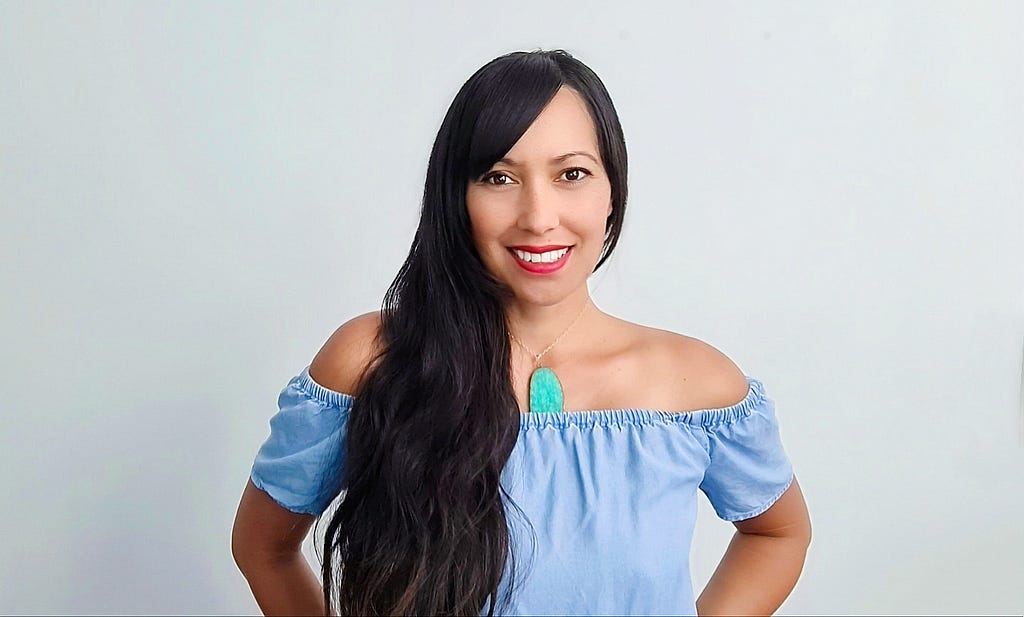
As a part of my series about the women in wellness, I had the pleasure of interviewing Candy Marx, Author, a Vegan Wellness Entrepreneur and Influencer, and a Spiritual Mentor. She has been vegan for 9 years and lives in Sydney, Australia with her healthy vegan family.
Thank you so much for joining us in this interview series! Our readers would love to “get to know you” better. Can you share your “backstory” with us?
Thanks so much for having me! My background was in fashion footwear design. I was a long-term vegetarian and I started looking into veganism. Which is when I learned how detrimental leather production and the commercial dairy and egg industries are. I switched to a wholesome vegan diet while I rebranded my footwear label, but it was during this time that I truly experienced the health benefits of plant-based wholefoods. I was battling minor health issues at the time and they reversed just by changing my diet. At the same time, I was going through a spiritual awakening, so there was a lot of shifting, shedding and growing going on <laughs>. I’ve always loved animals, love to cook, and have always had an interest in health and wellness-and since I experienced the benefits of a wholefoods vegan diet-I studied Shark Biology, Marine Science, and then Master Herbalism and Nutrition. I then went on to study Immunology, and I haven’t looked back. Now, I have an herbal wholefood supplement brand and I help people nourish and heal themselves, while advocating for holistic health, animal welfare and conservation.
Can you share the most interesting story that happened to you since you started your career? What were the main lessons or takeaways from that story?
I don’t know if this fits the question exactly, but I had a dream that I had an herbal supplement brand and it was stocked at my local health shop. Fast forward two years, and I was literally packing an order for my local health shop and then I remembered having that dream. When I had the dream two years prior, I had no intention of releasing a supplement brand either. What I took away from that was that I’m on the right track.
Can you share a story about the biggest mistake you made when you were first starting? Can you tell us what lesson you learned from that?
I’ve made plenty of small, trivial mistakes but I think the biggest mistake was not believing in myself — believing that I could help heal clients that couldn’t be helped by their doctors and specialists. At the beginning, when a client came to me with severe symptoms or autoimmune issues, it was quite daunting and that responsibility definitely overwhelmed me. But that subsided with more and more experience. The lesson I learned was that I was way too hard on myself, and that I can’t help anyone if I doubt myself.
Let’s jump to our main focus. When it comes to health and wellness, how is the work you are doing helping to make a bigger impact in the world?
I’m a huge believer that holistically healthy people are more likely to care about animals and the environment. So my aim is to help people to be holistically healthy and strong — while advocating for animal welfare and conservation. I’ve had many clients come to me as a last resort: they’ve been to a variety of doctors and specialists without seeing any improvement in their health. And because they’re so focused on their illness and just barely making it through the day, the last thing they care about is their environmental impact or other causes. Once they start healing and focusing holistically on their health, they start making that connection back to nature, they start seeing animals as other beings not just meat-machines, and they don’t want to go back to the food that made them sick in the first place. It’s really quite astounding seeing how much their minds open and shift once they become healthier.
Can you share your top five “lifestyle tweaks” that you believe will help support people’s journey towards better wellbeing? Please give an example or story for each.
True wellbeing is holistic: physical, mental and spiritual. If one is out, then the other two are affected. So all three are super important. For me personally, I focus on spiritual health — if it increases my spiritual health, then it naturally increases my mental and physical health as well. I look at everything as energy and vibration. For example, if the food I eat is high vibrational (raw organic fruits and vegetables, sprouts etc), then it will increase my spiritual health, as well as my physical health, which also increases my mental health. But if the food I eat is low vibrational (overprocessed, pesticide-laden, dead foods), then that food decreases my spiritual health, as well as my physical and mental health. Food is energy and vibration, not just nutrition.
These are my top five tips for true wellbeing.
If you have any ailment, no matter how big or small, do a juice or water fast! With the right regime, fasting is the most powerful way to heal the body. Moreover, intermittent fasting (I like 18 hours fasting/6 hour eating window) and doing regular cleanses also helps to keep the body healthy — especially since we’re exposed to toxins and pollutants every day. The body uses up a lot of energy digesting food, but when we fast, that energy is then used to heal the body. So giving our digestive system a decent rest and detoxing, results in healing. And while detoxing the physical body, detox your environment as well, also making sure to limit your screen time.
Eat to fuel your immune system and lift your vibration. Eat plenty of organic plant-based wholefoods: lots of raw fruit, sprouts and vegetables particularly greens, and herbs. Even barley grass, wheat grass, alfalfa and/or chlorella are fantastic sources of greens, especially if you’re detoxing. Common household herbs and spices like ginger, turmeric and garlic are great — black garlic is a favorite. Or Irish Sea Moss is fantastic as well. All of these are staples in my home. Also, drink plenty of filtered water or live spring water.
Meditate, do breathwork and exercise regularly. Meditation is good for the mind, body and soul, and deepens our connection to the Earth and to each other — and to Spiritual Beings, should you wish to. I find it’s also particularly powerful to practice when things feel a little bit crazy or when stress starts to arise. Breathwork is a very powerful way to not only strengthen the lungs, but it also removes physical, mental and spiritual ailments from within the body — and also helps balance the body’s pH levels. The first time that I practiced breathwork, I had an energetic attachment, which felt like a knitting needle move up through my right leg and out through the right-side of my abdomen. It’s particularly powerful when you’re feeling under the weather as well, but it’s a good habit to get in to. And exercising regularly is a no-brainer — movement is super important for overall wellbeing.
Laugh and spend loads of time with loved ones. Laughing and being with loved ones triggers endorphins, decreases stress hormones, raises one’s vibration and strengthens the immune system — increasing mental, physical and spiritual health.
Get plenty of Sun, get in the ocean, and get into nature as much as possible! Nature is cleansing and detoxing in itself: from earthing (walking barefooted on the grass), to Sunbasking, to swimming in the ocean and soaking up all of those healing and cleansing salts. Trees, particularly ferns, let off probiotics which we breathe in. The Sun helps the body to synthesize vitamin D, and amongst many other benefits, it also helps the body release a protein called GCMaF, which helps the body fight illnesses and cancers (ironically). But the Sun is also how lifeforce (chi, prana, Universal energy) which powers all life, reaches us on Earth. Speaking from a frequency perspective, when we are vibrating at a higher frequency, it means we are high in lifeforce. We only get sick when our lifeforce is low. The Sun streams lifeforce here on Earth, and the more lifeforce we have, the healthier we are. This in itself should highlight just how important the Sun is to our health and wellbeing. This is why foods like raw fruit are super high vibrational, because they’ve spent months growing on a tree in the Sun, and that tree has spent years growing in the Sun and in the Earth.
If you could start a movement that would bring the most amount of wellness to the most amount of people, what would that be?
I’d start a Holistic Challenge, which would be a movement consisting of a dietary shift towards plant-wholefoods, meditation, breathwork, getting into nature, Sun-gazing, fasting, and detoxing the home from toxic household items. As people progress, then they can add in regular saunas and a colonic (if possible), increase their level of fasting, and detox other parts of their lives, like toxic relationships, not listening to oneself, and people pleasing etc. While it may sound like a lot, if you really think about it, adopting holistic practices is the ultimate form of self-love.
What are your “5 Things I Wish Someone Told Me Before I Started” and why?
I don’t think I can even name one. I love learning by doing, so anything that I wish I knew before I started would take away those lessons.
Sustainability, veganism, mental health and environmental changes are big topics at the moment. Which one of these causes is dearest to you, and why?
I’m a huge believer that we are of the Earth, and what we do to the Earth, we do to ourselves. All four topics are dearest to me, but they’re interconnected as well. For example, we can’t hurt the Earth without hurting ourselves or hurting animals. When we hurt animals or the Earth, someone pays the price along the way, whether mentally, physically or energetically. We’ve seen how much our plastic pollution effects marine animals, and in turn, that plastic is now in the food chain. Everything we do, comes back to us.
Gut health is a huge component in mental health, and things like plastic and glyphosate (round up) which is now in food-as well as how much stress people experience without knowing how to channel it-also messes with gut health, which in turn effects mental health. And genuinely happy people don’t cause harm. Everything that we shouldn’t be doing to the Earth and to animals, comes back to bite us in one way or another. We can’t sacrifice one for the other — we have to align all four. From a vegan perspective, monoculture crops aren’t sustainable — permaculture needs to replace it. And here in Australia, the livestock farmers lose so much because of our droughts — farming livestock (which uses the most water from all industries) in drought-prone areas isn’t sustainable at all, yet nothing changes. Permaculture has been successful in the Middle East, it makes no sense why we haven’t followed suit. We have to change. I believe that we can meet our needs, be happy and healthy while being in a symbiotic and synergistic relationship with the Earth, as well as animals. If we do right by the Earth and right by animals, then we do right by ourselves. Or to flip that, if we truly do right by ourselves, then we do right by the Earth and by animals. You see how interconnected we are? Gosh, I could go on and on about this, but I’ll finish it up here <laughs>.
What is the best way our readers can follow you online?
I’m mostly active on Instagram @plantfedmama, same handle for Facebook, and at www.plantfedmana.com
Thank you for these fantastic insights!
Thank you so much for having me, and for listening to my rants! <laughs>
Female Disruptors: Kate Day, Kyle Summers and Sara DeLuca of Dovetail Workwear On The Three Things You Need To Shake Up Your Industry
An Interview With Candice Georgiadis
KYLE: If you’re looking for a seat at the table and it’s not there, build it. Then protect the space you have created and earned. — Raven Pearce, weartester, model, groundbreaker. Raven is 17 or 18 or something and carving out a space in the world for herself. Athlete, leader, artist, tradeswoman, whatever she wants to be. Right? I have her words on a sticky note on my laptop. What to remember for this brand as we fight for women and our place at the table. Move over Carhartt, and big companies that pay lip service but never actually deliver.
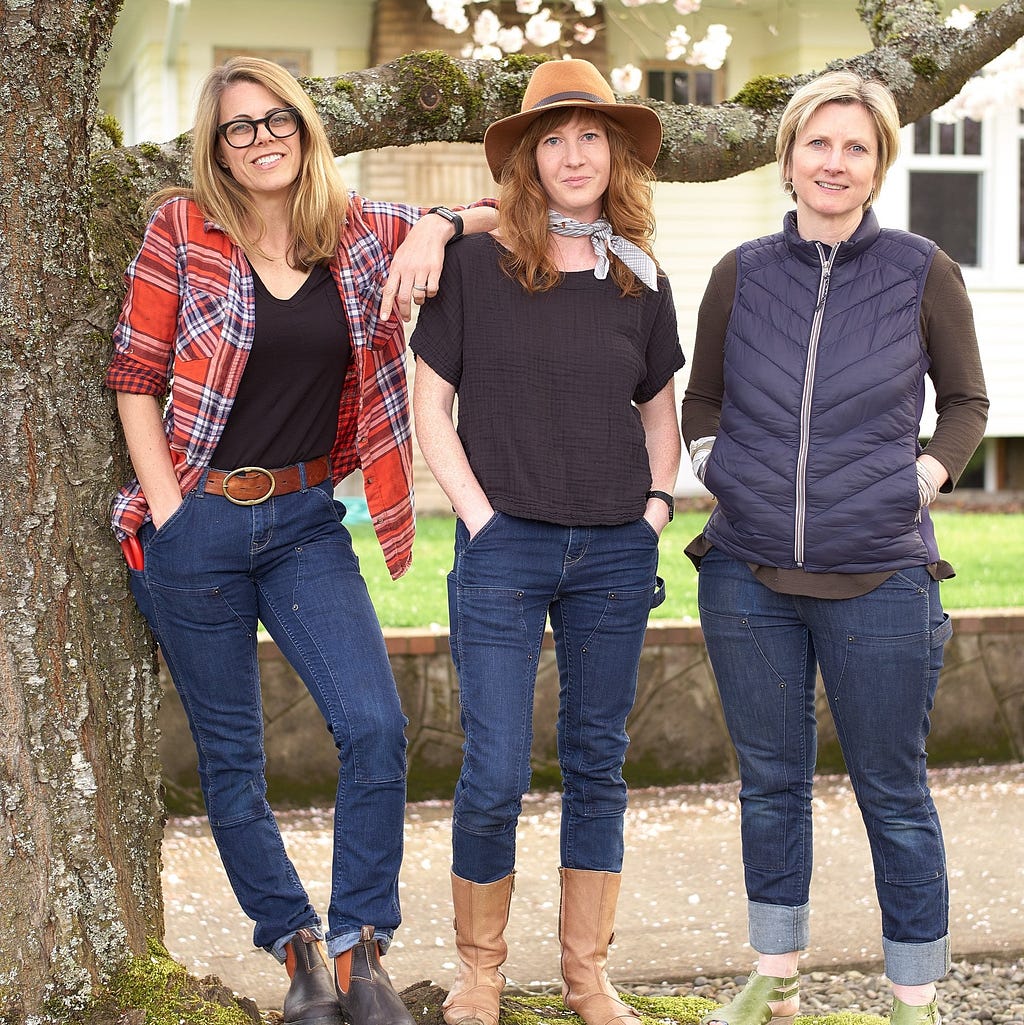
As a part of our series about women who are shaking things up in their industry, I had the pleasure of interviewing Kate Day, Kyle Summers, and Sara DeLuca, of Dovetail Workwear.
By women, for women, and with women, Dovetail Workwear is both a young company and the largest exclusively women’s workwear company in the northern hemisphere. Based in Portland, OR, Dovetail Workwear makes all-season, all-reason utility apparel that stands up to the job. Get dirty with Dovetail at dovetailworkwear.com.
Thank you so much for doing this with us! Before we dig in, our readers would like to get to know you a bit more. Can you tell us a bit about your “backstory”? What led you to this particular career path?
KATE: Kyle and I had a landscaping business here in Portland, Oregon, doing residential design, install, and maintenance. Trying to find clothes that were able to withstand hard physical work in the elements, while looking good and professional, and feeling comfortable — was near impossible. There were so few options. What we found in the market either did not fit well, and/or had flowers and pink on it, and the pockets! Don’t even get me started on the dumb, non-functioning pockets we were presented with. The women’s workwear fabrics were also thinner and cheaper than what you’d find in menswear. So we began to dream up the perfect denim workpant for ourselves, and we turned to a client, Sara, for her expertise. A veteran of the apparel industry, Sara took our dreams and turned them into reality, and we haven’t stopped since. 6 years ago, if you looked up womens workwear you found pencil skirts and heels. Today, you will see that has changed…The market still has a ways to go, but it’s better. I like that we helped to disrupt the definition of women’s work.
Can you tell our readers what it is about the work you’re doing that’s disruptive?
SARA: Our very existence is disruptive. The household names of workwear, such as Carhartt and Dickies, have always designed for men first. We do the exact opposite: we put women first. It’s sad that this has to be considered disruptive but that’s where we are.
KYLE: Yes, what we do is disruptive in itself, but also how we do it. For example, part of the fun of my job is working with the talent that models our clothes. At first when we had zero dollars and we did photoshoots in Kate’s garage, we brought in the professional tradeswomen who were wear-testing our prototypes and asked them to model for us. We quickly realized that the entire ethos of our brand is showcasing women who actually DO THE JOBS we make the clothes to perform for. So, by not hiring professional models to be in front of the camera, but actual tradeswomen, makers, farmers, etc, we tapped into a real connection with our audience. This has become a core part of how we connect with our audience. They know the women they see wearing our work are authentic, not pretending to be something they’re not.
KATE: That authenticity also threads through our marketing and influencer relationships. We like to say we believe in dirty work, but clean marketing. For us this means we don’t pay influencers to wear our clothing, we don’t have brand ambassadors, and we don’t sponsor any kind of buy-in media placement. If you see someone wearing Dovetail Workwear, or you read an article about our company, it’s not because we paid to be there. It’s genuine.
Can you share a story about the funniest mistake you made when you were first starting? Can you tell us what lesson you learned from that?
KYLE: We used to spend a lot of time on minutiae. I remember our first bandana and how many hours we spent looking at color and design. Keep in mind we are a pants brand :). We’ve always paid attention to detail and we always will. But I think we’ve learned to put our energies into the key products that will grow the business. We’ve also learned not to make perfect the enemy of great.
We all need a little help along the journey. Who have been some of your mentors? Can you share a story about how they made an impact?
SARA: I can’t say enough about the mentors. In our early days, we were so fortunate to have mentors who would take a call from a startup and spend their time talking to us. They helped us with the investor deck. They walked us through their customer service philosophy. They gave tips on how to do PR without a big PR firm. You name it. So much of their advice has stayed with me. For example…
Turn each challenge into an opportunity to make your brand better — Kyle Ranson, Showers Pass.
Talk about mentors, Kyle Ranson was so generous with time and experience. He shared a time when women were frustrated Showers Pass didn’t cater more to women cyclists. He engaged his biggest critics to be wear testers and collaborators on women’s product development. I take that home to this day when we get feedback from women for whom the product doesn’t work either due to sizing or body shape. Join us and we’ll make it better together. Be a part of the journey.
Focus on the customer — Heather Hasson, Figs.
Kyle and I did a call with Heather early on. She talked about how Figs looks at every decision from a customer lens. Is this right for the consumer? They’ve built this powerful brand in the medical scrubs industry based on that tenet and it’s always stuck with me.
Can you share the best words of advice you’ve gotten along your journey? Please give a story or example.
KYLE: If you’re looking for a seat at the table and it’s not there, build it. Then protect the space you have created and earned. — Raven Pearce, weartester, model, groundbreaker.
Raven is 17 or 18 or something and carving out a space in the world for herself. Athlete, leader, artist, tradeswoman, whatever she wants to be. Right? I have her words on a sticky note on my laptop. What to remember for this brand as we fight for women and our place at the table. Move over Carhartt, and big companies that pay lip service but never actually deliver.
We are sure you aren’t done. How are you going to shake things up next?
KYLE:We’re just getting started, We’ve still trying to solve the problem of building functional, stylish workwear for as many women as we possibly can, in all of our diversity of body shapes and sizes. Our customers can expect more big things from us in 2022 and beyond: more sizing options, more beautiful, custom, high-performing fabrics that are also edge-of-the-cutting edge when it comes to environmental impact. We will also be offering new “X” styles of core products, where we optimize and add wish list items to our most beloved styles. Even when we have a bestseller, we don’t relax. Like our customers, we’re hardworking women! We want to make our best even better.
In your opinion, what are the biggest challenges faced by ‘women disruptors’ that aren’t typically faced by their male counterparts?
SARA: That very word “disruption” — right there that’s a challenge. Why is it even called disruption to make serious workwear products for women? Why isn’t it just building a product for a growing segment that needs serious gear? Herein lies the problem. We’re still in the DEI category of progressive companies that recognize women are a growing segment and need proper gear. We’ll have reached a milestone when this isn’t a special initiative, when this is just basic business. And when employers in construction and agriculture and everywhere else recognize that they need to gear up their women the same way you would the men.
Do you have a book/podcast/talk that’s had a deep impact on your thinking? Can you share a story with us?
KATE: Invisible Women: Data Bias in a World Designed for Men by Caroline Creado Perez. It’s mind-blowing to read how deeply data is skewed toward men, and how far-reaching and critical the implications across all aspects of life. I first heard Caroline talk on the podcast, 99% Invisible, about “reference man,” a generic set of data that determines so much of our physical world, and which excludes women altogether. When you hear the ramifications, it’s jaw-dropping. Her book is always on hand in our office. And her newsletter is also hilarious.
You are a person of great influence. If you could inspire a movement that would bring the most amount of good to the most amount of people, what would that be? You never know what your idea can trigger. 🙂
KATE: That’s what we’re trying to do. Our work has never been just business to us. We’re fighting the PANTriarchy! This company was founded on a mission, to revolutionize women’s workwear and thus help empower women who work in physically demanding jobs. Pants are our way of contributing to a healthier society where women of all ages, ethnicities, orientations, and backgrounds are recognized for the work they do. That shouldn’t be revolutionary, but it is.
Can you please give us your favorite “Life Lesson Quote”? Can you share how that was relevant to you in your life?
KYLE: Do something your future self will thank you for. This motivates me to not just follow my pleasure (which I do sometimes, of course) but to set myself up for success and happiness. Little things like cleaning my house before I go on a trip — when I come back to a clean house and a made bed, I’m STOKED. Then I thank and praise my past self. More significantly, this advice propels me through the tough times in my work. We’re trying to leave a legacy for our daughters and nieces and all the other young women behind us, and that is more important to me, Kate, and Sara than anything else. Being mindful of this reminds us to play the long game, and build a business our future selves will thank us for.
How can our readers follow you online?
@dovetailworkwear on Instagram
This was very inspiring. Thank you so much for joining us!
Female Founders: Dr Andrea Simon of Simon Associates Management Consultants On The Five Things You Need To Thrive and Succeed as a Woman Founder
An Interview With Candice Georgiadis
PEOPLE BUY WHAT THEY NEED, NOT WHAT I DO. It didn’t take long to realize that being a corporate anthropologist is almost irrelevant to my potential clients. The fact that I can help them change is what matters to them. My credentials are nice. My methods are interesting. What really matters, however, is: can I help them reignite their growth.
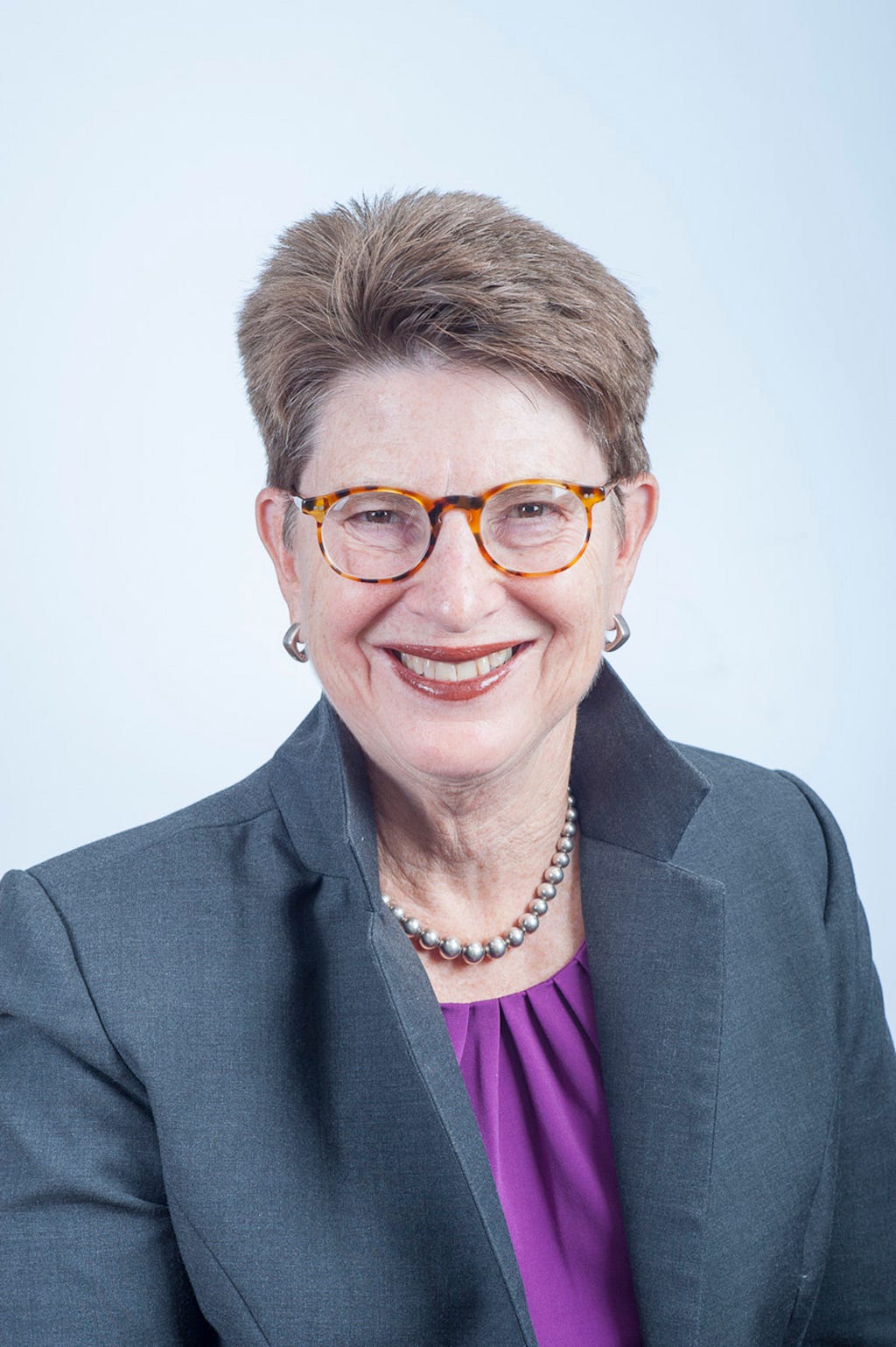
As a part of our series about “Why We Need More Women Founders”, I had the pleasure of interviewing Dr. Andrea ‘Andi’ Simon.
Andrea ‘Andi’ Simon Ph.D., Founder and CEO of Simon Associates Management Consultants (SAMC), is an international leader in the growing field of corporate anthropology, author of the Axiom bronze Best Business Book of 2017 On the Brink: A Fresh Lens to Take Your Business to New Heights, trained practitioner in Blue Ocean Strategy® and in-demand speaker. Dr. Simon’s latest book, Rethink: Smashing the Myths of Women in Business, released in 2021, reflects her deep interest in helping women break through the cultural barriers and gender bias society has created to hold them back. A culture change expert and a curious explorer at heart, Dr. Simon is also the architect of a global thought leadership platform that blends academic perspectives, business experience, new media expertise and proven success in changing organizations and the people within them who are the keys to their success. Learn more about Dr. Simon at www.simonassociates.net.
Thank you so much for doing this with us! Before we dig in, our readers would like to get to know you a bit more. Can you tell us a bit about your “backstory”? What led you to this particular career path?
I grew up outside of New York City in a family deeply involved in a multi-generational family retail business located in Manhattan. As a child, I vividly remember learning the business from my grandmother, my mother, and my father. Gender stereotypes were being lived right in front of me, not preached, but I would watch my grandmother manage the cash at the end of the day. Our dinner conversations were as much about business issues as about the news, the weather, or challenges in school.
As I was growing up, I learned a great deal about what men and women did, and could do, and even what children and adults did. Fond memories. Yet, when it came time to return from college to expand my responsibilities in the business, I announced that I had discovered anthropology and was going to pursue a doctorate and an academic career. While my family supported my choice, they were dumbfounded. They also realized that the next generation — me — was not going to take over the business as they had planned.
Never did I realize the impact my announcement had on their plans, on what they had been expecting, or on how they would move forward with their business without me. In retrospect, I had become a catalytic moment for them, without ever realizing the impact my decisions had on others. On the other hand, I was beginning to recognize who I was. I was an anthropologist, not a retailer, and I have never looked back. This life-long training, however, prepared me for a career as I moved from academia to being a financial consultant to an executive, first in banking and then in healthcare organizations, all of which needed to change.
I did become an academic anthropologist as a professor of American Studies and Anthropology at Ramapo College in New Jersey. As I worked my way through my early years as an academic anthropologist, I was proud of my position, my work, and my tenure, until I realized that I was a woman who thrived on change. How would I endure a lifetime in a setting where each year was a repeat of the prior one? I did a Master Lecture series, two CBS television series, and completed my post-doctorate grants, filling my academic career with a variety of new experiences. But I was still wondering if this was all there was.
One fortuitous evening, I joined my husband at a cocktail party for Citibank executives. He was an executive and I was “the spouse.” As I met and socialized with the others, someone asked me if I would come join the Citibank team as a consultant to help them adapt to the new deregulating environment. I thought to myself, why not? I took a leave of absence from the college and tasted the world of financial services.
My serendipitous moment led to a 14-year career as a bank executive at four banks, then seven years as an executive in healthcare institutions that were coping with managed care. All those years were ones where I was honing my skills as a change maker. While the industries were different, the challenges were very similar.
Inside each of these organizations, I held executive management positions during periods of major industry transformations, whether it was the deregulation of the financial services industry or the rise of managed care in healthcare. My position was always as the change agent, the change maker, the change “guru.” It wasn’t my title, but it was my role. While people were not clear what anthropologists did or how we saw the world, the leadership teams knew they needed a fresh perspective on their business strategies and executions or they would quickly be left behind by the fast-changing world around them. I was their futurist. They just didn’t know it.
Two decades in those corporate cultures and up those proverbial ladders, I knew I was ready for another adventure. The entrepreneur in me was waiting to bust out. After 9/11, I launched my business, Simon Associates Management Consultants, specifically to bring the methods and tools of anthropology to help businesses and the people within them change. Little did I know I was launching my entrepreneurial career to fill a gap in the market where change was still painful and most companies fled, feared, or appeased the changes being urged upon them. I used to preach that if you want to change, have a crisis, or create one. As we think about this pandemic, I now preach, “Never waste a crisis.” It is a time to embrace change.
Can you share the most interesting story that happened to you since you began leading your company?
“Interesting” is an interesting word when describing how a woman starts and grows an idea into a successful business venture. There have been three catalytic moments that helped me take my business from start-up to success.
The first was how I learned early on those potential clients were not at all interested inhow I was going to help them solve their problems. Rather, they knew they had a pain point, be it a business that had stalled or a university that needed more students, or a healthcare institution that wanted to reduce errors and improve the quality of care. Exactly how I was going to address their needs became almost a sidebar to the hope that I could solve it. I learned that in crafting my story, I needed to focus on how the client was going to feel as we approached solutions differently together, and most of all, how I would help them implement the needed changes, and quickly.
The second “aha” moment came when I was in an elevator at the Harvard Club, headed to a presentation by Renée Mauborgne, author of “Blue Ocean Strategy.” By chance, or luck, she was in the elevator with me. I said, “I love your book, it is so anthropological.” She replied, after a bit of casual conversation, “You should become a Blue Ocean Strategist.” I asked her what that was, and she said: “I have no idea, let’s make it up.” And so, we did. In the years since, I have completely embraced the methods, tools and thinking behind Blue Ocean Strategic Thinking and have conducted almost 500 workshops since that serendipitous meeting. I truly believe in “showing up” and then life takes you in great places.
My third interesting story is how I had spent four years writing a book and was not sure what to do with it. While I was speaking at a Vistage International meeting, Tanya Hall was in the audience, CEO of Greenleaf Book Group in Austin. She asked me about the book, and I mentioned that I thought I was ready for a publisher. She suggested I send along a copy to Greenleaf, but that they only take 5% of submissions. I sent her my manuscript and within a few days, she called. She loved the book, but alas, I had to rewrite it. Greenleaf had a fantastic editor who guided me in a far better direction and helped me turn out an award-winning book, On the Brink: A Fresh Lens to Take Your Business to New Heights.
Are these “interesting?” What has been a recurring theme for me is that you never really know how you are going to go from A to B on your life’s trajectory. I have become a true believer in just showing up, being yourself and trying to help others solve their needs, learning along the way how to change and grow yourself and your business comes along on the journey.
Can you share a story about the funniest mistake you made when you were first starting? Can you tell us what lesson you learned from that?
Funny mistakes are long lasting in our minds. I laugh about it now, but I really was never sure what I was going to do when I decided to leave my corporate job and launch my own business. If I had been advising someone else, I probably would have told them to create a buyer persona of their ideal customer, map out demand and clarify how they would be funding their venture.
Instead, and this was almost 20 years ago, I had a wonderful PR agency that I hired as I launched my business. The CEO of that agency, John Rosica, had done wonderful work for the healthcare organization where I was previously an executive. As I left the corporate world to enter my own business, I went over to John’s office and said, I need a way to pull together all the things I can do into a clear vision for my business. What do I bring to the market? How do I answer the “why” question — “Why should someone choose to use my organization, and me?”
As he listened to me wander through my many careers as an academic, a corporate agent of change and an investor in non-profits, he stopped the conversation. He leaned over and said ever so quietly: “Andi, you are a corporate anthropologist who helps companies, and their people change.” I can feel that sense of awe even today. I said “Wow! That is exactly who I am and what I want my company to do: help people adapt to change, embrace change and learn how to turn the results of those changes from pain to gain.”
John had the brilliance to capture the essence of my story and turn it into a single statement that I could turn into a new business. And I had the wisdom to stay the course and remain true to who I am and what I and my organization can help companies do, particularly in today’s world where tomorrow looks little like the past and the future is unsure and unclear.
My funny mistake, however, was trying to launch a business without any clarity of what I was going to do. How silly of me. And how wise of John Rosica. How lucky that I listened, focused, and repeated the same elevator speech again and again until I built a successful corporate anthropology consulting business.
None of us are able to achieve success without some help along the way. Is there a particular person who you are grateful towards who helped get you to where you are? Can you share a story about that?
We are often surprised when we find that someone sees something in us that we are unaware of. They lend a hand and encourage us to grow and try new ideas in unorthodox ways. My husband, Andrew (Andy) Simon, was my inspiration, as well as my support through all the perspiration. It did not matter if I was struggling to get my Ph.D. dissertation completed, or get my university tenure, or find a consulting position in the business world, or sustain my growth and career in new industries, or finally launch my business. Andy was always there for me, as a guide, a supporter, an idea person, and a safe haven to mull over tough decisions with and even cry at times. He has been a very successful serial entrepreneur, but each of his ventures had their own challenges as he grew them. We have always been able to speak our mind to each other, think out loud, and test ideas. As we raised our two daughters into amazing young women, we were a team that somehow allowed each of us to grow successfully as business owners and as individuals. I know I could not have grown the business without his support. But I also know that both of our lives are richer for the way we have been able to share, communicate, laugh, applaud, critique, and even knock some sense into each other. When he sold his business in 2017 and joined mine, I couldn’t have been more excited to be able to share his wisdom with our clients.
Ok, thank you for that. Let’s now jump to the primary focus of our interview. According to this EY report, only about 20 percent of funded companies have women founders. This reflects great historical progress, but it also shows that more work still has to be done to empower women to create companies. In your opinion and experience what is currently holding back women from founding companies?
There are two parts to this question. The first is what is holding women back from founding companies. The second is why only 20% of funded companies have women founders.
The reason I separate the two is because today, women own 40% of the businesses in the US, which amounts to 12 million businesses. Of those, about 10 million are solopreneurs and of those, about one-half are not earning more than $10,000 a year. Many of these businesses are necessity businesses or side-hustles that women have started to help them provide additional income or test an idea before leaving another type of job.
Part of the challenge women face as they start and grow their companies is that scaling the business is difficult, whether they are adding employees, expanding their products and services, or growing their markets. Increasing women’s access to capital is very slow and the percentage of women who do receive venture capital is very small. Today, only 2.3% of the venture capital funding goes to women-owned companies.
There is another perspective, however. Many entrepreneurial women I have interviewed are proud of the fact that they have grown their businesses without the use of venture capital or other external sources of funding. Perhaps they got a bank loan, or, as is often the case, they got favorable rates for a line of credit on their credit card. While we often talk about friends and family helping fund a startup, many women have few friends or family with the capital to help them. Instead, they manage the growth of their businesses carefully so that revenues can underwrite expenses. For them, timing of cash flow is critically important to their sustainability.
Remember that Sarah Blakely grew SPANX without any outside capital. SPANX was just profitable from the beginning. Not every woman’s company is as fortunate. Consequently, the bigger question is: why are only 20% of these women founders funded?
In our work at SAMC with men and women entrepreneurs, we have found that a recurring challenge for both is how to pitch venture capitalists to gain the funding needed to sustain the growth of their businesses. We watch as men get funded, and women don’t. We see from the data that men are far more likely to gain the funding they need at an extraordinary level. In 2019 in the U.S., 2.8% of funding went to women-led startups. In 2020, that fell to 2.3%, as Crunchbase figures show. This comes after years of increases. The 2019 2.8% figure, while paltry, was an all-time high.
Women entrepreneurs are often critiqued because their concepts or businesses are not appropriate for VC funding, or because their pitch is not as good as a man’s. Or because women do not have the technical expertise that VCs are looking for. Research suggests that investors are more likely to give money to people who look like them, and 90% of the VC decision makers are male. Men entrepreneurs are preferred by male investors, and those investors often penalize women entrepreneurs if they display stereotypical feminine behavior.
One would think that this inaccessibility of VC funding would negatively impact the rate at which women are founding companies, but ironically, the opposite is true. Women, particularly women of color, Asian women and Latina women are all forming companies at record levels.
Therefore, the challenge for women founders is understanding how to build a business that will provide products and services for a market that needs them, capture a share of that market, and craft a business model that will allow them to scale, expand and sustain themselves with a margin that matters — and then find the capital to grow.
Time to change. Yes! Women have been forming companies to help other women get the capital they need. Venture Capital funds such as Golden Seeds, Merian Ventures, JumpStart Focus Fund, and Female Founders Fund are focused specifically on funding women-owned businesses. Golden Seeds, for example, runs three venture funds and has invested more than $100 million since 2005. This year, Female Founders raised their second fund, for $27 million, with investors including Melinda Gates, Stitch Fix founder Katrina Lake, and Rent the Runway co-founder Jenny Fleiss. They have invested in Zola, Maven Clinic, and Tala.
I love to see the fast-moving trends where women are coming together and bringing the resources to help other women scale and succeed. There is real momentum here, and hope.
Can you help articulate a few things that can be done as individuals, as a society, or by the government, to help overcome those obstacles?
What could or should be done to level the playing field for women entrepreneurs to obtain funding from banks, angel investors or venture capital financing? Here are some thoughts to consider:
1. The pitching process is the best place to start. Can we make the pitch process gender blind? And should we? Or are men and women different enough that investors need to be able to evaluate the person too, not just the business concept?
2. Should women be given funding based on different expectations than men? And when women receive that funding, does it come with additional support to help ensure it serves the desired purpose?
3. Are women-owned companies inherently different from men’s and therefore women founders need to find specific VCs for their business concepts? There are several women-led companies that are combining their financial resources to create lending streams for women-owned business. Should they only support women, or should they be gender neutral and only financially focused when finding companies in which to invest?
4. Do we have to re-train men to listen differently to women entrepreneurs and overcome the male bias? This is a big opportunity on many levels. We know there is nothing inherently predictable about how a company might succeed. Pitches are full of hope, assumptions and data that have been crafted to present the concept in the best light. Of course, women must pitch with the same types of data and insights that a man would use to have their business concept seen as a desirable investment. Is it their style or their concepts that need men to see them through a fresh lens?
Other ways to overcome these obstacles are coming from organizations such as WBENC, Golden Seeds and Astia. They are part of an expanding number of organizations trying to level the playing field for women entrepreneurs. Each has developed a different approach to overcome the obstacles women entrepreneurs face. Whether facilitating certifications that enable women to access government contracts, raising capital to expand funding options, or providing access to financial networks, organizations are helping women take their ideas and turn them into successful business ventures. There is more to come and more that is needed.
This might be intuitive to you as a woman founder but I think it will be helpful to spell this out. Can you share a few reasons why more women should become founders?
Not long ago I met several women at a certain gathering. Several of them were successful in their fields: law, wealth management, banking. The recurring theme in our introductory remarks was how unhappy they were in their careers. The woman attorney had survived COVID but was burned out. The woman in wealth management wanted to know how to find purpose in her life and in her career. She was at the top of her firm and there was no more room for her to grow. Another in the financial services sector was tired of bumping up against the proverbial glass ceiling. As with so many of my coaching clients, I was saddened by their remarks. The trajectory for their success was not the problem. It was clear that the achievement of financial or professional “success” was nice, was necessary, but was hardly sufficient to give them a meaningful life.
What could these women do to change their emotional distress? As with many women whom I am coaching, the idea of having their own business was gnawing at them. They asked me what it was like to be in a firm of their own. Each had a unique idea that might catapult them into a successful business opportunity early in its development. Few wanted simply to do more of the same.
These women were like others that have come to us for help. Some had left their jobs or were thinking about doing so. They each wanted to find another way to be productive, purposeful, and to find passion in what their lives were all about. Their careers or their businesses were just a part of rethinking those lives.
Women who are wondering if there is more for their professional lives, and often for their personal lives as well, might be ready to become a business founder. It is a place where you can craft what you want to create, grow, and work hard to build. The women Andy and I have worked with at our Simon Initiative for Entrepreneurship at Washington University have spoken often about their dreams, their big ideas, their new ways to solve big problems, all of which fed into their desire to be founders of a company they were aspiring to create. They also did not want to be the CEO of a large company. They wanted their own company, for “better or worse.” They wanted to emulate Maxine Clark, founder of Build-A-Bear-Workshop, not Sheryl Sandberg.
And no wonder. The corporate culture in many companies is not conducive for women to stay in their jobs and grow their careers. It is often discouraging for women, propelling them to launch their own businesses.
Finally, and often most importantly, women founders are particularly good at seeing something that needs to be solved which others are ignoring. (Female intuition?) They see it from their own perspective — female-specific problems that need better solutions, often those that only a woman founder can recognize.
What are the “myths” that you would like to dispel about being a founder? Can you explain what you mean?
What’s a myth anyway? Simply, it is a widely held but false belief or idea. As humans, we have these unique minds that create stories that become our realities. We live those stories as if they are real. Once we have that story ingrained in our mind, we think it is a truth. The myth becomes the basis of our reality, and we believe it to be what should be. Consequently, the myths around female founders and their abilities to succeed create a profoundly durable framework for why and how women launch new companies and the lack of support they often receive once they do.
The myths that haunt me the most about women founders are those that come from the old ideas brought over by the British (men) when they colonized America. Under British rule, women could not own property, and when they married, they “belonged” to their husbands. They could not carry debt and could not get credit without their husband’s or father’s signature until 1974.
The belief behind this mythological idea is that women are not able to own property or run a business. This myth has stuck around and is still, at times, expressed when a woman wants to create her own business. Banks shun them. Investors are uncomfortable funding them. Customers are even unsure if a woman-owned company is credible. In short, men and even some women are sure that women cannot be entrepreneurs. Women, as the thinking goes, cannot have imaginative ideas nor take them to market and succeed. Maybe they can have a side-hustle out of their kitchen, baking cupcakes or doing party invitations. But they cannot manage a complex business nor effectively lead others. These aren’t “truths”…they are “myths.”
In fact, the reality is just the opposite. Women may not be growing hi-tech companies or creating enterprising corporations to the same degree as their male counterparts, but they are very capable of starting and growing successful companies.
Consider these women and what they have created: Janice Bryant Howroyd is the founder of ActOne Group, the first African American female-led company to earn more than $1 billion in annual revenue. There is Sarah Blakely and SPANX, Stitch Fix founder Katrina Lake, and Rent the Runway co-founder Jenny Fleiss. And consider Sheila Johnson, co-founder of Black Entertainment Television, and Sachiko Kuno, who has co-founded two drug companies.
Of course, there is Oprah Winfrey, Beyoncé, Arianna Huffington, Mary Kay Ash, JK Rowling, Estée Lauder, Lilly Pulitzer, Tory Burch…I could keep going.
In my book Rethink: Smashing the Myths of Women in Business, there is a chapter about this very topic. Stephanie Breedlove wanted to create a company to solve the “nanny tax” needs of families who were paying their childcare workers but did not know how to process the correct paperwork. While still working her day job, Stephanie began to grow her concept in her basement. It did not take long before she and her husband were ready to grow this startup full-time. When she told her family that she was going to become an entrepreneur and start her own woman-owned business, they were appalled, convinced that women could not grow any business. Well, she did, growing Breedlove & Associates to $9 million and selling it to www.care.com for $58 million. So much for the myth.
Is everyone cut out to be a founder? In your opinion, which specific traits increase the likelihood that a person will be a successful founder and what type of person should perhaps seek a “regular job” as an employee? Can you explain what you mean?
Business founders need to be self-starters and able to operate without someone else structuring their days or their projects. They need to be willing to assume the uncertainties and risks that come with starting a new venture. It is helpful if they are complex problem-solvers as well as great communicators. They need to understand the entire dimensions of a business, particularly the financials, as well as other data points. They also must see the bigger picture of the business environment they are going to be operating in, as well as the trends.
There is also something important for a founder — the big picture vision and purpose of what they see for the business. This does not mean they are imagining their unicorn billion-dollar business. It does mean they have to want to solve a big problem in an innovative way. You will hear it in the story they tell you and the pain others are experiencing that they want to address.
Ok super. Here is the main question of our interview. What are your “5 Things I Wish Someone Told Me Before I Started” and why? (Please share a story or example for each.)
1. WHAT’S YOUR STORY? The first thing I wish someone had told me is the importance of my story. While I had an idea about its importance, I really did not appreciate the fact that buyers of my services were buying my story. Crafted correctly for the right audience, sales flow smoothly. Poorly articulated or inappropriately expressed and the buyer walks away. You can talk about branding, marketing, influencers and all the various tactical options available today, but at the end of the day, people are buying your story and how it meshes with their own.
2. PEOPLE BUY WHAT THEY NEED, NOT WHAT I DO. It didn’t take long to realize that being a corporate anthropologist is almost irrelevant to my potential clients. The fact that I can help them change is what matters to them. My credentials are nice. My methods are interesting. What really matters, however, is: can I help them reignite their growth.
3. WHAT’S YOUR PURPOSE? Third is the need to have a purpose beyond the tactical and practical sides of the business. We might think that I wish someone had told me about how to build a business plan or compete in the market space. No. I intuitively knew that I had to solve a big problem in an innovative way. My purpose was to help people do something they did not know how to do and that they hated to do: change. My entire career was built on perfecting ways to help others do what they don’t want to do. The purpose is essential to sustain my own momentum. It is equally important to create a fan club of folks who embrace what you do, bring you others who need you, and encourage you to sustain your growth.
4. BE A FUTURIST! CREATE DON’T COMPETE.See those signals that are all around you. More of the same cheaper is not a good business strategy. I became a futurist and was always an explorer, but I wish someone had told me that as I launched my business. It would have helped me understand how to be fast and agile, and how to try new ways of solving old problems. You might start out in one direction but quickly you learn that you must integrate new approaches, methods, and tools into your approach. I never stop learning, trying new things, and hoping to stay true to the core business as an anthropologist. This is one of the enduring challenges of the entrepreneur: namely, how to balance the new ideas with a structure for delivering desired results to clients. Entrepreneurs are not just thinking outside the box. They are creating new sandboxes.
5. HAVE FUN! I have always had fun since the day I started Simon Associates. No one ever talks about the fun. They warn you about the hard work, the 24/7 commitment, the uncertainties, the risk, the difficulties of finding and retaining clients, the challenges of scaling for growth, and finding the funding to sustain the business. They should also tell you about how to enjoy the entire journey. I do love what I do, how I do it, and how my clients enjoy our time together. You can do the same. Just imagine your glass is overflowing and you can see the joy in what you are building. I do remember, nonetheless, that there are endless hurdles. Only those who can leap over them are ultimately successful. Just smile along the way!
How have you used your success to make the world a better place?
I love to watch people who are attending a workshop or working with us on their business. Listen softly and watch their eyes and their faces. You can feel the changes they are going through, seeing things through a fresh lens. When they have that “aha” moment and their mind shifts, I quietly celebrate the gift we are giving each other.
Whether it is as a coach, one person at a time or as consultant for a billion-dollar organization that needs to rethink its business model and its strategy, I am always trying to help others become the best that they can be. It really is never about “me.” It is always about them. Their worlds are at times fractured or stagnant or stalling out. The need to rebuild the plane, not just jump out with or without a parachute. They come in pain, personal and professional.
My book “On the Brink: A fresh lens to take your business to new heights” was about eight of our clients who had come to us when they were stuck or stalled. Each of the stories, and so many others, reflects the gift I love to give so they could step back, see the possibilities, and march forward with a fresh view of life — theirs and that of their own worlds. It has been humbling and gratifying to lend a hand.
Now, with my new book, “Rethink: Smashing the Myths of Women in Business,” and my program, Rethink Your Journey with Andi Simon, I am working to help women rethink their own lives and find better ways to grow and achieve purpose and pleasure.
You are a person of great influence. If you could inspire a movement that would bring the most amount of good for the greatest number of people, what would that be? You never know what your idea can trigger.
I remain convinced that this is a time for people to take care of themselves without feeling guilt about self-care. Far too many people are feeling burned out, depressed, saddened by their lives during this pandemic. Many women I have been coaching bemoan the fact that they are so busy with others that there is little time for themselves. Isn’t time for each of us to take care of ourselves.
What might that mean? What if we took a quiet walk and celebrated the time for me? Could you spend more time with your family, or simply sit still and have a cup of coffee on the porch? But when you do, recognize it, applaud, and refresh your own self-worth.
We launched an application in 2021. This application is designed to help people relax and enjoy self-care moments. Called the Time to Take Care of You 30-Day Challenge, it taught us a great deal about the joy of self-care. And it teaches those who take the challenge that it is indeed ok to care for themselves, even if it is 10-minutes a day.
As our beta testers went through the 30 days, we learned together about how important self-care is, how great it made them feel, and how hard it was to know what to do for themselves that made them feel appreciated. One of the hardest lessons to learn was that it was OK to take care of you. If you were going to care for others you had to allow yourself to take care of you. You could get past the guilt and enjoy the journey. Our hope is that it inspires a movement and spreads across the world.
We are very blessed that some very prominent names in Business, VC funding, Sports, and Entertainment read this column. Is there a person in the world, or in the US with whom you would love to have a private breakfast or lunch with, and why? He or she might just see this if we tag them.
I am a big fan of Sarah Blakely, founder of Spanx. What she did to celebrate the sale of her business to give each of her employees a first-class roundtrip ticket to anywhere and a $10,000 check for themselves. Building Spanx from a pain point, an observation, to a unicorn business was amazing by itself. But how she thinks of life is even more important — being authentic, kind, and doing for women with women. Hers is a story I love to share, and a woman I would be honored to meet.
Thank you for these fantastic insights. We greatly appreciate the time you spent on this.
Female Disruptors: Dawn F Landry of Authentizity On The Three Things You Need To Shake Up Your Industry
An Interview With Candice Georgiadis
Careful Who You Hitch Your Wagon To It’s funny how the simplest forms of advice seem to stick with you for a lifetime. This message was delivered to me early in my career by one of the crustiest of construction professionals that I’ve ever come across. In regular terms, it means be careful with whom you align because others will judge you with that broad brush stroke. The advice was delivered as a gentle warning, and I’ve used it ever since as a gut check to make sure that the direction I’m heading towards is right for me.
As a part of our series about women who are shaking things up in their industry, I had the pleasure of interviewing Dawn F. Landry.
Bestselling author and award-winning business professional, Dawn F. Landry has spent over half of her 28-year career in Houston’s corporate real estate industry, excelling in leadership positions and as an executive in business development and marketing leadership positions within the region’s largest economic development organization, as well as international commercial construction companies.
In February 2017, Dawn founded Authentizity, LLC, as an independent B2B growth strategist and a Gallup-Certified CliftonStrengths® Coach to provide consulting, training, and coaching services that optimize technical teams’ engagement and productivity.
In August 2021, Dawn launched BD Dynamics, Empowering the Technical-Minded. It is self-guided, online business development course targeted to advance the intentionality and accountability of Doer/Sellers within the business development process.
Thank you so much for doing this with us! Before we dig in, our readers would like to get to know you a bit more. Can you tell us a bit about your “backstory”? What led you to this particular career path?
I’m someone who was, and still is, a big dreamer. I grew up in the 1970s in a small, rural town in south Louisiana. By general stereotypes and outward observations, I should never have achieved the successes that I can blessedly claim today.
I’ve spent over twenty-eight years as a business executive, singularly driven to advance in my profession. In the early part of my career when I was in my twenties and early-to-mid thirties, you might define me as restless and impatient. Things weren’t happening fast enough for me, so I’d move on to the next job within a couple of years.
Eventually, I found my home in Houston’s corporate real estate industry, excelling in business development and marketing leadership positions within the region’s largest economic development organization, as well as international commercial construction companies.
And just when I thought that I had settled in and had things figured out, another growth opportunity pressed and stretched me to the next level. In February 2017, I founded Authentizity, LLC, as an independent business growth strategist to assist companies with customized programs designed to advance their leadership proficiencies, team alignment, and outreach effectiveness.
Can you tell our readers what it is about the work you’re doing that’s disruptive?
In early 2017, as I began the early vision for what would eventually become Authentizity, there were two concepts that I knew for sure:
There is only one “I” in busIness development, so helping technical professionals to Define Your “I” in Business Development™ was a foundational principle of my service offering; and
A crucial component of the technical business development (i.e., Doer/Seller) process is to assist operations professionals with Identifying, Honing and Articulating™ their individual value to their clients, their companies, and most importantly, themselves.
Through the years, I have had the great opportunity to work with hundreds of operations and engineering-minded technicians to advance their confidence, competence, and success in business development by creating a process that parallels their project management acumen. My philosophy is that each of us has our own DNA that is reflected in our outreach and relationship style.
With a near three-decade B2B strategic growth career working alongside technical Doer/Sellers to achieve exponential sales success, I have leveraged lessons learned and best practices from those experiences to develop the framework for Authentizity’s new, online Doer/Seller Course: BD Dynamics, Empowering the Technical-Minded.
There is no other consultant/company that provides a self-guided course to help operations leaders become more adept and successful in the client relationship/selling functions of their roles.
By the end of the 15-module course, participants will have utilized the 13 interactive exercises to create their own business development process, which is individually customized to their unique diversity, skills, strengths, experiences, and even industry and company needs.
To excel as successful Doer/Sellers, technicians must first have a solid, proven, and repeatable reputation at the “doing” part of their operations roles. It requires for them (as the operations professional) to be able to develop credibility, composure, character, and reliability to carry and advance the relationship to the close of the sale, to consistently execute the project, and then to rinse and repeat so they can achieve future, sustainable client retention.
BD Dynamics has achieved advanced praise, reviews, and reception from technical leaders within many global, technical, service-based industries such as architecture, engineering, construction, etc. Visit www.bddynamics.com for further details.
Can you share a story about the funniest mistake you made when you were first starting? Can you tell us what lesson you learned from that?
The mistake that I made is not as much “ha ha funny” as it is amusing to me because I committed it several times throughout my career before I finally learned from it.
Specifically, I didn’t dream big enough and underestimated my ability to succeed. This manifested early in my career, as you might anticipate. However, it also showed up each time I endeavored to try something that stretched and pressed me.
Life makes sense in the rearview mirror. It wasn’t until I had witnessed my achievements through many variables and varieties of experiences that I learned to embrace the vortex of the unknown and walk through, trusting that all will work out like it needs to in the end.
We all need a little help along the journey. Who have been some of your mentors? Can you share a story about how they made an impact?
As strong, accomplished female professionals, we stand on the shoulders of all those phenomenal women who have come before us. My beautiful career would not be the same without the many mentors who poured their knowledge and lessons learned into me.
Specifically, I would like to state my deepest and most heartfelt gratitude for two of my professional mentors Cheryl Taylor Bowie and Pam Lovett. Each is the epitome of grace under fire personified.
They both taught me that we all need one another to thrive. Through their examples, I learned that:
Women need to support and not tear other women down, and
Men need to value women as their allies and their colleagues to collaborate and advance our organizations and ourselves.
It is incumbent upon those of us who have achieved success to invest our time and share our experiences with the next generations of emerging women and men to move this forward.
Why young men you may ask? Because if we only focus on young women, then we will continue to perpetuate many of the silos that, unfortunately, still exist. At the end of the day, we all need one another to succeed.
Much work has been done, but there is still much to do. I dream of a day when we are cherished as just phenomenal people and are celebrated for our accomplishments, all-inclusive of their origins and sources.
In today’s parlance, being disruptive is usually a positive adjective. But is disrupting always good? When do we say the converse, that a system or structure has ‘withstood the test of time’? Can you articulate to our readers when disrupting an industry is positive, and when disrupting an industry is ‘not so positive’? Can you share some examples of what you mean?
Disruption and change go hand in hand. There are definitely times when changes are warranted, but we must be careful to not try and fix things that aren’t broken.
Great to greater strides are one thing, but we must make sure that we don’t “throw the baby out with the bath water” and destroy those things that distinguish and differentiate us and our uniqueness.
For instance, I’ve been witness to several company acquisitions. In these situations, larger firms have sought to enter a particular geographic market and rather than taking the time, energy, and efforts that it takes to grow organically, they have chosen to acquire locally.
In these situations, the firms have identified a great homegrown resource with a solid reputation, client, and employee base. They have completed their due diligence without flaw, implemented several year partner transition packages, etc.
So what could possibly go wrong?
Well, the larger company came in and allowed their acquired company to operate with aa business as usual for a time. Then, the larger organization began implementing their “one company” policies to try to make each office uniform.
In the end, the acquired company was so changed (resulting in stagnant sales and employee turnover) that it no longer resembled what had made it so desirable for purchase in the first place.
This is just one example of how disruption can work against its envisioned intent.
Can you share 3 of the best words of advice you’ve gotten along your journey? Please give a story or example for each.
Careful Who You Hitch Your Wagon To It’s funny how the simplest forms of advice seem to stick with you for a lifetime. This message was delivered to me early in my career by one of the crustiest of construction professionals that I’ve ever come across. In regular terms, it means be careful with whom you align because others will judge you with that broad brush stroke. The advice was delivered as a gentle warning, and I’ve used it ever since as a gut check to make sure that the direction I’m heading towards is right for me.
Your Name is Your Identity, For a Lifetime There is one constant piece of advice that I give to young professionals starting out in their career. Guard your name and reputation like gold. You can never get it back. It’s amazing to me how small a metropolitan city of six million people ultimately is. Word travels fast; both good and bad. If you have a solid name and reputation, it’s the foundation to build your career.
You Never Have a Second Chance to Make a First Impression This quote has been attributed to both Oscar Wilde and Will Rogers. Whoever said it, nailed it. When you have appointments, be on time and dress for the occasion. If you don’t know how to dress for the occasion, ask someone. If you are attending a banquet, dining etiquette is important. If you are attending an evening event with clients, stick to a two-drink maximum. There are rules of the road if you want to get ahead in business. With the exception of the two-drink max, it’s basically all the stuff your mom fussed at you about when you were growing up. Heed her advice and you’ll be fine.
We are sure you aren’t done. How are you going to shake things up next?
Oh, this is such a great question. I’m not done by any stretch of the imagination.
My changeometer is very active during these ever-fluid times. I am always on the lookout to observe market shifts, take a pulse point and learn from past lessons, and then advance with a process or service offering that meets the current needs of my clients.
I don’t have a clear forecast of where/what that means, but I remain curious in my conversations, seeing opportunities to be flexible and adaptable.
I control my own destiny because my organization is nimble enough to move quickly to capitalize on events that even the best crystal balls couldn’t predict!
In your opinion, what are the biggest challenges faced by ‘women disruptors’ that aren’t typically faced by their male counterparts?
I don’t know because I have worked very hard not to compare myself to others male or female. I set my own course. When I’m competitive, it’s with myself.
Do you have a book/podcast/talk that’s had a deep impact on your thinking? Can you share a story with us?
Let’s face it, despite our best-laid plans, life rarely follows a predictable path. However, I’ve found that if you relax and breathe through the challenges that you will be pleasantly surprised by the outcomes.
Oh, but don’t be impressed by this wisdom I’m sharing! I wasn’t born with the trait of staying calm in a storm. I come from a long line of worrywarts. You could even call these wonderful people “Worry Warriors.” If there is something to worry about, they will find it. If there isn’t, they’ll conjure something up. They also welcome the company and opportunity to get you worked up right there with them!
Worrying is natural. However, I now choose a different path. I have found that, as soon as I become aware of my worrying, I can opt to go down that road, or I can simply focus on a new, more positive thought. Choosing the positive thought is a healthier option because I know deep down that ninety-nine percent of the things that my overactive imagination concocts never come to fruition. So then, why worry about it?
In 2016, I was told about Michael Singer’s book, The Surrender Experiment, and it changed my world. Throughout 2017, I began testing Singer’s Surrender Theory. In fact, it felt like because I had declared that I was surrendered and released to whatever presented itself before me, I was challenged even more, and I survived it all.
Living a life surrendered to whatever is put before you that day is the antithesis of the superimposed, strategic planning touted by Corporate America where I work daily. However, I have found that this radical trust is far more fulfilling, and I do accomplish more.
Things will likely not transpire in any manner that I can magnificently create in my head. It will all be better if I take my hands off the wheel.
You are a person of great influence. If you could inspire a movement that would bring the most amount of good to the most amount of people, what would that be? You never know what your idea can trigger. 🙂
I would like to encourage everyone to strengthen and build their curiosity muscles. It’s one of the many attributes to my success.
You see, when I was a child, questions sprang up in my head like popcorn, and my constant questioning drove most adults (especially my Mom) nuts. There was no real focus for the topic du jour; I was intrigued by the collection of knowledge.
That exploration for information was a challenge to keep up with, especially in the days when research was limited by whatever our 10-year-old encyclopedias relayed.
Without the Internet and Wikipedia, most of the answers I received from older folks were “I don’t know” and ‘don’t you know that much curiosity “killed the cat?”’ Fortunately, I didn’t let that hinder me or my desire for more and more data.
As I’ve progressed in my self-awareness, I now understand that it’s not knowing everything about everything that drives me. It’s more about collecting the information and storing it away in case I need it one day.
I used to say that I wished my brain was like a computer with a recycle bin so that I could delete some of the things that I deemed unnecessary. I’m now glad that it doesn’t because just when I think I won’t need to know something, such as the byproduct of sugarcane is called bagasse, then low and behold, it arises in a conversation!
And these nuggets of information are not just good for playing trivial pursuit.
My innate curiosity has done me well in my career as well. Especially as it relates to being a business consultant, having a natural instinct to know more ensures that you’re an active participant in conversations.
Generally, I prefer to listen rather than to speak, and when I speak, I like to ask pointed questions.
Can you please give us your favorite “Life Lesson Quote”? Can you share how that was relevant to you in your life?
“Do It Afraid” is a great quote that I’ve come back to many times throughout my career. It’s one of those phrases that is so simple, yet quite nuanced.
Early in my life and career, I would never have jumped off the deep end so willingly. However, that’s the beauty of aging wisely. It gives you the benefit of perspective.
Now, I think, “What’s the worst that can happen?” I then know (from my past experience reflections) that the thing my overactive imagination is concocting never comes to fruition and I choose not to give it my power.
I then jump off the deep end and enjoy the journey…
Arianna Taboada of The Expecting Entrepreneur: How Extremely Busy Leaders Make Time to be Great Parents
An Interview With Candice Georgiadis
Have one-on-one time with your child. This can be challenging if you have multiple children or are trying to fit a lot of family activities into weekends, but it is worth the challenge! Having moments, however infrequent, where they feel like they have 100% of your attention is so special.
Arianna Taboada, MSW, MSPH, is the founder of The Expecting Entrepreneur™, a consulting firm that helps entrepreneurs design parental leave plans that meet their business model and personal needs. Prior to her consulting practice, Arianna worked on maternal health issues for over a decade as a health educator, social work trainee, reproductive health researcher, and yoga therapist. Learn more at www.theexpectingentrepreneur.com.
Thank you so much for joining us! Can you tell us your “childhood backstory”?
I’m proudly from an immigrant family, and spent many of my formative years navigating life between the US and Mexico as part of a bi-lingual, bi-cultural, and bi-national family. I’ve always read a lot, and been quiet but curious, traits that I still identify with today!
Can you share the story about what brought you to this specific point in your career?
I’m a public health social worker by training, and originally worked in health care in a more traditional way, providing care to un- and under-insured populations. When I realized I would burn out if I saw patients all day every day, I transitioned into entrepreneurship, still in the health care sector, by going into private practice as well as consulting for health systems. I’ve been iterating on my business model and core services ever since, and since 2013 have run a consultancy helping entrepreneurs design a parental leave plan that meets their business model and personal needs.
Can you tell us a bit more about what your day to day schedule looks like?
Like many parents, I have a pretty full life. I work full time during the day, book-ended by family life before and after. In my 1:1 work with business owners who are growing their families and preparing for parental leave, I act as a strategic sounding board and advisor, as well as provide coaching through the immense transformation that is involved in becoming a parent. Much of the foundational work I do with clients is about looking at the core business functions and thinking about the arc of going on and returning from parental leave and what systems and processes will make that possible.
Ok, thank you for that. Let’s now jump to the core of our discussion. This is probably intuitive to many, but it would be beneficial to spell it out. Based on your experience or research, can you flesh out why not spending time with your children can be detrimental to their development?
I can share 2 powerful reasons for spending time with our children: brain development, and secure attachment. Particularly during early childhood, children’s brains are extremely neuroplastic, meaning they are changing and growing rapidly. Spending time with children talking, reading, singing, or engaging in simple activities supports that brain development. In terms of attachment, children are also developing a sense of who they are in relation to others, and parents and other caregivers are a key part of that identity development and secure attachment. We do not have to be doing elaborate activities for hours and hours with our children for them to experience these benefits. Consistent presence and quality attention, even for short amounts of time, is powerful.
On the flip side, can you give a few reasons or examples about why it is so important to make time to spend with your children?
Ha! I suppose as a health professional who focuses on strength-based approaches, I inadvertently took the previous question and flipped it. Honestly, one of my core values as a professional is to not use scientific evidence to scare or shame!
According to this study cited in the Washington Post, the quality of time spent with children is more important than the quantity of time. Can you give a 3–5 stories or examples from your own life about what you do to spend quality time with your children?
First, I’ll share that my own child is in school and after-care, so my reality (as is true for many parents) is that my time with my child during the week is limited. That means there are often just 1 or 2 meaningful ways to spend time with them in the midst of the dinner-bath-bedtime routine. One thing that I consistently do is keep new library books in rotation, and my child will pick the 2 they want to read.
On weekends, there is a bit more flexibility and time. We love going on “dates,” where it’s just a parent-child outing where we do something a bit more adventurous and exciting than regular family outings. We’ve gone fishing, rented a paddle boat, or ridden a train together. Small experiential things that my child really enjoys!
We all live in a world with many deadlines and incessant demands for our time and attention. That inevitably makes us feel rushed and we may feel that we can’t spare the time to be “fully present” with our children. Can you share with our readers 5 strategies about how we can create more space in our lives in order to give our children more quality attention? Please include examples or stories for each, if you can.
I find that strategies that generally help us be more present and embodied with ourselves translate to being able to be more present in our parenting and with our children.
Find micro-moments of pause or reflection. Sometimes this might be taking a breath in between meetings, of staying in the car a few minutes solo before child care pick up
Schedule white space on your calendar. It can be easy to have back to back duties, which inevitably leads to feeling frazzled. Keeping protected time on our calendar to do nothing is one way to have a bit more spaciousness.
Have one-on-one time with your child. This can be challenging if you have multiple children or are trying to fit a lot of family activities into weekends, but it is worth the challenge! Having moments, however infrequent, where they feel like they have 100% of your attention is so special.
Notice your own emotions and reactions. Just like kids, how we feel is often tied up with the people and environments around us. Checking in with yourself emotionally and self-regulating helps us model that for our children.
Take time off. We all need breaks and time to be cared for if we are expected to care for others.
How do you define a “good parent”? Can you give an example or story?
Hmm, this is a good, but hard question! And my answer could honestly sound different depending on what day or mood you catch me in! Today, I’ll say that a “good parent” is being able to balance your own needs with your child needs and skillfully finding ways to tend to both, even (or especially) when there might be tension between the needs, or even feel like competing needs. For me, weekends are an example of this. It is when I have the most time to spend with my child, but also when I potentially have some precious downtime for myself, or an opportunity to connect with my partner. So, I try and make plans that allow me to do both.
How do you inspire your child to “dream big”? Can you give an example or story?
We watch a lot of shows and read books about other places in the world, other families, and other species (aquatic life is a favorite!) I started doing this with a desire to help my child understand what a vast universe we live in and how many different truths and realities exist simultaneously. To be honest I often find that my child ends up asking questions or making comments that actually push me to dream a bit bigger.
How do you, a person who masterfully straddles the worlds of career and family, define “success”?
These days, having time and energy at the end of the day to do a bit of reflection feels like a success. Having some quiet time to think about the small moments of joy, challenges that arose, and my own emotions and thoughts feels like a win! Having a practice of reflection also allows me to think strategically about some of the bigger goals or milestones I have for myself.
What are your favorite books, podcasts, or resources that inspire you to be a better parent? Can you explain why you like them?
I find that the things that help me feel like a more whole human help me be a better parent. Two experiences from this year that have done that are a course called Criándome, Cuidándome from Latinx Parenting, led by Leslie Priscilla Arreola-Hillenbrand, and Embodiment Basics from The Embodiment Institute, led by Prentis Hemphill. There are also 3 books centering mothers of color that I have found deeply resonant and inspirational: 1) Revolutionary Mothering: Love on the Front Lines, 2) The Chicana Motherwork Anthology, and 3) We Live for the We: The Political Power of Black Motherhood.
Can you please give us your favorite “Life Lesson Quote”? Can you share how that was relevant to you in your life?
These past few years I have been developing my identity and craft as an author, and dealing with a lot of self doubt. Words by the prolific writer Gloria Anzaldúa have been a lifeline. This quote from her essay “Speaking in Tongues” stick out in particular as a balm to the nerves I often feel when writing:
“What validates us as human beings validates us as writers. What matters to us is the relationships that are important to us whether with our self or others. We must use what is important to us to get to the writing. No topic is too trivial”
You are a person of great influence. If you could inspire a movement that would bring the most amount of good to the most amount of people, what would that be? You never know what your idea can trigger. 🙂
This movement is already well underway, and being part of the fight for paid family and medical leave is deeply important to me. At one point or another in life we all are in the role of providing care for another person or needing care ourselves, and I want to see that care work be honored and compensated in my lifetime.
Thank you so much for these insights! This was so inspiring!
Female Founders: Beth Dessen Duffy Of ‘Christmas Tree of Kindness’ On The Five Things You Need To Thrive and Succeed as a Woman Founder
I celebrate the changes that are already underway and believe that continued education about these successful women is essential. Your series of articles highlighting female founders helps a lot. Yes, young women need to learn about and from other successful women. Similarly, all young people need to read articles about and from female founders too. In this way, everyone will develop expectations that the “sky is the limit” for female founders and as well as all founders.
As a part of our series about “Why We Need More Women Founders”, I had the pleasure of interviewing Beth Dessen Duffy.
Beth Dessen Duffy graduated with a Bachelor of Science in Environmental Education from Cornell University. Beth began her career educating homeowners about how to save on their electric bills and transitioned to become involved in research, lobbying and public affairs in PA. Beth is the CEO of Christmas Tree of Kindness and is sharing their family Christmas tradition in an app to help individuals, families and groups practice kindness, create joyful memories and a kinder world.
Thank you so much for doing this with us! Before we dig in, our readers would like to get to know you a bit more. Can you tell us a bit about your “backstory”? What led you to this particular career path?
I graduated with a Bachelor of Science in Environmental Education from Cornell University. I began my career at Florida Power and Light Company educating homeowners about how to save money on their electric bills. I transitioned and became involved with research with the PA House Consumer Affairs Committee, lobbying and eventually the Director of Public Affairs at the Archdiocese of Philadelphia.
Was very thankful to marry my university sweetheart Dan at the age of 36 and welcome our greatest gifts, our children Eddie and Rachel. When our children were young, we wanted an enjoyable and memorable way to focus on kindness and giving as well as receiving during the Christmas Season. To accomplish this, we taped a construction paper Christmas tree to our kitchen cabinet and added a paper ornament after one of us completed a kind act. We had a lot of fun working together to make sure that our tree had plenty of ornaments for our Christmas celebration.
We shared this activity over the years with many children and adults who loved both the activity and message of spreading kindness. We all experienced how much joy it brought to everyone…and wondered “if we should” and “how we could” share it with others.
Sixteen years went by and my family and I decided that we either share this activity with others or stop talking about it. We decided to go for it! The Christmas Tree of Kindness app is the culmination of our efforts. We are sharing our family Christmas tradition in an app to help individuals, families and groups practice kindness, create joyful memories and a kinder world.
Can you share the most interesting story that happened to you since you began leading your company?
I think the most interesting story is that as an entrepreneur and CEO, I must also be the CEOF. This means I am the
“Chief Educator and Opportunity Finder.”
As Chief Educator, I am constantly educating others about the wonderful benefits of this app by appearing in podcasts, radio shows, magazine articles, classroom visits, educational conferences, TV interviews, FB, IG and Twitter.
As Chief Opportunity Finder, I learned that this activity was enjoyed for many different reasons. Interest groups identified so far include: those celebrating Advent, those looking for an alternative to Elf on the Shelf, Christmas enthusiasts, anti-bullying groups, kindness groups, grandparents, parents, teachers, children and children at heart. We were also very pleased that friends and family separated last year by Covid could connect in spirit and decorate trees with kind acts using this app during the Holiday Season. I am constantly looking for different ways to share news of this app with each of these different but equally important groups.
Can you share a story about the funniest mistake you made when you were first starting? Can you tell us what lesson you learned from that?
What I learned was funny in an “ironic” way. When I started out as an entrepreneur, I did not think that my background education and work experience would help when creating and promoting the app. Well, I can laugh a little to myself now because at it turns out all those experiences helped! I found that being a good listener, an eager learner, good communicator, organized, flexible and team player were all still essential. When I started my career, I did have some of these traits but as you might expect, experience and practice over the years certainly helped improve them all.
None of us are able to achieve success without some help along the way. Is there a particular person who you are grateful towards who helped get you to where you are? Can you share a story about that?
I must give a brief shout out to three people for the reasons you mentioned. First to my husband Dan. He is the founder and President of a company called Mid-Range. He is an amazing person for many reasons. When it comes to the app specifically, let me just say that he hears about it and helps with it ALL OF THE TIME. He believes in the concept and the potential of this app as much as I do. We are on a special wavelength and I am so thankful for him.
Next, I must mention my very kind parents. My father, Dr Edgar Lee Dessen, M.D. was a Radiologist and founder of the community development organization called CAN-DO. Above his desk was a framed quote from Quaker Missionary Etienne de Grellet that read: I shall pass this way but once; any good that I can do or any kindness I can show to any human being; let me do it now. Let me not defer or neglect it, for I shall not pass this way again.” This quote had a big impact on him, me and many others in our family.
Last but not least, I would like to give a shout out to my mother, Sonia Wise Dessen. She shared a lot of wonderful pieces of advice over the years and probably one of her best was “Never regret a kindness.” (See Mom, I was listening!)
Ok, thank you for that. Let’s now jump to the primary focus of our interview. According to this EY report, only about 20 percent of funded companies have women founders. This reflects great historical progress, but it also shows that more work still has to be done to empower women to create companies. In your opinion and experience what is currently holding back women from founding companies?
I celebrate the changes that are already underway and believe that continued education about these successful women is essential. Your series of articles highlighting female founders helps a lot. Yes, young women need to learn about and from other successful women. Similarly, all young people need to read articles about and from female founders too. In this way, everyone will develop expectations that the “sky is the limit” for female founders and as well as all founders.
Can you help articulate a few things that can be done as individuals, as a society, or by the government, to help overcome those obstacles?
Change can start in each of our homes. We learned that as a family with two children, we had a tremendous opportunity to practice sharing and discussing our views. We did not always agree. However, we created and practiced an atmosphere of mutual respect. Specifically, it did not matter if you were our son, daughter, young, old, experienced, inexperienced, educated on a topic or uneducated on a topic, etc. Each opinion was counted and valued and everyone had the right to be heard. We thought this was a good start to better embrace and respect the role of women leaders and all leaders.
This might be intuitive to you as a woman founder but I think it will be helpful to spell this out. Can you share a few reasons why more women should become founders?
Women have a different way of looking at the world and many books have been written about this topic. For example, Jean Kilbourne has discussed how women lead teams focusing on cooperation in contrast to men who emphasize competition. For these aforementioned reasons, when I look for reasons to hope for a better tomorrow, empowering more women decision makers and founders is critical!
What are the “myths” that you would like to dispel about being a founder? Can you explain what you mean?
One myth is that I am always having “fun” because I am working on promoting an app that I enjoy and believe it is very worthwhile. Nothing could be further from the truth. Being a founder is tough work and you must be tenacious. Good think I am tough and tenacious!
Is everyone cut out to be a founder? In your opinion, which specific traits increase the likelihood that a person will be a successful founder and what type of person should perhaps seek a “regular job” as an employee? Can you explain what you mean?
Not everyone is cut out to be a founder and that is perfectly fine. Differences make the world go around and I hope we get back to Vive La Différence on this and many other topics. In addition, I think founders need an inner compass that tell them they are up for the task…in other words…they have to believe they “CAN DO” it.
Ok super. Here is the main question of our interview. What are your “5 Things I Wish Someone Told Me Before I Started” and why? (Please share a story or example for each.)
“The most creative people veer between ambition and anxiety, self-doubt and confidence” is something Actor Daniel Radcliffe once said. I don’t think I would put myself in the category of “most creative” but during this process I have certainly felt all these emotions. Glad to learn that he felt them too…and that helps me to feel that this is OK and to keep going!
“I am still learning” are the famous last words of Michelangelo on his deathbed. It amazes and humbles me how much I am learning every day. Initially I thought this was a weakness. However, realizing that I will be constantly learning is actually a strength and a secret is…I enjoy it! It is reassuring that even “The Man of the Renaissance” was still learning at 88.
“Enjoy the journey and the destination.” This wonderful thought reminds me that during the journey to our goals there are many successes to recognize and celebrate with joy! In other words, be sure to take time to stop and “smell the daisies” during the process as well as when goals are achieved.
“It is hard to beat a person that never gives up,” is a quote from Babe Ruth. He held records for both strike outs and homeruns that remained unbroken for many years. Ruth is considered by many to be the greatest ballplayer of all time. Now, when I am having a bad day, I remember this quote, chuckle to myself and keep going!
“Dream big and don’t be afraid to tell everybody about it.” This quote by Regis Philbin is included in one of Katie Couric’s books. Regis said that he always wanted to be a broadcaster but thought it sounded ridiculous if he mentioned it to anyone or even admitted it to himself. He explained that he wasted some valuable years and encourages everyone not to do the same. This advice really resonated with me because I had the same problem! I thought about this advice and can now say we are promoting the Christmas Tree of Kindness app because one of us can make our world kinder…. and by practicing kindness together with this app we all can make a tremendous impact. As one interviewer said to me, “So a mom from Aurora, ON thinks she can make the world a kinder place?” At the time I was speechless. Now if I am asked that same question again, I will respond with a resounding, “Yes!!!”
How have you used your success to make the world a better place?
Yes. From the beginning, success for us is practicing our family Christmas tradition and sharing it with others. In our journey to get to this point many children, adults, teachers, old and new friends and business associates are enjoying the Christmas Tree of Kindness app. We are all making our world kinder and better…one kind act and one ornament at a time.
You are a person of great influence. If you could inspire a movement that would bring the most amount of good for the greatest number of people, what would that be? You never know what your idea can trigger.
We are encouraging everyone to take the Merry #Christmastreeofkindness Challenge!!! Download the free app (Christmas Kindness) or $.99 app (Christmas Tree of Kindness) from the Apple App store. Decorate a virtual or printed tree with 10 ornaments. Each ornament is added after completing a kind act. Post a screenshot of your completed tree and tag us on FB, IG and Twitter. Our efforts can “snowball” and yes, we can create a kinder world together by December 25!
We are very blessed that some very prominent names in Business, VC funding, Sports, and Entertainment read this column. Is there a person in the world, or in the US with whom you would love to have a private breakfast or lunch with, and why? He or she might just see this if we tag them.
Maria Shriver @mariashriver @thesundaypaper #Ivebeenthinking
I follow Maria Shriver on social media and admire her thoughts, experiences, accomplishments in the past, present and future. Maria shines brightly with her kindness…and hope she will share the news of the Christmas Tree of Kindness app to help others do the same!
Thank you for these fantastic insights. We greatly appreciate the time you spent on this!
Water Helps Energize Muscles — Cells that don’t maintain their balance of fluids and electrolytes shrivel, which can result in muscle fatigue. When muscle cells don’t have adequate fluids, they don’t work as well and performance can suffer. This goes for anyone and everyone. You don’t have to be an athlete of any sort. We all have muscles, just some more than others. Regardless of who you are and how much muscle you have, you want them all to work and all to work at their highest potential. On the days when you’re hydrated properly and everything is “ticking”, guess what, you feel awesome.
As a part of my series about “5 Lifestyle Tweaks That Will Dramatically Improve One’s Wellbeing”, I had the pleasure of interviewing Jarrett Robertson.
Jarrett Robertson is a former pro hockey player and physique competitor who continues to draw upon everything he learned about overall health and wellbeing to inform his approach to life. The Brown University graduate has been a financial adviser for more than a decade and continues to run his firm in Toronto, Ontario. He is also a consultant at Canada Life. With Make It A Great Day, he brings his message to the masses, helping more people achieve greater success through mastering their own human potential. Robertson strives every day to project positivity and aims to help motivate others to do the same by reminding us that, “Life is not too short, but life is extremely valuable. Make it a great day!”
Thank you so much for doing this with us! Our readers would love to “get to know you” a bit better. Can you share with us the story about how you first got involved in fitness and wellness?
I grew up in Kingston, Ontario where hockey was my ultimate dream. I was extremely fortunate that my talent and hard work earned me a scholarship to the Ivy League where I played hockey for the Brown University Bears. After graduating in 2006, before transitioning into the financial services industry, I spent two and half years playing semi-pro hockey throughout the U.S trying to make the big leagues. Shortly after my career in hockey was over and I “hung up the skates”, I was lucky to connect with an old friend who helped get me involved in the fitness industry. It’s from here where I learned so much about overall health and wellbeing and it’s those things that have been paramount in my success both personally and professionally.
Can you share the most interesting story that happened to you since you started your career?
Interesting would certainly be a subjective opinion in this case, so, for me, the most interesting thing that has happened — or I’ll say has unfolded — over the course of my career is that I have become known as the “always positive” person or the “rainbows and butterflies” guy, which has allowed me to be more authentic. Listen, I understand and appreciate that life is not always fair, and I have some dark times in my life as well, but I’ve learned and researched ways to improve my situation so that I can get back to being happy, enjoying the little things, and helping other people.
Can you share a story with us about the most humorous mistake you made when you were first starting? What lesson or take-away did you learn from that?
When I was recording my book for Audible, I could have sworn to you that I knew how to read. Pronunciation was one hell of a lesson. When we read in our minds or even if we read to ourselves, we glance over words that make sense in our head even though we may not say them properly (but we think we do). We read it, got it, understood and moved on. But, when you are reading to an audience and suddenly the sentence “I really encourage everyone to make themselves laugh in day” becomes “Hi relay courage everyone to make themselves laughing today “, you have a problem. I had to listen and edit my own recordings so many times. It was very humbling. It has made me extremely aware to slow down and make sure that I speak clearly and annunciate.
Can you share with our readers a bit about why you are an authority in the fitness and wellness field? In your opinion, what is your unique contribution to the world of wellness?
What I found is that, like anything in life, you can research more, dig deeper, go further, climb higher, etc., but what I have learned is that it’s the littlest things that we can do every day that will actually help get us started. The prologue, if you will. People do not plan on failing but people do fail to plan. I help motivate people by always looking for a solution on how to achieve success or solve a problem and always being positive. Life is not too short but life is extremely valuable.
None of us are able to achieve success without some help along the way. Is there a particular person who you are grateful towards who helped get you to where you are? Can you share a story about that?
This is a loaded question! I feel if I leave anyone out, I’ll never hear the end of it. If I’m being honest, there are many people. From friends, to colleagues, to teammates, to family. Here is what I’ll say. I have a laundry list of people that come to mind who, I feel, have helped in this part of my journey. Those are the people that I call or text on a regular basis, people that make me laugh, who listen, that push me and most of all that I sincerely feel, believe in me.
Ok thank you for all that. Now let’s move to the main focus of our interview. We all know that it’s important to eat more vegetables, eat less sugar, exercise more, and get better sleep etc. But while we know it intellectually, it’s often difficult to put it into practice and make it a part of our daily habits. In your opinion what are the 3 main blockages that prevent us from taking the information that we all know, and integrating it into our lives?
I’ll give you the number 1 thing without a doubt in mind and that is people think they need to climb a mountain. I’m telling you, all you need to do is take a sip of water. Tie your shoes and take a step forward, don’t worry about finishing the marathon. The challenge is that taking a sip of water and tying your shoes is not celebrated. It is mundane, it’s boring, it’s nothing new or innovative. Do you have any idea why drinking water is so important and what it’s doing for you? Have you learned why sleep is the single most important and most valuable investment in your lifetime? People make outrageous goals, as I did and still do every day (I am a dreamer) but fail to recognize that the smallest victories are incredible and are what will get you to where you want to go (i.e.: the peak of the mountain or completing the marathon)
Social media is the best and it can be the worst. You need to be very strong mentally to understand social media and the effects it has on you. Sure, people want to diet, work out, eat less sugar, and so on. Then they go on social media, realize they are not “as good” as the snapshot-moment-in-time post they are looking at and their motivation plummets. What people are unaware of is that they are being chemically influenced. Cortisol increases, fear of failure sets in, self-doubt, the list goes on. Our mind and body will do everything it can to protect us so when people are comparing themselves to the world by scrolling through snapshots of a moment in time, they will create their own blockages and it will prevent them from ever starting, let alone, continuing.
People network. People are very uncomfortable going outside of the “norm”. If none of your friends, colleagues, peers, etc. exercised, went to the gym, ate healthy, or trained, chances are you’re not going to either. Think about what you might miss while you’re at the gym or sleeping (taking care of yourself) when everyone else around you is doing the opposite. Even if it’s small (and mundane), you must be the change.
Can you please share your “5 Non-Intuitive Lifestyle Tweaks That Will Dramatically Improve One’s Wellbeing”? (Please share a story or an example for each, and feel free to share ideas for mental, emotional and physical health.)
Take a walk to see green
Research shows that by walking outdoors, in nature, you can de-activate the default mode network (DMN) in your brain. This allows you to be in the moment. The DMN is responsible for what I call scatter brain. If we don’t give our mind direction, by default it will think about problems from the past (things that are over), think about the future (things that haven’t even happened yet) or focus on you (i.e.: I’m not good enough, what do they think about me, etc). After reading this, I’m willing to bet people will catch themselves “thinking” a lot and hopefully will remember this little tidbit on the DMN. It’s your brain doing what it does best…working (and looking for some direction). Take 15 minutes to go for a stroll outside and you’ll find yourself (and your mind) in a much better state.
2. Make yourself laugh
Next time you’re in the car or somewhere by yourself, try laughing. You don’t have to think of anything funny just start laughing. If you do it a few times, you will actually start laughing at yourself and by getting to this point, you will release feel-good brain chemicals. Until now, scientists hadn’t proven that — like exercise and other activities — laughing causes a release of so-called endorphins. If making yourself laugh is tough, find a video on Youtube or carry a picture with you that make you laugh. By laughing before you start your day, workout, a meeting, an activity, or whatever it may be, you’re setting yourself up to feel awesome (proven by science).
Short-term benefits:
Stimulate organs. Laughter enhances your intake of oxygen-rich air, stimulates your heart, lungs and muscles, and increases the endorphins that are released by your brain.
Soothe tension. Laughter can stimulate circulation and aid muscle relaxation, both of which help reduce some of the physical symptoms of stress.
Long-term effects:
Improve your immune system. Negative thoughts manifest into chemical reactions that can affect your body by bringing more stress into your system and decreasing your immunity. In contrast, positive thoughts actually release neuropeptides that help fight stress and potentially more-serious illnesses.
Relieve pain. Laughter may ease pain by causing the body to produce its own natural painkillers. When a child hurts himself, what does every parent try to do? Make him laugh!
Increase personal satisfaction. Laughter can also make it easier to cope with difficult situations. It also helps you connect with other people.
3. Drink water
This is not groundbreaking news. You do not need a physician, nutritionist or even Dr. Oz to tell you that your body and system need water. Do you know that, as humans, we are the only mammals to drink milk from another animal? Plus, we are the only ones that drink it as a fluid source after nursing from the mother. In the wild, as soon as a calf, cub, fawn, colt, even a puppy or kitten, are strong enough to be on their own and no longer need their mother’s milk for food; they only drink water.
In a large study of adults of all ages and both sexes, the adult human body averaged ~65% water
Threereasons WHY it’s important to drink more water (I hope you are already drinking some)
Drinking Water Helps Maintain the Balance of Body Fluids
The functions of these bodily fluids include digestion, absorption, circulation, creation of saliva, transportation of nutrients, and maintenance of body temperature. This is everything our bodies need to do in a day. Good Lord, if this is the only reason you drink more water, you’re making it a great day!
Water Helps Energize Muscles
Cells that don’t maintain their balance of fluids and electrolytes shrivel, which can result in muscle fatigue. When muscle cells don’t have adequate fluids, they don’t work as well and performance can suffer. This goes for anyone and everyone. You don’t have to be an athlete of any sort. We all have muscles, just some more than others. Regardless of who you are and how much muscle you have, you want them all to work and all to work at their highest potential. On the days when you’re hydrated properly and everything is “ticking”, guess what, you feel awesome.
Water Helps Your Kidneys
Body fluids transport waste products in and out of cells. The main toxin in the body is blood urea nitrogen, a water-soluble waste that is able to pass through the kidneys to be excreted in the urine. Your kidneys do an amazing job of cleansing and ridding your body of toxins as long as your intake of fluids is adequate. Toxins can lead to myriad health problems. The quicker I can help process the elimination of toxins and waste, the happier (and healthier) I am and you will be too.
4. No elevators and park far away
Don’t get me wrong, I’m not trekking up and down 30 flights of stairs on any given day (my coach more than ensures I hit my recommended “floor” count in the vast majority of my programs so I’m all good in that department). Also, I’m not just trying to hit the daily recommended step count of 10,000. For me, the whole idea of parking a little farther away and taking the stairs instead of an escalator or elevator is for the simple fact that I can. How many people in your life or people do you see, in general, that need the extra help; whether it is old age, an injury or simple laziness? Trust me, one day that will be me (and it’ll be you too). I will need help, I will need to park a little closer and I’ll 100% need to rely on elevators (for the record, I don’t ever plan on being lazy), but today I choose to walk those stairs and take an extra 15–30 seconds (literally) to park a little farther away because I can. How many times have you heard “don’t take the little things for granted?” from someone who has been struck with a disability (short or long term), an illness or even worse, a tragedy? Listen, I’m not here to preach about how wonderful life is and that our world is made up of rainbows and butterflies; the purpose of my book and my messages is to give you a few small suggestions on the littlest things you can do that, in my opinion, will make you feel awesome. Do the things you can do because you can! One of my favorite quotes:
“The difference between what we do and what we are capable of doing would suffice to solve most of the world’s problems. You must be the change you want to see in the world” ~ Gandhi
5. 20 minutes as hard as you can go
If you have never heard or read about endorphins, you’re missing out. We have all seen those infomercials on how to get fit in three minutes a day or something ridiculous like that ,and I don’t intend to challenge those theories (although you can well imagine what I think about them). When I say 20 minutes, I quite literally mean 20 minutes. From the time you sit on the bike, go for a walk/jog, step up on the stepmill or sit down in the rower, 20 minutes later, you’re all done. The catch here is “as hard as you can go” and, no, not for the entire 20 minutes. High Intensity Interval Training (HIIT) is a widely adopted method of training for high level athletes, extreme weight loss and overall health and well being. I’m not going to get into the science of HIIT and I’m not here for a debate; once again, this is me sharing with you another way that you can feel awesome. You’re probably familiar with the term “runner’s high,” which refers to the euphoric feeling one sometimes gets when exercising. Researchers have found that light-to-moderate weight training or cardiovascular exercise doesn’t produce endorphins, only heavy weights or training that incorporates sprinting or other anaerobic exertion. When your body crosses over from an aerobic state to an anaerobic state, it’s suddenlyoperating without enough oxygen to satisfy the muscles and cells screaming out for it. This is when the “runner’s high” occurs. I love it! Work your ass off and not only look incredible, which is why the vast majority of people work out, but also feel incredible because of the rush you’ll get from your very own stash of feel good drugs hidden deep inside your body and at your disposal. You just have to go and get them! So what you are waiting for!? Don’t hope for a great day, take control of your own mood, general well being and make it a great day. Crush yourself for 20 minutes (HIIT) and I promise you, you will feel awesome!
As an expert, this might be obvious to you, but I think it would be instructive to articulate this for the public. Aside from weight loss, what are 3 benefits of daily exercise? Can you explain?
To be honest, I always looked at weight loss and the “vanity” appearance as a side effect. If you train or exercise, you’ll feel great and people who feel great, look great! There are a plethora of benefits to exercise and they can all be researched so I’ll give you three that might not be at the top of the algorithms.
I have a higher tolerance for myself, my wife and my kids. On the days I don’t train or exercise, I find those are the days I get the most irritated. You know those days when the smallest things just feel like nails on a chalkboard? Well, guess what, you’re human and it happens to everyone. Exercise helps with that!
I love deeper. This piggy backs off #1. If I’m in a better state both mentally and physically, I can focus on the love I have for not only my wife, my kids, and myself, but also for my business, my clients, society, my friends and family.
Lower stress. Throughout the day, stress naturally builds up. Good or fun stress (rushing to catch a plane to go on vacation — tough to call that one bad) and perhaps not so good or fun (loosing a client/deal or the biggie, money stress). Stress releases cortisol in the body and can be harmful if you’re not aware. The goal is for cortisol to be in and out of your body as quickly as possible. Exercise is one way to help and will result in lower stress. You and I both know that on the days you have lower stress, you are a better human.
For someone who is looking to add exercise to their daily routine, which 3 exercises would you recommend that are absolutely critical?
The one you like. Clearly this is vague and I appreciate that. If I give you an exercise or idea that I feel is critical but you don’t like, there is absolutely no chance you stick to it. You know what exercise is because it’s as simple as going for a walk. It’s critical that you find something you enjoy. Do that!
Any. Again, vague but critical. If you want to do jumping jacks all day long, super! If you want to lift the heaviest weights and crush cardio, amazing! If you always wanted to learn how to skate or shoot hoops, do it! Any exercise is better than the exercise you’re not doing. What I will promise you is that once you find Any exercise that You Like, it will lead to more and ultimately a better overall you!
Consistency. I want people to exercise consistently. I talk about this in more detail in my book. Once a day, once a week, I don’t care. Achieve consistency with any exercise that you enjoy and then add from there. Achieve consistency again with your new regime and add from there. Psychoanalysts say that only 8% of people follow through on their New Year’s resolutions; and that, by far, the most popular New Year’s resolution is to get in better shape, lose weight, get healthier, and live a better life. How about this? How about I give you an alternative goal that will allow you guaranteed success. It is quite literally the very first goal my coach and trainer gave to me: consistency.
Is there a particular book that made a significant impact on you? Can you share a story?
I’ve read all of his books but the one that has had the biggest impact (so far) is The Infinite Game by Simon Sinek. I always wanted to win (and still do). This book opened my mind to understanding that winning is impossible in the most important areas of my life. I cannot win at being a Father. I cannot win at marriage or win at business. I can perpetuate the game as these things will continue forever (ie: parenting, marriage, business). The most important thing is that I continue to evolve, adapt and improve as a business owner, father, spouse, colleague, friend, etc., and ultimately pass on that legacy.
You are a person of enormous influence. If you could start a movement that would bring the most amount of good to the most amount of people, what would that be? You never know what your idea can trigger. 🙂
You would have to agree that within the last 20 months we, somehow, collectively as a society started wearing masks. Many opinions have stemmed from this movement but none-the-less, masks are being worn more than they ever have in the past. So, how do we as a society “make” everyone exercise for 20 minutes a day? A walk, a run, some body weight movements, it does not have to be a life altering event. It’s free and accessible to everyone. How about you have you to help a stranger once a day. Maybe it’s holding the door (and saying hello) or paying someone a compliment, but you have to make an effort once a day. Again, easy, free to do, and accessible to everyone. The health benefits (scientifically and chemically proven) that come from such small acts of kindness and/or moving your body in a day are monumental. There is nothing controversial about being nice or helping others and there is nothing controversial about spending 20 minutes a day taking care of your physical health. How do we do that?
Can you please give us your favorite “Life Lesson Quote”? Do you have a story about how that was relevant in your life?
“Life is not too short but life is extremely valuable”
I felt the old adage of “Life is too short” was deflating, is deflating. I certainly don’t want life to be short, do you?
What if I asked you to go walk for two days straight? You would think I’m crazy, that’s “forever”. Life is supposed to last 80–90 years (actuarily speaking). How is that short? However, what we do see is that life is not always fair and things happen hence why “life is extremely valuable”.
One other quote I would love to share that I came across while I was completing this interview for Authority, and that I absolutely love:
“My goal in life is to die young…as late as possible”
We are very blessed that some of the biggest names in Business, VC funding, Sports, and Entertainment read this column. Is there a person in the world, or in the US whom you would love to have a private breakfast or lunch with, and why? He or she might just see this if we tag them 🙂
Keanu Reeves. I keep coming across his story and I’m so curious to learn more from him and about him. I’m confident the stories are true, but we all know there is always more. Clearly, he has nothing to prove to anyone and I’m not looking to “interview” him. I love being around and meeting people who want to help others and make this world a better place.
What is the best way our readers can follow you online?
Flexibility. Companies must offer employee-centered flexibility in where and when work gets done, which research shows can help keep people in their jobs and boost retention. There are increased opportunities to be more inclusive of all working parents through hybrid work arrangements and making this a reality is a critical step in fostering gender equitable organizations. Most importantly, employers need to make sure there is no stigma for choosing flexibility for either women or men.
As part of my series about “the five things we need to do to close the gender wage gap” I had the pleasure of interviewing Kim Borman.
Kim Borman is Executive Director of the Boston Women’s Workforce Council, a unique public-private partnership between the Boston Mayor’s office and Greater Boston employers dedicated to eliminating the gender/racial wage gap Kim brings over 25 years of expertise in private sector management, marketing and operations and a wide variety of experience in building and sustaining nonprofit organizations. She has held senior executive positions at a variety of top Boston advertising agencies as well as owned and managed her own agency, Avenue Brand, in Boston’s South End for several years. Throughout her career, Kim has been committed to equal pay for equal work and has the battle scars to prove it.
Kim also has many years of nonprofit engagement at organizations like Planned Parenthood, The Social Innovation Forum and The Rian Immigrant Center, where she currently sits as Vice President on the Board of Directors.
A graduate of Brown University and the Medill School of Journalism at Northwestern, Kim recently earned her Master of Public Administration from the Harvard Kennedy School.
Thank you so much for joining us! Can you tell us the “backstory” that brought you to this career path?
I was in marketing for over 30 years and owned a marketing agency in Boston for seven years. I was lucky enough to be accepted into the Master of Public Administration program at the Harvard Kennedy School which I thought would prepare me best for this pivot into a mission driven career. Interestingly, it has been my background in marketing, building organizational infrastructure and client service that has helped me the most in leading the Boston Women’s Workforce Council. It all comes down to having the right message, the right people and systems and continuing engagement with members — all areas of focus during my marketing career.
Can you share a story about the funniest or most interesting mistake you made when you were first starting? Can you tell us what lesson you learned from that?
I started this job during the pandemic so, like everyone else, I made a lot of Zoom mistakes. Probably the funniest mistake I made was commenting to a professor at Boston University that he must be at his office because his ceiling was made of dilapidated acoustic tiling. He informed me that, no, he was at his home in his new finished office. Tough to get yourself out of that one when you’re face-to-face with your mistake. I told him it looked roomy, much better than an academic office. What did I learn? Not to comment on the background during a Zoom meeting.
Ok let’s jump to the main focus of our interview. Even in 2020, women still earn about 81 cents for every dollar a man makes. Can you explain the main factors that are causing the wage gap?
2020 numbers from the Boston Women’s Workforce Council show a 30-cent gap between what women and men earn. That gap is even wider for women of color, who earn up to 55 cents less than white men. If “equal pay for equal work” has been the law for more than 50 years, why is the gender wage gap still so high? Because the gender/racial pay gap is about more than paying women the same salary for the same job. It means advancing women so that they can earn higher salaries at the same rate as men. Closing the power gap is the only way to close the gender and racial wage gaps.
Can you share with our readers what your work is doing to help close the gender wage gap?
Founded in 2013, the BWWC is a unique public-private partnership between the Boston Mayor’s office and Greater Boston employers dedicated to eliminating the gender/racial wage gap. The BWWC recruits employers to sign the 100% Talent Compact, a pledge to examine their policies, work toward fixing pay and advancement inequities they might find, and anonymously share their payroll data on race and gender in order to provide a community snapshot on progress. The BWWC reports these results every two years. A new report is due in December of this year. This collaboration between the Mayor’s Office and Greater Boston employers to close the gap is a first-in-the-nation approach to removing the visible and invisible barriers to women’s advancement.
Can you recommend 5 things that need to be done on a broader societal level to close the gender wage gap.
Based on research from more than 250 Boston-area employers, we know the evidence-based practices that can bolster gender equity at work. Now is the time to rethink the way things were and implement a new normal, including:
Flexibility. Companies must offer employee-centered flexibility in where and when work gets done, which research shows can help keep people in their jobs and boost retention. There are increased opportunities to be more inclusive of all working parents through hybrid work arrangements and making this a reality is a critical step in fostering gender equitable organizations. Most importantly, employers need to make sure there is no stigma for choosing flexibility for either women or men.
Experimenting. Employers can experiment and learn to optimize across functions — try new things, test, and analyze.
Training. We must train managers to supervise and support people in this new environment. For example, employers can front-line managers understand how to manage a hybrid team. This also means learning new skills in inclusive management and checking in with the whole person — not just how they show up at work.
Inclusivity. Companies can design inclusive career tracks and results-oriented performance reviews that will make promotions more equitable.
Innovation. Companies must forge fresh solutions to age-old challenges — and keep them in place for the long haul. Employers can look to models like Mass General Hospital, which addressed long-standing gender equity issues in academic medicine by enabling doctors to participate virtually in promotion-critical activities such as international presentations, visiting professorships, and Grand Rounds. Or Mass Mutual, which helped employees balance the multiple demands of work and personal commitments by providing up to 80 hours of additional paid time off, increasing the number of covered Employee Assistance Program (EAP) sessions, and providing online wellness classes dedicated to managing stress.
You are a person of great influence. If you could inspire a movement that would bring the most amount of good to the most amount of people, what would that be? You never know what your idea can trigger. 🙂
Find a minute a day to enjoy a belly laugh — talk with a colleague whose sense of humor you enjoy, watch a You-tube video of a late night show, ask your kids to tell you a joke — but just get out of your day and laugh!
Can you please give us your favorite “Life Lesson Quote”? Can you share how that was relevant to you in your life?
You see the same people on the way up the ladder as do on the way down. Make sure you treat all colleagues with respect and dignity. You can learn from everyone — a junior associate, the IT team, even a bad boss. Besides being the right thing to do, you never know where these people may end up and often you find yourselves reacquainted years later.
We are very blessed that some of the biggest names in Business, VC funding, Sports, and Entertainment read this column. Is there a person in the world, or in the US whom you would love to have a private breakfast or lunch with, and why? He or she might see this, especially if we tag them. 🙂
Oprah Winfrey. She has had an amazing career and is still at the top of her game. Is truly the best interviewer I have ever seen. That only happens when you gain trust and are known for asking smart questions.
This was really meaningful! Thank you so much for your time.
Female Disruptors: Lauren Rosenthal of Birdie On The Three Things You Need To Shake Up Your Industry
An Interview With Candice Georgiadis
Treat everyone with respect: it’s important to show you value everyone on the team and to take the time to listen to them and their ideas, and ambitions. Even at a start-up, maybe especially at a start-up where this structure is too easily overlooked.
As a part of our series about women who are shaking things up in their industry, I had the pleasure of interviewing Lauren Rosenthal.
Lauren Rosenthal founded Birdie as a response to the all-too-common endless streaming search. After spending yet another hour scrolling through her queue trying to find the perfect show, she gave up and watched ‘The West Wing’ for the 100th time.
As a self-proclaimed process geek obsessed with streamlining, Lauren knew there was a better way. While algorithms may offer up suggestions for tv and movies — they often miss the mark and aren’t geared toward personal taste. What if viewers could quickly see what their friends and family recommend instead?
And just like that, the idea for Birdie was hatched.
Thank you so much for joining us! Can you tell our readers what it is about the work you’re doing that’s disruptive?
Pretty much every app out there is focused on getting users to spend more time in app, whereas Birdie wants you to spend less time. The whole idea with Birdie is that it serves as a utility — not something experiential. Yes, it’s cute and fun — but in the end the mission is to support our users in making quick decisions so they can get back to their lives and leisure time — NOT spending more time staring at their phones.
Can you share a story about the funniest mistake you made when you were first starting? Can you tell us what lesson you learned from that?
We built Birdie so that our Flock can find their next binge-watch quickly, without too much scrolling. But in the development process, we incorporated the endless scroll into the UI, which is completely counterintuitive to our ethical tech approach. Oops!
We all need a little help along the journey. Who have been some of your mentors? Can you share a story about how they made an impact?
A former manager of mine, Karla Martin, has served as a personal and professional mentor since we met over a decade ago. She has been my cheerleader and tough love provider and everything in between. It may sound simple but she just always makes herself available — which given her demanding schedule, is a lot. Recently I was having one of those days — I had a lot weighing on me was texting her to catch up. he could sense something was up and demanded we get on a call right then and there. She could read between the lines and it meant the world to me.
In today’s parlance, being disruptive is usually a positive adjective. But is disrupting always good? When do we say the converse, that a system or structure has ‘withstood the test of time’? Can you articulate to our readers when disrupting an industry is positive, and when disrupting an industry is ‘not so positive’? Can you share some examples of what you mean?
I see positive disruption as synonym for evolution. When an industry or product or service moves into its next iteration, typically in a way that’s obvious after the fact. Not-so-positive disruption is when this new iteration hinders necessary muscles being built.
An example is catering to different learning styles. I just recently returned to physical books after years on the Kindle. I had been a voracious reader and recently realized I’d stopped logging as many books as I used to. And it’s because I just don’t absorb information on a screen the same way as I do when reading a book. Same for using GPS. I have a terrible sense of direction and in so many ways the GPS has been amazing, it gets me from A to B. But it has also atrophied what little muscle memory I have in that department. I’ve found that I am trying more and more to turn off my maps app so I can actually learn directions rather than just going off a screen and having it go in one ear and out the other. Would I want a world without e-readers or GPS? Absolutely not! But do I think there’s a necessary in between for some people, maybe most people, absolutely.
Can you share 3 of the best words of advice you’ve gotten along your journey? Please give a story or example for each.
Test, test, test — and early: I have had a lot of ideas about the ideal user for Birdie — and most have been wrong. But I tested early to see if it resonated and if it didn’t I moved on to the next test group. I have saved a lot of time and energy by testing out assumptions before going too far down any path.
Fake it til you make it: for Birdie this meant being creative in gathering your early content and users.
Treat everyone with respect: it’s important to show you value everyone on the team and to take the time to listen to them and their ideas, and ambitions. Even at a start-up, maybe especially at a start-up where this structure is too easily overlooked.
We are sure you aren’t done. How are you going to shake things up next?
I’m looking for partnership opportunities for Birdie. Hoping to find an area where Birdie’s currently offering — TV & Movies — could really have an impact. My current hypothesis — dating apps. What’s more telling about a future mate than what they’re currently binging or their favorite series? Even if you don’t have in common it’s a wonderful conversation piece.
In your opinion, what are the biggest challenges faced by ‘women disruptors’ that aren’t typically faced by their male counterparts?
Funding funding funding. It’s unacceptable what percent of funding goes to women versus men.
Do you have a book/podcast/talk that’s had a deep impact on your thinking? Can you share a story with us?
“The Checklist Manifesto” by Atul Gowande. I love anything Dr. Gowande writes, he’s amazing. But I find myself referring to “The Checklist Manifesto” more than anything else. It’s amazing what simple tools like checklists can accomplish. They provide a dependable framework to complete critical tasks that we may be too overwhelmed or distracted to otherwise give our full attention to. They’re binary, something is done or it’s not — which can give the person tasked a bit of a mental break — putting them into execute mode which isn’t necessarily a bad thing. We can be freed up to use our creative thinking elsewhere.
You are a person of great influence. If you could inspire a movement that would bring the most amount of good to the most amount of people, what would that be? You never know what your idea can trigger. 🙂
Birdie’fy the world! I truly believe if there was a Birdie-like tool available for decision making across categories in our lives — it would have a monumental affect. The movement would be two-fold.
First, it would give people time back in their days. Just imagine having an extra 30–40 minutes back in your day to go for a run, or read a book, or take a nap. That’s what having a tool to power quick decision making would give us all back in our lives, potentially more.
Second, it would improve general attitudes across the board. Very few people enjoy making decisions — especially when they’re made between parties. Imagine not spending time disagreeing with your spouse about where to go to dinner, or with your roommate about what to watch on tv, or your colleague on what podcast to listen to on your drive to that client meeting in the boondocks. We far too often go to bed exhausted and frustrated, and unfulfilled.
I’m not saying Birdie can make our relationships perfect, but it definitely can help reduce friction and improve the outcome. It’s a circular framework — I’m in a better place so I’m more patient with my husband, he’s now in a better place so he’s more patient with the barista at Starbucks, the barista is in a better place because he went a day without a rude customer (maybe even encountered some nice ones!), so he goes home and is in a better place so he’s more playful with his kids so they go to bed happy and wake up the next morning in a better place so they’re nicer to their teachers. That’s the Birdie movement.
Can you please give us your favorite “Life Lesson Quote”? Can you share how that was relevant to you in your life?
“Don’t let the perfect be the enemy of the good.” I’ve heard this for years from managers — as I have a tendency to be a perfectionist. I’ve learned the value of this the hard way — working overtime to take a project another unnecessary 5%, just to have that extra work scrapped in the morning. I’ve also been on the other side of this — having contractors bill me for time and taking far longer than necessary to complete work that could have been reviewed or pushed to production far sooner.
How can our readers follow you online?
I’m not active on social media but I do post occasional thoughts on our blog –
Female Disruptors: Alice Cherng and Belinda Wei of Dear Bella Creamery On The Three Things You Need To Shake Up Your Industry
An Interview With Candice Georgiadis
Maintain a healthy margin and keep costs low. Tell your story. For the first few years of our business, we focused on highlighting our products and didn’t share much about us as the owners. Over time, we found that people wanted to know what made us unique, so we started sharing our stories and started creating ice cream flavors inspired by our stories. This has created a stronger brand loyalty than ever before.
As a part of our series about women who are shaking things up in their industry, I had the pleasure of interviewing Alice Cherng.
Alice Cherng and Belinda Wei are the Taiwanese American co-founders of Dear Bella Creamery, a premium all-natural plant-based creamery in Los Angeles. The best friends, business partners, and longtime vegans are holding the vegan ice cream industry to a new standard by committingto using only fresh and high-quality ingredients, void of artificial colors, sweeteners, preservatives, and hydrogenated oil throughout their expansive array of indulgent frozen treats.With plans for expansion and national shipping on the horizon, Alice and Belinda are female disrupters in the culinary world.
Thank you so much for doing this with us! Before we dig in, our readers would like to get to know you a bit more. Can you tell us a bit about your “backstory”? What led you to this particular career path?
We are two best friends that bonded over our mutual love for vegan ice cream. We opened Dear Bella in 2017 to create our dream ice cream shop, one full of creamy, incredible frozen treats that we remember from our childhoods, but could never find in other stores. Our ice creams are made with the most premium and natural ingredients like oat milk and unrefined cane sugar. We make all of our cookies, brownies, cakes, sauces, and waffle cones from scratch. We truly believe that we have the most remarkable plant-based ice cream on the planet.
Alice: At the age of 8, I immigrated from Taiwan to LA with my parents and brother. I chose a secure path by studying and working as an accountant, but after a few years of working, I felt unfulfilled. So in 2011, I decided to follow my passion and enter into the restaurant industry by working as a line cook at a vegan restaurant. That’s where I met Belinda. Both being Taiwanese and long-time vegans, our friendship forged over many vegan meals. We would spend most of our time talking about what we would add to the vegan world, and one day, we finally decided to just walk the talk. And Dear Bella was born.
Belinda: My passion for food started when I was a little girl because I saw how it would bring my family together when we would all go out together to get ice cream at our local ice cream shop. That was just the beginning of my journey with food and then proceeded to study at Le Cordon Bleu to become a classically trained chef. During my time working with different restaurants, I started to become fascinated with the plant based movement and decided to try it for health reasons. Reducing dairy and eventually removing it completely was life changing for me, but I had limited options when it came to ice cream, and I wanted to change that. That is how Dear Bella came to be! I hope you enjoy it as much as I do and make everlasting memories with us.
Can you tell our readers what it is about the work you’re doing that’s disruptive?
What makes our product stand out from the rest is that it’s all plant-based, gluten-free, all natural, and made from scratch. Not only do we have classic flavors, but we also create unique, one-of-a-kind flavors inspired by our cultures and upbringing,
Can you share a story about the funniest mistake you made when you were first starting? Can you tell us what lesson you learned from that?
The first year that we were open, we vended at Coachella, one of the largest music festivals in the country. This experience included a string of funny mistakes that we still laugh about to this day. Here is one of the more memorable funny moments:
We arrived early the first day to set up tents for our staff on the campground. It was particularly windy that day, so we anchored the tents into the ground. We left the campground to go set up our booth at the festival. When we got back 8 hours later, we could not find our tents anywhere. We were convinced that someone stole them, but later realized that they were blown away by the wind. We had to quickly scramble to buy tents and set them up before our staff arrived. We will never forget struggling to try to pitch 3 tents in the dark with no help and little time. We did make it work, so our staff had a place to sleep!
We all need a little help along the journey. Who have been some of your mentors? Can you share a story about how they made an impact?
There have been numerous people that have helped us along our entrepreneurial journey. One of the most impactful supporters is Amelia, owner of Sweet Ritual, which is another vegan ice cream shop in Austin, TX. Since she ran her business 7 years prior to us opening, she was an invaluable resource for any issues that we encountered while opening our shop. She was always extremely generous with her time and knowledge. We owe a lot of our success to her. Over the years, we have also relied heavily on a Facebook group consisting of hundreds of ice cream shop owners. We’ve been able to get a lot of our questions answered from other members of that community.
In today’s parlance, being disruptive is usually a positive adjective. But is disrupting always good? When do we say the converse, that a system or structure has ‘withstood the test of time’? Can you articulate to our readers when disrupting an industry is positive, and when disrupting an industry is ‘not so positive’? Can you share some examples of what you mean?
Disruption is a positive thing when it creates opportunities and space for those that have been underserved or unseen. For example, opening an ice cream shop that does not use a single drop of dairy is disruptive. It disrupts the notion that ice cream is only enjoyable when it is made with dairy or that ice cream is not available to those that either cannot or chooses not to consume dairy.
Disruption is a not so positive thing when it decreases human interaction and connection. For example, although the availability and efficiency of delivery services have been helpful during the pandemic, it has also significantly disincentivized people from visiting brick and mortar stores. They are missing the full experience of visiting a store that includes seeing the variety of products, smelling the fresh food, and interacting with staff.
Can you share 3 of the best words of advice you’ve gotten along your journey? Please give a story or example for each.
Maintain a healthy margin and keep costs low.
Tell your story. For the first few years of our business, we focused on highlighting our products and didn’t share much about us as the owners. Over time, we found that people wanted to know what made us unique, so we started sharing our stories and started creating ice cream flavors inspired by our stories. This has created a stronger brand loyalty than ever before.
Engage with your customers. We make an effort to respond to every review, DM, and email. It is important to us that our community knows that we listen and that we care.
We are sure you aren’t done. How are you going to shake things up next?
Our ultimate goal is to be a national plant-based ice cream chain, so we are actively working on opening more stores.
In your opinion, what are the biggest challenges faced by ‘women disruptors’ that aren’t typically faced by their male counterparts?
In our opinion, the biggest challenge of being a ‘women disruptor’ is trying to build something meaningful, while raising a family. Both things take an enormous amount of time and focus. The challenge of balancing both is sometimes insurmountable, but necessary, in order to leave a legacy.
Do you have a book/podcast/talk that’s had a deep impact on your thinking? Can you share a story with us?
Alice — One of my favorite podcasts is How I Built This, a podcast about entrepreneurs and how they built their businesses. I’ve listened to hundreds of these entrepreneurial stories, and my biggest takeaway is to create something that helps people and be persistent. That mantra has helped me jump over many hurdles in my business.
Belinda — Good Food with Evan Kleiman is a podcast that I love getting lost in. She speaks on the overall essence of food culture and it is incredibly inspiring to hear the stories of how food connects us all in so many different ways.
You are a person of great influence. If you could inspire a movement that would bring the most amount of good to the most amount of people, what would that be? You never know what your idea can trigger. 🙂
We would love to inspire a movement of which young girls and women are empowered to be great entrepreneurs or leaders. We would love to see them feel unstoppable to realize their own purposes and build their communities.
Can you please give us your favorite “Life Lesson Quote”? Can you share how that was relevant to you in your life?
Associate yourself with likeminded, motivated people in the same industry, whether it’s a peer or a role model. Entrepreneurship is a nonstop obstacle course. Make sure you find some people to share their experiences with you and some that will even go through the course with you.
How can our readers follow you online?
Instagram @dearbellacreamery
This was very inspiring. Thank you so much for joining us!