Women In Wellness: Ali Fiorella On The Five Lifestyle Tweaks That Will Help Support People’s…

Women In Wellness: Ali Fiorella On The Five Lifestyle Tweaks That Will Help Support People’s Journey Towards Better Wellbeing

An Interview With Candice Georgiadis
Create nourishing daily routines. The way we start and end our day are key for our wellbeing! Carve out some time to take care of yourself, even if it’s just 15 minutes! Try incorporating meditation, journaling, exercise, listening to calming music, reading, drinking tea, or practicing gratitude. Experiment to find what feels right for you!

As a part of our series about “5 Lifestyle Tweaks That Will Dramatically Improve One’s Wellbeing”, I had the pleasure of interviewing Ali Fiorella.

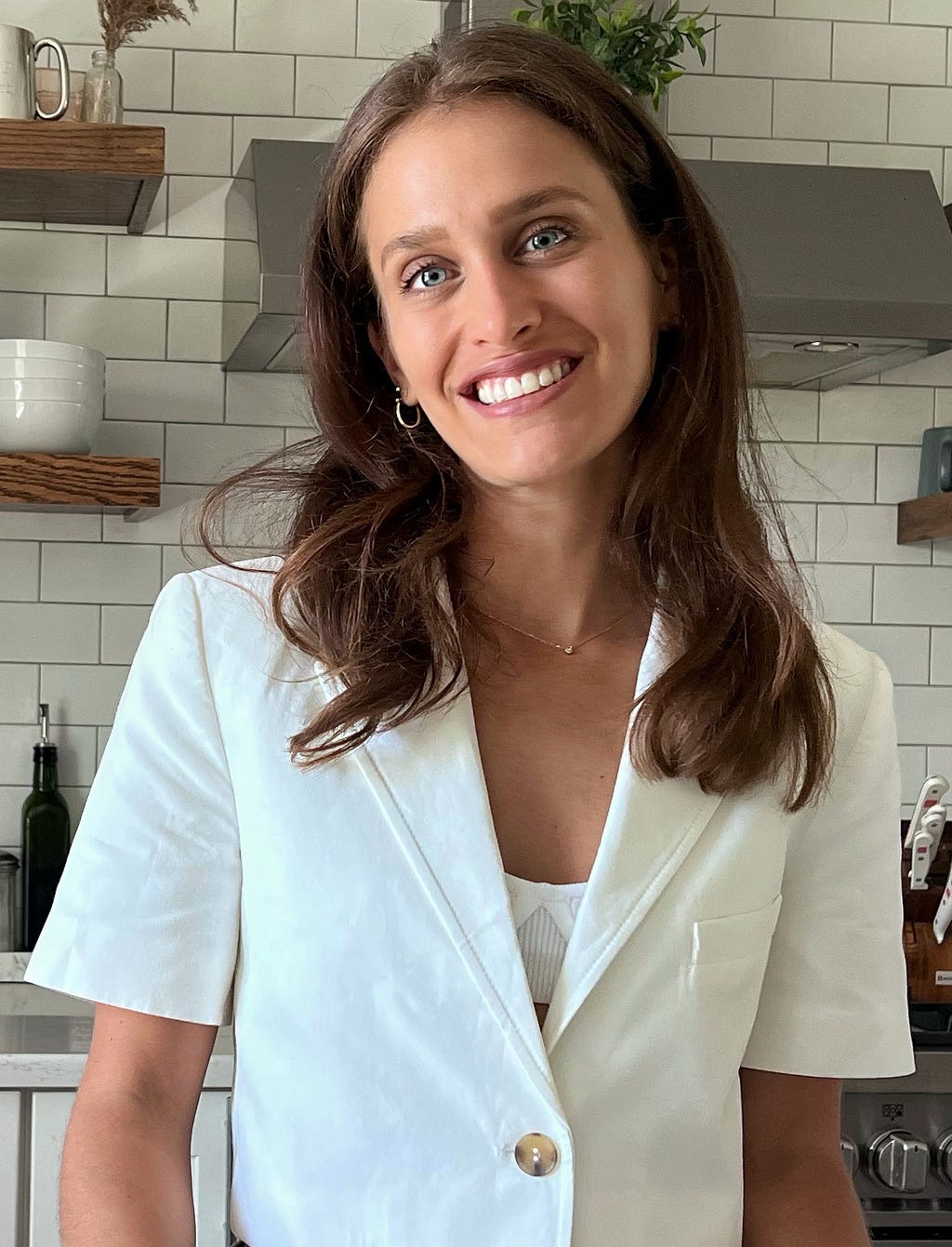
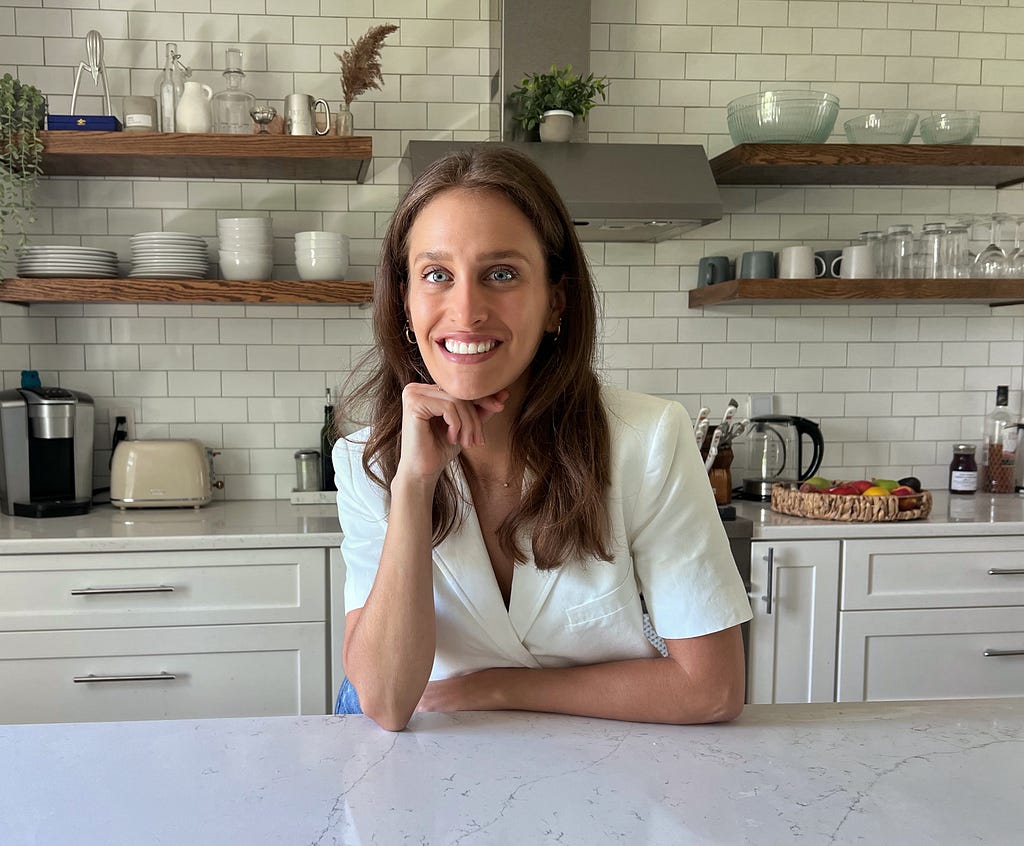
Ali Fiorella is a Integrative Nutrition Health Coach with an advanced certification in gut health.

She empowers driven professional women to feel more energized, elevate their mood, and gain confidence in making the right decisions for their health. Her mission is to support people on their wellness journeys and help them discover ways to nourish themselves more fully so they can feel their absolute best and live the life they deserve!

Thank you so much for doing this with us! Our readers would love to “get to know you” a bit better. Can you share with us the story about how you first got involved in fitness and wellness?

Thank you for having me!

Health and wellness is not my first career, so I’ll back track a bit! Since a young age I struggled with body and self-image, cycled through constant states of stress and fatigue, and experienced many digestive issues. Before I became a health coach I spent a decade as a fashion designer. While I did have some truly amazing experiences, I eventually became burnt-out and very disconnected from myself and my body.

When I was laid off during the pandemic, I had a lot of time to reflect upon how I was feeling mentally and physically and how I was living my life. I decided it was time to focus on bettering myself and my health, and finding work that better aligned with my values. There was always a part of me that had an interest in health and nutrition and it finally felt like the right time to pursue it. After getting a Health Coaching Certification with the Institute for Integrative Nutrition, I not only had a new perspective on health and nourishment, but also found new fulfillment and purpose in my life. I began coaching others using the same holistic approaches I learned and used to transform my own health and vitality.

Can you share the most interesting story that happened to you since you started your career?

Meeting some of the most wonderful people from all over the world that I now collaborate with, work with, and call my friends! Through events, courses, coaching programs, social media, and traveling, I have been absolutely blessed to be connected with really incredible and inspiring people. As someone that deeply values connection and sharing with others, meeting people with aligned visions and values is one of the things I treasure most about this new path that I’m on!

Can you share a story with us about the most humorous mistake you made when you were first starting? What lesson or take-away did you learn from that?

Yes! When I first started I always thought that I needed to learn more. If you struggle with perfectionism or imposter syndrome, you know what I’m talking about! When I first started my coaching business I had this fear that I didn’t know enough and that I needed to continue getting more certifications in order to help people. Of course it wasn’t funny at the time, but I can now look back and laugh because nobody knows everything! What I started to see was that you can still help people and make a massive impact on their lives even if you are 10–20% ahead of them. You don’t need to know everything to help people, nor will you ever know everything!

Can you share with our readers a bit about why you are an authority in the fitness and wellness field? In your opinion, what is your unique contribution to the world of wellness?

As a certified Integrative Nutrition Health Coach with advanced certification in gut health, I have demystified a lot of false narratives of health and wellness through my own experience and learning. I used to think that eating healthy and working out made me healthy, but I was missing several pieces of the puzzle for most of my life. Taking a look at my life from a holistic lens to understand what was out of balance and focusing on how to nourish myself more fully, opened up a whole new world of healing for me. Helping people shift their beliefs and their perspective of a healthy lifestyle is the most powerful thing I share and want to continue to share with others so they can transform their own health and lives. I empower others to make their health a priority and understand that living a healthy lifestyle shouldn’t just begin because of a health issue, it should be out of respect for themselves and their desire to live a full and long life! Mindset is everything!

None of us are able to achieve success without some help along the way. Is there a particular person who you are grateful towards who helped get you to where you are? Can you share a story about that?

I work with a life coach and shaman who has been an incredible support for me and has helped me to step into my self worth and vision. I began working with her when I was pivoting my career and I was in need of support not only professionally, but personally as well. For so long I had a hard time asking for help and guidance and it wasn’t until I did that I was finally able to uncover some deeper rooted issues and free myself from a lot of pressure and anxiety. Even coaches need coaches and support systems, it’s something everyone can truly benefit from!

Ok thank you for all that. Now let’s move to the main focus of our interview. We all know that it’s important to eat more vegetables, eat less sugar, exercise more, and get better sleep etc. But while we know it intellectually, it’s often difficult to put it into practice and make it a part of our daily habits. In your opinion what are the 3 main blockages that prevent us from taking the information that we all know, and integrating it into our lives?

Ohh I love this question!

An all or nothing mindset is hands down the #1 roadblock I see! It’s a form of perfectionism which I think we all struggle with at some point in our lives. Thinking we have to do everything all at once or make a really drastic change in order to see results is overwhelming and this is where I see people get stuck in old habits and struggle to commit to change.

Feeling like there’s not enough time, which really stems down to what we prioritize! We’ll often put things off and say “I’ll focus on it one day when I have time”. We all have busy schedules and it’s very easy to say we don’t have enough time to do something like exercise, rest, cook a meal or meditate! Usually there are things we waste our time doing that we can easily replace with a healthier habit, some simple time management and prioritization can go a long way!

Noise and confusion in the health and nutrition world is also something that can get people really hung up! It can be confusing and difficult to navigate through on your own, with new information, misleading marketing, conflicting opinions, and new diets constantly being discussed. People often feel overwhelmed and really don’t know where to start or what is best for them as an individual. If this is you, seek support!
Can you please share your “5 Non-Intuitive Lifestyle Tweaks That Will Dramatically Improve One’s Wellbeing”? (Please share a story or an example for each, and feel free to share ideas for mental, emotional and physical health.)

Sure!

  1. Create nourishing daily routines. The way we start and end our day are key for our wellbeing! Carve out some time to take care of yourself, even if it’s just 15 minutes! Try incorporating meditation, journaling, exercise, listening to calming music, reading, drinking tea, or practicing gratitude. Experiment to find what feels right for you!
  2. Ditch dieting and restriction and focus on eating real whole foods. If you struggle with dieting, it’s probably because it’s simply not sustainable for most people to maintain in a healthy and enjoyable way. Instead focus on eating real whole nutrient dense foods and preparing your own meals. Think leafy greens, fruits, veggies, fish, meat, nuts, seeds, and whole grains! Variety is key to making sure your body is getting the nutrients it needs!
  3. Find exercise or movement that you actually enjoy! Bringing a sense of joy to any habit you want to create, makes it much easier to do consistently and way more effective. Don’t force yourself to do workouts you dread, it will exhaust you mentally and physically! Lean into workouts that you actually enjoy and feel good for your body and mind. Exercise will become something you want to do, it will relieve stress, and bring joy to your day!
  4. Get exposure to sunlight in the morning. This helps to regulate your circadian rhythm, which can lead to improved sleep and energy in the morning! Sit outside while you drink your morning beverage or take your dog for a walk!
  5. Connect with your purpose and bring more fulfillment to your life! Get into alignment and connect with yourself to understand your purpose- why you do what you do, your reason! Reflect on your strengths, values, and life experiences. Live with intention and find ways to use your unique purpose to serve others professionally or personally! You’ll feel more peace and joy and live a healthier and fuller life because of it!

As an expert, this might be obvious to you, but I think it would be instructive to articulate this for the public. Aside from weight loss, what are 3 benefits of daily exercise? Can you explain?

There’s so many benefits, but here are my 3 favorites!

It improves confidence! Especially in the morning, starting your day with exercise will help you enter your day with a can-do, fierce attitude. You’ve already accomplished something great!

Getting in movement each day helps boost digestion and keeps everything running smoothly through your GI tract. Gentle forms of movement such as yoga and walking are especially effective if you struggle with any sort of GI issues or digestive discomfort such as IBS or constipation.

Mental clarity is an important benefit of daily exercise! Movement is meditation; it provides focus, can reduce brain fog, and crowd out negative thoughts.

For someone who is looking to add exercise to their daily routine, which 3 exercises would you recommend that are absolutely critical?

Daily walks are the number one exercise that everyone should do! If you struggle with exercise, start here!

Yoga is such an amazing mind, body, soul practice! Slowing down, connecting with your breath, and using your mind to take you through the movement of your body is so essential for the busy lives we lead today!

Simple movements with your own body weight are extremely effective for building strength. A few reps of squats, lunges, push ups, crunches, and planks will all work your entire body and don’t require any equipment!

Is there a particular book that made a significant impact on you? Can you share a story?

I absolutely love “The Book of Joy”! When I read it for the first time, it really gave me a fresh perspective on life and how to embody more joy each day. This is a book that I often come back to when I’m struggling mentally or emotionally, there’s so many tools and lessons that apply to all types of scenarios in life. I’ve developed a daily gratitude practice because of this book and have learned to perceive difficult situations in new ways!

You are a person of enormous influence. If you could start a movement that would bring the most amount of good to the most amount of people, what would that be? You never know what your idea can trigger. 🙂

I would start a movement for wellness communities to be created for people all across the world with a focus on holistic health and nourishment. Communities with a safe space for people to share their experiences and struggles and connect with one another. I believe that everyone deserves to feel heard and supported, and with the right knowledge people can transform their health.

Can you please give us your favorite “Life Lesson Quote”? Do you have a story about how that was relevant in your life?

“The body can heal itself by itself when given half the chance.” This is a quote from Joshua Rosenthal the founder of the nutrition school I received my training with and it’s something that has always stuck with me. The body is really quite incredible, it’s always sending us signals, and it knows what to do! When we learn to listen to it and give it the right environment, it has the ability to heal.

We are very blessed that some of the biggest names in Business, VC funding, Sports, and Entertainment read this column. Is there a person in the world, or in the US whom you would love to have a private breakfast or lunch with, and why? He or she might just see this if we tag them 🙂

What a question! I’d have to say Jay Shetty, I really love and appreciate the work that he is doing to serve and impact others on such a massive scale! It’s so inspiring!

What is the best way our readers can follow you online?

I love connecting with others and sharing on social media! The best way to follow and reach me is on instagram @alifiorella or visit my website Alifiorella.com.

Thank you for these fantastic insights. We wish you only continued success in your great work!


Women In Wellness: Ali Fiorella On The Five Lifestyle Tweaks That Will Help Support People’s… was originally published in Authority Magazine on Medium, where people are continuing the conversation by highlighting and responding to this story.

Female Disruptors: Margaret Greenberg & Gina Greenlee of The Business of Race On The Three Things…

Female Disruptors: Margaret Greenberg & Gina Greenlee of The Business of Race On The Three Things You Need To Shake Up Your Industry

An Interview With Candice Georgiadis

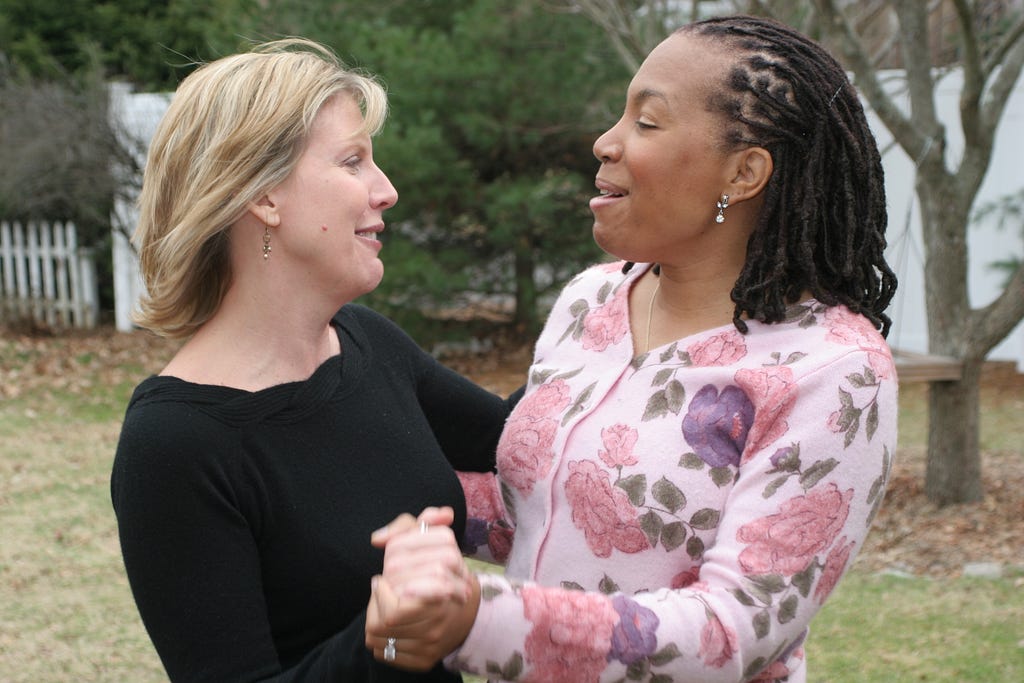
Margaret & Gina: “Stay in your lane.” We received early draft feedback suggesting we include many more societal sectors (beyond the workplace) in our book. And when we felt tempted to do so, we went back to the words that introduce and underscore our thesis: “Beyond the workplace, numerous complex, intersecting facets of structural racism are rampant across our institutions: health, education, law, childcare, housing, banking and finance, law enforcement, and the penal system. We respect and support the work being undertaken to dismantle racism in these domains; however, that is not the focus of The Business of Race. Our lane is the workplace.”

As a part of our series about women who are shaking things up in their industry, I had the pleasure of interviewing Margaret Greenberg and Gina Greenlee.

We are organizational development professionals, coaches, and educators with a combined business experience of 50-plus years with Fortune 5, 50, 100, and 500 companies in roles as both external consultants and internal employees.

Thank you so much for doing this with us! Before we dig in, our readers would like to get to know you a bit more. Can you tell us a bit about your “backstory”? What led you to this particular career path?

Margaret & Gina: Margaret founded her consulting firm, The Greenberg Group, in 1997 to coach executives and their teams to lead large-scale organizational change. And she’s designed, consulted, and facilitated hundreds of business strategy sessions for global companies.

Gina’s had multiple career trajectories over the decades in wide ranging industries and roles. This includes healthcare, publishing, and financial services. Inherent to all of these roles was the practice of Strategic Planning and Organizational Development.

Can you tell our readers what it is about the work you’re doing that’s disruptive?

Margaret & Gina: Actually, it’s not about what we think we’re doing that is disruptive to the status quo. Rather, it is about how others perceive our work as disruptive. We were fortunate to have New York Times best-selling author Tom Rath write the foreword to our book, The Business of Race: How to Create and Sustain an Antiracist Workplace — and Why it’s Actually Good for Business.

After reading an advance copy of the book Rath wrote, “The authors are not traditional diversity experts, and that is precisely why their ideas are fresh. With deep backgrounds in business, coaching, and OD (organizational development), they get us to explore what’s needed at the individual, team, and organizational levels to reimagine a workplace that mirrors the customers we serve.”

A concrete example from Gina’s experience: In the late 1990s she was the Director of Strategic Planning for the Connecticut newspaper, The Hartford Courant. One of the first initiatives she led was the migration of the newspaper online. Many of the employees — managers, directors, individual contributors — wondered, What the heck does she know about this? She just got here. Moreover, Gina was coming from a completely different industry — healthcare. And she was not fluent in the technology world.

Gina’s boss at the time, the paper’s General Manager told the organization, “It’s precisely because Gina has sat outside of our industry that she has a perspective we don’t. We’re too close to it.” To the General Manager’s point, that had been the hallmark of Gina’s career: helping organizations of all stripes evolve their systems, cultures, policies and practices. By definition, OD practitioners are not experts in all industry subject matter. Rather, we are trained, skilled, experienced and fluent in how organizations and the people in them fundamentally exist, change and evolve: in other words, their operational and cultural DNA — no matter the industry.

Can you share a story about the funniest mistake you made when you were first starting? Can you tell us what lesson you learned from that?

Margaret & Gina: We can’t think of any funny “mistakes.” But we did have fun writing this book, mostly because of our longstanding friendship. Also, fun is organic to how we live and work. That’s one reason The Business of Race is an accessible read. We take the topic seriously. And because race work is hard, we take care of our spirits and psyches by, in part, infusing our business processes with play.

With that as context, when we were writing a chapter that traces the evolution of workplace diversity, equity and inclusion prompted by the Civil Rights Act of 1964, we wanted it to be engaging, not dry. So, we played. Margaret mused how a chart, similar to a bartender’s mixing guide, might serve as a template for outlining a history of race in the workplace. Gina researched the idea, found some cool models to explore. That surfaced a memory for Gina — a catchphrase from the 1967 Star Trek TV episode, The Trouble with Tribbles: “Who put the tribbles in the quadrotriticale.” The rhythm of that sentence sparked this one: “Who Snuck the “E” Between the “D” and the “I”? And that is the origin story of how the title of chapter three in The Business of Race came to be.

We all need a little help along the journey. Who have been some of your mentors? Can you share a story about how they made an impact?

Margaret & Gina: We’ve had so many influences on this journey of writing, sharing and evolving the book and our organizational consulting in the area of workplace racial equity. However, four people come immediately to mind:

Rochelle Newman-Carrasco, who is Gina’s childhood friend and a career DEI marketing professional with four decades of experience. As we write in the “Gratitude” section of The Business of Race, “We so appreciate Rochelle mentoring us while we stumbled toward knowing what we didn’t know: helping us to surface our biases, deepen our explorations, stay in our lane, and keep it real.”

Best-selling author Tom Rath, who wrote the foreword to the book, read an early draft and saw opportunities for us to “tell really good stories” and “grab readers by the throat.”

Dr. Deborah Plummer, PhD, is a psychologist, author, and university professor whose research on topics central to racial equity inclusion evolved our thinking along the way and to this day.

Amy Li, our McGraw-Hill editor, whose Chinese-American lens afforded us a worldview our lived experiences don’t offer. And because of that, she encouraged exploration beyond our Black and White identities, which enhanced the richness of the book.

In today’s parlance, being disruptive is usually a positive adjective. But is disrupting always good? When do we say the converse, that a system or structure has ‘withstood the test of time’? Can you articulate to our readers when disrupting an industry is positive, and when disrupting an industry is ‘not so positive’? Can you share some examples of what you mean?

Margaret & Gina: Whether or not disruption is positive depends on your lived experience — in the workplace and in life. If you’ve been the center of any industry, system or structure, any disruption can be perceived as a threat. Why? Because you created that system or structure. So, reimagining it — without you as the focal point — will be challenging but not insurmountable.

Let’s speak clearly here like we do in our book and our consulting work. In The Business of Race, we name without shaming or blaming. We cannot solve what we don’t discuss. So, with that lexical context, some White people, and White men in particular, will resist this work.

What is the work?

To reimagine how your organization fundamentally operates so that all voices are central, not only a self-ordained few. And resistance to workplace racial equity — to remain specific to our lane — comes from the perspective of what one has to lose, not what there is to gain.

The September 2021 issue of MITSloan Management Review unpacks this dynamic in the article, Fighting Backlash to Racial Equity Efforts: Understanding the real reasons why diversity initiatives provoke opposition can help you lead employees through cultural transformation. Authors Rosalind M. Chow, L. Taylor Phillips, Brian S. Lowery and Miguel M. Unzueta write: “We believe the experience of White people to be as important as the experience of those who identify as Black, Indigenous, and people of color (BIPOC), because any movement forward in racial equity will require the willing cooperation of equity-minded White people…If Whiteness remains undiscussed, then the advantages [a workplace system] offers Whiteness are also left undiscussed.”

And we, the authors and practitioners of The Business of Race, believe that willingness comes from reimagining how your workplace fundamentally operates with racial equity as a core business principle. Organizations can do this by taking an asset lens to this work. This is where the science of positive psychology can be applied to race work. Recall the adage, “If it ain’t broke, don’t fix it.” Add this twist, “If it ain’t broke, break it.”

In positive psychology, we apply an asset lens and say, “If it ain’t broke, study it.” Find out why something is working so well. So positive psychologists study healthy marriages, flourishing teams, and when it comes to business, they study thriving organizations that people are clamoring to work for. This is why while researching The Business of Race we sought out organizations that had already begun their race journey. We asked them what was working in their evolution to include racially diverse voices in their business strategy, and how they were measuring racial equity.

Can you share 3 of the best words of advice you’ve gotten along your journey? Please give a story or example for each.

Margaret & Gina: “Stay in your lane.” We received early draft feedback suggesting we include many more societal sectors (beyond the workplace) in our book. And when we felt tempted to do so, we went back to the words that introduce and underscore our thesis: “Beyond the workplace, numerous complex, intersecting facets of structural racism are rampant across our institutions: health, education, law, childcare, housing, banking and finance, law enforcement, and the penal system. We respect and support the work being undertaken to dismantle racism in these domains; however, that is not the focus of The Business of Race. Our lane is the workplace.”

We are sure you aren’t done. How are you going to shake things up next?

Margaret & Gina: We love reimagining! Reading a book, alone or with a group, can only have so much impact. It’s what you do next to operationalize it; to make it stick. To that end, we are now bringing together business leaders from different industries and organizations, in a learning experience to explore how to embed racial equity into their business strategies. No more silos, no more “programs,” no more off-the-side-of-your-desk, no more DEI-only initiatives. This is what we are doing next: facilitating REAL change. We are bringing people together and they’re learning not only from us, but most importantly from each other. This is arduous work. And demanding work is best accomplished in coalition. “If you want to go fast, go alone, if you want to go far, go together,” says the African Proverb.

You might ask, “Why would we make visible to people outside our organization our challenges in doing race work?” Because, like you, they are struggling with how to advance racial equity in the workplace, too.

In your opinion, what are the biggest challenges faced by ‘women disruptors’ that aren’t typically faced by their male counterparts?

Margaret & Gina: Let’s reframe this question a bit using our asset lens. Rather than biggest “challenges,” how about biggest opportunities? There is a movement to bring more diverse voices to the table. Women are being sought out like never before to be on panels, boards, and leadership teams; to be keynote speakers. More publishers are now seeking women business authors because women publish less than 10 percent of business books, but we make up more than 50 percent of the workforce.

Now there is one big challenge that cannot be reframed: The funding that women business owners receive compared to men. According to Forbes, since 2011, the amount of venture capital dollars granted women-owned businesses has ranged from 1.8% to 2.7%; and as of June 2022, that number is a mere 2%. Of that 2%, a fraction is granted to women of color.

Do you have a book/podcast/talk that’s had a deep impact on your thinking? Can you share a story with us?

Margaret & Gina: We listen regularly to NPR’s Code Switch podcast. Hosted by journalists of color, the podcast tackles the subject of race with empathy and humor. We are also inspired by the book, The Warmth of Other Suns: The Epic Story of America’s Great Migration by Isabel Wilkerson. It’s a book that helped Gina to better understand her origin story as the only child of two southern-born parents. They, along with millions of other Black southerners migrated from the Jim Crow states to the northern US from 1910 to 1970. Also, The Warmth of Other Suns influenced the narrative structure of our book because it is filled with beautifully written, highly relatable stories.

You are a person of great influence. If you could inspire a movement that would bring the most amount of good to the most amount of people, what would that be? You never know what your idea can trigger. 🙂

Margaret & Gina: Our hope is that The Business of Race will inspire others to use their voices to make workplace racial equity integral to how their organizations function. As a society (US) we tend to react and mobilize only in response to a perceived isolated incident captured on cell phone video that goes viral. For example, a violent attack or murder of an Asian American Pacific Islander (AAPI) or an unarmed Black man. These incidents, however, are but symptoms of intentionally-enacted, centuries-long inequities. Systemic change will only come when we connect individual acts of racial violence and economic oppression to their daily expression in every societal institution including the workplace.

Can you please give us your favorite “Life Lesson Quote”? Can you share how that was relevant to you in your life?

Margaret & Gina: What influences your tomorrow is what you do TODAY.

Two years ago, neither one of us could imagine we’d ever write a business book about race. But the tomorrow we are living started with us acting on a single telephone conversation on May 26, 2020, the day after the murder of George Floyd. That was the “today” we felt compelled to take our personal conversation on race public — in the form of a LinkedIn series — and each day thereafter took steps that led us to the “tomorrow” we live at this moment:

  • Celebrating the first-year anniversary of our book
  • Creating over a year ago, an LLC that offers strategic services for racial equity organizational development, and
  • Designing and delivering live, interactive learning experiences that explore racial equity using a business and OD lens, and applies evidence-based tools from the science of positive psychology.

How can our readers follow you online?

Margaret & Gina: At our website: https://businessofrace.com/

And our LinkedIn pages: Margaret H. Greenberg (LinkedIn), Gina Greenlee (LinkedIn)

This was very inspiring. Thank you so much for joining us!

Margaret & Gina: Thank you for the opportunity to share ideas!


Female Disruptors: Margaret Greenberg & Gina Greenlee of The Business of Race On The Three Things… was originally published in Authority Magazine on Medium, where people are continuing the conversation by highlighting and responding to this story.

Female Founders: Nia Brown of PrincessMe Parties On The Five Things You Need To Thrive and Succeed…

Female Founders: Nia Brown of PrincessMe Parties On The Five Things You Need To Thrive and Succeed as a Woman Founder

An Interview With Candice Georgiadis

You’ve Got to Be Tough. Not everyone in the business world wants to support you, you need a tough skin to ensure you don’t take things personally or distract you from your business goals. You will get rejected, and when that happens, you need the strength to keep moving forward.

As a part of our series about “Why We Need More Women Founders”, I had the pleasure of interviewing Nia Brown.

Born and raised in Brooklyn, New York, and now living in North Carolina, Nia Brown became a teen mom at the early age of sixteen. Being a young mother was incredibly challenging, but it helped shaped Nia into the resilient and hardworking woman she is today.

In 2016 Nia launched PrincessMe’s Mobile Spa for kids. While she knew what she wanted to offer to the public, Nia decided to lay it all out in a detailed business plan, creating a list of services to provide to children, such as pedicures, makeovers, dress-up sessions, games, painting, dance time, and so much more. The idea behind these services was to offer an unforgettable experience that children typically don’t get to enjoy because they are not always welcome in a traditional spa environment. Nia’s service list would eventually expand even further, allowing her to provide an assortment of spa packages that work with budgets of all sizes, big and small. Nia’s consistent effort and genuine passion for the business helped her scale PrincessMe Parties and led to the opening of a brick-and-mortar location within two years of being in business. In only six years, the fun and exciting vision that Nia brought to life has become a franchise, providing entrepreneurial hopefuls with the opportunity to do what they love and put smiles on the faces of young children.

Thank you so much for doing this with us! Before we dig in, our readers would like to get to know you a bit more. Can you tell us a bit about your “backstory”? What led you to this particular career path?

The inspiration behind PrincessMe Parties came from my first daughter. She is such a girly girl, and I noticed from an early age a huge positive shift in her attitude and confidence when she had pretty painted nails and a cute hairstyle, so I hired a spa team for her first birthday party. While the party was fun, the spa services didn’t give the excitement and quality that I had hoped for, which sparked my idea to create an upscale, luxury spa experience tailored towards young girls. As a young mom of seven kids, I took a leap of faith with my passion for event planning and launched the first PrincessMe Parties girl’s luxury mobile spa bus in 2015.

PrincessMe Parties has since expanded, and now we host events in our brick-and-mortar store in Charlotte, NC, in addition to our luxury mobile spa busses and a decked-out pink limo experience. And as a way to give back to the community, we also host a monthly donation event called PrincessMe Closet, where, on the first Saturday of each month, PrincessMe opens its closet full of new and gently-used clothes to families in need. As the Head of Fairy Godmothers, I’m honored to be a part of the experience that makes girls feel special and boosts their confidence.

Can you share the most interesting story that happened to you since you began leading your company?

One of my favorite stories comes from my first few months after launching PrincessMe Parties that showed me how quickly I need to think on my feet to run a successful business. A mom arrived for a party she had booked, but when she arrived, I didn’t see the birthday girl or other kids anywhere. The customer didn’t realize that PrincessMe Parties was geared towards kids and had actually booked PrincessMe Parties for her and eight of her adult girlfriends. I quickly improvised and revised the activities for the party and created a fun, relaxing spa day with facials, make-up, and wine and canvas painting. The women had a great day full of laughs and self-care, and while it was nerve-wracking having to improvise, I was proud to have been able to provide a memorable party.

Can you share a story about the funniest mistake you made when you were first starting? Can you tell us what lesson you learned from that?

We all make mistakes early on in our careers, but I’m glad to have learned from this particular mistake on my second day in business. When customers want to book a spa day at another venue, it is required that they have permission for PrincessMe to be onsite. For my second party ever, a mom booked a pop-up party at a mall, but when we arrived, security informed us that the mom never received permission. The mom and her little birthday girl were very upset that the party had to be cancelled, and because my heart is in my company, I tried everything I could to avoid disappointing this young girl on her birthday. The customer asked for a refund, which I gave her in cash on site, unfortunately, the next day, she requested a refund with her credit card company as well. I was burnt by my willingness to fix the situation instantly and was hurt that the customer got refunded twice due to this mistake, but it taught me an invaluable lesson, to always stay professional. Now, in the rare case that a refund is requested, I always refund in the same manner that the order was placed.

This situation taught me so much, and I learned that while there are benefits to putting your whole heart into your company, staying professional and not taking anything personally is key to success. For this, I still appreciate that mom to this day.

None of us are able to achieve success without some help along the way. Is there a particular person who you are grateful towards who helped get you to where you are? Can you share a story about that?

I am forever grateful for my husband, without him, PrincessMe Parties wouldn’t be where it is today. He is my biggest cheerleader and always encourages me to keep going when I feel the pressure. He always says, “before a rainbow comes, it has to storm,” which keeps me motivated to keep working towards my dreams. I like to joke that he is my diary, we are always bouncing ideas off each other that elevates my company, in fact, it was his idea to put spa sinks on the PrincessMe Parties bus, which transformed the business completely.

Ok, thank you for that. Let’s now jump to the primary focus of our interview. According to this EY report, only about 20 percent of funded companies have women founders. This reflects great historical progress, but it also shows that more work still has to be done to empower women to create companies. In your opinion and experience what is currently holding back women from founding companies?

I believe that the number one thing that is holding women back from starting their own businesses is the lack of confidence. Many women feel like they can’t balance being a mother, wife and/or business owner, but they can juggle it all if they just believe in themselves! Even in male-dominated fields, women need to have the confidence to walk into the business meeting and rock the room.

More women would also believe they can start their own company if they had support from other women. Successful female founders should pour back into the community and uplift the women around them. I make an active effort to “walk the walk” when it comes to this practice. When a woman comes to me, I always give her advice and tips for getting started because I know that if I could be that one person that gives her the confidence and tools to be successful, I have succeeded in my goal.

At PrincessMe Parties, our mission is to instill confidence and leadership in women at a young age. For example, during our crowning ceremonies, girls have a chance to be in the spotlight, giving them the confidence to take up space and take in positive feedback from others. It also shows young girls the importance of supporting each other, you can see it in their smiles when they strut down the catwalk with their best friends cheering them on. By instilling confidence at a young age and encouraging other women to pass the baton to others, women founders will be more successful.

Can you help articulate a few things that can be done as individuals, as a society, or by the government, to help overcome those obstacles?

There are many resources that would help women overcome the obstacles they will face when starting a business. We need more funding and grant options geared towards women and working mothers. Networking groups for female founders are a great way for women to ask questions from their peers and offer support. For a lot of women, we don’t have the extra resources needed to build a business because they may be focused more on the home and family, but having support systems in the local community can help women achieve all of their dreams.

This might be intuitive to you as a woman founder but I think it will be helpful to spell this out. Can you share a few reasons why more women should become founders?

The best benefit that comes from being a woman founder is the impact that it has on my daughters. They have been with me on this journey their whole lives, watched me start from the ground floor and how I kept working through any hardship I came across, which is worth everything to me.

Additionally, being the founder of my own company gave me a sense of confidence that I couldn’t have found working at any other job, which is invaluable to me. I’m able to change the narrative around the stereotype of women in business, that they miss dinners, important events and aren’t home to tuck their kids in at night. That’s not how I run my business. I’m able to craft my own schedule and prioritize being a mom during those important events, while running a successful business. I’ve found a way to balance work-life and mom-life, while still keeping myself healthy as well.

What are the “myths” that you would like to dispel about being a founder? Can you explain what you mean?

I found that the hustle culture mentality was the biggest myth I was told to follow to be successful. In fact, the opposite mindset has been the most successful for me. I started 2022 with the goal of giving myself peace of mind. I realized that I couldn’t be successful in any sector of my life without taking care of myself too. Every business owner needs time to take a step back, relax and take care of themselves. It keeps your creative mind sharp and your sparkle bright.

I’ve noticed a positive change in my business and home life when I allowed myself to unplug instead of focusing on work 24/7. It was so difficult to implement but has made all the difference in my company. I’m more engaged, a better boss and more creative at work when I allow myself peace.

Is everyone cut out to be a founder? In your opinion, which specific traits increase the likelihood that a person will be a successful founder and what type of person should perhaps seek a “regular job” as an employee? Can you explain what you mean?

The first thing I think is needed in order to be a successful founder is knowing that your company or product is not for everyone. There will be people out there who don’t like your product, but you can’t take it as a personal fault of yours. Just accept that you’re not everyone’s cup of tea and move forward.

Second, you need to be able to say “no” often. As a new founder, I felt the pressure to make accommodations or take on opportunities simply because they were available, but I learned that in order to be successful, I had to say no if it didn’t align with my goals and mission.

Additionally, the mantra that has helped make me a successful founder is “Clear, Excited and Organized.” Do I have a clear path that leads to where I want to go? When things don’t go as planned, do I have clarity on how to pivot toward success? Having a clear vision for your goals will ensure you are taking the right steps toward being successful.

As a business owner, you have to keep the excitement alive. Become your own cheerleader. Did you close a new deal? Celebrate and then get excited about the next move that will propel you even further.

The final trait that is key to success is organization. This may seem like a given to keep your business organized, but I encourage you to take it a step further and organize all areas of your life. For example, a clean, organized home helps me focus on my business more because I’m not worrying about the “mom/house” stuff during work hours and can focus on PrincessMe Parties.

Ok super. Here is the main question of our interview. What are your “5 Things I Wish Someone Told Me Before I Started” and why? (Please share a story or example for each.)

  • You’ve Got to Be Tough. Not everyone in the business world wants to support you, you need a tough skin to ensure you don’t take things personally or distract you from your business goals. You will get rejected, and when that happens, you need the strength to keep moving forward.
  • Utilize Available Resources. Research resources that are available to help your company thrive. Whether it’s local business groups, funding and grant opportunities, or networking events, you’d be surprised how many organizations there are in the community that can help you be successful.
  • It’s Okay to Hire Experts. You can’t run a company on your own, sometimes, you need help or an expert’s advice. Hire people that are just as passionate about your business as you are; by hiring experts, you can transform your small business into a large company.
  • Ignore the Nay-Sayers. Knowing that not everyone has your best intentions in mind or believes in your ideas can feel very defeating. In the past people have said to me, “Nia, you’ve only had your bus for two years, you shouldn’t be opening a brick-and-mortar store already!” But if I had listened to those nay-sayers, PrincessMe Parties wouldn’t have the success we have today. Ignore the nonbelievers, trust yourself and do what’s best for your company.
  • Find a Mentor. Find a mentor who is knowledgeable in your field or business in general and learn from them. Mentors can help you avoid making the same mistakes they have made in the past, lean on them for support and advice.

How have you used your success to make the world a better place?

I use my success to encourage other moms and show them that achieving their dreams is possible. I use my success as a platform to highlight amazing women and give them the motivation to balance it all. Additionally, PrincessMe Parties makes the world a better place by boosting young girls’ self-esteem. We help them discover their identity and self-confidence at an early age so that they can carry it with them throughout their whole lives. I’m so proud to have started a company that, yes, is about pampering, but also leaves a lasting impact on the next generation of women.

You are a person of great influence. If you could inspire a movement that would bring the most amount of good for the greatest number of people, what would that be? You never know what your idea can trigger.

In order to start a movement, I would expand the PrincessMe Parties’ closet. I host a monthly event where, on the first Saturday of each month, PrincessMe opens our closet full of new and gently-used clothes to families in need free of charge. Confidence can come from what you wear, how you feel in it and how you present yourself to the world, so being able to partner with organizations that want to make a difference would inspire a huge movement in communities all across the country.

We are very blessed that some very prominent names in Business, VC funding, Sports, and Entertainment read this column. Is there a person in the world, or in the US with whom you would love to have a private breakfast or lunch with, and why? He or she might just see this if we tag them.

I would love to have breakfast with Alli Webb, founder of DryBar, because she is a woman founder that has inspired me throughout my career. Seeing someone as successful as her talk about bad days and past failures motivates me to get up and try to do better when I have a bad day. Not only has she founded and built her own company into something amazing, but she embodies the idea of ‘passing the baton’ to motivate women around her.

Thank you for these fantastic insights. We greatly appreciate the time you spent on this.


Female Founders: Nia Brown of PrincessMe Parties On The Five Things You Need To Thrive and Succeed… was originally published in Authority Magazine on Medium, where people are continuing the conversation by highlighting and responding to this story.
Women In Wellness: Dr Mary Rorro On The Five Lifestyle Tweaks That Will Help Support People’s…

Women In Wellness: Dr Mary Rorro On The Five Lifestyle Tweaks That Will Help Support People’s Journey Towards Better Wellbeing

An Interview With Candice Georgiadis

In keeping with my love of music, I recommend patients and others to practice music meditation. I play music in my office for my patients and in their group sessions and listen to music throughout the day which promotes relaxation and joy.

As a part of my series about women in wellness, I had the pleasure of interviewing Dr. Mary Rorro.

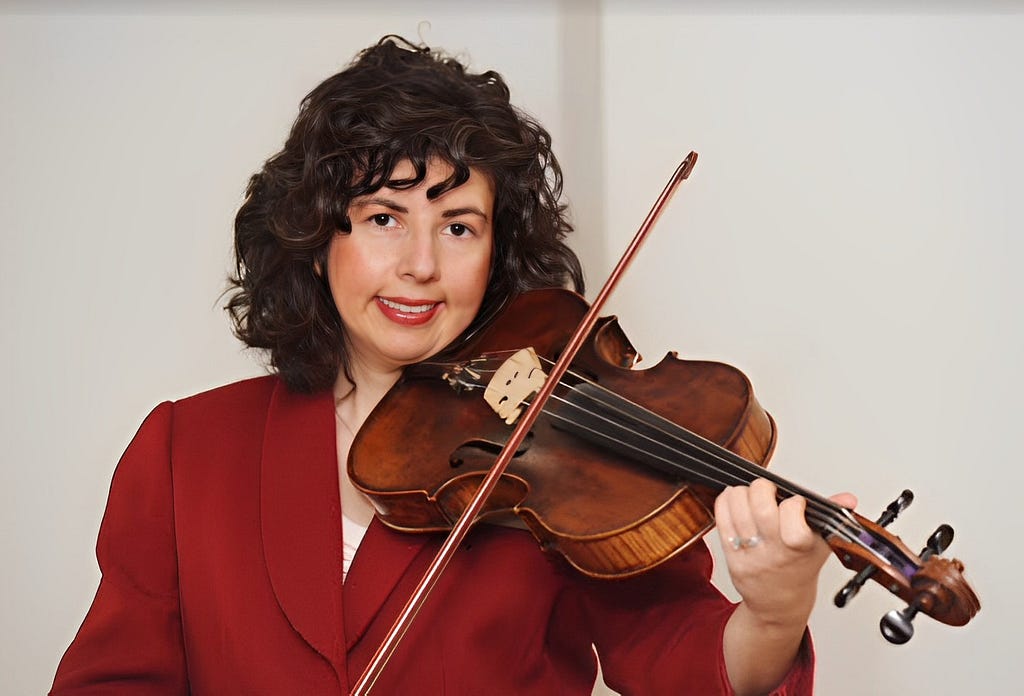
Mary Rorro, D.O., was Chief Resident of the Year during her psychiatry residency at Harvard and completed a Fellowship at Massachusetts General Hospital. She is Chair of the American Medical Women’s Association Music and Medicine Committee and Co-Chair of the Humanities Committee, a psychiatrist and founder of “ A Few Good Notes” music program at the Dept. of Veterans Affairs in N.J., and a violist, songwriter and poet. She is a recipient of a Bronze Medal from the President of Italy for Charitable Works from the Royal House of Savoy and a Jefferson Award, the nation’s most prestigious program for volunteer public service and the official recognition program of the United States Senate.

Thank you so much for joining us in this interview series! Our readers would love to “get to know you” better. Can you share your “backstory” with us?

Can you share the most interesting story that happened to you since you started your career? What were the main lessons or takeaways from that story?

The impact that music had on one patient’s journey toward healing stands out. After I played Amazing Grace on viola in my office, a patient said he contemplated the meaning of the song and decided to play his guitar again, which he had given up after returning from Vietnam. He also began to read the Bible. This therapeutic music encounter showed the power of music in transforming the doctor-patient relationship and rekindling the patient’s interest in music and spirituality.

I recently met Pope Francis in Rome as part of the Conference of Presidents of Major Italian American Organizations, and gave him “Reflections,” the same CD of my viola music that is given to patients, and this was a once-in-a lifetime moment I will never forget.

Let’s jump to our main focus. When it comes to health and wellness, how is the work you are doing helping to make a bigger impact in the world?

I consider my “A Few Good Notes” music program to be beneficial for veterans as described in the Amazing Grace story, in the spirit of patient-centered care. Veterans have commented that the music program has been an anchor and life-changing for them, and served as a means of connection during the pandemic.

Combining the arts into their healthcare journey makes an impact in the world, as it has ramifications not only for them, but for other Veterans and their extended families. The ripple effect is seen in our guitar instruction group, in which veterans teach other veterans the guitar and they experience the joy of music firsthand. I also have collaborated on writing songs with my former Greater Princeton Youth Orchestra conductor Maestro Matteo Giammario, who is a 97 year old World War II veteran. We have composed several patriotic songs for Veterans and Anthems for international organizations called “Filitalia” and “A Chance in Life,” as well as other spiritual and inspirational songs. It has been so special to have Maestro Matteo write the arrangement to my melody and lyrics.

Our “Meet the Moment Suite” was developed into a YouTube video to honor healthcare providers, featuring members of the American Medical Women’s Association and Medical Women’s International Association.

As Chair of the Music and Medicine and Co-Chair of the Humanities committee of the American Medical Women’s Association, I mentor physicians and pre-med and medical students and encourage them to form music programs in their own schools and practices that will enhance their wellness and expand into clinics and community.

Can you share your top five “lifestyle tweaks” that you believe will help support people’s journey towards better wellbeing? Please give an example or story for each.

  1. In keeping with my love of music, I recommend patients and others to practice music meditation. I play music in my office for my patients and in their group sessions and listen to music throughout the day which promotes relaxation and joy.
  2. Sharing music with others is a way to connect with patients and others and is the gift that you give to others. Consider forming a group where volunteers can share their talents in places where it is needed most, such as in hospitals and nursing homes. My beautiful and cherished mother Dr. Gilda Rorro, always taught me to share my gifts with others and took me to healthcare facilities to instill this lesson.
  3. Volunteer in the community and give back to others to receive even more rewards. Playing viola and singing my original songs such as “Thank You, Veterans,” “The Banner Yet Waves” and “Meet the Moment” at Veterans events such as the Veterans Day service at Princeton University and at Drumthwacket, the New Jersey Governor’s mansion, as well as playing in the clinic gives me much satisfaction when I see the joy it delivers to Veterans.
  4. Gratitude Giving-tell others that you value and are grateful for them and their importance in your life and witness their reaction and impact on your relationship.
  5. Possess a sense of mission, and embrace the purpose of something bigger than yourself to ensure the betterment of the greater community and humankind.

If you could start a movement that would bring the most amount of wellness to the most amount of people, what would that be?

As Chair of the Music and Medicine and Co-Chair of the Humanities Committees, I spearheaded the “Humanities and Healing: An Arts in Medicine Journal,” project in collaboration with AMWA and the Rutgers University Robert Wood Johnson Medical School Women’s Health Institute along with Gloria Bachmann, M.D., M.M.S., Co-Director of Rutgers Women Health Institute, and my devoted student and physician committee members, including Latha Premlatha Amalraj, M.D., Caitlin Cavarocchi, M.M. and Lori Horhor and many other volunteers.*

Our journal showcases the breadth of talent across the humanities and medicine. We received compelling and diverse submissions in the world of music, dance, literary and visual arts. We hope to inspire others in their own journeys of healing and to propel a movement of greater incorporation of the arts in healthcare.

The practice of medicine, especially heightened during the pandemic, has been fraught with increased stress and demands on our time and services. Healthcare providers have experienced burnout and the arts can serve as an outlet to tap into expressing their emotions.

The arts can represent a way to find relaxation and joy, both in practice and apart from it. I would like to increase support from administrators to create humanities and arts programs for healthcare providers and also allow them to exhibit their talents, such as our “Humanities and Healing” Journal inaugural issue showcases.

I have been fortunate to combine my passions for the humanities and medicine and share these principles with patients, pre-med/medical students and physician committee members. The movement of the arts and humanities in medicine has limitless potential to enhance wellness.

* Additionally, we had the support of AMWA leaders including Drs. Eliza Chin and Theresa Rohr-Kirchgraber and our new Rutgers Robert Wood Johnson Medical School Dean Dr. Amy Murtha and Dr. Min Kwon from the Rutgers Mason Gross School of Music, in this joint venture. We also would like to thank Heather Van Ness, Katharine Ross, and Charlotte Tomic.

What is the best way for our readers to further follow your work online?

Link to the Journal: https://www.flipsnack.com/A789BB66AED/humanities-and-healing-an-arts-in-medicine-journal.html

Thank you for these fantastic insights! We wish you continued success and good health.


Women In Wellness: Dr Mary Rorro On The Five Lifestyle Tweaks That Will Help Support People’s… was originally published in Authority Magazine on Medium, where people are continuing the conversation by highlighting and responding to this story.

Female Founders: Rebecca Crews On The Five Things You Need To Thrive and Succeed as a Woman Founder

An Interview With Candice Georgiadis

Yes, I believe everyone CAN be a founder, but not everybody necessarily wants to be. Sometimes it is necessary, in fact most times to work for others first. And that means something different for every person. In countries that are more agricultural, everybody has their own business. Selling grain, making rugs, clothing, vegetables etc. You create something and sell it — very simple. In more developed countries we’ve come to expect that if we educate ourselves sufficiently, that someone will pay us very well to sit behind a desk. More Americans are starting their own businesses than ever before in history. It is certainly wise to take your financial future into your own hands.

As a part of our series about “Why We Need More Women Founders”, I had the pleasure of interviewing Rebecca King Crews.

Rebecca King Crews is an actress, TV personality & producer, musician, business-owner, speaker, and author. She is most known for starring in and producing her family’s reality television project, The Family Crews for BET Networks and MTV International. She is the co-author of Stronger Together available on Audible. In 2020, she founded REBECCA CREWS LLC, a clothing, accessories and cosmetics line with her husband and partner of 33 years actor Terry Crews.

Thank you so much for doing this with us! Before we dig in, our readers would like to get to know you a bit more. Can you tell us a bit about your “backstory”? What led you to this particular career path?

I fell in love with clothing as a little girl. My mother was the most fashionable woman I knew. She was one of the pioneers of the women’s right movement, working in a field dominated by men. As the first woman and specifically the first African American woman to be hired by Equitable Insurance company as a salesperson, she wanted to make her mark. True to form, she would not wear the basic black or blue suit to work but would wear designer suits made for women. Bill Blass, Evan Picone, Halston and others lined her closet. I used to “borrow” her silk blouses and return them quietly, she being none the wiser.

In 2019, I was shopping for a white women’s tux to wear to my 30th anniversary celebration, and I had a miserable experience. I spent $3000 hiring a stylist, to find us the perfect look. We ended up piecing together a suit from three different designers, holding them to the light to make sure the whites were the same. This prompted me to begin making clothing for myself, and REBECCA CREWS LLC was born.

Can you share the most interesting story that happened to you since you began leading your company?

Absolutely! My clothing line launched with a Pop-Up at Saks Fifth Avenue Beverly Hills. One of my suppliers did not come through in time and several key pieces of the collection did not make it to the Pop-Up!

My launch party had to go on with shoes, handbags, lipsticks and only three items of my twenty-piece clothing collection. You can imagine I was mortified! Some of the items were of poor workmanship and had to be rejected. Thankfully, another supplier saved the day and we obtained all the clothing by the end of the week. But it was horrifying, nonetheless.

None of us are able to achieve success without some help along the way. Is there a particular person who you are grateful towards who helped get you to where you are? Can you share a story about that?

I am most grateful for my husband Terry who has always believed in my dreams. When I came to him with this idea, he was completely supportive. Terry is the biggest dreamer I know, and he amazes me with his capacity to take huge leaps of faith. I am learning a lot from him. Every step of the way he pushes me further. I also wish to express my greatest gratitude to Nana Boateng, my Co-designer and Director of Fulfillment who has allowed me to create what I see without limit. His many years of experience and his fabulous creative insight are crucial to the success and the launch of this business during a global crisis.

Without him it would not have been possible.

Ok, thank you for that. Let’s now jump to the primary focus of our interview. According to this EY report, only about 20 percent of funded companies have women founders. This reflects great historical progress, but it also shows that more work still has to be done to empower women to create companies. In your opinion and experience what is currently holding back women from founding companies?

Capital. Hands down, women are discriminated against in lending similarly to every other minority group. Secondly, even if you are starting small and working your way up by working for others, there is a high level of discrimination against women in this industry, though it is one that predominantly serves them.

Can you help articulate a few things that can be done as individuals, as a society, or by the government, to help overcome those obstacles?

As individuals, we certainly need to advance gifted women in this field, by intentionally looking for talent and promoting it. As a society we still have a long way to go in terms of equality in the workplace but that is changing. As a government we absolutely should crack down on lending and job discrimination and create a less complicated and less biased grievance process for victims of this practice. Finally, severe consequences for violators of discrimination policy will send a very clear message and can help reduce these actions against women.

This might be intuitive to you as a woman founder but I think it will be helpful to spell this out. Can you share a few reasons why more women should become founders?

Control. No one can tell you no. I always had the notion that I would work for myself. My mother taught me self-reliance because being a salesperson, she had sole responsibility for how much she earned. I opened my first business at eleven, babysitting in my neighborhood. I passed out flyers going door to door and made money this way all the way through high school. I was also the paper girl, the Avon Lady, and I sold Mary Kay. I understood how to make a profit.

What are the “myths” that you would like to dispel about being a founder? Can you explain what you mean?

The first is that founders are super big risk takers. I believe that you can take “small, calculated risks” to start a business, and many people have done just that. Secondly, that being the boss is always glamorous. I started REBECCA CREWS LLC with one assistant, and we just worked — good old fashioned elbow grease!

We spent hours a day researching all of the many moving parts to building a brand and it took time.

Is everyone cut out to be a founder? In your opinion, which specific traits increase the likelihood that a person will be a successful founder and what type of person should perhaps seek a “regular job” as an employee? Can you explain what you mean?

Yes, I believe everyone CAN be a founder, but not everybody necessarily wants to be. Sometimes it is necessary, in fact most times to work for others first. And that means something different for every person. In countries that are more agricultural, everybody has their own business. Selling grain, making rugs, clothing, vegetables etc. You create something and sell it — very simple. In more developed countries we’ve come to expect that if we educate ourselves sufficiently, that someone will pay us very well to sit behind a desk. More Americans are starting their own businesses than ever before in history. It is certainly wise to take your financial future into your own hands.

Ok super. Here is the main question of our interview. What are your “5 Things I Wish Someone Told Me Before I Started” and why? (Please share a story or example for each.)

Number one, I wish someone had told me there was going to be a worldwide pandemic! Secondly, I wish someone could tell me how long it takes to succeed, but that’s a very individual process and for every field of endeavor it is different. It is also different because not all founders are the same, we must simply stick to it. Number three, I would like to express the importance of mentors. As creative people we often get an idea, and we just jump. But it’s very important to learn from those who went ahead of you and not learn it as you go and reinvent every wheel. It’s also extremely important to understand that not everyone’s going to be as excited as you are. It may do you well to not share your dream with everyone around you, as some of the naysayers will be people who are the closest to you. You must hold fast to what you believe you are supposed to do and hold fast to your self-confidence. Sometimes it’s all you will have.

How have you used your success to make the world a better place?

In my opinion the best way to use your success, is to promote other people and help make their dreams come true. I believe that everything that comes our way is meant to be paid forward, and that in doing so we create more opportunity in the world.

You are a person of great influence. If you could inspire a movement that would bring the most amount of good for the greatest number of people, what would that be? You never know what your idea can trigger.

Wow that’s a heavy question. There are so many issues facing our planet it would be hard to say what one thing would motivate me. I will say this I’ve always been touched by the plight of women and children in developing countries. Because of corruption in their government and war, these precious families have no opportunity and I think that would be where I would start. Philanthropy that benefits women and children changes the world.

We are very blessed that some very prominent names in Business, VC funding, Sports, and Entertainment read this column. Is there a person in the world, or in the US with whom you would love to have a private breakfast or lunch with, and why? He or she might just see this if we tag them.

Wow there are so many people that I respect but I would have to say if I could sit down and speak with someone it would be one of my mentors in fashion, Carolína Herrera. Carolina began her fashion career later in life as did I, and still managed to break through and be a force in the marketplace. I think that would be my dream lunch right now!

Thank you for these fantastic insights. We greatly appreciate the time you spent on this.


Female Founders: Rebecca Crews On The Five Things You Need To Thrive and Succeed as a Woman Founder was originally published in Authority Magazine on Medium, where people are continuing the conversation by highlighting and responding to this story.
“They Told Me It Was Impossible And I Did It Anyway”, With Arwyn Swanger of Ultranauts

An Interview With Candice Georgiadis

Never stop positive manifestation- As humans, we are the makers of our own destinies. You want to shoot for the stars, and understand even if you fall, you will still land amongst the stars. You speak out what you want OUTLOUD multiple times- and you get your headspace into the realm of focusing on saying “I am going to achieve” “I am going to get” etc and you watch it happen- I promise this works — I have done this as a jobseeker, as a person in court — and as someone who has always been told I couldn’t do it- I believe in ALL of you!

As a part of our series about “dreamers who ignored the naysayers and did what others said was impossible”, I had the pleasure of interviewing Arwyn Swanger.

Arwyn Swanger is a Neurodiverse and Autistic mental health warrior, a fighter who has overcome adversity hurdles and who has found her purpose in life by helping empower others, advocating for #Disabilityinclusion and for survivors of Domestic violence. Arwyn is a Senior Tech Recruiter with Ultranauts Inc, a company that is founded on the principles of Inclusive hiring from the start, and Universal hiring practices. Arwyn provides public speaking for Neurodiversity, Autism, Disability Inclusion and for survivors of Domestic Violence, sexual assault and Mental health.

Thank you so much for joining us! Our readers would love to get to know you a bit better. Can you tell us your backstory?

My story is unlike anyone else’s that you will meet. I was born to a mother who was a teenage parent with significant mental health issues and a dad who was a veteran in the military and had unresolved trauma from his childhood. My parents never should have married- they were like Oil, and water. My birth mother is someone who is unable to be alone- her value equates to who she is with, and what he will do for her. She turned a blind eye for years to the abuse that was happening within multiple households including sexual assault and molestation. I always knew I was different, but I was born to a person who didn’t want a label on me, which resulted in getting less help. School was a struggle, friendships and relationships were toxic.I went through 28 years of Domestic violence, sexual assault and rape starting at 6 years old. The last person to rape me was my ex husband- March 20th, 2021 is a night I will never be able to forget. I have had to overcome homelessness, discrimination, abuse, alcohol abuse all while being Neurodiverse, Autistic and a mental health warrior.

Are you working on any new or exciting projects now? How do you think that will help people?

I am currently working on helping Jobseekers optimize their resumes by offering resume refreshes on special pricing written by me, a professional resume writer of 15 years. I also offer career strategy and portoflio planning. I have been able to help over 700 people of the years find empowering employment and have a high retention rate. I am also currently looking for Senior Data Quality Analysts for an exciting opporutnity we have at Ultranauts Inc. 🙂

In your opinion, what do you thik makes your company or organization stand out from the crowd?

We are steps ahead of the rest- we are leaders in Universal Hiring practices, and Inclusion from the start. You can read about it here — — https://ultranauts.co/company/

We don’t use ATS systems to just scan, we read EACH and EVERY resume and look at the candidate as a whole. We are a company founded by 2 MIT graduates, and 75% of the company identifies as being Neurodiverse, the majority of us are Autistic.

Has there ever been a time that someone told you something was impossible, but you did it anyway? Can you share the story with us? What was your idea? What was the reaction of the naysayers? And how did you overcome that?

There have been many times over the years I have been told I couldn’t do something, and then proved naysayers wrong- but here are two short examples.

1. Getting pregnant with Oliver- I was told that I would NEVER be able to carry a baby due to underlying health concerns with Endometreosis and Polycystic Ovarian Syndrome. I not only lost 130 pounds, I got pregnant, and over the last two years (Since contracting COVID19 in Feb 2020) have shed over 175 pounds, all while being sober from alochol (over a year) and overcoming a divorce, multiple moves and job changes.

2. I was told that no one would care about me or what I have been through by someone who had a large following on LinkedIn. I proved her wrong by putting myself out there with orignial content where I talked about things that most people do not on LinkedIn i.e. overcoming abuse, trauma, rape, assault etc. I started showing up as myself, and being authentic with a message to help others. In the last year, I have grown a following of over 4700 and talk regularly with people about overcoming obstacles in their lives. I overcame this by putting her voice in the back of my mind- I told myself not to listen to her hate, and to prove her wrong by doing exactly what I wanted to do- starting a discussion about harder to talk about topics.

Did you have any experiences growing up that have contributed to building your resilenicency? Can you share the story with us?

When I was 6 years old, I was raped by an older teenager who was 16 and I was friends with his brother. I bottled up what had happened as I was still learning about myself and my body, when I was introduced to Jimmy- an abusive, child molestor and horrible human being. For 7 years I was forced to call him dad, sexually abused (molested, touched, told I was “fuckable” when I was 13) and he would constantly grope me. He used physical violence to cause harm and would make an excuse that it was the “Armys” fault. Shortly after my birth mother left him, she got with another child molestor and abuser Mark, who was just as bad as Jimmy. When I met my ex husband, I was blinded by his mistreatement and the way he allowed others to treat me that I lost myself for a long time. It wasn’t until the last 2 years that I have been able to find my voice. By the time I found my voice, it was 28 years of torture and abuse- and it’s something that has caused horrible night terrors.

Based on your experience, can you share 5 strategies that people can use to harness the sense of tenacity and what naysayers think is impossible. (Please share a story or an example for each)

1. Just because someone says you aren’t “strong, smart enough, or good enough”- doesn’t mean this is true. This is the time you hold us your middle finger like a flag, and say “not today Satan- I WILL do this against all odds”- Example above (when I got pregnant with Oliver)

2. Turn off all the unneccesary noise- this means ignore when people use words like “can’t”, “unable” to “I can” and “I will”.- When I went through the divorce, I was told that I couldn’t be a parent to my child. I told the courts to watch me- and I have done just that, while continuing to fight for my son, and my rights as a mom.

3. Just because you get a “rejection” doesn’t mean it’s over for you- instead, create an action plan and surround yourself with people who are aligned with the same values, believes, mission etc that you are, and plot ways to turn that rejection into an acception- this means upskilling, asking questions and asking for feedback.

4. Don’t stop dreaming for what you want- No one else defines your worth, your value or your acheievements- show all the people who have silenced you, doubted you or told you that it was impossible that it is possible and how strong you are.

5. Never stop positive manifestation- As humans, we are the makers of our own destinies. You want to shoot for the stars, and understand even if you fall, you will still land amongst the stars. You speak out what you want OUTLOUD multiple times- and you get your headspace into the realm of focusing on saying “I am going to achieve” “I am going to get” etc and you watch it happen- I promise this works — I have done this as a jobseeker, as a person in court — and as someone who has always been told I couldn’t do it- I believe in ALL of you!

None of us are able to achieve success without some help along the way. Is there a particular person who you are grateful towards who helped get you to where you are? Can you share a story about that?

When I think of who has helped me get to where I am, there are three people that I will say have had the greatest impact on me. These people include my partner and best friend Shayne, my son who just turned 4 and is named Oliver, and my friend, and a bonus big brother, Dan Roth.

My boyfriend Shayne and I got together in April of 2021, after my tumultuous marriage with my ex-husband who I will name “Satan” in this context had decided to divorce, following being raped under the influence of alcohol in front of my son who was co-sleeping with me at the time. My partner has overcame a lot in his life, including a rare seizure disorder caused by a buildup of scar tissue and his own trauma with abuse. When I met him, he saved me from myself- I was truly my own worst enemy, at the height of my drinking to cover up the pain that I had felt. We battled homelessness together, and then through hard work, overcame a miscarriage last November, multiple moves all over the state of WA, Montana and now North Dakota. If you have ever heard of the “Underground Railroad” that helps victims of Domestic violence- that is what we experienced. At the same time I had a miscarriage, I was in the height of the divorce, and was ripped apart in court for being LGBTQIA+, Neurodiverse, Autistic, and had mental health as a reason I was unable to parent, and my son was given to my rapist who never was charged with his crime. We are finally in a spot where I am able to fight back harder, and get the justice that is much overdue.

My son helped me as he is also Neurodiverse like I am- he is truly my mini, my miracle baby and the biggest blessing that I have ever asked for.

Lastly, my friend and mentor Dan Roth. Dan and I met a year ago on Linkedin after I was fired due to my disabilities from a previous employer. Dan shared about being Neurodiverse and that it was okay to talk about. He gave me strength, and after a year, I have been able to build up a great friendship with Dan, and typically catch up with him over messaging once a week. Dan has never given up on me- and has encouraged me to show up as I am over the last year. He is not only a bonus big brother, he is a friend for life, and someone I know who will always have my back.

What is your favorite quote or personal philogosyphy that relates to the concept of resilience?

“Success is not final. Failure is not fatal: It is the courage to continue that counts”- Winston Churchill

You are a person of great influence. If you could inspire a movement that would bring the most amount of good for the greatest number of people, what would that be? You never know what your idea can trigger.

I want to help other single moms and dads who have faced open discrimination in the court systems fight back for their rights to parent their children. A disability does not define your ability to parent. My story is not just the only one out there- but it is one you will hear of often as I use my voice as a positive platform to help others. I also want to be able to fight for Spousal rape to be recognized, and that crimes against a person with a disability should be a priority instead of sweeping it under the rug.

Can our readers follow you on social media?

Yes they can! Find me on LinkedIn- https://www.linkedin.com/in/iamarwyn/

Thank you for these great stories. We wish you only continued success!


“They Told Me It Was Impossible And I Did It Anyway”, With Arwyn Swanger of Ultranauts was originally published in Authority Magazine on Medium, where people are continuing the conversation by highlighting and responding to this story.

Brittney Canter-Barbe of PowHER: 5 Things I Wish Someone Told Me Before I Began Leading My Company

An Interview With Candice Georgiadis

It’s insanely lonely — When talking about starting my own business to friends and family before making the leap, I was met with nothing but encouragement. A couple of months in I realized quickly that very few could relate. They did not understand what it was like to craft a vision, set up a sales funnel, or write copy that would convert. Sure, they may have done some of these tasks for others, but they never had their entire heart and soul exposed for the world to see. It’s like standing in a crowded room and you’re the only one naked.

As part of our series called “5 Things I Wish Someone Told Me Before I Began Leading My Company” I had the pleasure of interviewing Brittney Canter-Barbe of PowHER.

Brittney was the woman who climbed to the top of her field, despite overwhelming imposter syndrome and self-doubt. She constantly battled against feelings that she was not good enough, smart enough, or deserving enough for the role she had achieved. Sitting in boardrooms and being asked to take notes, she was told time and again that she should be hidden in back of house operations because she looked the part and of course, was told she was too aggressive. But none of this stopped her from reaching the mountaintop. Brittney left her cushy, half million+ career to launch PowHER and discovered that so many women are looking for guidance on how to claim their power in the workplace, at home and throughout every aspect of their lives. She realized that she could help these women by sharing her own story and teachings. In this episode, she shares:What led her out of Corporate America and into an entrepreneurial calling to do more, be more, have more and change more.How she works to teach women and corporations to “build a better table”.Her take on why women are leaving the corporate world and betting on themselves.Tactical steps for those who are uncomfortable negotiating on their own behalf in order to get the best possible offer.Her experience with Imposter Syndrome earlier in her career.The powerful lessons she has learned through failure.Why pouring into others is something that reaps benefits for the giver and the receiverThe advice she would give her younger self.This was such a great episode as Brittney went deep on her story and how she has navigated all that has come at her in her life. Make sure to check out her website for executive consulting and coaching needs as well as her social media for great content and tips-links below.WebsiteTikTokLinkedInYouTubeInstagram

Thank you so much for joining us in this interview series! Before we dive in, our readers would love to “get to know you” a bit better. Can you tell us a bit about your ‘backstory’ and how you got started?

After spending 16 years in Corporate America across multiple industries, I knew the call to do more, be more, have more, and change more wasn’t going away.

In my early 30s, I had managed to climb the corporate ladder becoming the only woman in the executive c-suite. I had increased my compensation package by 13x in five short years and was in a position of PowHER where I could influence policy, drive cultural change throughout a global organization and build a team where employees felt like they belonged. Life was fast-paced, fulfilling, and full of possibilities. I did this without an ivy league education, white-collar family backing, and no security net to catch me when I fell.

The climb was beyond any challenge I could have imagined. I constantly battled imposter syndrome. I woke up daily thinking, “I’m not smart enough! I’m not good enough! I do not deserve this role!” I sat in boardrooms and was asked to take notes, was told I should not be hidden in back-of-the-house operations because I had the premium-brand look and of course, was told I was too aggressive, too bold, and too driven. I was excluded from the boy’s club and was even gaslighted by a trusted mentor.

I learned first-hand exactly what it takes to land positions of PowHER, negotiate executive compensation packages, build a personal brand at work that ensures success, and overall, how women can thrive in positions of PowHER. I coached hundreds of women on how to implement my hard-learned lessons to ensure their careers could also catapult.

I never realized my career journey was about PowHER. After all, I was always told as a woman that wants more PowHER was a bad thing. What I realized is that without more women in PowHER, we will never have workplaces that are inclusive, policies that enable women to thrive at work, or the ability to take control of our own lives.

Can you tell us a story about the hard times that you faced when you first started your journey?

Honestly, I underestimated the pressure it would take going from work in Corporate to becoming the CEO of my own company. No matter what is going on: if we lose a top-paying client, if a vendor refuses to produce the services we paid for or if someone knocks off one of our programs — it’s all on me. There is no advisory Board, VC funding, or team of experts on staff to guide us. In Corporate, I always felt immense pressure but in a much different way than when starting the business. In Corporate, there was always a security net when life happened. There is not only any security net now, and the parachute can be a little wonky.

So, how are things going today? How did grit and resilience lead to your eventual success?

Even with all the immense pressure, there is also immense freedom! For the first time in my career, I no longer have anyone telling me what I should and should not do. If I wake up and want to try a new marketing campaign, I do it! If I want to completely scrap the business altogether and build something totally different, I could do it. Without someone telling us who we should or should not be, it is like a waterfall of creativity. Your brain will take you to many places you never even knew existed.

Thriving as a woman in general is hard enough. Tack on the fact that I worked solely in male-dominated fields before starting my own business, was childless, could drink scotch with the best of them, and felt cursing in an art form, I met my fair share of adversity. I was always told I was too bold, too driven, and just way TOO damn much. Having the courage to constantly reject what society wanted me to be and embrace who I was authentically and then empower what made me different took an incredible amount of resilience. Did I wake up daily battling the demons in my head? Absolutely, but I knew there was no one in this world that would have my back the way I would so I kept pushing.

What do you think makes your company stand out? Can you share a story?

At PowHER, we are unmasking all the dirty little secrets that society has taught Corporate women for decades and exploiting them for what they are — just another way to keep women small. There are countless coaching organizations to choose from but what sets us apart is we’re not out here selling something we haven’t actually lived, survived, and thrived in ourselves. We’re also not watering any of it down because women have been longing for a place that can bring the raw, the messy, and the authentic. We give them just that and teach them how they can empower everything that makes them different in the man’s Corporate world.

Which tips would you recommend to your colleagues in your industry to help them to thrive and not “burn out”?

If you are not deeply convicted about the mission of your organization — sell it off, outsource it, or do whatever you need to get away from it because it will not sustain the energy needed to be a CEO. I have an unpopular belief that “burnout” isn’t always walking out Jerry McQuire style. For many of us, burnout can be something as simplistic as being stressed out about a new launch, new service line, or new product. Burnout is something that will always be present for any CEO working in America because as a country, we are addicted to work and success. Knowing how to keep burnout at bay is the secret. Trying to eliminate it altogether will only make you miserable, unhappy, and unhealthy.

None of us are able to achieve success without some help along the way. Is there a particular person who you are grateful for who helped get you to where you are? Can you share a story?

How many characters do I get for this response because it could easily be a novel! I believe there is no such thing as self-made. Somewhere along the way, someone or something about how you are helped you achieve success. For me, this was so many people and my privilege.

I was fortunate enough to grow up in a traditional, heterosexual, white home where we were never treated differently because of how we looked. While we were in poverty, I never remember going terribly hungry. I was also raised by two people that had GRIT and resilience for days. Both had survived incredibly difficult childhoods and had their fair share of trauma they carried with them daily. I was also the oldest of three siblings and took on a parenting role very early in life. Which, for better or worse, did give me an incredible desire to accomplish the impossible and ensure others could do the same. And my two younger sisters are all masters or doctorate educated, financially independent, and run our own businesses.

What are your “5 things I wish someone told me before I started leading my company” and why? Please share a story or example for each.

1. It’s insanely lonely — When talking about starting my own business to friends and family before making the leap, I was met with nothing but encouragement. A couple of months in I realized quickly that very few could relate. They did not understand what it was like to craft a vision, set up a sales funnel, or write copy that would convert. Sure, they may have done some of these tasks for others, but they never had their entire heart and soul exposed for the world to see. It’s like standing in a crowded room and you’re the only one naked.

2. The energy it takes is immense — in my coaching programs, clients are paying us thousands of dollars to be present for them. The energy they are expecting and paid for, is through the roof and requires you as a service provider to ensure your mind, body, and soul are in the game. I spend more time now than I ever did on self-care. I expected the opposite once I finally got to do something for a living that I loved. It turns out, it takes less energy to stay in a job you hate.

3. Patience — of course, I knew it would take time to build brand authority but I underestimated how much time it would take. Building a business takes more patience than a type-A, overachieving, get-shit-done person like me was comfortable with. I still struggle with this daily.

4. The transformation of self — I started this business in my late 30s so I felt fairly confident I knew exactly who I was. Uh….I DID NOT! Building business forces you to do so many things that scare the shit out of you. With that, comes growth and transformation, unlike anything I expected. I feel this transformation continue every day and now that I’m aware of it, I embrace it and look forward to meeting myself over and over in the years to come.

5. Be prepared for what you don’t know — I remember running my first launch and I had spent thousands on advertising. I kept watching the analytics daily and zero movements. I knew the copy and message were on point but was beyond frustrated that those dollars were not turning into clients. I realized a couple of weeks into it that there was one tiny setting in the social media platform that wasn’t clicked “on.” This simple button caused me to question everything about my business and left me stressed out for weeks! Those tiny little details that you don’t know simply because you’ve never done it before always seem to creep in.

Thank you so much for this. This was very inspirational, and we wish you only continued success!


Brittney Canter-Barbe of PowHER: 5 Things I Wish Someone Told Me Before I Began Leading My Company was originally published in Authority Magazine on Medium, where people are continuing the conversation by highlighting and responding to this story.
Women In Wellness: Marizza Contreras of K’Alma Spa Concepts & Management On The Five Lifestyle…

Women In Wellness: Marizza Contreras of K’Alma Spa Concepts & Management On The Five Lifestyle Tweaks That Will Help Support People’s Journey Towards Better Wellbeing

An Interview With Candice Georgiadis

“Interact with the world with compassion, love and no judgment because in the end everyone is simply a reflection of ourselves.”

As a part of my series about women in wellness, I had the pleasure of interviewing Marizza Contreras.

Marizza Contreras is a luxury hotel spa consultant and entrepreneur with specialities in spa branding, spa implementation and operational management of on-site spas (including outdoors) for upscale hotel properties. In 2004, she founded Miami’s first mobile spa, Miami City Massage. K’Alma Spa Concepts and Management was developed in 2018 after participating in the Goldman Sachs 10,000 Businesses Program, inspired by her passion to deeply impact the lives of those she serves. She has become a luxury hotel spa and hospitality industry leader and the authority in Miami for creating profitable hotel spas and unique guest experiences.

Thank you so much for joining us in this interview series! Our readers would love to “get to know you” better. Can you share your “backstory” with us?

Thank you so much for giving me this opportunity to share my story. I began my wellness journey in the healing arts as a young child in Peru at the knee of my Japanese-Peruvian ojisan (grandfather). I was exposed to different modalities of alternative natural medicine through my Peruvian roots. In Peru, health care looks at the whole body and our deep connection with the natural world. It really shaped my approach to my own life and work.

Can you share the most interesting story that happened to you since you started your career? What were the main lessons or takeaways from that story?

I’d have to say it goes back to connecting lessons from my past. When I began my formal education in the U.S., I enrolled in a master’s program to become a healing practitioner. As a student, I was required to not only perform the treatments but also experience them. At the time, we had been learning about practices such as Watsu, Bach flower remedies and herbal sweat lodges. During one of the treatments, I had a breakdown and a breakthrough. It really helped me understand that massage therapy is so much more than just muscle manipulation. If an area of the body is showing muscular issues, it is always tied to an emotional and systemic balance. My grandfather’s lessons all came together for me in that moment, and it has influenced everything we do in the spaces we create.

Can you share a story about the biggest mistake you made when you were first starting? Can you tell us what lesson you learned from that?

Mistakes are lessons in disguise. My biggest mistake was believing that the core of any business was simply the guests and ensuring that the services being provided were satisfactory. However, so much more comes into play when owning a business. Your team is the foundation. You know the old adage that says, “The customer is always right,” well, there was a time when I would put every customer’s interests above my own or my team’s. Essentially, this did more harm than good because there was no balance. In order to amplify my vision and mission, I had to put my team first. Building a great team takes time, compassion, education and community. While it takes work, having a reliable team is the best investment I have made in my company. Today, I consider them my family. What we’re able to create together is incredible.

Let’s jump to our main focus. When it comes to health and wellness, how is the work you are doing helping to make a bigger impact in the world?

Our company’s mantra is to “elevate the energy of the world, one service and one spa at a time.” It truly goes back to our team as well. We are all aligned with the mission and our impact on every guest, partner and each other. We are all 100% focused on creating spas and treatments that have a strong intention and focused outcome.

Can you share your top five “lifestyle tweaks” that you believe will help support people’s journey towards better well-being? Please give an example or story for each.

  1. Don’t underestimate the power of food and nutrition. It will make or break you.
  2. Move your body to move your mind, and move your mind to move your body. This will impact your spiritual and mental state.
  3. The power of a good night’s sleep. Our body uses rest as a way to repair itself. If our physical being is drained, our mind will shortly follow, and vice versa.
  4. Cut out all sugar to avoid inflammation and physical illness.
  5. Put down electronics whenever possible to disconnect from all the noise. Being present in the moment without electromagnetic stimulation is so powerful.

If you could start a movement that would bring the most amount of wellness to the most amount of people, what would that be?

I love this question. It is very simple and cost-effective: Bring meditation and breathwork into schools from a very young age. These two foundational elements will set up children for success for the rest of their lives and give them the understanding that they can influence their state. This should be coupled with nutritional improvements across the board; the lack of nutritional knowledge in health care and schools is truly alarming.

What are your “5 Things I Wish Someone Told Me Before I Started” and why?

#1. Do all things with love. Without love, there is no fulfillment.

#2. Compassion and kindness go a long way.

#3. Create a healthy work culture, not just a successful company.

#4. Focus on your talents and be open to trying things you don’t necessarily think you’ll enjoy.

#5. Invest in yourself and your happiness — success will follow.

Sustainability, veganism, mental health, and environmental changes are big topics at the moment. Which one of these causes is dearest to you, and why?

Mental health is something that I have taken very seriously, especially within the wellness industry. So many people are suffering now more than ever with the events of the last several years. We believe it is our responsibility as creators of healing spaces and services to reach as many people as possible in the deepest way possible. If your mind is chaotic, your physical being will become chaotic, making it impossible to address all the other items referenced in your question.

What is the best way for our readers to further follow your work online?

Instagram. @marizzaspah, @leafspas, @kalmaspas

Thank you for these fantastic insights! We wish you continued success and good health.


Women In Wellness: Marizza Contreras of K’Alma Spa Concepts & Management On The Five Lifestyle… was originally published in Authority Magazine on Medium, where people are continuing the conversation by highlighting and responding to this story.

Modern Fashion: Mel Huber and De Anne Combs of La Peony On The 5 Things You Need To Lead a…

Modern Fashion: Mel Huber and De Anne Combs of La Peony On The 5 Things You Need To Lead a Successful Fashion Brand Today

An Interview With Candice Georgiadice

In the world of fashion, the sum of the work is greater than the individual parts. Create environments that foster collaboration, creativity, trust, and an entrepreneurial innovative mindset.

Many in the fashion industry have been making huge pivots in their business models. Many have turned away from the fast fashion trend. Many have been focusing on fashion that also makes a social impact. Many have turned to sustainable and ethical sourcing. Many have turned to hi tech manufacturing. Many have turned to subscription models. What are the other trends that we will see in the fashion industry? What does it take to lead a successful fashion brand today?

In our series called, “5 Things You Need To Lead a Successful Fashion Brand Today” we are talking to successful leaders of fashion brands who can talk about the Future of Fashion and the 5 things it takes to lead a successful fashion brand in our “new normal.”

As a part of this series I had the distinct pleasure of interviewing Melony Huber and De Anne Combs with La Peony.

Co-Founders Melony Huber and DeAnne Combs introduce a sustainably-sourced collection of timeless fashion pieces for women designed to “move with you through every stage of life.” Proudly working with Oaxaca-based artisans, La Peony is a brand that uplifts the modern wardrobe and supports the lives of the skilled men and women who create the fabrics. Each piece nurtures the unique beauty in every woman while supporting a lifestyle of love for the planet. Ethically sourced in Oaxaca, Mexico and made with sustainable dyes in Los Angeles, browse the complete limited-edition line at LaPeony.com.

Thank you so much for doing this with us! Before we dig in, our readers would like to get to know you a bit more. Can you tell us a bit about your childhood “backstory”?

Mel: I grew up the oldest of three born to a young, single mom, who remarried soon enough to enjoy the life lessons of a blended family dynamic. We did not have much, but she taught me at an early age that an education, hard work, and resilience are the formula for building a better life. I was always creative with a lot of empathy and compassion for others, and now I am tapping into those much-appreciated attributes, applying them in the world of fashion.

De Anne: I grew up in Northern California raised by parents who were serial entrepreneurs. My parents grew up in the midwest where my dad spent his youth working for his family business, so creating a business of his own just came naturally; I had a front row seat to the long hours, dedication, perseverance, and risk-taking it required. I loved working for them growing up (and was paid in ice cream cones!) I also witnessed the heartache and the victories that occurred along the way, My parents taught me that anything is possible through hard work, dedication, and a focus on doing right by people.

Can you tell us the story about what led you to this particular career path?

Mel: I’ve always been interested in interior design, painting, philanthropy, and travel. I discovered and nurtured this brand launch opportunity through conversations with De Anne. As an empty-nester in search of my new purpose, I’m choosing to take this leap into a fiercely competitive fashion industry that’s ripe for innovation. I am choosing to create and celebrate beauty in a world that can often seem dark; the task of designing this La Peony line speaks to my soul, serving as a means of self expression and satisfaction.

De Anne: The COVID shutdown gave me and Mel the time to dream and create. We were trying to answer the question, “What do we want to wear?” We knew we didn’t want to dress like our kids or like grandmothers and wanted clothes that flattered our female curves. We can all relate to that special feeling you get when you’re so confident in your outfit that you feel unstoppable. This is what we set out to create! Melony’s many years of design experience, working as an artist and interior designer, coupled with my background in entrepreneurship seemed to establish the perfect partnership.

Can you share the most interesting story that happened to you since you began your career?

Mel: At 52 years old, I have many stories — but since my career in fashion began in January of this year, my most interesting story is rooted in my recent return from Peru. I, like many other women, have come to a time in my life where I want more clarity and less self doubt. I decided that I could achieve this through a trip to Peru for a 12-day Ayahuasca retreat where I could explore and deeply reflect on old patterns and new possibilities. I achieved all that I set out to achieve, and I look forward to integrating everything that I discovered — figuring out what these new realizations mean for me and my career going forward.

De Anne: Melony and I fundamentally share the same life ethos of honesty, transparency, and kindness. This journey into the fashion world came in starts and stops until we found the right partners who shared our values of honoring people and the planet in all we do. We weathered some sticky moments early on that challenged our ethics; although uncomfortable at the time, it only strengthened our resolve to be a different kind of business — one that is transparent in its efforts to put people and the planet over profits.

You are a successful business leader. Which three character traits do you think were most instrumental to your success? Can you please share a story or example for each?

  1. Risk-taking: a willingness to take a leap of faith financially and creatively, opening myself up to criticism with regard to my fashion designs.
  2. Integrity: choosing quality over profit while committing to honesty and transparency in everything.
  3. Generosity: looking for ways to share the prosperity, supporting all that contribute to our success with an ability to make a living.

De Anne:

  1. Perseverance: “If it were easy, it would have already been done” is a statement I bring to mind often; this reminder makes it easier to keep going when obstacles arise or the days seem long.
  2. Maintaining a “lifelong learner” mindset: There is always something new to learn. I try to focus on learning as much as I can from as many diverse perspectives as possible to help guide my path forward.
  3. Commitment to a team approach: You can’t build a business alone. Mel and I are truly better together, and I love working with new partners and mentors who share our vision.

What do you think makes your company stand out? Can you share a story?

Mel: The softness of our fabrics makes you feel like you’re in pajamas, yet the flattering, sophisticated designs enhance a woman’s sense of feminine confidence. This — along with old-world traditions incorporated into a contemporary, comfortable design — makes us stand out.

De Anne: La Peony stands out because every piece is a pleasure to wear. We took the time to dive deep into the design research about which fits and fabrics truly flatter a woman’s curves, integrating this knowledge into our finished collection. Our brand also stands out because of our commitment to using only the finest, long-lasting fabrics, incorporating unique, artisan-crafted trims during a manufacturing process that takes place right here in Los Angeles according to the highest quality standards.

Do you have a favorite “Life Lesson Quote”? Can you share a story of how that was relevant to you in your life?

Mel: Oscar Wilde’s quote, “Be yourself, everyone else is taken” is among my favorites. This has never been more relevant in my life than right now. “Being myself” as an entrepreneur makes me feel vulnerable. Still, when I express myself creatively in front of a broad audience of friends, family, and strangers, I am certain to be “me” at my best.

De Anne: “Find a place inside yourself where anything is possible’’ is a quote I live by. Most of the amazing things that I have loved on my journey through life did not come easily. Obstacles will always be there in anything you do, but I choose to see these obstacles as guiding steps toward learning, rather than as roadblocks.

Ok, thank you for that. Let’s now jump to the primary focus of our interview. Do you see any fascinating developments emerging over the next few years in the fashion industry that you are excited about? Can you tell us about that?

Mel: I see fashion designers taking bigger risks and re-imagining old designs in new ways. I also see innovation taking place, resulting in more sustainable and eco-friendly fabrics.

De Anne: The technological changes emerging in fashion right now hold so much promise for improving the overall sustainability of the industry. For example, new software enables an electronic design process in which pieces can be fitted to a specific body avatar before fabric is ever cut and sewn. This technology will also empower consumers to create their exact dimensional avatar and “try on” clothing virtually, reducing the need for product returns and lowering shipping/clothing waste.

Can you share how your brand is helping to bring goodness to the world?

Mel: LPC focuses on doing good from the start of the design process through fabric selection and into manufacturing, caring deeply about how women feel when they wear our brand.

De Anne: Doing good is a central tenet of La Peony Clothing. Mel and I have dug deep into the research regarding which designs best flatter a woman’s body — it’s not what most people think. This is part of La Peony’s secret sauce for creating clothing that makes women look and feel their absolute best, no matter their specific body insecurity! Our very first conversations centered around how women perceive themselves as unstoppable when they feel beautiful in their clothing. La Peony brings this unstoppable energy to all women in a way that honors people and the planet — by supporting the artisans behind our beautiful pieces; by choosing to manufacture in a small Los Angeles-based, family-owned factory; and by sourcing sustainable, luxurious fabrics.

Can you share with our readers about the ethical standards you use when you choose where to source materials?

Mel: We are committed to securing materials made by only vendors who share our values of integrity, quality, and sustainability. We do our very best to research and verify that our materials support the planet and people in the best possible ways.

De Anne: We partner with a Mexico-based social cooperative called the Unión de Artesanos de Santo Tomás Jalieza — a fair-trade network of skilled Mexican textile artisans — to source the one-of-a-kind accents on certain designs. The entire collection features beautiful, luxuriously soft and sustainable hemp fleece or hemp stretch denim, which we chose as an eco-friendly alternative to less renewable resources.

Fast fashion has an advantage, that it is affordable for most people, but it also has the drawback that it does not last very long and is therefore not very sustainable. What are your thoughts about this? How does your company address this question?

Mel: We have found that caring for the planet and people costs more but is socially responsible. At LPC, we believe we are doing good when we look out for people and the planet alike. We focus on fabrics and work practices that meet higher expectations.

De Anne: Slow fashion is not “cheap clothing” but a specifically curated wardrobe that answers the question: which pieces will last, both quality-wise and trend-wise? This type of fashion is intentionally designed to last longer, with a timeless design aesthetic that endures season after season. La Peony Clothing is a slow fashion company seeking to create a movement through a community of women who adorn themselves with confident intention every day. Our small batch capsule collections are purposefully limited, resulting in less waste. Even after customers are ready to part ways with an item, they can pass it on for resale knowing it still has many more years of life left in it.

Thank you for all that. Here is the main question of our interview. What are your “5 Things You Need To Lead a Successful Fashion Brand”. Please share a story or example for each.

  1. Vision: Look out for emerging trends/colors while listening to consumers and responding to behaviors/preferences; stay alert so your brand can evolve as fashion evolves.
  2. Perseverance: Be able to pivot when obstacles present themselves and be willing to listen/adjust to criticism while working steadfastly toward your goals and values.
  3. Integrity: Do the right thing even when it may hurt profit or timelines.
  4. Attention to Detail: A garment or process can be improved by changing the tiniest details — even when it may not seem to increase profits (or people may not notice).
  5. Passion: Love what you do and don’t lose sight of why you started a fashion brand — for me, the reason is to make women feel beautiful!

De Anne:

  1. Vision: Find where there is a hole in the marketplace and figure out how you can uniquely meet that unmet need.
  2. Innovation: Resist being like everyone else. Finding new ways to solve old problems can be revolutionary.
  3. Know your customer: Really seek to understand everything about them — their behaviors, what motivates them, what drives their demand.
  4. Inspiration/Passion: You must love what you are creating and stay connected to “why” you are creating it.
  5. Collaboration: In the world of fashion, the sum of the work is greater than the individual parts. Create environments that foster collaboration, creativity, trust, and an entrepreneurial innovative mindset.

Every industry constantly evolves and seeks improvement. How do you think the fashion industry can improve itself? Can you give an example?

Mel: I think the fashion industry could benefit from slowing down while increasing its focus on consumers’ needs for self expression, confidence, and comfort — with the planet in mind. We can look for more creative ways to support the beauty that comes from within, transcending outward appearance, rather than sexualizing women. I believe that sophistication and confidence are the sexiest aspects of a woman!

De Anne: The fashion industry has consistently put profits over people and the planet — and consumers are growing more aware of this. Injustices like child and forced labor, unsafe working conditions, and the use of harmful environmental chemicals are on people’s radars; they recognize the hidden cost of making inexpensive garments. At La Peony Clothing, we work with a small, family-owned manufacturer in Los Angeles where employees have safe, clean working conditions and are paid a livable wage. When sourcing fabrics, we strive to use only the most environmentally conscious fibers.

You are a person of great influence. If you could start a movement that would bring the most amount of good to the most amount of people, what would that be? You never know what your idea can trigger. 🙂

Mel: I am working toward this movement right now, trying to dress women so that they feel fearless, confident, and comfortable — in fact, De Anne and I are striving for a “perfect trifecta” of achieving this goal while simultaneously supporting the hard-working people behind our manufacturing process and staying mindful of the planet. I’m incredibly hopeful that we can establish a movement like this that sticks and continues to grow.

De Anne: Ditto to Mel — we are both so passionate about this!

How can our readers further follow your work online?

Thank you for these fantastic insights! We wish you continued success and good health.


Modern Fashion: Mel Huber and De Anne Combs of La Peony On The 5 Things You Need To Lead a… was originally published in Authority Magazine on Medium, where people are continuing the conversation by highlighting and responding to this story.

Shai Tubali on How to Develop Mindfulness During Stressful or Uncertain Times

An Interview With Candice Georgiadis

Don’t think too far ahead; focus on the next step. When we over-think about the many steps we need to take, we inevitably become stressed and overwhelmed. This is always more than we can handle at this very moment. Instead, we simply need to focus on the present step fully: What I am meant to do right now is the only reality. The next step will follow naturally.

As a part of my series about “How To Develop Mindfulness And Serenity During Stressful Or Uncertain Times”, I had the pleasure of interviewing Shai Tubali.

Shai Tubali is a leading authority in the field of self-development and self-empowerment. In his writings and teachings, he skillfully combines psychology, philosophy, Yogic traditions, and Eastern thought and practices into powerful processes of inner transformation. A PhD researcher at the University of Leeds, UK, Tubali explores 35 meditation techniques from all over the world in his newest book, “Llewellyn’s Complete Book of Meditation,” coming in January 2023.

Tubali’s numerous books have appeared internationally for the past two decades in 11 languages and have been published by major publishers. His most prominent writings have won awards in the United States and in Israel. Several have become bestsellers, inspiring many thousands on their inner journeys of mental, emotional, and spiritual transformation. Discover modalities and research on finding calm and clarity at shaitubali.com.

Thank you so much for doing this with us! Our readers would love to “get to know you” a bit better. Can you share with us the backstory about what brought you to your specific career path?

I started off as a journalist and a novelist. This seemed to be a promising career and also a source of great passion. However, soon after I embarked on the spiritual journey in 1997, a series of inner revelations led me to realize the stunning reality and power of higher states of consciousness. These revelations inspired me to devote my life to both subjective and objective research into consciousness and to help others experience the effects of meditation and mind expansion on freedom from the past, mental and emotional clarity, and the sense of meaning in life.

At first, I was primarily interested in the ecstatic and liberating experience of these transcendent states. But as the years passed and as my work with people became significantly more established, I identified a need to make this broader mind applicable to the challenges of our human reality in the 21st century. As a result, I began to develop methods that empower people to embrace their life wholeheartedly and fearlessly. Among other things, these methods aid in releasing and transforming traumas and other deep-seated difficult memories, cultivating inner strength and the ability to cope with pressures, making better decisions in life, and leading a truly holistic way of life — all based on recognizing the power of one’s own consciousness.

Later, in 2018, I felt the need to add academic studies to the more subjective and experiential dimension of my journey. This led me to complete PhD research in the field of philosophy and self-transformation.

Can you share the most interesting story that happened to you since you started your career?

When I was 21 years old, I enrolled at the university in the naive hope of finding great and wise minds who knew something about the meaning of life. I was deeply frustrated when, instead, I met professors who were knowledgeable but not authentically wise. This made me abandon my academic studies within a few months and seek out wisdom elsewhere. Nevertheless, this passion for academic studies lingered at the back of my mind.

Five years ago, in 2017, I came to realize that it was time to pursue this passion. This was also a part of my habit of making sudden and unexpected changes in life in order to keep the mind fresh and young. But entering the usual process of a bachelor’s degree at the age of 42 seemed unreasonable. Fortunately, I came across a supervisor at the University of Leeds, UK, who was willing to accept me into his research program on the basis of my previous, non-academic publications. As a result, I entered a purely research-based master’s degree, without even the slightest academic preparation or study. I needed to somehow learn to employ academic methods and style without ever sitting in class. Fortunately, this odd experiment turned out well: Thanks to my supervisor’s trust, I completed not only a master’s degree but also a full-time PhD research without having the experience of being an actual student.

What advice would you give to other leaders about how to create a fantastic work culture?

I have two pieces of advice.

First, as a believer in the transformative power of meditation, I would recommend starting every workday with 10 or 15 minutes of meditation. Even just sitting silently and letting the mind relax in an unfocused state could do wonders. While meditating, free yourself from your leader identity, the images of your future success, and the sense of being the doer of your life. Additionally, I would recommend pausing your work every exact hour for even just one minute of meditation (even if the temptation to work nonstop or to find relief in distractions is great!). Letting time stop and just being, either with your colleagues or alone, may lead to a dramatic shift in your work culture.

Second, leaders can greatly benefit from my system of the chakra types, which is presented in my book “The Seven Chakra Personality Types.” This is a typology of personalities which derives from the ancient chakra system. It can help you to recognize the true gifts and limitations of both yourself and others. This way, you really know what to expect from yourself and your colleagues, how you can genuinely serve one another, and what is the natural role of each within the greater framework.

Is there a particular book that made a significant impact on you? Can you share a story or explain why it resonated with you so much?

My greatest spiritual and philosophical inspiration has been the 20th-century thinker and mystic Jiddu Krishnamurti. One of the most substantial biographies which have been written about his life and thought was “J. Krishnamurti: A Biography” by Pupul Jayakar. I have read this book numerous times, especially because I was drawn to meditate on Krishnamurti’s dialogues with students and other thinkers.

What I have found so impressive has been Krishnamurti’s insistence on keeping the mind forever fresh and young, completely untainted by past experience and knowledge, including the great traditional knowledge of all religions and philosophies. To achieve this purpose, he would start by posing a fundamental question. Naturally, when your mind faces a question such as “What is the meaning of life?” or “What is love?” it is driven to supply ready-made answers. Your thoughts would rush to resolve the question just like ants would rush toward a grain of sugar. But Krishnamurti would then persistently negate all automatic, self-satisfied answers that his discussants suggested. Through this relentless process of questioning and negation, he led his companions, somewhat like Socrates, to a state of inner stillness and not knowing, from which genuine insights could arise. I believe that this form of inquiry could also benefit leaders who seek to tap into outside-the-box forms of thinking.

Ok, thank you for all that. Now let’s move to the main focus of our interview. From your experience or research, how would you define and describe the state of being mindful?

In my understanding, mindfulness is a state of full consciousness or awareness, being completely awake in the deeper sense of the word. Ordinarily, we are unawake and even semi-conscious since our habit is to concentrate the entire energy of our consciousness on the extremely limited activity of our thinking. To allow this state of full consciousness, you need to learn to separate the two: Disengage your awareness from the stream of thoughts and realize that your awareness can stand free, wide, and unfocused. This can be simply described as realizing that you are not your thoughts. This is a major discovery in anyone’s life and it brings about a tremendous sense of psychological and spiritual liberation.

Traditionally, meditation has been divided into two types of practice: concentration and its very opposite, unfocusing for a resulting inner broadening. The latter is what mindfulness meditation is all about: moving your consciousness away from this fist-like concentrated state to a wide-open awareness. This is when you begin to be able to explore higher faculties of your mind, including great sensitivity, clarity, and attentiveness.

This might be intuitive to you, but it will be instructive to spell this out. Can you share with our readers a few of the physical, mental, and emotional benefits of becoming mindful?

There is an incredible amount of research, especially in the field of positive psychology, that demonstrates physical, mental, and emotional benefits of becoming mindful. This makes a lot of sense: Without getting in touch with the potential of your consciousness, you can only be aware of one half of your being. The one half of your being you are persistently aware of is the active, time-bound, future-oriented, and will-guided self. The reason deep sleep is so rejuvenating is that we get a chance to be relieved of the experience of our active self and to rest instead in a pure state of being. But mindfulness makes this complementary half of your being a conscious experience that can keep you profoundly sane and balanced. You finally get in touch with your silent, timeless, and broad presence. However, before getting in touch with this presence, you won’t realize that this experience is like any other vital need, not really different from the need for air and water.

In terms of benefits, a repeated experience of your hidden, complementary half releases you from problem-consciousness (the sense that there is always a problem that you need to resolve) and existential tension. It provides your body with breathing space and a resulting muscular relaxation. It enkindles your life force and reveals dormant reservoirs of energy. Emotionally, mindfulness fills us with unconditional joy, spontaneous heart opening, and enhanced sensitivity. It also radically alters your action: It helps you to better withstand pressures, remain immovable in uncertain situations, avoid mechanical reactions, and even prevent traumatic impressions from taking root in your body and mind.

Ok. Here is the main question of our discussion. The past 5 years have been filled with upheaval and political uncertainty. Many people have become anxious from the dramatic jolts of the news cycle. From your experience or research, what are five steps that each of us can take to develop mindfulness during such uncertain times? Can you please share a story or example for each.

Indeed, observing and going through the past five years, I am wondering how anyone can retain basic sanity without relying on the awesome powers of mindfulness!

Here are five possible steps:

  1. Cultivate a non-reactive state. We often have automatic reactions to situations, particularly extreme situations. These reactions divide our experiences into good and bad, pleasurable and unpleasant. Instead, you can learn to observe situations without immediate and hasty reactions and conclusions. For instance, you can become aware of a certain political crisis or the eruption of a pandemic and still remain inwardly immovable. Since reactions are mechanical, they will arise anyway, but you don’t have to identify with them. Instead, you can become silently aware of whatever reactions arise in you and notice how these limit your ability to respond (rather than react) to the situation.
  2. Listen to the situation. This implies not being tempted to adopt extreme opinions. Instead, you can study the circumstances with great attention, acquire serious information from all sides of the debate, while maintaining listening rather than thinking as your solid foundation. The mind tends to embrace extreme opinions, like being only scientifically-oriented or an anti-vaxxer, since they seem confident and certain. But the truth of the situation doesn’t lie in any of the extremes.
  3. Find the unchanging center inside you, the eye of the storm. In meditation, you can keep bringing yourself back to a center where nothing happens. This may be less exciting and dramatic than our drama-producing thoughts, but being able to tap into this unchanging space equips you with the ability to return to the world of constant change and upheaval while remaining less troubled by life’s ups and downs.
  4. Keep a sense of proportion. Many people develop anxiety when confronted with the future of humanity, possible disasters, and political and social changes. We do need to remind ourselves, however, that the world has known many periods of dramatic shifts and disasters. Regimes and political structures keep rising and falling. As humanity, we have known many pandemic- and war-stricken times. There are certain historical cycles that are pretty noticeable. Being overly time- and future-dependent helps no one.
  5. Don’t think too far ahead; focus on the next step. When we over-think about the many steps we need to take, we inevitably become stressed and overwhelmed. This is always more than we can handle at this very moment. Instead, we simply need to focus on the present step fully: What I am meant to do right now is the only reality. The next step will follow naturally.

From your experience or research, what are five steps that each of us can take to effectively offer support to those around us who are feeling anxious? Can you explain?

  1. Don’t reject the anxiety. Often, our automatic reaction to anxiety is to do our best to make it go away. But one of the fundamental laws of mindfulness states that we should neither identify with a negative state nor reject it; both are forms of judgment. Instead, when someone around you is feeling anxious, you can practice a compassionate approach by expressing the willingness to contain their anxiety and to listen to their feelings. Anxiety thrives in an atmosphere of rejection because it is fundamentally the wish to escape and avoid certain situations. Thus, an atmosphere of understanding would already reduce, quite effortlessly, some of the anxiety.
  2. Set an example. If you can display a silent, non-reactive mind and mindful presence, others will be naturally affected. When your presence is your teaching, you require less mental persuasion since your actions speak louder than your words. During the outbreak of COVID-19, many people were confused and disoriented. My response to the situation was to offer even more teachings and practices of meditation and positive psychology. I wanted to emphasize the fact that these are exactly the times when our mindfulness is tested. It is easy to be mindful under ideal conditions, but ultimately the practice is intended to equip you with the ability to face even the hardest moments of your life.
  3. Offer practices that release the mind from identification with thoughts. There are cognitive practices, such as Byron Katie’s “The Work” and my own “Expansion Method” and “Power Psychology.” These can enable a person to detach from their suffering-inducing thoughts and to feel that they can choose whether to give these thoughts power and meaning or to disidentify with them.
  4. Cultivate positive emotions. The renowned positive psychologist Barbara Fredrickson speaks of the “broadening effect” of positive emotions: their ability to enlarge the scope of our thought, action, and behavior. This implies that healing anxiety consists in not only fighting your anxiety but also bringing the light of positive emotions to the fore. By helping others to become aware of positive moments and feelings and even to invoke potential positive moments and feelings, you release them from the obsessive focus on the negative and thus broaden their perspective.
  5. Replace emotions with actions. In my understanding, many of our negative emotions come into being when we withdraw from action and replace action with emotion. Negative emotions may be our refusal to participate in life; it is as if we choose to take a break from life by resorting to complaint, depression, bitterness, and fear. You can support others by helping them to transform the emotional energy into creative action and constructive response to the situation.
  6. Practice the Buddhist Tonglen meditation. Tonglen is a wonderful meditation that shows you how you can help to alleviate the suffering of others around you by transforming it deep within your heart. This will purify not only their inner and outer environment but also stretch the limits of your heart.

What are the best resources you would suggest for someone to learn how to be more mindful and serene in their everyday life?

A good starting point could be my upcoming book (January release) “Llewellyn’s Complete Book of Meditation.” This book is like a practical encyclopedia of meditations from traditions around the globe. Each of the 35 meditation techniques is presented with its historical background, cultural context, potential benefits, and clear instructions for practicing it at home. Usually, meditation books focus on one tradition or technique, but in this case, the reader receives an overview of the world of meditation, a clear map that divides the range of meditation techniques into seven different categories, according to purposes and benefits. This enables readers to navigate the sometimes overwhelming world of meditation. In addition, the book contains general chapters that explain the principles of meditation, how to face difficulties while meditating, and how to make the best of the meditative experience.

One important source is the writings and recordings of Thich Nhat Hanh, a Buddhist monk who died in 2022. He is the ultimate authority in the field that translates ancient mindfulness principles to modern living. I can also recommend Jon Kabat-Zinn’s meditations “Body Scan” and “Mountain Meditation” (available online) for beginners. And if you want to be challenged, look for Jiddu Krishnamurti’s writings and recordings that take mindfulness to the next level.

Can you please give us your favorite “Life Lesson Quote”? Do you have a story about how that was relevant in your life?

This Einstein quote is definitely one of my mantras: “We cannot solve our problems with the same thinking we used when we created them.” This statement can be read in many different ways, but I tend to read it in the context of our need for higher or broader states of consciousness. All our problems have been created at the level of ordinary thinking, which is problem-producing by nature. If we want to radically resolve these problems, we must leap to a state that transcends ordinary thinking. When we abide in higher states of consciousness, some of these problems seem perfectly resolvable and some effortlessly dissolve.

This statement means a lot to me personally since in 2009, after giving numerous teachings on the power of higher consciousness, I succeeded in developing a method called the “Expansion Method” that could systematically and rapidly lead people to blissful states of expanded consciousness. This finally opened the gate to direct experience of self-transcendence, even for fresh beginners who had never meditated before. Soon after, I discovered something even more thrilling: This technique could serve as the foundation of deep-going psychological transformation. For example, traumatized people could enter a session, settle in broad states of consciousness, and from these states, unravel their traumatic memories. Prior to the session, as long as they were caught in their familiar narrative of the past, being released from the memory was not even a possibility.

You are a person of great influence. If you could start a movement that would bring the most amount of good to the most amount of people, what would that be? You never know what your idea can trigger. 🙂

I have devoted a great deal of attention to what I term mindful living according to the seven chakras. Originally, the seven chakras were considered energy centers within our subtle body, which are vital for psychological and spiritual transformation. But the more I have studied the chakras, the more I’ve come to realize that they also represent seven dimensions of our being, all of which must be awakened if we hope to fulfill our human potential. For this reason, I also refer to these dimensions as the seven types of happiness.

Since there are seven days a week and seven major chakras in our subtle body, the movement I envision is a collective and individual way of life that dedicates some attention each day to its corresponding chakra: Monday is the day of grounding; Tuesday is the day of joy; Wednesday is the day of power; Thursday is the day of love; Friday is the day of expression; Saturday is the day of wisdom; and Sunday is the day of spirit. This way, every week is a celebration of all aspects of life — overlooking nothing, embracing everything.

This is not just a vague vision. I am actually quite committed to realizing it in different forms. Soon I’ll be starting an online community life that is empowered to lead mindful life according to the chakras through daily practices and teachings. And my biggest dream is to apply this principle to our educational system, mainly by establishing a model of an elementary school in which children learn to master their experience of life by going through this seven-facets cycle every week.

What is the best way our readers can follow you online?

My personal website is a good source of introductory materials, upcoming events, and blog articles: shaitubali.com.

My YouTube channel is filled with teachings and guided meditations: youtube.com/c/ShaiTubali.

You can also find guided meditation on InsightTimer: insighttimer.com/shaitubali.

Courses are available on Udemy: udemy.com/user/shai-tubali2.

If you’re interested in experiencing mind expansion, you are welcome to try this scientifically-proven 21-Day Challenge: activespirits.net/en/sp/expansion-positive-emotions-21.

Thank you for these fantastic insights. We wish you only continued success in your great work!


Shai Tubali on How to Develop Mindfulness During Stressful or Uncertain Times was originally published in Authority Magazine on Medium, where people are continuing the conversation by highlighting and responding to this story.