Female Disruptors: Sarah Palmer of BRANWYN Performance Innerwear On The Three Things You Need To…

Female Disruptors: Sarah Palmer of BRANWYN Performance Innerwear On The Three Things You Need To Shake Up Your Industry
“Do whatever floats your boat and when it stops floating your boat, stop doing it.” This is something my mom has always told me. It’s in the same vein as “life is short, so do what makes you happy.” I think a lot of us grew up with the notion that everything has to be a struggle, that success does not come without painful sacrifice, and that work isn’t meant to be fun. If I ever find myself feeling like I’m stuck and miserable, I remind myself of this and ask myself, “What am I getting out of being stuck and miserable?” Oftentimes the answer to that questions tells me exactly what I need to know.

As a part of our series about women who are shaking things up in their industry, I had the pleasure of interviewing Sarah Palmer.

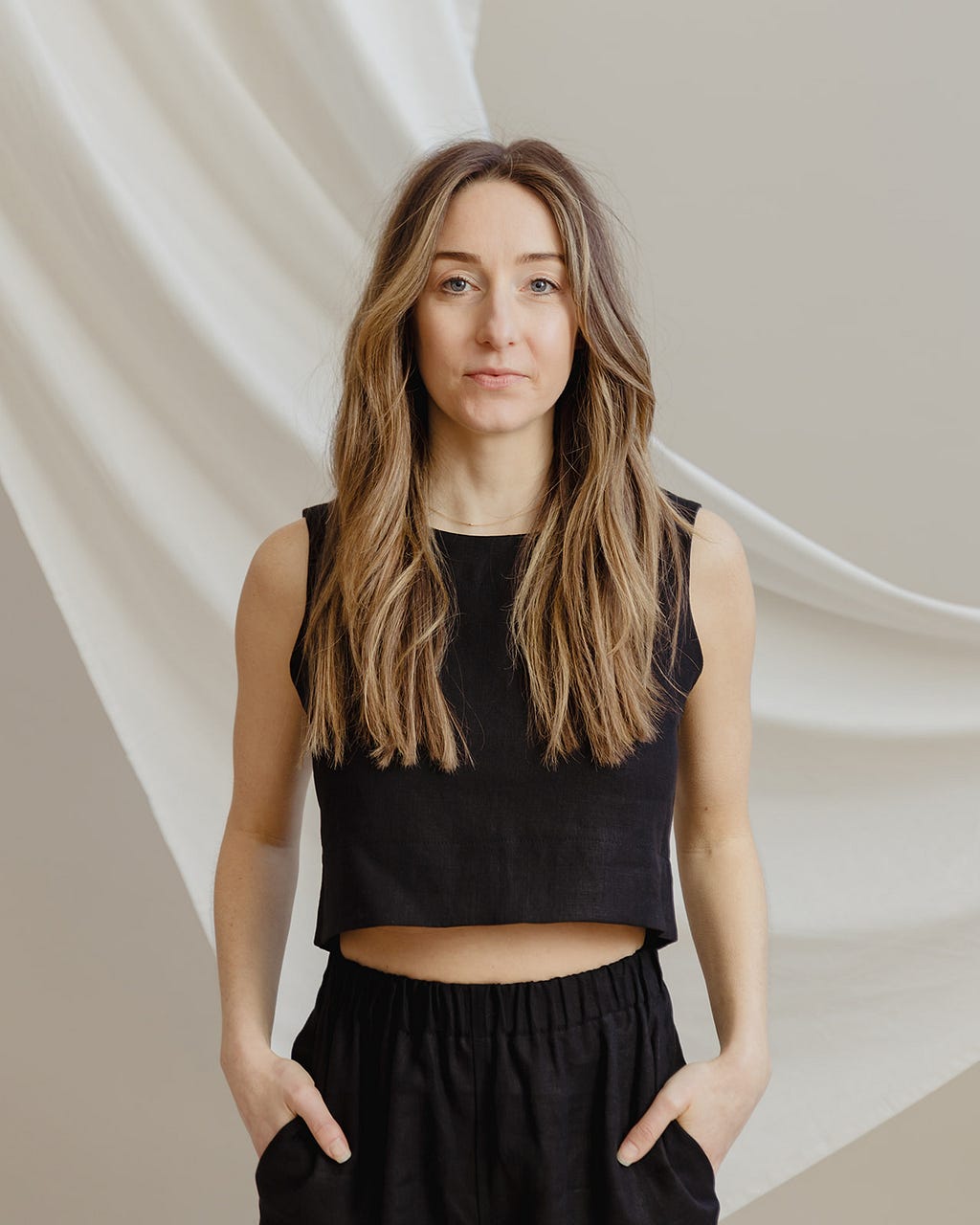
Sarah Palmer is the Co-Founder and Creative Director of BRANWYN, whose groundbreaking Performance Innerwear is shaking up the active underwear industry. Sarah leveraged her extensive background in fashion and wellness to introduce something that had yet to be seen in the performance space: underwear made by active women for active women, using biodegradable merino wool. Today, Sarah uses her business and her platform to empower all woman to unleash their inner power and go after what they want in life.

Thank you so much for doing this with us! Before we dig in, our readers would like to get to know you a bit more. Can you tell us a bit about your “backstory”? What led you to this particular career path?

Oh, where do I begin! I have a bit of a “hummingbird” backstory. In college I majored in architecture, but during my senior year I realized I wanted to work in fashion. When I graduated in 2010, I moved to NYC and worked as a Design Assistant for a dress line. Around the same time, my interests in plant-based foods and alternative medicine were also starting to blossom as I addressed my own health and wellness issues. Being a young 20-something, with a “if I hate it, I can do something else” mentality, I decided to leave my job in fashion and try something new. I went to culinary school and eventually moved to the West Coast to pursue a degree in Naturopathic Medicine at Bastyr — all while working in luxury retail to pay the bills…and to stay close to fashion.

To make a very long story short, when I got into grad school after completing my pre-med work, I realized that I wasn’t 110% sold on a career as a Naturopathic Doctor. I deferred and got a job as an assistant buyer at Zulilly to better understand the merchandising side of fashion, another area of the business that I had been drawn to along with design. Over the next 8 months, it became clear to me that medicine wasn’t for me and that there had to be some way to explore all my interests in one career. So I closed the door on grad school and focused on a career in merchandising.

Eventually I made my way to adidas, which, as a brand, had the perfect balance of fashion, fitness, health, and wellness, and spoke to me on a more personal level. I played sports my entire life, including field hockey in college, so working for one of the top sports brands in the US felt like the perfect fit. During my four years at the company, I worked as an Assistant Buyer and Buyer, before eventually building the Merchandising Team for adidas’ Digital Partner Programs and launching DTC adidas marketplaces on eBay and Amazon. It was a really formative time in my career during which I learned a ton and grew both personally and professionally.

Digressing a bit…I’ve always had an entrepreneurial spirit. I have always dreamed of working for myself one day and having my own business. Around 2018/19, the itch to go out on my own was stronger than ever. After meeting my partner in late 2018 and incubating what is now BRANWYN for the better part of nine months, I decided to leave adidas and give it a go. BRANWYN is the culmination of my hummingbird career path; while we provide game-changing, sustainable Performance Innerwear to active women, we also seek to empower those women to unleash their inner power and go after what they want in life.

What ultimately led me down this particular career path was following my instincts and what I believed I wanted to do and was meant to do, instead of what I thought I should be doing.

Can you tell our readers what it is about the work you’re doing that’s disruptive?

BRANWYN is revolutionizing the active underwear industry for women. Our underwear, which we call Innerwear, is designed specifically for the female body and its needs during physical activity, without sacrificing comfort or performance. Unlike our competitors, our products are made using merino wool, a regenerative and biodegradable fiber that naturally moves moisture away from the body, eliminates odor, and regulates temperature. We are the triple threat of women’s performance underwear.

With our products, and our brand, we are changing the way that women think about the underwear that they wear when they work out. When I was in college playing field hockey, I played in whatever I could find that wouldn’t bunch under my spandex when I was sprinting from end-line to end-line, which was often a polyester thong. I had no idea that underwear existed that was meant for getting sweaty, let alone believe that it could be made using something organic and renewable. Now, with our merino Innerwear, there’s a no-compromises solution that performs much better and is more sustainable than polyester underwear.

Can you share a story about the funniest mistake you made when you were first starting? Can you tell us what lesson you learned from that?

Not prioritizing emails from customers! We were so focused on marketing that we had completely forgotten that we set up a separate inbox for customer emails and neglected it for several weeks. Needless to say, we fixed that one pretty quickly. Today, our customer service is something we really pride ourselves in.

We all need a little help along the journey. Who have been some of your mentors? Can you share a story about how they made an impact?

My Mom has been my biggest cheerleader since I was little. She fully supported me in going after what I wanted and always encouraged me to realize my potential and own my gifts. As I’ve gotten older, I’ve seen just how powerful that can be for women. To know and feel like I can do and achieve anything I set my mind to is like having a million dollars in my pocket at all times.

I’ve also found tremendous mentorship in communities like Create & Cultivate and indirectly via podcasts like Girlboss Radio, How I Built This, and Lady Startup. Sometimes the best mentorship is hearing someone else’s story.

In today’s parlance, being disruptive is usually a positive adjective. But is disrupting always good? When do we say the converse, that a system or structure has ‘withstood the test of time’? Can you articulate to our readers when disrupting an industry is positive, and when disrupting an industry is ‘not so positive’? Can you share some examples of what you mean?

I think whether or not disruption is a positive comes down to the intention behind the disruption and its impact on the greater community, inclusive of our planet.

I think disrupting an industry is positive when it’s challenging the status quo to improve a product, service, or quality of life for a community. In my mind, doing something simply because it’s “how it’s always been done” is not a good enough reason not to change. When disruption has a massive halo effect such that it improves the circumstance of individuals and systems outside of the immediate customer, that to me feels positive.

I think disrupting an industry is negative when it has the opposite effect. If it negatively impacts individuals, certain communities, our planet, etc. either directly or indirectly then is it really that great? Is it disruptive or just opportunistic?

Can you share 3 of the best words of advice you’ve gotten along your journey? Please give a story or example for each.

“Do whatever floats your boat and when it stops floating your boat, stop doing it.” This is something my mom has always told me. It’s in the same vein as “life is short, so do what makes you happy.” I think a lot of us grew up with the notion that everything has to be a struggle, that success does not come without painful sacrifice, and that work isn’t meant to be fun. If I ever find myself feeling like I’m stuck and miserable, I remind myself of this and ask myself, “What am I getting out of being stuck and miserable?” Oftentimes the answer to that questions tells me exactly what I need to know.

“You can’t go 0–100 running on empty.” I adopted this in 2019 after I spent the better part of 2018 running a million miles a minute. Eventually I burned out and it took almost a year to get back to feeling like myself. The human body is like a car: if you don’t put gas in it, do the regular oil change, and rotate the tires, it’s not going to run properly.

“The customer is always right.” Even if they are wrong, they are always right. I picked this up while working in luxury retail, though it was later reinforced when I was at adidas working with Amazon. Excellent customer service is a top priority for us at BRANWYN and an area of business that I feel like is so undervalued. With BRANWYN, I use every customer interaction as an opportunity to connect with the customer and to make them feel seen and heard. If I could give a few pieces of advice for new businesses, it would be pump up your CS game; your customers are literally the key to your success as a business.

We are sure you aren’t done. How are you going to shake things up next?

World domination. Kidding. In all seriousness though, I’m the kind of person that is constantly evaluating and pivoting. There’s no doubt that I have something else up my sleeve; we’ll just have to see what it is.

In your opinion, what are the biggest challenges faced by ‘women disruptors’ that aren’t typically faced by their male counterparts?

Societal expectations, opportunity, and access to capital. I feel like now more than ever women are expected to not only be able to do everything, but also be everything to everyone: work 40+ hours a week, excel in our careers, birth and raise children, cook, clean, etc., all with a smile on our face. We’re expected to be Superwoman, which there’s no doubt in my mind that we can all do, but long-term, it’s just not sustainable. After a while it begins to take a toll on our health and well-being, negatively impact our adrenal system and hormones, and increase our risk of heart disease.

The flip side of this coin is that if we don’t do it all, something has to give, and oftentimes, especially for working moms it’s the career or the dream of disrupting an industry. With the majority of job loss over the past year impacting women, it’s imperative that we as a community look at the systems, beliefs, and unconscious biases that we have about women today, remove the barriers that exist, and proactively close the gender gap that exists in so many industries. Some might argue that prioritizing female voices, employees, and investment is not equitable but rather gives women an unfair advantage. I would argue that it is leveling the playing field.

Additionally, we have to create more opportunities for women to access capital. Female-founded companies received 2.8% of all venture capital funding between 2018 and 2019 — two-point-eight percent — let that sink in. What’s even more dismal is that women of color received only 0.67% of total VC funding — less than 1%. I see this as one of the biggest, if not the biggest, challenges that ‘women disruptors’ face. On average, women already make less than men. In 2020, women made anywhere from 10–20% less than their male counterparts. Money isn’t everything, but when you are building and scaling a business, capital is Queen.

Do you have a book/podcast/talk that’s had a deep impact on your thinking? Can you share a story with us?

Two of my favorite podcasts are Second Life Podcast with Hilary Kerr and More Than One Thing with Athena Calderone. Both highlight women and individuals who have pivoted, started second careers, and zigged and zagged through life, something I can definitely relate to. I’m also fascinated by other people’s journeys — I love listening to how they got to where they are and what they were thinking along the way!

I know it is very hot right now, but I cannot recommend Untamed by Glennon Doyle enough. So much of what she touches on I have either personally experienced or observed in the world and felt that no one was talking about, so in a way, I felt very seen and heard after reading it. She nailed it.

You are a person of great influence. If you could inspire a movement that would bring the most amount of good to the most amount of people, what would that be? You never know what your idea can trigger. 🙂

One of my favorite phrases is, “When you empower women, you empower the world.” I genuinely believe that if we continue to empower women with access to education, capital, and opportunity — with no strings attached — then we will experience tremendous benefits across the board, with a massive trickle-down effect.

Can you please give us your favorite “Life Lesson Quote”? Can you share how that was relevant to you in your life?

“Never let fear have a seat at the table unless it deserves to be there.” ~ Yours Truly

I’ve lost track of the number of times I’ve been terrified to do something in my life — leave a job, start my own business, admit a business failed, move across the country, defer from grad schools, leave another job. Most of the times I experienced fear for one reason or another, it was because I didn’t know what was going to happen. Yes, fear has a way of protecting us, but it also has a way of keeping us small. I wrote a blog post about this last year actually, but what I’ve come to realize is that not all fear is created equal. The key is using fear as a point to pause and better understand the root of the fear being felt.

How can our readers follow you online?

On the ‘gram @sarahrosesrp and @branwynofficial and online at westonrose.com and branwyn.com

This was very inspiring. Thank you so much for joining us!


Female Disruptors: Sarah Palmer of BRANWYN Performance Innerwear On The Three Things You Need To… was originally published in Authority Magazine on Medium, where people are continuing the conversation by highlighting and responding to this story.

Women Of The C-Suite: LogMeIn CMO Jamie Domenici On The Five Things You Need To Succeed As A Senior

Women Of The C-Suite: LogMeIn CMO Jamie Domenici On The Five Things You Need To Succeed As A Senior Executive

Enjoy what you do. You spend so much time at work. You have to enjoy it. If you don’t enjoy it you need to reevaluate what you are doing.

As a part of our series about strong women leaders, we had the pleasure of interviewing Jamie Domenici.

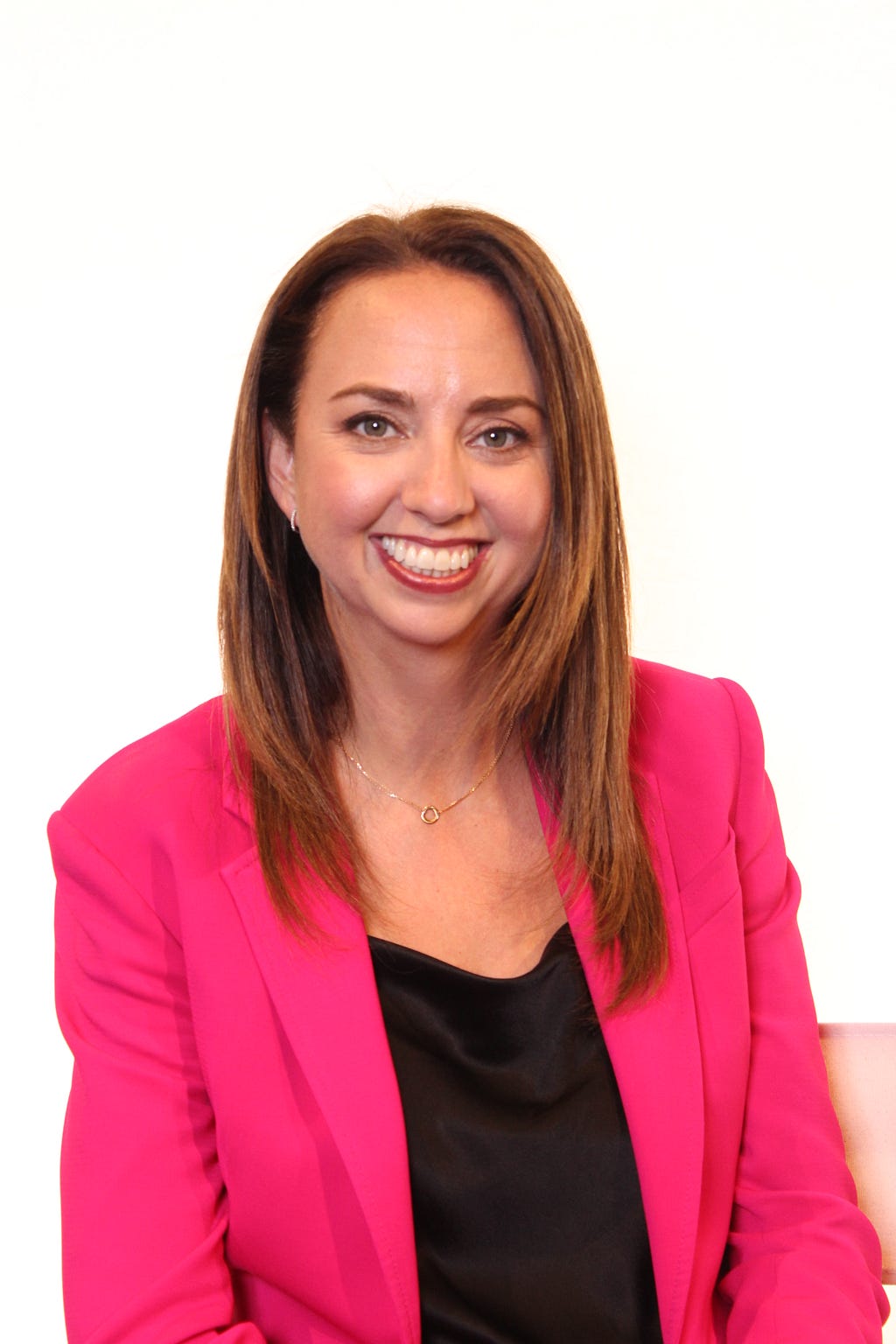
Jamie Domenici is a passionate, out-of-the-box thinker and an established strategic leader with a proven track record of leading sophisticated, customer-centric, multi-channel go-to-market teams. For more than a decade, Jamie led cloud adoption initiatives for small and midsize businesses at Salesforce — she recently joined LogMeIn, a leader in empowering the work-from-anywhere era, as Chief Marketing Officer. At LogMeIn, Jamie oversees a nearly 200-person marketing team focused on delivering an outstanding customer experience.

Thank you so much for joining us in this interview series! Before we dig in, our readers would like to get to know you a bit more. Can you tell us a bit about your “backstory”? What led you to this particular career path?

I had spent most of my career working on the backend and ops and, about 10 years into my career at Salesforce, I was able to both be creative and combine my love for data. I was hooked on marketing and never looked back.

Can you share the most interesting story that happened to you since you began leading your company?

I’ve been at LogMeIn for less than a month, so I’m still ramping up here, but I see a tremendous amount of opportunity for the organization. Mostly due to this shift we are all seeing with an increase in remote work. I was very much a “butts in seats” kind of person up until about a year ago. I never would have imagined leading a team that was fully remote, but I’ve found that I’ve personally been brought into the remote work trend and I’m loving it. It’s still very possible to make connections and build relationships while remote.

Can you share a story about the funniest mistake you made when you were first starting? Can you tell us what lesson you learned from that?

I was presenting at a large event in front of thousands of people. Part of the presentation involved a big reveal with the stage opening. Well, we got to that part of the presentation and nothing happened. After a few seconds of panic, I thought to myself: Just. Keep. Going. I pushed on and the audience was none the wiser. When anything goes wrong, I now keep moving forward and most of the time everything works out just fine.

None of us are able to achieve success without some help along the way. Is there a particular person who you are grateful towards who helped get you to where you are? Can you share a story about that?

Yes. Very early in my career I worked for OSIsoft’s CFO, Betty Hung. She was a great role model and strong female leader. Not only did I look up to her as a women C-level exec, but I remember being impressed by her bold decision making. She advised me to try lots of different roles and keep learning. It was great advice that greatly impacted my career path and it is part of why I am where I am today.

In my work, I often talk about how to release and relieve stress. As a busy leader, what do you do to prepare your mind and body before a stressful or high stakes meeting, talk, or decision? Can you share a story or some examples?

Whether it’s a small meeting or huge presentation, it’s important to practice. That may sound like common sense, but everyone needs to do it. And I mean talk out loud, walk the stage, run through the deck over and over again, type of practice. Without it you will spend the meeting wondering if you are presenting it in the right way, rather than focusing on the reactions and reading the room.

As you know, the United States is currently facing a very important self-reckoning about race, diversity, equality and inclusion. This may be obvious to you, but it will be helpful to spell this out. Can you articulate to our readers a few reasons why it is so important for a business or organization to have a diverse executive team?

I remember when I used to go into the office I would get onto an elevator in my building and more often than not I would be the only woman in there. One day I verbalized my observation and It definitely made people uncomfortable. But I was okay with that because it also made people acknowledge and think about this fact. If even one of those men left that elevator and thought about the lack of diversity next time they went to make a hire it was worth it. It’s important to have different voices at the table to think about different perspectives. And we need to make people aware of the problem, even if it causes discomfort, in order to start to change it.

As a business leader, can you please share a few steps we must take to truly create an inclusive, representative, and equitable society? Kindly share a story or example for each.

  • Step one is to acknowledge discrepancy exists. I found that listening to other people’s stories or sharing my own was a great place to start.
  • Step two is to be open to learning and understand where inequality and bias exists. This can be difficult and evoke a sense of vulnerability. You don’t want to do or say the wrong thing, but I find it is my responsibility as an executive to be an ally.
  • In addition, I always set metrics and goals around equality. These are goals I discuss regularly with my team and track to ensure we are hitting our targets, whether that’s hiring internally or making sure that at external events we have diverse customers speaking on our behalf.

Ok, thank you for that. Let’s now jump to the primary focus of our interview. Most of our readers — in fact, most people — think they have a pretty good idea of what a CEO or executive does. But in just a few words can you explain what an executive does that is different from the responsibilities of the other leaders?

Execs needs to set the strategy and lead the team to execute on it. I subscribe to the Naval saying “ship, shipmate, self.” As an executive I feel like you have to always put the company first, then your team and lastly yourself.

What are the “myths” that you would like to dispel about being a CEO or executive. Can you explain what you mean?

  • You don’t have all the answers. Listening to your team is key. Hire smart capable people, empower them and leverage their expertise to help you get to the answer.
  • Execs have done it all and can’t improve. Feedback is a gift. I encourage my team to provide ongoing feedback and I will do the same for them.
  • Just because I’m an exec doesn’t mean I don’t have more to learn. I believe you need to continuously invest in yourself and your own growth. Be self-aware of your strengths and weaknesses and work to improve each and every day. You can never stop learning.

In your opinion, what are the biggest challenges faced by women executives that aren’t typically faced by their male counterparts?

I am a direct person and I speak up. I have been faced with moments in my career where I have been told I have “sharp elbows” or come off as aggressive. In those moments I often wondered if a man said the same thing in the same way would you have said that to them? Working to get where I am now, I felt I had to speak a little louder to be heard. I would not change that, but as a woman I think there is a balance and an art to honing being strong vs. aggressive.

What is the most striking difference between your actual job and how you thought the job would be?

If you ever thought being an executive was easier or less work let me tell you that is not the case. I am working harder than I ever have and I love it. As an executive, you do have to learn to spend less time in the details and more time on the strategy. I would also say a big part of my role is about relationship building and leading and growing my team.

Certainly, not everyone is cut out to be an executive. In your opinion, which specific traits increase the likelihood that a person will be a successful executive and what type of person should avoid aspiring to be an executive? Can you explain what you mean?

There are a few things. I think a good exec has to be able to understand and articulate the vision. They need to see the big picture and how all the pieces they manage are going to come together to achieve that vision. But they have to understand they can’t do that alone or by micromanaging. A good leader needs to put the right people in the right seats and empower them to do their best.

What advice would you give to other women leaders to help their team to thrive?

Build a strong network. While I was at Salesforce, one of the co-founders of the company, started a High Potential Woman Group of the then 10 female VPs in the T&P group. We had mentors and access to a lot, but the best part for me was the bond with the other woman in the group. We were and still are facing similar challenges and even now, ten years later I still call on my fellow “lady clubers” when I need support or advice.

How have you used your success to make the world a better place?

I am very passionate about helping women in the workplace. I feel that as a leader it’s very important to reach behind and pull the next generation up in whatever ways you can. To this end, I’m proud to be involved in organizations like Girls Inc. that are helping girls and young women develop their strengths to set them up for success later in life.

What are your “5 Things I Wish Someone Told Me Before I Started” and why? (Please share a story or example for each.)

  1. Enjoy what you do. You spend so much time at work. You have to enjoy it. If you don’t enjoy it you need to reevaluate what you are doing.
  2. Make sure you believe in leadership and work hard to make them look good. You want to work for someone you believe in and trust. If you are working for someone you want to follow, it’s natural to do your best work, which is turn makes them look good and raises the whole team
  3. Do the job that needs to be done, not just the job you have. This will expand your skill set and help the company. Whenever I see a problem, I raise my hand to solve it no matter if it is my role or not.
  4. Embrace change. With change comes opportunity.
  5. Storytelling and words matter. The better you can tell the story the more likely you will leave an impression.

You are a person of great influence. If you could inspire a movement that would bring the most amount of good for the greatest number of people, what would that be? You never know what your idea can trigger.

I would democratize education so that regardless of economic standing or gender people had equal access to learning. I would work to level the playing field with education so that more diverse voices could be heard.

Can you please give us your favorite “Life Lesson Quote”? Can you share how that was relevant to you in your life?

I have a sign that hangs in my office that says “whatevs”. That may sound funny, but it reminds me not to get frustrated or caught up with the small stuff. When I’m at a breaking point I just say “whatevs” and move on.

We are very blessed that some very prominent names in Business, VC funding, Sports, and Entertainment read this column. Is there a person in the world, or in the US with whom you would love to have a private breakfast or lunch with, and why? He or she might just see this if we tag them

100% Michelle Obama. I so respect how she navigates politics with so much grace and authenticity…not to mention a great fashion sense!

Thank you for these fantastic insights. We greatly appreciate the time you spent on this.


Women Of The C-Suite: LogMeIn CMO Jamie Domenici On The Five Things You Need To Succeed As A Senior was originally published in Authority Magazine on Medium, where people are continuing the conversation by highlighting and responding to this story.

Women Of The C-Suite: Kathryn Cameron Atkinson of ‘Miller & Chevalier’ On The Five Things You Need…

Women Of The C-Suite: Kathryn Cameron Atkinson of ‘Miller & Chevalier’ On The Five Things You Need To Succeed As A Senior Executive

Have a plan, but be prepared to pivot. Miller & Chevalier is a Washington-based firm focused on practicing where business and the federal government meet, and we sit on Black Lives Matter Plaza. In 12 months, we have faced the impeachment of the president, the public health and economic crises of the pandemic, social upheaval and surging demand for and discourse on race equity, a tumultuous transition of power, and now a second impeachment. I am thankful we articulated our strategy and pillars for action just prior to this series of challenges. It helped us stay the course and know where and how we could pivot along the way.

As a part of our series about strong women leaders, we had the pleasure of interviewing Kathryn Cameron Atkinson.

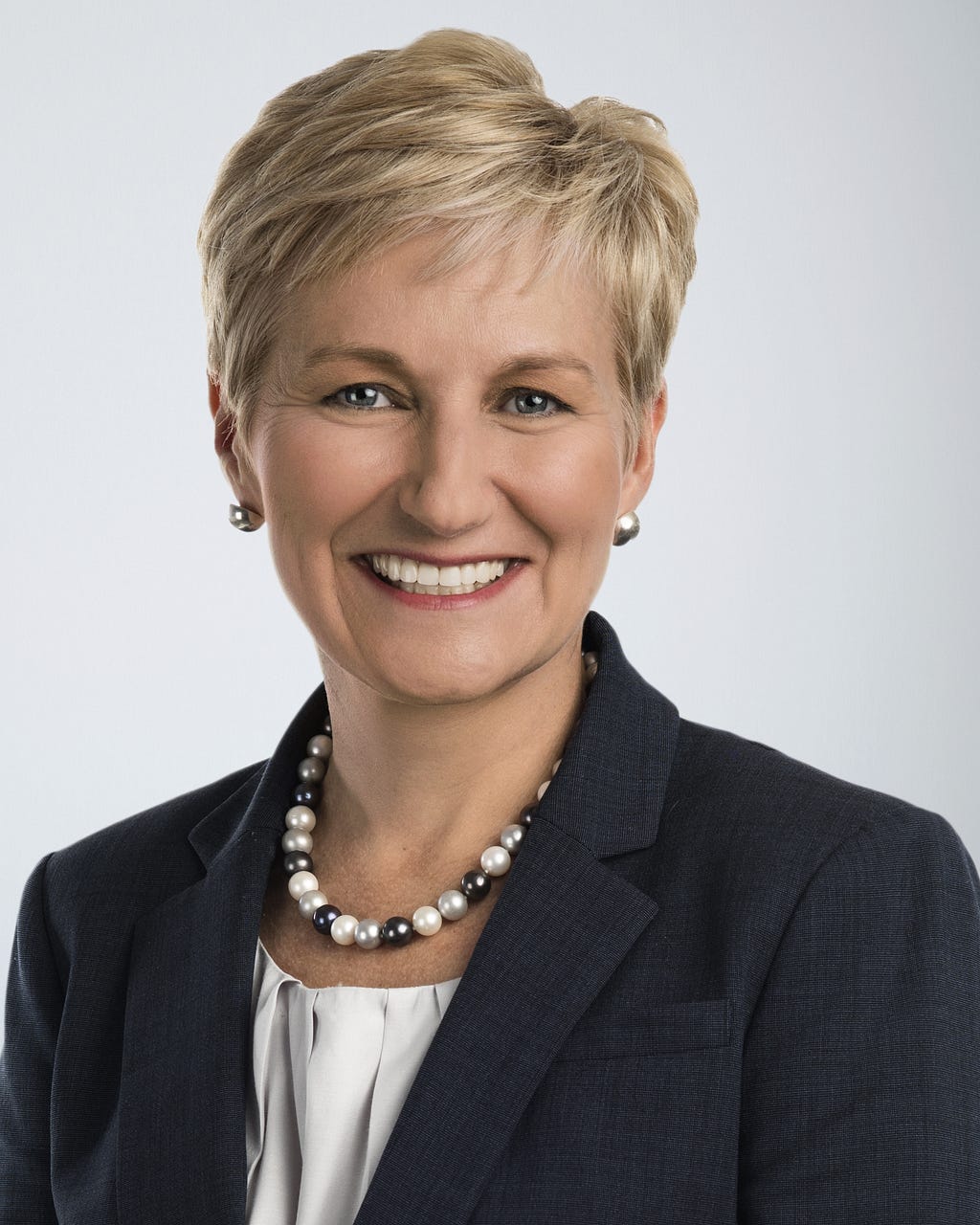
Kathryn Cameron Atkinson is the Chair of Miller & Chevalier. Her practice focuses on international corporate compliance, including, in particular, the Foreign Corrupt Practices Act (FCPA), as well as economic sanctions and export controls, and anti-money laundering laws. She advises clients on corruption issues around the world. This advice has included compliance with the FCPA and related laws and international treaties in a wide variety of contexts, including transactional counseling, formal opinions, internal investigations, enforcement actions by the U.S. Department of Justice (DOJ) and the Securities and Exchange Commission (SEC) and resulting monitorships, as well as commercial litigation raising improper payment issues. Ms. Atkinson has twice been appointed as an Independent Compliance Monitor by the DOJ and SEC. She was a member of the original Transparency International task force that developed a compliance toolkit for small and medium-sized entities.

Thank you so much for joining us in this interview series! Before we dig in, our readers would like to get to know you a bit more. Can you tell us a bit about your “backstory”? What led you to this particular career path?

My father’s international business career and a public-school German language program taught by emigrés who had lived through the disruption of World War II sparked my interest in international studies. I spent time living with German families in the 1980s and then worked for a German law firm the summer after the Berlin wall was toppled. I had a front-row seat to the early days of German reintegration and found the challenge of navigating the practical, cultural, and legal issues involved fascinating. While in law school, I discovered Miller & Chevalier, a Washington-based law firm with a global practice that focused on the intersections between business and federal law and policy. The firm’s commitment to professional excellence, thought leadership, and advancing the rule of law attracted me then and sustains me 30 years later.

Can you share the most interesting story that happened to you since you began leading your company?

In late February 2020, we issued a Business Continuity Plan to govern how we would handle a catastrophic event that might keep us from accessing the office. We planned a test run of the plan for Friday, March 13, to identify any gaps. On March 11, D.C. announced the COVID-19 public health emergency and signaled the shutdown that was coming the following week. We haven’t been back in the office since. So much for a test run.

Can you share a story about the funniest mistake you made when you were first starting? Can you tell us what lesson you learned from that?

When lawyers make mistakes they usually are not funny! One early mistake sticks with me. As a first-year lawyer, I went on a business trip with a senior partner. When we climbed into the taxi at the destination airport, she looked at me, assuming I had the address to give to the driver. (This is unspoken Associate 101 training.) I didn’t. She was not pleased. We didn’t have cell phones or GPS back then. Lessons learned: Plan ahead, write it down, don’t assume others know where you are headed.

None of us are able to achieve success without some help along the way. Is there a particular person who you are grateful towards who helped get you to where you are? Can you share a story about that?

In my leadership role, it has to be my Dad, who was first an accountant, then an executive, and finally a business owner. He taught me that an organization’s success depends on empowering its people to do their best, holding them accountable for doing so, and valuing them not just as employees but as people with interests, responsibilities, and stresses outside of work.

In my work, I often talk about how to release and relieve stress. As a busy leader, what do you do to prepare your mind and body before a stressful or high stakes meeting, talk, or decision? Can you share a story or some examples?

I focus on articulating the themes of my message as cleanly and crisply as I can, including sounding them out with teammates. The first thing I did as Chair was organize the action plan for the Executive Committee’s first year under five strategic pillars derived from our strategic statement. That structure helps me stay focused and provides a shared foundation. Nothing works like a long walk to clear the noise. When stress winds me up, my go-to release is a long walk outside, but yoga does the trick too.

As you know, the United States is currently facing a very important self-reckoning about race, diversity, equality and inclusion. This may be obvious to you, but it will be helpful to spell this out. Can you articulate to our readers a few reasons why it is so important for a business or organization to have a diverse executive team?

Diversity enriches the deliberative process and improves decision-making. Race and gender, as well as less visible aspects of personal backgrounds, affect our life experience and, in turn, the lens through which we view issues and decisions. There’s no substitute for having that diversity at the table. Internally and externally, it is important for people to see diversity in management.

As a business leader, can you please share a few steps we must take to truly create an inclusive, representative, and equitable society? Kindly share a story or example for each.

Achieving inclusion, representation, and equity requires awareness, intention, and perseverance. Law firms suffer from structural hierarchy and segmentation, which can make people feel excluded and undervalued. Once we focused our attention on that issue, we noted our Diversity, Equity & Inclusion Committee was comprised almost entirely of lawyers, so we added professional staff to the committee to involve them in planning and execution. We added lines of communication — more frequent and detailed communications from management, town halls, and suggestion boxes. The effort moved to another level last summer. Our office is on what is now Black Lives Matter Plaza — so the urgency of the need for more action to achieve racial justice and equity literally was on display in our front yard. We publicly articulated our commitment to racial justice, convened internal community discussions on race, and enhanced our involvement in racial justice and equity efforts through the Law Firm Antiracism Alliance and support of the Leadership Council on Legal Diversity. These efforts need to continue — perseverance is essential for us to make progress.

Ok, thank you for that. Let’s now jump to the primary focus of our interview. Most of our readers — in fact, most people — think they have a pretty good idea of what a CEO or executive does. But in just a few words can you explain what an executive does that is different from the responsibilities of the other leaders?

Loses the most sleep, I think. A leader takes responsibility for the organization’s performance. That means ensuring that the strategy is clear and clearly communicated, that action plans align with the strategy, that everyone has the tools they need to execute on their respective roles, that they feel accountable for their performance, and that they feel valued for their contributions. The Chair needs to understand the moving parts and make sure they are working properly while also thinking about how to improve them.

What are the “myths” that you would like to dispel about being a CEO or executive. Can you explain what you mean?

One is that we know absolutely everything that happens in an organization. We don’t. Even in a relatively small organization, people have to be empowered to make decisions day to day. The executive needs to try to anticipate how strategies or action plans might be misinterpreted, but it will still happen, and the executive will also make mistakes. A second myth is that you can’t go directly to the executive with a question or a concern (because, see myth #1). Although you should have multiple channels available to you, if you are not comfortable using them, the executive needs to know that.

In your opinion, what are the biggest challenges faced by women executives that aren’t typically faced by their male counterparts?

The leadership archetype in our society was defined by males, so really just about anything that a woman may be inclined to do differently is likely to be questioned simply because it is different. Although it occurs less frequently than early in my career, I still come across assumptions that women executives are prone to inappropriate emotion in decision-making and communications, are afraid of making unpopular decisions, or can be bullied. If the woman executive is also a mother, add the assumption that we are less committed. I am aware of the assumptions, but I don’t let them steal my time. As with all diversity issues, the more women we have in leadership roles, the more we can shift the paradigm.

What is the most striking difference between your actual job and how you thought the job would be?

I think every executive is surprised by how granular the job is. There’s a myth that executives just make big decisions. In fact, we make or facilitate an endless number of small decisions. Once the organizational strategy is defined, the work of ensuring the organization executes on it is what takes time and attention, and that is made up of all manner of activities and communications.

Certainly, not everyone is cut out to be an executive. In your opinion, which specific traits increase the likelihood that a person will be a successful executive and what type of person should avoid aspiring to be an executive? Can you explain what you mean?

A successful executive should care about the long-term success of the organization and its people. If you’re in it for the resume building or the money, better for all if you skip it. It requires a capacity to think strategically, to communicate strategy and expectations clearly to the stakeholders, and to understand how the culture of the organization affects the performance of its employees. A leader should be direct, decisive, honest, and empathetic. Do what you say you are going to do.

What advice would you give to other women leaders to help their team to thrive?

Be clear and consistent in communicating what you need and expect from each team member. Invest time in understanding what motivates your team and make sure incentives align with the organization’s strategy and needs — remembering that intrinsic motivation typically produces better performance over time than extrinsic motivation.

How have you used your success to make the world a better place?

My practice focus is on disrupting and defeating corruption as it arises in international business. Corruption is relentless and facilitates so much of the conduct that endangers all of us. My work can at least provide some pressure of progress against it.

What are your “5 Things I Wish Someone Told Me Before I Started” and why? (Please share a story or example for each.)

  1. Trust yourself. You get advice from all directions. In the end, you have to believe you were asked to lead for a reason and trust yourself.
  2. Communicate, communicate, communicate. I knew we needed more internal communication, but I continue to be surprised by how much feedback it generates.
  3. Question assumptions. We’re a storied 100-year-old firm, and there are traditions and a legacy that come with that. And lawyers tend to be risk averse. It took some time to get comfortable questioning why we did things a certain way, but that combined with the communication effort revealed opportunities for us to improve.
  4. Don’t always lead from the front. Organizations work best when everyone embraces the strategy and then executes on it. The Chair sets the tone but has to keep the strategy as the focus so that success is seen as a result of everyone’s effective execution, not just the executive’s. Otherwise, what happens when the leadership changes?
  5. Have a plan, but be prepared to pivot. Miller & Chevalier is a Washington-based firm focused on practicing where business and the federal government meet, and we sit on Black Lives Matter Plaza. In 12 months, we have faced the impeachment of the president, the public health and economic crises of the pandemic, social upheaval and surging demand for and discourse on race equity, a tumultuous transition of power, and now a second impeachment. I am thankful we articulated our strategy and pillars for action just prior to this series of challenges. It helped us stay the course and know where and how we could pivot along the way.

You are a person of great influence. If you could inspire a movement that would bring the most amount of good for the greatest number of people, what would that be? You never know what your idea can trigger.

I would enlist every person in the effort to fight public corruption, which directly affects the quality of life of every one of the world’s citizens. Every citizen has the right to competent, transparent, accountable government, so I would ask that people demand it, support organizations that fight it, and not accept corruption as the norm.

Can you please give us your favorite “Life Lesson Quote”? Can you share how that was relevant to you in your life?

Dr. Martin Luther King Jr. said, “It is always the right time to do the right thing.” That principle underlies not only my law practice but also my approach to leadership and to my own life. The statement silently acknowledges that we make mistakes and sometimes choose the wrong thing. Doing the right thing requires self-reflection and humility, can be uncomfortable, and can even lead to harsh consequences, but it is worth doing.

We are very blessed that some very prominent names in Business, VC funding, Sports, and Entertainment read this column. Is there a person in the world, or in the US with whom you would love to have a private breakfast or lunch with, and why? He or she might just see this if we tag them.

I recently read “The Second Mountain: The Quest for a Moral Life” by David Brooks. It captures the essence of the wholeness we seek but often lack and delves into the ways our society has developed to make it harder — but not impossible — to find. A private lunch with him to discuss it would be fantastic.


Women Of The C-Suite: Kathryn Cameron Atkinson of ‘Miller & Chevalier’ On The Five Things You Need… was originally published in Authority Magazine on Medium, where people are continuing the conversation by highlighting and responding to this story.
Female Disruptors: Bri Seeley of The Unapologetic Entrepreneur On The Three Things You Need To…

Female Disruptors: Bri Seeley of The Unapologetic Entrepreneur On The Three Things You Need To Shake Up Your Industry

Enjoy the journey. I tend to focus more on the destination than the journey. Even when I’m on roadtrips, my energy is already at the end of the journey rather than being present in the moment. I began to shift this approach in 2017 and it’s really helped me on a day-to-day basis. I’ve found a greater sense of calm, connection and presence. Plus, it helps me to dwell in the energy of success more because I’m celebrating every step I take, rather than simply the outcome.

As a part of our series about women who are shaking things up in their industry, I had the pleasure of interviewing Bri Seeley.

After struggling through her first eight years of entrepreneurship, Bri pivoted from her award winning fashion brand into entrepreneur coaching. During her years in fashion, Bri was able to achieve some remarkable milestones but she was never able to create the money and time freedom she desired as an Entrepreneur. Within her first year of her coaching business, she went from being unable to pay her rent to creating over 6-figures in revenue.

Over the last six years as an Entrepreneur Coach, Bri has taught thousands of entrepreneurs how to create long-term, sustainable success… on their terms!

She knows that one-size never fits all, so her approach is customized and tailor made to each client. Bri works with established and emerging businesses using her extensive knowledge to increase their impact, monetize their vision, laser-focus their actions, streamline their systems and boost their profits.

Bri was awarded a Silver Stevie Award in 2020 for Coach of the Year — Business and a Bronze Stevie Award in 2020 for Woman of the Year — Business Services. She is a member of the Forbes Coaches Council, the author of the best-selling Permission to Leap, the top Entrepreneur Coach on Google and has been seen on The TODAY Show, Forbes, Entrepreneur, Yahoo! and more.

Thank you so much for doing this with us! Before we dig in, our readers would like to get to know you a bit more. Can you tell us a bit about your “backstory”? What led you to this particular career path?

I was led to becoming an Entrepreneur Coach through serendipity and intuition. It was 2015 and I was celebrating my eighth anniversary of my fashion label. While my business was doing well, my frustration with the pace of growth and the industry was increasing more and more.

A series of events including attending a wealth seminar, totaling my car and a meditation led me to close my fashion label and venture into my next chapter without a plan.

Once I had the space to begin exploring what my next move would be, I quickly realized that my colleagues, friends and connections had been asking me for years to help them start and grow their businesses. At the time, I had declined because I was a fashion designer, not a business expert. However, in evaluating my options moving forward the signs were clearly pointing me in the direction of Entrepreneur Coaching.

I hired a coach for myself to teach me everything I needed to know for a service based business and got to work. Within a year, I had a 6-figure coaching business and have been going strong for six years.

Can you tell our readers what it is about the work you’re doing that’s disruptive?

One thing that’s drilled into the coaching industry is for coaches to develop their “signature proven process.” For years, I thought there was something wrong with me because this approach never sat right with me. It wasn’t until last year that I realized why.

When I ran my fashion business, I struggled with standard sizing because one size never fits all. Every body is different and even two bodies that wear the same size don’t have the same dimensions.

To me, coaching is no different. There is no standard process or advice that works for every person, all the time. Copy/paste “proven” processes never work for everyone.

My business and messaging are aimed at breaking down this approach and showing the reality of business — it takes a custom approach to get real results. I am disrupting the cookie cutter approach to business and helping entrepreneurs access their one-of-a-kind path to creating their success on their terms.

Can you share a story about the funniest mistake you made when you were first starting? Can you tell us what lesson you learned from that?

I wasn’t always the disruptor I am today. When I first began my coaching and consulting business, I tried to do it like everyone told me to. I tried all the proven methods for success. And it didn’t work. I wasted tens of thousands of dollars on trying to fit myself in the boxes everyone touted as silver bullets in the coaching industry.

What’s funny is, the biggest months in my business have all come from intuitive guidance. Every big move that’s happened in my business has first been spurred from an insight in meditation. Which has been the guiding light for me to embody the title of Disruptor even more.

I don’t want to see others waste time, energy and money trying to build businesses which are out of alignment. I feel it is my duty to speak up and speak out against there being one foolproof path to success.

We all need a little help along the journey. Who have been some of your mentors? Can you share a story about how they made an impact?

I seek out mentors who are outside my industry and who don’t know the exact ins and outs of my business. The reason I do this is because they give me disruptive perspectives and aren’t limited by what’s been done before.

One of my mentors is Naveen Jain. Naveen’s entrepreneurial experience is in the technology field, which is very different from both fashion and coaching. I love talking to Naveen about business because he approaches things from a radically different perspective than most people in my industry would.

Naveen is one of the first people who helped me see past the title of “coach” in terms of my vision for what I’m here to create. We had a conversation where he reflected to me the impact I make in people’s lives. It’s because of Naveen that I’ve been able to expand my business past the typical coaching model.

In today’s parlance, being disruptive is usually a positive adjective. But is disrupting always good? When do we say the converse, that a system or structure has ‘withstood the test of time’? Can you articulate to our readers when disrupting an industry is positive, and when disrupting an industry is ‘not so positive’? Can you share some examples of what you mean?

Disrupting for me is less about dismantling the old way and more about creating the new way. I see a lot of people disrupting simply for the sake of being disruptive. That’s the ‘not so positive’ approach to disruption. This approach is more aligned with destruction, rather than creation.

I have been seeing this perspective pushed heavily in the Artificial Intelligence space. People are obsessed with replacing everything human in our world with artificial intelligence, simply because they can. However, they’re failing to address the short and long term implications of this on our current economic infrastructure, our job market and our mental health.

Disruption that looks to improve, evolve and re-structure systems is a much more holistic and beneficial approach to making our world a better place, rather than “break first and ask questions later.”

I genuinely look to disrupt the coaching industry because I can see exactly how the current “proven process” model is creating more harm than good, and how embracing a bespoke approach will create better results for entrepreneurs in the long-run.

Can you share 3 of the best words of advice you’ve gotten along your journey? Please give a story or example for each.

  1. Enjoy the journey. I tend to focus more on the destination than the journey. Even when I’m on roadtrips, my energy is already at the end of the journey rather than being present in the moment. I began to shift this approach in 2017 and it’s really helped me on a day-to-day basis. I’ve found a greater sense of calm, connection and presence. Plus, it helps me to dwell in the energy of success more because I’m celebrating every step I take, rather than simply the outcome.
  2. Fear is not an indicator to stop. I mentioned the car accident in my story above, but what I failed to mention is that car accident almost stopped me from starting my business. 12-hours prior to the car accident, I had signed a contract to hire a business coach who was going to help me launch my new business. When the car accident happened, I was faced with a significant amount of fear because I didn’t have the proper insurance and wasn’t sure how I’d afford it all. Instead of letting the fear bring me to a place of contraction, I used it as a spark to ignite my inner greatness. I chose to repurpose the fear to help me expand. It’s one of the best decisions I’ve ever made in my life.
  3. Follow the whispers or be prepared for the megaphone. I haven’t always been open to hearing my intuition and it’s led me to several catastrophic experiences which could have been avoided. One such instance was the car accident I’ve mentioned. Another was in relation to my 7-year corporate job. I knew for years I didn’t want to work that job. I had many opportunities to figure out a new path forward, but I refused to listen to them. Instead of being proactive and finding a solution for myself, I was gifted a solution in the form of an email letting me know my pay was being cut in half. Had I followed the whispers, I could have created a path out of my job on my terms and allowed myself to have an easier transition. Instead, I was forced out of the position and had to figure it out as I went. Now, I pay attention to the whispers so I don’t have to navigate those megaphone moments.

We are sure you aren’t done. How are you going to shake things up next?

My mission is to eradicate the 50% failure rate for entrepreneurs and to help 100,000 female entrepreneurs surpass 6-figures in recurring yearly income in the next 10 years. Right now, 90% of female entrepreneurs never hit the 6-figure mark in their businesses. That statistic is unacceptable. I am going to shake things up by arming female entrepreneurs with everything they need to succeed past their wildest dreams, create financial freedom for themselves and provide the world with equitable solutions.

In your opinion, what are the biggest challenges faced by ‘women disruptors’ that aren’t typically faced by their male counterparts?

Women have had to play in spaces which weren’t designed for us to succeed for so long, we are ingrained with the mindset to go with what has been done in the past rather than creating our own paths, systems and models to move the world forward. When we do try to create our own paths forward, we’re questioned and it causes us to question ourselves.

One of the biggest examples I’ve seen of this is when SheEO came onto the investing scene. The founder, Vicky Saunders, was told over and over again that her idea would never work. Male investors went out of their way to let Vicky know her idea was not only not feasible, but crazy. Which was not the reality. In fact, SheEO has been immensely successful. They’ve funded over 75 ventures with over $5,000,000 and a 95% repayment rate and triple digit revenue growth in under five years.

As women, we need to remember that just because it hasn’t been done before doesn’t mean it can’t be done. And just because someone tells us we’re crazy, it isn’t a reason to back away from our vision.

Do you have a book/podcast/talk that’s had a deep impact on your thinking? Can you share a story with us?

I read ‘The Alchemist’ on a yearly basis. Everytime I read it, there is a new perspective which deeply impacts how I move through the world. My most recent read of the book illuminated this concept: “When someone makes a decision, he is really diving into a strong current that will carry him to places he has never dreamed of when he first made the decision.”

The biggest lesson 2020 gifted me was to follow my intuitive senses and surrender into what the outcome is without controlling it. I gave myself permission to make decisions, let go of the outcome and trust that life will carry me towards my greatest possible destiny.

You are a person of great influence. If you could inspire a movement that would bring the most amount of good to the most amount of people, what would that be? You never know what your idea can trigger. 🙂

The movement I’m spearheading is to get more women out of corporate and into entrepreneurship. We will not achieve parity by staying in the corporate world. If women truly want to break the glass ceiling, it will come from us disrupting the system and creating our own rules.

I’m here to help women make more money on our terms because when women make money, we funnel 90% of it back into our families and our communities. Whereas men only redistribute 30–40% back into those same places. Women already have the power to create a new model for the world’s wealth, to close the gender gap and to create a more equitable economy. I plan to do everything in my power to expedite this possibility into reality.

Can you please give us your favorite “Life Lesson Quote”? Can you share how that was relevant to you in your life?

“Never take advice from someone you wouldn’t trade places with.” -Kelly Clarkson

When I left my corporate job and became a full-time entrepreneur for the first time, I was inundated with messages to get a job. But everyone who shared that perspective with me were people who were unhappy in their careers. I knew that if I followed their advice, I would eventually end up living that life. I began to filter out advice from people who weren’t living the vision I had for my life and surrounded myself with people who embodied the same values as me.

How can our readers follow you online?

The best three places to find me are:

  1. My website — briseeley.com
  2. Instagram — instagram.com/briseeley
  3. Clubhouse — @BriSeeley

This was very inspiring. Thank you so much for joining us!


Female Disruptors: Bri Seeley of The Unapologetic Entrepreneur On The Three Things You Need To… was originally published in Authority Magazine on Medium, where people are continuing the conversation by highlighting and responding to this story.

Joseph “Joey” Smith of Cassel Salpeter & Co: The Future of Air Travel in The Post Covid World

There will be lots of new and exciting technologies to enhance the passenger experience from robots in the terminals, to quieter and faster planes, to drones assisting with baggage and security, but the truly disruptive advancements are currently being funded and will reveal their unique, value-add services during this coming decade. A few examples would be:

Eviation has leapfrogged the competition as the first zero-emission, all-electric airplane. Designed to take nine passengers up to 650 miles at a cruise speed of 240 knots on a single battery charge.

Boom Supersonic — founded in 2014 and having raised hundreds of millions is developing a delta-wing supersonic passenger aircraft. Its upcoming Overture jet will travel at Mach 2.2, making it the world’s fastest airliner. It will carry up to 45 passengers, aiming to start transporting passengers by 2023.

All-electric jets with VTOL (Vertical Take-Off and Landing) short range taxi start-ups: Lilium & Volocopter — Germany; Joby Aviation and Opener — USA, among others.

As part of my series about “developments in the travel industry over the next five years”, I had the pleasure of interviewing Joseph “Joey” Smith.

Joseph Smith, director of aviation services at investment banking firm Cassel Salpeter & Co., has more than 25 years of experience in the capital markets and securities industry. At Cassel Salpeter, Smith leads the aviation team, providing the firm’s clients with his expertise in mergers and acquisitions, capital raising, and advisory services to middle market private and public companies. He has structured, negotiated, and executed on numerous aviation industry transactions with institutional private equity and strategic investors, and has worked extensively with business owners, management teams, and boards of directors and their professional advisors, locally and nationwide. Since 2018, Mr. Smith has led the publication of the firm’s quarterly Aviation Industry Deal Report offering insights on industry trends while charting deal flow. Before joining Cassel Salpeter in Miami, he served as a senior vice president of Catalyst Financial and as principal and head of investment banking for Capital City Partners. He began his middle market investment banking career at First Equity Corporation of Florida, where he was a principal and managing director after initially being trained by Merrill Lynch and Shearson Lehman Brothers. He received a bachelor’s degree in history from Hobart and William Smith Colleges in Geneva, N.Y.

Thank you so much for joining us in this interview series! Before we dive in, our readers would love to get to know you a bit better. Can you tell us a story about what brought you to this specific career path?

My investment banking path was unexpected as I was a history major from a small liberal arts college and never aspired for a career in finance or Wall Street, but I loved the stock market, and the historical aspect of corporations. Their operations, growth, and finance were fascinating to me. When Merrill Lynch surprisingly hired me, I became very adept at bringing in clients and assets, achieved success, and became enamored with the industry and was all in thereafter.

Can you share the most interesting story that happened to you since you started your career?

I don’t have a specific story that stands out as particularly interesting during my career, but rather have a period of time. That was when I was a broker/banker during the internet/technology dot-com boom, bubble, and ultimate bust times of the late 1990s and early 2000s. That was probably the most interesting chapter in my career. It was literally the Wild West of investing, with valuations being at astronomical levels for private placements, IPOs, buyouts, leading to huge failures and losses. That, combined with the excitement of technology truly advancing with the internet and new business models, while we were all trying to understand this new landscape and ecosystem and trying to pick the winners from the losers, made for fascinating times to be in the business.

Can you share a story about the funniest mistake you made when you were first starting? Can you tell us what lesson you learned from that?

Early in my career, I was tasked to make sure a prospectus was printed for an IPO (before EDGAR online, etc.) so I was camped out late night/early morning in the office of the printing company (standard operating practice). Unfortunately, I fell asleep and my printing cohorts decided to prank me, by locking me in the small conference room I was working from. When I awoke, I could not get out of the office, so I freaked out thinking the prospectus would be late to the SEC and my boss and client would fire me (no cell phones back then). I almost broke down the door before they let me out, and they took pictures of me, a disheveled mess running out with the huge prospectus box in tow. Very embarrassing, too, when they sent the blown-up picture to my boss to memorialize the prank, and thereafter hung it in the trading room for many years.

The lesson learned was that in business, do not ever let your guard down, and “coffee-up” for all-nighters. And generally, to always have a plan B for all unforeseen events, and backup, just in case “what if” happens. Be proactive and find a colleague to buddy up with to have your back and vice-versa!

Which tips would you recommend to your colleagues in your industry to help them to thrive and not “burn out”? Can you share a story about that?

As difficult as it is in the moment, be thinking long-term, protect your brand (image: how you are seen, perceived in the marketplace — internally and externally). Think of your career as a marathon with different milestones, constantly planting seeds and nurturing your story. Be willing to pivot and to forsake short-term gratification for the long haul. Be willing to be happy and to take risks, too. Try not to let yourself slide into a place where you are looking back with regrets because of inaction for the comforts of now.

For me, the entrepreneurial path was what I needed to explore when I was burning out, so I started my own advisory business, not necessarily to slow down, as I worked harder and longer hours than ever, but to control my own destiny and to have more flexibility for time with family.

None of us are able to achieve success without some help along the way. Is there a particular person who you are grateful towards who helped get you to where you are? Can you share a story?

My father, who taught me many lessons, always stressed that there is no substitute for hard work, to be a great listener, to always seek to do good (charity), and as for your adversaries, “to kill them with kindness.” He taught me that success is not defined by money, but by doing the right thing and being a well-respected and solid person to all who cross your path! His wisdom certainly defined my ultimate views on happiness, health, and success. I am trying to always pass it forward to my three adult children.

Can you share with our readers how have you used your success to bring goodness to the world?

I have always believed in giving back, paying it forward (preferably anonymously) because it truly makes me feel good to give. Whatever success I have is because of so many others (known and unknown), and I am thankful for whatever I have, and feel obligated to do my best to give back. I believe that writing checks to charities/organizations that interest you are not enough (though necessary) as I like to try to get involved in the organizations and leverage whatever I can bring to the table. Most importantly to me, is to find the time in our daily lives to do the little acts of kindness and to speak with or try to help/uplift a friend/acquaintance and strangers (too many of us run around with a phone on our ear, in our own little world ignoring others).

Thank you for that. Let’s jump to the core of our discussion. Can you share with our readers about the innovations that you are bringing to the Aviation and Air Travel industries?

As an investment banker, I cannot say that I am personally bringing innovation to the industry, but I would hope that some of our early-stage capital raising efforts may bring some interesting, cutting-edge, technology, and originality to the aerospace ecosystem.

Which “pain point” are industry leaders trying to address by introducing these innovations?

For travel industry leaders, efficiency and environmental responsibility are the pain points being addressed. Efficiency, as to travel time and experience, supply chain productivity, reducing expenses for all participants, while trying to reduce the carbon footprint and utilizing new technologies for the benefit of the entire ecosystem.

How do you envision that this might disrupt the status quo?

The major players in aerospace and aviation (Boeing, Airbus, GE, defense contractors) are certainly participating in innovation with disruptive next gen technology/systems, but the entrepreneurial start-up world is where things get interesting when thinking about the longer-term future of travel, here on earth and beyond.

Are there exciting new technologies that are coming out in the next few years that will improve the air travel experience? We’d love to learn about what you have heard.

There will be lots of new and exciting technologies to enhance the passenger experience from robots in the terminals, to quieter and faster planes, to drones assisting with baggage and security, but the truly disruptive advancements are currently being funded and will reveal their unique, value-add services during this coming decade. A few examples would be:

Eviation has leapfrogged the competition as the first zero-emission, all-electric airplane. Designed to take nine passengers up to 650 miles at a cruise speed of 240 knots on a single battery charge.

Boom Supersonic — founded in 2014 and having raised hundreds of millions is developing a delta-wing supersonic passenger aircraft. Its upcoming Overture jet will travel at Mach 2.2, making it the world’s fastest airliner. It will carry up to 45 passengers, aiming to start transporting passengers by 2023.

All-electric jets with VTOL (Vertical Take-Off and Landing) short range taxi start-ups: Lilium & Volocopter — Germany; Joby Aviation and Opener — USA, among others.

As you know, the pandemic changed the world as we know it. For the benefit of our readers, can you help spell out a few examples of how the pandemic has specifically impacted air travel?

The pandemic has crushed the commercial aviation industry unlike any other event. To encourage commercial travel, the industry has put in place some of the most aggressive cleaning/filtration systems in the world onto their aircraft, and have embraced as much touchless/remote activities as is feasible. The issue will always remain the “in air” safety, but also getting to and from the airport and the waiting in terminals for flights, from a social distancing perspective. The airlines have been quick to accommodate but until the vaccine is widespread, many will continue to err on the side of caution and not fly unless necessary.

Can you share five examples of how the air travel experience might change over the next few years to address the new realities brought by the pandemic? If you can, please give an example for each.

Airline/Airport Remote/Touchless enhancements — AI and biometrics to enhance airline checklists, check-in, baggage, security, and boarding (collaborating with FAA, TSA, airports and airlines)

Airline Leniency with Passengers — change fees, rewards programs, and pricing flexibility

Aircraft Manufacturer/OEM safety enhancements — Plane ventilation systems and various safety equipment installed permanently or during pandemic to best deal with virus microns.

Passengers destinations/preferences — will likely be more domestic oriented and shorter distances (to avoid layovers/cancellations)

Passenger Preparation — more thought regarding meals before flight, staying in seat more during flight, transportation to and from airport/hotels, being more selective vs. Uber/Lyft

You are a person of great influence. If you could start a movement that would bring the most amount of good to the most amount of people, what would that be?

I would love to find a way for the for-profit and nonprofit world to engage in a global transportation/humanitarian project to promote food and health care equity to the over a billion people globally living below the poverty line. If I am dreaming big without budgets or borders, this initiative would utilize all transportation modes: air, land, and sea with the best-in-class technology to promote the mandate. It would be a supply chain project to include the last mile of goods (to reduce corruption) for food and medical supplies, while also transporting those in need to the hospitals, schools, training facilities in the developed world. The human interaction and cultural exchange component would lift us all, with ongoing engagement programs to keep the connectivity through many educational/out-reach venues. The current system of providing the needy with food and health care services is not enough, it must be more thoughtful, organized, bilateral, and sustainable to train the next generation of providers from within these communities of need. Hey, I am thinking big and outside the proverbial box!

How can our readers further follow your work?

Joseph “Joey” Smith may be reached via email at jsmith@cs-ib.com or via LinkedIn at https://www.linkedin.com/in/joeyibanker/. His firm’s website is: www.casselsalpeter.com


Joseph “Joey” Smith of Cassel Salpeter & Co: The Future of Air Travel in The Post Covid World was originally published in Authority Magazine on Medium, where people are continuing the conversation by highlighting and responding to this story.

Elisabeth Clare of Cell Regeneration: 5 Lifestyle Tweaks That Can Dramatically Improve Your…

Elisabeth Clare of Cell Regeneration: 5 Lifestyle Tweaks That Can Dramatically Improve Your Wellbeing

Stress is a huge factor. — Its impact on the mind and body clouds judgment and it can manifest itself physically, giving us aches and pain. Stress impacts us at cellular level, so if we can learn to manage it, everything else should become a little easier to cope with.

As a part of my series about “5 Lifestyle Tweaks That Will Dramatically Improve One’s Wellbeing”, I had the pleasure of interviewing Elisabeth Clare.

Elisabeth runs Cell Regeneration, a business servicing physiotherapy clinics around the UK. It is the sole, dedicated UK importer of MBST machines; a non-invasive therapy that restores and rejuvenates cells. She set up the business which was a big career change for her, formerly working in media) after her dear friend and ex-boyfriend were murdered in Miami — it was her wake-up call if you like.

Thank you so much for doing this with us! Our readers would love to “get to know you” a bit better. Can you share with us the story about how you first got involved in fitness and wellness?

I have always personally enjoyed fitness and wellness, and have always looked to food, nature and exercise for well-being purposes. When the opportunity arose to work with MBST — a technology that is stress and pain-free for the patient — it was a no brainer, really. The fact that it really gets results without the need of long-term medication and surgery just made it so appealing. Living with pain is an awful burden and MBST really does offer a reliable solution. I just found that very intriguing and exciting.

Can you share the most interesting story that happened to you since you started your career?

The reason I started working with the technology in the first place is probably the most interesting story, albeit sad. Prior to championing MBST, I suffered a huge loss that really changed my life: in April 2011, two of my friends (one was a past boyfriend) were brutally murdered by a 16-year-old boy in the US.

Nothing makes you sit back and re-evaluate your life as much as grief. At that point I was working in digital marketing for a very big media company and I realised the role just wasn’t fulfilling, so the tragedy forced me to realise that I was ready for a change.

My mother had been working with medical technology within her private physio practice since 2007. I knew how great it was, and I also knew how much I wanted to create a life for myself where I could help people, so I went for it. Now here we are, 10 years on. I am incredibly proud of what we/ I have achieved and I think of both boys daily. I just desperately wish that inspiration hadn’t been born from such tragedy.

Can you share a story with us about the most humorous mistake you made when you were first starting? What lesson or take-away did you learn from that?

I often get to work with elite sportspeople, such as professional boxers, rugby players, show jumpers, footballers and golfers. In spite of that, my sports knowledge is not actually very good. There was one occasion when arguably one of the most famous football managers in the world was walking over to me and I had no idea who he was. I suddenly noticed the players’ behaviour towards him and figured he must be the ‘gaffer’. I had to do a hasty and slightly panicked google to be certain, and to make sure I wasn’t about to make an absolute fool of myself. Luckily, I was quick on the draw and just as he got to me I got the confirmation from my phone, and acted like I knew who he was all along. That definitely taught me that in order to save myself potential major embarrassment I had to do my research ahead of time so I was fully prepared for every situation. It seems so obvious now that I should know the name of the patient or key people in any professional situation that I am walking into. It also helped me to realise just how important it is to show clients and colleagues that I care and want to make people feel valued, no matter who they are.

Can you share with our readers a bit about why you are an authority in the fitness and wellness field? In your opinion, what is your unique contribution to the world of wellness?

I suppose I am an authority as I am the licence holder for the MBST technology in the UK. Having worked with the tech for a decade it’s fair to say I’m pretty knowledgeable on the subject, and in my opinion, MBST will play a major role in the future of healthcare and sport.

Part of my job is connecting patients and healthcare professionals to the appropriate devices. We are very particular in who we work with and it is vital to us that any healthcare professional who takes on the technology, puts the patient’s wellbeing at the forefront of their concerns. They stand to make a lot of money from MBST, but I have never considered working with anyone who just sees it as a business opportunity. It’s all about having the right core values.

None of us are able to achieve success without some help along the way. Is there a particular person who you are grateful towards who helped get you to where you are? Can you share a story about that?

My mother — she’s a private physiotherapist who is utterly dedicated to her patients. She came across the technology at a physio conference, years ago. She gave me and my brother the gift of and passion for MBST. Our mum is a talented physio, but a bit naive when it comes to the business side of things, and what is really going on in the world. But she was, however, the first physio in the UK to discover MBST, and she immediately saw its potential. She held out hope that it delivered on its claims, as she had always dreamed of offering her patients an effective alternative to surgery-as-a-last-resort, or something that would do more than just mask their pain. If it was not for her, we wouldn’t be here and even at 65, she is still our Physio in the Rutland clinic and her patients adore her.

Ok thank you for all that. Now let’s move to the main focus of our interview. We all know that it’s important to eat more vegetables, eat less sugar, exercise more, and get better sleep etc. But while we know it intellectually, it’s often difficult to put it into practice and make it a part of our daily habits. In your opinion what are the 3 main blockages that prevent us from taking the information that we all know, and integrating it into our lives?

1- Stress is a huge factor.

Its impact on the mind and body clouds judgment and it can manifest itself physically, giving us aches and pain. Stress impacts us at cellular level, so if we can learn to manage it, everything else should become a little easier to cope with.

2- We genuinely enjoy the less healthy stuff!

I love a Chinese takeaway and an old fashioned (perhaps not at the same time). But it’s about saving the fun stuff for a treat, maybe once a week. And if we overdo the fun stuff, it’s always best to just be mindful of having a healthier day the next day. The fun stuff does tend to lead to more fun stuff, which is fine if it makes us feel good. But the feel-good high we get from sugar, alcohol and sitting around watching TV does not last forever. To actively avoid procrastination and stop making excuses is part of the journey when it comes to facing reality and being honest with ourselves. What I have learned is that there can be toxic positivity. You need to be kind to yourself, but still face the truth. Excuses and procrastination get you nowhere. It is very important to find the time to exercise and to pre-plan meals. It’s important to face up to the fact when you are being unhealthy, but also don’t be too hard on yourself. If you do have an ache or pain then seek a specialist in that field. Don’t procrastinate or make excuses that it’ll just go away, deal with it straight away. Your body is trying to tell you something, so listen!

3- Having a purpose

If you can’t see why you want to be healthy, then you don’t have a purpose to do it. It’s easier for an athlete because being healthy and fit is their job. But for a typical person who has a job, children, pets, etc, it is hard to fit it into our day. I ran the London Marathon in 2015, but by the end of that year I was hospitalised with an infection in my abdomen, causing sepsis. I was very poorly and the doctors said the only reason I survived was because I was so fit. I also notice the difference in how I value myself when I don’t eat as healthy and don’t exercise.

But someone’s purpose for exercising can be because they want to look good, or stay healthy for their kids or grandkids, that kind of thing. Some may set themselves targets, such as running a marathon, or increasing their steps every day. To recognise our purpose helps with motivation, and getting into a routine helps us to stay motivated. Routine does not have to be stagnant. As long as your routine every day consists of vital things such as exercise once a day, having at least one meat free meal a week, etc, the rest can be moved about. If you have more of a routine you don’t tend to make excuses, it just becomes a habit.

Can you please share your “5 Non-Intuitive Lifestyle Tweaks That Will Dramatically Improve One’s Wellbeing”? (Please share a story or an example for each, and feel free to share ideas for mental, emotional and physical health.)

1- Quality of water that you drink — I have never been fond of tap water. People like to call me a snob, but it has been treated and, in some places, it just tastes gross. I invested in a top filter and it has made the world of difference.

2- Get up extra early and enjoy that time in the shower — I love having time in the shower. Some people opt for a freezing cold shower but I just love a nice hot shower far too much to give that up. It’s also a bonus for me because the shower is one of the few places in my house my dogs don’t follow me.

3- Buy organic food — pesticides are awful for your body and the environment!

4- See the right people — If you start to get a niggling ache or pain, source a professional musculoskeletal specialist. Don’t run off to your GP at first call.

5- Microbiome tests vs generic nutrition tests. Use science to find out precisely what your body does and doesn’t need. I took an ‘Omnos Microbiome’ test and found out I have too much iron and should avoid fermented foods. For a lot of people, they are told in ‘healthy eating plans’ to have leafier veg and drink kombucha and kefir. But not me! My health has seen an incredible change since I took that test!

As an expert, this might be obvious to you, but I think it would be instructive to articulate this for the public. Aside from weight loss, what are 3 benefits of daily exercise? Can you explain?

1- For physical and mental benefits — we look better, we feel better, and it helps get the endorphins going. You feel that you have done something good with your day and you naturally feel better about yourself. Also, weight-training can make you feel empowered. Getting the heart rate up makes you feel good. There’s also the social element to it, and we shouldn’t neglect our social instincts, it’s who we are as beings. Whether on Zoom or in the gym, seeing people, having a conversation or some kind of interaction is so important. We thrive on interaction and inspiration. Also, if our activity gets us out in nature, that is good for the soul.

2- Musculoskeletal health — The body loves movement, it’s good for joints and bones. The old saying is true: if you don’t use it, you lose it!

3- It helps prevent problems later on in life — it drastically reduces the risk of OA, diabetes and heart disease.

For someone who is looking to add exercise to their daily routine, which 3 exercises would you recommend that are absolutely critical?

Walking — Being out in the fresh air is good for mind, body and soul, and most people can do it wherever they are.

Yoga or Pilates — stretching and natural body movement helps our joints with natural strength and flexibility.

Strength training — anything to help your strength is great. Do weight training for strength and bone density. It can also be mentally empowering.

I am going to cheat and add an extra:

Doing something that you enjoy is critical — team sports or interactive exercises in the fresh air, such as walking, horse riding, running — you don’t want your activity to be a chore!

Is there a particular book that made a significant impact on you? Can you share a story?

The 12-week Year, by Brian P. Moran and Michael Lennington. It helped me to put my goals in a time frame of 12 weeks rather than one year. I read it last year and my life has become much more productive without feeling like I have to put in much more effort!

You are a person of enormous influence. If you could start a movement that would bring the most amount of good to the most amount of people, what would that be? You never know what your idea can trigger. 🙂

I have spent 10 years spearheading my chosen movement: bringing the MBST technology to the forefront in musculoskeletal care. A technology which is non-invasive, pain free, drug free and turns out can be used even during a pandemic. The ethics around it are what’s important. I took the tech and built it up around the UK without compromising my vision and integrity. Yes, it was a much slower process initially, but has led to fast sustainable growth further down the line.

People want instant results and that’s not healthcare, to get results in healthcare, it takes time and dedication. A lot of money can buy you quick fixes but the reason why the MBST movement is important to me is because we are so clear with who we want to work with and the health professionals MBST attracts are genuinely interested in the best possible care for the patient. If someone approaches me with a sole focus on making money, it won’t work out for them the way they wish, or for their patients. In healthcare, it’s all about the separate parts coming together to create a successful outcome.

The MBST technology can help maintain the body, which is particularly wonderful for an athlete. Sometimes athletes will be push to their limits without much long-term consideration. MBST can help an athlete but maintain their musculoskeletal health for the future.

Can you please give us your favourite “Life Lesson Quote”? Do you have a story about how that was relevant in your life?

“People are in your life for a reason, a season or a lifetime.” It helps you keep the right people in your life and let go of those that can’t, won’t or don’t really need to be in your life any more. I think the fact that people are so important to me is a natural trait; that’s why I am so passionate about healthcare. A stranger is important to me. You never know what impact any person can have on your life, whether it is bad or good, there is always a lesson worth learning. I always hope that my impact on the world will leave people feeling better whether it’s a friend, family, health professional or stranger.

We are very blessed that some of the biggest names in Business, VC funding, Sports, and Entertainment read this column. Is there a person in the world, or in the US whom you would love to have a private breakfast or lunch with, and why? He or she might just see this if we tag them 🙂

Elle MacPherson — I admire her! She is a natural beauty but she works hard to be the best version of herself that she is. She does not look her age at all because she practices what she preaches! She has a health company and seems to stand by her own values in everything that she does and family is so important to her. She’s a business woman in the health industry, she is invested in others’ health as much as her own. She seems to have found balance in her life, which I feel I am yet to find! I would love to be her friend as I find her so inspirational.

What is the best way our readers can follow you online?

Website — www.mbst-therapy.co.uk

Instagram — @elisabethclare11

Instagram — @MBSTUK

Thank you for these fantastic insights. We wish you only continued success in your great work!


Elisabeth Clare of Cell Regeneration: 5 Lifestyle Tweaks That Can Dramatically Improve Your… was originally published in Authority Magazine on Medium, where people are continuing the conversation by highlighting and responding to this story.

Women In Wellness: Samanta Moise of La Parea Wellness on the Five Lifestyle Tweaks That Will Help…

Women In Wellness: Samanta Moise of La Parea Wellness on the Five Lifestyle Tweaks That Will Help Support People’s Journey Towards Better Wellbeing

Don’t be too hard on yourself. Entrepreneurs tend to treat business failures or errors as personal failings. I still fight the tendency to think that I didn’t reach my business goals or things didn’t go my way because I didn’t work hard enough. Starting a business is not easy and you should cut yourself some slack.

As a part of my series about the women in wellness, I had the pleasure of interviewing Samanta Moise.

Samanta Moise is the CEO and founder of La Parea Wellness which started in 2015 with a focus on providing balance in today’s hectic world. Blending traditional plant-derived remedies from the Andes and the Amazon in a variety of modern formulations La Parea Wellness utilizes sustainably sourced ingredients. Juggling a household of four children as well as the company offers unique challenges, but each year La Parea has expanded its product portfolio.

Thank you so much for doing this with us! Our readers would love to “get to know you” better. Can you share your “backstory” with us?

I was born in Ecuador and moved to America in my teens to live with my father. Through hard work and focus, I was able to fulfill my dream of becoming a Registered Nurse. Over the next ten years, I worked in a variety of clinical settings (intensive care, cardiology, dermatology) and gradually found myself increasingly taking on administrative roles. The combination of patient care and leadership skills training nurtured a growing interest in forging a new path outside the confines of medicine and its pharmaceutical focus. La Parea Wellness was born from a desire to merge medicine with more natural methods of promoting health and well-being.

Can you share the most interesting story that happened to you since you started your career? What were the main lessons or takeaways from that story?

I got pregnant during the second year of my business. It was definitely a challenge. I found myself fulfilling orders right up to my due date while also taking care of three children (in the good old days when kids were physically in school all day). Dealing with a baby and LPW in its infancy taught me that life will throw you curveballs and you have to adapt gracefully.

Can you share a story about the biggest mistake you made when you were first starting? Can you tell us what lesson you learned from that?

I started La Parea with a number of products that I had designed, based on my interests. I did not do any market research, and I placed large production orders with full confidence that my non-existent customers would love my ideas as much as I did. This turned out to be wildly inaccurate, leaving me with loads of unsold inventory. After talking to other women entrepreneurs, I learned that this is a common mistake for start-up, product-based companies. While most of the original inventory has been repurposed and/or given away, I still keep one or two pieces of my original inventory items as a reminder to start with my customers.

None of us are able to achieve success without some help along the way. Is there a particular person who you are grateful towards who helped get you to where you are? Can you share a story about that?

My husband has supported my dream from the very beginning. When I first had the idea of starting my own business, I remember coming home after ten hours in my nurse manager role and sitting at the dining room table to work on final details and get ready to launch. My husband sat next to me, told me to quit my job, and has helped every step of the way. Having the luxury to focus all my business efforts on my brand full time has been a huge part of my success.

Ok perfect. Now let’s jump to our main focus. When it comes to health and wellness, how is the work you are doing helping to make a bigger impact in the world?

I am fortunate to have experienced a range of perspectives on health, medicine, and self-care throughout my life. My birthplace of Ecuador and the extended family that still live there provide direct access to a wealth of plants and natural compounds that have been used in South America for thousands of years — yet remain largely unknown in the Northern Hemisphere. My adopted home of the United States welcomed me as a citizen (one of my proudest days), supported my study of nursing, exposed me to multiple branches of modern medicine, and blessed me with an entrepreneurial spirit. La Parea Wellness, and its focus on natural wellness, is my way of giving back.

Can you share your top five “lifestyle tweaks” that you believe will help support people’s journey towards better wellbeing? Please give an example or story for each.

Self-care is a lifestyle and here are my top five.

  1. Make self-care routines a part of your daily routine. Taking care of yourself goes beyond eating and sleeping. Make sure you do something for you that creates a mindful moment and be present. Ask yourself: did I do something today that made me happy, mindful, or calm?
  2. Add your self-care practice into your calendar. Women have been taught to put themselves and their needs last. I used to think that taking time for myself should only happen at the end of a long day or when I was done with my “to do list.” Putting yourself last quickly leads to sacrificing your needs. Even if it’s meditating or taking a bath. Add it to your calendar.
  3. Set Boundaries. Don’t pour from an empty cup. If you are overwhelmed and exhausted, your productivity, effectiveness, and happiness drop. Learn to say no to protect your energy.
  4. If you can’t sleep because you have too many thoughts in your head, write them down. I personally get random thoughts while I am trying to sleep. If there is anything important, I write them down for the next day.
  5. Go with the flow when it comes to self-care. If you schedule a morning hike and then feel like journaling in your pajamas instead, go for it. There are no set rules for your care.

If you could start a movement that would bring the most amount of wellness to the most amount of people, what would that be?

I would love to add a self-care station in every workplace and school. A place where you can meditate, close your eyes, and use some essential oils or just relax.

What are your “5 Things I Wish Someone Told Me Before I Started” and why?

  1. Don’t be too hard on yourself. Entrepreneurs tend to treat business failures or errors as personal failings. I still fight the tendency to think that I didn’t reach my business goals or things didn’t go my way because I didn’t work hard enough. Starting a business is not easy and you should cut yourself some slack.
  2. Don’t be afraid to voice your opinion. People will tell you to do things a certain way. While suggestions based on someone else’s prior experience can be applicable across multiple businesses, don’t be afraid to say something or push back if it doesn’t feel like your vision. At the end of the day, you are the essence of your brand.
  3. Freelancers are your best friends. Early on, I thought I had to do everything myself to learn my business inside out. With time, I realized there are a wealth of independent professionals out there that have complementary experience and education that can complete your business and are willing to teach you a few tricks.
  4. Join entrepreneur groups or find communities that resonate with your mission. Being an entrepreneur can be lonely sometimes and having a supportive community that can relate to your challenges is a great benefit. I met some of my best friends and resources through a female community called, We Are Women Owned.
  5. Enjoy the ride. Entrepreneurs will always be setting new goals for themselves and their companies. But how often do you stop and enjoy the daily successes — no matter how small? There are plenty of little wins and milestones that I have overlooked or taken for granted. Work hard but also enjoy it!

Sustainability, veganism, mental health and environmental changes are big topics at the moment. Which one of these causes is dearest to you, and why?

Given the state of current events, I would say mental health. With the current societal uncertainty, our minds and emotions are unmoored in the middle of a storm. How we think, carry ourselves, and participate in society are undergoing radical challenges. When the structure of society and our foundational relationships are straining due to global forces like Covid-19, taking care of our mental health becomes critical.

What is the best way our readers can follow you on social media?

You can follow us @lapareawellness. We are big wellness advocates dedicated to help you in your self-care journey.

Thank you for these fantastic insights!


Women In Wellness: Samanta Moise of La Parea Wellness on the Five Lifestyle Tweaks That Will Help… was originally published in Authority Magazine on Medium, where people are continuing the conversation by highlighting and responding to this story.
Female Disruptors: Olive von Topp On The Three Things You Need To Shake Up Your Industry

Women disruptors are seen as a threat in ways that male disruptors aren’t. We expect men to disrupt, in fact, in some ways, we encourage it. But we don’t expect women to. And as a society we don’t like it. It goes against our internalized belief that women should be nice, accommodating, stay small and not upset anyone. When women disrupt, they challenge our world view. And when we feel threatened, we often attack. I think women disruptors are subject to way more scrutiny and negative backlash than their male counterparts.

As a part of our series about women who are shaking things up in their industry, I had the pleasure of interviewing Olive von Topp.

Olive von Topp is a burlesque performer & empowerment coach hailing from Guelph, ON. She helps women unleash their inner badass and build loving relationships with themselves so they can live joyful, vibrant, wildly fulfilling lives. Her life goals include helping people, living fully, and taking down the patriarchy one self-loving woman at a time.

Thank you so much for doing this with us! Before we dig in, our readers would like to get to know you a bit more. Can you tell us a bit about your “backstory”? What led you to this particular career path?

Yes! I would love to. It hasn’t exactly been a straight-line to get here.

I’ve always known I wanted to help people, but wasn’t entirely sure how. I had wanted to be a therapist at one point or a teacher, but I found a love for sociology and pursued that instead. I ended up in the social side of health care and worked primarily with marginalized folks experiencing stigma and other barriers to health, with a particular focus on mental health.

Not long into my first “big girl job”, I started doing burlesque. It was everything I had wanted and combined my love of dance, theatre, humour, storytelling, dress-up, and sensuality. Performing, teaching, and producing burlesque has been intensely cathartic and rewarding.

When I started teaching burlesque, I began to realize that my students weren’t attracted to it simply because they wanted to learn the dance moves. They wanted something more. They wanted to gain confidence. To feel sexy. To have permission to explore a side of themselves they don’t usually explore. Unlearn shame. Challenge themselves. Burlesque was a great vehicle for these learnings, but I realized I could go deeper. This is when I began taking on personal clients as an Empowerment Coach.

Coaching was a natural transition from the support work I was doing at the time, and allowed me to work in depth with people on these topics and on establishing a more loving relationship with themselves. I also started running ‘Sexy Ed’, a local sex & pleasure workshop series, to give a platform to other local sex experts and resources. Every step in my journey has helped expand and deepen my work in self-love, pleasure, and personal empowerment.

Can you tell our readers what it is about the work you’re doing that’s disruptive?

I think all of it. I help women learn to take up space in a society and system that has told them they are “too much” and to stay small. I help women become aware of and ask for their needs, in a world that conditions them to put everyone else’s needs before their own. I help women tune into their desires and access more pleasure when they are actively taught they shouldn’t have them or that pursing pleasure makes them selfish, frivolous, and a Jezebel. I help women learn to accept their bodies, to feel confident in them, sexy even, and to define sexuality on their own terms in a world that has a very narrow view on what that can look like; a world that is hell bent on controlling women’s bodies and sexuality. I help women to love themselves

fiercely in a society that profits off them hating themselves. I think all of that is disruptive to the status quo, really.

Can you share a story about the funniest mistake you made when you were first starting? Can you tell us what lesson you learned from that?

In burlesque there are many: not rehearsing my acts properly in my costumes that led to costume malfunctions on stage that could have been avoided. Performing awkwardly in front of small audiences or audiences who weren’t expecting burlesque. Driving ridiculous distances, changing in dimly-lit hallways, all for little pay, just because I wanted to perform.

Lessons I have learned from these experiences: Always be prepared, but be adaptable, because nothing will ever go as planned. Know your audience and demand that they know you (I don’t perform in shows where people don’t know they will be seeing burlesque any more). Know your worth and enforce your boundaries. And of course, don’t take yourself too seriously.

We all need a little help along the journey. Who have been some of your mentors? Can you share a story about how they made an impact?

I’ve had so many incredible women in my life who have influenced me immensely. My mother, my dear friends, my belly dance teacher and women in our troupe, my burlesque troupe mates & women in the burlesque community. They’ve taught me strength, resilience, and the power of vulnerability (as well as the ins and outs of the biz).

Oddly enough, my brothers have both been instrumental in shaping me. My eldest brother taught me so much about systemic oppression, supporting people where they are at and not judging people, mental health, art and gratitude. He committed suicide when I was 20. Even in his death, he taught me about the impermanence of everything and the importance of living in the moment. How I understand the world, how I treat people, and my desire to live life fully have been hugely shaped by him.

In today’s parlance, being disruptive is usually a positive adjective. But is disrupting always good? When do we say the converse, that a system or structure has ‘withstood the test of time’? Can you articulate to our readers when disrupting an industry is positive, and when disrupting an industry is ‘not so positive’? Can you share some examples of what you mean?

This is a difficult question to answer because as a sociologist and disruptor, I’m prone to thinking about how systems don’t function and how they can be improved. Most of the work I do with my clients is about understanding these systems and how they play out in our self-perceptions and relationships with ourselves.

However, I would say most community led initiatives, who have people who have been marginalized at the helm, are ‘industries’ that should not be disrupted. Any real, effective, positive change has been led by these types of initiatives.

So by these standards, I think asking yourself who benefits from the “industry” and who suffers is a good determiner if the industry should be disrupted. If only a few people benefit and a lot of people (or animals/environment) suffer, then disrupting is positive. If many people benefit and the goal is to continue to diminish suffering, then disrupting is “not so positive”.

Can you share 3 of the best words of advice you’ve gotten along your journey? Please give a story or example for each.

My mother told me since I was young to never rely on anyone else for your own happiness and that is something that has really stuck with me and guided my life. No one else can make you happy. Not a partner. Not a child. Just you.

I now know that happiness is not only a moment in time, but also a thought. It is available to us at any point. And we create it. That’s why people who think they will be happy when they get the job, the partner, the house, etc. never are when they get there, because they still have the same thinking. Except now they are even more sad because the thing(s) that they thought would bring them happiness, the golden carrot dangled in front of them, don’t. You create your happiness. Inside your head. Which is actually really empowering.

Someone once told me that someone else out there with half my talent is living my dream simply because they believed in themselves and had the confidence to take the risks necessary. I think about that all the time when I am making decisions in my business or doubting myself. It really goes to show, it’s all in your mind.

When I started in support work a colleague told me, “If you want to save people, become a priest”. I think about that all the time too (not becoming a priest thing). You can’t save people. I spent 8.5 years in an unhealthy relationship because I thought I could save them, but the only person I could save was myself. You can help people. You can support people. You can inspire. You can even help empower or heal people. But you can’t save them. And it isn’t my job to save people. It is my job to save myself.

We are sure you aren’t done. How are you going to shake things up next?

Oh so much. Besides my general plan of taking down the patriarchy one self-loving woman/femmes/feminine-leaning person at a time, I have lots planned. I just launched a self-love course on perfectionism where we deconstruct our perfectionist scripts and utilize elements of burlesque to access our inner badass. I plan to develop more courses out of this, plus a membership site, get on more stages (when we can do that again) and one day in the not- so-distant future, write a book.

In the further future, create more; perhaps a school or social enterprise.

In your opinion, what are the biggest challenges faced by ‘women disruptors’ that aren’t typically faced by their male counterparts?

Women disruptors are seen as a threat in ways that male disruptors aren’t. We expect men to disrupt, in fact, in some ways, we encourage it. But we don’t expect women to. And as a society we don’t like it. It goes against our internalized belief that women should be nice, accommodating, stay small and not upset anyone. When women disrupt, they challenge our world view. And when we feel threatened, we often attack. I think women disruptors are subject to way more scrutiny and negative backlash than their male counterparts.

Do you have a book/podcast/talk that’s had a deep impact on your thinking? Can you share a story with us?

There have been many (like I think Lord of the Flies, Jonathan Livingston Seagull & The Handmaid’s Tale really impacted my thinking when I was young). But a book that has really impacted my thinking and life as of late is “When the Body Says No” by Gabor Maté. I suffer from chronic pain and this book just made me think about the connection between things like trauma, family relations, poor boundaries and physical health in whole new ways. It actually helped me realize the impact working in (what I believe is) a broken mental health care system was having on my health and inspired me to get out of it. It really helped me on my healing journey and in tuning into my own body more/listening to its cues, a practice which I use a lot now in coaching with my clients.

You are a person of great influence. If you could inspire a movement that would bring the most amount of good to the most amount of people, what would that be? You never know what your idea can trigger. 🙂

Self-Love. Hands down. If people loved themselves wholly, they wouldn’t feel the need to hurt others. Or be jealous. Or to try and control them. Hurt people, hurt people and it becomes so much easier to love others when we have love for ourselves. The world would be a better place.

Can you please give us your favorite “Life Lesson Quote”? Can you share how that was relevant to you in your life?

Phew, that is tough. There are so many. I love Mae West’s quote, “You only live once, but if you do it right, once is enough” (close contenders are “Comparison is the thief of joy”, and “what other people think of you is none of your business”). You have one life, how do you want to spend it? What do you want to experience? What difference do you want to make? These are the questions that guide me. The voice that drives my decisions. The reason I left that unhealthy relationship. The reason I left a job that was killing me. The reason I got on stage. The reason I do the work I do. The reason I keep pushing myself to face my fears. Because a life unlived, is the biggest waste of all.

As mentioned, I think losing my brother (and other people I love) has really solidified for me the importance of living your life fully. My brother was not here long, but he was so alive while he was.

This knowledge that nothing is promised, that at any time things could change, something or someone could be taken away from you, reminds me to live mindfully and fully.

How can our readers follow you online?

You can sign up for my newsletter, get in touch with me, work with me at www.olivevontopp.com

I’m also active on Instagram @olivevontopp

And less active on

Facebook, Tik Tok, Twitter, Youtube @olivevontopp

This was very inspiring. Thank you so much for joining us!


Female Disruptors: Olive von Topp On The Three Things You Need To Shake Up Your Industry was originally published in Authority Magazine on Medium, where people are continuing the conversation by highlighting and responding to this story.

Danielle Hu of The Wanderlover: Five Ways To Leverage Instagram To Dramatically Improve Your…

Danielle Hu of The Wanderlover: Five Ways To Leverage Instagram To Dramatically Improve Your Business

Collaborate with other accounts and cross pollinate audiences — Collaborating with other brands and people in your niche exposes your account to hundreds of thousands of other people, simply by going live with someone.

As a part of our series about How To Leverage Instagram To Grow Your Business, I had the pleasure of interviewing Danielle Hu.

Danielle Hu is a travel influencer, online business mentor, podcast host, and Founder of The Wanderlover. Her mission is to enable travel and freedom through entrepreneurship, providing resources and tactical strategies for others to build profitable online businesses. Since quitting her corporate finance job, she has been traveling living abroad in the tropics full-time for the past 3.5 years, from Bali to Hawai’i, balancing work with post-surf coconuts.

Thank you so much for doing this with us! Can you tell us a story about what brought you to this specific career path?

Thank you for having me! So I grew up in a traditional Asian-American household, where I believed that a stable career path would make me happy. It wasn’t until I entered corporate America when I realized that wasn’t the case! I felt like a cog in the wheel, creativity stifled, working all year for 15 vacation days, which was so limiting for my wanderlust. I knew there had to be something more, so I quit my job in 2017 to start The Wanderlover, pursue online entrepreneurship, create content, and work from wherever there is wi-fi. I’ve been traveling full-time ever since and teach others to do the same.

Can you share the most interesting story that happened to you since you started this career?

Being able to meet, work with, and impact the lives of so many ambitious individuals around the world! I’ve gone on press trips with countries’ Ministries of Tourism alongside many successful content creators, some with millions of followers, and am also able to inspire and coach international clients from Hong Kong to Mauritius. On one of my press trips, I met a Korean Youtuber who spent six hours a day recording her vlogs (this is before editing), and it really opened my eyes to how much work people put into the creative entrepreneurship industry.

Can you share a story about the funniest mistake you made when you were first starting? Can you tell us what lesson you learned from that?

When I was first starting The Wanderlover, I had no business plan and relied solely on Instagram for exposure. I would spend hours writing a blog post and not even think about promoting it evergreen afterwards. It wasn’t until I finally hired a mentor who saw my blind spots, when I expanded to other platforms, came up with a business plan where I could predict my quarterly income, and saw my business grow exponentially. Through this, I learned failing to plan is planning to fail. Also that there are no shortcuts in entrepreneurship, but it definitely helps when someone is showing you the way!

Ok. Let’s now move to the main focus of our discussion. For the benefit of our readers, can you explain why you are an authority about Social Media Marketing?

As a travel influencer, I’ve built my entire brand on Social Media to a community of over 100K+ visionaries around the world, and I successfully coach my clients on building their social media presences. I’m also the author of The Travel Influencer Handbook and Instagram for Business: The Ultimate Branding + Client Attraction Guide, sharing strategies that have helped me build my online business and work with international brands. I still remember the day I quit my corporate job, and being able to guide my clients’ businesses to a point when they’re able to do the same, is so rewarding.

Which social media platform have you found to be most effective to use to increase business revenues? Can you share a story from your experience?

Instagram has been the most powerful social media platform to grow an audience, land collaborations, sell products, and connect with clients. A free feature is the shop feature, where followers can purchase from your photos with a click of a button. Instagram and Facebook Ads are also incredibly powerful for generating leads and sales — they have helped me grow my email list and increase book sales by thousands.

Let’s talk about Instagram specifically, now. Can you share five ways to leverage Instagram to dramatically improve your business? Please share a story or example for each.

  1. Have a call to action in your bio — When a new user lands on your account, you want them to hit follow AND become a warm lead. Make sure to have an opt-in incentive, a sales page, or a call to action in your bio where they can join your email list in your bio link and direct them to it!
  2. Search optimize your name — Instagram is a search engine, and when someone goes to search something for business, you want to make sure your name is optimized to show up. For example, my Instagram name is Danielle Hu — Business Mentor, so if someone is searching for a Business Mentor, the chances of me showing up are higher. Choose your keywords wisely so users know exactly what to expect on your page even before landing on it.
  3. Show up live — Connect with your audience live, as authenticity is so important on Instagram. When you go live, every single one of your followers gets a notification, which puts you in front of so many people at the same time. Give value in your live series which you can then save to IGTV, and feel free to pitch your products and services at the end.
  4. Shop feature — Instagram shop feature is great if you have products in your suite. On my Instagram, users can purchase The Travel Influencer Handbook and Instagram for Business with a click of a button.
  5. Collaborate with other accounts and cross pollinate audiences — Collaborating with other brands and people in your niche exposes your account to hundreds of thousands of other people, simply by going live with someone.

Because of the position that you are in, you are a person of great influence. If you could inspire a movement that would bring the most amount of good to the most amount of people, what would that be? You never know what your idea can trigger. 🙂

You cannot pour from an empty cup, so I hope to inspire others to share their stories, design, and live out their dream lives. If you’re not happy with your current reality, you have the power to change it. The Wanderlover mission is to enable travel and freedom through online entrepreneurship, and I hope to also empower other Asian-Americans to go against cultural norms and pursue creative ventures if it makes them happy!

Some of the biggest names in Business, VC funding, Sports, and Entertainment read this column. Is there a person in the world, or in the US with whom you would love to have a private breakfast or lunch with, and why? He or she might just see this if we tag them 🙂

Gary Vaynerchuk was one of the voices when I was still working in corporate, who gave me the confidence and mindset shift to start over in a completely different industry. He inspired me to quit my job and I still refer back to his posts and advice to this day! His motivational videos about taking action, believing in yourself, and taking risks early on in life, spoke to me when no one else believed in me. Check him out if you need some pep talk, or feel free to DM me on Instagram at any time! You got this 🙂

Thank you so much for these great insights. This was very enlightening!


Danielle Hu of The Wanderlover: Five Ways To Leverage Instagram To Dramatically Improve Your… was originally published in Authority Magazine on Medium, where people are continuing the conversation by highlighting and responding to this story.
Women In Wellness: Nicole Grant of Zero on the Five Lifestyle Tweaks That Will Help Support…

Women In Wellness: Nicole Grant of Zero on the Five Lifestyle Tweaks That Will Help Support People’s Journey Towards Better Wellbeing

Learn how you respond to stress and the best ways you destress. We experience stress every day. In small doses it can be a good thing and help us get stronger, however, chronic stress can be a major detriment to our health. Not just the physical toll on our bodies, but also poor habits that tend to emerge in response to those emotions. Stress eating happens all the time, but if you can learn to address your needs and destress in productive ways while avoiding food as a crutch, it can definitely lead you to a healthier being.

As a part of my series about the women in wellness, I had the pleasure of interviewing Nicole Grant.

Nicole Grant is a Registered Dietician and Certified Nutrition Support Specialist who practices in the inpatient and the outpatient settings. She has years of experience in both the prevention and treatment of chronic disease. In the outpatient setting, Nicole works with patients one-on-one and applies evidence-based practices to help them achieve longevity and health goals unique to their individual lifestyles. In the last few years, she has also focused much of her time and research around the benefits of fasting and how this practice can be successfully implemented into most nutritious routines. She is also the nutritionist for Zero, the world’s most popular fasting app with 7M+ users and over 370,000 5-star reviews in the App Store. Zero helps people make long-term lifestyle changes that can improve their overall health and Nicole offers her expertise to users in the form of written content.

Thank you so much for joining us in this interview series! Our readers would love to “get to know you” better. Can you share your “backstory” with us?

I grew up in a single-parent household after my dad passed away when I was six years old. My mom worked three jobs in addition to caring for my brother and me. Even with the abundance of stress, work, and juggling two kids, she still cooked all of our meals and made nutrition and health a priority in our household. So, fortunately, I was introduced to the importance of healthy lifestyle practices at an early age.

However, when it was time to choose a career path and a college to attend, business was my initial focus since I thought that was where I could make the most money. I saw the financial struggles my mom went through and wanted to avoid that at all costs. Fast forward 3 years, as a business undergrad, after an inspiring and eye-opening trip to Madrid for a semester and some inner reflection on my purpose in life, I decided to change my major and focus my studies on something I was truly passionate about. I came to the conclusion that money doesn’t mean everything, especially if you are unhappy while making it. I needed something I was passionate about and that I would be excited waking up each day practicing and learning more about. So, I changed to a BS in Foods and Nutrition and after that, completed my dietetic internship at UCSD Medical System.

I started out my career in a role that combined my interest in healing with foods and medical science and worked in the hospital setting for a few years. It was quite impactful working in the ICU, cardiovascular units, and the cancer ward, however, I eventually became more and more drawn to a career that helped prevent people from ending up in the hospital in the first place, and I knew nutrition was a key player in that field as well.

So, I spent the remainder of my career up to now working in an innovative, boutique private practice, conducting health coaching, consulting, and most recently, spreading knowledge around the intricate world of fasting through Zero’s platform. I have been collaborating with Zero, the world’s most popular fasting app, on expanding education and awareness around the considerable number of benefits fasting can provide.

Can you share the most interesting story that happened to you since you started your career? What were the main lessons or takeaways from that story?

In my career, I have had the opportunity to work with many interesting people and connect with patients from all backgrounds across the world. However, one interaction that has stuck with me over the years was with a patient I worked with in the hospital . This man was in his mid-40s and experienced his first heart attack. I was asked to provide him with education and encourage the start of a heart-healthy diet. At first glance, I saw a healthy-looking guy, with his two children and wife. Without reading his chart prior to seeing him, I would not have expected that this man had just had a heart attack. Once I started speaking with him, I could tell he felt the same. I could hear the nervousness and seriousness in his voice. I knew that this was something he nor his family ever expected, and it was quite a shock to them all.

I brought a heart-healthy handout to the visit and started reviewing this with him. However, I could tell that he needed more. It seemed like he had heard these recommendations in the past, but for some reason he had trouble changing his nutrition habits. Days at the hospital can be quite busy and you usually have over 10 people to see in a day, however, I could see this family needed and wanted the help. So, I sat down and started learning about them as an individual family. They shared with me their lifestyle and diets they had tried in the past, but more importantly, the missing piece to the puzzle — his wife has struggled with an eating disorder for years and she was the main grocery shopper and the one who took on the responsibility for cooking meals. She was having a hard enough time dealing with her own challenges around food that she was unable to provide the family with the home-cooked meals that would have helped her husband and kids’ health. She was very brave in sharing this with me and I admired her desire to help, however, she just did not have the right tools to do so. I told the family I would work on putting some resources together for them and be back in an hour or so.

I rushed back to their room, hands full of website options for recipes, meal plans, prepared meal options, and meal kits, a referral for the wife to address her eating disorder upon her request, and fun ways to get the kids involved in mealtime to help take some of the burden off mom. I was pleasantly surprised when the resources were received with tears and a hug from the wife. The entire family showed their gratitude for the help, but also shared that they finally felt listened to. That extra five minutes I took to get to know them as individuals and provide catered recommendations meant more to them than I thought.

From this simple but impactful interaction, I learned the importance of communication, empathy, and treating people as unique humans, not just a number or patient X, Y, or Z. There is usually a lot more to someone’s story than we think and taking just a few extra minutes to get to know them, can have quite the impact on their overall wellbeing.

Can you share a story about the biggest mistake you made when you were first starting? Can you tell us what lesson you learned from that?

I made the mistake of assuming that helping people change their nutrition intake would be much easier than it actually is. At the beginning of my career, I would spend hours scouring the internet for the best recipes, meticulously put together menus that met all the patient’s nutritional needs, tallied grams of carbs, protein, and fat, and created extensive lists of “eat this” or “avoid that.” This approach was great for a handful of the people I worked with, but there were a surprising number of patients who did well for a few weeks or a few months but then fell right back into their old habits. I slowly began to learn that people generally know what they should and should not eat, the hard part is building the habits that support these changes.

I have now shifted the conversation from what to eat to exploring the context around why people eat and how they respond as individuals. I spend a lot of time with patients exploring their unique and individual responses to nutrition, as well as their environments, emotions, social aspects around food and a more holistic approach involving optimizing exercise, sleep and stress. I have also learned that the notion of when to eat can also be easier adapted than what to eat. Certain fasting practices can help with this.

None of us are able to achieve success without some help along the way. Is there a particular person who you are grateful towards who helped get you to where you are? Can you share a story about that?

There have been numerous people — mentors, colleagues, family, friends — that have helped me get where I am currently at. I could never have done this without the immense support from my husband Rich. We were blessed with a new baby during the pandemic and have both continued to work. He has done an amazing job stepping up as a dad, husband, and provider.

I am also very grateful for Dr. Peter Attia, a friend and colleague whose medical practice focuses on longevity. He took a chance on me back in 2014 when he was starting up his private practice. I was lucky enough to be the Dietitian on his team and work with some great colleagues and patients while there. He taught me how to turn most things I had learned about nutrition in undergrad upside down and showed me how to look at nutrition through the skeptical lens of evidence-based research.

Dr. Attia also introduced me to the team at Zero; I collaborate with them to build their educational offerings with users interested in learning more about fasting.

Ok perfect. Now let’s jump to our main focus. When it comes to health and wellness, how is the work you are doing helping to make a bigger impact in the world?

I currently wear many different hats — clinical dietitian, health coach, writer, consultant, mom, wife. However, I think the common theme here is helping others and figuring out ways to improve as many lives as possible. Clinical work has given me the opportunity to make an impact in the acute setting for those who are critically ill, health coaching has allowed me to connect with people on an individual level, and my work at Zero has allowed and encouraged the sharing of knowledge around health, nutrition and fasting to millions of users.

Zero not only provides people with a sense of community, especially in times where that can be absent, but provides tools and resources for people around the world to improve their health and sense of wellbeing.

Can you share your top five “lifestyle tweaks” that you believe will help support people’s journey towards better wellbeing? Please give an example or story for each.

Consider experimenting with fasting. It is not for everyone, but for many it can be a useful tool to experience some of the positive benefits — boosted energy, reduced inflammation, accelerated cellular repair, improved body composition, and mitigate risk for metabolic syndrome. That said, everyone who is interested in starting intermittent fasting should speak with their doctor beforehand — it’s not for everyone, particularly people who have Type 1 diabetes, are pregnant, or have experienced disordered eating.

Practice a mindful meal at least once per week. With so much going on in the world as well as our busy day-to-day lives, it is easy to consume food mindlessly or let other triggers such as emotions drive our food choices aside from true hunger. The practice of a mindful meal helps you tune in to what your body needs and how you respond to food. It helps you grow a sense of purpose and respect for how you fuel your body and ultimately lead to healthier choices.

Learn how you respond to stress and the best ways you destress. We experience stress every day. In small doses it can be a good thing and help us get stronger, however, chronic stress can be a major detriment to our health. Not just the physical toll on our bodies, but also poor habits that tend to emerge in response to those emotions. Stress eating happens all the time, but if you can learn to address your needs and destress in productive ways while avoiding food as a crutch, it can definitely lead you to a healthier being.

Learn how you respond to habit-building as an individual. I have been very interested in reading as much as I can on a variety of theories approaching behavior change. One book I read years ago that I still refer back to is Better than Before by Gretchin Rubin. I love how she discusses the uniqueness around habit building and how various personality traits and tendencies we have determine how we respond to motivation and change.

Tech can be your friend (wearables, apps, etc.). I love learning as much about myself as possible. Along with my competitive nature and love of anything you can gamify, wearables and apps have become a motivating piece to my healthy habits. Continuous glucose monitors, ketone readers, sleep rings, and apps such as Zero have been part of my journey of learning about my individual response to nutrition and lifestyle choices I make.

If you could start a movement that would bring the most amount of wellness to the most amount of people, what would that be?

I would love to bring nutrition education, cooking classes, and basic lifestyle courses back to schools! Teach meditation, the importance of good sleep, how to exercise, where food comes from, and more at a young age to help children learn how to integrate these practices into their daily routines. We would not only see the risk of chronic disease and medical conditions decrease (and the benefits continue through adulthood), but I am sure attention, focus, and productivity in the classroom would improve as well.

When schools take a budget cut, PE, home economics and those types of classes are the first to go. Unfortunately, they are just not seen as a priority. Even in medical school, most programs provide only one class on nutrition for the entire four years someone is studying medicine. We need to bring back the importance and awareness around education and wellness.

What are your “5 Things I Wish Someone Told Me Before I Started” and why?

You will likely never feel like an expert in your field — and that is okay. No matter how much time you spend diving into a topic around nutrition and health, science is an ever-changing field. We are constantly learning more, and nutrition recommendations continuously evolve, sometimes contradicting previous recommendations we have given based on outdated science. Although that part can be challenging, constant learning and growth is what also keeps me interested, motivated, and engaged in this field.

People are unique, so their nutrition should be too. One diet does not fit all! Patients should be seen as individuals with varying genetics, family history, lifestyles, etc. So, health care recommendations should be tailored to each unique human as well.

Nutrition should take a holistic approach. Positive nutrition changes may not mean much if stress is spiraling out of control. Improvements in exercise can be overshadowed by binge eating afterward. When thinking about improving wellbeing, all aspects of health should be considered — nutrition, exercise, stress, hormones, supplements, sleep, etc. and how they work synergistically.

If it isn’t tough, you aren’t growing. There have been many times in my career where I have gone through rapid change, times where I have been thrown into a position with uncharted territory, and instances where I felt my knowledge was lacking. For someone where things tend to come easy to them, being pushed out of my comfort zone is no easy mental task. However, I would never be where I am today without those obstacles and push towards bettering myself.

Always work on building your tribe. This can be applied to work and personal life, however, in my career, I have had so many opportunities come around due to the people I have built strong relationships with.

Sustainability, veganism, mental health and environmental changes are big topics at the moment. Which one of these causes is dearest to you, and why?

These topics all have a place in my heart; however, sustainability and mental health have been top of mind lately. I believe mental health is a huge piece to the wellness puzzle and I wish it was made more of a priority in our society. Sustainability is another one that is underappreciated, but so important to our health. The quality of the nutrition from the food we consume can be greatly improved by sustainable farming practices and we would not have many of these current issues of depleted soil, food scarcity, and negative impacts to the environment if sustainability was more of a priority.

What is the best way our readers can follow you on social media?

I’m currently collaborating with Zero on expanding education and knowledge around fasting. I recommend following Zero on Instagram, @zerofasting and on Facebook.

You can find me on LinkedIn and I also have a very laid-back Instagram account, @dietitianapproved, where I post some of my favorite recipes. I love cooking and this is an easy way to share some of my favorites!


Women In Wellness: Nicole Grant of Zero on the Five Lifestyle Tweaks That Will Help Support… was originally published in Authority Magazine on Medium, where people are continuing the conversation by highlighting and responding to this story.