Determination: Don’t let setbacks define you. Each setback or struggle is one step closer to success! You will always need to have setbacks in order to improve and grow. Don’t focus on what you did wrong but on what you will do to make it right and improve for the next time.
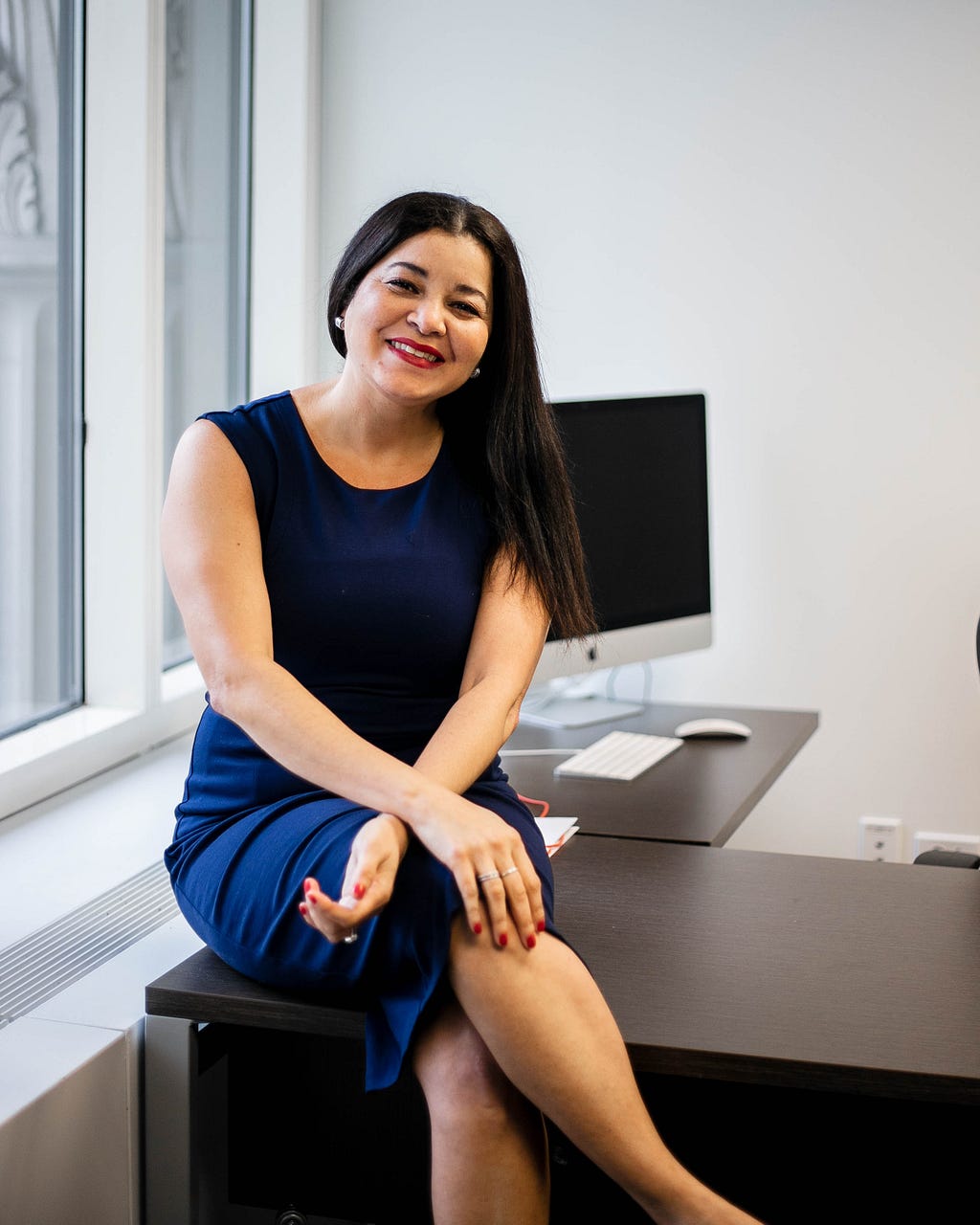
As a part of our series about women who are shaking things up in their industry, I had the pleasure of interviewing Angel Ishmael.
Angel Ishmael is the Vice President of Sales and Marketing for NetBlaze, a Chicago-based SaaS digital marketing solution for small businesses nationwide. Ishmael has been with NetBlaze since it’s conception in June of 2018 starting as the Marketing Director. In her current role, her responsibilities include helping clients implement and grow their online presence through social media strategies, CRM tools, reputation management and customer reviews. Ishmael has demonstrated experience working in the digital marketing industry. Her previous role prior to joining NetBlaze included being a social media strategist and manager for digital marketing company, Blueprint Information Products. She holds a B.A. in Communications from Purdue University.
Thank you so much for doing this with us! Before we dig in, our readers would like to get to know you a bit more. Can you tell us a bit about your “backstory”? What led you to this particular career path?
I interned for a CBS affiliate and then went on to work for PBS in my early career days. Those experiences gave me some insight into advertising and marketing that have stuck with me. I went on to co-own (I was married at the time) several small businesses myself. From a wine bar in Northwest Indiana, to having my own real estate practice, to running a highly successful online platform review site for families. As a stay at home mom, raising my 3 kids, I started the platform review site from scratch and soon was working with companies such as Disney, Glamour, Honest Tea, Beaches Resorts and more. I did all of the marketing for the companies plus more (hiring, training, payroll, inventory) and understand the long hours and hard work that a small business owner puts in. When the opportunity to work for a company that valued the small business owner came up, I couldn’t say no as it’s something I’ve always been passionate about,which is helping a small business succeed!
Can you tell our readers what it is about the work you’re doing that’s disruptive?
The value we provide at NetBlaze for our digital marketing SaaS solution to small business owners for such a low price is unprecedented — I am so proud to be a part of a company that levels the playing field for small businesses.
My work is also disruptive as I was a stay at home mom for 12 years, doing my own thing, yet with time, preparation and hard work, I ended up back on the playing field. It’s difficult for moms to re-start their careers, and I’m showing that it’s possible!
Can you share a story about the funniest mistake you made when you were first starting? Can you tell us what lesson you learned from that?
I had been out of the workforce for many years, and was the queen of managing my home and kids to a T. My new bosses asked for a check-in, so that I could update them on what I had accomplished in the past month. Being a detail oriented person, and out of the corporate world for many years this clicked in my brain as “write down every single thing you’ve done for the month” and so I spent days completing this. I sent a spreadsheet with every single activity I had done with each and every client in detail — I’m talking pages and pages of notes. The only feedback I received was “Gosh we wish you hadn’t done that as we needed a high level overview”. What I learned was to ASK QUESTIONS up front! If you aren’t clear on what someone needs or how they want it presented, ASK.
We all need a little help along the journey. Who have been some of your mentors? Can you share a story about how they made an impact
I was mentored by our CEO, Steven Clayton, before coming to work for NetBlaze. What I realized through that six month journey was that it didn’t matter that I had stayed home with my kids nor that I hadn’t worked in the corporate world in a while. What DID matter was my desire to jump back in with determination and grit. I had been out of the marketing world for awhile yet I understood that my history and the knowledge was still within me. I was encouraged to identify WHAT it was that i enjoyed doing the most and to focus my energy on those things, to build them up even more.
In today’s parlance, being disruptive is usually a positive adjective. But is disrupting always good? When do we say the converse, that a system or structure has ‘withstood the test of time’? Can you articulate to our readers when disrupting an industry is positive, and when disrupting an industry is ‘not so positive’? Can you share some examples of what you mean?
Sure, the idea to me that a woman can’t work and raise a family and even do those things while being a single mom is so outdated. I had a male CMO who told me that maybe I wasn’t cut out to work and raise kids simultaneously and it pissed me off. I am fantastic at multitasking and compartmentalizing and knew that I could do the job regardless of his outdated thoughts.
Can you share 3 of the best words of advice you’ve gotten along your journey? Please give a story or example for each.
Focus: Know what you want in life and THEN figure out how to achieve it! While I was a stay at home mom, I knew I wanted to get back into the corporate world eventually. I didn’t exactly know how that would transpire but I had the drive and determination to make it happen.
Determination: Don’t let setbacks define you. Each setback or struggle is one step closer to success! You will always need to have setbacks in order to improve and grow. Don’t focus on what you did wrong but on what you will do to make it right and improve for the next time.
Plan: I can’t stress this one enough! Plan out your year (I love the 12 week plan), I plan out all parts of my life so that I make sure 1. I achieve my goals and 2. That I have work/life balance.
Everyday, I write down three things that I MUST accomplish — this keeps me accountable and feeling accomplished at the end of the day.
We are sure you aren’t done. How are you going to shake things up next?
I really want to help women owned businesses shine! I want to provide them with the tools and support they need to push forward and succeed. This could mean providing marketing help, digital improvements or even just providing an ear to listen. When women come together, we can make big things happen!
In your opinion, what are the biggest challenges faced by ‘women disruptors’ that aren’t typically faced by their male counterparts?
Women have a hard time asking for what they want for fear of feeling bossy or aggressive. Men say exactly what they want all the time. I have learned (and very quickly) to be clear and concise in exactly what it is that I want in both my professional and personal life and it’s truly empowering.
Do you have a book/podcast/talk that’s had a deep impact on your thinking? Can you share a story with us?
The Alchemist has to be my favorite book of all time. It’s one that I read and re-read and learn something new every time. It encouraged me to think outside the box, and to understand the importance of the choices I make on a daily basis and how those create my future. I pay close attention to my thoughts, words and actions to make sure they all align to the journey I’m on because of my deep connection to this book.
You are a person of great influence. If you could inspire a movement that would bring the most amount of good to the most amount of people, what would that be? You never know what your idea can trigger. 🙂
I would help women step outside of their comfort zone, help them unlearn behaviors that hold them back so that they can move forward in their greatness. I think showing up unapologetically is empowering and that’s where I’d start!
Can you please give us your favorite “Life Lesson Quote”? Can you share how that was relevant to you in your life?
This quote by Marie Curie resonates as we all have challenges in life and it reminds me that we all have a greater purpose in life. Through laughter and tears, love and loss, triumph and failure…it’s all just a part of our journey.
“Life is not easy for any of us. But what of that? We must have perseverance and above all confidence in ourselves. We must believe that we are gifted for something and that this thing must be attained.” — Marie Curie
Mona Pretorius de Lacey of RAWR Strength: How To Develop Mindfulness During Stressful Or Uncertain Times
Be kind to yourselves. We have become hard wired to just work and let life slip us by without taking a moment for ourselves. Our mental health is so important and we need to be kind and give ourselves that time. What I also mean by this is if we start mindfulness training to help us cope with everything that has being going on, we should take it day by day and baby steps. These baby steps are still steps in the right direction.
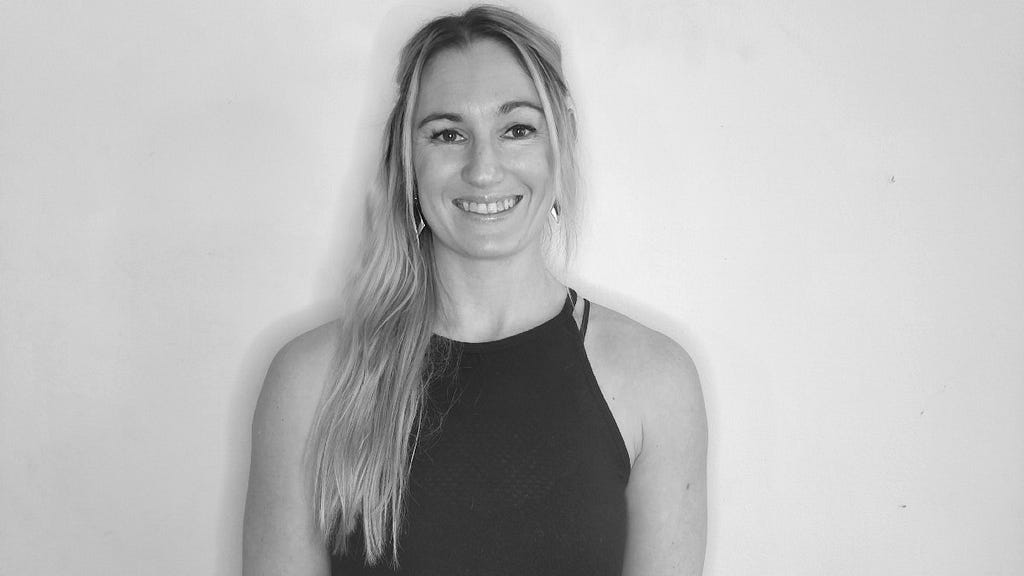
As a part of my series about “How To Develop Mindfulness And Serenity During Stressful Or Uncertain Times”, I had the pleasure of interviewing Mona Pretorius de Lacey.
Mona Pretorius de Lacey is a 6-time Karate World Champion, CrossFit Games athlete as well as a Commonwealth Games medalist in Olympic Weightlifting. She is currently in the South African squad for the Olympic Games in 2021 in Tokyo. Mona also has an Honours Degree in Sport Psychology as well as an Honours Certificate in Mindfulness Training. You can find her online coaching business at Rawr Strength.
Thank you so much for doing this with us! Our readers would love to “get to know you” a bit better. Can you share with us the backstory about what brought you to your specific career path?
I would like to share the backstory of how I became an International athlete preparing for the up and coming Olympic Games as well as a business co-owner of RAWR Strength & as a Mental Performance Coach.
It all started at a very young age for my passion for sport. I grew up in a house where strength training was a part of our blood. My first sport I competed in at an international level where I became a 6x World Champion and a 3rd Dan Black Belt was Karate. Although sport was a big part of our life, I wasn’t always the most talented. I had to work really hard and train long hours to become a good athlete. I had to sacrifice playing with friends for training. I was away a lot for sporting competitions and together with this I had to keep my academic marks high in order to get into a good university where I could further my studies to achieve my Honors Degree in Sport Psychology. This could only be done with hard work, motivation, dedication and very good time management.
My passion as an athlete and the hard work I needed in order to achieve carried over to my current sport Olympic Weightlifting which I have been doing for 20 years. I have numerous records and international medals under my belt but my proudest would be my Commonwealth Games Medal I won in 2018.
I knew I wanted to do something that ties in both my passion for Sport Psychology (Mental skills training) and my sport. I owned a CrossFit & Weightlifting gym back in 2012 where again I had to balance being a gym owner with competing at a top level. Now I am currently seeing athletes both to improve and be a better Weightlifter as well as the mental side as a Mental Performance Coach.
I have always loved working with people and I believe my background as an athlete carries over well. I can now take what I learnt in my years of studying and combine it with what I have learnt as an athlete and a coach.
Can you share the most interesting story that happened to you since you started your career?
I would say my most interesting story is how hard work and goals can open up many doors for you. I grew up in South Africa and I still represent South Africa today on the International stage. Although I love my country dearly, I always saw myself traveling the world and doing big things. With my sport I got to see almost every single continent and I got job offers overseas which I probably wouldn’t have gotten. With my career as an athlete and coach I have since moved to USA, Romania and currently living in New Zealand. I would definitely say this is one of the most interesting things that has happened to me and where I am currently at.
What advice would you give to other leaders about how to create a fantastic work culture?
I believe a great way to create a fantastic work culture is to have core values. When you have values that your company stand for and that you truly believe in and show care to your employees, they will return care to your business. Setting goals and having everyone share what their goals are for their position also creates accountability for each person and this way they can work towards something and know what is expected of them. Encourage team work and positivity to create the perfect work culture and environment. A great leader will lead and create something where others want to follow. Being caring and being there for when your employees need you is also a very important part of your roll.
Is there a particular book that made a significant impact on you? Can you share a story or explain why it resonated with you so much?
My latest book I read was Change Maker by John Berardi. This book helped me put a lot of perspective into my business and how I can do things better. The business that John Berardi co-founded is very similar to my business and learning from people who have built their business from scratch and made it a huge success is very inspiring. I always strive for success in anything that I do and I also know the only way I will reach success is by learning and then implementing what I learned from successful entrepreneurs. Just like my sport, I had to make a lot of sacrifices to be where I am today and I want to take what I learned in my sport, that hard working skill, and do the same for my business. What made this book very interesting to me was how it gives business Ideas on how to run your business as an individual and how to run it once you have built a team. I would definitely recommend this book if you are in the coaching business.
Ok, thank you for all that. Now let’s move to the main focus of our interview. From your experience or research, how would you define and describe the state of being mindful?
Being in a mindful state is like having time move in slow motion. It’s about being present in the here and now. You are totally focused on the task at hand and at the same time you will let thoughts come and go whilst being in this focused state of mind. You feel relaxed and in control at the same time. For athletes this is a feeling of being in the zone. For others it could be anything from just sitting and relaxing and being mindful of your surroundings or you could even be sitting at your desk doing your work and be in a mindfulness state focusing on the current task at hand. I believe that just like you would train a physical skill, the mindfulness skill needs to be trained.
This might be intuitive to you, but it will be instructive to spell this out. Can you share with our readers a few of the physical, mental, and emotional benefits of becoming mindful?
Firstly being mindful is a mind and body connection. By being mindful and present in the moment you can focus on your task at hand. Mindfulness training can help you relieve some stress. It can help you let go of what has been causing you anxiety and it can also be used in the very moment when something causes great stress or anxiety. It teaches you control over your body. For example, by letting your thoughts come and go and by focusing on your breathing can help you focus and decrease anxiety. Mentally it’s a great way to help you focus on your task at hand. By being mindful and in the zone, I have also experienced an increase in energy and productivity in my daily tasks. Emotionally it has helped me (and I am still working on this) let go of some of the things in my life that has caused me a lot of anxiety. It has become like a coping mechanism for me and whenever I feel really stressed then I will take 5–10 min to either meditate or even go on a mindful walk. By being more mindful I have even started a gratitude journal that I write in at night and in the mornings. This way I take a couple of minutes to just reflect on the day before I go to sleep.
Ok. Here is the main question of our discussion. The past 5 years have been filled with upheaval and political uncertainty. Many people have become anxious from the dramatic jolts of the news cycle. The fears related to the pandemic have only heightened a sense of uncertainty, anxiety, fear, and loneliness. From your experience or research what are five steps that each of us can take to develop mindfulness during such uncertain times? Can you please share a story or example for each.
Step 1: Be kind to yourselves. We have become hard wired to just work and let life slip us by without taking a moment for ourselves. Our mental health is so important and we need to be kind and give ourselves that time. What I also mean by this is if we start mindfulness training to help us cope with everything that has being going on, we should take it day by day and baby steps. These baby steps are still steps in the right direction.
Step 2: Start somewhere. Even if it’s starting with reading some books about mindfulness or listening to mindfulness audios or even starting with something like yoga. This will help guide you with your mindfulness journey. I started it at a young age with reading books and then practicing visualization for my sport. Since then I have built on my practices and even taken some courses to become better at mindfulness training.
Step 3: Start a gratitude journal. As silly as this may seem to some of you because we aren’t really into journaling, you will be surprised after a couple of weeks of doing this before you go to bed and first thing when you wake up how good you feel afterwards. With everything that has been going on the last couple of years it sometimes become hard to think of what we actually have in our lives that are good. I promise you if you look hard enough, there is still plenty to be thankful for and by focusing on the good will help you go to sleep feeling a lot more positive and happy. Just start with 3 things to write down and spend maximum 5 minutes on each.
Step 4: Schedule in your mindfulness training. This is a very important step to continue your journey to become more mindful. When you just go about your day you can easily forget to practice your mindfulness time. It doesn’t have to be long hours. I love doing my mindfulness training first thing in the morning. I schedule 10–15 minutes each day and I feel energized and ready for my day when I have done this.
Step 5: Everything in life takes time and practice. We won’t become an expert on mindfulness training overnight. But, by practicing this skill daily means we are already building on that foundation. We are working on ourselves to become a better version of ourselves every day. You will have days where you can’t stop thinking of other things while you are supposed to be in your mindfulness state. This is ok, as long as you recognize that you are doing this and work on being better at letting go. Remember practice makes perfect and start small. If you have a short attention span, no worries. Start off with 3 minutes twice a day. If you would like guided meditation instead of just listening to nothing that can definitely work. Everyone is different and you should try something until you find something that works for you.
From your experience or research what are five steps that each of us can take to effectively offer support to those around us who are feeling anxious? Can you explain?
Step 1: Let those around us know that we are there for them. Often when people feel anxious they also feel alone and feel like they have no one to talk to.
Step 2: Check-in with your friends or loved ones to make sure things are ok. This will also reassure them that you are there for them. It doesn’t have to be a phone call every minute for every day. You can just send a text and engage in conversation or meet up for a coffee to see how they are doing. They will appreciate this much more than you know.
Step 3: Try to understand what is causing those around us to be anxious. When you know what the cause is of those around you getting anxious then you can pick up when it could be happening. This way you will also know what to do if something does happen and don’t be afraid to reach out to a professional if something serious is happening.
Step 4: Know when you are the cause of your loved ones being anxious. This can be a big trigger for anxiety and by knowing what or who the cause may be can help you help your loved ones by not adding to their daily stress. It’s not always easy but sometimes making small changes to help others could help you in return to become a better person.
Step 5: Love them and let them know you love them regardless of them suffering from anxiety. Although this might not apply to everyone because it could be a friend or a co-worker suffering from anxiety (you could still show you care). You could also show you care by practicing some techniques with them to help them deal with their anxiety or going with them to practices. Again, this could mean the world to them.
What are the best resources you would suggest for someone to learn how to be more mindful and serene in their everyday life?
Start off with something like yoga, this way you can practice and train both your mind and body to be in the present moment. Read books or articles online. I found reading books of people who have been practicing mindfulness for a very long time and have used it in their daily life has been a lot more beneficial to me than any article. When you feel like you want to take things to the next level, try attend a course. Join a mindfulness retreat for a day and experience firsthand how you can incorporate mindfulness training into your life.
Can you please give us your favorite “Life Lesson Quote”? Do you have a story about how that was relevant in your life?
Control what you can control in life and realize the rest is just a waste of energy and time. We all fall into the trap sometimes of worrying about things that we have no control over. These things might cause us tremendous anxiety and at the end of the day, this could affect our health as well as cause unnecessary emotional stress. Rather, put that energy and focus into something we can control to get the best outcome possible.
You are a person of great influence. If you could start a movement that would bring the most amount of good to the most amount of people, what would that be? You never know what your idea can trigger. 🙂
I have always wanted to help young kids in orphanages. I have wanted to create an opportunity for them through sport by having a big space where I can train these kids and do life skill sessions with them and help these kids have a safe space and a community to grow and develop. I want to be able to give these kids a chance to become something in life and even if I can help just one of them would be amazing. Each and every child should have these opportunities and places where they feel like they have a sport family.
What is the best way our readers can follow you online?
You can follow me on Instagram at @powerfulpretorius or go and visit my website with loads of training advice and programs at rawrstrength.com
Thank you for these fantastic insights. We wish you only continued success in your great work!
Women Leading The Cannabis Industry: “Unless you are willing to take chances this industry isn’t for you” With Elizabeth Becker of HiBnb
Get out of your comfort zone. All I can say is that we grow more when we are out of our comfort zone. This such a dynamic new industry that we are all growing together so unless you are willing to take chances, risk your certainty, and learn and grow than this industry isn’t for you.
As a part of my series about strong women leaders in the cannabis industry, I had the pleasure of interviewing Elizabeth Becker.
Elizabeth Becker is the visionary and co-founder of the innovative new startup HiBnb, exciting industry watchers in travel / tourism and tech as well as in the world of cannabis. Before working in cannabis, Elizabeth enjoyed a rich career writing and directing in film and television. Always a cannabis advocate, Elizabeth’s Master’s thesis at the American Film Institute in 1999 addressed the absurdity of the illegality of marijuana at a time when few people were discussing the topic. After engaging in film production in Los Angeles, Vancouver and Toronto and racking up credits as a director in kids TV, Elizabeth moved down a different path and directly into the cannabis space. In cannabis, Elizabeth started in payment processing and moved to work for a series of cannabis entrepreneurs including Head of Business Development in Canna-tourism. Over the past three and a half years she has immersed within a network of cannabis professionals to emerge a robust player on the Canadian cannabis landscape. Elizabeth is a passionate entrepreneur developing a platform that will galvanize a global community.
Thank you so much for doing this with us! Can you tell us the “backstory” about what brought you to the cannabis industry?
I had been working in film and television for decades and was not satisfied with where I was at. When considering how to cross over into another industry, a good friend advised me to follow your passion. For me, I am passionate about cannabis. I had been silently participating in the collective movement towards legalization, and maybe not so silently since I made a film for my master’s thesis at the American Film Institute which is quite outspoken. It’s about the absurdity of the propaganda that came out in the 1930’s claiming that smoking marijuana will make you lose your mind and want to kill your best friend, and comparing the stigma against cannabis to the complete acceptance of alcohol use which is proven to have more violent and destructive effects on people. So, the passion has always been there.
When Canada was preparing to legalize, I knew I wanted to seize the opportunity of a business advantage on a global level. I just had to figure out if there was a path that was right for me. In the end I crept in through payment processing and insurance into the cannabis industry. Then I segued to working for a few different entrepreneurs and I learned many things from them. Finally when I heard lots of people talking about the need for a travel and tourism site dedicated to cannabis enthusiasts, and I saw how passionate they were about using a site like that, I became dedicated to figure out how to create and present it to the public for their use and enjoyment.
Can you share the most interesting story that happened to you since you began leading your company? Can you tell us what lesson you learned from that?
I’d say the most interesting story that happened to me — and has been part of my learning curve — is when I commissioned a service provider to create the website. I had been working with the designers and developers for months and when it came time to deliver the product for our launch date, what I got was very different than what I was expecting and I had to call off the launch. That was devastating because I had worked very hard to drum up some excitement about the delivery of the site.
So, I learned that communication is crucial and never to assume that the other party is going to meet your expectations. Unfortunately, it’s created the need for me to micromanage every step of the way and many people I am working with don’t enjoy that process from my side. But the lesson hit me hard and it’s better to have to take a chance that you’ll hurt someone’s feelings by clarifying every detail with them than to have the work completed wrong, miss deadlines, and have to re-do work that has already been completed which is costly in time and resources.
Can you share a story about the funniest mistake you made when you were first starting? Can you tell us what lesson you learned from that?
I’m not really proud to admit this but this is a glaring mistake in my opinion. I went to a cannabis trade show and conference looking to network. Being passionate about cannabis, and treasuring the way that cannabis assists in a bonding experience with others when ingested together, I ended up getting high with a bunch of other industry professionals.
But I think I got a little out of hand since the nature of the conference had lots of different events and interactions and unfortunately, I got a little too high. Because of this I was less able to be effective in my work — so I am going to have to be a little more careful about that next time.
Do you have a funny story about how someone you knew reacted when they first heard you were getting into the cannabis industry?
I don’t have a funny story about how someone reacted when I said I was working in cannabis because I don’t surround myself with anybody that has a stigma about cannabis. I am a transparent person. All the people who know me, know I love cannabis, so they all think it’s a good fit.
None of us are able to achieve success without some help along the way. Is there a particular person who you are grateful towards who helped get you to where you are? Can you share a story?
Absolutely. I wouldn’t be here if it wasn’t for my mother, Rose Becker. I grew up watching my mother create and run her sales and marketing company. In fact, I grew up working in her business. She’s always been my role model as an entrepreneur, and she has always believed in my ability as a business person. When she saw that I was so passionate about HiBnb, and knowing what I was capable of, she did everything she could do to assist me on the path to get the business off the ground. I am forever grateful for her support and confidence in me.
Are you working on any new or exciting projects now? How do you think that will help people?
HiBnb is taking a LOT of hours to get off the ground so I literally work 18 hours a day. We’ve hit a few milestones but there are many more to go. So to answer the question, HiBnb is my new and exciting project. We just completed our soft launch and are open to the public — focusing on onboarding hosts and we will be undertaking a big media launch in late April. Check it out: https://www.hibnb.ca/
But there are some side projects connected to HiBnb I am working on. For example, we just created three webseries to help with promotion and this is really exciting, because it allows me to fold in my past experience creating film and television but within the HiBnb framework. I can’t wait to bring these series to the public because my driving passion isn’t just to create a business — it’s to assist in the de-stigmatization of cannabis. Now that cannabis is legal in Canada, things are starting to change. The time of keeping our cannabis use hush hush is over, and with that comes a responsibility to be educated about cannabis and to educate others. I believe that cannabis users should be able to enjoy a safe, legal, socially accepted cannabis-inclusive lifestyle that is integrated into our day to day lives. That is really what HiBnb is about, so the paths for me to support this initiative are endless.
Ok. Thank you for all that. Let’s now jump to the main core of our interview. Despite great progress that has been made we still have a lot more work to do to achieve gender parity in this industry. According to this report in Entrepreneur, less than 25 percent of cannabis businesses are run by women. In your opinion or experience, what 3 things can be done by a )individuals b)companies and/or c) society to support greater gender parity moving forward?
I am very grateful to some women who have gone out of their way to introduce me to other strong female business professionals and this has really helped strengthen HiBnb. Normally I wouldn’t want anyone to treat me differently because I am a female — in a negative way or in a positive way — but because the playing field is so heavily occupied by men and some men see right past a woman in business, women really need the extra support right now.
If you are an individual or a business, when you come across a female entrepreneur who is on a mission and who has — what I call, the fire in her belly — just ask that individual how you can help her. That simple question, “How can I help? goes a long way.
For society, I think it’s important to recognize women run businesses. The media can play a big part in this. The more it is brought to the public awareness that companies are female led, the more the public can support them.
You are a “Cannabis Insider”. If you had to advise someone about 5 non intuitive things one should know to succeed in the cannabis industry, what would you say? Can you please give a story or an example for each.
I can’t say I can advise anyone how to succeed in the cannabis industry. Just because I had a vision and acted on it doesn’t mean I have succeeded. Who has succeeded anyway? How do you measure success? The entire industry is struggling to find itself and find its revenue. I don’t think the LP’s are earning more than their expenses right now and neither are we. So based on that, I can offer advice on what it takes to get to where I am right now.
Be patient. Don’t expect immediate results. The cannabis industry is young and being able to evolve with it is crucial.
Help others around you. I am finding that if you go out of your way to help the people around you in this business — even if it doesn’t directly affect your own business — you are embodying the positive aspects of the cannabis plant and these gestures contribute to the integrity of our unique industry. And in the end, it always comes back to you in one way or another.
You are not an outsider. Because this industry is so new, everyone is new to it. That means that you shouldn’t feel like an outsider trying to break in. All of us were in your shoes just a few years, or even months ago. It’s not too hard to get inside, but it does require persistence, tenacity, and something to bring to the table.
Get good at sending calendar invites. Seriously. That’s the way everyone communicates with each other. Send a calendar invite and book time to talk and connect.
Get out of your comfort zone. All I can say is that we grow more when we are out of our comfort zone. This such a dynamic new industry that we are all growing together so unless you are willing to take chances, risk your certainty, and learn and grow than this industry isn’t for you.
Can you share 3 things that most excite you about the cannabis industry?
There is a lot that excites me — to start with, it is a brand new emerging industry growing at a quick rate and that is really exciting to me because there are no preconceived ideas of what’s going to work and what’s not. This leaves so many possibilities open. You have to expect the unexpected, and to do this you are forced to stay awake and aware at all times. Living in this hyper aware state, knowing that accelerated growth could be right around the corner — this is invigorating to me.
Being a new industry, there are people coming into it from all other industries and these people are sincere, grounded, kind, generous and accepting people. It’s so interesting to see the different backgrounds from where all these people have come — and what they have in common for the most part is an appreciation of cannabis. As the properties of the plant are benevolent, so are the people coming together to work in the industry around it. For me, these are the people that I want to work with, and with whom I feel at home.
I am fueled by the jump start that Canada has gotten on this new emerging global industry. There is no denying we are at the beginning of a global shift to accept and appreciate the healing qualities of cannabis and I feel privileged to be able to contribute to the foundation of what could become a global enterprise.
Can you share 3 things that most concern you about the industry? If you had the ability to implement 3 ways to reform or improve the industry, what would you suggest?
1.) I am most concerned about the battles between the legal industry and the legacy markets, who are both out to get blood from the other. They are both wanting to, and capable of, annihilating each other and that is so sad to me. Look how far we’ve come and how much we’ve fought to legalize cannabis. I am very excited we are legal, and we wouldn’t be here without the legacy market without people sacrificing what they had to move the pendulum and create legalization. It is a touchy subject, though, and not one which I want to choose since it’s so political and diametrically opposed. I do believe we should be supporting the legal industry which is why I created HiBnb. I want HiBnb to normalize the conversation about cannabis so that cannabis enthusiasts can step away from shame and guilt, we can all come out of the closet and get educated about cannabis, and study and utilize it for all it has to offer. The legacy market has to understand that times change, this is a time of growth and for the benefit of bringing the plant to all, they have to try to find themselves a place in the legal framework.
That said, I know the legacy market feels slighted by the suits who have walked into the cannabis industry and are trying to extract as much revenue from it as possible without acknowledging the values of the plant and the people. At HiBnb we really try to appeal to straddle the line. We offer the general public an opportunity to make money by passing on their experiences, expertise, and other ways to make money even if they do not have licenses to sell., we also give an opportunity for people who legally grow their own cannabis plants to share their cannabis with their guests, and offer them a page that showcases their grow. On the other hand, we also offer assistance to Licensed Producers who are limited in their ability to market properly, because a HiBnb host can also choose to list the LPs name brand products and increase exposure and awareness of those products!
2.) A second concern I have for the cannabis industry is the opposition of some international countries. Because some of these countries take cannabis use so seriously, it means that travelers, or even people who want to travel, have to be careful if they don’t want to be officially associated with or traceable to cannabis in any way — for fear of safety in their home country or ease of their travels. Because of this, I think the legal cannabis industry will grow slower and the legacy market will continue to stay strong, and if this is the case, will the legal industry survive?
3.) My last concern is the stigma against cannabis. We still have so far to go in the acceptance of cannabis in the normalization of our day to day lives right now the only place to get high is on your coach if you want to do it with friends. Or outside in desolate areas. With alcohol, you can have a glass of wine at lunch or at dinner — there are so many touch points in your day to day life where you can integrate alcohol in your life in a safe, legal and responsible way but cannabis, we are still blacklisted. I will continue to fight so that people can enjoy cannabis together in public settings and social environments, rather than having to get high on their own or hide their use from each other.
Today, cigarettes are legal, but they are heavily regulated, highly taxed, and they are somewhat socially marginalized. Would you like cannabis to have a similar status to cigarettes or different? Can you explain?
I can see that people are trying to figure out how to consider cannabis, but it really can’t be pigeon-holed into a category that already exists. Cigarettes are socially marginalized because they are proven to kill people. Cannabis has healing effects. How can they be considered to be the same status? It’s sad that so many people still compare the two. It’s clear that some people aren’t realizing that unlike tobacco, cannabis has so many benevolent and healing properties.
Can you please give us your favorite “Life Lesson Quote”? Can you share how that was relevant to you in your life?
The life lesson that Ii learned many years ago is that humans have a natural tendency to judge experiences in their lives as good or bad. When someone cancels out on you — your mind races to categorize it as positive or negative. It’s almost like this is the way our human brain needs to filter data. But the truth is that we can’t see what’s coming next so it’s really impossible to say if something is good and something else is bad because we don’t know how it fits in the bigger picture. So if we are judging and reacting to all the things that happen to us we go around and around in an endless cycle without much benefit other than wasted emotions.
At this stage in my life I have learned a lot about who I am and being able to isolate and identify my emotions. I have the wisdom and the confidence to see as clearly as I can — to be aware of my own limitations and tap into my potential. This has led me to create HiBnb. I can recognize that HIBnb is a gift to other people to use as a way to make income or a way to meet other people or a way to travel more comfortably — it’s greater than me and I am grateful that I am wise enough to not get in the way of it.
You are a person of great influence. If you could inspire a movement that would bring the most amount of good to the greatest amount of people, what would that be? You never know what your idea can trigger. 🙂
I am passionate about cannabis. It has affected me in a positive way — helping me to relax, to be more self aware, more comfortable with myself, and even to laugh more. I have created HiBnb because I want to share that positive and benevolent experience with others so that they can enjoy the benefits as I have — and maybe they can even pass it forward again! So yes! I am trying to inspire a movement that brings the greatest amount of good to the greatest amount of people. HiBnb is designed for exactly that. Our motto is “Sharing what we love”.
Thank you so much for the time you spent with this. We wish you only continued success!
Women Leading The Cannabis Industry: “The largest obstacle for women is funding” With Dr. Kirsten Shepard Ahmed of Pain Stoppers
In my opinion, one of the largest obstacles for women in all industries is funding. When we look at funding in general for women entrepreneurs, only a small percentage of banks and small business loans are approved for women, and the numbers are even less for women of color. It is also more difficult to obtain funding for cannabis since traditional funding sources do not apply. Venture Capitalists, Angel Investors, grants and other investors often overlook women, and when funding is approved, it’s historically at significantly lower amounts with higher interest rates.
As a part of my series about strong women leaders in the cannabis industry, I had the pleasure of interviewing Dr. Kirsten Shepard Ahmed.
Dr. Kirsten Shepard Ahmed (LMT, DC) is the Founder and CEO of Pain Stoppers, a hemp-based solution to pain management and recovery that promotes whole body wellness. For more than 10 years, she has established integrated practices that combine medical, chiropractic, acupuncture and physical therapy approaches to whole body care, including the opening of clinics across Texas and in Los Angeles. Dr. K’s holistic approach to pain relief has led to recognition, by way of awards and teaching opportunities, from Texas legislators and leaders from top organizations. She is a Cannabis advocate and an active member of Texas NORML, the Minority Cannabis Business Association, and the Drug Policy Alliance.
Thank you so much for doing this with us! Can you tell us the “backstory” about what brought you to the cannabis industry?
I discovered the holistic abilities of cannabis during my father’s (Luke Shepard) battle with Mesothelioma. The chemotherapy and radiation caused a lack of appetite and chronic pain, leading me to begin researching medical cannabis as a solution. We initially tried a THC/CBD combination but my father didn’t like the feeling of being high or the taste of the oils. As I continued my research, I discovered the dynamic healing power was in the non-psychoactive CBD component. Knowing that the skin is the largest organ, I began mixing different compounds with CBD and rubbing them on him. He almost instantly felt relief and his appetite increased. The comfort it provided my dad led me to create Pain Stopper’s topicals so I could share the gift of relief with others.
Can you share the most interesting story that happened to you since you began leading your company? Can you tell us what lesson you learned from that?
The most interesting thing that happened to me occurred at an industry conference in San Francisco. We were one of the event vendors and a gentleman began asking about our products and backstory. In my excitement, I began sharing the details of one research study from 2010 that analyzed CBD and chronic pain in cancer patients who were not responding to opioids. He too was familiar with the study and asked me detailed questions about it. Little did I know, he was actually one of the co-authors of the article. The lesson I learned was to make sure I know the information I share. You never know the full background of whom you’re speaking with.
Can you share a story about the funniest mistake you made when you were first starting? Can you tell us what lesson you learned from that?
I paid a deposit for an expensive device from a company in Europe just to later discover the company I purchased it from didn’t really own it. My expensive lesson learned was to always do my due diligence.
Do you have a funny story about how someone you knew reacted when they first heard you were getting into the cannabis industry?
I had an 88 year old church minister of music who was attending our product launch and as I was explaining that CBD would not cause the psychoactive high like THC, she booed me. I was completely shocked and everyone laughed.
None of us are able to achieve success without some help along the way. Is there a particular person who you are grateful towards who helped get you to where you are? Can you share a story?
The person that I have to credit with helping me was my father. I would not have ever thought of producing a product line if it wasn’t for him. He was my first test subject and after he experienced relief with the first cream, he suggested I consider developing it to help more people who were suffering. At the time, product development was the last thing on my radar and I really wasn’t interested. He encouraged me and said I was on to discovering something that could benefit the entire world.
Another person I’m tremendously grateful for is Melissa Bradley, founder of 1863 Ventures and Co-Founder of Ureeka. Her vision to help women and minority business owners scale by providing educational programs, funding, and resources have had a direct, positive impact not only on my professional life and in growing the business, but by also helping open opportunities that are positively impacting our community.
Are you working on any new or exciting projects now? How do you think that will help people?
We have a global patent pending on one of our formulations and our goal is to perform some clinical trials for a certain condition which we are truly excited about. Our goal once it is completed is to obtain FDA approval. Providing more evidence-based resources for effective, natural, non-pharmaceutical options for both consumers and providers will be tremendously beneficial for this industry.
Ok. Thank you for all that. Let’s now jump to the main core of our interview. Despite great progress that has been made we still have a lot more work to do to achieve gender parity in this industry. According to this report in Entrepreneur, less than 25 percent of cannabis businesses are run by women. In your opinion or experience, what 3 things can be done by a)individuals b)companies and/or c) society to support greater gender parity moving forward?
In my opinion, one of the largest obstacles for women in all industries is funding. When we look at funding in general for women entrepreneurs, only a small percentage of banks and small business loans are approved for women, and the numbers are even less for women of color. It is also more difficult to obtain funding for cannabis since traditional funding sources do not apply. Venture Capitalists, Angel Investors, grants and other investors often overlook women, and when funding is approved, it’s historically at significantly lower amounts with higher interest rates.
To support greater gender parity moving forward, as a society, we need to provide more mentorship programs for females and start educating women towards leadership roles at an early age. Similarly to what is being done to increase women in STEM, we should create programs to insight creativity for young girls beginning in elementary school. Secondly, we must demand our federal government pass the statutes and legislation requirements that many states like California have passed requiring boards to have at least one female director. And lastly, we need companies to allocate a percentage of their funding/vendors to female entrepreneurs and as consumers we need to stop supporting companies that don’t.
You are a “Cannabis Insider”. If you had to advise someone about 5 non intuitive things one should know to succeed in the cannabis industry, what would you say? Can you please give a story or an example for each.
Know what is legal in your state as the laws are constantly changing.
Beware of imposters, there are many consulting groups and professional organizations that are taking advantage of the surge and only trying to make money. Some offer services in excess of $5,000 and don’t produce any beneficial information. Do your due diligence!
Not all cultivators and manufacturers are the same. Can they track the source of their seeds? What methods are they using for growing? Do they have any certifications?
There are so many industry conferences being offered both in the U.S. and abroad that serve as great resources for knowledge gathering as well as networking.
Maintain FDA compliance. Because there are no regulations in the industry, it’s like the wild west. The last thing anyone wants is for the Feds to come busting in.
Can you share 3 things that most excite you about the cannabis industry?
The first thing that excites me is the number of clinical trials currently in progress and the unlimited future opportunities to support the effectiveness of this beautiful healing plant. As more evidence-based research is produced, more people will be able to have the non-toxic relief they deserve. Next is the possibility that cannabis will be completely declassified in the U.S. in a few years. And lastly, as someone who strongly believes that cannabis is one of the answers to global warming, I foresee a potential to save our planet with the vast number of non-toxic products that can be produced.
Can you share 3 things that most concern you about the industry? Secondly, If you had the ability to implement 3 ways to reform or improve the industry, what would you suggest?
First, I’m greatly concerned about the lack of diversity in the cannabis industry; only 4% of entrepreneurs are black. The fact that so many black and brown individuals are still imprisoned for marijuana crimes while others, many who helped put them behind bars, are profitting is an issue that warrants attention. There are also so many bogus products on the market taking advantage of people’s vulnerability for profit which I just hate. Thirdly, the enormous amount of money required for individuals to obtain licensing is shameful.
In terms of reform and improving the industry, I would commute all individuals currently imprisoned on cannabis charges, declassify and legalize cannabis on a federal level, and allow federal funding for the cannabis industry in the form of grants and SBA loans.
What are your thoughts about federal legalization of cannabis? If you could speak to your Senator, what would be your most persuasive argument regarding why they should or should not pursue federal legalization?
As an advocate, I would first ask them to join the Federal Cannabis Caucus to actively participate in the reform efforts both at federal and state levels. I would plead to them to look at the current evidence-based benefits that are available from medical cannabis which will greatly improve their constituents’ quality of life. If healthcare providers take an oath to first do no harm, then why would we prevent our citizens from access? I would also ask them to look at the 5,000+ products that can be developed from cannabis in addition to the tax revenue that could help with the enormous debt in our county. I would also ask them to look at what the voters are demanding with the vast legalization efforts in the states. I’d ask them to look at the history of cannabis in the US and ask why in 1937 did the Marijuana Tax Act pass, who profited and why was the research from 1944s LaGuardia Committee Report ignored?
Today, cigarettes are legal, but they are heavily regulated, highly taxed, and they are somewhat socially marginalized. Would you like cannabis to have a similar status to cigarettes or different? Can you explain?
I think cannabis needs regulation and should be taxed, but the evidence shows a completely different effect that cannabis has on the body. Cannabis is non-toxic and with the exception of inhalation does not pose the same dangers as cigarettes. I don’t think it is as socially marginalized nor should it be.
Can you please give us your favorite “Life Lesson Quote”? Can you share how that was relevant to you in your life?
I really don’t think life is about the I-could-have-beens. Life is only about the I-tried-to-do. I don’t mind the failure but I can’t imagine that I’d forgive myself if I didn’t try. — Nikki Giovanni
I’ve always been a risk taker — since I only have one opportunity to live I might as well go all in and see what happens. There is always the possibility of success.
You are a person of great influence. If you could inspire a movement that would bring the most amount of good to the greatest amount of people, what would that be? You never know what your idea can trigger. 🙂
My movement would be to transform healthcare globally. The world suffers with neck, back, joint and muscle pain. I envision a world that doesn’t use pharmaceuticals as a first option and we return to the traditional roots of plants, food, and movement. In the U.S. alone, we consume the most pharmaceuticals in the world and are only 5% of the world’s population. This opioid epidemic is man made yet we could have prevented it. Our commercials tell us we have pain due to a lack of NSAIDs and muscle relaxers. Which in turn creates issues with our kidneys and livers. I stand by #PatientsOverProfits
Women Of The C-Suite: Judy Yee of K-Zen On The Five Things You Need To Succeed As A Senior Executive
Take Care of Yourself First. Being a CEO is like an athlete: You need to manage your time and energy for peak performance. Honoring and committing time to yourself to re-energize, eat and sleep well and connect with loved ones will greatly help how effective you will be with your company.
As a part of our series about strong women leaders, we had the pleasure of interviewing Judy Yee.
Judy Yee is the CEO and Co-Founder of K-Zen, a maker of cannabis-infused drinks committed to normalizing cannabis and inspiring new ways for consumers to enjoy its benefits. A seasoned executive with 20+ years in healthy food & beverage, Judy’s expertise in new product innovation, along with her passion for bringing fresh and healthier products to consumers, are the driving forces behind her work to create great tasting cannabis beverages and brands people deeply enjoy and trust.
Thank you so much for joining us in this interview series! Before we dig in, our readers would like to get to know you a bit more. Can you tell us a bit about your “backstory”? What led you to this particular career path?
The bulk of my career spans over 20 years in the healthy food and beverage space where I held senior-level CPG positions at Nestle, Earthbound Farm and Crystal Geyser. I’ve always maintained a healthy and active lifestyle, but after I had my daughter I took a few years off from both work and a pretty dedicated fitness routine. Once she was a little older, I decided to get back into my fitness routine but found my recovery to be longer and harder. Remedies I’d used in the past such as acupuncture weren’t as effective.
So, I was encouraged by some friends to try incorporating low doses of cannabis into my daily routine but was initially unsure. To provide a bit of context, I was born in Taiwan and my family emigrated to the States when I was young. My father is an ex-military officer and we grew up in a fairly conservative household where I had to overcome many cultural differences. He strongly believed in President Reagan’s war on drugs campaign “Just Say No,” so I had a very negative, but false, perception of cannabis — including its effect on people and the image it projected on those who used it. However, once I tried it, I quickly discovered a whole new outlook on self-care and well-being.
I was extremely fortunate I could leverage my food and beverage background and started researching and experimenting with cannabis. It was challenging (in a good way), and eventually, I found and partnered with, a team of highly skilled food scientists and cannabis experts. Together, we created great tasting cannabis beverages and that’s when I co-founded K-Zen, a maker of delicious and effective cannabis-infused drinks.
Can you share the most interesting story that happened to you since you began leading your company?
Moving from the traditional, Fortune 500 CPG corporate companies to a public advocate for cannabis was not easy. It took awhile for me to get comfortable sharing my story publicly — especially as a mom to a young child who’s active in her school community. But telling my conservative parents was the most challenging. How do I explain that I left a thriving CPG career to start a cannabis beverage company?
I finally found the right moment to tell my mom on one of my trips home as we prepared dinner together. The Chinese word for cannabis is a bit crude (it’s pronounced as “da ma”) so I was looking up other alternative words, but there simply wasn’t any. So I mustered up the courage to finally tell her what kind of drinks my company was making. To my surprise, she reacted with curiosity and asked a lot of questions. It quickly turned into a “Cannabis 101” discussion where we both came away feeling even more connected and supported. Although my mom hasn’t been able to try K-Zen’s products (she lives in WA and interstate commerce is not yet allowed in cannabis), she has now incorporated cannabis topicals into her self-care routine.
Can you share a story about the funniest mistake you made when you were first starting? Can you tell us what lesson you learned from that?
For me and a lot of people I’ve spoken with, I think the word ‘edible’ still has a bit of a negative connotation — we all know someone who’s had a bad run-in with a cookie or brownie.
So when I was really thinking about getting into the industry, I spent a lot of time going to dispensaries and taste testing cannabis-infused beverages sold in CA. To make a long story short, I drank too much because I was still not feeling any effects, even after an hour. But then the high hit me like a ton of bricks and lasted for at least 8 hours. I remember thinking, “When is this going to stop?”
After that, I was determined to build a company that would help educate consumers (especially new users) about what to expect from consuming cannabis drinks and to have predictable experiences every time they choose our drinks. I didn’t know this at the time, but many beverage companies were adding cannabis oil straight into the liquid, which was not best practice. Through much research, we found that the cannabis oil needs to be emulsified in order for it to be evenly dispersed in the liquid. It was then that I knew I needed to launch a company and create products people could trust, and that could end up being consumed by someone like me: a Canna-Curious person.
None of us are able to achieve success without some help along the way. Is there a particular person who you are grateful towards who helped get you to where you are? Can you share a story about that?
I’ve been very lucky that I’m surrounded by a group of supportive and hard-working people. But the first person who comes to mind is my husband, Craig Yee. He believed in me and my vision and helped me take the leap of faith from leaving my secure CPG job to start my new career in cannabis. How this decision would impact our family and raising our daughter was a huge consideration. He leaned in and stepped up in taking care of our family responsibilities.
Another person is K-Zen’s other co-founder, Soon Yu. Starting a company in such a nascent industry can get pretty lonely and challenging and having him as a true partner in the early beginning was so critical. It was such a huge departure and a big turning point — Soon has skills complementary to mine; he’s also innovative, creative, and possesses that ‘You can do it!’ positive mentality.
In my work, I often talk about how to release and relieve stress. As a busy leader, what do you do to prepare your mind and body before a stressful or high stakes meeting, talk, or decision? Can you share a story or some examples?
I have an everyday routine that includes meditating for 15 minutes before I do anything else, and before my husband and daughter wake up and start their day. Then it usually includes some form of exercise, like pilates, running or yoga.
In certain high stakes situations — like if I’m preparing for an important stakeholder meeting — I’ll block out 15 to 30 min beforehand to calm my body, energy levels and make sure I’m in the right mindset. I’m all about mental imagery and visualization so I see how the meeting will play out in my mind — sort of a “mental dress rehearsal” so it’s familiar and comfortable. And if I find myself anxious or if something’s starting to affect me in a negative way, I’ll give myself a quick ‘time out’ (even if it’s for five minutes) to reset, count my breaths and clear my mind.
As you know, the United States is currently facing a very important self-reckoning about race, diversity, equality and inclusion. This may be obvious to you, but it will be helpful to spell this out. Can you articulate to our readers a few reasons why it is so important for a business or organization to have a diverse executive team?
It’s extremely important. As a female entrepreneur who’s also a person of color, I’m very mindful of who we employ and partner with — in fact, I’m proud to say that 70% of K-Zen employees are people of color.
Bringing together different perspectives and formulating new ideas, whether it’s through a cultural lens or a unique personal experience, helps form better ideas and fuels our creative spark. At K-Zen, we also choose to work with an ecosystem of partners and advisors who share our same beliefs — women and people of color should have equal opportunities to succeed in every industry, not just cannabis.
As a business leader, can you please share a few steps we must take to truly create an inclusive, representative, and equitable society? Kindly share a story or example for each.
Start by increasing diversity and inclusion at your own company. When I’m in the process of recruiting new talent, of course I look at a candidate’s qualifications and previous work experience. But if I’m choosing between two candidates who have similar qualities, I tend to gravitate towards the one who comes from a different background.
Give back where, and when, you can. I’m committed to supporting organizations that are moving the needle towards equity and inclusion for all. In September, for example, a portion of our Mad Lilly Spritzer sales were donated to Supernova Women, a non-profit organization empowering women of color to be self-sufficient shareholders in the cannabis industry.
Mentor and enable entrepreneurs who share the same mission and impact on equity. For many years, I was a mentor with ICA where many of the entrepreneurs I supported were women of color. ICA’s mission is to provide coaching, connections and capital to grow businesses in the Bay Area to close the gender and racial wealth gap. Not only did many of these businesses thrive but many had an exponential effect on creating jobs and wealth creation for women and people of color in their local communities.
Ok, thank you for that. Let’s now jump to the primary focus of our interview. Most of our readers — in fact, most people — think they have a pretty good idea of what a CEO or executive does. But in just a few words can you explain what an executive does that is different from the responsibilities of the other leaders?
A CEO is ultimately responsible for the company’s successes or failures. While a company’s performance is enabled through the collective work of the company’s employees, the role of the CEO is unique:
Defining the business we are in and what external value we are creating. A CEO should take the aspirational future state and distill it down to the operational level of the business, all while guiding the organization to look ahead. Oftentimes, a CEO can be tempted to go in an entirely new direction because of competition or fear of being left behind on an emerging trend. Having a clear and long-term vision of what business you are in will help a company stay focused and invest resources that will yield stronger outcomes.
Balancing short term and long-term priorities. This is one of the hardest jobs as the CEO, especially as an early stage startup when managing cash is critical. Most often, you are pulled into short term activities because those demand immediate solutions and impacts results that matter the most before your next raise. While the next 6 to 12 months milestones are of the greatest importance, don’t lose sight of the next growth phase of your organization and preserve / hedge for sustainability.
Nurturing the company’s values and standards. This is arguably the most important job of the CEO because a company’s success and failure is greatly determined by the collective contributions of its people. It’s not enough to have these ideas written down, it must be actualized through how a company makes decisions, who to hire, how we handle mistakes and failures, how we celebrate and recognize success, etc. It’s the CEO’s job to continually revisit the relevancy of these values as an organization grows and changes over time.
What are the “myths” that you would like to dispel about being a CEO or executive. Can you explain what you mean?
It’s not all strategy talk and holding important business meetings. K-Zen is a relatively new company (we are just under two years old), so we operate like an early-stage startup. I am literally packing bottles of product myself and picking up and dropping off deliveries. There’s no task that’s not within the boundaries of what I should or should not do just because my title is ‘CEO.’
CEOs don’t have the answers to everything. And I don’t expect my team to think that I do, nor do I want them to feel like they have to come to meetings with every answer. This also ties into the myth that a CEO can be unapproachable, which couldn’t be further from the truth: I’m all for fostering environments where my team and I can collaborate.
A CEO works nonstop. I work really hard, but I also prioritize a healthy work-life balance. Overall, I try to protect certain times of my day. I’m a mom to a young daughter and really value that ‘transition time’ from the end of my workday to time spent with my family in the evenings. I don’t do any work and don’t check my phone. That in-person connection with loved ones, without any distractions, is so important to me and my mental health.
In your opinion, what are the biggest challenges faced by women executives that aren’t typically faced by their male counterparts?
I’m the only female on my company’s board of directors. So I don’t really see it as a challenge per se, but more of an asset and opportunity… especially in the cannabis industry where a majority of growth from new users are women. My male peers recognize and respect that I’m coming to the table with deep knowledge and expertise in the healthy food and beverages space, a passion for cannabis, and the ability to operate a business in a highly regulated environment. Gender doesn’t necessarily play a huge role that one might think.
What is the most striking difference between your actual job and how you thought the job would be?
You might think after spending 20+ years of my career in the healthy food and beverage space I could take the lessons I’ve learned and reapply them at K-Zen. But the reality is it was much harder than I thought it would be. While I was able to use my past experience and knowledge to create K-Zen’s products and the brand itself, there was difficulty in the actual execution of it — the cannabis industry is heavily regulated and dynamic, with very little infrastructure and capabilities to begin with.
To say the least, it was a huge learning curve for me. Thankfully I have my amazing team that brings discipline and helps us propel and accelerate forward with the right level of speed, but also with that high level quality of execution.
Certainly, not everyone is cut out to be an executive. In your opinion, which specific traits increase the likelihood that a person will be a successful executive and what type of person should avoid aspiring to be an executive? Can you explain what you mean?
Besides having the qualities of ‘The 5 E’s of Effective Leadership,’ I do think there’s a certain level of emotional intelligence and empathy that directly correlates to success. When you’re a CEO it’s about building the cohesiveness of your team. I try to bring out the best version of themselves — not just as employees, but as human beings.
It’s really easy to achieve your goals when you have unlimited money and time, but 99.9% of the time you don’t. Really prioritize mapping out your spending, resources, etc. and set milestones so you can do things the right way. Plan your business and your activities with that in mind. It can make or break startups.
What advice would you give to other women leaders to help their team to thrive?
Team collaboration is key. I have a regular check-in with my team on how they are doing overall (both professionally and personally) and how I can be of help or positively enable them, especially since we’re all working remotely these days. If your team is happy and motivated, it’s a win-win for all.
How have you used your success to make the world a better place?
I always ask myself, “Am I doing something each day that is making a positive difference with my team, business partners, family, and community?” Most of the time it’s the little things — a simple act of kindness goes a long way. When I found out there was a high demand for food in my local community, I rounded up my network of friends and we brainstormed what we could do to help. I pulled all of our resources and we ended up buying gift cards for grocery stores and donating them to people in need.
To me, success doesn’t have really anything to do with it. Just be a good person, work with what you have, and set a positive example for others.
What are your “5 Things I Wish Someone Told Me Before I Started” and why? (Please share a story or example for each.)
Take Care of Yourself First. Being a CEO is like an athlete: You need to manage your time and energy for peak performance. Honoring and committing time to yourself to re-energize, eat and sleep well and connect with loved ones will greatly help how effective you will be with your company.
Fail Forward. While many great companies are admired and remembered for their great successes, those achievements are often gained through mistakes and failures. It’s about how you learn and strengthen from those experiences where true greatness awaits.
Trust Your Instinct. Some of the toughest decisions I’ve had to make often came from moments where I didn’t have a great deal of data or facts and where I relied heavily on my judgment / gut instinct. In those moments, I often ask myself “What’s the worst case scenario if I choose this decision?” If the implications are reversible and I can manage those down-sides, I go full steam ahead with greater clarity and confidence. And those decisions almost always turned out to be the best ones for me.
It’s the People that Matter the Most. Your team is your company’s greatest asset, especially in an early-stage startup. Fostering the right culture from the beginning often separates those businesses who thrive or die. Talent acquisition, development, retainment and teamwork should be at the top of any CEO’s priority.
You are the Story. Growing up as an Asian American immigrant, I was encouraged to not stand out and be humble. Early on in my company pitches, I leaned heavily on the financial viability, business strategy / model and spoke of myself as a supporting point. I quickly realized how much more compelling (and authentic) the story was as I continued to share more of myself — my background, why I’m in this business, and my relentless drive to achieve K-Zen’s overall mission. And it became so much more fun along the way, too!
You are a person of great influence. If you could inspire a movement that would bring the most amount of good for the greatest number of people, what would that be? You never know what your idea can trigger.
Calling attention to the global water crisis. When I was at Crystal Geyser, I became hyper aware of the lack of access of clean water around the world and how that affects every aspect of someone’s life, the local community and economy, education, etc. And especially how it affected women and girls disproportionately.
According to the CDC, an estimated 790 million people (11% of the world’s population) live without access to an improved water supply. There are millions of women and girls around the world who spend hours each day to collect clean water for their families. Which pulls them out of any potential ability to work, go to school, or participate in other positive ways in their community.
According to UN Women, increasing girls’ education attainment and advancing women’s participation in the workforce account for nearly 50% of economic growth in many developing countries. Access to clean water has exponential impact across global communities.
Can you please give us your favorite “Life Lesson Quote”? Can you share how that was relevant to you in your life?
“Know Your Self Worth.” This has been a quote that has guided me personally and professionally. It’s something my father has said to me at times when I felt like I was at a crossroads — should I stay in something because it’s familiar and comfortable but not fulfilling, or unleash my full potential to pursue something that is unknown, risky, and unpredictable? As women, we often are being judged or defined by what others expect of us or how we’re perceived vs. the reality. It is in those moments where we most honor our own truths and no one else’s.
We are very blessed that some very prominent names in Business, VC funding, Sports, and Entertainment read this column. Is there a person in the world, or in the US with whom you would love to have a private breakfast or lunch with, and why? He or she might just see this if we tag them
Michelle Obama. She redefined the role and image of First Lady not only because she was the first First Lady of color, but by her words and actions. She has her own unique voice and platform that’s equally as powerful and compelling as her husband. Her focus on helping families lead healthier lives and empower young girls across the world to go to school and stay in school resonated with me on a personal level.
Throughout my career I’ve seen first-hand how early education and access to healthy food choices are paramount to an individual’s lifetime health. As a mother, I have admired how she raised her two daughters through eight years in the White House under intense spotlight. She also seems to be a woman who doesn’t take herself too seriously and would be fun to have a meal with.
Thank you for these fantastic insights. We greatly appreciate the time you spent on this.
Create Native Content — depending on the social network, “native” content means different things. On Instagram, it’s a beautiful picture. On Tiktok, it’s a great video. On Linkedin, it’s a story about a work scenario. So, if you really want to blow up on LinkedIn, you need to post great content about work situations. It’s critical to share how you got to where you are in your career. Your successes, your failures, and everything in between! I started taking off when I shared one of my first dips into the professional realm, which was when I dropped out of UCLA to start Tenzo.
As part of my series of interviews about “How to Use LinkedIn To Dramatically Improve Your Business”, I had the pleasure of interviewing Steve O’Dell.
Steve grew up in Rochester, New York as the youngest of five boys. A natural athlete, Steve followed his brothers’ footsteps and played sports, excelling at volleyball. At 12, he met a 6’4 inch 14-year-old Robbie Page, as they were both dominating the high school volleyball scene on the East Coast.The friends escaped the North East winters and moved to sunny Los Angeles to play as teammates for Division 1 UCLA.
As a student, he studied History, built several startups, and traveled for volleyball. With just a semester until graduation, college life no longer made sense to Steve. Entrepreneur-fever struck him hard, so he dropped out of school. Robbie took him in on his couch, and there they started Tenzo, a matcha company. Despite very little experience in running a company, no funding, and consumers not having ever heard of matcha, they used their competitive sports mindset to their advantage and kept moving forward, learning, and never quitting.
With Steve as CEO and Tenzo past the awkward startup years, his leadership continues to propel the company forward after having created a market where there was none. Tenzo is currently one of the fastest growing Consumer Packaged Goods companies in the U.S. Steve’s leadership style is known to be fast-moving, brave, and compassionate and he has built up a loyal following on his LinkedIn platform.
In between long work hours, Steve is a voracious reader and loves writing and learning.
When he’s not building Tenzo, you can find Steve reading a good book, meditating, or going for a walk. He’s passionate about giving back to causes that help people and help the planet, as well as mentoring new entrepreneurs.
Thank you so much for doing this with us! Can you tell us a story about what brought you to this specific career path?
One day, after drinking too much coffee I felt sick, anxious, and jittery. So I googled, “what is the healthiest form of energy” and discovered matcha. I started reading up on the research behind it and realized that it was a shade grown powdered form of green tea. It has the perfect amount of natural caffeine and l-theanine which provide a long lasting zen-like energy, instead of the roller coaster effect of coffee. It’s also loaded up with healthy antioxidants which support a number of different functions, but namely immune support.
Can you share the most interesting story that happened to you since you started this career?
I had a meeting with our lawyer one day at a cafe that sold Tenzo, close to the beach. I got there about a half hour early to journal and read. I was walking along the boardwalk looking for a good spot when I ran into Jeff Bezos. I politely went up to him, introduced myself, and told him I very much respected his work. It was an incredible 30 seconds. So I called my co-founder, Robbie Page. He thought it was cool but asked “what did you do about it?” I realized I hadn’t done anything. So, I immediately biked 3 miles back to my office. Created a super nice package of Tenzo, and wrote him a respectful and humble letter, specifically highlighting some key commonalities about both of our entrepreneurial journeys. Then, I biked back to a hotel along the boardwalk where I thought he might be staying. As I was 10 feet from the door, he walked out and we spent the next several minutes talking. I told him all about Tenzo, showed him the package, and gave him the letter. It was incredible! As I was walking home astounded at all that happened, I got two emails from Jeff himself congratulating me on the product with a picture of him making a Tenzo and one saying “No regrets!!!” which referenced my letter.
Can you share a story about the funniest mistake you made when you were first starting? Can you tell us what lesson you learned from that?
When we were first starting, we wanted to be “vertically integrated” but didn’t understand what that truly meant. So we bought this big office/warehouse on the second floor of an office building in Santa Monica. We spent a year lugging packages up and down the stairs and breaking down pallets in the middle of the street.
It was a really novice mistake and caused an insane amount of operational work. The lesson: outsource your fulfillment until it makes sense to bring it in-house!
Which social media platform have you found to be most effective to use to increase business revenues? Can you share a story from your experience?
We’ve found that Facebook is the most effective social media platform to increase revenues. They have the most advanced ad platform which allows you to put your product and offering right in front of prospective buyers. However, a word of caution is necessary. When we first started, we spent considerable money on ads, without understanding all the costs. For example, if you’re not profitable on every purchase you need to understand the payback period. We just blindly believed that the customers would come back and buy again. It turned out that our customer reorder rate was not as high as we guessed, and this led us to dial back paid spending until we improved the product and refined our understanding of data. Now, we’re armed with a strong subscription offering, and have a very clear understanding of churn rate, lifetime value, and the payback period on our expenses. Make sure you understand the data before you spend!
Let’s talk about LinkedIn specifically, now. Can you share 5 ways to leverage LinkedIn to dramatically improve your business? Please share a story or example for each.
Find the Format — on any given social network there are many different formats which you can use. For example, on LinkedIn — there are pictures, text, stories, essays, videos, and plain text. You can pick any one of them to try and convey your message. I was lucky enough to learn from a close friend several years ago that the best performing format was plain text. So, I focused on writing great content which the algorithm rewarded. At any given time on each social network there will be a format which the algorithm deems the best, and it gets the most views/virality. Do some testing, find the best one, and then create as much content as you can.
Find your Audience — when I first started, I had no idea what to post. I tried quotes, stories, general entrepreneurship tips, and even news hacking. Overtime, I realized that all of these can work well, but they must always go back to your audience. If you post content that’s out of line with your core audience, then you’ll be deemed confusing, hypocritical, and more. Stay away from that, and stay consistent!
Create Native Content — depending on the social network, “native” content means different things. On Instagram, it’s a beautiful picture. On Tiktok, it’s a great video. On Linkedin, it’s a story about a work scenario. So, if you really want to blow up on LinkedIn, you need to post great content about work situations. It’s critical to share how you got to where you are in your career. Your successes, your failures, and everything in between! I started taking off when I shared one of my first dips into the professional realm, which was when I dropped out of UCLA to start Tenzo.
Connect with your Peers — There is a quote that says “a rising tide lifts all boats.” One of the most effective ways to grow your presence on LinkedIn is to connect with others who have a similar size following and to cross promote each other’s work — through comments, shares, or shoutouts!
Connect with your Teachers — This is the real money maker. If you have been consistent with your posting and content, you will attract people who are, figuratively speaking, your “teachers” — the people in careers who have reached heights you hope you’ll reach one day. This was especially important for me because it helped to attract a handful of investment into Tenzo. In fact, our largest investor was someone who reached out to me on LinkedIn — a pretty atypical situation for most founders!
Because of the position that you are in, you are a person of great influence. If you could inspire a movement that would bring the most amount of good to the most amount of people, what would that be? You never know what your idea can trigger. 🙂
A movement to rewrite the UN legislation to impose stricter accountability and unification between nations. Whether people want to admit it or not, we are a global society and need to work together to preserve humanity’s place in the universe.
Overall, I would hope this movement would help establish all the basics in Maslow’s hierarchy of needs worldwide. Fresh water, food, shelter, healthcare for everyone on the planet. Living in a developed country hides you from the fact that hundreds of millions of people lack these basic necessities.
Some of the biggest names in Business, VC funding, Sports, and Entertainment read this column. Is there a person in the world, or in the US with whom you would love to have a private breakfast or lunch with, and why? He or she might just see this if we tag them 🙂
Bill Gates. He’s incredibly inspiring for not only being the founder of Microsoft, but more importantly, the work he has done after. Bill will go down in history as one of the greatest businessmen in the world. Not for software, but for his impact on humanity.
The second person is Lebron James — not only the greatest basketball player ever, but a world class human that uses his platform to support underserved communities.
Thank you so much for these great insights. This was very enlightening!
Female Disruptors: Carletta O’Neal of Capelli Salon On The Three Things You Need To Shake Up Your Industry
Invest in your team — Never become stagnant and always keep educating yourself. Every few weeks, I host a different hair industry expert to keep my team educated, on trend and evolving. My staff loves it because we bring people in who they often really admire plus it helps them make more money in the long run, as they increase their skills and become more and more knowledgeable.
As a part of our series about women who are shaking things up in their industry, I had the pleasure of interviewing Carletta O’Neal, founder and CEO of Capelli Salon
A highly sought-after master hair stylist turned thriving salon owner, Carletta O’Neal, has been a powerful force in the beauty industry for over 25 years. A graduate of Carstens Aveda Institute in Tempe Arizona, O’Neal’s background includes working as a manager at ULTA, an educator at Marinello Cosmetology School of Beauty and working independently at several salons before opening her first Capelli Salon location in 2015, and second in 2019, with over 45 employees total, both located in Las Vegas.
One of the most-desired hair salons on the west coast boasting over 15,000 followers on Instagram, Capelli Salon, is best known for their Hollywood-inspired super on-trend experience and impeccable head-turning services. Guests from all over flock to the hot spot salons for Capelli’s signature Balayage, color-correction specialists and Victoria’s Secret like playful beach waves.
Additional range of services, they are best known for includes balayage, lived-in beach balayage, beach waves, haircuts, highlights, sombres, glaze, toners, curls and waves, hair extensions (tape-in, hand-tied and keratin tip), braids, up-dos, hair straightening, conditioning treatments and more.
A big proponent of innovation and education, O’Neal is passionately committed to investing in the continuous knowledge and expertise of her team, which is why she provides a variety of ongoing monthly training classes to her stylists. Many of these training classes have an emphasis on color correction and balayage and have been taught by famous hair personalities and educators including: Hair Erik, The Platinum Giraffe, Masters of Balayage with Ryan Weeden, Ashlee Norman, Blonde me Sisi and more. Many of Capelli’s stylists have won awards and have been featured in Behind The Chair, one of the most largest and prestigious online communities for salon professionals, with more than 800,000 members world-wide. Both Capelli Salon locations are about 1,200-square feet and feature a simplistic yet glam design scheme, featuring a mix of white, gold, brown and pink hues, with splashes of vibrant greenery throughout the locations. Capelli was nominated for “Best Salon Décor” in the Behind the Chair’s 2019 Salon Competition.
The prestigious salons are certified with the following top industry brands: Kevin Murphy, Olaplex, Unite, Gigi Pip hats and Bellami hair extensions.
When she’s not running her two bustling salons, O’Neal can be found spending time with her husband and three sons, decorating, and renovating and flipping real estate properties.
Thank you so much for doing this with us! Before we dig in, our readers would like to get to know you a bit more. Can you tell us a bit about your “backstory”? What led you to this particular career path?
Growing up with 9 brothers and sisters, we had to do a lot of fending for ourselves. My sisters cooked and sewed clothes for us, my brothers helped take care of the animals on our family farm and I gave haircuts and perms to my siblings. I guess you could say I was a natural, of course back then we just thought every family did home haircuts. When my oldest son, Jorian, was born he immediately needed open heart surgery and continued to have health issues so as a single mom I knew I needed a flexible work schedule. Already having a talent for hair, it seemed like a good fit and became my career of choice. I love helping people and like all of my Capelli Salon stylists, I am very hardworking and independent minded so I always did well as a self-employed rental stylist.
Can you tell our readers what it is about the work you’re doing that’s disruptive?
In this industry most salons are out to make a profit, like most businesses, but when it’s all about the money a hairstylist can get taken for granted. Our salon is about the stylist, we are for the stylist. Instead of having stylists assist for years on less than minimum wage and tips, we start them off from day one as a commission stylist, send them to classes and teach them skills, provide them with clients so they’re making money from day one. We use a fast-track system which can take a stylist from commission as a freelancer to renter with their own clientele in as little as 3–6 months. Our commission stylists take home more than most fulltime stylists and at the end of the commission period have a blooming clientele and as they switch over to rental stylists they truly have their own businesses! It’s really a win-win!
Can you share a story about the funniest mistake you made when you were first starting? Can you tell us what lesson you learned from that?
It wasn’t funny at the time but I took a job assisting a big nationally known stylist who owned his own salon. He messed up a client’s hair and told the client it was the shampoo I had used. I couldn’t believe the client would actually think shampoo could fry her hair. I was embarrassed but later looked back and laughed at how dumb the lie he told her was. I learned a big lesson on how to value anyone who is willing to come work for you. They’re giving a piece of themselves to you and that’s to be valued and priceless.
We all need a little help along the journey. Who have been some of your mentors? Can you share a story about how they made an impact?
In this industry there is a sort of divide between salon owners and stylists. Most salon owners don’t really take the time to get to know their team and support their needs , both personally and professionally, they just collect rent and go. The first salon I rented at the owner challenged me to meet a personal goal, when I met that goal she literally took me shopping for new clothes! As a single mom that really meant the world to me. That year my business grew and I know it was because i looked so professional every day. Salon owners can have a big impact on the lives of their stylists and I’ve seen that directly affect my own life for the better. I want to make sure any stylist working for Capelli Salon feels supported, empowered and safe. This is when people truly thrive.
In today’s parlance, being disruptive is usually a positive adjective. But is disrupting always good? When do we say the converse, that a system or structure has ‘withstood the test of time’? Can you articulate to our readers when disrupting an industry is positive, and when disrupting an industry is ‘not so positive’? Can you share some examples of what you mean?
Being a disruptor is not always a fun spot to be in, many times the established norm is modest beneficial for businesses. We saw stylists were struggling to make bills and many were leaving the industry. By transforming pay structures and removing barriers to becoming rental stylists has opened doors for many stylists who otherwise may have been lost or sidelined in a normal salon. By stylists seeing other stylists success is what has created such a buzz about becoming a “Capelli babe.”
Can you share 3 of the best words of advice you’ve gotten along your journey? Please give a story or example for each.
Save, save, save — It is easy to celebrate success but there are slow periods for all businesses and having a solid reserve is the best way to ensure you stay in a good position for growing your business.
Invest in your team — Never become stagnant and always keep educating yourself. Every few weeks, I host a different hair industry expert to keep my team educated, on trend and evolving. My staff loves it because we bring people in who they often really admire plus it helps them make more money in the long run, as they increase their skills and become more and more knowledgeable.
Take time for yourself — Self care is so important as a business owner. It’s very easy to get burnt out Take time for yourself whether it’s a hot bath, yoga, reading, weekend trip, family time, whatever it is that makes you feel energized and ready to conquer the world, do it! Creativity and innovation can not thrive until you learn the master of the reset button!
We are sure you aren’t done. How are you going to shake things up next?
I want to create a space where hair artists can rent a room next to artists from other industries, one room may have a hairstylist while the room next to them may have a painter painting, kind of like connecting artists from multiple industries together where each artist can have a creative influence on the other.
In your opinion, what are the biggest challenges faced by ‘women disruptors’ that aren’t typically faced by their male counterparts?
When women want to change something, they face questions of why does it need to change again. I feel like with male counterparts, people tend to just agree when a change is implemented by a male business owner.
Do you have a book/podcast/talk that’s had a deep impact on your thinking? Can you share a story with us?
My son Jalen shared a thought with me that he had heard from motivational speaker, Tony Robbins. The message was “burn all your boats” this means use all your resources so that there is no turning back, you have to push forward with everything you have if you want to make it as an entrepreneur. I couldn’t agree more.
You are a person of great influence. If you could inspire a movement that would bring the most amount of good to the most amount of people, what would that be?
You never know what your idea can trigger. 🙂 I think there needs to be unions for hairstylists and barbers in every major city or virtual. This line of work comes with absolutely no benefits, a day you don’t work is a day you don’t eat. A union could help provide access to discounted medical treatment and retirement and death benefits like a regular union.
Can you please give us your favorite “Life Lesson Quote”? Can you share how that was relevant to you in your life?
Never put off till tomorrow what you can do today. Many times, the early bird gets the worm and if you don’t act on it, that opportunity may not come again. For me it was leaving a really secure job with the best medical benefits anyone could ask for to work for myself and go without medical insurance and without pay for almost one year. Without sacrifice there can be no reward and I wouldn’t trade my life now for that steady job with benefits.As an entrepreneur, I’ve worked hard to get here and I’m proud of myself.
Always be open to following a new path. For years I limited myself to certain geographical markets and emerging artists. I thought that if I could take an unknown artist and led them to success, I would then attract more established artists. I learned over the years that wasn’t the case. I just had to keep an open-mind, showcase my knowledge and skill sets, and I would then attract those who are in alignment. Now, I’m working with international and established recording artists.
As part of my series about the leadership lessons of accomplished business leaders, I had the pleasure of interviewing Patrice Cokley of The Bassline Group.
Holding both a BS and MBA in Marketing, Patrice serves as Talent Manager, Chief Strategist and Lead Consultant at The Bassline Group. While Patrice is widely known for her work with Mathew Knowles (Beyoncé, Destiny’s Child, Solange) she also prides herself on her laser focus toward helping industry underdogs to become successful entrepreneurs while maintaining their authenticity. Her goal is to turn their passions into long-term careers. Patrice’s focus and objectives have led her to successfully branding and managing emerging artists who, as a result of her guidance, secured partnerships with major brands (Fashion Fair cosmetics & Lugz Footwear) as well as the opportunity to be a supporting act for major artists (Lalah Hathaway, Big Boi of Outkast, Slum Village, and Anthony Brown & Group TherAPy). The Bassline Group most recently announced a partnership with Symphonic Distribution.
Thank you so much for joining us! Can you tell us a story about what brought you to this specific career path?
I’ve always been fascinated by music. My mom used to tell me stories of how I was a baby, rockin’ and bouncing to Michael Jackson’s Billie Jean. My parents had me take piano lessons around 6 or 7, then I took a short hiatus when my father passed away. I was 10 years old when he died. In fact, my mom and I skipped my lesson that evening to go home and check on him. Unfortunately, he was already gone. Experiencing death so young changes your entire being. I found peace and comfort in music. Fast forward to my college years, I started out as a music major, with hopes of focusing on the music business because I always questioned how one could earn a living making music. Around this time, my older sister (only sibling) had passed away, so I found myself falling deep into music again to cope. When I noticed a loss of interest in theory and classical training in college, I changed my major to business/marketing and made a vow to myself that I would apply what I learned to the music industry later in life. So here we are.
Can you tell us a story about the hard times that you faced when you first started your journey?
I’ve faced many hard times, but the one that stands out the most is finding hard-working clients to work with. The music business is a tough industry and takes a special skillset to deal with those who creative. Taking it back to Psychology 101, working with creatives is a tug-of-war between the right and left brain. On the right side you have the whimsical, and free-spirited creative who simply wants to create and get lost in the music. Then on the left side you have the analytical and logical business professional who is focusing on marketing strategies and various ways to monetize the music. For some artists, it can be a battle, but for others, it can be as easy as understanding that everyone has a role and valuing each other for the role that they play.
Where did you get the drive to continue even though things were so hard?
My immediate family growing up consisted of my mom, dad, sister, and myself. Losing half of that unit early on in life is what drives me to continue. It’s a reminder that life is too short to not work or pursue a career in a field that you’re passionate about. Despite those hard times, thinking of them is what keeps me going.
So, how are things going today? How did grit and resilience lead to your eventual success?
Things today are going well. I’ve been able to establish a name for myself in the industry, I became a college instructor within a music business program, and started my own business developing independent artists and serving as a brand/marketing strategist for others in the entertainment industry. There were plenty of times where I wanted to give up and get a “regular job”. In fact, I have, quite a few times. But my music career kept calling me. The last full-time job I had was at a bank…which is so off the spectrum. I lasted a year before I turned in my resignation letter, and I haven’t looked back since. I didn’t choose this life, it literally chose me. So I have no choice but to be resilient. And it’s now paying off.
Can you share a story about the funniest mistake you made when you were first starting? Can you tell us what lesson you learned from that?
I’ve been pretty intentional in business. I tend to weigh all options before making a decision, so it’s hard to think of a funny mistake. If anything, I’ve had lessons throughout my journey. One lesson I learned early was to not rush into working with an artist or client without making sure they’re a good fit. I’ve had clients that pushed my boundaries, wasted my time, didn’t take my educated advice, and failed to pay their invoice on time. You can be in love with the work you do, but you also need to love yourself just as much, if not more.
What do you think makes your company stand out? Can you share a story?
What makes my company stand out is that I’m an educator first, and truly for the artist. I not only guide, but I also educate my clients on the business they’re pursuing. We hear a lot of stories of artists signing bad record deals early in their career, or not fully understanding the contract. They sign because they were lured by a big payment advance. Something like that would never happen on my watch. I make sure all artists know that this is their business, and give them full autonomy when it’s time to create. So many record labels or management companies will try to force an artist to be something they’re not in order to grow a following. I’m completely against that and truly believe that an artist should be free to create. If a label doesn’t think they’re naturally marketable, then they shouldn’t work with them. Luckily for me, I have a gift of spotting marketable talent early.
Which tips would you recommend to your colleagues in your industry to help them to thrive and not “burn out”?
Time management and finding balance. I live by my google calendar and make sure I schedule time for self-care. Even if it’s as simple as watching Netflix. Despite what some of these “gurus” say, Netflix is self-care. lol. The work isn’t going anywhere. So manage your time and take care of yourself so that you can operate at your highest level.
None of us are able to achieve success without some help along the way. Is there a particular person who you are grateful towards who helped get you to where you are? Can you share a story?
I’m grateful for myself, because it was me that pushed myself through certain obstacles. With that said, I am appreciative of those who have supported and encouraged me along the way. My mom of course, she’s always been supportive of my creative endeavors. My close friend Erica has always been an ear to my wild thoughts and just an overall great friend. Tony Tobias formerly of SAE Institute Chicago for helping me secure my first teaching position; and Mathew Knowles for trusting me and my capabilities that resulted in him being my first high-profile client of 3 years after a short 15-minute phone call.
How have you used your success to bring goodness to the world?
I’ve always mentored in some way, but being a college instructor helped me really solidify myself in that role. Once I was laid off due to COVID, I started producing more content and short video clips on Instagram as a way to fulfill that need to mentor. As a result, I now have a global reach and have inspired and motivated so many across the world. It’s still a shock to receive thank you messages from those who found value in my content.
What are your “5 things I wish someone told me before I started leading my company” and why. Please share a story or example for each.
Build a team of experienced professionals to help grow the business, and not solely interns who are trying to find themselves through you. This is a for-profit business, so the goal should always be to turn a profit and grow, not solely to provide a platform for others to learn. I wish someone would have told me this because I would have then formed a non-profit entity that offered mentoring opportunities.
Don’t get too attached to clients. They come and go, but your business will always be there. In music, it’s easy to “fall-in-love” with an artist’s music. Their potential can be so vivid at times, but most will stand in their own way. In business, it’s best not to get too attached until you see proof that they’re seriously trying to build a career and business around their art.
Always inspect the work you expect from others. I walk the fine line between a Type A & B personality. I’m a pretty laid back person, I have to be in order to thrive in my creative space. But in leadership, it’s important to have Type A characteristics to ensure things in the business are meeting your expectation.
Don’t be more invested in growing your clients business and neglect your own. I learned this from a friend of mine who successfully owns and operates her own law firm. During my podcast, she shared that she spends 10 hours out for 40–50 hours a week on client work. Most of her time is spent on strategic planning and ways to continuously grow the business. This resonated tremendously and ties into my #2. Clients come and go, so it’s important that you don’t let your business go with them.
Always be open to following a new path. For years I limited myself to certain geographical markets and emerging artists. I thought that if I could take an unknown artist and led them to success, I would then attract more established artists. I learned over the years that wasn’t the case. I just had to keep an open-mind, showcase my knowledge and skill sets, and I would then attract those who are in alignment. Now, I’m working with international and established recording artists.
You are a person of great influence. If you could start a movement that would bring the most amount of good to the most amount of people, what would that be? You never know what your idea can trigger. 🙂
I’ve always wanted to start a movement at the intersection of mental health & music. I don’t know what that looks like just yet, but I know that it’s missing and needed.
Women In Wellness: Darcie Brown on the Five Lifestyle Tweaks That Will Help Support People’s Journey Towards Better Wellbeing
Carve out time for presence. It’s easy to get caught up in the end goal and always want to be in a different place in your life, but life is happening now, so be sure to tune into and honor what’s happening right in front of you. If you don’t, you’ll likely always been looking for more and out of touch with all that’s working for you now.
As a part of my series about the women in wellness, I had the pleasure of interviewing Darcie Brown.
Darcie Brown, JD, MA, LMFT is a Licensed Marriage and Family Therapist, wellness coach, and creator of Rooted Wellness Collective, a virtual wellness space (launching in February 2021). Darcie is passionate about living a holistic lifestyle and supporting others in understanding themselves on a deeper level and creating a life that makes them feel content and fulfilled. Darcie has been quoted as a wellness expert in Women’s Health, Bustle, Better by Today, and Best Life and has contributed articles to media outlets including Elite Daily and U.S. News & World Report. She lives in San Diego, CA with her husband and their rescue dog, Piper.
Thank you so much for joining us in this interview series! Our readers would love to “get to know you” better. Can you share your “backstory” with us?
I was born and raised in Milwaukee, Wisconsin. The year I was born, my parents launched a financial planning company. They were both teachers prior to changing careers, so it was a big deal for them to take this leap to start their own business, while taking care of two children and paying a mortgage.
I grew up seeing the grit of hard work and also the courage and strength it takes to go after what you want in life, even when it’s scary and uncertain.
When I turned eighteen, my parents and I moved to San Diego, CA, where we still live today. Many of their friends told them they were crazy to move to California in their fifties. But they didn’t listen. They never allowed fear to hold them back, and that’s been a driving in force in my life and the reason I am where I am today.
Can you share the most interesting story that happened to you since you started your career? What were the main lessons or takeaways from that story?
Prior to becoming a therapist and wellness coach, I was an attorney. I was extremely unfulfilled in this career and, after living in Bali for three months and reevaluating my priorities in 2015, I returned to San Diego and enrolled in grad school for marriage and family therapy.
Looking back, I credit my parents’ example of changing careers for giving me the courage to change course even after spending all of the time, energy, and money to become a licensed attorney in California (one of the most difficult states to become licensed).
Now, as a therapist, I am a living example to my clients that you can always change course. Don’t shy away from trying something new or changing careers out of fear that you might not like where you end up. Most decisions aren’t permanent, and saying yes to yourself, no matter how it turns out, will always be something to be proud of and will give you the courage to keep trying and pursuing until you find your place.
Can you share a story about the biggest mistake you made when you were first starting? Can you tell us what lesson you learned from that?
The biggest mistake when I first started was focusing on too many things at once. It’s easy to have so many ideas that you want to bring to fruition, but it’s hard to really move forward when you’re spread too thin. When I narrowed my focus both as a therapist and coach, and with my wellness collective, Rooted, I was able to find my audience and gain more traction in building a thriving business.
None of us are able to achieve success without some help along the way. Is there a particular person who you are grateful towards who helped get you to where you are? Can you share a story about that?
My father — his drive and passion for what he does fuels me day in and day out. He turned seventy last year and still runs several miles (in the San Diego hills) three days a week and runs his business with just as much passion and vitality as he did when he started it over thirty-five years ago. Sometimes I wonder he gets his energy from! He is almost always positive and solution-focused, and there’s rarely a task that’s too great for him to take on. He’s reliable and a born educator, which makes him so successful at what he does. I look to him as a role model for my own life in that passion is not enough for a business to thrive. You have to have perseverance as well. You have to be a problem-solver and look for creative solutions. There will be obstacles along the way, that’s to be expected, but it’s important to see the bigger picture, and my dad taught me not to lose sight of the end goal. Just keep moving forward.
Ok perfect. Now let’s jump to our main focus. When it comes to health and wellness, how is the work you are doing helping to make a bigger impact in the world?
A kinder and more peaceful world starts with the individual. My mission as a therapist and coach is to support individuals in their healing process. The more people who commit to doing the work to heal, grow, and transform, the more the world will be filled with people who see the good in others and bring good into the world.
This year, I’m also launching a virtual wellness collective called Rooted, aimed at reaching more people than I can with individual therapy and coaching services. For a long time now, I’ve wanted to create a space for people to learn more about themselves, explore who they are and what they want out of life. Mental health and wellness resources need to be more accessible, and RootedWellness Collective was designed with that in mind — creating a low cost (monthly membership is less than $10) but highly information and supportive space for people to grow and transform their lives and work through common life struggles like anxiety, depression, life transition, and relationship issues. Rooted is a safe place to start to do the work to live an authentic life that is fulfilling and meaningful. (Learn more about Rooted here).
Can you share your top five “lifestyle tweaks” that you believe will help support people’s journey towards better wellbeing? Please give an example or story for each.
Carve out time for presence. It’s easy to get caught up in the end goal and always want to be in a different place in your life, but life is happening now, so be sure to tune into and honor what’s happening right in front of you. If you don’t, you’ll likely always been looking for more and out of touch with all that’s working for you now.
Acknowledge small changes. Small changes are the gateway to big changes, so start by recognizing and honoring the small ways that you are saying yes to yourself every day. The more that you recognize and attune to the work you are doing right now for yourself, the easier it becomes to keep making more changes.
Spend as much time as you can away from your phone and outside in nature. This is where you connect with your spiritual self, where creativity often blossoms, and where you get grounded. You learn so much from connecting with nature and disconnecting from the past-faced world that’s at your fingertips with your phone.
Move your body every day. Don’t focus on the number of minutes but on consistently carving out time for yourself. When you let go of the number of minutes or the end goal of losing a certain number of pounds, that’s when you find the joy and purpose in the practice. You tune into the metal clarity, the energy, and the grounding force that movement gives you (just to name a few benefits).
Understand the daily behaviors and relationships in your life that aren’t serving you, and make changes to adjust or get rid of them. Often without our knowing it, our energy is drained by things that aren’t adding value to our lives. Bring you awareness to those things, evaluate why they are draining you, and then make changes as needed. This can be really hard, so don’t hesitate to seek support from a therapist or coach to help you get started.
If you could start a movement that would bring the most amount of wellness to the most amount of people, what would that be?
The movement would be for everyone to work on making small changes in their life each day. As a therapist, I see this so often that people want big change in their lives overnight. And then that becomes overwhelming, and they give up. They underestimate the power of making small changes. I like to say, “Small changes can lead to powerful shifts.” The smaller the change, the easier it will be to follow through, which builds self-confidence and self-trust to help you to keep moving forward and making more and more changes.
What are your “5 Things I Wish Someone Told Me Before I Started” and why?
Be open to change and adaptable. In my experience, your vision evolves from when you first conceptualize what your career will be like. You have to be able to adapt and flow through the ways you evolve and your career evolves.
Be patient. Growing a business or learning a new skill takes time. Remind yourself of this often, because it’s easy to get caught up in comparison and become discouraged if you’re not patient with yourself and your own journey. No one starts with it all figured out. It takes time and often a lot of trial and error to figure things out.
Find your support team. Not all support is alike, so find the people who support and encourage you, those who believe in you and will be rooting for you. Also, find a therapist or mentor, someone who is not invested in the outcome like friends and family. While family and friends mean well, they are also biased and can struggle to offer objective opinions. Enlisting an outside support team can help you see the bigger picture and determine the best course of action for you, not for them.
Expect obstacles along the way. When we look at success stories, it’s easy to believe that they happened overnight or that they didn’t have any roadblocks. Everyone does; they just look different depending on the person. Expecting that there will be struggles makes them less overwhelming when they come up because you’re not blindsided.
Define your values and get clear on your “why.” What’s driving you? Why is this work important to you? What’s your fuel behind everything you do? In order for it be successful, you have to be one hundred percent in it and know what will be pushing you forward each and every day.
Sustainability, veganism, mental health and environmental changes are big topics at the moment. Which one of these causes is dearest to you, and why?
This is probably obvious given the industry I’m in, but mental health. I do want to clarify that when I talk about mental health, I’m really referring to whole self wellness. In order to be mentally well, you have to be physical and spiritual well too…and engaging fulfilling relationships. For decades now, there’s been a focus on eating well and exercising, and while those are essential to whole self wellness, we need to expand that view to include spiritual wellness, mental wellness, and nurturing healthy and satisfying relationships with other people. When we are consistently caring for all parts of ourselves, that’s when we’ll feel the most whole, complete, and fulfilled. (I talk more about total wellness with authority magazine here.)
What is the best way our readers can follow you on social media?
Women Leading The Cannabis Industry: “ If you want to be great, deliver the unexpected” With Kelly Dooley of Kanna Kingdom
Do not believe what you hear about people until you have had your own experience with them. There’s so many haters in cannabis and some of the people I love the most in this space are the most hated people in the industry, and the reason for that is simple — they’re killing the game. One of my favorite guys in the industry is someone who I had heard the worst rumors about, and he’s actually an amazing person. He simply does not tolerate any B/S. Lesson: Lies have speed. The truth has endurance.
As a part of my series about strong women leaders in the cannabis industry, I had the pleasure of interviewing Kelly Dooley.
Kelly Dooley is the owner and CEO of KANNA KINGDOM, which is a licensed cannabis distributor and manufacturing facility in Long Beach, California. Dooley was previously the originator and Creative Director of the well-known athletic company, BodyRock Sport.
The activewear brand incorporated high-fashion details, luxurious embellishments and unique hardware all while maintaining the high-performance and functionality component of the covetable items. Dooley was quickly deemed a true pioneer of glamorous athleisure wear — making females feel confident and powerful.
The ding that she made in the world of fitness and fashion culminated in a Ted talk back in 2013, where she tackled the question, “Why hasn’t this been done before?” Dooley asked the same question when she entered the cannabis industry and is thus charting new territory with her innovative and forward thinking approach. It should be no surprise that her entire executive team is female.
Kelly is currently developing female friendly CBD and THC goods that invite all women to experience cannabis, and working to build a unique online community that celebrates the new legal lifestyle. KANNA KINGDOM’s product offerings lead with the mantra ‘Health is the Truest Wealth’; by utilizing top-of-the-line clean ingredients that deliver enhancement and wellness in everyday life all while incorporating sleek design-oriented packaging.
Thank you so much for doing this with us! Can you tell us the “backstory” about what brought you to the cannabis industry?
I first delved into the cannabis industry in October 2017 when I was working for a company called Dr. Patchwells, which was a nanotechnology company specializing in time release topical patches, that launched in March 2018. The top seller was the 120 mg CBD patches. People randomly started asking me if I had access to CBD Isolate, so I used my network and educated myself about the differences between CBD and THC and dove headfirst into cannabis. I saw the white space in the precarious world of cannabis and knew that I’d make an impact simply by being MYSELF, combining my education with my passion for entrepreneurship to blaze a new trail in s space that so badly needs integrity and innovation. I purchased my first licensed cannabis company, Kanna Kingdom, in Long Beach, in November 2019. We have our distribution license as well as our type 7 manufacturing license. I also started Luxe Branding Haus, which is a full service creative agency intended to elevate cannabis through poignant branding, back in June 2020, in addition to Luxe Rebellion Styling Haus, which fuses my experience in fashion and luxury marketing with cannabis. There’s no one-size-fits-all solution for the cannabis industry. But what I’ve done is brought my relentless drive to bring a fresh, innovative and luxurious perspective, distilled from years of real life experience, expert opinions, and extensive market research, into an industry that so desperately needs to be elevated and de-stigmatized. Cannabis is TRUE MEDICINE, and I believe that while you may have all the money in the world, if you do not have your health — which includes emotional and mental — you are absolutely broke. There’s ZERO traffic in my lane.
Can you share the most interesting story that happened to you since you began leading your company? Can you tell us what lesson you learned from that?
Welp. every day is interesting. On the next episode of “The Cannabis Files…”
Can you share a story about the funniest mistake you made when you were first starting? Can you tell us what lesson you learned from that?
I do not find any of the mistakes that I have made very amusing, as each experience has been rather costly, but I have been very naive at times. When I first got into the industry, a CBD isolate manufacturer really got over on me and the mistake I made was wiring him funds and then NEVER receiving the product that I had ordered. The lesson was to do more due diligence. I now have a silent partner who can sniff B/S a thousand miles away. He’s brought our overhead down tremendously by extricating the leeches that have taken extreme advantage of my kindness. I do not make ANY financial decisions without his approval, which has been incredibly liberating for me, as I can now focus on what I love, which is branding, customer relations, design, fashion and sales.
Do you have a funny story about how someone you knew reacted when they first heard you were getting into the cannabis industry?
Shockingly, no. Everyone who is close to me knows that I am very passionate about holistic health and that I am a serial entrepreneur. Thus, I do not think that my latest venture has been much of a surprise to those who know me to my core.
None of us are able to achieve success without some help along the way. Is there a particular person who you are grateful towards who helped get you to where you are? Can you share a story?
As cliche as it may sound, I am grateful for my Mom, who is the quintessential example of the American Dream, and my business partner, who has opened my eyes to the true nature of so many people in my life who had taken advantage of me. We move in silence and only speak when it’s time to say checkmate. Due to the fact that our backgrounds are completely different, combined, we have a very sharp set of tools that enable us, as a team, to navigate each and every scenario, intelligently with the utmost respect, which is a necessity in this industry. We win because we don’t play games. We talk the talk, and we walk the walk.
Are you working on any new or exciting projects now? How do you think that will help people?
Yes, we are currently in the process of starting a non-profit organization that will help a vast array of people in need. I am very passionate about domestic violence awareness, mental health awareness, social equity and suicide prevention. I will reveal more details when the time is right. I want to create a life of significance and inspire those around me as well as those who stumble upon my story. When a true leader walks in the room, followers feel intimidated and snakes feel threatened, but the next leaders feel inspired. I offend some but I inspire more, and that’s my demographic.
Ok. Thank you for all that. Let’s now jump to the main core of our interview. Despite great progress that has been made we still have a lot more work to do to achieve gender parity in this industry. According to this report in Entrepreneur, less than 25 percent of cannabis businesses are run by women. In your opinion or experience, what 3 things can be done by a)individuals b)companies and/or c) society to support greater gender parity moving forward?
(1) Women cannot put all of their eggs in one basket. They need to commit to their long-term vision while at the same time realizing the importance of capitalizing on current market trends to cover their overhead.
(2) Putting and keeping women in powerful positions to help direct and pioneer the industry from every angle.
(3) I find that a lot of women in the industry come across as “too feminist” or “too empowered.” I am all about female empowerment but it’s important to not alienate men in the process.
You are a “Cannabis Insider”. If you had to advise someone about 5 non intuitive things one should know to succeed in the cannabis industry, what would you say? Can you please give a story or an example for each.
(1) Do not believe what you hear about people until you have had your own experience with them. There’s so many haters in cannabis and some of the people I love the most in this space are the most hated people in the industry, and the reason for that is simple — they’re killing the game. One of my favorite guys in the industry is someone who I had heard the worst rumors about, and he’s actually an amazing person. He simply does not tolerate any B/S. Lesson: Lies have speed. The truth has endurance.
(2) Expect problems c You truly have to build obstacles into your business plan. We face new challenges almost every day. You’d be surprised what you can get by simply asking! The worst thing someone can say is NO, and they usually say YES especially when you have a proven track record.
Negotiating terms with a cultivator who is typically COD is a perfect example.
(3) It’s the work that no one sees that matters the most.
On social media, people just see the highlight reel for the most part. But people need to spend less time on their captions and more time on their actions. I work an average of 90 hours per week, which is more than double the average person. If it’s your calling, it will keep calling you. And that is exactly what has happened for me in the cannabis industry. I have so much faith in God’s plan that I. do not even get upset anymore when something does not go my way, as I simply get redirected to what is meant for me, and it works out EVERY SINGLE TIME for the better.
(4) Be authentic! In order to get what you truly want in life, you must first be who you really are. I hear so many ridiculous rumors — it’s like US Weekly, The Cannabis Edition. What others think about me is NONE of my business. I know who I am and all the kindness that I pour into the world comes back to me tenfold.
(5) If you want to be great, deliver the unexpected. Our facility is gorgeously designed — there’s a plethora of custom made chairs and Versace wallpaper, among many other aesthetically pleasing design elements — that leave a lasting impression. Most licensed facilities are an eyesore. We value our clients, our employees and our vendors, and you can feel that energy and level of appreciation the second you step foot in my building.
(6) Walk with trust. I have the guts and the vision to blaze a new trail in the cannabis industry and no one has ever managed to steer me off course since I first embarked on this journey. Do not get sidetracked by who are not even on the track. We’ve created the LVMH of cannabis in an industry that is swarming in crustaceans.
Can you share 3 things that most excite you about the cannabis industry?
(1) Cannabis is a new industry and we’re the trailblazers. It’s a once in a lifetime opportunity to help shape an industry that is in its infancy.
(2) The opportunity for innovative and luxurious branding.
(3) The ability to de-stigmatize and bring social equity into an industry that truly helps people achieve true health.
Thank you so much for the time you spent with this. We wish you only continued success!