Author Blake D Bauer: 5 Things Anyone Can Do To Optimize Their Mental Wellness

Author Blake D. Bauer: 5 Things Anyone Can Do To Optimize Their Mental Wellness

Express Your Emotions Honestly and Kindly

Our mental wellness is intimately connected to our emotional health. And our relationship to our emotions directly impacts our mind and thought processes far more than we realize. A significant amount of our unhealthy or negative thoughts are in fact symptoms of repressed emotions. These overwhelming or imbalanced thoughts are alerting us to the deeper feelings, needs, and desires that we’re ignoring or internalizing.

As a part of my series about the “5 Things Anyone Can Do To Optimize Their Mental Wellness” I had the pleasure of interviewing Blake D. Bauer.

Blake is the author of the international bestselling book You Were Not Born To Suffer. Each year he helps thousands of people who cannot find effective support from conventional psychology, medicine, or religion. Blake is a world-renowned teacher and speaker with an extensive background in psychology, alternative medicine, nutrition, traditional healing, and mindfulness meditation. Based on both his personal experience overcoming deep suffering, addiction, and adversity, as well as his professional success with over 100,000 people worldwide, Blake’s pioneering work integrates what he’s found to be the most effective approaches to optimal mental, emotional, and physical health.

Thank you so much for doing this with us! Our readers would love to “get to know you” a bit better. Can you share with us the backstory about what brought you to your specific career path?

As a teenager and young adult I struggled very deeply mentally and emotionally. In my teens, I abused alcohol and drugs to the point that I was arrested a number of times for drug possession. I also played football in high school and was co-captain of the varsity team senior year, along with my two best friends. When I was 17, during the summer before senior year, I got a very bad DUI after a night of excessive cannabis, alcohol, and pharmaceutical pill use. My football coach found out half way through my senior year season and decided to kick me off the team. From there I spiraled down hill and fell into a very dark depression. I had destroyed and sabotaged everything I cared about and identified with. At the age of 18 I found myself very lost and confused, tortured by anxiety, negative thinking, and suicidal thoughts. My ego, or who I believed myself to be, completely shattered. At the same time, I was facing a major life decision and juncture about what path to take in life. Do I go to work, do I study, what do I study? Is success and happiness about making money? I had no idea who I was or what I wanted to do with my life, which only added to my suffering, shame, and anxiety.

It’s a much longer story but at 18 years old I began asking two questions every day. ‘How do I heal myself, or free myself from my suffering?’ And, ‘What is the purpose of my life?’ I moved forward each day solely wanting to answer and understand the keys to being healthy, happy and fulfilled. This quest led me to 5 different universities, to working for a seventh generation Chinese herbalist and oncology M.D., to reading 100’s of books on health, happiness, healing, alternative medicine, personal development, religion, and spirituality, and to studying with masters in practices like meditation, yoga, tai chi and qi gong. After years of extensive study, work, and personal practice in all these areas, the only thing I grew to care about was sharing what I had learned with other people who were also struggling with their health, happiness, purpose, and relationships. Personally I was so desperate to understand how to feel well mentally, emotionally, and physically, and also to understand the purpose of my life, that when I found the clarity I was seeking, I simply wanted to share it with as many people as I could. This calling led first to private work with individuals, then to seminars, workshops, and retreats with larger groups, and then to the publication of my first book, which is now translated in 10 languages and thankfully helping people all over the world.

Can you share the most interesting story that happened to you since you started your career?

I was 24 years old when I had the idea for my first book. I started looking for an agent and pitching to publishers but no one took me seriously. I was rejected by over 100 agents and publishers because they looked at me as though ‘what could this kid know.’ Eventually, through a writing competition, I won a contract with one of the largest personal development publishers in the world, which at the time was a dream come true. The book series I was contracted to be a part of was not doing well and the budget was cut. I was first to go because I was a ‘nobody’ in their eyes. I was so heart broken and confused at first, but then I decided that I would self-publish my book and not wait for anyone to say that my experiences were valid or that what I had learned was valuable. I had a very strong drive and calling, and so at the age of 27 I self-published the first edition of my book. During this time, I reached out to the office of the Dalai Lama many times asking for his endorsement. As a young man finding my way in the world I felt misunderstood in Western/American society because my priorities were not about money or material success, but rather about peace and genuinely helping people. I never got his office to agree but I proceeded to print, distribute, market and travel to speak in Australia, the UK and the US, and my book eventually became a bestseller. A number of the publishers and agents who rejected me years prior later approached me and wanted to buy my book or represent my next work. I share this because I think it’s interesting how life unfolds, but more importantly, I want to convey that if you do not give up on your dream and calling, life will move things in your favor in ways you cannot imagine. If you value yourself and believe in your vision, life will begin to value and support it as well.

Can you share a story with us about the most humorous mistake you made when you were first starting? What lesson or take-away did you learn from that?

The lesson that stands out the most was believing that my vision could come to fruition ‘overnight’. I often felt very clear about what I wanted to achieve and what I would create, and I thought it could happen as soon as I wanted it to. I naively ‘just wanted to get there.’ What I later realized was that even though my impatience was coming from a very genuine place, it was also reflective of the lessons and growth I had to go through to actually be ready for the life I wanted to create. The time between the idea and its actualization is life’s way of testing the depth of our calling, preparing us for what we’ve asked for, and making sure it’s an ideal path or choice for us over time.

None of us are able to achieve success without some help along the way. Is there a particular person who you are grateful towards who helped get you to where you are? Can you share a story about that?

I’d have to say both my mother and step-father. Neither of them ever understood my choices or my path in life but they never completely gave up on me either. As I mentioned I was very self-destructive and out of control as a teenager. I had a number of people in my family who struggled with drug addiction and similar unhealthy habits, so it was not a surprise that I followed in their footsteps. My step-father, however, was a very old school, straight, and disciplined guy. He didn’t use drugs nor did he drink much. He was very hard on me when he came into my life at the age of 11 and I resented him for it for many years. But as I got older and found my calling in life, I grew to appreciate and respect his influence on me. I always felt misunderstood by both my parents, but they challenged me to think critically and to analyze every move I was making. I never conformed to what they thought I should do with my life, nor did I let their harsh criticism break me when it came my way. As a young man trying to understand myself and life, I used it as fuel and grew stronger in my resolve to prove them wrong. My step-father’s presence always challenged me to have clear logical answers, even if those answers were not what he or my mom wanted to hear. We butted heads often, but he helped me get very clear for myself at a young age, which was in fact what I needed and proved to be very supportive

What advice would you suggest to your colleagues in your industry to thrive and avoid burnout?

This is a loaded question. Firstly, I’d say it’s critical to walk your talk in terms of cultivating the mental, emotional and physical health that you’re encouraging in your clients or students. Integral to this is making sure you have space daily for your own self-care practices so your energy and health reserves remain full. Secondly, it’s imperative to clean house and ensure you’re attending to your own unhealed wounds and unconscious drives.

A very common theme for helping professionals is giving so much time and attention to other people and not taking care of oneself enough. Underneath this habit are typically unconscious patterns that need to be addressed in order to be both effective and well. Many helping professionals seek validation and self-worth through their work, which is why many people get caught in the loop of never feeling like they’re doing enough. Often our sense of value is tied up in the results we see in clients or students, when in reality the choices a person makes surrounding their health and happiness are really not up to us in any way. Another way of saying this is that we can never save or fix anyone, but in the beginning of our professional career we often try to. We unknowingly derive our sense of self-worth from the unpredictable decisions of other people, which is not a healthy approach.

Rather than seek validation externally, run ourselves into the ground, or try to play the role of a pleasing helping professional, I have found it much more effective to simply be completely honest, real and even blunt with clients. Ironically, when you can share genuinely and directly from what you know has worked for you and for your clients, without seeking a client’s approval or being attached to the outcome, your efficacy will increase many times over. In simple terms, take very good care of yourself, embody an example of a healthy, happy, fulfilled individual, and then just be as real and kind as you can be.

What advice would you give to other leaders about how to create a fantastic work culture?

A few key approaches come to mind.

First, I believe that anything or anyone we take for granted we will eventually lose or push away. For this reason, I think it’s important to find ways to show gratitude for each person, their effort, and their presence, regardless of their role in the organization.

Second, as a leader I think you need to be completely open and honest so you create an environment of healthy, effective communication. This openness encourages the free flow of ideas and emotions, which is critical to staying solution-minded and resolving any personal, relational, or project centered issues that arise. Rather than creating a culture where your colleagues fear you, you can create an atmosphere of trust and safety, where people respect you and simply want to be their best for you and the team.

Third, which goes hand and hand with the first point, is recognizing the importance of simple kindness and respect. Words are more powerful than we realize and as a leader the way in which you communicate and express yourself in every situation is shaping the culture of your organization. If you’re unkind, derogatory, or critical in an insensitive way, your team will feel defensive, unsafe, and resent you, even if they never say so. Their thoughts and feelings toward you will undermine any genuine drive to do and give their best.

Fourth, I would identify what the purpose of your organization is. If you can communicate this mission statement clearly, along with the values that support the realization of this ‘reason for being’, you can offer your team inspiration and a deeper sense of meaning when they come to work each day. Rather than allowing staff to wake up and feel as though they are just coming to a job to pay the bills, I think an effective leader can awaken a sense of purpose in their team so that each person feels that they matter and are part of something greater.

Lastly, I would encourage self-care time and space during the workday. Your team will be healthier and happier if they can take some time every hour or two during a long work day to do something that nourishes them. This can be a break for coffee, exercise, meditation, a chair massage, or to get some fresh air. Actively encouraging this will lead to improved mental, emotional, and physical health, which in turn will result in a team that appreciates their leadership and wants to demonstrate optimal performance.

Ok thank you for all that. Now let’s move to the main focus of our interview. Mental health is often looked at in binary terms; those who are healthy and those who have mental illness. The truth, however, is that mental wellness is a huge spectrum. Even those who are “mentally healthy” can still improve their mental wellness. From your experience or research, what are five steps that each of us can take to improve or optimize our mental wellness. Can you please share a story or example for each.

Express Your Emotions Honestly and Kindly

Our mental wellness is intimately connected to our emotional health. And our relationship to our emotions directly impacts our mind and thought processes far more than we realize. A significant amount of our unhealthy or negative thoughts are in fact symptoms of repressed emotions. These overwhelming or imbalanced thoughts are alerting us to the deeper feelings, needs, and desires that we’re ignoring or internalizing.

Throughout a given day we’re either aware of what we’re feeling and then expressing it honestly and kindly, or we’re not. When we internalize our emotions regularly, we literally create a build up of inner tension, which then causes physical stress and an increase in cortisol levels. This leads to further psychological stress, negative thinking, a lack of tolerance, limited patience, and the kind of unhealthy reactions that hurt both ourselves and the people around us. Over time, internalizing what we feel very literally causes depression and leads to further struggle in all life areas.

Every time you internalize your emotions, you’re not only rejecting your true self and hurting yourself, but you’re literally causing stagnation in the flow of energy and blood in your body, which always translates into depressed, agitated and frustrated thinking. This process becomes a vicious cycle that actually weakens our immune system and keeps unhealthy lifestyle habits in place. If we feel we do not matter — that our feelings, needs and goals do not matter to ourselves or to the people around us — this form of self-harm grows into resentment, pessimism and eventually physical illness. Maintaining the healthy flow of blood, energy, and emotion is critical to keeping our mental and physical immune system strong. The only practical way to do this is to honor what you truly feel, need and want on a daily basis, and share it with whomever you’re in relationship with.

Simply expressing yourself is however not quite enough. There is one more vital step. The key to expressing ourselves effectively is understanding the importance of expressing what we feel as kindly and mindfully as possible. Most of us learned very aggressive forms of communication that hurt and push people away. And these habits leave us reacting mentally in ways that create shameful, guilty and self-critical thoughts. For example, if you think about a situation where you’ve been upset, deep down you likely felt hurt, frustrated, angry or misunderstood. But rather than knowing how to say ‘I feel hurt…’ or ‘I feel angry…’ we tend to point the finger, blame, curse, raise our voice, and say mean things that push people away. This then causes further distance, misunderstanding, and regret because deep down we really don’t want to speak in hurtful ways, even when we’re hurting. In simple terms, we cannot maintain mental wellness unless we learn to be kind and mindful with our words in every situation.

Act In Integrity

We often feel one way, and then say or do the opposite. Following on from the above step, it is a critical to our mental wellbeing to act in alignment with what we truly feel, need and want. Each time you allow fear, guilt, shame, or self-doubt to stop you from moving in the direction you genuinely feel is right or best, you literally hurt yourself and stop your blood, energy, emotion and immune system from flowing properly. The result of this dynamic is always negative thinking, inner conflict, and a weakness in our mental health.

If you reflect on your life today, you’ll most likely recognize a situation where you feel something you’re not expressing, or where you want to take an action that you’re not taking. If you ask yourself why you’re not 100% in integrity in these situations, you’ll discover that you hold a belief that if you express yourself honestly or you act in alignment with your true feelings, things will not work out. In other words, you’ll see that you do not trust life fully because if you did, you would have faith that you can be 100% true to yourself and everything will be ok.

We don’t realize that our self-doubt is actually a symptom of all the times in the past that we have betrayed our true feelings, mistreated ourselves, and not acted in integrity. So when you say you do not trust life, what you’re really saying is you do not trust yourself. If you think about how you’ve probably treated yourself over the course of your life, and how many times you’ve betrayed, hurt, or been cruel to yourself, it becomes easy to see why you dis-trust both yourself and Life. Paradoxically, the only way to heal your self-doubt and low self-esteem is to act on what you truly feel, need and want, even though you may be scared or uncertain. Over time, this vulnerable honesty with yourself and with others builds into deep self-confidence, self-respect, and belief in yourself.

Take Time and Space for Yourself

Time alone, to be with your thoughts and feelings, to move at your natural pace, to care for your body, and to do things that make you feel alive and well, is another critical key to mental wellness. We all need space each day to breathe, reflect, relax, move, or do things that bring us joy and make us feel well. Without this personal time, there can be no health, happiness or clarity. It’s life changing to seriously consider how you might create more space in your schedule, so you’re not always over committed, rushed and stressed. This might entail waking up a bit earlier, saying no to plans with friends or family, or not scheduling every hour of your day in the name of productivity. Even in terms of self-care, it’s ironic when you hear people rushing and stressed to get to a yoga class. This approach becomes counter productive when you’re always pushing yourself, or trying to please everyone around you. Try to slow down, stop running, and listen to your deeper feelings and needs. Our mind needs time to unwind and relax if we want to function and live at our best.

Take Care of Your Mind

What you think about and what you give your attention to throughout the day literally shapes your life. If your thoughts are scattered or negative, then your whole day is going to feel the same. For this reason, it is critical that you develop a healthy and deeply intimate relationship with your mind. Practically speaking, the morning offers the greatest opportunity to consciously create a day that feels good to you and is supportive of your mental health. The thoughts you think when you first wake literally set the tone for the type of day you’re going to have. If you wake feeling anxious or stressed, and you don’t do anything to shift it, your day is going to be full of anxiety and tension. However, if you intentionally take 10–15 minutes in the morning to take care of your mind, you can prevent yourself from feeling spread thin and then go about your day feeling more present, clear and centered. When you break it down, your habits of thought in the morning basically govern your entire life. So understanding how to work with your thoughts in the healthiest way upon waking is essential to taking care of yourself, creating what you want in life, and simply feeling well.

Simple Deep Breathing Meditation

Wherever you are, take a few slow, deep breaths into your belly or lower abdomen. After you read this section, you can close your eyes if you’d like to. I recommend closing your mouth and breathing through your nose. Feel your whole body, starting at your feet, moving up your legs to your hips against the chair you’re sitting on. Then move your attention upward to the top of your head, and then down to your arms to your fingertips. Please breath deep into any tension you feel and just let yourself be. Using each inhalation to expand and open your body from the inside out, you can literally create more space within to welcome everything you’re thinking, feeling and experiencing here in this moment. Simply focus on your body and your breathing, and when your mind begins to wander just notice it, and then intentionally bring your attention back to your body and your breathing. It’s very helpful to say the word ‘thinking’ to yourself each time you notice you are lost in thought. It is an objective prompt for you to make a choice to bring your awareness back to your body and your breathing when you notice you were carried away by your thinking habits. Practicing this daily, starting fist things in the morning, will help you to 1) stop feeling powerless over negative and overwhelming thoughts, and 2) it will help you feel more centered and clear mentally.

Practice choosing and guiding your thoughts.

Most of us don’t know that we have the power to choose thoughts and guide our thinking towards things that make us feel well. Just like driving a car, when your mind starts to drift toward negative thoughts that cause you stress, you can ‘turn the wheel’ and guide your mind back in a healthier direction. The main reasons we’re not aware of our innate ability to do this is because one, we simply never learned how to and two, because most people just allow their thoughts to run wild and unchecked, which is very damaging and directly undermines our mental wellbeing. Many people also believe they are their thoughts, or the voice in their head, which is not true. Our thoughts are only a part of us, but they are a very powerful part. If we don’t develop a healthy understanding of them they will sabotage our mental health and happiness.

Here are three very simple yet effective ways to guide your thinking. Please note that each step is defined by you exercising your innate capacity to choose what you think about and to guide the direction of your thoughts.

  1. Choose right now to think about 3 things you are truly thankful for. When you have time, try making a list of every little thing you can think of, that you’re grateful for. Notice how you can shift how you feel by intentionally choosing what you think about.
  2. Choose right now to think about 3 things that you really want in your life, such as; to be happy, to travel somewhere, to take a class, to create an amazing relationship, etc. Here again, it’s helpful to make a list of everything you want, when you have space. Notice how you can shift how you feel by intentionally choosing what you think about.
  3. Send prayers or well wishes to the people you care about most. Think about the most important people in your life and intentionally wish them the best in health, happiness, love, finances, and whatever additional needs they have.
  4. For optimal results, I recommend doing at least 10 minutes of meditation in the morning to set the tone for your day, and then immediately after, intentionally take these three steps in choosing and guiding your thoughts. This practice first thing in the morning, before doing anything, is a key to breaking through wherever you’re stuck and creating your day in a way that supports your mental wellness.

Much of my expertise focuses on helping people to plan for after retirement. Retirement is a dramatic ‘life course transition’ that can impact one’s health. In addition to the ideas you mentioned earlier, are there things that one should do to optimize mental wellness after retirement? Please share a story or an example for each.

Dive Into the 5 Steps Above

The busyness of life and the demands of attending to our responsibilities often limits the time we’ve devoted to truly caring for our mind, our emotional life, and to the critical subtleties of healthy self-care. It’s crucial to address the 5 steps above because with more time on your hands you will reflect on your life and the choices you’ve made, and everyone wants to look back and both respect themselves and feel good.

Start ticking off your bucket list.

No one wants to leave this world with significant regret, so I think it’s important to start doing all the things you’ve wanted to experience throughout your life, but never made time for or gave yourself permission to. For example, taking a domestic or international trip that you’ve always been interested in can unlock deep joy and enrich your sense of life satisfaction. Returning from these experiences often leaves us feeling fulfilled and well, especially in the midst of our ‘normal’ routines and habits.

Spend time with friends and family

It’s common to neglect personal relationships while building and raising a family. Many people allow their world to become very small because there’s only so much time and energy to attend to our major responsibilities. As a result, it’s easy to lose touch with friends and family members who you do care about and who’s company you enjoy. This can lead to feeling isolated and not talking to anyone about your feelings. The sad irony is that the people you’ve lost touch with are likely going through similar experiences. But many people never risk reaching out. I encourage you to be the one to reach out and attempt to make a plan to reconnect and catch up.

Try new things until you find activities or hobbies that bring you joy

I find many people don’t know what makes them happy or brings them joy. If you’ve worked hard your entire life to provide for a family or to raise your family and maintain your home, there often was not a lot of time to just explore hobbies or subjects that were not practical in some way. It’s very supportive of your mental wellbeing to just go try new activities without being attached to their outcome or their practicality. For example, take a painting class, or a writing class, or a cooking class, or a dance class. Or all of them. If there’s any subject that peeks your curiosity or that you feel an instinctual positive energy about, just go book in and allow yourself to explore it. The parts of us that we often abandon or neglect in the name of hard work or practicality, typically hold the keys to long term mental and emotional health.

Exercise Daily

Mental wellness is directly linked with physical wellness, which is why it’s important to make sure you find a form of movement and exercise that you can do daily. Even simply walking will keep your circulation strong, your immune system functioning more effectively, and your thoughts and emotions flowing in healthy ways. There are many forms of exercise that you may not be familiar with but which are very effective, enjoyable, and gentle on the body. Yoga, tai chi, qi gong, dance, and swimming are all wonderful forms of movement for your body which will keep your mind sharp and well.

Say What You Haven’t Said

It’s common to live for years with important things unsaid. Both expressing love and resolving old wounds are very important in terms of mental wellness after retirement. With more time to think, unaddressed conflicts will surface and there will be a choice to say it either matters or it does not. In my experience many people will leave this life with significant regret because they did not tell the people they loved how much they love them while alive, or they allowed old wounds, mistakes, or pride to justify never finding peace in an important relationship. With these dynamics in mind, it’s very important to tell the people you love how much you love them before it’s too late. It’s important to apologize for any harm you caused another person when you were less mature and unaware. And it’s also important to be honest with anyone who has truly hurt or betrayed you.

Just because you might be the older person in the situation does not mean something can’t happen to your children or to the people around you before your final days. People get ill, people get in bad accidents, unexpected things happen. For all these reasons, I encourage you to write a letter to these important people telling them how you feel. You can also pick up the phone, or find a way to make plans to talk. We tend to lose whatever or whomever we take for granted and this is true for our health as well as for our most valuable relationships. In the name of leaving this world with peace in your heart, be fully transparent and tell the people you love how you feel. It will make every situation better and healthier over time.

How about teens and pre teens. Are there any specific new ideas you would suggest for teens and pre teens to optimize their mental wellness?

  1. Once again, the 5 steps above for mental wellness are key for younger people to learn and practice. It will help them avoid a great deal of struggle and heartache in their adult lives. If they learned the 5 steps outlined above, they would develop a very strong and healthy sense of self, and they would also be empowered to create a very authentic and fulfilling life.
  2. With the prevalence of technology and social media in our world today, many young people don’t have a strong sense of self, or who they are, independent of the identity they’ve created in the virtual world online. This is a major problem because one’s identity must come from a deep connection to oneself apart from any association with their image on social media or the internet. I have spoken to therapists who specifically work with teenagers and they have shared how a client often cannot or will not engage in conversation until you ask them about their life and identity online in the virtual world. There are dangerous symptoms arising now where a young person will sit face to face with another human being and there is a very real lack of engagement and presence. But when this same person is spoken to in terms of who they are in a virtual world, they then come to life and have something to talk about. I see this as a growing and serious problem.
  3. With this in mind, I think it’s important for children and teens to have time away from their phones, computers and video games, so they can develop a connection with themselves — with their thoughts, their feelings, their physical body, and their surroundings. Time in nature and time with other human beings, free of technology, is a simple and critical solution to help balance living in today’s world, which is only becoming more and more consumed with technology and the virtual world online.

Is there a particular book that made a significant impact on you? Can you share a story?

The Power of Now by Eckhart Tolle

I first read The Power of Now when I was 18 years old and suffering very deeply psychologically and emotionally. I was tortured by my thoughts and this book was the first time I’d heard the idea that I was not just my thoughts. Reading about this, helped me to stop identifying solely with my mind and to stop believing everything I was thinking. It helped me access a deeper part of myself where there was health, self-compassion, and also old emotional pain that I needed to heal.

You are a person of great influence. If you could start a movement that would bring the most amount of good to the most amount of people, what would that be? You never know what your idea can trigger. 🙂

There are three movements I would like to start.

The first would be an initiative to teach children from very early on how to practice the 5 steps to mental wellness outlined above. These are the most effective keys and habits for staying well throughout one’s life mentally, emotionally and physically. They represent precisely how to love, value, care for, accept and believe in oneself, and we would all be better off learning this from the moment we enter the school system — at the latest. That said, this could come to fruition as a new form of education with these principles representing the foundational philosophy. Additionally, this can be integrated into existing models and school systems as a learning module that’s taught to educators and/or brought into schools via specially trained mental health/emotional intelligence consultants.

The second one is a follow on from this first movement and actually came to mind because of this interview. To help children learn the 5 critical skills listed above as early as possible, I would love to develop a training that all new parents and/or pregnant women could take through the hospital, in relation to their primary care doctor, or their OB/GYN. This could educate expecting and new parents on the 5 core habits that support optimal mental, emotional and physical health both in their children and in themselves. A movement like this would help shift the early childhood home environment for everyone involved, which would lead to healthier parents and significantly healthier children.

The third movement would focus on supporting teenagers, young adults and adults who never learned these necessary skills and thus have put themselves in a negative position in life. This would be a network of homes and rehabilitation centers for people struggling with addiction, depression, suicidal tendencies, mental illness, or living on the streets. I hold a view that many people who have children should not have had children, because they are either not ready yet to be responsible for another life or they are very unhealthy in themselves. Often children born into this kind of environment have trouble growing into a functional healthy person, because they never have any form of constructive support at home. Life is very challenging as it is, even when you have functional parents or guardians, and many people are set up for a life of suffering because their parents are not functional or well. With enough resources I’d like to oversee rehabilitation centers that serve as bridges to living in the world with the healthiest habits I believe a human being can learn, adopt and embody.

Can you please give us your favorite “Life Lesson Quote”? Do you have a story about how that was relevant in your life?

I have many favorites. And my book is full of these from other writers and thinkers. The quote below is one of the most meaningful to me. From a young age I instinctually knew that love and understanding love was very much connected to the purpose of life. This led to many heartbreaks and challenging life lessons with family, friends, intimate partners and in my professional life. I worked very hard and have been very lucky to now have a life that centers on healthy love for oneself and healthy love for other people, both personally and professionally.

“For the first time in my life I saw the truth as it is set into song by so many poets, proclaimed as the final wisdom by so many thinkers. The truth — that love is the ultimate and the highest goal to which man can aspire. Then I grasped the meaning of the greatest secret that human poetry and human thought and belief have to impart: The salvation of man is through love and in love. I understood how a man who has nothing left in this world still may know bliss, be it only for a brief moment, in the contemplation of his beloved. In a position of utter desolation, when man cannot express himself
in positive action, when his only achievement may consist in enduring his sufferings in the right way — an honorable way — in such a position man can, through loving contemplation of the image he carries of his beloved, achieve fulfillment. For the first time in my life I was able to understand the meaning of the words, ‘The angels are lost in perpetual contemplation of an infinite glory.’ “

Viktor Frankl,

Nazi concentration camp survivor,

Man’s Search for Meaning

What is the best way our readers can follow you on social media?

Instagram

@BlakeDBauer

https://www.instagram.com/blakedbauer/?hl=en

Facebook

https://www.facebook.com/BlakeBauer1

https://www.facebook.com/YouWereNotBornToSuffer.by.BlakeDBauer

LinkedIn @BlakeDBauer

https://www.linkedin.com/in/blake-d-bauer/


Author Blake D Bauer: 5 Things Anyone Can Do To Optimize Their Mental Wellness was originally published in Authority Magazine on Medium, where people are continuing the conversation by highlighting and responding to this story.

Author Lisa Novick Goldberg: 5 Things Anyone Can Do To Optimize Their Mental Wellness

FEAR OF LOSING YOUR IDENTITY: Ending your work life does not mean that you are losing you. Instead, it means that you need to redirect the energies that for so long occupied such a large part of your life. This transition is by no means easy; it can be painful and disorienting but also enormously exciting and liberating. Friends and family will help remind you that there is so much more to you than just “the lawyer”, “the teacher” or “the realtor.” They are the constant when you are surrounded by change. All the qualities that made you successful at your career are just waiting to be channeled into new arenas!

As a part of my series about the “5 Things Anyone Can Do To Optimize Their Mental Wellness”, I had the pleasure of interviewing Lisa Novick Goldberg.

Author of The Apple and the Shady Tree — The Mafia, My Family and Me, Lisa was born in Brooklyn and grew up in the Five Towns on Long Island. She received her bachelor’s degree from Vassar College and her master’s degree in international affairs from Columbia School of International and Public Affairs. She now lives in Coconut Grove, Florida, with her husband, Stan Blake.

Thank you so much for doing this with us! Our readers would love to “get to know you” a bit better. Can you share with us the backstory about what brought you to your specific career path?

I am new to my career as an author. In 2015 when I was 57- years old I began to write my memoir, The Apple and The Shady Tree, The Mafia, My Family and Me. Encouraged by friends and my therapist to share the story of how I successfully emerged from a dysfunctional family life, I hit the computer keys. My writing ultimately served to kill two big birds with one stone; I confronted the demons from my past that were causing me such debilitating emotional stress, and I quelled my nagging unhappiness that I was an underachiever who had sadly never reached my potential. With the publication of my book and its subsequent distinguished reviews, I now consider myself to be an AUTHOR!

Can you share the most interesting story that happened to you since you started your career?

As I am in the fledgling stage of my career, my journey has yet to face the peaks and valleys, triumphs and disappointments of more seasoned writers. For me, the most interesting stories involve the process of getting my book into the public eye. I knew that I had a good story that deals with topics such as: the mafia, mental illness, murder, a nostalgic look at growing up in the 1960s and 70s on Long Island, vintage Las Vegas and Atlantic City and my identification with my Judaism. Even though I could cast a wide net over my subjects and audience, I still needed to get my book to YOU! This was virgin territory to me; the more I read about the publication and public relations processes, the more I felt overwhelmed.

I was fortunate to be introduced to an old friend of my husband’s, Roy Sekoff, the founding editor of The Huffington Post, and a seasoned author who took me under his wing. He explained the pros and cons of going with a traditional publisher or self-publishing. He ultimately put me in touch with a production company that did everything from editing to a final product. If I was decades younger with a longer attention span, I might have been able to produce my book by myself with the help of tutorials on You Tube or books on publishing, etc. but being aware of my limitations and confident enough in my manuscript, I decided to make the investment to farm out the job!

Once the book was published, I needed to promote it. I was at dinner with a new friend at a restaurant in Coconut Grove, Florida where I live, just prior to the Covid lockdown. My friend invited her friend who is in the entertainment business in Los Angeles and we got to talking. The next thing I knew, I was on the phone with her public relations agent. I was signed-up before coffee and dessert were served!

Can you share a story with us about the most humorous mistake you made when you were first starting? What lesson or take-away did you learn from that?

I made the mistake of telling a beloved, well-meaning family member too much about my book plans! With the utmost goodness in her heart, she decided to promote my book with whomever she came in contact. Sounds fabulous except she was not always great with the facts. One evening over dinner, just weeks prior to my first book signing, we had a conversation that unfolded like this:

HER: “Lisa, I am telling everyone about your book, The Shady Tree and the Apple.”

ME: “The book is called the Apple and The Shady Tree.”

HER: “Tree, Apple, Shady, Sunny…. does it really matter? They now know about your book!”

ME: “I certainly appreciate your help, but yes, it matters! TITLES MATTER! It’s not called To Kill a Hummingbird! It’s To Kill a Mockingbird! And it’s not called The Wrath of Grapes! It’s The Grapes of Wrath!”

Her public relations career was over as far as I was concerned! So, what did I learn from this? Make sure your parents, friends, and others have their facts straight before they brag. Once you set them on the right track, then you can let’em loose!

None of us are able to achieve success without some help along the way. Is there a particular person who you are grateful towards who helped get you to where you are? Can you share a story about that?

My therapist! Bless her heart! After a lifetime of suffering from generational and situational anxiety, I decided at age 56 that it was time to seriously address my issues rather than deal with them on a crisis-by-crisis basis as I had always done. I was living with the man who became my husband and I wanted to ensure that I was giving not only myself, but our relationship, the best odds for success.

I wrote The Apple and The Shady Tree over a 4-year period beginning in 2015. The long stretches of stop and start writing were due to fears that consumed me:

“would I be putting myself or anyone mentioned in the book in harm’s way by writing about my father’s involvement in the mafia?”

“what did I hope to accomplish in writing my book?”

“was I throwing my family “under the bus” with my openness about our mental health issues?”

“would readers perceive me as a vindictive victim?”

“how would my father who is no longer alive and my mother who is, feel about how they are depicted?”

“if the book is successful, how will I feel about being in the public eye?”

My doubts about finishing the book often shut down production for months, but my skilled therapist and I worked through the issues. I wrote my story with this list of fears in mind and realized that I would never be “free” unless I faced and came to terms with the facts about my role in my family’s dysfunctional relationship.

What advice would you suggest to your colleagues in your industry to thrive and avoid burnout?

The key to avoiding the dreaded writer’s block is to enjoy what you do! Unless you are on a strict production schedule, go easy on yourself! You may not be able to write every day; the ideas may get stuck and need additional time to grow. Discipline is surely important, however; forcing yourself to produce daily is stress that doesn’t necessarily translate into good writing.

Ok thank you for all that. Now let’s move to the main focus of our interview. Mental health is often looked at in binary terms; those who are healthy and those who have mental illness. The truth, however, is that mental wellness is a huge spectrum. Even those who are “mentally healthy” can still improve their mental wellness. From your experience or research, what are five steps that each of us can take to improve or optimize our mental wellness. Can you please share a story or example for each.

According to MentalHealth.gov, “mental health includes our emotional, psychological, and social well-being. It affects how we think, feel, and act. It also helps determine how we handle stress, relate to others, and make choices.”

From my experiences, I believe the average person’s view of mental health is grossly simplified; you are either well-adjusted, happy and medication-free or you have serious “issues” rendering you mal-adjusted and in need of therapeutic care and perhaps medication. The fact is, mental health covers a vast spectrum of fluid in-betweens; where you are at one point in your life is no indication of where you were in the past or will be in the future. It is based on both our genetic and situational reality and it can ebb and flow with hormones, the challenges of our jobs, relationships with our partners and other family members and the life transitions that we plan for and those which hit us unexpectedly. Since these challenges are part of the human condition, are there any steps we can take to improve or optimize our mental health?

While I am not a therapist, I have spent most of my life struggling with anxiety and depression resulting from generational mental illness on both sides of my family as well as a chaotic and highly dysfunctional family life made worse by my father’s role as the moneyman for the Genovese crime family. I credit my strength and resilience to a variety of factors that I share in my book. Beginning as a young child, I adopted coping mechanisms to deal with the traumatic situations to which I was consistently exposed. Many of these tools were instinctive and allowed me to survive emotionally; others I created and adapted throughout my life to optimize my mental health. As my therapist explained to me, they made the difference between being successful v. being broken.

Most of my tips for maintaining mental wellness can be applied to any age group, be it pre/teens, retirement years and everything in the middle! What differs is how these tips can be applied to address the specific needs of each period in our lives.

  1. LOOK FORWARD TO SOMETHING EVERY SINGLE DAY, NO MATTER HOW SMALL. I found I needed something to elevate each day, no matter how small. A meal or phone call with a good friend was/is often enough to do the trick, even in the most difficult times. The demands of living in a Covid world have created a new set of challenges, but you can still look forward to a Zoom meeting with family, a relaxing meal or even an awaited television show! Contentment comes a lot easier if you go day by day; try to allow the average, readily accessible pleasures to take their rightful place next to the larger, seemingly more significant ones.
  2. QUIET, ALONE TIME IS A MUST. We are all busy. The demands of our work, family and social lives often take a toll on our mental health. Most people I know, are surprised that this year of Covid quarantining has not been as restful as they would have imagined. Many work from home and are doing their job while still taking care of children, cooking 3 meals a day and handling the myriad of stresses that this virus has spawned. As a result, we are sometimes so busy that we choose to ignore the red flags of psychological and physical maladies that threaten our well-being. I am guilty of perpetuating this craziness; I tend to get very grouchy when I take on too much for ME. The bright side is that I have learned to demand from myself and from others the down-time that my mind and body desperately tell me I must have. We need to think of alone time as a pleasurable, regenerative, vital part of maintaining our emotional health rather than as an undesirable situation. Read, watch a movie, listen to music, have a meal by yourself, lie on your couch and think… or don’t think…. your choice. Just stop the proverbial “running.”
  3. COMMUNICATE: For many reasons (mostly fear I think), people refuse to convey their needs and wants, which can lead to debilitating resentment, anger, feelings of helplessness, anxiety and depression. We tell our young children to use their words but as adults we often forget that communication gives us power, which gives us a sense of control in our lives, which can go a long way towards protecting our mental health. Upset with a friend or partner? You don’t have to be confrontational or nasty to smooth things over… use your words to determine what’s going on… talk. Nervous about a work project? A physical check-up? Your child’s behavioral issues? Don’t hold it all in and make yourself crazy. When possible, talk to your boss, call your doctor, have a conversation with your child. Communication should be an important tool in everyone’s life-skills toolbox. Communication can let us know where we stand with others, which is crucially important in lessening stress and helping us to maintain our mental equilibrium.
  4. HAVE FRIENDS AND MENTORS…. BEST YET, FRIENDS WHO ARE ALSO MENTORS! People need people; we are made that way. We thrive on the comfort and support that having someone physically and emotionally close provides. Having the option to share the good times and the bad with others anchors us; we are not alone. I like to think that we pick our friends because they bring out the best in us. With millions of people to choose from, we align ourselves with the ones share our goals and values. I was aware at a young age that for the most part, I did not want to lead the negative life that my parents had chosen for themselves and for my sister and me. Instead, I surrounded myself with the types of people whose lives I wanted to make mine. I identified those who had qualities that I wished to have, such as kindness, patience intelligence, civility and empathy and I learned from them. Whether it was my loving maternal grandparents, concerned teachers who recognized that I came from a home with troubles, camp counselors who pushed me to explore talents that I did not know I had, and even parents of my friends who unknowingly showed me about healthy family relationships.
  5. BE GOOD TO YOURSELF: An important part of maintaining a healthy mental attitude is to have a realistic perspective of ourselves. We need to accept that most of us operate on an ever-changing, complex mix of positives and negatives. It seems that many of us focus only on our shortcomings at the expense of our strengths. An acknowledgement of what is positive in our lives gives us a firm foundation on which to change that which needs work. When my daughter, who also struggles with anxiety and depression, beats herself up for a variety of in-the-moment-issues, I remind her to try her best to recognize and celebrate the wonderful characteristics that are uniquely hers and those that make her family, friends and colleagues love and respect her. A healthy attitude thrives when we are kind to ourselves.

Much of my expertise focuses on helping people to plan for after retirement. Retirement is a dramatic ‘life course transition’ that can impact one’s health. In addition to the ideas you mentioned earlier, are there things that one should do to optimize mental wellness after retirement? Please share a story or an example for each.

All the mental health coping skills I discussed are useful at any stage in our lives, from adolescents to senior citizens and everything in between. But now let’s look at how these skills can be tailored to the specific mental health issues that challenge those at both ends of the life spectrum.

For decades as I commuted from my home to various offices, raised my daughter as a single-mom and attempted a social life, I fantasied about how wonderful it would be to reach retirement age and make friends with the clock rather than continually racing against it. I pictured myself in good health and with a comfortable bank account ticking-off the entries on the bucket list that I had carefully curated. I envisioned not only the high-priced, major entries such as exotic travel and a vacation home, but also the more simple delights of not being tied to an office, enjoying that 2nd cup of coffee while still in my bathrobe and slippers and listening to Dr. Phil proffer advice from the TV.

I am now 62 years old now and what you might call “semi-retired.” Although I work daily from our home managing my husband’s mediation business and doing my writing, I am free to make my own schedule. In the pre-Covid world, I made a point of taking myself out to lunch every day. When alone, it was my sacred time to read the newspaper and relax; when a friend joined me, it was a time to catch-up on gossip and relax (the two are not mutually exclusive!) My work is vital to my daily mental equilibrium; I thrive on the structure, challenges, and accomplishments that it provides.

Many of my friends who are just beginning full-retirement, are grappling with unprecedented issues despite the endless books and articles on how to live one’s best life during these “golden years.” The obvious and more well-known recommendations center on the physical, such as eating healthfully, exercising, and being in tune to the changing needs of our bodies. The many mental health challenges such as boredom, loneliness, fear of getting old and loss of identity that are often more subtle to identify and remedy. Let’s look at some ways to help confront these very legitimate concerns.

1.) FEELING OVERWHELMED BY ALL THE NEW-FOUND FREEDOM: After retirement, the positive stimuli of a work environment (social interaction, structure, accountability, predictability) are no longer available and the retiree may find that filling-in this gap requires a pro-active and self-motivated approach. They may feel overwhelmed by the choices available to them or their family and friends pressuring them to “get out there”, and wholly embrace everything the world has to offer! Having the opportunity does not mean one has to feel obligated to dive into another form of commitment or structure. YOU determine what your next steps will be.

Two years ago my husband and I bought a country house in the mountains of North Carolina in a community where many of our Miami friends were situated. We were warmly embraced by various groups eager to involve us in their hobbies:

“So Lisa, what are you looking forward to doing now that you’re here in “camp for adults?”

“Do you play canasta?”

“No, but I would love to learn.

“Mahjong?

“No, but I love the sound of fingernails against the tiles.”

“Pickleball? Tennis? Pilates? Biking?”

“No, No, No, and are you kidding me? Biking on these mountains? NO!”

“Do you hike?

“I like to hike with a destination in mind, like to a coffee shop”

“Golf?”

“Yes I golf, sometimes, when it’s not too hot, or too cold.”

I found myself getting exhausted just listening to their list of activities! I was a tad ashamed of my responses to all their well-meaning queries, but I wanted to be honest and I certainly did not want to get signed-up for something that I really did not want to do.

“So what is it that you like to do?” I was repeatedly asked.

“I’m not really a joiner. I feel like I’ve been on a schedule my whole life; right now, I kinda just want to read, do my needlepoint, watch Netflix movies and do my writing. I also really enjoy eating.”

The fact is, I do want to participate in many of the activities that I have available to me… I just want to do them when I am ready, at my own pace.

By communicating your needs to other, you are being kind to yourself.

2.) FEAR OF GROWING OLD: The first whiff of concern about aging begins weeks before your 50th birthday when AARP sends you a barrage of mail encouraging you to join their organization. You hesitantly look through their magazine that is filled with ads for medicines, compression socks, flip phones and articles on how to avoid getting scammed. You begin to think, “Is this me? Could shuffleboard be in my near future along with capri pants and sensible shoes? OMG! I’m still getting my period, what the hell is going on here?” Before you know it, you are imagining seeing sagging jowls and drooping everything else! “Could my nose be getting bigger?” A nightmare! A slippery slide down your memory’s lane.

Joking aside, for many, the perception that the clock is ticking is terrifying and can lead to a relentless quest to preserve one’s youth or a resignation that it’s time to purchase a comfy rocking chair. Both extremes will drive you crazy and prevent you from living your best life. How to avoid this trap? To start, try not to play into stereotypes of old age; they are notions that are just… old! Furthermore, aim to be the best you can for your age. Be kind to yourself.

3.) FEAR OF RUNNING OUT OF TIME: Hand in the hand with the fear of getting old may come the concern that there is so much left to do and so little time! This is what is called a “mishegoss” in Yiddish or craziness, a waste of time. It is never too late to see the world, learn a language, get a degree, learn a skill and so on and so on. Your imagination or lack of, is the only thing holding you back from plowing through your bucket list.

I am in awe of the things that I have accomplished in the last 10 years. I met a wonderful man when I was 53 years old and got married, moved from New York to Miami, started a new business with my husband, and wrote a memoir. All this came despite my “can’t do” upbringing, which filled me with lots of self-doubt. I accomplished all this thanks to luck and divine intervention, therapy and sheer determination. I envisioned it, believed in it, and made it happen.

4.) FEAR OF LOSING YOUR IDENTITY: Ending your work life does not mean that you are losing you. Instead, it means that you need to redirect the energies that for so long occupied such a large part of your life. This transition is by no means easy; it can be painful and disorienting but also enormously exciting and liberating. Friends and family will help remind you that there is so much more to you than just “the lawyer”, “the teacher” or “the realtor.” They are the constant when you are surrounded by change. All the qualities that made you successful at your career are just waiting to be channeled into new arenas!

How about teens and pre teens. Are there any specific new ideas you would suggest for teens and pre teens to optimize their mental wellness?

The pre-teen and teen years can be a mental roller coaster for children (not to mention for their parents!) As they cautiously navigate the period between their childhood and adulthood, they face the challenges of learning to fit in with their peers, get along well with their siblings and parents, discover their sexuality and try-on a variety of different personas. As they run the gauntlet, they test and are tested. These pressures would be monumental at any age but are particularly daunting to this age group with their developing brains and mercurial mental health. So how do we help pre/teens to healthfully deal with all this stuff?

In my book, I describe the trauma that I experienced at this age due to the genetic encumbrances that I carry, and the ramifications of my parents’ poor life-choices, which included my Jewish father being the moneyman for the Genovese crime family. According to my psychoanalyst, who did not enter my life until 6 years ago, everything pointed to me ending up on drugs, homeless, in jail or a mixture of the three. I am often asked how I was able to overcome so shaky a start in life. The following are some of the factors that helped me to cope in those critical growth years.

  1. HAVE FRIENDS: Everyone at every age needs a friend (s), but for pre/teens, having the “right” friends, can make all the difference in what their future will hold. Good friends, are not only Saturday afternoon companions at the mall; they are powerful influencers who affirm and reinforce behaviors and shape the dreams and goals that will launch these young adults on their road to maturity. A good friend will listen when it seems that parents are not. A good friend teaches about sharing and trust and love, characteristics that are necessary in all types of relationships. Remember, you need not have a posse… you just need a good pal.
  2. HAVE MENTORS: Because preteens are practically at ground zero when it comes to figuring out who and what they want to be, having mentors offers living examples of what is possible for them to become. Even the most wonderful parents cannot be everything; mentors broaden the learning field beyond the family and show pre/teens that they have choices in their lives.
  3. HAVE A VOICE: Though easier said than done, I would encourage young adults to reach out for help when they feel in need. These adults-in-training frequently know, way before their parents are aware, that something is “off” in their lives. Perhaps they are being bullied in school, or unable to keep up with the demands of their schoolwork, or for no clearly identifiable reason, they are anxious or experience the blues. Their discomfort may appear to be temporary or minor, but if they are asking for help, they should get it. How much less complicated is it if a child is sophisticated or sensitive enough to know they require support? As a pre/teen, I told my mother I wanted to see a therapist but she was dead set against it, explaining, “you’ll get over what’s bothering you. Everything passes.” Much of her thinking was typical of that in the 1960s. Sadly, I could have greatly benefitted from outside help when I was young. Not everything passes, in some cases issues get compounded and scream out for attention but by then it may be too late. As a pre/teen, try to seek out the help that you need; if you are unable to see a private therapist, try to make use of the community services offered or school counselors who are there to guide you through the challenges. Your voice might be young and inexperienced, but when it comes to your mental health and the quality of your life….. ROAR! Someone will hear you.

Is there a particular book that made a significant impact on you? Can you share a story?

When I was 10 -years old I found a 1930s copy of the Nancy Drew book The Quest of The Missing Map at my grandparents’ house. The yellowed pages, the vintage illustrations and the outdated expressions drew me in. I felt as if I was making a strong connection to the child reader from decades prior, my mother. I savored reading that book and then went on to read every book in the series. I loved that the young sleuth never aged though she did become more modernized in her fashion and colloquialisms. She was pretty and kind, independent and very sensible. She had good friends and a wonderful relationship with her widower father and Hannah Gruen, the trusted family housekeeper. Nancy was everything that I would have liked to be. When I joined her on adventures to exotic countries or America’s small towns and stood next to her holding a flashlight to guide our way in some dark tunnel, field or castle, I was free from the stresses of my childhood. Testimony to the power of her impact on me is that on occasion I reread the books and still feel our connection. Nancy Drew is my hero.

Can you please give us your favorite “Life Lesson Quote”? Do you have a story about how that was relevant in your life?

My favorite quote since childhood continues to be “march to the beat of your own drum.” My mother introduced me to these powerful words and I have been faithful to them to this day.

What is the best way our readers can follow you on social media?

https://lisanovickgoldberg.com/

Thank you for these fantastic insights. We wish you only continued success in your great work!


Author Lisa Novick Goldberg: 5 Things Anyone Can Do To Optimize Their Mental Wellness was originally published in Authority Magazine on Medium, where people are continuing the conversation by highlighting and responding to this story.

Tara Stiles of Strala Yoga: 5 Things Anyone Can Do To Optimize Their Mental Wellness

Make your goal the process over a pose — This of course works for yoga and life, but the comparison is so easy to make once you try it out in practice. Like a wave, your inhale lifts you up. Your exhale brings you in the next direction. If your goal is the pose, it’s so easy to get in this mode of “just make it happen.” You can end up forcing yourself into a physical place that has no value. The value is in connection with yourself. The reward is when you make that good connection with yourself in the form, you’ll be able to do much more easily.

As a part of my series about the “5 Things Anyone Can Do To Optimize Their Mental Wellness” I had the pleasure of interviewing Tara Stiles of Strala Yoga.

Tara Stiles, a wellness expert, bestselling author, and the founder of Strala Yoga. Tara’s bestselling books, which have been translated and published in multiple languages, include Strala Yoga, Make Your Own Rules Diet, Yoga Cures, and Slim Calm Sexy Yoga, and she has been featured in The New York Times, Vogue, Elle, Harper’s Bazaar, InStyle, Esquire, and Shape. Her newest book, Clean Mind, Clean Body: A 28 Day Plan for Physical, Mental and Spiritual Self-Care (Dey Street Books), will be released this December.

Thank you so much for doing this with us! Our readers would love to “get to know you” a bit better. Can you share with us the backstory about what brought you to your specific career path?

I danced since I was a little girl but was always interested in lots of things that brought me together with other people. I was in a computer club in high school, loved to collect garbage and recycle, and I mainly wanted to figure out how to use my energy and gifts to the best of my ability. I grew up in rural Illinois and was very excited to meet people from all around the world. I knew I would do something using all my interests a bit but had no idea it would bring me to where I am now.

I was introduced to yoga while studying dance and was so excited there were people and practices around these ideas about feeling more connected to yourself. I went to any workshop I could find and started learning as much as I could about this world of wellbeing. Back then, even in the mid 90s there was no wellness industry. It was more like you heard about something from someone, there was maybe a flyer and a group of people getting together to meditate. I knew this was a practice I would have for myself for my life, but the more I got involved, the more I was upset that these practices weren’t easy, accessible and something everyone could do. The bug to share these practices hit me slowly and then took over how I spent my time. I decided I wanted to share yoga and wellbeing in a way that was easy, allowed you to feel like you, and as something that is useful and fits into your life. I saw a lot of examples of dogma and rigidity and practice as something that took you further away from your life and I knew I wanted to be part of a change. For me these practices felt held hostage in a way to this dogmatic way and that felt not ok. I wanted my friends and family to feel better and to feel like these practices are meant for them, not for other people so different from them.

Can you share the most interesting story that happened to you since you started your career?

I feel like I have so many, but maybe one to share is the moment I decided to share yoga and wellbeing in this easy, accessible way, it felt like the entire world and the greatest people in it to help me rushed in to lift me up and guide me in this direction. I think that is something so helpful and encouraging to share. I’m literally a girl from rural Illinois and when I started talking about yoga in this “new way”, writing about it in this “new way” and making videos in this “new way” everyone from Deepak Chopra, Jane Fonda, the New York Times entered my life. I feel very fortunate, but I know it really has little to do with me, and a lot to do with that process of doing something useful and folks much further along and fabulous seeing that and wanting to help that. I get to go along for the ride.

Can you share a story with us about the most humorous mistake you made when you were first starting? What lesson or take-away did you learn from that?

Hmm, nothing hilarious comes to mind but I am also not afraid to do lots of things with the same passion. I suppose my background in dance led me to theme and variation in my life. My schedule might look a little funny I suppose. When I first started teaching yoga regularly, I led a free yoga class in Central Park. I sewed a flag with orange fabric I bought from the art store that designers go to called Mood. I rode to the park on my bike carrying the flag. I suppose that must have looked strange, but I am always interested in each moment of the process and how it feels to me just as much as how I can help others. I like to talk with a lot of people and end up asking about their problems and showing how some simple yoga can help. I suppose I ended up with a pretty full schedule teaching yoga one-on-one like that, not really by trying, just by being pretty curious about how people feel. So, I would be riding around on my bike a lot from house to house, delivering the yoga. Eventually we started Strala the studio which allowed me to hang in one place and save some time.

None of us are able to achieve success without some help along the way. Is there a particular person who you are grateful towards who helped get you to where you are? Can you share a story about that?

I need 10,000 words for that and it’s hard to begin. Being grateful and reflecting on the help, guidance and gifts I’ve been given by so many people is necessary to keep me headed in the right direction. Mike, my husband has supported me so much. Sam Berlind, our shiatsu faculty member of Strala has taught me so much about teaching through watching him and countless hours of patience and feedback. Jane Fonda selected me for a project and was super kind to me and gave me a big confidence boost. She also said beautiful things about me for a New York Times feature on my work. Deepak Chopra asked me to do a project with him when I was starting out writing books. His support, friendship and generosity in introducing me to others is massive to me. Our Strala community is so beautiful in how we support each other. This feels like a big acceptance speech, but the list really does go on forever. Life is a together project and I’m so grateful to be able to participate in this way and use my gifts.

What advice would you suggest to your colleagues in your industry to thrive and avoid burnout?

Wu Wei. Do what you are doing with only the energy you need. This is the basis for what we teach with Strala and how I try to live. Yoga teachers and healers burn out so easily. They often feel like they give so much of their energy and get tired and injured. There is magic in looking at how you move and how you are and dropping the extra effort. It’s so hard because we are trained to show our stress as a sign of success, when it’s really just wearing us out.

What advice would you give to other leaders about how to create a fantastic work culture?

Be a good person. Listen to others. Create space that makes yourself and everyone feel good. Create good habits so you are productive and calm. People learn from how you are more than what you say.

Ok thank you for all that. Now let’s move to the main focus of our interview. Mental health is often looked at in binary terms; those who are healthy and those who have mental illness. The truth, however, is that mental wellness is a huge spectrum. Even those who are “mentally healthy” can still improve their mental wellness. From your experience or research, what are five steps that each of us can take to improve or optimize our mental wellness. Can you please share a story or example for each.

Slow down. Soften. Feel. Respond.

We are so programmed to rush through things that we end up breaking ourselves and not being very effective. My little formula is slow down, soften, feel and respond. We can’t feel when we are tense and rigid and we need to feel if we want to be well. Finally we can respond to how we feel, instead of running on autopilot until a breakdown happens.

Make Self Care Time All the Time

How you move is how you are. This is a little mantra I love to remind myself to practice taking care of myself all the time, not just when there is 5 minutes of 30 minutes of self-care luxury time. Crawling up and down from the ground in the easiest way possible, sitting and standing without rushing, bending my knees and softening my body when I’m in conversation with myself or something are all simple practices to make self-care time all the time.

Get to know yourself

It’s so easy to sign up for someone else’s prescription and get disappointed when it doesn’t work for us. I love recruiting the ancient practices instead of a recent fad. When you have a grab bag like yoga, meditation, tai chi and ayurveda to dive into, you can experiment and find what works for you in this current phase of your life. Getting to know what you need is a superpower.

Soften your practice

Your practice won’t work unless it feels like you. It’s wild to understand this because most of us spend so much time trying to get good at yoga and meditation and it becomes a rigid practice to us. You don’t need to “double do” things. For example, you can place your body in a warrior 2 form and then really “fire it up” which simply creates tension in your whole self, or you can be in the form and soften yourself so your breath can move you, which puts yourself in the flow. Try it out and you’ll feel very different with each version.

Make your goal the process over a pose

This of course works for yoga and life, but the comparison is so easy to make once you try it out in practice. Like a wave, your inhale lifts you up. Your exhale brings you in the next direction. If your goal is the pose, it’s so easy to get in this mode of “just make it happen.” You can end up forcing yourself into a physical place that has no value. The value is in connection with yourself. The reward is when you make that good connection with yourself in the form, you’ll be able to do much more easily.

Much of my expertise focuses on helping people to plan for after retirement. Retirement is a dramatic ‘life course transition’ that can impact one’s health. In addition to the ideas you mentioned earlier, are there things that one should do to optimize mental wellness after retirement? Please share a story or an example for each.

That’s amazing you help people at such an important time of life. Seeing my parents and other relatives and friends living retired or semi-retired, I’m looking forward to this stage as well, mainly because I’ve learned that you can make your own way and continue to do what you love. This is so important for wellbeing. Staying active doing something you enjoy seems critical for retired people. Whether it’s yoga, boxing, gardening, or biking, now is the time to fill the space with adventure and self-discovery. Creating a routine that gives freedom and structure seems essential to a healthy balance. My uncle runs our family farm and will never “retire” in the traditional sense, but he structures his time in a beautiful way. He’s taught himself photography and practices yoga. It’s so great to find new things that draw your interests. I have a lot of examples of this around me and it’s inspirational.

How about teens and pre-teens. Are there any specific new ideas you would suggest for teens and pre-teens to optimize their mental wellness?

Teenage and pre-teen years seem like the ideal time to begin yoga. I learned yoga around 17 and I remember thinking, wow, I could have really used this even more a few years earlier. I love sharing yoga with people this age. Connecting feelings to physicality, building confidence, healthy boundaries, self-identity, and a desire to learn about the self is a massive universe and this age group is ready for this vast world. What a tool use for life.

Is there a particular book that made a significant impact on you? Can you share a story?

My ballet teacher Rory Foster gave me a copy of Autobiography of a Yogi. It was the first book I read about yoga and this time in my life was a big turning point of self-discovery. For me, it’s more than the pages in the book, it’s the moment I remember Rory noticed I was interested in yoga, when he gave me the book, and how I felt reading it. I still have the copy and will always cherish it.

You are a person of great influence. If you could start a movement that would bring the most amount of good to the most amount of people, what would that be? You never know what your idea can trigger. 🙂

I love this. Soften the movement. If we all softened many times a day, literally took softness breaks to slow down and connect with ourselves, I really would love to see the results of that.

Can you please give us your favorite “Life Lesson Quote”? Do you have a story about how that was relevant in your life?

I’m not sure if it’s a quote but I learned about synchronicity from Deepak Chopra. I used to teach yoga to him and his wife Rita at his home most mornings when he was in NYC. A time I’m so grateful for. He was always so generous to me after our class. He would take a selfie of us, tweet it and ask me to retweet it. He believed in me and wanted others to also. Deepak would constantly introduce me to people for projects that he thought would be a good fit and he would casually throw in the word synchronicity. It really educated me to put a real life word and reality around this otherwise raw feeling of immense luck. It’s simply meant to be when it’s synchronistic. I love that.

What is the best way our readers can follow you on social media?

Tarastiles.com

Stralayoga.com

Instagram or Twitter for @tarastiles


Tara Stiles of Strala Yoga: 5 Things Anyone Can Do To Optimize Their Mental Wellness was originally published in Authority Magazine on Medium, where people are continuing the conversation by highlighting and responding to this story.

Female Disruptors: Emilie Perz of ‘Sequential Body’ On The Three Things You Need To Shake Up Your…

Female Disruptors: Emilie Perz of ‘Sequential Body’ On The Three Things You Need To Shake Up Your Industry

Have discipline — You won’t make much roadway in life if you immediately give up on something when you don’t like the end result. Commitment is everything. When you dedicate your energy purposefully into one place
you will see results. But it takes that much discipline.

As a part of our series about women who are shaking things up in their industry, I had the pleasure of interviewing Emilie Perz.

Emilie Perz is widely known for her strong, creative and educational vinyasa flow classes. Voted one of California’s best yoga instructors, Emilie’s detail-oriented teachings reveal how yoga asana mirrors the practical movements we make in life and how learning to align the body precisely can create energy and equanimity in the body and mind. Perz recently launched Sequential Body a new online fitness platform.

Thank you so much for doing this with us! Before we dig in, our readers would like to get to know you a bit more. Can you tell us a bit about your “backstory”? What led you to this particular career path?

My father passed away while I was transitioning from high school to college. Shortly after I began suffering from stress induced panic attacks that left me in the hospital. Months of heavy antidepressants only made matters worse, so at the advice of a friend I tried my first yoga class. The breath techniques (pranyama) practiced at the end immediately sedated my anxiousness and gave me a feeling of power over my mind and body connection. I made a promise to carry on with yoga everyday and ten years later it led to a full-time career.

Why did you found your company?

Sequential Body came to light out of necessity during the Covid 19 pandemic. I wanted to offer a top-notch experience to my existing yoga students during the initial phase of quarantine and being home to effectively combat fatigue, anxiety, depression, and worry and to supply them with the tools to move, breathe and connect to their bodies and spirit.

Can you tell our readers what it is about the work you’re doing that’s disruptive?

I’m a brutally honest person and can convey that through my public speaking. Through
Sequential Body, I’m able to speak openly and patiently about the trials
and tribulations we are facing as a society. I don’t simply offer up
quick fixes to life’s challenges, but rather, I provide and hold the
space necessary for people to investigate and uncover their shortcomings
and to initiate self-improvement projects that will make them a better,
kinder, more successful human being.

We all need a little help along the journey. Who have been some of your mentors? Can you share a story about how they made an impact?

Presently it’s been the Sequential Body team. I have hired three women who were private clients of mine to help run the company as a start-up. I have learned more from them in the
past 3 months then I have from an employer, manager, boss, co-worker,
student. They have educated me in numerous ways about start-ups and the
ins and outs of marketing, PR, advertising. Honestly, it’s because of
their dedication that I am equally vested in Sequential Body’s continued
success.

We are sure you aren’t done. How are you going to shake things up next?

We are pivoting directions in early 2021 to start speaking out about the integral need to employ yoga teachers in medical settings such as clinics and hospitals. Whether we are talking about addiction or injury, yoga teachers are aligned with an arsenal of therapeutic practices to help manage pain, depression, anxiety, etc. I couldn’t think of a better time than now for yoga teachers to be working alongside doctors to treat the human spirit; especially when we are living in an onslaught of fear, worry, and doubt. Our future society is going to be affected by PTSD from the Covid- 19 pandemic. It’s important to understand the role of the yoga teacher which is to help heal and hold space for people going through a crisis. Mind, body, connection is real, and employing yoga teachers in medicine is necessary for a kinder, more connected society.

Can you share 3 of the best words of advice you’ve gotten along your
journey? Please give a story or example for each.

Go for it — when the pandemic hit I wasn’t sure if it was the appropriate time to start an online business. I worried that things would open quickly and I wouldn’t have the time/energy to commit to it. I worried that my lack of business and enterprise skills would affect my ability to run it. I worried that I wouldn’t generate enough money through sales to sustain it. But all of those fears were dismantled when I finally just did it. Do the launch. Start the thing. Whatever it is, I promise you the road will pave itself, but you must be brave enough to take the risk and willing enough to stay on the journey.

Be Brave — nothing good comes from acting out of fear and hesitation.

Have discipline — You won’t make much roadway in life if you immediately
give up on something when you don’t like the end result. Commitment is
everything. When you dedicate your energy purposefully into one place
you will see results. But it takes that much discipline.

We are very blessed that some of the biggest names in Business, VC funding, Sports, and Entertainment read this column. Is there a person in the world, or in the US whom you would love to have a private breakfast or lunch with, and why? He or she might just see this if we tag them.’

I’d love to meet Michelle Obama.

What is the best way our readers can follow you online?

On Instagram @EmiliePerzYoga or online at https://www.sequentialbody.com/.


Female Disruptors: Emilie Perz of ‘Sequential Body’ On The Three Things You Need To Shake Up Your… was originally published in Authority Magazine on Medium, where people are continuing the conversation by highlighting and responding to this story.

Female Disruptors: Vidhya Subramanian of ‘Zymmo’ On The Three Things You Need To Shake Up Your…

Female Disruptors: Vidhya Subramanian of ‘Zymmo’ On The Three Things You Need To Shake Up Your Industry

Many others have advised me to be prepared for anything. In a start-up environment, not all days are going to be the same. When I was in my corporate world, there was more predictability. I had my role, and my team. My yearly strategy was set, and I knew the projects I was working on. There are always uncertainties in life, but relatively speaking, that was a stable environment. Working for large companies, there was a lot of predictability in my life. That has completely disappeared for me!

As a part of our series about women who are shaking things up in their industry, I had the pleasure of interviewing Vidhya Subramanian.

Born in India, Vidhya Subramanian is a strategist, technology leader, founder and CEO of Zymmo — an innovative new app designed to bring local freelance chefs into foodies’ homes. A self-made entrepreneur, Vidhya previously held prestigious executive management positions at Goldman Sachs, Target and JPMorgan Chase & Co., delivering technological advancements to run successful global businesses. After years of providing solutions for corporations, Vidhya sought to develop a dining solution for local communities. Her creation, Zymmo couples chefs with food lovers for unique culinary experiences.

Thank you so much for doing this with us! Before we dig in, our readers would like to get to know you a bit more. Can you tell us a bit about your “backstory”? What led you to this particular career path?

I joined the startup ecosystem in 2019, after two decades as a technology executive in the financial and retail industries.

I held leadership positions in technology at Goldman Sachs, JP Morgan, and Target. These roles weren’t in food tech, but they gave me a strategic perspective on how technology can empower people, organizations, and cultures.

Managing large global teams and budgets of several million dollars was quite different than running a start-up, but that experience was invaluable in showing me how technology can enable profitability, efficiency and great customer experiences.

Can you tell our readers what it is about the work you’re doing that’s disruptive?

Historically there has not been a meaningful way to connect foodies and the chefs directly. When we think of chefs we think of restaurants, or private chefs, who one assumes are only for the wealthy or a different class of people.

Zymmo breaks these barriers by connecting foodies and chefs directly without a middleman or a delivery network. It’s about democratizing good food, whether you’re simply ordering ready-to-eat, or booking a chef for your own private event. Now anybody can do this using Zymmo, so it’s going to be a huge disruptor for anyone who eats.

Can you share a story about the funniest mistake you made when you were first starting? Can you tell us what lesson you learned from that?

I have absolutely made mistakes that are probably funny to other people! Before Zymmo had even written a single line of code to build the app, we hired an influencer. Looking back, that was just so premature — a typical newbie mistake. I was anxious to get the brand out there, but there was nothing to back it up!

Despite my seasoned career experience, I’m a first-time founder, so there are things I’m continuing to learn. Our influencer created our social media accounts, and started posting about food, but that was it! Week after week, we were saying, “What do we post? What do we talk about?”

We’d barely finished with the product design and there were only 4 or 5 of us at Zymmo. When I look back at this, I see it was clearly a mistake. What was I trying to influence people to do?

We all need a little help along the journey. Who have been some of your mentors? Can you share a story about how they made an impact?

I have been fortunate enough to work with great people like Al Mellina, who’s not just an investor but someone who gives me valuable feedback and input.

I also have Silvia Baldini, who has been a priceless addition to the team. She is a former ad executive and my first board member. She’s a key advisor and has really opened up my world. I don’t have a background in food or food tech but Silvia’s skills compliment mine. One of the reasons I invited her to join Zymmo was that her background was so different from mine, which is more at large companies doing tech and product. Silvia also brings a unique marketing perspective and counsels me on how to think about PR.

Another person who has supported me through this journey, and who has invested in Zymmo while mentoring me, is Rabih Ramadi. He works at another young company; a really great place called Unqork. They are a more mature startup than Zymmo, having finished their Series C. Rabih has a senior role in Unqork, and he was one of the people to join there early. He continues to inspire and motivate me and he’s always been there for me from day one.

Frankly I’ve been overwhelmed by the support of co-workers and school friends from my prior life who still encourage me to keep moving forward. I’m thankful they offer such support and continue to motivate me.

In today’s parlance, being disruptive is usually a positive adjective. But is disrupting always good? When do we say the converse, that a system or structure has ‘withstood the test of time’? Can you articulate to our readers when disrupting an industry is positive, and when disrupting an industry is ‘not so positive’? Can you share some examples of what you mean?

If you think about Apple, when Steve Jobs came out with this touchscreen smartphone, that is a disruption that’s definitely benefited humanity. There are also models like Airbnb, which has challenged the hospitality industry in a really unique way.

The one thing about life we all know is that change is the only constant. I believe change in general is a good thing. I fully endorse any disruption that benefits the planet and the community and makes things more equitable. But not if it’s taking us in the opposite direction; benefiting a select few, or excluding a certain group, or impacting our environment negatively.

One negative example I can think of is plastic. Decades ago plastic started replacing almost every other material. But now we’re dealing with that disruption in a very negative way. What I’m saying is anything disruptive also needs to have a long-term view about what the planet is going to look like down the road.

Can you share 3 of the best words of advice you’ve gotten along your journey? Please give a story or example for each.

As an early-stage start up, you need to make every dollar go a long way. It’s kind of intuitive, but many have helped me to keep this in mind every day. Being thoughtful about where we spend the money and what we are getting for it — I think is the most important responsibility for a CEO.

Another good bit of advice is to be nimble and have the ability to pivot quickly. When I worked at large corporations, it could be kind of like turning a ship. As a small company, you need to be like a speed boat, not an oil tanker. You should be able to turn quickly, and should be able to react instantly to what’s happening.

Many others have advised me to be prepared for anything. In a start-up environment, not all days are going to be the same. When I was in my corporate world, there was more predictability. I had my role, and my team. My yearly strategy was set, and I knew the projects I was working on. There are always uncertainties in life, but relatively speaking, that was a stable environment. Working for large companies, there was a lot of predictability in my life. That has completely disappeared for me!

Now every day is different. It’s not just talking about funding. It’s the excitement of a magazine picking up an article on us, or the app coming together. It’s getting our first order, or having our first customer service issue. Every day looks different. That’s something I was told by other start-up founders. It’s a very different life and a very different mindset. You need to be prepared for it and not make the same mistakes twice. Be courageous and learn. That’s what I tell myself every day!

We are sure you aren’t done. How are you going to shake things up next?

I’m still shaking this one! I haven’t really thought about what’s next. I’m looking forward to growing and scaling Zymmo as a big brand. There are a lot of good ideas in our road map, like onboarding venues, farmers, suppliers, anyone that has a significant role in the food ecosystem. We want to become the Amazon of the foodie industry. That’s our goal. Until we get there, that’s going to be my sole focus. Of course I hope a lot of ideas and dreams will come down the road for me, like traveling all over the world, but that’s a conversation for another day.

In your opinion, what are the biggest challenges faced by ‘women disruptors’ that aren’t typically faced by their male counterparts?

I know there’s a lot of chatter and media coverage of the issue, but this, unfortunately, is something I’ve lived with throughout my career. I think there are hurdles, especially for a woman of color. There’s even a Ted Talk about the kind of questions that female founders get from investors versus a male founder. The fundraising has been a challenge for me, though Zymmo’s raised 350K in pre-seed, and right now we’re actively raising 750K to help scale the company to the next level.

It’s been a challenge even with companies that claim to support female founders. Sometimes we have great conversations with investors, but we’re not able to close the deal. I’m not saying this is all because of being a woman of color, but with the kind of endorsement we’re getting from my customers, the response to our social media campaigns, and the buzz we’re getting from our circle of friends, I wouldn’t have imagined it would take us so long to raise funds.

Do you have a book/podcast/talk that’s had a deep impact on your thinking? Can you share a story with us?

This is going to expose my spiritual side. I read a lot; I am a voracious reader. Lately I’ve not had a lot of time so I’ve switched to audiobooks. Sometimes I listen when I am cooking or doing laundry. I’m re-visiting The Untethered Soul by Michael Singer. This book was life-changing for me when I first read it.

Being a founder, you have days when you feel like, Oh my god what am I doing? Whether it’s imposter syndrome, or just the stress, or the fear that comes from uncertainty. This book just grounded me instantly. I loved it so much that I’m listening to it again. It’s a six-hour listen, and well worth the time.

Since I’ve founded my company, I find myself leaning more towards business, start-up, entrepreneurial-type books and documentaries. I’m also finding myself seeking content about being courageous and centered. I am reading more books like that , and I’m doing less and less fiction.

I also enjoy reaching out to others who have gone through a similar journey, and being part of Elpha, a community of females in tech. That’s where I met Ellice Ogle, (my Head of Customer Acquisition and Marketing). More than a year ago I was talking about Zymmo and she was one of the early people who said, “I’m in, I think it’s a fantastic idea, let’s do it.”

You are a person of great influence. If you could inspire a movement that would bring the most amount of good to the most amount of people, what would that be? You never know what your idea can trigger. 🙂

For me the absolute top first thing would be cleaning the oceans. It’s something that I’ve been meaning to influence or impact in a big way, and I unfortunately haven’t figured out what that platform is yet.

At my home, we recycle ruthlessly. On recycling day we’ll be the only house with ten bags out. I’m sure everyone is aware of the Pacific garbage patch — again, we haven’t really found a solution to all the plastic we’ve ended up putting in the ocean. I wish we could spend at least some of the space exploration budget on keeping our current planet clean and livable. I think that may be what’s next for me; something that impacts our sustainability in a very positive way.

Can you please give us your favorite “Life Lesson Quote”? Can you share how that was relevant to you in your life?

When it comes to work, I tell myself to take my working career seriously, but not personally. That’s a big one for me. I am very invested emotionally in Zymmo, and I need to make decisions as a leader but without getting too emotionally involved. It’s difficult, because my career is a big part of who I am.

I also remind myself every day to keep things simple. We tend to complicate everything, whether it’s a pitch deck, a social media post, or thinking about a product workflow. I think we as humans we tend to overthink, weighing all possible scenarios.

One reason the book I mentioned (The Untethered Soul by Michael Singer) resonated with me is that it validated these lessons. The book connected me back to one of the big things growing up for me, which was a quote from an Indian saint who asked “Who am I?”

I grew up 30 minutes from where he set up his ashram and we actually know their family. Reading this super-popular book, and hearing Michael Singer, a fellow tech CEO, talk about that concept of being something much bigger than just a body or a mind, really hit me.

As a professional, when I started working here in a western culture, it was easy to get caught in the rat race. But this book brought me back to a quote from Bhagavad Gita, which I’ll paraphrase as, Don’t always measure what you’re getting out of something just do your duty and let things happen. This is something we were reminded of every day in school, and by our parents.

The whole quote is: “Your right is only to perform your duty. You do not have the right to expect any consequences thereof. You should neither be motivated by the fruits of your action, nor should they encourage you to be inactive.”

Start ups are often viewed as a quick way to become wealthy. It may or may not be. That depends on a lot of factors. When I founded Zymmo I wanted to have a mission. I wanted to make sure to impact communities in a very positive way.

Some people ask me, So what’s your plan for Zymmo? Are you going to sell it? I tell them I’m not thinking that far ahead. Yes I’m a strategist, and if you ask me I can tell you the five different paths Zymmo could take. But I’m not thinking about it every day. I’m thinking about how to put out a good product. I’m thinking about how to make the tech work. How to get my customers superior service. I’m thinking about how to keep my team motivated, so to me it’s like every day will bring progress, and I’m not thinking about what I am getting out of it.

How can our readers follow you online

Readers should follow me on LInkedIn. My posts there give an insight into how I see the world! People should follow Zymmo on Instagram (@zymmoeats) and Facebook (Zymmo).


Female Disruptors: Vidhya Subramanian of ‘Zymmo’ On The Three Things You Need To Shake Up Your… was originally published in Authority Magazine on Medium, where people are continuing the conversation by highlighting and responding to this story.
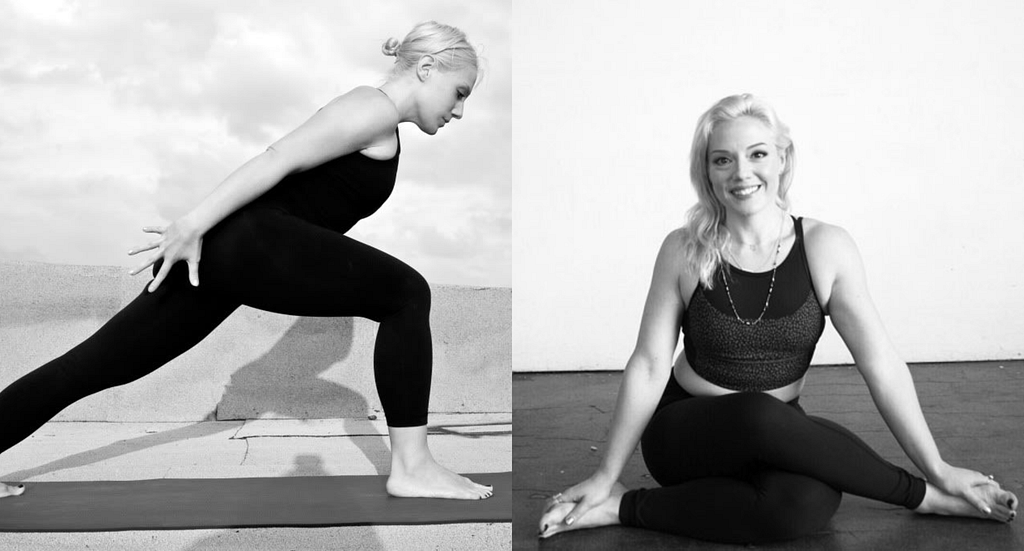
Women In Wellness: Holly Dolke of ‘Pink Dragon’ on the Five Lifestyle Tweaks That Will Help Support

Women In Wellness: Holly Dolke of ‘Pink Dragon’ on the Five Lifestyle Tweaks That Will Help Support People’s Journey Towards Better Wellbeing

People don’t care as much as you think they do. Sounds negative but honestly it is meant in a positive way! We get so caught up in caring about what people will think about what we post, upload or say, that we do not always feel confident enough to share our opinions or work. You have to remember, people are busy in their own lives to worry about us so much, so be confident and share!

As a part of my series about the women in wellness, I had the pleasure of interviewing Holly Dolke.

With over 1.2 million subscribers on YouTube and many videos with 5+ million views, fitness expert, founder of Pink Dragon, and new mom, Holly Dolke, has not only used exercise and wellness to gain her infamous “Holly Dolke abs,” but she has transformed the lives of her millions of followers around the world physically, mentally and emotionally. Awakening everyone’s inner dragon through her fitness program PINK DRAGON, Holly implements three key principles around the right nutrition, daily movement, and having a strong mindset. She teaches members how to evolve their view of exercise from dreading it to loving it. In a social media world catered to toxic diet culture, Holly helps her community respect food as fuel rather than a chore. Her mission is to reignite people’s confidence in themselves, love the body they live in and build each other up to achieve their dreams.

Holly’s three key principles create the basis of every program and product she offers such as a 3-Day Detox, 30-Day Meal Plan, and her e-book Sweet Treats. She believes that the most important part for people during their health and fitness journey is to recognize their starting point. She created a short quiz that leads visitors to specific recommendations based on their circumstances and goals they want to achieve.

Growing up in Kent County, England, Holly found her passion for fitness while attending college. As a fashion marketing major, she spent her days sitting at a desk — studying, completing assignments, having little to no exercise and her eating habits were far from healthy. After not getting the results she desired from a standard gym setting, she took her health and fitness into her own hands and own home (as many of us have this year, too) she started a YouTube channel — which was on trend in the UK, (especially in food and fitness) and began her home workout videos. Being an introvert, working out from the comfort of her home was the best space and she never expected to gain the following she was building. In mid-2019, her channel took off in a way she never expected with spikes in views and subscribers recognizing her for her flat stomach abs and indoor walking in place videos.

Thank you so much for doing this with us! Our readers would love to “get to know you” a bit better. Can you share with us the story about how you first got involved in fitness and wellness?

You are so welcome, thank you for having me. I got into fitness because of low self-confidence in myself. I was at University and felt like I had zero time to exercise.

I was glued to my desk, eating junk food all the time to cope with the stress of exams. I couldn’t fit into my clothes like I used to. So, when the year ended and I went back home, I decided to do something about it. I started walking, then built it up to a run, then I started going to the gym. I felt lucky at the time because when I signed up, I got free Personal Training sessions. I thought with his help I’d melt the fat off my thighs in no time — boy was I wrong! Literally every exercise he made me do involved weights, which made my legs even bigger than when I started. I quickly decided to quit the gym and tried to find the answers by myself. I went through fitness forums, joined Facebook groups, read all the nutrition books I could get my hands on. Finally, I found what works for me and that’s when I fell in love with fitness. Fitness was my escape to focus on myself and gain confidence in my body and my own abilities.

Can you share the most interesting story that happened to you since you started your career?

Getting pregnant! I’ve had to balance living in a foreign country with no family, while going through a pandemic, and growing my YouTube channel and business to its biggest numbers over a short amount of time.

Can you share a story with us about the most humorous mistake you made when you were first starting? What lesson or take-away did you learn from that?

My first ever YouTube video was filmed on a webcam because I couldn’t afford a camera. Quality was so terrible, and I had no mic so you couldn’t hear me. I learned the value of good video quality as I progressed.

I learned that nothing can be perfect. Especially not when you are starting something. There is no such thing as perfection. There’s just a lot of trials and errors. It’s important that you learn from your mistakes and keep moving. That is how you grow.

Can you share with our readers a bit about why you are an authority in the fitness and wellness field? In your opinion, what is your unique contribution to the world of wellness?

I have tried a lot of different fitness routines and programs. I tried running, cross training, weights, yoga, Pilates — I tried everything. The trouble was that nothing really worked for me 100%. There wasn’t a fitness program out there that understood the importance of activating the smaller muscles. So, the only thing left for me to do was to create my own fitness routines.

My unique contribution is combining my technique of small muscle activation exercises with HIIT focused moves to lose weight and get you that lean, toned physique. It’s something that works for me and for my 1.2 million YouTube subscribers.

Using my own body weight only for exercise, and actually doing that myself makes me an authority in the fitness world. People still believe to this day that I go to the gym, but I don’t!

None of us are able to achieve success without some help along the way. Is there a particular person who you are grateful towards who helped get you to where you are? Can you share a story about that?

Yes, my partner, Aaron. He is the business behind Pink Dragon and my biggest supporter. He is the person who told me to create a YouTube channel and pushed me to continue when I felt like no-one wanted to watch my videos. He encouraged me every step of the way and helped me grow not only my channel, but Pink Dragon to what it is today. We are partners in life, business and now a family with our newborn baby girl.

Ok thank you for all that. Now let’s move to the main focus of our interview. We all know that it’s important to eat more vegetables, eat less sugar, exercise more, and get better sleep etc. But while we know it intellectually, it’s often difficult to put it into practice and make it a part of our daily habits. In your opinion what are the 3 main blockages that prevent us from taking the information that we all know, and integrating it into our lives?

Oh yes, I totally agree, it is hard to put that all into practice, especially all at once!

I would say that the 3 main blockages are:

– Peer Pressure: social peer pressure from partners, families and friends. Just to have another drink, or enjoy more of the naughty treats, because YOLO. This can really make it difficult to stick to a healthier lifestyle, because we will want to be agreeable and not miss out on events, and even tell ourselves we will start again on Monday.

– Time: everyone is always rushing, so we grab snacks and food on the go to save ourselves time and end up eating less nutritious foods.

– Self-Sabotage: we are our own worst enemy! We self-sabotage our own success, by not exercising with the excuse of we are too tired, or cannot afford a gym (hello YouTube), or we put ourselves down emotionally

Can you please share your “5 Non-Intuitive Lifestyle Tweaks That Will Dramatically Improve One’s Wellbeing”? (Please share a story or an example for each, and feel free to share ideas for mental, emotional and physical health.)

1. People don’t care as much as you think they do. Sounds negative but honestly it is meant in a positive way! We get so caught up in caring about what people will think about what we post, upload or say, that we do not always feel confident enough to share our opinions or work. You have to remember, people are busy in their own lives to worry about us so much, so be confident and share!

2. When you feel down, smile! We are in control of our emotions. So, when you feel down, get up, move and smile and it’ll make you feel good!

3. Move every day, even if it’s just a walk.

4. Drink at least 3L of water a day! Hydration is key and there are tons of benefits, so we won’t list them all.

5. Journaling! We all live busy lives, consuming insane amounts of information on a daily basis. There’s social media, work stuff, private life, it never ends. Putting your thoughts onto paper or a note app in your phone before going to bed every night will make your life easier. We constantly keep everything in our heads, and by a simple act of writing whatever comes to your mind and offloading your brain, you will instantly feel lighter.

As an expert, this might be obvious to you, but I think it would be instructive to articulate this for the public. Aside from weight loss, what are 3 benefits of daily exercise? Can you explain?

Since COVID, I think exercise has really been highlighted as a benefit for so many people recently.

1. Boosts Mental Well Being: Exercise boosts endorphins and makes us feel good about ourselves. I find exercise a great escape from reality and self-care time for my mind, as well as a stress-reliever.

2. Increases Energy: You get a rush of hormones from a good exercise session which gives you a significant energy booster to help fight through fatigue and stay more focused.

3. Body Confidence: Exercises make us feel good, physically and mentally, and this all will increase your confidence.

For someone who is looking to add exercise to their daily routine, which 3 exercises would you recommend that are absolutely critical?

  1. Walking: Anyone can do this!
  2. Burpees: A tough one, but it works so many muscles in the body and helps burn fat.
  3. Crunches: I love abs, and found that there are so many varieties of crunch exercises that you can do to help tone those stomach muscles.

Is there a particular book that made a significant impact on you? Can you share a story?

Money Blueprint — it is not fitness related but it was an inspirational read that assisted me in growing my finances within my business.

I highly recommend anyone reading this book, because it makes you more aware of how you regard and spend money.

You are a person of enormous influence. If you could start a movement that would bring the most amount of good to the most amount of people, what would that be? You never know what your idea can trigger. 🙂

I was raised in a single-family household with my mum and my nan. My nan was a huge influence and part of my upbringing. She was sadly diagnosed with Alzheimer’s in her 70’s and I watched her deteriorate over the course of a decade. At the time, I was not into health and fitness, and watched the doctors feed her high sugar, calorie dense diet to make her gain weight, due to fast weight loss, which I now know is the worst thing to do, as it feeds the illness.

I have always held a soft spot for the elderly, and I would love to be able to help more elderly in our community and prevent a disease like Alzheimer’s through health and nutrition. That’s why I am so passionate about helping young females to exercise and get fit, to learn these habits at an early age to prevent diseases.

I’d love to create a movement where I encourage the senior generation to move and eat better and also get the younger generation to keep these habits.

Can you please give us your favorite “Life Lesson Quote”? Do you have a story about how that was relevant in your life?

I’ve said it before, but this truly is my life lesson quote! “People don’t care as much as you think they do.” Aaron told me this quote when I first started out on YouTube. I was terrified of people’s opinions, reactions and scared of negative comments appearing. Having Aaron tell me that quote, shifted my perspective so much and made me realise that, yes, this is SO true! People really do not care as much as I think they do, because they are busy! Any negative comments I do get, are lost within the positive comments. I always remember this quote and share it with others too, who start a YouTube channel, and really feel it has helped.

We are very blessed that some of the biggest names in Business, VC funding, Sports, and Entertainment read this column. Is there a person in the world, or in the US whom you would love to have a private breakfast or lunch with, and why? He or she might just see this if we tag them 🙂

Kris Jenner! She needs to write a new book for entrepreneurs! She is such a businesswoman and a powerhouse, and I would love to meet her for breakfast or lunch to pick her brain on how she created such an empire! I’d love to hear more of her stories, ideas and tips for success and share my business plans with her, and what she would do to make it more successful to help others.

What is the best way our readers can follow you online?

https://www.youtube.com/c/HollyDolke/
https://www.instagram.com/hollydolke/

Thank you for these fantastic insights. We wish you only continued success in your great work!

You are welcome! Thank you so much for having me!


Women In Wellness: Holly Dolke of ‘Pink Dragon’ on the Five Lifestyle Tweaks That Will Help Support was originally published in Authority Magazine on Medium, where people are continuing the conversation by highlighting and responding to this story.
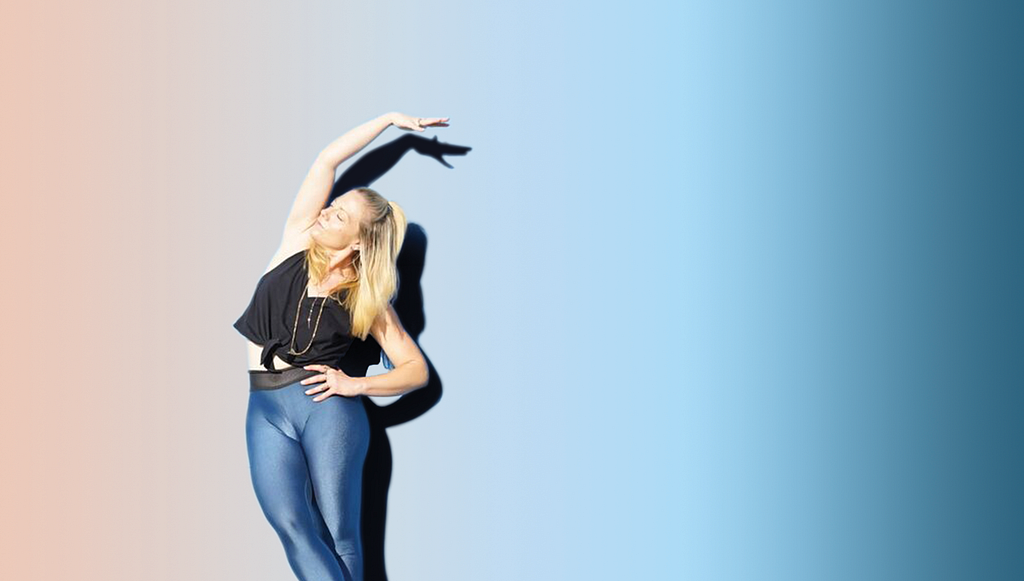
Women In Wellness: Dr Marilyn Pink of ‘TurningPoint Breast Cancer Rehabilitation’ on the Five Lifes

Women In Wellness: Dr. Marilyn Pink of ‘TurningPoint Breast Cancer Rehabilitation’ on the Five Lifestyle Tweaks That Will Help Support People’s Journey Towards Better Wellbeing

Pick a career to be something you LOVE! If you don’t love it, the chances of being successful narrow significantly. One of my sisters told me that as a little girl she always loved animals and had wanted to be a veterinarian. Halfway through her career in marketing, she gave it up and became a veterinarian’s assistant. She is much happier now.

As a part of my series about the women in wellness, I had the pleasure of interviewing Marilyn Pink.

Marilyn Pink, PhD, MBA, and PT is the executive director of the Atlanta-based nonprofit TurningPoint Breast Cancer Rehabilitation and assumed that role in 2019. TurningPoint’s mission is to improve the quality of life for patients with breast cancer by providing, promoting and advocating specialized and evidence-based rehabilitation. Most recently Pink served as CEO of Educata.com, where she strategically led, developed and launched a global online education company for clinicians in more than 100 countries. She also led two other companies in the healthcare space, including FIT-HITS and HealthCare Research and Management.

Thank you so much for doing this with us! Our readers would love to “get to know you” better. Can you share the most interesting story that happened to you since you started your career? What were the main lessons or takeaways from that story?

In 1992, a group of 12 men from another country came to visit my research laboratory with their interpreter. It was easy to figure out the head “honcho” of this group. Towards the end of the visit — through the interpreter — he asked a question, and I heard several of the men in attendance gasp. The interpreter turned to me and said in English “I don’t know how to ask this, but he is asking ‘Where are the men?’ as he only sees women here, and clearly the women are not doing the important work, so where are the men?” I smiled and replied, “In our country it does not matter if it is a man or a woman. We simply find the best people for the jobs required.”

Lesson to be learned: People come from different backgrounds, cultures and beliefs. When responding to something that we might consider to be an outrageous question, just stay calm and educate the other person.

Can you share a story about the biggest mistake you made when you were first starting? Can you tell us what lesson you learned from that?

Rather than talk about a big mistake, I would like to talk about the biggest moment that helped my career take off. At the time, this moment was small and just part of an everyday conversation. In 1981, I was in the audiovisual (AV) department of the hospital where I worked as a physical therapist talking to my friend Tom and flipping through some of his AV magazines. I saw an ad for a high-speed video that was used to capture the nature of a fire spreading through an airplane. “Wow! That is cool, Tom, but how many planes need to be blown up? They need to find much wider applications.” Throughout our chat we thought about various applications in physical therapy. We concluded by stating, “Wouldn’t it be great to use to watch an amputee walk with a new prosthesis? Or watch a runner run and analyze the deficits than may be contributing to a recurrent ankle problem?” So, Tom and I decided to visit this high-speed video company and talk about this potential application. I did not know it then, but that is when my career first changed direction. From using the video with patients, it went to the Elite Athlete Project in preparation for the 1984 Summer Olympics in Los Angeles, then to the actual games to manage a physical therapy clinic. Next, I was asked to run a biomechanics research laboratory. With all this research data and knowledge, I received a couple of patents to develop algorithms that resulted in personalized excise programs. Then, with all these new contacts, I met Jill Binkley, the founder and longtime executive director of the unique nonprofit TurningPoint Breast Cancer Rehabilitation. Long story short: I am now the Executive Director of TurningPoint and we are doing some new, very exciting projects to help women and men in a myriad of ways in their respective breast cancer journeys.

The lesson I learned was to leverage your career. Your career may not be linear. The twists and turns make for a very interesting life.

None of us are able to achieve success without some help along the way. Is there a particular person who you are grateful towards who helped get you to where you are? Can you share a story about that?

Dr. Frank Jobe was a very well-known orthopaedic surgeon in sports medicine and creator of a revolutionary procedure to reconstruct ulnar collateral ligament of the elbow. Despite his many commitments, he always had time to acknowledge, speak and listen to another person. When he would ask me “why” it was with gentle curiosity. He wanted to know how I came up that thought. And it helped me to consciously develop my thought process. Subsequently whenever I am now asked “why?”– even when said with an antagonist manner — I think of him, and I present the thought process in an even tone and a smile. The double lesson learned with this story is that I try to listen to another person and ask them to explain what is behind their thought process in a curious way.

Ok perfect. Now let’s jump to our main focus. When it comes to health and wellness, how is the work you are doing helping to make a bigger impact in the world?

The work that I am doing at TurningPoint is virtually (pun intended) impacting the world. Every woman with breast cancer deserves evidence-based rehabilitative/recovery care. In the world of 2019, it was difficult to treat patients that did not come to your clinic. Now — with the help of technology and the insistence of Covid-19 — we can help care for women around the world. Just this morning Jill Binkley and I had a call with a therapist in Kurdistan. The needs are the same for the women in Kurdistan and the US. In the midst of the global pandemic we now find ourselves, we have learned how to offer the same level of care for breast cancer patients regardless of where they live.

Can you share your top five “lifestyle tweaks” that you believe will help support people’s journey towards better wellbeing? Please give an example or story for each.

  1. Do a monthly self-breast exam and get your mammogram! One in eight women are diagnosed with breast cancer at some point in their lifetime. How many women do you know? Divide that number by eight and you know how many women you know will be diagnosed with breast cancer. There is a one-in-eight chance that woman could be you.
  2. Consider taking exercise snacks throughout the day. Been sitting too long? Mind on the fritz? Take five minutes to dome some stretches, arm circles or squats. Your mind will be clearer, and your body will be happier!
  3. Get your sleep! According to the National Sleep Foundation, adults between the ages of 18 and 65 should sleep between seven and nine hours a night. How much sleep do you get?
  4. Let it go. Very good advice from Elsa in “Frozen.” Are you hurt by what someone said to you? Let it go. Are you angry at your best friend? Let it go. People cannot make you feel bad — you choose to feel that way.
  5. And the corollary to #4 is to wake up and decide to be happy. Think happy thoughts. Laugh at yourself. Feels good, doesn’t it?

If you could start a movement that would bring the most amount of wellness to the most amount of people, what would that be?

Health equity. The movement would find ways such that all of us can receive quality health care. Without good health, there is less a person can do to pick themselves up and be productive members of society. So, let’s give all of us better health.

What are your “5 Things I Wish Someone Told Me Before I Started” and why?

The 5 things are things that I WAS told.

  1. Have a strong work ethic. That will make you shine before education, experience and all else.
  2. Pick a career to be something you LOVE! If you don’t love it, the chances of being successful narrow significantly. One of my sisters told me that as a little girl she always loved animals and had wanted to be a veterinarian. Halfway through her career in marketing, she gave it up and became a veterinarian’s assistant. She is much happier now.
  3. You CAN DO whatever you want. Or at least a modified version of it. Know what you want and start taking steps in that direction.
  4. You can support yourself. Make the pledge to yourself right now. You can support yourself. You will be much more powerful if you know you are in charge of yourself, not your parents, not your husband. You can support yourself.
  5. You don’t get what you deserve, you deserve what you get. So, make it happen rather than just think you should get it.

Sustainability, veganism, mental health and environmental changes are big topics at the moment. Which one of these causes is dearest to you, and why?

Mental Health. At TurningPoint, we are treating women in their 20s through 80s, all of whom are facing drastic changes in multiple aspects of their lives. They have undergone surgery, radiation and chemotherapy. They have every reason to be depressed. However, despite this, I am continually amazed at how many consistently manage their mental health. I watch these women come to us with drooped shoulders and head down, and typically leave smiling and standing straight. They start to realize they are not alone and that there is a path as well as guidance for their full recovery. Also, much of their improved mental health seems to be due to compassionate care from friends, family and healthcare workers. My hope is that you will be one of those special people offering compassion for those in need.


Women In Wellness: Dr Marilyn Pink of ‘TurningPoint Breast Cancer Rehabilitation’ on the Five Lifes was originally published in Authority Magazine on Medium, where people are continuing the conversation by highlighting and responding to this story.
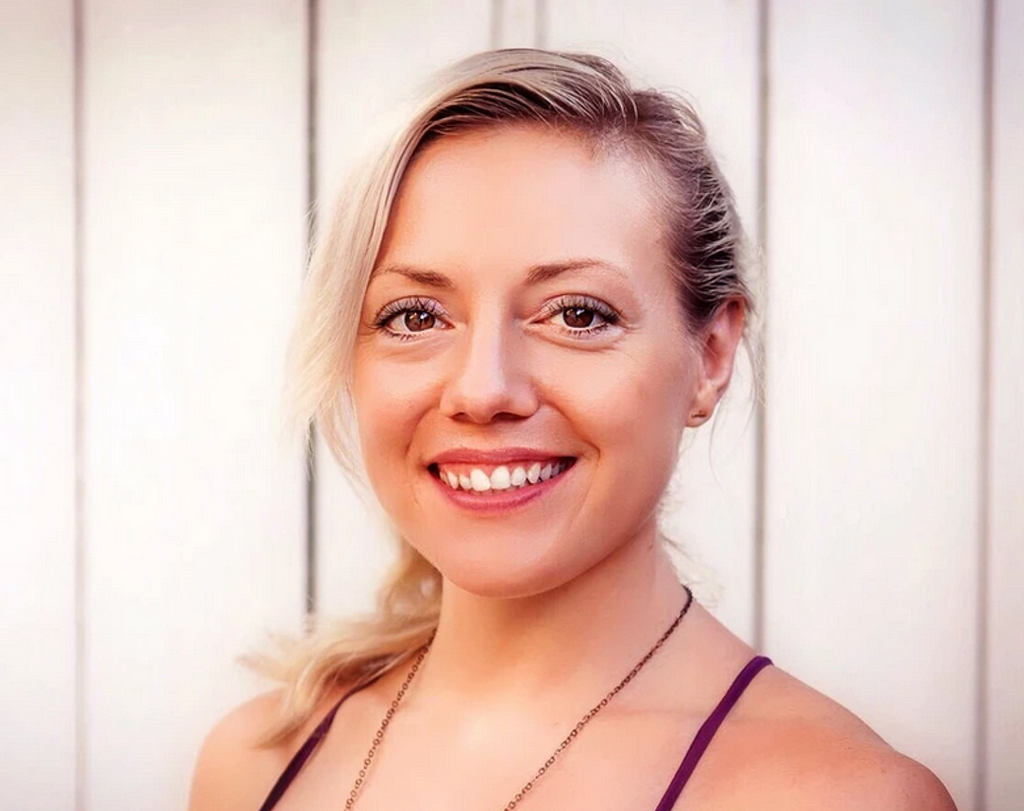
Women In Wellness: Dr Deepika Chopra, ‘The Optimism Doctor’ on the Five Lifestyle Tweaks That Will

Women In Wellness: Dr. Deepika Chopra, ‘The Optimism Doctor’ on the Five Lifestyle Tweaks That Will Help Support People’s Journey Towards Better Wellbeing

Replace the B-word “balance” with a new B word: “boundaries!” I find that we strive for some type of balance that we are so often told to achieve, it can be a frustrating and pressurizing chase… balance sometimes can feel impossible and being able to cultivate boundaries is much more practical and measurable.

As a part of my series about the women in wellness, I had the pleasure of interviewing Dr. Deepika Chopra of The Optimism Doctor.

Dr. Chopra specializes in bridging together holistic practices and evidence-based science to cultivate self-mastery tools that help clients, couples, and corporations (Fortune 500 to small businesses) produce their sense of lasting happiness, resiliency, optimism, and success. The Optimism Doctor® practices from a unique perspective as she talks to today’s robust health and wellness trends and provides real evidence-based science and experience.

Dr. Chopra holds a doctorate in clinical health psychology, with a special interest in the mind-body connection, sensory-based visual imagery, color therapy, innovative cognitive-behavioral strategies and strategies and methods to increase optimism and resilience. Dr. Chopra completed her formal dissertation on optimism, positive sensory visualization, and the connection to optimal well-being. With special training in elevating empathy, reducing anxiety, and creating a balance within the technologically and social-media-focused world today, Dr. Chopra’s work is timely & beneficial to anyone curious about living more fully, a self-mastery point of view, increasing happiness, and optimizing functionality and success.

Dr. Chopra completed a double postdoctoral fellowship at both the University of California at Los Angeles and Cedars Sinai Medical Center and has been an integral part of the wellness community for over a decade. Since becoming a new mom, Dr. Chopra has a special interest in increasing optimism and empathy in children while empowering women and parents. She devotes part of her practice to motherhood coaching and mindful parenting.

Thank you so much for doing this with us! Our readers would love to “get to know you” better. Can you share your “backstory” with us?

I am an Optimism Doctor®, the founder of the Things Are Looking Up Optimism Deck of Cards, and the Host of the LOOKING UP with Dr. Deepika Chopra podcast. I have a doctorate in clinical health psychology, and I have been studying the science behind optimism, resiliency, and joy for the past decade. I specialize in blending holistic and evidence-based practices to help people cultivate tools that increase optimism, resiliency, and happiness in their lives. I maintain a global practice working with clients and companies — from boutique to Fortune 500 — by speaking, leading workshops, and consulting. I work as a media expert and a mental health advocate.

I am also a wife and a mother to the most amazing three-year-old boy and weeks away from welcoming our second baby boy into this world! I did not come into this line of work linearly. I worked at a punk music label, was an investment banking analyst, and worked in business development at a health tech company before deciding to go back to school to pursue a career in Psychology.

While working with patients in graduate school, we used many prominent theoretical perspectives. These outlooks taught to us to find important ways to discuss where certain behaviors stemmed from with patients. However, I found it even more interesting to answer the question, “Now, what?” and I became obsessed with being the “then what” for people… helping them come up with ways to adopt new thoughts and practices rather than spend most of the time on their past and what wasn’t working. Science and the brain have always deeply moved me. Much of what I learned was that the brain is an anticipatory organ, rooted in the future. So, I was curious why so many of the psychological interventions available to us as clinicians were so past-oriented. I became intrigued about the idea of future thinking, anticipatory anxiety, optimism, and pessimism. I ended up writing my dissertation on Utilizing Sensory Based Visualization techniques to Increase Optimistic Thinking.

I fell in love with it all and never looked back! At the time, what I was doing was a bit too “woo woo” for the academic community, and a bit too science-esque for the more “self-help” community. What’s amazing is now so much of that is blended and enmeshed –right time is the opportune time to be talking about both. I have always been a spiritual person and, at the same time, drawn to science, and I get to blend the two every day, which brings me so much joy. One of my clients started calling me the Doctor of Optimism, and so pretty soon after that, OPTIMISM DOCTOR just stuck. It is not something that existed, but it perfectly described what I was doing, so I trademarked it!

Can you share the most interesting story that happened to you since you started your career? What were the main lessons or takeaways from that story?

One of the most profound moments in the start of my career was when I was a graduate student. It was my first clinical experience, we’re talking Day 1, and I was working with patients diagnosed with severe OCD at UCLA. One of my patients and I were on a walk in Westwood, I was doing an exposure and response prevention practice with her, and as we were leaving the coffee shop — part of her treatment was to work on being exposed to a public environment while working through the practice of allowing the anxiety and obsessive thoughts to pass through without engaging in any of the rituals or compulsions she had been carrying out — and all of a sudden, there was a man with a gun nearby. A ton of cops started yelling for everyone around to get down on the floor. We were in the middle of a possible shootout (yes, this is Day 1 of my clinical experience, People! :/). Once we were in the clear and walking back, she looked very anxious (obviously, I was as well), and I asked her if she was okay. She shared that a piece of her hair blew in the wind and touched the side of the coffee shop door while we were leaving. Then it blew in her mouth; she reverberated the scenario in her mind assessing if she had swallowed something obscene.

At that exact moment, I really truly understood how debilitating and pervasive a mental health issue could be. She missed the entire shootout situation and was suffering the entire time, ruminating over her contamination fear. I felt a ton of empathy for her, and so many times in mainstream media, things like OCD had been glamorized or romanticized, and I hadn’t quite appreciated the struggle of it all until I was in that moment. I also took away something so powerful from the early work I was doing and my supervisors at that time. Sometimes what you know in your gut is the right intervention when you are working with a client. However, other times what research says, or adequate supervision helps direct you towards something opposite, what you imagined would be effective.

I wanted to help calm her anxiety, and my gut told me to take her out of the situation, distract, rationalize. Though I learned quickly, there was a plethora of evidence that showed she needed exposure therapy (which is, in many ways, the opposite). I think that was a very humbling experience and helped shape the kind of work I would subsequently do.

Can you share a story about the biggest mistake you made when you were first starting? Can you tell us what lesson you learned from that?

I’ve made many mistakes. Interestingly the brain learns information better from mistakes vs. no errors being at all. I am still very hard on myself during and after mistakes, but I have made progress in bouncing back and finding the gift in them a lot quicker.

I get to teach people about the phenomena of making mistakes: specifically, how memory, learning work, resiliency is formed, and how that all amplify optimism and self-competence. Early on, I allowed for much self-inflicted confusion on what I wanted to pursue. I hadn’t quite teased out if I was seeking certain things because I was personally called to them or thought I should follow specific things for other motivations. I learned quickly that mistake or not, I have a pretty robust drive and barometer about what feels right and what I need to achieve. So although I made “mistakes,” I don’t quite see them as such, the trials, tribulations and non-linear path are how I developed my gauge and how I got to where I am now, doing what I’m good at and what I’m authentically passionate about today.

None of us are able to achieve success without some help along the way. Is there a particular person who you are grateful towards who helped get you to where you are? Can you share a story about that?

I would say I am beyond fortunate to have had the most loving, supportive, encouraging, and generous parents who have always been my core source of guidance. I still run everything by them. My husband has been incredibly helpful and supportive over the past couple of years as my career grew. Positive and effective mentorship is essential. I’ve also been fortunate to have had the most supportive supervisors during my graduate career, who allowed me to grow my innovative approach within the field. I wouldn’t be where I am today without them.

Okay perfect. Now let’s jump to our main focus. When it comes to health and wellness, how is the work you are doing helping to make a bigger impact in the world?

I am passionate about accessibility, inclusivity, and helping people develop practical, useful, and self-mastery tools while using the resources we all already possess.

Currently, I’m partnering with Colgate to launch the Colgate Optimism Project — an equity-driven campaign focusing on championing the Gen Z generation who are putting optimism in action and igniting positive change in the world. I’m working with Colgate to help them understand the power of optimism and put optimism into action in a practical way that empowers today’s young people to make positive changes in the world. Gen Z makes up nearly half of the U.S. population — they are the future — and through this partnership, I will lend my expertise to teach them how to strengthen their optimism muscle and build resiliency.

I believe in working with the natural human resources we already possess, like perspective, breath, movement, visualization, and other tools that only require one’s mind and body! It is much more important and empowering to help people help themselves and help people understand that they may be the solution they have been searching for all along.

As an Optimism Doctor and someone who specializes in increasing hope and positive future thinking, people are surprised by how much education around dispelling perfection and breaking down the notion of toxic positivity. Yes, as an Optimism Doctor, I am saying that positivity can sometimes be toxic when insincere and serve to vilify the normal range of human emotion. I define what Optimism is (hint: it has a lot more to do with resiliency and duality of the emotion than slapping a positive spin on all situations) and why it is essential, how it can change the trajectory of your life, for the better, and why working through struggle is the most potent way to increase optimism.

Can you share your top five “lifestyle tweaks” that you believe will help support people’s journey towards better wellbeing? Please give an example or story for each.

  1. Spend more time outdoors. Research shows that spending on average, just 2 hours a week outside, decreases stress and anxiety, and boosts positive mood.
  2. Develop a positive morning ritual. Research shows your mood at the start of your day impacts your mood for the rest of the day. Ideally, this will be something that takes a short amount of time, is meaningful, and can be done anywhere. I do something called “wake up and dance” I turn on music, and the first thing I do when getting out of bed is dance! Sometimes I only have 15 seconds or just a few songs. I also always pick a Things Are Looking Up Optimism Card from my deck (thingsarelookingup.co)!
  3. Spend more time being in a state of awe. Research shows that being in a state of awe can have a powerful impact on reducing anxiety. Being in a state of awe is about being transcended by something bigger than you and being inspired; for me, I find awe in nature, pictures I find on the internet, listening to a beautiful piece of music, and more.
  4. Pay attention to what you consume. Our energy is our most valuable currency. What we consume is not just about what we eat; it’s what products we buy and who and what we spend our time on, in person and virtually. Use the unfollow and mute buttons on social media platforms mindfully and as often as needed!
  5. Replace the B-word “balance” with a new B word: “boundaries!” I find that we strive for some type of balance that we are so often told to achieve, it can be a frustrating and pressurizing chase… balance sometimes can feel impossible and being able to cultivate boundaries is much more practical and measurable.

If you could start a movement that would bring the most amount of wellness to the most amount of people, what would that be?

A Self Compassion Movement for sure! Much of the compounded struggles we go through are by shame, guilt, and self-destruction. The first practical and potent step to take is working our way through our emotions (the positive, negative, and the neutral), lean into head-on with self-compassion, and a level of curiosity. We’re able to ask ourselves, “I wonder what will I learn from this?” or “I wonder how I will grow from this?” while at the same time holding space for the fear, disappointment, anger, joy, excitement, or grief.

What are your “5 Things I Wish Someone Told Me Before I Started” and why?

  1. Change is hard for everyone. Although a new beginning is on the horizon, some form of loss also occurs. Normal and a natural part of the process.
  2. Ask for help! Something that I am working on, too.
  3. No amount of time is too little for practicing a form of self-preservation or self-care; if you have 15 seconds, that is good enough.
  4. Nothing is permanent; whatever is happening right now will not last forever. So, if you are going through a tough time, know that something better will come. On the flip side, if you are in a period where things are wonderful, truly mindfully savor in the moment.
  5. Saying NO is not selfish: it’s emotionally proactive and highly productive.

Sustainability, veganism, mental health and environmental changes are big topics at the moment. Which one of these causes is dearest to you, and why?

To a degree, all of them but most dear to me is destigmatizing mental health and promoting proactive mental health care and well-being. Today’s society struggles with mental health: doctors can help these issues, and there are valuable tools and significant support. However, the number one reason people don’t seek out help is the stigma associated with and around mental health, which needs to change.

What is the best way our readers can follow you on social media?

@drdeepikachopra and my Optimism Deck of Cards: @allthingsarelookingup and the LOOKING UP with Dr. Deepika Chopra podcast available everywhere (Spotify, Apple, and more) where you can subscribe to podcasts.


Women In Wellness: Dr Deepika Chopra, ‘The Optimism Doctor’ on the Five Lifestyle Tweaks That Will was originally published in Authority Magazine on Medium, where people are continuing the conversation by highlighting and responding to this story.

Women Of The C-Suite: Pamela Puryear of ‘Zimmer Biomet’ On The Five Things You Need To Succeed As A

Women Of The C-Suite: Pamela Puryear of ‘Zimmer Biomet’ On The Five Things You Need To Succeed As A Senior Executive

Life is a marathon, not a sprint. It’s important to pace yourself because the road can be long and stamina is absolutely necessary when working toward important goals. I have only done one marathon, but the parallels to life are often stated and absolutely accurate from my experience.

As a part of our series about strong women leaders, I had the pleasure of interviewing Pam Puryear.

Pam Puryear, PhD is a Senior Vice President and Chief Human Resources Officer at Zimmer Biomet. Dr. Puryear has extensive global leadership experience in human resources, including three years with Pfizer, where she served as Senior Vice President and Chief Talent Officer. While at Pfizer, Dr. Puryear was responsible for leadership development, talent management, learning and development, employee engagement, organizational culture, diversity and inclusion and workforce analytics. She joined Pfizer from Hospira Inc., where she spent six years as Vice President, Organization Development and Chief Talent Officer. Before joining Hospira, Dr. Puryear was an independent external organizational development consultant for 12 years. Dr. Puryear spent the first 10 years of her career in financial services in the real estate investment advisor industry. Dr. Puryear holds a Ph.D. in organizational psychology, an MBA from Harvard Business School, and a bachelor’s degree in psychology with a concentration in organizational behavior from Yale University.

Thank you so much for doing this with us! Before we dig in, our readers would like to get to know you a bit more. Can you tell us a bit about your “backstory”? What led you to this particular career path?

When I graduated from Yale University in the ’80s with a BA in psychology and organizational behavior, most of my classmates were going on to graduate school in the humanities, medical school, law school or business school. I chose business school because it felt like the choice that would give me the most flexibility for future employment. After completing my MBA at Harvard Business School, I pursued what was considered a “sexy” career path at the time — real estate.

During my 10 years as a real estate investment advisor, I experienced organizations and leaders who knew very little about leading people, building effective teams or managing diversity. I knew there must be a better way, so I quit my job in real estate, started an independent consulting practice working with a global roster of clients ranging from non-profits to Fortune 100 companies, and went back to school for my PhD in organizational psychology.

With a background in business and organizational development, I was well equipped to help organizations create and sustain excellence considering both financial and human factors, and to manage both using sound organizational management thinking and focused business metrics. Unlike many who cut their teeth in large organizations and then transition to start their own consulting practices, I followed a reverse path and left consulting to become a C-level executive at Hospira, Pfizer and now Zimmer Biomet (ZB), where I serve as Senior Vice President and Chief Human Resources Officer.

Can you share the most interesting story that happened to you since you began leading human resources at your company?

It’s hard to narrow it down to just one interesting story. The life of an HR professional is filled with as many interesting stories as there are interesting people! Arguably one of the most interesting professional experiences I’ve had while leading HR at Zimmer Biomet has been navigating the global COVID pandemic. While this was a challenging time to be an HR leader, it was heartwarming to witness the tremendous response that our team members exhibited to assist fellow colleagues in need. While thankfully we didn’t have to institute wide ranging or long-term furloughs or layoffs, many ZB families were impacted because their partners or spouses lost income during this period. To do our part and provide support, we set up a Team Member Relief Fund. Thanks to team member donations and company matches, we were able to provide nearly $1 million in grants to about 1,000 team members globally. I was so proud to see everyone come together to support each other during a time of such uncertainty.

None of us are able to achieve success without some help along the way. Is there a particular person who you are grateful towards who helped get you to where you are? Can you share a story about that?

I know the powerful and positive impact that mentors can have. Throughout my career, I have formally and informally mentored and championed others and I have a couple of strong beliefs about mentoring and how it can be most effective.

First, formal mentor programs where people are paired with a mentor often don’t work because so much of the relationship is driven by chemistry, which cannot be anticipated or understood through an algorithm that pairs mentor and mentee. Second, no single mentor can provide everything that a mentee will need to navigate his or her career. That’s why I’m an advocate for organic pairings rather than structured mentor pairing programs. I also advise people to create a network of mentors, advisors and coaches in the form of a personal board of directors. The best personal boards mirror corporate boards — they are filled with people who bring different experiences, backgrounds and skill to the table.

So, when you ask who has helped me get where I am today, I have to say many people, not just one person. My personal board of directors includes my parents, siblings, friends and former and current co-workers. This board brings together people from within and outside my industry and function; people more senior, peers and direct reports; people younger and older; male and female; and from every ethnic background.

In my work, I often talk about how to release and relieve stress. As a busy leader, what do you do to prepare your mind and body before a stressful or high stakes meeting, talk, or decision? Can you share a story or some examples?

I’m a firm believer in the need to manage stress, particularly as I advance in my career and the pressures are amplified, as the decisions that I make and influence, affect thousands of employees. It truly goes beyond preparing mind and body, which is why I believe in holistic energy management –a comprehensive focus on managing physical, spiritual, emotional and mental energy. I do my best to get exercise and good sleep to support strong physical energy. I was fortunate enough to purchase a Peloton treadmill just before the pandemic, and strive for 7–8 hours of sleep each night! Spiritually and emotionally, I maintain a meditation practice, and recently led a 15-member group in a 21-day meditation focused on gratitude and abundance. Finally, I try to stay focused on what matters, which allows me to manage my mental energy. I don’t wait until the high stakes meeting, talk or decision. I try to maintain good energy management practices each day so I am prepared whenever the challenges strike!

As you know, the United States is currently facing a very important self-reckoning about race, diversity, equality and inclusion. This may be obvious to you, but it will be helpful to spell this out. Can you articulate to our readers a few reasons why it is so important for a business or organization to have a diverse executive team?

I would reframe the question to ask why it is so important for a business or organization to have diversity, equity and inclusion …not just diverse teams. Building diverse teams without equity and inclusion is meaningless. The evolution from focusing on diversity — defined as representation of people with varying characteristics, experiences, skills, cultures and traditions — to inclusion, where all diverse people feel a sense of belonging and that diversity is leveraged across the organization, to equity, which ensures that fair and impartial systems exist for all members of an organization, is important. So, we don’t want to go back to just speaking about the importance of diversity. In fact, much of what we are experiencing with regard to racial injustice in society is about equity — the extent to which our system of policing, for example, is not fair and impartial. In response to the George Floyd tragedy, Zimmer Biomet, like many companies, articulated a series of commitments to drive and accelerate change both within our own organization and around the globe.

Additionally, as a black female corporate executive who has risen through the ranks to become a Chief Human Resources Officer at a Fortune 500 company, I know firsthand the value of gender and racial diversity on the executive team. One of my top priorities at Zimmer Biomet is to integrate diversity, equality and inclusion into the fabric of the corporate culture, and I am committed to bringing a sea of change in how we apply these principles to every aspect of our work at Zimmer Biomet.

As a business leader, can you please share a few steps we must take to truly create an inclusive, representative, and equitable society? Kindly share a story or example for each.

I don’t know if I am the right person to speak broadly about society, but let me draw upon my experience as a business leader to address how we can do it in companies. First, we must build these concepts of diversity or representation, equity and inclusion into our corporate cultures. They must be embedded and woven in, not stand-alone and disconnected concepts. At Zimmer Biomet for example, we have Culture Promises, or commitments we make to each other, which include specific behaviors and habits we expect as we bring the Culture Promises to life. One example is “Empower Every Voice” which speaks directly to the need for inclusion of all points of view. Second, we need leadership to role model, reward, develop and, sometimes, reprimand behavior that is not aligned with the culture that we aspire to realize. Finally, we need systemic practices for hiring, pay, opportunity for development and promotion that are equitable.

If we do these three things while connecting diversity, equity and inclusion to the success of the business, we will see the sea of change that I previously referenced. At Zimmer Biomet, we have launched some exciting work tying DEI to innovation, a critical business priority for us, and I am sure many other companies.

Ok, thank you for that. Let’s now jump to the primary focus of our interview. What are the “myths” that you would like to dispel about being a CEO or executive. Can you explain what you mean?

As an introvert, I was thrilled when the book ‘Quiet: The Power of Introverts in a World that Can’t Stop Talking’ by Susan Cain was published in 2013, because it gave voice to what I’ve known and thought my entire career — it takes all styles and personalities to run a company. Diversity of every dimension is necessary and neither an executive boardroom full of introverts, nor a board room of extroverts will be successful in today’s world. The myth that CEOs and executives must have “big” personalities is one that I would like to dispel. In my experience, great leadership comes in different packages. The key is to be authentic, transparent and a good communicator that connects well with people.

In your opinion, what are the biggest challenges faced by women executives that aren’t typically faced by their male counterparts?

When I hear this question, I am reminded to be careful applying stereotypes by gender. While challenges faced by executives are not always related to gender, there are some gender dominant value orientations that can apply. For instance, there are some values or patterns of behavior women may ascribe to more so than men, and vice versa, which may influence how they’re viewed in the workplace.

There are three “C”s that come to mind — communication, confidence and consensus. Women can struggle with effective communication, such as overuse of upspeak, uptalk or upward inflection at the end of a statement, as if the statement were a question. This speech pattern is rarely observed in men and can suggest a lack of conviction. Lacking confidence or suffering from imposter syndrome is another that women may suffer from disproportionately in comparison to men. For example, it has been proven that when applying for a new role, women focus on what small percentage of skills they don’t have, while men focus on the skills they do have. Finally, women can over-rotate to gaining consensus to the detriment of moving forward or taking action. Again, men may face these challenges, but likely to a lesser extent.

Certainly, not everyone is cut out to be an executive. In your opinion, which specific traits increase the likelihood that a person will be a successful executive and what type of person should avoid aspiring to be an executive? Can you explain what you mean?

I have long ascribed to a theory of leadership that says that successful leaders are three dimensional, — They possess head, heart and guts, as outlined by Dotlich, Cairo and Rhinesmith, 2006. What do I mean by that?

Head leadership means demonstrating a strategic approach to understanding and managing the complexities of your executive role using analytics, often rethinking and reframing as new data emerges. Heart leadership suggests balancing the needs of people and the business, while creating trust, exhibiting compassion and driving commitment and engagement. Lastly, guts leadership implies taking risks, exhibiting courage and making tough decisions. While everyone likely leans toward one or more of these leadership attributes, all can be learned or softened. Therefore, in my opinion, anyone who is willing to learn, grow and take this multi-dimensional approach to leadership, can aspire to be an executive.

How have you used your success to make the world a better place?

We all hope that we leave the world a better place than we found it. While I hope that I’m doing that in small ways every day, one area of passion and commitment has been my desire to affect positive change for women and girls. This dates back 30+ years to my time as an MBA graduate to today in the C-suite of a Fortune 500 company, and throughout my volunteer service.

And on a personal level, I feel like I’ve been mentoring young girls for most of my life. I would argue that it started when I was a teenager as the eldest of three girls, with sisters eight and 12 years my junior. And now as Auntie to two teenage nieces, I continue to try to be a role model and make this world a better place for them, and other girls and young women.

What are your “5 Things I Wish Someone Told Me Before I Started” and why? (Please share a story or example for each.)

Life is a marathon, not a sprint. It’s important to pace yourself because the road can be long and stamina is absolutely necessary when working toward important goals. I have only done one marathon, but the parallels to life are often stated and absolutely accurate from my experience.

Enjoy the moment. I am one who can too often be so focused on what’s next that I am at risk of missing the here and now. I am increasingly trying to relax into the moment without too much concern as to what’s coming next.

Asking for help is a sign of strength, not weakness. No one achieves anything alone, so the sooner we learn to partner with and rely on others, the better. Many of us are trained not to show our frailties or reveal our gaps, but true strength is doing just that, so that we can learn, grow and benefit from others who help fill those gaps.

Trust, but verify. I have found that there are generally two approaches to trust. Some trust unconditionally until they are proven wrong by a betrayal. Others don’t trust until trust is earned. I have learned over time that something in the middle might be best. Trust, but verify.

Follow your internal compass. We all have that internal compass, voice in our head or intuition that shows us the way. Too often we don’t follow it, we don’t listen or we get distracted by outside influences. I wish I had learned that sooner, but it’s never too late!

Can you please give us your favorite “Life Lesson Quote”? Can you share how that was relevant to you in your life?

There is a parable that teaches “this too shall pass.” While the full parable is too long to share here, a quote from it reads, “As night changes to day, so do moments of joy and despair replace each other. Accept them as the nature of things, as part of life.”

This parable is a reminder to me that nothing is permanent or lasts forever, so it’s imperative to truly experience things in the moment and to relinquish control as change is constant. I consistently try to incorporate these learnings in how I manage my life through good times and bad.

We are very blessed that some very prominent names in Business, VC funding, Sports, and Entertainment read this column. Is there a person in the world, or in the US with whom you would love to have a private breakfast or lunch with, and why? He or she might just see this if we tag them

I’ve been fortunate to know and meet many prominent people across business, sports, entertainment and government so no one person comes to mind. In fact, the opportunity to have breakfast or lunch with any one of the millions of Americans, particularly people of color, who have been negatively impacted by COVID or Black Lives Matter, would mean more to me than time with a celebrity. People are suffering, and any words of wisdom, comfort or gratitude that I could deliver would be a blessing.


Women Of The C-Suite: Pamela Puryear of ‘Zimmer Biomet’ On The Five Things You Need To Succeed As A was originally published in Authority Magazine on Medium, where people are continuing the conversation by highlighting and responding to this story.
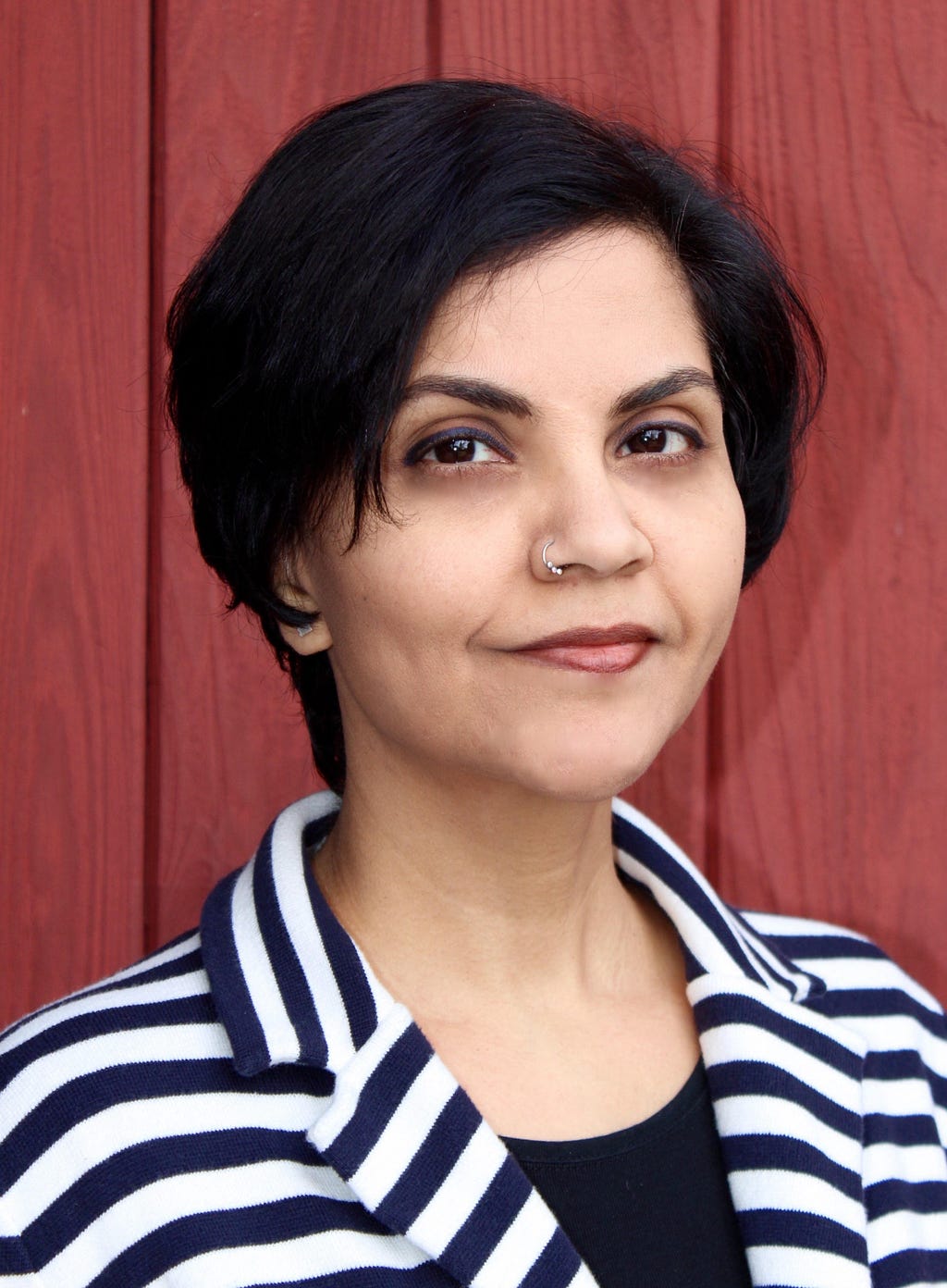
Female Disruptors: Olivia Davis of ‘Art of Choice’ On The Three Things You Need To Shake Up Your…

Female Disruptors: Olivia Davis of ‘Art of Choice’ On The Three Things You Need To Shake Up Your Industry

Buy what you love — of course it’s always great to see something you buy increase in value over time or even overnight, but one should always love what they buy because this is something you are living with and if you have other expectations you are more likely to get disappointed.

As a part of our series about women who are shaking things up in their industry, I had the pleasure of interviewing Olivia Davis.

Launched in 2018, Art of Choice is an editorial-focused initiative that seeks to democratize the way that art is examined. From classics to contemporary art, it spotlights exciting artists and their works, introducing audiences through images, interviews and insights that make art understandable and accessible to everyone.

Olivia Davis is the 27-year-old founder of Art of Choice. The L.A.-based entrepreneur grew up in Manhattan and earned her BA in Communications and Art History from Boston University and her Master’s from Sotheby’s Institute of Art. Olivia has experience working with the most globally recognized galleries, institutions, artists, and collectors across the contemporary art market. She works with both new and seasoned collectors on acquisitions and strategy with an eye towards building valuable collections. Her past experiences have allowed her to foster relationships with emerging and already established blue-chip artists, giving her access to both primary and secondary market works.

Thank you so much for doing this with us! Before we dig in, our readers would like to get to know you a bit more. Can you tell us a bit about your “backstory”? What led you to this particular career path?

I grew up in Manhattan, surrounded by the best museums, galleries, and artistic culture in the world, and because of this was able to immerse myself in the art world quite easily. When I began my undergraduate degree at Boston University, I was confident that I would major in business; however, I majored in communications, declaring Art History as my minor during my junior year. My minor in Art History spurred my love for the art world and is what ultimately led me to pursuing art business as a career. After completing my undergraduate degree, I applied and was accepted to the Art Business MBA program at the Sotheby’s Institute of Art. While there, I continued to grow the Art of Choice Instagram account (something I had started in college as way to keep track of pictures I liked) and forged new relationships in the art world. After graduation, I worked for two galleries and an art advisor in Los Angeles before going off on my own in 2018.

Can you tell our readers what it is about the work you’re doing that’s disruptive?

Art of Choice is the first of its kind. It’s the only contemporary art advisory that delivers both a sales service around buying and selling art, as well as content to its viewers. Through the Art of Choice social channels, we provide readers with a “no bullshit approach to art” content — stemming from interviews with artists, exhibition reviews, artist spotlights, and more.

Can you share a story about the funniest mistake you made when you were first starting? Can you tell us what lesson you learned from that?

A few years ago, I was emailing with a contact at a notable Miami-based gallery for quite a bit of time and we were planning to meet in-person during Art Basel Miami. The contact’s name was a feminine name, or so I thought when I went to the booth during our long-awaited meet up. Very confidently, I approached the booth and asked for “her” when “he” was actually the one greeting me. I soon realized that the contact’s name was a masculine French name — from then on, I have made sure to Google people prior to meeting them so I can avoid making similar cringe-worthy mistakes in the future.

We all need a little help along the journey. Who have been some of your mentors? Can you share a story about how they made an impact?

I don’t necessarily have any mentors in mind, but I most definitely look up to certain figures who have made an impression on me. One in particular is Leo Castelli — a well-known, NYC-based art dealer who had a heavy hand in shaping the world of contemporary art.

In today’s parlance, being disruptive is usually a positive adjective. But is disrupting always good? When do we say the converse, that a system or structure has ‘withstood the test of time’? Can you articulate to our readers when disrupting an industry is positive, and when disrupting an industry is ‘not so positive’? Can you share some examples of what you mean?

I think disrupting an industry can be either good or bad — it depends what you do and how that change impacts a culture, and this is always a gamble. From my perspective, disrupting an industry can lead to positive change. For example, Art of Choice’s “no bullshit approach to art” can help younger individuals understand and interpret art more effectively, helping them narrow down their style, preferences, and favorite artists. However, older generations may not take to this approach as much, finding it difficult to relate to the language used or the content published.

Can you share 3 of the best words of advice you’ve gotten along your journey? Please give a story or example for each.

Currency is connections — in this industry you make money based off your connections

Reputation is everything — it really is especially in this industry; if you have a bad reputation, a gallery won’t sell to you

Buy what you love — of course it’s always great to see something you buy increase in value over time or even overnight, but one should always love what they buy because this is something you are living with and if you have other expectations you are more likely to get disappointed

We are sure you aren’t done. How are you going to shake things up next?

I recently launched a limited-edition merch line — so far we’ve had two launches: baseball hats and hoodies. I’m excited to share some new designs we’ve been working on and I’d be lying if I said I didn’t think about planning exclusive art dinners for young collectors in different cities across the world.

In your opinion, what are the biggest challenges faced by ‘women disruptors’ that aren’t typically faced by their male counterparts?

One of the biggest challenges faced solely by women in business is that one is more likely to come across men in leadership roles vs. women. You will still encounter those who are stuck in their ways, who think women should stick with the stereotypical, dated role of being a housewife. While being a stay-at-home mom is one of the hardest jobs on the planet, why shouldn’t women be seen in roles of leadership just as much? Women in business are still somewhat of a taboo to many, which is why the more women disruptors who go against dated gender norms and pursue what the profession they want in life is, is so crucial.

Do you have a book/podcast/talk that’s had a deep impact on your thinking? Can you share a story with us?

Don Thompson’s “The $12 Million Stuffed Shark” was one of the first books I read during my MBA program at Sotheby’s Institute of Art. It truly gave me a first-hand look into how the art world operates and forced me to think differently about how one should conduct themselves in the business of art.

You are a person of great influence. If you could inspire a movement that would bring the most amount of good to the most amount of people, what would that be? You never know what your idea can trigger. 🙂

While growing up in New York City, you take note of all the different neighborhoods — how they look, sound, smell, etc. NYC is an enormous, wonderful city, but there are so many neighborhoods who are neglected so much more than others. Providing less-developed, impoverished communities with a creative outlet is something I hope to be able to deliver during my career. Art is not only something to learn about — art is rooted in self-expression. Providing a community with an outlet to not only learn, but also express themselves is how I hope to contribute and, hopefully, make a difference.

Can you please give us your favorite “Life Lesson Quote”? Can you share how that was relevant to you in your life?

“You can’t go back and change the beginning, but you can start where you are and change the ending.” — CS Lewis.

This quote is one that I constantly turn to in my own life, professionally and personally. Thinking through the way I’ve done things and acknowledging how I could have done those things differently can be helpful and constructive, but it can also lead to spending so much time and energy harping on a decision, answer, question, etc. that cannot be taken back. We can’t travel in time, so why wonder “what if…”? Instead, this quote reminds me to focus on what I can do in the present and how those decisions will help me in the future.

How can our readers follow you online?

Website: artofchoice.co

Instagram: @artofchoiceadvisory

This was very inspiring. Thank you so much for joining us!


Female Disruptors: Olivia Davis of ‘Art of Choice’ On The Three Things You Need To Shake Up Your… was originally published in Authority Magazine on Medium, where people are continuing the conversation by highlighting and responding to this story.