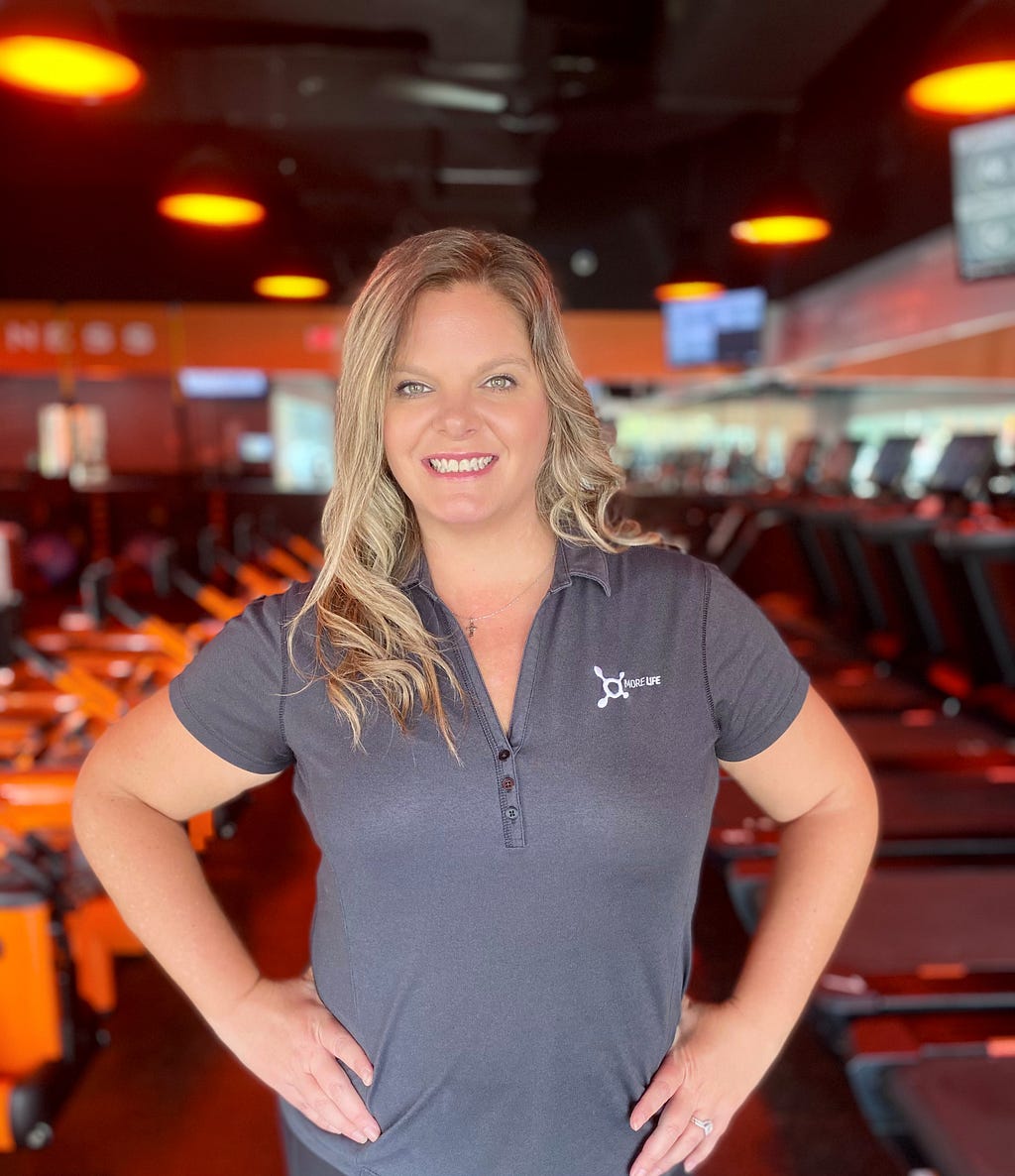
Women In Wellness: Sharon Vitti of ATI Physical Therapy On The Five Lifestyle Tweaks That Will Help…

Women In Wellness: Sharon Vitti of ATI Physical Therapy On The Five Lifestyle Tweaks That Will Help Support People’s Journey Towards Better Wellbeing

An Interview With Candice Georgiadis
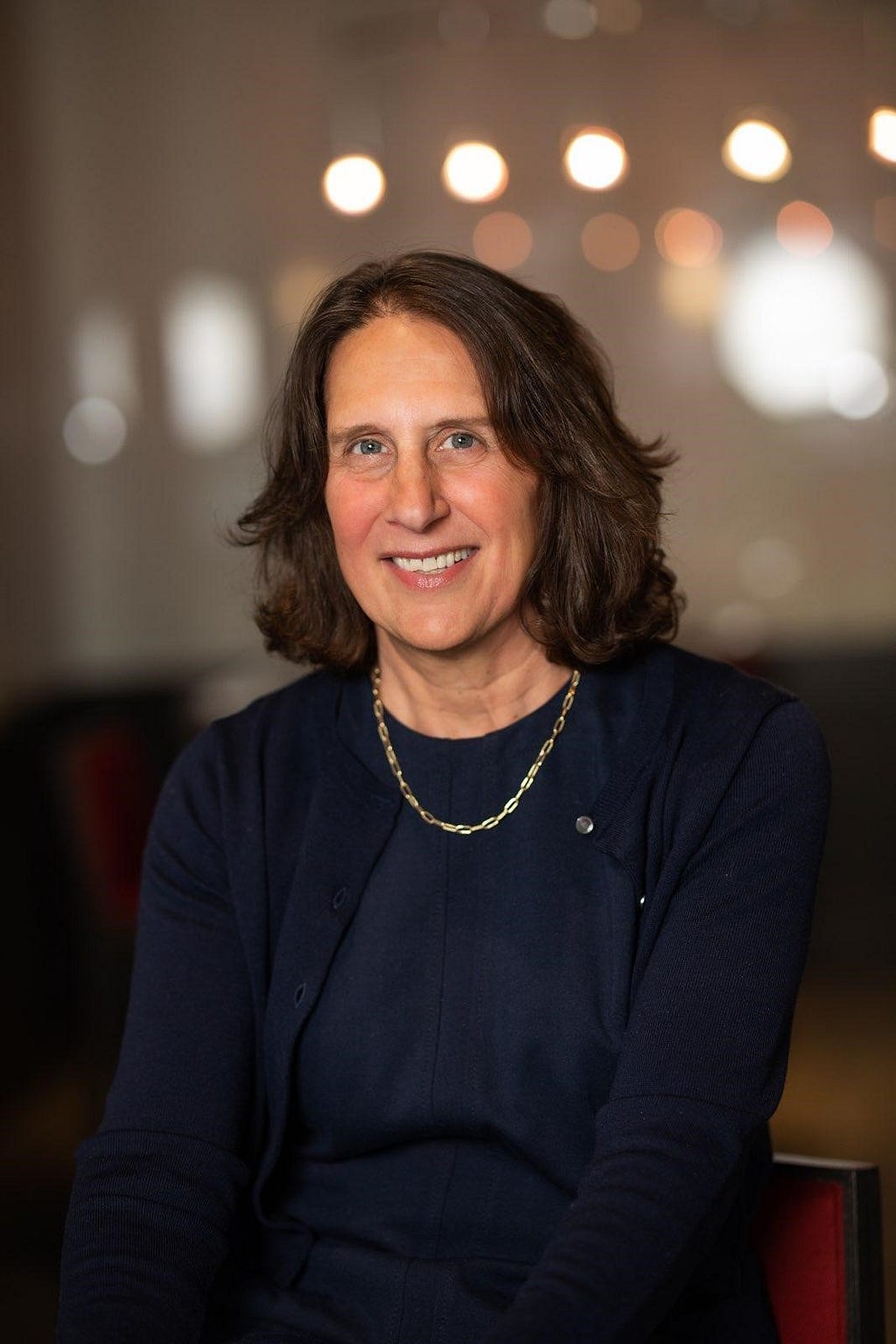
Make sure there is a balance between your personal and professional lives. This is a constant area of focus for me, as it is for many others. It’s so important to stay cognizant of the multiple facets of our lives and not let one aspect of our life overtake another. It’s also important to work self-care into the mix and not to be so focused on meeting our responsibilities in our professional and personal lives that we miss our responsibility to ourselves.

As a part of my series about women in wellness, I had the pleasure of interviewing Sharon Vitti. She came to ATI Physical Therapy as Chief Executive Officer in 2022 with nearly 30 years of experience in healthcare. Before joining the Company, Ms. Vitti served as Senior Vice President at CVS Health and President of MinuteClinic, where she led all aspects of care delivery, business operations and strategic development. Prior to Ms. Vitti’s tenure at CVS Health and MinuteClinic, she served in executive leadership at Brigham and Women’s Hospital, including nine years as Senior Vice President of Clinical Services for Ambulatory and Women’s Health. Ms. Vitti received her Bachelor of Science degree from Clark University and a Master of Public Administration from New York University.

Thank you so much for joining us in this interview series! Our readers would love to “get to know you” better. Can you share your “backstory” with us?

Thank you for inviting me! I’ve been in healthcare for more than 30 years. Ever since I finished undergrad at Clark University, I always knew I wanted to be in healthcare. It started with a very positive experience at a young age, when I volunteered as a candy striper. I loved the energy in the field and really connected with the purpose of helping people get better.

This many years later, I’m fortunate to have had a lot of different opportunities in the healthcare arena that have allowed me to live out what I wanted to do as a young person. I’ve worked in for-profit, non-profit, publicly traded, hospital, provider and payer settings. It’s been exciting to have exposure to so many facets of healthcare throughout my professional career.

Most recently, before joining ATI Physical Therapy, I was at CVS Health and oversaw the national practice of their MinuteClinics. I enjoyed the primary care focus, and we did a lot to be disruptive in the ambulatory space around high-quality, on-demand care at the retail level.

When I began to think about the next chapter of my career, ATI appealed to me in three outstanding ways. First, I really liked that ATI has a national practice with many access points for people to get the care they need. I also was drawn to the potential for preventive care and the possibility for people to work on strengthening and staying healthy versus having to deal with an injury or illness down the road. Finally, I love that we have the opportunity to be disruptive around the cost of care in the musculoskeletal ecosystem. Those factors all suggest that we have the pieces in place to make a real impact on people’s health and wellbeing.

Can you share the most interesting story that happened to you since you started your career? What were the main lessons or takeaways from that story?

When I was in grad school at New York University, I worked at an inner-city hospital, overseeing its outpatient mental health unit. It was a bare-bones operation with very limited resources. After completing my degree in Public Administration, I moved on to another position at a well-endowed, private specialty cancer hospital in Manhattan. The difference in resources couldn’t have been more vast. The Manhattan hospital had incredible staffing and amenities for patients as well as an attractive physical environment and much more.

Although I didn’t realize it until later, I learned from the juxtaposition of those two experiences so early in my career: amenities that were so abundant at the cancer hospital, and so scarce at the mental health unit, really weren’t so important in the grand scheme of things. What mattered most to patients was the care we provided them. It was a powerful realization to understand that what we care providers need to focus most on is the compassion and empathy that make patients feel cared for — and the environment for which this care is delivered comes secondary.

Can you share a story about the biggest mistake you made when you were first starting? Can you tell us what lesson you learned from that?

I’m not sure I can remember my biggest mistake when I first started, but I certainly can share a recent learning experience, which took place during Covid while I was in my role at CVS MinuteClinics. As a leader, I’ve always had the mindset that it’s part of my responsibility to push the team to do the best that they are able. As we all know, Covid was a crazy, unexpected time with tremendous uncertainties and anxiety. At the time, I was really focused on being able to provide the best care for our patients, but in doing so, I learned the importance of ensuring balance in life and in our providers’ lives. I wasn’t the only healthcare leader who got caught in this line of thinking, but the realization was impactful. I continue to reflect on it and will take it forward in my leadership roles to balance the delivery of care we bring to patients while balancing my team’s wellbeing.

Let’s jump to our main focus. When it comes to health and wellness, how is the work you are doing helping to make a bigger impact in the world?

A common theme of my career, including what I’m doing with ATI, is access to high-quality, affordable care. This is a real passion for me, and in different parts of my career through different venues, I’ve worked to expand access. For example, at Brigham & Women’s Hospital, we expanded our footprint out into the community, which allowed a broader range of patients access to the high-quality care for which we were known. Through the CVS MinuteClinics, we were able to offer patients price transparency so that patients knew how much their care would cost. We also created evening and weekend hours so that more patients could get healthcare at times convenient to their schedules.

Our national footprint at ATI is one way we are trying to create access so that people can live the best life they can live, injury-free. It all relates to providing great care that people can get to when and where they want it. We’re also looking to leverage some of what we’ve learned during Covid to meet the patients where they are, such as enabling more convenient care through a hybrid of virtual as well as brick-and-mortar therapy options.

Can you share your top five “lifestyle tweaks” that you believe will help support people’s journey towards better wellbeing? Please give an example or story for each.

There are so many things that go into lifestyle and wellbeing. Here’s what springs to mind as really important for me:

  • Make sure there is a balance between your personal and professional lives. This is a constant area of focus for me, as it is for many others. It’s so important to stay cognizant of the multiple facets of our lives and not let one aspect of our life overtake another. It’s also important to work self-care into the mix and not to be so focused on meeting our responsibilities in our professional and personal lives that we miss our responsibility to ourselves.
  • Maintain a mindset that allows you to enjoy your work. People spend a lot of time at work, and if you aren’t enjoying it, it can wear on your overall wellbeing and become stressful. Choosing to enjoy what you do and having fun with it can go a long way toward wellbeing
  • Know what refreshes you. Everyone needs to disconnect, relax and rejuvenate. I find spending time with my family and exercising either outside or in the gym to be great ways to take time off from the stressors in my life. I always come back recharged and more relaxed.
  • Find purpose in what you do. A big key to being happy and enjoying what you do is in knowing that what you are doing is gratifying and allows you to have a sense of meaning.
  • Have a good support network. Across all aspects of life, things are easier when we’re not alone. On the professional side, it’s so helpful to have a mentor or confidante you can approach when you have a tough problem. I’m privileged to have multiple mentors and am also working with a coach right now to help further fill this capacity. On the personal side, it might be having back-up childcare in case your regular caregiver isn’t available, which in my case was very helpful and relieved the stressfulness of balancing work and family, especially when my children were younger.

I find that these tweaks or guideposts are helpful in setting me on a path that enables wellbeing and allows me to thrive in the different areas of my life.

If you could start a movement that would bring the most amount of wellness to the most amount of people, what would that be?

Without question, I would focus on improving the health of all women. Women play such an important role in how and when everyone accesses care. When I was at Brigham and Women’s Hospital, I realized that if we can improve the health of women, we could improve the health of the entire population. Women are often advisors to others on how to receive care, when to receive care and offer lots of counsel on wellbeing. But women usually put themselves last, so it’s a situation where they are helping others but need more self-care. Women in society, in their roles as mothers, daughters, partners and their other various roles, are so influential in how the people they interact with receive care or advice around their wellbeing. We must do it for ourselves, too.

What are your “4 Things I Wish Someone Told Me Before I Started” and why?

There are so many things we learn along the way, aren’t there? Here are a few that I’ve learned but wish I had known from the get-go.

  • Patience is essential. Many of us don’t have a lot of patience, but good things can come out of learning to have patience.
  • Not all leaders are good leaders. Recognize that and use your own judgement.
  • People have their own agendas. You may feel you’re all rowing in the same direction, but that’s not always true. Sometimes you need to dig in to understand.
  • It’s key to find people you can trust and cultivate those relationships. These relationships can sustain you.

Most importantly, I’ve learned that not everyone is the same. You have to get to know people, what motivates them, what their goals are — and then take the time to interact with them as individuals.

Sustainability, veganism, mental health, and environmental changes are big topics at the moment. Which one of these causes is dearest to you, and why?

Mental health is dearest to me, perhaps because my early experience working in a behavioral health setting helped frame my perspective from the start. That experience gave me the tools to empathize with people who had severe disorders. Many people have underlying mental health issues, and they impact lives in ways we don’t always recognize. When we don’t seek treatment, issues can manifest in other ways, like not being able to sleep or having physical health issues. Because of the historical stigmas and barriers, people don’t always recognize when something is going on and may not know how to deal with the issues. Sometimes, they can’t access the care they want or maybe even are too worried about stigmas to seek care. It’s a critical component of our society and individual health and wellness. We have a long way to go, although we are seeing small improvements.

What is the best way for our readers to further follow your work online?

Social media is always a great way to stay connected.

You can reach me personally on LinkedIn.

You can also follow ATI on numerous channels and our website.

LinkedIn

Instagram

Twitter

Thank you for the opportunity to connect and share a bit about myself and the good things ahead at ATI.

Thank you for these fantastic insights! We wish you continued success and good health.


Women In Wellness: Sharon Vitti of ATI Physical Therapy On The Five Lifestyle Tweaks That Will Help… was originally published in Authority Magazine on Medium, where people are continuing the conversation by highlighting and responding to this story.

Women In Wellness: Dr Dana Ryan of Herbalife Nutrition On The Five Lifestyle Tweaks That Will Help…

Women In Wellness: Dr Dana Ryan of Herbalife Nutrition On The Five Lifestyle Tweaks That Will Help Support People’s Journey Towards Better Wellbeing

An Interview With Candice Georgiadis

Eat after you exercise, even if you are trying to lose weight: Many people think this will help them lose weight, but consuming protein after a workout will help you build muscle and boost your metabolism.

As a part of our series about “5 Lifestyle Tweaks That Will Dramatically Improve One’s Wellbeing”, I had the pleasure of interviewing Dr. Dana Ryan.

Dr. Dana Ryan is the director of Sports Performance, Nutrition and Education at Herbalife Nutrition and a member of the Company’s Fitness Advisory Board. In her role, she is responsible for helping establish the company as a global leader in sports nutrition. Her primary focus is supporting Herbalife Nutrition-sponsored athletes around the world by developing nutrition and sports performance programs as well as designing and managing sports clinical trials.

Thank you so much for doing this with us! Our readers would love to “get to know you” a bit better. Can you share with us the story about how you first got involved in fitness and wellness?

Fitness has always been part of my life since I was a competitive gymnast at a young age. However, I started to understand the true value of wellness when my ability to be active was almost taken away. In college, I was diagnosed with an autoimmune disease that threatened to sideline me from the rowing team and school in general. I then understood that exercise was simply not enough and that a healthy lifestyle was all encompassing, from how you move your body, to what you eat and your mindset.

Can you share the most interesting story that happened to you since you started your career?

I suppose the most interesting thing happened before I started my career and was back in college about 9 months after being diagnosed with Crohn’s. Our team won a race, and, for some reason, my coach decided to tell the press about my health and recovery. Now I am a pretty private person and would have never said anything, but the next thing I knew there was a story about my health and what I did to recover (nutrition, exercise, etc.) in several newspapers. When it was published, people came out of the woodwork to thank me for speaking up and that is when I realized that one person’s voice can make a difference. So, I never forget that when I wonder if something I write or say is going to be boring or I question if people will care about it. If you are speaking from a place of truly wanting to help people, whether it is about health and wellness or really anything else, people will listen.

Can you share a story with us about the most humorous mistake you made when you were first starting? What lesson or take-away did you learn from that?

Pretty early on in my career I was giving a presentation about sports nutrition in another country. During the planning meetings (which were not in English) I understood through translation that I was going to be giving a presentation to team doctors, trainers, and other medical professionals. I had a high-level presentation prepared, so you can imagine my surprise when I walked into the room to present and saw a group of 12- to 13-year-old boys looking at me! This was not the audience I was expecting, but somehow made it work. The moral of that story is always double check you know your audience but also don’t be afraid to pivot from your original plan, because at the end of the day you are the only one that knows what you had originally prepared!

Can you share with our readers a bit about why you are an authority in the fitness and wellness field? In your opinion, what is your unique contribution to the world of wellness?

The natural answer to this would probably be to list all my degrees in the space, however I don’t know that is enough to make you an authority (although I do believe it is very important)! To me, my experience is more important and what makes my point of view unique. As I mentioned earlier, I’ve led a very healthy lifestyle my whole life, the textbook definition of health and wellness, but then I was faced with not 1 but now 2 autoimmune conditions. This made me realize that the version of the healthy lifestyle I was leading wasn’t going to work anymore. I had to try new things and figure out what worked for my new circumstances because wellness isn’t a one size fits all. If we try to fit everyone into one version of what we think wellness is, we are going to be limited in who we can help. It is very important to really understand people’s unique situations and craft strategies to help them with their individual goals.

None of us are able to achieve success without some help along the way. Is there a particular person who you are grateful towards who helped get you to where you are? Can you share a story about that?

It may sound cliché, but it would have to be my mom. She passed away when I was younger from an autoimmune disease. Watching her fight so bravely, while always having a smile on her face, is something I derive strength from daily and is my motivation to do what I do.

Ok thank you for all that. Now let’s move to the main focus of our interview. We all know that it’s important to eat more vegetables, eat less sugar, exercise more, and get better sleep etc. But while we know it intellectually, it’s often difficult to put it into practice and make it a part of our daily habits. In your opinion what are the 3 main blockages that prevent us from taking the information that we all know, and integrating it into our lives?

  1. The stories we tell ourselves like “I don’t have time” or “It’s too expensive” can be very powerful, and we often believe that these excuses are true.
  2. We may not be convinced that those things will make a big difference, especially if we are young, healthy and have plenty of energy. So, we may ask ourselves, “Why change things when I look and feel fine?”
  3. The lack of self-efficacy about cooking or exercising, as people can be afraid to try something new if they don’t have the confidence that they can do it successfully.

Can you please share your “5 Non-Intuitive Lifestyle Tweaks That Will Dramatically Improve One’s Wellbeing”? (Please share a story or an example for each, and feel free to share ideas for mental, emotional, and physical health.)

  1. Eat after you exercise, even if you are trying to lose weight: Many people think this will help them lose weight, but consuming protein after a workout will help you build muscle and boost your metabolism.
  2. Sometimes less is more: take the day off, let your body rest. If you keep pushing and pushing, eventually your body will force you to stop. Incorporating rest will help you achieve your goals.
  3. Throw away your scale: Weight is not a good indicator of overall health. Instead focus on how your clothes fit and the energy you have.
  4. Focus on movement over exercise: Moving around all day is going to benefit you more than a 30-minute workout and then sitting still all day. Find ways to incorporate movement throughout your entire day.
  5. Let it all out: Don’t be afraid to experience, accept, and embrace your emotions so that you can move forward.

As an expert, this might be obvious to you, but I think it would be instructive to articulate this for the public. Aside from weight loss, what are 3 benefits of daily exercise? Can you explain?

  1. Mood: Exercise and being active significantly impacts your overall mood and outlook on life.
  2. Focus and Concentration: If you can’t focus on work or homework, take a break to do a short workout. When you return to the task at hand, you’ll have an easier time focusing.
  3. Energy: It may seem counterintuitive, but the more you exercise and move the more energy you’ll have.

For someone who is looking to add exercise to their daily routine, which 3 exercises would you recommend that are absolutely critical?

  1. Walking
  2. Daily Stretching
  3. Planks

Is there a particular book that made a significant impact on you? Can you share a story?

Anything by Michael Pollan. I find his outlook on food, eating and cooking fascinating.

You are a person of enormous influence. If you could start a movement that would bring the most amount of good to the most amount of people, what would that be? You never know what your idea can trigger. 🙂

I wish we could eliminate diet culture. Eat because you enjoy it and the company you’re eating with. Exercise because you love yourself and want to do what’s best for your amazing body, not because you want to change your body. Embrace your body for all that it can do for you.

Can you please give us your favorite “Life Lesson Quote”? Do you have a story about how that was relevant in your life?

It’s simple, but “Never stop learning!” Always assess where you are in life and how you can learn more. After years in the corporate world and despite multiple advanced degrees, I decided to get my MBA because I knew I didn’t know enough about business. The gifts that program and experience gave me are endless.

We are very blessed that some of the biggest names in Business, VC funding, Sports, and Entertainment read this column. Is there a person in the world, or in the US whom you would love to have a private breakfast or lunch with, and why? He or she might just see this if we tag them 🙂

I would love to meet Michael Pollan and pick his brain about all things health, wellness, and nutrition.

What is the best way our readers can follow you online?

@dr.danaryan on IG

Thank you for these fantastic insights. We wish you only continued success in your great work!


Women In Wellness: Dr Dana Ryan of Herbalife Nutrition On The Five Lifestyle Tweaks That Will Help… was originally published in Authority Magazine on Medium, where people are continuing the conversation by highlighting and responding to this story.

Female Founders: (insertname) On The Five Things You Need To Thrive and Succeed as a Woman Founder

Female Founders: Erika Schlick of The Trail to Health On The Five Things You Need To Thrive and Succeed as a Woman Founder

An Interview With Candice Georgiadis

“You have to spend money to make money” — This one may be counterintuitive, especially before your company is making money, but I have found that investing into your company initially, and getting systems in place to make you productive, pays off in the end. Also, invest in networking events and conferences where you can meet like-minded people in your industry. At the end of the day, it’s all about connections.

As a part of our series about “Why We Need More Women Founders”, I had the pleasure of interviewing Erika Schlick.

Erika Schlick is a health coach, blogger and the author of Wandering Palate, a collection of 28 days of travel inspired healthy Paleo meals that help keep her in remission from Lyme disease and multiple autoimmune conditions. The book is a collection of recipes that helped her heal and now she is joining us from her home in Los Angeles to show us how we should be cooking to stay safe and healthy at home.

Thank you so much for doing this with us! Before we dig in, our readers would like to get to know you a bit more. Can you tell us a bit about your “backstory”? What led you to this particular career path?

I had two career paths that somehow came together to support each other. In 2009, I started my own design agency with my partner focusing on UX design and Marketing, and in 2014, I started The Trail To Health, which has turned into my passion project. I went to Yosemite in 2012 for the third camping trip of my life and was unknowingly bit by a tick. It took two years to be properly diagnosed with Lyme Disease and co-Infections, followed by three years of numerous treatments to get into remission. This dark journey sparked my passion project and blog. At first, it started as a way to track my recovery and what treatments I was doing, but as I healed, it shifted more to healthy living and recipes. Later, I would write my first cookbook in 2018!

Can you share the most interesting story that happened to you since you began leading your company?

If you told me in 2012 that I would heal from an incurable disease, start a food and health blog, and write a cookbook, I would tell you that was impossible. Life-changing experiences change us to our core. I never used to cook, and while I always valued health, I never knew real health as in-depth as I do today. Starting my company has actually made me healthier in my everyday life as I am always learning and striving to be an industry leader in the health field.

Can you share a story about the funniest mistake you made when you were first starting? Can you tell us what lesson you learned from that?

I would say some of the funniest mistakes I made in my business were when I was getting started with recording cooking videos. I worked with a media coach to train for being on camera and it helped a lot. Once I started recording my own videos, I found myself saying really funny and dumb things that I started using as outtake bloopers on my TikTok channel.

None of us are able to achieve success without some help along the way. Is there a particular person who you are grateful towards who helped get you to where you are? Can you share a story about that?

I would definitely say my fiance and business partner. Having our background in marketing and media really helped me get a good grasp of how to successfully build a new brand. He has helped me so much with ideas and creating content and also by being my biggest supporter along the way.

Ok, thank you for that. Let’s now jump to the primary focus of our interview. According to this EY report, only about 20 percent of funded companies have women founders. This reflects great historical progress, but it also shows that more work still has to be done to empower women to create companies. In your opinion and experience what is currently holding back women from founding companies?

That is a great question and I wish more women would get out there and start their own companies. I have started and owned 3 since my twenties. For me, leading comes very naturally — as I am an ENTJ — so I think that helps make it a bit easier for me to dive in. I think finding a good support group and surrounding yourself with other women entrepreneurs is a great first step. This creates motivation, support, and new friendships.

Can you help articulate a few things that can be done as individuals, as a society, or by the government, to help overcome those obstacles?

I think, as individuals, you always want to be bettering yourself through self care and awareness in life, but also by staying up to date on trends and industry leaders in your field. You want to be relevant and know what is trending to market yourself and succeed in your business.

As a society, I think it’s important to support fellow small businesses as much as you can. I always love meeting local business owners and supporting their business.

As far as the government is concerned, I don’t think we have too much control over this, but it would be really great to see if they had more programs and resources available to small businesses or women-owned businesses.

This might be intuitive to you as a woman founder but I think it will be helpful to spell this out. Can you share a few reasons why more women should become founders?

The question is more why there aren’t more women becoming founders. If you have a passion about something and want to use your ideas and energy to change the world, you should absolutely become a founder and put your energy into it.

What are the “myths” that you would like to dispel about being a founder? Can you explain what you mean?

I think one myth is that you are bossy or commanding. In order to be a strong leader, you do need to delegate and assign tasks and get things done. Sometimes, this can be misread as bossy. Being a founder isn’t easy, but when you hold an overall vision and large goals, it takes a village to get it done.

Is everyone cut out to be a founder? In your opinion, which specific traits increase the likelihood that a person will be a successful founder and what type of person should perhaps seek a “regular job” as an employee? Can you explain what you mean?

Every person on this planet has strengths and weaknesses. Some are meant to be natural leaders, while others are stronger at collaborating or working on teams or focusing on the details to get things done. We should all find our own strengths and work within what we do best.

That being said, I do not think everyone is cut out to be a founder. Being a founder requires you to be persistent, assertive, able to lead, and able to take responsibility for good and bad outcomes. You have to have thick skin and keep your eye on the prize while keeping your team focused. It’s a lot of things to juggle, so you have to be good at multitasking.

Ok super. Here is the main question of our interview. What are your “5 Things I Wish Someone Told Me Before I Started” and why? (Please share a story or example for each.)

The first few years of starting a company are the hardest.

The first years are when you are laying the foundation of your business and establishing your values. It is a lot of work to think about what your brand represents, but the more clear you get on this, the stronger your brand and foundation. I also find that in all my companies, the first few years cost the most money to get set up and get going but are also the least profitable. You must persist to see success.

1. “You have to spend money to make money” — This one may be counterintuitive, especially before your company is making money, but I have found that investing into your company initially, and getting systems in place to make you productive, pays off in the end. Also, invest in networking events and conferences where you can meet like-minded people in your industry. At the end of the day, it’s all about connections.

2. “Just because one person says no, that doesn’t mean your project dies. Rework it and pitch it again” — This is a hard one to push through, especially in the early stages of your company. You have an idea you are passionate about, but maybe someone rips it apart or doesn’t support it. Don’t let one person’s opinion ruin your vision or goals. It might give you a lens to pivot your vision, but stick with what you want to achieve.

3. “Don’t offer anything you couldn’t do yourself” — This is a big one I have always stood by, especially in our design agency. While it is great to have a reliable team of people to work on your team, never take on something you can’t do on your own as this can jeopardize your client relationships. If something happens to a team member and there is a deadline, you need to be able to jump in and get it done.

4. “Be ready to put in the hard work” — Starting your own business is a full commitment from yourself to give it your all. It takes a lot of hard work and dedication, so when you start a business, be ready to put that in.

5. “How have you used your success to make the world a better place?” — My blog and business are all about empowering people to heal from chronic illness and be healthy. In addition to my blog, I also do one-on-one health coaching and work closely with two Lyme Disease charities for events and fundraising. I also do as much as I can to spread Lyme Disease awareness and hope that I am making an impact, even if it helps only one person out there.

You are a person of great influence. If you could inspire a movement that would bring the most amount of good for the greatest number of people, what would that be? You never know what your idea can trigger.

I want to expand my efforts with my brand and blog to raise awareness for Lyme Disease and work with amazing organizations like Global Lyme Alliance to find a cure. It’s a huge part of my drive. Lyme is the fastest growing vector-borne illness and many people get sick with it every year. Testing is awful and very inaccurate, and there is no standard treatment to help people. This is definitely my passion project: to help many others get their lives back.

We are very blessed that some very prominent names in Business, VC funding, Sports, and Entertainment read this column. Is there a person in the world, or in the US with whom you would love to have a private breakfast or lunch with, and why? He or she might just see this if we tag them.

This is a hard one — there are so many good choices! I think I would want to connect with someone that is in the Lyme community, perhaps Avril Lavigne. I would also love to meet with and be on the Dr. Oz show or Today Show sometime.

Thank you for these fantastic insights. We greatly appreciate the time you spent on this.


Female Founders: (insertname) On The Five Things You Need To Thrive and Succeed as a Woman Founder was originally published in Authority Magazine on Medium, where people are continuing the conversation by highlighting and responding to this story.

Cameron Murphey: 5 Things Anyone Can Do To Optimize Their Mental Wellness

An Interview With Candice Georgiadis

Stop overthinking — Overthinking creates stress and anxiety, plain and simple. Yet, so many of us do it. Even my clients who don’t have anxiety disorders still struggle with overthinking. But the effects of overthinking are plain: along with feeling more anxious, people feel drained from spending so much time in their heads. One of my favorite metaphors is that overthinking is like running on a treadmill — you work really hard but don’t get anywhere. It can leave you feeling exhausted.

As a part of my series about the “5 Things Anyone Can Do To Optimize Their Mental Wellness”, I had the pleasure of interviewing Cameron Murphey, Licensed Marriage and Family Therapist.

Cameron Murphey provides psychotherapy to adults struggling with anxiety, most especially relationship anxiety and ROCD. He helps adults learn to live more courageously and pursue what in life most matters to them. He is planning to release an online course in 2023 on how to recover from relationship anxiety, so that anyone in the world can learn the skills needed to overcome anxiety and have a long-lasting relationship. He is a Licensed Marriage and Family Therapist and sees clients in person and online throughout California. Cameron can be reached through his website.

Thank you so much for doing this with us! Our readers would love to “get to know you” a bit better. Can you share with us the backstory about what brought you to your specific career path?

As a teenager I struggled with anxiety and depression. I was coming to grips with my difficult relationship with my father, as well as navigating my first romantic relationship. My mother asked me if I’d like to speak with someone about all of this, and I said yes. She connected me with someone who ended up being an exceptional therapist for me. Not only did I find the sessions helpful, but I really enjoyed the experience of therapy itself — the open-ended conversation, the close listening, the focus on emotions and ideas. Pretty quickly I realized that I could probably do this for a living myself.

After trying my hand at a few different careers in my early 20s, I decided to go back to school to train as a therapist. I fell in love with what I was learning, and was confident that I’d chosen a good career path for myself. And yet, I was still struggling with anxiety, especially in my romantic relationships. Through my training as a therapist I learned that I was struggling with what they call relationship anxiety. Relationship anxiety involves ongoing doubts about whether you’re with the right person or not. The suffering can be intense, occupying your mind for long periods of time. So, here I was, a new therapist struggling with an anxiety disorder. As the old proverb goes, “Physician, heal thyself!”

Over time, I did heal myself. Through my training and learning, I cobbled together an approach to overcome relationship anxiety that worked very well for me. Since I knew that my experience was typical of that of people suffering with relationship anxiety, I decided to specialize in working with this topic. I was surprised at how much I enjoyed working with people who were going through a similar struggle as I had. I found our conversations exciting and energizing, and the edges between work and play began to blur. Today, a large part of my practice focuses on helping people with relationship anxiety, and I am grateful for that. As cliche as it might sound, there are times when we can turn our suffering into a way of helping others.

Can you share the most interesting story that happened to you since you started your career?

Toward the beginning of my career, I led a summer camp for children with mental health struggles. The camp culminated in a two-night camping trip to the California coast. For many of the children, it was their first time seeing the Pacific Ocean. We swam in the ocean as a big group, and stayed up watching movies afterwards.

I share this story because it highlights an important lesson I’ve learned as a therapist. In the midst of great suffering, you can find moments of intense meaning and connection. No one wants to suffer from depression, but once you do, you become someone who others with depression can talk to. You become someone who can empathize in a way that others who haven’t known depression simply can’t. The same goes for anxiety, trauma, bipolar, and so on.

I don’t believe that suffering is in and of itself a gift. Suffering is suffering — it’s difficult. But it can create opportunities to connect with people in a way that wouldn’t have been possible otherwise.

Speaking personally, I don’t know whether I would have become a therapist had I not struggled with anxiety throughout my life. I wouldn’t say that I’m grateful for having felt so anxious as a child, but I am grateful that I had the chance to spend those few days on the California coast with those kids.

Can you share a story with us about the most humorous mistake you made when you were first starting? What lesson or take-away did you learn from that?

This is embarrassing to admit… During my second year of training as a therapist, I ran into a former client while walking around my neighborhood. They were looking around and hadn’t seen me yet. Without thinking about it, I leapt behind a bush to try and hide from them. I felt ridiculous. Why was I hiding from a former client?

Looking back at this now, I imagine that I reacted this way because I didn’t know what else to do. I had no protocol for how to interact with someone I’d helped in therapy if I ran into them outside of the office.

I’ve learned since then to have this conversation with clients beforehand, so that I know how they’d like me to respond if we run into each other. Most people have said that they would like to say hello. Some have even said that they would like to introduce me to their spouse or family. Overall, having this conversation has led to a greater level of intimacy in the relationships I have with my clients. In an age of teletherapy, I think it’s important to have a sense that the figure on the other side of the screen is an actual person you might bump into in the world.

None of us are able to achieve success without some help along the way. Is there a particular person who you are grateful towards who helped get you to where you are? Can you share a story about that?

Although many people have helped me along the way, I am especially grateful towards my wife, who is also a therapist. When I felt insecure as a new therapist, she buoyed me up with endless support. She also introduced me to Acceptance and Commitment Therapy (ACT), which has become the main modality from which I practice therapy.

When I was struggling with anxiety in the first year of our relationship, she said to me, “You really need to check out ACT. I think it would help you a lot.” She was right. The more I looked into ACT, the more I realized how much I was trying to control and suppress my anxiety. When I shifted toward a more accepting stance, I was surprised at how much of the anxiety went away. Had my wife not directed me toward ACT, I would have suffered much more as a result. Thank you Brie!

What advice would you suggest to your colleagues in your industry to thrive and avoid burnout?

I would encourage my therapist colleagues to get clear about what topics they like working with, and to then find ways to connect with people dealing with that topic and who need therapy. As a therapist, it’s unreasonable to expect that you will enjoy working with every topic equally. Instead, find those topics that excite you and that you feel especially gifted to treat.

Specializing in a topic you like is important for at least two reasons. First, you’re more likely to feel passionate about the work you do, and that you’re sharing your gifts and talents with others. Second, you’re more likely to experience yourself as competent at what you do. Competency leads to a sense of satisfaction, and satisfaction guards against burnout.

So, for my fellow therapists out there, find those topics you like working with, and get really good at helping people who are struggling with it!

What advice would you give to other leaders about how to create a fantastic work culture?

My one piece of advice comes from my own experience in several companies that provide mental health services.

I encourage leaders to make sure that the workload is spread evenly among employees (including leaders themselves), so that everyone is working more or less as hard as one another. I remember how demoralizing it felt, working at a mental startup, to see my fellow therapists exhausted from seeing clients all day, while the administrative staff seemed relaxed and well rested. I can see in retrospect that this created a culture of resentment among the therapists, who felt that they were shouldering the bulk of the work.

In contrast, at another company I worked for, I felt a strong sense of solidarity when I noticed that everyone was sharing the load evenly. I felt a great sense of loyalty when I realized that the leaders of the company were working harder than the rest of us. It even made me want to work harder to support them.

As they say, people never forget how you made them feel. What I remember most about these two companies isn’t how much money I made, but how I felt working there. And, for leaders out there, this could be a good thought experiment to pose for yourself: How do you want your employees to feel years later when they remember working for you? Once you’re clear about this, work to create the kind of culture that will manifest this feeling.

Ok thank you for all that. Now let’s move to the main focus of our interview. Mental health is often looked at in binary terms; those who are healthy and those who have mental illness. The truth, however, is that mental wellness is a huge spectrum. Even those who are “mentally healthy” can still improve their mental wellness. From your experience or research, what are five steps that each of us can take to improve or optimize our mental wellness. Can you please share a story or example for each.

1. Stop overthinking

Overthinking creates stress and anxiety, plain and simple. Yet, so many of us do it. Even my clients who don’t have anxiety disorders still struggle with overthinking. But the effects of overthinking are plain: along with feeling more anxious, people feel drained from spending so much time in their heads. One of my favorite metaphors is that overthinking is like running on a treadmill — you work really hard but don’t get anywhere. It can leave you feeling exhausted.

It is 100% possible to stop overthinking. The first step is to realize that overthinking is something you do. Like running on a treadmill, it doesn’t just happen to you. It takes effort.

Second, once you realize that overthinking is something you do, you can take steps to stop doing it. The hardest part about this is to make the wholesale choice to stop worrying — to step off of the treadmill. Most of us silently justify overthinking with reasons like “It keeps me motivated” or “It helps me plan ahead”. These justifications keep us trapped in a cycle that hurts us, though. It’s like a bad habit — you know it hurts you, but it feels so difficult to give up. I have seen again and again though that as people give up worrying and overthinking, they feel better, more rested, and more present in their lives.

Whatever you want to call it — worrying, obsessing, ruminating — it’s important for your mental health that you learn to stop overthinking. If you struggle to do this, it can help to find a book on the topic or do a few sessions with a therapist who is trained in this area.

2. Build close relationships

There has been a lot of attention recently on loneliness, and for good reason. A recent survey showed that four out of five adults between the ages of 18 and 24 report feeling lonely. Loneliness is a predictor of many issues, including worse mental health and a lower quality of life. Fortunately, we know that the antidote to loneliness is close relationships with people you care about.

We evolved as a close-knit social species, so it makes sense that having close connections would have an impact on your mental health.

Pause for a moment and take an inventory of your relationships. Do you feel like you have as many close relationships as you would like? If not, what can you do to make them closer? Have you let certain relationships fall to the wayside? Maybe those relationships would benefit from some TLC.

Having worked with many people who’ve felt lonely, I’ve seen it pay off in spades for them to build closer relationships. It may have taken longer to build those relationships than they would have liked, but, without an exception, their mental health improved remarkably as a result.

3. Find a source of meaning

We’re used to thinking of food and water as basic human needs, but having meaning is just as important in creating a life worth living. Broadly speaking, meaning is the sense that one’s life has significance and purpose. People derive meaning from various places, such as their work, their family, their friendships, and their religion or spiritual practice.

There’s a growing body of research documenting the immense benefits of having a sense of meaning. These benefits are both physical and psychological. For example, having meaning protects a person from depression and addiction. It also predicts increased physical activity, the benefits of which we know are huge. Conversely, when people lose a sense of meaning, their mental health suffers.

So, take a moment as you read this to check in with yourself. Do you feel in touch with a sense of meaning and purpose in your life? Where do you find that meaning from? Are there some areas in your life that feel more rich with meaning than others? Are there areas that deserve more attention?

If you feel confused as to what brings you meaning, here’s a way to get in touch with what matters to you. Imagine that you’re near the end of your life. As you look back on your life, what do you imagine you’ll wish you had done more of? Who will you wish you would have spent more time with? What dream of yours will you wish you would have pursued? This tells you what is important to you, and what it is you should be spending more time doing.

In therapy, I’ve seen more than one person’s life turn around when they discovered something that gave them a sense of meaning and purpose. Those instances showed me firsthand how powerful meaning can be, especially for improving mental health.

4. Get good at facing your fears

The recipe for anxiety is simple: When something matters to you and the outcome is uncertain, you have everything you need to feel afraid. For example, if you’re launching your own company, it makes sense that you’d feel fear, because what you’re doing is very important to you, and you don’t know whether the company will make it.

Where people get stuck is this: When they feel afraid, they don’t go forward. This often gives short-term relief, but at the cost of avoiding the very thing that matters to them. For example, if public speaking is important to you, but you stay away from it because it makes you feel nervous, then you’ve exchanged meaning for comfort. In the short-term this seems like a reasonable trade, but when repeated over a lifetime it is a recipe for immense regret.

As a therapist, I’ve sat across from many people who are afraid to go after their dreams because they don’t know how to handle the fear. This deadlock is reasonable: it’s hard to do things that are scary. That’s why it matters so much to get good at facing your fears. More and more I think of doing scary things as a skill set in and of itself. Like lifting weights or running a mile, it’s something you get better at the more effort you put into it. And, amazingly, the more people face their fears, the less anxious they become.

One of the privileges of treating anxiety disorders is getting to watch people get better at facing their fears. As they do, the more their lives open up to them. They see the world more as a place of opportunity than a place of danger. They get better jobs, healthier relationships, and — maybe most important of all — a greater sense of confidence in themselves.

5. Make healthy lifestyle choices, including play

Making better lifestyle choices can deliver massive returns in your mental health. This includes exercising (or moving more in general), socializing, eating well, sleeping enough, reducing your screen time, and having an outlet for play.

The last one may seem strange — why play? We know that play is important for people of all ages. The benefits are legion: reduced stress, improved mood, increased creativity, greater stores of energy, and so on. People who play are more likely to have a sense of vitality and to feel young and energetic.

As a therapist, I take it quite seriously when I’m working with an adult and realize that they don’t know how to play anymore. These are often people who have become so bogged down in their work that they have lost all contact with their ability to play. They usually tell me they thought that play is something they needed to leave behind in becoming an adult. Invariably though, when they reintroduce play into their lives, their mood improves and they report a greater quality of life. Speaking plainly, they just seem happier now that they know how to play again.

In Sum

Just as your five toes work together to help you walk, these five steps support each other. In order to build close relationships, you need to stop overthinking so you can be present with the other person. In order to find sources of meaning, you need to get good at overcoming your fears and going after what matters to you. In order to play, you typically need other people, and you definitely need to get out of your head.

If you implement any one of these steps, you will see benefits. The real magic, though, comes from implementing all of these steps together. So, I encourage you, dear reader, to take action on all of these steps, and to see how much benefit they bring to your life.

How about teens and pre teens. Are there any specific new ideas you would suggest for teens and pre teens to optimize their mental wellness?

The recommendations provided above still apply, although I would add one major tweak.

It’s crucial for teens to reduce how much time they spend on screens. I know how difficult this is, especially when it feels like you’re going to miss out on opportunities to socialize. That being said, every single teen I’ve worked with has told me they’re aware of how bad screen time is for them. The negative effects aren’t lost on them, they’re just unclear about how to cut back. So, if you’re a teen, try this: Figure out how much time you spend on your phone or computer, and work on cutting it in half. If that feels like too big of a step, start with cutting it down 10%, and then 20%, and so on. As you do this, notice if anything changes in your life. Consider your mood, your energy levels, your sleep, your social life. Is anything different? I say this because it’s important to track the changes for yourself, so you can decide how much screen time is right for you.

Is there a particular book that made a significant impact on you? Can you share a story?

Claire Weekes wrote a very popular book titled “Self-Help for Your Nerves”. This book (and its predecessor “Hope and Help for your Nerves”) ushered in the modern treatment of anxiety, and has made an incredible impact on the lives of thousands of people.

Years ago, I had a panic attack while giving a presentation at work. I was so startled by the experience that I began avoiding speaking socially. To my surprise, I began to feel even more nervous in social situations. When I discovered “Self-Help for Your Nerves”, the book fit my situation to a tee. In running from fear, my fear had gotten bigger. In tensing up against any sign of anxiety, I was creating an even greater state of tension and nervousness. The treatment, paradoxically, is to turn and face the very thing that scares you, and to do so with an attitude of acceptance. This is no doubt nerve-racking at first, but you quickly learn that a) you are strong enough to handle the fear, and b) when you accept the fear — rather than tense against it — the fear typically passes through you, rather than get any larger. As Weekes wrote, “Acceptance means letting the body loosen as much as possible and then going toward, not withdrawing from, the feared symptoms, the feared experiences. It means ‘letting go’, ‘going with’, bending like the willow before the wind — rolling with the punches!” I recovered quickly using her approach, and then began to apply her principles to my work with clients, with great success.

You are a person of great influence. If you could start a movement that would bring the most amount of good to the most amount of people, what would that be? You never know what your idea can trigger. 🙂

I’d like to start a movement of helping people overcome their fear of partnering and learn to commit to a healthy long-term relationship, whether it be marriage or some other form. We know that long-term relationships bring massive benefits to the people involved, including improved physical and mental health. We also know that children do better on average in households where the main relationship remains intact.

There’s a saying I like very much: a happy family is heaven on earth. I want to help as many people form happy families as possible, since that would bring an incredible amount of good to many people.

Can you please give us your favorite “Life Lesson Quote”? Do you have a story about how that was relevant in your life?

Anaïs Nin wrote the following sentence in one of her journals: “Life shrinks or expands in proportion to one’s courage.”

When I was starting my own practice as a therapist, I felt terrified. I knew I wanted to run my own business, yet I was afraid that it would fail within the first year. In order to move forward, I had to disobey my own fear. What I mean by that is, no matter how loudly my fear told me to turn around and run back to the safety of working for someone else, I needed to move forward anyway. This is one way to define courage: the willingness to move forward even when you feel afraid.

As a result, my life has expanded immensely. I’ve taken on more responsibility, I make more money, and I have much more pride in myself for having done something that scared me.

I see this life lesson play out again and again, in my own life and the lives of my clients. Life really does shrink or expand in proportion to one’s courage.

What is the best way our readers can follow you on social media?

Readers can follow me on Instagram at https://www.instagram.com/cameronmurpheytherapy/

Thank you for these fantastic insights. We wish you only continued success in your great work!

Thank you as well!


Cameron Murphey: 5 Things Anyone Can Do To Optimize Their Mental Wellness was originally published in Authority Magazine on Medium, where people are continuing the conversation by highlighting and responding to this story.

Female Founders: Stephanie Flies On The Five Things You Need To Thrive and Succeed as a Woman…

Female Founders: Stephanie Flies On The Five Things You Need To Thrive and Succeed as a Woman Founder

An Interview With Candice Georgiadis

It’s going to be really hard, but each season of difficulty will lead into one of peace. City Mom Collective started as a passion project for me. It was born out of my heart’s desire to gather mothers together to support one another in every age and stage of life. In creating a business that has now become my life’s work, it’s tempting to think that it will all be easy but the road to success seldom comes easy for anyone. BUT even in the hardest leadership seasons, there have always been lessons learned and periods of peace to follow.

As a part of our series about “Why We Need More Women Founders”, I had the pleasure of interviewing Stephanie Flies

Stephanie is a passionate leader aimed at inspiring and connecting women through the power of building local communities. Her network of sister sites, known as the City Mom Collective, has enabled moms throughout the U.S. to live out their entrepreneurial dreams while also providing positive, uplifting content and relevant information to empower moms in all the communities they serve. Steph has created a network that truly empowers women and provides them a community of support throughout all the stages of motherhood.

Thank you so much for doing this with us! Before we dig in, our readers would like to get to know you a bit more. Can you tell us a bit about your “backstory”? What led you to this particular career path?

In 2010, I launched Scottsdale Moms Blog with a friend. Our hope was to connect moms in our community because we saw a need for moms to be able to share local information, recommendations and build friendships all from the convenience of their mobile phone, tablet or computer. Shortly after, women all over the country began approaching us to do the same thing in their cities. I later became sole owner, and rebranded our network to City Mom Collective in 2019. City Mom Collective is now the largest collection of hyper-local mom influencers!

Can you share the most interesting story that happened to you since you began leading your company?

City Mom Collective (formerly City Moms Blog Network) was born after a friend in the Dallas area messaged me on Facebook and shared her interest in wanting to build a business similar to Scottsdale Moms Blog but in her city to support Dallas area moms. It’s amazing to think that what was once a simple request has become what I call the “network effect” where now millions of moms are supported through the work of our network.

Can you share a story about the funniest mistake you made when you were first starting? Can you tell us what lesson you learned from that?

Back when Twitter parties were a thing, we decided we’d host our own Favorite Things Twitter Party where we’d gather moms from across the country on Twitter and share about some of our favorite products and give them away. My team (of four at the time) gathered together for the event and had not pre-written ANYTHING! I’m unsure how we thought we could get through sharing a product every 1–2 minutes, responding to attendees, managing the fact that we were TRENDING and randomly selecting giveaway winners. By the end of the hour, we were all sweating, our fingers hurt from typing so quickly and we vowed never to do a Twitter Party unprepared again!

None of us are able to achieve success without some help along the way. Is there a particular person who you are grateful towards who helped get you to where you are? Can you share a story about that?

I 100% agree with Isaac Newton when he said, “If I have seen further, it is by standing on the shoulders of giants.” There are many “giants” who have shared their professional expertise and wisdom with me over the years who I am forever grateful for, but the people that make the top of my list are the team members who have supported this work over the last 10+ years. There is absolutely no way that this business would be what it is today without their passion and commitment to the mission of City Mom Collective.

Ok, thank you for that. Let’s now jump to the primary focus of our interview. According to this EY report, only about 20 percent of funded companies have women founders. This reflects great historical progress, but it also shows that more work still has to be done to empower women to create companies. In your opinion and experience what is currently holding back women from founding companies?

Women are still the primary caretaker for children. As a mother myself, I can tell you, there was an immense amount of pressure on me from society to not let my business interfere with my “duties” as a mom. This expectation definitely holds women back from entrepreneurship, which is part of the reason why I created City Mom Collective. We support our site owners by providing a successful blueprint for entrepreneurial moms to follow. It offers flexible hours to fit the lifestyle of a busy family and gives moms the option to work from home. We make it easy for them to follow their entrepreneurial dreams while continuing to support their partners and children.

Can you help articulate a few things that can be done as individuals, as a society, or by the government, to help overcome those obstacles?

I think we need to change the narrative surrounding entrepreneurship and motherhood. Moms can be successful business owners and parents! Making your business a priority does not mean you are a bad mom. Just like making your children a priority doesn’t make you a bad business owner. As a society, if we can change the way we talk about mothers who run their own businesses, we can better encourage women to become entrepreneurs.

This might be intuitive to you as a woman founder but I think it will be helpful to spell this out. Can you share a few reasons why more women should become founders?

Running your own business is empowering. It gives you control over your life, income and schedule. I’m not saying it won’t be difficult. There will be days where you’ll question whether you made the right decision, but the benefits far outweigh the drawbacks.

Being able to pursue something you love and are passionate about gives your life so much purpose! It makes getting out of bed in the morning exciting, and seeing that business grow gives you pride and confidence. Becoming an entrepreneur was the best decision I ever made.

What are the “myths” that you would like to dispel about being a founder? Can you explain what you mean?

Myth #1: You Are Either Born An Entrepreneur Or You’re Not

The idea that someone came out of the womb ready to tackle the challenges of entrepreneurship is ludicrous. There is no blueprint to entrepreneurship. Anyone at any age can make the leap. All it takes is the right mindset and motivation. At 25 years old, entrepreneurship might be the last thing on a person’s mind. But at 35 years old, it might be the only thing they want to do. The truth is, entrepreneurs are made everyday.

Myth #2: Entrepreneurs Have No Personal Life

While it’s true starting a company takes up most of your time and energy, it’s not always all encompassing. The bottom line is, entrepreneurs have to be really good at planning “off” time. They need to be intentional about making time for the things that are important to them outside the business. Yes, being a founder is demanding, but it is not the only thing that matters in your life.

Is everyone cut out to be a founder? In your opinion, which specific traits increase the likelihood that a person will be a successful founder and what type of person should perhaps seek a “regular job” as an employee? Can you explain what you mean?

Entrepreneurship has its ups and downs, and if you’re not passionate about what you do, then I would not recommend starting your own business. There are a lot of difficult situations you face as a founder. It’s a very stressful position. You can’t rely on a steady paycheck, or any paycheck when you’re first starting out. There’s no company health plan you can rely on or people to make decisions for you. You have to be decisive and confident, yet willing to learn, because you’re going to make mistakes. If you’re not ready for that kind of responsibility, then there’s no shame in working a regular job where you have stability and consistency.

Ok super. Here is the main question of our interview. What are your “5 Things I Wish Someone Told Me Before I Started” and why? (Please share a story or example for each.)

1. It’s going to be really hard, but each season of difficulty will lead into one of peace. City Mom Collective started as a passion project for me. It was born out of my heart’s desire to gather mothers together to support one another in every age and stage of life. In creating a business that has now become my life’s work, it’s tempting to think that it will all be easy but the road to success seldom comes easy for anyone. BUT even in the hardest leadership seasons, there have always been lessons learned and periods of peace to follow.

2. You’re going to make plenty of mistakes. It will be okay. One of my favorite sayings is the title of a book by Shauna Niequist — “I Guess I Haven’t Learned That Yet.” The idea is that in growing and learning, we are bound to make little and big mistakes that will in the long run set us up to be stronger, braver and better in the work we do.

3. You will try, but you won’t be able to make everyone happy. I’ve always had a strong desire to do whatever I can within my power to make the people around me happy. Whether it’s my employees or our licensees, I always lead heart-first and have made it my mission to do my best to make everyone around me happy. I have learned (the hard way) that while I am well-intentioned, it isn’t possible to make everyone happy all of the time. But if I am leading heart-first, I think I am doing my job well.

4. Don’t do it alone — find people who are passionate about your mission and hold on to them. Find people who are experts in their own right and lean on them, too. Early on in building City Mom Collective, I was quick to bring on like-minded women that were equally as passionate about the work that I was doing in building City Mom Collective. This was the best decision I have made as an entrepreneur.

5. Don’t forget to celebrate. I named my podcast “Just Add Sprinkles: Celebrating Motherhood” because I truly believe that even in the hardest seasons, there is always something worth stopping to celebrate. Admittedly, there are seasons of business ownership that are very trying and hard. Time and time again I have to remind myself to stop and celebrate the big and small wins — both personally and professionally.

How have you used your success to make the world a better place?

The work we do through City Mom Collective is making the world a better place. We empower women all across the U.S. by giving them an opportunity to build their own business, make their own money and work on a schedule that fits their busy lifestyle. On top of that, the women and families our sister site owners touch and support within their own local communities makes our impact even more significant.

You are a person of great influence. If you could inspire a movement that would bring the most amount of good for the greatest number of people, what would that be? You never know what your idea can trigger.

If I could inspire people to change their mindset around working moms, I would. Just like there is no blueprint for entrepreneurship, there is also not a blueprint on how to be a good mother. Some moms may want to stay home with their children during the day. Some may work part-time. Other moms may want a full-time job. And others may want to venture into entrepreneurship. Whatever your path, I wish for a world where moms aren’t judged for putting importance on their careers. We’ve made progress toward equality, but there is still much work to be done.

We are very blessed that some very prominent names in Business, VC funding, Sports, and Entertainment read this column. Is there a person in the world, or in the US with whom you would love to have a private breakfast or lunch with, and why? He or she might just see this if we tag them.

There are so many women entrepreneurs and leaders who I would love to have lunch with but one woman that tops my list is Brené Brown. Brené’s wisdom on leadership has been transformative for my own leadership.

Thank you for these fantastic insights. We greatly appreciate the time you spent on this.


Female Founders: Stephanie Flies On The Five Things You Need To Thrive and Succeed as a Woman… was originally published in Authority Magazine on Medium, where people are continuing the conversation by highlighting and responding to this story.

Michael Goldberg of Counslr: 5 Things Anyone Can Do To Optimize Their Mental Wellness

An Interview With Candice Georgiadis

Worrying doesn’t help, picture a positive outcome. I heard someone say once, “why would I worry? If the bad thing I worried about happens, then I would have lived through it twice.” That made a lot of sense to me. So much of what we worry about never comes to fruition. We think of scenarios, maybe to be prepared or maybe for no good reason. Each time I find myself starting to worry about a situation that hasn’t happened, I’ve trained my mind to catch myself and begin using that energy to picture the same situation that I was worried about, going well. Phenomenally well. For example, an application of this is when flying on a plane. It seems that turbulence happens more frequently than I recall, and not understanding airplane physics and not being in control, I’ve found myself worrying. When I reverse that line of thinking to remind myself that planes are built to handle the turbulence, remind myself that the pilot knows what they are doing and that almost no planes have crashed due to turbulence, then I picture a safe flightlanding and relax.

As a part of my series about the “5 Things Anyone Can Do To Optimize Their Mental Wellness”, I had the pleasure of interviewing Michael Goldberg.

Michael Goldberg is a healthcare strategist with more than 20 years’ experience leading large scale operations and crisis management. He is the former executive director (Hospital President) of Northwell Health’s Long Island Jewish (LIJ) Medical Center.

Passionate about ensuring people have proper access to mental health support, Mr. Goldberg joined Counslr, a company providing access to licensed mental health counselors through a text based app to college students and corporate clients.

Mr. Goldberg is a fellow of the American College of Healthcare Executives. He’s also an adjunct professor in Hofstra University’s Department of Health Professions, School of Health Sciences and Human Services, where he teaches graduate-level students.

Can you share with us the backstory about what brought you to your specific career path?

The plan in my family for as long as I could remember was to be the 4th generation leader of a business that my great grandfather started in East New York, Brooklyn. Going to work with my father on Saturday’s, during my school breaks, and every summer was something I looked forward to when I was younger. My confidence in my career path was so high that I told my parents I would skip college to jump right into the family business after graduating high school. Wisely, they made college my prerequisite for taking over the business.

In my final semester, just before graduation, my father called me with troubling news, the business had been shut down. There were many stories of the big box retailers harming the local mom and pop neighborhood stores, and ours was one of them.

Lost and uncertain of my path, I enrolled in college to obtain my MBA, which was really a delay tactic to figure out what my options were as well as to explore where my interests aligned. During this time, I realized that I enjoyed and was interested in finance.

I applied to several companies for internships, some on Wall Street and others in corporations. When I met with people working in the finance department of a healthcare organization, there was a sense of purpose that fit into my core values. I was hooked on the mission that healthcare organizations provide, and worked with unbelievably kind, caring, people who were also experts in their specialty.

As the internship completed, I was offered a full-time job as an analyst in the finance department and ultimately progressed in my career to lead NY’s 2nd largest hospital as the Executive Director (Hospital President).

My experience in the healthcare system led me to Counslr, a platform providing unlimited, free access to text-based mental health support via mobile app with licensed counselors for covered members, where I now serve as a board member. During my time as hospital presedeint, I saw first hand how mental health is overlooked within the current healthcare system.

Can you share the most interesting story that happened to you since you started your career?

Crisis seems to best describe the situations that I have had significant experience in working through or leading. I became the CFO of the hospital on Memorial Day in 2009 when Queens, NY was declared the epicenter for the H1N1 health pandemic. Over the course of the following 12 years, we managed the hospital through Superstorm Sandy, countless snowstorms, blackouts, fires, surges in patient volume beyond capacity, and ultimately the COVID-19 pandemic where we were again the first epicenter in the United States to be most significantly impacted.

Within every one of those events, I witnessed many stories of heroism, dedication, the answering of miracles, triumph, and some tragedy.

Can you share a story with us about the most humorous mistake you made when you were first starting? What lesson or take-away did you learn from that?

I had an internship that started in the year 2000, at a time when technology in the world was vastly different than it is today. Before iPhones and social media, and when texting largely required tapping through many letters on your flip phone, which was slow. However, instant messaging was popular through apps that no longer exist.

There was a group of us in the office who were young, technologically astute and became close through the long hours we worked. We always knew that email was an unsecure way to have conversations from our desks, but I found one day that an app that controlled our computers had a way to send messages that no one other than the network administrator knew about, and largely felt it wouldn’t be tracked. And so, I taught a few of my friends in the office how to use it and we began chatting through the app.

Imagine sitting at your computer and a critical warning message pops up. That’s what these messages looked like. Well one day I opened the application to send a message to my friend, but I worked too fast and highlighted all of the people whose names begin with the letters A-N, and proceeded to send a private message. It went to over 700 coworkers, colleagues, and leaders. I didn’t realize the mistake I made until my colleagues in the cubicles around me started approaching my desk and my phone began to ring. The CFO of this $3B company was the first to call me, and he was not amused. I was embarrassed, and ultimately thankful the error didn’t cost me my job. I never messaged through that app again. I learned to slow down and double check what I’m doing in all situations. The lesson turned out to be very valuable.

None of us are able to achieve success without some help along the way. Is there a particular person who you are grateful towards who helped get you to where you are? Can you share a story about that?

I’ve been fortunate to have two people in my life who were key to getting me to where I am today. One was the same CFO I just mentioned. I remember the day he changed my life, and I was terrified. Bob Shapiro was a legend in the healthcare finance world. A genius, financial strategist, who could easily find the types of mistakes I would have in my work as an entry level analyst. He was the type of leader who commanded excellence and made you want to provide excellent work for him.

One day while sitting in my cubicle, we all heard that he was in the building, which was our indication to be on our best behavior. He had a practice of walking around through the cubicles. To my surprise, he stopped at my cubicle and asked me to follow him to the conference room. Uncertain what I did wrong or why the CFO of a $3B company wanted to talk to an entry level analyst, I complied and followed him.

We sat across the large conference room table from one another, this was our first time speaking one on one. I was shaking, my breathing was rapid, leaving me out of breath, and when I spoke my voice shook. He asked me about my experience in the department, if I liked the work I was doing, if I had any questions or needed advice. I think he could tell that I was uncertain about his intentions.

He told me that one of the greatest joys he had throughout his career was working with and mentoring others. Just before this conversation took place, he had moved out of the finance office to a corporate location, away from his team. He asked me if it would be ok if we met monthly and if he could be my mentor. I sat there at 22-years-old being introduced to what I now call being a Walkalongside Leader. Out of over one thousand finance team members, he selected me to be one of his mentees, and I felt like I won the lottery.

We met monthly for about 15 years. During these meetings, we talked about everything from work, to life and family. I have no doubt that those conversations helped shape who I am today, and guided me through the growth that I experienced in my career.

What advice would you suggest to your colleagues in your industry to thrive and avoid burnout?

Healthcare post pandemic is in a dire position. Over the past two years it’s been reported that 1 in 5 (or 20%) of healthcare workers have resigned from the field. Even more concerning is the number of hospital services shutting down across the country leaving gaps in care for many communities, with no end in sight. I’ve always believed that we vote with our feet. Meaning that if we like a hotel or restaurant; we’ll go back, if we like a product, we’ll buy it again. The same holds true in my opinion for employees. When we’re happy, satisfied and feeling supported, we’ll stay. When leadership fails to execute on any of the above, we’ll leave. I believe based on the disproportionate number of people that have left healthcare vs other industries, leaders in healthcare must change the fundamentals for how they can support their existing teams and inspire the next generation of healthcare workers.

This begins with acknowledging that healthcare workers need support. They are already burned out and now we need to help them recharge and re-energize. They need time to process all that they have seen, all that they have felt, and all the increased pressure that’s unique to their experience over the past two years. Leaders are also feeling pressure unlike any other time in history. Asking them to motivate a team when they are equally as burnt out is a recipe for disaster.

Companies need to reexamine the way in which they support their teams emotional wellbeing. Healthcare is beyond the point of satisfying their team with salary increases or bonuses. As difficult as it is, the need to encourage time off, which gets increasingly more difficult as more people resign, but it’s critically important. They need to support their teams with people to talk to. It’s healthcare there’s a different dynamic than in other industries, you see when a healthcare worker needs to speak to a licensed mental health worker, psychologist or psychologist, oftentimes, they are talking to someone in their own organization. This could be a colleague, leader, or subordinate. Mental health support is already working through the stigma of asking for help. When you add to that in healthcare the fears of anonymity or perceived impact on job growthsecurity.

Healthcare organizations are most in need of mental health support for their team and surprisingly misaligned with where it should be provided. I led the hospital through several team member suicides throughout the pandemic and feel strongly that mental health support to healthcare workers must be offered through partnerships with separate companies such as Counslr. Mental health support services like Counslr can help reduce burnout and improve employee mental health before it reaches a crisis. It’s why I joined their board and am passionate about reframing the healthcare leader perspective on this topic.

What advice would you give to other leaders about how to create a fantastic work culture?

I use the term “Walkalongside Leader” as a guide for how to create a strong, supportive culture for your team. That means meeting your people where they are, this can either be physically going to their departmentsunits to get to know them, or engaging with them on social media.

Leaders must be able to make effective plans at 30,000 feet by understanding the perspective of their team. This requires personally interacting with them, not just relying on filtered communication through the standard chain-of-command. One of my favorite things to do is shadowing team members for an entire shift. It’s a great way to build trust, expand relationships, and also see first hand how your decisions impact the team’s experience. Imagine how powerful it is when you get to see directly how to improve the way your team works. They know that happened because you took the time to understand it and cared enough to follow up and see the improvement through.

Another way to boost morale and elevate company culture is to show that you’re dedicated to supporting your team’s financial, physical and mental wellbeing. This can be accomplished in a variety of ways including cultivating internal growth opportunities, company initiatives or outsourcing to third parties, like Counslr.

Ok thank you for all that. Now let’s move to the main focus of our interview. Mental health is often looked at in binary terms; those who are healthy and those who have mental illness. The truth, however, is that mental wellness is a huge spectrum. Even those who are “mentally healthy” can still improve their mental wellness. From your experience or research, what are five steps that each of us can take to improve or optimize our mental wellness. Can you please share a story or example for each.

  1. Meditate Daily. I was physically sick for the first 6 months that I was president of the hospital. Doctor visit after doctor visit was inconclusive until an infection surfaced. It was in an odd location and I went to a specialist whom I worked with to seek help. I left with long course antibiotics and some of the best advice I’ve ever received in my life — start meditating. This surprised me greatly. The surgeon who suggested it told me the benefits of meditating, shared apps that could be helpful and said that you can’t underestimate the impact of mindset.
    From that day on, I began meditating. I started first with 5 minutes and expanded over the years to 20 minutes twice a day. Meditation has been shown to be one of the few activities we can do to increase sustained brain function over time. It helps with stress relief, improves your mood, and supports your body physically.
  2. Surround yourself with positivity (good people, positive news). In this world of 24/7 news access and social media alerts, it is easy to get caught up in wanting to know what’s going on everywhere. Sadly, the majority centers around the bad news happening in the world. Years ago, I stopped watching or reading the news. I replaced that time with meditation and creating alerts for relevant topics I was interested in.
    One method I use to stay positive is on social media. I only follow/allow positive people into my feed or positive news accounts like @tanksgoodnews or @goodnewsmovement. This ensures that my screen continues to fill with feel-good stories that further support my positivity.
    Additionally, I cut negative people out of my life. I recall a number of people who liked to “stir the pot” and create drama at work. Each time that person moved on, voluntarily or not, the overall dynamic in the office improved. We all felt it. The observation every person would comment on was why did we let that persist for so long. When the toxic person is out of your life, you’ll quickly see how much more enjoyable that aspect of your life can be, and how much they impacted you, even when they weren’t physically around.
  3. Plan for things to look forward to (vacations, experiences, events). This is another one of my favorites. Life has a way of becoming routine. We go through realizing that “summers are over” or “I can’t believe it’s already the holiday season.” One of the methods that I, and other successful people I know, use to avoid this feeling of life passing us by is to schedule meaningful experiences in advance each year. Each year, my family and I plan our vacations for the following year so we have something to talk about, research and look forward to. I’ve run the NYC Marathon two times, in 2019 it was all I could talk about, plan and train for. Trust me, that year didn’t fly by as I trained to go from the couch to running 26.2 miles.
    When we have something to look forward to, it helps us dismiss some of the situations that are annoying or difficult because we know that they will be temporary.
  4. Learn something new (Spanish, Guitar, Swimming, Dancing). Three years ago, I committed to learning to speak Spanish fluently. My wife and I signed up for a school and attended class once a week. Then, when the pandemic happened, and things calmed down at the hospital, I continued online with a teacher from Bolivia. We would have class 2–5 times a week. Learning a new language or skill stimulates the brain, challenges us and if it’s something you’re interested in, gives you something new to look forward to.
    Additional skills on my “what’s next?” list are swimming efficiently, dancing to not be the awkward guy at the wedding and an instrument; either piano or guitar.
    And as my friend Jesse Itzler says, “it only takes 18 minutes a day of practicing anything for a year to be better than 95% of the world at that skill.”
  5. Worrying doesn’t help, picture a positive outcome. I heard someone say once, “why would I worry? If the bad thing I worried about happens, then I would have lived through it twice.” That made a lot of sense to me. So much of what we worry about never comes to fruition. We think of scenarios, maybe to be prepared or maybe for no good reason. Each time I find myself starting to worry about a situation that hasn’t happened, I’ve trained my mind to catch myself and begin using that energy to picture the same situation that I was worried about, going well. Phenomenally well. For example, an application of this is when flying on a plane. It seems that turbulence happens more frequently than I recall, and not understanding airplane physics and not being in control, I’ve found myself worrying. When I reverse that line of thinking to remind myself that planes are built to handle the turbulence, remind myself that the pilot knows what they are doing and that almost no planes have crashed due to turbulence, then I picture a safe flightlanding and relax.

How about teens and pre teens. Are there any specific new ideas you would suggest for teens and pre teens to optimize their mental wellness?

As a father of teenage daughters, I think about this often and am troubled by the statistics that show how rates of depression and anxiety have doubled in this age group between pre and post pandemic studies.

I believe this begins with recognizing that this age group went through something different than any of us who may offer solutions can fully understand. When the world shut down, schooling was remote, people were masked, and interpersonal interaction was removed from their development at a critical time in life. This is backfilled with jaded viewpoints on social media, something I don’t think we will fully know the impact or exact solutions of for a long time.

In the interim, we should have patience with our teens. We should talk with them, understand their questions and concerns, and demonstrate for them what it means to be a positive, kind, supportive member of society.

We also need to ensure that there are enough professionals in the mental health field to provide services to the number of children that require it. There’s another crisis happening that I didn’t mention earlier, and that is the limited availability of services in mental health. Children with severe conditions are sitting in emergency departments without beds or in psychiatric facilities. Children with minor concerns can’t get an appointment to speak with someone and when they do, it’s out of network and cost prohibitive. Finally, parents haven’t universally accepted that their children need help but are at a loss with where to get it. That’s where services like Counslr come in and help reduce barriers for people to receive access to quality mental health support.

It’s up to us to educate the population on the minor indications that it’s time for a child to talk to someone, allowing them to get the help they need prior to it becoming a significant disruption to their ability to function in school or later in life.

Is there a particular book that made a significant impact on you? Can you share a story?

The Alchemist by Paulo Coelho was the first book I read that demonstrated so well how to value the parts of life that will matter most for our sense of self-worth and hopefully for the lives we touched along the journey. Originally I was caught up in the traditional routine of push, push, push at work to get ahead. After reading The Alchemist, I realized what was most important and it helped me reframe my priorities.

You are a person of great influence. If you could start a movement that would bring the most amount of good to the most amount of people, what would that be? You never know what your idea can trigger. 🙂

Practice winning every day. Tomorrow is a great chance to improve on something from today. I think about this in terms of sports. Each team, in every sport, has dedicated time to practice. But we as professionals follow a different path. We go to school and get a job. Then, we’re expected to do that job. When do we go to practice for it? Hockey players watch videos of themselves playing and they watch the other team’s moves before a game to help prepare, but we just show up to work each day.

I think if we change our mindset to play back our own highlights at the end of the day, we can choose 1–2 things that we want to practice doing better tomorrow. Then tomorrow we apply it. These can be aspects of work, how we interacted with our family, or just something we did at the grocery store. If each day all of us purposefully worked to practice improving something about ourselves, then when we look back, we’ll be able to say we played a hell of game. I believe the world would be in a better place than it is today if we all did this.

Can you please give us your favorite “Life Lesson Quote”? Do you have a story about how that was relevant in your life?

“The most important factor in survival is neither intelligence nor strength but adaptability.” — Charles Darwin

As we discussed at the beginning, if you asked me what I’d be doing in life when I was in High School, my answer would confidently and proudly have been running a family business, not leading a hospital through a pandemic. This quote from Charles Darwin captures not only this moment in my life, but many decisions that required change and adaptability in order to be where I am today, the person I am today and the comfort in knowing that it will continue to evolve over my lifetime.

What is the best way our readers can follow you on social media?

I’d love to connect on social media. Professionally you can find me on Counslr’s LinkedIn. On my personal platforms such as Instagram and TikTok, you can find me @michaelhgoldberg. On LinkedIn, you can find me by my name, Michael H. Goldberg. Thank you for the time today.

This was very meaningful, thank you so much. We wish you only continued success on your great work!


Michael Goldberg of Counslr: 5 Things Anyone Can Do To Optimize Their Mental Wellness was originally published in Authority Magazine on Medium, where people are continuing the conversation by highlighting and responding to this story.

Tori Gordon of Coachable: 5 Lifestyle Tweaks That Can Dramatically Improve Your Wellbeing

An Interview With Candice Georgiadis

Take advantage of the fresh perspective and allow yourself to set boundaries. You get to decide what a healthy balance of self-care, priorities, and schedules look like for you now. The best thing you can do for your mental and physical health is to give up external pressure from social media and society on how you think you “should” be living your life, and give yourself permission to tune in, listen to your body and give yourself what you truly need — whether that be socialization or solitude. Take the valuable lessons and perspective you gained during the pandemic to help set healthy boundaries and create a life you love.

As a part of our series about “5 Lifestyle Tweaks That Will Dramatically Improve One’s Wellbeing”, I had the pleasure of interviewing Tori Gordon.

As one of TikTok’s top 100 female creators, Tori Gordon is an award-winning content creator, trauma-informed breathwork facilitator and high performance coach guiding people and organizations to their highest potential and fullest expression. Today, her work reaches nearly one million people worldwide and has been seen on major media outlets like NBC, Fox News, CBS, Yahoo News and Business Insider. As founder of Coachable LLC, Tori works with highly motivated individuals and corporations looking to level-up in life and business by catalyzing massive transformation through her engaging content, highly experiential seminars, coaching programs, and retreats. As a widely sought-after mental health influencer she works with big brands like OUTSHINE® helping spread mission-driven messages with confidence and authenticity. She has given key-note speeches on topics such as “How to achieve true happiness” at events like the International Day of Happiness sponsored by the United Nations. Tori was also named one of the Top 10 Female Mindset Coaches by Yahoo News in 2020.

Thank you so much for doing this with us! Our readers would love to “get to know you” a bit better. Can you share with us the story about how you first got involved in fitness and wellness?

Health and fitness have always been part of my life. Growing up I was a three-sport athlete, so training and working out consistently was part of my everyday routine. Fast forward to college when I stopped playing sports and moved out, that is when I started to develop a love/hate relationship with working out and clean eating. I spent years struggling with diet culture, societal expectations, and battling my own self judgment. It wasn’t until I found yoga that I really learned to start connecting with my body in a compassionate way that led me to learn how to take better care of myself mentally and physically.

It’s a pleasure to now be able to work with great brands, like OUTSHINE®, who share similar missions of positivity and living brightly!

Can you share the most interesting story that happened to you since you started your career?

During the pandemic, I started posting daily inspirational videos on TikTok to share my experiences and connect with my clients. What started out as a fun experiment exploded in just a few months and as a result I was named one of TikTok’s Top 100 Female Content Creators. This just reinforced the belief that being authentically yourself is a formula for success.

Can you share a story with us about the most humorous mistake you made when you were first starting? What lesson or take-away did you learn from that?

When I first started Coachable I wore many hats. I was responsible for the creation, marketing, sales and delivery of all services which forced me to learn how to do a lot of things I’d never done before. From graphic design to accounting, I had a lot to learn. This required me to take a lot of “messy action.”

I laugh now when I look back and think about the beginning stages of business building and how much it felt like I was throwing spaghetti against a wall to see what would stick…because I was! I think it’s unrealistic to expect yourself to “get it right” the first time, and by choosing to take messy action — no matter how messy — it taught me that it’s ok to try new things, make mistakes, fail, and adapt as you learn.

Can you share with our readers a bit about why you are an authority in the fitness and wellness field? In your opinion, what is your unique contribution to the world of wellness?

There are many incredible experts in the field of fitness and wellness, but my uniqueness lies in my ability to go beneath the surface with my clients to identify the root cause of the stress, pain or unwanted behavior.

I believe that when we learn to get out of our mind and into the body, we connect with the innate power the body possesses to heal itself. By utilizing my background in emotional intelligence, psychology, trauma release therapy, and breathwork, I help my clients connect with their own internal wisdom and release the blockages that are preventing them from creating the results they desire.

None of us are able to achieve success without some help along the way. Is there a particular person who you are grateful towards who helped get you to where you are? Can you share a story about that?

My Dad has been one of my greatest teachers, coaches and cheerleaders throughout my life. From coaching my softball team when I was a kid, writing plays for me to perform at school, and being a constant source of support, he instilled in me the greatest gift I could have asked for: self-belief.

When I first started my company, my dad asked me a question that at the time irritated me. I had just quit my corporate job and was experiencing the momentary high of making a life-changing decision. When I called to tell him about my decision, that’s when he asked me, “How much debt are you in?” Thankfully, I only had minimal credit card debt, but at that moment I felt like the wind had just been taken out of my sails. I told him that I wasn’t calling to ask for help, and that I was confident that I could make this transition on my own. That’s when he stopped me and said, “You just made a really brave choice, one that many people won’t find the courage to do themselves. I don’t want you to walk towards your dreams, I want you to be able to run.”

With tears streaming down my face, I remember feeling so immensely grateful to have a father that undoubtedly believed in me. He is the reason I believe in myself.

Ok thank you for all that. Now let’s move to the main focus of our interview. We all know that it’s important to eat more vegetables, eat less sugar, exercise more, and get better sleep etc. But while we know it intellectually, it’s often difficult to put it into practice and make it a part of our daily habits. In your opinion what are the 3 main blockages that prevent us from taking the information that we all know, and integrating it into our lives?

Three main blockages that I have people focus on overcoming to live a better life include:

  1. Getting stuck on the “to-do.” It’s easy to get stuck focusing on your to-do list, so be sure to set intentions for your tasks. Start by setting an intention for the day every morning (i.e., I intend to see the goodness around me, I intend to be kind even when under pressure, etc.) and find the joy in routinely working toward those intentions.
  2. Being attached to your comfort zone. Easier said than done, but it’s important to practice embracing feeling outside of your comfort zone! With COVID, we all experienced a period of isolation that forced us to change our daily lifestyles. Now, we’re being asked to adapt again as we return to socializing; our environments are changing, we are going back to school, back to the office, etc. Focus on what you can control and let the vision of what you want to create outweigh your excuses for not creating it.
  3. Intimidation of setting new goals. We’re at halftime: This is where we pause and take inventory of where we are and how we’re doing. Things are changing as we adjust to a “new” normal, so it’s the perfect time to set new goals. Do a quick self-assessment to see how far you are from what you want to achieve and map out a plan of how you will incorporate those long-term goals into your daily routine. For instance, if your goal is to say you live a healthy lifestyle, start by scheduling in 15 minutes to going to the gym each day. Over time, your goals will grow and evolve until you realize you’ve met them.

Can you please share your “5 Non-Intuitive Lifestyle Tweaks That Will Dramatically Improve One’s Wellbeing”? (Please share a story or an example for each, and feel free to share ideas for mental, emotional and physical health.)

Yes — 5 tips I believe to be crucial in improving people’s wellbeing include:

  1. Master your time and energy. Your time is valuable, so use it for things you care about! Make a list and prioritize the top three things you’d like to truly accomplish each week personally or professionally and make sure your extra energy is being allocated appropriately. Things that help me accomplish my goals include:
    – Blocking my Google Calendar to do something fun like working out or reading my book
    – Setting a timer on my phone to limit mindless scrolling on social media
    – Having accountability partners to check in on goals and accomplishments
    – Keeping my body in mind by hydrating and enjoying nutritious snacks like OUTSHINE® Fruit & Yogurt Smoothie Pouches
  2. Grant yourself grace to not be productive 24/7. We have been conditioned to be productive all of the time in isolation — 45% of people work more hours a week than they did before COVID — but it’s just as important to prioritize taking time to take care of yourself along the way during this adjustment period. One way to do this is to build breaks into your day to snack, breathe and hydrate. I also like putting my bare feet on the grass outside to help ground myself in what’s important. When you feel good, it will help you instill confidence in your routine, be more productive when you need to be, and make the whole family feel good!
  3. Develop the habit of having fun again! Juggling office and family life with new routines this fall may seem daunting, but it doesn’t have to be so serious. There are so many ways to infuse fun and play into your day, like creating a playlist you can listen to on the drive to work or writing an encouraging note to yourself or your child to read during lunch time. These small, intentional actions help us stay present and find joy in everyday actions.
  4. Dedicate time to rekindling relationships with friends, family or co-workers. Our greatest measurement of happiness is the quality of our relationships. Of all the things that truly matter, working efficiently and getting more done is not among them.
  5. Take advantage of the fresh perspective and allow yourself to set boundaries. You get to decide what a healthy balance of self-care, priorities, and schedules look like for you now. The best thing you can do for your mental and physical health is to give up external pressure from social media and society on how you think you “should” be living your life, and give yourself permission to tune in, listen to your body and give yourself what you truly need — whether that be socialization or solitude. Take the valuable lessons and perspective you gained during the pandemic to help set healthy boundaries and create a life you love.

As an expert, this might be obvious to you, but I think it would be instructive to articulate this for the public. Aside from weight loss, what are 3 benefits of daily exercise? Can you explain?

There are many benefits to daily exercise but three that are important to me are:

  1. Improved mood: It’s proven that daily exercise releases various brain chemicals that help you to feel happier, more relaxed and less anxious. It also increases your energy levels throughout the day, boosts your self-esteem and can make you feel more confident.
  2. Memory and focus: The same endorphins that make you feel better also help you concentrate and feel mentally sharp for whatever life throws at you. Exercise stimulates the growth of new brain cells and helps prevent age related decline.
  3. Better sleep: Daily exercise can increase your body’s natural ability to fall and stay asleep. It’s important to remember that exercising late at night can make it hard to fall asleep due to the increase in energy, so keep that in mind when scheduling your workouts.

For someone who is looking to add exercise to their daily routine, which 3 exercises would you recommend that are absolutely critical?

  1. One way to add more movement into your day is to increase the amount of walking that you do. It’s simple but it’s not always easy. I like to encourage people to embrace the “take the stairs” ideology which is all about doing the hard thing instead of opting for the easy alternative. It’s easy to take the elevator or to park in the front row at the store. But when you choose to take the stairs or park at the back of the parking lot you increase your daily activity and step count without ever having to step foot in the gym.
  2. There is no one-size-fits-all approach to working out or exercising. I think it’s important to make it FUN! Focus on finding an activity that you enjoy that gets your heart rate up and helps you break a sweat. It doesn’t matter what it is. Things you can try are swimming, HIIT, hot yoga, group exercise classes, kickboxing, pickleball or dance. Find an activity that you can get excited about doing. This will ultimately lead to more consistency and self-discipline and over time, better results.
  3. Additionally, I have to mention how important nutritious snacking is. We all want to be healthy, but it can be hard to find time to food prep. OUTSHINE® Fruit & Yogurt Smoothie Pouches are the perfect on-the-go snack that are mess-free and quiet, making them great to enjoy anywhere, anytime — whether in a work meeting or driving to soccer practice. They’re also great for the whole family because they don’t need to be refrigerated and are made with real fruit ingredients and non-fat yogurt. I recommend leaving some in your gym bag, car or desk so you have them when you need them!

Is there a particular book that made a significant impact on you? Can you share a story?

The Alchemist by Paulo Coelho is one of my favorite books about a boy who learns to follow his heart, chase his dreams and learn the lessons that come in the form of life’s obstacles and challenges. This book taught me that failure is a natural part of the process of realizing your dreams, not something to be avoided. Growth and success aren’t a linear process. Life is full of twists and turns. Embrace them, don’t resist them. Each obstacle is an opportunity to learn more about yourself.

You are a person of enormous influence. If you could start a movement that would bring the most amount of good to the most amount of people, what would that be? You never know what your idea can trigger. 🙂

I love this question because it’s been something I’ve been thinking a lot about. After coming out of COVID-19 I saw that germs are not the only thing that can spread like wildfire. Ideas, beliefs, and smiles are also contagious. #SpreadASmiley is a human empowerment movement I am currently building dedicated to spreading light, joy and positivity around the globe.

When you smile your body releases dopamine, endorphins and serotonin which make you feel good, and I believe that when people feel good, they do more good in the world. I have learned first-hand what the simple act of sharing a smile can do for someone’s day and the ripple effect it can have. The mission of #SpreadASmiley is to educate and empower the #smileygang to create health, wealth and happiness in our own lives and be beacons of light in the communities we are part of. By wearing one of our smiley shirts, or giving away one of our get one — give one smiley face stickers, you can create a positive environment wherever you go.

Can you please give us your favorite “Life Lesson Quote”? Do you have a story about how that was relevant in your life?

“Success is not owned, it is rented — and that rent is due everyday.” Rory Vaden

I love this quote because it reminds me to never get stagnant in the pursuit of my potential. It’s easy to get complacent after reaching a goal or certain level of success. I’ve watched myself go through seasons in life where I allowed myself to make excuses for why I wasn’t showing up and putting forth the effort I know I’m capable of. I really believe that we are either progressing or regressing. Another way to say that is if you’re not growing, you’re dying. There is no such thing as being stationary. This quote inspires me to continue to put one foot in front of the other and to always give my best effort toward the opportunities life presents me.

What is the best way our readers can follow you online?

My Instagram is @coachtorigordon and myTikTok is @coachtorigordon.

Thank you for these fantastic insights. We wish you only continued success in your great work!


Tori Gordon of Coachable: 5 Lifestyle Tweaks That Can Dramatically Improve Your Wellbeing was originally published in Authority Magazine on Medium, where people are continuing the conversation by highlighting and responding to this story.

Women In Wellness: Cynthia Williams On The Five Lifestyle Tweaks That Will Help Support People’s…

Women In Wellness: Cynthia Williams On The Five Lifestyle Tweaks That Will Help Support People’s Journey Towards Better Wellbeing

An Interview With Candice Georgiadis

Walk. Walk. Walk. Walking, getting steps in, or just moving is one of the best ways to improve hormone and gut health. Building an active lifestyle, and I am not saying work out more, I mean more moving during the day, is great for stabilizing blood sugar and improving digestion. Try to move for a minimum of 5–10 minutes after eating meals. It is also great in aiding weight loss, but more importantly, sustaining weight loss.

As a part of my series about women in wellness, I had the pleasure of interviewing Cynthia Williams.

Cynthia Williams, Integrative Nutritional Practitioner, specializes in women’s hormone and gut health while achieving weight loss. With a background in occupational therapy, Cynthia has worked in the wellness industry for over 15 years with hundreds of clients. She aims to create a network that allows people more avenues and accessibility to reach health and wellness goals. Cynthia’s programs teach women how to live a healthy, sustainable lifestyle with a focus on education, including extensive tools for success in getting healthy. With her unmatched programs, Cynthia was awarded 2020’s Most Admired in Fitness by Today’s Woman.

Thank you so much for joining us in this interview series! Our readers would love to “get to know you” better. Can you share your “backstory” with us?

Thanks for having me! My name is Cynthia Williams, I am a mom of a spunky almost 3-year-old, a wife, and business owner who thrives on helping women become the healthiest and happiest version of themselves. I am an Occupational Therapist by trade but found my true passion in nutrition and exercise about 15 years ago. I have struggled with weight gain, hormones, and gut health, and I want to help others learn what I have over the years, to be their own health advocate, and not struggle like I did.

Can you share the most interesting story that happened to you since you started your career? What were the main lessons or takeaways from that story?

It is all very interesting because no client case is the same. Hormones and your gut are so individualized, and reactions to imbalances can happen one way for one client and not another. The biggest takeaway I get from this, is to never stop learning, studying, and listening. The unhealthier our society becomes due to environmental toxins, heavily processed foods, chronic stress, lack of sleep, social media rabbit holes, etc., the more practitioners like me need to learn the effects of these and how to help heal bodies in a successful, sustainable way in today’s culture and society.

It has been said that our mistakes can be our greatest teachers. Can you share a story about a mistake you made when you were first starting? Can you tell us what lesson you learned from that?

I would say my biggest mistake when first starting out was due to youth and ego. I thought I knew it all when it came to exercise and training. I also thought nutrition was as simple as calories in and calories out. I was wrong on both. There is so much that can affect a person’s metabolism and their ability to be in a calorie deficit to lose weight. Now my motto is health first, and then weight loss will be a by-product of getting healthy.

Let’s jump to our main focus. When it comes to health and wellness, how is the work you are doing helping to make a bigger impact in the world?

My work is catered to helping women become educated about their bodies, the symptoms and signs, what they mean, how to fix it, and how to become their own health advocate. Too many times women are dismissed by a doctor, told that their complaints are a “part of aging” or it is as simple as “eat less, move more.” Women do not have to settle. They can feel fantastic in their 40s, 50s, 60s, and so on. You don’t have to settle for low libido, dry skin, hair loss, increased fat around belly and thighs, low mood or energy, or any other unwanted symptom. You can feel amazing. You can have great energy. You can look and feel your best. The current medical system is not designed to help educate, prevent, or prepare women for the changes that occur with aging. The system is 100% reactive and women are typically prescribed birth control or xanax to “fix” these symptoms. This is not an answer, and women do not have to settle, be dismissed, or be made to feel small or uncomfortable when seeking answers. I hope to arm as many women as possible with knowledge to get the treatment and answers they desire.

Can you share your top five “lifestyle tweaks” that you believe will help support people’s journey towards better wellbeing? Please give an example or story for each.

My top five lifestyle tweaks would be:

  • Walk. Walk. Walk. Walking, getting steps in, or just moving is one of the best ways to improve hormone and gut health. Building an active lifestyle, and I am not saying work out more, I mean more moving during the day, is great for stabilizing blood sugar and improving digestion. Try to move for a minimum of 5–10 minutes after eating meals. It is also great in aiding weight loss, but more importantly, sustaining weight loss.
  • Hydrate! Get plenty of water. Aim for 100–120oz of water daily. Your skin, digestion, joints, muscles, energy and mood will all improve when you are properly hydrated.
  • Get plenty of protein. This is one of the best ways to help cut cravings, improve energy and your composition. Aim for 20–30 grams of protein per meal.
  • Get plenty of fiber. Another easy and great way to cut those sugar cravings is making sure you are eating your veggies. Beans, legumes, and whole grains are also great sources of fiber.
  • Prioritize sleep. Sleep is where all the magic happens. All your bodily repairs take place during sleep. Sleep is necessary for healing and hormonal balance.

If you could start a movement that would bring the most amount of wellness to the most amount of people, what would that be?

Follow the 5 lifestyle tweaks listed above! This would help so many start to feel better. And when you feel better, you make decisions. Those better decisions lead to results. Results lead to motivation to keep making more and more better decisions.

What are your “5 Things I Wish Someone Told Me Before I Started” and why?

  1. Be empathetic and have grace. I have to work on this. By nature, I am a very driven, type A, hard-working person. I focus on a goal, and I will not stop until it is completed, no matter the roadblocks. I had to learn not all people are geared like me, and my way isn’t the best or only way. I had to learn to listen more, become more flexible, and open to helping others get from A to B the best way for them, so that they can be successful in their own right.
  2. Set parameters between myself and work. When you start a business, you work non stop. You answer emails, messages, and texts from clients at all hours of the day. Work bleeds into home life. There are no boundaries or “off days.” This is still a work in progress, but I wish I had set these parameters from day one, and it is the first piece of advice I give to anyone looking to become an entrepreneur.
  3. Starting your own business is HARD. I mean really hard — long hours, stress, stress, and did I mention, stress?
  4. Learning how to accept compliments when your work proves beneficial and impacts others. Creating a business that helps others is rewarding beyond anything someone could tell you about. I knew I loved helping others, but to the magnitude of the work I am now doing with women, I honestly was not prepared for and still get a bit uncomfortable when clients send praise my way. I think the clients are doing the hard part, I am just providing the how-to.
  5. Have fun. Despite owning, building, and growing my own company, I don’t let having fun slip away. It can happen quickly and easily when your work is your life. Don’t let work take away from chances to make wonderful memories with family and friends. Work will always be there.

Sustainability, veganism, mental health, and environmental changes are big topics at the moment. Which one of these causes is dearest to you, and why?

Mental health is the dearest to me. Between social media and the epic decline of physical health among Americans, mental health is taking a beating. I am a HUGE advocate of therapy. Many of my clients have deep-rooted issues that they have used food or alcohol to try and medicate. If these issues are not worked on at the same time as the weight loss, the weight loss will not be sustainable. One of my infamous quotes for clients is that “you can not change the triggers, but can change your response to those triggers.” As I work to help change mindset, behaviors, habits, and thought patterns around physical health, many need to work on the same for mental health.

What is the best way for our readers to further follow your work online?

They can find me on Instagram at Cynthiawilliams_wellness, on YouTube at Cynthia Williams Wellness, or on Facebook at Cynthia Williams Wellness.

Thank you for these fantastic insights! We wish you continued success and good health.


Women In Wellness: Cynthia Williams On The Five Lifestyle Tweaks That Will Help Support People’s… was originally published in Authority Magazine on Medium, where people are continuing the conversation by highlighting and responding to this story.

Women In Wellness: Trisha Jordan of Orangetheory Fitness On The Five Lifestyle Tweaks That Will…

Women In Wellness: Trisha Jordan of Orangetheory Fitness On The Five Lifestyle Tweaks That Will Help Support People’s Journey Towards Better Wellbeing

An Interview With Candice Georgiadis

Nothing is perfect. I am a perfectionist, but have learned that with an ever-changing company, it is hard to be perfect. You have to learn to adjust and/or pivot quickly at times, especially while working with people. People are not perfect. You have to take the perfectionism piece of you and toss it out the window. It is okay to not be perfect.

As a part of my series about women in wellness, I had the pleasure of interviewing Trisha Jordan.

A mother of four daughters, Trisha Jordan takes pride in her work to improve and change the lives of her teams as well as the members at Orangetheory Fitness. Recently named Regional Vice President of Florida, Jordan leads all aspects of the business throughout the state, including the areas of Tampa Bay, Gainesville, Naples and Fort Myers. She has a Bachelor of Communications degree with a focus on communication sciences and disorders from the University of South Florida.

Thank you so much for joining us in this interview series! Our readers would love to “get to know you” better. Can you share your “backstory” with us?

I attended the University of South Florida and worked at Estee Lauder while in college. During that time, I fell in love with the beauty industry and the opportunity to help make people feel good about themselves. After graduating from college, I decided to continue my career within the beauty industry for the next 10–12 years working with professional skincare and haircare companies and helping to grow those businesses. I loved helping people find and feel the best versions of themselves. From there, I decided to open my own salon and continued in that direction running the daily operations. During that time span my husband and I were also expanding our family. I joined Orangetheory Fitness after having my third child. As a member, I loved the culture and the mission behind the organization. I loved it enough that I decided it was time to make a career change leaving the beauty industry and started my new career in fitness. I began at Orangetheory as an assistant manager and worked my way through the organization to where I am now as the Regional Vice President of Florida.

Can you share the most interesting story that happened to you since you started your career? What were the main lessons or takeaways from that story?

I would have to say the most interesting story that has happened during my career was in 2020 when our studios had to close due to the COVID pandemic. Not only was this difficult as a leader in a business, but also as a mother. Orangetheory is a very people driven organization and we had to figure out a way to stay connected with them — staff as well as members. I wanted to make sure, as a company, we maintained our relationships along with the safety and well-being of everyone. Through the pandemic, I learned how important human contact is within our business and within the health/fitness industry. Our industry strives on being with like-minded people working toward a common goal. I also learned a great deal when we had the opportunity to reopen. During this time, I had to look at the business through a difference lens and figure out ways to adapt to the new regulations put in place and find a way to help others adapt to the changes. In addition, I learned that we needed to create an environment and culture that encouraged and welcomed people back. The COVID shutdown was something that I have never experienced before in a leadership role and being there for my team on an emotional level was key throughout the pandemic.

Can you share a story about the biggest mistake you made when you were first starting? Can you tell us what lesson you learned from that?

One of the biggest mistakes I learned when first starting out and even throughout my career was that you can’t do it all. There are many people in leadership positions that want to maintain control and do everything. I learned early in my career that you cannot do everything. You have to train and teach others how to do the things you do so that they can help on a daily basis. I learned that you want to build a team around you that can perform tasks at the same level or even better than you. It makes for a very efficient work environment as well as a happy environment. People want to be challenged and have responsibility, so the key is to delegate, while coaching and teaching them along the way.

Let’s jump to our main focus. When it comes to health and wellness, how is the work you are doing helping to make a bigger impact in the world?

For me, this is such a loaded question as there are many levels as to how Orangetheory Fitness is making a bigger impact in the world. We are changing the lives of our members on a daily basis. Every day, we see change take place instantly through the workouts and the tracking technology that we provide. Hearing each members’ personal stories are inspirations. Their happiness and passion spreads out into the world to make impacts on others. Also, I look at my teams, we have a lot of staff within our organization. Some staff stay for years, and some stay a short period. No matter how long staff members are with us, we are making an impact by teaching them about a culture that is inclusive and providing them valuable life skills that they can take with them no matter where their professional career takes them. I have some employees that will become doctors, some go to open their own company, some are building their families wherever life takes them I hope they look back or rely on a skill or experience they had while working for us. I strive to create an environment that is focused on positive physical health and wellness that they can take with them on their next endeavor.

Can you share your top five “lifestyle tweaks” that you believe will help support people’s journey towards better wellbeing? Please give an example or story for each.

  1. Make your health a priority — People are very busy. I have four kids and work a demanding job. At certain points in my life, I have been someone that didn’t put my health as a priority. You have to make your health a priority and put it at top of the list.
  2. Schedule a block time to work on your health and wellness — This block of time can be many different things. It could be just sitting in silence and reflecting or it could be training for a race and anything in between. You have to schedule an appointment with yourself and not cancel on it.
  3. Get your kids/family involved — I strongly encourage this. I get my kids involved in many different activities, including trying new recipes with healthy options or doing an OTF stretch or workout from the app with me on their days off of their sports. I strongly encourage you to get the family involved in health and fitness. Having them involved makes it a lot easier to achieve goals because you have a support team there with you.
  4. 80/20 Rule — I live by the 80/20. I don’t follow a diet. I eat healthy and am mindful 80 percent of time, but then will give myself grace to have fun at times. If I want to eat a piece of cake at my daughter’s birthday party I am going to I just am mindful to not indulge too much- about 20 percent of the time! Incorporate the 80/20 rule along with great exercise program- I obviously choose Orangetheory Fitness.
  5. Getting up early — I start each day early before my kids and husband get up. This alone time allows me to start each day with gratitude by journaling the top three things I am grateful for. This helps for me to take time and center myself for the day.

If you could start a movement that would bring the most amount of wellness to the most amount of people, what would that be?

I believe that I am already doing that. I believe Orangetheory Fitness is doing that. We touch the lives of so many people and that number of people continues to grow with the expansion of the organization. I have been with the company for nine years and once you become active and make that change to a healthier lifestyle, it is hard to back. Orangetheory Fitness has made that movement for people all over the world as we have approximately 1,300 studios throughout 50 states and 23 countries.

What are your “5 Things I Wish Someone Told Me Before I Started” and why?

  1. Nothing is perfect. I am a perfectionist, but have learned that with an ever-changing company, it is hard to be perfect. You have to learn to adjust and/or pivot quickly at times, especially while working with people. People are not perfect. You have to take the perfectionism piece of you and toss it out the window. It is okay to not be perfect.
  2. Have grace — I believe having grace is really important in our world today. Work has changed drastically over the last two years and you have to be willing to give people grace. We run a business so of course performance is something we measure; I just always want to do so while coaching and helping people develop and give them the grace and time to do so.
  3. Learn to process and not react — Because of the business that I’m in, we’re people oriented and people need to be heard. You can’t always prepare for what people are going to share so you must really listen to understand and process what they say and not react. You need to keep your emotions in check 24/7 by not reacting to the things going on around you. Process the information first and then devise a plan before acting.
  4. Have fun — I think that is self-explanatory. We work in an exciting industry and in an environment that should be fun, uplifting and exciting. Corporations can have a stigma to be buttoned up and serious, but we don’t work that way at Orangetheory Fitness. I learned early on that you have to have fun and create a fun atmosphere for your team. If your team isn’t experiencing that fun, your members won’t either.
  5. Be transparent — I think a lot of people, especially those in a higher position, want to covet all information including information about the company and even day decisions. When you’re transparent with your team, you get people to row in the same direction with you. Your team feels as though they are helping to make an impact on the business and are a part of the processes designed and have a clear understand why decisions are being made. If you’re not transparent, problems could arise and your team members will start to row in the opposite direction because they don’t fully understand. Transparency is key!

Sustainability, veganism, mental health, and environmental changes are big topics at the moment. Which one of these causes is dearest to you, and why?

This is a hard question as I value all of those things and know they are all crucial topics that we should be improving on in so many levels. Mental health is the nearest and dearest to me for many reasons, especially after we have all been through the last two years. These past years have shown how much of an impact mental health can impact your health and body. Being a mom to four girls I think it is important that they know it is okay to not be okay and provide a safe space for them to share their struggles whether that is with me or a professional. At Orangetheory Fitness we see so many people and hear their stories of drug addiction, struggles with bipolar, personality disorders, relationship hardships and how our community and workout helped them overcome those struggles. We need our country to provide better assistance for mental health. We need to have more help readily available to people that are experiencing struggles with their mental health and keep awareness up and remove the stigma that is still so present today.

What is the best way for our readers to further follow your work online?

The best way for people to get a hold of me and follow my work at OrangeTheory Fitness would be through my LinkedIn profile — https://www.linkedin.com/in/trisha-jordan-348833144/.

Thank you for these fantastic insights! We wish you continued success and good health.


Women In Wellness: Trisha Jordan of Orangetheory Fitness On The Five Lifestyle Tweaks That Will… was originally published in Authority Magazine on Medium, where people are continuing the conversation by highlighting and responding to this story.

The Future Of Air Travel In The Post Pandemic World, With Chad J Verdaglio

An Interview With Candice Georgiadis

I recommend being authentic and communicating clearly about what you CANNOT DO. These days in our fast-paced culture, it seems like everyone wants to be a “yes man” and claim to be able to do everything. As humans, we just can’t and it’s important to recognize it. We especially can’t do things well when we spread ourselves too thin.

As part of our series about “The Future Of Air Travel”, I had the pleasure of interviewing Chad J. Verdaglio.

Chad J. Verdaglio is an Arizona native that primarily grew up in Scottsdale. His father was an entrepreneur and got him started working in the family business when Verdaglio was just 10-years old. It was there that he got on-the-job training in sales, marketing and finance and his entrepreneurial spirit first took flight. Now, as the owner and president of Sawyer Aviation, Verdaglio believes this same entrepreneurial spirit is what has allowed the company to soar.

The summer before he started college, he signed up for an introductory paragliding flight (different from parasailing, more like hang-gliding). Soaring through the sky was exhilarating. Young Verdaglio knew then that he wanted more. After extensive research, he registered at Sawyer School of Aviation, a respected program that operated a flight academy at the Phoenix Sky Harbor since 1961. His goal was to earn a private pilot’s license. During college, he continued during weekends and school breaks to earn his instrument rating, a commercial rating, multi-engine rating and eventually instructor certification.

After graduating from Arizona State University with a Bachelor of Science in business communications, Verdaglio continued to work for the family business, started his first tech company in cloud-computing for a couple of years and then applied to grad school. He was accepted to the Wharton executive MBA program where he planned to go the coming fall. That summer he took the opportunity to resharpen his piloting skills that had taken a backseat to his career. After seeing an ad in the paper for Sawyer Aviation, it prompted his return to the flight academy where he was quickly offered a position as an instructor and eventually the opportunity to consult and finally to buy Sawyer Aviation — it was an opportunity that he couldn’t pass up.

During the 20 years, the company has worked through many challenging times, but Sawyer Aviation has not only survived, it has achieved significant growth from those early days. Today, it continues to offer private jet charter services, aircraft management and has become the largest maintenance provider at Scottsdale airport, and operates one of the oldest flight academies in the world. With current operations out of Scottsdale and Van Nuys airports, Sawyer Aviation Group has future plans for more. The sky is the limit!

Can you tell us a story about what brought you to this specific career path?

The summer before I started college, I signed up for an introductory paragliding ride. Soaring through the sky was exhilarating and I knew I wanted more. After researching flight academies, I registered at what was Sawyer Aviation’s School of Aviation at the time to earn my pilot’s license. While in college at ASU earning my BS in Business Communications, I continued dedicating time to my dream of becoming a pilot, and eventually earned my instrument rating, commercial rating, multi-engine rating and instructor certification. After graduating from ASU and starting, running, and selling a few businesses, I applied to Wharton’s Executive MBA program. I was planning to begin in the fall semester. An ad in the newspaper announcing Sawyer Aviation had moved to Scottsdale caught my eye. I contacted them to rent an aircraft and get current flying, again. I was offered a short-term job as an instructor, which turned into business consultant, then VP and finally was approached to purchase the company. I ended up pivoting from my MBA plans and working at Sawyer. The rest, as they say, is history. After being offered the opportunity to purchase the company, which I accepted, I never looked back. Not many people can say their summer job turned into a 20+ year career. I am extremely fortunate to be doing what I love every day.

Can you share the most interesting story that happened to you since you started your career?

I don’t have a specific story per se as every day on the job I have the opportunity to meet new people and learn their stories. Whether they are celebrities from TV and film, entrepreneurs and business leaders, medical teams that are saving lives, or everyday people who have overcome challenges and worked to build something extraordinary. Running a private aviation company, gives me the chance to meet people from all over the world that are doing unique and interesting things, and it is a treat to get to know them along the way.

Can you share a story about the funniest mistake you made when you were first starting? Can you tell us what lesson you learned from that?

It wasn’t funny at the time. I once received a call, several actually, from the North American Aerospace Defense Command (NORAD). Yes, “That NORAD.” Not exactly a phone call you want to receive, as NORAD is in the business of delivering the worst kind of news for aircraft search-and-rescue as well as tracking enemy nuclear missiles. At the time, Sawyer Aviation managed an aircraft for a rocket scientist who regularly commuted back and forth to southern California for his job at JPL. He was testing the homing beacon on his aircraft aka emergency location transmitter, (ELT), which he left on for too long and it stayed on. It was messing with airport signals and air traffic control. I happened to be hiking in the Rockies at the time and my phone had runout of charge. When I finally got down from the mountains and turned on my phone, I had 30 missed calls and voicemails from NORAD. I’d be lying if I didn’t share the panic I felt at that moment. Fortunately, our team had already turned off the beacon on the client’s aircraft. All was well after that. Looking back now, it’s funny, but it wasn’t at that moment, and I hope to never receive a phone call from NORAD ever again except for possibly a tour.

Which tips would you recommend to your colleagues in your industry to help them to thrive and not “burn out”? Can you share a story about that?

I recommend being authentic and communicating clearly about what you CANNOT DO. These days in our fast-paced culture, it seems like everyone wants to be a “yes man” and claim to be able to do everything. As humans, we just can’t and it’s important to recognize it. We especially can’t do things well when we spread ourselves too thin.

We are fortunate to be experiencing high demand in the private aviation industry during the last couple of years. As a result, our company is growing quickly to meet the increasing demand. In fact, we were recently recognized on the 2022 Inc. 5000 List of Fastest-Growing Private Companies in America. We would not be able to continue to grow at this rate, if it wasn’t for our dedicated team of employees. Sawyer Aviation is working diligently to recruit and maintain a skilled workforce. Regarding burn out, we urge our employees to let us know when they can’t handle something or if they don’t have the time to handle their current workload or take on something new. This prompts our leadership team to move things around and alerts us to a potential gap where we need to hire a new employee(s). By not saying “yes” to everything, and overloading individuals, we can ensure we have the right people in place to allow our team to perform at high levels and deliver top quality service to our clients.

None of us are able to achieve success without some help along the way. Is there a particular person who you are grateful towards who helped get you to where you are? Can you share a story?

I am grateful for the Sawyer Aviation team, clients, and friends for their support over the many years. There is one client, that had a big impact on me as a young business owner and the company’s success. The client is a well-known business leader and has held public office for multiple terms at some fairly exalted levels. Out of respect for his privacy I keep his name confidential, but he has been a loyal customer and supporter since the early years of my taking ownership of the company. He bought the first aircraft we managed at Sawyer Aviation after I purchased the company, and he has since gone on to purchase other aircraft. He was also a regular customer on our private charter flights. For years we flew him weekly from Scottsdale to California and back. He lives and works in Arizona and enjoyed his weekends at the beach. He stuck with us through the recession and was a huge advocate of Sawyer Aviation personally and promoted us to his network, especially when we needed it most. I am immensely appreciative of him and his ongoing support.

Can you share with our readers how you have used your success to bring goodness to the world?

Sawyer Aviation is privileged to be a small part of an immense mechanism that is the modern organ-transplant industry. We provide medical flights for transplant teams that are saving lives. In addition to flying medical transplant teams and organs, we recently developed a globally patent-pending device called HALO that allows for the safer and faster transport of organs, and the ability to save more lives. Organ transplant coolers are safely transported using HALO, which is mounted inside the cabin of an aircraft. HALO protects the organs from damage that could result in making them unusable. Our goal using HALO is to increase the viability of organs being flown, increase the reach of our aircraft and help help medical teams save more lives.

Thank you for that. Let’s jump to the core of our discussion. Can you share with our readers about the innovations that you are bringing to the Aviation and Air Travel industries?

Sawyer Aviation is always looking at how we can innovate and keep up with changes in avionics, as well as address customer demands. We mentioned HALO earlier. This device is a significant innovation in the transport of organs in light-to-midsize business aircraft typically used for transplant.

We also recently developed a new website with a state-of-the-art global search tool that makes it easy to find and book private charter flights, worldwide. It allows customers to identify the aircraft and route that best suits their needs for getting to a specific destination. The search tool also allows people to search the best price and take advantage of discounted one-way specials. Whether you need a private charter from LA to San Francisco or from Nice to Paris, we can get you there.

Which “pain point” are you trying to address by introducing these innovations?

The innovations our team develops are all in response needs or “pain point” we see in the current market. For organ transplant and medical flights, we recognized a gap in the capability of a light business jet to carry large organ coolers. HALO fills that gap by providing a device the organ-transplant containers can be secured to into that is FAA approved, legal, safe and minimizes its movement during transport. Making it possible for light business jets to make these flights, reducing fuel and operational costs that larger jets require and making it more eco-friendly.

Our SawyerMX division is another area where we are addressing industry pain points. It provides 24/7 services to address business aircrafts’ mechanical nightmares, when many maintenance operators are not available to respond. SawyerMX has mobile response vehicles and aircraft and can travel regiounally or even internationally to rescue an aircraft and passengers if needed.

We redesigned our website to include the search tool to make private travel more attainable and accessible and to quickly answer frequently asked question such as, “How much does a private charter flight cost?”

Are there exciting new technologies that are coming out in the next few years that will improve the Air Travel experience? We’d love to learn about what you have heard.

The future of aviation is exciting. On the distant horizon, approximately 10–20 years from now, I expect we will see supersonic transport (SST) become a reality. Supersonic flight is when an aircraft travels faster than the speed of sound. Transoceanic or even transcontinental flights in ½ to 1/3 the time will have a significant impact on making business aircraft even more valuable time machines.

I am also excited about the possibility of eVTOL or Electric Vertical Take-off and Landing aircraft. Essentially, these are drones for humans. At the current rate of testing, I would expect to see these become as common as a helicopter in the next 10 years.

As you know, the Pandemic changed the world as we know it. For the benefit of our readers, can you help spell out a few examples of how the Pandemic has specifically impacted Air Travel?

Great question. The pandemic changed so many aspects of our lives and that includes the way we travel. Specifically, we have seen it cause more people to explore alternative options for travel. Whether that’s switching from commercial to private aviation, or choosing to drive instead of fly, consumer behavior has changed.

Demand for private aviation has sky-rocketed post pandemic as commercial airlines are facing pilot and staff shortages causing cancellations, lost luggage, and frequent delays. Commercial airline travel is causing enough pain and inconvenience that people are exploring private charter options for the first time. Now more than ever consumers realize the value of their time, and the additional cost of private air travel is met with vastly increased value. In some cases, it just makes more sense to fly private.

Can you share five examples of how the Air Travel experience might change over the next few years to address the new realities brought by the Pandemic? If you can, please give an example for each.

Unfortunately, and fortunately, the pandemic brought about a variety of changes to travel and aviation. These include:

  • Aircraft being updated with HEPA air filters and UV cleaning techniques
  • People are looking to flying private for alternatives to commercial airline travel
  • People have an increased interest in purchasing private aircraft (Currently there is a 2 year wait on certain aircraft models)
  • Commercial airline travel needs to hire and reorganization to better deliver services
  • eVTOL- point to point autonomous air travel is expected to become more available

Changes in the travel industry are driving innovations like these and will continue to do so.

You are a person of great influence. If you could start a movement that would bring the most amount of good to the most amount of people, what would that be? You never know what your idea can trigger. 🙂

A movement that would bring the most amount of good to the most amount of people happens to be within our reach at Sawyer Aviation. As I have mentioned, we are working to introduce our patent pending HALO device to the world, which would allow others in aviation to help save more lives via organ donation, transplant, and transport. There is a tremendous opportunity here if as we increase availability of this device and make it more available to hospitals. We as an industry can help save the lives of so many out there in need.

How can our readers further follow your work online?

Readers can come fly with us on social media @sawyeraviation.

Thank you for these fantastic insights. We wish you only continued success in your great work!


The Future Of Air Travel In The Post Pandemic World, With Chad J Verdaglio was originally published in Authority Magazine on Medium, where people are continuing the conversation by highlighting and responding to this story.