Female Founders: Jenna Sereni Of HandsDown On The Five Things You Need To Thrive and Succeed as a…

Female Founders: Jenna Sereni Of HandsDown On The Five Things You Need To Thrive and Succeed as a Woman Founder

An Interview With Candice Georgiadis
Everything takes longer than expected: All adventurous come with unknowns, and entrepreneurship is no different. I wish I had a better idea of how long things would take in general. From finding the right partners, hiring, raising money, negotiating with vendors, to launching a product, one thing has been a steady truth–it always takes a bit longer than you think it will.

As a part of our series about “Why We Need More Women Founders”, I had the pleasure of interviewing Jenna Sereni.

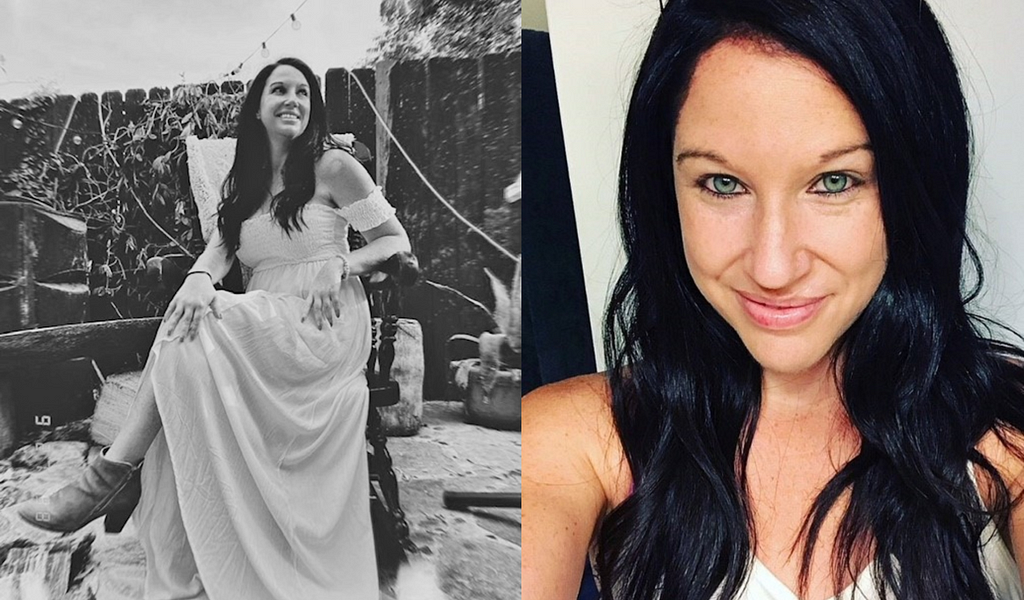
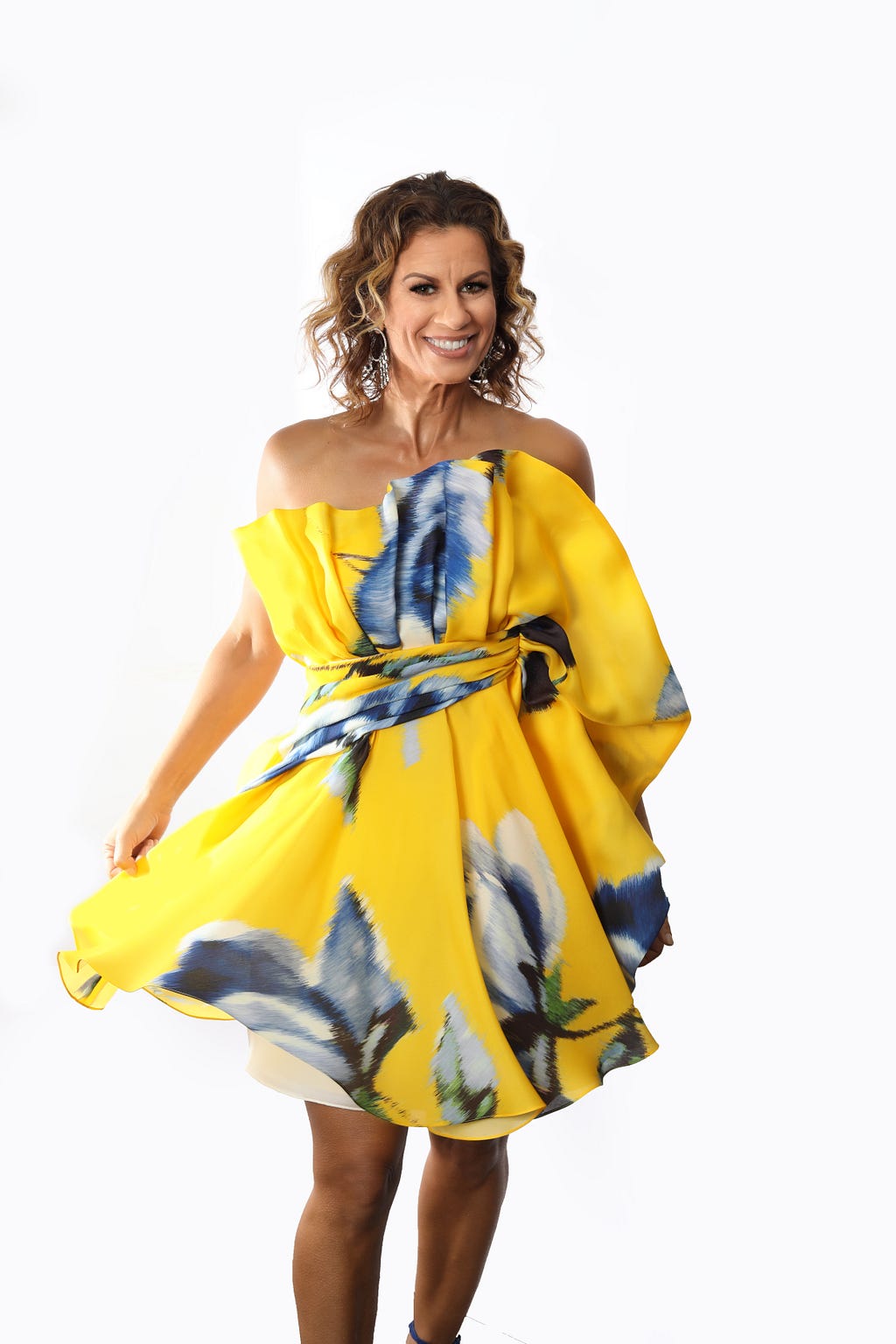
An Influencer Marketing innovator and pioneer, Jenna Sereni is widely known as the original creative inventor for the first ever influencer marketing agency, WHOSAY (co-founded with CAA and acquired by ViacomCBS). Today, Jenna continues to pave the way into the future of influence as the Founder of HandsDown, the social commerce platform that allows users to share what they “hands down” can’t live without and discover what they’ve been missing, from people they trust the most, their inner circle.

Thank you so much for doing this with us! Before we dig in, our readers would like to get to know you a bit more. Can you tell us a bit about your “backstory”? What led you to this particular career path?

I was raised in an entrepreneurial family. My great grandmother founded our family business in the garment district of New York City in the 1940s, which my grandfather eventually took over, and my uncle after that. Everyone in our family worked for the business at some point, whether it was answering the phones or working in the warehouse. I worked for my uncle straight out of college, and he taught me so much about running a business, managing people, and how to navigate the dynamics of work and family. My parents both had amazing careers as well and I was raised in an environment where people worked really hard, but valued family and friends over everything.

When I got my first job outside of the family business, it was at Teen Vogue, and I was so excited. After my initial interview, they told me that sometimes they look for candidates who have a “fire in their belly.” And that I had a “bonfire.” I loved my time there, and raised my hand for every project I could possibly participate in. I was really interested in the trust that the brand had established with readers, and I think this is where my career-long passion for “voices of trust” really launched. I moved on to work in digital marketing at various publishers, and was recruited to be the first member of the marketing team at a new start up called WHOSAY, co-founded by CAA. WHOSAY was a celebrity social media app — that helped celebrities to launch and manage their presence across various social media platforms. The business evolved into becoming the very first and most trusted Influencer Marketing agency, which I helped run for about 8 years. We were acquired by Viacom in 2018.

Aside from career, my immediate family is huge and blended, so I experienced a lot of change throughout my childhood and ended up living in a house with six teenagers. It’s safe to say that organized chaos is a comfort zone for me, hence my interest in start-up life.

Can you share the most interesting story that happened to you since you began leading your company?

The most interesting thing that’s happened since we started HandsDown, is discovering what’s happening in the state of Vermont. You think of Vermont and you think of Bernie Sanders, Ben & Jerry’s, Gardener’s Supply, Burton and Seventh Generation. But what’s actually happening is a massive boom in tech and entrepreneurship.

I just so happen to live here in the Green Mountains (I escaped New York City during COVID) and needed to register my company with a mailing address. So, I visited a coworking space in Burlington, and met the CEO of a Tech Accelerator that day. It turns out, investment in Vermont companies grew 500% in the past year alone and brilliant people are flocking here to create businesses. Some of the best skin care (Ursa Major, Ogee), electric airplanes (Beta Technologies) and space systems (Benchmark Space Systems) are being designed and produced right here in Vermont. So, HandsDown ended up smack in the middle of an incredible community of new startups, venture funds, former CEOs who’ve exited, and we have seen an epic amount of love and support from this community.

Can you share a story about the funniest mistake you made when you were first starting? Can you tell us what lesson you learned from that?

When we first began designing HandsDown, it was called “Faves.” It’s the name Sonia (my co-founder) and I came up with in the earliest days, and our friends and family started using it in everyday language as a verb and a noun–which for a brand is an excellent attribute in a name. “It’s on my Faves,” “I Faved it,” etc. We noticed new companies popping up using the name Fave or Fave App and a few others, and we were so tied to “Faves” that we didn’t even really consider changing our name. We then had a call with an advisor, who told us about her experience in googling “Faves.” The name was everywhere. There were more companies than you can count on one hand–which was enough for us to decide to speak with a trademark lawyer and consider making a change. Another advisor was currently going through some naming issues at the time–and she reiterated to us the importance of originality and taking advantage of this opportunity that we had to make a shift, since it was so early on. It was such a massive thing that we didn’t pay attention to in the beginning because we were so emotionally invested. But, we spoke with a lawyer, and then began our search for a new name. It took what felt like forever. We ended up conducting focus groups and surveys, and landed on HandsDown about 5 months later. We learned that there’s always a strategic solution–and started leveraging “Fave” as a product attribute, instead of as our name. It was a pivotal moment for use, to see how flipping things upside down, can actually turn things right-side up.

None of us are able to achieve success without some help along the way. Is there a particular person who you are grateful towards who helped get you to where you are? Can you share a story about that?

There are so many people who have helped me to get where I am. My mom, many past managers, friends, etc. But Lauren Jay is the first that comes to mind when it comes to serious managerial inspiration. Lauren is that Teen Vogue Associate Publisher I mentioned earlier, who noted the “bonfire” in my belly. I was nobody. A young wannabe at most. And Lauren not only gave me the opportunity to break into marketing, but she also always had my back at every turn. There was one experience where I made a huge mistake. A mistake that held legal implications for the company and our client. And while it was fixable, it was also catastrophic to a 20 something manager who was trying to impress everyone. From the moment I told Lauren about what had happened, she exemplified strategic thinking, support and the most epic management skills I’ve seen. She made me feel like we all make mistakes. And then we need to quickly shift to making the situation better, and avoid looking back. She also promoted me shortly after. Since then, I’ve managed many people — and one thing I tell them all on day one with me is, “You can make any mistake once, just learn from it, and grow from it.” I think this is extremely important. In order to truly innovate, you need to take risks. And taking risks requires making mistakes. Fostering a culture of acceptance when it comes to making mistakes is incredibly important to me and I’ll never forget how Lauren showed this to me.

Ok, thank you for that. Let’s now jump to the primary focus of our interview. According to this EY report, only about 20 percent of funded companies have women founders. This reflects great historical progress, but it also shows that more work still has to be done to empower women to create companies. In your opinion and experience what is currently holding back women from founding companies?

  1. Parenthood + Home Management: Being a mother and an entrepreneur is almost impossible–yet we do it anyway. And in a pandemic? Gosh, queue therapy. Founding a company is 24/7. I don’t even look at it as a job, but as a lifestyle. I think about my company, our strategy, our tech, our people, social posts, user experience all day and all night, every single day. On weekends, on vacation, in the shower, on a walk. I can’t escape it. And frankly, it brings me a ton of joy. I love building things–making things, and watching them grow. It’s my favorite thing to do. But I certainly do have to work extra hard to be focused on myself and my family when I’m home at dinner time, working out or doing yoga, and while I rock my son to sleep at night. Nothing pains me more than those cute little words, “Mommy, put your phone down, stop working.” It’s like a knife to the heart every time. But at the same time, I want him to know that I believe in going for it, working hard, and empowering yourself to be your absolutely best and most authentic self. I think finding this balance between all of your babies: partner, kids, business, pets, is incredibly hard, and if you aren’t willing to take that on, then I can certainly see women shying away from founding a business because of it.
  2. Funding: We are much less likely to get funded. Deciding to start up a business takes a lot of planning and strategic thinking. If you go through the risk analysis of what it’s going to take to pull something off, then as a woman, you’ll see, you’re highly unlikely to get funded. Less than 3% of funding goes to women, and without funding, in most scenarios, you’re highly unlikely to be successful. For some reason, I decided to take on this risk–but I don’t blame others who decide not to. Thankfully, there are a lot of amazing women rising in VC, and many funds erupting in success who have put their coin in female founders. We appreciate the work being done by BBG Ventures, Female Founders Fund, Venture Collective, and more…

Can you help articulate a few things that can be done as individuals, as a society, or by the government, to help overcome those obstacles?

  1. Access to affordable childcare for all families. Right now, families are expected to pay too much and early childhood educators are paid too little. Running a business means needing support both for your family, and for the families of your employees, and without affordable, dependable childcare, there will never be more women in business.
  2. Since over 93% of Venture Capital is spent by white men, we still need more women and people of color in decision making roles at VC firms. But what can we as individuals do every day? Support female founded businesses. Shout about them on social media. Join their cause, buy their product, speak their names. Word of mouth is everything, and the louder we are, the closer we’ll get.

This might be intuitive to you as a woman founder but I think it will be helpful to spell this out. Can you share a few reasons why more women should become founders?

  1. The more women become founders, the more female founders’ success stories there will be. The more female founder success stories there are, the more successful female founders will invest in other female founders. It’s a cycle that we can initiate to seriously change the data.
  2. Female Founders bring a different perspective to business that reflects half the population. To create more businesses that will serve half the population, women, we need smart women to be spearheading this type of work.

What are the “myths” that you would like to dispel about being a founder? Can you explain what you mean?

Myth: Being a Founder is Glamorous

HA! I’ve worked red carpets, glitzy advertising shoots, high profile events, you name it. That was glamorous. Being a founder is hard work, epic responsibility to your product, users and your team, and an always-on schedule. While there isn’t much glamour (that I’ve experienced yet), there is flexibility. And to me, that’s a better perk.

Is everyone cut out to be a founder? In your opinion, which specific traits increase the likelihood that a person will be a successful founder and what type of person should perhaps seek a “regular job” as an employee? Can you explain what you mean?

A great founder is resourceful and has an unwavering determination to succeed. They have to be so open minded, that they are willing to learn and even fail. The experience of starting and running a business, raising capital, running out of capital, raising more, growing, etc, it’s an emotional roller coaster. There are high highs and low lows, pretty much all the time. Specific traits needed are an incredibly high level of emotional intelligence, and risk tolerance.

Those who may not be as interested in the founder journey, are people who are creatures of comfort. Also those who may not have a thick skin. Founders experience a spectrum of discomforts and negative feedback on a daily basis. Investors turn you down, people question your ideas, users or customers share feedback. It’s never ending.

Ok super. Here is the main question of our interview. What are your “5 Things I Wish Someone Told Me Before I Started” and why? (Please share a story or example for each.)

  1. The importance of self care and good physical health:

When you’re an entrepreneur, just starting out, you’re on a solo mission. Researching, reading, writing, strategizing, talking to anyone who will listen, and planning, planning, planning. I learned early on that if I get run down or sick, all things come to a halt.

When we were building our MVP (Minimum Viable Product) in our first year, we worked for months to plan, discover, design, build and test what would be the very first iteration of our app. We were getting closer and closer to launch, and were about two weeks away. My son got sick. He was a mess. Cough, cold, fever, you name it. I set everything aside to hold him, rock him, give him popsicles, whatever I could do to make him feel better. He finally started feeling better a week later, and I was relieved that he was okay, and that I could get back to work on our MVP launch. I stayed up late and woke up early, doing whatever I could to catch up, report bugs and comb through the experience, despite feeling run down myself. A week from launch, I felt a sniffle but thought nothing of it because I had too much to do. I went about my day, and stopped at Walgreens to get a Flu shot and my COVID booster. By the time I got home, I was exhausted. I felt as if all of the energy in my body had released and went somewhere else. I got more sick than I have ever been in my life. I was bed ridden, unable to move, fever, cough, you name it. I lost my voice and couldn’t even make out a whisper. Within 4 days or so, I started to get a little bit better, day by day although my voice was gone for weeks. On the day of our MVP launch, I got a call from the health dept. I had COVID. I launched HandsDown from my bed in isolation for the next 5 days.

There was really nothing I could have done to avoid this situation, but it made me realize that I’m the center of the team, and that I need to invest time and commitment in my personal health, both mental and physical. I’m glad that I discovered this in the early days of my business, because I was able to get ahead of generating a self care regimen that would keep me in tip top shape, to the best of my ability. I make sure to take care of myself, to take time to workout, eat a healthy breakfast, and to go for a walk outside on a stressful day. Culture filters down, and my team knows that on stressful days, I may pop out for a green juice and a hike, and they should too.

2. Everything takes longer than expected: All adventurous come with unknowns, and entrepreneurship is no different. I wish I had a better idea of how long things would take in general. From finding the right partners, hiring, raising money, negotiating with vendors, to launching a product, one thing has been a steady truth–it always takes a bit longer than you think it will.

We planned the release of our Beta product conservatively and to the day. Everything was going right. Our UX looked impeccable, our brand was on point, and the design tech teams were on standby and ready to rock. With two more weeks of design, we were untouchable. Then, our lead UI designer caught COVID. He was the person who truly understood the look and feel of our brand, and we didn’t want the product designed without him. We would wait. Then, his entire family caught COVID, and he needed to take some time from work. We ended up being set back about a month, which could have been worse, but you just never know what’s going to happen, and at the end of the day, supporting the team and prioritizing their health and wellbeing matters most.

3. Flexibility Makes it All Worth It: Being your own boss is truly a gift. While I work long hours regardless of weekday or weekend, home or traveling, day or night, I get to choose “me.” I get to prioritize my health, my wellness and my family. I get to stop and take a break when I need to. Some days, I just need some time to go for a walk and stretch. I find on the days that I take time to raise my heart rate, I end up getting so much more accomplished. I also am able to create space in my mind for more creativity and free flowing of ideas. I always struggled with the 9 to 5, manager check ins, and doing what someone thought I should do. Having the freedom to work as I see fit has opened me up to a whole new world.

4. Pitching is 98% of the Job: I’ve always had a knack for sales, but didn’t necessarily plan to choose it as my career path. That all changed when I started my own company. I pitch HandsDown on average 8 times a day. Everyone in your life wants to talk about your startup adventure. Those you work with, VCs, your investors, your friends, your family, the local coffee shop barista, the women at the nail salon, etc. These are all potential users or customers, and the more people you tell about your business, the more exposure your business will generate.

5. Don’t Wait to Build a Team that Shares Your Vision: As a start up, I just assumed that my co-founder and I would be the team for the foreseeable future. It would be the two of us brainstorming, planning and executing until we raise tons of money and launch the company of our dreams. But this couldn’t have been farther from the truth. Our business didn’t truly start to come together and have legs until we started bringing in passionate and talented people with innovative ideas to contribute with us. After the first 6 months, we started calling on some friends to join us in various ways on our journey. We offered equity as payment for brilliant design, legal advice and strategic planning. Every time we brought in someone new who shared passion around what we are building, things have progressed in such a positive and inspiring way. In hindsight, I wish we started building a team from day one, but now that we have, things are getting really exciting.

How have you used your success to make the world a better place?

We are still in our go-to-market phase, but are committed to an amazing organization called 1% for the Planet. Essentially, HandsDown will be donating at least 1% of all revenue generated on the platform to address the most urgent environmental issues of our time.

You are a person of great influence. If you could inspire a movement that would bring the most amount of good for the greatest number of people, what would that be? You never know what your idea can trigger.

I am a huge believer that equal pay for women, access to affordable childcare, and unlimited and free access to postnatal care for all new moms could completely change the culture of our country–enabling women to participate more freely in the workforce. Especially in a time like right now, I am inspired by companies like Mamava who are publishing their parental leave and support policies for others to learn from. I think female founders need to band together to commit to elevating women to the where they deserve to be.

We are very blessed that some very prominent names in Business, VC funding, Sports, and Entertainment read this column. Is there a person in the world, or in the US with whom you would love to have a private breakfast or lunch with, and why? He or she might just see this if we tag them.

Oprah! We’re both very passionate about curating “Favorite Things!”

Thank you for these fantastic insights. We greatly appreciate the time you spent on this.


Female Founders: Jenna Sereni Of HandsDown On The Five Things You Need To Thrive and Succeed as a… was originally published in Authority Magazine on Medium, where people are continuing the conversation by highlighting and responding to this story.

Modern Fashion: Holly Katz On The 5 Things You Need To Lead a Successful Fashion Brand Today

An Interview With Candice Georgiadice

“Let it go” attitude- This is a skill that will always be my top thing to “work on” for myself. Some things will come easier than most. It’s difficult to know when to let things go if they aren’t working in your favor. This could be a vendor, supplier, factory, staff or something that’s supposed to be working for your business. If something is a time, money or energy suck, then let it go and move on. Don’t try to make something work that repeatedly isn’t. Tell yourself the truth and cut the fat.

Many in the fashion industry have been making huge pivots in their business models. Many have turned away from the fast fashion trend. Many have been focusing on fashion that also makes a social impact. Many have turned to sustainable and ethical sourcing. Many have turned to hi tech manufacturing. Many have turned to subscription models. What are the other trends that we will see in the fashion industry? What does it take to lead a successful fashion brand today?

In our series called, “5 Things You Need To Lead a Successful Fashion Brand Today” we are talking to successful leaders of fashion brands who can talk about the Future of Fashion and the 5 things it takes to lead a successful fashion brand in our “new normal.”

As a part of this series I had the distinct pleasure of interviewing Holly Katz.

Holly Katz spent her early life surrounded by fashion in her grandfather’s clothing store and her parent’s women’s retail store. This life experience made a lasting impression on her, shaping an interest in the business and the art of fashion. Katz’s career began with an internship with famed fashion designer, Betsey Johnson, in NYC and for the next seven years exploring the industry from every angle from costing to production to design, which cultivated her understanding of how garments work — how different fabrics, cuts and materials come together to form a beautifully crafted item. During her tenure, Katz earned a degree in fashion design.

From East Coast to West Coast and now in Atlanta, the heart of the South, Holly is on a mission to make personal styling accessible and accepted as the way to express your best self with fashion.

Certified in personal (men and women), corporate and commercial styling, Holly has styled a range of people from suburban moms and young professionals to C-Level executives and celebrities.

Katz is regarded as the top stylist of the South with regular television and speaking appearances. In addition to her personal shopping company, Holly hosts her show, Fashion Crimes Podcast, where she showcases her talents of fashion advice with humor and inspiration.

Thank you so much for doing this with us! Before we dig in, our readers would like to get to know you a bit more. Can you tell us a bit about your childhood “backstory”?

Coming from a long line of clothing retailers, it wasn’t a surprise that my interests from a young age Included fashion and style. My father had a women’s clothing store where my mother started her career. Spanning a career of 40+ years, she is still on the retail floor to this day in womenswear and designer clothing. I really didn’t get into “style” until high school where I started shopping at vintage stores. My love of clothes began, and I started to really care about what I was wearing. Coming from a divorced family, money was anything but plentiful. If I wanted to buy clothes, it had to come from money I made myself. That’s when my love affair for “the mall” started. I worked in clothing stores and loved buying my own clothes. I was a natural when working with people and really enjoyed helping people pick out clothes. But most of all, I loved talking to people and socializing. My true gift was being able to relate to people and problem solving. By listening and helping them select items that they were looking for, I honed my skills in retail and in solving fashion “issues” for people like fit and style.

Can you tell us the story about what led you to this particular career path?

After a few failed career attempts I ended up coming to the realization that the only thing I loved to do was help others achieve great style. How could I do that other than work in retail or become a stylist? What was a stylist, I actually had no idea, but I was determined to find out. In the middle of my 20’s I ended up going back to college for what I really wanted to do; become a fashion designer. Little did I know that getting a degree in fashion design doesn’t guarantee you a job as a designer. I moved to New York City alone, knowing no one, no connections and no job thinking to myself…”I’ll just make friends!” Fortunately for me, I ended up doing every job in fashion but design. The next decade of my life I worked in garment production, costing, assisting the design teams, working with the overseas factories and taking garments from conception to samples. This ‘education’ as I call it is what gives me the knowledge about how clothes are made and constructed. This helps me guide people on what to buy, in addition to bringing a person’s image to life. As most people are confused about shopping and style, people come to someone like me to help them find out the who, what, when and where of the person they are today, in the body they have today. From my experience as a personal stylist, I have since graduated to hosting my own podcast “Fashion Crimes” where I style people over the mic with tips, tricks and introduce new brands to my audience. I am the best friend you never knew you needed in fashion. You can work with me as a stylist, or listen to me on my podcast give fashion advice to people who want help.

Can you share the most interesting story that happened to you since you began your career?

The most interesting story is how I started my career as a podcaster. My girlfriend who owns a podcasting company for women called me one day and said, “You’re loud. You’re bossy. You should start a podcast.” I never considered this an endearing part of my personality, however, now I am capitalizing on these very skills. I didn’t know people would care about my take on fashion after 40…and I mean way after 40, but here I am manifesting my career as a fashion industry leader and style expert. I didn’t know the first thing about podcasting, and I just jumped in. I think I had listened to maybe one or two podcasts in my life up to this point. Almost two years later and just shy of 100 episodes, I’m still going strong.

You are a successful business leader. Which three character traits do you think were most instrumental to your success? Can you please share a story or example for each?

Perseverance: This is not giving up. Ever. This is one of the hardest things I think for someone to do. Pick a subject that keeps you up at night. What does the world need in your opinion? It could be something small, that might lead to something else. Don’t think you have to conquer the social media algorithms or have the next, newest thing. It’s something that’s in the core of your soul that you can’t ignore. Find the balance of being authentic to yourself and your beliefs with a little bending room in order to sell or get your idea to a wider audience.

Ability to pivot: Putting your ego aside if something isn’t working and learning how to nurture something else that is. A clear example of this: Me as a stylist and me as a podcaster. I was pushing my styling business, wanting so badly to get clients; not understanding why people weren’t rushing to hire me. While I had a few clients and still do, that’s not all that I can do. I can help people on a bigger scale. People hire me because they know me. The quickest way for them to get to know and trust me? Through my podcast. If they hire me, great, if they don’t, I still win, because now they are part of my network. They are listening and learning. This is the goal. I have learned to chase purpose, not money. If you can afford to do this, then you can pursue your creative goals. If money is what you need, get a full-time job to live, and use your creativity to create a side hustle. There is no shame in being realistic about your financial needs while still trying to feed your creative soul.

REALLY believing in yourself…not just saying you do: You can say this all day, but if you really don’t believe is what you’re doing, then you’re wasting your time. This is the time to get brutally, harshly honest with yourself. Brutal. If you truly believe in what you are doing, you will succeed. Disclaimer: Success looks different for everyone. When I say success, I don’t necessarily mean monetary success. It might be brand recognition or creating relationships with people in your industry. There are all different views of success. I know that there are people out there who value my knowledge and opinion. It is my duty to share my gifts with the world. Whoever wants to tune in, can. My particular goal is to have it turn into something bigger…maybe a book or television show possibly a product line. I would love be a paid public speaker or professional interviewer. Everything I put into my goals will lead me to the next step. This is universal law. Whatever you believe will happen, will.

What do you think makes your company stand out? Can you share a story?

As a personal stylist in the south, the same problem kept coming up with all of my clients. There is NO voice of fashion or style expert for women in their 40’s and over. I have become that voice. People are clueless about what to wear, how much to spend, and how to dress for the body they have today. They are completely grasping at straws, wearing what everyone else wears and feeling mediocre at best. The common thread is this: people see celebrities on television and think that is the benchmark for having good style. This couldn’t be further from the truth. Having good style doesn’t mean wearing expensive clothes. You are either born with the “fashion gene” or not. If not, it can be LEARNED. My biggest complaints from clients: I hate shopping, I hate shopping, I hate shopping. People hate shopping because they don’t know what they’re looking for. With my experience in the fashion industry in garment construction, I know how clothes are made. I know why something is priced at $40 or $400. I can guide someone even through a podcast on how to dress with intention for their age, industry and lifestyle. That’s what makes my podcast better than any other fashion podcast out there.

Do you have a favorite “Life Lesson Quote”? Can you share a story of how that was relevant to you in your life?

The only quotes I live by:

“Under promise and over deliver.”

I constantly am doing this with my clients. I always treat my customers the way I would want to be treated. Giving them more than they ask for, going over scheduled time, delivering items or picking up and dropping off for a client is overdelivering. I recommend other vendors and connect clients to people to further their experience with me.

“Surprise & delight” — Lauren Messiah

I am available by text and phone for questions and I get a lot of them. I never charge for extra help if it’s just a question. Give surprise gifts, take extra pictures, recommend another service or person to help them along their style journey. I have a referral program which always surprises and delights people. They are rewarded if they refer me. I send free content every week without asking for anything in return.

“Do what you say and say what you do”

Tell the truth. Period. If you can’t keep a deadline, or need to switch a schedule, then tell the truth. You will be more respected in the long run. If you go back on a promise, then explain why and offer another solution. Own up to your mistakes.

Ok, thank you for that. Let’s now jump to the primary focus of our interview. Do you see any fascinating developments emerging over the next few years in the fashion industry that you are excited about? Can you tell us about that?

Companies are really trying to qualify their product as sustainable. The consumer has spoken. With the global climate crisis people really care about fair wages and where the product is produced, how it’s shipped and the factories where the goods are made. There are hundreds of small companies that are producing in small batches and producing locally. I am happy that most (not all) are taking fabric overflow and waste and finding a way to use it. It’s not a perfect system but it’s just the beginning. It’s hip to be environmentally conscious. The customers dig it and want to be a part of it. It creates brand loyalty and awareness and more companies are jumping on board by the day.

Can you share how your brand is helping to bring goodness to the world?

I am like a therapist; literally. That’s why I call myself a style coach. I am the voice representing fashion and style for my age group and getting people off the sidelines, back in the game of participating in life. Anxiety and depression are the number one factors of why people give up on their image. They think it doesn’t matter for a variety of reasons. I will not rest until I create a movement that shows consumers that what you wear does matter, for your mental health at the very least. While everyday isn’t a home run, I motivate you to keep moving forward by getting you “unstuck” and show you how to evolve your style with your age.

Can you share with our readers about the ethical standards you use when you choose where to source materials?

When I work with clients, I assess their individual needs. According to their budget and what clothing their lifestyle calls for, I try my best to source from ethical brands that do the least amount of damage to the planet when producing their products. While this plan isn’t 100% full proof for each client, I try my best to buy from small brands, support small business owners and shop local. Most people I work with have the same problem; they hate shopping or they have no idea how to shop. We break these barriers down by taking very small bites and showing them how to get the best product that fits their body, while staying within their budget. Discovering newer, small brands brings new designers into the spotlight for my customers. It’s my job to guide them in a direction that will benefit them in addition to my network of small brands that appreciate the business so much.

Fast fashion has an advantage, that it is affordable for most people, but it also has the drawback that it does not last very long and is therefore not very sustainable. What are your thoughts about this? How does your company address this question?

Fast fashion isn’t your friend. Think about it like fast food. It’s affordable, yes, but the long-term effects are hurting the environment and your health, in addition to your wallet. These huge conglomerates care about one thing, and that’s the fraction of a penny they can save to make a profit, pay factory workers less than their worth and deliver hundreds of thousands of units one day faster. The public has spoken, and the consumer now is demanding to know how these garments are produced and that the factory employees have a place to use the restroom, aren’t slaving in unbearable conditions and are paid a fair wage. I personally have relationships with sustainable brands that are doing exactly this, and this is who I support. I am constantly working to find smaller, newer brands that can produce in small batches that aren’t hurting the environment and that want to bring great product to the market. We did a huge Earth Day episode where I talked about the sustainable brands that stuck out to me and how we can become more eco-conscious consumers. I will continue to support these efforts to bring awareness and education to my listeners.

Thank you for all that. Here is the main question of our interview. What are your “5 Things You Need To Lead a Successful Fashion Brand”. Please share a story or example for each.

In fashion you really need these skills more than anything:

Perseverance- Be pleasantly persistent. If you are manufacturing and selling a product, to get factories to even take a meeting with you will be very difficult. If you believe in your product and you believe there’s place in the market for it, some factory will give you a chance. It’s going to take a lot of research and a lot of nos to get to that final yes. Speak to other people that are making something similar to you. If you don’t have a physical product and you’re selling a service, remember this: people are buying you, in addition to your services. You have to figure out the pain points of why someone would need your service and go from there. Be relatable and put yourself in their shoes. No one is going to buy from you if they don’t like your sales approach. People find comfort in buying from people they like and trust.​

“Let it go” attitude- This is a skill that will always be my top thing to “work on” for myself. Some things will come easier than most. It’s difficult to know when to let things go if they aren’t working in your favor. This could be a vendor, supplier, factory, staff or something that’s supposed to be working for your business. If something is a time, money or energy suck, then let it go and move on. Don’t try to make something work that repeatedly isn’t. Tell yourself the truth and cut the fat.

Who is your customer?- Pick a customer you want to market to and stick with it. For example, your ideal client could be a busy working moms that are CEO’s and higher positions. Ask yourself these questions:

What do they need?

What are their biggest pain points?

What makes you think they need your product or services?

How can you make your product/service important to them?

How can you get their attention?

What is their budget for something like this?

What problem is your product/service going to solve for them?

What people already selling your product are doing- “Steal from the best and make it your own”. I didn’t say this but someone in advertising did. Figure out who is doing what you want to do and look at how they are doing it. Figure out how your products/services are different and how you can stand out from the rest. If the market is crowded or oversaturated with the same product you want to produce, you have to figure out why yours is better. This isn’t a rushed decision. Some people take years to figure out why their product is better. What can you offer that others aren’t? What can you do to reach a wider audience? What makes your product unique? Is your price competitive? See if you can speak to someone in exchange for something so you can get some real help. Hire a business coach. Never stop learning what is working for the existing product and what isn’t.

How to follow current marketing trends — The world is everchanging in marketing and especially social media. Go with the flow and figure out what’s working for others doing the same thing as you. Learn how to market yourself but know when it’s time in your career to get some help. There are great ways to start out small, like with a Virtual Assistant company that works for a little less. Find a college graduate or someone more knowledgeable than you about marketing who can be a second set of eyes on what you’re doing right and wrong. Engagement is gold. Make sure you are liking and commenting on others and hopefully people will reciprocate. Never. Stop. Learning. Don’t be in such a hurry to get things perfect. Allow yourself some grace to get in front of the right people. If it’s meant to be, it will be. You cannot force success.

Every industry constantly evolves and seeks improvement. How do you think the fashion industry can improve itself? Can you give an example?

Education. Educate people about your product because most need the help. Education leads to brand loyalty. Why are people so confused about what to wear? Why do people hate shopping? Because they have no idea how to shop anymore. Show people why your brand is better. There are millions of clothing and accessory options. Why should people buy from you? There is a lost art of customer service in department stores and large markets. To me, there is a disconnection between the product and customer. Most people have no idea how to shop or what they should be shopping for, how to dress for their body type or how to have your style evolve with your age. This is what the people in the stores should be doing instead of just ringing people up and locating merchandise.

You are a person of great influence. If you could start a movement that would bring the most amount of good to the most amount of people, what would that be? You never know what your idea can trigger. 🙂

It is my life’s work to stop bad fashion in the world and to get people to dress with intention. I am constantly working to get people to realize that fashion does apply to them and they can’t just “opt out”. This is something that you can do today, right this minute to change how you feel about yourself. The most common misconception is this: You have to be thin, wealthy and wear expensive designer clothes to have good style. The truth is this: Anyone of any size, age or budget can have fabulous style if you put in just a little effort. Great style is available to anyone if the seek to find it. If you don’t know where to start, start by listening to my podcast and pick a subject you want to learn about. Start small. Clean out your closet and organize it. Figure out what you need the most. Is your image holding you back? For most people, the answer is yes. You can hire a professional personal stylist like me or you can shop yourself. Start somewhere, but just start. After all, I am the best friend you never knew you needed in fashion.

How can our readers further follow your work online?

www.fashioncrimespodcast.com

IG: fashioncrimespodcast

YT: Fashion Crimes Podcast

FB: Fashion Crimes Podcast

www.hollykatzstyling.com

IG: hollykatzstyling

FB: Holly Katz Styling

YT: Holly Katz Styling

TT: hollykatzstyling

Thank you for these fantastic insights. We greatly appreciate the time you spent on this.


Modern Fashion: Holly Katz On The 5 Things You Need To Lead a Successful Fashion Brand Today was originally published in Authority Magazine on Medium, where people are continuing the conversation by highlighting and responding to this story.

Female Disruptors: Dr Suhyun An of Campbell Medical Clinic On The Three Things You Need To Shake Up…

Female Disruptors: Dr Suhyun An of Campbell Medical Clinic On The Three Things You Need To Shake Up Your Industry

An Interview With Candice Georgiadis

The best advice I’ve ever received is to always stay focused on my goals, no matter what obstacles I face. This has been invaluable advice that has helped me stay the course, even when things are tough. Another piece of advice that has served me well is to always be learning and evolving. As I mentioned earlier, technology and therapies are constantly changing, and it’s important to stay up-to-date on the latest advancements in my field. Finally, the best advice I can give is to never give up on your dreams. Pursue your passions and never let anyone tell you that you can’t achieve your goals.

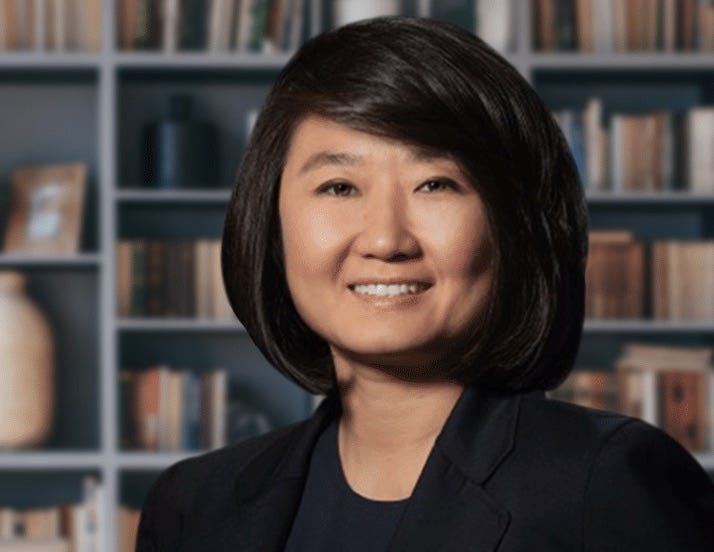
As a part of our series about women who are shaking things up in their industry, I had the pleasure of interviewing Dr. Suhyun An.

Dr. Suhyun An is Director at the Campbell Medical Clinic in Houston, Texas, a leader in the practice of regenerative medicine. Dr. Suhyun An, a well-known expert in the field, specializes in regenerative therapies for pain reduction, working closely with her patients to establish personalized treatment programs. Dr. Suhyun An is an outstanding author and a well-known public speaker, who has written Pain Free Knee and Demystifying Stem Cells.

Thank you so much for doing this with us! Before we dig in, our readers would like to get to know you a bit more. Can you tell us a bit about your “backstory”? What led you to this particular career path?

I became interested in regenerative medicine after I was able to successfully repair a shoulder injury without surgery by using umbilical cord stem cells and platelet-rich plasma therapy. I realized that this was a new frontier in medicine with great potential to help people heal from injuries and chronic pain without the need for drugs or surgery.

I completed stem cell extraction training from Boston Biolife and Cell Surgical Network, and now I specialize in regenerative medicine. I offer non-invasive medical services and treatments that are able to give a unique, hybrid approach to pain alleviation by combining Chiropractic Biophysic approaches and regenerative medicine with the most up-to-date rehab and therapy technology.

Can you tell our readers what it is about the work you’re doing that’s disruptive?

What I’m doing is disruptive because it’s a new approach to medicine that is non-invasive and does not rely on drugs or surgery. I’m driving change by offering this new approach to pain management and healing to my patients.

I am constantly seeking out new and innovative ways to help my patients heal from their injuries and pain. I believe that the traditional medical model of simply masking symptoms with drugs or surgery is no longer sufficient. We need to find the root cause of the problem and address it head-on. That’s why I offer a variety of non-invasive, natural therapies that are designed to promote healing and pain relief.

One of the most exciting things about my work is that we are always learning and evolving as we discover new and better ways to help our patients. I am always looking for new technologies and therapies that can provide even more effective results for my patients.

Can you share a story about the funniest mistake you made when you were first starting? Can you tell us what lesson you learned from that?

I don’t think there was a funniest mistake I made when first starting. However, I would say that one of the most important lessons I learned early on was the importance of always staying up-to-date on the latest advancements in my field. Technology and therapies are constantly evolving, and it’s important to be at the forefront of these changes in order to offer the best possible care for my patients.

We all need a little help along the journey. Who have been some of your mentors? Can you share a story about how they made an impact?

I have to say, Darren Hardy, who is the author of The Compound Effect, is a role model to me. He’s like me. He outworks anybody he comes across, and he had parents who never said he was any good, very much like my parents. You could say we’re kindred spirits. Darren is one of the most successful people I know, and he’s also one of the most down-to-earth, hardworking people I know. He’s always looking for new and better ways to improve his business and himself. I admire that about him, and I try to emulate that in my own life.

In today’s parlance, being disruptive is usually a positive adjective. But is disrupting always good? When do we say the converse, that a system or structure has ‘withstood the test of time’? Can you articulate to our readers when disrupting an industry is positive, and when disrupting an industry is ‘not so positive’? Can you share some examples of what you mean?

When an industry is ripe for disruption, it means that there is a need for change. This can be positive if the change is designed to improve the industry or make it more efficient. However, not all change is good. Sometimes, change is implemented simply for the sake of change, without any real benefit to the industry or those who depend on it. An example of positive disruption would be the rise of ride-sharing services like Uber and Lyft. These companies disrupted the traditional taxi industry by offering a more convenient and affordable way to get around. This was a positive development for consumers and has led to a more efficient and innovative transportation sector. An example of negative disruption would be the proliferation of fake news online. This has created chaos and confusion, and has undermined trust in the media. In this instance, the disruption was not positive or beneficial.

Can you share 3 of the best words of advice you’ve gotten along your journey? Please give a story or example for each.

The best advice I’ve ever received is to always stay focused on my goals, no matter what obstacles I face. This has been invaluable advice that has helped me stay the course, even when things are tough. Another piece of advice that has served me well is to always be learning and evolving. As I mentioned earlier, technology and therapies are constantly changing, and it’s important to stay up-to-date on the latest advancements in my field. Finally, the best advice I can give is to never give up on your dreams. Pursue your passions and never let anyone tell you that you can’t achieve your goals.

We are sure you aren’t done. How are you going to shake things up next?

I have a few ideas up my sleeve, but I can’t give away all my secrets just yet. I will say that I’m always looking for ways to improve the care I provide for my patients. Whether it’s staying abreast of the latest medical advancements or finding new and innovative ways to deliver care, I’m always looking for ways to take my practice to the next level.

In your opinion, what are the biggest challenges faced by ‘women disruptors’ that aren’t typically faced by their male counterparts?

There are a number of challenges that women face when disrupting industries. One of the biggest is breaking through the glass ceiling. Women have historically been underrepresented in leadership positions, and this can make it difficult to get our voices heard. Another challenge is overcoming stereotypes and biases. Women are often seen as being less capable or competent than men, and this can make it difficult to be taken seriously. Finally, women often have to deal with sexual harassment and discrimination. This is a problem that is all too common in male-dominated industries, and it can make it very difficult for women to thrive.

Do you have a book/podcast/talk that’s had a deep impact on your thinking? Can you share a story with us?

One of the most impactful books I’ve read is Sheryl Sandberg’s Lean In. This book really opened my eyes to the challenges that women face in the workplace. It also inspired me to be more proactive in my career and to fight for what I believe in. Another book that has had a deep impact on my thinking is Brené Brown’s The Gifts of Imperfection. This book helped me to understand the importance of embracing our imperfections and being authentic. It was a game-changer for me and has helped me to be more vulnerable and open with others.

You are a person of great influence. If you could inspire a movement that would bring the most amount of good to the most amount of people, what would that be? You never know what your idea can trigger. 🙂

If I could inspire a movement, it would be one that encourages people to be more compassionate and understanding towards others. We live in a world that is full of hate and division, and I think it’s time for us to start being kinder to one another. We need to start listening to each other and trying to see things from different perspectives. Only then can we begin to heal the divisions that exist in our world.

Can you please give us your favorite “Life Lesson Quote”? Can you share how that was relevant to you in your life?

“Do or do not. There is no try.” — Yoda.

I believe in taking result oriented actions. My team knows my favorite word is done. While it’s important to enjoy the journey, action that brings no result is a waste in my book.

How can our readers follow you online?

Readers can learn about my clinic at https://campbellmedicalclinic.com, https://www.facebook.com/CampbellMedicalClinic/,

https://www.youtube.com/channel/UCWaxHyo5iDCbadlB9hqBaww

https://www.yelp.com/biz/campbell-medical-clinic-houston

This was very inspiring. Thank you so much for joining us!


Female Disruptors: Dr Suhyun An of Campbell Medical Clinic On The Three Things You Need To Shake Up… was originally published in Authority Magazine on Medium, where people are continuing the conversation by highlighting and responding to this story.
Female Disruptors: Laura van ’t Veer of MammaPrint On The Three Things You Need To Shake Up Your…

Female Disruptors: Laura van ’t Veer of MammaPrint On The Three Things You Need To Shake Up Your Industry

An Interview With Candice Georgiadis

Not everyone will embrace emerging innovation. Eventually, you also have to take along those that seek it out and wait, and only then do you get to full implementation of an invention.

As a part of our series about “Why We Need More Women Founders”, I had the pleasure of interviewing Laura van ’t Veer.

Laura van ’t Veer is a world-renowned molecular biologist and inventor of the breast cancer recurrence test MammaPrint® for which she received in 2015 the European Inventor Award. She co-founded Agendia, a diagnostic company dedicated to women’s health by enabling breast cancer patients worldwide to access the MammaPrint test, a genomic assay that accurately informs women and their providers who may benefit from chemotherapy as part of their treatment and who may be able to safely forego this toxic therapy.

MammaPrint offers a personalized approach to assessing every woman’s breast cancer tumor at a genomic level and determines her individual risk of recurrence. The company Laura founded also offers a test called BluePrint®, which classifies each individual tumor so patients and their providers know the specific type of breast cancer they need to treat. When combined, MammaPrint and BluePrint are designed to empower patients with more precise treatment options to combat their unique breast cancer, improve their outcomes and preserve their quality of life.

Laura is dedicated to getting the right drug to the right patient, while ensuring the highest treatment effect with the lowest side-effect.

Thank you so much for doing this with us! Before we dig in, our readers would like to get to know you a bit more.

Can you tell us a bit about your “backstory”? What led you to this particular career path?

As a high school student, I was inspired by my biology teacher, who — at the time — taught us about the newly-discovered knowledge of DNA and genes underlying all biological processes. Later, studying biology at the University of Amsterdam, I was fascinated by the then-emerging science that defective genes were causing normal cells to derail and become a cancer cell.

Science has inspired me throughout my entire career, and I am passionate about patient care. I am lucky I found a career in which I can combine both every day.

Can you share the most interesting story that happened to you since you began leading your company?

MammaPrint categorizes breast tumors into Low Risk or High Risk for recurrence types. Over the years, many patients have reached out after having a MammaPrint test sharing how it helped them feel more confident in deciding whether they should have chemotherapy or not. Women whose breast cancer test resulted in a MammaPrint Low Risk assessment realized they may be able to safely forego chemotherapy since their cancer was less aggressive and they alternatively could benefit from other types of treatments. This meant they may not need the toxic, and sometimes debilitating side effects of chemotherapy (which they otherwise could have experienced for up to a full year). Conversely, women whose breast cancer resulted in a MammaPrint High Risk assessment may have chosen to pursue chemotherapy, accepting its side effects because they were more confident it would effectively address their breast cancer. These inspiring stories motivate me to continue generating the critical information they need for improved outcomes.

Can you share a story about the funniest mistake you made when you were first starting? Can you tell us what lesson you learned from that?

This is perhaps not a mistake, but an experience I had when we would meet with investors in the early days of Agendia. I often was the only woman in the room and one of those times, a particular group of investors turned to me when they wanted coffee served. They were beyond apologetic when they realized who I was.

None of us are able to achieve success without some help along the way. Is there a particular person who you are grateful towards who helped get you to where you are? Can you share a story about that?

I think my parents are those special people to me. Both my parents were journalists, and I was raised in a setting where opinion mattered. One of their friends reminded me much later that from a young age I had to express my opinion on everything from world subjects to arts and music. This taught me to observe and appreciate so I was well-informed when I spoke up.

It takes a village to create a successful company. You need a group of dedicated ‘can do’ people to build and scale the business. Agendia has benefited from several dedicated employees championing the company for almost two decades and collectively building the know-how in our industry. Many others joined along the way, and several more recently. Success is built on each and every one of them.

Ok, thank you for that. Let’s now jump to the primary focus of our interview. According to this EY report, only about 20 percent of funded companies have women founders. This reflects great historical progress, but it also shows that more work still has to be done to empower women to create companies.

In your opinion and experience what is currently holding back women from founding companies?

Women may not realize that a ‘can do’ attitude is paramount. Believing in what you can do, in addition to putting in the hard work to get there, is necessary to actually achieving it.

Women have an incredible capacity to achieve personal and professional goals, and need support and encouragement from other successful women to pursue what we aspire to accomplish.

Can you help articulate a few things that can be done as individuals, as a society, or by the government, to help overcome those obstacles?

Provide education, opportunities, and encourage women in leadership. It is happening, but continued support is critical.

This might be intuitive to you as a woman founder but I think it will be helpful to spell this out. Can you share a few reasons why more women should become founders?

Women are particularly well-suited to efficiently set up an organization where everyone thrives, and the output is a collective achievement.

Agendia has always had women in leadership positions at every level, including Senior Vice President of Research and Development Annuska Glas, Vice President of Reimbursement & Government Affairs Vicky Huerta Reyes, and recently-appointed Betsy Hanna as Executive Vice President and Chief Commercial Officer. Female leadership on both the scientific and commercial sides of the business allows for women of all facets to see themselves in similar leadership roles.

What are the “myths” that you would like to dispel about being a founder? Can you explain what you mean?

One thing I heard when I was founding Agendia was how building a company takes time and requires an incredible amount of work — so much so that founders sometimes forget to enjoy it. However, I found that one can experience great joy when establishing a great company.

Is everyone cut out to be a founder? In your opinion, which specific traits increase the likelihood that a person will be a successful founder and what type of person should perhaps seek a “regular job” as an employee? Can you explain what you mean?

Most important is to recognize in your daily life and in work what it is that brings you joy and what excites you — that’s the best guidance to follow. A future founder should not be afraid to try something they have never done before.

Ok super. Here is the main question of our interview. What are your “5 Things I Wish Someone Told Me Before I Started” and why? (Please share a story or example for each.)

Establishing a successful company involves way more politics than I ever imagined.

Understanding the crucial roles that all parties play to turn an invention into a successful product. Align with all.

In the early 2000’s when Agendia was founded, it was not yet very common that academic scientific findings were brought to the market. It required education of our science colleagues to convey that it is the way to go so everyone can have access and benefit, and that personal gain was not the motivator.

Not everyone will embrace emerging innovation. Eventually, you also have to take along those that seek it out and wait, and only then do you get to full implementation of an invention.

Patients know best what is best for them. Their voice needs to be heard.

How have you used your success to make the world a better place?

I have been fortunate our scientific discoveries and resulting technologies — which continue to progress to this day, 20 years later — have driven a new standard of care that has helped tens of thousands of patients with breast cancer, and will continue to do so in the future. MammaPrint was at the forefront of the healthcare transformation to bring personalized care to women with breast cancer. Agendia continues to pave the way for our science and capabilities to establish the right treatment for the right patient.

You are a person of great influence. If you could inspire a movement that would bring the most amount of good for the greatest number of people, what would that be? You never know what your idea can trigger.

Healthcare has come a long way, but has the potential to be even more personalized. Every woman is unique, and therefore deserves an individual approach to healthcare. Medicine is not a cookie-cutter solution — ‘one size does not fit all’. We have achieved so many milestones around personalized medicine but the work we have done can still benefit so many more patients worldwide.

Personalized medicine should be on every stakeholder’s radar.

We are very blessed that some very prominent names in Business, VC funding, Sports, and Entertainment read this column. Is there a person in the world, or in the US with whom you would love to have a private breakfast or lunch with, and why? He or she might just see this if we tag them.

Science is not a luxury; science impacts our lives, including our health, and it has more potential today than ever before. The MammaPrint story, from laboratory discovery to a worldwide product, is a prime example. I would want to talk to a thought leader who fosters innovation, who has a global perspective, and who understands how crucial public health is. Someone like Jeff Bezos or Bill Gates. We need to come together to facilitate and accelerate new developments faster and scale way beyond where we are today. We need a truly global impact.

Thank you for these fantastic insights. We greatly appreciate the time you spent on this.


Female Disruptors: Laura van ’t Veer of MammaPrint On The Three Things You Need To Shake Up Your… was originally published in Authority Magazine on Medium, where people are continuing the conversation by highlighting and responding to this story.

Women In Wellness: Dr Rebecca Siegel On The Five Lifestyle Tweaks That Will Help Support People’s…

Women In Wellness: Dr Rebecca Siegel On The Five Lifestyle Tweaks That Will Help Support People’s Journey Towards Better Wellbeing

An Interview With Candice Georgiadis

Life can change in an instant. I had 3 kids in med school and it forced me to be resilient. I knew helping others was my calling in life, and I wasn’t going to let this challenge get in the way of that. Yes, it was hard, but it made the accomplishment all the more special. I believe life throws curveballs at you to test how bad you really want something. I’m glad I was able to accept the challenge and work with it, not against it.

As a part of my series about the women in wellness, I had the pleasure of interviewing Dr. Rebecca Siegel.

Dr. Rebecca Siegel is a clinical psychiatrist and author of the newly published book, The Brain on Cannabis: What You Should Know about Recreational and Medical Marijuana, a comprehensive and myth-busting guide on marijuana use and its effects on the brain. The book also addresses how to effectively talk to young people about recreational marijuana use based on her work as a physician who specializes in the assessment and treatment of anxiety, mood disorders, and ADHD.

Thank you so much for joining us in this interview series! Our readers would love to “get to know you” better. Can you share your “backstory” with us?

I am a board certified Adult, Child & Adolescent Psychiatrist. I have been a practicing clinical psychiatrist for almost 15 years and have been with Amen Clinics for more than 13 years. I recently wrote, The Brain on Cannabis: What You Should Know about Recreational and Medical Marijuana, a comprehensive and myth-busting guide on marijuana use and its effects on the brain. In the book, I review the full spectrum of marijuana’s benefits and risks. I also debunk myths surrounding cannabis while exploring the promises and risks of its many therapeutic possibilities. My passion for cannabis started when a patient came up to me and said cannabis changed her life. That made me curious to learn more and eventually I learned so much that I wanted to write a book. I knew that if I didn’t know enough, most people didn’t know enough. There are a lot of serious conversations about cannabis and its impact on the developing brain, which is why it is important for people to be equipped with the right information in order to make the best decision for their health. The goal of my book is to be a resourceful, credible tool for anyone curious about cannabis and I believe I have achieved that goal.

Can you share the most interesting story that happened to you since you started your career? What were the main lessons or takeaways from that story?

It’s hard to pick just one story because every person that I meet teaches me something, but if I had to pick one, it would be the encounter I had with a patient of mine who was suffering from insomnia. At first, she was prescribed sleep medicine, but one day she came into my office boasting about a cannabis-infused chocolate bar and its ability to make her sleep like a baby. Her passion and relief put a fire in my belly to want to learn more about cannabis. From that point forward, I realized that life is about being a constant learner. Sure, I had a lot of medical wisdom at the time, but little did I know that my own patient would lead me to expand my field of knowledge to cannabis.

Can you share a story about the biggest mistake you made when you were first starting? Can you tell us what lesson you learned from that?

I think the biggest mistake I made was not being very mindful of the worst-case scenario, which in my field of work is having a patient take their own life. I’ve lost two patients in this manner and it taught me to be extra attentive and empathetic to someone’s needs. Although I was not to blame, you can’t help but put the finger on yourself and wonder what you could have done differently to prevent this from happening. I learned that life is precious and people deserve a life worth living — I need to do everything in my power to make them feel this sentiment and consider it as truth.

Let’s jump to our main focus. When it comes to health and wellness, how is the work you are doing helping to make a bigger impact in the world?

Since marijuana is now legal in many states, people of all ages are using it for pain relief and to treat a variety of illnesses and ailments. Although this has allowed people to be more accepting of the plant, there are still a lot of people out there who are afraid of cannabis due to misinformation. In my book and in my practice, I help people navigate the benefits and risks of using marijuana while distinguishing fact from fiction. This enables people to make informed decisions for themselves and their loved ones.

Can you share your top five “lifestyle tweaks” that you believe will help support people’s journey towards better wellbeing? Please give an example or story for each.

My top 5 “lifestyle tweaks” are common, but vital.

  1. Exercise regularly
  2. Get 8–9 hours of sleep
  3. Improve your diet and nutrition
  4. Drink a lot of water
  5. Ask for help when you need it!

If you could start a movement that would bring the most amount of wellness to the most amount of people, what would that be?

Well, the movement is actually already in effect — legalization of medical marijuana. A majority of our states have legalized it, but there are still some that are hesitant to do so. It would be a huge victory to have all 50 states be on board with this because cannabis can be beneficial for a wide range of medical conditions and it gives practitioners in all types of medicine just one more tool to add to their belt to effectively treat patients.

What are your “5 Things I Wish Someone Told Me Before I Started” and why?

3 big things come to mind –

  1. Self-care is important. My job is to care for other people, but I also have to remember to care for myself too!
  2. Life can change in an instant. I had 3 kids in med school and it forced me to be resilient. I knew helping others was my calling in life, and I wasn’t going to let this challenge get in the way of that. Yes, it was hard, but it made the accomplishment all the more special. I believe life throws curveballs at you to test how bad you really want something. I’m glad I was able to accept the challenge and work with it, not against it.
  3. You need to be a good listener. People who seek help want to be heard, and as a psychiatrist, you need to let people talk and be someone they can trust to confide in. Being a psychiatrist requires building relationships, and a strong foundation can only be built when you are willing to empathetically listen to your patients.

Sustainability, veganism, mental health and environmental changes are big topics at the moment. Which one of these causes is dearest to you, and why?

As a psychiatrist who specializes in the assessment and treatment of anxiety and mood disorders, I am a big advocate for mental health. I believe in treating the whole person with a range of therapeutic techniques and approaches. In my own practice, I have seen how medical marijuana can improve conditions such as anxiety and depression. It is because of these success stories that I am passionate about cannabis in its relation to mental health and wish to guide those who may need it.

What is the best way our readers can follow you online?

My Instagram handle is @drrebeccasiegel and my website is

https://www.rebeccasiegelmd.com/

Thank you for these fantastic insights!


Women In Wellness: Dr Rebecca Siegel On The Five Lifestyle Tweaks That Will Help Support People’s… was originally published in Authority Magazine on Medium, where people are continuing the conversation by highlighting and responding to this story.
Inspirational Women in STEM and Tech: 3M’s Jayshree Seth On The 5 Leadership Lessons She Learned…

Inspirational Women in STEM and Tech: 3M’s Jayshree Seth On The 5 Leadership Lessons She Learned From Her Experience

An Interview With Candice Georgiadis

Encourage a healthy work-life balance: Work and our personal lives are inextricably intertwined, so it’s important to embrace work and life semblance. This is our new normal, and it could help not only with employee engagement, but facilitate more sustainable innovation, inspirational leadership, global effectiveness, and diversity and inclusion. The benefit: making home-life decisions with a little more discipline and work-life decisions with a little more heart.

As a part of my series about “Lessons From Inspirational Women in STEM and Tech”, I had the pleasure of interviewing Jayshree Seth.

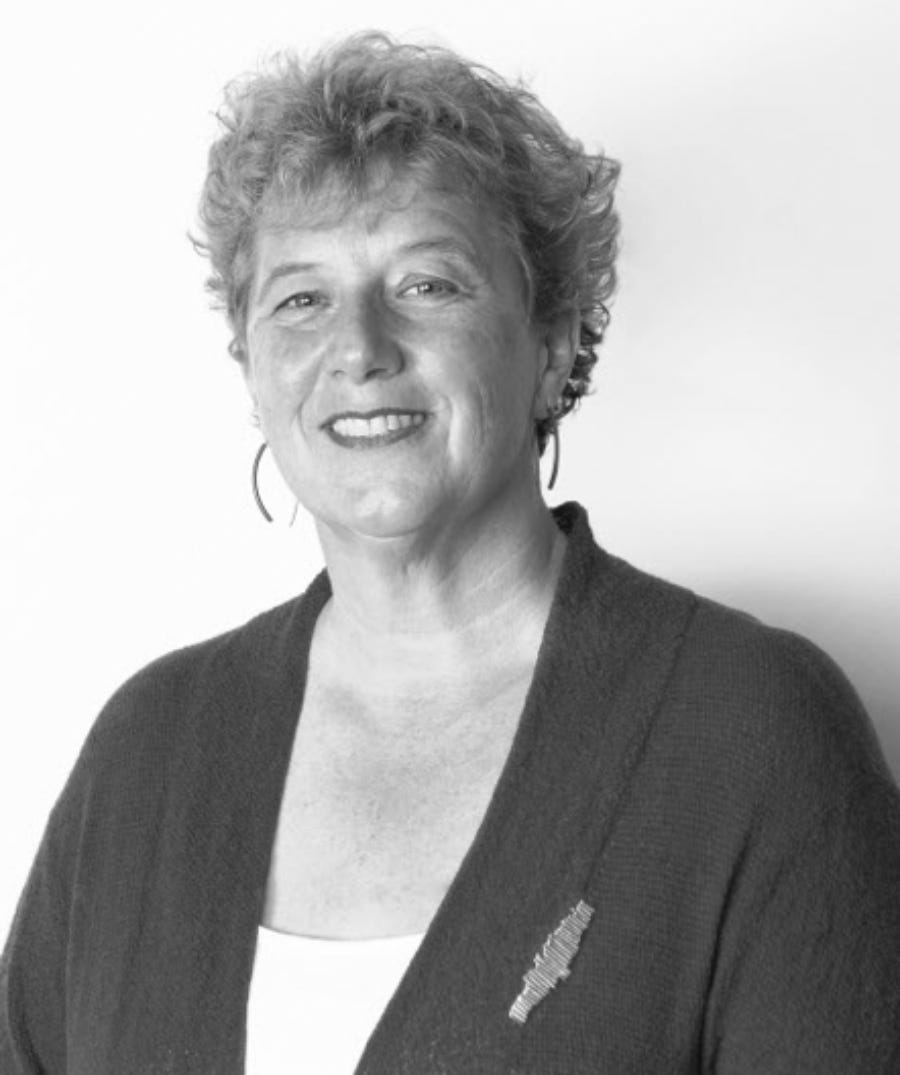
Dr. Jayshree Seth is a scientist and a passionate advocate for STEM. She joined 3M in 1993 after attaining an MS and PhD in Chemical Engineering from Clarkson University, New York. She holds 75 patents for a variety of innovations. She is currently at the position of Corporate Scientist, the highest technical designation at 3M, and she works with other engineers and scientists to break down complex problems and develop products that solve some of the customers’ toughest challenges. She is also the company’s first-ever Chief Science Advocate, and in this role, she works to promote science appreciation, and help people recognize its relevance in their daily lives and importance for the future.

In 2019 she became the first woman engineer to be inducted into the Carlton Society, which is the 3M Science and Engineering ‘Hall of Fame.’ In 2020, Dr. Seth was awarded the Society of Women Engineers (SWE) highest Achievement Award. In addition to being an award-winning scientist, recognized thought-leader and prolific speaker, she is the author of two books, The Heart of Science — Engineering Footprints, Fingerprints, & Imprints, and The Heart of Science — Engineering Fine Print published by the Society of Women Engineers (SWE), and all sales proceeds go to a scholarship for underrepresented minority women in STEM. She also starred in an award-winning documentary, Not The Science Type, and advocates globally for more representation in STEM education and professions.

Thank you so much for doing this with us! Can you tell us a story about what brought you to this specific career path?

I was raised in India surrounded by scientists and engineers — there was a prestigious engineering institution right in town and everyone aspired for their kids to become engineers, their sons and daughters. I never thought of myself as the ‘engineering type.’ I was more interested in the human context and couldn’t see that connection with STEM fields. We didn’t have any STEM women role-models either. However, due to strong encouragement from my parents I ended up getting a bachelor’s in chemical engineering. During the final year of our program, many of the students were applying for graduate school in the U.S. and I decided to apply as well — in spirit of competition with the boys in my class. I got accepted and I came to the U.S. for graduate school.

In many ways when I look back, I realize that I became a trailblazer because I was the only woman in the lab that I joined. I worked on a theoretical project for my MS but realized my heart wasn’t in that research area. I couldn’t see a connection to my very community-oriented goals. So, I thought about switching. Many students advised me not to switch projects because it would make my doctoral work harder and add years to the completion of my PhD, but I went for it anyway. This lit a fire inside of me. I wanted to prove to myself that I could do it. I threw myself into the study of diamond-like carbon films, working long hours and weekends in the lab, running experiments, analyzing data, summarizing the work, and publishing it. I ended up with over a dozen publications with the help, guidance and support of my thesis advisor and lab-mates. This experience showed me that with grit and determination, it is possible to reinvent oneself.

This mindset led me to jump at the opportunity to join 3M after I was offered a job following a summer internship, despite it being in an area I knew absolutely nothing about — disposable diapers! My past experiences had given me the confidence to know that with hard work I could learn anything and would be able to reinvent myself if I had to. So, I went from working on diamonds to diapers and decades later, I have worked on many different product and technology platforms, market areas and project types at 3M. I’ve held a variety of roles and am inspired to come to work every day to apply science to improve lives. In 2018, I was called upon to be the company’s first-ever Chief Science Advocate, and since then, I have expanded my roles within 3M in ways that I would not have imagined.

Can you share the most interesting story that happened to you since you began at your company?

When I started out at 3M, I was in the division that develops components for disposable soft-goods, like diapers and sanitary hygiene products. Initially, I found it very awkward to sit in meetings where there were feminine hygiene products spread out on the table and being discussed in groups largely composed of men!

Can you share a story about the funniest mistake you made when you were first starting? Can you tell us what lesson you learned from that?

When I first joined 3M, I did not correct people when they mis-pronounced my last name, and years later I realized that it was perhaps a mistake. More recently I have started telling people my last name, Seth, rhymes with eight. I realized the importance of speaking up — it may seem like a minor matter, but it is important to bring it up if it is something that is important to you. By the same token, I make it a point to ask others for the right pronunciation if there is a doubt in my mind. We don’t know what we don’t know, and it is good to be reminded.

Another instance I recall, from the year I joined 3M — we were all given gift certificates to buy turkey for Thanksgiving. I brought up the fact that I was a vegetarian, and I am glad that I spoke up. People are very willing to listen and accommodate — I was given a gift certificate for a veggie platter!

What do you think makes your company stand out? Can you share a story?

There are many things that make 3M stand out in my mind. It starts with our inspiring brand platform, 3M Science. Applied to Life™ and our employees’ commitment to embodying this by applying science to change lives.

At 3M, we are very active in the communities we operate in around the world. It’s the work 3M does to make an impact on local communities that makes me proud to work for the company. One of many examples is that last year, 3M announced a global, education focused goal to advance economic equity by creating five million unique STEM and skilled trade learning experiences for underrepresented individuals by the end of 2025. We are also aligned with the United Nations Sustainable Development Goals (UN SDGs) and are committed to creating a diverse science community and a more positive world with science. Science for community is one of the pillars in our sustainability framework at 3M, and we apply science in collaborative ways to improve lives and help solve some of the toughest challenges. Although often unseen, 3M science powers the world around us, and we take a community-first approach in every initiative we put forth, and in every product we manufacture.

Are you working on any exciting new projects now? How do you think that will help people?

I find everything I work on exciting — it’s more fun that way! I am currently working on a product that can eliminate a lot of raw material, process waste for our customers and help them be more sustainable. It is a tough technical challenge and that is what adds to the excitement. On the science advocacy front, I am also very excited about the work I am doing with Professor Diekman at Indiana University Bloomington to study interventions to facilitate higher retention of women and students of color in STEM.

Ok super. Thank you for all that. Let’s now shift to the main focus of our interview. Are you currently satisfied with the status quo regarding women in STEM? What specific changes do you think are needed to change the status quo?

Participation of women in many STEM fields such as engineering, and computer science remains low. We have a lot of room for improvement as far as increasing representation is concerned. The global public also agrees that we need to do more to achieve STEM equity.

We recently released the 3M 2022 State of Science Index — original, third-party research conducted by Ipsos that explores attitudes toward science in the U.S. and across 16 additional countries. The study examines the image of science, its relevance to the world, and its impact on society. I am saddened but not surprised to share that our survey found Americans acknowledge that challenges around STEM equity begin at an early age for women and underrepresented minorities — and they continue to snowball for those who choose to pursue STEM careers against all odds. I firmly believe that greater diversity in the scientific workforce — which often begins with a spark of STEM interest that ignites in early childhood — will lead to a greater positive impact on society. The world requires innovation. Innovation needs science. Science demands diversity. Diversity warrants equity.

It is important to note that the public recognizes the challenges women face. In fact, our survey found that more than four in five Americans believe women are a source of untapped potential in STEM — but, 59% of Americans say women are leaving STEM positions because they do not receive enough support. A big problem is representation. I also found it surprising that more Americans don’t recognize the role bias and prejudice towards women and racial minorities plays, as a barrier to pursuing a strong STEM education — only 25% of Americans believe bias is a barrier.

The problem of female underrepresentation in STEM is a complex, multifaceted issue with stakeholders ranging from parents, teachers, educators, mentors, peers, and employers with a strong role of family, schools, community, society, and culture across the key elements of what I call the STEM E’co-system: Exposure. Encouragement. Empowerment. Education. Economics. Engagement. Equity. Strategies are needed from early childhood, K-12, higher education, and all the way to the workplace to address the primary challenges across this spectrum that can hinder women in STEM.

We need to inspire girls at a young age by tapping into their pro-social goals. We must also ensure that STEM education is affordable and accessible, so we can continue to encourage women and girls to pursue the field. More than three-quarters of Americans say science companies would have a more positive impact on society if there was greater diversity and representation in STEM. To make that happen, we must provide access to resources, serve as mentors, and ensure that women see people who look like them in STEM leadership positions.

Last year, 3M created the documentary series, Not the Science Type, to highlight the journeys of four female scientists — including myself — who challenged stereotypes and bias by confronting gender, racial and age discrimination on their journey to prominence in the field. We need to keep telling these stories. We need to keep highlighting role-models.

In your opinion, what are the biggest challenges faced by women in STEM or Tech that aren’t typically faced by their male counterparts? What would you suggest to address this?

In my view there can be challenges across the entire spectrum, starting from the very deep-rooted cultural stereotypes of a scientist that are consistent with prescribed norms for men. Women often feel like they are being penalized for working in these fields, or they are not welcome in such environments. It can lead to psychological distress and given the intersectionality it can get compounded for women of color.

As for the challenges, there has been a lot of research on how that can manifest itself — there can be more discrimination, harassment, disparity in pay, social isolation, and exclusion from scholarly discussions if you are seen as an outsider. There is microaggression and then there is tokenism. So, the bottom line is that numerical underrepresentation and negative stereotypes contribute to challenges for women in STEM and they can stack the system against women and impact them disproportionately throughout their careers. That’s another reason why I am excited about Not the Science Type we are shattering gender stereotypes and promoting gender equity.

What are the “myths” that you would like to dispel about being a woman in STEM or Tech. Can you explain what you mean?

There are many prevalent myths as they relate to women and STEM fields — a common one being that women do not have the aptitude or the interest to pursue these subjects. The truth of the matter is that many of these fields are laid out in a very male-centric fashion or remain male dominated. This results in a very gendered view of the field leading to myths about who enters, persists, or excels in them.

From outside the STEM field, it may not be apparent how the contextual importance of science and its connection to societal goals can play an enormous role in attracting the next generation of talent. Yet, we also need to level the playing field for people of all genders, races, and backgrounds. While we are breaking down barriers and becoming more inclusive, we still need diverse scientists today to be more visible so that the younger generation can say, “if I can see it, I can be it.”

I truly believe that greater diversity will lead to greater impact in the sciences — which is why I’m such a passionate advocate for breaking down barriers and stereotypes to help women and girls enter the field.

What are your “5 Leadership Lessons I Learned From My Experience as a Woman in STEM or Tech” and why. (Please share a story or example for each.)

  1. You don’t need to climb the corporate ladder to the top to finally become a leader. Thought leadership allows you to flex your leadership muscles, from your own rung, without having formal authority. Take initiative, learn as much as you can about a specific topic or issue, and build your solution from the ground-up. This will provide you with higher visibility, exposure, opportunity, and the power to strategically steer things or lead new things.
  2. Don’t just settle for SMART goals: SMART goals — Specific, Measurable, Achievable, Relevant, Time-bound — can often fall short in sparking imagination or inspiring people to achieve greater things for themselves and their organizations. Today, goals need to accomplish not only what is deemed strategically important in the short term, but also potentially significant in the mid- to long-term, while allowing the ability to flex and pivot as circumstances change. Through all of this, remain reverent of the opportunity in place, remain active in giving back and furthering the goals of our larger organizations — and that is SUPER smart!
  3. Make your TALKS matter: Communication is key, so it’s important to treat every talk or presentation you give as very important. Commit to improving your communication and public speaking skills. One way to do that is through TALKS: there is the Topic, the Audience, the Layout, the Key points, and the Story. The story provides a connection to the audience and can make what you say memorable, informative, and inspirational. Once you lock in these aspects, it’s all about practice. Stay true to your style. Genuine authentic speakers are more successful in selling an idea or an ideology with their TALKS.
  4. Foster creativity and innovation but avoid common ERRORS: It can be difficult to foster creativity and innovation in a corporate setting, but it can be done! Unless a person is intrinsically highly motivated, most people deliver better when there is a general Expectation. This expectation can change the way we think and operate. In addition, with Resources and encouragement to take Risk, we feel the freedom to be more creative, in our own way. Opportunity to collaborate, lead and implement our ideas helps inspire us to deliver results. The associated Reward and recognition for successful value creation further inspires us to innovate. Above all, the continued Socialization of the concept of being innovative and its place in a company’s culture, and link to rewards and recognition, helps sustain it.
  5. Encourage a healthy work-life balance: Work and our personal lives are inextricably intertwined, so it’s important to embrace work and life semblance. This is our new normal, and it could help not only with employee engagement, but facilitate more sustainable innovation, inspirational leadership, global effectiveness, and diversity and inclusion. The benefit: making home-life decisions with a little more discipline and work-life decisions with a little more heart.

What advice would you give to other women leaders to help their team to thrive?

Thinking back to how my own managers have guided me along my career journey, I see three main elements: the ‘Can do’ mode, the ‘Can I do?’ mode, and the ‘Candid’ feedback.

‘Can do’ mode: When I felt motivated and passionate about something, taking initiative, and pursuing an idea — my managers didn’t try to talk me out of it. Taking initiative should be encouraged because it not only builds self-confidence, but it builds engagement and can lead to tremendous growth for the company.

‘Can I do?’ mode: When I have been more hesitant or reserved about an assignment or opportunity that had come my way, my managers listened to me, acknowledged my feelings, and helped me work through it. It’s important for managers to recognize the so-called ‘Confidence Gap’ between men and women and ensure that women on your team feel just as supported as their male counterparts.

‘Candid’ feedback: Being honest and coaching your teams on how best to manage their weaknesses will help them to continue to build upon their strengths. Sharing feedback in a positive way, even when constructive, can be empowering and make your team members more effective in their endeavors. Personally, receiving candid feedback from my managers allowed me to take their feedback to heart and try to adjust my style and approach in an authentic fashion.

I think this framework can go a long way in building trust with employees. It allows employees to lead, innovate, thrive, and ultimately contribute effectively towards achieving growth objectives.

What advice would you give to other women leaders about the best way to manage a large team?

I believe a lot has changed in the last two-plus years, but the fundamentals remain the same as it relates to people, work, and the skills necessary to lead! It is imperative that leaders create a sense of psychological safety and maintain close connections with all team members, especially given hybrid work models. To LEAD In requires Listening and learning, Engagement and empowerment, Acceptance of change and risk acceptance, Diversity AND Inclusion with intentionality and finally, trust in and training of Instinct and intuition.

None of us are able to achieve success without some help along the way. Is there a particular person who you are grateful towards who helped get you to where you are? Can you share a story about that?

It’s hard to pick only one person who has helped shape my career success — I have been blessed with a great number of supportive managers and sponsors, allies, and advocates while at 3M. One former boss of mine, however, have me the following advice that has stuck with me for years: “Jayshree, make the best decision for you, for now.”

At the time those words were spoken to me, I was agonizing over what seemed to be a very important career decision. But the decision I made then didn’t close any doors and may have opened many more. It was important for me to be confident in my decision, given the circumstances, but to also know that my entire career wouldn’t be based on this decision alone. It was liberating to know that if circumstances changed, I could still decide to pursue an alternate path.

How have you used your success to bring goodness to the world?

I feel honored to have the role of chief science advocate and the platform it gives me to promote science and the need for diversity in STEM fields. I am particularly passionate about more girls in STEM. I’ve authored two books, The Heart of Science — Engineering Footprints, Fingerprints, & Imprints, and The Heart of Science — Engineering Fine Print, published by the Society of Women Engineers (SWE). All sales proceeds from both books go to a scholarship for underrepresented minority women in STEM.

I was also honored to be featured in 3M’s documentary series, Not the Science Type, alongside such inspiring women who are challenging stereotypes in their respective fields. This film gives us the opportunity to inform, influence and inspire the next generation by showing that we can all be the science type regardless of gender, race, age or ethnicity.

During the pandemic I was also prompted to step out of my comfort zone and I recorded a song, which in my view, encapsulates 2020. It is available on playitforward.com and all donations go to United Way.

You are a person of enormous influence. If you could inspire a movement that would bring the most amount of good to the most amount of people, what would that be? You never know what your idea can trigger. 🙂

I already mentioned that I didn’t think of myself as the science and engineering type. I was more interested in the human context, and I didn’t quite see the connection of my pro-social goals with STEM fields. I was fortunate to have parental guidance and for someone who didn’t start out thinking they were the science type; I have done remarkably well. I often think about how many students and scientists, and how many ideas and innovations we are missing out on because of the way we teach, track, typify, train, and even talk about STEM. I often say we need some good STEAM cleaning: we need to Shatter stereotypes, Tell the wholesome story about science, provide Exposure and an environment of support, have men be Allies and advocates and put in place Metrics and measures to encourage more girls to pursue and women to engage in STEM careers. This STEAM cleaning movement can help to solve the problem of underrepresentation — and it’s the STEAM engine that could!

Can you please give us your favorite “Life Lesson Quote”? Can you share how that was relevant to you in your life?

Be good. Work hard. Live well.

My mother always emphasized the importance of being good, while my father talked about the value of hard work hard. These two messages have really stuck with me — in fact, now as a parent myself, I realize that this was a bit of parenting genius — does one really know when they are being good enough or working hard enough? I have added the live well component to it, realizing the importance of balance and a well-rounded existence. Of course, my family wants me to add stay calm!

We are very blessed that very prominent leaders read this column. Is there a person in the world, or in the US with whom you would love to have a private breakfast or lunch with, and why? He or she might just see this if we tag them 🙂

I would love to meet Indra Nooyi, former-CEO of PepsiCo. Her efforts when she was the CEO to lead the company in a new direction at the time, with the ‘Performance with Purpose’ roadmap, were very inspiring. I would like to gain more leadership insight into the vignettes she relates in her recent book and how she draws upon her experience of growing up in India.

Thank you for these fantastic insights. We greatly appreciate the time you spent on this.


Inspirational Women in STEM and Tech: 3M’s Jayshree Seth On The 5 Leadership Lessons She Learned… was originally published in Authority Magazine on Medium, where people are continuing the conversation by highlighting and responding to this story.

Women In Wellness: Bethany Nicole of ‘Apologies I Never Got’ On The Five Lifestyle Tweaks That Will…

Women In Wellness: Bethany Nicole of ‘Apologies I Never Got’ On The Five Lifestyle Tweaks That Will Help Support People’s Journey Towards Better Wellbeing

An Interview With Candice Georgiadis

You Are Your Ideal Client- Do you like your content? Is it the kind of information you would like to know, is it something that would be helpful to you? One of the greatest pieces of advice I have gotten, although unfortunately after I had already started my business, is to curate your content to you. If you have been in your clients’ shoes, and have gone through what they have, then who better than to create content for them! You know their unique struggle and what information would have helped or attracted you. And even if your ideal client isn’t reflective of you, creating authentic content is one of the most magnetic things you can do. So, create content you love, that resonates with you and that makes you just want to shout it from the rooftops!

As a part of my series about the women in wellness, I had the pleasure of interviewing Bethany Nicole.

Bethany is an LA based author, freelance writer and relationship expert. She is the founder and author of the book and brand Apologies I Never Got LLC. She is also the creator of the Written In The Stars Relationship Sessions.

Thank you so much for joining us in this interview series! Our readers would love to “get to know you” better. Can you share your “backstory” with us?

I am very much a writer at heart. I have always loved writing stories, poems, articles, whatever I could come up with. I always knew it was a skillset I had but I didn’t really know what to do with it. I grew up in a very small town in North Carolina, and I didn’t know any professional writers. I did not know any career options other than very mainstream ones. When I went to college I went against the grain and got my degree in Philosophy, so I was able to utilize my writing skills very much in that area but following graduation I went into social services. I worked with children and families in crises and became very familiar with Attachment Theory, and other relationship dynamics. Finally, after leaving that job with a solid understanding that frontline services such as that, was not my true calling, I began down a more creative path. I wrote my book and began becoming published regularly. But I knew my work was even bigger than the book. So slowly but surely, I began to see how I could combine all of my skills, passions and insights into one place. My business Apologies I Never Got LLC incorporates my one-on-one work with individuals and couples, my writings, and my passion for changing the way we look at wellness in relationships.

Can you share the most interesting story that happened to you since you started your career? What were the main lessons or takeaways from that story?

It’s maybe not as much interesting as informative, but when I first started out, I got A LOT of questions. Was I a therapist? A counselor? An astrologer? Who was I trying to be? What was my experience? It was a lot.

My Written In The Stars Relationship Sessions and my book, had people wondering what my title was, and more importantly, how they could fit me into a box. And I spent a lot of time initially explaining what I wasn’t, before I realized that I wasn’t really explaining what I was. By homing in on what my unique skillset is, how my book, brand and business can change lives and what the benefits will be, I am able to attract my clientele. People who come to my sessions are not looking for a therapist, or a counselor, or even a conventional astrologer. They come because they want the benefits my brand can offer them; however, I go about getting them there. That was a huge lesson I learned. To not focus on what we are not, but to become very clear on what we ARE. The rest will sort itself out.

Can you share a story about the biggest mistake you made when you were first starting? Can you tell us what lesson you learned from that?

The biggest mistake I think I made when starting out, was trying to provide content and services that catered to everyone. I was creating what I thought people would want to hear/see/read. But as the saying goes, when you target everyone, you reach no one. Not only was my messaging too broad it was not authentic. It wasn’t coming from my heart; it was coming from a perception of what I thought people wanted. But that is one of the best things about just starting, you learn works and what doesn’t, along the way. So, I identified my ideal clients, tweaked my messaging more directly towards them, and created content that felt real and authentic to me; things that I would want to hear/see/know. Because after all, we are generally our own target audience.

Let’s jump to our main focus. When it comes to health and wellness, how is the work you are doing helping to make a bigger impact in the world?

Relationships are the foundation of our lives. They affect everything from how we sleep, eat, and even show up in society as a whole. Relationships often get a bad rap, they are brushed off as unimportant, or trivial. But in reality, they are one of the most important aspects of our lives.

Think about it. Have you ever been in a bad relationship? Didn’t your entire world seem to shrink, and your life overall seem more difficult and complex? That’s because relationships sit at the foundation of our well-being, when things are not going well in our personal lives, it is hard to show up in our public lives. It is difficult to be productive, creative or joyful when all of our energy is being drained into a difficult relationship.

But with a divorce rate of 50%, that says a lot of relationships are more difficult than not. Which is where I believe my work comes in. Toxic dating culture breeds shallow connections. Connections that do not stand the test of time or worldwide pandemics, as we have seen. I aim to help individuals and couples heal themselves, to help heal their relationships. I help them dive deep into what might be holding them back or blocking them, I help them work to release it, and then we get busy building the foundations of a happy, healthy love life and relationship.

I help individuals and couples create the love life they desire, built on strong foundations of true connection, communication, and compatibility. That way they can show up in their lives and loves as strong, healed and thriving individuals. I believe this is the way we can create a society filled with compassion, inspiration, passion, and yes, love.

Can you share your top five “lifestyle tweaks” that you believe will help support people’s journey towards better wellbeing? Please give an example or story for each.

  1. Be Authentic- As I shared above, when I was producing content or services that were not authentic, I felt very disconnected from my life, business, and myself. But once I stopped worrying so much about what others thought and got very real about my own authentic truth, whether it was palatable or not, whether it was necessarily what people wanted to hear or not, whether it made me popular or not, I felt so much relief. I was able to create content that really did resonate with people because it came from a truthful place. But most importantly it resonated with me because it was my truth. This is a piece of knowledge I would give to anyone because the disconnect between your image and your truth is where a lot of damage can be done and a lot of your best life lost. So, find your truth. About whom you are, how you feel and what you have to offer and share that openly and honestly. Then watch your life transform.
  2. Forgive- Here is what sits at the crux of my book, brand and business. It is all about the forgiveness. Resentments are one of the top things that hold us back, take us out of the present, and steal our joy. Resentment and anger are very heavy burdens to carry, I should know, I’ve walked around with them for a good portion of my life. And while forgiveness isn’t easy, it feels a lot better than carting around old resentments for years. That is why I wrote my book, to help people recognize the hard-earned truth I have discovered, that forgiveness brings us back to ourselves. It helps us let go of the past and focus on the present, on the things we can change and control, not the things we cannot. So even if all we can do today is set the intention to forgive, and begin that process, then that is one step closer to living a life we love.
  3. Create Meaningful Connections- Surface level connections are SO pre-pandemic. As we step back out into the world it is time for us to create deep connections, in our lives, loves and in all our relationships. Surface level friendships do not do us any good either. We need to start diving deep and connecting with each other past the social media images and picture-perfect portrayals. Because as we have seen those connections do not last long and are ultimately meaningless in our lives. So, it’s time we started getting real, with ourselves, our relationships and each other. This year is the year of meaningful connections or bust!
  4. Write Your Own Apologies- You know those apologies? The ones you never got? Well guess what, you never needed them in the first place…because you can write them yourself. My book, Apologies I Never Got, covers my 3 Step Apology Process, that demonstrates not only how you can write an apology to yourself from yourself, but how you can move on from the past hurts of others as well. The process allows you to begin your own healing journey, no lame apology from an even lamer ex required. So let go of the resentment, the anger and the apologies you never got, and watch how your overall sense of well being improves.
  5. Find Your Purpose- Who are we? Why are we here? What is the meaning of life? Ok, maybe not all of those, all at once, but I think you get the idea. It is so important to explore the deeper aspects and find the deeper meaning of our lives. What is it that we are here to do? What skillsets do we possess and how can we use those for the greater good? By finding your purpose you not only create magnetism around your life, but you also encourage others to do the same. You have unique gifts, and you are supposed to share them. It is what we are meant to do. It is like puzzle pieces, we all have a place and we all fit in somewhere, and without us the picture is just no complete. So, find your purpose and live it to the fullest.

If you could start a movement that would bring the most amount of wellness to the most amount of people, what would that be?

To write their own apologies for the ones they never got. So often in life we never receive the apologies we deserve. But that shouldn’t hold us back from living a life we love. Healing is ultimately an inside job, and the only person with the right qualifications for that job…is us. By learning how to write our own apologies both to ourselves from others, and to ourselves from, well, ourselves, we learn to let go of the past. We take accountability for our own role in situations and begin to see how we can improve our future. Even if all we learn from the situation is how to avoid a type of person moving forward or how to get out of a situation more quickly, those are valuable life lessons. Writing our own apologies gives us a chance to see how we have more control than we realize in shaping our own lives and futures. We can choose to let go of the past, to do our inner work, and realize what we can improve in the future. We have the power to create the life and love we desire, and the very first step in that process, is letting go of the past. And that is really what my book, Apologies I Never Got, is all about.

What are your “5 Things I Wish Someone Told Me Before I Started” and why?

  1. You Are Your Ideal Client- Do you like your content? Is it the kind of information you would like to know, is it something that would be helpful to you? One of the greatest pieces of advice I have gotten, although unfortunately after I had already started my business, is to curate your content to you. If you have been in your clients’ shoes, and have gone through what they have, then who better than to create content for them! You know their unique struggle and what information would have helped or attracted you. And even if your ideal client isn’t reflective of you, creating authentic content is one of the most magnetic things you can do. So, create content you love, that resonates with you and that makes you just want to shout it from the rooftops!
  2. Just Start- It’s never going to be perfect. Just start. Your packaging will change, your pricing will change, and even your business priorities might change. And that’s OK. It’s all part of the process. So just start. Start writing, start paining, start selling, just start! Prepare as much as possible, do your research and get as organized as you can, but then just go for it!
  3. Progress Not Perfection- When you have to pivot, celebrate that! You are learning and growing and with every step and pivot you make; your business and life just gets better and better! Even the most experienced wellness practitioners and business owners are consistently making changes and improving, so it really is about progress not perfection.
  4. The Only Failure Is Giving Up- If every step of progress and every pivot is considered a success, then the only true failure is giving up. When you give up it’s over. When you pivot, take a break and try again tomorrow, or get up one more time after getting knocked down, then you are succeeding. Even if you are just getting one step closer to being a better healer or a better business owner, you are still that much closer. But giving up is the only true failure because it is the end, it is the closing of the door. As long as the door is still open, there is still hope. So, if you look at it that way, it takes an immense amount of pressure off. As long as you are still going, you are succeeding, you are making progress and that’s an amazing thing.
  5. Trust Your Gut/Stay in Your Center- There are going to be a LOT of opinions out there. Especially if you are doing something against the grain. Which is why it is so important to stay in your own center and trust your own intuition. Especially in the healing and wellness fields, your intuition is your best friend, and it is exactly what makes you so effective. So, trust yourself and stay in your center because the most important opinion about your life and business…is yours!

Sustainability, veganism, mental health and environmental changes are big topics at the moment. Which one of these causes is dearest to you, and why?

We are a product of our environment as they say, and right now our environment is in chaos, so it is no wonder the collective mental health is at an all time low. With so little focus on mental health, the cycles, and patterns we see are repeating themselves in the next generations. Traditional therapy has its place, but I feel it is best served in getting people to a point of surviving, and we need more effective and less traditional methods to get them from surviving to thriving. We are multifaceted beings and stark rooms with harsh regulations and fluorescent lighting with a by the book, cookie cutter approach simply does not serve us. We are at a time when more effective, less mainstream methods are being introduced and successfully used. And I think it is time we drop the stigma around them and begin including them in our healthcare. Medications, checked boxes, and questionnaires are not getting to the root of our problems, and we need to figure out what will. I went to several traditional therapists with little to no benefit, before finding the methods that worked for me, and none of them were introduced to me in mainstream therapy. I feel it is time we expand our concepts of mental health into holistic healing. And I think we should also recognize we are living in a society that is not conducive to the human psyche. It does not follow the cycles and natural rhythms of the planet, it requires us to produce the same amount of production whether we are sick or well, and it does not consider anything other than our work output. It is a system meant for robots, not human beings. No wonder we are so stressed.

It is time we take mental health far more seriously and start treating the cause, rather than the symptoms.

What is the best way our readers can follow you online?

My website: www.bethanynicole.com

Instagram: @apologiesinevergot; @bethanynicoleauthor

Twitter: @best2bbethany

Thank you for these fantastic insights!


Women In Wellness: Bethany Nicole of ‘Apologies I Never Got’ On The Five Lifestyle Tweaks That Will… was originally published in Authority Magazine on Medium, where people are continuing the conversation by highlighting and responding to this story.
Author Emily Gold Mears of Optimizing Your Health: 5 Lifestyle Tweaks That Can Dramatically Improve…

Author Emily Gold Mears of Optimizing Your Health: 5 Lifestyle Tweaks That Can Dramatically Improve Your Wellbeing

An Interview With Candice Georgiadis

Oral health is something that most people disregard. Brushing one’s teeth and visiting the dentist annually is not sufficient oral care. Second only to the gut, the mouth is filled with a large and diverse set of microbes. Replace mouthwash, toothpaste and other oral care products filled with toxic chemicals with non-toxic brands. As an example, a friend of mine suffered from overly sensitive teeth and as soon as he switched toothpastes to a non-toxic brand, his teeth felt better.

As a part of our series about “5 Lifestyle Tweaks That Will Dramatically Improve One’s Wellbeing”, I had the pleasure of interviewing Emily Gold Mears.

Emily Gold Mears is a well-respected citizen scientist and author of Optimizing Your Health: An Approachable Guide to Reducing Your Risk of Chronic Disease (Post Hill Press, May 17, 2022). A former attorney, Gold Mears shifted her advocacy efforts to seek information on optimizing one’s health through extensive research analysis in science and medicine. Her research focuses on the intersection of functional and allopathic medicine, and the critical requirements for individuals to become their own healthcare advocates. She is actively involved in several nonprofit organizations, most of which are focused on health-related research. For more information, visit www.emilygoldmears.com.

Thank you so much for doing this with us! Our readers would love to “get to know you” a bit better. Can you share with us the story about how you first got involved in fitness and wellness?

My journey with fitness was easy, it was my wellness journey that needed more work!

I began my fitness journey by with a daily running practice beginning when I was 14 years old and continuing until about 5 years ago. I am disappointed that I had to stop running but my knees couldn’t handle the pounding any longer. However, I also started weight training in my 20’s to support my running efforts and I continue weight training today. Being physically active has always been important to me.

My journey into wellness started years later. Despite my active lifestyle, I disregarded nutrition, proper sleep habits and other aspects of wellness for most of my life. It was when my father began to decline from dementia that I frantically began researching to find something, anything to delay the progression of his disease. While I didn’t succeed in finding anything helpful for my father, I realized that I needed to make several changes in my own lifestyle choices. It was this heartbreaking time in my life that I transitioned to becoming a citizen scientist, and why I began the journey to writing my new book Optimizing Your Health.

Can you share the most interesting story that happened to you since you started your career?

I never planned to write a book, just like I never planned to change my career in law. Like most people during the pandemic lockdown I needed to find a way to remain productive and mentally engaged. For years after my father’s death, I had been collecting vast amounts of research from attending scientific, medical and biohacking conferences, taking online classes, reading books about health and reading daily science and medical newsletters. I decided that I would gather all of my research and organize it into a comprehensive source. I thought, if nothing else, I will have a great source for reference purposes. I compiled files for 19 different topics and I began to write. I absolutely loved the process of writing the book but knew nothing about the publishing industry. If I had been aware of the many obstacles I faced in an attempt to get my book published, I probably would have hesitated in going forward! But I am so happy that I found a publisher that believed in me and supports my quest to share vital information with others struggling to understand how to prioritize their health.

Can you share a story with us about the most humorous mistake you made when you were first starting? What lesson or take-away did you learn from that?

A humorous mistake that I made was submitting too long of a first draft of my manuscript to my editor. I was told, in no uncertain terms, that my manuscript was way too long and people wouldn’t read all of it. I quickly learned there is a word limit that the publishing company gives their authors and I was over by a full one third! It was difficult for me to get the draft down because I thought all of my information was valuable and should be included. Let’s just say, I lost that pitch! I suppose the humor is that I have never been described as being at a lack for words. On the contrary, I can be a bit verbose!

Can you share with our readers a bit about why you are an authority in the fitness and wellness field? In your opinion, what is your unique contribution to the world of wellness?

I recognize there is no shortage of books in the wellness field. However, my book and my contributions to this field are unique in that I represent the consumer’s perspective. You will find most people in the health and wellness space have some kind of relevant degree (MD, naturopath, chiropractor, etc.) and they all seem to be selling something. I am not selling any products and have no bias or conflict of interest other than helping others live a healthier life with useful, actionable, evidence-based information. I love doing the research and can translate the clinical studies into language that is accessible by the everyday health consumer.

None of us are able to achieve success without some help along the way. Is there a particular person who you are grateful towards who helped get you to where you are? Can you share a story about that?

I agree that success is always achieved with the support of others. I don’t have one particular person to whom I’m grateful but rather several people I would acknowledge. The first is my father who was my inspiration for my research and for my book. It was a devastating experience to watch him decline and ultimately die from Dementia. I so wish I could give him a copy of my book. My sons have been both an inspiration as well as an enormous source of support. Whenever I had a technical or computer related issue (which was frequent), they always helped. A friend whom I met at a medical conference learned about my extensive research and incessant testing and experimentation and encouraged me to write a book. He was so supportive of my efforts that he offered to write the introduction to my book!

Finally, I am grateful to my editor at the publishing company who took a chance on me and provided helpful feedback throughout the process.

Ok thank you for all that. Now let’s move to the main focus of our interview. We all know that it’s important to eat more vegetables, eat less sugar, exercise more, and get better sleep etc. But while we know it intellectually, it’s often difficult to put it into practice and make it a part of our daily habits. In your opinion what are the 3 main blockages that prevent us from taking the information that we all know, and integrating it into our lives?

The first blockage is that people are very busy fulfilling all of their responsibilities and commitments in their life. It can be hard to add one more thing to everyone’s long list of things to do. Another blockage is that it’s easy to put things off when you are not directly faced with consequences. If you are not sick and your loved ones are healthy, it can be challenging to make sacrifices in your comfortable schedule and habits. It often takes getting sick or watching a loved one suffer to spring into action.

A third blockage is that behaviors become deeply ingrained. It is quite difficult to change well-established behavior and habits. It takes enormous determination and discipline to integrate lifestyle changes into our lives.

Can you please share your “5 Non-Intuitive Lifestyle Tweaks That Will Dramatically Improve One’s Wellbeing”? (Please share a story or an example for each, and feel free to share ideas for mental, emotional and physical health.)

1. Oral health is something that most people disregard. Brushing one’s teeth and visiting the dentist annually is not sufficient oral care. Second only to the gut, the mouth is filled with a large and diverse set of microbes. Replace mouthwash, toothpaste and other oral care products filled with toxic chemicals with non-toxic brands. As an example, a friend of mine suffered from overly sensitive teeth and as soon as he switched toothpastes to a non-toxic brand, his teeth felt better.

2. Invest in a non-toxic mattress. Depending on the state in which you live, there are laws mandating the addition of fire retardant and other highly toxic chemicals to your mattress. We spend 7–8 hours in bed and absorbing all of the chemicals from our mattress adds to our overall toxic burden. I switched to a non-toxic mattress several years ago and I sleep better and wake up more well rested.

3. Focus on NEAT (non-exercise activity thermogenesis). This is associated with your resting metabolic rate, which is a measure of how many calories you expend while breathing, resting, sleeping, eating and doing gentle activities. It also includes activities like cooking, gardening, house cleaning and even fidgeting. Learning about this was encouraging for me since I am a constant fidgeter. This may not in isolation lead to a longer life, but it is certainly heartening to learn that activities we take for granted can contribute to our overall wellbeing.

4. Optimize your circadian rhythms. These are biological processes which have the greatest impact on your sleep. They regulate all aspects of our health and when disrupted can cause a host of problems. One easy way to improve your circadian rhythms is to briefly expose your eye to sunlight within the first 30 to 90 minutes after waking. If you live in the Northern latitude, invest in a light box. I used to have bad sleep habits including going to sleep too late which also made waking up difficult in the morning. After I put this practice into action, it had a dramatic positive impact on my circadian rhythms and my sleep.

5. At the end of your shower, turn the water to cold for 30–90 seconds. While at first, this is highly unpleasant and truthfully, I find that it continues to be unpleasant, there is a great deal of evidence supporting the benefits of cold exposure. It boosts your immune system and is thought to extend your longevity.

As an expert, this might be obvious to you, but I think it would be instructive to articulate this for the public. Aside from weight loss, what are 3 benefits of daily exercise? Can you explain?

As a lifelong exerciser, my favorite benefits from consistent exercise are improved sleep, mental clarity and stress reduction. One of my daily goals is to become sufficiently tired so that I fall asleep easily. On the rare day when I don’t do any form of exercise, I find I don’t fall asleep as easily as the days when I do exercise. This is motivation for me to get some form of exercise every day, even if it’s just a walk. When I used to run daily, I found it to be meditative. I did my best thinking while running. I can no longer run daily but I do find that most forms of exercise improve my mental clarity. There is evidence that a critical benefit of exercise is the production of brain-derived neurotrophic factor, known as BDNF. This promotes brain functioning and I definitely feel more mentally clear after exercise. While stress reduction is related to mental clarity, it is another benefit that I derive from consistent exercise. When the day gets away from you, and it so frequently does, exercise can be quite calming.

For someone who is looking to add exercise to their daily routine, which 3 exercises would you recommend that are absolutely critical?

I think the three most critical forms of exercise are weight training (aka resistance training), cardiovascular training and high-intensity interval training (HIIT). Weight training is critical for your metabolism, building muscle and maintaining bone density. Cardiovascular training is critical for increasing your heart rate and both blood and oxygen flow to the brain. HIIT is defined as short bursts of exercise followed by lengthy periods of low intensity exercise. The benefits of HIIT include improvements in cardiorespiratory and metabolic health, body fat reduction, improved mental health, improved sleep and stress reduction.

Is there a particular book that made a significant impact on you? Can you share a story?

One of the many books which I have read that had a significant impact on me is called “How Not To Die” by Michael Greger, M.D., FACLM. I read this book several years ago and found it both enlightening and disturbing. My initial takeaway was that everything we eat, drink, and do is killing us! After processing all of the information, I calmed down and applied the most salient details and settled on an approach where I would do the best that I can do to avoid dying in the near future!

If you could start a movement that would bring the most amount of good to the most amount of people, what would that be?

I would love to start a movement that would help a large percentage of society have access to healthier food options. While there are so many potential movements that I can think of, this is a huge problem for countless Americans and could be drastically improved if government began subsidizing grocery stores into moving into underserved communities. It is appalling that so many people have little or no access to healthy food. When one is faced with buying their food at a 7–11 type store, it becomes nearly impossible to eat a healthy diet. Improving this egregious situation will require a collaborative effort from both the private and the public sector but would improve so many lives.

Another movement (can I pick two?) that I would love to start is one that eliminates the ubiquitous amount of misinformation and conflicting information available to the average consumer. While this issue affects so many aspects of society today, one area that I could fix is the field of nutrition. Nutrition is one of the most confusing and conflicting areas of science. While we all know there are many reasons for this, one small way of fixing it is to always have opposing views presented at the same time. In other words, if there is someone discussing the benefits of a vegetarian diet, there should be someone else discussing the benefits of adding animal products to your diet. This should take shape as a panel discussion and that way people could learn both sides of issues and make their own conclusions. This by the way applies to political discourse as well!

Can you please give us your favorite “Life Lesson Quote”? Do you have a story about how that was relevant in your life?

My favorite “Life Lesson Quote” is attributed to Winston S. Churchill It is “Success is stumbling from failure to failure with no loss of enthusiasm.” We learn our best lessons from our failures and someone who never fails is not trying new things.

We are very blessed that some of the biggest names in Business, VC funding, Sports, and Entertainment read this column. Is there a person in the world, or in the US whom you would love to have a private breakfast or lunch with, and why? He or she might just see this if we tag them.

I have great admiration for people who use their money to help society. Recently, I read that John Doerr gave Stanford University $1.1 billion to support the University’s new School of Sustainability. Climate change affects every aspect of our planet as well as our individual health. I applaud John Doerr for stepping up and helping with this critical issue and have him on the top of my list for a dream lunch!

What is the best way our readers can follow you online?

You can follow me on Instagram (@emilygoldmears), Facebook (Emily Gold Mears) and my website (emilygoldmears.com). You can also grab a copy of my book by visiting: https://www.emilygoldmears.com/book#order

Thank you for these fantastic insights. We wish you only continued success in your great work!


Author Emily Gold Mears of Optimizing Your Health: 5 Lifestyle Tweaks That Can Dramatically Improve… was originally published in Authority Magazine on Medium, where people are continuing the conversation by highlighting and responding to this story.

Female Founders: Elena Brennan Of BUS STOP Boutique On The Five Things You Need To Thrive and…

Female Founders: Elena Brennan Of BUS STOP Boutique On The Five Things You Need To Thrive and Succeed as a Woman Founder

An Interview With Candice Georgiadis

It’s nearly impossible to switch off. I practically work 7-days a week, and it’s nearly impossible to take a full day off. The only time I do is when I go away; but even then, I still check my emails daily for any urgent matters. I am fortunate though, that thanks to my brilliant team, I do fly off to Europe and faraway places as much as I can, we all need to refresh.

As a part of our series about “Why We Need More Women Founders”, I had the pleasure of interviewing Elena Brennan.

London-born, Elena Brennan, is a shoe designer and Founder of BUS STOP Boutique, an award-winning shoe boutique established in 2007. The flagship is in Philadelphia USA. She started designing her own brand BUS STOP X in 2015, and her limited-edition shoe collections are sold exclusively on her website and in her boutique.

Thank you so much for doing this with us! Before we dig in, our readers would like to get to know you a bit more. Can you tell us a bit about your “backstory”? What led you to this particular career path?

After 27 years in the corporate world, working for international advertising agencies such as, J. Walter Thompson, I decided to follow my passion to become an independent business entrepreneur. At 48 years old, divorced and a single mother, I changed career paths to open BUS STOP Boutique.

My passion for shoes started at an early age, my mum said I always wanted a new pair of shoes! My parents owned two boutiques in London, and having worked there part-time, and going to the showrooms on buying trips, it became second nature. It’s ironic, they wanted me to work in our family business, but I wanted to do something on my own, hence choosing advertising. I guess you could say retail was always in my blood!

Can you share the most interesting story that happened to you since you began leading your company?

In 2016, I was hand-picked by the Italian Trade Agency, a Governmental agency supporting business development of companies abroad, to join a small prestigious select group to visit Italy twice in the same year.

My group represented USA, and many other countries were represented such as Japan, Hong Kong, and Poland. It was like the United Nations of the shoe industry. It was a very educational, international, and cultural experience that I wouldn’t trade for the world, no pun intended.

As well as workshops, I attended MICAM in Milan for the first time; the world’s largest footwear trade fair that attracts exhibitors and buyers from all over the world. On my second trip to Italy that year, I toured the Italian leather tanneries and shoe manufacturers in the Veneto region. One of the shoe factories I visited made shoes for luxurious designers such as Prada and Versace, so it was wonderful to see previous collections from some of my favorite designers. Of course, any new designs were under wraps.

I learned so much about the shoe industry, and I formed long-lasting relationships with like-minded peers spanning across Italy, UK and Japan; with whom I still have friendships with to this day.

Can you share a story about the funniest mistake you made when you were first starting? Can you tell us what lesson you learned from that?

I wouldn’t particularly say it is funny, but some may see the humor in it. When I first opened, I was adamant that all receipts should be hand-written as I felt it was a very personal touch for the customer experience. Who in their right mind does that these days? I made the mistake of waiting to implement a fully integrated Point of Sale system. What was I thinking? Thank goodness, I came to my senses and I learned that to grow your business you need a POS, and sooner rather than later!

None of us are able to achieve success without some help along the way. Is there a particular person who you are grateful towards who helped get you to where you are? Can you share a story about that?

I wouldn’t be where I am today without my mentor who happens to be my dear father, who unfortunately passed away in 2018. I am eternally grateful for all of his guidance and emotional support along the way. Even when he was very ill, he always wanted to know how my business was going (I didn’t want to burden him during his illness). Early on, my father shared a very simple tip: train your employees to think “exactly” like you.” Even though the personalities of my team are very different, all of us do think alike and this in turn means my business runs more smoothly and exudes excellent customer service. I’m elated when customers tell me how happy they are with our customer service whether it be in-store or online. My dad was right.

At the time when I was contemplating expanding into a much larger space, I was visiting my parents in Europe. Of course, my father always gave me the best advice, but I did not want to burden him as he was feeling poorly that day. I was secretly sharing the floor plan with my mother and he overheard our conversation (even though I thought I was being discreet) and instantly wanted to share his opinion. He approved and told me over and over again how proud he was of me. I miss him terribly.

Primary focus of the interview. According to this EY report, only about 20% of funded companies have women founders. This reflects great historical progress, but it also shows that more work still has to be done to empower women to create companies. In your opinion and experience what is currently holding back women from founding companies?

I strongly believe that what is currently holding women back from founding companies is that we as female founders need to control the economy by supporting other female-owned businesses, employ a female workforce, and elect more women into positions of power such as state legislators, judges and senators. My team is strictly female, and I work with as many female entrepreneurs as possible — photographers, stylists, manufacturers etc. It’s imperative as a female entrepreneur to have our voices heard.

Can you help articulate a few things that can be done as individuals, as a society, or by the government, to help overcome those obstacles?

Here are a few things that can be done as individuals, as a society or by the government to help empower more women as founders:

  • Voting and electing women into power
  • Providing appropriate funding
  • Equal pay for women

This might be intuitive to you as a woman founder but I think it will be helpful to spell this out. Can you share a few reasons why more women should become founders?

Female founders bring a unique perspective. For example, shoes designed by women for women are 9 times out of 10 more comfortable. I test-fit every shoe that I design to make sure the fit and comfort will suit my customers’ needs. Unfortunately, some shoes designed by men are not designed with any input from women, so they are not incorporating women’s needs into the aspect of design. This can be applied to any industry that is designing and producing products for women without their input.

Many opportunities such as grants, programs, awards and networking are geared for women only. Many such initiatives and organizations exist to help support female founders to prepare them to become founders, nurture their businesses and receive the accolades they deserve.

What are the “myths” that you would like to dispel about being a founder? Can you explain what you mean?

Some of the “myths” that I would like to dispel about being a founder are as follows:

  • You’re Born A Founder Rather Than Acquiring the Skills: It’s a discipline that you can learn, it’s not necessarily a skill-set that you are born with. Traits can be taught and even if you do not have the initial inclination towards being a founder, you can run a successful business and flourish with dedication, practice and hard work.
  • You Don’t Need A Larger-Than-Life Ego: Results speak volumes rather than a BIG personality. A lot of founders can actually be quite shy, but they still have successful companies. Shy entrepreneurs have a big advantage over their extroverted counterparts, they almost never over-talk or over-share. Some of the most famous and successful founders are introverts. Bill Gates and Warren Buffet are two that come to top of mind. Please don’t let these myths, or any myth get in the way of owning your own business. There is no magic or perfect way! Follow your dream and you will rise to the top.

Is everyone cut out to be a founder? In your opinion, which specific traits increase the likelihood that a person will be a successful founder and what type of person should perhaps seek a “regular job” as an employee? Can you explain what you mean?

Not everyone is founder material. There are many traits that will increase your chances to be a successful founder. I believe these are amongst the most important, in no particular order: Honesty, integrity, passion, strong-willed but flexible at the same time, determination, strong leadership and communication skills, resilience, persistence, confidence, being a good listener, compassion and empathy.

If you do not feel comfortable in a leadership role, you may be better suited working for someone else. By this I mean that when you are a successful founder, you need to be a leader in all aspects of your company. It’s not easy to run your own business when obstacles crop up along the way, it takes a lot of leadership skills, grit and determination!

Here is the main question of our interview. What are your “5 Things I Wish Someone Told Me Before I Started” and why? (Please share a story or example for each.)

5 Things I Wish Someone Told Me Before I Started and WHY? Share story or example of each:

  1. It’s nearly impossible to switch off. I practically work 7-days a week, and it’s nearly impossible to take a full day off. The only time I do is when I go away; but even then, I still check my emails daily for any urgent matters. I am fortunate though, that thanks to my brilliant team, I do fly off to Europe and faraway places as much as I can, we all need to refresh.
  2. It’s OK to say NO! When I first opened my business, I would say YES a lot more but it’s simply not the case any more. I feel comfortable saying NO and I’m still able to garner respect at the same time. I’ve always received quite a few requests to loan shoes for fashion shows to be worn on the runway. I learnt the hard way when shoes were returned damaged, and to be honest I did not see a benefit in featuring the shoes on the runway. I now only loan shoes for select fashion shows but mostly photo shoots with people that I trust. By facing uncomfortable situations head-on, I’m able to move forward and run my business more smoothly.
  3. Making Big Decisions Solo Is The Hardest Thing! In the early days when I ran my business solo, I was making all the tough decisions on my own. There’s nothing worse than oscillating between the pros and cons to come to the right decision. There’s an element of fear associated but in the long run, I believe that as long as you learn from your mistakes then it’s OK. We’re only human after all. A story I would like to share with you is that I have a mantra which has really helped me with the toughest decisions. My mantra is simply “Sleep On It” and it’s amazing how I look at an issue with a fresh pair of eyes the next day, and 90% of the time, I feel good about my decisions!
  4. You’re Starting a Business During a Recession? Little did I know that when I opened my boutique in April 2007 that we were leading into a recession. It wasn’t officially announced until December but five months after opening I could feel the economic decline and see that customers were cutting back on their shoe purchases. Initially, I sold very high-end International designer shoes, and as a new business, I had to research and look for fashionable shoes that were still high quality but at a lower price point. This was a hard decision to make but this is what saved my business!
  5. Age Appropriate? I started my business at the age of 48 as a divorced single mother, which was the best time for me to venture out on my own. It’s quite symbolic that just by sheer chance, I signed the lease on my son’s 18th birthday. My business was my new baby. I always tell women, especially women in their 50’s that it’s never too late to follow your dream. You never want to tell yourself that it’s too late to start a business or change careers!

How have you used your success to make the world a better place?

I’ve used my success by giving back. I’m very involved in my local community and business district, as well as volunteering my time on several boards and I have a mentoring program for students.

I’ve listed some of my contributions below:

Recent Chair of the SSHD Business Improvement District:

My tenure ended in December 2021. The goal of the South Street Headhouse District (SSHD) in Philadelphia is to provide a safer, cleaner, well-managed business district for the benefit of the entire community. Through constant improvement, the aim to build an engaging and enticing place to work, visit, shop, invest, and live.

Taskforce Member of The Philadelphia Fashion and Garment Industry Task Force: A resource to help the community of new emerging fashion designers and boutique owners in Philadelphia obtain grants and up-to-date information about seminars and resources to help support their business.

Advisory Board member of The Philadelphia Fashion Incubator: The Philadelphia Fashion Incubator’s mission is to nurture emerging fashion entrepreneurs from Philadelphia design schools and the local fashion community.

By connecting them to the global fashion network and encouraging them to expand and retain their businesses in Philadelphia, the Incubator contributes to the region’s economic development.

I am also involved in a mentoring student program. Each year I hire 1–2 high school and university students as interns to teach them the necessary tools they’ll need to establish their careers in the design or fashion industry.

You are a person of great influence. If you could inspire a movement that would bring the most amount of good for the greatest number of people, what would that be? You never know what your idea can trigger.

If I could inspire a movement that would bring the most amount of good for the greatest number of people, I would start a Shoe Academy. Apprentices can learn (free of charge) the dying artisanal art of hand-making shoes to be taught by Italian shoemakers. There are very few shoemakers and factories in the United States, which is so very sad. A component of the Shoe Academy would be a recycling program. Gently worn shoes will be donated and passed along to those who are less fortunate. There is so much waste in the fashion industry, so it’s the least I can do to recycle the shoes, and to avoid so many shoes ending up in landfills.

We are very blessed that some very prominent names in Business, VC funding, Sports, and Entertainment read this column. Is there a person in the world, or in the US with whom you would love to have a private breakfast or lunch with, and why? He or she might just see this if we tag them.

I would love to have afternoon tea with Michelle Obama. She truly is an inspiration, and such a role model for women. She’s a passionate advocate for women and girls not only in the U.S. but worldwide in areas of poverty awareness, education, and nutrition. Her accomplishment of being the first African American women to serve as First Lady is historic. I also love her support for American fashion designers, she’s not afraid to step-out-of-the-box in her true iconic style to represent lesser-known fashion designers.

This was very meaningful, thank you so much. We wish you only continued success on your great work!


Female Founders: Elena Brennan Of BUS STOP Boutique On The Five Things You Need To Thrive and… was originally published in Authority Magazine on Medium, where people are continuing the conversation by highlighting and responding to this story.
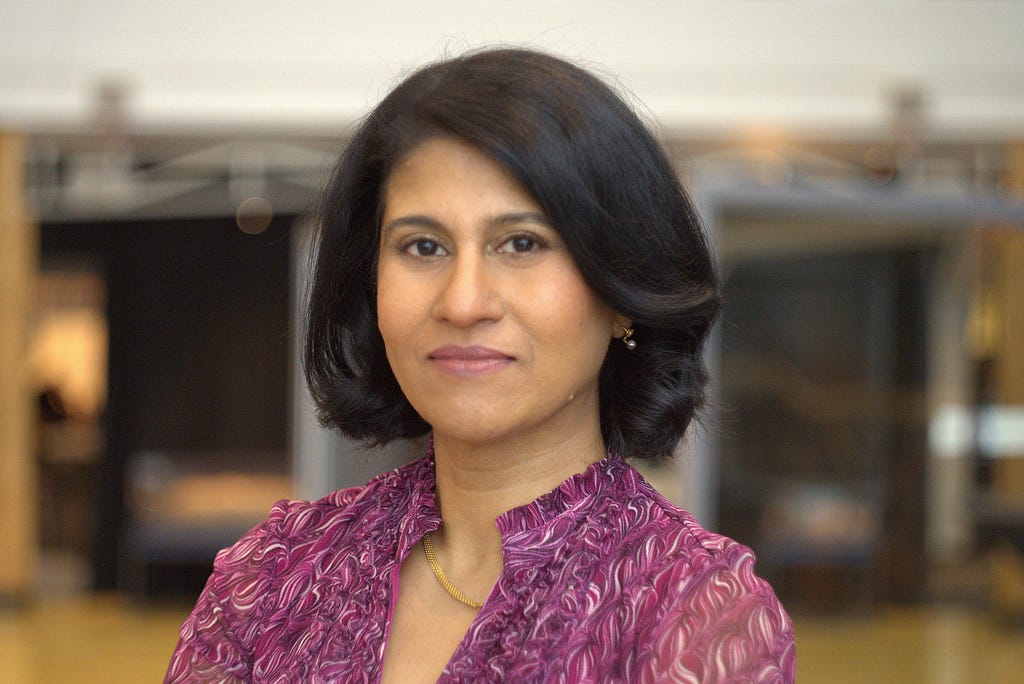
Dr Brandon Santan: 5 Things Anyone Can Do To Optimize Their Mental Wellness

An Interview With Candice Georgiadis

Limit social media. Social Media can be very harmful to a developing brain and vulnerable mind. There is a lot of faulty information on social media and the risks around cyber bullying are only getting worse. The fast pace of social media has been demonstrated to shorten attention spans, interfere with concentration and focus and has also been shown to be highly addictive. It’s very distracting and we are seeing a decline to learning and mental health as a result of this, what seems to me to be a, bane on society.

As a part of my series about the “5 Things Anyone Can Do To Optimize Their Mental Wellness”, I had the pleasure of interviewing Dr. Brandon Santan.

Dr. Santan is a licensed and triple board-certified professional mental health and relationship counselor focusing on holistic mental wellness and specializing in addiction recovery, anxiety issues, stress & burnout, spiritual wellness, HSP, financial wellness and romantic relationships. He has over 16 years of experience in the industry and has worked in both inpatient and outpatient settings. Dr. Santan now owns a flourishing private practice in Chattanooga, TN called Thrivepoint and enjoys helping people heal and thrive. You can visit Dr. Santan online at: https://drbrandonsantan.com

Thank you so much for doing this with us! Our readers would love to “get to know you” a bit better. Can you share with us the backstory about what brought you to your specific career path?

My name is Brandon Santan. I started in the medical industry as a Certified Athletic Trainer (ACT) after graduating with a bachelor’s degree in exercise science and sports medicine. I always struggled with anxiety and after college I got some help with that and I had such a good experience I decided to pivot my career to mental health. I earned a Master’s and a PhD in counseling and have been working in the field since about 2005 when I started my practicum and internship. I’m currently a licensed and triple board-certified mental health counselor. I own a private practice in Chattanooga TN. I enjoy helping people with all kinds of mental health issues and specialize in addiction recovery, anxiety issues, stress & burnout, HSP, spiritual wellness, financial wellness, holistic wellness and romantic relationships. I’m also a Certified Health Coach.

Can you share the most interesting story that happened to you since you started your career?

The hospital, where I worked for almost 8 years after my graduate program, evaluated certain patients for electroconvulsive therapy (ECT) as part of their treatment plan. ECT is a series of treatments that take place over the course of 2–4 weeks. If a patient was a good candidate for ECT, the doctors would order the treatment and we would send the patient to the surgery center for the first treatment or two. After each treatment, the patient would return to our facility so that we could monitor their progress and watch for any side effects. If they seemed to be responding well, we would discharge them and the patient would then follow up with more ECT on their own to complete the series of ECT treatments based on their treatment plan.

I remember one particular week when the staff were getting our assignments in the morning, I ended up with an extra patient by mistake. If there were an odd number of patients, we would rotate taking on an extra case. This particular week wasn’t supposed to be my turn, but I was assigned the case by mistake, so I decided to just roll with it because we were short staffed and I wanted to be a team player. It turned out that this patient was referred for ECT treatments and I was able to accompany them to one of their ECT appointments. I followed the patient throughout the procedure including in the therapy room during the treatment and in post anesthesia care.

In school we learned about ECT and the history of this treatment modality, but it’s really difficult to conceptualize. This mistake and experience gave me tremendous insight into these types of therapeutic modalities and into the many different aspects of the treatment process. I was able to better understand the very complex yet well-orchestrated dance in which the patient is receiving treatment. The providers at the ECT treatment facility spent time explaining to me how the procedure works and what is happening inside the brain. That experience has been invaluable for my knowledge and understanding of patient care and treatment.

Can you share a story with us about the most humorous mistake you made when you were first starting? What lesson or take-away did you learn from that?

When I was first working at one of the local hospitals to get some experience, before my starting my master’s program, we used a paging system that used physical pagers. This system worked great, but when I first started working there, I had never used a pager before. I didn’t realize it, one day, but the sound was on instead of the vibration. I was walking down the hall towards the nurse’s station and my pager started beeping, but I didn’t know what it was. There was a slight echo in the hallway, so the beeping sounded like it was coming from patient’s rooms and following me as I walked down the hall. I couldn’t figure out where the beeping noise was coming from. As I approached the nurse’s station to alert them that there was a beeping noise that was following me down the hall, everyone was looking at me like I had three eyes. About the time I reached the Nurse’s Station I heard someone say: “Turn off your pager!!!” I finally realized what that beeping noise was that was following me down the hallway, but it was too late. Everyone was annoyed at me for letting my pager beep longer than expected. Needless to say, I was quite embarrassed. I’m glad I’m able to think back on that now with a smile.

None of us are able to achieve success without some help along the way. Is there a particular person who you are grateful towards who helped get you to where you are? Can you share a story about that?

I grew up in a very close community. I wouldn’t say it was any one person, but a community of people including my family who supported me and helped me along the way. I had a few really good counselors and mentors who encouraged me to use my experiences to help others. Most recently I would say my wife has been the most engaged in my support and encouragement to pursue my ambitions.

What advice would you suggest to your colleagues in your industry to thrive and avoid burnout?

Prioritize self-care and boundaries. As with all helping professions, therapists need to be extremely careful to not get overwhelmed by all the people who need their help. It’s critical for us to have strict boundaries around office hours, returning calls and messages, setting appointments and our own self-care strategies. Strive for balance and don’t let anyone dissuade you from your priorities.

What advice would you give to other leaders about how to create a fantastic work culture?

I would say, again, that balance is key. We are seeing excellent benefits for work performance and stress reduction in organizations that promote and support flexible work/life balance for its employees. We all know that life can throw us a curve ball sometimes and even when there is no curve ball, we can just get busy with life tasks. Knowing that an organization will be flexible and provide support for us to tend to life issues, increases employee morale and, as such, benefits the entire culture of the organization.

Ok thank you for all that. Now let’s move to the main focus of our interview. Mental health is often looked at in binary terms; those who are healthy and those who have mental illness. The truth, however, is that mental wellness is a huge spectrum. Even those who are “mentally healthy” can still improve their mental wellness. From your experience or research, what are five steps that each of us can take to improve or optimize our mental wellness. Can you please share a story or example for each.

I love the idea of “mental wellness”. I agree 100% that mental health falls on a huge spectrum and I’m eternally grateful to Authority Magazine for working to bring this to public awareness. We need more awareness, and our society is long overdue for a reduced social stigma around mental health challenges. I’m so thankful for this opportunity to participate in this interview and I hope that what I share will be beneficial to many.

I’d like to start by providing a proper definition of “Mental Wellness”. The term “Mental Wellness” provides, what we would consider, a wellness narrative around mental health. Rather than thinking of it in a binary healthy or not healthy, we can consider mental wellness in much the same way that we would consider physical wellness. This is the narrative that says: “I’m not as well as I would like to be so I will be improving my mental wellbeing.” Of course, the brain can become diseased so some mental illness is physical illness but when it comes to the brain, brain health will often define mental health and vice versa.

There are so many things that can improve and/or optimize our mental wellness, but since we are talking about “wellness” here, which I equate with a holistic framework or model of health, I will stick to that theme for my list.

With that in mind, here are 5 steps that each of us can take to improve or optimize our mental wellness.

  1. Assess your micronutrient levels. See a nutritionist or ask your doctor to check key nutrients that are important to mental wellness such as Vitamin D, Folate and Vitamin B12. During my graduate program I had a professor who turned his nose up at the idea of using supplements saying that, in the US we get all our nutrients from our diet and supplementing only serves to make you have expensive urine. In hindsight, that was a very irresponsible message to send young clinicians. What I would come to realize later is that roughly half of the population have genetic mutations or morphisms on key vitamin and nutrient receptors for mental wellbeing such as the Vitamin D, Folate and B12 receptors. These genetic mutations cause deficiencies and make it difficult for the body to keep those nutrients at optimal levels. These genetic anomalies also often prevent people from metabolizing synthetic vitamins which are put into our foods during the refining and enrichment processes. Add to that being indoors longer and more often which preventing us from getting the amount of sun exposure we need for healthy Vitamin D levels. When I was working at the hospital, the psychiatrists gave everyone Vitamin D and Vitamin B12 supplements indiscriminately. These are nutrients that are vital to mental wellness. If your doctor says that your vitamin levels are within the normal range, ask about, what’s called, subclinical deficiencies for you individually. This would be a deficiency based on your genetic data rather than the textbook clinical range. Some people’s test results fall within the clinical range, but would be considered abnormal for the individual who has a certain genetic profile. If your doctor recommends supplementation, look for high quality supplements that are natural (L-Methylfolate, for example, is a good option for folate supplementation NOT Folic Acid which is the synthetic form of folate), bioavailable and liposomal. As an example, consider that, in the US, the FDA recommends 500 IU of Vitamin D daily. According to research, we get roughly 10,000 IU from the sun on a sunny summer afternoon spent outside. The FDA is severely under recommending Vitamin D and it seems to be having quite an impact on mental wellness. ALWAYS check with your medical doctor before using any supplements, but this could be huge for many people in improving and/or optimizing their mental wellness.
  2. Exercise. As many already know, exercise is crucial to physical health especially as we age. The brain is a physical organ and as such, benefits also from physical exercise. Increased blood flow, better physical efficiency and higher oxygen levels all have tremendous benefits for our brain health as well as our mental wellness. Researchers have discovered that, for some people, exercise is just as beneficial as an anti-depressant in healing depression. It may even be more beneficial in certain instances since exercise increases overall health. Again, check with your medical doctor to make sure exercise is appropriate for you and what type of exercise you should do, but please consider being more active in some way. It’s tremendously helpful for our mental wellbeing.
  3. Find a provider that will image your brain. I echo the sentiment of Dr. Daniel Amen. Dr. Amen is a prominent psychiatrist based in the US in the state of CA and a pioneer in brain imaging. He shares his concerns about the prescribing providers in our industry for being the only healthcare providers who treat a part of the body they don’t regularly image. Think about it for a minute. If you have an irregular heart beat and see a cardiologist, that doctor will to an ECG and an ultrasound. If you have joint pain the orthopedist will do an x-ray and a CAT scan and maybe even an MRI if it’s soft tissue related. But when have you ever heard of a psychiatrist doing a brain scan before prescribing a treatment protocol for a mental health disorder? It hardly ever happens. Dr. Amen has established clinics throughout the US now and one of the first things his clinicians do is perform a SPECT scan of the brain. This helps the providers see which parts of the brain have diminished blood flow and activity so that they can implement the proper treatment protocols including more precise prescription medications and the correct supplements.
  4. Consider additional and alternative treatments. The number of alternative treatments are growing. Each year we get closer to perfecting many different treatment protocols that serve to supplement medications and therapy. These alternative treatments include: biofeedback, EMDR, hypnosis, Transcranial Magnetic Stimulation (TMS), Cranial Electrotherapy Stimulation (CES), Virtual Reality (VR), psychophysiological coherence training and vagus nerve stimulation are all examples of supplemental and alternative treatments for mental wellness. These alternative and supplemental treatments are among the top contenders for mental wellness promotion. A psychiatrist, where I practice in the Chattanooga, TN area, who’s name is Tim Jennings, MD, treats patients with a combination of medications and TMS. I’ve spoken with him several times about this treatment protocol and it seems to have a higher than average success rate. TMS is even FDA approved to treat depression. So don’t discount alternative type treatments. You may end up finding something that works well for you.
  5. Consider medication. I know this suggestion may seem antithetical to a theme of holistic mental wellness, but I’ve lost count of the number of patients I’ve worked with who are hesitant to take medications but do so later and wish they had started medications sooner. Taking medications doesn’t mean you will have to take them for the rest of your life. I like to explain to patients that medications are like a life preserver when you are stranded in water. It helps you keep your head above water during rough times and once you ‘learn to swim’ in therapy (i.e., develop strong, healthy coping skills) or get out of the water (i.e., enter into a remission or heal), you can take off the life preserver. With your prescribing provider’s help, you will be able to wean off medications and continue to grow and change in therapy and life. Finally, in considering medications, it’s best to find a psychiatrist or psychiatric nurse practitioner to discuss medications for mental health. Many PCPs will have limited knowledge of the broad scope of medications or they have a few they like to prescribe for everyone based on what works for the majority of their patients. Psychiatrists are MDs or nurse practitioners with specialized training in the prescription and management of psychiatric medications. They have a broad knowledge of the various kinds and formulations of these types of medications and can often find one that works for you much more quickly. In addition, talk to your psychiatrist about genetic testing. There is a genetic profiling test called GenoMind and the results will include a list of medications that are likely to work well with your genetic profile. This makes targeting the right medication(s) much easier and more efficient. There has been a lot of success with this method of medication evaluation.

How about teens and pre teens. Are there any specific new ideas you would suggest for teens and pre teens to optimize their mental wellness?

I have to admit that I don’t work with teens and pre-teens. As a clinician I only work with adults so I’m far from an expert on what teens and pre-teens need to optimize their mental wellness, but here are a few ideas based on discussions with colleagues, recent research and personal studies on treatment protocols for this age group.

  1. Limit social media. Social Media can be very harmful to a developing brain and vulnerable mind. There is a lot of faulty information on social media and the risks around cyber bullying are only getting worse. The fast pace of social media has been demonstrated to shorten attention spans, interfere with concentration and focus and has also been shown to be highly addictive. It’s very distracting and we are seeing a decline to learning and mental health as a result of this, what seems to me to be a, bane on society.
  2. Turn off screens. Digital information reigns supreme currently. Kids are in front of computers and screens even for in person learning as they do activities online and watch videos for learning. Our brains aren’t currently capable of such exclusive digital consumption. We’ve seen a decline in standardized testing scores and my theory is that it’s due, in part by, movements towards digital learning. Turning off screens and engage in real-world activities, including reading physical books, can be tremendously beneficial to the mental wellness of this age group.
  3. Be active. I don’t think it is a surprise to anyone that a sedentary lifestyle is responsible for many health issues. Physical activity is extremely important for this age group and their developing minds. Music, athletics and other extra-curricular activities give balance and help the developing mind thrive.
  4. Develop healthy relationships. Teens and pre-teens are extremely vulnerable to peer pressure, bullying and the influence of what others think of them. Developing healthy relationships that are affirming, validating, kind, supportive and considerate, is vital to the mental wellbeing of this age group. I encourage teens and pre-teens to find a mentor and develop a strong support network with family, friends and community leaders that are trustworthy and have their best interests at heart.

Is there a particular book that made a significant impact on you? Can you share a story?

Yes! Change Your Brain, Change Your Life by Daniel Amen, MD. Dr. Amen is a fantastic provider who has a holistic approach to mental health. He’s based in CA, but has developed brain scanning techniques to actually image the brain and learn about physical issues related to mental health disorders. He has several clinics around the country. He’s somewhat of a disruptor so he’s not very popular in my industry, but I pay close attention to disruptors because I believe that’s how change happens. In this book, Dr. Amen talks about the Cognitive, Behavior Therapy (CBT) techniques that are backed by a plethora of research. He also discusses actual physical brain health and the importance of supplementation and natural remedies for mental wellness. I remember distinctly listening to the audiobook version of this book and I couldn’t stop listening. It was like he was speaking right to my heart. I’m now currently in his program for providers who want to learn more specialized and specific techniques for mental wellness. This man is brilliant and if my colleagues, who are skeptical, would just take a moment to understand his research, I have little doubt that they would be amazed.

You are a person of great influence. If you could start a movement that would bring the most amount of good to the most amount of people, what would that be? You never know what your idea can trigger. 🙂

I don’t know that I would consider myself inspiring this movement as it’s already underway, but I would love to be more involved in the holistic and natural wellness side of mental health treatment. Research shows a strong link between diet, exercise and other healthy lifestyle behaviors to mental wellbeing. Natural and alternative treatments do help improve outcomes to traditional mental health treatments already so why aren’t we doing more of them? There are many ways to inspire more of a movement here such as: change in schools around lunch menus and exercise activities for school aged children, educate young medical doctors and therapists on the relevant research related to natural and alternative treatments, encourage researchers to focus more on natural and holistic remedies, speaking out against and creating change around marketing information such as outlawing direct to consumer pharmaceutical marketing, creating change around access to natural and holistic treatment options including requiring them to be covered by insurance providers are all ways that society can effect change on this front.

Can you please give us your favorite “Life Lesson Quote”? Do you have a story about how that was relevant in your life?

“Success is the sum of small efforts — repeated day-in and day-out.” — Robert Collier

Many people get overwhelmed at the thought of making change. Even suggestions in this article can seem overwhelming to many. Breaking down your goals into very small, bite sized pieces will help you maintain consistent growth and change. You don’t have to make giant leaps all the time, if at all. You can make small efforts that will add up to big results. Think of it as a marathon not a sprint. I try my best to instill this in every patient I meet. I also try to apply it to my own life also.

As an example from my life, we, unfortunately, had an issue in the crawlspace of our house and we needed to do some renovations as a result. I took on a lot of the work myself to try and keep costs down. It was a huge and stressful and overwhelming undertaking. I got through it, though, with the principle from this quote. I just did a little bit at a time and reminded myself that those small efforts each day will add up and they did. I repeated this quote in my head every day to help me stay motivated.

What is the best way our readers can follow you on social media?

Readers should visit my website at https://drbrandonsantan.com where I will keep visitors up to date with my social media and practice changes. I can also be found on Facebook: https://www.facebook.com/drbrandonsantan/ Instagram: https://www.instagram.com/dr.brandon.santan/ and YouTube: https://drbrandonsantan.com/youtube-bitesizementalhealth

Thank you for these fantastic insights. We wish you only continued success in your great work!


Dr Brandon Santan: 5 Things Anyone Can Do To Optimize Their Mental Wellness was originally published in Authority Magazine on Medium, where people are continuing the conversation by highlighting and responding to this story.