Wisdom From The Women Leading The Cannabis Industry, With Brooke Morgan Westlake of Women in…

Wisdom From The Women Leading The Cannabis Industry, With Brooke Morgan Westlake of Women in Cannabis Expo

An Interview With Candice Georgiadis
Education: Educate yourself on the cannabis industry, the entire market, your state, city and county. What are the dos and don’ts, what are the important laws you need to know and who is in the industry in your state, city or county? Can you connect with them? What is it you want to do in the industry? Is it being done? If it is, what do you like that is currently being done? Where do you see you can provide changes? Lastly, more education is needed for the cannabis industry. School education, college education, consumption education is needed for the public. Doctor, nurse and physician assistant education is needed for all patients that wish to consume.

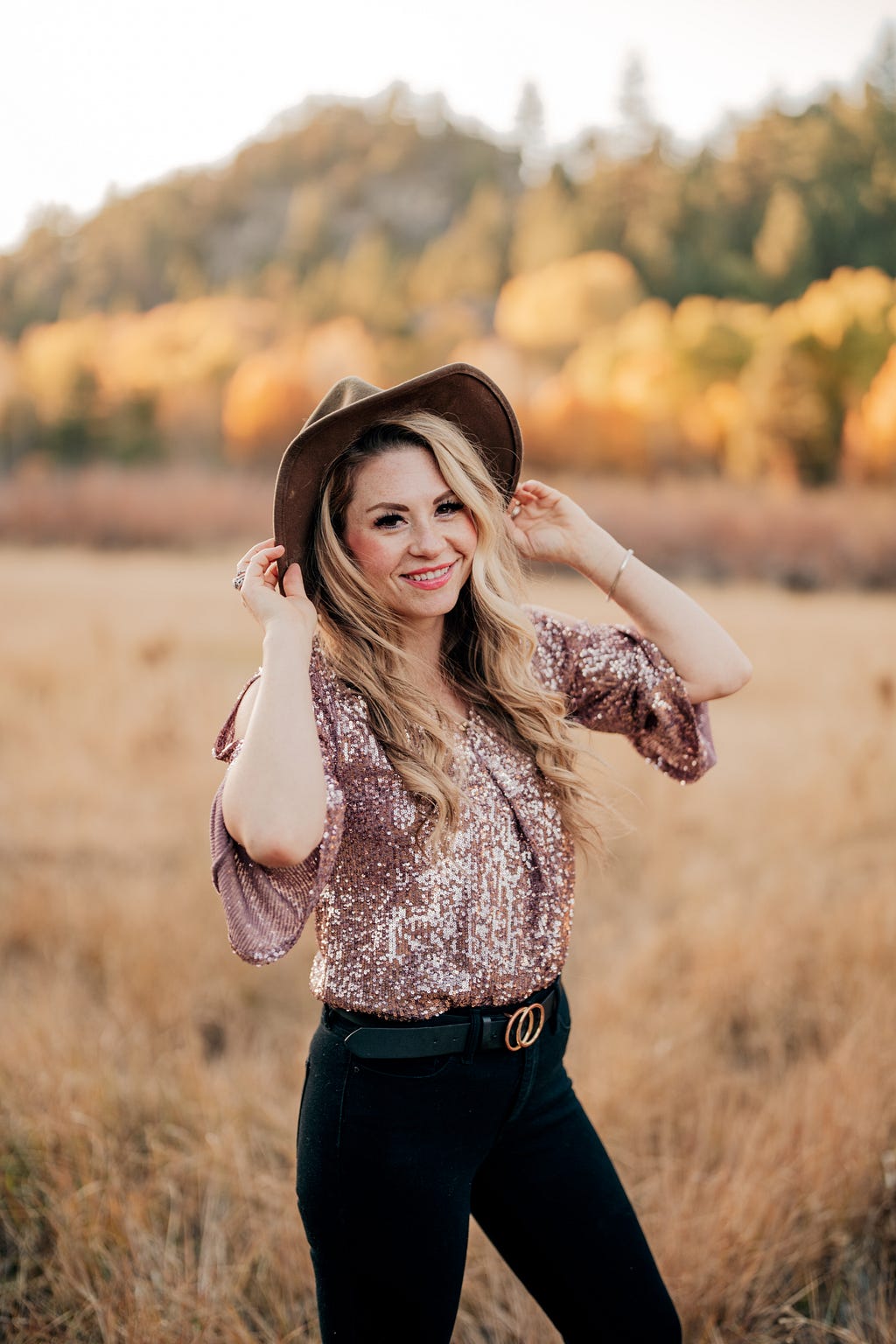
As a part of my series about strong women leaders in the cannabis industry, I had the pleasure of interviewing Brooke Morgan Westlake.

Brooke Westlake: Owner, Founder, Business Engineer. The Women in Cannabis Expo, Ganja Garden Goddesses, Neon Nite Apparel & ADA Lake Labs were all developed in 2020 & 2021. Brooke took a direct career change from healthcare after 20 years into the cannabis industry. Through the building of her four companies, she realized that it wasn’t just about having successful business, but it was also about being a big voice within an industry that was illegal for far too long. She is proud of her entrepreneur spirit that shines through her businesses. The importance of cannabis and health presented itself as a critical life measure after she had life-saving emergency surgery in August of 2020. With the help of cannabis she is fighting off nausea, malnourishment and pain.

Education being a special interest & first time generation college graduate, Brooke holds three degrees, including a Bachelor’s degree & Master’s degree in Criminal Justice from the University of Nevada, Reno. She has served on state commission boards, serving two full terms for Nevada Commission for Women, and currently sits on the Board of Examiners for Long-Term Care Facility Administrator & The Northern Nevada Disciplinary Bar Board. Being appointed by former Nevada Governor Sandoval, and current Nevada Governor Sisolak.

Brooke is also a single mother of two sons, loves to spend time at Lake Tahoe and enjoys creating art through photography, painting and jewelry. She also loves to give back to the Alzheimer’s community.

The Women in Cannabis Expo for 2022: March 31-New Jersey, June 30-Denver, September 30-Las Vegas, December 2-San Francisco. WomenInCannabisexpo.com/

Thank you so much for doing this with us! Can you tell us the “backstory” about what brought you to the cannabis industry?

I haven’t decided if what brought me to the cannabis industry is funny, unusual or both. Honestly, what is helping keep me in the cannabis industry is that cannabis is now literally helping save my own life (I will share more on that later). In 2018, after working for a private medical manufacturing company for 10 years, we closed our doors. I decided it was time to further my education and gain my master’s degree. I graduated my 2-year master’s program in Criminal Justice from the University of Nevada, Reno, in a year and half and gave birth to my second son.

As the master’s program ended, I reached out to my mentor. I was considering investing and opening a fingerprint/drug franchise business. But what my mentor said to me blew my mind. “You should open a cannabis testing lab.” I said, “I don’t know anything about cannabis.” His suggestion: “Do some research and get back to me.” The research told me this was a viable business opportunity for me, so it was up to me to educate myself on the rules and regulations of the industry as well as get a solid business plan together. I quickly learned that I could not get a bank account or additional bank/lending funding. However, this was not a detouring factor for me.

While I continued to put my business plan, I attended three cannabis expos to meet my potential vendors for the lab while gaining continued knowledge for the industry. One of the expo’s happened to have a lady’s night on the schedule. I thought that would be a wonderful way to network with women in the cannabis industry. See what is working or isn’t working. Understand why they went into the industry.

We were placed in a large room with tables, chairs, and drinks. There was no keynote speaker, which I thought was odd, as I had traveled and participated in trade shows for over a decade in the last 10 years of my medical career. Soon after this expo my family and I went on a vacation. I began searching the internet for expos within the cannabis industry that was geared towards women. I couldn’t find anything. The light bulb went on and the Women in Cannabis Expo was created.

Can you share the most interesting story that happened to you since you began leading your company? Can you tell us what lesson you learned from that?

I think the fact that I launched the Women in Cannabis Expo January of 2020, but could not host our first event; and really worked hard on putting it together for over a year and nine months during COVID was really the first interesting thing that took place.

The second most interesting thing that kept coming up over and over, when I spoke with potential vendors, exhibitors, sponsors, and speakers on a daily basis was that they all kept saying the same thing. “This needed to happen,” “Thank you for doing this,” and “This is going to be amazing!”

The life lesson for me was right in front of my eyes. I was creating a company on my terms, and it was new, exciting and scary all at once. But what I was creating as an entrepreneur, business woman is bigger than who I am. That in itself, understanding that it is bigger than me is the biggest life lesson of all.

Can you share a story about the funniest mistake you made when you were first starting? Can you tell us what lesson you learned from that?

I don’t believe there are mistakes, but there are first moments that are funny ones, and I have a funny story and life lesson I can share. At the Women in Cannabis Expo in 2021 we had a networking mixer that included food, drinks, awards, scholarships and raffle prizes. During the awards ceremony, one of the awards we decided to give out, we named the Brooke & Jelena Business award. This award was created to highlight a group of women who were working together in the cannabis industry, and it was decided that this award should go to Sam & Lisa, co-founders of Tokeativity. After announcing this award and the winners, Lisa came to the stage to accept because Sam had to travel back home to Oregon earlier that day. As Lisa was walking up to the stage, Jelena mentioned to the audience that the award itself, with our names on it, had the initials “BJ.” This did give the audience a good laugh. But, what was even funnier was that Lisa then asked if she could say something on stage. I handed her the mic, and she said, “What is even funnier is that I am totally a Lesbian.” The crowd laughed harder. But don’t worry, it gets even funnier. Once the awards were done being handed out, we were then able to move onto raffle tickets and prizes. As I drew a raffle winner for the vagina suppositories, I looked at the raffle ticket to see it had a name written on the back of it. I let out a little chuckle, because the name I had drawn, I knew this business associate. I said “David! Get up here, you’re the proud winner of vaginal suppositories”. Again, the crowd roared with laughter. The life lesson was this, earlier that day the keynote speaker had canceled (last minute). I was concerned because I am a person of my word but felt really bummed like I was going to disappoint everyone by letting them know the keynote speaker was not going to make it. But the honest funny pure moments that happened were organic and were meant to happen. That included lots of laughs. I just can’t make this stuff up. It is life, and the lesson here is sometimes you just have to go with the flow. Everything works out the way it should or better!

Do you have a funny story about how someone you knew reacted when they first heard you were getting into the cannabis industry?

It was very shocking for most of my family and friends. Because I grew up in the era of being a D.A.R.E. kid and I took my oath and pledge seriously to the “Just Say No” to drugs. If you are not sure what D.A.R.E. is — google it. It will be a shocking, bizarre read of what we were teaching our children at the time. In my teen years, I was a straight A student, varsity cheerleader, church going, choir singing, girl that didn’t party. I was headed to medical school after high school. I had tried cannabis one time as a senior in high school and had a massive panic attack. After working in healthcare for twenty years to shift over to opening businesses within the cannabis industry was a big shock to all my friends and family. But they were all supportive. No one really thought it was funny or more ironic than I did myself.

None of us are able to achieve success without some help along the way. Is there a particular person who you are grateful towards who helped get you to where you are? Can you share a story?

I have a male mentor/dad figure that came into my life when I was 29 years old. He really guided me in the world of business, real estate, friendship, truly taking me under his wing. Showing me how to make hard decisions, teaching me how to be the businessperson he knew I was capable of being. He was also the one person that told me to open a cannabis testing lab. He was also the first person I called to discuss the idea of the Women in Cannabis Expo, and that I couldn’t find anything in the current cannabis expo industry, his response was “You have to do it!” He continues to be one of my biggest fans, supporters and advocates. He gave me away when I got married and his wife and he hosted my wedding ceremony at their house. The moments we have shared together with him as my teacher and mentor I hold close to my mind and heart and draw from his voice daily. I will think to myself “How would he handle this situation? What would he do? What would he say?” I have so many awesome stories about the life lessons that I have learned from him, I joke that I need to write a book about it. I can say that without him and his wife, I wouldn’t be where I am today, and I am forever grateful to them both.

Are you working on any new or exciting projects now? How do you think that will help people?

I am working on three different new and exciting projects that tie right into my current companies. This includes creating the Women in Cannabis Expo chapters, the cannabis business connection community, and creation and launching of an e-Commerce website for the cannabis industry and consumer for men and women that include apparel, jewelry, art and CBD products. Each of them will help people in their own way.

1. WICE Chapters Coming Soon: I kept getting asked by multiple women daily regarding them having their own Women in Cannabis Expo chapter. I knew this was something I couldn’t put aside anymore. Right now, I am building out the business plan and hoping to have a minimum of 10 Women in Cannabis Expo Chapters throughout the US, Canada or Europe by the end of 2022. I think this will help continue to bring women together by allowing them to connect locally and nationally. Having our expos all over the country is great, but also women need to connect with other local women too. I believe that this furthers our community reach and goals as a company. This will help by bringing women together in communities all around the world. Women can then have a close network to call on day-to-day.

2. The Cannabis Business Community Connections through WICE Website: We have added a landing page to our Women in Cannabis Expo website, called the Cannabis Business Connection Community whereby companies can partner with WICE to be listed on our Cannabis Business Connection page as a resource for those (mostly women) seeking out cannabis business connections. I get sent emails daily asking about accountants, lawyers, education, medical doctors, hiring agencies, etc. This felt like this was a great fit. We offer discounts to those companies that list with us that can verify they are women owned. This will help people because I get asked all the time for recommendations or referrals for cannabis companies, especially woman owned ones. Many people want to support women-owned cannabis companies.

3. E-Commerce here we come: I am in the process of launching an e-Commerce website for apparel, jewelry and a CBD line. The apparel and jewelry are all one-of-a-kind designs that I have created. The CBD that we are using in the products is USDA certified organic. This is important because the consumer isn’t entirely educated yet on USDA certified organic CBD. The CBD in our products can be trace recalled and verified for testing. Right now, on the internet and in stores, CBD products are being sold that do not contain what they say they do on the label and there lacks a transparency of standards for the CBD market that hasn’t been developed yet by laws state-to-state, city-to-city. Eventually laws will be created so that this isn’t as big of an issue as it is now. However, in the meantime, anyone who purchases a CBD product online or through a retailer, needs to do their research. Can they verify what the label is telling them? Was the product lab tested? Because right now the CBD market is really a “Buyer beware” market. The other reason why this is an issue is because I am also aware that there are dispensaries out in the current marketplace that are currently purchasing cheap CBD products just for the sake of having a bigger markup for generating revenue. I believe what is in the CBD product is very important and having it being trace recalled and USDA organic sets the bar of standards high. This puts our consumers on notice that when they purchase from us, they will be getting top-of-the-line CBD. To me quality is better than quantity. This will help people because we are bringing to the market true, pure, certified USDA organic CBD.

Ok. Thank you for all that. Let’s now jump to the main core of our interview. Despite great progress that has been made we still have a lot more work to do to achieve gender parity in this industry. According to this report in Entrepreneur, less than 25 percent of cannabis businesses are run by women. In your opinion or experience, what 3 things can be done by a)individuals b)companies and/or c) society to support greater gender parity moving forward?

I am so happy to be asked this question.

The lack of women in the cannabis industry to me is a critical topic that should be at the top of the list as a priority to bring change into the current cannabis industry. I have read reports and find it alarming at the low rates of women who are in this industry. But along with the lack of women within the cannabis industry is also the lack of minorities and those with disabilities. I have read lots of different reports that many states have implemented or are implementing ways for women, minorities, and those with disabilities to have access to funding so that they can go into the cannabis industry. But I have yet to read about these individuals getting access to these funds. I have heard of more red tape issues for these folks. States and cities could and should publish reports by showcasing if in fact these funds were dispersed to who they said they were dispersed too. Transparency is desperately needed just on this social equity funding…

Let’s talk about the three points you have on this issue which are, individuals, companies, and society.

  1. Individuals- People must speak up. We must be loud voices and cannot stop speaking up if one door is closed. We must address this on a state-to-state, city-to-city level. We need strong women, minorities and those with disabilities to stand up to help see through the changes that desperately need to happen and that this pattern goes away.
  2. Companies-Need to look at who they are hiring. Are they getting a diverse candidate pool? Are they seeking to hire women, minorities, and those with disabilities? They should have that as part of their goals, objectives, and implementations. The other issue that companies are currently facing in this regard has to do with COVID and lack of current workforce. Part of this is due to laws being generated regarding COVID vaccines that are mandating that individuals be vaccinated. This does and is affecting the hiring pool for companies. Also companies may need to or should adapt to bringing in new candidates on board that are trainable. They can do this by looking outside of the box. Companies need to reach further then just to the same candidate pool. There are many people willing to or are looking at going into the cannabis industry. Look at the candidate’s professional background and experience, while it might not be within the cannabis industry yet, these new potential candidates from other industries could bring fresh eyes and approaches to a cannabis company. Companies are going to have to seek out a balance act on this.
  3. Society to support great gender parity moving forward- Society also has the job of speaking up when it comes to supporting the initiatives of women, minorities, and those with disabilities to be hired for jobs within the cannabis industry. Society can set the standards and right now the standard is businessmen. Society could adopt that more businessmen step back and look at investing into women, minorities and those with disabilities with companies in the cannabis industry. Instead of taking over the cannabis industry. Society can and should be a loud voice for changing this in the cannabis industry.

You are a “Cannabis Insider”. If you had to advise someone about 5 non intuitive things one should know to succeed in the cannabis industry, what would you say? Can you please give a story or an example for each.

The song, “If I Knew Then What I Know Now” by Kenny Rogers comes to mind when I read this questions. Now, as a “Cannabis Insider” there is a lot to share when providing advice to anyone who wants to be successful in the cannabis industry.

  1. Red Tape: There is a lot of red tape in the cannabis industry, and it can get really frustrating very fast. If you believe you have a product or service that fits well within the cannabis industry, don’t get frustrated or give up! Don’t get discouraged, don’t let someone talk you out of it because they don’t see your vision. Take a break. Seek out business advice or help. Do online research. Connect with others, bounce ideas off business leaders that you’re close with. Red tape is that, its red and its tape. Tape can be cut and removed. Don’t let it limit you.
  2. Banking: Be prepared to have lots of issues finding banking. Sadly, this is really part of the norm in this industry so far. This is because cannabis is still federally illegal in the United States. It doesn’t even matter that one of my companies isn’t even handling cannabis, at all. Period. Because the word “cannabis” was in the title of the company name (The Women in Cannabis Expo), I was rejected multiple times by large and small banks! Just remember when one door closes another one opens. But be prepared for a lot of “No’s!” before you get to the “Yes!” on this.
  3. Education: Educate yourself on the cannabis industry, the entire market, your state, city and county. What are the dos and don’ts, what are the important laws you need to know and who is in the industry in your state, city or county? Can you connect with them? What is it you want to do in the industry? Is it being done? If it is, what do you like that is currently being done? Where do you see you can provide changes? Lastly, more education is needed for the cannabis industry. School education, college education, consumption education is needed for the public. Doctor, nurse and physician assistant education is needed for all patients that wish to consume.
  4. Lending: Lending is close to almost impossible. There is no bank funding at this time for the cannabis industry in the United States. I know of more companies within the cannabis industry that are family funded, self-funded, or investor funded to get them started. Don’t give up on lending and funding, but understand that it comes with red tape, higher loan rates and other significant challenges. Also align yourself with lenders that you feel comfortable working with every day. These same rules apply for investors.
  5. Laws/Standards: Cannabis is still federally illegal in the United States. The medical and recreational legalization has come from individual states and its voters. Those states have then created laws and quality standards. These will continue to adapt with what is and isn’t working state-to-state, and city-to-city. Stay up to date on laws and standards where you live or where you want to open your cannabis business.

Can you share 3 things that most excite you about the cannabis industry?

The three things that excite me about the cannabis industry are infancy, market space and women in business. Let me explain.

  1. Infancy: The cannabis industry is in its infancy stage which means there is ample opportunity for all. And I do mean ALL. What is needed and what is yet to come are new creative innovative ideas, products and services. For the person that has an entrepreneur spirit, this could be an industry that is fitting for them. In my view the sky’s the limit for the cannabis industry.
  2. Market Space: The market rules and regulations are new and changing. Meaning, a lot of things are and are not set in stone. There is a lot of trial and error happening each day. There is room for growth and change in the market space. The market space will continue to adapt overtime, so keep an eye out on this.
  3. Women/woman: Being that cannabis is a female plant, I guess you could say I am biased that I really believe the future of cannabis is female. There is a lot of room for many women to be in this industry. I say come one and come all. My hope is that if this is an industry you were interested in being a part of, that you come join us! Don’t forget to do some research with your business or business ideas to see where you could fit in or do better.

Can you share 3 things that most concern you about the industry? If you had the ability to implement 3 ways to reform or improve the industry, what would you suggest?

I can provide a much longer list than three things that do in fact concern me deeply about the cannabis industry, but I will keep it to the top three things that I think about daily.

  1. Women/woman: It concerns me that we have seen and continue to see a decline in the number of women that are in the cannabis industry. This won’t change unless we crack down on this and make sure that we implement mandates that women should be in this industry. I mentioned transparency previously in this interview. How this could help is that if states are provided funding to be set aside for women, minorities and those with disabilities, then the states should have no problem following up with reports on just who in fact those funds went to. The other item here is that women need to be supportive of women in this industry. It doesn’t matter if someone has been in cannabis for 20 years or if they are new to cannabis. We need to all welcome each other to the table and help encourage and support one another with each of our initiatives. The bottom line is, everyone is welcome in this space. We just need to figure out how to get more women into this industry.
  2. Red Tape: The amount of red tape in this industry is exhausting. Seriously, I am not entirely surprised to see that a lot of women have left the cannabis industry because part of it has to do with red tape. There needs to be some balance here. But the balance will be hard to implement until cannabis is federally legal. Once cannabis is federally legal, it will come with other challenges, but my hope is that it will mitigate the huge amounts of red tape. Also maybe it will inspire more women to go into the industry once it is federally legal, because there still is a deep stigma surrounding cannabis.
  3. Federal Legalization/Prison Reform: I am not sure why this still hasn’t happened within the United States. I know that this is going to happen in the future, but when? Because cannabis has been federally illegal for so long, it also concerns me the amount of time, money, and resources that were wasted on placing individuals in prison for consuming or selling cannabis. Along with federal legalization we must look at prison reform and release those who have been locked up for cannabis charges. It concerns me that there are roughly 40,000 individuals still locked up for cannabis charges (Forbes, 2020) With 40,000 Americans Incarcerated For Marijuana Offenses, The Cannabis Industry Needs To Step Up, Activists Said This Week (forbes.com) 45.9% of individuals in prison is due to drug offenses as well as the results of mandatory sentencing laws. Treatment versus punishment is needed to treat those that have addictions, and this goes for all substances. Prisons should be reserved for those who have committed violent offenses. The United States maintains the highest prison population in the world of roughly 2.1 million people as of July 2021. PragerU: Why Are So Many Americans in Prison? | Manhattan Institute (manhattan-institute.org)

There are only 18 states out of the 50 US states that have full legalization of cannabis use. We have to get more states on board and lastly…As of December 15, 2021, the Federal Reserves announced that interest rates for 2022 will be raised and this will make it harder for cannabis companies to raise capital for future growth.

What are your thoughts about federal legalization of cannabis? If you could speak to your Senator, what would be your most persuasive argument regarding why they should or should not pursue federal legalization?

This is a fantastic question. I live in Nevada and my two senators are Catherine Cortez Masto and Jacky Rosen. Thankfully both of my state senators supported the SAFE Banking Act. Rosen led the bipartisan effort on this bill. However my conversation with them would follow the following key points.

  • Support an effort for Federal legalization and why it is important
  • Provide the data on money spent locking up people in Nevada on cannabis related charges
  • Provide the data on cannabis tax revenue brought into the state of Nevada since inception recreational legalization of cannabis that was approved by votes November 2016, but adopted into law and effect July of 2017.
  • Provide information on the continued struggles on the lack of women, minorities and those with disabilities in the cannabis industry.
  • Provide data on how cannabis is projected to be
  • Provide educational programs that can be accessed and provided throughout the United States on Cannabis use, safety and consumption.

Today, cigarettes are legal, but they are heavily regulated, highly taxed, and they are somewhat socially marginalized. Would you like cannabis to have a similar status to cigarettes or different? Can you explain?

I have mixed opinions on this question. The medical side of me, reminds me that smoking is never good for the human lungs, and no doctor, nurse or healthcare worker is going to tell you to light up and smoke… While cannabis can be smoked, it can also be ingested and enjoyed in other ways that include tinctures, topicals, tablets, gummies, edibles, & drinks. Mentally I push cannabis into a different category away from cigarettes. But at the end of the day, people are going to do what they want to do and smoking of cigarettes or cannabis will never go away entirely.

The term social marginalized really means a group of people that are less able to gain access to a basic service or opportunity, but are today’s cigarette smokers really part of this term? Not really. What has happened is that people who chose to smoke tobacco have a harder time finding places to smoke. Most employers have adopted a no smoking on campus policy and that has almost been adopted as a norm for hotels, casinos, restaurants, malls, planes, trains, rental cars, sports venues, etc. People still have access to cigarettes; even higher taxes have not deterred those who wish to smoke and let’s not forget that vaping is the new form of smoking.

I do feel like this term of social marginalized strongly applies to cannabis since cannabis is not federally legalized yet. There are only 18 states out of the 50 US states that have cannabis legally both medical and recreationally. Making access to all not access to all yet. Individuals that could be using cannabis for the medical benefits are socially marginalized. Should cannabis be heavily regulated and highly taxed. No. But unfortunately, I am a realist and I know that it will be, unfortunately I do not see a work around to that. However, cannabis should be in an entirely different category than cigarettes. This category for cannabis should have an entire section dedicated to education, health and wellness as there are so many good things that cannabis can bring to people. Individuals do not have to solely smoke or vape cannabis. They are able to cook with THC infused oils, eat edibles, drink THC infused drinks, enjoy tinctures and gummies.

Can you please give us your favorite “Life Lesson Quote”? Can you share how that was relevant to you in your life?

I see different quotes every day that inspire me and tell me daily about life and each lesson. But if I had to nail it down to one life lesson quote. There is one that I have lived by since a young age and it pertains to being a business entrepreneur/engineer. “What is the worst thing anyone can tell you?” The answer is “No.” Why is this significant? Because most people don’t make it past step one, which is, “ask”. Ask the question, ask the investor, ask your family and friends. Simply, ask. Oftentimes people don’t ask because of the fear of hearing “No.” Psychology what they are fearing is verbal rejection. What someone should hear, if they ask and they are told “no” is that “rejection is really redirection.” What is the life lesson? Ask the question. Get the answer and move forward. If you continue to live in fear because you’re afraid of being told “no,” then you may never do the things you want to do, build the company you have a vision for.

This is relevant to my life, because had I not ask the question I would not be in business today. I have been told and have conquered the “no’s” and I choose to focus on the “yes’” In any case, I have never feared the “no” It just allowed me to refine a business plan, redo my business speech, realize that my vision and company didn’t align with that particular investor, etc. If I had the fear of the word “no” I would not be where I am today. I am forever grateful for this life lesson quote that I live by, and I hope it sticks with you after you read my interview.

You are a person of great influence. If you could inspire a movement that would bring the most amount of good to the greatest amount of people, what would that be? You never know what your idea can trigger. 🙂

I love those words — influence and movement. I believe those two words go hand-in-hand in the cannabis industry. These words I can relate to for my companies within the cannabis industry. I believe that the Women in Cannabis Expo will continue to bring women together from all over the world. Our company is an event company, but our goals include bringing women together. Our expos provide education, friendship, community, business ideas and more.

On the Women in Cannabis Expo website, there are three words that are at the forefront. They are: connect, inspire and learn. Because that is part of who we are as a company. I continue to connect women behind the scenes daily. I hope that what I do with my companies inspires all, and I believe that we can all learn together and learn independently.

I am honored to be deemed influential. It’s magical to feel the creation of the movement that has been created for women with the cannabis space. This so far is the most powerful thing I have done in my life. But for the greatest amount of good to be brought to the people, that would not come from just being influential or a movement, that will come together once cannabis is federally legalized whereby everyone has access to cannabis. I can only hope that my influence, movement and good will generate ideas that turn into actions and companies that help benefit individuals around the world within the cannabis industry.

Thank you for these fantastic insights. We wish you only continued success in your great work!


Wisdom From The Women Leading The Cannabis Industry, With Brooke Morgan Westlake of Women in… was originally published in Authority Magazine on Medium, where people are continuing the conversation by highlighting and responding to this story.

Women In Wellness: Yalile Fajer of Zion Health on the Five Lifestyle Tweaks That Will Help Support…

Women In Wellness: Yalile Fajer of Zion Health on the Five Lifestyle Tweaks That Will Help Support People’s Journey Towards Better Wellbeing

An Interview With Candice Georgiadis

Exercise often. I don’t mean gym membership and hardcore weights lifting when I say exercise. It’s good if you do, but I mean a 30-minute walk. Yoga is always good for the body and mind. Take the stairs when possible.

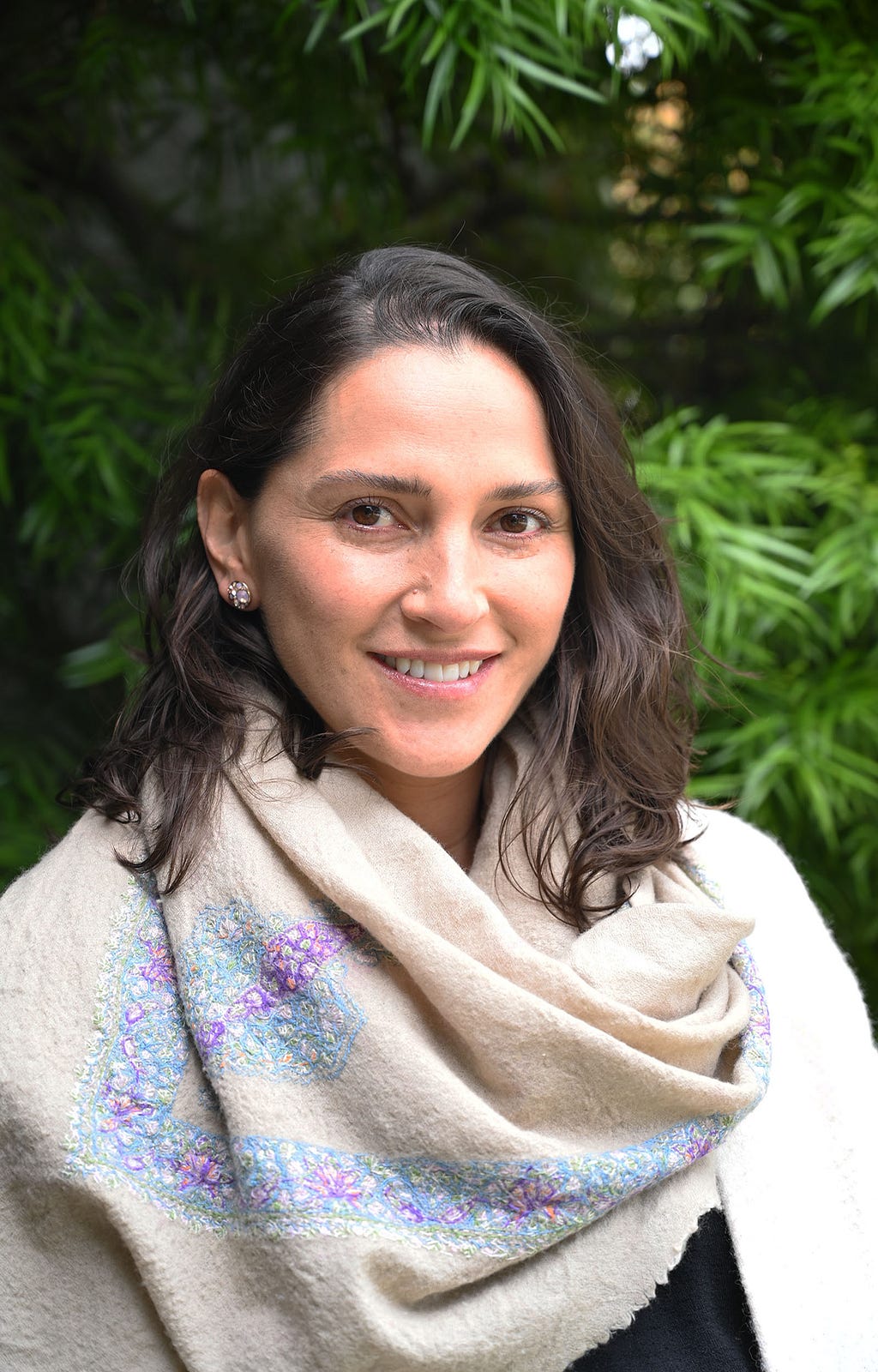
As a part of our series about “5 Lifestyle Tweaks That Will Dramatically Improve One’s Wellbeing”, I had the pleasure of interviewing Yalile Fajer.

Yalile has been at Zion Health since 2020 and is also a Yoga instructor, having gained her certificate in 2018. She is a huge animal lover and enjoys outdoor activities, which was a massive reason she joined Zion Health as she is a proponent of clean beauty products. Yalile practices a plant-based diet 80% of the time and has volunteered for Tap for Humanity, building affordable houses for families in Las Vegas.

Thank you so much for doing this with us! Our readers would love to “get to know you” a bit better. Can you share with us the story about how you first got involved in fitness and wellness?

I’ve always been active and enjoyed working out. One day, my left eye was twitching, and it worsened throughout the day. I started worrying since my dear friend just had her face paralyzed due to stress. I started practicing breathing and doing yoga more often until I pursued my teaching certificate. I never imagined I would be teaching, I did it more for myself, but now I can say I genuinely enjoy teaching and providing my knowledge to others.

Can you share the most interesting story that happened to you since you started your career?

When the pandemic started, I kept hearing how stressed people were and how everyone was drinking more and exercising less, so I started teaching yoga online to friends and family. To bring us back together as a community and for at least 60 minutes not paying attention to the outside world. I received so much good feedback and was told by others how helpful it was. Even people who were not into yoga found it a way to distract themselves and became regulars.

Can you share a story with us about the most humorous mistake you made when you were first starting? What lesson or take-away did you learn from that?

I tend to be shy, even though people don’t believe that when I say it. I probably hide it well. But when I started to teach yoga online, I created a page on Facebook and streamed my first class. I thought I was streaming the class to the people on my page, only to find out I streamed it to everyone on my personal Facebook. I was so embarrassed, I don’t know why, but I felt exposed. [laughs] Later, I realized that was the little push I needed to do other things and be more confident with my marketing and yoga skills.

Can you share with our readers a bit about why you are an authority in the fitness and wellness field? In your opinion, what is your unique contribution to the world of wellness?

[laughs] I don’t know if I consider myself an authority, but I think my contribution to the world is teaching what I’ve learned in terms of yoga, clean eating, and now clean products application.

None of us are able to achieve success without some help along the way. Is there a particular person who you are grateful towards who helped get you to where you are? Can you share a story about that?

I would say my husband. He is always supporting my crazy dreams. He is not a big yoga fan, but he practiced every time I taught online as a support for a whole year. We never knew if people were going to show up or not, so he said if I’m the only student, then at least you have one person to teach.

Ok thank you for all that. Now let’s move to the main focus of our interview. We all know that it’s important to eat more vegetables, eat less sugar, exercise more, and get better sleep etc. But while we know it intellectually, it’s often difficult to put it into practice and make it a part of our daily habits. In your opinion what are the 3 main blockages that prevent us from taking the information that we all know, and integrating it into our lives?

  • The first one is to accept that it is a lifestyle choice, not a month-long thing.
  • Being consistent and persistent. It takes 28 days to create a habit, but it takes even longer to notice the benefits, so my advice is don’t give up within the first 3 months.
  • And lastly, be creative while you are on this journey. You need to enjoy it to continue with it.

Can you please share your “5 Non-Intuitive Lifestyle Tweaks That Will Dramatically Improve One’s Wellbeing”? (Please share a story or an example for each, and feel free to share ideas for mental, emotional and physical health.)

  1. Meditating for 2–5 minutes each day. It is hard, but it calms your mind and helps you focus better. We run run run, and we don’t take the time to slow down and breathe.
  2. Exercise often. I don’t mean gym membership and hardcore weights lifting when I say exercise. It’s good if you do, but I mean a 30-minute walk. Yoga is always good for the body and mind. Take the stairs when possible.
  3. Outdoors activity. Being in contact with nature stimulates all your senses, not mentioning the vitamin D level goes up and impacts the brain positively.
  4. Give yourself “Me Time.” We all need time for ourselves. Schedule a time to do something you enjoy.
  5. And lastly, see a friend often. The benefits of engaging in a friendly conversation with a friend are endless. We all seem too busy, but we all watch TV for hours, maybe use some of that time to call a friend, heat their voice, get involved in their lives.

As an expert, this might be obvious to you, but I think it would be instructive to articulate this for the public. Aside from weight loss, what are 3 benefits of daily exercise? Can you explain?

  1. It improves your mood and self-esteem by releasing endorphins. Just ask my husband. [Laughs]
  2. It combats health conditions like heart disease, stroke, depression, you name it.
  3. It promotes better sleep. A lot of our chronic diseases are related to this matter as well. Not having a restful night affects your brain, thyroid, testosterone levels, etc.

For someone who is looking to add exercise to their daily routine, which 3 exercises would you recommend that are absolutely critical?

  • If this is for someone who has never been active, don’t start with complicated exercises and gym commitments. A walk around the block in the morning or afternoon is a good start.
  • Our body is tense all-day. A 5–10 minute stretch is also good.
  • And lastly, 10 squats daily help our muscles to continue strong. We stop moving because the older we get, the less strength we have.

Is there a particular book that made a significant impact on you? Can you share a story?

The Miracle Morning. It highlights the importance of being consistent in life and understanding what matters to you.

You are a person of enormous influence. If you could start a movement that would bring the most amounts of good to the most amounts of people, what would that be? You never know what your idea can trigger. 🙂

That’s a good question. I think something that has been on my mind for several years now is why can’t we see beyond skin color or race? That would be my movement, see beyond the obvious and love people for who they are.

Can you please give us your favorite “Life Lesson Quote”? Do you have a story about how that was relevant in your life?

“Life is better in pairs” I consider myself family-oriented and enjoy time with my husband and my 3 1/2-year-old. They are my engine, my motivation in life, and I’m happy and thankful every day I have them.

We are very blessed that some of the biggest names in Business, VC funding, Sports, and Entertainment read this column. Is there a person in the world, or in the US whom you would love to have a private breakfast or lunch with, and why? He or she might just see this if we tag them 🙂

Michelle Obama, I loved her book, and I think she is funny and intelligent. Having a cup of coffee with her must be delightful.

What is the best way our readers can follow you online?

People can find me on IG as @yogawithyalile or LinkedIn as Yalile Fajer. I like to connect with people and connect them with others.

Thank you for these fantastic insights. We wish you only continued success in your great work!


Women In Wellness: Yalile Fajer of Zion Health on the Five Lifestyle Tweaks That Will Help Support… was originally published in Authority Magazine on Medium, where people are continuing the conversation by highlighting and responding to this story.

Female Founders: Lydia Simmons of Moms Official Objective (MOO) On The Five Things You Need To…

Female Founders: Lydia Simmons of Moms Official Objective (MOO) On The Five Things You Need To Thrive and Succeed as a Woman Founder

An Interview With Candice Georgiadis

You need someone who understands business to entrust with your ideas, deals, difficulties, and errors. It’s always nice when this person is a true acquaintance. However, whether a friend or therapist, this person should be able to listen, advise, and course-correct in a way that is acceptable and appropriate for the level of business that you are discussing. Often, this person will not be a close friend of yours. They could, nevertheless, be a trusted advisor or mentor. Avoid ranting to people who are unable to offer proactive answers or suggestions that may be applied to your business or problem, as this will deplete the relationship for both of you while frustrating you when voids remain.

As a part of our series about “Why We Need More Women Founders”, I had the pleasure of interviewing Lydia Simmons. Founder of M.O.O

M.O.O.- an acronym for Moms Official objective was created by a woman on a quest to advance equity in maternal health.

When Lydia Simmons was unable to obtain the level of healthcare support required during postpartum, she turned to her knowledge of food as a foundational and core means of health to create MILK Postnatal; a 7-Ingredient, vegan, 1OO% Superfood Postnatal that would support Moms from Day 1 of Postpartum up to 2 years of Breastfeeding and into Lifestyle Wellness. Lydia sought the advice of Chemists, Physiologists, and Nutritional Scientists to bring her product to market as a result of her personal difficulties to overcome the negative effects of Postpartum. Lydia realigned expectations for her sensitive community to assure premium ingredients, a 30-day supply to aid moms with the cost of affordable health and wellness supplementation. She developed items that were breastfeeding safe in order to best support other women who were and would experience the same.

Today, M.O.O. offers a full line of products that have assisted thousands of mothers worldwide in reducing the harsh effects of nutritional deficiency and hormonal imbalance during motherhood. M.O.O. continues to advance research in order to develop thoughtful and transparent products that appeal to all stages of Motherhood- from Fertility to Menopause.

Thank you so much for doing this with us! Before we dig in, our readers would like to get to know you a bit more. Can you tell us a bit about your “backstory”? What led you to this particular career path?

After the birth of my first child, I had a really difficult Postpartum period. I lost my hair, my eyes became deep-set and darkened, I became anemic, and my mental health deteriorated all while I was unable to adequately breastfeed my child. I was able to reverse my personal difficulties by using my understanding of food, herbs, and minerals, and I sought to serve other women in the same way.

Can you share the most interesting story that happened to you since you began leading your company? When the company was very new, I managed my own social media account.

I received a ping from Instagram as I was about to go to bed one night. I looked up my phone, expecting to see a like or a follow, but instead it was a Mom who was up breastfeeding and struggling with her mental health. She was alone, unsure, and fatigued, while her husband slept much of the day and worked at night. She was essentially on her own, with no additional assistance. This was a crisis, and I had no idea how to reach her, where she was, or what to do. I provided her my personal phone number in the hopes that she would call and talk to me rather than sending Direct Messages. I sat up all night talking to her, learning about her postpartum struggles, traumatic birth story, family, and that she was a Military Spouse in California.

We were having fun together in between her nodding asleep, changing the baby, feeding her baby, and returning to check her phone, “Hello?” “I’m still here. “How are you doing?” I was determined to be there when she awoke and picked up the phone again and again. I took out my charger, headphones, and laptop. I was on the phone with her from 11:30 p.m. to 6 a.m., when her husband got home and discovered her sleeping with a live call in- progress.

Much to his amazement, a real person — me — was on the other end of the line! I introduced myself and requested him to step away so I could inform him about the call. I highlighted the seriousness of her mental health instability during this time, advised him on next measures, and exchanged contact information for myself and support groups I had discovered in their region during my awake time.

He simply didn’t know because he had been taught before leaving the hospital that Postpartum Depression was when the mother is “suicidal” and “wants to harm the baby.” I discussed some of the other signs to him, and he confirmed that he had seen some of the things we were discussing, but his lack of experience with anything similar had rendered him completely unaware that his wife was in crisis.

We are still in communication to this day and will always be. That day, he and I worked together to save his wife and child from a situation that still bothers me to think about. What a gift it was that night to be a small business owner with no employees. I can’t think of a more important service I’ve ever been a part of than the service we provide at M.O.O. for thousands of women.

Can you share a story about the funniest mistake you made when you were first starting? Can you tell us what lesson you learned from that?

My funniest mistake to date was getting dressed up and doing my hair and makeup for my first Instagram Live, only to learn I only had 30 followers who had no idea I was going live. Also, individuals who aren’t following you aren’t going to a live stream to get “professional advice” from an unknown company. I spent an entire career being restricted from social media and honestly had no idea what it would take to learn how to utilize the application at my age. I had 1 person show up who left the room as I was discussing “Baby Sleep Regressions.” I was later asked by a follower for the video feed for the live. But again, I didn’t know that was an option so there was no recording. Though slightly embarrassing, I mostly felt undeveloped in a critical area of my business and spent the next 30 days learning about every social platform we would work to create a presence within.

I had one visitor who left the room while I was addressing “Baby Sleep Regressions.” A follower afterward asked for the video feed for the live because she missed it and wanted the information. But, once again, I had no idea it was an option, thus there was no recording. Though slightly embarrassing, I largely felt underdeveloped in a vital area of my business and spent the following 30 days learning about every social site we would attempt to establish a presence on.

None of us are able to achieve success without some help along the way. Is there a particular person who you are grateful towards who helped get you to where you are? Can you share a story about that?

My husband. He’s been my nurse, errand runner, coach and counsel, accountant, regulator, and steadying influence…all while being the best father, friend, and spouse I’ve ever seen. He backs me up on every level, from trivial to unstoppable. He is my friend, and I am grateful to have him comfortably supporting me while I shoulder the weight of being a Founder and CEO.

Ok, thank you for that. Let’s now jump to the primary focus of our interview. According to this EY report, only about 20 percent of funded companies have women founders. This reflects great historical progress, but it also shows that more work still has to be done to empower women to create companies. In your opinion and experience, what is currently holding back women from founding companies?

Gender Roles. Period.

Gender roles have kept us hidden for years, while males miserably “act” the part and take credit for our labor. I’ve lived long enough to know who mostly run the corporate offices, the house, the kids, the hospitals, schools and the courtrooms. So, other than Gender Roles, what is preventing women from running businesses in real life? We already rule the world — inquire about us! I’m simply saying… who’s going to stop us? The world was borne and constructed by us! It would be naive to believe that we couldn’t conceive, birth, and raise a business, eh?!

Can you help articulate a few things that can be done as individuals, as a society, or by the government, to help overcome those obstacles?

Paying for 1 year of Maternity Leave (as compared to 12 weeks) while waiving insurance principles would be an amazing start. Did you know that Postpartum Depression starts to show up right around this time in 70% of postpartum women? So just as the mental health declines from the inability to regulate hormones, non-restorative sleep and nutritional void (to name a few culprits), you have to return to work.

Not to mention, there is no federal paid maternity leave — it’s left to the states to figure out. 40 percent of women don’t qualify for the Family Medical Leave Act (FMLA) which grants 12 weeks of protected job leave, unpaid, at the federal level. Only 12 percent of women in the private sector have access to any sort of paid maternity leave. 25 percent of women are forced to return to work within 2 weeks of giving birth to support their families. The only states with an active policy are California, Rhode Island, and New Jersey.

This might be intuitive to you as a woman founder but I think it will be helpful to spell this out. Can you share a few reasons why more women should become founders?

Women engage with many other women. Women need women in business to think about issues that affect and promote women. For M.O.O., it’s equity in the maternal healthcare system, but for another founder, it could be feminine goods in a vending machine because of the “one-time” when you were delayed at a train station and started your period (which is a fantastic concept). When we make our thoughts public and create opportunities based on personal experience, we allow ourselves to fill gaps in other people’s lives; we assist to improve equality and equitability for other women.

What are the “myths” that you would like to dispel about being a founder? Can you explain what you mean?

“If you build it, the people will come.” Guuurl, it’s a lie. What we should be teaching other founders is that they need a plan. Without structure, research, and a marketing budget, you cannot be effective. Make a marketing supplemental budget. Otherwise, you generate amazing ideas for someone who is eager to steal your idea and will plan, organize, study, and MARKET the idea that you created.

Do you sell a physical product or provide an online service? Engage the services of a professional photographer to capture your product in a professional manner. Work with someone who can correctly configure and optimize your website. Make an investment in your social presence. Also, don’t rely on friends and family to keep your business going. These people adore you, but they are not marketers; at best, they are word-of-mouth braggers!

Is everyone cut out to be a founder? In your opinion, which specific traits increase the likelihood that a person will be a successful founder and what type of person should perhaps seek a “regular job” as an employee? Can you explain what you mean?

In my opinion, there are no prerequisites or qualifications a person must embody to create a business. Anyone can start and run a profitable business. The world was constructed on the backs of ordinary people who had a brilliant idea and saw it through while learning the trade. Some of our most successful business leaders have demonstrated that education is not required because theory and practice are incomparable. However, I would recommend discipline, time, and repetition as major job criteria.

Ok super. Here is the main question of our interview. What are your “5 Things I Wish Someone Told Me Before I Started” and why? (Please share a story or example for each.)

MENTAL HEALTH

You need someone who understands business to entrust with your ideas, deals, difficulties, and errors. It’s always nice when this person is a true acquaintance. However, whether a friend or therapist, this person should be able to listen, advise, and course-correct in a way that is acceptable and appropriate for the level of business that you are discussing. Often, this person will not be a close friend of yours. They could, nevertheless, be a trusted advisor or mentor. Avoid ranting to people who are unable to offer proactive answers or suggestions that may be applied to your business or problem, as this will deplete the relationship for both of you while frustrating you when voids remain.

ORGANIZATIONAL

Employ Subject Matter Experts (SMEs) as employees- not friends. Filling organizational chart voids with your personal network is not a good idea just because they may be easier to onboard and afford. When familiar people are hired as talent, the lines of communication and assistance are often blurred, and micromanagement may be required to ensure success in the role. Hire individuals who can perform the work, not people who can be taught to do it. Remember that auditing and timelines are still necessary for SMEs. If you have to micromanage them, they’re not the right talent for you, Sis.

FINANCIAL

Resources. You require resources, my friend. Cash will always reign supreme for certain Founders. In some areas, though, your company may be able to prosper through networking, introductions, and other direct resources rather than cash. Whatever your currency for success is, align yourself with resources or people who can assist you in obtaining those resources. There are numerous grants, special loans, and fundraising programs available to assist you in your aspirations as a woman-owned business.

ETHICAL

Make a point of terminating professional partnerships that are no longer beneficial to your organization. Don’t allow problems to fester because you like the person if the effort isn’t beneficial to your company. Holding on to stagnant relationships for too long is one of the most common mistakes we make as founders. Fairness takes precedence above niceness. So, instead of “burning the bridge,” be unwavering in your ethics for business objectives while providing a high-level assessment of infractions. Terminate the relationship, execute the terms of the agreement, and always pay any remaining balances under the agreement.

PERSONAL

Set personal limits that allow you to escape the humdrum of corporate operations — and commit to the time away. Whether you have a day set aside for a family function, brunch with friends, a regular spa appointment, or simply prefer that interaction finish at a certain time of day. Set that time, tell your partners and team about it, and stick to it. Remove the app from your home screen and put “do not disturb” on a planned start and stop time if you have a problem with not being able to adhere to your personal boundaries and find yourself still reading emails or taking business calls while at a little league game. Remember that even Major League pitchers look away right before throwing a strike. Throw a strike (later) and look away!

How have you used your success to make the world a better place?

I personally leverage my access to increase equity within Maternal Health. I continue to expand education and access on topics that improve health outcomes and reduce health inequities. I have found that additional studies, publications, scientific evidence and real moms sharing real experiences help quantify these effects and differentiate the benefits of care expected and its effects on health disparities. Therefore, I push to provide as much transparency as I can give on topics, products, ingredients and known warnings of said ingredients allowing women to both expect and utilize well-informed decisions about their health.

You are a person of great influence. If you could inspire a movement that would bring the most amount of good for the greatest number of people, what would that be? You never know what your idea can trigger.

Every employment opportunity should have the option of being remote or in-office. We’ve witnessed a shift in perspective on this in the last two years as a result of economic and health improvements. However, as the world continues to progress, this level of concern should be maintained.

We are very blessed that some very prominent names in Business, VC funding, Sports, and Entertainment read this column. Is there a person in the world, or in the US with whom you would love to have a private breakfast or lunch with, and why? He or she might just see this if we tag them.

I’d be honored to sit down with Serena Williams. She fought a battle that many women of color, particularly black women, face after childbirth: campaigning for the preservation of their lives. This number includes me as well and it excludes affluence or education. Her experience is my story, as well as the stories of countless other women. I’d love to introduce her to M.O.O. and stimulate a plan that will continue to improve education and access to safe health outcomes in the reduction of health inequities in Maternal Healthcare for all women.

Thank you for these fantastic insights. We greatly appreciate the time you spent on this


Female Founders: Lydia Simmons of Moms Official Objective (MOO) On The Five Things You Need To… was originally published in Authority Magazine on Medium, where people are continuing the conversation by highlighting and responding to this story.

Female Founders: Laura Taylor of Mingle Cocktails On The Five Things You Need To Thrive and Succeed…

Female Founders: Laura Taylor of Mingle Cocktails On The Five Things You Need To Thrive and Succeed as a Woman Founder

An Interview With Candice Georgiadis

… Ability to take constructive feedback — Initially I would ask my husband for advice on what he thought of a label color or a brand name and then I would debate his answer. He finally said, “if you want to ask for my opinion you must be willing to listen to me, otherwise, don’t ask!”. He was right, I just wanted someone to validate my idea, I did not want to hear objections, I only wanted to hear approval. Now I know it’s important that I must be open to constructive feedback to make smart decisions. I love soliciting feedback now so I can get a different perspective which teaches me to be more open minded. Now I work hard to detach so I can learn and absorb through others.

As a part of our series about “Why We Need More Women Founders”, I had the pleasure of interviewing Laura Taylor of Mingle Mocktails.

A few years ago, if you met Laura Taylor at a big tech conference or out traveling for her job at TableaunSoftware, Accenture or IBM, you’d probably think she was the definition of a working woman who “does it all.” Taylor grew her career in software sales and business development while raising her two kids. Both she and her husband relocated to Berwyn from California with high-demand jobs, and often, during travel or work events, alcohol was centered in the deal-making culture.

Thank you so much for doing this with us! Before we dig in, our readers would like to get to know you a bit more. Can you tell us a bit about your “backstory”? What led you to this particular career path?

I loved working in Corporate America and built a very successful career in the software and consulting services industry. I spent a great deal of time traveling and attending business meetings, dinners, cocktail receptions and sales conferences. When I quit drinking alcohol 6 years ago, I noticed right away that my only option at social and work occasions (where I used to drink booze) was seltzer, and it left me feeling a bit left out when others were sipping from pretty cocktail and wine glasses. One specific experience sparked Mingle- I was invited to a girls’ weekend away and I knew there’d be some drinking. I decided to concoct and bring my own mocktail, what is now the Cranberry Cosmo, on the trip. We were at a cabin in the Poconos when corks started popping and wine was flowing, so I poured myself a pretty Cranberry Cosmo in a wine glass, sat down by the fireplace with my girlfriends, and had a magically joyful feeling! It was the first time that I truly felt part of the party! I knew at that very moment I had to bring this mocktail to the market so anyone who chooses not to booze can still feel socially connected and part of the occasion. I returned from that trip and immediately researched what was going on in the non-alcoholic beverage segment. I was surprised to learn that 30% of Americans don’t drink alcohol, 50–60% of Americans take short booze-breaks, yet there was nothing on the market but boring soda or seltzer for these people. I saw a gap that needed to be filled with a fun and festive non-alcoholic beverage that enabled everyone to feel part of the party.

Can you share the most interesting story that happened to you since you began leading your company?

Just last month I hosted a Mingle Mocktails virtual happy hour with over 45 business executives from two companies, EY and SAP, that I used to work very closely with in my previous career. I was contacted by a leader of EY who had followed by journey, and he wanted to provide his own leadership team with a fun and inclusive virtual event with Mingle Mocktails. I had the opportunity to conduct a virtual tasting where everyone enjoyed a Mingle Mocktail (or cocktail if they wished) while I shared the inspiration of the brand and how I got to where I am today. It was a special experience because I knew I found my purpose — it felt 100% natural to share my story and product with people I used to work with just a few years ago but now I’m providing a product and solution that everyone can enjoy! I received several notes from participants who were really impressed with the product and my story. It was like a self-fulfilling prophecy because I had always envisioned Mingle being served at the conferences I used to attend so everyone can feel socially connected!

Can you share a story about the funniest mistake you made when you were first starting? Can you tell us what lesson you learned from that?

Just days after I completed bottling my product, I walked into my local Whole Foods store and marched right up to the customer service desk asking for a meeting with the store manager; I had expected them to purchase Mingle Mocktails on the spot. The store manager looked at me like I had three heads! He politely directed me to a webpage where I was to submit my brand for review, and then he proceeded to tell me that new brands don’t just walk in and get on the shelves of Whole Foods. I was grateful for the store manager’s time and spent the next 18 months finally getting Mingle on those shelves. We’re in 3 Whole Foods regions but have way more work to do and doors to knock on to get into all of them. I’ve learned to treat rejection as part of Mingle’s growth process and I’ve learned to ask people for guidance and constructive feedback. After most buyer meetings I ask whether there was anything I could have done differently or better. I’ve learned to gain experience from the people who know drive major decisions so I can accelerate my own growth and the growth of my brand.

None of us are able to achieve success without some help along the way. Is there a particular person who you are grateful towards who helped get you to where you are? Can you share a story about that?

There are so many people who have and still help me today, but I would not be where I am without out the support of my Mom, Betty Flynn. She passed away earlier this year after a quick battle with cancer, but she was there for me from Day One with the positive reinforcement I needed to overcome my paralyzing fear of failure. I wanted to launch this company but was terrified that I would fail because I did not have core CPG experience. I called my Mom from the day I came up with the concept to the weeks that followed sharing my business ideas and my overwhelming fear of failure. With each call she helped my overcome those fears and helped me find my own inner strength and confidence to proceed with positivity. I now operate in a state of living my life and building my business with no regrets. I never want to look back on my journey wishing I should have tried to launch a business or take on a new challenge. To this day, I have no regrets in any aspect of my life, but I do miss my mom with all my heart.

Ok, thank you for that. Let’s now jump to the primary focus of our interview. According to this EY report, only about 20 percent of funded companies have women founders. This reflects great historical progress, but it also shows that more work still has to be done to empower women to create companies. In your opinion and experience what is currently holding back women from founding companies?

The biggest issue is finding the right people or VCs who are interested in supporting female-founded early-stage companies. I’ve talked to a lot of people and I have grown tired of the response that either “your company is too small to secure funding from a VC” or “it’s not a good time to find angels in this economy” or “come back after you achieve $5M in revenues”. I’ve seen an uptick in grants for woman and minority-owned businesses, but I’ve found it hard to locate angel investors who are interested in early-stage businesses.

Can you help articulate a few things that can be done as individuals, as a society, or by the government, to help overcome those obstacles?

As an individual, it’s important to build and nurture an active network. Whenever anyone offers to make an introduction, the answer should always be yes, because you never know where that next conversation will lead you. As a society, we need to continue to shine the light on small businesses, especially those who are woman and minority owned. We are lucky to have the freedom of entrepreneurship, but small businesses need support during the early stages to grow into large companies. We must continue to build programs which provide business and financial support for small businesses to grow over time.

This might be intuitive to you as a woman founder but I think it will be helpful to spell this out. Can you share a few reasons why more women should become founders?

My experience is that successful female founders pursue business opportunities where is a greater purpose which propels us forward and it is this purpose which leads to innovation and growth, and the financial gain is secondary to achieving the goal we set out to achieve. I feel women use gut and instinct combined with intelligence and passion in a way that yields great results. Also, as a mother, I want to show my teenager son and daughter that anyone can start a business if they put their mind to it.

What are the “myths” that you would like to dispel about being a founder? Can you explain what you mean?

  • Entrepreneurs like risk — false! I am not a risky person, but now I make educated bets and feel more comfortable making decisions with less facts.
  • Entrepreneurs must be an expert in their field -false! I’ve heard from experts that it’s often better to enter an industry where you have little experience so you can approach it with a fresh and unique perspective.

Is everyone cut out to be a founder? In your opinion, which specific traits increase the likelihood that a person will be a successful founder and what type of person should perhaps seek a “regular job” as an employee? Can you explain what you mean?

I never set out to be a Founder. I had a very organized plan for my career growth all the way through retirement, but now that’s out the door! Some key traits that served me well include:

  • Passion — you need a undeniable passion for what you are pursuing that will push you through hard times because you will have many days and weeks of hard work where you will be pushed to your limits and passion will be all you have left to pull you through those challenging times.
  • Ability to take constructive feedback — Initially I would ask my husband for advice on what he thought of a label color or a brand name and then I would debate his answer. He finally said, “if you want to ask for my opinion you must be willing to listen to me, otherwise, don’t ask!”. He was right, I just wanted someone to validate my idea, I did not want to hear objections, I only wanted to hear approval. Now I know it’s important that I must be open to constructive feedback to make smart decisions. I love soliciting feedback now so I can get a different perspective which teaches me to be more open minded. Now I work hard to detach so I can learn and absorb through others.
  • Ability to Multi-task — You’ve got to be able to manage all sorts of responsibilities to build your brand, ranging from website development to financial planning and everything in between. I’ve learned to do more in 3 years than I have in my lifetime and it keeps my days interesting!
  • Resilience — Entrepreneurship is hard and laced with failures. You must have a thick skin, the ability to weather rejection and roll with the punches to thrive as a Founder.

Ok super. Here is the main question of our interview. Based on your opinion and experience, what are the “Five Things You Need To Thrive and Succeed as a Woman Founder?” (Please share a story or example for each.)

  • Passion
  • Resilience
  • Time Management
  • Ability to delegate
  • Be open to change

I have heard multiple times that your goal is to “manage and grow your business” not operate within your business. I try to focus my time on tasks that truly require my attention and delegate other tasks (like order fulfillment and accounting) to others so I can spend my time where I will add the most value. I’ve learned that time is currently my greatest asset and I can easily squander it by focusing on less critical things. When I first launched our eCommerce business I conducted all online order fulfillment out of my garage. I enjoyed packing and shipping orders to customers and I felt connected to the process, but I had to outsource that responsibility to others so I could focus on growing the business rather than simply doing work.

How have you used your success to make the world a better place?

I believe I’ve made a small impact in enabling people who don’t or cannot drink alcohol to feel great in social occasions without alcohol. When people feel better, they’re happier, more productive and more optimistic. If I can make just a few people feel supported in social situations then I know I’m on the right track. 3 weeks ago I shipped Mingle to someone in Miami for a dinner which included professional athletes from the Miami Dolphins. Yesterday I received a card from Mack Rollins, Dolphins Wide Receiver, thanking me for providing Mingle. He said, “Seeing my team enjoying Mingle Mocktails was eye opening, I never realized how isolated they feel while everyone else drinks.” It’s moments like that where all the hard work is worth it.

You are a person of great influence. If you could inspire a movement that would bring the most amount of good for the greatest number of people, what would that be? You never know what your idea can trigger.

I hope to see Mingle Mocktails sold and served wherever alcohol is sold and served so everyone feels part of the fun. Whether on a plane, at a wedding reception or on vacation at a resort, I want to see Mingle Mocktails on every cocktail menu in the same way you see Impossible Burgers and Beyond Burgers on the menu for vegetarians to enjoy. I hope to inspire a movement where people can go to any concert, bar, resort or neighborhood BBQ and say, “I’d like a Mingle!” and people would know what that means. I’m laser focused on minimizing the stigma associated with alcoholism by providing an uplifting choice which celebrates being alcohol-free.

We are very blessed that some very prominent names in Business, VC funding, Sports, and Entertainment read this column. Is there a person in the world, or in the US with whom you would love to have a private breakfast or lunch with, and why? He or she might just see this if we tag them.

Barbara Corcoran, Sara Blakely, Blake Lively, Zendaya, Pink, Jennifer Lopez, Trish Costello, Danny Meyer

This was very inspiring. Thank you so much for joining us!


Female Founders: Laura Taylor of Mingle Cocktails On The Five Things You Need To Thrive and Succeed… was originally published in Authority Magazine on Medium, where people are continuing the conversation by highlighting and responding to this story.

Female Founders: Jess Toolson of Mixhers On The Five Things You Need To Thrive and Succeed as a…

Female Founders: Jess Toolson of Mixhers On The Five Things You Need To Thrive and Succeed as a Woman Founder

An Interview With Candice Georgiadis

JUST GET STARTED! You will never have everything perfectly ready. MAKING A MISTAKE doesn’t mean your business can not be saved. ONE DAY AT A TIME- bite off what you can chew one day at a time. Work on things that get you pointed towards your end goals but don’t overwhelm yourself with an unrealistic timeline of what your dream for your company is!

As a part of our series about “Why We Need More Women Founders”, I had the pleasure of interviewing Jess Toolson.

Jess Toolson is the founder of Mixhers and mother of three. She is an advocate for hormone health, disrupting the industry by addressing taboo topics for women such as libido and period pain and through her vulnerability and persistence has lead Mixhers to grow 1200% in 2021. Jess believes that Mixhers will succeed by providing consistent loyalty to customers and has made it her personal mission to help women feel seen.

Thank you so much for doing this with us! Before we dig in, our readers would like to get to know you a bit more. Can you tell us a bit about your “backstory”? What led you to this particular career path?

It was after I was postpartum with my identical twin girls that I started having terrible menstrual cycles. Pains that would keep me in bed and hormonal acne that left me hiding my face. As a mom of 3 I couldn’t afford a sick week once a month. After countless conversations with doctors and friends I realized that there was not a good solution for what I was going through on the market. That’s when I met Cody Sanders, my now business partner who at the time was creating Hertime in her home and giving it to clients as a holistic health practitioner. After being skeptical of a natural solution I agreed to give it a try and to my astonishment it actually worked! My skin cleared up, my moods stabilized, and I wasn’t in terrible pain every month. I knew that we had to get this product into women’s hands, so we set off on a journey creating what is now Hertime.

Can you share the most interesting story that happened to you since you began leading your company?

The most interesting thing for me since starting Mixhers has been being a female CEO and all that comes with it that I was not expecting. I have found an army of other female founders that I now consider mentors and friends. With Mixhers we have seen so much success through collaborating and working with these female brands. It’s been amazing the support we have received for our mission to help normalize the conversation of hormone imbalance and the real struggles women face but are told to accept. Collaborating and being with these women, other founders, customers, and fans is the most amazing surprise of this journey.

Can you share a story about the funniest mistake you made when you were first starting? Can you tell us what lesson you learned from that?

The funniest mistake I made was when we launched a product called “hernightly” but we spelled It “hernigthly” and didn’t realize until we already had thousands of the products completed and in hand the day before we launched. It was an embarrassing thing to figure out how to still sell through the product because as a small business we couldn’t just call it a loss. It was amazing to see the response from our audience as we chose to be upfront and transparent that we made a human error. Our community responded in an incredible way! They sold us through months of inventory in a few days! They loved that we were vulnerable and honest.

None of us are able to achieve success without some help along the way. Is there a particular person who you are grateful towards who helped get you to where you are? Can you share a story about that?

I was raised in a home with parents that truly taught me that I could do anything I put my mind to. They raised me to believe that the sky is the limit if I have the drive to chase dreams. They taught me how to work hard as a child and they have stood by my side as I have learned how to be a first-time business owner. I am grateful for a dad that taught me what respect should feel like as it proves to be helpful time and time again as I have navigated being a woman in business.

Ok, thank you for that. Let’s now jump to the primary focus of our interview. According to this EY report, only about 20 percent of funded companies have women founders. This reflects great historical progress, but it also shows that more work still has to be done to empower women to create companies. In your opinion and experience what is currently holding back women from founding companies?

I feel like women are incredible with seeing problems around them and businesses are born by them discovering the solution. I do feel that as great at multi-tasking as women are and how hardworking women prove to be, there isn’t enough support for women to make it past the very first phases of business. A very first website, enough cash to even act on their idea and I do believe that women are questioned longer about their ideas and how realistic is the possibility of success. Women aren’t given as many chances to fail and try again which makes women feel like the pressure is so great that it may not be worth trying. I wish that women felt even more supported in their ideas even just from the very first thoughts of what they dream of creating.

Can you help articulate a few things that can be done as individuals, as a society, or by the government, to help overcome those obstacles?

I think it would be incredible for women to have access to attend more business classes on campuses or government provided support. I know that for me I had to step away from college and my education when motherhood became top priority. I love that I had years to focus on being the caregiver in the home but after years in the home I was ready to chase some personal dreams but didn’t have the time or resources to return to college. I would have loved to have the ability to audit a few beginning business classes or access to learning about finances and more technical skills that can be helpful when you’re a one woman team.

This might be intuitive to you as a woman founder but I think it will be helpful to spell this out. Can you share a few reasons why more women should become founders?

The more women that find success in business and step out to chase their dreams the more it benefits each of our communities. Women are likely with success to turn to help their community, make a positive impact on school systems and they want to give their time to others in order to mentor. Women are so happy to give back and be sure that when they succeed, it opens up more doors as well as opportunities for others. Female founders make an impact in their immediate circle, but the trickling effect has a long reach.

What are the “myths” that you would like to dispel about being a founder? Can you explain what you mean?

Something I love to dispel is that women in business, or women in general, are dramatic. I can absolutely confirm that this is false and a message of the past. I am surrounded by women in my Mixhers workspace as well as surrounded by females in our community regularly without any sort of drama, hurtful or even negative energy being present. Women want to find success for themselves while also lifting others to succeed all around them. Women want to rise in groups and lend a hand to those around as well.

Is everyone cut out to be a founder? In your opinion, which specific traits increase the likelihood that a person will be a successful founder and what type of person should perhaps seek a “regular job” as an employee? Can you explain what you mean?

Female founders have to learn to take a no but realize that someone else will say YES! Not every person will love every bit of your business which is ok! I have had people question my love for our community as well as question my practices with running company focused on FUN! I think what I have really had to get comfortable with is that not everyone will love what we are doing and how we are doing things, but it doesn’t mean we are wrong! I have learned to love the way we do things without needing to always feel that others grasp our vision entirely. Female Founders need to be confident with working against the grain or standing out from the norm! It’s not always easy but it’s so fulfilling to run a company when you know you’re being your true self!

Ok super. Here is the main question of our interview. What are your “5 Things I Wish Someone Told Me Before I Started” and why? (Please share a story or example for each.)

JUST GET STARTED! You will never have everything perfectly ready. MAKING A MISTAKE doesn’t mean your business can not be saved. ONE DAY AT A TIME- bite off what you can chew one day at a time. Work on things that get you pointed towards your end goals but don’t overwhelm yourself with an unrealistic timeline of what your dream for your company is! DO WHAT YOU DO BEST, HIRE OUT THE REST. Hiring our first employees was really hard for me to see we needed because it felt like it was so risky to hire on help and I felt the pressure was so large to bring others into our startup. However, what I learned is that the more I can be focused on my favorite projects, the more the company grows. Asking for help and delegating is for the best of the brand. SURROUND YOURSELF WITH THOSE YOU DREAM OF BECOMING. I love getting to know people that have really done more and made it much farther than me. Instead of being intimidated I find it as an opportunity to learn from the best and it shows that if they can find success then you can too!

How have you used your success to make the world a better place?

I love that with Mixhers we are working to discuss taboo topics and allow women to admit they’re no longer ok with suffering. It’s freeing for women to realize they’re not alone and Mixhers helps women to not feel so lonely in their health journey. We are making a difference in our community by providing a safe space for women to connect, relate and improve their health. We give back to our community and many women in need of support even outside of their health journey!

You are a person of great influence. If you could inspire a movement that would bring the most amount of good for the greatest number of people, what would that be? You never know what your idea can trigger.

My idea would be that the more we can meet together and share ideas, brainstorm and help those around us then the faster we all can learn and improve our ideas. It’s amazing the power that just discussions with likeminded people can do for your creativity or ideas for your business. Being collaborative and supportive of others is FREE and it has a rippling effect.

We are very blessed that some very prominent names in Business, VC funding, Sports, and Entertainment read this column. Is there a person in the world, or in the US with whom you would love to have a private breakfast or lunch with, and why? He or she might just see this if we tag them.

I am absolutely inspired by Sara Blakely of Spanx. I love how passionate she has been to solve a common frustration for women. She has created incredible success while still remaining a kind, humble and fearless leader. I have loved hearing more and more about her personal journey that has helped me to learn the type of female founder I really want to become and the type of company I care to build.

Thank you for these fantastic insights. We greatly appreciate the time you spent on this


Female Founders: Jess Toolson of Mixhers On The Five Things You Need To Thrive and Succeed as a… was originally published in Authority Magazine on Medium, where people are continuing the conversation by highlighting and responding to this story.

Tiffany D Brown: Five Ways To Leverage Instagram To Dramatically Improve Your Business

An Interview With Candice Georgiadis

Create. Video. Content. Reels are really fun to make, and all you need is your phone! (Save audio, too — it helps!)

As a part of our series about How To Leverage Instagram To Grow Your Business, I had the pleasure of interviewing Tiffany D. Brown.

With 20 years of executive sales experience, Tiffany D. Brown has been able to successfully utilize the skills she gained in corporate America to launch several businesses and coach other women to do the same. Her many “hats” include host of “The P Word” podcast, social media influencer, professional photographer, blogger, makeup artist, and business coach. This contemporary Renaissance woman is married with three children and resides in metro Orlando.

Thank you so much for doing this with us! Can you tell us a story about what brought you to this specific career path?

I have always been a saleswoman. From working in retail to securing top positions at some of the country’s largest pharmaceutical sales companies, I have a knack for closing deals. I am a businesswoman at heart, but my creative side is just as important. That is where my entrepreneurship comes into play. I have several LLCs and believe that a woman should be financially independent. Why not turn your passion into profit? This is why all of businesses started out with me doing what I love, and I have a lot of interests! I walk the walk and talk the talk.

Can you share the most interesting story that happened to you since you started this career?

I really worked hard to get into the pharmaceutical sales industry, but I found myself unemployed in 2021 after more than a decade in the industry. From there, I decided that I was going to pour myself into being a full-time businessowner. I also discovered how my career helped to strengthen my entrepreneurship journey. Although I never know what’s coming the corner, God shows me that He is in control. My faith is strong because I know he will never fail me.

Can you share a story about the funniest mistake you made when you were first starting? Can you tell us what lesson you learned from that?

I wouldn’t call it funny, but I have been taking pictures for more than 10 years. It started when I had my first child and wanted to capture special moments. I was so scared to call myself a photographer and talked myself out of taking a chance on myself. Finally, in 2021, I purchased equipment, took several classes, attended workshops, and just told myself that I was going to do it! I launched my photography business (tiffanydbrownphotography.com) and have been shooting non-stop, not only in Florida but also Georgia, Mississippi, and Texas! I can’t believe I waited so long!

Ok. Let’s now move to the main focus of our discussion. For the benefit of our readers, can you explain why you are an authority about Social Media Marketing?

I started creating content on YouTube before I even knew what content creation was! I have been able to grow my personal brand by working with major companies like Toyota, Walmart, Walgreens, Aveeno, Johnson & Johnson … you name it! I have the credibility, but I also put in a lot of work. I believe in investing in myself because those rewards WILL come. I also review my analytics, study on the latest trends, and provide guides for other influencers and branding afficionados. I know what I’m doing AND I work to educate others. My content speaks for itself. I am consistent, professional, and project high-quality.

Which social media platform have you found to be most effective to use to increase business revenues? Can you share a story from your experience?

It would definitely be Instagram since it was such a game-changer for social media. Although it has changed over the years (and continues to do so), visual content is still the leader. I was able to build my influencer business almost effortlessly via Instagram. Working with big brands and learning to negotiate was key! Again, the corporate business training always circles back.

Let’s talk about Instagram specifically, now. Can you share five ways to leverage Instagram to dramatically improve your business? Please share a story or example for each.

Absolutely! Here are my five key tips:

  1. Instagram can really increase your exposure as a brand, so be sure to be consistent and have quality content.
  2. Creating authentic content that resonates with your audience or ideal client/customer is key. Do your research!
  3. Think outside of the box while also remaining up to date with trends. You should be creative but also relevant.
  4. Create. Video. Content. Reels are really fun to make, and all you need is your phone! (Save audio, too — it helps!)
  5. Network with the brands to help secure paid partnerships! Don’t be afraid to take a chance on yourself.

Because of the position that you are in, you are a person of great influence. If you could inspire a movement that would bring the most amount of good to the most amount of people, what would that be? You never know what your idea can trigger.

I love this question because it speaks to who I am as a person. I want to encourage all women to give themselves permission to follow their passions. If you want to launch a business, make sure it’s something that you love to do. Also, if you can, help another woman either discover or re-discover her passions. Even if you currently have a full-time job, you don’t have to give up on the things you love to do. You are a whole person! Embrace all of you.

Some of the biggest names in Business, VC funding, Sports, and Entertainment read this column. Is there a person in the world, or in the US with whom you would love to have a private breakfast or lunch with, and why? He or she might just see this if we tag them!

Oooh yes — Alicia Keys! I would love to learn more about her journey in embracing all the authentic parts of herself even when it was against popular opinion! I also respect how she balances family, work, and life in general! And … I can’t help myself … if I can slide another one in, it would be Beyoncé!

Thank you so much for these great insights. This was very enlightening!


Tiffany D Brown: Five Ways To Leverage Instagram To Dramatically Improve Your Business was originally published in Authority Magazine on Medium, where people are continuing the conversation by highlighting and responding to this story.

Modern Fashion: Catherine Fisher On The 5 Things You Need To Lead a Successful Fashion Brand Today

An Interview With Candice Georgiadice

Social identity: Appealing to the consumer’s sense of who they are in the world, what they stand for, is essential to success today and in the future. As buyers become more aware of how clothing is really made, it is important for brands to demonstrate how their socially responsible practices — in terms of both environmental and human rights impacts — align with the consumer’s values. Forging and reinforcing this alignment secures for the consumer a go-to source of purchasing confidence and trust, leading to brand loyalty. It also surrounds each purchase with a positive air of hope.

Many in the fashion industry have been making huge pivots in their business models. Many have turned away from the fast fashion trend. Many have been focusing on fashion that also makes a social impact. Many have turned to sustainable and ethical sourcing. Many have turned to hi tech manufacturing. Many have turned to subscription models. What are the other trends that we will see in the fashion industry? What does it take to lead a successful fashion brand today?

In our series called, “5 Things You Need To Lead a Successful Fashion Brand Today” we are talking to successful leaders of fashion brands who can talk about the Future of Fashion and the 5 things it takes to lead a successful fashion brand in our “new normal.”

As a part of this series I had the distinct pleasure of interviewing Catherine Fisher.

Catherine Fisher has found inspiration as a biographer, innkeeper, acupressurist, baker, poem maker and, now, creator of clothing. Catherine Fisher Clothing celebrates the art of expression in the meeting of text and textile. Each sustainably-sourced, ethically-made garment is hand-embellished and/or accessorized to express the spirit of an original poem from which the design springs. The collection embraces the conviction that fewer is better, and supports literacy, the arts, food security, the environment and diversity by sharing a portion of each purchase with non-profit organizations aligned with the theme of each garment/poem.

Thank you so much for doing this with us! Before we dig in, our readers would like to get to know you a bit more. Can you tell us a bit about your childhood “backstory”?

Thank you for asking, and for including me in Authority!

A New Englander all my life, I grew up on the south shore of Massachusetts and have family roots in Vermont and New Hampshire (as well as Pennsylvania.) I’ve now lived in Maine for 28 years.

Both my parents and two younger brothers were/are creative, all of us in different ways. Handcraft, drawing, music, woodworking — it was a house of projects, for sure. Our family home, which we just recently sold to a sweet young couple, was on a cranberry bog and that setting served as an important backdrop — a witness and player in our lives over the years.

As the eldest and the only daughter, I might be considered the headstrong one. Definitely an adult from a very young age, and always rather entrepreneurial.

Can you tell us the story about what led you to this particular career path?

I have a mind that sort of works like a popcorn popper, I guess. A series of eureka! moments has resulted in a succession of endeavors and pursuits. Among other things, I’ve been a clown, dental assistant, and salesperson; an innkeeper, personal historian and acupressurist; a baker, archive worker, poem maker and now, a creator of clothing from those poems.

What all of these things have in common is a fascination with connection and story. I know that what I do and make (just as what you do and make) carries an energy that impacts the receiver of those interactions or objects, and being intentional about that transmission is where the juice is for me.

Each design in my collection of clothing springs from the meaning of a particular poem, and the printed poem accompanies each piece in the packaging. I believe that those ideas are woven into the fabric of the garments and inform the experience of the wearer. The wearer, then, infuses the clothing with their own energy and creates a new thing — a new poem — entirely.

Can you share the most interesting story that happened to you since you began your career?

The “happened to you” part of your question is pulling me right in here, in that so many things have happened during this clothing chapter of my career that were so out of my control, not what I’d thought or hoped or wanted. Now, of course, I can see that each disappointment came with a new opportunity. No doubt, there are more such happenings to come.

To me, the most significant was the pivot I had to make in my original garment concept, which was that the garments would be inscribed with the poems.

For over a year I worked with a wonderful local screen printer to develop a system for printing my handwritten words on panels to then be worked into the garment construction. For some reason it just wasn’t flowing and we were having trouble getting it right. It was a very low spot in this process and I nearly gave up for how sick I felt. Then, it occurred to me that, in seeing the garment itself as the poem, having the words — my words — printed there was actually redundant, and didn’t leave any room for the wearer to make it their own. I immediately began designing hand-painted graphics to replace the text, and am so happy that their abstraction hints at the poetic origin of the garment without making it all about the actual words. And painting each one individually gives me a lot of control and connection.

You are a successful business leader. Which three character traits do you think were most instrumental to your success? Can you please share a story or example for each?

Being a good collaborator is definitely a trait that I’ve developed since I began the clothing project. Many of my past incarnations were somewhat solitary endeavors, but as a newcomer to apparel and manufacturing in general, I’ve had to rely on the expertise, skills and guidance of others. This has brought me into fruitful relationships that I would not trade.

For example, instead of buying mass-produced calligraphy brushes, which are accessories included in my Brush duster, or trying to learn to make them myself, I collaborate with Wendy Pieh, a Maine organic cashmere goat farmer, and Ying Zhou, a master brush maker, to create one-of-a-kind works of art. I gather driftwood sticks with friends on Maine beaches, send the sticks and the goat hair to Ying in Florida, and receive back something utterly unique and special. Not knowing it all, and letting other makers do their thing, is really where it’s at.

At the same time, believing in myself is a trait I’ve had to ramp up exponentially in order to succeed. A general guiding principle, in thinking about success, is, “Why not me?” So in practice, I reserve many aspects of the work to do myself rather than hiring out because it helps me grow, keeps the product mine and ensures I feel connected to the wearer. Seven of the designs in my line have hand-painted panels sewn in, and I paint all of those individually. In this area, even though I’m not a classically-trained artist, I am the expert in what I want those panels to be. I need to believe they are good and right. My confidence and its growth have been essential.

And, persistence. My persistence has been tested over and over again — the evolution of this company has not been easy or smooth. Some people have proven to be those great gifts of collaboration, and others haven’t been very nice. A contractor doesn’t communicate or care; a key recycled fabric is discontinued; or I hit the next limit in my knowledge. I just keep moving forward. I just keep going. And learning.

What do you think makes your company stand out? Can you share a story?

On the face of it, a sustainable clothing line that lives at the intersection of fashion, art and writing, with a focus on connection to the wearer and giving back, does beg some notice. It’s not always understood at first glance, but once people get it, they become excited and invested.

I think another stand-out is our commitment to diversity in garment sizes (XS-2X) and the racial, gender, age, size and sexual diversity of our website models and intended wearers. Our website’s Collection page does not look like that of most brands. I’m striving to connect on a deeper level. All wearers are welcome.

Do you have a favorite “Life Lesson Quote”? Can you share a story of how that was relevant to you in your life?

This passage from the memoir How I Became Hettie Jones, by Hettie Jones, was tacked to my door in college and has been pinned and taped to many bulletin boards and refrigerators in the ensuing decades: “The idea, as I saw it, was to ease the possible past the expected, and in this eerie solitude, while the rest of the world was home in bed, I’d feel closer to the edge, the spillover point that might push out something, make the coming move clear. What should I do now to make myself happen? What’s next?” Becoming, for me, is a lifelong art. As you’ve probably gathered by now, I like reinvention, and am in love with change.

“I dwell in possibility,” Emily Dickinson’s line describing poetry as the place she inhabits, has also been a tickertape running as a loop in my mind for always. I need that to be true.

Ok, thank you for that. Let’s now jump to the primary focus of our interview. Do you see any fascinating developments emerging over the next few years in the fashion industry that you are excited about? Can you tell us about that?

Well, speaking of possibility, I’d say the fashion industry is doing just that — dwelling in possibility. At the intersection of textiles and science is bio-fabrication, and more sustainable fabrics and vegan leathers are being made from seaweed, pineapple husks, fungus, algae, tea and yeast, just to name a few. As high-profile brands like Stella McCartney, Eileen Fisher and Everlane continue to incorporate recycled and even bio-fabricated materials into their lines, other brands will hopefully follow suit and consumer demand will rise. Increased focus on closed-loop manufacturing is another exciting area to watch. Materials used in production can be reused, and at the end of the garment’s life, it can be recollected as post-consumer waste and turned back into raw materials to create more of the same type of product.

Can you share how your brand is helping to bring goodness to the world?

I love this question! Because, in addition to not wanting to participate in the badness — in proliferating unethically-manufactured and unsustainably-sourced products — bringing goodness is really the whole point, right? First, I hope that the garments themselves, and the poems that inspired them, will add something to the lives of those who wear them, or those who just visit the site and enjoy the images and read and listen to the poems.

More to your question, each purchase benefits two organizations — one local to Maine/New England and one national/international. The organizations are chosen for their alignment with the topic of the poem and its garment. For example, the sales of the Latchkey jacket, which springs from a poem about abandoned houses and rooms of the soul, benefit two organizations that fight homelessness — Habitat for Humanity nationally and Preble Street Resource Center in Portland, Maine. The Brush duster, whose poem “Brush” likens the graze of a fingertip on skin to the touching down of a paintbrush on paper, benefits the National Museum for Women in the Arts and the locally-based Indigo Arts Alliance for artists of African descent. I love this aspect of the work so much.

Can you share with our readers about the ethical standards you use when you choose where to source materials?

My company is still somewhat young, and I’m fortunate in that I created my line completely married to ethical and sustainable practices from the very beginning. I consulted at the outset with the Brooklyn Fashion + Design Accelerator, an experimental sustainability hub created by Pratt Institute in New York. I took from there a list of vetted sources for materials, both importers and manufacturers, as well as greater understanding of beneficial apparel design and construction. The landscape is ever-changing, and new information and approaches are being developed all the time. There’s so much to learn!

Limiting ourselves to environmentally-sustainable fabrics and notions, made from natural or recycled materials, makes up one half of the equation, and the other key piece is ethical production. If I am not buying direct from the maker of the material, I can trust that the vetted vendors I work with do not buy from factories that employ child labor, exploit workers with low wages and unhealthy, unsafe working conditions, or abuse animals.

Fast fashion has an advantage, that it is affordable for most people, but it also has the drawback that it does not last very long and is therefore not very sustainable. What are your thoughts about this? How does your company address this question?

The higher cost to the consumer of garments that are manufactured sustainably is most certainly a very real issue. Now, choosing upcycled and recycled clothing is a great way to add to a wardrobe without supporting detrimental practices. Another way is to buy fewer but better pieces, those that are well-made, timelessly styled and meant to be enjoyed for a long time. In this practice, the cost may even out over time, and a byproduct may also be a more keenly-honed sense of one’s personal style and identity that happens when making more thoughtful choices.

I am very conscious that the retail price of my garments is not within reach for many people if they are still purchasing the same quantity of garments per season, say. I know that I have paid well everyone involved in their making, I know that the materials and their manufacturing are healthful for humans, animals and the planet, and I know that this makes their price higher. I try to tip the scale toward equity with our Giving Back initiatives, and I hope that ultimately, when combined with the “fewer is better” model, the ultimate math will end up where we need it to be.

Thank you for all that. Here is the main question of our interview. What are your “5 Things You Need To Lead a Successful Fashion Brand”. Please share a story or example for each.

I find that successful brands make garments that have a story, and that they sincerely connect those narratives to the stories of consumers in these five areas:

Personal Identity: When brands understand and encourage buying fewer and better, they guide the consumer to curate/hone their look with only those items that really reflect their image and amplify their style, resulting in strong identification with the brand.

In the case of my line, each garment is born from a story, a poem that touches on universal questions and themes. When those themes, and the garment that embodies them, resonate with a person, there is a stronger reason for the wearer to bring that item into their wardrobe. Also, my own story is one of evolution, of becoming, and I think many people can relate to that.

Social identity: Appealing to the consumer’s sense of who they are in the world, what they stand for, is essential to success today and in the future. As buyers become more aware of how clothing is really made, it is important for brands to demonstrate how their socially responsible practices — in terms of both environmental and human rights impacts — align with the consumer’s values. Forging and reinforcing this alignment secures for the consumer a go-to source of purchasing confidence and trust, leading to brand loyalty. It also surrounds each purchase with a positive air of hope.

Greenwashing and lies by omission, however, are not OK. When it is discovered that a brand has misrepresented their practices, such betrayal of the consumer’s trust can, and should, result in a punishing backlash.

I try to emphasize that we are all continuing to develop best practices in order to make the change real and lasting. We’re not there yet, but I know that those who are part of the CFC community see themselves as part of a movement for good.

Philanthropy: Brands that give back to particular causes enable the consumer to accomplish two things at once — care for themselves by purchasing clothing, and support something good through an easy, no-cost donation.

As I’ve said, each purchase of CFC clothing benefits two identified organizations specific to that item. Links to all organizations are on the website so that people can learn exactly what their money is supporting. Literacy, the arts, food and housing security, the environment and diversity are the main areas of focus. It is exciting to see these donations grow.

Feelings: Emphasizing the positive feelings sewn into the fibers of a slow fashion garment, and not just the negative ones intrinsic to knowingly supporting fast fashion, is really important. We offer not only the enjoyment of wearing the pieces, but also the pride and joy one can feel in doing good — and that never washes out. Guilt and pride are two powerful emotions, and choosing slow fashion just feels better each time you put it on.

In addition to the customary listing of a garment’s materials, I try to be as transparent as possible on my website about the what and who of each garment and accessory, and also about the internal practices of the company — packaging, stationery, studio supplies, etc. Transparency builds trust, and also keeps me honest in honoring that trust and making sure my choices are something I am happy to lay out there.

Uniqueness: Finally, where possible, brands that incorporate the handmade, upcycled, and made to order offer to the wearer the pleasure of being unique. Independent brands that highlight the maker’s identity foster the desirability of wearing things that are special and connected in a personal way.

In the end, I believe that what makes these pieces unique and special is the energy of the wearer and how that connects with the ideas from which the designs spring. The spirit of the person who animates each garment brings it all to fruition. My focus on the wearer, that relationship, is where it begins and ends for me. I am grateful for their choices, and work to honor our connection long past each purchase.

Every industry constantly evolves and seeks improvement. How do you think the fashion industry can improve itself? Can you give an example?

Transparency. We must be truthful about our own brand’s practices and our goals and plans for improvement. We must strive to be a brand that is rated as a “Rockstar” rather than an “Offender” by organizations such as Remake. Transparency is one key piece of making change — that consumers demand it and brands step up.

Planning and Restraint. We need to cease to overproduce garments that then end up in landfills. Make fewer.

Knowledge and action. We must know the composition of our materials. Stop using non-biodegradable fabrics, including recycled polyesters, and materials derived from animals. Limit our choices to organic, renewable and biodegradable fibers. Be clear about who makes our garments, under what conditions and for what pay, and stop running or using factories who exploit workers and use child labor. Just STOP. Monitor the use of natural resources and energy that go into the manufacture of our products and make choices to reduce carbon emissions, reduce water and chemical usage, and stop the pollution of our waterways.

You are a person of great influence. If you could start a movement that would bring the most amount of good to the most amount of people, what would that be? You never know what your idea can trigger. 🙂

I love the ginormity of this question. I’m thinking locally right now, hoping to band together local designers and manufacturers to deal with our cut-and-sew waste in more innovative ways, ways that provide new opportunities and foster new industries. Getting the larger scraps to local artisans for their creations, and shredding smaller scraps to create filling that might be used in pillows, dog beds and even insulation. If we got a grant and developed a central hub for this kind of operation to serve our state, and perhaps New England, it might then become a model for other states. Keeping the hubs as local as possible would avoid the additional carbon emissions created in trucking scraps any great distances. It’s a thought. Everything begins with a thought, right? A thought based in a feeling of possibility.

How can our readers further follow your work online?

https://catherinefisherclothing.com/

https://www.instagram.com/catherinefisherclothing/

Thank you for these fantastic insights. We greatly appreciate the time you spent on this.

Photography Credit for All Images: Lissy Thomas Photography


Modern Fashion: Catherine Fisher On The 5 Things You Need To Lead a Successful Fashion Brand Today was originally published in Authority Magazine on Medium, where people are continuing the conversation by highlighting and responding to this story.
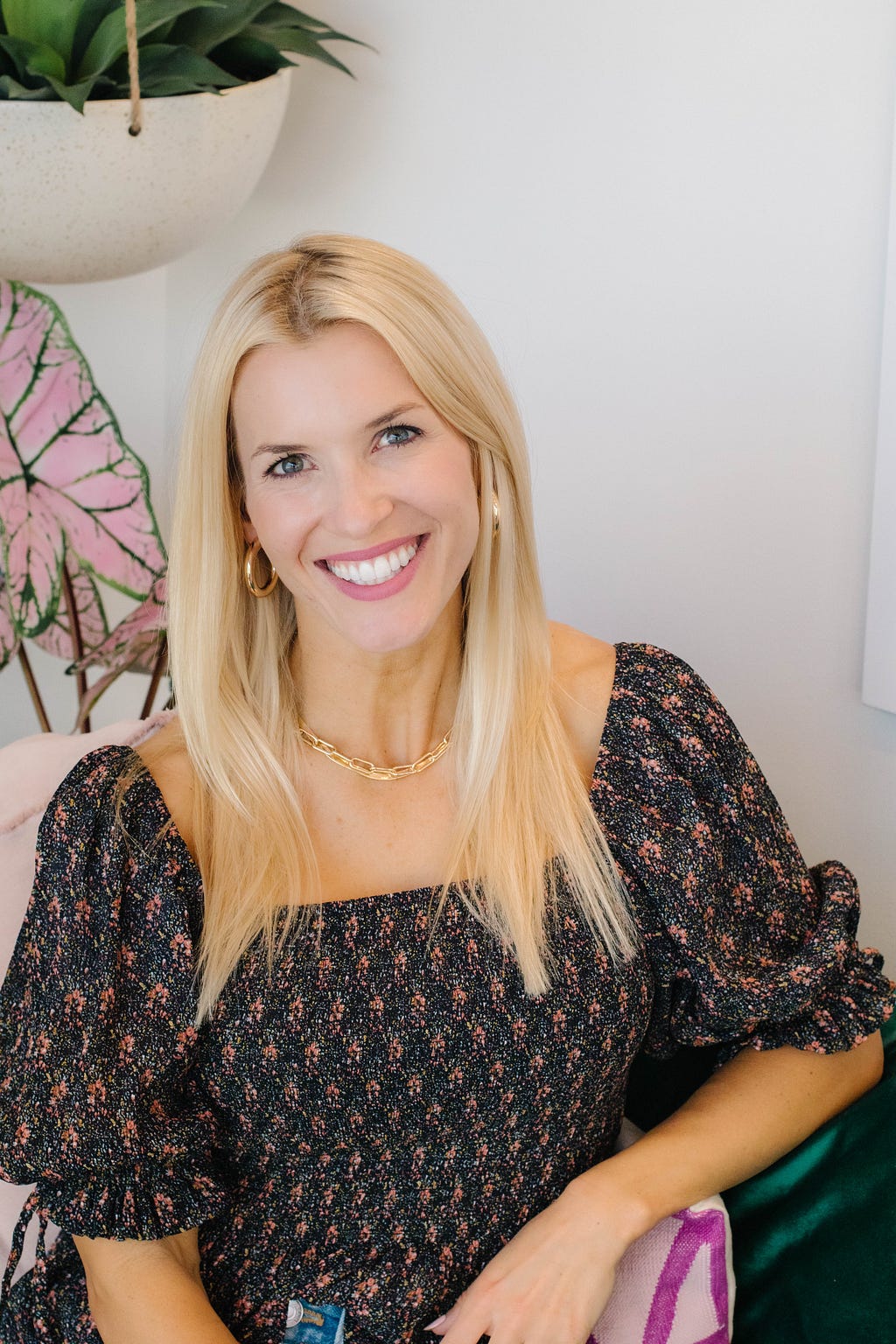
Women In Wellness: Kasia Rothe of Rustic MAKA On The Five Lifestyle Tweaks That Will Help Support…

Women In Wellness: Kasia Rothe of Rustic MAKA On The Five Lifestyle Tweaks That Will Help Support People’s Journey Towards Better Wellbeing

An Interview With Candice Georgiadis

Stay connected to your family and friends: get together with your parents, siblings, nieces or nephews, grandparents, and friends on a regular basis. Holidays shouldn’t be the only time we are connected to each other. Have dinner together, your favorite dessert or just meet up for coffee at least once a week. Spend time doing different activities which can lead to getting to know each other and create a more intimate relationship. You can volunteer in your community; find a place where you can pay forward to those around you who need help.

As a part of my series about the women in wellness, I had the pleasure of interviewing Kasia Rothe.

Kasia Rothe is the CEO and co-founder of Rustic MAKA, and has over 15 years in corporate setting, business practices, and customer relations and her past entrepreneurial endeavors include wedding photography business and health and wellness blog. She created a natural deodorant and personal care routine that worked in tune with her body after natural products on the market failed to perform. This became a catalyst to a new way customers care for their underarms and the beginning of Rustic MAKA.

Thank you so much for joining us in this interview series! Our readers would love to “get to know you” better. Can you share your “backstory” with us?

It all started with a simple comment from my husband: “Honey, I think you need to do something about your deodorant.” Since bad body odor isn’t easy to face, and when you develop something this embarrassing that’s evident to everyone around you, you become determined to find the right solution. So, what’s a girl to do when life gives you stinky lemons? You make Sweet Lemonade Natural Deodorant, but the story goes back to growing up in Poland in the 80’s, which wasn’t easy.

Very early on, my sister Monica and I have learned what it means to live simply. Without having access to mainstream beauty and hygiene products, our mom, Anna, taught us to make do with what we had. She used potato starch and water solution to soak dry hands. She put sour milk or yogurt on sunburned skin and used active yeast to make hair soft and silky. When our younger sister Alex was born, our mom used chamomile water to soothe her sensitive skin. We learned to take nature’s gifts and use simple remedies to battle many bodily ailments.

After moving to the United States, the lessons from the past combined with the passion for organic and wholesome products became our way of life. Yet, as natural products became available on the market, many of them failed to perform.

Our first product, a natural deodorant, was the result of a personal experience and giving up on what’s out there. We needed something simple and healthy, but at the same time it needed to really work. With our mom’s guidance and recalling lessons from the past, we spent countless hours researching just the right ingredients and cooking batch after batch in the family kitchen. When we realized we had something that truly delivers results, our journey started and Rustic MAKA was born. We now have an effective product filled not only with wholesome and healthy ingredients, but also pride and joy. With lots of hard work and utilizing gifts from nature, our products became loved by many and are available across the U.S. and beyond.

Can you share the most interesting story that happened to you since you started your career? What were the main lessons or takeaways from that story?

When we first started Rustic MAKA, our main goal was to get in front of the customers and be carried by retailers. Since I previously worked as a marketing and sales rep for a local organic bread company, I had an idea of who would be the best retailer partner. It’s also important to get yourself known among local customers so they can become your fans, your advocates and sort of an extension of your brand when your products start popping up at local stores. It’s a great way to meet and build relationships with your customers.

But this is all a process and sometimes people are hesitant and need that testimony that you are a legit company, and your products will sell before they are willing to place them on their shelves. So, we were very determined to get the word out and get on the “radar” of the local news stations and be on TV.

I made a list of local newspapers and looked up every writer that was remotely related to business, beauty or start-up entrepreneurship. The list was growing, and I started sending out the emails in hope to connect with just one writer or news editor. At the same time, we had some local retailers picking up our deodorants and at some local events people were giving us leads to what stores would be a great fit for us. Someone even mentioned Whole Foods but were we ready for that? So, then it happened I came across a post on social media about an event for potential vendors for Whole Foods. I figured “great, I can go and learn about requirements, etc.” so I sent the email and next thing I know I have a confirmed meeting with a sales team to review our product line. Not to panic, right? We had a few weeks to put everything together, Monica worked on the line sheets, presentation etc. and I practiced my speech. The presentation day came, and it was one of the best feelings in the world when a Whole Foods sales team tells you they love what we do and would love to bring Rustic MAKA on board. Wow, cloud nine and nervousness all at the same time!

All of this was like a domino effect of events intermingled with getting into store after store, when I was least expecting it ABC Channel 7, JoAnn Purtan was calling me. She wanted to interview us, Rustic MAKA mompreneurs for her segment about mom’s business owners. We had our first TV interview and the story received a huge amount of recognition which led us to expanding our product line and more stores.

This journey might have many twists and turns, but when we think back on all of this, we always say that taking those chances and keeping on knocking on doors is what made us get where we are today. We might have thought we are not ready for Whole Foods or even a TV interview but if you don’t take chances you don’t know where you end up.

Can you share a story about the biggest mistake you made when you were first starting? Can you tell us what lesson you learned from that?

You will make many mistakes as an entrepreneur but what you learn and how you move on will determine your success.

It was our very first local event, it was our “launch”, our premiere, where we wanted to showcase our new brand and sell our deodorants. We found what we thought a perfect way to share what we created with other moms. This event was a mom-to-mom sale, but it turned out it was a complete flop. We didn’t sell one thing, came home disappointed and somewhat discouraged and almost gave up. After having to face that loss and re-thinking our strategy and really looking at our customer base, we realized we need to be better at the selection process so we can align ourselves with the event’s customers. Sometimes, you are so thrilled about what you have to offer you get lost and that’s ok. That passion and excitement just needs to be re-directed into better planned execution but don’t get pigeonholed into the perfectionism of it either. Design your strategy plan and execute it, while learning as you go if the mistakes happen, because they will.

Let’s jump to our main focus. When it comes to health and wellness, how is the work you are doing helping to make a bigger impact in the world?

Creating a natural deodorant that truly worked was just the beginning of the possibilities where one product can change lives for so many. Rustic MAKA company fills the gap for a truly trustworthy brand that brings health-conscious consumers a product they can rely on. Hearing stories from countless customers on how much something we created has improved their everyday life, and how they are no longer self- conscious about their underarms, is one of the most rewarding and exciting aspects we didn’t expect to get from starting Rustic MAKA. Seeing customers come back month after month, genuinely inspires us to continue to develop more natural personal care solutions.

Can you share your top five “lifestyle tweaks” that you believe will help support people’s journey towards better wellbeing? Please give an example or story for each.

1. Stay connected to your family and friends: get together with your parents, siblings, nieces or nephews, grandparents, and friends on a regular basis. Holidays shouldn’t be the only time we are connected to each other. Have dinner together, your favorite dessert or just meet up for coffee at least once a week. Spend time doing different activities which can lead to getting to know each other and create a more intimate relationship. You can volunteer in your community; find a place where you can pay forward to those around you who need help.

2. Get lost in nature: go for a walk. Find a local park or nature preserve and go get immersed in nature’s beauty. Being in touch with nature has been proven to increase our brain activity, helps with positive thinking, and increases vitamin D production.

3. Get to know yourself: Spend each day thinking about your daily interactions and how it affects your self-talk. Are you boosting your confidence or are you constantly feeding it negativity? By changing your mindset, you have the power to change your life. Find what brings you joy each day and what activities make you smile. By knowing yourself you can create a life that is not only gratifying to yourself but to those around you.

4. Get enough sleep: Our bodies need rest each day; it might be 7–10 hours depending on our daily activity level. We need time to reset, which also helps with detoxification and allows us to be able to conquer the next day ahead. Sleep deprivation is a leading cause of depression, weight gain, stress, and even food cravings. If you can, go to sleep an hour early or don’t set an alarm clock to see how many hours your body needs to be at its peak operational level.

5. Eat your veggies: they’re just good for you.

If you could start a movement that would bring the most amount of wellness to the most amount of people, what would that be?

Learn the benefits of kindness and grace. We live in a society of instant gratification where we just want answers here and now and no one is allowed any mistakes or imperfections. Kindness and grace can teach us how we can treat each other better without being judgmental while understanding and accepting our differences. Each of us is unique and we need to celebrate those differences by embracing them and not creating situations that divide us into groups of the same likenesses. It’s good for our wellbeing to give as we are meant to be giving creatures. Yes, so many of us see giving as a form of sacrifice.

What are your “5 Things I Wish Someone Told Me Before I Started” and why?

1. You must wear many hats running your own business until you can hire out the pros. When you are a start-up, especially bootstrapping like Rustic MAKA, you prioritize how and where you spend your budget and what you can do in-house. At the very beginning, we did everything ourselves, from printing labels, bookkeeping, manufacturing, labeling, packing orders to customer service and wholesale repping. We still do a lot of it ourselves but while we grew, we had to learn to give up control and let go of the tasks that can be trusted to others.

2. Social media algorithms are always changing. What worked 5 years ago on social media or what’s trending 6 months ago can and will change next week. That’s just the nature of this beast and there’s no way around it. You can try to take courses, master classes but at the end of the day, your authenticity and your own voice is what will attract your customers to your brand. There’s no magic plan or secret formula to get “famous” online, unless you have an unlimited budget and can hire one of the Kardashian sisters. By being consistent and doing what you love will win over customers that will stay loyal to your brand.

3. Don’t grow for the sake of growing. Expanding a business should always be a well thought out plan. Adding products or services to your offerings will only bring you more work, stress and sleepless nights, and who wants that? Concentrate on your niche and what makes you stand out from the competition. Trends come and go, and you should keep up on new and exciting advancements and new technologies, but don’t get distracted by going into a rabbit hole of creating something that is not in line with your overall vision. Less is more.

4. Failing to know your customer. If you don’t know who your customer is, how can you sell it to them. Spell out in detail who that person is, know their likes, their dislikes, their shopping habits, interest, and hobbies, how they spend their time and with who. Where do they shop or how do they like to spend their money? Are they affiliated with any specific causes or social movements? It all plays an important role in how you present your brand and your future expansion and growth.

5. You will get tired…and it’s ok. Life and work balance takes practice and cannot be mastered, and it should not be attempted. Knowing when to take a break will provide a new perspective, maybe even spark new ideas and the inspiration for what to do next or how to do something better.

Sustainability, veganism, mental health and environmental changes are big topics at the moment. Which one of these causes is dearest to you, and why?

Sustainability means a lot more to us than making efforts in terms of packaging or ingredients. This has been on the forefront for us in the last few years as we see how it is impacting our environment around us. At the peak of ecommerce, consumerism, and immediate availability of many exotic ingredients it’s evident to us that some resources are being mishandled or overused. While we search for innovative, new materials we see a need to improve how they are sourced and who’s responsible for the production.

Also, we want to break the stigma of talking about bodily functions. We are very open and welcome talking about sweating and body odor to normalize it and not make it a taboo subject anymore. Our hope is that this will lead to creating open and honest conversations about keeping your mind and body healthy.

How can our readers follow you online?

RusticMAKA.com

Instagram/Facebook: @RusticMAKA

info@rusticmaka.com

Thank you for these fantastic insights!


Women In Wellness: Kasia Rothe of Rustic MAKA On The Five Lifestyle Tweaks That Will Help Support… was originally published in Authority Magazine on Medium, where people are continuing the conversation by highlighting and responding to this story.

Inspirational Women in STEM and Tech: Vickie Kloeris of Institute of Food Technologists On The 5…

Inspirational Women in STEM and Tech: Vickie Kloeris of Institute of Food Technologists On The 5 Leadership Lessons She Learned From Her Experience

An Interview With Candice Georgiadice

Networking is key. Networking through IFT not only landed me my job with NASA, but also set me up for success throughout my entire career. The food system at NASA is only one very small portion of the well-oiled machine that successfully launches people into space. It took cooperation and coordination from a lot of different people. I learned that, to be successful, I had to establish relationships with those around me and that when you go out of your way to help someone out, they’ll likely return the favor.

As a part of my series about “Lessons From Inspirational Women in STEM and Tech”, I had the pleasure of interviewing Vickie Kloeris.

Vickie Kloeris recently retired from NASA where she worked in space food systems for 34 years. She authored and co-authored numerous publications and received several awards, including NASA’s highest award, the NASA Distinguished Service Medal in 2019. During her career, she was twice awarded the NASA Exceptional Service Medal and received the Johnson Space Center Director’s Commendation Award. In 2017, she was given an Outstanding Alumni Award by the College of Agriculture and Life Sciences by her alma mater, Texas A&M University, where she holds a BS in Microbiology and an MS in Food Science.

Thank you so much for doing this with us! Can you tell us a story about what brought you to this specific career path?

I was a microbiology major in my senior year of college about to register for my last semester and was one hour short of the required hours of microbiology electives. My advisor in the College of Science at Texas A&M suggested that I get with one of my professors and arrange to do a “white paper” for that hour. I saw a Food Microbiology course in the College of Agriculture that was on the approved list. My advisor argued against it wondering why I would want to take a four-hour course that included a lab. I insisted because I wanted the challenge and liked the idea of something different. That course gave me a keen interest in the application of microbiology to food processing and preservation and led to graduate work in food science.

My specific career with space food came as a result of my membership with the Institute of Food Technologists (IFT). I was drawn to become a member, not only to get a better deal on a hotel at my first IFT annual meeting, but because the organization offered a breadth of research, learning resources, networking opportunities, and events that would help me become a stronger science of food professional. When I got my first food science job in Houston, TX, I began to attend meetings of the local section of IFT. At those meetings, I met food scientists who worked at NASA. I thought that working with the space food system had to be the most fascinating job a food scientist could have, so I asked them to reach out if they ever had an opening. About 18 months later, I got a call, interviewed, and became a contractor food scientist in the food lab at Johnson Space Center (JSC) leading to a 34-year career in space food.

Can you share the most interesting story that happened to you since you began at your company?

No day was ever the same while working in the space program, so I have lots of interesting stories, but I do vividly remember one day sitting at my desk when the phone rang. I picked it up, started talking and it took me a few minutes to realize that I was speaking directly with one of the astronauts who was on the International Space Station (ISS). Crew members had recently gotten the capability to “phone home” so he was calling to thank me for some of the special items we sent in his preference food container. It was one of those rare history-defining moments and I was so taken by surprise that I was practically speechless resulting in a pretty awkward conversation!

Can you share a story about the funniest mistake you made when you were first starting? Can you tell us what lesson you learned from that?

One of the assignments I received during my tenure as a contractor in the food lab was to test a prototype food package that was under development. This involved flying the package on the KC-135, better known in the industry as the Vomit Comet. The plane would fly from Ellington Field near the Johnson Space Center and would go out over the Gulf of Mexico. Once over the Gulf, the plane would fly parabolas where the pilot performs a specific maneuver resulting in a brief period of microgravity. As one of the few ways to simulate weightlessness on Earth, it allows us to test the prototype package as it would be used in space. The name Vomit Comet reflected the fact that many who flew experienced severe nausea due to reactions of the inner ear. Medications were available to take preflight to reduce symptoms, but I made the mistake of listening to my coworker who said that for my first time I should experience it without medication. I hesitated, but I convinced myself I could handle it and wanted to appear tough. After about 40 parabolas, I ended up being so sick that I lost five pounds from what I weighed that morning! Although I made two subsequent flights on the KC-135, I never again made the mistake of going without medication. I was never one of the folks who felt good enough to do somersaults at the top of the parabola, but I did manage to do the testing and make it through the next two flights vomit-free.

What do you think makes your company stand out? Can you share a story?

Although I am now retired, I think NASA stands out as a company by the unifying nature of space travel — it brings people together from all around the world and gives us something to root for despite our differences. Throughout my travels with NASA, I’ve always found that my international counterparts were really no different to me and just hardworking scientists who wanted to support the cosmonauts to the best of their ability. NASA, and space, have a special ability to draw people and nations together.

I’ve also been involved with the Institute of Food Technologists for 40 years. The members who make up this organization, spanning across food science and innovation, play an important role in solving issues facing our food system, including food security. According to the Department of Agriculture’s Economic Research Service, 38.3 million people in the U.S. lived in food-insecure households in 2020, including 6.1 million children. And a Food and Agriculture Organization of the United Nations report confirmed that nearly 2.4 billion people — almost one in three — faced food insecurity at the moderate or severe level in 2020. At IFT, the community works collectively to solve increasingly complex problems in our food system. We provide an essential space for food scientists and innovators in pursuit of knowledge and discovery to network, collaborate, improve themselves, and advance our profession.

Are you working on any exciting new projects now? How do you think that will help people?

I am currently serving as President of the Institute of Food Technologists (IFT) which is a member-based organization dedicated to improving the global food system by eliminating food inequity and developing a safe, sustainable, and nutritious food supply. Within my role at IFT, I chair the Board of Directors and am laser-focused on finding better ways to serve IFT’s members as the science of food continues to evolve.

Ok super. Thank you for all that. Let’s now shift to the main focus of our interview. Are you currently satisfied with the status quo regarding women in STEM? What specific changes do you think are needed to change the status quo?

I think there are still far too many young girls and women intimidated by studying STEM-related subjects or considering STEM careers. It’s been a long, long time since I was in high school, but I can attest to the fact that back in those days, counselors did not encourage women to pursue STEM careers. To get more women involved in STEM, it’s critical that the people female students look to for advice are including STEM careers as an option. I also think it’s important for women in STEM to encourage and mentor younger females in the field. The more women they see in STEM careers, the easier it will be to envision themselves in those same types of jobs.

In your opinion, what are the biggest challenges faced by women in STEM or Tech that aren’t typically faced by their male counterparts? What would you suggest to address this?

I think that working women who have children are often assumed to have too many obligations and distractions to be able to be dedicated employees or leaders. I was once, years ago, asked in an interview about my intentions regarding marriage and children. I think that the implementation of family leave, which includes leave for fathers, has helped slightly to dispel this misconception, but there is still a lot of work to be done in this area. Additionally, there is often salary disparity between men and women in the same job. To combat this, IFT has begun conducting salary surveys for its employees to encourage transparency, credibility, and ultimately action within the industry. Continuing to present this type of data demonstrates this disparity while giving women a proof point when negotiating for higher wages. I would encourage women to take initiative and ask for better wages and benefits from their employers.

What are the “myths” that you would like to dispel about being a woman in STEM or Tech. Can you explain what you mean?

I think there is still a bias that women can’t be as strong of a leader as a man can. However, as more and more women continue to assume more significant leadership roles, this will help disprove that myth and hopefully empower women to aspire to these types of positions.

What are your “5 Leadership Lessons I Learned From My Experience as a Woman in STEM or Tech” and why. (Please share a story or example for each.)

  1. Networking is key. Networking through IFT not only landed me my job with NASA, but also set me up for success throughout my entire career. The food system at NASA is only one very small portion of the well-oiled machine that successfully launches people into space. It took cooperation and coordination from a lot of different people. I learned that, to be successful, I had to establish relationships with those around me and that when you go out of your way to help someone out, they’ll likely return the favor.
  2. Take advantage of every training opportunity that comes your way. NASA is particularly big on training. At the beginning of my career, the availability of internal training was often limited to technical and safety training rather than leadership training. Over the years that changed significantly, and I took advantage of as much leadership training as time allowed and feel I benefited a great deal from that.
  3. Volunteering can provide you with unexpected opportunities that make you a better leader. Early on in my career, I was encouraged by one of the managers at NASA to join the Johnson Space Center National Management Association and I owe her greatly for that. Once I became a member, I volunteered for various tasks in the organization which allowed me to be around and work with higher-level managers that I would never have crossed paths with at that point in my career. I learned a lot about leadership by hearing their points of view and seeing their thought processes on a variety of topics discussed within the organization.
  4. Change can be hard. I started at NASA early in the Shuttle program — 16 of the 135 Shuttle flights had flown before I came on board. Despite this, there was already an established way in which things were done. Over the years, many changes to the food system took place and were almost always met with resistance. However, change is necessary if we want to advance and continue growing.
  5. Diverse workforces create meaningful impacts. When you bring together diverse voices and experiences, good things can happen. Inclusive environments encourage employee empowerment, enhanced problem-solving and improved performance. On the contrary, when we limit the people included in the decision-making process to those of like-minds or like-appearance, we exclude valuable points of view and expertise that could enable better decisions. In 1994, Dr. Carolyn Huntoon became the first female center director at JSC. She not only represented a shift in diversity being a woman, but she was also a scientist instead of the usual engineer.

What advice would you give to other women leaders to help their team to thrive?

Encourage your team members to network within the company and externally through other organizations like professional or community organizations. It is critically important for individual team members, both for their own and for the broader group’s success, to build and nurture a professional network.

What advice would you give to other women leaders about the best way to manage a large team?

Trust your team and don’t be afraid to delegate. Throughout my career, I learned that delegating responsibility and tasks plays an important role in your team members’ growth. I used to have a tendency to want to do things myself or to micro-manage for fear of things slipping through the cracks. I quickly learned I could not do everything myself and had to rely on my team, but to grow a reliable team required delegation. The delegation process can sometimes be painful, and mistakes will be made, but it is the only way your team will learn to make better decisions.

None of us are able to achieve success without some help along the way. Is there a particular person who you are grateful towards who helped get you to where you are? Can you share a story about that?

I am grateful for my first boss at NASA: the late Dr. Charles Bourland. When I first started the role, he was a food scientist and the contractor manager of the food lab at Johnson Space Center but later became the civil servant manager of the International Space Station food system. After I had been a contractor for four years, an opportunity came up to manage the Shuttle food system. NASA management sent Dr. Bourland to persuade me to take it but wanted me to assume that role as a contractor rather than hiring me as a civil servant. I pointed out to him that if I took the job, I would have to switch to a lower salary and fewer benefits so he went back to his NASA management and convinced them to offer me the civil servant manager position instead. I owe him greatly for giving me the start to my civil service career and that was just one of the many times he helped me, serving as a mentor to me throughout the years until his retirement.

How have you used your success to bring goodness to the world?

I love doing career outreach, especially with students. Outreach was a huge part of my job at NASA. There has always been tremendous interest in what the astronauts eat in space. A significant part of my job was conducting tours for visitors to the food lab and briefing them on the space food system and answering their questions. I learned that I enjoyed outreach and so became a volunteer for the Johnson Space Center Speakers Bureau. As a volunteer, I spoke on numerous occasions to students about my job and food science as a career. Although I can’t know for sure, I hope that I have inspired some students along the way. As a volunteer for IFT, I have been a contributor to and served in a leadership role in Feeding Tomorrow, the charitable foundation of IFT. This foundation works to attract students to food science as a career, supports food science students with scholarships, and works to provide food science expertise to developing countries around the world.

You are a person of enormous influence. If you could inspire a movement that would bring the most amount of good to the most amount of people, what would that be? You never know what your idea can trigger. 🙂

A movement that would eliminate food inequity in the world. People cannot succeed when they are without food or inadequately nourished.

Can you please give us your favorite “Life Lesson Quote”? Can you share how that was relevant to you in your life?

“Do unto others as you would have them do unto you.” I would be remiss if I didn’t admit that I was sometimes guilty of not living up to this quote, but I almost always found if I treated others well, they would do the same.

We are very blessed that very prominent leaders read this column. Is there a person in the world, or in the US with whom you would love to have a private breakfast or lunch with, and why? He or she might just see this if we tag them 🙂

A few female scientists that I find particularly inspiring are primatologist and environmental activist Jane Goodall; marine biologist and conservationist Rachel Carson, who is credited with revolutionizing the modern environmental movement; and NASA physicist and mathematician Katherine Johnson, whose calculations of orbital mechanics were critical to the success of the first and subsequent U.S.-crewed spaceflights.

Thank you for these fantastic insights. We greatly appreciate the time you spent on this.


Inspirational Women in STEM and Tech: Vickie Kloeris of Institute of Food Technologists On The 5… was originally published in Authority Magazine on Medium, where people are continuing the conversation by highlighting and responding to this story.

Inspirational Women in STEM and Tech: Saray Ben-Meir of SQream On The 5 Leadership Lessons She…

Inspirational Women in STEM and Tech: Saray Ben-Meir of SQream On The 5 Leadership Lessons She Learned From Her Experience

An Interview With Candice Georgiadis

Don’t apologize for thinking or acting differently than men. Many times, women see/judge/operate in a different way which might give them an advantage.

As a part of my series about “Lessons From Inspirational Women in STEM and Tech”, I had the pleasure of interviewing Saray Ben Meir.

Saray Ben-Meir, Chief-of-Staff and Corporate Innovation at SQream

As SQream’s Chief-of-Staff, Saray works across teams to ensure alignment on broad and strategic initiatives across the company, building partnerships, leading organizational changes and leadership design, driving constant process improvement, and ensuring the organization abides by its cultural values. Saray brings over two-decades of experience in the hi-tech industry, in both corporate and startup organizations, in Israel and abroad.

Saray also serves on SQream’s Executive Innovation Team, which envisions and incubates SQream’s next-generation products, creates partnerships with strategic stakeholders, and integrates those projects into the work stream of the company.

Thank you so much for doing this with us! Can you tell us a story about what brought you to this specific career path?

I started my career in human resources roles. I first became responsible for developing cross-functional teams of tech and business professionals when the Canadian start-up that I joined was acquired. I was responsible for identifying experts from both companies who had complementary skills to design a new organization that would take our joint offering to the next level.

Since then, I’ve been working at technology companies exploring ways to accelerate innovation by fostering an intrapreneurial spirit.

Can you share the most interesting story that happened to you since you began at your company?

As Head of Corporate Innovation, I’m responsible for facilitating strategic initiatives that require multi-disciplinary talents combined with out of the box thinking. Three years ago, our CTO came up with the disruptive idea to create “SQream Nano”, a very small device that processes heavy data analytics. Since the product was for a different market than our typical customers, we created a “squad” responsible for mapping the solution to different verticals to see where there is the most significant need. I developed discovery sessions based on my personal network of experts to explore IoT and automotive use cases including smart city applications and others.

We worked as a task force from incubation until it was ready to become an official item in our product portfolio.

Can you share a story about the funniest mistake you made when you were first starting? Can you tell us what lesson you learned from that?

I was trying to head hunt a CUDA developer when I just joined SQream, as this was a very hard skill to find. Without realizing it, l approached someone who by chance worked for a partner of ours. Our CEO told me the day after, “You did a great job finding the best CUDA guy in the industry, however you caused a serious “diplomatic incident” with this partner. This taught me that the industry is an ecosystem we should treat very carefully and wisely.

My way of operating is to have a win-win approach where all parties involved come out ahead, and not to burn bridges.

What do you think makes your company stand out? Can you share a story?

Our end goal is helping companies make better decisions, by improving the efficiency of their data processing at a very large scale. We took upon ourselves a very ambitious mission with technical complexities that huge companies struggle to overcome. I’ve been with SQream for almost 8 years and our biggest differentiator is our team’s determination and belief that we can meet any challenge. So many things along the way could have stopped us, but we didn’t give up.

Are you working on any exciting new projects now? How do you think that will help people?

We are constantly working on minimizing the time to insight for decision makers. I am especially proud of how our technology is able to accelerate cancer research by increasing the amount of data that can be analyzed while reducing the time to reach meaningful results.

Ok super. Thank you for all that. Let’s now shift to the main focus of our interview. Are you currently satisfied with the status quo regarding women in STEM? What specific changes do you think are needed to change the status quo?

I am happy to say that I see a larger number of women in the tech industry. Schools are making more of an effort to expose girls to technical fields from an early age, which will pave their way to the tech industry later on.

However, despite this positive change, I believe that it will take another decade or so until we will see 50% representation of women in tech companies.

In your opinion, what are the biggest challenges faced by women in STEM or Tech that aren’t typically faced by their male counterparts? What would you suggest to address this?

The most known and spoken about challenge is combining a meaningful career with being a parent. The tech industry is well known for its demanding working hours and some women are concerned about balancing professional and personal life.

What are the “myths” that you would like to dispel about being a woman in STEM or Tech. Can you explain what you mean?

My background is not technical, but I always worked with very technical professionals, I’ve always strived to learn and dive into the details and understand deeply what we do. Along my career I had situations where technical people were reluctant at first to trust that I would understand their answers.

Very quickly, however, they discover that due to my natural curiosity, passion for learning, and my different perspective focused on people throughout the organization, I can provide valuable input that can be an asset.

From my experience, listening, analyzing, finding practical solutions that will get the job done earns me respect from those who might initially question my authority.

What are your “5 Leadership Lessons I Learned From My Experience as a Woman in STEM or Tech” and why. (Please share a story or example for each.)

1. Be a good listener

2. Invest in creating good relationships with your stakeholders and then you can make a greater impact.

3. Don’t apologize for thinking or acting differently than men. Many times, women see/judge/operate in a different way which might give them an advantage.

4. As a leader you cannot satisfy everyone, learn to live with criticism from those who are not in agreement with you.

5. Don’t compromise on being a meaningful parent while building your career.

What advice would you give to other women leaders to help their team to thrive?

You will be judged on your results, so excel in whatever you do.

Don’t expect any special favors and don’t take shortcuts.

Speak your mind! Don’t be afraid to voice your thoughts and opinions. Even if you make a mistake, learn from it and try again, don’t let anyone stop you. By having a different perspective, you can contribute to a new discovery.

None of us are able to achieve success without some help along the way. Is there a particular person who you are grateful towards who helped get you to where you are? Can you share a story about that?

Each of my managers through the years has had a significant role in making me who I am. I was lucky to have managers who opened their door for me, gave me the confidence and the freedom to take bold actions and push things forward, while exposing me to various domains from which I’ve learned a lot. I also owe some credit to those who were honest and told me along the way I can’t succeed — perhaps without intending to, they pushed me forward no less than those people who believed in me.

How have you used your success to bring goodness to the world?

I have been volunteering for years in various diverse projects. I try to share my experiences, knowledge and motivation with people who have limited excess to the tech world or to the business world. Also in SQream, one of the things I’m proud of, is that we do a lot to open our gates to diverse talent — for example, we coach young students and support them through their first steps in the tech industry.

You are a person of influence. If you could inspire a movement that would bring the most amount of good to the most amount of people, what would that be? You never know what your idea can trigger. 🙂

I would have like to spread the work culture of the tech industry to other sectors who operate in a very “old school” management style by not empowering individuals and striving for excellence and innovation. I would like to see sectors like education, healthcare, or industrial become more influenced by this culture and to give the people who work in that industry a healthier environment where they can prosper.

Can you please give us your favorite “Life Lesson Quote”? Can you share how that was relevant to you in your life?

My personal role model is the philosopher and writer Ayn Rand because of her belief in individualism and excellence over mediocrity. My favorite quote of hers is — The question is not who is going to let me — but who is going to stop me.

We are very blessed that very prominent leaders read this column. Is there a person in the world, or in the US with whom you would love to have a private breakfast or lunch with, and why? He or she might just see this if we tag them 🙂

I would love to meet professor Itzhak Adizes whom I read and followed for many years and feed my brain with his many important insights. As a Jewish child during World Ward II, Adizes hid in Albania as a Muslim for protection and then in 1948, Adizes moved with his family to Israel, where he served in the Israel Defense Forces. After completing his undergraduate education, he moved to the United States where he obtained a doctorate degree in business from Columbia University. He is well known for developing the PAEI management model in early 1970s, that categorizes managers into four key roles, Producer, Administrator, Entrepreneur and Integrator.

Thank you for these fantastic insights. We greatly appreciate the time you spent on this.


Inspirational Women in STEM and Tech: Saray Ben-Meir of SQream On The 5 Leadership Lessons She… was originally published in Authority Magazine on Medium, where people are continuing the conversation by highlighting and responding to this story.