
An Interview With Candice Georgiadis
There will be very uncomfortable moments of growth — inflexion points — where you have no idea how you are going to make it. Persevere and make sure you have the right people around you to help think your way through these moments.
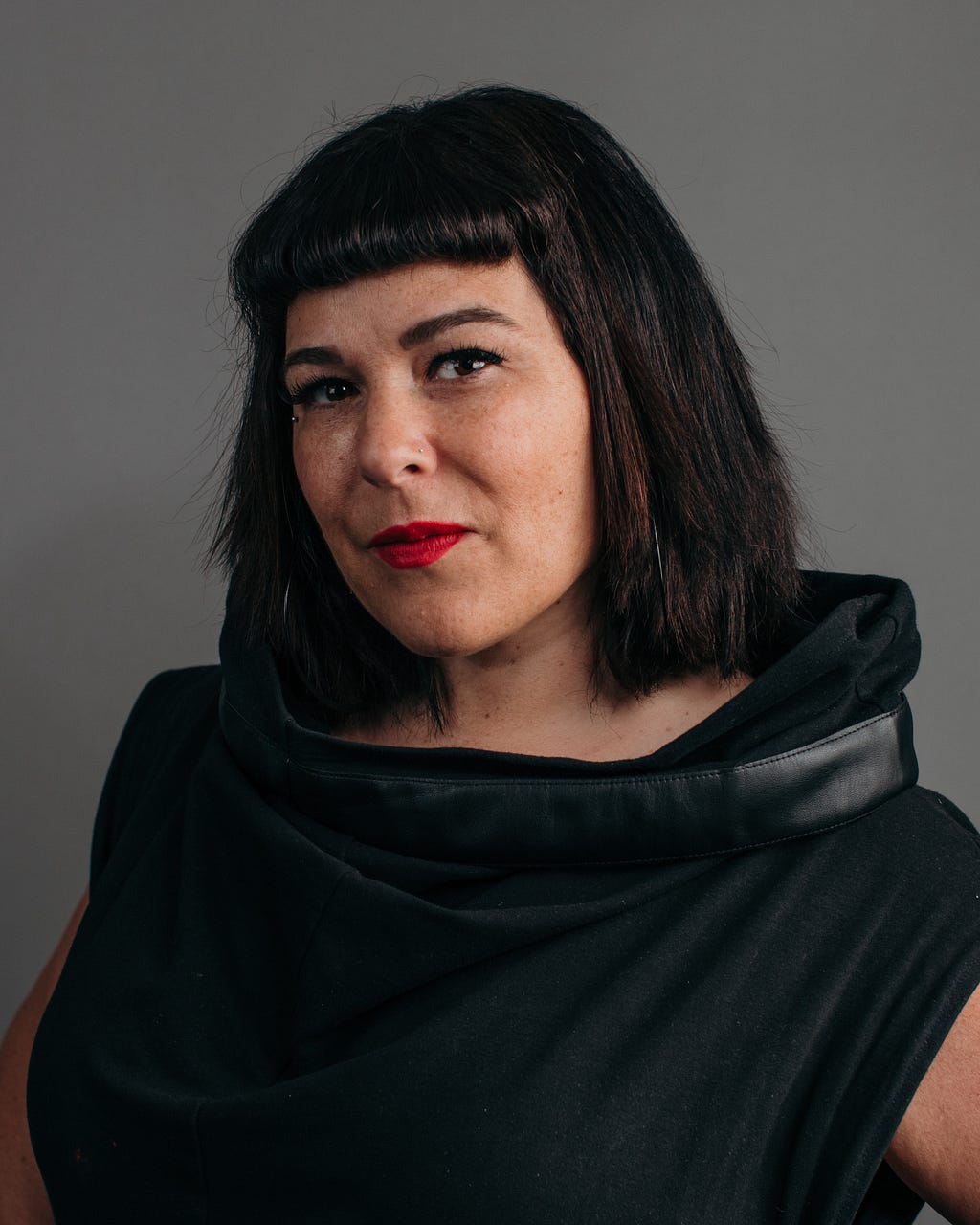
As a part of our series about “Why We Need More Women Founders”, I had the pleasure of interviewing Beth Morrison.
Recipient of the Musical America Award for Best Artist of the Year as Agent of Change and noted as a “contemporary opera mastermind” (LA Times) and “a powerhouse leading the industry to new heights” (WQXR), Beth Morrison is an opera-theatre producer and the President and Creative Producer of Beth Morrison Projects.
Beth created Beth Morrison Projects (BMP) in 2006 to identify and support the work of emerging and established living composers. Named as one of the cultural leaders of The Kennedy Center Next 50 in 2021, she is currently an advisory board member of National Sawdust and Brooklyn Youth Chorus, as well as a board member of Opera America, the international competition, Music Theatre Now and Voices 21C, a social justice choir and holds a Bachelor of Music from Boston University, a Master of Music from Arizona State University, and an MFA from Yale School of Drama.
Thank you so much for doing this with us! Before we dig in, our readers would like to get to know you a bit more. Can you tell us a bit about your “backstory”? What led you to this particular career path?
My backstory is that I grew up in a small city in Maine. I have an incredible family with two very supportive parents who introduced me into the arts at a very young age. In fact, my whole family was deeply involved in our community theater, mostly performing in musicals, from the time I was six years old. I thought that I wanted to be a Broadway performer, but then pivoted to classical music when I went to the Boston University Tanglewood Institute (BUTI) at the age of 17. It was my first exposure to classical music, and it hit me hard. I was introduced to the likes of Jessye Norman, Kathleen Battle, Leonard Bernstein, Seiji Ozawa and a whole world that I didn’t know existed musically. I was hooked. I then went on to pursue degrees in vocal performance and vocal pedagogy with an eye toward being a classical singer in opera and a voice teacher at a university. However, I diverted rather quickly into arts administration when I moved back to Boston and started working for BUTI and at a very young age ended up in the senior management role. I quickly learned that was a better fit for me.
After working there for several years, I began to dream about a different kind of opera… something that was completely focused on contemporary stories, working with living composers writing in a fully 21st century way, and with media and theatrical techniques that were cutting edge. There weren’t any examples of this in opera. I was seeing it in theater, but not opera. So, I decided that I needed to start my own company with the express purpose of changing the opera industry by introducing all of these elements. I went back to school to the Yale School of Drama and did a degree in theater management and producing and then moved to NYC to start my company upon graduation. When I started the company it was just me and I was supporting myself as a voice teacher as I raised money to put on the work. Seventeen years later, we are 15 people strong and have a 3 million dollar budget. Along the way, I also co-founded PROTOTYPE Festival which is an annual festival in NYC for contemporary chamber opera and music-theatre and in 2015 we became a bi-coastal company with an office in LA, as well as Brooklyn.
Can you share the most interesting story that happened to you since you began leading your company?
This is an impossible question, as there are so many interesting stories- I work in the theater! But, I guess I would say the starting of my festival is a real defining moment in my trajectory. I had been trying to get my work into the January festivals that happen in NYC because, due to a number of industry conferences at that time, there is a confluence of venue directors and presenters in NYC shopping for work to bring back to their venues. BMP is a touring company, so I needed to find a way to put my work in front of these people. After being rejected from the theater and dance festivals, I decided I needed to start a festival that focused on contemporary chamber opera and music-theatre. Around that time I was approached by the Mellon Foundation to come in and tell them about BMP. At the end of the conversation, I told them about my idea for a festival, and they said they wanted to fund and help me start one. So, with my co-producer here we did just that, and now ten years later we are lauded as one of the most important contemporary opera festivals in the world.
Can you share a story about the funniest mistake you made when you were first starting? Can you tell us what lesson you learned from that?
Well it certainly wasn’t funny at the time, but the first year I was working, I joined a project that was in progress. There was an executive producer on the project that I was working with. He tasked me with creating the budget. After presenting the budget to him, I realized that my numbers were off by $100,000 because of a formula error. I wanted to die! I remember crying a lot that night. To his credit, or maybe not, he didn’t fire me! I now have an Executive Director who does the budgeting so these mistakes don’t happen anymore!
None of us are able to achieve success without some help along the way. Is there a particular person who you are grateful towards who helped get you to where you are? Can you share a story about that?
There are many people that have been significant in my career and have helped me along the way, but I’ll go all the way back to the beginning, and tie it in with my story about BUTI. In Auburn, ME as a performer I was a big fish in a little pond. In my junior year of high school, my choral director, Kathi Cutler, brought a brochure to me from the Tanglewood Institute. I had never heard of it. She said that she thought it would be a great place for me, to push me, to expand my horizons if you will. So, she and my band director John Neal, took it upon themselves to teach me an aria from Le Nozze di Figaro (Mozart), as well as drive me down to Boston for the audition. Mr. Neal played piano for me. As you know, I got in, and the rest is history. It was one of *the* defining moments of my life, and I’m so deeply grateful that these incredible teachers took an interest in me and went out of their way to help me.
Ok, thank you for that. Let’s now jump to the primary focus of our interview. According to this EY report, only about 20 percent of funded companies have women founders. This reflects great historical progress, but it also shows that more work still has to be done to empower women to create companies. In your opinion and experience what is currently holding back women from founding companies?
That’s an interesting question. In my field, while things have changed pretty dramatically in the last five years — women have historically not been given the opportunity to be the lead artistic voice for a company. Very often in theaters, and certainly in opera companies, men are given the Artistic Director role, and women are given the Managing Director position, somehow indicating that women can’t lead in creative pursuits. So, very often, the companies that are the independent ones doing interesting work have been founded by women because they would not otherwise have been given the opportunity. We have to found our own companies if we want to have an artistic voice in the field.
Can you help articulate a few things that can be done as individuals, as a society, or by the government, to help overcome those obstacles?
This is a huge question. I would just say that things are slowly changing. But people follow the money. So, if foundations will step up in the non-profit performing arts sector and create grants for artistic leadership by women, companies will hire and follow suit.
This might be intuitive to you as a woman founder but I think it will be helpful to spell this out. Can you share a few reasons why more women should become founders?
It simply gives you the opportunity to be the boss and the visionary. There’s not much else to say but that!
What are the “myths” that you would like to dispel about being a founder? Can you explain what you mean?
I’m not sure what myths you are talking about, but I guess founders are known for putting passion before practicality. I’m definitely guilty of that in some ways — until I had a general manager and ultimately an executive director, I was literally paying myself as little as possible so that I could put every dollar onto the stage and into commissions. I would calculate the minimum amount needed for my bills and go with that. Finally, I’m paid a proper salary because I have someone else making that decision!
Is everyone cut out to be a founder? In your opinion, which specific traits increase the likelihood that a person will be a successful founder and what type of person should perhaps seek a “regular job” as an employee? Can you explain what you mean?
You have to be comfortable with risk, and you have to be able to put in enormous amounts of time to create your company. It’s not for the faint of heart!

Ok super. Here is the main question of our interview. What are your “5 Things I Wish Someone Told Me Before I Started” and why? (Please share a story or example for each.)
- It’s harder than you could ever imagine.
- Be careful who you hire and go with your gut.
- Kindness goes a long way, as does saying I’m sorry.
- Doing it alone is lonely. As soon as you can bring on other people/partners, do it, but make sure they are the right people.
- There will be very uncomfortable moments of growth — inflexion points — where you have no idea how you are going to make it. Persevere and make sure you have the right people around you to help think your way through these moments.
How have you used your success to make the world a better place?
I take my role in the field very seriously, and I believe I have a responsibility to foster the next generation. We have formalized that mission through our Next Gen and Producer Academy programs.
You are a person of great influence. If you could inspire a movement that would bring the most amount of good for the greatest number of people, what would that be? You never know what your idea can trigger.
This is another massive question. I think being in the world we are in today, the thing I would most like to inspire is kindness. We all f- up and make mistakes in our lives. I’d love to see a movement of calling-in rather than calling-out; maybe the world would be a better place to live in. I believe everyone can learn, change, and grow from their mistakes.
We are very blessed that some very prominent names in Business, VC funding, Sports, and Entertainment read this column. Is there a person in the world, or in the US with whom you would love to have a private breakfast or lunch with, and why? He or she might just see this if we tag them.
Jared Leto. He inspires me — he’s someone who is self-made, brings meaning to others through his tremendous skills as a troubadour (and actor), and has a keen mind and business sense. Maybe he would make me look at the world through a different lens that would inspire me to my next height!
Thank you for these fantastic insights. We greatly appreciate the time you spent on this.
Female Founders: Beth Morrison On The Five Things You Need To Thrive and Succeed as a Woman Founder was originally published in Authority Magazine on Medium, where people are continuing the conversation by highlighting and responding to this story.