
Modern Fashion: Jeff Anderlite of Baja Llama On The 5 Things You Need To Lead a Successful Fashion Brand Today
An Interview With Candice Georgiadice
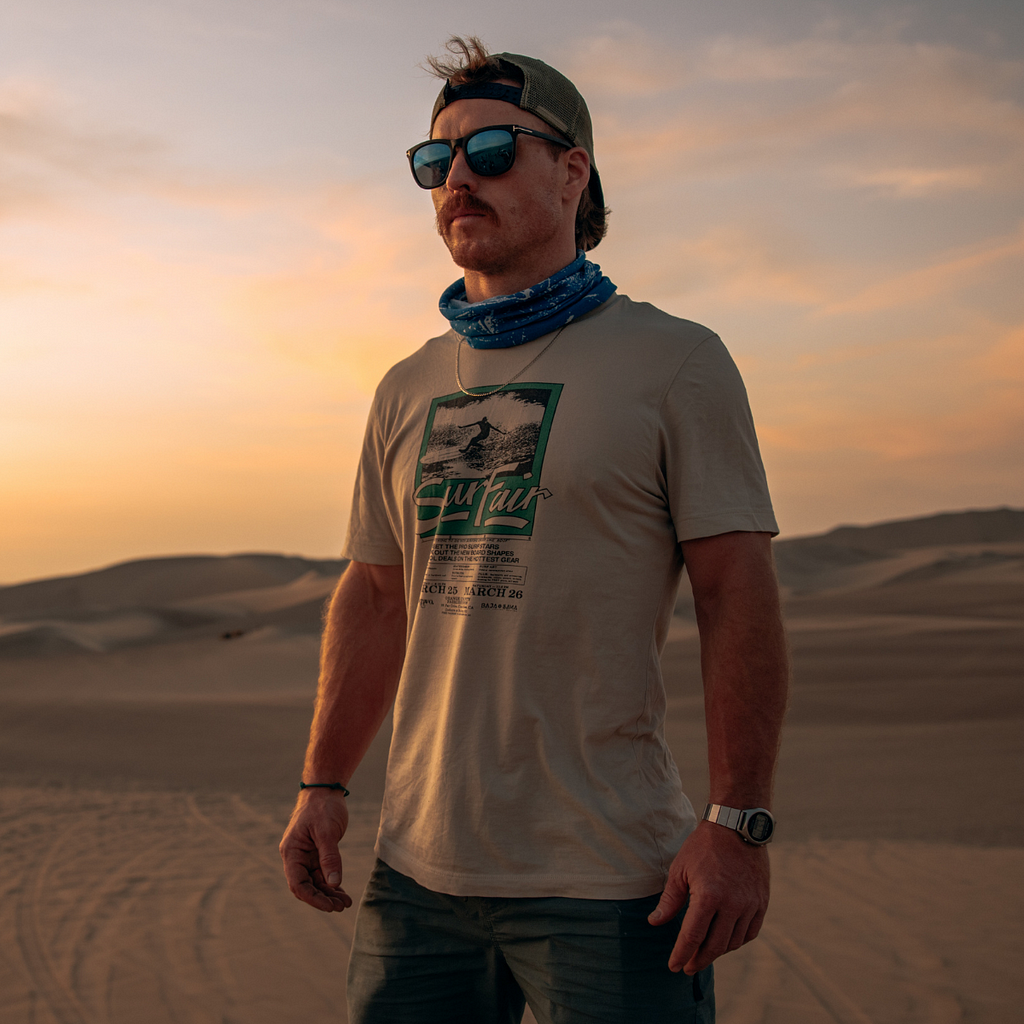
Unshakable Persistence — This is extremely important for any entrepreneur, but especially when navigating a saturated, low margin, high-risk market. You must be able to push through failures, disappointments and struggles over and over and over again without losing faith that if you keep your head down and work your ass off, the end result will be worth it.
Many in the fashion industry have been making huge pivots in their business models. Many have turned away from the fast fashion trend. Many have been focusing on fashion that also makes a social impact. Many have turned to sustainable and ethical sourcing. Many have turned to hi tech manufacturing. Many have turned to subscription models. What are the other trends that we will see in the fashion industry? What does it take to lead a successful fashion brand today?
In our series called, “5 Things You Need To Lead a Successful Fashion Brand Today” we are talking to successful leaders of fashion brands who can talk about the Future of Fashion and the 5 things it takes to lead a successful fashion brand in our “new normal.”
As a part of this series I had the distinct pleasure of interviewing Jeff Anderlite.
Jeff’s a true global MisAdventurist. Before starting Baja Llama, he was the founder of the world famous Naked Tiger Hostel (recently closed due to covid) in San Juan del Sur, Nicaragua. He taught business classes in the Peace Corps, and drove a 1999 Ford Fiesta from London to Mongolia in the Mongol Rally. He lived, worked and traveled in over 60 countries around the world and is now on a mission to bring travel and storytelling to his international Fight Against Boring with Baja Llama.
Thank you so much for doing this with us! Before we dig in, our readers would like to get to know you a bit more. Can you tell us a bit about your childhood “backstory”?
I grew up in a town called Walnut Creek, California which is just outside of Berkeley. I played sports, was a bit of a deviant, and always liked tinkering around building/inventing little things. I think one story that sums me up pretty well is when I was a freshman in high school, I took a remote control car apart and rigged the steering servos to an air horn so that I could remotely control the obnoxiously loud horn from a few hundred yards away. This got me in a bit of trouble as I was using it around school as a prank before I eventually got caught using it to terrorize opponents as they shot the basketball during a rivalry game.
Can you tell us the story about what led you to this particular career path?
I can tell you the impetus behind the idea that Baja Llama was born from. It all started on a typical Friday evening sometime in the warm California fall of 2017. My brother Jason and I were having a phone call, presumably still wearing our festive Friday shirts, which pre-covid had become quite popular during Hawaiian shirt Fridays in many corporate settings. Jason said he thought we could create better and much more interesting Hawaiian shirts than we were typically wearing. His bright idea was to make shirts with crazy themes and stories behind them. I thought this was brilliant. The initial prints were too out there and controversial for our target consumer, but the out-of-the-box thinking stuck and I was on a warpath to quit my day job to build something special where I could use my creativity to constantly create new and exciting products.
Can you share the most interesting story that happened to you since you began your career?
That’s a great question. Maybe one of the most interesting stories was when we drove our “Baja Llama Experience” 40’ converted prison transport vehicle from California to Florida last summer. Before we were able to do our cross-country road trip promoting our brand, visiting stores, attending trade shows and creating content for the brand, we hired a “Professional” Skoolie conversion company to do the retrofit. The story is long and painful, but the premise is this: We paid about 30k as a deposit for Lone Star Skoolie to retro fit our bus. After months of terrible communication and questionable updates on our bus’ progress, I had to fly to San Antonio to essentially steal the bus back from this guy. It turns out he used fake reviews to convince a well-known publication to come out with a top 10 list of best bus conversion companies in the USA with Lone Star Skoolie topping that list. That’s how we found him and as it turns out, there are numerous poor souls he wound up scamming from that article too. When we picked up the bus it was in shambles. It looked like 3 meth heads camped out in there for 2 months higher than a kite practicing their demolition skills. We had to rip everything out and start from scratch. A few months later I was contacted by someone else that had their bus destroyed to see if I would tell my story. Over the next few months, she was able to get a list of around 20 people that Ben from Lonestar Skoolie had scammed out of hundreds of thousands of dollars on his way to destroying buses and screwing over hard-working American lives.
We ended up getting the bus to my house where we spent 5 or so weeks working 100+ hour weeks retrofitting the bus into something magical. The end result is incredible but the path to get there was treacherous. We didn’t have it registered and only one of us had our proper Class B CDL license for the drive but part of our motto is “She’ll be alright!” Also, if we were ever pulled over the answer was always — Sorry officer, I didn’t know I couldn’t do that. Haha.
You are a successful business leader. Which three character traits do you think were most instrumental to your success? Can you please share a story or example for each?
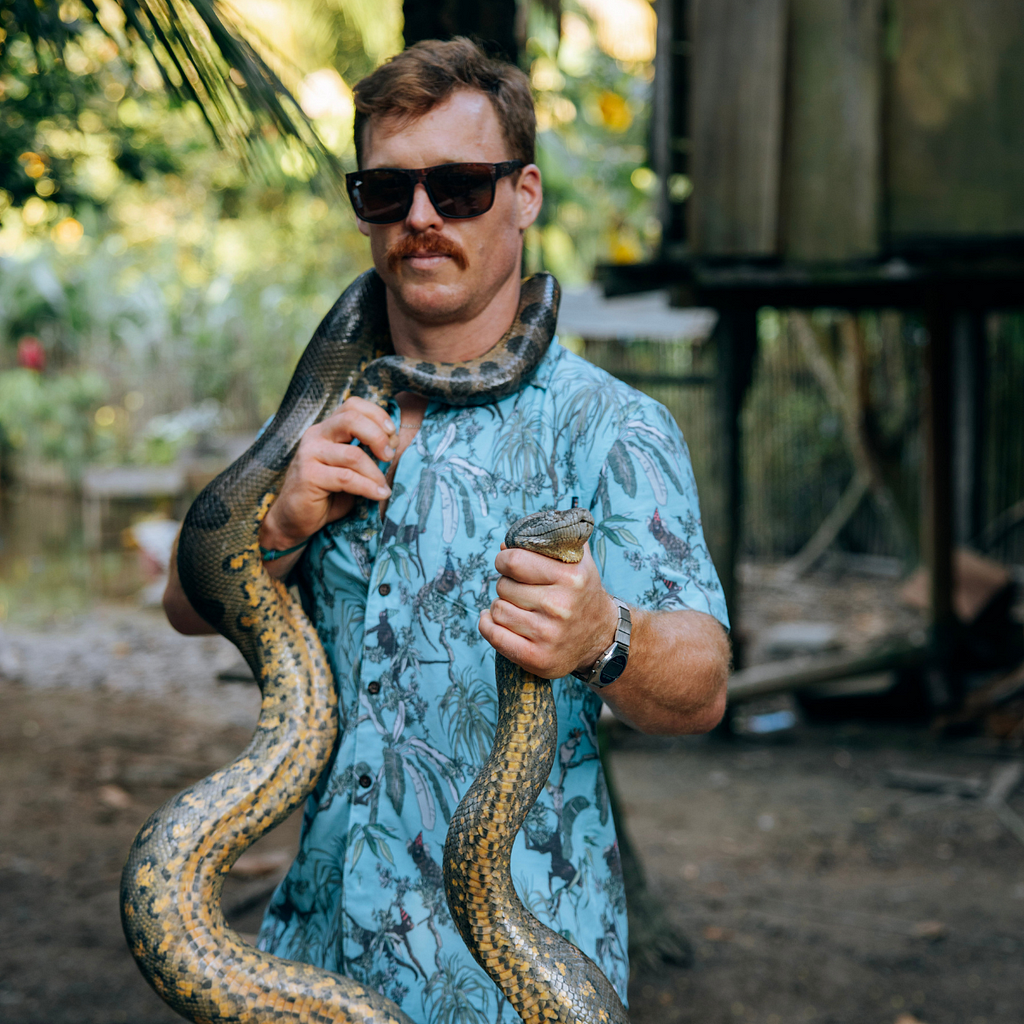
- Evolving Creativity — In order to find success with Baja Llama, I have been in a constant state of creativity. From product development to figuring out problems in each aspect of the company. Every adventure we go on, I’m always taking pictures for inspiration, meeting new people, and experiencing new cultures, food and activities. This all leads to our creation of prints based on our travel stories which resonate well with our customers, create opportunities for partnerships, and facilitate our need to consistently create innovative prints that no one else is coming out with. Recently, we went to Peru and negotiated a partnership with the Treehouse Lodge where we stayed in the middle of the Amazon Rainforest to create a line based on their eco-lodge. Not only was this amazing for our personal wellness and motivation (we got to experience a once-in-a-lifetime trip), but we also generated supreme content, and a new highly interesting partnership our customers will be able to enjoy.
- Tolerance to Pain — Being able to suffer while building a company is a necessity. Often the more one is willing to suffer and deal with the pain that comes with starting a company, the more likely that person will be able to build long-term success. To grow Baja Llama, I had to sacrifice both financially and emotionally, which affected all aspects of my life. I was willing to live well below my means and reinvest in Baja Llama for years in the pursuit of building the brand.
- Positive Attitude — Building and leading a lean team comes with some inherent challenges relating to motivation. The pay isn’t high, the uncertainty of success is high, and the failures are constant. A main worry is the negative effect stress or bad news can have on your team. Feeling defeated can derail a small team from accomplishing our goals and more importantly derail you, the leader, from maintaining a laser focus on achieving goals and pushing through adversity.
What do you think makes your company stand out? Can you share a story?
I believe our storytelling within our prints and our willingness and ability to live out our MisAdventurist lifestyle embodies our brand and makes us stand out from our competitors.
The first and most relevant story relating to this is how we launched Baja Llama. To drum up interest, get a bit of content, and really show the world what Baja Llama stood for, we decided to coincide the launch of our first line of button-ups with our 13,000 km drive from London to Mongolia as part of the Mongol Rally. Not only did this rally promote being a MisAdventurist, but they also donated to charities and encouraged going far and getting amongst the people. These things are really aligned with our core values, so it was a no-brainer. We bought a 1999 Ford Fiesta from the outskirts of London, spray painted it red and white, and put a stereo to rock out with that cost more than the car itself. Attached a roof rack and put a skid plate on, and we were off on a 2+ month journey across 16+ countries. We used this trip to create some of our first prints; one of which is making a comeback! The stories that came from this trip and all the succeeding trips are what keep Baja Llama flush with ideas, storytelling, and inspiration for the future.
Do you have a favorite “Life Lesson Quote”? Can you share a story of how that was relevant to you in your life?
Opportunities multiply as they are seized — Sun Tzu
I love this quote because I’ve found it to be so true over my life, and also because it’s a self-fulfilling prophecy. It only works if you abide by the simple premise of taking advantage of the opportunity.
We stumbled upon a 40’ prison transport vehicle in Florida. I bought it sight-unseen with the radical idea to turn it into a mobile showroom and display piece. This one seized opportunity has led to countless new opportunities for our wholesale growth, brand recognition, partnership deals, and overall growth of the company.
Ok, thank you for that. Let’s now jump to the primary focus of our interview. Do you see any fascinating developments emerging over the next few years in the fashion industry that you are excited about? Can you tell us about that?
I see the continued push for sustainability across almost all sectors within the industry driven from both the end consumers’ purchasing behavior to brands’ sustainability and ethics-driven growth initiatives in marketing and production. The emergence of Shopify-like eCommerce platforms, easier access to manufacturers for new brands, and the shift away from consumerism driven by a handful of elite legacy companies have culminated in the ability for small story-based brands to carve out more and more of the pie. This means their brand stories and differentiation with product and sustainability will be the main points of interest for the purchasing decisions new prospective customers will rely upon.
The second trend I see is manufacturing, especially in Asia with smaller non low-cost brands from the USA, shifting production to the Americas and certain European countries. Sure, many apparel brands will still make garments in China but increasingly I’m seeing brands move more and more production to countries like Colombia, Turkey, and Portugal as a way to negate the negative effects Chinese manufacturing is having on their supply chain as well as increase the quality of their brands’ perceived value, reduce lead times and lower shipping costs.
The third and most exciting trend I see is the emergence of technology in the purchasing of fashion. I believe we will see more 3D and virtual website integration being developed and implemented into eCommerce sites. The possibilities are still in their infancy, but you can expect 3D virtual showings, full outfit try-on, and potentially consumer customization of products through these tools. The value for brands will be increased conversion rates, decrease in returns, and increased loyalty amongst their customers.
Can you share how your brand is helping to bring goodness to the world?
- Sustainable practices — Each collection we create has new sustainable fabrics. We’re extremely excited about our newest LlamaSeal™ Tech board short fabric. This latest collection of board shorts includes our Shipwrecks and Remanso Board shorts that feature an incredibly soft, durable, and quick dry fabric made from up-cycled coconut husks and recycled plastic bottles. They are truly a marvel of design and ingenuity.
- Positive inspiration — We tell stories of adventure to inspire as many people as possible to explore the world. Through this storytelling, we hope to shed light on the miraculous possibilities that come from international exploration as well as to inspire people to appreciate all types of cultures and see the beauty in what many consider hardship.
- Charity / partnerships — We have partnered with a few charities for environmental protection, anti-poaching efforts and most recently with AquaChar to sustainably bring clean water to those most in need. We have some great things in the works with them that we’ll be rolling out in the upcoming months. You can read more about AquaChar and their mission here at https://www.aquachar.com/.
Can you share with our readers about the ethical standards you use when you choose where to source materials?
Improving our materials, fabrication processes and practices is extremely important to Baja Llama. We will not hire a new manufacturer without doing a comprehensive review of their factory, including site visits, competitor comparisons, and audits to make sure they are using fabrics they say they are using. When we pick out our fabrics we are first going after mills that have a track record for high quality, consistency in production, but most importantly a clean track record for adhering to the highest standards in their waste, chemical treatment and disposal practices so we can be sure no garment comes with the consequence of negatively affecting soil and water supplies through unethical practices. We also choose fabrics we have tested for durability since longevity has as much of an impact on overall sustainability as the way in which the fibers are created.
Fast fashion has an advantage, that it is affordable for most people, but it also has the drawback that it does not last very long and is therefore not very sustainable. What are your thoughts about this? How does your company address this question?
We’re not big into fast fashion at Baja Llama. We strongly believe it’s better to build quality garments and charge a little more to the end consumer for a durable product than lower costs or raise profits by using inferior quality materials and fabrication processes. That being said, it would be highly insensitive of me to assume everyone could afford our products and thus dismiss low cost options that many American and international consumers depend upon for basic clothing needs. I think honestly the market dictates the result here for most people. The outliers are people that can easily afford nicer quality but don’t see the value in doing so. Education is the only thing that can really sway that perspective. I think it is up to us and any other brand in our relative space to do what they can to educate consumers on production waste, use of unsustainable materials and production practices and basic economics of paying for lasting quality over repurchasing inferior products over and over. Baja Llama is by no means accomplishing the end result we want, but we are constantly trying to show the value of buying lasting products made with sustainable materials and manufactured with ethical standards so that our customers can hopefully see the value in spending a little bit more for our products over lower cost competitor products.
Thank you for all that. Here is the main question of our interview. What are your “5 Things You Need To Lead a Successful Fashion Brand”. Please share a story or example for each.
These are the top 5 things I need to lead a successful brand in no order of importance.
- Constant Creativity — We as leaders are solving problems at all times. To effectively solve problems from ever-evolving situations, creativity is paramount. More than that, with a fashion brand you need to be creative in product development, storytelling, branding, distribution, etc. It is a constant struggle to maintain creativity. One thing I practice with my team is the art of creativity through questioning. Instead of finding the answers — find the detailed minuscule questions. These are hyper-focused but the answers are detailed and concise. If you ask enough questions you will get enough answers and that has proven over and over again to lead to creative problem-solving. For instance — even in art development, asking questions pertaining to coloring, print size, and organization of elements can lead to more creative prints.
- Unshakable Persistence — This is extremely important for any entrepreneur, but especially when navigating a saturated, low margin, high-risk market. You must be able to push through failures, disappointments and struggles over and over and over again without losing faith that if you keep your head down and work your ass off, the end result will be worth it.
- Willingness to Learn — It’s extremely difficult to lead effective teams, create quality products and solve complex obtuse problems if you’re not versed enough to have a productive conversion with those that can teach you things. I see massive value in finding out what I’m lacking and trying to actively educate myself on that issue, topic or point of view. Even better — finding an expert and trying to pick their brain on the subject. The number of failures you can mitigate or the problems you can effectively solve will increase exponentially if you’re willing to expand your knowledge base at a rapid pace.
- The Art of Conversation / Negotiation — You must be able to connect with people when you are leading a brand. From connecting with retailers, convincing talent, lowering manufacturing costs, and building partnerships, the list goes on. You must be able to read people, start up a conversation and at least practice the gift of gab.
- Vision — Having a clear vision of what you want your brand to be is crucial. That is obvious to most, but the nuts and bolts of what that vision means and breaking it down to steps manageable for your company to actually realize this vision is the important part.
- Dependability — If my team, partners, and customers can’t depend on me, if they lose trust in me, it becomes much harder to achieve the company’s goals. Motivating people to do their best when you’re not dependable as a leader becomes almost impossible. Help people when they need it, show up, be on time, have an insane work ethic, and show you are dependable if you want to inspire your team to do the same.
Every industry constantly evolves and seeks improvement. How do you think the fashion industry can improve itself? Can you give an example?
This is a question I ask myself internally about Baja Llama all the time. I think as an industry and more specifically my little niche within the industry, there are a few factors that cause the most damage which should be addressed first.
- Moving manufacturing closer to the end user can not only shift jobs closer to home, but decrease lead times, and reduce shipping costs and pollution as well.
- Innovative use of new fabrics and construction processes. We haven’t created a revolutionary way to manufacture appealing fabrics or utilize inventive manufacturing processes in a long time.
- Improve the upcycling process to reuse old clothing. Sustainability becomes less of an issue if we were able to recycle our old shirts and shorts easier. I think setting up more trade-in programs within the brick-and-mortar stores and potentially incentivizing trade-ins for online purchases should be a priority.
You are a person of great influence. If you could start a movement that would bring the most amount of good to the most amount of people, what would that be? You never know what your idea can trigger. 🙂
I would start the Go Far — Say Yes Movement. The premise would be to inspire people to leave their comfort zone, travel by any means necessary, and say yes to any non-life-threatening situation. I believe that mass “good” can only be accomplished by having the masses ready and willing to do good. I also believe that the best way to inspire empathy and instill a genuine willingness to do good is to truly teach people appreciation and gratitude for what they have and empathy for those that don’t have the resources to help themselves. The most effective ways I’ve learned from those main tenets of altruism to shine through are to get out of your comfort zone by going far and saying yes. Additionally, it will be sustainable in exponential growth.
How can our readers further follow your work online?
You can go to Bajallama.com and sign up for our MisAdventurist email newsletter which contains stories of our global exploits, interesting travel-inspired stories, and news as well as special VIP discounts and promotions.
Thank you for these fantastic insights. We greatly appreciate the time you spent on this.
Modern Fashion: Jeff Anderlite of Baja Llama On The 5 Things You Need To Lead a Successful Fashion… was originally published in Authority Magazine on Medium, where people are continuing the conversation by highlighting and responding to this story.