Female Founders: Brittanie Price of BCENE Public Relations On The Five Things You Need To Thrive…

Female Founders: Brittanie Price of BCENE Public Relations On The Five Things You Need To Thrive and Succeed as a Woman Founder

An Interview With Candice Georgiadis

Take your work super seriously, but not yourself. We pride ourselves on driving incredible results for our clients. Every day we land national stories, communicate industry changing news and partner with brands that are transforming the world in a radical way. And we also make ridiculous TikToks, trade memes with the media and circulate GIFS around our team Slack channels. Don’t get me wrong — I’m super down for the complicated, fast-pace world of communications so long as I can laugh and have fun along the way.

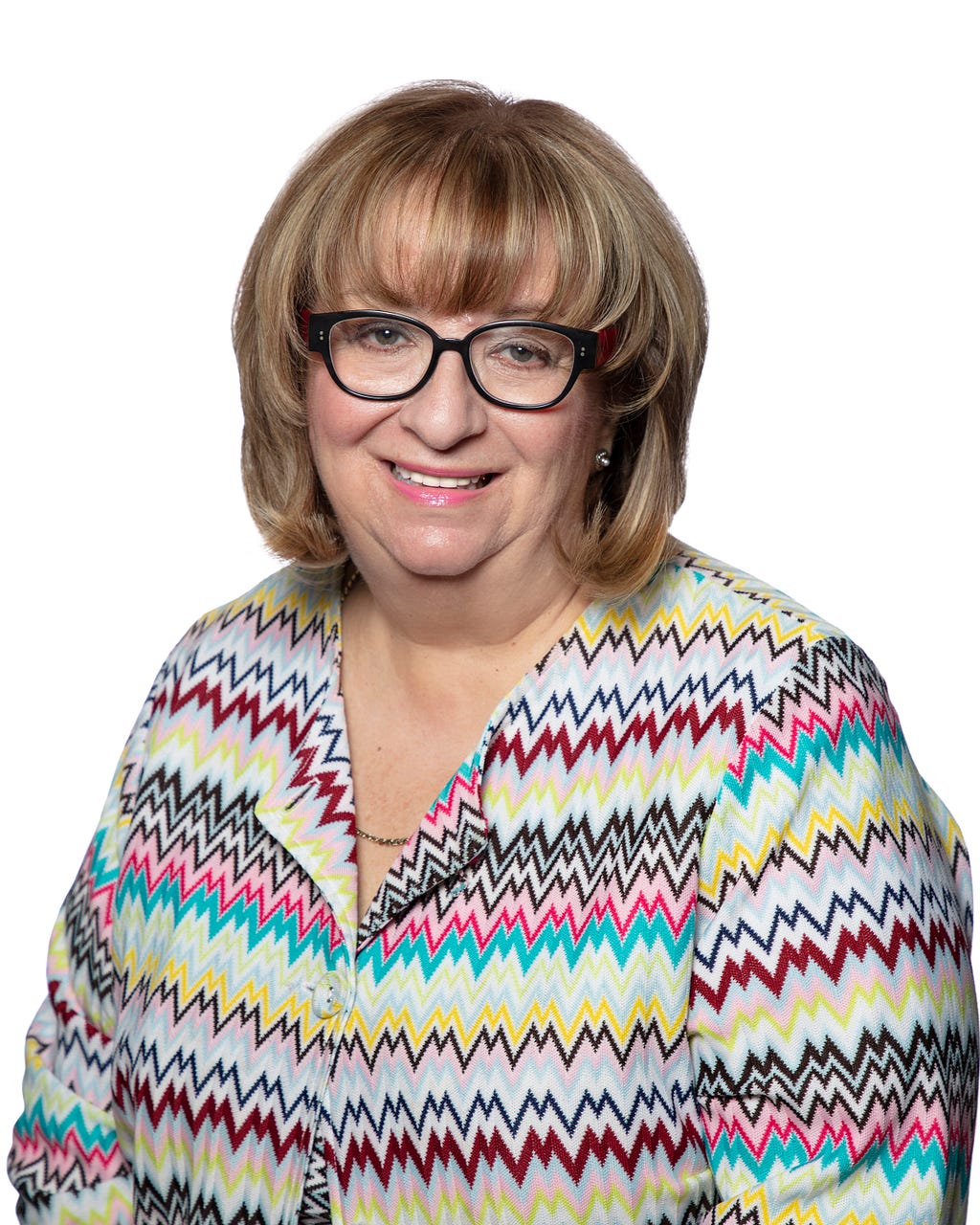
As a part of our series about “Why We Need More Women Founders,” I had the pleasure of interviewing Brittanie Price, founder & principal of BCENE Public Relations. BCENE PR is a data-driven, award-winning communications agency with an extensive national portfolio touching every major media market. Since launching BCENE PR in 2017, the agency has more than quadrupled its client list and tripled in team size, now representing several Fortune 500 companies, including some of the largest and well-respected real estate firms and coveted lifestyle brands. Brittanie is known for taking emerging brands from “zero to hero” as the direct result of her expertise, whip-smart approach and extensive media and taste-maker connections.

Thank you so much for doing this with us! Before we dig in, our readers would like to get to know you a bit more. Can you tell us a bit about your “backstory”? What led you to this particular career path?

Prior to BCENE PR, I served as the Public Relations Director at Streetsense (formerly Delucchi Plus), which was then a full-service strategic digital communications and marketing agency. I had the privilege to lead a band of brand storytellers and strategic communicators. My work spanned 10+ unique US markets and included overseeing the backstage beauty PR at NYFW for the iconic beauty brand, Sassoon Salon, in North America. While at Streetsense, I had the opportunity to oversee the public relations for several national consumer brands including Girl Scout Cookies, Mrs. Fields and Mamont Vodka.

My passion for unconventional storytelling began at an early age when I would spend hours in the magazine aisles while my mother shopped. I poured over the fashion glossies as a teenager and begged to take a few copies home. Fast forward 15+ years later, we now proudly place our client’s stories in the same publications that I once coveted as a young girl including: ALLURE, Seventeen Magazine, Southern Living, Town & Country, VOGUE, Woman’s Day and Women’s Wear.

Over the course of my career, I’ve worked at several woman-led, woman-owned agencies. I’m fortunate in that I was championed and really raised by incredible female founders over the last 10 years. Women such as Linda Webster, Wendy Drake, Stephanie Lynch and Chris Delucchi, put me on the frontlines with media and clients, consistently gave me a seat at the table and took the time to groom me. Today, I stand on the shoulders of these giants and look forward to giving back what was so freely passed to me.

Can you share the most interesting story that happened to you since you began leading your company?

Since 2016, BCENE PR has been the agency of record for OLIKA, a clean wellness hygiene brand, that offers an ultra-hydrating hand sanitizer. The brand was still new and emerging when The New York Times came to us for an interview in February 2020, right when the pandemic hit the U.S. We had a massive story go live, which coincided with the public panic and need for hand sanitizer. The volume of traffic from The New York Times story broke the OLIKA website and the brand quickly sold out of product. I’ll never forget the excitement of landing a national feature which quickly turned into a communications challenge as consumers were in desperate need of product and hungry for updates on shipping and restocking. The whole team really rallied together during an incredibly difficult time.

Can you share a story about the funniest mistake you made when you were first starting? Can you tell us what lesson you learned from that?

I’ve shared this before, but I had a typo in my title for months when I first launched BCENE. A friend kindly pointed out the error after I went to print with my new business cards and brand collateral. I was mortified and knew it wouldn’t be the last mistake I made as new business owner. In that moment, I decided to laugh it off, fix it and move on. One of our company values is now, “We are examples of progress, not perfection.” While we are high performers who always go the extra mile for each other, our clients and the media, that doesn’t mean we are perfect. We make mistakes; we own them and then work hard not to repeat them. My favorite question when I interview potential new team members is, “Tell me about your biggest and boldest mistake in the workplace?” Pitched the wrong outlet? Sent your boss a nastygram meant for a colleague? Fudged up a client deliverable that went to press? I want to hear the good, the bad and the horrifyingly ugly. I usually prime a candidate by first sharing some of my own cringeworthy transgressions as I think it’s important to normalize imperfection across the board — intern to CEO. I tell the team — we’re in the business of human connection and if you haven’t noticed already, humans are messy.

None of us are able to achieve success without some help along the way. Is there a particular person who you are grateful towards who helped get you to where you are? Can you share a story about that?

I had no intentions of starting a company or becoming a female founder. I grew up watching my mother start several of her own companies throughout the years. Even today, at 56-years-old, my mother is still the hardest, longest working person I’ve ever met. She’s the ultimate networker, marketer and self-starter. In an act of defiance at 20-something-years-old, I vowed never to start my own company as it felt like too much work and uncertainty. Never say never, right?

BCENE was really the brainchild of my husband. He was traveling often for work and begged me to come on trips. Remote working wasn’t an option back then and so I couldn’t always join him. One night, we’re sitting on the couch, binge watching Game of Thrones, he turns to me and says, “start your own thing.” I refused. But it was too late, the seed was planted.

He’s since been my #1 fan, biggest cheerleader and ultimate support system both at home and in the business for the last five years.

Ok, thank you for that. Let’s now jump to the primary focus of our interview. According to this EY report, only about 20 percent of funded companies have women founders. This reflects great historical progress, but it also shows that more work still has to be done to empower women to create companies. In your opinion and experience what is currently holding back women from founding companies?

We’ve made great strides in the last 10 years, yet the pandemic set back women’s progress in the workplace and further widened the gap in gender disparities. According to the Washington Post, of the women who lost jobs in 2020, almost 90 percent exited the labor force completely, compared with around 70 percent of men. Likewise, a September 2021 study by McKinsey found that mothers are three times as likely to take on the housework and caregiving responsibilities during the pandemic.

In the last 24 months, it’s become painfully clear that we are operating in a broken system where women’s unpaid labor is the backbone of America. Between the lack of parental leave, the increased cost of childcare and the continued chore gap with household responsibilities, we’re now confronted with threats to recent advances in gender equity. It’s no wonder less women are starting businesses.

Can you help articulate a few things that can be done as individuals, as a society, or by the government, to help overcome those obstacles?

There are dedicated organizations and more qualified individuals committed to solving societal and systemic challenges, so I won’t speak to those. However, I will speak to what we do as a company and in our home as I believe change begins with me.

While BCENE is a young agency in the midst of codifying our own company culture, we are committed to flexible schedules and remote working to accommodate all team members, including working parents, 16 weeks of paid family parental leave (including birth, adoption or fostering) and a commitment to put integrity before profit. We have a long way to go. In the future, I’d love to offer unlimited PTO, a paid mental health week, childcare benefits, one-year paid parental leave and support resources for first-time moms and dads.

Last year I became a mother and had a rude awakening to the struggles of working parents. The “double shift” that many women face between care of home and family, plus running a business after an 11-week maternity leave, was a recipe for burnout and I paid dearly with my mental health. I wish I could share the quick fix for readers, but the truth is there is no silver bullet. It’s been a long trudge to make it work as a female founder. In the last 16 months I’ve done it all — sought outside help, turned down new business, invested in hires in the midst uncertainty, handed off responsibilities to my husband and attempted to stay in my own lane with the household. Taking care of myself has been the hardest part of balancing motherhood and business. Self-care is having compassion for myself and that doesn’t always feel good. It means saying “no” to others and “yes” to myself more often. In the day-to-day that looks like, taking the first 30 mins of my day to meditate and journal before answering Slack messages, prioritizing “me time” before jumping into “mom mode” after my last client call and declining invitations or keeping boundaries on social events because my calendar is full and I need at least 8 hours of sleep to function the next day.

A friend often reminds me, “put your oxygen mask on first, before you help someone else.”

This might be intuitive to you as a woman founder but I think it will be helpful to spell this out. Can you share a few reasons why more women should become founders?

I won’t sugarcoat it: being a female founder is one of the most difficult and rewarding experiences I’ve ever had. It’s similar to becoming a parent; bittersweet, scary and a beautiful wild ride all rolled into one. I’ve never laughed or cried so much than I have in the last five years. My proudest moment was sitting on a Zoom call with my full team right before Thanksgiving. We weren’t talking about anything heavy, in fact we were trading pop culture stories, swapping TikToks and simply eating lunch as a group. In that moment, I saw what we built and was deeply honored to be part of it. In my experience, it’s not the high-profile international brand we score or the full-page glossy cover story that gives me the most joy (although those things are pretty cool). It is the group of women we’ve brought together that fills me up. More women should become founders because we need each other and at the end of the day, it’s more rewarding than you can ever hope for.

What are the “myths” that you would like to dispel about being a founder? Can you explain what you mean?

My favorite myth is that you can do it all and have it all. It’s a lie. I recently did a “day in the life of a CEO” mini VLOG on Instagram which showed the 30 second highlight reel of what my day looks like: making my bed, coffee, eating a healthy breakfast, a couple of meetings, working out and hanging with my daughter. What the video didn’t show was the sleepless night, waking up with worry wondering if I remembered to invoice clients, the temper tantrum before coffee, the mom guilt of not spending enough time with my kid, the discomfort of asking a client for bigger budgets, the low grade anxiety of meeting sales goals, the argument with my husband about who forgot to take out the diaper trash…the list goes on. I’m good at looking like I have all my stuff in one bag. The truth is I’m just like everyone else, calm on the surface and paddling like hell underneath.

Is everyone cut out to be a founder? In your opinion, which specific traits increase the likelihood that a person will be a successful founder and what type of person should perhaps seek a “regular job” as an employee? Can you explain what you mean?

PR professionals are often granted unrestricted access to “the powers that be” and in the last 15 years, I’ve worked alongside the gamut of founders, business leaders and C-suite executives, across every major industry, vertical and size of business. In my experience, there’s no set formula, skillset personality type, astrological sign or enneagram that dictates success. The common denominator I’ve seen with successful leaders has been a willingness to “fight with a happy heart,” — whether you’re a Fortune 500 executive or an entrepreneur just getting started. In my experience, resilience and tenacity go a long way in business.

Ok super. Here is the main question of our interview. What are your “5 Things I Wish Someone Told Me Before I Started” and why?

  1. Experience > Knowledge. I would not change a thing about my journey as my mistakes were the most valuable teaching moments. For example, in building a team, I’ve been learning how to give better feedback, how to be more direct, how to ask for what I need, how to negotiate and compromise and how to coach rather than manage. One of my favorite writers talks about how “it’s all material for the next thing” — the good, the bad and the ugly experiences. To paraphrase, he says, “I think to get from bad to capable and then capable to good, you have to [experience an] exorbitant amount and you have to do it at a jarring pace.” While the author of this quote is referring to how to get better at writing — I think it applies to most learnings. Now that I’m 5 years into owning my own business and growing a team, I believe experience is incredibly more valuable than knowledge. It’s one thing to tell me about a lesson and quite another to experience the lesson myself.
  2. Take your work super seriously, but not yourself. We pride ourselves on driving incredible results for our clients. Every day we land national stories, communicate industry changing news and partner with brands that are transforming the world in a radical way. And we also make ridiculous TikToks, trade memes with the media and circulate GIFS around our team Slack channels. Don’t get me wrong — I’m super down for the complicated, fast-pace world of communications so long as I can laugh and have fun along the way.
  3. I am an example of progress, not perfection. We make mistakes; we own them and then work hard not to repeat them. I recently started a one-on-one meeting with an apology to a senior account manager. While the team member was working hard to protect my time, I was eager to get in the weeds of the work. The end result was a series of miscommunications on an internal call and all parties were left feeling frustrated. I’ve found that in building teams, it’s the unspoken expectations that become the biggest challenge. With the help of some honesty and vulnerability we moved forward and have a better understanding of each other and how we both work in our own areas of genius.
  4. “Thank you for sharing, you may be right.” This sentence has saved my bacon the last five years and I could always use it more. It’s helpful in any situation — whether taking in difficult feedback from a client, receiving a challenging media response or disagreeing with my partner. The sentiment ensures the other person feels heard and creates a space for me to respond rather than react. Try it on!
  5. Embrace the only constant in our industry — change. In PR nothing is guaranteed. The same goes for entrepreneurship. While I can’t prepare for everything, I am certain things will change. Whether it’s the arrival of a new social platform (hello TikTok) or a new way to approach PR with paid affiliate programs & NFTs, I’ve enjoyed the wild ride the last 10 years. For the next decade, I’ll do my best to take it one day at a time and know with the good and the bad — this too shall pass.

How have you used your success to make the world a better place?

At BCENE PR, we’re committed to using our powers for good. We donate our time, talent and energy through volunteer and pro-bono work each year and also give 5% of our profits to support health, wellness, family and women’s advocacy to include organizations such as Dress for Success, Kids Rank, Toys for Tots and LottoLove. In 2022, we will focus our corporate responsibility efforts on an organization selected by the team and will support with both a year-end financial donation and a dedicated Give Back Day in 2022. I also look forward to scaling our DE&I efforts both internally and on the client side. Since 2017, at least 25% of BCENE PR’s book of business has been in support of BIPOC-owned, LGBTQ+-led or female founders. We’re committed to focusing our business development efforts in support of those brands, while prioritizing and advocating for client support and paid partnerships with BIPOC & LGBTQ+ influencers, publications and creators across all accounts. We are hiring more diverse talent with the help of recruitment platforms such as Hue, Hire Black, Joonk, Freelancing Females and tapping into HBCU to recruit for current job opportunities. It’s a start and we have much to do as I don’t believe DE&I has an end destination.

You are a person of great influence. If you could inspire a movement that would bring the most amount of good for the greatest number of people, what would that be? You never know what your idea can trigger.

Service work and volunteering has changed my life both personally and professionally. A team of sociologists tracked 2000 people over a five-year period and found that Americans who described themselves as “very happy” volunteered at least 5.8 hours per month. Taking that concept to a broader sense, what if everyone took off one week every year and invested time in our communities to help others? I imagine we’d all get a boost in instant happiness and perhaps make some real change in the lives of those in need.

We are very blessed that some very prominent names in Business, VC funding, Sports, and Entertainment read this column. Is there a person in the world, or in the US with whom you would love to have a private breakfast or lunch with, and why? He or she might just see this if we tag them.

I could listen to Brené Brown and Austin Channing Brown all day. Every time I hear them on a podcast together or pick up one of their books, I’m forced to stop what I’m doing, pause, write it down, go back and re-listen or re-read. Even to be a fly on the wall for one of their conversations would be an honor.

Thank you for these fantastic insights. We greatly appreciate the time you spent on this.


Female Founders: Brittanie Price of BCENE Public Relations On The Five Things You Need To Thrive… was originally published in Authority Magazine on Medium, where people are continuing the conversation by highlighting and responding to this story.

Women In Wellness: Dolores Gangotena de Diez of Quasar Expeditions On The Five Lifestyle Tweaks…

Women In Wellness: Dolores Gangotena de Diez of Quasar Expeditions On The Five Lifestyle Tweaks That Will Help Support People’s Journey Towards Better Wellbeing

An Interview With Candice Georgiadis

Effort on is not enough. Change and improvement will make you succeed! When you realize that whatever you have put a lot of effort on is just not right, change, improve and be certain you will succeed.

As a part of my series about the women in wellness, I had the pleasure of interviewing Dolores Gangotena de Diez.

Dolores Gangotena de Diez founded Quasar Expeditions in 1986 to show the treasures of the Galapagos Islands to the world. She believes that through sustainable tourism the company can keep the islands’ natural treasures intact for future generations to enjoy. Today, Quasar’s focus on small-group travel ensures a more intimate interaction with the Galapagos wildlife; much like the way Darwin experienced the islands hundreds of years ago.

Thank you so much for joining us in this interview series! Our readers would love to “get to know you” better. Can you share your “backstory” with us?

I fell in love with the Galapagos nature and wildlife after traveling to the islands on an old wooden fishing boat with some friends at the age of 16. Once I married my husband Eduardo, I took him to the islands to see how we could establish the Galapagos as a must-see destination for travelers together and we started our company Quasar Expeditions in 1986. We are strong advocates of sustainability with the mission to offer guests the possibility of visiting remote destinations while leaving the smallest footprint possible.

Can you share the most interesting story that happened to you since you started your career? What were the main lessons or takeaways from that story?

To begin with, and for readers to understand, it is important to look at what was going on in Galapagos in 1986 when we started the company, and when there were only 12,000 inhabitants spread across four different Islands in the Galapagos.

At the time, there were no professionally trained staff that you could hire. This was our first stumbling block, as we had the need to become not only yacht and tourism operators, but to also train for the different job positions we needed in the company.

There was only one weekly flight to the islands at that time, therefore we had to do with relief staff arriving on this plane, even if we had an emergency and needed to replace somebody from the crew. There were also no telephones in the Islands, so we had to rely on radio communications.

We had a radio at both our office and at home to be able to keep in constant contact with the yachts and our office in Puerto Ayora (in Galapagos).

It was a regular Sunday when, all of a sudden, we started hearing the familiar “crrrrrrr “ on the radio followed by “Quito, Quito, Puerto Ayora… over…” We knew then something must have happened. Our manager on the Islands told us that the chef had disembarked and did not want to return on board while we still had 3 more days of cruise to cover.

I told our manager to do everything possible and find a replacement — you can imagine how difficult it was to find somebody suitable for the chef position within a town’s population of 6,500. Three hours later we heard once again the familiar “crrrrrrr “ on the radio and then “I have found a mechanic who says he knows how to cook. Should I put him on board?” Our answer was “Absolutely, do so!” And that is how the cruise ended.

I like to share this story because it shows the positive part of what it meant to operate cruises at that time. Guests got so much more of the real interaction with the surroundings. For example, it was a time when you were able to get fresh lobster for lunch just by asking! Perseverance and coping with many difficult situations is what kept us in the business which is so rewarding nowadays. Our job is to make people happy!

Can you share a story about the biggest mistake you made when you were first starting? Can you tell us what lesson you learned from that?

The diesel we used to but was constantly polluted with water, so we came up with the idea of building a barge that had two tanks to replenish the yachts — one tank for diesel and one for fresh water. This barge had a centrifuge system for the diesel tank to filter the water from the diesel, allowing us to replenish the yachts and avoid constant breakdowns due water in the fuel. One day, one of our yachts was in port to be replenished and the manager had something urgent to deal with. The staff on board tried to help and accidentally used the wrong tank and filled up the diesel tank with centrifuged water. It was a total disaster. We needed to cancel two weeks of cruises to fix it.

Never again! Even today, an engineer goes on board with any sort of equipment that comes without a proper information booklet, especially when it deals with the technical side of the yachts. We have the engineer teach the staff on board how to properly use the equipment until they feel comfortable and can manage it themselves.

Let’s jump to our main focus. When it comes to health and wellness, how is the work you are doing helping to make a bigger impact in the world?

Our business not only deals with sun, beaches, and vacations, it has a lot do to with learning. During our cruises, 60% of what we do is focused on teaching our guests about Galapagos nature, conservation, threats, opportunities and what we humans can do to help conserve National Parks and what we can do at home to avoid creating more waste than necessary.

I proudly say that we receive many comments from our guests mentioning that the experience changed their lives and their views on what each one of us can do to help the environment. Many of our guests become members of organizations that are involved in conservation once they get home.

Can you share your top five “lifestyle tweaks” that you believe will help support people’s journey towards better wellbeing? Please give an example or story for each.

-Effort on is not enough. Change and improvement will make you succeed! When you realize that whatever you have put a lot of effort on is just not right, change, improve and be certain you will succeed.

-Never focus on negative experiences. Learn from them and focus yourself and the positive side of things. As much as we love what we do, there have been moments where we were ready to quit and do something else. It is the good experiences and memories that have kept us quite positive.

-If you have passion for an idea, put it in practice and do not give up! Some changes might have to be made but, at the end, you can make your ideas become a reality!

-When someone makes a mistake, stop and review what caused that person to do so. Many times, it could have been caused by something you, yourself, did not right, from the beginning.

-In short, nothing gives you a better feeling of wellbeing than when you wear the shoes of the other person. This could change lives of those around you and, certainly yours.

If you could start a movement that would bring the most amount of wellness to the most amount of people, what would that be?

The movement would be called “15 minutes is all you need” — 15 minutes to stop, breathe, walk, pause, and think.

What are your “5 Things I Wish Someone Told Me Before I Started” and why?

-In the tourism industry you are on call 24 hours a day if you want to offer good service (and who doesn’t!), especially when beginning a venture.

-You need to diversify to offer more options to your clients. It’s a perfect way to never have to invent new clients.

-Always listen to comments from your clients. They have the best suggestions!

-Take a day off! Use the “15 minutes is all you need” movement to realize you will do better if you take just one day off!

-Always praise a job well done. Appreciation brings happiness both ways.

Sustainability, veganism, mental health and environmental changes are big topics at the moment. Which one of these causes is dearest to you, and why?

Environmental changes is my favorite topic. The main reason we created Quasar Expeditions was because of my passion for the Galapagos. The Galapagos National Park has one of the most sensitive biodiversity systems that are badly affected by changes in the environment — decrease of the population of birds, reptiles and even fish. Warmer sea temperatures create a dangerous environment for some of the species, as their food source is found deeper in the ocean and/or not found at all. This is not only a big issue for Galapagos, but the negative impact is in fact worldwide and we have started to see the effects. I would love to get more involved in work on this issue when I retire, if ever!

What is the best way our readers can follow you online?

You can follow me on our website: https://www.quasarex.com

Thank you for these fantastic insights!


Women In Wellness: Dolores Gangotena de Diez of Quasar Expeditions On The Five Lifestyle Tweaks… was originally published in Authority Magazine on Medium, where people are continuing the conversation by highlighting and responding to this story.

Women In Wellness: Ariel Garten of Muse On The Five Lifestyle Tweaks That Will Help Support…

Women In Wellness: Ariel Garten of Muse On The Five Lifestyle Tweaks That Will Help Support People’s Journey Towards Better Wellbeing

An Interview With Candice Georgiadis

Do something for others — When you are in a bad mood or feeling depressed, one great hack to improve your happiness is to do something for others. It can seem like the hardest thing to do at that moment, but when you do, the act takes you out of yourself, your difficulties and your state, and allows you to do something that gives you a sense of mastery and control, not to mention connection and support to the person you are helping. They feel better and so do you. One of my best hacks for a good life is kindness to others.

As a part of my series about the women in wellness, I had the pleasure of interviewing Ariel Garten.

Ariel Garten is a Neuroscientist, mom, former psychotherapist, former fashion designer, and the co-founder and visionary of the highly successful wellness and tech startup Muse. Ariel and Muse have been featured in more than a thousand articles in publications such as CNN, Forbes, Fortune, Popular Science, New York Times and many more. Ariel’s mission in life is to help people understand how their brains work and to inspire people to understand that they can accomplish anything they want by understanding their own mind.

Thank you so much for joining us in this interview series! Our readers would love to “get to know you” better. Can you share your “backstory” with us?

Sure! So my background spans arts, science, and business. I was in real estate since I was a kid. At university, I studied neuroscience at the University of Toronto where I had the privilege of working in the labs at Krembil Neuroscience Centre researching Parkinson’s disease and hippocampal neurogenesis. Concurrently, I ran a clothing line that I had previously started in high school. I was always able to move back and forth between art and science quite naturally. After graduating, I continued to work at the research lab while simultaneously opening my own clothing store and expanding my clothing line to small boutiques across North America.

As I sought out ways to understand the self from both a scientific and artistic perspective, I ended up working with brainwaves in Steve Mann’s lab. There, I developed what is now InteraXon. We initially created thought-controlled computing, however, upon realizing the incredible benefits this technology could have on well-being, my co-founders Trevor Colemen, Chris Aimone, and I developed the brain-sensing meditation headband Muse.

Can you share the most interesting story that happened to you since you started your career? What were the main lessons or takeaways from that story?

I’ve been lucky enough to have many fascinating stories over the last 10 years working in this industry, one of which involves Ashton Kutcher becoming my investor. I was at SXSW in 2012 where I asked a friend of mine from LA if there was anyone there I should be talking to for investment opportunities. She connected me with Troy Carter who managed Lady Gaga at the time. I then set up a meeting, got on the plane to LA, and pitched him. Troy really liked it so again I asked him if there was anyone else I should be asking for investments. This time, I was introduced to a friend who manages investments for Ashton Kutcher.

Somehow I ended up in his office telling him about Muse, how it will help people learn to meditate and the global impact it will have as a result. I left the meeting not knowing what would happen next. They ended up following up to schedule a final call with Ashton where he said he would love to invest in Muse! Ashton was very passionate about bringing meditation more broadly into the world. The biggest takeaway I would share from this experience is to never be afraid to ask questions. I would have never had such an opportunity had I not had the courage to ask.

Can you share a story about the biggest mistake you made when you were first starting? Can you tell us what lesson you learned from that?

Early on in my career when I was a naive, young entrepreneur trying to figure it out in the business world and how to work with investors and board of directors, I felt the need to always present a rosy picture of things. I believed that by doing so, I would keep people like that engaged and in support. As an engaged business person I learned it is always best to show what’s working and, most importantly, what’s not working, and to be completely transparent with investors and board members in a way that builds collaboration, trust and respect. Engagement is an important step in collaboratively solving problems and gaining the trust and support of your investors and the board.

Let’s jump to our main focus. When it comes to health and wellness, how is the work you are doing helping to make a bigger impact in the world?

At Muse, I’ve been able to combine my experience in art, technology, neuroscience, and business to provide a unique approach to wellness. Muse is essentially a brain-sensing device that monitors your brain activity like a heart monitor would monitor your heart. It then sends users real-time feedback on what their brain is doing moment to moment. As a clinician, I know a great deal about the power of meditation to make real change, however, I realized that meditation can be incredibly difficult for some. With Muse, I’ve found a way to make meditation easier for people so that they are able to experience the real benefits of the practice.

Can you share your top five “lifestyle tweaks” that you believe will help support people’s journey towards better wellbeing? Please give an example or story for each.

  • Sleep can be incredibly underrated especially for an entrepreneur or busy mom but good sleep really improves everything else such as: mood, cognitive function, and the ability to regulate your emotions.
    Choose the same time to go to bed each night and the same time to rise each morning–ideally those times are 7–8 hours apart. When you wake up in the morning immediately do something that enables you to feel alert and alive such as standing by the window and taking in the morning light, doing some light stretching, drinking water and even dancing. These things improve mood and readiness for the day but also helps regulate your melatonin levels and your sleep/wake schedule.
  • Meditation — We’ve all heard it before but a basic meditation practice really helps manage your stress, improve your focus and change your relationship to your thoughts. It doesn’t have to be hard–it’s as simple as taking 5 mins a day, sitting quietly, focusing your attention on your breath and when your mind wanders away from your breath, notice it’s wandering and instead of following that thought, return your attention to your breath. When you do this, a simple and fundamental transformation happens: instead of being caught up in your negative, wandering thoughts, you learn to let go of your thoughts and be able to come back to something neutral–your breath.
    When you do this, you begin to realize you are not your thoughts, and you can actually choose the contents of your own mind. This leads to reduced stress and anxiety, as so many of our thoughts are negative and stressful. This is one of the single best things you can do for your mind and body.
  • Gratitude Practice — As cheesy as it sometimes sounds, gratitude practices are key. They teach your mind to look for the positive. They encourage us to find the silver lining in life, even when it seems difficult. This trait is actually part of the definition of being resilient. Gratitude literally changes our neural pathways, making us more likely to find the positive. To do a simple gratitude practice, just look around the room and choose 3 things you’re grateful for at that moment. This can be done at moments of stress or anxiety, or any time. It’s nice to incorporate a formal gratitude practice into your morning or evening routine, as you’re lying in bed about to sleep or wake up.
  • Believing things happen for you, and not to you. — This idea was a key transformation to me. In our lives, often things go wrong, and we say “why did this happen TO me?” This makes us feel like a victim of circumstance, like it’s beyond our control.
    When you turn the phrase around and say “why did this happen FOR me”, it automatically re-frames difficult or unpleasant events as a gift that can allow us to grow, see new possibilities, and learn from or become stronger from hardships and challenges. Again, this is one of the traits that define resilient people–being able to grow stronger in the face of challenge. This idea puts us back in control of our own lives and narratives and allows us to have a better perspective on how we react to the world around us.
  • Do something for others — When you are in a bad mood or feeling depressed, one great hack to improve your happiness is to do something for others. It can seem like the hardest thing to do at that moment, but when you do, the act takes you out of yourself, your difficulties and your state, and allows you to do something that gives you a sense of mastery and control, not to mention connection and support to the person you are helping. They feel better and so do you. One of my best hacks for a good life is kindness to others

If you could start a movement that would bring the most amount of wellness to the most amount of people, what would that be?

I would make a tool that made meditation easier and more accessible around the world. Meditation reduces our scarcity thinking, our aggressions, our propensity to act out on our urges, our selfishness, our us-against-them attitude among other things. If everybody truly had a meditation practice and the self-regulation, insights, and wisdom that comes from it, there wouldn’t be wars and conflict–both inner conflict and interpersonal conflict. I truly believe If only everybody meditated the world would be a much happier place.

What are your “5 Things I Wish Someone Told Me Before I Started” and why?

  1. It’s going to be hard. If someone had told me how hard it would be before I started, I would have never started. It was my sunny optimism that got me started on this crazy venture in the first place! I’m glad I learned how hard it was all on my own because if I knew what it would really take, I may not have ever done it to begin with.
  2. You will hear a lot of “No’s. I must have heard about 49 “No’s” before that first “Yes” for my Series A Round. Pitching a company is like any other sale. You have to find the product-market fit and an investor that suits you. With each pitch, you learn and understand what you need and you evolve, adapt and improve your product each time for the next investor. Through learning and refinement, I got to a “Yes.”
  3. Negative feedback is a good thing. Negative feedback doesn’t mean there’s something wrong or something bad about you. It’s a part of learning to make you better. I know it’s so hard not to take it personally, but it’s really there to help you learn and grow
  4. You are never alone. Although sometimes it might feel like you are alone, you are never alone in life or in business. There is a network of mentors, friends, and people who have done it before that are there to support you. You just have to reach out and ask them. When you are doing something good for the planet and the people in it, people want to help you.
  5. It’s OK not to do everything all at once. Breathe and relax as you go through it. Not only is it better for your mind and body, but it is more effective, efficient and productive to breathe and relax and go on your own timeline. It’s okay to not do and think about everything all at once. You are worthy of this.

Sustainability, veganism, mental health and environmental changes are big topics at the moment. Which one of these causes is dearest to you, and why?

Environmental changes. if I had a next start-up, it would be in environmental sustainability. It is ridiculous that this is a political issue at this point. We need to act wisely towards the precious resources we have on this planet if we are going to continue to call it home, in this generation and for many generations to come. We are already seeing the preventable effects of climate change, yet it’s not motivating our actions quickly enough, and we don’t have enough incentive-aligned solutions to make the easy choices make economic sense to people.

What is the best way our readers can follow you online?

https://www.linkedin.com/in/arielgarten/?originalSubdomain=ca

https://choosemuse.com/

Thank you for these fantastic insights!


Women In Wellness: Ariel Garten of Muse On The Five Lifestyle Tweaks That Will Help Support… was originally published in Authority Magazine on Medium, where people are continuing the conversation by highlighting and responding to this story.

Leslie Murphy of Murphy Maude Interiors: 5 Things You Can Do To Help Your Living Space Spark More…

Leslie Murphy of Murphy Maude Interiors: 5 Things You Can Do To Help Your Living Space Spark More Joy

An Interview With Candice Georgiadis

Music plays a really big role in sparking joy for me. When you are designing your home, make sure that you have a plan for your audio. You want your sound to be really good. I am fortunate to have a great relationship with a couple of companies locally who I think do wonderful audiovisual work. Lamar from Miestro is exceptional at doing audio that is wonderful and beautiful but also is discreet, designed well, and that can bring a lot of joy.

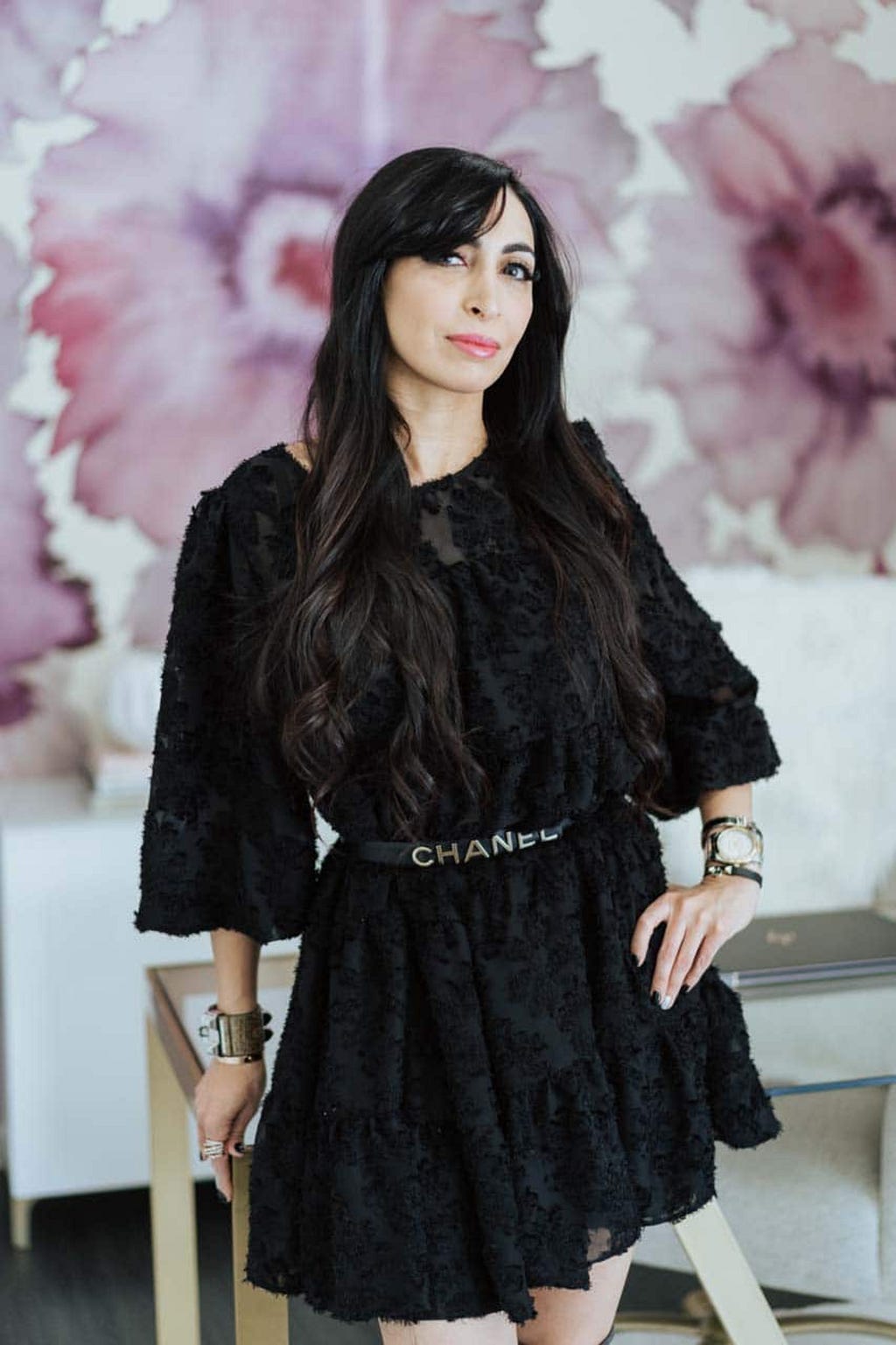
As part of my series on the “5 Things You Can Do To Help Your Living Space Spark More Joy”, I had the pleasure of interviewing Leslie Murphy of Murphy Maude Interiors.

Murphy Maude Interiors — As a Memphis-based Interior Architecture and Design Firm, Murphy Maude focuses on residential and commercial environments and their representation of the clients they serve. They strive to ensure their systematic technical approach allows the creative design process to be at the forefront of the everyday. With a passion for art and fashion, their collaborative nature takes their design work to a custom level not typical in the Mid-south region. To enhance their client offerings, they are: original textile, wallcovering, and art creators; furniture designers; wholesale furniture and cabinetry dealers; showroom hosts; and lighting designers.

Thank you so much for joining us in this series! Before we dive in, our readers would love to learn a bit more about you. Can you tell us a story about what brought you to this specific career path?

I have always been a lover of art and design but spent most of my life in academia. When I got the chance to move to New York to work for Columbia University, I was fortunate to live in the Chelsea Arts District. I immediately became fascinated and obsessed with art and design. When I got married and moved to Tennessee, I started doing some soul searching about what would make me happy- not only in work but also in life. Looking at a career more as a lifestyle not just as a job, I realized it needed to be something at the intersection of art and business. After building my own home and taking a few classes in design, I decided to take that leap of faith about six years ago from my home office and I’ve never looked back. Going through my divorce and being launched into the world as a single woman gave me a lot of motivation to make it work from a business perspective not just as a passion pursuit. Interestingly enough, that difficult time in my life became the best fuel for digging in and making the business work.

Can you share the most interesting story that happened to you since you started this career?

It is a story about serendipity and the universe acting in my favor. It’s not about design, it’s about people. It’s about finding the right people and putting together the right team and seeing magic happen because of those people. This has happened to me several times now with my amazing team but twice as I will mention today. The first was when I was looking for my very first employee. The University of Memphis sent me someone to interview. Her name was Caroline Cotton at the time, now Caroline Lovelace, and it was unreal that her interests were the same as mine. She was from the same town, Huntsville, Alabama, that I am from, and she was on this nontraditional track to try to learn everything she could about art and architecture and interior design and design and just as scrappy as me! I used to just call her my mini- me because we look like we could be related as well! At this point, I think she has exceeded me in many of her abilities. The addition of that position and specifically of that person, Caroline Lovelace, made all the difference in allowing me to start to build and grow the business beyond what I thought was possible. Additionally, in the last year, I was introduced to Kate Haywood, who is now our director of interior architecture and design. She is a licensed architect, who was introduced to me by some mutual friends. And we have recently learned that what we have experienced in life has shaped the way we look at our careers. We both see them in part, as an opportunity to serve people and change lives and hopefully make a meaningful difference using design and architecture as the conduit by which we can go out and improve lives and communities. So, the humans in my life, the people in my life, have been the most interesting parts of my story so far. And I think that there still are more to come as we are now a 17 person team working on some really exciting projects. I can only imagine what stories will unfold in our future.

Can you share a story about the funniest mistake you made when you were first starting? Can you tell us what lesson you learned from that?

There were a lot of mistakes when I first started. At the time it felt very anxiety-ridden and scary but in hindsight some of them were very laughable. For example, we had a twenty-eight foot ceiling from which to hang a very expensive light fixture. We naively only ordered the light with a regular size cord that it only hung down seven feet from the ceiling. It was a mistake where we all looked up and we all laughed and said, “Well, that just isn’t going to work.” We were very lucky to be able to correct it and to have some amazing electricians to help us rewire and get this done. The end result was this wonderful learning opportunity, some laughable moments with the client, thank God, and yes, we had to go into our pocket to fix it. Once you’ve paid for a mistake, you never really do that again. Egg on your face is the best learning I believe — and handling those situations with integrity and humility is all you can do! We are so fortunate now that our team of licensed architects and interior designers are an excellent backstop to embarrassing mistakes like this. We’ve basically graduated from being this very visual decorating firm to a full service, licensed interior architecture and design firm.

What are some of the most interesting or exciting projects you are working on now? How do you think that might help people?

We are working on several interesting projects right now. One of the most exciting is this concept: It’s a restaurant on Main St. in downtown Memphis, Tennessee and it’s called “Fable”. It is going to be this super cool storytelling experience. There’s a little bit of a narrative in each of the vignettes of the restaurant and each one comes with a morality tale, a “fable.” Think the tortoise and the hare, The fox and the grapes etc. This concept allows us incredible creativity. I think it’s just going to spark so much curiosity in people and really be a joyful experience for clients. We are getting to unleash all of our creativity and hopefully even apply some of our own unique and original textiles made by local artists to make this a special project. Not only will it be a fun, exciting cerebral experience for the customers, but the fact that we’re able to engage the local art community through our own line of textiles (Mable Originals). I think it’s just a feel-good project all the way around.

Can you please give us your favorite “Life Lesson Quote”? Can you share how that was relevant to you in your life?

Since we’ve been thinking a lot about “Fables” lately in our business as per my last response, one of my quotes, life lesson quotes, that’s my favorite is from Aesop’s Fables. It says, “It is not only fine feathers that make fine birds.” I believe that to be so true when you think about humans and the goodness that actually comes from within. I also think interestingly this is a quote that can be applied to design. A lot of the good stuff is not about the finest of the fine things, it’s about doing great design work because it’s just good design not because it’s layer upon layer of finery. I think, sometimes, a more minimal design that’s just super solid and interesting and thoughtfully done is the finest of them all.

None of us are able to achieve success without some help along the way. Is there a particular person who you are grateful towards who helped get you to where you are? Can you share a story about that?

Absolutely, my grandmother Mable, who is the namesake for my new line of textiles, giclée prints and fabrics, Mable Originals. She was very much a part of my upbringing, and she took care of me often — I even lived with her for a part of my life. She was such a nurturer, she taught me that I could absolutely be and do anything that I put my mind to. She taught me everything I know about nature and the natural world. She loved flowers and birds and trees and our logo actually is an owl. And I think subconsciously I chose that because of my connection to the natural world and the way that my grandmother Mable used to take me outside and point out the different leaf types and bird types and what that meant to me. You can see that we’re now incorporating a lot of nature into our designs and the organic world. The natural world is really important to me. A quick story about Mable, she was an artist and a “maker” in her own right. She loved to paint and was a fabulous cook. She made quilts and even made her own clothes. She was the best dancer and the kindest spirit. I think both of our brands, Murphy Maude Interiors and Mable Originals are reflective of some of her best qualities. The love of art, the beauty of the handmade, the connection to the natural world, and the creation and spreading of love and joy whenever possible.

Thank you for that. Here is the main question of our discussion. What are your “5 Things You Can Do To Help Your Living Space Spark More Joy” and why. Please share a story or example for each.

Organics in the home: Whether it is bringing in fresh flowers or plants, crystals, a trickling water feature, rocks, or trees etc. Bringing in the natural world brings a lot of peace and calm to most people. I also think it’s important to have something “living” around you.

Good soft bedding is so important. Soft luxurious sheets are one of my guilty pleasures. Good sound sleep is so important to me and a huge part of my health and happiness. I love crawling in a bed that is soft and fluffy and beautiful. It is how you end your day and how you begin your day so it should be something you love.

Music plays a really big role in sparking joy for me. When you are designing your home, make sure that you have a plan for your audio. You want your sound to be really good. I am fortunate to have a great relationship with a couple of companies locally who I think do wonderful audiovisual work. Lamar from Miestro is exceptional at doing audio that is wonderful and beautiful but also is discreet, designed well, and that can bring a lot of joy.

Functional spaces: Having what you need to design for your lifestyle is critical to your happiness, let’s say you need a home office to be comfortable, a place to workout because that is a part of what keeps you sane and whole, a meditation room, etc. There are always ways you can carve out a small space no matter how small the apartment or the studio might be. There is a way to carve out what you need in your environment if you really work to accomplish goals around what you need in your life.

Finally,and most importantly, I think art is the absolute number one for me. Having art in and around your space that means something to you, where there is a narrative or you’ve got a history with that artist or a history with the subject in the art and you look at it every day and just feel moved by it. That would probably be the number one thing I would recommend that you do to experience joy in your environment. It’s also this wonderful conversation piece when you’re hosting people and it gives them insight into you, your personality, your life. To have art that actually speaks to you on the walls.

You are a person of great influence. If you could start a movement that would bring the most amount of good to the most amount of people, what would that be? You never know what your idea can trigger. 🙂

If I could start a movement it would be helping people learn how to design their lives for greater joy and happiness above greater financial gain. When people are joyful and happy it changes their quality of life and what they are able to give and how they can serve the rest of the world.

We are very blessed that some of the biggest names in Business, VC funding, Sports, and Entertainment read this column. Is there a person in the world, or in the US whom you would love to have a private breakfast or lunch with, and why? He or she might see this, especially if we tag them 🙂

I recently read a couple of books that spoke to me. Both are helping change the way I think. One of them is The Almanack of Naval Ravikant: A Guide to Wealth and Happiness. He is full of wisdom about focusing on what is important and being strategic in the creation of a generally good life. Again, it is about designing and creating the opportunity to live your best life and focus on the things that really move the mark in that regard. And the result of that is the opportunity to give more back and to be in service to others as you evolve and elevate into a position to do so. And being able to have the most impact and influence does require having the freedom to do what it is that you are passionate about in the world. That is why I would love to meet the author, Naval Ravikant.

Thank you for these fantastic insights. We greatly appreciate the time you spent on this. We wish you continued success and good health.


Leslie Murphy of Murphy Maude Interiors: 5 Things You Can Do To Help Your Living Space Spark More… was originally published in Authority Magazine on Medium, where people are continuing the conversation by highlighting and responding to this story.

Female Founders: Rachel Fiori of Masters of Self University On The Five Things You Need To Thrive…

Female Founders: Rachel Fiori of Masters of Self University On The Five Things You Need To Thrive and Succeed as a Woman Founder

An Interview With Candice Georgiadis

I wish someone had told me about the power of Surrender. To surrender is to release all resistance so that what is meant to be created, can be created at the fastest speed and the most powerful level. The universe having your back is in full force when you’ve mastered the art of the spiritual definition of Surrender.

As a part of our series about “Why We Need More Women Founders”, I had the pleasure of interviewing Rachel Fiori.

Rachel Fiori MSOT, CEO of Masters of Self University, is a Mystical Therapist & Elite Coach for High Profile People & Couples. She is the lead Mystical Professor teaching the Mystical Life Coach Certification program.

With a Masters of Science in Occupational Therapy, (specializing in mental, emotional, & behavioral health), a BA in Business/Corporate Communications, a Psychic-Intuitive-Empath, and as an HSP (Highly Sensitive Person), Rachel has spent the past 23 years empowering individuals, coaches, and high profile people across the world to heal their lives and relationships at the soul level.

Rachel masterfully utilizes the principles of Spiritual Psychology, as well as her gift of Divine Sight with her clients. She has the ability to perceive the unperceivable, and can see the deep truth of any situation which makes her the best in her field at doing “shadow work”. Her genius is the ability to “see” the root causes of all of your struggles. What she has the ability to see and show within a person or their relationship can change the consciousness of that person and elevate them to the status of fully healed, whole, and free.

Rachel’s wisdom of transformational healing, her methods, and her reputation is unprecedented. She is a Radical Spiritual Teacher here to lead us into the New Golden Age of Harmony, and someone the world desperately needs right now.

Thank you so much for doing this with us! Before we dig in, our readers would like to get to know you a bit more. Can you tell us a bit about your “backstory”? What led you to this particular career path?

I have countless life experiences that led me to become what I am today and to everything I am creating at Masters of Self University. But one of those stories was regarding the first job I ever got hired for. It was the summer before going off to college and I applied for a server position at a country club. When I went into the restaurant for my “interview”, the owner told me to stand in front of him and slowly turn around. Completely confused at first, it sunk into my teenage brain what was happening as I was turning around. He took his sweet time checking out every inch of my body and then said, “Excellent. You’re hired.”. He never spoke of anything about the server position, nor even asked if I had ever held a job before. The only questions he asked were about what sports I played because he wanted to know what gave me such muscular legs.

When I went home I told my mom and stepdad what happened and that I obviously wasn’t working there. They told me I had to work there to teach me responsibility. Teach me responsibility? So, some misogynistic man in his fifties just sexually objectified the hell out of me, and I’m the one who needs to learn responsibility? Talk about parents teaching their teenage daughter to accept sexism, to suppress her voice, to tolerate being sexually objectified, and to allow myself to be hired and paid for my body over any skills or intelligence. This is disgusting and WE NEED TO DO BETTER!

It’s bad enough that I spent the summer working there. But it doesn’t end there. When I went off to college, I received a package in my campus mailbox. When I opened it there was a Penthouse magazine with a woman on the cover and in the centerfold with the same exact name as me. The letter with the magazine was from the same man who hired me for the server position. The letter said, “this made me think of you.” That’s not the only thing the letter said. But you can see the lengths this creepy, misogynistic asshole went to sexually harass a teenager. This is just one of the countless experiences that have led me to teach humans how to raise their level of consciousness. We need to be better humans. There is no excuse to continue to function in the old paradigm of inequality, sexism, and sexually objectifying others because you never learned to control and manage your own sexual energy, or learned what it means to be a person of integrity, harmlessness, or trustworthiness. Teenagers, women, people of color, and all humans should be able to trust that they are going to be treated with respect and dignity and be safe at their place of work. This can’t happen without individual humans transforming themselves from the inside out.

This experience is just one of the reasons why my corporation and how it’s run is based on the Universal Ways of Oneness™. These are the characteristics of enlightenment and even my departments represent and are titled after 5 of the 20 Universal Ways of Oneness™. These include The Department of Responsibility, The Department of Equality, The Department of Selfless-Service, The Department of Integrity, and The Department of Wisdom. It’s time for businesses to be run from a place of integrity. This is how we function at Masters of Self University and we even offer corporate coaching programs to help other businesses raise their level of corporate consciousness and learn to base their organization on the Ways of Oneness as well.

Can you share the most interesting story that happened to you since you began leading your company?

I would say that the most interesting thing that has happened since I started Masters of Self University has been that, the more people that come to me as a spiritual teacher, healer, and coach, the more heightened and elevated my psychic and healing gifts become. It’s a fascinating thing to experience. It’s like, the more people that ask for my help, the more the Universe upgrades my abilities to use me as a vessel for others. What a remarkable way to be of divine service!

Can you share a story about the funniest mistake you made when you were first starting? Can you tell us what lesson you learned from that?

I think the funniest mistake I made was thinking I could jump on click funnels and learn that shit in an hour. What the holy hell was I thinking?! A psychic-intuitive that can read subtle energies and detect and heal old traumas and programs in people’s bodies, is not someone who’s going to master click funnels. I very quickly decided I just needed to make more money to hire a team of professionals to do that stuff for me. Lesson learned! I now have incredible people shining their genius at Masters of Self University. To work with such incredible people with such a level of divine unity is nothing short of amazing. I think more people need to dismantle the old paradigm that you must be a person that “does it all”. That toxic thinking only leads to stress and burnout. We need to learn what it means to function in unity with one another so everyone’s genius can shine.

None of us are able to achieve success without some help along the way. Is there a particular person who you are grateful towards who helped get you to where you are? Can you share a story about that?

I am so grateful for every person who ever treated me poorly. For every person who abandoned me. For every sexist who attempted to oppress me or keep me small. I am grateful for each and every one of them. I am grateful for them because they gave me the opportunity to choose to be disempowered and weak or to step into my power and grow my heart-centered Light. I am a force to be reckoned with because I learned the true power of loving, supporting, and nurturing myself by choosing power over victimhood from each of these experiences throughout my lifetime. These people challenged me to step into my true, divine power. How silly I used to be to categorize these “awful, terrible” people as negative parts of my life. When, they were only there to give me contrast to the power that I am, and the internal power that I needed to connect with.

Ok, thank you for that. Let’s now jump to the primary focus of our interview. According to this EY report, only about 20 percent of funded companies have women founders. This reflects great historical progress, but it also shows that more work still has to be done to empower women to create companies. In your opinion and experience, what is currently holding back women from founding companies?

Soooo many answers to this question! But the one I’d like to focus on right now is this: women are so brainwashed to look to men to be leaders, they don’t see that their true, innate quality is in fact to be leaders themselves. Women need to heal themselves from their wounded feminine programming and step up and take charge of their own lives. They need to support and uplift other women who are leaders, spiritual teachers, and entrepreneurs and stop looking for daddy figures to approve of them and tell them what to do. They also need to heal the toxic masculinity within themselves and learn to lead from their innate divine leadership energy which is feminine energy. Women need to break free from the sexist conditioning that their roles in life are as sex symbols or baby factories. Once women choose to rise above these sexist programs that they carry within themselves, I believe you’ll see more and more women elevating themselves and starting businesses that will role model to other women what their true potential is.

It’s time for women to raise their level of consciousness and use their divine feminine nature to give birth to a corporation that changes the trajectory of humanity. How about you give birth to and nurture a way of life that doesn’t involve your “success” being based on motherhood or how much cleavage you expose? How about you give birth to an elevated level of consciousness compared to how your mother was raised or your grandmother before her? How about you birth a new way to function as an entrepreneurial woman and stop focusing on “getting to the top” through your makeup or product line that makes you more sexually appealing to men? And while we’re at it, stop with the insanity that every woman must get pregnant and give birth to more humans. You’re not a baby factory. You’re a divinely powerful being. Stop defining yourselves as less than that. And stop looking down upon other women who choose other paths in life other than procreation and raising children.

So, one of the biggest barriers that hold women back is other women. The women who continue to participate in and follow the rules of sexism are just as big of a roadblock for women as the sexist men who continue to hold leadership roles. Women who continue to stay in the job or corporation where sexism exists. Women who accept acting roles that sexually objectify instead of honor your true genius as an actor. Women who won’t walk away from “opportunities” when sexual harassment is present. Women who fail to see the genius and leadership of other women, and follow them are all part of the bigger problem. All of you make it harder for women to get ahead. And it makes it much harder for the young teenage girl to stand in her power when she is being sexually harassed, due to the lack of powerful women that should be teaching her to stand up, rise up, and have a zero-tolerance policy.

Women need to take the responsibility of healing themselves and then become founders of highly conscious businesses that help other women and men do the same thing. Sacred feminine energy is the wisdom and genius of transformational healing. Women need to look within themselves and to other women for healing, and then create the corporations around the globe that will invoke healing in all others. This sacred energy is the innate wisdom of what it means to be a ‘woman’. And this ancient intelligence has been lost for so many centuries that women today have no clue of their own powerful potential. Wake up, women. You’ve allowed yourselves to be slaves for far too long. When healed and tapped into your divine, internal power, there is nothing that you cannot rise above or overcome. So rise. It’s time for women to choose to rise and stop waiting for permission from unconscious men to allow them to.

Can you help articulate a few things that can be done as individuals, as a society, or by the government, to help overcome those obstacles?

Absolutely! My corporation, Masters of Self University, has coaching programs to heal on an individual level, a group level with our master classes, and the one I just may love the most, our Corporate Harmony coaching program.

You must be willing to heal yourself. You must learn what it means to elevate to a higher level of consciousness and then make that your top priority. Everything else in life heals and falls into place when you do this. Life becomes so much simpler. Challenges become much easier to move through when you’re at the level of consciousness that allows you to move through them with grace. And achieving the highest levels of success becomes easier as well because you’re now powerful enough and resilient enough to handle it. I recommend everyone to take a look at our membership, our coaching programs, and our Corporate Harmony Coaching Program for your organizations. And finally, government officials, get our coaching!! You can’t change a system with the same level of consciousness that built the system! You must elevate from within, at the micro-level before changes can be truly made at the macro level. It always boils down to the individual. I created Masters of Self University to address these very issues, and we transform these subconscious, behavioral, and systemic programs better than anyone in the industry. So, join a coaching program with one of our amazing coaches, and better yet, sign your corporation up for our Corporate Harmony Coaching Program.

This might be intuitive to you as a woman founder but I think it will be helpful to spell this out. Can you share a few reasons why more women should become founders?

Because women are natural-born leaders. They intuitively and naturally see the global perspective of everything. They know what should be done and why, what T’s need to be crossed, and what I’s need to be dotted. They are excellent at being able to take countless things into consideration before making a decision or moving forward compared to a plan that can only offer tunnel vision. The power of ‘woman’ is to consider short-term and long-term effects while simultaneously considering the impact that those decisions will make on everyone involved. Because they are innately connected to the divine energy of nurturing, they are much less inclined to make selfish, greedy decisions that only benefit themselves. Because of this, they make the best CEOs and the best candidates for positions of power.

What are the “myths” that you would like to dispel about being a founder? Can you explain what you mean?

Two very common myths are that founders are lone rangers and bold risk-takers. I think these are absolutely ridiculous. Other than seeing the phenomenal results of clients that Masters of Self University offers coaching programs to, the next thing that probably brings me the most joy is seeing others in the company shine. I love when employees become skilled enough and confident enough to take on leadership roles and decision-making roles. Every single person has genius. I think part of a founder’s responsibility is to find out what her employees’ true geniuses are, and support them in every way possible so that they can shine. Unity is critical for a company to evolve into a highly conscious company. And unity is one of the things that we do exceptionally well. So I’m happy to expunge the myth that founders are lone rangers.

As far as being bold risk-takers, I see this as irresponsible, especially in the early years of a growing corporation. If my company fails, not only will people lose jobs and opportunities but our clients will no longer have access to the coaching, guidance, and healing of their emotional and mental suffering, or for their troubled relationships. Taking bold risks is a gamble I’m not willing to take. Too many people depend on me and on our corporation’s exceptional services. I simply wouldn’t risk that. As mentioned previously, true leadership energy stems from feminine energy. And feminine energy always considers the whole; the impact of everyone involved when making decisions. Now having said that, this doesn’t mean you should never take risks. Of course, you’re going to take risks sometimes. But it’s nonsensical to think a founder is a high-risk taker. Until your business has built an extremely solid foundation, taking too many risks or gambling on your company’s future is just irresponsible.

One myth that I hear a lot and want to mention here, not necessarily specific to founders, but about great leaders, is that they focus on mastering their mindset. This is a strategy that so many coaches, teachers, and entrepreneurs spew out to the world. And that myth is that your mindset is everything. There are so many damn coaches out there, especially business coaches, who try to teach about mindset and how to change it. Jesus Christ. There are founders and entrepreneurs who hire mindset coaches. Focusing on mindset keeps you trapped in mind. Trying to change your thoughts or your mindset is almost as idiotic as jumping off of a roof, flapping your arms, and trying to force yourself to fly. And yet this is the bandwagon that everyone has chosen to jump on. Sigh. . .

Instead of writing down your goals on a vision board, or focusing on what you want to accomplish or manifest, or becoming “mindful” so you can manifest an abundant business, learn what it means to drop into your heart. Focus on what it means to become a heart-centered being. Get out of your crazy, egoic mind. Set your goals on becoming a good person; the most magnificent version of yourself that you can achieve in this lifetime. When you live as a heart-centered being, the Universe sees you as a vessel to move through. Everything that the Universe wants to create and manifest, will be created and manifested through you. Life, and yes, even business or entrepreneurial life, is so much easier when you elevate yourself to a heart-centered being instead of a person who is addicted to mind. You can fill your left brain as much as you want to with knowledge and strategies. But knowledge and strategies aren’t wisdom. Why create a business based on the limitations of the mind when you can create a business based on the wisdom and guidance of the Universe? Stop trying to master your mind. Instead, open your heart and allow the secrets and wisdom of the universe to create through you.

Is everyone cut out to be a founder? In your opinion, which specific traits increase the likelihood that a person will be a successful founder and what type of person should perhaps seek a “regular job” as an employee? Can you explain what you mean?

I love this question! And NO. The easy answer to this is no, of course not. This is like asking, “Is everyone cut out to be a neuroscientist?” Or, “is everyone cut out to be an Olympic gold medalist?” No. Of course not. Because we don’t need 7 billion Olympic gold medalists in the world. We don’t need 7 billion neuroscientists in the world. Just like we don’t need 7 billion founders. It doesn’t make sense. Everyone has their own unique genius. And the truth is, a founder has her unique genius. But so do each one of the employees that end up working with her and for her. And all of those skills, abilities, and geniuses are what make that particular business so wonderful. It’s the uniting of everyone’s talents and gifts that make a business thrive.

As a founder, I have powerful leadership abilities. I command and delegate and course correct when employees need some directions or guidance. Founders must have a selfless and global vision. They must have the ability to see the big picture while simultaneously measuring and calculating the next several steps that need to be taken before long-term goals can become a reality. Some of the absolute best types of employees are those who aren’t good at handling all of the decision-making that’s required when you’re in a leadership role. However, they can take direction well, complete tasks, follow up with the thousands of things that the founder doesn’t possibly have time for. Everyone is a piece of the same puzzle. It’s realizing that although each person has a different role to play, those roles are not superior or inferior to anyone else’s role. This is a divine definition of equality. Just because we each hold different positions in the corporation, doesn’t mean anyone is less important or less beneficial to the company. When we learn to realize the truth in this and hold this level of perspective at the corporate level, everyone will not only feel honored for what they bring to the table, but they will also honor others for what they bring to the table as well.

I think our society has promoted an individualistic and selfish perspective for far too long. Not everyone is born to be a leader that can found a global corporation that is changing the world. But many can be a priceless piece of that team that allows a corporation like Masters of Self University, (and others like it), to thrive. Every person at MSU is an incredible asset. All of us together are what makes this corporation so incredible. Every coach, assistant, creative specialist, or director that joins our team only makes us stronger and more successful at changing the level of consciousness of humanity. As I rise, they rise. We all rise together at Masters of Self University.

Ok super. Here is the main question of our interview. What are your “5 Things I Wish Someone Told Me Before I Started” and why? (Please share a story or example for each.)

1. I wish someone had told me about the power of Surrender. To surrender is to release all resistance so that what is meant to be created, can be created at the fastest speed and the most powerful level. The universe having your back is in full force when you’ve mastered the art of the spiritual definition of Surrender.

2. I wish someone had told me the true definition of ‘divine timing’. So many idiots out there are teaching people about the law of attraction. It’s so superficial and stems from ego. Learn how to manifest anything your heart desires simply because you can and you deserve it. What a crock of shit. When you focus on what kind of a person you are instead, and you focus on serving selflessly, then the success, the profit, the abundance, will come in divine time. Stop being greedy, selfish, and impatient, and learn to build a business based on integrity and selflessness. When you do this, in perfect divine time opportunities will flood to you that you never even could’ve dreamed of.

3. I wish someone would’ve told me how full of shit everyone is who teaches you that you must do it all. What a toxic thing to teach people. That you must master marketing. You must master social media. You must master sales. You must master the art of persuasion. And the list goes on. This is all a crock. Now, you can’t bury your head in the sand, learn nothing, and simply have a good idea and think you’ll blossom into a trillion-dollar company. But if you’re mastering sales, marketing, and social media, what the hell else do you have time for?! Uuummmm, nothing. Absolutely nothing. This is why having a great team is so essential. I am an absolute genius at what I do. I’m the best in the industry. But for me to offer my genius to clients, I can’t be wasting my time on every single aspect of the business. The people in those roles are the geniuses meant to be in those roles. We are meant to operate this corporation together as a team. That means everyone gets to shine. Everyone has some sense of flexibility and balance. And everyone wins with no one suffering from burnout.

4. I wish someone had told me how dirty, manipulative, and corrupt the sales and marketing industry truly was. It makes me sick. I don’t “sell” people. And I sure as hell don’t prey on people’s pain as a way to manipulate them to purchase our coaching services. I have zero tolerance for lies and manipulation. Trying to find sales and marketing people that didn’t do the same manipulative bullshit that everyone else does was like trying to find a pig that could fly. I never try to persuade or sell people who have free coaching consultations with me. Never. I simply offer them the facts. I give them the truth. The level of coaching that I and our programs offer at Masters of Self University are so far advanced compared to what anyone else in the entire world offers. You either want to elevate that high or you don’t. If you do, you’ll go with us. If you don’t, you’ll settle for someone else. It’s that simple. I honor and respect everyone’s decision in the end. But never, and I mean never, will my corporation use cheesy, untrustworthy sales and marketing tactics to sell our services.

5. Back when I first started, I wish someone would have told me how superficially addicted the masses were to quick fixes. In other words, how many people there are who aren’t willing to do what it takes to transform their lives, their relationships, or their businesses. People arrogantly and immaturely want it now. People stubbornly resist doing what it takes to heal. And those very same people are the ones bitching and complaining about their lives, businesses or relationships. It requires work to elevate. It takes effort, consistency, and sometimes sweat and tears. You don’t make it to the Olympics by sitting on your ass and watching other people practice. You must be willing to put the time in and devoted to doing what it takes. It’s no different when dealing with healing your depression, your relationship on the brink of divorce, or your business that is failing. You must be willing to get off your ass and work for it.

How have you used your success to make the world a better place?

100% My definition of success IS that I make this world a better place. Period. It’s not how much money I make. It’s not how many followers I have. It’s not about what kind of car I drive. None of that means anything if you’re a shitty person and you’re leaving the world and humanity worse off for being alive. My life means something because of who I choose to be and what I choose to do with my life with whatever time I have here on Earth. The people that I see transform in front of my eyes during a psychic-healing session, that is my definition of success. Empowering people by teaching them how to fully and truly heal themselves; that is my definition of success. Seeing my clients and students transform from victimhood, emotional suffering, and powerlessness to empowered, divine, unstoppable people who are emotionally free and no longer suffer; that is my definition of success. So with my definition of success, I’m one of the most successful people alive on the planet today. Yeah, I’d say I use my success to make the world a better place.

You are a person of great influence. If you could inspire a movement that would bring the most amount of good for the greatest number of people, what would that be? You never know what your idea can trigger.

One of my current movements is to coach companies into becoming highly conscious corporations through our Corporate Harmony Coaching Program. People can come to work and heal themselves. Separating mental and emotional health from work is like trying to keep the color of your skin separated from your body. It’s silly to think your place of work, where many people spend most of their time, shouldn’t be a place of healing. We’re changing that. We have an incredible program that elevates on the individual level, corporate level, and global level simultaneously. Imagine the success of your corporation if you turned the workplace into a place of mental and emotional healing. Instead of work being a major cause of stress, it was transformed into a safe haven where stress melts away… for good. That’s what our Corporate Harmony Coaching Program is all about. It’s changing the way corporations function from the inside out.

We are very blessed that some very prominent names in Business, VC funding, Sports, and Entertainment read this column. Is there a person in the world, or in the US with whom you would love to have a private breakfast or lunch with, and why? He or she might just see this if we tag them.

The first person that comes to mind is actress Emma Thompson. I read at some point that she quit the animated film Luck after the company, Skydance, hired someone who left another company over sexual harassment allegations. This is exactly what women who are stepping into their power need to do. They need to quit. They need to walk away. They need to refuse to work for people who continue to pay salaries that allow sexism and sexual harassment to continue in our world. I wish I had her and this example to look up to when I got hired for my first job as a teenager. Having lunch with her would be an honor.

Jim Carrey is someone I would love to have lunch with! Not only is he hilarious and a great actor, but he didn’t allow his fame to prevent him from spiritually awakening. He would be capable of having a very deep, spiritual conversation with me. Because of that, I would love to spend an afternoon with him to see where the conversation takes us.

I think I’d kick myself if I didn’t mention Dave Chappelle. First of all: comedic fucking genius! And secondly, he walked away from $50 million dollars as a way to rise up and stand up for himself. You tell me how many people on this planet would do that. There are actual billionaires in this world who wouldn’t walk away from $50 million dollars. There are a lot of women who need to learn from him. Millions of women in the world can “#MeToo” all they want to. But if you’re not facing your fears and rising up, if you’re not using your voice and speaking up, NO MATTER THE CONSEQUENCE OR WHAT IT COSTS YOU, then you’re allowing sexism and misogyny to continue. Sexist, horribly unconscious men are not your fault, women. You are not being blamed for them or for their actions. But if you’re unwilling to take action, to walk away, to let go of “opportunities”, or you refuse to speak up, then you are a part of the problem, not the solution. Dave Chappelle, I admire the stand you took all those years ago. I applaud you for it. And I thank you for being a role model of what power looks like in action. So, when do you want to have lunch?

Thank you for these fantastic insights. We greatly appreciate the time you spent on this.


Female Founders: Rachel Fiori of Masters of Self University On The Five Things You Need To Thrive… was originally published in Authority Magazine on Medium, where people are continuing the conversation by highlighting and responding to this story.

Female Founders: April Wagner of Epiphany Studios On The Five Things You Need To Thrive and Succeed…

Female Founders: April Wagner of Epiphany Studios On The Five Things You Need To Thrive and Succeed as a Woman Founder

An Interview With Candice Georgiadis

Use your voice. You have an opinion, make it known. Take a stance and be proud of it. If you’re wrong, apologize. There is nothing wrong with being wrong, but everything wrong with not admitting it…or worse, never using your voice. Your thoughts matter. Holding them back is doing a disservice to the world. I am using my voice right here in this interview, telling you the things I believe in and why they are important in making the world a more equitable and just place.

As a part of our series about “Why We Need More Women Founders”, I had the pleasure of interviewing April Wagner, artist, master glassblower and owner of ‘epiphany Studios’, a certified women-owned business located in Pontiac, Michigan. Wagner began blowing glass in 1993. Graduating with a Bachelor of Fine Art in glass, she has built one of the largest private hot glass blowing facilities in the Midwest where she and her team create artwork for public, private and corporate collections worldwide. Wagner has served on the boards for the Detroit Institute of Arts and the College for Creative Studies and currently serves on board of the Michigan Humane Society.

Thank you so much for doing this with us! Before we dig in, our readers would like to get to know you a bit more. Can you tell us a bit about your “backstory”? What led you to this particular career path?

I always knew I was different. From a young age my Mom said I have always danced to the beat of a different drummer. I just didn’t see things like other people did, I was always messing around, trying to make things or take them apart. I was stubborn about envisioning things differently, so it was no surprise when I ended up in art school. What is surprising is how successful I’ve been. Glassblowing is a very difficult, expensive medium to master. It’s also male-dominated and physically demanding, but the first time I tried blowing glass, and I mean the very first time, I fell head over heels in love and I knew I wanted to do it for the rest of my life. It was not easy, and I encountered many barriers along my career, but that’s where my creativity and stubbornness paid off. I can’t imagine myself doing anything else. I am living my dream. I own a world class studio where, with my team, I create masterpieces for my clients.

Can you share the most interesting story that happened to you since you began leading your company?

In 2007 I was in a major car accident. With several broken bones and a closed head injury, it was unclear if I would ever be able to blow glass again. During the year of physical therapy and two years of cognitive therapy, I thought long and hard about what my purpose really was. Yes, I love blowing glass, but no, I wasn’t happy. I knew the accident was a sign from the universe and I needed to make some big life changes. My husband at the time was also my business partner. And one right after the other I left both. In 2009 we divorced, and in 2011 I bought the business outright and have gone on to triple its size and, more importantly, to make work I am deeply proud of, work that I know brings so much value to the world and is really my true gift to share.

Can you share a story about the funniest mistake you made when you were first starting?

I took out a loan to buy my building with an extra $50K to start the business. The first thing I did after closing on the building was to buy a sculpture that I had always loved. The next thing I did was to put in a landscape around the building…rocks, trees, ten truckloads of dirt…and then I was out of money. I had nothing except this commercial building that needed a huge overhaul, a lot of yard work and a sculpture. I couldn’t afford a place to live so I slept in the building on a futon with a microwave and a camping shower for three years. Can you tell us what lesson you learned from that? Investing in your business is investing in yourself, you just have to invest in the things that will actually help you get to the next level, not the things you want because they are fun. In an interesting turn of events, both the previous owner of my building and the banker who gave me my business loan visited me at my studio during gallery openings. They both told me they never thought I would succeed and couldn’t believe what I had done. I chuckled and then directed them to the pieces for sale, letting them know how they could support me now by buying artwork.

None of us are able to achieve success without some help along the way. Is there a particular person who you are grateful towards who helped get you to where you are? Can you share a story about that?

Cindy Pasky.

I met Cindy when I was in my early 20s, just out of college with a dream and a fire in my belly, but zero business skills. We didn’t learn those at art school. Cindy became my mentor, sponsor and friend. She taught me how to lead, how to think and how to bring out the best in people. She believed in me when I struggled and challenged me to live into my potential.

According to this EY report, only about 20 percent of funded companies have women founders. This reflects great historical progress, but it also shows that more work still has to be done to empower women to create companies. In your opinion and experience what is currently holding back women from founding companies?

Funding and a voice at the table.

Can you help articulate a few things that can be done as individuals, as a society, or by the government, to help overcome those obstacles?

I love the example of when symphonies started auditioning blindly, or behind curtains, so the gender and race of the musician was unseen by the judges. Once this started it opened the world for professional women and persons of color to be judged solely on their talent and not on preconceptions. I’d like to see other fields embrace this concept and fit it to their arena.

This might be intuitive to you as a woman founder but I think it will be helpful to spell this out. Can you share a few reasons why more women should become founders?

This is a systemic issue. It starts at home, then at school and in the workplace. We need to tell girls they can do anything they put their minds to, and we need to support them when they try. Women inherently know how to build a tribe so no matter where you are in the tribe you give back. Once you get a seat at the table, make room for another minority. Support the things that you want to see in the world, the businesses that are making a difference and upending the long-held thought patterns that don’t serve any longer. Our voices, our pocketbooks, our actions…this is our power. Don’t let anyone take your power, guard it zealously and use it for the greater good.

What are the “myths” that you would like to dispel about being a founder? Can you explain what you mean?

I especially dislike the myth that you must use people to get ahead. We get ahead by lifting each other up and celebrating our unique gifts. There is more than enough space in the market for everyone.

Is everyone cut out to be a founder? No. In your opinion, which specific traits increase the likelihood that a person will be a successful founder and what type of person should perhaps seek a “regular job” as an employee? Can you explain what you mean?

Some people are born leaders, some learn to lead, and some shrink from the concept. If the thought of voicing your mission and convincing others to join you makes you uncomfortable, you are probably better cut out to be an employee. Vision and leadership are essential to running a team. No matter what your growth goals are you cannot do everything by yourself. You must have a group of people that excel in areas you don’t so you can really shine in your niche. Being a founder means starting out as the CEO, COO, CFO, CMO, CIO and everything else, even the cleaning lady. I’m not good at all of those roles. I am the visionary. I am the leader who pulls the team together to execute the vision. I don’t do it myself, but I am like the conductor. If standing on the stage or competing in the arena isn’t your jam, there are many other ways to live a joyous life, but being a founder isn’t one of them.

Here is the main question of our interview. What are your “5 Things I Wish Someone Told Me Before I Started” and why? (Please share a story or example for each.)

  1. It’s a marathon, not a sprint. I used to burn the candle at both ends balancing creativity with business and rushing head-on into every opportunity. Now I stop to consider, is this in line with my mission? Will this get me to my big goals or is it a misdirection? When you slow down you can tell the difference.
  2. The only thing holding you back is you. It’s cliché, but true. I made work I didn’t really love for years after I should have stopped, but I wouldn’t let myself. I thought it was the money holding me in that place of unfulfillment, but really it was fear of change.
  3. Never stop learning. Just because you received a degree with fancy letters doesn’t mean you know everything. Keep spreading your wings and learning. At every stage of your career, you need a different skillset to grow and achieve. The skills that got you there aren’t going to keep you there unless you learn new ones to get you to the next level. I took the Goldman Sachs 10SB program, the leadership programs offered by my local business hub and then I hired a business coach. Surrounding myself with knowledge and expertise helped me to grow in ways I couldn’t have done on my own.
  4. Listen to your gut. The niceties expected of us as females do not extend to anyone taking liberties. Know your boundaries and stick to them. If it feels unsettling, you don’t have to do it. You can choose another route. I often befriend my clients after their projects are completed. My large-scale work is site-specific, and it is an intimate process getting to know the client and their needs and desires. If a client is difficult at the beginning of the relationship, asking for and expecting things outside of my scope or being a poor communicator, I know I need to terminate business with them. For years I would make work for anyone, now I carefully choose my clients based off my gut and experience, which makes for better artwork and a smoother process for everyone.
  5. Use your voice. You have an opinion, make it known. Take a stance and be proud of it. If you’re wrong, apologize. There is nothing wrong with being wrong, but everything wrong with not admitting it…or worse, never using your voice. Your thoughts matter. Holding them back is doing a disservice to the world. I am using my voice right here in this interview, telling you the things I believe in and why they are important in making the world a more equitable and just place.

How have you used your success to make the world a better place?

I have served on boards for several years in areas I am passionate about — the arts and animal welfare. I am regularly asked to support organizations with donations of work and have developed a giving policy that makes an impact in my local community. I mentor upcoming glass students at a local college.

I am working on a program to offer glass blowing to the underserved students in my neighborhood who have no arts programming or skillset building programs. Creativity is often rated very highly by employers, as is teamwork, attention to detail and timeliness. Glass blowing teaches all these things, and even if someone doesn’t continue in the field these skills will serve them for life. Plus, I would like to see more diversity in my field and access to a facility is the №1 barrier. I have a great facility and I plan to share it.

At the beginning of the pandemic in March 2020 I started a donation program called #HeartsforHealthcare. Any person could submit the name of someone working in the healthcare industry that they wanted to recognize. Once a week we randomly select a name and send that person one of our handmade glass hearts with a handwritten note thanking them for saving lives and putting themselves at risk by doing so. The mental health fatigue in our health workers is at a staggering high and this is our way of giving them something beautiful, and completely unexpected, that brightens their day and gives them comfort in this trying time.

You are a person of great influence. If you could inspire a movement that would bring the most amount of good for the greatest number of people, what would that be? You never know what your idea can trigger.

I don’t believe in work-life balance. My life is my work and I’m fortunate enough to be able to blend life into my work on my own terms. As the owner of my company, I believe people are good and they do the best they can, so setting up completely arbitrary guidelines about when and how work is done is ridiculous. I’d like to see a liberal policy become the norm. I think COVID-19 is forcing us to look at a lot of the unnecessary traditions around work and I’m excited to see how it all shakes out. Living in a place you love, surrounded by pets and family, if that makes you a better more productive person, then yes, by all means, let’s do it!

We are very blessed that some very prominent names in Business, VC funding, Sports, and Entertainment read this column. Is there a person in the world, or in the US with whom you would love to have a private breakfast or lunch with, and why? He or she might just see this if we tag them.

Martha Stewart. Her backbone is staggering. She knows her market, she offers value and she has rebounded from setbacks with grace. Her business acumen, knowledge set and comportment have allowed her, her face and her name to continue to lead her brand over the many years.

Thank you for these fantastic insights. We greatly appreciate the time you spent on this.


Female Founders: April Wagner of Epiphany Studios On The Five Things You Need To Thrive and Succeed… was originally published in Authority Magazine on Medium, where people are continuing the conversation by highlighting and responding to this story.

Inspirational Women in STEM and Tech: Dr Helen Nadel of Stanford University On The 5 Leadership Les

Inspirational Women in STEM and Tech: Dr Helen Nadel of Stanford University On The 5 Leadership Lessons She Learned From Her Experience

An Interview With Candice Georgiadis

Communication is the key. Be a good listener. Be supportive. Remember to give praise. Encourage your team to speak to you directly without fear of consequences.

As a part of my series about “Lessons From Inspirational Women in STEM and Tech”, I had the pleasure of interviewing Helen Nadel, M.D.

Dr. Nadel is a dual board -certified pediatric radiologist and nuclear medicine physician in both the USA and Canada. She holds certifications from the Royal College of Physicians and Surgeons of Canada in Diagnostic Radiology and Nuclear Medicine, The American Board of Radiology (ABR) with certificate of added qualification in Pediatric Radiology and the American Board of Nuclear Medicine (ABNM). Dr. Nadel was an Associate Professor of Radiology at the University of British Columbia and had been practicing as a pediatric radiologist and pediatric nuclear medicine physician at British Columbia Children’s Hospital in Vancouver, British Columbia since 1983, after medical school at University of Manitoba (1977, Winnipeg, Manitoba), internship and residency at University of Toronto (1978–1982) and Pediatric Radiology fellowship (Chief Fellow) at the Hospital for Sick Children (1982–1983, Toronto, Ont.). She has been working with general and hybrid nuclear medicine studies in children in a fully integrated department of Pediatric Radiology and lecturing to promote nuclear medicine for her entire career. Dr. Nadel currently uses PET/MR exclusively for PET imaging at Lucile Packard Children’s Hospital at Stanford University (LPCH) and co-directs the clinical PET/MR program at LPCH. Dr. Nadel has been inducted as a Fellow of the Society of Nuclear Medicine and Molecular Imaging (SNMMI) and is the 2021–2022 Vice President-Elect of the Society of Nuclear Medicine and Molecular Imaging.

Thank you so much for doing this with us! Can you tell us a story about what brought you to this specific career path?

For me, it is always about people and children. I had a very memorable high school biology teacher. Mr. Joyce sparked my interest in human biology. Then I came to radiology when I was doing a general internship, planning on a career as a general practitioner. But, my best friend from high school, who was a year ahead of me in medical school, had switched her focus to radiology. I knew very little about this field, but she encouraged me to do an early elective in nuclear medicine and radiology. The instructors were so welcoming and the technology was fascinating, as we were just at the beginning of learning about ultrasound, CT scanning and nuclear medicine computer advances. My career path to both radiology and nuclear medicine was inspired by a nuclear medicine physician, and she guided me on my path to understand the science of nuclear medicine and molecular imaging. I saw the challenges, but I also saw the amazing opportunities where I could influence both the healthcare of children and the practice of nuclear medicine as a pediatric radiologist and pediatric nuclear medicine physician.

Can you share the most interesting story that happened to you since you began at your company?

It was very interesting for me to attend national and international meetings early in my career and hear inspirational and informative talks by nuclear medicine leaders. By exploring new things I had heard about in my niche field of pediatric nuclear medicine, I soon was considered a nuclear medicine expert and I was now giving these talks at these international meetings. At Stanford University, we are always striving to be the best at meeting patient needs. In the last few weeks, we have performed several studies that would routinely only be performed on an adult patient, but are rare examinations in a pediatric patient. This required us to overcome protocol issues for using these studies in children. This is an exciting time for nuclear medicine advancements for children.

Can you share a story about the funniest mistake you made when you were first starting? Can you tell us what lesson you learned from that?

When I started my first job as an attending physician at Children’s Hospital in Vancouver I would often call my mentors back in Toronto, more than 3000 miles away. My mentor/teacher would ask me my opinion on what I was asking about and then say yes, I would agree with you. After doing this a few times, I realized my mentor felt I was doing just fine and did not need to ask her advice. It’s always a pivotal time in your career, when you realize you’re no longer the student, but the expert. I can also remember many funny incidents in doing presentations when I still used ‘slide’ carousels and the slides would fall out or be upside down. Audio visual missteps always created humorous presentation memories for me.

What do you think makes your company stand out? Can you share a story?

At Stanford University, we are doing unique pediatric nuclear medicine procedures in the full spectrum of general nuclear medicine and we are one of only a handful of pediatric facilities that perform PET/MRI. We have performed more than 800 PET/MRI studies in the last three and half years.

Are you working on any exciting new projects now? How do you think that will help people?

PET/MRI, which is nuclear medicine, allows us to evaluate the whole body in children with less radiation than PET/CT and allows us to provide advanced anatomic imaging with MRI which gives us more information compared to limited imaging with CT. We have performed radioiodine therapy in eight children with thyroid cancer in the past year. This helps to ensure any small remaining cancer cells will be eliminated and help ensure these children remain cancer free. These treatments are painless and can be done as an outpatient in the appropriate home setting for patient isolation. We are now all familiar with the six-feet distancing rule with COVID-19, and similar time and distance isolation needs to occur for five to seven days after these nuclear medicine therapies. If the home situation does not allow for adequate distancing or if there are young children in the home then the child can remain in our dedicated therapy suite that has its own bedroom and bathroom and separate attached suite for parents to stay as well. These two rooms are separated by a protective shielding but the child and parents can see and communicate with each other through visual and auditory communication. Both rooms have nice entertainment options like a TV and mobile device capabilities, and allow access to full medical facilities on a patient ward.

Ok super. Thank you for all that. Let’s now shift to the main focus of our interview. Are you currently satisfied with the status quo regarding women in STEM? What specific changes do you think are needed to change the status quo?

We definitely need more women in STEM and more women who are mentors in STEM programs. Women need to be on an equitable career track as a similar qualified male counterpart. In addition, all genders should be allowed to have secure jobs with access to supported family leave at certain times of their lives.

In your opinion, what are the biggest challenges faced by women in STEM or Tech that aren’t typically faced by their male counterparts? What would you suggest to address this?

Again, in radiology and nuclear medicine, there has been reluctance in the past to hire women knowing they may take time off for child rearing. All genders should be able to share in child rearing where possible without threat to their employment. Women should not be afraid to ask for pay equity and work equity too. Sometimes ‘the ask’ for equitable pay is the most difficult part for women.

What are the “myths” that you would like to dispel about being a woman in STEM or Tech. Can you explain what you mean?

  1. The myth that women in STEM can’t be excellent in their jobs AND manage families. Women in STEM have already broken many barriers to be where they are. Like other working women, they can be proficient in more than one role.
  2. The myth that women in STEM aren’t as creative as other career fields. The fact is many of us in STEM careers are well-trained to think ‘outside the box’ and by nature are drawn to STEM careers because we like to challenge the ‘status quo’ and ask questions.
  3. The myth that women in STEM aren’t good communicators. I find that many women in STEM fields are masters at synthesizing detailed information quickly and rise to leadership roles because they know how to streamline and convey that information efficiently and effectively, and assimilate ideas quickly.

What are your “5 Leadership Lessons I Learned From My Experience as a Woman in STEM or Tech” and why. (Please share a story or example for each.)

  1. Get involved at the local level in your field. This will support advancement to the national and international arena.
  2. Seek out good mentors.
  3. Be prepared to work outside of “work hours”; it takes effort to succeed.
  4. Your example of how you handle your work and home environment will not be lost on your family, especially your young children. When I was studying for my specialty certification in nuclear medicine as a second field of expertise, my children used to take my books and open them on their play tables and play “studying.” The example of ‘see one, do one, teach one” can apply to your family as well.
  5. Network and don’t be shy. Introduce yourself to people and start dialogues.

What advice would you give to other women leaders to help their team to thrive?

Promote those around you. Pay it forward.

What advice would you give to other women leaders about the best way to manage a large team?

Communication is the key. Be a good listener. Be supportive. Remember to give praise. Encourage your team to speak to you directly without fear of consequences.

None of us are able to achieve success without some help along the way. Is there a particular person who you are grateful towards who helped get you to where you are? Can you share a story about that?

I have been fortunate to have many mentors along the way. My high school biology teacher is one of my greatest mentors, he began my journey. My radiology colleague, Dr. David Stringer, a world-renowned pediatric radiologist with whom I studied for exams and who then encouraged me to take my first job in nuclear medicine, is another. I mirrored Dr. Hyacinth Chin-Sang of Toronto to become both a specialist in radiology and nuclear medicine. I was also mentored by other pediatric radiologists who encouraged me to subspecialize in this area. My most memorable mentor was Dr. Ignac Fogelman. I met him in my mid-career during a random meeting in Australia and he became my teacher, mentor and guide for all of the advanced nuclear medicine I now do, even though he lived and worked in England. Unfortunately, he passed away in 2015 after having been professor and chair of Nuclear Medicine at Guy’s Hospital in London. I was fortunate to have been brought to Stanford by Dr. Sam Gambir. Dr. Gambir is truly one of the visionaries of precision medicine and past chair of radiology at Stanford University. He also tragically died too soon in 2020 and we all strive to continue his legacy at Stanford University Department of Radiology. I am fortunate to be able to collaborate with my nuclear medicine colleagues under the direction of the head of the division of nuclear medicine, Dr. Andre Iagaru. My colleague, Dr. George Segall, is a world renowned nuclear medicine physician and recently retired chief of the department of nuclear medicine at the Palo Alto Veteran Affairs Healthcare System. He has been my mentor and friend and is the reason I applied for this job at Stanford. My colleagues in pediatric radiology are the best in the world and I am fortunate to have been recruited by the former head of pediatric radiology at Stanford, Dr Richard Barth.

How have you used your success to bring goodness to the world?

Children are our future. I hope I have helped advance the field of nuclear medicine and pediatric radiology in a way that allows children to get the maximum benefit of these techniques when applied together; in turn improving children’s quality and quantity of life when they are in critical need.

You are a person of enormous influence. If you could inspire a movement that would bring the most amount of good to the most amount of people, what would that be? You never know what your idea can trigger. 🙂

I would love for more families to have access to advanced cancer care for their children, no matter their socio-economic circumstances. We are seeing so many cutting edge nuclear medicine treatments and techniques that are creating life-changing experiences for the children and their parents. This opportunity should be more available in our country and the world.

Can you please give us your favorite “Life Lesson Quote”? Can you share how that was relevant to you in your life?

“Who is the richest? One that is happy with their lot in life.” This was a quote from “Chapters of the Fathers” in Jewish Rabbinic literature. This was a saying that my father taught me and that he followed and that I have tried to follow in my life. For me, it means, no matter your circumstances, find the contentment in all things. Be fulfilled in the life that is before you, as all moments are opportunities for joy.

We are very blessed that very prominent leaders read this column. Is there a person in the world, or in the US with whom you would love to have a private breakfast or lunch with, and why? He or she might just see this if we tag them 🙂

I would love to have lunch with Barbra Streisand. I love her music, and have fond memories of attending one of her concerts with my colleagues, which we spared no cost on the admission ticket. As a Jewish woman, her movie Yentl was impactful to me, and I’ve always been inspired by her resilience both personally and professionally. Her philanthropic efforts and her determined spirit to live her best life at any age is something that I admire.

Thank you for these fantastic insights. We greatly appreciate the time you spent on this.


Inspirational Women in STEM and Tech: Dr Helen Nadel of Stanford University On The 5 Leadership Les was originally published in Authority Magazine on Medium, where people are continuing the conversation by highlighting and responding to this story.
Violetta Ustayev of Vi Design: 5 Things You Can Do To Help Your Living Space Spark More Joy

An Interview With Candice Georgiadis

Do not be afraid to personalize your space! Idolizing the perfect staging you see in model homes or magazines may seem like an excellent idea. However, the personal details will bring you joy every time you enter the room.

As part of my series on the “5 Things You Can Do To Help Your Living Space Spark More Joy”, I had the pleasure of interviewing Violetta Ustayev.

Violetta Ustayev is an interior design industry expert who has garnered attention for providing clients with classic, timeliness, and sophisticated designs. She credits growing up in a creative home of fashion and beautification for developing her keen eye for designs, patterns, and cohesive conceptualization. With over a decade of industry experience, Violetta has driven Vi Design by bringing her unparalleled attention to detail to client collaborations across the world.

Thank you so much for joining us in this series! Before we dive in, our readers would love to learn a bit more about you. Can you tell us a story about what brought you to this specific career path?

In college, I began buying investment properties to renovate and resell. I learned that I enjoyed picking out the materials. I didn’t have a lot of money at the time, so it was myself and my father doing all the work. He helped with the construction, and I worked on all material selections and designs. After that, I got a job in the finance world in New York, working for hedge funds. After the market crash in 2008, I was laid off. I met someone in a water features business and eventually worked with them, helping them design water features in different residential and commercial spaces. Within a year, I decided to open up my company Vi Design in New York. Since then, we’ve continued to grow and take on new projects.

Can you share the most interesting story that happened to you since you started this career?

When I started my career in design, I would visit a local bakery with my kids. The owner told me he was opening up a new restaurant in the city and said that he needed a new designer. He told me the restaurant was set to open in two months. I wasn’t sure if I could take on the task, but I went and looked at the space with the owner. IT was a two-story building in the city that he wanted to turn into a French-boutique style restaurant with a Russian twist with several custom features. Despite being uneasy about completing this project in only two months, I took the project anyway and pushed on. It ended up turning out amazing! It was the most stressful summer of my career and one of the more challenging projects I had taken on at that point. However, the result was worth all of the time and dedication.

Can you share a story about the funniest mistake you made when you were first starting? Can you tell us what lesson you learned from that?

I think the funniest mistake I made at the beginning of my career was working on a brownstone in Park Slop in New York. We ordered a front door with the hinges on the wrong side. It was a huge mistake, and the door was extremely expensive ($3,000.00), and I was terrified to tell the client about the mistake. I ate the cost myself and ordered a new door that opened the correct way for the client project. The other door ended up sitting in my studio for another year or two before I could find a place to donate it.

What are some of the most interesting or exciting projects you are working on now? How do you think that might help people?

One project we are working on right now is a condominium in Sunny Isles, Miami, Florida. We are involved in the management of the construction and complete interior design. It’s a project that has been going on for over a year, and it’s been a learning experience. We’ve had to learn from many mistakes along the way working with the contractors. We also are working on a project in New York. The client began building an 8K square foot home at the beginning of the pandemic. We’re still building it and working on custom detailing, including an exterior glass staircase railing with a garage underneath the house. It’s going to be a remarkable property once finished.

Can you please give us your favorite “Life Lesson Quote”? Can you share how that was relevant to you in your life?

“Every deal you make has to be on paper.” This means no handshakes and no verbal agreements. This applies to everything from client contracts to vendor contracts. One slight misunderstanding or miscommunication can lead to problems later and cost the clients and us a lot of money in the long run. This lesson can also be applied to any agreements or contracts that happen outside of work. Keeping records of what is agreed upon helps ensure that everyone is accountable and details are being considered carefully.

None of us are able to achieve success without some help along the way. Is there a particular person who you are grateful towards who helped get you to where you are? Can you share a story about that?

One person that I am super grateful to is my father. As I mentioned before, when I first started my career, he was instrumental in helping me work on the home renovations. He’s a “Jack of All Trades” and is very hands-on. I’ve learned so much from him about the processes involved in building and constructing. I also think that I got a lot of my creativity from watching him. He always finds a way and comes up with a solution in any project he works on. That is something I’ve carried with me in my career today.

Thank you for that. Here is the main question of our discussion. What are your “5 Things You Can Do To Help Your Living Space Spark More Joy” and why. Please share a story or example for each.

  1. Focus on using light or neutral colors l to avoid distractions or colors that trigger various emotions.
  2. Utilize natural light. If working with a designer, ask them to focus on making sure that your space has access to sufficient natural light rather than relying on artificial lights.
  3. Keep personal photos and mementos around — things that are meaningful and bring you joy.
  4. Cozy throws and accent pillows can make even the most industrial spaces feel more like home.
  5. Do not be afraid to personalize your space! Idolizing the perfect staging you see in model homes or magazines may seem like an excellent idea. However, the personal details will bring you joy every time you enter the room.

You are a person of great influence. If you could start a movement that would bring the most amount of good to the most amount of people, what would that be? You never know what your idea can trigger. 🙂

I would definitely want to empower single mothers. I am a single mom myself, and I know that being a mother (single or not) is a full-time job. However, I believe you can definitely have a second full-time job — your career — and still succeed! You can enjoy your life as a mom and still want the fulfillment of a career. It is possible to have the best of both worlds.

We are very blessed that some of the biggest names in Business, VC funding, Sports, and Entertainment read this column. Is there a person in the world, or in the US whom you would love to have a private breakfast or lunch with, and why? He or she might see this, especially if we tag them 🙂

Tony Robbins. I admire his strength and motivation. I’ve been going to his events and following him for a while, and I can say that my life has not been the same — and for the better! I have learned a lot about navigating my personal and professional life with his advice. If you’re looking to ignite a change in any area of your life, I recommend following Tony Robbins and listening to a few of his speeches.

How can our readers follow you on social media?

Facebook — Vi Designs

Instagram — @ViDesigns

Thank you for your time, and your excellent insights! We wish you continued success.


Violetta Ustayev of Vi Design: 5 Things You Can Do To Help Your Living Space Spark More Joy was originally published in Authority Magazine on Medium, where people are continuing the conversation by highlighting and responding to this story.

Female Founders: Zakiya Brown of STEM Powered Kits On The Five Things You Need To Thrive and…

Female Founders: Zakiya Brown of STEM Powered Kits On The Five Things You Need To Thrive and Succeed as a Woman Founder

An Interview With Candice Georgiadis

Lean on your team. In my early years of being a founder, I thought I could do it all. Boy was I wrong! Being a founder can be lonely. Every successful business needs a great team because we can’t do it alone. Delegate tasks to avoid burnout.

As a part of our series about “Why We Need More Women Founders”, I had the pleasure of interviewing Zakiya Brown.

Zakiya Brown is the Co-Founder and Chief Operating Officer of STEM Powered Kits. As a seasoned entrepreneur, she is on a mission to make STEM learning more accessible and affordable for all kids. Zakiya uses her innovative thinking to address unmet market needs and demands by creating much needed solutions.

Thank you so much for doing this with us! Before we dig in, our readers would like to get to know you a bit more. Can you tell us a bit about your “backstory”? What led you to this particular career path?

For more than a decade, I have been a full-time entrepreneur. My daughter Alaina admired the work I did and wanted to start a business of her own. After she asked multiple times, I told my daughter that if she found something that she was really passionate about then we could turn it into a business. In all actuality, our company came about because of a project that my daughter had for her 5th grade science class. They had an assignment covering circuitry. My daughter is a super STEM (Science, Technology, Engineering and Math) fanatic and didn’t want to go the boring route that most of her classmates went. So she decided to film a tutorial of herself building a complex electrical circuit. During preparation for the project, it became obvious that STEM materials and kits weren’t easily accessible, affordable, eco-friendly, or durable. Alaina and I spent hours on end shopping here and there for all of the materials. It was frustrating and expensive to say the least. After finally finding and purchasing everything that we needed, Alaina filmed and submitted her project. Being the proud parent that I am, I shared it on my social media, and the response was overwhelming! Everyone was fascinated by this 5th grader who effortlessly built a complex electrical circuit and filmed a tutorial in a way that even the most inexperienced person could reproduce.

This one assignment exposed the apparent problems in the STEM market that needed to be addressed. It also showed that there was an audience eager to enter into the STEM world! My daughter and I knew that if we put our heads together, we could create a much-needed solution. After a lot of research and preparation, STEM Powered Kits was born!

Can you share the most interesting story that happened to you since you began leading your company?

Probably the most interesting thing is when kids randomly approach my daughter in public because they’ve seen her products on social media, at school, or on YouTube. She doesn’t consider herself to be a celebrity, rather a 12-year-old girl with a passion for STEM.

Can you share a story about the funniest mistake you made when you were first starting? Can you tell us what lesson you learned from that?

One of the biggest mistakes I made was with social media marketing. My mistake was thinking I could run ads without any experience. Worst mistake EVER! I wasted time and resources trying to “figure it out.” I learned the importance of hiring marketing professionals, especially when it comes to copywriting. I wouldn’t say this mistake was funny, but it definitely was something to learn from.

None of us are able to achieve success without some help along the way. Is there a particular person who you are grateful towards who helped get you to where you are? Can you share a story about that?

I’m sure my mentors along the way did not know they were my mentors or that I viewed them as such. My most notable mentor would have to be my sister, Tiffani. She’s a seasoned sales professional with an abundance of knowledge and experience. She has been a tremendous asset to our sales strategy and overall partnership building.

Ok, thank you for that. Let’s now jump to the primary focus of our interview. According to this EY report, only about 20 percent of funded companies have women founders. This reflects great historical progress, but it also shows that more work still has to be done to empower women to create companies. In your opinion and experience what is currently holding back women from founding companies?

The majority of responsibility for family and children still falls to women. Access to and the cost of daycare are also essential factors. If they can’t afford nursery costs, it can be challenging to start a business.

To fund innovative ideas, an infusion of capital is necessary. Both women and men use similar levels of promotion and prevention language when pitching their business, but women founders aren’t given the same funding opportunities as their male counterparts. Women entrepreneurs are more likely to receive prevention-coded questions during pitches while male founders receive promotion-coded questions. Promotion questions focus on how to prevent a venture from failing, while prevention questions focus on how to prevent things from going south. This makes it harder for female founders to secure funding for their startups.

This is one reason why I’m grateful to have recently been awarded a grant from the global B2B ecommerce leader, Alibaba.com, and the largest community of underrepresented entrepreneurs in the U.S., Hello Alice, which chose 50 recipients from more than 12,000 applicants to the Alibaba.com Grants Program. In fact, 78% of the Alibaba.com Grants Program recipients are women entrepreneurs. This $10,000 grant represents valuable capital that will help us expand our business even further and allow us to get our STEM learning kits into the hands of more children.

Can you help articulate a few things that can be done as individuals, as a society, or by the government, to help overcome those obstacles?

In addition to allocating a minimum percentage of funds to women-founded companies, investors should conduct diversity training and seek out local, national and global organizations for female founders.

Moreover, more women must step forward as investors and claim a seat at the table. The lack of participation in the male-dominated venture capital world will only result in women missing out on the power, wealth, and influence that comes with investing in venture capital.

This might be intuitive to you as a woman founder but I think it will be helpful to spell this out. Can you share a few reasons why more women should become founders?

Female founders bring a fresh perspective to business issues. You see the world differently as a woman just because of who you are and what experiences you’ve had to date. Women easily see unmet needs in the world and create compelling solutions to those needs. It’s now 2022 and female founders have support groups and resources that didn’t exist ten years ago. Today, and especially through social media, there is an abundance of resources for women looking to start their own business. I encourage all female founders to put themselves out there, meet other women entrepreneurs and find a supportive community.

What are the “myths” that you would like to dispel about being a founder? Can you explain what you mean?

I think the biggest myth is that we don’t like to involve more people in the growing and scaling process, but that is the exact opposite. The more our business grows, the more people we want to involve in the process. Throughout my years of being an entrepreneur, I cannot stress how important it is to find people to surround yourself with that will help you and your business grow. You cannot do it on your own! Being isolated as a founder will slow your growth down tremendously.

Is everyone cut out to be a founder? In your opinion, which specific traits increase the likelihood that a person will be a successful founder and what type of person should perhaps seek a “regular job” as an employee? Can you explain what you mean?

Unfortunately, not everyone is cut out to be a founder. You must be decisive to succeed as a founder. You must have the ability to take action quickly! I’ve learned that you can’t put off decisions for too long. The perfect time never comes. Founders who are indecisive will always struggle.

Ok super. Here is the main question of our interview. What are your “5 Things I Wish Someone Told Me Before I Started” and why? (Please share a story or example for each.)

  1. Lean on your team. In my early years of being a founder, I thought I could do it all. Boy was I wrong! Being a founder can be lonely. Every successful business needs a great team because we can’t do it alone. Delegate tasks to avoid burnout.
  2. Believe in yourself and your vision. Have faith that what you are building will be successful and something great.
  3. You are your toughest competitor. Believe in yourself and focus on your vision. Everything else will fall into place.
  4. Take time for yourself. Working every hour of each day will result in burnout. You’re far more productive when you are mentally and physically well. Take time to recharge.
  5. Collaborate! Surprisingly there are many people who share your vision and believe in your purpose. This is critical to the success of your business.

How have you used your success to make the world a better place?

By creating STEM learning kits that are not only affordable but accessible, we are creating a robust and enriched pipeline for kids of all ages, ethnicities, and socio-economic backgrounds mastering their STEM identity and technology fluency.

You are a person of great influence. If you could inspire a movement that would bring the most amount of good for the greatest number of people, what would that be? You never know what your idea can trigger.

If I could inspire a movement that would bring the most amount of good to the most amount of people, it would be educating children and parents on the opportunities that STEM could provide. I would love to pair our products with different programs and organizations across the country to not only spark interest, but also build and nurture it through innovative and supportive programs aligned with our mission.

We are very blessed that some very prominent names in Business, VC funding, Sports, and Entertainment read this column. Is there a person in the world, or in the US with whom you would love to have a private breakfast or lunch with, and why? He or she might just see this if we tag them.

I would love a private meeting or warm introduction to Ebony Brown of Rethink Education and Village Capital. She was responsible for finding and supporting U.S. startups, and I would love the opportunity to pitch STEM Powered Kits to her.

Thank you for these fantastic insights. We greatly appreciate the time you spent on this.


Female Founders: Zakiya Brown of STEM Powered Kits On The Five Things You Need To Thrive and… was originally published in Authority Magazine on Medium, where people are continuing the conversation by highlighting and responding to this story.
Elissa Hagopian Hambrecht of Napa Valley Fumé: Five Things You Need To Create A Highly Successful…

Elissa Hagopian Hambrecht of Napa Valley Fumé: Five Things You Need To Create A Highly Successful Startup

An Interview With Candice Georgiadis

Be present and celebrate the highs. Aim to learn from the lows, because what doesn’t kill you will make you stronger. Until you run out of money and have to un-wind it isn’t over! And when you do have a game-over moment, while it will feel terrible, like your boyfriend breaking up with you only to date your archenemy; try to get to the other side, where only new opportunities await.

Startups have such a glamorous reputation. Companies like Facebook, Instagram, Youtube, Uber, and Airbnb once started as scrappy startups with huge dreams and huge obstacles.

Yet we of course know that most startups don’t end up as success stories. What does a founder or a founding team need to know to create a highly successful startup?

In this series, called “Five Things You Need To Create A Highly Successful Startup” we are talking to experienced and successful founders and business leaders who can share stories from their experience about what it takes to create a highly successful startup.

I had the pleasure of interviewing Elissa Hagopian Hambrecht currently serves as the Managing Member and Head of Compliance for Napa Valley Fumé, LLC, a vertically integrated startup in the legal cannabis space. Elissa served as themfounding Chief Operating Officer at fumé.

Elissa is a self-proclaimed start-up junkie and has over twenty-five years of experience launching and operating both proprietary businesses and partnerships.

Thank you so much for joining us in this interview series! Before we dive in, our readers would love to “get to know you” a bit better. Can you tell us a bit about your ‘backstory’ and how you got started?

My first job out of college was in the corporate/Special Events planning world. In my interview I was asked: “what would you describe as a failure?”. I went on to describe how I failed Spanish not once but twice in college, only to finally pass, but that I still didn’t speak Spanish. My boss, who was my first mentor and later a business partner made sure that I took Spanish classes and took the time to travel to Spain, because she was on a mission to get me to move to Barcelona in time to get a job during the 1992 Olympics. She went as far as discouraging me from taking a promotion from our company in Hawaii! In the end I did move to Barcelona and had an almost yearlong job with NBC. It was in that role that I started cooking Mexican food for the Americans who didn’t get why they got “an egg thing” when they ordered a tortilla, and why nothing was spicy (!!). I attracted the attention of my boss at NBC who said “write a business plan for opening up your Mexican restaurant here and I’ll invest”. That was my very first start up! After that experience I never looked back, and never worked at a “punch the time clock” or straight salaried position again. I’ve had equity and/or a leadership role with 11 startups since the Mexican restaurant in Barcelona, with tours of duty in the wine industry, marketing/events and now cannabis.

What was the “Aha Moment” that led to the idea for your current company? Can you share that story with us?

My partner Eric Sklar and I are both “recovered vintners and recovered restaurateurs”. Before Prop 64 passed in 2015 we were riffing on the prospect of what this new recreational cannabis industry would look like, where the most value would lie, and how it would all work. Even though we had no real answers given the timing of this conversation, we both agreed that like the wine industry, we thought the biggest value and most fun we could have would be in building brands. Napa Valley Fumé, LLC officially got off the ground in August of 2017, and the point of our spear has always been focused on building the best-in-class portfolio of cannabis brands, products and experiences.

Was there somebody in your life who inspired or helped you to start your journey with your business? Can you share a story with us?

See above, Louise Glasgow was my first “real job” boss, and later we became partners of Chispa, a platform we both used for our consulting projects. Louise inspired me to “keep it real” and lead with action. I’m a big believer in the value of rolling up your sleeves and doing any and all work, right alongside your team. The this builds comradery and also makes whatever work at hand more fun, not to mention getting it done faster. Louise taught me these lessons early in my career and also pushed me out of my comfort zone, out of corporate America, which led me to becoming the “startup junky” that I still am today.

What do you think makes your company stand out? Can you share a story?

Employees and partners often say that fumé feels like a family. This is not an accident, as we very intentionally built company culture from the ground up. We made sure to pay better wages than the average in our county. We made sure to set expectations clearly. We communicated our company values at every company interview, training session, and at all celebrations. We finally have reasonable health insurance, including dental! Covid took a bite out of our cadence of hosting quarterly companywide events and an annual larger gathering, where we included investors, vendors and partners, but our intention is to get back to that as soon as it is safe. I think the article written by the Cannabis Business Times, when we won best company to work for last year, also includes lots of these details and stories, including the open mic nights at the local bar, etc.

How have you used your success to bring goodness to the world?

Our mission statement is “Planting Trees for Future Generations”. This is a nice double entrada, because we plant big trees in the form of our outdoor cannabis plants each year! But the intent is that our company will give back, leaving the planet a better place than where it is now. We live this mission with our give back programs, which include partnerships with One Tree Planted and Last Prisoner Project.

You are a successful business leader. Which three character traits do you think were most instrumental to your success? Can you please share a story or example for each?

I think transparency/honesty is #1, empathy and understanding is #2 and 3rd would be leading with hard work. Transparency can have a downside, that I want to be honest about ☺. I lost a key employee because I was being a bit too honest about our fundraising challenges at the time. But if you know me, I pretty much wear it on my sleeve, and you won’t have too hard of a time knowing what is up with me. So this character trait is both a positive and a cross that I bear. Empathy and understanding is so important for any leader, and sometimes it is the work you do to support team members when they are sick, or having a hard time. I found an ER doctor who worked in our county who took the time to speak directly with one of our employees, who was having health issues and who was getting the run around from doctors and insurance. #3: Hard Work. How can you expect everyone on the team to give their all if you are phoning it in!? As we launched our first operational business, the delivery depot, I was there at the beginning for all hours of operations, which meant 12 hour days, 7 days a week. We were all working hard! It was a new for all of us and the learnings of how this business needed to work came from all those long hours.

Often leaders are asked to share the best advice they received. But let’s reverse the question. Can you share a story about advice you’ve received that you now wish you never followed?

It wasn’t advice that someone gave me, but I learned the hard way that the worst thing you can do in making a key business decision is to rush. I was in a HUGE hurry to get my first US restaurant off the ground and picked the wrong location. If I had just slowed down and pitched a tent and hung out at this place for a week or so I would have known that it was a doomed location. And you know what they say in the restaurant business… “location, location LOCATION”. This place had bad feng shui, no natural light, no ability to put even a basic amount of signage out front, and the key assumption I had: that all the upstairs residents would come in and be our best customers was just wrong, because as it turned out, the building had a whole lot of cold beds and absent owners. Slow down and really think through the important stuff.

Can you tell us a story about the hard times that you faced when you first started your journey?

The Mexican Restaurant in Barcelona had MANY crazy and very hard time stories. We hired a guy who was laying down the tile floor and he turned out to be a junkie. We sensed that there was something crazy about this guy, but one morning we came in to find all the tools from other workers and all the materials were gone, and only half the floor was completed. He had skipped town and was gone. Thankfully we found another two guys to pick up where the junkie had left off, and in the end, they became two of our cooks in the kitchen once we were ready to open. The life of a startup entrepreneur means that you can not quit, you must figure out a plan when your current plan isn’t working, or something goes wrong! Hopefully whatever goes wrong is not a game-over moment, but 90% of startups fail for a reason!

Where did you get the drive to continue even though things were so hard? What strategies or techniques did you use to help overcome those challenges?

Once you are the “owner”, founder, partner… equity holder, there is no turning back. You have no choice but to put in the hours, whatever it takes, to make things work. Or: unwind time.

The journey of an entrepreneur is never easy, and is filled with challenges, failures, setbacks, as well as joys, thrills and celebrations. Can you share a few ideas or stories from your experience about how to successfully ride the emotional highs & lows of being a founder”?

Be present and celebrate the highs. Aim to learn from the lows, because what doesn’t kill you will make you stronger. Until you run out of money and have to un-wind it isn’t over! And when you do have a game-over moment, while it will feel terrible, like your boyfriend breaking up with you only to date your archenemy; try to get to the other side, where only new opportunities await.

Let’s imagine that a young founder comes to you and asks for your advice about whether venture capital or bootstrapping is best for them? What would you advise them? Can you kindly share a few things a founder should look at to determine if fundraising or bootstrapping is the right choice?

There are more questions than answers on this one. For example: what is the burn currently, and how much time will you need before you can get to breakeven? If you can bootstrap it and do it without taking on other investors, you’ll end up with all of or at least more of the pie, which means that when you exit you get more of the money! The answer to this question changes dramatically depending on what type of business, how many people on the payroll and the current sales channels and “velocity”. Even if you have a breakeven or a profitable company, you may decide that VC or other institutional capital maybe important down the road so that you can get to scale quickly.

Ok super. Here is the main question of our interview. Many startups are not successful, and some are very successful. From your experience or perspective, what are the main factors that distinguish successful startups from unsuccessful ones? What are your “Five Things You Need To Create A Highly Successful Startup”? If you can, please share a story or an example for each.

  1. NEVER run out of money! I think it goes without saying, once you are back against the wall, it is hard to raise money, so try to not get close to running out. Game Over and unwinding sucks!
    Story: At TastingRoom.com I was not the principal, but the guy who was, raised all of the money, with no support from institutional investors. He announced one day that he was stepping off the fundraising treadmill, as he had had enough. He anointed another guy who was very keen to be CEO and was very bullish on his ability to raise “lots of money”. We were all a bit dubious and sure enough, it didn’t take long for this guy to fail. Game Over.
  2. Start with your mission/vision and values, quickly building to what your product is and who is the addressable audience. These are the basics and before you start spending any money, you and your partners should sort this stuff out on your own time. This should be FUN and full of alignment.
    Story: At Napa Valley Fumé me and the two co-founders had lots of ideas and we knew we were focused on building brands in the new legal cannabis space here in CA. When we sat down to formalize our mission/vision and key values it came together in about a two-hour meeting. This is the only startup in my 11 that has not pivoted along the way (or died!), and I think it is because we always were so clear on our mission and vision.
  3. After #2, but before hiring, get your start up Biz Ops in order: establish your entity in your state, get your EIN, your seller’s permit (if needed) and any other legal licenses required for your industry. Set up your bank account(s) and figure out how you are going to run your finances. After that you need to dial in all the HR related items: Employee Handbook, payroll provider, onboarding process dialed (ideally make it digital). Don’t forget insurance too, even if at first you are just researching it for when you’ll need it. But most importantly: have a really solid agreement between you and your partners which your lawyer reviews and confirms. This agreement is there when things get hard, which you never think will happen when you are starting up. Make sure it includes how it will work if a partner leaves or is asked to leave.
    Story: Back to my first start up, the Mexican Restaurant (“Mex & Cal”) in Barcelona. My operational partner and I were in charge of the build out and were also to be in charge of running the business. Our investment partner was meant to be the money guy, but not operational. We were young and didn’t exactly have investors growing on trees, we didn’t even have the legal right to work in Spain at the time! Needless to say, it was all very hap-hazard, and when he took us to the business formation meetings with his lawyer all we could think of was “how much time is this going to take?”. MISTAKE! We thought 45% of the equity to his 55% felt “fair” and signed on the dotted line… only to find out that this gave him 100% of the power. As soon as the restaurant was up, running, and successful he pushed us out and there was basically nothing we could do. Biz Ops and Agreements are your backbone! Make them count and get them right!
  4. Make hires AFTER you have brought in your first capital (and after completing everything in #3 above), even if this capital comes from you and your partners. Once you have hires this is a cash burn that happens every two weeks, so “mind the gap”!
    Story: My daughter works at a startup and recently she didn’t get paid. She was told there were “administrative errors” that were getting worked out. It seemed to me that really, they had run out of cash. Transparency and honesty, two important values, basically go out the window when you can’t make payroll and it hurts! You can probably survive this situation the first time this happens, but your employees will lose total faith if they are not getting paid, unless they are equity holders and have the sustenance to defer, which is also common in startup-landia.
  5. Make sure you and your partners are having fun and set the tone for productive enjoyment. This will lead straight into a great company culture, on top of your company values (see #2).
    Story: it is impossible to always be stress free and having fun, but if you make a point to carve out times when you can all go out drinking or sing some songs, this will be awesome for company culture. At fumé we opened up a tab and ordered pizzas at the local watering hole and had open mic night. People still talk about that night, and having the team see you let down your hair a bit is all part of it.

What are the most common mistakes you have seen CEOs & founders make when they start a business? What can be done to avoid those errors?

Basically, the opposite of everything listed in points 1–5 above! Running out of money, not having solid agreements in place, so that when there are fights or misunderstandings, your governance can guide you through those times… all of these things are the most common mistakes I believe happen when a start up fails.

Startup founders often work extremely long hours and it’s easy to burn the candle at both ends. What would you recommend to founders about how to best take care of their physical and mental wellness when starting a company?

GREAT QUESTION! As one who doesn’t really buy “work-life balance”, and instead believes in “work-life blend”, it is VERY important to have physical releases from the stress of your start up. For me it is skiing, hiking, biking, swimming, hearing live music, cooking, eating, family time (but ask my kids, startup stories at the dinner table are common!). I also think that once you can, taking 1–2 “light work” days a week is key. I never stop thinking about work, and sometimes the best solutions to problems are when I’m on a hike and just thinking about work, but not actually working. I LOVE being able to carve out Friday afternoons for outdoor exercise and fun time, and it is these moments that sustain you for those long hours and burning the candle at both ends.

You are a person of great influence. If you could start a movement that would bring the most amount of good to the most amount of people, what would that be? You never know what your idea can trigger. 🙂

If every new company was required to give back, and started out with this kind of philosophy, I think this would do an enormous amount of good, both for your team, but also for the larger local community and your industry. Salesforce started Pledge 1%, which is a good model for big companies. Even tiny startups, if they start out with the plan of giving back, perhaps in the form of paying team members to volunteer in the organization of their choice, this would be very impactful.

We are blessed that some very prominent names in Business, VC funding, Sports, and Entertainment read this column. Is there a person in the world, or in the US with whom you would love to have a private breakfast or lunch, and why? He or she might just see this if we tag them.

I am a huge Beatles fan, and would love to meet Paul McCartney. I wish I could have met either Prince or Tom Petty too. I would also love to smoke a joint with Matthew McConaughey, just so I can ask him about politics and if he really might make a run in that direction!

How can our readers further follow your work online?

My personal LinkedIN profile: https://www.linkedin.com/in/elissa-hambrecht-7b3b54/

Company LinkedIN: https://www.linkedin.com/company/fume-brands

Company Instagram/LAKE GRADE brand: https://www.instagram.com/lakegrade

Company Instagram/fumé brand: https://www.instagram.com/enjoyfume/

And here are the two websites for our brands:

Enjoyfume.com

LAKEGRADE.com

This was very inspiring. Thank you so much for the time you spent with this. We wish you continued success and good health!


Elissa Hagopian Hambrecht of Napa Valley Fumé: Five Things You Need To Create A Highly Successful… was originally published in Authority Magazine on Medium, where people are continuing the conversation by highlighting and responding to this story.