Women In Wellness: Nikki Gnozzio of Junction Bodyworks On The Five Lifestyle Tweaks That Will Help…

Women In Wellness: Nikki Gnozzio of Junction Bodyworks On The Five Lifestyle Tweaks That Will Help Support People’s Journey Towards Better Wellbeing

An Interview With Candice Georgiadis
Find a good mentor and network — I learned more in my three years under a mentor who legitimately cared about my wellbeing than anywhere else. Find someone who wants to promote you and push you without steamrolling you. Networking is so key to your success and your clients. Be ready with a list of other professionals in your area that can be a part of your health team. Refer your clients and always have their best interest at heart.

As a part of my series about the women in wellness, I had the pleasure of interviewing Nikki Gnozzio.

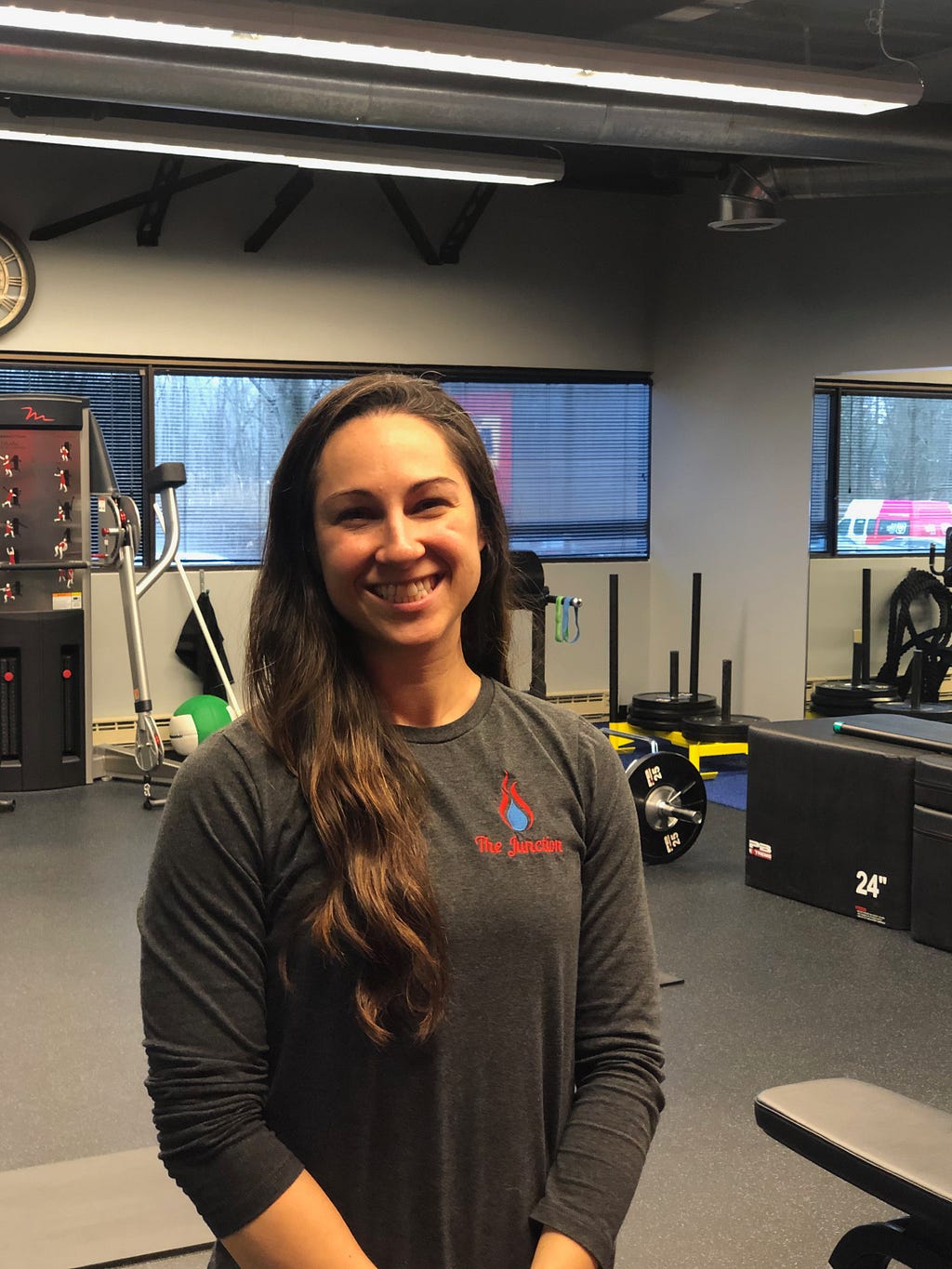
Nikki Gnozzio, owner of the Junction Bodyworks, LLC, is a well established personal trainer, experienced strength & conditioning coach as well as an accomplished athlete. Some of her most recent endeavors included becoming a licensed massage therapist as well as competing in the Czech Republic on the USA Women’s National Ball Hockey team where the team returned home as recipients of silver medals. In the last two years, she’s managed to grow her business in the pandemic, offering virtual sessions, creative solutions for clients training at home and expanding her gym and offering COVID safe training sessions for everyone.

Thank you so much for joining us in this interview series! Our readers would love to “get to know you” better. Can you share your “backstory” with us?

My name is Nikki Gnozzio and I am a former college strength and conditioning coach turned personal trainer. I studied the ins and outs of training athletes at Ohio University where I received my masters degree in Coaching Education. I was lucky to find a job at Providence College where I had an amazing mentor who helped make my dream of working with college athletes a reality. He advocated for me every chance he could and pushed me to be the best version of myself possible. His tough teaching methods are what made me durable enough to love what I do, even when days get tough.

Can you share the most interesting story that happened to you since you started your career? What were the main lessons or takeaways from that story?

At one point very early on in my career, I started working for a man who’s training style was significantly different than mine. I trended more towards being strong and he focused more on making clients skinny. He asked me to not wear shorts at work because my muscular legs were too intimidating for clients to want to train with me. At first this devastated me and my body image. I had literally spent decades dedicating my body to athletics and being strong. In one sentence this man had the capacity to shatter my self confidence. I continued to wear clothes that would help to conceal my body and stopped competing in weightlifting. After working with my clientele for a while, it became quite obvious that not everyone wanted to fit into this same cookie cutter design he had convinced them was what they should look like. At that point I got it into my head that I wanted to create a small training studio that focused on the individual and their personal goals. No peer pressure to look a certain way, just do you! Hearing that man decide what I should and should not look like, eventually became the motivation I needed to break away and become my own studio.

Can you share a story about the biggest mistake you made when you were first starting? Can you tell us what lesson you learned from that?

When I first started out, I assumed everyone liked working out as much as I did. I was very wrong, it became a game to me to try to figure out how to make training sessions as fun as possible, and get my clients as hooked on wellness as I had become (or at least not hate every minute of it). The method that worked the best for this was very simple. Be kind, be realistic, and progress with a purpose.

Let’s jump to our main focus. When it comes to health and wellness, how is the work you are doing helping to make a bigger impact in the world?

I certainly haven’t made a big impact on the world, but my goal has always been to make big impacts in individuals lives. Like Emily Dickinson says, “They might not need me, but they might. I’ll let my head be just in sight.” This is how I like to structure my training. I want to progress my clients to know I am always there for them, but prepare them to be able to make smart choices that make sense for them without me in their world outside of the weight room. The goal is always to get my clients to know how to make good choices for their health and wellness even if I’m not watching.

Can you share your top five “lifestyle tweaks” that you believe will help support people’s journey towards better wellbeing? Please give an example or story for each.

1. SLEEP — It’s so nice to see the amount of research that is popping up showing the importance of sleep. Throughout the pandemic, this is one topic I have been able to more easily convince people to take seriously. Many of my clients have been able to transition to work from home scenarios, significantly cutting down travel time. This time can then be shifted towards longer nights of sleep. I have directly seen fewer injuries, more weight loss, and happier clients as a result.

2. PLAN AND JOURNAL- Nearly 100% of my clients who use a food and exercise log lose weight, incorporate wellness activities more often, or improve their strength. Seeing your food and exercise plan in writing forces you to be honest with yourself and hold you accountable. Having actual concrete goals laid out in front of you is an excellent way to stay task focused. It works like a charm. It can sometimes take me weeks to convince clients to take the time to log, but half the time I know this is because they aren’t actually ready to start making changes. Once they do log (Noom, MyFitnessPal, good old pen and paper, phone notes, any method that works for you) we can also track trends and use this data to really dial in on lifestyle changes that work for the client. For example, if you are a shift worker and your shift is 10 hours, putting you on a 6 meal a day plan literally doesn’t fit into your work schedule. We may see better results and less stress managing a 2–3 bigger meal plan with shorter workouts if you are exhausted from a long day of work. Journalling is also a great tool for my clients who “never have any time” to fit in even the smallest changes. Seeing a schedule in front of you really points out where time is being spent poorly and should change. Everyone on this planet has one thing in common, 24 hours in a day, it’s the choices you make in that day that really count.

3. BE PATIENT- Most people are completely unaware of the amount of time and effort that goes into performing like an athlete or looking like a fitness model. It takes even longer if you’re already starting from a detrained state with higher body weight. If you are not used to feeling what a muscle contraction feels like, or what it’s like to sit and be silent with yourself in your recovery phases of training it will take even longer to get started. Don’t rush the basics. Think of it this way, if you decide for one year you’re going change your food, your exercise, and start meditating, after 40 years of not prioritizing these things, that is only 3% of the time you’ve been alive that you’ve dedicated to health and wellness. You’d still be considered an infant in weight room years.

4. PASS THE SELF TALK TEST- Positive attitude is incredibly important to see changes and accept where you are in the process. I have my clients write down things they say to themselves when they are really down on themselves. Typical responses are, “you look so fat,” “you can’t do anything right,” “you’re wasting your time, you’ll never get there,” “I hate myself” etc. I then ask them if they would say any of those things to someone else who was struggling. Most often, they say no and see how hurtful they are to themselves. Our next goal is to figure out phrases that affirm their effort is worthwhile. Saying things like this is a waste of energy and time and in no way helps them to get to the end result they desire.

5. PRIORITIZE BALANCE- I’m not talking about standing on one foot, I’m talking about your yin and yang. Everyone needs something different when it comes to setting health and wellness goals, and they can change every year and that is ok! Maybe one year you want to prioritize strength and you found you drifted too far away from eating healthy meals so the next year you want to shift to focus more on a food plan that works with your training style. Use each year to grow into seeing what your body really needs and how to attain it. For example, I grew up as an athlete and played competitively through college. I still had that competitive nature driven into my body to the point of it making me unnecessarily “hot headed”. In an effort to slow down and be still, I added in yoga and meditation. I studied to become a massage therapist, and learned coping tools to help “cool me down.” This worked great until I started playing sports competitively again and found I just didn’t have the same aggressiveness I once had. I knew my focus had to be on learning how to shift back and forth between calm, cool and collected for work and aggressive for play. This took me years to improve on, but I stayed in my lane and let it happen in its own time and am happy with the improvements I have made.

If you could start a movement that would bring the most amount of wellness to the most amount of people, what would that be?

Clean air and water would be a great start and it makes me so sad to even say this is where we need to start. The most basic of human needs.

What are your “5 Things I Wish Someone Told Me Before I Started” and why?

In regards to any other female professionals looking to break into this industry these are the 5 things I wish I had known sooner.

  1. The hours are LONG. My first job, my boss told me I hope I like working half days because 12 hours is a normal shift daily. As I switched to personal training, I clearly had more control over my schedule, but in order to reach the success that I have it has required a lot of work in and out of the studio. More often than not, I am in the gym by 530am and leaving after 7pm. Make sure you love what you do.
  2. Not everyone is going to like you, don’t take it personally. I used to always get so upset when someone would come in to work with me and not want to continue. It took me a very long time to realize I’m not going to help everyone and that’s ok.
  3. It really helps to walk the walk. I can’t even tell you how many men wouldn’t take me seriously as a strength coach until they saw me demonstrating exercises with good form. None of my male counterparts had to pass this test of approval.
  4. Be willing to learn — Every day I learn something new and it makes me even more aware of how much information is out there for consumption. Not everything is credible, not everything is useful, but it’s good to know even things you didn’t think you’d ever use. I never thought I would become a massage therapist and now I love it.
  5. Find a good mentor and network — I learned more in my three years under a mentor who legitimately cared about my wellbeing than anywhere else. Find someone who wants to promote you and push you without steamrolling you. Networking is so key to your success and your clients. Be ready with a list of other professionals in your area that can be a part of your health team. Refer your clients and always have their best interest at heart.

Sustainability, veganism, mental health and environmental changes are big topics at the moment. Which one of these causes is dearest to you, and why?

Ahh yes, the illusion of separation. All of these things are one and the same. We need to worry about sustainability because our environment is failing. Our environment is failing because of over consumption which has encouraged more people to consider veganism, and the stress of having to manage all these things have certainly changed our mental health. However, if I had to choose a starting point, I would say environmental changes. I am a huge animal lover, and have a very hard time seeing animals going extinct, losing land, and losing food and water sources because of our choices. We need to protect this planet if not for us but for them. Even steps as simple as buying reusable straws. Seriously, this is not so outrageous of a request.

What is the best way our readers can follow you online?

@Junctionbodyworks on instagram

Thank you for these fantastic insights!


Women In Wellness: Nikki Gnozzio of Junction Bodyworks On The Five Lifestyle Tweaks That Will Help… was originally published in Authority Magazine on Medium, where people are continuing the conversation by highlighting and responding to this story.

Female Founders: Chelle Neff of Urban Betty On The Five Things You Need To Thrive and Succeed as a…

Female Founders: Chelle Neff of Urban Betty On The Five Things You Need To Thrive and Succeed as a Woman Founder

An Interview With Candice Georgiadis

Your business model doesn’t have to be perfect and will change. Often, what your company is at the beginning evolves into something different. When I first opened my salon company, I had a contractor-based pay model. After a couple of years, I learned that the best way to achieve a profit and a cohesive culture was to switch to an all-employee-based business model with structure. In 2010, I changed my salon company to 100% commission, my brand flourished, and everyone was on the same page.

As a part of our series about “Why We Need More Women Founders”, I had the pleasure of interviewing Chelle Neff.

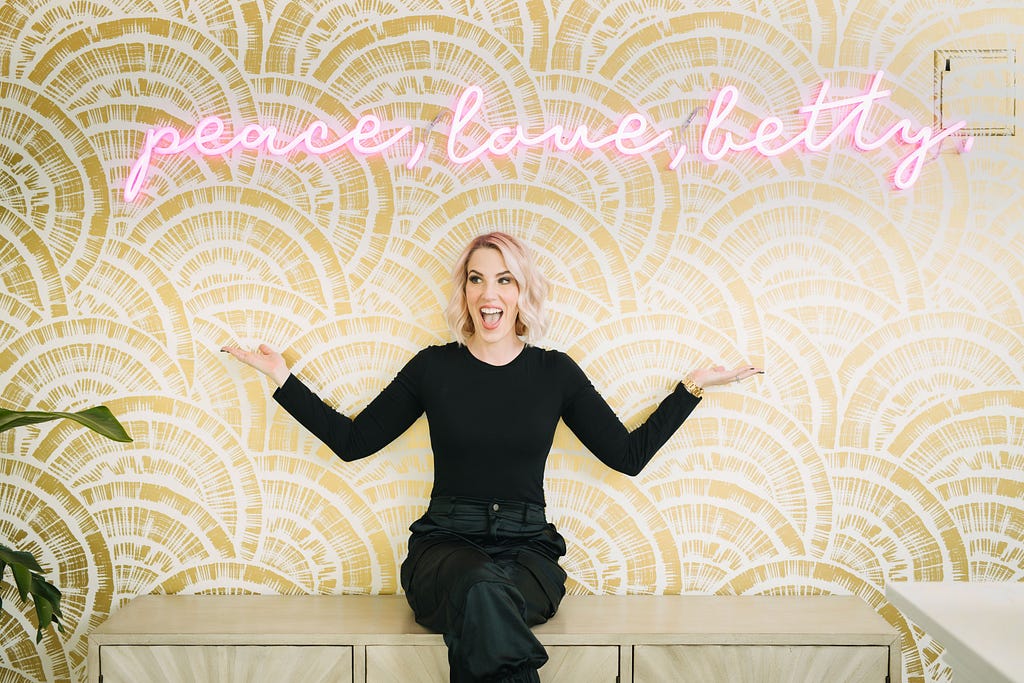
Chelle Neff has been a leader in the U.S. salon industry since founding Urban Betty in 2005 and has more than 20 years of experience creating innovative practices in the salon and beauty worlds. Neff has successfully grown Urban Betty’s revenue year after year and today has two salon companies that house more than 70 employees. For four years consecutively, Inc. 5000 named Urban Betty as one of the fastest-growing privately held companies.

Thank you so much for doing this with us! Before we dig in, our readers would like to get to know you a bit more. Can you tell us a bit about your “backstory”? What led you to this particular career path?

I began my journey as an entrepreneur by first being an employee in the salon industry. I knew from a young age that I wanted to do hair. At the age of sixteen, I was offered the chance to enroll in Cosmetology school at my high school. During my junior and senior years of high school (1993–1995), I attended half days of regular classes and half days of Cosmetology school.

When I received my license in 1995, I started working behind the chair at Supercuts. I slowly worked my way up the ladder to higher-end salons. I got a small suite at the Gallery of Salons and was an independent contractor five years later. That was my initial stepping stone to running my own business.

I was all by myself for the first week when I opened Urban Betty Salon and had only one hairstylist/contractor for the first 3 months. I didn’t hire my first employee until 6 months after opening. At that point, everything that I did behind the chair paid for the entire salon and my household. It was a very stressful situation. I figured out after having one employee that it was much more profitable to have employees rather than booth rental/contracted hairstylists. After about six years, I slowly phased out all of my hairstylists that were contractors and transitioned to a 100% commission-based salon.

Can you share the most interesting story that happened to you since you began leading your company?

When I originally structured the pricing list for services at my salon, I offered package deals and all sorts of special discounts. I thought surely this was the best way to draw in new business. After struggling to make ends meet, I finally ran a report to see how much money we were giving away. It was an astonishing $50,000 in just one year! After that, I hired a salon consulting company and a business coach — Summit Salon Business Center. Within the first 3 months of hiring Summit, we restructured the pricing on our service list to an a la carte menu with only a limited amount of discounts. Our revenue grew by 30% the following year! Once our profits quickly turned around, I was able to retire from doing hair in 2016 and focus solely on managing Urban Betty.

Can you share a story about the funniest mistake you made when you were first starting? Can you tell us what lesson you learned from that?

In 2002, I launched a website with a terrible logo. At the time, I thought my logo looked good. It was a lady with a city background, and she seemed very cartoonish. Think Sex and the City if it were a children’s book. Not good. We reworked it after a couple of years. I recently found an old scrapbook with my first brochure and the original logo. I showed it to my employees, and they couldn’t believe how bad it was. We all had a good laugh! I learned that you should constantly be re-evaluating your brand and evolving to stay current.

None of us are able to achieve success without some help along the way. Is there a particular person who you are grateful towards who helped get you to where you are? Can you share a story about that?

I wouldn’t be where I’m at today without my life coach/therapist, Rebecca Hamm. I met with her once a week for the first five years after I opened my business. I am down to every other week now. When you are an entrepreneur, you frequently need someone in your corner who can call you on your B.S. in a gentle way. She does that for me. She has helped me overcome my ego and become a boss in every sense of the word.

Ok, thank you for that. Let’s now jump to the primary focus of our interview. According to this EY report, only about 20 percent of funded companies have women founders. This reflects great historical progress, but it also shows that more work still has to be done to empower women to create companies. In your opinion and experience what is currently holding back women from founding companies?

What I think is currently holding back women from founding companies is the cost involved and the uncertainty of the pandemic. When I started my salon company in 2005, it cost me a total of 70k, and right now, for that same project, it would run much closer to 200–250k. And while inflation with the costs of supplies and materials has gone up, the matching value of wages has not. In our industry, people still expect to pay what they were paying for their hair ten years ago, and the cost of our supplies has dramatically increased. So on top of thinner margins, a lack of supplies for construction, and high construction costs, it takes a lot to open a business right now.

I do feel, however, that women will continue to become founders and that the percentage of funded companies will still rise once we get over this pandemic hump or just become more acclimated to the rising costs of founding a business.

Can you help articulate a few things that can be done as individuals, as a society, or by the government, to help overcome those obstacles?

  1. We need to raise the minimum wage to match the cost of living. A much more significant percentage of 20 somethings still have to live at home with their parents because they can’t even afford a one-bedroom apartment. That speaks volumes. At my salon company, we have employees that start double and even triple what minimum wage is. We want them to succeed in life and pay their bills. Once more people can get on their feet and make a good wage, they will be more likely to go out on their own to start a company.
  2. I would love to see the government help more with college and student loan debt. Sending young people out into the workplace with hundreds of thousands of dollars in debt makes it very challenging to want to start your own company one day.

This might be intuitive to you as a woman founder but I think it will be helpful to spell this out. Can you share a few reasons why more women should become founders?

More women should become founders because we need that representation in the workplace. Having more female founders would not only bring more diversity to the workplace, but I think it would bring more hope. Everyone you see in real life around you is an expander and helps expose you to what you can achieve. If you have more females around you in a founder position, it will help to create more of that.

My salon company is about 93% female. I can tell you that these humans are some of the most caring and genuine people that I have ever met, and I can also tell you that I wouldn’t mind seeing 93% of the companies out in the real world being founded by women.

What are the “myths” that you would like to dispel about being a founder? Can you explain what you mean?

There is a huge myth that women do not support other women; therefore, how could we mentor or develop new talent? This myth couldn’t be further from the truth. In my salon company, we have created an innovative system of mentorship. Our more senior (primarily female) employees take on mentees in a six-week program that helps introduce them to our culture and teaches them how to be successful. This program ensures that the employee is growing, thriving, and emotionally happy with the company.

I have always supported the success and advancement of other women, especially in my salon company and industry. I have brought on two current employees to be shareholders in our salon company — encouraging entrepreneurship and helping women achieve their dreams of owning a business. I have also created a plan for more employees to become future shareholders. In addition, we host personal growth retreats for all of our team. We, as women, support each other, and the growth of our salon company is a testament to that.

Is everyone cut out to be a founder? In your opinion, which specific traits increase the likelihood that a person will be a successful founder and what type of person should perhaps seek a “regular job” as an employee? Can you explain what you mean?

I don’t think everyone is cut out to be a founder. And I think that’s okay. I think it’s more important to do what makes you content and happy in life, and for some people, that involves their passion which doesn’t have to include founding a business.

A prominent trait of commonality I see in founders is the ability to execute. We all have 1000 great ideas; the difference between the people who have ideas and founders is that founders actually implement those ideas. That’s the hard part. If you like to be a part of a team that executes a vision, that is a beautiful thing too. Sometimes people don’t want to be the person coming up with and implementing the ideas; they just want to be a part of that process.

When I started out, I could feel it in my bones that I would open a salon one day. There wasn’t a straightforward catalyst that started it. And I can’t put a name on it either. I just knew. And I also knew I would just keep moving in the right direction to make it happen. It took me 10 years after getting my license and doing hair to open my salon company. It didn’t happen overnight. Many people get caught up in hitting a finish line and give up when it doesn’t happen quickly. You have to trust the process and keep hitting small milestones until you reach your goal. That’s the true essence of execution.

Recently I heard that you should launch a project when you’re (only) 80% ready. That phrase has changed my life and my outlook on execution. Don’t wait until the project/idea is perfect because it never will be!

Ok super. Here is the main question of our interview. What are your “5 Things I Wish Someone Told Me Before I Started” and why? (Please share a story or example for each.)

  1. Your business model doesn’t have to be perfect and will change. Often, what your company is at the beginning evolves into something different. When I first opened my salon company, I had a contractor-based pay model. After a couple of years, I learned that the best way to achieve a profit and a cohesive culture was to switch to an all-employee-based business model with structure. In 2010, I changed my salon company to 100% commission, my brand flourished, and everyone was on the same page.
  2. You won’t make a profit right away. It took my salon company NINE years to make a profit. Yikes! I remember my banker calling every other day to make sure that deposits were going to come through to cover expenses. It was embarrassing and highly stressful. In 2014, I joined the Summit Salon Business Center and hired a business coach. Since bringing on the consulting group and coach, I have grown Urban Betty’s income, and we’ve made a profit every year.
  3. Everyone that works for you is not going to be your biggest fan. If you’re a recovering people-pleaser like me, this is going to be a hard one. Sometimes you have to make hard decisions that people don’t like to be more successful. When I brought on a business consultant, we changed our entire company structure; it peeved over half my staff. Our business model was a fixed commission rate with no goals or incentives. Unfortunately, that was part of why we couldn’t grow or turn a profit. If you don’t have numbers, goals, and incentives for your staff, it creates a stagnant culture and income that reflects that.
  4. Your company needs structure. Like I said above, when I first opened my salon company, I let people come and go when they wanted and set their prices. And I kept that model with employees as well. When I barely broke even the first eight years, I finally hired a consultant group. The first thing we did was change our pricing structure. The results were instant. I went from having an average of negative 2k in the bank to over 50k within three months. We implemented a level system and scheduled monthly personal development meetings with all of our staff. In 3 short years, we added eight chairs to our salon and grew 82%.
  5. Taking care of yourself isn’t being lazy. When I opened Urban Betty, I worked 27 straight days in a row and then booked myself doing hair six days a week after that. I thought business owners had to sleep, eat, and breathe their company, and I was so wrong! After six months, I started having dizzy spells and panic attacks. I learned that my body is a reflection of my thoughts and stress. I had to take more time off and hire a therapist! It took years to recognize that I was working too much “inside” the company and not on myself. I’m now retired from doing hair, getting regular massages, and seeing a therapist twice a month. My health and my business are both better because of it.

How have you used your success to make the world a better place?

In a world that considers college the only option for success, my salon company empowers women and gives each person who works here the ability to become a future shareholder and grow to have an income well over 100k without a college degree. At Urban Betty, we pay our employees well above the industry average WITH BENEFITS (¼ of the stylists make six figures in my salon, where the industry average is $22k).

I have brought on two current employees to be shareholders in our salon company — encouraging entrepreneurship and helping women achieve their dreams of owning a business. I have also created a plan for more employees to become future shareholders and launched it this fall. Additionally, we host personal growth retreats for our employees and have developed an innovative mentorship system. We want to shatter the glass ceiling and elevate our industry. In that same vein, I created the Urban Betty products to support and empower womankind. We are donating 1% of our profit from our hair care line to support female entrepreneurs. We chose Big Austin because they are a leader in powering self-sustainable small business development by providing financing to women entrepreneurs in Texas. They were the non-profit that gave me my first loan to start my salon company.

The more our product line grows through future product innovations, e-commerce, and wholesale sales, we will donate more money to empower and employ women. We’re starting out with Big Austin, a Texas-based non-profit, and our goals are to evolve into a brand that globally empowers female entrepreneurs through a percentage of sales.

You are a person of great influence. If you could inspire a movement that would bring the most amount of good for the greatest number of people, what would that be? You never know what your idea can trigger.

I would love to inspire a movement of forgiveness. These days, everyone wants to cancel everyone and not have any conversations. Often, if we could sit down with someone (with who we disagree), show empathy, and have a conversation, it would change our perception of their actions.

We are very blessed that some very prominent names in Business, VC funding, Sports, and Entertainment read this column. Is there a person in the world, or in the US with whom you would love to have a private breakfast or lunch with, and why? He or she might just see this if we tag them.

I would love to sit down with Michelle Obama. She is such an inspiration to women and exudes supportive, loving energy. I would love to hear her speak about her life experiences.

Thank you for these fantastic insights. We greatly appreciate the time you spent on this!


Female Founders: Chelle Neff of Urban Betty On The Five Things You Need To Thrive and Succeed as a… was originally published in Authority Magazine on Medium, where people are continuing the conversation by highlighting and responding to this story.

Women In Wellness: Vickie Gould of Life Changing Energy On The Five Lifestyle Tweaks That Will Help…

Women In Wellness: Vickie Gould of Life Changing Energy On The Five Lifestyle Tweaks That Will Help Support People’s Journey Towards Better Wellbeing

An Interview With Candice Georgiadis

Things in boxes are usually not food. Almost hundred years ago, when more women entered the workforce, convenience became a problem that was solved with boxed food (canned too). As the years passed, more and more chemicals were added to the food supply through those boxes and “advances” in farming to produce more crops, with fewer blemishes. The problem is that we gave up our health for convenience with many now who don’t know how to cook or enjoy cooking. Instead, eat simple foods — organic strawberries, cucumbers, carrot and such take very little skill to prepare.

As a part of my series about the women in wellness, I had the pleasure of interviewing Vickie Gould.

Vickie Gould is an energy and sound healer, Reiki Master, Law of Attraction Practitioner, Master Herbalist and Coach. As a result of working with her, people are able to release old traumas, heal generational wounds, improve their health and relationships, and attract more wealth and abundance to their lives — rewriting their story to life their best lives. She’s been featured on NBC, entrepreneur.com, HuffPost, Tedx U of M and shared stages with Lisa Nichols, T Harv Eker and Joe Vitale. Visit Vickie’s website at www.lifechangingenergy.com.

Thank you so much for joining us in this interview series! Our readers would love to “get to know you” better. Can you share your “backstory” with us?

In 2009 I was diagnosed with Chronic Lyme Disease. My doctor told me that I was destined to live out the rest of my life in bed 16–18 hours per day. I tried to accept this, but I had so much more I wanted to do in my life and I desperately wanted to participate in my children’s lives. Eventually, after reading about other people’s healing journeys, I realized that the doctor couldn’t predict my future. I learned about alternative modalities including rife machine, herbs and energy healing. As I applied these powerful protocols, the good days started to outnumber the bad. That’s why now it’s so important for me to spread the knowledge of frequencies and holistic healing.

Can you share the most interesting story that happened to you since you started your career? What were the main lessons or takeaways from that story?

When I started sharing my sound bath healing videos, I didn’t explain what the singing bowls were or how they could heal. Not a lot of people watched those videos. Then, when I decided to explain how the singing bowl sound could clear, open and heal your heart chakra, it went viral, hitting 10.7 million views. What I learned from this is not to assume that people knew what to do during a sound bath. It also showed me that people needed the information on how and why the singing bowls heal. With 10.7 millions views, I finally knew I was on the right path — it was a sign that my passion was worthwhile and so many needed me to continue.

Can you share a story about the biggest mistake you made when you were first starting? Can you tell us what lesson you learned from that?

My biggest mistake was listening to my coaches tell me that, “Nobody will buy that.” Multiple coaches discouraged me from pursuing my passion and I listened to them because I thought they had more experience than I did. My greatest fears were reflected in their comments. My wellness coaching business started slowly and I earned $197 before I gave up less than a year later. Now, five years later, I’ve returned to it and am the happiest and most peaceful about my life than I’ve ever been. What I learned from this is that whatever you’re called to do, it will call you back, even if you take a detour. I also learned not to take advice from people who don’t believe in you.

Let’s jump to our main focus. When it comes to health and wellness, how is the work you are doing helping to make a bigger impact in the world?

My main focus right now has been energy and sound healing. I love to teach and share videos on singing bowls, tuning forks, crystals, manifestation, mindset and law of attraction. Especially now with the length of the pandemic dragging out, it’s important to help people to improve their emotional, spiritual and physical well-being. I’m able to share meditation videos almost daily through TikTok, YouTube, Instagram and Facebook.

Can you share your top five “lifestyle tweaks” that you believe will help support people’s journey towards better wellbeing? Please give an example or story for each.

  1. Things in boxes are usually not food. Almost hundred years ago, when more women entered the workforce, convenience became a problem that was solved with boxed food (canned too). As the years passed, more and more chemicals were added to the food supply through those boxes and “advances” in farming to produce more crops, with fewer blemishes. The problem is that we gave up our health for convenience with many now who don’t know how to cook or enjoy cooking. Instead, eat simple foods — organic strawberries, cucumbers, carrot and such take very little skill to prepare.
  2. Sleep heals almost everything. These days, it seems like a badge of honor to tell people that you barely sleep. It’s almost as if you get bragging rights for the least amount of sleep because you can then win the “busiest life” contest. This lack of sleep has led to widespread issues such as memory problems, lack of concentration, brain fog, dependency on caffeine (and sleep medication), mood changes, high blood pressure, diabetes, heart attack, heart failure or stroke, obesity, depression, impairment in immunity and lower sex drive. Lack of sleep can even affect your appearance, giving you dark circles under your eyes, puffiness, and premature wrinkles.
  3. Let go of childhood traumas. Almost everyone has had some sort of childhood trauma. No matter what happened to you, getting help to resolve or let go of your childhood traumas can help you to feel better. The most important thing is to be open to the healing. It may not be feasible to completely correct a past situation, but you may be able to handle it better, resolving triggers or negative emotions. While trauma can look different in everyone, not addressing them can lead to heart disease, diabetes, obesity, cancer, stroke, addition, anger, anxiety, fears, appetite problems, difficulty concentrating, PTSD, and suicide.
  4. Find ways to de-stress regularly. No one is immune to the stresses of daily life. We have a tendency to say that we will take time for ourselves “after” this or that (after the next project, after the kids go to college, after the next job promotion), but this was the exact reason I ended up with a half a pound of fibroids after ignoring my body for a year and a half. I was so busy doing the next thing, I ignored the clear message my body was sending me. Logically, I knew I couldn’t keep up the pace. Remove the guilt of taking time for yourself and remember self-care isn’t selfish. Just like they say to put the oxygen mask on yourself before you help others, you need to apply the same idea to your regular life.
  5. Baths wash away all the worries of life. One of the most relaxing things I love to do is to take a bath. After adding epsom salt, baking soda and food grade hydrogen peroxide, I’ve been known to spend over two hours in there! I started doing it to relieve my muscle pain from Chronic Lyme Disease, but soon I found how relaxing it was. It’s become a daily ritual that also lowers my stress. Studies have found that baths can improve the heart, help your lungs and oxygen intake, improves mood, steam from the bath can help you breath better, helps to balance hormones, hydrates the body, skin and hair, and regulates your temperature. Not only all this, but a hot bath can burn about 130 calories — about as much as a half mile walk.

If you could start a movement that would bring the most amount of wellness to the most amount of people, what would that be?

As Hippocrates said, “Let food be thy medicine, and let medicine be thy food.”

If I could start a movement, I would change our food. Starting from the source, I would make pesticides and toxins illegal. I would take items off the shelf with chemicals and dyes. I would teach people to enjoy the taste of real food and hep them to learn to love cooking — I would show people how to have a flavor explosion for their tastebuds with simple recipes that didn’t take a lot of time. Then, I would also show them how herbs can heal.

What are your “5 Things I Wish Someone Told Me Before I Started” and why?

The 5 things I wish someone would have told me before starting are:

  1. You will be revisiting your healing journey often as you share your story and listen to others needing help. Make sure you’re through to the other side so that you won’t be so intensely affected each time.
  2. Some people are more comfortable staying ill or being identified by their illness. This means that they may say that they want to feel better, but subconsciously want to stay where they are.
  3. Not everyone wants your type of help. If they’re into pharmaceuticals and modern medicine, they may not believe your methods. For others, you may need to wait for an invitation when they’re ready to hear it.
  4. Belief matters more than methods or techniques. “Whether you think you can or you can’t, you’re right,” Henry Ford.
  5. The “Quick Fix” is very popular, so if a method seems long or hard, people are less apt to do it, even if it will solve their problem. You can’t want it more than they do, no matter how much it pains you to watch and no matter how much you care.

Sustainability, veganism, mental health and environmental changes are big topics at the moment. Which one of these causes is dearest to you, and why?

Mental health is the most dearest to me because I grew up with childhood trauma, which I carried into my adult life. I know that those traumas that were left unresolved, paved the way for my illnesses. Most of us don’t realize how much our mental state impacts our physical state.

What is the best way our readers can follow you online?

I have a very active TikTok @lifechangingenergy with over 84.5k followers and 2.1 million likes. I also post longer videos and educational piece on Youtube at https://www.youtube.com/channel/UC1ORN0FdFJHWKBImxTKrLgQ . Lastly, you can visit my blog on my website and store at www.lifechangingenergy.com

Thank you for these fantastic insights!


Women In Wellness: Vickie Gould of Life Changing Energy On The Five Lifestyle Tweaks That Will Help… was originally published in Authority Magazine on Medium, where people are continuing the conversation by highlighting and responding to this story.
Female Disruptors: Dr Luisa Moreno of Defense Metals On The Three Things You Need To Shake Up Your…

Female Disruptors: Dr Luisa Moreno of Defense Metals On The Three Things You Need To Shake Up Your Industry

An Interview With Candice Georgiadis

Don’t be afraid of losing your job! Stick to topics/sectors that interest you and only work with people and environments that you like and make you happy.

As a part of our series about women who are shaking things up in their industry, I had the pleasure of interviewing Dr. Luisa Moreno.

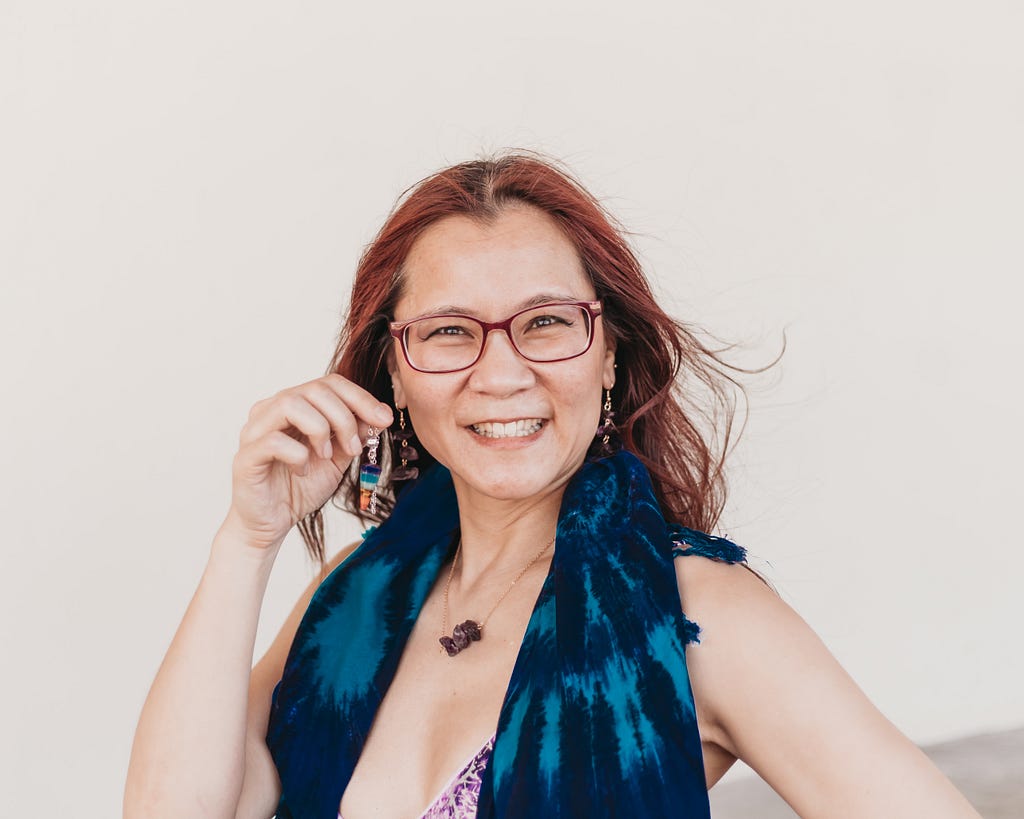
Dr. Luisa Moreno is the President of Defense Metals. She is a Physics Engineer, with a PhD in Materials Science and Mechanics from Imperial College London, in the United Kingdom. She held positions as Senior Analyst, at Toronto based investment banks and as an Investment Research Analyst at a global investment research firm. She is known as a leading analyst in rare earths and has published several reports and articles for the investment community. Dr. Moreno has co-authored a book on mineral processing and project financing and authored a number of advanced industry and technical reports on several technology minerals.

Thank you so much for doing this with us! Before we dig in, our readers would like to get to know you a bit more. Can you tell us a bit about your “backstory”? What led you to this particular career path?

I have always had a natural inclination towards science and engineering, but I was also interested in business and finance. So, after I studied physics engineering and completed my graduate studies in materials science, I transitioned to finance shortly after my postdoctoral fellowship. Being active in the business and science sectors has been a perfect combination for me and has helped lead me to this particular career path.

Can you tell our readers what it is about the work you’re doing that’s disruptive?

To begin, world governments are collaborating to decrease global greenhouse emissions. As part of this plan, they are phasing out sales of combustion engine vehicles and have targets for 100% sales of electric vehicles by 2035–2040; they are also supporting the development of renewable energy sources. This 4th Industrial Revolution is driving demand for less common metals like rare earths and lithium. As a research analyst at investment banks, I covered these metals, also known as critical metals, as many areas face supply constraints. Today, I am delighted to be part of the management and board of directors of companies developing these critical materials that are key for producing renewable energy technologies, like wind turbines, and batteries and motors for electric vehicles.

Can you share a story about the funniest mistake you made when you were first starting? Can you tell us what lesson you learned from that?

That is a tough question…the only office incident that I recall being kind of funny to me, but probably not for the person involved, was when I was accused of shouting at the editor. Early in my career as a financial analyst, I was interacting with the main editor via email to finalize a note to investors. At one point, I wrote certain words and sentences in capital letters to emphasize my point. She was probably already annoyed by my resistance to accept her edits, but the capital letters just took her over the top, and she literally stormed out of her office straight to the manager’s office and accused me of shouting at her “via email,” [laughter].

So, I was called for a meeting with the editor that was visibly distressed. She was highly offended and completely oblivious of my ignorance. I promptly apologized and explained that I did not know much about email etiquette, and from that day on, I avoided capital letters in emails and paid more attention to how I write work emails. I have not shouted at anyone (via email) since.

We all need a little help along the journey. Who have been some of your mentors? Can you share a story about how they made an impact?

Early in my career, I joined WCM (Women in Capital Markets — Toronto), and via their mentorship program, I was connected to professionals that were kind enough to take time out of their busy schedules to meet me, share their market experiences, and offer me career advice. However, I must admit that I have had many mentors, some of whom are not even aware of being my mentors. For instance, my colleagues on the board of directors are all mentors to me. Their diverse backgrounds in geology, deal-making, financing, accounting, etc., is of tremendous value to me, and I am learning and growing every day in my interactions with them.

In today’s parlance, being disruptive is usually a positive adjective. But is disrupting always good? When do we say the converse, that a system or structure has ‘withstood the test of time’? Can you articulate to our readers when disrupting an industry is positive, and when disrupting an industry is ‘not so positive’? Can you share some examples of what you mean?

Frankly, I never thought about it. I think that the oil-driven economy and the careless emissions of greenhouse gases have had a negative impact on our planet, and it is a good idea to search for solutions.

However, there are no easy solutions, and some have questions regarding how “green” the mining of these critical minerals is. We have obviously passed the Stone Age, and our way of living is very much dependent on advanced materials. The key is to work together to find ways to produce these materials in a sustainable and ethical fashion.

Scientists worldwide are developing disruptive technologies, using critical materials to create a greener, more sustainable and equitable world. Of course, not all ideas and technologies will make it, and the path for a greener world is not straightforward but surely one worth pursuing.

Can you share 3 of the best words of advice you’ve gotten along your journey?

I am not sure from where I heard these words or in what stage of my life I’ve learned these things, but if I was to give 3 best words of advice to my younger self, they would be:

1. Believe in yourself, and always take time to recognize and appreciate your achievements.

2. Don’t be afraid of losing your job! Stick to topics/sectors that interest you and only work with people and environments that you like and make you happy.

3. See the low moments as an opportunity to start something great and focus on the positives and opportunities instead of worst-case scenarios.

We are sure you aren’t done. How are you going to shake things up next?

Joining Defense Metals is just the start really! Developing rare earth projects comes with all the challenges of developing a mining project plus the added complexities specific to the cracking, separation, and refining of these elements.

Fortunately, today there is more rare earth processing expertise in the West, and the company has been able to build a strong technical team. So the way I will shake things up next is by bringing the first Canadian rare earths mine to production and making Defense Metals a significant supplier of these materials that are so critical to a greener world.

In your opinion, what are the biggest challenges faced by ‘women disruptors’ that aren’t typically faced by their male counterparts?

Times are changing, and it is exciting that more women are being hired to join the board of directors or being offered CEO and other top executive positions. I think time will tell the impact that diverse boards will have on the operations and performance of public and private companies, but I believe it will be positive.

Do you have a book/podcast/talk that’s had a deep impact on your thinking? Can you share a story with us?

I have read several books over the years, but I cannot say that one, in particular, has had the deepest impact on me. I often read books for professional development, very rarely for pure leisure, like Harry Potter, for instance (which I never read, but I may have watched one of the movies). I am also interested in history and human behaviour, which is probably the closest thing to non-professional books I may read. I like TED talks, and sometimes I scan their website looking for new and unusual topics just to learn something new.

You are a person of great influence. If you could inspire a movement that would bring the most amount of good to the most amount of people, what would that be? You never know what your idea can trigger. 🙂

I am not the activist type, but I am totally for a cleaner and more sustainable global economy. And as we all work towards achieving that, I think there is room to improve mineral development so that all nations can have access to the minerals they need for their economic sustainability or development, and at the same time bring real benefits to the producing countries and their peoples.

Canada is a significant mining jurisdiction and has most of the critical materials that are essential to the transition to the green economy. Canada also has companies like Defense Metals that are striving to become reliable sources of critical materials for the global supply chain of cleaner energy technologies by taking a sustainable approach and staying focused on maximizing the benefits for the local communities and shareholders.

Can you please give us your favourite “Life Lesson Quote”? Can you share how that was relevant to you in your life?

I feel that I am always learning, and that will never stop. I am always open to learning new things, and I am usually not afraid of being wrong. I think learning is part of our natural human evolution.

How can our readers follow you online?

I am on LinkedIn!

Thank you for these fantastic insights. We greatly appreciate the time you spent on this


Female Disruptors: Dr Luisa Moreno of Defense Metals On The Three Things You Need To Shake Up Your… was originally published in Authority Magazine on Medium, where people are continuing the conversation by highlighting and responding to this story.

Female Disruptors: Dayna Bradley and Nawleen Kaur of TPL Lighting On The Three Things You Need To…

Female Disruptors: Dayna Bradley and Nawleen Kaur of TPL Lighting On The Three Things You Need To Shake Up Your Industry

An Interview With Candice Georgiadis

Dayna: Work hard, not long: What others can accomplish in eight hours, I can complete in three. Now I have five hours to focus on myself, my goals and looking forward to the next challenge.

Nawleen: Think with a cool head: Words can’t be taken back and it is always better to think before you speak.

As a part of our series about women who are shaking things up in their industry, I had the pleasure of interviewing Dayna Bradley, President, TPL Lighting and Nawleen Kaur, Creative Lighting Specialist, The Adelaide Project by TPL Lighting.

Dayna Bradley serves as the president of TPL Lighting. She has over 25 years of experience in the furniture industry.

Nawleen Kaur serves as the Creative Lighting Specialist for The Adelaide Project. The Adelaide Project, a revolutionary studio concept conceived, curated, and designed by TPL Lighting, was born out of the belief that, as partners to the architecture and design community, lighting plays a collaborative role in working to elevate the overall design aesthetic.

Thank you so much for doing this with us! Before we dig in, our readers would like to get to know you a bit more. Can you tell us a bit about your “backstory”? What led you to this particular career path?

Dayna Bradley: Prior to joining TPL Lighting, I worked at my previous company for 20 years and aspired to one day serve as President. When the company’s timeline did not align with my career goals, I knew I had to make some difficult decisions. A friend of mine introduced me to the owners of TPL Lighting, Jennifer and Karolyn Pott, and almost immediately after meeting them I knew TPL Lighting was the perfect fit for me. A few things that stood out to me were that they were women running their own business who also happened to be sisters. I knew that with this team we would be able to shake up the old school nature of the lighting industry and really make a change. I also knew that the ones who could make this change were going to be women.

Nawleen Kaur: I started my career as an interior designer and served in that role for 15 years; most recently as a design firm’s workplace studio lead before taking on a role in consultative lighting sales. In 2020, I took on my first sales role, which, to be honest, fell into my lap, BUT has quickly proven to be the best decision I’ve made. As an interior designer and being on construction sites, I have an intimate understanding of what it is to be a woman in a predominantly male environment and quickly learned how to be a strong and respected voice. Dayna and I have known each other professionally and eventually as friends, since 2007. She has always served as a source of inspiration on how to lead with kindness and strength; so when TPL approached me for this role, I was introduced to Jennifer and Karolyn Pott and felt a natural connection to TPL’s predominantly female leadership.

Can you tell our readers what it is about the work you’re doing that’s disruptive?

DB: The lighting industry is very rigid and since starting at TPL and chatting with my network, there is a huge interest in shaking things up. Historically, lighting has followed a commodity based approach to sales. It can often lack transparency and therefore trust. It is TPL Lighting’s goal to evolve this very old school narrative around lighting through adding transparency and move the conversation from a commodity approach to selling and focus on the human experience of lighting. This human approach not only includes the person who sits under the light but also the experience of each human who touches each part of the process in the path to market. We are creating a conversation to help people understand how people experience light, how light can affect happiness and wellness, and how space can be changed with light.

NK: When working as an interior designer, there seemed to be an endless battle with suppliers and we were often at the mercy of what we were told when it came to pricing, timing, and availability. When we asked for more transparency, we were often told that this is just the way it is. Through the creation of The Adelaide Project, a revolutionary studio concept conceived, curated, and designed by TPL Lighting, we are able to educate and collaborate within the community and be a true resource with the clients’ best interests at heart. Under the guidance of Dayna and her experience selling furniture and my understanding of everything it takes to put together a furniture, fixtures, and equipment (FF&E) package, we can deliver that full FF&E package with transparency and trust.

Can you share a story about the funniest mistake you made when you were first starting? Can you tell us what lesson you learned from that?

DB: I had some unique challenges as a woman and lesbian in the furniture industry. Since starting my career, every time I would walk into a room I would instantly be judged and my suggestions were second guessed or ignored. At my first job, I worked for a wholesale company flipping furniture. For years, there was a client that no one could get to make a deal. My boss decided to let me have a shot at making a sale because he figured he had nothing to lose at that point. He sold me the entire lot of furniture for $1 and said whatever I sold it for was my profit to keep. I borrowed money to buy a new blazer to look more professional and walked into this client’s office. With confidence, I asked him what it would take for him to do a deal and after some negotiating, he bought the whole lot! I had never been so proud and learned to never let anyone tell me I am not capable just because of my gender. At that moment I knew I was born for sales.

NK: On one of my first projects, I made the terrible mistake of swapping the finishes of two identical rooms. I remember being on site and walking into the nearly completed room only to find I had been looking at my very symmetrical plan upside down when completing the finishes schedule (!). I kept my composure and explained to the flooring contractor on site, my mistake. They were quick to help and were able to correct my error in order to finish the project without incident. At the end of the day, we were all a team with the same goal and by owning up to my mistake, the rest of the crew respected me and helped me fix it. Even though I was panicking inside, I knew that worrying would not fix the actual issue at hand. This project helped me develop my leadership style and I learned how to carry myself during stressful times– while always double checking my drawings!

We all need a little help along the journey. Who have been some of your mentors? Can you share a story about how they made an impact?

DB: I have a personal “Board of Directors” that supports me in all decisions both personal and professional. They come from all different backgrounds and I have a deep respect for their opinions. I have always been a risk taker but I am a calculated risk taker. These individuals provide me with guidance and knowledge that I may not personally possess and help me make informed decisions. When I make decisions I am always conscious about how my actions will impact others and they provide this insight, keep me grounded, and educate me.

NK: I will always be grateful for Gloria and David Freeman and the incredible experience they gave me. Working at a small family run design firm, the Freeman’s allowed me to have full control of my projects from start to finish. If I had begun my career at a large firm, I likely wouldn’t have had the opportunity to gain the wide range of experience I did so early on in my career. They taught kindly and pragmatically, which made me realize I wasn’t suited to work for a large corporation. David and Gloria took a very human approach to leadership and I looked for that same friendly and supportive environment in every career change moving forward. Thank you, Freeman + Freeman!

In today’s parlance, being disruptive is usually a positive adjective. But is disrupting always good? When do we say the converse, that a system or structure has ‘withstood the test of time’? Can you articulate to our readers when disrupting an industry is positive, and when disrupting an industry is ‘not so positive’? Can you share some examples of what you mean?

DB: I was raised to question everything and challenge what I see and hear. From my mother telling me at a young age to question authority, including hers as a parent, to studying feminist theory, I have spent my life never accepting the status quo. I have learned that we cannot stand by systems that “have stood the test of time” knowing that someone is getting hurt by them. Disruption is only beneficial if it helps one person. If disruption doesn’t present a win somewhere else, then it’s just disruption for disruption’s sake.

NK: I define disruption as giving something else a chance. As a woman of colour, I am very aware that this current position I hold would not have been possible had others not disrupted the path for me. We are disrupting the way the lighting industry operates because it is necessary to move forward. Time and time again “trusted” old systems have oppressed specific groups, so clearly these systems can no longer be trusted.

Can you share 3 of the best words of advice you’ve gotten along your journey? Please give a story or example for each.

DB:

Work hard, not long: What others can accomplish in eight hours, I can complete in three. Now I have five hours to focus on myself, my goals and looking forward to the next challenge.

The best people give the benefit of the doubt: If someone is coming to you and they’re prickly, step back and remember it’s not about you. You don’t know what their life is like or what’s happening with them in that moment: give them the benefit of the doubt and know that nothing is ever about you — not even the good stuff.

Hope is not a strategy: You either will do something or you won’t. Hoping for success is not going to be successful in the end.

NK:

Think with a cool head: Words can’t be taken back and it is always better to think before you speak.

“Punch him if you have to”: My mum taught me to stand up for myself and gave me these words in response to my running home crying when a neighbourhood boy hit me at aged 10. She told me to come home only after I stood up to him!

Always lead with kindness and positivity but, as a woman, if someone speaks down to you, you have to have the confidence to stand up for yourself and not step aside.

We are sure you aren’t done. How are you going to shake things up next?

DB: As President, it was important to me to shake everything up. We implemented a 2030 strategy for TPL that not only outlines company goals but also considers industry goals. At the center of everything we do, we guide with the Human Experience. We are building a working environment that drives collaboration, energy, excitement, and engagement.

NK: Through everything we do, we are bringing back conversations to the Human Experience. The Adelaide Project is shifting the traditional commodity sales approach to lighting to one that understands how people interact. Through shifting our sales model, we are focusing on community, education and collaboration. We are emphasizing how people experience light; how light can affect happiness and wellness; and how space is impacted and changed with lighting.

In your opinion, what are the biggest challenges faced by ‘women disruptors’ that aren’t typically faced by their male counterparts?

DB: When men and women enter their careers, men are looked at for their “potential” and women are looked at for their “proficiency.” A man will be promoted because of potential, whereas a woman will have to prove she can do something before she is promoted. This typically results in a five year promotion gap between men and women. Women can always do it but they are forced to prove it first. And invariably, the uterus becomes part of the conversation and women are judged on how it is, or isn’t used. No one goes to a man who is up for a promotion and asks him who is going to take care of his kids. It is automatically assumed that the woman will have to take time out of her career to focus on raising children. Conversely, if a woman decides not to have children, there’s a perception about who she is because she didn’t procreate. We have to evolve as a society to understand that gender should never be part of the discussion about capabilities at work. However you identify yourself has no place in determining value of work.

NK: The pandemic opened the eyes of many to acknowledge how much work women actually do in regard to career, childcare and home life. With many being at home, balancing these aspects of life can be possible but only if employers support their staff and offer flexibility. At TPL Lighting, the team is very flexible and supportive. If we (all people), are open with our employers about our personal needs for child care and time flexibility, companies can foster a supportive culture that builds trust and commitment amongst everyone. Not having support prevents women from thriving.

Do you have a book/podcast/talk that’s had a deep impact on your thinking? Can you share a story with us?

DB: Dare to Lead: Brave Work. Tough Conversations. Whole Hearts. by Brené Brown. This book has taught me to lead with compassion. I also love Ariana Huffington and her teachings about mindfulness and slowing down. I am also personally passionate about news and history around sex trafficking and am currently developing a podcast to discuss the topic.

NK: Boundary Boss by Terri Cole has taught me to be an intentional leader and to put others’ needs at the forefront of decisions without foregoing my own boundaries. I also follow The Financial Diet on Instagram and listen to their podcast: The Financial Confessions — catered specifically towards women and money.

You are a person of great influence. If you could inspire a movement that would bring the most amount of good to the most amount of people, what would that be? You never know what your idea can trigger. 🙂

DB: Two things that I am very passionate about are women’s equal rights and addressing the hunger crisis. Because of this, I am a supporter of the Canadian Women’s Foundation and The Daily Bread Food Bank. These two organizations are making such a difference for the people they impact.

NK: As a mother, I would never want anything to happen to my child or any other child. Through this passion, I support Second Harvest, a Toronto based food rescue charity and SickKids hospital, also in Toronto.

Can you please give us your favorite “Life Lesson Quote”? Can you share how that was relevant to you in your life?

DB: Stand in your light: You shouldn’t be distracted by people who can’t see your vision. Stay away from the shade of other people that try to throw their negativity on you and move back into your own light.

NK: Don’t be shy to relate to people as humans: We need to be comfortable with approaching business with a human touch. Through personally relating to people and showing vulnerability, business successes can go much further than with a cold “business” interaction.

How can our readers follow you online?

https://tpllighting.com/

@tpl_lighting

https://theadelaideproject.com/

@theadelaideproject

Thank you so much for joining us. This was very inspirational.


Female Disruptors: Dayna Bradley and Nawleen Kaur of TPL Lighting On The Three Things You Need To… was originally published in Authority Magazine on Medium, where people are continuing the conversation by highlighting and responding to this story.
Women In Wellness: Dayna Yvonne Jondal On The Five Lifestyle Tweaks That Will Help Support People’s…

Women In Wellness: Dayna Yvonne Jondal On The Five Lifestyle Tweaks That Will Help Support People’s Journey Towards Better Wellbeing

An Interview With Candice Georgiadis

Get a coach, mentor, or a therapist you trust. I would love to normalize ongoing (and preventative!) self- development. There’s simply no replacement for an objective mirror and person who’s exclusively committed to helping you know yourself better and thrive. If you have a goal, or just enjoy learning, find a mentor or someone you trust in that arena to help support your development. It’s an act of love.

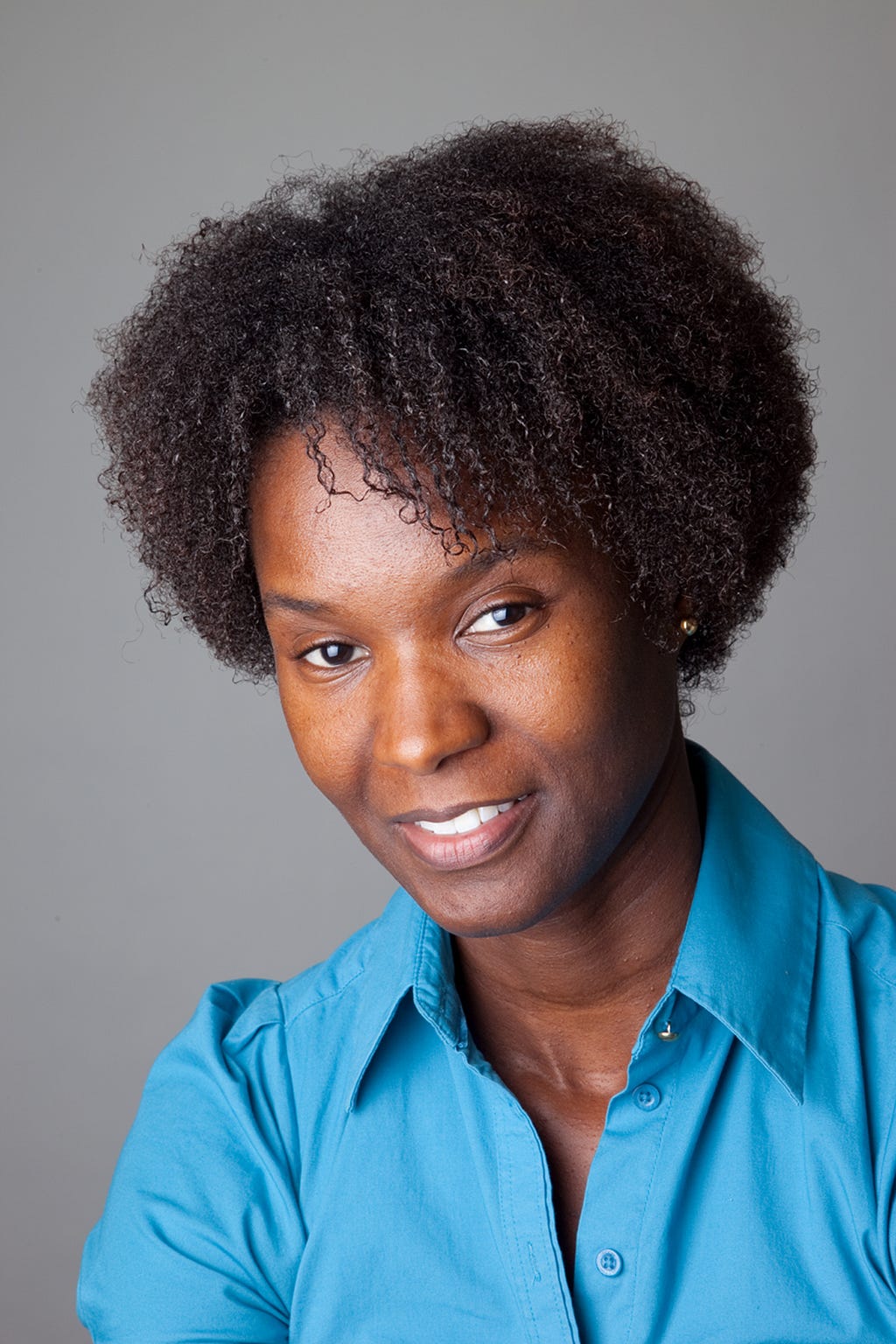
As a part of my series about the women in wellness, I had the pleasure of interviewing Dayna Yvonne Jondal, M.A., NBC-HWC, RYT-500, a Pillar National Board Certified Health and Wellness Coach.

Dayna offers Integrative Health Coaching and Yoga Therapy to individuals and companies looking to build mental fitness, resilience, and learn communication strategies that strengthen relationships. She has a M.A. in Integrative Health & Well-being Coaching, is a National Board Certified Health and Wellness Coach, and is an Advanced Teacher of Therapeutic Yoga, en route to become a Yoga Therapist (C-IAYT). When she is not coaching or teaching yoga, she enjoys developing curriculum and training new coaches with organizations such as Emory University and Mindbodygreen.

Thank you so much for joining us in this interview series! Our readers would love to “get to know you” better. Can you share your “backstory” with us?

Yes! I used to be a math & philosophy major in my undergrad years, which means I was often stuck in my head. During my first year of law school, my body sort of collapsed from stress. I was suffering from panic attacks and anxiety. Around that same time, I discovered yoga, which helped me to get out of my head and start inhabiting my body. Yoga offered me a direct, experiential way of knowing about mind and body that slowly but dramatically improved my health. Over the course of several years, I kept learning, found my way into the Masters program in Integrative Health & Well-being Coaching, began a yoga therapy training program at Kripalu, and eventually healed my panic attacks with holistic lifestyle medicine and functional nutrition strategies. I’m interested in everything philosophical and well-being related — the rest is history!

Can you share the most interesting story that happened to you since you started your career? What were the main lessons or takeaways from that story?

Great question — I think one of the most interesting stories was when I began working with autoimmune patients. Those patients really got me more interested in functional medicine and nutrition because so many of them had multiple sensitivities and were managing flares. I’m glad I discovered the world of functional nutrition because it’s been incredibly helpful in healing my own anxiety. On the other hand, I sometimes see a lot of sensationalism in that community and I now have a much more balanced, values — centric, person- first approach to how I coach. Some things in life are just hard, sometimes sickness is unavoidable, and we have to meet people where they are at. There are a lot of cultural and economic barriers to simply “being well.” I like to remain optimistic but I think I’m a lot more realistic and compassionate about the challenges folks are facing than I was at the beginning of my career.

Can you share a story about the biggest mistake you made when you were first starting? Can you tell us what lesson you learned from that?

The biggest mistake I made was being too preachy about wellness. I think we all agree there are issues with healthcare. In my case, it was transformative and energizing to experience a successful, inside — out healing experience. Finding new perspectives is fun — discovering a different way of thinking about health is exciting. After my positive experience, it was tempting to want to take the pulpit about everything that’s challenging with conventional medicine and offer a more holistic, integral, consciousness- based approach. The thing is: so much of that excitement is still taking place in an intellectual plane, not the somatic/ experiential place where health and healing often occurs. I still love ideas and feel nourished by them, but I try to maintain a balanced, integral worldview. Lifestyle medicine can be delivered in a variety of spirits — I sometimes see it being delivered as a “cure all” that echoes the exact same marketing scheme it was meant to reject — it feels like a “one ill, one pill” model, where you’ve replaced pills with the latest biohacking scheme or protocol.

The lesson for me is that everyone is susceptible to various forms of suffering, no matter how committed they are to their health and wellness. While I absolutely believe you can have a HUGE impact on your health and resilience through the choices you make, I also understand that there’s no immunity from life itself, and that’s why it’s important to connect with values and one’s sense of meaning and an authentic Self or sense of purpose.

Let’s jump to our main focus. When it comes to health and wellness, how is the work you are doing helping to make a bigger impact in the world?

As a formally socially-awkward math major, I think the last decade for me has been about reclaiming the importance of healthy relationships in well-being. One of the major areas I enjoy coaching around is helping people to learn compassionate communication strategies where they can self- connect more deeply to their feelings and needs, and share those experiences with the important people in their lives. What I’ve seen is that this builds trust, intimacy, and — in a work context — a more authentic leadership style and work environment. Some of my clients have gotten promotions, probably because of their ability to actively listen and manage a team conversation in an articulate but open-hearted way.

The other area of my work is yoga therapy, and I recently started working in a behavioral health setting. While I’m newer at yoga therapy than coaching, I hope to offer the wisdom of this tradition to populations that wouldn’t normally be able to experience and connect with it.

Can you share your top five “lifestyle tweaks” that you believe will help support people’s journey towards better wellbeing? Please give an example or story for each.

  1. Get a coach, mentor, or a therapist you trust. I would love to normalize ongoing (and preventative!) self- development. There’s simply no replacement for an objective mirror and person who’s exclusively committed to helping you know yourself better and thrive. If you have a goal, or just enjoy learning, find a mentor or someone you trust in that arena to help support your development. It’s an act of love.
  2. Hydrate better. Honestly, I see dehydration as a major issue for most of my friends (and clients!). You can sometimes tell just by glancing at their skin whether they’re well hydrated or not. Aim for half of your body weight in ounces (i.e. if you’re 130 lbs, that’s 65 oz. daily). Try to prioritize making sure the water is filtered, and aim to go beyond just water when you think about hydration. Vegetables and fruits are hydrating. Add a squeeze of lemon or drink some green juice to get a deeper hydration in the morning. You can also keep some electrolyte packets handy or opt for bone broth. In addition to ingesting your water, make sure you keep your skin hydrated with an appropriate oil. My rule of thumb for skin health is “if you can’t eat it, don’t put it on your body.” My favorite oil for a self- massage routine is coconut oil.
  3. Sleep more. There will never be a sexy replacement for healthy sleep and Circadian rhythm. Explore your sleep hygiene and eliminate the barriers to healthy sleep — whether that’s managing light, temperature, stress, avoiding conflict before bed, etc.. Everyone needs to know their optimal number of hours, wake time, whether they’re getting into deep rest stages, etc. If you’re techy, check out Eight Sleep — I contract with this company and they specifically look at sleep health by incorporating biofeedback technology.
  4. Safety matters. Do you feel safe in your life? A lot of us perhaps take for granted that we think we are generally feeling safe, when in reality our nervous system is experiencing constant threats from relationships, work, and the news. If you are not sending your nervous system a regular message of safety, it’s time to re-evaluate what “inputs” are coming in through your five senses and take steps to send yourself a message of safety. This is where nourishing relationships can be especially helpful, since our family and partners often help us to feel happy, social, and cared fo. Beyond that, guided imagery, taking control of nutrition, etc. can all help to send a message of safety.
  5. Start becoming aware of environmental threats to your health. I’m very happy to see that terms like “endocrine disruptors” are becoming part of the parlance in the health world. We know that being healthy is no longer just about what we eat and whether we exercise.. We need to be awake to the environments we spend time in and what the hazards are. Are you practicing proper hygiene? Do you have air and water filters? Is anything off-gassing? Are you using natural fibers with clothes and linen? Is there fragrance in any of your candles or personal care products? Are you drinking out of plastics? Do your vegetables have pesticides on them? We all need to start thinking about not just what we eat and interact with, but the environmental hazards of that thing. Heavy metals, endocrine disruptors, pesticides, etc. are all real threats to our health and hormones, and are instrumental in turning genes on and off that determine our overall health, ability to lose weight, etc.

If you could start a movement that would bring the most amount of wellness to the most amount of people, what would that be?

I would find a way to bring “mood food” boxes to those suffering from mental and emotional health disturbances. I believe that “Food as Medicine” should be a first line intervention here, but that many struggle to keep up with the financial and time demands of eating in a way that would keep them healthy, happy, and stable.

Another movement I could get behind is eliminating air fresheners and dryer sheets, which offer little benefit and are often filled with endocrine disrupting compounds!

What are your “5 Things I Wish Someone Told Me Before I Started” and why?

  1. Before and while you help others, help yourself. Many who are drawn to the helping professions are Wounded Healers. We need to commit to our own self-work in order to really show up for our clients.
  2. Don’t be afraid to listen to your intuition. Don’t be afraid to question it, either.
  3. It’s okay to change your mind about things. I can’t remember who quoted this, but you don’t have to be the same person you were 5 minutes ago.
  4. Health is a value — let people choose what they value, and explore what really matters to them.
  5. Become aware of the difference between promoting health and delivering moralistic judgments about what people should do.

Sustainability, veganism, mental health and environmental changes are big topics at the moment. Which one of these causes is dearest to you, and why?

Honestly, it’s hard to choose between mental health and environmental changes. I believe they’re interrelated. Re-connecting to the natural world and feeling ourselves as beings that actually belong and are designed to be here would help a lot of mental health issues. From a yogic perspective, disease can arise from a sense of disconnection. Dianne Connelly has another way of saying it — she says “All sickness is homesickness.” I find that pretty profound and it relates to really feeling Earth and our bodies as a home.

What is the best way our readers can follow you online?

You can join my mailing list at daynayvonne.com and follow me on Instagram @daynayvonne. Also be sure to follow www.withpillar.com and instagram.com/withpillar

Thank you for these fantastic insights!


Women In Wellness: Dayna Yvonne Jondal On The Five Lifestyle Tweaks That Will Help Support People’s… was originally published in Authority Magazine on Medium, where people are continuing the conversation by highlighting and responding to this story.

Lessons from a Thriving Power Couple, With Jayesh Parmar and Nicole Parmar of Gunkii

An Interview With Candice Georgiadis

We would focus on creating a sustainable global organization mandate that has shared values. If every organization focused on people, had shared values, and were sustainable, this would lead to a trickle down and there would be a lot of good in the world.

As a part of our series about lessons from Thriving Power Couples, I had the pleasure of interviewing Jayesh Parmar and Nicole Parmar.

Jayesh Parmar, born in Saskatoon, Canada — San Francisco incubated, alumni of Toronto’s Extreme Startups, New York’s Canadian Technology Accelerator and Vancouver’s Hyper Growth Program; Jayesh now calls Vancouver, British Columbia home. He was the former CEO/Co-Founder of Picatic.com which was acquired by Eventbrite in 2018. Jayesh is an active investor, a lifelong student, and has jumped back into being a co-CEO and co-founder of Gunkii, the world’s sexiest tongue scraper. Giving back to the community and those in need has always been at the heart of what drives Jayesh’s passion, alongside his mission is to build profit and purpose-driven companies with team cultures that are immersed in giving, cheekiness, fun, and adventure.

Gunkii incorporates his Indian roots and the Ayurveda system of medicine while embracing his teaching background and love of helping children. More importantly, Jayesh believes that profit is not a stand-alone benefit but rather a shared responsibility to serve those with fewer means. Jayesh is married to an amazing partner, Nicole. Together they are the proud parents to an incredible tiny human, Jai. When not spending time on building businesses, Jayesh loves spending his “off-time” coaching and hanging with his family.

Nicole Parmar is a systems thinker that takes a macro approach to marketing. She is a veteran consultant covering social media, PPC, branding, content marketing, SEO/SEM, automation, hyper personalization, and leading growth marketing practices. She was named Top Forty Under 40 by Business In Vancouver. Clients include TEDx, BE Power, RE/MAX, Picatic (acquired by Eventbrite), Trainerize (Acquired by ABC Financial), and many more. She has taught growth marketing at BrainStation and was a lead growth mentor for Hyper Growth and Hyper Growth Life at BC Tech where she also served as an Embedded Executive.

While helping many companies grow, she has also started, executed, and grown 3 companies of her own: a growth marketing consultant company, children’s books based on her son’s adventures, and last but not least, Gunkii: an oral hygiene product.

Nicole holds degrees in Education, Deaf Education, Psychology as well as a Master’s in Evaluation and Measurement. She has lived and worked in San Francisco, Toronto, New York and currently resides in Vancouver. In her spare time, Nicole loves hanging with her crazy 7-year-old and husband (who often acts like a 7 year old). She enjoys traveling the world, co-chairing the school PAC, and chauffeuring her son to all of his extracurricular activities!

Thank you so much for doing this with us! Can you tell us a story about what brought you two to your respective career paths?

We both started our careers as teachers: Jayesh taught Phys. Ed and Nicole taught Deaf and Hard of Hearing students. Jayesh then transitioned and was the CEO of Picatic (acquired by Eventbrite) and Nicole moved into growth marketing (supporting 2 company acquisitions). After Picatic was acquired, the two decided to move into consumer-packaged goods (CPG) and focus on direct to consumer (DTC).

Can you share the most interesting story that has happened to you since you two got married?

There are a few! I think the most interesting one (and most appropriate for the magazine) is that 4 days after we wed, we moved to San Francisco. After that, we moved to Toronto. Right after that, we moved to New York and then Vancouver. It is safe to say we lived out of a suitcase for the first two years of our marriage. We are happy to report that we have been in Vancouver for 8 years!

Can you share a story about the funniest mistake you made when you were first starting? Can you tell us what lesson you learned from that?

When we first started Gunkii, there were a lot of things we did not know! Starting a business is like drinking from a fire hose, there is a lot of information to take in at one time! Back when we launched, we had no idea we needed a Medical License. Who knew a tongue scraper would be considered a medical device!? This is why you have great investors and great advisors: they fill in the gaps for you!

What do you think makes your company stand out? Can you share a story?

Our company stands out because of our brand, execution, and quality. We are also big on being tongue and cheek while being a shared value company.

We are an accessible luxury item. Most tongue scrapers sell on reseller sites and are made of plastic. Gunkii is made from a single piece of premium block food-safe aluminum. We make our products to last a lifetime!

Are you working on any exciting new projects now? How do you think that will help people?

We are working on several exciting new projects. Right now, we are working on a kid’s version of Gunkii. We’re also working on color variations and artist collaborations.

Our product pipeline also has some fun things in store, but we are not ready to spill the gunk on that, just yet! Color variations have been asked for several times by families, so it is easy to locate who’s Gunkii is who’s.

What advice would you give to other CEOs or founders to help their employees to thrive?

First and foremost, there has to be a positive work environment that is based on trust. Our employees thrive when they feel their ideas, creativity, and values are shared and heard. Hire people who are better than you in their respective areas and then get out of their way. Keep open communications and make sure everyone knows the true north of the company.

How do you define “leadership?”

Leadership to us is being able to direct our resources and team to achieve the organizational goals. Effective leaders provide clarity of purpose, motivate, and guide the team to realize and execute its mission.

None of us are able to achieve success without some help along the way. Is there a particular person who you are grateful towards who helped get you to where you are? Can you share a story about that?

We have a lot of people we are grateful for. First and foremost, we are fortunate to have a great investor base. We can lean on any one of them at any time for anything. We also need to send a shout out to our early adopters who supported us when we launched on Kickstarter. We launched and sold to 50+ countries. Without the support of those early adopters, we wouldn’t have had the jump start we had. Last, but not least, thank you to our new customers and those following our journey!

How have you used your success to bring goodness to the world?

We are creating an opportunity and an enterprise to help people. As previously mentioned, we are working on shared values. When you purchase a Gunkii, a portion of that sale goes to support a child born with a cleft lip or a cleft palate via Project Smile.

What are the “5 Things You Need To Thrive As A Couple?” Please share a story or example for each.

Oh man, this made us laugh…Only 5?

  • Trello — our household and our business would not run without Trello. The saying goes, “If it’s not in Trello, it didn’t happen.” We keep house items, to do lists, gift lists, you name it, on a board.
  • Google Calendar — how do people operate without shared calendars? And without alerts?
  • Patience — Jayesh will tell you that Nic has the patience of a saint. Nic cannot state the same for Jayesh.
  • Off time — Everyone needs downtime! Time to recharge. Time away from kids, duties, and responsibilities. We both try to afford that to one another.
  • Humor — You need to be able to laugh at yourself. Laugh at the mistakes. Laugh in general! After all, laughter is the best medicine.

If you could inspire a movement that would bring the most amount of good to the most amount of people, what would that be?

We would focus on creating a sustainable global organization mandate that has shared values. If every organization focused on people, had shared values, and were sustainable, this would lead to a trickle down and there would be a lot of good in the world.

Can you please give us your favorite “life lesson quote?” Can you share how that was relevant to you in your life?

Jayesh’s favorite: failure is just a data point. Anytime you are going to do something new you will continuously be faced by hurdles and nos. When this happens, you need perseverance.

Nic’s favorite: you never really lose unless you stop trying. If you want something bad enough you will find a way to get it. I have been called “persistent” once or twice in life!

We are very blessed that some of the biggest names in Business, VC funding, Sports, and Entertainment read this column. Is there a person in the world, or in the US, with whom you would love to have a private breakfast or lunch with, and why?

We would enjoy breakfast with Bill and Melinda Gates. Conversing with them about business and their personal lives would be dynamic. They utilize their privilege and appear to be responsible with the foundation they have created and grown.

How can our readers follow your work online?

Thanks for asking. Follow us here:

www.gunkii.com

https://www.instagram.com/gunkii_tonguescraper/?hl=en

https://www.facebook.com/Gunkiitonguescraper

https://www.linkedin.com/company/42713386/

Thank you so much for joining us. This was very inspirational.


Lessons from a Thriving Power Couple, With Jayesh Parmar and Nicole Parmar of Gunkii was originally published in Authority Magazine on Medium, where people are continuing the conversation by highlighting and responding to this story.
Female Disruptors: Melinda Haughey Of Proxi On The Three Things You Need To Shake Up Your Industry

An Interview With Candice Georgiadis

“Write it down” — I’m one of those people who carries around a lot of ideas in my head all the time. I can’t do anything without analyzing what is going on and taking mental notes. When I first started Proxi, this habit was fine, though the mental notepad got really really long. The challenge came, though, when we started hiring our first developers and team members. As you can imagine, carrying around all the visions for the company in my head wasn’t smart when working with a team. With the encouragement of a mentor, I started writing down as much as I could — trying to get all of those ideas and knowledge out of my head. It is still a skill that I have to practice and get better at, but I see the value already from using these written notes to make sure everyone is on the same page.

As a part of our series about women who are shaking things up in their industry, I had the pleasure of interviewing Melinda Haughey of Proxi.

Melinda is a former U.S. intelligence professional, successful researcher, and CEO of fast growing startup, Proxi. She uses her expertise in geospatial visualization, online communities, and collaboration to inform the direction of Proxi, mentor other founders, and drive research in human-computer interaction forward. Melinda received an engineering degree at Texas A&M and is a PhD candidate in the college of engineering at the University of Washington.

Thank you so much for doing this with us! Before we dig in, our readers would like to get to know you a bit more. Can you tell us a bit about your “backstory”? What led you to this particular career path?

It has been quite a career journey to becoming the CEO of Proxi. I grew up in the Houston area and then earned a Chemical Engineering degree from Texas A&M. While pursuing that degree, I worked on some data analysis projects and found that I was actually more passionate about data analytics and visualization than chemical engineering! Then, while I was finishing my degree, I was recruited into the U.S. Intelligence community. I spent a lot of time working in dark rooms doing intelligence analysis both as a direct employee and later a contractor. Many of the tools and visualizations I was building were geospatial and I became fascinated with how the technology I was building would be used and perceived by others, especially people in the field. One day, someone told me about the field of user experience research, and it was exactly what I was getting excited about! I started thinking about ways that I could work more in this area, yet not lose all the experience and knowledge I had built up to date.

And then the 2016 elections happened. As someone who has always been active on social media and involved in the national security space, I began to worry about growing online radicalization. Around this time, I heard Professor Kate Starbird talking on NPR. She was talking about her study of online communities, misinformation, and how user experience on social media platforms could be contributing to the radicalization. I was fascinated–and within months found myself at the University of Washington working under Dr. Starbird to get my PhD.

During this time, I studied online communities, especially the ways that information was shared across platforms. I also spent a lot of time working with leading tech journalists, helping them understand what was happening on social media since they didn’t have ways to collect and analyze data en masse. It was these skills — understanding online communities, data visualization, and user experience — that helped form the social element of Proxi.

Fast forward to Fall of 2020: many people in my Seattle neighborhood were looking for safe ways to trick-or-treat. I cobbled together some existing tools and built a crowdsourced map so that parents could easily see homes that were providing safe Halloween experiences. The map went viral, even being featured on Good Morning America. I could see there was a need for a better tool to build collaborative, community centered maps–and realized I may be just the person to solve this problem.

However, I did need help. That’s when I called my longtime friend Chelsey Roney. She was a serial entrepreneur who successfully built and sold a SaaS business. In short, she understood the business side of founding a startup. Proxi was born! We built out a prototype in less than 6 months. Since the launch we have found time and again that this tool was really addressing a need with local communities, experts and influencers.

Can you tell our readers what it is about the work you’re doing that’s disruptive?

Maps are an intrinsic and an essential part of our digital lives, helping us navigate the world and develop spatial awareness. Yet the mapping technology space is dominated by a handful of incumbents whose technology is difficult to customize and use by everyday people. By putting the power to make easy maps in the hands of parents, business owners, and local guides–all with the goal of making it easy for everyone to decide where to go and what to do with trusted recommendations at their fingertips.

Can you share a story about the funniest mistake you made when you were first starting? Can you tell us what lesson you learned from that?

When we first started we weren’t yet sure how important Proxi would be to local communities. We had successfully made a made in our hometown of Seattle that went viral, but for our next map we wanted to go national! We decided to build a map of Christmas lights…across the entire country.

We spent an embarrassing amount of hours reading about holiday happenings in the U.S. We were manually adding hundreds of points to our maps each day to try to make it look like people were using it all over the country. Though this map only went viral in the Seattle area — not nationally, we sure did know a lot about holiday light shows!

But more importantly, we learned that knowledge is local. A national Christmas lights map was not going to be as trusted as something built by your local city, community or neighborhood. From then on we became passionate about putting the power to make maps into the hands of local leaders.

We all need a little help along the journey. Who have been some of your mentors? Can you share a story about how they made an impact?

Our first mentor, Mona Akmal, was essential to Proxi becoming a reality. After Chelsey and I had finished up our proof-of-concept prototype, we were still hesitant about becoming a real company. Mona is a successful, inspiring CEO here in Seattle and she offered us some unexpected advice. In our first meeting, instead of having us walk her through the business model, the product, etc. she instructed us to look inward. She told us to envision where we would be in 10 years. What we would do for fun, how would we spend our day, and what would people know us for? Chelsey and I separated for a week and came back to share our visions with one another. What became clear is that we both had massive visions for our future. Among other things, we wanted to be supporting and investing in women founders. We knew to reach that vision, we had to really lean in and start now. Instead of Mona explicitly telling us to “go for it,” she allowed us to inspire ourselves.

In today’s parlance, being disruptive is usually a positive adjective. But is disrupting always good? When do we say the converse, that a system or structure has ‘withstood the test of time’? Can you articulate to our readers when disrupting an industry is positive, and when disrupting an industry is ‘not so positive’? Can you share some examples of what you mean?

As someone who has spent the past three years taking classes on social science, I’m keenly aware that disruption doesn’t always mean success. Disrupting can be good when the existing solutions are built by organizations who don’t show a propensity to change and evolve with their consumers. We feel that’s going on in the mapping space right now. Our primary competitor hasn’t added features in years. Due to the sheer size of the organization, this competitor is the go-to choice for making interactive maps today. We are able to disrupt because we understand our users and what they need when it comes to mapping. We’re focusing on making the best product possible for them and their communities.

I think disrupting can be negative when it comes solely from a place of monetization, without regard for the community they are serving. When anyone starts a pitch by saying, “Look at this amazing size market, we’re going to make money here,” it turns me off. Because you know that they are going into this venture solely with dollar signs in their eyes. They may disrupt with technology, but without actually understanding the community and their needs they could actually be hurting existing processes that work well without technology.

Can you share 3 of the best words of advice you’ve gotten along your journey? Please give a story or example for each.

“Just Launch it” — When we were first building Proxi, I was the one with the product and user experience expertise. I had spent so much time thinking about and perfecting how to make the website as beautiful as possible. I kept fixing and iterating over and over. At one point, my co-founder Chelsey basically said that we need to “Just launch it.” And we did. It was painful to me because I knew it wasn’t perfect and that there were a few bugs. But she was totally right — we needed to get it out into the world to make sure what we were building was actually the solution to a problem that people were facing.

“Your Story Matters” — When I first started talking to people about Proxi, I would start with my story about the neighborhood trick-or-treat map that I had built. It was a really awesome story, but we started hitting roadblocks with investors or friends who thought the vision Chelsey and I had was too small or just for local parents. I thought if we stopped telling this origin story, and instead leaned into my geospatial expertise, I would be more successful. I wasn’t. What I found was that I needed to lean into my story even more to describe what I had learned from our experience and how it was directly relevant for the bigger vision for Proxi. A mentor told me that my personal story matters, and leaning into it, instead of out of it, is where I’ll connect with people the most.

“Write it down” — I’m one of those people who carries around a lot of ideas in my head all the time. I can’t do anything without analyzing what is going on and taking mental notes. When I first started Proxi, this habit was fine, though the mental notepad got really really long. The challenge came, though, when we started hiring our first developers and team members. As you can imagine, carrying around all the visions for the company in my head wasn’t smart when working with a team. With the encouragement of a mentor, I started writing down as much as I could — trying to get all of those ideas and knowledge out of my head. It is still a skill that I have to practice and get better at, but I see the value already from using these written notes to make sure everyone is on the same page.

We are sure you aren’t done. How are you going to shake things up next?

Next, we are building out ways for local experts and content creators to reap value from their maps. We’re helping them with advertising and affiliate linking. Their knowledge and experience is more valuable and more trusted than sites like Yelp and TripAdvisor, and we want to make sure they are compensated for that.

We’re also building out better ways for consumers to interact with these maps, like saving, layering and sharing the maps so they have a personal guide at their fingertips.

In your opinion, what are the biggest challenges faced by ‘women disruptors’ that aren’t typically faced by their male counterparts?

At the moment, funding and childcare are foremost on my mind. The vast majority of the funders out there are men. Yet we know that women often do the most planning for what they will do on weekends and on trips. Women are the ones who lean into local guides and expertise the most, often as part of the invisible labor that they do around the house. This means that some men may not see the value that we are bringing to consumers.

The second is childcare. We know how much damage the pandemic has done to women. As I answer this, our three full-time team leads are dealing with no childcare due to COVID. My daycare is closed because of cases and Chelsey’s nanny has COVID. We know that women often do the majority of work picking up that slack.

Do you have a book/podcast/talk that’s had a deep impact on your thinking? Can you share a story with us?

When we were first starting Proxi I discovered the StartUp podcast which walks through the experience of starting Gimlet. I actually was listening to the podcast at the same time as I was going through my first fundraising attempt with Proxi (then Map Your Idea). I think the podcast did a really good job of normalizing and making apparent some of the invisible challenges of starting a company. I would encourage anyone who’s thinking they might go on this company building path to listen to season one. One of the best parts about it was listening to the host totally botch their first pitch with a VC investor. It was so relatable.

You are a person of great influence. If you could inspire a movement that would bring the most amount of good to the most amount of people, what would that be? You never know what your idea can trigger. 🙂

I really wish that we could find ways for people to better connect and know their local physical communities that keeps what’s good about social media–and resets all the bad. There’s a lot of good that’s come from online communities, but there’s nothing quite like the physical feeling of spatial belonging. (Though I know that’s a lot harder for a lot of people now.) I wish there was a way to create a stronger sense of spatial & neighborhood community. I want to find ways to augment the progress that we’ve made in online communities with in real life experiences and recommendations that empower local communities, local businesses, and local charities.

Can you please give us your favorite “Life Lesson Quote”? Can you share how that was relevant to you in your life?

I can’t remember where I first heard it, but at one point I had heard the quote “Become comfortable with discomfort” and it has stuck with me for many years. As you can tell from my background, I’ve spent much of my adult life switching professions and throwing myself into new challenges. Sometimes this can be frustrating, and I think “What’s wrong with me that I can’t just chill for a moment?” But it is also what has made me successful and helped me develop into the expert that I am today. If I’m not drowning in what I need to learn next, then I know that I’m not pushing myself enough. I truly believe that the second you stop being willing to be a beginner at something is the moment that you stop learning and growing.

How can our readers follow you online?

You can follow me on line on Twitter @MelindaMcClure and you can follow proxi on Instagram at @proxico. We’d love for you to head to our website and make your own map for your community or local area. I think you’ll love it!

This was very inspiring. Thank you so much for joining us!


Female Disruptors: Melinda Haughey Of Proxi On The Three Things You Need To Shake Up Your Industry was originally published in Authority Magazine on Medium, where people are continuing the conversation by highlighting and responding to this story.

Female Disruptors: Kalliope Amorphous of Black Baccara On The Three Things You Need To Shake Up…

Female Disruptors: Kalliope Amorphous of Black Baccara On The Three Things You Need To Shake Up Your Industry

An Interview With Candice Georgiadis

Trust your inner voice and the lessons that your life has given you. Trust your own power. If you are still young and you are having a hard time doing that, it does get better. As we get older, we learn to trust our inner voices and our own power more and more. I have never felt more comfortable in my own wisdom than I have since I hit my mid-forties.

As a part of our series about women who are shaking things up in their industry, I had the pleasure of interviewing Kalliope Amorphous.

Kalliope is a multidisciplinary artist whose primary focus is visual and olfactory art. She is the founder of Black Baccara, an indie perfume house specializing in creative handmade fragrances. Her artisan perfumes can be found on her website at http://www.blackbaccaraoils.com

Thank you so much for doing this with us! Before we dig in, our readers would like to get to know you a bit more. Can you tell us a bit about your “backstory”? What led you to this particular career path?

I have worked in visual art for the past decade while also running all aspects of my perfume house, Black Baccara. The themes in my visual art mirror those in my olfactory art and vice versa.I began working in olfactory art around 2007 because I’m fascinated by anything that can capture memories and evoke nostalgia.

here isn’t a medium that can do that better than scent, so I dove into learning anything and everything I could about the art of perfumery. It’s a complicated art form that requires a lot of education, expense, and experimentation, and I studied for years before I brought my first fragrance public. When I felt confident in my skills in perfumery, I began thinking about forming my own perfume house, and Black Baccara was born.

At first, it was difficult for me to balance my career in visual art with founding a perfume house. Still, I have managed to find a good balance over the years, though Black Baccara takes up the bulk of my time since it’s grown beyond my wildest dreams, particularly in the past few years.

Can you tell our readers what it is about the work you’re doing that’s disruptive?

The work that I do in perfumery might be considered the antithesis of mainstream perfume, and I fully embrace the role of a perfumer who is trying to create new work that defies the monotony of department store perfumes. Rather than being status symbols or comfortable scents for everyone can lean into, my fragrances are harbingers of individuality and a unique sense of self-expression for people who have had a hard time finding fragrances that fit that bill for them within mainstream perfumery. I have fifteen years of experience studying perfumery and crafting fragrances, but I’m also not afraid to break the rules when it comes to formulating. Perfume and music have always gone hand in hand for me. When I’m formulating, I almost always see an olfactory composition musically. Using the music metaphor, my fragrances walk in the avant-garde and experimental realm rather than the top 40. My fragrances are for people who don’t want to wear what everyone else is wearing.

The fragrance industry has long been dominated by primarily white male perfumers. As a multiracial, female owned, LGBTQ owned perfume house, my work is naturally coming from a different place. I think when my demographic holds space in an industry that historically has not been comprised of people like us, that in itself is a disruptive act.

Can you share a story about the funniest mistake you made when you were first starting? Can you tell us what lesson you learned from that?

In perfumery, there are so many mistakes you can make when you are first starting out. Even if you are a skilled perfumer, you’ll still encounter interesting things in your day to day experiments. Many of them might end up as happy accidents, but many can also end in disaster. There were many humorous results when I first began working with aroma chemicals and trying to craft unique or specific accords. I remember once spending an entire month trying to perfect an accord that was supposed to smell like vinyl. It didn’t smell quite right, but I felt like maybe after maceration and a few additions, I could get it where it needed to be.

Two months later, after adding several more components, I got carried away with adjustments, and it ended up smelling precisely like new tires. It was such a dead ringer it was hilarious. But, unfortunately, there isn’t a market for a new tires perfume. The lesson I learned is to always expect the unexpected.

We all need a little help along the journey. Who have been some of your mentors? Can you share a story about how they made an impact?

There isn’t a person because I did not have any help or support to get where I am. Art has always sustained me and kept me going in the face of a lot of trauma and adversity, and I recognize that I am incredibly fortunate to have been able to turn it into two successful career paths. I haven’t had any support from family, I don’t have parents, and I don’t have a big social circle like I did when I was younger. Any success I have has been through my own determination to overcome and heal myself through art. It has not been easy by any means, and rarely a day goes by that I am not amazed and grateful that I am safe and thriving.

Some people come from nothing and pull themselves up on their own without any support. I wasn’t sure how to answer this question, but I am answering honestly, and I think people should know that there’s no shame in admitting you haven’t had a support system.

In today’s parlance, being disruptive is usually a positive adjective. But is disrupting always good? When do we say the converse, that a system or structure has ‘withstood the test of time’? Can you articulate to our readers when disrupting an industry is positive, and when disrupting an industry is ‘not so positive’? Can you share some examples of what you mean?

I think it’s always positive to disrupt an industry that might be clinging to antiquated values or ways of operating. The old ways are dying for so many industries, and it’s time to either move into a more inclusive space or be left behind. For example, I am one of many who believe that fragrance descriptors and names like “oriental” and “gypsy” need to end. The beauty industry, in particular the fragrance industry, should be evolving in its approach to language and culture. Disrupting any industry that is antiquated in either in its lack of diversity and inclusion, or via its marketing language, is always a positive in my opinion.

As for “not so positive” disruption, the first thing that comes to mind is giant corporations harming small businesses and artists. Big box stores and technology have combined to disrupt retail and how we think of shopping and many consumers are growing to expect fast, throwaway items. Instant gratification and 48-hour shipping times are convenient, but at what cost? It’s not only harmful to the environment; it’s ultimately harmful to artists and anyone who makes handmade items.

Can you share 3 of the best words of advice you’ve gotten along your journey? Please give a story or example for each.

I don’t have any examples of this, because going back to the earlier question of support and mentorship, I haven’t had any. So, when I get asked questions like this, I always come up empty even though I would very much like to find some words of wisdom to share.

I can’t be the only one who struggles with questions like this, so I will use this as an opportunity to tell those who are on a journey and don’t have support that it’s perfectly okay to travel that road on your own. When it comes to entrepreneurship and small business, it has become sort of a myth that everyone has a bunch of hands (or at least some hands) propping them up and offering advice and guidance. Not everyone has support, family, or even a large social circle to draw from.

It’s okay to not have a mentor or people to turn to for advice. Not all of us are fortunate enough to have that, but it’s not a flaw and it’s not something that should hold you back.

Trust your inner voice and the lessons that your life has given you. Trust your own power. If you are still young and you are having a hard time doing that, it does get better. As we get older, we learn to trust our inner voices and our own power more and more. I have never felt more comfortable in my own wisdom than I have since I hit my mid-forties.

We are sure you aren’t done. How are you going to shake things up next?

Right now I am working on exposing the insidiousness of corporations that try to harm small business and artists through overreaching intellectual property law, in particular through what is known as “trademark bullying.” Trademark bullying is when a trademark owner uses overly aggressive tactics to harass or intimidate someone beyond what the scope of IP law allows. It’s usually a David vs. Goliath situation, wherein a large corporate entity with unlimited financial and legal resources tries to bully a smaller entity that doesn’t have the same resources.

I was recently targeted by the luxury crystal brand Baccarat who owns the trademark for Baccarat Rouge 540. They have argued that there could be customer confusion between them and myself based on our names and the things we sell. Of course, this is all ridiculous, because we couldn’t be any more dissimilar in both name, customer base, and the types of things we sell. So, I am fighting them, and in the process of fighting them I am trying to bring awareness to this issue.

Large corporations stealing from artists and trying to bully artists out of business isn’t anything new, but I would like for more artists to understand the power play, stand up to them, and not fear them. If we don’t stand up to them, or at the very least expose them, they will continue to try to destroy the art world and the world of handmade with impunity.

In your opinion, what are the biggest challenges faced by ‘women disruptors’ that aren’t typically faced by their male counterparts?

I think it’s the same in every industry. We aren’t always taken as seriously, even when we might be making similar innovations or sending the same message as our male counterparts. We definitely don’t get the media coverage that men do, and so we don’t have the same visibility, or worse, we are rendered invisible within certain industries. As someone who has been very vocal in speaking out against injustice, I have also learned that nothing will ensure that someone tries to shut you up faster than to be a woman speaking the truth loudly. So, if you are a woman and you are doing something disruptive and you are doing it loudly, you have to anticipate that there will be something or someone that tries to stop it.

One of the things I have also noticed is that a woman who projects confidence in her work might often be deemed aggressive or too much whereas a man projecting the same confidence isn’t questioned at all. I see this a lot in almost every arts-related industry. Male confidence and ego and female confidence and ego are perceived and accepted differently. It’s two different worlds.

Do you have a book/podcast/talk that’s had a deep impact on your thinking? Can you share a story with us?

There is a podcast that has literally had a deep impact on my thinking, because it has allowed me to fall asleep when I can’t. I am an insomniac and I also have a circadian rhythm disorder that is constantly trying to reverse my sleep schedule. I joke that I have the sleep schedule of a vampire, but it really is a difficult disorder to live with, because sometimes I will wake up for the day at midnight and go to bed for the night at 11 in the morning.

The podcast is called Sleep With Me by Drew Ackerman. He creates these surreal, stream of consciousness stories based on things like nostalgia, childhood memories, and his own fictional stories, which he reads in a very monotone yet soothing voice. It’s the one podcast I turn to when I can’t sleep, and it always helps relax my mind, even if I don’t ultimately end up falling asleep. One of my favorite episodes he did was where he got ahold of an HBO TV Guide from the 1980s and read it for over an hour. He also has a series where he just reads the Trader Joe’s catalog. It’s all perfect for a mind that is constantly contemplating very intense things and really needs to unwind into something surreal yet simple.

You are a person of great influence. If you could inspire a movement that would bring the most amount of good to the most amount of people, what would that be? You never know what your idea can trigger. 🙂

There are so many crucial movements right now, so I’m not sure I can choose between all of the issues that are important to me. Black Lives Matter, LGBT+ rights, indigenous rights, climate awareness; these are all issues that center very strongly in my life. I suppose all of these issues connect in a way. In my dream world, maybe I would start a movement of accountability where humans face up to the damage they have done and begin to heal from there.

Can you please give us your favorite “Life Lesson Quote”? Can you share how that was relevant to you in your life?

There is one line that I think of almost all of the time: “Whatever returns from oblivion returns to find a voice.” It’s not your typical life lesson sort of quote, but it is for me. It’s from a poem by Louise Gluck called The Wild Iris. The poem itself is about rebirth, but it has layers upon layers of meaning and metaphor.

For me, it is a reminder of having survived physical death as well as the deaths of loved ones. It is also a reminder of ego death, which I experienced many years ago, and the way that sense of oblivion influences the way I perceive things to this day. In so many ways, I feel like I have returned from oblivion to find a voice, and it is important for me to remember this in order to stay centered in a state of gratitude.

How can our readers follow you online?

You can follow me on Instagram at https://www.instagram.com/blackbaccaraperfume/

This was very inspiring. Thank you so much for joining us!


Female Disruptors: Kalliope Amorphous of Black Baccara On The Three Things You Need To Shake Up… was originally published in Authority Magazine on Medium, where people are continuing the conversation by highlighting and responding to this story.

Female Disruptors: Melissa Reinking of Extend On The Three Things You Need To Shake Up Your…

Female Disruptors: Melissa Reinking of Extend On The Three Things You Need To Shake Up Your Industry

An Interview With Candice Georgiadis

There are three phrases that have become operating principles for me throughout my career. I learned first, “put yourself on the edge,” early on in my career when I felt the thrill and saw the growth by tackling new, interesting challenges. The second piece of advice would be “If you’re not failing now and again, you’re not pushing the envelope.” This statement reminds me to take every opportunity to learn what’s working and what’s not. Knowing what doesn’t work and why is just as important as knowing what is working. And then of course, last but not least, is to always be a student to your customers. You should listen, learn, and react to their needs. From start-ups to established businesses, these words of advice have served me well.

As a part of our series about women who are shaking things up in their industry, I had the pleasure of interviewing Melissa Reinking.

Melissa Reinking is the Vice President of Consumer Marketing at Extend. A longtime marketing executive, Melissa has an exceptional track record of building products and experiences that consumers love. Her passion: transforming the ordinary into the extraordinary.

Thank you so much for doing this with us! Before we dig in, our readers would like to get to know you a bit more. Can you tell us a bit about your “backstory”? What led you to this particular career path?

For as long as I can remember, I have been working in eCommerce in one form or another. It was a natural fit for me because I have always had a desire to build great — not merely good — experiences for consumers. Throughout my career, I have always tried to remember to listen to what customers need and put those interests first.

After 20 years of leading both start-up and established organizations to build, innovate, and reach underserved consumers, I think my favorite part is seeing how fast the industry can change, how it lends itself to disruption and experimentation.

Can you tell our readers what it is about the work you’re doing that’s disruptive?

Everything about Extend is disruptive. We’re completely reimagining the antiquated product protection industry with a digitally native approach that makes the customer “The North Star.” Our API-first solution allows any merchant, of any size, to offer their customers protection plans or extended warranties at checkout — a capability previously only available to the world’s largest retailers. This is an incredibly valuable way for merchants not only to increase revenue, but build loyalty and long-term value, while delivering a seamless and even elegant end-to-end experience for their customers. There are no gotchas, no confusing terms and conditions to parse.

Can you share a story about the funniest mistake you made when you were first starting? Can you tell us what lesson you learned from that?

Early in my career, I was leading a small team in market evaluation and competitive customer overlaps. Asked to give a presentation on our findings on a short deadline, we worked feverishly on our analysis, but towards the end of the day noticed a big “watch out” in our work that upended our conclusions and required pulling an “all-nighter” to prepare for the presentation. Sound familiar? Yes, I’m guessing many of you can relate. Even though we were working on a tight timeline, we could have caught the issue earlier if we wouldn’t have been so far down in the details. This taught me very early on how to balance the big picture, an important lesson I teach my teams to this day.

We all need a little help along the journey. Who have been some of your mentors? Can you share a story about how they made an impact?

There are a myriad of people that have influenced me over the years and I have been lucky to have many wonderful mentors. But two stand out: my mother and grandmother. I am the daughter and granddaughter of two very hardworking individuals. My mom was a trailblazer in corporate America; she taught me anything is possible with grit and hard work, which pushed me to get where I am today.

My grandmother, who studied Chemistry at the college-level only seven years after women won the right to vote, taught me to step outside my comfort zone and follow my passion, whether or not it was socially acceptable, but because I believed in it. The values she instilled in me have guided me throughout my career.

It’s why, when I was about 20 years old, I hopped in the car and drove 1,500 miles for an internship. Three moves and three years later with the same company, I learned a whole lot about eCommerce, entrepreneurship, innovation, and consumer marketing, among many other things. It set a pattern: over the years I have kept pushing myself to the edge, where I learned the most. That’s been true outside of the office, as well, such as when my husband and I took a 4,000-mile, six-month sailing trip through Pacific Mexico and the Sea of Cortez. It taught me so much, including how to react in circumstances where you have little control.

In today’s parlance, being disruptive is usually a positive adjective. But is disrupting always good? When do we say the converse, that a system or structure has ‘withstood the test of time’? Can you articulate to our readers when disrupting an industry is positive, and when disrupting an industry is ‘not so positive’? Can you share some examples of what you mean?

Offering underserved markets better solutions is always a positive. Extend is undeniably creating a better customer experience, while driving revenue for merchants. It’s why the company, which hit unicorn status in just two years, continues to show rapid growth, with more than 600 merchants. Tesla’s innovations around customer experience are another great example. As is the way Airbnb changed how we think about hospitality. Disruption is negative when it fails to consider the consumer and what the market demands, when it’s simply driven by the desire for profit.

Can you share 3 of the best words of advice you’ve gotten along your journey? Please give a story or example for each.

There are three phrases that have become operating principles for me throughout my career. I learned first, “put yourself on the edge,” early on in my career when I felt the thrill and saw the growth by tackling new, interesting challenges. The second piece of advice would be “If you’re not failing now and again, you’re not pushing the envelope.” This statement reminds me to take every opportunity to learn what’s working and what’s not. Knowing what doesn’t work and why is just as important as knowing what is working. And then of course, last but not least, is to always be a student to your customers. You should listen, learn, and react to their needs. From start-ups to established businesses, these words of advice have served me well.

We are sure you aren’t done. How are you going to shake things up next?

We have a lot in the pipeline. Given that we’re just getting started here at Extend, there are many opportunities to continue to innovate and provide additional value to our customers. All I can say now is stay tuned!

In your opinion, what are the biggest challenges faced by ‘women disruptors’ that aren’t typically faced by their male counterparts?

For women founders, securing buy-in and funding for disruptive ideas can definitely be a challenge. I have found that being able to project confidence, drive, enthusiasm and clearly articulate the vision is essential to breaking down some of the barriers that exist. The increase in female venture capitalists has been a boon for women founders, but we definitely still have a way to go.

Do you have a book/podcast/talk that’s had a deep impact on your thinking? Can you share a story with us?

Just one?!

I’m always looking for inspiration and wisdom. These are a few of my recent discoveries:

  • Believe It, by Jamie Kern Lima, which explores how we react in times of uncertainty. It’s about acting from a place of belief in yourself rather than fear. As Lima puts it, “Champions aren’t made when the game is easy.”
  • Think Again, by Adam Grant, which encourages readers to approach challenges with a sense of curiosity and openness, which in turn allows us to find opportunities for innovation. The essential quote here is: “Knowing what you don’t know opens the mind to rethinking.”

A personal story, or bit of advice, would be, don’t get too attached to your ideas. The practice of rethinking perspectives and putting the customer at the center has always allowed me to find opportunities.

You are a person of great influence. If you could inspire a movement that would bring the most amount of good to the most amount of people, what would that be? You never know what your idea can trigger. 🙂

The “Pay it Forward” movement.

Through my networks over the years, I have been introduced to inspiring female founders. I tried to do the same by mentoring a female founder just starting out. I know first-hand how lonely it can be as an entrepreneur. Having a thought partner, someone to bounce ideas off of, who will be honest with you, is essential. Imagine a world where everyone operated this way and the positive influence it would have on everyone. Wouldn’t that be great?

Can you please give us your favorite “Life Lesson Quote”? Can you share how that was relevant to you in your life?

“Do what you love.” For me that’s excelling in my job, my life, and coming through for the people around me. Doing what you love will not make life easier, especially when there are big goals and hard challenges. But it will make you more disciplined and more aware of the joy in life.

Some others that are essential to me include:

“We are all better together.”

“Surround yourself with great people.”

“Inspire, challenge and bring out the best in one another.”

Magic happens for me when I can marry innovation and disruption with doing good for this world! We all get to choose how we spend our time. Whether it’s creating delightful customer experiences or developing brands and products, I look to do everything in ways that are truly better than the status quo. It could be building a new brand/product line or building new ways to deliver unexpected delights to merchants and consumers.

And when I’m assembling a team, I think about how our skills will complement one another. I keep in mind how we will collaborate, inspire, challenge, and learn from one another. No one is successful alone! This has a magical, multiplicative effect on what we bring to the market.

How can our readers follow you online?

Linkedin

This was very inspiring. Thank you so much for joining us!


Female Disruptors: Melissa Reinking of Extend On The Three Things You Need To Shake Up Your… was originally published in Authority Magazine on Medium, where people are continuing the conversation by highlighting and responding to this story.