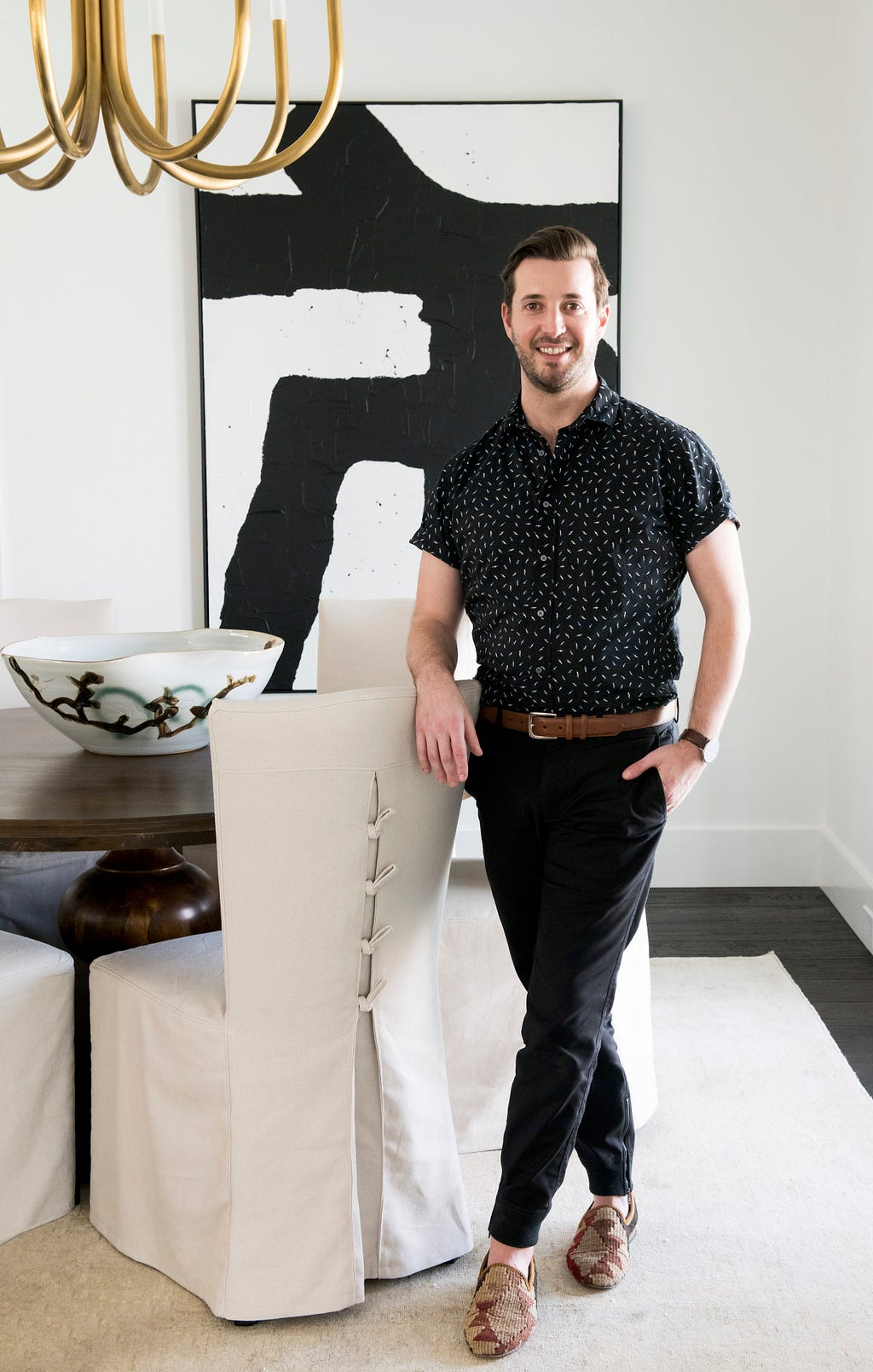
Lance Thomas of Thomas Guy Interiors: 5 Things You Can Do To Help Your Living Space Spark More Joy

An Interview With Candice Georgiadis
RINSE AND REPEAT- Repetition is the next key to creating a joyful space. Through the picking process, you will start to see some patterns forming of what your gut is attracted to. The design elements that make you feel good. Maybe it’s a metal finish that keeps popping up, or contemporary shapes and forms. or a specific color that steals the show. Follow down that path with a few more picks. Specifically, try to visualize where everything is going and if you haven’t repeated that common thread on the left side of the room yet, for example, it may be time to do so.

As part of my series on the “5 Things You Can Do To Help Your Living Space Spark More Joy”, I had the pleasure of interviewing Lance Thomas.

Spearheaded by Lance Thomas and Drew Hoffpauir, Louisiana-based Thomas Guy Interiors is a dynamic full-service interior design firm celebrating an evocative, curated style — where traditional meets current and eclectic. From classic estates to contemporary abodes, Lance and Drew team up to bring an elevated design to a variety of charming spaces.

Thomas Guy Interiors’ southern traditional roots mixed with current and modern edge brings a sophisticated sense of style to each and every project. Lance and Drew pride themselves on working closely with their clients to capture and evoke their individuality. Through their efforts to give each project a clear voice, the duo believes that each person should feel comfortable implementing their personal aesthetic throughout their home.

Thank you so much for joining us in this series! Before we dive in, our readers would love to learn a bit more about you. Can you tell us a story about what brought you to this specific career path?

I grew up watching and admiring my mom’s knack for decorating. I vividly remember the TV being frozen on 90’s home network shows. Divine Design by Candace Olsen, Color Splash with David Bromstad, and Designer’s Challenge were some of our favorites. Being from a small town in Southwest Louisiana I never knew that there was a school degree you could take. So, I went on my way earning BFAs, MFAs, etc. in graphic design, art direction, and the like. Sort of circling my real passion for interior design like a knowledge buzzard. Through a series of wild career happenstances, I stumbled into a casting call for an HGTV reality competition show called Design Star. I knew I had never actually done interior decorating before, but I grew up around it, learned a lot from my mother, and was confident I had something to say in this field. I knew Color Theory and General Design History, etc. from my schooling so I said, “Why not?” Lucky for me, the casting agent recognized my accent as she, too, was from small-town Louisiana. She gave me some amazing pointers and homework to do before the big final casting in New York City. And suddenly, I found myself on national television cast as a contestant on HGTV Design Star: White Room Challenge. While I did not win, I knew I could hang with the best.

Can you share the most interesting story that happened to you since you started this career?

There was an iconic estate in town built by one of the earliest founders of Lake Charles. This property was riddled with aristocratic mystique and pirate folklore and was literally the cover of the phone book for as long as phone books were around. In short, it is the most iconic home in Lake Charles. It was purchased a few years back and was threatened to be torn down for development and was left to rot. In a wild series of exchanges, town halls, and business deals, my husband’s family purchased the property from the former owner for the sole reason of preserving a historic landmark. As the Hoffpauirs did not need or want a 14,000-square foot estate, complete with two carriage houses, a caretaker’s cottage, and a boathouse, we were then tasked with renovating and branding it as a Bed and Breakfast open to the public. We had a ton of help, but we renovated and had the place up and running in eight months. We called it the Della Belle, named after the original founder’s wife Della, who was notorious for her soirees and southern hospitality.

What are some of the most interesting or exciting projects you are working on now? How do you think that might help people?

Currently, we are completing one of the busiest years of our careers. Lake Charles was destroyed by two back-to-back hurricanes, followed by a record ice storm (the one that shut down the Texas grid and wreaked havoc on the furniture industry’s foam supply) AND not to mention one of the worst floods in recorded history. Shall I mention this was happening in tandem with COVID? Our town was hurting, clients of the past 10 years were rebuilding, and we were still working on a full load of current builds. Long story short, I don’t have a most exciting project per se, but I have an exciting year seeing all our clients, past and present moving back into their homes with their loved ones. Our homes are our safe space, and we played a large part in creating those spaces after a terribly unsafe year. These projects will forever hold a soft spot in our heart. These projects gave Thomas Guy Interiors and more importantly, our town, a sense of resiliency. We know we can overcome hardships, impossible workloads and deadlines, and personnel shortages.

AND… now that the light is at the end of the tunnel, we are finally getting to work on ourselves. We are repairing the damages to our own home, our new design studio, and peering our eyes at a second Thomas Guy Interiors in a city we fell in love with while evacuated.

Can you please give us your favorite “Life Lesson Quote”? Can you share how that was relevant to you in your life?

Life is making a series of mistakes and knowing which ones to keep.

I’ve learned to enjoy trying and failing. Hopping onto an opportunity to see if it has the legs to run and hopping off if it doesn’t. Absorbing business lessons and crafting skills along the way. I’ve done graphic design, a reality show, designed and opened a wine bar, created a candle line, lived in six different cities… the list goes on and on. I’ve made mistakes along the way, but through these experiences, I’ve grown from the bad mistakes and have learned to keep the good ones. I like to call these good mistakes happy accidents. And the magic (in beautifully designed spaces and in life) are the happy accidents.

None of us are able to achieve success without some help along the way. Is there a particular person who you are grateful towards who helped get you to where you are? Can you share a story about that?

I can speak on behalf of myself and Drew on this one, but our parents have been a major support of both our relationship personally and professionally. In a small conservative town, this is not the norm. We have been extraordinarily fortunate to have families that support us. From a career standpoint, her name is Brandi Cox. She was my first customer in my humble little home decor store in town. She came in to see if I had a gold pumpkin for her Thanksgiving table. She saw something in me from the moment we met and has been my biggest cheerleader, champion, referral service, and client. She is now one of my dearest friends, tequila connoisseur, and market travel buddy.

Thank you for that. Here is the main question of our discussion. What are your “5 Things You Can Do To Help Your Living Space Spark More Joy” and why. Please share a story or example for each.

I’m going to take some creative liberties if I may on this question and create a 5 STEP guide to a joyful space. We will also assume we are doing this plan within the constraints of budget, time, etc.

1.) PICK YOUR PRETTY- If I were a Teddy Ruxpin bear, this is what my cassette would say any time someone asks me how to make their space better: Pick your pretty. Do you love that piece of art? Great. Get it. Want a green velvet sofa? Perfect. Done. Don’t listen to the experts trying to sell you on the latest interior design fad or what the next Instagram-famous person’s new favorite color is. The goal of creating a beautiful space is to pick all of the things out there that make you happy (and there are an infinite number of beautiful things out there). There is no math equation to solve what your eye is attracted to. This is your gut speaking.

2.) RINSE AND REPEAT- Repetition is the next key to creating a joyful space. Through the picking process, you will start to see some patterns forming of what your gut is attracted to. The design elements that make you feel good. Maybe it’s a metal finish that keeps popping up, or contemporary shapes and forms. or a specific color that steals the show. Follow down that path with a few more picks. Specifically, try to visualize where everything is going and if you haven’t repeated that common thread on the left side of the room yet, for example, it may be time to do so.

3.) DON’T DO STEP #2- Allow me to explain. We’ve been selecting all the things that make us happy and joyful in steps one and two and doing what designers call “creating a story.” This is just shop talk for picking out beautiful things and repeating similar elements. In order to show Intention, we need to weave from all of the bobbing we’ve been doing. It says, “See? I meant to do a neutral color story with brass detailing because I specifically chose not to do it here.” You’ll hear a lot of designers call it creating tension in a space. The tension between “one of these things is not like the other” proves this idea of intention. This is the fearless, happy accident sort of selection I live for. These picks are very few in the selection process- one or two (or more if you feel adventurous). They still need to be something you love but let your inner child or mid-life crisis do the picking this time around. I, personally, have an inner old grandma that does my picking. The best way I can paint this picture is by referencing editorial magazines. You’ll see a space with gorgeous classical moldings, gilded Neoclassical art, antique Persian rugs, and then a pinto bean-looking sofa and a pile of sticks that are supposedly a side table. Now that may be a bit extreme for your personal taste. But these are the intention pieces I speak of.

4.) GET PERSONAL- We’ve painted a joyful picture thus far. We’ve trusted our guts and picked out a bunch of pretty. We’ve got our version of a pinto bean sofa. Now it’s time to pick with our hearts. Typically, these things are family heirlooms and artifacts collected over the years. Things that mean something to us and evoke memories and stories that make us joyful and thankful. Maybe it’s an old chair passed down generations that simply just needs to exist in an empty corner to serve as a memory- and occasionally an extra seat. Maybe it’s an old stopwatch that rests on the mantle. It may not work anymore, but that clock now serves a different function now. It serves as a decorative memory. These things are the real soul of the space. These things breathe life into a room and tell your personal story. This step of the process is what Thomas Guy does best. With all of our clients, we take design personally. Clients are often shocked as to how many of their heirlooms make it back into their spaces after we finish styling. They may have not been where they were or highlighted the way we chose to highlight them, but the personal heirlooms are the heart of the room. Our goal is to make our clients love their personal artifacts more than they did before. One last thing on getting personal. If you are a young person or just never really acquired artifacts, you can still get personal. Drew and I, for example, collect art every time we travel. Whether it’s a glass heart sculpture that sits on a book, or a set of vintage books themselves, every time we are out on a business or personal adventure and we find something that we love. We get it. We’ve been together for almost 5 years and every time we see that glass heart, it reminds us of that trip we took that one time.

5.) THROW A PARTY- When we finish a client’s home and have created the most joyful living space our personal expertise knows how; we tell our clients to throw a celebration party. For several reasons. 1.) Steps one through four mean so much more when you see people you love living, conversing, sitting, and laughing in your own personal home. Seeing how your space breathes with people in it sparks so much joy. 2.) It’s a litmus test of your efforts. We aim for an 8 out of 10 rule (I prefer a 6 out of 10 for my own personal spaces but that’s beside the point). We tell clients that at this party we aim for 8 out of 10 guests to absolutely rave about the space. They love everything! It’s gorgeous! They love the pinto bean sofa! Everything is so chic and joyful and wonderful! The other two, we hope to feel differently. Now you may be thinking, “why would someone want 2 guests to not like the space?” Here’s why: If everyone loves the space then we believe that not enough risks to show your personality were taken. A space can start to feel generic. If it is everyone’s personal taste, then is it really that personal to you? Now don’t get me wrong, these two outliers should still appreciate it, just not want to live in it. A joyful space should be a direct reflection of you. If a stranger crashed your party, would he/she be able to determine whose home it was based on the personalities in the room? The 8 out of 10 rule helps with the party crasher analogy.

5b.) THE AFTER PARTY- One last quick note to mention is that a joyful space is never complete. There is never really an end to the process. People evolve, interests change, life happens. Sometimes to maintain a joyful space is to continue adding and editing. Drew and I are constantly adding collectibles and swapping out accent tables, etc. simply because we stumble upon a side table that brings us more joy.

Be open to changing up your living spaces because the people that live in them change too.

You are a person of great influence. If you could start a movement that would bring the most amount of good to the most amount of people, what would that be? You never know what your idea can trigger. 🙂

Hinging off this Pick Your Pretty concept I’ve created, I would start a social media movement that focuses on showcasing all the things that people find joy in. I miss the days of social media where people posted pictures of beautifully plated food, pictures of their cats named Kitty Perry, or vacation sunsets over whiskey. Social media has become a cesspool of negativity and hatred. I used to love finding inspiration for color combos and design concepts etc. in random pretty pictures people posted. It’d be nice to create a space or a movement that cut through the noise of negativity with some Pictures of Pretty. Sounds a bit pedestrian of an idea for a movement, but I think sometimes the resolution to complicated issues needs to start somewhere simple and easily mobilized. Too complicated and no one moves in a movement.

We are very blessed that some of the biggest names in Business, VC funding, Sports, and Entertainment read this column. Is there a person in the world, or in the US whom you would love to have a private breakfast or lunch with, and why? He or she might see this, especially if we tag them 🙂

Nate Berkus and Jeremiah Brent. Being both business and life partners like my husband and I, it would be a dream to have breakfast (with mimosas of course) with the two of them to discuss how to manage both personal and business life. How to build your business while building a family. especially when each may have a different vision of what that growth may look like. We like to joke that Drew and I are the Cajun Nate and Jeremiah.

How can our readers follow you on social media?

Thank you so much for joining us. This was very inspirational!


Lance Thomas of Thomas Guy Interiors: 5 Things You Can Do To Help Your Living Space Spark More Joy was originally published in Authority Magazine on Medium, where people are continuing the conversation by highlighting and responding to this story.


Neha Mirchandani of BrightPlan: 5 Things We Need To Do To Close The Gender Wage Gap

An Interview With Candice Georgiadis

Be a mentor, ally and sponsor for women: In both the workplace and the community, mentors, allies and sponsors can make a huge difference. Having the right sponsors is especially critical early in one’s career journey as they can help provide opportunities for growth and development, serve as a sounding board, offer unbiased advice and open doors.

As part of my series about “the five things we need to do to close the gender wage gap” I had the pleasure of interviewing Neha Mirchandani.

Neha is the Chief Marketing Officer at BrightPlan, a leader in Total Financial Wellness that is democratizing access to financial wellness for everyone. She has spent 20+ years in B2B and SaaS marketing and her career spans global enterprise technology companies as well as innovative startups. Before BrightPlan, Neha was the CMO at Topia, a cloud global talent mobility company. Previously she held senior marketing roles at RingCentral, Cisco, and Adobe. Neha is an advisor to several startups.

Thank you so much for joining us! Can you tell us the “backstory” that brought you to this career path?

My love affair with marketing and the power of the written word started way back in high school. I had this phenomenal English teacher who taught us modern literature. He took a unique approach where it was not just about exploring and delving into different classics, it was also about drawing insights and meaning through discussion, debate and analysis. Questioning the obvious was encouraged and what we thrived on. He sparked a deep interest in me that has been instrumental in charting my path forward. From there I went to journalism school and became a reporter and writer. I tried my hand at advertising for a bit and realized that I’m not great at thinking in sound bites. This led me to the broader world of marketing — communications, branding, positioning, storytelling… And I knew this is what I was meant to do. I love finding the story in everything, simplifying complex concepts and marketing the value of how technology has the power to positively impact people’s lives.

Can you share a story about the funniest or most interesting mistake you made when you were first starting? Can you tell us what lesson you learned from that?

Not sure I’d call it the funniest mistake but it was definitely a defining one for me. Early in my career, I signed up for a role that was too big for my boots- I didn’t have enough experience to succeed. It was my second job out of college and it was about running marketing for the US for a well-established gaming company. I don’t know what I was thinking even applying for a role in an industry I knew nothing about and didn’t have a passion for. I think I got hired since I spoke French (they’re a french company) but it was a mis-match all around.

The lesson I learned was that early in your career it’s important to find a nurturing and mentoring environment where you can learn and grow. With that said, later in your career, it is important to stretch yourself and be comfortable stepping into big shoes and growing into the role.

Ok, let’s jump to the main focus of our interview. Even in 2020, women still earn about 81 cents for every dollar a man makes. Can you explain three of the main factors that are causing the wage gap?

Many women, myself included, grew up with their fathers or other male figures managing the finances at home and not openly talking about money. Although this has started to change over the years, it’s still true for millions of families. This lack of exposure is one of the biggest factors causing the gap. Many women grew up not as familiar as men with earning and managing money, with significant ripple effects. Once they enter the workforce, women are also less likely to negotiate their first salary, ask for raises, or invest in the stock market.

Another factor causing the wage gap is the different jobs and industries women are expected to work in our culture. Jobs that are traditionally held by women in this country, such as home health aides and teachers, also tend to be lower-paying compared to jobs traditionally held by men, such as construction. Even within the same industry or occupation, functions that are primarily done by women are lower-paying than those that are primarily done by men.

The third factor is caregiving. Women are more likely to take a break in crucial parts of their careers to care for their families. Whether it’s raising children or taking care of aging parents, women are overwhelmingly expected to shoulder this burden. After these obligations have been met, many start over from scratch and thus have less relevant work experience, leading to a further widening wage gap.

Can you share with our readers what your work is doing to help close the gender wage gap?

It is crucial for employers to not only ensure pay equity to help close the gender wage gap, but also to empower women as investors and long-term wealth builders. The wage gap pales in comparison to the gender wealth gap. Women on average, own just 30% of what men own. Part of the reason for the wealth gap is the investing gap. Although narrowing fast, women on average are less likely to invest than men.

This is where BrightPlan comes in. BrightPlan’s Total Financial Wellness solution enables employers to provide the financial tools and resources necessary to empower their employees to improve their financial well-being. As the main source of an individual’s income and benefits, employers are perfectly positioned to do so.

BrightPlan’s platform combines an award-winning digital platform with experienced financial advisors that guide each employee through financial education, planning for their life goals, investing to reach these goals, and tools to manage their money day-to-day. As a registered investment adviser, BrightPlan is held to the fiduciary standard, which requires us to act solely in the client’s best interest when offering personalized advice. BrightPlan is also the first digital financial wellness solution certified for fiduciary excellence by CEFEX, which means we have a legal obligation to act in the employees’ best interest and prove our commitment through annual audits.

It’s a strategic imperative for employers to offer financial wellness benefits, especially for women and people of color. When employees are financially secure, they tend to be more productive and engaged―ultimately driving business success for the employer.

Can you recommend 5 things that need to be done on a broader societal level to close the gender wage gap. Please share a story or example for each.

  • Promote a culture of inclusivity: Inclusion plays an important role in well-being. True inclusivity in the workplace is about recognizing each employee’s unique background and experience and supporting them in their well-being journey. Inclusion in the workplace should focus on fostering a sense of financial security through equal pay, equal opportunity and access to benefits, tools and resources. Finances are the top source of stress for employees, especially for women and people of color. Employers have the opportunity to incorporate diversity, equity and inclusion (DE&I) initiatives that include access to equal benefits, resources, and tools. This can help women gain the security and confidence needed to build long term wealth.
  • Prioritize financial literacy: Many women grew up in households where money wasn’t talked about. Because women may have missed out on learning the basics of managing money and achieving financial security, employers need to provide access to financial education tools and resources that can increase their financial literacy and give them confidence when it comes to managing their money.
  • Ensure equal access to financial resources: Women should have access to not only financial education, but also broader financial wellness programs that offer resources and tools on financial planning, investing and money management. This can help reverse the larger societal mindset that men should handle the finances and empower women by showing them the different opportunities they have to grow their own wealth.
  • Provide caregiving benefits: Women are often the ones that care for family members and are therefore more vulnerable to dropping out of the workforce. By offering childcare and eldercare options, women will have the opportunity to be part of a more equitable work environment, invest more money into their futures and increase their financial confidence.
  • Be a mentor, ally and sponsor for women: In both the workplace and the community, mentors, allies and sponsors can make a huge difference. Having the right sponsors is especially critical early in one’s career journey as they can help provide opportunities for growth and development, serve as a sounding board, offer unbiased advice and open doors.

You are a person of great influence. If you could inspire a movement that would bring the most amount of good to the most amount of people, what would that be? You never know what your idea can trigger. 🙂

I’m passionate about creating equal opportunities for women. That includes empowering young girls with access to the right financial resources and tools to increase financial literacy early so they can chart their own financial future with confidence. This also includes creating more opportunities for women to have a seat at the table and to make an impact. I can’t tell you how many times in my career I’ve looked around the room and found myself to be either the only woman or the only person of color. People of color and especially women have to work so much harder for the same opportunities. We’re making progress, but there’s a long way to go. And this is where mentoring and sponsorship can make a big difference.

Can you please give us your favorite “Life Lesson Quote”? Can you share how that was relevant to you in your life?

This goes back to the interesting mistake story I recounted earlier. It’s a quote from Richard Branson: If someone offers you an amazing opportunity but you’re not sure you can do it. Say yes first, then learn how to do it later.

As I highlighted, I wouldn’t recommend following this advice early in one’s career but definitely something to live by a bit later in your career journey. It’s important to continuously learn, grow and stretch yourself.

We are very blessed that some of the biggest names in Business, VC funding, Sports, and Entertainment read this column. Is there a person in the world, or in the US whom you would love to have a private breakfast or lunch with, and why? He or she might see this, especially if we tag them. 🙂

I’ve been fortunate to have had the opportunity to engage with some phenomenal leaders. Reshma Saujani, the founder of Girls Who Code, has created an amazing movement to empower girls in STEM. Her thinking (and book) around teaching girls to be brave and not perfect is inspiring and spot on for addressing some of the systemic societal notions towards girls and women.

Another inspirational leader is Sal Khan. What he has created with the Khan Academy by providing access to free education for kids has been a game changer. I’ve had the privilege of meeting him in person- his unassuming demeanor and humility is inspiring.

This was really meaningful! Thank you so much for your time.This was really meaningful! Thank you so much for your time.


Neha Mirchandani of BrightPlan: 5 Things We Need To Do To Close The Gender Wage Gap was originally published in Authority Magazine on Medium, where people are continuing the conversation by highlighting and responding to this story.

Erick Dickens of Kadenwood: 5 Things I Wish Someone Told Me Before I Started Leading a Cannabis or…

Erick Dickens of Kadenwood: 5 Things I Wish Someone Told Me Before I Started Leading a Cannabis or CBD Business

An Interview With Candice Georgiadis

It’s crucial to empower your team to work through things together. There is something powerful about curating a business and its products, and it takes a lot of smart and talented individuals to do that — don’t take it for granted. Create a company culture where everyone has the passion and drive to think outside of the box.

As part of my series about “5 Things I Wish Someone Told Me Before I Started Leading a Cannabis Business” I had the pleasure of interviewing Erick Dickens.

Erick Dickens is the co-founder and CEO of plant-based wellness company, Kadenwood, parent company of the CBD industry’s leading brands. He started his career in consumer goods after serving over eight years as a U.S. Army pilot and commander. He has over 20 years of experience leading teams and driving growth for category-leading brands in fast-growing start-ups and global Fortune 500 companies. Erick was recently selected to the inaugural Forbes CMO Next list of 50 top marketers redefining the role of CMO for his work driving brand and business growth at King’s Hawaiian.

Erick has managed household brands such as Post Cereals, Renuzit, Soft Scrub, and Right Guard at Kraft Foods and Henkel. Erick led LifeLock’s branding and product development effort resulting in a doubling of sales over three years and a successful IPO. At King’s Hawaiian, Erick built the marketing function and strategy from scratch–doubling the 68-year-old bread company’s revenue during his five years. In addition to traditional marketing mediums such as TV, print, radio, and digital, Erick successfully leveraged both branded entertainment and sponsorship to drive category-leading, new product launches.

Thank you so much for doing this with us! Can you share with us the story about what brought you to this specific career path?

I took an interest in transitioning into business after serving over eight years as pilot and commander in the US Army. Cameron-Brooks, a recruiting firm that specializes in helping former military officers transition into business roles, helped facilitate my transition into the private sector. Through their program, I was able to start my career in the brand management department at Kraft Foods in New York. I was initially hired by Doug Weekes, my current business partner and co-founder of Kadenwood, to be an associate brand manager on Post cereals. After Kraft, I went on to serve in positions of increased responsibility at Henkel, LifeLock and ultimately became the first Chief Marketing Officer for King’s Hawaiian where I led the effort to double the company’s revenue and build awareness of the brand in just five years. After accumulating an incredible amount of experience building household brands, I decided to partner with some of the most talented colleagues from my career to start Kadenwood in an effort to add traditional CPG expertise and discipline to the emerging CBD industry. Our mission at Kadenwood is to create the leading plant-based consumer brands with high-quality products consumers can trust.

Can you share the most interesting story that happened to you since you began leading your company? Can you tell us what lesson you learned from that?

At the end of 2019 we were looking to hire a leader in hemp BioSciences. At the same time, a competitor had just announced a break-up of their company. My co-founder Doug noticed that their Chief Revenue Officer Garrett Bain, who was quite accomplished and well regarded in the industry, was a former Army Ranger. Doug said to me “Call Garrett and do your secret Army handshake to get him to join us.” I replied, “it doesn’t really work that way.” Well, apparently it does! I reached out to Garret via LinkedIn and he replied to set up a call. Several months later we were able to win the talent battle for Garrett and he’s now President of our EcoGen business in Colorado. The lesson I learned from this is not to underestimate how common experiences from your past can serve as a way to connect with people and establish trust.

Can you share a story about the funniest mistake you made when you were first starting? Can you tell us what lesson you learned from that?

At the very start, Doug and I decided to reach out to some of our network to socialize the idea of starting a consumer products company focused on CBD to gauge their interest in investing. The first meeting we set up was with my former boss, LifeLock founder Todd Davis. All we had was an idea and some thoughts around how to develop an emerging category to resemble more established consumer goods companies. To our surprise, Todd immediately bought into our vision and decided to invest on the spot. He said, “You’re telling me I can invest in a category that already has 30 million active consumers led by two guys that can sell bread and water (referring to my time at King’s Hawaiian and Doug’s work helping to start Core water)? Sign me up!” We were caught a little off guard since we had not yet set up a bank account or even formed the company. The lesson I learned from this was to take the time to get basic structure in place before sharing new business ideas with potential investors.

Are you working on any exciting projects now? How do you think that will help people?

We are currently working on a project to supply ingredients to an international company making products that treat symptoms of viral infection. While I can’t disclose the details of this work, it’s fulfilling to know that our efforts at Kadenwood have the potential to help improve the lives and wellbeing of millions of people.

None of us are able to achieve success without some help along the way. Is there a particular person who you are grateful towards who helped get you to where you are? Can you share a story?

MLB Legend and Kadenwood co-founder Steve Garvey is the reason I decided to get into this industry and help start this company. When I was just beginning to consider the idea of starting Kadenwood and entering the CBD industry, the first phone call I made was to Steve to get his perspective on the category. Before I could finish explaining the business concept to Steve, he replied “I’m in.” He explained that he had been using CBD products already and believed in their efficacy. He had confidence in my ability to succeed as an entrepreneur, even though I had doubts, and bring the right team together to build an industry leading brand.

This industry is young dynamic and creative. Do you use any clever and innovative marketing strategies that you think large legacy companies should consider adopting?

Kadenwood has achieved success by bringing tried and true CPG discipline to the industry. While the CBD industry has gained notoriety through consumer word-of-mouth and earned media buzz, individual brands have not yet emerged as leaders amongst consumers. National broad-reach advertising and retail prominence are necessary to build national brand leadership. Like most companies in this industry, Kadenwood doesn’t yet have the cash needed to spend tens of millions of dollars on advertising. To overcome that limitation, we have been able to secure several media-for-equity deals with leading media companies that make them partners in our business and armed us with tens of millions in media to advertise our brands. These types of deals are unique in the CPG industry and Kadenwood is the only company with these deals in the CBD space.

Can you share 3 things that most excite you about the CBD industry? Can you share 3 things that most concern you?

  • 3 things that excite me about the CBD industry are:
  • The ability to make a real difference in people’s quality of life
  • Opportunities for product innovation
  • Building brand awareness

3 things that concern me about the CBD industry are:

  • Lack of regulatory clarit
  • The abundant presence of underperforming products that lead consumers to believe CBD products lack efficacy
  • The inability to make product-specific consumer claims

Can you share your “5 Things I Wish Someone Told Me Before I Started Leading a CBD Business”? Please share a story or example for each.

  • Invest in talent. Despite being an early-stage company in an emerging industry, we have been fortunate to recruit and retain some of the best CPG talent at Kadenwood. Our people have ultimately been our greatest competitive advantage and the reason we have been able to successfully navigate challenging times.
  • Fundraising will be a challenge. Some institutional investors still restrict investment in the industry and others need to be educated on the difference between hemp-derived CBD and cannabis.
  • Advertising options are limited. We have had to utilize our legacy media relationships to open many of the doors available to the industry today, but we still have a fraction of the industry’s resources available to our industry.
  • Not all co-packers will work with CBD. The ability to develop and produce products at scale in this industry is more challenging than traditional CPG due to the limited group of outsourced manufacturers willing to work with CBD ingredients.
  • Educate your network about your new venture. When first starting out I was reluctant to share details about this new venture with my professional network. My professional network ended up being one of the most valuable resources to helping us hire talent, secure investment, and navigate unforeseen industry challenges.

What advice would you give to other CEOs or founders to help their employees to thrive?

It’s crucial to empower your team to work through things together. There is something powerful about curating a business and its products, and it takes a lot of smart and talented individuals to do that — don’t take it for granted. Create a company culture where everyone has the passion and drive to think outside of the box.

You are a person of great influence. If you could inspire a movement that would bring the most amount of good to the most amount of people, what would that be? You never know what your idea can trigger. 🙂

I believe we are already in the midst of leading a movement to bring the wellness benefits of CBD to the masses via mainstream retail. We hear every day from our consumers about the positive impact our products make on their lives. Enabling broader availability of products like ours in both topical and consumable forms have the potential to forever change wellness regimens and overall quality of life.

What is the best way our readers can follow you on social media?

https://www.linkedin.com/in/edickens/

This was very inspiring. Thank you so much for joining us!


Erick Dickens of Kadenwood: 5 Things I Wish Someone Told Me Before I Started Leading a Cannabis or… was originally published in Authority Magazine on Medium, where people are continuing the conversation by highlighting and responding to this story.
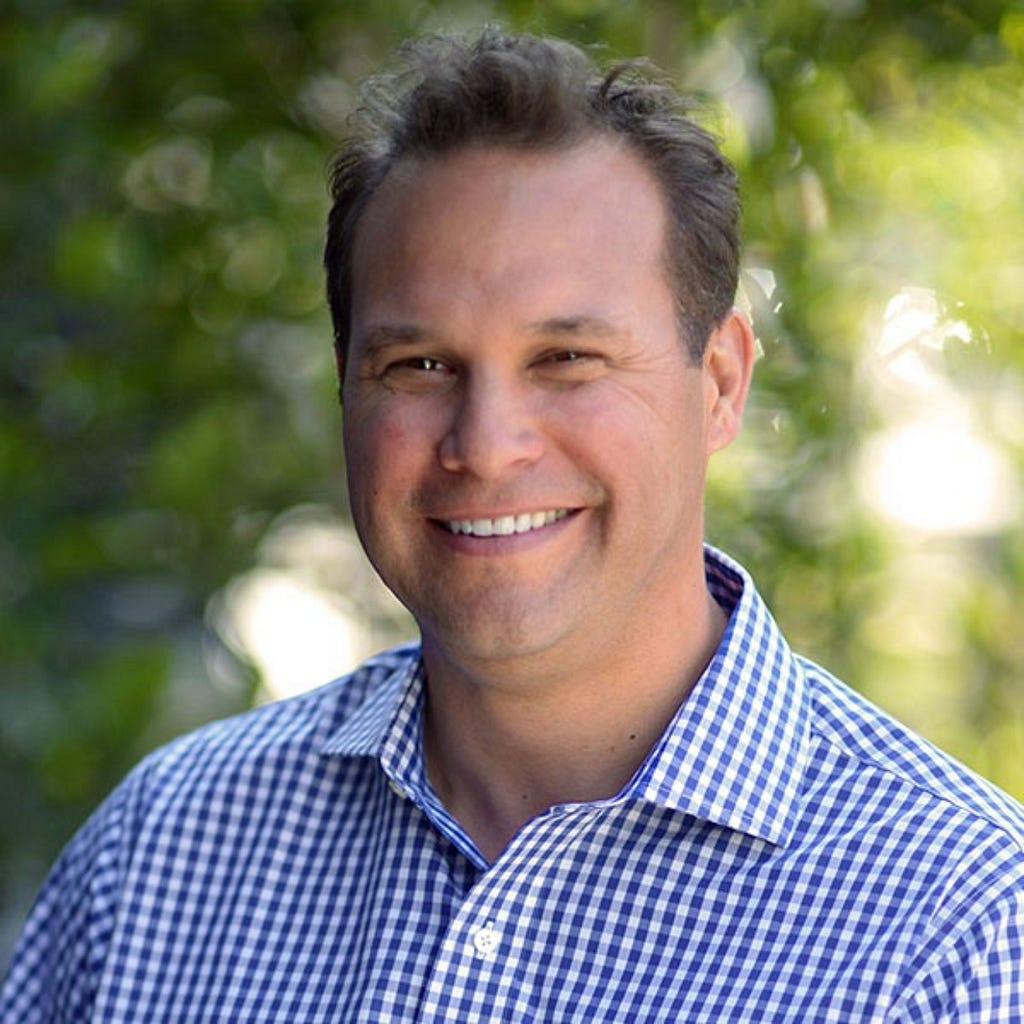
Women In Wellness: Tiffany Uretsky Of Downlinens On The Five Lifestyle Tweaks That Will Help…

Women In Wellness: Tiffany Uretsky Of Downlinens On The Five Lifestyle Tweaks That Will Help Support People’s Journey Towards Better Wellbeing

An Interview With Candice Georgiadis

Pay attention to the details, they can really make or break the whole operation. At the very least, doing this from the beginning will likely help you avoid a few costly mistakes down the road.

As a part of my series about the women in wellness, I had the pleasure of interviewing Tiffany Uretsky.

Tiffany Uretsky grew up in Southern California and began working in her family’s down feather business right out of school. While cutting her teeth behind the scenes at Allied Feather and Down, she learned a lot about sustainability, quality and integrity of product production. After working through her own personal health scare, Tiffany developed a whole new appreciation for the impact that quality rest and recovery can have on the body. With that in mind, she set out on a mission to develop a direct-to-consumer lifestyle brand that would make optimal health and wellbeing more accessible for all by offering quality bedding and sleep products. Downlinens was launched in 2009.

Thank you so much for joining us in this interview series! Our readers would love to “get to know you” better. Can you share your “backstory” with us?

Sure — so, my father started Allied Feather and Down in 1987 while he was in grad school. Over the years, the business grew to become the top supplier of down feather products to major retailers and big-name brands. I began working in the family business right out of school and learned a lot about sustainability, responsible sourcing, and quality production. During this time, I was able to take over retail where I recognized a need for a quality, direct-to-consumer product line. A lifestyle wellness brand that would make quality bedding and sleep products more accessible. After facing my own health scare in 2009, I became even more driven to share the science of sleep and that is when Downlinens was born. Quality rest and recovery for the body is the key to living a life of optimal health & wellness, and it all starts in the bedroom with our sleep. I truly believe that quality wellness products shouldn’t be reserved for a select few but should be available at a price point that makes them more easily accessible.

Can you share the most interesting story that happened to you since you started your career? What were the main lessons or takeaways from that story?

I can remember getting in the weeds plenty of times, and just spending late nights in the warehouse — that’s when I learned, all that glitters isn’t gold! There is this misconception that if you own or run your own business, you must be living some glamorous lifestyle, but that is simply not the case. A more fitting adage might be the one about working 40 hours a week for someone else, versus working 70 hours a week for yourself. It may not always be glamorous, but if you have a passion for the work you’re doing, it feels a little less like “work”.

Can you share a story about the biggest mistake you made when you were first starting? Can you tell us what lesson you learned from that?

There have been plenty of bumps along the way, but a major lesson I’ve learned is that the devil is in the details. Especially when it comes to inventory, supply chain and order fulfillment — with so many tiny details, the possibility of making a mistake is pretty high. Over the years, I think I’ve learned to anticipate what the customer might want or need and pay close attention to their overall buying experience. The little things can be a deciding factor when it comes to whether or not someone will continue to do business with you.

Let’s jump to our main focus. When it comes to health and wellness, how is the work you are doing helping to make a bigger impact in the world?

Well, we truly believe that true health & wellness starts with restorative sleep. It really is a ripple effect, so being your best self, and having the best day possible actually starts the night before. There is a ton of science to support this idea, but at the end of the day, the main takeaway is that lack of quality sleep can be detrimental to your health. By creating a direct-to-consumer lifestyle brand, using the same high-quality products as our parent company, and offering it at an affordable price point, we believe we’re making optimal health and wellness more accessible.

Can you share your top five “lifestyle tweaks” that you believe will help support people’s journey towards better wellbeing? Please give an example or story for each.

  1. Move your body. Even if it’s just for a 10-minute walk after dinner (which is great for digestion, by the way) it’s a great place to start. The increased blood flow is great for muscles, mental clarity and even helps the body enter recovery mode at night.
  2. Spend time in nature. There is something truly grounding about being outdoors. The fresh air, the natural elements, the calming of the nervous system — it’s all good for you.
  3. Limit screen time. Whether it’s social media or time spent watching the news, studies have shown that spending too much time online can majorly impact anxiety levels. Do yourself a favor and simply log off, especially in the hours leading up to bedtime. Instead, maybe opt for a journaling practice before bedtime. Brain dumping is a great way to clear our minds of all the clutter and de-stress before we go to sleep.
  4. Rest and recovery. Allowing your body sufficient time to rest and recover every night is imperative to our wellbeing. Make sure you’re giving your body plenty of sleep, specifically, quality sleep. Have a healthy bedtime routine, even something simple like stretching or 10 minutes of restorative yoga and deep breathing.
  5. On that note, support your health and wellness with quality bedding and sleep products. Knowing the impact that sleep, or lack thereof, can have on the body, we know how important good sleep is for our mental and physical health. You can’t pour from an empty cup and running on empty all day can have long-term, harmful effects on our wellbeing.

If you could start a movement that would bring the most amount of wellness to the most amount of people, what would that be?

That’s sort of a two-pronged answer for me, but I would choose to focus on sustainability and mental health. In business, as well as in my personal life, I’ve seen how both can have an impact on our overall wellness. Sustainability, whether it be in product production or aiming to lead a more sustainable lifestyle at home, can give way to peace of mind and better mental health overall. Knowing that we’re doing our part to be part of the solution, rather than part of the problem, is a great feeling.

What are your “5 Things I Wish Someone Told Me Before I Started” and why?

  1. Pay attention to the details, they can really make or break the whole operation. At the very least, doing this from the beginning will likely help you avoid a few costly mistakes down the road.
  2. Implement systems and processes early on, even if this means hiring an administrative person. Many of us get into business because we have a passion for something, but that doesn’t mean you’re going to be great at keeping up with your books, etc.
  3. You’re going to need social media, so don’t try and fight it. Understanding how and where to connect with your audience will allow you to add the most value to your online community. Be available, be engaging and be transparent.
  4. Don’t be afraid to ask for help. It’s impossible to know everything, running a business is a constantly evolving process. Look to those who have come before you, recognize your weaknesses and surround yourself with folks who counter that, while also complimenting your strengths.
  5. Be open to learning! You will never stop evolving, neither will your business. There is always going to be something new to learn or implement, so be open to all possibilities.

Sustainability, veganism, mental health and environmental changes are big topics at the moment. Which one of these causes is dearest to you, and why?

I would say sustainability for business, and mental health for personal life. Our mission at Downlinens has always been to provide quality down products and our parent company Allied Feather and Down really paved the way in sustainable down sourcing; ultimately, setting the industry standard. We continue to live by that on the direct-to-consumer side. In my personal life, I would say mental health has become a really important focus for me. Between running a business and trying to maintain my own optimal health & wellness, I’ve had to make time for prioritizing mental health!

What is the best way our readers can follow you online?

Instagram: @downlinens

Pinterest: pinterest.com/downlinens

Email Newsletter: Subscribe at downlinens.com

Thank you for these fantastic insights!


Women In Wellness: Tiffany Uretsky Of Downlinens On The Five Lifestyle Tweaks That Will Help… was originally published in Authority Magazine on Medium, where people are continuing the conversation by highlighting and responding to this story.

Women In Wellness: Dr Kellye Schab of Balanced Wellness On The Five Lifestyle Tweaks That Will Help

Women In Wellness: Dr Kellye Schab of Balanced Wellness On The Five Lifestyle Tweaks That Will Help Support People’s Journey Towards Better Wellbeing

An Interview With Candice Georgiadis

You don’t have to know it all to get started. Perfectionism is a weakness and can stall you along the way. So, remember that even the greatest of greats don’t know it all but they know where to find the answers and will get back to you later.

As a part of my series about the women in wellness, I had the pleasure of interviewing Dr. Kellye Schab.

Dr. Kellye Schab is a Functional Medicine Specialist™, owner of Balanced Wellness LLC, Doctor of Pharmacy, speaker, upcoming author, patient advocate, hormone health expert, and independent Compounding Pharmacist who has improved lives working with aging women for 20+ years. She empowers busy women to say goodbye to overwhelm, exhaustion, hormone imbalance and weight gain to achieve sustainable energy, whole-body balance, and effortless weight loss.

Besides advising hundreds of practitioners on hormonal prescribing options, Dr. Schab has spoken at a virtual summit, lectured to a university audience, and developed professional events to bring awareness to options for better health, aging, and hormone control.

Thank you so much for joining us in this interview series! Our readers would love to “get to know you” better. Can you share your “backstory” with us?

Growing up as a daughter of a Pharmacist, I learned quickly that there was a pill, suspension, or diagnosis for everything. I was raised with a constant supply of vitamins, antibiotics, tablets, and cough medicine. My amazing father, the Pharmacist, used to use medical terms around the house to be silly and educational such as “pass the sodium chloride” or “brush your teeth before you get trench mouth.” This propelled my interests for the sciences.

At the university level, I majored in biochemistry and took my first job at a hospital pharmacy as a technician when I was 18 years old. The excitement of taking classes at the medical school and working alongside many healthcare professionals both inspired and intimidated me. I had a memorable group of classmates that pushed each other to excel with each exam, lab, and lecture. I couldn’t thank them more for the comradery and dedication that we all developed towards being our best and creating the drive to succeed.

When my education started to progress and I was accepted into pharmacy school, I thought I had it all figured out! I would get my Doctorate, go back to my hometown, and work with my dad in hopes of taking over his pharmacy. Oh, how I was wrong. Pharmacy school was very intense and introduced me to so many new areas of pharmacy that I was unaware of. I credit my university with showing me many great areas of the profession and giving me the tools for development.

Once my career started taking off as a compounding pharmacist, I found myself immersed in a world of bio-identical hormones, adrenal care, thyroid function, gut health, and the intertwining dance that these hold with each other. Not only did the basic concepts of hormones make perfect sense, but the practitioners I worked with were not being taught about them and needed help. Let me restate that — the practitioners were taught the basics of hormone physiology but they were not taught how to treat hormonal decline with much more than manufactured, brand named medications that were marketed to them.

Fortunately, a handful of physicians and nurse practitioners regularly reached out to me at the pharmacy for help when their patients insisted on another form of care.

My exposure to the basic building blocks of health kept showing up in many areas of my profession yet very few people seemed to be practicing with those basics. I was determined to help more practitioners and patients open their minds to replace the body with what it was missing instead of covering up a diagnosis with a band-aid.

Over the past 15 years, I have gained experience, education, and practical exposure to the world of functional medicine. Oddly, I hadn’t applied that term “functional medicine” to what I was doing yet. I did, however, feel like an anomaly in my area of expertise, constantly recommending and defending the basics of nutrient replacement, adrenal care, gut health, and hormone balancing to an audience that had not learned of their importance.

Finally, the concept of functional medicine was introduced to me at a conference in 2017 at the American Academy of Anti-Aging Medicine. I had found the space, the professionals, and the science that I needed to support the area of medicine that nurtured my professional soul. This was truly the beginning towards my career expansion of a whole-body focus on health and the fire in me is blazing!

So, what is Functional Medicine? The Institute for Functional Medicine states it simply as a “biology-based approach that focuses on identifying and addressing the root cause of disease.” Finding the actual cause of an illness, symptom, or disease is quite different from using conventional medicine that only treats the problem.

And who is a Functional Medicine Specialist™? I am! I acquired my certification in December of 2021 and am ready to share my story, my message, and my advice to aging women everywhere!

Can you share the most interesting story that happened to you since you started your career? What were the main lessons or takeaways from that story?

Over the years, I have worked with many women in the same capacity of saliva testing for hormone imbalance. So, when I started doing something new, hair tissue mineral analysis, I found some shocking information about my own family’s health!

We tested three of my household family members hair for nutrient depletion and heavy metal toxicity and all three results came back high in uranium!

What I find most fascinating about testing is that you discover things you may have never known about your health yet it can explain some of the most basic symptoms that you have been experiencing and written off as “normal” or “age.”

This new knowledge about uranium toxicity prompted my research into the issue and how to resolve it. I discovered that the city water system in my area is elevated in uranium due to it being a naturally occurring metal in our soil and that there is an acceptable level of it in many municipal systems. Excess uranium exposure can lead to kidney issues and coincide with elevated radon exposure.

We promptly changed the water filters in our house, which was long overdue, and will test for radon exposure in our homes air. Additionally, we are focusing on increasing our movement and improving our vegetable and water intake to better detox our bodies. We plan on retesting in 3–6 months to reevaluate our process.

The biggest lesson I learned is this: If you don’t know, you may not try to do better. But if you know, you have the incentive to do your best.

Can you share a story about the biggest mistake you made when you were first starting? Can you tell us what lesson you learned from that?

I am a huge advocate for both partners in a relationship to understand what struggles the other may be experiencing. For this reason, I often encourage the partner to hear what measurable results are out of range to support the journey towards health. But not all relationships work that way!

One couple stands out in my mind that I worked with years ago. In retrospect, the husband may have thought he was helping his wife get over an aging obstacle that was affecting their marriage.

I reviewed her hormone results to both of them, explained the reasoning, and suggested lifestyle modifications, stress relief, and submitted prescription recommendations to her physician.

She was silent. He answered all of my questions, thanked me for my time, and they went on their way. The eeriness of that moment still haunts me.

If I had been more mature and able to read the room better, I would have insisted on having some alone time with her. My heart tells me that their relationship required more than labs and a symptom questionnaire for evaluation. She needed a safe place to talk, or encouragement to find that safe place.

What I learned is that it takes more than lab work and a scale of 1–10 to truly understand a person. Emotional connection, safety, mental clarity, and resources are essential for the whole picture. Again, functional medicine takes all of these aspects into account!

Let’s jump to our main focus. When it comes to health and wellness, how is the work you are doing helping to make a bigger impact in the world?

Years ago, I decided that I had to find a way to help women learn that there is a better way to grow up hormonally sound. They also needed to know that menopause doesn’t have to be a sentence that ends with a period!

I am fortunate to have a career that has me surrounded with knowledge, evidence, and clients to learn from but I needed a platform to share this information. I dabbled in a Facebook page and developed a website in hopes of blogging about the conversation. Unfortunately, I needed more guidance to reach a bigger audience and a plan to do that.

Upon becoming a Certified Functional Medicine Specialist™, I finally have the platform to share my voice. By regularly sharing knowledge bombs, allowing my audience to know and trust me, creating programs, and developing webinars, I will better be able to reach those women out there that didn’t even know they needed me. I feel that as humans, we can complicate situations and make them confusing but I am here to make the journey simpler so that we can all grow up feeling healthy, vibrant, and sexy.

Can you share your top five “lifestyle tweaks” that you believe will help support people’s journey towards better wellbeing? Please give an example or story for each.

Doing what is best for our health is not always a simple task. I firmly believe we need reminders and reasoning to refocus us along our journey. My lifestyle tweaks may seem basic, but they hold great value. Hopefully, they will redirect someone towards a simpler, more balanced way of living which in turn will benefit the body, mind, and spirit.

  1. Create your sleepy time oasis. If I just said, “get better sleep,” then you would probably turn the page. Boring! Instead, make your bed and bedtime routine a destination that you can’t resist because sleep is essential for health. Purchase new bedding and a new pillow, try some relaxing essential oils, get comfortable with a guided meditation app, improve the darkness in your room, dust your headboard, add a plant to your room, and reevaluate the wall décor. Bedtime supplements are also essential: Melatonin, magnesium, or chamomile to name a few. Lastly, stretch! Sit on the floor and do 5 minutes of simple stretches to melt away the day.
  2. Think about your food as medicine — Nourishing goldmines! I can tell you how to eat better but I bet you have a good idea about what is good and bad for you. So next time you prepare your meal or order off the menu, think with each bite! Is this something that my body will use as fuel? Is this serving a nutritional purpose? Am I giving my body a nutrient gift with this meal? It can feel powerful knowing that your meal is serving a purpose.
  3. Manage your stress by simplifying your life. Many of us have complicated lives because of all of the demands we put on ourselves. Think about ways to narrow down your daily decisions and tasks to lessen the impact stress has on your life. Clean out your closet, get rid of excess belongs that clutter your decisions, say “no” to someone who asks to add to your plate, say “yes” to someone who offers help, decrease social media use, plan your meals for a weak, unclutter your home, and finally, declutter your mind and focus on the important things.
  4. Move that body daily. I hesitate to say “exercise daily” because that is not the point. Getting up off of the office chair/couch, and moving your legs, arms, and torso, and leveraging movement every day is another daily dose of medicine. Movement helps maintain balance, strengthen bones, keeps your joints flexible, and motivates the mind. Movement is multifactorial and your future body will thank you.
  5. Cultivate connections with real people, with your own eyes, in person. Our new world has become so skilled in the online space. Even I, the former extrovert, loves staying in my bubble and doing my own thing. Yet, humans need connection for our moods, self-worth, and health. Spending time with a trusted friend can lower anxiety and depression, improve our emotions, and help our immune system. So, reach out to a friend, maintain your six feet, and share a laugh or two. Your heart, body, and soul need it!

If you could start a movement that would bring the mfost amount of wellness to the most amount of people, what would that be?

I truly wish I could start a movement that normalizes the menopause conversation. I want a new way to say it so it doesn’t sound so old, grey, and dry because 50 is not the same 50 as it was 50 years ago! I believe pre- and menopausal women are beautiful and strong. They are powerful, capable, wise, and adventurous! Every woman, if given enough time, will experience menopause either naturally or surgically and we can live many valuable years beyond that transition. The younger generations need to know that growing up as a woman today means that they have more life to enjoy and thrive in.

What are your “5 Things I Wish Someone Told Me Before I Started” and why?

  1. You don’t have to know it all to get started. Perfectionism is a weakness and can stall you along the way. So, remember that even the greatest of greats don’t know it all but they know where to find the answers and will get back to you later!
  2. It’s easier than you think. This reflects back on my issue of cluttering our thoughts. If you put all of your thoughts out on the desk, it looks overwhelming, but with the right guidance and processes, you can make big things happen.
  3. Just take that first step. You can’t get started if you never step out of your comfort zone! Challenge yourself and know that even if that first step doesn’t work out, it is one more step toward reaching your dreams.
  4. Not everyone will support you and that’s ok. The people who matter to you most will cheer for you and support your vision. If someone doesn’t stand alongside you, you have then learned a powerful lesson about their character. Their reasons for not celebrating you may never be known, but at least their response will help you declutter acquaintances that you didn’t know you didn’t need. Surround yourself with good energy and you will be unstoppable!
  5. You won’t regret it. Perspective is everything. Did you succeed? Awesome! Did you crash and burn? You are closer to success than you were if you had not tried. Every situation we encounter, every experience we participate in, brings us closer to victory and creates character along the way. You can’t live with regrets but you can live with wisdom that you earn along the way.

Sustainability, veganism, mental health and environmental changes are big topics at the moment. Which one of these causes is dearest to you, and why?

In today’s new world, with all of the changes we have faced as a society, mental health is everything! My family had a very unfortunate year of loss which led me to find talk therapy for my teen daughters. They needed to learn tools for coping with loss and navigate through these new, detached lives that were forced upon us all. Mental health counseling helps us get away from that sometimes-unreasonable voice in our heads that doesn’t always serve us well. Also, mental health awareness is a gift of its own. Knowing that there are better, healthier ways to deal with situations is often a positive start. If you don’t know you have options, you can get stuck in a negative spiral that can hold you down. Additionally, recognizing that someone is struggling, then acknowledging their pain, can make a difference in their life. Helping one person might not change the world, but it could change the world for one person.

What is the best way our readers can follow you online?

If my philosophies resonate with anyone, I would love to connect! Visit my website at https://drkellyeschab.com/ , LinkedIn at https://www.linkedin.com/in/drkellyeschab/ , or book a free 15 minute call at https://calendly.com/drkellyeschab/get-started .

Thank you for these fantastic insights!


Women In Wellness: Dr Kellye Schab of Balanced Wellness On The Five Lifestyle Tweaks That Will Help was originally published in Authority Magazine on Medium, where people are continuing the conversation by highlighting and responding to this story.
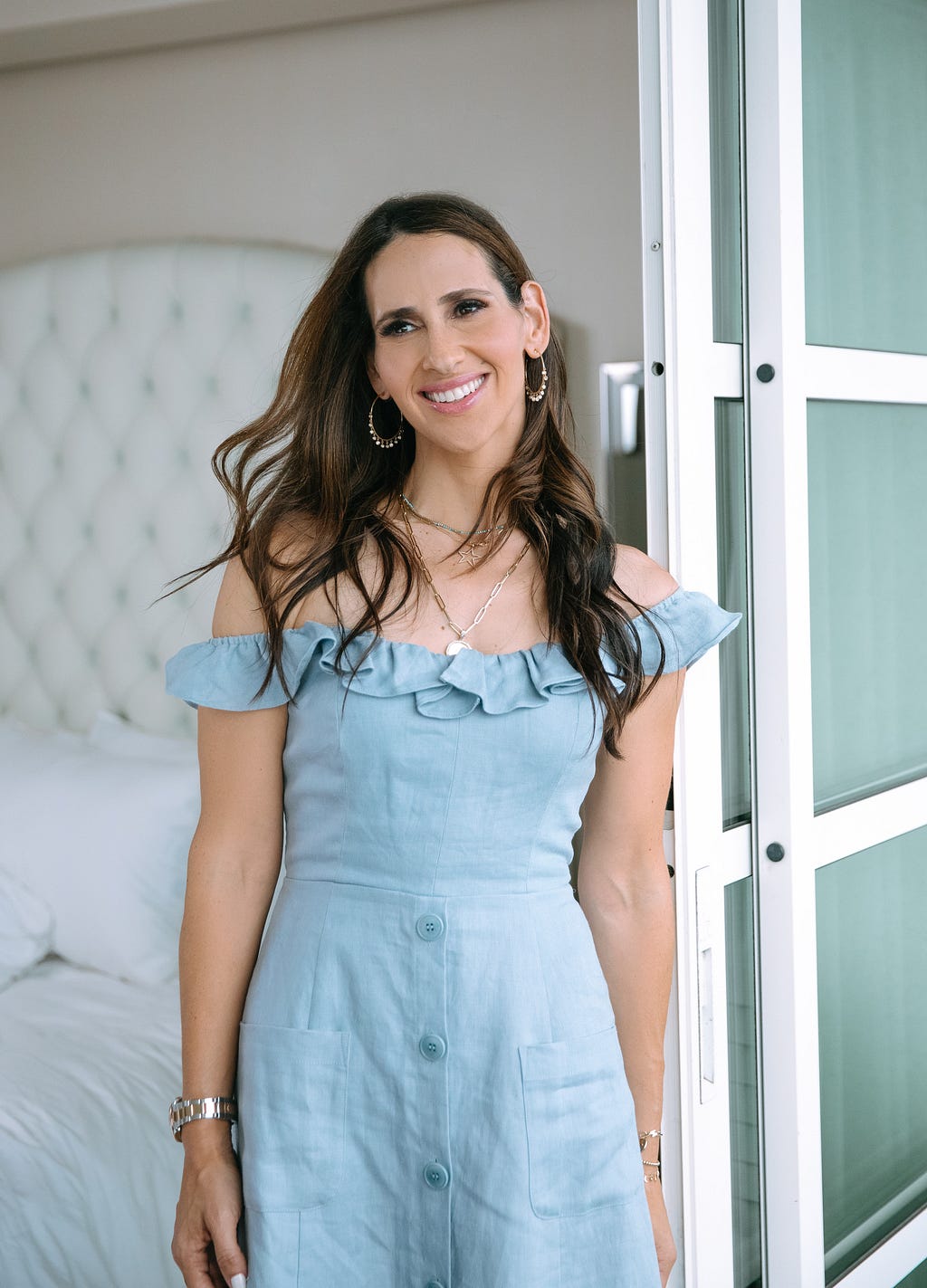
Designer Mary Patton: 5 Things You Can Do To Help Your Living Space Spark More Joy

An Interview With Candice Georgiadis

Candles and lamps. I hate overhead lighting. At night, I have a ritual where I turn on all the lamps and light candles for ambient lighting. I stick with one type of scented candle at a time — right now my house has Boy Smells Ash everywhere — it’s delightful!

As part of my series on the “5 Things You Can Do To Help Your Living Space Spark More Joy”, I had the pleasure of interviewing Mary Patton.

Mary Patton Design specializes in residential and commercial interior design as well as home and event styling. Mary creates elegant, eclectic interiors — mixing modern with vintage; high art with personal treasures — to create moments of unexpected beauty. She believes interior design should be accessible, and an enjoyable experience for clients. Mary’s designs have been published in both national and regional publications, including The Wall Street Journal, House Beautiful, Martha Stewart, Better Homes and Gardens, HGTV, Lonny, Modern Luxury, and The Houston Chronicle.

Prior to starting her design firm, Mary worked in the fashion industry for Calvin Klein and Theory. After several successful years in New York, she moved to Houston and launched the acclaimed Mary Nichols Handbag Collection — a collection that was featured nationally in People Magazine, InStyle, and Brides.

Mary holds degrees from Southern Methodist University and Parsons School of Design. When not designing, she enjoys painting in her studio and spending time with her family and friends.

Thank you so much for joining us in this series! Before we dive in, our readers would love to learn a bit more about you. Can you tell us a story about what brought you to this specific career path?

From my earliest childhood memories, I wanted to be a fashion designer. That was it — I knew it in my heart. I am from Houston and was too scared to move to New York City for undergrad. So, I went to Southern Methodist University in Dallas and majored in painting and alternative process photography.

A year after college at age 23, I found myself a married schoolteacher and was living in Houston. I taught art and fifth grade social studies — I was a terrible teacher. I was extremely depressed, knowing this was not my life path. So, I applied to Parsons in New York City to study fashion on the little table in a little chair in my classroom.

I was accepted and my then husband and I moved to New York. Parsons was the opposite of what I expected. Also, I did not have a clue of what to expect. However, after teaching elementary school, everything by comparison has been easy.

During my time at Parsons, I learned that I in fact, hate sewing. I decided to shift my goals and I started a handbag line. I had no idea what I was doing but figured it out. I had my handbag business, Mary Nichols Handbags for eight years and learned about all areas of manufacturing a product, marketing, all the things by trial and error. The business was not very profitable, but it taught me priceless life lessons.

My husband and I moved back to Houston for his job, and I split my time between Houston and New York for a while. Unfortunately, the marriage did not last. I was traumatized by the divorce –and anyone that has been through it knows how bad it is. But I stayed focused on my small business.

A few years later, I got re-married and shortly after became pregnant with my daughter, Violet. I had Hyperemesis, a condition that you are so sick throughout the entire pregnancy. I couldn’t work or do anything — I was basically in bed for nine months. When Violet was a few months old, I had an identity crisis about what to do. The purse business was not making money, so I let it go, which was difficult. It had been my identity for much of my adult life. A friend of mine encouraged me to just start saying I was available for interior design work and to see what happened. A big career change at any point in life can be very scary, it’s best not to over think it and go for it.

I took her advice and started with small projects — my first was having pillows made for a friend’s sofa. Having had the fashion and art education was enough I felt to move forward to work doing interiors.

Can you share the most interesting story that happened to you since you started this career?

Funny things happen to me all the time. I am a magnet for it and try to laugh though life. One of my early clients is a good friend. I went to meet with her at her home to discuss re-designing her son’s room. When I got to her house, she came outside to tell me that I would need to walk into her house backwards and let her 100 plus-pound German Shepherd smell me before we could proceed, and so that he would not attack me. I love animals and just leaned into it, because I knew that death by German Shepherd was not my fate.

Can you share a story about the funniest mistake you made when you were first starting? Can you tell us what lesson you learned from that?

I had several projects going on and I absent mindedly ordered the wrong custom bed for a client. The fabric was outrageously expensive. We delivered the bed and staged the room — I was thrilled with how everything turned out. She called me that evening and graciously told me it was the wrong bed. I told her I would double check my notes and call her back. She was correct. I took a moment, cried a little bit, collected myself, called her back, apologized for the mistake and said I would gladly replace the bed. I was able to sell the incorrect bed later to another client, so in the end it was fine, but that taught me to quadruple check custom orders.

What are some of the most interesting or exciting projects you are working on now? How do you think that might help people?

I am finishing a renovation, re-decorating of a 100-year-old Tudor-style home. It is so beautiful; I cannot wait to have it photographed. We kept all of the cool elements that show how old the house is but modernized the kitchen and furniture. Just because the house itself is formal, does not mean you have to use formal furnishings.

Can you please give us your favorite “Life Lesson Quote”? Can you share how that was relevant to you in your life?

“Spread love everywhere you go. Let no one ever come to you without leaving happier,” Mother Theresa. I think the luxury of being able to hire a designer to enhance your life is such a gift. The experience should be joyful.

None of us are able to achieve success without some help along the way. Is there a particular person who you are grateful towards who helped get you to where you are? Can you share a story about that?

During my school teaching days in my early twenties, I would come home from work and watch Oprah. She inspired me so much to be brave. I am also so grateful to my friend that encouraged me to shift careers into doing interior design work.

Thank you for that. Here is the main question of our discussion. What are your “5 Things You Can Do To Help Your Living Space Spark More Joy” and why. Please share a story or example for each.

1. Declutter. Don’t think about it — throw it away or donate it. Having a bunch of stuff you do not need weighs you down spiritually and emotionally.

2. Add plants. I formerly was not a plant person, but being the cliche that I am, got very into plants at the start of the pandemic. I encourage all of my clients to have at least one in every room. They purify the air, bring nature in, watering and caring for them is not a chore, but very enjoyable.

3. If something brings up a bad memory, get rid of it. This may only be a me problem, but I assign memories to objects and clothing. If it is something that reminds me of something negative, I get rid of it. This is a form of decluttering but can apply to larger items.

4. Sage. I sage my house every day with my daughter. It’s a fun ritual and even if it doesn’t actually do anything, it makes the house smell nice.

5. Candles and lamps. I hate overhead lighting. At night, I have a ritual where I turn on all the lamps and light candles for ambient lighting. I stick with one type of scented candle at a time — right now my house has Boy Smells Ash everywhere — it’s delightful!

You are a person of great influence. If you could start a movement that would bring the most amount of good to the most amount of people, what would that be? You never know what your idea can trigger. 🙂

Women being kind to other women. I think one of the biggest problems in the world is misogyny, and it trickles down to female relationships. If women could just be kind to each other — we could get a lot accomplished.

We are very blessed that some of the biggest names in Business, VC funding, Sports, and Entertainment read this column. Is there a person in the world, or in the US whom you would love to have a private breakfast or lunch with, and why? He or she might see this, especially if we tag them 🙂

It would be Oprah. I would cry like she gave me a car! She changed my life. Secondly would be Jay Shetty — his teachings of kindness through social media make keeping Instagram worth it. Thirdly, Antoni Porowski from Queer Eye. I think we might be best friends; he just doesn’t know it.

How can our readers follow you on social media?

On Instagram: @marypattondesign.

Thank you so much for joining us. This was very inspirational!


Designer Mary Patton: 5 Things You Can Do To Help Your Living Space Spark More Joy was originally published in Authority Magazine on Medium, where people are continuing the conversation by highlighting and responding to this story.

Brittany Farinas of House of One: 5 Things You Can Do To Help Your Living Space Spark More Joy

An Interview With Candice Georgiadis

Giving your living room a fresh coat of paint can really transform your space. Whether it’s a fresh coat of white or opting for a bold accent wall, it can make a huge difference.

As part of my series on the “5 Things You Can Do To Help Your Living Space Spark More Joy”, I had the pleasure of interviewing Brittany Farinas.

House of One is a multifaceted Miami-based interior design firm, specializing in curated luxury residential and commercial projects. By prioritizing creativity and an exceptional client experience, CEO and Creative Director Brittany Farinas is known for guaranteeing that every client experiences The Art of Living With Style. With their promise to deliver a distinct style of seamless luxury living, HO1 creates fluid interiors through elaborate spatial planning and FF&E selection. Making it their mission to design spaces that tell a story and exceed the expectations of their clients through high quality 3D visualization, HO1 strives to create stunning, experiential properties while encouraging their clients to become creative collaborators.

At House of One, no design is ever the same. Brittany and her team are able to showcase this through custom furniture design, which is what the firm is most known for. Having designed some of the most notable interiors in South Florida and with works featured in AD Pro, Domino, Vogue Living, The Wall Street Journal and Haute Residence, to name a few. House of One has carved and solidified their place as one of the fastest growing and most influential firms in the interior design sphere.

Thank you so much for joining us in this series! Before we dive in, our readers would love to learn a bit more about you. Can you tell us a story about what brought you to this specific career path?

My mom worked at El Dorado Furniture for 15 years. I spent most of my childhood there, roaming the showroom, and hanging out in the sales office. I completely overlooked interior design as a career and my mom never tried to push anything onto me — she always encouraged me to be free-spirited and to express myself through any avenue I wanted to. After high school, I went to Florida International University for nursing school and quickly realized that’s not what I wanted to do. I’ve always expressed myself through different arts — so, after doing extensive research, I realized that I wanted to pursue real estate and interior design. I worked at a prominent commercial real estate firm while studying interior design at the University of Miami. During that time, I got the opportunity to work on my first residential design project. From then, it’s been a domino effect and I’m so happy I chose this path because it’s what I am most passionate about and couldn’t imagine my life any other way.

Can you share the most interesting story that happened to you since you started this career?

The most interesting story that happened to me since I started my career was one of my clients, who is like family to me, purchased his first home in 2019, which we worked on and sold it fully furnished once we completed it, which was never part of his plan. During the renovation process, we always admired the house on the corner of his street. He surprised me one day when he told me he sold his house and bought the one on the corner. We were convinced this was going to be his forever home, and we designed it with such great attention to detail. Well, it turns out…He just sold this home, again fully furnished, and now relocating to another, which we will work on together. Each home just gets better and better every time!

Can you share a story about the funniest mistake you made when you were first starting? Can you tell us what lesson you learned from that?

When I was working on my first project, we selected a white paint color — but only swatched it in some of the areas in the home. After the entire home was painted, there were areas that looked completely pink. After going through that, we now swatch paint in every room of the project, because paint always has a funny way of changing colors depending on what is reflecting in the room.

What are some of the most interesting or exciting projects you are working on now? How do you think that might help people?

We’re working with a non-profit organization at the Lindsey Hopkins Technical College, run by Karen Fryd and Diana Venturini. They have converted two rooms into a prom room, where they invite unprivileged kids to come once a year to have a full prom shopping experience. They can take home a full outfit with shoes and accessories. We are redesigning the space with more of an elevated boutique feel. They also have a shop where they invite families to come in and be able to shop school supplies, food, clothes, and shoes all at no cost. We are excited to reveal this project next year- and grateful to be able to give back in their community through the power of design.

Can you please give us your favorite “Life Lesson Quote”? Can you share how that was relevant to you in your life?

My favorite life lesson quote at the moment is: “Where your focus goes, energy flows.” This is such a powerful quote because being able to stay focused in the present moment is so important when becoming inspired for a project, or when having to manage the day-to-day project management aspect of the design process.

None of us are able to achieve success without some help along the way. Is there a particular person who you are grateful towards who helped get you to where you are? Can you share a story about that?

I’m very grateful for one of my mentors, who was my boss where I worked in commercial real estate. He taught me a lot about how to deal with clients, how to provide top quality customer service, and how to be patient.

Thank you for that. Here is the main question of our discussion. What are your “5 Things You Can Do To Help Your Living Space Spark More Joy” and why. Please share a story or example for each.

  1. Giving your living room a fresh coat of paint can really transform your space. Whether it’s a fresh coat of white or opting for a bold accent wall, it can make a huge difference.
  2. Accessorize! One of the biggest pain points I see in the design industry is understating the need for accessories. A fully accessorized space is what is going to allow one to appreciate the other furniture elements in a room and what ties everything together.
  3. Throw pillows are a terrific way to bring color and warmth into a living room. We love hand-picking our fabrics and turning them into pillows to make a space feel custom and beautiful!
  4. Good lighting is important to have in a living space. We design our living spaces to have functional lighting and mood lighting. Nothing worse than having a living room that is either too bright or too dark and not in between.
  5. Layering is important to make a space feel cozy. Whether it’s layering a monochromatic scheme of pillows, throws, and accessories or wood, stone, and other materials — this is what is going to give your living room that visual interest.

You are a person of great influence. If you could start a movement that would bring the most amount of good to the most amount of people, what would that be? You never know what your idea can trigger. 🙂

I would say let’s start to treat our on-site workers better. I feel that oftentimes they don’t get the proper credit for making a project happen. They are the execution of our designs, and a sizable portion of our population is construction and on-site workers in Miami.

We are very blessed that some of the biggest names in Business, VC funding, Sports, and Entertainment read this column. Is there a person in the world, or in the US whom you would love to have a private breakfast or lunch with, and why? He or she might see this, especially if we tag them 🙂

Kelly Wearstler! I look up to her in so many ways. She is such an icon and has inspired me to take more risks, and to own being myself. I would love to be able to chat with her.

How can our readers follow you on social media?

Instagram: @Brittanyalexa_ and @houseofone_

Thank you so much for joining us. This was very inspirational!


Brittany Farinas of House of One: 5 Things You Can Do To Help Your Living Space Spark More Joy was originally published in Authority Magazine on Medium, where people are continuing the conversation by highlighting and responding to this story.
Women In Wellness: Dr Rose Ngishu On The Five Lifestyle Tweaks That Will Help Support People’s…

Women In Wellness: Dr Rose Ngishu On The Five Lifestyle Tweaks That Will Help Support People’s Journey Towards Better Wellbeing

An Interview With Candice Georgiadis

That “failures” are necessary for growth. Mistakes are teachers. Just don’t hurt people along the way. It is very fulfilling actually to look back and see that it was in the failing, that I was making progress.

As a part of my series about the women in wellness, I had the pleasure of interviewing Dr. Rose Ngishu.

Dr. Rose Ngishu is a board certified internist, functional and lifestyle medicine specialist, and a wellness coach in full time practice. She has over 23 years of clinical practice. Besides her primary care practice, she helps overwhelmed female breadwinners in high stress and burnout relax, rejuvenate, and take control of their lives.

Thank you so much for joining us in this interview series! Our readers would love to “get to know you” better. Can you share your “backstory” with us?

Absolutely, first off, thank you so much for giving me the opportunity to do so. I was born in Kenya, and immigrated to the US in 1998. Having come from humble beginnings, life was not easy. I also had an adverse childhood experience at the age of six and seven, that totally robbed me of my peace and confidence. My healing journey started at the age of fourteen, when I came to faith in Jesus Christ. I had big aspirations. So I worked hard in school, at home, and later on at work. When I came to this country, I was faced with a whole new set of challenges that I was not at all equipped to face. At some point I sunk into deep depression, and would have ended my life. With God’s help, I pulled through. Now, I can honestly say, my faith saved me. I didn’t even have money to seek professional help. That is why I am passionate about the spiritual and psychological issues of wellness .

Can you share the most interesting story that happened to you since you started your career? What were the main lessons or takeaways from that story?

Sure! The most interesting story that happened to me since starting my career is the level of personal transformation I have experienced. I started out to help others, however, this has helped me so much more I think. I am not the same timid self I was when I started out. My overall health is better now than when I first started. I did not realize how empowering my personal journey would become to those I am serving now. Sometimes I share it with my patients and clients, and am blessed even further with the breakthrough they get.

Main takeaways are:

  1. Nothing is at all in vain. Your experiences are powerful, and they are tools to help others and your future self.
  2. Seek help, even if you don’t have money, there are still some resources that you may not know of unless you ask.
  3. Lastly, do your best, even if it hurts. You are sowing into your future, and the harvest will be sweet.

Can you share a story about the biggest mistake you made when you were first starting? Can you tell us what lesson you learned from that?

Sure! The biggest mistake I made when starting out, and this was scary, was I entered the room of a patient with neutropenia without wearing my personal protective equipment (PPE). They were placed in what we call “reverse isolation” precautions. With my naive understanding at the time, I thought that meant the patient was who needed to wear the PPE and not the healthcare worker. The patient was alarmed that anyone would do such a thing. She asked me to go back and dorn my PPE before I got closer to her. I was surprised, but stepped back outside to do that. Later, I realized I was wrong, and learnt some big lessons:

  1. Don’t assume things in medicine mean the same as they do in ordinary english. If in doubt, double check.
  2. Listen to your patient, they may know something you don’t. Let them advocate for themselves, and clarify things as necessary.

Let’s jump to our main focus. When it comes to health and wellness, how is the work you are doing helping to make a bigger impact in the world?

Getting someone well is more than just prescribing a pill. Additionally, it is one of the most precious gifts you can give anyone. They feel lively and empowered, when their whole system is in balance. They contribute better to the world around us all as well. It is a snowball effect. The smiles on their faces, the restored vitality, not to mention the economic impact, when disease, the cruel robber is subdued.

Can you share your top five “lifestyle tweaks” that you believe will help support people’s journey towards better wellbeing? Please give an example or story for each.

Hmm! There are many, here are some of my favorites:

  1. Change your language. Even when things are tough, tell yourself everyday that you are a winner. Our thoughts and confessions bring possession. We tend to show up as, and manifest the energy we carry inside. Just think of the millions of eggs and sperms your parents had, you won conception. And in spite of the odds since conception, you are here. I will tell you my personal experience with this. There was a time in my life, when I spoke very condescendingly about myself, and I did not even realize it, until a co-worker at McDonalds in Midland, TX called me out on it. From that point on, I changed my language. It has helped me tremendously, and I am still working on it.
  2. Get six to nine hours of sleep daily. Sleep is the most restorative and empowering thing we can give ourselves. Eliminate whatever it is that causes you poor or inadequate sleep. I have seen how sleep deprivation causes illness often. It is scientific proof too, that sleep deprivation reduces our lifespan.
  3. Take at least one to five, 5-minute brain breaks throughout the day. It is refreshing and boosts productivity. That way we get more done faster, and can have more time to play.
  4. Forgive. Anyone and anything that has hurt you. The longer we partner with and cuddle on the hurt, the tighter it holds us in bondage. This is for your wellness, for your peace. No one is getting away with anything. Sooner or later, your perpetrator pays. So, you don’t have to be the one serving them revenge. Unless they seek forgiveness as well, rest assured, their wrong will find them out.
  5. Eat for longevity, not for survival. No matter how long we get to live, we will be in our bodies long enough to feel the effects of how we treat them. Nourish it as such, and it will be kind to you in return. I remember one time one of my children had a tummy ache from something bad they ate. They were fussy and hurting. They looked at me and said, “this guy is not being nice to me.” I was shocked, wondering who else was around besides them and I. So I asked, “which guy, baby?” The response, “this one,” pointing to the stomach. I almost laughed out loud, but realized my baby was simply trying to communicate with the right words they knew. So, we need to be mindful of what we eat

If you could start a movement that would bring the most amount of wellness to the most amount of people, what would that be?

I would invite everyone who has ever had an adverse childhood experience to consider lifelong coaching. I would also require insurance to provide it as a benefit. Sometimes health related issues come up earlier in life and sometimes they surface later on. While medications are important, that alone is inadequate.

What are your “5 Things I Wish Someone Told Me Before I Started” and why?

Before I became a healthcare worker, I wish someone told me:

  1. To focus more on the psychosocial factors, because they are the most impactful and yet the most challenging to address.
  2. That no matter how much I have learnt, I will need an ongoing team of mentors or coaches. This is because none of us has figured it all out yet, and change is constant.
  3. To prioritize personal wellness, because those I serve “drink from my cup,” and I can’t afford to have it empty.
  4. It is okay to truthfully say “I don’t know.” No matter how much anyone knows, being a “know-it-all” blinds and harms others rather than it heals.
  5. That “failures” are necessary for growth. Mistakes are teachers. Just don’t hurt people along the way. It is very fulfilling actually to look back and see that it was in the failing, that I was making progress.

Sustainability, veganism, mental health and environmental changes are big topics at the moment. Which one of these causes is dearest to you, and why?

Mental health. The mind is the engine of all else. It is in charge of our learning and behavior change. Nothing changes until the mind does. So, it behooves us to work extra hard to help those who have illness in those faculties. It is like they have a double or triple hit.

What is the best way our readers can follow you online?

  1. www.drrosengishu.com
  2. www.linkedin.com/in/rose-ngishu-md-181b7850/
  3. www.instagram.com/rnngishu/?hl=en

Thank you for these fantastic insights!

Thank you as well. Blessings.


Women In Wellness: Dr Rose Ngishu On The Five Lifestyle Tweaks That Will Help Support People’s… was originally published in Authority Magazine on Medium, where people are continuing the conversation by highlighting and responding to this story.

Inspirational Women in STEM and Tech: Dr Stella Kafka of The American Association of Variable Star…

Inspirational Women in STEM and Tech: Dr Stella Kafka of The American Association of Variable Star Observers On The 5 Leadership Lessons She Learned From Her Experience

An Interview With Candice Georgiadis

Don’t get intimidated: There is a specific reason why we are selected to serve in a committee, participate in a panel, give a talk, and this reason speaks for itself. We have the same (sometimes more) qualifications as our male colleagues, and we need to educate them on how they should behave towards us!

As a part of my series about “Lessons From Inspirational Women in STEM and Tech”, I had the pleasure of interviewing Dr. Stella Kafka.

Dr. Stella Kafka is the Chief Executive Officer and Director of AAVSO. After obtaining her Bachelor’s Degree at the University of Athens, Greece, she moved to the United States and earned her Master’s and Ph.D. in Astronomy with a double minor in Physics and Geophysical Sciences. There, she also received the Hollis and Grete Johnson Award for Excellence in Graduate Student Research. After completing her Ph.D., Stella held a series of prestigious postdoctoral positions and fellowships, first at the Cerro Tololo Inter-American Observatory in Chile (CTIO, where she received the National Optical Astronomy Observatory Excellence Award), then at Caltech’s Infrared Processing and Analysis Center (IPAC), and finally as a NASA Astrobiology Institute Fellow at the Carnegie Institution of Washington. As the Executive Director of the AAVSO, Stella aspires to build strong communities of professional and amateur astronomers who jointly work towards understanding some of the most dynamic phenomena in the universe. She resides in Cambridge, Massachusetts with her puppy, Ruru. When she’s not stargazing, managing the AAVSO, or making significant scientific discoveries, she enjoys reading, exercising, and traveling.

Thank you so much for doing this with us! Can you tell us a story about what brought you to this specific career path?

I was born and raised in a big city (Athens, Greece) where, at an early age, I was encouraged by my parents to be curious and explore nature. Having said that, I didn’t have access to a dark sky. I was always curious on how nature works, what are the phenomena and principles that govern the world around me, so I pursued a BSc in Physics at the university of Athens.This is where I got in touch with Astronomy: as an undergraduate, I did my thesis in astronomy, and was enamoured by the process of learning about the universe through analyzing light.

Can you share the most interesting story that happened to you since you began at your company?

Well, here’s one for you: The first day of my tenure was February 1, 2015. It was a Monday, and we were in the middle of a viscous blizzard. So, instead of sending an inspirational email to my new co-workers at the AAVSO, I simply instructed them to stay home and not come to the office because the conditions of the roads were horrible and I didn’t want them to get hurt while driving to the office… What a start!

Can you share a story about the funniest mistake you made when you were first starting? Can you tell us what lesson you learned from that?

I underestimate snow. Seriously, Feb 2015 was the first time in my life where I shoveled snow, resulting in a back injury… Not everything that looks easy is easy in real life…

What do you think makes your company stand out? Can you share a story?

The AAVSO is an international non-profit organization of variable star observers whose mission is to enable anyone, anywhere, to participate in scientific discovery through variable star astronomy. Professional astronomers have neither the time nor the telescopes needed to gather data on the brightness changes of thousands of variables, and amateurs can make a real and useful contribution to science by observing variable stars and submitting their observations to the AAVSO International Database. The public can just step outside and use their DSLR cameras to supply data for this. We offer workshops, online courses, manuals, mentors, databases and tools for data upload/downloading, opportunities to directly communicate and work with professional astronomers in exciting key projects. We all are a community of like-minded individuals who respectfully interact and learn from each other, explore the universe and reveal properties of the most dynamic stars out there!

Professional astronomers rely on citizen scientists to gather this kind of data. Astronomy is one of the few sciences in which individuals without a formal degree can contribute in meaningful ways to scientific projects and produce original and significant results. From a practical standpoint, it’s really difficult for a professional astronomer to be able to gather all the data they need for their work by themselves and information sharing is huge. We use the information gathered by amateurs to round out their data and make important discoveries. With such an active membership, we are able to get people looking at a certain star from all over the world within a matter of hours.

For example, when Betelgeuse’s brightness dropped in 2020 in a way that was not recorded in its 130-years, AAVSO observers had been taking data. Thanks to the AAVSO observers we have a good record of those brightness fluctuations. This information was essential for professional astronomers to understand the underlying reasons. That was a really cool project!

Are you working on any exciting new projects now? How do you think that will help people?

An exciting new initiative launching in 2022 is a free-for-all Spanish language webinar, which will introduce astronomical concepts to individuals whose native language is not English. We hope to reach out to as many people as possible!

Ok super. Thank you for all that. Let’s now shift to the main focus of our interview. Are you currently satisfied with the status quo regarding women in STEM? What specific changes do you think are needed to change the status quo?

I am certainly not satisfied with the status quo, but I hope we are making progress. More and more women have successful high-profile careers, we are mentoring and empowering the next generation of leaders and are building a strong support group for one another. This is an ongoing process, and will take several generations to change, but we need to keep up our hard work, showcase our abilities and go after opportunities. I am here to support as many individuals I can, in the hopes that they will emerge stronger to change the narrative.

In your opinion, what are the biggest challenges faced by women in STEM or Tech that aren’t typically faced by their male counterparts? What would you suggest to address this?

The biggest challenge we are dealing with now are perceptions from the past. Those led to tolerance of sexist/inappropriate comments and jokes, gender stereotypes on roles in the workplace, perceptions on individual’s capabilities, and a culture of tolerance that is hurting underserved communities. First and foremost, we all need to be aware of our personal biases and get out of our comfort zone to deal with all this. Also, listen. Listen to people, situations, suggestions, and start thinking of how we can make safer spaces for all.

What are the “myths” that you would like to dispel about being a woman in STEM or Tech. Can you explain what you mean?

Ugh.. personal experiences: individuals commenting that “I am cute so why do I waste my time overthinking things” to individuals telling me that “I am too smart for a woman” … the list goes on. Such comments are demeaning and aim to undermine my work and abilities.

While growing up, I feel that I lived in a very safe bubble. My father was always my cheerleader — always championing for my success and supporting my endeavors. Experience the “real world” was always through his goggles: I am a strong, intelligent woman, and I can do anything I put my mind into. Yes, I was very fortunate. My mother nurtured my natural curiosity while making sure I knew how to prioritize, achieve, and celebrate accomplishments. I was really blessed with such an amazing support group… I wouldn’t be able to make it without them.

“Real life” hit after I acquired my PhD, where I experienced gender discrimination in every aspect of my professional life (research, publishing, giving talks, discussing new project, serving in committees). In some cases I was selected as the ‘token woman’’ in the room; no one expected me to have opinions, contribute in discussions or have a voice about anything. Well, this didn’t sit well with me, as I made a point to showcase my abilities and earned respect. It was difficult and sometimes exhausting to have to prove myself in such settings whereas my male colleagues who had the same kind of credentials, were considered worthy professionals from the beginning.

What are your “5 Leadership Lessons I Learned From My Experience as a Woman in STEM or Tech” and why. (Please share a story or example for each.)

Speak up: people tend to underestimate women in professional settings, and are sometimes surprised that we have opinions.

Don’t get intimidated: There is a specific reason why we are selected to serve in a committee, participate in a panel, give a talk, and this reason speaks for itself. We have the same (sometimes more) qualifications as our male colleagues, and we need to educate them on how they should behave towards us!

Be you: don’t try to emulate anyone or conform to norms. As women, we bring unique perspectives, talent and wisdom, and this needs to be recognized and celebrated.

Build a network and rely on it: I have many wise women and men who have provided wisdom and support throughout my career. I make my own choices, but I love having sounding boards for ideas. My mentors give me perspective and a sense of belonging in a community.

Lift others: each one of us is someone’s role model and cheerleader. Be that amazing person for someone else and help them shine!

What advice would you give to other women leaders to help their team to thrive?

We need to build a strong network and support each other. We need each other for success. If you think I can help, please reach out!

What advice would you give to other women leaders about the best way to manage a large team?

Make sure you understand the culture of your team. Talk to your colleagues and listen. And establish a “no tolerance” policy. Harassment, discrimination, bullying, subtle sexism do not belong in your workplace. Make sure you set the tone from the beginning, and take care of your colleagues.

How have you used your success to bring goodness to the world?

I am deeply committed to doing my part to change the future of astronomy for women and minorities. At the AAVSO, I established norms for what constitutes open, welcoming, and inclusive behaviors through relevant internal policies and practices. We actively embrace diverse viewpoints during discussions, and we participate in the decision-making process. I also introduced a zero-tolerance policy for discriminatory behavior such as bullying, harassment and micro-aggression, and sponsored webinars to identify and discuss such behaviors. All our employees are offered equal access to all our in-person and digital resources, including webinars, mentoring, professional development opportunities and software to hone their skills, enhance productivity and enable collaboration. I also established flexible work hours, especially as covid-related challenges such as unequal availability of home workspace generated anxiety.

For the AAVSO community, we have drafted ethics policies for our in-person and virtual events and our online forum conduct. Those documents include reporting misbehavior and establishing disciplinary actions. I spearheaded programs engaging a diverse audience and increase accessibility to information and resources: founded our youth program “AAVSO Ambassadors”; introduced closed captioning and transcripts on our online events; conceived and secured funding of a Spanish language webinar series (so that information is accessible to individuals for whom Spanish is a native language); I introduced double-blind referee process for the Journal of the AAVSO (ensuring that JAAVSO articles are judged based on their merit and not the author’s gender and credentials), and immediate access to all accepted manuscripts. Inclusion, Diversity, Equity and Accessibility are key components of our 2020 strategic plan priorities.

I also volunteer to serve in committees that aim to improve the status and opportunities of women in STEM, and I am mentoring young women and giving talks to younger individuals, introducing various resources that could help with their career.

For me, my success is only a small part of what individuals can achieve in their lives. I am certain that there are amazing, intelligent, ambitious women out there who would shine immensely, if they are given the right opportunities and support. I strive to provide those opportunities and support in any way I can!

You are a person of enormous influence. If you could inspire a movement that would bring the most amount of good to the most amount of people, what would that be? You never know what your idea can trigger. 🙂

Respect for each other and for our planet. This would be my aspiration, and would lead to a better society and a sustainable planet.

Can you please give us your favorite “Life Lesson Quote”? Can you share how that was relevant to you in your life?

“Fight for the things that you care about, but do it in a way that will lead others to join you.” This is one of my favorite RBG (Ruth Bader Ginsburg) ​​quotes, and I have it on my wall in front of my desk. Reminds me that we are stronger together in our challenges in life…

We are very blessed that very prominent leaders read this column. Is there a person in the world, or in the US with whom you would love to have a private breakfast or lunch with, and why? He or she might just see this if we tag them 🙂

I wish I could meet Ruth Bader Ginsburg, but it’s too late now. I would love to meet Michelle Obama or Amanda Grossman. The former is a role model, the latter an inspiration…

Thank you for these fantastic insights. We greatly appreciate the time you spent on this.


Inspirational Women in STEM and Tech: Dr Stella Kafka of The American Association of Variable Star… was originally published in Authority Magazine on Medium, where people are continuing the conversation by highlighting and responding to this story.
Female Founders: Alison Cooper of Alicia J Diamonds On The Five Things You Need To Thrive and…

Female Founders: Alison Cooper of Alicia J Diamonds On The Five Things You Need To Thrive and Succeed as a Woman Founder

An Interview With Candice Georgiadis

Top line is vanity, bottom line is sanity. You could be successful with your sales but if you’re not making any money there is no point being in business! You need to turn a profit and when you start in business it’s easy to get taken in with sales and ignore the bottom line. If someone made me aware of this in the earlier days, it would have been very beneficial to hear!

As a part of our series about “Why We Need More Women Founders”, I had the pleasure of interviewing Alison Cooper, Founder and CEO of Alicia J Diamonds.

As an entrepreneur and natural innovator, Alison Cooper finds creative solutions to gaps in the market. She has founded and scaled several multi-million-pound global businesses.

She sold En Route International, her £40m leading airline catering brand, to The Emirates Group in 2017, and went on to create Alicia J Diamonds. Alison noticed that clients who wanted to buy a high-quality diamond engagement ring didn’t know where to start or who to trust, and that many jewellers weren’t offering good advice or value for money. Alicia J stepped in to solve that problem.

Alison’s approach is hands-on. She has always been a frequent business traveller to the Middle East, and in her downtime, enjoyed buying beautiful jewellery there, learning about gemstones and diamonds in the process. With this new business idea in mind, Alison expanded her knowledge by training with the Gemological Institute of America (GIA) as a diamond specialist. Then, together with her handpicked team of experts, she set up Alicia J Diamonds to help people make the right choice when buying diamonds and precious gems, whether they’re after an engagement ring or a sparkling present to themselves.

Alison’s integrity, expertise and honesty, and her go-getting entrepreneurial spirit and sociable personality make her an engaging person to be around and work with. She also spends time helping young businesswomen who need an extra leg-up, via the Women Supporting Women initiative at The Princes Trust.

www.aliciajdiamonds.com

Thank you so much for doing this with us! Before we dig in, our readers would like to get to know you a bit more. Can you tell us a bit about your “backstory”? What led you to this particular career path?

I’ve always been entrepreneurial, ever since I grew tomato plants and sold them for a £20 profit for the Guides. I went to Germany to be with my boyfriend after studying and ended up starting a language school, and later a sandwich company.

In 2002, back in the UK and single, I set up En Route International, an airline onboard service company. In 2017, I sold it to the Emirates Group, having spent 15 years building the company from scratch into a multi-million-pound global business. Once I left, I wanted to do something different. I’ve always enjoyed buying gemstone jewellery when I travel abroad, particularly in Dubai, and saw that people didn’t know where to start when buying diamond jewellery in the UK. It particularly struck me when a friend of my son’s asked me for help in buying an engagement ring. I realised that there was a market to help people understand what to look for, and for someone to give them expert design and buying tips. Alicia J Diamonds was born. We offer a truly personal gemstone and diamond jewellery service. We help people design beautiful bespoke jewellery, as well as offering ready-to-wear jewellery online, too.

Can you share the most interesting story that happened to you since you began leading your company?

When I named my previous company En Route International, I was determined that we would be truly global. The first country we went into was the USA. At the time, we had auditors, because I knew that selling down the line would be easier with fully audited accounts. They basically said to me that 82% of British companies which go to the USA, fail, and they didn’t think I should attempt it. But I knew that we needed to expand internationally to get the attention of international carriers. America was a vast market. If you get a deal on American Airlines or Delta, the volumes are huge. So, I said, I’m not taking that advice, I’m setting up in the USA. It was hard, but we made it a success, which came when we put in American staff rather than UK staff with visas (another learning curve). It’s an example of my determination when I know something is worth doing. I wanted to prove them wrong, and I did.

Can you share a story about the funniest mistake you made when you were first starting? Can you tell us what lesson you learned from that?

Before I started En Route International I ran a sandwich business in Germany. I was only in my early 20s and hadn’t realised that the sandwich business in the UK couldn’t just be replicated in a different country. Here, packaged sandwiches were booming. Factories were opening up and M&S were selling them like hotcakes. I just literally thought I’m going to have that for Germany. I learned very quickly that chicken tikka and prawn mayonnaise are really only popular in the UK! Germans prefer salami and cheese. At first it was only British nationals living in Germany who bought my sandwiches. They were very happy because I was giving them comfort food from home. It was just a silly mistake really. It taught me that you can’t take a concept that’s successful in one place and simply use it as a blueprint to roll out in another country.

None of us are able to achieve success without some help along the way. Is there a particular person who you are grateful towards who helped get you to where you are? Can you share a story about that?

When I set up En Route International, I had a Non-Executive Director, James Drayton, who was an experienced CEO of airline catering companies. He was my sounding board. He was on the board but wasn’t involved in the everyday running of the business. I would tell him my crazier ideas, and he would always say, ‘Don’t go into work and tell the team about this yet. It’s a great idea, but let’s discuss it first.’ Because in the early stages I would upset my team by saying something one week and throw another idea at them the next week. He taught me how to really work out which ideas should become company strategies, by doing more research before I hit the Go button, without unsettling my staff with too many ideas at once.

Ok, thank you for that. Let’s now jump to the primary focus of our interview. According to this EY report, only about 20 percent of funded companies have women founders. This reflects great historical progress, but it also shows that more work still has to be done to empower women to create companies. In your opinion and experience what is currently holding back women from founding companies?

I think, honestly, it’s because women think they have to prove an idea in its full entirety and make money before they ask for help. Also, they just don’t brag and talk things up like men do. Many women will exhaust their personal savings and max their credit card before they go to the market to get an investor, or involve the bank. Whereas, it’s proven that men don’t spend their own savings, they go and shout about their idea straight away. And it’s better to get that investment in early.

Women are more judged by society and have the pressure of guilt if they have a family, too, which can put them off. Most men feel it’s their role to go off and work hard outside the family. As a man, if you’re asked about your sales forecast by a VC or PE, it’s proven that you get a more positive response to your responses. With women, more negative questions are asked.

Can you help articulate a few things that can be done as individuals, as a society, or by the government, to help overcome those obstacles?

Sadly, it’s been proven that women don’t support women. There are many women who have made money but are they backing women-led businesses afterwards? More of us need to put our money where our mouths are!

I think, as well, there’s a lot of financial jargon used in the city and by VCs and private equity (the majority of whom are men). They all speak this language. If you’ve not come from a finance background as woman, you can feel intimidated by the language and what is often a room full of men. We should work to make sure that start-ups can access help in understanding how everything works — by offering women founders more of a helping hand.

In America, positive discrimination is used to help female-led businesses. When applying for tenders as a supplier in the airline industry, my applications would be more weighted because I’m a woman founder. I found it empowering knowing that my business was 100% female founded. But here we don’t have that. It’s only around 2% of VC or private equity money that goes to women founders. I would support legislation and incentivisation to improve that percentage.

This might be intuitive to you as a woman founder but I think it will be helpful to spell this out. Can you share a few reasons why more women should become founders?

Being a woman founder is an excellent opportunity to have freedom, and not be confined by set holidays and working hours. If you run a successful company, it will give you a better work-life balance, particularly with children growing up. I made the choice to pay for my son to go to boarding school, but then spend quality time with him in the holidays. We went on many amazing trips, which he hugely benefitted from. But I wasn’t at the school gates at 3pm every day. You have to make an arrangement that works for you and not beat yourself up or feel guilty, or be guilt-tripped by others.

It’s also a great role-model for your children to become a successful female business owner. Then it’s not just about dad earning the most money and supporting the family.

I think women are generally more empathetic and I think they make great leaders because of that, often creating businesses with a very positive work culture.

What are the “myths” that you would like to dispel about being a founder? Can you explain what you mean?

It is going to be tough, and there will be hard days, there’s no getting around that. Some people think you start a company and everything’s then hunky-dory — that’s rarely true. There will be times when you’re desperate and your back is up against the wall because you haven’t got enough cashflow or something. But I think you have to turn every negative into a positive. Failure isn’t the opposite of success, it’s part of the learning process.

You don’t need to know the business inside out before you start. If you’re determined and resilient and open to learn, you don’t need to be an expert in the industry to succeed. In fact, sometimes it’s better not to be, as you can then come in and disrupt it, seeing things from a fresh angle. I wasn’t an expert in aviation catering but I came in with a slightly different perspective and made a success out of new products.

Is everyone cut out to be a founder? In your opinion, which specific traits increase the likelihood that a person will be a successful founder and what type of person should perhaps seek a “regular job” as an employee? Can you explain what you mean?

I don’t think everyone can be a successful founder. Some people have very good ideas but they’re then not able to monetise them. They may not know how to put a great team together, or to lead people and you need both of those to be successful. You have to be very determined, resilient, and to be able to work hard.

Ok super. Here is the main question of our interview. What are your “5 Things I Wish Someone Told Me Before I Started” and why? (Please share a story or example for each.)

  1. Top line is vanity, bottom line is sanity. You could be successful with your sales but if you’re not making any money there is no point being in business! You need to turn a profit and when you start in business it’s easy to get taken in with sales and ignore the bottom line. If someone made me aware of this in the earlier days, it would have been very beneficial to hear!
  2. Don’t think you can do everything yourself. You ideally need a management team of at least 2 right hands so you have people who you can delegate to. Choose someone to support you and someone to help in the decision making. Build a team around you who can support you and complement your skills. Don’t feel that you need to micromanage and make all the decisions yourself.
  3. Don’t underestimate the need to recruit the right people for the organisation to grow. On my journey, I found out by experience that if you have made an incorrect recruitment, it is better to keep the team happy and part company with that person rather than thinking that person is going to change to fit your company and the team around them.
  4. When you start out, if you need to use suppliers, it’s important to find a supplier who can build a powerful alliance with. You have to find a supplier who has similar company values to you. It’s easy to be consumed with just finding a supplier, but you should think about finding a supplier who has similar values to your business as they will support you when you’re scaling.
  5. If you’re looking for investment, don’t look for money, look for smart money. Smart money is looking for people who have specialist market knowledge about your industry already. They’re not just providing money; they provide knowledge that will help you on your scaling journey. In addition to this, always listen to your intuition when meeting investors. If you’re intuition says you’re not going to get along with your investor during the negotiation phase, listen to it and walk away from the deal. Don’t concentrate on the money, if they’re saying certain things that don’t identify with your values then you should make the decision to pull out. There’s no such thing as too much research when it comes to investment, don’t be afraid to ask other people who they’ve invested in and speak to the CEOs to see if the investment has gone according to plan.

How have you used your success to make the world a better place?

I’m part of the Women Supporting Women initiative run by The Prince’s Trust. It’s a fantastic charity, which helps young women in the UK by offering practical support to stabilise their lives, develop their self-esteem and gain skills for work. We recently hosted a Big Breakfast event to raise money for them, which was a great success and also a forum for female business leaders to discuss how to help other women. Also, a percentage of the profits for Alicia J Bold Rings goes to the charity.

I’m passionate about helping the next generation to come through. I’ve gained a lot of business knowledge and have a lot of ideas that can help others on their way.

You are a person of great influence. If you could inspire a movement that would bring the most amount of good for the greatest number of people, what would that be? You never know what your idea can trigger.

There are two things really. I’d definitely like some government legislation to help women found their own businesses. There could be a way of making sure the VCs and private equity give an equitable share to female-run companies. At the moment, as I said before, it’s only around 2% of investment that goes to women founders. Finding a way to increase that figure would help women feel like they were going to be taken seriously when they ask for finance.

I’d also love to be able to help achieve finding a cure for Alzheimer’s. Maybe there could be combination of helping women start-ups and research to combat this awful sad illness that affects so many people and families.

We are very blessed that some very prominent names in Business, VC funding, Sports, and Entertainment read this column. Is there a person in the world, or in the US with whom you would love to have a private breakfast or lunch with, and why? He or she might just see this if we tag them.

Warren Buffett. I’ve always been fascinated by him, and would love to chat to him about how he has got to where he is, and how he decides on investments and business decisions.

Thank you for these fantastic insights. We greatly appreciate the time you spent on this.


Female Founders: Alison Cooper of Alicia J Diamonds On The Five Things You Need To Thrive and… was originally published in Authority Magazine on Medium, where people are continuing the conversation by highlighting and responding to this story.