Women In Wellness: Lia Bartha of B The Method on the Five Lifestyle Tweaks That Will Help Support…

Women In Wellness: Lia Bartha of B The Method on the Five Lifestyle Tweaks That Will Help Support People’s Journey Towards Better Wellbeing

An Interview With Candice Georgiadis
I would say the biggest mistake I made and continue to make is the inability to delegate responsibility. As my business grows, it’s difficult to separate myself from B The Method and ask for help. Since the actual method is an evolution from my over 10 years of training and teaching plus so much of the growth of my business has come from my Instagram page, sometimes it’s tough to let go of control. Thankfully I have a partner who pushes me to think outside of myself.

As a part of my series about the women in wellness, I had the pleasure of interviewing Lia Bartha, B The Method.

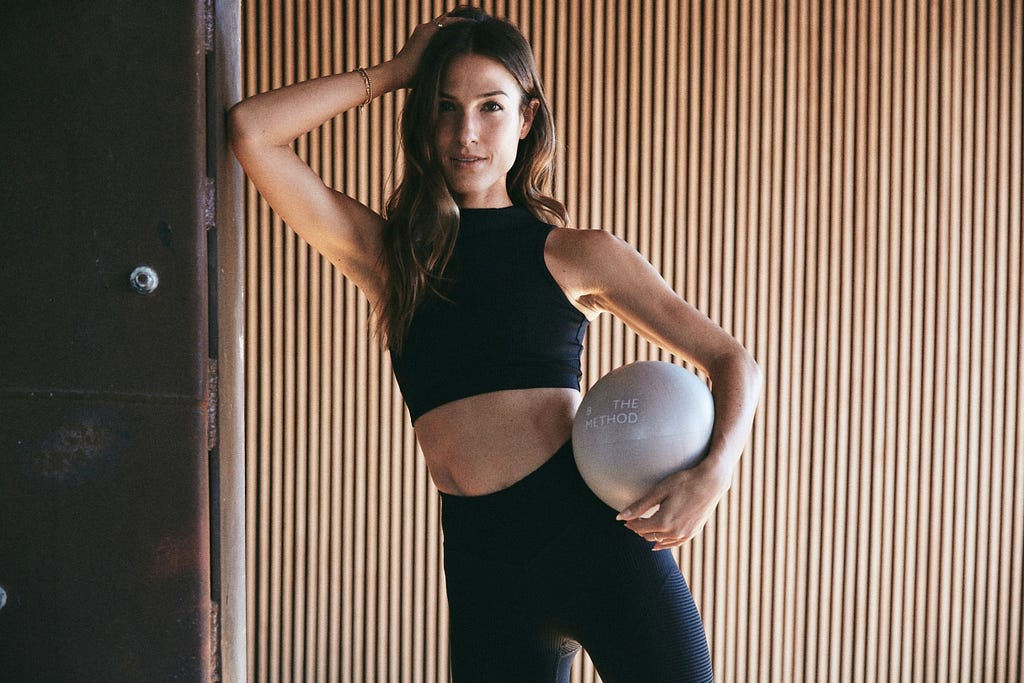
Lia is a beloved fitness personality who created B The Method, which is a mix of highly unique pilates-based, low-impact movements, with inspiration from dance and swimming, to strengthen, restore and protect the body.

Thank you so much for joining us in this interview series! Our readers would love to “get to know you” better. Can you share your “backstory” with us?

I was born and raised in Oahu, Hawaii where I spent most of my childhood either at the beach or in a dance studio. My dreams of becoming a professional dancer were made even more difficult as my scoliosis and injuries worsened. So I took the natural next step and moved to California to study mathematical economics at Scripps college. After college, I got an office job at Lionsgate and then HBO where I was making solid money but just wasn’t happy. Also, the office chair, cubicle life was making my scoliosis unbearable. A friend recommended Pilates and my life was changed forever. I started taking extra long lunch breaks to get my Pilates certification and eventually quit my cushy office gig to teach full time. After meeting my husband and having my first child, we moved to New York City and I stopped working to be with my daughter. The problem is, if I’m not exercising, I’m not feeling great. With no room for a Pilates reformer in our East Village apartment, I grabbed my favorite prop: a small, partially deflated ball. And that’s when B The Method was truly born. Three years and thousands of hours later, I developed my method of specialized curated cues creating a flowing exercise connecting the entire body, while inducing a meditative state for the mind. My private clients loved it and encouraged me to create a class version, which I did, and the rest is B The History.

Can you share the most interesting story that happened to you since you started your career? What were the main lessons or takeaways from that story?

I would say the most interesting story has to be launching B The Method online during covid. My husband and I had been developing the app months before the pandemic hit. In the early days of 2020, I was still teaching my group class in the city and at some point Justin turned to me and said, “It’s too dangerous to go to work. Time to stop.” I was resistant at first. This was in March, before the actual lockdown, and I had hundreds of clients who counted on me. So when the lockdown happened and that dark cloud rolled over the country, I knew I couldn’t just sit around in that darkness. We live in an area of Brooklyn which, at this point, had the highest death rate in the entire country. It was flat out terrifying. My clients would reach out and tell me how badly they needed to turn off the news, get moving again and how much they missed the community of the B The Method classes. So I went on Instagram and announced that I would go live and teach…every single day. What started as a way to connect with my clients and maintain some shred of sanity grew into a community of people connecting through my method of meditative movement. So, I would say the main lesson I learned was to really listen to what my community needs and trust that they will take care of you when the time is right. I taught for free almost every day for five months and on the day we finally launched the B The Method app, my community couldn’t wait to support me.

Can you share a story about the biggest mistake you made when you were first starting? Can you tell us what lesson you learned from that?

I would say the biggest mistake I made and continue to make is the inability to delegate responsibility. As my business grows, it’s difficult to separate myself from B The Method and ask for help. Since the actual method is an evolution from my over 10 years of training and teaching plus so much of the growth of my business has come from my Instagram page, sometimes it’s tough to let go of control. Thankfully I have a partner who pushes me to think outside of myself.

Let’s jump to our main focus. When it comes to health and wellness, how is the work you are doing helping to make a bigger impact in the world?

Well, “a big impact on the world” is a big claim but I will say that so much of the philosophy of the method comes out of what I see as negative trends within the health and wellness industry. After years of trying out the latest fads and machines and seeing those fads fade and those machines create more injuries, I created B The Method to protect and to last. When we look to distract ourselves while we exercise, we’re missing an opportunity to be aware of our own bodies. Now, I’m not saying I don’t love to listen to a great playlist or play a fun game while working out now and then, but the older I get, the less time I have to shut off the noise and screens and take stock with how I really feel, body and mind. Also, the number one complaint I hear from B The Method community members who have switched from other types of exercise is INJURIES. I truly believe that with exercise if you distract, you destruct. These injuries not only cause physical harm but also take a mental toll. That mental toll spreads to our families, our work and our communities. Make an impact on your own community, make an impact on the world.

Can you share your top five “lifestyle tweaks” that you believe will help support people’s journey towards better wellbeing? Please give an example or story for each.

Piggybacking on my last answer, I think being honest about what you’re willing to actually do for your own wellbeing is the first step. An example of this for me has to do with meditation. Years ago, I tried to incorporate mindful meditation into my daily wellness routine but at a certain point I had to be honest with myself that I just wasn’t going to sit down twice a day for 20 minutes. This honesty not only freed my mind of some bullshit idealized version of myself that wasn’t real but also inspired me to fold in the meditative aspect while developing B The Method. Now I feel the flow-state effects of meditation while doing something that I love. By accepting that a specific version of transcendental meditation wasn’t for me, I improved my life by pushing myself to find out what exactly was for me.

I would say one more example would be to not be too hard on yourself. There seems to be an orthodox trend in wellness where people are so strict on what they can and can’t eat. I would say, unless you have an actual medical allergy to a certain type of food, allow yourself to enjoy what you love. For example, I love dessert. I could eat dessert instead of an actual meal. Do I know that refined sugar is awful for me? Of course I do. Did I make a delicious batch of brownies this weekend with my kids and eat half the pan with my family as we played Jenga after dinner? Of course I did.

If you could start a movement that would bring the most amount of wellness to the most amount of people, what would that be?

It would be B The Method and that’s what I’m trying’ to do! Thankful that you are helping me spread the word. But, more specifically, I talk a lot about the pelvic floor and how it’s the secret to a more fulfilling sex life. I do a monthly newsletter and that was the focus recently and I can’t tell you how much positive feedback I’ve gotten from my community. So many fitness professionals talk about healthy food but so few talk about healthy sex. So much of my method is focused on strengthening the pelvic floor and I can tell you from experience, your orgasms will never be better.

What are your “5 Things I Wish Someone Told Me Before I Started” and why?

1. Believe in your vision. (If you have a vision, you are already ahead of the pack) 2. Take it slow (It takes time to build)

3. Don’t follow trends (Follow what’s missing. There’s always something missing.) 4. Get on Instagram (I’ve only been active for 2 years and it’s a great tool) 5. Be yourself, save yourself (Create boundaries within public spaces like IG)

Sustainability, veganism, mental health and environmental changes are big topics at the moment. Which one of these causes is dearest to you, and why?

By far, mental health. I’m not saying that the others aren’t important, especially the environment, but B The Method was created as a way to connect your body and mind through movement. Exercise and community are the only scientifically proven ways to improve one’s mental health and we have thousands of people showing up for each other week after week to move together. The feedback I get from every single one of our community members, including me, is consistent: I’ve never felt healthier…inside and out.

Thank you for these fantastic insights!


Women In Wellness: Lia Bartha of B The Method on the Five Lifestyle Tweaks That Will Help Support… was originally published in Authority Magazine on Medium, where people are continuing the conversation by highlighting and responding to this story.

James Stanley: 5 Things You Can Do To Help Your Living Space Spark More Joy

An Interview With Candice Georgiadis

Textures. and last but not least, selecting the right and balance of textures. Choose soft and comforting fabrics for your pillows, throws, cushions and upholstered furniture, but balance with few accent pieces that are bold and daring such as leather and suede. Don’t be afraid to include faux fur for the holidays because the softness of faux fur induces warmth and calmness.

As part of my series on the “5 Things You Can Do To Help Your Living Space Spark More Joy”, I had the pleasure of interviewing James Stanley.

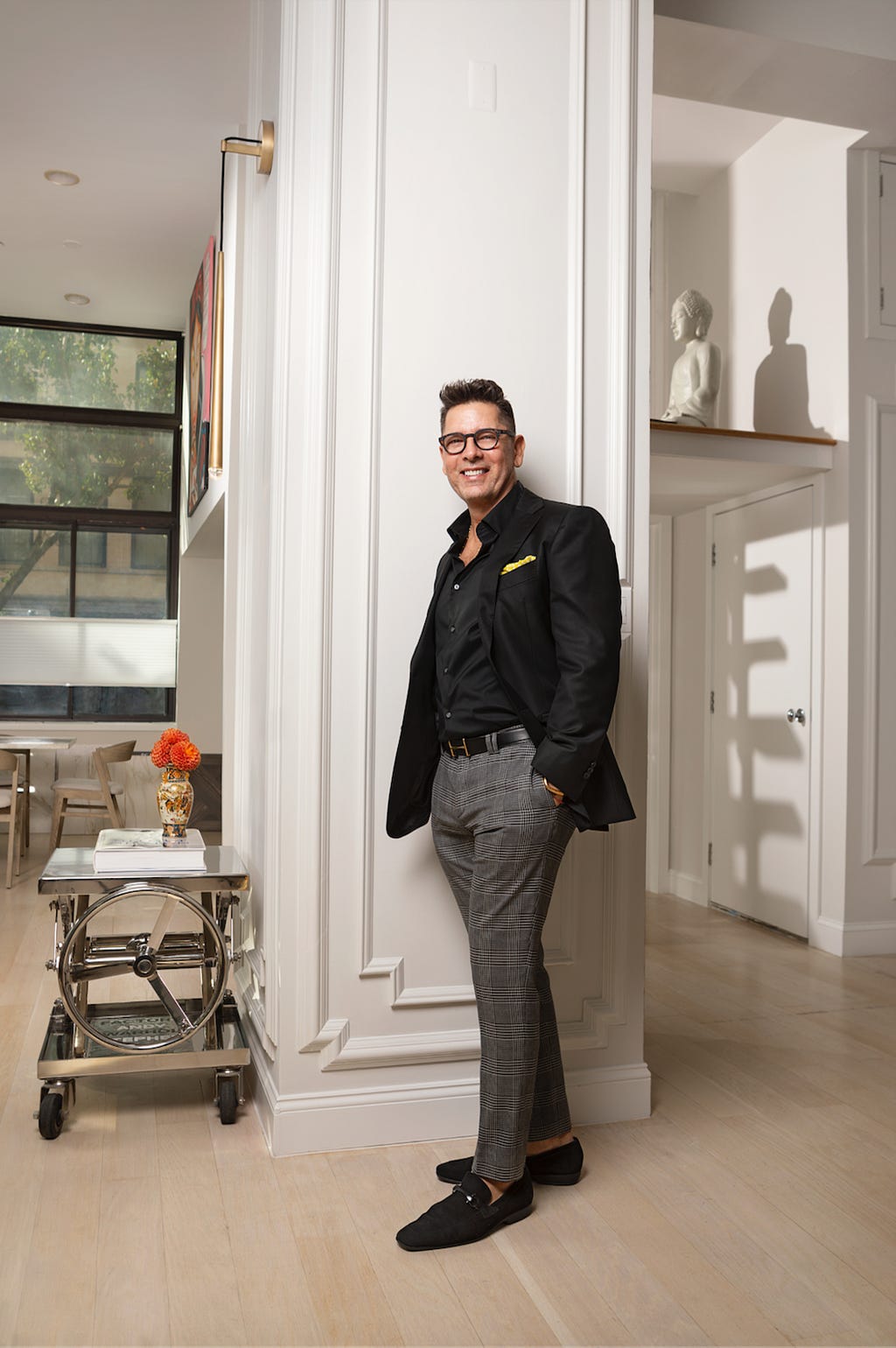
James Stanley is the Principal and Founder of James StanleyNY, a boutique Architectural Design firm in Tribeca, New York. James’s unique vision is backed by 12 years of hands-on experience. He has built his career and success around authentically being himself and meeting his clients where they are. James’ creativity and attention to detail can be seen at The Plaza, Tiffany & Co, and throughout residential homes in the Los Angeles, Miami and New York markets.

5 Things to Spark Joy FINAL VERSION.mp4

Thank you so much for joining us in this series! Before we dive in, our readers would love to learn a bit more about you. Can you tell us a story about what brought you to this specific career path?

A few things brought me to this career path, but mostly my Mother. Growing up with my Mom in SoCal, she owned a General / Engineering / Construction firm where she pushed me to watch and learn how to run the business and manage a team. As a result, I learned how to use my mind and hands to build just about anything. My Mother was also a major antique collector, so I honed my eye on that world as well. When I left SoCal for Miami Beach, I had the opportunity to design and remodel a few small boutique hotel lobbies in Miami Beach through my employment with a small design firm. I quickly became passionate about what I was doing and learned how to apply the skills I learned through my experience working with my Mother and her team.

Can you share the most interesting story that happened to you since you started this career?

One of the proudest moments of my career was working as lead designer at IM PEI’s Centurion and it happened by fate or as some may call luck. During my early career in NYC, one of my real estate acquaintances was designated to lead the Inhouse real-estate team for selling Condos at The Centurion. My contact reached out and asked if I was interested in possibly designing one of the model apartments. Naturally, I jumped on the opportunity. We met onsite and did a walk-through, and with no prior preparation, I came up with a design concept on the spot and presented the design real time. My design concept was well received and I was asked to illustrate the design in a Story Board. After spending few days working on the Story Board, we met at a restaurant, as I didn’t have an office in those days. After presenting to her my design proposal, she loved the concept but did not feel the presentation had the professional edge to compete with the other big design firms who are also being considered for this project, however, she said she will keep me in mind.

Few days went by and as my disappointment was beginning to fade, my phone rang, and to my surprise, it was my contact asking me to meet with the owners of the building immediately and pitch my design because the big firm they were considering were not ready to meet in person and present. I knew right there and then that this was my shot and I had to take it. With no presentation on hand or assistance, I headed to the IM PEIs Centurion, walked into the lobby and met the developer and Mr Trump. During the elevator ride, Mr Trump asked about my design background, etc., then proceeded to ask if I had a choice to design the best unit or the worst unit, which would I choose. I said the worst, as it would be the more challenging and fulfilling to work on. Mr Trump replied with a slight smile on his face“ Right Answer” … We walked off the elevator, and there I was, unprepared and standing in the middle of the worst unit that was different than the unit I previously drafted the design for, with eyes all on me in anticipation for my design pitch. After taking few minutes to get a feel of the space, the developer/owners asked what my thoughts where. I intuitively went into Designer mode and started proposing and recommending ideas and concepts that are best suited for the type of buyers/clientele that would live in the space. After about 10 minutes, both Developer and Trump said “ We heard enough”. After we parted ways, I received a call an hour later from my contact telling “ You blew them away” there only concern was “ Could we afford his Firm” …

Always believe in yourself and give 110%.

Can you share a story about the funniest mistake you made when you were first starting? Can you tell us what lesson you learned from that?

On one of my first design projects, I was fortunate to have my client’s full trust to let my creativity run wild when designing and fabricating several of his furniture pieces. Unfortunately, the thrill of artistry and innovation ruled over practicality, and consequently, I didn’t take into consideration his above average height when making the Principal Suite bedframe footboard. The client was elated with the pictures of the completed bed. After the bed was delivered to the client few weeks later, I received a call on my cell very late in the evening from my client laughing stating that I forgot to incorporate his height into the dimensions of the bed and he had to sleep with his feet up on the footboard. I, on the other hand, was mortified, and disappointed that I Iet this important detail slip through. We remade the frame to accommodate my client’s height.

Lesson: The Devil is in the details. Triple check all details and then check again…

What are some of the most interesting or exciting projects you are working on now? How do you think that might help people?

Brownstone on the UWS and a Duplex in trendy Brooklyn

  • The Brownstone is in CPW’s Historic Landmark District . Steps to New Yorks Central Park make’s for quintessential NYC living. We are gutting the entire home-building, interesting/exciting Architectural-Design features include a Full size elevator to the roof, Roof top garden-entertaining space-glass slide back door system in the Garden level to create indoor-outdoor living. A partial glass floor in the Principal suite letting additional natural light in while putting in Smart Tint at the push of a button for privacy when needed, not to mention a automated Principle Suite closet with Dry-Cleaning capability.
  • Brooklyn Duplex: Located in a very trendy part of BK, this newer construction home was initially purchased by my client as a two bedroom unit with a massive outdoor terrace that we completely redesigned to fit their specific needs and esthetic. Since then, the client purchased the mirrored unit above it, and we are in the process of combining the two units into one large Duplex.

Can you please give us your favorite “Life Lesson Quote”? Can you share how that was relevant to you in your life? “Look Within For True Happiness”

I’ve been blessed to have found the Buddhist Path. The teachings have transformed my life. Like most of us, I used to seek happiness by surrounding myself with materialistic things associated with Luxury. Alas, the pleasure was transitory and passed faster than the trend associated with its extravagance. My meditations allowed me to truly connect with my inner self, which connects me to True Happiness. Don’t miss understand, I still gravitate to Luxury and the Materialistic, I’ve built my Brand on it, But, The Quote-Mantra “Look Within For True Happiness” really helped me focus on what’s important in the big picture… Enjoy what life has to offer, every detail, But be aware these are fleeting moments, and the Happiness we all seek is Within…

None of us are able to achieve success without some help along the way. Is there a particular person who you are grateful towards who helped get you to where you are? Can you share a story about that?

First: My Mother. She instilled an extremely hard work ethic in me and an eye for details.

Second: My first Big client. He trusted me enough to let me explore creatively and pushed me to really think out of the box, which gave birth to a insanely creative project and paved the way to opening my design/construction firm…

Thank you for that. Here is the main question of our discussion. What are your “5 Things You Can Do To Help Your Living Space Spark More Joy” and why. Please share a story or example for each.

1.Paint- Painting the interior of your home the right color is one of the simplest elements about your home design decisions. Selecting a color pallet that best represents your personality will connect you emotionally with your home. Select colors that evoke calmness, contentment, gratitude and relaxation. Whether a single accent wall or an entire room, paint can create Joy…

2.Lighting — Lighting is the single most important design element that your home interior needs. The right lighting adds the element of intimacy, soft or striking, from just a table or floor lamp, to overhead fixtures and pinspots, lighting is key in sparking happiness.

3.Art- Art is particularly my personal favorite design element in a home. I know this may sound like a cliché, but beauty in Art is truly in the “eye of the beholder”. Chose art that speaks to you, that you can relate to, that you enjoy looking at and excited to share with your loved ones. Art comes in many forms and shapes, so don’t limit yourself to traditional paintings and prints, venture outside the box and go for vintage advertisement posters, blown-up back and white photograph that you personally took, framed old post cards from your favorite parts of the world, etc… Art should take you on an emotional experience and evoke pleasure.

4.Accessories- Accessories are the catalysts that tie your wall color, furniture and flooring all together. Pick pillows, area rugs, throws, coffee table books, small boxes, vases, candle holders, etc…that you absolutely love, have a personal meaning and complement your color theme. They are the icing on the cake and the bow on the gift. Accessories can unquestionably stimulate enjoyment in your home.

5.Textures. and last but not least, selecting the right and balance of textures. Choose soft and comforting fabrics for your pillows, throws, cushions and upholstered furniture, but balance with few accent pieces that are bold and daring such as leather and suede. Don’t be afraid to include faux fur for the holidays because the softness of faux fur induces warmth and calmness.

BONUS- Music. music is the ideal way of giving myself up to the warm and embrace of my home. Music sets the tone of the my mood and, depending on my intention, it can help me unplug and relax on the sofa with a glass of wine or help me cross the finish line with my never-ending home chores! In these troubled times, music playing in the background can be a solace and an easy way to turn the disappointments of the day to a Joyful consolation.

You are a person of great influence. If you could start a movement that would bring the most amount of good to the most amount of people, what would that be?

Creating-Tapping into our INNER Peace…You never know what your idea can trigger. 🙂

We are very blessed that some of the biggest names in Business, VC funding, Sports, and Entertainment read this column. Is there a person in the world, or in the US whom you would love to have a private breakfast or lunch with, and why? _He or she might see this, especially if we tag them 🙂

ELON MUSK- My hero and indirectly my mentor. I look up to him because of his ability to take something he has no background or education in and create brilliant innovative solutions that revolutionized the industry. He defied critics who believe it could not be done and proved them wrong by making the impossible possible. His brilliance and courage to bring his ideas to fruition inspires me beyond words.

I believe his motto says it all:

“ Do your 5 yr plan in 1 yr. Even if you don’t get it all done, you’ll be much further ahead”

How can our readers follow you on social media?

Instagram: @ jamesstanleyny

Thank you so much for joining us. This was very inspirational!


James Stanley: 5 Things You Can Do To Help Your Living Space Spark More Joy was originally published in Authority Magazine on Medium, where people are continuing the conversation by highlighting and responding to this story.

Women In Wellness: Ali Kay of INVEST YOUR BEST On The Five Lifestyle Tweaks That Will Help Support…

Women In Wellness: Ali Kay of INVEST YOUR BEST On The Five Lifestyle Tweaks That Will Help Support People’s Journey Towards Better Wellbeing

An Interview With Candice Georgiadis

Your thoughts shape your reality — — If you are constantly telling yourself you can’t, you don’t have time, or that you aren’t good enough then that’s the reality that you will create for yourself. I was so negative towards myself in the beginning as far as what I was telling myself and what I believed about myself. Once I chose to shift that mentality towards telling myself that I can do it, that I am worth it then my entire reality changed. Your thoughts and your beliefs about yourself are key in your journey towards wellbeing.

As a part of my series about the women in wellness, I had the pleasure of interviewing Ali Kay.

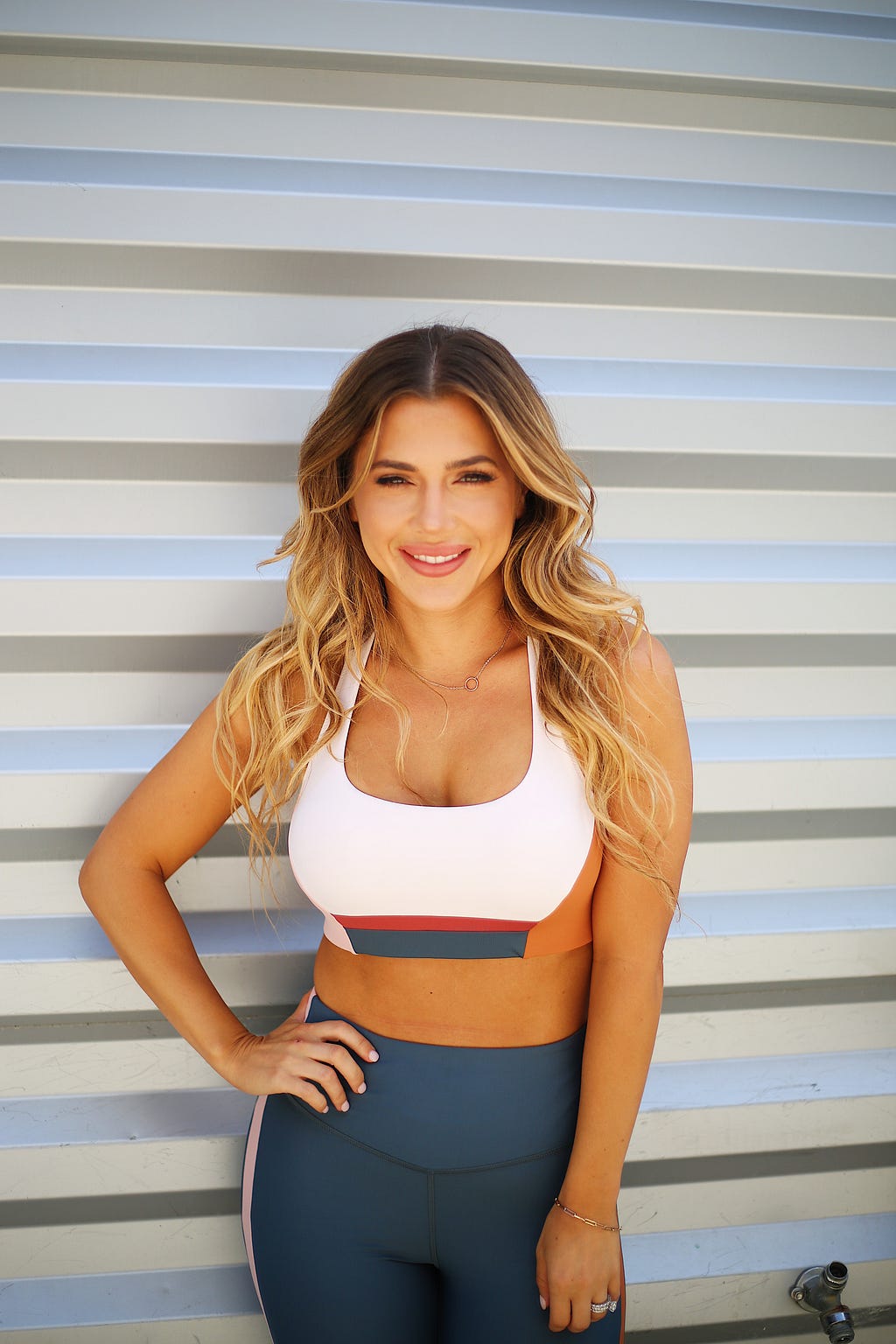
As seen on The Doctors and Women’s Health, ALI KAY the fitness influencer and host of INVEST YOUR BEST has lost over 70lbs in a year and a half and says she has never felt better. Her transformation has gone viral on TikTok (@alexandrawille), earning her more than 388,000 followers.

The mom-of-two has become a TikTok star after detailing how she lost a whopping 70lbs and transformed her body after her second pregnancy. Bottom of FormThe mom was busy looking after her two sons — Lukas, seven, and Ford, two — and felt she had little to no time to prepare nutritious meals for herself.

Thank you so much for joining us in this interview series! Our readers would love to “get to know you” better. Can you share your “backstory” with us?

During my second pregnancy with my son, I indulged in living the pregnancy lifestyle and had an unhealthy pregnancy as I gained a lot of weight during it. After I gave birth, I found myself continuously gaining weight and feeling less and less like myself. I was around 70 lbs overweight (almost 200 lbs for my 5”1 body frame) and it was getting to the point where my maternity clothes, that once fit me during pregnancy, no longer fit me. I looked in the mirror and could barely recognize myself. I started feeling defeated, unhappy and as a mother to two boys, I started missing out on memories with my kids. I wouldn’t go certain places with my family or participate in certain things because I didn’t feel good or even have the desire to go because of how I was feeling overall. I was becoming complacent with my new lifestyle and becoming more and more unhappy and discouraged.

There was a day that I call my “ah ha” my moment where I took the first step towards change. It was like any other day, and I had declined my oldest son’s offer to go swimming with him at a pool. I felt overwhelmingly frustrated as I watched my husband walk out the door with my two boys as I stayed home. I think that was the first day I truly looked at myself in the mirror and gave myself grace. It was at that moment that I realized I needed to make an overall change that had to do more than weight loss and it started with my mindset. Up until that moment, my inner self-talk was extremely negative, and I was against myself. I chose to give myself some much-needed grace. From that day, I started making small steps towards change to become the best version of myself mentally and physically. I think shifting the mindset from seeing was more than a “weightloss journey,” was also key because I wanted to feel good, strong, and just overall healthy. That was the day that I chose to start prioritize my mental and physical health first before anyone or anything else.

The foundation of my 70 lb weightloss/wellness journey included: prioritizing moving my body 30 minutes for my mental and physical health. Some days that just included prioritizing the time to get it done by walking and pushing my son in the stroller or getting imperfect workouts done in my living room with my kids crawling on my back Next was focusing on slow and steady changes to what I was eating to build sustainability, accepting myself at every phase of the process and tuning into my inner self-talk to encourage myself, and gaining the accountability from social media by sharing and documenting my journey. It took over a year to lose the weight, as the progress was slow, but I’ve been able to sustain the weightloss by building those small habits by the small changes I made along the way.

After I had that turning point to just simply start, I also wanted to make it a point to openly share my entire journey & genuinely on Instagram and my IG stories. I shared raw progress photos, videos along the way, I talked openly about feeling discouraged, I shared my moments of celebration, and I relied on my Instagram community for accountability and support throughout my entire 70 lb weightloss journey which later turned into sharing on TikTok. I felt like sharing that this journey isn’t linear nor is it never over it would help or inspire at least one person to show that it is possible with the right mindset and the willingness to put in the work to build a sustainable lifestyle that doesn’t include body perfection, fad diets, extremes, or all or nothing thinking. October of 2020, I launched the “Invest Your Best with Ali Kay” podcast that casually explores what it takes to live your best life mentally, physically & spiritually by focusing on things you can control; your thinking and actions. Nothing is off the table as Ali discusses, shares personal experiences, as well as interviews guests that will give listeners insight in understanding what it takes to step into action in many different areas of their lives. My goal is to continue openly sharing my personal journey, post weightless, to show that the journey in being your best self is never over nor is it a perfect or linear one.

Can you share the most interesting story that happened to you since you started your career? What were the main lessons or takeaways from that story?

I think the most interesting thing that has happened to me since I started to openly share my journey, even to this day, is the support and encouragement I have received from complete strangers on the internet. I think there are so many people who desire to change their lives and want to focus on their wellbeing but don’t really know where to start or what to do. I think just by me being vulnerable and putting myself out there even though sometimes it can be scary to do so, I have been able to find support and give support to others. Recently, I have been very open about how I finally made a leap to become alcohol free because I felt like alcohol was bringing me further away from my goals and not adding value to my life, and as I continue to share my daily updates on social media (I have made it over 100 days without alcohol) I have been getting so much feedback from people how they want to do this too, or have felt the same way etc. And that is something that continues to personally inspire me in my every day life. I have woman especially mothers who message me a lot telling me how they started their own personal journey towards well being or they finally started just moving their bodies little by little and have never felt better both mentally and physically. It continues to be the inspiration and accountability for me to stay on this journey towards wellbeing, as well as know that I am not alone in it.

Can you share a story about the biggest mistake you made when you were first starting? Can you tell us what lesson you learned from that?

The biggest mistake I made when I was first starting was my initial mindset. I didn’t have a lot of progress in the beginning because I was putting my happiness on hold and had extremely negative inner self-talk. It was always the mindset that was “when I looked a certain way, I’ll do this,” or “when I feel a certain way then it will be like…” and as a result I was putting my happiness on hold and missing out on life, especially with my kids. It wasn’t until I shifted my mindset to love and accept myself at every phase of the journey that my progress started to happen and my reality started to change.

Let’s jump to our main focus. When it comes to health and wellness, how is the work you are doing helping to make a bigger impact in the world?

I think by sharing my personal journey openly and authentically which includes the ups and the downs, I have shown a realistic and relatable journey that people see and know that they can do it too. My 70 lb weightloss journey and the journey I continue to openly share on my social media platforms and podcast to promote health and wellness includes one that doesn’t involve perfection or a “perfect body,” overnight success, a diet fad or something extreme. It’s just sharing my journey towards being the best version of myself mentally and physically. My journey involves just starting by shifting that mentality to accept yourself and tell yourself you can do it then prioritizing your mental and physical health by moving your body, making those small and steady steps towards change to create a sustainable lifestyle that works for you and focusing on quality, nutrient dense foods that energized me rather than leaving me feel sluggish. My weightloss journey took a long time and in society, I think we are fixated on “quick fixes” and “instant gratification.” I am promoting health and wellness that promotes prioritizing your mental and physical health, as well as tuning in to your thinking & actions, which is the theme of my podcast “Invest Your Best”.

Can you share your top five “lifestyle tweaks” that you believe will help support people’s journey towards better wellbeing? Please give an example or story for each.

1.Prioritize YOU- When I made the shift towards working on the relationship with myself, how I talked to myself, and prioritizing my mental and physical health, my life began to transform my wellbeing and the relationships I had with my kids, my husband, my business, responsibilities etc. Once I realized that I was a better person all around when I prioritized me, like getting my workouts in, taking time for self-care, I dropped the guilt that comes with putting “you” first especially as a mother. Investing in my mental and physical health has changed my life and when you make yourself a priority you drop the excuses because it’s a must for your wellbeing. It doesn’t matter how busy you are but when you prioritize and invest in your mental and physical health first, you are able to put your best self forward. It’s just like the metaphor when you are on a plane and the oxygen mask drops, you have to put it on yourself first in order to be able to help others put their masks on.

2.Start small! — It’s all about starting small to build long term habits and increase motivation. In the beginning, I could barely do a lot of physical activity so I would just simply walk 5 minutes a day. I slowly built upon those 5 minutes, as my small action started to drive more and more motivation, and then I was able to work my way up to doing 30 minutes workouts/moving. I also did not try to start eating 100% healthy foods, I slowly started incorporating whole and colorful foods to my diet. I slowly started to reduce processed and high sugar foods from what I was eating and focused on smaller portions. My changes were very small, and my overall progress took time, but those small changes made big changes as time went on as I built and felt motivated to keep taking actions towards building a solid foundation towards a sustainable lifestyle.

3. Drop the ALL or Nothing thinking & Set realistic goals — In the beginning, I was guilty of saying okay “tomorrow I am going to eat completely clean for 6 weeks and start working out for 30 minutes every day,” which was extremely different from my current lifestyle at the time. Then what would happen is that I would be good for like 2 days then I would eat a slice or pizza or brownie, miss my workout then completely give up. I think it’s important to understand that it doesn’t have to be perfect/all or nothing. When we think this way, we set ourselves up for failure. It’s about setting up for success and going back to that idea of starting small, making slow and steady changes to build a sustainable lifestyle that work for you. If you’ve never worked out before, set the small goal to move your body for just 5 minutes a day and build upon that. It’s important to understand small actions drive motivation to build that foundation towards wellbeing.

4. — Move your body for your mental and physical health and find a workout you actually enjoy — This is such a game changer. Right away, I became addicted to the feeling I got after a workout as I found I was energized, less moodier, happier, patient etc. I never once, to this day, have regretted a workout. When I first started moving my body, it was just walking and pushing my son in the stroller. But as time went on, I found myself looking forward to the time I made for myself to workout. I was open to trying different types of movement like cycling, boxing etc. and I am constantly switching it up because I like to find new things. Working out can be enjoyable, you just have to find something that you like. And Moving your body can come in so many different forms other the stereotypical “gym workout.” I also found that it doesn’t have to be “perfect” workouts. Many times, I will just get a 30 minute workout in my living room with my kids and there are many interruptions and stopping with the kids but I still finish and get it done because I know I feel better after the workout.

5.- What you tell yourself is what you believe — — When I felt discouraged in the beginning of my journey, I found that I was telling myself a lot of negative things like I can’t do it and I am not capable of losing the weight etc. Or being “healthy” is jus too hard and not for me. My mindset is and was everything and what you tell yourself is ultimately what you believe and shapes your reality. It’s great when you have someone else telling you that they do believe in you but it’s effective when it’s your own self saying that you can do it. Believe in yourself. I think that’s so powerful in achieving a journey towards wellbeing because if you are constantly telling yourself you can’t do this workout or you’ll never be able to eat healthier, then that’s going to be the reality you create for yourself. Once I shifted to the mentality that I can do this, then my initial progress began.

6. Measure your progress by a photos, how you feel, and your clothes…don’t fixate on the number on the scale — Every time I stepped on the scale, I would get off feeling discourage and defeated. The number on the scale was barely moving in the beginning of my journey and as a result, I wanted to give up so many times. I got to the point where I had to ditch the scale strictly for my mental health and measure my progress by photos, how I felt, and how my clothes were fitting. It’s amazing the changes you will see in the progress photos that you don’t get from a number on the scale. You can still be losing inches and gaining muscle without the scale moving and that was definitely the case throughout my entire journey even to this day my body has changed so much as I continue to build muscle that I can see from photos. I also noticed how I was started to smile in my monthly progress photos which showed that I was making even bigger progress in the way I was feeling overall.

If you could start a movement that would bring the most amount of wellness to the most amount of people, what would that be?

The movement for people to prioritize their mental health by consistently moving their bodies. Society understand and highlights the physical health benefits to working out but there is also a big association with working out in society that benefits only “looking a certain way” or highlighting that working out is only for “weightloss” or to achieve a certain “body type” etc. And I think as a result, a lot of people don’t enjoy working out, don’t see it as a mental health benefit or view it as “punishment” in some ways. Working out can be dreadful when you have this mentality towards it and I think majority of society have experienced it this way.

Very early on, as it is the foundation to my journey, I became addicted to the feeling I got mentally when I just went outside and walked for 30 minutes. I could barely do anything in the beginning because of the extra weight I had on my body so I just started with walking. I prioritized every day, going outside and walking for a few minutes with my son in the stroller. That walking gradually became jogging, cycling, weight lifting, boxing etc. And I got it in no matter what, even if it included kids and it wasn’t a “perfect” workout session because it made such a difference mentally. I continued to experience the mental benefits post workout which made it easier to prioritize the time for myself get “moving my body” in because it was for my mental health. Movement became my medicine, even to this day, as I am someone who struggles with anxiety and depression, I move my body for my mental health. I feel patient, motivated, energized, less moodier, and overall happier. Moving your body for your mental health is an evidence-based practice that studies have continued to find reduce the long-term effects of depression and is a mood enhancement as the brain releases endorphins and it increases serotonin. I think shedding light to prioritizing moving your body for your mental health (and movement can look so different for everyone) — whether it is running, weight lifting, walking or just dancing in your living it has mental health benefits that need to be discussed, highlighted, and exemplified as movement & working out is not just for physical health, weightloss or vanity reasons.

To this day, I prioritize moving my body for my mental health and it has completely transformed my life and the way I am resilient to life’s daily stressors. If you go to the doctor because you are stressed out etc, majority of the time, they won’t even discuss the impact moving your body can have on your mental health. I am fully invested in starting a movement for people to understand that it can positive impact both your mental and physical health, as well as it be something that can be enjoyable. I will continue to be a “move your body advocate” because it changed my life once I started prioritizing movement and the best thing is that it is free, accessible to any type of population, and it can be enjoyable; you just have to find the movement you enjoy.

What are your “5 Things I Wish Someone Told Me Before I Started” and why?

1.The journey towards wellbeing and working towards being the best version of yourself is NEVER over. — It’s not about reaching a number on the scale and crossing this imaginary finish line. Every day you have to put in the work and that’s why it’s so important to focus on building a sustainable lifestyle rather than a quick fix. I think once you understand that it’s a lifestyle and the journey is never open, then you understand the process more and allow yourself to be patient. It’s also never easy! And therefore I continue to share my personal journey post weightloss. Just because I accomplishing losing 70 lbs, doesn’t mean I am done, that it’s easy, that I don’t struggle or that I have it all figured out. I don’t. And that’s why the journey isn’t linear either. Every day I make the conscious decision to prioritize my wellbeing therefore the journey and putting in the work will always be continuous.

2.You will have bad days! — I think it’s important to know that you aren’t going to get your workouts in or you might have a day where you aren’t eating the best things for your body. But that’s okay. It’s about knowing that every day doesn’t have to be perfect and you can still keep pushing forward and put in the the effort.

3. Find Accountability friends and like-minded people — This was such a big reason why I shared and continue to share my journey on social media. I found complete strangers messaging me to encourage me, share their personal stories etc or tell me how I inspire them, which inspired me to keep going. Even if you aren’t big into social media, it’s so important to find friends or a community who have similar goals towards wellbeing. These are the people who will support, motivate, and uplift you especially during bad days. I host monthly fitness and alcohol free challenges with Way better for this very reason so that people can find a like-minded community who are invested in being the best versions of themselves.

4. You do have time!!…you just have to make it a priority. — I was guilty of excuses in the beginning as to why I don’t have time to take steps towards my wellbeing or get a workout in. I think we are all guilty of believing that we don’t have time and that’s what keeps us further and further away from our goals. Excuses are a result of poor planning and you do have time for things that you prioritize. That’s why making the conscious choice to make your wellbeing a priority will immediately give you the time. It just has to be a priority to make it happen.

5. Your thoughts shape your reality — — If you are constantly telling yourself you can’t, you don’t have time, or that you aren’t good enough then that’s the reality that you will create for yourself. I was so negative towards myself in the beginning as far as what I was telling myself and what I believed about myself. Once I chose to shift that mentality towards telling myself that I can do it, that I am worth it then my entire reality changed. Your thoughts and your beliefs about yourself are key in your journey towards wellbeing.

Sustainability, veganism, mental health and environmental changes are big topics at the moment. Which one of these causes is dearest to you, and why?

Mental Health! As someone who has dealt with mental health which led me to get my masters in mental health counseling & psychology, it is imperative that we break the stigma around mental health and normalize discussing mental health, as well as bringing to light the evidence-based practices that exist to support mental health in addition to pharmaceutical/prescription treatments. I also want to share the message that a mental health disorder does NOT define you. Diagnosis’ are meant to guide treatment and not define a person. We need to discuss more about how we can prioritize and be an advocate for our own mental health especially through focusing and prioritizing our own wellbeing (what we eat, moving our bodies etc.) I am so open about having discussions about my personal stories and struggles with mental health and the positive impact counseling has made on my life in order to normalize the stigma and hopefully share the message that you aren’t alone in your struggles and that there is hope. Moving my body every single day has been a form of medicine for my mental health and it has changed my life, which is why I am so passionate about sharing this message about moving your body for your mental health. My podcast “Invest Your Best” is an extension of this by sharing how we can take control over our thinking, actions, and lifestyle in order to invest in being the best versions of ourselves mentally and physically.

What is the best way our readers can follow you online?

Instagram- https://www.instagram.com/alexandrawille/?hl=en

Tik Tok- https://www.tiktok.com/@alexandrawille?lang=en

Podcast- https://podcasts.apple.com/us/podcast/invest-your-best-with-ali-kay/id1534620925

Youtube- https://youtube.com/channel/UCtslKw6blle_KfFkYjwiUzA

This was very meaningful, thank you so much! We wish you continued success!


Women In Wellness: Ali Kay of INVEST YOUR BEST On The Five Lifestyle Tweaks That Will Help Support… was originally published in Authority Magazine on Medium, where people are continuing the conversation by highlighting and responding to this story.
Women In Wellness: Carolyn Wheeler of Vella Bioscience On The Five Lifestyle Tweaks That Will Help…

Women In Wellness: Carolyn Wheeler of Vella Bioscience On The Five Lifestyle Tweaks That Will Help Support People’s Journey Towards Better Wellbeing

An Interview With Candice Georgiadis

Don’t over-define your future. It’s great to have clear ambitions, but the more flexible you are, the more resilient you will be too. Despite always being ambitious, I was never able to clearly define my career goals. Now I realize that because I didn’t, I left more doors open, which led to me having more opportunities than I would have had otherwise.

As a part of my series about the women in wellness, I had the pleasure of interviewing Carolyn Wheeler, Chief Operating Officer and Co-Founder of Vella Bioscience, Inc.

Vella Bioscience, Inc. is a femtech company driven to put science in service of every woman’s sexual empowerment. At the company’s core, women come first. Founded by a team of medical researchers, scientists and industry experts, Vella Bioscience, Inc. leads the intersection of proprietary science and luxury beauty for sexual wellness.

Thank you so much for joining us in this interview series! Our readers would love to “get to know you” better. Can you share your “backstory” with us?

I was raised in Tulsa, Oklahoma, the heart of the bible belt. My family was progressive, and I found a tight group of friends in high school who were too. Because the difference was so stark, finding your “group” was perhaps was easier here than in other places. My friendships as a teenager in Tulsa defined how I understand women’s sexual equality today — -our right to pleasure, to choice — -and my understanding of gender and sexuality as a fluid system.

I moved to the east coast for college. Out of college, I worked in book publishing in New York, then I went on to get a master’s degree from Harvard in landscape architecture — -a field that, when it’s at its best, promotes social change by elevating the experience of public life. But my husband and I wanted to start a family, and couldn’t afford to stay in Boston and do that, so we moved back to Tulsa, which is when I started to work remotely for a Boston-based cannabis technology company called Manna Molecular Science, co-founded by a friend of mine from college, Nial DeMena, and Dr. Michael Frid.

This was in 2017, when the widespread legalization of cannabis was still only imminent. The idea that a business was being daylit for the first time, and was getting to write the rules of its existence, was compelling to me. Plus I really liked working with this group of people.

Dr. Harin Padma-Nathan, who was the Key Principal Investigator for Viagra and Cialis and an expert on sexual medicine, soon joined the Manna team. We followed a similar trajectory for the development of Vella as he had for Viagra. And when the results from the studies came back, we knew we had something big on our hands that would require our full attention, and thus Vella Bioscience was born.

The mission of Vella Bioscience is to put science in service of every woman’s sexual empowerment. As such, Vella has allowed me to engage with big questions about equality and social impact.

I still live in Tulsa, which I’m proud to say is the unlikely official headquarters of Vella Bioscience, with my husband and our two young daughters.

Can you share the most interesting story that happened to you since you started your career? What were the main lessons or takeaways from that story?

When we were first starting to pull together educational materials to explain how Vella works, we quickly realized, after speaking with many experts in the field, that there was no visual reference for female sexual arousal. Which is to say that there was nothing available to educate people, even medical students, on the physiological change that happens to the vagina upon arousal — -and there is a physiological change! Needless to say,we have plenty of material like this for men. But nothing existed for women.

So we went out and contracted a board certified medical illustrator from John Hopkins to draw, with our medical team’s instruction, an aroused vagina, which we are led to believe is the first depiction thoroughly grounded in science.

This was a great lesson in realizing that if something doesn’t exist, sometimes there’s a good reason for it, but sometimes there’s not — -and it’s worth asking that question and seeking an answer when faced with a hurdle.

Can you share a story about the biggest mistake you made when you were first starting? Can you tell us what lesson you learned from that?

Not delegating enough, because I was scared something might not get done. But it does.

Let’s jump to our main focus. When it comes to health and wellness, how is the work you are doing helping to make a bigger impact in the world?

Vella Women’s Pleasure Serum, which is a true scientific breakthrough allows cis-women and people with vulvas, to take power over their pleasure, by allowing for increased ease, frequency, and intensity of their orgasm. But besides the obviously wonderful benefit of easier and better orgasms, the bigger impact is that it leads to more equality in the proverbial bedroom. And I’m keen to think, this translates to outside of those walls as well.

By taking women’s sexual pleasure seriously — -by offering tools to increase it, which men have long had at their disposal — -let’s women have the opportunity to honor themselves more and to reach their full physical potential. As a mother of two girls, I’m very glad to be alive at this moment where we are witnessing these kinds of important milestones for women’s empowerment.

Can you share your top five “lifestyle tweaks” that you believe will help support people’s journey towards better wellbeing? Please give an example or story for each.

Respect the fact that your sexual wellness, whether with a partner or solo, is an important part of your overall health and wellbeing.

Track your body’s rhythms — -menstruation cycles, hormonal cycles, sexual activity. Knowledge is power.

Read. Read as much fiction as you read news. Understand the reality of other people’s lived experiences, but also keep your imagination alive about the possibilities of others.

Make your own personal mission statement for what you want your impact on the world to be. The scale of the impact you outline doesn’t matter. But commit to it and try as best you can to support it in everything you do.

At Vella we say, “women come first.” Which is as good of a lifestyle hack as any.

If you could start a movement that would bring the most amount of wellness to the most amount of people, what would that be?

Free universal healthcare. Until we have that, it’s hard to imagine anything else that could or should be done that would increase the most amount of wellness to the most amount of people.

What are your “5 Things I Wish Someone Told Me Before I Started” and why?

Don’t over-define your future. It’s great to have clear ambitions, but the more flexible you are, the more resilient you will be too. Despite always being ambitious, I was never able to clearly define my career goals. Now I realize that because I didn’t, I left more doors open, which led to me having more opportunities than I would have had otherwise.

There’s a lot of people who deeply care about women’s sexual health — -most are women, but there’s a ton of men too. I entered this thinking it would be a hard uphill climb. That’s been true to some extent, but there’s a good population of people who realize they don’t know enough about female sexual function and they truly want to learn.

In most cases, when people are explaining something finance or money related, they’ll explain it in a way that is much more complicated than it really is. A lot of times this means they actually don’t understand what they’re talking about either, so don’t be intimidated.

Always question what school is good for and what it’s not good for. Don’t trust that it is more important than real world experience. Because there’s teachers there too.

The best advice I’ve ever gotten, which I wish took more seriously from the start, was from my mom. In my early 20s, she said, “If you don’t do it, some other idiot will.” The longer I live, the more I learn the depths of that truth, for better or worse. I wish I had fully embraced this the day she said this. And that’s not saying I’m so great. I’m just another idiot. But if I don’t do it, just another idiot will — and they might be a bigger idiot than I am.

Sustainability, veganism, mental health and environmental changes are big topics at the moment. Which one of these causes is dearest to you, and why?

Climate change is a hard one to beat, but in terms of my day-to-day working life, mental health as a cause is the one I feel closest to in terms of being any kind of influence on. Sexual wellness is an important aspect of one’s overall wellbeing.

What is the best way our readers can follow you online?

Follow @vellabioscience on instagram and facebook. I don’t have any public personal accounts. I am a pretty private (and boring) person, which, I like to think, means I can be bolder and wilder in my public ventures.

Thank you for these fantastic insights!


Women In Wellness: Carolyn Wheeler of Vella Bioscience On The Five Lifestyle Tweaks That Will Help… was originally published in Authority Magazine on Medium, where people are continuing the conversation by highlighting and responding to this story.

Inspirational Women in STEM and Tech: Julia O’Mara of Pickle Poll On The 5 Leadership Lessons She…

Inspirational Women in STEM and Tech: Julia O’Mara of Pickle Poll On The 5 Leadership Lessons She Learned From Her Experience

An Interview With Candice Georgiadis

Confidence is key. This point corresponds to the assumption that men are the ones in charge within STEM or Tech meetings. Your confidence will make others confident in you. It will also empower you to drive home your key points and reach your goals.

As a part of my series about “Lessons From Inspirational Women in STEM and Tech”, I had the pleasure of interviewing Julia O’Mara.

Julia O’Mara is the Co-Founder and Head of Growth of Pickle — a social commerce platform that combines the efficiency of online shopping with the social benefits of in-person shopping. She previously worked as a product manager at Blackstone, where she focused on creating data analytics and data visualization solutions for the fundraising teams. Prior to Blackstone, she studied Materials Science Engineering as well as Entrepreneurship at the University of Pennsylvania.

Thank you so much for doing this with us! Can you tell us a story about what brought you to this specific career path?

After graduating from Penn in May 2019, I moved right to New York City and started as an analyst at Blackstone. The beginning of my job was great and I learned a ton from my team and peers. Unfortunately, the pandemic started after only 9 months in the city, so I went back to Maryland to stay with my parents. Working from home was quite an adjustment and I definitely missed working with my colleagues in real life. Brian, my Blackstone co-worker at the time, told me a little bit about an idea (Pickle) he was working on and I was immediately interested. I started out helping with the design and a bit of the brainstorming, but before I knew it I became heavily involved with the company. I always thought I might get into the startup world one day because of how much I enjoyed my Entrepreneurship classes at Penn. I realized this was an incredible opportunity to make the startup jump, so in the spring of 2020, I left Blackstone and started working on Pickle as a full time co-founder.

Can you share the most interesting story that happened to you since you began at your company?

An interesting story that has happened to me since starting at Pickle was navigating one of my busiest days where I was wearing quite a few hats. We had just onboarded our summer interns and I had been working on my management experience. I was looking at my calendar and saw an absolutely booked day the next week. I remember getting a bit nervous about how packed it was going to be and if I would be able to manage it. This packed day finally came and I jumped into it. I started off the day doing some research on the social commerce market, moved onto rolling out a few influencer campaigns, negotiated a new influencer partner contract, conducted several user interviews, strategized some new features and enhancements with Brian, put together some marketing collateral and social media plans, filmed two TikToks, and then wrapped up the day with a presentation to a college entrepreneurship club. That was the day I remember realizing this is exactly what I want to do. Although it’s challenging to be a founder, it is incredibly rewarding and exciting to be such an integral part of a company. I look back at this day and think it’s funny that I was a bit nervous to accomplish it because this is how the majority of my days look now.

Can you share a story about the funniest mistake you made when you were first starting? Can you tell us what lesson you learned from that?

One funny mistake I made pretty early into my time at Pickle was a classic “work from home” mistake. I had just finished some independent morning work and then had a call with our user acquisition and marketing team. This was an internal meeting, so naturally I was wearing an old college sweatshirt and a messy bun. When trying to join the Zoom meeting, I accidentally clicked on Brian’s personal meeting room link instead of my own (we used his so often it was saved in my notes). I then entered the middle of an intro investor call looking incredibly casual and confused. The investor was super nice about it and Brian used it as a good time to introduce his co-founder. I’m not really sure if the lesson learned is to either always look nice on Zoom or to always use the calendar invite instead of a saved Zoom link (probably the latter).

What do you think makes your company stand out? Can you share a story?

The name and logo … kidding! Our commerce-focused social graph makes Pickle a unique company because we are building a community that is truly centered around enhancing the online shopping experience. We tackle three essential groups of influence on Pickle. We give our users access to their trusted personal network, their favorite fashion/style influencers, and also larger scale style communities that consist of people with similar style preferences. Feedback and inspiration from these groups of people, allow users to feel confident in their purchase decisions and experience the valuable social interactions that occur within in-person shopping.

Are you working on any exciting new projects now? How do you think that will help people?

Yes! We’re currently building out a Discover page that better connects our users to other users with similar style preferences. This includes highlighting verified fashion influencers and their curated communities. These communities consist of users who love an influencer’s style and therefore share similar style preferences and fashion taste. One of the main benefits of these groups is that users can give and receive feedback at scale with other Pickle members who have relevant opinions. For example, if a user is looking to buy a dress for a formal event, they are able to get inspiration from an influencer’s community and also ask for their feedback around a few dress options. Access to these opinions is incredibly helpful to make confident purchase decisions and increase overall confidence when wearing that purchased item.

Are you currently satisfied with the status quo regarding women in STEM? What specific changes do you think are needed to change the status quo?

I don’t think I’ll be satisfied with the status quo regarding “women in STEM” until there doesn’t need to be that designation. There are incredible groups and programs for women in tech because we’re such a minority. In the future, I hope this designation won’t be as necessary because the field will be more equally distributed among both men and women. Changes need to start with early education around the STEM fields. Gender stereotypes around certain jobs and careers should be removed and both boys and girls should be equally educated about the industry and career opportunities.

In your opinion, what are the biggest challenges faced by women in STEM or Tech that aren’t typically faced by their male counterparts? What would you suggest addressing this?

One of the first challenges that comes to mind is the assumption that the men are in charge in the room (or virtual room). This assumption definitely puts a woman in a more challenging spot when starting or leading a meeting. My recommendation is to immediately start/lead the small talk before diving into the meeting — this will help set the tone that you’re going to be leading the meeting.

Another challenge is walking the line of how assertive to be. Women can be perceived as rude if they are too assertive, but also perceived as a push-over if they aren’t assertive enough. Men don’t typically deal with this challenge and can be as assertive as they want. My recommendation here is to lean on the side of being more assertive than passive and pay close attention to the room as you are speaking. The real-time reactions and body language can help you navigate the best way to interact with your colleagues.

Finally, since women are often a minority in STEM fields, they are often in male dominated conversations that might be around topics they aren’t as familiar with. To give a personal example, when I was at Blackstone people in the office would often talk about football games from the weekend. Regardless of gender, I always want to be educated and contribute to a conversation, so I started every Monday morning running on the treadmill in front of a TV that showed all of the game highlights from the weekend. I was then able to contribute more in these conversations and enjoyed getting more knowledgeable about the season. I think leaning into some of these topics so you can connect better with colleagues is important regardless of who (men or women) are dominating the conversation.

What are the “myths” that you would like to dispel about being a woman in STEM or Tech. Can you explain what you mean?

One myth about being a woman in STEM is that our strengths are mainly in the academic area. We are assumed to be very smart and technical, but not necessarily social or business savvy. While everyone has their own personal strengths and weaknesses, many of us are talented within the STEM fields and can also lead a compelling presentation, network effectively, and strategize at the company level.

What are your “5 Leadership Lessons I Learned From My Experience as a Woman in STEM or Tech” and why. (Please share a story or example for each.)

  1. Confidence is key. This point corresponds to the assumption that men are the ones in charge within STEM or Tech meetings. Your confidence will make others confident in you. It will also empower you to drive home your key points and reach your goals.
  2. Prioritize getting to know your team. I think women can often be excellent listeners and we should lean into that. Everyone likes to be heard and valued. As a leader at Pickle, I include personal check-ins or small talk at the beginning of most meetings to ensure I get to know my team at a deeper level and get a feel for how things are going outside of work.
  3. Lead in a “come with me” style. Instead of telling someone what to do, try to work with them to get started on a new project or initiative. I am all for the “jump in the deep end” learning curve, but it’s important for team members to feel like they have the tools and confidence from leadership in order to learn to swim in the deep end.
  4. Perception of your leadership is incredibly important. People often remember the negative or bad things that happen. As a leader, you’re automatically held to a higher standard and much more closely observed. For example, if you’re dealing with some tough personal stuff, it might be better to take a personal day or postpone a meeting than to come across as potentially unprofessional or unfocused.
  5. Admit when you are wrong or made a mistake. Transparency from leadership promotes incredible trust among a team and this should be emphasized when something goes wrong or a mistake is made. Nobody likes to be wrong, but it’s better to readily admit it when you are. One example of this was when I was reviewing a design our intern had put together. We spent a good part of the meeting debating a UX component and ended up going with my side of the argument. I later did a bit more research and thinking and realized I was wrong. I quickly sent over a message to our intern that started with “I was wrong” and then went on to tell them we should go with their original UX design. My ownership of being wrong made it possible to keep a great design relationship moving forward — this ensured everyone was confident in sharing their opinions and feedback.

What advice would you give to other women leaders to help their team to thrive?

My advice to other women leaders who are looking to help their team thrive is to carefully listen to their team and learn from them. I think all leaders always have room for improvement and the best way to do that is to listen to what the team needs. Do they need more instruction? Do they need focus time blocked off? Are they motivated right now or starting to feel burnt out? All of these questions are imperative to ensure a team is operating at its maximum potential. The best leaders I have worked with are extremely good at receiving feedback and implementing changes to improve their team’s experience. I also think it’s important to listen to your team passively — not just by listening to the answers of your questions. Pay attention to their actions and their overall morale. Someone who seems down at a team meeting might need a more personal one-on-one check-in. Prioritize the time to get to know your team at both the professional and personal levels so you can support them in both ways as best you can.

What advice would you give to other women leaders about the best way to manage a large team?

We are a fairly lean startup, so I haven’t had experience managing a large team yet. However, I would love any and all advice from other women leaders so I can be better prepared when we scale our team!

None of us are able to achieve success without some help along the way. Is there a particular person who you are grateful towards who helped get you to where you are? Can you share a story about that?

John Diaz, my first manager at Blackstone, greatly impacted the beginning of my professional career. He was an awesome first boss — he was always fully transparent, provided truly constructive feedback, and cared about my professional career both at Blackstone and outside of Blackstone. He helped me succeed in my role and pushed me to always strive for excellence. I remember one of our first one-on-one meetings where he told me we could use that time to discuss career development. Even after we stopped working together, we stayed in close touch and he was one of the first people I talked to about making the jump to start Pickle. He was so supportive and encouraged me to take the opportunity to start a company. I couldn’t have asked for a better first boss/mentor — thanks for all of the support and guidance, Diaz!

How have you used your success to bring goodness to the world?

My success and experiences throughout my collegiate career at Penn, my time at Blackstone, and my leadership at Pickle have allowed me to give back to students who are looking for general career advice or who are interested in potentially pursuing entrepreneurship. I’ve attended several alumni panels hosted by Penn and have given presentations to student groups across other universities. I had a lot of help along the way and I found it incredibly valuable to listen to alumni or recent grads speak about their experiences after college. I will always make time for a coffee chat or panel to help give back to students who are looking for advice around professional development, being a woman in STEM, or even just what it’s like to live in NYC after college. If you’re a student or someone looking for advice or a conversation around some of the industries I have experience in, please feel free to reach out to me (julia@picklepoll.com) — I’d love to chat!

You are a person of enormous influence. If you could inspire a movement that would bring the most amount of good to the most amount of people, what would that be? You never know what your idea can trigger. 🙂

I would love to inspire a large mental health movement that de-stigmatizes the conversations around mental health starting at a very young age. I don’t think I knew much about this area until college and wish I had learned about it earlier. It would be great to start these conversations and educational classes as early as middle school. Normalizing conversations about mental health will reduce the stigma around asking for help and utilizing resources such as therapy. If we can build a strong foundation around prioritizing mental health and having access to mental health resources, this will have a huge impact on the generations to come.

Can you please give us your favorite “Life Lesson Quote”? Can you share how that was relevant to you in your life?

You can’t control what happens, but you can control the way you react to what happens. My therapist told me this during one of our sessions over the pandemic. We had been discussing best ways to deal with stress around some personal life events that had been challenging to navigate. As someone who often strives for perfection, it’s difficult when things don’t go as expected. At a startup, priorities are constantly shifting/evolving, and things don’t always go according to plan. Controlling my reaction to bumps in the road and choosing to have a positive attitude has been incredibly helpful for my overall mental health. Instead of dwelling on what went wrong, I focus on my reaction and what I can control. It also helps that I have an awesome co-founder to navigate these challenges with. We love to throw in a bit of humor after something doesn’t go as expected.

We are very blessed that very prominent leaders read this column. Is there a person in the world, or in the US with whom you would love to have a private breakfast or lunch with, and why? He or she might just see this if we tag them 🙂

I would love to have a private meal with Sara Blakely, the CEO of Spanx. I find her story inspiring and I love the way she gave back to her entire company after selling her majority stake in the company. I’d love to learn more about how she navigated scaling her business and what her most valuable lessons learned are as a female CEO.

Thank you for these fantastic insights. We greatly appreciate the time you spent on this.


Inspirational Women in STEM and Tech: Julia O’Mara of Pickle Poll On The 5 Leadership Lessons She… was originally published in Authority Magazine on Medium, where people are continuing the conversation by highlighting and responding to this story.
Tim Hall: 5 Things Anyone Can Do To Optimize Their Mental Wellness

An Interview With Candice Georgiadis

Be mindful of who you surround yourself with — Our emotions and energy constantly feed off by our surroundings. One thing that not only helped my mental wellness, but also my growth in life, was surrounding myself with good people who have similar interests. Here is a quick tip: Begin a hobby or join a group of like-minded people who will give you a feeling of belonging and motivation, plus inspire you to grow more.

As a part of my series about the “5 Things Anyone Can Do To Optimize Their Mental Wellness”, I had the pleasure of interviewing Tim Hall.

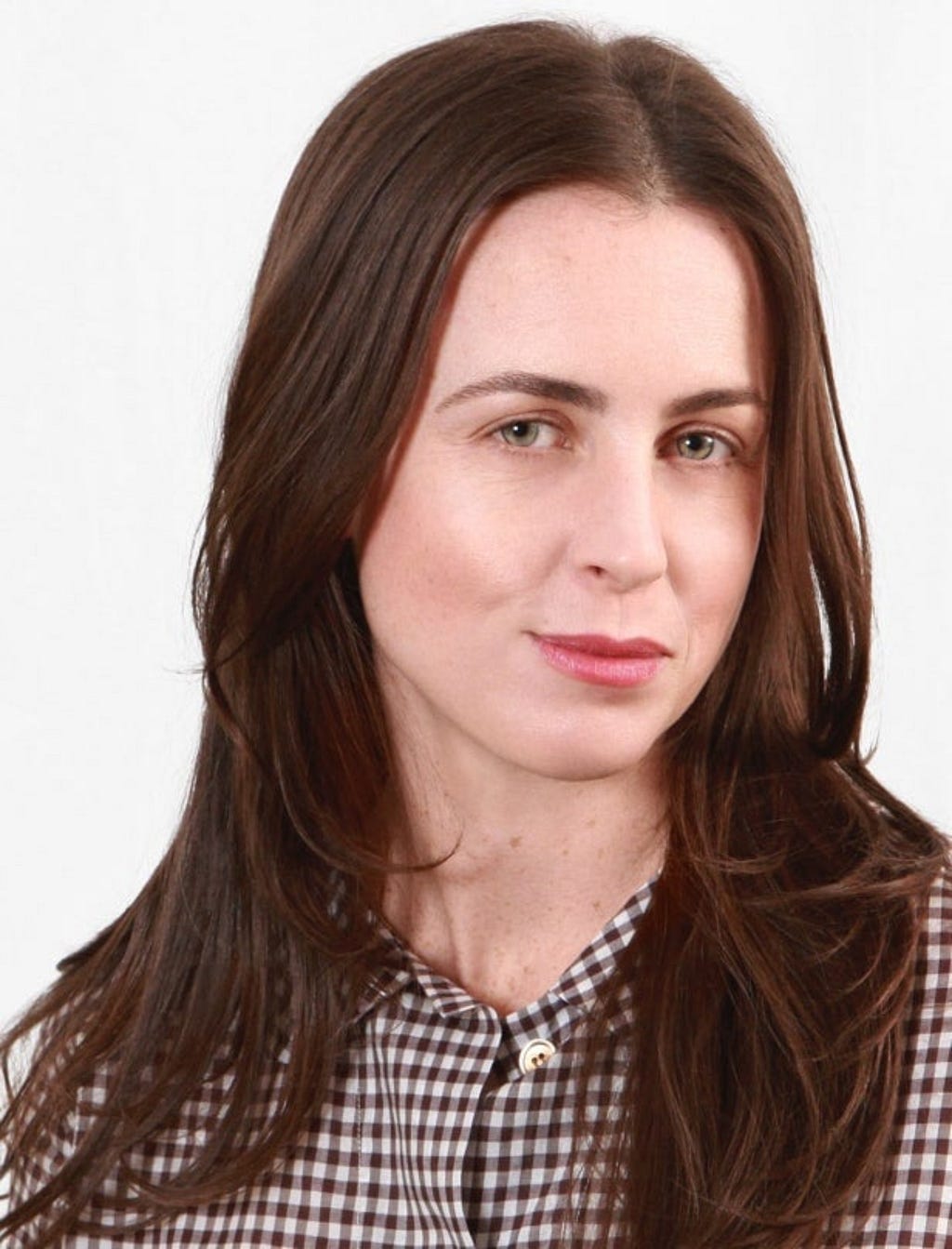
Former Australian Rules Football player and mental health sports coach for 13 years, Tim Hall was named the 2015 Coach of the Year in Australia. Additionally, Tim has been a business entrepreneur for 12 years and is fully licensed in breathwork practice.

Recently relocating to Los Angeles, Tim’s years of professional coaching have equipped him with the experience to create an exceptional and unique understanding of the ways in which we can achieve more of our life’s desires and goals.

Thank you so much for doing this with us! Our readers would love to “get to know you” a bit better. Can you share with us the backstory about what brought you to your specific career path?

I always had a nurturing character from a young age. As a 13-year-old, my mum suffered from MS, so many of my childhood years were spent coming straight home from school to look after her. There was no other option as she needed us kids, which instilled a value to always be there to help others. After she passed away when I was 15, I went through the next six years experiencing heavy emotions, feelings of failure and self-doubt, and with no strong guidance to help me understand this, I didn’t achieve the level of success and true capability at school and in sports. I thought of myself as a failure, and I lived that way. There was blame put on others who were not there to support me through it, but what I didn’t realize as a young man at that point was that everyone else was experiencing their own tough journey and doing their best to survive personally.

I have deeply reflected over that period of my life to not only forgive myself and others but to be proud of stepping up as a child to make my mum’s life the best it could be. I had to do things that no other 13- year-old should experience, and this is why I am a motivated person today. I know the toughest part of my life is done, so there are no excuses to except failure again.

After my mum passed, I slow motioned through the years that followed and it wasn’t until about the age of 22 that I started to change my entire perspective on myself and what I could achieve in life. I had a full-time job which taught me responsibilities, and my enjoyment and work ethic toward football started to grow. I began feeling more in control and knew that there was a lot I wanted to still achieve. I saw my past experiences as the foundation for my newfound feelings, and I started to investigate different ways of personal growth. I signed up for courses, retreats, and did research on expanding my mind to better my routine and my behaviors.

And so, my journey began… it led to playing semi pro football, studying more, taking a chance on a new job, investing my money instead wasting it on pointless things, and I bought a home. I was investing in my future. My mindset was growing along with confidence. I gained awareness in my strengths and was witnessing the best version of me and my life. As my playing career was coming to an end, I stepped up out of my comfort zone again to coach high-level football. This challenge is where I really discovered my leadership, management skills and relationship building qualities. It was a big step, but one my foundation prepared me for.

I was dealing with all levels of players, and because of my journey, I could see people’s true ability before they even could. I loved using sports as a vehicle to help guide them to discover this for themselves. This was the flame I always had inside me, but now it was burning bright!

As a coach my learning never stops, so even though I was on a solid path for more opportunities, I took my development to a whole new level. Not in modern coaching education… I wanted to expand my mind from a different angle. So, during off-season my journeys would continually take me to Bali where I went to learn and discover a more spiritual and holistic approach in my mind and see what would happen when I combined it all together. This helped mold my current coaching beliefs and the daily behaviors in the way I live my life.

As a former athlete, I knew this different approach would help other athletes discover a different side to them; to get out of the way of their old beliefs and let them see their true powerful side.

I knew with my life journey the highs and lows that I went through and the mindset to shift my perspective in life and sports could help other like-minded sports players to fast track their growth and success on the field and off.

So here I am!

Working one-on-one with athletes and business leaders to shape their mindset through self-awareness, behaviors and routines, and giving them a conscious and sub-conscious roadmap to help discover their best path and stay on it.

Can you share the most interesting story that happened to you since you started your career?

A big part of my work is doing Visualization Breathwork and while I was still living in Australia, I was working for a professional football team doing some breathing with a selected few players during pre-games. I was guiding them to be focused and mentally prepared and aligned to their role. One day another player asked if he could join in the session after hearing about all the good results. Normally I would say no because he hadn’t done a session before, but I knew he was an overthinker and would allow his nerves to get the better of him before every game. It was clear that the session would defiantly calm him down and give clarity on what his role was to perform at a higher level.

So, we all jumped in a quiet room and did the breathing session. Afterwards this player had a dazed look to him which got me worried that he might pass out. But I kept an eye on him by chatting and making him drink water. As game time got closer, I could see his focus and confidence was different than normal and his first four minutes of the game was unbelievable! I don’t think I had seen a better start to the game by an individual player in all my years involved in football. The ball was a magnet to him, even when he got knocked on the ground, he would jump straight back up and the ball would just find him. Contest after contest he fought for the ball and found it again in a dangerous position and finished with the first goal of the game. He looked a level above everyone else out there, and to stay involved and as focused as he was takes extreme mental strength. Those fours minute were a turning point for him as a person and a player.

Afterwards we spoke and he told me that he never felt like that before a game. He felt calm and confident to go out there and just play. This is probably the most instant performance result from doing pre-game breathwork I had ever seen. I see players’ games show improvement over time, but his was from the very first minute!

He now swears by my breathwork routines and continues to practice it prior to every game. This has led to consistent weekly performances, and in fact, he won some elite individual awards that year.

Watching his journey, I knew the power that breathwork has in order to be mentally ready, but not just for athletes, for all of us!

Can you share a story with us about the most humorous mistake you made when you were first starting? What lesson or take-away did you learn from that?

Luckily for me, I haven’t really had one. I’ve been stumped on answering certain questions I have received, but vulnerability is not a problem of mine, so what someone might see as an embarrassing mistake, I embrace it as a lesson and motivation to get it right.

None of us are able to achieve success without some help along the way. Is there a particular person who you are grateful towards who helped get you to where you are? Can you share a story about that?

I would credit a group of people over just one. I’ve worked hard and taken risks to achieve everything to get myself to the point I’m at now, but all the people along my journey have been a big part of it. I believe everyone adds value to your life. From a young age, I have listened and learned off football coaches, business mentors, spiritual leaders and of course, my father. All these people have given me great values for success, but I haven’t always agreed with everyone along the way, which in some instances has been my strongest lessons to my success.

As you may tell, I am an open book and have never latched on to one person. I love to share and learn off numerous people as it allows me to continually have a growth mindset, different perspectives in situations, and be in a more balanced mindset in my day-to-day thoughts, decisions and actions.

What advice would you suggest to your colleagues in your industry to thrive and avoid burnout?

I see a long-term change in all my clients when they have clarity in their true-self and their desired journey. This is when their thoughts, routines and behaviors will shift to consistently be more aligned with their vision and goals. Waking up each day with this clarity brings life fulfillment, motivation and focused energy to stay on track, but also exceed expectations.

Think about it! When you need to do something you don’t want to do, what are your thoughts and motivation levels like? You will make excuses and avoid the job for as long as you can because it doesn’t align with your vision and goals. Obviously, we all still must deal with those things like cleaning the house or car, but even then, the more you live aligned to your vision, the easier you will find motivation and see a desired outcome to take the required action.

That is why elite people and athletes have long successful careers at a top level. Even though they will get mentally and emotionally challenged more than you throughout a day, they are balanced in their thoughts and have clarity in their vision and goals, so their belief in those moments is one of opportunity to better themselves.

My biggest tip to get this clarity is to become more present every day. I guide people in breathwork, but finding stillness, meditation, yoga, journaling are great options too. The world is crazy with emails, social media, news, and more. The energy of the world, as we speak, has everyone on high alert. So, your personal time to be more present and away from distractions has never been more important.

Reflect on your thoughts, routines, habits, and your goals, and I guarantee you if there is a disconnect or uncertainty between them, you will be experiencing stress, anxiety, fear in your life today. This leads to one outcome… being burnt out.

What advice would you give to other leaders about how to create a fantastic work culture?

We all have different strengths as leaders, so understand yours and lead by example in ways that inspire you. When your actions inspire you, your actions will inspire your team. So, always lead from your strengths and not someone else’s.

A leader creates a calm and confident atmosphere, always motivating your team to step up. Everyone wants a purpose, so give your team responsibility to have one. When we have a purpose, we have more care in the result.

Build relationships amongst your colleagues on trust and respect. Just because you’re a leader doesn’t make you any different from them. Yes, your responsibilities do, but if you want trust and respect from your team, you must give that to them first.

When I am in a leading position, I focus on these areas because all my success as a coach or in business has come from here.

Ok thank you for all that. Now let’s move to the main focus of our interview. Mental health is often looked at in binary terms; those who are healthy and those who have mental illness. The truth, however, is that mental wellness is a huge spectrum. Even those who are “mentally healthy” can still improve their mental wellness. From your experience or research, what are five steps that each of us can take to improve or optimize our mental wellness. Can you please share a story or example for each.

  1. Find some stillness everyday — With television and social media our minds are always racing. By finding five minutes of stillness through meditation and breathwork, your thoughts will begin to process life differently; you will be calmer in the mind, you will give your mind a break to refocus. This is something I do each day, and when life is hectic, and I need to be more present. Close your eyes and practice being still.
  2. Movement — I exercise daily to help wind down from a busy day and prepare for tomorrow. Exercise allows my mind to get creative. An exercise can even be the simple act of stretching. By doing movement all down our bodies our brain releases endorphins which is a trigger for positive feelings.
  3. Journaling — Our minds are computers, always trying to process everything that comes into our lives. I believe, especially for athletes, that we overthink situations and life in general. By writing it on paper your words will allow you to not simplify your thoughts but start processing them in a more balanced mindset. I started journaling three years ago, focusing on gratitudes, affirmations, goals settings, and self-love, and each day it still has a huge effect on my mindset and how I start my day.
  4. Sleep — Our minds are like cars that need the right fuel to function properly. Sleep is that fuel. I was coaching an Australian athlete who would struggle to turn his video games off at night. He would sleep in during the mornings and the mindset from when he got up was one of lack and frustration. I challenged him to change those patterns, stop playing video games, and wake up at a more productive time. Within days he called and told me how different he was feeling mentally.
  5. Be mindful of who you surround yourself with — Our emotions and energy constantly feed off by our surroundings. One thing that not only helped my mental wellness, but also my growth in life, was surrounding myself with good people who have similar interests. Here is a quick tip: Begin a hobby or join a group of like-minded people who will give you a feeling of belonging and motivation, plus inspire you to grow more.

How about teens and pre teens. Are there any specific new ideas you would suggest for teens and pre teens to optimize their mental wellness?

When I work with high school athletes, I start with discovering the true version of themselves.

I do this by using daily routines of positive practices to open their mind and set some positive intentions for the day. A simple act of expressing three gratitudes towards others and the world around you will start your day in an appreciative mindset and manner. An affirmation to re-affirm who you are, your strengths, and the best version of you that you know you can be.

Doing a meditation or breathing practices, even for a few minutes a day, provides space to think, re-focus, set daily goals, and just have a few minutes away from the fantasy world around phones and social media.

Diet and exercise are important to instill at an early age. Diet for energy, weight, skin, and health. Exercise to get them out of the house to breathe fresh air and get away from technology teaches them social skills and helps to build friendships, better behavior and self-esteem.

But in the end, I tell parents that you are the one to set the example for your kid(s). Teens are all by products of their surroundings.

Is there a particular book that made a significant impact on you? Can you share a story?

I can’t say I have a particular book that has made a huge impact on me, but I love listening to podcasts about personal growth, especially by Dr. John Demartini as his beliefs and mindset are very similar to my own.

I also love watching documentaries about athletes and their life behind the scenes. Everything an elite athlete does, down to the finer details in preparation, their expectations, dealing with fame, and everything that comes with that, gives me a great understanding on how the mind works.

You are a person of great influence. If you could start a movement that would bring the most amount of good to the most amount of people, what would that be? You never know what your idea can trigger. 🙂

It would be a breathwork movement for adults and for kids in schools. I have been doing this for over four years now and was hooked from day one. It has changed my life in so many positive ways and I have seen the growth in clients’ energy and mindset after each session.

Athletes I have worked with have gone from uncertainty to confidence, fear to focus. Their thoughts towards life, preparation and game have levelled up. Not only athletes but everyone sets high personal expectations. We are expected to be more and mimic others, which has been a contributor to rising mental health issues.

My goals are to bring more voice to this practice. Team up with a research team and practice breathwork on different patients to see the effects over time. I know it would help relieve comfort in patients and improve mental state. Our greatest power is our breath and it’s time we maximize our health through it.

Can you please give us your favorite “Life Lesson Quote”? Do you have a story about how that was relevant in your life?

“You may be born with certain levels of talent, but you have to continue to grow and evolve as an athlete and person and make the next day better than the previous.” — Tom Brady

This is me. My life changed when I decided to expand my mindset and was willing to grow every single day. And note, the biggest change from doing this hasn’t been my success (but it would for most). It has been my fulfillment in life. Every day I am the true version of myself and push the boundaries so much more than I thought I could.

I have come out from being a quiet, low confident kid to building wealth, travelling the world, and doing something that excites me each day I get out of bed.

What is the best way our readers can follow you on social media?

The best way to experience my content is through Instagram: @Timh_pro_minds and through my website www.timhallbranding.com where you can do weekly breathwork practices for athletes and/or everyday life. Work with me one-on-one and feel free to personally contact me with any questions!

Thank you for these fantastic insights. We wish you only continued success in your great work!


Tim Hall: 5 Things Anyone Can Do To Optimize Their Mental Wellness was originally published in Authority Magazine on Medium, where people are continuing the conversation by highlighting and responding to this story.

Women In Wellness: Gail Rudolph of Gail Rudolph Collaborative On The Five Lifestyle Tweaks That…

Women In Wellness: Gail Rudolph of Gail Rudolph Collaborative On The Five Lifestyle Tweaks That Will Help Support People’s Journey Towards Better Wellbeing

An Interview With Candice Georgiadis

Be kind to yourself, laugh at and learn from your mistakes. Society tells us mistakes and failures are unacceptable, but both are part of being human. Other people will see our mistakes and that’s okay because they make us stronger and better.

As a part of my series about the women in wellness, I had the pleasure of interviewing Gail Rudolph.

Internationally sought-after Power Expert Gail Rudolph is the USA Today and Wall Street Journal bestselling author of Power Up Power Down. The go-to expert on how to harness personal power and create win/win outcomes, Gail teaches overlooked and under-estimated women how to step into their power and thrive in their careers and in life.

Gail is one of 13 people globally — one of two women, and the only woman in the United States — credentialed to teach the six universal Principles of Persuasion based on the research of the “Godfather of Influence,” Dr. Robert Cialdini. She is CEO and founder of Gail Rudolph Collaborative.

Thank you so much for joining us in this interview series! Our readers would love to “get to know you” better. Can you share your “backstory” with us?

I grew up in the Midwest as the youngest of four children. My brother, who was the oldest, was 18 years my senior.

As the “baby” of the family, I often felt overlooked. Unfortunately, this lead me down a chronic people pleasing path, only to discover years later that I suffered for it, both physically and emotionally.

Ultimately, I realized other women were likely encountering the same obstacles. As a result, I wrote Power Up, Power Down: How to Reclaim Control and Make Every Situation a Win/Win as a guide to offer others effective “power tools” they could implement both personally and professionally.

Being the youngest also impacted my ability to set and stand by personal boundaries. Even as I became an adult, my brothers and sisters continually disregarded any limits I attempted to set. They each viewed me as both the problem and the problem-solver.

Once I discovered that boundaries are the “Secret Sauce” to personal power, that’s when my relationship with my siblings and those around me changed for the better.

Can you share the most interesting story that happened to you since you started your career? What were the main lessons or takeaways from that story?

Fred, a good friend of mine, worked for Samantha, a very successful businesswoman. Samantha was smart, determined, and hardworking. But while she was an adamant protector of her own boundaries, she was a notorious boundary buster to others.

Samantha and Fred became acquainted through their sons, and a few years after their initial association, Samantha recruited Fred to work for her- AtT the outset of their professional relationship, she began calling and texting Fred at all hours, including early mornings, evenings, and weekends, with “urgent” work requests.

One Monday morning, Fred was dropping his son off at her house so their boys could walk to school together. He had been working on another high-priority project Samantha had given him and had some questions about how to proceed. After a few minutes of conversation, he asked her for some clarification on the urgent work-related issue.

Immediately, her eyes narrowed, and her lips thinned into a hard line. “How DARE you come to my home and encroach upon my personal time by asking me about work outside of the workday?” Samantha snapped.

Fred was shocked and speechless. He had falsely assumed that since Samantha felt comfortable sending business his way during non-work hours, he was also free to make an “after-hours” inquiry. Fred was taken aback from this unexpected comment and her strong reaction to his question. After some consideration he stated, “I am so sorry, Samantha. I know that this project is important, and thought since I was here, I’d ask you about it so I could hit the ground running once I got into the office.”

“Well, you thought wrong. Don’t you ever do that again,” Samantha firmly stated. Not knowing how to respond, he said he would see her later at the office and left.

As he drove away, he Fred mentally replayed all of the times she had encroached on his boundaries around non-work hours and responded to her request without fail.

Samantha had a habit of creating crises by promising clients’ unreasonable deadlines and offloading meeting those deadlines to Fred and the team during off-hours. As time went on, Fred became more and more stressed, angry, and even resentful. And, not surprisingly, so did his family. He made every attempt to communicate boundaries, but Samantha seemed to refuse to hear and/or accept them.

Realizing that her behavior was never going to change, Fred submitted a letter of resignation. Even after receiving the letter, Samantha continued her boundary-busting behavior. She left numerous desperate voicemails and sent multiple text messages saying how much Fred had upset her.

She even tried to play the victim with Fred, saying that he was leaving her “high and dry” by not bringing the project to completion. Luckily, Fred had finally learned the importance of holding true to his personal boundaries and was not swayed by her tactics.

As this situation shows, setting and sticking to boundaries is not always easy. For Fred it was a slippery slope, and he should have never let it go as long as he did. He confessed to me later that it was fear that stood in the way of him standing up for himself. His experience caused me to take good long look at my own boundaries because I was headed down the same path. That is why I had to asked mayself and we all should ask ourselves, “Are our my limiting beliefs or fears causing us me to resist setting boundaries? This question is one that most people can benefit from answering.

Can you share a story about the biggest mistake you made when you were first starting? Can you tell us what lesson you learned from that?

I started my career in philanthropy, raising money for a variety of nonprofit organizations. One of my first positions was at a community foundation where I was the only full-time employee and my boss, who was gone more often than he was in the office, was part-time. I did most of the work while he took the majority of the credit.

I worked hard and completed goals that should’ve taken three years in a little over one year.

So, I thought it was the perfect time to ask for a raise.

To this day, I remember my boss shaking his head no and saying, “You get child support, don’t you?”

I was shocked. I didn’t know how to respond or what to do. I tried asking what that had to do with my accomplishments for the foundation, but that didn’t change his view about giving me a pay increase. Every time I brought up the subject of a pay increase, I got the same response.

I discovered later that the foundation board approved a salary increase — for my boss. I felt utterly devalued, frustrated, and powerless.

Finally, I resigned and moved on. I learned an important lesson thanks to that experience: I realized that I had been unknowingly giving my power away.

It took me years to understand that my lack of boundaries, mindset, and self-talk were part of what was holding me back. Setting and sticking to boundaries also played a role in my inability to properly hold my power position.

Let’s jump to our main focus. When it comes to health and wellness, how is the work you are doing helping to make a bigger impact in the world?

Chronic people pleasing — needing others to like and approve of us — can lead to serious wellness issues.

Boundaries are an essential aspect of our wellbeing. In fact, they are the “special sauce” of interpersonal power. By holding firm to our personal limits, we are defining and establishing our true empowerment. It is through maintaining and holding our boundaries that we show the world where we will and will not be moved.

Today, I’m an expert in the dynamics of power, helping others learn how to be happier and healthier by understanding how to harness their personal power effectively. But, that wasn’t always the case. I am also a recovering people pleaser.

People pleasing by default hands control of our value, worth, and personal power over to others. We will never succeed when we try to be all things to all people and ultimately, we end up failing everyone, including ourselves. For example, research from the Journal of Social & Clinical Psychology dated February 2012* predicts people pleasers eat more in response to perceived social pressure than the general population.

People pleasers, whether chronic or occasional, fear and avoid conflict. Not only do people pleasers pretend to agree with everyone, but they also take on responsibility for the feelings of others, morphing who they are to make other people more comfortable at the expense of their own needs, morals, and values.

Those who strive to please others forego authentic relationships because they don’t feel safe admitting when they’re sad, angry, resentful, burdened, or disappointed. The energy spent on attempting to make others happy can lead to loneliness and isolation.

Ironically, we often think of people pleasers as powerless, but in truth they’re using a form of power to fit in and belong. I call this “Powering Down,” which, when used inappropriately, can be expressed by going along with the desires of others, apologizing, allowing ourselves to be interrupted, and taking up as little space as possible. What is gained in likability is lost in influence and, for people pleasers, their self-respect and in turn, their overall wellbeing.

By employing subtle yet impactful “Powering Up” behaviors — such as speaking up, making direct eye contact, standing up for others, and taking up more space — people pleasers can step into a new type of power while remaining kind and loving, without being a doormat.

Can you share your top five “lifestyle tweaks” that you believe will help support people’s journey towards better wellbeing? Please give an example or story for each.

Not sure what else to include….

Five lessons that helped me overcome my people pleasing tendency and maximize my health and wellbeing.

  1. Examine the symptom. Are you saying yes to something that you truly want to say no to? I had to take a deep, hard look at the root cause of my tendency to people please. I asked myself things like: How am I feeling? What in my past or childhood taught me to accept something that was someone else’s responsibility? Do I have limiting beliefs that I am not worthy to set boundaries?
  2. Identify the need. What was happening on an emotional level that caused me to seek pleasing others while denying what I need. Fear of abandonment? Guilt? I What specifically was causing me to allow people to push past my boundaries and give my power away?
  3. Clearly define and communicate my boundaries. Understand that boundaries are simply limits we put around our time, energy and money. I sat down and determined ahead of time what I was willing and felt comfortable doing and where I’d draw the line. I communicated those limits to others and if they attempted to push passed those limits, I set consequences. For example, if I said I was not going to work after 6pm. I didn’t answer work calls, texts, or emails after that time and waited to respond until the next morning. Don’t get me wrong — this was very hard at first but with practice it became easier.
  4. Respond, don’t react. Take a deep breath to “collect yourself.” I prepared responses in advance to common situationssituations, so I did not have to think on the spot. This comes in handy especially if you find yourself giving in to the same people or the same requests. An example might sound something like “It sounds like you had a tough week with that unexpected problem. I understand you are in a tight spot, but I won’t be able to help you on such short notice. I’d be happy to help next time if you ask at least two weekdays in advance.”
  5. Prepare for Boundary Busters. Accept the fact that there will always be those that will put pressure on you to cross or relinquish an established boundary. I had to accept responsibility for holding my boundaries. One thing that helped was to identify those who continually tried to break through my boundaries and put distance between myself and that person when possible.

If you could start a movement that would bring the most amount of wellness to the most amount of people, what would that be?

The movement I would ignite is one in which we are allowed to say “no” to the requests and/or expectations of others on our time, money, and energy.

“No” is a seemingly simple word. As young children, no was a word we used frequently. Toddlers often defiantly say no to their parents but quickly discover that word is not acceptable.

As we get older, it seems that many of us carry that toddler interaction into our belief system: Saying no is inappropriate and impolite. This internalized belief is why many people struggle with saying no and setting proper personal boundaries.

Boundaries are an essential aspect of our wellbeing. By holding firm to our personal limits — by feeling empowered to say “no” — we are defining and establishing our true empowerment. It is through maintaining and holding our boundaries that we show the world where we will and will not be moved and as such, we protect our physical, mental, and emotional wellbeing.

Healthy, defined boundaries give us confidence. They provide us with the freedom to allow ourselves and others to have a voice, be heard, and cultivate trust in relationships. When we can stand in our power, others are given the ability to do the same.

In the past, I didn’t not hold my boundaries at the expense of their my own physical and emotional well-being.

My dream ultimate goal would be that no person ever relinquishes their personal power though lack of boundaries ever again. Which is why I have dedicated my life to teach and coach others to harness their personal power.

What are your “5 Things I Wish Someone Told Me Before I Started” and why?

(These were the same we provided in the previous Q&A. Should we rephrase, or change a few? Or, should these be listed as the 5 top lifestyle tweaks?)

  1. Positive Self Talk. As successful as I was in the corporate world, I found myself having to work at keeping negative thoughts from invading me. They slip in so easily and before you know it, you’ve convinced yourself that there is no way you can succeed. I’ve learned that you can’t stop negative thoughts from entering your mind however, you can decided how much energy to give them. Never let negative thoughts take the power of your vision away.
  2. Clearly Defined and Communicated Boundaries. I am a recovering people pleaser. I say recovering because if you default to wanting to please others, you must know your boundaries and make a conscious choice to hold them. if I had clearly defined and held my boundaries, I could have avoided toxic situations both in my professional and personal relationships.
  3. Use the Proper “Power Tools” There are two ways to step into power. Powering Up and Powering Down both use verbal and nonverbal communication and are different sides of the same coin. We have a choice in every situation whether we want to Power Up or Power Down. They are both equally effective but choosing the correct “Power Tool” for the situation opens your influence and advances relationships.
  4. See things as opportunities instead of barriers. Every road leads to where we need to be. If we must take a detour, remember it’s there for a reason. We give our power away when we tell ourselves that something or someone can keep us from achieving our dream. Instead, we can harness our power by embracing everything along our path as a necessary part of preparing for the great things ahead. View obstacles as learning opportunities and move on with increased motivation.
  5. Be kind to yourself, laugh at and learn from your mistakes. Society tells us mistakes and failures are unacceptable, but both are part of being human. Other people will see our mistakes and that’s okay because they make us stronger and better.

Sustainability, veganism, mental health and environmental changes are big topics at the moment. Which one of these causes is dearest to you, and why?

Having worked in the healthcare system, I saw daily how physical health issues received considerable treatment. The examinations, tests, procedures….all done to bring a person back to a healthy physical state. But the same level of dedication wasn’t afforded to mentalto mental and emotional wellbeing. Over the past 21 months of the pandemic, it’s become even more apparent and vitally important to address this widespread epidemic.

As a global community, we each need to change our mindset on mental and emotional health. Instead of a stigma that struggling only afflicts “the weak,” we should view it for what it is — a health issue that requires compassionate treatment.

What is the best way our readers can follow you online?

I’m on Facebook, Instagram, and Linkedin. My website is also a great resource. All links are below.

GailRudolph.com

https://www.facebook.com/GailRudolphAuthor

https://www.instagram.com/gailrudolphauthor/

https://www.linkedin.com/in/gail-rudolph/

Thank you for these fantastic insights!


Women In Wellness: Gail Rudolph of Gail Rudolph Collaborative On The Five Lifestyle Tweaks That… was originally published in Authority Magazine on Medium, where people are continuing the conversation by highlighting and responding to this story.
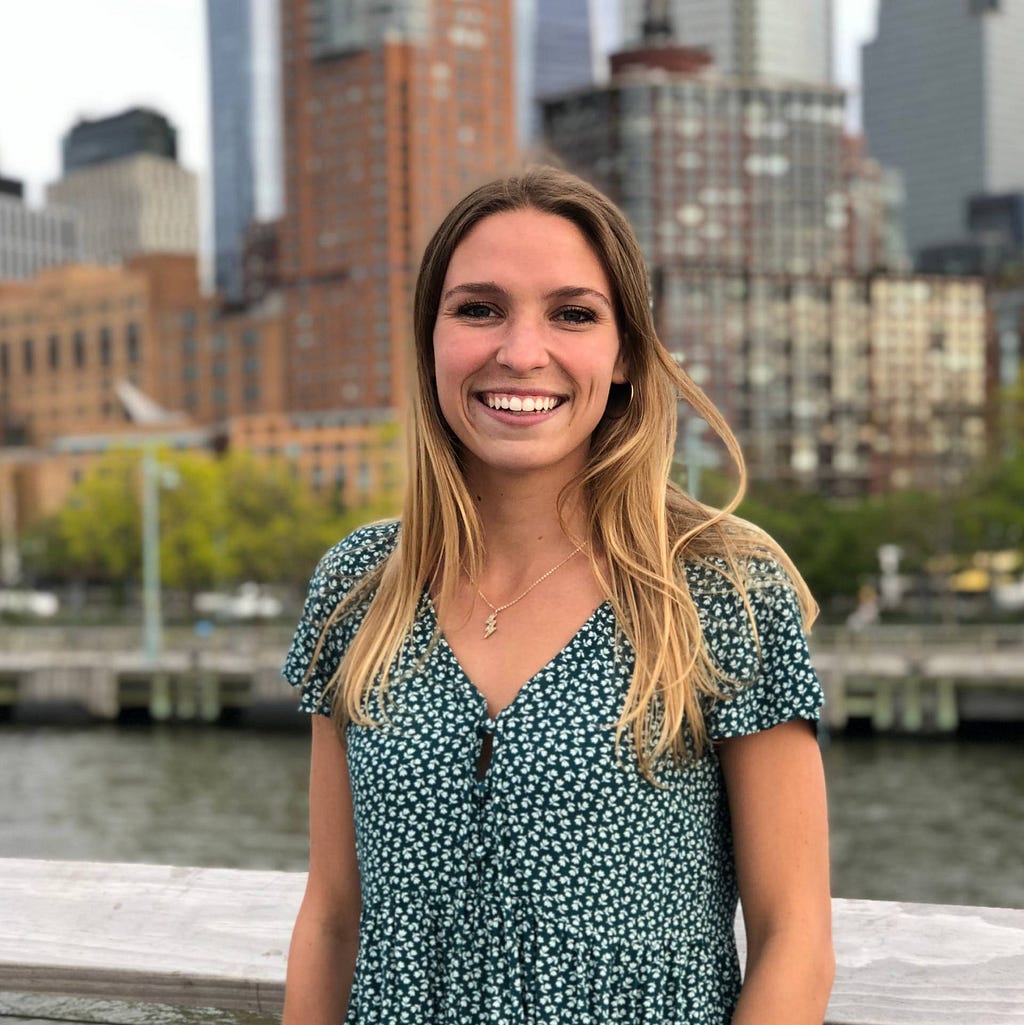
Stephen Stearman of Elevate Holistics: 5 Things I Wish Someone Told Me Before I Started Leading a…

Stephen Stearman of Elevate Holistics: 5 Things I Wish Someone Told Me Before I Started Leading a Cannabis or CBD Business

An Interview With Candice Georgiadis

I have an extremely strong culture at my company, and I have invested in my employees and paid them bonuses since I started. When I say that I invest in my employees, we do monthly employee development workshops, we have a book club, and I recently brought on a performance coach to help with mental health. What we do is hard, and starting a company is hard, but I know it’s worth it because we almost quadrupled the business from 2020 to 2021.

As part of my series about “5 Things I Wish Someone Told Me Before I Started Leading a Cannabis Business” I had the pleasure of interviewing Stephen Stearman.

Stephen Stearman is the founder of Elevate Holistics, a cannabis tech company looking to increase access to medical cannabis.

Thank you so much for doing this with us! Can you share with us the story about what brought you to this specific career path?

I feel like I meandered about for several years before landing where I am now. I grew up and went to college in Kentucky, where I did door-to-door sales for 4 years, then moved to Austin in 2014 for a graduate program in entrepreneurship, ground my teeth in tech sales, pivoted to non-profit development work and then started a cannabis technology company — Elevate Holistics — in June of 2019, which I am building to this day.

When I look back at my experiences, I think there are several that have made me the man I am today. Those key moments were when I was selling books door to door and then my graduate program.

My first summer in the book field, I moved to Minnesota to live with a host family for the 13-week selling period. Literally 50% of the students that start the summer do not finish it. We sell for 13 hours each day, 6 days each week. When I first got to Minnesota, I was seriously underprepared and after one week of not selling a single book, I found myself crying on a curb wishing to the high heavens I was back home. I called my father and he said, “You made this bed, now lie in it.” I was not allowed to call it quits. By the end of the summer, I was producing enough sales to NET $3,000 for the summer. It was miserable, but the lessons of grit, responsibility, work ethic, and positive attitude have stayed with me to this day.

My experience selling books propelled me to acceptance into the Acton School of Business in Austin. That was a grueling program that taught me how to make money, how to understand my ethical framework, and how to learn. The men and women in that program gave me the confidence I needed to take on the workforce. It took 4 years post grad school to start my first company, but when I did, I used that group as a resource regularly, and I still do. Accountability and votes of confidence make a massive difference in any entrepreneur’s journey.

Starting my first company in cannabis has been a wild ride. When I got the call in June 2019, I didn’t have any experience in cannabis, but I believed in the science behind plant medicine because of how much better my grandmother’s life got when she was battling cancer and medicating with cannabinoids. My business partner owned a medical practice and we felt confident we could make the business work. Originally, we started Elevate to learn the value chain of medical marijuana and find where we wanted to place ourselves, but once we got into it, we decided to stick with the medical marijuana card business.

Can you share the most interesting story that happened to you since you began leading your company? Can you tell us what lesson you learned from that?

We experienced a large jump in business during Covid-19 because Elevate is a telemedicine business. That gave us confidence that we could pull the trigger on developing a new e-signature platform to support the company and simultaneously increase our marketing spend. But over the span of 30 days, sales fell by 30% and invoices came due. I couldn’t make the payroll and almost drove the company into the ground because we failed to stick to a more modest budget. It was truly a brutal time in the company’s history and every person connected to the company took a pay cut: staff, vendors, doctors, you name it. The amazing part was that everyone stayed on board, and within 60 days, I returned everyone to their former pay schedule. It was incredibly humbling and a lesson I will never forget about budgeting and taking more calculated risks.

Can you share a story about the funniest mistake you made when you were first starting? Can you tell us what lesson you learned from that?

There was a small dispensary in a small town in Oklahoma that I had a really good relationship with. We used iPads out in the field to help dispensaries see our doctors, and I gave this dispensary an iPad to use, but in my haste to move on I synced it with my iCloud.

I turned off picture syncing, but low and behold some of them did, and one was a picture of me in tiny boxers that I sent to my girlfriend. I found out because I randomly received a picture of the three dispensary staff members holding the iPad with the picture on it asking when I would deliver them donuts (the boxers had donuts on them). I immediately wanted to crawl into a hole and wither away into non-existence.

Luckily, they had a sense of humor and everything was fine, and I did indeed take them donuts about a month later. The lesson is: don’t make decisions that expose you to liability out of the desire to act with haste. I didn’t want to take the time to reset the Apple ID because I was wanting to get my contacts in, typical sales person, but I paid for that mistake

Are you working on any exciting projects now? How do you think that will help people?

Yes, we are working on adding a mental health component to the business. We are treating people every day for various conditions, and we are of the mind that while cannabis is amazing for so many things, it can become a band-aid solution or a crutch for some. We want to provide additional services that will fulfill our mission of helping people live better, more natural lives.

None of us are able to achieve success without some help along the way. Is there a particular person who you are grateful towards who helped get you to where you are? Can you share a story?

One person who was a big help to us is a guy named Jack Mitchell, who owns BesaMe Wellness in Kansas City. Jack gave us a shot when we were a tiny company, truly just a tiny team with a big dream. He opened up his resources to us and helped us see the opportunity that was right in front of our faces to integrate our clinic with dispensary marketing systems. We are where we are today because he helped us develop the technology and served as our first test partner.

This industry is young dynamic and creative. Do you use any clever and innovative marketing strategies that you think large legacy companies should consider adopting?

Facebook community groups. We’ve had great success with those and I don’t think they get utilized enough. It depends on the audience though, however, because cannabis happens to be an industry with young and old patrons alike.

Can you share 3 things that most excite you about the Cannabis industry? Can you share 3 things that most concern you?

The three things I find most exciting are: the health benefits that are still being discovered, watching states legalize cannabis left and right, and seeing that Boomers are the fastest growing demographic for the industry.

My concerns are: the current monetary restrictions with banking, the corruption at the state level with who can get licenses, and the mental health impacts of people consuming cannabis in an unhealthy way.

Can you share your “5 Things I Wish Someone Told Me Before I Started Leading a Cannabis Business”? Please share a story or example for each.

  1. Don’t try paid marketing until you have an enormous budget.
    -We wasted $18,000 onboarding, and thousands of dollars in paid ads, only to have our ad accounts shut down.
    -Invest in OWNED and EARNED media. Build your email list, build your text list, and get the community involved.
  2. Invest heavily in the things that allow you to communicate with customers easily.
    -We got shut down by Twilio multiple times because of the fact we support the cannabis industry. It’s not an exaggeration to say that 50% of our communication is done via texting, because this crushed us.
    Spend the money to use systems that allow you to contact your customers, such as:
    -Effective texting & email platforms
    -Developing an app for young people
  3. Have a backup bank account on LOCK.
    -Square shut us down and we couldn’t take payments. It happened out of nowhere and we were like chickens with our heads cut off.
  4. Capital is hard to come by in certain markets, so garner quality relationships with banks and private funding sources.
    -We tried to raise money and it takes a special kind of investor or fund for the appetite. Network HARD. Treat people right. Find the opportunities. We found that we had to use private investors and angel investors who support the industry.
  5. Government regulation comes hard and fast. Always be on your toes.
    -We can be killed by changes in texting regulations, how we can interact with dispensaries, how we can connect with patients, & telemedicine concerns.
    -For people in dispensaries or cultivations, I have seen packaging laws change overnight.

What advice would you give to other CEOs or founders to help their employees to thrive?

I have an extremely strong culture at my company, and I have invested in my employees and paid them bonuses since I started. When I say that I invest in my employees, we do monthly employee development workshops, we have a book club, and I recently brought on a performance coach to help with mental health. What we do is hard, and starting a company is hard, but I know it’s worth it because we almost quadrupled the business from 2020 to 2021.

You are a person of great influence. If you could inspire a movement that would bring the most amount of good to the most amount of people, what would that be? You never know what your idea can trigger. 🙂

The movement I’d inspire is to encourage kids to start entrepreneurial projects. I think business is the best way people ascend through class stratas and having confidence to do that when they get out of high school can be life changing.

What is the best way our readers can follow you on social media?

Linkedin, IG: @sstearman11 @elevate.holistics

Thank you for these fantastic insights. We greatly appreciate the time you spent on this.


Stephen Stearman of Elevate Holistics: 5 Things I Wish Someone Told Me Before I Started Leading a… was originally published in Authority Magazine on Medium, where people are continuing the conversation by highlighting and responding to this story.

Inspirational Women in STEM and Tech: Dr Shirley Knowles of Progress Software On The 5 Leadership…

Inspirational Women in STEM and Tech: Dr Shirley Knowles of Progress Software On The 5 Leadership Lessons She Learned From Her Experience

An Interview With Candice Georgiadis

The 5 leadership lessons I’ve learned from my experience as a woman in STEM and further a woman in a predominantly male-dominated industry are the following: representation matters, leading with empathy, organizations need to sponsor non-profit organizations, authenticity is pivotal, and evolving the meaning behind leader positions. I hope some of these lessons will look unfamiliar to the untrained eye. It’s become easy to suggest common life lessons such as strategic development and fostering innovation — it’s time we approach leadership from a new perspective.

As a part of my series about “Lessons From Inspirational Women Leaders in Tech”, I had the pleasure of interviewing Dr. Shirley Knowles.

Dr. Shirley Knowles joined Progress as its first Chief Inclusion and Diversity Officer. She is responsible for leading the company’s inclusion and diversity initiatives designed to foster a culture of belonging where all employees feel valued, safe and seen. She previously served as the first diversity and inclusion officer at a large property and casualty insurance company in Boston, where she led initiatives to promote inclusivity and appreciation of cultural, racial, ethnic, religious, socioeconomic and educational diversity.

Shirley earned her Bachelor of Arts degree in communications from Marquette University; a Master of Leadership Studies degree from North Central College; a Master of Arts in Gender and Cultural Studies and Master of Science in communications management from Simmons College; and a Doctor of Education in organizational leadership degree from Northeastern University.

Thank you so much for doing this with us! Can you tell us a story about what brought you to this specific career path?

I’ve been drawn to a career in inclusion and diversity from a very young age, even before I embarked on my career. There’s always been a driving force within me to better understand people, their backgrounds, and how those backgrounds contribute to their understanding of the world. To me, diversity, equity, inclusion and belonging means that people from different walks of life can appreciate the journey of the folks to the right and the left of them: no matter their race, ethnicity, gender, sexuality, socioeconomic status, disabilities, or religious affiliation.

Most of my life, I have been the “first” or the “only one” in a number of instances: the “only one” in many of my AP classes in high school, as well as the first African-American senior class president at a predominately white high school. I was the first African-American to give a commencement speech at my college graduation. In many of my undergraduate and graduate programs, I was one of the few or only African-Americans in the classroom. As I have progressed into various leadership roles, I have seen very few women of color in management roles at the various companies I have worked at over the years — I believe experiencing this has made me a more empathetic and humble person because I know what it feels like to not see others who look like you. Being the “first” or “only” isn’t something that necessarily keeps me up at night, but it is something I’m conscious of — and because of this, I strive to ensure I am mentoring and paving the way for other underrepresented groups so they are not the “first” or “only” as they move up the ranks into leadership roles.

Can you share the most interesting story that happened to you since you began at your company?

Being an inclusion and diversity officer is not as easy as some may think — you’re constantly learning on the go since this space is subjective and ever-evolving. During my first couple of months at Progress, I was planning a listening tour with some subcommittee members from our inclusion and diversity committee. During the process, I asked one member — a white male who has been with the company for more than a decade — to randomly connect with employees he was meeting with throughout the week to get their perspective on I&D. I met with him a week later and he shared how amazed he was at the various perspectives on the topic, including those apathy and fear of discussing the topic with other employees for fear of ‘saying the wrong thing.’ In that moment, we took some time to process some of the feedback he heard and reconfigured part of the listening tour to ensure we could address how uncomfortable it may be for employees to openly talk about what inclusion and diversity means to them. Although I was not totally surprised by some of the comments he heard, I knew this was one of those ‘a-ha’ moments for him, but I also knew his experience would make him a stronger ally for building an even more inclusive workplace.

Can you share a story about the funniest mistake you made when you were first starting? Can you tell us what lesson you learned from that?

I started my career in public relations and I was pretty green — there were so many things I didn’t know, but I was too proud to tell anyone I didn’t know how to build out a media list or why it’s so important to keep press releases short and to the point. One of the mistakes I kept making was around media alerts — I would sometimes start out writing an alert, but it looked like a press release and vice versa. It was one of those things where I kept making the same error, but would pretend that I did it on purpose! Thank goodness I had an understanding leader at the time that could recognize there were a few things I needed to learn about PR, and was patient enough to teach me. The lesson I learned? It’s OK to admit you don’t know what you’re doing, and be open to help from someone who is much more experienced in your respective industry — it will help save time re-doing work down the road.

What do you think makes your company stand out? Can you share a story?

One of the reasons why I joined Progress was due to the company’s CEO staff members being committed to ensuring the organization is known — both internally and externally — as having diversity, inclusion, equity, and belonging as part of the company’s DNA. Our CEO, Yogesh Gupta, understands at a foundational level what it feels like to be excluded through his life experiences as a man of color. Because of this, he can speak authentically about why inclusivity must be a part of Progress’ culture and values, and not some fly by night trend to check off boxes. People can see right through that fairly quickly. We’re not focusing on inclusion and diversity as a one-off — we’re doing it to create real, positive change.

Many other leaders on our CEO staff understand that systemic changes — including who we hire, who we’re developing and promoting, which employees our leaders are mentoring and sponsoring, the impact of our employee resource groups (ERGs) and I&D committee are making, the cultural events we celebrate, the diversity of our teams, and the way we engage with the world — are critical to the success of the company. Progress employees understand that I&D is a business imperative — by understanding our people, our communities, and our world, we are able to connect on a deeper level internally while also creating innovative products for our customers with our diversity of thought, experiences, skillset, education, and backgrounds.

Are you working on any exciting new projects now? How do you think that will help people?

As Progress’ first Chief Inclusion and Diversity Officer, I felt that it was critical to hear from employees before I started to think about I&D initiatives that would impact our teams. Starting in the fall of 2021, I kicked off a multi-week “listening tour” throughout the entire organization, which led me to speak with dozens of employees from our offices around the world. By creating a safe space for groups of five or smaller to authentically speak about inclusion and diversity — without the fear of being judged or attacked for one’s beliefs — employees were very open about their own experiences in the workplace and what I can do to educate our leaders on the importance of creating inclusive teams.

We will continue these conversations in 2022 a few times every quarter, which will help me provide real-time, ongoing feedback to our leaders on how well we are moving the needle to ensure we are doing our best to be one of the most inclusive organizations in the world. Also, in the new year we plan on kicking off “lunch with leaders” series which focuses on identifying five to eight high performing individuals and giving them access to c-suite members. This critical program will allow participants to ask questions of their leaders like never before — asking essential questions that unlock a new way of thinking. These employees will get first hand experience to discuss leaders journey’s to the c-suite, understanding that the path is not linear and opportunities come in all shapes and sizes. By breaking down the hierarchy of leadership, this helps dispel imposter syndrome most feel, improve confidence, and increase fostering more open and honest conversations.

Let’s now shift to the main focus of our interview. Are you currently satisfied with the status quo regarding women in STEM? What specific changes do you think are needed to change the status quo?

Leaders in STEM have a certain responsibility to encourage girls’ passions in STEM. As the United Nations points out, globally, the percentage of females among STEM graduates is below 15% in over two-thirds of countries. And in middle and higher-income countries, only 14% of girls who were top performers in science or math expected to work in science and engineering compared to 26% of top-performing boys. In male dominated fields like STEM, it’s important we tackle these questions and find solutions.

Representation matters. Women sitting in a position of power and influence matters. If young girls see a women founder or see another sitting in top executive positions, they won’t question whether they belong in STEM, or questions if they can pursue this career path — they’ll see a future reflection of themselves. This can be done by setting up scholarships for women pursuing STEM fields; sponsoring all-female hackathons; and highlighting the amazing women working at their organization, especially those in leadership roles.

Enterprises around the world need to do a better job of laying a foundation to support young girls as they enter the workforce, so they won’t have to be one of the “first” or the “only.”

In your opinion, what are the biggest challenges faced by women in STEM or Tech that aren’t typically faced by their male counterparts? What would you suggest to address this?

Promoting inclusion and diversity initiatives within the STEM field is notoriously difficult, often due to unconscious bias in hiring efforts, lack of promotions, and centuries-old inclusion issues. According to recent Pew Research, Hispanic and Black workers continue to be underrepresented in the STEM workforce, and women make up a quarter or fewer of workers in computing and engineering. Being the “first” and/or “only,” is intimidating so imagine for many women who work in male-dominated industries under the STEM umbrella must feel knowing they’ll never be considered first for a leadership roles because of their gender. Leaders and influences must recognize the impact unconscious bias has in the way we see and perceive others, especially when it comes to the way companies hire and promote women and people of color. We need to sponsor and invest in women and highlight the work they’re doing in the same way we have traditionally celebrated the talents and contributions of men.

What are the “myths” that you would like to dispel about being a woman in STEM or Tech. Can you explain what you mean?

I’ll keep it simple — there are plenty of women who are interested in a career in STEM. There are young girls in the world who want someone to invest in their dreams, to guide them and believe in their desire to work in the STEM field. They aren’t “uninterested” in STEM. We need to dispel this belief that girls and women don’t want to work in IT or aren’t good at math. Some of the greatest minds in STEM, like Katherine Johnson (of NASA) or Grace Hopper (the key inventor of the language COBOL, a widely used programming language) have been women. How many more like them are just waiting to be discovered and given a chance to change the world?

What are your “5 Leadership Lessons I Learned From My Experience as a Woman in STEM or Tech” and why. (Please share a story or example for each.)

The 5 leadership lessons I’ve learned from my experience as a woman in STEM and further a woman in a predominantly male-dominated industry are the following: representation matters, leading with empathy, organizations need to sponsor non-profit organizations, authenticity is pivotal, and evolving the meaning behind leader positions. I hope some of these lessons will look unfamiliar to the untrained eye. It’s become easy to suggest common life lessons such as strategic development and fostering innovation — it’s time we approach leadership from a new perspective.

The majority of leadership positions in STEM tend to be white males — with minimal representation from women and minorities. We’ve reached a critical need for a greater emphasis on diversification, which is why mentoring the next generation has become so crucial. We need to see a significant commitment from organizations to sponsor or partner with non-profit organizations. Top talent comes from all places, and investing time and energy in cultivating the interests of these marginalized and underrepresented groups early on will distinguish organizations committed to fostering immense change.

Over the years, I’ve received feedback that those in tech view their job as ‘glass half empty,’ which can create misalignment between leaders and their teams. The power has shifted from leaders to employees, and meeting your teams where they are at has become critical for building trust. Authentic leaders are not afraid to get personal. It’s time to accept that the leader role is constantly evolving and hold them accountable for the success of their teams.

What advice would you give to other women leaders to help their team to thrive?

There’s always room for improvement, and reassing can help leaders create realistic goals that contribute to the overall success of the team. Goal-setting is a seemingly important touchpoint for many leaders who look to this process to understand changes in employees’ performance. A key tip is diversifying their teams communication avenues. It can be easy for leaders to only collect feedback from management, but prioritizing hearing all voices shifts the accountability back onto the team. Sourcing feedback from all levels, pushes everyone to contribute to one another’s growth and success — and ensures all team members feel they belong and their opinion matters.

What advice would you give to other women leaders about the best way to manage a large team?

As a female leader, work culture is an ever-evolving environment that needs care — which is true of managing large teams. It’s easy, especially in a dispersed workforce to become siloed in your individual work within a larger team. While everyone has individual needs, leaders who see the most success understand the importance of fostering an environment where everyone belongs. “Women are too emotional,” is a common myth women fight everyday — not many men are subjected to disprove. The key to hands-on leading with empathy is building a foundation of trust rooted in assessing everyone’s level of capabilities and committing a degree of accountability across the organization. Women leaders’ capacity to lead with more authenticity contributes to a solid foundation of trust and open communication across large teams. By doing so, they remove self-serving or unconscious bias and set goals for their teams that support each person’s individual growth and help them reach their full potential together.

None of us are able to achieve success without some help along the way. Is there a particular person who you are grateful towards who helped get you to where you are? Can you share a story about that?

The biggest challenge in anyone’s career is asking for help. For me, that came in the form of a past leader and mentor who recognized my talent and potential early on and invested in my future success. Throughout my career, I’ve experienced passive-aggressive behavior from my colleagues making me feel invisible. But my mentor did more than be my advocate — she instilled a level of trust that in turn earned by loyalty. A great example of leadership is knowing not only when to act but more importantly when to listen, and she knew instinctively when jumping in with a solution wasn’t the best course of action. She pushed the HR team to perform a market analysis on what was fair pay for my background and expertise. Through actions like these, I could tell she cared deeply about my future success, which has made me into the person and leader I am today. Thank you.

How have you used your success to bring goodness to the world?

I have always tried to remain humble and do my best to put myself in someone else’s shoes, to see situations from various perspectives. By doing this, I am able to empathize with others in a way that makes them feel seen and heard. I don’t do this because it’s “my job” to hear out different viewpoints and be accepting — being good to others is a core tenet I believe in and practice every day. I truly enjoy mentoring others, it brings me great joy to use my past experiences and insight to help others. I love donating and volunteering — I try to give to new nonprofits every year. I also enjoy sending friends motivational books that have made a big impact in my life. Overall, I just enjoy giving back to others. I have been very blessed in my life, so pouring into the cups of others is important to me.

You are a person of enormous influence. If you could inspire a movement that would bring the most amount of good to the most amount of people, what would that be? You never know what your idea can trigger. 🙂

The STEM industry is ripe for I&D change, and I truly believe it will help these organizations foster more innovation: for their companies and our greater social structures. I’m thrilled to join an organization that has committed to ensuring their inclusion, equity and diversity practices not only meet but exceed the STEM industry’s standards. By following these best practices, you can prime your STEM organization for lasting I&D impact.

Can you please give us your favorite “Life Lesson Quote”? Can you share how that was relevant to you in your life?

My favorite life lesson quote I aspire to follow everyday is by Mark Twain: “Twenty years from now you will be more disappointed by the things you didn’t do than by the ones you did do. So throw off the bowlines. Sail away from the safe harbor. Catch the trade winds in your sails. Explore. Dream. Discover.”

Many of us are afraid to fail. Rightly so. But it shouldn’t end here, rather I’ve led my career by taking calculated risks. It was a worthwhile risk to become Chief Diversity Inclusion Officer at Progress, this is my first role at a global company. The world can be a subjective space if you don’t push to redefine your outlook constantly. Meeting new people worldwide, opening yourself up to discover different cultures, perspectives and opinions is what I believe Mark was trying to capture with his quote. This pertains to our need to push systemic changes in business operations — taking a true moment to understand where the other person comes from. Diversity of thought is no longer a nice to have but a critical component to the success of companies and people’s ability to put themselves in others’ shoes. The cultural events we celebrate, the diversity of our teams, and the way we engage with the world all add up to the unimaginable impact we have on one another. Many of us can get highly focused on one goal, driven to achieve it in the short team, but without getting distracted or trying something new you limit your ability to discover new possibilities. Life is full of endless possibilities, and fear should drive your push to discover not limit.

We are very blessed that very prominent leaders read this column. Is there a person in the world, or in the US with whom you would love to have a private breakfast or lunch with, and why? He or she might just see this if we tag them 🙂

I’ve been fortunate enough to meet the person I’d love to have a private breakfast with or lunch with — but if given the chance to reconnect for a deeper thoughtful conversation I’d be honored to connect with Carla Harris, Vice Chairman, Managing Director and Senior Client Advisor at Morgan Stanley.

One of my previous employers had secured Carla as a keynote speaker — and my boss and mentor mentioned earlier knew of my passion and respect for her work. Not only did she care about my personal success she paid attention to my personal interests and nominated me to moderate the discussion with Carla. The ability to talk with my idol was unparalleled. Carla has achieved many firsts in life, motivated to never let anyone tell her she can’t do something. An important distinction many will miss is through all these achievements she didn’t pigeon hold this success but devoted her spare time to coach others to achieve their own “firsts.” As I have progressed through various leadership roles, I’ve seen very few women of color in management roles and it’s made me highly aware of my surroundings. “Being smart isn’t enough,” still rings true today and I strive to ensure I am mentoring and paving the way for other underrepresented groups. So they are afforded the same chance to have a boss and mentor like I had who’s invested in their professional and personal successes as they move up the ranks into leadership roles.

Thank you for these fantastic insights. We greatly appreciate the time you spent on this.


Inspirational Women in STEM and Tech: Dr Shirley Knowles of Progress Software On The 5 Leadership… was originally published in Authority Magazine on Medium, where people are continuing the conversation by highlighting and responding to this story.
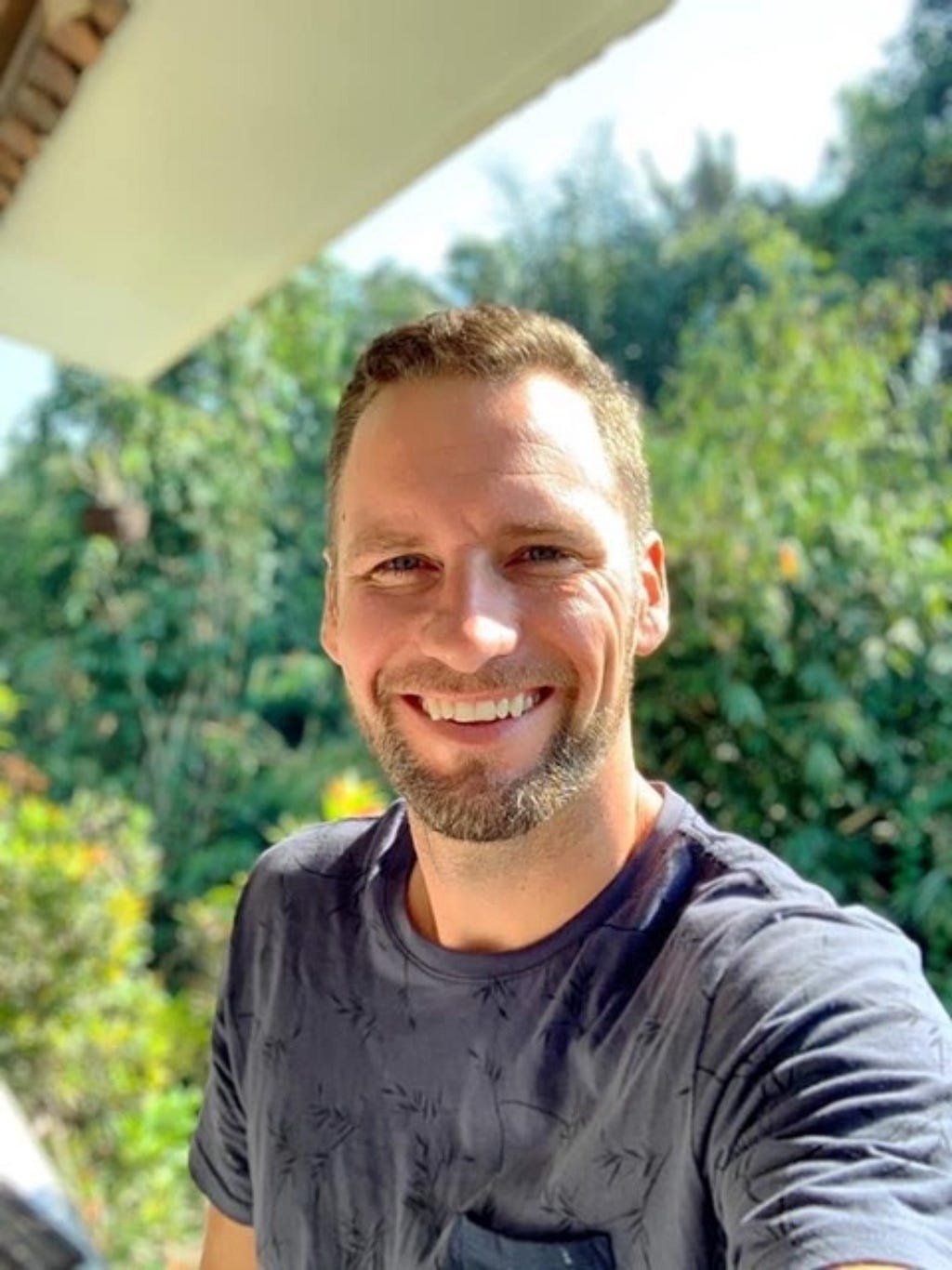
Women In Wellness: Randi Whitman of Frog Temple Pilates on the Five Lifestyle Tweaks That Will Help…

Women In Wellness: Randi Whitman of Frog Temple Pilates on the Five Lifestyle Tweaks That Will Help Support People’s Journey Towards Better Wellbeing

An Interview With Candice Georgiadis

I am most productive in the morning. I didn’t always know that, and I would often wait until the end of the day to get some important things done, to take on clients at my studio, to work out, etc., and it was always a bad idea. So my latest ‘tweak” is to make a list of what needs to get done, and make sure I tackle it in the early hours of the day when my brain is awake and most creative and productive.

As a part of my series about the women in wellness, I had the pleasure of interviewing Randi Whitman.

Active in Pilates since 1996, Randi Whitman was certified by the renowned Pilates Center of Boulder, Colorado. Frog Temple Pilates has allowed Randi to share her vision of the Pilates method and mind-body wellness with her students and staff of Pilates instructors in Chicago and across the world. In addition, for over 20 years, Randi has offered her top-rated Frog Temple Teacher Training Program, having certified over 200 instructors. Her commitment and passion for the work and the clients continues to grow and develop in this quickly changing and always dynamic health and fitness industry. Randi recently launched a new Pilates on Demand platform for the folks who are still homebound, trying to get a workout in between taking care of kids or work calls, or adjusting to life in the “new normal.” Try it out for free by visiting her website.

Thank you so much for joining us in this interview series! Our readers would love to “get to know you” better. Can you share your “backstory” with us?

I began this Pilates journey searching for a way out of back pain 20 plus years ago. I was a professional dancer; ballet, modern, etc., and I had ruptured a disc in my lumbar spine (L5,S1 to be exact). I was constantly searching for a way out of pain, even as I continued to dance. Surgery was out of the question for me. I didn’t want to go down that road. So I got deeply into massage therapy, which helped me but always seemed so temporary — never quite fixing the problem, but putting on a nice band-aid for a short time. Then I discovered Pilates while living in Aspen, Colorado. Pilates was, and still is, the one thing that kept me healthy, strong, and most importantly, free of pain. I learned how and what to strengthen to support my spine and the muscles surrounding my spine. Really from day one, I was hooked. I have learned so much about balance in the body, how to use my body more efficiently, discovering smaller muscle groups I never even knew I had! 22 years now and two babies later, I feel amazing. I wanted to share this knowledge with the many others who are suffering from chronic pain or injuries, or working towards goals they want to achieve and don’t know quite where to begin.

Can you share the most interesting story that happened to you since you started your career? What were the main lessons or takeaways from that story?

There have been so many stories of healing, change and perseverance. It is hard to pick one. But I will tell you about one of my earliest clients who is now one of my closest, dearest friends. Her name is Ruth. I was teaching in my early days at East Bank Club here in Chicago. She came to so many of my mat classes there — a real groupie! (Those pre-COVID classes used to pack in 70 people on any given weekend!!) So she came up to me one day and said she wanted to do some private lessons with me on the equipment. Lessons at EBC were all on just the mat, but at the time I had several pieces of apparatus all over my house. I asked Ruth what was she looking to achieve or accomplish through Pilates. She said she was on several meds, her legs were in horrible pain, her back hurt, her shoulders were weak, the list went on and on. Really, you name it, she was in pain. She was also a larger woman — tall and a little overweight — really the most intimidating potential client. I thought to myself, “I have no idea where to begin with this woman. I have no idea what I can do for her.” But she was all in, and she trusted me. I had been teaching for less than a year out of Pilates training and felt this was out of my league. Well, I channeled one of my mentors, Amy Alpers, and heard her in my ear saying to trust myself, trust this Pilates method, have confidence in my capabilities and listen to the body in front of me. That’s what I did. Slowly over our time together, she moved off ALL meds, lost a bunch of weight, became significantly stronger and more mobile, her aches and pains were a thing of the past, and she took such a deep interest in yoga that she became a yoga instructor herself! To this day we still do Pilates together, and she has become the picture of health and wellbeing! I changed her life — actually we did it together. That’s what I do, and that’s why I do it. That is what keeps me going and feeds my soul. Making a difference in people’s lives through health and wellness. Giving people access to their own bodies and helping them realize their potential. Isn’t that amazing? Access to your own body’s health. Even saying that out loud brings tears to my eyes. People don’t know how much potential they even have. Incredible to me. So that’s my job.

Can you share a story about the biggest mistake you made when you were first starting? Can you tell us what lesson you learned from that?

I made so many mistakes when I first set out to open my own Pilates studio back in 2000. I had passion for what I was teaching, but I really did not have a lot of experience with the business aspect. Trial and error were my foundations, and I didn’t mind it. I learned so much through all the mistakes I made. But, honestly, Pilates was so hot in the beginning, and I was one of the first in Chicago to open a studio. Business was growing so fast, and people were so interested in trying this NEW exercise regimen that was sweeping the nation. I literally had no time to study business. I just opened my doors and went to work. Thankfully, I had a lot of folks who I looked to for advice along the way. I learned very quickly about the need to hire outside help for bookkeeping, accounting, for the things that weren’t my expertise, so that I could do what was my expertise…teaching. But looking back to those early days, I was apprehensive to ask for too much help. I needed to run the show, and be the show (the Leo in me!). Over the years, I got better at asking for help. I needed instructors, so early on I started a teacher training program that allowed me direct access to well-qualified instructors — the best of the best. I trained passionate potential instructors, making sure every aspect and detail of the methodology was covered. I got to a point where I needed front desk help, and over time I employed up to 16 instructors! We were having a ball.

None of us are able to achieve success without some help along the way. Is there a particular person who you are grateful towards who helped get you to where you are? Can you share a story about that?

Many people have helped me along the way. After 20+ years in this business, I have come across so many different people that have impacted my career and my life. To this day, I still have some of the same clients I started teaching back in the beginning. And so often, clients are the ones who have helped guide my decisions or advised me out of tough situations. I have stayed close to many of my fellow instructors around the country with whom I completed my Pilates certification in Boulder, CO. They teach and own Pilates studios, as well, and oftentimes share the same small business issues that I am experiencing. My family, my brothers and my sister have always been incredible sounding boards at various times of need. I also love to brainstorm with other women I know in business. I have a close friend who has owned a hair salon for as long as I have had my studio. I think she is brilliant, and I often call her for business advice. Even though our businesses are vastly different, we deal with the same issues regarding day-to-day operations, staffing, accounting, marketing, you name it. I actually have several women that I respect that I talk to from time to time. We are all entrepreneurs and struggling with the same things so often. And as women who run small businesses, we all support each other and have each other’s backs.

Ok, perfect. Now let’s jump to our main focus. When it comes to health and wellness, how is the work you are doing helping to make a bigger impact in the world?

Relative to what we all have been through these last two years, with COVID, quarantining at home, recovering from COVID, dealing with the stresses of losing loved ones, losing jobs, home schooling, taking care of family and friends, and just overall mental health, we are all in need of movement, blood flow, connection, community, love and support. It has always been important to me to provide a safe, loving, supportive environment where anyone can come in for Pilates and find more than just Pilates. I stress — more than Pilates. We all need to get stronger, move without pain, release anxiety, gain flexibility, and, I think, especially at this time of “recovery,” we need human interaction. My job is to guide people in the direction of health as a team. I am not simply telling clients what I want them to do, but rather listening to what they need and working together to achieve any goal they have in mind. And that applies both inside and out. I have received more emails recently than ever before thanking me for persevering, for sticking with it, for staying open during these hard times, and for being there when we all needed someone we could count on. It has been, and continues to be, so gratifying.

Can you share your top five “lifestyle tweaks” that you believe will help support people’s journey towards better wellbeing? Please give an example or story for each.

  1. I feel strongly that the first thing you put in your body in the morning can make an enormous difference in how your body functions throughout the entire day. I make a morning elixir that I have been drinking every morning for about 3 years now. It is meant to reduce inflammation, clean out your gut, get things moving in your intestines, and acts as a prebiotic. The recipe is on my website, but it includes turmeric, apple cider vinegar, lemon juice, cayenne pepper, black pepper and a dash of pure maple syrup, all mixed together in a mug of hot water. I absolutely LOVE this drink, and I swear by it. It is my coffee, as I haven’t had coffee since college. I can’t tell you how many times I have shared this recipe with friends and clients!
  2. I am most productive in the morning. I didn’t always know that, and I would often wait until the end of the day to get some important things done, to take on clients at my studio, to work out, etc., and it was always a bad idea. So my latest ‘tweak” is to make a list of what needs to get done, and make sure I tackle it in the early hours of the day when my brain is awake and most creative and productive.
  3. I decided to stop trying to fit my round self into a square peg all the time, and as I said earlier, listen to my intuition. I literally have conversations with myself, sometimes even out loud! “Randi, is that a good idea? Is that the best choice for you? Will you regret this choice later today?” I am always encouraging my clients to talk to themselves as if talking to a friend. We advise our friends and family clearly and from the heart, but we don’t always listen to our own advice. So advise yourself as if advising a friend, and then listen. People may think you are nuts. But I guarantee they go home later and give it a try!
  4. I am a list maker. I used to just make my lists in my head. I thought I didn’t really need to write them down and would get them done eventually. Well, I started to get forgetful! Writing things down, no matter how insignificant these tasks may be, made all the difference in the world for me. I no longer had to store so much in my head, therefore I had room for other thoughts. I started crossing things off on little scraps of paper, and eventually, I graduated to keeping my lists in my phone.
  5. Returning texts and calls right away. This is a life changing tweak I have made in my life, and it is definitely still a work in progress. I try my hardest to respond right away — at least a “thank you, I will get back to you,” flagging the important emails, so I don’t lose track of them. I find this is important especially when it comes to my business. Existing and potential clients almost always thank me for my quick responses and are so appreciative. Not only is it good client service, but it’s good business — getting a response while this person is motivated to get fit or make a change is effective. And it shows that I care about them, that they matter to me. This is a first impression, and it needs to be professional, warm, caring, and informative. The same goes for returning texts. It is so easy to respond in the moment, even if it’s a “I’ll get back to you later.”

If you could start a movement that would bring the most amount of wellness to the most amount of people, what would that be?

More accessible wellness! And what a perfect time for this question, as I have recently launched my online Pilates On Demand platform. I am so proud of the content thus far. I realize folks are still apprehensive about going to a gym or Pilates studio. Or they are taking care of kids and/or working from home and don’t have a lot of control over their schedules. So I brought Pilates to you with a library of over 20 classes (and growing!). There are various class lengths, each or which tackles different needs & goals. It is such a convenient and affordable opportunity for folks to continue to take care of themselves while stuck at home, traveling for work, etc.

Sustainability, veganism, mental health and environmental changes are big topics at the moment. Which one of these causes is dearest to you, and why?

Wow, loaded question. I mean, it is all so important to me. I try to live my life in a way that is sustainable for the planet, as I know that is in the best interest of our health as human beings. But there are so many other issues that stick with me, such as women’s rights and right to choose, Black Lives Matter and diversity, vaccinations and public health, climate change, etc.

What is the best way our readers can follow you on social media?

Please do! On Instagram, people can find us under @frogtemplechicago, Facebook under @FrogTemple and our website is https://www.frogtemple.com/. People can also email me anytime at pilates@frogtemple.com or call the studio directly (the old-fashioned way!) at 773–489–0890. Better yet, stop in and enjoy your first mat class for FREE or half off a first timer equipment group class. Our YouTube channel is coming soon, so look out for that, as well.

Thank you for these fantastic insights!


Women In Wellness: Randi Whitman of Frog Temple Pilates on the Five Lifestyle Tweaks That Will Help… was originally published in Authority Magazine on Medium, where people are continuing the conversation by highlighting and responding to this story.