Female Founders: Melissa Harlan On The Five Things You Need To Thrive and Su

Female Founders: Melissa Harlan of ‘Drink Me! Tea Room’ On The Five Things You Need To Thrive and Succeed as a Woman Founder

An Interview With Candice Georgiadis
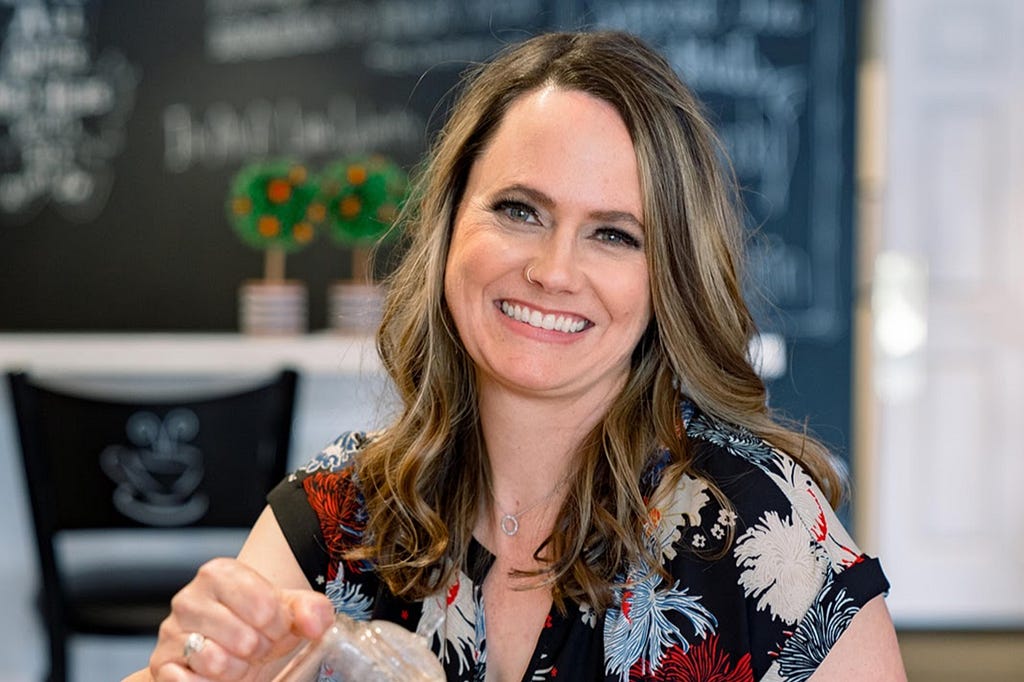
Building a strong team. As a small business owner you have to look for team members that are strong and have the ability to step into other roles when needed. Having a team that works well together helps with the fluid system that you must build to keep operational costs down when starting your business. If everyone is willing to pitch in to get the job done, then we can provide the best experience for our customers which in turn helps the business to continue to grow.

As a part of our series about “Why We Need More Women Founders”, I had the pleasure of interviewing Melissa Harlan.

Over her career, Melissa worked for some of the top companies known for their customer experience, including Disney, Southwest Airlines and Verizon. She knows how important attention to detail is in creating an outstanding and unforgettable experience. Ready to retire from spreadsheets and headcounts, Melissa began Drink Me! Tea Room in 2020 and put a modern twist on afternoon tea. Melissa puts all her detail-focused talent into ensuring guests have an amazingly immersive time with premium tea, plant-based and gluten-free treats and hand-crafted cocktails when they come to visit her unique Tea Room.

Thank you so much for doing this with us! Before we dig in, our readers would like to get to know you a bit more. Can you tell us a bit about your “backstory”? What led you to this particular career path?

I had been a corporate employee for most of my career but wasn’t satisfied with my path. I knew that I wanted something different someday, something that was my own, magical, and would benefit my customers. This first leap of faith that I had to do was leave my corporate job before figuring out what I was going to do next. I wanted to give myself the time to think, explore, and plan for my decision. During this time, I visited London with my family who loves to travel and try new things. We visited a number of tea rooms during our trip and those visits quickly became the most enjoyable and memorable part of our trip. It dawned on me that I wanted to create something similar in my neighborhood. I started writing my business plan on our flight home. I wanted a place for people to gather and enjoy a tradition with my own modern touches. I am also vegan and gluten-free and have had a very hard time finding places that cater to people with allergies, so I wanted to create a place where people don’t have to worry about what is on the menu.

Can you share the most interesting story that happened to you since you began leading your company?

The most interesting piece of my new business has been the decision to open our concept in the middle of the pandemic. I had already put plans into place, so I decided to work through and still make this new concept a reality. Construction on our tea shop was interesting as we had to find people that could work with us during a time where the construction industry has been so tied up. Despite the current times, people were finding us and having tea with us. This gave us hope that even when businesses had to pivot and shut down, we were starting to thrive.

Can you share a story about the funniest mistake you made when you were first starting? Can you tell us what lesson you learned from that?

It wasn’t necessarily funny, but I learned quickly I can’t control all situations. For our business plan, we had determined a build out for the tearoom but because of a mix of COVID and some unexpected turns, we ended up having to spend much more money than planned. It was a major learning curve as a new business owner. Also, being very sustainability conscious, vegan, and gluten-free, my business couldn’t work with the large food vendors and companies that most restaurants utilize. Additionally, about a month after we opened, the tea room flooded due to a plumbing issue. I realized that there are so many factors out of my control, I just have to be great at problem solving and keep moving forward.

None of us are able to achieve success without some help along the way. Is there a particular person who you are grateful towards who helped get you to where you are? Can you share a story about that?

My wonderful husband and family have been amazingly supportive. I also have an outstanding business coach who provides the best coaching and support I could ask for. Additionally, during my decision journey I became very involved in a local yoga studio. My teachers at One Tribe Yoga have been my guides in so many ways. They helped me to work through the decisions that I needed to make from a small business perspective and an individual growth perspective. They constantly remind me to take a breath, make sure that you are centering yourself and moving forward in the right direction. Since they also recently started their new studio, they have also been an invaluable resource to me during my buildout, technology decisions, building acoustics, and even marketing. The love and support all around me helps keep me motivated and grounded in the reasons I wanted to become a bigger part of the community.

Ok, thank you for that. Let’s now jump to the primary focus of our interview. According to this EY report, only about 20 percent of funded companies have women founders. This reflects great historical progress, but it also shows that more work still has to be done to empower women to create companies. In your opinion and experience what is currently holding back women from founding companies?

From my own experience I could see women feeling hindered to begin their own business due to the challenges with work, life balance. Women with children in school or little ones many times prioritize the family over beginning their own business. To open a small business you need 100% focus and dedication, which can sometimes be difficult with the demands of life. Having a family also means usually taking less risk when it comes to forgoing a consistent paycheck and benefits.

Can you help articulate a few things that can be done as individuals, as a society, or by the government, to help overcome those obstacles?

I think more women would look to become entrepreneurs if there were available opportunities for funding or resources when beginning a business. This was something that I found lacking when I began my business.

I have found more resources now in the journey, but the support initially wasn’t there. Since opening Drink Me! Tea Room, I’ve started a small business support group so that we can lean on each other to find resources, help answer questions, and have a system in place when we feel lost. I’m also part of a few Instagram groups for both tea businesses and our small business mastermind group. We have monthly meetings and even guest speakers that give insight on a variety of topics to the group. In the groups we talk about our challenges and try to help by relating to problems that we’ve solved with our own businesses. I’m grateful for this support group because it provides a safe space to ask questions along my small business journey. I also enjoy being able to help other new business owners by sharing my experience and any knowledge I’ve learned along the way..

This might be intuitive to you as a woman founder but I think it will be helpful to spell this out. Can you share a few reasons why more women should become founders?

Through the past few years of starting my own business, I have found that many other female entrepreneurs are very inclusive and supportive of each other’s businesses. I also love seeing the innovation and creativity that comes from female founders. I think the positive energy that comes from these women owned businesses make a great difference in their neighborhoods and in the small business community as a whole. Not to sound cliche, but it’s a force for good in the world that we could all use more of. The willingness to help each other shows that there is a strong female support system in the entrepreneur world. Many times women are scared to begin their own business, but I believe just knowing that there is encouragement from others who have already gone through this journey can help ease the concerns that a female may have.

What are the “myths” that you would like to dispel about being a founder? Can you explain what you mean?

Before I started my business, a myth that I always thought was that you had to know everything about your business before taking the leap to begin. I knew very little but was able to learn and grow as I moved along in creating Drink Me! Tea Room. I’ve met a lot of new business owners who feel the same way, but once we began running our businesses, we became more comfortable with trusting our instincts and knowledge. Everyday truly is a learning experience.

I think another myth is that someone must dream of a business for years before making it happen. I began thinking of how my business idea could help people with food allergies and in a year and a half, I made it a reality without knowing everything that an experienced tearoom or small business owner should know.

Is everyone cut out to be a founder? In your opinion, which specific traits increase the likelihood that a person will be a successful founder and what type of person should perhaps seek a “regular job” as an employee? Can you explain what you mean?

Different paths are for different people. Not everyone is cut out to own and run their own business. Over the course of my career in corporate America, I worked with many people who were content with receiving a steady paycheck and having a consistent steady job. I was one of them for a long time. There is nothing wrong with that, I just wanted more and took the opportunity when it presented itself.

I think founders need to have curiosity and tenacity to move forward no matter what crisis or diversion happens along your path. I think a founder needs problem solving skills because many times something will arise, and you will have to do the job yourself. I also believe that you must be willing to spend all your time and focus on establishing the business with a vision of how to move it forward to make it a success.

In my case a founder must also be willing to do the dishes, mop the floors and clean the bathrooms. In order to move the business forward, you must be willing to do all of the things necessary to do so.

Ok super. Here is the main question of our interview. Based on your opinion and experience, what are the “Five Things You Need To Thrive and Succeed as a Woman Founder?” (Please share a story or example for each.)

1. Building a strong team. As a small business owner you have to look for team members that are strong and have the ability to step into other roles when needed. Having a team that works well together helps with the fluid system that you must build to keep operational costs down when starting your business. If everyone is willing to pitch in to get the job done, then we can provide the best experience for our customers which in turn helps the business to continue to grow.

2. Adaptability is a requirement. Every day in a new, small business there are many types of challenges. Being able to figure these out with your team and having the ability to solve a problem quickly is imperative. This also stems back to having great leadership and systems in place so that when a problem does occur, it does not become a detriment to the business.

3. Tenacity goes hand in hand with adaptability. Showing tenacity in your everyday leadership will flow through to your employees. This will help to keep the entire team moving forward and learning each day. There are many setbacks that will challenge you, but the drive to correct course and move forward will help to keep everyone motivated.

4. Connecting with others. This has been invaluable during my journey as a new business owner. Whether it’s other small business owners or our guests, creating inspiring and genuine connections with others has been something that helps me through the challenges and reminds me of why I wanted to open my business.

5. Stay true to myself. My business is a reflection of who I am and what is important to me. Staying true to that in every choice I make is incredibly important to me; whether it’s using compostable packaging and organic ingredients or supporting other small businesses along my journey.

How have you used your success to make the world a better place?

I think this was something that motivated me even before opening my business. I had two aspects that were a focus of mine because of my own experiences. The first was connecting with people through the tea room. This business has been vastly more rewarding because of this. We love hearing our customers’ stories. Where they are from, how their food challenges have hindered their lives, when and where they’ve experienced Afternoon Tea before and what celebrations bring them to Drink Me! Tea Room with their favorite people.

Another way I hope to make the world a better place is through small business connections. In addition to our working group, I try to connect and support other small and local businesses as well. As an example, I work with a local composting group, where we compost all of our food and paper waste, who we then buy locally grown herbs from. I also buy some of our cocktail spirits from a local distillery, Wild Hare Distillery. They are located 3 miles from our tea room and also have a female founder. There are many small businesses that I would love to partner with or support and help them succeed in turn. I think community and connection makes the world a much better place.

You are a person of great influence. If you could inspire a movement that would bring the most amount of good for the greatest number of people, what would that be? You never know what your idea can trigger.

Every choice that I make as a business owner I do with environmentally conscious beliefs behind it. I knew that to stay true to what I wanted the concept to be, I needed to hire a sustainability consultant to help with the pain points that I couldn’t solve on my own. This has helped us improve our focus on the sustainably aspect of the business by providing better buying choices and also saving money.

The entire Tea Room concept was based on having safe and delicious gluten-free, vegan and organic food options. This has expanded into a thoughtful recycling program that now incorporates composting. This is exciting because we are able to help a local farm that uses our paper and scraps to create their own crops. We also use sustainable containers, have changed to all LED lighting throughout the building and are constantly looking for boutique vendors that we can potentially use to continue in this direction. Being thoughtful in my business , thinking of how I am spending money, and understanding how I can impact our plant and the customers that choose to do business with me is an important piece of the overall company.

We are very blessed that some very prominent names in Business, VC funding, Sports, and Entertainment read this column. Is there a person in the world, or in the US with whom you would love to have a private breakfast or lunch with, and why? He or she might just see this if we tag them.

From a business perspective, I would love to have a conversation over a meal with Jen Sincero. Jen has created the series of “You Are a Badass” books. I will read and re-read these books anytime I feel like I need to change direction or need motivation. I always listen to books for inspiration but hers are my favorite. She really knows how to light a fire of motivation.

From a Vegan standpoint, I would love to meet Alicia Silverstone. Her motivation for being vegan and starting a business based on this lifestyle is amazing to me. I also am always on the lookout for great vegan products and resources and love her supplements, My Kind Organics..

Thank you for these fantastic insights. We greatly appreciate the time you spent on this.


Female Founders: Melissa Harlan On The Five Things You Need To Thrive and Su was originally published in Authority Magazine on Medium, where people are continuing the conversation by highlighting and responding to this story.


Emily Henderson of Secrets from a Stylist: 5 Things You Can Do To Help Your Living Space Spark More…

Emily Henderson of Secrets from a Stylist: 5 Things You Can Do To Help Your Living Space Spark More Joy

An Interview with Candice Georgiadis

Bring The Inside Out: There’s nothing I love more this fall than utilizing outdoor space. And while there are a ton of disposable party items out there, bringing your indoor dishes, furniture, and textiles (like blankets) outside not only makes an outdoor party feel more special but it is far more sustainable and better for the planet. Plus, reducing clutter always sparks joy in my life 🙂 ha.

As part of my series on the “5 Things You Can Do To Help Your Living Space Spark More Joy”, I had the pleasure of interviewing Emily Henderson.

Emily Henderson is an interior designer, content creator, blogger, and television personality. She is best known for winning “HGTV Design Star” and starring in “Secrets from a Stylist” on HGTV. Emily is also the author of New York Times Bestseller, “Styled” and is currently working on her second novel on all things renovation being published in February 2021.

Recently, Emily Henderson partnered with PRESS Premium Alcohol Seltzer to help consumers elevated their backyard gatherings.

Thank you so much for joining us in this series! Before we dive in, our readers would love to learn a bit more about you. Can you tell us a story about what brought you to this specific career path?

I started as a prop stylist, styling for photography and commercials but during the recession (2008) I started a blog out of boredom and went on DesignStar for adventure. Between TV, blog, and book they all just kinda fed each other and the rest is history.

Can you share the most interesting story that happened to you since you started this career?

As a blogger, specifically, I took some interesting risks when I was just starting out. For instance, HGTV wanted to document my first child’s pregnancy and birth (in 2013) for a digital series. It was pretty casual — we hired a local videographer who we really got along with and he came on ultrasounds, baby showers and yes, filmed the unintentionally all-natural birth. Now the internet was a different place then, much safer I’d say, but there is no way I’d do that now (and no, you can’t even find it!). I do love watching it every year though 🙂

Can you share a story about the funniest mistake you made when you were first starting? Can you tell us what lesson you learned from that?

Oh, I make funny mistakes every day, but most of them have to do with loving something so much that I don’t bother measuring it to see if it will even fit through my door. You’d think you’d learn that only once, but not me! It took me a few times of having to practically break a pine armoire to ensure that I bring a tape measure to the flea market.

What are some of the most interesting or exciting projects you are working on now? How do you think that might help people?

Two big favorites come to mind right now: personally, we’re currently mid-renovation on a farmhouse project that my family will *someday* move into. It’s a run-down piece of property outside Portland and I can’t WAIT to raise our kids there, but currently, it’s a real construction zone. We’ve been documenting all the ups and downs on the blog and we’re so lucky to have an audience who can commiserate with the struggles and celebrate the wins with us. Professionally, my team and I are really excited about our partnership with PRESS Premium Alcohol Seltzer — over the summer, I was able to hold a safe and tiny backyard gathering for my team to shoot content where we highlighted how to make spaces sophisticated and comfortable. They’re a female-founded brand (and delicious, with some really elevated flavors to boot) and I love working with them — it’s been such a dreamy partnership and I’m so grateful for their support as we slowly and safely come back together.

Can you please give us your favorite “Life Lesson Quote”? Can you share how that was relevant to you in your life?

I don’t know the key to success, but I do know the key to failure is trying to please everyone. As someone with a large following of readers who watch my every move pretty closely, I know that I have to act from my inner moral compass, listen to my close team, friends and family and make decisions based on experience. Trying to please everyone is simply as impossible as trying to be perfect and once you realize that, your life gets so much easier.

None of us are able to achieve success without some help along the way. Is there a particular person who you are grateful towards who helped get you to where you are? Can you share a story about that?

So many people. I had my boss through my 20s, Cindy Diprima, who taught me how to style, be resourceful and treat everyone in production. I have had so many team members over the years and currently who really brought a new perspective, expertise and frankly, passion to my company that I not only learned from but truly have admired over the years. Many have gone on to do such great things and I’m so proud and happy for them.

Thank you for that. Here is the main question of our discussion. What are your “5 Things You Can Do To Help Your Living Space Spark More Joy” and why. Please share a story or example for each.

OH GOSH. What a good, big question. I’ve actually thought about this a lot this year, especially now that we’re able to gather together again safely. I want my spaces to spark joy for not only myself, but also for my friends and family and team. I actually made this a key theme of my partnership with PRESS Premium Alcohol Seltzer, so I’d love to share some of my favorite findings with you…

1. Elevate The Classics: You don’t need to reinvent the wheel, however tempting that may be. Just lean into things you’ve loved forever and scatter them around to elevate your indoor or outdoor space — I’m currently loving classics like plaids, ginghams, brown furniture, and string lights. Pretty looks good with pretty — don’t overthink it.

2. Ambiance Is Key: To that end, it all starts with lighting — if you’re inside, make sure to have a few different lighting options in every room. Outdoors, think string and fairy lights. They create such a lovely golden ambiance that’ll make you — or your guests — feel comfortable and cozy. As the weather changes, think about adding fireplaces, heat lamps, and candles for extra light and warmth. Lighting really does set the tone and make the space.

3. Garnish Your Drinks: This is such a simple and special way to treat yourself. My current go-to hack: an Apple Cinnamon or Pear Chamomile PRESS paired with some in-season fruits or edible flowers. The flavors are so sophisticated and elegant and such an easy way to make gatherings feel elevated and considered. We talk a lot about designing our homes to spark joy, but I think we sometimes forget that making memories in our homes is the real key to living in a place that makes us happy day in and day out.

4. Bring The Inside Out: There’s nothing I love more this fall than utilizing outdoor space. And while there are a ton of disposable party items out there, bringing your indoor dishes, furniture, and textiles (like blankets) outside not only makes an outdoor party feel more special but it is far more sustainable and better for the planet. Plus, reducing clutter always sparks joy in my life 🙂 ha.

5. Ready, Set, Game On: You want to be happy in your home? Leave out some fun activities that suit your interests — it could be conversation cards, or bingo (that’s what we have in my house, complete with a vintage ball cage!), or cornhole, or bocce. The opportunities are endless. Give yourself a way to relax and unwind and enjoy the space you’ve made…with a PRESS in hand, of course. 🙂

You are a person of great influence. If you could start a movement that would bring the most amount of good to the most amount of people, what would that be? You never know what your idea can trigger. 🙂

I’ve wanted to start more of a community service revolution for years. I grew up doing a lot through my church but for many people who are no longer attending a church, it’s not easy to just volunteer and serve (especially with kids). While there are programs out there, I love the idea of all of us coming together, with our kids, to paint a house, put together essential boxes for the unhoused, decorate a community center for the holidays, etc. It’s a muscle that you can start to develop in our kids when they are young, as my parents did in me, and I think it’s a crucial part of being a good citizen as well as incredibly fulfilling for everyone’s individual self-worth. I am extremely grateful that I have a job that I can incorporate service into my day to day — it has really helped shape my purpose.

We are very blessed that some of the biggest names in Business, VC funding, Sports, and Entertainment read this column. Is there a person in the world, or in the US whom you would love to have a private breakfast or lunch with, and why? He or she might see this, especially if we tag them 🙂

Michelle Obama. I wish I had someone more creative but I just admire her so much and would love to collaborate with her anyway possible. I used to have dreams of helping design low-income housing with her.

How can our readers follow you on social media?

You can follow PRESS on Instagram and Facebook @presseltzer

You can follow me on Instagram @em_henderson and visit my blog at stylebyemilyhenderson.com

Thank you so much for joining us. This was very inspirational!


Emily Henderson of Secrets from a Stylist: 5 Things You Can Do To Help Your Living Space Spark More… was originally published in Authority Magazine on Medium, where people are continuing the conversation by highlighting and responding to this story.

Women Leading The Cannabis Industry: “Be bold — this industry is not for the timid or meek” With…

Women Leading The Cannabis Industry: “Be bold — this industry is not for the timid or meek” With Nidhi Lucky Handa of LEUNE

Be bold — this industry is not for the timid or meek, show up with your A game and be confident and assured in your convictions.

Be willing to be wrong…because at some point you definitely will be! There’s a lot of fumbling in this space and how you respond will most definitely create your successes or failures.

Lean into your intuition hard…if it seems shady or to good to be true, it probably is..

As a part of my series about strong women leaders in the cannabis industry, I had the pleasure of interviewing Nidhi Lucky Handa, Founder and CEO of LEUNE

Nidhi Lucky Handa is the Founder and CEO of LEUNE, a California-based lifestyle brand forged on the principle of radicalizing the common narrative surrounding cannabis culture. Prior to founding LEUNE in 2018, Handa acquired years of experience in Luxury Brand Communications while residing in Boston and New York. Handa then parlayed her business acumen and brand marketing repertoire to Celebrity Talent Management in Los Angeles.

Hailed as a ‘Woman of Weed’ By High Times Magazine, Nidhi’s savvy, entrepreneurial spirit is now fully devoted to LEUNE. Honoring a Cannabis 3.0 consumer who knows that ‘getting high’ only begins to tell the story of what the plant truly represents, Handa is a formidable force that is propelling a multitude of topics like inclusivity, restorative justice, and cannabis etiquette forward within the space.

As a woman of color, Handa has dedicated her career to building a cannabis brand that will not only disrupt the dispensary shelf, but also raise the industry standards for workplace culture, representation, and social equity. LEUNE is a sponsor of Eaze’s Momentum business accelerator and also works closely with social justice reform organizations like The Last Prisoner Project. Through LEUNE, Handa is on a mission to revolutionize the cannabis industry from the inside out and establish new consumer ideals for the industry.

Thank you so much for doing this with us! Can you tell us the “backstory” about what brought you to the cannabis industry?

As a WOC entrepreneur and consumer, I couldn’t find cannabis brands that spoke to me and knew that I could not be alone in that thought. I saw an opportunity to create a brand that would appeal to a wider demographic than just men and super-stoners; that’s why I designed LEUNE’s cannabis products to be sleek, gender-neutral, and geared toward productive, high-functioning consumers who understand “getting high” is only one aspect of what the plant truly represents.

Can you share the most interesting story that happened to you since you began leading your company? Can you tell us what lesson you learned from that?

The most impactful moment in my leadership journey happened during the civil rights movement in 2020. I will never forget the weekly team call we had after George Floyd’s death — it was truly one of the most humbling, somber, yet completely activated moments in both my personal and professional experience. My team at LEUNE is extremely value-aligned: conscious, loud and proud, social justice warriors….but also, sensitive, caring, thoughtful humans who just like me were sitting in grief and disbelief. ‘Work’ was on no one’s mind — certainly not mine. Rather than lead our team through our normal weekly catch-up, I started the call in personal vulnerability — I was honest and raw and opened a safe space for dialogue for our team that would become defining for our corporate culture. We shared our thoughts and fears; the call was one of humanity, of grief, of frustration — we stood present to the reality of what was happening in our world and what happened next was something I could have never planned for. Suddenly our mission as a team and as a company was fueled by our collective spirit — the pause we took to focus on the bigger issues in our world created a deeper meaning and passion that has grown stronger and stronger everyday.

I learned a lot about leadership that day. There is no guidebook for being a leader through a pandemic… and concurrently a civil rights movement, but what I’ve learned is that there is plenty of room for authenticity and vulnerability in true leadership.

Can you share a story about the funniest mistake you made when you were first starting? Can you tell us what lesson you learned from that?

Oh boy — where to start. Not sure how ‘funny’ it felt in the moment, but certainly in hindsight I’ve laughed a lot over this one. When I launched LEUNE with the first 4 skus (2 infused pre-rolls and 2 all-in-one vapes), the sell through success was a LOT faster than I could’ve ever anticipated triggering demand to spike immediately. It was early December of 2018 and I had an imminent cutoff to order more packaging from China before Chinese New Year factory closures. I doubled down BIG and ordered a LOT of packaging. As fate would have it, not sooner than I signed the PO, the California cannabis regulators announced new packaging guidelines that would deem my packaging unusable in 3 months.

It was a very expensive lesson but I couldn’t be more grateful that it happened so early on. This industry is unlike any other in that it is evolving in real time. Risk in any decision making is extremely high and agility is paramount to success in this industry.

Do you have a funny story about how someone you knew reacted when they first heard you were getting into the cannabis industry?

I was far more concerned about what other people thought of my vocation early on than I am now. Having said that, I just recently saw an old family friend who was, err, not very supportive of my choices. It was genuinely shocking to me as I had previously considered this to be a fairly woke, educated individual and was startled to hear his buy-in to the archaic stereotypes that have plagued this plant for so many years.

If I was looking to please everyone I know, this probably wouldn’t have been a path I would’ve chosen for myself. Part of being a trailblazer is understanding that you’re not going to resonate with everyone. The good news is, there are far more people who’ve been supportive and excited about my journey than not.

None of us are able to achieve success without some help along the way. Is there a particular person who you are grateful towards who helped get you to where you are? Can you share a story?

There is. One of my investors who also happens to be one of my closest and dearest friends who also works in the industry. He’s been an absolute rock to me — sounding board, connector, friend, cheerleader — whatever the need of the day, he’s been there.

Building a startup is all about the intersection of crazy ideas and execution — proving a thesis that hasn’t been proven before. There’s a lot of leaps required and a lot of faith required. To say you have to be good at taking rejection is a massive understatement — you need to learn to embrace it and figure out how to use it as fuel. It’s exciting, maniacal and truly the most fulfilling adventure if you’re lucky enough to be surrounded by people who have the patience and kindness to support you along the way.

Are you working on any new or exciting projects now? How do you think that will help people?

We have some new product launches lined up for this year and we’re planning to enhance our social justice initiatives which are of great importance to me. I’m committed to building a cannabis brand that will not only disrupt the dispensary shelf, but also raise the industry standards for workplace culture, representation, and social equity. LEUNE is a sponsor of Eaze’s Momentum business accelerator and also works closely with social justice reform organizations like The Last Prisoner Project. This is a non-profit organization dedicated to criminal justice reform and works to release and rebuild the lives of those who have suffered from cannabis criminalization. They operate with the belief that anyone profiting from or freely engaging in the legal cannabis industry has a moral imperative to work towards restorative justice. No one should remain incarcerated or continue to suffer the collateral consequences of prohibition and the War on Drugs which has and continues to disproportionately impact communities of color.

Ok. Thank you for all that. Let’s now jump to the main core of our interview. Despite great progress that has been made we still have a lot more work to do to achieve gender parity in this industry. According to this report in Entrepreneur, less than 25 percent of cannabis businesses are run by women. In your opinion or experience, what 3 things can be done by a)individuals b)companies and/or c) society to support greater gender parity moving forward?

  1. Individuals can and should challenge themselves to see their own bias. To really even begin to tackle this issue we must be honest and confront the problem head on and that starts with self. This included women too — I’ve had just as many interactions with women who have a hard time accepting me as a leader/CEO as men. Bias is real.
  2. Companies must hold themselves accountable by creating pledges and commitments to reaching equity. That means taking a close look at who is being hired, how much they’re getting compensated and what their titles are with a focus on creating and maintaining gender (and diversity) parity.
  3. Society a) + b) => c) in this scenario. If we’re looking inward and taking actions outward with the intention of creating parity, it will reflect automatically in our media, in our zeitgeists, in our conversations and thus in society.

You are a “Cannabis Insider”. If you had to advise someone about 5 non intuitive things one should know to succeed in the cannabis industry, what would you say? Can you please give a story or an example for each.

  1. Be bold — this industry is not for the timid or meek, show up with your A game and be confident and assured in your convictions.
  2. Be willing to be wrong…because at some point you definitely will be! There’s a lot of fumbling in this space and how you respond will most definitely create your successes or failures.
  3. Lean into your intuition hard…if it seems shady or to good to be true, it probably is.
  4. Know that there is no true analogous industry to cannabis — you will hear it compared to post prohibition alcohol or to organic produce on the raw material side but the truth is that everything about cannabis is completely unique: the way it’s grown, the way it’s being regulated, the way it is used by patients and consumers. This is all to say, there’s no fitting the square peg of cannabis into any of the circle molds you may be familiar with.
  5. You’re not crazy, but the industry might be. This one is perhaps the most important. Because of the stage we’re in as a new industry, there’s a lot of ‘tail wagging dog’ going on in every level of cannabis. If you come into the space and start feeling like you’re in upside-down land, you probably are.

Can you share 3 things that most excite you about the cannabis industry?

  1. The potential — this one is obvious and the MOST exciting. We’re just starting to scratch the surface in weed particularly on the brand communication side.
  2. The culture — alongside my hard-working peers we’re building out something new that we can either be proud of or regret in the future. The eternal optimist in me sees this as a tremendous opportunity — let’s build something beautiful, inclusive and kind!
  3. The people — every single person I’ve met in this industry has been independently guided to this destination and those who stay have a very special kind of conviction and passion. It’s something truly special to be a part of.

Can you share 3 things that most concern you about the industry? If you had the ability to implement 3 ways to reform or improve the industry, what would you suggest?

  1. Social Equity
  2. Social Equity
  3. Social Equity

Yes, I feel incredibly impassioned about this one that it takes up all three slots! We must hold ourselves accountable as an industry to stay aligned with the goal of righting the injustices of the past. Cannabis is a plant that has been weaponized by the US government for decades as a means of perpetuating racism and unjustly incarcerating people thus preventing them from upward mobilization.

This runs deep.

There are tens of thousands of people in this country still serving sentences for non-violent cannabis offences in states where cannabis is NOW LEGAL. Read that again and let it sync in.

We need to scream and shout and not stop until every one of those people is released from prison. We need to create social equity programs that support communities that have been disproportionately affected by the war on drugs. We need to make it not only a priority but a requisite for anyone profiting from legal cannabis to work toward these collective goals.

What are your thoughts about federal legalization of cannabis? If you could speak to your Senator, what would be your most persuasive argument regarding why they should or should not pursue federal legalization?

I’m excited to see the industry continue to grow towards federal legalization. This will allow more businesses to grow and stimulate the economy. As cannabis becomes normalized and less taboo, we’ll see brands utilize strategic and creative thinking for their marketing campaigns. We’ll see cannabis promoted everywhere the same way we see other consumer goods. It’s exciting to have this business at such a pivotal point in the industry.

Today, cigarettes are legal, but they are heavily regulated, highly taxed, and they are somewhat socially marginalized. Would you like cannabis to have a similar status to cigarettes or different? Can you explain?

Very very different. Cannabis has been used as plant medicine for literally thousands of years. While regulators struggle to find the language and lines between medicinal and recreational consumption, the reality is, the plant has been used to heal for-literally-ever. To equate cannabis to cigarettes is not only factually inaccurate, but also belittling to the power of this incredible plant.

Can you please give us your favorite “Life Lesson Quote”? Can you share how that was relevant to you in your life?

“It’s nice to be nice.”

Might sound trite, but it’s something I think about and lead with every day. Whether in business or in life, we all need reminding sometimes that we’re all just doing the best we can. Oh, and being kind is free, so might as well be generous with it!

You are a person of great influence. If you could inspire a movement that would bring the most amount of good to the greatest amount of people, what would that be? You never know what your idea can trigger. 🙂

Not very original, but it would involve finding an incentive that encourages people to truly ‘pay it forward.’ Anyone who volunteers their time to anything knows this to be true: to be of service is perhaps the most self-serving thing we can do in life yet so very often we are guided with a type of fear that encourages greed rather than collaboration or equity.

Thank you so much for the time you spent with this. We wish you only continued success!


Women Leading The Cannabis Industry: “Be bold — this industry is not for the timid or meek” With… was originally published in Authority Magazine on Medium, where people are continuing the conversation by highlighting and responding to this story.
Inspirational Women in STEM and Tech: Nika Kabiri of YourNextDecision On The 5 Leadership Lessons…

Inspirational Women in STEM and Tech: Nika Kabiri of YourNextDecision On The 5 Leadership Lessons She Learned From Her Experience

An Interview With Candice Georgiadis

Don’t put up with anything you don’t have to put up with. If you see that something isn’t working, fix it. If someone is underperforming, address it. If there’s toxicity in the workplace, tackle it. Don’t let people who bring the team down continue bringing the team down for a second longer than you’re aware of it.

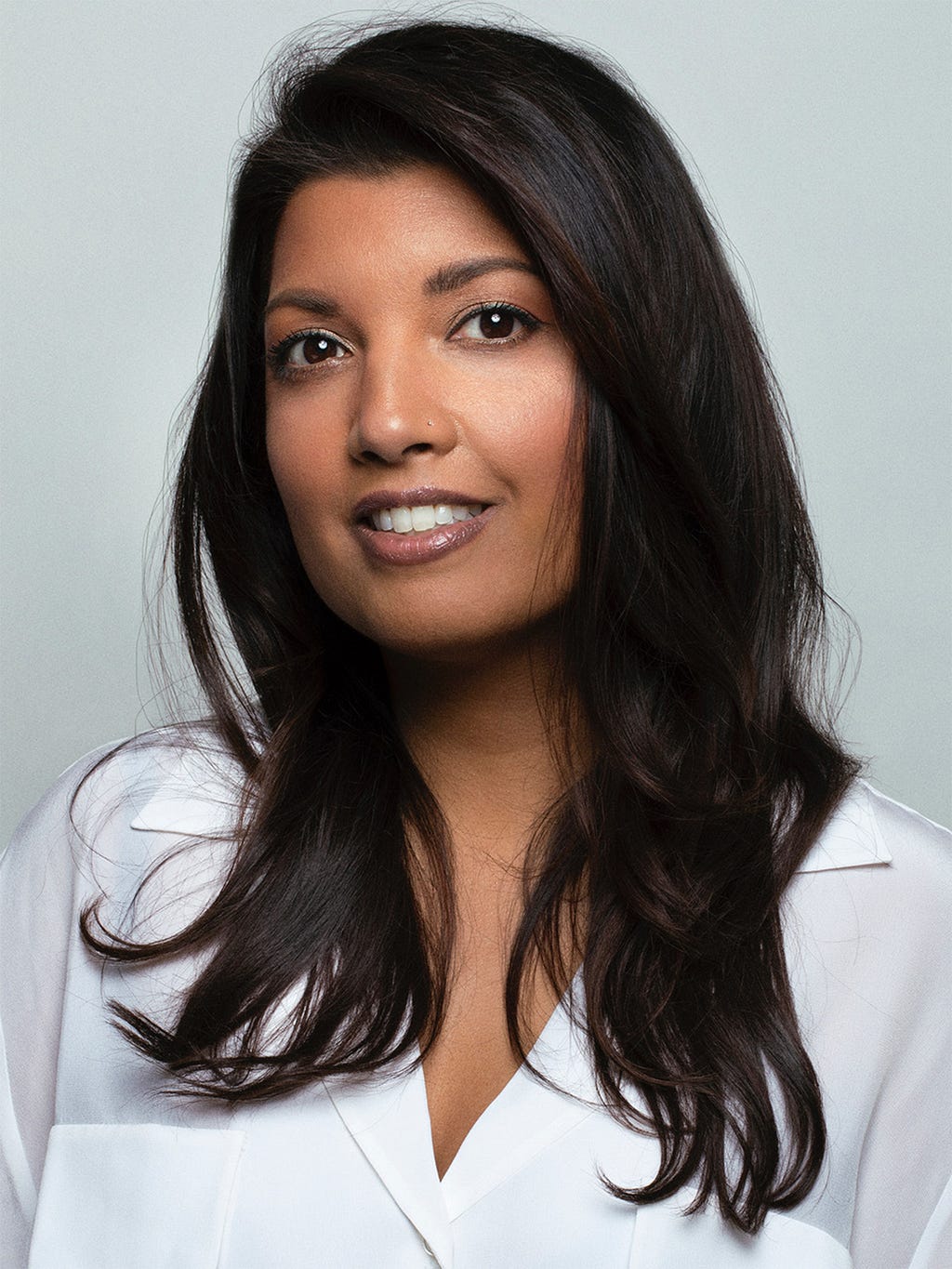
As a part of my series about “Lessons From Inspirational Women in STEM and Tech”, I had the pleasure of interviewing Nika Kabiri of YourNextDecision.

Nika has spent 20+ years studying how people make decisions in a variety of contexts. She has spent 10+ years working with businesses of all sizes, across all industry categories, helping them drive strategic growth. Her clients have included Amazon, Microsoft, Sony, Oakley, PepsiCo, General Mills, Anheuser-Busch InBev, the Seattle Seahawks, VMware, Zillow, Expedia, Smartsheet, and the Sierra Club, just to name a few. She has also served as an Advisor at Madrona Venture Labs, where she’s helped startups get their footing.

Nika is currently a faculty member at the University of Washington, where she teaches graduate and undergraduate courses on Decision Science. She has a PhD in Sociology from the University of Washington, where her academic focus was on choice theory and decision-making within constraints. She also has a JD from the University of Texas.

​Nika is a contributor to The Hill, Inside Sources, Huffington Post and Seattle Business Magazine. She has been featured in Yahoo News and as a top 10 coach in LA Weekly. She’s been interviewed by Voice of America, Forbes, and MarketWatch, and she’s a regular podcast, radio, and TV guest. Her bestselling book Money Off the Table: Decision Science and the Secret to Smarter Investing is available on Amazon.

Thank you so much for doing this with us! Can you tell us a story about what brought you to this specific career path?

My career path was far from planned! My interest and background have been in sociology, in the study of human and social behavior. I always wanted to know why the world was the way it was, why people did the things they did — what made it all tick. I was never interested in technology. I was the last person I knew to get a smartphone, the last person to get rid of their CD player.

But after graduating with a Ph.D. in Sociology with a concentration in Choice Theory, I needed to sort out a career. Though I never planned to go into business, studying consumer behavior was a natural fit, so that’s what I did and, living in Seattle, it didn’t take long before I was immersed in the tech space and started working with clients like Microsoft, Amazon, Zillow, Expedia, Madrona Venture Labs, and other smaller tech startups.

After working on both the agency-side as well as the client-side for a decade, I reached a point where I realized that my work environment wasn’t allowing me to flourish the way I wanted to. So, I started my own consulting company, and I took things to the next level. Now, in addition to doing research projects that explore consumer behavior, I leverage academic research on decision-making to help my clients more effectively influence consumer behavior and make better decisions within their organization.

I’ve even expanded my services into the B2C space, launching a website called yournextdecision.com to help people make better decisions in their everyday lives. I have an advice column on the website, and I also write letters to my subscribers and offer personal consulting services. My clients come to me for career advice, relationship advice, and everything in between and beyond that you can think of. Plus, my second book on decision-making will be out in the next few months.

These days, my work is all about decision science, and I love it. I’m fortunate!

Can you share the most interesting story that happened to you since you began at your company?

A sports radio host who saw one of my posts on Twitter asked me to come on his show to talk about why star athletes who have everything going for them risk it all by engaging in sexual improprieties that could end their careers. The issue specifically was centered around a football player. He wanted to hear what a decision scientist thought, and he wanted to listen to it on live radio.

I don’t follow sports. I know little about football and am the last person who should be on sports radio, but the interview was a blast, and it went so well that the host now calls me a “friend of the show” and has had me on two more times, once to talk about Naomi Osaka and once more to talk about Simone Biles.

I’ve done other radio interviews, TV, etc. but sports? That’s one for the books!

Can you share a story about the funniest mistake you made when you were first starting? Can you tell us what lesson you learned from that?

In all honesty, I’m not sure any of my mistakes are funny, but one decision I could have made better involved hiring my first accountant. First of all, I waited too long to do it. I thought I could manage my accounting and my taxes. Maybe other people can, but I should have known myself better! By the time I got to looking for an accountant, I was rushed due to a tax filing deadline, so, rather than do the research I needed to do, interview a few people, and think it through, I asked a friend for a referral and just hired that person on the spot.

Months later, I was more confused about my tax situation than before. I didn’t get clear answers from my accountant and couldn’t quite understand her explanations for things she was doing. She used fancy accounting words that I didn’t understand, and quite frankly, I never wanted to learn, talked about this tax code and that tax code, and I was lost! So I took the time to look around for someone else. I interviewed some people and finally settled on the accountant I’m working with now.

You’d think a decision scientist would have done a better job at deciding who to hire. Go figure. It was a great lesson in paying attention not just to what the right decision is but when that decision needs to be made. It also taught me that it’s not enough that someone is good at what they do. They need to be good at communicating with you and assuring you that things are under control.

What do you think makes your company stand out? Can you share a story?

My company is unique in two ways. First, it focuses on decision-making, so it homes in on how people choose to buy, choose to lead, decide to make the many decisions that are involved in growing a business. In my opinion, everything that happens comes down to some decision or set of decisions, somewhere, at some point in time. If a person can understand decision-making, they can then understand a lot of things in life.

Second, my company is unique because I use my knowledge from academic research to advise my clients. I’ll read research studies in academic journals and apply those insights to my clients’ situations, whether they are business clients or personal clients.

For example, one of my first clients was a B2B startup that was just getting off the ground but was struggling because, while potential customers seemed interested in their service, no one was actually buying it. I combed through the academic literature on choice deferral, status quo bias, inaction inertia, etc., basically, why people decide not to choose, or why they put off choosing. I wrote a report with recommendations straight from the study of behavioral science, designed to increase their chances of making the sale.

I could have scoped out a project where I did research talking to their prospective clients and trying to get them to open up about why they weren’t buying, but I knew that would have been too costly for my client. It would have also been too time-consuming, and thirdly, I probably wasn’t going to get a straight answer anyway.

Sometimes the “usual” way of getting answers isn’t the best!

Are you working on any exciting new projects now? How do you think that will help people?

My big project right now is my second book, which I am incredibly excited about. It is a guide for making good decisions in everyday life. I believe the advice in my book will help people because it helped me. In my 20s, I suffered from depression, panic attacks and, suicidal ideations. It was through the study of social science and decision making and applying what I learned in school to my everyday life that I was able to pull out of that dark place and become the pretty happy person I am today, successful in her career, content in her relationships, and comfortable in her skin.

Better decisions can make a better life and a better world. I genuinely believe that. By sharing what I know about how to make better decisions in my book, I hope that others will benefit from the knowledge that helped me, whether their decision involves which car to buy or if they need help out of depression. And the knowledge I share comes from scientific research, so it’s much more useful than just my personal opinion.

Ok super. Thank you for all that. Let’s now shift to the main focus of our interview. Are you currently satisfied with the status quo regarding women in STEM? What specific changes do you think are needed to change the status quo?

I am not satisfied with the status of women anywhere. I admit that we’ve come a long way. I remember interning for the Texas Council on Family Violence back in the early 1990s when Texas law had just changed to make it a crime to rape your wife. I appreciate that things are a lot different now, but equality is the goal, and we aren’t there yet.

I think what holds us back is lazy thinking on the part of those who hold most of the power. By lazy thinking, I mean the tendency to take mental shortcuts when drawing conclusions about women, such as a woman’s capabilities in STEM. Rather than seeing each woman as an independent person and evaluating her on her objective merits, it’s “more efficient” to jump to conclusions based on limited information. It is, in fact what the human brain does well: work efficiently and jump to conclusions quickly. I think more people need to slow down and think about the people that they interact with, and ask questions like , “What is this person about? How does this person think, work, and engage? What can I learn from this person?” The shortcut is to think, “She’s a woman, and women [fill in the blanks with the first thing that comes to mind].” That’s lazy. We deserve better than lazy.

In your opinion, what are the biggest challenges faced by women in STEM or Tech that aren’t typically faced by their male counterparts? What would you suggest to address this?

These days, people are aware that bias is socially frowned upon. They get that bias is terrible and holds the entire human population back. So those who carry biases against women try really hard not to showcase those biases, and by doing so, they carry an expectation of immunity from being called out for bias.

They do the right thing, but they don’t internalize the right thing. There’s a superficiality to it.

As a woman, I recognize this, and I suspect I’m not alone. There have been situations in which I’ve had to walk an interesting tightrope: context cues tell me I’m being perceived differently by men in the workplace, but then those same men go out of their way to “talk the talk” of equality. This makes it hard to prove unequal treatment, and that’s a challenge.

I don’t think men have to worry about this dissonance in how they experience the workplace — on the one hand, being “treated” as an equal through somewhat superficial mechanisms, while on the other hand, being treated unequally. It can be a confusing experience, a difficult thing to navigate. I’ve often felt like I never really know how I’m being perceived. There’s an uncertainty in where I stand relative to the men I’ve worked with, and that uncertainty sometimes feels more degrading than being told I’m less than. Tell me you don’t respect me because I’m a woman, and at least I’ll know what to do about it. I can leave and find a place where I belong. But pretend you respect me, and I feel more lost about what to do.

What are the “myths” that you would like to dispel about being a woman in STEM or Tech? Can you explain what you mean?

One myth is that women aren’t interested in STEM. There’s no psychological or biological reason why members of the female gender would, because of their gender, not find STEM appealing. The way you think through problems, tackle challenges, and get to build and develop, these intellectual exercises and achievements are universally human. Statements like “Women don’t want to do math” are dumb, to put it simply. Women love solving problems just as much as their male counterparts. They like to stretch their brains and use critical thinking. STEM scratches an itch for many, many women.

What are your “5 Leadership Lessons I Learned From My Experience as a Woman in STEM or Tech” and why? (Please share a story or example for each.)

  1. The most valuable gift you can give is time. We often feel rushed, and we underestimate how much time others may need from us. Prioritize your team by making time for them.
  2. Embrace imposter syndrome; it’s your friend. If you feel like an imposter, it’s because you’re stretching outside of your comfort zone and not being overconfident about your capabilities. Both are good things, so feel the discomfort, but see it for what it is: a part of the learning curve.
  3. Take your time with big decisions. We often have more time to make significant career moves than we think we do, so don’t feel rushed if you don’t have to be.
  4. Don’t let inertia sweep you in its current. We tend to do things we’ve already been doing by default. Stop occasionally and ask: What if I did this differently? Exercise those muscles that open you up to possibilities.
  5. Don’t put up with anything you don’t have to put up with. If you see that something isn’t working, fix it. If someone is underperforming, address it. If there’s toxicity in the workplace, tackle it. Don’t let people who bring the team down continue bringing the team down for a second longer than you’re aware of it.

What advice would you give to other women leaders to help their team to thrive?

Back each other up. My generation (Gen X) grew professionally during periods where other women in the workplace were perceived as threats, when there wasn’t room for all of us to succeed because there were only a few spots women were allowed to hold. I once had a boss who criticized me for trying to “steal her thunder” when all I was trying to do was a good job for her. That crushed me, and taught me to be timid when I should have been encouraged to be brave.

We have to support each other. Push one another to grow. Call out one another’s accomplishments. Be comfortable when other women excel. Not at the expense of anyone else, not to deny opportunities to others who aren’t women or aren’t like you, but to support everyone, including women, no matter who they are. And especially those who don’t have a lot of support already.

What advice would you give to other women leaders about the best way to manage a large team?

Organization is everything. You think you can manage more effectively by focusing on culture or morale, which is more obvious and even fun. But the larger the team, the more it needs a hierarchical structure to function effectively. This is basic sociology. Smaller groups can share resources and share the output of the work pretty easily. There’s only a few of you, so it’s not that hard to chip in when it’s needed, to do what it takes. But when a group gets larger, communication across that group about what to do, or who’s responsible for which task, becomes more challenging. The larger the team, the harder it gets. Clear roles and a clear hierarchy that lays out responsibilities and accountability are super important. I’ve seen too many managers of larger teams believe that hierarchy is oppressive and that it crushes creativity and innovation. But the opposite actually happens: the more egalitarian the structure of large teams, the more uncertainty there is, which breeds anxiety, making it hard for anyone to be productive or to thrive professionally.

None of us are able to achieve success without some help along the way. Is there a particular person who you are grateful towards who helped get you to where you are? Can you share a story about that?

My first job out of graduate school was challenging because I worked at a company that offered no training, no onboarding, and no guidance. I was thrown right in and expected to succeed as a junior analyst while being on conference calls with a C-level executives at companies like PepsiCo. It was stressful and frightening. I was told I was failing at every turn, yet no one stopped to show me what success looked like or how to achieve it.

Except for one woman at the company, a Senior VP, who I was lucky enough to be assigned to a project with. Despite her seniority and her hefty responsibilities, she took time with me. She slowed down her day, carved out some hours, and trained me on how to do good work on our project. I’d complete some work for her, and she’d spend more time with me, slowing things down to explain what I did well, what I needed to do better, and why. I ended up excelling on that project, and what I learned allowed me to go from an employee who was clueless to one who, months later, was single-handedly managing entire projects for General Mills. If it weren’t for her, I seriously wouldn’t be where I am today in my career.

She taught me that no matter who you are or what you’re doing, it’s always essential to make time for your team. If you’ve hired someone to work for you, take the time to train them. If someone on your team needs to talk it out, make the time to talk it out.

Time is the most precious gift. It’s the gift that gives back tenfold.

How have you used your success to bring goodness to the world?

I make it a point to find time to talk to people who reach out to me for career advice, even if I don’t know them. It’s tough out there, and it’s hard to build a business or a career. Many people are doing it without much experience or guidance. Not everyone has parents who can help or mentors to turn to. If someone out there feels lost and alone, I like to help them.

You are a person of enormous influence. If you could inspire a movement that would bring the most amount of good to the most amount of people, what would that be? You never know what your idea can trigger. 🙂

I know I’ve beat this drum already, but I’ll keep beating it: better decisions will lead to better lives, better societies, better futures for all of us. We simply need to be making better choices, and that will only happen if we understand how our choices go wrong, specifically, how our mental biases and social environments cause them to go wrong.

If I could inspire a movement, it would start small, and it would begin in grade school, as children grow to make their own choices. The objective would be to incorporate courses on decision science in every classroom, throughout grade school, to high school, and even in college, so that the study of decision making becomes part of our educational system.

Beyond that, any way in which the study of decision-making can become an everyday thing is better, given how our decisions are such a crucial part of the way our lives unfold.

Can you please give us your favorite “Life Lesson Quote”? Can you share how that was relevant to you in your life?

“Never do anything you’ll regret, and never regret anything you do.” My college advisor told me that once, and I’ll never forget it. To me, it means that you should make your choices thoughtfully, carefully, and seriously, so you don’t regret your choices later. But, with that being said, you can’t predict how things will turn out, and sometimes, no matter how badly you want to make great decisions, you just don’t. When that happens, you have to cut yourself some slack. Learn from it. Grow. Turn it into a life lesson. But see it as a regretful mistake? Never!

We are very blessed that very prominent leaders read this column. Is there a person in the world or in the US with whom you would love to have a private breakfast or lunch, and why? He or she might just see this if we tag them 🙂

I doubt Joe Biden would ever find time to sit down with me, but I would love to learn from him what it’s like to make decisions during this unprecedented time in our history. The stakes are incredibly high. So much is going on, and has been going wrong. And he’s been criticized for making some hefty mistakes. How is he managing? What’s his process? How does he push forward, and how does he make sure that he minimizes his mistakes? I don’t envy his job right now, but how he thinks about what choices to make, that would be fascinating to learn!

I suppose talking with Barack Obama wouldn’t be so bad either!

Thank you for these fantastic insights. We greatly appreciate the time you spent on this.


Inspirational Women in STEM and Tech: Nika Kabiri of YourNextDecision On The 5 Leadership Lessons… was originally published in Authority Magazine on Medium, where people are continuing the conversation by highlighting and responding to this story.

Female Founders: Caroline Petersen of Gallery Design Studio On The Five Things You Need To Thrive…

Female Founders: Caroline Petersen of Gallery Design Studio On The Five Things You Need To Thrive and Succeed as a Woman Founder

An Interview With Candice Georgiadis

Follow the path of least resistance. This one might seem counterintuitive for charge-ahead leaders, but here’s an example: for a long time I was chasing “hard to get” clients. However, I found that when the other side wants to work with you, you will actually have a better working relationship. I learned that I prefer to spend my time with folks that actually want to work with us.

As a part of our series about “Why We Need More Women Founders”, I had the pleasure of interviewing Caroline Petersen.

After a decade of experience in marketing and communication design, Caroline’s passion is helping B2B businesses impart their offers to customers and employees. Originally from the UK, Caroline spent the early part of her career working in Europe. Once she crossed the pond, she built a design firm, Gallery Design Studio, from the ground up by walking through (and sometimes nudging open) as many doors as she could. Her strong problem-solving skills and eye for design, help clients transmit complex information clearly, concisely, and in a visually engaging way. Relentlessly curious, she’s inspired by experimentation and always looking for better ways to serve her clients. Caroline knows from experience that pursuing your passion is the best ticket to a career you love — although it’s not the fastest and certainly not the easiest.

Thank you so much for doing this with us! Before we dig in, our readers would like to get to know you a bit more. Can you tell us a bit about your “backstory”? What led you to this particular career path?

While originally from the UK, I started my career in Madrid, Spain as a marketing intern in real estate development. I later joined the insurance industry, working in Madrid, Zurich and New York.

After a few years, I decided to pursue my passion for creative work so I started an online catering shop in Basel, Switzerland and launched a digital magazine on all things dessert. A few years later I accepted an offer to work at Time Inc. UK London for one of their food publications.

At that point, I decided to dive deeper into graphic design since I love editorial design, so I attended the Shillington School of Graphic Design in New York. After my training, I was offered a position at a large editorial company here in New York. But as life is full of surprises, the offer fell through. The truth is I failed to get my dream job with that company, and then I failed a few more times. That’s when I decided to go solo.

Can you share the most interesting story that happened to you since you began leading your company?

Honestly, so many stories happen every day it’s hard to keep track! I’d say the story of the journey is incredible. Every client, team member, partner, brings a unique perspective and their own skill sets which creates are really cool work. I’m very lucky to experience this.

Can you share a story about the funniest mistake you made when you were first starting? Can you tell us what lesson you learned from that?

Early when I started my business I was working on getting our first “enterprise” clients. After endless hours of reaching out and hearing “no”, and drowning in prospects’ names and emails, I finally had someone interested in our services. So we hopped on an intro call. I was so excited to speak with Jim! And I was sure to thank Jim for his time, and let Jim know how great I thought his company was. At the end of the call, the prospect thanked me then told me his name was David. Despite that, he decided to work with us and is still a client till this day!

None of us are able to achieve success without some help along the way. Is there a particular person who you are grateful towards who helped get you to where you are? Can you share a story about that?

My family, friends, business mentors and, of course, the Gallery Design Studio team. I wouldn’t be here without them. I’d say my mum, however, played a critical role in helping me get off the ground and believed in me when the path was not so clear.

My mum was the one who suggested I go back to school to specialize in graphic design. She later encouraged me to go solo saying I had “what it takes”. Sometimes having someone else believe in you is the best kind of inspiration.

Ok, thank you for that. Let’s now jump to the primary focus of our interview. According to this EY report, only about 20 percent of funded companies have women founders. This reflects great historical progress, but it also shows that more work still has to be done to empower women to create companies. In your opinion and experience what is currently holding back women from founding companies?

I think it’s a domino effect. Especially in the industries that our studio serves, predominantly B2B tech companies, we work with a lot of “STEM” folks, who trend predominantly male, so I think it takes time and incredible effort for women to get their foot in the door.

Can you help articulate a few things that can be done as individuals, as a society, or by the government, to help overcome those obstacles?

Self worth. Nobody will value you if you don’t value yourself first.

Personally I find a lot of changes come from within. We cannot change the past, but now we live in a time where we can pursue our dreams and embrace a bigger purpose. I wouldn’t wait for “someone” to fix the disparities, but rather act and be the change.

This might be intuitive to you as a woman founder but I think it will be helpful to spell this out. Can you share a few reasons why more women should become founders?

Since many women are socialized to be emotionally intelligent and attuned to others, we make great founders and leaders because a lot of us truly empathize and care about our teams, our clients and our communities. It’s harder to train compassion into an adult, and many of us have a strength there that society often tries to tell us is a weakness.

It’s beyond time to diversify the playing field. When you have a lived experience that differs from the industry mainstream, whether that’s impacted by gender, race, class or another intersection, you have different ideas. When you combine lots of people with lots of different lived experiences, you get a wealth of ideas, a powerful force for innovation and creativity. Simply put, more diversity often makes for better output.

We have a responsibility to be an inspiration not only for the next generation of women, but also for women in other parts of the world who are not so fortunate and don’t have as many possibilities. I am honored and humbled that businesses like mine create more space for more women in the workforce, today and in the future.

What are the “myths” that you would like to dispel about being a founder? Can you explain what you mean?

I think we’ve all heard: “You can’t have it all.” Someone once said this to my face, actually. But typically it’s only said to women. They mean to say that women can’t run a successful business, cultivate a strong sense of self and nurture a family. I’d say this is a myth. I believe you can achieve anything you set your mind to. It’s important to recognize you will need to find help to manage work and family demands, but a scarcity mindset also makes me feel backed into a corner. I’d rather believe I can have it all, as long as I’m not afraid to ask for help and adjust my expectations when life gets in the way.

Is everyone cut out to be a founder? In your opinion, which specific traits increase the likelihood that a person will be a successful founder and what type of person should perhaps seek a “regular job” as an employee? Can you explain what you mean?

No, I don’t think so — but being a founder isn’t about gender, it’s about personality type. You need to have a mission that is larger than the day-to-day troubles, so you stay motivated and driven. You need to feel comfortable being uncomfortable. Get ready for tough conversations and discomfort to be a part of your everyday life, whether it’s negotiating with clients, corralling team members or struggling with financial unpredictability. And for a lot of us, you need to feel comfortable with “not being able to switch off”. When you’re a founder, you’re almost always working, even when you’re not. It’s part of that personality type I mentioned — it’s how our brains are wired. But as long as you feel fulfilled and sustained by your work and commitment, even when you’re overwhelmed and exhausted, then you’ll know being a founder is for you.

Ok super. Here is the main question of our interview. Based on your opinion and experience, what are the “Five Things You Need To Thrive and Succeed as a Woman Founder?” (Please share a story or example for each.)

  1. Don’t assume: Make sure you communicate what it is you want. Otherwise, you will find yourself frustrated. For example, when working on a client project he kept saying “make it pop” without providing any context. But once he shared other visuals of the style he liked, we were able to move in the right direction. Communication is always a two-way street, sometimes you have to ask for what you need.
  2. Follow the path of least resistance. This one might seem counterintuitive for charge-ahead leaders, but here’s an example: for a long time I was chasing “hard to get” clients. However, I found that when the other side wants to work with you, you will actually have a better working relationship. I learned that I prefer to spend my time with folks that actually want to work with us.
  3. Speak up: If you feel something is not right, say so. One example from my team: Our business is mainly about communication expectations, but we often have clients request intricate projects in unrealistic timelines. When that happens we have to speak up and not stay silent (and miserable). Good chances are the other side is not even aware they are being unreasonable.
  4. Be authentic: Don’t try to pretend to be someone else, be comfortable in your own skin. For example: When I first started the business I was very focused on what other studios and agencies were doing, which just gave me anxiety about “all the things I don’t know” or “all the things we are not offering”. In time I realized it’s okay if you are not great at everything, as long as you specialize in what you are really good at.
  5. Provide clear direction: Put yourself in other people’s shoes, a client, employee or peer — understand where they are coming from. Once when I was frustrated that the team wasn’t following a specific workflow for our client onboarding processes, it turned out I didn’t provide clear direction and training on how to do this. Clear direction saves time and frustration on all sides.

How have you used your success to make the world a better place?

Proud to be helping innovative tech businesses in the B2B space succeed and grow. Our clients are making a difference in the world leveraging technology for the greater good. Some sectors in which our clients are moving the needle:

Health tech companies making insurance more accessible

Industrial automation companies that help manufactures produce more efficiently with reduced waste

Fintech companies that help democratize access to financing

You are a person of great influence. If you could inspire a movement that would bring the most amount of good for the greatest number of people, what would that be? You never know what your idea can trigger.

I would love to improve the American Dream with immigration reform for foreign-born entrepreneurs in the US.

The impact of these foreign-lead business direct, indirect and diffused investment, innovation and employment is huge and contributes greatly to the US Economy.

NVCA President and CEO Bobby Franklin noted immigrant-founded businesses have always been impactful, including recent innovators like Moderna and Pfizer. However, he warned that one result of convoluted immigration policies has been that the “U.S. share of global venture capital investment has shrunk from 84% to 51% in just 17 years.”

Instead of being 100% focused on building great companies, immigrant founders who are on visas spend more time worrying about a long laundry list of immigration requirements. Since there isn’t a clear path for permanent residency, our immigration status jeopardizes the longer-term success of the livelihood of these founders, their families and the companies they run. COVID-19 has amplified this problem, with harder renewals and travel restrictions.

I admire the work of e2visareform.org and VC firms like Unshackled Ventures, who support immigrant-run businesses.

We are very blessed that some very prominent names in Business, VC funding, Sports, and Entertainment read this column. Is there a person in the world, or in the US with whom you would love to have a private breakfast or lunch with, and why? He or she might just see this if we tag them.

I’d love to meet Sara Blakely, Founder of Spanx. I admire her personality and energy. I also love the fact that she is extremely successful but still keeps her sense of humor. I definitely think that would be a fun breakfast 🙂

Thank you for these fantastic insights. We greatly appreciate the time you spent on this.


Female Founders: Caroline Petersen of Gallery Design Studio On The Five Things You Need To Thrive… was originally published in Authority Magazine on Medium, where people are continuing the conversation by highlighting and responding to this story.
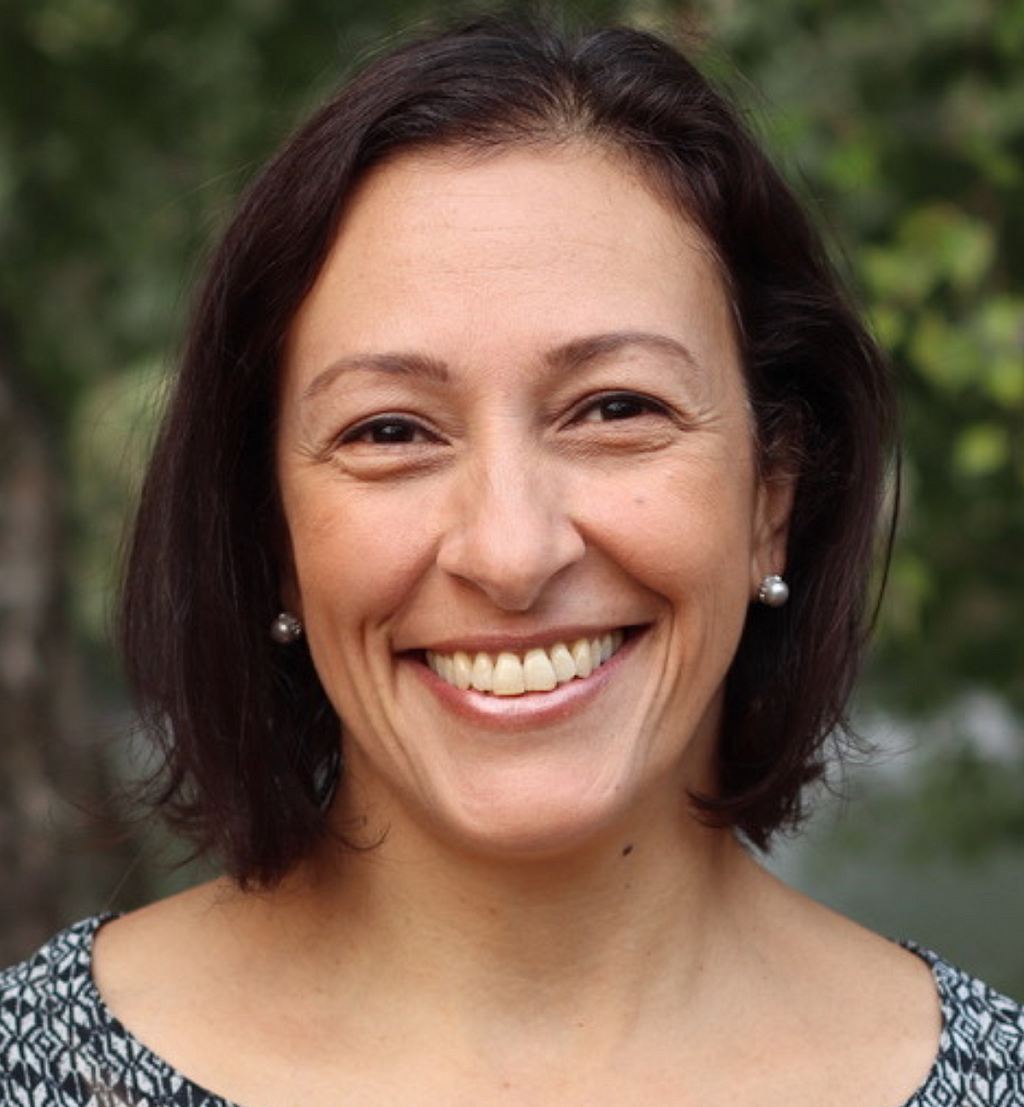
Female Disruptors: Tonya McKenzie of Sand & Shores On The Three Things You Need To Shake Up Your…

Female Disruptors: Tonya McKenzie of Sand & Shores On The Three Things You Need To Shake Up Your Industry

An Interview With Candice Georgiadis

“Don’t judge people. You never know their story. You have no ideas what they are dealing with.” ~Patricia Watts. Advice that my mother gave me growing up has resonated with me throughout my career, which truly is a reason why I am so good at this profession. I had asked my mother why she was friends with some of the people that she hung out with. To me, they were not good people. As I got older, I realized that they all had things going on that I did not know about as a child. Some of their stories gave so much context to some of the behaviors that I saw as devious or even criminal. These women were dealing with issues from sickness to domestic violence and substance abuse. The greatest takeaway has been actualizing my superpower when it comes to public relations. It’s the story behind the story that holds the most valuable gems.

As a part of our series about women who are shaking things up in their industry, I had the pleasure of interviewing Tonya McKenzie, Founder of Sand & Shores PR and Leadership Firm.

Tonya McKenzie, born and raised in San Jose, California and Alumni of California State University, Northridge has spent the bulk of her career in the marketing and public relations industry. Over her career, she has been elected or appointed to important leadership positions such as the Contra Costa County Youth Commission to her current positions as a Los Angeles County Commissioner, Vice President of Black Public Relations Society — L.A., and Board of Directors for the Redondo Beach Chamber of Commerce. She is the founder of Sand and Shores Public Relations & Leadership Firm, helping civic organizations and nonprofits tell their story, build brand awareness, and manage their reputation.

Thank you so much for doing this with us! Before we dig in, our readers would like to get to know you a bit more. Can you tell us a bit about your “backstory”? What led you to this particular career path?

I have spent over 20 years in sales, marketing, and public relations. I took an advertising executive position at Southland Publishing when I first moved to Southern California. They were not utilizing as much technology as we had available. So, I launched my own company, Sand and Shores and published Real Estate Agent Magazine. I handled the advertising sales, PR, and marketing while also growing my business network. I realized that I love public relations but not real estate. Since it was my company, I decided to pivot the industry that I served to organizations that I am comfortable with, familiar with, and understand their communication needs. Because of my upbringing, I have a lot of experience with law enforcement, different civic agencies, and nonprofit organizations. Specifically, we help them understand how to identify and communicate with their target audience, which is usually the communities that they serve. Showing them why and how storytelling can be pivotal in the connectivity between the agencies and communities has become essential in my practice.

During the Covid shutdown and social unrest due to the George Floyd murder, it became more apparent to businesses and these civic organizations that a need for strategic PR, communications, and reputation management is apparent. Sand & Shores was positioned to deliver the results that these businesses and organizations needed.

In addition to operating the consultancy, I hold multiple leadership positions in Los Angeles County, and I am a national fellow for Everytown, speaking on Gun Violence and Gun Safety laws and regulations, and a 26-year member of Zeta Phi Beta Sorority, Inc. I chartered a graduate chapter in Northern California. Most importantly, I am a child advocate understanding that our job is to leave this world better than we got it.

Can you tell our readers what it is about the work you’re doing that’s disruptive?

In a time where people are calling to defund the police, I am working to get people to understand local department structures, their responsibilities as a resident and how to properly enact changes they wish to see made. Most people don’t understand city funding vs department and services funding. I am using my platform to exhibit transparency in police departments showing how they function and operate. Most importantly, it’s pivotal to show the uniqueness of different law enforcement departments.

As a public relations and communications professional, my primary job is to tell stories and elevate important messages and voices. My podcast, My Morning Coffee, may be one of the first to have an official partnership with a Police Department. This ensures that, no matter what events take place or brings about a media craze, they will always have a platform to elevate their message. For officers to tell their individual stories, share their experiences, and talk about who they are in and outside of the badge, take an elevated level of vulnerability and trust that we will handle it with respect and dignity. During the peak of the social chaos of 2020, during the “defund the police” movement, “Blue Lives Matter” movement, and “Black Lives Matter” marches, nobody was giving voice to Black police officers. My own podcast cohost of the Los Angeles County Sheriff’s department was absorbing hateful messages from those around her. We provided a platform for the first Chief of Police that denounced former Officer Derek Chauvin’s actions, to talk about why he felt compelled to do that. We also held a three-part series of black officers in Blue. With no subject off limits, African American officers, a panel of no less than six, answered questions and spoke on what it was like to be Black law enforcement officers from various different departments across this country. As a public relations and leadership consultant, I know that content matters and I will always work to provide a platform for under-exposed stories to be told and content to be shared even if that content isn’t popular or very controversial.

I also launched the Empowered Podcast Network with a small number of podcasts that put out quality content that empowers the listeners personally, professionally, and emotionally. We partner with brands that embody the lifestyle, quality, and superior service that we stand by.

Can you share a story about the funniest mistake you made when you were first starting? Can you tell us what lesson you learned from that?

One of the most hilarious moments in my career thus far has been a special issue of The Argonaut that I produced a few years back. I was responsible for the cover story for the Special Health and Wellness issue. My client, Krav Maga expert, was the cover story. I was in charge of the photo shoot and the editorial content. I had absolutely no clue what Krav McGraw was. During this shoot, my client pulled out a gun. I immediately took off running. I had no idea that it was fake, and that he also taught self-defense classes, teaching people how to disarm someone if they are held up. By the time he looked up, I was already gone. He eventually called my phone to ask me where I had run off to and we cleared it all up. When I got back, we all had a good laugh. But it definitely let me know that I need to do my research and have a full understanding of what my clients do and how they do it. You cannot tell a robust story without all of the details.

We all need a little help along the journey. Who have been some of your mentors? Can you share a story about how they made an impact?

My husband, Ray McKenzie is my most impactful business mentor. He was the first of us to leave corporate America and launch his own tech firm, Red Beach Advisors. Ray learned and taught me things about owning a business, scaling, and essential operations to ensure a positive client experience.

Michele Brown is an amazing real estate professional that I can get excellent leadership advice from. She is a fitting example of being a diligent business owner while also being a leader in the community, serving on various boards and other positions. Her advice is priceless. She leads by example and knows how to create raving fans.

LaTashia DeVeaux also serves as a mentor and advisor. Being a Black Woman business owner while balancing clients and serving in leadership positions can be stressful. It helps to have somebody in my industry to talk through strategy, client issues, priorities, and balance. Her guidance is priceless and is often used to correct course if I am unsure if I have gone in a wrong direction.

In today’s parlance, being disruptive is usually a positive adjective. But is disrupting always good? When do we say the converse, that a system or structure has ‘withstood the test of time’? Can you articulate to our readers when disrupting an industry is positive, and when disrupting an industry is ‘not so positive’? Can you share some examples of what you mean?

Social media has been a great disruption for the marketing, PR, and communications industry. Obviously, it allows for us to connect more frequently, in real time, and with larger audiences. The news now gets reported faster on Twitter than it does waiting for a breaking news report to show up on a TV station that we might watch. For those that depend on that news, it’s a great thing. There is a high level of immediate gratification. Social media has disrupted the news industry in a way that allows for us to get information faster. Unfortunately, this same tool, social media has broken some norms and devalued high quality customer service. Social media has allowed for business owners and professionals to believe that conversation via a social media channel is all that they have to do to check the box of customer service. It’s important to recognize that high touch, high quality customer service still takes a personal touch. It takes a phone call, sometimes. It takes in-person communication. Networking, as much as you can do it on a social media platform, it still does not compare to networking in person. The dynamic is different. The need for situational awareness is higher. Human interaction and connectivity have definitely been disrupted by social media. It is the perfect example of disruption, positively and negatively, in business today.

Can you share 3 of the best words of advice you’ve gotten along your journey? Please give a story or example for each.

  • “Control your schedule. Don’t let your schedule control you.” ~Ray McKenzie

As an entrepreneur trying to launch and grow a successful startup, you are determined to make it work. You give all of yourself and are always ready to try something new, sacrifice your personal time and be as accessible to clients and potential clients as possible to make ensure that you don’t miss or lose any business opportunities. You want to give your venture the best shot at being successful. The problem with that is the fact that we often don’t take breaks, cause chaos in our personal lives, deplete out mental and physical health, along with developing tunnel vision. Because my husband was the first to launch his startup, he learned first-hand how easy it is for your time management to spiral out of hand and cause unnecessary chaos in your life. There is a better way. Carving out time for the grind and time for personal affairs was the key. It was great advice and a lifesaver once put into practice.

  • “You are done when the job is done.” ~J.C. Watts

My grandfather was a business owner, a great employee for Ball Construction, a club owner, and a community leader. I always tried to understand how he did it all. He was a master construction worker. His work product ranged from projects like the New Orleans Superdome, churches in the south and houses in the Bay Area. His wife was a beautician. At one point, I would watch my grandfather leave to work while it was still dark outside, get off work, and proceed to build a beauty salon onto his home (for his wife). I watched that project day after day, week after week until it was complete. My grandfather lived his words, always completing whatever he started. That resonates with me as an entrepreneur, a parent, and a civil servant.

  • “Don’t judge people. You never know their story. You have no ideas what they are dealing with.” ~Patricia Watts

Advice that my mother gave me growing up has resonated with me throughout my career, which truly is a reason why I am so good at this profession. I had asked my mother why she was friends with some of the people that she hung out with. To me, they were not good people. As I got older, I realized that they all had things going on that I did not know about as a child. Some of their stories gave so much context to some of the behaviors that I saw as devious or even criminal. These women were dealing with issues from sickness to domestic violence and substance abuse. The greatest takeaway has been actualizing my superpower when it comes to public relations. It’s the story behind the story that holds the most valuable gems.

We are sure you aren’t done. How are you going to shake things up next?

My next move will involve publishing another book and empowering the next generation of leaders. Being able to work with Lieutenant Gia Neal from LA County Sherriff on our podcast, My Morning Coffee has been eye-opening and validating at the same time. We are quite different in age, parental status, and lifestyle. However, there are many things that I have believed when it comes to people of color and law enforcement. Gia has been able to validate many of those things and open my eyes to statistics and facts that I never knew prior. Working with Captain Jon Naylor from Redondo Beach Police Department has been a journey through perspective. Seeing situations from the eyes of another and having the capacity to empathize allows for you to grow mentally and emotionally. None of this could be possible without honesty and openness in all conversations. When we look at some of the most complex issues in our society, law enforcement, and the communities that they serve, the fix can be as simple as getting to and extracting the leadership in each young person and empowering them with the knowledge that they can be the difference.

In your opinion, what are the biggest challenges faced by ‘women disruptors’ that aren’t typically faced by their male counterparts?

Women as disruptors usually do their most impactful work in male dominated industries. It requires a level of though-leadership that not only displays a unique way to solve a problem but requires that they do it better than anybody else in the space. Women have to find a way to soften a stale way of thinking or harden her own stance. Many times, it’s both. Women have to not only show that they belong in the space but that their capabilities are superior to the men in the room to get the respect needed to change status quo. Women must show an important level of leadership to command the respect needed to disrupt any industry. Female disruptors face many different challenges but consistently overcome to make the changes needed for progress.

Do you have a book/podcast/talk that’s had a deep impact on your thinking? Can you share a story with us?

Patti Labelle, Don’t Block The Blessings was an impactful book for me. As a gun violence survivor with over 21 addresses by the time I graduated from high school. I recognize that I lived a tumultuous childhood. I could have let that destroy me. It certainly equipped me with plenty of excuses in the case that I could not get life right. Reading Patti’s book showed me that even the people that we look up to have been through some horrible things. Ms. LaBelle weathered through multiple death in her family while carving out a life that she loved with such audacity and determination. She was unique, fun, funny, and adventurous in her pursuit. This was great confirmation that we can have a fun time and enjoy life while accomplishing hard things.

You are a person of great influence. If you could inspire a movement that would bring the most amount of good to the most amount of people, what would that be? You never know what your idea can trigger. 🙂

L.L.E.A.D. the Way! That’s the movement. Leadership has become a part of my personal brand. It has gotten me through trauma, drama, social upheaval, and uncertainties to a place where my opinions matter and my voice is heard. I would like to see more women and young people LLEAD. Step into the space that empowers them to be a change maker while they embrace their opportunity to fully live, love, and leave a legacy.

Look the part.

Leverage your experience.

Elevate your voice.

Acknowledge the problem.

Deliver results.

Can you please give us your favorite “Life Lesson Quote”? Can you share how that was relevant to you in your life?

“You can never be too kind.” ~Karen Mathis

No matter what the situation, kindness always wins. People can be nasty, inconsiderate, consumed in their own problems, and just lack empathy. In my personal life, it has helped me to be a better wife and mother. In business, it has helped me to deliver great customer service to my clients. It feels good to give more than expected. Most importantly, I am kind to myself. Selfcare can be lifesaving.

How can our readers follow you online?

Website: http://www.sandandshores.com/

Twitter: https://twitter.com/tonyamckenziepr

Instagram: https://www.instagram.com/tonyamckenziepr/

Facebook: https://www.facebook.com/tonyamckenziespeaks/

LinkedIn: https://www.linkedin.com/in/tonyamckenzie/

YouTube: https://bit.ly/1920Girl

This was very inspiring. Thank you so much for joining us!


Female Disruptors: Tonya McKenzie of Sand & Shores On The Three Things You Need To Shake Up Your… was originally published in Authority Magazine on Medium, where people are continuing the conversation by highlighting and responding to this story.

Female Founders: Liz Kametz On The Five Things You Need To Thrive & Succeed As A Woman Founder

An Interview With Candice Georgiadis

Unwavering Confidence. We tend to back down from the power that unwavering confidence can evoke in fear of what others think. For females, confidence has been cast as ‘bitchy’ in the business world. In truth, when we exhibit unwavering confidence it can be scary for others to see. In my experience, my unwavering confidence is both inspiring and daunting for those who meet me. I’ve given talks to hundreds about embracing the mess and it’s through my confidence in my own embrace, that people are drawn to me. Confidence is the armour that shields us from all the obstacles we face as founders. It’s also the grace we grant ourselves throughout the aspects of surviving before we can thrive.

As a part of our series about “Why We Need More Women Founders”, I had the pleasure of interviewing Liz Kametz, MS.

Liz Kametz is an author, coach, business owner, a mom of four children (two special needs, two step-children) and one anxious rescue dog, and a wife to a loving hubby, who together share in their journey of learning and growth. She most importantly knows the power of self-care and a focus on wellness, especially on how positive an impact it has with her and her children (one on the spectrum, one with anxiety disorder).

Liz created Just Be to address her own chronic stress and lack of self-care. She’s used her healing journey over the last 7 years to author her debut book and design transformation workshops. Liz holds an MS in Systems Engineering, BS in Chemical Engineering and has made a career in successfully coaching leaders and large organizations through transformation.

Thank you so much for doing this with us! Before we dig in, our readers would like to get to know you a bit more. Can you tell us a bit about your “backstory”? What led you to this particular career path?

It’s such a pleasure to be here, thank you so much for having me! My story is both unique and common among many aspiring female entrepreneurs. I built a career on being an achiever and always focused on helping others solve problems. It took about 20 years in Corporate America for my body to finally draw a line in the sand and wave the flag to surrender to chronic burnout. See what happens with women like myself is we focus so much on all the ones around us, especially the ones we love and care for, and we tend to put ourselves at the bottom of the list. When it comes to a career, this can be very mysteriously hidden in societies ‘norm’ of climbing the corporate ladder, or doing what’s ‘best for the team’. In this veil of achievement, our logic tells us we are building a successful career, but our soul has other plans. If we don’t listen to our soul’s purpose, especially if you are intended to be a woman in leadership, what ends up happening is we approach burnout and our bodies start to fail. For me, I hit the wall with chronic stress that manifested into multiple physical ailments from back and shoulder pain to over debilitating anxiety. Flash forward five years and I can confidently say I’ve focused my energy on building a business around self-care and my soul’s purpose which promotes ultimate alignment for success.

Can you share the most interesting story that happened to you since you began leading your company?

Picture the energy created by pursuing your dreams and taking action towards your goals. I was deep in the details of launching my brick & mortar wellness center at the turn of 2020. Just saying that date should give you indication about what I’m about to tell you! My business partner and I were shopping like thieves in IKEA for all the last minute needs to fill our almost 3,000 square foot space we had been designing. Construction was almost complete, we were about to host a Female in Business networking event of over 70 local leading women in business, and we were sailing on the high energy of all the possibilities in front of us. We had so many carts of towels, sheets, decor, etc, that it was hard for the two of us to move through the checkout line without help. With the blink of an eye, COVID hit and all of those best laid plans for opening our doors in April were thwarted. Honestly, I never let it get to me. I let every obstacle and twist and turn that I faced be a lesson to keep going, perhaps just in a slightly different direction. I call upon this story as the most interesting because it’s not often that you can feel failure before you even begin. With any perceived failure the real growth happens when you shift perspectives and allow the experience to be some of your best guidance.

Can you share a story about the funniest mistake you made when you were first starting? Can you tell us what lesson you learned from that?

Well first of all, I love how you say ‘funniest mistake’ because each hiccup should be viewed this way. If we can introduce some humor into our experiences the lighter we become and the easier it is to move through the disappointment. Honestly, in reflection, there are probably a bunch of mistakes because being a business owner with staff and a facility and services was all new to me. One specific example that comes to mind is the idea of trying to do everything myself. This was a ‘mistake’ that took me almost 2 years to rectify. I’m a woman who has succeeded at most everything I put my mind to and leaned on my education and experiences to guide me. I have engineering degrees which taught me how to understand large complex problems, how to leverage technology, and use analytical thinking. So when you consider the entire business eco-system of a small business owner, all the facets I could handle from strategy, finance to customer experience. What I didn’t enjoy was the sales and marketing parts, but that didn’t stop me from learning! No no, I charged forward pulling up my big girl pants and diving into webinar after webinar on social media strategies, marketing 101’s etc. looking back, I could have saved my time and energy and hired an expert while focusing on my genius work, but I was too set in need to control, save money, and do it all myself. Not sure if that is laugh worthy, but hindsight is always 20/20, and I can chuckle to myself about the time I probably wasted and use it as a guidepost for picking and choosing where I should be spending my energy as a business owner on a daily basis.

None of us are able to achieve success without some help along the way. Is there a particular person who you are grateful towards who helped get you to where you are? Can you share a story about that?

Oh, I love this question, because, AMEN! So many aspiring female entrepreneurs I coach are trying to do it all on their own. I had the lucky circumstance that as my vision was forming of what type of business I wanted to create, my path crossed with my now business partner, Adrienne Gervais. As you recall in my origin story of business ownership, I had hit the wall of chronic stress and burnout and I was seeking as many different healing modalities as I could to help with my physical and emotional baggage. I was referred by a neighbor to Adrienne to try Integrated Energy Therapy which was nothing I had tried before, but was open to anything. After one or two sessions with Adrienne as she cleared many of my physical and emotional blocks, she mentioned how she could sense lots aswirl with my visions coming to clarity. It was no coincidence our paths crossed at the right time. Over the next few months Adrienne flowed alongside me as a champion of my mission, providing a constant feeling of encouragement and reinforcement. Since, we’ve more formally established our working relationship, but honestly it’s always been in the spirit of helping each other align to our life’s purpose to heal, grow, and share our learnings with others.

Ok, thank you for that. Let’s now jump to the primary focus of our interview. According to this EY report, only about 20 percent of funded companies have women founders. This reflects great historical progress, but it also shows that more work still has to be done to empower women to create companies. In your opinion and experience, what is currently holding back women from founding companies?

I’m probably the first generation who grew up being told I could be or do anything I worked towards. My mother was given a handful of careers to choose from and that was that. For her, It was definitely rowing up- river to consider anything that wasn’t the ‘norm’. Today we have more opportunities for young women to explore their passions at an earlier age. It’s still not enough. Although we’ve moved the needle to help these young women open up more possibilities, to me, it still feels contained. It’s not enough to tell young women they can ‘do’ anything in terms of a career, we need to keep reinforcing they can ‘be’ anything they want to be as well. We need to focus on encouraging the spirit of a young child who dances in her tutu and creates inspiring idea after inspiring idea, to continue to dream. We need opportunities for these young women to build an armour of confidence that cannot be penetrated as they go through life.

So if you think of the women today who might be holding back, that’s my answer, confidence. Bravery to go against the grain and follow their dreams. Courage to pursue their souls’ purpose even if it’s not what is expected..

But let me be clear — I do see this shifting. I see SO MANY more women holding up their metaphoric swords of pursuit and charging towards their dreams. So many more women are standing in their power and aren’t holding back. For those women (like it was for me), it’s not a matter of us holding back, it’s a matter of those around us opening doors for us to move through, instead of feeling like we need to shatter the status quo. It’s not a matter of us holding back, it’s a matter of the systems in place shifting to support female leaders. I’m encouraged about the time we live in and seeing these numbers increase as both women find their power and society shifts to allow it.

Can you help articulate a few things that can be done as individuals, as a society, or by the government, to help overcome those obstacles?

Three key foundational approaches come to mind, especially as I think of what I hope my step-daughters gain as they move into adulthood.

  1. Focusing education on confidence, self-esteem, and failure-learning. The younger we are able to encourage females to be confident in who they are, learn from mistakes, and have a growth mindset, the better chance we have in creating future leaders.
  2. Increased financial opportunities to support women-owned businesses. The best business plan and mission to help through business ownership can be shelved if it’s not properly funded. There is still an imbalance in our opportunities for female founders to secure proper funding for sustainable success.
  3. Continued focus on mentorship. This is happening quite a lot in the forms of women authors sharing their lessons, female networking groups and the like. We need to make sure this continues to grow as community connections are a great way to not feel alone and encourage each other by lifting each other up as we move through our journeys of entrepreneurship.

This might be intuitive to you as a woman founder but I think it will be helpful to spell this out. Can you share a few reasons why more women should become founders?

As has been stated in many publications, women make up about 85 percent of all consumer purchasing decisions and account for about $7 Trillion in consumer and business spending. So if we are so imperative in our economic success it’s pretty straight forward we should be in positions to design the business landscape. Besides that simple logic, women have proven themselves as powerful complex system problem solvers. Take a stay at home mom for example ( which I was for many years) on any given day she juggles the children’s meal plans, school communication and requirements, household management, conflict resolution, doctors visits, extracurricular activities, all while considering the emotional and physical well being of those she loves. She does this usually without even writing anything down, as her brain is wired to work through all the moving pieces at the same time. Now apply that to operating a business and the invisible writing is on the wall.

Women are made to lead, it’s as simple as that.

What are the “myths” that you would like to dispel about being a founder? Can you explain what you mean?

Oh yes! Love this. Here are 3 ‘myths’ I try to shatter everyday!

  1. Work Hard, Play Hard. — Not for me! Play hard, yes. Work hard, no. If you’ve found your true soul’s purpose, first of all, it won’t feel like work. Secondly, you don’t have to overdo it. You can flow with your energy towards your goals with ease. Amazing, you can work less and gain more. It’s an earth shattering concept, but some of the best leaders live it.
  2. More Time, More Money — Okay, I guess you could say this is a spin off of the first one. Here’s the deal, our society has grown through the industrial revolution where time literally was money in manufacturing facilities pushing out widgets. We have transcended this people! We can now disconnect the fusion of time with money. We need to recognize that our value (ahem, money is in our wisdom, our insights, and are not associated with how much time we provide AT ALL.
  3. Perfection breeds Success — Not sure if anyone is actually saying this, but we see people living by this motto all the time. Not trying new things in fear of not being perfect. Not pursuing their dreams if they don’t feel like it’s going to be perfect. I do know someone said this: “Perfection is the enemy of good.’ so let’s do good, be good. I like to tell my staff, customers and mentees to “Embrace the mess!”. The messiness is where all the good growth comes. It’s okay to fail. It’s okay to do ‘just enough’ and it’s okay to be messy. The more we can show other leaders that perfection is not what we are striving for, the more likely we are to have more female founders raising their hand to try!

Is everyone cut out to be a founder? In your opinion, which specific traits increase the likelihood that a person will be a successful founder and what type of person should perhaps seek a “regular job” as an employee? Can you explain what you mean?

To be a founder you need to be comfortable in the discomfort. There isn’t a day that goes by that doesn’t cause concern if your mindset is wired to need safety and comfort. To be a successful founder I believe you must be passionate, ambitious, risk taking, mission driven leaders ready to take on a messy existence. If your emotional well being is linked to stability and security perhaps the ‘regular job’ will be most appropriate. Those who have a thirst to learn and grow on a continual basis are best poised to launch into the world as female founders.

Ok super. Here is the main question of our interview. Based on your opinion and experience, What are the “Five Things You Need To Thrive and Succeed as a Woman Founder?” (Please share a story or example for each.)

  1. Unwavering Confidence. We tend to back down from the power that unwavering confidence can evoke in fear of what others think. For females, confidence has been cast as ‘bitchy’ in the business world. In truth, when we exhibit unwavering confidence it can be scary for others to see. In my experience, my unwavering confidence is both inspiring and daunting for those who meet me. I’ve given talks to hundreds about embracing the mess and it’s through my confidence in my own embrace, that people are drawn to me. Confidence is the armour that shields us from all the obstacles we face as founders. It’s also the grace we grant ourselves throughout the aspects of surviving before we can thrive.
  2. Growth Mindset. Whatever term you want to use, this is the aspect of being okay with failure. Being okay with something not turning out the way you expected. Honestly, removing all expectations all together, so no matter what comes your way you roll with it. In order to be a thriving woman founder, this type of mindset is foundational. I’ve had clients receiving services in our wellness center and the water stopped working, or staff giving last minute cancellations, or not being funded from a bank where it’s a table of all white males deciding. Any of these experiences could have made me throw in my hat and call it quits, but it’s through my positive mindset and recognizing that every experience is an opportunity to learn and grow, that has kept me thriving.
  3. Support System. As much as we can be standing in our power as an amazing Queen Bee Business Owner, it ‘takes a village’, as they say, to run a business. Find your support system, either through the amazing staff you hire, or the loved ones cheering you on, or the boundaries you put in place; as these are your building blocks to thriving successfully. You can’t and shouldn’t do it alone.
  4. Self Care. To have a business that is thriving, you need to be thriving. This means taking care of yourself completely. FIRST. You cannot give to others until you have given to yourself. This is a lesson that took years of unlearning and relearning for me to truly understand. I put everything first before myself and almost died because of it. You don’t need to wait until your body fails, or your mental health is on alert to take care of yourself. Instill repeatable, consistent self-care routines that feed your soul and don’t ever stop.
  5. Dream. The best businesses were created out of solving a problem by creative souls who followed their dreams. Building time into your life to keep dreaming is a recipe to thrive. If you follow your dreams, each day as a woman founder will be filled with joy. For me, I had lost the idea of dreaming because I got stuck in my analytical, problem solving mind. When creativity of thought flows, the most inspired results transpire. Space, quiet, rest, nature, are just a few ways I allow for dreaming. To move from surviving to thriving we need to heal our souls and dreaming is a great vehicle to get there. What you’ll find is the more time you spend dreaming, the more ideas, and the more impact you can make to the world.

How have you used your success to make the world a better place?

My business mission is directly linked to my life’s mission. It encompasses 4 key C’s: Compassion, Connection, Community and Caring. Locally we support as many causes that reflect these tenants as we can. Globally, I mentor aspiring female entrepreneurs to follow their life’s purpose. Each positive impact creates a ripple as our universe is all energetically connected. Change takes time, but incremental action won’t go unnoticed. Our world can be a better place today than it was yesterday if we continue to focus on what actions we are rippling out, so i focus on my 4 C’s to continue to ensure the impact is one of positivity and purpose.

You are a person of great influence. If you could inspire a movement that would bring the most amount of good for the greatest number of people, what would that be? You never know what your idea can trigger.

Leadership-Based Education. It always starts with our children and instilling qualities and skills that will lead to a happy, healthy life. If our educational system was more focused on the child’s holistic well-being and supported the pursuit of their dreams, no matter what that entails, the better the world would be. This means balancing the curriculum with both academic and well-being focused courses. Emotional and mental health would be the nucleus of the education system. How to be a positive contributing human in our global human system. That would be an amazing movement to see unfold.

We are very blessed that some very prominent names in Business, VC funding, Sports, and Entertainment read this column. Is there a person in the world, or in the US with whom you would love to have a private breakfast or lunch, and why? He or she might just see this if we tag them.

I could think of a myriad of women whom I could address as mentors in my pursuit, some already passed, some still thriving. Specifically, I can really relate to the story of Arianna Huffington’s journey with business ownership, leadership and self-care. I applaud her business model transformation to lean into the mess and take lessons from her struggles to share those perspectives with so many globally.

Thank you for these fantastic insights. We greatly appreciate the time you spent on this.


Female Founders: Liz Kametz On The Five Things You Need To Thrive & Succeed As A Woman Founder was originally published in Authority Magazine on Medium, where people are continuing the conversation by highlighting and responding to this story.
Female Founders: Tissa Richards On The Five Things You Need To Thrive and Succeed as a Woman…

Female Founders: Tissa Richards On The Five Things You Need To Thrive and Succeed as a Woman Founder

An Interview With Candice Georgiadis

Leave the Work for Tomorrow. If you burn out raising money or running your company, you won’t be able to grow it to its full potential. If you never unplug, you’ll never succeed. As a founder, you could work 24/7/365 and never run out of important ways to fill that time. Here’s a secret: most deadlines and timelines are arbitrary. If you occasionally push them off until tomorrow to give yourself a chance to rest, the world won’t end. The work will still be there tomorrow, and so will your customers and partners. I worked nonstop for years, burning out and running on fumes. My best friend finally stole me away, treating me to a spa day and a weekend away with no laptops so we could catch up and rest. The work was still there when I got home. The company was still there. Customers hadn’t left. My team hadn’t quit in disgust. But I was refreshed and refocused. You will be too, and you’ll be ready to tackle the world.

As a part of our series about “Why We Need More Women Founders”, I had the pleasure of interviewing Tissa Richards.

Tissa Richards is a repeat Silicon Valley founder and CEO who has founded, funded and led software companies. Today she helps women unlock their leadership potential, eliminate imposter syndrome, and fearlessly communicate their value and leadership values to the world. Tissa keynotes frequently and her company holds corporate workshops and courses to optimize leadership teams and diversify c-suites and corporate boardrooms. Learn more at https://www.tissarichards.com

Thank you so much for doing this with us! Before we dig in, our readers would like to get to know you a bit more. Can you tell us a bit about your “backstory”? What led you to this particular career path?

I’ve founded, funded and run software companies in Silicon Valley and beyond, secured multiple patents for complex cyber security products, and won awards for innovation from major Silicon Valley tech giants. That journey made me realize the importance of developing a generation of strong, fearless leaders free of imposter syndrome or self-doubt, and who communicate with confidence. After I wound down my last software company, I started a new company to help leaders and founders — especially women — become fearless and resilient by unlocking their leadership potential and their leadership values.

Can you share the most interesting story that happened to you since you began leading your company?

Running a startup company can be grueling, exhausting, and stressful. If you don’t take the time to refill your cup and rejuvenate, it will take a serious toll. (That’s one of the reasons I was so thrilled to participate in this interview!) There was a point during my last software company that I was struggling to make major financial and legal decisions that impacted the company, the team, the board, and myself. I was working around the clock, traveling domestically and internationally, and I was beyond burned out.

I started experiencing an unexpected phenomenon: my physical and emotional exhaustion was leaking out of my body in the form of involuntary tears. I began crying at random times and places without a precipitating event, many times without realizing it. Tears slid down my face in airports, airline lounges, planes, hotel lobbies, in green rooms before conference speeches, or in customer meeting rooms. I was usually unaware of it until people pointed it out! (Sidenote: This is a major signal that you are not thriving as a founder/CEO.)

An interesting upside of this phenomenon was how much human connection it sparked. Strangers rushed up to ask if I was ok, brought me tissues or chocolates, offered unsolicited but much appreciated hugs, and shared earnest suggestions on how to rest and rejuvenate. The most enduring connection was a woman I sat next to on a flight back home after a very stressful business trip. She passed me tissues as we bonded for the entire flight. We’ve stayed in close touch ever since and I was recently a guest at her daughter’s wedding! Leadership burnout shouldn’t happen, but I couldn’t have predicted the enduring friendships that would grow out of the deeply empathetic, human responses to it.

Can you share a story about the funniest mistake you made when you were first starting? Can you tell us what lesson you learned from that?

When I started my last software company, I joined four prospective investors for dinner at a fancy steakhouse. They were all older gentlemen with impeccable Southern manners. About an hour into the meal, I stood up and excused myself to go to the restroom. I was pleased when they all stood up as well. I blurted out how glad I was that we’d all be going to the restroom simultaneously and could hit “pause” on our investment meeting. All four of them laughed good naturedly and explained that their Southern manners compelled them to stand up when a woman stood up. I had never encountered that degree of chivalry before. (I knew it was a real “Southern rule” when they all stood back up in unison when I returned — solo — from the restroom.) We had a good laugh at my confusion and continued the meeting.

My mistake was disarming and it broke the ice for the rest of the dinner. I didn’t try to be sophisticated or pretend it didn’t happen. I said what I was thinking and everyone appreciated it. It didn’t diminish me in anyone’s eyes. Several of them are cherished advisors and mentors to this day, and my gaffe has become lore with them. The lesson is clear: show up prepared, smart, and focused. Be yourself. If you’re genuine and authentic, you don’t need to be embarrassed when embarrassing things (inevitably) happen. Find the humor in the situation and move on. It won’t damage your credibility and you might get an enduring story out of it.

None of us are able to achieve success without some help along the way. Is there a particular person who you are grateful towards who helped get you to where you are? Can you share a story about that?

I’m sure we all remember how difficult and formative the middle school and high school years are. Everyone is trying to figure out how to fit in or else face the social consequences like teasing, bullying, or ostracism. I definitely didn’t fit in. I was smart, not socially “cool,” participated in multiple school bands and academic clubs, and I attended a gifted program one day a week at the local high school. That program changed my life.

The program founder and teacher, Mr. James Albery, showed his students that it’s not just ok to be different, it’s vital. He taught us that reaching your true potential requires accepting your uniqueness. In Mr. Albery’s program, my peers embraced my intelligence and sense of humor. I stood out, and not for the wrong reasons. I thrived. Those Thursdays in the high school had a lasting impact. They helped me realize the importance of being myself. The right people will recognize, nurture, and appreciate you for who you are. That message is a big part of my platform today.

Ok, thank you for that. Let’s now jump to the primary focus of our interview. According to this EY report, only about 20 percent of funded companies have women founders. This reflects great historical progress, but it also shows that more work still has to be done to empower women to create companies. In your opinion and experience what is currently holding back women from founding companies?

I believe there are two primary factors behind it: fear of failure, and a lack of sponsorship.

Many women experience fear. They fear they aren’t enough. They fear what people will think. They fear they don’t have the right skills or experience. That all rolls up to a fear of failure. What’s important to realize is that you’ll never have the exact right set of tools in your toolbox. We all learn as we go. And, it’s important to realize that failure is not fatal. Of course, failure is a possibility. In fact, most startup companies fail. But there’s always a next chapter and things to learn. It’s important to reframe failure. It’s not qualitative, it’s quantitative: it’s not that your foot is ugly, it’s that the shoe simply doesn’t fit your foot. That perspective help removes the emotion from failure. You are enough and you bring enough to the table. If you fail, it’s not the end of the world. It’s time to pivot and figure out what to do with the lessons you’ve learned.

The second thing is sponsorship. I want to draw a very clear distinction between mentorship and sponsorship. Mentorship is about providing advice and guidance, and it’s important. But sponsorship goes far beyond mentorship in very specific ways. Women who have been there before need to take responsibility and shepherd younger women towards success. Younger founders and leaders need to be able to call on sponsors for real questions. A friend recently told me about a young woman who bid on a contract with her company. This young woman underbid herself so significantly compared to other vendors that my friend was compelled to take her aside and show her how to price her services. We need to provide that kind of specific help to founders. For example, sponsors can point out holes or weaknesses in business plans, pressure test pricing models, or introduce attorneys they trust to review term sheets. Whatever the topic, founders need both general support and hands-on sponsorship.

Can you help articulate a few things that can be done as individuals, as a society, or by the government, to help overcome those obstacles?

Schools and companies should invest in leadership programming to teach women from a young age how to identify, internalize and communicate the value they bring. That significantly reduces insecurity and fear. We should teach all young people how to handle failure and rejection so they approach opportunities with excitement instead of trepidation. And, mentorship programs should be formalized — and then honestly assessed — to make sure they aren’t in place just to check a box. I know firsthand that many large organizations have formalized mentorship initiatives that don’t provide much — if any — value to rising leaders. It’s a broken system, but it can be fixed.

This might be intuitive to you as a woman founder but I think it will be helpful to spell this out. Can you share a few reasons why more women should become founders?

It’s challenging to be a founder. You are required to make high-impact decisions rapidly, in high-pressure, resource-constrained conditions. Hard conversations and sacrifices are part of your daily life. You must be persuasive and articulate. You have to be simultaneously realistic, optimistic, and a big-picture thinker. You need to have a detailed grasp on all the moving pieces of the business plan and P&L, and understand the big trends of technology, innovations, and the market.

That all demands consistent leadership and a thoughtful response to challenges. It requires integrity and an intentional set of leadership values. As a founder, you need to do the right thing, even when it’s difficult or costly to do so. Even more critically, you must model that kind of leadership to your company. Your leadership DNA becomes the company’s DNA, setting the tone for everyone else. We need more founders with clear values and integrity who make consistently principled decisions, whether male or female.

What are the “myths” that you would like to dispel about being a founder? Can you explain what you mean?

I’ve love to dispel five myths.

Myth 1: This an Easy Way To Make Tons of Money

Reality: Being a founder can be grueling. Raising money is hard. It can be lonely. There’s a high failure rate. Very few companies turn out to be unicorns and very few founders turn out to be the next Mark Zuckerberg. That doesn’t mean you shouldn’t go for it, but you need to be realistic. There’s a good chance you won’t make hundreds of millions of dollars. There’s also a 100% chance you will learn a ton, and there will be many enjoyable (if not glamorous) parts of the journey.

Myth 2: You Succeed by Hustling

Reality: There’s an unfortunate cultural allure and badge of honor for founders to brag about how hard they work or how little they sleep. You’ll have cycles of chaos and intensity, but those are not sustainable for the long term. If you burn out, you won’t be there to nurture, grow and scale your team and company. When you thrive, your company thrives.

Myth 3: The Ends Justify the Means

Reality: Don’t make a deal with the devil in order to succeed, no matter what the deal is, or who the devil is. It will come back to bite you. Make a commitment to your integrity. Do everything the right way from Day 1. Treat all your stakeholders with respect. If you find yourself in a situation where someone at the table isn’t committed to their integrity, don’t be afraid to get up and walk away. You may lose that hand, but you will come out ahead in the long run.

Myth 4: All Money Is Created Equal

Reality: Many founders believe it’s more important to raise money than to raise the right money. Your investors bring far more to the table than “just” financial capital. Your relationship with your investors is also about the network they introduce you to, the way they conduct business, and the culture you’re establishing for your company. Ultimately, this relationship will impact your resilience and how you thrive as a founder. Be as selective about choosing your investors as they are in making their investments.

Myth 5: It’s More Difficult To Be a Female Founder

Reality: It’s hard to be a founder, period. The more you focus on what’s hard about being a woman, the more challenging you’ll make it for yourself and your company. Focus on identifying mentors, sponsors, a support network, your core value, and your key operating values and integrity. Strengthen your financial and business acumen and your leadership and communication skills. Learn, improve, and thrive.

Is everyone cut out to be a founder? In your opinion, which specific traits increase the likelihood that a person will be a successful founder and what type of person should perhaps seek a “regular job” as an employee? Can you explain what you mean?

There are 7 key traits that impact success.

  1. Successful founders navigate the emotional ups and downs. You experience the highest highs and the lowest lows in the same day. Some days you experience them in the same hour. You may even experience them in a single meeting. This is more like emotional whiplash than an emotional rollercoaster. You need to handle this with resilience and grace.
  2. Successful founders handle the loneliness. This will be one of the most intensely lonely and private experiences of your life. You have to present an energetic, positive face to your team and to the world, even if you’re tired or worn out, and the road ahead of you seems long.
  3. Successful founders delay gratification. The fruits of your labor may not be apparent or recognized for months — sometimes years — yet you have to stay focused on the end goal while working extremely hard for a long time.
  4. Successful founders are persuasive. You need to bring a wide variety of people along on this journey with you. Your vision of the product, the value proposition and the market value have to be incredibly compelling to convince investors, customers, partners, and your team to take a risk.
  5. Successful founders ask for help. You need to recognize and communicate your strengths and weaknesses to bring on board advisors and mentors who can help accelerate your path to success.
  6. Successful founders take accountability. You have the privilege of sharing successes with your team, and the burden of taking personal responsibility for the actions of that team. It falls to you as the founder to take the accountability for failure even if it is not directly “yours.”
  7. Successful founders are genuine, empathetic listeners. Being an effective founder is only possible when you listen deeply to your stakeholders, especially those who you ask to take risks with and on you.

Ok super. Here is the main question of our interview. Based on your opinion and experience, what are the “Five Things You Need To Thrive and Succeed as a Woman Founder?” (Please share a story or example for each.)

  1. Failure Is Not Defeat. This distinction is critical to thriving. Failure simply means the lack of immediate success. Defeat is feeling overwhelmed and demoralized by adversity. Remember, failure happens all the time. Sometimes it’s impacted by external factors out of your control, like long customer sales cycles, pandemics, or global supply chain crises. Other times it’s impacted by internal factors like decisions that felt right at the time, or intuitions you followed or ignored. As long as you can distinguish between failure and defeat, you’re on the right track. Refocus and make alterations to your strategy. Learn from your failures. You’ll make progress, grow, and develop resilience. You’ll thrive no matter what successes — or failures — come your way. I speak publicly and honestly about the failure of my last company in front of thousands of people each year, turning the lessons into a thought leadership platform for my new company. I’ve turned that failure into my biggest success.
  2. Know What You Bring to the Table. If you don’t know the answer to “who are you” or “why you,” a dangerous vacuum forms. All sorts of things rush to fill vacuums, including self-doubt, worry, imposter syndrome, and power imbalances. No one is going to give you the answer to the questions, so take the time to figure out exactly who you are and what you bring to the table. This helps you develop an unshakeable sense of self. Women who have taken the time to do this work have increased their compensation by 2.5X, secured stretch roles, and found the confidence to leave amazing jobs to follow their passions and start their own companies. Knowing your value also helps when you’re in a difficult situation or feel thrown off balance, enabling you to remain calm and focused. You’ll bring the best of yourself at all times, maximize your potential, and thrive.
  3. Know Your Non-Negotiables. As a founder and leader, you’ll encounter situations that require you to make difficult decisions and advocate for yourself and your team. Know ahead of time what your operating principles and values are, and what you won’t give up at any cost. Living every day with this north star gives you a solid footing to operate on. You’ll never be taken by surprise in a challenging situation. You won’t have to guess how you’ll react or what you’ll say. One of my non-negotiables is not accepting yelling or bullying behavior in my companies. When it happens, I calmly stand up and explain why I’m pausing the situation until everyone calms down or behaves differently. I’m not flustered, apologetic or defensive. Knowing your non-negotiables gives you courage, energy, and resiliency so you can grow your business and reputation, and leave a thriving leadership legacy.
  4. You Don’t Need Permission. You’ll thrive and be successful if you’re authentic, and you don’t need anyone’s permission to be your authentic self. People invest in you as a founder, choose to work with you and for you, and trust your leadership every single day. When you are authentically, unapologetically yourself, people know how you are likely to respond and react in any situation. This provides the consistency and reliability necessary for effective leadership. As a software CEO, my engineers knew exactly how I’d react. When they approached me with an audacious suggestion to port our software to a new operating system — a lengthy, costly endeavor — they knew I’d listen respectfully and calmly and make a reasoned decision. It turned out to be the right choice for the company. When you lead authentically, you don’t use up energy being anyone else. You preserve your resilience to grow your company, so everyone succeeds and thrives.
  5. Leave the Work for Tomorrow. If you burn out raising money or running your company, you won’t be able to grow it to its full potential. If you never unplug, you’ll never succeed. As a founder, you could work 24/7/365 and never run out of important ways to fill that time. Here’s a secret: most deadlines and timelines are arbitrary. If you occasionally push them off until tomorrow to give yourself a chance to rest, the world won’t end. The work will still be there tomorrow, and so will your customers and partners. I worked nonstop for years, burning out and running on fumes. My best friend finally stole me away, treating me to a spa day and a weekend away with no laptops so we could catch up and rest. The work was still there when I got home. The company was still there. Customers hadn’t left. My team hadn’t quit in disgust. But I was refreshed and refocused. You will be too, and you’ll be ready to tackle the world.

How have you used your success to make the world a better place?

I hope I’ve used my success to make the world a little bit better by modeling and living my core message. Unlock your leadership. Live your values every single day. Be unapologetic and fearless about them. Never compromise your integrity. It’s incredible to hear how this message has led to life changing moments for women. They deescalate conflict or have uncomfortable conversations by calmly describing how they operate in the world and why they operate that way. They find the confidence to negotiate large salary increases or secure “stretch” or dream roles by clearly explaining the value they bring. They find the courage to leave amazing jobs and companies to follow their passions and — finally — feel fulfilled. The rush of joy and amazement I experience every time I hear this is so fulfilling.

You are a person of great influence. If you could inspire a movement that would bring the most amount of good for the greatest number of people, what would that be? You never know what your idea can trigger.

I’m honored to be considered a person of great influence. A dream movement would be if more organizations — schools, civic organizations, sports leagues, companies — asked members, “who are you, who are you as a leader, and who are you in your life?” That helps people do some really important self-discovery work. Imagine what that could unlock in leadership, in society, and in the world.

If we made the time and space to answer these questions, we’d know a lot more about ourselves and about each other. We’d have more confidence, communication, and civility. We’d know how to interact in the most effective way to get things done. We’d know how to optimize potential, from the youngest child to the most senior leader of a global F50 organization. If everyone could instantly tell you how they operate in the world and why — and listen to and respect each other’s answers — we’d create a lot more space to empathize and be effective.

We are very blessed that some very prominent names in Business, VC funding, Sports, and Entertainment read this column. Is there a person in the world, or in the US with whom you would love to have a private breakfast or lunch with, and why? He or she might just see this if we tag them.

Brene Brown, Arianna Huffington

Thank you for these fantastic insights. We greatly appreciate the time you spent on this.


Female Founders: Tissa Richards On The Five Things You Need To Thrive and Succeed as a Woman… was originally published in Authority Magazine on Medium, where people are continuing the conversation by highlighting and responding to this story.

Frank Perri Of Philadelphia Hypnosis: Five Things We Can Do To Develop Serenity And Support Each…

Frank Perri Of Philadelphia Hypnosis: Five Things We Can Do To Develop Serenity And Support Each Other During These Anxious Times

An Interview With Candice Georgiadis

Learn Self-Hypnosis. I would be remiss if I didn’t mention a skill that I teach to nearly every single one of my clients, and which I use every day, which is self-hypnosis. This is a skill that I believe everyone could benefit from. It comes in lots of different forms, and when you get really good at it, you can do it basically anywhere. I recently used it when running a tough mudder obstacle course and needed a boost of focused commitment to run up the side of a 12 foot quarter pipe. While I was watching everyone who hesitated slide down, I hypnotized myself mid-race to clear it and did so on the first try.

As a part of my series about the the things we can do to develop serenity and support each other during anxious times, I had the pleasure of interviewing Frank Perri.

Frank Perri is a certified professional hypnotist, and the director of Philadelphia Hypnosis Center. He uses therapeutic hypnosis techniques to help his clients learn how to use their minds more effectively to quit bad habits like smoking cigarettes, find the drive to jump start new healthy habits like exercising, and to overcome negative emotions like fear, stress, or anxiety.

Thank you so much for doing this with us! Our readers would love to “get to know you” a bit better. Can you share with us the backstory about what brought you to your specific career path?

In a way, I found this path by mistake. I first got into hypnosis when I was in college. At the time I was majoring in Theatre to be a performer. In addition to acting, I also performed a lot of magic. The school I went to was known as a party school, and I would practice new magic throughout the week and perform on the weekends at parties. I began getting the reputation of “Frank the Wizard” or “Magic Frank.”

One of the magic teachers I followed started putting out products on what would now be called Street Hypnosis, which is pretty much hypnotizing strangers on the street for fun. I went to his workshop in Vegas and found I actually had a real talent for it. I brought my skills back to the parties and started hypnotizing my friends. So, for a time, my aspiration shifted to doing comedy stage hypnosis. However the bigger rabbit hole that opened up for me was the psychology behind it all, and I was hooked on learning as much as I could. Pretty soon I started learning about therapeutic applications of hypnosis and trained under as many teachers as I could find. Here I am, over a decade later, still practicing, still learning, and still finding there’s even deeper to go.

Can you share the most interesting story that happened to you since you started your career?

Wow, there are so many ways I could answer this. I think the stories that fascinate me most are the ones where I tried something I wasn’t sure was possible, and we proved it to be possible.

Here is the story of how, by request, I hypnotically erased my roommate’s memory for almost 2 months. A few years ago, my roommate and I were having a conversation about how unfortunate it is that you can only experience stories (whether books, movies, video games) for the first time, once. Especially if there’s a twist — you will always know that twist is coming. (I’ll never be able to watch Fight Club again and not know who Tyler Durden is.) In that conversation, the idea was born of hypnotizing someone to forget a movie or a book so that they could experience it for the first time again. We thought this would be possible because I create hypnotic amnesia all the time. In shows it’s often used for fun, like making someone forget the number 4, or not being able to remember what their name is.

We tested this by rewatching the Matrix, and it worked like a charm. Now the really interesting thing is what happened next. My roommate wanted me to hypnotize him to forget the Mass Effect Trilogy, which, for those who don’t know, is a video game series — we are talking about upwards of 100 hours of gameplay, so I would have to hypnotize him to forget this thing for weeks, if not months. I legitimately did not know if hypnotic amnesia would last that long. I took some time to devise a strategy, and began erasing! I was honestly surprised by how well it worked. I watched him replay this series for weeks and be surprised at every plot twist, every choice. He reported it was all fresh to him.

What advice would you suggest to your colleagues in your industry to thrive and avoid burnout?

I think a big challenge for anyone in the healing space, specifically, is to remember that we are human and that we need help and care too. There is an easy trap to get stuck in, maybe it’s pride, where it’s easy to think that because I help people solve all these problems in their lives that I should have all my problems easily handled. That’s just not true. For example, I lost someone close to me not that long ago and while I knew what I should have been doing and I had the tools for healing, I recognized that it was too much for me to do alone, and so I hired a therapist. While our days are spent helping others, it’s important not to forget about our own needs as healers. We often need help too.

What advice would you give to other leaders about how to create a fantastic work culture?

If we’re talking about leadership, I have to share my favorite quote on leadership, which is, “True Leaders don’t make followers, they make more leaders.” If you can inspire those around you to be more and if you can help people feel like they themselves and their work is important, or feel connected to a team/ community, they will be both happier and more productive. Find the potential in those around you, and shine a nurturing light upon it.

Is there a particular book that made a significant impact on you? Can you share a story or explain why it resonated with you so much?

Tough question, I could go in several different directions. A book I read a few years ago that sent me down a whole rabbit hole was “Why we sleep” by Matthew Walker. It’s a book I’ve basically been recommending to everyone since I read it. I’ve always known that sleep was vital to our wellbeing, but the book put that into a much clearer perspective. For me it influenced two changes. First I’ve made getting better sleep a priority in my life, and I really have felt the difference in my day to day as a result. Additionally, it inspired me to start focusing on diving deeper into sleep science and focusing more of my hypnotherapy practice on helping others achieve healthier sleep.

Ok, thank you for all that. Now let’s move to the main focus of our interview. Many people have become anxious just from the dramatic jolts of the news cycle. The fears related to the coronavirus pandemic have only heightened a sense of uncertainty, fear, and loneliness. From your experience or research what are five steps that each of us can take to develop serenity during such uncertain times? Can you please share a story or example for each.

  1. Make serenity a practice. In my experience, if you want to develop more serenity, it helps to think of it as a practice; a practice you can continue to develop. It is common to look at something like serenity and just think, “I don’t have that,” as if this is a static fact of your life. I like to teach my clients to think of everything as a skill. You can teach yourself serenity, just like you can teach yourself to play a guitar. This also takes much of the pressure off of getting it perfect right away. If you never touched a guitar before, it would be absurd for me to hand you one and ask you to play me some Hendrix. We all start somewhere. Admitting to yourself that you’re not as serene as you’d like to be is the first step. Once you accept that, you can simply start practicing day by day. This might seem like a subtle shift in mindset, but for many it’s a massive one. I work with so many clients trying to make changes in their lives, and they can’t see the journey forward because they think the change is like an on-off switch. Instead, think of it like a dimmer switch where you will gradually develop the skill of serenity. The other value of viewing serenity as a practice is that, like many skills, if you don’t use it you lose it. Thus, it’s important to continue practicing serenity throughout your life. Over time it becomes more automatic, but you’ll never play that Hendrix song if you don’t start by first practicing your scales.
  2. Limit how much news you consume. I think It is so appropriate that you mentioned the news cycle earlier, because all this doom and gloom, itself, can become addicting. There is a simple rule of the mind: What you focus most on will become your reality. If you obsess on the stressors in your life, you will be more stressed. I had a client who came to see me for this exact reason. Let’s call him David. David was addicted to checking the news. He was smart enough to realize that every time he saw the news, he got angry about what he was seeing, and yet he compulsively kept checking every time he had a moment free. As his world view became increasingly infuriating day by day, and his anxiety skyrocketed. I think many of us can relate to this in these times of unrest, when so much of the news is negative. We want to stay informed, and it is important to do so, however much of the news is just more of the same. I think most of us are familiar with the serenity prayer: “God grant me the serenity to accept the things I cannot change, the courage to change the things I can, and the wisdom to know the difference.” One of the big problems with much of the news is it focuses on these enormous problems that most of us feel powerless to do anything about. What’s the point when nothing you do feels like it makes any difference? A mindset of powerlessness can easily overwhelm us when we focus too much on giant world problems. However, there are many things that are well within our power to control, and we can often miss them because they feel small and insignificant. Trust me, they aren’t. When David finally broke his obsession with checking the news, he found that he was able to calm down much more easily by focusing instead on positive things in his life. For him, this was his business and his family. The last time I spoke with David, he said he was only checking the news a few times a week, and was feeling so much happier.
    What you focus on profoundly sets your mood, so choose what you focus on carefully.
  3. Keep a Gratitude Journal. I’d like to take a moment to expand upon a fact about our minds to really hammer home what I feel is an important lesson. When you introduce an idea into the subconscious mind, and the subconscious mind accepts it as true, your body will manifest that idea into reality. This is how, if you’ve ever seen comedy hypnosis, the woman on stage suddenly can’t remember her name, or starts behaving as if she’s a wild animal. No matter how absurd, if her subconscious mind accepts that idea, she will act on it impulsively. In my time as a hypnotist, I’ve seen and performed some crazy feats just by hypnotically suggesting ideas to the subconscious mind. I’ve had people completely hallucinate flying through the sky, start feeling woozy from drinking water they thought was Vodka, have their feet feel so heavy they literally couldn’t lift them off the ground. I use these somewhat absurd examples to really drive home the fact that ideas are powerful! Hypnosis is not the only way of introducing ideas in the mind, it is simply a tool to shortcut the process. Our minds are constantly absorbing ideas from the world around us. So where a moment ago we talked about minimizing negative ideas entering your mind, you can profoundly influence your mental state by practicing introducing ideas that will help you in the direction that you want to go. One simple technique I teach many of my clients working to overcome anxiety, and that anyone can start doing today, is the practice of gratitude journaling. It might sound weird to some people (I was one of those people once upon a time), but I’ve seen both in my life and in my client’s lives the impact it can make over time. If you’ve never heard of it, all you do is set a timer — I’d recommend 5–10 minutes to start — and just write down everything you are grateful for in your life. It can be big or small, and from any area of your life. Look for things you take for granted. Do you have a house to go back to, do you have friends or family who love you, did you have a tasty breakfast? Our brains tend to glance over the countless tiny positive aspects of our lives when they become commonplace, however as you develop an eye for all the good things that are happening in your life, your life outlook starts to rise. I won’t say that you won’t feel stress, pain, or worry, but they will sting less because it can profoundly help you feel like there is more good in your life. You’ll feel more hopeful, even serene.
  4. Prioritize getting better sleep. I alluded to this earlier. It might seem simple, but I can’t stress enough how much a healthy full night’s sleep can profoundly impact our mental and physical wellbeing. So many of us see sleep as a waste of time, and prefer burning the candle at both ends. There’s this pervasive “I’ll sleep when I’m dead” mentality, throughout our culture, that is clearly impairing the quality of our lives.
    Since we’re talking about serenity, take a moment to think about what you imagine serenity to feel like. I’ll bet you it feels well rested, doesn’t it? I bet you it doesn’t feel like being jacked up on caffeine after only 5 hours of sleep. Even if we were to look at sleep from a strict utilitarian, productivity point of view, prioritizing sleep still makes sense. The research is actually quite clear that when well rested, you can accomplish more in less time. There are a growing number of companies that are putting nap rooms in their offices to make sure their work forces get enough sleep because they’ve realized a well rested work force not only accomplishes more, but also makes fewer mistakes. There are countless guides on how to get better sleep. If you’re not familiar with them, simply google “sleep hygiene.” What I want to emphasize here is committing to a mindset of prioritizing sleep. Returning to the theme of subconscious ideas, when you feel something is important, you will automatically make more time for it. These days we hear more and more about burnout because people are doing the opposite. They are focusing all of their attention on working as much as they possibly can. That’s what they feel is important, and they are giving more and more of their time to the hustle. I can’t count the number of clients I’ve supported with sleep pattern issues. Obviously, I do this with my clients who come to me specifically to sleep better. However, I also help many of my other clients improve their sleep: weight loss clients improve their impulse control when well rested, and clients suffering from heightened stress and anxiety benefit from higher quality sleep. If a well rested mind and body doesn’t invite in more serenity, I don’t know what will.
  5. Learn Self-Hypnosis. I would be remiss if I didn’t mention a skill that I teach to nearly every single one of my clients, and which I use every day, which is self-hypnosis. This is a skill that I believe everyone could benefit from. It comes in lots of different forms, and when you get really good at it, you can do it basically anywhere. I recently used it when running a tough muddier obstacle course and needed a boost of focused commitment to run up the side of a 12 foot quarter pipe. While I was watching everyone who hesitated slide down, I hypnotized myself mid-race to clear it and did so on the first try.

From your experience or research, what are five steps that each of us can take to effectively offer support to those around us who are feeling anxious? Can you explain?

  1. Get buy-in. We all want to help those we care about. However, as well intentioned as we may be, a step that is often skipped is getting buy-in. Does that person want your support or help? This can be difficult if the answer is, “no.” We might feel powerless, but I’ve learned the hard way that you can’t help someone who doesn’t want your help. Best case scenario: they will probably ignore your help. Worst case scenario: They’ll feel infringed upon and resent you for your unsolicited help. An added benefit of this step is that, by giving them a choice, you instill them with a small sense of agency. A simple way to get buy-in is to simply ask, “Do you need anything?” or “Can I support you here?” Then respect their answer.
  2. Rapport, rapport, rapport. There was a study done to determine among various therapeutic, coaching, and wellness modalities what the common factors were among the most practitioners who saw the most success with their clients. The number one factor across all modalities was the practitioner’s ability to develop a strong rapport with their client. If you ever study any kind of influence or persuasion, rapport is a key step.
    So if you want to help support someone, you’ll want to find any way to develop and maintain that rapport with them.
  3. “Ears, Mouth, or Feet?”. Once you have buy-in, you’ll want to find out what they need, or how best to support them. This can be more or less difficult for different people, because not everyone necessarily knows what they need. Generally speaking, however, a good first step is to make space for them to express themselves. A useful mnemonic device I go to whenever someone seems upset is to start by offering my ears, my mouth, or my feet.
    –Ears means they want to be heard. They want me to simply listen to them without feedback or critique. Maybe I’ll reflect back what I’m hearing, but “ears” means you reserve your judgement unless asked for it later. Unless otherwise requested, I will usually default to this to get started. The feeling of being really heard and understood is a powerful nutrient many of us crave. When you offer someone your attention, that alone can often be a powerful source of support. Mouth means they want to discuss something, or maybe they want your advice. This is where you are more welcome to offer critiques or interpretations of a situation. However, you’ll still want to be listening to them authentically. “Mouth” is not an invitation to bulldoze them with your opinions. We often want to jump straight to this step, because we think we can solve their problems. This is powerful when asked for, but can be insulting when unwanted. Feet means they want to be left alone and given space. You might ask them if you can follow up or check in with them later, and if so when? (Minutes? Hours? Days?) This one is the simplest, but sometimes one of the hardest for some to simply walk away. However, by respecting their wishes, you are actually supporting them by giving them what they ask for.
  4. Nourish them. This starts getting more subjective, but when I’m helping someone, I often think in terms of, what nutrient does this person need? Obviously when we are hungry we eat, when we’re thirsty we drink. However we have emotional needs as well. When we are lonely, we need connection. When our bodies feel stiff, some sort of movement or exercise might be called for. If, while maintaining rapport, and listening keenly, you recognize a nutrient that person is starving for, see if there is a way you can provide it, or move them towards obtaining it. This may be as simple as sharing this insight. Again, it’s common when people are starved for a nutrient long enough, they get used to it and don’t recognize they’re hungry.
  5. Treat them as whole. Do your best to never see anyone as “broken.” People come into my office all the time telling me, “I bet I’m going to be a tough subject,” “I feel like a lost cause,” or asking “What is wrong with me?” When we are overwhelmed, it is common to feel like we’re broken. Remember, when you introduce an idea into the subconscious mind, your body manifests it into reality. You will FEEL broken. Don’t validate that story. Treat anyone you want to support as whole and complete. Do your best to see them as a totally capable person simply struggling with a difficult time. Subconsciously, they will pick up on this. It may be subtle, but it is a profound way to support someone you care about.

What are the best resources you would suggest to a person who is feeling anxious?

That answer is going to be different for different people. I’ll admit that I am biased, but self-hypnosis and hypnotherapy are very powerful for helping with anxiety. Finding a good therapist who fits with you is also helpful.

Additionally, find what nourishes you, and lean into that. Maybe it’s exercise, or music, being in nature, or writing.

Finally, please make it a habit to get a good night’s sleep.

Can you please give us your favorite “Life Lesson Quote”? Do you have a story about how that was relevant in your life?

“Growth happens at the edge of your comfort zone.” I like this phrasing because it works on several levels. If you stay within your comfort zone, nothing changes. Do what you’ve always done, and you’ll get what you’ve always gotten. However the opposite extreme isn’t much more useful. If you move too far outside of your comfort zone, you’ll likely break down. The edge of your comfort zone is where the magic happens. I’ve practiced this idea for over a decade now, training myself to find what makes me uncomfortable but feels worth expanding upon and leaning into that edge. I’ll share something a little more fun I’ve started doing recently which is dancing. I’ve always wanted to dance, but I’m very intimidated by it. It always felt strange because I’m not at all shy in front of an audience, but put me on a dance floor and I have frozen up in the past. So I started taking lessons, going to social dance events, and discovered that I really enjoy it. I’m feeling my reservations peel away and making new friends in a new community.

You are a person of great influence. If you could start a movement that would bring the most amount of good to the most amount of people, what would that be? You never know what your idea can trigger. 🙂

I see so much division and polarization, and one thing I’ve realized is that everyone you meet, no matter their politics, religion, culture, whatever, they are simply trying to do the best they know how to with the tools they have available to them. If there’s one thing I wish I could bring to the world, it would be more community and more genuine connection, and the ability to really see each other. We are all connected on social media, but something I think is really missing is intimacy.

What is the best way our readers can follow you online?

My website is www.PhiladelphiaHypnosis.com

I’m fairly inactive on social media at the moment, but I plan to change that soon. My handle on Instagram, Facebook, and twitter is PhilaHypno

Facebook.com/PhilaHypno

instagram.com/PhilaHypno

twitter.com/PhilaHypno

Thank you for these fantastic insights. We wish you only continued success in your great work!


Frank Perri Of Philadelphia Hypnosis: Five Things We Can Do To Develop Serenity And Support Each… was originally published in Authority Magazine on Medium, where people are continuing the conversation by highlighting and responding to this story.
Jeanelle Ditto Of Blush Interior Designs: 5 Things You Can Do To Help Your Living Space Spark More…

Jeanelle Ditto Of Blush Interior Designs: 5 Things You Can Do To Help Your Living Space Spark More Joy

An Interview With Candice Georgiadis

First and foremost, the top two — Declutter and keep it clean! Who wants to come home to piles and piles of junk lying around or have a guest over with their dishes in the sink and hair in the tub? Make it a routine to clean up after yourself. Not only is it healthy for your physical health, but it will lower anxiety for your mental health.

As part of my series on the “5 Things You Can Do To Help Your Living Space Spark More Joy”, I had the pleasure of interviewing Jeanelle Ditto.

Raised in small town Atoka, Tennessee, Jeanelle Ditto moved to Southern California and started her career in the medical industry to make it on her own. While working her way up the ladder in Corporate America, she nurtured her love of art and design. Founding Blush Interior Designs in 2017 was the culmination of years of passionate artistic development. Almost immediately, her unique design aesthetic and rigorous dedication to quality of service resulted in her becoming one of the hottest new names in the San Diego design world.

Thank you so much for joining us in this series! Before we dive in, our readers would love to learn a bit more about you. Can you tell us a story about what brought you to this specific career path?

I’ve always been attracted to the arts; you hear that a lot, right? But not just interior design. I love all kinds of artistic people, circus performers, painters, inventors, even writers. Moving out on my own right out of high school I didn’t have the luxury to pursue anything creative. I went straight to survival mode and built my career in the medical industry. It wasn’t until after I became a successful medical sales rep and a mom, that I was able to go to college to pursue my degree in interior design. I learned so much — and not just what colors look good with what. I learned more about the history of where design comes from and the amazing people along the way that have brought us to where we are today. I have truly found my passion in life. I absolutely love going to work every day and meeting amazing people from all different walks of life. I love creating spaces that bring out who they are and what makes them feel their ultimate level of contentment, comfortability, creativity, and passion.

Can you share the most interesting story that happened to you since you started this career?

The most interesting part of my job is the people and their interests. “To each their own,” is a saying around here! I have learned so much about people and all the many different passions there are in this world. I try to get to know each of my clients so that I can really understand who I am designing for. Let’s just say this has brought me many interesting conversations!

Can you share a story about the funniest mistake you made when you were first starting? Can you tell us what lesson you learned from that?

I have dabbled a lot in different areas in Interior Design trying to find out what my niche is. While I have experienced different industries, there have been instances where I am speaking with clients and contractors and I use completely made-up words that do not even exist (LOL), but only because I haven’t quite narrowed down all those technical words just yet! Sometimes contractors will just look at me like a deer in the headlights and we just laugh and keep working through. I have never been a smooth talker, but I can usually say something that makes people laugh, whether they are laughing at me or not!

What are some of the most interesting or exciting projects you are working on now? How do you think that might help people?

I have the amazing opportunity to be the designer for an up-and-coming gym that is penetrating its way throughout the United States. I was brought on to add flair and fun effects; to take it to the next level. I just love commercial design and making things edgy and bringing in that wow factor. I think that shows in my residential design projects as well.

Can you please give us your favorite “Life Lesson Quote”? Can you share how that was relevant to you in your life?

I am a big supporter of WOMEN. I love helping other women, I love lifting them up, I love collaborating and rising as a team. One thing that you hear a lot today is the competition between men and women. This has always ruffled my feathers. I am not a fan of competition between apples and oranges. I love to appreciate men and women in a different light. One of my favorite quotes that I always keep in the back of my head is the following:

“WOMEN WEREN’T CREATED TO
DO EVERYTHING A MAN CAN DO.

WOMEN WERE CREATED TO DO
EVERYTHING A MAN CAN’T DO.”

I pretty much live by that, and I feel more powerful in doing so.

None of us can achieve success without some help along the way. Is there a particular person who you are grateful towards who helped get you to where you are? Can you share a story about that?

Hands down, my mother! She died suddenly just a month before my son was born and that was one of the most difficult and eye-opening times of my life. She was my best friend, my confidant, my leader. Losing her changed me. She lived her life not by what made her the most money, but what made her truly happy. When you are truly happy, you can change lives. I want to be just like that. I want people to remember me as someone who really enjoyed life and who was a leader and loved people and took advantage of the opportunities that crossed her path.

Thank you for that. Here is the main question of our discussion. What are your “5 Things You Can Do To Help Your Living Space Spark More Joy” and why. Please share a story or example for each.

One of the things I hear so many times in the field is clients not feeling like their personal life equates to their work life. They go to work daily, work their butt off and when they come home, it feels like a letdown. People get inspired and stay inspired when they can come home to something that they are proud of. Something that brings in all the emotions one wants to feel to maintain a steady hard-working life. Think about walking into an ugly, uninspiring home, you, wouldn’t even want to be there, much less invite anyone else to come over. Throughout the pandemic, so many people have realized that having an inspiring, comfortable, and beautiful home is a necessity to be productive and happy.

5 Things you can do to help your living space spark more:

First and foremost, the top two — Declutter and keep it clean! Who wants to come home to piles and piles of junk lying around or have a guest over with their dishes in the sink and hair in the tub? Make it a routine to clean up after yourself. Not only is it healthy for your physical health, but it will lower anxiety for your mental health.

Third, add some color. What does color mean to you? How does it make you feel? Does it overwhelm you? Some countries and cultures have different meanings for different colors. Don’t be influenced by what you read. Choose a color that makes you feel relaxed or calm in your bedroom and living spaces. Maybe try something a little more fun that gets you motivated for your home office or gym.

Another suggestion I would like to offer is to bring in some cozy elements like super soft sheets, pillows, and blankets. There are very few people in this world that want to go home and feel like they’re sitting on a museum bench. Your home should not only look beautiful, but make you feel cozy and comfortable.

Lastly, a huge thing for me is smell. Fun Fact: I have very bad hearing…. I haven’t gotten it checked out yet because I’m not quite ready to start wearing a hearing aid at 40, but with such a loss of hearing, I feel like my nose is compensating for its loss. Sense of smell can totally change my mood. If I walk into my home and it smells like a spa, I can almost not see my kids’ toys laying in the middle of the floor or their underwear sitting right outside their laundry basket. Don’t discount all those senses that you have that can affect your mood and comfortability level.

You are a person of great influence. If you could start a movement that would bring the most amount of good to the most amount of people, what would that be? You never know what your idea can trigger. 🙂

Don’t settle for anything less than greatness. I hear so many people who say they are unhappy and miserable with not just their home, but also with their career, their relationship, their car, the list goes on and on. Get up and make the change for yourself. No one can do it for you…. No one! Stop being lazy. Don’t settle for the Ford when you can work harder and get the Bugatti.

We are very blessed that some of the biggest names in Business, VC funding, Sports, and Entertainment read this column. Is there a person in the world, or in the US whom you would love to have a private breakfast or lunch with, and why? He or she might see this, especially if we tag them :-).

Everyone that knows me, knows Miranda Lambert is my girl! She is my soul sister. She is simple, yet complex. Sassy, bold and unapologetic. Rugged, yet beautiful. More than anything, she knows how to make people feel like they are bad asses like her! Yeehaw…. (That was Tennessee coming out right there)

How can our readers follow you on social media?

Would love a follow on Instagram https://www.instagram.com/blushinteriordesigns/?hl=en

Facebook: https://www.facebook.com/blushinteriordesigns/

Thank you for these fantastic insights. We greatly appreciate the time you spent on this.


Jeanelle Ditto Of Blush Interior Designs: 5 Things You Can Do To Help Your Living Space Spark More… was originally published in Authority Magazine on Medium, where people are continuing the conversation by highlighting and responding to this story.