Female Disruptors: Mary Ann Hawley of UnifyImpact On The Three Things You Need To Shake Up Your…

Female Disruptors: Mary Ann Hawley of UnifyImpact On The Three Things You Need To Shake Up Your Industry
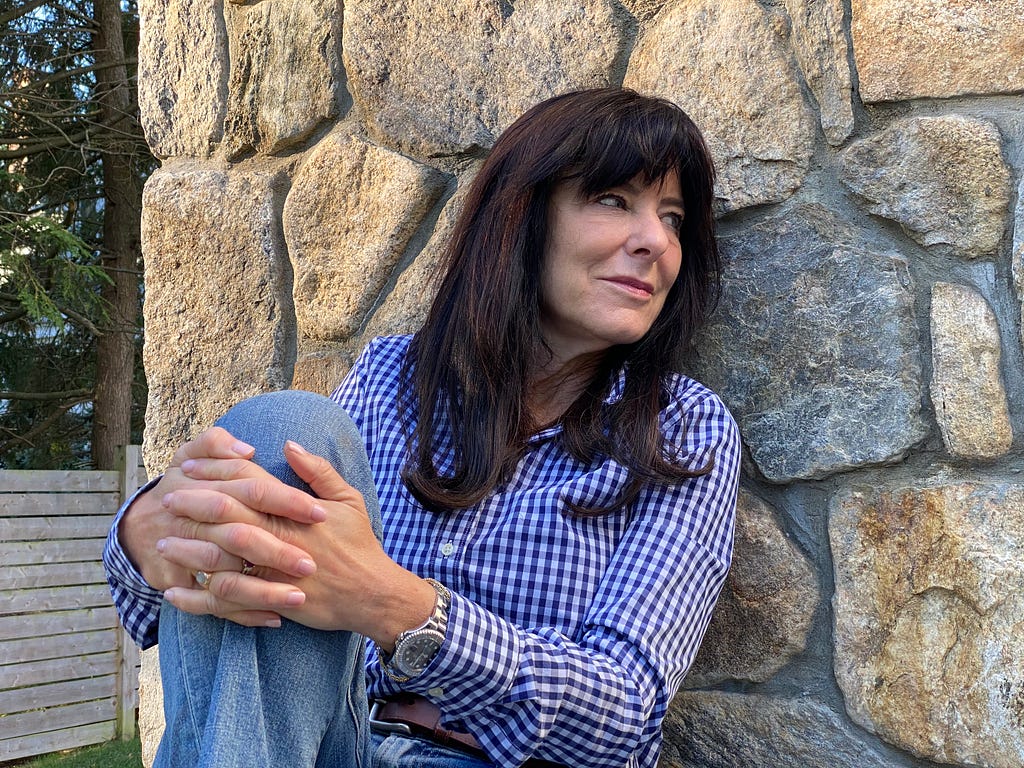
A concept is not a product. — I spent over a year with incredible passion about the idea of “impacting the world as you impact your bottom line,” before I figured out how to turn the idea into a company.

As a part of our series about women who are shaking things up in their industry, I had the pleasure of interviewing Mary Ann Hawley.

Mary Ann Hawley is the Founder and CEO of UnifyImpact, a digital platform that empowers millennials to align their investment decisions with their values. The UnifyImpact web app is powered by Environmental, Social, and Governance data that allows users to compare companies’ sustainability performance with financial performance. Members can voice their opinions about potential investments to a community of peers and track their choices over time with a personal watchlist.

Thank you so much for doing this with us! Before we dig in, our readers would like to get to know you a bit more. Can you tell us a bit about your “backstory”? What led you to this particular career path?

I started my career in advertising. I began as a copywriter, but most of my time was spent as an account executive. My favorite part of that job was the role of “visionary.” We were responsible for the creative strategy that writers and art directors used to create ads that would either make or break a company’s revenue. I have always been a “big picture” thinker and that has carried through in my work in non profit organizations, building an iconic residence in Bedford, NY, and was what led me to become involved in the finance industry.

After spending years on the periphery of the financial world, as the spouse of a fixed income trader who later became the CEO of an international bank, I suddenly found myself single and managing assets on my own. As I worked with my own investment advisors, I began to follow the markets closely and I remembered feeling disillusioned when I asked about ESG and responsible investing. So I started learning. I took graduate courses at Columbia, attended conferences on socially responsible investing and impact investing in London and New York. My watershed moment was at a CFA forum, “Disrupt 19,” where thought leaders and geo-policists, institutional investors and quants, gathered to discuss the state of the world’s financial health. I was introduced to the ESG data provider, Refinitiv, formerly Reuters, who had developed a platform for institutional investors to look at a company’s ESG performance through many data points. It was riveting and I wondered if this kind of data could help people like me make more informed decisions.

At the institutional level in the ESG space, private equity seemed to be working hand in hand with NGOs, acknowledging the UN’s Sustainable Development Goals and had started to consider sustainability factors material. Asset managers were creating funds and publishing papers on new ways that ESG factors can have positive and negative impact on companies’ business models and values drivers, such as revenue growth, margins, required capital, and risk. Yet the mainstream retail investment platforms didn’t include sustainability factors in what it means to create a “balanced portfolio” or make money in the long-term.

Can you tell our readers what it is about the work you’re doing that’s disruptive?

UnifyImpact is really founded on the idea that all people who are investing or considering investing deserve access to transparent information about companies’ sustainability performance. We have a brand new website, and we have created a web app, which is now in beta testing!

The UnifyImpact web app is powered by Environmental, Social, and Governance data that allows users to compare companies’ sustainability performance with financial performance. Members can voice their opinions about potential investments to a community of peers and track their choices over time with a personal watchlist.

Our app is accessible and easy to use for people who are not necessarily financial experts, independent as in we don’t work for asset managers, funds, or corporations, and transparent as we show the good, the bad, and the ugly of sustainability performance. We don’t tell our members what sustainability factors to value, but give them the tools to compare sustainability data to financial data.

Can you share a story about the funniest mistake you made when you were first starting? Can you tell us what lesson you learned from that?

Well, I’m not sure how funny it is, but my biggest mistake in starting my company was confusing a “concept” with a “product.” From day one, I wanted to give my users all the tools they needed to make a positive impact while making money. We have a lot of great ideas and built more features than the typical MVP, so it took a long time! Fortunately, I have an awesome product development team helping me reel in the vision and build the right tools in the right order.

We all need a little help along the journey. Who have been some of your mentors? Can you share a story about how they made an impact?

One person I am particularly grateful for, because he understood me as a precocious kid, is Jim Flaherty. Jim had worked for my dad as a cub copywriter back in the days of Mad Men and inspired me to write like a copywriter — to be clever and ironic and get the messages across. After I graduated from university, he was the Creative Director at one of the world’s biggest ad agencies and he mentored me in my first job in copywriting. He was crazy, fun, irreverent, and just full of joy, and I hope some of that astounding energy sits within me. And I hope the fun, dynamic environment at UnifyImpact helps everyone of our team members feel like an innovator and visionary.

In today’s parlance, being disruptive is usually a positive adjective. But is disrupting always good? When do we say the converse, that a system or structure has ‘withstood the test of time’? Can you articulate to our readers when disrupting an industry is positive, and when disrupting an industry is ‘not so positive’? Can you share some examples of what you mean?

Of course, there are plenty of examples of disruptive innovations that did not pass the test of time. Plastics solved certain industrial problems and replaced other resource intensive materials, but ultimately had a detrimental impact on the environment. Broadly, the internet gives more people access to information and services they would not otherwise be able to access, but also creates privacy concerns and addictive behaviors that can be detrimental.

But when we talk about disruption at UnifyImpact, we are not talking about a new invention, but a new idea. We want to disrupt the idea that sustainability and economics are at odds. We are interested in the idea that those who want to make a positive impact on the world and those who want to make money actually have a shared interest: the idea that a sustainable economy is better positioned for long-term growth. All the elements exist; the research is already there. The real disruptive part is giving people the power to take sustainability into their own hands. This is not something that will be a fleeting new invention, rather it is movement towards longer-term thinking.

Can you share 3 of the best words of advice you’ve gotten along your journey? Please give a story or example for each.

  1. A concept is not a product. — I spent over a year with incredible passion about the idea of “impacting the world as you impact your bottom line,” before I figured out how to turn the idea into a company.
  2. Stand up for your great ideas. — There will be people along the way who don’t believe in you, but there will also be people who do believe in you, and those are the ones who will be with you for the long haul.
  3. Know what you don’t know. — It’s what allows you to find your best collaborators.

We are sure you aren’t done. How are you going to shake things up next?

This is just the beginning. We have a new website, we have a beta version of our app, but now we are dedicating our entire efforts to refining the tools we have created to make it easier for our users to get access to the incredible data the financial industry has created to track companies’ sustainability performance.

My dream is to give UnifyImpact members the tools to make demands of companies they invest in or to divest from those companies if they are out of alignment with their values, collaborate with others who share their values, and use their voice to drive change.

In your opinion, what are the biggest challenges faced by ‘women disruptors’ that aren’t typically faced by their male counterparts?

I have observed two reactions from others in this male-dominated industry. The first are people who believe in what I’m doing. They want to join us. They share the vision that sustainable investing is smart investing. The second are people who have told me that unless I do things “their” way, I’m going to “crash and burn.” When I meet males in the industry, they either dismiss my ideas or embrace them. Either way, I stay dedicated to empowering the next generation to understand sustainability better and make more informed decisions.

One major trend in the business of Sustainable Investing is selling thematic ETFs. Selling thematic funds is an easy way to build a product around the idea of sustainable investing, and the success of these products shows people are interested. But few conventional wealth advisors or fund managers dare to give their clients transparent information about the companies in those funds. Remember, there is no such thing as a “ESG company.” There really isn’t such a thing as a “green company” in the public sector. While companies have worked to limit pollution, few have done it entirely. Without transparent information about sustainability performance, it’s hard for investors to know what they are actually investing in.

I’m different because I’m not an asset manager. I’m not trying to protect my place in the industry, I’m giving people access to the truth.

Do you have a book/podcast/talk that’s had a deep impact on your thinking? Can you share a story with us?

We do a lot of reading and listening at UnifyImpact, but here are a couple favorites —

Brian Deese, the Head of Sustainability at BlackRock, did a short interview with Bloomberg that gives a really simple and clear articulation of how sustainable investing is risk averse and how ESG factors are starting to be considered financial value drivers.

(https://www.bloomberg.com/news/audio/2020-02-21/brian-deese-on-what-s-driving-esg-investing-podcast)

I am a huge fan of Andrew Behar’s The Shareholder Action Guide: Unleash Your Hidden Powers to Hold Corporations Accountable. Behar is the CEO of “As You Sow” an awesome non-profit organization dedicated to shareholders’ rights. On a recent webinar, Behar unpacked a decarbonization ETF, revealing the importance of breaking down funds and portfolios to the company level to see all areas of sustainability.

We also like the way David Wallace-Wells articulates the ways climate change and economic change are deeply interrelated in his book The Uninhabitable Earth. His TEDtalk is a pretty good way to get started: (https://www.ted.com/talks/david_wallace_wells_how_we_could_change_the_planet_s_climate_future?language=en)

You are a person of great influence. If you could inspire a movement that would bring the most amount of good to the most amount of people, what would that be? You never know what your idea can trigger. 🙂

If UnifyImpact is going to launch a movement, the movement would be to bridge the gap between economic growth and sustainability. Financial analysts are starting to see the correlation, but there is a long way to go to achieve the broad shift in understanding necessary to build a more sustainable economy.

Can you please give us your favorite “Life Lesson Quote”? Can you share how that was relevant to you in your life?

It’s important to always be gracious, listen to others, and know your soul intimately.

There have been many obstacles to cross in the process of building my company and developing an app. Many people have opinions about the biggest and smallest decisions that need to be made. When we remind ourselves we are all dedicated to the company’s mission, and to each other, we are able to overcome the obstacles and disagreements and innovate. Good leadership requires knowing the people you work with as human beings.

How can our readers follow you online?

Visit our website at www.unifyimpact.com. Click “Join UnifyImpact” to create a free account and try our beta.

Follow us on social media FB, Twitter, LinkedIn: @unifyimpact IG: @unifyimpactapp

This was very inspiring. Thank you so much for joining us!


Female Disruptors: Mary Ann Hawley of UnifyImpact On The Three Things You Need To Shake Up Your… was originally published in Authority Magazine on Medium, where people are continuing the conversation by highlighting and responding to this story.


Female Disruptors: Evie Smith Hatmaker of Rebellious PR On The Three Things You Need To Shake Up…

Female Disruptors: Evie Smith Hatmaker of Rebellious PR On The Three Things You Need To Shake Up Your Industry

Actively listening — As I mentioned earlier, my first boss taught me how to listen to clients, translating into the other parts of my life. I tend to be a very literal person and take things at face value, but our interactions with each other are usually much much more profound than face value. Add in power dynamics and structures, systemic oppression, and just thinking critically to hear what someone is trying to say. It made me a much better account manager with clients but also has helped in all my relationships.

As a part of our series about women who are shaking things up in their industry, I had the pleasure of interviewing Evie Smith Hatmaker.

You might not recognize Evie Smith Hatmaker outright, but you know her work, whether you realize it or not. Evie worked in Silicon Valley right after college for almost 10 years with flashy startups and Fortune 500 companies before moving to Portland, Oregon, and founding Rebellious PR. She started Rebellious to use her top-notch PR skills and talent, but this time for something bigger. She wanted to focus on underrepresented founders and companies that are looking to change the world. Recently Evie was at the center of the sex tech censorship conversation/movement, having created momentum and conversation about the issue in every major media outlet. Evie infiltrated the cultural zeitgeist with this story, and conversations around her work have appeared on This American Life, as well as the TV show The Bold Type.

Evie strives to drive the PR industry-standard higher, to create better work, better work culture, and a better, more trusted industry across the board.

Thank you so much for doing this with us! Before we dig in, our readers would like to get to know you a bit more. Can you tell us a bit about your “backstory”? What led you to this particular career path?

It was an accident. I had zero interest in going into PR. I majored in journalism in college, won a few student journalism awards, and had a killer internship at a music magazine. I expected that I would work at a magazine company at some point. However, while living in Santa Cruz with my boyfriend (eventually husband and then ex-husband) had no interest in leaving SC. So that meant I could freelance, and to be honest, it all felt overwhelming. But, looking back, I realized I just didn’t believe in myself or my work, even though I had crushed it at college.

During my last semester of college, I started playing roller derby, needed health insurance, and wanted to transition into a post-career easily. After noticing there were many PR agencies in the Bay Area, I started working at a local agency the day after I graduated and stayed there (with my new shiny health insurance) for the next 8 years.

It took 2 years to understand entry-level work with little explanation of the full picture. However, I like the human connection and communication aspect of PR. Of course, most people associate it with parties and boozy dinners (which do happen from time to time), but for the most part, we are the bridge between a company having a message and the public understanding that message. I like being the translator, and I was good at it (once I got out of my way). I found that my communication skills from my time working at restaurants and bars translated well and being able to read people, be empathetic, and be friendly. So I stuck around.

Can you tell our readers what it is about the work you’re doing that’s disruptive?

There are a lot of layers to how we disrupt. The first layer is merely being here, owned by a queer woman, and calling ourselves Rebellious. That alone sets the tone. When building Rebellious, I always wanted to be super contentious and intentional about diversity and inclusion. Most people know the stats about the success of a business being tied to diversity. If we all look the same and have the same background, the ideas will be flat.

If a situation is handled with a diverse group of people, the outcome will be more successful due to the room’s variance of ideas and influence.

And truthfully, I did not love the lack of diversity and inclusion (both race and LGBTQ+) at agencies I worked at or worked alongside. We’ve built Rebellious to be one of the more diverse and inclusive agencies around.

Also, I care about company culture. The culture was and is generally a weak spot and a low priority at agencies. Going out for drinks is not a work culture. Fostering a safe environment for growth and support is. Our staff’s happiness and well-being is our #1 priority, even over clients.

And there are the clients — we work with some genuinely radical companies — everything from sex toys to cannabis to non-profits. We have our hands in a lot of pots. I would call our client portfolio, “bold.” We also specialize in working with underrepresented founders. Our ultimate goal as a company when it comes to our clients is the redistribution of wealth and help close the wealth gap.

So I would say we are pretty disruptive from top to bottom.

Can you share a story about the funniest mistake you made when you were first starting? Can you tell us what lesson you learned from that?

There are so many, but I have a good one.

During my first couple of years of working in PR, I sent out a pitch through Cision, a PR tool that has journalist info and lets you make press lists and send pitches (aka emails) out to those lists in one click. After completing my due diligence, I did not do my research when making a huge press list with way too many people as a junior employee. I went to hit send, but the computer lagged and did not react like I had clicked anything. So, I proceeded to hit the send button seven times, and the pitch was sent to over 100 journalists seven times.

Once I started seeing journalists tweet about it, I for sure thought I would get called out by name (which was a super fun thing tech journalists used to do all the time). Luckily no one called me out, and I kept my head down at work and was never discovered.

The lessons I learned that day:

  • Stop trying to take shortcuts for everything.
  • Do the damn research.
  • Send pitches out in smaller, more thought out batches.
  • Don’t overly rely on fancy tools — PR is more about tact and graceful than thirsty and desperate.

We all need a little help along the journey. Who have been some of your mentors? Can you share a story about how they made an impact?

I’ve never had a formal mentor, but I did try to observe and learn from everyone. However, my old boss in Santa Cruz taught me some valuable lessons on client satisfaction and reading between the lines with what clients want — he always delivered more than just the deliverables. I learned how to command a room and lead a meeting from a female client who led PR at one of the larger, more well-known tech companies. I knew what not to do from colleagues who were too thirsty or pushy with the press. But, I always felt like an outsider in this industry, so I was always watching and learning from everyone around me. I craved mentorship so badly so I made everyone my mentor in some way.

In today’s parlance, being disruptive is usually a positive adjective. But is disrupting always good? When do we say the converse, that a system or structure has ‘withstood the test of time’? Can you articulate to our readers when disrupting an industry is positive, and when disrupting an industry is ‘not so positive’? Can you share some examples of what you mean?

I think disrupting systems that have served or benefited the same dominant group of people with power is awesome. Usually, these systems are wrapped around white supremacist values. Let’s disrupt that shit! This includes:

  • How hiring is done
  • Who gets VC money / who VCs are
  • Who gets quality education from the start and things like the digital divide

I think so much of our current system needs to be torn down and rebuilt with everyone in mind.

Disruption goes wrong when a group of people/person looks to disrupt an industry or area they do not have first hand experience in. A great example of this happened this year. A startup made up of tech bros decided the female orgasm needed to be disrupted. They had all these stats about women “faking it,” and the problem and solution to fixing the orgasm gap. Their pitch deck got leaked online, and it was laughable.

I think the key here is not knowing when and what to disrupt but who and why.

Can you share 3 of the best words of advice you’ve gotten along your journey? Please give a story or example for each.

  1. Follow your gut — I feel like this was one my therapist has reinforced in me. I have a great gut with an excellent track record. It’s important to trust your own decisions, and not just lean on the people around you.
  2. Don’t get distracted by your ideas — A brilliant instructor at an accelerator I went through a few years back told us this on our first day, and it was the best piece of advice I have ever received as a founder. As a founder, you’re always thinking about the big picture and generate millions of great ideas. This makes it easy to get distracted and get in your way. She mentioned when an idea comes in like a bolt of lightning to write it down, stick it in a drawer and come back to it later.
  3. Actively listening — As I mentioned earlier, my first boss taught me how to listen to clients, translating into the other parts of my life. I tend to be a very literal person and take things at face value, but our interactions with each other are usually much much more profound than face value. Add in power dynamics and structures, systemic oppression, and just thinking critically to hear what someone is trying to say. It made me a much better account manager with clients but also has helped in all my relationships.

Bonus: Don’t create avoidable emergencies. I got this one from my mom. She used to have a sign on her desk at work that said, lack of planning does not constitute an emergency on mine. I did not understand what this meant until a couple of years ago. Preventable emergencies will straight up age you. Especially in the fast-paced world of PR, creating your emergencies is just unfair to your team. I’m passionate about preparation and seeing the forest through the trees.

We are sure you aren’t done. How are you going to shake things up next?

Rebellious is growing, and I don’t think we have even begun to peak. So I’m looking to tell the world that we are here and continue to do meaningful work. We are actively looking to expand into two new cities next year, so clearly we’re doing a little more than just business as usual. I’m interested in seeing how we grow, and if Rebellious would be an appealing acquisition to a larger, more old school company looking to shake things up. The world feels like our oyster at the moment.

I’m interested in political communications. It’s an area I have never worked in, and I feel like DC could stand to get a little Rebellious 😉

In your opinion, what are the biggest challenges faced by ‘women disruptors’ that aren’t typically faced by their male counterparts?

I think, as women, we have to have a real reason to do anything. In contrast, men have been given blanket permission by society to try or involve themselves in literally anything they can think of with little to no experience or expertise. So I guess women disruptors are battling some severe imposter syndrome. Who am I to do XYZ? So add on the bravery of being a disruptor to that, and it is a considerable challenge just in existing.

I think we start with a lot more doubt on our shoulders. I get upset when a woman is criticized for being too confident. Good for her! I used to visualize myself as an attractive white man whenever I would go into job interviews or salary negotiations.

Do you have a book/podcast/talk that’s had a deep impact on your thinking? Can you share a story with us?

I love the book Girl Boss. I’m not sure how I feel about the brand in its current iteration, but I respect and resonate with Sophia. I’m a self-made college dropout just like her, so I felt her journey and got a ton of inspiration there.

Also, I love the Ted podcast Work-Life — they do such a great job analyzing and telling stories about teams. I’m pretty obsessed with “fixing” work. I love organizational psychology, so this podcast makes me tick.

You are a person of great influence. If you could inspire a movement that would bring the most amount of good to the most amount of people, what would that be? You never know what your idea can trigger. 🙂

Well, first off, I am flattered you think I am a person of influence! I would love to help tear down the venture capital system of funding startups. When I think of old, antiquated, and out of touch, it’s these guys. The funding statistics around women and people of color getting funding is unacceptable! You see people like Arlan Hamilton who are disrupting the system from the inside, and organizations like SheEO who are getting women funding in spite of VCs. But I just think the whole model needs to be set on fire. I think the idea that a company is not successful unless they have VC money also needs to change.

Can you please give us your favorite “Life Lesson Quote”? Can you share how that was relevant to you in your life?

I had a friend at the accelerator I was at once say, “Being a founder is lonely, and sometimes your people don’t always go along for the ride with you, and that’s okay.”

It is lonely being a founder. I feel like I am a horrible friend at this point in my life. My first love is my wife, and near after that is my company. I don’t have a lot of time to nurture friendships or spend time in shallow relationships. I don’t have the energy for a social life, and I am okay with that. I feel fulfilled in the feeling that I am building something meaningful. I am creating a legacy for myself and leaving a significant mark in the world.

How can our readers follow you online?

Twitter: @evieameliasmith

IG: @evieameliasmith

LinkedIn: https://www.linkedin.com/in/eviesmith/

This was very inspiring. Thank you so much for joining us!


Female Disruptors: Evie Smith Hatmaker of Rebellious PR On The Three Things You Need To Shake Up… was originally published in Authority Magazine on Medium, where people are continuing the conversation by highlighting and responding to this story.

Female Disruptors: Laura Krashakova of Smart Capital Center On The Three Things You Need To Shake…

Female Disruptors: Laura Krashakova of Smart Capital Center On The Three Things You Need To Shake Up Your Industry

Create a culture in which people can thrive — It’s essential to build a team that consistently performs at a high level, a team you can trust. You do that by investing in your people and creating a space in which they aren’t afraid to spread their wings and test out new ideas.

As a part of our series about business leaders who are shaking things up in their industry, I had the pleasure of interviewing Laura Krashakova, CEO of Smart Capital Center.

Laura was obsessed with numbers as a child and now uses patterns and variables to make sense of the world. She founded Smart Capital Center, which invented the world’s first real-time valuation and mortgage platform for commercial real estate investors, making property analysis and capital available at a fraction of the time and cost required previously. Its software is used by leading institutional lenders and investors, including Pacific Life Insurance and JLL. Now, Smart Capital Center made its technology accessible to first-time investors and small property owners. It aims to empower them with the knowledge they need to make smart decisions in commercial real estate and access to affordable capital.

Thank you so much for doing this with us! Before we dig in, our readers would like to get to know you a bit more. Can you tell us a bit about your “backstory”? What led you to this particular career path?

I’m a math geek. I love it. There’s a certainty in mathematics that very few things can match, if at all. And it’s always the same, wherever you go — it’s grounding, that certainty. I pursued a master’s degree in math with a focus on the theory of probability. Patterns are everywhere, and math helps you recognize and make sense of those patterns — and when you get to know them well enough, you can even get a glimpse into the future.

My love for mathematics led me from Russia to New York City and from Wall Street banking to the Silicon Valley tech startup scene. I started Smart Capital Center because I saw first-hand that there was a need that had to be filled. I’ve seen how access to data, technology, and capital can make or break a venture. I recognized that the current system underserved a large sector of entrepreneurs in the commercial real estate space, and I took it upon myself to build a solution.

Can you tell our readers what it is about the work you’re doing that’s disruptive?

we’re democratizing the commercial real estate space. To play in the field, you need to have access to accurate and up-to-date information and affordable capital, and that may be very hard to come by. Say, for example, you are an investor looking for a property to buy. Brokers may feed you biased information to get a quick sale, or you may be unaware of certain data that would affect a property’s value. You may end up paying much more than a property is worth or encounter problems in the future that you didn’t bargain for. Our technology keeps that from happening because we provide real-time, accurate, and unbiased valuation and property analysis. Our AI-powered, big-data platform can spot trends by looking at a property’s 20-year history and its surrounding locale. It also pulls millions of data points from standard and alternative data streams to give users a holistic view of a property.

Or if you’re a business owner and you’re looking to expand your business or finance your operations. Many small business owners own real estate, e.g., a property occupied by their business, like a bakeshop or hair salon. (Majority of commercial real estate is small — 75% of CRE is valued at $3 million or under.) These entrepreneurs can get a mortgage and use the additional capital to expand their business — a real-estate backed loan is several times cheaper than a small business loan. However, due to lack of information and a cumbersome process, business owners usually get more expensive loans, which erodes profits.

Not everyone has a large pool of cash to draw from. For most of these investors and business owners, these investments are their way of securing a better future for themselves and their families. Smart Capital Center provides access to real-time, unbiased, and affordable data and capital all in one platform. This is a game-changer and especially critical now when the economy and small businesses are under severe strain.

These are just some of the ways we are upending the way the commercial real estate space works. Our technology lends itself well to many use cases and continues to grow and evolve according to our users’ needs.

Can you share a story about the funniest mistake you made when you were first starting? Can you tell us what lesson you learned from that?

It’s funny to me now, because looking back I think it’s so simple, how could I have missed it? It happened during a big demo conference. At the time, because we were just starting out, we were trying to save money where we could. The team and I decided that I will attend the conference on my own, and one of our engineers will help with the demo remotely. We’re a tech company, so why not make the most of the tech already available? It seemed simple enough.

The plan was that he would connect to my computer remotely while I was doing the presentation on stage. He will run the demo and take his cue by listening to what I was saying. All I had to do was put my phone on speaker so he could hear me. The thing is, I was nervous and excited, and it completely slipped my mind. He couldn’t hear what I was saying at all so he couldn’t follow me. I had to adjust quickly while on stage and ended up doing the demo myself — all because I forgot to push a button. The devil is indeed in the details.

We all need a little help along the journey. Who have been some of your mentors? Can you share a story about how they made an impact?

There’s this book by Joseph Campbell, “The Hero with a Thousand Faces”, and it’s basically how the hero’s journey follows the same cycle, and embedded in the journey is finding a mentor — someone who lights the way, provides training and inspiration, all the things necessary for the hero’s success. We’re all heroes of our own lives, and in my journey, I’ve been privileged to have found several mentors, and I expect I will continue to meet them. Here is the thing though — I believe they don’t always come to you. You have to seek them out, and if you can’t access them personally, you draw inspiration from the way they live their lives.

My parents instilled in me an appreciation of hard work; I’ve seen them overcome obstacles by virtue of their grit and determination. They were my first mentors, and I learned from them that anything is possible if you’re willing to put in the work.

There is a story that always comes back to me when I think about hard work and grit. There’s a Bay Area entrepreneur and successful real estate investor whose first venture was a pizza shop in Oakland. He rented a retail space, baked the pizzas himself and sold it. At that time, Oakland was considered an unsafe area and it wasn’t unusual for him to hear gunshots in the evening. He didn’t let outside forces deter him however and he kept on working and striving and now he owns 10,000 apartment rental units. He built his empire from that one pizza place.

I’ve seen this same formula repeated time and again — regular people starting their businesses with the hope of providing a better future for their families and succeeding tremendously in that endeavor. Their stories inspire me and keep me motivated to work harder to level the playing field for smaller property investors. There’s nothing more inspiring than working with people on a journey to make their dreams come true.

In today’s parlance, being disruptive is usually a positive adjective. But is disrupting always good? When do we say the converse, that a system or structure has ‘withstood the test of time’? Can you articulate to our readers when disrupting an industry is positive, and when disrupting an industry is ‘not so positive’? Can you share some examples of what you mean?

There has been very little disruption in commercial real estate, and the established processes weren’t allowing much opportunity for small property owners to flourish. Large institutions have significant advantages in the market due to access to data and capital, and it’s hard to shake such deeply rooted foundations. It was harming not only the average entrepreneur and property owner, but it’s also bad for the economy as a whole, as it is built on small businesses. You can’t have all the control and advantage concentrated at the top. That’s why we at Smart Capital Center have made it our mission to disrupt the current system and empower all the players with the information and resources they need to make the best deals.

However, that does not mean that all disruption is good — sometimes they come at a cost. For example, online shopping has become such a huge trend nowadays, it’s very convenient, and I myself am a fan. But I was really sad to see Barnes and Noble close their store in NYC. I used to spend hours there. Many local and even national retail chains that have shut down because they couldn’t compete with Amazon. Change always comes at a cost; it’s up to us to determine if the exchange is worth it.

Can you share 3 of the best words of advice you’ve gotten along your journey? Please give a story or example for each.

Create a culture in which people can thrive — It’s essential to build a team that consistently performs at a high level, a team you can trust. You do that by investing in your people and creating a space in which they aren’t afraid to spread their wings and test out new ideas. There is no need for constant surveillance and micromanaging if you know the people in your team have a sense of accountability, and all of you are working towards achieving the same vision. If you take the time to cultivate a culture of growth, accountability, creativity, and openness, the returns will be unbelievable. You’re a team working towards the same vision — you don’t work your team until they have nothing left to give, you nurture them so that they grow and become pillars that support your common dreams.

There is no finish line when seeking success — The meaning of success is fluid and in constant flux. When you’re engaged in business, it’s a continuous evolution, you keep abreast of the trends, and every goal met becomes a stepping stone to even more significant achievements. You’re always moving forward and bettering yourself, your team, your company. That’s why it’s important to celebrate each milestone and triumph, they mark how far you’ve come on your journey.

Don’t work all the time — Make room for rest and recreation. Rest — take care of your mind and your body. Build strong relationships. Not working all the time may seem strange, especially when you’re busy chasing your dreams, but it’s important not to get too caught up in that chase that you forget to take care of yourself. Even purely from a business standpoint, it’s important to rest because being tired all the time affects your efficiency. And life experiences don’t just happen in a vacuum; they may even inspire you or become the catalyst for a breakthrough in a problem you’re working on. Learn to take a step back, working while fatigued is detrimental and won’t help anyone. And what is success really, without pleasure? Without relationships? Without your health?

We are sure you aren’t done. How are you going to shake things up next?

We’re going to take things global. It’s going to require a lot of work, but that’s the plan. We’ve already spoken to a number of customers from overseas who are interested in our technology and what it can do.

From the perspective of someone in Hong Kong looking to invest in a property abroad, let’s say a multifamily in the U.S., imagine how powerful it is to have all the hyperlocal information you need at your fingertips, real-time, all without leaving the convenience of your own home. Fast, accurate, unbiased information, valuation, and analysis that take into account property and location history.

That’s just one scenario. Our technology is capable of so many things, and with the input we’re getting from our customers, it continues to evolve, becoming more comprehensive, robust, and powerful.

Do you have a book, podcast, or talk that’s had a deep impact on your thinking? Can you share a story with us? Can you explain why it was so resonant with you?

There’s a Ted Talk by Angela Lee Duckworth called “Grit: the power of passion and perseverance.” In it, she discusses how success isn’t necessarily measured by how smart or gifted you are — it all boils down to determination and perseverance. You need to work hard to achieve your goals, not just for the short-term but for the long haul. During her talk, she also mentions the growth mindset by Carol Dweck, which is about failure not being a permanent condition. Failure does not mean you aren’t smart enough or talented enough — it means you’re learning and evolving. These ideas can be applied in school, in the business world, and in all sorts of scenarios because they are fundamentally about humanity’s potential and how we have the power to actualize our dreams.

Can you please give us your favorite “Life Lesson Quote”? Can you share how that was relevant to you in your life?

“A man is like a fraction whose numerator is what he is and whose denominator is what he thinks of himself. The larger the denominator, the smaller the fraction.” -Tolstoy

There is a certain high that comes with making the right decisions; when you see the plans that you’ve laid out come to fruition. It’s akin to the gamification of life; there is pleasure in being right. The problem is when you let yourself slide over from confidence in your ability to conceit. When that happens, you get blinded by your own ego. You don’t play smart; you get stuck. Once you begin to think too highly of yourself, that spells your downfall. No one can do everything perfectly. That’s why it’s essential to build a good team. They augment your abilities and take over where you fall short. That quote is a reminder never to think too highly of one’s self. You diminish yourself and your potential when you do. If you’re a person in a leadership role, conceit not only negates all the hard work you’ve put in, it also has the potential to cancel out all the work of those around you. It must be avoided at all costs.

You are a person of great influence. If you could inspire a movement that would bring the most amount of good to the most amount of people, what would that be? You never know what your idea can trigger. 🙂

I’m a great believer in education. If there’s a movement I can inspire, I’d like to make quality education more accessible, especially to children in emerging countries. I myself have experienced how empowering education can be, how transformative. I’d like those same opportunities I’ve been fortunate enough to have be made available to everyone.

How can our readers follow you online?

Most of my time on social media I spend on our Smart Capital Center Facebook Group where we share a ton of advice and engage with small property owners and professional investors. We’re building a purpose-driven community with a growth mindset geared towards helping each other succeed. Nothing breeds success better than surrounding yourself with insightful people willing to share their knowledge and experience, and of course you need to pay that forward and pave the path for others who come after.

This was very inspiring. Thank you so much for joining us!


Female Disruptors: Laura Krashakova of Smart Capital Center On The Three Things You Need To Shake… was originally published in Authority Magazine on Medium, where people are continuing the conversation by highlighting and responding to this story.
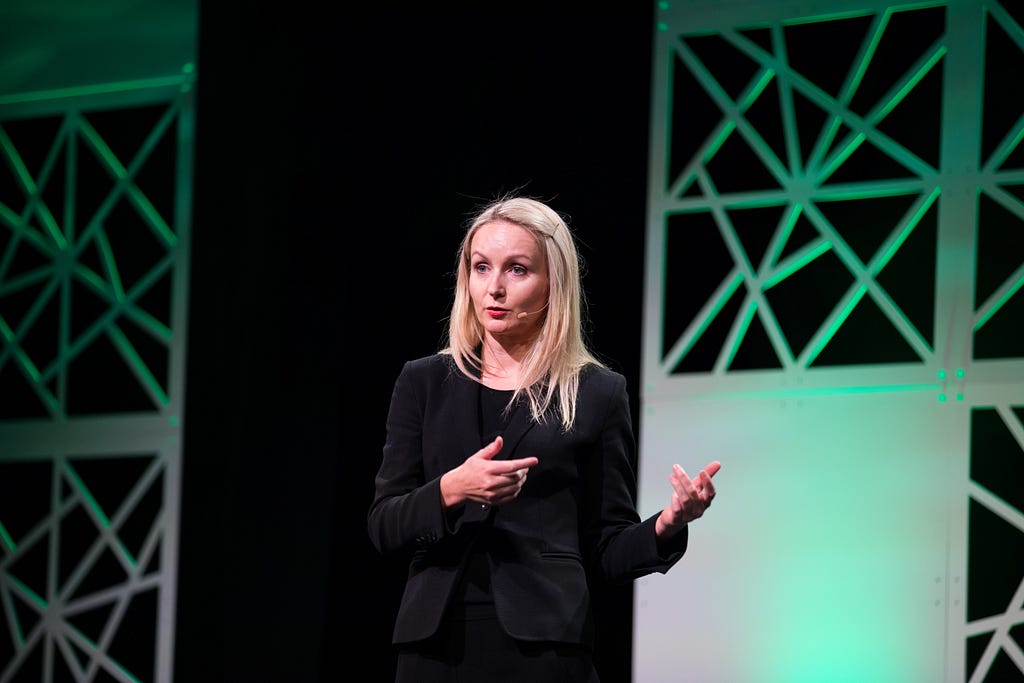
Female Disruptors: Natali Tshuva of Sternum On The Three Things You Need To Shake Up Your Industry

First, when you are building something new and innovative with no benchmark product to refer to, be very confident in your vision, despite the many “NOs” that you will likely receive throughout your journey. Second, there is always a path no one yet followed. Take pride in knowing you will be the first. Last but not least, most startups do not fail; it’s simply that entrepreneurs ultimately give up. Do not be that entrepreneur who gives up.

As a part of our series about business leaders who are shaking things up in their industry, I had the pleasure of interviewing Natali Tshuva.

Natali Tshuva, CEO of Sternum, brings over 10 years of experience, both as a researcher and a team leader, in the field of offensive cybersecurity and software development. After graduating magna cum laude B.Sc. in Computer Science at the age of 19, as part of a special program for gifted and talented kids, Natali was handpicked to serve in IDF’s 8200 elite technology unit (the Israeli equivalent of NSA) as a low-level security software engineer. Prior to founding Sternum, Natali held several security research-related roles, including leading different R&D teams at two global cyber intelligence market leaders.

Thank you so much for doing this with us! Before we dig in, our readers would like to get to know you a bit more. Can you tell us a bit about your “backstory”? What led you to this particular career path?

Thank you for inviting me to participate! I grew up with the dream of becoming a doctor, knowing from an early age that I wanted to make an impact. So I always asked myself- how can I best achieve that?

While that dream always remained, I also found another passion, cybersecurity. I pursued my undergraduate degree in computer science at 14 years old. After college, I was handpicked to serve in the Israel Defense Force’s (IDF) esteemed 8200 cybersecurity unit as a security software engineer, where I designed, developed, and implemented sophisticated, critical software. Following my army service, I took on several security research-related roles, where I discovered several zero-day vulnerabilities in the Linux Kernel operating system, Android devices, and embedded systems, as well as led different R&D teams in building products and technologies.

But I eventually reached a crossroad. That childhood dream of mine to become a doctor remained and it was time to decide: should I continue on the already successful path of cybersecurity and technology, or switch focus completely and enter medical school? I battled with these conflicting thoughts for a while, but after consulting with one of my mentors, I realized that these two paths didn’t have to conflict after all. There was an option where both paths converged — cybersecurity and insights for the medical industry.

I discovered that due to security issues, life-saving medical devices that could have implemented advanced technologies and evolved to include remote treatments were often prevented from being released as they lacked the proper protection. I realized that by leveraging my domain expertise in cybersecurity and computer science, together with my passion for the medical field and saving lives, I could create a more significant and larger-scale impact than by practicing medicine. Creating technology that enables the connected revolution and offers insights from real-time data could truly make a difference across industries.

It was this passion to make an impact, my experience in cybersecurity, a deep interest in the connected revolution, and my mission to build something special that led me to co-found Sternum.

Can you tell our readers what it is about the work you’re doing that’s disruptive?

Until now, figuring out how to secure the IoT revolution was a big question mark. IoT devices affect and will continue to affect every aspect of our lives, yet they are very different from existing devices and networks that the cyber industry knows how to protect. While many companies have tried to use traditional solutions to secure IoT devices, it is now clear that those cybersecurity methods are simply not enough. Network security-based solutions only protect enterprises, not distributed environments where IoT is dominant. Passive approaches that include endlessly searching for and patching vulnerabilities are not sustainable and are very weak.

The IoT device market requires a new type of solution that is capable of preventing attacks and monitoring those diversified devices from within, while securing them at scale — whether old or new, high-end or low-end, resource-rich or limited, Linux or RTOS. While creating such technology is challenging, this is the work that we are committed to doing. It’s these solutions that will continue to disrupt the cybersecurity market.

We developed unified, military-grade solutions in order to secure the connected revolution from within. We leveraged our military experience, deep knowledge in vulnerability exploitation, and attack characteristics and embedded systems to create innovative solutions revolutionizing IoT cybersecurity for industries across the board, including critical infrastructure, medical devices, and other high-impact devices. This on-device solution is very disruptive, especially in a market that was and continues to be hyper-focused on network security-based solutions or vulnerability scanning. Building on top of these advanced on-device techniques to analyze and secure code, we offer first-of-its-kind visibility into those devices, enabling unique insights concerning various aspects.

Can you share a story about the funniest mistake you made when you were first starting? Can you tell us what lesson you learned from that?

All I can say is, under any circumstances, do not go for an office that has a central air conditioning system. By the way, I am usually the one who prefers a cooler temperature.

We all need a little help along the journey. Who have been some of your mentors? Can you share a story about how they made an impact?

I have many talented and experienced friends who I’ve consulted with throughout the years, though I’m very careful who I take advice from.

One of my mentors, Professor Gabi Barbash, provided me with significant advice at the beginning of my journey. Before I started Sternum, I was seriously considering changing directions and becoming a doctor, so I consulted Gabi, who was the CEO of one of the biggest hospitals in Israel and a doctor himself. I explained how becoming a doctor was my dream, but that I had already established a prominent career in the cybersecurity and computer science space. Gabi heard me and asked about my motives. Then he delivered some of the soundest advice I ever heard. He said, and I quote: “you have a talent and with it you could be a great doctor, just like you’re a great technologist; however, you are ALREADY great at what you do. Take that and use it to make an impact on other industries including medical. Don’t waste any more years becoming the best in a new field when you already established yourself as the best in another.”

This was one of the most important insights I received that led me to co-found Sternum and make an impact on the medical industry through my existing unique skill set instead of pursuing an entirely different passion.

In today’s parlance, being disruptive is usually a positive adjective. But is disrupting always good? When do we say the converse, that a system or structure has ‘withstood the test of time’? Can you articulate to our readers when disrupting an industry is positive, and when disrupting an industry is ‘not so positive’? Can you share some examples of what you mean?

When a truly new challenge appears that prevents us from moving forward and where existing solutions do little to clear a path forward — this is where innovation and disruption is usually positive. When a new approach enables new things to happen, this is where disruption is sustainable.

For instance, let’s take Sternum’s solution for medical devices. Until now, solutions that involve remote care and management of patients (through insulin pumps, pacemakers, neuromodulation devices, etc.) face a significant cybersecurity hurdle that prevented them from utilizing the full potential of connectivity. No existing solution could protect those embedded devices from within, as existing endpoint solutions for PCs or servers just wouldn’t work on embedded IoT devices. Sternum’s solution can protect old devices as well as new ones regardless of architecture, including the 3rd party code within medical devices which can pose significant cybersecurity risks and are considered hard to secure. Our solutions enable medical device manufacturers to innovate safely for better healthcare for us all.

Can you share 3 of the best words of advice you’ve gotten along your journey? Please give a story or example for each.

First, when you are building something new and innovative with no benchmark product to refer to, be very confident in your vision, despite the many “NOs” that you will likely receive throughout your journey.

Second, there is always a path no one yet followed. Take pride in knowing you will be the first.

Last but not least, most startups do not fail; it’s simply that entrepreneurs ultimately give up. Do not be that entrepreneur who gives up.

We are sure you aren’t done. How are you going to shake things up next?

We are only at the beginning of our journey in securing the world of IoT devices. There is more to come as we continue to ensure that any connected device can have embedded protection and is able to be monitored and analyzed by its operator. So stay tuned!

Do you have a book, podcast, or talk that’s had a deep impact on your thinking? Can you share a story with us? Can you explain why it was so resonant with you?

Lean In by Sheryl Sandberg was an inspiring read for me. Empowering women in the workplace is very important. In cybersecurity, where just 24 percent of workers are women, and even less are in leadership positions, I know first-hand the importance of encouraging young girls to reach for the stars.

Can you please give us your favorite “Life Lesson Quote”? Can you share how that was relevant to you in your life?

This might not be the answer you’re expecting, but I’m actually not a big believer in life lesson quotes. I believe every person follows her or his individual path and learns lessons along the way. No quote can truly depict the human experience.

You are a person of great influence. If you could inspire a movement that would bring the most amount of good to the most amount of people, what would that be? You never know what your idea can trigger. 🙂

An impactful movement that comes to mind is the international movement for women’s rights. Women are still facing violence, discrimination, and lack of rights across the globe; even in countries deemed most advanced we still see women forced to deal with painful inequalities. While many groups and minorities have suffered from many similar problems (and I empathize with them all), I think women are by far the most affected throughout history and if I could invest in one thing only — I would invest in that. If we can eliminate these inequalities, we will only be further empowered to solve the others as well, as they share the same traits.

How can our readers follow you online?

https://www.linkedin.com/in/natali-tshuva-68b9b578/

This was very inspiring. Thank you so much for joining us!


Female Disruptors: Natali Tshuva of Sternum On The Three Things You Need To Shake Up Your Industry was originally published in Authority Magazine on Medium, where people are continuing the conversation by highlighting and responding to this story.

Female Disruptors: Britt Andreatta of 7th Mind On The Three Things You Need To Shake Up Your…

Female Disruptors: Britt Andreatta of 7th Mind On The Three Things You Need To Shake Up Your Industry

In general, I think disruption is positive because it means that someone has challenged the standard ways of thinking and doing, whether that’s within an industry, market or individual organization. In marketplaces, disruption is generally healthy and a sign of an open economy. Sure, the organizations being disrupted may not be happy but it indicates that innovation is happening and those disrupted have a choice to evolve or double down on their original brand and/or value proposition.

As a part of our series about business leaders who are shaking things up in their industry, I had the pleasure of interviewing Dr. Britt Andreatta.

Dr. Britt Andreatta is an internationally recognized thought leader who creates brain-science based solutions for today’s challenges and regularly consults with organizations on leadership development and learning strategy. The former CLO for Lynda.com (now LinkedIn Learning), Britt has 10 million+ views of her online courses. Named a Top 20 Influencer in 2020, Britt has authored several books and trademarked models.

Thank you so much for doing this with us! Before we dig in, our readers would like to get to know you a bit more. Can you tell us a bit about your “backstory”? What led you to this particular career path?

Even in high school, I’ve always been someone who likes to help others be better. For the first stage of my career, I did that with college students, in my role as professor and dean. I created college success and leadership courses that have been adopted by several other universities. Then I pivoted to working with adult professionals on a variety of skills. I was the chief learning officer at Lynda.com (now LinkedIn Learning) and it was during that time that I began studying neuroscience. Honestly, neuroscience was introduced to me in therapy–learning about the amygdala hijack started my ongoing curiosity.

I started learning about the neuroscience of learning to better my own craft. And then I knew I had to share what I was learning. My first book was on the brain science of learning, Wired to Grow: Harness the Power of Brain Science to Learn and Master Any Skill, which has become a go-to source in the learning industry. Through that experience, I became a keynote speaker and consultant, working with organizations around the world. I’ve since written 2 more books on the brain science of success, one on leading effective change and another on creating peak-performing teams. When people began asking if they could get certified in my models, we launched the trainer certification aspect of my business. I now have this perfect blend of research, writing, speaking, consulting, and training with each part informing or enhancing the others.

Can you tell our readers what it is about the work you’re doing that’s disruptive?

I’d say my work creates lots of little disruptions across a wide range of topics. My research brings new insights to common workplace challenges by adding a deeper understanding of how humans are wired neurologically. The modern workplace often asks employees to work against their biology, which leads to challenges to things like collaboration, change, innovation, teamwork, productivity, and professional growth. My research and models have created significant shifts in how people approach and resolve these challenges, which leads to higher employee engagement, productivity, retention, etc.

Can you share a story about the funniest mistake you made when you were first starting? Can you tell us what lesson you learned from that?

I once was invited to make a pitch to the founder and CEO of a company. In doing my research, I watched several of his speeches and he consistently framed his product as part of his passion to help people become better. I aligned my pitch to be a series of how I’d be helping his people become better. After my opening statement, he stopped me cold and said, “It’s not my job to help my people become better. They can do that on their own time.” I was so stunned, I said, “But you say that in all your speeches.” And he replied, “What I say to sell something is not the same thing as what I care about.” Needless to say, I didn’t land the gig, which was fine because I’m not sure I would have enjoyed working for him. But, I never went into another pitch without asking deeper questions about people’s real values and goals, not just the ones listed on their profile or marketing plan.

We all need a little help along the journey. Who have been some of your mentors? Can you share a story about how they made an impact?

I’ve been fortunate to have different mentors at different stages along my career. During my years in higher education, Dr. Michael Young told me that your leadership is only as good as the relationships you have built. He talked about how important it was to get to know people on a personal level and remember what is happening with their family, their pets, and their interests.

Lynda Weinman, the founder of Lynda.com, continues to be a great mentor. She challenged me to really see the value I bring to an organization and to ask for what I am worth. I’m grateful she helped me overcome something that can hold a lot of folks back.

I believe in hiring the best and smartest people so my team mentors me every day. They are each brilliant in their area of expertise so I am constantly learning from Claudia Arnett, Teresa Fanucchi, Lisa Slavid, Jenefer Angell, and Pema Rocker.

In today’s parlance, being disruptive is usually a positive adjective. But is disrupting always good? When do we say the converse, that a system or structure has ‘withstood the test of time’? Can you articulate to our readers when disrupting an industry is positive, and when disrupting an industry is ‘not so positive’? Can you share some examples of what you mean?

In general, I think disruption is positive because it means that someone has challenged the standard ways of thinking and doing, whether that’s within an industry, market or individual organization. In marketplaces, disruption is generally healthy and a sign of an open economy. Sure, the organizations being disrupted may not be happy but it indicates that innovation is happening and those disrupted have a choice to evolve or double down on their original brand and/or value proposition.

We often think of disruptors as startup companies but other things can be disruptors too, like climate change, geopolitical strife, social unrest or a global pandemic. COVID is challenging all businesses to innovate their services and processes, at least for the short term, and some of these shifts are actually improving business and will become part of the new normal. The protests following George Floyd’s murder are disrupting beliefs and practices around policing, justice, privilege and oppression and have the potential to make society better.

The disruption that my research shows can be negative is more on an interpersonal level, where one person’s words or actions can harm or negatively impact the group by threatening or destroying safety, either physical or psychological. Individual employees can impact each other, and managers and leaders have the ability and influence to impact a department or even the entire organization. This can harm trust, employee engagement, productivity, and eventually the organization’s ability to succeed. Learn more in my book Wired to Connect: The Brain Science of Teams and a New Model for Creating Collaboration and Inclusion.

Can you share 3 of the best words of advice you’ve gotten along your journey? Please give a story or example for each.

Jennifer Hudson was mentoring a group of singers about how to succeed in the music business and she said, “Be someone who is good to work with and you will always have plenty of work.” I realized that applies to every industry and it shapes how I engage with all my clients.

The best boss I ever had is Dr. Kelly McGill. I remember watching her navigate sticky situations with grace and I asked her how she did it. She told me that people often try to convince others to change by telling them what’s wrong, like “Hey, that shirt you’re wearing is ugly.” But she said you first have to align with them and then lead them to a better place. Like, “Wow, that’s such a great shirt. I have this perfect scarf that will make it even better. What do you think?” When I am faced with similar situations, I start looking for the scarf.

The third is from Greg McKweon and his book, Essentialism: The Disciplined Pursuit of Less. It’s easy to get split into a million different directions, working on too many good ideas. His advice that if it’s not a “Hell yea!” then it’s an automatic “no” has really helped me stay focused on what matters.

We are sure you aren’t done. How are you going to shake things up next?

I’m about to release my Brain Aware™ Manager Training, which weaves neuroscience into a six-session cohesive program that gives managers key skills for bringing out the best in others. I will follow that with my Brain Aware™ Leader Training in 2021.

I’m also starting to research my next book, Wired to Become, on the brain science of purpose, creativity and innovation. And believe it or not, I hope to not leave this earth until I write a musical play. I have one sketched out and it’s fun to work on it now and then.

Do you have a book, podcast, or talk that’s had a deep impact on your thinking? Can you share a story with us? Can you explain why it was so resonant with you?

Frederic Laloux’s book, Reinventing Organizations, is about the conscious evolution of humans and how it is shifting both organizations and societies. It really opened up my eyes and gave me a broader framework for my own research.

Dr. Brené Brown’s work has impacted me both personally and professionally. I find myself referring to her research often and her podcast, Unlocking Us, has helped me so much during this global pandemic and all the chaos it has brung. Every guest has aligned perfectly with something I am moving through myself.

In college, I was introduced to research on privilege, oppression, and bias, through Allan Johnson’s book Privilege, Power, and Difference. As a white person, this journey of awakening is both shocking and deeply uncomfortable because we learn that everything we were taught to believe about the world — by teachers, parents, the media, etc. — is wrong. Recent events have moved this conversation to the mainstream and I continue to learn from leaders like Ibram X. Kendi, Austin Channing Brown, and Laverne Cox.

Can you please give us your favorite “Life Lesson Quote”? Can you share how that was relevant to you in your life?

I’m always inspired by Margaret Mead’s words:

“Never doubt that a small group of thoughtful, committed, citizens can change the world. Indeed, it is the only thing that ever has.”

It always reminds me that change is always possible and that we all have more power than we realize. This seems especially relevant given our current times.

In addition, I had a challenging childhood and it manifested as crippling panic attacks when I was turning 30. I had to do a lot of healing work and through that journey, this quote really resonated for me. As a result, I have always been open about my own challenges because I know we are all moving through life the best that we can.

“Our deepest fear is not that we are inadequate. Our deepest fear is that we are powerful beyond measure. It is our light, not our darkness that most frightens us. We ask ourselves, ‘Who am I to be brilliant, gorgeous, talented, fabulous?’ Actually, who are you not to be? You are a child of God. Your playing small does not serve the world. There is nothing enlightened about shrinking so that other people won’t feel insecure around you. We are all meant to shine, as children do. We were born to make manifest the glory of God that is within us. It’s not just in some of us; it’s in everyone. And as we let our own light shine, we unconsciously give other people permission to do the same. As we are liberated from our own fear, our presence automatically liberates others.” Marianne Williamson

You are a person of great influence. If you could inspire a movement that would bring the most amount of good to the most amount of people, what would that be? You never know what your idea can trigger. 🙂

I feel so fortunate because I’m already doing it. I am trying to change how work is done on this planet by making our workplaces better for all of us and I can see the results in organizations that use my work.

At this specific moment in time, I realize that we cannot allow college education to be the main pathway for people to learn about science. Both the pandemic and climate change are teaching us that human survival depends on every citizen having a certain level of science literacy. This means that workplace learning needs to expand to include some aspects of citizenship and how we can all be productive members of our societies and the planet.

How can our readers follow you online?

On LinkedIn, Medium, Twitter or Instagram.


Female Disruptors: Britt Andreatta of 7th Mind On The Three Things You Need To Shake Up Your… was originally published in Authority Magazine on Medium, where people are continuing the conversation by highlighting and responding to this story.
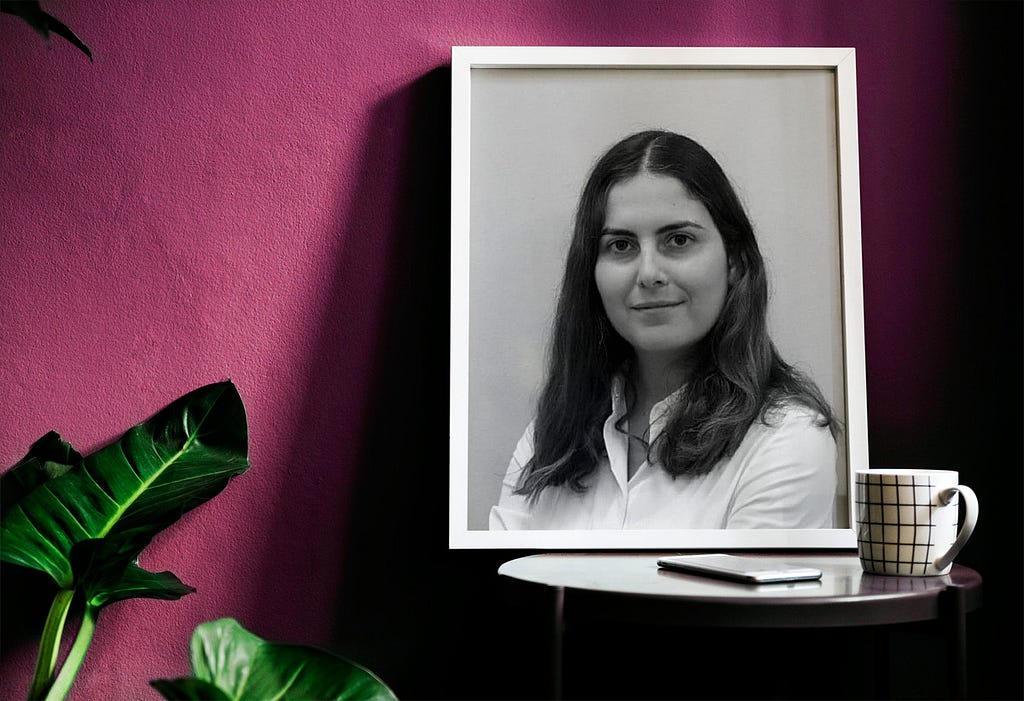
Female Disruptors: Cherry Tung On The Three Things You Need To Shake Up Your Industry

Women may be faced with more sexual harassment, especially online. I was on a call with a coaching prospect one time. He completed the application form in full, pretended to be really interested in starting his own coaching business, and near the end of the call he suddenly started saying how “we should go out” because he thinks we are both cute. It was very rude, disrespectful and a complete waste of time for both of us. I have shared this story with some of my friends who are also coaches, and only the female coaches could relate to this story.

As a part of our series about strong women leaders who are shaking things up in their industry, I had the pleasure of interviewing Cherry Tung.

Cherry helps 9 to 5 employees break free of their corporate job and salary by launching their own coaching businesses, alongside with their full-time job! Cherry is also a full-time corporate employee so she knows first-hand how to juggle a business and a full-time job. In fact, Cherry has created 16 income streams for herself at the age of 24!

Thank you so much for doing this with us! Before we dig in, our readers would like to get to know you a bit more. Can you tell us a bit about your “backstory”? What led you to this particular career path?

I had always played the part of the traditional good girl. I got good grades, was accepted to and attended a great university (USC), secured an internship at one of the Big 4 accounting firms, and converted that into a full time offer before I even had my degree. I was, in short, doing everything “right”.

But I became depressed and burnt out when I started my Big 4 full-time job. I realized I did not want to be in a Big 4 firm, I did not want to be an auditor, and I definitely did not want to keep working nonstop busy seasons… but I was really scared to give up on this prestigious job. It took me over a year to finally quit my miserable Big 4 job; my self-esteem was crushed as a result, as my entire self-worth and identity was tied to my role as a Big 4 auditor. Who is Cherry? Cherry is a Big 4 auditor. Nothing more. After quitting my prestigious Big 4 job, my self-esteem and self-worth was so low that I decided that I did not deserve to even live in a decent apartment, so I chose to live in my car.

As I spent nights in my car, zipped up in my tiny sleeping bag, barely sleeping as I was afraid of being attacked in the middle of the night, I had time to do a lot of self-reflection and contemplation. Is life really just like this? Is there no purpose in life than working a 9 to 5? Is there nothing more to me than my 9 to 5 identity? Am I just going to be an auditor/accountant forever?

During the “car-life” days, I realized that I didn’t just want to be an auditor. I wanted to have an impact and make a difference in people’s lives. I wanted to create and connect. At that time, I didn’t know what it meant to create and connect but now I do. Now, I create content for 9 to 5 employees who don’t have the knowledge and means to be financially independent and job optional. I connect with them so they can see the possibilities beyond their 9 to 5 jobs. Starting a business and working a 9 to 5 are not mutually exclusive. Many people are afraid of starting businesses because they don’t want to “give up” the security of their 9 to 5’s. They are not ready to give up their stable paycheck and workplace benefits. But they don’t have to, I am living proof that it is possible to juggle both a full-time job and a business!

Can you tell our readers what it is about the work you’re doing that’s disruptive?

Instead of telling my audience to quit their jobs to start a business, which is the mainstream message most online business influencers preach, I show my audience how to start a business while they work their 9 to 5’s. Most other influencers preach that we have to burn all the ships and jump head first into entrepreneurship. I don’t think so. It is smarter to start a business while you’re still working your 9 to 5. First of all, you will continue to receive that stable paycheck which takes the pressure off of making money immediately with your business. Just like building a career, it takes time and experience to build up your business. Very rarely do businesses start making money right off the bat and therefore, it is better to start a business while you are working a 9 to 5. Your day job also provides healthcare, 401k matching, and other benefits so you can experience even fewer financial stresses while starting out your business (which by its very nature, is quite stressful). Your 9 to 5 can also provide you with the knowledge, experience and network that can translate into the success of the business you build. In short, you keep your day job so that you can focus on the important part of growing your business and not how to feed, cloth and house yourself.

Can you share a story about the funniest mistake you made when you were first starting? Can you tell us what lesson you learned from that?

When I was first starting my YouTube channel, I had no idea it would eventually become one of my multiple income streams. I had no expectations back then… So, one of the first YouTube videos I made was titled “Opening a Coconut Romantically”, which features 18-year-old Cherry, clumsily opening a coconut with a fruit knife. Unfortunately, that coconut already went bad, so the juices were quite… thick and clumpy… From that, I learned that you don’t always know where you end up in the next couple of years. 18-year-old Cherry had no idea that her YouTube channel would be one of her 16 income streams. She just went and filmed a funny YouTube video. You can too! You don’t necessarily have to plan everything out before taking action.

We all need a little help along the journey. Who have been some of your mentors? Can you share a story about how they made an impact?

One of my mentors is Vanessa Lau. She’s a business coach, a YouTuber, and a huge inspiration to me. I aspire to have a business like hers, one that can generate income passively via course sales, and she actually generates consistent 6 figure monthly income from just her one course, The Bossgram Academy.

In December 2019, I decided to purchase her program, The Bossgram Academy, and that changed my perspective of coaching entirely. Before taking her program, I had no thoughts of becoming a coach as that is “trading time for money”. “I am already trading time for money at my 9 to 5 job, so why would I want to do that for my business too?” I thought to myself. However, her program really opened my eyes to the potential in coaching and motivated me to start coaching myself. I soon realized how much I enjoy coaching, making a direct impact in people’s lives, connecting with my clients 1 on 1, and witnessing their transformations.

In today’s parlance, being disruptive is usually a positive adjective. But is disrupting always good? When do we say the converse, that a system or structure has ‘withstood the test of time’? Can you articulate to our readers when disrupting an industry is positive, and when disrupting an industry is ‘not so positive’? Can you share some examples of what you mean?

Whether a disruption is positive or negative really depends on which side you are on. The taxi industry got hit hard when ridesharing came out. That disruption is positive for the rideshare industry, for the customers, but not the taxi industry. That is why it’s so important for companies and people to keep adapting and evolving, as our world is constantly changing and advancing. Some systems and structures do withstand the test of time, but usually they do so, not because they came first but because they are either fundamental to our society like the rule of law, or because they were created with enough foresight. Taxi either failed to adapt or couldn’t adapt due to their structure, to the fact that we all have powerful internet-connected devices, our cellphones, in our pockets.

Can you share 3 of the best words of advice you’ve gotten along your journey? Please give a story or example for each.

My role model, Vanessa Lau once said, the difference between someone who is going to be successful and someone who is not, is how resourceful they are. Resourceful people don’t take no for an answer. They don’t expect other people to just hand them the answers. They are willing to do research and experiment with different strategies, and eventually find quick and clever ways to overcome obstacles.

I had the honor to meet Gary Vee at a speaking event at USC, and I asked him how he was able to stay so energetic all the time. He said, “I don’t drink any energy drink or even coffee to stay so energetic. The secret to my high energy is gratitude.”At the time, I did not fully understand what that meant. As I continued advancing in my business, however, I started to realize how powerful gratitude is. Even though I am not yet at Gary Vee’s level of replacing my morning coffee with gratitude, I do practice gratitude every day, starting with writing down 3 things I’m grateful for in the morning and at night. This really helps me maintain high energy and motivation to serve my clients every day.

One of my mentors, Stefan James from Project Life Mastery once said, the best time to film a YouTube video is right after you filmed another one, because then, you would be in the state of flow. This is my secret to uploading 3 YouTube videos every single week, on top of a demanding full-time job, while maintaining 16 income streams. When I put on my filming clothes and makeup, I rarely only record one video in that sitting. Instead of just filming one video at a time, which is not only tedious but also inefficient, I tend to record at least three videos in one sitting so my creative flow, my makeup, my filming outfit and high energy does not go to waste. Content batching is my secret to uploading on YouTube consistently as a full time corporate employee!

We are sure you aren’t done. How are you going to shake things up next?

I am going to launch an online course that teaches corporate employees how they can start their own coaching businesses, even while working their 9 to 5s. This is exactly what I have done in my business and this is also what I helped numerous clients achieve through my 1 on 1 coaching. As I can only have so much time for 1 on 1 sessions, I’ve decided to launch a course, which will enable me to reach an even greater number of people, give them the tools to launch their own coaching businesses and become work optional!

In your opinion, what are the biggest challenges faced by ‘women disruptors’ that aren’t typically faced by their male counterparts?

Women may be faced with more sexual harassment, especially online. I was on a call with a coaching prospect one time. He completed the application form in full, pretended to be really interested in starting his own coaching business, and near the end of the call he suddenly started saying how “we should go out” because he thinks we are both cute. It was very rude, disrespectful and a complete waste of time for both of us. I have shared this story with some of my friends who are also coaches, and only the female coaches could relate to this story.

Do you have a book, podcast, or talk that’s had a deep impact on your thinking? Can you share a story with us? Can you explain why it was so resonant with you?

Online Marketing Made Easy by Amy Porterfield has a deep impact on my thinking. She is not afraid to share her own failures along the way — how her first-course launch flopped and one of her already-completed courses did not even get launched because she realized that she was not happy with the topic. This made me realize that no matter how successful the entrepreneur is, even if they have a 7-figure business, it is still very possible for them to make mistakes or fail along the way. This resonates with me so much because on my journey as a wealth coach, I have faced my own fair share of challenges along the way and this story reminds me that the issues that I run into are simply part of the process of starting your own business.

Can you please give us your favorite “Life Lesson Quote”? Can you share how that was relevant to you in your life?

“Fail fast, fail forward”

Growing up Asian, I was not given the chance to fail. Even getting a B in my math class would bring “shame” to my family. Failing was a really new concept to me as I entered adulthood. In entrepreneurship, it’s almost impossible to avoid failing, as entrepreneurship is all about trying something new, and trying something new is almost guaranteed to involve failing to some degree. A lot of people decide against entrepreneurship simply because they are afraid of failure. Many people refuse to adapt to changes because they are afraid of failure. The single most important thing I’ve decided to do after pursuing entrepreneurship is allowing myself to fail, as long as I fail fast and fail forward. Failing is inevitable. Failing helps me move forward. Allowing myself to fail gives me permission to try new things that are risky but can potentially result in huge returns.

You are a person of great influence. If you could inspire a movement that would bring the most amount of good to the most amount of people, what would that be? You never know what your idea can trigger. 🙂

A lot of your readers might already be aware of the FIRE movement, which stands for Financial Independence; Retire Early. While I do agree with the first half of the FIRE movement, the financial independence part, I don’t necessarily agree with the second part that stands for retire early. I personally don’t see myself retiring anytime soon, as I love getting involved and working towards a greater goal.

If I were to inspire a movement, it would probably be FIIS; Financial Independence Income Streams. This movement will inspire more 9 to 5 workers to create income streams independent of their day jobs so they can eventually be financially independent from their 9 to 5s. The goal would be to inspire and help more 9 to 5 workers be financially independent from their day jobs and be work optional, instead of being forced to work because it is the foundation of their livelihood.

I’ve seen too many people work a job they resent simply because it pays the bills. Life is too short to live with resentment and a lack of fulfillment, yet most people are also afraid to give up on the steady 9 to 5 paychecks without first developing a proof of concept for their businesses. This is why I’ve decided to help 9 to 5 employees build their own coaching businesses, while working their 9 to 5s, so they don’t necessarily have to quit first to build wealth, and they can eventually grow to be financially independent and do things that actually bring them fulfillment. After building a successful and profitable coaching business, my clients can still work at their 9 to 5s if they want to, but it will no longer be a “must” or a requirement, as they will be able to maintain their livelihood with their new coaching income stream.

How can our readers follow you online?

Your readers can follow me on Instagram @cherrytung.co and on YouTube by searching my name, Cherry Tung.

This was very inspiring. Thank you so much for joining us!

Thanks for having me!


Female Disruptors: Cherry Tung On The Three Things You Need To Shake Up Your Industry was originally published in Authority Magazine on Medium, where people are continuing the conversation by highlighting and responding to this story.

Female Disruptors: Franceska McCaughan On The Three Things You Need To Shake Up Your Industry

Give Time, Time: Especially more so than ever, we are desperate for achievements and confidence highs to “ensure we’re on the right track”. However, all good things take time. When we don’t give adequate time to achieve our goals we tend to give up. Remember by giving time, time, we are able to create and build sustainable businesses.

As a part of our series about business leaders who are shaking things up in their industry, I had the pleasure of interviewing Franceska McCaughan.

Franceska McCaughan is a multi-passionate entrepreneur and serial business builder who helps aspiring entrepreneurs design a business that gives them a lifestyle they love without fear of losing money through her course, Lifestyle You Love Business System. As a child who entered the foster care system at the age of 12, Franceska defied all odds securing a full-ride scholarship to a tier-one university, graduating top of her class Magna Cum Laude and by becoming the founder and owner of six businesses since graduating university within the last decade. Franceska loves to travel (47 countries and counting) and has lived in Europe and the Middle East while calling Houston, TX her home.

Thank you so much for doing this with us! Before we dig in, our readers would like to get to know you a bit more. Can you tell us a bit about your “backstory”? What led you to this particular career path?

Absolutely! Prior to being a business coach, I built 4 businesses in the last 8 years from scratch across multiple segments and niches. Due to covid, those businesses were placed on pause so I have used this opportunity to launch my coaching business as well as launch a real estate business. As you can probably tell, I love business and the challenge of building a successful business at that. It has always been on my heart to help others build their own businesses so I decided to launch the coaching business to help them do that!

Can you tell our readers what it is about the work you’re doing that’s disruptive?

Until recently, I didn’t know much about the coaching industry. As I explored the rabbit hole, I realized that there weren’t a lot of coaches coaching on real-life business experience. I also noticed that many business coaches were almost reading the same script. It’s like they all went to coaching Bootcamp and downloaded a template on how to run a coaching business. Their success stories are built by selling the “how” and not focusing on the “why” behind it. We all need to figure out the “why” before we can probably use the “how” to move us into the direction we want to go. The “why” is what makes us authentic and by putting that before the “how”, I am disrupting the traditional business coaching industry as we know it.

Can you share a story about the funniest mistake you made when you were first starting? Can you tell us what lesson you learned from that?

Thinking back, my coaching career actually began last year when I launched my first online course for floral designers called Petals to Profit. I spent weeks developing this program, pouring out all my hush hush secrets and the launch totally flopped. I was devastated and so embarrassed. However, I learned from this experience that it’s impossible to know everything, including how to sell your tell-all secrets in a course. This year when I decided to revisit the online coaching world, I hired a coach to learn how to avoid launching to crickets, to ensure my success.

We all need a little help along the journey. Who have been some of your mentors? Can you share a story about how they made an impact?

Haley Burkhead has figured out the blueprint for when it comes to launching an online course or membership evergreen, scaling to a million dollars.. She has been a great mentor in the online course world. I also have to shout out Vaness Lau who teaches entrepreneurs how to build wildly influential coaching businesses using social media without using sleazy sales tactics. Without this duo, I would have been lost and my learning curve would have been costly.

In today’s parlance, being disruptive is usually a positive adjective. But is disrupting always good? When do we say the converse, that a system or structure has ‘withstood the test of time’? Can you articulate to our readers when disrupting an industry is positive, and when disrupting an industry is ‘not so positive’? Can you share some examples of what you mean?

Disruption can be positive to an industry when it causes positive change and/or growth through alternative insight/action. Success is acquired through evolution and evolution can only happen if disruption of status quo has taken place. When disruption is considered not so positive, it is typically when a minority benefits from the disruption and gains at the expense of the majority who are negatively impacted by the disruption.

Can you share 3 of the best words of advice you’ve gotten along your journey? Please give a story or example for each.

  1. Give Time, Time: Especially more so than ever, we are desperate for achievements and confidence highs to “ensure we’re on the right track”. However, all good things take time. When we don’t give adequate time to achieve our goals we tend to give up. Remember by giving time, time, we are able to create and build sustainable businesses.
  2. Your greatest differentiator is you: When it comes to a unique selling point, it starts with you. No one has your voice, your experience, your message etc. and because of that, this is what sets you apart. Humans like conformity because it’s comfortable however when we conform we lose our greatest asset that sets us apart. Remember you are the differentiator when it comes to business.
  3. I am worthy because I am: Many of us are driven and goal-oriented. While there is nothing wrong with that, those of us who have experienced trauma tend to make these attributes goal markers on not only our success but also how we value themselves. Remembering that worthiness doesn’t come from “doing” and simply comes from “being” which is a game-changer many of us could benefit from.

We are sure you aren’t done. How are you going to shake things up next?

I’ve recently opened more space and focused on helping busy women design a business that gives them a lifestyle they love without failing. A big component of my online coaching experience is cycle syncing with their business goals. There is a lot of power when it comes to tapping into the divine feminine especially in masculine driven society. Part of that is understanding when women are their most powerful, strategic, creative and insightful selves which if understood correctly, has a huge positive impact on everyone involved.

Do you have a book, podcast, or talk that’s had a deep impact on your thinking? Can you share a story with us? Can you explain why it was so resonant with you?

One book I tend to go back to over and over is 101 Essays That Will Change The Way You Think by Brianna Wiest. There is something life-changing in almost every essay, many of them put into words how you’ve always felt. It resonants so much with me because it isn’t a “self-help” book because you are broken. It offers transformational perspectives to become even more whole.

Can you please give us your favorite “Life Lesson Quote”? Can you share how that was relevant to you in your life?

It sounds cliche but the well-known quote “shoot for the moon, if you miss, you’ll land among the stars”. I read it for the first time in seventh grade biology class and it’s still relevant 20 years later. The thing I love about this quote is that it gives a feeling of comfort and relief. That even if you aim high, you’re still going to make it and maybe achieve something even better than previously planned.

You are a person of great influence. If you could inspire a movement that would bring the most amount of good to the most amount of people, what would that be? You never know what your idea can trigger. 🙂

To create a safe space to heal from trauma in order to reach one’s highest potential. I believe that we all have been given a passion and experiences for a reason. However many sell themselves short by either overcompensating or never trying due to how they handled their previous trauma. You can’t mindset your way out of trauma and sometimes it simply makes it worse. Therefore if there was a safe space to be open to healing trauma, understanding how it impacts your “why”, the “how” would therefore be more clear and the “what” would actually be accomplished.

How can our readers follow you online?

They can visit my website www.franceskamccaughan.com or sign up for my Lifestyle You Love Business System at www.franceskamccaughan.co. I’m always hanging out on Instagram at https://instagram.com/franceska.mccaughan and offer a FREE Masterclass at www.franceskamccaughan.co/invite.

This was very inspiring. Thank you so much for joining us!


Female Disruptors: Franceska McCaughan On The Three Things You Need To Shake Up Your Industry was originally published in Authority Magazine on Medium, where people are continuing the conversation by highlighting and responding to this story.
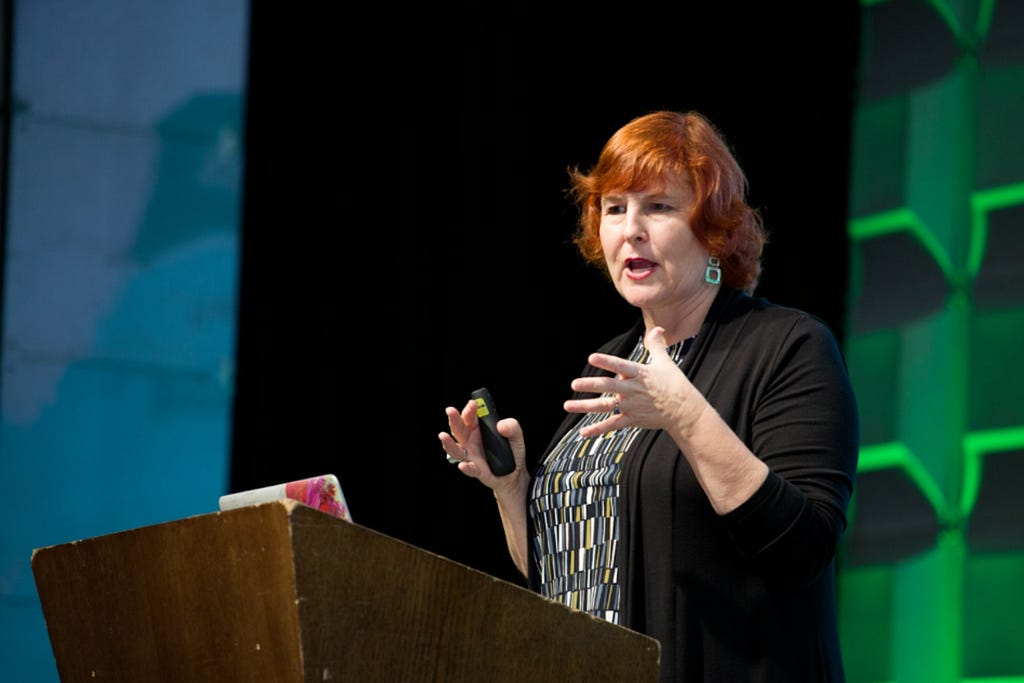
Female Disruptors: Madison Catania of Wildcast On The Three Things You Need To Shake Up Your…

Female Disruptors: Madison Catania of Wildcast On The Three Things You Need To Shake Up Your Industry

We really hope to introduce more parties from the podcast space into the podcasting platform; sponsors, studios, editors, etc. Beyond podcasting, we’ve had companies approach us in different industries who are looking to use Wildcasts’ platform and adapt it to their own industry, so we’re also looking to partner with those outside of podcasting.

As a part of our series about strong women leaders who are shaking things up in their industry, I had the pleasure of interviewing Madison Catania.

Madison is the CEO and Co-Founder of Wildcast, Inc. (gowildcast.com), a patent-pending podcast platform that connects those within the industry through guest and podcast discovery, booking, messaging, and calendaring. The Wildcast marketplace launches in late August/early September 2020 to the public after having soft-launched to early users, including top-charting podcasters and well-known guests in various industries. Madison recently earned her MBA at the Rady School of Management at UCSD (San Diego, CA) and served as lead producer at a podcast network prior to founding Wildcast.

Thank you so much for doing this with us! Before we dig in, our readers would like to get to know you a bit more. Can you tell us a bit about your “backstory”? What led you to this particular career path?

Thanks for having me! I’ve definitely tried a few different career paths before I arrived in the podcasting space. After graduating from Villanova University in 2014, I worked in marketing in both the tech and entertainment industries while living in New York City. I decided to return to San Diego to take my marketing experience to the hospitality world, opening several restaurants as part of my family’s newly introduced restaurant group for several years. I decided to go back to school to pursue my MBA and that’s when I realized I wanted to try to take my passion for listening to and learning from podcasts and make it into a career. I ended up at a small podcast network, first working in marketing but then leading the production team. My years at the network combined with my entrepreneurship-focused MBA program ultimately inspired the idea that is now Wildcast.

Can you tell our readers what it is about the work you’re doing that’s disruptive?

While the podcast industry is growing immensely both in the number of listeners and the number of podcasts, the great majority of new companies in the space are geared toward the consumers and listeners of podcasts, not the podcasters themselves. After having worked as Head of Production at a small podcast network, mainly working on top pop culture and reality TV podcasts, I realized there was much to do to streamline the podcasting space for those within the industry; the podcasters, producers, guests, and sponsors. After finishing my MBA program, my co-founder (who also happens to be my godfather!) and I decided to form Wildcast. Wildcast is a patent-pending networking platform for those within the podcast industry who are looking to connect with new talent, get their messages heard by a new audience, and promote their podcasts. We hope to end the chains of pointless emails and irrelevant pitches by introducing our platform that includes custom calendaring, messaging, and networking abilities to streamline the podcasting industry from within.

Can you share a story about the funniest mistake you made when you were first starting? Can you tell us what lesson you learned from that?

Before we were deep into founding the business, I was working on coming up with a name and found one that I fell in love with. Sadly, it was trademarked by someone in the space. I actually was so determined to make this name work that I reached out to the company hoping to find an agreement. Not shockingly, they said we could not use the name. Duh. I realized that things don’t need to be perfect to move forward — nothing ever is. I came up with Wildcast a few days later and love the name even more.

We all need a little help along the journey. Who have been some of your mentors? Can you share a story about how they made an impact?

Some of my mentors include the two women who run the podcast network I worked for and who continue to work with me through Wildcast, Nadine Robinson and Clio De La Llave. My dad has always been a huge mentor throughout my life and career. My biggest mentor is my co-founder, Scott. He is an extremely positive and uplifting presence. I often feel discouraged when things don’t go the “right” way, but he always helps put things into perspective. After a not so amazing meeting, I can trust that he’ll call me with words of wisdom.

In today’s parlance, being disruptive is usually a positive adjective. But is disrupting always good? When do we say the converse, that a system or structure has ‘withstood the test of time’? Can you articulate to our readers when disrupting an industry is positive, and when disrupting an industry is ‘not so positive’? Can you share some examples of what you mean?

A clear example at the time we’re speaking is the US Postal Service. I do not believe a service that provides such a meaningful purpose to so many people should be disrupted. There are certain systems and structures that when disrupted may improve the lives of the majority of those affected. If that is not the case — if disruption will not lead to bettering the lives of those benefitting from those systems or structures — then I believe disruption is far from positive.

Can you share 3 of the best words of advice you’ve gotten along your journey? Please give a story or example for each.

“Keep Going.” — A former client in the podcast space

I was speaking with a former client who is an entrepreneur herself and told her how doubtful I had been feeling that day. She said two simple words: keep going. Her belief in me was enough to get me moving. Often, you need to lean on those around you to remember you have more of yourself to give.

“Better an oops than a what if.” — ShrinkChicks

One of my favorite podcasts is led by two therapists who truly tell it like it is. Their Instagram by the same name featured this quote. I love this quote in all its variations. I believe in pursuing those things that are worthy to you even if you fail. In my mind, it’s not a failure if you learn or grow, despite how others may see it.

“Don’t try to win over the haters; you are not a jackass whisperer.”

This is a quote from Brené Brown’s book, Daring Greatly. I listened to this book on Audible while walking my dog around the neighborhood as a way to take a break from work. This book inspired me in so many ways, mainly to work on being my most authentic self. You truly cannot please everyone. That’s a life lesson that’s been tough but important for me to learn. I’ve also decided I will not willingly work with assholes. If someone shows me they are negative or a jackass, I won’t take their money or advice even if they want me to have it no strings attached.

We are sure you aren’t done. How are you going to shake things up next?

We really hope to introduce more parties from the podcast space into the podcasting platform; sponsors, studios, editors, etc. Beyond podcasting, we’ve had companies approach us in different industries who are looking to use Wildcasts’ platform and adapt it to their own industry, so we’re also looking to partner with those outside of podcasting.

In your opinion, what are the biggest challenges faced by ‘women disruptors’ that aren’t typically faced by their male counterparts?

I think it’s hard to be taken as seriously and perceived as competent and confident versus cocky. Most of the podcast networks are run by men and it’s difficult to come across as persuasive without seeming nagging or annoying, a couple adjectives mainly used to describe women. I’m also in my late 20’s, so the youth factor definitely doesn’t make it any easier!

Do you have a book, podcast, or talk that’s had a deep impact on your thinking? Can you share a story with us? Can you explain why it was so resonant with you?

I mentioned ShrinkChicks before, but the two MFTs and their manager behind the podcast have really inspired me lately. Anytime I need a pick me up or want to feel like I’m listening to friends who truly understand me, I turn on their podcast. The other day, I had a terrible meeting with a potential partner. I was really discouraged afterward and turned on their podcast. Almost immediately, I felt a new energy to keep going. I keep a list of things like the ShrinkChicks podcast that I can return to and revisit when I’m feeling unmotivated. This list has saved me from breaking down and giving up multiple times!

Can you please give us your favorite “Life Lesson Quote”? Can you share how that was relevant to you in your life?

Being human is not hard because you’re doing it wrong, it’s hard because you’re doing it right. — Glennon Doyle

We so often think that if we’re on the right path it will be easy and natural. It’s been important for me to realize, especially in the last few years, that most things worth doing are actually incredibly difficult. And that’s OK!

You are a person of great influence. If you could inspire a movement that would bring the most amount of good to the most amount of people, what would that be? You never know what your idea can trigger. 🙂

I hope that by introducing Wildcast, our guests, podcasters, and all those within the podcast industry can collaborate and spread ideas that truly make a difference in someone’s life. There are several podcasts that have made a difference in mine. Right now, I think providing content that is useful for students during the coronavirus as well as content that focuses on the most accurately sourced news information would be amazingly helpful to podcast listeners who can turn to these podcasts as free resources to combat stress and anxiety and to further their knowledge to ultimately change the world.

How can our readers follow you online?

You can follow Wildcast on Instagram, Twitter, and Facebook at @gowildcast. You can also visit our site at gowildcast.com!

This was very inspiring. Thank you so much for joining us!


Female Disruptors: Madison Catania of Wildcast On The Three Things You Need To Shake Up Your… was originally published in Authority Magazine on Medium, where people are continuing the conversation by highlighting and responding to this story.

Female Disruptors: Sissy Lappin of ListingDoor On The Three Things You Need To Shake Up Your…

Female Disruptors: Sissy Lappin of ListingDoor On The Three Things You Need To Shake Up Your Industry

Live below your means. I suppose that’s four words! When opportunity knocks, it comes without a paycheck. If I had been saddled with debt, I wouldn’t have the freedom to start my own ventures. I know it’s tough, but save money! When I realized I essentially wanted to self-fund a real estate technology startup, I went through our budget and slashed every extra expense. Everything.

As a part of our series about women who are shaking things up in their industry, I had the pleasure of interviewing Sissy Lappin of ListingDoor.

Sissy Lappin is a real estate entrepreneur with three decades of experience negotiating over a billion dollars in deals. An industry visionary and renegade, Sissy champions innovative, yet easy-to-use real estate products and programs that help homeowners navigate the intricate nuances of real estate. Sissy is the author of three books and has been featured in the Wall Street Journal, NerdWallet, and other national publications.

A homeowner advocate, Sissy used her extensive experience to launch her real estate technology startup, ListingDoor. Described by Forbes as the Uber of real estate, ListingDoor provides a simple, step-by-step guide to selling your home by yourself. ListingDoor is disrupting the way real estate transactions are completed to transfer 100% of the profit to the homeowner.

Thank you so much for doing this with us! Can you tell us a story about what brought you to this specific career path?

I was a real estate broker in the Houston area for over 20+ years when one of my closest friends came to me in a panic needing to sell her home. Her husband had defaulted on his child support, and left a huge income gap. She was worried for her credit, her ability to make the mortgage payment, and her family’s stability. Over a glass of wine, I mapped out how she could sell her own home. She put the house on the market two days later, sold it, and saved $24,000.00 in commission. This left her with enough money to move, saved her credit, and reaffirmed her pride in herself as a strong woman and single mother.

Weeks later, my friend came over to thank me. She gave me a big hug and said, “You have to help other people in this situation so that they can help themselves.” This was the moment that I decided to write a book showing people how to sell their own home. Most people don’t know this, but the real estate industry is controlled by the second-largest lobbying group in the country. There have been very few innovations in real estate on purpose. Somebody that was in the system needed to stand with the homeowners.

After I wrote Simple and Sold, I was getting emails from readers asking for the actual tools to sell their own home, which is why I started ListingDoor. ListingDoor is an online experience that empowers homeowners to price, list, and market their homes with resources that are superior to those of standard brokerage firms. My husband and I have bootstrapped since day one with day jobs and two children to raise, and we’ve had a blast along the way.

Can you tell our readers what it is about the work that you’re doing that is disruptive?

We are disrupting the way homes are bought and sold. ListingDoor teaches you how to sell your home; we unlock pricing information, simplify marketing tools, and deliver professional marketing materials for homeowners to close their own deal and forego burdensome commissions.

There are “discount broker” companies that take a 4.5% commission, but that is not a game-changer. Losing 4.5% to commission could mean you lose your hard-earned equity. It is almost assumed that you need a real estate agent to sell your home, which isn’t true. Right now, that choice is controlled by a lobbying group in Washington, D.C. ListingDoor changes the way real estate transactions are completed to transfer 100% of the profit to the homeowner. It is my mission to empower millions of homeowners to sell their own home, save the commission, and start the next chapter of their lives on a stronger financial footing.

We all need a little help along the journey. Who have been some of your mentors? Can you share a story about how they made an impact?

Actually, my interns and mentees have been my best mentors. Let me explain that. Jia Toletino, the author of Trick Mirrors and a contributor for the New Yorker, worked with me when she was 23 years old. Jia was an extraordinary writer and had just finished two years with the Peace Corps in Africa. Jia helped me write my first book Simple and Sold; she was a great mentor to me because she was actually a much stronger writer than I was. Her fresh way of looking at things made my book more approachable.

I have gained quite a few mentors through podcasts and books! Some of my favorite entrepreneurs include Tony Hsieh of Zappos and Roland Fraiser, the serial entrepreneur. Also, the book Blink by Malcolm Gladwell should be required reading. It’s incredible how many people share their success stories and strategies online.

Lastly, one of the most impactful investments I’ve ever made is attending the Business Mastery conference with Tony Robbins. This conference will help you level up in every aspect of your life to support your dreams.

In today’s parlance, being disruptive is usually a positive adjective. But is disrupting always good? When do we say the converse, that a system or structure has ‘withstood the test of time’? Can you articulate to our readers when disrupting an industry is positive, and when disrupting an industry is ‘not so positive’? Can you share some examples of what you mean?

I think we are quick to call new companies ‘disruptors’ when they are not truly shaking up the system. In real estate, the biggest ‘disruptors’ are companies like RedFin that have allowed people to list their own homes. But they are masking the costs in the fine print. Using a discount broker will still cost you 4.5% of your equity, which can be absolutely devastating for your finances. A commission of 4.5% is simply not a game-changer for the homeowner. The system downplays the percentage rather than looking at the true dollars lost in the transaction. Painting these new companies as ‘disruptors’ actually masks the power of the real estate lobby in Washington. This lobby has blocked disruption in the real estate industry to line the pockets of agents. I truly believe that the financial health of millions can be saved if people educate themselves on how to sell their own home.

Can you share 3 of the best words of advice you’ve gotten along your journey? Please give a story or example for each.

Live below your means. I suppose that’s four words! When opportunity knocks, it comes without a paycheck. If I had been saddled with debt, I wouldn’t have the freedom to start my own ventures. I know it’s tough, but save money! When I realized I essentially wanted to self-fund a real estate technology startup, I went through our budget and slashed every extra expense. Everything.

Saving money and being super disciplined enabled me to say no to investors and outside partners from day one. Investors aren’t always a negative, but maintaining autonomy helped keep the ethos of the company. Money always comes with a personality so you better like that personality! I didn’t have to worry about these issues because I had the money saved to forgo outside investment.

We are sure you aren’t done. How are you going to shake things up next?

Since the beginning of my career, I have been blessed with opportunities to provide high-quality, attentive care to all my clients. I’ve made so many good friends along the way. I share my expertise in real estate with as many people as simply and accessibly as possible.

Next, you’ll see me championing ListingDoor as the tool to sell your own home. It is my mission to empower millions of homeowners to sell their own home, especially in this economic climate.

In your opinion, what are the biggest challenges faced by woman disruptors that are typically faced by male counterparts?

I was at a seminar and sat next to one of the developers for WhatsApp. We started talking, and I told him about ListingDoor. He swiftly told me four things: I should not quit my day job; women were not CEOs in tech; I was too old to be starting a company; and that I was silly for not taking outside investment. He acted like my husband gave me money for a vanity project. There are obviously still many hurdles for women in business, but I choose to let it light a fire in me to work harder to earn my success and free others to do the same.

The last thing I’ll say is that sometimes friction is a good sign. When the first article came out on Listing Door, I got a phone call from the president of a major real estate firm that was two comments short of a death threat; he told me I needed to pack my stuff and start another business. That’s when I knew that I was really onto something important. Don’t be afraid of the naysayers.


Female Disruptors: Sissy Lappin of ListingDoor On The Three Things You Need To Shake Up Your… was originally published in Authority Magazine on Medium, where people are continuing the conversation by highlighting and responding to this story.

Female Disruptors: Charlotte Maumus of Memwris On The Three Things You Need To Shake Up Your…

Female Disruptors: Charlotte Maumus of Memwris On The Three Things You Need To Shake Up Your Industry

I’m a perfectionist by nature, and through my years of event production, I have a penchant for always having a plan A, B, C… And don’t get me wrong, this is a good habit to have, but even the most careful planning can’t anticipate in-the-moment, unpredictable on-site issues. In a particularly client event-filled summer, my managers gave me the advice to “roll with the punches” that has not only benefited my event production, but is especially important when founding a software company.

As a part of our series about business leaders who are shaking things up in their industry, I had the pleasure of interviewing Charlotte Maumus.

Charlotte Maumus is the co-founder and CEO of Memwris where the team is designing the first meaningful interface overhaul since the 80s. Their patent-pending UI uses a unique algorithm to unlock complex workflows on small touchscreens for the first time. Charlotte spent her decade-plus long career in marketing communications, leading strategy and equity programs for some of the world’s biggest brands.

Thank you so much for doing this with us! Before we dig in, our readers would like to get to know you a bit more. Can you tell us a bit about your “backstory”? What led you to this particular career path?

I spent my career in marketing comms/PR, making my way up to Vice President of an NYC firm, working 60+ hour weeks, and normalizing putting work before my personal well-being. Unsurprisingly, I suffered from regular burn out, and eventually crashed in the fall of 2017 after an intense few months of me struggling to even tread water. At the advice of my therapist, and my supportive husband, I quit my job.

I had thought I’d have some grand epiphany of what my next steps would be, or that I’d find my true passions. But the reality is I was suffering from years of exhaustion, didn’t know how to slow down, or take the time to think vs react.

It took four months of self-reflection before I started thinking clearly. I was now ready to move forward and take control of my future, let my inherent leadership skills thrive, and serve a better purpose with my “get sh*t done” work ethic. I was ready to start my own company.

It all started with a seemingly impossible dream. Turn back the clock to 2014 when my software engineering husband, Zach, wanted to do real-world programming on his phone. He was used to walking the streets of NYC, coding on his mobile device, but when he switched to a touchscreen, things took a turn. The user interface made it impossible to program. And while I’m not a programmer, I did understand the headache-inducing moments of trying to get work done on my phone, and empathized. So from our tiny apartment closet, he began building a new type of user interface that would throw out the decades-old point-and-click.

But flash forward a few years, a move across the country, and reaching professional milestones, his UI development had taken the back burner, and was sitting cold.

Secretly we were both harboring a desire to bring the project back to life, and knew we had the perfect pairing of complementary skills.

Our pivotal conversation happened in January 2018, in our downtown LA apartment’s kitchen. We shocked each other when we both expressed wanting to team up to start a business to bring a new UI paradigm to life. And as they say, the rest is history.

Can you tell our readers what it is about the work you’re doing that’s disruptive?

It’s been 13+ years since the iPhoneⓇ revolutionized mobile computing, and ushered in an era where consumers expect powerful mini-computers in their pockets.

And while our smartphones’ hardware continues to improve, we are still unable to unlock the true power of our devices. We know this each time we reach for a laptop when tasks get “too complex” or headache-inducing for mobile. It’s why we carry around multiple devices, and why replicating intricate desktop software proves impractical.

So what’s the problem? Our devices use a decades-old point-and-click interface that was never designed to be used with fingers or touchscreens! It was built 40 years ago for desktop computers and was designed for a physical mouse and keyboard.

Rethinking the incumbent technology could benefit billions, and shake up the $500B mobile industry. It can close the digital divide by enhancing the abilities of existing smartphone-only persons and households. A new UI can allow a larger population to access education and employment resources. For example, smartphone-only households in emerging markets could compete for jobs globally. And replacing our current UI would support mobile workflows that weren’t previously possible, such as computer programming, dev ops, IT.

To capture these benefits, memwris is designing the first interface overhaul since the 80s. Our patent-pending UI uses a unique algorithm to unlock complex workflows on small touchscreens.

Specifically, the UI we’re designing optimizes for the small screen real estate, so fingers will no longer be in the way.

Can you share a story about the funniest mistake you made when you were first starting? Can you tell us what lesson you learned from that?

I used to wake up at 4:30 am in my first 6 months of memwris (even on the weekends!). While there is certainly some value in starting your day early to accomplish more, there isn’t value if you’re falling asleep at 7:30 pm!

We all need a little help along the journey. Who have been some of your mentors? Can you share a story about how they made an impact?

Being an entrepreneur can be a lonely journey, and you’ll be faced with negativity from people who don’t understand what you’re doing, why you’re doing it, and think you’re absolutely crazy for leaving your career to venture on your own.

What’s been the most valuable for me in combating negativity is having a network of cheerleaders that I can turn to when I need a boost of positivity. When I surround myself with positivity and energetic people, it not only boosts me mentally, but can help reset my motivation and remind me why I’m going down this path.

I am incredibly fortunate to have a supportive family and over a dozen strong, supportive female friends that cheer me on.

In today’s parlance, being disruptive is usually a positive adjective. But is disrupting always good? When do we say the converse, that a system or structure has ‘withstood the test of time’? Can you articulate to our readers when disrupting an industry is positive, and when disrupting an industry is ‘not so positive’? Can you share some examples of what you mean?

Ever go down a YouTube black hole and watch videos of kids reacting to old tech? It will definitely make any millennial feel much older as you’ll see a diverse mix of Gen Z and Alpha playing, usually judgmentally, with tech that was a big deal back in the day (like those colorful Nokia phones or the Motorola Razr). Aside from feeling old, it shook me into reality that these generations expect way more from technology that I ever would have as a kid. I was perfectly fine with my Speak & Spell!

But even more so, these generations are going to lead tech in directions we couldn’t have predicted, most likely challenging current digital paradigms we can’t imagine changing.

And I’m here for it.

It’s easy to fall into a pattern of an “if it ain’t broke, don’t fix it” mindset because it’s scary to mess with a good thing. With that thinking, we’d still be using candles because they were “just fine” for light! And with that mindset, we certainly wouldn’t have touchscreens (just ask those phone hardware companies whose sales were “not broken” when the iPhoneⓇ first came out…). Without disrupting and challenging existing paradigms, we won’t be able to progress.

And not every paradigm shift is going to be a success, but that shouldn’t stop us from innovating, disrupting, and pushing the limits.

But the time when being disruptive is harmful to innovation is when said innovation is touted as the next big thing without any hard evidence. It can do serious damage to future disruptors trying to break into that field, and can make investors and consumers cynical the next time an innovation in that field comes out. For example, Theranos was such a huge pipedream, but Elizabeth Holmes was incredibly persuasive and succeeded in getting investors, the medical market, a major drugstore chain, and employees to not question if the disruptive tech was “too good to be true.” I’m sure they’ll all agree that yes, it was too good to be true, and will think twice about any future blood test disruptors.

Can you share 3 of the best words of advice you’ve gotten along your journey? Please give a story or example for each.

Roll With the Punches: I’m a perfectionist by nature, and through my years of event production, I have a penchant for always having a plan A, B, C… And don’t get me wrong, this is a good habit to have, but even the most careful planning can’t anticipate in-the-moment, unpredictable on-site issues. In a particularly client event-filled summer, my managers gave me the advice to “roll with the punches” that has not only benefited my event production, but is especially important when founding a software company.

This Too Shall Pass: Growing up my mom would comfort me with the words, “This too shall pass.” And while I may not have believed her as a kid or teenager, these words especially ring true as you grow and experience life. The same goes for founding a business when you may feel like the world is against you, but it’s imperative to realize that even the worst moments are temporary.

Don’t Compare Yourself to Others: I’m unsure when I was first told that I shouldn’t compare myself to others, but I was reminded of this as an entrepreneur. It’s easy to get caught up in what other companies are doing, their successes, or feeling like you should be achieving more each time you check LinkedIn. The reality is that all companies have their own timelines and goals, and once you start comparing yourself and business to others, it will distract you from your path. You’ll have your moment. Don’t rush it.

We are sure you aren’t done. How are you going to shake things up next?

I’m incredibly focused on memwris and shifting the mobile UI paradigm. I’d love to already be thinking about the next big thing, but the reality of getting a business started is that I need to have a bit of tunnel-vision of the goals we have in place for the company.

In your opinion, what are the biggest challenges faced by ‘women disruptors’ that aren’t typically faced by their male counterparts?

Women disruptors have a lot more to “prove”. I can’t even tell you how many times my professional background has been challenged or have had to essentially read through my full resume. I’ve even been told straight up, unprompted, that I couldn’t be a CEO….by a supposed “mentor” in my first and only call with him.

Do you have a book, podcast, or talk that’s had a deep impact on your thinking? Can you share a story with us? Can you explain why it was so resonant with you?

In the months leading up to officially founding memwris, I was a voracious reader of entrepreneur and founder books.

The one that had the greatest impact is The Founder’s Dilemmas by Noah Wasserman. I put into action team communication tools, and one our first day working together, Zach and I discussed our personal goals for starting memwris, and how we’d effectively have conflict resolution on a business matter without it affecting our personal relationship.

One of my favorite talks is Sarah Knight’s “The Magic of Not Giving a F*ck”. When getting a business off the ground, you have to stay focused on your longer-term goals and not compare yourself to others. But it can be difficult if you’re in a moment of vulnerability, and you might let something someone said affect you. Or you might end up making a small issue much larger because of how you’re reacting to it. Sarah’s talk has helped me objectively view each moment as to whether it’s something I want to invest my time or energy into (aka does it go into my “I give a f*ck bucket”?).

Can you please give us your favorite “Life Lesson Quote”? Can you share how that was relevant to you in your life?

“If you don’t build your dream, someone will pay you to build theirs.” Serendipitously I saw this quote in the window of a co-working space in my old LA neighborhood right when my husband and I decided to start our own business. These words are incredibly important to remember as entrepreneurs as we take the risk to make our dreams a reality.

You are a person of great influence. If you could inspire a movement that would bring the most amount of good to the most amount of people, what would that be? You never know what your idea can trigger. 🙂

In a world where we speak of “opportunity” as something one should grasp, we have to realize there are millions of people who either aren’t given the same opportunities, or if they are, there can be numerous obstacles that prohibit them from seizing upon it. Those that can grab their opportunity or make their own are privileged.

We need to level the playing field and allow for more equal opportunity: From diversifying who gets a seat at the leadership tables to leveling out the enormous wealth gap to enable the lower socio-economic population proper access.

How can our readers follow you online?

@CharlotteMaumus

linked.com/charlottemaumus

This was very inspiring. Thank you so much for joining us!


Female Disruptors: Charlotte Maumus of Memwris On The Three Things You Need To Shake Up Your… was originally published in Authority Magazine on Medium, where people are continuing the conversation by highlighting and responding to this story.