Female Disruptors: Connie Chesner of Armored Team Building On The Three Things You Need To Shake…

Female Disruptors: Connie Chesner of Armored Team Building On The Three Things You Need To Shake Up Your Industry
I’ve long believed in the power of memorable mantras to remind each of us of our focus in times of uncertainty or stress. In Krav Maga, the number one rule is “use whatever works;” it is easy to remember in an overwhelming situation and frees the mind to use all resources available to react, overcome, and prevail. Outside of self defense situations, that rule can sometimes feel like you are bordering on the unethical. It works well for emergency situations, sparking innovative and open-minded thoughts, but for the day-to-day, a more tempered mantra is needed.

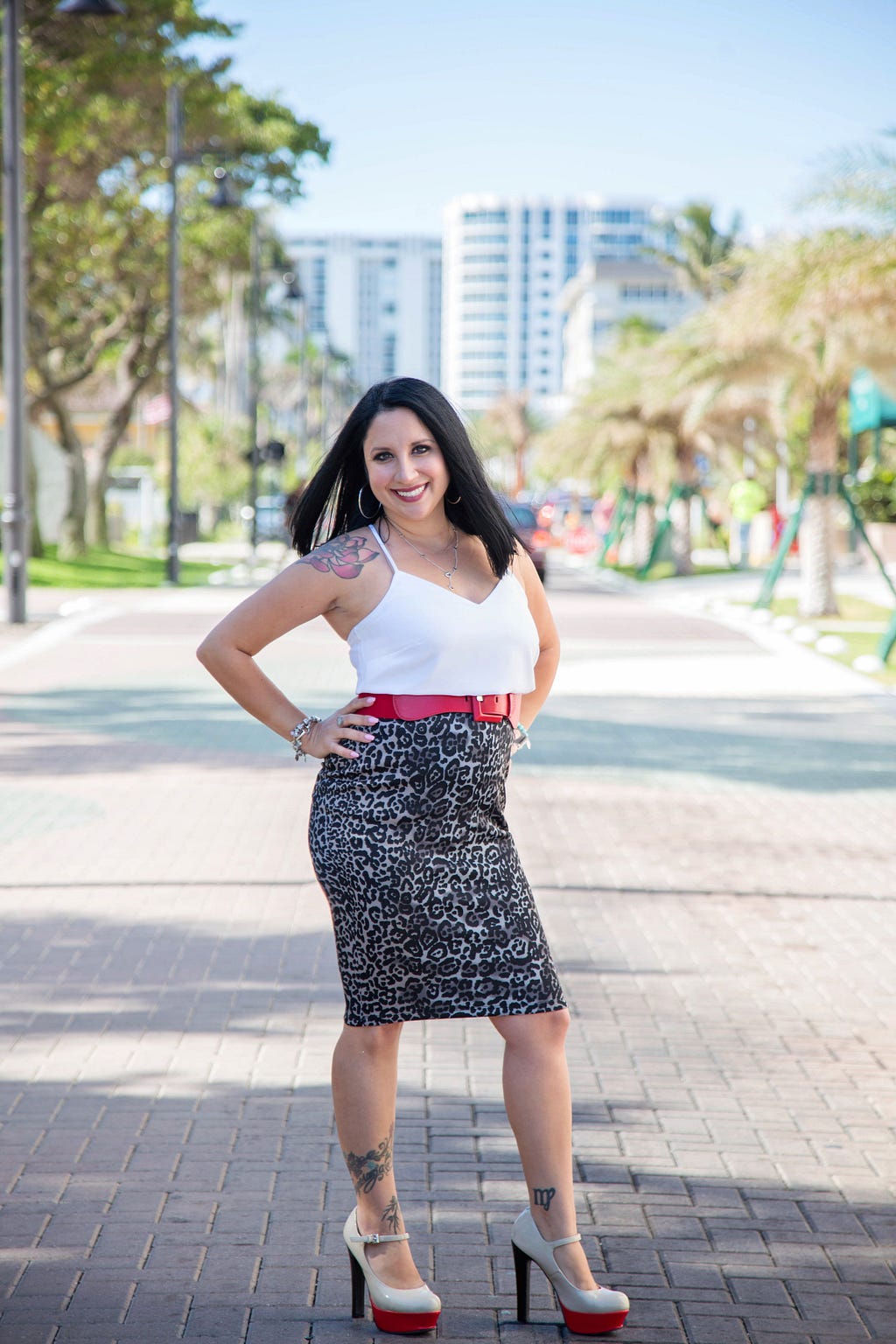
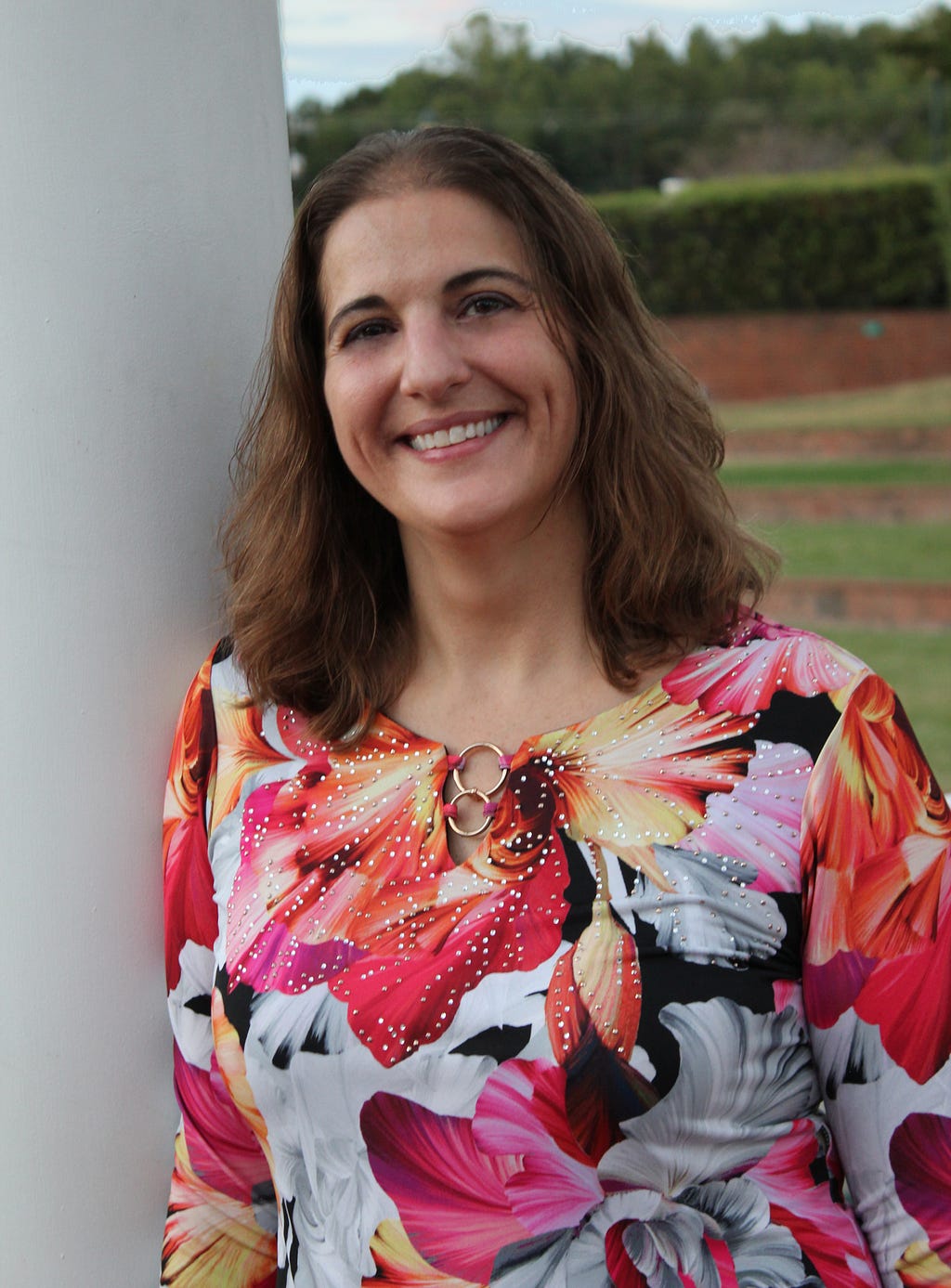
As a part of our series about strong women leaders who are shaking things up in their industry, I had the pleasure of interviewing Connie Chesner.

Connie Chesner, co-founder of the Armored family of brands, has spent over 25 years on a mission to change the world through her passion for the diverse fields of market research, communication, and strategic thinking. She’s been an international media expert, keynote speaker at conferences such as Loyalty 360, a professor, has run projects to launch and reform multi-national brands, and today she weaves that deep understanding into guiding people to stronger leadership and fulfillment. She has successfully founded three businesses and worked within corporations and agencies, allowing a diverse understanding of how individuals and organizations motivate, build trust, maintain, and grow. Her latest proprietary market research work, “America on Pause,” focuses on how markets have changed due to the impact of the 2020 Pandemic and transforms that original research into strategic planning training that is leading organizations forward to post-pandemic success.

Thank you so much for doing this with us! Before we dig in, our readers would like to get to know you a bit more. Can you tell us a bit about your “backstory”? What led you to this particular career path?

As you asked this question, the late 1960s pop hit “He Ain’t Heavy, He’s my Brother,” by the Hollies sprung to mind. The lyrics not only reflect my career path, but the backstory of how I got here. For those not familiar, the song starts out with a line that says, “The road is long, with many a winding turn, that leads us to who knows where, who knows where; But I’m strong…”

My life has been spent leading with a helping heart, looking for ways to lift the burden of others by empowering them in some manner, and standing back in awe at the power of sharing knowledge. As a young girl, my favorite fantasy game was to “play school,” setting my stuffed animals up in rows, teaching them new skills and lessons. I went on to teach at the collegiate level and then to lead the market research efforts which afforded me the honor of educating teams at some of the world’s largest brands on insights, impact, and innovation through newfound knowledge. My passion for sharing my knowledge and ever-unique perspective on the world continues with my current companies at the Armored family of brands. Together with my business partner, we lean on our unexpected blend of skills and advance lives at every opportunity.

The most common question we get tends to revolve around the idea of: why would a world champion martial artist and a professional market researcher/trainer start a business together? And the answer lies in a common passion for sharing knowledge that lifts others and leaves them better than before. We are on a mission to change the world, one person at a time.

From the moment of conception, our companies have had a foundational vision to help people. We bring new knowledge to market with our proprietary market research in “America on Pause,” our report and strategic training designed to help businesses move forward past the pandemic. We even offer fully interactive and immersive corporate training sessions, in-person or virtually, that interlace the core principles of Krav Maga with expert soft skills development to improve teams and leaders. No matter how we interface with others, my goal is always to lift their burden just a little and to leave them better than when we first met.

Can you tell our readers what it is about the work you’re doing that’s disruptive?

Anyone who has been in an organization that values professional development knows that it’s tough to find engaging options for true training in soft skills sessions. My mission is to change that landscape, through offering innovative and engaging programs that don’t feel like work, but have a lasting impact on the mindset and soft skills tools available to teams.

But to understand that disruption, and the power it has, first I have to ask a few (rhetorical) questions…

  • Did you know that a large number of highly successful executives train in a martial art?
  • That martial arts trains the mind even more than it does the body in core skills such as confidence, discipline, and perseverance?
  • Or that most soft skills training programs lack fresh, proprietary research backing?
  • That improving communication skills, our ability to trust, and goal achievement are vital to individual AND team achievement?

Our work at Armored fills those gaps, offering programs infused with fresh research, approaches, and expert level martial arts elements. We bring the best of what top executives (who train martial arts) have already realized to company-sponsored training sessions: increased confidence, enhanced self-image, renewed trust in others and teams, boosted focus and more.

We take the adventurous and hesitant alike through a safe and enthralling flow experience that weaves together expert-level professional soft skills development tools, such as enhancing trust, increasing goal execution, and strategic thinking enhancement, with real-world, Israeli Krav Maga (self-defense) drills designed for every skill level in the room. It’s an unexpected disruption, but one that instantly excites those looking for fresh ways to impact their teams in positive manners. There is an enjoyment that emerges as we dance the line of an expansive mindset with enough grounding in familiarity for comfort, pushing people to the edge of thrills, but within a safe and controlled environment. The result is an energetic room, even when training lasts an entire day, where people easily lose track of time, are eager for more, and shift from a work to a play mentality that is sadly missing in teams.

Our innovative approach not only gets people moving and interacting in fresh ways, it speaks directly to the base human needs to feel safe, secure, and more in control of the world around us. And therein lies the magic, because as we shore up those base needs through easy and fun drills, the neural pathways to higher learning open further, allowing our bridges to life skills to have more meaning, relevance, and ‘stickiness’ than most have ever experienced before. No other provider is priming the neural pathways in such a uniquely powerful manner and that catches people off guard, in all the right ways.

Can you share a story about the funniest mistake you made when you were first starting? Can you tell us what lesson you learned from that?

I know that many great storytellers like to build-up to the lesson behind a story, but I think that sometimes setting the stage can make a story a bit more powerful. So, the lesson nested in this mistake is that:

perspective matters more than you know and when you disrupt, you must still find a way to connect your new world vision to that of the rest of the market or you’ll keep hitting speed bumps. How do I know this? Ah, now THERE’S the story…

One of the cardinal rules of marketing is to highlight your points of differentiation. You have to stand out from the competition to gain attention in the overcrowded marketplace. And so, when I was designing the branding for our companies I looked to two things: my source of faith and inspiration and what made us markedly different. From those roots, our first branding emerged: Armored Self Defense. Our logo infused a single Spartan helmet with deep bold colors of black and orange. Only a few knew the faith-based dual meaning of the word Armored, and as a strong word it lent itself to many analogies. Professional, different, and ready to take on the world.

But the world wasn’t quite ready for us, at least not with that framing. You see, after many months of networking and conversations, I had a bit of an epiphany moment when I realized that some of our closest advisors and supporters…were still unclear what we actually delivered. We’d also noticed that well-meaning contacts would refer us to their Security teams or to one-off groups looking for fitness or Health and Wellness events. These were not the departments or conversations where our insane level of skill and programs were needed, but we were being framed as “just another self defense/martial arts provider” in many circles. It was killing our ability to make the kind of difference we craved. Talk about eye opening.

In short order, we did the hard work and adjusted our branding: slightly softer colors and a fresh name too: Armored Team Building came to life! Looking back, we met loads of fun folks under our original branding, and now engage that for our regional traditional self defense business targeting consumers, but the Armored Team Building brand has served us well by allowing our brand to resonate with the right markets, open the right doors, and prime people for the unexpected fun mixed with learning that lies ahead.

We all need a little help along the journey. Who have been some of your mentors? Can you share a story about how they made an impact?

When you are a natural-born leader and disruptor, mentors can be tough to find because you think in unexpected ways and connect ideas that have never been looked at in quite the same way before. And so, in my fields, I have struggled to find true mentors to take me under their wing and shepherd me forward, yet I have had mentors in areas that cut across industries and to the heart of that which makes a disruptor powerful. Watching those with incredible work ethics, perseverance, an enduring passion for creation, and expertise has been a theme throughout my life. Engaging them in conversations, getting to know them, knowing their struggles and stories have allowed me to seed the traits that serve me across any field of work I enter.

In today’s parlance, being disruptive is usually a positive adjective. But is disrupting always good? When do we say the converse, that a system or structure has ‘withstood the test of time’? Can you articulate to our readers when disrupting an industry is positive, and when disrupting an industry is ‘not so positive’? Can you share some examples of what you mean?

The systems that professionals and organizations have come to know as a part of the “training and development’ industry are, to be frank, tired and over used. Too many trainers lean into the “old standards” and rely upon assessments and similar exercises to try and advance soft skills training. The results are sometimes evident, but many times if you chat with someone a few weeks or months later, they can barely recall what was covered or show evidence of progress based on their learning. So, although these systems have “withstood the test of time,” I would argue that it’s because the systems haven’t had true innovative thinkers inject them with fresh ideas in a long time.

Many practitioners have the capacity and drive to be creative and innovative, but are stuck in organizations that dictate or restrict their ability to innovate. Innovation breaks barriers. It requires more thinking, more planning, and a touch more risk than some organizations are willing to take on internally.

Negative disruption imitates change, but leaves building blocks out. For example, recent years have seen a rise in “pseudo-team building” markets and the meaning of the phrase “team building” has been watered down and distorted by these negative disruptors. What does that look like? Well, it looks like paint-ball based team building or escape rooms where the promise is team building, but the experience is more team bonding. Without vital layers and pieces of true content mixed in, these experiences often leave teams feeling pumped in the moment, but still lacking the tools and skills advancement to work together back at the office. These are different and flashy, just to be different and flashy. They latch onto the phrase “team building” as a marketing gimmick, without the expertise to back up the promises. In the process, they do more damage to the industry than good.

Positive disruption, such as what we do in the fields of training and development, shatter expectations in many ways, but still give credence and attention to the foundations which allow them to exist. At our Armored family of brands, we blend together the thrill of learning a new and exciting skill (Krav Maga/self-defense) with the grounding of expert-level traditional professional development, simultaneously speaking to the base human needs for safety and security, and our needs to engage and work together with others through integrated soft skills tools and lessons. That balance of honoring the past, yet jumping into the future is a recipe for positive disruption.

Can you share 3 of the best words of advice you’ve gotten along your journey? Please give a story or example for each.

I’ve long believed in the power of memorable mantras to remind each of us of our focus in times of uncertainty or stress. In Krav Maga, the number one rule is “use whatever works;” it is easy to remember in an overwhelming situation and frees the mind to use all resources available to react, overcome, and prevail. Outside of self-defense situations, that rule can sometimes feel like you are bordering on the unethical. It works well for emergency situations, sparking innovative and open-minded thoughts, but for the day-to-day, a more tempered mantra is needed.

My entire life has been a journey of incremental growth and change. And that is best embodied in the mantra: “Keep moving forward.” Simple. Memorable. Easy to repeat to yourself over and over again in times of stress, especially when you are tired and want to give up. It comes into play in my regular workouts at the gym, where it pushes me to try one more rep or to hold a plank for just a few seconds longer, knowing that little changes add up over time.

And in the business world, it makes things like a pandemic just another reason to find ways to move forward. Life is a series of shifts and adjustments, it is never-ending in its challenge to our desire for routine and tradition. There is comfort in traditions and systems, but the best insights and impacts are often experienced when we step out of these and move forward into new territory.

Being an entrepreneur and a disruptor is never easy. The flashy images and fancy toys are what people see on the outside. They see the veneer of confidence and the public-facing elements of the business. But what they don’t readily see is the drive, dedication, passion, and mindset that allowed you to achieve those other things. And when they decide to stop or quit, to take a break or kill a few hours in the middle of a week, they don’t realize that behind the scenes, I’m still pushing, repeating time and again the mantra to “keep moving forward.”

We are sure you aren’t done. How are you going to shake things up next?

One of the greatest thrills in life lies in never settling and always striving to grow, so you are right, shaking things up is a way of life! Next up is the evolution of our custom research looking at the ways the world has forever changed due to the pandemic of 2020 and how businesses can harness those changes to make fresh traction in their markets. “America on Pause,” the research project and report was just the start. We’ve transformed the learning into practical and adaptable strategic planning workshops and programs that are making a massive impact in how companies can come back stronger than ever.

To date, we’ve had over 500 people go through our post-Covid strategic sessions, giving them renewed focus and plans to forge forward in powerful ways and that number will continue to grow. A good fit for businesses of all sizes, the workshops can be conducted in person or via our highly engaging and passion-driven virtual offerings. Everything we do is designed to bring true and enduring impact from custom expert perspectives that aren’t available anywhere else in market.

In your opinion, what are the biggest challenges faced by ‘women disruptors’ that aren’t typically faced by their male counterparts?

Being female, showing my intelligence, curiosity, and sense of self often directly intimidates others. Whereas, a man would be seen as desirable and driven, my same actions are sometimes seen as more brazen and risky. Being a female disruptor means I have to think more about what I wear, how I phrase things, and how I come across.

Males have role models like Gary V., Mark Zuckerberg, Elon Musk, Joe Rogan, Bill Gates, Eric Thomas, and more: men who can dress casually and still be taken seriously. Men who are lauded and admired for embracing who they are, but where are the female counterparts? Perhaps that’s why I had a bit of trouble answering your earlier question about my mentors.

This is further complicated by the tendency for many females to hold each other back by withholding support in key manners, whereas males have discovered how to navigate together to find mutual success.

Do you have a book, podcast, or talk that’s had a deep impact on your thinking? Can you share a story with us? Can you explain why it was so resonant with you?

When you don’t imitate, but you innovate, your influences are scattered because you are always pulling from tiny bits and making them your own, leaving your mark. Which is to say that I honor what others have built before me, but that I work actively to enhance it farther.

The key thread lies in having an ever-curious mind. It’s always being open to and looking for opportunities to learn. And that means that my playlists and nightstands are full of a variety of topics and resources. And with an ever-curious mind, influence often comes from the most unexpected places. Such as driving down the road and seeing a truck with a unique brand of glass which claims to have been around since before the Civil War and working with those you are with to explore who that brand is and what they do, not because you work in glass, but because learning is everywhere. The company had survived the Civil War, endured the Great Depression, was still family-owned and stayed true to core values and tradition. And that was why they were successful and THAT is inspirational. But it didn’t come from a podcast or book. It came from being present and curious in the everyday. Books, podcasts, and talks are fantastic, but the world itself is a curious and engaging place, you just need to take a fresh look around.

And that is the same approach we use in our work with the Armored family of brands. We lead with ever-curious minds and a desire to understand, improve, and make the world a better and richer place in which to live.

Can you please give us your favorite “Life Lesson Quote”? Can you share how that was relevant to you in your life?

As someone who appreciates nature, I love hiking. And if hiking teaches you anything, it’s that the climb is worth the view. Perhaps that is why I resonate so strongly with this quote from Vince Lombardi: “The man on top of the mountain didn’t fall there.”

It’s great to have goals, but so many times people get hyper-focused on the goal over the journey — and the journey is where the most valuable learning often happens. The journey teaches you to stumble and recover, to know when to rest, to appreciate each step, and to really value the reward of the view and experience of reaching the summit.

You are a person of great influence. If you could inspire a movement that would bring the most amount of good to the most amount of people, what would that be? You never know what your idea can trigger. 🙂

One of the themes that we focus on in the Armored family of brands is the power of mindset and we are on a mission to repair the fabric of relationships across the world, so I’d love to spark a Mindset Movement.

The infection of having a negative mindset and always looking for the downside or criticism seems to have taken hold of the world. Sarcasm, bickering, hypercriticism, inability to allow others to grow/change, cancel culture and more are drastically impacting the day-to-day prevailing mindset of millions. As we have run our workshops, we have seen groups that were struggling to work together across divisions, roles, and other challenges transform within just a few hours of our mindset training.

If I could inspire a movement, it would be to encourage people to shift their mindset, leading each interaction with a search for the positive. This does not mean to ignore true dangers or wrongs or to be all-accepting, all of the time, but it does mean that more people would enter interactions with the framework of positivity, opportunity, and cooperation.

How can our readers follow you online?

Linked In:

https://www.linkedin.com/in/conniechesner/

Website (teambuilding):

https://www.armoredteambuilding.com/

America on Pause (report preview & corporate training):

https://www.armoredteambuilding.com/americaonpause2020

Armored Research:

https://www.armoredteambuilding.com/research

Email address and phone: (feel free to reach out directly anytime)

cchesner@armoredteambuilding.com

336–749–7556

This was very inspiring. Thank you so much for joining us!


Female Disruptors: Connie Chesner of Armored Team Building On The Three Things You Need To Shake… was originally published in Authority Magazine on Medium, where people are continuing the conversation by highlighting and responding to this story.


Female Disruptors: Gabrielle Pickens of Pickens Creative On The Three Things You Need To Shake Up…

Female Disruptors: Gabrielle Pickens of Pickens Creative On The Three Things You Need To Shake Up Your Industry

Everything you want, you deserve: Don’t shy away from your big dreams and goals. Your awareness has planted those seeds inside of you for a reason. Also, don’t expect everyone to believe in or support YOUR vision at first… that’s why it’s in YOUR head. You have to take it to the next level.

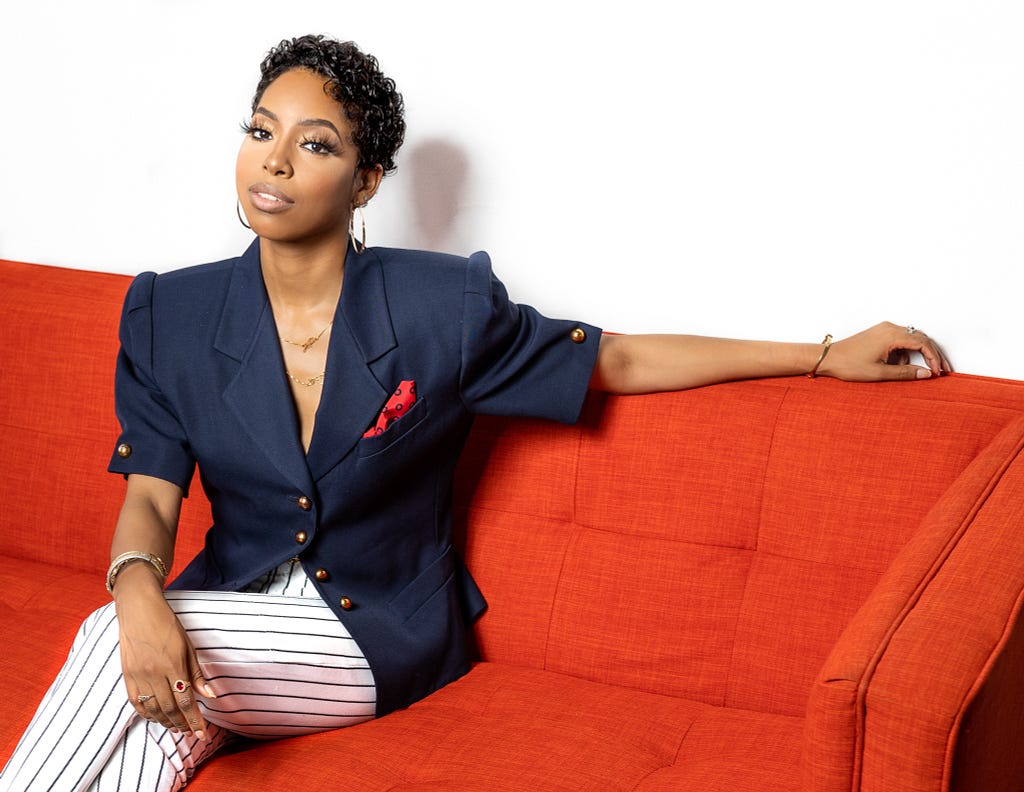
As a part of our series about business leaders who are shaking things up in their industry, I had the pleasure of interviewing Gabrielle Pickens.

Gabrielle Pickens, CEO of Pickens Creative, is a skilled media professional that understands the power of communication and persuasion. Gabrielle leads with a genuine interest in her clients and their brands — a perfect mixture of military-grade precision and free-flowing creativity. From event and television production to strategic public relations, Gabrielle hopes to inspire and empower all people and servicemembers to conquer the mental blocks that are holding them back from living a life they truly desire.

Thank you so much for doing this with us! Before we dig in, our readers would like to get to know you a bit more. Can you tell us a bit about your “backstory”? What led you to this particular career path?

Joining the military was never a part of my plan. As life had it though, I joined in 2013 at 22 years old and spent six years of my life serving this country. During my time in, I explored the world, met some of the most unique and dedicated people on Earth, and built an unshakeable work ethic and discipline that money simply can’t buy.

Fast forward June 2019, the beginning of my year-long transition phase, I realized there were significant holes in the journey to becoming a civilian. I believe the military, specifically the US Navy, tried really hard to provide a comprehensive program for separating service members, including but not limited to resume practice, skills search, and robust, albeit linear career options. However, what I saw missing wasn’t related to anything one could create on paper. For me, it was the emotional and psychological aspects that were swept under the rug. That’s where the idea for Barracks To Baller came about.

Can you tell our readers what it is about the work you’re doing that’s disruptive?

Barracks To Baller is disruptive because it addresses the mental health of the servicemember via the lens of mindfulness. Originating as an online community for melanated, military women, Barracks To Baller is a result of my own intense soul searching and self-reflection; a place for all women, but especially Black servicewomen, to come and explore new ways of thinking, develop compassion and grace, and ultimately engage in mindful meditation.

While there are undoubtedly effective military transition coaches, resources, and programs out there, very few that address the tremendous mental strain that is exacerbated during the transition from Active Duty to civilian. Moreover, there are even fewer programs dedicated to exploring the Black female service member and her unique experience.

Can you share a story about the funniest mistake you made when you were first starting? Can you tell us what lesson you learned from that?

Where do I begin, ha! I’d say the funniest mistake I made was looking for other versions of “Barracks To Baller” as a guidepost. I spent a lot of time with this idea in my mind, afraid to put it out. Then, once I finally took my first step, I stalled — -dissatisfied with the product because it wasn’t turning out to be what I had envisioned. It was like I was hoping someone else was going to do the work for me; someone else was going to come down and take what was in my mind and make it the “Barracks To Baller” I wanted it to be.

The lesson? There wasn’t a Barracks To Baller platform. I had created the first and only. I needed to understand that my vision and ideas were all I needed to move forward. I didn’t need the validation from “another “ replica. All I needed was myself.

We all need a little help along the journey. Who has been some of your mentors? Can you share a story about how they made an impact?

My mentors have been other Black women forging their own path. From my close friends to family, to public figures I’ll probably never meet, I’m continuously inspired by the world around me.

I was first introduced and inspired by Lauren Ash, a Black woman, entrepreneur, and mindful meditation practitioner. Through her courage, I understood that being mindful was okay to say out loud and build a profitable brand around. At the time, she was one of the first Black women I’d ever come across in this digital world that created a space for herself (and others!) in a mostly whitewashed wellness space.

It’s interesting to me because Black women are the natural healers of the universe, yet we are underrepresented in the very spaces we naturally inhabit. I seek to add my experience as a military service member to that changing narrative.

Another popular figure I admire is Karen Civil. A woman entirely defined by the beat of her own drum and never to a title. She makes it’s very clear she is a woman of many talents and proceeds to do whatever her heart desires. I respect that. As a multi-hyphenate and Navy Veteran, I experienced the inevitable identity crisis we face when transitioning out. Before I started following Karen Civil’s career, I made a decision to myself that after my separation, I’d never work a job I wasn’t passionate about or get so attached to a title that I limit myself to a box. Karen Civil has proven to follow that same line of thinking.

In today’s parlance, being disruptive is usually a positive adjective. But is disrupting always good? When do we say the converse, that a system or structure has ‘withstood the test of time’? Can you articulate to our readers when disrupting an industry is positive, and when disrupting an industry is ‘not so positive’? Can you share some examples of what you mean?

If we look at nature, we can see that some of the most beautiful, most majestic occurrences, take mountains, for example, are a result of massive disruption. This idea of disruption or “trying something new” is innate in humans. Therefore, I believe disruption is inherently positive — it makes way for innovation and new players. However, when that disruption is spearheaded without humanity in mind, i.e., a new efficient process that generates a more significant ROI for investors, but continues to marginalize underrepresented groups or people, this is what we’d call a ‘not so positive’ disruption.

Many companies deem the insurgence of POC or WOC at the helm of organizations and companies as “disruptive” in their respective industries. Take a look at Hollywood. Since it’s inception, white creatives have been front and center, continuously creating and perpetuating stereotypes and caricatures of BIPOC. Now, we have Lena Waithe, Ava Duvernay, Spike Lee, Tyler Perry, and Will Packer hiring Black and brown actors and crews to showcase their talents, in a way that is authentic and accurate. While holding the title may seem like a badge of honor to some, if we’re being honest and objective, BIPOC professionals are simply “reclaiming their time” in the words of the Honorable Maxine Waters of the U.S. House of Representatives. We have to be honest with ourselves and realize, many of the “disruptors” have been forced in the shadows or mysteriously overlooked for decades — they didn’t want to be deemed a “disruptor”. They simply didn’t have a choice.

Can you share 3 of the best words of advice you’ve gotten along your journey? Please give a story or example for each.

  1. Everything you need is already inside of you: So many of us spend ample amounts of time seeking validation from external sources. Stop it. Listen to yourself and move on. You only have one life to live!
  2. Treat every day like Monday until Friday comes: As an entrepreneur if you don’t work, you don’t eat. Invest in yourself enough to push through and push forward with the same energy of a perfect, well-rested Monday morning. Your bank account will thank you!
  3. Everything you want, you deserve: Don’t shy away from your big dreams and goals. Your awareness has planted those seeds inside of you for a reason. Also, don’t expect everyone to believe in or support YOUR vision at first… that’s why it’s in YOUR head. You have to take it to the next level.

We are sure you aren’t done. How are you going to shake things up next?

My goal is to introduce 1,000 Black women to engage with and embrace a mindful mediation practice. As the original trendsetters of this universe, I’m sure if I can get these women to seek the light within themselves and learn to quiet their minds, they will certainly inspire the rest of the world to do the same.

Do you have a book, podcast, or talk that’s had a deep impact on your thinking? Can you share a story with us? Can you explain why it was so resonant with you?

Writer Cheryl Strayed aka “Sugar” hosts a podcast called “Sugar Calling” where she quite literally calls some of the world’s most brilliant minds and prolific writers. On an episode that aired on April 8th, 2020, she calls famous writer, environmentalist, and octogenarian Margaret Atwood at her home, in which she casually mentions she is sharing with no one — in self-inflicted isolation.

However, the most memorable moment isn’t her isolation. For me, it is the way in which she effortlessly explains death, and the ease and comfort in instantly bought me.

She explains to Cheryl that while “your loved ones aren’t going to be in your life anymore… in the way that they used to be….they’ll still be in your life, it’s just that there probably won’t be any new conversations”. I froze.

When I was 16, my grandmother died due to cancer. Then, at 17, days after my high school graduation, my brother was tragically killed in Chicago due to gun violence. Currently, my mother lives in Chicago while I work and live in San Diego. During the pandemic, I struggled with severe anxiety attacks over what I thought was the inevitable demise of my mother to the coronavirus. *Spoiler alert: she’s still alive*

When I heard Maragaret’s word, a wave of calm came over me in a way that I hadn’t felt before. I’d failed to realize or face the reality of the nature of death in humans. At some point, we will all go. However, that doesn’t wipe away the feelings, memories and energy shared between two loving humans. While I wish my grandmother and brother were still alive, I now feel my heart open enough to allow their infinite power to come and visit me.

Thank You, Margaret.

Can you please give us your favorite “Life Lesson Quote”? Can you share how that was relevant to you in your life?

Well, I don’t have a quote, more so a mantra. The idea of Sho Shin in Zen Buddhism means to approach everything with a “beginner’s mind”. The purpose is to release prejudice and assumptions to open your mind and heart to the experience of life as it is. So many times, especially as adults, we assume that since we’ve done something one hundred times, then we are in fact, an expert. While this might be true, there is something to be said about the innocence and rich experience of new places, faces, and things. Therefore, manufacturing the idea of a beginner, we tend to open our minds, eyes, and hearts to new stimuli and hopefully, new lessons. At the very least, I can guarantee life will be much richer once you adopt the Sho Shin mentality.

You are a person of great influence. If you could inspire a movement that would bring the most amount of good to the most amount of people, what would that be? You never know what your idea can trigger. 🙂

In the perfect world, mindful meditation would voluntarily be a part of our everyday routine — -as automatic as showering and brushing your teeth. We live in a world that celebrates running around and “getting things done.” I’d like to show people that being mindful can increase your happiness and brain function, all the while providing you with the edge we so desperately seek in stimulants and other external sources.

Mindfulness will help you get things done faster, better, and more efficiently!

How can our readers follow you online?

You can find me online on LinkedIn, Facebook, and Instagram at Gabrielle Pickens.

This was very inspiring. Thank you so much for joining us!

Thank You! May you be happy. May you be at peace. May you be safe. May you be healthy.


Female Disruptors: Gabrielle Pickens of Pickens Creative On The Three Things You Need To Shake Up… was originally published in Authority Magazine on Medium, where people are continuing the conversation by highlighting and responding to this story.

Female Disruptors: Erin Levine of Hello Divorce On The Three Things You Need To Shake Up Your…

Female Disruptors: Erin Levine of Hello Divorce On The Three Things You Need To Shake Up Your Industry

Hello Divorce — a “modern break up service” that allows consumers to “opt out” of the legal system and get divorced peacefully and conveniently. I leveraged my knowledge of the law to design a process that guides the consumer through divorce, start to finish. If they need a little extra help along the way, they can access legal help, on-demand, in increments as small as 30 minutes. In other words, lawyers are available, but they are not the center of the case.

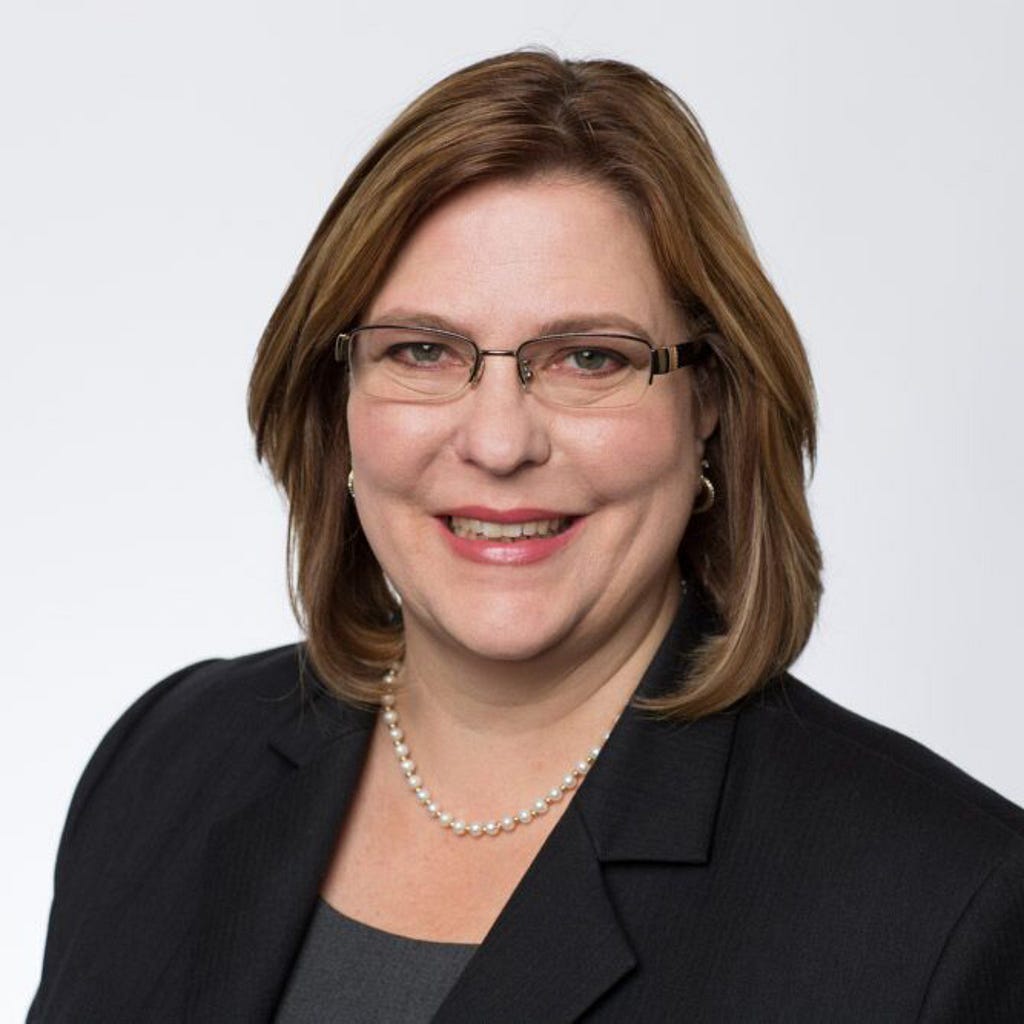
As a part of our series about women who are shaking things up in their industry, I had the pleasure of interviewing Erin Levine.

Erin Levine is an entrepreneur, legal innovator, and Certified Family Law Specialist. She is the founder and CEO of Hello Divorce, a “modern breakup service” offering an affordable, convenient, and low conflict divorce option through a revolutionary web application, the Divorce Navigator. Her legal technology and access to justice work has been recognized by the legal industry and beyond — with recent awards from the American Bar Association, Women Founders Network, Super Lawyers, Duke University School of Law and Fastcase 50, which honored the law’s smartest, most courageous innovators, techies, visionaries and leaders.

Thank you so much for doing this with us! Before we dig in, our readers would like to get to know you a bit more. Can you tell us a bit about your “backstory”? What led you to this particular career path?

It’s my pleasure. As a late teen I was a Plaintiff in a civil lawsuit and a witness in a criminal action. The defendant, my childhood gymnastics coach, was incredibly abusive to me and several other teammates — manipulating us to keep quiet while he promised that he’d make good on our dreams of competing in the Olympics. While I received “justice” in the traditional sense of the word (he went to prison), I found the whole process to be frightening, confusing, disempowering, inefficient and overly expensive. The experience ignited my interest in the legal field — especially consumer facing areas of law. After managing my law firm for several years, I set out to build a company that makes law more accessible (read: easier to understand) and affordable without compromising the quality of legal services. Enter Hello Divorce.

Can you tell our readers what it is about the work you’re doing that’s disruptive?

The legal system is one of the last industries to embrace technology — primarily because the regulatory scheme discourages innovation so as to protect the “status quo” — the billable hour and a seller’s market. The entire divorce system is stacked against us. It’s overwhelming and outdated. It encourages conflict and is unreasonably inefficient. But consumers have had enough and they no longer want to pay thousands in legal fees just to exit a relationship. Unfortunately, online “DIY” services do not offer enough support to the average person because court forms and procedures are extremely confusing and dissolving the marital “contract” is financially complicated and fraught with emotional triggers and profound implications.

Enter Hello Divorce — a “modern break up service” that allows consumers to “opt out” of the legal system and get divorced peacefully and conveniently. I leveraged my knowledge of the law to design a process that guides the consumer through divorce, start to finish. If they need a little extra help along the way, they can access legal help, on-demand, in increments as small as 30 minutes. In other words, lawyers are available, but they are not the center of the case. For as little as $99 per month, users have access to the Divorce Navigator, an easy to use web application that guides them through divorce — complete with AI powered form generating software, interactive checklists and tutorials. Upgrade to have your forms filed with the court and served with a click of a button or connect with lawyers on-demand. End result: A divorce that puts the focus squarely on your next chapter, not the conflict or trauma that got you to this point. Some cost and conflict are inevitable in divorce. But by creating the right tools and providing meaningful support, we’ve taken the average cost of divorce down from $20,000 per person to $1,500 per couple.

Can you share a story about the funniest mistake you made when you were first starting? Can you tell us what lesson you learned from that?

“Funny” wouldn’t be the word I’d used to describe most of the mistakes I’ve made! But one example I can think of is my assumption that making divorce less expensive, low conflict and easier to manage would be met with a warm reception. I thought it was a “no brainer” — nobody “likes” divorce but everybody recognizes a need to change how it’s done. Wow, was I wrong. Early on I struggled to gain traction. Journalists rejected my work citing that they only feature companies who offer a “societal good.” Comments on Facebook were the most mind blowing — we were accused of “encouraging” or “promoting” divorce — as if now that it is easier, everyone would run out and leave their spouse. I always look for a silver lining and there’s certainly one to this story — clients and friends helped accelerate our growth and community building by jumping to our defense and starting a new conversation around divorce. I’ll never forget how courageous some of our early supporters were.

We all need a little help along the journey. Who have been some of your mentors? Can you share a story about how they made an impact?

Sarah Lacy (TechCrunch, Pando Media and Chairman Mom) called me just after we launched (and were putting out fires left and right) to make a request: “Drop everything and head to Pulga (an old gold mining, Wild West town in the middle of nowhere) for four days to talk all things female entrepreneurship and tech.” I thought she was insane. Camping with 75 women in the middle of nowhere with no internet access? But I did it and it was by far, the most empowering, supportive and mind blowing few days ever. Startup life is a team sport — I definitely would not be where I am without my tribe.

We are sure you aren’t done. How are you going to shake things up next?

You have my number. I definitely am not done. We’re working on a few different projects right now. Most exciting is that we are gearing up to launch Hello Divorce nationally. That’s so tricky when the law varies from state to state (and sometimes county by county). By the time this article is published, we will be in California, Colorado and hopefully a few others!

In your opinion, what are the biggest challenges faced by ‘women disruptors’ that aren’t typically faced by their male counterparts?

I get this question a lot and I usually find a way to avoid it. Not that I don’t think it’s important to ‘call out’ the differences, but because there are so many other humans who have far more challenges than I do and I want to do what I can to highlight their experience. That being said, the two biggest differences I see between male and female founders have to do with (a) raising capital; and (b) perception of our “worth.” And, surprise surprise, they are definitely interrelated. There is no doubt about it — trying to get funding for your startup as a woman is not only next to impossible, it’s demoralizing. The questions my peers have received during investment rounds range from “Would you consider this a hobby or career?” to “Do you expect to have any more kids?” While the climate is definitely changing for the better, at present, women raise less than their male counterparts and only % of women founders receive venture capital.

Do you have a book, podcast, or talk that’s had a deep impact on your thinking? Can you share a story with us? Can you explain why it was so resonant with you?

I live in Podcasts. I credit them with so much of my success because there’s always an awesome episode for every pain point I’ve experienced along the startup journey. When I was first struggling with messaging and honing down on my ideal customer “avatar,” I turned to Donald Miller’s “Story Brand.” When I was transitioning from ‘brick and mortar’ to ecommerce, I spent a lot of late nights listening to Amy Porterfield’s “Marketing Made Simple.” I am obsessed with “How I Built This,” “The Angry Therapist,” and “Marketing School” with Neil Patel and Eric Siu (because they get right to the point). My favorite type of books are those that you can pick up, turn to any page, and feel home. These never get old and keep me inspired, accountable, empowered and motivated to (re) discover my relationship with my company, myself and the people I love. I usually turn to Cleo Wade, Jordan Sondler, Lalah Delia, Elise Joy, Tim Desmond and John Kim.

Can you please give us your favorite “Life Lesson Quote”? Can you share how that was relevant to you in your life?

I’ve got enough favorite quotes and mantras to fill an entire book. Just checkout my Instagram account (@hellodivorce) if you don’t believe me. But here are a couple I love:

“Honor your scars. They are proof you have lived.” — Cleo Wade. I don’t remember when exactly it happened — but I remember how it felt when it did. There was this energetic shift each time I was triggered — I no longer cringed with self-loathing and instead just noticed. Noticed how it felt to be reminded of my pain and trauma and then felt a sense of pride for how much I’ve overcome and who I’ve become. Imperfect but me. “Flawed. & (still) worthy.” (Another Cleo Wade quote).

A quote that feels particularly relevant right now is from Mr. Rogers: “When I was a boy and I would see scary things in the news, my mother would say to me, ‘look for the helpers. You will always find people who are helping.’ The last few months have been full of sorrow and outrage. And I know I am not alone. It’s so easy for white folks to hide behind privilege and live life in a bubble. But we cannot stand by and let our communities of color suffer or be silenced. Look for the helpers. Be a helper. Find your tribe. There’s something each of us can do. I’m proud of my community who has stepped up in so many different ways — from offering free legal services or highlighting minority voices to examining their own internalized racism and educating our kids. It will never feel like enough but if you surround yourself with the helpers, this is how we lift each other up and keep focused on pushing forward.

You are a person of great influence. If you could inspire a movement that would bring the most amount of good to the most amount of people, what would that be? You never know what your idea can trigger. 🙂

I truly believe that one of the greatest gifts we can give ourselves in this life is the chance to turn our obstacles into opportunities — our breakups into breakthroughs. But divorce is complicated. The system is complicated. It’s a system set up to create conflict, to pit spouse against spouse. If I could inspire a movement, it would be one that changes the culture of and conversation around divorce. The process is broken, but we don’t have to let it break us. So, I guess you could say that creating Hello Divorce is my attempt to start a movement to change the experience of divorce itself — to make divorce legal process manageable and to support people as they let go of shame and prioritize their relationship with self.

How can our readers follow you online?

I love meeting new people and innovators on social media. On Pinterest, Twitter, Facebook and Instagram, my handle is @hellodivorce. Connect with me on LinkedIn at https://www.linkedin.com/in/erinlevine/


Female Disruptors: Erin Levine of Hello Divorce On The Three Things You Need To Shake Up Your… was originally published in Authority Magazine on Medium, where people are continuing the conversation by highlighting and responding to this story.
Female Disruptors: Jordan Scott of Cobble On The Three Things You Need To Shake Up Your Industry

It’s okay if you watch Netflix at 2:30 — In the very early days of trying to start a business, you’ll somehow be insanely overwhelmed and simultaneously at an utter loss for what actual work to do. I can’t tell you how many days it was 2:30 p.m. and I just had no clue where I should put my efforts next. Everyone I spoke to made it sound like founders can barely come up for air (which, three years later on my second venture, is now the case), but when I first decided to take the leap, quit my job, and ‘start something’, I felt guilty for not spending every hour of every day working on my business. Filling the time is tough. But if you keep at it, keep writing down what excites you, keep having conversations with other founders (and complete strangers), I promise, eventually you’ll create the work for yourself. And it’ll be great work.

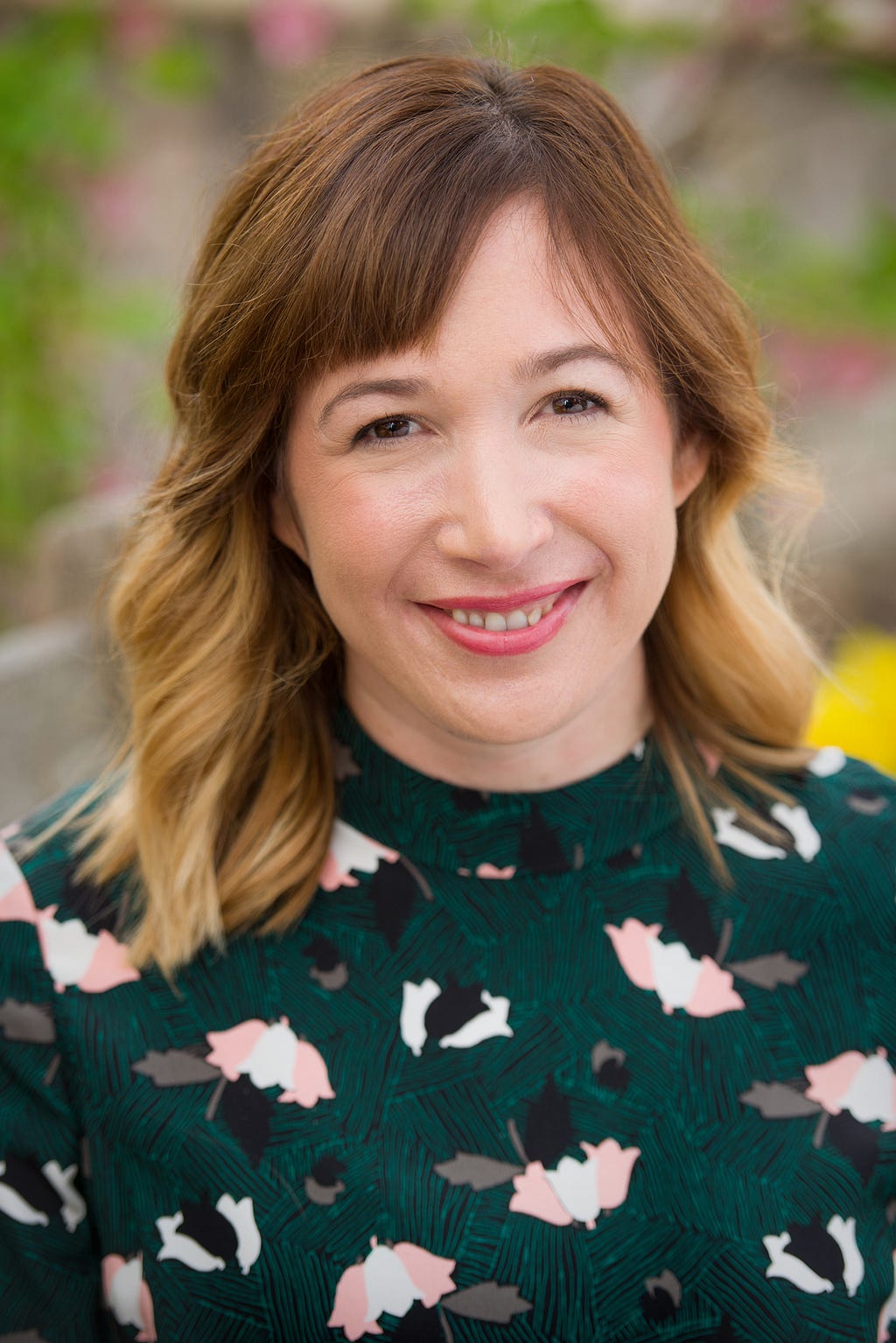
As a part of our series about business leaders who are shaking things up in their industry, I had the pleasure of interviewing Jordan Scott.

Jordan Scott is the founder and CEO of Cobble, the very first app for ‘life after the swipe’. Cobble is a decision-making engine for committed couples who are tired of the nightly “What do you want to do tonight?” conversation. Cobble curates high-quality, interesting, fun content. If you like it, swipe right. If you don’t, swipe left. When you and your significant other both swipe right, you match. And you’re on your way to a night you really needed. Scott is a graduate of NYU, and previously worked at CBS This Morning, NBC, Cosmopolitan, Yahoo!, and Refinery29.

Thank you so much for doing this with us! Before we dig in, our readers would like to get to know you a bit more. Can you tell us a bit about your “backstory”? What led you to this particular career path?

I had an incredibly creative education at NYU — focused on journalism, creative writing and screenwriting. Once I landed my dream job at CBS, I realized I couldn’t point to any job around me that I wanted. That’s when I recognized a huge white space in the market. After dating apps, what’s next? What happens once you enter a committed relationship? There’s no help for all the myriad decisions you make together. Dating apps stop at the match — neglecting an entire lifetime of future matches. While I didn’t ever plan on becoming an entrepreneur, now that I am, I can’t imagine any other life. I think the most important ingredient to a founder is passion. If you absolutely love the problem you’re solving, nothing can stop you.

Can you tell our readers what it is about the work you’re doing that’s disruptive?

I’m going to take an unpopular stance here. I don’t think a startup needs to be disruptive in order to be successful. In fact, I think discovering an entirely untapped channel that enhances the world (and existing companies) around you is a better and more sustainable way to grow and delight millions of users, instead of trying to push out the incumbent and going to war. It’s certainly helped in our ability to raise money — our investors know we’re not trying to compete with Amazon.

That being said, what we’re doing is completely novel. The problem we’re solving is one that’s gone unrecognized for too long. The fact that we’re on a mission to solve decision-making is no small feat, but we believe we have the system, the interface, and the right target audience to create the spark necessary for it to happen. We’re starting with couples. The same way Mark started with Ivy Leagues, and Jeff started with books.

Can you share a story about the funniest mistake you made when you were first starting? Can you tell us what lesson you learned from that?

I was invited last minute to a big event run by Entrepreneur Magazine — tons of incredible speakers, networking, and more. There was also a 60-second pitch competition running throughout the day. The finalists would present on stage as the finale, and whoever won got a spot on their TV show, Elevator Pitch. I had only just thought of the idea for Cobble (it wasn’t even called Cobble at that point) and had never pitched in my life. Everyone had to sign-up in advance for the pitch competition, however, there was a big storm in NYC and a bunch of people couldn’t fly in, so there were open spots. Somehow, I found myself sitting in a room with a bunch of other nervous founders, holding products, materials, posters, suited up, and whispering to themselves. I was panicking with my phone in my hand, no idea what I was going to say in 60 seconds. When I was taken into the room, they put a mic on me, the lights were so bright I couldn’t see any of the judges, and within seconds they said “go”. I made it through about 15% of what I thought I could say when they said “time”. The lights went down, the judges looked confused, and I was apologizing for my clear lack of preparation. One judge said, “you had our interests piqued at least!” I left, called my fiancé to tell him how terribly that had gone, but he said he was proud of me for trying anyways. 20 minutes later, I got a text that I had somehow made it as a finalist and would be pitching on stage to the entire conference. I still had no idea what I could possibly say in 60 seconds. I faced a wall, memorized five sentences, got on stage, said my five sentences, and ended up winning. There could not be a clearer lesson to try things that scare you. Even though the first part of this story was terrifying (and embarrassing), I never would’ve gotten on that stage any other way.

We all need a little help along the journey. Who have been some of your mentors? Can you share a story about how they made an impact?

There’s one trait all of my mentors have in common: a deep-seated belief that I can get it done. A great mentor makes you feel capable. From my AP U.S. History teacher, Mrs. Rudolph, believing I could ace the AP exam, to my dad believing I can ace…pretty much anything I put my mind to. Knowing I have brilliant brains on my side gets me through. That’s how I feel about my current team now, too. I hope over the next few years, I’m able to continue hiring new mentors into the team that I create for Cobble. Already everyone I’ve brought on — from Marie Graver, our CFO, to Alexander Ayache, our lead backend engineer — are all light years ahead of me in their unique expertise, bringing knowledge and lending credibility to me, our product and mission.

My high school screenwriting teacher, and organizer of the fall play, gave me one of my first tastes of running a mini company. I was in the “theater group” in school, but I didn’t love being on stage and acting (I had horrible stage fright). I still wanted to be involved my Junior year when we were putting on the fabulous comedy “Rumors” by Neil Simon. All of my friends were auditioning, planning to spend hours after school together for months. I told Mr. Maycock how I wish I could be involved in a more serious capacity, without being on stage. He bestowed the honor of Student Director on me. I helped him cast the show, attended every rehearsal to take notes, and generally saw how the production came togheter on opening night.

In today’s parlance, being disruptive is usually a positive adjective. But is disrupting always good? When do we say the converse, that a system or structure has ‘withstood the test of time’? Can you articulate to our readers when disrupting an industry is positive, and when disrupting an industry is ‘not so positive’? Can you share some examples of what you mean?

It truly depends on the context. Disrupting an industry can be good for society (perhaps when the current system is broken or corrupt) but not the disrupted. Conversely, disruption presents obstacles for the disrupter (i.e. dislodging the incumbent) that increase exponentially relative to the amount of disruption. Most disrupters fail for this reason. Hence, from an entrepreneur’s perspective, disruption presents great risk to ultimate success.

Can you share 3 of the best words of advice you’ve gotten along your journey? Please give a story or example for each.

It’s okay if you watch Netflix at 2:30.

In the very early days of trying to start a business, you’ll somehow be insanely overwhelmed and simultaneously at an utter loss for what actual work to do. I can’t tell you how many days it was 2:30 p.m. and I just had no clue where I should put my efforts next. Everyone I spoke to made it sound like founders can barely come up for air (which, three years later on my second venture, is now the case), but when I first decided to take the leap, quit my job, and ‘start something’, I felt guilty for not spending every hour of every day working on my business. Filling the time is tough. But if you keep at it, keep writing down what excites you, keep having conversations with other founders (and complete strangers), I promise, eventually you’ll create the work for yourself. And it’ll be great work.

Never lay down!

While this seems to be in complete opposition to the above, I think the two work like magic together. It’s called balance! My Portuguese immigrant Grammy used to say this whenever she mentioned she didn’t feel well, and someone responded with, ‘why don’t you go lay down for a little while?’ She always felt the best medicine was to stay moving. As a founder, there’s going to be plenty of times you don’t feel well. Never lay down.

Sing with abandon.

My grandma on my dad’s side told me this after seeing me perform in a concert from my voice lessons. She thought my awareness of everything going on prevented me from really shining. I think this also applies to business. It’s like a combination of “stay in your lane” and “just do it”.

Lead generation is one of the most important aspects of any business. Can you share some of the strategies you use to generate good, qualified leads?

Quality content is queen. I prefer that over “content is king” because in 2020, guess what? People know the difference between solid, interesting, novel content and crap. The best (and most repeatable) way I’ve continued to grow my audience is through our unique angle in creating content, and the way we mold that content depending on the channel. Whether it’s a Date Night Ride-a-Long on our Instagram in which a unique couple takes our entire audience out on an experience with them, or our “Relationship Stuff We Love” section in our newsletter where we curate the best stories around love, sex, relationships, and decision-making, our content is mindful, intentional, and we never put anything out we wouldn’t want to read ourselves. This creates a dedicated audience that are much more likely to turn into dedicated users.

We are sure you aren’t done. How are you going to shake things up next?

Of course, we plan on expanding in every direction — because the business we’re in, decision-making, applies to limitless use cases. Not only geographically, helping couples better spend their time, energy and money together in the cities they live, but in content (“What Airbnb should we stay in? What should we watch on Netflix?”) and lastly, in expanded user groups. If you think making decisions in your own relationship is hard, expand it to three other couples and you’ve got an entirely new problem. Cobble brilliantly lends itself to becoming social, as adding input from other users only makes it easier to come to a conclusion and take action.

Do you have a book, podcast, or talk that’s had a deep impact on your thinking? Can you share a story with us? Can you explain why it was so resonant with you?

The How I Built This podcast has been especially impactful, as I listened to it every morning on the subway on my way to work from Day 1 of starting my business. Listening to how others overcame obstacles and reached greatness is the ultimate way of pumping yourself up and feeding your passion.

Can you please give us your favorite “Life Lesson Quote”? Can you share how that was relevant to you in your life?

“It ain’t what you don’t know that gets you into trouble. It’s what you know for sure that just ain’t so.” Mark Twain said that. Launching a startup is full of unknowns. Know that you don’t know. Know that you can figure it out by surrounding yourself with the right people and keeping an open mind.

You are a person of great influence. If you could inspire a movement that would bring the most amount of good to the most amount of people, what would that be? You never know what your idea can trigger. 🙂

It would be Cobble. If anyone has a response other than their startup, they’re not building the company they should be building. Cobble is a movement that aims to give life back to its users — it’s about making a decision and taking action. Unlike most technology and apps today, all aiming to take your attention and time, Cobble is successful when we take as little of your time and energy as possible.

How can our readers follow you online?

Please download Cobble on the app store! Android coming soon, promise. You can also follow us on all social channels — including @cobbleapp on Instagram.

This was very inspiring. Thank you so much for joining us!


Female Disruptors: Jordan Scott of Cobble On The Three Things You Need To Shake Up Your Industry was originally published in Authority Magazine on Medium, where people are continuing the conversation by highlighting and responding to this story.

Female Disruptors: Stephanie Perez of Perspective Fitwear On The Three Things You Need To Shake Up…

Female Disruptors: Stephanie Perez of Perspective Fitwear On The Three Things You Need To Shake Up Your Industry

“Stay humble, and treat everyone with respect.” Whether you’re talking to a high-powered CEO or a new hire in an entry level position, everyone deserves basic human respect. This is a core value of our Perspective Fitwear company culture, which I know in the long run will help with talent acquisition and reduce employee turnover rate. Talented and hardworking people are attracted leaders who respect others, never stop learning, and create a work environment where these two things are non-negotiable.

As a part of our series about business leaders who are shaking things up in their industry, I had the pleasure of interviewing Stephanie Perez. Stephanie Perez, founder and CEO of Perspective Fitwear, graduated from the University of Pittsburgh with a degree in finance. Stephanie worked as a buyer for Macy’s and later Petco before realizing entrepreneurship was her true purpose, and she founded Perspective Fitwear.

Thank you so much for doing this with us! Before we dig in, our readers would like to get to know you a bit more. Can you tell us a bit about your “backstory”? What led you to this particular career path?

When I started training for triathlons in 2010, I couldn’t find high-quality women’s performance apparel that was also flattering and fashion-forward. As a former Division I athlete, I had encountered this problem before: most high-tech athletic gear was cut for men, or generally didn’t fit well. After buying men’s cycling shorts to wear for training, I was determined to fill this gap in women’s sports apparel: in 2017, I founded Perspective Fitwear.

I wanted to create a space where women of all sizes, all athletic disciplines, and all levels of skills and abilities could find high quality athletic apparel that was both trendy and silhouetted specifically for women’s bodies. I never want a woman to feel limited in what she can pursue or achieve because she doesn’t have the right gear.

Can you tell our readers what it is about the work you’re doing that’s disruptive?

20% of global landfill waste comes from the retail industry alone. Traditional synthetic fibers commonly used in athletic wear can take 200+ years to fully decompose in landfills. Here’s the rub: the “high-tech” aspects of athletic apparel — sweat wicking, fast drying, etc — usually come from synthetic fibers.

Perspective Fitwear is disrupting the athletic fabric industry with Good Human Tech™ fabric. Our fabric incorporates an innovative accelerated landfill degradable technology that enables Perspective Fitwear pieces to fully decompose within 3 years, only in a landfill environment. Athletic wear can be technical and sustainable: we believe your leggings shouldn’t outlive you.

Can you share a story about the funniest mistake you made when you were first starting? Can you tell us what lesson you learned from that?

In the first year of the business, I made some pretty funny goofs when it came to managing my own expectations (spoiler: they were too high!). For example, when I was launching the website I thought “I better have PLENTY of boxes on hand to fulfill the upcoming flood of orders.” I didn’t know how many boxes to order, so I went with my best guess. About two weeks later, 10 stacks of cardboard boxes showed up floor-to-ceiling in front of my condo door, with even more boxes crammed into my parking space. Three years later, the Perspective Fitwear team is still working through these boxes. I took the saying “If you build it, they will come,” a little too seriously: I thought my new website would nearly crash from the sheer volume of visitors and sales.

Like so many entrepreneurs, I sustained the ego blow of realizing very few people knew about Perspective Fitwear at that point. Brand awareness and customer acquisition is a slow burn, especially in the beginning: I learned that ramp up time is real.

Mistakes like the box debacle have helped me be more intentional and thoughtful in all facets of my business. When we opened our storefront in La Jolla, California, this summer, I kept the first year sales expectations realistic: fortunately, we’ve been over-performing!

We all need a little help along the journey. Who have been some of your mentors? Can you share a story about how they made an impact?

I got my nose for business from my dad, and especially in the early days I really leaned on him. An accomplished businessman himself, my dad always picked up the phone when I called, and without fail steered me in the right or a helpful direction.

As Perspective Fitwear grew, so did my need for additional mentorship. I was accepted into the Spring 2020 San Diego Sports Innovators (SDSI) cohort, which was a game changer. Picture this: it’s January 2020, and COVID-19 is barely on anyone’s radar in the U.S. My goal with SDSI was scale: I had an incredible product, a great team, and a strong business plan that relied heavily on increasing revenue through marathon and triathlon expos.

Fast forward to March 2020. Endurance events are cancelled for what would become the entire year, sports-related businesses are at a standstill, and the world is steeped in uncertainty. SDSI could not have come at a better time to help us pivot. The entire mentorship team immediately shifted to virtual meetings, which really kept us organized. The mentors helped us think outside the box, kept us nimble, alert, and proactive to steadily develop Perspective Fitwear in the rapidly changing environment of shelter-in-place orders.

I’ve continued a mentorship relationship with the lead mentor from my SDSI cohort, Donna Desrosiers. I can’t begin to express how important ongoing guidance is, no matter what industry you’re in or how much experience you have. Keep learning.

In today’s parlance, being disruptive is usually a positive adjective. But is disrupting always good? When do we say the converse, that a system or structure has ‘withstood the test of time’? Can you articulate to our readers when disrupting an industry is positive, and when disrupting an industry is ‘not so positive’? Can you share some examples of what you mean?

Disruption is at its best when it challenges the status quo to improve. Take the athletic apparel industry: the status quo for athletic fabric is synthetic fibers that also languish in landfills for centuries. Perspective Fitwear is challenging that status quo: the technology to offer highly technical fabric that’s also landfill degradable exists. No more excuses: we’ve elevated the status quo.

Another measure of the true “disruption” in an industry is how widely is that net cast? Are there long-lasting and far-reaching positive impacts to this disruption? Between Perspective Fitwear’s landfill degradable fabric technology and our closed production cycle, we recognize that the potential to positively influence change happens on many levels. I think this is also true of ‘disruption.’ How many different industries, individuals, ecosystems, etc. are positively impacted by a ‘disruption’? Does your disruption create an elevated status quo that industry leaders should aspire to?

In terms of negative disruption, you could apply the same logic using “negative” instead of “positive.” Does this disruption lower the status quo for an industry, good, or service? Does it cause widespread and negative impacts? Does it enable other companies to lower standards that ultimately harms consumers?

Can you share 3 of the best words of advice you’ve gotten along your journey? Please give a story or example for each.

1. “Remember the ‘Rule of 12’” — My dad, Chuck Ertzberger. In sales, it takes on average 12 points of contact before someone converts/says yes. On my toughest days, this keeps my chin up in the face of constant rejection. You need stamina to make it as an entrepreneur, and the mental endurance to make those 12 points of contact with as many people as possible.

2. “Stay humble, and treat everyone with respect.”- My parents. Whether you’re talking to a high-powered CEO or a new hire in an entry level position, everyone deserves basic human respect. This is a core value of our Perspective Fitwear company culture, which I know in the long run will help with talent acquisition and reduce employee turnover rate. Talented and hardworking people are attracted leaders who respect others, never stop learning, and create a work environment where these two things are non-negotiable.

3. “Know the numbers.”- A former boss. I interned at GNC as a college sophomore during business school. I was undecided in my business major, but was required to declare by junior year. My boss at my internship told me to go with finance: “know your numbers and you will naturally become a leader.” So much of life is about understanding numbers: if you’re good with numbers, people will naturally look to you for direction because many decisions are made based on a bottom line, a budget, etc. I took this to heart, chose finance and am so thankful that I did. If not for my former boss’s encouragement, I don’t know if I would have felt empowered or courageous enough to stick with such a challenging program.

We are sure you aren’t done. How are you going to shake things up next?

By going into men’s activewear! Our brand identity is deeply tied to empowering women in movement, but I strongly believe men should also have access to our incredible fabric and designs. I want to continue to move and shake the athletic apparel industry by expanding with my existing brand to new customers all over the world.

Do you have a book, podcast, or talk that’s had a deep impact on your thinking? Can you share a story with us? Can you explain why it was so resonant with you?

I love all things Simon Sinek: his podcasts, YouTube videos, books, etc. His research on successful leadership and teamwork in various industries, with companies big and small, really informs how I approach my role as CEO. I like his philosophy of looking at things differently, and how it’s a leader’s role to inspire and promote change within people and organizations. I agree with his view that leaders must take accountability for their employees and the work culture. I also love his philosophy on marketing and how to engage with customers on a deeper level. Offer your community something bigger than themselves: inspiration is the greatest gift you can give!

I’m also a huge fan of the “How I Built This” podcast. It’s inspiring to hear other successful entrepreneurs’ beginnings and struggles, and know that I’m not alone, and much of what I experience in these early years is probably very normal.

Can you please give us your favorite “Life Lesson Quote”? Can you share how that was relevant to you in your life?

I have two, and they’re both so influential to me that I couldn’t pick one.

  1. “The way to get started is to stop talking and begin doing” — Walter Disney.
  2. “Commitment is what transforms a promise into reality. It is the words that speak boldly of your intentions. And the actions which speak louder than the words. It is making the time when there is none. Coming through time after time after time, year after year after year. Commitment is the stuff character is made of; the power to change the face of things. It is the daily triumph of integrity over skepticism.” — Abraham Lincoln

Want the #1 secret to accomplishing anything? You have to START. After that, you put in the work over and over in order to achieve your goal. Whether you aspire to run a marathon, launch a business, change careers, etc, you need to just start. Talk is cheap, and actions speak louder than words: both these quotes drive this home for me.

From playing as a D1 collegiate athlete, landing my first job with Macy’s in N.Y.C. in their elite “Executive Development Program,” to completing the New York City marathon, and starting my adventure in triathlon: these quotes fueled me every step of the way.

I moved across the country to San Diego, CA, out of the comfort of my East Coast-based friends and family seeking greater career and life opportunities: I had to START. I wasn’t sure I could actually do it, but I trained for and finished a full IRONMAN: I had to START. I developed a vision for Perspective Fitwear, and the positive impact it would have on women: this was my biggest challenge yet and I had START.

You finish what you start, and when you commit to something you give it your best. Every time. Even when you don’t want to. Especially when it’s hard. Why? “Commitment is the stuff character is made of; the power to change the face of things. It is the daily triumph of integrity over skepticism.”- Abraham Lincoln.

You are a person of great influence. If you could inspire a movement that would bring the most amount of good to the most amount of people, what would that be? You never know what your idea can trigger. 🙂

“No one should ever miss out on an opportunity because they don’t feel good about themselves.”

This is derived from one of Perspective Fitwear’s core values that “no woman should ever miss out on an activity because she doesn’t like the way she looks or feels in her activewear.” But if you pull the lens back and apply it more broadly, I really like it applied towards empowering people to pursue their goals, whatever they are.

You might fail (heck, you’ll probably fail) at first, but I hear it so many times: people don’t allow themselves to even try new experiences or rise to new challenges because they’re preoccupied with self-consciousness. I understand and empathize with this: there have been many times in my life that I felt this way. But guess what? The juice is worth the squeeze. I love the idea of supporting a movement where people aren’t limited by their self-perception: work on being the best version of you, and don’t worry about anything else. It’s all about perspective.

How can our readers follow you online?

Please visit our website: https://perspectivefitwear.com/

Follow us on Instagram

Like us on Facebook

Connect via LinkedIn

Send us an email: info@perspectivefitwear.com

This was very inspiring. Thank you so much for joining us!


Female Disruptors: Stephanie Perez of Perspective Fitwear On The Three Things You Need To Shake Up… was originally published in Authority Magazine on Medium, where people are continuing the conversation by highlighting and responding to this story.

Female Disruptors: Melinda Wittstock of Podopolo On The Three Things You Need To Shake Up Your…

Female Disruptors: Melinda Wittstock of Podopolo On The Three Things You Need To Shake Up Your Industry

If You’re Happy with Your Product You’ve Launched Too Late” — LinkedIn founder Reid Hoffman knows that the best innovations are iterative and require co-creation with your customers. The biggest mistake many founders make is toiling for what they envision “perfection” to be — and this approach can risk missing a market opportunity. It can also lead to a “solution in search of a problem”. The best founders get very close to their customers and create specifically with them to solve their biggest pain points. Executing on the ultimate vision takes time and many failures large and small along the way. Perfection can be your biggest enemy: Simply toiling to make it perfect is a dead-end in business, and when you invite your customers on your journey and empower them to co-create with you, magic happens. Your customers become invested in your mission and your success.

I had the pleasure of interviewing Melinda Wittstock. Melinda Wittstock is the CEO and founder of Podopolo, the world’s first socially-interactive and gamified podcasting network. A serial entrepreneur who has built 4 businesses in media, mobile, and tech to 7- and 8- figure success, Melinda hosts “Wings of Inspired Business” named by Entrepreneur Magazine as #8 of 20 of the top business podcasts for 2020. Also an award-winning journalist and TV anchor for the BBC, ABC News, Financial Times and Times of London, Melinda also helps business owners and entrepreneurs launch magnetic and profitable podcasts.

Thank you so much for doing this with us! Before we dig in, our readers would like to get to know you a bit more. Can you tell us a bit about your “backstory”? What led you to this particular career path?

Entrepreneurship has always been in my DNA, and my grandmother was the first to diagnose it. “You’re disruptive!” she said, upon learning that as a 5-year-old I had gone “door to door” with my black lab demanding pre-payment for my “show”. I had dreamt up a whole routine set to music, with costumes, dance and more — and come home with $100 asking my dad where we could get 100 chairs.

Somewhere along the line like most people though I thought I had to get “a job”. For me at 22 this was as a business and media correspondent on The Times of London — and my innate entrepreneurialism spurred me to learn from the big-name CEOs, entrepreneurs and magnates I interviewed, among them Apple’s Steve Jobs, Comcast founder Ralph Joel Roberts, CNN’s Ted Turner, and Virgin’s Sir Richard Branson among them. Soon my award-winning reporting career evolved into becoming a TV anchor and host for the BBC, CNBC and ABC News — and soon “disrupting from within” I ultimately created a new show for the BBC and grew it to a 20 million audience.

The late Steve Jobs famously said you can only connect the dots looking backwards, and when I finally made the leap into “entrepioneering” full time it was in all things media-tech, whether innovating the world’s first scalable “personalize news” business with Capitol News Connection, growing a crowd-sourced and interactive news app to 3 million users in 8 months, innovating algorithms to parse and filter mobile user-generated content for relevance and reliability with NewsiT, or now with Podopolo, creating the world’s first gamified and socially interactive podcasting network.

Can you tell our readers what it is about the work you’re doing that’s disruptive?

As a five-time serial entrepreneur, I like nothing better than to “disrupt” an industry with innovation that provides unprecedented value and solves real problems for real people.

I founded Podopolo, the world’s first socially interactive and gamified podcasting network, because 85% of podcasters don’t earn any money from their content from any of the other platforms, even though podcasting is the fastest-growing media with 123 million Americans listening 6 hours+ a week.

On Podopolo, podcasters unlock growing shares of advertising and sponsor revenue, as well as earnings from our premium paywall, as listeners and viewers discover, share, and engage around their favorite podcasts. Most podcasters have small niche audiences and they lose out on Apple Podcasts, Spotify, iHeartMedia, and all the other hit-driven aggregators out there that don’t share any revenue, deep audience data or a place to interact around content like Podopolo. Advertisers and sponsors tend only to invest in podcasts that have 10,000+ downloads an episode, something only 2% of podcasters achieve by virtue of their niche appeal. Insufficient listening data prevents podcasters from knowing who is listening or how they are listening, and lack of data also keeps most advertisers away from the fast-growing medium.

We are disrupting an entire industry by putting power and money into the hands of content creators as well as advertisers and sponsors, who for the first time have predictive and reliable data to match their ads to highly engaged audiences pre-qualified for their offers. We take the “guesswork” out of advertising to deliver unprecedented ROI for brands and businesses wanting to interact with highly engaged and motivated listeners and viewers.

At Podopolo, everyone wins — including consumers, who earn valuable rewards and cool products as they engage with hosts and each other, put learning into action to enhance lives, and join world-changing initiatives with our social gamification.

Can you share a story about the funniest mistake you made when you were first starting? Can you tell us what lesson you learned from that?

I’m not sure it was a “mistake” per se — it was funny. Back when I was running my political news agency Capitol News Connection, I was a new mom. The business launched when Sydney was only 6 weeks old. In the first year, I was doing everything: Reporting stories, running payroll, raising money, closing customers, training journalists, all of it. In the US Capitol Building, I had my reporter kit in one shoulder bag (microphone, recorder, camera, notebook) and in another black bag, my breast pumping kit. I had to pump every two hours. One day after reporting 14 stories, landing 7 new clients, and much more, I was ending the day interviewing Sen. Patty Murray of Washington State. I was so tired I pulled out my breast pump funnel thinking it was my microphone and pointed it at the Senator. I had no idea why she was laughing!

The lesson I learned from this experience is simple: Don’t try to “do it all”.

There is no badge of honor in neglecting your self-care and working yourself to the point where you don’t know the difference between a breast-pump and a microphone! Because some months later on this odyssey of martyrdom, putting everyone else’s needs above my own, I got pneumonia and was off sick for weeks, no use to anyone!

We all need a little help along the journey. Who have been some of your mentors? Can you share a story about how they made an impact?

I believe in having lots of mentors and coaches along the way, and recently the mentor who has had the biggest impact on my life is Steve Little, CEO and Founder of Zero Limits Ventures. Steve works with founders like me to discover what’s truly driving the valuation growth in your business. He’s a serial entrepreneur who has sold 6 of his own businesses for 9-figure sums, and helped countless other founders get to exit with very high multiples. Steve is my lead investor and Board Chairman now with Podopolo and it was Steve who mentored me to get into true alignment and double down on my unique strengths, insights and talents.

One day back when I was running the social intelligence platform Verifeed, Steve suddenly looked at me and said, “Stop! You’re doing the wrong thing.”

Deep down somewhere inside me I knew I was out of alignment, yet every day priding myself on my “resilience” as I plodded forward in a role I no longer loved or enjoyed.

“You’re a media person, a communicator, you’re all about building community,” he said. “Do what you love and the life you love will manifest.”

It was the kindest thing anyone had done for me. And it couldn’t have been easy for him to say as the lead investor in Verifeed.

On that day, we pressed pause on my active engagement in Verifeed and from there, magic began to manifest.

I took on a passion project — launching my podcast Wings of Inspired Business. It was a massive “give forward” with no expectations of return.

Yet as I promoted the businesses of hundreds of female founders and shared wisdom gleaned from my successes and failures as a female founder, doors began to open. It fostered deep connections and relationships, learning, and ultimately a fast-growing community and 5 profitable revenue streams.

It led me to my true path, founding Podopolo. There were synchronicities and serendipities along the way.

Best of all, I am creating in joy, every day a delight (even the challenges).

If you know deep down that you’re putting off living into your dreams — out of obligation, fear, or any of those stories we tell ourselves, then stop.

In today’s parlance, being disruptive is usually a positive adjective. But is disrupting always good? When do we say the converse, that a system or structure has ‘withstood the test of time’? Can you articulate to our readers when disrupting an industry is positive, and when disrupting an industry is ‘not so positive’? Can you share some examples of what you mean?

Disruption is a positive force when it aligns with innovation that solves real-world problems for real people. All too often corporate cultures can stagnate in comfortability and can become resistant to change, even when innovative change is required. Think of Kodak. A small team within Kodak innovated digital photography — and their disruptive innovation was quashed because it would have disrupted a very lucrative existing revenue stream. Existing companies can easily miss the opportunity that ever-changing customer needs, challenges, and demands necessitate. They lose their nimbleness and flexibility, which is why it is almost always the scrappy startup spots the problem, innovates to solve it, and in so doing, creates whole new markets, even behavioral change. Who knew they “needed” an iPhone until the visionary Steve Jobs came along and saw the elegant simplicity and convenience of having all everything — your work, your entertainment, your communications — in one easy-to-use device?

Disruption is all about spotting a problem, challenge or need and innovating to create a better way of doing things — one that improves many (hopefully millions of) people’s lives.

Can you share 3 of the best words of advice you’ve gotten along your journey? Please give a story or example for each.

Build the Plane as You Fly It” — My friend Kara Goldin, who has built Hint into a $2bn brand, shared in one of my earliest podcast episodes on Wings of Inspired Business how she had to innovate on the fly, driving sales and innovating to capture new markets without yet having fully executed her ultimate vision. Often, we have to pivot many times along the way to find the “product-market fit”, that killer feature that is going to resonate with our customers, or simply a better way of doing things. People will tell you all the reasons why you can’t do something, and the disruptive entrepreneur’s mission is to “find a way or make one”. As she “flew the plane”, Kara figured out how to avoid adding preservatives to her fruit-flavored water by pasteurizing it — a massive innovation.

If You’re Happy with Your Product You’ve Launched Too Late” — LinkedIn founder Reid Hoffman knows that the best innovations are iterative and require co-creation with your customers. The biggest mistake many founders make is toiling for what they envision “perfection” to be — and this approach can risk missing a market opportunity. It can also lead to a “solution in search of a problem”. The best founders get very close to their customers and create specifically with them to solve their biggest pain points. Executing on the ultimate vision takes time and many failures large and small along the way. Perfection can be your biggest enemy: Simply toiling to make it perfect is a dead-end in business, and when you invite your customers on your journey and empower them to co-create with you, magic happens. Your customers become invested in your mission and your success.

“When the lesson is learned, the experience is no longer necessary” — my mentor, board chairman, investor and serial entrepreneur Steve Little of Zero Limits Ventures says that

all you have to do is look at someone’s circumstance to know what they truly believe in their subconscious. We are all driven by the stories and beliefs we’ve concocted as small children, and we need to release these limiting blocks from our subconscious to succeed. I have learned over the years that whenever I’ve been “triggered” by something and felt emotions of anger, fear, anxiety or sadness, it is an opportunity to release the belief that attracted those feelings. I simply let it go. There are profound lessons in each of these experiences, something a situation or a challenge is showing us about ourselves. Use these challenges, failures, blocks as lessons and again, when the lesson is learned, the experience is no longer necessary.” Success is all about mindset.

We are sure you aren’t done. How are you going to shake things up next?

I believe the best businesses have a social mission impact and do good for the world as they drive value creation and profit. At Podopolo, we are committed to donating 10% of our annual earnings to charities, minority-owned businesses and social impact businesses meaningfully addressing the 17 UN Global Goals. We’re also architecting ways in which our podcasters, advertisers and audiences can engage in “gamified” quests, contests and challenges to do good for the world. I know that my life’s work is about having a positive impact on the world, and this is the North Star that drives everything we do at Podopolo.

In your opinion, what are the biggest challenges faced by ‘women disruptors’ that aren’t typically faced by their male counterparts?

Knowing our own value.

All too often, even the most brilliant women step back from fully stepping into the light and owning their brilliance. Somewhere along the line, many of us learned to apologize for our brilliance, or worse, play a smaller game.

The biggest problem is “fear of success” not failure. Perhaps subconsciously, we fear that if we really swing for the fences, we’ll alienate men — and other women. We’re naturally very collaborative, and we’ve been nurtured to put others’ needs ahead of our own.

Our natural empathy, intuition and nurturing is a tremendous strength in business if leveraged positively, that is, to grow and inspire great teams, connect the dots in fresh new ways, and see the whole “matrix”.

Yet just because we’re wired in a way that enables us to work all parts of the process and “do it all” doesn’t mean we should. We all tend to be good at giving — often over-giving until we have nothing left in the tank — and neglect to receive. It is vital for women entrepreneurs to develop their “ask for help” and “delegation” muscles and be open to receiving.

The “over-giving” and “doing it all” is a symptom of undervaluing ourselves. So too is a tendency toward perfectionism. In business this can manifest as pricing too low, not paying ourselves our due, not asking for the help we need, or simply playing too small a game. It can also mean burning out because we’re so busy serving others we forget to take care of ourselves. It’s important for women founders to remember that we’re the number one asset of the business we’ve founded.

One of my mentors took me through an exercise once: He asked me what my hourly rate would be if I was landing a major strategic client or investor who would add millions to the bottom line or hiring a team member who would create a whole new revenue line. “Is it $100, $1,000, $10,000 an hour?” he asked. “Now what would you pay a cleaner or a VA or someone to fix a broken link?” In effect you are robbing your own company if you do those tasks when someone can do it less expensively than you.

Value your time! Value yourself!

Do you have a book, podcast, or talk that’s had a deep impact on your thinking? Can you share a story with us? Can you explain why it was so resonant with you?

I’m a voracious reader and podcast listener, and this could be a very long list!

Two books, however, have had a massive impact on my life as an entrepreneur: The Big Leap by Gay Hendricks and The Untethered Soul by Michael A. Singer.

The Untethered Soul taught me how to quiet my mind so I could let inspiration or “divine downloads” be my guide. So now, rather than “to-do” lists, I have “intentions lists” guided by the inspirations I get in my morning meditation. I learned how to focus much less on the doing or the “how” and instead the result I wanted to manifest. That opened the door to seeing new paths to get to where I wanted to be. Each day I orient myself to the inspired actions that have the highest impact and leverage, and then my focus becomes massive action on those items.

The Big Leap taught me that we all have “upper limits”, that is what our subconscious minds tell us is possible for us. We know our upper limits when we get close to achieving something and then self-sabotage in some way, or when we succeed at one thing and suddenly have something else go wrong in another area of our lives. I learned from this a focus on clearing those limitations from my own mind, quieting that “inner bully” voice, and daring to live into my dreams. When I come up against an obstacle, my reaction is now one of curiosity and compassion: What is the lesson, and what is subconscious belief that I can let go of.

I always joke that if you want therapy, simply become an entrepreneur because to succeed in building a successful enterprise, particularly a disruptive one, you must let go of a lot of subconscious drivers that limit our dreams and execution of those dreams.

Can you please give us your favorite “Life Lesson Quote”? Can you share how that was relevant to you in your life?

“When the lesson is learned, the experience is no longer necessary”

All you have to do is look at someone’s circumstance to know what they truly believe in their subconscious. We are all driven by the stories and beliefs we’ve concocted as small children, and we need to release these limiting blocks from our subconscious to succeed. I have learned over the years that whenever I’ve been “triggered” by something and felt emotions of anger, fear, anxiety or sadness, it is an opportunity to release the belief that attracted those feelings. I simply let it go. There are profound lessons in each of these experiences, something a situation or a challenge is showing us about ourselves. Use these challenges, failures, blocks as lessons and again, when the lesson is learned, the experience is no longer necessary.” Success is all about mindset.

You are a person of great influence. If you could inspire a movement that would bring the most amount of good to the most amount of people, what would that be? You never know what your idea can trigger. 🙂

Podopolo! At Podopolo we are committed to donating or investing 10% of our earnings each year to charities and mission-driven / minority-owned businesses doing good for the world. And in our gamification engine on the Podopolo app, we also feature quests and challenges that address the UN Global Goals and issues like racial and LGTBQ diversity and women’s empowerment and encourage podcasters to engage their listeners around such activities. We are a media company — and more than that we are a “consciousness company” and we believe entrepreneurs have the power and responsibility to use their businesses for social good.

How can our readers follow you online?

https://podopolo.com

https://melindawittstock.com

https://wingspodcast.com/itunes

https://linkedin.com/in/melindawittstock

https://facebook.com/IAmMelindaWittstock

https://facebook.com/PodopoloNetwork

https://instagram.com/MelindaWittstock2020

https://instagram.com/Podopolo

https://twitter.com/MelindaWings

https://twitter.com/Podopolo1


Female Disruptors: Melinda Wittstock of Podopolo On The Three Things You Need To Shake Up Your… was originally published in Authority Magazine on Medium, where people are continuing the conversation by highlighting and responding to this story.

Female Disruptors: Patrícia Osorio of Birdie On The Three Things You Need To Shake Up Your Industry

Probably the best advice I ever received was to find people that are better than me to work with. I heard it several times, from different people, and I never really understood that until a few years ago, when I had the opportunity to build a team that challenged me daily and made me learn a lot. Since then, that’s one of my top priorities as an entrepreneur and executive, and one of the reasons why we are being successful at Birdie. My team of co-founders is really strong: one of my co-founders is the youngest Ph.D. in Brazil (age 26) and has been working with AI and Machine Learning for more than 12 years. The other is an Endeavor entrepreneur who was listed by CNBC as one of the 20 most innovative founders in Latin America, and the third is a self-taught multiskilled entrepreneur who learned to code, to design UIs and DataViz and several other stuff all by himself.

As a part of our series about business leaders who are shaking things up in their industry, I had the pleasure of interviewing Patrícia Osorio. Pat is a serial entrepreneur and the co-founder of Birdie, an AI-based Insights-as-a-Service (IaaS) platform that helps CPG brands extract actionable consumer insights from unstructured data to predict category trends, anticipate product crises, and discover promotional opportunities in key retail channels in real time. Developed in collaboration with industry-leading veterans of the CPG and AI technology worlds, Birdie offers brands a powerful new system of intelligence that puts valuable, but previously neglected, data to use.

Thank you so much for doing this with us! Before we dig in, our readers would like to get to know you a bit more. Can you tell us a bit about your “backstory”? What led you to this particular career path?

I’m a hard worker who is passionate about building things that will impact other people’s lives, and who really enjoys working and helping other people achieve their goals. My parents are really visionary people who always pushed me to challenge the status quo and not to accept something until I really understand the why behind it. Their example made me become one of those “Why” persons who asks this all the time, to everyone. That definitely influenced me a lot to look for a career where I could challenge and improve things and led me to become an entrepreneur — which I think that is, in most cases, a person who wants to challenge existing models. I also had the luck of being exposed to the right opportunities and people, and that led me to where I am today.

Can you tell our readers what it is about the work you’re doing that’s disruptive?

Sure! Birdie is disrupting the Market Research Industry, an 80-billion-dollar market that is led by huge companies like Nielsen and IPSOS. Even though traditional surveys are — and will always be — relevant, they take too long to get to results, cover a smaller part of the population, and tend to be biased as we decide the questions we ask.

Our approach is different: we are a system of intelligence that captures millions of conversations and opinions from product reviews, discussion forums, and other sources — including internal data from our clients, and uses them to understand consumers’ opinions and perceptions about brands and products. This is a key difference for two reasons: first, our clients get insights up to 60% faster as they stop spending time with implementations and setups. Second, they stop having the risk of missing insights or relevant aspects according to the consumer just because they didn’t think about asking — we say that we eliminate the Insights FOMO.

Birdie also innovates by focusing on business and product aspects instead of being a broader, more generic solution. This focus allows us to go much deeper into analyzing the data and organizing it automatically according to product attributes, the context of use, personas, SKUs, price tiers, sales results, and much more. That approach allows our clients to stay up to date with what consumers think, learn what is working or not, and create products and campaigns that drive growth — makes it easier to prove the ROI of Consumer Insights.

Finally, Birdie is focused on making the insights as actionable as possible, becoming a trigger to different areas take actions based on the insights we uncovered, connecting with other tools our clients use — like their CRMs and Marketing Platforms — to ensure insights are activated and to break the silos between different data sources and tools.

Can you share a story about the funniest mistake you made when you were first starting? Can you tell us what lesson you learned from that?

I did what a lot of entrepreneurs do: I fell in love with our product and stopped to really listen to our customers’ feedback. If somebody told me that our product was amazing, but they never bought it I’d still believe them, instead of realizing they were just afraid to tell us what was wrong and hurt our feelings. It made me learn how to validate and revalidate anything we heard and to value actions much more than words.

We all need a little help along the journey. Who have been some of your mentors? Can you share a story about how they made an impact?

I am really lucky I had a lot of help from several people, each one in their own special way, but I’d say especially my family. My parents and my brother were the ones who were always supporting me from day one in any way they could, even when I made decisions that they didn’t agree with. My wife is the one who is always there at the end of the day either to cheer me up, to celebrate with me or to help me with a hard decision. They are all teaching me lessons every day about how to become a better person before anything.

In today’s parlance, being disruptive is usually a positive adjective. But is disrupting always good? When do we say the converse, that a system or structure has ‘withstood the test of time’? Can you articulate to our readers when disrupting an industry is positive, and when disrupting an industry is ‘not so positive’? Can you share some examples of what you mean?

Disrupting can be bad sometimes, especially when that disruption favors only a specific group over others. True and positive disruption, for me, happens when it can benefit society as a whole and impact positively on people’s lives, normally by giving them access to something previously inaccessible or harder to find. A disruption that works based on the oppression of several people just to benefit a few and that increases prejudice, lack of transparency, or doesn’t contribute to diversity is questionable, and ideally shouldn’t be supported nor praised.

Can you share 3 of the best words of advice you’ve gotten along your journey? Please give a story or example for each.

Probably the best advice I ever received was to find people that are better than me to work with. I heard it several times, from different people, and I never really understood that until a few years ago, when I had the opportunity to build a team that challenged me daily and made me learn a lot. Since then, that’s one of my top priorities as an entrepreneur and executive, and one of the reasons why we are being successful at Birdie. My team of co-founders is really strong: one of my co-founders is the youngest Ph.D. in Brazil (age 26) and has been working with AI and Machine Learning for more than 12 years. The other is an Endeavor entrepreneur who was listed by CNBC as one of the 20 most innovative founders in Latin America, and the third is a self-taught multiskilled entrepreneur who learned to code, to design UIs and DataViz and several other stuff all by himself.

Another piece of advice I got that changed my life (I’m actually still working on it) was to stop trying to fit. You don’t need to be like everyone else to be successful or happy. Examples and references from others are great and they should inspire you to become the best version of yourself, not a version of someone else. I remember that before accepting who I was, I forced myself into becoming someone I was not for several times, and that drained my energy and took my focus from my strengths. Discovering that I needed to be neither perfect nor like others expected took a lot of pressure from me and allowed me to find my space and develop my own way of leading.

And I’ll stick with these two : )

We are sure you aren’t done. How are you going to shake things up next?

My mission is to impact people’s lives by supporting outstanding and diverse entrepreneurs. So my idea is that, after Birdie shows the value of real-time actionable insights based on consumers’ opinions, I use my experience to support other entrepreneurs with bold ideas and the desire to change the world.

Do you have a book, podcast, or talk that’s had a deep impact on your thinking? Can you share a story with us? Can you explain why it was so resonant with you?

As a Reid Hoffman’s fan, I love his books The Startup of You and Blitzcaling and his podcast Masters of Scale.

Can you please give us your favorite “Life Lesson Quote”? Can you share how that was relevant to you in your life?

There are several quotes that inspired me during my journey. One that really moves me is one that was said by Skinner, an American psychologist that pioneered Behavioral Psychology. He said, among several other amazing things, that “A failure is not always a mistake, it may simply be the best one can do under the circumstances. The real mistake is to stop trying.”. I love this quote for a few reasons: first, because it makes us more tolerant of other people’s mistakes — and our own — by framing the fact that sometimes that is the best someone can do at that moment given his circumstances and background. Second, because it states one of the principles of behavior psychology, which is that we can teach almost anything to anyone if we give them the right stimuli. Last, because it reinforces one of my great beliefs, which is that we shouldn’t stop trying and pursuing something and that the worst we can do is give up.

You are a person of great influence. If you could inspire a movement that would bring the most amount of good to the most amount of people, what would that be? You never know what your idea can trigger. 🙂

I believe education and self-knowledge are the most powerful things in the world, so I would probably create a movement around making sure education and therapy were accessible to everyone since their early days.

How can our readers follow you online?

My Linkedin — where I’m most active — is linkedin.com/in/patriciaomg. I also plan to get back to tweeting soon at @patriciaomg.

This was very inspiring. Thank you so much for joining us!


Female Disruptors: Patrícia Osorio of Birdie On The Three Things You Need To Shake Up Your Industry was originally published in Authority Magazine on Medium, where people are continuing the conversation by highlighting and responding to this story.
Female Disruptors: Alexis Krystina On The Three Things You Need To Shake Up Your Industry

Done is better than perfect. I can’t remember where I first heard of this, but I felt this quote in my soul. I’m definitely a detail-oriented person and a perfectionist — I’ve even argued that perfectionism can be a good thing, which really, it can — especially in my industry. However, I sometimes will spend way too long on an insignificant detail, particularly when I’m naming a program. When I was trying to name my business, for example, I spent weeks going through pretty much every word in the dictionary trying to come up with the perfect name. But then, I had to remind myself — done is better than perfect. It’s not about the name, it’s more about what I can offer.

As a part of our series about strong women leaders who are shaking things up in their industry, I had the pleasure of interviewing Alexis Krystina, CPA

Alexis is a CPA who has worked with small businesses for over a decade, creating effective money management procedures that provide immense value and help business owners understand the impact that their decisions have on their bottom line. She works with women in business and has helped modern day online entrepreneurs to understand just how powerful accounting can be. Using easy to understand methods, she takes these business owners from feeling unsure and overwhelmed with numbers and taxes to feeling confident and empowered in their procedures, business decisions, and long-term success.

Thank you so much for doing this with us! Before we dig in, our readers would like to get to know you a bit more. Can you tell us a bit about your “backstory”? What led you to this particular career path?

I’ve always wanted to be an entrepreneur, but after 6 years of trying and failing, I settled into my job as a Senior Accountant. I tried many things as an aspiring entrepreneur — I wrote an entire novel determined that I was going to be a fiction writer, I opened an Etsy shop, I was a part of several network marketing companies, but none of them panned out. At this point, I had one child and one on the way so I decided to give up my entrepreneur dreams. This is when my life changed. I got a job offer — mind you, I was not even looking — to be the financial controller for a website security company. This job was more pay and it was remote work. I couldn’t say no. One year later, the owner sold the company and I had a big decision to make: take a position at this new company which was essentially a demotion, or try once again to make it as a business owner. I decided to bet on me. Only this time, instead of trying to create a business in a different industry, I decided to stick with accounting. I opened up shop immediately and I finally became the entrepreneur I always wanted to be.

Can you tell our readers what it is about the work you’re doing that’s disruptive?

As a CPA, I’m disrupting the industry in more than one way. My branding, for example, is full of pink and glitter, which is drastically different from all accounting firms out there. You can basically refer to me as the Elle Woods of accounting. But it’s not just my branding that’s changing the game. Most accountants only offer outsourced services and, in most cases, they do not offer any actual consulting or explanations to their clients of what their numbers actually mean. What I’ve done is created a space where entrepreneurs can become financially literate and educate themselves on the one thing that could make or break their business — their numbers. Old-school accountants just hand over a document plastered with numbers that means nothing to the business owner, leaving the business owner dumbfounded and unable to use this as the powerful tool it’s supposed to be. The reason most accountants don’t provide explanations is because 1. they’re overworked with too many clients and are providing mediocre services, and 2. if the clients were to ever find out how easy bookkeeping can be, well, that’s lost sales for these accountants. For a lot of startups and solopreneurs in those early stages, it’s just not necessary to outsource their bookkeeping, and it’s expensive. To solve this issue for small business owners, I’ve created a business where I spill all the secrets and teach entrepreneurs how to manage their own books. I believe that at the end of the day, even if business owners outsource their bookkeeping, without an understanding how to use the numbers to make decisions, it’s pointless. When business owners are armed with the knowledge of how their decisions affect their profits and what their numbers actually mean, they start making confident investment decisions and intentional sales goals, thus creating massive sustainable success for their business.

Can you share a story about the funniest mistake you made when you were first starting? Can you tell us what lesson you learned from that?

The biggest mistake I ever made was investing in a ‘grow your accounting firm’ course. It was so terrible. It was basically a course on how to be a sleazy salesman, which is definitely not my style. I pride myself on transparency and authenticity, and this course taught me the opposite. The funny part is that I actually tried to follow this weird super sleazy sales script more than a few times. Not my best moments, haha. This taught me to really do some research on someone before I invest in their program.

We all need a little help along the journey. Who have been some of your mentors? Can you share a story about how they made an impact?

I don’t have a specific mentor who showed me the way when it came to owning an accounting firm. This is also probably why I do things so differently than most people in my industry. I really had to figure everything out myself. I invested in several business courses, like marketing, sales, and website design programs, and I eventually took what I learned from several different business owners and created my own methods. I can credit Jen Sincero as a major positive influence in how I operate my business. I read her book You Are A Badass At Making Money and I just loved it. If there’s anyone I want to be like, it’s her. I’d love to write a book teaching business owners about bookkeeping and taxes, but of course I’ll do it in a fun way and with a little edge, similar to Jen’s style. Additionally, plenty of successful people who inspire me are Daymond John, Joy Mangano, and Lady Gaga. The support from my mom and my husband are also essential to the success of my business. Without their guidance and support, I could never have created the business of my dreams.

In today’s parlance, being disruptive is usually a positive adjective. But is disrupting always good? When do we say the converse, that a system or structure has ‘withstood the test of time’? Can you articulate to our readers when disrupting an industry is positive, and when disrupting an industry is ‘not so positive’? Can you share some examples of what you mean?

I don’t think disrupting an industry is ever a bad thing. Everything is always evolving and I think it’s important to constantly be thinking outside of the box, innovating, and simply doing things differently than those around you. In the grand scheme of things, nothing withstands the test of time. The only constant is change and as our world changes, our processes will change and I think adaptability as well as having a disruptive mindset are the only concepts that truly withstand the test of time.

Can you share 3 of the best words of advice you’ve gotten along your journey? Please give a story or example for each.

1. Done is better than perfect. I can’t remember where I first heard of this, but I felt this quote in my soul. I’m definitely a detail-oriented person and a perfectionist — I’ve even argued that perfectionism can be a good thing, which really, it can — especially in my industry. However, I sometimes will spend way too long on an insignificant detail, particularly when I’m naming a program. When I was trying to name my business, for example, I spent weeks going through pretty much every word in the dictionary trying to come up with the perfect name. But then, I had to remind myself — done is better than perfect. It’s not about the name, it’s more about what I can offer.

2. Be persistent. This piece of advice really sticks with me because at the end of the day, the only people who succeed are those who never gave up. If you look at the story of any successful business owner, they all had several rock-bottom points where they could have given up — the average person would have given up — but they persisted and finally succeeded. Being an entrepreneur is no easy feat. Success can come quick, but will it be sustainable? Success can also come slowly. Either way, there will absolutely be moments where you start thinking, can I even do this? Who am I to think I can “make it”? And it’s in those moments where you really have to dig deep and find the motivation to keep going.

3. Be yourself. This seems so simple, but realistically, for me it was a bit of a struggle early on in my business. Somewhere someone came up with the idea that accountants need to act a certain way — we need to be “professional”. For me, I questioned what that even meant. Most of the “professionals” were not even providing great service. When I first started my business, I felt like I had to hide my goofiness or that I couldn’t curse or that I couldn’t have pink branding. But when I decided to finally throw out all the rules, I started seeing massive success. Being authentic is exactly what society needs. It’s time to break these constructs and it’s time to really be fully authentic in the most unapologetic way so that we can find our people and help the people that we’re meant to help. If someone doesn’t like pink branding and curse words, well, there are plenty of other accountants.

We are sure you aren’t done. How are you going to shake things up next?

2021will be here sooner than we think and right now I’m working on creating amazing new tools and programs for small business owners to get started on the right foot with their finances. I’m really excited for the new collection of programs. I’ve created programs for freelancers, network marketing professionals, and even S-Corps, plus I’m enhancing all of my current spreadsheets and tools. I can’t wait to reveal everything this fall.

In your opinion, what are the biggest challenges faced by ‘women disruptors’ that aren’t typically faced by their male counterparts?

Being taken seriously is one of the challenges that I’ve personally faced which I don’t think male accountants have to deal with. I’ve seen several male-owned business owners cursing or making jokes, but it really never affects their credibility. The second I come out doing something funny or making a bold statement or even just having pink branding, some people tend to not take me seriously. Even when I was working in the traditional workspace, I’d markup invoices with pink pens, I’d have a planner with flowers and pretty stickers, and some of my peers would walk by giving me the side-eye like my entire existence was some sort of joke even though I had the same credentials that they had. Meanwhile, my male counterparts could sit there talking about how they got wasted last weekend in addition to other eye-rolling details that I won’t list here, and no one questions their credibility. What I’ve experienced is the expectation that I should be more poised and “professional” to be taken seriously while that’s definitely not the case for the men in business.

Do you have a book, podcast, or talk that’s had a deep impact on your thinking? Can you share a story with us? Can you explain why it was so resonant with you?

I absolutely love Jen Sincero’s books. Her book was the first personal development book that I read that had curse words and felt like a real person wrote it. She’s definitely not a “good girl” by society’s standards, and I certainly feel exactly the same. I love how edgy she is, I love how authentic she is, and I love her style. The fact that she can say 5 curse words and drop a life-changing idea in the same sentence aligns with my soul.

Can you please give us your favorite “Life Lesson Quote”? Can you share how that was relevant to you in your life?

“Learn the rules so you can break them.” I believe the full quote is “Learn the rules like a pro, so you can break them like an artist” and it’s by Pablo Picasso. This has been relevant for me my entire life. I’m different. I pride myself on being different and having different ideas — it’s my entire way of life. I often feel like a rebel because I really just want to do things my way. Doing things my way has always worked, and the reason it has worked is because before I set out to make my own rules and create my own way of doing things, I first learned the “rules” and strategies.

You are a person of great influence. If you could inspire a movement that would bring the most amount of good to the most amount of people, what would that be? You never know what your idea can trigger. 🙂

I have big dreams of bringing financial literacy to high schools and empowering young entrepreneurs. I’d love to be a part of a movement that helps young ambitious teens to forge their own path through life and do things their way using smart strategies and knowledge.

How can our readers follow you online?

My website has everything you’ll ever need: alexiskrystina.com Readers can also follow me on Instagram for daily money tips at instagram.com/alexiskrystina I also have an amazing free Facebook community at facebook.com/groups/advanceaccountingllc

This was very inspiring. Thank you so much for joining us!


Female Disruptors: Alexis Krystina On The Three Things You Need To Shake Up Your Industry was originally published in Authority Magazine on Medium, where people are continuing the conversation by highlighting and responding to this story.

Female Disruptors: Ashley Bolling of Closet Freekz International On The Three Things You Need To…

Female Disruptors: Ashley Bolling of Closet Freekz International On The Three Things You Need To Shake Up Your Industry

It takes money to make money. — One of my bigger business lessons has been to not be afraid to spend money. Most people starting their first start ups have never maneuvered with anything over a few thousand dollars before in their life. So naturally with starting a business, you nickel and dime everything just to get it moving not even realizing that at some point, the quality of what you can produce in a lot of circumstances require a certain quantity of capital just to function at a healthy operational capacity. I say all the time that I definitely appreciated the learning curve of when I was running a business on nickels, especially because most times if you’ve never done something before, you don’t even know how to spend the money most effectively even if you did get it.

As a part of our series about women who are shaking things up in their industry, I had the pleasure of interviewing Ashley Bolling, President of Closet Freekz International.

Ashley Bolling is an emerging business curator with an eye for creative business concepts. She has become a successful entrepreneur with the launch of her sustainable fashion brand, Closet Freekz International in Orlando, Florida. This motivated young businesswomen is on the forefront of becoming a multi-faceted entrepreneur and investor with her ultimate focus on launching her business management firm, Adventureous Jill. Many of Ashley’s best attributes can be accredited to her years as a collegiate athlete at the University of Central Florida and years of service in the U.S. Army. While in the military she began pursing her entrepreneurial interest. She started “Closet Freekz” and steadily gained traction by combining innovative elements of fashion with cutting-edge style. Ashley’s determination helped her endure many early challenges as she continued to expand.

Ashley has been able to use her growing business influence to reach a broader audience, while using savvy business tactics to gain more notoriety.

The Closet Freekz International brand offers unique selections of vintage and repurposed fashion options for Men and Women. The future of the store includes an addition of 10–20 unique locations across the country. She wants her brand to represent the freedom to dress how you want, and be as different as you want. She believes, “depending on the day, either create your fashion or let your fashion create you. Either way, fully commit and fully submit.

​Ashley Bolling defines success as an ability to manifest ideas into reality. This savvy, independent entrepreneur has shown that she is capable of conquering any endeavor. While Closet Freekz International continues to blossom, she has several new ventures on the horizon. This fearless, businesswoman has successfully developed a solid foundation to build on for years to come. She is focused on creating a legacy and being a good role model to both young men and women.

Thank you so much for doing this with us! Before we dig in, our readers would like to get to know you a bit more. Can you tell us a bit about your “backstory”? What led you to this particular career path?

I got in the business of resale apparel observing the need in the traditional fashion market space for a high-turnover fashion option that could allow customers access to large quantities of low-cost fashion options that could also be sustainable. Overall, just a DIFFERENT way to shop. For the last 25 years, I saw little advancement in how sellers (especially brick and mortar) enhanced customer’s shopping process and engagement. At the time I started, fast fashion brands dominated the millennial and gen-z attention span and shopping dollar. Meanwhile, textile pollution was holding strong as the world’s #2 largest global polluter. I needed a retail answer that could compete with the allure of popular fast fashion culture; including the ability to bring seasonal trend-relevant collections, stock a supply consistent with fast turnovers, brick and mortar access where big fast fashion stores are typically found, and all while, still achieving a competitive price point to win over the customer. The challenge of that amazing task, (especially during a changing fashion industry and shopping culture over the last 5 years) has advanced us in a unique space where we have become a front facing favorite as an alternative to traditional retail shopping.

Can you tell our readers what it is about the work you’re doing that’s disruptive?

It’s our obsession with the growing uses for the technology industry as a whole and how we can use new concepts to enhance how a young person shops. Our proprietary ‘Silent Shopping’ was one of our first major tech integrations we adopted inside the mall. Having customers access stimulating audio and video channels of their choice via headphones increased the average shopping time of a customer by 60%. Shoppers could even venture around the mall area with to continue their experience shopping and return before leaving. Corporate partners of the mall reached out about how to adopt a further partnership with us based on the talk of the experience by customers. This concept was developed from the original playlist option we launched on eCommerce years ago that let customers shop the website via music. The increase of average time spent on pages was remarkable, and I knew we had to develop something like it for brick and mortar. That is just 1 of 7 concepts so far that makes the way Closet Freekz sells its product to the customer different. We like to encourage the customer to get back into physical shopping more by making it more than shopping but a Retail Attraction. Now that is how you get disruptive.

When it comes to What we sell, we have spent 3 years developing a proprietary sourcing method to gather unique selections of secondhand fashion from all around the world and bringing them in seasonal collections into a store near you. Unlike your traditional second hand retailors like Plato’s Closet or Goodwill, our inventory isn’t just a smorgasbord of discarded trends from your local area. Our fashion is hand selected for rarity, style, and uniqueness from fashion markets globally. Not to mention including products from past trends cross-generationally. How we source has allowed us to develop and bring some of the wildest most unique fashion collections each season to our shelves. Shopper’s love the variety of the selection and the exclusiveness of it being a one of a kind piece. Nothing feeds a millennials’ sense of individuality less than a rack of 30 of the same item. We found that people want the excursion of thrifting, without the work and aimlessness of it. But still the uniqueness and thrill of the find. So when it comes to our inventory and merchandising, That’s us! That is the fine and unique line of the Closet Freekz product experience.

We all need a little help along the journey. Who have been some of your mentors? Can you share a story about how they made an impact?

One of my biggest mentors thus far has been a business and spiritual mentor of mine named Preston Willingham. Preston’s success and expertise, which comes from a lifetime of success in patent and product development, has helped give me raw guidance and honest support throughout my years in business. When I met Preston, he was just at the tail end of finalizing a buyout for his company and the patent he’d created for the design of a global shoe company called Crocs. Since I’ve met Preston, he has only ever spoke to me about the importance of being innovative and about ways to disrupt your marketspace starting from the conception phase. As a serial patent expert, He’s always seen business as a creative space and encouraged me to always start from out of the box when strategizing, and not be afraid to put things in conception that seem different or new.

Preston’s business perspective continues to help me be impactful when growing and scaling my companies. I have grown to appreciate the freedom that Preston’s stratospheric approaches guides me in developing my business.

Can you share 3 of the best words of advice you’ve gotten along your journey? Please give a story or example for each.

The Bigger the problem the bigger the opportunity.

Some of the most widely known entrepreneurs started off just doing something that they were interested in, but were able to pivot the concept to scale because they were able to tap into a larger need for what it was they were providing. When I started my company, originally it was because of my interest in fashion and the brilliance of using resources that already existed. But the ah ha moment that I could make a chain to compete nationally with retail leaders in my price point when I realized there was such a greater need for what my company was doing. Pollution is not just a niche problem. It is an ALL OF US problem. The pollution of textiles will have global effects if likeable, usable, and realistic sustainable alternatives are not developed to substitute them. Thus a global problem will always need a global size network of solutions. Which will leave you a wide-open market space for opportunity.

It takes money to make money.

One of my bigger business lessons has been to not be afraid to spend money. Most people starting their first start ups have never maneuvered with anything over a few thousand dollars before in their life. So naturally with starting a business, you nickel and dime everything just to get it moving not even realizing that at some point, the quality of what you can produce in a lot of circumstances require a certain quantity of capital just to function at a healthy operational capacity. I say all the time that I definitely appreciated the learning curve of when I was running a business on nickels, especially because most times if you’ve never done something before, you don’t even know how to spend the money most effectively even if you did get it. But hearing the advice not to be afraid to spend money to produce the most adequate model for success was kind of like a weight off my shoulders and opened a new perspective about how I saw the function on money to a busines. Learning that concepts need money just to spend on making mistakes just to get to the best product was revelation. So when I talk to new entrepreneurs about setting sights for their businesses, the plan to spend money is always in the cards.

Problems are apart of the process.

Back when I was first really growing my business, I was about 23 and still really learning on the fly about cash flow and how to build and raise finances for our operations. We had gotten behind on our rent one month after having the lease a little over a year. There had been so much press and pressure around us opening in this particular location because I was not only the youngest, but the only African American, and the only African American women to get approved by the city to open a business in this very regulated retail area of Downtown Orlando. In fact, the building had denied my application twice originally, deeming our products and the company “too urban”. At the time it required me to reach out to my contacts all the way up to the Mayor in order to shake our approval to gain that level of visibility. So at the first sight of falling behind on our rent, I completely began to panic. At the time I wasn’t really saving much, I was putting everything right back into testing concepts within the company. A month went by, and 2 months went by and I couldn’t support our expenses or my own at the apartment I was living in a block or so away. I had begun looking for someone who could give us a loan, but the process was being drawn out. I stopped by to see one of my mentors one evening on the brink of just feeling unprepared for the opportunity I had fought to get. And I learned one of my biggest lessons that moment when he told problems are apart of the process. And as simple as it sounded, it was the realization that problems weren’t just a phenomenon limited to my experience. That everyone involved, including him, and all the agents working in my leasing offices were not foreign to the idea that I could be experiencing an unplanned problem and just need to simply communicate it to them. It lifted a weight off my shoulders and my life because it lifted the shame in messing up, coming up short, changing the plan, or making mistakes. From there, it empowered my ability to avoid rifts in business altogether moving forward, just by simply communicating when a problem has arisen and that a bit more grace might be needed while we find the solution.

We are sure you aren’t done. How are you going to shake things up next?

Well, one thing I love of about Closet Freekz is its endless canvas of integrations that challenge how we shop for and how we collect our fashion as consumers. More immediately, we’ll be live streaming the first virtual fashion show in Central Florida from our live shopping experience Labor Day Weekend. Customers who usually shop via the live shopping feature online, will be able to watch the show across the world as we premier our Fall line. Guest of the show will be experiencing all the sounds of the show via our silent shopping headphones which will allow them to watch the same show, but interchangeably with the music audio of their choice. Guests online will have the option to toggle between camera feeds with either sound track as well. After which, we’ll be doing a virtual press conference explaining the line, that both inhouse and online guests can tune into on a 3rd headphone channel. That’s just one example of how we love to embed tech to enhance how customers can experience a brand. In addition to our up and coming stores in Miami and Atlanta for 2020, we have a few ecommerce enhancements rolling out in 2021 that we hope will help launch sustainable fashion into the subscription market.

Do you have a book/podcast/talk that’s had a deep impact on your thinking? Can you share a story with us?

When it comes to the “staple” books of my library, of course reads like The Alchemist, The Magic Ladder to Success, The Power of your Subconscious Mind, and many others were pivotal in helping me though the PROCESS of grass roots entrepreneurship. But I think ironically, it’s been the most random of reads that stick with me in my craft on the day to day. For instance, there is a book entitled There Is a River, The Story of Edger Cayce. And it’s and irrelevant little book in the context of business or entrepreneurship. And quite frankly a dry and drawn out read. But it’s the true story of a man, one of the earliest most documented clairvoyants in America. He’s very average, uneducated, simple, and otherwise carrying no particular talents or skills at all. Yet he lives life in the discovery of a gift that in his sleep he can access all the knowledge of the universe, even though when awakes, he can’t remember or is even intelligent enough to understand the brilliant teachings he’d just given in his readings while being asleep. I liked the book because by the ending of both his life and the book, he’d been the vehicle of information for a lot of other brilliant minds in the medical field who went on to start research and develop cures that changed how we use medicine here today. But the take away from it for me is that at any time, at all times, even the most simple man (women), without needing to be the most educated, have the most talent, or be the most equipped in business.. You can always access the power of the all-knowing source inside you to guide you and help you though along the way. Whatever for you that may be. And I think it’s the overall trust in oneself that makes a disruptor a disruptor. Because even when you’re pursuing a path not yet uncovered or going up against changing the way something has always been… you can trust that there is indeed “a river, whose streams make glad where the most high dwells”. He entitled the book after Psalms 46, which after reading it, becomes one of the last most brilliant and inspiring things I realized he did.

You are a person of great influence. If you could inspire a movement that would bring the most amount of good to the most amount of people, what would that be? You never know what your idea can trigger. 🙂

I’ve been intentional on the idea of strengthening a generation of women and minorities in business. I believe there is an uprising renegade wave of brilliant disruptive business concepts that would come from the watering and nurturing of traditionally dispositioned entrepreneurs. For instance, In February 2021, I’ll be publicly launching my business management and investment firm. Part of the ideal I developed the firm around, was my past success in taking first time entrepreneurs who were either athletes, army veterans, and convicted felons on as clients. What I’ve found from this, that for different reasons, each of these types of individuals tend to carry unique sets of mental discipline, resilience, and networking skills that breed valuable traits for successful entrepreneurship. The only problem is really their positioning to knowing where to get resources to operate their concept to scale. With the structure and resources my firm provides, these innovative creators can have the opportunity to access a vehicle for ideas they have had time to put thought into, without necessarily needing the skill set and training in that industry to see it develop and scale. I like the empowerment that gives non-traditional entrepreneurs in the market space.

I’d also like to see younger women become exposed to more glorified ideals of businesswomen as well. As pretentious as it sounds even to me, as if Women in business don’t have enough to do as it is to be successful. But adding and exposing a level of “rock stardom” and glamour to the ideal of what it is to be a women in business can influence the younger generation greatly into choosing that path over more saturated lanes like beauty, and entertainment. I think women can be much more instrumental and dynamic in the big business ecosystem if they could potentially be groomed up that way. If I could choose an impact to leave, it would be to influence future generations of young women into this life. To give more support, stability, and power for women in the business world altogether. A “Girls club” per say to balance out the “Boy’s Club”. If I have daughters one day… my hope is that that barrier of entry in business will be more than broken. In fact, quite the opposite. That “being in business” for young girls, would be right up there with wanting to be a Disney princess or a ballerina.

Can you please give us your favorite “Life Lesson Quote”? Can you share how that was relevant to you in your life?

We build our businesses as we build ourselves

This is one of the most relevant truths that I heard from one of my favorite shows, Billions on Showtime. I thought it was the most wise and true quote that any true entrepreneur could know. Many of the short falls I’ve experienced in my company so far, and even the most accomplished moments were direct correlations to my own life and how I was growing out as an owner and growing up as an individual. The tempo of how I’ve had to build my own character is intertwined with the times that my company really needed those qualities from me as a leader. And in times where I felt like I had failed or hit a bottom… the way I built my company back up for it’s return was the same tools that I built myself up to return. I really do feel that an entrepreneur’s business overtime becomes nothing but a reflection on a canvas of who that person is creatively, in talent, in morals, and in leadership. So absolutely I believe that we build our businesses as we build ourselves. And quite possible just having that reflection as a guide can mirror back to you strength, courage, and insight as you continue to build along the way.

How can our readers follow you online?

You can visit my personal website www.jillbillion.com which will direct you to my social media. Closet Freekz International can be found at www.shopclosetfreekz.com.

This was very inspiring. Thank you so much for joining us!


Female Disruptors: Ashley Bolling of Closet Freekz International On The Three Things You Need To… was originally published in Authority Magazine on Medium, where people are continuing the conversation by highlighting and responding to this story.
Female Disruptors: Jennifer Ernst of Tivic Health On The Three Things You Need To Shake Up Your…

Female Disruptors: Jennifer Ernst of Tivic Health On The Three Things You Need To Shake Up Your Industry

Curiosity — the sense of openness and wonder that leads to continuous learning. Curiosity matters whether talking about scientific exploration or how a team can more effectively work together. Encourage your teams to say more! Explore, find out more and learn.

As a part of our series about strong women leaders who are shaking things up in their industry, I had the pleasure of interviewing Jennifer Ernst.

Jennifer Ernst is CEO and co-founder of Tivic Health, a commercial phase bioelectronic company that is developing microcurrent therapy solutions to treat chronic diseases and conditions. She has more than 20 years’ experience developing markets from new technologies. As CEO of the US subsidiary and chief strategy officer at Thin Film Electronics, Jennifer grew the company from eight to 130 people, achieved a $480M market cap in five years and launched international award-winning products.

Thank you so much for doing this with us! Before we dig in, our readers would like to get to know you a bit more. Can you tell us a bit about your “backstory”? What led you to this particular career path?

I started my career at Xerox PARC, a world-leading technology research lab. I spent most of my early years focused in the white space where new technologies were developed, and markets are created.

I worked in a variety of positions while at Xerox PARC and that involved getting emerging science and technologies out of the lab and into commercial applications. Importantly, PARC was the home of many technologies we associate with modern computing, including the Ethernet and other advances in networking.

In 2011, I joined Thin Film Electronics ASA, a Norwegian company, that was fundamentally redefining the way electronics are manufactured. As part of the international management team, I helped successfully build the company to a half billion market cap through a combination of organic growth, licensing and acquisition.

It was in 2016, that I first came across the field of electronic medicine. It was in the form of a unique approach for sinus treatment. During this time I was looking for something I could sink my teeth into and build from the ground up into a substantial company. The potential for the emerging area of bioelectronic medicine enthralled me.

Using tiny electrical signals to positively influence the body’s electrical signaling patterns and molecular functions was fascinating. It aligned with my prior experience in computation networking, taken to the highest levels. The area is so nascent and has so much potential in both the application space and scientific space.

In other words, it’s a field dominated by white space where disruptive solutions can be developed.

Can you tell our readers what it is about the work you’re doing that’s disruptive?

Tivic Health is part of a wave of companies harnessing the power of body’s electrical network to provide safe, non-drug options for patients with a variety of medical conditions.

Scientific research on the use of electrical stimulation of the nervous system has accelerated in the last 15 years. One of the biggest advantages of these new device therapies is their safety profile, which, when compared with pharmaceuticals, is excellent. They are also often able to address conditions where pharmaceuticals have had limited impact because bioelectronic medicine is using a different part of the biological system to target disease pathways.

Our focus at Tivic Health is non-invasive uses of bioelectronic medicine.

Bioelectronic medicine is part of the larger neuromodulation market and one of the fastest growing segments. According to TIME, bioelectronic medicine is, “The remarkable convergence of advances in bioengineering and neurology that has resulted in a fast-developing way to treat chronic diseases.” McKinsey & Company calls it an under-recognized, multi-billion-dollar opportunity.

For decades, medicine has focused on drug therapies. But the body is an electrochemical system (i.e. electrical and chemical). We’ve largely ignored the “electro” part of the system until fairly recently.

Bioelectronic therapies are available for (or are being developed for) conditions like Parkinson’s, Crohn’s Disease, rheumatoid arthritis, sinus pain, nausea, and more. Results indicate that bioelectronic medicine treatments may become as important and effective as drug therapies as the field continues to progress.

There are many companies using cutting edge bioelectronics to create next generation microcurrent devices for the mainstream market and are led by innovative entrepreneurs from Cala Health, Galvani Bioelectronics, Setpoint and Theranica.

Our first product, ClearUP Sinus Pain Relief, is part of the $130 billion category for over-the-counter sinus, cold, cough and allergy — a field dominated by drugs and sorely lacking in innovation. ClearUP is a game-changer and is poised to disrupt allergy-related sinus pain relief.

We developed ClearUP out of robust scientific and consumer research. We profiled and segmented our target, conducted multiple designs and tests, and conducted two robust clinical studies published in leading peer-reviewed journals. We believe in evidence-based products that are evaluated using rigorous methods. ClearUP has been thoroughly tested and designed to meet all medical device standards for safety and efficacy, from both the FDA and international regulatory bodies.

Our team is committed to bringing innovation to consumers via well-designed, safe and effective medical devices that improve their quality of life.

Can you share a story about the funniest mistake you made when you were first starting? Can you tell us what lesson you learned from that?

This one is less a mistake, and more an example of the extreme lengths an entrepreneur needs to go to in pursuit of their dream.

When we started working on ClearUP, we saw that the device was having some pretty profound effects, but we didn’t know exactly why. One theory was that the microcurrent might be liquifying the mucus through an electrical interaction.

John Claude, the inventor, and I joked that if only we had some “snot,” we could run some bench tests. Wouldn’t you know, the next day my son woke up with a head cold. We had our samples and I had the dubious distinction of electrocuting “snot” on video.

There were a few takeaways, though:

  • First… be careful what you ask for. Seriously.
  • Second,… uncontrolled experiments generate more questions than answers.
  • Third,… as a human being and as an entrepreneur, it’s important to maintain both a sense of humor and a dose of humility. Successfully navigating the entrepreneurial path requires appreciating what you don’t yet know.

We all need a little help along the journey. Who have been some of your mentors? Can you share a story about how they made an impact?

There have been so many people who have influenced my career over the years.

Early in my career I met a human relations consultant Jack Lawrence whom I greatly admired. I learned so much from Jack as a first-time manager. He was the not stereotype of an HR person. When he saw potential and real willingness to learn, he invested in you. With coaching, would help you discover your own ways to teams, build relationships and think about how people inter-relate to each other and to you. He taught me to think in systems.

From Jack I got an appreciation about what may work for one person doesn’t necessarily work for another. There is no one size fits all when it comes to managing a team. Working with him was a very formative experience.

An important mentor on the company-building journey has been Karen Drexler and the entire Astia community. The non-profit organization provides capital and guidance to ventures led by women and under-represented entrepreneurs. When I was considering founding Tivic Health I had a lot of questions — in particular whether or not I could succeed at this challenge.

I began to attend Astia events and met other female entrepreneurs. Some were starting out and others were building their second and third companies. Others were taking companies down the IPO path. The Astia community and its environment was incredibly supportive and gave me the courage to start and build Tivic Health.

In today’s parlance, being disruptive is usually a positive adjective. But is disrupting always good? When do we say the converse, that a system or structure has ‘withstood the test of time’? Can you articulate to our readers when disrupting an industry is positive, and when disrupting an industry is ‘not so positive’? Can you share some examples of what you mean?

I love this question. First, disruption is not a universally positive adjective. Many investors would prefer to see incremental advances for which the exit paths are tried and true. Disruptive is an overused term. Coming from a research lab early in my career, I would hear all the time about disruptive technology. There is no such thing.

Technology itself is never the disruption. It’s how you apply it, how you use it, what it enables and how a consumer, a buyer or the world at large embraces what you’ve done.

Speaking more directly to the idea of systems or structures that have withstood the test of time… any system that has withstood the test of time is a system that has evolved and adapted.

Any system that gets locked into a status quo, believes that the way it’s currently done is (a) the way it’s always been done and (b) the way it must be done — is a system that will break.

When a company, and especially an industry, becomes internally focused on preserving the status quo, competition within the industry and advancement of individual careers — rather than focusing on the people it serves — the space is ripe for disruption.

I’d argue that the pharmaceutical industry is ripe for disruption.

Can you share 3 of the best words of advice you’ve gotten along your journey? Please give a story or example for each.

How do we net all the valuable advice down to three words?

  1. Intention — work, act and speak with a sense of purpose
  2. Service — When I polled my team about the values they’d like instilled in Tivic Health, service appeared on several lists. It made me ask who is our company in service of? We are in service to our customers and to our community. People can lose sight of the fact that small companies are the engine of job creation. Demonizing companies discounts the role, particularly small companies, of creating new jobs. Almost all new jobs created in last eight years are from small companies.
  3. Curiosity — the sense of openness and wonder that leads to continuous learning. Curiosity matters whether talking about scientific exploration or how a team can more effectively work together. Encourage your teams to say more! Explore, find out more and learn.

We are sure you aren’t done. How are you going to shake things up next?

There is so much more to be done in the field of non-invasive neuromodulation. We started with a simple product, ClearUP, that directly solved allergy-related sinus pain for more than 50 million Americans suffering from seasonal and year-round allergies. We were able to obtain FDA clearance and bring ClearUP to market quickly.

We know that using electrical stimulation in select ways to target the body’s cellular mechanisms can provide a therapeutic benefit in a non-pharmaceutical and highly targeted fashion. There is a rich territory particularly around inflammation that extends from inflammation of the sinus membranes through to the systemic inflammation of the entire body. There’s also much opportunity in pain conditions linked to hypersensitization of the nerves, from migraine to fibromyalgia.

I see Tivic Health becoming a significant contributor to delivering non-invasive electronic medicine to the health care marketplace.

In your opinion, what are the biggest challenges faced by ‘women disruptors’ that aren’t typically faced by their male counterparts?

The Harvard Business Review has published some interesting research studies on women entrepreneurs and the funding gap.

Research on how women and men are questioned when looking to secure capital funding for their companies showed key differences. The authors of Male and Female Entrepreneurs get asked Different Questions by VCs and it Affects how much Funding They Get, cite question orientation. For example, “promotion” questions were directed to male entrepreneurs and focused on hopes, achievements, advancements, and ideals. “Prevention” questions were directed to female entrepreneurs and focused on safety, responsibility, security, and vigilance.

I’ve seen this in sessions I’ve participated in where I’m much more frequently asked, “What is the minimum you need,” and the male entrepreneurs are more frequently asked, “What could you do with more?”

Women historically have to defend their ideas much more aggressively with data. In another study published in the Harvard Business Review, Women and the Vision Thing, addressed women leaders being told that they have don’t have “vision,” because they rely on data. (Well worth a read for anyone, male or female, looking to instill more parity in promotion and evaluations.)

So it’s the combination of what kinds of questions are asked of women as they present their ideas, what kind of encouragement is given and how it’s perceived downstream when it comes to be given real power to execute on a business. Are the questions being posed designed to enhance and be informative or are the questions directed at paring down or homing in on an idea.

Many women sense that when presenting ourselves and our business, every line item on the spreadsheet must be perfect.

Do you have a book, podcast, or talk that’s had a deep impact on your thinking? Can you share a story with us? Can you explain why it was so resonant with you?

There’s one talk I can say had a profound effect on my thinking, not the usual innovation talk.

It was a presentation from a statewide regional planner who was responsible for long-term planning. When he talked about 20-year plans, they included moving freeways and major thoroughfares, moving cities, redirecting rivers, and, in general, changing things that fundamentally seemed permanent and immutable.

What stuck with me was that profound difference in perspective… between what he considered “permanent and immutable” and what I did. To him, a skyscraper could be moved from one location to another if it allowed a more effective train route. Historic districts could be uprooted and replanted 10 miles away. A river could be forced to flow north instead of south if it created a more efficient flow of water over a dam and opened up arable land.

The ah-ha moment: where you sit gives you a whole different perspective on what can be changed.

Many years ago, I was in a meeting with two engineers arguing about an exchange voltage issue. One argued that a specific voltage had to be used because that was the standard in conventional electronics.

The second engineer pointed out that our electronics were anything but conventional and we were, in fact, in the position to define new standards. His comment: “That’s not a law of physics. It’s just convention.”

The difference between convention and the laws of physics is a pretty profound thing to contemplate when you are looking at the question of what is possible, whether talking about technical innovation or societal change.

On the point of societal change, we’ve all heard some phrase about “leveling the playing field.” Those on the playing field are no more able to level the field while playing the game than the commuter sitting on a congested freeway can pick it up and move it. But someone can. We each have a responsibility in our lives to understand what we can change to make the whole better.

Can you please give us your favorite “Life Lesson Quote”? Can you share how that was relevant to you in your life?

One of my favorites is a quote from Amelia Earhart: “The most difficult thing is the decision to act, the rest is merely tenacity. The fears are paper tigers.”

You are a person of great influence. If you could inspire a movement that would bring the most amount of good to the most amount of people, what would that be? You never know what your idea can trigger. 🙂

It’s not a new movement I’d focus on, but one that is underway and needs to accelerate at 10–100x the current rate of change.

Creating and GROWING new businesses is essential to economic growth. Now more than ever, as we as a country claw our way out of COVID-19’s impact, growth-oriented companies will be essential to rebuilding jobs.

Data has shown time and again that diversity and inclusivity are determinative factors in company performance, enough so that Wall Street investors have put down mandates for publicly listed companies. Nothing even remotely similar to EOE or shareholder activism exists in the world of venture capital.

The inequities in representation and investment have been well documented by others, so here I prefer to focus on actionable solutions.

  1. Activation of new pools of capital. Women are often generous philanthropic donors, but very few have been exposed to the high-reward world of angel investing. Several of our angel investor groups are focused on activating capital in support of women and under-represented entrepreneurs. And they earn exceptional returns, better than top VCs. To learn more: Astia.org, GoldenSeeds.org, Portfolia.org. If you are new to angel investing, Portfolia offers a good learn-as-you-invest model.
  2. Activation of larger pools of capital. Funds focused on women and under-represented entrepreneurs tend to be much smaller than general venture funds. With venture capital extremely biased to investing in White and, to a lesser degree, Asian males, securing growth capital remains a challenge. Yet there is capital to be activated. Every venture fund that wants to raise capital will approach Stanford’s endowment fund. George Washington Carver University’s endowment fund not so often. Every endowment fund for institutions focused on historically female or minority education should get involved with National Venture Capital Association. Putting money to work can drive change and net exceptional returns.
  3. Limited partners in venture funds. The need to become activist shareholders. If the funds you’ve invested in are not investing in gender and ethnically diverse teams, you are missing out on the best investments. The data is clear, and if you don’t advocate, you are letting venture funds squander your money. Want to learn more: contact Astia.org for the data.

There are lots of opportunities for entrepreneurs to inspire individuals to activate their capital and create the world they want. You’ll see that you can make a return on your investment as well as help build to a better world.

How can our readers follow you online?

@ErnstJen

@TivicHealth

This was very inspiring. Thank you so much for joining us!


Female Disruptors: Jennifer Ernst of Tivic Health On The Three Things You Need To Shake Up Your… was originally published in Authority Magazine on Medium, where people are continuing the conversation by highlighting and responding to this story.