Female Founders: Rhonda Swan of Unstoppable Branding Agency On The Five Things You Need To Thrive…

Female Founders: Rhonda Swan of Unstoppable Branding Agency On The Five Things You Need To Thrive and Succeed as a Woman Founder

An Interview With Candice Georgiadis
Sometimes it feels lonely as an entrepreneur, just know that there are billions of other people out there doing the same thing. So, find yourself a network to tap into for the days that you feel like you’re completely alone.

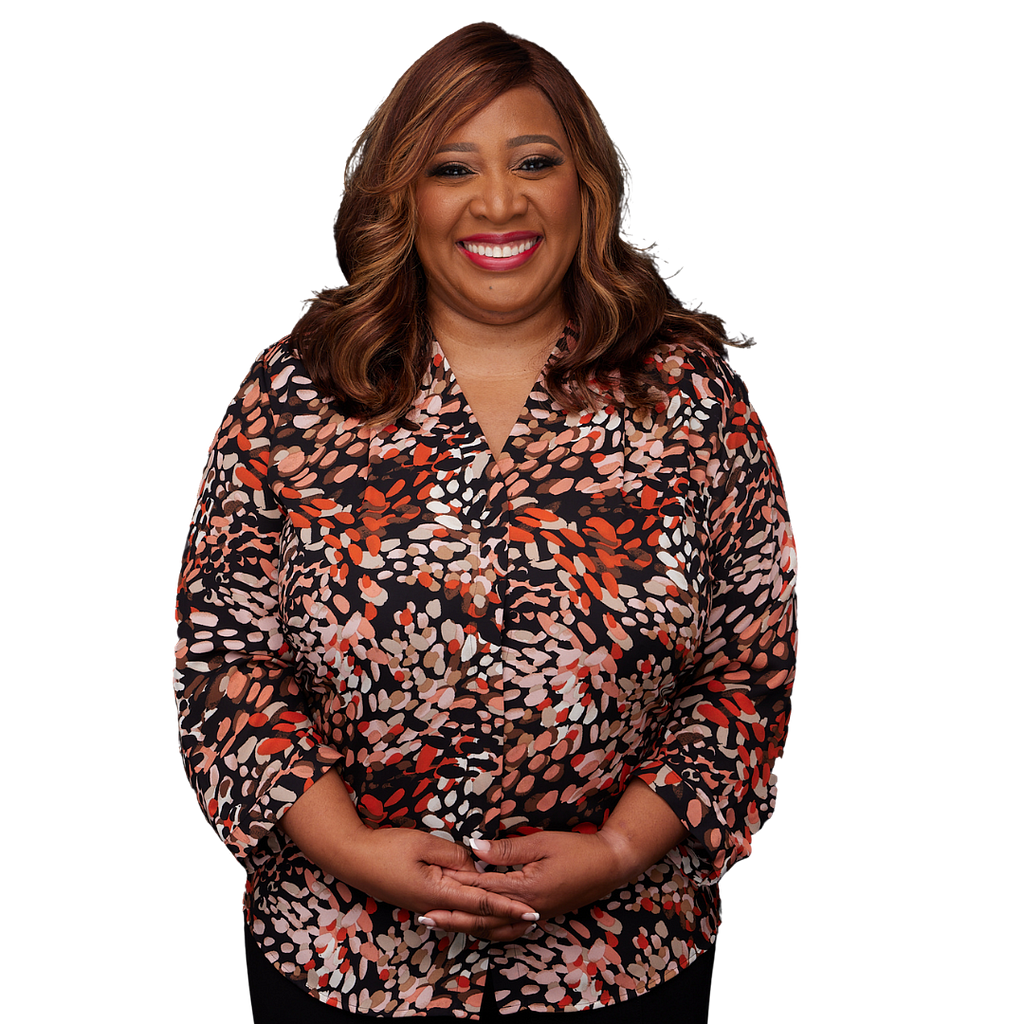
As a part of our series about “Why We Need More Women Founders”, I had the pleasure of interviewing Rhonda Swan.

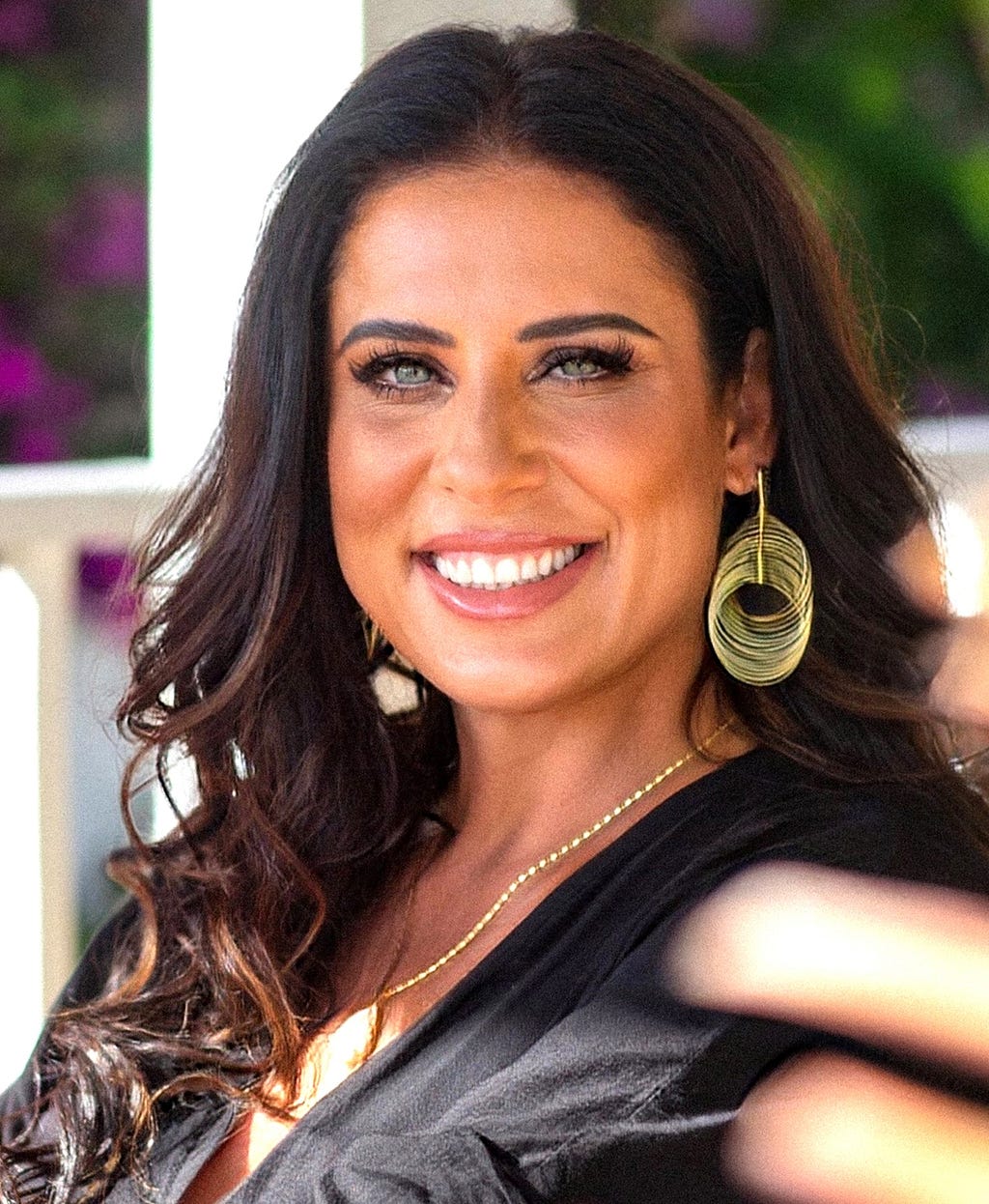
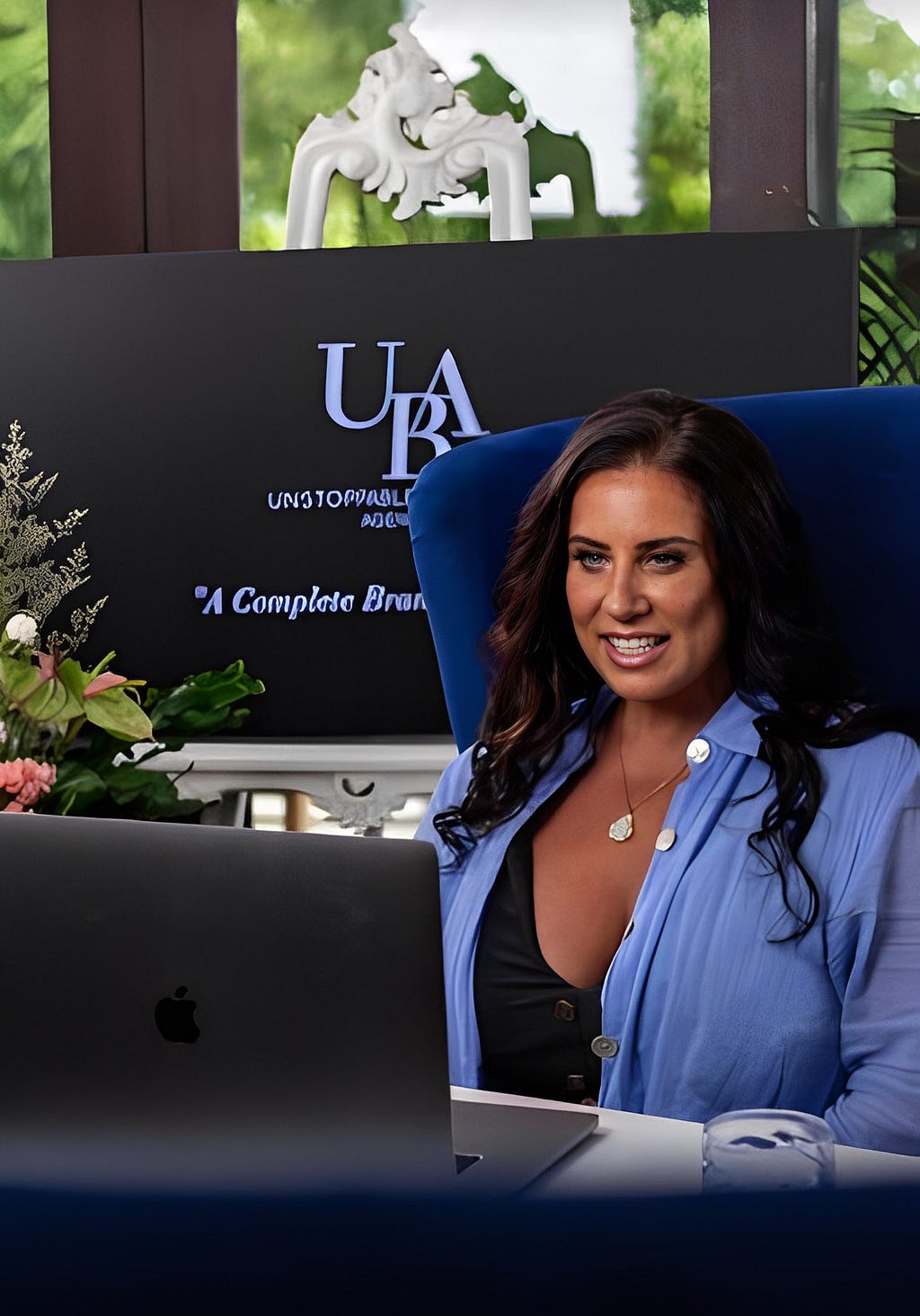
Rhonda Swan is the founder and CEO of one of the leading PR and branding companies worldwide — the Unstoppable Branding Agency. She works with CEOs, authors, speakers and conscious entrepreneurs to grow their personal and professional brands creating a defined google footprint, using top tier PR and media. With her vision to empower women, especially in business, Rhonda also hosts the “Unstoppable Women Entrepreneur“ show at NASDAQ. She regularly interviews female powerhouses who go against the stream and showcases their entrepreneurial journey. You can watch her show on Bloomberg, Fox Business, Market Watch and nasdaq.com.

Simultaneously, Rhonda also hosts the Rhonda Swan Show, which regularly gets over 1M+ views per episode! In her show, you get to listen to experts, thought leaders and changemakers from all over the world, who guide you into living not only purposefully, but to ensure that your entrepreneurial journey is purposeful, passionate and profitable! Her passion for female empowerment led her to creating a movement for female empowerment! She is the founder of Women Gone Wild, a community with the vision to empower women and to create a safe space for everyone to live authentically and speak their truth! The first edition of the book series was published in 2021 and quickly became a bestseller in multiple categories. This year, the second book — the Wealth Edition — was published to help empower you! Likewise, the book became a bestseller in multiple categories. For her work, Rhonda has landed coverage in print and broadcast outlets around the world, being featured in FORBES, Entrepreneur, INC. Success, Business Insider, ABC, CBS, NBC and CNN, Thrive Global, Medium & Buzz-Feed.

Thank you so much for doing this with us! Before we dig in, our readers would like to get to know you a bit more. Can you tell us a bit about your “backstory”? What led you to this particular career path?

I grew up in Detroit as an athlete kid who wanted to run a large corporation. So, I went through university and through my master’s degree, and then landed a job with a Fortune 100 company.

I moved to California and worked with the best companies in the world, like Philip Morris and GlaxoSmithKline on marketing, branding, and really showing how companies can touch the masses with their brand.

Ten years later this led me to making a big decision to quit my job to become an entrepreneur. And the main reason was — I watched a woman put her six-week old baby into daycare and I vowed to myself that I would never do that, I didn’t want to put my daughter in daycare.

This is the time when the internet was just becoming popular. I watched an interview with Steve Jobs and he said: “If you’re not learning the internet, then you will be left behind.”

So I dug deep and started working with the best of the best, like Perry Marshall, learning Google ads, SEO, building brands online. This led me to starting my branding and PR firm in 2004, which has now grown to be one of the top-rated branding and PR firms for entrepreneurs by Forbes magazine.

Can you share the most interesting story that happened to you since you began leading your company?

In 2007 and 2008, after three years of building our company and doing very well, as we were preparing for our baby to come, my husband and I invested heavily in real estate. When my daughter was born, we found out we were about to lose everything. At that point we had to make a decision to continue on the path that we were going to try to keep the assets that we held, or to make a massive shift.

So in 2008 on November 25, we left with our daughter, and sold everything we had. We left with $12,872.62 to our name with a vision about never letting my daughter go into daycare. So, we started traveling the world. That downfall was our greatest catapult and asset that we ever had.

This November 25th will be 15 years that we’ve traveled the world, lived in over 52 different countries and built our company exclusively online to be the empire that it is today.

Can you share a story about the funniest mistake you made when you were first starting? Can you tell us what lesson you learned from that?

I was working, making sales calls and talking to people about how I can help them build their brand online and I had someone ask me if this was an MLM. And at that time, I had no idea what an MLM (Multi-level marketing) was. These companies were so big and I had no idea even what that was.

I was on this sales call and I was trying to answer the question, and then I realized and said that — I actually have no idea what that is. I learned what an MLM was from a sales call with a prospect.

Lesson that I learned was just be open and be able to reply to people with your transparency, especially if you don’t know what they’re talking about.

None of us are able to achieve success without some help along the way. Is there a particular person who you are grateful towards who helped get you to where you are? Can you share a story about that?

Perry Marshall in 2004. He’s considered the grandfather of online marketing. He actually wrote the algorithm or broke the algorithms for Google and really figured it out — how to run Google AdWords, how to really dominate on Google.

I started working with Perry, one of his master classes and his masterminds, started mentoring. Because of his copywriting skills and his knowledge on the online world I was able to become one of the first women to earn a million dollars online by using a sales funnel before a sales funnel actually became really cool.

Ok, thank you for that. Let’s now jump to the primary focus of our interview. According to this EY report, only about 20 percent of funded companies have women founders. This reflects great historical progress, but it also shows that more work still has to be done to empower women to create companies. In your opinion and experience what is currently holding back women from founding companies?

There’s $11 trillion that is purely procured for businesses every year, and only 1% of that is going to women. Now that still might be $110 billion dollars. Can you imagine — just by increasing that by 1%, that adds on another $110 billion into women owned businesses.

I think what keeps women from creating and founding companies is that they’re afraid that they actually can’t do it themselves or they get knocked down, or they’re not seen enough. They’re afraid that they just can’t achieve. So, women end up always hovering in someone else’s spotlight.

As an entrepreneur, it’s challenging. You do need funding and you need investors and people that will support you to get to the next level. And I think that’s what happens to most women — they don’t have the support, so they’re unable to really get to the levels that they really want.

I bootstrapped my company and self-funded it very slowly. But what that did for me, it allowed me to learn along the way.

It also depends on the personality of the woman who is really determined to make a difference. I feel that if you create a business around your love and passion, and the impact you want to leave, you won’t quit.

Can you help articulate a few things that can be done as individuals, as a society, or by the government, to help overcome those obstacles?

First off, it’s recognizing the distribution of funding and looking at alternative businesses that women are creating. Create more opportunities, but don’t make it special — like “you’re diverse or you’re a woman, so you can get special grants from us.”

It’s more like — you’re a woman, just like you’re a man — you’re a human, who is an entrepreneur, who wants to create a business.

Be more open to the equality of someone’s ideas, not the fact that they’re a male or woman.

I am for women’s rights, that’s what I stand for. However, I also don’t like to be compared.

I think inclusivity and equality is everything. If someone is willing to go the stronger road to become an entrepreneur, then they shouldn’t just be considered a woman or a man — they should be considered an entrepreneur and seen as that as well.

Also being given the same opportunities that men have, especially when it comes to funding — within government and within society.

I think our society tends to lean on gender equality. When you look at someone, whether they’re a person of color, or a different gender, or have different gender preferences, there’s an instant judgment. Society really needs to open their minds to not judging each other. Discrimination is what’s gotten us into a really bad place in this world.

This might be intuitive to you as a woman founder but I think it will be helpful to spell this out. Can you share a few reasons why more women should become founders?

Yes, because women lead from their heart. Women have empathy. They look at the impact that they can leave on the world with their work. And more women are stepping into that space — that intuitive space, that compassion space, they’re creating bigger and better products and better opportunities and companies that can help change the world. Women need to stand up for themselves in their power and know that their feelings and their intuition can create magic, and create an amazing business.

What are the “myths” that you would like to dispel about being a founder? Can you explain what you mean?

Myths of being a founder — is that you know everything. People think that when you’re the founder or visionary of a company, that you should know it all.

In reality, if you’re the smartest person in the room, you need to step out of the room. You need to have a great team and people around you who support you. This is what helps you really become one of the most powerful business owners.

Another myth is that you have to be hard or tough and do it all on your own. It isn’t true. You can’t get there on your own, you have to take a chance with someone else.

Is everyone cut out to be a founder? In your opinion, which specific traits increase the likelihood that a person will be a successful founder and what type of person should perhaps seek a “regular job” as an employee? Can you explain what you mean?

I don’t actually feel that every person can be a founder of a company.

In my opinion traits needed are: resilience, the “Go get them!” attitude, wearing blinders and not allowing things to distract you — this is what founders need — not listening to other people’s opinions.

You know, I think that alone is what makes a founder and someone who’s a visionary.

There are also people we need to have, that are workers. They can execute and bring ideas to light. If you have a lot of idea makers, as visionaries as founders, but you don’t have someone that can help execute that, you’re not going to have a successful company.

Our company was built to utilize the Human Design system. It shows you who you are. For example, I’m a manifesting generator. That means I’ve got a lot of ideas, I keep bringing ideas, and opportunities come my way. And then there’s those who are generators. These are the type of people who make things come to execution. So, you need different types of personalities inside when you’re developing a company, and not everyone can be the visionary. You need those different levels of people with those different types of personalities and skills to help execute and come to the end goal.
Ok super. Here is the main question of our interview. What are your “5 Things I Wish Someone Told Me Before I Started” and why? (Please share a story or example for each.)

Number one — Get used to failing every day. Because the more you fail, the faster you’ll get to where you want to be.

Number two — Sometimes it feels lonely as an entrepreneur, just know that there are billions of other people out there doing the same thing. So, find yourself a network to tap into for the days that you feel like you’re completely alone.

Number three — Not everyone is there to be your friend or to help. Be discerning on who you work with, who you employ, and who you bring into your valuable space that you’ve created. Because many people are only there for themselves. So, the most important thing is to do background checks, to give people contracts, and to make sure that you protect your value and your assets.

Number four — Do projects, not partnerships. One thing that I learned in growing my companies is that when you bring in people as partners, you also bring in their baggage, their problems, their issues, and also it can be very hard to separate when things go wrong as a partner. But when you’re a project partner or equity partner, there are certain contracts and guidelines that you follow, so that you’re able to split easily. Like it’s a lot easier to break up a relationship than when it is a marriage. So, I treat partnerships and project partnerships very differently.

Number five — Don’t talk about big projects until they’re launched — people’s opinions will deter your focus.

How have you used your success to make the world a better place?

My family gives away 8% of everything we earn. I also have created a “Women Gone Wild” book project where I give away all of our Amazon digital book sales to charity, so that we can make the world a better place. We’ve also created our own foundation called Heartstrings Foundation, where we teach music to children in the orphanage here on Bali and provide them with instruments so they can actually have a longer-term life with a skill that they may never have.

You are a person of great influence. If you could inspire a movement that would bring the most amount of good for the greatest number of people, what would that be? You never know what your idea can trigger.

I would create a movement that is called Women Gone Wild, which we have done that inspires women to tell their story, to collaborate, to come together, so that they can support each other and do business to work differently and to create long-standing friendships. This is not something that I was taught growing up, and something I think is so well needed.

We are very blessed that some very prominent names in Business, VC funding, Sports, and Entertainment read this column. Is there a person in the world, or in the US with whom you would love to have a private breakfast or lunch with, and why? He or she might just see this if we tag them.

I would like to have lunch with Warren Buffett — I use his quote so often in life and in business. And that was: “You find out who’s been swimming naked when the tide goes out”. This can be related to so many things in life — to whether people are invested properly, or if they are protecting their assets or if they are telling a story. That may not be fully true, or they are representing themselves in a way that also may or may not be true. I think that when we start to be very conscious and aware of who others really are and listen to our own intuition, we then start to see things as they truly are. And the biggest and the greatest lessons I have learned are from Warren Buffett on how to protect my long-term assets, how to protect my family, and how to give back or create wealth that allows you to give back and to be someone of pure authenticity so that when the tide goes out, you’re not the one standing naked.

Thank you for these fantastic insights. We greatly appreciate the time you spent on this.


Female Founders: Rhonda Swan of Unstoppable Branding Agency On The Five Things You Need To Thrive… was originally published in Authority Magazine on Medium, where people are continuing the conversation by highlighting and responding to this story.

Women In Wellness: Emily Caillon On The Five Lifestyle Tweaks That Will Help Support People’s…

Women In Wellness: Emily Caillon On The Five Lifestyle Tweaks That Will Help Support People’s Journey Towards Better Wellbeing

An Interview With Candice Georgiadis

Create a self-care mindset. Self-care is not necessarily “doing” more for yourself but making decisions in line with your needs and priorities. For example, say “No” to attending a party or a request that might give you pleasure in the moment but will set your goals back. Normalize meditating anywhere, practice Gratitude all day for all the blessings in your life, your health, your heartbeat for example. Love yourself unconditionally especially when you make mistakes or don’t live up to your full expectations.

As a part of my series about women in wellness, I had the pleasure of interviewing Emily Caillon.

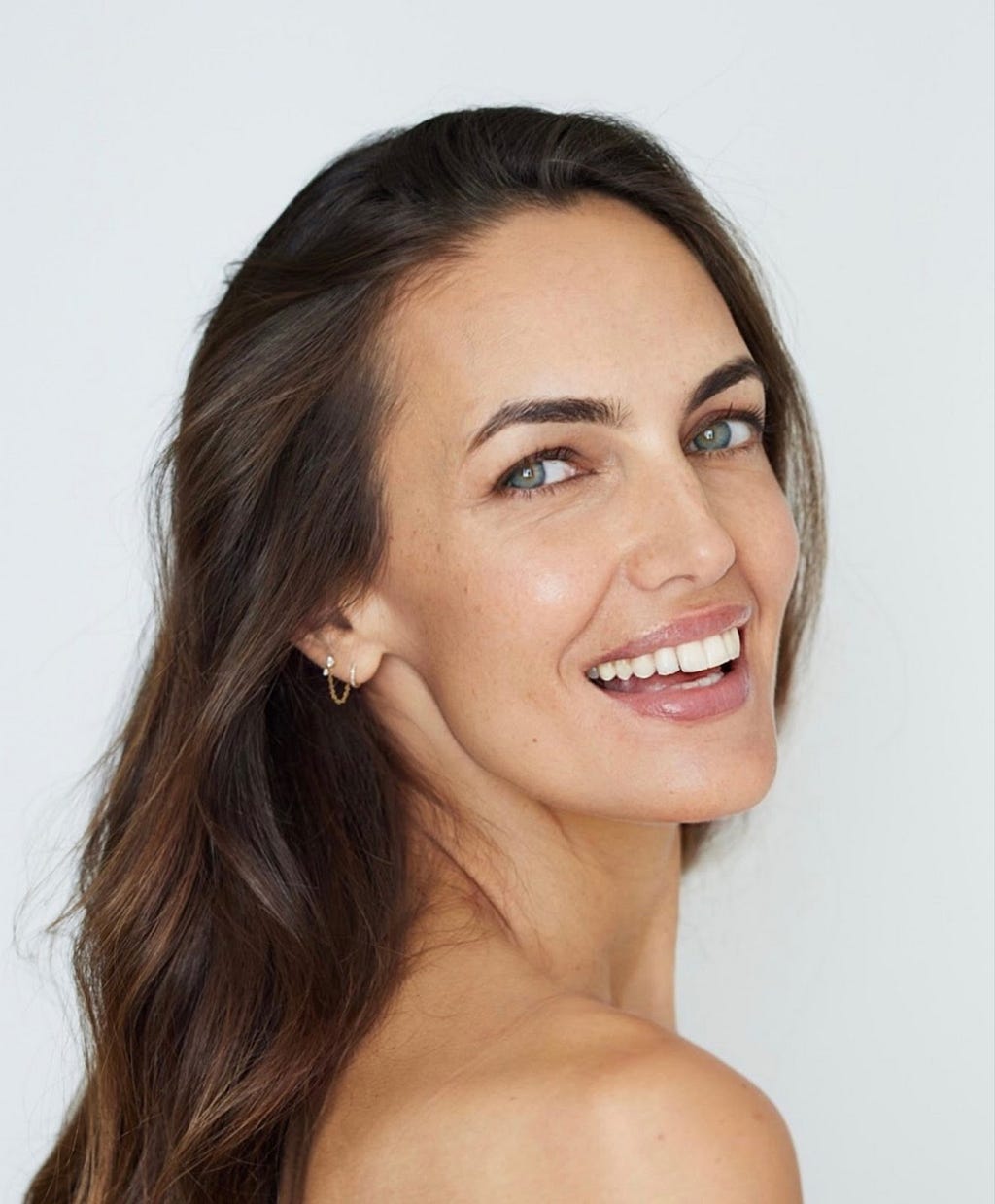
As a Wellness coach, model and french native, Emily believes that beauty is powered from within. She holds space for women to create the happiest version of themselves through mindset shift, self-care practice and energy upgrade.

Thank you so much for joining us in this interview series! Our readers would love to “get to know you” better. Can you share your “backstory” with us?

Thanks so much for this opportunity, I’m thrilled to share my message with you. I was born in the Loire Valley in France, and grew up in a loving and modest family. At 19, I moved to Paris to pursue a modeling career, while studying and earning my bachelor’s degree in psychology. By the time I turned 21, I took the leap and moved to New York City with just two suitcases in hand, with the hopes of furthering my modeling career in the Big Apple. New York City felt new, exciting, full of ambition and passion. Opportunities started to pour in. I became the face of Almay then Olay for 10 years and have done over 30 commercials in my career, even starring in a few short films. Simultaneously, I discovered Kundalini yoga 17 years ago, and have been practicing it since, as well as transcendental meditation, for the past 10 years.

With over 23 years of experience in the fashion industry and having traveled across the globe, touching down in over 40 countries, and living in Paris, New York, Singapore, London, and now, Miami, I feel ready to share my wisdom with the world.

Can you share the most interesting story that happened to you since you started your career? What were the main lessons or takeaways from that story?

Since I started my career in 1999 I got rejected by many agencies and clients and yet managed to have a very successful career.

I experienced firsthand that no matter how many times you fail or get rejected, if you believe you are on the right path, success is determined by your perseverance not your failures.

Can you share a story about the biggest mistake you made when you were first starting? Can you tell us what lesson you learned from that?

Modeling was the best school of life. A lot of those lessons are intertwined with my wellness teachings today. The biggest mistake I made — was trying to fit in, stay humble, and blend in. Eventually those qualities helped me stay in the industry for a long time. However, in reality — you must show up for yourself, be yourself and be big, that’s how you stand out. I just didn’t know how to stand out. No matter who you are, you must stay true to yourself and love yourself unconditionally, the rest will flow your way.

Let’s jump to our main focus. When it comes to health and wellness, how is the work you are doing helping to make a bigger impact in the world?

I take a holistic approach to teach women the fundamentals of Mindset, Selfcare and positive thinking. I want my clients to learn about being beautiful, inside, and out. I want women to feel beautiful, to have confidence, which comes from the heart. I truly believe in the power of sisterhood, we are so much stronger together. I help women find themselves, realign to their purpose and discover true happiness in all aspects of their journeys. “You are already born with the qualities to get everything you have ever wanted!

Can you share your top five “lifestyle tweaks” that you believe will help support people’s journey towards better wellbeing? Please give an example or story for each.

  1. Meditate, every day, even for just 3 minutes, ideally build up to 1 hour a day. It raises your vibrations, deepens the connection between yourself and “source” and sustains your ability to move throughout your day with purpose and coherence.
  2. Pause. Before every new event during the day, pause. For example, before you run errands, between meetings, before picking up the kids at school. Take a mindful minute, close your eyes and reset your mind state. Ask yourself what is the goal of your next action? What is the right thing to do at this moment ? Feel as if the end goal has already happened the way you wanted ? Recaliber to the mindset that will ensure success in your endeavor.
  3. Create a self-care mindset. Self-care is not necessarily “doing” more for yourself but making decisions in line with your needs and priorities. For example, say “No” to attending a party or a request that might give you pleasure in the moment but will set your goals back. Normalize meditating anywhere, practice Gratitude all day for all the blessings in your life, your health, your heartbeat for example. Love yourself unconditionally especially when you make mistakes or don’t live up to your full expectations.
  4. Don’t wait to have time to practice self-care, all it takes is for you to prioritize yourself when you make decisions.
  5. Eat for your health and stop counting calories. It’s all about having a balanced and nutritious diet. If you can eat 90% of unprocessed “nature” food, remove sodas and processed sugar and lower your alcohol intake, you will feel so much better. Your body is our vehicule, we must take care of it!

If you could start a movement that would bring the most amount of wellness to the most amount of people, what would that be?

Accountability groups. We need to recreate the nucleus of communities for like minded people where people to feel a sense of belonging, get support and report progress. Accountability groups increase mental health and productivity.

What are your “5 Things I Wish Someone Told Me Before I Started” and why?

-Never burn any bridges.

-Success is a long game. The top of a mountain is the bottom of the next one, so keep climbing.

-Don’t wait until you’re ready, you will never be ready.

-Never compromise yourself, or your values for anything or anyone.

-Celebrate the small wins.

Sustainability, veganism, mental health, and environmental changes are big topics at the moment. Which one of these causes is dearest to you, and why?

Mental health is the root of everything. You can’t move with purpose, show up for others, and make life decisions if your mind is not coherent. building a tribe or joining a community around you is key — especially if you are away from family or don’t have much family support. Meeting with your tribe on a regular basis, discussing your goals, having accountability partners and feeling a sense of belonging is key.

Sustainability should be part of everything we do. Ourself, our schedule, environment, mental health. Moderation is the key in creating everything we do.

What is the best way for our readers to further follow your work online?

Sign up for my newsletter www.emilycaillon.com and follow me on https://www.instagram.com/emilycaillonchene/

Thank you for these fantastic insights! We wish you continued success and good health.

Thank you. Be happy everyone!


Women In Wellness: Emily Caillon On The Five Lifestyle Tweaks That Will Help Support People’s… was originally published in Authority Magazine on Medium, where people are continuing the conversation by highlighting and responding to this story.

Female Disruptors: Tiffany Zehara On The Three Things You Need To Shake Up Your Industry

An Interview With Candice Georgiadis

The phrase I heard recently that has resonated the most is “Fortune Favors the Brave” — while I’m sure I’ve heard this quotation many times before, with the new knowledge and growth I’ve had, it really makes sense. We need to take brave, decisive action towards what we want in life. When you don’t know what’s coming next, it is an opportunity for real growth to happen. When we know what’s coming next, we are repeating the same patterns.

As a part of our series about women who are shaking things up in their industry, I had the pleasure of interviewing Tiffany Zehara.

Tiffany works with individuals and organizations globally to connect problems with solutions. Taking average concepts, failing projects with potential, and big thinkers to support the reshaping of ideas to implement and support revenue generating capacities, making the most of their impact in the world. Additionally, she assists firms, institutions, and governments to develop different perspectives and avenues for solutions when working with difficult clients or demographics; addressing internal challenges or mediating disputes.

Thank you so much for doing this with us! Before we dig in, our readers would like to get to know you a bit more. Can you tell us a bit about your “backstory”? What led you to this particular career path?

Thank you very much for having my voice a part of this important conversation! I have always been someone who questioned everything. I think my family believed it was endearing until my questions became increasingly challenging and they no longer had the simple answers to provide. This was one of my main motives behind my love of reading. I wanted to know and understand it all, and with that, came questioning why we “must” do certain things or “must” do things in a certain manner.

Can you tell our readers what it is about the work you’re doing that’s disruptive?

In routinely questioning, in seeing things as differently as I always have, I find new paths for individuals and organizations that may not have been thought about previously because of their being too emotionally close to the problem or too attached to the traditional way of doing things. We have routinely been engrained with one way of doing things. I encourage my clients to think in different ways, to question, to challenge the system in order to get the different results from what they have received by playing by others rules and to change the world on their own terms.

Can you share a story about the funniest mistake you made when you were first starting? Can you tell us what lesson you learned from that?

In being someone who has prided herself in always questioning and challenging, what is funny is that when I first started, I was listening to everyone else because I doubted my own capabilities! That self-doubt only led me to more frustration and self-doubt. I had to learn the importance of trusting myself; trusting my capabilities; trusting that I will always have what I need — be that knowledge in a particular area or the resources to find the answer. I also learned the importance of turning inward and not relying on external circumstances and external praise for validation of my worthiness.

We all need a little help along the journey. Who have been some of your mentors? Can you share a story about how they made an impact?

I have had amazing coaches along the way who have shown me how everything in our lives are connected. Our past traumas and self-worth impact who we attract as clients and business partnerships; how we deal with situations when we are not being paid for our services; issues around money and success as a whole.

In today’s parlance, being disruptive is usually a positive adjective. But is disrupting always good? When do we say the converse, that a system or structure has ‘withstood the test of time’? Can you articulate to our readers when disrupting an industry is positive, and when disrupting an industry is ‘not so positive’? Can you share some examples of what you mean?

I would say to always question. Never just accept what is being told to you, no matter who is telling you something. Always challenge, no matter if it’s a system or structure that has withstood the test of time. Sometimes these structures or systems have lasted because no one questioned them, for a variety of reasons. It doesn’t mean that it is correct.

The key is to gather as much information as you can in the particular area and sit with it to see how you feel and act accordingly. Trust yourself. We all make the best decisions that are right for us in the time. In hindsight, we may have acted differently but that is because we are looking at a situation through the lens of new knowledge. When you get new knowledge, your thoughts or viewpoints may change, and that’s okay but never stop challenging.

Can you share 3 of the best words of advice you’ve gotten along your journey? Please give a story or example for each.

The phrase I heard recently that has resonated the most is “Fortune Favors the Brave” — while I’m sure I’ve heard this quotation many times before, with the new knowledge and growth I’ve had, it really makes sense. We need to take brave, decisive action towards what we want in life. When you don’t know what’s coming next, it is an opportunity for real growth to happen. When we know what’s coming next, we are repeating the same patterns.

While I think this phrase is technically four words, I think it still applies.

We are sure you aren’t done. How are you going to shake things up next?

While I will continue to speak with other amazing disruptors on my podcast and privately consult, I am very excited about a recent opportunity to be a part of writing a book on further disrupting the system.

In your opinion, what are the biggest challenges faced by ‘women disruptors’ that aren’t typically faced by their male counterparts?

Everyone faces challenges, in one way or another, no matter where you fall on the gendered spectrum. My grandmother always said, “you never know what happens behind closed doors.” While someone may seem to have it all together, you never know what’s going on below the surface. We are in this life to learn the lessons we are meant to learn. If everything is easy all the time, where is the growth?

Do you have a book/podcast/talk that’s had a deep impact on your thinking? Can you share a story with us?

I’ve always seemed to find the information I needed, when I needed to hear it. When I may go back to a particular book, talk, podcast, etc. it’s interesting to see how that information doesn’t seem as insightful as it once was because of the growth I may have underwent. This goes back to trusting yourself. If you are looking for guidance or answers, ask for it, be open to how the answers will come, and a response will come in surprising ways — from seeing a billboard to just getting hit with a thought while in the shower or washing the dishes.

You are a person of great influence. If you could inspire a movement that would bring the most amount of good to the most amount of people, what would that be? You never know what your idea can trigger. 🙂

I believe that’s what I’m doing right now 🙂

Can you please give us your favorite “Life Lesson Quote”? Can you share how that was relevant to you in your life?

My life motto has always been that everything happens for a reason. Everything, no matter how horrible it may seem at the time, is working for our best and highest good. We may never know why in this life that somethings happen, but there is always a larger purpose. Even if it is just to teach us patience, humility, or forgiveness.

How can our readers follow you online?

https://humanitarian-entrepreneur.com

https://humanitarian-entrepreneur.com/podcasts/ (and on all major streaming platforms)

This was very inspiring. Thank you so much for joining us!


Female Disruptors: Tiffany Zehara On The Three Things You Need To Shake Up Your Industry was originally published in Authority Magazine on Medium, where people are continuing the conversation by highlighting and responding to this story.
Women In Wellness: Dominnique Karetsos of Healthy Pleasure Group On The Five Lifestyle Tweaks That…

Women In Wellness: Dominnique Karetsos of Healthy Pleasure Group On The Five Lifestyle Tweaks That Will Help Support People’s Journey Towards Better Wellbeing

An Interview With Candice Georgiadis

Leadership is a lifelong commitment to learning and listening to others. But, just as important is your loyal daily commitment to your own integrity and staying true to yourself

As a part of my series about women in wellness, I had the pleasure of interviewing Dominnique Karetsos.

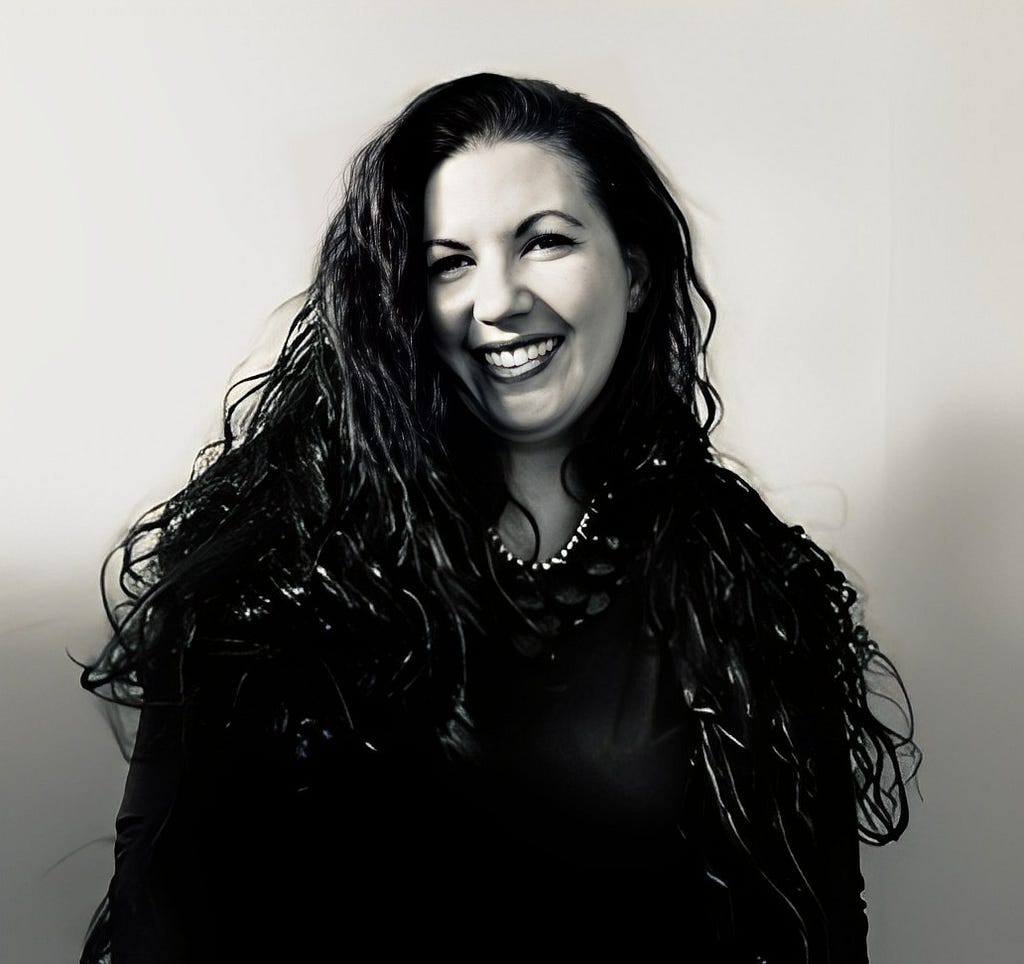
A born entrepreneur and resilient optimist, Dominnique Karetsos is CEO and Founder of The Healthy Pleasure Group, the only global outfit dedicated to the Sexual Health & Technology industry.

Thank you so much for joining us in this interview series! Our readers would love to “get to know you” better. Can you share your “backstory” with us?

My name is Dominnique Karetsos, I’m the CEO and co-founder of Healthy Pleasure Group, a pioneering collective that seeks to define, reshape and revolutionise the sexual empowerment of all generations and pave the way for healthy sexuality and healthy pleasure for everyone.

Having spent my youth in both Greece and South Africa, I studied in Sweden and I’m now based in London, with the Group also holding offices in Barcelona and Los Angeles. I’ve worked in more than 40 markets globally, helping start-ups and market leaders across beauty, retail and health improve and increase their sales, marketing and distribution channels.

As women, when we have questions about our autonomy or our sexual health, we look for permission to even ask them. For instance, on the Greek side of my family the generation before me would never discuss money and business at the table and on my mother’s side, children were to be seen but not heard. So, you didn’t have a voice, a choice or an opinion. It’s interesting to understand the taboos our parents’ generation fought to dismantle so that we can create our own fibres, weave our own way. I myself have been through a crippling divorce, which left me bankrupt when I was forced to take the crippling economic blowback for my ex-husband’s decisions. I was left with nothing, not even a roof over my head. Today we have the Domestic Abuse Bill which covers economic abuse that was brought into the UK parliament in 2017 to support women, but back then I made my way through this enormous situation myself. That is why I am very proud to have recently been asked to be a member of the UK charity Surviving Economic Abuse, sitting on the Experts by Experience Group. I am determined to ensure that no other women need go through what I did and that everyone is made aware of the support that is out there for them.

Can you share the most interesting story that happened to you since you started your career? What were the main lessons or takeaways from that story?

I can give you one example of the state of the Sexual Health & Technology industry when I first joined it around eight years ago. I was working with an intimate health brand and we were trying to get a mainstream pharma category buyer to list a menstrual cup. To gain access to point of sales we had to get through the buyers, most of whom were men in their early 20’s. In order to make sure that the phone wasn’t just immediately slammed down on us, we bought the advertising space in front of a lead buyer’s parking spot for three months. When we eventually got him to answer our call, he said, ‘Where have I seen this brand before?’ those few seconds were critical in allowing us to start the conversation of how putting menstrual cups on the feminine hygiene shelves was going to make a positive impact to his bottom line, but most importantly change the lives of women. Perseverance and creative persuasion is often what we need to to thrive and get through to the naysayers.

Because, how does one communicate the need for a product that has no relevance to these young men? It’s not easy to explain to mostly male buyers that there is a difference between a tampon and a menstrual cup. Or that you pee in your pants after you’ve had a kid. Women have been categorically ignored and marginalised when it comes to our health needs. We had the products, but we needed a buyer who would listen to us.

It has been said that our mistakes can be our greatest teachers. Can you share a story about a mistake you made when you were first starting? Can you tell us what lesson you learned from that?

I had so many meetings where I was not supposed to say the word sex! The amount of Boardrooms and now parents’ Whatsapp groups I have previously been kicked out of, is insane! On one occasion I distinctly remember telling my bosses at a leading beauty company to invest in male grooming as the future of the beauty category and they dismissed me out of the boardroom. Now that male grooming is mainstream industry worth billions, it gives me more confidence to stand by my beliefs and hold fast on my convictions. This space moves quickly, but my experience gives me that competitive edge for future trends. Looking back on this now, thankfully we’ve come a long way.

As the CEO I am today, I understand that my role comes with leadership, accountability, mentorship and ownership of our mistakes & successes. It’s important to make decisions that are in the best interest for the company, our people and our partners. I see my biggest responsibility as committing to continuous learning and sharing my knowledge with those same people.

Let’s jump to our main focus. When it comes to health and wellness, how is the work you are doing helping to make a bigger impact in the world?

The work we do is intrinsically geared towards creating opportunities, products and education to support underserved communities and ultimately democratise sexual health globally. From supporting one client focus on improving access to STI testing for women in LATAM, to building a competitive advantage for a fertility tracking brand to position its new technology to educate girls and young women about their first menstrual cycle.

We want to enable the facilitation of innovative pleasure, insightful pleasure, investigated pleasure and ultimately, healthy pleasure — for everyone. Fortunately, I’m seeing a lot of changes and a collective effort, but we need to continue to normalise language around sexual health, a new way of dismantling taboos and stigmas. As these things are gaining momentum, policy makers will need to react, too.

From democratising sexual pleasure beyond binary understandings to removing stigma and barriers to reproductive healthcare, we refuse to accept the way things have always been. Ultimately, we built Healthy Pleasure Group to create behavioural change through three vital economic motors; Education, Innovation and Investment.

If you could start a movement that would bring the most amount of wellness to the most amount of people, what would that be?

Healthy Pleasure is a movement. We define Healthy Pleasure as sexual self fulfillment, a state of wellbeing generated by perceiving yourself as sexually healthy. It’s about having coherence between what you want, think and do in every aspect of your sexual life. Encompassing three core values of respect, intimacy and care, Healthy Pleasure is not related to sexual frequency or sexual activity. Even if a person doesn’t have sex, as long as they are happy with that decision, they are sexually self-fulfilled.

For me, it is all about agency. Agency over our bodies, our finances and our equalities within the societal and political constructs that we inhabit. I sat as a delegate for UN Women UK last year at the Commission on the Status of Women, which was an eye-opening, global view on what we all face across every fabric of our lives. For me, the understanding and mis-understanding of a woman’s autonomy starts with the moment you tick that box on a form to declare if you are a Mr, Miss, Mrs or Ms. It may sound small, but that one declaration can have a massive impact on the way our needs are prioritised, especially for women. As soon as we tick that box, a lot of assumptions are made and a lot of regulations automatically apply in your life that affect you. Access to childcare, pay disparities, our health and more. I hope that will change one day. But in the meantime, women, just like men, should have a choice whether or not to declare this imposed societal status. They should be informed about what it means.

So now I’m just Dominnique Karetsos. I don’t tick the box. If I have an app and it forces me to do it, I just don’t sign up.

What are your “5 Things I Wish Someone Told Me Before I Started” and why?

  1. Time is not money. Time is time and we should learn to live recognising that it is an non-replenishable resource. You decide how much of it you want to dedicate to the things that bring you joy.
  2. Energy is not woo woo. Where energy goes, money will come
  3. No is a full sentence
  4. When I have the confidence to ask for what I want in the bedroom I will have the confidence to communicate what I want and need in the boardroom
  5. Leadership is a lifelong commitment to learning and listening to others. But, just as important is your loyal daily commitment to your own integrity and staying true to yourself

Sustainability, veganism, mental health, and environmental changes are big topics at the moment. Which one of these causes is dearest to you, and why?

Healthy Pleasure as a cause and a movement, of course. Our sexual wellbeing is the most innate human experience and it dictates how we relate to everybody and everything in our lives. With our children, our partners, our colleagues. How we move through the world. Healthy Pleasure provides a new lens on how we view ourselves and this can be a lens of confidence, empathy, kindness but it can also be insecurity, depression or trauma. Healthy Pleasure is a movement that everyone must sit up and take notice of.

What is the best way for our readers to further follow your work online?

You can follow me directly on LinkedIn, read more about Healthy Pleasure Group on our website www.wearehpg.com and sign up to our monthly newsletter that brings you the latest news and updates from across Sexual Health & Technology industry here.

Thank you for these fantastic insights! We wish you continued success and good health.


Women In Wellness: Dominnique Karetsos of Healthy Pleasure Group On The Five Lifestyle Tweaks That… was originally published in Authority Magazine on Medium, where people are continuing the conversation by highlighting and responding to this story.
Women Of The C-Suite: Melissa Hughes On TheFive Things You Need To Succeed As A Senior Executive

Women Of The C-Suite: Melissa Hughes of The Live Rich. Spread Wealth. Global Movement On The Five Things You Need To Succeed As A Senior Executive

An Interview With Candice Georgiadis

You don’t need permission. You have this seed that was planted in your soul, an idea that was planted in your head. If other people don’t agree, that’s on them. Don’t let other people hold you hostage to this idea that was given to you. So when I followed my heart, I was committed to bringing those ideas to life. It worked out. But if I had waited for everybody’s permission, and to get all that acceptance, to make it happen. I would never be here even being interviewed today. So trust the small voice.

As a part of our interview series called “Women Of The C-Suite”, we had the pleasure of interviewing Melissa Hughes.

A self-made millionaire by 31, Melissa Hughes is the founder of the Live Rich. Spread Wealth. Global Movement, which is changing the lives of businesspeople worldwide. She is a master business coach, best-selling author, international speaker, and consultant. Her mission: to help entrepreneurs and individuals in corporate America accomplish their business goals, (including massive profits), while staying connected to their authentic self, transforming the world, and creating lives of limitless abundance.

Known as The Guru of Implementation®, Melissa’s success, and that of her clients, is a result of her practical, proven systems for business and life success. Her clients include companies like Microsoft, Motorola, ESPN, and globally recognized speaker Lisa Nichols, star of the hit film, The Secret, as well as small start-ups and individuals. Large corporations around the world hire Melissa to advise them on projects and initiatives to the tune of $20 million, and she specializes in helping to ensure culture, communication, project scope, and implementation are successful across divisions, departments, and business units.

Melissa is a dynamic, transformative speaker who has presented to companies and at entrepreneurial events, conferences, universities, and associations throughout the U.S. and in Ukraine, Dubai, Costa Rica, Canada, Bali, Tokyo, and Amsterdam, to name a few.

Thanks to her high-accountability and firm-love coaching style, Melissa’s coaching clients (who number in the thousands) have created massive results in their business and personal lives.

Melissa, a wife and the mom of a six-year-old global citizen (who has already been to 14 countries), serves as a board member on the Detroit Chapter of the Entrepreneur Organization. She has worked with leaders, trailblazers, sleeping giants, and entrepreneurs worldwide, helping them live their divine purpose and a full life.

https://melissahughes.com/

Thank you so much for joining us in this interview series! Before we dig in, our readers would like to get to know you a bit more. Can you tell us a bit about your “backstory”? What led you to this particular career path?

When I was in this fortune 500 company, and I wanted to be a manager, people were telling me well, they don’t really hire minorities as managers. So I took it on as my responsibility to focus on my cover sheet and made sure that my resume truly reflected what I’ve been able to accomplish. And then I was at peace with it. Because then I did my part to tee up. These are my qualifications for the job. I didn’t wait for them to assume it, I took responsibility for that. And I teed it up there. As a result, I got the job.

I was going to my first meeting in the C suite. It had its own elevator, glass doors & windows everywhere. I was trying to find the office where the meeting was being held, and the Secretary ran up to me, and was like, Excuse me, can I help you? Like, she thought that I wasn’t supposed to be there!

I sit down at the table, and all the execs are talking .When I spoke, nobody heard me. Someone else would say the exact same thing that I just said. And they’re like, Yeah, that’s great. But the good news is, by the fifth meeting, they didn’t start the meeting without me. They wanted to know what I had to say so I never gave up. I did not let the traditional sense of environment, the traditional sense of being, interrupt my desire to make a difference. So I never leaned into my ego, I leaned into how I can be a part of the solution. Put that as a priority: how can I be a part of the solution as people eventually will bend an arrow your way as then you’re known to be that person.

So as a result of being in corporate, getting the promotions and Microsoft recruited me. I was like, Okay, I’m like, at the acme of a career, I’m making great money. I was like, Well, wait a minute, is this real or is this virtual reality? Can I do this on my own? Can I create my own wealth? And that’s what I decided to branch out and be a business owner, because I wanted to exercise what that would look like.

When you’re in a corporation, you’re in one swim lane, but when you have your own business, you wear all those hats. That opportunity to be my own boss really stretched me. I was working harder than I ever worked before, but I was fulfilled more than I ever was because all of my work was a direct correlation to the success or the demise of the business. I own that and I felt really good about that. I did grow my business eventually to become a millionaire by 31.

Mindset is so important when you’re looking to navigate life and want to be that Trailblazer. My mindset at the time was that success meant being alone. I was very isolated, I was only working on my business. As far as freedom was concerned, it didn’t feel like freedom.

I went back to work, I went back to corporate. I didn’t even know if I could be hireable after you do your own thing. Who wants to listen to somebody else? I wanted to test that too. Could I actually be humble? How can I still be functional, productive, if I didn’t own the business but what I found was it made me even better, because then I understood what it was from an owner perspective. And when it was from an employee perspective, I was met with more value.

Without having that experience, you really don’t know what it’s like to be the owner, or the person that’s responsible for the profit & loss and things of that nature. So after a while, I was like, Okay, I wanted to be more in the family. I wanted to have my own things. I wanted to have more control over my time, and what I wanted to do in life. And so when I did that, I said, well what is the career that will allow me to still show up in all my skills, and all my contribution, that will actually bend towards the lifestyle that I want to create. So now I was able to use my corporate grooming and apply it to my legacy, my future, my business. That was the journey to be CEO. And I’ve been a CEO for 20 years.

Can you share the most interesting story that happened to you since you began leading your company?

When I started my company, I had an intention of wanting to make an impact in the world. I kind of imagined I had this mansion. And then I would welcome people with lots of acres lit up, like symbolically what that was, you know, I have something really great to contribute. It was not only about my clients, but it was also being able to impact the next generation.

I had a client that called me and said, I quit my job, I want you to help me to build my business as I want to now go out on my own.She was in a good position in the hospitality industry, has a family, they all go to private school, but she made a powerful choice to quit and go out on her own. She was coaching with me and this was pre COVID (October 2019), and by the time March came around, she was so glad she left her job because her industry totally tanked during the pandemic.

She got to spend more quality time with her son. I had been coaching her for years, and he had been listening at her feet. During COVID, he started his business, a tutoring business that became really successful.So for me, that was an interesting story because it really showed how when parents stand to take a stand for themselves, and invest in their future that it undisputedly impacts their legacy. And the fact that she attributes our experience, her/my coaching relationship, she was positioned very well, even for the time that the world was falling apart.

Can you share a story about the funniest mistake you made when you were first starting? Can you tell us what lesson you learned from that?

When I started my first business, a spa, I knew that I had to get attention for my business. I paid for marketing spots on the radio. I was so excited. I was like, oh my gosh, we’re gonna be on the radio and In my mind I thought that advertising it would be like celebrating the business.

Well, the talk show host started talking about green masks on your face, and how bizarre it is to get facials, and how it crackles on your face, the drama of how this green stuff goes on your face, They were cracking jokes, it was so ridiculous. I was shocked. I was like, oh my gosh this isn’t good, it’s supposed to promote me. I was totally appalled.

I didn’t understand the importance of visibility and how I’m thinking one thing, and it was something totally different. They made such a big deal about it on the radio, that people had to drop by and see what it was all about.

None of us are able to achieve success without some help along the way. Is there a particular person who you are grateful towards who helped get you to where you are? Can you share a story about that?

The first one is my grandparents. My grandfather was the first entrepreneur that I’ve ever met in my life. Just knowing it was possible, by his IQ, by way of his example, was definitely very pivotable. Because, as an African American woman, we don’t always see it. This was pre Oprah, we didn’t see it on TV.

I can look into my family and see examples of people that look like me to say, Oh, wow, this could very well be possible. That was one thing. The other thing as far as my best friend, Kim, she’s someone that always spoke life into me. She knew what kind of background I had, she knew some of the struggles that I had as a person and how my dreams are not always recognized, heard or understood. I had a way of kind of going against what the normal thought processes were. She always celebrated and said, Hey, go for it. She always had a kind word choice which spoke life into me, as a really great friend. She’s someone that actually knows me and spoke life into me as opposed to people that actually know you, but they don’t speak life into you. I’m very thankful that I had an earth angel in my life, to continue to listen to my dreams and my aspirations, and to continue to speak life into those things.

As you know, the United States is facing a very important self-reckoning about race, diversity, equality and inclusion. This may be obvious to you, but it will be helpful to spell this out. Can you articulate to our readers a few reasons why it is so important for a business or organization to have a diverse executive team?

This is for the companies that want to be extremely profitable, and global. It’s important for you to understand who your customers are and to not have a blind eye to the other people that are buying your goods and services. The importance of inclusion and diversity in a CEO suite, is because your customers have different conversations. They have different ways of looking and experiencing your products and your services. The more intel you have around that is, the more you’re able to to be successful and profitable with more grace and ease.

When you understand what is acceptable in certain cultures, and what’s not accepted in certain cultures. For example, why you wouldn’t have monkeys in your commercials. If you had an African American on the executive team, you would recognize that monkeys were symbolic, as in African American culture, people used to be called apes.

Like having an executive team that is diverse, allows you to have when you come with a solution, it’s more solid, because it’s been looked at from different angles. You might not always agree in the boardroom., but when it’s produced, and it’s now launched into the world, those things are better positioned to be very successful from a global perspective. So you get everybody’s green, as opposed to only one type of people’s green.

As a business leader, can you please share a few steps we must take to truly create an inclusive, representative, and equitable society? Kindly share a story or example for each.

I had to work in different countries, like Canada, the Bahamas, Ukraine, etc and and different cultures have been exposed to different business settings. I believe that in order to create more of an inclusive environment, you have to be open to adopt a diverse perspective. When you’re at the table with everyone, make sure that everybody has a voice. Why invite them to the table and not give them a voice?

The outgoing ones that will freely give you their information. Obviously, they’re going to be heard, but the ones that are not as outgoing, that are more demure, introverts create a safe environment so you hear what they have to say as well. Oftentimes, they have the key to what can really blow this all the way out the water. So if you’re going to invite people to the table, hear what they have to say, and create an inclusive environment, so that people can feel heard, and not judge, and that their information can be received, and they feel like you’ve heard that.If we listen more to people, and then we create solutions from there, we’ll be better off.

Ok, thank you for that. Let’s now jump to the primary focus of our interview. Most of our readers — in fact, most people — think they have a pretty good idea of what a CEO or executive does. But in just a few words can you explain what an executive does that is different from the responsibilities of the other leaders?

Okay, yes, executives have full accountability on the rise or fall of whatever goes on in the organization.

Other leaders might be responsible for their section, but even if their section falls, it’s still going to be on the CEO. The CEO has full responsibility for the rise and fall of what’s going on in the organization.

The CEO, while having a team oftentimes, still has the final decision. Truth to be told, there’s a lot of weight in having that final decision. It’s important as a CEO to have the skill sets, being able to deal in the ambiguity of conversations. Sometimes the solutions are not there but because you have enough input, you have to make some kinds of tough decisions. It’s easy to make decisions, everything’s right. It’s hard to make decisions when things are falling apart. The CEO will still have that responsibility, regardless of whether it’s great or bad.

That is a distinction. Also, the CEO can’t get another job.

What are the “myths” that you would like to dispel about being a CEO or executive. Can you explain what you mean?

The myth is that that there must be superhuman powers that we have. We don’t. We’re not smarter. We’re not superhuman. We’re humans, like everybody else. We made serious decisions, or we’ve been given a certain path that allowed us to be positioned to where we are. However, CEOs are human beings as well. So there is no perfection, even when there’s large responsibilities.

As a CEO, you’re only as good as your weakest link so that’s why it’s so important that as a CEO, you are open to getting the appropriate expertise and counsel to support you and making great decisions to the best of your ability.

The other thing is, CEO’s have good days and bad days as human beings. They have family matters, health, just like everybody else. So they’re not any different than you. They’ve just made different sort of decisions, sacrifices, and have been positioned differently to be where they are. But it doesn’t make them better or worse there at the end of the day, just the same as everybody else.

In your opinion, what are the biggest challenges faced by women executives that aren’t typically faced by their male counterparts?

Earnings. Oftentimes, women don’t make as much as men and then that’s a double edged sword because sometimes we’re not groomed to ask for more, either. We’re just happy to get on the roll. We’re trailblazing those roles oftentimes.

Men will really ask for that, they are responsible for their families. But now, even when women are responsible for their families, they still don’t get as much pay as the male counterpart would. The way women work is different. We do tend to be more collaborative, as opposed to dictatorships. And that oftentimes can be seen as weaknesses, it oftentimes can be seen as us asking permission to go left or right. When no, it’s actually just a different management style. So that you have more of a complete conclusion. The Difference also is that all women aren’t interested in sports. Men talk about different topics around the table, in between meetings. And it’s not always what a woman feels like talking about. That can kind of create a lack of bonding that way too. Communication styles are also different. Sometimes we get asked to do things that they would never ask a man to do.

It’s a way of life that corporate America has not expanded to yet. To understand that this is, this is how it is. It’s not a woman or a man thing. It’s about protecting the threat of family. Because those are gonna be the next executives. And if they didn’t have their parents around, guess what you’re creating. So it’s good business, to have good family benefits and family environments.

What is the most striking difference between your actual job and how you thought the job would be?

I’m an entrepreneur, so I got to create my job. I would say the second time around, I created exactly like I wanted it to be. I had more inputs. I thought being entrepreneur and owning a business would require you to work around the clock. I found that if you put certain systems, build some blocks, have an intention that you could actually create a life where you don’t have to do that.

As opposed to corporate America, when you’re working for someone, you might not have any choice. If you don’t work around the clock, you can’t keep up. Usually when you work for someone, you think, oh, I need to work more hours to get the work done.

When you have your own business, you can create structures in your business so that you actually can have a life as you monetize. With the right intention, and a belief system that you can work less and earn more, that is totally possible. It doesn’t mean you’re not working. Your work is still quality. It doesn’t mean that you lower how you take care of your customers. It’s a way to not work as much as you were working as an executive in corporate America.

Is everyone cut out to be an executive? In your opinion, which specific traits increase the likelihood that a person will be a successful executive and what type of person should avoid aspiring to be an executive? Can you explain what you mean?

Not everybody’s not cut out to be an executive at all. One of the things that make a very successful executive is emotional intelligence. Business has ebbs and flows, business deals with people, people make up a business. Even if it’s mostly high tech, you still have people involved. Everybody’s not motivated the same way. So you need to be able to tap into your, company. And you need to be able to meet people where they are to move the needle, whether it’s high times or low times. And if you don’t have emotional intelligence, you can be a bull in a china shop. You can lose your best people and not even understand why that happened. If you are emotionally intelligent, you will understand and figure out well, what are the elite levers? No, it might not be that you’re paying the most, but you have created the best culture. It might not be that you know the most but you know what they would rather work for you than anyone else. Because they know that you’re taking a stand for them.

So leadership is knowing how to lead people to do the things that’s necessary to get the job done. Not the micromanager. If you have high performers, they don’t want micromanagers. If you’re up to big things, you want high performers, and you want to know how to lead high performers. If you have high performers and you’re micromanaging every step of the way, It’s one thing to invest in and onboard them. Because even high performers need support. They need communication, they need to know how to work in this new environment. But once they get it, let them run with it and hold them accountable to the results and standards you have set. You have to make sure your business is working well.

What are your “5 Things I Wish Someone Told Me Before I Started” and why? (Please share a story or example for each.)

  1. You’re the last person to get paid.

One of the stories that I have in reference to that is one of my first businesses, the spa, it was the day before making payroll. And the bank did not have enough to cover everyone’s payroll. it was actually the first time this ever happened to me, I was like suicidal. Because I would rather die, literally, than to face people that already worked. And to tell them I didn’t have their paycheck.

When I walked towards my spa, the next day there was a man waiting to pay for a membership for his wife and in that moment, that covered not only the payroll, it also covered supplies.

I wish someone would have told me that coming in because it wouldn’t have been such a devastating experience.

2. There’s always a way.

Like, there’s no giving up, there’s always a way. So when you’re down and out, because you never had a business before and you’re kind of perplexed. Know there is always a way. So for example, when you’re like, okay, oh my gosh, I have this business, I’ve created all this, and I have this product and this service, but no one is buying anything. Even if you’re not comfortable doing so, you need to find a way to invest in that or get the support you need. Because there’s always a way. You limit yourself, when you think that it’s either you have it or there’s not going to be had.

3. You don’t need permission.

You have this seed that was planted in your soul, an idea that was planted in your head. If other people don’t agree, that’s on them. Don’t let other people hold you hostage to this idea that was given to you. So when I followed my heart, I was committed to bringing those ideas to life. It worked out. But if I had waited for everybody’s permission, and to get all that acceptance, to make it happen. I would never be here even being interviewed today. So trust the small voice.

4. You can take a stand for your family.

It doesn’t need to be either or. You either have a successful business or a family. You can value both. You don’t need to compromise your soul to be successful. Having a daughter and a husband are full time jobs as well. How do you co exist? While I’m not saying it’s easy, it’s possible to have both. Because what is a successful business if you have nobody to share it with?

I work in the beauty tech industry, so I am very interested to hear your philosophy or perspective about beauty. In your role as a powerful woman and leader, how much of an emphasis do you place on your appearance? Do you see beauty as something that is superficial, or is it something that has inherent value for a leader in a public context? Can you explain what you mean?

So first of all, Appearance is important, but appearance has to be true to you.

So in the sense of what it looks like to be beautiful, you get to define that. Because what I feel like society needs is they need the diverse spectrum of what beauty looks like. And so as a result, yes, you want to show a consistent brand.Then maybe you’re inconsistent. And people like that too, because they’re always guessing, like what is she going to wear next. The definition of beauty is an inside out job. You want to hold to that. And so the most important thing is to stay consistent with who you are. So when people are purchasing things from you and wanting your services and your goods, you do have a responsibility to show up for them so you want to be your best, and you don’t want to act like you’re just rolling out of bed all the time unless that’s part of your product and your brand. You know, some guys want to only wear black. But It seems like the same black shirt isn’t fine. That can be their definition of beauty. So in essence beauty is an inside out job because we’re still gonna get older, you know, surgery, Botox can only go so far. So what is that thing about you that can transcend appearances. And if you don’t have that you’ll get lost in the shuffle, you will get lost in the trends, you get lost in wanting to be accepted. I want to look how you did 10 years ago when you’re not 10 years ago. And then that’s not fun. And then that’s not desirable. And that will make you less valuable in the marketplace.

You are a person of great influence. If you could inspire a movement that would bring the most amount of good for the greatest number of people, what would that be? You never know what your idea can trigger.

Okay, over 15 years ago, I asked myself the same thing. And I always want to take a stand for empowerment and abundance. And those are the words that were driving me. And so that was the foundation of where my movement came from. That’s where rich red wealth was born. Live Rich is all about embracing all of who you are, self acceptance of love, the quirky your education, your experiences, and supporting humanity with those things in a positive way. And then making room for the abundance that provides you. So as a result of being a founder of a movement, what I found that has happened is it does uplift people, even whether it’s a conversation, whether it’s an experience at an event, whether it’s a program, whether it’s a free offering, having a message that is solely created to inspire and educate and support the uplifting of humanity is a legacy that I choose to continue on the path with. It actually feels good. Actually, everybody wins. And it’s not always tied to money. However, you can have an abundant life as a result, including money. But I would say that a movement is for the people. A movement is not solely for the founder of the movement, the founder of the movement, gives birth to it, but at the end of the day to the people, if it resonates with people is great. And if it doesn’t, then it’s not. So you want to make sure that you are able to serve people in your movement. And that’s what makes us a successful movement versus not one that’s successful.

We are very blessed that some very prominent names in Business, VC funding, Sports, and Entertainment read this column. Is there a person in the world, or in the US with whom you would love to have a private breakfast or lunch with, and why? He or she might just see this if we tag them

So definitely Oprah. And I’ll tell you why. Because I feel like she is a powerful soul having a human experience. And she is dedicated and committed to making a huge impact while she’s here. And I love that, because I know it’s possible as a result of seeing all the things that she’d been able to accomplish. And I know that her life has been on the world stage, the ups and downs. And as a result of her transparency, and our authenticity, it allowed me to be human, with my desires and my goals. And to know that it doesn’t have to be perfect. But it has to be but you have to be true to what you feel like your assignment is. And I feel like she’s on her soul assignment.

Thank you for these fantastic insights. We greatly appreciate the time you spent on this.


Women Of The C-Suite: Melissa Hughes On TheFive Things You Need To Succeed As A Senior Executive was originally published in Authority Magazine on Medium, where people are continuing the conversation by highlighting and responding to this story.

Thriving As A Woman In a Male-Dominated Industry: Patricia Baronowski-Schneider of Pristine…

Thriving As A Woman In a Male-Dominated Industry: Patricia Baronowski-Schneider of Pristine Advisers On The Five Things You Need To Thrive and Succeed as a Woman In a Male-Dominated Industry

An Interview With Candice Georgiadis

Believe in yourself — In order to succeed in a man’s world, you have to believe in your own abilities. You can’t let self-doubt creep in and undermine your confidence. Remember that you have just as much to offer as any man in your field, and don’t sell yourself short.

In the United States in 2022, fields such as Aircraft piloting, Agriculture, Architecture, Construction, Finance, and Information technology, are still male-dominated industries. For a woman who is working in a male-dominated environment, what exactly does it take to thrive and succeed? In this interview series, we are talking to successful women who work in a Male-Dominated Industry who can share their stories and experiences about navigating work and life as strong women in a male-dominated industry. As a part of this series, we had the distinct pleasure of interviewing Patricia Baronowski-Schneider.

Patricia Baronowski-Schneider is CEO of Pristine Advisers — She is an Investor Relations/Public Relations/ Media Relations and Marketing Expert | Driving Brand Awareness Through Integrated Marketing | 2 x’s Bestselling Author | 30+ years’ experience working with all types of niches around the world | https://www.pristineadvisers.com

Thank you so much for doing this with us! Before we dig in, our readers would like to get to know you a bit more. Can you tell us a bit about your childhood “backstory”?

I am the middle child of 3 girls (I guess that is part of how I was never exposed to being bullied around by boys until I joined the male dominated industry). I was raised in Manhattan by my parents until I was about 12 years old, then I was raised by my mom as a single parent. My mom taught me how to work hard and reach for success, no matter what. I have been working since I was 12 years old, taking on jobs such as a cashier at a local supermarket, to babysitting neighborhood children. I’ve always worked hard for everything that I wanted in life. And being the perfectionist that I am, I graduated high school as Valedictorian, then went on to being a single mom of two small children while putting myself through college, where I graduated with my Masters Degree in Business Management/Marketing with a 4.0 gpa.

Can you tell us the story about what led you to this particular career path?

To be honest, it wasn’t as if I became a Marketing Guru as a planned path. I was a Secretary of an IR/PR/Marketing/Media Relations agency right out of high school. It was just a job to me. I actually grew to love it just by being in the middle of watching everyone around me running all around doing their jobs. It seemed that no one even knew what their day had in store for them until we opened up our emails in the morning.

This agency was a predominantly woman-run office, and these woman truly inspired me. I instantly fell in love with the work and seeing their passion and dedication in the work made me decide to grow my way up the corporate ladder and make this my chosen profession.

You are a successful business leader. Which three character traits do you think were most instrumental to your success? Can you please share a story or example for each?

I would have to say my 3 characteristics are:

  1. Never settle. It’s easy to just go with the flow, and take whatever life gives you. Anyone can do that — but if you want more in life — never settle. Go after it. I could have been a single mom back in the day, living off of the system. But that’s not me. I never settle. It wasn’t easy, but I worked my butt off, raising two children alone while putting myself through college and working my way up the corporate ladder. Settling is never an option for me.
  2. Strive for perfection. Do you want to be “average”? Of course not. Be the best “you” that “you” can be. That’s my motto. I always strive for perfection — in every aspect of my life. I started as a secretary then worked my way up the corporate ladder until I grew and grew and eventually opened my own business. I took a tandem skydive once and then learned and trained and learned more and went on to become a licensed skydiving instructor to teach others how to skydive safely. I always reach for the top in everything that I do.
  3. Question everything. I’m just a curious person, and always want to learn and understand everything. That’s how we learn. If something is done one way, I want to know why. What was the thinking behind why it is done that way? Maybe I have a different thought. Maybe that is a better way or maybe not, but then I learned why.

Ok, thank you for that. Let’s now jump to the primary focus of our interview. Can you help articulate a few of the biggest obstacles or challenges you’ve had to overcome while working in a male-dominated industry?

Yes indeed. As mentioned, I grew up with sisters, so I was never exposed to being bullied by boys, and being around girls all the time just teaches you to be nice and gentle and compassionate. One would think that that would be a nice trait, but in a male dominated industry, that has not helped me at all.

For example, countless time people in the industry, knowing that I know what I am doing and excel in it, they would ask me to put together a marketing plan to discuss my possibly working for them. I would spend hours doing the research and putting together a great marketing plan, only for them to tell me, “ok — thank you. Bye”. They basically stole my plan, never paid me/hired me, and took my work and left. The ironic part about that is that if they knew how to do the work, I would have seen their names all over the place. Clearly, they don’t know how to do it. Reading about it and having the skill-set and experience to actually do it are two different things. I also used to run a conference where I did not make any money on it. That was never my intention. I ran the conference as a means of providing a venue for the presenters. It consumed 6 months of my time and energy putting the event together and I was very specific about only inviting analysts, brokers, investors and media to the event. If the entire event cost $50k (with a networking sit-down lunch, a cocktail reception at the end) and I had 10 presenters — then each presenter paid only $5k and covered the cost of the venue. I also gave the presenters and sponsors a complete copy of the attendees — all was validated and perfect. Everyone raved about what a successful and beneficial event it was, and that was amazing. Sadly, after a few years of this, people stopped paying to sponsor the event, and would simply just show up to network with the same audience (since there was no admission to attend).

Now, there is a male dominated Company that also hosts similar events. He charges presenters by assets under management (aka — a lot more than the $5k I was charging). He also does not give out the attendees lists. People pay him the higher fee with no questions asked, yet me — who gave more and received nothing for myself, people chose to take advantage of that. What is the difference here? I see only one.

The same with a marketing plan. I know several men in the industry who will not do anything without being paid up front. They simply state that in advance, and people pay them up front. Yet me, I even had a signed contract from a man who hired me to do IR/PR/Marketing for him and after 7 months of working and not making a penny — he simple said, “I just don’t have any money to pay you.” Every month I would invoice him and always believed the story of, “It is coming, my investor is running behind, they are sending me the money soon” and me, being a “nice” female, always just accepted that and did not push it. How did that work out for me? Seven months of work, and it basically cost me money to work for him for free.

This has taught me to have very thick skin and no longer take an BS. People say, “you’ve changed” and sadly, this male dominated industry has made me that way. I can still do all of the work and excel in all that I do, but I will no longer put myself in the position to be taken advantage of the way people have done so in the past.

The ironic part is that when I say, “money up front” or “I will not give you anything until I am paid” people seem shocked by this, yet I don’t know a single male-dominated company who doesn’t function that way, yet they are shocked and turned off when “I” do it? It seems people still want to see the kind, considerate and nice woman — yet will not treat me with the same respect as the male dominated businesses. So how do you find the happy medium?

Can you share a few of the things you have done to gain acceptance among your male peers and the general work community? What did your female co-workers do? Can you share some stories or examples?

As mentioned above, I have stopped being the “nice-guy” to an extent. For example, I have a huge database of over 800k people. This is not a purchased database — it consists of people who have opted in via my newsletters, webinars, conferences, etc. and it consists of investors (both retail and institutional), analysts, brokers and media. Everyone wants access to this database, yet it is my business. I have to continuously say “NO”.

I actually took a course called “Boundaries” where it teaches you to set up boundaries so that people stop taking advantage of you. It was a difficult course, but has made my life much easier.

Female co-workers have also had to grow thick skin. It’s a female thing. We like to be nice and understanding and believe everyone — and that usually bites us, so they’ve had to learn the word “no” and use it and never look back.

What do you think male-oriented organizations can do to enhance their recruiting efforts to attract more women?

Well, this is a little tricky. The same we us woman have to learn to “think like a man” to deal with the men, male-oriented men have to “think like a woman” to get them interested as well. However, I think really just expressing how you value the woman workers and how you, not necessary cater to them, but how they are important to your organization and how you include them as part of your team, will go a long way.

Ok thank you for all of that. Here is the main question of our interview. Based on your opinion and experience, what are the “Five Things You Need To Thrive and Succeed as a Woman In a Male-Dominated Industry?” (Please share a story or example for each.)

If you’re a woman in a male-dominated industry, you know that it can be tough to thrive and succeed. But with the right mindset and approach, it is possible to not only survive, but thrive in these environments. Here are the five things you need to do to be successful as a woman in a male-dominated industry:

1. Believe in yourself

In order to succeed in a man’s world, you have to believe in your own abilities. You can’t let self-doubt creep in and undermine your confidence. Remember that you have just as much to offer as any man in your field, and don’t sell yourself short.

2. Be assertive

In order to get ahead in a male-dominated industry, you have to be assertive. Don’t be afraid to speak up and make your voice heard. Be confident in your opinions and don’t back down from a challenge.

3. Stay focused

It can be easy to get sidetracked or discouraged in a male-dominated industry. There will be times when you feel like you’re not being taken seriously or that you’re not progressing as quickly as you’d like. But it’s important to stay focused on your goals and keep moving forward.

4. Develop thick skin

In any competitive environment, there will be people who try to bring you down. In a male-dominated industry, there may be an extra level of sexism or discrimination that you have to deal with. But it’s important to develop a thick skin and not let the haters get to you.

5. Support other women

One of the best ways to succeed as a woman in a male-dominated industry is to support other women. Lean on your female colleagues and mentors for advice and guidance, and help lift up other women whenever you can. By working together, we can all achieve success.

If you had a close woman friend who came to you with a choice of entering a field that is male-dominated or female-dominated, what would you advise her? Would you advise a woman friend to start a career in a field or industry that’s traditionally been mostly men? Can you explain what you mean?

That can be a little tricky. Believe it or not, female-dominated businesses are not always the best either. I think that since the woman are constantly taught to raise the bar higher to compete in the male-dominant working world, they expect that from everyone, yet they are also competitive due to this as well. I’ve been in more competition from woman in the industry than I’ve ever been with men. It’s just entirely different personalities. I believe woman feel that they have to prove themselves more, so they get super competitive with other woman.

If there is a job with both, that is the ideal choice I believe, but either way, I could only explain my experiences on both sides. With the male dominated area, you have to prove that you are not a push-over. You have to go the extra mile to be taken seriously, you have to have a “take no BS” attitude in your work, and never back down. You have to see yourself as one of the men. In the female-dominated area, you have to know that there will be competition, whether visible or not. Women will try and steal credit for things, or do whatever is necessary to get ahead. They don’t always see one another as “equal”, so sadly, that applies to both male and female dominant areas.

My best advice is to do the best that you can, have that “take no BS” attitude on bother sides, look out for “you”, strive for perfection, and in the end — if you do all of that — it will outshine all of the nonsense in between.

Have you seen things change for women working in male-dominated industries, over the past ten years? How do you anticipate that it might improve in the future? Can you please explain what you mean?

Well, in this day in age, there are changes everywhere. It is no longer simply a man vs woman. It is now man vs. woman vs. Agender vs. Bigender vs. Cisgender vs. Transgender vs. Nonbinary, and so many more. It’s made even hiring someone a difficult task since you are not even sure how to approach the subject on a job application. I always feel that whoever you are, whatever sexual identity than you align yourself with — shouldn’t matter. The quality of your work should be all that matters. I’m not sure if that is how the rest of the world see it, but I do think that by expanding the reach of “how someone identifies themselves” is opening the door to more widely accepted forms of domination and that is a good thing.

We are very blessed that some very prominent names in Business, VC funding, Sports, and Entertainment read this column. Is there a person in the world, or in the US with whom you would love to have a private breakfast or lunch with, and why? He or she might just see this if we tag them.

I would have loved to have lunch with Clint Eastwood. I think he is a great actor and being a movie director also, I would love to pick his brain. I have written some books, but my latest book, that I am seeking a publisher for is a Manuscript. Clint Eastwood directed and starred in a movie that entails a lot of what this books is about, what happened to me. I think since he directed and starred in the movie, he obviously can relate to what I endured to an extent. I believe this book would make for a great movie, so I would love to have lunch with him to talk about it and hear his thoughts.

Thank you for these fantastic insights. We greatly appreciate the time you spent on this.


Thriving As A Woman In a Male-Dominated Industry: Patricia Baronowski-Schneider of Pristine… was originally published in Authority Magazine on Medium, where people are continuing the conversation by highlighting and responding to this story.
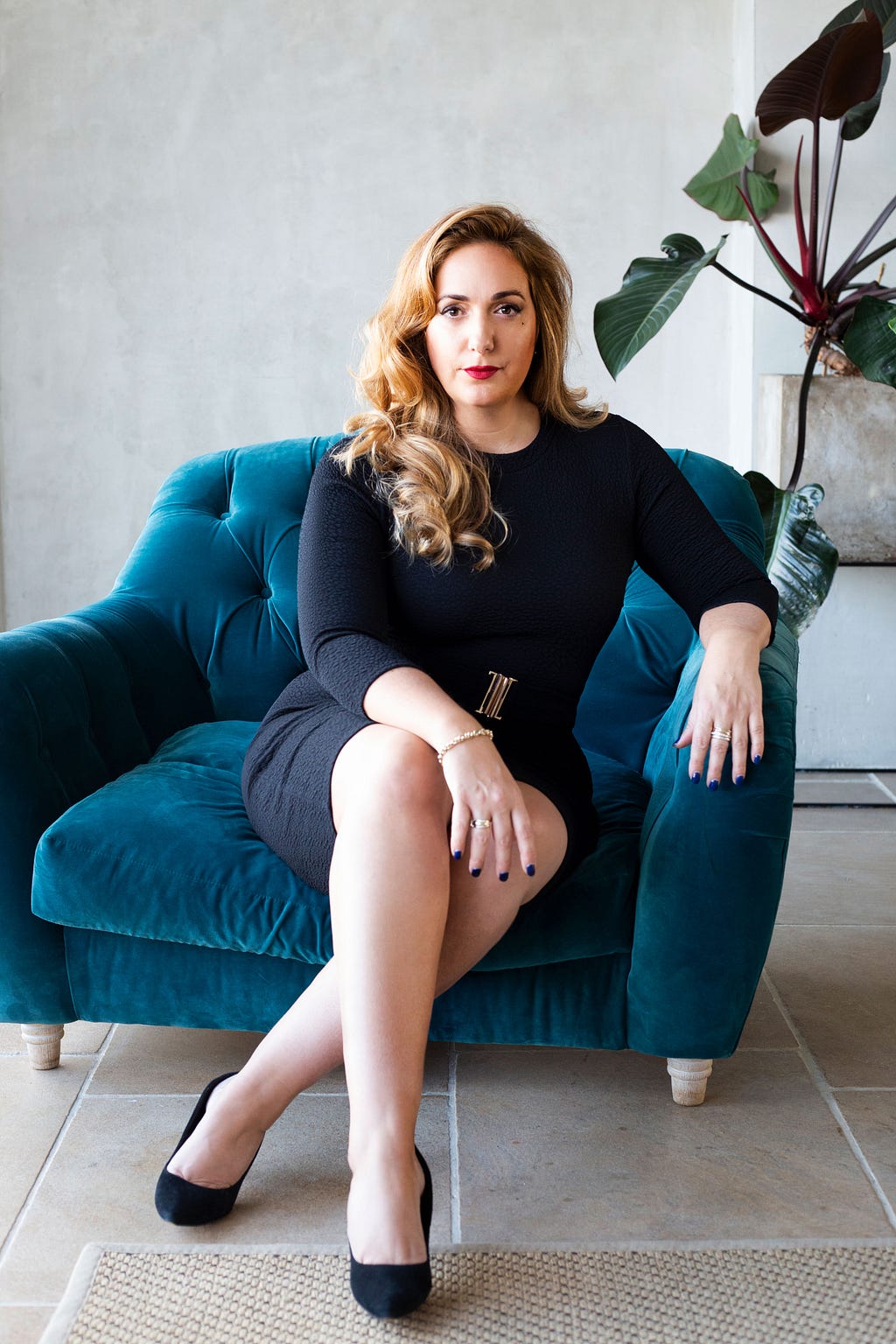
Power Women: Carla Castro of Botoplace On How To Successfully Navigate Work, Love and Life As A…

Power Women: Carla Castro of Botoplace On How To Successfully Navigate Work, Love and Life As A Powerful Woman

An Interview With Candice Georgiadis

The first is discipline, because without consistency there are no results. Discipline accompanied me throughout my professional trajectory, I have always dedicated myself to everything I do.

As a part of this series, I had the distinct pleasure of interviewing Carla Castro of Botoplace.

Carla Castro is a Brazilian entrepreneur, beauty expert, and CEO of Botoplace. After 20 years of running her own multinational communication agency in Brazil, Covid brought life to a halt and provided room for big changes. Carla took the opportunity to follow a new dream, opening a specialized medspa in the United States. In 2022, with co-founder Fabiola Letterman, Carla opened the doors of Botoplace in SouthWest Florida and created the first of its kind walk-in, botox-only, flat-fee clinic. Believing beauty aesthetics should be accessible to all, Carla’s vision was to create a place that had no hidden fees, and empowered women to feel their best. “Beauty is self-esteem, and self-esteem influences your physical and mental health, your attitude at work, the way people see you, everything. And that’s what Botoplace seeks to offer people, the rescue of self-esteem, of looking in the mirror and feeling good, empowered, and reflecting that.

Thank you so much for doing this with us! Before we dig in, our readers would like to get to know you a bit more. Can you tell us a bit about your childhood “backstory”?

I grew up in Northeast Brazil. It’s a region with an extremely rich and effervescent culture, filled with very happy people. But the area also suffers a lot from economic problems. I’m middle class, I know my privileges and I’ve had more opportunities than most people who were born in the same place as me. This dynamic influenced me as a young woman and especially now. I seek, through my work and everything I do, to help build a more equal society.

Can you tell us the story about what led you to this particular career path?

When I was working in marketing, I watched several small companies become big, successful businesses. It shed a light into the business world and I fell in love with entrepreneurship and the whole process that it involves.

Can you share the most interesting story that happened to you since you began your career?

Covid was definitely one of the most interesting moments in my career. After 20 years of building a career in Brazil in marketing and public relations, 2020 hit. With the pandemic and economic crash, I saw an opportunity for a change. I followed my heart and, as a Botox lover, I came to the USA and focused on stepping into the beauty industry by creating Botoplace, a Botox-only walk-in clinic, with flat rates and premium services.

You are a successful business leader. Which three character traits do you think were most instrumental to your success? Can you please share a story or example for each?

Over more than 20 years of work, I have had many successes, but also some failures.

One character trait that was critical to my success was learning not to give up in the face of defeat. For example, I was producing a huge Carnival party in Brazil, which was sponsored by one of the biggest beverage brands in the country. This brand backed out of sponsoring the party last minute which was a major loss, but I was able to quickly get the support of other brands and the party became one of the biggest in the Brazilian Northeast, becoming a tourist destination. It was something that helped me learn and strengthen my skills.

I also think it’s fundamental that businesses have a purpose, that they serve to improve society, and that they give back to the people who help for it to exist. So, being altruistic is an important character trait to have as a business owner. In my hometown (Recife, Pernambuco, Brazil), I helped raise around US$100,000 in partnership with Cow Parade for the renovation of a hospital for children with cancer.

Another very important thing is to never stop learning: always research and study. The world evolves at every moment, and it is necessary to follow these evolutions, both in general and in your niche. At the moment, I’ve been studying a lot about the botox market, American consumption habits, and much more. I’m always open to learning.

Ok, thank you for that. Let’s now jump to the primary focus of our interview. The premise of this series assumes that our society still feels uncomfortable with strong women. Why do you think this is so?

I think this is cultural. For many years the creation of laws, positions of power, and politics, were almost exclusively in the hands of men. People are not used to seeing women in charge. We still have a long way to go, but this is slowly changing.

Without saying any names, can you share a story from your own experience that illustrates this idea?

There have been several times where I have had to masculinize my image to be heard and respected. It’s as if the more “feminine” a woman is in a management role, the less capable she is seen. I often found that I had to wear less makeup, dress in more masculine clothes, and speak louder to get my ideas heard.

What should a powerful woman do in a context where she feels that people are uneasy around her?

You have to have emotional intelligence. Being machismo can make interactions difficult. While some people feel that what I’m doing isn’t good enough simply because I’m a woman, you don’t have to become abrasive–kindness also works. It takes patience and showing good results to change these scenarios.

What do we need to do as a society to change the unease around powerful women?

Women who achieve positions where their voices are heard need to educate other women on how to climb the ladder, too. And again, we need to practice patience, perseverance, and give great results. This builds trust. Unfortunately, we need to emphasize this more than our male counterparts, but it pays off. We have a long way to go, and things are changing, but as women we need to help each other.

In my own experience, I have observed that often women have to endure ridiculous or uncomfortable situations to achieve the success that men don’t have to endure. Do you have a story like this from your own experience? Can you share it with us?

As I said before, I often needed to dull my feminine side to achieve success. A man doesn’t need to dull his masculine side, he can just be who he is. Many times I had to be very firm and even rude when I was harassed, heard jokes, or received dinner invitations. The rules are just so different for men and women, it truly can be ridiculous and uncomfortable at times.

In your opinion, what are the biggest challenges faced by women leaders that aren’t typically faced by their male counterparts?

Mistrust of womens’ ability. They wonder if a woman will be able to handle the work, or if family and motherhood will get in the way, taking the focus off the profession. Often in job interviews, women are asked if she has or wants to have children, if she has someone to leave them with, and what she would do if they got sick. Men don’t go through that kind of questioning.

Let’s now shift our discussion to a slightly different direction. This is a question that nearly everyone with a job has to contend with. Was it difficult to fit your personal and family life into your business and career? For the benefit of our readers, can you articulate precisely what the struggle was?

It was very difficult, but I have no regrets. As a single mother, I chose to invest in my career to provide my son with a comfortable life. But for that, I had to travel a lot, give up holidays, and special dates many times. It wasn’t easy, but it was worth it.

What was a tipping point that helped you achieve a greater balance or greater equilibrium between your work life and personal life? What did you do to reach this equilibrium?*

The tip is you can’t feel guilty. Not when you give up family moments to dedicate yourself to work, nor when you need to miss work to dedicate yourself to family. Do what needs to be done without beating yourself up about it, every area of your life needs a little more attention at some point, and that’s okay.

I work in the beauty tech industry, so I am very interested to hear your philosophy or perspective about beauty. In your role as a powerful woman and leader, how much of an emphasis do you place on your appearance? Do you see beauty as something that is superficial, or is it something that has inherent value for a leader in a public context? Can you explain what you mean?*

Beauty is the kindness, grace, and respect someone encompasses for another and themselves.

It means feeling good about yourself, whether it is because of makeup or nice clothes or exercising, it is having confidence in yourself. Beauty even means loving yourself for who you are and accepting others for who they are. It comes from within and reflects on the outside — but, sometimes, we can use what comes from the outside to ignite our inner beauty. Beauty is knowing who you are, what you can offer to the world, and what the world can offer to you.

Beauty is self-esteem, and self-esteem influences your physical and mental health, your attitude at work, the way people see you, everything. And that’s what Botoplace seeks to offer people, the rescue of self-esteem, of looking in the mirror and feeling good, empowered, and reflecting that.

How is this similar or different for men?*

Self-esteem is very important for women and men. But the search for self-esteem through the possibilities that medicine and cosmetics offer is still something new for the male audience. Only 10% of Botoplace’s customers today are men. But that number is slowly growing, and I see more men looking to feel good about their appearance and about themselves.

Ok super. Here is the main question of our interview. Based on your opinion and experience, what are the “Five Things You Need To Thrive and Succeed as a Powerful Woman?” (Please share a story or example for each.)

The first is discipline, because without consistency there are no results. Discipline accompanied me throughout my professional trajectory, I have always dedicated myself to everything I do.

Self-care is also fundamental, taking care of your skin, food, physical, and mental health. We need to feel good to do our best, and that’s why I created Botoplace, to help other people feel good.

Always study and research. I have many years of experience in marketing, but when I arrived in the United States, I had to learn about the behavior of American culture and about the local consumption and living habits, since each community has its particularities.

Being flexible and sympathetic is also essential in understanding others and dealing with day-to-day problems in the best possible way.

Lastly, having the best team. Working with a team of people who believe in what you believe in and who have the same goals makes all the difference. Nobody is powerful alone.

We are very blessed that some very prominent names in Business, VC funding, Sports, and Entertainment read this column. Is there a person in the world, or in the US with whom you would love to have a private breakfast or lunch with, and why? He or she might just see this if we tag them.

Lori Greiner (American television personality and entrepreneur. She is an investor on the reality ABC TV series Shark Tank). She represents a lot of what I believe, understands a lot about marketing, products, and female entrepreneurship. I would love for her to know my business, and I’m sure we’d get along very well.

Thank you for these fantastic insights. We greatly appreciate the time you spent on this.


Power Women: Carla Castro of Botoplace On How To Successfully Navigate Work, Love and Life As A… was originally published in Authority Magazine on Medium, where people are continuing the conversation by highlighting and responding to this story.
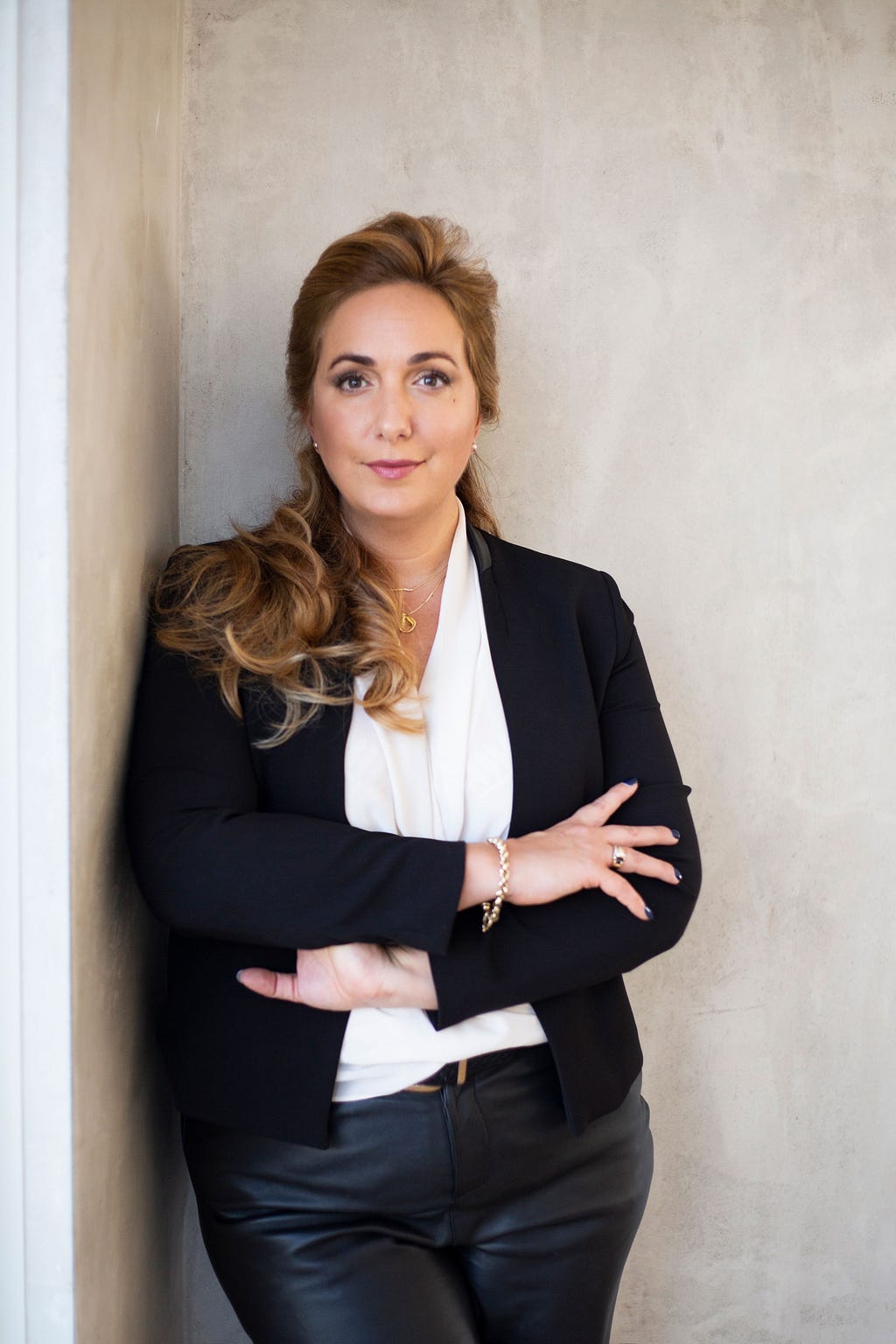
Thriving As A Woman In a Male-Dominated Industry: Jill Tietjen of Technically Speaking On The Five…

Thriving As A Woman In a Male-Dominated Industry: Jill Tietjen of Technically Speaking On The Five Things You Need To Thrive and Succeed as a Woman In a Male-Dominated Industry

An Interview With Candice Georgiadis

Never give up. When I was working on one of my books, my co-author told me that she had a project she was working on and she needed to do some tasks in a spreadsheet. But, she couldn’t figure it out so she stopped. This was before Google and before smart phones and before YouTube. I was flabbergasted. What do you mean, you stopped? I never even envisioned that as an option! When you have a task to do you figure it out — if that requires asking everyone you know, you ask, but you have to get the task done and you don’t give up, you get it done.

In the United States in 2022, fields such as Aircraft piloting, Agriculture, Architecture, Construction, Finance, and Information technology, are still male-dominated industries. For a woman who is working in a male-dominated environment, what exactly does it take to thrive and succeed? In this interview series, we are talking to successful women who work in a Male-Dominated Industry who can share their stories and experiences about navigating work and life as strong women in a male-dominated industry. As a part of this series, we had the distinct pleasure of interviewing Jill Tietjen.

Author, international speaker, and electrical engineer Jill Tietjen has spent more than 45 years in the electric utility business as a consultant and expert witness and is now an advocate for women worldwide. She has authored or co-authored twelve books to date include the award-winning and bestselling books, Her Story: A Timeline of the Women Who Changed America and Hollywood: Her Story, An Illustrated History of Women and the Movies. Her latest award-winning book (Fulcrum, 2022), Over, Under, Around, and Through: How Hall of Famers Surmount Obstacles, has been called inspirational and uplifting.

Thank you so much for doing this with us! Before we dig in, our readers would like to get to know you a bit more. Can you tell us a bit about your childhood “backstory”?

I am the oldest of four children of an aerospace engineer and an elementary school teacher. I played the violin starting at age 8 and although my friends today consider me athletic, my K-12 education was before Title IX and athletic opportunities weren’t open to girls. I did play tennis. I started working in the public library at age 14 — with a special permit allowing me to work because I wasn’t yet 16. I was active in extracurricular activities throughout school and rose to leadership positions in many organizations.

Can you tell us the story about what led you to this particular career path?

Growing up, we were always told how important education was and that we would be going to college. My heart was set on attending the University of Virginia (UVA). Fortunately for me, UVA admitted women as undergraduates for the first time in the Fall of 1970. I entered in the Fall of 1972 as a math major — not in the engineering school because no one, not even my PhD engineer father, said I should study engineering. But I was lucky, I quickly discovered that engineering was for me and worked with the engineering school dean to transfer in. I graduated with a degree in applied mathematics and a minor in electrical engineering and went to work in the electric utility industry at Duke Power (today Duke Energy) because they wanted my fiancé (who was a nuclear engineer) and they got me in the bargain. Planning work in the electric utility industry was a perfect fit for me. After Duke I worked at other firms and launched my consulting business in 2001. I have sat on the board of directors of Georgia Transmission Corporation of Tucker, Georgia since 1997 and was on the board of directors of Merrick & Company of Greenwood Village, Colorado from 2010 to 2021.

Can you share the most interesting story that happened to you since you began your career?

There are so many stories — I will share two.

1. My first week on my first job out of college, my supervisor at Duke Power decided that I needed to visit power plants to get some real-world knowledge. At one of the coal-fired power plants, we walked around the turbine floor to see the turbine-generators. Then we took the elevator up to see the control room. When we exited the elevator, I realized we were in the men’s locker room! One man was there, but thankfully for me he was fully dressed. This demonstrated to me for maybe the first time the dearth of women in the electric utility industry.

2. I did a lot of expert witness work during my career, primarily before public utility commissions. This particular story occurred before the Wyoming Public Service Commission. I was testifying on behalf of Black Hills Power, based in Rapid City, South Dakota, in their case requesting the certificate needed to construct a coal-fired power plant in Gillette, Wyoming. During my testimony, I stated that the analysis that had been completed demonstrated that the power plant proposed was the best choice to provide safe, economic and reliable power. The Deputy Commissioner, really, just to be obnoxious, said to me, Ms. Tietjen, are you saying the other options aren’t safe? I stumbled through my answer. Black Hills Power got the certificate.

You are a successful business leader. Which three character traits do you think were most instrumental to your success? Can you please share a story or example for each?

Since I have been inducted into the Colorado Women’s Hall of Fame, the Colorado Authors’ Hall of Fame and the National Academy of Construction, it appears that others believe I am successful. I feel there is so much more for me to do. With that caveat, here are three traits and stories.

1. Never give up. When I was working on one of my books, my co-author told me that she had a project she was working on and she needed to do some tasks in a spreadsheet. But, she couldn’t figure it out so she stopped. This was before Google and before smart phones and before YouTube. I was flabbergasted. What do you mean, you stopped? I never even envisioned that as an option! When you have a task to do you figure it out — if that requires asking everyone you know, you ask, but you have to get the task done and you don’t give up, you get it done.

2. Find a way. When someone tells me I can’t do it, or women can’t do it, that just stiffens my backbone and makes me try harder. In fact, the 50 successful women profiled in my book Over, Under, Around, and Through: How Hall of Famers Surmount Obstacles found a way — they went over, under, around, or through the obstacles that were in their way. They used mental intelligence, emotional intelligence, social support, moral compass — spirituality, determination — perseverance — persistence, creativity, optimism, resilience, action-orientation, and passion either singly or in combination to overcome the obstacles. We each have these abilities, too.

3. Prepare for the worst thing that you think could happen. The worst thing almost never happens, but if it does, you are ready for it as well as every other lesser worse thing. Do not obsess about it. Look calmly at the actions that you would take if it did happen. For me, the worst thing did happen. Nine months after my first husband and I were married, his parents died in a murder-suicide. We were 22 years old. His 14-year-old and 18-year-old brothers came to live with us. We got them both through high school, college, and the younger one through law school. And we continued working full time, got our MBAs at night, and I continued my extracurricular activities including playing my violin in the community orchestra and playing tennis. We kept putting one foot in front of the other, taking one step at a time.

Ok, thank you for that. Let’s now jump to the primary focus of our interview. Can you help articulate a few of the biggest obstacles or challenges you’ve had to overcome while working in a male-dominated industry?

Being a small woman in a male-dominated industry has led to many challenges. I will focus on credibility and invisibility. Many years ago, I heard Dr. Doris Kuhlmann-Wilsdorf speak at a Society of Women Engineers’ (SWE) National Convention. During her remarks, she referred to the Yoda Syndrome — which basically means if you don’t look like the expectation (tall, white, male) then people walk right past you or don’t listen to you or don’t value your opinion. In the movie Star Wars: The Empire Strikes Back, our hero Luke Skywalker is ready to learn how to use his Jedi skills and goes to the planet where the Jedi master, Yoda, resides. Luke walks right past Yoda because in Luke’s eyes, the squat green creature can’t be a Jedi master. Small women experience the Yoda syndrome. We have to demonstrate our competence and credibility over and over — in fact, in every new situation, with every new client, constantly!

And like Yoda, small women are invisible. Luke Skywalker walked right past him. We have to learn to be excellent in what we do and find our voice. A story — let me set the scene. New York City, July 1990. Hot and humid. There has just been a huge thunderstorm that dumped a lot of rain in a short period of time. Three of us are leaving the SWE National Convention hotel in a cab to LaGuardia Airport. There is a lot of standing water on FDR Drive. We pass a cab on the side of the road that has overheated. Then, the temperature indicator in our cab starts to rise. Gina, almost 6 feet tall, is sitting in the front seat of the cab. She tells the male cab driver to turn the heat on. He looks at her like she has lost her mind. I am in the back seat — I trust Gina, I don’t know why the heat needs to be turned on — but she’s an engineer. So, in my “big” voice (my second husband says I am not intimidating until I open my mouth), I say “TURN THE HEAT ON!!” The cab driver turns the heat on, the taxi does not overheat, and we make it to LaGuardia Airport.

In summary — my biggest challenges or obstacles are credibility and invisibility.

Can you share a few of the things you have done to gain acceptance among your male peers and the general work community? What did your female co-workers do? Can you share some stories or examples?

I have worked as hard as I can to be competent. I am always learning — you have to be a lifelong learner in the engineering profession. For my board seats, I read business publications as well as trade publications to understand the business, economic and technical trends and happenings in the world and in my industry. I participated in many volunteer organizations within the engineering community and rose to leadership positions in most. I did learn to play golf — but I’m terrible and after getting tendonitis in both wrists, I stopped. At times along the way, it has been very helpful to have golf knowledge. I got involved in the professional trade association, breaking many barriers and paving the way for other women. I also broke barriers for other women on my corporate boards. I did all of this with a sense of humor — I do have two brothers so I learned a lot while growing up about how to handle male-dominated environments.

Early in my years on the Merrick board (when I was the only woman), we were asked to review a particular employee handbook. Being a writer — and a very good editor — I read the handbook. I was fairly outraged by the tone and approach. I also made edits in the document. When I completed my review, I emailed the Chair of the Board and the Corporate Secretary and told them I had concerns. Neither responded to the email. The day of the board meeting dawned. Twelve men and me. The Chair starts the discussion at 8:30 am on the handbook — going in a circle around the table — I am thus next to last. Comments are received from the other board members as well as outside counsel “Great.” “Good Job.” “I Like It.” My turn. I say — I don’t like the tone of the document. It reads to me as very elitist. And I explain why. Throughout the rest of the meeting, which lasts until noon, each man on the board finds a way to use the word “elitist” in his comment on other items of business. They are “hazing” me but also accepting me.

I joined the Georgia Transmission Corporation board in 1997; one other woman was on the 13-member board. The men are somewhat remote, friendly but not warm. In about year 3, it is the time of year to take a picture of the board for the Annual Report. The photographer has put three high stools in the area where the photo shoot will take place. The board chair is instructed to sit in the middle of the three stools. The other woman and I are instructed to sit on the other two seats on either side of him. The Board Chair says he is a thorn between two roses. And then he says, he doesn’t know where to put his hands. Finally, the dam of propriety was broken and we could develop warm and lasting relationships on the board. Humor led the way — again.

What do you think male-oriented organizations can do to enhance their recruiting efforts to attract more women?

I’m not sure the issue is recruiting women as much as it is retaining and ensuring women have the opportunities to reach their potential. The 1999 MIT School of Science study is instructive. Women were so optimistic when they joined the faculty at MIT but at mid to late career, they had been systematically marginalized. When Dr. Nancy Hopkins told MIT President Charles Vest that, he did not believe her. He said, we’re MIT, show me the data. She got the data. Inequitable distributions were found involving space, amount of 9-month salary paid from individual research grants, teaching assignments, awards and distinctions, and inclusion on important committees and assignments within the department. In addition, women were believed to be seriously underpaid. Changes were made.

When companies say they don’t have a gender pay gap, or gender disparity in promotions, training, mentorship, whatever — see what the data show — if it is ever available (mostly, not available). How many women are on their board? The same issues, by the way, will exist with people of color.

Many changes can be made but first there has to be a recognition that the unconscious and affinity biases are at work.

Ok thank you for all of that. Here is the main question of our interview. Based on your opinion and experience, what are the “Five Things You Need To Thrive and Succeed as a Woman In a Male-Dominated Industry?” (Please share a story or example for each.)

How do you thrive and succeed as a woman in a male-dominated industry?

First, you have to have more than thick skin — one of my friends calls it rhino skin. The arrows and pellets aimed at you have to roll off. You have to learn not to take things personally. I wrote an article years ago titled “Snappy Responses to Obnoxious Comments.” Here are a few examples:

Obnoxious Comment: You don’t look like an engineer. OR You really look like an engineer.

Snappy Response: Thank you. OR Why would you make a comment like that? OR I use a lot of makeup.

Obnoxious Comment: Must be that time or the month. OR You must be on the rag.

Snappy Response: What a rude thing to say. OR Would you want someone saying that to your wife (daughter, sister)? OR I can’t believe you would be crude enough to say that OR You’re obviously not addressing me.

And my all-time favorite exchange which is between Sir Winston Churchill and a woman of high society:

Woman: Sir Winston, I believe you’re drunk!

Sir Winston Churchill: Yes, Madam. But in the morning, I will be sober. And you will still be ugly.

Second, you must be excellent technically in your job. Work hard. Be good at what you do. Become an expert — invited to speak at industry conferences. If your company has internal awards, make sure that you are nominated for the appropriate ones. Check out awards at your alma mater and get nominated for appropriate awards there. And check out professional and community organization awards and get nominated for the appropriate awards there as well. Become like my friend, Jackie, whose nickname was “Do Most” because she could do most whatever she was asked. Complete a major power plant construction project on time and on budget. Check. Oversee the studies needed and the preparation of the application for a certificate of public convenience and necessity for a new power plant. Check. Supervise the entire process from issuance of a request for proposals to project construction and completion of a power plant. Check. Always deliver. Always follow through on your commitments. Be reliable. Be dependable.

Third, hone that sense of humor. You will need it constantly. Learn to laugh at situations. Learn to laugh at yourself. I am in a client meeting — 13 men and me. Two of the men are developers who want to develop a power plant. During the meeting it becomes obvious that they really don’t know what they are doing. They don’t know where the power plant will be located — haven’t even decided which state. Don’t know how big it will be. Don’t know when it would become operational. As the President of the utility (Bob) and others ask them questions — the answers keep changing. Bob gets frustrated and finally says, “Will you make up your mind? Or are you going to continue to be as fickle as a . . .?” Then Bob turns beet red, looks at me, and I say, “What are you going to do now, Bob?” And he completes the sentence “a woman.” A keen sense of humor, used often, is imperative.

Fourth, emotional intelligence is not optional. Emotional intelligence includes the ability to handle one’s own emotions and to relate appropriately and empathetically with others. The four categories of emotional intelligence are self-awareness, self-management, social awareness, and relationship management. When you have high emotional intelligence, you not only know how you feel but you also know how others feel and you are able to adjust your behavior as the situation warrants. Use your intuition often — trust it. It will serve you well. Two of my male colleagues and I are in New York in January 1991. We are arranging the financing of a major power plant with New York bankers and attorneys. We are in the conference room of the attorney’s office at 7 pm at night. Someone calls into the conference room — turn on the radio. The Kuwait War has started. I watch the banker we are with. He has a different color pen for each topic area. He is putting the caps on all the pens and putting them away. I say to my two male colleagues, “This meeting is over.” They said, “How do you know?” And I said, “Because David just put all of his pens away.” Use your eyes, your ears, your heart, and your intuition.

Fifth, cultivate your social support network. As we learned in spades during the COVID-19 pandemic, we are social animals and we need contact with other people. We need people who care about us and our physical and emotional well being. We need a network of people who encourage us. If you don’t have a social support network, get one. My primary support structure for years and years has been the Society of Women Engineers. A place where I was accepted. A place where I did not have to prove myself. A place where others understood and had similar experiences. A place where others could relate to me and tell me I wasn’t crazy.

If you had a close woman friend who came to you with a choice of entering a field that is male-dominated or female-dominated, what would you advise her? Would you advise a woman friend to start a career in a field or industry that’s traditionally been mostly men? Can you explain what you mean?

I have spent more than forty years encouraging other women to enter science, technology, engineering and mathematics (STEM) fields and pursue STEM careers. I can’t imagine a better career for me than what I’ve had in the electric utility industry. I would tell her that it isn’t all roses — but life isn’t all roses — all of us face obstacles constantly (or as Sister Lydia Peña said in my book Over, Under, Around, and Through: How Hall of Famers Surmount Obstacles — For, without obstacles, there is no life). I am reminded of the IBM advertisement in magazines from the 1980s which featured two sets of baby booties — a blue pair and a pink pair. The thrust of the ad is this: the blue baby booties are encouraged to pursue STEM careers and the pink baby booties are not. But what if the cure for cancer is in the pink baby booties and she is not encouraged? How can we not take advantage of the potential of everyone to solve the many technological challenges facing the world today?

Have you seen things change for women working in male-dominated industries, over the past ten years? How do you anticipate that it might improve in the future? Can you please explain what you mean?

Societal change is slow but there are more women pursuing STEM careers now versus when I started. I worked with the National Academy of Engineering from 1997 to 1999 on a Celebration of Women in Engineering task force that culminated in a symposium. Our theme for that symposium was “50–50 by 2020”. We were quite overly optimistic. So was the Society of Women Engineers which when founded in 1949–1950 envisioned parity in the not-too-distant future and here we are 70 years out and not close to parity. But where would we be if we didn’t at least have a goal?

We are very blessed that some very prominent names in Business, VC funding, Sports, and Entertainment read this column. Is there a person in the world, or in the US with whom you would love to have a private breakfast or lunch with, and why? He or she might just see this if we tag them.

Melinda Gates. We share a common mission to advocate for women worldwide.

Thank you for these fantastic insights. We greatly appreciate the time you spent on this.


Thriving As A Woman In a Male-Dominated Industry: Jill Tietjen of Technically Speaking On The Five… was originally published in Authority Magazine on Medium, where people are continuing the conversation by highlighting and responding to this story.

Joel Freund of Fluex Media On How to Use LinkedIn To Dramatically Improve Your Business

An Interview With Candice Georgiadis

Open communication is not complicated. It’s just very hard. We try to avoid hardship, and end up complicating everything in the process. Business owners tell me all the time: “You don’t understand. This situation is so complicated.” Once we dig deeper, it’s clear that it’s actually very simple — you need to tell the employee this or that. Ah, but that’s hard.

As part of our series of interviews about “How to Use LinkedIn To Dramatically Improve Your Business”, I had the pleasure of interviewing Joel Freund.

After quickly climbing the corporate ladder into management positions, Joel was hired as CEO at a telecom company, where he used LinkedIn organically to bring the product to market. After leaving that role, Joel founded Fluex Media (https://fluexmedia.com), which currently manages some of the largest personal brands on LinkedIn. His team uses Fluex Media’s unique, trailblazing process to build a consistent, authentic, and lucrative LinkedIn presence for executives at B2Bs. When he’s not working, you’ll find him playing music, listening to audiobooks (favorite topic: company culture), and donating kidneys.

LinkedIn profile: https://www.linkedin.com/in/joefreund/.

Thank you so much for doing this with us! Can you tell us a story about what brought you to this specific career path?

When I was hired as CEO of a national telecom company, my task was to bring the product to market. I wasn’t told one thing: the company’s entire budget had been spent on product development. The budget for marketing was a total of… $0. I turned to LinkedIn as a free marketing tool. 3 months in: nothing doing. 6 months: starting to gain some traction. 9 months: this is working! Companies I hadn’t managed to open a conversation with, people I couldn’t talk to — they were seeking me out at trade shows all over the country, taking my calls, trusting me, and giving me serious consideration. My LinkedIn presence put the telecom company on the map as a legitimate player, and I was the face of it. All this was done organically, without a cent in ad spend: just posting, engaging, and connecting consistently and strategically.

Friends with their own businesses followed my journey and asked, “What’s the secret?” I freely provided tips and advice. When I left my role, one company asked me to help them with LinkedIn in an official capacity. Then another asked the same.

I realized that while countless companies are offering LinkedIn services such as lead gen, automation, ghostwriting, or paid ads, nobody was offering an authentic, organic, all-inclusive service run by real people. As I built out my services and process, I started charging. Soon after, I hired an assistant, and then a copywriter. My little side gig was starting to look like a real business!

I could never have foreseen this journey, and never expected to have grown into the company Fluex Media is today. I was thinking small until one very interesting drive from New Jersey to Virginia…

Can you share the most interesting story that happened to you since you started this career?

There was a prospect I was convinced could become a leader on LinkedIn, but his whole company was very against the whole idea of social media and personal branding. I had many conversations with the business owner but he wasn’t open to it. We ended up working on a different project together and needed to do some real brainstorming, so decided to go away for a day or two. We set out on the 7–8 hour drive to Virginia Beach.

During the drive, I was busy with my couple of clients. Back then I was still writing up all the posts myself. He listened in to the conversations and started asking: How does it work? Why did you write this instead of that? What is this person’s goal? This guy said something much longer — why are you writing it this way?

He said he wants to do LinkedIn. Right now.

I asked him a couple of questions and created some posts. We put up a profile picture and put out the first post. It got a lot of engagement. He was so excited. His account had 7 followers then.

On the way back, I had a call with a great writer I was considering hiring full-time. She suggested a partnership, with her running the creative side and me doing the business aspect. I said, Yeah, that makes a lot of sense. Next to me, this business owner is gesturing wildly at me. When I hung up, he asked if I was crazy. I couldn’t see the problem.

Him: How many clients can 1 writer handle?

Me: 10 accounts, max.

Him: Okay, so what happens when you get your 11th client? 20th? Every time you need another writer you give them a partnership?

Me: I don’t know. I never thought of having more than 10 clients.

Him: You’re crazy! This is a real business. Do you know how many business owners like me have no idea what LinkedIn is all about? If they would understand the power of it, you’ll have hundreds of clients!

Me: You’re thinking like a visionary. I’m not a visionary. I don’t need a writer as a partner; I can hire writers. I need a visionary partner. I would make stupid decisions like this every day if I don’t have a visionary.

Him: You know what I need? An integrator. I have all those great ideas, but to make it happen — I don’t know how to do that.

By the end of that drive, we shook hands on a partnership that turned out to be the foundation of what later became Fluex Media. I’ve never looked back.

It has been said that our mistakes can be our greatest teachers. Can you share a story about the funniest mistake you made when you were first starting? Can you tell us what lesson you learned from that?

One of the biggest mistakes I made was thinking small. Even funnier was that a die-hard social media skeptic was the person who believed in my little business even more than I did — he became my partner and the visionary at Fluex Media!

One of my takeaways from this experience was that as much as we tend to think we need to have everything planned out — goals, prospects, partnerships, investors — in reality, despite our efforts, often you just need to work on building relationships, and good things happen from there. It’s not always clear which action will lead to which outcome, so get out of the box and be open to unexpected results.

My second lesson was about making smart partnership decisions. I was about to take the wrong business partner, and for all the wrong reasons. Many business partnerships happen for the wrong reasons: out of fear, or because of a specific pain point you’re dealing with right now.

Let’s say you start a business and need money. Along comes somebody offering you $200,000 for a 50% partnership. As soon as the company starts making money, you start wondering: why am I doing all the work and forever after giving away 50%? It doesn’t make any sense.

You need money? You need a business loan, not a partner.

Or you need help managing the business. Along comes somebody offering to share the workload, for a percentage of the business. Soon the business grows and you need to hire more help — but that person is still getting a huge share of your profits.

Need help running the business? You need an assistant or COO, not a partner.

Don’t go into a partnership for short-term fixes. It creates the biggest problems in business. Go into partnerships because of self-awareness. Know your strengths, identify the gap in your skills, and find the right person to fill them. When you’re both on the same page about what each of you brings to the business, that value never goes away and it’s always a fair deal.

Leadership often entails making difficult decisions or hard choices between two apparently good paths. Can you share a story with us about a hard decision or choice you had to make as a leader?

The life of a business owner is a series of decision-making — and a lot of the time, those are hard decisions. When you have two good options, making the decision is easy. It’s when you have two bad options that it gets tough. That’s when business owners stall, and it stops the business from moving forward. Leaders need to be able to make decisions quickly, even without enough information.

A hard decision I had to make: a prospect at a larger company than our typical target market reached out. They were going public shortly and investing in their PR. Would we be able to help them with LinkedIn? We met the CEO and he seemed to be an excellent fit: articulate, outgoing, and with a great story. They gave us a sizeable deposit and we were ready to go. As soon as the first batch of content was ready, lots of other people at their company started getting involved: the publicist, the marketing team, and the investors. At that time, we were still working primarily with smaller companies where there weren’t so many people involved, so this became complicated. We tried in many ways to make this work, but it came to a point where everybody picked at the content until there was either nothing left, it didn’t reflect the CEO’s authentic voice, or it was very technical and unengaging.

I had two options: keep on taking their money (which we desperately needed at the time as a startup) to produce underperforming content that they were happy with but would not bring results; or I could say, “This was a mistake. We’re not on the same page about the best way to help you achieve your goals. We’ll refund you and we wish you all the best.”

Both options were unappealing. Keeping going and fighting every step of the way was bad for team morale, and knowing their money was not being well spent felt wrong — yet giving up that money and admitting this wasn’t working wasn’t easy to swallow either. Clearly, we had presented enough of a professional image to get this company to reach out and sign on in the first place; now we would be taking a step back.

Ultimately, after a few days, I made the call to go with option two. The main reason was that this account was dragging our team down — they knew the content wouldn’t perform, communication was challenging, and the overall feeling was confrontational and frustrating. The best interests of your team always have to come first.

We let the client go and took full responsibility for being unprepared to work with their team. The CEO was grateful for our open and honest approach. We refunded the entire amount and moved on. It’s hard to choose the lesser of the two evils, but it’s important to make that decision and keep moving forward.

Which social media platform have you found to be most effective to use to increase business revenues? Can you share a story from your experience?

There is no ‘most effective’ platform. Every business has different goals and target markets, and you need to choose where to invest accordingly. That being said, you need a bit of diversity — don’t invest everything in one place. The trap is trying to be everywhere at once. It takes time to build a strong presence on any social media platform, so focus on one to start with, and then slowly add more once that first one is well established.

For us, as a B2B, LinkedIn is where we invest the most time and effort, and it’s the same for our clients, who are also all in the B2B space. LinkedIn has proven to increase business revenues for B2B when used consistently and strategically. One of our clients actually had to leave LinkedIn for a while to hire more staff and increase his capacity to handle the influx of new business directly from organic LinkedIn! His LinkedIn presence built brand awareness, trust, and authority, and made him likable and memorable — plus it attracted two best-fit salespeople to reach out to him, get hired, and drastically grow his business. Full case study here: https://fluexmedia.com/case-studies/power-7-group/.

Let’s talk about LinkedIn specifically, now. Can you share 5 ways to leverage LinkedIn to dramatically improve your business? Please share a story or example for each.

Sure. One thing to bear in mind though is the timeframe for these benefits. You will immediately see increased engagement and profile views, but the real results — the lucrative connections and conversations — are earned with consistency and patience. At Fluex Media, we advise clients to expect it to take 9–12 months, depending on their industry, personality, and LinkedIn starting point. but the results are well worth waiting for:

  1. Legitimacy: The first thing anyone does when they hear about you — you cold call them, send them an email pitch, or they get referred to you — is search your name online. The first result will be your website; the second is your LinkedIn profile. If that profile is well-developed and you’re maintaining an active presence (so it’s clearly not a dummy account), you’ve proved your legitimacy and the connection is ready to move forward. When I was CEO of the telecom company, very few prospects had heard of us. I’d spend time on LinkedIn finding qualified people to call — it was interesting to see how many times — as I was on the call — I’d get a LinkedIn notification that the person was viewing my profile!
    Even if you have an excellent website, your LinkedIn profile is very different. The website gives a more technical overview of the company, while your LinkedIn profile is where prospects get to see the way you think and work, what you’ve been up to recently, and helps them get to know, like, and trust you.
    To dramatically improve your business: Set up a fully optimized LinkedIn profile and keep it updated.
  2. Authority: When you post industry news, commentary, and insights; and display your expertise and willingness to help, your audience slowly starts to view you as an industry authority. That makes your whole sales and marketing process and strategy so much easier, as building authority is one of the most important aspects of any campaign. I’ve landed several PR opportunities — interviews, features, podcasts — because my LinkedIn activity positions me as an authority on LinkedIn marketing and leadership, and my large following enhances that image. Those opportunities further build my authority, which leads to more followers and then more PR opportunities… and the cycle continues.
    To dramatically improve your business: Focus on a niche, provide real value, consistently engage with your target business community, and build relationships with other experts in your niche.
  3. Nurturing relationships: It’s becoming increasingly harder to reach decision-makers using the phone or email. LinkedIn is a powerful tool to be in front of the right people in a way that’s not salesy, pushy, or aggressive. Over time, your audience is getting to know, like, and trust you — especially if you engage insightfully with their content at the same time. Prospects may reach out o their terms when they’re ready, or even if they don’t — if you message them after a few weeks of interaction, they will likely be open to listening, as you’re not coming out of the blue and have already built a level of trust. It’s a longer — but more effective — sales process built on education, value, and familiarity.
    Trade shows, networking events, cold calling — clients tell us all the time how their results have improved with a strong LinkedIn presence. Every conversation becomes a warm conversation; even if you’ve never interacted directly on LinkedIn, it feels like you’re continuing the conversation from there.
    To dramatically improve your business: Using clearly defined search terms for your target market, build a ‘nurture list’ of people and companies you want to get noticed by. Send them a connection request with a custom note. Consistently engage with their content, or if they don’t post, add your thoughts to posts they’ve engaged with. After a few weeks, open a conversation in the messages.
  4. Recruitment: LinkedIn was originally created for this purpose, and it’s still one of the best places to find talent, though the method has changed. It’s no longer about reading resumes — now, it’s about showcasing your company culture, mindset, growth, opportunities, and core values so that you attract the right people. several of our clients have businesses with an agent structure — such as mortgages or insurance — and their primary purpose for being on LinkedIn is to attract best-fit candidates, which is a far more big-thinking way of growing their business compared to aiming to land one more client and then one more. At Fluex Media, we’ve also been fortunate to hire an amazing team — several already had their own successful businesses! — largely because the culture, mission, and growth we exhibited in our posts appealed to them. And this was during Covid when everybody was complaining about hard it was to hire!
    Equally importantly, a strong, consistent LinkedIn presence deters the wrong people and thereby avoids a lot of hiring problems. For example, for us, being open and honest is a very important factor. Not everyone likes that kind of environment. If someone like would end up at our company, it would create a lot of problems. By demonstrating your core values all the time, you have a lot less of a chance to fall in with people who are not a good fit.
    To dramatically improve your business: Define your core values and give potential candidates a peek inside your business: the people, the culture, the growth, and the opportunities. Think of it as a business journal.
  5. Branding: People have many different interpretations of ‘branding’ and don’t know exactly what it is. Is it a logo? A color? A font? A tagline? The word originates from when we used horses to get around. Their owners would use a hot iron to brand a symbol onto the horse’s flesh to mark it as theirs. It would stay there for life. Branding in business means imprinting a certain image and association in the minds of your audience. LinkedIn is an exceptionally effective tool for branding in the B2B space. With clear goals, a defined target market, and a good content strategy, you can put out information that cultivates a specific, carefully curated image of your company. Before social media, you had to compete with the big brands and their huge budgets to achieve this. Today, it’s so much easier. You build your niche audience and then consistently feed them information. It’s an unbelievable opportunity. Clients tell us all the time that after being with us for a year or two, people are recognizing them and excited to meet them — at networking events, the airport, anywhere.

I went to a conference a couple of months ago. I didn’t know a single person there, but the weirdest thing happened. From all over the room, people were calling out, “Joel!” and coming over to meet me. They ‘knew’ me from LinkedIn. One of the sessions at the conference was about social media. There were four presenters on the stage and I was in the audience. In the middle of the panel, one of the presenters threw a question at me: “Hey, Joel at Fluex Media — what do you think? Is that the same on LinkedIn?” I’d never interacted with this person before. That’s branding. In their minds, they know me, and they know me as the LinkedIn expert. In their brain, they think they know me, they feel like they know me, because they see my content. True, it’s not widespread — most of your readers probably haven’t heard of me. That’s fine; I don’t need that. I have a niche audience, and those are the people I speak to and want to be known by. Social media allows you to do that, and because so few executives are exploiting this opportunity (according to FTI, only 26% of FTSE 100 CEOs are posting regularly on at least one of LinkedIn, Twitter, or Instagram), consistent content creators have an excellent chance of standing out and building a following.

To dramatically improve your business: Define your target market. Consistently connect and engage with them, and feed them information that makes you memorable and authoritative.

Because of the position that you are in, you are a person of great influence. If you could inspire a movement that would bring the most amount of good to the most amount of people, what would that be? You never know what your idea can trigger. 🙂

I have a dream in which every workplace operates in a truly open and honest way. Open communication avoids all problems and conflicts in business and our personal lives. We need to get used to saying it the way it is. Too often, we hold back, and then resentment builds and eventually erupts. We see this in partnerships, marriages, between managers and teams, between siblings, in politics — it’s everywhere.

Open communication is not complicated. It’s just very hard. We try to avoid hardship, and end up complicating everything in the process. Business owners tell me all the time: “You don’t understand. This situation is so complicated.” Once we dig deeper, it’s clear that it’s actually very simple — you need to tell the employee this or that. Ah, but that’s hard.

I’ve rarely fired anyone. That’s because by the time it would reach that point, it was already so clear to the employee that they weren’t cut out for the role. I didn’t string them along with false assurances and excuses, and then have no choice but to spring the bad news on them when I’d tried everything else. I was open and honest from the start if things weren’t working well. I want people to be the same with me — don’t ‘be nice’ and tell me I’m doing well if I’m not.

I was very musical when I was young. I played several instruments (just placed my hands on the piano keys and started to play!) and sang really well. I expected to be a singer or musician when I grew up. Then, at 15 or 16, my passion dissipated completely. What happened? I used to sing at school events and received great feedback — and then a new student joined. He said he could sing and promised to compete with me. at the next event, he took the microphone… and made a real fool of himself. Everyone was snickering — but afterward, when he got off the stage, there was back-slapping, cheering, and enthusiastic compliments. Of course, he took the opportunity to sing again and again, believing he was doing a fantastic job.

I started doubting myself. Maybe it was the same with me. maybe I was also a joke.

Years later, I met this classmate at an event. Guess what? He took the microphone. His singing had not improved. In 40 years, nobody had told him the truth, and he was still making a fool of himself.

We’re not doing anyone a favor by not being upfront with them. If they’re not really good at something, don’t tell them they are. We all know people who think they’re good at something and they’re just not. How does it happen? Because people like to make other people feel good — and we hurt them in the process.

Be open and honest. Communication is the most important thing. Don’t say things that are not aligned, deep down, with what you really think.

We are very blessed that some very prominent names in Business, VC funding, Sports, and Entertainment read this column. Is there a person in the world, or in the US with whom you would love to have a private breakfast or lunch with, and why? He or she might just see this if we tag them.

I’d love to meet Chris Gardner, who overcame extreme hardships one after the next and eventually founded Gardner Rich, an investment firm, and became a multi-millionaire. His perseverance, endurance, and tenacity are unbelievable. His story is an inspiration. My main question to him would be, “How did you keep going? How did you not despair and give up?” Meeting him would be an honor and a privilege.

Thank you so much for these great insights. This was very enlightening!


Joel Freund of Fluex Media On How to Use LinkedIn To Dramatically Improve Your Business was originally published in Authority Magazine on Medium, where people are continuing the conversation by highlighting and responding to this story.

Thriving As A Woman In a Male-Dominated Industry: Ineke McMahon of Path to Promotion On The Five…

Thriving As A Woman In a Male-Dominated Industry: Ineke McMahon of Path to Promotion On The Five Things You Need To Thrive and Succeed as a Woman In a Male-Dominated Industry

An Interview With Candice Georgiadis

Be less agreeable. Agreeableness is the trait that comes with the most significant negative and positive aspects. It’s associated with compassion and typically women are higher in agreeableness — I’m not advising that you become less compassionate, but you do need to stand up for yourself.

In the United States in 2022, fields such as Aircraft piloting, Agriculture, Architecture, Construction, Finance, and Information technology, are still male-dominated industries. For a woman who is working in a male-dominated environment, what exactly does it take to thrive and succeed? In this interview series, we are talking to successful women who work in a Male-Dominated Industry who can share their stories and experiences about navigating work and life as strong women in a male-dominated industry. As a part of this series, we had the distinct pleasure of interviewing Ineke McMahon.

Ineke McMahon has two decades of executive recruitment experience, and a large portion of her work has been in typically male-dominated industries such as property, infrastructure, construction and government. Ineke was last year awarded the National Association of Women in Construction Businesswoman of the year award for her commitment to diversity outcomes with 56% of her placements being female over the last three years.

Ineke is the co-founder of the Path to Promotion — an online learning development academy which helps people at all levels to accelerate their careers.

Thank you so much for doing this with us! Before we dig in, our readers would like to get to know you a bit more. Can you tell us a bit about your childhood “backstory”?

My bachelor degrees in psychology and human resources have assisted me in the career path that I have chosen. I have always been passionate about seeing women succeed in their chosen industries. I am not sure why I have always been attracted to male dominated sectors, but I do enjoy them!

Can you tell us the story about what led you to this particular career path?

I have always had a strong interest in people. I kind of “fell” into recruitment early in my career, but was lucky enough to start in an organisation that specialised in executive recruitment, in the fields of Construction, Engineering, Building Products and Electrical. Being a young female in these industries provided an extra level of challenge! I found it rewarding to succeed in a space that had mostly middle-aged men as my competitors.

Can you share the most interesting story that happened to you since you began your career?

Interviewing people always come with really interesting stories! I have been blessed to be able to recruit some of the country’s leading roles including CEO roles, Board members and Panels for governments. I remember one of the most interesting roles that I recruited was for a CEO of a consortium that was delivering billions of dollars of infrastructure (specifically light rail). What I love about my job is that I am constantly learning. Every time that I take a brief, I learn about all of the challenges facing the organisation, the strategies and what’s happening in that industry. Then I get to interview the best people in the country and learn about why they made the decisions they made and what made them successful. It’s like doing a life MBA! This experience is what was the ignition for starting the Path to Promotion because I wanted all of the information that I have learned from the most successful people in their industries to be available to everyone.

You are a successful business leader. Which three character traits do you think were most instrumental to your success? Can you please share a story or example for each?

  1. Accountability. One of my favorite sayings that a previous Chairman of ours used to say all the time was “If it is to be, it’s up to me.” I have always taken responsibility for my own learning, for achieving the outcomes that I wanted and for my self-development. You are never going to be perfect, and you should be investing in your skills each and every day. Constantly ask yourself “what do the best do differently” and make sure you are investing in yourself. Warren Buffett is one of the world’s best investors, but he says: “Investing in yourself is the best thing you can do. Anything that improves your own talents.” I have been a lifelong learner. I invest in myself with courses, reading, lectures, pod casts….. this was another reason for starting the Path to Promotion!
  2. Initiative. Being prepared to go the extra mile, to think ahead, to do the over and above things are what set you apart from your competitors and peers. Don’t be happy with average performance! Constantly seek feedback on what you could be doing better or differently and implement those things.
  3. Hard-working. I have never been afraid of working harder, or longer than anyone else. I might not be the smartest, I might not be the most talented, but if I am getting on a treadmill against someone else, I know damn well that they are getting off before I do! Go the extra mile.

My general rule for recruitment is that the best performers have the following characteristics — they are competent, they show initiative, they are hard working and they have great team skills. Don’t neglect the softer skills when you are investing in your own personal development!

Ok, thank you for that. Let’s now jump to the primary focus of our interview. Can you help articulate a few of the biggest obstacles or challenges you’ve had to overcome while working in a male-dominated industry?

I think the biggest obstacle to overcome as a woman is often in our own heads. As soon as we focus on competence and confidence, we will see ourselves just as successful. One of the things that I come up against a lot as an executive recruiter is a lack of confidence in amazing women. I committed to diverse shortlists many years ago, but receive over 90% of my applications are male.

My main role in the industry is as a champion for women, but especially in the area of confidence. The Harvard Business Review has repeatedly reported that a man will apply for a role if he holds 40–50% of the skills, but a woman will hold off unless she has 80–90% of the skills. This is definitely my lived experience. In 2015 I personally committed to delivering diverse shortlists, which means that the majority of my role is “headhunting” women and convincing them that they have the skills for a particular role that I am recruiting. Often, the women that I “headhunt” are surprised when they get the role, but it often involves me doing a fair bit of “pushing”, or what I like to call “encouragement”. In our Path to Promotion business, our success accelerator course has had incredible success with women. So far, 42% of our graduates have received a promotion in the 12 months after completing the course, and a whopping 72% of our female graduates have received a pay rise.

I have personally championed several women into roles that had never had a woman in it before. I am proud of the fact that I deliver close to 50% women on my shortlists (I am currently sitting at 48.9% for the last 12 months — so close!) in industries that are typically male dominated.

Can you share a few of the things you have done to gain acceptance among your male peers and the general work community? What did your female co-workers do? Can you share some stories or examples?

Definitely just getting amongst it! The property industry is one of my areas of expertise, and I started going to industry functions where there would often be up to 500 men, and only one or two women. Personally, I like to wear bright colors to stand out a little bit more! It is a LOT better now!

What do you think male-oriented organizations can do to enhance their recruiting efforts to attract more women?

Wording in advertising is important. You don’t want to exclude the best talent by saying things like “must have five years of experience” because a woman with four-and-a-bit years of experience is less likely to apply. In your advertising you should emphasize opportunities and minimize the requirements.

Ok thank you for all of that. Here is the main question of our interview. Based on your opinion and experience, what are the “Five Things You Need To Thrive and Succeed as a Woman In a Male-Dominated Industry?” (Please share a story or example for each.)

  1. Focus on competence. Being good at your job is really important in a male-dominated industry.
  2. Be less agreeable. Agreeableness is the trait that comes with the most significant negative and positive aspects. It’s associated with compassion and typically women are higher in agreeableness — I’m not advising that you become less compassionate, but you do need to stand up for yourself.
  3. Work on your confidence. It’s essential that you understand your strengths and play to them. Remember that your male counterparts will feel confident enough to put themselves forward for a role when they have 60% of the skills — be prepared to do the same.
  4. Don’t be afraid of a little bit of competition. Put yourself forward for opportunities. Be prepared to put your hand up for projects where you know there might be a stretch for you.
  5. Surround yourself with great mentors and a tribe. It’s important to have mentors for your skill gaps, mentors who will champion you within your organisation and mentors who can challenge and develop you. In addition, you need a network of great women in your space who you can turn to for advice and support.

If you had a close woman friend who came to you with a choice of entering a field that is male-dominated or female-dominated, what would you advise her? Would you advise a woman friend to start a career in a field or industry that’s traditionally been mostly men? Can you explain what you mean?

I have done this recently! Commercial leasing in the property space is typically very male dominated and I recently encouraged a friend to leave her highly successful career to join this space. I will make sure that I support her and give her everything she needs to be successful!

Have you seen things change for women working in male-dominated industries, over the past ten years? How do you anticipate that it might improve in the future? Can you please explain what you mean?

Definitely! We are seeing increases in women in many typically male-dominated industries, and women continuing to support women will just see this increase.

We are very blessed that some very prominent names in Business, VC funding, Sports, and Entertainment read this column. Is there a person in the world, or in the US with whom you would love to have a private breakfast or lunch with, and why? He or she might just see this if we tag them.

Jordan Peterson, Simon Sinek or Shawn Achor.

Thank you for these fantastic insights. We greatly appreciate the time you spent on this.


Thriving As A Woman In a Male-Dominated Industry: Ineke McMahon of Path to Promotion On The Five… was originally published in Authority Magazine on Medium, where people are continuing the conversation by highlighting and responding to this story.