Inspirational Women in STEM and Tech: Dr Rae Wynn-Grant of Going Wild on the 5 Leadership Lessons…

Inspirational Women in STEM and Tech: Dr Rae Wynn-Grant of Going Wild on the 5 Leadership Lessons She Learned from Her Experience

An Interview With Candice Georgiadis

This is not scientific but allow the team that you work with to bring their full selves to work. Allow people to use their identity, background, perspective, etc. to inform their work and be comfortable in their work. This is critical in order to maintain a healthy relationship and work well together.

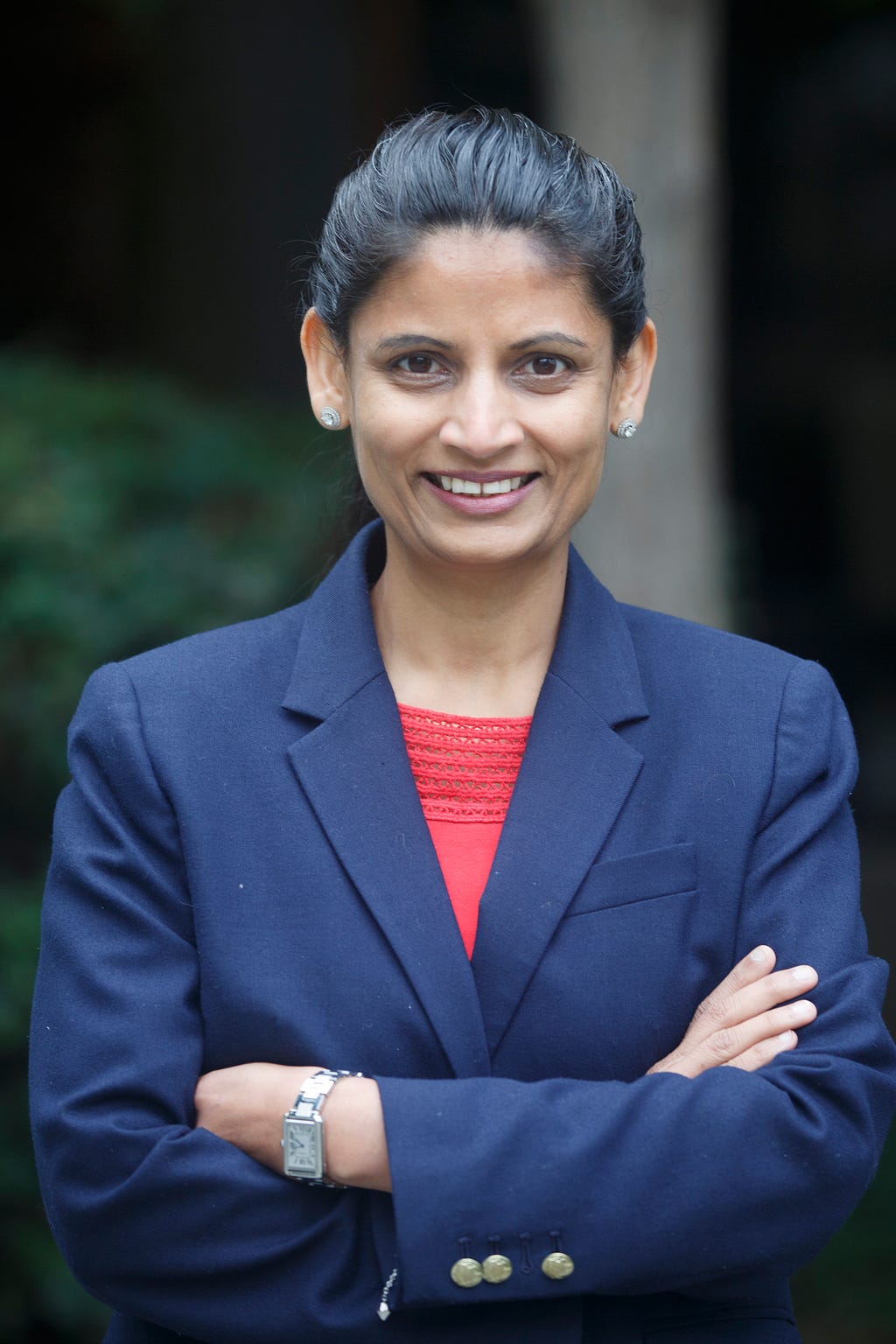
As a part of our series about “Lessons From Inspirational Women in STEM and Tech”, we had the pleasure of interviewing Dr. Rae Wynn-Grant.

Dr. Rae Wynn-Grant is the host of the chart-topping PBS Nature podcast Going Wild with Dr. Rae Wynn-Grant. She is also an acclaimed wildlife ecologist who researches how human activity influences the behavior of wild animals. Dr. Wynn-Grant is a scientist, conservationist, equity and justice advocate, and storyteller.

Thank you so much for doing this with us! Can you tell us a story about what brought you to this specific career path?

Growing up, I was not very outdoorsy. My family never went hiking or camping because we lived in very urban areas. However, I was always so interested in watching nature shows on TV and wanted to be like those hosts when I grew up. Then, in my undergraduate years, I chose to study environmental studies, but I still did not have any real relationship with nature or the outdoors. In order to challenge myself, I decided to go on a field studies program in Kenya. This trip would turn out to be my first-time camping, pitching a tent, hiking, and even seeing wild animals in person. When I saw those animals like giraffes, lions, elephants, gazelle, etc. out in the savanna, that’s when I was hooked and knew I wanted to know more about the large carnivores of the world.

Can you share the most interesting story that happened to you since you began your career?

I have a number of fascinating and thrilling stories of my many adventures that can all be found on my podcast Going Wild with Dr. Rae Wynn-Grant. Season one is filled with my personal stories, while season two is more of my incredible colleagues’ stories.

One story that did not make it into podcast is the time I was doing field work with a momma bear and her cubs. We were collecting data on the bear to learn more about the health of her and her cubs. I have been studying this momma bear for a while now, so it was supposed to be a routine check-up. However, during the check-up she had a medical emergency and all of a sudden had no pulse and was not breathing. Me and my team sprang right into action, giving this bear CPR in the middle of nowhere in this forest. We were literally giving this giant bear mouth-to-mouth and chest compressions. We truly thought we had lost her, but after maybe 10 minutes her pulse and breathing started to come back. We continued CPR for an additional 10 minutes and ended up successfully resuscitating her. She was still sedated at this point, so we were still safe, and she wasn’t able to get up. But she was alive. Never could I have imagined that part of my duties in the field would be giving CPR and mouth-to-mouth to a bear.

It has been said that our mistakes can be our greatest teachers. Can you share a story about the funniest mistake you made when you were first starting? Can you tell us what lesson you learned from that?

One of my funniest mistakes is thinking I have a stomach of steel. When I was living with the Masai people, they had a very different diet than my traditional diet at home. One of the things the warriors will eat before going out to hunt is cow’s blood. They will slit the cow’s neck and let the blood drain into a gourd. Then, they seal the cut back up with a serum, so the cow does not die, and the wound will heal. They then mix this hot bowl of cow blood with some cow’s milk and I of course thought I had been living there long enough and could handle it. So, I drank some and immediately paid the consequences in the bathroom.

What do you think makes your career stand out? Can you share a story?

Typically, when you think of a scientist, you think of someone in a lab wearing their white lab coat and using microscopes and test tubes. For me, my lab is outside in some of the most amazing rainforests, savannas, and forests. Rather than testing tiny, microscopic organisms or chemicals, I am observing lemurs, bears, and huge cats. I am a nontraditional person working in a nontraditional science field. It is very visual and similar to the nature shows, where I basically do all the nature show stuff but without the cameras majority of the time.

Are you working on any exciting new projects now? How do you think that will help people?

I have lots of new and exciting projects that I am working on. The first, as I mentioned earlier, is season two of my podcast Going Wild. It is streaming now on all podcast platforms.

The current research project I am working on is at the Jack and Laura Dangermond Preserve, where I am studying mountain lions that come down to the beach to do their hunting, which is incredibly unique for large cats in the Americas.

Lastly, I am writing a book, which is a memoir of my crazy, almost 20 years of living in the wilderness and all the mental, emotional, and romantic journeys that have accompanied me in my career. The book is expected to be published in January of 2024.

Ok super. Thank you for all that. Let’s now shift to the main focus of our interview. Are you currently satisfied with the status quo regarding women in STEM? What specific changes do you think are needed to change the status quo?

No, I am not satisfied with the status quo for women in stem. I am a Black woman in STEM, which I think is important to acknowledge because it is the only version of STEM that I am familiar with. I cannot speak for what it is like to be a white, Latina, or Asian, etc. woman. There are plenty of examples of women entering the STEM field, but examples of women in leadership within the STEM is where the field is lacking. The folks that are really in charge, and at the top of the field, are still dominantly white and/or male leaders. This should have changed ages ago, and I would like to see this change in the very near future.

In your opinion, what are the biggest challenges faced by women in STEM or Tech that aren’t typically faced by their male counterparts? What would you suggest to address this?

Sexism, and again, I can only answer this from an intersectional lens. I only know what it is like to be a Black woman. So, for me and women like me, we face the intersection of racism and sexism and how that plays out in a field that has historically excluded us. For me the biggest challenge for my STEM career is societal issues. For example, when the president is racist, when my community is under fire, when there is police brutality. These are things that for anyone from any identity, the social issues that are at the forefront. Many of these issues are a distraction from our professional work. It is so difficult for someone to show up and perform at work when there are these pressing social issues occurring every day.

What are the “myths” that you would like to dispel about being a woman in STEM or Tech. Can you explain what you mean?

The media has led us to believe that being a female scientist means being awkward, unattractive, nerdy, quirky, and clumsy. Other ones are that women are workaholics, single, and obsessed with work. Those stereotypes of what a female scientist looks like are the biggest myth. When women are shown in this light, it tells other aspiring women who want to get into the field, that if you want to have a family or relationship, you have to choose that wish over your career. It is very possible to have a rich full life and not be dominated by your work all the time.

What are your “5 Leadership Lessons I Learned From My Experience as a Woman in STEM or Tech” and why. (Please share a story or example for each.)

No rules, especially when climbing a professional ladder. For a long time, I thought the pathways in which people got to their positions were the only pathways. One of those impressions was that in order to climb, you have to stay in academia, and if you leave even for a moment, you will never get back in. However, I left momentarily to work in the non-profit space and have since returned back to academia. I am really glad that these rules are not necessarily true.

What advice would you give to other women leaders to help their team to thrive?

This is not scientific but allow the team that you work with to bring their full selves to work. Allow people to use their identity, background, perspective, etc. to inform their work and be comfortable in their work. This is critical in order to maintain a healthy relationship and work well together.

What advice would you give to other women leaders about the best way to manage a large team?

I would say delegate because that is advice I have been given. I do not manage a large team and often work by myself, but on the off chance I do work with a team, delegation has worked wonders. It is in those spaces that being able to delegate has taught me how to do so in my life, which has been very helpful.

None of us are able to achieve success without some help along the way. Is there a particular person who you are grateful towards who helped get you to where you are? Can you share a story about that?

I have had SO much help. Not at every step, but at most steps of my life. During the five years of my PhD, my advisors were so helpful and there for me in ways that they probably did not expect to be. They offered me tremendous help with basic things like setting up projects, forming my hypothesis, and choosing the population I wanted to study. They even helped me in my very first year get my hands on my first bear. All of the mentorship along the way at every step continues to impact me to this day.

How have you used your success to bring goodness to the world?

My work aims to save endangered species from extinction, so hopefully that brings enough goodness to the world. The type of science I do is to help make the environment healthier and more balanced so that we can keep this world growing, thriving, and spinning for years to come. I also do a good amount of social justice work, along with my scientific work, which is very important to me, as well.

You are a person of enormous influence. If you could inspire a movement that would bring the most amount of good to the most amount of people, what would that be? You never know what your idea can trigger. 🙂

Something constantly in the back of my mind is solving global hunger. I have always lived in communities in the inner city where there are a lot of blatant hunger issues. A good portion of people do not have access to the nutrition they need to be healthy, and there are immense amounts of inequality within this issue that arise too. This topic has been something I have always been so invested in, and I wonder if I have the capacity to tackle something so big. I encourage people to pay more attention to hunger, not just globally but also in their own communities.

Can you please give us your favorite “Life Lesson Quote”? Can you share how that was relevant to you in your life?

There are no rules. I mentioned it earlier in terms of professional pathways, but this rule has applied to my personal life SO MUCH. Like unlearning so many societal standards that were not serving me. Especially in the last few years as a wife and a mother, so many women are socialized to believe that there is one way to be a wife and mother. This idea was not fitting with me, and I felt very guilty and selfish that I wanted to do that part of my life differently. I desperately wanted to be married and have children, but I did not want to do it in the box the society had shown. Once I realized that no one really wrote the rules and they are not real, I was able to free myself from that mindset, which absolutely changed my life for the better.

We are very blessed that very prominent leaders read this column. Is there a person in the world, or in the US with whom you would love to have a private breakfast or lunch with, and why? He or she might just see this if we tag them 🙂

I would want to spend time with someone that is relatively different from me career wise. I would love to spend time with Serena and Venus Williams, because we are around the same age, they have been relevant people in my consciousness for a very long time, and I think we sort of come from similar places. Being excellent in a space where black women rarely are is something we can really relate to. One of the reasons I am really notable is because I am a black woman in wildlife ecology. Rising to the doctoral level and studying these large predators as a black woman, makes me stand out for better and for worse. In some ways it has done a lot for me and in other ways it has been really painful. I would love to talk to them about their wellness practices and how they incorporate their mental health care into their career and lifestyle.

Thank you for these fantastic insights. We greatly appreciate the time you spent on this.


Inspirational Women in STEM and Tech: Dr Rae Wynn-Grant of Going Wild on the 5 Leadership Lessons… was originally published in Authority Magazine on Medium, where people are continuing the conversation by highlighting and responding to this story.

Thriving As A Woman In a Male-Dominated Industry: Pam Roller of Velentium On The Five Things You…

Thriving As A Woman In a Male-Dominated Industry: Pam Roller of Velentium On The Five Things You Need To Thrive and Succeed as a Woman In a Male-Dominated Industry

An Interview With Candice Georgiadis

First and foremost, you need to have a tough skin — no matter the industry, there will always be people who want to see you fail. They will make comments that are intended to lower your confidence, but it is important to be true to yourself and have faith that you do have the abilities required to get the job done.

In the United States in 2022, fields such as Aircraft piloting, Agriculture, Architecture, Construction, Finance, and Information technology, are still male-dominated industries. For a woman who is working in a male-dominated environment, what exactly does it take to thrive and succeed? In this interview series, we are talking to successful women who work in a Male-Dominated Industry who can share their stories and experiences about navigating work and life as strong women in a male-dominated industry. As a part of this series, we had the distinct pleasure of interviewing Pam Roller.

Pam Roller has more than 25 years of experience in Medical Device Development and in the MedTech industry itself. She is currently a program manager with Velentium, a Houston-based professional engineering firm specializing in the end-to-end design, development, manufacturing, and post-market support of therapeutic and diagnostic active medical devices. Prior to this, Pam was a member of the Global Leadership Team at Medtronic Diabetes and held multiple positions including Director of Program Management. She led several key programs in the pump, CGM and consumables arena as well as several manufacturing transfers and NPI. Prior to Medtronic, Pam had various positions at Sulzer Intermedics, Baxter, and ICI Pharmaceuticals. Pam holds a BS in Biomedical Engineering from the Rochester Institute of Technology.

Thank you so much for doing this with us! Before we dig in, our readers would like to get to know you a bit more. Can you tell us a bit about your childhood “backstory”?

As a kid, I grew up on a farm and really loved horses and other animals that we had. This love for animals gave me an interest in biology and science from a young age. Later, this interest turned into a strong affinity for math and science that continued throughout my schooling years and beyond. Eventually, joining together my knowledge and skills in STEM and biology led me to the MedTech industry.

Can you tell us the story about what led you to this particular career path?

Initially, my career launched directly into biomedical engineering. However, my ability to have a strong understanding of each part of the process surrounding projects I was involved in took me into program management. For example, by having knowledge of the difference between the design process and the challenges of regulatory clearance, I was able to touch all different parts of the organization. This ability to see the greater picture led me from development to more project and program management roles.

I now have extensive experience in the MedTech industry, spending two decades working in the areas of product development, project management and facilities management. Specifically, I have spent the past seven years managing teams that develop technology to improve the outcomes for those living with type 1 diabetes.

Currently, I am a project manager at Velentium, a Houston-based professional engineering firm specializing in the end-to-end design, development, manufacturing, and post-market support of therapeutic and diagnostic active medical devices.

Can you share the most interesting story that happened to you since you began your career?

I had an interesting occurrence that happened while I was working at a pacemaker company in Texas. This particular company has just been acquired by another larger pacemaker company. At the celebration of the 25th anniversary of the company, all the employees were gathered under a large tent where we were having fun and mingling — it was a great atmosphere. Then, without warning, the new leadership made an announcement that they would no longer source their products from the Texas location and were moving operations to Indianapolis and Puerto Rico. The atmosphere immediately changed and the energy in the room became tense and uncomfortable. To this day, it is still one of the worst examples of leadership and communication that I have ever seen, and it could have been done so much better.

You are a successful business leader. Which three character traits do you think were most instrumental to your success? Can you please share a story or example for each?

No matter what kind of organization you lead, what your colleagues will remember in the long term is how you treated them, what kind of atmosphere you created, and your overarching character. Three traits I think were most instrumental to my success are outlined below.

  1. Communication — this is absolutely number one. Whether communicating with customers, subordinates or peers, if you cannot clearly and appropriately disseminate your goals and desires, the organization will ultimately fail.
  2. Passion — to succeed in any industry, you need to be passionate about what you are working on. I have a lot of experience working on diabetes devices, which is not a coincidence. Both my grandmother and mother had the disease, so based on my family history, the future did not look good for me. Being able to create products that are changing lives for a better world, especially in an area that has directly impacted me, drives me forward to find even better solutions. Also, having the chance to meet people who are being directly impacted by the products my teams develop gives me an even stronger burning desire to pursue the next greatest innovation.
  3. Be true to yourself — have full candor and leave any false bravado at the door. Be honest with yourself and your team about what can realistically be achieved. If you are not truthful with yourself, your team or your clients and commit to a project that is impossible, nobody will win in the end. Ultimately, you are taking away resources from other life-changing, or even-saving, projects. Be realistic upfront.

Ok, thank you for that. Let’s now jump to the primary focus of our interview. Can you help articulate a few of the biggest obstacles or challenges you’ve had to overcome while working in a male-dominated industry?

Being a female in a mostly male-dominated industry like MedTech does bring with it some interesting albeit surmountable challenges. Of course, the biggest obstacle is that there continues to exist the “old boys’ network” that is difficult to break into if you are new and especially if you are a female. In many instances, more tends to get done on the golf course or at the fishing shack than during actual business hours. Often, not being invited to such occasions can prevent women from moving up in their careers as they are not involved in major business decisions or discussions and thus are not given room to demonstrate their skills and grow.

Although the “boys club” aspect of the business is beginning to shift, it can still be a struggle. However, this is not a direct reflection of Velentium by any means, as the company is one of the most progressive companies in the space that I have been a part of.

Can you share a few of the things you have done to gain acceptance among your male peers and the general work community? What did your female co-workers do? Can you share some stories or examples?

Over the course of my career, I have addressed and successfully combatted this issue in various ways. For example, I attend as many networking events as possible to make connections that might not otherwise happen naturally. I also support and volunteer my time for many philanthropic initiatives that my company and industry support, which is another great way to meet industry leaders. At one of my previous employers, I even took the lead to be the team captain of our Diabetes Association’s Walk and Ride initiative. While organizing and participating in that event, I was able to interact with almost every person of influence across the company.

Additionally, and this goes for anyone trying to get a leg up at a company, there are always aspects of jobs that people simply do not want to do. No matter how difficult or mundane those less glamorous tasks are, you will soon be noticed as a team player by jumping in and completing them with a smile. Be careful not to be taken advantage of, but every additional moment of interaction will only build your credibility. Be willing to dig in and do that hard work!

What do you think male-oriented organizations can do to enhance their recruiting efforts to attract more women?

Lead by example, of course! If you look at an organization’s structure and all you see are one type of individuals represented (white males for example), that is the first aspect that needs to be addressed. It’s not scary to bring women and/or minorities into the fold, many of whom will bring new perspectives and ideas to the organization and industry. While the MedTech industry is constantly trying to innovate and evolve on the technical front, why are so many reluctant to advance when it comes to the face of the company on the leadership front?

Specifically, when it comes to women, and this is an area where Velentium excels, it is crucial for companies to cultivate a culture that is amenable to a strong work-life balance. I tend to think women do better in this area. It is also important to have policies in place, for both men and women, that allows young professionals to start and grow their families, without having to sacrifice career advancement.

For example, Velentium does not pay lip service to Velentonians being “family,” as each person already has one, and the staff is encouraged to prioritize those most important people. That encouragement is exemplified through continuous reminders and various mediums, compensation packages, and benefits including generous physical and mental healthcare coverage, paid time off, and retirement plans. The company manages results, not personal methods (unless the methods violate contractual or regulatory obligations or interfere with the results). Our team cares about productivity and keeping commitments through proactive communication habits, not “clock-punching.” Crucially, managing results gives staff the freedom to pursue wellness across all five dimensions, including taking advantage of resources available through benefits and programs.

Ok thank you for all of that. Here is the main question of our interview. Based on your opinion and experience, what are the “Five Things You Need To Thrive and Succeed as a Woman In a Male-Dominated Industry?” (Please share a story or example for each.)

I have an unbridled passion for this topic and could provide countless ideas, however, below are my top five strategies for how to thrive:

  1. First and foremost, you need to have a tough skin — no matter the industry, there will always be people who want to see you fail. They will make comments that are intended to lower your confidence, but it is important to be true to yourself and have faith that you do have the abilities required to get the job done.
  2. Secondly, find something you are passionate about — a way to bolster your tough skin is to use your passion as a defense to deflect the efforts of your detractors. You will be able to overcome any obstacle with your sheer dedication, determination, and commitment. Your passion will allow you to overcome any adversity.
  3. Next, it is key to have a strong and trusted mentor — it is crucial to find a person, whether within your company/industry or not, who you can confide in, relate to, and take guidance from. This person should be someone you have the utmost respect for and who embodies the characteristics you aspire to incorporate into your own work and life. When times get the toughest or monumental decisions arrive at your desk, this is the person you can turn to for reassurance.
  4. You will also need to prove yourself early — it is the unfortunate truth, but this is especially key for women who are entering a male-dominated industry. If you join a company worth their salt, such as Velentium, your colleague will already know your worth to the team. However, some environments may require an extra reminder that you belong in the position. Don’t be afraid to show off your expertise and skillset early on to earn the respect you deserve. From there, continually develop your career and take every opportunity to grow your capabilities — that’s good advice for every professional in all professions.
  5. Finally, understand that times/perspectives continue to change — although this is not true across the board, know that you have more allies than enemies when it comes to the need to diversify the leadership of various industries. The more diverse visions and voices that are allowed to enter the conversation, the more people will realize the power and value multiple points of view can bring to the workplace. If you don’t see the change, be the catalyst for the change. Be your best advocate and advance your industry!

If you had a close woman friend who came to you with a choice of entering a field that is male-dominated or female-dominated, what would you advise her? Would you advise a woman friend to start a career in a field or industry that’s traditionally been mostly men? Can you explain what you mean?

I would absolutely advise any woman to launch a career that has traditionally been male-oriented! The only requirement for entry is that you are truly passionate about the field you are going into. Know your “why.” Why do you come to work every day? What are you trying to achieve? Who are you trying to impact? What is your ultimate goal? You will be able to overcome any obstacle with your sheer dedication, determination, and commitment. Your work will reflect your passion and you will not be denied. So, if my friend’s passion fell within an industry that was typically male-dominated, I would 100% tell her to go for it. As long as you have the passion and drive, everything else will fall into place, male-dominated or not!

Have you seen things change for women working in male-dominated industries, over the past ten years? How do you anticipate that it might improve in the future? Can you please explain what you mean?

Overall, when looking at organizational structure charts, the percentage of women in leadership roles and positions of influence has increased over the past 10 years. More women now sit at the C-Level or are in other positions of high power. Additionally, with more women in STEM-type movements, we are seeing more women in roles that focus on math, science, engineering, and other traditionally male specialties.

When you look around at meetings or gatherings of decision-makers, more women have a seat at the table (or a time on the tee box). The progress that has been made is nowhere near enough, however. As we move forward, diversity in general will be crucial to advance the industry and continue changing lives for a better world. Perspectives are changing (though not all), and smart people recognize the value of having different points of view at the top.

We are very blessed that some very prominent names in Business, VC funding, Sports, and Entertainment read this column. Is there a person in the world, or in the US with whom you would love to have a private breakfast or lunch with, and why? He or she might just see this if we tag them.

I would absolutely love to have a private meal with John Oliver! I know it seems like a weird choice, but I think he is one of the funniest people on earth. You can tell that he is an extremely clever person, who put aside his comedic personality, truly has tremendous insight into everything happening around the world. Not to mention, I love his British accent!

Thank you for these fantastic insights. We greatly appreciate the time you spent on this.


Thriving As A Woman In a Male-Dominated Industry: Pam Roller of Velentium On The Five Things You… was originally published in Authority Magazine on Medium, where people are continuing the conversation by highlighting and responding to this story.

Yoky Matsuoka of Yohana On How Extremely Busy Leaders Make Time To Be Great Parents

An Interview With Candice Georgiadis

Let go of perfectionism — It took me a long time to get here, but I’ve learned the hard way to let go of perfection. Life has gotten so much easier when I changed my perspective from chasing perfection to embracing the imperfections — of motherhood, of being a wife, a CEO, it will never all be perfect and I love that now. Learning new mantras and weaving a few minute meditations into my day have really helped me to get to this state. Some days I might not have time to shower, but I will take a few minutes to massage my sore muscles. It’s something I continue to work on daily, but learning to let go has been a gift.

As a part of my series about “How extremely busy executives make time to be great parents” I had the pleasure to interview Yoky Matsuoka.

Yoky Matsuoka is a mom of 4 and the Founder/CEO of Yohana, a wellness company that leverages human-centric technology to help busy families create space in their lives to prioritize well-being. Prior to founding Yohana, Yoky Matsuoka brought her distinct approach to technology while leading tech giants, including as Vice President at Google, Chief Technology Officer at Nest, and co-founder of Google X. Matsuoka’s career began in academia as an endowed professor at Carnegie Mellon University and the University of Washington, where she founded and directed the Center for Sensorimotor Neural Engineering and the Neurobotics Laboratory, and earned a MacArthur Genius Award for her work in robotics.

Thank you so much for joining us! Can you tell us your “childhood backstory”?

I was born and raised in Japan and made the move to the US when I was 16, which is where I’ve been based ever since. I’m an only child and my parents still reside in Japan to this day so I feel lucky to have had an upbringing and perspective from both cultures. I initially came to the US to focus on tennis, which was my passion growing up, but was forced to sideline my hopes of playing professionally due to an injury. Despite this setback, I was fortunate to discover a new passion — science and technology. I got my B.S. from the University of California, Berkeley, my M.S and PhD in electrical engineering and computer science from MIT, and completed my postdoctoral fellowship at Harvard University. From the time I was a little kid, I always knew I wanted to have a big family with many children, but was also motivated to pursue a career. I wanted both and that is the life and career I pursued.

Can you share the story about what brought you to this specific point in your career?

My career began in academia as a professor at Carnegie Mellon University and the University of Washington. My area of expertise is in neuroscience and robotics. During my tenure at UW I founded and directed the Center for Sensorimotor Neural Engineering and the Neurobotics Laboratory to create devices to restore the human body’s capabilities for sensation and movement. My career took a turn when I decided to take the leap from academia to work in Silicon Valley as a way to get closer to consumer products so I can change how they live now. Since then, I’ve worked with leading tech companies having held roles including CTO of Google Nest, Vice President at Google’s Healthcare organization, Co-Founder of Google X, a senior executive at Apple, and CEO of Quanttus, a wearable health technology startup. I’m currently CEO & Founder of Yohana, where I’ve merged my technical background, my experience and challenges as a working mother, to build technology that will help families thrive.

Can you tell us a bit more about what your day-to-day schedule looks like?

Being a working mom requires creativity and structure. My day-to-day schedule is usually back to back with work meetings as well as juggling my kids school and sports obligations. The number one thing I wish for as a parent is to have more time back with my family. So I carve out daily routines that I am always present for no matter what. For me, it’s dropping my kids off at school every morning. These moments of connection in the car before the day gets going are priceless. I also make sure that I am setting weekly priorities. Every sunday, I sit down and plan the calendar for the entire week. Between my husband and I deciding who is going to pick up what kid, what work meeting I’m going to have to sacrifice to make a sporting event or game. I also make daily “anchor lists” that include both work and personal tasks I must complete by the end of the day. If my entire day falls apart (which sometimes it does) I make sure to do whatever I can to tackle the anchor points.

Ok, thank you for that. Let’s now jump to the core of our discussion. This is probably intuitive to many, but it would be beneficial to spell it out. Based on your experience or research, can you flesh out why not spending time with your children can be detrimental to their development?

There have been countless studies conducted since the start of the pandemic that prove families are in crisis: 66% of parents are burned out, and the trickle down effect is adversely affecting their children. It’s so bad that 9 in 10 moms are so busy they wish they could clone themselves. Three-quarters of moms say they know they need to take a break to de-stress, but they feel too guilty to actually do it. From my perspective, it is much more complex than just looking at how “not spending time” with your children would be detrimental. Kids are made of nature and nurture. There are plenty of twin studies that show the way children are raised have a significant factor of who they become. Their adult role models also play an important factor. That can be a parent or an extended family member or a coach or teacher. I feel very grateful that I was raised in a nurturing environment with parents who understood my needs and who I am as a person. I have done everything in my power as a mother to give my children that upbringing as well. But we should not chastise working parents and make them feel even more guilty for not spending time with their kids. Instead we should create solutions that support the entire family. The number one thing I wish for as a parent is to have more time back. It’s about the little moments. Being able to put down your phone, or take your kids to drop-off, or going on a date night with your partner. I created Yohana because I wanted to help other parents like me who were being crushed by the pressure and unrealistic standards of balancing career and family, which were made worse in the past few years. I wanted to create something that would finally help solve a problem that nearly every family faces.

On the flip side, can you give a few reasons or examples about why it is so important to make time to spend with your children?

I personally live for time with my kids. Being a mother is my favorite job and the most important thing in the world. As a mother, it is my responsibility to create circumstances where my family can thrive. Why would I have children if I did not want them to become the best version of themselves? The pandemic really brought things to light for me, everyday I was failing in some way and in turn it was jeopardizing the well-being of my family. It was not until I started to put my oxygen mask on first and commit to my own emotional health, that I could start to be there for my family in a meaningful way. I realized this the hard way. Like so many working parents we know this is important, but the demands of family, work, etc. can feel impossible. There needs to be more acceptance around embracing the messiness of motherhood and fighting that nagging pressure to appear perfect or have it all figured out. Of course, spending time with my children is a privilege and a priority, but like so many other moms and families, I struggle with simply not enough time in the day.

According to this study cited in the Washington Post, the quality of time spent with children is more important than the quantity of time. Can you give a few stories or examples from your own life about what you do to spend quality time with your children?

Yoky to complete

This is so true. As a working mom, I cannot spend all day with my kids. My youngest wants to be with me all the time, and this makes the guilt unbearable somedays. However, when I ask him about his favorite memories or times we’ve spent together, he always brings up small moments such as a car ride, a 1:1 conversation, times where I was really truly present. Because I am usually strapped for time, I live my life trying to show up more focused and to bring out my best self in these moments with my kids. I know there are a few precious moments throughout the day and I prioritize them and look forward to those moments of connection.

We all live in a world with many deadlines and incessant demands for our time and attention. That inevitably makes us feel rushed and we may feel that we can’t spare the time to be “fully present” with our children. Can you share with our readers 3–5 strategies about how we can create more space in our lives in order to give our children more quality attention? Please include examples or stories for each, if you can.

  1. Put your oxygen mask on first— “Put Your Own Oxygen Mask on First” — I learned this lesson the hard way. As a wife, mother of four, and the sole daughter of elderly parents, with a full time career, for years, I was juggling it all and never had enough time in the day. The thought of finding an extra few minutes in the day to spend on myself was not only laughable, but completely unrealistic. I was really struggling with the (unattainable) notion of balancing it all. Eventually I decided to work with an executive coach and after some time of working together, she had me create a Me List — ten things I am going to do for myself every week. I resisted at first, but this list has been an invaluable tool to be a better family member. The pandemic really reinforced how out of whack this notion of “doing it all” has become. Everyday I was failing in some way and in turn it was jeopardizing the well-being of my family. It was not until I started to put my oxygen mask on first and commit to my own emotional and physical health, that I could start to be there for my family again in a meaningful way. Three examples of what’s on my “me” list are: meditating 5 days a week, spending at least 10 focused minutes per kid per day, and getting 7 hours of sleep daily. I use this list every week to check that I am centered, and I have the capacity to create that space to care for myself and others.
  2. Delegate— In a culture where we are constantly told to “push, push, push,” many families have pushed themselves to the limit. So many parents (myself included) are at their breaking point. The pandemic brought issues to the forefront that were always there, but made these pain points unbearable, from the lack of childcare, to the lack of connection with others while we manage our own families, and a general feeling of being super stressed, overwhelmed, and at the brink. As a result, the well-being of our families has been compromised. It’s ok to ask for help! No one was meant to raise a family alone, and in our modern world, we tend to live further and further away from our parents and extended family. Asking for help does not mean you are a bad parent. Whether it’s asking a neighbor or friend for support, or signing up for a Yohana membership, there are many ways to delegate and build that virtual “village” for you and your family.
  3. Let go of perfectionism — It took me a long time to get here, but I’ve learned the hard way to let go of perfection. Life has gotten so much easier when I changed my perspective from chasing perfection to embracing the imperfections — of motherhood, of being a wife, a CEO, it will never all be perfect and I love that now. Learning new mantras and weaving a few minute meditations into my day have really helped me to get to this state. Some days I might not have time to shower, but I will take a few minutes to massage my sore muscles. It’s something I continue to work on daily, but learning to let go has been a gift.

How do you define a “good parent”? Can you give an example or story?

I cannot define or judge what makes a good parent and what doesn’t. What I can speak to is my personal experience of juggling career, motherhood, family, and my own well-being, where I have felt like a fraud, or a “bad parent.” While I’m deeply grateful for the family and the career I have built, and I’m very happy with my decision to have both, but like so many other parents, there have been sacrifices I never fathomed in my youth. The fact that there is not enough time in the day, the mental burden I carry trying to get everything done, and the guilt I feel about missing out on small moments with my family. It is a constant struggle. The guilt eats me alive sometimes. If I give my time and energy to work, the kids don’t get all of me. If I give to the kids, do I show up fully at work? What about my husband, my family and friends? And forget about putting myself first. That would make me a “bad mom” or an underperforming CEO. It’s a never-ending cycle, one that I was stuck in for years. Trying to do it all. Never feeling good enough. Not wanting to delegate or ask for help with parenting duties. Never feeling like I was showing up for the people that mattered most to me. I now realize that I’m not alone in feeling this way. We are all just doing the best we can.

How do you inspire your child to “dream big”? Can you give an example or story?

I try to teach my children to be persistent, learn from failure, and to not give up on whatever they decide to pursue. There is no easy path in life. You will fail many times and it is painful every time. But if we don’t get up and get going again, who else will change the world for us? I have definitely felt like a total failure many times in the past but I found ways to get up and get going again, put my head on straight and run toward the same mission again. I am sure I will fail over and over again and being an example to my children gives me the courage to get up again and keep going!

How do you, a person who masterfully straddles the worlds of career and family, define “success”?

I had four children because being a mom has always been my favorite job. I pursued my career in Silicon Valley because I wanted to build solutions to empower people to live the life of their dreams and be the best versions of themselves. It is important to me that my contribution to society and to tech are unique and meaningful. As a mother, I saw my everyday struggle as an opportunity to help people and bring solutions for very real pain points that women and families are facing. Success to me is using my gifts and my pain points to help others.

What are your favorite books, podcasts, or resources that inspire you to be a better parent? Can you explain why you like them?

Eckhart Tolle’s A New Earth is my all time favorite book. It changed me to be focused on the present. Not the past. Not the future. When interacting with kids, this is the most important book for everyone to read. It isn’t about what they have done in the past. And it isn’t who they have to become in the future. It is about learning to be in the moment now. This taught me how to cherish every moment with them. This is so extremely important to me.

Can you please give us your favorite “Life Lesson Quote”? Can you share how that was relevant to you in your life?

“I don’t have to chase extraordinary moments to find happiness — it’s right in front of me if I’m paying attention and practicing gratitude. — Brene Brown’s work on vulnerability, parenting, and just being human is where I keep going back to for inspiration. For me, joy, happiness, and success are in the little moments. The small moments of connection I share with my kids, family, and loved ones, that is what it is all about.

You are a person of great influence. If you could inspire a movement that would bring the most amount of good to the most amount of people, what would that be? You never know what your idea can trigger. 🙂

I would want to inspire moms and parents to stop feeling guilty and to embrace the imperfections of daily life.

Thank you so much for these insights! This was so inspiring!


Yoky Matsuoka of Yohana On How Extremely Busy Leaders Make Time To Be Great Parents was originally published in Authority Magazine on Medium, where people are continuing the conversation by highlighting and responding to this story.

Female Founders: Elizabeth Menegon of Hands 2 Paws On The Five Things You Need To Thrive and…

Female Founders: Elizabeth Menegon of Hands 2 Paws On The Five Things You Need To Thrive and Succeed as a Woman Founder

An Interview With Candice Georgiadis

Educate yourself. I am not an app developer, nor did I know anything about launching an app. I had to learn quickly and keep my eyes open throughout the entire process. I learned how things are built, revised, and produced. I found myself coming up with ideas that the app developer didn’t have. If your open to learning, you’ll be surprised at how quickly you become an asset.

As a part of our series about “Why We Need More Women Founders”, I had the pleasure of interviewing Elizabeth Menegon.

Elizabeth Menegon spent her career in the hotel industry until covid struck NYC in March 2020. Determined to make the best out of a difficult situation, and while struggling to find products to cure her dry skin, she launched her all-natural, small batch skincare company, SugarSkinn. Always having had a love for dogs, Elizabeth created a product for dog’s paws called Pawsome Paw Balm that not only helped cure dry, cracked puppy paws, but gave back to animal shelters in her area through a portion of proceeds. This project sparked a passion for another entrepreneurial journey and prompted Elizabeth to find a way to help dogs in a more meaningful way. Through many conversations and much research, Elizabeth uncovered one of the biggest issues that lead to dogs being surrendered to shelters — mismatched owners and dogs. Hands2Paws was born in 2021 and has quickly grown to be loved by breeders, animal shelters and dog lovers of all kinds.

Thank you so much for doing this with us! Before we dig in, our readers want to get to know you a bit more. Can you tell us a bit about your “backstory”? What led you to this particular career path?

I’ve always had a love for animals, especially dogs. A couple of years ago, I noticed an alarming trend of people purchasing dogs for apartments that were not a fit for small space living. Unfortunately, consumers don’t realize some dogs are not conducive to your lifestyle and living situation. On one particular day, I saw three people in my building with the same breed of dog that is not conducive to apartment living, and I asked myself, “isn’t there an app that helps people get the right dog”? After digging into this topic further, I learned that a lot of dogs are turned over to shelters because they were not a fit for the owner’s lifestyle. I learned that a lot of this information was only available for a fee and that didn’t seem right. I knew I had to create a free resource for people to be able to make informed decisions when welcoming a pet into their family.

Can you share the most interesting story that happened to you since you began leading your company?

I was recently recording as a guest with a UK-based podcast and speaking at length about the app. When closing, the host asked if the app was available in the UK and it was not.

That afternoon I got in touch with the app developer, and a plan was but into motion to expand app availability into the UK and Canada. If not for that UK podcast, I wouldn’t have had the idea to expand the app to other markets.

I tell this simple story because I think sometimes as entrepreneurs, we wait for these “big moments” to happen in our journey when typically, the small moments are greater than we realize. Looking for interesting opportunities and bits of information in every conversation is important.

Can you share a story about the funniest mistake you made when you were first starting? Can you tell us what lesson you learned from that?

Fairly recently, I was discussing the app with a neighbor in my building. I was wearing a Hands2Paws T-shirt, and she asked what the company did. I explained that it was an app that matched humans with the right breed of dog for their lifestyle. I started to share an example that a Jack Russel was a terrible choice for apartment living because they are high energy pack animals that have a propensity to be in motion.

I noticed a man coming into the building walking a dog. He was walking a Jack Russel, and guess who it belonged to? She was quite polite and did not challenge me on my stance against this breed living in small spaces. I think perhaps she already knew.

The lesson learned here is not to share too much about a specific breed because the person may just have one. Oops. It was a great reminder that while I am extremely passionate about this topic, not everyone has this information yet and it’s important to be understanding of that. That’s why I created Hands 2 Paws!

None of us can achieve success without some help along the way. Is there a particular person you are grateful to who helped get you to where you are? Can you share a story about that?

My mother is the most inspirational person in my life. My mom was a typical 60s housewife without a college education and provided a wonderful childhood for myself and my brother. When my father came home from work, dinner was always on the table, the house was always clean, and my mom did everything for everyone. She was always thinking of others and still is that way. No matter what time of day it is, I can call my mom, and she’ll have insight, kind words or an opinion that sets me straight. Even though she isn’t a businessperson, it’s her insight on how and why people behave the way they do that has had the most impact on the decisions I make for my business. I think it’s an important reminder that you don’t have to formally be an expert at something to provide great value. She also told me that if everything went belly up, I could come and live with her. How sweet is that?

Ok, thank you for that. Let’s now jump to the primary focus of our interview. According to this EY report, only about 20 percent of funded companies have women founders. This reflects great historical progress, but it also shows that more work still has to be done to empower women to create companies. In your opinion and experience what is currently holding back women from founding companies?

First, I think females do not innately possess an aggressive, divide and conquer disposition. We are more nurturing and softer in our approach to communication. I believe this is actually a strength in business, but it is unfortunately mistaken as a weaken to many in the business world. Second, I also think that many women are raising children alone and can’t take such risks when there is no other income to fall back on.

These are obviously two major disadvantages for women; however, I don’t think the situation is as grim is it may sound. Although 20% of funded companies have women founders according to the world economic forum, 49% of startup companies in 2021 were founded by women. I think that increase is largely due to the pandemic. People were forced to slow down, causing women to become reflective and take a chance on a business. Out of that 49%, I would bet the most of these women come from a dual income situation. We still need to find a way to help single income females pursue entrepreneurial business ventures.

I think in some ways we need to redefine what it means to be a successful entrepreneur. Many female-founded businesses are smaller, home-based companies that focus on consulting and retail services. This sector is overlooked because we focus on the successful multimillion dollar companies founded by women, which is much harder to break into and be successful. Take Whitney Wolfe, founder of Bumble, for example. She was the VP of marketing with Tinder and branched out to start her own dating platform. This is much harder to achieve when women are working full-time, and a full-time mom, commuting to the office, and managing all the other day-to-day things that women tend to juggle. For many women, making a decent income from home with flexible hours is the definition of success and that needs to be celebrated.

Society is tough on women who want to have a career and be a mom. Women are made to feel that if they choose both, one of these commitments will fall short. This stigma perpetuates the idea that you won’t be as successful if you are both a mom and businesswoman.

And lastly I think there are amazing ideas that women have but they just don’t have the funding or the resources to figure out where to get the funding. It’s a daunting and overwhelming task to secure funding therefore women don’t pursue the opportunity. Education and access to information is the key here. We have to invite women into these conversations and open the door to potential opportunities. Not everyone has the resources to go on shark tank and pitch their idea.

There will always be a disparity in the workforce unless we can overcome these obstacles.

Can you help articulate a few things that can be done as individuals, as a society, or by the government, to help overcome those obstacles?

Strong women are not bitches nor are kind women pushovers. That is a huge misconception in the business world and if we change our mindset around this, we can help level the playing field. Wasting energy on judging how a women “should” be acting instead of seeing her company, idea or vision for what it is and making decisions based on the viability and potential of that alone would eliminate many hurdles for women.

This might be intuitive to you as a woman founder but I think it will be helpful to spell this out. Can you share a few reasons why more women should become founders?

I don’t believe that I can say that they should. That’s like asking why more women should become mothers. It’s a personal choice that no one can make for you and you shouldn’t make if it’s not something that you deeply want.

With that said, I think there are many reasons to pursue it if it’s something you want. For many, it’s about financial freedom, feeling like you’re making a difference in the world, or even proving to yourself that you can do something out of your comfort zone. For me, it’s an incredible feeling to create businesses out of my passions. Not everyone wants to achieve these successes by starting a business, so in the end it’s all about drive and what’s important each and every one of us.

What are the “myths” that you would like to dispel about being a founder? Can you explain what you mean?

Many people see founders once their business have been established and look at it as the ideal lifestyle. People don’t tend to see the 14 hours workdays, the number of times you’re told “no”, the sleepless nights, or the resources invested into an idea that may or may not be successful. Sure, there’s often more flexibility than a corporate 9–5, but the reality is that it also comes with more responsibility, no paid vacation days, no maternity leave, and for many, no one to rely on and pick up the slack when you need a break. For many, the pros far outweigh the cons, but I think it’s important to dispel the myth that every founder has this idyllic lifestyle every single day.

Is everyone cut out to be a founder? In your opinion, which specific traits increase the likelihood that a person will be a successful founder and what type of person should perhaps seek a “regular job” as an employee? Can you explain what you mean?

I don’t think being a founder is for everyone. To be a founder is to take a risk. You may not know when your next paycheck will arrive. Not everyone wants the responsibility of being responsible for other people, which when you run a business with employees, you inevitably take on.

Many skills, whether you’re a founder or an employee at a large company, can be learned. But I do think as a founder, you must be empathetic, a critical thinker and have high emotional intelligence. Some people struggle with these things, and, as a result, they cannot manage individuals or make decisions in the best interest of the company.

When owning your own business, you also have to be logical and reasonable with both your decision making and your employees. Unfortunately, many organizations are run by selfish individuals and the result is miserable employees. This can be true with both founder and managers who work for larger companies.

Here is the main question of our interview. What are your “5 Things I Wish Someone Told Me Before I Started” and why? (Please share a story or example for each.)

  1. Don’t get disappointed in people. When you start a business, you often look to friends, relatives, acquaintances, and former colleagues for support. You have to mentally be prepared that they won’t all help you.
  2. Don’t view a mistake as the end of the world. Mistakes are only mistakes. Be humble enough to acknowledge it, learn from it and move forward.
  3. Stop trying to tell everyone the importance of your product. I have received some crazy email and comments with people sharing their opinions on purebred dogs, the number of homeless dogs and adopting dogs. Everyone will not be your biggest fan. If someone isn’t willing to have a constructive conversation and is instead just looking for an argument, don’t engage. I can tell right away if someone is looking to be confrontational or have an interesting conversation.
  4. Educate yourself. I am not an app developer, nor did I know anything about launching an app. I had to learn quickly and keep my eyes open throughout the entire process. I learned how things are built, revised, and produced. I found myself coming up with ideas that the app developer didn’t have. If your open to learning, you’ll be surprised at how quickly you become an asset.
  5. It doesn’t happen overnight. Or the next night, or the night after that, or 300 nights after that. That’s been the hardest part for me — the waiting and questioning if I’m doing the right thing. I think this is normal and it’s always for a fleeting second. Don’t dwell on it and let is become a problem that festers.

How have you used your success to make the world a better place?

I have a few things to share here, so let’s start with what’s in the works right now. My success allowed me to start a grassroots T-shirt company with quirky, dog themed T-shirts. I’ve recently set out to find on a final year college student interested in clothing, social media, online sales and business development to ultimately hand over the business to upon their graduation. Kind of like Willy Wonka and the chocolate factory, I need to find a Charlie and let them have this business.

Next, I am working to use the success of the Hands 2 Paws app to set up a veterinarian team to partner with other countries like Mexico, Peru, and Venezuela. This program would act as a spay and neuter program to address the overpopulation and unfortunate cruelty to animals taking place across the world. We would provide the guidance to help clinics start their own rescues/shelters and manage their overpopulation rather than rescue groups in the US bringing these animals here to be adopted. Our own resources are stretched thin, so bringing in more animals becomes burdensome and ultimately, the animals suffer.

Lastly, I would like to create a nationwide Animal Rescue Associate Organization. This organization will help nonprofit 501C organizations and privately run rescues with deeply discounted supplies and resources, also providing health insurance plans for the rescuers. Many individuals are funding rescues from their own pockets and rely on donations, ultimately living without health insurance to pursue this endeavor. I think creating a cohesive plan with a platform for collaboration will enable these groups to work together more seamlessly.

You are a person of great influence. If you could inspire a movement that would bring the most amount of good for the greatest number of people, what would that be? You never know what your idea can trigger.

I think successful people should create business opportunities at a grass roots level. Most philanthropic endeavors result with your name in stone on the side of the building. I would like to see individuals seek out and develop talent, giving someone an opportunity that otherwise they would never have. In some instances, we’re not talking millions of dollars to help someone. Often, we’re just talking about mentioning their product or offering expert mentorship and advice. Successful people need to share their access. Everyone knows someone who knows someone that can make all the difference in the world.

We are very blessed that some very prominent names in Business, VC funding, Sports, and Entertainment read this column. Is there a person in the world, or in the US with whom you would love to have a private breakfast or lunch with, and why? He or she might just see this if we tag them.

Whitney Wolfe, founder of Bumble. She has ingenuity and understanding of her audience, and I would like to understand the early stages and steps she took to grew Bumble. A dating app is similar to an app that matches you with the right breed of dog in many ways, so getting insight into her success and mistakes she made along the way would be invaluable.

Thank you for these fantastic insights. We greatly appreciate the time you spent on this.


Female Founders: Elizabeth Menegon of Hands 2 Paws On The Five Things You Need To Thrive and… was originally published in Authority Magazine on Medium, where people are continuing the conversation by highlighting and responding to this story.

Thriving As A Woman In a Male-Dominated Industry: Candice Donahoe of Medtronic On The Five Things…

Thriving As A Woman In a Male-Dominated Industry: Candice Donahoe of Medtronic On The Five Things You Need To Thrive and Succeed as a Woman In a Male-Dominated Industry

An Interview With Candice Georgiadis

Being authentic is number one. I’ve been told that I can be very transparent and candid, which I think helps to create trust among internal colleagues and with external customers. Being who I am and believing in what I have to offer has been instrumental. We all have a different leadership style.

In the United States in 2022, fields such as Aircraft piloting, Agriculture, Architecture, Construction, Finance, and Information technology, are still male-dominated industries. For a woman who is working in a male-dominated environment, what exactly does it take to thrive and succeed? In this interview series, we are talking to successful women who work in a Male-Dominated Industry who can share their stories and experiences about navigating work and life as strong women in a male-dominated industry. As a part of this series, we had the distinct pleasure of interviewing Candice Donahoe.

Candice Donahoe is the Vice President of Sales, Cardiac Rhythm Management, Pacific Region at Medtronic. In this role, Candice leads an integrated team of sales, clinical and technical engineers focused on treating patients with abnormal heart rhythms. It is the oldest and largest of Medtronic’s business units. Her team was recently recognized as Region of the Year with over $15M in revenue growth.

Previously, Candice was US Vice President of Sales for Medtronic’s Deep Brain Stimulation Business, where she provided the overall US sales strategy and guided the marketing and business development opportunities. She also developed and recruited talent and was responsible for capturing market share and delivering revenue growth. Her team executed their goals and exceeded revenue expectations.

Thank you so much for doing this with us! Before we dig in, our readers would like to get to know you a bit more. Can you tell us a bit about your childhood “backstory”?

I’m Canadian. I come from a family of physicians, and at a young age my father decided to leave Canada and to practice medicine in the United States. I grew up in San Diego, CA, living in the warm weather, I quickly got into sports. At the age of 10, I chose tennis as one of my favorite sports, and dedicated all my time to the sport. My parents were very dedicated to helping support me, going to lessons and playing in tournaments, and I fell in love with the sport. From then on, it pretty much consumed my life.

I started to practice six or seven days a week and ended up having a great junior career playing tennis, going to national tournaments, and earned a full-ride Division 1 scholarship to Indiana University. We won the Big Ten tennis championship, and at the time, we were ranked number 1 in the Big Ten and number 11 in the country. So, I’d say most of my childhood and story would center around playing tennis and balancing that with school, family, and friends.

Can you tell us the story about what led you to this particular career path?

I came from a family of physicians who went through medical school and were 10–15 years out before they finally paid off their school loans and were seeing a lot of changes in world of medicine. With the business world exploding at the time I graduated, my parents encouraged me to take a different path. I received my degree in finance and spent a few years in different jobs — as a financial analyst, a business valuation analyst and an internal auditor. I was basically in cubicles crunching numbers all day long, not really having much social interaction, and all I could think about is that I need to find another path, there was no way that I could do this for the rest of my life!

Even though I’m an introvert, I needed to have more interaction, so I started networking. I moved into a sales analyst role in a technology company that built and deployed wireless networks. I was supporting the sales team, which I found very engaging and exciting. I enjoyed my conversations with them, and I loved the competitive nature, strategizing, identifying opportunities and closing deals. At that point, I realized sales was something I’d like to pursue.

With my family’s background in medicine, I researched and found that there are pharmaceutical focused roles or medical device roles that could combine my inclination towards medicine and passion for sales. Once I discovered these roles existed, I was “all in” trying to land a job with my focus on the top medical device companies in the world. Twenty years later, and I’ve never turned back!

About four years after I joined Medtronic, I experienced some heart issues, which presented some challenges for me personally and professionally as I was in the midst of growing my sales career and pursuing a management role. Over a 12-year span, I was experiencing a lot of issues including shortness of breath, chest pain, fainting episodes, which were all side effects from medication that I was prescribed; I was then asked to wear monitors and patches that were problematic, and finally, after two EP studies, I had an ablation for atrial flutter. I was told that I was diagnosed with atrial fibrillation, atrial flutter and syncope. I was better for a little while after the ablation; however, I started to have some more issues once again and it was recommended that I receive an insertable heart monitor that helped doctors determine that I was experiencing a heart rhythm abnormality again. From this personal experience, I was inspired to take my career from the neurosurgery side of our business over to the cardiac side because the work we’re doing in the cardiac business became close to my heart, literally and figuratively.

Can you share the most interesting story that happened to you since you began your career?

One of the most interesting things that happened to me, and it kind of led to what I’m passionate about at Medtronic, is that I was one of the first women sales leaders in my business. At the time, there were only three of us across the nation, and at one point I was a little intimidated coming in, wondering what it is going to be like to work with almost all men. I really didn’t notice or make a big deal about it until people would consistently point that out. I grew up as an athlete, as one of the guys, so I never really thought twice about that until it was more and more commented that I was in the minority. I even had a male competitor of mine say, we never have women stay around long in this business and he had counted on that — he was surprised that I had no intention but to prove myself in this male dominated industry.

Coming into this business in particular, medical device and neurosurgery, there initially were very few women in sales leadership roles. I had to prove myself, and not just once or twice, but multiple times, until people accepted my success. I just kept my head down doing that, which became pivotal for me down the road as far as trying to encourage more women to believe in themselves and have the confidence to take on bigger roles, leadership roles. I wanted to inspire other women to feel like they aren’t confined to one specific role or business, that we too can have success in historically non-diverse businesses. I have made it my mission to recruit and hire diverse talent and help mentor and coach others to have confidence in what they can bring to the table.

You are a successful business leader. Which three character traits do you think were most instrumental to your success? Can you please share a story or example for each?

Being authentic is number one. I’ve been told that I can be very transparent and candid, which I think helps to create trust among internal colleagues and with external customers. Being who I am and believing in what I have to offer has been instrumental. We all have a different leadership style.

Being a results-oriented and driving accountability has also been a big part of what’s important to me. I believe that if you focus on specific (well communicated!) strategies and drive accountability, you can drive results. That is something I have kept at the forefront of who I am, and I’m sure that comes from my competitive nature. I always try to find a way to make everything a little bit competitive, but fun.

The last thing is just having a positive attitude. This is a big attribute of mine; I always try to bring everything back to our people and our patients. I feel extremely passionate about the fact that we get to support patients and bring devices to patients that will positively change their lives. Being able to be a part of that is truly an honor. We all face challenges, and it can be tough. So, I really try to think about the impact we’re making for patients and the team of people that we have supporting our patients and products — we are the best in the industry!

Ok, thank you for that. Let’s now jump to the primary focus of our interview. Can you help articulate a few of the biggest obstacles or challenges you’ve had to overcome while working in a male-dominated industry?

I never viewed myself necessarily as an outsider as I focused on just being me, a person; however, sometimes people did view me as the outsider, or even outlier, because I am different. This was particularly hard for me at first because, on top of being one of the few women in my field at the time, I was also an introvert in an extrovert’s world.

There are so many people who think differently and operate differently; this diversity of thought can offer a lot of benefits to a business or organization. I realized that you could find ways to be successful while staying true to your own leadership style. I encourage that with other people that I lead, or even when I’m recruiting talent. I try to have diverse talent, diverse skills on leadership teams, so we can all learn from each other. That’s something I’m passionate about, and it’s been fun to see different types of leaders having success and winning awards. Over twenty years, I’ve watched our industry and our company dramatically change, and I believe it’s for the better. We have more female doctors in some of our previously male dominated professions, we have more women in our company in sales leadership roles and it has helped us think differently to drive new ideas and innovation.

My heart condition presented challenges for me, as well. I tried to keep it quiet as much as possible for a long time and just try to execute because, as a female, you put a lot of pressure on yourself to show up every day, and in some instances, try to be as perfect as you can. But no one’s perfect. When I started to have some of the heart issues, I didn’t want anyone to know because I may be perceived as weak.

As a leader, I’ve realized the importance of being vulnerable, which is why I’m not afraid to share my story. I have even received some notes from people saying, “Wow! Who would have thought that you were dealing with any of these things on the side?” I think it is important people see we all have our own challenges and things that we’re going through. But it doesn’t mean that you can’t still strive to achieve goals and have success and share so others can learn from it.

Can you share a few of the things you have done to gain acceptance among your male peers and the general work community? What did your female co-workers do? Can you share some stories or examples?

I think my authenticity and transparency created a level of trust and my competitive work ethic drove results which lead to acceptance

What do you think male-oriented organizations can do to enhance their recruiting efforts to attract more women?

It’s important to create clear pathways for growth with actionable goals for developing more diversity among the company. There must be an awareness of the need to strengthen the presence of women leaders at all levels of an organization and share benchmarking. The buy needs to happen at all levels of leadership. Increasing the education and training around what diversity can bring to a business — there are multiple studies out there that prove the value of having more women in leadership roles.

Male colleagues also need to champion their female colleagues and build their pipeline of female leaders to help ensure women are getting a seat at the table and that they are heard.

Additionally, having inclusive networks and communities where women can engage and learn from each other is important. We do a great job with this at Medtronic.

It is also important that an organization shows gender parity, creates benefits that show that they value women and that they champion their development.

Ok thank you for all of that. Here is the main question of our interview. Based on your opinion and experience, what are the “Five Things You Need To Thrive and Succeed as a Woman In a Male-Dominated Industry?” (Please share a story or example for each.)

  1. Embrace what makes you different and have confidence in yourself because that is often what makes you successful. For example, at one point I almost quit when I realized there were only three introverts, out of forty-five sales leaders, in a room as we were doing a Myers-Briggs test. I thought I’m in the wrong career. I had to really do a lot of self-reflection during that time and realize that you can be different, and you can bring value, and you don’t have to be exactly like everyone else.
  2. Have a positive attitude and let your voice be heard!
  3. Be authentic and transparent, it will go a long way in evoking trust among your team and customers.
  4. Find your supporters, have sponsors and be a role model to others.
  5. Learn as much as you can as fast as you can!

If you had a close woman friend who came to you with a choice of entering a field that is male-dominated or female-dominated, what would you advise her? Would you advise a woman friend to start a career in a field or industry that’s traditionally been mostly men? Can you explain what you mean?

I do a lot of leadership and mentoring of women, and I encourage them to really take a chance and go for the job they want, whatever it is. Ultimately, we can do whatever we put our mind to. I want to encourage other women they have what it takes to be in roles that may have historically been male dominated.

I would tell her to embrace all the things that set her apart as a strength rather than a weakness because those attributes may very well be exactly what makes her successful. I would also encourage that person to understand it takes a strong support system to set themselves up for success.

I would encourage them to get a mentor and learn from the best in the industry.

Have you seen things change for women working in male-dominated industries, over the past ten years? How do you anticipate that it might improve in the future? Can you please explain what you mean?

Oh absolutely, especially being in this industry for twenty years; it’s encouraging to see the strides that we’ve made for women in leadership roles and just in general. There are specific goals and targets in place to help attract and retain women, and to drive diversity. So yes, things have dramatically changed.

There’s also more awareness around gender equity today. Through our employee resource groups and similar things, there were a lot of different studies rolled out on the value of having more diverse teams and more women on your leadership teams or women in board rooms. We have really embraced all of that and made meaningful change, which has been so incredibly exciting to see.

There are a lot of studies out there suggesting that if women don’t believe they have all the job qualifications, they may not pursue the job. So, we’re really trying to pull women up and make sure that we have sponsorship programs in place. I think it will all continuously be a focus as we move forward, but the amount of headway we are making in this area is incredible.

We are very blessed that some very prominent names in Business, VC funding, Sports, and Entertainment read this column. Is there a person in the world, or in the US with whom you would love to have a private breakfast or lunch with, and why? He or she might just see this if we tag them.

Sheryl Sandberg — Lean In: Women, Work, and the Will to Lead. She inspired change, and men and women around the world were influenced by her message. Her work influenced the founder of our company, Earl Bakken and he added to his dream board that he “dreamed a world where women lead” and he asked his leaders to lean in and increase representation of women who lead and he asked that we inspect metrics at all levels to make that happen. She is truly an inspiration to all of us.

Thank you for these fantastic insights. We greatly appreciate the time you spent on this.


Thriving As A Woman In a Male-Dominated Industry: Candice Donahoe of Medtronic On The Five Things… was originally published in Authority Magazine on Medium, where people are continuing the conversation by highlighting and responding to this story.

Inspirational Women in STEM and Tech: Priya Abani of AliveCor On The 5 Leadership Lessons She…

Inspirational Women in STEM and Tech: Priya Abani of AliveCor On The 5 Leadership Lessons She Learned From Her Experience

An Interview With Candice Georgiadis

Don’t be afraid to lead with empathy. Women often try to hide their empathy because we fear it will be perceived as weakness. But being able to understand and connect with others, adapt to their specific needs, and support and bolster their strengths is an incredibly powerful leadership tool.

As a part of my series about “Lessons from Inspirational Women in STEM and Tech”, I had the pleasure of interviewing Priya Abani. Priya brings more than 20 years of experience in building high-performing organizations, launching innovative products on a global scale, and leading cross-industry strategic alliances.

As CEO of AliveCor, Priya is leading the drive to patient-centric remote cardiological care. Under Priya’s leadership, the company has built the largest AI-driven consumer subscription service in the world for cardiovascular care. Prior to joining AliveCor, Priya served as the General Manager at Alexa Voice Service (AVS) at Amazon, where she led the expansion of Alexa technology into partner products.

Thank you so much for doing this with us! Can you tell us a story about what brought you to this specific career path?

I didn’t realize it at the time, but I’ve been on this path since childhood. I had a real passion for math and logic from the time I was 12 years old, learning BASIC from my father, who taught computer science classes at a local college. Learning code and designing algorithms was exciting to me, and I realized it was where my brain did its best work.

Then, fast-forward to my MBA in Entrepreneurship, which led to a number of jobs that allowed me to build different muscles in different disciplines: from engineering, to product management, to product marketing, to running innovation labs. All these skills eventually converged in my role as the general manager of Alexa Voice Service at Amazon where I had the opportunity to lead the expansion of one of the most groundbreaking and innovative products at that point in tech.

But then I lost my father due to a serious illness. This was a profound loss for my entire family, and for me, it illuminated the fact that irrespective of who you are, we all have far too little control when it comes to saving the lives of those we love. That feeling of helplessness changed me, but it also motivated me to consider a career in healthcare.

That’s precisely why I was so excited to have the opportunity to join AliveCor as CEO. We help give more control, more freedom, and better care to patients and their families. We help save lives. With reliable and affordable EKGs, we give patients the confidence to return to their lives with the power and knowledge that comes with being able to monitor their own health and connect to clinicians whenever they need. For clinicians, our real-time data monitoring and access allows them to understand and diagnose conditions, as well as deliver lifesaving care, more easily.

I was thrilled to have the chance to take the skills that I had acquired over the course of my career and help lead this company to its next frontier, and more importantly, to help this incredible team continue to fulfill its mission of saving lives and delivering quality care to all those who need it.

Can you share the most interesting story that happened to you since you began at your company?

There are so many stories, it’s hard to pinpoint just one. But there’s one that’s kind of funny: I was on a flight and sitting next to a celebrity — I won’t name them, since this involves medical information — but I was excited to have the opportunity to chat with this person. Over the course of our conversation they started asking about what I do. At first I was a little vague, but I told them that I was CEO of a medical technology startup that makes a remote EKG device. And then they told me that their wife uses something called Kardia, and that it’s really helped them as a family. I was stunned, so I just listened while they told me more about the positive impact Kardia has had on their lives. And when I eventually told them it was our device, they were stunned too.

But this wasn’t an isolated incident. The impact of our technology is so widespread, I am constantly meeting people who remind me of why I joined this incredible company.

Can you share a story about the funniest mistake you made when you were first starting? Can you tell us what lesson you learned from that?

Getting a start-up off the ground requires so much dedication and often, fervor. Working from home during the quarantine stages of the pandemic, sometimes I would pace back and forth in my living room so much, my kids would joke that I needed to check my EKG and take a breath.

What do you think makes your company stand out?

AliveCor’s cutting-edge technology is unparalleled because we are singularly focused on heart health. Other personal ECGs are fitness trackers and tech gadgets that have added the ability to take a single lead ECG. As a 6-lead personal ECG that can detect up to six of the most common arrhythmias, our KardiaMobile 6L device is revolutionary. And by modernizing and streamlining the transmission of critical cardiac data from remote patients to clinicians in real-time, we have removed barriers to lifesaving treatments. That is precisely why AliveCor has grown so rapidly — because of our commitment to prioritizing patients.

Two years ago, we were primarily operating as the manufacturer of a best-selling, portable medical device that allows patients to monitor their own ECG rhythms. Today we are integrating devices and services across the healthcare delivery continuum. During the COVID-19 pandemic we launched KardiaCare, a subscription service pioneering direct-to-consumer heart health services. AliveCor has now received regulatory clearance in 42 markets, significantly grown in new disciplines, closed several strategic partnerships, and now has a network that could reach nearly 70 percent of the global population. These are remarkable achievements in cardiac care.

Are you working on any exciting new projects now? How do you think that will help people?

Imagine a world where any person, regardless of their location, can access critical information about their heart health in real time, and transmit that data to healthcare professionals within moments of a cardiac event. That is the world AliveCor is building.

We recently announced our Series F Financing led by GE Healthcare, an industry leader we are very proud to partner with. This funding will not only enable us to grow into new markets and expand the reach of our lifesaving services, but also advance our cutting-edge AI roadmap and groundbreaking design.

And speaking of groundbreaking design, we just introduced the world’s only credit-card-sized personal ECG. There’s no other device on the market like it. Slim and light as a credit card, it fits right into your wallet. What’s more, we’re the only ones who deliver FDA-cleared determinations of six of the most common arrhythmias. We are already paving the way for remote cardiological care, and we are so excited to continue innovating and introducing even more comprehensive cardiac detection services in the years to come.

Ok super. Thank you for all that. Let’s now shift to the focus of our interview. Are you currently satisfied with the status quo regarding women in STEM? What specific changes do you think are needed to change the status quo?

While we’ve certainly made some progress, there are still great strides to make to ensure equity for women in STEM, and indeed women in all professions. Women continue to face stereotyping, wage gaps, fewer promotions, and a lack of flexibility to accommodate their specific needs.

I’ve been very fortunate in my career to explore a range of positions and the opportunity to grow into leadership roles. But many women don’t get those opportunities. It’s incumbent on all of us in leadership roles to ask how we can be the best employers for women and people of color coming into STEM.

In your opinion, what are the biggest challenges faced by women in STEM or Tech that aren’t typically faced by their male counterparts? What would you suggest to address this?

It’s systemic. Mothers, especially, struggle to take time off work and subsequently return to their positions or levels of professional standing. As an industry, we must do a better job of understanding the variety of career pathways and adapt our processes to encourage and support them. It’s a gradual process — of increasing visibility into STEM opportunities and providing constant encouragement — and has to be a focus for CEOs, boards, and STEM leaders.

What are the “myths” that you would like to dispel about being a woman in STEM or Tech. Can you explain what you mean?

Often when women or people of color are successful in STEM positions, they get siloed as being good at that one and only thing. Once this happens, there is a misconception that they are not suited for other disciplines, and whether it’s implicit or explicit, often women and people of color are instructed to “please stay in your box.” So, it’s not only a matter of giving women and people of color more opportunities in STEM, but also recognizing their potential and unique perspectives in a number of spheres.

What are your “5 Leadership Lessons I Learned from My Experience as a Woman in STEM or Tech” and why. (Please share a story or example for each.)

  • Leaders joining new companies should begin by acknowledging what made the company successful in the first place. AliveCor built a revolutionary product in the early days of digital health by offering the most clinically validated personal EKG solution in the world. I joined because I saw remarkable opportunity to create new services and maximize the lifesaving impact of our technology globally.
  • Build a team that shares your vision. Our extraordinary team is AliveCor’s number one asset. Strategic hiring has had a huge impact on our success. It’s also critical to invest time in developing new hires, so that we are all operating with a shared vision and company ethos.
  • Lift up others to advance not only your company, but your entire industry. For me, this means guiding others in pursuit of their own successful careers in healthcare tech. I want to help create future leaders who will continue to innovate, push the industry forward, and put patients first, so that together we can improve the lives of as many people as possible.
  • Be intentional about innovations and investments. We need to be clear about the specific products, partnerships, and investments that will bring our vision to life — and even clearer about projects that distract us from that vision. Every improvement we make in the healthcare system requires intentionality and a patient-first mentality.
  • Remember that each day matters. I wake up every single morning and review AliveCor’s progress: How many patients have we impacted? How many new users now have access to our lifesaving devices? Then I go back to the long-term vision: How many people can we impact moving forward? What might our products look like in five years, or ten years? How many lives can we save? That’s the beauty of the job.

What advice would you give to other women leaders to help their team to thrive?

Don’t be afraid to lead with empathy. Women often try to hide their empathy because we fear it will be perceived as weakness. But being able to understand and connect with others, adapt to their specific needs, and support and bolster their strengths is an incredibly powerful leadership tool.

What advice would you give to other women leaders about the best way to manage a large team?

The most valuable thing all leaders can do is hire people with more specialized expertise than themselves. Those people, in turn, will hire strong talent and develop effective, innovative teams. That’s how we’ve built AliveCor, and that’s why we are a world-class leader in healthcare technology.

None of us can achieve success without some help along the way. Is there a particular person who you are grateful towards who helped get you to where you are? Can you share a story about that?

I’m most grateful for my parents. Every single time I’ve taken a risk — which I’ve done often in my career — I had my parents’ unwavering support. My mom and dad instilled in me the belief that if you’re excited about something new, you should go for it. My bold and entrepreneurial spirit is something I owe to my parents.

How have you used your success to bring goodness to the world?

I have the honor of leading a company that provides affordable and accessible, intelligent, highly personalized heart data to clinicians and patients remotely and in real-time, improving countless lives each and every day. I can’t think of a better way to bring goodness to the world than to help people have more control over their health and precious time with their loved ones.

You are a person of enormous influence. If you could inspire a movement that would bring the most amount of good to the most amount of people, what would that be? You never know what your idea can trigger. 🙂

Health equity. Barriers to healthcare can take many forms — including lack of access to physicians and personal health data, especially in a crisis. Lifesaving healthcare should be within reach of anyone, anywhere. And together with AliveCor, I am working hard to create a world where that’s possible.

Can you please give us your favorite “Life Lesson Quote”? Can you share how that was relevant to you in your life?

“The future depends on what we do in the present.” — Mahatma Gandhi. Innovation builds upon itself. As we strive to expand our healthcare technology at AliveCor, who knows how many people we will impact and save from devastating heart conditions? And who knows what those people will achieve with newfound control over their health and lives? In any case, I’m certain that the work we do in the present is helping build a brighter future.

We are very blessed that very prominent leaders read this column. Is there a person in the world, or in the US with whom you would love to have a private breakfast or lunch with, and why? He or she might just see this if we tag them 🙂

Living, I would say President Obama. And otherwise, I would have to say my dad. He would get a kick out of what I’m doing in healthcare.

Thank you for these fantastic insights. We greatly appreciate the time you spent on this.


Inspirational Women in STEM and Tech: Priya Abani of AliveCor On The 5 Leadership Lessons She… was originally published in Authority Magazine on Medium, where people are continuing the conversation by highlighting and responding to this story.

Female Disruptors: Dr Elizabeth Degi DuBois On The Three Things You Need To Shake Up Your Industry

An Interview With Candice Georgiadis

First, for those of us who have experienced trauma that undermines our sense of self, and our self-worth (how we see ourselves, and what we believe we are worthy of having/being/achieving), we conflate doing more with being worthy. I call this the “Achievement is my love language” phenomena. I see so many clients who come to me EXHAUSTED because they have been doing and doing and doing and achieving and achieving and achieving and still not feeling the way that they want to feel about themselves, not believing in themselves. They have bought the lie that if they just push to have yet another shiny golden achievement, they will be enough. But feeling enough and worthy and whole comes from self-acceptance, and self-love.

As a part of our series about business leaders who are shaking things up in their industry, I had the pleasure of interviewing Dr. Liz Degi DuBois.

Dr. Liz is an executive coach and high-conflict divorce coach. Her work focuses on helping leaders in diverse sectors and high-performers going through divorce deepen their sense of self-worth, get clear on tangible objectives so they can stop wasting time and energy obsessing about what society says they “should” be doing, and focus on their own intuitive guidance as they uplevel professionally and personally. Dr. Liz holds an MA in Sociology, a PhD in Conflict Analysis and Resolution, and is a Certified Divorce Coach (CDC).

Thank you so much for doing this with us! Before we dig in, our readers would like to get to know you a bit more. Can you tell us a bit about your “backstory”? What led you to this particular career path?

Sure! It’s a bit of a convoluted journey but it’s given me so many rich experiences that inform my work; I’m grateful for all the twists and turns. The true starting point was when I was 15, and was sexually assaulted by my boyfriend. I iced over emotionally following that experience, and gained a great deal of weight, literally padding myself from the world, especially men’s gaze. I walked around very angry and out of touch with my own sense of self for about a decade, at which point I entered a 12 step program for people with eating disorders. I lost over 100 lbs, and literally the same weekend that I hit a size 4 I had a bit of a mini-breakdown. I felt so unsafe in my own body, so afraid of being seen. I had an amazing boss who took one look at me Monday morning and sent me home for two weeks. He said something along the lines of “I don’t know what’s going on, but you don’t need to be here right now, go take care of yourself.” I did a lot of therapy those two weeks, and walked around the National Mall listening to George Harrison’s “Here Comes the Sun” over and over again, hearing “little darling, I feel the ice is slowly melting.” I felt the ice around my heart melting, and my emotional processing abilities coming back online, rebooting.

I went back to work after those two weeks, stared at my fancy Mac Computer with an advertising spread open on it, looking out the window from my fancy K Street office in DC, and KNEW that I was supposed to be doing something with the journey I had just started back to myself, and with the awareness of how much that assault had cost me.

I left the advertising industry shortly thereafter, started a consulting firm raising money for women focused non-profits, and from there went to grad school. I co-founded a non-profit international research center focused on gender and conflict with two senior colleagues, designed and conducted research on marital conflict, domestic violence, and sexual assualt in four different countries over the span of a decade. When I left non-profit executive leadership after grad school, I felt my heart calling me to coaching. I had two tracks to my practice; trauma coaching, and divorce coaching. Both of those tracks began to meld as I found that I really loved working with high-performers who were hung up on some aspect of family conflict from growing up.

I focused exclusively on executive coaching for a time while I deepened that focus, and then found that I really missed working with clients who were in need of guidance specifically around high-conflict divorce. So I’m back to having two tracks, which can feel a little complicated from a marketing standpoint, but it lights up every area of my heart, and keeps my creative juices flowing because each day brings a new set of emotional strings to help untangle.

My personal experience with intimate partner violence, recovery in the 12 step world, my research, and extensive training I’ve had the privilege of receiving inform what I do everyday, and I’m so grateful to have such a diverse and rich set of tools to draw from as I serve my clients.

Can you tell our readers what it is about the work you’re doing that’s disruptive?

Yup yup! I have a massive bone to pick with the vein of the coaching industry focused on high performers, specifically around the idea of productivity. There are two things that piss me off:

First, for those of us who have experienced trauma that undermines our sense of self, and our self-worth (how we see ourselves, and what we believe we are worthy of having/being/achieving), we conflate doing more with being worthy. I call this the “Achievement is my love language” phenomena. I see so many clients who come to me EXHAUSTED because they have been doing and doing and doing and achieving and achieving and achieving and still not feeling the way that they want to feel about themselves, not believing in themselves. They have bought the lie that if they just push to have yet another shiny golden achievement, they will be enough. But feeling enough and worthy and whole comes from self-acceptance, and self-love. Coaching that focuses on how to achieve external results continues to erode our sense of selves. Coaching that focuses on going inward and releasing self from the bondage of external validation to feel worthy empowers clients to achieve massive accomplishments that are not possible without a strong foundation in believe of self.

Second, methodology focused solely around accountability and “high performer hustle,” as I call it, reinforces the narrative that to be more we have to do more. This is where we see nonsense like daily planners, check-lists, and self-help gurus that encourage people to get up at 4:30am, keep grueling schedules, tout massive to-do lists getting checked off before the rest of the world gets up out of bed. This type of one-size-fits-all approach reinforces late-stage capitalism ethos that keeps people burning the candle at all ends in order to feel like they are, once again, worthy and enough.

I have several clients in the seven figure income bracket, clients managing $500M books of business, they are fit and driven and massively successful by any number of indicators. The common factor that helps my people move further and faster is realizing that they have nothing to prove, and so they drop the grueling pace and constant self-beratement, and they find they have SO much more energy to put towards not just their goals, but their family life and personal joy, because they are no longer draining the gas tanks trying to keep up with someone else’s flavor of “the right way” to do it.

I have three different clients that, over the course of our work, said, “omg Dr. Liz, I was able to climax with my spouse last night for the first time in years!”. I am not a relationship therapist, nor a sex therapist, nor a financial planner, nor a parenting coach. But across the board my clients’ relationships, sex lives, finances, and relationships with their kids improve because they are no longer pushing themselves to meet external markers of someone else’s version of success. They relax, step into who they are authentically, and lead from a place of deep trust in themselves. That’s a wildly different approach than striving to meet external markers of accountability, or to model someone else’s version of what “success” means.

Can you share a story about the funniest mistake you made when you were first starting? Can you tell us what lesson you learned from that?

OMG I make crazy scheduling mistakes all the time. I have clients in 8 different time zones. I am in Australia when I should be in Vancouver, and Wisconsin when I should be in Washington DC. My zoom room has more frequent flier miles than Richard Branson.

We all need a little help along the journey. Who have been some of your mentors? Can you share a story about how they made an impact?

My biggest mentors have been my coaches, hands down. I think the biggest thing in aggregate that I’ve learned from them, beyond a specific story, has been to stop being clandestine about what I really want. We — women especially, but it goes for men as well, just not in as pronounced a way — are socialized to be coy about what we desire, if it’s outside the mainstream. It’s OK to say you want to get married and have kids, but to say, “I want to be wildly wealthy and be director at a heritage brand and drive a luxury car and have a second home in Malta” is so outside the boundaries of what’s considered safe, what’s acceptable. It’s audacious for a woman to say, “I want to have hot sex with a partner who prioritizes my pleasure, clients that pay me thousands and thousands of dollars commensurate to the value I bring into their lives, and a house that I pay someone else to clean.” We’re supposed to be OK with the bare minimum, to not be greedy, and for SURE not to ask for what we want when it comes to pleasure and pay. I’ve learned to drop all of the shame around boldly stating, this is what I expect and I won’t settle for less, and that boldness and permission is something I learned from my coaches.

In today’s parlance, being disruptive is usually a positive adjective. But is disrupting always good? When do we say the converse, that a system or structure has ‘withstood the test of time’? Can you articulate to our readers when disrupting an industry is positive, and when disrupting an industry is ‘not so positive’? Can you share some examples of what you mean?

This is a profoundly important moment in American history. We are seeing institutions built on racial injustice crumble that have been in place from before this was even a nation. That is disruption that pushes us to become more human, more invested in each other, just freaking better. However, this disruption, this dismantling, has prompted such a negative backlash that we are seeing disruption that quite literally is treasonous within the eyes of the constitution. The events of January 6, 2021 are perhaps the most egregious example of this type of disruption. I believe that disruption that challenges and even dismantles systems that propagate inequality of any kind is positive, no matter how messy.

Can you share 3 of the best words of advice you’ve gotten along your journey? Please give a story or example for each.

Relentless

Easy does it

Compare and despair

One day at a time

Be all of yourself, all the time.

We are sure you aren’t done. How are you going to shake things up next?

I honestly, literally take it a day at a time. That’s a big ethos in the 12 step world, and the deeper I get in my relationship with my own knowing, and with a Higher Power, the more I find comfort and freedom in the idea that I don’t have to have a perfect plan… or even any plan at all. I have priorities: my spirituality, my recovery, my son, my family and friends, and being of service to the world through the work I do and my writing. I let inspiration lead, and move from inspired idea and project to the next, and try not to overthink the big picture. Is it fun? Is it of service? Does it align with my priorities? Is it feasible, and if it’s not but the idea feels important, what do I need to do to make it so? If it’s a full body YES, I make it happen.

How can our readers follow you online?

Readers can connect with Dr. Liz through her Instagram @soul.dr.liz or find her on LinkedIn or Facebook.

Thank you for these fantastic insights. We greatly appreciate the time you spent on this.


Female Disruptors: Dr Elizabeth Degi DuBois On The Three Things You Need To Shake Up Your Industry was originally published in Authority Magazine on Medium, where people are continuing the conversation by highlighting and responding to this story.

Female Disruptors: Lee Riser of RealTruck On The Three Things You Need To Shake Up Your Industry

An Interview With Candice Georgiadis

Have an agenda for every meeting (not a literal one, but always know what you want to accomplish) and those meetings will become a lot more valuable. This is something a former boss imparted to me, and it was always good to try to figure out what his agenda was even though he rarely published one. I do think it pushed us to be better critical thinkers.

As a part of our series about women who are shaking things up in their industry, I had the pleasure of interviewing Lee Riser.

Lee is the vice president of marketing at Real Truck. She has a demonstrated history of 20 years in the automotive industry and is shaking up the field as one of the few women in that space. Away from work, Lee continues to break the norm as a female by competing in off-road racing and overlanding.

Thank you so much for doing this with us! Before we dig in, our readers would like to get to know you a bit more. Can you tell us a bit about your “backstory”? What led you to this particular career path?

I got into the industry more by accident than anything else! I was working in the staffing industry right out of college and a client company reached out about an opening they were trying to fill. I spoke with the current marketing director and hearing the description I commented what a fun job it must be. She asked more about my background and said I should apply! It was not the norm, but I knew it was an opportunity I wanted to pursue, so I met with her and got the job. Just a mere six months after being there, she said I hired you as my replacement so it’s all yours. I was very new to the industry but loved the passionate people and consumers I’d been working with. I knew then I had found the industry I was meant to be in. I decided very early on that it was the industry I hoped to build my career in.

Can you tell our readers what it is about the work you’re doing that’s disruptive?

I think just being a female in this very male dominated industry can be disruptive. I am out there challenging the misconception that it is a man’s world in the automotive aftermarket. My presence at events, in motorsports or at a shop goes against what a lot of men in the industry have been accustomed to. I remember being one of the first women to get Off-Road Business Magazine’s High Riser of the Year back in 2007 when there were not a lot of women in off-road, period. I’ve been pleasantly surprised though that the industry doesn’t see it as a bad thing, as a whole. Men in the industry often embrace or encourage me to be a champion to get more woman involved. My peers often say it is refreshing to see my passion for an industry and category that they too care so much about. Enthusiasm is infectious and when they see mine, it is hard not to say even though disruptive in the space, this can’t be a bad thing!

Can you share a story about the funniest mistake you made when you were first starting? Can you tell us what lesson you learned from that?

Mistakes are certainly part of the process and the way I see it those are always learning opportunities. I am sure there are a lot of funny mistakes I’ve made over the course of my 20 years in the industry, but I do take the stance to learn from those and then just simply let them go and move on. As I think on it, the fact that I haven’t retained a funny or challenging one to share says maybe I am following my mantra of just letting them go.

We all need a little help along the journey. Who have been some of your mentors? Can you share a story about how they made an impact?

I’ve had some amazing mentors along the way that I stay in contact with to this day. Joel Ayres encouraged me in my volunteer roles at SEMA and was a huge supporter of me all along my journey both on the volunteer side and in my career. He gave so freely of his time to SBN and was one of the reasons I got involved and helped champion the SBN Speed Networking breakfast. Another mentor, Mitch Fogle certainly gave me so many opportunities to advance in my career and challenged me to always be the very best version of myself and never apologize for being Lee. I can’t forget the strong women of SEMA and this industry like Marla Moore, Luanne Brown and Jessi Combs that have served as role models and mentors who gave me the confidence and courage to put myself out there for any role or opportunity I came across.

In today’s parlance, being disruptive is usually a positive adjective. But is disrupting always good? When do we say the converse, that a system or structure has ‘withstood the test of time’? Can you articulate to our readers when disrupting an industry is positive, and when disrupting an industry is ‘not so positive’? Can you share some examples of what you mean?

Yes, in our culture now we want to be disruptive, we don’t want to confirm to the norm, but I do think that it is a fine line. When you are disruptive, and it is counterproductive to what the team or company is trying to accomplish than it is not serving the greater good. When it comes to the industry though, I say be disruptive, even if it has withstood the test of time, does it mean it should stay that way? I say no. If your disruption will benefit more people than it won’t then you do it. You want to be disruptive to things that need disrupting and yes, I know that can be subjective. No female techs on our team, then we need to change that, no ladies racing from our company, why let it stay that way? Find those things that if you disrupt will lead to good and positive impacts and you certainly can’t go wrong.

Can you share 3 of the best words of advice you’ve gotten along your journey? Please give a story or example for each.

Have an agenda for every meeting (not a literal one, but always know what you want to accomplish) and those meetings will become a lot more valuable. This is something a former boss imparted to me, and it was always good to try to figure out what his agenda was even though he rarely published one. I do think it pushed us to be better critical thinkers. Another very cliché one, but one I hold in high regard is to always be the BEST version of yourself and if people don’t like that it is their problem. Another tip from a previous CEO who so often said just be Lee as that is exactly what we need. If I am thinking about nuggets of wisdom, this guidance has always helped me when it comes to joining and building new teams. When a group comes together, they always go through four phases: forming, storming, norming and then finally performing. Be mindful of what stage you are in and learn the best way to move past storming as quickly as possible so that every member of the team gets to the performing phase. This will allow you all to grow together.

We are sure you aren’t done. How are you going to shake things up next?

I want to do more of what people don’t expect! I just ran the Rebelle Rally, an all-woman’s off-road race that covered 1600 miles of amazing off-road challenges over 10 days. It was TOUGH, hard and I learned more than I was expecting. I also agreed recently to be part of another amazing competition that I can’t talk about just yet, but that I know will surprise some people which is all part of me shaking it up. I want to continue to say yes to the things that push me out of my comfort zone and make me a better leader, listener and teammate.

In your opinion, what are the biggest challenges faced by ‘women disruptors’ that aren’t typically faced by their male counterparts?
The biggest challenge is that we have to do everything under more scrutiny or with more to prove. If you want to do something outside of the box, you better excel at all along the way. Whereas your male counterpart might be able to do it more under the radar and no one bats an eye. If he succeeds you hear about it and if he doesn’t, it’s just another day. I don’t think we have that same luxury.

Do you have a book/podcast/talk that’s had a deep impact on your thinking? Can you share a story with us?

I really enjoy Conversations with Big Rich. It is about people in our industry and their stories. It celebrates things about them that make them unique, and I appreciate the very causal format and always learn something from the guests.

You are a person of great influence. If you could inspire a movement that would bring the most amount of good to the most amount of people, what would that be? You never know what your idea can trigger. 🙂

That is probably the toughest question of the day. If I could inspire a movement around anything to remotely improve things for the better, I would count that as a win. The movement I would like to inspire is more women joining and thriving in the automotive aftermarket and embracing the hobbies and activities that promote getting into ‘The Real’ which is a huge focus for the RealTruck moving forward. For me personally, it started with Ultimate Adventure, then the Rubicon Run, it continued with the Rebelle Rally and I know there will be more to come. I hope by me laying some of the groundwork we see more people not only within the company, but also the entire industry, decide to go racing, overlanding or take an ultimate adventure and take the opportunity to get into ‘The Real’.

Can you please give us your favorite “Life Lesson Quote”? Can you share how that was relevant to you in your life?

I am BIG on quotes, so I have a few, but one I keep printed on my desk is:

“If you want to be successful, it’s just this simple. Know what you are doing. Love what you are doing. And believe in what you are doing.”

It’s a guiding principle in both life and business. If I’m going to do it, I want to do it well and I want to be passionate about it. This helps me to really believe in what I’m trying to accomplish because life really is too short to live halfway in. I feel like I accomplish things by sheer determination because of that very reason.

How can our readers follow you online?

LinkedIn is probably the best place: Lee Riser

This was very inspiring. Thank you so much for joining us!


Female Disruptors: Lee Riser of RealTruck On The Three Things You Need To Shake Up Your Industry was originally published in Authority Magazine on Medium, where people are continuing the conversation by highlighting and responding to this story.

Female Disruptors: Tina Castro of Avivar Capital On The Three Things You Need To Shake Up Your…

Female Disruptors: Tina Castro of Avivar Capital On The Three Things You Need To Shake Up Your Industry

An Interview With Candice Georgiadis

Don’t be afraid to fail. — I’ve noted several times in my career when I needed a nudge from mentors or colleagues to take risks that could also have high personal rewards. More generally, we’ve seen at Avivar the importance of taking risks when working on the frontier of driving social change to advance priorities not yet widely accepted. These include cultivating a focus on investing in fund managers and founders of color or edtech solutions targeting benefits to low-income students. Taking the risk of being on the frontier means that Avivar may not always attract the largest volume of investor dollars in the marketplace. But over time, we have seen these priorities and investment strategies gain traction, thereby amplifying the social benefits.

As a part of our series about women who are shaking things up in their industry, I had the pleasure of interviewing Tina Castro.

Tina is a Managing Partner and co-founder of Avivar Capital, bringing over 20 years of experience in the fields of finance and investment management. Tina co-leads the firm’s overall business activities and serves as an impact investment advisor to Avivar’s clients providing guidance on the development and execution of impact investing portfolios and funds. Prior to founding Avivar, Tina was the Director of Impact Investing for The California Endowment (TCE) and prior to that worked in the Investment Management Division of Goldman, Sachs & Co.

Thank you so much for doing this with us! Before we dig in, our readers would like to get to know you a bit more. Can you tell us a bit about your “backstory”? What led you to this particular career path?

I am the daughter of Cuban refugees. My family came to the US to escape persecution and to find opportunity. As far back as I can remember, I watched my grandparents and my parents work hard to not only find opportunity but to create it for our family and for others. My grandfather worked as a cook at the Music Center Restaurant in Los Angeles while my grandmother would prepare cantinas to help feed recently arrived Cuban refugees. My parents each worked multiple jobs to ensure our family could live in a nice, safe neighborhood with good schools. Their hard work and sacrifices ensured that I grew up with access to opportunities that so many others in my position aren’t always lucky enough to have.

Their example is the bedrock of my work ethic today and the fuel that feeds my fire to pay it forward by helping to create opportunities for others with the work we do at Avivar Capital. It’s ironic that my career led me to finance. Starting out, I couldn’t tell you the difference between a stock and a bond. It was access to opportunity, and a little luck as I was graduating from my first Master’s program, that landed me my first real job as an Analyst at Goldman Sachs. There I quickly learned the difference between a stock and a bond and so much more. After eight years and another Master’s degree (an MBA this time), I found my calling in impact investing. It provided me an opportunity to combine my personal passion for helping others with my professional experience in building wealth through the capital markets. It was also a chance to use the capital markets to ignite an equitable future for all. I couldn’t have dreamt of a better way to live up to the example my family set for me.

Can you tell our readers what it is about the work you’re doing that’s disruptive?

Disruptive thinking is about thinking differently and challenging the traditional ways of doing things. The work we do at Avivar is disruptive because it challenges the traditional way capital markets operate — from who receives capital, to who makes the decisions about capital allocation and even to how decisions about capital allocation are made. We do this work to bring down persistent barriers that prevent equitable access to opportunity for all.

Our thinking is different at Avivar because we approach all the work we do with an eye towards social equity — racial, gender, socioeconomic or otherwise. We work to advance equity in how we approach advising our clients; sourcing, underwriting and monitoring investments; interacting with the communities we serve alongside our clients; and recruiting, hiring and developing our team as well as cultivating our own culture. We do it because we believe it is a moral and business imperative. Studies have shown that companies in the top quartile of racial/ethnic and gender diversity are 35% more likely to have above median financial returns. Other studies have found a significant positive correlation between racial and gender representation on boards and both return on assets and return on investment. Disrupting the capital markets to create greater access to opportunity is better for business, better for the economy, and better for communities and families.

Can you share a story about the funniest mistake you made when you were first starting? Can you tell us what lesson you learned from that?

Mistakes are rarely funny at the time they’re made and usually only become amusing in retrospect after time has provided some perspective.

When I was first starting out, I had an opportunity to join a foreign exchange trading company. The catch was that the opportunity came up shortly before I was supposed to start my first Master’s program. In order to accept the position, I would have to postpone my Master’s program and turn down the financial aid package I had been offered. I genuinely believed this would be a great growth opportunity and decided to take the risk — I called school and told them I would not be attending. I poured myself into the job, learning everything I could about currency trading. Members of my family even chose to invest through the firm. Two days after my Master’s program began — without me because I had accepted this position — we discovered that the firm and its principals were a complete fraud. The FBI arrived onsite, ceased operations, confiscated everything, and arrested the principals. They soon discovered that all the capital invested through the firm had been syphoned off by the principals for their personal use and all the investors had lost everything they had invested. I was devastated. Not only had I been deceived and given up a real opportunity to earn a Master’s degree along with the financial aid to pay for it, I had been part of a complete scam that injured people financially, including my own family members. I had to decide whether I was going to wallow in my failure or pick myself up and do something about it. I did what I needed to do to ensure the scam artists would be brought to justice — and they were. At the same time, I walked into the office at school, owned my mistake and asked for my place back in the entering class and for my financial aid package to pay for it. I was immensely fortunate that they welcomed me back and gave me the opportunity to complete the Master’s program.

I learned that failure does not have to be fatal. You can stumble, you can fall, you can crash and burn. But if you’re willing to own your mistakes, try again, and work hard, you can turn failures into opportunities.

We all need a little help along the journey. Who have been some of your mentors? Can you share a story about how they made an impact?

I’ve had many mentors along the way — some who have passed through my life briefly but have had an outsized impact on my trajectory and others with whom I’ve had close relationships over many years.

As an Analyst at Goldman Sachs, I worked with an older gentleman who took an interest in my professional development. Our personal backgrounds couldn’t be more different. He was an older white guy well into his career who had studied finance and, unlike me, seemed like he totally belonged at Goldman Sachs. I was a young Hispanic woman, the daughter of refugees, at the start of a career with zero background in finance. But I worked hard. I tried to be the first to arrive in the morning and the last to leave; I tried to learn my job and the job of other analysts; and I studied to get my securities licenses as soon as I could. When I told him I was studying to take the GMAT and thinking about pursuing an MBA, he checked in with me regularly about my progress. After months went by and I still hadn’t yet taken the exam because I was afraid I’d fail, he came to my desk one day. “Do you know the difference between you and her?” he asked, pointing to an executive sitting a few desks away from me. “She has an MBA. Go take the exam,” he continued, then walked back to his desk. Despite my fear of failing and proving I didn’t belong at Goldman Sachs, I took the GMAT, and did well enough to gain admission to UCLA Anderson School of Management. Without the older gentleman’s push get an MBA, my career would have taken a very different path.

Years later, a very dear friend, mentor, and my current business partner, Lisa Richter, gave me another, much-needed nudge. After years as the Director of Impact Investing at The California Endowment, I was considering venturing out to do something more entrepreneurial but once again, the fear of failure made me pause. And this time, with a two-year-old son, the stakes were much higher. Lisa spent the time to not only discuss but show what was possible. She came to my home and walked through her own consulting business, explaining in detail how she’d gotten started, as well as her clients, contracts and financials (of course, while protecting confidentiality). By the end of the day, I gained the confidence to resign my comfortable position at The Endowment and to start Avivar Capital. A year after Lisa’s visit to my house, we merged our firms and, nearly a decade since, have grown Avivar into the firm it is today.

In today’s parlance, being disruptive is usually a positive adjective. But is disrupting always good? When do we say the converse, that a system or structure has ‘withstood the test of time’? Can you articulate to our readers when disrupting an industry is positive, and when disrupting an industry is ‘not so positive’? Can you share some examples of what you mean?

I generally think of disrupting an industry or a system as being positive when it leads to better outcomes for more people and as being ‘not so positive’ when the opposite happens. However, depending on where you sit amid that disruption, your perspective may change. For example, while the use of advanced technology in the classroom has given more people access to education, improved engagement and learning, and made personalized learning possible, it has revealed the yawning digital divide between schools in affluent communities and those in lower-income communities. While technology’s disruption of education isn’t necessarily bad, but it deepens the need to address the inequities through investments and thoughtful policy.

Can you share 3 of the best words of advice you’ve gotten along your journey? Please give a story or example for each.

One, take advantage of opportunities when you can because you never know if/when they’ll come around again.

When I was offered the position of Director of Impact Investing at The California Endowment (TCE), I was told the offer was contingent on the Board of Directors’ approval of the strategy. My first responsibility was to help the Foundation prepare for and make the pitch to the Board. If the Board didn’t approve the strategy, I would be out of a job.

In order to accept the position at TCE, my top choice, I needed to turn down another job offer that had more certainty but wasn’t nearly as interesting. Although the job at TCE came with much greater risk, it was an amazing opportunity I wasn’t sure would come around again. Fortunately, it all worked out. The Board approved the strategy, I spent five years with TCE, which gave me the experience and knowledge to co-found Avivar Capital.

Two, don’t be afraid to fail.

I’ve noted several times in my career when I needed a nudge from mentors or colleagues to take risks that could also have high personal rewards. More generally, we’ve seen at Avivar the importance of taking risks when working on the frontier of driving social change to advance priorities not yet widely accepted. These include cultivating a focus on investing in fund managers and founders of color or edtech solutions targeting benefits to low-income students. Taking the risk of being on the frontier means that Avivar may not always attract the largest volume of investor dollars in the marketplace. But over time, we have seen these priorities and investment strategies gain traction, thereby amplifying the social benefits.

Three, when you do fail, don’t be afraid to try again.

Over the years, I’ve learned that perseverance and practice are the cornerstones of success. Whether it is in perfecting a financial model, better targeting Avivar’s services to meet investor needs, or better understanding the type of individual who can thrive as part of the Avivar team, we operate with a continuous improvement philosophy, and that means constantly trying new things.

We are sure you aren’t done. How are you going to shake things up next?

We are deepening our focus on two areas: corporations and portfolio monitoring/accountability of both financial return and social impact.

Since the deaths of George Floyd and far too many others, corporate America has made major financial commitments to the nation’s communities of color. Avivar knows how challenging, yet essential, it is to ensure that these financial resources create long-term, transformational benefit for the communities they are intended to serve. Avivar is expanding our engagements with corporate partners to achieve this objective, but there is much work yet to be done.

Avivar works hard to help its clients move from idea to action on impact investing. A huge focus in our work is helping investors understand how they can bring greater alignment between their values (their ideas) and their investment holdings (which can help to advance their values). However, to know that this is working, we must monitor and report on the financial and social performance of investments. The ability to do this is a real pain point in the field of impact investing which still needs better, more effective tools. We have been excited to create the Avivar Impact Investment Monitoring System (AIIMS) to help investors track social impact alongside financial returns, as well as see when social or financial performance fail to meet expectations. Then we can address any issues that may need attention to improve results. We believe that AIIMS can help corporations new to impact investing ensure their investments deliver the intended benefits. It can also help experienced impact investors simplify the process of monitoring and reporting on the social and financial returns of their multi-million-dollar impact investment portfolios.

In your opinion, what are the biggest challenges faced by ‘women disruptors’ that aren’t typically faced by their male counterparts?

‘Women disruptors’ face a combination of both external challenges and internalized self-limiting behaviors that men likely don’t face as often. There are broadly accepted social norms for women’s behavior and that generally doesn’t include being “disruptive.” A woman who disrupts by thinking differently is often considered insubordinate, bitchy, difficult to work with, etc. However, a man who does the same would be considered innovative, cutting edge, forward thinking, etc. In addition to external pressures, women internalize the social norms that can lead to self-limiting behaviors like the impostor syndrome — ‘I don’t know what I’m doing and it’s just a matter of time before everybody else knows it too’; an insatiable need for perfectionism — ‘everything I must be perfect or it won’t be good enough’; and misguided modesty — ‘good girls don’t boast.’ At Avivar, we’re thrilled to have a team of brilliant men and women who excel while fostering a shared culture of humility and learning.

Do you have a book/podcast/talk that’s had a deep impact on your thinking? Can you share a story with us?

The success of Avivar Capital is fueled by the caliber of our team. While we made some missteps in our early days in building the team, we learned important lessons about the qualities and characteristics we now unwaveringly look for in teammates. Those lessons were crystallized for me when I read the book “Grit” by Angela Duckworth. She argues that exceptional achievement comes from a combination of passion and perseverance. She describes passion as a singular focus on a goal you care deeply about and perseverance as a resilience and desire to work hard for what you’re passionate about. Grit — the passion and perseverance to ignite an equitable future for all — is the fuel that drives our team at Avivar.

You are a person of great influence. If you could inspire a movement that would bring the most amount of good to the most amount of people, what would that be? You never know what your idea can trigger. 🙂

Ensuring that every child can access and benefit from a quality education.

Can you please give us your favorite “Life Lesson Quote”? Can you share how that was relevant to you in your life?

“It is not the critic who counts; not the man who points out how the strong man stumbles, or where the doer of deeds could have done them better. The credit belongs to the man who is actually in the arena, whose face is marred by dust and sweat and blood; who strives valiantly; who errs, who comes short again and again, because there is no effort without error and shortcoming; but who does actually strive to do the deeds; who knows great enthusiasms, the great devotions; who spends himself in a worthy cause; who at the best knows in the end the triumph of high achievement, and who at the worst, if he fails, at least fails while daring greatly, so that his place shall never be with those cold and timid souls who neither know victory nor defeat.” –Theodor Roosevelt

The quote describes the kind of life I want to live — I don’t want to live life on the sidelines, I want to be the woman in the arena fighting hard for what I believe in and fighting hard to create opportunities for others.

How can our readers follow you online?

https://www.avivarcapital.com

This was very inspiring. Thank you so much for joining us!


Female Disruptors: Tina Castro of Avivar Capital On The Three Things You Need To Shake Up Your… was originally published in Authority Magazine on Medium, where people are continuing the conversation by highlighting and responding to this story.

Female Disruptors: Whitnee Nicole On The Three Things You Need To Shake Up Your Industry

An Interview With Candice Georgiadis

If what you’re doing or how you’re doing it doesn’t immediately take off, don’t be so quick to judge it as not working or inadequate in some way. Especially if you’re introducing something new, your audience may take longer than expected to understand the frequency of what you’re trying to say.

As a part of our series about women who are shaking things up in their industry, I had the pleasure of interviewing Whitnee Nicole.

Best described as an intuitive powerhouse, Whitnee Nicole believes in following your soul in business and life. Whitnee began her career as a Clinical Therapist but burnt out. Then, her marriage burnt too. She went from a life that looked perfect on paper to leaning on deeper guidance, what she calls spirit guidance, to begin her journey as a business and spiritual mentor.

The journey hasn’t been easy, and Whitnee wants to break down what tapping into your soul’s energy truly means.

Whitnee feels that everyone deserves to live a life of alignment, joy, and balance. In a world that is focused on hustle and bustle, Whitnee’s specialty is integrating and balancing masculine and feminine energies in business and life to create success without sacrificing your peace.

When Whitnee is not working with clients, you can find her hooked into a nostalgic rom-com binge or enjoying sweater weather and amazing coffee. You can connect with Whitnee at @innervibetribe on Instagram.

Thank you so much for doing this with us! Before we dig in, our readers would like to get to know you a bit more. Can you tell us a bit about your “backstory”? What led you to this particular career path?

I was raised in the church by a very strong mother who was no stranger to survival in her own story. Her goal was to disrupt patterns and provide my sisters and I with opportunities that she didn’t have growing up. She was successful with breaking several toxic cycles, but even at a young age, I was receiving deep insights and had deep inner knowledge about massive gaps and unhealed wounds. This continued to play out as she led our family as best she could. I experienced life-altering and traumatic experiences which allowed my soul path to begin to unfold. Unable to sit idle or stay silent. Human experience fascinated me– so I wanted to learn about foundational change. I knew that in many ways I was going against the grain, rebelling, and choosing to accept being labeled as different, weird, difficult, and possibly a trouble maker.

In college, I decided to study psychology, human science, and relational dynamics. Expansion happened, but it still didn’t explain enough for me. I wanted to connect and integrate the unexplainable and spiritual aspects of giving and receiving energy. This was a huge and fundamental part of how I healed and expanded in the world. To me, it was easier to process and create change through an energetic lense than through a psychological one. Later, I became a clinical therapist and expanded my work to private practice, working with families, couples, and individuals with a wide array of diagnosis.

It took me some years to build up the courage to leave the clinical world and to honor my soul path of becoming a spiritual coach and a guide.

Can you tell our readers what it is about the work you’re doing that’s disruptive?

I’m not a traditional mindset or business coach. My clients expand in both personal and professional areas of their life through doing shadow work: a type of deep reprogramming. In addition, I channel spirit to further look at the energy which needs to be reworked for my clients to unblock and receive the greatest good in their life. This approach blends both masculine and feminine energies because we are thinking and perceiving through the energy while also reworking and reprogramming through tangible practice steps and aligned action.

The approach has been disruptive because it goes beyond measurable application. There are tangible pieces in place, but a large part is not palpable. It’s energy unfolding and reprocessing. Often misunderstood, energy is infinite and can help people shift in powerful ways. Many people may interpret the term “spirit” as something eerie, but I would describe it as more mystical and magical. When I refer to “spirit”, I am tapping into an extension of God/Source. Something we all connect to at one time or another. I try not to overcomplicate it and instead explain my approach as someone who is tapped into the light and goodness of the world. This guides my work.

Can you share a story about the funniest mistake you made when you were first starting? Can you tell us what lesson you learned from that?

When I first transitioned from therapy to spiritual coaching, I recall the emotion of feeling like I had to entertain or perform online. Everywhere I turned, other people were producing silly and cute content, so I believed that I needed to do that to be successful too.. Lo and behold: I learned another alignment lesson about marketing in my specific line of work. If I am not connected to my marketing, my intentions of attracting more people don’t work. Regardless of what other people are doing, I learned to only show up online when I am in the mood and authentic energy to do so. And to only be funny when it feels natural!

We all need a little help along the journey. Who have been some of your mentors? Can you share a story about how they made an impact?

Working with mentors has also been a spiritual unfolding process. In the beginning of my transition, my consistent narrative was that I didn;t know what I was doing because I was moving from an insurance to cash model. Conceptually, it’s funny to think about because most of my work is based on inner power with a sprinkling of strategy, but I allowed the strategy to consume my thinking! I gave my power to what I thought I needed in order to be successful, which made hiring mentors in the coaching industry tricky. I consider all of my experiences a part of my learning though and ultimately a blessing that has led me to greater understanding of myself and the world.

One of the most powerful mentors I had wasn’t a traditional coach, but a shaman. She helped me with the alignment of my unique energy and vision for how I wanted to show up and serve my clients. I believe in a lot of ways, it was through her mentorship modeling that I understood the power of expansion and creation in all areas of my life. She supported me with multiple layers of permission to empower my clients in the way they were seeking. My experience using mentors within and outside the coaching industry helped me to become clear on creating a powerful support team As it turns out, my core support team has consisted of a range of mentors consisting of deeply spiritual energetic mystics to spiritual business strategist. The common denominator is a deep connection to the work we are doing together.

In today’s parlance, being disruptive is usually a positive adjective. But is disrupting always good? When do we say the converse, that a system or structure has ‘withstood the test of time’? Can you articulate to our readers when disrupting an industry is positive, and when disrupting an industry is ‘not so positive’? Can you share some examples of what you mean?

In my personal experience, disruption is most positive when you have a true connection to why you are doing what you’re doing. For example, if you’re authentic to who you are and causing people to raise eyebrows, you are expressing yourself fully. For example, if you live in a small town that’s highly religious but not necessarily spiritual, but you feel most connected to spirituality, it could be a positive disruption to walk authentically in your spirituality and not hide your belief system. Take it a step farther. You could open up a spiritual shop for people to come and expand their understanding of God. It’s positive if it’s authentic to you. There’s no guarantee that it will be easy but if it’s aligned, that’s where you’ll find power.

An example of a negative disruption would be when someone steps forward to represent things for themselves without an authentic alignment to it. Maybe they’re doing it because they simply like the drama and the ability to make waves. They are feeling through a level of their own power, but it’s not soulful. Doing something just for the drama or to create waves doesn’t have substance to build on long-term and will fizzle out. Unless you know why you are doing something, you struggle to have the energy to keep the vision going.

Can you share 3 of the best words of advice you’ve gotten along your journey? Please give a story or example for each.

If what you’re doing or how you’re doing it doesn’t immediately take off, don’t be so quick to judge it as not working or inadequate in some way. Especially if you’re introducing something new, your audience may take longer than expected to understand the frequency of what you’re trying to say.For example, let’s say you’ve discovered a powerful new modality that produced amazing results and want to share that. You market it, but crickets. It doesn’t mean that it doesn’t work, but it may take time to unfold and come into form. The advice is to not give up and continue working with it.

We are sure you aren’t done. How are you going to shake things up next?

Coming up next, I’ll be going even deeper into spirituality with my private clients and expanding the ways in which we can connect not only online but in person. I’m tapping into a stronger vision to create an even more immersive and exciting experience.

In your opinion, what are the biggest challenges faced by ‘women disruptors’ that aren’t typically faced by their male counterparts?

Standing and holding in the energy that we can have it all. Our feminine energy is power, and we don’t have to sacrifice ourselves. We can show up in balance– using both our masculine and feminine energies, and do it in our own way and time. . Deeply spiritual women can be the picture of abundance and success and I believe we are seeing more and more of this. Abundance and success and deep spiritual attunement.

Do you have a book/podcast/talk that’s had a deep impact on your thinking? Can you share a story with us?

I found the book The Alchemist years ago and it truly shifted something deep within me. The journey of alchemy — turning precious metals into gold is a story of self discovery, faith and tangible results. The book found me actually. I had a dream one night and the word alchemy appeared. I didnt even know the definition at the time and had to go and google it to find more info. From there, I went browsing on YouTube to see what I could find. I came across an interview of Will Smith talkin about this book and its power and that was my confirmation to go and get my own copy. I want to Barnes and Noble and low and behold, there it was a special addition being marketing on its on display at the front of the store. So the synchronicities were swirling to say the least. I read the whole thing in a couple of days because it was just that juicy and literally every word on every page spoke to me. Its powerful how we can call in teachers for us for different things at different times in our lives. That book simply had Divine Timing.

You are a person of great influence. If you could inspire a movement that would bring the most amount of good to the most amount of people, what would that be? You never know what your idea can trigger. 🙂

I would love to start a Self-Awareness and Divine Reprogramming Movement. The movement would inspire people to go within to heal and redirect energy that holds them back from living their full potential. The movement would promote how expansive it would be to step into new levels of mastery in an uncomplicated way.. It would be having a sacred practice around non-judgmentally observing your own inner narratives to reacquaint yourself with yourself. After observation, you can locate which aspects of your inner narratives want to evolve and change to serve a better function and positive purpose in your life. The last step would involve reconnecting with self on a deeper level and using things like meditation or anything that brings you home to yourself to create a new and improved narrative.

Can you please give us your favorite “Life Lesson Quote”? Can you share how that was relevant to you in your life?

The quote is from Wayne Dyer:, “You’ll see it when you believe it “. It describes the laws of energy in that when I am truly aligned and in connection with what I believe and I’m manifesting, that’s when it’ll show up. When something that I am trying to manifest feels stuck or difficult, I go back and check my beliefs.

How can our readers follow you online?

Readers can follow me on Instagram at @innervibetribe

This was very inspiring. Thank you so much for joining us!


Female Disruptors: Whitnee Nicole On The Three Things You Need To Shake Up Your Industry was originally published in Authority Magazine on Medium, where people are continuing the conversation by highlighting and responding to this story.