Author Charlena Smith: “Here Are 5 Things We Need To Do To Close The Gender Wage Gap”

An Interview With Candice Georgiadis
Social Insurance. We need to make it possible for EVERYone to succeed in their unique seasons. This can show up in a variety of ways, and should be across gender barriers. I’m talking about paid family leave, public forms of childcare, care for sick, disabled or elderly individuals, legislation that protects part time workers, adjustments in the length of the school day and school vacations, medicare, reduced tuition… All of these social insurances would benefit women, and overall equality in the workplace.

As part of my series about “the five things we need to do to close the gender wage gap” I had the pleasure of interviewing Charlena Smith. Charlena is an in-demand, international keynote speaker, best-selling author, and the founder of Optio, a matched and guided accountability platform that empowers women to live their best, most inspired lives. But life hasn’t always been so clear for Charlena. Before she knew how it felt to define and live out her own purpose, she tried to live out everyone else’s expectations of her. Trying to live every purpose but her own nearly killed her. She spent months in the hospital, several of them on full life support with a 0% chance of survival, and then a year in rehab: learning to walk and talk again, against all odds. While healing, Charlena was determined to create a solution to protect others from experiencing this kind of misdirection and burnout; while still holding space to create and pursue big dreams with an even greater probability of success. And Guided Accountability was born. Charlena grew up and lives in a multi-generational home in Baltimore, MD with her brilliant husband and their two incredibly mischievous, yet simultaneously adorable children.

Thank you so much for joining us, Charlena! Can you tell us the “backstory” that brought you to this career path?

The “backstory”? Well… In my early 20s I ‘had it all’ by nearly every definition. I was the first in my family to go away to college, and I went on to earn four undergraduate and three graduate degrees, as well as a traditional MBA. I started pursuing my PhD full time at the University of Maryland while I was also a full time professor at one of the most respected universities on the East Coast. Plus, I was the proud COO of a rapidly expanding marketing agency. And did I mention that I was also a partner in marriage with my amazing hubby and mother to two fantastic little boys under two?

All at the same time.

I’m here to tell you: that’s bananas.

And it almost killed me. I had a really horrific pregnancy and that, along with the stress of all the other positions in my life, landed me in the ICU for six months. I was read my final rights and given a 0% chance for survival. Obviously, since I’m sitting here in this interview, I didn’t die. Awesome, right? But a few months in the ICU and a ton of rehab to learn to to speak, walk, and talk again has a huge impact on a person. Especially a parent. My kids suffered a great deal in this season. I was determined that when I went back to ‘work,’ it would be with a whole new blueprint for life. I was determined to align my purpose and my family. And so, an entrepreneur and Optio were born.

Can you share the most interesting story that happened to you since you began this career?

Actually, I think HOW Optio began is the most interesting. The pre-story to the pre-story, if you will. Here’s what happened. I started a non-profit marketing company, appropriately named ‘The Girl who Lived’. It didn’t take long before we were reforming the way local non-profits approached marketing. It was wonderful, but it wasn’t as fulfilling as I’d hoped. I worked on strategy, implementation, media and other back-end functions within The Girl Who Lived. I was never on the front lines.

One day, I was having a typical, busy afternoon in my entrepreneur/mom life, and I stopped at Aldi to grab a few essentials. I was in a hurry because the window of time when both of my boys are in school was very short and I was already running behind. A checklist a mile long was running through my brain when a woman approached me. She spoke little to no English, was modestly dressed (though not nearly warm enough for the cold temperatures), and her demeanor was fraught with despair, but laced with hope. I recognized the energy. I could tell that asking for help was uncomfortable territory for her. But she was desperate. Her name was Maria.

I told her, truthfully, that I didn’t have any cash on me, but offered her a blessing bag from our car. My boys and I make bags filled with essentials — nonperishable food, toiletries, water, etc. and I keep them in the car. That was not enough. There was a great sense of urgency about her. I did not know it then, but she had many other mouths to feed. I trusted my instincts and walked with her into the store. We grabbed a cart and went shopping together. She bought gallons of milk, her weight in chicken, pork, potatoes, diapers, formula, onions, toilet paper, and laundry detergent. I paid for her items at the checkout and bought some bags for her to carry everything in. After we bagged it up, I then asked her how she planned to get home. She planned to ride the bus. She was loaded down with about 30 pounds of raw chicken plus three gallons of milk, she probably weighs less than 90 pounds, and — I discovered later that day — she’d given birth two weeks prior. And she was going to get on Baltimore’s less-than-desirable public bus transit system? I don’t think so! I took a HUGE leap outside of my comfort zone, and I drove her home. This is where I met one of her children, who spoke a tiny bit more English. I discovered they were from Romania and were living with a family from Syria, whom I also had the pleasure of meeting. All refugees that had been through more than I’ll ever be able to imagine. The formula was for her 2-week old daughter. She was breastfeeding, but her daughter continued to lose weight and she was scared she wasn’t producing enough milk, and didn’t have the guidance of a steady pediatrician. Her husband, previously their strong provider, had become very sick during the trip and was now bed-bound. The chicken and potatoes were to feed them all. Her eldest son, 14, was looking for work to provide for his entire family, but was having a very hard time because he spoke little to no English. He continued to ask me what his ‘skill set’ was — because that’s what interviewers had been asking him. But he didn’t know what ‘skill set’ meant. Because he was FOURTEEN. He told me about his plans to be a doctor when he grew up. Be he had to shelve those dreams for tomorrow in order to figure out how to feed his family today.

They were also terrified to travel. Being separated was their number one fear. The three year old little girl wouldn’t even walk near the doors of their empty row home for fear someone would reach in and grab her to take her away. She stood firmly planted in the center of the room.

I spent as much time as I could with them that day. They were so beautiful in so many ways. And they invited me, my husband and our boys back for dinner. We went. We became friends. Our children became friends. That three year old little girl? She learned English — and she still helps my son speak to strangers. (English may be her second language but she runs circles around his speech delay.) In that ONE event,that single step outside my comfort zone, I gained a deeper understanding of so many things.

Our friendship continued and through Maria, I found the International Rescue Commission (IRC) where I began the framework for Guided Accountability. The foundation of Optio.

Initially my work with the IRC was through The Girl who Lived. I was tasked with setting up a system to acclimate Syrians into the U.S. culture as smoothly as possible. They needed to learn to navigate not only a new landscape and different language, but also different medical, transportation and school systems, just to name a few. We paired them with established women in the community nearby and created a communication framework to help them navigate the language and cultural barriers. This framework was like wizardry. Not only were the Syrians acclimating faster than ever, but their American counterparts flooded us with comments, testifying to their changed hearts and the ability to access empathy in a way they’d never dreamed possible. It was life-changing in the best way for both parties. We thought: “Wait. Is this a thing? If we pair other women and use this kind of framework: give them space, time and permission to be vulnerable along with the tools to discover their purpose and live it out — will we get the same results?” We decided to find out, so we started our beta test with other women around the world. That’s how Optio, and the Guided Accountability movement was born.

We compiled loads of research and catalogued an intense amount of data from our pairings. A top NASA engineer (who just so happens to be that amazing partner I mentioned earlier… Lucky me, right?! ) created a complex algorithm to pair people to their best Guided Accountability partners. Now, a Guided Accountability partner is not a best friend, but rather the person that is going to bring OUT the best in you. We’ve created deep, thoughtful trainings on how to be a Guided Accountability partner, plus a specific framework for women to discover their true purpose, develop goals in alignment with that purpose, and see it through in a 12-week program that results in a 97% increase in success rates.

I never could have imagined how ONE act outside my comfort zone could take me so far.
Can you share a story about the funniest or most interesting mistake you made when you were first starting? Can you tell us what lesson you learned from that?

One that comes to mind is back when we were first starting out with Optio, and Guided Accountability was a completely new concept. We were chatting with angel investors who may be interested in joining us on this journey. I was the CEO of a major company but had decided that it was really important for me to be able to work from home occasionally. I didn’t want to get tied up in the madness that nearly killed me a few years earlier.

So I decided to meet with a Fortune 10 CEO seed investor over Skype from my home office.

My son was in preschool at the time and should have been out of the house. But we’re in Baltimore and occasionally there are weather related changes to the school’s schedule. On this particular day, Baltimore schools opened two hours later due to weather. Rather than reschedule, I attempted to ‘do it all.’ I fed the boys breakfast, let them burn off some morning energy in the newly fallen snow, and then pulled up an educational but fun video for them to watch while I jumped on my video conference call. I was momming SO HARD I could hardly stand myself.

I locked myself in my office and began my presentation. Suddenly I heard the scratching sound at the door, but I didn’t panic. Not only was the door locked, I had a kid proof door knob and a safety latch in place. No one was getting through that door… Until they did.

Suddenly, there he was. My 5-year-old had figured out how to enter what I thought was a secure room with the aid of his ridiculously crafty 7-year-old brother. And what was he doing? He was in the corner of the video screen MOONING the CEO. MOONING HER! I nearly died. To make matters worse, I jumped out of my seat to usher him back out the door, revealing that, although I was neatly dressed in a sports coat and scarf on top, I was wearing blue and pink polka dot pajama pants on the bottom!

Oh my heavens! AAAHHHHHHHHHHH!!!!

And then there was complete silence, until… she laughed. She laughed so hard I thought she was going to hurt herself. And she said she was sold. She wasn’t entirely sure what I was pitching — but she wanted in on what I had. She also wanted to know how she could help and if there was space at our holiday dinner table.

I decided in that moment that that was what it was all about. I was still a CEO. I still had a family. Some people get it. Some people don’t. And that’s okay. This is my season. I’m a CEO and a Mom. And if you can’t work with me with a 5-year-old mooning you from the corner, well… maybe we just shouldn’t be partners. Because that’s my life right now. And I couldn’t possibly love it any more.

Ok let’s jump to the main focus of our interview. Even in 2019, women still earn about 80 cents for every dollar a man makes. Can you explain three of the main factors that are causing the wage gap?

Heck yes, I can.

  1. Secret salaries. As a culture, we rarely disclose our salaries, and we don’t know what we don’t know. That has to stop.
  2. We expect women to work like they don’t have children and mother like they don’t work. The same is not expected of men.
  3. Using past pay as a salary benchmark. We continue to hire (and accept positions) based on previous salaries. This just perpetuates the wage gap. A person’s salary should be based on the job requirements and their unique qualifications.

Can you share with our readers what your work is doing to help close the gender wage gap?

Optio creates a safe space to discover your purpose. What’s really interesting is how different that can look for different people. We had a woman with a law degree decide her purpose was actually to stay home full-time with her children. And the great part about that is that she can do it without feeling guilt or shame around the decision. The process allowed her to truly be present and enjoy the journey. We also had a woman who felt like she was drowning in her stay-at-home parent life decide to up and create a full on 501(c)3, pass legislation in front of Congress, and feed an entire state. Now… I think the MOST amazing thing is that both of these women were guiding each other. They were psychographically matched to bring out the best in each other, and they did it through Guided Accountability, over 12 weeks. They were both able to step into their purpose. Without judgment. Simply holding space and allowing the possibilities to surface. Optio has created a truly welcoming, empowering, and loving landscape for women. Of that, I am so, so deeply proud.

Can you recommend 5 things that need to be done on a broader societal level to close the gender wage gap. Please share a story or example for each.

  1. As a society, we need to be more transparent with our salaries. Both men and women. There’s a cultural limiting belief that we are not ‘allowed’ to share our salaries, but that’s simply not true. We’re allowed to share with one another. Share your salary with mentees, friends, people both inside and outside of your immediate network. Our culture can make talking about money feel uncomfortable, but if we approach it as an open, supportive conversation to truly help all parties, it can be easier. Share your salary first, without expectation of a reciprocative share. We don’t know what we don’t know. Sharing is caring.
  2. Sharing labor at home and sharing the cognitive load of family life. We need to be proactive about breaking the cycle and intentionally creating a collaborative environment for managing the home and family between ourselves and our partners, including our children wherever possible, and anyone else who is a part of our life that we can lean on for support. As they say, it takes a village, and when we embrace that mindset, and bring everyone together to use the value that each person has to bring, it creates a strong foundation for everyone to feel valued and supported. Our family actually employs multi-generational living. If you look at most ‘blue zones’ where individuals are happier and live longer — a common denominator is multi-generational living. We need the extra support in our homes!
  3. Social Insurance. We need to make it possible for EVERYone to succeed in their unique seasons. This can show up in a variety of ways, and should be across gender barriers. I’m talking about paid family leave, public forms of childcare, care for sick, disabled or elderly individuals, legislation that protects part time workers, adjustments in the length of the school day and school vacations, medicare, reduced tuition… All of these social insurances would benefit women, and overall equality in the workplace.
  4. Societal structures that support caregiving. There are many arguments that propose the idea of supporting parents who choose to stay home to raise their young children, and the same could be proposed for the people who make the choice to prioritize caring for a sick family member. The government provides support in some way to situations where care is needed, whether it be through providing in home care to a sick parent that can no longer care for themselves or assistance for a family that is unable to afford the childcare necessary in order for them to work. Through making it a societal priority to support those who are in a position to care for those in their families that need the care, we would be allowing families to choose what is best for them, and taking the pressure off that often makes these choices unavailable to so many (and frequently falls on the shoulders of women). This encourages society to be more caring overall, and will allow caretakers to return to the workforce when it’s time from a place of choice and strength, rather than from a necessity for financial survival.
  5. Mentoring. So many people’s lives are completely limited by what they don’t know they don’t know. If we can find a way to get the stories of people who have created truly amazing and inspirational lives: wins, stumbles and all; out to the mainstream, it could be a profound start to showing what is possible to those who need to see it. It really is so hard to be what you can’t see. We need more female mentors sharing their wins and their stumbles on their journey without fear of damaging repercussions, so we can see ourselves in them.

You are a person of great influence. If you could inspire a movement that would bring the most amount of good to the most amount of people, what would that be? You never know what your idea can trigger. 🙂

Guided Accountability. The process of discovering your purpose and designing your own blueprint in response to guidance and a safe space provided by an accountability partner.

It seems so simple. And it IS. Yet, it isn’t. It’s like going to the gym. Yes — you know it’s good for you and it’s the right thing to do. But sometimes showing up again and again is hard! Simple in concept — more challenging in the execution. That’s where the framework behind the movement comes in.

Let’s go back to some grade school math and science. Are you with me?

Like the mathematical term vector, Guided Accountability can be represented by an arrow, composed of both direction and magnitude. (And yes, Despicable Me Fans — I totally stole that. No shame in my Mom’ing game.) The accountable party holds the magnitude, the guide provides direction, or space for an intentional direction to be explored.

Now think back to science lab. Develop a hypothesis for the trajectory of your life. A hypothesis is used to define the relationship between two variables. Remember, a variable is any item, factor, or condition that can be controlled or changed. Can you change the passing of time? Einstein’s Relativity aside, no. (If you are reading this interview, you are probably not on a spaceship traveling near the speed of light.) For our purposes, time is constant. But how you choose to spend that time is up to you. Our quality of life is the variable. When are you going to decide that your life is a variable worth investing in?

The crazy thing is this: Guiding isn’t difficult, but we’ve been trained for years to avoid it. So you may be a little rusty, and frankly you’re probably a little uncomfortable having a conversation that looks like those that occur in the Guided Accountability space. They sometimes require space for silence (deeper thought), uncomfortable questions, and mirroring what you see — not just what you think the other person wants to hear.

Guided Accountability partners carve out time and space to intentionally define the blueprints of our lives.

If you’re starting to wonder why you can’t just carve this space out for yourself, I’d encourage you to consider that the true value of a guide is to serve as a mirror to the guided, pointing out blind spots you may not be aware of and strengths that may have gone under appreciated.

The Guided Accountability framework walks you through every step of the way. We have, literally, outlined the exact conversations you need to have for all 12 weeks of your Guided Accountability commitment. And 12 weeks is not an arbitrary or random time commitment. It’s based on a significant amount of science, data and research. As humans, when we truly push ourselves, we can get the MOST return on our investments within a 12-week cycle. Optio has structured the time and space to allow you and your partner to get the absolute most out of your time together. This pairing is about CONNECTION. And you have what it takes — inside you right now, in this very moment — to be an amazing Guided Accountability partner.

Can you please give us your favorite “Life Lesson Quote”? Can you share how that was relevant to you in your life?

“Our deepest fear is not that we are inadequate. Our deepest fear is that we are powerful beyond measure. It is our light, not our darkness that most frightens us. We ask ourselves, Who am I to be brilliant, gorgeous, talented, fabulous? Actually, who are you not to be? You are a child of God. Your playing small does not serve the world. There is nothing enlightened about shrinking so that other people won’t feel insecure around you. We are all meant to shine, as children do. We were born to make manifest the glory of God that is within us. It’s not just in some of us; it’s in everyone. And as we let our own light shine, we unconsciously give other people permission to do the same. As we are liberated from our own fear, our presence automatically liberates others”

This quote by Marianne Williamson has served as a lighthouse for my life. Every time I dream big, and then start to back down out of fear, I remind myself that by letting my own light shine, I unconsciously give other people permission to do the same. The ‘light’ shines in different ways for me in different seasons. Sometimes my light looks like what others might call success and sometimes my light looks like hanging on to life by a thread, but refusing to be extinguished. No matter what the season, my light is always bright, transparent, courageous and vulnerable. Because I want to allow others to feel liberated enough to be who they were born to be, too.

We are very blessed that some of the biggest names in Business, VC funding, Sports, and Entertainment read this column. Is there a person in the world, or in the US whom you would love to have a private breakfast or lunch with, and why? He or she might see this, especially if we tag them. 🙂

Abby Wambach and Glennon Doyle. They have served as such amazing examples of leading bravely through the uncertain and the unknown.

And Brene Brown. She’s an academic like me, and is crushing the vulnerability scene with grace and fortitude.

This was really meaningful! Thank you so much for your time.


Author Charlena Smith: “Here Are 5 Things We Need To Do To Close The Gender Wage Gap” was originally published in Authority Magazine on Medium, where people are continuing the conversation by highlighting and responding to this story.

“Five Ways That Influencers Can Monetize Their Brand”, with Author Nicola Moras

An Interview With Candice Georgiadis

Own your story. The more you can share your story from where you’ve come from, what you’ve been through and then how you made it to the other side, people start to see you as a whole person. They will remember you for how you made them feel rather than just what you’re selling.

As part of my series about “How Influencers Can Monetize Their Brand” I had the pleasure of interviewing Nicola Moras. Nicola Moras is an online visibility expert, author of VISIBLE a guide for business owners on how to generate financial results from social media and digital marketing. Nicola helps clients around the world achieve visibility, impact and profits, enabling them to become ‘professionally famous’ online. Find out more at www.nicolamoras.com.au.

Thank you so much for doing this with us, Nicola! What is your “backstory”?

I literally live in the middle of nowhere in Regional Victoria. Having grown up close to the city, I was a big personality in a very small town. I was stuck in a corporate job with my creative hands tied behind my back and my creative mind atrophying. It was killing me slowly so when the opportunity arose to study as a personal brand coach, I leapt at the chance.

It wasn’t easy to leap, with three children in tow, a husband who wasn’t really home for six months of the year and very limited information on how to grow a business, it was insane the number of hours I was putting in.

So after trying to do both (and not very well) I finally decided to go all in on this business in Feb 2011 and with that, I resigned from my job and was doing this full time.

I haven’t looked back!

Can you share the funniest or most interesting story that happened to you in the course of your career?

We’ve all hit rock bottom at one point or another and running your own business tends to amplify this, because it’s based on us. The buck stops with us! I’ve found it fascinating to see people come and go throughout my time, but most interestingly (and disappointingly ) seen so many hate on the ‘tall poppies’. I’m utterly fascinated by human behaviour and how people are. I don’t know we can’t all just boost each other up and remember there’s enough to go around.

How have you used your success to bring goodness to the world?

I love that what I do helps people help more people. Literally the clients I work with and those who are inspired or motivated by me are in the business of helping others. So I LOVE that I get to be the stone that creates the ripple in the pond.

If someone would want to emulate your career, what would you suggest are the most important things to do?

Be super clear on what you want and how you want to create that. You can do anything you put your mind to. The biggest thing, however, is to rely on alignment first and action second.

Is there a particular person that made a profound difference in your life to whom you are grateful?

I am grateful to my parents for always modelling that we can do whatever we put our minds to — we just need to find the way. They were always super entrepreneurial and they set a perfect example.

So what are the most exciting projects you are working on now?

Currently I’m doing a National Tour of Australia called VISIBLE | LIVE which is all about helping business owners to create content that will turn into clients. I just love seeing the lightbulbs go off over the top of peoples’ heads as they realise that they can do things THEIR way, and that they can talk about the things that are important to them -and how that then in turn helps their audience.

What are your “Top Five Ideas About How Influencers Can Monetize Their Brand” . (Please share a story or example for each.)

  1. Create content that YOU would want to consume. If you’re bored with what you’re putting out there, chances are you’re going to bore your prospective clients!
  2. Own your story. The more you can share your story from where you’ve come from, what you’ve been through and then how you made it to the other side, people start to see you as a whole person. They will remember you for how you made them feel rather than just what you’re selling.
  3. Remember to add value first and then sell! I see it often where people are constantly selling and they forget that relationships are built gradually! You wouldn’t meet someone in a bar and instantly ask them to marry you. Woo them first by adding value through your content.
  4. Be aspirational. People are craving leaders to follow. If you take a look at the sheer volume of inspirational quotes that get shared and saved and liked, it’s a concept you can’t ignore. Share what your business goals are or your what your brand goals are. Talk about how you’re getting out of your comfort zone.
  5. Stories sell because they create connection. Tell more stories! Dating as far back as cavemen days, stories shared with others creates connection. Make sure you’re sharing the stories of your successes as well as your failures. People these days want to see real people not just a brand hiding behind a logo. Stories that create trust will lead to sales.

Some of the biggest names in Business, VC funding, Sports, and Entertainment read this column. Is there a person in the world, or in the US whom you would love to have a private breakfast or lunch with, and why? He or she might just see this. 🙂

OMG! What I wouldn’t do to catch up with Gwen Stefani! Now there is a woman who just owns it all. Who she is, what she stands for and for how she does things. Gosh. Yes please!

What is the best way our readers can follow you on social media?

Over on FB: www.facebook.com/nicolajmoras

Insta: www.instagram.com/nicolamoras

On my website: www.nicolamoras.com.au

Thank you for all of these great insights!


“Five Ways That Influencers Can Monetize Their Brand”, with Author Nicola Moras was originally published in Authority Magazine on Medium, where people are continuing the conversation by highlighting and responding to this story.

“5 Things We Need To Do To Close The Gender Wage Gap”, with Kristin S. Kaufman

An Interview With Candice Georgiadis

Women need to stand tall, know their worth, and demand equal pay. A mentor of mine once told me that the market (internal and external) will assign the value on you which you assign to yourself. This nugget has served me well throughout my career. Coupled with this, women need to help other women. It is appalling for me to still observe high-ranking women NOT reaching down to help other women. This is unacceptable; yet, it still is a reality in corporate America.

As part of my series about “the five things we need to do to close the gender wage gap” I had the pleasure of interviewing Kristin S. Kaufman. Kristin is the founder of Alignment, Inc. ® a unique consultancy formed in 2007 to help individuals, corporations, board of directors and other similar groups find alignment within themselves and their organizations. She’s brought this expertise to hundreds of people since establishing Alignment, Inc®. Some of her clients include Baylor Healthcare System, Accenture, Hewlett-Packard, Smith & Nephew, Frito-Lay, IDEA Public Schools, Boys and Girls Clubs of America, Mercy Health, and many others. Kristin brings over 25 years of corporate experience to bear, including executive positions at Hewlett-Packard, Vignette Corporation, and United Health Group. At HP, Kristin was the General Manager of the channels and partner program that supported Hewlett-Packard’s largest corporate accounts. This business represented a $3 billion revenue stream for Hewlett-Packard. Serving as Worldwide Channels Vice-President on the Executive Committee of Vignette Corporation, a $250 million publicly traded software company, her team built the global infrastructure for multi-channels of distribution for their software solution. In her first departure from traditional ‘corporate America’, Kristin was asked to join the NYC Leadership Academy effort, which was the centerpiece of the New York City Children First reform agenda. New York City Mayor Michael Bloomberg and Chancellor Joel Klein sponsored this agenda, lead by CEO Robert E. Knowling, Jr. The goal of this reform was to create a system of outstanding schools where every child and teacher has access to effective teaching and learning. Kristin was chosen as one of two private sector business executives, to teach, train, and coach the 1,200 principals of the NYC public school system and the top 100 executives on the Chancellor’s staff. This three-year experience was the initial catalyst for Kristin forming Alignment, Inc. ® Her last executive position in corporate America was as Group Vice President of United Health Group. This appointment leveraged her strong knowledge of the technology business and how to leverage multiple channels to market in the increasingly complicated world of healthcare and healthcare insurance. Kristin provided expertise for its go-to-market strategies, defined and created alternative channels to improve organic growth, and implemented sales effectiveness methodologies across all segments within United Health Group. A prolific writer, Kristin’s first book, Is This Seat Taken? Random Encounters That Change Your Life, was released on 11/1/11 to national acclaim, and endorsed by Stephen Covey and John Maxwell, among others. Her second book in the series, entitled Is This Seat Taken? It’s Never Too Late to Find the Right Seat was released in January, 2015. It has been endorsed by notables such as Marshall Goldsmith, Sean Covey, and Doug Parker, CEO of American Airlines. This book shines the light on late in life reinvention and encore ‘second half’s’ of diverse individuals. The individuals are in some cases widely known and others are somewhat anonymous to the mass public. The common thread is their ‘post-50’ resurgence in life and in some cases their ‘fork in the road’ is quite serendipitous. Kristin’s third book, in the ‘Is This Seat Taken?’ trilogy was released October 8, 2019.

Thank you so much for joining us, Kristin! Can you tell us the “backstory” that brought you to this career path?

My adulthood journey and professional career had been centered primarily in the corporate arena. Until about 15 years ago, my life had been a series of accomplishments, achievements, awards, and rewards. I had experienced success on pretty much every level. Then, I made the choice to ‘jump off the hamster wheel’ and devote my energies to becoming truly integrated and aligned to my purpose. I realized I had ‘lost the plot’ of my then current corporate executive role — and desired to learn, grow, transcend and include all parts of who I am. I sought true alignment — which by my definition is loving what I do, being good at, and most importantly — having it tied to something much greater then myself. Working with global leaders, their teams, and boards of directors is fulfilling, challenging, and rewarding — and without question is my calling toward alignment.

Can you share the most interesting story that happened to you since you began this career?

When we work with corporate leaders, the stories are varied, interesting, and surprising. No one engagement is more interesting than another — as they are all challenging and test one’s intuition, judgment, wisdom, and counsel.

One of the most compelling — and this story has been repeated more than once — is the realization of a senior level executive that the quest for big income packages, large spans of control, and a heady title does NOT equate to fulfillment or ‘success’. Despite the trappings of a huge, powerful position — this executive was miserable.

What has been fascinating to experience is the epiphany an executive has that true success is defined by his/her own parameters….not by society, the ‘powers that be’, conventional rules, or discriminating ‘head hunters’. Success is defined on their terms…and it changes as we mature, evolve, and how we make meaning in our lives.

Ok let’s jump to the main focus of our interview. Even in 2019, women still earn about 80 cents for every dollar a man makes. Can you explain three of the main factors that are causing the wage gap?

The gender wage gap is complex with many interrelated factors coming into play. A few thoughts:

  1. Women’s’ competencies, skills, and contributions have been traditionally under recognized and undervalued. Even when women are in the same position, gender stereotypes tend to categorize women differently — which hinders promo ability, salary ranges, among other factors. Women have been historically inappropriately — and unjustifiably — categorized as not as committed due to their being mothers, or being perceived as less competent — simply due to their being female. In several studies, this has been validated, when mock applications were sent using ‘female-sounding’ names, the ‘male-sounding’ names were viewed more favorably AND offered jobs with higher-paying salaries. And to add to this reality, there are historically –and currently — more men in senior level roles than women — thus, this fact adds credence to men being ‘paid more’ just by the nature of them holding higher level positions. One last piece of this equation is the factor that women historically have chosen lower-paying roles (think women choosing nursing over becoming doctors, or women choosing teaching versus men choosing engineering). This trend is clearly changing; yet the historic figures do not lie. Net: all of these observations are clearly ‘wrong’ and changes are coming, yet very slowly.
  2. Historically, legislation has not supported equal pay or equal opportunity for women. Forty years after the first equal pay legislation was put into effect (the Equal Pay Act of 1970), women can still expect to be paid less. The law has made a big difference, however, often women don’t know they are underpaid. People (men and women) are often secretive about how much they are paid — and if a person wants to bring a case against an employer — that is an expensive proposition. The employer has deeper coffers to defend their actions than the individual employee…..not to mention the potential stain on the employee of filing a suit.
  3. Finally, and this may not be what female reader will want to hear; however, often women lack the confidence to demand equal pay for equal work. Women need to stand tall, know their worth, and demand equal pay. A mentor of mine once told me that the market (internal and external) will assign the value on you which you assign to yourself. This nugget has served me well throughout my career. Coupled with this, women need to help other women. It is appalling for me to still observe high-ranking women NOT reaching down to help other women. This is unacceptable; yet, it still is a reality in corporate America.
  4. Net: I believe in equal opportunity and equal pay for equal work. I am NOT a believer in giving women — or men — unfair advantage based on their gender. That is simply obsolete thinking. Also, we must caution against reverse discrimination; that over-rotation will undermine the pure intention of equal opportunity for all.

Can you share with our readers what your work is doing to help close the gender wage gap?

My work focuses on helping individuals reach their potential. With my clients — male and female — I focus on helping them gain confidence, learn strong negotiating skills, how to strategically plot their career, and build plans to optimize their career progression. I also hold the mirror for both genders (male and female) to become aware of discriminating behaviors and help them to grow beyond the learned conventional behaviors which are stagnating their evolution as a leader in the 21st century.

Can you recommend 4 things that need to be done on a broader societal level to close the gender wage gap.

A few thoughts:

  1. Be transparent about pay. It is appalling to me, from the studies I have read, that the average full-time working woman earns just .75 to .79 cents for every dollar man earns. We need to have transparency about wages AND merit increases. There is nothing to lose and so much to gain to level the playing field and pay based on skill, competency, met deliverables, contribution to the bottom line — and to the over-arching corporate culture — 100% independent of gender.
  2. Invest in men and women equally. Ongoing investments in the high-potential employees helps the person and the organization for which they work. These individuals will become the leaders of the organization going forward. These investments can take the form of ongoing education, mentoring and networking programs (internally and externally), and training about the ‘elephant in the room’ aka: unconscious bias training, etc.
  3. Build diversity and inclusion into the organizational values — and this is not the ‘old fashioned playbook’ of how to do this. This means treating diversity as an asset which needs to be built, honed, and enhanced over time. This creates a culture that accepts and rewards all employees — regardless of race, gender, or background. This is our sacred responsibility in our professional lives.
  4. Build flexibility into the workplace. With the advent of technology and platforms like Skype, Zoom, Go-To Meeting, etc. there is no reason high-level jobs must require 24/7 travel commitments. We can easily run large global businesses online and these innovative tools help offer flexibility and increased productivity.

You are a person of great influence. If you could inspire a movement that would bring the most amount of good to the most amount of people, what would that be? You never know what your idea can trigger. 🙂

My work focuses on three main points:

First, we live in the present moment — that is really all we have. We have to pay attention — to the spoken and the unspoken — to learn, teach, and serve at our highest capacity. Secondly, we are all part of an integral and collective experience. Thousands of individuals unknowingly help to create our life’s journey — personally and professionally. Thus, we are not in competition with one another — we are here to collaborate, teach, learn, serve, and love through our actions, behaviors, contributions, and authentic presence.

Finally, we create the lives we desire to live. We define success on our terms. It is simply never too late — net: we own it.

Can you please give us your favorite “Life Lesson Quote”? Can you share how that was relevant to you in your life?

There are many quotes which have steered my choices — and my favorite quote changes as I change.

The one which resonates with me now is from James Hollis,

“Our lives find our purpose — not in answers but in living large questions that are worthy of the soul’s magnitude”.

Thus, I encourage individuals which whom I work (as well as myself) to live in question. Nestle into ambiguity. We own the quest for the answers, if we have the courage to dig deep and face the paradoxes of life.

We are very blessed that some of the biggest names in Business, VC funding, Sports, and Entertainment read this column. Is there a person in the world, or in the US whom you would love to have a private breakfast or lunch with, and why? He or she might see this, especially if we tag them. 🙂

I have watched Brene Brown’s contributions over the past number of years with admiration and gratitude. She has de-stigmatized shame and done so with humor. She has anchored her perspectives with research and data, which is a powerful grounding. Her work is seminal and is changing lives.

This was really meaningful! Thank you so much for your time.


“5 Things We Need To Do To Close The Gender Wage Gap”, with Kristin S. Kaufman was originally published in Authority Magazine on Medium, where people are continuing the conversation by highlighting and responding to this story.
Andrea Brooks: “Here Are 5 Things We Need To Do To Close The Gender Wage Gap”

Mentor women to ask for more money. I work with other women founders and I constantly see them trying to bootstrap, raise only what they “need” while men come in asking for what it takes to really blow out an idea from the beginning. At the risk of sounding like a broken record — we have to encourage women to ask for more money!

Andrea Brooks is a serial entrepreneur and lobbyist for social change with a passion for health, wellness and design. Following a disabling injury in which cannabis played a crucial role in her recovery, she was inspired to enter the cannabis space. Building on previous experience working with NGOs around the world on program development, she applies her expertise in conducting needs assessments, developing strategic partnerships and creating new revenue sources to her latest venture — Sava. Sava is a digital platform providing e-commerce solutions for curated, high-quality cannabis goods that provides access to and education about cannabis medicine to patients throughout California. Andrea has previously consulted with NGO’s around the world including Israel and the Palestinian Territories, Tanzania, Nigeria and San Francisco. She is a former recipient of the San Francisco Human Rights Commission’s Fair Housing Award for developing new programming in the fields of fair housing and reasonable accommodation for individuals with disabilities. She has served as Vice-Chair on two separate San Francisco governmental advisory bodies, including the Commission for Animal Control and Welfare.

Thank you so much for joining us! Can you tell us the “backstory” that brought you to this career path?

In 2013 a disabling injury left me bedridden and unable to work at a computer. Doctors told me my nerve damage would stop me from continuing my career, which was desk-based. I slid into a year-long depression while I tried every solution I had energy to try and worked to find my way out of this new normal of everyday pain.

Prior to this, I didn’t care much for cannabis. I was lucky enough to have a friend who was a grower and he suggested I try a combination of CBD and THC tinctures and topical balms to fight the pain and inflammation and he helped guide me in a trial and error process. The results were pretty immediate. I used cannabis to wean off pharmaceutical pain killers and started to get my life back.

With this new curiosity, I began visiting local dispensaries and tried to learn more about cannabis online. At the time, the options and educational resources were limited. Much of the product in stores was branded for stoners, and had little educational information on how to create a protocol for any specific outcome other than getting high. Luckily, my friend started connecting me to product makers in his network. I began to realize that there were people out there making really high quality products, branding them thoughtfully — they were just hard to find. That’s when the idea for Sava was born.

At first I imagined an “Etsy of Cannabis” that would give these makers visibility and a platform to connect with and sell directly to customers, but the regulatory hurdles for that model were too great. Instead we became a highly curated marketplace for high quality cannabis products that get delivered to your door. We focus on education and wellness, offering a number of ways for people to learn how to use cannabis for a range of uses, from sleep, pain, relaxation, and more.

Can you share the most interesting story that happened to you since you started Sava?

Before working in cannabis, I worked in health and human services. People’s stories have always been extremely interesting to me. In the very beginning I had a personal connection with most of our customers, who at the time were coming to us as medical marijuana patients (this was before recreational legalization in California). I would occasionally video chat with people to help guide them on their journey, finding the right products for their pain, lack of sleep, etc.

Our company has now grown to where I’m removed from the day to day customer service, but I still keep in touch with some of those original customers and they keep me updated on their progress — what’s working, what’s not. When I do check in with our customer service team, I hear similar stories about their relationships with our customers. When we organize events, we have a set of regulars who have started to form their own relationships with each other.

One of the most inspiring and interesting parts of growing this company is seeing the community we’ve created a space for grow and thrive, and to see how people include Sava in their stories.

Can you share a story about the funniest or most interesting mistake you made when you were first starting? Can you tell us what lesson you learned from that?

Before this business we did not have experience fundraising and discussing the financial ins and outs and projections of a growing company with savvy investors. Thanks to the amazing team of advisors, experience pitching, and to the internet, we’ve learned so much about how to frame our business in that context, but there was certainly an initial learning curve.

Early on we participated in an investor-facing fair where we had a table presenting Sava. My co-founder and I felt fairly prepared, but as we were setting up we started chatting with a fellow founder about her business. She was rattling off numbers we didn’t have memorized about our own business and Amanda and I had an “oh no” moment. We quickly finished setting up and excused ourselves to freshen up before the attendees arrives. We ran to the bathroom, locked the door, and called our financial advisor.

Luckily, she picked up. She ran through the numbers with us, we drilled each other, and then we left the bathroom just as guests were walking in the door.

Throughout the event we had several people comment on how well we knew our business as we rattled off numbers, so it worked out. But that could have gone very differently!

I think this story highlights key success factors to being a founder, specifically in this space which can be quite a rollercoaster. You have to be nimble and quick on your feet. When you realize there is a problem you have to spring into action fast. You must be surrounded by a nimble team who will lock themselves in the bathroom with you, and pick up the phone when you need them.

Ok let’s jump to the main focus of our interview. Even in 2019, women still earn about 80 cents for every dollar a man makes. Can you explain three of the main factors, from your perspective, that are causing the wage gap?

Women aren’t offered as much compensation. Not only are women often offered less for equal roles, we generally offer more money for roles that attract men vs those that women tend to fill.

Women don’t ask for as much money. I’ve heard stories from several people who work in human resources where they’ve had a salary range and an initial offer for a candidate, and that they’ve watched women accept that initial offer and not negotiate when their male counterparts often do negotiate. I’ve heard their frustration that they could have given the woman more money had she just asked, but she didn’t. I’ve also seen many female founders try to raise less at the start and be thrifty, while men will come in and just ask for it all in the beginning.

As I mentor other women one thing I always drill in is — ask for what you need, don’t be shy!

Our current system does not support women who want to have families. Childcare is a constant challenge. As a society, we don’t offer high-power roles to women who want to do both career and family in a flexible manner. Like, you don’t hear of a split CTO role between two mothers with young children. Right around the time women gain enough experience to advance into high level roles they often feel forced to choose between family and career, not supported in excelling at both.

Can you share with our readers what Sava is doing to help close the gender wage gap?

Sava is a women-founded, women-led company that has woven supporting fellow women entrepreneurs into the fabric of our company since inception.

Within our company, we pay equally and base pay on the level of role and responsibility and ensure people of equal levels of responsibility receive equal compensation.

In our marketplace, we are committed to at least 50% of the brands on our platform being women-owned brands. Many women in the space are product makers, and since the start we’ve sought out women making really amazing products to carry, feature, and promote.

We mentor other women in the space. Women-owned businesses are less well funded in general. As a female team that has raised money, we mentor and advise other women who are raising. We also seek out women investors to partner with.

Can you recommend five things that need to be done on a broader societal level to close the gender wage gap. Please share a story or example for each.

  1. Lead by example. Pay equally. Take a look at your org chart and make sure salaries for equal levels of responsibility are being compensated equally.
  2. Address healthcare and lack of free childcare. Many other developed countries with the type of wealth we have provide both free, high-quality child care and health care. This is not out of reach in the U.S. if we change our minds and make it a priority. Currently, the cost of high-quality childcare make it financially not worth it for many women to keep working with young children, even if they prefer to.
  3. If men make more money, women are continually encouraged to be the ones that stay home. See number 1 and 2!
  4. Tackle myths and stigmas re: biological inequality. We need to let go of the idea that women are better or worse at certain types of jobs. People of any gender can do any job they put their mind to.
  5. Mentor women to ask for more money. I work with other women founders and I constantly see them trying to bootstrap, raise only what they “need” while men come in asking for what it takes to really blow out an idea from the beginning. At the risk of sounding like a broken record — we have to encourage women to ask for more money!

If you could inspire a movement that would bring the most amount of good to the most amount of people, what would that be? You never know what your idea can trigger. 🙂

I would inspire empathy.

There is a fabulous blog and soon to be book called The Dictionary of Obscure Sorrows that aims to create a word for every human experience not yet named in the English language. A word I learned about recently, from a cannabis brand with the same name, is Sonder.

It is defined as:

n. the realization that each random passerby is living a life as vivid and complex as your own — populated with their own ambitions, friends, routines, worries and inherited craziness — an epic story that continues invisibly around you like an anthill sprawling deep underground, with elaborate passageways to thousands of other lives that you’ll never know existed, in which you might appear only once, as an extra sipping coffee in the background, as a blur of traffic passing on the highway, as a lighted window at dusk.

As a country, and as a world, I think the more we can genuinely recognize and understand each others complex inner lives and unique experiences the better we can be to each other.

Basically, I would like a rainbow-powered egalitarian ray where we can all tap into other creatures lived experience so we can become kinder beings.

Can you please give us your favorite “Life Lesson Quote”? Can you share how it is relevant to you in your life?

There is no elevator to success, you have to take the stairs.

Anyone can have a good idea, it’s putting in the sustained effort over time that gets you where you want to go. Sometimes this business feels so challenging, but that’s a key to being an entrepreneur — you’re willing to start things that other people have only thought about. You’re willing to put in the long hours and stay the course in the face of difficulty.

Early on a mentor told me, “If this was easy, everyone would be doing it.” Those words have remained in my head for years. Perseverance is key, in order to succeed you have to put in the work. Successful entrepreneurships is not an easy journey.

We are very blessed that some of the biggest names in Business, VC funding, Sports, and Entertainment read this column. Is there a person in the world, or in the US whom you would love to have a private breakfast or lunch with, and why? He or she might see this, especially if we tag them. 🙂

I’m inspired by Greta Thunberg right now, the young climate change activist. As a longtime activist myself, I love seeing and supporting young people using their voices, and she’s made quite an impact already!

Being part of the cannabis industry, we are quite directly using something from the earth to relax us and to heal us. While I am thrilled to see this plant come out of the shadows and into a legal market, I’d like to now see the industry move in a more planet-friendly direction.

The regulatory requirements around packaging have been a real challenge and many product makers had to choose packaging I know they don’t want to use in order to comply with regulations and get their products to market. I’m hoping the industry and the regulators can work together to make the regulations more sensible, and at the same time we start to develop solutions to making child safe packaging that uses less plastic for products that do need that layer of protection, like edibles.

That is one example, and are numerous ways the regulated cannabis industry can evolve to become gentler on the environment. While it may not have the global impact that Thunberg has had, we have to start somewhere. I’d love to collaborate with any activists working to move our industry forward in this regard.

Thank you for all of these great insights!


Andrea Brooks: “Here Are 5 Things We Need To Do To Close The Gender Wage Gap” was originally published in Authority Magazine on Medium, where people are continuing the conversation by highlighting and responding to this story.

Cornerstone Capital CEO Erika Karp: “Here Are 5 Things We Need To Do To Close The Gender Wage Gap”

We must work much harder to broaden the applicant pool for high level job openings. (And that needn’t mean settling for other than the most qualified!)

As part of my series about “the five things we need to do to close the gender wage gap” I had the pleasure of interviewing Erika Karp. Erika is Founder and CEO of Cornerstone Capital Inc. Cornerstone was created to catalyze the flow of capital toward a more regenerative and inclusive global economy. The firm seeks to optimize investment performance together with social impact through rigorous research that systematically integrates Environmental, Social and Governance (ESG) factors into portfolio design. In seeking positive societal impact at scale, Cornerstone offers impact investment advice underpinned by rigorous research. Prior to launching Cornerstone, Erika was Managing Director and Head of Global Sector Research at UBS Investment Bank, where she chaired the UBS Global Investment Review Committee and managed a global team of analysts and strategists. Erika served on the UBS Securities Research Executive Committee and the Environmental and Human Rights Committee of the UBS Group Executive Board. Erika is a founding Board member of the Sustainability Accounting Standards Board (SASB), a member of CECP’s Strategic Investor Initiative Advisory Council, and an advisor to the Omidyar Network’s Know the Chain initiative. She served as an advisor to the Clinton Global Initiative (CGI) and a member of the World Economic Forum (WEF) and the UN Global Compact. Erika speaks at events including those of the OECD, the UN Global Compact and PRI, Oxford University, The Forum for Sustainable and Responsible Investing, Ceres, The Aspen Institute, and the White House. She holds an MBA in Finance from Columbia University and a BS in Economics from the Wharton School. Erika presents and writes extensively on topics including: sustainable investing and finance, corporate strategy and business models, transparency and excellence in the areas of Environmental, Social and Governance performance, and employee engagement/diversity in the workplace. Her work has been featured by Bloomberg Businessweek, Barron’s, The New York Times, Euromoney, the Financial Times, Investor Relations Magazine, The Guardian, and Forbes. For driving collaboration across the capital markets, she has been named among the nation’s “Top 50 Women in Wealth” by AdvisorOne; one of the “Purpose Economy 100,” the “Good 100” and one of 50 “Conscious Capitalists” who are “Transforming Wall Street.”

Thank you so much for joining us, Erika! Can you tell us the “backstory” that brought you to this career path?

I’ve always been attracted to the markets. As a child I learned about the critical nature of honor in the capital markets from my father. And I’ve always felt that investing possesses tremendous power to transform society. At the same time, I was keenly aware of the injustice, insensitivity, unfairness and disrespect embedded in so many of our traditions and institutions.

Then I learned the discipline of sustainable and impact investing. I came upon it organically, in the course of my role as Head of Global Sector Research for UBS Investment Bank. A central part of my job was to probe our analysts’ thinking about key issues that might affect sectors across regions, and when needed to help amplify their voices. It seemed obvious to me that those issues would include environmental impact, treatment of employees, impact on communities, ethical corporate stewardship. I realized that traditional investment considerations were insufficient to the task of true long-term analysis, and that a full consideration of all material factors, and a full assessment of all forms of capital — whether financial, natural or human — are essential to fulfill the true meaning of capitalism.

This realization made me want to fix it. Literally, to fix capitalism. Now. So it was basically impatience that led me to start my own company.

Can you share the most interesting story that happened to you since you began this career?

Hmmm,

Michelle Obama’s behind?

Cutting off Bill Clinton and a half-dozen leading CEOs?

Ruffling tradition at the UNGA?

Being assigned an errand by Prince Charles?

I can give you more details on any of these true stories…

Can you share a story about the funniest or most interesting mistake you made when you were first starting? Can you tell us what lesson you learned from that?

“3x as long, 3x as much”. Nobody tells you that starting a business is like jumping out of a plane and building your parachute on the way down. In the early days I wanted to do it all, all at once, and had orchestrated an ambitious plan that matched my sense of urgency. But the reality is, while starting any business is difficult, starting a financial services business is monumentally more challenging. The investment advisory business is all about relationships. You have to establish trust, and that takes time. Even though I’m still filled with a sense of urgency about the importance of investing the way we do it at Cornerstone, I’ve become more patient. I enjoy the process of getting to know potential clients, learning what matters to them, and figuring out how we might be able to help them.

Ok let’s jump to the main focus of our interview. Even in 2019, women still earn about 80 cents for every dollar a man makes. Can you explain three of the main factors that are causing the wage gap?

In my view it’s about access. Access to information, access to authority, access to power. The status quo has been working for those making the decisions.

Can you share with our readers what your work is doing to help close the gender wage gap?

  • Firstly, we’ve made our own company to be an example of excellence through diversity. Cornerstone is certified as a women-owned and controlled business and as and LGBT-owned business. Our board of directors is 70% women and staff is 60% women and/or people of color. Secondly, we allocate capital to asset managers who deeply embed gender equity into their investment processes. When we research asset managers to consider approving them for use by our clients, we look closely at the gender implications of their investments as well as the policies and diversity profile of the manager themselves. Thirdly, we publish thematic research that shines a line on the ways in which the capital markets can integrate progressive actions in gender / LGBTQI justice. We’ve written three pieces on this topic already about advancing access in gender lens investing, investing for gender and LGBTQI equity, and gender-based violence as an emerging investment risk.

Can you recommend 5 things that need to be done on a broader societal level to close the gender wage gap. Please share a story or example for each.

We need greater transparency. Listed companies should be disclosing diversity and pay data. We also need corporate leaders to behave with transparency and to advocate for pay parity. For me, transparency has meant coming out as gay at a time and place when this was rarely done — 25 years ago, on a trading floor. But I felt that in order to do the best job I could, I needed to be honest. And while there were difficult moments, my ability to be open and serve as a role model did lead to positive changes in policy toward LGBTQI employees at my firm.

We must work much harder to broaden the applicant pool for high level job openings. (And that needn’t mean settling for other than the most qualified!)

We need high-functioning, well-governed corporate boards that embrace greater diversity by introducing more formal recruiting processes.

We must fund access to education, training, safety, and opportunities to facilitate a move toward gender equity if we are to accelerate the rate of progress. And there needs to be accountability and incentivization from top to bottom in organizations.

Parents, caregivers, and teachers, from the very beginning, must instill a sense of worth, value, resourcefulness and resilience in our girls.

You are a person of great influence. If you could inspire a movement that would bring the most amount of good to the most amount of people, what would that be? You never know what your idea can trigger. 🙂

We must restore trust in the capital markets to be a part of the solution to the world’s greatest challenges as expressed by the SDGs, rather than part of the problem. ALL investing should be sustainable and impact investing.

Can you please give us your favorite “Life Lesson Quote”? Can you share how that was relevant to you in your life?

“There is no justice until those who are unaffected are as outraged as those who are affected” — Benjamin Franklin

I’m fighting against climate change, knowing that the world’s poorest people are disproportionately more affected than I am. I’m fighting against wealth and income inequality, even while I have been privileged. I am fighting for racial justice as a white woman, and for veterans’ justice while I have not served in the military. My weapon is capitalism.

We are very blessed that some of the biggest names in Business, VC funding, Sports, and Entertainment read this column. Is there a person in the world, or in the US whom you would love to have a private breakfast or lunch with, and why? He or she might see this, especially if we tag them. 🙂

I would love to meet Ellen DeGeneres because she is awesome and because she’s working to save the gorillas.

Thank you for all of these great insights!


Cornerstone Capital CEO Erika Karp: “Here Are 5 Things We Need To Do To Close The Gender Wage Gap” was originally published in Authority Magazine on Medium, where people are continuing the conversation by highlighting and responding to this story.
“5 Things We Need To Do To Close The Gender Wage Gap”, with Rachel Ernst and Candice Georgiadis

I’ve found that bias education and structured processes help mitigate the potential for candidate interviews and performance reviews to be skewed by bias (such as contrast bias or likeability bias.)

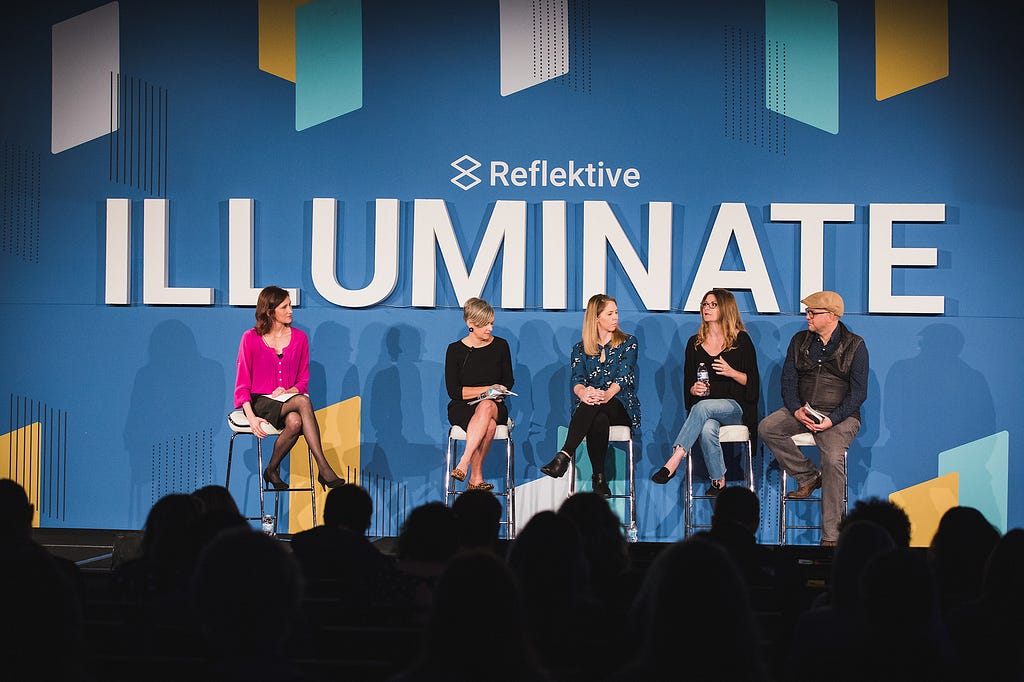
As part of my series about “the five things we need to do to close the gender wage gap” I had the pleasure of interviewing Rachel Ernst. Rachel is the Vice President of Employee Success at Reflektive, where she oversees the end-to-end HR function, consults on best practices with prospects and customers, and builds product content. Her career in HR spans compensation, learning and development, leadership coaching, people analytics and organizational design. She strives to evolve the performance management ecosystem to fulfill its ultimate goal — creating a work environment where people are enabled to be their most productive and authentic selves. Before joining Reflektive, Ernst led Quantcast’s learning and development team and then oversaw HR business partners and HR operations. Prior to that, Ernst served as Director of HR at Fidelity Investments, partnering with executives in the institutional business arm of Fidelity as well as building base, bonus and career structures for multiple Fidelity businesses. Ernst earned a Bachelor of Arts degree in International Relations and German at the University of California, Davis, and an MBA in International Business from the Brandeis International Business School.

Thank you so much for joining us, Rachel! Can you tell us the “backstory” that brought you to this career path?

Throughout my life — starting in high school when I volunteered in a youth leadership program at my temple — I’ve always found fulfillment in bringing people together to discover and build their own leadership skills. College brought me the chance to help create a new sorority on campus, which made for a great opportunity to grow my conflict resolution skills and learn to appreciate new and varying perspectives. We actually turned that sorority into a 501(c)(3) nonprofit, which allowed me to spend my early 20s traveling the country as a member of its board of directors. I visited other schools to expand the sorority to new campuses, teach young women to become successful leaders, as well as discuss the importance of creative problem-solving in challenging situations. When I spoke with a career advisor in business school, she strongly suggested I consider HR as a path for my future career — based on where my interests and strengths lay. And now, after nearly 15 years in the industry, I’d say she was right!

Can you share the most interesting story that happened to you since you began this career?

As an HR professional, a significant part of my job entails ensuring employees have the tools, resources, knowledge and experience to do their best work. A pivotal moment in my career was one I had with a former manager as I was about to have a 1:1 with one of the leaders in my businesses. She said, “Coaching doesn’t happen in training sessions. It happens every day.” She taught me to approach every single day with the belief that it’s a coaching opportunity. I try to remind myself of this often. Coaching happens in the moment, but you have to make the conscious decision to really be in the moment to take advantage. Before every conversation, you have to think about what role you’re going to take. When appropriate, I will switch my mindset between, “I’m a coach, an advisor, a listener, a sounding board or an advice giver.”

Can you share a story about the funniest or most interesting mistake you made when you were first starting? Can you tell us what lesson you learned from that?

Early on in my career, I was dealing with two teams that were butting heads and stepping on each other’s toes. I tried to rectify the situation, or at least lessen the tension, by organizing a meeting for the two teams to complete a RACI chart (to determine who is Responsible, Accountable, Consulted and Informed). I did all the prep work and was ready to conduct the session, but only two of the 15 people showed up.

Not only was I frustrated at the lack of attendance, I also felt defeated because I couldn’t put the RACI session to use, as I was sure that would work. I eventually realized the situation was far beyond a RACI conversation and indicated a much larger issue — one that required a different course of action. For starters, the two leaders of the separate teams needed to align, so I spent some time facilitating a conversation between them. I also let them know that when they don’t show up to a meeting, their teams will follow suit. Attendance is a communication of how much of a priority something is to you.

I didn’t want to deviate from the original plan, but I needed the flexibility to understand that the more you dig in, you may find your original solution may not be the right solution. And that’s okay.

Ok let’s jump to the main focus of our interview. Even in 2019, women still earn about 80 cents for every dollar a man makes. Can you explain three of the main factors that are causing the wage gap?

  • First and foremost, the wage gap is perpetuated by bias and employees’ ability and confidence to negotiate pay. The playing field that men and women enter is not level — and this is not always a conscious decision. Many companies fail to perform regular compensation audits to look for discrepancies in pay and promotion rates, as well as ensure they are in line with market standards. Furthermore, companies that uncover discrepancies may have trouble finding budget to rectify them. Overall salary may not tell the whole story either, especially in industries that tend to generate wealth through stock options. Women in tech only get about half of the company equity men receive, indicating a much larger gender pay gap than salary alone would suggest.
  • The wage gap is not just about unequal paychecks. At every company, regardless of well intent, subconscious bias seeps into the workplace every day and throughout all stages of the employee lifecycle. Bias can impact who gets promoted and who receives raises — which generally tends to be men more than women as they progress in level. If awareness of these biases isn’t there, they will continue on in a vicious cycle.
  • If the highest-level executives at a company aren’t making a conscious effort and commitment to close the gender wage gap, it likely won’t happen. Changing long-held business standards and expectations around pay equity requires an executive team that leads by example. Recent research we conducted at Reflektive reveals that half of American employees do not feel that their leaders follow through on their commitments. Trust between employees and corporate leadership is difficult to build and can diminish quickly, which can result in very challenging situations. A leadership team that says, “We recognize this is an issue, and here is what we’re actively doing to solve for it” opens up the floor for accountability and real progress. If it’s not made a business priority, the wage gap will persist or even increase. Gender pay equity is a daily practice, and it requires the whole company to be on board to ensure that it is happening.

Something else to note is that the gender pay gap varies by geography and industry. Wage equity for technology workers in the U.S. is better than other global locations, such as Toronto, London and Paris. And San Francisco — where Reflektive is headquartered — actually has the smallest gender wage gap compared to other technology hubs across the country. But it’s still an issue.

Can you share with our readers what your work is doing to help close the gender wage gap?

The path to eliminating the gender wage gap involves mindfulness, executive support and effective company policy.

Gender pay equity is one of the most foundational ways to create an inclusive environment. During my career, it has become very clear that gender pay equity is a daily practice. Leveling the playing field for men and women in the workforce requires education, awareness and data-based metrics to be incorporated into daily decisions. Using people analytics tools can help identify and manage unconscious biases, as well as monitor changes over time and set a benchmark of success.

At Reflektive, we believe that the gender wage gap is a critical issue requiring a top-down perspective in every industry, and we are proud to have a leadership team that agrees. Education, bias training, mindfulness and creative thinking are built into the structure of how Reflektive handles the hiring process, ongoing employee engagement…and even the departure process.

We have also created and nurtured an initiative called ReflektHER, where women are given leadership, mentorship and professional growth opportunities, as well as a safe space to connect with other women leaders.

Can you recommend 5 things that need to be done on a broader societal level to close the gender wage gap. Please share a story or an example for each.

1.Fair salary negotiations require an awareness of fair pay across your company and industry, as well a commitment to equality.

This starts with the hiring process. Sometimes this means offering candidates more than what they’re asking for if they aren’t aware of, or comfortable, standing up for their value (which tends to happen more often with women). At Reflektive, when this scenario happens, we will offer the salary we believe is fair for the level of their experience, even if it’s higher than what the candidate has indicated they’re looking for. We come up with this number by reviewing what our current employees in similar positions make, as well as continuously consulting market information, which tells us what companies are offering candidates in the same labor market.

2. Compensation analysis is not only during the hiring process, but through an employee’s lifecycle, as well.

Several years ago, I was in the negotiation process with a male candidate. He asked for more in salary than several women who were already at the company in the same job — and who had approximately the same experience. He also had a competing offer for another company that we had to contend with. The hiring manager really wanted to extend an offer, and we had to fill the role very quickly. Having started my career in compensation, every single offer that has come across my plate is reviewed relative to market data and internal equity. I also take into account tenure and interview performance. I ended up approving the offer to go out at the higher salary point that was asked for but with a caveat — that we also increase the salary of other women at the same level.

At Reflektive, we conduct compensation analysis at least twice per year to ensure we are paying all of our employees equitably. We do this by reviewing pay by multiple demographic filters, including (but not limited to) level, gender and department. We recommend all companies do this kind of analysis at least once (if not twice) per year, depending on growth rates, to ensure pay equity across the organization, and then addressing any pay equity issues.

3. I’ve found that bias education and structured processes help mitigate the potential for candidate interviews and performance reviews to be skewed by bias (such as contrast bias or likeability bias.)

We know women are much more likely to receive feedback on their behavior and demeanor, whereas men tend to be evaluated based on their accomplishments. We often see this manifest in comments such as, “She just doesn’t seem that confident” or “She’s so bossy.” Having a standard performance review process and implementing structured interviews are two ways to make sure promotions and new hires happen consistently and fairly.

4. Getting buy-in from the highest levels of a company to first measure and then act in improving employee engagement, equality and happiness in the workplace is critical.

Making equity a core value is even better. If faced with executives who drag their feet in committing to instituting employee engagement programs or who balk at the costs associated with fair and equal compensation, there are ways to align leadership with the benefits. Building a strategic team of executive allies that believe in the cause at your peer level creates an opportunity for sharing multiple perspectives on the ROI of such efforts directly with leadership. Bringing in various experts to further discuss these nuances creates third-party, objective credibility. After all, companies have a business incentive to take a proactive approach making sure they’re known for fairness and equality. If they gain a reputation for bias, it can hurt them in the competition for talent, which is currently at an all-time high.

5. The gender pay gap is also visibly perpetuated by the fact that women are promoted less frequently than men across industries.

According to a recent study by McKinsey, women are asking for promotions and raises at about the same rates as men; but for every 100 men promoted to manager, only 79 women are. To reverse this trend and make sure women have equal opportunities for promotion and appropriate compensation, companies must conduct frequent promotion audits, as well as equalize internal employee ratings and performance reviews.

You are a person of great influence. If you could inspire a movement that would bring the most amount of good to the most amount of people, what would that be? You never know what your idea can trigger. 🙂

A movement I would be proud to inspire would be requiring all companies to have at least half of their leadership team made up of women. While women are entering the workforce at near equal rates as men, they are dramatically outnumbered in senior leadership. According to McKinsey, only about one in five C-suite leaders is a woman. If things continue at their current rate, the number of women in leadership will only increase by one percent in the next 10 years. Underrepresentation is a persistent issue for women and people of color in the workplace. Ensuring companies of the future have more inclusive, diverse environments is something I’m very passionate about and working toward every single day.

Can you please give us your favorite “Life Lesson Quote”? Can you share how that was relevant to you in your life?

Don’t assume! You know what they say… assumptions create a lot of problems both in and out of the workplace. At work, it creates problems such as not being curious or not asking questions to learn more about someone’s point of view and, instead, just reacting. If someone says something that upsets you, you might come back at them because of your emotions in the moment. Instead of saying, “That’s interesting…can you tell me more about that?” you’ll respond defensively in the moment. I see a lot of that happening at work. In my own personal life, if I’m frustrated with a friend, I’ll pause and ask them if they’ll tell me a bit more about that so I can better understand and not jump to conclusions. It’s a lot harder in your personal life than at work. Either way, you have to train yourself.

We are very blessed that some of the biggest names in Business, VC funding, Sports, and Entertainment read this column. Is there a person in the world, or in the US whom you would love to have a private breakfast or lunch with, and why? He or she might see this, especially if we tag them. 🙂

I would have to pick Ellen DeGeneres. What she has overcome in her life is nothing short of inspiring, and she does so much good for the world. Her honesty about who she is nearly cost her everything, including her career, but she still persisted. Time and time again, she has stood up for herself, often against men in more powerful positions. As a result, she is an incredibly influential and entertaining person who serves as a role model for a significant following. Her resilience is astounding. Plus, she’s hilarious; her humor can lighten anyone’s mood.

This was really meaningful! Thank you so much for your time.


“5 Things We Need To Do To Close The Gender Wage Gap”, with Rachel Ernst and Candice Georgiadis was originally published in Authority Magazine on Medium, where people are continuing the conversation by highlighting and responding to this story.

“5 Things We Need To Do To Close The Gender Wage Gap”, with Sheila Ronning and Candice Georgiadis

Gender Roles in Childhood. To look at the gender wage gap from a societal perspective with the hope of fixing the issue, we must go back to the beginning — childhood. This is where many of our perceived notions of what it is to be male and female originate as well as where much of the foundation for our career path tends to be laid. During these formative years, it is crucial for parents to support their daughters and provide them with the knowledge that they are suited to work in any field, especially science, technology, engineering, and mathematics (STEM) — the industries that tend to employ the least amount of women.

As part of my series about “the five things we need to do to close the gender wage gap” I had the pleasure of interviewing Sheila Ronning. Sheila is the CEO and founder of Women in the Boardroom (WIB), a professional organization providing executive women with the tools, knowledge and connections for board service. Considered a pioneer in the industry and by her peers, Ronning broke the mold in 2002 with the launch of Women in the Boardroom by being one of the first ever to form such an organization. Since its founding, Sheila has grown Women in the Boardroom into an organization with international outreach across multiple industries and countless private and public boardrooms, including Fortune 100 companies while creating over 1600 connections for its members. As a recognized subject matter expert Sheila makes frequent public speaking appearances and was the keynote speaker at the 2019 IOTS World Congress in Barcelona. She is a frequent speaker at Harvard University, as well as other esteemed institutions. Recognizing her expertise on gender diversity, numerous worldwide corporations have recruited her as well, including KPMG, Kirkland Ellis, Aon, NewsCorp, L’Oreal, and Thomas Reuters. Ronning has also been invited to speak at the United Nations and the SEC, where she has provided insight and guidance through her seminars. Sheila’s views have been featured in numerous news outlets including Forbes, The Washington Post, The Wall Street Journal, and on Fox business news, among others. She is also a regular contributor to Newsmax.

Thank you so much for joining us, Sheila! Can you tell us the “backstory” that brought you to this career path?

While going to college I worked at Best Buy in customer service and was promoted to operations manager. I became known as the one to bring in when a store was not meeting their labor budget or passing their loss prevention evaluations. My boss would constantly tell me “only one more clean up and you can have your own store” and instead he would consistently promote the men who I hired and trained to run those stores. I eventually left and started my own business that helped small business owners with their PR, marketing and sales. In order to keep my pipeline full of potential customers I created a networking event for small business owners that became the largest B2B networking event in the Twin Cities and I would hold it five times per year. At one point my mentor asked me to create a new event that helped women get on corporate boards and that is how WIB was formed.

Can you share the most interesting story that happened to you since you began this career?

I started WIB in 2002 so there have been many interesting things happen during this time, however, this one stands out in my mind. A few years ago I started seeing women who had been serving on corporate boards join our membership program to help them find their next board role, When this started happening, it really hit me that we are really good at what we do and we are making a difference.

Can you share a story about the funniest or most interesting mistake you made when you were first starting? Can you tell us what lesson you learned from that?

In 2010/11 we were doing pretty well both financially and with our offerings. During this time we were holding conferences in 15 cities across the U.S. My mistake wasn’t paying attention to my surroundings. I thought we “made it” through the financial crisis etc. but did not realize it is sometimes the aftershock that can change everything. I ended up shutting down the conference and revamped the company into a membership organization to work one-on-one with woman to help them navigate the path to the boardroom. I learned many lessons during that time but mainly that you always need to have a plan and you should have an expanded line of offerings.

Ok let’s jump to the main focus of our interview. Even in 2019, women still earn about 80 cents for every dollar a man makes. Can you explain three of the main factors that are causing the wage gap?

Three main factors causing the disparity in pay between men and women include inescapable stereotypes and social norms about gender and work, a lack of workplace support for family caregiving, and discrimination when it comes to women of color in the workplace. In fact the gender pay gap has been such a problem that Congress introduced numerous acts over the years to address the issue. However, due to a large number of companies being privately held and not required to comply with Congress’ directives, these statutes were unable to make a large enough impact to successfully bridge the gender pay gap.

Stereotypes and Social Norms About Gender and Work. There is no denying that stereotypes and social norms about gender and work contribute to the gender pay gap in the U.S. A recent study conducted by the job search engine Glassdoor found that the industries where pay gaps between men and women are widest are media, retail, construction, repair and maintenance, and oil, gas, and energy and utilities. The study also found that the occupations with the largest pay gap include pilots, chefs and C-level executives.

One explanation for this could be the social construction of gender roles and gender stereotypes. Based on these stereotypes men are perceived to have job characteristics that are more achievement-orientation, with an inclination to take charge, with autonomy and rationality, whereas women are viewed as possessing more nurturing passive traits and dispositions with the belief that women should not be overly outspoken or dominant. (“Status, communality, and agency: Implications for stereotypes of gender and other groups”. Journal of Personality and Social Psychology.) The bottom line is: society is still not comfortable with seeing women in powerful positions and this has never been more evident than now with the backlash to those women running for presidency.

This stereotype then leads to another next issue i.e., the fact that men are more likely to speak up and ask for as well as negotiate higher pay. According to a study by Carnegie Mellon, when negotiating pay, 83% of men negotiated for a higher wage compared to the 58 percent of women who asked for more. Researchers say that women who do request either a raise or a higher starting salary are more likely than men to be penalized for those actions.

Lack of Workplace Support for Family Caregiving. The second cause for the gap in pay can be attributed to the lack of support for family caregiving in the workplace, specifically when it comes to maternity leave. As women start to have children in their early 30s, the gap grows. According to the U.S. Census Bureau’s report on the “The Parental Gender Earnings Gap in the United States” working mothers earn 75 percent of what their males counterparts make. These workplace disadvantages in pay, perceived competence, and benefits relative to childless women in the workplace encountered by working mothers have been termed by sociologists the motherhood penalty. A study by Harvard University found the perception of working mothers to be less committed to their jobs than non-mothers, while fathers were considered to be more committed than non-fathers. The same study also found that mothers are held to higher standards of punctuality than childless women or men, regardless of their parental status. And visibly pregnant women are seen as less competent than non-pregnant women or men in the same position.

Another issue that adds to this ongoing problem is the lack of adequate and affordable childcare and family leave policies that would help support these working mothers or those trying to re-enter the workforce.

Discrimination. Another reason for the lack of parity in pay between the genders is due to the discrimination when it comes to women of color in the workplace. Currently, full-time working women are still only making approximately 80 cents on the dollar to men, according to the U.S. Census Bureau. Furthermore, this is not even factoring in women of color who tend to make less, with black women making 63 cents, Native American women make 57 cents, and Latina women make 54 cents on the dollar according to the National Women’s Law Center. According to the compensation software and data company Payscale’s 2019 report this can be explained in part due to the fact that women of color tend to move upwards in their career at a much slower pace than White women. While only three percent of all White women make it to the executive level of an organization (compared to six percent of White men), only two percent of Asian, Black and Hispanic women make it to the C-suite. Overall, women of color are facing larger hurdles when it comes to advancing in the workplace compared to White women.

Can you share with our readers what your work is doing to help close the gender wage gap?

To help close the gender pay gap, Women in the Boardroom is assisting women in their corporate advancement while establishing diversity in the boardrooms of today’s companies. Women in the Boardroom prepares qualified women for board electability and service and helps connect women to board openings. One way to achieve real change and equal pay among the genders is when companies make a true commitment to electing women of all color and backgrounds onto their boards, especially their compensation boards/committees. This allows for diversity at the highest levels in the company, allowing women to have representation at the top and an executive governance voice that reflects the values and needs of other women in the company. Once these female board members take action and start or contribute to the essential conversations of fair compensation in the workplace, the pay barriers will continue to erode.

Can you recommend 5 things that need to be done on a broader societal level to close the gender wage gap. Please share a story or example for each.

  1. Gender Roles in Childhood. To look at the gender wage gap from a societal perspective with the hope of fixing the issue, we must go back to the beginning — childhood. This is where many of our perceived notions of what it is to be male and female originate as well as where much of the foundation for our career path tends to be laid. During these formative years, it is crucial for parents to support their daughters and provide them with the knowledge that they are suited to work in any field, especially science, technology, engineering, and mathematics (STEM) — the industries that tend to employ the least amount of women. Furthermore, a report by the National Institute of Health showed that, in addition to parental support, it is imperative to have support for these positive female occupational roles in school.
  2. Occupational Segregation. The stereotypes about certain occupations being more conducive to males while other jobs, such as childcare worker or teacher (i.e., pink collar jobs); more favorable for women is an area for change. These stereotypes lead to the belief that female occupations are not are prestigious as male occupations. This belief then leads to “pink-collar jobs” paying less and being devalued. It is this biased thinking that causes women in female-dominated jobs to receive a lower average wage than comparable male-dominated jobs, and earning less as individuals relative to men doing the same jobs. I would see this all the time while at Best Buy. Women were “Operations Managers” and the men were “Sales Managers” and since sales is what brought in the revenue we were just there to serve them and definitely made less.
  3. Work Environment. Another area responsible for the gender pay gap that needs to be addressed is the lack of support for family and childcare. Historically, women tend to be the primary caregivers of family members, which factors into the jobs they choose, such as jobs that require fewer hours or don’t require relocation. These positions tend to have lower compensation than those that require longer hours or the flexibility to relocate or travel. Additionally, hostile work environments, such as those we’ve seen in the technology industry, have caused many women to avoid certain sectors. Improving work environments and culture to be more inclusive can bring about the change needed to help close the gap. Additionally, if companies could invest in better family leave and childcare for their female employees, gender diversity would improve.
  4. Gender & Power. As a society we have preconceived notions of how women are supposed to act and traits they are to exhibit. However, when these “norms” are broken we tend to punish our women. Examples of this can be seen in the workplace when women exhibit power or tend to speak-up they are often labeled as abrasive. Though I might be veering off a bit, something that sticks out to me personally is after multiple times of me ignoring the sexual advances from my boss I decided to contact HR (after consulting with my previous male boss) to let them know about the unwanted attention and the response from the female HR person was to ask me what I did to make it seem okay for him to do this.
  5. Exhibiting Female Confidence. Women often tend to not be confident in our self worth and are often afraid to exhibit signs of success. Conversely, men are more likely to be the ones to speak up, ask for the raise and be confident in calling themselves experts. A good story on the difference between men and women came several years ago when I saw an accomplished woman being interviewed. Her husband was sitting beside her and when the interviewer spoke to her about breastfeeding (as she had just recently had a baby) “You’ve got to be a breastfeeding expert by now.” The woman shook her head no and said, “I’m no expert. I had issues with each one of my children.” The husband leaned over his wife and said, “What do you need to know? I watched.” Men aren’t afraid to call themselves experts. It’s just something women picked up along the way. It’s not true, and it’s okay to call ourselves experts. It is also this mindset that will help in our advancement in the workplace and aid in acquiring pay parity.

You are a person of great influence. If you could inspire a movement that would bring the most amount of good to the most amount of people, what would that be? You never know what your idea can trigger. 🙂

The movement that I would like to inspire that would bring the most amounts of good to the most amounts of people would be one that redefines gender roles, while empowering the young girls of our country with the knowledge that they can be strong women in any role they choose. I would also want the movement to raise awareness and educate society, uniting us all. Therefore, based on the aforementioned criteria, I would create Women in Leadership Day.

Though, not movement like #metoo per se, it would however be a day that is recognized nationally, dedicated to achieving the goals of redefining society’s preconceived notions of how women are supposed to act and traits they are to exhibit. The awareness would start at a young age by having a mandated coarse in schools on women in executive positions in various industries and female leadership.

This movement could also have the hashtag #WomeninLeadership and would receive its own designated color such as green, in the same manner pink is for breast cancer. This day would be about educating all people about women in leadership positions and positions of power. The goal would be to change public perception and gender-role expectations of women not only in corporate America but globally. It would consist of educating young students in schools as well as the general public. This is important due to women being perceived as nice, warm and nurturing, as they’re expected to be, as not having the qualities required to move into leadership positions. Yet when the exhibit more ambitious qualities they are often seen to be angry.

Although, Women in Leadership Day does exist in varying forms and recognized by different educational institutions, organizations and companies, it does not exist as a nationally recognized holiday. By having Women in Leadership day nationally recognized it allows for a higher level of awareness and education by society.

Can you please give us your favorite “Life Lesson Quote”? Can you share how that was relevant to you in your life?

I have a few. One is “to show up, stand up and speak up” and the other is “If you don’t ask, you don’t get” these both seem to be relevant in my life weekly but early on in my life it became very apparent of my passion around the topic of helping women advance and that we tend to be the ones who are mainly holding ourselves back.

We are very blessed that some of the biggest names in Business, VC funding, Sports, and Entertainment read this column. Is there a person in the world, or in the US whom you would love to have a private breakfast or lunch with, and why? He or she might see this, especially if we tag them. 🙂

Former First Lady Michelle Obama is the person I would choose to have a private breakfast or lunch with. I just remember being torn when former President Barack Obama and Hillary Clinton were fighting it out in Iowa years ago to see who was going to be on the Democratic ticket and then I heard Michelle speak and from that moment on I was team Barack and Michelle. Michelle is smart, articulate and isn’t afraid of going up against anyone, nor does she care what anyone thinks of her, not to mention her fantastic fashion sense. In addition to her confidence and strength, I also have tremendous respect for the former First Lady due to her initiatives while in the White House. One of her initiatives that stuck a chord with me was her international adolescent girls education. An advocate for female empowerment, First Lady Michelle Obama launched Let Girls Learn, a U.S. government initiative aimed at helping adolescent girls attain a quality education that empowers them to reach their full potential. This initiative is a big step towards empowering our girls and creating confident women. It is for this and so many other reasons I just whole-heartedly admire her.

This was really meaningful! Thank you so much for your time.


“5 Things We Need To Do To Close The Gender Wage Gap”, with Sheila Ronning and Candice Georgiadis was originally published in Authority Magazine on Medium, where people are continuing the conversation by highlighting and responding to this story.
The Future Of Travel: “Resort-camping hybrids” with Nash Abdrabo CEO of Huttopia

Nothing revolutionary but more like evolutionary, however, I strongly believe it’s the only way our organization will disrupt the status quo. I encourage other organizations to follow in order to survive the world digitalization.

As part of my series about “exciting developments in the travel industry over the next five years,” I had the pleasure of interviewing Nash Abdrabo, CEO Huttopia North America. Nash has a successful track record over the last 20 years spearheading strategy and operations at high-profile companies such as Starbucks, Ikea and The Ritz-Carlton. He is a visionary largely recognized for transforming business needs and opportunities into long-lasting successes and results. In his current role, Nash is at the forefront of Huttopia’s North American expansion, bringing resort-camping hybrids with a French-inspired experience to Canada and the USA.

Thank you so much for joining us, Nash! Can you tell us a story about what brought you to this specific career path?

In my life I place an enormous value on loyalty and trust. It’s essential to my personal relationships and to the integrity of our company culture. Essential to how we conduct business with one another and with our customers. While Huttopia is not perfect nor am I, and people may disagree with some of our choices, we make it our business to uphold that trust and we make it right if we fail.

Huttopia was not built on through marketing and traditional advertising. We succeed by creating experiences that come to life because how we treat our customers, our people, how we treat our lands, and how we give back to communities.

Can you share the most interesting story that happened to you since you started your career?

The most interesting story I can share with you was back in my earlier career at the Ritz Carlton orientation training days. That experience was that the Ritz Moto was “We are ladies and gentlemen’s serving Ladies and Gentlemen’s.” The experience formalized for me what it meant to be in the service of others. During my days since then I have been looking for that magic. It’s not unusual for me no matter where I go in the world to be in an Uber or visiting other outdoor hospitality resorts. I love to experience different Glamping sites. Individual properties or large chains and to see how they present their products and communicate with customers. I look for first contacts, Layouts of customer journey and employees’ behaviors.

Can you share a story about the funniest mistake you made when you were first starting? Can you tell us what lesson you learned from that?

I have many funny moments throughout my career and I’m sure I will have many more to come. The important part is to be able to laugh at yourself and show that you are human. It taught me to be vulnerable, humble, and thoughtful. A funny story that I would like to share in this aspect: a customer came up to me with a problem and I assigned one of our team members to solve the issue. I followed up with the customer few days later to check whether he was satisfied with the solution we have offered. And to my surprise the customer was never contacted by my us. I felt a bit awkward and I had to put myself vulnerable right away in front of the customer. I apologized once again but I was very disappointed in myself as well, but I was the only one to blame. From that moment on I learnt that before trust comes verification.

What do you think makes your company stand out? Can you share a story?

The story I would share with you that Philippe and Celine Bossanne have shared with me up on my early meetings with them before joining about Huttopia core values.

We believe that Huttopia most important asset is its state of mind — its pathway to growth without losing its soul, which develops over time

and is based on shared values, and which no competitor can replicate. Underlying Huttopia’s actions and growth is a well-defined set of values.

Confidence

Acting with confidence helps us maintain more direct and effective relationships — both internally and externally. Having confidence in others makes our lives easier and ensures our professional relationships run more smoothly. A feeling of confidence spurs us to take the initiative — and risks — without fear of mistakes. This is the basis of the entrepreneurial spirit.

Sincerity

Sincerity in what we do and say, in our work and in our relationships gives Huttopia an overall consistency that is immediately perceived by our workers, clients and partners, and helps everyone understand our philosophy. It’s simply a matter of honesty.

Solidarity

The company is a chain, no stronger than its weakest link. Solidarity means helping a co-worker in difficulty and being fully involved, doing all we can to ensure the team as a whole accomplishes its mission. It also means knowing how to eagerly share intense moments and embark on a group adventure. That’s how a team is built.

Imagination

This quality helps us forge new paths and be different. Whatever the challenge — be it finding solutions to minor day-to-day problems or inventing a revolutionary product — daring to use one’s imagination is key. Imagination is what makes the impossible happen — it allows innovation.

Simplicity

Our core business is camping — a simple activity, by its very nature. Our culture is centred on the essential, not the superfluous. An ongoing search for the utmost simplicity, to make life easier for our customers, partners and teams, is what characterizes both our relationships and our products. Simplicity is never achieved by taking the easy route. It calls for effort and work.

Which tips would you recommend to your colleagues in your industry to help them to thrive and not “burn out?” Can you share a story about that?

Have clear goals and vision and make sure everyone is aware of them in your organization.

None of us are able to achieve success without some help along the way. Is there a particular person whom you are grateful towards who helped get you to where you are? Can you share a story?

Most of my career I have been blessed and grateful for being surrounded with great leaders that impacted my professional and personal growth. The one that truly was an inspiration leader and was a mentor is Rossann Williams executive vice president U.S. Retail at Starbucks. She always reminded me when we were growing the business, improving store’s layout and launching new initiatives. Roseann looks at me in the eye and taps both her hands on my shoulders “We got this.” It meant s great deal to me. It meant I got your back. It’s the best feeling when your team knows that you have their back and they have yours. I encourage every leader to lead with their head and heart.

Let’s jump to the core of our discussion. Can you share with our readers about the innovations that you are bringing to the travel and hospitality industries?

As the world continue to digitalize. We at Huttopia will continue to innovate our lodging with our products.

Simplicity, durability and comfort while protecting our Nature’s beauty. It is part of our commitment to make Huttopia a leader in ecotourism.

Make it quick, lean and simple to access our digital platforms and enjoy our magnificent planet but, above all we want to win every day with our customers. We will ignite the emotional experiences with our customers and our peoples every time. I strongly believe in the human connection, and we will to continue to put our customers at the forefront of business by anticipating and looking after their needs throughout their journeys. Huttopia personalization program, wood cabins& canvas, Huttopia.com, social media, operational excellence.

Which “pain point” are you trying to address by introducing this innovation?

Leading change. How do we ensure we’re all aligned on our work that’s ahead of us at Huttopia? Our challenges are not to convince our board of directors of our innovations and our way forward. Our real challenge is bringing every single person of our Huttopia family to know of our initiatives as fast as we can to make an impact. It all comes down to our talented leaders to inspire and engage our people to deliver our commitment.

How do you envision that this might disrupt the status quo?

Nothing revolutionary but more like evolutionary, however, I strongly believe it’s the only way our organization will disrupt the status quo. I encourage other organizations to follow in order to survive the world digitalization.

Can you share 5 examples of how travel and hospitality companies will be adjusting over the next five years to the new ways that consumers like to travel?

There are many examples but the one we strongly believe is proximities. How we try to elevate our customer experiences experience’s in every step during their journeys.

You are a “travel insider.” How would you describe your “perfect vacation experience?”

It might vary to everyone’s expectations but for me it needs to be calm, hassle free, and simple. Spending it with the people you love and building great memories that would last a lifetime.

It’s easier said than done but stay the course and never lose focus on your customers.

Can you share with our readers how have you used your success to bring goodness to the world?

Pay it forward and be part of inspiring guide to get others to improve the world we live in. It must be more than just a business idea. It must reflect social responsibilities to our planet. We need to reduce our footprint on our planet and leave a great future for generations to come.

You are a person of great influence. If you could start a movement that would bring the most amount of good to the most number of people, what would that be? You never know what your idea can trigger. 🙂

You must swim against the tide sometimes. I want them to be tempted to do so. I want to pass to younger generations, the taste of hard work continuous learning, improvement, and investments. It is just not about making money. It is as well about the innovations, creativity and proactivity.

I strongly believe that people have the best intentions in all what they do. You must guide them to reach their true potentials. Empower them and unleash their true potentials in order to do great things.

Everything you do have to be meaningful and make sure you’re passionate about what you do.

How can our readers follow you on social media?

https://canada-usa.huttopia.com/

https://www.instagram.com/huttopiacanadausa/?hl=en

https://www.facebook.com/huttopiacanadausa/

https://www.linkedin.com/company/18765788/admin/

Thank you for all of these great insights!


The Future Of Travel: “Resort-camping hybrids” with Nash Abdrabo CEO of Huttopia was originally published in Authority Magazine on Medium, where people are continuing the conversation by highlighting and responding to this story.
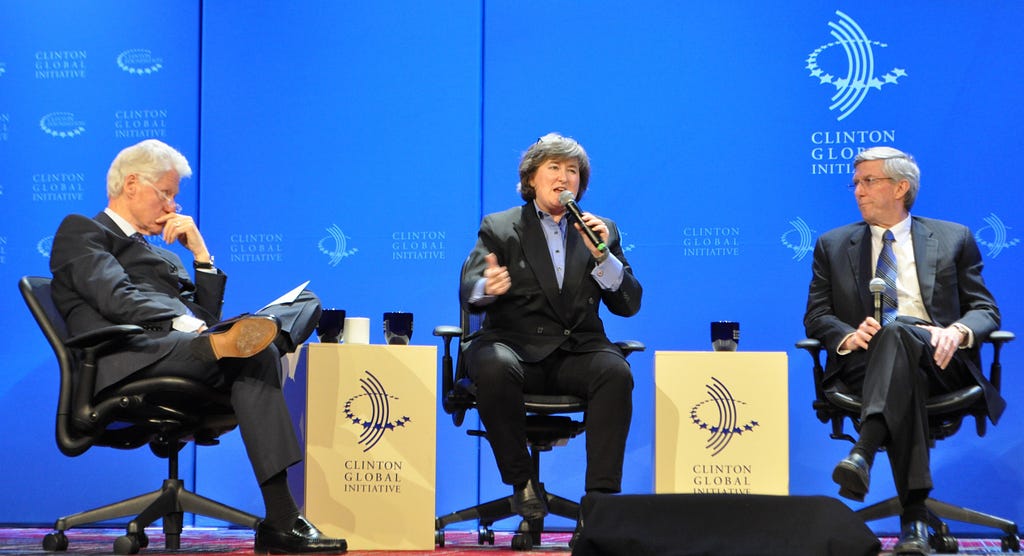
“The Five Things We Need to do to Close the Gender Wage Gap”, with Christie Summervill and Candice…

“The Five Things We Need to do to Close the Gender Wage Gap”, with Christie Summervill and Candice Georgiadis

Make the case for profitability. I think a lot of times people think that doing something positive about wage inequality is going to mean negative consequences for business, but we’ve found that the opposite is actually true. It’s fairly simple: if you’re a company that has a reputation for equitable compensation, you have an easier time recruiting and retaining top talent. That reputation creates a positive feedback loop where you get the best employees who stick around longer and contribute more to your company’s success.

I had the pleasure of interviewing Christie Summervill. When Christie Summervill founded BalancedComp in 2010, her goal was nothing less than to radically reimagine salary administration. With over two decades of leadership in business, Summervill saw that the financial services sector could be getting more out of their compensation strategies, but technology and data quality were holding them back from gaining true insights. What banks and credit unions didn’t need was another complicated spreadsheet, instead, Summervill envisioned a new paradigm for bringing the human back into human resources. The creation of BalancedComp signaled a momentous shift in the landscape of salary administration; a new era where big data started to work for the benefit of people, and financial institutions could begin to benefit from fully integrated compensation design. Summervill envisioned integrated compensation design as a holistic application of data, market analysis and human experience applied to salary and incentive planning in the financial services industry. In the same way that banks and credit unions rationalized lending processes using a variety of tools and inputs, Summervill wanted HR departments to have the structure and information they needed to make confident and knowledgeable decisions about their compensation strategy. Recognizing that compensation design begins with quality data, Summervill builds products for banks and credit unions that apply BalancedComp’s industry-recognized salary survey data to the unique circumstances of each client. The combination of data, technology and customer-focused consulting results in both profitability and equitable salary administration for BalancedComp’s customers. At each stage of innovation, Summervill brings a keen understanding of what matters to the people who use BalancedComp’s products and services. For Summervill, true integrated compensation design means coming alongside her clients in collaboration. Many of the features in BalancedComp’s performance management software are a result of close consultation over years with HR professionals in banking. Her hands-on approach to consulting allows Summervill to see the challenges their clients face first-hand, and her experiences across hundreds of banks and credit unions gives her the expertise to bring novel and effective solutions to the table. In the 10 years since Summervill founded BalancedComp she has grown the company from a regional upstart to a nationally-known and respected compensation design firm, focusing exclusively on financial institutions. BalancedComp advises large and mid-sized banks and credit unions with assets as large as $20B. Summervill’s team of experts in economics, design and data science create and leverage the most comprehensive market reporting available to consistently deliver actionable insights that result in greater equity and profitability for clients undergoing mergers and acquisitions, de novo review and annual compensation alignments.

Thank you so much for joining us! Can you tell us the “backstory” that brought you to this career path?

I’ve loved sales from the time I was a kid selling Girl Scout cookies. Being a salesperson has always been about getting to know other people, listening to their stories and helping them solve problems. When I first started selling in the compensation industry, I worked for a firm where sales weren’t as sophisticated as they could have been. I could still see that there was a lot of potential for positive impact in this field, but in order to achieve that, I needed to strike out on my own.

Can you share the most interesting story that happened to you since you began this career?

One of the most surprising things we run across in compensation design is how commonplace gender discrimination is, even in 2019. I recently encountered an executive who was in charge of certifying appraisers. There were two employees to certify, a man and a woman, and the executive asked the woman to wait on certification, explaining that she could be much more useful to the bank in her current role. She agreed, not knowing that the certification came with a $35,000 pay increase. Why didn’t he ask the man? Why not support both employees in their career advancement? The problem was that this executive was allowed to make decisions based on his intuition and unexamined biases, rather than a rational metric for determining performance.

Can you explain three of the main factors that are causing the wage gap?

Gendered income inequality has been with us for a long time, and there are three broad factors that each play a part in maintaining it: historic, economic and technological. It’s a complicated issue, but in general, women historically have faced discrimination in the workplace, and not only focused on salaries — we’ve all heard of the glass ceiling, for example.

Economically, gendered discrimination is most obvious when comparing paychecks, but this factor also has to do with how women participate in the workforce. For instance, many women leave the workforce shortly after they have children, and there’s not been an agreed upon way to account for this so-called employment gap, yet.

Finally, technology hasn’t been brought to bear on the problem in the ways that it could be, or at least, that’s our proposition at BalancedComp. Given the right tools and high-quality data, we think we can use technology to overcome the challenges presented by the previous two factors and bring actual objectivity to compensation for everyone.

Can you share with our readers what your work is doing to help close the gender wage gap?

At BalancedComp, we combine thorough research, data-driven insights, and the latest technology to create intuitive tools for managing compensation and performance reviews in the financial industry. Our platforms help to clarify compensation strategies in order to take a lot of the subjectivity out of the decision-making process. Obviously, there’s always going to be some qualitative component in any human endeavor, but I think we can get a lot closer to knowing what a job should pay based on objective criteria. The end goal is to create actual equity, not just for gender, but for race, age, sexuality — we recently introduced a third gender category in our apps, for example. We hope our work contributes to solving all of these inequalities.

Can you recommend 5 things that need to be done on a broader societal level to close the gender wage gap?

Observe.

First, you have to understand what is really happening in the world. Yes, there is actual gender discrimination and wage disparity, but we need to get better at asking why. The answers are usually more complicated than they first appear.

Rationalize.

Once you see clearly what the problem is, it’s time to figure out what the solution should look like. Do we solve wage gaps by paying everyone the same salary regardless of any other factors, or can we develop equitable solutions that truly account for each individual’s real experiences?

Expand the definition of work.

Part of the wage gap is caused by an inability of the jobs market to account for non-wage work, the majority of which is undertaken by women. This includes stay-at-home moms, but also caregiving for sick or elderly family members and other domestic labor. Having the tools to properly assess someone’s actual experience and skill sets beyond a formal work history can help give a greater clarity to the question of what they should be paid.

Make the case for profitability.

I think a lot of times people think that doing something positive about wage inequality is going to mean negative consequences for business, but we’ve found that the opposite is actually true. It’s fairly simple: if you’re a company that has a reputation for equitable compensation, you have an easier time recruiting and retaining top talent. That reputation creates a positive feedback loop where you get the best employees who stick around longer and contribute more to your company’s success.

Be bold and talk about your successes (and sometimes your struggles).

It’s not easy to lead the way, but those companies that create true innovation and societal advancement are the companies we all remember and look to for inspiration. We want to hear about companies that are succeeding at bringing equity to their compensation strategies — it’s great news and should be celebrated! It’s also important to engage the difficulties in order to find better solutions. At BalancedComp, we are always looking for that next challenge: what did we do right today, and what will be difficult tomorrow?

You are a person of great influence. If you could inspire a movement that would bring the most amount of good to the most amount of people, what would that be? You never know what your idea can trigger. 🙂

I’d love it if all businesses would begin rationalizing how they pay their employees and develop an understanding that profitability is a goal, not a tactic. The current method for a lot of companies is to treat profitability as opposed to spending money on compensation, but my experience is that it’s almost the opposite case. Companies that understand how to pay their employees appropriately, and not just however little they can get away with, tend to perform much better in the long run. Recruitment, retention and productivity all increase when your people are making enough money to stay focused on their job, and focused on improving at their job. Paying well to begin with and having an objective plan for raises and bonuses can make a huge impact on a company’s bottom line, and not only for the company! The employees benefit, too, by having resources to improve their lives, whether that’s buying a house, saving for a vacation or starting a family.

Can you please give us your favorite “Life Lesson Quote”? Can you share how that was relevant to you in your life?

“If you want to go fast, go alone, if you want to go far, go together” — author unknown

I’ve always felt that this quote is a perfect way to describe my startup. At the beginning, when I was by myself I could make quick decisions, but it was a lot harder to make strategic decisions. Now that I’ve got a team of brilliant people, we can all take the time to really think about where we want the company to go, sometimes even far out into the future. It isn’t an opposition between fast and far — we can still go plenty fast — but for me the quote is all about understanding how you approach a task or a job has a lot to do with what you’ll eventually get out of it.

We are very blessed that some of the biggest names in Business, VC funding, Sports, and Entertainment read this column. Is there a person in the world, or in the US whom you would love to have a private breakfast or lunch with, and why? He or she might see this, especially if we tag them. 🙂

Mother Teresa, because of the work she did with the poor, she could have used her celebrity in her own self-interest, but she used it to continue to help others. One of our core values is generosity. We don’t want to be merely a successful company, we want to leave the world better than we found it. Everything we’re doing is about doing good: by the businesses, by the employees, by our team at BalancedComp. Solving comp has a real impact on actual lives.

Thank you for all of these great insights!


“The Five Things We Need to do to Close the Gender Wage Gap”, with Christie Summervill and Candice… was originally published in Authority Magazine on Medium, where people are continuing the conversation by highlighting and responding to this story.
“5 Things We Need To Do To Close The Gender Wage Gap”, with Kristin S Kaufman and Candice…

“5 Things We Need To Do To Close The Gender Wage Gap”, with Kristin S. Kaufman and Candice Georgiadis

Build flexibility into the workplace. With the advent of technology and platforms like Skype, Zoom, Go-To Meeting, etc. there is no reason high-level jobs must require 24/7 travel commitments. We can easily run large global businesses online and these innovative tools help offer flexibility and increased productivity.

As part of my series about “the five things we need to do to close the gender wage gap” I had the pleasure of interviewing Kristin S. Kaufman. Kristin is the founder of Alignment, Inc. ® a unique consultancy formed in 2007 to help individuals, corporations, board of directors and other similar groups find alignment within themselves and their organizations. She’s brought this expertise to hundreds of people since establishing Alignment, Inc®. Some of her clients include Baylor Healthcare System, Accenture, Hewlett-Packard, Smith & Nephew, Frito-Lay, IDEA Public Schools, Boys and Girls Clubs of America, Mercy Health, and many others. Kristin brings over 25 years of corporate experience to bear, including executive positions at Hewlett-Packard, Vignette Corporation, and United Health Group. At HP, Kristin was the General Manager of the channels and partner program that supported Hewlett-Packard’s largest corporate accounts. This business represented a $3 billion revenue stream for Hewlett-Packard. Serving as Worldwide Channels Vice-President on the Executive Committee of Vignette Corporation, a $250 million publicly traded software company, her team built the global infrastructure for multi-channels of distribution for their software solution. In her first departure from traditional ‘corporate America’, Kristin was asked to join the NYC Leadership Academy effort, which was the centerpiece of the New York City Children First reform agenda. New York City Mayor Michael Bloomberg and Chancellor Joel Klein sponsored this agenda, lead by CEO Robert E. Knowling, Jr. The goal of this reform was to create a system of outstanding schools where every child and teacher has access to effective teaching and learning. Kristin was chosen as one of two private sector business executives, to teach, train, and coach the 1,200 principals of the NYC public school system and the top 100 executives on the Chancellor’s staff. This three-year experience was the initial catalyst for Kristin forming Alignment, Inc. ® Her last executive position in corporate America was as Group Vice President of United Health Group. This appointment leveraged her strong knowledge of the technology business and how to leverage multiple channels to market in the increasingly complicated world of healthcare and healthcare insurance. Kristin provided expertise for its go-to-market strategies, defined and created alternative channels to improve organic growth, and implemented sales effectiveness methodologies across all segments within United Health Group. A prolific writer, Kristin’s first book, Is This Seat Taken? Random Encounters That Change Your Life, was released on 11/1/11 to national acclaim, and endorsed by Stephen Covey and John Maxwell, among others. Her second book in the series, entitled Is This Seat Taken? It’s Never Too Late to Find the Right Seat was released in January, 2015. It has been endorsed by notables such as Marshall Goldsmith, Sean Covey, and Doug Parker, CEO of American Airlines. This book shines the light on late in life reinvention and encore ‘second half’s’ of diverse individuals. The individuals are in some cases widely known and others are somewhat anonymous to the mass public. The common thread is their ‘post-50’ resurgence in life and in some cases their ‘fork in the road’ is quite serendipitous. Kristin’s third book, in the ‘Is This Seat Taken?’ trilogy was released October 8, 2019.

Thank you so much for joining us, Kristin! Can you tell us the “backstory” that brought you to this career path?

My adulthood journey and professional career had been centered primarily in the corporate arena. Until about 15 years ago, my life had been a series of accomplishments, achievements, awards, and rewards. I had experienced success on pretty much every level. Then, I made the choice to ‘jump off the hamster wheel’ and devote my energies to becoming truly integrated and aligned to my purpose. I realized I had ‘lost the plot’ of my then current corporate executive role — and desired to learn, grow, transcend and include all parts of who I am. I sought true alignment — which by my definition is loving what I do, being good at, and most importantly — having it tied to something much greater then myself. Working with global leaders, their teams, and boards of directors is fulfilling, challenging, and rewarding — and without question is my calling toward alignment.

Can you share the most interesting story that happened to you since you began this career?

When we work with corporate leaders, the stories are varied, interesting, and surprising. No one engagement is more interesting than another — as they are all challenging and test one’s intuition, judgment, wisdom, and counsel.

One of the most compelling — and this story has been repeated more than once — is the realization of a senior level executive that the quest for big income packages, large spans of control, and a heady title does NOT equate to fulfillment or ‘success’. Despite the trappings of a huge, powerful position — this executive was miserable.

What has been fascinating to experience is the epiphany an executive has that true success is defined by his/her own parameters….not by society, the ‘powers that be’, conventional rules, or discriminating ‘head hunters’. Success is defined on their terms…and it changes as we mature, evolve, and how we make meaning in our lives.

Ok let’s jump to the main focus of our interview. Even in 2019, women still earn about 80 cents for every dollar a man makes. Can you explain three of the main factors that are causing the wage gap?

The gender wage gap is complex with many interrelated factors coming into play. A few thoughts:

  1. Women’s’ competencies, skills, and contributions have been traditionally under recognized and undervalued. Even when women are in the same position, gender stereotypes tend to categorize women differently — which hinders promo ability, salary ranges, among other factors. Women have been historically inappropriately — and unjustifiably — categorized as not as committed due to their being mothers, or being perceived as less competent — simply due to their being female. In several studies, this has been validated, when mock applications were sent using ‘female-sounding’ names, the ‘male-sounding’ names were viewed more favorably AND offered jobs with higher-paying salaries. And to add to this reality, there are historically –and currently — more men in senior level roles than women — thus, this fact adds credence to men being ‘paid more’ just by the nature of them holding higher level positions. One last piece of this equation is the factor that women historically have chosen lower-paying roles (think women choosing nursing over becoming doctors, or women choosing teaching versus men choosing engineering). This trend is clearly changing; yet the historic figures do not lie. Net: all of these observations are clearly ‘wrong’ and changes are coming, yet very slowly.
  2. Historically, legislation has not supported equal pay or equal opportunity for women. Forty years after the first equal pay legislation was put into effect (the Equal Pay Act of 1970), women can still expect to be paid less. The law has made a big difference, however, often women don’t know they are underpaid. People (men and women) are often secretive about how much they are paid — and if a person wants to bring a case against an employer — that is an expensive proposition. The employer has deeper coffers to defend their actions than the individual employee…..not to mention the potential stain on the employee of filing a suit.
  3. Finally, and this may not be what female reader will want to hear; however, often women lack the confidence to demand equal pay for equal work. Women need to stand tall, know their worth, and demand equal pay. A mentor of mine once told me that the market (internal and external) will assign the value on you which you assign to yourself. This nugget has served me well throughout my career. Coupled with this, women need to help other women. It is appalling for me to still observe high-ranking women NOT reaching down to help other women. This is unacceptable; yet, it still is a reality in corporate America.

Net: I believe in equal opportunity and equal pay for equal work. I am NOT a believer in giving women — or men — unfair advantage based on their gender. That is simply obsolete thinking. Also, we must caution against reverse discrimination; that over-rotation will undermine the pure intention of equal opportunity for all.

Can you share with our readers what your work is doing to help close the gender wage gap?

My work focuses on helping individuals reach their potential. With my clients — male and female — I focus on helping them gain confidence, learn strong negotiating skills, how to strategically plot their career, and build plans to optimize their career progression. I also hold the mirror for both genders (male and female) to become aware of discriminating behaviors and help them to grow beyond the learned conventional behaviors which are stagnating their evolution as a leader in the 21st century.

Can you recommend 4 things that need to be done on a broader societal level to close the gender wage gap.

A few thoughts:

  1. Be transparent about pay. It is appalling to me, from the studies I have read, that the average full-time working woman earns just .75 to .79 cents for every dollar man earns. We need to have transparency about wages AND merit increases. There is nothing to lose and so much to gain to level the playing field and pay based on skill, competency, met deliverables, contribution to the bottom line — and to the over-arching corporate culture — 100% independent of gender.
  2. Invest in men and women equally. Ongoing investments in the high-potential employees helps the person and the organization for which they work. These individuals will become the leaders of the organization going forward. These investments can take the form of ongoing education, mentoring and networking programs (internally and externally), and training about the ‘elephant in the room’ aka: unconscious bias training, etc.
  3. Build diversity and inclusion into the organizational values — and this is not the ‘old fashioned playbook’ of how to do this. This means treating diversity as an asset which needs to be built, honed, and enhanced over time. This creates a culture that accepts and rewards all employees — regardless of race, gender, or background. This is our sacred responsibility in our professional lives.
  4. Build flexibility into the workplace. With the advent of technology and platforms like Skype, Zoom, Go-To Meeting, etc. there is no reason high-level jobs must require 24/7 travel commitments. We can easily run large global businesses online and these innovative tools help offer flexibility and increased productivity.

You are a person of great influence. If you could inspire a movement that would bring the most amount of good to the most amount of people, what would that be? You never know what your idea can trigger. 🙂

My work focuses on three main points:

First, we live in the present moment — that is really all we have. We have to pay attention — to the spoken and the unspoken — to learn, teach, and serve at our highest capacity. Secondly, we are all part of an integral and collective experience. Thousands of individuals unknowingly help to create our life’s journey — personally and professionally. Thus, we are not in competition with one another — we are here to collaborate, teach, learn, serve, and love through our actions, behaviors, contributions, and authentic presence.

Finally, we create the lives we desire to live. We define success on our terms. It is simply never too late — net: we own it.

Can you please give us your favorite “Life Lesson Quote”? Can you share how that was relevant to you in your life?

There are many quotes which have steered my choices — and my favorite quote changes as I change.

The one which resonates with me now is from James Hollis,

“Our lives find our purpose — not in answers but in living large questions that are worthy of the soul’s magnitude”.

Thus, I encourage individuals which whom I work (as well as myself) to live in question. Nestle into ambiguity. We own the quest for the answers, if we have the courage to dig deep and face the paradoxes of life.

We are very blessed that some of the biggest names in Business, VC funding, Sports, and Entertainment read this column. Is there a person in the world, or in the US whom you would love to have a private breakfast or lunch with, and why? He or she might see this, especially if we tag them. 🙂

I have watched Brene Brown’s contributions over the past number of years with admiration and gratitude. She has de-stigmatized shame and done so with humor. She has anchored her perspectives with research and data, which is a powerful grounding. Her work is seminal and is changing lives.

This was really meaningful! Thank you so much for your time.


“5 Things We Need To Do To Close The Gender Wage Gap”, with Kristin S Kaufman and Candice… was originally published in Authority Magazine on Medium, where people are continuing the conversation by highlighting and responding to this story.