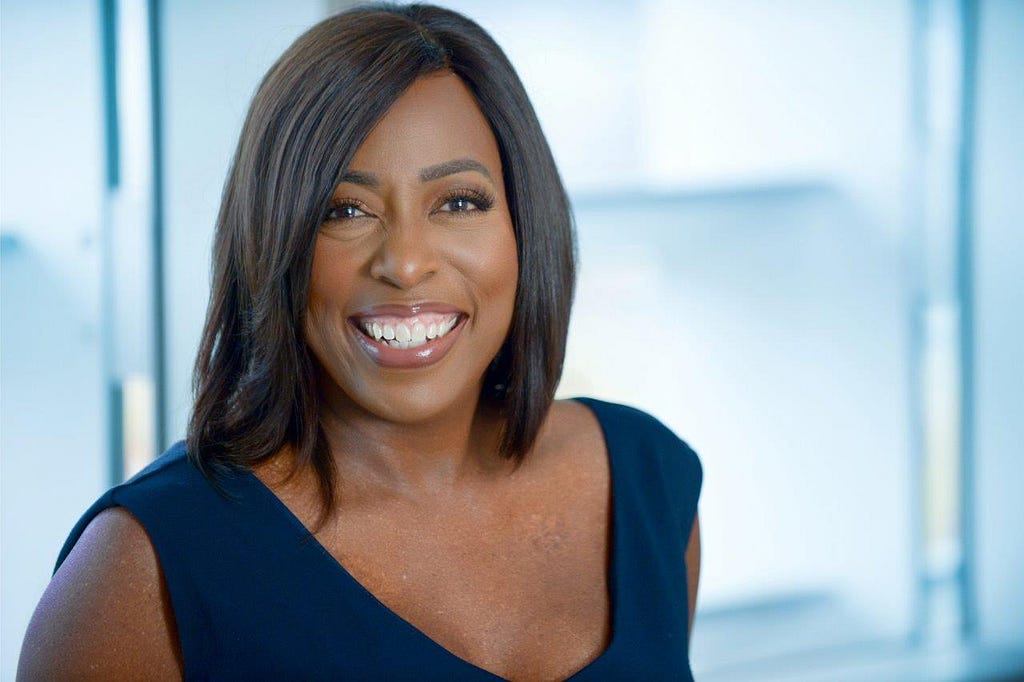
“5 Things We Need To Do To Close The Gender Wage Gap”, with Anne Shoemaker and Candice Georgiadis

I advise the women I work with to ask for a big raise for a few reasons: a) I hope they get it, and b) if they don’t get it, I want them to get as much information about how their compensation is determined as possible. If the company is unwilling to share a salary band for their position, I encourage an open dialogue about advancement opportunities. If a woman learns that she is already tapped out at her current employer, that is good information to have- it might be time to polish up the resume.
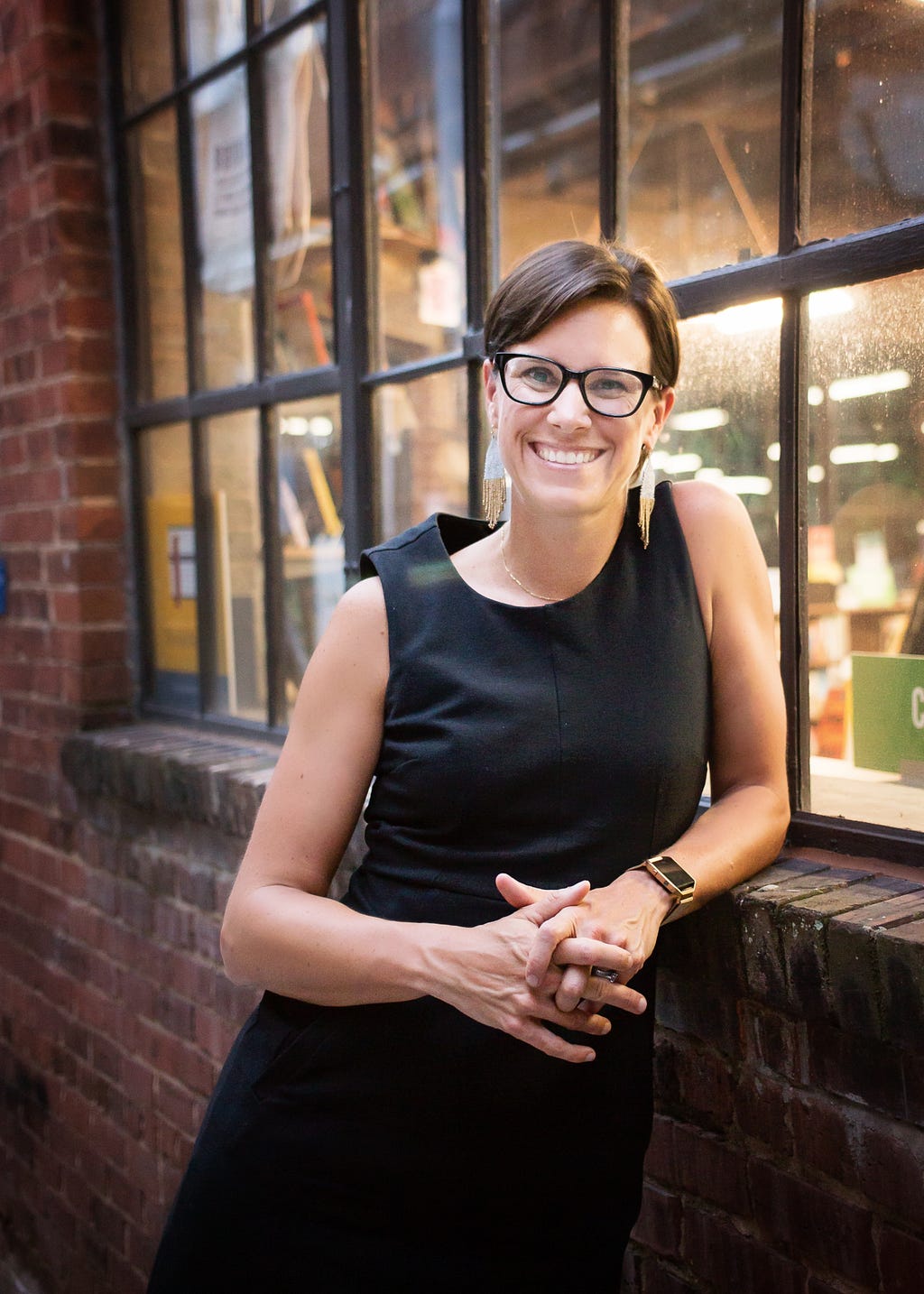
As part of my series about “the five things we need to do to close the gender wage gap” I had the pleasure of interviewing Anne Shoemaker. Anne is an executive in the commercial real estate development industry and a wife and mom to two children. In an effort to support and elevate women as they progress in their career, Anne launched a coaching and consulting business that is focused on helping career women overcome limiting beliefs, develop courage and confidence, and succeed in compensation conversations in the workplace. AnneShoemaker.com

Thank you so much for joining us, Anne! Can you tell us the “backstory” that brought you to this career path?

I launched my small business based on a pattern of questions that I was fielding from female colleagues and junior associates. It went like this: “I just got a promotion that I’m excited about, but it didn’t come with an increase in pay … Can you help me make my case?” Or, “I’m going on maternity leave soon and want to propose a short-term, part-time schedule to ease the transition back to work. However, I don’t want this to have long-term (negative) consequences. How can I make a successful pitch to my employer?” And more. I am finding that many women need both an ally and some practical help when it comes to advocating for what they want, need, and deserve in the workplace. Having served as a hiring manager in the past, I help women make a compelling case that meets both their needs and their employer’s expectations.

Can you share the most interesting story that happened to you since you began this career?

I started my coaching and consulting business as an outcome of women seeking validation and encouragement to ask for what they believe they deserve in the workplace. Oftentimes, what they are really looking for is courage and confidence. I have learned, repeatedly, that we all need encouragement. The advice I give women may be advice they are already considering- they just need someone to talk it through with and some strategies for execution. I am pleased and honored to offer them both.

Can you share a story about the funniest or most interesting mistake you made when you were first starting? Can you tell us what lesson you learned from that?

I launched my business via an email campaign to several hundred people, certain that I would get some “congrats!” and “way to go!” responses, but not expecting any real clients (at first). Wrong! I was shocked when I had a short client list right away. My first thought was, “I can’t do this! I’m not qualified!” The very medicine that my business promised to administer (courage and confidence in the face of uncertainty) was the same that I was now desperate for. But, like jumping into a pool of cool water on the first not-so-hot day of summer, I went for it. The exercise proved to be a good reminder of just how scary pushing past our limiting beliefs can be, and that no one — coach or client alike — is immune to feeling like a fraud when they’re plowing new ground. I needed the advice I have now given so often: in order to grow, you must get comfortable being uncomfortable.

Ok let’s jump to the main focus of our interview. Even in 2019, women still earn about 80 cents for every dollar a man makes. Can you explain three of the main factors that are causing the wage gap?

One factor that leads to pay disparity is societal conditioning of boys and girls. In Brave, Not Perfect, Reshma Saujani states, “In girls, the drive to be perfect shows up, and bravery shuts down, around age 8, right around the time our inner critic shows up.” She goes on to say, “Unlike girls, boys are rewarded with approval and praise for taking chances, even if things don’t work out. In other words: boys are taught to be brave while girls are taught to be perfect.” Taking risks and failing are critical components the produce learning and growth, first in school and later, in the workplace; we need to praise girls for risk-taking as a critical component to their learning and advancement.

When girls and women hold themselves back for fear of imperfection, they open the floor for men (who have become accustomed to, and comfortable with, failure) to advance. Before you know it, another class of men reaches the C-suite and the cycle repeats itself.

So, we need to normalize risk-taking for girls so they can develop the resilience necessary to climb the corporate ladder and earn the bigger paycheck.

Meanwhile, there are women who have broken through these societal expectations and blazed a new trail, only to find that wage secrecy is working against them. They land an esteemed position only to later learn that their male peer out-earns them. Had there been salary transparency from the outset, all candidates could negotiate from a position of strength with the most qualified and valuable candidate earning the biggest paycheck.

Finally, insufficient home/work support structures (e.g., flex-work options such as remote work or flexible scheduling) work against women’s ability to advance to higher-salaried positions. Consider a scenario whereby commitment to a company and the related gateway to advancement is based on facetime in the office. If the C-suite is dominated by men whose spouses are not in the workforce, there is little need for flexible scheduling or advance notice about late afternoon meetings. However, if a woman is trying to break into this level and comes from a dual-career household, she may need flexibility or a bigger paycheck (or both) in order to manage both home and work, or to hire out help at home. If the company perceives her request for a flexible working arrangement as a) a distraction or inconvenience they would rather not work around, b) a deterrent from the company’s objectives, c) offering her something that they don’t want to offer to others, or d) “playing favorites” by making an exception for her, then she will not receive the support she needs to compete and excel at the next level of career growth. Werk.co put together an excellent report on the topic of the importance of flexibility in the modern workplace; this report is required reading for senior level staff.

Can you share with our readers what your work is doing to help close the gender wage gap?

Every day, in every client meeting, I show up with and for women, eager to hear what their internal dialogue is as it pertains to their self-worth and the value they bring to the workplace. I have coached some very bright, accomplished executive women who know that they are bringing unique skills and insights to bear, and yet when it comes time to enter the lion’s den (so to speak) to advocate for equal pay, they start to doubt themselves. My goal is to help them get a view of the facts from a third-party, objective viewpoint. I find the logic in their argument, then help them package it and leverage it in conversation. Ultimately, my goal is for my clients to believe in their worth beyond the shadow of a doubt, then bring facts and logic to the negotiation table. There is no reason, no excuse, and no room for them to be paid a dime less than any peer, male or female, with the same skill set. But, the first person they have to convince of this fact is themselves.

Can you recommend 5 things that need to be done on a broader societal level to close the gender wage gap. Please share a story or example for each.

  1. Attention & investment from high-profile influencers in the private sector such as Melinda Gates and Sallie Krawcheck. (top-down approach). When Melinda Gates committed $1 billion to promote gender equality in Oct. 2019, people took notice. She founded Pivotal Ventures and launched a media campaign (#EqualityCantWait) to draw attention to the issue. Gates has tremendous influence with people in positions of power worldwide and has now committed resources to make an impact. Announcing this initiative was just the beginning; her legacy in this space will be astounding.
  2. Attention from pop culture icons (bottom-up approach), such as Michelle Williams’ 2019 Emmy speech and Megan Rapinoe of the U.S. Women’s National Soccer Team, Sports Illustrated’s 2019 Sportsperson of the Year (only the 4th female ever to win the honor in 66 years). Speaking of a worldwide stage, it would be hard to find an American or international soccer fan (the world’s #1 sport) who did not witness Megan Rapinoe & the U.S. Women’s National Soccer Team win a record-setting fourth World Cup in 2019. Her decision to snub the White House in favor of advocating for women’s equity garnered plenty of attention. Rapinoe is boldly trying to start a movement by inviting influential males into the process as well (see: Lionel Messi, Cristiano Ronaldo)
  3. Committee chairpersons/sponsors (preferably male) at the state and federal regulatory levels and/or ongoing sponsorship on this issue by an influential male business leader. The week of Dec. 16th, 2019, former President Barack Obama made remarks about the benefits that women in leadership positions bring to the world stage. While his remarks were not about pay equity, they do cast a light on the benefits that women bring to decision making and seats of power. To close the gender wage gap, we need influential men to advocate for women’s pay equity.
  4. Coaching of women and girls of all ages to become more skilled in self-advocacy. In hiring babysitters, I am struck every time a young woman (typically high school age) responds to my compensation question, “What’s your rate?”, with “Whatever you want to pay me is fine! ?” No, no, no! We need to counsel young women to start their rate with confidence: “I charge $12/hour for two kids”. Bam- done. When we start our careers off with a flippant “Whatever”, we start the habit of discounting our skills and our worth. This cannot continue.
  5. Pay transparency to eliminate asymmetrical information. In my coaching practice, I advise the women I work with to ask for a big raise for a few reasons: a) I hope they get it, and b) if they don’t get it, I want them to get as much information about how their compensation is determined as possible. If the company is unwilling to share a salary band for their position, I encourage an open dialogue about advancement opportunities. If a woman learns that she is already tapped out at her current employer, that is good information to have- it might be time to polish up the resume.

You are a person of great influence. If you could inspire a movement that would bring the most amount of good to the most amount of people, what would that be? You never know what your idea can trigger. 🙂

I am passionate about women’s pay equity worldwide. In the U.S., women are fighting to equal pay for equal work. In other parts of the world, women are simply fighting for the right to work. Just think about how much further along we could be as a human race if we were to leverage the insights and talents of ALL the population. The seats of power have historically been held by men, representing and fully leveraging only half of the human experience to date, which means we are only halfway to our potential! Women have tremendous insight to offer corporations and the public sector; there are bodies of research that demonstrate the gains in performance that a company experiences after diversifying the boardroom. It is time that we intentionally clear a pathway of opportunity for women to be seated at tables of influence whereby they are paid equally to their male counterparts.

Can you please give us your favorite “Life Lesson Quote”? Can you share how that was relevant to you in your life?

“I refuse to live as half of myself just because others cannot handle all of me.” Rachel Hollis

I came upon this quote while reading Hollis’s 2018 NYT bestseller, “Girl, Wash Your Face”. It was a call to arms. I had been living a life that put others’ comfort before my own, and it was making me sick. I have always had a big engine- tons of energy, tons of enthusiasm, and more ambition than even I knew what to do with. However, I had been conditioned to tamp down these qualities because they intimidate and overwhelm other people. When I read this sentence, it hit me straight in the gut: I did not have to make myself small any longer. It was an empowering moment- I won’t forget it.

We are very blessed that some of the biggest names in Business, VC funding, Sports, and Entertainment read this column. Is there a person in the world, or in the US whom you would love to have a private breakfast or lunch with, and why? He or she might see this, especially if we tag them. 🙂

I would love to meet Sara Blakely. Her entrepreneurial journey is so inspiring to me, as is the way she shows up online via social media and what we see of how she engages with her family. The mission at Spanx of supporting and elevating women is near and dear to my heart. I love what Sara Blakely is all about.

This was really meaningful! Thank you so much for your time.


“5 Things We Need To Do To Close The Gender Wage Gap”, with Anne Shoemaker and Candice Georgiadis was originally published in Authority Magazine on Medium, where people are continuing the conversation by highlighting and responding to this story.

“5 things that need to be done to close the gender wage gap”, with Bridget Deiters and Candice…

5 things that need to be done to close the gender wage gap”, with Bridget Deiters and Candice Georgiadis

…Disproportionate focus on recruitment rather than retention. In law, admirable efforts have been made to recruit more women into the profession, but we are learning that retention may be even more important than recruitment for narrowing the gender pay gap. April 2018 numbers showed that 54% of legal professionals in the U.K. were women, but despite this proportion in favour of female lawyers, there is a gender pay gap of over 16 percent. This indicates that there are plenty of women recruited into the legal profession, but that few of them are retained to reach the highest pay levels.

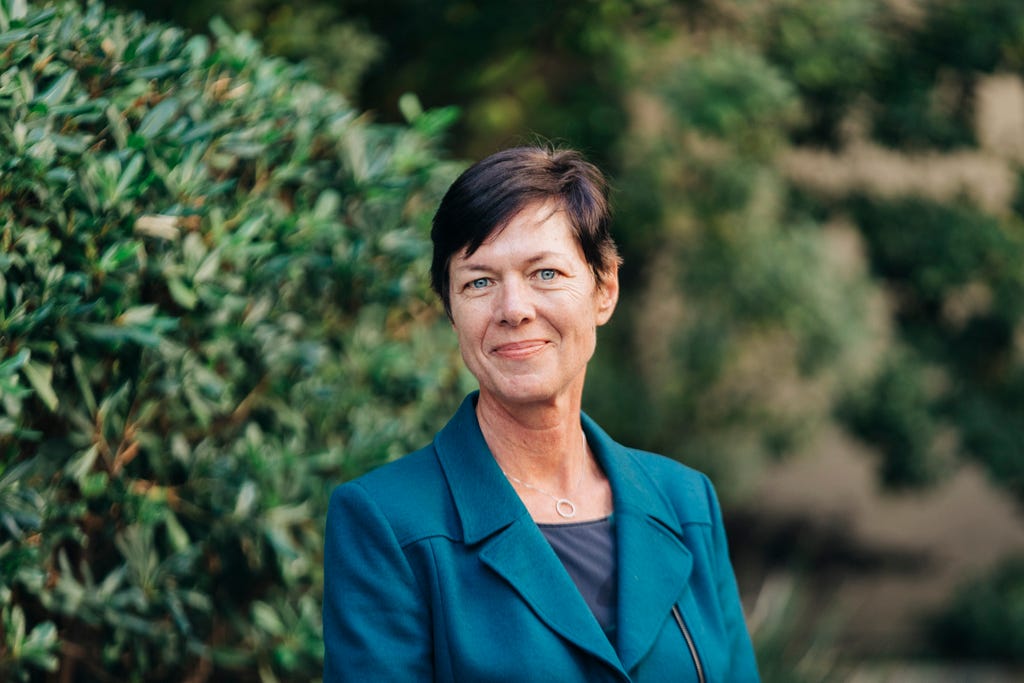
I had the pleasure of interviewing Bridget Deiters. Bridget is a London-based managing director at InCloudCounsel, a legal technology company that frees large companies from high-volume legal work. Prior to InCloudCounsel, Deiters practiced corporate and capital markets law at the law firms Kirkland & Ellis in London and Chicago and Cravath, Swaine & Moore in London and New York.

Thank you so much for joining us Bridget! Can you tell us the “backstory” that brought you to this career path?

I started my career as a corporate attorney at large international law firms, working for them in both the United States and London. While I planned for my career to take me away from private practice eventually, working at those firms provided access to the legal training and professional network that constitute the foundation of my career.

Technology always fascinated me, and in fact I worked on firmwide projects while I was in private practice to create databases and online resources for lawyers at the firm to increase efficiency. Toward the end of my years as a law firm associate, I worked with career coaches to build a plan for my future focused on leveraging my strengths and interests and moving toward my personal definition of success. I am grateful I had the opportunity to set aside that time and energy for that self-reflection, as it was invaluable as I assessed my options before leaving the firm, as it wasn’t long after that exercise when I received the opportunity to join InCloudCounsel, a legal technology company focused on driving efficiency for routine legal work, where I am able to leverage my law firm experience while embracing my interest in technology.

My work with respect to the gender pay gap in law arose as a result of the enactment of laws in the U.K. (where I was practicing at the time) mandating the disclosure of the gender pay gap at companies with over 250 employees from 2018. It was shocking to see in black and white what had always been a hunch: men were making far more than women at most law firms, despite earnest gender diversity programming. As I considered my next role, eager to be part of the solution for this inequality, I made it a priority to join a company that was taking a different approach to the legal profession, and InCloudCounsel is doing just that.

Can you share the most interesting story that happened to you since you began this career?

Since moving from a law firm to a legal tech company, I’ve been fascinated by how our software engineers can convert nuanced legal concepts into software systems. I recently worked with them to create a piece of software that helps with legal compliance. While doing so, I realized that engineers and lawyers have more in common than you might think. Just like engineers coding a new piece of software, corporate lawyers drafting a contract parse through all the scenarios that could arise from each decision that is made, then they proactively incorporate the necessary workarounds to achieve the desired result. Both disciplines require extreme attention to detail and strategic planning. It was interesting (and humbling) to see firsthand how the legal profession can benefit from non-lawyers!

Can you share a story about the funniest or most interesting mistake you made when you were first starting? Can you tell us what lesson you learned from that?

As a junior attorney at large law firms, I thought it was inappropriate to ask clients and others in the working group outside the firm to connect with me on LinkedIn or AngelList. I feared doing so would come across as too self-promotional, overly familiar or “salesy,” and I was conscious that there were delicate client relationships involved at the partner level. I was careful to save contact details, but I never connected with them outside of whatever project we were working on.

I realized later as I became more senior what a mistake this had been for many reasons. First of all, no matter how diligent I was about saving contact details, they were useless once the person changed jobs, which happens quite regularly. Secondly, I shouldn’t have been afraid of coming across as self-promotional, overly familiar or transactional. If someone makes themselves available on a professional networking site, they are actively building a network, and you may be able to contribute just as much to their network as they can to yours. Third, I was foolish to think a LinkedIn invitation would incite backlash at the partner level — in the event the contact didn’t want to connect with me, they could simply reject my invitation or ignore me. Finally, rather than merely saving contact details, I should have been actively nurturing connections even as a junior lawyer. Making contact with someone outside the normal work context is the first step in that kind of relationship building, even if it just starts with an invitation to your online network.

Ok let’s jump to the main focus of our interview. Even in 2019, women still earn about 80 cents for every dollar a man makes. Can you explain three of the main factors that are causing the wage gap?

  • Disproportionate focus on recruitment rather than retention. In law, admirable efforts have been made to recruit more women into the profession, but we are learning that retention may be even more important than recruitment for narrowing the gender pay gap. April 2018 numbers showed that 54% of legal professionals in the U.K. were women, but despite this proportion in favour of female lawyers, there is a gender pay gap of over 16 percent. This indicates that there are plenty of women recruited into the legal profession, but that few of them are retained to reach the highest pay levels. On average, women outnumber men in all four pay quartiles of U.K. law firms. For U.S. and international firms reporting in the U.K., women outnumber men in all but the top pay quartile of those firms on average. Gender pay gap reporting for U.K. law firms indicates that on average the lowest quartile of employees was comprised of 26.5 percent men and 73.5 percent women. The highest quartile was comprised of 47.8 percent men and 52.2 percent women. It should be mentioned that the U.K. reporting requirements do not allow for a distinction between legal professionals and non-professionals employed at law firms. That being said, assuming fee-generating legal professionals comprise the highest quartile of law firm employees, in U.K. firms, there are actually more women in that echelon than men, but the women in that quartile are being compensated less than their male counterparts.
  • Traditional gender roles with respect to dependent care. Despite an increase in parental leave regardless of gender, and despite the frequency with which families have two working parents, traditional gender roles with respect to dependent care persist. For example, according to the American Bar Association, almost half of women identified caretaking commitments as important or very important factors in why they left their law firm jobs, whereas only 20 percent of men cited caretaking as a reason for departure. In that statistic, traditional gender norms are probably at work in ways: women may do more caretaking than men as a result of those norms, but also as a result of those gender norms women probably feel more comfortable than their male counterparts when it comes to reporting dependent care as a reason for leaving a job.
  • Inflexible partner tracks and corporate ladders that ignore social trends. Studies show that women with college degrees tend to start having children an average of 7 years later than women who do not have a college degree. The reason for this is thought to be the time it takes to establish a career and generate income following college or university. Following that logic, it can be assumed that women with professional degrees probably start having children even later. The average age of women in New York City with college degrees to have their first child is 32.9; in San Francisco, it’s 33.4. With partner tracks generally ranging from 7 to 10 years, the time most female lawyers are having children coincides with the time when they are under consideration for partnership in law or when many people are tapped for leadership positions in corporate roles. The timing of these decisions being when someone is getting close to mid-career (often in their 30s) can leave some women feeling that they have to choose between having a family and reaching the highest rung on the ladder, and many women leave high-paying professional roles as they choose the former.

Can you share with our readers what your work is doing to help close the gender wage gap?

InCloudCounsel offers lawyers an entirely new way to work that takes into consideration many of the challenges faced in the gender pay gap battle. As a result, InCloudCounsel has outstanding retention rates for men and women alike, and female solo practitioners on our platform actually earn more than their male counterparts on average. There are several aspects of our legal process outsourcing model that allow us to maintain this balance. For one, attorneys who work on our platform work entirely remotely, which means there is no “face-time” expectation. This flexibility with respect to location allows men and women alike to meet obligations outside of work without negatively impacting their career trajectories, an important option when so many attorneys who leave law firms cite dependent care as a reason for their departure.

As discussed above, rigid career tracks can leave some women feeling that they have to choose between having a family and professional success. At InCloudCounsel, there is no looming deadline for career development, as our lawyers are allowed to moderate their capacity as needed to balance competing priorities. This allows men and women alike to plan their career trajectory around their personal lives.

InCloudCounsel also has a fixed compensation model that gives lawyers total transparency with respect to their income. Law firm compensation can be affected by market conditions, deal flow and case flow, performance relative to peers, and team size, but it often isn’t until an annual review or a year-end bonus that lawyers know whether those factors had an impact on their earnings. Even then, it isn’t entirely clear whether earnings are performance-based, hours-based, or some combination. This lack of transparency combined with reported statistics showing that men are paid more than women in law firms often leaves female lawyers feeling disenchanted and unmotivated. With the fixed InCloudCounsel compensation model, the only variable with respect to compensation is how many documents the lawyer has worked on, which is a function of that lawyer’s self-reported availability and desire to take on work.

Finally, InCloudCounsel allows its lawyers to moderate their capacity to work on our platform in a way that traditional law firms have not. Many women indicate that the challenges to ramping off and ramping back on for parental leave in the law firm setting affect their decision to stay at the firm. At InCloudCounsel, our teams are easily scalable to accommodate instances of parental leave, health issues, and other personal time. Our lawyers can increase or decrease their capacity as needed during hectic or quiet times in their lives.

You are a person of great influence. If you could inspire a movement that would bring the most amount of good to the most amount of people, what would that be? You never know what your idea can trigger.

This should come as no surprise, but it would be closing the gender pay gap. This is a worldwide issue, and while it may seem like a gender-specific issue, the economic discrepancy between men and women has macro-effects on everything from human rights to big business.

Can you please give us your favorite “Life Lesson Quote”? Can you share how that was relevant to you in your life?

As I thought about where my career would take me after I left the well-beaten path of the law firm, I came across the English saying “Different horses for different courses,” which they often shorten to “horses for courses.” It’s a reference to horse racing, where it isn’t always the horse that can run the fastest who wins the race, but rather the horse that can run the course the best. Some horses excel on dry courses, others do best in the mud; some are sprinters, others are distance runners. At work, in school, and in life generally, I was prone, as many are, to spending more time focused on improving my weaknesses than on wielding my strengths. Thus, the phrase “horses for courses” inspired me to focus on finding a course that lets me leverage my strengths rather than spending my energy on a course defined by my weaknesses.

Thank you for all of these great insights!


“5 things that need to be done to close the gender wage gap”, with Bridget Deiters and Candice… was originally published in Authority Magazine on Medium, where people are continuing the conversation by highlighting and responding to this story.

“5 Things We Need To Do To Close the Gender Wage Gap”, with Bethany Allee of Cybera

I think it’s pretty clear that the primary factor behind the wage gap is gender discrimination. Most of the other factors are related to this root issue. Earlier this year, KPMG issued a report that cites “entrenched gender stereotypes” as having the most negative impact on the careers of women. That’s essentially what I’ve personally witnessed at various companies throughout my career.

I had the pleasure of interviewing Bethany Allee. Bethany is Executive Vice President of Marketing for Cybera, and has over 20 years of experience in executive leadership roles, including President, Treasurer, and EVP Marketing. During that time, she has worked at iconic technology brands Broadcom and Brocade, as well as growth companies Cybera, NuView, and Powered. Known for her strategic vision during market transitions, Allee is a Retail BrainTrust contributing author, a member of the NACS Strategy Committee, and one CRN’s Women of the Channel. Allee serves on the board of directors for Dress for Success, WISE4 Women, and Sound & Vision Social Club. She enjoys writing, volunteering with equality-driven organizations, and doting on her children.

Thank you so much for joining us! Can you tell us the “backstory” that brought you to this career path?

For me, it all started by following my general interests versus deciding on some formal “what I want to do with my life” plan while at the University of Texas at Austin. I ended up in a course where we spent the semester developing a digital marketing strategy for British Airways. At that time, it was called “Website Marketing.” I ended up winning the competition, and British Airways flew me first-class to London as my prize — my very first trip across the pond!

Because of that competition, I gained a bit of local notoriety. Soon after, I got a call from a startup called CollegeStudent.com. They asked me to join their team as their “Marketing Intern.” What they really meant was, “Please work for free and start our Marketing team.” As a naïve kid with no other particular plan in mind, I was just fine with that. It turned out to be a fantastic once-in-a-lifetime learning experience filled with clear challenges and successes every day. A couple decades later, I’m still close with many members of that CollegeStudent team.

Can you share the most interesting story that happened to you since you began this career?

As a woman who has hung out with mostly male Sales teams for more than 20 years, I’m not even sure where to start. Let’s just say that early in my career, I learned the value of double-checking the intended recipients of an email. While at an annual Sales Kickoff, a certain employee — who shall remain unnamed — hit “Reply All” to the entire distribution list of attendees and informed everyone that they were heavily inebriated and hanging out at Denny’s just in case anyone wanted to join them…at 3:30 AM, of course. I don’t know how many of the 2,600 onsite team members actually trekked over to Denny’s, but I do know this legendary mistake is still remembered in an organization that now has upwards of 20,000 employees. The lesson: ALWAYS double-check the “To” list on any emails before hitting “Send.” Related, the organization learned a valuable lesson about restricted distribution lists.

Can you share a story about the funniest or most interesting mistake you made when you were first starting? Can you tell us what lesson you learned from that?

I grew up in Houston, Texas, and early in my career, I had the opportunity to manage a 24-city roadshow winding its way throughout the U.S. — including a stop in Houston. I was so excited to execute an event on my home turf that I (incorrectly) assumed I knew exactly where the event hotel was and that I had the correct hotel address on the invitation. Suffice to say, I did not. So, that was another key lesson: ALWAYS double-check the address. At that point in my career, I was starting to move up the ladder and this mistake put my ego in check in a major way — which was exactly what I needed at the time.

And, during the early part of my executive career, I was attending one of my first board dinners, where I was nursing a serious shoulder injury. At the beginning of dinner, the longest-standing and most influential member of our board asked me to pass a tray of chilled oysters on ice. I was pretty sure I could stabilize the weight of the platter with my one good arm. Physics and gravity thought otherwise. He ended up with a lap full of melting ice and slimy shellfish, and I ended up with an evening of awkward dinner conversation, embarrassment, and non-stop apologies. The lesson: Don’t be too proud to ask for help, or say no!

Ok let’s jump to the main focus of our interview. Even in 2019, women still earn about 80 cents for every dollar a man makes. Can you explain three of the main factors that are causing the wage gap?

I think it’s pretty clear that the primary factor behind the wage gap is gender discrimination. Most of the other factors are related to this root issue. Earlier this year, KPMG issued a report that cites “entrenched gender stereotypes” as having the most negative impact on the careers of women. That’s essentially what I’ve personally witnessed at various companies throughout my career.

Even if the vast majority of people are well-intentioned about solving this issue, the deep-seeded issues in the system itself are a big hurdle to overcome — especially in the tech industry.

Can you share with our readers what your work is doing to help close the gender wage gap?

At Cybera, we have predetermined compensation ranges for each job and level. To maximize the effectiveness of this HR tool within my team, I’m diligent about aligning annual reviews with consistent compensation and title advancements for any team members who exceed expectations and drive results — regardless of gender.

Can you recommend 5 things that need to be done on a broader societal level to close the gender wage gap. Please share a story or example for each.

First of all, we must increase pay transparency and make the compensation discussion less taboo. Doing so will increase the willingness and ability of women to negotiate more effectively. For instance, I once had a manager who left the organization only to later tell me I was “significantly undercompensated.” While I appreciated the gesture, she wasn’t willing to provide any guidance when I asked for details about exactly how undercompensated I was. A seed was planted, but it almost felt worse to know that I was underpaid, yet still didn’t have enough insight or information to negotiate as aggressively as I would have liked. Fortunately, there’s less of a stigma to negotiation these days. And web sites like Glassdoor and Salary.com are giving employees more information and tools to better negotiate.

As a society, I think we should openly communicate about compensation standards and encourage companies to use tools that encourage leveling. I remember an era when no one would ever ask about house values or what someone paid for a house. That seems so antiquated. Now, it’s just accepted as widely accessible knowledge and no one even thinks twice about it. So, there shouldn’t be anything sacred about employee compensation. Bringing it into the light would also help companies to reduce the future risk of compensation discrimination — conscious and unconscious.

To take this a step further, companies could report on gender pay gaps as part of the tax process. The fastest way to address the wage gap is to make it impact the bottom line, so let’s give employers some incentives to correct any gaps with tax credits.

The second-biggest pay gap driver is career interruption, according to the KPMG report I referred to earlier. Women are more likely to disrupt their career to care for young children and elderly relatives. Family leave equality gives families the opportunity to make decisions without the boundaries of traditional gender roles. I feel extremely lucky to have had time at home with my children after they were born. But for my particular situation, it would have made sense for my partner to take on more of that responsibility — and it definitely slowed down my career trajectory.

Another example is what occurred the year before I gave birth to my second child. I had been responsible for running the largest, most expensive, and most strategic marketing program in my company’s history. Not only did I crush my metrics, I was viewed as a strategic leader and brought into customer and partner meetings that gave me tremendous insight into the long-term strategy of the organization. It was the kind of experience and insight that’s critical for career advancement. The following year, I was set to deliver my son a month and a half before the same marketing program culminated. But instead of being seen as the strategic leader of the team, I was treated like an order-taker and I wasn’t invited to a single customer or partner meeting — even the ones that required no significant travel. That was extremely disappointing and a real eye-opener for me.

You are a person of great influence. If you could inspire a movement that would bring the most amount of good to the most amount of people, what would that be? You never know what your idea can trigger. 🙂

I know it might come across as cliché, but my movement would simply be the “Live Everyday” movement. I would encourage people to do something that brings them joy or to have an adventure every day — even something small or relatively simple. My mother’s life was cut short when she was murdered at a very young age — just 34. Going through that experience gave me a big dose of reality and perspective early in life. It also taught me that time is our most precious asset. You simply can’t waste it. It’s perfectly fine to have lazy days, but you really do need to try seizing life and getting the most of each day!

Can you please give us your favorite “Life Lesson Quote?” Can you share how that was relevant to you in your life?

I really relate to something the celebrity trainer Jillian Michaels once said: “Unless you puke, faint, or die…keep going.” One of my best friends once told me that I’m not especially talented at anything (gee, thanks!), but that I try harder than anyone she’s ever met. It feels a bit like the old Avis television ads…I do try harder. My parents conditioned me to never give up under any circumstances, so I’m forever thankful to them for instilling that level of grit and gusto in me. And in case anyone reading this needs to hear some words of encouragement, “You can do it, so just keep going!” You know the old adage that just showing up is half the battle? Well, the other half is often persistence, perseverance, and effort. You’d be amazed at just how far resiliency can take you in life.

We are very blessed that some of the biggest names in Business, VC funding, Sports, and Entertainment read this column. Is there a person in the world, or in the US whom you would love to have a private breakfast or lunch with, and why? He or she might see this, especially if we tag them. 🙂

I would absolutely love to go to happy hour with Sarah Ashley Longshore, known as the artist Ashley Longshore. She’s deeply passionate about the same type of volunteer organizations that I’m involved with, and she brings more positivity into the world than anyone I know. Here’s a quote of hers that I love: “I want to live in a world of laughter, color, sparkle, and shine. Life is too short to not spend most of the day with a smile.” She just gets it on so many levels. I definitely would love to drink a Manhattan — or three — with her.

Thank you for all of these great insights!


“5 Things We Need To Do To Close the Gender Wage Gap”, with Bethany Allee of Cybera was originally published in Authority Magazine on Medium, where people are continuing the conversation by highlighting and responding to this story.

“5 Things We Need To Do To Close The Gender Wage Gap”, with Taryn Oesch and Amy DuVernet

Our research has found that women tend to receive less effective leadership training than men, especially in those occupations and industries where they could make more if they were better supported.

As part of my series about “the five things we need to do to close the gender wage gap” I had the pleasure of interviewing Taryn Oesch and Amy DuVernet. Taryn is the managing editor of digital content at Training Industry, where she manages content on TrainingIndustry.com; works on research reports; and co-hosts The Business of Learning, the Training Industry podcast. Her work at Training Industry has resulted in her being awarded an APEX Award of Excellence and a regional bronze Azbee Award from the American Society of Business Publication Editors (ASBPE). She was also named a 2019 ASBPE Young Leader.

Amy is the director of training manager development at Training Industry, where she oversees all processes related to Training Industry’s continuing professional education programs, including their research, development and evaluation. Prior to joining Training Industry, she worked as a business consultant designing and evaluating organizational interventions in a variety of industries. She holds a Ph.D. in industrial/organizational psychology from North Carolina State University and is a Certified Professional in Training Management.

Thank you so much for joining us! Can you tell us the “backstory” that brought you to this career path?

Taryn: I studied psychology and K-12 English as a second language (ESL) education in college, but it took some time for me to figure out the right career path for me. I went from teaching to university fundraising to marketing and then to my current role as a member of the editorial team at Training Industry, Inc. Writing and editing in this industry combines my passion and experience in education and psychology with my skills in storytelling and media.

Amy: During grad school, I originally intended to go the academic route. I love research and get a lot of great energy from both mentoring and teaching — key job responsibilities of university faculty. One piece of the puzzle was missing, however. I wanted to make sure the research I did was used in practice. I feel incredibly fortunate to have found a position where I can marry all of those passions; at Training Industry, Inc., I’m able to apply my research/science background to the study of learning and development (L&D) processes, careers and impact. I then translate the results of these studies into professional development programs that impart evidence-based best practices to L&D professionals.

Can you share the most interesting story that happened to you since you began this career?

Taryn: What’s been interesting to me as my career has developed is how my interest in supporting women at work has developed. I went from a women’s college to an office of all women to a company that is majority women. Most of the volunteer work I do is centered around inclusion and women’s issues — largely due to opportunities that opened up and seemed interesting rather than any personal branding strategy I developed. My takeaway is that your “personal brand” or career focus should be organic — reflect on your interests, passions and skills and let them guide you, but be open to opportunities that come your way.

Amy: The most interesting thing that’s happened to me since I began this career was having my daughter, who is now three. Having read about the dilemmas of working moms, I felt I understood the pressure, but I had no idea. It is truly impossible to do it all, and becoming comfortable with the trade-offs has been a huge learning for me. Becoming a mom has added so much joy and complexity to my life, and I’ve definitely changed the way I approach work and home life.

Can you share a story about the funniest or most interesting mistake you made when you were first starting? Can you tell us what lesson you learned from that?

Taryn: On my way to my first job interview out of college, I was pulled over by a cop for an expired registration. Having to explain to the interviewers why I was late was embarrassing. Lesson learned: Leave even earlier than you think you should (and, oh yeah … you should probably make sure your tags are always up to date).

Amy: One of the biggest mistakes I made as I transitioned from grad school to practice was assuming that stakeholders, the consumers of my research, wanted to hear nitty gritty information about the statistical analyses and methodological implications of my work. (Picture me explaining hierarchical linear modeling to the COO of my company, passionately exclaiming, “The results are simply fascinating!”) I’ve been very fortunate to have excellent mentors who’ve helped me to learn the art of crafting a data story. Basically, the detailed, advanced statistical analyses are critical as the foundation of any data-driven strategy; however, the sharing of those results must come in as a carefully crafted story that resonates with my audience, allowing them to make well informed decisions.

Ok let’s jump to the main focus of our interview. Even in 2019, women still earn about 80 cents for every dollar a man makes. Can you explain three of the main factors that are causing the wage gap?

We see three main factors at work in the wage gap. First is the fact that higher-wage occupations and industries (e.g., technology, engineering, finance) are still largely dominated by men; in fact, a 2016 Glassdoor survey found that men and women of similar age, education and experience have a 19.2% wage gap, while men and women with similar job titles, employers and locations have a 5.4% wage gap. Second is the fact that fewer women than men reach higher-level leadership roles, which naturally pay more.

Third, and affecting both of the first two factors, is the leadership training and development organizations offer women versus men. Our research has found that women tend to receive less effective leadership training than men, especially in those occupations and industries where they could make more if they were better supported.

Can you share with our readers what your work is doing to help close the gender wage gap?

Our research and writing in women’s leadership development is aimed at closing the training gap, which can close the leadership and wage gaps. Closing the gender gap will take a range of actions by a range of stakeholders, but learning and development leaders can play a key role by taking a look at the training they provide their leaders and future leaders. Making sure that women in their organizations receive training that’s focused on critical leadership skills (such as strategic thinking and planning, negotiation, and change management) and delivered in ways that meet women’s needs (such as on-the-job and formal coaching as well as in-person and online training) will help close the gap across levels and functions.

Can you recommend 5 things that need to be done on a broader societal level to close the gender wage gap. Please share a story or example for each.

1. Improve pay in female-dominated occupations, such as education and nursing. This strategy will create greater incentives for talented people to enter these fields and recognize the important work that teachers and nurses perform. It will also help close the gender wage gap by boosting the income of these workers, the majority of whom are still women.

2. Improve employer support of working parents, including flexible work options, paid maternity and paternity leave, and a culture that looks upon parenthood positively. For example, if a woman is able to take paid time off during her post-partum period, she will be able to maintain her income, return to work better prepared to perform and feel that her employer values her as a whole person rather than just a cog in the machine. If, after having children, she is able to take time off to attend school functions, work from home when her children are sick and otherwise be available as both an employee and a parent, she will be more likely to stay in the workforce and, thus, earn more money. For women who have taken a break from their careers, using programs like returnships can help accelerate their re-entry and earning potential.

3. We’re interested in seeing how next year’s elections shake out in regards to equal pay and family leave legislation. If family leave becomes mandatory, our only concern is whether it’s mandatory for both genders. If employers are required to give maternity leave but not paternity leave, we worry that it will incentivize them not to hire women, particularly young women.

4. Encourage pay transparency. When organizations go public on their wage gap (or lack thereof), it demonstrates their commitment to gender parity and encourages other employers to do the same. It also enables women to make decisions about where to accept jobs based on additional information (“Will I be paid the same as the men in my role and with my experience?”) and improves the company’s appeal to both job candidates and consumers.

5. We know that the wage gap is even worse for women who are members of more than one underrepresented group, including women of color and women with disabilities. Ignoring these intersectionalities is dangerous not only in terms of leaving many women behind but also in terms of the rich benefits that come with a multifaceted approach to organizational diversity and inclusion. An African-American woman with a learning disability has a unique perspective that can be very valuable to the organization she works for — but only if that organization recognizes her worth and addresses the unique challenges she faces.

You are a person of great influence. If you could inspire a movement that would bring the most amount of good to the most amount of people, what would that be? You never know what your idea can trigger. 🙂

Taryn: I have so many movements I’d like to start! The one that immediately comes to mind would be for men and women both to value the unique gifts women can bring to work — and to the world. Researchers have found no differences in the effectiveness of men and women as leaders — but many have found that men and women can bring different, inherent leadership strengths. If we valued some of the more “feminine” strengths — empathy, relationship-building, making connections — as much as we valued the more “masculine” strengths, what a better world we would have!

Amy: If I could inspire any movement, it would be focused on strengthening community engagement. There are so many aspect of modern life that push us to disconnect from each other. If we could reverse this trend and place the responsibility for each member of our communities on the shoulder of each member of our communities, I believe the average mental and physical well-being across our communities would dramatically improve.

Can you please give us your favorite “Life Lesson Quote”? Can you share how that was relevant to you in your life?

Taryn: As a writer and speaker, my favorite “life lesson quote” is from 20th-century German philosopher Edith Stein: “Do not accept anything as truth that lacks love, and do not accept anything as love that lacks truth. One without the other is a destructive lie.” Words have power, and speaking the truth — but doing so kindly and with empathy — is the best way I know how to make a difference.

Amy: “You can only become truly accomplished at something you love. Don’t make money your goal. Instead pursue the things you love doing and then do them so well that people can’t take their eyes off of you.”

– Maya Angelou

We are very blessed that some of the biggest names in Business, VC funding, Sports, and Entertainment read this column. Is there a person in the world, or in the US whom you would love to have a private breakfast or lunch with, and why? He or she might see this, especially if we tag them. 🙂

Taryn: I read Fran Hauser’s book “The Myth of the Nice Girl” last year and interviewed her for an article. In addition to being a nice girl herself — a really lovely person to talk to — she has interesting insights on what it means to be a woman in the workplace and how to bring your natural gifts to the table. (She also invests in some pretty cool female-led companies!)

Amy: Anne Wojcicki. The practical, medical and ethical implications of her work are profound. I’d like to pick her brain, not just about career and life lessons, but also about the impetus for her company and the future of genetic indexing.

This was really meaningful! Thank you so much for your time.


“5 Things We Need To Do To Close The Gender Wage Gap”, with Taryn Oesch and Amy DuVernet was originally published in Authority Magazine on Medium, where people are continuing the conversation by highlighting and responding to this story.

“How to Use LinkedIn To Dramatically Improve Your Business”, with Kent Lewis and Candice Georgiadis

LinkedIn has been, by far, the most powerful social platform for growing business. In 2017, I started reaching out to more than 900 of my 17,000 contacts, who were all my target audience as VP of Marketing. Since then, I’ve closed half a dozen strategic accounts via this outreach strategy on LinkedIn.

As part of my series of interviews about “How to Use LinkedIn To Dramatically Improve Your Business”, I had the pleasure of interviewing Kent Lewis, President of Anvil Media. As President & Founder of Anvil Media, Lewis oversees strategic direction of the company, with a focus on sales and marketing. He speaks internationally, writes for industry publications like SmartBrief and has been an adjunct professor at Portland State University since 2000. Since transitioning his career into digital marketing in 1996, he’s founded or co-founded four agencies and 2 organizations. He’s been named a Top 40 Under 40, Marketer of the Year by AMA Oregon and a Top 100 Digital Marketing Influencer by BuzzSumo in 2019. Outside of work, Lewis enjoys consulting with startups and spending time with family.

Thank you so much for doing this with us, Kent! Can you tell us a story about what brought you to this specific career path?

I fell into a career in digital marketing when the public relations firm I was working for spun out a sister web development agency in 1995 and they asked me to transition to that firm as head of marketing in 1996.

Can you share the most interesting story that happened to you since you started this career?

The highlight of my career must be lunch with Seth Godin in Manhattan more than a decade ago. 15 years ago, I set a goal to meet Seth in-person after reading his book. I reached out regarding a speaking opportunity in Portland 13 years ago and two years later, I was having lunch with him at a vegan café. He’s as amazing in-person as he is in writing and as a keynote speaker.

Can you share a story about the funniest mistake you made when you were first starting? Can you tell us what lesson you learned from that?

In 1995, I sent an email to a very influential technology reporter as a PR coordinator. The email came through scrambled, as he had a different encoding format than my email (back then, that was a thing). He assumed I’d done it on purpose and threatened to have me fired for it. My bosses laughed it off, knowing it was a technology issue and his audacity raised eyebrows to say the least. I appreciated their support as a junior employee.

Which social media platform have you found to be most effective to use to increase business revenues? Can you share a story from your experience?

LinkedIn has been, by far, the most powerful social platform for growing business. In 2017, I started reaching out to more than 900 of my 17,000 contacts, who were all my target audience as VP of Marketing. Since then, I’ve closed half a dozen strategic accounts via this outreach strategy on LinkedIn.

Let’s talk about LinkedIn specifically, now. Can you share 5 ways to leverage LinkedIn to dramatically improve your business? Please share a story or example for each.

The first strategy I used was connecting with existing clients, so they would see my daily activity updates and syndicated articles. I found it was a good way to create a consistent touchpoint outside of our monthly newsletter and increased engagement significantly.

The second strategy was reconnecting with former clients (more than 2 years old) to schedule a catch-up call. One of my first engagements was a client from 10 years’ prior.

My third strategy was to reach out to qualified prospects. I found the best traction when reconnecting with former partners, industry peers and others with a timely need. I closed 2 strategic clients the first year, one of whom was a former key contact at a partner agency and another an industry peer I’d known for over a decade. Since then, I’ve closed more deals with similar relationships.

The fourth strategy has been to maintain steady post cadence, sharing status updates roughly hourly from 8 am to 5 pm daily.

The final strategy I’ve employed is to create original content (LinkedIn Pulse articles) roughly monthly. It’s a great way to share my POV on topics outside of other syndicated media outlets to which I also contribute. Those posts also generate more exposure as they are native to the LinkedIn platform.

Because of the position that you are in, you are a person of great influence. If you could inspire a movement that would bring the most amount of good to the most amount of people, what would that be? You never know what your idea can trigger.

I’m a huge supporter of early literacy. Future prison capacity is based on 3rd grade reading levels. The more working professionals sit down with struggling student readers between grades K-2, the greater positive impact we can have on future success and economic growth. I’ve been a volunteer reader for SMART Reading in Oregon for 20 years: www.smartreading.org.

Some of the biggest names in Business, VC funding, Sports, and Entertainment read this column. Is there a person in the world, or in the US with whom you would love to have a private breakfast or lunch with, and why? He or she might just see this if we tag them.

I have a man crush on Ryan Reynolds, as he’s a brilliant actor and is exceedingly funny. He’s also a prudent entrepreneur and invested in a local spirit brand, Aviation Gin. I’m a huge fan of a Pacific NW original.

Thank you so much for these great insights. This was very enlightening!


“How to Use LinkedIn To Dramatically Improve Your Business”, with Kent Lewis and Candice Georgiadis was originally published in Authority Magazine on Medium, where people are continuing the conversation by highlighting and responding to this story.

“5 Things That Can Be Done to Close the Gender Wage Gap”, with Amelia Ransom and Candice Georgiadis

First and foremost, we as women can stop blaming ourselves for believing the lies society has told us about ourselves. Both the beauty of our bodies and the brilliance of our brains have value. The idea that we must pick one or the other has always been a false choice.

I had the pleasure of interviewing Amelia Ransom. Amelia is the Sr. Director of Engagement and Diversity at Avalara. She has over 20 years of expertise building strategy and delivering impactful results in business operations and human resources. Prior to her current role, Amelia spent 26 years at Nordstrom where she held team, regional and enterprise-wide leadership positions including Store Manager, Corporate Learning and Development Director, Director of Talent and VP Diversity Affairs. Her areas of expertise include leadership development, early in career and millennial engagement, executive level mentorship and advisement and diversity and inclusion strategy and execution. Amelia serves on the boards of the Seattle Metropolitan Chamber of Commerce, Seattle Goodwill Industries, The Institute for Sustainable Diversity and Inclusion and Building Changes. She is also on the advisory board for the Seattle chapter of the Association of Latino Professionals in America (ALPFA).

Thank you so much for joining us! Can you tell us the “backstory” that brought you to your career path?

I haven’t always been in HR. I’ve had roles in the business as a department and store manager. I believe that my success in HR has come from my ability to understand and drive business initiatives and lead large teams and connect each to the other.

Can you share the most interesting story that happened to you since you began this career?

Oh, there are so many stories, most of them are covered by confidentiality agreements ?. One story that comes to mind is when I was in a regional Diversity and Inclusion (D&I) role early on in my career. I was buoyed by the confidence of a strong performance review and I told my boss that I wanted my next job to be her job. Though flattered, she informed me that I wasn’t going to be a candidate for that job without more experience in the business. I was crushed and I didn’t understand why. She asked me if she had ever lied to me or steered me wrong and asked for my trust as she supported me in getting a role as a store manager.

Fast forward, I was eventually promoted to her role after being a store manager and it only took me a few days in the role to know she was right all along. I needed the Profit and Loss (P&L) experience, needed to be accountable for a large team and a large volume in order to think broadly enough build and deliver D&I strategies and initiatives for the entire company. And yes, I’ve thanked her again and again!

Can you share a story about the funniest or most interesting mistake you made when you were first starting? Can you tell us what lesson you learned from that?

In order to impress the interviewer at my first job, I carried a fancy briefcase I’d received as a graduation gift. There was absolutely NOTHING in it. So, imagine the hiring manager’s surprise when I said I didn’t have a copy of my resume to share with her. And then imagine my surprise when she showed me a bit of true grace by offering me the job anyway. I learned to be prepared and to offer others the same grace that was afforded to me. Of course, I also learned to come prepared to the interview!

Ok let’s jump to the main focus of our interview. Even in 2019, women still earn about 80 cents for every dollar a man makes. Can you explain three of the main factors that are causing the wage gap?

Well let’s be clear, that’s the pay gap for white women. The pay gap for black, Native and Latinx women is 61 cents, 58 cents and 53 cents, respectively. There’s one overarching factor here — sexism. Empirical data supports this. Sexism plays a role in the lives of women who work inside and outside the home, for the scholarly and the street smart, and it’s happening all around the world. Focusing all our attention on things like negotiating skills and whether we’re “likeable” will not solve this. Sexism is the root, so let’s fix the real problem.

Can you share with our readers what your work is doing to help close the gender wage gap?

My work is building organizational and operational muscle in the areas of inclusion and diversity. I’m not doing what I call “headline” work. I’m not trying to make a splash, but rather a difference. We are doing this through our own Employee Resource Groups, particularly our Women’s group, to hold us accountable to being the company we aspire to be. We’re teaching leaders how to lead diverse teams and doing our own internal wage gap study.

Can you recommend 5 things that need to be done on a broader societal level to close the gender wage gap. Please share a story or example for each.

First and foremost, we as women can stop blaming ourselves for believing the lies society has told us about ourselves. Both the beauty of our bodies and the brilliance of our brains have value. The idea that we must pick one or the other has always been a false choice.

We have to call out the inconsistencies when we see them. I’ve listened to men help their daughters negotiate great salaries and then be upset when their female employees use those same negotiating tactics.

We start devaluing girls’ brains early in life. Studies have shown that girls are still steered away from STEM subjects in school. What if the cure for cancer is in the brain of a girl whose teacher thinks she doesn’t belong in the magnet science program because it’s hard? Society is far worse off, and the opportunity gap widens because of this type of thinking.

Bottom line: Frederick Douglass said it best, “Power concedes nothing without a demand.” Women have the numbers and the power to demand an equal seat at the table or build their own.

If you could inspire a movement that would bring the most amount of good to the most amount of people, what would that be? You never know what your idea can trigger. 🙂

I want us to make decisions based on facts not fear. We as humans have a propensity to be afraid of what we don’t understand or haven’t experienced. So, knowing that about ourselves, let’s commit to learning about cultures, countries, and people that we may not be familiar with. Information is more readily available than it’s ever been — let’s use it.

Can you please give us your favorite “Life Lesson Quote”? Can you share how that was relevant to you in your life?

As a child, whenever I told my mom that I couldn’t wait until a special day — birthday, Christmas, etc., she’d warn me “not to wish my life away.” What she meant was if I just lived waiting until some big moment or day, I’d miss all the special times that happen in-between. I’ve found the most special memories I have aren’t from holidays or anniversaries, but from random sing-a-longs on the way to the grocery store or a corn on the cob eating contest at the beach. Yes, both of these things really happened!

We are very blessed that some of the biggest names in Business, VC funding, Sports, and Entertainment read this column. Is there a person in the world, or in the US whom you would love to have a private breakfast or lunch with, and why? He or she might see this, especially if we tag them. 🙂

Venus Williams and Serena Williams are great examples of what we’ve been talking about in eliminating the pay gap. They could have easily taken all of their wins on the court and gone home, but instead they fought for equal pay on the court — even for those who actively rooted against them. They’ve fought sexism and racism with more class and grace than we deserve. They’re my besties in my head — we grew up not far from one another, we like to win, and we use our platforms to speak truth to power. I don’t need to have breakfast with them, but the next time they hear someone screaming extra loud for them from the stands, I hope they’ll know it’s me!

Thank you for all of these great insights!


“5 Things That Can Be Done to Close the Gender Wage Gap”, with Amelia Ransom and Candice Georgiadis was originally published in Authority Magazine on Medium, where people are continuing the conversation by highlighting and responding to this story.

“5 Things We Need To Do To Close The Gender Wage Gap”, with Diane Bourdo of The Humphreys Group

To actually close the gender wage gap, we need to increase the national minimum wage to $15.00 per hour. The data tells us that the total number of hourly wage workers in the United States is split evenly between men and women — 50/50. But according to the Bureau of Labor Statistics, in 2017, women made up 63% of all workers being paid at or below minimum wage. Herein lies the disconnect. Increasing the minimum wage could be significant in lifting women and families out of poverty, boosting their earning power and setting them on track toward continued, and long-term, financial success.

As part of my series about “the five things we need to do to close the gender wage gap” I had the pleasure of interviewing Diane Bourdo, President of The Humphreys Group, an all-women-owned and -operated wealth management firm based in San Francisco. Diane has dedicated her life’s work to helping women make smart financial decisions. For nearly 30 years, she has developed investment management and financial planning strategies that allow her clients at The Humphreys Group to create lives that reflect their values. Diane is also a passionate champion of women; nothing is more gratifying to her than seeing a client discover, and step into, her financial power. She is the co-author of the book, “Rewriting the Rules: Telling Truths About Women and Money,” released in 2018. Diane is one of the foremost experts in facilitating conversations about the non-numerical aspects of money. She has served as a mentor at the FPA Residency Program, contributed to Golden Gate University’s Financial Life Planning program, and participates in pro bono events that provide financial planning to underserved communities. Diane is a CERTIFIED FINANCIAL PLANNER™ Professional, and holds a B.A. in English Literature from the University of Wisconsin–Madison and an M.B.A. from the University of California, Berkeley. She is an inspiration to women in the industry and has played an instrumental role in developing a new generation of female financial planners.

Thank you so much for joining us, Diane! Can you tell us the “backstory” that brought you to this career path?

Thanks for having me! I graduated college with a liberal arts degree and made the cross-country move from the Midwest to San Francisco, where I ended up finding a boring office job. Through a friend, I was introduced to investing — about which I knew nothing. Growing up, I was never exposed to the stock market; it just wasn’t part of my experience. But it didn’t take long before I became fascinated by this world, which was both new and exciting to me.

Fast forward to five years later, when I received my MBA and my fascination with investing evolved into a full-blown passion. Four years later, I earned the CERTIFIED FINANCIAL PLANNER™ designation, and the rest — as they say — is history. From there, I set off on the path toward becoming a personal financial advisor.

My interest in investing is what drove me to this career path, but it wasn’t until a few years later that I realized why I wanted to stay. Every time I met with my clients, I could see, first-hand, the positive impact that true financial planning could have on people’s lives — especially for women. Financial agency and freedom provide a sense of empowerment, confidence, security and independence.

I have been a lifelong feminist. A fun fact: When I was 11- or 12-years-old, I wrote a letter to the editor of my local paper, which ended up getting published. On the topic of whether women should become priests, I asked: “God wouldn’t mind, would she?” Working to empower women and help them soar to new heights, both financially and personally, was a no-brainer for me.

Can you share the most interesting story that happened to you since you began this career?

I once worked with two clients — a married couple who had three boys. I recommended that both of them should consider life insurance. The husband was an investment banker who traveled a lot; the wife was a stay-at-home mom. If something happened to her, he would have to hire live-in help.

He purchased life insurance coverage without delay, while she dragged her heels, skipped out on our meetings and dodged her husband’s questions. She procrastinated purchasing the coverage for a year or two after we initially discussed the topic — and eventually, she just shut down emotionally whenever we brought it up.

Finally, at one of our in-person meetings, she started to become engaged in our discussion about coverage, so I took the opportunity to dig a bit deeper. I quietly asked, “What is the stumbling block?” She hesitated to respond … and then hesitated some more. Finally, she took a deep breath and made her confession: She felt so unappreciated and taken for granted by her husband and her boys. She told me that she just could not stomach the idea of them receiving all of this money because she was dead — especially because they didn’t even care much about her while she was alive. Her confession both shocked and saddened me.

Once she summoned the courage to speak her truth, and allowed her true feelings to come through, other necessary, personal conversations followed. She managed to put the policy in place within a month. What I felt that day has stayed with me over the years, because it is a perfect example of the need for both expertise and empathy when it comes to what we do, as financial advisors. “Money stuff” is rarely just about the money. As advisors, we need to address the issues that lie underneath in order to make progress, have real discussions (as difficult as they may be) and offer solutions to the problems our clients face, problems that extend beyond just the numbers.

Can you share a story about the funniest or most interesting mistake you made when you were first starting? Can you tell us what lesson you learned from that?

Have you ever heard the old proverb, “The cobbler’s children have no shoes”? This is one of those stories.

From the beginning of my career and well into my late thirties, I did work I loved, with clients I loved and with colleagues I respected. But the truth is, I wasn’t taking myself seriously. I didn’t think too much about the future or think strategically about my own career because I thought, “I’ll just let my husband worry about that.” Today, I look back on the way I lived and my mindset with amazement — and admittedly, embarrassment — because I was a financial advisor at the time, not to mention a proud feminist!

All of that changed at age 40, when my then-husband and I divorced. It was in that moment I realized I was no different than our clients who were struggling with similar issues. After all, I spent my days advising others about the importance of planning for their financial future: why it was crucial to have a plan for the unexpected, one that would keep them secure and wouldn’t throw their financial lives off course. But I wasn’t practicing those same principles myself — and I didn’t have any excuse.

It was an experience that taught me how to invest in myself and take myself seriously — not in a somber, heavy way, but in a way that reminds me to maintain my self-respect, and honor my ability to achieve and be a leader — even if it’s just in my own life.

Ok, let’s jump to the main focus of our interview. Even in 2019, women still earn about 80 cents for every dollar a man makes. Can you explain three of the main factors that are causing the wage gap?

There is no getting around it: We live in a patriarchal society, and men hold the power. Up until this point, men, particularly in the corporate and political spheres, have considered it in their best interests to hold that power, so they use all the levers they can to keep it — taking measures to control women’s bodies and their earning power, among many other factors. All of these combine to foster a society that tolerates — and even defends — a pay gap.

Gender stereotypes also play a role in perpetuating the gap, stereotypes that have normalized different societal expectations for behavior. Men are expected to be ambitious, assertive, self-confident, direct and instrumentally competent. Women, on the other hand, are expected to be unselfish, caring, emotionally expressive and interpersonally sensitive. Even when women do advocate for themselves — and that includes asking for a raise — we pay a price for acting differently from what society expects of us. When we act “out of role,” the response we receive is exaggerated.

Self-advocating by women is seen as even more self-promoting, even more aggrandizing, than if a man were to display the exact same behavior. There is a social cost for the woman who promotes herself, most notably being “less liked” by both men and women. This can be detrimental, because being liked is a powerful tool of persuasion, whether it’s at work or at the neighborhood block party.

Can you share with our readers what your work is doing to help close the gender wage gap?

At The Humphreys Group, our financial planning approach incorporates equal parts empathy and expertise, so women have permission to explore the non-numerical aspects of money. It’s safe to say that the financial services industry was built by and for men — and the institutions that created the status quo have excluded women from the narrative.

As an all-women-owned and -operated firm, we can relate to the women we serve and have faced the same challenges they do. We encourage them and provide exercises and a framework for self-reflection, all of which lead to self-knowledge and more self-confidence. This approach — along with providing step-by-step financial education and skill-building in the “technical” stuff — results in better financial outcomes for the women we work with, including recognizing and standing up for their own worth in the workplace.

We also recognize the coded patriarchy that has characterized the financial services industry for decades now. We can see and speak out about the fact that women have different preferences, perspectives and strengths when it comes to personal financial planning, compared to men. It’s in the data, and we see it all the time. Most importantly, we believe that women are already smart about money and that much of the often-written-about “confidence gap” (the idea that women feel less confident than men in their own abilities) is a result of an industry whose interests are furthered by things staying as they are. We help women recognize and embrace their innate strengths and then build their financial knowledge upon that foundation. With the tools and guidance we provide, the women we serve gain the confidence they need to know their own worth, know when it’s being undervalued and know how to advocate for themselves to create positive change in their own lives.

Can you recommend 5 things that need to be done on a broader societal level to close the gender wage gap? Please share a story or example for each.

1. To actually close the gender wage gap, we need to increase the national minimum wage to $15.00 per hour. The data tells us that the total number of hourly wage workers in the United States is split evenly between men and women — 50/50. But according to the Bureau of Labor Statistics, in 2017, women made up 63% of all workers being paid at or below minimum wage. Herein lies the disconnect. Increasing the minimum wage could be significant in lifting women and families out of poverty, boosting their earning power and setting them on track toward continued, and long-term, financial success.

2. We need to legislate equal pay. In the media and even in pop culture, we hear a lot about how women need to become better salary negotiators, how they need to become more courageous, and how they need to “just do more,” and do it better. The organization, Ladies Get Paid (which is great, check it out!), actually does a terrific job in helping women build skills to address these areas. But we also need to recognize that the issue takes deeper roots. A 2018 Harvard Business Review article outlines recent research showing that women ask for raises just as often as men do — but they are less likely to get them. With this impossible-to-ignore data, it seems that rather than changing ourselves, we need to change the system — and that starts with legislating equal pay laws.

3. Pass the Equal Rights Amendment (ERA) — it’s about time. I remember the first time I became aware of the fight for the ERA. I was about 13-years-old, waiting for my piano lesson to begin. I sat across from a very cool teenage girl wearing an ERA/Wonder Woman t-shirt. Given how long ago that was, we’re long overdue to make this happen.

4. Recognize systemic and structural barriers for women in higher-paying industries. The original computer programmers were women — but over the years, they were systematically “weeded out” and replaced with the stereotypical, white-male “computer nerds” who get the high-paid data engineering and coding jobs. This is just one example of the many barriers to entry that have held women back throughout history, and still do today.

5. Challenge corporate CEO leadership. We’ve heard about the “pipeline” problem for years — and it’s just an excuse. When corporate CEOs are motivated to advocate for female candidates and lift them up the ladder, the pipeline problem disappears. Executive leaders simply need to decide to do it and prioritize it. We need more CEOs like Salesforce’s Mark Benioff, who has worked hard to eliminate the pipeline issue across his organization and has made equal pay practices a priority — to great success. Renowned actress Michelle Williams, who recently and publicly experienced an imbalance in pay, summed it up perfectly in her Emmy acceptance speech: “When you put value into a person, it empowers that person to get in touch with their own inherent value. And then where do they put that value? They put it into their work.” That gives me chills.

6. Talk about it! We need to start talking straightforwardly and transparently about compensation with our female friends, family and colleagues. At a legislative level, requiring the publication of salary data will also help reveal and remediate pay inequality across industries. In so many organizations, women don’t know how steep pay inequality is — and therefore, have no opportunities to address it — because it is all kept confidential. This needs to change.

You are a person of great influence. If you could inspire a movement that would bring the most amount of good to the most amount of people, what would that be? You never know what your idea can trigger. 🙂

My personal and professional calling is to flip the narrative about women and money. Bust the myths. See the role of coded patriarchy in our financial services paradigm — and take steps to make the industry more accessible to marginalized groups, including but beyond women. Together with my colleague, Hallie Kraus, I wrote a book on the topic, which I hope ignites conversations within our space about the problematic stereotypes that have held women back, and I hope it empowers women to harness the strengths and confidence they already possess, in finance and beyond.

I also want my peers in the financial services industry to recognize that expertise and empathy have roles to play in personal financial management. Anyone who focuses on one at the expense of the other is presenting a false choice and doing a disservice to their client’s own, lived experience. It’s not all about rates of portfolio return, or a person’s net worth. We’ve seen that embracing the emotional side and having pivotal conversations about how it fits into our lives can lead to better financial outcomes.

Can you please give us your favorite “Life Lesson Quote”? Can you share how that was relevant to you in your life?

“Asking for help is a sign of strength, not weakness.” I often repeated this to my daughter as she grew up, and I frequently repeat it to my staff. Asking for help can make us feel vulnerable and exposed — but I believe that “showing up” in this way builds trust in our relationships, both business and personal. On an individual level, it allows us to let our guard down, and gives others permission to do so themselves, which deepens our connection with the people who play a role in our everyday lives. On a practical level, if you don’t ask for help, you may get stuck, you may go down the wrong path, or you may lack the clarity and confidence to move forward.

One of my other, favorite “life lesson” quotes comes from Louis Pasteur, who said: “Chance favors the prepared mind.” As a financial planner, I have been trained to keep a forward-looking mindset and have seen countless examples of how preparation — and having a vision — helps us attain the outcomes we desire for our lives, both financial and otherwise.

We are very blessed that some of the biggest names in Business, VC funding, Sports, and Entertainment read this column. Is there a person in the world, or in the US whom you would love to have a private breakfast or lunch with, and why? He or she might see this, especially if we tag them.

So many incredible and inspiring women come to mind, but here are my top six:

Abby Wambach and her wife, Glennon Doyle: I have read and been moved by their respective books: “Wolfpack” and “Love Warrior.” Abby’s concept of “The Wolfpack,” and the way in which she has championed it, has had a direct impact on our work at The Humphreys Group, particularly in our conversations with other women in the financial services industry. Glennon’s memoir has inspired me greatly, with its incredible honesty, vulnerability, humor, grit and grace.

Michelle Obama: After reading her memoir, “Becoming,” and seeing her on tour, I just want Michelle to be my friend, like everyone else.

Reese Witherspoon: At Glamour’s 2015 Women of the Year Awards, Reese gave a moving speech and proclaimed that “ambition is not a dirty word” — I admired and was so inspired by that declaration. She is also an avid reader (like me!), tirelessly champions women and is not afraid of her own power.

Ruth Bader Ginsburg or Sonia Sotomayor: I am in awe of both of these women, and I admire and respect them greatly for their intellect and leadership.

Thank you so much for all of these great insights!


“5 Things We Need To Do To Close The Gender Wage Gap”, with Diane Bourdo of The Humphreys Group was originally published in Authority Magazine on Medium, where people are continuing the conversation by highlighting and responding to this story.

“5 Things We Need To Do To Close The Gender Wage Gap”, with Former Bank of America VP Jiab…

“5 Things We Need To Do To Close The Gender Wage Gap”, with Former Bank of America VP Jiab Wasserman

We need the leaders of organizations to have skin in the game. We need to hold people in positions of power accountable by elevating the goal of closing the pay gap to be a formal strategic goal, a priority, and then linking it to their pay and bonuses. While most executive pay and bonuses are tied to quantitative financial performance, few organizations make gender equality in leadership a formal business priority, but those that do tend to outperform their competitors, so it’s a win-win.

As part of my series about “the five things we need to do to close the gender wage gap” I had the pleasure of interviewing Jiab Wasserman. Jiab is recently retired after 25 years in the financial services industry. Her last position was VP of Credit Risk Management in Small Business Card division with Bank of America, the second largest bank in the US, with assets over $2,377 billion and 205,000 employees. Jiab lived in Thailand for the first 22 years of her life. She went to Chulalongkorn (King’s) University in Bangkok, where she earned a degree in Industrial Engineering, one of only a handful of women in the IE program. After working as an engineer in Thailand, she came to the United States and earned an MBA from Auburn University. Jiab then worked in financial services for a combined 25 years. Most recently, she spent 17 years with Bank of America, first as an analyst, then senior analyst, eventually working her way up to become a Vice President of credit risk management. After her retirement in 2018, Jiab started a blog with her husband at Yourthirdlife to blog about downshifting, personal finance, their experiences relocating to another country, and other aspects of retirement. She also writes for a personal finance blog at Humbledollar.com where she wrote about gender pay gap in a three-part series.

Thank you so much for joining us, Jiab! Can you tell us the “backstory” that brought you to this career path?

I am originally from Thailand — born and raised there. I remember back when I was growing up that there were not a lot of women working outside their homes, let alone working in the math and science fields. My parents, a doctor and a nurse, were very progressive and ahead of the times then. Whenever we discussed my career choice, my parents always told me to pursue anything, even if it was a non-traditional career-choice for women. I was always good with math so I decided to pursue a career in Engineering. I passed the most difficult annual entrance examination and was admitted to the College of Engineering at Chulalongkorn University — the oldest and most prestigious university in Thailand. I was one of only 24 female students among 400+ male engineering students at the university, and in my Industrial Engineering major, I was one of only two female students.

I worked as an engineer for a couple of years, and then came to the US for an MBA. I then spent over 25 years in financial services industry — I started with UK Standard Chartered Bank, then worked for a small mortgage broker for a few years, then worked for Citi for five years, and finally spent the most time climbing the corporate ladder for 17 years at Bank of America.

I give all the credit to my parents who always encouraged me to pursue a non-traditional career for women even though it was not easy to work in the male-dominant fields of engineering and finance. Additionally, working in the US with English as my second language added to the challenge.

Can you share the most interesting story that happened to you since you began this career?

I would say the most interesting story is about my nickname — Jiab. It is the sound a bird makes — like “chirp” in English — and is actually a fairly common nickname in Thailand. At work, when I sent out an email to someone who didn’t know me, they never know if I was male or female. Most assumed that I was male so they usually address me as “mister.” Also, whenever I received a phone call or someone had to read my name, usually there was a pause when they get to my name. Usually, they would “overpronouce” my name, calling me “Jeeee-yab.”

Can you share a story about the funniest or most interesting mistake you made when you were first starting?

When I started a new job at The Associates (now Citi), I just had a baby who was only 6-months old. So, I pumped my breast milk every day. Back then, there was no lactation room and I could not use the regular lady’s bathroom with stalls because there was no electric outlet to plug in my portable breast pump. I had to use the accessibility bathroom for both males and females with an electrical outlet inside the bathroom to supposedly provide me with privacy. The problem was that the room was located by the hallway toward the break room so there was quite heavy traffic in front of the bathroom. I had to pump at least twice a day and some days even three times. One day I was in a meeting with my colleagues and my manager. All of them were male. My manager mentioned that he often heard a loud buzz coming from the accessibility bathroom when he walked past and he just wondered what the buzz sound was from. I, then, told him that it was me pumping my breast milk twice a day. I remember the awkward and embarrassed look from all of the males in the room. Some of them turned red, especially my manager, who quickly changed the subject.

Can you tell us what lesson you learned from that?

Before that meeting, I had to step away from my desk for 20–30 minutes to pump, so it looked like I was away for a long time at least 2–3 times a day. Sometimes my manager would be looking for me during that time but I never told him why I was away. After that incident, surprisingly, my manager was very understanding and supportive. When I had to be away and if I expected that he may be looking for me, I would let him know. I have learned since then that it is good to be honest and that good managers (male or female) are supportive of family obligations.

Ok let’s jump to the main focus of our interview. Even in 2019, women still earn about 80 cents for every dollar a man makes. Can you explain three of the main factors that are causing the wage gap?

I would assert that there is only one main factor that causes the gap — the work that women do is valued less than the work done by men, even if it is the same work or kind of work. This then causes effects like occupation segregation, the motherhood penalty vs fatherhood bonus and fewer opportunities for women to advance in their careers. These effects are often mistaken as the main factors that are causing the wage gap.

There are many examples. Janitors (usually men) earn 22 percent more than maids and house cleaners (usually women). Men are paid more watching cars (as parking lot attendants) than women are paid watching children (as child care workers), but few would argue that the former is more intrinsically valuable work (U.S.Bureau of Labor Statistics, 2018e).

Other examples demonstrate that men and women are paid differently not just when they do different jobs but also when they do the same work. Female physicians, for instance, earn 71 percent of what male physicians earn, and female lawyers earn 82 percent of male lawyers.

When women perform better than men, as in the case of the US Women’s soccer team using revenue as a benchmark, they still get paid less. US women’s soccer matches had stronger ticket sales and brought in more revenue than the men’s team between 2016–2018, They have earned about $90,000 each in World Cup bonuses so far, but they would have made $550,000 per person if they were paid like the men.

Jobs traditionally associated with men tend to pay better than traditionally female-dominated jobs that require the same level of skills, which then causes occupational gender segregation. Working in traditionally male fields will likely improve wages for individual women, but it is unlikely to eliminate the pay gap. Women in such male-dominated jobs as computer programming still face a pay gap compared with men in the field.

Research also shows that when women enter a previously male-dominated profession, average wages decrease, even after controlling for education, work experience, skills, race and geography; The reverse was true that when a job attracted more men, like computer programming which used to be seen as a relatively menial role done by women. When male programmers began to outnumber female ones, the job began paying more and gained prestige. In addition, men are paid higher salaries even within fields that women tend to dominate, such as nursing.

The devaluation of women’s work causes three main effects: occupation segregation, a motherhood penalty vs fatherhood bonus, and fewer opportunities for women to advance in their careers.

Can you share with our readers what your work is doing to help close the gender wage gap?

I am speaking out, especially now that I am free to do so. The reality is that many want to speak out, but because they are “still in the game” they cannot for fear of retribution. For those of us who now have the freedom to speak, especially those of us who managed to rise up through the system, it’s important for us to say, “I crossed the finish line, was successful, but the race is still rigged.” Our voices are the most powerful tools to challenge the status quo, and the voices need to be united, from people just getting started, to mid-career workers, to people like me, retired and having the benefit of hindsight. So, my contribution to close this gender pay gap and to fight this issue is to bring awareness to people — to shed light on the problem — through my writing and sharing with others through speaking and social media.

Research has shown that there are still many people — mostly men — denying that there is a gender pay gap issue. According to a new poll from SurveyMonkey, reported by Time, nearly half of men (46%) believe that the pay gap issue “is made up to serve a political purpose” rather than being a “legitimate issue.” Ellevest’s 2018 Money Census found that, while 83% of women recognize that there’s a gender wage gap and fully acknowledge the financial and career inequalities women encounter on the job, only 61% of men agree likewise.

After I retired last year in 2018, I started to write both for a blog I co-created with my husband and for financial sites like Humbledollar. I have written about my experience and the broader gender pay gap issue. One extensive piece was published as a 3-part series; surprisingly, I received a lot of push back from both men and women. Some argued that men work more, women tend to choose lower paying jobs, women are not committed in their career, and several outright denied that there is a gap.

Can you recommend 5 things that need to be done on a broader societal level to close the gender wage gap. Please share a story or example for each.

1. Change the general mindset. There is an old saying, “To solve a problem, first you have to acknowledge there is a problem.” If you don’t think you have much of a problem, there is little urgency to push for change.

There are three groups of people based on different levels of acknowledgement of the gender pay gap issue. The first is people who acknowledge we have a problem and understand how big the impact is. The second group is people who are vaguely aware but don’t quite fully understand the scope and effect and thus aren’t fully committed. The third group is people who deny that there is even an issue.

Two years ago, I was in the second group; I was aware of the gender pay gap, but thought of it as an abstract idea… until the day I attended a Dallas Federal Reserve Bank meeting. It was April 4, 2017 — Equal Pay Day, the day that women have to work into the following year in order to earn what men earned the previous calendar year in the US. The Federal Reserve presentations left me speechless and disturbed. Since that day, I realized this is a big issue facing all of us and made a commitment to speak up and bring awareness.

So, the first step, I think, is to move more people from the second to the first group. If more people understand the magnitude of this problem, that it impacts half of the population directly and all families at least indirectly. Grandmothers, mothers, aunts, daughters, and friends, as well as their partners and dependants are negatively affected.

2. Next, we need the leaders of organizations to have skin in the game. We need to hold people in positions of power accountable by elevating the goal of closing the pay gap to be a formal strategic goal, a priority, and then linking it to their pay and bonuses. While most executive pay and bonuses are tied to quantitative financial performance, few organizations make gender equality in leadership a formal business priority, but those that do tend to outperform their competitors, so it’s a win-win.

According to a survey by IMB Research Insight study of 2,300 companies worldwide across 10 industries and 9 geographic regions around the world, only 18% of companies have women in their senior leadership, meaning 82 percent are men. Given this immense disparity, we can’t escape the fact that when we talk about what organizations are willing to do to advance women, the discussion has to be about what MEN are willing to do.

So, the focus needs to move from “fixing” women — how to work within a bad system by asking for a raise, or to negotiate salary, or even to be more assertive — to fixing the behaviors and systems that perpetuate bias and the gender gap from the top down. It is easy to say we are “committed to the cause” or “support women” but then do little.

If leaders fail to meet their goals, it should not be glossed over. It should be addressed the same way as missing any other strategic goal.

3. Measurement: There needs to be an audit, reporting and analysis to determine current state or the “baseline” status of a company. Before making any changes, companies need to know exactly where they fall in terms of employees and gender, especially as compared to industry averages. Which areas over-deliver on male (and under-deliver on female) representation? Even more, companies should look for where the gap starts within their own structure — at the low level employees, middle level management, vice president level, or executive level? What areas / departments / teams have the most or least pay deficit and why?

After the current baseline is established and the problem areas are identified, the company then can take action to close the gap by setting a specific goal and timeline to accomplish it.

The company also should also be transparent and share the report and analysis results with employees. I will also go as far as to suggest that the company should use the report as the starting basis for taking corrective measures, including adjust existing employees’ compensation in the area where gaps are identified.

4. There needs to be wage and salary transparency. Wage transparency instills trust. It sends the message that the company is committed to being honest and being accountable. Having to publish employee salaries means employers have to know exactly why someone is getting paid more than someone else. Employees then don’t have to negotiate wages in the dark.

According to a study by Harvard Business Review, the efforts to address these disparities through transparency can be effective — and beneficial to the firm as a whole, especially as to their female employees. The study showed that gender pay gaps shrink when companies are required to disclose them.

5. Confront unconscious gender bias. This is a big one. Gender bias exists in most cultures worldwide. Unconscious biases — that both men and women harbor — can impact talent management decisions and compensation. To advance more women into leadership roles and other positions throughout your organization, the company needs to confront its culture’s unconscious biases and revisit its current processes in hiring, benefits, performance evaluation, promotion, and career development.

Hiring: Gender-blind screening of job candidates can reduce the risk of qualified women being overlooked. Adopt an equal-pay-for-equal-work policy for all new hires.

Benefit: Men as well as women should be allowed to focus on their families by companies providing parental leave and flexible hours for all employees. By making this a standard practice, it is less likely to be a “woman’s issue.” Maternity leave is cited by many surveys as one of the top barriers women face in the advancement of their careers, so adding paternity leave will equalize things more and allow men to be a parent and equal partner at home.

Performance evaluation and promotion: Studies show that leaders or managers (mostly male) tend to promote employees who think and act like them. Men and women need to be measured against the same measurable performance criteria rather than relying on subjective evaluations that can be influenced by an evaluator’s conscious or unconscious bias (“I golfed and drank with him last week. He is a nice guy.” versus “She skipped the meeting to tend to her sick child. She must not be that committed to her job”). In evaluating an employee for a promotion, women are often assessed for promotion based on actual performance while men are often promoted based on their “potential.” Thus, men aren’t required as much to prove they are already capable of the promotion. The standard needs to be equal and free of cultural presumption.

Career development: The companies need to provide career development planning specific to women’s needs. First, acknowledge that women traditionally have been overlooked for leadership roles in part because of family commitments. Also, there are negative stereotypes about women’s fitness for leadership, such as the idea that it’s a woman’s own lack of ambition that holds her back, that needs to be confronted. Companies should provide career development plans that support each employee’s (men and women) skills and professional aspirations. Women need to be equally recognized for their potential and accomplishments. This is not about promoting women to fill a quota, but to create a level playing field for all to advance their career.

Speaking from my own experiences, and confirmed from what I saw with other female colleagues, I had to juggle between my career and my family and was often met with negative reactions from some of my male managers. In 2012, one of my male managers threatened to fire me when I asked to take a longer lunch break to attend my son’s sixth birthday party at his daycare center. While the manager approved my request unwillingly, his exact words were, “Next time, you will have to choose between being a mom and working here.” Yet, that same manager was able to take an afternoon off so he could go golfing with his (also male) fellow managers.

You are a person of great influence. If you could inspire a movement that would bring the most amount of good to the most amount of people, what would that be? You never know what your idea can trigger. 🙂

The general perception is that men are “supposed” to be strong and assertive, whereas women should be softer and gentler. There is, however, no allowance for cross-over personalities or even a combination thereof. If a woman breaks societal perceptions and is seen as too assertive or direct (even in merely displaying the same behaviors a man does), she is called the b-word. If she is not assertive enough, however, she is labeled as a weak leader. It’s a Catch-22. By the same standards, studies show that if men are viewed as nurturing and empathic, they are thought to be weak leaders as well, so it’s a rigid standard that hampers everyone.

Society seems to value “male-thinking” (analytical, assertive) much more than “female-thinking” (intuitive, collaborative, even emotional). Both kinds of thinking, in fact, are part of both genders and a combination of both is needed for success. Like a good general, a successful leader does not have one approach, but rather, they learn to utilize different strategies to fit different situations using multiple approaches from their skill set. We need to stop favoring one and demonizing the other. We also need to embrace that male-thinking (analytical, assertive) can be in a woman and vice versa. For example, I am a female but I am more analytical than my husband. So, I had a career in an analytical field like engineering and analysis while my husband had a career in the humanities. I also took care of the bills!

So, I would inspire a movement that values male and female aspects — the yin and yang — equally, as well as removes the perception that someone has to be one or the other, based on their gender, rather than a blend that complements and completes a person.

Can you please give us your favorite “Life Lesson Quote”? Can you share how that was relevant to you in your life?

My life lesson quote is from my father: “ Keep fighting. No matter how far behind you are, as long as the game is still being played, you still have a chance. When you lose a point, focus on the next one. There is always the next point, game, set and the next match.”

My father is a medical doctor who taught me tennis when I was young. I learned that tennis is as much a mental game as a physical one. He taught me to never give up no matter how far behind in the game I was. I carried this advice into my career and personal life as well. In my career, when I was declined a promotion, I quickly moved on. I focused on my next move or my next opportunity. I kept telling myself that I was still in the game and I still had a chance, no matter how far behind I was. I can’t claim it was easy. Before I landed my final position as a vice president of credit risk management, I had applied for a transfer internally for 83 positions.

We are very blessed that some of the biggest names in Business, VC funding, Sports, and Entertainment read this column. Is there a person in the world, or in the US whom you would love to have a private breakfast or lunch with, and why? He or she might see this, especially if we tag them. 🙂

Melinda Gates, because of her work with the Bill & Melinda Gates Foundation and her commitment to gender equality. I admire both of them for their commitment to use their talent and good fortune for the good of others, especially for those with less opportunity. I would be thrilled to meet her.

This was really meaningful! Thank you so much for your time.

Next Steps

  1. Please read this document that addresses the most frequently asked questions: http://bit.ly/AuthorityMagazineFAQ
  2. Please upload the completed interview, bio and pictures in this upload form HERE. The approximate posting date will be listed there. Links to the live articles will be shared there as well. Kindly, please don’t email the assets to the editor.
  3. When you send this back, please include 3–4 high quality pictures of you that we can include in the article. They should be at least 1100 pixels wide.
  4. Please make sure to proofread it carefully. We are unable to make changes after its live.


“5 Things We Need To Do To Close The Gender Wage Gap”, with Former Bank of America VP Jiab… was originally published in Authority Magazine on Medium, where people are continuing the conversation by highlighting and responding to this story.

“5 Things We Need To Do To Close The Gender Wage Gap”, with Bianca Caban of Republic

Maternity leave inequality. After men have a baby, their salaries typically go up while women’s go down. In fact, fathers’ salaries increase by 6% after a baby, on average, while a mother’s salaries decreases by 4%. If men are mandated to take paternity leave and salaries remain equal upon return, it helps alleviate the wage gap since women don’t have to carry full burden of being out of workforce.

As part of my series about “the five things we need to do to close the gender wage gap” I had the pleasure of interviewing Bianca Caban. Bianca is Managing Director, Partnerships at Republic / CEO of SheWorx. Her previous experience includes banking and investment at Credit Suisse, Blackrock, and Atlas Merchant Capital. She co-founded Taino Capital, AccessLatina and earned her bachelor’s degree at Harvard and MBA at Columbia.

Thank you so much for joining us, Bianca! Can you tell us the “backstory” that brought you to this career path?

I was born and raised in the Bronx, NY and I’m of Puerto Rican descent. My mom is a nurse and my dad is a civil rights attorney, and my family’s aspiration for proving ourselves and building a stable financial future peeks through in my own career track. I started working on Wall Street at firms including Credit Suisse and BlackRock, and eventually at a newly launched merchant bank called Atlas Merchant Capital. That’s where I got exposure to doing business in Africa, the Middle East, and Europe. What struck me then was how countries like Rwanda and other fast growing economies in Africa were making large investments in technology, young entrepreneurs, and especially women to grow their economies. I felt called to double down on this trend so I started my first business, a consultancy called Taino Capital, where I worked with clients, including several gender-lens venture funds, on fund formation and strategy. In this work, I learned about the funding gap for female founders and other underrepresented groups in venture capital, even though data shows that diverse teams create more value for investors. This is when I decided that a career in tech and venture would allow me to change this, and to build my own vision for the future. I wanted to bring the access and resources I was privileged to have to other women who’d want to build the future, too.

Can you share the most interesting story that happened to you since you began this career?

When doing business in Africa during my time on Wall Street, I met Paul Kagame, the president of Rwanda. He explained to my colleagues and me what he was doing to revitalize his country from a civil war, just twenty years earlier. What stuck with me was how President Kagame leveraged one of the most valuable resources he had — women — in all facets of society to revitalize in his country. Rwanda has the highest percentage of women in Parliament in the world. This was the inspiration for me to launch a nonprofit business accelerator for women-owned businesses in Puerto Rico, where my grandparents are from, called AccessLatina.

Can you share a story about the funniest or most interesting mistake you made when you were first starting? Can you tell us what lesson you learned from that?

I remember when I was just starting out on Wall Street, I didn’t even know how to format Excel documents. A colleague scolded me for not formatting Excel documents before sending them to clients, but I didn’t even know how! Before business school, I hadn’t received basic business training that my colleagues had. It was a learning curve but taught me that we don’t have to have everything figured out; so much is learned on-the-job.

Ok let’s jump to the main focus of our interview. Even in 2019, women still earn about 80 cents for every dollar a man makes. Can you explain three of the main factors that are causing the wage gap?

  1. Maternity leave inequality. After men have a baby, their salaries typically go up while women’s go down. In fact, fathers’ salaries increase by 6% after a baby, on average, while a mother’s salaries decreases by 4%. If men are mandated to take paternity leave and salaries remain equal upon return, it helps alleviate the wage gap since women don’t have to carry full burden of being out of workforce.
  2. A lack of transparency. Compensation committees should be created, whose job it is to review compensation across an organization in an effort toward transparency. Reporting and regular assessment will indicate what needs work. While it may be radical to ask companies to publicly disclose salaries, regular review structures help to understand results and have a basis from which to improve. We saw that with our own company’s diversity numbers, in fact. For example, we didn’t know how much of our capital went to female founders until we made a concerted effort to start tracking it so we can hold ourselves accountable. I’m pleased to report that 40% of all investments on Republic go toward female founded startups.
  3. A lack of mentorship and education for women early in their careers is also causing the wage gap. The pay gap starts early on and can be traced back to women’s first jobs — men negotiate the first job and women don’t. Women should seek out mentorship around negotiating strategies since they are not negotiating salaries from the beginning, which compounds over the years. We need to better equip women at an early age (college-level) with the knowledge and tools for effective negotiation.

Can you share with our readers what your work is doing to help close the gender wage gap?

At SheWorx, it is our mission to create opportunities for all female founders. Research shows that woman-owned businesses are growing 2X faster on average than all businesses nationwide, greatly contributing to economic growth. Our work at SheWorx is directly fostering that growth. The more female business leaders realize their full potential, the more they’ll pay themselves and their employees an equal wage, helping to eliminate the wage gap. We are committed to growing the community of female founders around the world.

I’m pleased to report that 40% of all investments on Republic go toward female founded startups. A few ways we offer support is through our breakfasts with leading venture capitalists and founders, summits and the SheWorx Equity Crowdfunding Challenge to fund underrepresented founders and give the women of SheWorx an opportunity to get full on support and guidance to launch their equity crowdfunding campaign. While women receive less than 2.2% of VC funding, women actually outperform men by 30% in crowdfunding, which is why we launched the challenge. Winners will be announced this fall.

Can you recommend 5 things that need to be done on a broader societal level to close the gender wage gap. Please share a story or example for each.

  1. More women-owned businesses reaching their full economic potential will create more female business leaders who pay themselves and their employees an equal wage. Already, research shows that woman-owned businesses are growing 2X faster on average than all businesses nationwide.
  2. More recognition of women for the work they’re doing. For example, this year’s Forbes 100 Innovators list profiled only one woman out of 100 innovators, prompting the editor to admit a miss. Women deserve equal recognition for equal work.
  3. More positive and body positive images of women in business. Audrey Gelman, the CEO and cofounder of The Wing, was the first visibly pregnant CEO to appear on the cover of a business magazine. She decided to appear visibly pregnant to show other women that they too can simultaneously run a business and start a family. These images of women are incredibly important to destigmatize and empower women who choose to have children while maintaining a career.
  4. More transparency about compensation. While this may be a drastic example, Seattle-based ice cream chain Molly Moon’s announced wage transparency this past Equal Pay Day. If companies don’t want to go as public with wages, they should at least establish internal compensation committees to regularly review compensation to ensure equality.
  5. Men need to take paternity leave. To level the playing field, if men take the same leave that women do, women won’t feel “behind” when returning to work and equality will remain. Data shows that after the birth of each child, when women leave the workplace, they see their earnings drop by 4% while new fathers receive a 6% bump or greater. By mandating that new dads take paid leave when they have children could not only help to destigmatize the act of doing so for both men and women, but also, it can go a long way in reducing the gender pay gap by relieving women of the full burden of childcare and from having to take the full time away from work.

You are a person of great influence. If you could inspire a movement that would bring the most amount of good to the most amount of people, what would that be? You never know what your idea can trigger. 🙂

I would make sure that investment crowdfunding was so easy and ubiquitous such that every day people could have a chance at backing everything from their favorite small business in their neighborhood, to the future Facebook. This would be great both for local economies and job creation as well as for wealth creation for anyone, regardless of their net worth or current socioeconomic background.

Can you please give us your favorite “Life Lesson Quote”? Can you share how that was relevant to you in your life?

A college professor once told me, “[As it relates to your career] Don’t worry about two years from now or 5 years from now, just focus on what your best next move is.” This was such an important piece of advice for me early on when I was trying to proactively manage my career and figure out what my ultimate career goal even was. If it wasn’t for this advice I wouldn’t have delved into focusing on my own entrepreneurial endeavors after working on Wall Street with an emphasis on economic development in Puerto Rico. Even though it seems random, it was this exact work that led me to my current role at Republic. When I was building my business a client of mine was Kamal Ravikant, whose brother started AngelList, which Republic spun out of in 2016. This taught me to employ a combination of a rational evaluation of the pros and cons of a business opportunity as well as trusting your gut, and most importantly, not to worry about how it fits into your 5-year plan when evaluating where to take your career next.

We are very blessed that some of the biggest names in Business, VC funding, Sports, and Entertainment read this column. Is there a person in the world, or in the US whom you would love to have a private breakfast or lunch with, and why? He or she might see this, especially if we tag them. 🙂

Serena Williams, because not only is she the greatest athlete of all time, but she’s been able to accomplish this while also diving into motherhood — add to this a pregnancy with scary complications. She’s also diving into VC investing and I’d love to learn what companies and industry trends she’s excited about.

This was really meaningful! Thank you so much for your time.

Next Steps

  1. Please read this document that addresses the most frequently asked questions: http://bit.ly/AuthorityMagazineFAQ
  2. Please upload the completed interview, bio and pictures in this upload form HERE. The approximate posting date will be listed there. Links to the live articles will be shared there as well. Kindly, please don’t email the assets to the editor.
  3. When you send this back, please include 3–4 high quality pictures of you that we can include in the article. They should be at least 1100 pixels wide.
  4. Please make sure to proofread it carefully. We are unable to make changes after its live.


“5 Things We Need To Do To Close The Gender Wage Gap”, with Bianca Caban of Republic was originally published in Authority Magazine on Medium, where people are continuing the conversation by highlighting and responding to this story.

“5 Things We Need To Do To Close The Gender Wage Gap”, with Timothy Quinn and Candice Georgiadis

Consumer consequence. Insofar as many companies are beholden to consumers and shareholders, people need to make gender equality a priority when purchasing products and services from companies with a poor track record of compliance. Uber is a perfect example of consumer backlash to institutional sexism.

As part of my series about “the five things we need to do to close the gender wage gap” I had the pleasure of interviewing Timothy Quinn, a principal co-founder of Hatebase, the world’s largest repository of multilingual hate speech data. Tim has also dealt with gender-related issues as an advisor to the International Development Resource Centre, and is helping track women-owned and women-led businesses in global supply chains through his work with the government procurement platform, OMX.

Thank you so much for joining us, Timothy! Can you tell us the “backstory” that brought you to this career path?

I have a software background and I’ve made a career of building technology companies, with a particular interest in complex social issues and the democratization of technology. When I was in school, software was something you wrote in FORTRAN and hoped didn’t get kicked back from the mainframe, and so I didn’t see a career for myself outside of banking or insurance or defense. Everything changed with the internet — technology became more accessible, software became distributable in real-time — and I was fortunate to be part of that explosion of opportunity. My kids take it for granted that you can collaborate with someone you’ve never met on the other side of the world, but for me it’s like what air travel would’ve been for people born at the end of the 19th century.

Can you share the most interesting story that happened to you since you began this career?

By far the most interesting project I’ve worked on is Hatebase, which has grown from a pilot project created in partnership with an NGO monitoring mass atrocities into a self-sustaining company that’s helping governments, humanitarian organizations and large technology companies reduce hate speech and online harassment. Our initial goal was extremely modest — to try to quantify the risk of escalating violence in certain hyperlocal regions — and has evolved into a data service which is supporting research at 275+ universities around the world, including Harvard, Princeton, Stanford, Cornell, Oxford and MIT.

Can you share a story about the funniest or most interesting mistake you made when you were first starting? Can you tell us what lesson you learned from that?

In my younger and more naive days, I worked briefly for a large, well-known media company. I’d been there for a few months when they suffered a massive overnight data loss, and being passionate about data security, which I still am, I expounded in a meeting with the president of the business on why it was a failure of management rather than a failure of technology. They fired me shortly after that, which taught me that (a) companies may be incentivized to learn from their mistakes but rarely do, and (b) too many companies see data as just a commodity, and when you look at data volumetrically rather than qualitatively, breaches and losses become acceptable risks.

Ok let’s jump to the main focus of our interview. Even in 2019, women still earn about 80 cents for every dollar a man makes. Can you explain three of the main factors that are causing the wage gap?

There are obviously a multitude of factors which contribute to a lack of pay parity between men and women, from under-representation in the boardroom to the penalty many women pay for stepping away from their careers to raise a family, but the area that we focus on at Hatebase is gender-based discrimination, which is a problem that fuels a wide range of social and workplace disparities.

When we collect data on discrimination, we consistently see a large percentage of gender-based hate speech across all languages and all geographies. This points to an acceptability of gender-based discrimination that impacts women in every facet of their lives, including in the workplace where social attitudes toward gender and sexuality infuse how decisions are made about performance, promotion and salary.

Diane Vaughan, an author and sociology professor at Columbia University, wrote a great book called The Challenger Launch Decision in which she talks about “normalization of deviance” — a phenomenon whereby evading consequences a certain number of times lowers people’s perception of risk, and can lead over time to serious errors in judgement, such as the design flaw which caused the loss of the space shuttle Challenger in 1986.

The same phenomenon describes the continued, pervasive discrimination against women. Because the apparent acceptability of discrimination is so prevalent (social media and other online ecosystems are saturated with gender-based abuse), we’ve become accustomed to it, and this familiarity empowers discriminatory practices in the workplace, such as pay disparity.

Can you share with our readers what your work is doing to help close the gender wage gap?

My company, Hatebase, is a data provider that helps organizations identify and monitor online gender-based discrimination. Because online discrimination is so prevalent, companies are increasingly looking at automation to augment human moderation, and that’s where we can help — we’re a plug-n-play service that companies use to improve their content moderation. We work with social networks, media companies, government agencies, NGOs, law enforcement and other public and private entities to help bring a level of expertise to the detection of hate speech and discriminatory content.

Online discrimination and harassment can have wide-ranging social impacts, from marginalization to violence, and so our work at Hatebase focuses on making sure that organizations have the appropriate data to make policy decisions, promote human rights, and enforce compliance with domestic and international standards of law.

Can you recommend 5 things that need to be done on a broader societal level to close the gender wage gap. Please share a story or example for each.

1. Transparency. Companies should be open about gender-based disparities in their workforce, strive to address those disparities, and promote gender equality throughout their supply chains. Companies should specifically disclose, on a regular basis, the percentage of women they employ, the percentage of managerial and executive personnel which are women, etc. Increasingly, companies are being held accountable to ESG standards (Environment and Social Governance), of which diversity needs to be a core component.

2. Governance. In addition to gender-aware executive management, companies should pursue diverse boards of directors and advisory boards as a means of prioritizing gender-related issues that might otherwise be forgotten in the day-to-day operations of running a company.

3. Lack of acceptability. Companies should do better at moderating, mitigating and counter-messaging online discriminatory content, including discrimination against women. Several industries, such as multiplayer gaming, continue to take a laissez faire attitude toward online discrimination, equating harassment with “trash talking.”

4. Consumer consequence. Insofar as many companies are beholden to consumers and shareholders, people need to make gender equality a priority when purchasing products and services from companies with a poor track record of compliance. Uber is a perfect example of consumer backlash to institutional sexism.

5. Education. Although significant gains have been made in opening up traditionally male curricula, educators need to continue to encourage gender parity in mathematics, science, engineering and business. This process needs to begin early, well before students choose a post-secondary career path. Many cities have STEM-focused summer camps for kids, and the majority of imagery used to promote those camps is still of boys rather than girls.

You are a person of great influence. If you could inspire a movement that would bring the most amount of good to the most amount of people, what would that be? You never know what your idea can trigger. 🙂

Discrimination based on gender, sexuality, ethnicity, nationality or other endemic characteristics is not only unjust; it’s also economically disadvantageous. So a movement which would immediately benefit the most amount of people would be a movement that helps people understand the socioeconomic advantages of eliminating institutionalized discrimination. Companies which treat their workforces fairly and see the value in diversity are companies which will succeed in an increasingly governance-aware global economy.

Can you please give us your favorite “Life Lesson Quote”? Can you share how that was relevant to you in your life?

Rather than provide a quote, I’ll share what for me was the most important lesson I’ve learned in my career: practically anything is achievable if you’re willing to commit a minimum number of hours pro bono to things that are important to you. While there are exceptions (you need to make a living before you can afford the time to volunteer, and you’ll never have the opportunity to perform pro bono cardiac surgery), volunteerism is a back door into just about everything else, and is the best way I’ve found both to give back to your community and to acquire new skills and perspectives.

I’ve committed a small amount of time, for free, to interesting projects for over a decade now, doing hands-on work with NGOs operating in developing economies, sitting on advisory boards of interesting companies, sharing knowledge at conferences, etc. It’s astonishing to me that more people don’t recognize the mutual benefits of volunteerism. A few years ago, I mentioned to a relatively senior software executive that I was volunteering a week to help modernize municipal technology infrastructure in the Philippines, and he couldn’t have been more floored if I’d told him I was spending the week on Barsoom.

We are very blessed that some of the biggest names in Business, VC funding, Sports, and Entertainment read this column. Is there a person in the world, or in the US whom you would love to have a private breakfast or lunch with, and why? He or she might see this, especially if we tag them. 🙂

As a former New Yorker, I’d love to buy Michael Bloomberg a burger at JG Mellon and encourage him to run in 2020.

This was really meaningful! Thank you so much for your time.


“5 Things We Need To Do To Close The Gender Wage Gap”, with Timothy Quinn and Candice Georgiadis was originally published in Authority Magazine on Medium, where people are continuing the conversation by highlighting and responding to this story.