Modern Fashion: Katy Poyner of Anaphe On The 5 Things You Need To Lead a Successful Fashion Brand…

Modern Fashion: Katy Poyner of Anaphe On The 5 Things You Need To Lead a Successful Fashion Brand Today

An Interview With Candice Georgiadice

A vision; know where you are heading. We know that we want to influence and create consumer change. One of our main goals is to take small steps each day towards a sustainable future and reducing the global reliance on fast fashion. We do this by constantly adapting and looking for new ways to reach out and speak to the customer. Offering styling advice and constantly expanding on the ways we practice sustainability. Live by a rule, how many months in the year can you wear the item you are about to purchase? Will the material see you through more than one season? Can this item be worn multiple ways or for multiple events? The brand pillars that you set are great to keep looking back at to cement your vision.

Many in the fashion industry have been making huge pivots in their business models. Many have turned away from the fast fashion trend. Many have been focusing on fashion that also makes a social impact. Many have turned to sustainable and ethical sourcing. Many have turned to hi tech manufacturing. Many have turned to subscription models. What are the other trends that we will see in the fashion industry? What does it take to lead a successful fashion brand today?

In our series called, “5 Things You Need To Lead a Successful Fashion Brand Today” we are talking to successful leaders of fashion brands who can talk about the Future of Fashion and the 5 things it takes to lead a successful fashion brand in our “new normal.”

As a part of this series I had the distinct pleasure of interviewing Katy Poyner.

Katy Poyner is the founder of Anaphe, a luxury silkwear brand on a mission to create quality, timeless pieces that will stand the test of time. Before founding Anaphe, Katy lived and worked all over the world in aviation, flying planes and working as an air traffic controller for 15 years in the UK, Middle East, and Hong Kong, where she currently lives and where Anaphe is based. Upon arriving in Hong Kong, Katy had a hard time finding sustainably made clothing. Feeling that there was no middle ground between fast fashion and overpriced luxury pieces, she created Anpahe to fill a gap in the market for timeless pieces, sustainably made in excellent quality.

Thank you so much for doing this with us! Before we dig in, our readers would like to get to know you a bit more. Can you tell us a bit about your childhood “backstory”?

Thank you for taking the time to talk to me today. When I was younger, I loved to spend time with my grandparents, they lived in a beautiful Victorian house in Yorkshire, UK. My gran had the most amazing sewing room where she made all mine & my sisters’ clothes. I would walk into the room and be mesmerized by the beautiful colors and textures. One of my favorite things to do was to visit our local haberdashery store to pick out buttons for my outfits. I learnt how to use cut offs to make scrunchies, headbands and little bags. My grand wouldn’t waste any material, and this was my introduction to sustainability at a very young age.

Can you tell us the story about what led you to this particular career path?

I have always been a creative with a passion for quality over quantity. It’s a little interesting as I worked in the aviation industry for 10 years as an Air Traffic Controller, it allowed me to work overseas in the Middle East and Hong Kong. It was after moving to Hong Kong where I started to think about design and creating my dream of having a sustainable fashion brand. In Hong Kong, I found it very difficult to find high quality clothing for reasonable prices; the options were fast fashion using polyester and viscose or very high-end brands that were not affordable to most people. I decided to create a brand that was positioned solidly in the mid-range; making sustainable, quality materials accessible to more people. It felt like a fitting time and place to begin that journey as silk clothing was first made in China hundreds of years ago.

Can you share the most interesting story that happened to you since you began your career?

Every day is interesting and brings new challenges. We meet the most amazing individuals as we continue to grow. We love the community that we are creating. Our community is a huge support and brings with it many opportunities. One interesting anecdote, though, is that a few months into Anaphe’s existence, we found that in Hong Kong at that time it was quite taboo to wear silk in public; many people thought it was solely to be used as sleepwear! We had to help show different ways to style the pieces and explain the benefits of wearing silk in such a hot climate. We did this through social media and by hosting styling sessions.

You are a successful business leader. Which three character traits do you think were most instrumental to your success? Can you please share a story or example for each?

Kindness, inclusivity and passion; I value everyone around me and appreciate the smallest gestures, this encourages people to grow with me. I want my staff to feel that Anaphe is ‘our’ brand, as without the Anaphe team, I really cannot achieve anything. Every person has a part to play, and I love to find and help grow their strengths. Anaphe is not just about brand growth, we want to see our team develop and overcome challenges. From the very beginning, it was really important to me that we made the dresses available in a full-size range. In Hong Kong this is very rare as most clothing tends to run very small. The largest sizes are equivalent to XS in USA sizing, which needless to say excludes a huge majority of people. I myself typically wear a UK10, and I really struggled to find clothing that fit. I want everyone to feel included and this was instrumental in our success, especially in the first phase of launching. Our customer base became very loyal. I have a tremendous amount of passion for women to wear beautiful clothes that they feel excited and happy to put on. I want our customers to feel empowered when they wear our designs. Mostly nowadays we feel that we cannot fit into clothes, I wanted to create a clothing line where the clothing fits the woman no matter what the shape or size. This is the mindset I take on when creating new designs.

What do you think makes your company stand out? Can you share a story?

We stand out because of our values, quality and connection. We value our planet and only create timeless classics that will see women through decades, rather than seasons. We only work with small factories to produce our clothing under direct supervision. The factories we work with value their staff and this dedication to care shines through in our final product.

The silk slip dress has been made for thousands of years in China; we have updated the silhouette to create a perfect drape. We are not pushing out thousands of designs per week, we work hard to create small collections that can be mixed and matched with your current wardrobe, and we are always on hand to give styling tips to our customers which helps reduce excess and in turn creates a strong connection with our valued customers.

Do you have a favorite “Life Lesson Quote”? Can you share a story of how that was relevant to you in your life?

‘Great things never came from comfort zones’ — I was Air Traffic Control for more than 10 years. I knew that I wanted to start my own brand, but I was very comfortable in a job I knew well with a steady paycheck. I knew starting over was a big risk, but I wanted to feel fulfilled and follow my passion. Looking back, I am so happy that I took the risk and made this happen. As a brand we still have a long way to go, but we are loving our journey so far and can’t wait to see what the future holds for us.

Ok, thank you for that. Let’s now jump to the primary focus of our interview. Do you see any fascinating developments emerging over the next few years in the fashion industry that you are excited about? Can you tell us about that?

We are currently in a strange place with fashion. Unfortunately, greenwashing is extremely prevalent at the moment. There are a lot of celebrity collaborations with fast fashion giants that are claiming to have sustainable lines while being anything but. This is something that needs to change, we are encouraged to see more people stand up against this irresponsible behavior.

We currently use silk as it is biodegradable and a natural material. Admittedly, silk is not perfect, but it is very strong and with the correct care, it can last a very long time. We are interested in exploring even more sustainable fabrics that are being developed from vegetable waste and other even more sustainable practices.

Can you share how your brand is helping to bring goodness to the world?

We support many different projects through offsetting our carbon footprint and profits from our exclusive prints.

Upon checkout, we offer our customers the choice to offset their carbon emissions by supporting a cause. We are currently working with TONTOTON Ocean Plastic Removal in Vietnam, as it is the first organization to receive the Ocean Bound Plastic Certification.

TONTOTON collects and recycles low or no-value plastics that are often ignored. The project currently operates in 3 locations across Vietnam: Ho Chi Minh City, Hon Son island, and Phu Quoc Island. All rescued plastics are sent to a co-processing facility to generate Alternative Fuels and Raw Materials (AFRM), This reduces carbon emissions and prevents the plastics from entering landfills and the possibility of them becoming marine litter. The project also gives workers more income opportunities as they get to recover all forms of plastic, not just high-value materials. Each worker on the project receives an above-average wage and basic health insurance.

We also create limited edition, mission-oriented prints, like our ‘save the elephants’ print. For every item sold in this print, we purchased a bucket of food from the elephant nature park in Chiang Mai. I actually volunteered at the park myself in 2015 and spent time there caring for the elephants, an experience which made a lasting impression on me. When I read in 2020 that the sanctuary was struggling to feed the elephants during the height of the pandemic, I felt I needed to do something to help.

Since the ‘save the elephants print,’ we have also created a ‘save the bee’s print,’ proceeds of which are donated to earthday.org, and a Cactus print donating a percentage of profits to water.org.

Can you share with our readers about the ethical standards you use when you choose where to source materials?

Yes, I would love to. All our materials are sourced from China and Vietnam, and we use only natural materials. When it comes to sustainability, there is no room for compromise and although cheaper alternatives exist, our climate and we as consumers are paying the price.

We are fully aware and we are constantly asking questions to ensure all aspects of our supply chain conform to Anaphe’s ethics. We work with ethical, fair-trade producers, and develop deep personal relationships with our suppliers.

Silk production is an important livelihood for many farmers around the world. The silk sector employs around 1 million workers in China alone. Silk is a beautiful fiber and with the correct care, it can last you for decades. As a renewable resource, silk is biodegradable and uses less water, chemicals, and energy to produce than many other fibers on the market. Our supplier has a water recycling system to reduce the water needed to produce silk fiber.

The silk we use for our products is sand-washed mulberry silk, which is ideal for hand-washing. We encourage our customers to hand wash their items as it uses less water than machine washing and avoids the use of dry-cleaning chemicals that can negatively impact our environment.

Fast fashion has an advantage, that it is affordable for most people, but it also has the drawback that it does not last very long and is therefore not very sustainable. What are your thoughts about this? How does your company address this question?

We are completely against fast fashion; in my view it has no place in society. Yes, it is affordable on some level, but it’s a false economy as the products only last a couple of washes at most and then end up in landfill, and the styles are seasonal. We try our best to educate consumers on choosing quality materials that will last and timeless classics that can be worn multiple ways to reduce the need for excess. We want our consumers to think about the longevity of the items they are purchasing. Purchasing staples that can be layered and used for multiple events is what we call ‘on-trend.’

Thank you for all that. Here is the main question of our interview. What are your “5 Things You Need To Lead a Successful Fashion Brand”. Please share a story or example for each.

A vision; know where you are heading. We know that we want to influence and create consumer change. One of our main goals is to take small steps each day towards a sustainable future and reducing the global reliance on fast fashion. We do this by constantly adapting and looking for new ways to reach out and speak to the customer. Offering styling advice and constantly expanding on the ways we practice sustainability. Live by a rule, how many months in the year can you wear the item you are about to purchase? Will the material see you through more than one season? Can this item be worn multiple ways or for multiple events? The brand pillars that you set are great to keep looking back at to cement your vision.

Teamwork; make sure you find like-minded people who share your vision. The first time I employed someone I honestly struck gold. I was lucky to find a wonderful operations manager who supports me and our vision. Having a team that understands the business is essential.

Work hard but don’t be afraid to ask for help. Success doesn’t happen overnight; it takes a lot of hard work and dedication. In the beginning I worked every minute from morning until night. In reality, I didn’t need to do this — I should have asked for help sooner. Once I asked for help and my life-work- balance equalized I felt I had more time to focus and grow without feeling overwhelmed. Having too many items on your to-do-list can be detrimental. I try my best to finish one item before starting another.

Customer focus; Once you find your niche, ensure you are providing exactly customer wants. Don’t be afraid to ask for feedback. Your customers are your biggest asset, listen to their feedback and requests. Being present at pop-up events was one of the biggest learning curves for Anaphe. It taught us the concerns regarding our product and encouraged us to push ourselves more and more. Customers in the beginning were reluctant to try on our dresses, at that point we realized we needed to focus on showing that all shapes and sizes can wear our clothing line and look beautiful.

Quality; Never compromise on quality. We have always tried our best to create the most beautiful apparel that will stand the test of time. The silk we use is always 6A grade and OEKO certified to ensure no harmful chemicals are in our silk dying process.

Every industry constantly evolves and seeks improvement. How do you think the fashion industry can improve itself? Can you give an example?

There are so many ways the fashion industry can improve. From over-production, body image, materials used, production quality, longevity to inclusivity. We are currently focused on explaining the benefits of natural materials and inclusivity of wearing silk. We would love to see the big players also do the same. If more of the large players adopted even just 2 of the improvements mentioned without greenwashing, then we would be in a much stronger position than we are now.

You are a person of great influence. If you could start a movement that would bring the most amount of good to the most amount of people, what would that be? You never know what your idea can trigger. 🙂

Of course, we all wish we could create change in the world and have a positive impact on society. There are so many worthy causes that it is very difficult to pin-point one singular movement, however something that is very close to my heart is accessibility to education for all. I believe that no matter where you are from and what your background is — you should have access to be able to fulfill your dreams whether that is starting a brand/ business or working in a specific industry. A project that we are working on for next year is to start creating classes in our studio and online to help others create; this will include design, illustration, business knowledge basics, photography and more.

How can our readers further follow your work online?

Follow our IG page @anapheonline & visit our website www.anaphe.com

Thank you for these fantastic insights. We greatly appreciate the time you spent on this.

Thank you for speaking with me!


Modern Fashion: Katy Poyner of Anaphe On The 5 Things You Need To Lead a Successful Fashion Brand… was originally published in Authority Magazine on Medium, where people are continuing the conversation by highlighting and responding to this story.

Female Disruptors: Anne Devereux-Mills of Parlay House On The Three Things You Need To Shake Up…

Female Disruptors: Anne Devereux-Mills of Parlay House On The Three Things You Need To Shake Up Your Industry

An Interview With Candice Georgiadis

The first lesson is never to negotiate or have tough conversations when you’re angry. Anger gets in the way of your ability to listen, and it creates the risk that what you intend to say will not be received because your tone will get in the way of your message. And while that was work advice, I’ve personally seen that it extends to personal relationships as well.

As a part of our series about women who are shaking things up in their industry, I had the pleasure of interviewing Anne Devereux-Mills.

After a 25-year career as one of the most influential women in the advertising industry, Anne Devereux-Mills founded Parlay House in 2012 in pursuit of authentic, non-transactional connection. Parlay House is a new form of inclusive community that helps thousands of women around the world find belonging far beyond their usual social circles. During the pandemic, Parlay House extended itself into the virtual arena in the form of Parlay from Away as well as the highly acclaimed podcast series Bring a Friend. Anne is also the author of the best-selling book, The Parlay Effect: How Female Connection Can Change the World.

Thank you so much for doing this with us! Before we dig in, our readers would like to get to know you a bit more. Can you tell us a bit about your “backstory”? What led you to this particular career path?

In 2009, I was at the peak of my career as an advertising industry executive and feeling like I’d “made it”. Not only was I a multiple time CEO, but I had been able to extricate myself from a very difficult marriage, raise two amazing daughters on my own, and win my battle with cancer.

But just as I expected smooth sailing, I received a call from my oncologist: the cancerous cells were back and I needed more surgery.

I walked into my boss’s office at corporate HQ to tell him that I needed to take a few weeks off, but instead of waiting for me to recover, he replaced me.

In one painful moment, I not only lost my job and my health, but my last child was leaving for college. Without the definition of myself as a strong woman, without my role as CEO and without the need to be a hands-on mother, I didn’t know who I was. That was a very dark place to be.

To add fuel to the fire, I found that most of the people who I knew through my business lens disappeared when I was out of the power seat, leaving me feeling even more disoriented and alone.

It was at that moment I decided to parlay the first fifty years of my life into something better for the next chapter. I wanted to form relationships that were deep, meaningful and lasting. I wanted to have conversations that were authentic and supportive, and to do that with women far more diverse than my usual work and social circles.

Parlay House was born from that moment.

Can you tell our readers what it is about the work you’re doing that’s disruptive?

There are many places for women to network, transact and extract.

There are many places for us to socialize.

But there are no places I know of where strangers are invited into private homes with the intention of having deep, meaningful and unexpected conversations that lift us all.

Whether we are talking about how to deal with the narcissists in our lives, hearing the personal story from a woman who climbed the steepest mountain in America on the cusp of her 70th birthday, or whether one of our members feels safe enough to tell us about her choice to be a dominatrix, we learn, exchange and grow together. What’s more, our members range from teenagers to octogenarians and across racial, sexual and political spectrums with everyone feeling that they belong.

To me, that not only feels disruptive, but also unifying in a way that so many of us need right now.

Can you share a story about the funniest mistake you made when you were first starting? Can you tell us what lesson you learned from that?

Back in the days when professional women wore stockings and skirts to work, I came out of the ladies room one day with the back of my skirt accidentally tucked into my stockings. My butt was completely on display as I walked out. But before I could make it to my meeting, a woman I didn’t know pulled me into her cubicle as I walked by, pointing out my predicament and giving me shelter to fix it.

By helping me save further embarrassment, I learned the value of small actions that are hugely meaningful to others, and how easy it is for us to support and protect each other.

We all need a little help along the journey. Who have been some of your mentors? Can you share a story about how they made an impact?

One of my greatest lessons came from a leadership coach who was brought in to help the senior team members of our company work better together. She had us all take the Strengths Finder assessment to understand ourselves better and to learn what our “superpowers” were.

She then had us write those five superpowers on a sheet of paper, without our names or any way of knowing that the attributes were ours. The papers were taped to the wall, and everyone was then asked to guess whose answers were whose.

Of course, some folks were easy to identify, and others were more mysterious. But through this process we could not only understand each other better, but we could learn who to go to for partnership and support when asked to perform tasks outside of our areas of competence. Professionals who we might have discounted became valued, and people who we might have misjudged became understood.

That was a huge lesson.

In today’s parlance, being disruptive is usually a positive adjective. But is disrupting always good? When do we say the converse, that a system or structure has ‘withstood the test of time’? Can you articulate to our readers when disrupting an industry is positive, and when disrupting an industry is ‘not so positive’? Can you share some examples of what you mean?

I believe that no industry can thrive in a constant state of disruption and yet few huge leaps can be made without finding ways to think differently.

When I was at TBWA/ChiatDay, one of our most prized clients was Apple.

If you look back on what the computer industry was like in the early days, IBM was a smooth-running company that dominated the market, effectively producing tools that enhanced work productivity. Then Apple came along and introduced computers that were designed not just as business systems, but as tools to enhance creativity at work and beyond. Our Agency created their celebrated “Think Different” campaign and the case study was always held up as a perfect example of a disruption that forever changed an industry.

Apple’s strategy and products were quantum advances in an industry that couldn’t have happened without disruptive thinking, and yet Apple as a company then needed to put systems in place to deftly execute on that creative strategy. The disruption needed to be implemented thoughtfully and systematically in order to withstand the test of time.

Now, with hindsight, we see that the advances that happened at Apple were not always better for us as a society. Critics blame companies like Apple for our society’s current addiction to technology which has had detrimental effects on our relationships with each other.

We may have become more efficient and more connected on a surface level, but the depth of our dealings with each other has been hurt by the same disruptions we celebrate.

Can you share 3 of the best words of advice you’ve gotten along your journey? Please give a story or example for each.

The first lesson is never to negotiate or have tough conversations when you’re angry. Anger gets in the way of your ability to listen, and it creates the risk that what you intend to say will not be received because your tone will get in the way of your message. And while that was work advice, I’ve personally seen that it extends to personal relationships as well.

If I had responded with anger when my boss fired me during a health crisis, I would not have been able to negotiate such a favorable exit package, and I might have damaged my reputation on the way out.

The second piece of advice was to find a career that aligns with what you are good at and what you love. I spent much of my early career in fields I thought I “should be” in, like the insurance industry (I was bored to tears) and in sales (I was horrific at wine-ing and dine-ing). But when I was able to bring my love of creativity and my strong strategic thinking and my natural leadership abilities into my work, my career began to sing.

The final insight? Untuck your skirt from your pantyhose before you leave the restroom. Enough said.

We are sure you aren’t done. How are you going to shake things up next?

Parlay House events take place “live” in 20 cities each month and we reach women around the world bi-weekly through our virtual events and our Bring a Friend podcast. But given the number of women out there who, like me, would be energized and supported by finding communities of women with whom they can have true connections, we’re just getting started on our path to launching local chapters and supporting women who support other women.

As Frida Khalo said, “I used to think I was the strangest person in the world. There must be someone just like me who feels bizarre and flawed in the same ways I do. I would imagine her, and imagine she must be out there thinking of me too.” We’re here for the Frida’s of the world who will feel a much greater sense of wholeness by knowing each other is there.

In your opinion, what are the biggest challenges faced by ‘women disruptors’ that aren’t typically faced by their male counterparts?

This is such an interesting question. I think we all know that women are still not represented at equal levels as leaders, board members and influencers. Female disruptors make men uncomfortable, and are often described as pushy, bossy, bitchy or worse. Disruptive women (and any women) are not always invited to the table or into the discussions where decisions are being made. We’re not always privy to the inside information and when the going gets tough, because we’re viewed as threatening. When the going gets tough, the men in charge seem to save the people they best relate to, which is more people like them.

But I can’t tell you how many men have asked me when I’m going to start a Parlay House for them. They point out that while it’s socially acceptable for women to confide in each other, to talk about weaknesses and vulnerabilities, that for men, those conversations are taboo.

So, while the cards are often stacked against those of us who are bold enough to disrupt systems that hold us back, we can use some of our natural instincts to form a new source of strength. That’s what Parlay House is all about.

Do you have a book/podcast/talk that’s had a deep impact on your thinking? Can you share a story with us?

When I was a freshman in high school, we had an amazing English teacher who would have “Friday Game Show” competitions where we would answer questions related to the books we had read and the topics they covered. While it was nearly 50 years ago, I still remember winning one of the week’s games by understanding the essence of Maya Angelou’s coming of age autobiography, I Know Why the Caged Bird Sings. That book, and Maya’s authentic voice helped me begin to understand the value of walking in other people’s shoes, understanding the difference in their experiences, and finding ways to pull people together. She was the first woman I was aware of who was not afraid to be bold and vulnerable, open and authentic.

Her voice, her style and her message have become a guidepost for how I try to live my life and how I have shaped the disruptive organization I’ve built.

You are a person of great influence. If you could inspire a movement that would bring the most amount of good to the most amount of people, what would that be? You never know what your idea can trigger. 🙂

When I was writing my book, The Parlay Effect, How Female Connection Can Change the World, I partnered with Dr. Serena Chen, a professor of psychology at Berkeley to research a phenomenon that I had started to observe among Parlay House members. That phenomenon was that small acts of kindness, inclusion and generosity had disproportionately positive effects on those that received them. The recipients went on to become givers of that same sort of generosity to other women they encountered. I was curious about whether I was witnessing a “pay it forward” phenomenon or whether something greater was happening.

While you’ll have to read the book to understand the whole study, what we found was that not only were these uplifting actions passed on from woman to woman, but as other people outside the chain witnessed what was happening, they started doing thoughtful, kind and generous things for others as well. The positive effect on those participating was not linear, but exponential in its impact!

Whether your “small acts of kindness” are done within our Parlay House movement, or just as you go through your life, you should know that not only will the people you lift go on to lift others, but that the world is watching, and you will have even greater impact than you might know.

Can you please give us your favorite “Life Lesson Quote”? Can you share how that was relevant to you in your life?

“Do one thing every day that scares you.” — Eleanor Roosevelt

I relate to Eleanor in so many ways, but in this single sentence she has provided two insights that have helped shape my approach to life. The first is about the value of single actions. “One thing” seems doable to me. It’s not one gr4eat thing or one meaningful thing. It’s one small thing that is achievable that day. You might succeed and you might fail, but the next day will be another chance at a small thing that is new for you.

The second is the idea of pushing yourself out of your comfort zone, even if only a little. Disruptions happen when we do just that — push boundaries, challenge ourselves and think differently.

How can our readers follow you online?

Most importantly, log into www.ParlayHouse.com and become a member!

You can also follow me on Instagram at annedevmills.com and occasionally on TikTok as annedevmills

Parlay House is worth following too! Our Parlayhouse TikTok is usually hilarious and we’re on Instagram a Parlay.House.

This was very inspiring. Thank you so much for joining us!


Female Disruptors: Anne Devereux-Mills of Parlay House On The Three Things You Need To Shake Up… was originally published in Authority Magazine on Medium, where people are continuing the conversation by highlighting and responding to this story.
Women In Wellness: Dr Anika Ackerman of COR Med Spa On The Five Lifestyle Tweaks That Will Help…

Women In Wellness: Dr Anika Ackerman of COR Med Spa On The Five Lifestyle Tweaks That Will Help Support People’s Journey Towards Better Wellbeing

An Interview With Candice Georgiadis

You’re never going to have the answer to everything. As a doctor, it’s OK to recognize that. Committing to medicine is a lifelong journey to learning.

As a part of my series about women in wellness, I had the pleasure of interviewing Anika Ackerman.

Dr. Anika Ackerman is a urologist with specialized areas of interest in sexual dysfunction, urinary incontinence, pelvic organ prolapse, kidney stone disease, and BPH. Dr. Ackerman has been pursuing education in cosmetic medicine and training since medical school. She feels it is a privilege to be a physician and to help patients improve their health and wellbeing. She is also a firm believer in the statement, “If you don’t like something about yourself, change it.” Dr. Ackerman strives to remain on the cutting edge of medicine and to practice compassionately, as if she were treating her own parent or sibling. She uses her TikTok channel to educate both men and women about sexual dysfunction, hoping to break the taboo about talking about sexual health.

Thank you so much for joining us in this interview series! Our readers would love to “get to know you” better. Can you share your “backstory” with us?

I grew up and went to medical school in New Jersey, before heading to Duke for my residency. Midway through, I transferred to Columbia to finish my urology residency. I then moved back to Morristown, NJ to begin work at a urology practice. That led me to COR Med Spa, a spa that intrigued because they were building out a sexual wellness program. It’s such a taboo subject for women to discuss their sexual desires, so I saw this as my opportunity to give females the attention they deserve.

Can you share the most interesting story that happened to you since you started your career? What were the main lessons or takeaways from that story?

I never thought I would use social media as an aide in my career. During my med school and residency days, I was always warned to be careful in how I used it, and to not say anything controversial or taboo, but it’s become so mainstream and part of the everyday norm. Everyone wants to see a post about sexual dysfunction, they want to be educated. It’s made my career in urology more exciting!

Can you share a story about the biggest mistake you made when you were first starting? Can you tell us what lesson you learned from that?

It can be daunting when starting a career in sexual dysfunction. You can lack confidence for a number of reasons, and begin to wonder how you can incorporate it into your daily practice. It was hard having those initial conversations with patients, as most are afraid to ask the questions that need to be asked in order to get to the bottom of their issues. There are a lot of patients who don’t realize there’s a correlation between one of their health issues and sexual dysfunction, and thatcorrecting the blood pressure or managing diabetes will help to correct the issue. As a urologist specializing in sexual dysfunction, the biggest lesson I learned was that patients wanted to ask these questions, I just needed to get the conversation going.

Let’s jump to our main focus. When it comes to health and wellness, how is the work you are doing helping to make a bigger impact in the world?

It’s my goal to use my TikTok channel as a way to make sexual health both fun and educational. Before I had my channel, my reach only went as far as my patients, but with a platform like TikTok, my reach goes much further than the waiting room. I’m able to educate women about treatments they may have never heard of, whether it be for incontinence or sexual dysfunction. I’ve had patients drive more than two hours because they saw my videos, and I’ve been recognized in the ER. This new chapter of education is helping me normalize and bring awareness to sexual health and dysfunction, making it less taboo for both men and women to talk about.

Can you share your top five “lifestyle tweaks” that you believe will help support people’s journey towards better wellbeing? Please give an example or story for each.

  1. Managing your stress levels can easily lead to sexual wellness.
  2. Something simple like changing your eating habits and minimizing alcohol intake also increase your libido.
  3. Be open and honest with your partner. If you are having any issues, let them know. Also be open to new ideas.
  4. Be your own advocate — don’t ignore the problem. The earlier you tackle a problem, the better outcome you will have.
  5. Utilize therapy when needed. That includes individual or couple’s therapy.

If you could start a movement that would bring the most amount of wellness to the most amount of people, what would that be?

I would encourage people to get ahead of their chronic medical conditions, which are major causes of sexual dysfunction. This can all be avoided by leading a healthy lifestyle as this will mitigate issues down the line. Conditions like high blood pressures and diabetes can lead to erectile dysfunction, so if you can prevent that, you won’t have to reverse those changes.

What are your “5 Things I Wish Someone Told Me Before I Started” and why?

  1. If sexual dysfunction is something you want to learn more about, it is a topic you learn about on your own, as it’s not something they teach in residency. I heavily depended on conferences. I wish someone had told me there was a field that even existed.
  2. Nothing is certain or guaranteed (something patients also need to realize). Things are constantly changing and evolving.
  3. You’re never going to have the answer to everything. As a doctor, it’s OK to recognize that. Committing to medicine is a lifelong journey to learning.
  4. When you become a doctor, you are no longer the smartest person in the room. There is always room for improvement and there are always opportunities to learn more, especially from your colleagues.
  5. Google is not your friend! Patients will always look things up and self-diagnose, which will make your job harder.

Sustainability, veganism, mental health, and environmental changes are big topics at the moment. Which one of these causes is dearest to you, and why?

On top of sexual wellness, mental health is a cause that is dearest to me. When it comes to sexual health, mental health can be a double edged sword. There are illness that block sexual health, like psychogenic erectile dysfunction, but there are some medications that can lead to sexual dysfunction, like antidepressants and antipsychotics.

What is the best way for our readers to further follow your work online?

You can follow me on TikTok (https://www.tiktok.com/@dr.anika.ackerman) or Instagram (https://www.instagram.com/dr.anika.ackerman/?hl=en).

Thank you for these fantastic insights! We wish you continued success and good health.


Women In Wellness: Dr Anika Ackerman of COR Med Spa On The Five Lifestyle Tweaks That Will Help… was originally published in Authority Magazine on Medium, where people are continuing the conversation by highlighting and responding to this story.

Women in Wellness: Lindsay Kluge of Pukka Herbs On The Five Lifestyle Tweaks That Will Help Support…

Women in Wellness: Lindsay Kluge of Pukka Herbs On The Five Lifestyle Tweaks That Will Help Support People’s Journey Towards Better Wellbeing

An Interview With Candice Georgiadis

Be patient with everyone. We’re all on our own journey, and need compassion from all directions while still maintaining our own personal boundaries. There is a balance of being patient without being overly accommodating.

As a part of my series about women in wellness, I had the pleasure of interviewing Lindsay Kluge of Pukka Herbs.

Lindsay Kluge MS, CNS, LDN is a clinical herbalist, licensed dietitian nutritionist, teacher, writer, and avid organic gardener, currently serving as the US Herbal Educator for Pukka Herbs. She received her Masters of science degree in Herbal Medicine in 2012 from the Maryland University of Integrative Health (MUIH) where she currently teaches as adjunct faculty and has since worked in collaborative clinical practice working with individuals to bridge the gap between alternative and modern medicine. Her love for teaching and exploring the growing field of herbal medicine and holistic nutrition is deeply grounded in her roots of Appalachian plant medicine and Ayurvedic philosophy which she infuses into her work and storytelling with Pukka Herbs.

Thank you so much for joining us in this interview series! Our readers would love to “get to know you” better. Can you share your “backstory” with us?

I am a Clinical Herbalist and Licensed Nutritionist, teacher, mentor, and writer living in the Blue Ridge Mountains. In addition to my role as the US Herbal Educator for Pukka Herbs, I also serve as adjunct faculty at the Maryland University of Integrative Health, where I earned my M.Sc. in Herbal Medicine in 2012. In my down time, I create a plenty of tea formulas, enjoy reading lots of books, rock climbing, and spending time writing and exploring nature.

Can you share a story about the biggest mistake you made when you were first starting? Can you tell us what lesson you learned from that?

For the first three or four years of owning my own herbal medicine & nutrition business, I did not have a confident grasp on the financial side of maintaining a business. I was essentially winging it, saying “yes” to too many things I didn’t really feel aligned to do, and not feeling clear about setting rates for my services. After a couple of years of feeling financially frustrated, I hired a really good accountant who walked me through step by step the essentials of self-employment and the in’s and out’s of preparing for taxes every year. I also read “Profit First” by Mike Michalowicz which totally transformed how I managed money in my business and how I set clear and confident rates for my services. And today, I work with budding new herbalists to help them establish financial foundations for their business because I know how hard it is have clarity on that just starting out.

Let’s jump to our main focus. When it comes to health and wellness, how is the work you are doing helping to make a bigger impact in the world?

I think my mantra has always been, “We must have a healthy planet to have a healthy body”. My work in herbal medicine and holistic nutrition is directly linked to the health of our planet, and our human connection to it. This concept is very much in tune with how I live day-to-day, and how I approach health education for clients and students. My work with Pukka really aligns with this, as their sustainability approach and business as a force for global good resonates throughout the company, while we provide the highest quality herbal teas to support the health of our global family. I want to teach people how to grow their own herbs and food sustainably, and how to make informed choices about the herbal teas and supplements they buy for themselves that not only support their own health, but the health of our planet, too.

Can you share your top five “lifestyle tweaks” that you believe will help support people’s journey towards better wellbeing? Please give an example or story for each.

Stay Hydrated! This is my number one recommendation for nourishing your body. Drink plenty of water throughout the day including filtered water, herbal teas, and juicy fresh fruits. Water supports cellular health and promotes youthful skin glow by maintaining elasticity, encouraging healthy blood flow and detoxification throughout our body. As a general rule of thumb, try to drink half of your body weight in ounces each day. For example, if you weigh 160 pounds, that’s 80 ounces of water. If you just don’t enjoy drinking water all the time, explore herbal teas to mix up the flavors. Mint, lemongrass, and chamomile are some of my favorites for this!

Incorporate nourishing herbs everyday: Herbs can provide your body with nutrients and plant compounds that can support everything from glowing skin, optimal digestion, and calming an anxious mind. I love rosehips, turmeric and ashwagandha for these effects, respectively. Rosehips are rich in vitamin c and antioxidants, while turmeric supports gentle detoxification and digestive balance, and ashwagandha is a traditional adaptogen used to help modulate the effects of daily and long-term stress. You can find these herbal powerhouses in Pukka’s organic teas: Blackcurrant Beauty Tea, Turmeric Active Tea, and our newest blend, Peace Tea.

Make your plate more colorful: What you eat and drink plays a huge role in your health, specifically your gut health. Fresh, colorful foods contain loads of essential nutrients including antioxidants, healthy fats, fiber, vitamins, and a key element for overall vitality — prana — or life force energy found in living, fresh foods. Prana is the Ayurvedic principle of the energy that drives us on a cellular and spiritual level, fueled by nourishing foods, inspiration from life, pure water, and harmony of space. Leafy greens, fresh fruits, root vegetables, and especially berries (all brimming with life force energy!) should find their way onto your plate every single day.

Get a daily walk in: It’s so important to get movement in every day, especially if you work from home or are at your desk for long hours. Find time to go outside for a walk each day, even if it’s for 15 minutes. This way, you can get your daily sunlight and vitamin D, as well as that much needed time with nature to clear your mind. A brisk walk every day has been shown to improve cardiovascular health, balance blood sugar, and improve mental health.

Limit Screen Time Before Bed: Many of us have the habit of scrolling through our phones right before bedtime which can affect our circadian rhythm and sleep quality. Put your phone down at least 30 minutes before bed and pick up a book to help you fall asleep or listen to a podcast or sleep story. Disconnecting and enjoying some calming time can help relax your mind and body, promote melatonin production, and allow your mind to unwind before sleep.

If you could start a movement that would bring the most amount of wellness to the most amount of people, what would that be?

Start a small garden and learn how to grow some of your own food, or volunteer to support your local farms. This doesn’t have to be a massive undertaking! Growing a potted tomato on your porch, a bit of mint for your daily teas, or some leafy greens in your backyard is a good start. Creating a relationship with the food we eat automatically connects us more intimately with the earth that supports us. We become more in tune with the weather, with our soil, and with the other creatures living near us. This really puts into perspective the delicate nature of our global food supply. Added bonus — we learn a bit more about how to cook for ourselves when we have fresh food available. The gratitude, patience and tenderness we develop around our food supply is something many of us lack in a fast-paced, instant gratification, microwave meal society that disconnects us not only from our environment, but our sense of connectedness to each other and our own health. We are all creatures that really thrive with connection.

What are your “5 Things I Wish Someone Told Me Before I Started” and why?

Get comfortable saying “I don’t know” because it’s a perfectly acceptable answer.

Just because an opportunity presents itself, doesn’t mean you have to take it.

Take your time. Feel genuinely connected to what you devote your time to because your work will feel so much more rewarding when you’re truly invested.

You don’t have to spend exhaustive time verbally proving yourself. Your work will speak for itself.

Be patient with everyone. We’re all on our own journey, and need compassion from all directions while still maintaining our own personal boundaries. There is a balance of being patient without being overly accommodating.

Sustainability, veganism, mental health, and environmental changes are big topics at the moment. Which one of these causes is dearest to you, and why?

That’s a really good question. I gravitate to keeping mental health a primary priority. Mainly because if we don’t have a strong and healthy mental health core in our lives, how can we have the capacity to actively care and consider other major issues outside of ourselves? It is wildly stressful and disheartening to read the constant news of the state of the world, and for many of us, the state of our own neighborhoods, schools or water supply. I’ve worked with hundreds of people in clinical practice whose primary concern, ultimately, is mental health support. They’re overwhelmed, unsupported, overworked, exhausted, anxious, stressed and barely have the capacity to take care of themselves after taking care of their family and/or children. How can they possibly take on the active responsibility of saving the planet, or the pressures of diet culture? Finding sustainable, available and effective ways to tend to ourselves sometimes has to come first before we can invest our time and attention elsewhere.

What is the best way for our readers to further follow your work online?

You can find me on Instagram at @gingertonicbotanicals and with @pukkaherbsus

Thank you for these fantastic insights! We wish you continued success and good health.


Women in Wellness: Lindsay Kluge of Pukka Herbs On The Five Lifestyle Tweaks That Will Help Support… was originally published in Authority Magazine on Medium, where people are continuing the conversation by highlighting and responding to this story.

Saad Aslam of Genflow On Five Ways For Influencers To Monetize Their Brand

An Interview With Candice Georgiadis

Content creation & Storytelling — Content creation and storytelling is the key to growing your audience as a creator. We advise our creators to post content daily and to target all social media platforms. The most important thing is to be 100% honest with your audience and invite them into your journey as much as possible to create a genuine relationship. This leads to growth and engagement, which is a catalyst for monetizing your platforms.

As part of my series about “How Influencers Can Monetize Their Brand”, I had the pleasure of interviewing Saad Aslam.

Saad Aslam is a self-made entrepreneur who found his success through an untraditional route. At 17, the school dropout began working in real estate and found his niche in sales. It wasn’t long before he managed the business, and quickly understood what it takes to build a brand and foster professional relationships. A well-known athlete friend of Saad’s saw how well Saad could grow a business and asked for his help building a brand. Saad has been consulting brands and talent ever since.

When Saad met the founder of Genflow, the professional synergy was clear. With one conversation, the deal was done, Saad would partner with Genflow and join as its Chief Growth Officer to help build brands for creators. Since then, Saad has helped countless creators build global brands and expand Genflow’s reach from the UK to the US. With Saad’s help, Genflow launched Genflow Creators Agency in 2021. Genflow Creators Agency was to be an extension of Genflow, offering full-service talent management, as a highly connected agency that high-profile creatives like Kelsey Calemine, Jodie, and Jordyn Woods trust to be the blueprint behind their careers. As their agency value is to be human first, it’s a priority that their talent is happy as people first, so that when a “creator” infrastructure is put around them they have a foundation to win. Now, GCA has 115 employees and manages some of the most influential creators in the space. Saad gives his 20+ years of experience to his creators every day, sharing his skills and expertise in business, finance, and audience growth.

Thank you so much for doing this with us! Before we dig in, our readers would love to get to know you a bit more. What is your “backstory”? What brought you to this point in your career?

I have been an entrepreneur for 20 years and have been through the highs and lows of building businesses. Thankfully, overall I have been successful in most ventures and managed to get recognized, by the right people at the right time, and opportunities kept presenting themselves. Being persistent and never giving up has brought me to where I am today and put me in this unique position. I can now use all of my experience to help ambitious creators to achieve their dreams.

Can you share the funniest or most interesting story that happened to you in the course of your career?

I have to admit I don’t have too many funny stories. However, something interesting I could share is how I came to work with some of the people I work with today. I genuinely used to visualize working with them before I even knew them and vice versa. I had been following their story and felt passionate about their potential but wasn’t in a position to impact them yet. But when life did its thing and made us cross paths, I was able to make the ideas I had envisaged come to life. To this day, I believe in positive visualization and manifestation as a starting point to making any dreams come true.

How have you used your success to bring goodness to the world?

Honestly, today I focus on doing for others. I’m in a blessed position to be able to pour all my wisdom into my GCA Creators. These younger creators can learn from my mistakes and create life-changing roadmaps that allow them to do what they love and are passionate about. There is no better feeling than witnessing lives change due to our collaborative efforts.

You have been blessed with great success in a career path that many have attempted, but eventually gave up on. Do you have any words of advice for others who may want to embark on this career path but know that their dreams might be dashed?

Of course! Having failed so many times, I can genuinely say my biggest lessons have come after experiencing failure. My advice is to be open to failing and reflect on where/how the mistakes occurred. Take those lessons into your next ventures. Everything takes time, but along the way, you have to keep believing in yourself. Be persistent and understand that hard work and dedication will eventually take you to where you need to be. For me, I was doing well but I knew I wasn’t quite fulfilling my potential or waking up passionate every day. I finally found my calling at 35 years old which is what I do today and honestly, I wake up every morning grateful and excited to do what I love. If I had given up early on, I wouldn’t have gotten to where I am today and I thank God for everything.

None of us can achieve success without a bit of help along the way. Is there a particular person who made a profound difference in your life to whom you are grateful? Can you share a story?

I would have to say meeting Jordyn Woods and allowing me to work with her and her Mum, Elizabeth Woods, was a life-changing experience. They were having lunch with a mutual friend and he invited me to meet them. When I met Jordyn she was focused on building her own brands. Having gotten to know her, I realized how powerful her messaging was and her desire to help other people on their mental health journeys was very inspiring to me. She was also passionate about fitness and how it was therapeutic to her. To cut a very long story short, we ended up working together to create FRSTPLACE, her now very successful fitness platform that helps thousands of people today. Once I was known for this project the demand for my expertise really took off.

So what are the most exciting projects you are working on now? How do you think that might help people?

My most exciting project is continuing to build GCA, our creator management company, as we are changing the lives of so many creators. The work of me and my team is allowing the dreams of others to come true not only as creators but as entrepreneurs and there is no better reward than that.

What are your “Top Five Ways That Influencers Can Monetize Their Brand”? (Please share a story or example for each.)

Content creation & Storytelling

Content creation and storytelling is the key to growing your audience as a creator. We advise our creators to post content daily and to target all social media platforms. The most important thing is to be 100% honest with your audience and invite them into your journey as much as possible to create a genuine relationship. This leads to growth and engagement, which is a catalyst for monetizing your platforms.

Brand Partnerships

Strategically partner with the right brands that can naturally integrate into your day-to-day life. We have a rule at GCA, our creators don’t partner with brands that they don’t actually use or would use. Today one of our fastest-growing creators is an ambassador for Gymshark and this was her dream brand growing up. She was wearing Gymshark even before she was a creator. These are the most magical partnerships and what we stand for at GCA.

Creating Your Own Brand(s)

When the time is right, we empower creators to transition into entrepreneurs and create their own brands. The ultimate goal for any creator must be ownership. In the end, unless you have a lifetime deal with a brand, what’s next? One of our fitness creators, Leana Deeb, will be launching her fitness app in October this year. If this is an example of Leana still working with brands but not forgetting to work on what’s next.

Publishing & Podcasts

If you have mastered the art of storytelling then it’s time to enter the world of writing or speaking. Many creators now write books or have hugely successful podcasts, both huge avenues of monetization.

Don’t Ignore YouTube

A lot of creators get disheartened with YouTube if they attempt it and at first, views are low or it’s too time-consuming. Becoming consistent at posting long-format content on YouTube at a high frequency could be the game-changer you were looking for. We have launched channels for many creators and it’s the best thing they’ve ever done. Once the channel grows, both being paid for your views and brand partnerships can be very lucrative.

You are a person of great influence. If you could inspire a movement that would bring the most amount of good to the most amount of people, what would that be? You never know what your idea can trigger.

Whenever possible, do good for other people. Never feel that doing good for someone else might affect your position. This has always been a major key for me.

We are very blessed that some of the biggest names in Business, VC funding, Sports, and Entertainment read this column. Is there a person in the world, or in the US whom you would love to have a private breakfast or lunch with, and why? He or she might just see this. 🙂

If I could have lunch with Steve Stoute, that would honestly be a dream come true. I have studied his journey since the beginning! What he has done for music, entertainment, and sports has been so inspiring to me.

What is the best way our readers can follow your work online?

I’m working on becoming more active online but for now, Instagram is the best way to follow along is to follow @saadxaslam

Thank you for these fantastic insights! We wish you continued success and good health.


Saad Aslam of Genflow On Five Ways For Influencers To Monetize Their Brand was originally published in Authority Magazine on Medium, where people are continuing the conversation by highlighting and responding to this story.

Inspirational Women in STEM and Tech: Aunia Kahn of Rise Visible On The 5 Leadership Lessons She…

Inspirational Women in STEM and Tech: Aunia Kahn of Rise Visible On The 5 Leadership Lessons She Learned From Her Experience

An Interview With Candice Georgiadis

Own what you do. In leadership of any capacity, it is important to stand by your convictions and also be open to feedback and help from others. However, in times that you may not have the support you need, stand strong on your own beliefs and do so unapologetically.

As a part of our series about “Lessons From Inspirational Women in STEM and Tech”, we had the pleasure of interviewing Aunia Kahn.

Aunia Kahn is the CEO of Rise Visible. With 24 years in the field, she is a highly sought after digital marketer, strategist, public speaker and digital influencer. Rise Visible has been named Top-Ranking Woman-Owned Digital Agency by Clutch, Best SEO Agency in Eugene 2022 by Expertise, and is a certified disabled and woman-owned business. She is also an internationally recognized and awarded visual artist, photographer, author who has shown in over 300 exhibitions in over 10 countries; at places such as San Diego Art Institute, iMOCA, and the St. Louis Art Museum. She founded Create for Healing and the host of the Rise Above Be Visible Podcast. Aunia also identifies as a disabled business owner surviving and thriving with Ehlers Danlos Syndrome (Type 3), Mast Cell Disease, Dysautonomia, and POTS, PTSD, etc.

Thank you so much for doing this with us! Can you tell us a story about what brought you to this specific career path?

I did not expect to be or plan to be a disabled woman in tech. That was not where my passions were leading me. I had deviated from one path to another one — which is where I am today.

I still think about being a therapist, but I know I just care too much and would have a hard time keeping distance without emotional investment. So, it is good the other road showed up — as unexpected as it was.

This path led me to move from Michigan to St. Louis in 2001 and was studying psychology. In Michigan, I worked as a dental assistant to pay my bills while in school, so I continued this occupational direction and applied for dental assisting jobs once I arrived in St. Louis.

I had a hard time finding the office since I was new to the area but once inside the medical office, I felt strange. I think most people who start a new job feel a little weird for the first few days or even weeks as they settle into the new setting.

Within an hour of being there, I heard someone yelling from the break room — this was 9/11. As everyone sat watching the TV in disbelief, I became more and more uncomfortable surrounded by strangers. So, I asked to leave and never came back. In one day, one moment, my life changed its trajectory most unexpectedly.

Trying for months to find work after the events of 9/11 was nearly impossible. To add to the difficulties, my health was also failing and I needed to figure out how to navigate that as well.

I started thinking about the secret skills I had that I had never even considered as a career path. Going back to 1998, I was given a computer with a ton of computer programs on it and learned website design, graphic design, and marketing. I did it for fun and had a pretty extensive portfolio.

An unforeseen opportunity had presented itself to me and I reached out to a few people I knew in the industry. With that, I was able to secure an interview at a local agency. It was a quick no. I felt crushed. Yet, I still had the fire to find a way to drum this type of work up as something that could perhaps make me a living and help me balance the care I needed to have for my declining health. I began to ask friends, family, and people I knew for referrals. In time, my business started to grow to a tiny solopreneurship.

This brought me where I am today. 25 years later and with many more unforeseen twists and turns under my belt, I could not be happier. This might not have been my original career path, but sometimes the universe takes you off your path and puts you right where you are supposed to be. Right here and now.

Can you share the most interesting story that happened to you since you began at your company?

I think the most interesting story is now — this very moment. Over the last 25 years of my career, I spent those years surviving, not thriving.

In the last 2 years, I have had the biggest change in my health and business. I had been previously diagnosed with Mast Cell Activation Syndrome. Finally last year, I was diagnosed with Ehlers-Danlos Syndrome and Dysautonomia as well as a plethora of other wonderful health issues. Thank you gene mutations! However, with this diagnosis and treatment, my whole world has changed and expanded for me.

I started to step into owning being a disabled business owner, especially as a disabled woman in tech, which was something I hid for a very long time. I felt it left me vulnerable. The truth is, for me, hiding this fact was not healthy. Being able to open up about it has brought me much vitality and the ability to connect with and empower a community I am honored to be a part of. The disability community is filled with some of the most amazing people because sometimes just making it through the day is a victory and not everyone understands that.

So, my current story is my most interesting to share because so many exciting things are happening, and I am incredibly grateful to be where I am right now.

It has been said that our mistakes can be our greatest teachers. Can you share a story about the funniest mistake you made when you were first starting? Can you tell us what lesson you learned from that?

I feel for many of us, just starting out in business is much like learning to ride a bike. There is this confidence that comes from removing the training wheels and going at it on your own. People cheering you on, the cool breeze in your hair as the confidence mounts and you lift your hands up off the handlebars into the hair, and BAM! — the reality of hitting your first rock on the road.

As for what is funny, I feel a lot of it is in retrospect. Perhaps not a specific moment but when I think of how many times a project was not evaluated correctly in my early days, or not understanding my value or even the role I played with clients and colleagues — it can be painful but a bit of humor goes a long way.

For me, this is looking back at all those moments of novice errors and saying to myself how big and unexpected the world of entrepreneurship was and how many things I would do differently. Whatever this means to me or someone just starting out, I would say that there are going to be some embarrassing moments but with those moments come valuable lessons. Just try to keep in mind that perseverance and a little humor will get you through and they may make for a funny story someday.

What do you think makes your company stand out? Can you share a story?

Rise Visible has evolved into a company that stands for DEI as well as extended that further into the realms of community service in our Pro Bono ventures, for example. We also find great importance in setting an example to our community in how we include and share our altruistic vision.

I feel being a disabled woman in tech presents that sense of responsibility but to have a company where our values and standards are at the front-facing aspect of all we do is very important to how we do business now and also how we will continue to do business and help others rise and be visible in the future.

Are you working on any exciting new projects now? How do you think that will help people?

We have just launched our Rise Visible Pro Bono program which will offer the ability for small businesses and nonprofits to be able to gain services such as website design and development, graphic design, content creation, and digital marketing through donors that keep this program funded..

We believe the value of implementing this program will benefit those that greatly need it in the communities where women, people of color, those with disabilities, and other marginalized groups of people require and deserve equal opportunities in elevating their business to those they serve within those communities.

Ok super. Thank you for all that. Let’s now shift to the main focus of our interview. Are you currently satisfied with the status quo regarding women in STEM? What specific changes do you think are needed to change the status quo?

The number of women in STEM is still around the 28 percentile and the growth has been far too slow for far too long considering all the advances and opportunities for women over the last 30 years.

I would like to see that number grow exponentially in the next 5 to 10 years and believe it can globally with the right initiatives and also by having women already in STEM use their voices to foster and advocate for greater mentorship and opportunity-building platforms.

In your opinion, what are the biggest challenges faced by women in STEM or Tech that aren’t typically faced by their male counterparts? What would you suggest to address this?

Over the last several years, research on this subject has shown there are a couple of key factors that need to change to reduce these challenges. One is the low retention rate for women in STEM based on career advancement, particularly in leadership roles.

Another challenge is the lack of mentorship in the career-building process. When you have such a great gender gap ratio, it calls for more programs, and initiatives within the workplace and even at the educational level that involve a long-game approach to mentoring, career building, and further education within the fields of STEM to strengthen the opportunities going forward and reduce such challenges for the next generation.

What are the “myths” that you would like to dispel about being a woman in STEM or Tech. Can you explain what you mean?

I still believe that there is a misconception that women do not or do not want to work in STEM. With such a myth lingering, it can be misleading to the leaders in the field to help adjust this for women entering STEM as well as young women thinking about options in the field of STEM. Without reinforcement to help dispel these myths, how will an entire generation not see what is actually possible?

What are your “5 Leadership Lessons I Learned From My Experience as a Woman in STEM or Tech” and why. (Please share a story or example for each.)

There are “musts” I try to convey to anyone starting out in business, particularly a woman in STEM.

1. Own what you do. In leadership of any capacity, it is important to stand by your convictions and also be open to feedback and help from others. However, in times that you may not have the support you need, stand strong on your own beliefs and do so unapologetically.

2. Set the example and bar high. Women coming up in the next generation as well as those who are looking to you as an example of a leader and mentor. The responsibility we accept in this field is great but the impact that can span a generation or more is humbling and simply put, it is a duty and honor to do so. I always think back to my younger self and think of what was possible or what I was told was possible. Now I can take some of those impossibilities and make them possible for others and I encourage others to do the same.

3. Know your equality. The pay and the perceived value you as a woman in these industries may not be felt the same by all. That’s unfortunately been proven to be quite obvious. Know your worth. Ask for your worth, even demand that worth. Again this sets an example to others who may be looking to you to understand their own worth. Doing so opens those doors at a greater speed and with more voices.

4. Stand your ground. This is something I say often as not a point of defiance but to empower yourself and those who look up to you in a leadership position. To be confident but fair, to be influential and diplomatic — all of these things require you to stand your ground when it is most necessary for the benefit of your journey and other women in your industry as well. One stands strong and others stand with you.

5. Find your tribe. The lesson here is that we do not always know who our tribe is. We are tribal by nature as human beings. When growing in a community or excelling in business, we need those we can count on and those that support us and vice versa. There are other women out there just like you ready to take part in your tribe or you in theirs. A tribe is a resource and a place of unification. Whatever and wherever yours is, go out there and find it.

What advice would you give to other women leaders to help their team to thrive?

The importance of women in STEM outweighs the challenges. It is a hard thing to say and not want to challenge that statement in itself but there is a need to show what is possible through resilience and leading by example.

As more and more women show and share their resilience in the face of challenges in their given field, they are making it evident to those watching that women are valued, needed, and hold great hope and opportunity for women in STEM in the future.

What advice would you give to other women leaders about the best way to manage a large team?

Value your time and your team’s time. I would also add to that, the fact that communication is an invaluable and ever-changing skill set.

Become a great communicator that sets the example for your team. The time and effort involved in anything will be greatly affected by how well you communicate.

The idea of communication can seem simple to many, but communication is complex and it is a skill that we keep on having to adjust and learn about daily. Be open to being wrong, not understanding someone and having miscommunications. They are part of any business culture — as well as life.

When we realize we are always learning, nothing is seamless, we all make mistakes — we learn that communication is one of our best tools in working through those challenges.

None of us are able to achieve success without some help along the way. Is there a particular person who you are grateful towards who helped get you to where you are? Can you share a story about that?

I would not be doing what I am doing today without a chance encounter with a friend that changed my life. TIn 1998, that friend gave me the computer with all that software I have been able to build on for the last 25 years.

When having to find a way to work around my disability and still take care of myself, those tools were life-changing for me. Plus, I always have had an entrepreneurial heart.

It seems like a simple gift, but this is where I learned that even a chance encounter can change your life forever. I am deeply honored.

How have you used your success to bring goodness to the world?

We started to add social impact opportunities on our business website.

First, we choose a monthly charity each month to donate a portion of our sales. We keep each month’s charity on our website and give clients also the opportunity to directly donate to the causes we care about.

Second, we just launched the Rise Visible Pro Bono Program. Our program focuses on marginalized populations, small businesses/start-ups, or non-profits that are in need of support for their business and want to make an impact in their market.

We offer free-of-charge services such as SEO, websites, graphic design, content creation, digital marketing, and marketing consultations

We work to directly improve the lives of women, people of color, those with disabilities, and other marginalized groups. We believe businesses deserve the most effective tools to foster equal opportunity and advancement for everyone.

Third, we are outspoken advocates for DEI and accessibility in the real and digital world. We believe in Diversity, Equity, Inclusion, and Accessibility. We are committed to making sure everyone feels represented, respected, and included.

Lastly, we worked with and wrote for various publications to bring visibility to disability in business as well as chronic illness awareness.

You are a person of enormous influence. If you could inspire a movement that would bring the most amount of good to the most amount of people, what would that be? You never know what your idea can trigger. 🙂

I feel if a movement of Altruism in Business could exist, I would lead that movement of good to the greatest amount of people. There are so many lives that could become success stories if only more people used their influence or abilities to offer compassion and help to those who cannot do it alone. To be able to carry unified values to help others succeed as we succeed ourselves sounds kind of perfect.

Can you please give us your favorite “Life Lesson Quote”? Can you share how that was relevant to you in your life?

“Nana korobi, ya oki” is a very powerful Japanese Proverb that means fall down seven times, get up eight. Falling down is inevitable, but where we gain power is when we get back up.

We are very blessed that very prominent leaders read this column. Is there a person in the world, or in the US with whom you would love to have a private breakfast or lunch with, and why? He or she might just see this if we tag them 🙂

Joe Dispenza is one of my all-time heroes. He went from a traumatic injury that could have cost him his life to helping himself heal and has helped others heal. Changing the lives of many people.

With a better understanding of neuroscience and brain plasticity, we are learning that we can heal ourselves in ways we never knew we could — with scientific proof! As well as that we can make ourselves sick, but we can change that too.

Just listening to him speak is an amazing experience. He is kind-hearted, smart as a whip, and revolutionary for his time. His book “Becoming Supernatural” is one of my favorite books. He’s remarkable and it would be a dream to spend real human time with him.

Thank you for these fantastic insights. We greatly appreciate the time you spent on this.


Inspirational Women in STEM and Tech: Aunia Kahn of Rise Visible On The 5 Leadership Lessons She… was originally published in Authority Magazine on Medium, where people are continuing the conversation by highlighting and responding to this story.

Women In Wellness: Kashara R Morring On The Five Lifestyle Tweaks That Will Help Support People’s…

Women In Wellness: Kashara R Morring On The Five Lifestyle Tweaks That Will Help Support People’s Journey Towards Better Wellbeing

An Interview With Candice Georgiadis

Good Sleep- This is so important! I have gone to bed many nights after 2 a.m. and blamed it on insomnia. I feel like people underestimate just how necessary good sleep is. I have begun going to bed between 9:00 p.m. and 11:00 p.m. I wake up at 5:00 a.m. to start my day off right. As a result of this change, I have more energy and time in my day for necessary tasks.

As a part of my series about women in wellness, I had the pleasure of interviewing Kashara R Morring.

After serving eight years in the Air Force, separated in 2014. In the process of finding herself, she met a woman who introduced her to Reiki healing. She then realized so many women do not take care of themselves. Women either feel guilty thinking about self-care, think they don’t have time for it or feel it is out of reach due to finances. She then started Palm N Sole, a safe space for women and veterans to take time for their care, where she specializes in Thai massages and waterless pedicures. She has five-star reviews on Google and is an expert in this space.

Thank you so much for joining us in this interview series! Our readers would love to “get to know you” better. Can you share your “backstory” with us?

I was born in Waterbury, Connecticut. It is a small town in New Haven County. I decided to join the Air Force and was in Basic Military Training about a month before my 21st birthday in 2006. During my eight years in the service, I could travel to places I never imagined I would. In 2013, I decided to separate from the military. By this time, I had a four-year-old daughter and was mentally checked out due to trauma from my time at my last duty station in Augusta, Georgia.

I stayed in Georgia to finish school while my mother and daughter returned to Connecticut. During this time, I drove back to Connecticut quarterly to visit my daughter until late 2018. Back in Georgia, I met people who would show me different alternatives to the life I had become accustomed to. I began reading tarot and oracle cards. I started meditating daily, sometimes multiple times a day. I began to fast more because I had no money to buy food. When I did eat, it was mostly a vegan diet. I started wearing and studying crystals. I was beginning to shift.

After some odd jobs, I decided I wanted to start a business. I knew I wanted to help people; I just was unsure what I could do. Around 2015, I met a business owner through a mutual friend. She had a nail salon suite, and I figured I could learn much from her. We instantly clicked, and she suggested I go to nail school about a year later. She was in the process of expanding and offered me a spot if I became licensed. January 2016, I was in nail school at Elaine Sterling Institute. I knew then that nails would be a starting point for me because of my desire to provide energy work and readings to my clients. I was thinking about also becoming licensed in Massage Therapy.

When I completed my Nail Technology License requirements, I went to work for my friend for a couple of years at her now Medical Foot Spa. She did away with nails and focused on feet. I was introduced to waterless pedicures through my nail instructor, but I learned how to provide a proper pedicure through my friend. While at the Med Spa, I got my license in Massage and decided it was time to move on. I learned a lot about providing services for people with diabetes and people with severe fungal infections and neglected feet.

Palm N Sole Massage and Footcare began operating in 2019. I intended to create a safe space to provide foot care and massage modalities near and dear to my heart. This includes Lymphatic Drainage and Thai Yoga Bodywork. I also offer Reiki and waterless pedicures for basic feet and medical pedicures for more challenging cases.

Can you share the most interesting story that happened to you since you started your career? What were the main lessons or takeaways from that story?

One of the most exciting things that have happened since I opened Palm N Sole was also my first significant experience with feeling like a failure. When I left the Med Spa in September 2019, I entered a lease agreement for an office suite in Roswell, Georgia. First, my current client base planned to follow me was traveling to Smyrna, Georgia, where the Med Spa was located. Roswell was an entire hour from there. I lived an hour away from there. It just was not convenient. Second, it was super expensive. I was in My Salon Suites. At the time, the rooms for a single 150-square-foot office were $280 a week. That is $1200 a month, folks. My rent was $1200 at my two-bedroom apartment just outside of Atlanta. It was steep. To supplement my income, I provided mobile appointments for my clients in Cobb County who did not want to make the trip to Roswell. I was driving all over Metro Atlanta and beyond and was not adequately compensated due to my fear of losing customers. That is a whole other story. I was so excited to be in my own space that I just told myself I would be okay. It was rough.

In February 2020, I got extremely sick. I had a fever of 102 and developed a cough that seemed never to end. A couple of weeks later Covid –19 was announced officially by the media. My appointments were all canceled, and I had no way to continue making payments for my office. I was able to break my lease early, but I was devastated. The second space I moved from six months later because the building was not up to code, according to Cobb County. After a year of mobile appointments, I am currently in my third office space. So far, the third time is a charm.

I learned that it could be beneficial to wait before signing any leases. I knew in my heart that I was not ready financially and dealt with a lot of self-disappointment because of it. I also learned to charge what I deserve. I was operating my mobile appointments as if I were doing my clients a favor, meanwhile putting all the stress of travel, set up, execution of service, and breakdown on myself. I was exhausted and drained mentally, physically, and spiritually. My car mileage was crazy! I applaud anyone that can provide mobile services and keep going, and I just realized it was not for me.

Can you share a story about the biggest mistake you made when you were first starting? Can you tell us what lesson you learned from that?

One of the biggest mistakes I made at first was not having a solid plan. I only focused on providing services. The structure was not there. Although I am improving, I still have a long way to go. Lack of planning also led to me leasing not one but two suites which ended in me having to leave prematurely. The first time was on me; the second time, it was out of my hands. Come to find out, the company that leased me the room had not filed the proper paperwork with Cobb County. I was paying for permits and inspections that I was not responsible for. I failed the inspection after contacting the building manager repeatedly, asking that they needed to reach the county. As a result, I lost a lot of money. The office itself was great. I was the only person in the building, I had a bigger room, and it was half the cost of my 150-square-foot office in Roswell. I hated to leave, but the office manager did not cooperate until the very last minute.

Let’s jump to our main focus. When it comes to health and wellness, how is the work you are doing helping to make a bigger impact in the world?

I want to provide services that allow one to have complete and total awareness of self. I have created peace within my office; it is clean, scents of eucalyptus and lavender fill the air, and it is ascetically pleasing. I have invited the Goddess into my space, and she adorns the walls in her many forms. It is a very healing space. My clients can leave in sandals after not showing their feet in twenty years! I have had clients have an emotional release where they may cry during energy work or Thai Massage. A lot of stagnant energy is released, and clients can relax, feel good and take that feeling with them when they leave me. When they return to the world and encounter others, I hope their energy is contagious!

If you could start a movement that would bring the most amount of wellness to the most amount of people, what would that be?

This question is ironic because I am currently building with a tribe of like-minded practitioners and bodyworkers. One of my goals is to have a wellness house and travel to different states and countries spreading healing vibes to anyone who wants to be a part of a collective that emphasizes wellness, the importance of self-care, and how plant medicine can support them in their journey. The wellness house would be in the primary location offering various services, and wellness events and retreats would be held overseas. Plant medicine can range from building a community garden to using herbs in vaginal steaming and teas to hosting Ayahuasca ceremonies. Plants support us in our nutrition as well. This movement is not solely my own; many have already begun to do this worldwide or are figuring out how to execute their vision. Collectively, we need healing and love and safe spaces that support us.

Can you share your top five “lifestyle tweaks” that you believe will help support people’s journey towards better wellbeing? Please give an example or story for each.

The top 5 lifestyle tweaks that I recommend based on my journey and routine are as follows:

Good Sleep- This is so important! I have gone to bed many nights after 2 a.m. and blamed it on insomnia. I feel like people underestimate just how necessary good sleep is. I have begun going to bed between 9:00 p.m. and 11:00 p.m. I wake up at 5:00 a.m. to start my day off right. As a result of this change, I have more energy and time in my day for necessary tasks.

Movement- I was that girl who planned to work out, go hard for two weeks and then stop for months. I would miss an alarm or a workout and not continue with my plan to be active. For me, it was that I did not enjoy the exercises I was doing. I know most people do not hear me; I want to wake from a warm, comfortable bed in the morning. What has worked for me is to do yoga for 15 to 20 minutes daily and then go into meditation. I get just enough movement in, and I can meditate much easier. After meditation, I walk a trail with my mother and daughter during the week. I began to focus on what I loved about the new routine, how I felt, and how much easier it was for me to sleep better than if I was not active. It has an impact on how easy and how fast I have been falling asleep.

Meditation- Meditation helps to ground me and keeps me level during times of uncertainty. I do not have road anxiety anymore, I am more precise, and I can connect to my intuition in more authentic ways. I also notice that I am not as irritable when I focus on my breath during meditation. After yoga in the morning, I go right into meditation. I pull up YouTube, pick out an instrumental or guided meditation, and allow myself to be still for 10 to 20 minutes. I listen to binaural beats, Tibetan singing bowls, nature sounds, and Native American flutes. This act allows me time to ground and set my intentions for the day before everything gets busy.

Nutrition- I understand that what I take into my body can adversely affect my hormones, so I do my best to get more fruits and vegetables into my diet. Collectively, we can all use some more electric foods in our diets. I limit processed foods, dairy products, and meat. During the Pandemic, I was able to slow down, start a garden, and try plant-based recipes that my family could endorse. I notice a difference when I commit to a more plant-based lifestyle. When we support our body with whole foods, we are choosing life. I understand that everyone is different and that some factors may inhibit specific lifestyle changes; however, if you can include more fruits and veggies, please do.

Journaling- Taking time at the end of the day to reflect on how things went, positive or negative, can help us become more precise about where we are and where we desire to go. Journaling is also great for releasing energy that is ready to be released. For me, I was able to redirect myself. I realized it is okay if I change my mind about a goal or a direction I thought I wanted to go in. People change, which is part of growth and just being on this human journey. Journaling allows me to express my feelings on various interactions I may have had during the day. I can review my behavior and where I may need to adjust, and I can reflect on different relationships and whether they are still mutually beneficial or have run their course. This can include business, familial, and personal relationships.

Sustainability, veganism, mental health, and environmental changes are big topics at the moment. Which one of these causes is dearest to you, and why?

Right now, mental health is most important to me. I have dealt with my own PTSD, anxiety, and depression after traumatic experiences as a civilian and while in the military. I have noticed a shift in the collective following the lockdown and isolation of the Pandemic. Many have decided to take their lives into their own hands and to live their lives differently. People are relearning what it means to live their lives in a more fulfilling way. People consider their jobs not just a place to go for a check but also aligned with their morals. Are they able to effectively take care of themselves outside of financial obligations? When everything shut down, people, including myself, were forced to sit still, look at their lives, and have an honest heart-to-heart with themselves. There are so many stressors outside of us that it is imperative to create peace within. This can start with the lifestyle tweaks highlighted in this article; take what works and leave out what does not but try it for 30 days before writing those tips off. You may even need additional support from a professional counselor or psychologist. Others may use plant medicine to support them. The new thing on the horizon is the decriminalization of psilocybin and entheogens, otherwise known as mushrooms and other sacred plant medicines. These medicines have been used for centuries, and now they are being examined in trials with medical professionals. I am excited to see where this movement goes. I have begun to understand how everything is connected. My routine has had an incredibly positive impact on my mental health. Sleeping better, eating better, getting out in nature, walking, doing yoga, meditation, and journaling have all supported me and my overall well-being. Sometimes how we feel mentally, maybe a direct reflection of our lack of routine and self-care.

What is the best way for our readers to further follow your work online?

The best way to follow me is on Instagram @palmnsole_maf and TikTok @palmnsole_kash. Also, if you are in Atlanta, you can book an appointment with me by visiting www.palmnsole.com.

Thank you for these fantastic insights! We wish you continued success and good health.


Women In Wellness: Kashara R Morring On The Five Lifestyle Tweaks That Will Help Support People’s… was originally published in Authority Magazine on Medium, where people are continuing the conversation by highlighting and responding to this story.

Frankie Alvarado of Peachgainz On Five Ways For Influencers To Monetize Their Brand

An Interview With Candice Georgiadis

Get testimonials from your clients! (ex. Have them self-record off their iPhone giving feedback on their experience with you, your brand, or product.)

As part of my series about “How Influencers Can Monetize Their Brand”, I had the pleasure of interviewing Frankie Avarado.

Fitness expert, NASM certified trainer, and founder of the training app “Peachgainz” (Available in the App Store), Frankie Alvarado lives in Los Angeles and founded “Peachgainz” training and booty bands. Frankie gained rapid popularity on TikTok now boasting over 680,000 followers for his videos to build a better butt and has a notable array of celebrity clients.

Thank you so much for doing this with us! Can you tell us a story about what brought you to this specific career path?

It started with me playing sports my whole life since I was 5 years old, I’ve always had great trainers for multiple sports I did. Then after high school I started working front desk at a gym because I didn’t know what I wanted to do, and fitness was really all I knew. From paying attention on how to gain muscle, size, and strength for sports. So I got my NASM certification after I transformed myself to 5% body fat with pure muscle then I started training at LA fitness to help others do the same. After some while of training experience (4 years) I started training as an independent contractor renting a gym, which started with the first transformation that invented peachgainz. I transformed a close friends booty in 12 weeks and from there it took off for in person training in AZ. I became so packed after so many transformations that it was time to create an online program to help girls worldwide. After doing that and online training for 5 months in AZ I moved to LA during the pandemic and started it all over again. I took a big risk but I believed because I had already built a good foundation and I knew what it would take to keep growing but also do it again in LA. Since then, peachgainz has gone viral from TikTok and blew up the business so we built an app & store to provide you with everything you need to build your booty! Couldn’t do it without the team around us!

Can you share the funniest or most interesting story that happened to you in the course of your career?

A funny and interesting moment that has happened since training in Hollywood was clients doing booty exercises next to David Spade working out.

How have you used your success to bring goodness to the world?

Helping girls transform not only their booty but their lives from who they become through that journey. It’s amazing to see so many lives changed, to extend on that my success has allowed me to support and experience with my loved ones and family!

You have been blessed with great success in a career path that many have attempted, but eventually gave up on. Do you have any words of advice for others who may want to embark on this career path but know that their dreams might be dashed?

You will never know if you give up. The guy or girl that thinks he or she can’t do it is right, the he or she that thinks they can is also right. And don’t forget you can’t tell someone else how to do something if you haven’t experienced it yourself.

None of us can achieve success without a bit of help along the way. Is there a particular person who made a profound difference in your life to whom you are grateful? Can you share a story?

I am grateful for my mother who raised me well and never took it easy on me. From setting high expectations for me since I was a kid it’s formed me to be who I am today always keeping high expectations for myself.

So what are the most exciting projects you are working on now? How do you think that might help people?

We are working on many projects to improve the app in all aspects. To provide women with everything they need in one app that are wanting to build their booty or transform their body. More simple, cheaper, and guaranteed!

What are your “Top Five Ways That Influencers Can Monetize Their Brand” . (Please share a story or example for each.)

Top 5 ways to monetize your brand:

1. Pay other influencers to promote the product. (ex. creating a TikTok or story post)

2. Post every day on social media (ex. TikTok, Instagram, YouTube etc..)

3. Get testimonials from your clients! (ex. Have them self-record off their iPhone giving feedback on their experience with you, your brand, or product.)

4. Get your close friends or family to use the product (build the trust of the brand/product to promote to your audience)

5. Know your craft well and be confident it works. (Your customers buy off trust)

You are a person of great influence. If you could inspire a movement that would bring the most amount of good to the most amount of people, what would that be? You never know what your idea can trigger.

A movement to help others find their purpose and pursue their passion because it’s true you can do what you love.

We are very blessed that some of the biggest names in Business, VC funding, Sports, and Entertainment read this column. Is there a person in the world, or in the US whom you would love to have a private breakfast or lunch with, and why? He or she might just see this.

That’s awesome, I would have to say Kevin Hart I mean there’s no dude funnier than this guy but also because of his success with all the different things he’s doing. One of my favorite actors.

What is the best way our readers can follow your work online?

– Follow me and Peachgainz on Instagram (@thelabootybuilder & @peachgainz__)

– Download the Peachgainz app

Thank you for these fantastic insights. We greatly appreciate the time you spent on this.


Frankie Alvarado of Peachgainz On Five Ways For Influencers To Monetize Their Brand was originally published in Authority Magazine on Medium, where people are continuing the conversation by highlighting and responding to this story.

Female Founders: Sophie Won of Reha App On The Five Things You Need To Thrive and Succeed as a…

Female Founders: Sophie Won of Reha App On The Five Things You Need To Thrive and Succeed as a Woman Founder

An Interview With Candice Georgiadis

If something just isn’t working don’t be afraid to re-adjust and recalibrate. Reha started as a dating app and it just wasn’t working in that capacity, so we had to pivot.

As a part of our series about “Why We Need More Women Founders”, I had the pleasure of interviewing Sophie Won of Reha App.

Sophie Won is a Korean-American, world-renowned Vedic astrologer of high profile entrepreneurs, TV personalities and the founder, Chief Executive Officer, and Chief Astrologer of Reha App, a global Vedic astrology app for self discovery and relationships.

Coming off Won’s appearance on Netflix’s Indian Matchmaking Season 2 as Aparna Shewakramani’s Vedic Astrologer (reaching over 20 million viewers), Reha App will be launching globally in September on IOS and Android and will be the first Vedic astrology app connecting with a modern and globally minded audience.

Won’s path to the launch of Reha App began with a successful raise of angel capital and building a truly global team of 10, consisting of Indian talent, US based experts, and an engineering team with members based in Europe.

In addition to Reha App, Sophie is the co-founder of a spiritually based web3 NFT community called The Destiny Magi filled with fellow entrepreneurs, artists, and crypto enthusiasts.

Sophie’s mission is to bring to the forefront spiritual practices and philosophies of all kinds, not limited to just Vedic astrology. She’s focused on leveraging technology as a vehicle to bring esoteric practices worldwide in a modern, mindful way.

In her spare time, you’ll find Sophie globe trotting in search of learning and experiencing other cultures, traditions, and healing practices.

Thank you so much for doing this with us! Before we dig in, our readers would like to get to know you a bit more. Can you tell us a bit about your “backstory”? What led you to this particular career path?

My journey with Reha App started with my passion for Vedic astrology. I started studying astrology in my spare time while I was working my corporate 9–5 job in New York City to help me really understand and honestly accept my what one could call existential crisis at the time. I think we all go through one of those where you’re asking yourself what is my purpose? Or perhaps you keep dating people with the same birthday.. something that I’ve personally experienced myself. These questions really led me down the rabbit hole of studying astrology and wanting to know more about myself and those around me. I became super intrigued by Vedic astrology because of the compatibility aspect. Over 90% of Indian marriages incorporate Vedic astrology into matchmaking and I really wanted to learn this aspect of astrology because I believe our relationships are the most important vehicles that drive growth in our life. Reha really crystallized when I met my co-founder Rohit Pothukuchi who is an Indian American entrepreneur in the tech space who loved the idea of creating a modern, simple Vedic astrology app. From there, the rest was history.

Can you share the most interesting story that happened to you since you began leading your company?

When I moved part time to India, I decided that in order to fully understand Indian culture and get immersed as to how Vedic astrology is used, I needed to move to the birthplace of Vedic astrology which is India. As someone that grew up in a predominantly white suburb Katy, Texas, it was an interesting experience. I decided that I needed to learn how-to drive-in India and specifically drive manual. This led to my driving instructor Ravi, who doesn’t speak English, and I don’t speak Hindi or Telugu (the native language) navigating the crazy traffic and roads in Hyderabad while Ravi held on for dear life yelling directions at me to get back to the car return successfully. Another story worth sharing is, last year I became very good friends with Aparna Shewakramani, the breakout star of Netflix’s Indian Matchmaking. Meeting her was really kismet because it was through a very random series of events and led me to actually be on Indian Matchmaking Season 2 as an astrologer.

Can you share a story about the funniest mistake you made when you were first starting? Can you tell us what lesson you learned from that?

When I started working on creating and building the Reha app, I thought it would take only 6 months to build and launch. Originally the app was based around the idea of being a Vedic astrology matchmaking app for the Indian Market. I very quickly learned that the market wasn’t yet ready for this once I moved to India and spoke to target customers — I realized this concept needed to be scrapped, requiring me to literally scrap the entire product and start over. The lesson learned here — however long you think something might take, it will be longer than that.

None of us are able to achieve success without some help along the way. Is there a particular person who you are grateful towards who helped get you to where you are? Can you share a story about that?

This is really tough! My mentor and first investor, David Chan, encouraged me and really gave me the courage to quit my very comfortable job to build Reha. Without his support, I probably would not have made the plunge I fully needed in becoming an entrepreneur. He gave me the idea to create an astrology app that was different from what all the others in the market, this inspired Reha App. He also introduced me to so many wonderful people that would help me on my journey with creating my company, such as my best friend, confidante, and fellow astrologer, numerologist Kaitlyn Kaerhart. She was the first person that pushed me publicly to own my identity not just as an entrepreneur but as an astrologer. There was a big wellness event called WITMA in NYC and she was the person that got me into the event as an astrologer. This event was the first time ever I had publicly recognized myself as an astrologer. If it were not for the success of this event, I don’t think I would have had the courage to create an entire app that is helping people learn more about who they are.

Ok, thank you for that. Let’s now jump to the primary focus of our interview. According to this EY report, only about 20 percent of funded companies have women founders. This reflects great historical progress, but it also shows that more work still has to be done to empower women to create companies. In your opinion and experience what is currently holding back women from founding companies?

Starting a company is not for the faint of heart, it involves a lot of risk (putting yourself out there, putting an idea out there) and requiring that you ask for what you want. Taking risks, asking boldly for what you want, and putting yourself out there is very much associated with masculine archetypes. This is something that I have not seen encouraged or embraced by society for women and these are important notions when it comes to creating a company. My success came in funding came from asking for what I want and not ever letting anyone put me in a mold, I once read that “women only ask for what they think they deserve”, but when it comes being an entrepreneur you need to know exactly what you want and not be afraid to ask for it or be rejected. That rejection is part of the process, it isn’t personal.

Can you help articulate a few things that can be done as individuals, as a society, or by the government, to help overcome those obstacles?

As an individual it is all about focusing on yourself, we constantly benchmark ourselves against unicorns and companies that have reached stratospheres that less than .0001 percent can reach. We are constantly seeing and hearing that If your journey doesn’t look like that it’s wrong. My biggest piece of advice is to focus on you as an individual, what you are doing and what you can control. That means ignoring society and what society is telling you, focus your time on your direct obstacles and your ideas.

This might be intuitive to you as a woman founder but I think it will be helpful to spell this out. Can you share a few reasons why more women should become founders?

Starting a company is not for everyone (gender aside) but I think the world needs more companies and creations that come from all different kinds of people from diverse backgrounds. Because the current dominating companies are all started by men, there’s a severe imbalance as to what society actually defines as success and what leading values and principles are shaping our world. This isn’t just limited to women. Women starting and leading companies is a way to set real examples of how success doesn’t have to be attributed only and directly to hyper-masculine principles. The way we ultimately define success needs to change and this change needs to come from balancing principles of both masculine and feminine archetypes. This starts with women and minority founders creating leading companies.

I find that so many women underestimate their power, potential and ability to create, nurture and grow outside the bounds of whatever society is dictating. Creating and the process of creating is inherent and biologically ingrained in what women are so powerfully gifted with and more women should recognize this power. With that, the journey and process are so incredibly rewarding.

What are the “myths” that you would like to dispel about being a founder? Can you explain what you mean?

The idea of “moving fast and breaking things’’ is a horrible start-up myth. It’s fine for some but ultimately, your journey is your journey. No community or other entrepreneur should dictate your journey. I’ve also found that benchmarking success against how much money you raise is not a true measurement of success. True success is very personal and subjective and is based on WHY you are starting your company and what you are looking to achieve. Lastly, a lot of times with “start-up” culture we are told that you must be so busy that you hate your life, and that you need to slave over your work to be successful. I believe it should be fun and that you don’t have to work like a mad scientist to enjoy the journey and create something special.

Is everyone cut out to be a founder? In your opinion, which specific traits increase the likelihood that a person will be a successful founder and what type of person should perhaps seek a “regular job” as an employee? Can you explain what you mean?

Anyone can start a business, it is more about WHY you want to start a company and what exactly fulfills you. What that path looks like for you might be tailored to your personality. When I wanted to start Reha, I started it because I love to create and wanted to bet on myself and bring something in my head to the real world. However, some people prefer stability and comfort, and for those people a typical 9–5 might make more sense for them.

Ok super. Here is the main question of our interview. What are your “5 Things I Wish Someone Told Me Before I Started” and why? (Please share a story or example for each.)

It takes way longer than you think — Patience is your friend (I thought Reha would be live in six months)

All of the things you mess up are never as bad as they seem at the moment — Use these mistakes as a learning experience and realize they are part of the journey.

People are everything — they are a key part of the process and aligning yourself with the right people out of the gate is key to success.

Don’t compare your journey to others — Your journey is yours and you just need to dive in and be ready for some twists and turns.

If something just isn’t working don’t be afraid to re-adjust and recalibrate. Reha started as a dating app and it just wasn’t working in that capacity, so we had to pivot.

How have you used your success to make the world a better place?

One of the most rewarding things in this journey are the messages about feeling seen and understood I receive from users when using Reha. They message me about their compatibility reports, their insights and explaining the excitement of learning why certain people are in their lives. I had a mom and her sister reach out recently about how they spent an entire afternoon looking through their compatibility reports with their children and the mind-blowing insights they discovered from using the platform. Reha is all about creating a positive place in the digital space that makes you feel seen, heard, and understood.

You are a person of great influence. If you could inspire a movement that would bring the most amount of good for the greatest number of people, what would that be? You never know what your idea can trigger.

The movement would be to encourage people to own who they are in having peace and acceptance for their most authentic self and their relationships. That was the goal of Reha and the idea behind the formation. Prior to founding the company, I was going through an existential crisis, asking myself “what was I doing here?” and “why have I crossed paths with certain people?” We’re constantly bombarded in society with social media, traditional media, and more to define who you should be and what you should do, and it is really hard to pinpoint that existential answer when there’s pressure everywhere to be, do, work, date, marry a certain way. Knowing and accepting yourself and having full confidence in who you are is the first step needed to accomplish anything in this world. Helping people find out, accept, and confidently own who they are and why they are the way they are through Reha is the mission.

We are very blessed that some very prominent names in Business, VC funding, Sports, and Entertainment read this column. Is there a person in the world, or in the US with whom you would love to have a private breakfast or lunch with, and why? He or she might just see this if we tag them.

Masayoshi Son, the VC behind Softbank would be a very interesting person to sit with. The reason why I’d like to meet him is because he has a very similar background to my late-grandfather (born in Korea, but lived most of his life in Japan). I didn’t know too much about my Grandfather’s business as a Korean man in Japan, but know that historically that has been one that has faced a lot of discrimination. As I started Reha, I found that I wanted to connect more with my ancestors and learn about their paths. His background is so similar to my late-grandfather and to hear his story and learn about his experience would be very interesting.

Thank you for these fantastic insights. We greatly appreciate the time you spent on this.


Female Founders: Sophie Won of Reha App On The Five Things You Need To Thrive and Succeed as a… was originally published in Authority Magazine on Medium, where people are continuing the conversation by highlighting and responding to this story.
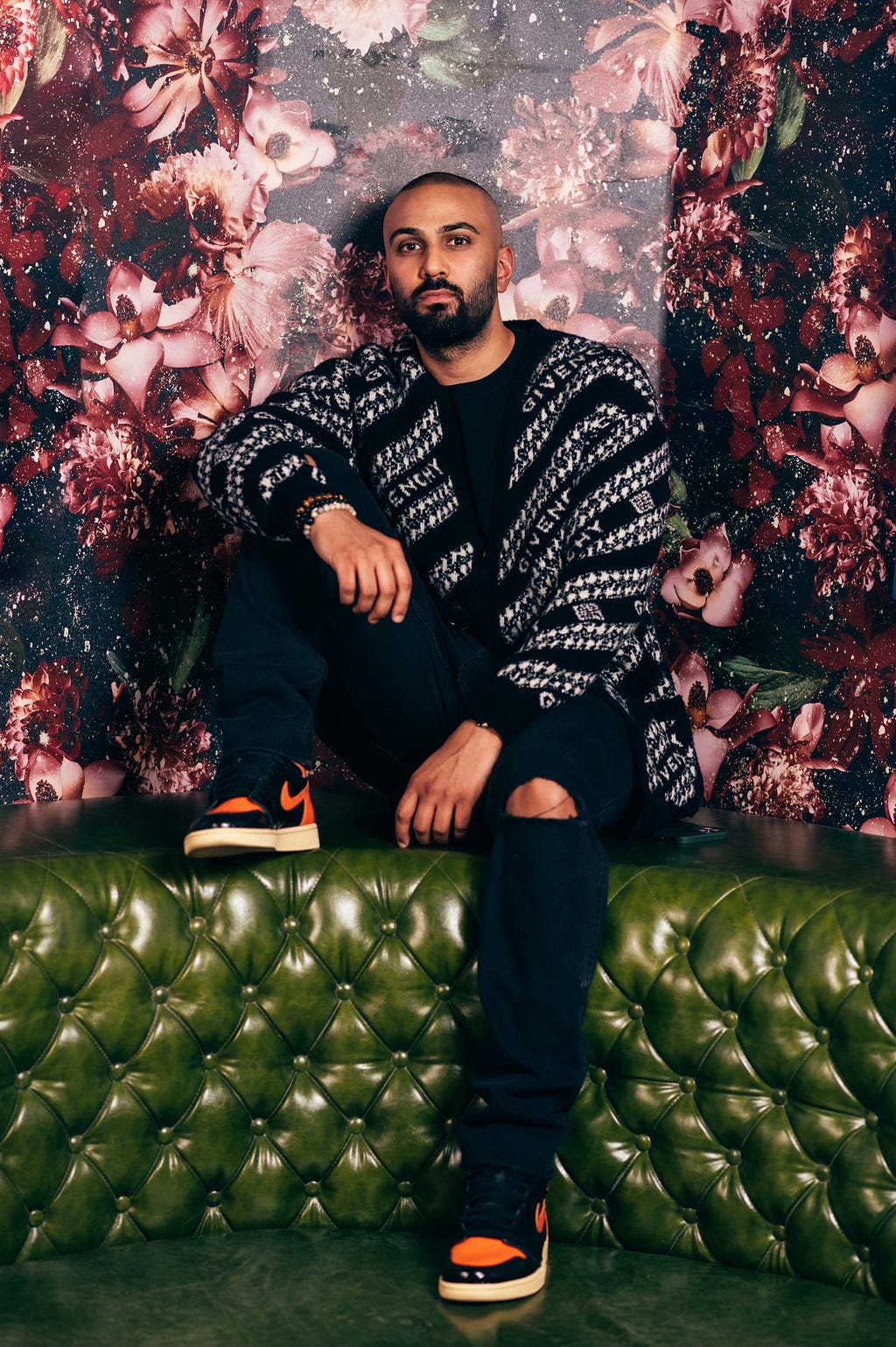
Women In Wellness: Lisa Odenweller of Kroma Wellness On The Five Lifestyle Tweaks That Will Help…

Women In Wellness: Lisa Odenweller of Kroma Wellness On The Five Lifestyle Tweaks That Will Help Support People’s Journey Towards Better Wellbeing

An Interview With Candice Georgiadis

Take health into your own hands which starts with your daily food & lifestyle choices. It isn’t about perfection but just about being more mindful about what you eat and drink. Read labels. Eat more vegetables and some fruit. Buy organic. Stay away from processed foods. And listen to your body. It will always tell you if you are listening.

As a part of my series about women in wellness, I had the pleasure of interviewing Lisa Odenweller.

Lisa Odenweller believes in the power of food as medicine, that mother nature is our greatest resource, and that what we put in our body is as much about fueling our bodies as it is our minds and souls. A San Diego native, Lisa is a visionary serial entrepreneur, wellness expert with over 15-years of experience. Her impressive resume includes titles as Founder of organic superfood cafe, BEAMING Wellness and most recently, CEO and Founder of Kroma Wellness, the functional wellness brand that’s revolutionizing the way we think about nourishing our bodies. After falling in love with “superfoods” nearly two-decades ago, long before the word became commonplace within the health industry, Lisa began harnessing their power within her own life and began her mission to to help others do the same.

Thank you so much for joining us in this interview series! Our readers would love to “get to know you” better. Can you share your “backstory” with us?

Prior to starting Beaming and my latest venture Kroma Wellness, I had started two other consumer-focused companies and worked in the e-commerce/tech world for a decade before starting my own businesses.

Beaming was born out of my mission to help people understand the power of food as medicine and to take control of their health. As a child, my parents were always committed to clean eating and daily exercise so those values have always been part of my DNA.

The real inspiration behind my work in wellness & nutrition came from my own personal health challenges in my late 30s along with my daughter being prescribed ADHD medication at an early age. I hated that she was taking medication and intuitively knew there had to be a better way despite every doctor telling me that pharmaceutical drugs were the only solution. When I was 38, I started experiencing brain fog, digestive issues and bloating, low energy, hair loss, extreme inflammation and unexplainable weight gain. As someone who has always prided themselves on exercising daily and eating (what I thought was) healthy, I didn’t know what to do. When I asked my General doctor, she laughed and said, “welcome to getting older.”

Needless to say, it was then that I decided to take our health into my own hands and figure out how to heal us through food and nutrition and started studying nutrition at IIN (the Institute of Integrative Nutrition). I soon learned that inflammatory foods like sugar, gluten, dairy, processed foods, too much caffeine, non-organic foods and alcohol cause inflammation in the body and brain. With this new insight, I decided to test what would happen if we removed these from our diet completely. Within 2 weeks, my health and hormones had naturally balanced and my daughter was off all ADHD medications. It was then that I realized I had a responsibility to share this information with others and the journey to creating Beaming, followed by Kroma Wellness began.

In September 2011, I started concepting Beaming and decided to introduce a new way to “cleanse” through whole, plant-based foods. This was during the juice fasting craze which I thought was stupid, and instead wanted to create a program that would not only deliver results but inspire lasting change. During the beta trials of the “Beaming 5 Day Superfood Cleanse,” over 1000 people experienced our program and generated over $240K in sales. People loved the program and wanted the foods and beverages every day which led me to raising $640K from some of our early adopters and opening the first Beaming Cafe in Del Mar, CA in December 2012. Within 2 years we had opened 3 new locations in Los Angeles and our own commercial kitchen.

After I left Beaming, I launched Kroma Wellness to bring a similar experience direct to consumers. We’ve grown immensely the past year and a half through our coveted 5 Day Reset Kit and other product offerings.

Can you share the most interesting story that happened to you since you started your career? What were the main lessons or takeaways from that story?

I’ve been in the wellness industry now for over 12 years and founded two companies out of my home as a single Mom of 3 so needless to say, there are many interesting stories and lessons! .

Perhaps the most interesting and relevant is that I truly believe we are capable of accomplishing whatever we believe. As long as we believe we can and have the drive, tenacity and grit to bring it to life, it can be done. Early in my career in wellness, I didn’t have any of the expected qualifications to build Beaming into what became one of the hottest, fastest growing wellness companies in the country. I had never worked in a restaurant before, was not a trained chef, didn’t have an MBA or know how to build a financial model, let alone a business plan and how to raise money. Everyone told me I couldn’t do it and that I was nuts. Despite all the naysayers, I did it anyway. Because I knew I had a responsibility to share what I had learned and change lives. And nothing was going to stop me.

Being clear on your WHY is a critical aspect of building any business. Especially one with purpose. While I didn’t have any of the ‘qualifications’ to create Beaming, I had tremendous tenacity and knew I could find people to help me in the areas I didn’t know how to do. You can’t teach someone to have passion and grit. You either have it or you don’t. But you can always find people that are smarter or more experienced than you to help bring your vision to life.

Can you share a story about the biggest mistake you made when you were first starting? Can you tell us what lesson you learned from that?

Building a company is not easy and especially when you bring in outside capital from investors. While building Beaming and raising money, I was told I had to have a Board and ended up giving Board seats to 4 investors who “bought a seat” on my Board. I had never had a Board before so I didn’t understand the power of a Board. I was naive and didn’t understand how critical it is to hand pick your Board members to make sure they not only have the qualifications you need to bring value to the company but are aligned with your vision.

Ultimately, my Board and I were not aligned with my vision for the company and I quickly lost control. None of them had experience in the industry and in an effort to increase revenue, they began cutting corners that compromised the integrity of the business and the commitment and trust we had built with our customers. After years of fighting for the brand and the values we had been founded upon, I exited the company. It was the most difficult decision I’ve ever made but also my greatest teacher. I spent the next few years reflecting on my mistakes with Beaming so I could prepare myself for my next venture, Kroma Wellness.

When I set out to start Kroma, I had realized how valuable investors could be if you choose them strategically. When we started raising money during the beginning of the pandemic in March 2020, I knew I had to take a non-traditional approach because it was such a challenging time to raise money. We decided to focus on raising money from angels. They were passionate about what we were building and could add value beyond the capital, whether business expertise or just helping us tell the world. The result has attracted an incredible group of investors who have been critical to our go-to-market strategy and success.

Let’s jump to our main focus. When it comes to health and wellness, how is the work you are doing helping to make a bigger impact in the world?

I’m passionate about helping people become empowered with their health. After going through what I went through with my own health and my daughter’s, I learned first hand that we have to take health into our own hands. And while pharmaceuticals are necessary at times, we are too quick to take a pill before looking at the cause or root of the problem. I believe most of our health issues can be healed through food by just being more mindful of what we eat and drink. And while that sounds simple, the reality is, we are all overwhelmed and have little bandwidth to take the time to make healthy food let alone have access to healthy options. I think we all genuinely want to take care of our bodies but often don’t know where to start or don’t have the time to invest in figuring out what to do. My work in wellness through both Beaming and Kroma Wellness has been driven by my passion and desire to help people realize the power of food as medicine by offering delicious, highly functional foods and beverages that can easily be incorporated into your every-day life and help you feel (and look) amazing.

Can you share your top five “lifestyle tweaks” that you believe will help support people’s journey towards better well-being? Please give an example or story for each.

  1. Take health into your own hands which starts with your daily food & lifestyle choices. It isn’t about perfection but just about being more mindful about what you eat and drink. Read labels. Eat more vegetables and some fruit. Buy organic. Stay away from processed foods. And listen to your body. It will always tell you if you are listening.
  2. Nourishment is a gift and a necessity for our bodies to thrive. I don’t believe we should starve ourselves to look and feel good in our bodies and I think the ridiculous health hacks and starvation programs out there are causing more harm than good. Food is your friend. Just make better, healthier choices. Follow what I call intuitive eating. Your body will tell you what it needs.
  3. Allow yourself to indulge. Life is meant to be enjoyed and food is one of our greatest pleasures. Just know how your body best thrives and how to get back to feeling and looking your best. The Kroma 5 Day Whole Body Reset was designed to help people get back on track after an indulgent holiday or weekend while also helping people feel how good they can feel in their bodies.
  4. No two bodies are alike. What works for one person won’t likely work for another. For example, Keto can be great for men but isn’t great for most women based on our hormones and metabolic system. Intermittent Fasting is all the rage right now but more and more research is showing it isn’t good for everyone. And it is especially not good for aging women who need to be mindful of their hormones and menstrual cycles. Even how you and when you exercise matters. Some bodies thrive with intense interval training. Others respond better to walking or yoga. You have to treat your body as your own temple and not get caught in the latest health fad.
  5. Don’t forget about your mental health and taking time to breath. If meditation is your thing, wonderful. If walking in nature works best for you or dancing or even running, then do that. Find what helps you release the stresses of life so you can show up as your best self for you, your friends, children, partner and colleagues. I often find it can be as simple as breathing. It is amazing how often we forget to take deep breaths and yet how powerful and necessary breathing is to our overall well-being. If you aren’t well, you can’t show up well for others. Being in a healthy state of mind is just as much of a driving force in your wellness journey as going to the gym or eating a balanced diet.

If you could start a movement that would bring the most amount of wellness to the most amount of people, what would that be?

I believe we’ve already started a movement with Kroma Wellness around helping people advocate for their own health by offering delicious functional foods and beverages that help you thrive throughout every moment of the day while simplifying your life. I am also on a mission to change the toxic diet and cleanse culture that currently encourages starvation and deprivation as a means to well-being. Kroma’s 5 Day Whole Body Reset is a completely new way to “cleanse” which focuses on nourishment and giving people the tools to change habits and behavior for the long term. I’ve spent the last 12 years of my life focused on helping people become more empowered with their health and am proud to be part of such a powerful and necessary movement alongside many other high integrity wellness brands.

What are your “5 Things I Wish Someone Told Me Before I Started” and why?

  1. Trust your gut. It’s ALWAYS right.
  2. Get support. Find people better than you to do all the things you aren’t good at so you can focus on what you love and are best at.
  3. Choose your partners wisely. They could be your biggest asset or your greatest weakness.
  4. There is no such thing as failure. Only outcomes that may look different than you had hoped. Learn from them, be accountable and come back stronger.
  5. Be ready to pivot. Resistance is inevitable. Be open to the possibility that resistance is a messenger that can lead to a better outcome if you are willing to listen and pivot.

Sustainability, veganism, mental health, and environmental changes are big topics at the moment. Which one of these causes is dearest to you, and why?

Those are all important topics, but if I had to choose one, it would be mental health. We have never had more access to support for mental health and well-being and yet we have never been so sick and depressed. Social media has added to this chaos while also heightening the feelings of lack and insignificance. The isolation millions experienced through the epidemic further emphasized our suffering. In desperation, people have turned to drugs, alcohol or even unhealthy eating to mask their pain. While I am not an expert on the topic, I am passionate about it. And I know that healing starts from within. We have to take control of our own health and happiness which includes how we care for our bodies whether it is going for a walk and being in nature, or going to a yoga class and being around people or choosing to make healthier food choices because you know you feel better when you do. When we feel better, we show up better in all aspects of our lives. We have more confidence, it is also contagious.

What is the best way for our readers to further follow your work online?

You can follow me on Instagram @lisa_odenweller and @kromawellness. We are constantly updating our blog on Kroma’s website, and we have delicious recipes, general wellness tips, and stories meant to inspire our community at kromawellness.com/blogs/news.

Thank you for these fantastic insights! We wish you continued success and good health.


Women In Wellness: Lisa Odenweller of Kroma Wellness On The Five Lifestyle Tweaks That Will Help… was originally published in Authority Magazine on Medium, where people are continuing the conversation by highlighting and responding to this story.