Women In Wellness: Holly Wilmeth On The Five Lifestyle Tweaks That Will Help Support People’s…

Women In Wellness: Holly Wilmeth On The Five Lifestyle Tweaks That Will Help Support People’s Journey Towards Better Wellbeing

An Interview With Candice Georgiadis

Find someone you admire for their work and become their apprentice or assistant. This is how I really learned what it meant to work in the field of photography. I was able to understand their passion and see what lead them to becoming a photographer and how they carved out their own path.

As a part of my series about women in wellness, I had the pleasure of interviewing Holly Wilmeth.

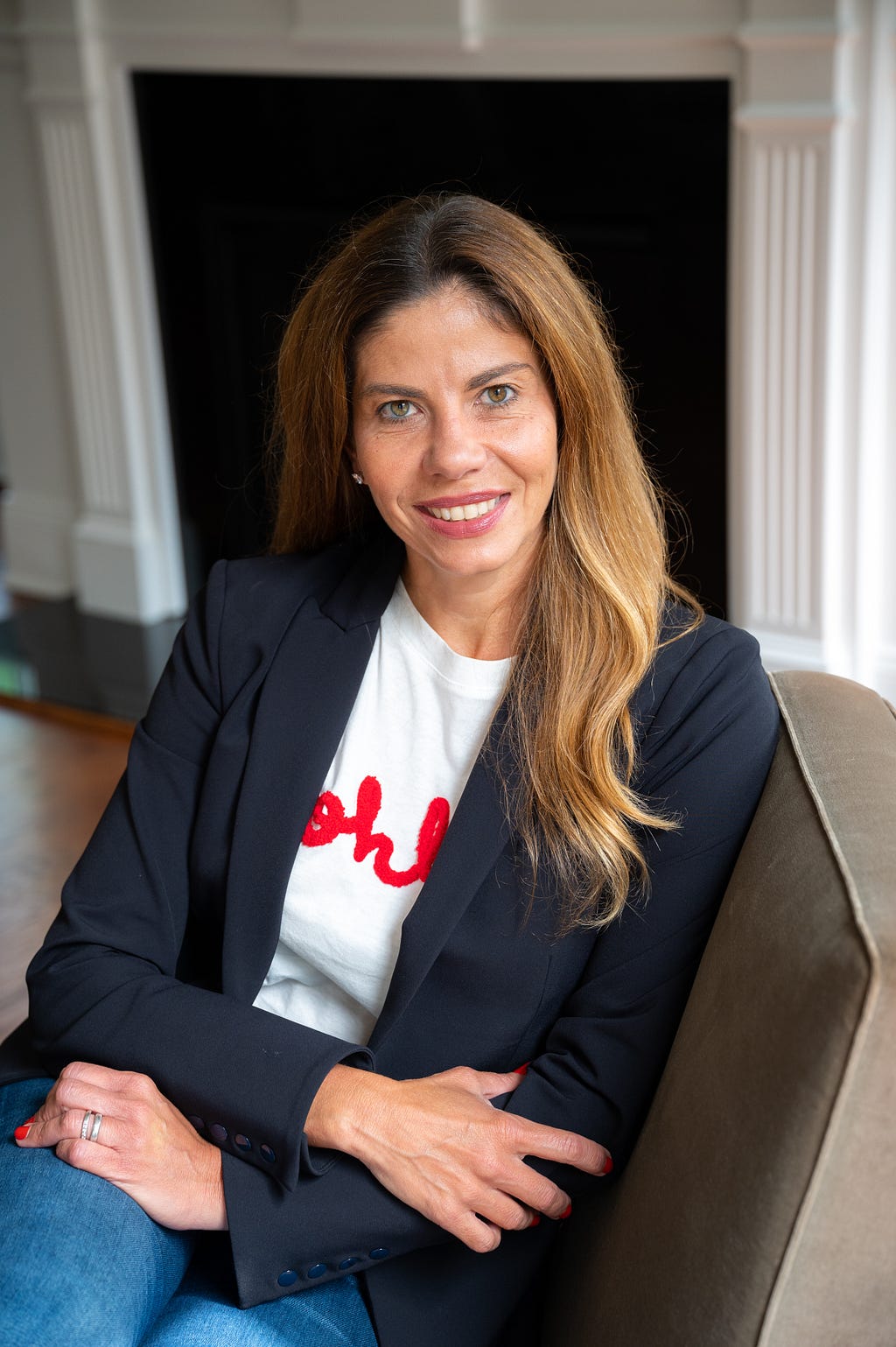
Guatemalan born, Holly Wilmeth creates images that embody elements of nature, mysticism, and spirituality. Drawing inspiration from ancient mythologies, symbolism, diverse cultures, and a deep spiritual practice, Holly’s images are a personal interpretation of her life’s sacred dance. She is passionate about nature, intentional living, creating beautiful spaces, and designing gardens that are like sanctuaries. She resides between San Miguel de Allende, Mexico and Portland, Oregon with her husband and son and their dog Pistola. She has worked for a wide range of clients in advertising as well as editorial. Her work has been published in international publications such as Time, Newsweek, AFAR, GEO Magazine, Travel & Leisure, National Geographic Adventure, CARE International, Christian Science Monitor, and USAID, to name a few. She has taught workshops all over the world. For more information, visit www.hollywilmeth.com.

Thank you so much for joining us in this interview series! Our readers would love to “get to know you” better. Can you share your “backstory” with us?

I was born in Guatemala, a small and fascinating country with a rich culture and landscape. As a child, I spent my week going to an Austrian school and on the weekends, I would go with my parents and brothers to Rio Dulce, which lies in the West of the country. My father is a cattle rancher, and we would go with him to work as well as play near the jungle edges. We would swim in the clear waters of the rivers and listen to the howler monkeys as the sun set. I remember feeling such awe from the beauty of nature. I also grew up going to a union church, and as a child, I loved everything spiritual. I remember fondly sitting in the pews listening to the Sunday service and learning to sing the hymns, my heart yearning for love. When I was a teenager, I became fascinated in the Dalai Lama and the Buddha teachings. At the time (mid-eighties), it was very difficult to get any information except from encyclopedias, and I remember reading all I could on this topic and wanting to learn more. I was very attracted to the intersection of spiritual paths. I would draw images of a seventeenth-century Christian cross with a sitting Buddha in the center, and I never showed them to anyone.

I was internally conflicted by my Christian upbringing and was wrestling with its teachings. It was much later in my life that I started contemplating different ways of practicing spiritual devotion and slowly found my own path.

All during my early childhood, I was inspired by my paternal grandmother who was a portrait painter and had traveled the world. I remember her telling a story about how an African King had commissioned her to paint his family and this story stuck with me. I wanted to be like my grandmother, travel and see the world, and make my living as an artist. Instead of a paintbrush though, I wanted to carry a camera. I had grown up looking at National Geographic magazines and knew that I wanted to travel the world and be one of those photographers, or like them.

It wasn’t until my last year at Sweet Briar College that I picked up a camera and finally learned to use it. I was smitten. I took all the classes I could take in the arts. My professor at the time, Paige Critcher, who over the years has become a dear friend, was such an inspiration and guide. My art professor John Morgan also became instrumental in me believing in myself and having the courage to play with seeing the world differently. My creativity was blooming, and I was on fire.

I later attended a program out of Portland, Maine, called the SALT Institute, and my professor there, Neil Menschel, taught me the art of documentary photography, which was the stepping stone to my career for the next decade. Thanks to Robb Kendrick who taught me not only the magic of tintype photography, but also how to have a business, I set off to make my own path. For the next ten years, I traveled to over fifty countries, photographed all kinds of jobs, and taught numerous workshops. I loved what I was doing, and within the last years, I started slowly working on my own projects that were more in line with fine art. I remember working on a series of portraits of people blowing kisses from many different countries. It was such a sweet and fun series, for in some countries, it was less customary to blow a kiss, while in others very common.

I remember fondly giggling with all those I took portraits of. I later worked on a series of portraits, that were without showing any faces but just what people happened to be carrying with them. This series was shot in Cuba, and it was delightful how much people wanted to show their faces, but instead were behind whatever they had been carrying (bongos, tuna fish, etc.). It was in this way that I started nurturing my inner desire to work on my own way of seeing the world through fine art photography. Magazines, galleries, and people encouraged me, and it gave me the confidence to continue working in this style. At thirty-five, a little before I became a parent, I decided to retire from my career and devote time to being a mother, as well as nurturing my own personal projects. It was quite a leap of faith, two new paths, so much unknown territory, but I had spent years learning to trust in the process, and I knew this new way of being in the world would also slowly bloom in its own time.

The work I do now is inspired by my personal life and my spiritual path. I practice listening to my intuition and pay attention to my inner and outer learnings of what it means to be human and inhabit this earth. I feel grateful to all those who have taught and supported me on my journey, and am grateful to share my vision.

Can you share the most interesting story that happened to you since you started your career? What were the main lessons or takeaways from that story?

One story that comes to mind is one that changed the way I relate to my life and how I work as an artist. I had managed to overwork myself and not take the time to care for my body. I remember I was teaching with Jeremy Woodhouse in Todos Santos, Guatemala, for The Day of the Dead and was so sick with a fever and chills I couldn’t get out of bed. I had to have my father come and get me from the city, and I left Jeremy to teach on his own. Soon after, my husband had two heart attacks. We decided it was time for a major shift in our life, our bodies were crying for help. We booked a house on a cliff on the Oaxaca coast for three months, with no internet, not knowing anyone, and set off on a new adventure. The winter we spent there was one of the most transformative times of my life. We slept, ate healthy, walked on the ocean, watched all the sea life from our porch, sang songs about nature, and truly practiced the art of simple and slow living.

My body, my mind, and my spirit slowly started to heal and feel rejuvenated. I could feel myself being guided by this silent whisper of nature and my intuition to see life from a different place, and it was during this time that I started to fall in love with Mother Earth again. I would listen to the bird calls, with the ocean life in front of me, and I would read about plants and animals. It was during this time that I started to slowly work on a series about animals. This series of portraits was guided and inspired by nature, as well as by my life slowing down. Since then, we spend every winter close to the ocean where we do just this, slow everything down and listen. I love this time of year; it’s an inner wintering, of quieting down, of sitting with all that the year has taught me, of preparing for the spring and summer. A time for tending to the roots.

Can you share a story about the biggest mistake you made when you were first starting? Can you tell us what lesson you learned from that?

Well, I must admit, I don’t believe in mistakes. I do believe that every choice gives us a lesson, and it leads us on to the next step of our journey, whether it be easy or not. I’ve always held the belief that I will learn something very valuable from what presents itself to me. So, I’ve never looked back and regretted any choice I’ve ever made. I am standing where I am now because of everything behind me and what I said yes to. Ever since I was young, I would make a five-year list of things I’d love to be doing or have accomplished. It could be anything, from traveling to Mongolia, to working for a nonprofit, to hiking beautiful trails in Oregon, to eating mangos for a season. This list has been my little guide throughout my life, constantly changing as I change. Some things on the list I have accomplished, and others got changed and readjusted. My list has always been like an inspiration board, a visualization of where I want my path to go. Like signposts pointing towards the direction I could go. I’ve changed holding on to an image to holding on to how I feel in the energy of the visualization. How does the air feel, taste, smell, and sound?

Let’s jump to our main focus. When it comes to health and wellness, how is the work you are doing helping to make a bigger impact in the world?

We are part of the earth, and the earth is a part of us. Some of us weren’t taught to remember this connection with such sacredness. Once you reexperience the awe and wonder of creation unfolding before you, over and over, there’s no stepping back. Nature has a way of bringing us to the present and reminding us of the wonder of the universe. In nature, I feel the energy of my wholeness find peace, balance, and harmony. Nature holds sacred geometry, sacred energy, and through its visualization and energy, it can connect us to the present. My images invite and play with mythology, philosophy, spirituality, and anthropology as the subjects. My last love was in reigniting my loyalty and devotion to care for this planet Earth. It came in experiencing the awe in my child’s eyes as he saw trees, leaves, flowers, and colors and put words to them, little by little, for the first time. I wanted to teach him how our plants could be our friends and teachers. They held magical potions in the form of healing remedies, available to help our human body. So, I set about learning the names to everything surrounding me in the tropical jungle and playfully teaching my son. By teaching him to care and be kind to all living beings, I was healing my connection to the earth.

When I think about all the stressful moments in my life, for example when my brother died, my heart was broken, I was working as a journalist, or my health was critical, I remember always practically running to nature. In nature, I was able to literally process the stress. I hope my son will do this too. Nature is key to mental health balance.

If we can change the way we see the world, our interconnectedness will help heal us back whole.

Can you share your top five “lifestyle tweaks” that you believe will help support people’s journey towards better well-being? Please give an example or story for each.

  1. Breath (coming into the present): We exist because of breath, and breath can bring us completely into our bodies, into ourselves. There are many ways to practice being with our breath, through yoga, meditation, swimming, breath work, or anything that asks we pay attention to our breathing. Our breath brings us into the present, stills our mind over time, guides us to finding our source. Every evening my son and I take ten minutes each to ground and breathe. We breathe in gratitude into our heart and nurture our energy of calmness and expansiveness.
  2. Nature (spending time connecting to this earth, our home): There are so many health benefits that come from bathing under the canopy of trees, walking by the ocean, hiking, or placing our hands and feet on the earth. It’s as though our wholeness is asking us to come back home and rest and rejuvenate. Nature is a stress relaxant. Being in nature allows you to slow down, to listen, to pay attention, and to match your energy with the energy of the earth
  3. Being in our body: It’s important to make time to exercise, like swimming, yoga, dance, walking, etc. For mental health balance, exercising is essential, more so than ever before. Being in our bodies is proven to elevate our moods. Our bodies need to move energy and release toxins. Being in our bodies through exercise really calls us to the present moment.
  4. Self-care: Self-care comes in all forms. For me, it comes in practicing a morning ritual of welcoming the sun, the day, our home and food, our health, family and friends, our planet, and our neighbors. I also use my Sacred Nature Oracle deck as a tool for daily guidance. Self-care can also be taking time to be alone, journaling, or practicing gratitude to all of our teachers.
  5. Relationship to food: How am I nurturing my body? I try and eat balanced and healthy meals, and I place an importance on sitting for meals as well as sharing meals with others. I love to support local food providers who are advocates for our environment.

If you could start a movement that would bring the most amount of wellness to the most amount of people, what would that be?

I’d love to start a movement that would honor Mother Earth as a sacred being, where children are taught since infancy to learn all the names and medicinal qualities of the plants around them. This movement would teach respect and reverence for the earth. We would care for it with kindness, admiration, and loyalty knowing our plants are our teachers.

What are your “5 Things I Wish Someone Told Me Before I Started” and why?

  1. Find someone you admire for their work and become their apprentice or assistant. This is how I really learned what it meant to work in the field of photography. I was able to understand their passion and see what lead them to becoming a photographer and how they carved out their own path.
  2. Take care of my body. I remember taking pictures for hours and my body aching after being in uncomfortable positions. Even though I was a swimmer, I wish I had been practicing a good stretch routine to really care for my body, like yoga.
  3. Enter every shoot with fresh new eyes. I practiced this and always challenged myself to see differently and try something new. I was fortunate to always work with clients that gave me the space to be creative and that trusted me.
  4. Work with people and companies who share similar values with you. It’s inspiring to be able to create images for companies you support.
  5. Everything you are doing is part of the learning, even the carrying of someone else’s gear.

Sustainability, veganism, mental health, and environmental changes are big topics at the moment. Which one of these causes is dearest to you, and why?

Environmental changes and mental health are two big topics for me. Our systems are collapsing as they should, because at their foundational level, they are not supporting the whole of humanity in balance. Single families are raising children alone, grandparents are living in elderly housing, everyone is working as much as they can in order to live this “dream lifestyle” of having all the latest luxuries available. We are a consumer’s generation, and this is essentially hurting our environment. We spend too much time looking aimlessly to devices, numbing ourselves from being in the present. It’s an addiction. This imbalance is causing havoc, and we have lost our way. Nature, however, helps bring us back to balance and to wholeness when we are feeling lost and fragmented. As a visual artist, I believe in the importance of bringing environmental awareness not only in caring for our earth, but also as an important tool for balanced mental health.

What is the best way for our readers to further follow your work online?

My website offers a lot of information and ways of engaging with me and my work. Instagram and Facebook are another great way to see what I’m up to.

Website: http://www.hollywilmeth.com

Instagram: https://www.instagram.com/hollywilmeth/

Facebook: https://www.facebook.com/holly.wilmeth.3/

Thank you for these fantastic insights! We wish you continued success and good health.


Women In Wellness: Holly Wilmeth On The Five Lifestyle Tweaks That Will Help Support People’s… was originally published in Authority Magazine on Medium, where people are continuing the conversation by highlighting and responding to this story.

Women In Wellness: Suzy Glaskie of Peppermint Wellness On The Five Lifestyle Tweaks That Will Help…

Women In Wellness: Suzy Glaskie of Peppermint Wellness On The Five Lifestyle Tweaks That Will Help Support People’s Journey Towards Better Wellbeing

An Interview With Candice Georgiadis

Keep your boundaries strong around your own time and energy. I’ve often got so caught up in trying to help others get their wellbeing back that I’ve neglected mine in the process. I’m a lot kinder to myself now and understand that the more I offer myself self-care, the better I’m able to inspire others to do the same.

As a part of my series about women in wellness, I had the pleasure of interviewing Suzy Glaskie.

Suzy Glaskie is a Functional Medicine Health Coach and founder of Peppermint Wellness — a practice dedicated to helping people to regain their emotional, mental and physical health.

At the age of 40, she walked away from the successful PR agency she’d founded, turning her back on a 22-year career in marketing. She’d been buckling under the unrelenting stress of juggling the role of managing director with bringing up her three kids.

After struggling with the bereavement of losing her Dad, Suzy trained in EFT (Emotional Freedom Technique, also known as tapping), having been blown away by how it helped her to move past the grief. She then followed her heart to train as a health coach and launched her practice, Peppermint Wellness, in 2015. She now works with individuals, groups and companies (including Home Bargains, Health Shield, Santander, N Brown, Beaverbrooks and O2) to empower people to take back their health, feel comfortable in their own skin — and start to thrive.

Suzy also hosts the Wellness Unwrapped podcast, which has a loyal following of listeners around the globe.

She recently launched her own Wellness Unwrapped app. This features a free 5 Days to Calm programme in which she shares her top self-calming tools, including tapping. These are super-simple, quick-to-learn practices that bring you back to feeling calm and grounded within minutes.

Thank you so much for joining us in this interview series! Our readers would love to “get to know you” better. Can you share your “backstory” with us?

I’d always been interested in holistic health, but ended up following a different career path straight from university. I landed a job in PR, and worked for eight years at a pan-European agency, using my degree in French and Spanish. Ironically, it involved working for the food industry — so I got a first-hand insight into the manipulation that goes on to persuade us to buy things which are disastrous for our health.

For a short time in my early 30s, I was juggling a relentlessly stressful job with looking after a baby and a three-year-old who seemed to take it in turns to be ill. I was desperate to be the consummate professional I’d always been — but, grappling with chronic sleep deprivation, I was falling apart at the seams. My weight plummeted and I was struck by all manner of weird ailments, including a horrible red eye that refused to heal…until the day that I finally resigned.

When I hit 40, I felt I had really reached the end of my career in PR and my heart was no longer in it. By then, I was running a very busy, successful agency as founder and managing director and was finding it tough to juggle this with bringing up my three children. At the same time, there was a growing inner pull for me to change path. When my dad passed away around ten years ago, I got stuck in grief and was helped by someone who did EFT (Emotional Freedom Technique) with me. I was blown away by how transformative it was. I knew straight away that I wanted to be able to use it to help others in the way I’d been helped. So Dad’s passing was the catalyst for me to finally pivot and start afresh by training in EFT. From there, I trained as a health coach and founded my own practice, Peppermint Wellness, and I’ve never looked back!

I’m far calmer, happier and more focused now at 51 than I was at 31 or 41. Back then, I was attempting to do the impossible and was wrecking my health in the process. I’m now privileged to leverage my experience to empower others to look after their own health — mentally, physically and emotionally.

Can you share the most interesting story that happened to you since you started your career? What were the main lessons or takeaways from that story?

It’s been really interesting to switch so drastically from one career to another. One minute I was winning industry awards for PR campaigns for confectionary clients…and then I was giving talks alongside doctors to warn people about the toxic effects of sugar and how the food industry manipulates our taste buds and wallet. That turnaround was very surprising to a lot of people who’d seen my agency thrive on promoting junk food. It’s taught me that you’re never stuck. You can change course completely in mid-life and follow your true passion. I now look back on all those years working with the food industry and am grateful for them because it’s given me an insider’s view that I can share with everyone else.

Can you share a story about the biggest mistake you made when you were first starting? Can you tell us what lesson you learned from that?

Once my own eyes were opened to healthy eating, I think I mistakenly assumed that the rest of my family would automatically fall in with my new path: that they’d see the light and adopt the lifestyle habits I now had. But my new career came as a real adjustment for my kids and they resented seeing the cupboard bare of sugary breakfast cereals. I think they would have benefited from a more softly-softly approach. It taught me that you just can’t rush people into making lifestyle changes and that it’s important to play the long-game.

When it comes to health and wellness, how is the work you are doing helping to make a bigger impact in the world?

Unfortunately, we live in a time when chronic health is rife. So unless we take active steps to optimise our wellbeing, we’re overwhelmingly likely to be dragged down by the environment that we live in, which puts us on a conveyor belt to poor mental health and chronic disease.

Research shows that 80 to 90% of the conditions that drive us to a GP visit are rooted in our lifestyle. Changing lifestyle habits is really challenging — especially when people feel stressed, exhausted and overwhelmed. That’s where health coaching comes in: it’s been described as “the missing link” in healthcare. It’s the bridge between people wanting to get themselves healthy — and them actually taking the actions necessary to make that happen.

As a Functional Medicine Certified Health Coach, I gently guide and support people through the process of making small, sustainable lifestyle changes which radically improve their health and wellbeing and slash their risk of developing a chronic disease.

I also hold corporate wellness workshops for companies nationally and internationally and I see professionals at every level who are struggling to get through the day and are using caffeine and sugar as crutches. It’s remarkable to see the changes in their productivity, mood, mental focus and energy levels once they’re empowered to care for their own wellbeing through simple lifestyle changes.

All the research shows that making changes to our lifestyle is so much easier when we do it as part of a like-minded group — that’s why I’ve put community at the heart of my online programmes. The group sessions are welcoming, warm, non-judgemental spaces where every participant feels safe to be vulnerable and share their struggles.

I’ve also launched my own app, Wellness Unwrapped, and developed an app-based group coaching programme that is a hybrid of self-paced learning and habit trackers, together with live, weekly coaching.

Can you share your top five “lifestyle tweaks” that you believe will help support people’s journey towards better wellbeing? Please give an example or story for each.

Manage your blood sugar

I used to be ruled by my blood sugar levels, and I didn’t even know it. At work every day, after my breakfast of a bagel or cereal, I’d suddenly turn white, get very shaky and go from mild-mannered and helpful to hangry, cranky, irritable and unable to think straight. It was only when I retrained as a health coach that I realised this was a self-inflicted blood sugar crash. It’s been a revelation for me to understand how to manage my blood sugar and I’m passionate about giving these keys to everyone else.

I always advise people to ditch the breakfast cereals and all the other processed junk that’s pitched as a “healthy start to the day”. Choose a high-quality protein and some good fats: these will keep you feeling full and help keep your blood sugar stable.

Prioritise your sleep

In our 24/7, constantly wired culture, many of us are blithely sacrificing precious sleep without realising that it’s wrecking every aspect of our health and wellbeing.

Most of us fail to prepare for sleep in the way we need (remember as little kids, it was “bath, book, bed”?). Working or scrolling right up until we switch out the light means that we’re trying to fall asleep in a state of stimulation when our body is still in the stress response. Instead, we need to give our mind and body the signal that it’s safe to switch off and rest now. So try doing something relaxing, away from your screens, before bedtime. For me, treating myself to reading a novel in bed has been transformational.

Establish a self-nurturing morning routine

My first waking moments used to be hearing news updates on the BBC’s Today programme and immediately being launched into anxious thoughts. I’m now careful to give myself a gentle transition to each day, spending time journaling and reading something inspiring.

I’d suggest starting small with just 3 minutes of something grounding before you launch into your day (and onto your phone): whether that’s focusing on your breathing, doing some gentle stretches or writing in a gratitude journal. It will help you to start the day with more emotional resilience to deal with whatever it throws at you.

Create firm boundaries

I used to push myself to the limit and consider any time that wasn’t constructively filled as “wasted”. I now have much better respect for the boundaries of my energy and am more choosy about what I commit yourself to. I recognise that if I take energy out of my tank, I then need to put some energy back in!

So schedule me-time into your diary — whether it’s going for a walk with a friend, doing a weekly yoga class or relaxing in a scented bath.

Get outside

An ever-growing body of research is showing that spending time outdoors, especially in green spaces, is one of the fastest ways to improve your health and happiness.

I make a point of doing some stretches and gentle Qi Gong movements outside while looking at the trees before starting work.

However busy you are, get yourself outside for a regular break and dose of sunlight, which is a natural mood-lifter. Even a ten-minute walk will leave you feeling invigorated, clear-headed and with more energy to power through your things-to-do-list.

If you could start a movement that would bring the most amount of wellness to the most amount of people, what would that be?

If I could persuade everyone to adopt just one habit, it would be a daily gratitude practice. It’s no exaggeration to say that this is a practice that transforms people’s lives on every level.

Keeping a gratitude journal takes just a couple of minutes to write before bed. It’s a wonderful way to let the stresses of the day go and drift off to sleep with positive thoughts, rather than ruminating on whatever has upset, angered or frustrated you. It’s such a simple, powerful antidote which interrupts anxious thoughts and helps us to feel more optimistic.

Research has shown that people who practise gratitude consistently benefit from an astonishing range of benefits. These include everything from a stronger immune system and lower blood pressure to having higher self-worth.

What are your “5 Things I Wish Someone Told Me Before I Started” and why?

  1. Keep your boundaries strong around your own time and energy. I’ve often got so caught up in trying to help others get their wellbeing back that I’ve neglected mine in the process. I’m a lot kinder to myself now and understand that the more I offer myself self-care, the better I’m able to inspire others to do the same.
  2. A podcast sucks up huge amounts of time and effort. I launched my podcast not really realising how much time and energy each episode would take: it was a big shock finding that out. If I’d have known that beforehand, it’s possible I’d never have gone ahead with it. But it’s changed people’s lives around the world so I’m happy I dived in.
  3. Things take a long time to change. I was quite naïve at the beginning and thought that everyone would understand how helping people to make lifestyle chance is the answer to our epidemic of chronic disease. However, despite so much evidence showing the power of lifestyle medicine and prevention, we’re still very much stuck in a medication-based, reactive paradigm of trying to fix people once they’re broken.
  4. Family members don’t always appreciate you giving advice on health. It’s tough watching close relatives eat in a way that is harming them but I’ve learnt to be diplomatic and stay quiet unless asked for advice.
  5. There will always be more things you want to do than you can fit in. I’m constantly thinking about new ways to empower people to take back their heath and have got frustrated with myself in the past for not managing to do everything I’d like to, in the time scale I’d like to do it. I have to keep reminding myself to do one thing at a time and go in my own time.

Sustainability, veganism, mental health, and environmental changes are big topics at the moment. Which one of these causes is dearest to you, and why?

It would be mental health. I’m seeing ever increasing numbers of people seeking my help with anxiety and depression. Lockdown has certainly exacerbated this hugely. I’m also seeing more and more high-achieving teenagers who are drastically sleep deprived and suffering from intense anxiety and often disordered eating as they try to have it all: outstanding grades, unattainable beauty, standing on social media etc. I believe we owe it to the next generation to arm them with the tools to prioritise their own self-care.

There’s an under-appreciation of the mind-body connection: the huge impact that our daily habits have on our mental health. I think we can bring about a sea-change if we help people to prioritise sleep, move their body, spend time in nature away from screens and eat a nutritious, wholefood diet. I’m also passionate about helping people to feel better mentally through the power of community — it really is the best medicine.

With rates of anxiety exploding, I wanted to share simple self-calming techniques with as many people as possible, for free. That’s why I created a 5 Days to Calm programme on my Wellness Unwrapped app, in which I teach my top self-calming practices (including tapping). These are easy, quick-to-learn practices that bring people back to feeling calm and grounded within minutes. I believe that everyone should have these in their toolbox to help build their emotional resilience.

What is the best way for our readers to further follow your work online?

They can find me at www.peppermintwellness.co.uk.

Instagram: https://www.instagram.com/peppermintwellness/

Facebook: https://www.facebook.com/PeppermintWellness

Youtube: http://www.youtube.com/peppermintwellness

My Wellness Unwrapped can be downloaded from the App Store and Google Play

My podcast, Wellness Unwrapped, can be found on any podcast platform, such as Apple Podcasts and Spotify.

Thank you for these fantastic insights! We wish you continued success and good health.


Women In Wellness: Suzy Glaskie of Peppermint Wellness On The Five Lifestyle Tweaks That Will Help… was originally published in Authority Magazine on Medium, where people are continuing the conversation by highlighting and responding to this story.

Women In Wellness: Ginger Declue of Detox by DeClue On The Five Lifestyle Tweaks That Will Help…

Women In Wellness: Ginger Declue of Detox by DeClue On The Five Lifestyle Tweaks That Will Help Support People’s Journey Towards Better Wellbeing

An Interview With Candice Georgiadis

Eat fruits juices and smoothies for the first 6 hours of your day. Your body is naturally detoxing from 4 a.m. to 12 p.m. This means that we need to give the body hydration, vitamins and minerals to flush yesterday’s waste, and prevent viral bacteria and disease from building up inside of us. Fruit sugar does not require insulin to enter the cell (I’ve actually helped type 2 diabetics heal and type 1s control their insulin), so no need to fear the “sugar.”

As a part of my series about women in wellness, I had the pleasure of interviewing Ginger DeClue.

Detox Coach and Iridologist, Ginger DeClue’s soul mission is to help millions detox and heal their chronic illness and dis-ease. Ginger used to be wheelchair-bound, sick with chronic illness herself, and knows what it’s like to feel helpless and hopeless. But she learned that what we put in our body either HEALS or POISONS us, so she made it her mission to help others find health again. With a roster of stars and celebs, Ginger DeClue is the real deal when it comes to health and healing.

Thank you so much for joining us in this interview series! Our readers would love to “get to know you” better. Can you share your “backstory” with us?

I’m thrilled to be sharing my story of healing and hope. My journey began in 2009. I had a reaction to Gardasil, and I got incredibly ill. Within weeks I had to have my appendix out in an emergency surgery. The recovery was slow, but this was my great awakening moment. I realized that I had such a bad reaction because my body wasn’t functioning correctly due to my diet. My diet consisted of low quality “food”. Cereal and milk for breakfast, five hour energy and wawa hoagies for lunch and stouffer’s lasagna for dinner would be a common day in my life. My health declined further when my brain and heart swelled, and I went through the hell of physical therapy and I learned to walk again. I was diagnosed with an “autoimmune” disease and given a dozen or so medicines, but I wasn’t ready to accept the identity of a chronically-ill person.

I was determined to figure out how to HEAL myself, and I took courses on healing and studied and implemented everything from Weston A Price, to Ayurveda, iridology to Chinese Medicine. The journey was long, and I found that some healing modalities were great, while others had drawbacks that set my healing back. Fortunately by 2018, I was no longer seeing my rheumatologist and wasn’t taking any prescription medicines. In truth I NEVER thought I’d be a healer, I was dedicated to MY OWN healing, but that changed when I started sharing my “methods” on social media.

My mother passed away young in August of 2019, at just 55 years old from a stroke, a death all too common among black women. So, I began passionately sharing how I was going to break the generational curse of a life of disease and an early death. My grandmother had also passed young, just 48 from diabetes.

From sharing my own style of healing, Detox By DeClue was born and now I’ve worked with over 1,000 students and over 2,500 people have taken my courses. People dealing with lupus, MS, cancer, IBS or just looking to clean up their life have come to me, and the transformations have been incredible.

Can you share the most interesting story that happened to you since you started your career? What were the main lessons or takeaways from that story?

One unique feature to my healing style is that I do something called an “iridology reading.” You see, each part of the body is related to a part of the eye. Based on what I see in the eye, I can actually SEE weakness or toxins in different organs. I was doing a reading and this person had described some heart break in their life. Upon examining their eye, I saw that the left eye and the area that represented the heart and shoulder area had a very dark black spot in it. I informed them that the area looked inflamed and that she should release her heartbreak, as I hadn’t ever seen a heart and shoulder area that looked so damaged. Well it turns out, a few months earlier the person had had a serious accident and injured their left shoulder and required extensive surgery. I was blown away!

Their eyes showed the scars of the accident. I have since seen this with other injuries and surgeries. This experience, and the subsequent eye readings that had outcomes like this, taught me that the body is truly always communicating with us. We just have to learn to tap in and listen, so that we can give the body what it needs to heal.

Can you share a story about the biggest mistake you made when you were first starting? Can you tell us what lesson you learned from that?

The biggest mistake I made when I first started out on my healing journey was that I wanted EVERYONE to listen. I was desperate for my mother to take my advice, whether it was to do this juice with me or to take that herb with me. I wanted my boyfriend to listen and I wanted to be “heard.” I wanted this because I felt that it was my responsibility to help the ones I cared for the most change their lives, so that they could be healthy and happy. I had this big burden of TRUTH and I felt it my responsibility to “convert” everyone to it. The reality is and the biggest lesson I learned is that you are only responsible for living the healing truth for yourself. The funny thing is, once I no longer cared for anyone to listen and just enjoyed how great I felt doing what I believed to be good, EVERYONE started to listen. Not just in my personal life, but also professionally. So if you are on a healing journey, don’t worry about convincing your loved ones to join you, start the journey. As you begin to evolve and morph into the greatest version of you, your cousin, your mother and your roommate will suddenly be calling YOU asking for help.

When it comes to health and wellness, how is the work you are doing helping to make a bigger impact in the world?

Detox By DeClue, my signature detox and healing program, has transformed over 1,000 lives to date and we are just getting started. First off, I have been able to free nurses from “the matrix” that is the healthcare system. I believe men and women go into healthcare because they want to help others heal, only to quickly discover that big pharma and insurance runs the show. We need doctors and hospitals for acute injury, but when it comes to chronic illness, western medicine doesn’t get it. So several of my co-coaches are former nurses, who left that arena to join me in the natural healing space. It feels incredible to be able to support each other in our mission to heal the world. I also truly believe in mentorship; I have had LIVE coaches consistently for years, and I believe that healing with SUPPORT is the difference between success and failure. So the fact that my program is LIVE means that working with me and my team is going to increase your chances of finding that ultimate health.

Can you share your top five “lifestyle tweaks” that you believe will help support people’s journey towards better wellbeing? Please give an example or story for each.

  1. You cannot pour from an empty cup. If you spend 40 hours at a job, you need to spend at least 20 hours a week on you. I found that when I started spending more and more time on myself, I actually had more energy for everyone else. As a mother of two and a business owner, I am pulled in many different directions, so “me-time” is critical. It’s hard at first, but start by going to bed 30 minutes earlier and getting up 30 minutes earlier to spend time on you. In a few months you’ll be going to bed at 9:30, getting up at 4 and you’ll have 4–8 a.m. daily to do YOU. You have time for your health regimens and to plan out your dreams. After a year, your “little business” idea could allow you to leave your job and your health will definitely flourish!
  2. Eat fruits juices and smoothies for the first 6 hours of your day. Your body is naturally detoxing from 4 a.m. to 12 p.m. This means that we need to give the body hydration, vitamins and minerals to flush yesterday’s waste, and prevent viral bacteria and disease from building up inside of us. Fruit sugar does not require insulin to enter the cell (I’ve actually helped type 2 diabetics heal and type 1s control their insulin), so no need to fear the “sugar.”
  3. Stop wearing sunglasses and get more sun! 95–100 percent of fibroid sufferers are Vitamin D deficient, and Vitamin D deficiency is linked to a whole host of chronic diseases like depression, anxiety, cancers and more. Wearing sunglasses actually stops the body from making crucial chemical compounds that would otherwise be created when sunlight hits your eyes, triggering a hormonal response in the pituitary and pineal glands. The lack of hormones will actually make you more likely to burn and inhibit melatonin production disrupting our sleep. I know sunnies are chic, but they are hurting your health.
  4. BREATH. No seriously. Fear, anxiety and stress will kill you. Many of us spend our entire day HOLDING our breath allowing TOXIC stress hormones to build up, not to mention oxygen deprivation. Your diet or exercise does not matter if you are stressing and holding your breath, you will get sick. Stress LITERALLY lowers your immune system. So set a timer for every hour on your phone, when it goes off, spend 3–5 minutes breathing in for 4 seconds, hold, breath out for 4 seconds. You’ll quickly start to feel the stress dissipate and your immune system rise.
  5. Cut out the escapism. No more netflix and chill, no more mimosa brunches with the girls, taco Tuesday with the boys and thirsty Thursdays with the coworkers… As we move into the age of aquarius, it will be critical for you to become deeply aware of who you are and what you came here to do! I can guarantee you did not come here to punch a clock Monday through Friday, and drink and smoke away Saturday and Sunday. We are each unique individuals with a purpose, and honey if you keep numbing yourself and running from the soul work, at the very least you’ll live half the life you could have and at worse, when you die you’ll have to come back to earth and do this again until you get it right! I say that last part with half a smile. I know not everyone believes in reincarnation, so if you are awaiting eternity in heaven, I encourage you to leave this earth having done something meaningful. Do some of that dirty work, discipline, cut the crap and OWN your life.

If you could start a movement that would bring the most amount of wellness to the most amount of people, what would that be?

My movement has started — and it’s called Detox By DeClue. The mission is to teach people to cleanse each system of the body, and know exactly the steps to do that to heal and prevent disease in the future. It’s about gaining clarity and insight into who we are without the distraction of toxic foods and escapism. In the event you do want to get a little buck wild and drink it up at your best friend’s four day island getaway wedding, you can with the knowledge that upon returning home, you have the tools to cleanse out any crap you picked up. I truly want the world to be healthy so that we can LIVE. I dealt with years of suffering, and I watched my mother decline for 15 years before she passed away. I want to create a world where our mothers are here with us HEALTHY. Where our loved ones are THRIVING, not just surviving. As I say at the end of every video, health is wealth and we all deserve to be rich.

What are your “5 Things I Wish Someone Told Me Before I Started” and why?

Don’t be dogmatic in your approach to healing. If you are currently reading into Chinese medicine, but something you learned and you love from another modality contradicts what that says, don’t immediately throw out the “old” for the new. For instance, I do a daily coffee enema. I learned about their power through the Gerson method. I’ve done them for years, and I feel they have made a tremendous impact on my health. While another healer that I love, The Medical Medium, says they are the WORST thing for you. I gave them up for a while, but I realized I could drink my celery juice and still enjoy my coffee enemas. You are allowed to make a hybrid healing routine for yourself.

The healing process is slow, but hiring help will make it faster and easier. At first I started by reading books, then taking do-it-yourself courses, then hiring live coaches, and honestly I wish I would have started with the live coaching first. It would have saved me a lot of time and energy. As they say, stand on the shoulders of giants, don’t try to reinvent the wheel.

Don’t listen to the haters, listen to your gut intuition. There was a time when I onlu trusted a man or woman in a white coat… If it didn’t come from a big fancy lab it must be “snake oil.” Even though my gut felt funny about taking a drug with so many side effects, I kept along with it. Later I’d learn that many pharmaceuticals start as a natural herbal plant. In the old days, white willow bark would be boiled and administered to a person in pain or with fever. Enter big pharma who took the chemical compound of white willow bark and created the synthetic medicine aspirin, which can be a great drug but also causes stomach bleeding. Everyone is at their own level of awareness, so not everyone’s advice should be warranted. If you feel in your gut you need to try what your aunt called some “wacky” diet — listen to your gut, not Aunt Sally.

It’s okay to abandon a healing modality if it isn’t working for you. I promise you are not stupid. I went heavy on the ayurveda train for years. I am a vata type, which means I should avoid cold foods and fruits to get more grounded. I ate lots of ghee and fats as described in the books. Then in 2017, I had what would be my last “autoimmune” flare, and I realized the fats, though healthy, were overloading my liver and I needed to change. So I started eating lots of fruits, more than I ever had, and since then my health has been the best ever. Moral of the story, give it a good go. Really try it out for at least 6 months, and then if it’s not working or needs to be tweaked, it’s your body, do what needs to be done so that you can feel great. This also prevents you from becoming rigid. Always be open to learning about other healing modalities. Keeping an open mind has definitely contributed to my wealth of knowledge and skills as a healer.

All of the obstacles and illnesses are the greatest blessings in your life. This one might be hard to swallow, but hear me out. We constantly ask God, source universe or whatever you call it for strength, courage and wisdom. Well God doesn’t just wave a magic wand and POOF you have strength. No. You ask for strength, so God gives you a mountain to climb so you EARN that strength. When I lost my ability to walk, and I couldn’t control my bowels, I had to move a mountain to overcome that. What a gift! Had I never gone through all of the pain and suffering, trial and error, I wouldn’t be here today living a healthy glorious life, helping others to heal and reach their goals as well. So the next time you feel sorry for yourself or ask “why me?” remember that one day you might be helping another up the mountain of healing.

Sustainability, veganism, mental health, and environmental changes are big topics at the moment. Which one of these causes is dearest to you, and why?

Mental health is near and dear to my heart because during my years long battle healing, I also suffered from crippling anxiety and depression over having what I thought was a “broken” body. What I found was that as I cleaned out the metals, the poisons, the parasites and gave my body the vitamins, minerals and nutrients it needed, my nervous system healed. I no longer suffer with any anxiety or depression, and I find that I am able to quickly and easily problem solve. I truly believe that the rise in mental illness is due in large part to the toxic body. People are running around with nerves that are fried from heavy metals, cell waste and a lack of essential nutrients like Vitamin D, so I wouldn’t be surprised if 100 percent of people are diagnosed with a mental illness in the years to come. I truly believe that healing the body leads to healing the nerves and healing mental illness or at least improving the symptoms. When society becomes more mentally well, I believe we will be able to problem solve our way out of any crisis we face.

What is the best way for our readers to further follow your work online?

You can follow me on Instagram @healwithgingerdeclue or on tik tok @detoxbydeclue

Thank you for these fantastic insights! We wish you continued success and good health.


Women In Wellness: Ginger Declue of Detox by DeClue On The Five Lifestyle Tweaks That Will Help… was originally published in Authority Magazine on Medium, where people are continuing the conversation by highlighting and responding to this story.

Female Disruptors: Dr Cynthia Smith Of Minds of the Future Academy On The Three Things You Need To…

Female Disruptors: Dr Cynthia Smith Of Minds of the Future Academy On The Three Things You Need To Shake Up Your Industry

An Interview With Candice Georgiadis

“Never Give Up” — Those 3 words can shake up the dynamics of anything. As a serial entrepreneur and educator there are days that you really want to throw the towel in. Sometimes things happen beyond the scope of one’s control. I believe those 3 words specifically help me along the way to also stay focused on my goals. Further, I think if it was easy everyone would do it! I believe it is important to have words to live by and for me these words have played a major role in the determination for who I am today and what I desire to continue to strive to achieve.

As a part of our series about women who are shaking things up in their industry, I had the pleasure of interviewing Dr. Cynthia Smith.

If the word “dynamo” was a person, it would be Dr. Cynthia Smith. A native of Jacksonville, Florida, Smith has built a career on turning no’s into “Nobody can stop me!” After graduating from Andrew Jackson High School on Jacksonville’s East Side, Smith completed Education and Curriculum degrees at The University of North Florida with honors. As a first-generation college graduate, Smith kept going, eventually earning a doctorate from Nova Southeastern University, and achieving this feat before turning forty while working full-time and managing her active family. Smith’s dissertation focused on research about young men of color and college completion.

Dr. Smith has a proven legacy of impact, from mentoring at-risk youth in reading, writing and math to promote high school completion to achieving district records for improvement in statewide test scores to leading dramatic school turnaround teams in some of Jacksonville’s most challenging communities. Disillusioned as she waited for a much-deserved school principal role, Smith decided to transition her talents to early learning, launching early learning centers. When her beloved childcare facility burned down, Smith pivoted, purchasing and renovating two buildings across from her high school, launching Minds of the Future Academy and establishing a multi-campus STEAM VPK-2nd grade private school.

She spurred an economic renaissance in East Jacksonville, mentoring other black owned business owners throughout the community. Smith continues to consult and is a serial entrepreneur, launching an event space and expanding the school to offer K-12 and after school enrichment. Smith is proud mom to LJ, one of the South’s hottest djs, and Aubrey; wife to Dan, and inspiration to all.

Thank you so much for doing this with us! Before we dig in, our readers would like to get to know you a bit more. Can you tell us a bit about your “backstory”? What led you to this particular career path?

I was in college studying Psychology as I wanted to be a therapist one day. While going to school I was working at the public school system as a bookkeeper. I never really had a strong desire to be an educator but working in different schools I saw there was a need to have someone to work with our future generation to not only bring them academic excellence but love and care. Once I graduated with my bachelor’s degree, I decided that I would give teaching a try while obtaining my master’s degree in Counseling. My first teaching job was at my high school, Andrew Jackson. I was hired as a 9th grade English teacher. I was only 22 years old and most of the kids were almost my age. I definitely had some challenges, but I had a strong foundation of educational mentors within the school they helped develop me beyond being just a novice teacher. Within receiving my master’s within two years, I had lost my job 3 times for failure to pass my certification exams, been to more than 3 schools, had the highest student gains on the state exam for 3 consecutive years and a host of other challenges and all that made me want to pursue being an educator! I was not only involved in the classroom, I became involved in students’ lives outside of school, attending student activities, becoming a teacher for various afterschool activities and eventually seeking leadership training to become an administrator. I remember the day I found out I was conferred to graduate with my master’s degree, I went to my professor, and I cried- I realized at that moment I had just gone to school for a degree I would never use. I have been an educator ever since!

Can you tell our readers what it is about the work you’re doing that’s disruptive?

Education is a disruptive job globally. As it pertains to the work I’ve done specifically, I worked for a school district for more than 16 years in various civil service to administrative positions. I had the desire to one day lead my own school. The district failed to promote me despite glaring and dramatic gains in every school I worked for, I flipped the script and created my own STEM school and learning community in an underrepresented area not known for having prominent programs for students. Not to mention, our students are 93% top percentile for performing at or above their grade level and they are learning STEM concepts that will take them beyond the traditional education. Disruption is necessary and needed now more than ever to ensure diversity of ideas & of impact.

We all need a little help along the journey. Who have been some of your mentors? Can you share a story about how they made an impact?

My mentors are people I know personally and some I have never seen and the impact they have made on my being today has been influential in my personal and professional growth. I remember when I was applying to the administrative leadership program, I did a mock interview with my mentor (who is now the Campus president in South Florida) i thought I was interviewing well because she was taking note, I didn’t know she was making tally marks of how many times I said “umm”. That did something to me and for me- it made me more aware of how I speak and mindful of when to use silence. Ron Clark, I had the opportunity to meet him and visit his school in Atlanta Ga, he is a huge inspiration for me. Prior to meeting him, I had no idea of the impact he made in that community. I was able to see students directly and see how a nontraditional education has developed their life. Further, I took my staff and to hear them say to me “Dr. Smith, this is the same stuff you tell us” Is confirmation to me that I am on the right track. My most favorite mentor and my greatest inspiration is Oprah Winfrey, although I have never met her and totally desire to one day, her books, magazines and network ALL inspire me to continue to strive for my highest potential every day. Oprah is also a huge advocate for education. What she believes “ Education is the key to unlocking the world, freedom is the passport” is closely aligned to the belief I lead with every day “Education is something no one can take from you”

In today’s parlance, being disruptive is usually a positive adjective. But is disrupting always good? When do we say the converse, that a system or structure has ‘withstood the test of time’? Can you articulate to our readers when disrupting an industry is positive, and when disrupting an industry is ‘not so positive’? Can you share some examples of what you mean?

In regard to who I am, “The Educated Educator” disruption can be positive or negative. It can be disruptive when implementing a new curriculum, standard or policy. However, these same things can be positive as there is not a one size fits all approach. Many times, there are extenuating factors that play a role in disruption. A new curriculum can be disruptive especially for teachers that are just learning a curriculum or for a student that is high performing on a curriculum. A standard or a policy can be very disruptive because these are not created for everyone. An example would be “No child left behind” which is meant to increase accountability, but it causes disruption because it leaves students behind. This disruption was NOT positive as it was seen as a relentless focus measuring students’ ability with test scores.

Can you share 3 of the best words of advice you’ve gotten along your journey? Please give a story or example for each.

“Never Give Up”

Those 3 words can shake up the dynamics of anything. As a serial entrepreneur and educator there are days that you really want to throw the towel in. Sometimes things happen beyond the scope of one’s control. I believe those 3 words specifically help me along the way to also stay focused on my goals. Further, I think if it was easy everyone would do it! I believe it is important to have words to live by and for me these words have played a major role in the determination for who I am today and what I desire to continue to strive to achieve.

We are sure you aren’t done. How are you going to shake things up next?

I have a desire to write a book. However, before publishing my book my goal is to produce my very own documentary, I am a visual learner and I believe giving my audience a visual representation of who I am and where I am from will engage them to know more about the “Educated Educator”

In your opinion, what are the biggest challenges faced by ‘women disruptors’ that aren’t typically faced by their male counterparts?

Women are underrepresented in the top ranks of leadership roles in government, administration, and business, etc., I believe the biggest challenge is that women are held to a higher standard than their male counterparts, and facing persistent gender stereotypes, women are systematically placed on an uneven playing field. We must work much harder and be very persistent when overcoming barriers that sets us apart from our counterparts.

Do you have a book/podcast/talk that’s had a deep impact on your thinking? Can you share a story with us?

I am in the process of writing my book. I have two in publication right now.

“The Educated Educator” — This book is more documentary based on my educational experiences and why those experiences I had shaped who I am today in every aspect of my life including my personal relationships with my spouse, family, and friends.

“Black Boys II Black Men ‘’ — This book is an extension of my dissertation, centered on the academic achievement of African American males in secondary education. It delves into the lack of achievement black males have encompassed and how that plays a role later in life destroying relationships and inabilities to be successful.

“The Educated Entrepreneur” — This book shares my journey of being an entrepreneur. It can also serve as a guide for aspiring and experienced entrepreneurs. It is a hard look at what being an educator means and how to take risks and still be on top financially.

You are a person of great influence. If you could inspire a movement that would bring the most amount of good to the most amount of people, what would that be? You never know what your idea can trigger. 🙂

I have the desire to expand my STEM school in my community and eventually franchise locations around the world to give students the opportunity to foster creativity and divergent thinking alongside fundamental disciplines. A STEM education motivates and inspires young people to generate new technologies and ideas. I have seen and believe that if we provide an education to children that is well-rounded, we are developing the whole child to prepare them for success in their future.

Can you please give us your favorite “Life Lesson Quote”? Can you share how that was relevant to you in your life?

“You Miss 100% of the Shots You Don’t Take”

I believe this quote to have been so essential to someone that was leaving a place of comfort and stability. When I resigned from teaching in 2015 I was afraid of the unknown. I knew there were things I knew for sure; I worked hard, I was educated, and I had a vision. I was not prepared for the challenges that came with being an entrepreneur as well as unforeseen issues on the business side, I was an Educator! There were ALOT of times I had to take shots not knowing what the return would be, examples, engaging parents and the community to believe in my vision, meeting with potential investors for my school, to get their buy-in and support etc. Almost everyone can succeed as long as they keep trying by taking the most realistic approach possible. Failure is guaranteed when we avoid taking the first step out of fear of failing.

How can our readers follow you online?

Facebook: Dr. Jax Smith

Instagram: @drsmithjax904

This was very inspiring. Thank you so much for joining us!


Female Disruptors: Dr Cynthia Smith Of Minds of the Future Academy On The Three Things You Need To… was originally published in Authority Magazine on Medium, where people are continuing the conversation by highlighting and responding to this story.

Women In Wellness: Andrea Donsky On The Five Lifestyle Tweaks That Will Help Support People’s…

Women In Wellness: Andrea Donsky On The Five Lifestyle Tweaks That Will Help Support People’s Journey Towards Better Wellbeing

An Interview With Tyler Gallagher

Starting a stress management/mindfulness practice can help me understand ways to better cope with the stress and the mental health portion of this phase. Nourishing my adrenal glands is also important since they play a major role when it comes to releasing stress hormones.

As a part of my series about women in wellness, I had the pleasure of interviewing Andrea Donsky.

Andrea is a Nutritionist, Media Personality, Entrepreneur, Best-Selling Author, Health & Wellness Lifestyle Expert, Menopause Educator and Podcast Host. She is the Co-Founder of NaturallySavvy.com — a multiple award-winning website, and Wearemorphus.com (together with her business partner of 22 years, Randy Boyer). Among her numerous publications, Andrea co-authored the best-selling book “Unjunk Your Junk Food” published by Simon and Schuster. She also co-authored “Label Lessons: Your Guide to a Healthy Shopping Cart,” and “Label Lessons: Unjunk Your Kid’s Lunch Box.” Andrea hosts the weekly Morphus podcast, and appears as a Healthy Living Expert on TV across North America.

Andrea has more than 21 years of experience in the health & wellness space, and is a Multiple Award-Winning Influencer. She was awarded the “Lifetime Achievement Award” for her work as a Nutritionist by CSNNAA (2018), was honored with the first ever “Shifter of the Year Award” at Shiftcon Media (2018), was named a “Top 100 Health Influencer” by Optimyz Magazine (2018, 2019 & 2021), was named one of the “Top 100 Most Responsible Health Influencers” in the U.S. by New Hope Network (2020), and was named one of Canada’s Most Inspiring Women by Marquee Magazine (2021). The John Holtmann — CHFA Industry Leadership Award Recipient (2022)

Thank you so much for joining us in this interview series! Our readers would love to “get to know you” better. Please share your “backstory” and why you became a menopause educator

I had my third child at the age of 41. At 42, I started feeling “off,” like something or someone had taken over my body and mind. I was having strange symptoms, including uncontrollable mood swings, night sweats, weight gain, shoulder pain, sleep issues, increased appetite…and the list went on and on. I didn’t think much of it and just brushed it off as postpartum hormonal changes. Then, two months after my 47th birthday, I got my first hot flash and everything changed. It finally clicked that the symptoms I’d been experiencing for five years were due to menopause — something I knew nothing about. So I made it my mission to find out as much as I could about this stage of life. I thought if I didn’t know anything about it — and it was my job — then perhaps others didn’t know either. And I was right.

Now I spend hours researching, reading, interviewing, speaking to as many people as possible, listening to their stories, and doing research on myself to see what works and what doesn’t — and I love every minute of it. My 22 years of experience as an expert in the health and wellness industry has prepared me for providing education and solutions for women in this phase of life when it comes to nutrition, lifestyle, and supplements. My passion is learning as much as I can and then sharing what I learn with others.

What were the main lessons or takeaways you’ve gathered from starting the journey to educate others on menopause?

I realized I wasn’t alone in how I felt or in how little I knew or understood about menopause. I didn’t even know there was a difference between perimenopause and menopause! I also didn’t know how many symptoms there were. I felt like I was going crazy…but I learned through my incredible TikTok community that so many women feel the same way. We aren’t alone because we have each other.

What are some of the biggest misconceptions about menopause and what are the truths? Share a few examples.

One of the biggest misconceptions is the age women can start perimenopause or go into menopause. Many women are told they’re too young so they’re often dismissed by their doctors or health care providers. We now know we can start perimenopause as early as 35 (roughly 10 years before menopause) — and sometimes even earlier, as many women have shared with me. The average age of menopause in North America is 51½.

Another misconception is the number of symptoms there are. When I first started perimenopause, I heard from someone who started an app that there were 20 to 40 symptoms; but because I was so curious about the number (I love data!), I started tracking them myself and discovered there are more than 85 of them. Think about that for a minute…there are 85+ different signs and symptoms of menopause and many of them are not well known, like itchy ears, easy bruising, fatigue, and pain. I posted the full list on my website here where people can read about each one of them.

Another misconception is that menopause is a myth, or it doesn’t exist. This one makes me laugh because it’s simply not true. However, as silly as it may sound, women are being told how they feel is all in their minds, or that they’re exaggerating their symptoms, or they’re just having a bad day. Unfortunately menopause gaslighting is real and many women are being dismissed for how they feel. This needs to change.

When it comes to health and wellness, how is the work you are doing helping to make a bigger impact in the world?

I love this question because it’s my “why.” It’s the reason I do what I do. I was recently honored with the prestigious John Holtmann Leadership Award for my work in the health and wellness industry over the past 22 years. I’m passionate about educating others through my work be it through my TV and radio appearances, social media, talks, books, podcasts, websites, etc.. When I learn something new I share it with others because I want them to know what I know. I want them to understand what’s happening to their bodies. Being left in the dark about something that’s physically and mentally happening to us is extremely difficult, so education is my way of empowering women to take charge of their symptoms and their health.

I also love research. The more data, the better. I love it so much that we are doing our own research on perimenopause and menopause so we can share the results with our community. I’d love for your readers to complete this survey on sleep and this one on the 85+ signs and symptoms. They are both super short.

Share your top five “lifestyle tweaks” that you believe will help support people’s journey towards better wellbeing as they go through menopause?

What we did before perimenopause and menopause has to be unlearned, and we have to relearn how to eat, manage our stress, exercise, work, be in relationships, etc.

Nutrition is very important at this stage for many reasons, including brain health, focus, heart health, weight, liver health, blood sugar regulation, etc. It’s key to focus on eating more protein, veggies, healthy fats, and complex carbohydrates.

In addition, it’s really important for both our physical and mental health to make sure we’re hydrated, to take supplements, and to incorporate some form of exercise into our lives. That doesn’t have to mean going to a gym — even taking a walk around the block can be really beneficial.

If you could start a movement that would bring the most amount of wellness to the most amount of people, what would that be?

We’ve already started one! My company, Morphus is a no-judgment zone for open discussion about menopause through our various social media channels, including Instagram and TikTok (@andreadonsky), where we have an incredibly supportive community who learns from each other.

And I believe as women we are stronger together, so I have partnered with other menopause warriors to banish the stigma and change the conversation around menopause. Two in particular are: Ann Marie McQueen, an award-winning journalist and the founder of Hotflash, Inc., who co-hosted the Menopause Shift Summit with me, and Tamsen Fadal, a journalist and news anchor at WPIX in New York City, who initiated the campaign #menpausetok on TikTok, of which I am a part of.

What are your “5 Things I Wish Someone Told Me Before I Started Menopause” and why?

  1. I am not alone. Millions of people are going through the same thing at the same time — or have gone though it already.
  2. It’s okay to just be and not take on new challenges or work too hard during perimenopause when I’m not feeling up to it. I need to understand how my body is calibrating and how it needs time to go through the chrysalis to become the beautiful butterfly on the other side. Some days, that may present as not wanting to do anything or not being able to focus or concentrate…and I need to be understanding of myself when that happens.
  3. I need to ask more questions. Speaking to other women (my mom, grandmother, friends, etc.) and my health care provider about it can help me be better prepared.
  4. I shouldn’t blame myself for things that are out of my control.
  5. Starting a stress management/mindfulness practice can help me understand ways to better cope with the stress and the mental health portion of this phase. Nourishing my adrenal glands is also important since they play a major role when it comes to releasing stress hormones.

Sustainability, veganism, mental health, and environmental changes are big topics at the moment. Which one of these causes is dearest to you, and why?

Mental health is very important to me, as many of us in perimenopause and menopause start to feel like we are “losing it” from an emotional standpoint. For example, one minute we might laugh, the next minute we may cry, the next minute we are raging, and then we’re back to laughing the minute after. We are on such a rollercoaster of emotions, and I want women to know that they’re not going crazy and, again, that they’re not alone.

What is the best way for our readers to further follow your work online?

Follow me on TikTok (@andreadonsky), subscribe to my newsletter and listen/subscribe to my ‘Menopause Reimagined’ podcast.

Thank you for these fantastic insights! We wish you continued success and good health.


Women In Wellness: Andrea Donsky On The Five Lifestyle Tweaks That Will Help Support People’s… was originally published in Authority Magazine on Medium, where people are continuing the conversation by highlighting and responding to this story.

Women In Wellness: Ana Kertesz of Amyris Studios On The Five Lifestyle Tweaks That Will Help…

Women In Wellness: Ana Kertesz of Amyris Studios On The Five Lifestyle Tweaks That Will Help Support People’s Journey Towards Better Wellbeing

An Interview With Candice Georgiadis

Think less, do more. Don’t ask for permission. Knowledge is potential power. Action is real power.

As a part of my series about women in wellness, I had the pleasure of interviewing Ana Kertesz.

Ana Kertesz is Amyris’ Chief Growth Officer and President of Amyris Studios. Ana leverages her experience as an entrepreneur, investor, finance executive and content creator to build Amyris Studios as a content, education, experiential, and community platform to support Amyris’ mission to accelerate the world to sustainable consumption and healthy living and redefine clean beauty and wellness through high growth, purpose driven brands including Biossance, JVN, Rose Inc., Costa Brazil, MenoLabs and Pipette. Since joining Amyris, Ana has built a high performance, diverse team focused on a shared vision and high impact. By driving awareness of their pure, high efficacy ingredients, products and brands through storytelling, education, entertainment and experiences, Ana has helped accelerate the growth of Amyris as a leader in sustainable biotechnology and the trajectory of clean beauty and wellness for humanity.

Thank you so much for joining us in this interview series! Our readers would love to “get to know you” better. Can you share your “backstory” with us?

I was born in Brazil to a family of creatives from grandparents who had immigrated from Europe. My mother is an incredible artist, my father was an architect. Since I was a child, I was inspired by how my family always embraced change and saw life as a process of creation. I have always had a passion for math, reading, learning, and finding ways to make things happen, of making a real difference in the world. I see a problem; a solution comes to mind. I used to pretend I owned a business when I played, pretend to sell things, do deals — a mini entrepreneur. I started working when I was very young as a tutor for middle school kids while I was in high school, and I saved enough money to help pay for my experience as an exchange student in the U.S. and then in France.

A few months before my college graduation, I got a job at Goldman Sachs, where I spent 13 years in total, three before my MBA from Harvard Business School and 10 afterwards, between Sao Paulo and New York. Goldman Sachs was a very entrepreneurial and transformative experience for me, allowing me to work amidst very smart and driven people, while leading deals with visionary founders, CEO’s, and Board members across industries in Latin America. Goldman has been a big part of my life: I met my husband Ari in my first year there and had each of my three kids while working there. At the time, I was one of the first women to have a flexible work arrangement at Goldman, which was really wonderful. I was the co-head of the Women’s Network for Latin America, working with other women especially on work-life balance and self-advocacy.

It was during that time that I had the vision for a technology education business, and after a few rounds with founders and investors in California, I ended up joining a large family office in Brazil called Peninsula, where I helped lead the creation of the private equity, venture capital and fundraising business. I’ve always been passionate about inspiring and educating people and helping turn their visions into reality. That’s my real passion. I moved back to the U.S. six years ago after I left my job at Peninsula because I wanted to create a different life for our family. That’s when I started my own business, HOWto.LIVEit, a digital platform to help entrepreneurs validate a business idea and ultimately fund and launch it. Doing my own thing was a great experience, but I started to feel very isolated, I missed working with larger teams.

That’s when I reconnected with John Melo, the CEO of Amyris, whom I had met years before while at Goldman Sachs. After a few rounds of interaction on his vision, I realized that at Amyris I could combine my entrepreneurial drive with a bigger mission and higher purpose and have a key role leading the next phase of growth of Amyris and our purpose driven brands.

2. Can you share the most interesting story that happened to you since you started your career? What were the main lessons or takeaways from that story?

So many stories and learnings I can think of. I’ll share the story that provided me with the biggest lesson that I think has also been inspiring others along the way. After all these years of studying and working, when I moved back to the U.S. six years ago, I could not work for two years while I waited for my green card.

During that time I did a lot of soul searching to find meaning in the second half of my life. And it honestly took me a while, a lot longer than I thought it would. I was surprised when I realized how much of my identity was tied to my professional life. For a while, I was looking for a sign from the universe on what I should do next. I felt lost and I was seeking permission for any new idea I had. I thought I would find my purpose one day as if a lightning bolt would strike and I would know it.

I then realized that so many people feel the same way, especially people who had a career and took a break for parenting, or any other reason, often feel a lost sense of identity and feel really stuck, forgetting about all the incredible talent they have and all that they have accomplished.

After a lot of studying, and going deep into self-awareness, purpose, meaning, confidence, change, and entrepreneurship, it became clear to me that purpose is not something you find, it is something you create. Knowledge is only potential power, action is real power. We only absolutely know when we try, when we put ourselves out there.

My family is my life. My work is my passion. I have so much energy, and for me, life is about the people you meet and what you create with them. I feel best when I’m creating, building, learning, teaching, and inspiring people. I have been mentoring people and sharing my experience, resources, and ideas. That was the original intent behind HOWto.LIVEit. I want more people to try, to change, to imagine, to believe, to see the beauty in the struggle and know that the universe wants us to come alive.

3. Can you share a story about the biggest mistake you made when you were first starting? Can you tell us what lesson you learned from that?

When I started working, I used to think that if I did a good job, people would see it and I’d be rewarded and compensated accordingly. After some time, I realized that’s not the way it works at all. Of course, we need to do a great job and create real impact, but it’s actually up to us to constantly remind the people around us the impact we’re making and what we’re doing. It may feel unnatural in the beginning, but then it becomes part of the job. When I mentor young people, I remind them that they have to be their best self-advocates and that is as important as doing a great job.

4. Let’s jump to our main focus. When it comes to health and wellness, how is the work you are doing helping to make a bigger impact in the world?

We are in a very unique moment in which wellness is becoming more mainstream: people’s expectations of a healthy routine have changed. Wellness is bound for great disruption and growth. This younger generation is so different, they are more aware about the healthy choices they make. I have three kids who are now 16, 13 and 10. They study, investigate, they’re curious, they know about mental health, they care about their well-being, exercise, nutrition, sleep, and living well. I wish I knew what they know now when I was a teenager. From them, I started to feel a responsibility to think about ways I could contribute to health and wellness on a bigger scale.

At Amyris, we’ve been able to create the technology that turns science into wellness with the highest performance, clean and safe ingredients — what we call “hero ingredients.” We’ve found a way to put them into real products with simple formulations that people can use every day. When you think about it, your skin is the largest organ on your body, so shouldn’t what goes on your body mean as much to your health as what goes in your body?

My main mission and the work we’re doing at Amyris Studios is to change the way people think about and understand the science behind clean, healthy living. We want to inspire people to imagine a healthier way of life and actually provide them with the tools to make it possible.

I’m building Amyris Studios to be an awareness and education engine, leveraging content, experiences, and community. I am lucky to have been creating an amazing team with Joe Zee, Chief Content Officer, Joan Cheng, Head of Creative Operations and Rachel Marlowe, Senior Content Writer, already on board with a few other very talented members on our team. We are working closely with our incredible science & ingredients teams as well as our brand teams, who have mastered building successful brands with a purpose and who are changing the clean beauty game, including: JVN in partnership with Jonathan Van Ness, Rose Inc with Rosie Huntington-Whiteley, Biossance with brand ambassador Reese Witherspoon, Costa Brazil, Pipette, MenoLabs and our new brands to be launched soon, including Stripes with Naomi Watts, our make-up brand EcoFab for Gen Z, a hair brand called 4U by Tia in partnership with Tia Mowry, and a men’s brand in partnership with David Beckham.

5. Can you share your top five “lifestyle tweaks” that you believe will help support people’s journey towards better wellbeing? Please give an example or story for each.

We tend to know what is good for us — exercise frequently, eat well, sleep, meditate, disconnect from our phones, etc. — but the question is how can we keep doing that in our super busy, increasingly overwhelming routines? Is a balanced life actually achievable? I used to think there is a formula for balance, but I have realized that balance is unachievable and the belief that we can achieve balance causes us more frustration and stress. I have studied and experimented with many lifestyle hacks, and this is what has been working for me. Does it always work? No, it doesn’t. But I have learned to seek progression, not perfection, and it feels so liberating.

Focus

People always ask me — how do you do it? Work, family, house, travel, sports, friends (oh, and a puppy!). I don’t have a formula and it is never as easy as it seems, but I do think that focus is a superpower. What has worked for me is to protect my energy, so I have energy to pursue the things that matter the most. Eliminate distractions. I like to do my deep thinking and work early in the morning, before anyone is up, so I can focus. We all have bursts of productivity that last about 2–3 hours. I take advantage of that to get things done. I am trying to live more the life of an essentialist and really prioritize where I can make my biggest level of contribution. I am trying to say no with more of a peace of mind and to want less, not more. As philosopher Seneca said, “Being poor is not having too little, it is wanting more.”

Sleep

Those who know me well know that I have fallen asleep at the table of most restaurants in NYC. With three kids and a work schedule that was always demanding and involved a lot of travel, I have had many periods of sleep deprivation. But I have always taken sleep very seriously, for me, for my kids. There is so much science about sleep and still most people have trouble with it. I have created a few hacks that work for me to protect my sleep — especially disconnecting from emails and phone for about two hours before I go to bed, reading with no light on my Kindle, eating a light dinner. I have also learned that having consistent sleep times is very important for quality of sleep. I need 7–8 hours of sleep every night — I think everyone does. Sleep is what allows us to think more clearly and operate at our highest level of contribution so that we can achieve more in less time. Are there days I wake up in the middle of the night and my brain doesn’t stop thinking? Of course there are. But I do the best I can to mitigate those.

Habit

I know it sounds cliche, but the power of habit is what has kept me going over the years, especially when we’re so busy and pulled into so many different directions. Many of us often feel that if we can’t do something perfectly, we shouldn’t do it all. If we can’t exercise for an hour, we shouldn’t exercise. But I have learned that sometimes just showing up is good enough and is what keeps us going. I now know that when I exercise early, eat well, sleep well, manage stress — my day is very different from when I don’t. There are chemical changes that happen in our brain that impact our mood and overall well-being. The small improvements we make in our day-to-day life actually give us a sense of control and help us feel like we’re fulfilling our potential. Habit is a means for self-improvement and allows me to feel a sense of ownership over my health and life.

Action

I have always been an action driven person, and I feel that over the past few years of working with visionary founders that just take action without seeking permission, while seeing so many people feeling stuck, it has become very clear to me that we gain confidence through action. We evolve when we get out of our shells, put ourselves out there and experiment. I call it “giving life a chance to give you an opportunity.” You can’t win the lottery if you don’t buy a ticket. Connecting to people is an essential part. Life is about the people we meet and what we create with them. The real connections we make and the ideas that come out of it, bring real meaning to our lives. Making time to have real conversations and explore ideas.

Gratitude

We tend to think that we need to be happy to be grateful, but it is actually the other way around. Gratitude brings joy. Living in the moment, being grateful, we want that, but how can we do it? We have to remind ourselves every minute of the day that life is a gift. When we are grateful, we fear less, we love more, life is simpler. Gratitude is the simple act of seeing good revealed in multiple ways. When we feel that we are enough, our life is enough, we feel gratitude.

If you could start a movement that would bring the most amount of wellness to the most amount of people, what would that be?

I’ve always wanted to start a movement around pro-aging and healthy aging, and that’s what we’re doing at Amyris. We’re living longer, but not necessarily better, especially in our later years. If people spend their time trying to deny the aging process, they deny themselves the opportunity to learn and get the tools to age well. Understanding what aging means can help us make better choices. I know it sounds harsh, but we start aging from the day we are born. Accepting aging as part of life and understanding the habits we can adopt from an early age to achieve healthy aging for our physical, mental and cognitive health is very important.

A big part of healthy aging means embracing menopause and changing the way we look at it as a society. In this age of youth obsession, women in their primes are a forgotten demographic, often left feeling invisible. By 2025 an estimated 1.1 billion women are expected to be postmenopausal in the world, yet women are still suffering from the lack of information and shame related to menopause. Women aged 40 to 59 have the highest rate of depression of any group based on age and gender in the U.S., and women have a 1 in 5 chance of developing cognitive diseases after their 50s. Only 20% of OB-GYN residency programs in the U.S. offer training in menopause. This lack of information on identifying symptoms related to menopause as well potential risks that are higher for women after menopause such as heart diseases, stroke, osteoporosis- has to be seriously addressed. Despite this reality, innovation for women’s health in later life has been practically non-existent. Women are suffering it alone, without the support of their partners, their kids, their families, their friends, their workplace.

The work we’re doing at Amyris is helping change this reality. We recently acquired a company called MenoLabs, focused on probiotics for women in menopause as we realized that menopause has a huge impact on your gut microbiome and without a healthy gut microbiome, everything else in your body suffers. We are launching a new brand in partnership with Naomi Watts’ in October called Stripes, which will have a line of science backed products for women in menopause leveraging our hero ingredient ectoine to address extreme dryness, as well as centered around helping foster these difficult but important conversations and bringing community together. We are also launching a podcast on pro-aging, addressing all the taboos and questions related to healthy aging, relationships, sex, menopause.

The time is now to accept menopause as a part of life. The more we leverage science to address and challenge the stigma and inequality in women’s health, the more we can help women age in a healthier way. Women should feel confident sharing their experiences, because when we share our experiences, we start to fundamentally change society’s views and attitudes towards menopause and aging in general.

What are your “5 Things I Wish Someone Told Me Before I Started” and why?

Think less, do more. Don’t ask for permission. Knowledge is potential power. Action is real power.

Learn, experiment, connect, repeat.

Say yes before you know how to do it.

Fail fast, early, often. When you fail, bounce back with passion.

Focus is a superpower. Saying no is much harder than saying yes.

Sustainability, veganism, mental health, and environmental changes are big topics at the moment. Which one of these causes is dearest to you, and why?

I believe that everything and everyone is interconnected, interdependent, inter-related, we are part of a bigger web that connects us all and with nature. And we all have a responsibility to change our relationship with nature.

We are currently living in a world of exponential climate transformation that is leading our planet and all of us to real catastrophe, yet we lack the understanding, global consensus, investment, and policy to make any real change. John Doerr, one of Amyris’ biggest investors and supporters, has written a book called Speed & Scale: An Action Plan for Solving Our Climate Crisis Now that offers details on an action plan to address this urgent state we are in. It is not someone else’s problem; it is our collective problem.

At Amyris, we’re doing our part. We have been able to develop the technology for clean chemistry that creates pure ingredients that are safe for people without depleting our planet, and to use that in products people can use. Our dream is that we all transition to sustainable consumption of products that are safe for people and the planet.

Climate change, sustainability, environmental impact — seem complicated and distant for most people. But the threat is real and is happening now. It is the biggest threat to our existence, and we need to each take one small step every day, use our own voice, demand change, so that collectively we will have a positive impact. Hope is the only thing stronger than fear. I need to have hope that we will do our job to leave our planet better for our kids.

What is the best way for our readers to further follow your work online?

You can read more about the work we’re doing on the Amyris website, and follow me and my work with HOWto.LIVEit on Instagram.

Thank you for these fantastic insights! We wish you continued success and good health.


Women In Wellness: Ana Kertesz of Amyris Studios On The Five Lifestyle Tweaks That Will Help… was originally published in Authority Magazine on Medium, where people are continuing the conversation by highlighting and responding to this story.

Female Disruptors: Emma Vollrath of Emma Lou the label On The Three Things You Need To Shake Up…

Female Disruptors: Emma Vollrath of Emma Lou the label On The Three Things You Need To Shake Up Your Industry

An Interview With Candice Georgiadis

Always ask for feedback. Feedback is how you grow as a person and brand. You are able to get customer insight on your product from people who are actually using it.

As a part of our series about women who are shaking things up in their industry, I had the pleasure of interviewing Emma Vollrath.

Emma Vollrath turned her passion for fitness into an innovative athlesuire line. Starting out as a personal trainer, Emma was tired of hearing critical comments women had to say about themselves during training sessions (particularly directed towards the lower stomach area). Emma Lou is known for their Glow Band™, which is the sweat-enhancing waistband to reduce water weight, bloating, & built up toxins in the lower stomach area, made out of recycled thermoplastics.

Thank you so much for doing this with us! Before we dig in, our readers would like to get to know you a bit more. Can you tell us a bit about your “backstory”? What led you to this particular career path?

Growing up, I really struggled with my body image, and wanted to find something that would help me improve confidence in a healthy way, so I became infatuated with fitness and wellness. After always trying the “next big thing”, I decided to become a personal trainer to help other women who had felt the same way about their bodies as I did. While getting to know my clients, they usually all had the same goal, which was to target the lower stomach area for a number of reasons. There was nothing on the market I could point my clients to that would help them with their concerns, so I decided to make something myself. The process of starting and developing product definitely wasn’t linear, but starting was the most important thing.

Can you tell our readers what it is about the work you’re doing that’s disruptive?

Creating athlesuire with textile technology to help reduce water weight, bloating, and increase fat oxidation for our lower stomach area.

Can you share a story about the funniest mistake you made when you were first starting? Can you tell us what lesson you learned from that?

One of the first orders that was delivered right before we were supposed to launch, all of the logos were upside down. I remember both crying and laughing when I saw the logos and thinking I was doomed. A quick phone call to my manufacturers mended the problem, and the next shipment was on its way within the next week. Since that moment, I always triple check my tech-packs before production to make sure everything is as it should before launch.

We all need a little help along the journey. Who have been some of your mentors? Can you share a story about how they made an impact?

Sara Blakley, who is the founder of SPANX, is someone whose journey I have followed since I knew I wanted to start a fashion brand. I really resonated with her because SPANX was self-funded, and she was super scrappy with her business to get it off the ground. A lot of what comes in business is out of your control, and Sara has taught me that you have a choice in reacting. Not everything that happens needs a reaction (both positive & negative) and based off of your reaction it can either propel you forward or back.

In today’s parlance, being disruptive is usually a positive adjective. But is disrupting always good? When do we say the converse, that a system or structure has ‘withstood the test of time’? Can you articulate to our readers when disrupting an industry is positive, and when disrupting an industry is ‘not so positive’? Can you share some examples of what you mean?

Some industries need to be disrupted and changed for the better. For example, the fashion and fitness industries. Both were outdated in terms of sizing, diet culture, trends, and sustainability. I am grateful for the disruption that has taken place and we are introducing healthy, inclusive ways to go about feeling good in your own skin. When an industry disruption can be negative is when we float towards unethical trends that surface in beauty and wellness, and go in for short term goals instead of longevity. I’ve seen a lot of this happening with TikTok trends being so prevalent. Not everything is going to be as it seems online! Be your own muse and figure out what works for you.

Can you share 3 of the best words of advice you’ve gotten along your journey? Please give a story or example for each.

Always ask for feedback. Feedback is how you grow as a person and brand. You are able to get customer insight on your product from people who are actually using it.

You don’t have to listen to everyone. Everyone is going to have something to say- whether they are in your industry or not- and it’s your job to figure out who you are going to take advice from.

It’s encouraged to be vulnerable and authentic. This is probably my favorite piece of advice I have gotten since I started Emma Lou. I heard during a call once and it made me feel safe in what I was doing. It was the reassurance I needed to just be myself and to continue putting out products I love.

We are sure you aren’t done. How are you going to shake things up next?

I want to continue to design pieces that do something good for our bodies. I have the next few capsules ready to go, so I am excited to get those going to get out to the Emma Lou audience. Simultaneously, I’m working on getting the sets into retail stores, so women can try the clothes IRL. I want to continue to challenge textiles in ways that are fashionable, yet innovative.

In your opinion, what are the biggest challenges faced by ‘women disruptors’ that aren’t typically faced by their male counterparts?

Fundraising! I have recently been working on fundraising for Emma Lou, and as a first time female founder, the odds statistically aren’t in my favor in this male dominated industry. Since I have been working on fundraising, I have met tons of amazing, supportive investors, but also some who don’t understand the problem/product. Just 2.3% of women start-ups received VC funding in the last year, making it even tougher for women owned businesses to receive support. A change is desperately needed here and I hope to be part of it.

Do you have a book/podcast/talk that’s had a deep impact on your thinking? Can you share a story with us?

Podcasts are my favorite! The TSC Him & Her podcast has been super insightful, especially the entrepreneur interviews. My favorite, most insightful episode has to be with Ed Mylett. Some of the episode topics were how to be vulnerable with your customers in business, and getting specific with your goals even if they seem insane (at the time). I have learned to be vulnerable with my consumers on what goes on behind the scenes of running a brand, and has helped so much in connecting with them.

You are a person of great influence. If you could inspire a movement that would bring the most amount of good to the most amount of people, what would that be? You never know what your idea can trigger. 🙂

I would love to inspire a movement that is related to funding women owned start-ups for those women who are on their own. It would be so helpful to gather credible, inspiring women who are in the space and can provide feedback and knowledge for first time founders.

Can you please give us your favorite “Life Lesson Quote”? Can you share how that was relevant to you in your life?

You are exactly where you need to be! It’s so easy to feel like you are falling behind with social media being so prevalent and where it seems like everyone is always doing something. I mute or unfollow anyone who isn’t making me feel good or like I am not doing enough. Focusing on your journey alone is more than enough.

How can our readers follow you online?

Follow us on TikTok & Instagram @emmalouthelabel and our website is www.emmalouthelabel.com

Thank you for these fantastic insights! We wish you continued success and good health.


Female Disruptors: Emma Vollrath of Emma Lou the label On The Three Things You Need To Shake Up… was originally published in Authority Magazine on Medium, where people are continuing the conversation by highlighting and responding to this story.

Women In Wellness: Lauren Abelin of Kiki Milk On The Five Lifestyle Tweaks That Will Help Support…

Women In Wellness: Lauren Abelin of Kiki Milk On The Five Lifestyle Tweaks That Will Help Support People’s Journey Towards Better Wellbeing

An Interview With Candice Georgiadis

Less blue light and more ‘red light’. Blocking blue light or limiting it to certain times of the day is beneficial for our circadian rhythm. Seeing sunrise and sunset daily is beneficial for our brain and sets the tone for our sleep and wake cycle, allowing for better quality rest each night and improving mental health and immune system functioning.

As a part of my series about women in wellness, I had the pleasure of interviewing Lauren Abelin, Co-Founder Kiki Milk.

Lauren has dedicated her life to researching and developing human-centered solutions to problems impacting mental and physical well-being. Previously she worked in the non-profit sector as an emotional learning specialist, implementing programs in school districts which helped thousands of children develop stress management skills. Her 10+ years of experience in the field and her own healing journey managing a chronic illness have inspired her to address the issue of toxicity in our food and the state of children’s health. She co-founded PlantBaby and created Kiki Milk alongside her husband after their son was born. She is committed to empowering others in their journey to attain mind-body wisdom, adopt healthier lifestyles, and live the most enriched lives possible. Lauren brings to the company the vision, a health and nutrition background, and experience designing products as a Mom.

Our readers would love to “get to know you” better. Can you share your “backstory” with us?

I’m from Pennsylvania, outside of Philadelphia, where I grew up as an only child of an incredibly strong mother who broke through glass ceilings in finance and a terminally ill father who survived brain tumors, strokes, and multiple surgeries. He passed away when I was 17. I studied psychology with a focus on early childhood development. I worked in early intervention services and then helped build a non-profit that delivered trauma relief, stress management, and social-emotional learning programming in schools. It was beautiful work. Personally, from the time my father passed all throughout my 20’s, I focused on healing my own trauma, PTSD and anxiety. I had witnessed a lot during my childhood through my dad’s illness. I helped save his life multiple times. It was an incredible amount of responsibility and grief. I found immense healing through breath work, meditation, and therapy… which ultimately led me to teach similar modalities in schools through the before mentioned nonprofit. I left the East Coast for Hawaii with my then fiancé, now husband and co-founder, Alex, when I was 30 for our wedding, and we quickly found out I was pregnant. We had our son Alakai on the island, and our lives were changed forever. We stayed in Kauai to raise him there, on an organic farm initially, and found career purpose alongside becoming parents. Alakai has a dairy and soy intolerance, and right before he turned one, we needed to find an alternative to breast milk; as I could no longer solely breastfeed, we needed to substitute something nutrient dense enough for him that was dairy and soy free. This is when we developed Kiki Milk. I originally made it in our kitchen for Alakai from raw local coconuts, coconut water, local bananas, sprouted pumpkin seeds, hemp seeds, and oats. We saw a white space in the plant-focused children’s market and had many families share this was also a product they had been looking for. This is the genesis of PlantBaby and our launch product Kiki Milk.

Can you share the most interesting story that happened to you since you started your career? What were the main lessons or takeaways from that story?

I would refer back to the story I began to touch on in the previous question. The reason I have my current career and the reason we built this company is because of that issue we faced with our son, Alakai. An issue so many parents face, navigating their children’s overall health or food allergies, chronic illness, etc. 1 in 2 children now has a chronic illness.

When I had Alakai, I thought I would solely breastfeed until he began to eat solids. My breast milk supply dropped around nine months postpartum. We had to look for a plan B, an infant formula for Alakai, who has a dairy and soy intolerance. The only FDA-approved infant formula on the US market is cow dairy or soy formula. We were left without any options to feed our son at that moment. Thankfully, he was old enough to start trying solids, and we live on an abundant island where we could utilize the fresh coconut meat and coconut water as ingredients in a ‘milk.’ We worked with a pediatrician and naturopath to develop something that would work for Alakai. We also had to look abroad at very expensive goat milk formula options. Dairy wasn’t ideal for him, but making a formula was time-consuming and challenging. We couldn’t believe, at this time in history, there was no plant-based infant formula option in the United States for the millions of babies that share the same issue as Alakai, a colicky baby with resistance to dairy and soy. As he quickly grew from 9 months to over a year, we realized there was also no suitable, nutrient-dense, totally clean label plant-based milk, made with children in mind, on the market either. So we decided to launch with that product — a delicious and organic milk made specifically for kids that we now call Kiki Milk.

Can you share a story about the biggest mistake you made when you were first starting? Can you tell us what lesson you learned from that?

I lead with my heart and often innately trust others. I believe this to be a beneficial quality. However, I have learned to practice discretion and discernment when sharing innovations and product ideas with others. Those in the same space of CPGs are often very supportive; however, it is ultimately a business, and there was a moment early on where I shared our vision and idea with another plant-milk company. We were on a call, set up by a friend who knew the CEO of this other company, as a gesture of support or even founder support. Nine months after this call, where we excitedly shared our vision and welcomed any guidance as we were new to the space, they released a very similar product. There wasn’t any mention during that call around this which led me to believe our call is what inspired them to rush a similar product out and be first to market, trying to capitalize on this white space made apparent during our call. Early-stage visions do need to be handled with care and sometimes kept close.

When it comes to health and wellness, how is the work you are doing helping to make a bigger impact in the world?

We aim to make a positive impact in any way we can from multiple areas. We source sustainably and regeneratively. It’s very important to me that farming practices are ensuring the health of our soil. I believe the health of our soil directly impacts the health of our bodies through the quality of our food. I also feel strongly about only using whole foods in our products, ensuring there are never any preservatives, fillers, gums, artificial flavors, etc. Beyond that, I believe the conversations we’re inviting around health are making an impact. I believe we have misunderstood what health fully encompasses and how it’s all intrinsically connected. Our environment can support or hinder our health through a toxic load. Our mental and physical health are undeniably linked — what we eat supports our mental health. Nothing is isolated. I’ve navigated chronic illness for over a decade, as well as mental health. I know that rates of chronic illness in children, as well as adults, are on the rise, and so are mental health diagnoses. We must have more conversations around this and offer solutions and support where we can. I believe one factor attributing to this is how disconnected we are from nature and the source of our food. Children especially can benefit from getting involved in growing their own food. Our hands in the soil benefit the microbiome as well as our mental health. Growing our own food is not only healthy but empowering.

Can you share your top five “lifestyle tweaks” that you believe will help support people’s journey towards better wellbeing? Please give an example or story for each.

  1. Breathwork. I’m partial to the style I learned over 10 years ago, a 30-minute practice I have used every day since called Sudarshan Kriya. Breathwork boosts the immune system, benefits the lymphatic system as well as supports our parasympathetic nervous system. And it’s FREE while being readily available every second of the day. It just takes commitment.
  2. Less blue light and more ‘red light’. Blocking blue light or limiting it to certain times of the day is beneficial for our circadian rhythm. Seeing sunrise and sunset daily is beneficial for our brain and sets the tone for our sleep and wake cycle, allowing for better quality rest each night and improving mental health and immune system functioning.
  3. Walk slowly in nature for at least 10 minutes a day. Our society tends to rush everywhere and sit indoors for the majority of the day. Ideally, walking barefoot or ‘earthing’ is best because it can boost immunity and lower inflammation.
  4. Drink remineralized and filtered water with high-quality magnesium. Many people are chronically dehydrated and lack essential minerals. This can cause anxiety and fatigue.
  5. Slowly remove toxic ingredients from your packaged food and body products. Ingredients like artificial coloring agents, titanium dioxide, artificial flavors, endocrine disruptors, etc. Focus on whole-food eating and simple ingredients.

If you could start a movement that would bring the most amount of wellness to the most amount of people, what would that be?

This is a toss-up between the immediate benefit of learning to utilize the breath to regulate the nervous system, build vagal tone, increase immunity, etc. It is the most important tool we can utilize for our health.

However, the health of our planet and our bodies also relies on a food system that has more integrity around food production and sourcing. I would like to see regenerative farming methods used widely so the use of pesticides can greatly decrease. This movement would take many years. Part of this movement would include reconnecting to our local farmers as well as learning to grow our own food.

What are your “5 Things I Wish Someone Told Me Before I Started” and why?

We honestly received so much support and incredible advice from our community of entrepreneurs that we are now just living out the scenarios they advised us on. We’re very grateful for this advice from experts with far more time and experience in this field than us.

  1. You can usually find a way around a ‘no’
  2. When something gets flagged in production, there usually isn’t anything to be concerned about
  3. The system is pretty broken and needs to be reinvented
  4. Your relationship with each other and your family is most important and will always be more important than the company
  5. Building a company doesn’t have to be grueling. It can actually be earful in ways and fun.

Sustainability, veganism, mental health, and environmental changes are big topics at the moment. Which one of these causes is dearest to you, and why?

“When the mind ceases, love dawns.” Mental health is the most important. For anyone who has experienced a mental health crisis, they know the world stops. I believe the better our collective mental health is, the better we can regulate our emotions, make better decisions and lead from a place of compassion, honesty, and heart. This will translate in business, at home, etc.

What is the best way for our readers to further follow your work online?

Please follow along with us on Instagram @kikimilkco and sign up for our emails which always include informative and thoughtful content.

Thank you for these fantastic insights! We wish you continued success and good health.


Women In Wellness: Lauren Abelin of Kiki Milk On The Five Lifestyle Tweaks That Will Help Support… was originally published in Authority Magazine on Medium, where people are continuing the conversation by highlighting and responding to this story.

Female Disruptors: Tongtong Gong of Amberdata On The Three Things You Need To Shake Up Your…

Female Disruptors: Tongtong Gong of Amberdata On The Three Things You Need To Shake Up Your Industry

An Interview With Candice Georgiadis

The first came at a dinner with Shawn right after our series B funding round. The weight of the pressure behind the money we had raised started to settle in and I began wondering if I had what it took. It was the imposter syndrome. As I brought this up with Shawn, he looked at me and said, “Remember this: nobody has any idea what they are doing. They are all faking it until they make it.” Running a company of this magnitude is a once in a lifetime opportunity and it can be scary and challenging. But Shawn’s words reminded me that I was just as capable as anyone else in my position. The key was to remain humble, procure resources, and work hard.

As a part of our series about women who are shaking things up in their industry, I had the pleasure of interviewing Tongtong Gong, COO.

Tongtong Gong is Co-founder and COO at Amberdata, the leading provider of digital asset data infrastructure and market intelligence to financial institutions. Tongtong has an extensive background in building and managing distributed systems at scale for enterprises and has led advanced development teams focusing on incubating new businesses for major software players. Her teams have successfully built high-performance computing platforms and marketing analytics software for both offline and digital markets. Prior to co-founding Amberdata, Tongtong served as VP of Engineering at Unified and a variety of engineering and leadership roles at Acxiom, including establishing a Global Service Center in China. Tongtong was named one of CloudNow’s Top Women Entrepreneurs and has been featured in Forbes, TechCrunch, and Nasdaq.

Thank you so much for doing this with us! Before we dig in, our readers would like to get to know you a bit more. Can you tell us a bit about your “backstory”? What led you to this particular career path?

Thank you for having me! I grew up in Beijing, China, and came to the US when I was 17 as an exchange student. I felt self-conscious about my English as it wasn’t great, and I thought if I chose to study anything related to English or journalism I’d be at a big disadvantage to compete with my peers. My advisor suggested I consider a computer science degree and it was very interesting because I realized I’d be learning a new language along with all my peers, so we would all be at the same starting point. I’m very competitive, I like to win, so I said, let’s try this computer science thing. Long story short, I got my degree and started my career working for Acxiom as a backend data security engineer.

I’ve always worked with data and data integration products, trying to figure out ways to provide value to end users. Fast forward to 2016–2017 when the blockchain/crypto space started picking up, and I was intrigued by the space. I found myself opening Chrome tabs one after another and going completely down the rabbit hole. I wanted to jump right in, so I quit my job and started exploring opportunities. I realized there was this huge gap in collecting data, insights, and analytics in the ecosystem, and that just happened to be a space I was very familiar with. I was happy to be able to start participating in the space I wanted to be involved in and that is how Amberdata was born.

Can you tell our readers what it is about the work you’re doing that’s disruptive?

I think being in digital assets, by default is disruptive because it really challenges the current status quo: The centralized control over the financial system today and reliance on government issued fiat currency. I think crypto and the origin of Bitcoin came about right after the financial crisis because of corruption and various degrees of security breaches. People have a hard time trusting centralized entities. So, a mechanism to have an open, decentralized, interoperable, transparent, and immutable system of record is what, I believe, the general public is eager and yearning for. The very existence of digital assets is disruptive to the entire financial industry. They challenge the way we think about ownership, value, and different financial privileges. I remember attending a talk by Bobby Lee and he was holding up a $100 dollar bill and asking people what gives the piece of paper value? Was it the paper itself, or is it the backing, or is it the reputation? That was really thought provoking. The bottom line is… being in the crypto industry means providing transparency, data, and insights to allow the general public to gain a deeper understanding of what’s going on. I guess I’m helping the disruptive force.

Can you share a story about the funniest mistake you made when you were first starting? Can you tell us what lesson you learned from that?

Oh I make mistakes every day, and they’re often funny. But one example I can think of is when I first started working. I was programming with a very senior engineer sitting next to me and we were trying to troubleshoot something. I don’t know what led to this, but we just decided to delete one of the databases to see if that helped. “You sure I should delete this,” I asked. He said, “Yeah, sure.” So I hit delete, and it turns out I deleted the live database! Well, it wasn’t funny at the time, but now I can laugh about it. The lesson learned, however, is that number one: always have a backup. Number two: don’t listen to someone just because they’re more experienced or are older than you, always use your own judgment. And number 3: human error happens. You’ve got to design systems and processes that don’t need to rely on an individual to make the perfect decision every single time.

We all need a little help along the journey. Who have been some of your mentors? Can you share a story about how they made an impact?

For the longest time, my co-founder, Shawn Douglass was my mentor. We met in 2006 when I was working for Acxiom as the lead engineer. Shawn was the executive sponsor, basically acquiring the Grid software division for EMC (now Dell/EMC) and I was part of that acquisition. I started working for him for a while before eventually leaving EMC, and there was a period of time where we didn’t work for the same company and I was always calling him up asking for advice. He was always so encouraging and would see things in me that I didn’t and he’d encourage me to take on responsibilities that I didn’t think I was capable of. So when he called me up about starting a new company, my first reaction was, I’m not a startup person, I am not a founder, and I wouldn’t be helpful to him… but he was persistent. He believed in me and proved me wrong. Now, I’m really glad I joined him on this journey. Mentors are an incredible resource to have throughout your career and I wouldn’t be where I am today without mine.

In today’s parlance, being disruptive is usually a positive adjective. But is disrupting always good? When do we say the converse, that a system or structure has ‘withstood the test of time’? Can you articulate to our readers when disrupting an industry is positive, and when disrupting an industry is ‘not so positive’? Can you share some examples of what you mean?

This is an interesting question because I think for anything to withstand the test of time is a credit to it being disruptive. It has to be fluid and adaptable. Times change, people change, society changes, economic situations change. Ideas and concepts from 20 years ago are not necessarily accepted today. I believe time itself changes and you have to be able to adapt to change. And what is change? Change is disruption. Change is always good, it pushes and tests us and lets us know whether our existing systems are strong enough. Being a startup, I am the agent of change. I am challenging the status quo and creating value that didn’t exist before. I think there is so much value in accepting change and I don’t think anything can withstand the test of time without changing and being disrupted in itself. In my perspective, change and disruption is always good.

Can you share 3 of the best words of advice you’ve gotten along your journey? Please give a story or example for each.

The first came at a dinner with Shawn right after our series B funding round. The weight of the pressure behind the money we had raised started to settle in and I began wondering if I had what it took. It was the imposter syndrome. As I brought this up with Shawn, he looked at me and said, “Remember this: nobody has any idea what they are doing. They are all faking it until they make it.” Running a company of this magnitude is a once in a lifetime opportunity and it can be scary and challenging. But Shawn’s words reminded me that I was just as capable as anyone else in my position. The key was to remain humble, procure resources, and work hard.

The second came at cocktails with one of my friends Lisa Xu. She’s the founder of NopSec, another enterprise security software company. When we were just a seed funded company early on, while we were both lamenting the challenges of running a company she asked me who my “ICP” was and I had no idea what she was talking about. She explained it’s my ideal customer profile. She told me that to build a company, I needed to understand who I was serving. That idea stuck with me because no matter what you do, you should never forget who it is you are seeking to help.

The third piece is similar to the second, and it came from the framework Lisa gave me. Amberdata became fully realized when we understood that we served financial institutions with transparent access to data. Early on, we were busy satisfying so many requirements from developers and our open source community, that we became spread too thin across the map. When we were able to articulate clearly who it was we were specifically serving, it allowed us to focus on the right work making everything else noise. Sometimes as a startup you get so distracted by what’s in front of you, you forget what got you started in the first place. Never forgetting your audience allows all the work that follows to become natural.

We are sure you aren’t done. How are you going to shake things up next?

Yeah, far from being done. We’re just getting started. We are going to shake up the financial services industry by helping financial institutions usher in the next trillion dollars to DeFi. Based on our DeFi primer, we found that all it will take is a one percent increase in participation of financial institutions to do so.

In your opinion, what are the biggest challenges faced by ‘women disruptors’ that aren’t typically faced by their male counterparts?

This might be controversial, but I believe our tendency to over-analyze situations and outcomes as being tied to our gender is a challenge many “women disruptors” face at some point. More often than not, our male counterparts don’t tend to correlate their wins or losses to their gender. They don’t actively think about whether their maleness had something to do with them getting a piece of feedback of the outcome of that meeting. As women, we need to protect our mindspace and overcome our tendency to overthink, over-question, and over-index on the basis of being women. Focus on what’s valuable and what moves you forward.

Everyone has to navigate some level of discrimination or prejudice in their life; the key is to not let that define you. Overcome it. I want to be known as a badass founder building a successful company, I don’t want to be known as a badass woman founder.

Do you have a book/podcast/talk that’s had a deep impact on your thinking? Can you share a story with us?

I am inspired by interviews of other entrepreneurs who built amazing companies. I find courage from listening to founders share the stories of their struggles. It is a welcome surprise to me that nobody knows what they are doing at the time, everyone has hustled. Everyone has struggled to raise money, find someone who believes in them, and then catch a break only to find that more money means bigger problems and more mouths to feed. Ever since I started Amberdata I’ve enjoyed finding a community of like-minded founders who share their experiences so we all can learn from each other.

You are a person of great influence. If you could inspire a movement that would bring the most amount of good to the most amount of people, what would that be? You never know what your idea can trigger. 🙂

For the past 10 years my husband and I have sponsored the Amazing Maasai Race for the Maasai tribe in Kenya. It originated as a destination marathon in Kenya where you run to raise awareness and funding for the secondary education of young women in the Massai tribe. This offers them a better chance to get out of the village and into the city where they can pursue their dreams. The race evolved into a global run because not everyone had the resources to travel to Kenya. Plus, that is money we would rather spend on education. We do this every year. We all wear the same T-shirt, go on a run, take a selfie for social media, and participate in fundraising. No matter where you are, you can pledge from walking a mile, to running a full ultra-marathon for these girls.

Can you please give us your favorite “Life Lesson Quote”? Can you share how that was relevant to you in your life?

“Twenty years from now you will be more disappointed by the things you didn’t do than by the ones you did.”

~Mark Twain.

I have always lived by this. Whenever I’m in doubt if I should act, I usually act anyways.

How can our readers follow you online?

Follow me on Twitter @Gongt2 and keep up with what we’re doing at Amberdata @Amberdataio

This was very inspiring. Thank you so much for joining us!


Female Disruptors: Tongtong Gong of Amberdata On The Three Things You Need To Shake Up Your… was originally published in Authority Magazine on Medium, where people are continuing the conversation by highlighting and responding to this story.

Elena Rue of StoryMine: “They Told Me It Was Impossible And I Did It Anyway”

An Interview With Candice Georgiadis

Listening is often more powerful than speaking. Sometimes we get so caught up in what we’re going to say that we forget to put the focus, energy, and attention into really listening to the people we are working with. Deep listening builds trust, strengthens relationships, and allows for more authentic conversations.

As a part of our series about “dreamers who ignored the naysayers and did what others said was impossible”, I had the pleasure of interviewing Elena Rue.

Elena Rue is the Co-Founder and Creative Director of StoryMine, a women-owned video production company that marries strategy and creativity. StoryMine partners with publications, national nonprofits, and purpose-driven businesses to create targeted, compelling projects that expand the reach and impact of their work through strategic video storytelling.

Thank you so much for joining us! Our readers would love to ‘get to know you’ a bit better. Can you tell us your ‘backstory’?

Absolutely. I grew up in a small town in Iowa where you were either a “sports-person” or a “theater-person” — and I was neither. So naturally I gravitated towards documenting sporting events and performances for the school yearbook. I loved being an observer behind the camera and this started me on the path of documentary photography. For about 10 years I pursued still photography, studying and working at the Center for Documentary Studies at Duke University and traveling for various projects. After a while, I reached a point where I wanted the skills to tell deeper, more complex stories with my work. This led me to pursue a master’s degree in journalism at the University of North Carolina at Chapel Hill.

On the first day of graduate school I met Catherine Orr. We clicked right away, signed up for all the same classes, and worked together throughout our time as students. Neither of us wanted a traditional journalism job so we decided to start our own company, StoryMine, and continue the partnership that was already working so well. We are celebrating StoryMine’s 10th anniversary this year. During the last decade we’ve both moved multiple times and had 4 children between us. So we’re currently navigating life as working moms and business-owners.

Are you working on any new or exciting projects now? How do you think that will help people?

Yes, we are very excited about a series of video projects we’re creating with the New England Journal of Medicine. For each project we are featuring a specific health topic, using the power of video to share groundbreaking research, new treatments, as well as highlight health inequities and barriers to care. One goal of these videos is to increase the amount of trusted content available to people online regarding common and often hard-to-treat conditions.

In your opinion, what do you think makes your company or organization stand out from the crowd?

We love to take complex issues and find the story within them. So many videos tend to rely on broad overviews, but we believe the power of video is finding the specific details or anecdotes that bring a story to life and allow people to connect with it. With every project we take on, we learn everything there is to know about the topic. Most of what we learn doesn’t appear in the video itself, but for us to understand the nuances and context of a story, we need to be experts ourselves.

The other thing that makes us stand out is that we are committed to collaborating with our story subjects whenever possible. We have check-in points throughout the project that allow us to receive feedback on whether their story is accurately portrayed. And when possible, we hire producers from the community we are highlighting to give us guidance on what is important to those most impacted.

Ok, thank you for that. I’d like to jump to the main focus of this interview. Has there ever been a time that someone told you something was impossible, but you did it anyway? Can you share the story with us? What was your idea? What was the reaction of the naysayers? And how did you overcome that?

When my business partner Catherine and I came up with the idea of starting our own video production company over 10 years ago, we sought the advice of other people we knew who were doing what we wanted to do — not surprisingly, they were all men. We happily shared about our unique relationship and collaborative approach to our work, but some of them were surprised and skeptical about us working as a team. One said, “You need to have one person in charge, you can’t share that role. You’ll only ever make half of what you should be making.” Another said, “Editing can’t be done as a team. It’s a solo job.”

At first we were taken aback and started questioning ourselves. I remember feeling ashamed that the way of working that felt so natural to us was somehow wrong. And because we didn’t see any examples in our circle of people running a business like ours in the way we wanted to, we didn’t have any role models to point to.

In the end we decided that the advice we were given wasn’t right for us. And that even though what we were doing was a different model than what was out there, that didn’t mean it was wrong or wouldn’t work.

In the end, how were all the naysayers proven wrong? 🙂

Now, 10 years later, I can look back and say that we proved them wrong. We are still working side-by-side, but have also grown and evolved as a business in a way that fits who we are now. We each have interests and strengths within our work, but what still makes StoryMine unique is our partnership.

This structure also allowed us to grow our families at the same time. Because we work collaboratively, we were able to step away for maternity leaves without the business falling apart and we continue to make a balance between work and family a priority. Our goal will always be to feel that the business is working for us, rather than us working for the business.

None of us are able to achieve success without some help along the way. Is there a particular person who you are grateful towards who helped get you to where you are? Can you share a story about that?

Yes. The person who has impacted our work the most has been our dear friend and coach Sharon Lipovsky of Point Road Studios. Sharon and I met in a photography class in college and have been close friends ever since. She started her coaching business the same year we started StoryMine and we have supported each other every step of the way.

With Sharon we can dig deep into conversations about sales and revenue, but also dream big and look for magic within the work. She has helped us see our potential and understand our worth in a way that we couldn’t have done by ourselves.

It must not have been easy to ignore all the naysayers. Did you have any experiences growing up that have contributed to building your resiliency? Can you share the story with us?

If I were to point to a pivotal moment growing up it would be when I was 16 and I studied abroad in England. My best friend and I had a dream of leaving our small town and experiencing something new and we decided to go for it. First we found some families to take us in for a year, and then we spent many months planning, doing odd jobs, and saving money for the trip. The year in England was amazing, and everything we had hoped for. And I think the biggest thing that experience taught me was that things that seem like a pipe dream are possible if you believe they are, and put your mind to it. And it’s funny, even today I think about my 16 year-old self whenever I feel like something is impossible or never going to happen, because sometimes it does.

Based on your experience, can you share 5 strategies that people can use to harness the sense of tenacity and do what naysayers think is impossible? (Please share a story or an example for each)

  1. Listening is often more powerful than speaking. Sometimes we get so caught up in what we’re going to say that we forget to put the focus, energy, and attention into really listening to the people we are working with. Deep listening builds trust, strengthens relationships, and allows for more authentic conversations.
  2. Creativity needs space. Some of my best ideas come forth when I clear my schedule and let myself breathe; allowing my mind to wander and think beyond the constraints of my to-do lists
  3. Sensitivity is not a weakness, it’s a superpower. Sensitivity often gets a bad rap and is thought of as an undesirable trait, but leaning into your sensitive side can help you be more empathetic in your work and become a better collaborator and team member. For our work in particular, sensitivity is critical to understanding and sharing someone’s story in a way that feels true to their experience.
  4. Avoid the comparison game. I, like many others, have often struggled with comparing myself to others as a way of gauging my success. This tendency is not only toxic, but it also holds me back and often distracts me from my personal and professional goals. Find ways to tune out the noise and focus on the goals you set for yourself, not what others set for themselves.
  5. Don’t try to please everybody. I grew up in a people-pleasing environment. The goal was to make sure everyone was happy and that I didn’t ruffle any feathers. As I’ve gotten older, I’ve realized that not only is this impossible, it holds me back from speaking up when I see an injustice or pushing the boundaries to create something new. Being bold might ruffle some feathers, but it also brings forward change and new possibilities.

What is your favorite quote or personal philosophy that relates to the concept of resilience?

I am a huge Brené Brown fan and this quote captures what I would love all my relationships to be based on — both in work and my personal life.

Joy, collected over time, fuels resilience — ensuring we’ll have reservoirs of emotional strength when hard things do happen.”

You are a person of great influence. If you could inspire a movement that would bring the most amount of good for the greatest number of people, what would that be? You never know what your idea can trigger.

I would love to see a movement towards deep listening. We have been conditioned to tune out the people who are on the opposite side of an issue, to the point where we don’t even engage in conversation (I am certainly guilty of this!). But if we take the time to ask questions and really listen to each other, we can find the things we agree on and begin to understand each other and build more empathy.

Can our readers follow you on social media?

I don’t spend a lot of time on social media, but do hang out on LinkedIn: https://www.linkedin.com/in/elena-rue-81811712/

Thank you for these great stories. We wish you only continued success!


Elena Rue of StoryMine: “They Told Me It Was Impossible And I Did It Anyway” was originally published in Authority Magazine on Medium, where people are continuing the conversation by highlighting and responding to this story.