Female Disruptors: Alannah Slingsby of MOMENT On The Three Things You Need To Shake Up Your…

Female Disruptors: Alannah Slingsby of MOMENT On The Three Things You Need To Shake Up Your Industry

An Interview With Candice Georgiadis
For each weakness, there is a corresponding strength. In every person, there is a polarity, and the sooner you recognize this in someone, the sooner you can understand them. This is super important when considering adding someone to the team. Where does their polarity exist? Perhaps they have strong attention to detail, but also take a long time to get a task done.

As a part of our series about women who are shaking things up in their industry, I had the pleasure of interviewing Alannah Slingsby.

Alannah Slingsby is the CEO and founder of Moment, a health femtech platform focused on testing and treating hormone imbalances with a whole-person approach — from the comfort of your own home.

Thank you so much for doing this with us! Before we dig in, our readers would like to get to know you a bit more. Can you tell us a bit about your “backstory”? What led you to this particular career path?

Before starting Moment Health, I worked in Finance at Twitter. I thought I wanted to work in corporate finance but I was spending all my free time reading about health and the human body. I started working on some wellness projects and became the Head of Marketing at a large cancer clinic. Many types of cancers are hormone driven, so I had to know as much as possible about how hormones impact our well-being. On a personal note, in utero, my mother was negatively affected by a hormone medication that was given to her mother while she was pregnant. The drug, called DES, was a high dose of synthetic estrogen that has since been taken off the market, but caused serious health issues for my mother. That experience coupled with my job at the cancer clinic led me to my interest in hormones and health. Moment Health is femtech platform focused on testing and treating hormone imbalances with a whole-person approach — from the comfort of your own home.

Can you tell our readers what it is about the work you’re doing that’s disruptive?

Moment strives to provide the most safe and effective solutions to hormone imbalances on the planet. Maintaining optimal hormonal secretions is such a critical component to our health and wellbeing. Our hormones function as messengers between body systems helping to regulate so many functions in the body from our physiology and behavior, digestion, metabolism, respiration, tissue function, sleep, stress, reproduction and even our moods. Everyone can experience a hormonal imbalance at some point in their lifetime. Disrupted hormones can cause weight gain, menstrual cycle disturbances, skin related issues, mental health issues and overall leave you feeling a poor quality of life. It’s important to note that all things in the body are connected. When dealing with an imbalance in the body a multifaceted approach is vital for the body to work in harmony with itself. Our solutions are cutting-edge and strive to do good for the body, rather than harm. For example, our hormone formulations do not use added color dyes. Some of the inactive ingredients in Prometrium (a bioidentical Progesterone) include D&C Yellow №10 and FD&C Red №40. Some people can experience adverse reactions to food additives, even in amounts that are considered safe. In addition, Moment uses custom formulations. Not every woman is the same or has the same symptoms. Moment customizes each treatment plan and hormone therapy to precisely the dosage a woman needs to help her symptoms.

Can you share a story about the funniest mistake you made when you were first starting? Can you tell us what lesson you learned from that?

I’ve made so many mistakes. But one of the most regretful ones was not putting my health first. It’s easy to slip into a habit of waking up and immediately start checking emails. I stopped working out and going outside. As a result, I started to not feeling 100%. In the long-run, not making your health priority has a cost. We truly don’t have anything if we don’t have our health. Now I don’t check my email the second I wake up and I make sure to go outside and get sunshine first thing in the morning. I take phone calls outside and swim dips in the ocean as much as possible. This has made me more productive at work, and I should have made my health a priority in the first place! We only have one body and so we must treat it with love and caution.

We all need a little help along the journey. Who have been some of your mentors? Can you share a story about how they made an impact?

I’m lucky to have many amazing guiding lights in my life. My good friend is an advisor and sounding board for a lot of the major decisions we make. He has amazing instincts, listens to issues without judgement, and gives feedback gently yet firmly. There’s a lot to learn from how he guides people delicately. People don’t respond to harshness. A light touch is a lot more effective. One time he told me that when someone shares something with me that I did wrong, I tend to have to share something back that they did wrong. Why cannot I just listen to the criticism? My ego had been wounded. I’ve since course corrected and just listen. But I am grateful he didn’t deliver that feedback with any cruelty. A compassionate tone with no agenda is can produce the greatest changes.

In today’s parlance, being disruptive is usually a positive adjective. But is disrupting always good? When do we say the converse, that a system or structure has ‘withstood the test of time’? Can you articulate to our readers when disrupting an industry is positive, and when disrupting an industry is ‘not so positive’? Can you share some examples of what you mean?

I’m not sure it’s about disruption as it is about Art. Every human has a divine seed to create. What they create is their form of art. Photographers take photos, copywriters write headlines, and so on. When art is at the forefront, it tends to be disruptive. Your vision, the purity of your art- that’s what matters. The goal is not necessarily to be disruptive, the goal is to create the best thing you possibly can- and disruption often accompanies that. Disruption in itself is movement towards replacing what once was. When something is true and right and correct, then this happens as a result. It starts with someones art and ends with a movement.

Can you share 3 of the best words of advice you’ve gotten along your journey? Please give a story or example for each.

1. For each weakness, there is a corresponding strength. In every person, there is a polarity, and the sooner you recognize this in someone, the sooner you can understand them. This is super important when considering adding someone to the team. Where does their polarity exist? Perhaps they have strong attention to detail, but also take a long time to get a task done.

2. Be customer-obsessed, not competitor-focused. Sometimes it’s easy start looking around at what’s going on with others. But stay the course and focus.

3. Everything in life has meaning to it if you view it as such. Nothing is random. You were meant for your challenges and they were meant for you. This goes for everything. There have been a few times where we accidentally used an incorrect address for a customer because we left off the apartment number. Lesson in there is to pay attention the details. Details, details, details. The fun is in the details.

We are sure you aren’t done. How are you going to shake things up next?

We intend to grow in new states and continue to educate women on the importance of optimal hormone levels!

In your opinion, what are the biggest challenges faced by ‘women disruptors’ that aren’t typically faced by their male counterparts?

I haven’t experienced anything unique to women that is difficult, thankfully! Starting and running a business is hard, but it doesn’t seem to be uniquely difficult for women in my experience.

Do you have a book/podcast/talk that’s had a deep impact on your thinking? Can you share a story with us?

The work of Broda Barnes on hypothyroidism, Dr. Ray Peat on progesterone, and the Generative Energy Podcast on general wellness. All of this work encompasses a comprehensive framework for wellness, recognizing that our health is not localized. Health is not just one factor. It’s our attitude, it’s our food, it’s our sleep, it’s our relationships, it’s our environment. Our health is reflected through every cell. It’s in our laugh, in its our hobbies, it’s in our tears. Healthy life, healthy cells and vice versa.

You are a person of great influence. If you could inspire a movement that would bring the most amount of good to the most amount of people, what would that be? You never know what your idea can trigger. 🙂

A movement towards helping people understand disease so they can have tools to thrive. In many diseases, hormone disruption is a major cause. The causes of the collapse in testosterone levels, the rise in infertility, and the rise in estrogen driven diseases like PCOS and endometriosis are not totally unknown. For example, one study looked at forty-one women with breast cancer and 119 controls. During the follicular phase of the menstrual cycle, one overnight urine specimen was collected. During the luteal phase, urine and blood specimens were obtained. Breast cancer was associated with high-plasma estradiol, high prolactin, and low progesterone. Your hormones are sending messages to keep your body in motion. Sometimes messages go rogue. But there are many tools you can utilize to prevent the diseases from occurring or at a minimum-improving the quality of your life. Knowledge is power and understanding your hormone levels may be crucial to understanding diseases and health issues including those associated with menopause, PCOS, endometriosis, weight gain, acne, fatigue, ovarian cysts, fibrocystic breast, and fibroids.

Can you please give us your favorite “Life Lesson Quote”? Can you share how that was relevant to you in your life?

All that happens to you, accept and welcome it. Nothing is wrong, nothing can be wrong — that should be the basic attitude.

How can our readers follow you online?

Moment Health’s Instagram: https://www.instagram.com/joinmomenthq

My Instagram: https://www.instagram.com/alannahslingsby/

This was very inspiring. Thank you so much for joining us!


Female Disruptors: Alannah Slingsby of MOMENT On The Three Things You Need To Shake Up Your… was originally published in Authority Magazine on Medium, where people are continuing the conversation by highlighting and responding to this story.

Women In Wellness: Dr Madhavi Gupta of Best Nest Wellness On The Five Lifestyle Tweaks That Will…

Women In Wellness: Dr Madhavi Gupta of Best Nest Wellness On The Five Lifestyle Tweaks That Will Help Support People’s Journey Towards Better Wellbeing

An Interview With Candice Georgiadis

Protect your sleep. You can just feel the immediate effects one or two bad nights of sleep has on you: quicker temper, brain fog, lack of focus, frustration, and low physical energy. Chronic poor sleep affects immunity, metabolism, healthspan, and lifespan.

As a part of my series about women in wellness, I had the pleasure of interviewing Madhavi Gupta.

Madhavi Gupta, M.D. is the co-founder and co-CEO of Best Nest Wellness. Prior to Best Nest, Dr. Gupta was a practicing board-certified neurologist, where she won The People’s Choice Award as a favorite doctor three years in a row. She holds a degree in Biochemistry and Humanities from MIT, completed her Neurology residency in New York City, and did her fellowship at Thomas Jefferson University Hospital.

Thank you so much for joining us in this interview series! Our readers would love to “get to know you” better. Can you share your “backstory” with us?

My journey to Best Nest Wellness is from an unexpected place. I’m a neurologist with a further specialization in headache and I was from a world that believed allopathic or conventional medicine was the only option. I’ve always been passionate about brain health. But it wasn’t until I had my second baby that my passion turned into purpose.

Just seconds after birth, my doctor noticed our baby was different. Lively, healthy, and energetic, my beautiful baby boy was born with Down Syndrome.

From that moment on, my eyes were opened to a whole new world. He gave me a brand new perspective about love, life, and health. And he strengthened my resolve to provide the very best I could for my family. I made it my life’s mission to help other moms do the same.

Finding high-quality supplements formulated with the brain in mind was nearly impossible. So, using my knowledge of neurology and natural medicine I decided to create my own.

Can you share the most interesting story that happened to you since you started your career? What were the main lessons or takeaways from that story?

Shortly after Ajax was born, I did a continuing education workshop about working with brain-injured children at the Family Hope Center in Philadelphia. It was eye-opening even for a board-certified neurologist.

Historically, parents with kids with severe brain-injury (Down Syndrome, cerebral palsy, etc) were told there’s not much you can do…Your child will never [walk, read, write, etc.]. So, they were institutionalized with little stimulation.

Stimulation and input is so important, especially during 0–7 years, when the brain is developing faster than any time in a person’s life. Input includes nutrition, physical/sensory stimulation, and intellectual stimulation. And nutrition is always at the top of that list. In other words, you can take in the sensory and intellectual stimulation and process it better if your nutrition is sound.

The biggest takeaway is that the brain is malleable, especially in those early years, even in the womb. Take advantage of that time to focus on healthy nutrition and sensory and intellectual input. That’s the key to reaching your potential. And, what we learned to do with Ajax actually applies to all children, and even to adults. We now know better how important epigenetics is…How we can affect our genetic expression through nutrition and lifestyle.

Can you share a story about the biggest mistake you made when you were first starting? Can you tell us what lesson you learned from that?

Let’s jump to our main focus. When it comes to health and wellness, how is the work you are doing helping to make a bigger impact in the world?

I believe our children’s future is our greatest concern and that healthy nutrition is a human right. And, we all face the challenge of the cost, complexity, and efficacy of conventional medical care for families. With Best Nest Wellness, we are helping moms and families make informed decisions by providing education, guidance, and healthy solutions.

We want to make you smarter about your decisions and choices, which is why we connect you with relevant and researched information and authorities in their fields.

We make Transparent, pure, and proprietary supplements backed by clinical, developmental, and behavioral science. We focus on helping families during the many stages of creating and raising families. We specialize in brain development and we focus on methylated vitamins to support the brain.

This brings everything full circle…By focusing on nutrition as the foundation — creating educational channels and nutritional supplements to support families — we are helping people reach their full potential and help families soar.

Can you share your top five “lifestyle tweaks” that you believe will help support people’s journey towards better well-being? Please give an example or story for each.

Make a habit of moving your body. This can be as little as taking a walk for 15–30 min a day. Make it achievable. One tip to make the habit is to attach it to something else in your day. For example, my husband does his workouts when our son has his daily screen time.

Protect your sleep. Study after study has found powerful associations between insufficient sleep and adverse health outcomes. Think of sleep as a life insurance policy. One tweak is to aim for the same bedtime each night. Circadian rhythms are responsive. Sticking with the same bedtime will train your body to wind down. A routine helps — dim lights, in bed, read. And, of course, reduce stimulation from social media, email, or work.

There’s no one-size-fits-all eating style or diet. Keto, vegan, low-carb, no-carb, intermittent fasting, etc. All provide some sort of guardrails that have benefits. But what works for you may not work for me. Nutrition is a journey and it takes time to figure out what works for you. For me it has been a long journey and I’m still learning. Also, what worked for your 30-year-old self isn’t what works for your 50-year-old, premenopausal self.

Balance goal setting with being kind to yourself. Whether it’s weight, muscle, flexibility, brain health, or health biomarkers you are trying to affect, setting goals and setting up guardrails is key. Getting specific and writing those goals down raises your chances of achieving them even more.

But, be kind to yourself along the way. No one benefits from beating themselves up. This is a journey.

Multivitamin to bridge nutritional gaps. Taking a multivitamin is like insurance. It bridges gaps across a wide range of nutrients that you may be missing from your diet because, let’s face it, we’re all busy. We always encourage food first, especially in the form of whole foods. But, supplements address those gaps that may result from nutrient-depleted soil, eating in smaller time windows (intermittent fasting), and busy schedules. This is especially helpful for kids who are picky eaters and may not be getting enough micronutrients.

If you could start a movement that would bring the most amount of wellness to the most amount of people, what would that be?

A movement that provides education and resources to empower people to make informed decisions about their health, along with healthy solutions such as supplements or functional foods. Kind of like Best Nest Wellness 🙂

What are your “5 Things I Wish Someone Told Me Before I Started” and why?

I wish someone had told me that allopathic or conventional medicine is not the only option. You reap more health benefits once you strike a balance between conventional medicine and lifestyle.

Start feeding your brain when you’re young. With kids, those first 0–6 years are incredibly important, as the brain and neural connections are in high growth mode and are highly flexible. Even as young adults, we can set the stage for our later years by adopting healthy nutrition, sleep, exercise, and stress habits.

It’s not too late to form healthy habits. Although feeding your brain when you’re young is important, what we do today is still so effective. Observational studies show that those who adhered to four or five specified healthy behaviors (about 150 minutes per week of exercise, not smoking, light alcohol consumption, whole foods diet, engaging in cognitive stimulation regularly) were found to have a 60% lower risk of Alzheimer’s.

Protect your sleep. You can just feel the immediate effects one or two bad nights of sleep has on you: quicker temper, brain fog, lack of focus, frustration, and low physical energy. Chronic poor sleep affects immunity, metabolism, healthspan, and lifespan.

You will likely up your health game when you have your first child.

Birthing my daughter was the most empowering transformation I have ever gone through. You could say I had two births that day: I birthed my daughter and I birthed my new self. After all, I created, grew, and brought life to this human being! I wanted to protect her, nurture her, and provide her with the very best that I could give her. I learned so much about nutrition at that point in my life. To me, “best” means achieving our highest potential, physically, intellectually, and emotionally. “Best” also means high-quality, convenient, and as natural as possible.

Thank you for these fantastic insights! We wish you continued success and good health.


Women In Wellness: Dr Madhavi Gupta of Best Nest Wellness On The Five Lifestyle Tweaks That Will… was originally published in Authority Magazine on Medium, where people are continuing the conversation by highlighting and responding to this story.

Women In Wellness: Kim Overton of SPIbelt On The Five Lifestyle Tweaks That Will Help Support…

Women In Wellness: Kim Overton of SPIbelt On The Five Lifestyle Tweaks That Will Help Support People’s Journey Towards Better Wellbeing

An Interview With Candice Georgiadis

Seek advice from people who care and people who’ve been there done that. I was operating so fast and head-down when I started that I didn’t always take the time to seek advice from mentors or experts when a challenge popped up. Pretty much every challenge I ever faced in business, and continue to face, is something someone else has navigated. Learn from others.

As a part of my series about women in wellness, I had the pleasure of interviewing Kim Overton.

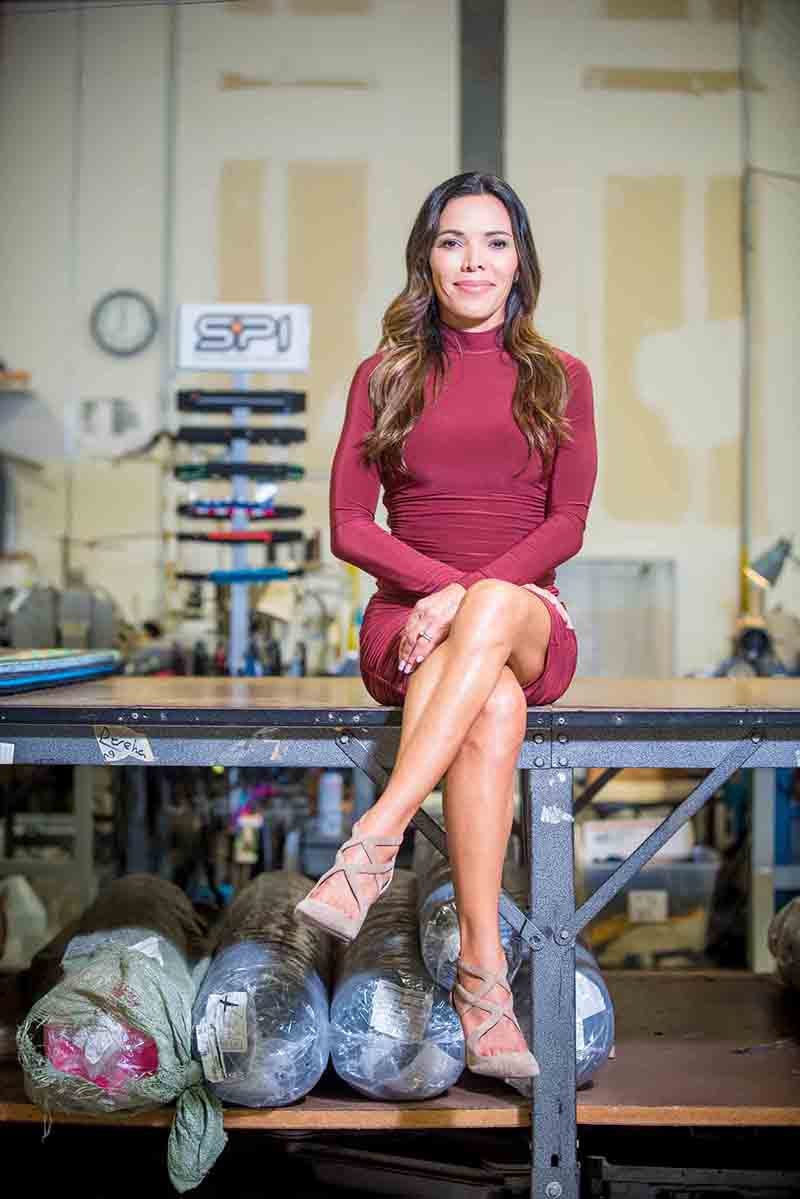
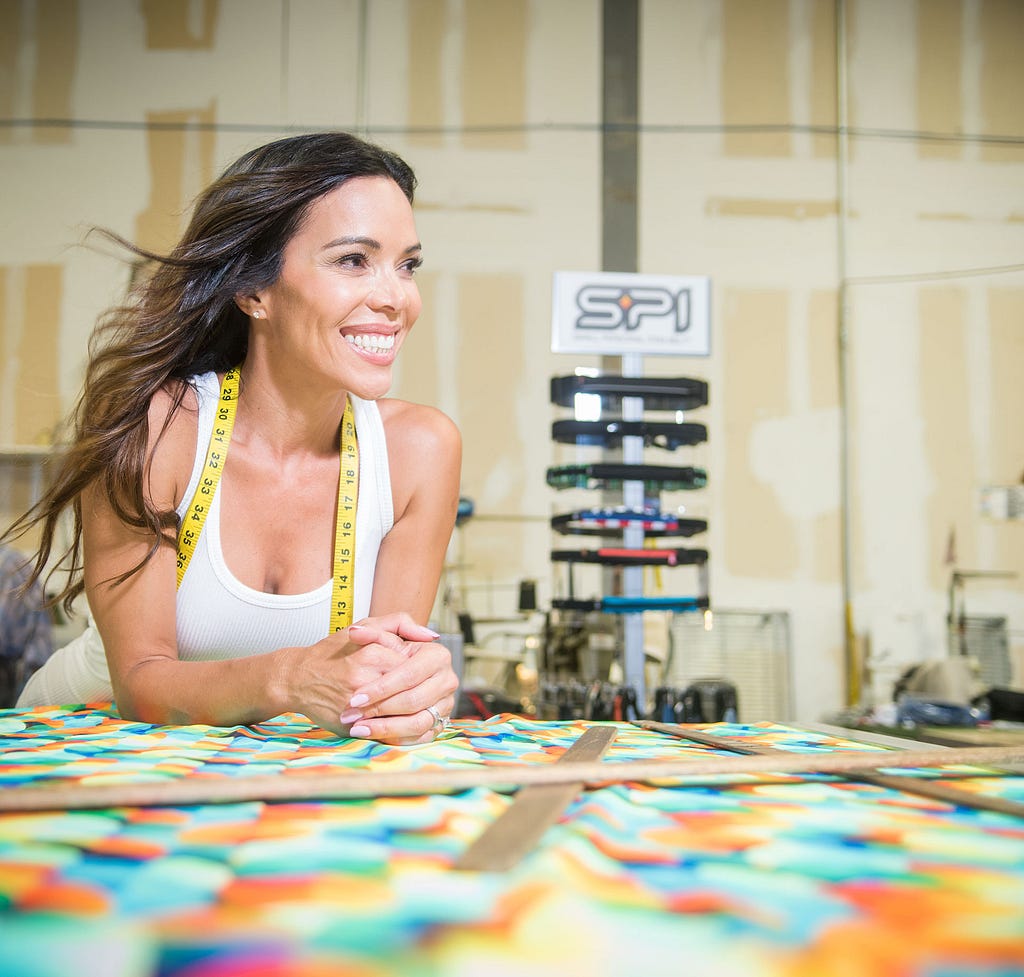
SPIbelt founder and inventor, Kim Overton, wanted to solve the problem of what to do with her small personal items while she was out running. Her solution to this challenge was SPIbelt, which has now been the leader in running belts for 15 years! As CEO, Kim Overton leads her team and community to embrace an active lifestyle, infusing the SPIbelt ethos and practices with the values of health, wellness, and balance.

Thank you so much for joining us in this interview series! Our readers would love to “get to know you” better. Can you share your “backstory” with us?

Can you share the most interesting story that happened to you since you started your career?

Within the first year of being in business, I was at a house party in NYC wearing a SPIbelt. A producer from the Rachael Ray show who was at the party absolutely loved the SPIbelt and asked me a ton of questions about it. All of a sudden, there was a group surrounding me, all so excited about the SPIbelt. Next thing I know, the SPIbelt was featured on the Rachael Ray show. It was one of the best online sales events we’ve had to date!

What were the main lessons or takeaways from that story?

What I learned from that was to always have your product on you and always be prepared to show it off and talk about it! The passion you have for your product will shine through, and others will get excited about it as well.

Can you share a story about the biggest mistake you made when you were first starting?

Within one year of launching SPIbelt, I thought the next move that would get me to the next level was to produce a short-form spot commercial. Short-form spots are like modified infomercials that last anywhere from 1–2 minutes.

Can you tell us what lesson you learned from that?

This grand idea came to me from a conversation I had with a gentleman on a plane. I guess I got swept up in his conviction for this type of advertising and was impressed with how well he said it worked for him. Instead of doing the research to really see if this was right for me, or compare the expense against other marketing opportunities, I went for it and lost over $30K (this was a lot for me when I was getting started). Keep in mind this was also before social media.

Let’s jump to our main focus. When it comes to health and wellness, how is the work you are doing helping to make a bigger impact in the world?

Our products are the sidekick people need to hold their small personal items when they’re running, working out, or otherwise living their best active life. SPIbelts also provide peace of mind to individuals who need to carry their special medical devices on them at all times. SPIbelts are low profile, soft, comfortable, and are often forgotten about when in use because they are so light and discreet! Our motto is Free to Be; free to be your best active self without the worry of how and where to store your personal items.

Can you share your top five “lifestyle tweaks” that you believe will help support people’s journey towards better wellbeing? Please give an example or story for each.

I’m learning daily as I go but 5 tweaks that work for me –

Take a pause for yourself in the morning before starting your day. Personally speaking, if I don’t stop to pause before my day gets started, my day will rule me versus the other way around. Take charge of your mindset before the day begins.

Take a moment to transition from work mode to personal mode and/or parent mode. This one is super important for me whether I’m working from home or the office. When I’m done with a work, I make a conscious effort to take a pause before I jump into mom mode. Mom mode, or personal time, is often a huge mind shift, so taking a moment to mentally downshift and let go of the challenges of my workday with a moment of gratitude and deep breathes helps me step into my post-work space with ease, patience and a clear mind.

If a to-do can take 2 minutes or less, just do it, don’t wait. It’s so easy to push little tasks off to a later time but if you get into the habit of knocking out little items on your to-do list, you’ll be surprised by how relieved you will feel at the end of the day.

Truly stop and smell the flowers. I have two your kids and they literally will stop to observe or smell the flowers. A random break to observe natures helps keep me grounded no matter how my day is going.

Know where the Big Dipper is in the night’s sky. When I take a pause to find the constellation, I am reminded how big our universe is and how small my day-to-day problems are in comparison. It’s easy to get bogged down by the issues in our own lives, and a look at the night sky really puts things in perspective. Observing one of the easiest constellations to spot always leaves me with a sense of calm.

If you could start a movement that would bring the most amount of wellness to the most amount of people, what would that be?

I believe a 4-day work week would benefit everyone. More time off for personal and family time, plus physical and mental wellness would be a better way to go about things.

What are your “5 Things I Wish Someone Told Me Before I Started” and why?

Put your brand on the exterior of everything that you sell. For the first 6 months of selling SPIbelts, the elastic band was plain black, no branding! It’s a missed opportunity to help spread your brand.

Hire support as soon as you start thinking you need it. I allowed myself to work 10+ hours days to keep up, but I wasn’t as effective and efficient as I could have been in launching my business as I would have been if I hired help sooner.

Carve out YOU time! We all know about this one. I absolutely loved working extreme hours and on weekends when I started so it didn’t always occur to me that my head was down so much. That said, sprinkling in a little fun and workout time is truly important for balance.

Take time in hiring the right people. I hired quickly and not carefully in the beginning. It’s so important to fully vet and feel confident about your hires rather that investing in them only to discover they were the wrong hire. Take your time to hire the right person, don’t rush it because you need to fill a seat.

Seek advice from people who care and people who’ve been there done that. I was operating so fast and head-down when I started that I didn’t always take the time to seek advice from mentors or experts when a challenge popped up. Pretty much every challenge I ever faced in business, and continue to face, is something someone else has navigated. Learn from others.

Sustainability, veganism, mental health, and environmental changes are big topics at the moment. Which one of these causes is dearest to you, and why?

Mental health. The mind and body are so connected. If our mind isn’t working, the body will not want to work either; they work as one and I like to treat them as one. I’m not sure there’s much I can do as mom, partner, employer, sister, daughter, friend, etc., without good mental and physical health.

What is the best way for our readers to further follow your work online?

SPIbelt.com and on mine and our company’s social channels — @spibelt and @kimjoverton.

Thank you for these fantastic insights! We wish you continued success and good health.


Women In Wellness: Kim Overton of SPIbelt On The Five Lifestyle Tweaks That Will Help Support… was originally published in Authority Magazine on Medium, where people are continuing the conversation by highlighting and responding to this story.
Corina Layton On Five Ways For Influencers To Monetize Their Brand

An Interview With Candice Georgiadis

Send out emails to anyone and everyone you want to work with! When I was starting out, I emailed anyone that I was remotely interested in working with, and some responded, others didn’t, but it not only gave me experience on how to construct a professional email, but it also helped me grow my confidence in being an influencer.

As part of my series about “How Influencers Can Monetize Their Brand”, I had the pleasure of interviewing Corina Layton.

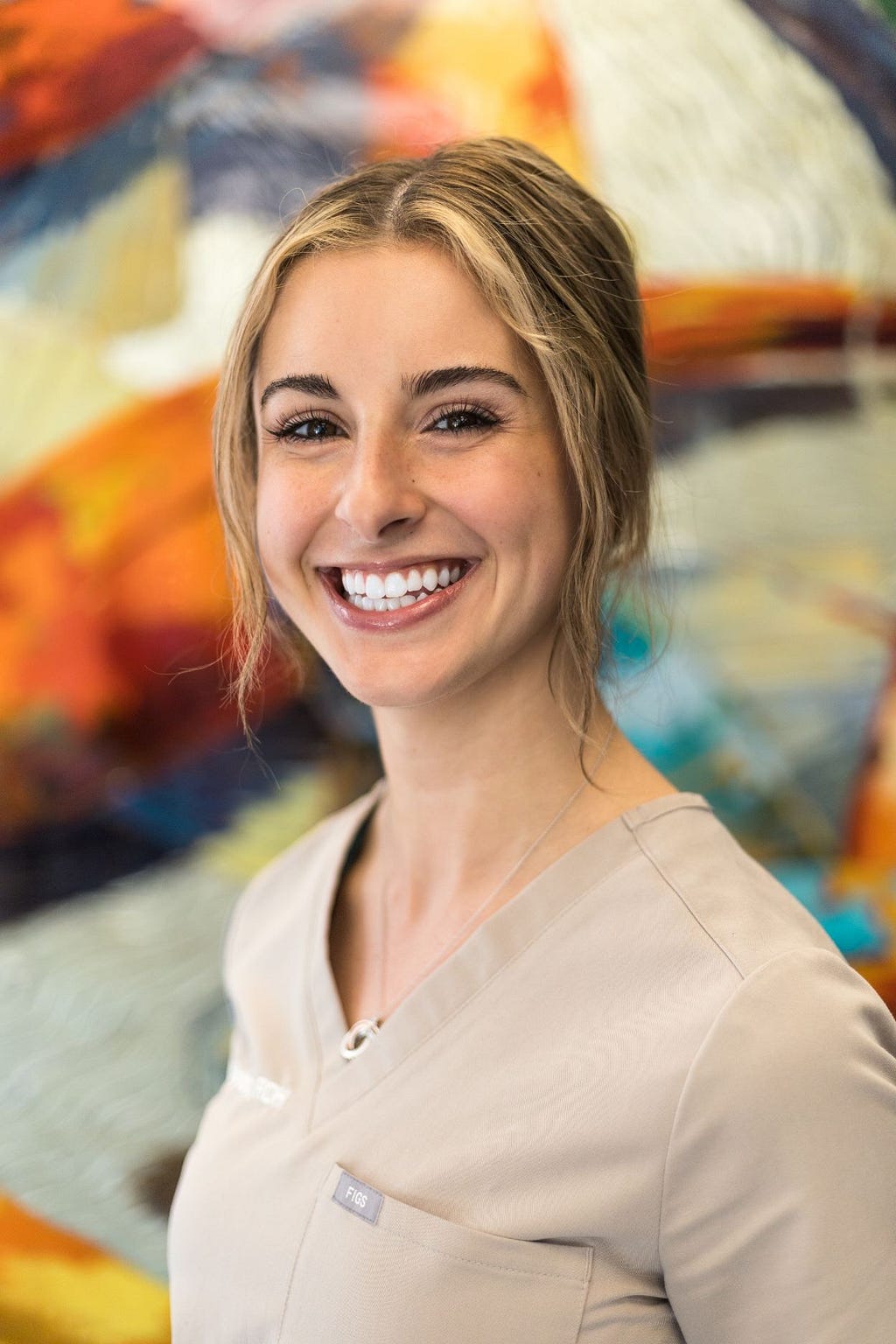
Corina Layton is a 2020 Dental Hygiene graduate currently practicing full time in Philadelphia, PA. She started out working at the front desk of a dental office, and kept progressing to a dental assistant, orthodontic assistant, and is now a Registered Dental Hygienist. She is projected to complete her BSDH in the Spring of 2023, and looks to use her degree to continue educating the general public as well as other dental professionals. Corina has been able to grow a following on TikTok and Instagram as a Dental Hygienist by educating people about dentistry and sharing tips and tricks on how to have an overall healthy mouth and body. She enjoys networking and continuing education courses, as she believes the future in dentistry is always changing.

Thank you so much for doing this with us! Before we dig in, our readers would love to get to know you a bit more. What is your “backstory”? What brought you to this point in your career?

I have been a dental hygienist for a bit over 2 years now, but I grew up in Alaska, lived in Wisconsin for 4 years and now currently live in Philadelphia. I started to pursue social media on a serious level when I realized that there was a huge lack of dental knowledge in the general population. Those were the videos that took off, and I continued to create that type of content in hopes to educate.

Can you share the funniest or most interesting story that happened to you in the course of your career?

I would say the funniest/most interesting thing would be that some people are so sensitive when they don’t have irritated gums, while others who have a lot going on don’t even flinch. That always amazes me because every mouth is so different.

How have you used your success to bring goodness to the world?

I would like to say yes! Everyday that I am able to educate one person on how to better help their overall oral hygiene, which leads to a great overall systemic health, is a good day! That means that I did my job correctly.

You have been blessed with great success in a career path that many have attempted, but eventually gave up on. Do you have any words of advice for others who may want to embark on this career path but know that their dreams might be dashed?

My words of advice is to just continue to pursue what you are passionate about, and the people who are, or want to also be passionate about it, will follow. Anyone can be influential, but it may just not be to the group that they are initially anticipating it will be.

None of us can achieve success without a bit of help along the way. Is there a particular person who made a profound difference in your life to whom you are grateful? Can you share a story?

The biggest and most influential person in my life who helped me achieve success would be my husband, Jared. He has always been my number one fan, and will sacrifice his battery to leave my videos on repeat to help boost me in the algorithm; he continues to always say “yes” when I have a last minute trip or meeting that I have to do; he never doubts me, and continues to just tell me that I can do it, and that I am the hardest worker he has ever known! Those words alone, and his unwavering support keep me going, and really push me to continue to pursue my dreams, and keep going when the going gets rough.

So what are the most exciting projects you are working on now? How do you think that might help people?

I am so excited to be able to partner with an amazing company that is changing the face of dentistry, and how we treat our patients while I accompany them on their trips across the country to dental conferences. Being present at these conferences has opened doors for me to write articles and be able to teach more people about dental hygiene and influencing. I hope to have my first article written out by the end of the year, and I am very nervous, but very excited as well!

What are your “Top Five Ways That Influencers Can Monetize Their Brand” . (Please share a story or example for each.)

1. Send out emails to anyone and everyone you want to work with! When I was starting out, I emailed anyone that I was remotely interested in working with, and some responded, others didn’t, but it not only gave me experience on how to construct a professional email, but it also helped me grow my confidence in being an influencer.

2. Monetize yourself in a niche that you are passionate about. This means, in my case, I get brand deals for TikTok, and then make sure that I keep in the niche that my followers are interested in so that I can profit the most because that is what I specialize in and that is what gets the views that myself and the brands are looking for.

3. Join platforms that can aid in finding deals. This meant doing a lot of research on different websites that I can join to get in contact with companies, opposed to waiting for them to reach out to me.

4. User Generated Content (UGC) is another way to monetize your platform. This is also one of the easier ways, because none of this content needs to be anything you are necessarily passionate about. Brands will literally let you have their product for free if you create a certain amount of deliverables (videos, reels, TikToks, photos, boomerangs…etc) and they can/will also pay you for it

5. Lastly, monetize your brand yourself. This means to not be afraid to promote yourself. For me, this was me introducing myself, and then if I was in a setting of someone asking me what I did, I would say “I am a dental hygienist, but I also do social media on the side.” This has now changed since influencing has become a greater source of income for me, but nonetheless, it opens doors for the conversation with people. It makes you more reputable, as well as, leaves the door open for that person to use you and your services, or refer you to someone.

You are a person of great influence. If you could inspire a movement that would bring the most amount of good to the most amount of people, what would that be? You never know what your idea can trigger.

The movement I wish/hope I can inspire is the movement of confidence. This means not caring if my hair isn’t perfect, and not caring about the next thing that a stranger says to me. Waking up and choosing to love myself everyday is enough, and choosing to be confident in who I am, and what I am worth has drastically changed my perception of not only myself, but also has opened my eyes to others around me. Being able to help and lead people to being confident in themselves and their skills is my passion, and if that is through me dancing on camera, talking about teeth, and telling people to floss, all the while my hair is frizzy and make up is out of place, then I am doing my job right! No one is perfect, so we should stop trying, and we should just continue to grow in ourselves.

We are very blessed that some of the biggest names in Business, VC funding, Sports, and Entertainment read this column. Is there a person in the world, or in the US whom you would love to have a private breakfast or lunch with, and why? He or she might just see this. 🙂

This is a great question! My person I’d love to have a private breakfast with would probably be Selena Gomez. She has inspired me through her music since I was in middle school, and seeing how she is so authentically herself, and how she is raw and willing to be raw in front of a camera is so inspiring!

What is the best way our readers can follow your work online?

You can find me on TikTok or Instagram @corina_907

Thank you so much for joining us. This was very inspirational!


Corina Layton On Five Ways For Influencers To Monetize Their Brand was originally published in Authority Magazine on Medium, where people are continuing the conversation by highlighting and responding to this story.
Elise Jenkins of Ella’s House: They Told Me It Was Impossible And I Did It Anyway

An Interview With Candice Georgiadis

Keep a “wins” list. Make a list of all the wins you’ve had or times you’ve gotten back up when things went awry. Refer to the list anytime you need a boost.

As a part of our series about “dreamers who ignored the naysayers and did what others said was impossible”, I had the pleasure of interviewing Elise Jenkins

Established in 2022, Elise Jenkins founded Ella’s House in response to the struggles she faced when she chose to obtain her college degree and have her daughter at 21 years old. Jenkins wanted to create a safe place in Nashville for women to be empowered in their choice to continue their education and become a parent. Upholding their core values of providing holistic help to balance education, health, and family, Ella’s House is designed as a place of refuge that connects peers in similar circumstances, provides physical and mental health resources, and supports women as they pursue their degrees.

Offering a sanctuary for mothers and expecting mothers who are full-time students, the organization provides basic necessities such as housing, food, community, and childcare resources as well as support with tutoring, career advising, educational grant and scholarship assistance, parenting, and life skills. Ella’s House’s support creates a pathway to success for these women to earn a degree and achieve their goals.

Thank you so much for joining us! Our readers would love to ‘get to know you’ a bit better. Can you tell us your ‘backstory’?

I grew up in Nashville and moved away for college to attend Auburn University. During my final semester of college, I found out I was unexpectedly pregnant. While I was lucky enough to be living at home while completing my internship in Nashville, I was isolated from most of my friends at the time. My parents and then-boyfriend (now my husband) Zach were so supportive but I have never felt more alone in my entire life. That feeling was what eventually helped to spur the creation of Ella’s House — a place where pregnant and parenting collegiate women can find connection, support, and community.

Are you working on any new or exciting projects now? How do you think that will help people?

We are currently working to move in our first resident as well as planning our first fundraiser! We are so excited to start welcoming women into this community and to see how a supportive and communal space in Nashville can help shape their future.

In your opinion, what do you think makes your company or organization stand out from the crowd?

Being the first space for pregnant and parenting collegiate women in Nashville, we are excited to be trailblazers. By offering support, community, and wellness resources, we can offer a holistic approach to helping women while partnering with various community organizations to ensure we can provide the best of Nashville for them.

Ok, thank you for that. I’d like to jump to the main focus of this interview. Has there ever been a time that someone told you something was impossible, but you did it anyway? Can you share the story with us? What was your idea? What was the reaction of the naysayers? And how did you overcome that?

I am definitely my own worst enemy so the memory that stands out most would be my first week after finding out I was pregnant. I hadn’t seen or known anyone else who had been pregnant in college and graduated so I had no roadmap to follow. I was convinced that I wouldn’t be able to get my degree and have my baby and was terrified at what that meant for the future. Unfortunately, I knew some people who were also convinced it couldn’t be done and were pretty vocal about their options on what I should do.

In the end, how were all the naysayers proven wrong? 🙂

I have a baby (actually two now) and a degree! And now a business that helps women achieve their goals of having both as well! We hope that women feel supported in whatever path they choose and that we can provide them with the resources and space to be encouraged no matter what!

None of us are able to achieve success without some help along the way. Is there a particular person who you are grateful towards who helped get you to where you are? Can you share a story about that?

My mom has absolutely been my rock. From the day I showed her my positive pregnancy test to working as our Director of Operations at Ella’s House now, she has been supportive and encouraging through it all. I can’t imagine many people who are willing to jump all in at the idea of a brand new non-profit but she has been a driving force and wealth of knowledge since the very beginning of this journey.

It must not have been easy to ignore all the naysayers. Did you have any experiences growing up that have contributed to building your resiliency? Can you share the story with us?

An experience that really built my resilience would be my leukemia diagnosis when I was a child. The summer after I turned 11, I was diagnosed with Acute Lymphoblastic Leukemia (ALL). After three failed rounds of chemo, I received radiation and ultimately a bone marrow transplant that saved my life. Beating cancer as a child and having a lot of “lows” that year really helped shape a lot of the persistence and determination I have today.

Based on your experience, can you share 5 strategies that people can use to harness the sense of tenacity and do what naysayers think is impossible? (Please share a story or an example for each)

  1. Keep a “wins” list. Make a list of all the wins you’ve had or times you’ve gotten back up when things went awry. Refer to the list anytime you need a boost.
  2. Keep a “time confetti” list. One of my favorite IG influencers, @lizmoody, came up with the idea that keeping a list of little things that make life feel special or fun is a great way to turn bad days around. Some examples include: going for a walk, cuddling a pet, doing four rounds of box breathing, and calling a friend.
  3. Surround yourself with cheerleaders. Keep friends and family who support you close by!
  4. Work to change your mindset. This one has been more challenging personally, but looking at failures or setbacks as stepping stones is a huge part of being resilient. If we can look at our failures as data to move forward instead of a sign to stop it can change our whole outlook.
  5. Selectively listen. We have the luxury of picking and choosing whose advice or criticism we listen to. Blocking out the really negative feedback and focusing on those who build you up and can constructively criticize is so important.

What is your favorite quote or personal philosophy that relates to the concept of resilience?

Go big or go home! This has been a favorite of mine since I was a child and really speaks to giving life 110%. When we give things our all, we invite failure but also the possibility of really amazing experiences.

You are a person of great influence. If you could inspire a movement that would bring the most amount of good for the greatest number of people, what would that be? You never know what your idea can trigger.

I would love to see Ella’s Houses nationwide! Outside of that, I think encouraging people to give their time to things they believe in could create such a culture shift. Saint Francis of Assisi said that “for it is in giving that we receive.” Focusing more on others and less on ourselves would cause a world of good.

Can our readers follow you on social media?

Absolutely! My personal is @elisemarie37 and please follow Ella’s House at @ellashouseorg across all social media platforms! We love having new followers.

Thank you so much for the time you spent on this interview. We wish you only continued success and good health.


Elise Jenkins of Ella’s House: They Told Me It Was Impossible And I Did It Anyway was originally published in Authority Magazine on Medium, where people are continuing the conversation by highlighting and responding to this story.

Eli Melrod of Solful: 5 Things I Wish Someone Told Me Before I Started Leading a Cannabis or CBD…

Eli Melrod of Solful: 5 Things I Wish Someone Told Me Before I Started Leading a Cannabis or CBD Business

An Interview With Candice Georgiadis

The stigma around cannabis remains. Because of my age and the acceptance of cannabis in my social and professional circles, I had assumed the stigma around cannabis was fading. You feel the negative perception of the industry daily, even in legal states. The stigma is real and proves there is still an enormous amount of work that needs to be done to educate the general population that the cannabis plant is truly medicine.

As part of my series about “5 Things I Wish Someone Told Me Before I Started Leading a Cannabis Business” I had the pleasure of interviewing Eli Melrod.

Eli Melrod has been an entrepreneur in the California cannabis industry since 2015. His interest in the health and wellness benefits of cannabis began in 2006, when his father was diagnosed with pancreatic cancer and discovered the power of cannabis to help him manage pain, nausea, appetite, anxiety and sleep. While studying economics at Wesleyan University, Eli became increasingly interested in cannabis and inspired by the opportunities presented by the imminent end of cannabis prohibition in California. In 2014, Eli left school to pursue his passion and quickly became an expert in the early-stage industry of adult-use cannabis.

Inspired by his father’s experience, Eli dedicated himself to bringing cannabis to people whose health, wellness and happiness could be improved by its responsible use. He first worked for an established cannabis testing lab where he learned the science of cannabis, gleaned firsthand insights into the industry and established strong personal relationships with cannabis innovators and farmers from San Jose to the Oregon border. Eli formulated numerous business ideas and iterated on them with family friend and veteran entrepreneur, Peter Dickstein. In 2017, Eli and Peter launched Solful, a destination cannabis retail brand in Sonoma County with a focus on educating the community, offering personalized customer experiences and sourcing only the best small batch, sun-grown cannabis. Solful was founded in Sebastopol, CA and has enjoyed numerous Sonoma County business accolades, including best cannabis dispensary in 2019, 2020 and 2021. Eli, who serves as an Emerald Cup judge, has continued to deepen his involvement with the cannabis community, speaking about his experience at venues including the UC Berkeley Haas School of Business, Sonoma State University, the Sebastopol Senior Center and the Oakmont Cannabis Club. He hosts a biweekly radio show on KSRO about cannabis and was honored as “One to Watch ‘’ in the North Bay Business Journal’s 40 under 40 feature. Eli Melrod is Solful’s CEO.

Thank you so much for doing this with us! Can you share with us the story about what brought you to this specific career path?

I’ve been a part of the California cannabis industry since 2015. My interest in the health and wellness benefits of cannabis began in 2006 when my father was diagnosed with pancreatic cancer and discovered the power of cannabis to help him manage pain, nausea, appetite, anxiety and sleep. While studying economics at Wesleyan University, I became more and more interested in cannabis and was inspired by the soon to be legalization in California. In 2014, I left school to pursue this passion with the hope I could help bring cannabis to people whose health, wellness and happiness could be improved by its responsible use.

I first started working at a cannabis testing lab to learn the science side of cannabis. It was during this time that I was able to cultivate relationships with many cannabis innovators and farmers from all over California. Inspired by this brief exposure to the industry I began formulating business ideas. I was lucky enough to have Peter Dickstein, seasoned entrepreneur, as a close family friend. In 2017, Peter and I launched Solful, a destination cannabis retail brand in Sonoma County, with a focus on educating the community by offering personalized customer experiences and sourcing only the best small batch, sun-grown cannabis in Northern CA.

Our first Solful location opened in Sebastopol, CA and has received numerous Sonoma County business accolades, including best cannabis dispensary in 2019, 2020, 2021 and 2022. In early 2022 we opened our second location in Santa Rosa and are working hard to open our third location in San Francisco in 2023.

Can you share the most interesting story that happened to you since you began leading your company? Can you tell us what lesson you learned from that?

After taking the plunge into the cannabis industry, My “aha” moment came during one of my first visits to a cannabis farm. I met Craig Johnson, owner of Alpenglow Farms in Southern Humboldt County, at the 2015 Emerald Cup. I vividly remember him wearing a bandolier full of joints — he invited me to the farm, and being a huge enthusiast of sun-grown cannabis, I was honored to visit this treasured land. When I arrived at his property at the base of a mountain — Craig pulled up on his ATV — needless to say, I wasn’t sure what to expect. This wasn’t your typical farm or farmer. Like most experiences in cannabis, I trusted my gut and I jumped on the ATV with him. As we rode up the mountain, he walked me through Humboldt’s history, the farm’s characteristics, and microclimates. I was blown away by the landscape and quality of the land and knew Aplenglow was the farm I wanted to build Solful’s cannabis flower program around. If I could figure out how to share this cannabis flower with the world, I knew I was on to something.

Can you share a story about the funniest mistake you made when you were first starting? Can you tell us what lesson you learned from that?

Thinking back to my early days in the industry, at my first job in cannabis I wasn’t allowed to tell people where the building was located. The company was completely legal, but we were told not to disclose the location. Apparently this was because the landlord didn’t want his other tenants knowing a cannabis building was operating in his building.

As much as I laughed at how secretive I had to be about my very legal job, it was my first real eye opener on the reality of the stigma around the cannabis industry. To be a fully compliant, licensed company and still need to be operating behind close doors — it’s still hard to wrap my head around.

Are you working on any exciting projects now? How do you think that will help people?

Our team has been working hard to expand Solful’s retail footprint. We opened our second location in Santa Rosa earlier this year and have a third location opening in early 2023 in an incredible community and neighborhood in San Francisco.

Each year we have been focused on improving our sourcing. We now have our own distribution center which enables us to have full control of what goes into the jar after the flower leaves the farm.

As we prepare to open Soful in San Francisco, as a native to the city, I am excited to bring some of the world’s best cannabis back to SF.

None of us are able to achieve success without some help along the way. Is there a particular person who you are grateful towards who helped get you to where you are? Can you share a story?

Hands down, I am most grateful for Solful’s Co-founder Peter Dickstein. To have a business partner with over 40 years of professional experience and running successful businesses has been key to Solful’s success.

As a larger industry, a huge perk in cannabis is that you get to work with people of all different backgrounds and ages. It’s something I see a lot in this industry and feels unique –those of us just starting out in our 20s and 30s have a lot of sentiment and appreciation for working with and learning from these veterans.

This industry is young, dynamic and creative. Does your company use any clever and innovative marketing strategies that you think large legacy companies should consider adopting?

This is less of a marketing strategy and more of a core mission for me–Solful is trusted by our community to cultivate health and happiness through cannabis. I have worked hard and made it a priority to create purpose for the entire Solful team. We focus on training, education, and culture to reinvent the cannabis retail space. For all customers — from experienced users to the cannacurious — we want them to walk into Solful feeling comfortable and confident they will find the product they are looking for with the help of a long-tenured team who holds ourselves to the highest values: the Solful Standard.

Dubbed “Health & Happiness Consultants” our team delivers on the promise. And they are, in fact, a happy team: in a time when good hires are scarce and job jumping is frequent, we have very little employee turnover. I believe this is due to the team having a purpose, which has translated into an incredible retail experience.

Can you share 3 things that most excite you about the Cannabis industry? Can you share 3 things that most concern you?

Excites me most:

  • Selling products that have a positive impact on people’s lives — at the core, the cannabis industry is striving to improve health, happiness and well-being.
  • Craft cannabis continues to gain momentum and consumer interest is there to push craft forward. Every year these products get better — the farming techniques are evolving and flower quality and distinction continues to increase with each new harvest.
  • While the industry has had its fair share of ups and downs, I continue to be grateful to have the opportunity to build an organization that is consistent with my own personal mission. It’s unique to be a part of a budding industry that aims to bring health and happiness to customers. It’s a movement I am proud to call my own.

Concerns me:

  • At the pace the industry is consolidating, it’s concerning to think what this means for the future of the heritage farmer. It’s nearly impossible for them to keep up with these larger, powerful companies. There is a real risk that we could lose the entire Emerald Triangle region.
  • There has become a focus on low cost, high THC products in the market. I see the way the industry is responding to economic challenges — more and more companies are competing based on potency/low cost vs. quality.
  • The slow pace in which we are seeing cannabis regulations evolve in California is a real concern. Here we are today, five years after recreational legalization, and we still have many municipalities in the state that don’t allow cannabis. The pace doesn’t seem to be accelerating as it should.

Can you share your “5 Things I Wish Someone Told Me Before I Started Leading a Cannabis Business”? Please share a story or example for each.

  1. As a young entrepreneur, I had no idea the regulatory roll out of the cannabis industry would be so turbulent. Being completely unregulated in 2017 to fully regulated by 2020 — it’s been difficult to respond to these regulations as they are constantly changing. In 2019, we were in a situation where most of our supply chain wasn’t fully licensed. We gained access to the track and trace system well in advance of many core supply partners and for a period of time we had to revert to entering products by hand, which was a full time job in itself.
  2. The challenges of cannabis banking. I was always aware that cannabis banking was a hurdle for startups, but I had no idea how many obstacles we would face getting Solful into a stable banking situation in 2018.
  3. Understanding the realities of the non-legal cannabis market. I didn’t understand how large and robust the non-legal market was and how those competing markets had an effect on the legal market in regards to pricing. The reality is that consumers are willing to purchase flower from the non-legal market. It’s easy to access and more affordable.
  4. The challenges around advertising and marketing. I underestimated the many and ever changing obstacles cannabis companies face to get in front of new consumers, specifically those who aren’t already shopping at dispensaries. There are tight restrictions on social media– you aren’t allowed to post any sales incentives on Instagram. There are even regulations on contacting customers via text. With all marketing and advertising, you must be nimble and creative and willing to quickly change platforms of communication.
  5. The stigma around cannabis remains. Because of my age and the acceptance of cannabis in my social and professional circles, I had assumed the stigma around cannabis was fading. You feel the negative perception of the industry daily, even in legal states. The stigma is real and proves there is still an enormous amount of work that needs to be done to educate the general population that the cannabis plant is truly medicine.

What advice would you give to other CEOs or founders to help their employees to thrive?

It’s essential to build a mission driven culture that supports your employees. Always be clear about your company’s values and purpose, and you’ll attract the type of employee who in turn wants to help you live and breathe that ethos everyday.

You are a person of great influence. If you could inspire a movement that would bring the most amount of good to the most amount of people, what would that be? You never know what your idea can trigger. 🙂

Embracing regenerative and sustainable farming, not only in cannabis, but in all agriculture. Our generation needs to make this a priority for both the planet and our health — we need to take better care of our land so in turn we can source better, healthier products.

What is the best way our readers can follow you on social media?

https://www.linkedin.com/in/eli-melrod-95479993/

https://www.instagram.com/solfulca/

https://www.facebook.com/SolfulCA

This was very inspiring. Thank you so much for joining us!


Eli Melrod of Solful: 5 Things I Wish Someone Told Me Before I Started Leading a Cannabis or CBD… was originally published in Authority Magazine on Medium, where people are continuing the conversation by highlighting and responding to this story.
Female Founders: Mignonne ‘Maggie’ Gavigan On The Five Things You Need To Thrive and Succeed as a…

Female Founders: Mignonne ‘Maggie’ Gavigan On The Five Things You Need To Thrive and Succeed as a Woman Founder

An Interview With Candice Georgiadis

Know your strengths. I see color and pattern and texture all around me and with my ADD, I need to compartmentalize, make priority lists, hire people who have expertise in areas I do not.

As a part of our series about “Why We Need More Women Founders”, I had the pleasure of interviewing Mignonne “Maggie” Gavigan.

Mignonne “Maggie” Gavigan Smith, founded Mignonne Gavigan in 2014 after discovering that women felt instantly more confident when wearing her unique designs. As a New York City based, North Carolinian bred accessories designer, Maggie is widely regarded for her playful, color-forward aesthetic and fresh, elevated point of view. She continues to redefine wearable designs with a couture sensibility. With strong southern roots and a background designing for luxury fashion brands, Gavigan hones a signature, laid-back style with masterful technique and a designer eye.

Thank you so much for doing this with us! Before we dig in, our readers would like to get to know you a bit more. Can you tell us a bit about your “backstory”? What led you to this particular career path?

I grew up in North Carolina with loving parents and three brothers. In school, I excelled in Visual Arts and was accepted into the North Carolina school of the arts in elementary school. I loved drawing and painting and it gave me such an important creative outlet from a young age. My parents encouraged me to go to undergraduate school and then specialize in a master’s program more geared towards arts. I enrolled in Parsons Paris and was accepted and transferred to Parsons New York where I began my career in Fashion. I worked as an apparel designer, a handbag designer and then a footwear designer before starting Mignonne Gavigan in 2014.

Can you share the most interesting story that happened to you since you began leading your company?

One of the more interesting stories in our history is the one that compelled me to start my own brand in the first place. I mentioned my background as an apparel designer, and it was through a serendipitous discovery during that time that Mignonne Gavigan came to be. I was experimenting with a beaded vintage couture gown and an embellished piece of fabric fell to the floor. I picked it up and pinned it around my neck and loved the cool scarf vibe. As I walked home through SoHo, 3 different people stopped me on the street to ask where they could buy my “scarf necklace.” From there, I knew I had something special and there was a huge opportunity.

Can you share a story about the funniest mistake you made when you were first starting? Can you tell us what lesson you learned from that?

Ha, maybe separation between work and home, which is ironic in the post-COVID WFH world we live in! When we first started the Company, to save money on office space we worked out of my apartment for 2 years. While it was absolutely the right decision from a business and financial perspective, we learned the hard way (after a few hundred cardboard boxes and countless arguments with our building super about running a shipping operation out of a TriBeca loft) that it was time for us to get a real office! We became real good friends with our Fedex team though, they would come inside and hangout with my cat Franklin during pickups!

None of us are able to achieve success without some help along the way. Is there a particular person who you are grateful towards who helped get you to where you are? Can you share a story about that?

I could never name one person. Obviously, I am insanely grateful to so many people along the way: co-founders, employees, investors, believers, and each and every one of our customers. But every moment comes with unique challenges — I truly believe every experience provides an opportunity to learn. It could be as trivial as someone who compliments your outfit, or as deep as your oldest friend, mentor, etc. Support and encouragement comes from unexpected places along the way. I am so thankful to be where we are today and MG wouldn’t be here without the team surrounding us.

Ok, thank you for that. Let’s now jump to the primary focus of our interview. According to this EY report, only about 20 percent of funded companies have women founders. This reflects great historical progress, but it also shows that more work still has to be done to empower women to create companies. In your opinion and experience what is currently holding back women from founding companies?

From what I’ve witnessed, as my peers have had kids, each family meets a crossroad … who is going to stay home and watch the kids … is it Dad? Mom? Nanny? Daycare? Often, even if a family has help, so much of the day to day household tasks and childcare responsibilities fall on women, regardless of if they are working a job outside of the home or not. It makes it very challenging to focus on either work or family, let alone give 100%. Spending the last almost 20 years in New York City, I’ve witnessed a shift in women empowering and supporting each other to create companies and fulfill their dreams, whatever that may be. Having your own support system of women that are there to help you move forward or help you pick up the pieces and always have your back is critical. I’ve always relied heavily on the advice and support of successful women. Loving what I do has helped me with the juggling that is being a working parent and allowed me to prioritize work and family at different times to be the best Mom and Founder that I can.

Can you help articulate a few things that can be done as individuals, as a society, or by the government, to help overcome those obstacles?

More female conversations and support groups to fund and advise young entrepreneurs. I believe the world of podcasts has been a great tool for listening to other founder’s stories in their own words beyond written words: unscripted, unedited and more honest. Additionally, more access to flexible, quality childcare is so critical for the advancement of working women (and all working parents).

This might be intuitive to you as a woman founder but I think it will be helpful to spell this out. Can you share a few reasons why more women should become founders?

Women have superpowers. our perspectives and ideals are vastly different than those who have held the reigns before us, we have a different vantage point. I would say if there’s one thing women are good at — it’s multitasking! The key to running a successful organization aside from having the passion and drive would be to be able to juggle many hats at once, especially at a startup.

What are the “myths” that you would like to dispel about being a founder? Can you explain what you mean?

There are a lot of false narratives about entrepreneurship, but forums like this one are helping dispel those myths and paint a real picture of what it’s like to build and run a company. Some truths that may contradict perceptions about starting a company/being a founder: It is HARD work. Starting a Company is not a get-rich-quick scheme, it is a long winding road with many ups and downs. Entrepreneurs aren’t just born with a stomach for risk tolerance, you need a genuine passion for what you are building in order to weather the many storms along the way.

Is everyone cut out to be a founder? In your opinion, which specific traits increase the likelihood that a person will be a successful founder and what type of person should perhaps seek a “regular job” as an employee? Can you explain what you mean?

Being a founder and being a leader really requires leading by example and being willing to put in the work and show your employees the kind of dedication that you want to see from them. Being an employee often allows you more of an ability to leave your work at work. Being a founder means taking your work home (almost always) and often taking on your employees’ personal challenges as your own, especially in a small company where you don’t necessarily have dedicated HR, etc. Blurring those lines can become challenging, and I can recall losing sleep over employee’s personal situations — both out of love and care for them, but also as a response to how those situations can affect the business. Being able to navigate those challenges is a huge part of being a founder, and it takes a lot of time to figure out strategies to help work through personnel challenges and decide how to handle different situations from both a personal and a business perspective.

Ok super. Here is the main question of our interview. What are your “5 Things I Wish Someone Told Me Before I Started” and why? (Please share a story or example for each.)

  1. Know your strengths. I see color and pattern and texture all around me and with my ADD, I need to compartmentalize, make priority lists, hire people who have expertise in areas I do not.
  2. It’s a marathon, not a sprint. Don’t get caught up in the small stuff. Keep pushing forward.
  3. Understand your P&L. Knowing the numbers is everything.
  4. Understand your customer. Knowing who you are designing for, what are their interests, likes and dislikes, etc.. There is so much customer data at our fingertips, leverage it to make informed decisions.
  5. Go with your gut. No one knows or cares about your business the way you do.

How have you used your success to make the world a better place?

I entered fashion when the industry was not a kind place … everyone wore black … it was cutthroat. At MG, I wanted to foster a culture of positivity. It’s policy that MG employees treat each other with kindness and respect. No problem should be on the shoulders of just one person. We are all in this together and will solve each problem together.

You are a person of great influence. If you could inspire a movement that would bring the most amount of good for the greatest number of people, what would that be? You never know what your idea can trigger.

I consider myself an environmentally responsible person. Protecting the environment and animals/wildlife is very important to me. I am a lover of animals, birds, wildlife in general (as anyone who sees our collections would know ☺), nature is such an inspiration to me and my designs. We are all witnessing the drastic climate change and the impacts this is having on all of us. It’s our responsibility to protect both our land and the animals in danger of extinction. We know what we have to do to stop it — it will take courage and ambition, but we can do it.

We are very blessed that some very prominent names in Business, VC funding, Sports, and Entertainment read this column. Is there a person in the world, or in the US with whom you would love to have a private breakfast or lunch with, and why? He or she might just see this if we tag them.

There are so many women entrepreneurs I respect and admire, a few that come to mind for me would be Tory Burch for how she has taken her namesake brand and transformed it into one of the most successful lifestyle brands, Lori Grenier for her passion to bring joy to people and lead with kindness, Sara Blakely for her ability to lean into failure and remain true to her vision, Kirsten Green for her risk tolerance and commitment to drive growth and support success.

Thank you for these fantastic insights. We greatly appreciate the time you spent on this.


Female Founders: Mignonne ‘Maggie’ Gavigan On The Five Things You Need To Thrive and Succeed as a… was originally published in Authority Magazine on Medium, where people are continuing the conversation by highlighting and responding to this story.

The Future of Beauty: Ian Sanderson of AnteAGE On How Their Technological Innovation Will Shake Up…

The Future of Beauty: Ian Sanderson of AnteAGE On How Their Technological Innovation Will Shake Up The Beauty Industry

An Interview With Candice Georgiadis

Confidence is key. Find things that make you feel good whether that be your skincare, make up or other aesthetic treatments. When you feel good about yourself it is a gorgeous thing.

As a part of our series about how technology will be changing the beauty industry over the next five years, I had the pleasure of interviewing Ian Sanderson, President of AnteAGE.

Thank you so much for doing this with us! Before we dive in, our readers would love to learn a bit more about you. Can you tell us a story about what brought you to this specific career path?

I’ve been an entrepreneur for 25 years, so AnteAGE isn’t my first startup, but it is my first venture into skincare. I’ve really been able to marinate in the world of cosmetic chemistry, aesthetic medicine, and cell biology over the last 11 years. Thankfully, my co-founder Dr. John is a brilliant doctor/scientist, and he’s also my dad.

Can you share the most interesting story that happened to you since you began your career?

Buy me a drink first? Ok, this is one of the those “is this real life?” experiences: My father and I were asked to speak at a very exclusive longevity conference in Beijing a few years back. There were about 20 of us invited; we were all flown in first class, then whisked by speedboat to a private lakeside resort owned by a Chinese billionaire (who, of course, wants to live forever.) So, there I am for several days meeting with Nobel laureates, billionaires, and a handful of the most respected scientists in the world. I learned a ton and was able to speak on the topic of skin as the first step on the path to complete cellular rejuvenation.

Are you able to identify a “tipping point” in your career when you started to see success? Did you start doing anything different? Are there takeaways or lessons that others can learn from that?

I think that tipping point came for me in 2018, when we had two years in a row of sales growth over 100%. That’s when I knew we were going to make it. We’ve been working to keep up with that growth ever since. There was nothing strategically different we were doing before or after that tipping point, we just held on long enough for our products to gain traction in the market and then hired a great team to keep building on the early success.

None of us are able to achieve success without some help along the way. Is there a particular person to whom you are grateful who helped get you to where you are? Can you share a story about that?

My distributor in Dubai, DubiMED, taught me how to run a high-quality sales and marketing organization. I have been going to Dubai several times a year for the last five years both to support that market and also to learn from it. Without that relationship it would have taken me a lot longer to grow AnteAGE to where it is today.

Ok super. Let’s now shift to the main part of our discussion. The beauty industry today has access to technology that was inconceivable only a short time ago. Can you tell us about the “cutting edge” technologies that you are working with or introducing? How do you think that will help people?

Growth factors and exosomes are what we see as the cutting edge of beauty science. When we apply energy to the skin, or stimulate with microneedles, we are creating a hormetic challenge resulting in a beneficial response. The problem is that older patients have a less robust response, and these are exactly the patients who want these treatments. Growth factors offer us the ability to reprogram that response, regardless of the age of the patient. That’s exciting! We’ve been creating with the most powerful (bone marrow stem cell) growth factors for many years. Now, we are working with regenerative topicals taking advantage of EVs (Exosomes) to get a more powerful and elegant response.

Keeping “Black Mirror” and the “Law of Unintended Consequences” in mind, can you see any potential drawbacks about this technology that people should think more deeply about?

We live in a time where new and world-changing technology is often talked about, but slow to materialize. I believe that what we need to worry about is our regulatory infrastructure, and to make changes to safely speed up positive breakthroughs in all fields of science. We have an incredible academy of dermatologists and other specialties who both understand the science behind these types of treatments and care for the safety and outcomes of their patients. I leave it to them to ensure the breakthroughs made in the lab find their way into the practice of aesthetic medicine.

Can you share 3 things that most excite you about the “beauty-tech” industry?

  1. The “science-first” trend that we have seen over the last few years is exciting because we are able to really get down to what makes lasting changes in our body. Discoveries around exosomes are a great example of where biotech is leading the way in aesthetics.
  2. It is nice to see a return to minimalism in aesthetics. People want to keep a youthful look, and they are moving away from the heavy fillers and opting for a more natural appearance.
  3. There are so many new devices coming out, many of which require less and less downtime for patients. This is exciting because the ethos of AnteAGE is to decrease inflammation. Our products are compatible with almost any device and work to accentuate the results by speeding up healing and optimizing the outcomes of these very clever machines. Providers are now able to combine therapies and modalities to give their patients customized results.

Can you share 3 things that most concern you about the industry? If you had the ability to implement 3 ways to reform or improve the industry, what would you suggest?

  1. This isn’t new, but ethics in our industry can be questionable. Going back to the “science-first” approach, we find that some companies make claims about their technology that are not entirely true. This can be frustrating when we see brands making claims or using buzzwords about their products that do not prove out in the lab. It would be nice with some of these new things to require more transparency.
  2. Social media is an incredible tool for marketing and brand awareness but there are some crazy things being shared out there, some of which can cause pain or permanent damage if not careful. Some kind of oversight may become needed, especially for professional aesthetic treatments being done at home. We have seen people injecting black market filler, neurotoxins, and encouraging questionable surgeries. Many young viewers are very impressionable, and I think we have a responsibility to keep them safe.
  3. The ”new normal” that has been created for how people are supposed to look has had an impact on the self-esteem of so many people. I am happy to see more representation and inclusivity from brands across the board. We are certainly in favor of creating products to help people feel confident, but that should be tempered by celebrating a variety of looks and not attempt to make everyone look the same.

You are an expert about beauty. Can you share 5 ideas that anyone can use “to feel beautiful”? (Please share a story or example for each.)

  1. Confidence is key. Find things that make you feel good whether that be your skincare, make up or other aesthetic treatments. When you feel good about yourself it is a gorgeous thing.
  2. Compliment someone every day. Bringing joy to others will also light you up.
  3. Have good posture. This sends a message to your brain that all is good. This will radiate outward without you having to do anything special.
  4. Have gratitude. Be grateful for your surroundings, be grateful for your Botox. It doesn’t matter what it is but consciously acknowledging gratitude is something I think everyone should get in the practice of doing. Your attitude plays a big part in how others perceive you. You will come across more beautiful to others and you will feel better about yourself if you can ditch some of the negative chatter in your mind.
  5. Take care of your skin and wear an spf daily. Find a skincare routine that works for you and something you can stick to. Don’t make it overly complicated.

You are a person of great influence. If you could inspire a movement that would bring the most amount of good to the most amount of people, what would that be? You never know what your idea can trigger. 🙂

I think we need to reconnect with nature. I feel a surreal level of calmness and clarity when I’m barefoot in a jungle, sitting in front of a fire, or swimming in the ocean. We need to find a way to make all our technology disappear into the background so we can benefit from it without being robbed of our humanity. Accomplishing that, to any degree, would be of great benefit to billions.

Can you please give us your favorite “Life Lesson Quote”? Can you share how that was relevant to you in your life?

“If you’re not failing, you’re not pushing your limits, and if you’re not pushing your limits, you’re not maximizing your potential”
― Ray Dalio

I’ve come to realize that I spend a lot of time and money on activities that may fail. And without fail, those are the activities that lead to my success. The stuff that isn’t risky doesn’t really move the ball forward.

How can our readers follow you online?

I’m not on social media, but AnteAGE has much to say on Instagram @anteageskin

Thank you so much for joining us. This was very inspirational.


The Future of Beauty: Ian Sanderson of AnteAGE On How Their Technological Innovation Will Shake Up… was originally published in Authority Magazine on Medium, where people are continuing the conversation by highlighting and responding to this story.
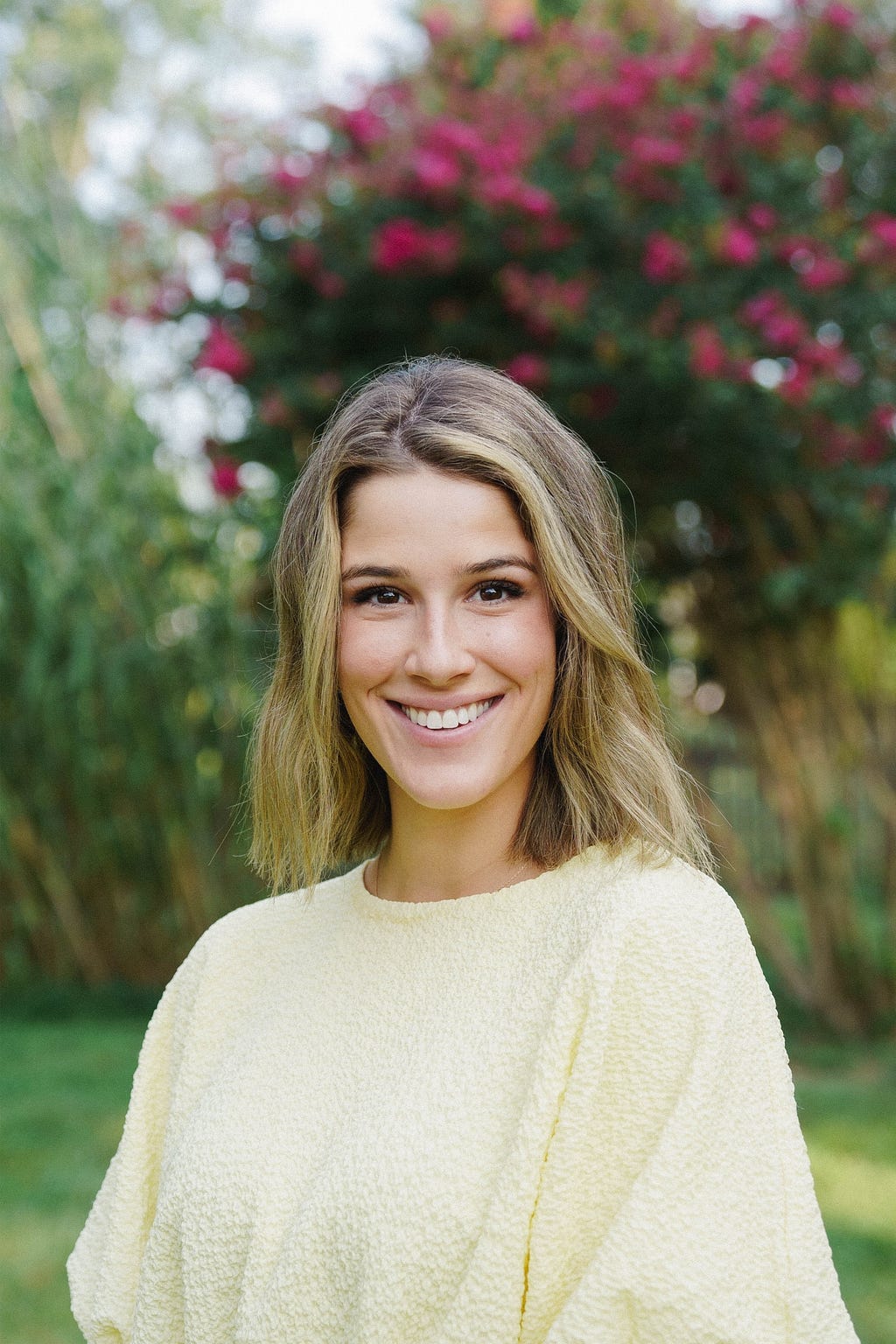
Female Founders: Rajia Abdelaziz of invisaWear On The Five Things You Need To Thrive and Succeed as…

Female Founders: Rajia Abdelaziz of invisaWear On The Five Things You Need To Thrive and Succeed as a Woman Founder

An Interview With Candice Georgiadis

Being a founder is definitely not for the faint of heart. It takes lots of hard work, patience, and dedication. If you’re the type of person that likes to work from 9 am — 5 pm then starting a company may not be the right fit for you. When you’re trying to start a tech company, you’re working around the clock. You also have to be comfortable taking big risks. If you’re not, then you will have a tough time running a company because it’s constantly taking risks.

As a part of our series about “Why We Need More Women Founders”, I had the pleasure of interviewing Rajia Abdelaziz.

Rajia Abdelaziz is the founder of the viral, life-saving jewelry collection, invisaWear. Rajia graduated from The University of Massachusetts with a degree in Computer Science and Electrical Engineering. A scary incident she experienced in college, inspired her to create invisaWear for a school project. When she realized that the only products on the market were ugly panic buttons (the kind that even your grandma doesn’t want to wear) she knew she needed to develop it into a real product. Today, invisaWear is backed by America’s #1 security provider (ADT). She is proud to have developed a product that helps save lives with a click of a button.

Thank you so much for doing this with us! Before we dig in, our readers would like to get to know you a bit more. Can you tell us a bit about your “backstory”? What led you to this particular career path?

I graduated from the University of Massachusetts Lowell with a double major in electrical engineering and computer science. In college, my involvement as the President of The Society of Women Engineers, inspired me to get more women into tech. I found my love for the industry as an intern with Amazon in robotics. I never meant to start a business. It happened by accident after a scary situation I experienced in college while leaving an event. I thought to myself “Maybe I should ask someone to walk me to my car.” I had a lot of friends at the event but ignored my gut feeling not wanting to inconvenience anyone. I thought that I was just being paranoid with all the true crime stories I have listened to. Although I had my phone with me there wasn’t enough time during this situation to grab it, unlock it, call 911, and get help. In that moment I realized how important it is to protect yourself and your loved ones. I went online looking for a safety device but everything on the market were big ugly panic buttons that not even my 80 year old grandmother would want to wear. That’s what sparked the idea behind invisaWear. It started as a class project and took off like wildfire. I turned down job offers by some of the most well known tech companies to pursue it because I knew it would really help people.

Can you share the most interesting story that happened to you since you began leading your company?

Honestly, I feel like invisawear’s most interesting story was the first time we saved someone’s life. It’s been 5 years since that moment and I still get choked up when I talk about it. We were able to help a young woman who was involved in a serious car accident. Most people don’t realize this but during the majority of car accidents your phone gets thrown out of reach. The particular car accident this woman was involved in was so bad that she was trapped in her car and couldn’t get out. She had nothing to rely on to call for help except her invisaWear keychain. The keychain alerted her family and the police. They were able to arrive at the scene simultaneously and it ultimately saved her life. Hearing her say the words “I just prayed to god that this button would help me” gives me goosebumps.

Can you share a story about the funniest mistake you made when you were first starting? Can you tell us what lesson you learned from that?

One of the funniest misconceptions I had about starting a company was I assumed that when you had a product, the hard work would be over. You spend countless hours trying to raise money, develop the product, and launch it. I always thought that when we brought the product to market that this is when the hard work was over. I thought magically people would purchase the product, I didn’t realize that this is when all the hard work actually began. Marketing on a national level is very expensive. Figuring out how to scale your business is even harder, I wish someone could write a step-by-step guide on how to start a Billion dollar business!

None of us are able to achieve success without some help along the way. Is there a particular person who you are grateful towards who helped get you to where you are? Can you share a story about that?

It’s really hard to narrow it down to one person because we’ve been extremely fortunate to receive so much support from the City of Lowell, University of Massachusetts at Lowell, investors, family, and more.If I had to pick one person, it would be one of our lead investors, Louis. Louis previously sold his company and retired at one point but decided to return to the workforce to help people in the community. He was one of invisaWear’s first investors and has been an incredible mentor. When he chose to invest in invisaWear, he told us he was doing so because he had sisters and nieces. We really hope that one day, if we are fortunate enough to be as successful as he is, that we can choose to spend our time in the same exact way — giving back to the community.

Ok, thank you for that. Let’s now jump to the primary focus of our interview. According to this report, only about 20 percent of funded companies have women founders. This reflects great historical progress, but it also shows that more work still has to be done to empower women to create companies. In your opinion and experience what is currently holding back women from founding companies?

I think the biggest thing holding back women from founding companies is the lack of funding resources geared toward women owned businesses, thankfully this has been changing over the last decade. However, I can’t tell you how many pitches I’ve gone into where there isn’t a single female investor on the decision making committee. I can’t tell you the amount of men who told me that women don’t worry about their safety because they themselves have never once had to worry about being sexually assaulted or attacked.

Can you help articulate a few things that can be done as individuals, as a society, or by the government, to help overcome those obstacles?

I think there needs to be more female investors. Women who’ve run successful companies should be joining Angel groups and should become venture capitalists. Funds should be required to make an equal amount of investments between female founded startups as they do in male started startups

This might be intuitive to you as a woman founder but I think it will be helpful to spell this out. Can you share a few reasons why more women should become founders?

We think differently than men and experience unique challenges that they don’t necessarily face. I never meant to start a company, I was simply looking to find a safety device that was stylish and discreet. However, I was shocked when I couldn’t find any. After raising funding, I was no longer surprised that I couldn’t find the device I was originally looking for. So many men deemed women’s safety as a non-existent issue and not enough women are starting their own companies.

What are the “myths” that you would like to dispel about being a founder? Can you explain what you mean?

One of the biggest myths is that your first company is bound to fail. I can’t tell you the amount of people that told my business partner Ray and I that since we were first time founders our company was bound to fail. If we had listened to them we wouldn’t be as successful as we are today.

Is everyone cut out to be a founder? In your opinion, which specific traits increase the likelihood that a person will be a successful founder and what type of person should perhaps seek a “regular job” as an employee? Can you explain what you mean?

Being a founder is definitely not for the faint of heart. It takes lots of hard work, patience, and dedication. If you’re the type of person that likes to work from 9 am — 5 pm then starting a company may not be the right fit for you. When you’re trying to start a tech company, you’re working around the clock. You also have to be comfortable taking big risks. If you’re not, then you will have a tough time running a company because it’s constantly taking risks.

Ok super. Here is the main question of our interview. What are your “5 Things I Wish Someone Told Me Before I Started” and why? (Please share a story or example for each.)

1. Don’t listen to the people who tell you you’re never going to make it

  • So many people including family and friends told my business partner and I that we’d never be able to start a company because we were only 21 years old.
  • They’d say things like, 9 out of 10 businesses fail — the odds are just against you.
  • Don’t listen to these people, think about what if you’re the 1 out of 10 that doesn’t fail and focus on why you’re doing what you’re doing.

2. Your first product will never be perfect

  • So many companies and business owners waste so much time getting to market because they’re product isn’t “perfect”.
  • You need to get to market as soon as possible with a minimum viable product and as you grow you’ll be able to innovate and to make your product “perfect”.

3. Always Innovate

  • If you don’t, you’re going to become a Blockbuster.
  • You need to always be thinking about what’s next.

4. Customer Satisfaction is the Number One Thing You Should Focus On

  • 1 happy customer will tell 5 people, 1 unhappy customer will 10 people.
  • I built our company off happy customers who keep spreading the word about our mission.

5. Always surround yourself people who are smarter than you

  • So many founders let their ego get in the way, stay humble and find others to support your business / mission that are more knowledgeable than you.
  • Surround yourself with mentors who’ve learned mistakes the hard way so you can avoid making the same mistakes yourself.

How have you used your success to make the world a better place?

I’ve been trying to help mentor other companies and encourage other people to start their own businesses. My brother works for my company in Marketing. After seeing how well he’s helped my company scale their social media efforts, I encouraged him to start his own consulting business. Watching him land other clients and become equally as successful as I am has been so heartwarming.

You are a person of great influence. If you could inspire a movement that would bring the most amount of good for the greatest number of people, what would that be? You never know what your idea can trigger.

I honestly would start a movement that requires people to be more kind. Sadly there is so much hatred and anger in this world. Crimes across the country have been skyrocketing. I’d love to see someone doing something to help people come together and spread love not hate. My business partner and I are trying to start a non-profit called the Community Protection Initiative. It will allow people to attend FREE self defense classes and it will teach people bystander intervention. You won’t believe the amount of people that do nothing when they see someone else being harassed or attacked. Our goal is to change this by educating people on how to intervene in a safe manner.

We are very blessed that some very prominent names in Business, VC funding, Sports, and Entertainment read this column. Is there a person in the world, or in the US with whom you would love to have a private breakfast or lunch with, and why? He or she might just see this if we tag them.

I really admire Marissa Mayer, the CEO of Yahoo. When I was a little girl my dad told me a story about how Marissa built a nursery in her office after she had her baby. I really admired how she juggled both while working for one of the biggest names in tech and media.

Thank you for these fantastic insights. We greatly appreciate the time you spent on this.


Female Founders: Rajia Abdelaziz of invisaWear On The Five Things You Need To Thrive and Succeed as… was originally published in Authority Magazine on Medium, where people are continuing the conversation by highlighting and responding to this story.
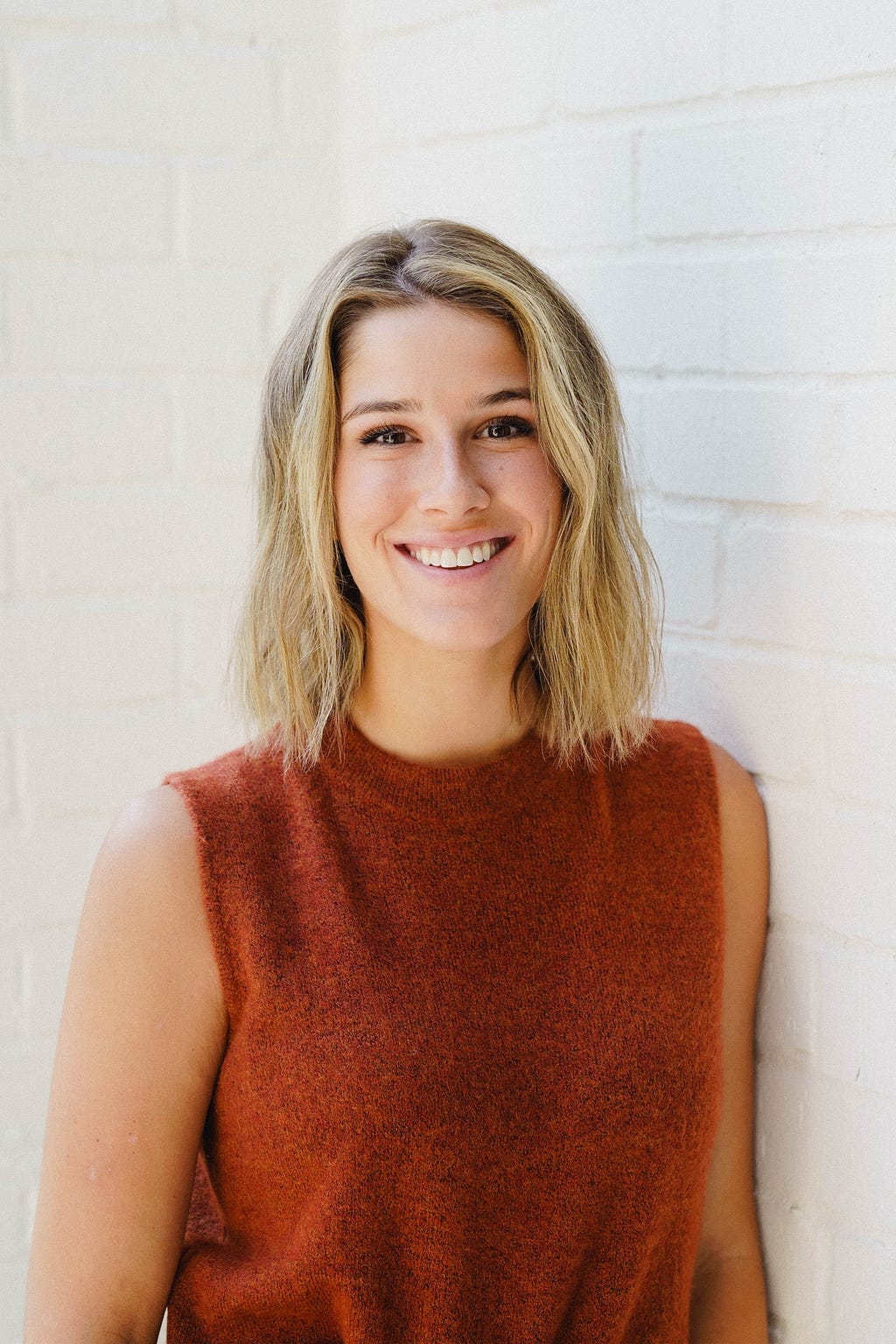
Female Founders: Maya Shaposhnik Cadena of Vetted Pet Health On The Five Things You Need To Thrive…

Female Founders: Maya Shaposhnik Cadena of Vetted Pet Health On The Five Things You Need To Thrive and Succeed as a Woman Founder

An Interview With Candice Georgiadis

Don’t hire too early. I really thought that hiring early on would help me accelerate the business but at the earliest stages you still don’t know which direction you are going to grow in so it’s best to wait until you “desperately” need someone in a certain area. Then you can bring someone in because there is already direction.

As a part of our series about “Why We Need More Women Founders”, I had the pleasure of interviewing Maya Shaposhnik Cadena, the CEO of Vetted Pet Health. Maya is a three-time entrepreneur and fundraising executive. Born in LA, she has lived and founded companies in Tel Aviv, New York, and now Chicago. Her background is in operations, sales, and management but her true passion lies in empowering people around her.

Thank you so much for doing this with us! Before we dig in, our readers would like to get to know you a bit more. Can you tell us a bit about your “backstory”? What led you to this particular career path?

I have always loved empowering people. I personally felt empowered when I did the military. I felt that the military trusted me enough to lead teams and complete missions that were critically important. Wherever I go, I strive to empower those around me and give them the support they need to reach their maximum potential. My love for pets runs deep. I grew up with dogs my entire life. At one point, two of our Pugs accidentally mated and instead of having 2 dogs, we have 7! My sister, who is a true role model for me, even served in the K-9 unit in the military. At one point, I was even privileged having a working-dog relationship, which I so loved and respected. When my husband and I got our first dog, a little French Bull-dog named Shor. I became exposed first-hand to the struggles of pet parenting. I kept going to my vet clinic asking for help, advice, and support. I found out quickly that they are totally under water and that the clinic is not your go-to for all things pet-related. I started to resort to Facebook groups, google searches, and Reddit channels where I learned so much about pet parenthood. But it was also very overwhelming and the advice always contradicted itself. Through this process I understood that there is so much we don’t know as pet parents and when I ran it by Veterinarians they also felt frustrated that no one is teaching us about this but did not have the bandwidth to explain to people what they could do for their pets in between annual vet visits to keep them happy and healthy for many more years. That’s when we decided to found Vetted Pet Health, a preventative health membership for pet parents that empowers them to give the highest standard of at-home care.

Can you share the most interesting story that happened to you since you began leading your company?

I met one of my best advisors because I “opened up” to someone on my flight from Chicago to Tel Aviv about some of the challenges of my company. I started speaking with the person sitting next to me on the long 11 hour flight. At first it was just small talk, but then we quickly started speaking about business. Little did I know that he was also an entrepreneur and was a few years ahead of us in the start-up curve. I opened up to him about the challenges and what I need to do to overcome them. I knew I needed help, specifically in digital user acquisition, but this was such a different world and I was learning about it, but not fast enough. He suggested I reach out to his friend, Doron Dvir, who used to be the head of user acquisition at Lemonade insurance. He connected us via email on the flight. I met Doron in person a few days later. He fell in love with Vetted and loved the problems we are facing. We quickly made him an offer to be on our advisory board and have been working with him ever since.

Can you share a story about the funniest mistake you made when you were first starting? Can you tell us what lesson you learned from that?

Not telling people that we only serve cat and dog parents. This has led to some interesting chats on our 24/7 chat feature in the app. Think R SQUARED: Rabbits and reptiles!

None of us are able to achieve success without some help along the way. Is there a particular person who you are grateful towards who helped get you to where you are? Can you share a story about that?

I would like to thank my co-founder, Ashley Brooks. She has been the best co-founder I could ever ask for. There have been so many times that she could see how much weight I was carrying on my shoulders and what it was doing to my ability to lead. She really empathizes with me and has “come down into the hole with me”. She has pushed me to achieve greater heights and has not let me quit on myself. She has also been such a great match for me in this crazy roller coaster of a ride. No matter what the obstacles are we have full faith in each other and trust each other to push through them all, one step and a time, and together.

Ok, thank you for that. Let’s now jump to the primary focus of our interview. According to this EY report, only about 20 percent of funded companies have women founders. This reflects great historical progress, but it also shows that more work still has to be done to empower women to create companies. In your opinion and experience what is currently holding back women from founding companies?

I would say the greatest thing holding women back is support. Even though you hear of all these VC firms that are focused on women founders I have found that many of these women-focused investors will not lead rounds. This shocked me because what is the point of leaning on an investor to help you push through the most difficult stages if in your earliest stages if they are not leading. It makes finding that partner who can support you get through all the hurdles difficult. There are so many difficulties in being an entrepreneur that adding the fact that you are usually the only women in the room when it comes to pitching to any investor partners you add another level of complexity and you need to find a way to not let it affect you, or in the best case be a motivator to make you want to change the landscape.

Can you help articulate a few things that can be done as individuals, as a society, or by the government, to help overcome those obstacles?

At the very least, I think VC’s should do everything in their power to recruit women partners so that there could be more women pitching to women. Out of 30+ VC’s I pitched there were only 3 that had women in the meeting, which made it a very interesting dynamic. I also think VC’s that focus on investing in women should lead the rounds. This to me is a level of leadership that we need in the space if we want to have the support we need to get through the challenging initial stages of a start-up. As a society, I believe that parents should tell their children that they can really succeed in anything they want, if they don’t give up and keep pushing forward with a growth mindset. I feel like I had this support from both of my parents and they always told me that I could do anything I set my mind to. That voice continues to accompany me through everything that I do today.

This might be intuitive to you as a woman founder but I think it will be helpful to spell this out. Can you share a few reasons why more women should become founders?

In my time working with men and women I have seen that many women have a crazy ability to multitask naturally. This is a gift that can be invested in because as an early-stage entrepreneur one of the most important skill sets is the ability to multi-task and do many things at the same time. This is our added value and an advantage that most women possess (maybe because of the societal expectations we have on us). Other than that, women make up a huge amount of the population and can definitely create products and services that they were longing for. To me there is no doubt that if you are in desperate need of something then there must be many people out there that need the same thing. You can be that leader and serve that market.

What are the “myths” that you would like to dispel about being a founder? Can you explain what you mean?

Raising enough money will solve all your problems. This is not true. You can raise as much money as possible but if you don’t have a good strategy and many contingency strategies and a strong team then this will not lead you to success.

You need a plan for everything. No, this is not true. You need a direction and you need a goal but you do not need a plan for everything. I have seen too many people have analysis paralysis and this is debilitating. You need to jump into the water, take a risk, measure the results and constantly tweak until you find the right path. But honestly… just do it. Don’t overthink it.

Is everyone cut out to be a founder? In your opinion, which specific traits increase the likelihood that a person will be a successful founder and what type of person should perhaps seek a “regular job” as an employee? Can you explain what you mean?

I think that everyone can be a founder. If they love what they do and want to change and have impact in a certain space then everyone can be a founder. However, not everyone can be a CEO and not everyone can be a solo founder. I knew early on that I wanted to be a founder and a CEO, because of the skill set I possess. But I knew very clearly that I did not want to be a solo founder. I know I work best when I have a co-founder. So I decided to go out there and look for my “work” soulmate. That is when I met my co-founder, Ashley Brooks, at the Chicago Booth school of business. We clicked immediately and within a few weeks we decided to become co-founders. She is the CTO and possesses a whole other slew of skills that I do not. We lean on each other and help each other overcome the many hurdles of starting a business.

Ok super. Here is the main question of our interview. What are your “5 Things I Wish Someone Told Me Before I Started” and why? (Please share a story or example for each.)

  1. Don’t hire too early. I really thought that hiring early on would help me accelerate the business but at the earliest stages you still don’t know which direction you are going to grow in so it’s best to wait until you “desperately” need someone in a certain area. Then you can bring someone in because there is already direction.
  2. Fire as fast as possible. I thought that firing in the 3–6 month range was good. I quickly realized that it is not true for early stage companies. When you don’t fire quickly you are burning capital, which is equivalent to oxygen in a start-up. You also burn time, the most important resource for an early-stage company, because you try to invest more time to prevent firing that individual. But the reality is that if you get to a place of firing someone it would be best for them and also for the company to do it sooner rather than later because the chances that you could invest enough time to help them grow is very low. I would say you should fire in the 2–3 month range if the metrics are not met.
  3. If you are looking for a co-founder, Don’t settle on one. Look for someone you feel safe with. Someone you feel like you could lean on and could be there through the difficult times. Someone who shares the same values as you. I think the best co-founder is one that has a totally different skill set than you and is willing to debate things out with you, rather than just “accept” everything you say.
  4. Don’t over think. Just do it. My co-founder recently told me that one of the best pieces of advice she ever got was to say: 1.2.3. And then jump. Now she says it outloud and just does it, without overthinking it. This allows us to move quickly and test so many assumptions so we make better decisions everyday.
  5. Take care of your mental health. This cannot be stated enough. I now truly believe that burnout is the number one reason why start-ups fail. So make sure you make space for whatever you need to be headstrong. Without that strength, your start-up will not be able to be steered to success.

How have you used your success to make the world a better place?

I hope so. But what I hope for more is to continue to make the world a better place while I am here. I don’t want to stop or ever think “I did enough” — to me you can always improve and do more.

You are a person of great influence. If you could inspire a movement that would bring the most amount of good for the greatest number of people, what would that be? You never know what your idea can trigger.

I would empower young girls to understand just how much power they really have. I would work with them to really engrain a level of self confidence that they need to maximize their potential in this world. I see so many women that have so much power and are oblivious or downplay just how much they can change. I want to look those little girls in the eye and let them know that I believe in them and am always here to support them.

We are very blessed that some very prominent names in Business, VC funding, Sports, and Entertainment read this column. Is there a person in the world, or in the US with whom you would love to have a private breakfast or lunch with, and why? He or she might just see this if we tag them.

Sheryl Sandberg. I look up to her because to me she is a true definition of power. She has not excelled in one area in her life, but in multiple areas. I truly believe that successful people find a way to succeed in many different avenues, not just one. Through all of her trials and tribulations she found a way to success in business, having a family, overcoming some of the worst tragedies and still inspiring a whole group of women. Thank you for being you.

Thank you for these fantastic insights. We greatly appreciate the time you spent on this.


Female Founders: Maya Shaposhnik Cadena of Vetted Pet Health On The Five Things You Need To Thrive… was originally published in Authority Magazine on Medium, where people are continuing the conversation by highlighting and responding to this story.