Female Founders: Lauren Imparato of The Association On The Five Things You Need To Thrive and…

Female Founders: Lauren Imparato of The Association On The Five Things You Need To Thrive and Succeed as a Woman Founder

An Interview With Candice Georgiadis
Entrepreneurship will be one of the biggest emotional rollercoasters of your life — get ready for the ride! There are countless highs and lows and you need to be prepared to roll with all of them and learn along the way.

As a part of our series about “Why We Need More Women Founders”, I had the pleasure of interviewing Lauren Imparato

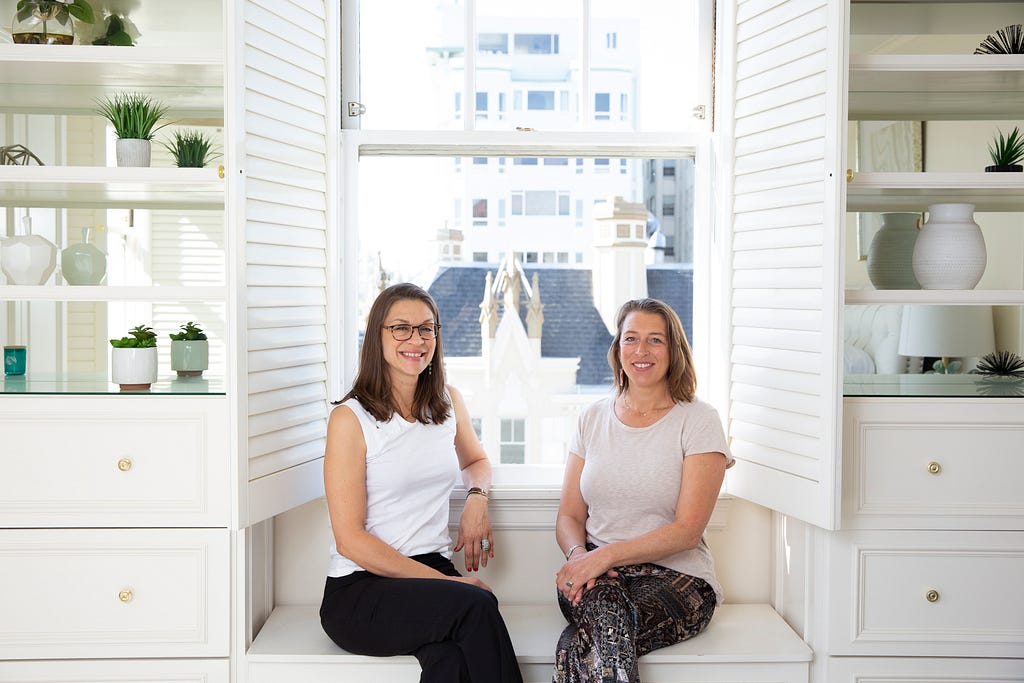
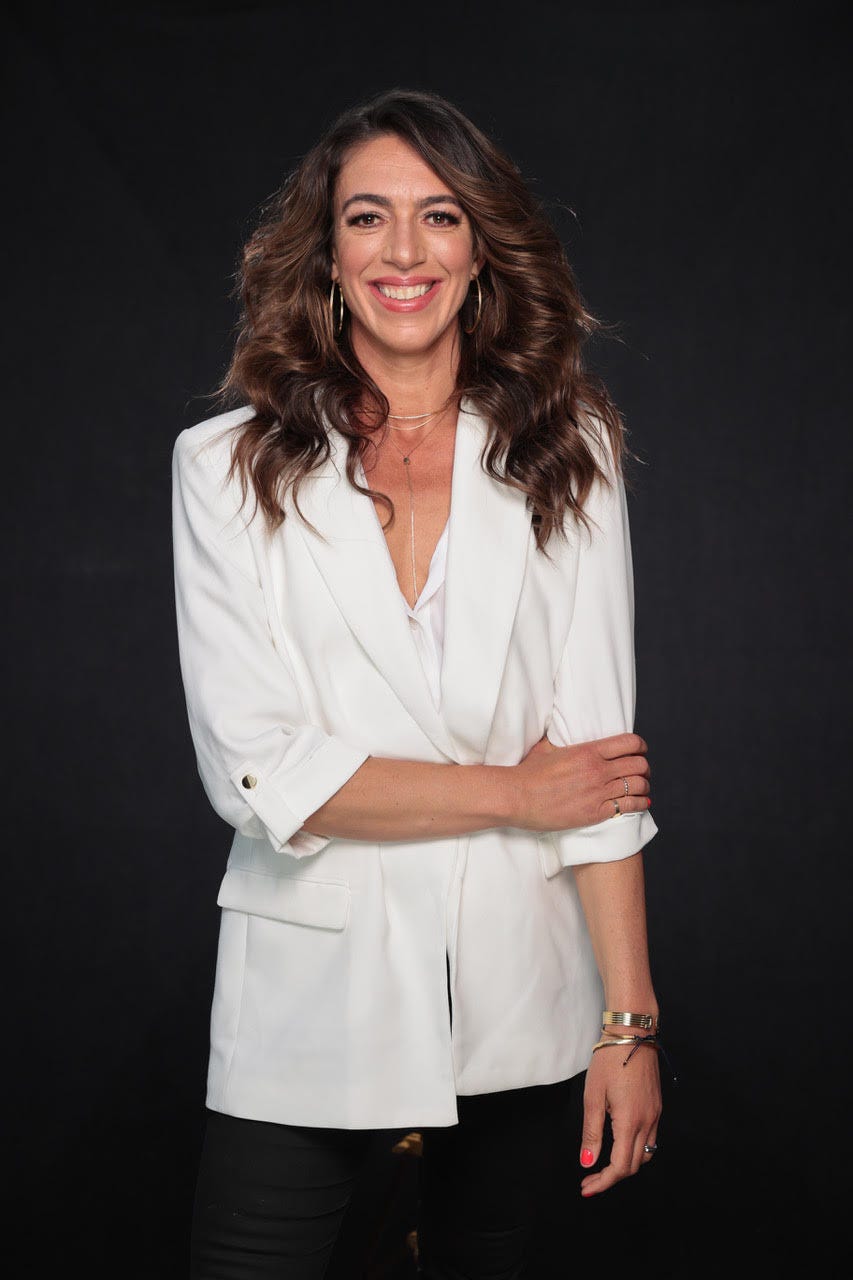
Lauren Imparato is an innovator, entrepreneur, author, world-renowned speaker, and Co-Founder + CEO of The Association — a global organization of ambitious, extraordinary, go-getting women. Lauren has become revered as one of the globe’s top entrepreneurship experts and keynote speakers after having left her corporate job on Wall Street to self-start one of the first boutique fitness and wellness companies in 2009. She thrives on creating something out of nothing and turning back of the napkin ideas into reality.

Thank you so much for doing this with us! Before we dig in, our readers would like to get to know you a bit more. Can you tell us a bit about your “backstory”? What led you to this particular career path?

Absolutely. I have had a non-linear career path with lots of turns and transitions. Upon graduating from Princeton University, I began my career on the trading floor of Wall Street. After stints starting businesses for the firm in New York, London, Istanbul and Latin America, I quit my job as VP of Morgan Stanley Fixed Income in 2009 to self-start I.AM.YOU., which was a first of its kind health, wellness & fitness company. I operated and scaled profitable digital, brick & mortar, and cpg verticals, and wrote a multi-country Best Selling book, RETOX (Penguin Random House, 2016), which led me to ample speaking opportunities for audiences of ten thousand on the Great Lawn of Central Park and two to three thousand each in Times Square, Madrid, Barcelona, Panama, opening weekend in Ibiza, the Cannes Film Festival, and more.

After a decade, I exited I.AM.YOU. and have since advised a portfolio of companies on the nexus of business and brand strategies. I additionally write on Between the Waves, am a lecturer at Princeton University, a Member of the Board of HearMe and Delphos Holdings, a Board Advisor for LYNK, Lada, Aphrodite Health, Women in Innovation, and The Sunny Center Foundation, as well as the Chief of Staff and Chief Branding Officer of Delphos Capital, a women-run Impact Investment Group. Most recently, I co-founded The Association, a first of its kind global leadership community of ambitious, extraordinary career women.

Can you share the most interesting story that happened to you since you began leading your company?

As a non-feminist feminist, it has been interesting to see and experience the many nuances that are involved when working with women. Women operate so differently than men do — from scheduling and styles of communication to sensitivity points, response times, and directness. All of this has really come to light since launching The Association. When my business partner, Janelle Hallier, and I first started interviewing prospective members, I don’t think we realized the degree of these nuances and how important they are to recognize in order to help women succeed. It took us time to figure out how best to deal with this reality, and as a result, we had to tweak our method to ensure it caters to women and all of our varying complexities. Now, after having interviewed thousands of women and counting, we know what to expect when working exclusively with women — even seemingly small things like our members having multiple names and figuring out which is the right one! Women have married names, maiden names, professional names, etc., and this is all part of the process.

Can you share a story about the funniest mistake you made when you were first starting? Can you tell us what lesson you learned from that?

There have been so many mistakes and blunders along the way and I truly feel like most of them are funny in retrospect. When I first began my career, I was working as an analyst on the trading floor at Morgan Stanley, and this was before there was any kind of instant messaging technology we have now. There was a situation where I needed to ensure a colleague got an important message so I took off running down the staircase to the floor below to deliver the message and in my haste, the tip of my boot got caught on the bottom of my pants, and I went flying down the very public staircase as a young, frazzled first-year analyst for everyone to see. From that very embarrassing mistake, I learned that taking just two seconds longer is the right move, even when something feels urgent. Allowing yourself to take an extra moment can often prevent you from making embarrassing (or dangerous!) mistakes and I’ve taken that lesson into every step of my entrepreneurship journey.

None of us are able to achieve success without some help along the way. Is there a particular person who you are grateful towards who helped get you to where you are? Can you share a story about that?

My husband is the reason I am where I am today. He is my best friend, biggest supporter, and an unwavering partner. With his support, I worked up the courage to leave my job at Morgan Stanley to start my first business, I.AM.YOU, a first-of-its-kind fitness and wellness brand. He was even the one who helped me realize I was ready for another new chapter and exit I.AM.YOU. a decade later. We weren’t yet married but we were living together and he took on a lot of responsibility at home which gave me the space to turn my dreams into a reality. He has been there with me every step of the way through all my transitions, including post the I.AM.YOU. exit, figuring out what I wanted t o do next, and founding The Association.

Ok, thank you for that. Let’s now jump to the primary focus of our interview. According to this EY report, only about 20 percent of funded companies have women founders. This reflects great historical progress, but it also shows that more work still has to be done to empower women to create companies. In your opinion and experience what is currently holding back women from founding companies?

I think the lack of a supportive partner or partners is a huge obstacle for many women who have dreams of being a founder. In my experience, it is impossible to be successful without a supportive partner. Entrepreneurship is a game of highs and lows and growing a business is like raising a child in many ways — it requires a lot of love and attention, and having a partner who understands that is key to your success. It’s not the same as going into a corporate job where you’re receiving a steady paycheck — you have to work on weekends and holidays and you are always running the show. I think motherhood is another big challenge that holds many women back from entrepreneurship. I.AM.YOU was my first child and once I left that business, I felt a kind of empty nest syndrome. Having to go through an experience like that while having an actual child would be extremely difficult.

Can you help articulate a few things that can be done as individuals, as a society, or by the government, to help overcome those obstacles?

Recognizing if you are struggling in an unsupportive partnership is one hard reality many women have to face and address in order to succeed in entrepreneurship. Additionally, having a group of trusted peers and unbiased voices of reason to bounce ideas off of and troubleshoot with is a great solution to overcoming obstacles. This is the whole purpose behind The Association. We curate each member’s Personal Board of Directors to help each woman assess and achieve their greatest goals, challenges and opportunities in their careers and lives. And while there are countless women’s groups out there, there are very few that cut through the noise of negativity and competition to actually empower and energize each woman to be the best versions of themselves — especially in an un-biased way. At The Association, we’re hyper-focused on uplifting the individual and the collective. Lastly, I think that setting clear boundaries for yourself and your company is important to succeeding and overcoming the entrepreneurship hurdles. I had no boundaries with my first business, but I have learned to create them and now I carve out sacred time away from my business or else I will get burned out.

This might be intuitive to you as a woman founder but I think it will be helpful to spell this out. Can you share a few reasons why more women should become founders?

Women make such excellent founders because we are creative and often bring out-of-the-box ideas to the table. We also have the ability to multitask well. I know there is a lot out there that says multitasking isn’t actually a thing, but it is, and you have to be able to do it to a certain extent as an entrepreneur because there is so much to juggle. Women have been multitasking for generations, balancing work and home lives, and we tend to be better at it.

What are the “myths” that you would like to dispel about being a founder? Can you explain what you mean?

A lot of people perceive entrepreneurship through rose-colored glasses and think it’s incredibly glamorous based on the way it is portrayed by the media and social media, but more often than not, it is really hard work! You have to wear many hats and constantly clean up problems, which is anything but sexy. You may be the CEO of your company but that doesn’t make you immune from having to get down in the trenches to do administrative tasks or deal with the harsh realities of not always having a steady paycheck or having to work when everyone else is sleeping. I have worked during every single holiday since I left my job at Morgan Stanley because they tend to be quieter times when I can really buckle down and get things done. These real stories matter and I think more founders need to be honest about them rather than contributing to this narrative about it all being so easy. Being a founder is incredibly rewarding but I would be lying if I didn’t say that it is hard and takes a lot of time and dedication.

Is everyone cut out to be a founder? In your opinion, which specific traits increase the likelihood that a person will be a successful founder and what type of person should perhaps seek a “regular job” as an employee? Can you explain what you mean?

No, not everyone is cut out for it at all. The ability to deal with rejection and take it well is absolutely critical as a founder, as you will likely be rejected more often than not. You have to be able to pick yourself up and keep taking shots, the way that athletes do, all while having the discipline to set your own deadlines and meet them. Having ideas is important, but being able to execute them in any way that is necessary to get the job done is vital to being a founder and that may require wearing lots of hats. Beyond having thick skin and being a self-starter, if you don’t do well without set structure, pursuing a “regular job” as an employee with more of that in place might be a better suited career path for you — and that is okay! We need great employees for our businesses to succeed!

Ok super. Here is the main question of our interview. What are your “5 Things I Wish Someone Told Me Before I Started” and why? (Please share a story or example for each.)

  1. Entrepreneurship will be one of the biggest emotional rollercoasters of your life — get ready for the ride! There are countless highs and lows and you need to be prepared to roll with all of them and learn along the way.
  2. Entrepreneurship is more tiring than a corporate job. This differs from draining because you’re fueled by your business but it can be all-consuming and oftentimes we don’t take breaks like we do as an employee.
  3. You have to wear many different hats and assume lots of responsibilities. This came naturally to me but it is something I have had to tell a lot of other aspiring entrepreneurs. You have to spend time in the trenches doing the things you may not necessarily want to do, but that’s all part of the journey.
  4. Asking for help is not a bad thing! Men are always asking for help in business while women are less likely to lean on others. I think a lot of women perceive it as a sign of weakness when in reality, it doesn’t make you weaker, but stronger.
  5. Be prepared to face rejection. You will be rejected often so learning how to deal with that and handling it gracefully is a skill you need to hone.

How have you used your success to make the world a better place?

I honestly have not set out to make the world a better place as a whole, but I think that helping people through my businesses over the years has had a collective impact. When I created I.AM.YOU in 2009, I wanted to make fitness accessible during a time when it was not at all readily available to people. I.AM.YOU was a pioneer in boutique fitness, which was not even a fully formed industry yet and I’m proud to have been a leader in bringing that to more people and helping to standardize that space which is still booming today. With The Association, Janelle and I have used what we’ve learned as entrepreneurs over the years to perfect our leadership organization’s method that helps our members succeed in their own careers and lives. Playing a role in helping women thrive is very important to me.

You are a person of great influence. If you could inspire a movement that would bring the most amount of good for the greatest number of people, what would that be? You never know what your idea can trigger.

It sounds simple, but the movement I would want to inspire is the mere act of responding to each other. When we acknowledge and respond to others, we feel more connected and I think if we all took the opportunity to further connect with people outside of our immediate circles, we would find ourselves in a better place.

We are very blessed that some very prominent names in Business, VC funding, Sports, and Entertainment read this column. Is there a person in the world, or in the US with whom you would love to have a private breakfast or lunch with, and why? He or she might just see this if we tag them.

It would be an honor to break bread with Michael Jordan (living) and/or Tom Petty (dead). Both of them have been my idols since I was a child because while they are in completely separate industries, they both became the best of all time in their respective fields through the same tactics — dedication and never-ending practice. They spent countless hours perfecting their crafts which gave them staying power. They embody the spirit of how hard work breeds success and continue to inspire me as a leader.

Thank you for these fantastic insights. We greatly appreciate the time you spent on this.


Female Founders: Lauren Imparato of The Association On The Five Things You Need To Thrive and… was originally published in Authority Magazine on Medium, where people are continuing the conversation by highlighting and responding to this story.

Female Founders: Lexi Miles Corrin of WAXON Laser + Waxbar On The Five Things You Need To Thrive…

Female Founders: Lexi Miles Corrin of WAXON Laser + Waxbar On The Five Things You Need To Thrive and Succeed as a Woman Founder

An Interview With Candice Georgiadis

Team: build a team that will challenge you. Build a team that are not ‘YES’ people. They will tell you what they think and challenge you to do and be better as a leader. The first and second people you hire as leaders in your business will set and carry forward the culture you have built, it’s important to make sure these people are aligned with your vision for the company.

As a part of our series about “Why We Need More Women Founders”, I had the pleasure of interviewing Lexi Miles Corrin.

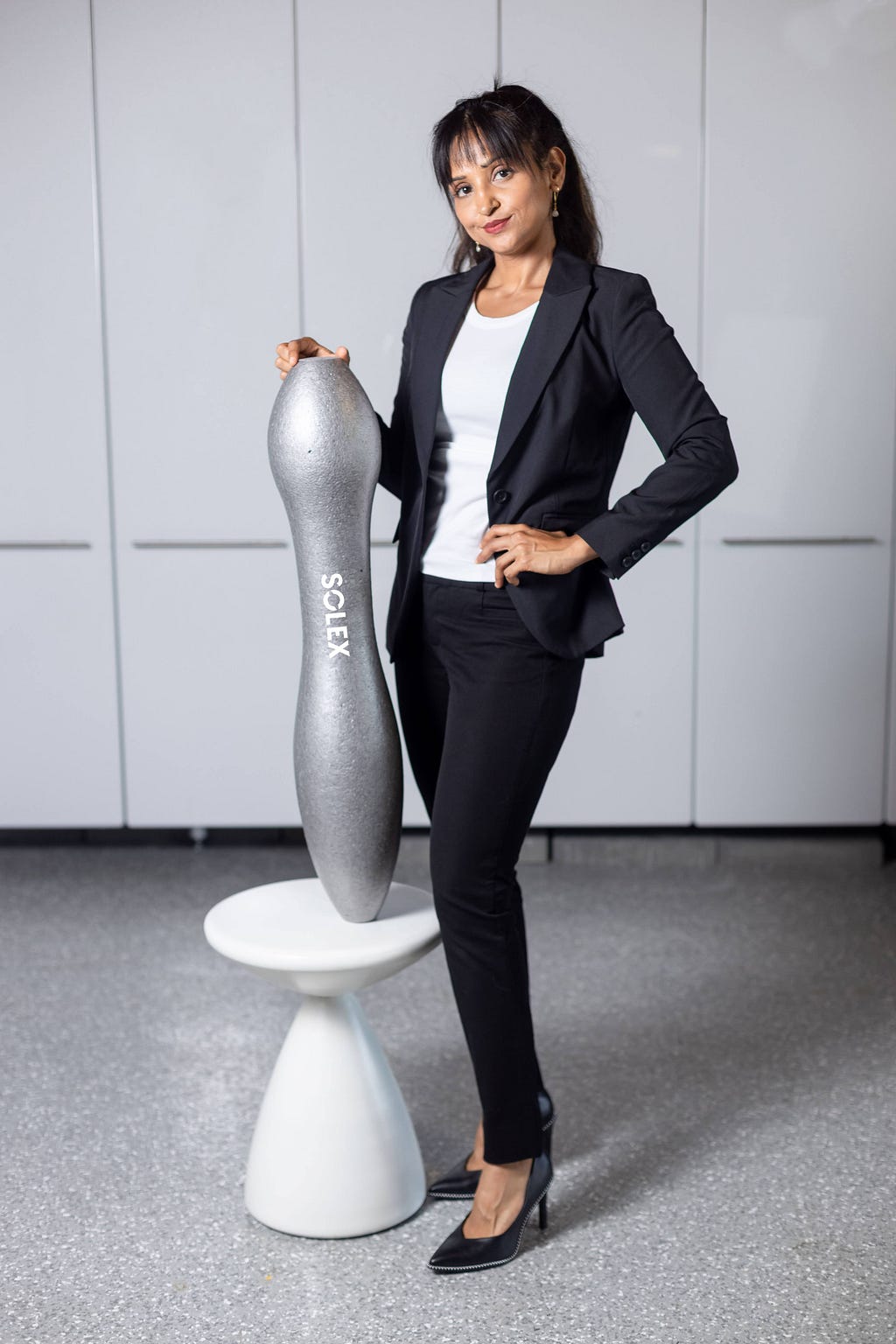
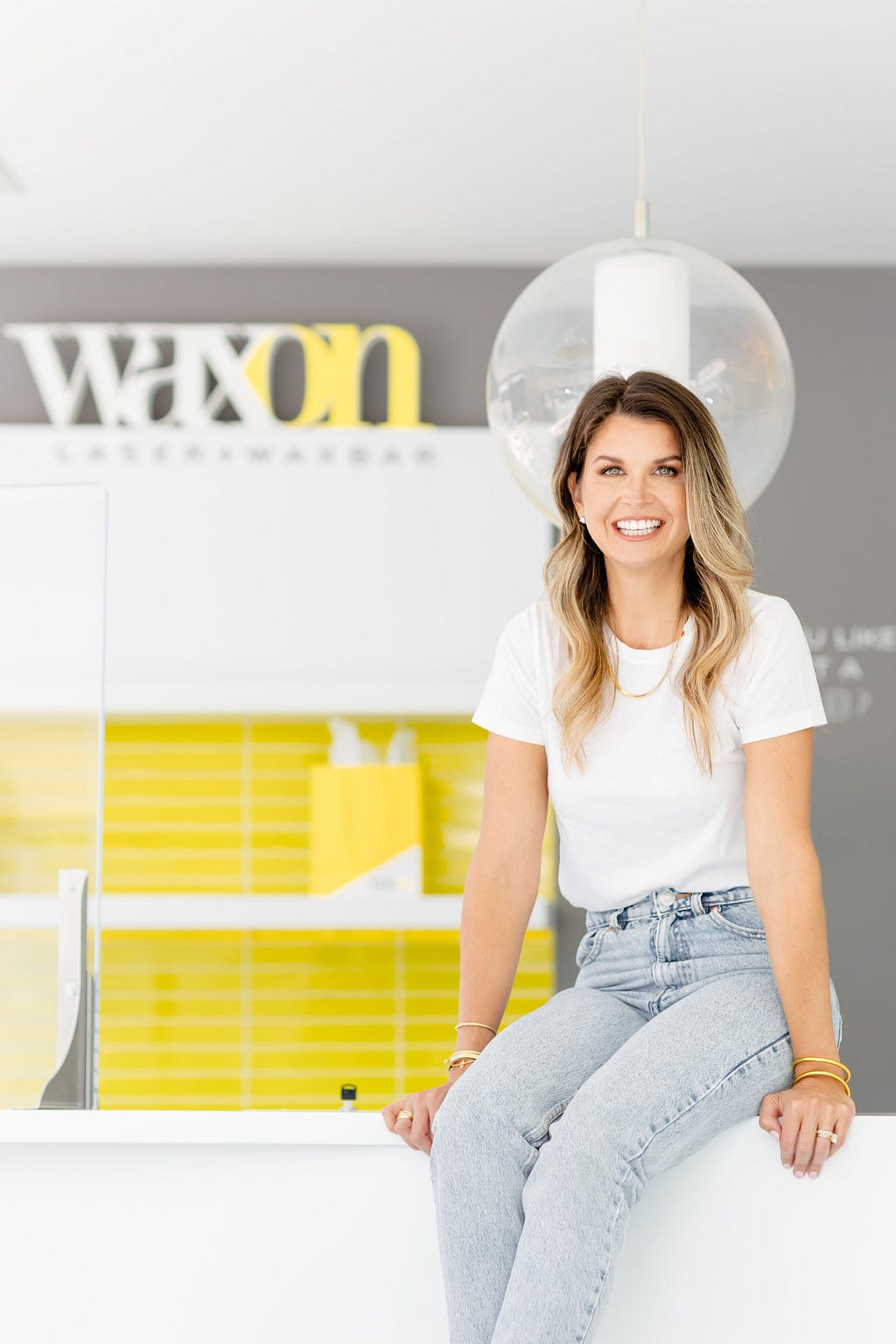
Lexi is the Founder and CEO of WAXON Laser + Waxbar, an innovative beauty concept specializing in hair removal for men and women on-the-go looking for convenient and high-quality services without the steep price tag. Launched in 2012, WAXON Laser + Waxbar now includes 14 locations across the country, with plans for further expansion in 2022.

A champion for empowering women in business, Lexi has been a keynote speaker and panelist for various organizations and preeminent universities including the Rotman School of Management and Queen’s University, providing entrepreneurial advice and inspiration to aspiring female leaders. She is passionate about giving back to her community, supporting several non-profits including One Girl Can. Lexi is also featured regularly in the media speaking to beauty trends, how to run a successful business and life as a female entrepreneur. Lexi resides in Toronto with her husband, daughter, Piper, son, Clark and newborn twins Nash & Violet.

Thank you so much for doing this with us! Before we dig in, our readers would like to get to know you a bit more. Can you tell us a bit about your “backstory”? What led you to this particular career path?

While working as a consultant primarily in the U.S., I was exposed to the wax bar business concept. I found it such a fascinating niche to have a company that was more than the local dive shop that did your nails and had a questionable wax bed in the back room, and yet was also more affordable than a high end spa. I loved that the concept was simple and to the point — hair removal. Upon returning to Canada, I searched for something similar and found there really was nothing available. So logically, I abandoned my promising career with absolutely no esthetic experience to start my own. Ten years later, here we are.

Can you share the most interesting story that happened to you since you began leading your company?

I would say it was my decision to launch laser hair removal. I always thought we would just be wax bars. I had never considered any other form of body hair removal, which in hindsight was fairly short sighted. Sometimes as leaders we can get so ingrained in the day to day that we can’t see the forest for the trees. We all need to take a step back and have the ability to think big. Now it’s such a major part of our business and our brand.

Can you share a story about the funniest mistake you made when you were first starting? Can you tell us what lesson you learned from that?

Well there was that time when I thought I had been through enough WAXON training to declare myself a waxologist and I attempted to wax our head of operation’s underarms. That did NOT work out well. And to make matters worse, I made a second attempt during our COVID closure by waxing (or at least trying to) my bikini area. Safe to say I will definitely be leaving this up to the experts in future. We have stringent training and processes in place for a reason and I am so grateful that we have an amazing team of waxologists with expertise and experience.

None of us are able to achieve success without some help along the way. Is there a particular person who you are grateful towards who helped get you to where you are? Can you share a story about that?

Although possibly cliche I would have to say Adam, my husband. We actually met when I was exploring the idea of franchising WAXON. He and his brother agreed to meet with me to provide some coaching and guidance, being experts in their own right through their franchise company, Freshii. And all these years later, he is still very much a sounding board, a support both in business and in life and a big thinker, just like me.

Ok, thank you for that. Let’s now jump to the primary focus of our interview. According to this EY report, only about 20 percent of funded companies have women founders. This reflects great historical progress, but it also shows that more work still has to be done to empower women to create companies. In your opinion and experience what is currently holding back women from founding companies?

I think it’s a combination of things. First, and most important, that even in today’s times, women simply do not feel empowered enough to take the leap. The risk is still too high. Getting loans, investors, business partners and being taken seriously as a woman with a real business idea is a challenge. And just like we need those before us to set the path, I believe the more of us that challenge the norm, the more will follow.

That is why I am so closely connected to an amazing charity called One Girl Can that we support heavily at WAXON. It is an organization empowering women in Africa through education — in school and trades — but also the knowledge that equality is a right that they deserve. We have to do the work here in North America, but we also have to help our fellow women in parts of the world that are further behind so that we can see change globally.

Can you help articulate a few things that can be done as individuals, as a society, or by the government, to help overcome those obstacles?

Education is key. Teaching equality from a young age, showcasing powerful women in schools. Talking to our young girls, but also to our young boys about equality. In my own company, I am hyper focused on creating a real path for everyone that works with us. For creating a safe space for them to explore and grow. We employ predominantly women and I get jazzed every time someone moves up in our company. We celebrate each other and all our milestones.

This might be intuitive to you as a woman founder but I think it will be helpful to spell this out. Can you share a few reasons why more women should become founders?

Well first of all, as a founder and also a mom, I just have to say that women have so many superpowers — like the ability to multitask.

I believe in leading by example. If my hardships, and my success can influence another to follow the path to entrepreneurship, I have won.

There is a saying that goes something like — teach a man and he will teach one other, teach a woman and she will teach the world. Women are inherently a community. We exist to lift each other up.

What are the “myths” that you would like to dispel about being a founder? Can you explain what you mean?

Myth: Failure is bad.

Failure is great. It means you are a step closer to success. Even if you risk it all and fail, you can rebuild again and you will be stronger for it. As entrepreneurs, we need a thick skin and a strong ability to see failure as an opportunity to grow. I encourage our team to embrace their failures all the time. I think vulnerability is crucial in leadership.

Is everyone cut out to be a founder? In your opinion, which specific traits increase the likelihood that a person will be a successful founder and what type of person should perhaps seek a “regular job” as an employee? Can you explain what you mean?

I believe there are founders and there are followers. And both are great and necessary. But I also believe anyone can be a founder if they want it enough. Passion is an absolute prerequisite in being able to handle the commitment and ownership it takes to make an idea a reality. Now with the pandemic, we are seeing that more and more.

Channel your inner risk taker, your vision and imagination, your big picture “what if” thinking. And of course, once you become a leader, a founder is humble, leads by example, and is vulnerable and strong at the same time.

Ok super. Here is the main question of our interview. What are your “5 Things I Wish Someone Told Me Before I Started” and why? (Please share a story or example for each.)

I am a big believer in leading a business through a solid foundation of core values and I often think how beneficial it would have been to know these core values going into building the WAXON business. So here is what guides me and my team:

  • Adapt: there are SO many roadblocks that entrepreneurs face along the way that make you feel like you should just throw in the towel. What the operations of WAXON looked like when I first opened versus what it looks like today is very different.
  • Be Humble: know your weaknesses even more intimately than you know your strengths. Be willing to admit what you aren’t as good at and surround yourself with a team that makes up for those weaknesses.
  • Team: build a team that will challenge you. Build a team that are not ‘YES’ people. They will tell you what they think and challenge you to do and be better as a leader. The first and second people you hire as leaders in your business will set and carry forward the culture you have built, it’s important to make sure these people are aligned with your vision for the company.
  • Ownership: As the founder you get to take ownership of the wins but you also need to take ownership of all the failures and there will be a lot of them. But by taking ownership, learning and growing, very soon your gains will start to outweigh your misses and then you start to really soar.
  • Be Real: transparency, honesty and radical candor. Having battled people pleasing tendencies myself, I’ve learned time and time again that ‘being clear is kind’. There is a difference between optimistic but realistic vs. wearing rose coloured glasses and hoping for the best. Plan to be the best and when things aren’t going in that direction, be real about it and how you can redirect the ship to achieve your goals.

How have you used your success to make the world a better place?

As mentioned earlier, I have always ensured a charitable alignment with WAXON. We have, over the years, contributed to many organizations that hold meaning with us and with our guests. But we also use those opportunities to raise awareness. So we can use our platform to share about important issues in the world, to educate and to contribute. We are more than a wax bar — we are an organization that is creating a safe space for our team and our guests, we are all equal, we strive to always educate ourselves, we support our community and we always grow because of that.

You are a person of great influence. If you could inspire a movement that would bring the most amount of good for the greatest number of people, what would that be? You never know what your idea can trigger.

Personally, I’m going through a big phase of growth, having just expanded my family from 4 to 6, welcoming twins into our lives. It really has put a lot of perspective on how truly lucky I am to have the ability and flexibility to do it all. It really motivates me more to want to give this to more people. To empower more women to own their own business, whether that’s through a WAXON franchise, or through my ability to support and mentor someone in a completely different field. I have always dreamed about building a fund to support women entrepreneurs. I hope to be able to do that in the coming years.

We are very blessed that some very prominent names in Business, VC funding, Sports, and Entertainment read this column. Is there a person in the world, or in the US with whom you would love to have a private breakfast or lunch with, and why? He or she might just see this if we tag them.

Just one?! There are so many women who are challenging the norms and smashing glass ceilings that I would love to learn from. Top of my list would be Sarah Blakely, CEO of Spanx. I mean what a story. I have followed her for years and I am so impressed with her persistence, her ability to find another door when the one in front of her closed, her consistency and ultimately her massive success. As an entrepreneur I would just kill to pick her brain.

Thank you for these fantastic insights. We greatly appreciate the time you spent on this.


Female Founders: Lexi Miles Corrin of WAXON Laser + Waxbar On The Five Things You Need To Thrive… was originally published in Authority Magazine on Medium, where people are continuing the conversation by highlighting and responding to this story.

Female Founders: Leslie Marmol of Virago Swim On The Five Things You Need To Thrive and Succeed as…

Female Founders: Leslie Marmol of Virago Swim On The Five Things You Need To Thrive and Succeed as a Woman Founder

An Interview With Candice Georgiadis

Stop waiting for the perfect time to magically appear. Whether in your professional or personal life it will never be the perfect time. Just begin and figure it out as you go. I felt my responsibilities for my children and my household would not allow me the freedom to create something on the side. I held myself back for many years until I realized that the only person holding myself back was myself.

As a part of our series about “Why We Need More Women Founders”, I had the pleasure of interviewing Leslie Marmol.

Founded by Leslie Marmol, Virago Swim is a luxury swimwear label inspired by women. The term Virago defines a strong, resilient, heroic female warrior. Her vision with every collection is to create designs that will make every woman feel empowered, elegant, and sexy.

Thank you so much for doing this with us! Before we dig in, our readers would like to get to know you a bit more. Can you tell us a bit about your “backstory”? What led you to this particular career path?

I knew I wanted to pursue a career in fashion since I was a child. I always loved being able to express my creative side, particularly when it comes to designing. It’s something I’ve wanted for many years. No matter what stage in life I was in, the desire never quelled. I felt I had to give this dream a chance and see where this would take me. It is a powerful outlet for me. It completes me.

Can you share the most interesting story that happened to you since you began leading your company?

An interesting time was the creation of Virago Swim’s very first campaign. Historically campaigns are something that are done locally and in house. A campaign allows you to showcase your items in photos by storytelling. Due to the pandemic I had to put my trust into complete strangers in executing this for me. I created visuals for them that including the suits, styling, makeup, hair, and my vision of ambience. I am always hands on when it comes to anything I work on. As you can imagine this was a bit unnerving allowing someone else to put together a vision that I created. It taught me so much about taking risks, delegating tasks, and trusting others. I am very grateful for this experience and my team.

Can you share a story about the funniest mistake you made when you were first starting? Can you tell us what lesson you learned from that?

A funny mistake was not being familiar with spray tans. We were in the middle of doing a fitting for a fashion show and one of the swimsuits had a bronze smear on it. I learned very quickly that I needed to make sure I always carry a tide pen with me! Luckily for me my sister, whose purse would resemble a convenience store, was nearby and came to save the day just before show time.

None of us are able to achieve success without some help along the way. Is there a particular person who you are grateful towards who helped get you to where you are? Can you share a story about that?

As they say it takes an army. My family and friends are such an amazing support system in my life. My husband Adalberto, who has always believed in me and has always reminded me of what I can achieve. I would also like to mention my aunt Mary Mena who took it upon herself to take me to the design district for the very first time after briefly mentioning my interest as a teenager. She introduced me to all it takes to create a piece, from deciding on different fabric types, sketching, creating patterns, and so much more.

Ok, thank you for that. Let’s now jump to the primary focus of our interview. According to this EY report, only about 20 percent of funded companies have women founders. This reflects great historical progress, but it also shows that more work still has to be done to empower women to create companies. In your opinion and experience what is currently holding back women from founding companies?

In a world dominated by males, women are seldom taken seriously. We unfortunately live in a world where the expectation for many years is that the woman’s only role is to be a caregiver. We have fought and continue fighting against this stigma. We live in a constant state of having to prove ourselves and time and time again have shown that we can do it all. These social expectations have tried to place us in a box and limit us. It is time for society to start believing and empowering others. Imagine all that we could accomplish if we supported one another in our journeys instead of trying to dictate how others should live their lives.

Can you help articulate a few things that can be done as individuals, as a society, or by the government, to help overcome those obstacles?

As individuals we must place focus on how we interact with each other as human beings. Are we being the best and most powerful version to ourselves and others? If we moved from a place of compassion, understanding and equality skies would be the limit. Something I strongly believe in is seeing yourself in others. We could grow as a society if we lived by this and thought this way. To achieve social integration and inclusion our voice and concerns must be heard. As a society we must recognize how our choices can make an impact towards a group of people. All the while working on solutions that will help empower said group. At a government level one way we can help overcome these kinds of obstacles is to get creative with our tax breaks for corporations. These tax breaks should also be used to incentivize corporations to build a workplace that is representative of societies’ demographics. Women make up half the population yet only 15% of CEOs are women. I think if a corporation can make the effort to have a workplace where half its employees are women, at all levels, the government can reward them accordingly.

This might be intuitive to you as a woman founder but I think it will be helpful to spell this out. Can you share a few reasons why more women should become founders?

Gender diversity creates diversity of thought. We should encourage social inclusion and try to ensure equal opportunities for all. There are so many benefits in having Women in positions of leadership. We offer a different perspective that can help contribute successful changes. Women are also capable of greatness. Society benefits from diversity.

What are the “myths” that you would like to dispel about being a founder? Can you explain what you mean?

A few myths that I would like to dispel about being a founder is that entrepreneurs can focus on what they love doing and will have so much free time. The reality is that you will be wearing many different hats and you will learn to do things you never imagined. Most startup businesses don’t have the capital to hire a team to handle these tasks for you. You are forced to learn everything from scratch as you go. When I began, I thought I could focus on what I love, which is creating. You soon find out that is not that case, and that you must learn your business inside out. I’ve become so knowledgeable in areas I never thought would be a part of this process.

Many believe that once you have your own business you will have free time. Being an entrepreneur takes commitment and nonstop work to keep it running. You are responsible for every detail that goes along with it and there is no one there to keep you on track or to guide you. Your business becomes your baby, and it needs all your attention. There is always something that you could be working on to make your business greater. Very soon after starting your business you realize that you must work harder to create a work life balance.

Is everyone cut out to be a founder? In your opinion, which specific traits increase the likelihood that a person will be a successful founder and what type of person should perhaps seek a “regular job” as an employee? Can you explain what you mean?

I believe both being a founder and an employee are equally important and require similar traits. You must be disciplined, determined, and willing to work with others. What gives you fulfillment will determine your journey. Being a founder is an incredibly difficult job and is not for everyone and that is okay. To be a successful founder you must willing to take risks and learn to be comfortable with uncertainty. While being a founder has its perks, it isn’t without a degree of fear, stress, and added responsibility.

Ok super. Here is the main question of our interview. What are your “5 Things I Wish Someone Told Me Before I Started” and why? (Please share a story or example for each.)

5 Things I wish someone told me before I started my business would be…

1. Stop waiting for the perfect time to magically appear. Whether in your professional or personal life it will never be the perfect time. Just begin and figure it out as you go. I felt my responsibilities for my children and my household would not allow me the freedom to create something on the side. I held myself back for many years until I realized that the only person holding myself back was myself.

2. If you are looking to create your own brand, start off small! Do not feel pressured to create a large line at first. Focus on selling your first collection and getting exposure for your brand. When I started people loved the items so much and would make requests for new pieces. I felt pressured to produce a new collection even though I just released one. We are so accustomed to fast fashion that we expect new things immediately. I believe as designers we have a responsibility to manage when we decide to create new releases. This in turn will help our environment and help reduce waste.

3. Be prepared for the unexpected and trust yourself. You will get through it and will gain experience from each situation which will make you mentally stronger.

4. Tap into your passion whenever you feel overwhelmed remind yourself why you started. Building a business is not easy and it is not always fun. If you tap into your passion and stay determined it will all, be worth it.

5. Keep an open mindset. Always be open to change and do not be afraid of failure.

How have you used your success to make the world a better place?

Virago Swim is committed to reducing waste by producing based on demand. We are also part of the Eco Packaging Alliance which is a community of businesses and brands that choose to utilize sustainable packaging. For every order we place we help in reducing global deforestation by planting a tree in areas in need for reforestation. We placed a large emphasis on partnering with a factory that is also aligned with our core values. Along with our factory, we support the ZeroWaste project, which helps clean our oceans and supports grassroots organizations, which advance women’s education. I am still very early on in my career, but I am excited to continue and do much more in the future. As a Latina it is important for me to provide opportunities to all and to ensure that my company represents my beliefs.

You are a person of great influence. If you could inspire a movement that would bring the most amount of good for the greatest number of people, what would that be? You never know what your idea can trigger.

I would like to continue to use my platform to represent all walks of life. I want to make sure that anyone who visits my site sees themselves. There is something so powerful about being represented. This is something I did not have growing up and promised myself I would take a part in changing.

We are very blessed that some very prominent names in Business, VC funding, Sports, and Entertainment read this column. Is there a person in the world, or in the US with whom you would love to have a private breakfast or lunch with, and why? He or she might just see this if we tag them.

I would love to have the opportunity to have lunch with Jennifer Lopez. There is so much bravery in tapping into areas of work that you have never done before and not allowing others’ opinions to deter you. She is constantly raising the bar and showing there is no limit to what you can do if you do it with passion and hard work. I’ve always been inspired by her story and believe I could learn a lot from her.

Thank you for these fantastic insights. We greatly appreciate the time you spent on this.


Female Founders: Leslie Marmol of Virago Swim On The Five Things You Need To Thrive and Succeed as… was originally published in Authority Magazine on Medium, where people are continuing the conversation by highlighting and responding to this story.

Female Disruptors: Brenda Darden Wilkerson of AnitaB On The Three Things You Need To Shake Up Your…

Female Disruptors: Brenda Darden Wilkerson of AnitaB On The Three Things You Need To Shake Up Your Industry

An Interview With Candice Georgiadis

We’re living in a time where many issues and challenges our society has faced for decades, even centuries, are boiling over and can no longer be ignored. The need for change is evident, can no longer be an afterthought, and has overlapping implications for systems of government, education, and the tech industry. So you can always find me on the front line, with other disrupters causing “good trouble” and fighting to reshape and deconstruct systems that uphold biases and discriminatory norms. For me, the highest and best use of tech is in the service of people. You will always find me at that intersection.

As a part of our series about women who are shaking things up in their industry, I had the pleasure of interviewing: Brenda Darden Wilkerson, President and CEO of AnitaB.org

Brenda Darden Wilkerson is a pioneering thought leader and an advocate for access, opportunity, and social justice for underrepresented communities in technology.

She currently serves as the President and CEO of AnitaB.org, a global organization that connects, inspires, and strives for greater equality for women and non-binary technologists in business, academia, and government.

Her work includes connecting communities worldwide to enable women and non-binary technologists to advance and succeed in tech as well as the organizations where they learn, work, invest and gain funding to create cultures conducive to mutual success.

Thank you so much for doing this with us! Before we dig in, our readers would like to get to know you a bit more. Can you tell us a bit about your “backstory”? What led you to this particular career path?

So happy to be part of this conversation. My tech journey started in college. As an undergraduate at Northwestern University, I initially thought I wanted to become a doctor, which prompted me to major in biomedical engineering on the pre-med track. As part of my courses, all engineers had to take two programming classes where I learned about computer science and programming. Little did I know these courses would spark my interest in the technology field. Years later, my experiences finding tech and then as a technologist eventually led me to K-12 administration, where I would found the Computer Science for All initiative. This program incorporates computer science classes into the core curriculum for every student in the Chicago Public Schools and eventually served as the inspiration for the Obama administration’s national CS For All initiatives. After nearly a decade, I became the President and CEO of AnitaB.org, the global nonprofit organization focused on sustaining an equitable future for women and non-binary technologists by cultivating a global community of leading technology talent in business, academia, and government, rounding out a lifetime career so far focused on tech.

Can you tell our readers what it is about the work you’re doing that’s disruptive?

Being a Black woman leader in the tech industry –is disruptive in and of itself. The culture in tech often revolves around cisgender white men proving difficult for women and non-binary individuals to navigate and achieve leadership roles. By advocating for access, opportunity, and social justice for underrepresented communities in technology, I am disrupting the status quo and helping shape the future of inclusive technology. We do that in many ways, including strengthening traditional educational pathways into tech and building nontraditional ones. At AnitaB.org, we strive to eliminate obstacles rooted in racism, misogyny, homophobia, classism, and more by providing resources and programming to thousands of members and the organizations that employ them. We also host the world’s largest tech conference for women and non-binary technologists at our annual Grace Hopper Celebration (GHC). Since 1994, GHC has given attendees a chance to expand their skills, grow their communities, hear from leaders in the tech space, and network with aspiring employers. Our Abie Awards give the stage and spotlight to tech women’s accomplishments, which is disruptive given that historically, such awards have normally gone to men. Thus, women’s accomplishments are at most hidden, in some cases, erased. Lifting up the accomplishments of tech women, past and present, disrupts the notion that we do not exist and haven’t been instrumental to the innovation and success of tech from its inception.

Can you share a story about the funniest mistake you made when you were first starting? Can you tell us what lesson you learned from that?

Wow, there are so many! But I like to tell this one because it speaks to the importance of understanding an audience you wish to serve to not only help them but also not harm them!

My first foray into education was at a community college. I got the opportunity to teach a few applications to continuing ed students. My first class was Lotus 1–2–3 (boy, does that tell my age!). I had four, 2-hour shots at teaching an introductory-level spreadsheet program to a group of mixed-aged adults. Having been a developer, I went about it from a programming angle, and I assumed that the students understood basic operating system information (it was Windows 3.1 afterall, so you couldn’t just rely on mousing). By hour 5, I was teaching VLookups! I remember starting the last class with the students. I asked if there were any questions. One student raised her hand and asked, “How do you turn these things on?” referring to the computer! I remember being dumbstruck. I had wasted, at least this student’s time, for three nights teaching far ahead her understanding. I hadn’t bothered to survey the class to see what they already knew. I obviously missed all the cues that she (and it turns out) most other students were clueless about what I was teaching. Many of them were women and other minoritized people who were giving up after work time seeking a leg up in their jobs. It was a complete failure! I remember going home, crying to my husband about how badly I had turned out. It was a good lesson that I have never forgotten. It doesn’t matter how much you know. If you don’t understand the needs of the people you serve, your smarts, education, preparation, etc., will not serve them. And it could end up hurting them.

We all need a little help along the journey. Who have been some of your mentors? Can you share a story about how they made an impact?

There have been many people who have helped me along my path. My dean, Cynthia Clontz, under whom I developed training pathways for adult students seeking an entryway into tech, believed in me and allowed me to use my creativity 10X the tech offerings, creating a sustainable pathway for these students to actually realize their dream of entering tech. She told me to use my vision, and she trusted that I understood the needs of our students. That experience of developing and growing a program that ended up impacting thousands of career changers helped me later understand how to galvanize the efforts of like-minded changemakers to create an initiative that has affected millions.

When I was developing the CSforAll initiative in Chicago, the pressure and pushback were immense as this was a major disruption to that educational system — creating a new core requirement? That hadn’t been done for decades. And most people in power didn’t see the need, nor did they believe in the necessity of such in a majority Black and Brown district. Several key supporters cheered me along that path, and stuck with me when it didn’t seem like my goal of every student in a 400K district receiving this sort of education and all the required disruption, would happen. I can say that this is one example of where the village came through: from professors who championed CS teacher credentialing in Illinois, which was missing and necessary, to the pioneering researcher/education-as-social-justice disruptors in California and Oregon who created culturally-relevant curriculum and teacher training, to one professor in particular at the University of Illinois at Chicago who, when I was faced with potentially being turned down for sorely needed funding for teacher training, assured me that he and his team would be with me no matter what. That statement at that juncture was pivotal to my decision to persevere when things looked bleak.

It bears mentioning that one thing that all disruptors need, especially female disruptors, is at least one friend who understands how wacky visionaries can seem to those who don’t understand their vision yet. By definition, visionaries see things before others. Having that smart friend who can dream with you, encourage you, ideate with you, when everybody just thinks you’re weird, keeps you on the path. I have several like this, but Leslie Beller is one such person for me, to this day.

In today’s parlance, being disruptive is usually a positive adjective. But is disrupting always good? When do we say the converse, that a system or structure has ‘withstood the test of time’? Can you articulate to our readers when disrupting an industry is positive, and when disrupting an industry is ‘not so positive’? Can you share some examples of what you mean?

Any disruption that compromises basic human rights, access or excludes segments of the population is a negative disruption. The converse is a good disruption that improves access, supports human rights, and ensures that as many different segments of humanity are considered and served by this disruption. Disrupting unjust and inhumane systems — that misuse and abuse or even ignore people based on race, ethnicity, socio-economic background, gender, education, physical ability, and the like — is to be prioritized. This is when individual and collective action is necessary. In the tech industry, when we call for more diverse representation, we are disrupting the status quo by saying that all people should have access to opportunity, and some need nuanced tools and resources to offset decades of systemic bias and failure. We do not disrupt to indulge in flights of fancy — we agitate and work to create actionable change that benefits those who need it most. And we educate on why such disruptions are preferred because they benefit everyone.

Example of bad disruption: the broad use of facial recognition, in concert with laws that are not keeping up with the implications of its use on privacy. First, facial recognition has not been shown to be accurate enough for the ways in which it is used. Data shows that most broad use algorithms do not recognize brown or black skin or Asian faces accurately. Black women are misrecognized 33% of the time! But police departments and other law enforcement agencies are using this technology in ways that end up terrorizing segments of the population when the technology just doesn’t work well yet. The rush to the market with this sort of tech lacks ethics and is just irresponsible.

We are sure you aren’t done. How are you going to shake things up next?

We’re living in a time where many issues and challenges our society has faced for decades, even centuries, are boiling over and can no longer be ignored. The need for change is evident, can no longer be an afterthought, and has overlapping implications for systems of government, education, and the tech industry. So you can always find me on the front line, with other disrupters causing “good trouble” and fighting to reshape and deconstruct systems that uphold biases and discriminatory norms. For me, the highest and best use of tech is in the service of people. You will always find me at that intersection.

In your opinion, what are the biggest challenges faced by ‘women disruptors’ that aren’t typically faced by their male counterparts?

Our society applauds the self-confidence or bravado of male disruptors but will question the legitimacy or motives of women disruptors with its institutional mindsets, structural barriers, and individual biases. Historic stereotyping has sustained an imbalance of power that gives rise to women having to prove they belong in the room where men are assumed to be. Economics is a huge barrier, with unequal pay’s prevalence looming large. Black Women’s Equal Pay Day is September 21. That’s the approximate day a Black woman must work into the new year to make what a white non-Hispanic man made at the end of the previous year. For Latinas and Indigenous women, it’s even worse with their equal pay days coming in November and December this year. That’s two years’ work for the same pay a white non-Hispanic man makes in 1. And we know that funding is a huge issue. Female founders not only get funded less often, but their funding amounts are a fraction of what male founders get. These and other compounding effects, including lack or expense of childcare, the “second shift,” both at home and at work, are causing our societies to lose out on the benefits women disruptors could offer. All of these are contrived limitations that we are working to disrupt.

Do you have a book/podcast/talk that’s had a deep impact on your thinking? Can you share a story with us?

Again, there are so many! From my CSforAll days, I got so much inspiration from Stuck in the Shallow End: Education, Race and Computing. It is an amazing book that of course addresses computing education specifically, but speaks broadly to the historic gaps in this nation’s social structures writ large. Jane Margolis and Joanna Goode, the authors, are two amazing pioneers whose impact on tech, education, and my life specifically is outsized. I used the groundbreaking curriculum, Exploring Computer Science, developed from their research that has now impacted millions of teachers and students. Their wisdom and friendship helped me in the early days of CSforAll develop strategy to scale computing across the third largest district in the country. The “unlikely metaphor: the color line in swimming and computer science” unlocked so many opportunities to help education gatekeepers understand the issues and barriers presented when our students don’t get access to quality technical education.

Currently, I’m reading Invisible Women: Data Bias in a World Designed for Men by Caroline Criado-Perez which should be required reading for EVERYONE! It speaks to the lack of inclusion of women in most data studies and the impact on just about every facet of human life because of it. From gaps in medical care that can even be life threatening, to economic impact on communities and countries’ GDPs, it is truly a wakeup call that I plan to use to raise awareness within the tech industry on the impact of data collection, aggregation and analysis.

You are a person of great influence. If you could inspire a movement that would bring the most amount of good to the most amount of people, what would that be? You never know what your idea can trigger. 🙂

Simply put, I want to help people. I want to create a ripple effect of positive change by giving a platform to those ordinary people who’ve done extraordinary things. I want to discuss pathways and not pipelines to create a more equitable society. I want to inspire a movement by continuing to tell the stories of the people most effective at moving the needle towards diversity in tech. Many of them are not technologists. Some of the best evangelists I know are sociologists, educators, and religious people. They’re just people. They’re thoughtful with a vision of how tech can be influential so that it positively impacts most people.

Can you please give us your favorite “Life Lesson Quote”? Can you share how that was relevant to you in your life?

“Teachers are the backbone of any country, the pillar upon which all aspirations are converted into reality” — A.P.J Abdul Kalam I genuinely believe that education and teachers are the foundation for how society develops socially and even economically. That’s why equity is so bloody important, even in the educational sphere. Teachers are role models who help shape ideas and constructs that aid students in becoming better individuals in society. If I weren’t leading AnitaB.org or in tech, I would still be an educator.

How can our readers follow you online?

You can follow me on Twitter (@BrendaDardenW), Instagram (@brendadardenw), and LinkedIn.

To keep up-to-date on AnitaB.org’s upcoming events, you can follow us on Twitter (@AnitaB_org), Instagram (@anitab_org), Facebook (@AnitaB.org), and LinkedIn (AnitaB.org) as well as our website.

This was very inspiring. Thank you so much for joining us!


Female Disruptors: Brenda Darden Wilkerson of AnitaB On The Three Things You Need To Shake Up Your… was originally published in Authority Magazine on Medium, where people are continuing the conversation by highlighting and responding to this story.

Inspirational Women in STEM and Tech: Dr Rachael Brake of Corbus Pharmaceuticals On The 5…

Inspirational Women in STEM and Tech: Dr Rachael Brake of Corbus Pharmaceuticals On The 5 Leadership Lessons She Learned From Her Experience

An Interview With Candice Georgiadis

Create a culture of transparency: As a learner, I always do a better job remembering and applying information if I understand context around a topic. Putting something into a bigger picture always helps me. I have, as a consequence, naturally adopted this approach with others. However, what I didn’t realize until later in my career is that this is called “transparency” and that my teams really appreciate this knowledge — and better still, they make better independent decisions because of the knowledge. It is a win for everyone.

As a part of our series about “Lessons from Inspirational Women in STEM and Tech,” we had the pleasure of interviewing Rachael Brake, Ph.D.

Dr. Brake is the chief scientific officer of Corbus Pharmaceuticals, a Massachusetts-based immunology company that is committed to helping people defeat serious illness by bringing innovative scientific approaches to well-understood biological pathways. She is currently leading the company’s research in immuno-oncology as well as the endocannabinoid system’s effect on obesity. Dr. Brake formerly held leadership roles at Takeda Oncology, including vice president, global project leader in the oncology therapeutic area and head of U.S. medical affairs, oncology business unit. Dr. Brake obtained her Ph.D. in molecular biology and biochemistry from the University of Western Australia Perth.

Thank you so much for doing this with us. Can you tell us a story about what brought you to this specific career path?

I have always been interested in science. My first career choice as a young girl was an entomologist (the study of insects and their relationship to humans, the environment, and other organisms) and my favorite gift was a magnifying glass. I was fascinated by how small and detailed insects are, but also so purpose-driven!

As I got older, I focused more on human disease as a part of learning about genetics and cancer. I remain fascinated by the communication networks co-opted by cancer and how quickly they can adapt and outsmart our therapeutic strategies. Needless to say, there is still a lot to learn.

Can you share the most interesting story that happened to you since you began at Corbus?

We met with investment analysts to share some exciting data from a cancer program I’m leading, focused on a new antibody with great promise in inhibiting tumor growth. The meeting took place about three months into my tenure as chief scientific officer (CSO). Chatting with these folks was a new experience for me, given my background working in much larger companies. They were extremely smart and surprisingly well-versed in the basics of drug development. They asked me detailed scientific questions and triggered for me some new lines of inquiry and thinking! But they were all pushed for time as well, and so I realized I had to get better at “telling our story” quickly. I am still working on that. Truly, it was a really instructive experience.

It has been said that our mistakes can be our greatest teachers. Can you share a story about the funniest mistake you made when you were first starting in your career? Can you tell us what lesson you learned from that?

I don’t know if it was a mistake as we traditionally think of them, but I do have a funny story to share. I had joined Amgen in California and had the pleasure of meeting a science writer that I’d conversed with prior. We had never met face-to-face, and I’d always assumed that this person was a woman. (Maybe I’m showing my own bias.) Imagine my surprise when a man arrived! We remain friends and laugh about that story to this day.

What do you think makes Corbus stand out? Can you share a story?

There are several stand-outs about Corbus. The first is that the folks I met with at Corbus genuinely liked working there. There was considerable restructuring taking place, and despite these changes, folks were excited about the potential pivot into immunology and oncology. I also thought it was great that this organization understood what it takes to deliver on a late-stage clinical development program and had demonstrated expertise in areas of R&D that less experienced organizations rarely appreciate based on their stage of development. I think of it as a small nimble organization with an established and tested framework. The best of both worlds in my book!

Are you working on any exciting new projects now? How do you think that will help people?

Yes, we have some very exciting data emerging on our immuno-oncology program. One of the biggest challenges in oncology today is “resistance to therapies,” which occurs when patients grow resistant to their cancer treatments. Our work is aimed at uncovering new ways that a patient’s own immune system can help defeat cancer. No small feat, but it’s incredibly exciting!

Are you currently satisfied with the status quo regarding women in STEM? What specific changes do you think are needed to change the status quo?

No, I am not satisfied! Until such time that I am not “pleasantly surprised” to sit across from another female at the negotiating table, I think our industry still has a lot to do.

My personal observation is that, generally speaking, men are still culturally unprepared for a female that is opinionated, informed, and capable. They’re often subconsciously biased to not providing these personalities “opportunity.” However, as I look across the industry and places where I have worked, I know these STEM-focused female leaders exist and are prepared to step up. More openness to the potential of women in STEM is needed.

In your opinion, what are the biggest challenges faced by women in STEM or tech that aren’t typically faced by their male counterparts? What would you suggest to address this?

Opportunity is still the biggest challenge! If I think about my own career and pivotal changes that have guided my progress, I would say that I have achieved success by “recognizing and seizing” even the smallest opportunity. Then I strived to turn it into something significant for me.

I would like to see more opportunities made available to women in STEM and more risks taken in assuming their capabilities. Also, at times, we need to assist women in STEM to recognize an opportunity when one presents itself — and guide them on how to make the most of those opportunities when presented. I have often been dubbed a risk-taker in this regard, but I think it is more about gaining comfort with ambiguity.

Increasing the presence of minority women in STEM careers is an obvious solution. BIWOC (Black, Indigenous, women of color) collectively make up 5 percent of the STEM workforce compared to 30% female overall.

What are the “myths” that you would like to dispel about being a woman in STEM or tech. Can you explain what you mean?

That the primary reason that discrepancy in women in STEM exists is driven by “the choice” that women make to “opt out” of competitive career development pathways in preference to support having a family. I think this is just part of the story. If you are always passed over when opportunity knocks (even early on in your education and career) then you can often lose faith and just stop trying.

What are your “5 Leadership Lessons I Learned from My Experience as a Woman in STEM” and why?

Create a culture of transparency: As a learner, I always do a better job remembering and applying information if I understand context around a topic. Putting something into a bigger picture always helps me. I have, as a consequence, naturally adopted this approach with others. However, what I didn’t realize until later in my career is that this is called “transparency” and that my teams really appreciate this knowledge — and better still, they make better independent decisions because of the knowledge. It is a win for everyone.

Be vulnerable: Accepting that we are all a work-in-progress, soliciting and processing feedback on how you “show up” for people is always instructive. I remember a time in my career where I was recognized as very technically capable, but not so much fun to work with. I needed to be vulnerable to hear this feedback and to then go and explore it with teammates. It was amazing what I learned, and how simple the fix was.

Connect with the person: Connecting with colleagues at a personal level will always matter. It builds trust and commitment. In the same example where I just mentioned receiving feedback that I was not so much fun, I also learned that I wasn’t much fun because I never let my hair down. I wasn’t making any effort to connect with the “person behind the professional.” When I did, I found I liked my colleagues more, they taught me things, and we laughed a whole lot more. This was “inefficient” for me at first, but now I look forward to learning more about my colleagues.

Provide opportunity, it will always surprise you! Oh, the joy of seeing someone rise to the occasion and outperform expectations is such a joyous feeling! It creates a culture of trust, transparency, and minimal judgment. In my estimation, STEM women in leadership positions need to do more of this and teach others how to harness these opportunities

Maintain the mindset of student: I have always tried to look at pivotal moments in my career when I have achieved a milestone and to consider, beyond the joy of success, what have I learned? What skill, experience, or training would that last experience enable me to now tackle? With this as a backdrop, I then consider how I can enhance my learning to gain all the experiences I think are necessary to support a career transition. This logical approach means I am always learning new things, and has mostly worked when I have tried to make a career pivot. I would also add that new managers have also appreciated the logic that I applied to my learning journey.

What advice would you give to other women leaders to help their team to thrive?

I always talk about raising the team’s IQ, meaning, building an education base for everyone that is similar so that you all have the same knowledge. This is a way to pull us all in the same direction. A well-oiled team can achieve beyond normal, regularly!

Provide trust and opportunity along with context regularly. Manage expectations clearly. Celebrate the little wins and unearth people’s disappointments. Bring an attitude of problem-solving to mistakes so they are identified early, we can find a solution, and move on.

Don’t forget to have fun!

What advice would you give to other women leaders about the best way to manage a large team?

Empower team members and provide for them

Provide regular and unambiguous feedback

Be clear and transparent on expectations

Unite under a consistent vision

Listen as much as you can

None of us is able to achieve success without some help along the way. Is there a particular person who you are grateful towards who helped get you to where you are? Can you share a story about that?

I have always held that the opportunities afforded to me in my life have had a lot to do with the network of people I have met along the way, as well as good fortune and circumstance.

Top among these is having someone believe in you, and to give you an opportunity to prove yourself — to stretch and grow in a new direction. I am fortunate that I have had several of these advocates in my career. These are people I have committed to learning from. I trust implicitly that they have my best interest. at heart, even when times are tough and I am receiving messages I may not like in the moment.

I can think of three such individuals. One is my academic mentor who challenged me to step into industry way back in the early 2000’s. The second is the head of clinical development who took a risk on me making a transition to a program leader from a pre-clinical researcher. Finally, I have had an amazing female boss who had limited time to mentor me, but recognized my hard work and delivery and offered me an opportunity to define my next role. I remain friends and colleagues with all of these advocates and feel deeply indebted.

How have you used your success to bring goodness to the world?

I would like to think that the answer to this question is multifaceted. If I categorize how I have given back, I have created opportunities for junior scientists to grow their career and I am always willing to assist with advice if folks are interested. This kind of “pay it forward” thinking is never far from my mind.

I have also used my role as a leader in the biotech industry to raise awareness and much- needed funds for research into key areas of disease, often combining sporting events and fundraising. These typically involve patient engagement opportunities as well, so I can learn about their disease and consider how else I might help.

Finally, I have also been involved in the development of novel medicines, some of which are now commercially available to assist cancer patients to fight their disease. To hear stories of people being able to live life a little longer and to be able to achieve important milestones in their life is incredibly rewarding, although I still wish we could do better.

Can you please give us your favorite “Life Lesson Quote”? Can you share how that was relevant to you in your life?

“Be aggressive with time and gracious with people!”

I love this. It is a cultural reminder to put people first, but delivery remains important — two tenants that I have learned in my career. I am not sure who first coined this phrase, but I find it inspiring.

We are very blessed that very prominent leaders read this column. Is there a person in the world, or in the U.S. with whom you would love to have a private breakfast or lunch with, and why? He or she might just see this if we tag them!

I would have to say Angela Merkel, the retired German chancellor. She has had a long and fulfilling career serving the people of Germany and she is a scientist by training. I appreciate her understated approach to leadership and her clarity of decision making. She spoke her mind and made decisions accordingly. Beyond that, she was invested in understanding the context that influenced many of her decisions. I imagine we would get along very well!

Thank you for these fantastic insights. We greatly appreciate the time you spent on this.


Inspirational Women in STEM and Tech: Dr Rachael Brake of Corbus Pharmaceuticals On The 5… was originally published in Authority Magazine on Medium, where people are continuing the conversation by highlighting and responding to this story.

Megan Hersch of roomLift: 5 Things You Can Do To Help Your Living Space Spark More Joy

An Interview With Candice Georgiadis

Find harmony in groupings of three and symmetry. Our minds are always trying to organize, and it feels good to see order in our spaces. I don’t particularly like symmetry in the traditional sense. So if you’re not a 2 books on the left of the object + 2 books on the right kind of person like me, think about the whole view in terms of symmetry. Do you have a floor lamp in one corner? Then a tall tree is needed somewhere on the other half of the space. And the rule of 3 is equally appealing as the 50/50 rule. For example, 3 throw pillows on a sofa — 2 on the left and one on the right — works just as well as 2 on each side. Either is better than random placement all around.

As part of my series on the “5 Things You Can Do To Help Your Living Space Spark More Joy”, I had the pleasure of interviewing Megan Hersch.

A Los Angeles native, Megan Hersch studied Communications at UCLA and spent six years in the film business (in New York and Los Angeles). Leaving an executive position at Universal Studios, Megan went back to school to study design at the UCLA Arc_ID program and subsequently went to work for two of LA’s top design firms — Kelly Wearstler and then Atelier AM — before founding her own firm, Studio MG Interiors, Inc. Seeing a change in the Design Industry and a need to give more people, more access to good design, Megan started the seedling 5 years ago that would become what roomLift is today: an online Interior Design solution that provides everyone with permission, advice, resources and support.

Thank you so much for joining us in this series! Before we dive in, our readers would love to learn a bit more about you. Can you tell us a story about what brought you to this specific career path?

I remember the day I was sitting in my own office as a Creative Exec at Universal Studios and I realized I was more excited to decorate that office and pick the pillows on my sofa than for the new job I had just been promoted into. I then realized a career shift was imminent. I was drawn to Interior Design by the creativity of the job and I stayed once I realized how much I could change someone’s mood, outlook and sometimes life by helping them design their home space.

Can you share the most interesting story that happened to you since you started this career?

Wow, this is a hard one! Before I started both my full service and e-design companies I worked for Kelly Wearstler. She taught me that anything can be fabricated and not to stop shopping when you get to the end of the catalog. She wrapped shagreen on dressers and wallpapered the ceiling (a trick I still use today!). And we designed her Home Office with floor to ceiling cerused wood cabinets and rolling Library ladders. This was a beautiful project and I cut my teeth on sourcing lessons and cabinetry construction for sure! Recently, over Covid I designed the Spa and residences at the Rancho Valencia Resort in Rancho Santa Fe, CA. It was a wonderful place to work through Covid as everything was outside and the lifestyle and general vibe at the resort was so relaxed and joyous. I loved going down there. I designed a tile “carpet” for their new Spa Salon out of Tabarka Tiles. I designed it on paper and when the tiles came in I was laying the pieces right with the stone guys. There was a lot of shifting and measuring and it turned out so beautifully! I count that as one of my most interesting and fulfilling experiences in the last couple of years. Looks like I’m turned on by color and pattern in otherwise serene and peaceful spaces!

Can you share a story about the funniest mistake you made when you were first starting? Can you tell us what lesson you learned from that?

I’m not sure if this is exactly funny because it was such a huge mistake but I definitely learned to triple check measurements of doorways, elevators and building access in a real way! I was working on a crazy, fast-paced 1-month surprise home theater for a client in Manhattan. We were waiting for the custom motorized sofa to be delivered and it didn’t fit in the elevator. I had checked the measurements but the depth x length x weight of the sofa made it impossible to get up to the apartment without renting a crane and taking it in through the window!!! It was a costly mistake and I definitely talk about checking measurements with all of my clients now way more than they’d like to hear about it. Let’s hope that never happens again!

What are some of the most interesting or exciting projects you are working on now? How do you think that might help people?

The next phase of roomLift began about a month ago when we opened our “platform” model up so that other Interior Designers can access more clients a la carte through roomLift has a hub. This allows customers to access Interior Designers they may not have otherwise been able to hire because they are only hiring a part of their service. Because roomLift off-loads 80% of non-design tasks, you don’t have to turn on the entire operating theater to get your teeth cleaned. This also allows Designers to access clients they may not have otherwise been able to because they only have to put in design time and not their whole team (read: less time and therefore less costly). “Design on your own terms” is the vehicle through which the Interior Design Industry will change and roomLift is at the forefront of this concept because we are designers using technology to create a better system.

Can you please give us your favorite “Life Lesson Quote”? Can you share how that was relevant to you in your life?

“Lead with Kindness” is probably the most governing “Life Lesson” to live by for me. I learned this early in my twenties when I was working for Scott Rudin in New York. It was a tough work environment and I found myself being syrupy sweet to anyone I came in contact with outside of work. Cashiers, cab drivers, baristas. I found that as I exuded kindness, it came back to me in multiples! It sounds simple but a mindset shift can really make a difference in your days! I teach my kids this now (and hope they will see how powerful it can be!)

None of us are able to achieve success without some help along the way. Is there a particular person who you are grateful towards who helped get you to where you are? Can you share a story about that?

It has to be my mom. As a single mom, and me an only child, we really were a team for my whole life. It was us against the world. I value her opinion and wisdom and she has been a sounding board for me as I raise my girls and through starting 2 businesses. She now lives in an ADU in my backyard — keep those who bring you joy close!

Thank you for that. Here is the main question of our discussion. What are your “5 Things You Can Do To Help Your Living Space Spark More Joy” and why. Please share a story or example for each.

  1. Surround yourself with things that you love! The number one rule in decorating (really, there aren’t too many rules) is to find pieces of furniture, art, fabrics that bring you joy and build your room around them. This may seem intuitive but when you’re shopping for furniture, especially if you have a partner in on the decision, it is easy to settle for a piece because of its functionality, price or availability. Take a moment before you make that purchase and ask yourself if this piece will bring you joy when you look at it every day at home. Reminding ourselves to think for a minute is a necessary strategy these days! And if the answer is “YES!” then you are well on your way to the next decision. Do you love a round black mirror? You may be working up a Modern Farmhouse vibe. A textured velvet throw pillow, perhaps Boho Chic is calling your name. One decision begets another and decisions can also spark joy!! (phew)
  2. Add plants in every room, if you can. Not only do plants absorb our carbon dioxide and put out more oxygen for us to breathe, elements of nature are soothing in a “return to your roots” kind of way. The organic shape of plants can also break up the straight lines of interior furnishings and give your mind a break in looking around your space. If you don’t have enough light or a green thumb to care for live plants, there are a great number of faux plants today that look SO real! Check out Magnolia Home and Pottery Barn for some of the best that I’ve seen. (Just don’t forget to dust them — that’s also a great chore for an 8 year old) 😉
  3. Find harmony in groupings of three and symmetry. Our minds are always trying to organize, and it feels good to see order in our spaces. I don’t particularly like symmetry in the traditional sense. So if you’re not a 2 books on the left of the object + 2 books on the right kind of person like me, think about the whole view in terms of symmetry. Do you have a floor lamp in one corner? Then a tall tree is needed somewhere on the other half of the space. And the rule of 3 is equally appealing as the 50/50 rule. For example, 3 throw pillows on a sofa — 2 on the left and one on the right — works just as well as 2 on each side. Either is better than random placement all around.
  4. Fill your walls! Art, mirrors, wall hangings. Remember these are the elements at eye level in your space so they can be reminders of things you love even when you are simply walking through a room. Many customers come to our platform with the basics of a room — sofa, rug, chair — and don’t love their spaces, despite all of the new furniture, or need help “finishing” it all so it looks like a designer helped. This is most often because there is nothing on the walls, or only small pieces. Art can be daunting (and expensive), so I get it. A gallery wall is an easy way to start — collect at least 5 pieces that mean something to you and together they can take up the space on the wall that a larger piece of art will. If you’re starting from scratch, I head to the Etsy search bar and type in my general parameters (“blue watercolor”) and set aside some good searching time. You’re bound to find something that sparks joy and then you can build around that. One of the reasons we call this help an accessory. Lift is these smaller elements really can Lift your space!
  5. De-clutter. Thank you Marie Kondo! “A place for everything and everything in its place” is a good rule to live by in your home. Clutter psychologically blocks creativity and can bring on more stress. Along the same lines, keep a clear path around all of your furniture. Too much furniture that you can’t move around feels restrictive. I recently moved my office out of my Bedroom and now that I can walk around my nightstand without practically side-shuffling, I notice that I feel lighter in my space! (Even I have to be reminded of these principles as we are all trying to cram too much into our right-sized lives!) If you consider your home your sanctuary, it should be a place where you can escape the stresses of the world. By bringing in more elements of joy and keeping out elements that block that joy, you are well on your way to the benefits of a well-designed home!

I realize so many of these tips have to do with what our brains and bodies psychologically need in order to find and be open to joy. In my 15 years of being a designer, the homes that work are consistently the ones that follow these principles.

You are a person of great influence. If you could start a movement that would bring the most amount of good to the most amount of people, what would that be? You never know what your idea can trigger. 🙂

We are starting a movement of access with roomLift! We feel that the only way to change the inequality between rich and poor in this country is to create access for more people and so we’re doing just that! Somedays I feel like Jerry Maguire with his fish…join the movement!

We are very blessed that some of the biggest names in Business, VC funding, Sports, and Entertainment read this column. Is there a person in the world, or in the US whom you would love to have a private breakfast or lunch with, and why? He or she might see this, especially if we tag them 🙂

I’d love to sit down with LTK founder Amber Venz Box. What she has built with LTK is similar to what we’re building at roomLift. By placing value on creators/experts and creating a system of access while cutting out the noise, what Venz Box has built with LTK disrupts a traditional sales model in a similar way to how roomLift disrupts the traditional Interior Designer/Client agreement. What this means is that many more people can be experts and can access this expertise and so it levels the playing field in a way that has not been done before. It knocks at the door of the few who control it all and we’re who’s on the other side.

How can our readers follow you on social media?

Instagram @_roomLift_ , Pinterest @roomLift and TikTok @roomLift

Thank you so much for joining us. This was very inspirational!

Thank you so much!


Megan Hersch of roomLift: 5 Things You Can Do To Help Your Living Space Spark More Joy was originally published in Authority Magazine on Medium, where people are continuing the conversation by highlighting and responding to this story.
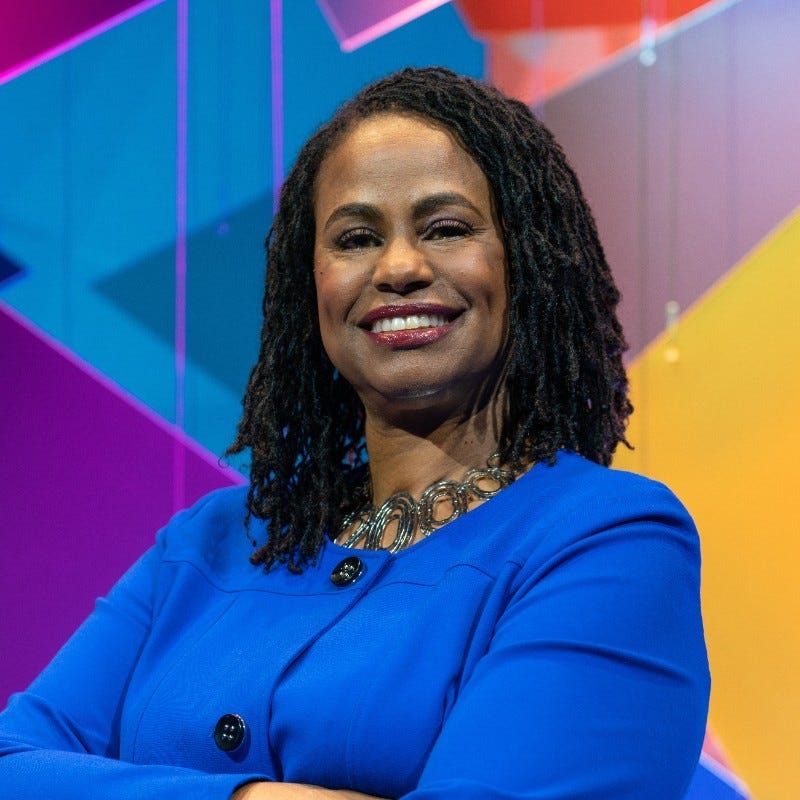
Female Disruptors: Dr Aman Dhaliwal On The Three Things You Need To Shake Up Your Industry

An Interview With Candice Georgiadis

“Never look back” Past mistakes are just that, past mistakes. However, what we learn from them is crucial. Learn to adjust our actions and make well crafted moves in the future based on past mistakes. For example: I used to be very hard on myself for the way I presented at a workshop or the treatment I provided to a complex patient. A friend once told me “never look back” and be kind to myself. So, learning how to let go and surrender has been very helpful in this journey.

As a part of our series about women who are shaking things up in their industry, I had the pleasure of interviewing Dr. Aman Dhaliwal.

Dr Aman Dhaliwal PT, DPT has been the driving force behind women empowerment in her community by helping them learn and speak up in regards to the most taboo topic of Pelvic Health. She graduated from University of Pacific with her Doctorate and has specialized in Pelvic/Visceral health as well as orthopedic, in order to best serve her patient population. With 15 years of physical therapy experience, Dr Aman Dhaliwal is in the process of writing a book to simplify the complex topic of pelvic health, especially for the female population.

Thank you so much for doing this with us! Before we dig in, our readers would like to get to know you a bit more. Can you tell us a bit about your “backstory”? What led you to this particular career path?

Transitioning to living in the USA with my family at the age of 14 was a challenging, yet rewarding experience. Following high school I enrolled into a pre-med biological science program at U.C. Davis. During this time I came across a physical therapy program that made me rethink the path of medicine I wanted to take. I was immediately intrigued by what Physical Therapy offers to its patients. I admired the conservative approach to get patients back to their active lifestyle.

I was accepted into the DPT program at University of Pacific and began my journey in Physical Therapy. Since then, I have specialized in Pelvic Health, Visceral health, and orthopedic. I love working with each patient and trying to find more effective, efficient methods to treat them. This led me to the role of facility director and eventually returning to school for an MBA in healthcare management.

After working for a large corporation for almost a decade, I got the itch to try something new, and decided to start my very own physical therapy and wellness clinic with the main focus being Women’s health. I was able to draw upon my MBA skills and launch the first cash based PT clinic in San Joaquin County, CA. Patients come from all over and bring unique stories with them. This has been the driving force for me to write a book in regards to healthcare and receiving the proper care. My goal is to create a book that shares their journey for receiving the right care, their emotions, struggles, and how they got to the finish line. In addition to their stories, the book will provide educational material for anyone that wants to absorb the basic knowledge about pelvic health.

With my expertise in pelvic health and desire to create awareness, I recently created a posture spine roller to activate the core & pelvic floor muscle with ease. Solex is a simple yet powerful device to help correct spine and posture deviation, so everyone can live a healthy active lifestyle.

Can you tell our readers what it is about the work you’re doing that’s disruptive?

In order to be disruptive, I believe a strong desire to make a change with a powerful voice and everlasting passion is necessary. After being in the health and wellness field for more than a decade, I continued to hear patients say, “Why did no one tell me this before?” I knew I had to do something and make a change for my patients and the overall community.

Pelvic health is extremely essential but one of the least spoken about topics in both medical or personal life. With posture decline being inevitable in the new electronic era, I feel that it is my job to help inform my patients and spread the word, raise awareness and educate.

I have found medical professionals are either extremely occupied, not informed or unable to give the best advice to patients following a pelvic or spine related diagnosis. I have found it is my duty to not let patients suffer alone, but instead educate both the patients and medical professionals on what more can be done.

I am using every opportunity to spread the word, raise awareness, and educate. By inventing the new Solex posture roller and currently writing a book regarding pelvic health, are a few ways I am looking to disrupt the traditional methods of treatment.

Spine and Pelvic health is just as essential as mental health, especially in the posture decline era. My efforts consist of but not limited to treating patients with spine and pelvic health disorders on a daily basis, writing an educational and inspirational book, offering free educational seminars, writing blogs, giving away free content/resources, and continuing to spread awareness on this topic.

Can you share a story about the funniest mistake you made when you were first starting? Can you tell us what lesson you learned from that?

When I look back, the funniest and the most humbling mistake I made was not simplifying the information I was providing to my patients. My presentations and workshops consisted of heavy medical jargon which often led to confusion.

I quickly had to realize all the language I was throwing their way was overwhelming and often too much to understand. I had to backtrack and realize that I need to feed them information in a very practical way, where it is easy to absorb, understand, and apply on a daily basis. My delivery had to capture the audience and help them to understand the importance of creating a daily habit. Implementing this information into their lifestyle didn’t have to be difficult.

I also came to the realization, even though we are a very fast paced and advanced society, pelvic health is at the infancy stage in regards to awareness level. Spine related conditions are on the rise and new conditions are being added to the list, i.e. text neck.

Society as a whole is just starting to talk about spine related conditions and we, as medical professionals, do not need to overwhelm patients with medical jargon or information. If information is delivered in relatable ways, stories or analogies, patients can benefit from them quickly. This is why I am using every opportunity presented to me to help spread the pelvic and spinal health awareness in the simplest manner.

We all need a little help along the journey. Who have been some of your mentors? Can you share a story about how they made an impact?

My mentors will always be my patients. My patients gave me the special vision and courage to lead. They are a very big deal to me and my mission is to serve them well.

So, I ask them, how can I help? Their needs help me understand what I need to learn and practice, so I can deliver at an optimal level. Their concerns help me realize and clearly understand the gap between a patient and provider, the missing link. The bottom line is to meet their goals. And the best way I can provide for them is to practice daily in the field and keep an open mind on new needs from patients.

In today’s parlance, being disruptive is usually a positive adjective. But is disrupting always good? When do we say the converse, that a system or structure has ‘withstood the test of time’? Can you articulate to our readers when disrupting an industry is positive, and when disrupting an industry is ‘not so positive’? Can you share some examples of what you mean?

Disruption can have a yin-yang effect. If you find a pattern is not benefiting anyone, then the cycle needs to be broken. In order to break this cycle, a strong disruption is needed. Oftentimes the pattern or cycle in a medical practice, can be good. If it has been used for many years as an effective way to heal patients then it doesn’t need to be altered. However, if you find the pattern to show no results or for better results to occur, a change may be necessary. The health care industry is always going to evolve based on development in science and technology, however, there are some ground rules that for the most part will stay the same.

In my experience, I have found a disruption is necessary to raise awareness for Pelvic health and better posture. This disruption will be a reminder to our society to decrease the burden on the medical industry. Overall its purpose is to create a change to help improve quality of life.

However, the disruption can be negative if there is an information overload. During information overload, patients are often confused, overwhelmed and not able to take action. Creating a change to take away rights and freedom of choice is not productive in the medical field. Instead, medical professionals need to keep educational resources simple and consistent, to create a healthy disruption.

Can you share 3 of the best words of advice you’ve gotten along your journey? Please give a story or example for each.

1)“Never look back” Past mistakes are just that, past mistakes. However, what we learn from them is crucial. Learn to adjust our actions and make well-crafted moves in the future based on past mistakes. For example: I used to be very hard on myself for the way I presented at a workshop or the treatment I provided to a complex patient. A friend once told me “never look back” and be kind to myself. So, learning how to let go and surrender has been very helpful in this journey.

2) “One step at a time” Being an overachiever, I always want to do everything at the same time. My plate is always overflowing and I would find myself burnt out by the end of the day. A patient once saw me struggling at work as I was trying to juggle the multiple tasks on my plate. She reminded me to breathe and just take one step at a time.

3) “Fail, adjust, adapt and keep moving forward.” — When I left my job at a corporation to start my own adventure, failure, small or large, was inevitable. I quickly learned how marketing and networking is essential prior to starting a business. However, I found a way to adapt and adjust to the needs of the community.

We are sure you aren’t done. How are you going to shake things up next?

Releasing my book and hoping it spreads like wildfire!

The Invention of Solex was an interesting turning point in my career. During my practice, I treated patients on a daily basis that suffered from neck and back pain. During their treatments I found myself restoring the natural curve and alignment of the spine. The curves in our spine are designed for shock absorption and optimal function of the delicate nervous system. However, treatment is typically provided on flat mats, flat treatment tables or flat foam rollers. In order to emphasize a neutral spine, I would always find myself using a towel roll or pillow to tuck under the neck and lower back to help improve and restore the natural curve formation. This method not only restored the natural formation but simultaneously strengthened the patient’s spine.

An arising issue that is a concern for me, is the trend of electronic devices in all settings. We are all guilty of excessive screen time, but the effect of poor posture due to the tendency to look down has caught my attention. The excessive use of technology has created slouched posture, reducing the curvature and led to more neck and back problems. The problem I am looking to solve is How to restore & maintain the natural spinal curves during rehab and exercise. I challenged myself to find a simple and effortless way so patients can heal themselves anytime, anywhere without the need of a medical professional or special setup.

Solex was born after I put pen to paper. Using my art skills and medical background, I doodled different designs and shapes that I felt would be useful. Following hours of research in order to create a simple use and effective device for everyone, everywhere. This device will help shake up the health and wellness industry with its ability to heal poor posture without complicated methods.

In your opinion, what are the biggest challenges faced by ‘women disruptors’ that aren’t typically faced by their male counterparts?

Historically speaking, men have laid down the ground rules for every industry. A woman has to work her way through to get to the same level as a man. It requires hard work and a strong will power to climb that ladder. Women face criticism for stepping out, even from their own family and friends, in some cultures more than others. If a woman fails, she is ridiculed aggressively compared to a man. A woman needs a much larger and stronger support system to get out there and make big moves.

Early on, women are seen as more feminine and weaker. To change this perception is a very painful process but not one that is impossible. As long as we women keep moving forward and believe in our power, the challenges will slowly fade away.

Do you have a book/podcast/talk that’s had a deep impact on your thinking? Can you share a story with us?

Books like True North, Super soul by Oprah, Can’t Hurt Me by David Goggins, podcasts by Joe Rogan, and quotes by Maya Angelou, Sadhguru, and Eckhart Tolle, have inspired me to believe in our own grit. They have given me the courage to believe in our own strength and spirituality.

I believe education is a very powerful tool that no one can take from us. So, all these books and podcasts are just another educational resource that I use to keep the fire within me alive.

You are a person of great influence. If you could inspire a movement that would bring the most amount of good to the most amount of people, what would that be? You never know what your idea can trigger. 🙂

My movement would be to start a cultural practice of open communication about health and wellness. Taking the time to slow down and talk with each other, starting with our own self and family members. I believe a movement that can benefit all living beings is crucial and impacts the environment in a positive way. My movement would be to promote daily wellness practice from “inside out” — mental, visceral, pelvic, and physical.

Can you please give us your favorite “Life Lesson Quote”? Can you share how that was relevant to you in your life?

“Faith is taking the first step even when you don’t see the whole staircase.” — Martin Luther King, Jr.

This quote has helped me to take the leap of faith when it comes to creating awareness and disrupting the health and wellness industry. I have recently launched the Solex brand and am currently writing a book to educate medical professionals and consumers who care about their wellbeing.

How can our readers follow you online?

IG @doctoramanpt

IG @getsolex

Soon to be launched website www.doctoramanpt.com and www.getsolex.com

This was very inspiring. Thank you so much for joining us!


Female Disruptors: Dr Aman Dhaliwal On The Three Things You Need To Shake Up Your Industry was originally published in Authority Magazine on Medium, where people are continuing the conversation by highlighting and responding to this story.
Female Disruptors: Diana Dobin of Valley Forge Fabrics On The Three Things You Need To Shake Up…

Female Disruptors: Diana Dobin of Valley Forge Fabrics On The Three Things You Need To Shake Up Your Industry

An Interview With Candice Georgiadis

My husband and I have been together for 30 years — and there was a specific moment when I needed to make a really difficult career decision — and he gave me the best words of advice I’ve ever received. I had the opportunity to continue to work for my family business or start a new career working on behalf of women and minorities. I was torn tremendously between what I perceived as a choice between these two very different paths. He said to me, “You don’t need to choose one. Do both”. With his outlook and motivation (and huge support all these years) I have chosen to do both. I am proud of the impact Valley Forge Fabrics has had on the lives of many — especially the women and minorities who choose to trust us and join our team of dreamweavers.

As a part of our series about women who are shaking things up in their industry, I had the pleasure of interviewing Diana Dobin.

Diana Dobin is the Co-CEO & Chief Sustainability Officer of Valley Forge Fabrics, the largest decorative textile and textile products supplier to the Hospitality industry worldwide. A family-owned business, Dobin is 2nd generation leadership and partners with her brother Michael. Valley Forge is headquartered in South Florida and Massachusetts and respected for its environmental stewardship, agility, speed and adaptability to each customer.

Thank you so much for doing this with us! Before we dig in, our readers would like to get to know you a bit more. Can you tell us a bit about your “backstory”? What led you to this particular career path?

The path of my career is a story of the American dream wrapped in a tie-dyed denim jacket. I was raised in the 70’s and 80’s by hippie parents with a work ethic born of being the children of Great Depression parents. When I was 5 years old, my parents founded Valley Forge Fabrics and they worked tirelessly to create financial stability. I remember so many years when we worried about money, and it shaped who I am. We didn’t get an allowance or have any extra money, so I took every opportunity I had to work. I drew pictures of the neighbor’s homes and sold them. I created a library from all the books in our house and charged money to my siblings to borrow them. I babysat. And whenever possible, I worked with my parents at their office. I fell in love with business — especially all the designs and colors and textures of the fabrics. Simultaneously I embraced the freedom, independence, and trust of often being alone with my younger siblings, and this made me a very maternal and capable person. The hippie mentality of love and understanding that I grew up with become my adult mantra of embracing diversity and always speaking up for human rights. And the tie-dyed denim jacket? It was my father’s staple uniform, and he was wearing it even before I was born. I have it now and it connects me to myself and serves as a physical reminder of where I came from and where I’m going.

Can you tell our readers what it is about the work you’re doing that’s disruptive?

In the late 90’s the stereotypical successful businesswoman was well-coiffed, guarded and respected for her demonstrated authority. When I first started working, I became aware that I was disrupting the expectations of many of my colleagues and clients. I led with my heart and my hair. I celebrated my big curly hair and never tried to tame it, just as I established my warm, transparent and collaborative approach from the very first interaction. This was, and in some ways still is, drastically different to the normative culture of business. Today my working style and approach has a name: “servant leadership”. I view my leadership purpose as promoting innovation, empowering and developing my teams to ensure the well-being of others — and yes… my hair is still big and curly and often enters a room before I do.

Can you share a story about the funniest mistake you made when you were first starting? Can you tell us what lesson you learned from that?

I was 24 years old and living in Asia in the late 90’s and typical business entertaining was done by men and with men — and the destination of choice was strip clubs. To compensate for my lack of interest in taking my clients, who were mostly male, to these establishments, I instead hosted dinners at their favorite restaurants. One night in Vietnam I hosted a group at their favorite restaurant and while I was surprised that all the food was alive when we arrived, and served freshly slaughtered at the table, I couldn’t decline the “honor” of being given the snake blood to drink. I spent the rest of the evening smiling through my discomfort as it was clear that snake blood does not agree with my stomach. The lesson here: Building authority and equality with these men, while respecting the gender dynamic and cultural dynamic, required a creative and authentic approach.

We all need a little help along the journey. Who have been some of your mentors? Can you share a story about how they made an impact?

When I was 23 years old and living in Hong Kong, a very successful, well respected business leader took me under her wing. Over the 5 years I lived overseas, she taught me to be direct and accountable. She told me to trust my instincts, but always gather facts and details and to, “always have a seat at the table”. 10 years later, I went to a meeting in the U.S. in a large formal conference room with 25 men seated around the table and about 10 men seated in chairs along a wall. The only other 2 women in the room worked for our mutual client, and they were standing getting ready to address the room. I took a chair from the wall and politely said “excuse me” as I wheeled the chair to the center of the table and made room for myself there. That was a powerful moment for me. Today, I encourage other young women to always have a seat at the table.

In today’s parlance, being disruptive is usually a positive adjective. But is disrupting always good? When do we say the converse, that a system or structure has ‘withstood the test of time’? Can you articulate to our readers when disrupting an industry is positive, and when disrupting an industry is ‘not so positive’? Can you share some examples of what you mean?

My business, Valley Forge Fabrics, is rooted in creativity and innovation. What began as a mom-and-pop shop that peddled velvets to the theater industry has become the largest supplier of decorative performance textiles and services for the Hospitality Industry worldwide. For over 45 years, we have disrupted hotel design by exploring and developing custom products and services that delight clients and guests. Another positive disruption I’ve been grateful to be a part of is the focus and growth of sustainable products that benefit the earth and can improve human health and well-being.

While as a business we continue to invest and innovate in technologies to make us stronger, better and faster — I have seen how technology advancement can create disconnection. In the Hospitality Industry there are many technologies that have transformed and aided processes, but some of those same technologies could do great harm by removing the human element and creating a potential future environment where experiencing the surprise of human kindness and the joy in small gestures is diminished. For example, when you check into a hotel from your phone you bypass the team at the reception desk who is always ready to warmly welcome you. One of the things that has sustained me in my journey has been being a part of the Hospitality Industry, it’s truly a special industry that is made up of people who are dedicated to being of service. As technology continues to evolve, the industry must seek opportunities to provide personal care that provides humanity with comfort and security.

Can you share 3 of the best words of advice you’ve gotten along your journey? Please give a story or example for each.

My husband and I have been together for 30 years — and there was a specific moment when I needed to make a really difficult career decision — and he gave me the best words of advice I’ve ever received. I had the opportunity to continue to work for my family business or start a new career working on behalf of women and minorities. I was torn tremendously between what I perceived as a choice between these two very different paths. He said to me, “You don’t need to choose one. Do both”. With his outlook and motivation (and huge support all these years) I have chosen to do both. I am proud of the impact Valley Forge Fabrics has had on the lives of many — especially the women and minorities who choose to trust us and join our team of dreamweavers.

When Valley Forge was starting our sustainability journey in 2007, and we were developing and testing recycled content fibers, I had the incredible opportunity to meet Ray Anderson, the iconic Founder of Interface, one of the largest carpet companies in the world. Ray was known as “the greenest CEO in America” for his relentless pursuit of sustainability and what he called, “Mission Zero”. Ray took the time to coach me on how to build a sustainable company. I am so grateful to have had the privilege to spend time with him. Among the many things he shared, I will never forget when he told me, “Diana, there is no ‘away’”. We were talking about trash, and it was very powerful to fully recognize the consequences of the reality that when you throw something “away” — there is “no away”. The trash just gets moved somewhere else. Typically to a more impoverished place and to be dealt with by people who do not have the opportunities that I have. The clarity of that singular moment brought together for me the intersection of environmental sustainability and human well-being. Those few words have inspired my passion and action and informed so many decisions I have made since.

We are sure you aren’t done. How are you going to shake things up next?

Often we get so focused on shaking things up that we forget that to be sustainable is to be consistent and dependable. While Valley Forge Fabrics will continue to innovate, myself and the company are committed to demonstrating our core values over time rather than simply through grand but short-term gestures. As a leader I have realized that in addition to this marathon approach, my desire to make the largest impact on people possible begins and ends with my daily interactions. I want everyone to feel like they are the most important and only person in the world. Everyone needs and deserves to be seen like this and I will be the person who sees them.

In your opinion, what are the biggest challenges faced by ‘women disruptors’ that aren’t typically faced by their male counterparts?

My experience is that many women disruptors have shifted their most typical challenge of being heard into a specific advantage. Women are still underestimated — especially when they aren’t the loudest in the room. The most successful women disruptors have a quiet confidence, and they humbly recognize and take action when they see the opportunity to add a person who is smarter than they are to their team. By separating themselves from this typical paradigm, it’s their humility that gives them their power. It gives them the confidence to surround themselves with greatness as a strategy. This strategic capability and execution is a powerful combination. I have observed the power of women’s silent determination and quiet confidence in creating the strongest, most loyal, and most successful organizations.

Do you have a book/podcast/talk that’s had a deep impact on your thinking? Can you share a story with us?

I recently read “Scary Smart” by Mo Gawdat. It is an amazing perspective on AI (Artificial Intelligence) that directly addresses the fears and concerns of AI potentially “taking over the world”. The author was with Google X, the innovation arm for Google and shares his experience and provides clear advice on how we humans can and must address the continued building of AI with humanity and care for others in mind. I recommend it to everyone as it will take all of us humans to do this together to ensure a better future as technology grows.

You are a person of great influence. If you could inspire a movement that would bring the most amount of good to the most amount of people, what would that be? You never know what your idea can trigger. 🙂

Harmony is my favorite noun. If everyone could embrace difference and celebrate unique points of view, our diversity would have transformational power. The huge challenges facing humanity could be solved. Humans have the power to protect this planet and all its species — especially ourselves. We just all need to open our minds and our hearts, collaborate within our differences, and move forward together in harmony.

Can you please give us your favorite “Life Lesson Quote”? Can you share how that was relevant to you in your life?

Maya Angelou said, “I’ve learned that people will forget what you said, people will forget what you did, but people will never forget how you made them feel”. I recognize and embrace the emotional value and effect my words carry in every interaction I have.

How can our readers follow you online?

Instagram @curlyfabricqueen @valleyforgefabrics

LinkedIn @Diana Dobin @Valley Forge Fabrics

Facebook @valleyforgefabrics

This was very inspiring. Thank you so much for joining us!


Female Disruptors: Diana Dobin of Valley Forge Fabrics On The Three Things You Need To Shake Up… was originally published in Authority Magazine on Medium, where people are continuing the conversation by highlighting and responding to this story.

Female Disruptors: Fort Worth Mayor Mattie Parker On The Three Things You Need To Shake Up Your…

Female Disruptors: Fort Worth Mayor Mattie Parker On The Three Things You Need To Shake Up Your Industry

An Interview With Candice Georgiadis

Often, women only get one shot to be heard. You have to listen first, come prepared, and then be concise and impactful when your opportunity comes. You have to know you might only get one chance and make the most of it.

As a part of our series about women who are shaking things up in their industry, I had the pleasure of interviewing Fort Worth, Texas’s Mayor Mattie Parker.

Mattie Parker was elected in June 2021 as the 45th Mayor of Fort Worth. Leading one of the fastest growing large cities in the nation, Parker has set her focus on key issues that move Fort Worth forward, including economic development growth, innovative transportation and mobility solutions, quality education opportunities for every student, and building safer, more prosperous communities.

Thank you so much for doing this with us Mayor Parker! Before we dig in, our readers would like to get to know you a bit more. Can you tell us a bit about your “backstory”? What led you to this particular career path?

I have always loved being behind the scenes in policy-making. Over the past two decades, I’ve worked for several influential leaders at the federal, state, and local level, I spent time as a practicing attorney, and I started an education nonprofit. When the opportunity to run for Mayor of Fort Worth came to me, I didn’t expect it, but it felt like the right moment to step up for my city and lead in an exciting time in Fort Worth history.

Can you tell our readers what it is about the work you’re doing that’s disruptive?

Every day, I’m choosing to lead firmly with a consensus-building, bipartisan-focused mindset. It might seem like the opposite of disruptive, but because it’s not what we’re seeing right now, especially at the state and federal levels of government, I do end up being pretty disruptive. The politics in Fort Worth and on our City Council range widely, but my commitment is to focus on where we can agree and what we can get done together.

Can you share a story about the funniest mistake you made when you were first starting? Can you tell us what lesson you learned from that?

It’s less of a mistake and more of an embarrassing story, but I was once pumping breast milk in my office with the door closed, totally brain-dead from everything that comes with a new baby. Someone knocked and I unthinkingly welcomed them in and had a whole sit-down conversation with a man from the Finance Department. I was, thankfully, covered up well enough, but looking back, it was very awkward. On the positive side of things, the story is also an example of how kind and understanding people can be with frazzled new parents.

We all need a little help along the journey. Who have been some of your mentors? Can you share a story about how they made an impact?

I was lucky early in my career to work for a woman named Nancy Fisher, who at the time was the chief of staff for Texas House Speaker Tom Craddick. She was just the right mix of empathetic and no-nonsense. She taught me, and the women around me, about how valuable a reputation is, the importance of speaking with authority, and being mindful of the messages you are sending with the way present yourself.

In today’s parlance, being disruptive is usually a positive adjective. But is disrupting always good? When do we say the converse, that a system or structure has ‘withstood the test of time’? Can you articulate to our readers when disrupting an industry is positive, and when disrupting an industry is ‘not so positive’? Can you share some examples of what you mean?

Democracy, and the way government should run, is a prime example of the way “disruptive” can improve or detract. We know that government functions to provide assistance, improve lives and be additive to our communities. Progress and disruption moves us forward to do more and be better in all of those areas, but you can take it too far. The far political fringes we see in both parties right now are that example, pulling us to places where “disruptive” is distracting at best and harmful at worst.

Can you share 3 of the best words of advice you’ve gotten along your journey? Please give a story or example for each.

  • Don’t be intimidated if you’re the only woman in the room.
  • Be the most prepared.
  • Don’t let your clothes do the talking for you.

We are sure you aren’t done. How are you going to shake things up next?

We need more women’s voices in policy-making. I want to create a bench of women to use their voices in a powerful way to create policy change, especially those who don’t hold elected office.

In your opinion, what are the biggest challenges faced by ‘women disruptors’ that aren’t typically faced by their male counterparts?

Often, women only get one shot to be heard. You have to listen first, come prepared, and then be concise and impactful when your opportunity comes. You have to know you might only get one chance and make the most of it.

Do you have a book/podcast/talk that’s had a deep impact on your thinking? Can you share a story with us?

There is an episode of the podcast Honestly with Bari Weiss called “The New Founders America Needs” that I think of often. In it, she is speaking to a group of young adults essentially about the problems that exist in the America they live in today, and how important it is embrace critical thinking to solve these issues. There is so much more to it, so I encourage you to give it a listen. It’s good food for thought for anyone, but especially that next generation of leaders.

You are a person of great influence. If you could inspire a movement that would bring the most amount of good to the most amount of people, what would that be? You never know what your idea can trigger. 🙂

It would absolutely be a movement of investing more in early childhood education and childcare. Ninety percent of brain development happens before age five, yet we invest drastically less in their education than we do in K-12. Businesses lose $13 billion annually in productivity costs due to child care challenges faced by their workforce. If we could work collectively to change these issues, it would transform all of our lives. If kids are successful, we’re all successful.

Can you please give us your favorite “Life Lesson Quote”? Can you share how that was relevant to you in your life?

Madeleine K. Albright said that “There’s a special place in hell for woman who don’t help other women.” I’ve been lucky to have women of all personality types and levels of success help me and others on the path to successful careers, but I have also heard horror stories of women who haven’t been so lucky, being held down by a boss or someone they look up to. We should never eat our own.

How can our readers follow you online?

You can follow me on Twitter at @MayorMattie.

This was very inspiring. Thank you so much for joining us!


Female Disruptors: Fort Worth Mayor Mattie Parker On The Three Things You Need To Shake Up Your… was originally published in Authority Magazine on Medium, where people are continuing the conversation by highlighting and responding to this story.
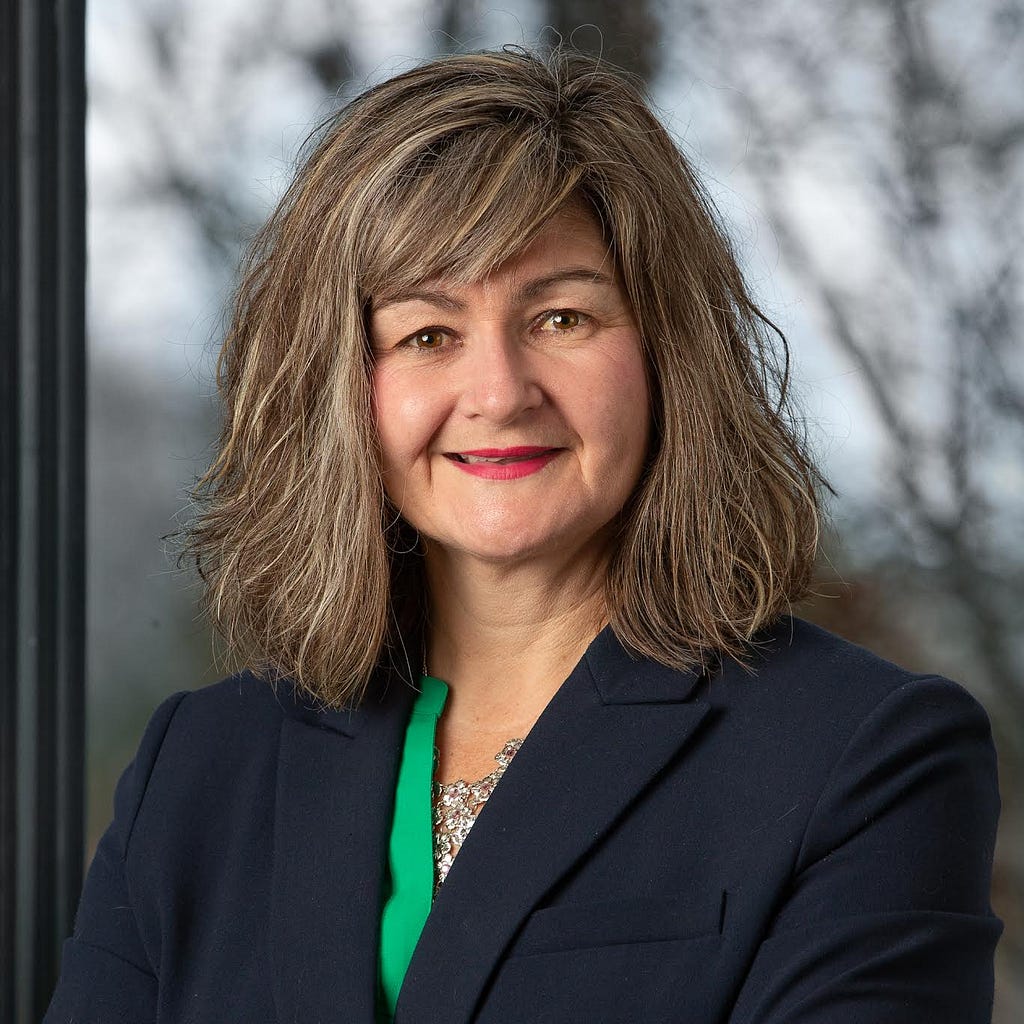
Female Disruptors: Chloe Demrovsky of DRI International On The Three Things You Need To Shake Up…

Female Disruptors: Chloe Demrovsky of DRI International On The Three Things You Need To Shake Up Your Industry

An Interview With Candice Georgiadis

A lot of my work is about applying the concept of resilience, or the ability to bounce back, across various spheres of influence, whether personal, professional, organizational, or systemic. On the systemic level, I work on disaster risk reduction and climate adaptation. For example, I am working on a research project right now about how operational resilience can help companies disclose the impact that climate change is and will have on their finances and operations.

As a part of our series about women who are shaking things up in their industry, I had the pleasure of interviewing Chloe Demrovsky.

Chloe Demrovsky is the President and CEO of DRI International, a senior Forbes contributor, has authored numerous articles, appeared on Bloomberg TV, MSNBC, CNBC, Cheddar News, and Fox, and has served as an expert source for The Associated Press, BBC, USA Today, The Financial Times, ABC News, and others. She has presented at dozens of events across five continents and has conducted on-site briefings for government bodies. She is a professor at NYU, a member of the Council on Foreign Relations, and a Board Director for the United Nations Office for Disaster Risk Reduction (UNDRR) ARISE, the DRI Foundation, Bard College at Simon’s Rock Board (Vice-Chair), and Plastic Omnium.

Thank you so much for doing this with us! Before we dig in, our readers would like to get to know you a bit more. Can you tell us a bit about your “backstory”? What led you to this particular career path?

As the youngest and first female head of the globally-recognized nonprofit Disaster Recovery Institute, I help organizations prepare for and recover from disasters, both natural and manmade. I started with the institute as a temporary employee and was named President and Chief Executive Officer in just nine years. I have worked with the public, private, and nonprofit sectors across five continents to promote resilience and sustainability.

My tale is much the same as those told by the thousands of resilience professionals I’ve met over the years in that I wound up here almost totally by accident. I dropped out of high school at the age of fifteen to attend Bard College at Simon’s Rock and graduated with a liberal arts degree at nineteen. From there, I at least knew that I wanted to work for an organization that made a difference, but I wasn’t exactly sure what form that would take. Over the next few years, I founded a nonprofit arts organization and worked for several others. Eventually, that background in nonprofit work led me to DRI. Our mission is so important, and I can see the impact every day.

On a personal note, I’m a third-culture kid who speaks four languages, which has made me adaptable to change and complexity, as well as an avid reader, which helps me process the world with perspective and humor. You need both in ample measure when you’re talking about disasters every day.

Can you tell our readers what it is about the work you’re doing that’s disruptive?

A lot of my work is about applying the concept of resilience, or the ability to bounce back, across various spheres of influence, whether personal, professional, organizational, or systemic. On the systemic level, I work on disaster risk reduction and climate adaptation. For example, I am working on a research project right now about how operational resilience can help companies disclose the impact that climate change is and will have on their finances and operations.

In my academic life, I actively seek exciting challenges and explore opportunities posed by new ideas and disruptive technologies. I earned my Master’s in Global Affairs from NYU while working full-time and am proud to also be the first alumna invited to be an adjunct professor, teaching public-private partnerships, private sector solutions for economic development, and social enterprise. I help my students create practical pitches for partnerships that will make the world a better place by leveraging the ideas and energy of the private sector to address social and environmental challenges. It challenges their thinking and the conventional approach to pursuing social good. For example, I’m excited that this semester I am advising a couple of student projects related to leveraging non-fungible tokens (NFTs) for social good.

Can you share a story about the funniest mistake you made when you were first starting? Can you tell us what lesson you learned from that?

This is more of a personal anecdote but just as relevant and much funnier in hindsight than it was at the time. My wedding nearly got rained out, and it wasn’t even outside. Two days before our big day, an aging sprinkler system soaked the venue, leaving it unusable and not up to code. I didn’t panic. Instead, I got to work because disasters are what I do for a living. Running DRI, I get asked all the time how companies can become more resilient — how resilient organizations can adapt to changing political, economic, and environmental realities. The simple answer is to expect the unexpected. Know that you’re going to get thrown a curve — that you can get rained out even when there’s not a cloud in the sky. In the case of my wedding, I applied my business continuity training and got to work. We found a new venue, coordinated with our vendors, and relocated the whole affair in just under 48 hours. In DRI speak, we focused on the effect rather than the cause, identified our major obstacle as a facilities problem, and executed our plan. Sounds romantic, huh?!

We all need a little help along the journey. Who have been some of your mentors? Can you share a story about how they made an impact?

Without question, my predecessor at DRI Al Berman has had a huge impact on my life. He transformed DRI into the thriving organization it is today and gave me a front-row seat along the way, always making time to coach me and answer questions. He has more talents than any one man should, and I am humbled by his example and faith in me. We are very different in our approach as well as in our leadership style, but it is by having a dialogue to bridge those differences that we have grown this organization together. I’ve often heard the adage, “you can’t be what you can’t see,” and while there is some truth to that, I also found that the most influential mentors I’ve had were very different from me and often challenged my thinking. Really listening to them, while not always easy, is more likely to make me grow as a person. That’s the power of diversity — we must cherish the difference, make space to listen and understand, and learn from each other.

In today’s parlance, being disruptive is usually a positive adjective. But is disrupting always good? When do we say the converse, that a system or structure has ‘withstood the test of time’? Can you articulate to our readers when disrupting an industry is positive, and when disrupting an industry is ‘not so positive’? Can you share some examples of what you mean?

Disruption is my every day — we plan for it, respond to it, and recover from it. We at DRI observe how crises shape organizations and what they need to do to respond to those disruptions effectively. That advanced planning coupled with exercising the plans enables them to react in such a way that they can protect their core competency and maybe even come out stronger from the incident.

Collectively, we all just went through a major disruption with the response to the COVID-19 pandemic. Organizations implemented changes at lightning speed in order to safeguard their businesses, employees, and customers from the pandemic. We partook in a stunning global experiment in work-from-home and the widespread adoption of remote work tools like videoconferencing. We witnessed swift changes to business models and online offerings across diverse industries, from retail to hospitality. We’ve seen the healthcare industry adopt new practices and technologies. These changes were made at organizations of every size and in every sector and country.

People generally hate change, and so do organizations. Big crises can serve as a catalyst for long-delayed and much-needed changes to be implemented. Some of the changes brought on by the COVID-19 pandemic are worth keeping, others not so much; however, the decision-making process should be approached with thoughtfulness and intention. Not every strategy is suitable for every organization. Leaders should take a good look at what has worked, what hasn’t, and perhaps most importantly, how they can expand on this stunning wave of global innovation rather than reverting to caution and inertia.

Can you share 3 of the best words of advice you’ve gotten along your journey?

I keep a list of little pieces of advice that have resonated with me over time, and I review it periodically. One of those is to be where you’re at because you’re already there. I have a habit of living too much in the future, taking on too much at once, and sometimes that can make life difficult. I’ve received the advice not to bite off more than I can chew many times, but it’s not always easy to follow. There is so much to explore and accomplish that it can be hard to say no to something you really want to do. But who knows? Maybe the geniuses working in biotech and robotics will find a way to extend our lifetimes, and I’ll get a chance to do more!

One way to do more is to make yourself dispensable by training and empowering your team. They are the force multiplier. It’s important to be a cheerleader for your team and shine a light on their successes when they do well. If your team excels, you will also. Fortunately, this is an easy one for me at DRI — my team is amazing, and they make it easy. I learn from them every day.

We are sure you aren’t done. How are you going to shake things up next?

People call us when they are unsure how to prepare for or respond to various crises. We get questions on everything from the difficulty of moving to cloud computing to the dark side of artificial intelligence to planning for the threat of nuclear war. It’s our job to determine best practices and how companies can address these myriad challenges. I enjoy the intellectual and practical challenge of finding solutions to the most difficult problems we face as a society. We can’t predict the future, and we don’t know what will happen next. What we can control is our preparation for it and our reaction to it.

In your opinion, what are the biggest challenges faced by ‘women disruptors’ that aren’t typically faced by their male counterparts?

The continuity and resilience space has historically been male-dominated. The number of women pursuing careers in business continuity is growing, although it is still low at around 35–40% of the total. The increase may be in part because the role is changing within organizations as senior leaders up the level of responsibility assigned to business continuity professionals to prepare for and respond to challenges growing in number and complexity. The COVID-19 pandemic also laid bare the absolute need to lead with empathy, and many women have had more practice with leading in this manner. Behavioral norms in the workplace are changing, which may create moments of discomfort and confrontation. It’s important to create an open and caring workplace culture where your employees feel valued, motivated, and supported as they face these very human challenges. Women leaders are disruptors just by their mere presence in leadership roles. It is important to be mindful of that fact, to understand the shape you make in space, and then leverage that with intention. I try not to dwell on the added adversity of this fact but get up and seize the day I’ve been given and take advantage of the opportunity I have to make the world a better, safer, and more resilient place for those who follow.

Do you have a book/podcast/talk that’s had a deep impact on your thinking? Can you share a story with us?

I read and listen to a diverse range of books, articles, and podcasts, but I always go back to the classics (I did mention that I studied liberal arts, right?). I find that narrative fiction takes me out of my head and daily circumstances. It invites me to reflect on the world through different eyes and to empathize with the struggles of the characters. And I like to reread. Each time I find something new because I am a different person and can engage with the text with the benefit of the new perspectives that time brings. Whether it’s The Fellowship of the Ring or Sense and Sensibility, there’s always something new to learn.

You are a person of great influence. If you could inspire a movement that would bring the most amount of good to the most amount of people, what would that be? You never know what your idea can trigger. 😊

We all need to invest more in building our resilience across every sphere of our lives, of course! In designing resilience strategies for organizations, it’s also helpful to have a reserve of personal resilience. In DRI’s glossary, we define resilience as “the adaptive capacity of an organization in a complex and changing environment.” Good leaders also possess this adaptive capacity in the face of complexity and change. In this space, we focus on heavy subjects and see many terrible things over the course of our careers, so having the ability to bounce back emotionally is essential.

Can you please give us your favorite “Life Lesson Quote”? Can you share how that was relevant to you in your life?

Sometimes a particular quote finds you when you need it most. That happened to me today. A high-ranking military official said in a meeting that you shouldn’t make strategic decisions based on tactical problems. That resonated with me because I was ready to hear it. It just goes to show that sometimes a moment of serendipity can have an outsized impact, so it’s important to show up, bring your whole self, and pay attention to whatever you’re doing. You never know what you could learn.

How can our readers follow you online?

You can read my Forbes column, follow me on LinkedIn and Twitter, or sign up for a free DRI Account to get all the latest information on risk and resilience.

This was very inspiring. Thank you so much for joining us!


Female Disruptors: Chloe Demrovsky of DRI International On The Three Things You Need To Shake Up… was originally published in Authority Magazine on Medium, where people are continuing the conversation by highlighting and responding to this story.