Women In Wellness: Tracee Dunblazier of Dunblazier Arts & GoTracee Publishing On The Five Lifestyle…

Women In Wellness: Tracee Dunblazier of Dunblazier Arts & GoTracee Publishing On The Five Lifestyle Tweaks That Will Help Support People’s Journey Towards Better Wellbeing

An Interview With Candice Georgiadis
Learn how to pay attention to your money and banking accounts every day. I wish I’d had more experience with money and financial tools starting from my first job at age thirteen. Kids need to start learning about the responsibilities of money and the banking systems available to them as they become adults. Things like simple accounting, banking policies, and credit scores learned from a young age can really change a person’s relationship to money in general.

As a part of my series about women in wellness, I had the pleasure of interviewing Tracee Dunblazier.

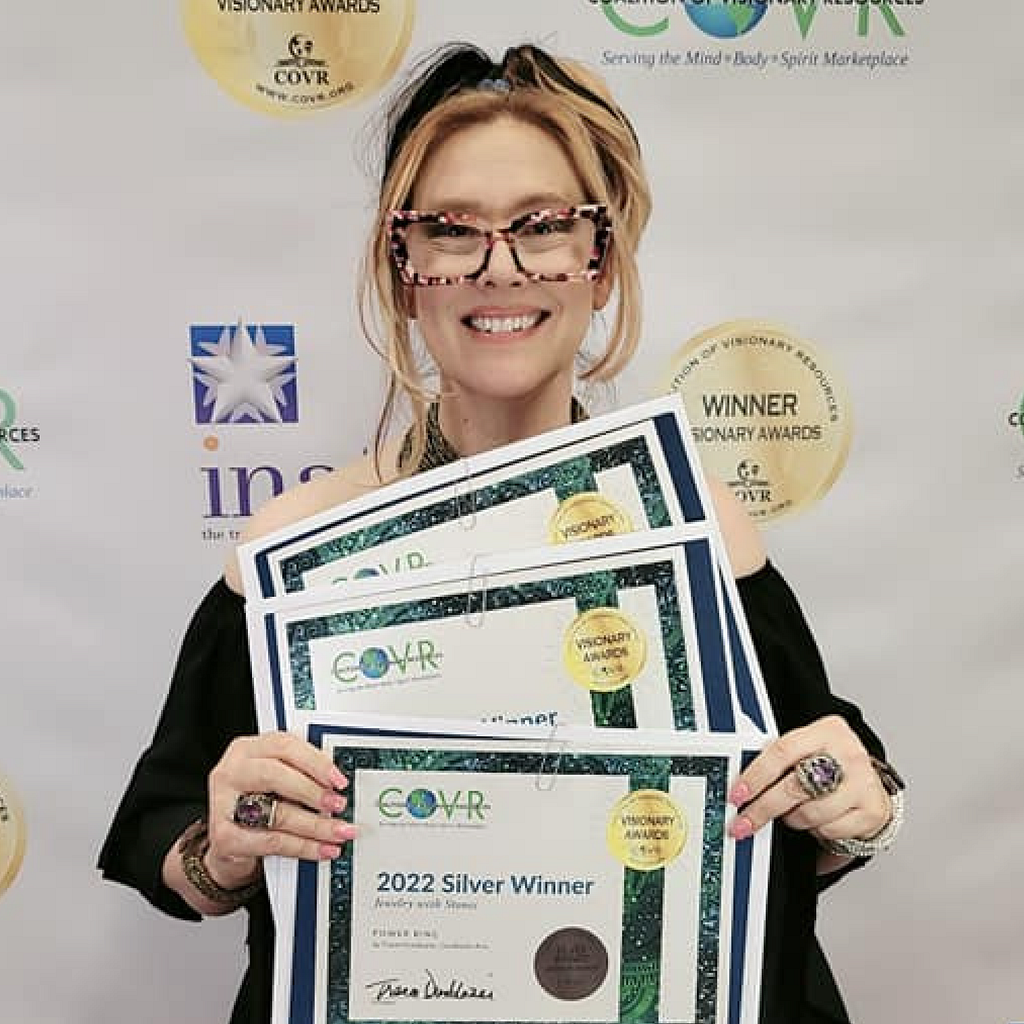
Tracee Dunblazier GC-C, is a Los Angeles-based grief counselor, spiritual empath, shaman, and 22-time international award-winning author and publisher (GoTracee Pub). As a multi-sensitive, Tracee’s blend of intuitive information combined with different modalities, has provided the opportunity for thousands to achieve deep healing and cultivate the success and peace they seek in their lives. As President of the Coalition of Visionary Resources, the trade organization for the Mind, Body, Spirit Industry — Tracee manages the COVR Visionary Awards program and educational opportunities for MBS businesses, and her book Transformative Grief: An Ancient Ritual of Healing for Modern Times (Red Feather Mind Body Spirit, 2023) comes out in February.

Thank you so much for joining us in this interview series! Our readers would love to “get to know you” better. Can you share your “backstory” with us?

I was born psychic and empathic with many paranormal experiences from early childhood. I was multi-spirited (one body, many spirits) and grew up with an altered awareness of the world we live in, different from the experiences of most of my friends. Information I was grateful for on all levels. I learned to accept the truth about people and circumstances so that I could find resolutions that worked. It is this radical acceptance on which I have built my set of wellness philosophies.

As I began to work in the healing industry, it became apparent to me that grief was the through line between all traumas and their healing journeys. Any transition requires transformative grief to make the necessary adjustments that create new beginnings, new circumstances, and new joy.

I have had a thirty-year career in the wellness field, working within mediumship and spiritualism to grief counseling and life-coaching — it has been more fulfilling than anything I could have thought to create for myself. I arrived here by following the path spirit laid out for me.

Can you share the most interesting story that happened to you since you started your career? What were the main lessons or takeaways from that story?

Oh my, there are so many! The one thing about working with folks in transition or crisis — it is never boring. Recently, while working on a new book about crystals, this story reawakened in my memory, about a young man who struggled to find peace, but first he needed to overcome the entity that had been plaguing him for months! Here’s an excerpt from Your Crystal Allies: The 12 Best Gems & Minerals for Healing Trauma & Navigating Change.

“I didn’t seem to have a reaction to or fear of lower vibrational entities like demons, discarnates, or other dense constructs created by humanity over the millennia. Somehow, I felt inoculated to them; I was unconsciously well versed in dealing with their presence. As a child, I’d had many demon-generated psychic attacks, and naturally developed the tools to repel, absolve, or transform them — all techniques that rendered them powerless in my world.

However, it’s one thing to be chatting with your own critters in waking and sleeping dreams, but another, entirely, to have other-worldly beings speaking to you from across the table, which was happening daily with the client work I was doing. One evening, in particular, a long-time client of mine who was also working as a psychic reader, called on me to take a session with a client with whom she was working. He was haunted, and she was unnerved. She requested permission from both of us, to be present at this young man’s session and he and I agreed.

As I remember, it was a cool fall evening and shortly after 6 p.m. when they arrived. The living room to my small 1930s bungalow was quaint, with an L-shaped set of plush, cushy, salmon-colored couches and a coffee table — not to mention a life-sized stuffed bear I had recently purchase from FAO Schwartz, which took the place of a chair in the corner of the room. My client, happily, sat on the floor (backed up against the bear). Her client was to my left on the smaller-of-the-two couches; we’ll call him Joseph. He was covered in many tattoos that didn’t seem to have any connection or symmetry (which, in itself, told a story), and his spirit was in knots. It was clear that drugs and alcohol were a part of his personal struggle.

He had spent a significant amount of time trying to address his feelings of powerlessness by working in witchcraft and spirit conjuring, which isn’t a necessarily an issue, if you know what you are doing. However, when one grapples with their own hopelessness, they tend to attract entities and spirits that amplify their powerlessness, which is what was going on here. Joseph sat on the couch, catty-cornered to me, and told me of an entity that had been with him for months. He couldn’t sleep or eat, and he was at his wits’ end.

At the time, I had a large Self-Healed Smoky Cathedral Quartz Crystal, sitting on my altar, and another master-healer Self-Healed Clear Quartz in my hand. As we spoke, I could see a large snake-like entity wrapped around him. Joseph was pleading for my compassion and help. All the while, this critter was up to no good, seething and hissing. About twenty minutes in, Joseph started to visibly cry; he got up from his seat and fell to his knees in front of me, placing his weeping face on my lap. The session had gone from strange to stranger: I glanced over at my client, and she was sound-asleep, nuzzled peacefully up to the bear.

As Joseph whimpered and wailed, the entity that accompanied him was saying, “I am going to get inside you. You have no power. Let me in.”

I could hear it plain as day. While my following words addressed the grieving man on his knees, I was responding in my mind simultaneously to the critter directly with a forceful, “NO!”

“Joseph, this entity is manipulating you through your emotion, within your grief you will find your power.”

The entity was hoping to manipulate me through my empathy and pride, by getting Joseph to genuflect in submission and to appear broken.

While my client was still secure in her powernap, this scenario continued for about fifteen minutes. It ended when I told the critter it had no power in this place, and I commanded Joseph to get up off his knees and sit in his space — to take authority over his body and his energy. It must have sounded like I was scolding him, calling him by his full name, as I said it, it was like he woke up from a long sleep, slightly disoriented and looking around the room.

He felt refreshed and a bit confused. I explained to him that the entity had come to show him the meaning of power and authority by requiring him to claim it. I also told him, for now, the entity had departed — but he would surely be watching and waiting for another opportunity to be given influence in Joseph’s life. He was the only one who could access the origin of the attached entity. At this point, my client was sheepishly awake and wondering what happened. We wrapped up the session and said good night. I never heard from Joseph again.”

The take-away for me, was that we always have power in any situation, and sometimes that power is in the psychic realms. We have more force using our minds and communicating telepathically than we do with our bodies in the physical dimension. Any athlete will tell you that their athleticism begins in the mind first, then the body. When you claim this as a part of your belief system, your spirit will show you how to implement it in your life, in any situation, to bring about positive results.

Can you share a story about the biggest mistake you made when you were first starting? Can you tell us what lesson you learned from that?

Interestingly, I do not believe in mistakes, I believe in process. Everything in life is a process of learning and doing — a series of boundaries to be set with ourselves and others. So, the answer to this question is about setting boundaries, and about navigating personal relationships with clients. As spiritualists, the relationship between us and our clients is a little different than a doctor-patient relationship, certainly more relaxed with no oversite or protocols built into the business. It is something that every healer must navigate for themselves.

People naturally gravitate towards practitioners on a friendly basis, rather than solely professional as you would address a doctor or priest, and yet to some degree, we are both. At the beginning of my career, I had a few clients who decided they wanted to be my “friend” and began including me in social events, and other friendly interactions. What was not clear to me at the time was that these folks didn’t have personal boundaries and were unconsciously looking to have me in their life and space for many other reasons pertaining to the work I do, rather than solely to be my friend. I was everything from a safety net, cheerleader, champion, and platonic date to fake-family. Essentially, many times, doing my work for free.

Today, every one of the clients who declared their offer of friendship, eventually withdrew it at the first sight of a misunderstanding. The work I do requires a different level of connection, which is personal, so the learning curve of cultivating the detachment required was somewhat challenging. For me, navigating a person’s underlying agenda (hidden even from them), is certainly part of my general job description, but finding a way to address it within the healing relationship, in a compassionate and clear way was the key.

In my grief-counseling business, the therapeutic relationship is built in, and often those folks want nothing to do with you once your work has completed. You remind them of one of the most difficult times in their lives. However, working as a psychic, medium, or spiritualist, the lines of energetic and emotional intimacy can be misconstrued if solid boundaries, deep understanding, and clear communication is not in place. This has been the most fulfilling part of my business, to cultivate mastery in understanding the situation at hand and setting the perfect boundaries in a beautiful way.

Let’s jump to our main focus. When it comes to health and wellness, how is the work you are doing helping to make a bigger impact in the world?

All aspects of my business align with supporting people who are navigating change, whether it be self-discovery or grief and loss. My goal has been to break down the shroud of shame surrounding grief and the illusion of weakness that is often misconstrued. Grief is transformative and one of the most powerful tools we have to cause a real shift in consciousness and prosperity for us on all levels. My book Transformative Grief: An Ancient Ritual of Healing for Modern Times, addresses many types of scenarios from everyday frustrations to profound life-changing circumstances that ignite the fires of transition and the cooling rain of grief.

When you do spiritual work, you access your souls blueprint for your life and uncover you true strengths and transition an outdated feelings, beliefs, ideal, and behaviors that do not favor a positive move forward. I work with folks in many ways, including one-on-one sessions, group sessions, webinars, keynote speeches, my podcast “CHAT-Cast”, and of course my many writings including the Demon Slayer’s Handbook Series.
Can you share your top five “lifestyle tweaks” that you believe will help support people’s journey towards better wellbeing? Please give an example or story for each.

  1. Practice self-honesty: Everyday we learn something new about ourselves — whether it be the true origin of an inner conflict, the acknowledgement of a desire, the recognition of something we could have done differently, or the realization of trauma triggers we carry. Our culture systematically supports our denial or obfuscation of these valuable insights because they are often presented through grief. Culturally, we are taught that grief, sorrow, anxiety, or depression are mental weaknesses, and true strength is not allowing them. This unfortunate belief system could not be further from the truth and prohibits your ability to be honest.
    For example: Sheila, after finally getting out of an emotionally abusive relationship, told herself that it wasn’t that bad, they just weren’t a match, and because of this subtle, self-dishonesty, sabotaged every future relationship she sought to engage, by controlling as much as possible. When Sheila finally grieved the realities of her abusive relationship and forgave herself for participation, she naturally made different choices in partners and had a more authentic relationship with them, fostering emotional trust and intimacy.
  2. Food as Medicine: The most valuable thing we can do for ourselves is embrace the idea that the food we put in our body is also medicine. Learning to listen to our body as a guide to diet and nutrition is a powerful skill. Our physical bodies communicate with us about our specific needs all the time. Just as the element of pain communicates when there is an issue, and how to repair or resolve it; our intuitive impressions of the pictures or colors of the foods that would most benefit us, or the information we intuitively come across at a specific point in time, is the best way to serve the nutritional needs of our physique.
    Our body communicates information through cravings. For many months in a row, I had been waking up about an hour after falling asleep, hungry, and craving popcorn and other crunchy carbohydrates. As I began to research the nutritional properties and the emotional and spiritual connections to the foods I was craving; I asked my body what it needed and why. Within a few days, I had the insight that I’d been eating mainly protein at night, and it was igniting my energy and metabolism, and prohibiting sleep. Instead, I could have a protein and vegetable meal in midday, and by eating carbohydrates in the afternoon or eve (as the last meal of the day) they would breakdown in my body several hours later and produce tryptophan which is helpful for deeper sleep. (This had been the opposite for most of my life, but now seemed like an appropriate shift in habit.) Since beginning this new food ritual, I have slept through the night, and had more energy in the morning and rest of the day.
  3. Practice mindfulness: Mindfulness is the practice of non-reactive self-awareness. While preforming menial tasks, you allow thoughts and emotions to flow effortlessly without reacting or responding to them, but simply becoming aware of their presence and feeling them. When you recognize what you think and believe, or let your emotions rise to the surface for expression without judgement, you are better able to understand your mental, spiritual, and emotional motivations for the choices you make, clearing the way for powerful self-awareness.
    My favorite mindfulness practice is while doing the dishes in the morning or evening. I let my left brain focus on the action of dishwashing, while my right brain brings up images of the day or images that are of value to my current circumstances. These subtle pictures are always accompanied by emotional vibrations that may not be deep enough for a show of grief but are pertinent to understanding what I want and need or how to move forward in a situation. These quiet mindfulness sessions bring about the elusive but precise insights necessary to make sense of my circumstances and innovate my thinking and behavior. You cannot change what you do not understand.
  4. Practice Kindness: Practicing kindness can be anything from offering a smile, kind word, an unexpected gift or note of encouragement, opening the door, and helping in the moment when you see something needs to be done. Kindnesses are the little things we do for the people we know or don’t know that provide compassion, levity, joy, nonjudgement, and mercy.
    In the old days, when I had lots of time and inspiration, I loved to offer kindnesses. One morning, on a little day-cation, I’d gone to the family-owned coffee shop of the small town where I was visiting. A man came in for his morning coffee and already seemed to be struggling with his day. I saw him, but he did not see me. I spied his name and company on the patch of his uniform and decided to send flowers to his place of business that afternoon from anonymous. Another coffee shop experience was spending two-hours talking to someone about spirituality.
    Today, I spend most of my inspiration in my podcast and article and book writings but seek to be conscientious of these things on a daily basis: thinking about what I say before it comes out of my mouth, showing compassion and patience to people who are rude and angry, or at least smiling and looking someone directly in the eye, to let them know I see them. There are hundreds of ways to show acknowledgement, compassion, and kindness — you never know how life-changing it may be for the person on whom your generous spirit lands.
  5. Living Radical Acceptance: Living Radical Acceptance is the combination of all the dynamics I’ve mentioned above: self-honesty, self-trust, intuition, self-awareness, accepting things as they are, and releasing oneself from criticism. When you give yourself permission to see the truth and accept everything as it is in the moment, you are never more powerful. You now possess the freedom to make choices that can effect real change in your life.
    Bill was going along, day-in-and-day-out, overriding his discontent at his job. Each day, pretending that it would get better, all the while his emotions only became more bitter. Finally, after receiving a poor job review from a supervisor with whom he did not agree about most things, he became emotionally inflamed and stormed out of the meeting. Shortly thereafter he received a phone call requesting that he not return.
    If Bill had been willing to accept the relationship with the supervisor as it was, or his disgruntled feelings about the job, in general, he could have sought counsel about how to find a common ground or new work all together. This would have allowed for a planned change or a strategized transition in which he could have felt safe and acknowledged. Now, he’d put himself in the position to contend with a forced life-alteration.

If you could start a movement that would bring the most amount of wellness to the most amount of people, what would that be?

I have started a community and membership program called “Living Radical Acceptance” for people who want to find new and innovative paths to self-acceptance and self-awareness. If we can learn to not judge or criticize ourselves, it will ultimately help us to find more acceptance, tolerance, and compassion for others. #livingradicalacceptance

What are your “5 Things I Wish Someone Told Me Before I Started” and why?

This is unique question for me. When I really consider it, I had all the information I needed or would have accepted at any different point of growth, personally or in my business. However, there are great pieces of advice I received over the years and before I began my business. Here are a few of those:

Learn to take care of your body and understand your biorhythms. This turned out to be one of the most important things I could do for myself. Listening to my body and emotional cycles as a younger person, helped me to be a successful businessperson. I have had the same creative process since I was in high school, but at the time I thought I was a procrastinator. I always left projects to the last minute. Now, as a successful author, I understand that all the time I spend contemplating the project is the energy amassing and collating, preparing for the download into the physical world. Now that I have had a lot of experience with my process, I know what I need and can plan and meet deadlines easily.

Understand that other people may not see things as you do. I was born multi-spirited (many souls, one body). Each of the additional souls I carried for more than half my life were Black, Brown, and Asian. Of course, this is how we may differentiate cultural reference today, however, when these discarnate spirits lived over the last 1000 years; they allowed me to see through their eyes, despite my current day whiteness and cultural environment. Somehow, while my mother probably couldn’t conceptualize this, she saw my affinity and genuine connection to all people, and knew it was a unique perspective and not one she’d ever seen, so completely. She pulled me aside one day and told me that it was important I understood other people may not see things as I do. She didn’t tell me that to deter my own beliefs and behaviors in any way, in fact, she didn’t say how our outlooks may differ; she only wanted to prepare me for opposition in beliefs, and racism in general (without actually saying that).

Learn how to pay attention to your money and banking accounts every day. I wish I’d had more experience with money and financial tools starting from my first job at age thirteen. Kids need to start learning about the responsibilities of money and the banking systems available to them as they become adults. Things like simple accounting, banking policies, and credit scores learned from a young age can really change a person’s relationship to money in general.

Learn how to how to manage your credit. When you understand the credit system, you can better navigate your financial landscape, and be financially prepared when something unexpected happens. I once took an accounting course and the teacher asked if there was anyone in the class who had financed the start of their business on credit cards? I was the only one in the class who raised their hand. The teacher then said, “You should never do that, but you can bet this young lady is going to be a success.” It, indeed, changed how I related to money, and my willingness to commit to something and believe in my ability to get it done.

Do not feel obligated to do things as others do. Go at your own pace and be consistent. Everybody has their own rhythm and way of learning, and this must be respected. Spiritually speaking, the patterns we carry are purposeful and help us navigate the world and find our balance in it. I have always struggled doing things as others do, and the more I tried, the more I felt isolated and became frustrated. However, every time I listen to my instinct, and go with the natural flow of learning and accomplishing, things come together smoothly and in perfect timing.

Trust natural timing. I just finished an article that I intended to write three years ago. I sat down and knocked it out in one day. The topic of the article, a haunted restaurant that unfortunately closed in 2020. As fate would have it, nothing could have changed that from happening. However, they have now filed an application to receive cultural and historical preservation landmark status and could really use the advocacy my article feature will promote. Everything happens in right timing. Read the article here: https://traceedunblazier.com/haunted-midnights-in-los-angeles/

Sustainability, veganism, mental health, and environmental changes are big topics at the moment. Which one of these causes is dearest to you, and why?

It is vital that we become aware of all these topics and ways we can contribute to the solutions they offer to our world. In my own life, I recycle and try to consume less, eat less meat, and research environmental changes so that I can speak about them accurately, but mental health education is my life’s work.

I believe that all mental health issues are spiritual health issues first. The more you understand about the multi-dimensional world in which we live, and can learn to navigate your own intuition, recognize spiritual patterns, and transform outdated habits, beliefs, and ideals, the more inclusive the world will become for all of us.

What is the best way for our readers to further follow your work online?

https://TraceeDunblazier.com

https://BeASlayer.com

FB: https://www.facebook.com/TraceeDunblazier

IG: @gotracee

Twitter: @traceedunblazie

YouTube: @gotracee

Linked In: https://www.linkedin.com/in/tracee-dunblazier-721bb8a/

Thank you for these fantastic insights! We wish you continued success and good health.


Women In Wellness: Tracee Dunblazier of Dunblazier Arts & GoTracee Publishing On The Five Lifestyle… was originally published in Authority Magazine on Medium, where people are continuing the conversation by highlighting and responding to this story.

Inspirational Women in STEM and Tech: Amgen’s Dr Primal Kaur On The 5 Leadership Lessons She…

Inspirational Women in STEM and Tech: Amgen’s Dr Primal Kaur On The 5 Leadership Lessons She Learned From Her Experience

An Interview With Candice Georgiadis

Don’t be afraid to speak up. It’s important to state what you stand for without fearing the consequences of doing so, because it can have a valuable impact on the trajectory of the program or the project you’re working on.

As a part of our series about “Lessons From Inspirational Women in STEM and Tech”, we had the pleasure of interviewing Dr. Primal Kaur.

Primal Kaur, MD, MBA, is currently vice president, Inflammation therapeutic area chair and therapeutic area head global development at Amgen. Since joining Amgen in 2008, Primal has progressively taken on roles of increasing responsibility within clinical development, medical affairs and enterprise portfolio leadership.

Thank you so much for doing this with us! Can you tell us a story about what brought you to this specific career path?

I knew I wanted to be a doctor from a very young age — partly because I have always loved and enjoyed learning about science, but also because of my experience growing up with severe asthma. As a child in India, I remember missing out on school and playground time as well as days spent in bed because of asthma flare-ups. This ongoing struggle helped inspire me to pursue a career in medicine and give back to others like me who are living with chronic inflammatory diseases.

Can you share the most interesting story that happened to you since you began at your company?

During my time at Amgen, I’ve had the privilege to see multiple medicines go from clinical development to the hands of physicians. These stories are all unique and carry with them a significant sense of pride. Last year, I was especially excited to help work on a medicine for people living with severe asthma.

It has been said that our mistakes can be our greatest teachers. Can you share a story about the funniest mistake you made when you were first starting? Can you tell us what lesson you learned from that?

When we first started working remotely in response to the COVID-19 pandemic, I received a call from a senior executive at Amgen and I didn’t pick up the phone because I didn’t recognize the number and thought it was spam. I get a lot of spam phone calls, so it was understandable. Turns out, it wasn’t! I got another call from a number I did recognize, and it was a colleague letting me know, someone had been trying to reach me, but I wasn’t picking up! Lesson learned: don’t assume every unknown number is a robocall.

What do you think makes your company stand out? Can you share a story?

Amgen is a true believer in science and innovation. The company’s science-based approach continues to inspire me, even after more than 10 years of working here. I’ve also seen firsthand how much Amgen values its people, through the many opportunities I’ve been provided with to grow and expand in my role and career. I embraced the company for its scientific focus and the company, in turn, has embraced me for all that I bring to the table.

Are you working on any exciting new projects now? How do you think that will help people?

While there are several projects that I’m excited about, there’s one that stands out from the rest — the severe asthma medicine I helped bring to patients last year. It’s so rewarding to bring more options to people living with such debilitating diseases, like severe asthma. We’re also continuing to explore and unlock options for other inflammatory diseases.

Ok super. Thank you for all that. Let’s now shift to the main focus of our interview. Are you currently satisfied with the status quo regarding women in STEM? What specific changes do you think are needed to change the status quo?

No, I’m not satisfied with the status quo regarding women in STEM and think we have more work to do on that front. Having spent the first few decades of my life living in a third world country, I think one of the most pressing needs is ensuring women and girls everywhere have access to quality STEM education. When provided with the proper resources and opportunities, women can do anything — the sky is the limit! A great example of how the Amgen Foundation is helping close the gap is through its $30 million commitment to LabXchange, an online science education platform that provides users with access to high-quality science education resources at no cost. This is just one way the Amgen Foundation is working to ensure learners of all ages everywhere have access to world-class science education.

In your opinion, what are the biggest challenges faced by women in STEM or Tech that aren’t typically faced by their male counterparts? What would you suggest to address this?

There’s a common misconception that men are better at STEM subjects, like math and science, than women — and that really needs to change. I think the first step is acknowledging the issue and, from there, coming together as a society to change the narrative that women aren’t good enough. I feel strongly that we can each do our part and contribute to leading this change. I try to do my part by serving as a mentor to other aspiring female scientists and doctors, showing them what a potential STEM career could look like, through Amgen’s “Women Empowered to be Exceptional” (WE2) group mentoring program.

What are the “myths” that you would like to dispel about being a woman in STEM or Tech. Can you explain what you mean?

As I mentioned, one of the biggest myths is that women are not “naturally inclined” to enjoy or be good at STEM subjects. But women have been pioneering in this space for many, many years! These false perceptions are holding us back by discouraging women and girls from pursuing a career in STEM industries.

What are your “5 Leadership Lessons I Learned From My Experience as a Woman in STEM or Tech” and why. (Please share a story or example for each.)

Organized, analytic thinking is a critical problem-solving tool. When faced with an issue, I always try to take a step back and think through the overall implications for the program, the organization, and the patients we’re serving to ground myself and develop an action plan. It’s not always easy, but it’s something I’ve learned over time from my various leadership positions at Amgen.

Don’t be afraid to speak up. It’s important to state what you stand for without fearing the consequences of doing so, because it can have a valuable impact on the trajectory of the program or the project you’re working on.

Promote diversity and inclusion. In my experience, diverse teams are more likely to innovate, and problem solve so, when I’m building a team, I always try to include a variety of cultures, backgrounds, and experiences to bring to the table.

Learn from your mistakes. Mistakes happen but learning from your failures and viewing them as positive experiences can help increase your confidence, improve your skills, and advance your personal and professional development.

Be aspirational. The sky is the limit for your own career growth. Set your goals high and be prepared to do what you need to do to achieve them!

What advice would you give to other women leaders to help their team to thrive?

Based on my experience, I would encourage other women leaders to take their time when it comes to attracting the right talent and, once they’ve built their team, they should make the effort to cherish and retain their talent. That includes giving your team room to grow and shine and embracing them for who they are and all that they bring to the table. Without a great team, you would cease to be a leader.

What advice would you give to other women leaders about the best way to manage a large team?

When you’re managing a larger team, it can be challenging to connect with each person but it’s critical that you do so. Showing your team that you’re there for them will help create a mutual relationship founded on trust and respect. This will also empower each person to perform at their best and contribute to the successes of the company overall. It’s an investment of time and effort that will ultimately help you in the long run.

None of us are able to achieve success without some help along the way. Is there a particular person who you are grateful towards who helped get you to where you are? Can you share a story about that?

Many people have selflessly helped me and provided me with the courage to do what I needed to throughout my career. When I first moved to the United States, I was looking for internship (or externship) or opportunities to improve my CV and apply for residency training. I was unsuccessful until I called a program director named Martin J Glynn, MD. He told me that one of the criteria to get into that program was to know someone in the hospital — to which I said, “Dr. Glynn, if I knew someone, I wouldn’t be calling you.” My directness paid off because not only did he sponsor me to do an externship at the hospital, but he offered me a residency in internal medicine after three months. He continued to mentor me throughout my residency and helped me get into the rheumatology fellowship as well. I’m so thankful for him.

How have you used your success to bring goodness to the world?

If I’m successful in my job, then we are able to bring new medicine options to patients in need. As a child, I always aspired to help others like me living with asthma. I get excited every time one of our medicines is approved. I’ve also had the opportunity to give back to the scientific community by volunteering in the clinics at UCLA and working closely with the residents, medical students, and fellows. Serving as a mentor for future generations has also been very rewarding for me in helping others grow in their careers.

You are a person of enormous influence. If you could inspire a movement that would bring the most amount of good to the most amount of people, what would that be? You never know what your idea can trigger.

When I retire, I would like to work to improve the U.S. education system and help ensure more students transition from high school to college, leveraging the models that have worked in other countries. I’m not an education expert but my two teenaged sons are going through this right now so it’s top of mind for me. I can see how challenging it can be for some students to continue their education after high school and this transition is a very important element of our future growth as a country. I would love the opportunity to make a difference here.

Can you please give us your favorite “Life Lesson Quote”? Can you share how that was relevant to you in your life?

My favorite life quote is, “if you don’t ask, you don’t get.” I often repeat this quote back to myself, as well as to my sons, to have the courage to speak up and express what it is that you need — whether its funding for a project, additional resources, clarification on an assignment, etc. if you don’t ask, you’ll never know!

We are very blessed that very prominent leaders read this column. Is there a person in the world, or in the US with whom you would love to have a private breakfast or lunch with, and why? He or she might just see this if we tag them.

I would like to meet Dr. Anthony Fauci. He is a fantastic researcher and scientist — not to mention the editor of the textbook I studied in medical school — so I have a lot of respect for him, but I also admire him for his resilience, professionalism, and transparency.

Thank you for these fantastic insights. We greatly appreciate the time you spent on this.


Inspirational Women in STEM and Tech: Amgen’s Dr Primal Kaur On The 5 Leadership Lessons She… was originally published in Authority Magazine on Medium, where people are continuing the conversation by highlighting and responding to this story.

Toni Webb of SUN Behavioral Health Lexington: 5 Things Anyone Can Do To Optimize Their Mental…

Toni Webb of SUN Behavioral Health Lexington: 5 Things Anyone Can Do To Optimize Their Mental Wellness

An Interview With Candice Georgiadis

Be your own best-friend. Shouldn’t we try to take ourselves out to dinner or buy a new game or outfit to make ourselves feel better? Doing this allows you to start loving yourself and feeling a sense of worthiness without expecting or wanting someone else to do it.

As a part of my series about the “5 Things Anyone Can Do To Optimize Their Mental Wellness”, I had the pleasure of interviewing Toni Webb.

Toni Webb, MSW, LCSW is the Director of Outpatient Services for SUN Behavioral Health in Lexington, Ky. She received her Bachelor of Sociology from East Carolina Univ. with a concentration in Law and Society in 2001, and Master of Social Work from the Univ. of Ky. in 2012 after more than 10 years in the social work profession. Webb has held both inpatient and outpatient positions working with a variety of professions and clinical disciplines.

Thank you so much for doing this with us! Our readers would love to “get to know you” a bit better. Can you share with us the backstory about what brought you to your specific career path?

I was born in Akron, Ohio and raised by a large Italian and Polish family that offered plenty of conversation. In the 5th grade, I moved to North Carolina — moving away from family and adjusting to a new environment was challenging, but also exciting as I got to learn about different environments, cultures and building new friendships. I think this was the root of my interest into social work — I was always the kid who was “friends with everyone” and never really fell into any specific group setting. With that, I had a diverse palate, and it was comfortable to me. My continued career interests were in community, working with people and finding ways to help them have a better quality of life.

Can you share the most interesting story that happened to you since you started your career?

That’s a hard one as I have so many. One story I feel really shaped who I am today is when I was applying to the VA Medical Center in Lexington where I just finished a year internship that I absolutely loved. It was my dream job at the time to continue working for the VA. They posted a few open social work positions and I thought, having just completed an internship, I was a shoo-in for one of the postings. I applied and didn’t get the job — I was heartbroken. I applied again when another posting came out, and again, I wasn’t selected as a candidate.

I remember reaching out to some of my previous colleagues about what I could do to strengthen my interview skills or resume, and I ended up talking with the person who was the Chief of Social Work at that time. She told me that if I wanted a job at the VA, “to be persistent and you will get one”. I wasn’t sure what to do with that immediately, however it led me to be more direct in my approach and not to be afraid to ask others for help in the process.

I pursued other opportunities that were presented to me, however continued to apply to the VA. Finally — after 10 applications — I received a call and was offered a position. I became a supervisor two years later. I learned how to be persistent and to go for goals I thought were unreachable. I worked through negative self-talk with a therapist, and ultimately, learned how to pay my experiences forward to both the staff/clinicians that work under me and with the patients I serve.

Can you share a story with us about the most humorous mistake you made when you first were starting. What lesson or take-away did you learn from that?

I’m not sure how humorous this might be, but in hindsight as I picture it, I laugh. In undergrad when learning about family systems, working with families, etc., I was taught to respect a family’s environment if I was ever in their home. I had that drilled into my head as to not disrespect a family due to different socioeconomic backgrounds. We were taught to sometimes not dress up and to be more casual when working with families pending their demographics.

So, here I am fresh out of undergrad and working with different families in their homes. I remember being in a home that was infested with roaches — it was difficult for me to go there, but I was practicing my learned skill of trying to be comfortable in a client’s home. I was sitting with the family and writing and developing goals with them with one being — better home conditions, due to children being in the home. When I was writing down the goal, a roach fell directly on my hand. I wanted to scream, but I maintained the most calming demeanor, simply brushed the roach of my hand and said, “so I see we might have a roach infestation.” I was so embarrassed with how those words came out.

It turned out, the family had a plan in place in trying to control the roaches, but it was difficult due to the cost. Front line work can be difficult, but what I have learned is that most families are aware of their issues/barriers and generally want to work on them if they can.

None of us are able to achieve success without some help along the way. Is there a particular person who you are grateful toward who helped get you to where you are? Can you share a story about that?

I have had so many mentors in my life and I hope this will continue — I could probably write a book on each one and what they have offered me.

One mentor that really stands out is Otto Kaak, M.D, Professor of Psychiatry, Pediatrics, and Social Work at the University of Ky. I was fortunate to be invited to a clinical group by my clinical supervisor at the time, Christy Leaver, LCSW, who had worked with him and they were strong colleagues and friends.

Dr. Kaak has since passed, but his mentorship didn’t end with his passing as he left me with a gift and the opportunity to continue his reflection with other clinicians/students I work with. When staffing with him one day on a case I was working on, I was all over the place with my detail, while thinking I had enough to make a decision on a diagnosis. I remember Dr. Kaak sitting back in his chair with his hands in front of him and his fingers touching one another — he was listening deeply to the case overview and reflecting. When I asked the group for advice on how to proceed, he simply said, “you don’t have enough information”. It was such a simple phrase; I was trying to figure out what to do with this patient, throwing out lots of scattered details and, at times, making assumptions when he was right, I simply didn’t have enough information.

Dr. Kaak taught me early in my career to not be afraid to ask questions from all angles and to take time when doing so. His candor was exactly what I needed to hear. It shaped my skill set and I often get feedback from patients saying, “thank you for taking time to hear me”.

What advice would you suggest to your colleagues in your industry to thrive and avoid burnout?

I am a big advocate of self-care and teach this daily with my staff and with myself. My advice is to be kind to yourself — we can only do so much in one day and in each day — there are domains that include oneself, family, work, being in the community, personal health and achievement. We can’t be at our best with patients and work if we are not giving ourselves enough time to do everything else. It’s a balance and, when you learn it well and practice it well, you will thrive in this industry.

What advice would you give to the other leaders about how to create a fantastic work culture?

I’m a big fan of Simon Sinek and actively apply his methods of leadership. One quote that resonates is “Leadership is not a rank or a position to be attained. Leadership is a service to be given”. I encourage you to read his book, Leaders Eat Last, to gain insight on the role of being a leader and the responsibility that comes with protecting your team. If the reader can relate, they will naturally create a fantastic work culture. If they don’t, leadership was not their calling.

Ok thank you for all that. Now let’s move to the main focus of our interview. Mental health is often looked at in binary terms; those who are healthy and those who have mental illness. The truth, however, is that mental wellness is a huge spectrum. Even those who are “mentally healthy” can still improve their mental wellness. From your experience or research, what are five steps that each of us can take to improve or optimize our mental wellness. Can you please share a story or example for each.

Here are the top goals I like to work on with patients when developing a self-care regimen to help with mental wellness.

  1. Pay more attention to the present moment (mindfulness). When you are home with family, be at home with family. When you in a work meeting, be present and engage in the topic at hand. If you are at the spa, enjoy it.
  2. Don’t believe everything you think. We can self-sabotage all day long! Instead, I recommend to patients to give themselves a visual of their strengths, and to keep the visual in common areas where they can see them daily. These can be small affirmations written on post-its, pictures of themselves when they felt good in a certain outfit, art or crafts they made and were proud of, fun décor that reminds them of a vacation, anything that will deter negative thoughts from snowballing out of control.
  3. Be part of a community. I love this one! Staying connected, especially during challenging times, allows us to feel a sense of security and belonging.
  4. Be your own best-friend. Shouldn’t we try to take ourselves out to dinner or buy a new game or outfit to make ourselves feel better? Doing this allows you to start loving yourself and feeling a sense of worthiness without expecting or wanting someone else to do it.
  5. Give yourself permission to have a bad day. I use this one a lot when working with patients. Life can get so busy with work, family, errands — we can’t expect to have “great days” every-day. I hear often from patients that they feel guilty not getting things done around the house or work projects not getting done in time. We have to learn to be “OK” with just stopping and letting ourselves rest. I often recommend for patients to learn to schedule this into their week when they start to feel the pressure of life. I’ve had some patients who even write time on their calendar to pause, and they look forward to enjoying the time so they can regroup.

How about teens and pre-teens. Are there any specific new ideas you would suggest for teens and pre-teens to optimize their mental wellness?

Our teens and pre-teens these days love technology and they are great at it. With tech advancements, we now have mental health platforms that accommodate the love of technology — telehealth, apps, virtual groups, etc. When I am working with this age group, I like to encourage working towards a plan that the teen feels comfortable with — I have found that when patients like a particular tool, their motivation for treatment is more successful.

Is there a particular book that made a significant impact on you? Can you share a story?

That’s a hard question as there are so many books that have done that!

If I could start a movement that would bring the most amount of good to the most amount of people, what would that be?

Of course, a self-help movement of some sort! Maybe the “Be in Community Movement” …a movement that brings conversation to the table on any topic of choice. A place for safe conversation with no judgment.

Can you please give us your favorite “Life Lesson Quote”? Do you have a story about how that was relevant in your life?

I use this one all the time, though have no idea who said it — “Surround yourself with those who will support your needs, not detour them.” I just love it!

What is the best way our readers can follow you on social media?

As part of my self-care regimen, I don’t use social media other than LinkedIn. Anyone is welcome to reach out to me there — https://www.linkedin.com/in/toni-webb-84ab9090/.

Thank you for these fantastic insights. We wish you only continued success in your great work!


Toni Webb of SUN Behavioral Health Lexington: 5 Things Anyone Can Do To Optimize Their Mental… was originally published in Authority Magazine on Medium, where people are continuing the conversation by highlighting and responding to this story.
Women In Wellness: Dr Rachel Fresco of Biociden On The Five Lifestyle Tweaks That Will Help Support…

Women In Wellness: Dr Rachel Fresco of Biociden On The Five Lifestyle Tweaks That Will Help Support People’s Journey Towards Better Wellbeing

An Interview With Candice Georgiadis

Spending time in nature for me is so essential, relaxing our overworked nervous system, and connecting to the beauty around us. Stress is such a significant factor. Try turning off the phone, so you are really present, and take a few deep cleansing breaths.

As a part of my series about women in wellness, I had the pleasure of interviewing Dr. Rachel Fresco.

Dr. Rachel Fresco is the founder and CEO of Biocidin Botanicals, located adjacent to Silicon Valley on the Monterey Bay. Her company has been delivering innovative botanical formulas to health care professionals since 1989. These cutting-edge formulations are utilized as key support in the most challenging clinical presentations. Her focus in product development has been addressing concerns relating to GI health, Lyme disease, Autism Spectrum Disorders, as well as oral care and systemic infections. The flagship formula Biocidin®. is recommended by noted authors, clinics and laboratories worldwide.

University-based research and published studies on her formulas include Borreliosis, pathogenic biofilms, and immune response in elite athletes. Other ongoing clinical trials include SIBO, H. pylori, periodontal disease, mycotoxins, and other topics.

Dr. Fresco lectures at medical conferences both in the US and internationally, in addition to appearing on many podcasts and online summits relating to health and wellness. She “walks the talk” empowering and inspiring others to lead healthy

Thank you so much for joining us in this interview series! Our readers would love to “get to know you” better. Can you share your “backstory” with us?

Looking back to my childhood, I was fascinated with medicine, asking my dad endless questions while he worked as a pharmacist in his drugstore. I enjoyed helping customers coming in with finding the right products. I also loved to dig up sassafras roots in the forest and make tea or pick wild berries and miners’ lettuce. Once I was determined to collect the nectar out of honeysuckle blossoms, I spent the entire day squeezing out the blossoms and got about a teaspoon full of nectar. It was delicious!

When I was in my late teens, I had an interest in learning about other cultures, particularly Asian art and philosophy, and found myself studying Buddhism and Taoism in college. But the main impetus to study medicine myself came in 1981 when I was suddenly faced with a serious health challenge — a class 4 PAP smear. The doctors said it would require surgery to remove my cervix. At the time, I was enrolled in a massage class, and I told my teacher about the issue. He suggested I go and see Dr. Wha Ja Kim, a well-respected acupuncturist. So, although I had never experienced acupuncture, and it was relatively new to the western world at that time, I figured it was worth a try.

Dr. Kim took my pulse on both wrists, looked at my tongue, and gave her diagnosis, “blood stagnation in the lower burner.” “No problem,” she said, “come twice a week for six weeks, then get another PAP test.”

So, I went in for the treatments. She performed a practice called cupping that uses suction to pull out toxins, along with acupuncture. After six weeks, I went back to the clinic and got a PAP, and it was normal.

When I told the surgeon I wanted to cancel the scheduled surgery, he couldn’t believe it and ordered another PAP from his office. It was also negative. He said he had never seen this kind of remission before, and I explained that I had gotten acupuncture. Instead of being happy that I had found a method that worked to reverse the condition, he got angry and told me to get out of his office. I was floored and left in disbelief. It made me want to be able to help more people, particularly women, using acupuncture, so I enrolled at Five Branches University to study Traditional Chinese Medicine.

After getting my degree and passing the California state boards, I worked at a Chinese Herb company as a technical consultant to practitioners, teaching practitioners how to use the herbal formulas. I was also practicing veterinary acupuncture and learned about other treatments such as homeopathy and western herbal formulations. Through that work, I learned about other herbs that were very effective as broad-spectrum agents, outside of the Chinese ones I had studied in acupuncture school, and that they were often successful in really difficult infections.

At the same time, the AIDS epidemic had just begun, and doctors were looking for potential treatments for opportunistic infections, especially GI disorders. I offered the herbal formula I had been using, and the doctors were getting great results, and the word spread.

Can you share the most interesting story that happened to you since you started your career? What were the main lessons or takeaways from that story?

As I mentioned, a few doctors were starting to use the Biocidin herbal formula at clinics in San Francisco, and one doctor had sent a sample (without my knowledge) to Great Smokies Diagnostic Labs, now called Genova Diagnostics, to see if it would be a candidate treatment for yeast and bacterial species commonly seen on a Comprehensive Digestive Stool Analysis. On that panel, both drug therapies and natural agents are tested to see if the bacteria or yeast are sensitive to it and then could be prescribed for the patient.

One afternoon in 1990, I got a phone call from the director of the lab, Dr. Martin Lee. I’ll never forget the conversation where he said to me, “I don’t know who you are or what this is, but it kills everything!” He told me he wanted to include it on the list of candidate treatments and to send him a dozen bottles to use in testing. Suddenly many doctors were seeing this formula show up on the patient test results, and it was the most Highly Sensitive agent. He told me to find a name for it that sounded medical, so that’s how Biocidin was born and became popular among integrative and functional medicine practitioners.

Over a six-year period, 250,000+ patient tests were run where the Biocidin formula was the most effective agent. So, although I had never planned to have a botanical products company, I suddenly had to take the necessary steps to produce the formula and create the companion products and protocols to go along with it.

I believe the main lesson for me is to maintain your motivation to help others and keep following your intuition, stay aligned with your passion, and continue to grow and learn. Then things will fall into place.

Can you share a story about the biggest mistake you made when you were first starting? Can you tell us what lesson you learned from that?

One of my biggest mistakes was not diversifying my efforts. When after six years, Great Smokies could no longer include Biocidin on the CDSA panel, sales dropped precipitously, and I had to get to work getting the word out in other ways. But this was also a blessing, as I learned more about sales and marketing and started to lecture at medical conferences to raise the visibility of our research. This also gave me confidence that our success was not only a gift but also a manifestation of our hard work and efforts.

When it comes to health and wellness, how is the work you are doing helping to make a bigger impact in the world?

Having access to broad-spectrum botanicals has given both doctors and patients the ability to avoid using potentially harmful agents that can harm the good flora in our GI tract. Biocidin actually increases the beneficial strains while “weeding the garden,” so to speak. This clinically effective and evidence-based approach, backed by research, has helped to substantiate the benefits of botanical medicine. Our research and education have contributed to the understanding of gut health and the microbiome and the complex topic of biofilms and chronic infections.

I think we’re also making an impact by taking these broadly acting and biofilm-busting agents and applying them to things we use every day. A recent example is our toothpaste and mouth rinse. They are a true breakthrough in oral care. We even created the term “Dentaceutical” to describe these natural formulations that impact oral health and ultimately support whole-body wellness.

Dentists and hygienists are so excited to see the improved outcomes in their patients, including a reduction in plaque and reduced inflammation in the gums –I think that’s something to smile about.

Can you share your top five “lifestyle tweaks” that you believe will help support people’s journey towards better wellbeing? Please give an example or story for each.

Diet is, of course, top of the list. Eating a healthy and preferably an organic diet rich in phytonutrients and free from pesticides, GMOs, sugars, and inflammatory ingredients is key. My mom had swelling and pain in her joints for years. I told her to try cutting out gluten, but she never listened until she finally got a lab test showing gluten sensitivity. When she cut wheat out, her joint pain “miraculously” disappeared.

Toxins in our homes and bodies are a huge factor in our health. I can’t stress enough the importance of stopping use of all chemically scented products like laundry detergent, dryer sheets, and body products like deodorant and cologne. Any product that contains perfume or fragrance on the label is toxic. Worst of all, room and carpet sprays and plug-in type “air fresheners.” Many of these chemicals, combined with phthalates to carry the scents, cause endocrine system disruption, including fertility issues, respiratory distress, and immune system burden, leading to serious consequences. If you go to EWG.org, you can look up the dangers of commonly used cosmetics. Fortunately, unscented products or products using plant-based ingredients like essential oils are now readily available. Read the label. Something might say “natural” but then has fragrance in the ingredient list. Often, I have to take a cab or Uber from the airport to a conference, and when I see the driver has a hanging air freshener, I let them know. I told one guy about lowered sperm health associated with them. He pulled over to a gas station and threw it out! He had been trying to conceive with his wife and took this news to heart.

Spending time in nature for me is so essential, relaxing our overworked nervous system, and connecting to the beauty around us. Stress is such a significant factor. Try turning off the phone, so you are really present, and take a few deep cleansing breaths.

I take a walk morning and evening down a forest trail to the ocean. I love getting to know the deer, osprey, and owls, seeing a bunny dart into the brush. It always lifts my mood. If I have to be in a city environment, I go outside to a park or just even say hi to a squirrel or admire a pretty tree.

Breathwork or focused breathing like Wim Hof or Pranayama, or even just slow, intentional breath, is so vital to every system in our body. And the psychological, spiritual, and emotional benefits are huge. I have participated in Holotropic breathwork retreats with Dr. Stanislav Grof, and practice and study the techniques of David Elliot, whose book Healing I highly recommend.

In one breathwork retreat, a man was able to feel and connect with grief he had not processed about his father’s death, and afterward, he looked so much brighter and more energetic. He even moved differently. Unexpressed emotional energy trapped in our body is a type of stress that also needs our attention. Having a facilitator or therapist trained in this work will provide a safe container to process and integrate the experience.

Of course, movement is also a pillar of health, so finding a regimen that works for your body and is fun is important. I love dance and working with my horses. Stretching, Pilates, yoga, and hiking are all ways I like to get to exercise.

If you could start a movement that would bring the most amount of wellness to the most amount of people, what would that be?

Use natural products, eat clean food, learn how to use nature’s medicine chest, and find a good functional and integrative medicine practitioner to help keep track of your health.

What are your “5 Things I Wish Someone Told Me Before I Started” and why?

It’s not only related to my professional life, but certainly asking for help, not being afraid to be seen, standing up for myself if people are out of line, and not trying to caretake or fix others, and loving, appreciating, and accepting myself come to mind as key points. I’m sure I’m not the only person that looks back at certain situations or relationships and goes, “what the ___was I thinking?” But these are the life lessons that we got to learn from (hopefully) and no longer are encountering. Overall, I’m extremely grateful and happy with the level of success Biocidin Botanicals has reached, and I feel like it’s still just the beginning.

Sustainability, veganism, mental health and environmental changes are big topics at the moment. Which one of these causes is dearest to you, and why?

These are all important areas but taking care of the environment and sustainability are key for me. We worked for two years to find a 100% recyclable tube for our Dentalcidin toothpaste. This saved thousands of pounds of plastic from going to landfills. If I could wave a magic wand, I’d eliminate all single-use plastics.

What is the best way for our readers to further follow your work online?

You can visit our website at www.biocidin.com, and we are also on Instagram and Facebook. We have wonderful articles, webinars, and great customer service and clinical education teams to support both consumers and health professionals.

Thank you for these fantastic insights. We wish you only continued success in your great work!


Women In Wellness: Dr Rachel Fresco of Biociden On The Five Lifestyle Tweaks That Will Help Support… was originally published in Authority Magazine on Medium, where people are continuing the conversation by highlighting and responding to this story.
Lessons from a Thriving Power Couple, With Brooke and Dre’as Sanchez of BraveJusticeKidsCo

An Interview With Candice Georgiadis

Work Hard, Play Hard — Being husband and wife, parenting and running a business together can all be really stressful. Having a “fun” goal to look forward to helps keep us motivated and on track with what needs to be done. When something big or exciting happens in our business, we always make sure to celebrate those wins — big or small. Whether that’s a date night or traveling somewhere new, we know that when we work hard the benefits are immeasurable.

As a part of our series about lessons from Thriving Power Couples, I had the pleasure of interviewing Dre’as and Brooke Sanchez.

Dre’as and Brooke Sanchez are the the husband-and-wife team and co-founders of BraveJusticeKidsCo., a safe, eco-friendly, and modern children’s products company. The power duo takes great pride in specializing in 100% renewable energy production and innovative technology. They are also setting the standard for transparency and safety in the industry.

Thank you so much for doing this with us! Can you tell us a story about what brought you two to your respective career paths ? ?

When we met, my husband was just transitioning out of the military due to service-related injuries and I was a full-time nanny making minimum wage. The transition out of the military was tough for us, especially for my husband because he had felt he lost his sense of purpose. After living paycheck to paycheck, we decided this was not the lifestyle we wanted to raise a family in. So, we knew we had to make some big changes in order to provide the life we wanted for not only ourselves but our kids as well. Since I had always worked in jobs involving kids, it gave me a lot of time to use different types of baby products. I came up with the idea of a mommy and me training spoon; I knew this idea would help little ones learn the function of getting the spoon to their mouth, as well as practice their motor skills, with the help of their parent guiding the spoon. While in the process of getting it patented and produced, we came up with our first product, our silicone collapsible snack cup. This was the beginning of our online business, BraveJusticeKidsCo. Three years later, we have 20+ products as well as multiple patents and have since made the industry safer with our push for transparency of safe manufacturing.

Can you share the most interesting story that happened to you since you two got married?

Not one, but two different times we have the opportunity to take our business on Shark Tank but it didn’t quite pan out. The first time, we had to make the tough decision to pull out because our patent paperwork was still pending, and then the second time didn’t work out because the cost of living and the cost of running a business went up so they had to make some cuts; since we were the youngest business to make it on their shortlist, we, unfortunately, got cut. We were so excited about the opportunity both times, especially since we made it so far in the process, but things don’t always work out the way you plan, and that’s okay. Dre’as and I learned so much from the experience and we learned a lot more about our brand, our direction, and each other. Above everything else and despite the outcome, we got to work through it all together and now we look forward to the next because we don’t give up!

Can you share a story about the funniest mistake you made when you were first starting? Can you tell us what lesson you learned from that?

Starting a business during the pandemic was a challenge in itself! When we first started, we were still learning the business and how to properly make it function smoothly and on top of that, raising three children! One huge mistake that we made was having all of our product containers being stuck at the port during one of the busiest times of the year. The biggest thing we learned from that was: 1. Make sure we have enough inventory in stock for 3 months at all times, and 2. Make sure we leave space in our timeline for errors.

What do you think makes your company stand out? Can you share a story?

Definitely our attention to detail in regards to safety. We have implemented a beta program with our own products which tracks and verifies the safety data for any given product. We soon will launch this to other companies which will help the consumer feel safer when purchasing products from retailers by seeing that the laboratory results and other relevant information concerning children’s products have been verified by a credible organization. This is our patented software that will help ensure transparency in manufacturing safety practices with our Safely Made™ authentication system.

Are you working on any exciting new projects now? How do you think that will help people?

We are always working on new products and designs. This year we really focused a lot on our patented SiliSteel™ line, which started with our SiliSteel™ UnBreakabowl™, and to follow is the SiliSteel™ dinnerware combos and singles. The combo will include the bowl, cup and plate –all with patented technology. Each will also be sold as singles as well. Our SiliSteel™ drinking cup is for stage two, whereas our transitional Teenie Tiny™ cup is for stage one. Our stage two cup will focus more on the older children who are ready to transition to a big kid cup.

The idea behind our SiliSteel™ technology is to make the silicone products more stable. We manufactured a specialized steel ring inside of the silicone product to give it the sturdiness that silicone alone cannot offer. This also makes the product more durable, and increases its quality with Dual Thermal Layer Technology™, which we also invented to help the food retain its heat better when inside our SiliSteel™ products.

What advice would you give to other CEOs or founders to help their employees to thrive?

We believe in publicly recognizing and giving incentives to contractors and employees who work hard.

Most people like to be rewarded for their hard work and people work better in an environment that rewards them for their consistency. We also believe in democracy in the work place. All of the people who are part of the end product have a say in the direction and focus of the business’s daily operation.

How do you define “Leadership”?

Leadership is a measurement of the ability to make people around you better. This ability enables a person to inspire and lead a group of people successfully.

None of us are able to achieve success without some help along the way. Is there a particular person who you are grateful towards who helped get you to where you are? Can you share a story about that?

Gratefully, there are tons of people who have helped us from the start and continue to do so along the way. Starting with our family, who have always supported us in our endeavors and who speak positively towards our goals and dreams. We also have a friend who owns Legend and Co. who is a year ahead of us with his business and has been incredibly helpful through our e-commerce journey. When you surround yourself with positive, successful people, positive and successful results become more possible.

How have you used your success to bring goodness to the world?

We definitely would not be where we are at today without our community. In return, we prioritize giving back. We actively participate in community events and have donated supplies, products, and necessities for moms and babies, even baby food, for multiple events. We have also used our success to sponsor our local youth soccer team, as well as donate to organizations like the Olivia Hudson Foundation, who increase awareness of brain cancer in children. Our business as a whole is also setting the standard for eco-friendly production by using 100% renewable energy for production. We are truly 100% eco-friendly from beginning to end.

What are the “5 Things You Need To Thrive As A Couple”? Please share a story or example for each.

  1. Resilience — Never give up on each other no matter how tough a season may be. Fight for what you want and what you believe in, and always remember to support and respect each other’s projects, ideas, or dreams. After all, we are a team and we both just want to achieve the most we can and succeed to the highest level possible to be able to pass it all down to our children one day.
  2. Communication — Always communicate with each other about personal and business needs. Sharing your needs, thoughts and ideas out loud to one another help with not only better more fluid communication but your connection as a couple as well.
  3. A Plan — Having a plan and schedule each day, whether it’s for your business or your personal life, always makes transitions smoother. When everyone is on the same page and can see schedules, deadlines, appointments, etc. written down it leaves less room for error and confusion.
  4. An Open Mind — When you work side by side with your partner you are going to be exposed daily to new things, thoughts and ideas; having an open mind to listen and consider those things can take you to new levels in your business and relationship. Typically, you each have your own ideas, but if you brainstorm together and have an open mind to what each other is saying, the results can be brilliant!
  5. Work Hard, Play Hard — Being husband and wife, parenting and running a business together can all be really stressful. Having a “fun” goal to look forward to helps keep us motivated and on track with what needs to be done. When something big or exciting happens in our business, we always make sure to celebrate those wins — big or small. Whether that’s a date night or traveling somewhere new, we know that when we work hard the benefits are immeasurable.

You are people of great influence. If you could inspire a movement that would bring the most amount of good to the most amount of people, what would that be? You never know what your idea can trigger. 🙂

We would inspire a movement of parents to start being more proactive with product safety. So many times, little shops or online businesses are selling items that have never been tested in a laboratory to know exactly what is in the material that our children are using, and many times claim to be “safe”. We advise parents to not just simply trust a brand based off claims of being “safe”, but to challenge brands to provide their product testing information publicly, for everyone to see the proof that the products are safe. We want to encourage parents to carefully inspect anything that could affect the safety of their children and to never be afraid to ask more questions.

Can you please give us your favorite “Life Lesson Quote”? Can you share how that was relevant to you in your life?

“You can grow ideas, in the garden of your mind” — We absolutely love this quote from Mr. Rodgers, so much so that we actually put it on the bottom of our gardening pots! This quote encapsulates the mindset of our business and in the way we raise our children. We always encourage thinking of new ideas and innovating the way in which humans do everyday tasks; big and small, there is always something to make better-and it all starts with an idea.

We are very blessed that some of the biggest names in Business, VC funding, Sports, and Entertainment read this column. Is there a person in the world, or in the US with whom you would love to have a private breakfast or lunch with, and why? He or she might just see this if we tag them 🙂

We have been on Mark Cuban’s radar, so if we could have a meeting with anyone it would be him. He is an innovator so we know he would respect our grind and eagerness to succeed. Most importantly, he has the contacts and experience to help take our business to the next level.

How can our readers follow your work online?

Follow all of our social media platforms, @BraveJusticeKidsCo! We welcome all comments and feedback, and encourage you to like our posts, and most importantly, share with friends and family!

Thank you so much for joining us. This was very inspirational.


Lessons from a Thriving Power Couple, With Brooke and Dre’as Sanchez of BraveJusticeKidsCo was originally published in Authority Magazine on Medium, where people are continuing the conversation by highlighting and responding to this story.

Female Founders: Tanna Larson of The Green Forest Lady On The Five Things You Need To Thrive and…

Female Founders: Tanna Larson of The Green Forest Lady On The Five Things You Need To Thrive and Succeed as a Woman Founder

An Interview With Candice Georgiadis

Never stop learning or pursuing knowledge in your field. I love to continually build my brain library on herbs, medicinal uses, regenerative and forest farming/gardening, and responsibly foraging.

As a part of our series about “Why We Need More Women Founders”, I had the pleasure of interviewing Tanna Larson.

The visionary, mastermind, and creator of The Green Forest Lady, Tanna Larson, is every bit the embodiment of what the company stands for: pure, clean, always organic products that promote a healthy state of being. She has spent years studying, reading, and furthering her knowledge around herbs and plant medicine, a subject she is deeply passionate about. Her goal is to continuously grow and expand her awareness of plants and their medicine, while also providing functional herbal care products in a sustainable way.

Thank you so much for doing this with us! Before we dig in, our readers would like to get to know you a bit more. Can you tell us a bit about your “backstory”? What led you to this particular career path?

I have always had a deep love for nature and plants! From the time I was very young, there was an innate part of me that naturally knew how to seek out things like wild onions. That love grew and matured, and in my 20s, began to experiment with creating everyday herbal products like shampoo, laundry detergent, and deodorant. When I was pregnant with my first child, my creations expanded to fill the need for clean, organic baby care. Through many years of trial and error, advanced learning, and numerous versions of recipes that have now been perfected, The Green Forest Lady was born.

Can you share the most interesting story that happened to you since you began leading your company?

I would love to say I have an amazing story to share here, but there isn’t just one single moment. The most interesting stories, in my mind, all happen when I am out foraging and suddenly come across a particular plant that I have been searching for, or while reading herbal literature, a new connection is made. These are the moments that keep me going with The Green Forest Lady. They breathe new life into me and ignite the passion for what I do.

Can you share a story about the funniest mistake you made when you were first starting? Can you tell us what lesson you learned from that?

Soo many mistakes were made in the beginning. One that I think back on and laugh about is a time that I set up a booth at a local expo. I brought furniture in to display my products on. While it did look beautiful, some people completely missed my products and thought I was selling “green” furniture.

None of us are able to achieve success without some help along the way. Is there a particular person who you are grateful towards who helped get you to where you are? Can you share a story about that?

Yes! Hands down, my husband has been key in my success. In addition to supporting all of my ideas, even the ones that seemed a little crazy, he also brought his knowledge of what needs to be done on the business side of things and helped with that.

My business was originally Nature’s Touch Baby and Body. Just when I was getting into the swing of things, I became pregnant with our third baby, and already having both a 3 year old and a 9 month old, the pressure of running the business with my growing family was too much. I decided to put the business on hold for a couple of years and then relaunch. My husband really was the driving force and gentle push that I needed to get going again. I distinctly remember one afternoon when he said, “So when do you think you will be ready to restart your business? Your products are too good to not be available for others to have access to. Just let me know, and I will help you get it going.” So, I relaunched and rebranded with a new name that better fit the essence of who I am and how I hope to portray the business.

That support is invaluable. Having one person that always has your back, listens to your ideas at 1am, and patiently helps in any way needed is indeed a blessing.

Ok, thank you for that. Let’s now jump to the primary focus of our interview. According to this EY report, only about 20 percent of funded companies have women founders. This reflects great historical progress, but it also shows that more work still has to be done to empower women to create companies. In your opinion and experience what is currently holding back women from founding companies?

Women in the work force happened more in recent history. During the big push for women’s rights, it seemed the focus was more on being equal to men when in fact, women are very different and, I believe, have something very different to bring to the table. Some women love climbing the corporate ladder, which is absolutely ok, but others have been kind of stuck in the belief that they must just make ends meet. While most certainly, the demands of modern life are very different than 100+ years ago and the costs associated with startup companies is astronomical, I genuinely believe that reconnecting to our feminine nature, that beautiful, nurturing, creative side will help to open more doors. Women have so much to offer that looks very different from the corporate driven world we have grown up around.

(As a side note, this is in no way trying to downplay the importance of the role the patriarchy holds. I wholeheartedly hold the belief that the strength of men and their place in society as well as the family unit should be honored. However, as women, stepping into our femininity and the power it holds instead of trying to be equal to men has enormous benefits in balancing the scales.)

Can you help articulate a few things that can be done as individuals, as a society, or by the government, to help overcome those obstacles?

There used to be this village mentality where there was more of a support system. Families lived closer together and help with children, babies, and familial responsibilities did not just fall on one person. I believe that as a society, reclaiming this village mentality could bring tremendous progress on overcoming many of the obstacles women face. Not just in founding companies, but also in early motherhood, single moms who are juggling jobs with parental responsibilities, and general life. While absolutely the most beautiful gift on earth, motherhood can be very isolating in a modern world. We must work on this on both an individual and societal level. Government should be limited.

This might be intuitive to you as a woman founder but I think it will be helpful to spell this out. Can you share a few reasons why more women should become founders?

As stated before, women have something completely different to bring to the table. Something magical. Women are softer by nature and view the world through a different lens. Life is literally birthed through us so our connection to the flow of life is something special and to be cherished. I do often feel that founding a new business or even each addition added to the business is a bit like the birthing process. How many new innovative, creative, life-changing ideas are out there waiting to be birthed?

What are the “myths” that you would like to dispel about being a founder? Can you explain what you mean?

Hearing or watching a founder of a company speak can often lead one to conclude that the process was easy. What we often see is a professional beauty with a smile that doesn’t show the backstory. The long nights of worrying about how things may be paid for, or if the idea will be a successful one, or the way in which a new business must be babied.

The most rewarding things in life are not really things at all and have been achieved through really hard work.

Is everyone cut out to be a founder? In your opinion, which specific traits increase the likelihood that a person will be a successful founder and what type of person should perhaps seek a “regular job” as an employee? Can you explain what you mean?

Not everyone at every point in their life is cut out to be a founder. A successful founder must have clear vision of what he or she wants to create for the world and also must have the drive to get there. There are many ups and downs in the process of having a business. You have to believe in yourself and what you have created enough to push through the hard times in order to succeed.

It isn’t a bad or negative trait for someone to seek a “regular job” as an employee. Employees are an integral part of any business. The person who seeks employment at a “regular job” most likely has many lessons waiting to be learned to build the character necessary for perhaps later starting a business.

Let me give you an example.. When I was 17 and in high school, I worked for my parents’ business where my mom taught me data inputting.. A few years later, I was hired at a prestigious Women’s Club for those particular skills. My skills there were greatly expanded into management, graphic design, accounting, people skills, event planning, and more. That job, though soul-tiringly hard, taught me so many invaluable lessons that have been used in the years since. That job held many of the building blocks I needed to get to where I am now.

Each of us are in different stages of life. One stage may require a “regular job” in order to build the character, work ethic, knowledge, wisdom, experience needed to later start a new company.

Ok super. Here is the main question of our interview. What are your “5 Things I Wish Someone Told Me Before I Started” and why? (Please share a story or example for each.)

  1. Just go for it!! Have confidence in yourself. Failure isn’t really failure unless you never try. You never know the impact what you bring into being can have on someone’s life. I very much live in my own head and have ideas/products that I held back on sharing with the world because I was somehow worried or afraid of the feedback. It took a while for me to work through the fact that I don’t have to please everyone, and not every single person would have the same personal experience with my products and therefore have differing opinions. None of them are “bad.”
  2. Not every day will always be a joyride. Difficulties are the “uphill climb” needed to get to the top of the mountain so you can see the beautiful view.
  3. Pace yourself. Time is a funny thing. It goes by so quickly, yet it shouldn’t be rushed. Time can fine tune the roughest of ideas, and help things fall into place when it is right. It isn’t a race. 😊
  4. Write everything down — make lists. I tend to think very quickly and ideas sometimes pop in my head that are also forgotten just as quickly. Writing everything down just helps to recall those tiny budding ideas that may bloom into something so beautiful it has to be shared with the world.
  5. Never stop learning or pursuing knowledge in your field. I love to continually build my brain library on herbs, medicinal uses, regenerative and forest farming/gardening, and responsibly foraging.

One thing that I have carried with me from the beginning was the belief that we, as women, do not need to be in competition with one another. We may have similar, or completely polarized gifts to offer the world. The goal is to support one another and continually build one other up. There is room for each of us to be successful and thrive.

How have you used your success to make the world a better place?

Creating from the intention of and with a connection to nature to bring healing products to the world is incredibly important to me. Showcasing just how abundant the earth is in natural, organic, healing resources to dettract people from the huge disconnect we see with synthetic lab/factory created goods is a giant step in meaningful progress.

You are a person of great influence. If you could inspire a movement that would bring the most amount of good for the greatest number of people, what would that be? You never know what your idea can trigger.

A better connection to the natural world. Realizing that we are not separate from nature, we are nature. I believe that if this truth was realized on a mass scale, we would see an enormous positive change for both humanity and the earth.

We are very blessed that some very prominent names in Business, VC funding, Sports, and Entertainment read this column. Is there a person in the world, or in the US with whom you would love to have a private breakfast or lunch with, and why? He or she might just see this if we tag them.

Perhaps both John Slattery and Rosemary Gladstar. Their sheer knowledge, wisdom, experience, and connection to plants is something I strive for. It would be an honor to be able to spend a few moments with either of them.

Thank you for these fantastic insights. We greatly appreciate the time you spent on this.


Female Founders: Tanna Larson of The Green Forest Lady On The Five Things You Need To Thrive and… was originally published in Authority Magazine on Medium, where people are continuing the conversation by highlighting and responding to this story.
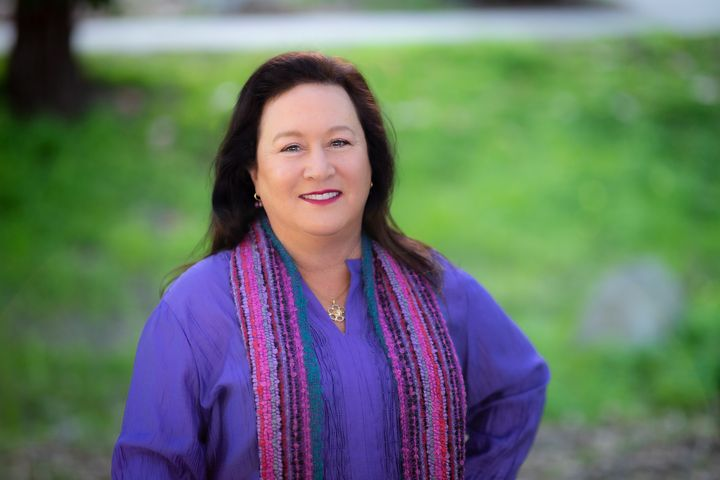
Female Founders: Catherine McKenzie of Min & Mon On The Five Things You Need To Thrive and Succeed…

Female Founders: Catherine McKenzie of Min & Mon On The Five Things You Need To Thrive and Succeed as a Woman Founder

An Interview With Candice Georgiadis

I think that education from elementary school should start exposing children to opportunities that aren’t just traditional career paths — to help shape the minds for the creatives and entrepreneurs of the future. Better access to child care — more assistance that allows women to be more independent. The pressure to be a good parent is a constant stress.

As a part of our series about “Why We Need More Women Founders”, I had the pleasure of interviewing Catherine McKenzie.

Catherine McKenzie is a co-founder of the New York-based, Colombian-made accessories brand, Min and Min. She is a trained flautist and educator, and her absolute favorite part of the business process involves encouraging narrative around individual products and capsules. For Catherine, no work day is complete without enjoying an unconventional pairing of coffee and bone broth, punctuated by frequent visits from her cockapoo, resident Min & Mon model Milo. In her down time, Catherine can be seen on the streets of NYC with her children, husband and Min & Mon fanny pack.

Thank you so much for doing this with us! Before we dig in, our readers would like to get to know you a bit more. Can you tell us a bit about your “backstory”? What led you to this particular career path?

It was rather serendipitous. After all, I have a degree in music and education and was a stay-at-home mom with no real plans to work full time. One of my best friends asked me to join vision to create an accessories brand that would later become Min & Mon — I believed in it so much that I couldn’t say no. I believed in her and she knew I had something to offer, even though I could not see it at the time. I never imagined it would be the brand it has become today.

Can you share the most interesting story that happened to you since you began leading your company?

How much I have grown in the midst of so much uncertainty. Not knowing what was coming next, but finding confidence in the growing process has been comforting. The life experience of being a female entrepreneur, mom, and wife have been an educational journey that I never expected to be fulfilled by.

Can you share a story about the funniest mistake you made when you were first starting? Can you tell us what lesson you learned from that?

I would say realizing there is purpose in making mistakes — and understanding that they (mistakes) leave me better off than I was. That’s really funny to me now looking back. Most of my mistakes have turned into great opportunities. Some of our design mistakes at Min & Mon have turned into best sellers as well.

None of us are able to achieve success without some help along the way. Is there a particular person who you are grateful towards who helped get you to where you are? Can you share a story about that?

My partner Carolina thrives for excellence in everything she does but is never dismissive in her approach. She is so supportive and always saw more in me than I saw in myself and that I had more to give and believed in me.

Ok, thank you for that. Let’s now jump to the primary focus of our interview. According to this EY report, only about 20 percent of funded companies have women founders. This reflects great historical progress, but it also shows that more work still has to be done to empower women to create companies. In your opinion and experience, what is currently holding back women from founding companies?

I think gender roles — we still live in a society where caretaking primarily falls on women. The idea that you can have it all and still be a great mother is false. You can only do what the support system you have around you allows. Also equal pay, and normally who stays home who makes less money which is normally the women. And by caretaking I also mean taking care of aging parents, not only kids. I would also say education — men are expected to take risks which are encouraged from birth to do so. Women take smarter risks which can sometimes be a hindrance or anchor to entrepreneurship.

Can you help articulate a few things that can be done as individuals, as a society, or by the government, to help overcome those obstacles?

I think that education from elementary school should start exposing children to opportunities that aren’t just traditional career paths — to help shape the minds for the creatives and entrepreneurs of the future. Better access to child care — more assistance that allows women to be more independent. The pressure to be a good parent is a constant stress.

This might be intuitive to you as a woman founder but I think it will be helpful to spell this out. Can you share a few reasons why more women should become founders?

Women are naturally problem solvers and think critically. We tend to involve all of our senses in decision-making, and in that process to build robust eco systems for communities and businesses.

What are the “myths” that you would like to dispel about being a founder? Can you explain what you mean?

That we have all the answers. That our ideas are the best ones. I am only as good as the support system and teams I have around me.

Is everyone cut out to be a founder? In your opinion, which specific traits increase the likelihood that a person will be a successful founder and what type of person should perhaps seek a “regular job” as an employee? Can you explain what you mean?

Tenacity and your relationship to risk. It’s not about a certain type of person, it’s about their life story and how they perceive risks and failures. The journey of being a founder does mean you have to fail forward.

Ok super. Here is the main question of our interview. What are your “5 Things I Wish Someone Told Me Before I Started” and why? (Please share a story or example for each.)

  1. That success and growth are not linear — sometimes it is cyclical
  2. That your value system is something you should always hold on to — it has been most integral to our success.
  3. How you measure success is very personal. Success does not look the same to everyone
  4. Growth comes at a price.
  5. Believe in yourself

How have you used your success to make the world a better place?

We have created a community and workforce I hope to empower people by creating an ecosystem that breads more fair wages a — by manufacturing and making our products in Colombia is one of our proudest moments. Focusing less on the margins and profit, we believe in social equality.

You are a person of great influence. If you could inspire a movement that would bring the most amount of good to the greatest number of people, what would that be? You never know what your idea can trigger.

Social equality — is the DNA of our brand. Consumer responsibility — making things that bring joy and happiness but within –

Thank you for these fantastic insights. We greatly appreciate the time you spent on this.


Female Founders: Catherine McKenzie of Min & Mon On The Five Things You Need To Thrive and Succeed… was originally published in Authority Magazine on Medium, where people are continuing the conversation by highlighting and responding to this story.
Female Founders: Renee Ainlay of Renee’s LIVE On The Five Things You Need To Thrive and Succeed as…

Female Founders: Renee Ainlay of Renee’s LIVE On The Five Things You Need To Thrive and Succeed as a Woman Founder

An Interview With Candice Georgiadis

Women are strong and insightful. Women have so many amazing functional ideas for products that need to hit the marketplace. The more women that become founders helps all of us to network. It’s also always a good example to mentor other women and to help with their dreams.

As a part of our series about “Why We Need More Women Founders”, I had the pleasure of interviewing Renee Ainlay.

Renee is a 62-year-old wife, mother, and grandmother. Renee is also a survivor of significant chronic illnesses, kidney disease and the costly fragmented US healthcare system. She is an advocate for herself and others, a teacher, a friend, a health enthusiast, an entrepreneur and owner, creator, and chef of Renee’s LIVE, https://www.reneeslive.com, the dairy-free, cultured crème frozen desserts.

Thank you so much for doing this with us! Before we dig in, our readers would like to get to know you a bit more. Can you tell us a bit about your “backstory”? What led you to this particular career path?

After fourteen years of illness, including over 1500 days in bed, and well over a million dollars in medical expenses, I found my path back to health through a combination of superfoods being introduced into my regular diet after returning from death’s doorstep. Once my health returned, I knew I needed to spread the word about my journey back to health and wellness so that others might find the same relief and benefits. My husband and a few family friends helped me in making Renee’s LIVE a reality to get the same superfoods that helped me to retail stores as an indulgent dessert so they can be easily accessed by everyone they might help.

Can you share the most interesting story that happened to you since you began leading your company?

Before our launch in retail, we spent two years in test markets, traveling across fifteen states, from Tennessee to California, traveling between Vegan festivals. We often had more than ninety minute waits for a chance to taste. Once, in Cincinnati, we had a line with over one hundred and fifty people at our concession trailer. We got caught out in strong thunderstorm with torrential rain where the wind picked up and started throwing other vendors’ equipment so we were forced to shut our windows, and after about ten minutes of blowing over canopies and tables, the storm blew past and we opened up again to see that there was still a line of people standing just as long as when we shuttered up, waiting to place an order and try a flavor. It was a sight to see.

We asked them, “Why didn’t you run for cover?” and the response was, “There was no way we were getting out of this line.”

They were all so soaked. Later we found out that the intense storm was a microburst.

Can you share a story about the funniest mistake you made when you were first starting? Can you tell us what lesson you learned from that?

Oh dear, back in either 2012 or 2013 during a practice run when cupping the ice cream into the new machine. We had an incident occur where someone didn’t properly shut a particular valve that was under pressure on the ice cream machine. Absolutely everyone on the production line was standing there and got covered in ice cream, faces, clothes, all over us. The resulting mess and clean-up was a reminder to always make equipment checks.

None of us are able to achieve success without some help along the way. Is there a particular person who you are grateful towards who helped get you to where you are? Can you share a story about that?

I have been very fortunate to have a personal family friend that believed in the same things I did regarding a healthy diet and coconut crème being extremely important in our lives. We met back in 2007.

He played an integral part in my using foods as a medicine but also he was my main benefactor for helping the initial launch of Renee’s LIVE into over a thousand stores.

Also, my husband, so there are two people. I wouldn’t have made it this far without him. It makes me tear up even thinking about how he’s always rooting me on. He’s amazing, even when I was sick, he was there and took care of me, he’s just a genuinely amazing person.

Ok, thank you for that. Let’s now jump to the primary focus of our interview. According to this EY report, only about 20 percent of funded companies have women founders. This reflects great historical progress, but it also shows that more work still has to be done to empower women to create companies. In your opinion and experience what is currently holding back women from founding companies?

Being taken seriously when trying to get funding for a woman-owned business. Resources are not directed toward women. There is also a lack of role models and mentors for young women out there.

Can you help articulate a few things that can be done as individuals, as a society, or by the government, to help overcome those obstacles?

Redirecting resources could help, such as making more grants available for start-ups. Small companies like mine don’t have a chance of scaling up without investors as it can take several million dollars. In 2017, more than 11 million women-owned businesses are still in the minority. At trade shows, we were outnumbered five-to-one, which can feel a little overwhelming. Always staying true to yourself, persevering. Never stop trying to get funding, for me funding has been difficult. Getting funding is difficult as women entrepreneurs are not being given the benefit of the doubt, unless they already have a relationship with investors. It helps to develop a “Never quit” attitude.

This might be intuitive to you as a woman founder but I think it will be helpful to spell this out. Can you share a few reasons why more women should become founders?

Women are strong and insightful. Women have so many amazing functional ideas for products that need to hit the marketplace. The more women that become founders helps all of us to network. It’s also always a good example to mentor other women and to help with their dreams.

What are the “myths” that you would like to dispel about being a founder? Can you explain what you mean?

Just because you’re a founder, people think that you’re rich, that you have a lot of money. By the time you get on the grocery store shelves people have no idea what it took to get you there, years of no pay, years of seventy plus hour work weeks. This venture should be your utmost passion because it will take 100% of your time & effort.

Is everyone cut out to be a founder? In your opinion, which specific traits increase the likelihood that a person will be a successful founder and what type of person should perhaps seek a “regular job” as an employee? Can you explain what you mean?

I think a trait you should have is to never give up. Constantly move forward. Don’t let the naysayers live rent free in your head.

People that aren’t really cut out to be founders are only willing to work 40-hours a week. People that need a secure paycheck each week. Also, people who really enjoy their own free time because you don’t have a lot of that when you’re starting off.

Ok super. Here is the main question of our interview. What are your “5 Things I Wish Someone Told Me Before I Started” and why? (Please share a story or example for each.)

  1. Frozen dessert category is the hardest one to get into as there’s a tremendous amount of competition for a very limited space.
  2. Distributors will always find a way to nickel and dime you to financial ruin
  3. Total amount of investment needed to a see a business the first five years
  4. Retail slotting fee costs, as to be in a retail store the store will require slotting fees to stock your product
  5. How hard it is to find investors, especially as a woman

How have you used your success to make the world a better place?

Since 2007, I’ve shared all the incredible knowledge I’ve learned about food as medicine, so paying it forward.

You are a person of great influence. If you could inspire a movement that would bring the most amount of good for the greatest number of people, what would that be? You never know what your idea can trigger.

Stop eating processed foods. Eat whole, fresh, organic, or at least non-GMO foods.

We are very blessed that some very prominent names in Business, VC funding, Sports, and Entertainment read this column. Is there a person in the world, or in the US with whom you would love to have a private breakfast or lunch with, and why? He or she might just see this if we tag them.

Both Rihanna, who is a Vegan, and Leonardo DiCaprio, who is a Vegetarian, would be excellent lunch companions. Both are extremely active with health foods and are amazing.

Thank you for these fantastic insights. We greatly appreciate the time you spent on this.


Female Founders: Renee Ainlay of Renee’s LIVE On The Five Things You Need To Thrive and Succeed as… was originally published in Authority Magazine on Medium, where people are continuing the conversation by highlighting and responding to this story.

Female Founders: Maria Scott of TAINA Technology On The Five Things You Need To Thrive and Succeed…

Female Founders: Maria Scott of TAINA Technology On The Five Things You Need To Thrive and Succeed as a Woman Founder

An Interview With Candice Georgiadis

I wish that someone had told me just how much I would have to sacrifice and, what’s even more important, that my loved ones would have to make sacrifices too. I have always been very happy to work hard but I never appreciated just how much impact this role would have on my loved ones and how much they would have to sacrifice — both in their quality of life and the emotional support that they need to give to me.

As a part of our series about “Why We Need More Women Founders”, I had the pleasure of interviewing Maria Scott, CEO & Founder, TAINA Technology.

Maria is an experienced tax lawyer who has worked in the industry for two decades prior to launching TANA. Her personal experience of the burning pain points within regulatory compliance of financial institutions informed her decision of the market need for TAINA.

She launched TAINA to transform the burden of regulatory compliance into a competitive advantage for Financial Institutions by transforming their customers experience, eliminating risks and reducing costs.

Maria is passionate about creating cutting edge products and empowering diverse human potential. She speaks and writes about customer experience in RegTech as well as culture, purpose and resilience.

Maria is a Chicago Booth MBA High Honours’ 2017, a FinTech Power List by Innovate Finance and a mother of 2 girls.

Thank you so much for doing this with us! Before we dig in, our readers would like to get to know you a bit more. Can you tell us a bit about your “backstory”? What led you to this particular career path?

It is my pleasure — I am happy to be able to support your mission to promote female founders.

I am incredibly boring — the person you don’t want to sit next to at a dinner party!

Before I launched TAINA, I practiced as a tax lawyer for many years, over a decade of which was with a big financial institution.

Whilst there, I was able to see at first hand the pain points that financial institutions experience with regulatory compliance — the complexity and breadth of regulatory obligations, which is increasing across the globe, strong pressure from the regulators and boards to demonstrate robust compliance, ever increasing costs, really poor customer experience — I could go on.

My dream was to wave a magic wand and make it all go away! I started to think seriously and realised that something so difficult and complex could not be solved based on its historical legacy and within the constraints of an institution — I would need to step outside and build a fresh solution that incorporated the collective wisdom of the industry.

As is typical with female founders, I thought that I had to learn a lot more before I could launch a business, so I went to Chicago Booth Business School to learn all the things I had little idea about at the time — how to raise money, how to think about product strategy, how to communicate my vision…. In a nutshell, that’s how TAINA came about.

Can you share the most interesting story that has happened to you since starting your company?

This has been a fascinating journey, so many stories and lessons on resilience

I think the most helpful one I can share with women who are considering launching their own business is this… You will often hear that what you are trying to achieve is impossible, at every stage. The truth is, with a strong and motivated team, you will absolutely get there.

Can you share a story about the funniest mistake you made when you were first starting? Can you tell us what lesson you learned from that?

I have made so many mistakes and I continue to make them every day, without doubt. Most of them still feel painful to be honest. Perhaps, one day, when I look back, they will seem very funny.

I think the most important one is to do with hiring and my lesson has been — it is much better in the long run to take longer to hire the best person you can for the role than to rush into a quick hire even if I am desperate to fill that vacancy

None of us is able to achieve success without some help along the way. Is there a particular person who helped get you to where you are? Can you share a story about that?

This is so true — I really believe that, if I have achieved any success, all of it is a credit to the many people I have come across on this journey — my amazing, ever-supportive family, our team, investors, clients, mentors.

If I have to highlight one person, it would be Joo Hee Lee. She is an amazing woman, a very sophisticated and experienced professional investor, who believed in me from day one. She was my very first investor, and is incredibly bright and thoughtful. To this day, her support and advice help me through my toughest challenges.

Ok, thank you for that. Let’s now jump to the primary focus of our interview. According to this EY report, only about 20 percent of funded companies have women founders. This reflects great historical progress, but it also shows that more work still has to be done to empower women to create companies. In your opinion and experience, what is currently holding back women from founding companies?

One important aspect of this research is that the figure of 20 percent reflects not the number of women founding companies but the percentage of the venture-funded startups that have been founded by women.

In fact, as the research highlights, the number of women founding startups has increased four times, whereas the percentage of funded startups founded by women has not increased to anywhere near that extent.

What’s even worse is that the percentage of female-founded startups is dropping at the later stages of funding, which would indicate that startups founded by women have a tougher time fundraising the more progress they make! So the real issue here is funding.

I have always been incredibly blessed, probably because the investors we raise funds from tend to be deeply committed to our space and their expertise means that they can focus on the real fundamentals of the business. I can see from this research that not everyone is this lucky — we must do everything we can to address this.

Another aspect here is, of course, that fewer women than men found startups to begin with. This is tragic because women founders bring much-needed diversity of thinking — in terms of strategies and solutions — and are capable of making a huge impact in our world.

I think that the main reason for this challenge is a real lack of role models. Role models are so important; they help us believe that we too can achieve what others have achieved.

Can you help articulate a few things that can be done as individuals, as a society or by the government, to help overcome these challenges?

Bringing female role models into the public eye — which is what you are doing with this series — is hugely impactful.

Individually, as female founders, we need to make more of a conscious effort to tell our stories. This often does not come naturally to us — certainly not to me!

And, as a society, we need to bust some of the myths and stereotypes out there about what makes a successful founder.

This might be intuitive to you as a woman founder but I think it will be helpful to spell this out. Can you share a few reasons why more women should become founders?

For founders, the single most important reason to go for it and establish a company is that it offers the ability to make a real, positive difference in the world and to provide solutions to frustrating pain points.

And it’s incredibly rewarding to hear happy clients talk about their experience and the difference your solution is making to their businesses and teams.

What are the “myths” that you would like to dispel about being a founder? Can you explain what you mean?

The most damaging and innaccurate myth out there is that there is one particular type of successful founder. In reality, successful founders come from all sorts of backgrounds, from all ages and genders — and, most definitely, not all of them are extravert!

Is everyone cut out to be a founder? In your opinion, which specific traits increase the likelihood that a person will be a successful founder and what type of person should perhaps seek a ‘regular’ job as an employee? Can you explain what you mean?

At a fundamental human level, we are all capable of being a founder of something meaningful.

Whether or not someone actually becomes a founder depends on several key factors, most important of which is: Do we care about something so deeply that we would be prepared to make sacrifices and face many challenges to make it happen?

We may or may not come across this in our journey and, sometimes, we may just care about other things equally deeply, so we don’t take the plunge.

Ok super. Here is the main question of our interview. What are your “5 Things I Wish Someone Told Me Before I Started” and why? (Please share a story or example for each.)

Oh my word, there are so many.

  1. I wish that someone had told me just how much I would have to sacrifice and, what’s even more important, that my loved ones would have to make sacrifices too. I have always been very happy to work hard but I never appreciated just how much impact this role would have on my loved ones and how much they would have to sacrifice — both in their quality of life and the emotional support that they need to give to me.
  2. If only someone had told me that I would care about my business, my team and my customers so deeply that it hurts, physically. Even a positive event can create such a strong emotion that, by the end of the day, we are absolutely worn out but still must recover and be strong again by the next morning.
  3. It would have been good if someone had told me that it does not get easier as the business grows; the challenges just keep evolving. At our earliest stages, our challenges may be to do with the product; as the business grows they may be to do with fundraising, geographic expansion, new business extensions — and so it goes on.
  4. I wish someone had told me that what makes a good CEO is very different as the business grows. We must continue to grow as people and learn new skills indefinitely — and we must do it faster than our business grows, otherwise we will no longer be the right CEO.
  5. I wish someone had told me that it’s the loneliest job in the world. We must stay strong and patient for our teams because our job is to give them clarity and stability. Many things we go through cannot and must not be shared with anyone except, perhaps, a therapist (as and when we get time — for most of us, this is in a distant future!).

How have you used your success to make the world a better place?

Ultimately, this is what this is all about.

I have not succeeded yet; I have so much more work to do before I can declare it a success. When I do reach this point, my dream is to take on charitable missions and I already know what they will be. Here and now, my focus must be on creating a substantial positive change to our clients’ lives, support our teams’ growth so that each individual feels fulfilled professionally, and encourage more women to be founders of something meaningful.

You are a person of great influence. If you could inspire a movement that would bring the most amount of good for the greatest number of people, what would that be? You never know what your idea can trigger.

I believe very strongly that our world could be free of fighting and deadly conflicts.

To create this world, we must have leaders and role models who are truly accepting of diverse points of view, are willing to listen and prioritise the good of the world above their own individual egos and victories.

To get to this point, we need to eliminate the typical stereotypes of good, strong leadership and embrace truly diverse and open role models and approaches.

We are very blessed that some very prominent names in business, VC funding, sports, and entertainment read this column. Is there a person in the world, or in the US with whom you would love to have a private breakfast or lunch with, and why? He or she might just see this if we tag them.

There are so many amazing people I would love to meet and learn from.

If I was to select one, I really admire Therese Thucker, the founder and CEO of an amazing multi-billion-dollar enterprise software business.

My mission is to get TAINA to this point, so I would love to hear how Theresa did this for her awesome business.

Thank you for these fantastic insights. We greatly appreciate the time you spent on this.

Thank you for working on this important mission; it is great to be able to support it in my small way.


Female Founders: Maria Scott of TAINA Technology On The Five Things You Need To Thrive and Succeed… was originally published in Authority Magazine on Medium, where people are continuing the conversation by highlighting and responding to this story.
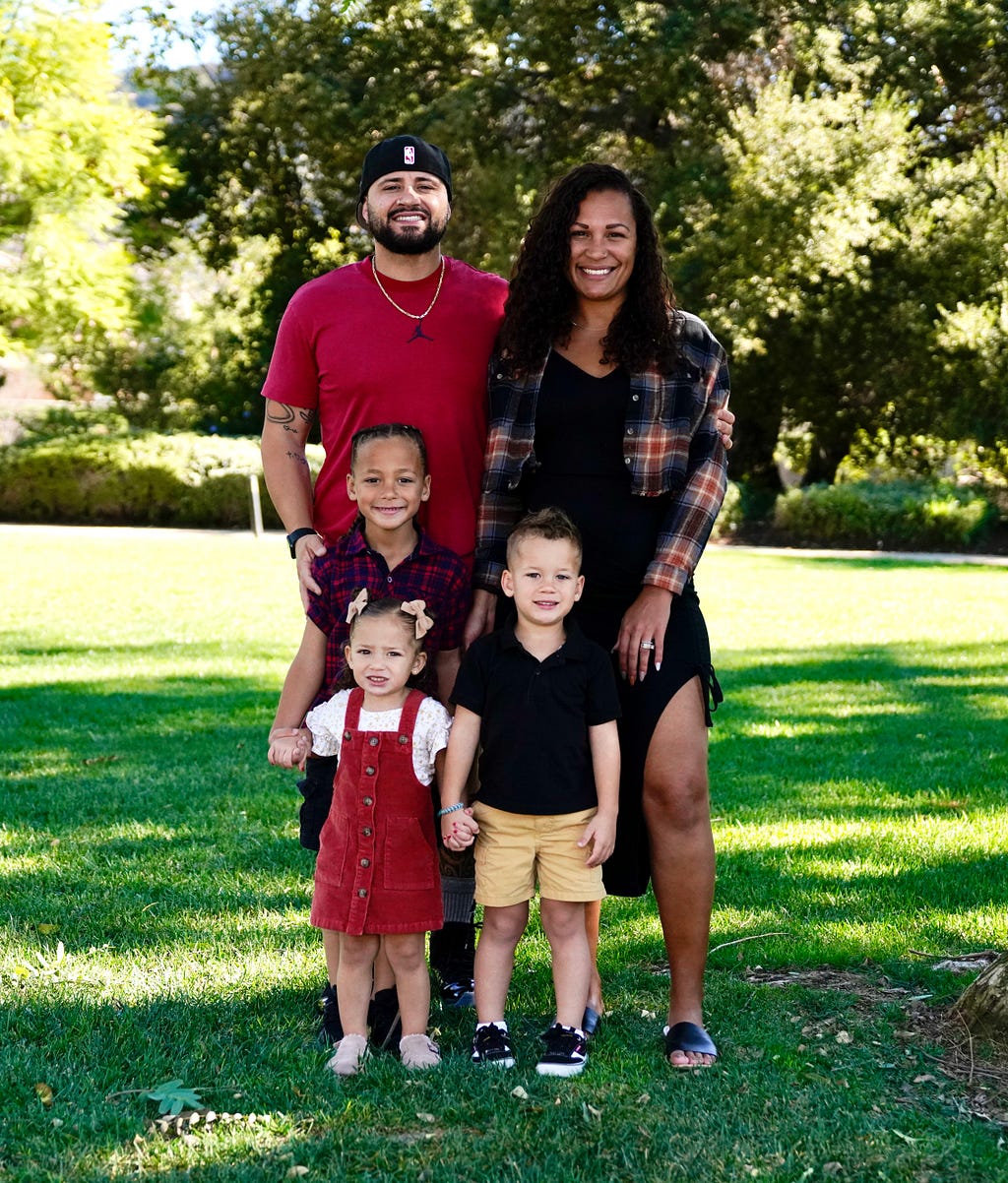
Female Disruptors: Diana Muturia Of Clyn On The Three Things You Need To Shake Up Your Industry

An Interview With Candice Georgiadis

I want to see a difference in how immigrants are treated, especially those of color who are darker skinned. We had an entire crusade about Ukrainian immigrants, but no one talked about the Haitian immigrants who were whipped at the border, pushed back into the water and told to “go back to where you came from.” I’m not saying Ukrainian immigrants don’t deserve to be welcomed with open arms, it’s just that Black immigrants should be treated as well as they were.

As a part of our series about women who are shaking things up in their industry, I had the pleasure of interviewing Diana Muturia.

After dropping out of college, Diana didn’t want to waste her smarts even at her most humble moments. As the sort-of cleaner in her neighborhood, she learned the struggles of trying to create rapport, always asking for referrals and negotiating her prices, etc. She also met other small cleaning providers especially in the Black and Hispanic communities and got to listen to their unique stories. That inspired her to create Clyn, an app that is specifically made for people like them and herself.

Her biggest reason, however, is to change the perception of how home-service providers and janitorial jobs are looked upon. “We often see that cleaner or janitor in the shadows always cleaning up around the house or office spaces, but don’t hear of them,” she says. “Maybe an occasional “Hello” or “Hola”, but we don’t realize how much effort they put to make sure our environment is clean and clear so we can focus on our daily tasks.

Thank you so much for doing this with us! Before we dig in, our readers would like to get to know you a bit more. Can you tell us a bit about your “backstory”? What led you to this particular career path?

I’m from Kenya and came to the USA when I was 18 years old, to study math and mechanical engineering. During that time studying, buying $200 math textbooks consistently led to real sticker-shock. I had to start cleaning people’s houses, do pet-sitting and other small jobs, just to cover the cost of those textbooks. Due to my heavy accent, I wasn’t able to get typical retail or service jobs, leading me to small jobs. After dropping out of college during my last year due to financial issues, I found myself cleaning houses full time to put food on the table. I looked around and saw other cleaners who told me of their lives and how they came to their present conditions. I saw many similarities between their experiences and my own, as I spoke to many BIPOC and immigrant folks who just wanted a fighting chance to do well in life, and live the American Dream. I said, “I’m not going to waste my smarts, I’m going to do something about this.” That’s how Clyn came about.

Clyn connects homes to home-service providers, the ones who hustle everyday to put food on the table. If you don’t have the resources for a marketing team, for an accounting team, for a finance team, Clyn says “Listen, do what you need to do in terms of cleaning the homes. We’ll get that situated for you.” I think it’s fair to say that Clyn’s the Microsoft of the cleaning industry, because the industry is so mismanaged and fragmented, while Clyn is a one-stop product which helps home-service providers get jobs and manage their business at the same time.

Can you tell our readers what it is about the work you’re doing that’s disruptive?

There are many competitors trying to make an app and just throwing it into the market, which I think is just a lazy thing to do in 2022. We have to make sure we are taking care of cleaners, because if we do, then they take care of the household. The stories I hear about cleaners not being covered by health insurance are insane to me. Clyn is passionate about these workers getting the necessary insurance coverage. We also help cleaners dictate their prices, which is especially important in this economy. There’s so many things Clyn looks at, especially as I’m a cleaner myself, so I understand what cleaners go through. So I say, “We’re going to change that. We’re going to bring the cleaning industry that has been very traditional and not involved, and bring it up to the standard that it needs to be at today.”

I feel that for other businesses, they always have to deal with old-school software, and use multiple apps to effectively run things. While a business owner can often be at their computer, a cleaner is mostly in someone else’s house, where handling multiple apps can be a serious challenge. Making the transition between different elements of running a home-service business as smooth as possible, lets the cleaners do their job well.

Can you share a story about the funniest mistake you made when you were first starting? Can you tell us what lesson you learned from that?

I remember when I was looking to get into the cleaning business for the very first time, in a Phoenix neighborhood. I was so broke that I couldn’t make a business card, so I ripped off a piece of paper and said if you need a cleaning lady, please call this number. I jammed a paper containing the same number into many doors. Then an old lady named Patty called me and gave me an entire 45 minute-long interview: asking me how I’d handle the cleaning of various things in her house. I was so happy after she finally gave me the job. Patty gave me something impactful in my life as she connected me to people in this Phoenix neighborhood. If there’s anything that needed to be done, I would get a call, and this would evolve over time, leading to me gaining a terrific network of people, which allowed me to understand how creating business and trust with customers is so important.

We all need a little help along the journey. Who have been some of your mentors? Can you share a story about how they made an impact?

The first lead investor, the Logitech CEO, Bracken Darell, is a crucial mentor. I met him when I asked him a candid question at an online conference he was presenting at, about tech businesses, and immediately he knew I was a diamond in the rough. He was clear that it was crucial for me to not give up, and to remember I have a really good thing going for me. He believed I would be the best person in the home-service industry to disrupt it, as I have the cleaning experience, the technology knowledge and the business experience, whereas most founders in the industry have only one of these knowledge points. This faith really knocked out the imposter syndrome I was dealing with once and for all. It was such a short way of him saying this, but it just takes one contact, one moment, to unlock better things in your life.

Darrell supported Clyn very early on in its existence, so he didn’t initially send a mind-boggling amount of cash. Darrell sent just $10,000 USD to spend on what I deemed necessary to help grow Clyn, by targeting measurable goals. He was clear that I needed to make sure to put Clyn in the market however it could be done. This was such valuable advice. When a Fortune 500 CEO says you have something there and puts in the investment to back their words up, it really fires you up.

In today’s parlance, being disruptive is usually a positive adjective. But is disrupting always good? When do we say the converse, that a system or structure has ‘withstood the test of time’? Can you articulate to our readers when disrupting an industry is positive, and when disrupting an industry is ‘not so positive’? Can you share some examples of what you mean?

Change is always very uncomfortable, but so necessary. If we lead as business owners lead in compassion, with our humanity, then the disruptions we cause bring society forward. There’s a difference between disrupting just to make a name for yourself, compared to one motivated by the knowledge that something has to change to improve society. In the home-service industry, many cleaners are depending on themselves, and can’t come together as a community, so the Clyn app disrupted the industry and allowed for communities to be built, reducing the isolation that leaves them vulnerable. Enhancing the skills of the cleaner is so important, because you’re building up not just the individual cleaner, but also building their business whose revenue goes directly to the cleaner’s household. If disruption and change are looked at in the lense of compassion and what will help humanity move forward, then that disruption is necessary.

Eventually, I want to build Clyn to a point where it can impact immigration reform. I’d love to see a system where cleaners’ work is logged and they can earn their way into citizenship, earn their first work permit, and eventually get licensing for a business. My personal experience with struggling for a fair chance means I am determined to further disrupt the industry and anti-immigrant narratives that exist in the USA. Immigrants create so many jobs (18% of successful businesses have been started by immigrants, despite them making up only 6% of the population), so if you want to see more jobs, give immigrants a fighting chance.

Can you share 3 of the best words of advice you’ve gotten along your journey? Please give a story or example for each.

The one that changed my perspective was, when someone said “you’re perfect for this role because you are black, a woman, and an immigrant.” I said “what does that mean?” They said, there’s so many opportunities now just meant for you. It changed my perspective, where even though I go through so many challenges as a Black immigrant woman, I started to look at where I could go to work where I was valued. Previously I had been willing to just accept a seat at the table with a limited role, or a seat near the table. If I want to win, I need to go where I’m valued, I won’t waste my time at a place where I’m seen as a token, as someone who is otherwise useless. I deserve to be valued, I know that.

I’ve always felt that I wasn’t smart enough because I dropped out of college, but my big brother will constantly remind me that I am made for this, and it makes a big difference for my confidence. Having even one person supporting you makes a difference.

We are sure you aren’t done. How are you going to shake things up next?

We are in the middle of a three-month sprint, and we have a new version of the Clyn application coming out. We’re really excited about that because now you’ll be able to add roommates in the app. Since the pandemic started, the statistics have changed drastically, with 30% of Americans now living with roommates, whether this is with family, friends or colleagues. The biggest issue between roommates is the standard of cleanliness, so we say if that’s the case and you want to save on money while still having your roommate around, go on Clyn and add groups so you can split the payments to the cleaner. We’re excited to have the application’s update go live in July.

Multi-property management is going to soon be included in the app, so if your family members aren’t tech savvy, you can manage the process of getting their house cleaned just on Clyn.

In your opinion, what are the biggest challenges faced by ‘women disruptors’ that aren’t typically faced by their male counterparts?

Funding is a big one. As women, we have to constantly prove that we are worth the investor paycheque, more than our male counterparts. Ironically, the majority of businesses run by women are more successful than those run by men. Kevin O’Leary from Shark Tank said “I invest in more businesses run by women than those run by men. I know the statistics and I’m going to follow them. I put my bias aside.” There needs to be a conversation about the challenges women face to get funding for their businesses.

Do you have a book/podcast/talk that’s had a deep impact on your thinking? Can you share a story with us?

That book is called the “Phoenix Project”. It’s more technical than anything, but I’d recommend it for any woman trying to get into the tech business, and for those who’ve failed or faced a challenge detrimental to their tech business. Read that book, and read it twice.

The first time you read a book, you find something in the book, the second time you read it, you find something within yourself. I had my entire team at Clyn read it. I said, take a two-week break, but don’t come back to work if you haven’t finished the “Phoenix Project”. When the team came back, they said “Diana I’m blown away, I can’t believe that this issue we were having is because of this and we can resolve it.” Ever since they read the book, the team has been moving so much faster because they have the full picture of it. As leaders we don’t like to tell employees that this is what we are doing as a company, we like to tell our employees to just put their heads down and work. That’s not healthy, if you start treating people like that then they’ll feel that they are just a number. To actually get things done, you have to involve your team in everything, so for example, you tell them what your goals are to get the company to this level of revenue by a certain time.

If you have a chat with an investor that doesn’t go well, just tell your employees the truth. It does make a difference in how they work because they work better if they know they’re a part of something that’s massive and they need to do their part, as part of a team that’s actually disrupting the industry. If you put things to the side, away from employees, they’ll be able to notice over time, and that will impact the pace and quality of the work they get done.

You are a person of great influence. If you could inspire a movement that would bring the most amount of good to the most amount of people, what would that be? You never know what your idea can trigger. 🙂

My biggest goal is to go back to Kenya and build a city. Kenya is a very hot spot for tech, but we can do better. It’s crucial to eventually build a really strong structure around the tech disruptors in Africa.

In the USA, I’d like to see immigrants to get more positive results, to have a fair fighting chance. Is it going to be difficult, yes, but it is worth a try. From the time when I could sense college was slipping away from me, and I was scrambling to do what I could to finish my degree, I remember a student advisor at my college. She really treated some immigrants well, but when it’s my turn to ask for help, she was like “ugh what do you want.” You could see that she favored white international students over Black international students. In the last encounter we had, she was actually yelling on the phone and told me to “go back to my country.” I was just wondering what I did so wrong, I was just wondering how I hadn’t qualified for any scholarships or grants. The way white immigrants are treated compared to black immigrants is insanely different. If you look at economies of scale, that’s why you see many Black immigrants not doing well, since they are constantly cut down.

I was recently talking to a female mentor of mine, who was assigned to me after I got into Venture Devils, a business accelerator here in the Valley, and I told her my story. She was fuming when she heard what I had been forced to go through to get to this point. She said, “Your story is so inspiring but unnecessary. You should’ve been able to receive the necessary help to finish your engineering degree and have been able to keep things moving. You shouldn’t have had to fight for all these years to get a seat at the table.”

I want to see a difference in how immigrants are treated, especially those of color who are darker skinned. We had an entire crusade about Ukrainian immigrants, but no one talked about the Haitian immigrants who were whipped at the border, pushed back into the water and told to “go back to where you came from.” I’m not saying Ukrainian immigrants don’t deserve to be welcomed with open arms, it’s just that Black immigrants should be treated as well as they were.

How can our readers follow you online?

Twitter: https://twitter.com/DianaMuturia

Facebook: https://www.facebook.com/dianamuturia

Linkedin: https://www.linkedin.com/in/dianamuturia/

This was very inspiring. Thank you so much for joining us!


Female Disruptors: Diana Muturia Of Clyn On The Three Things You Need To Shake Up Your Industry was originally published in Authority Magazine on Medium, where people are continuing the conversation by highlighting and responding to this story.