Female Founders: Monique Terry of Bold by Monique On The Five Things You Need To Thrive and Succeed…

Female Founders: Monique Terry of Bold by Monique On The Five Things You Need To Thrive and Succeed as a Woman Founder

An Interview With Candice Georgiadis
If you have the drive and the determination, being a founder is so rewarding. Not just financially but seeing something that you created grow is indescribable and so gratifying.

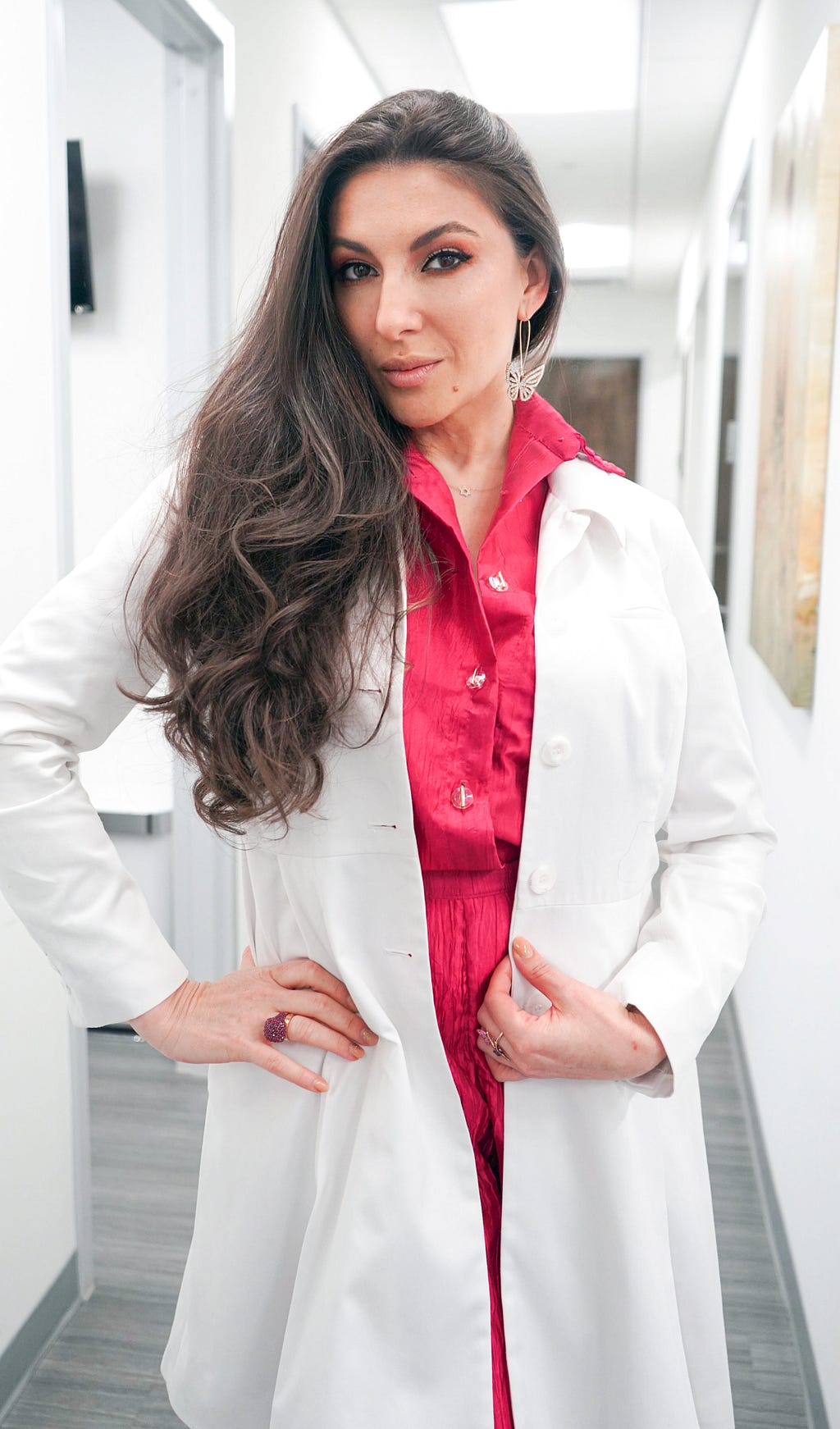
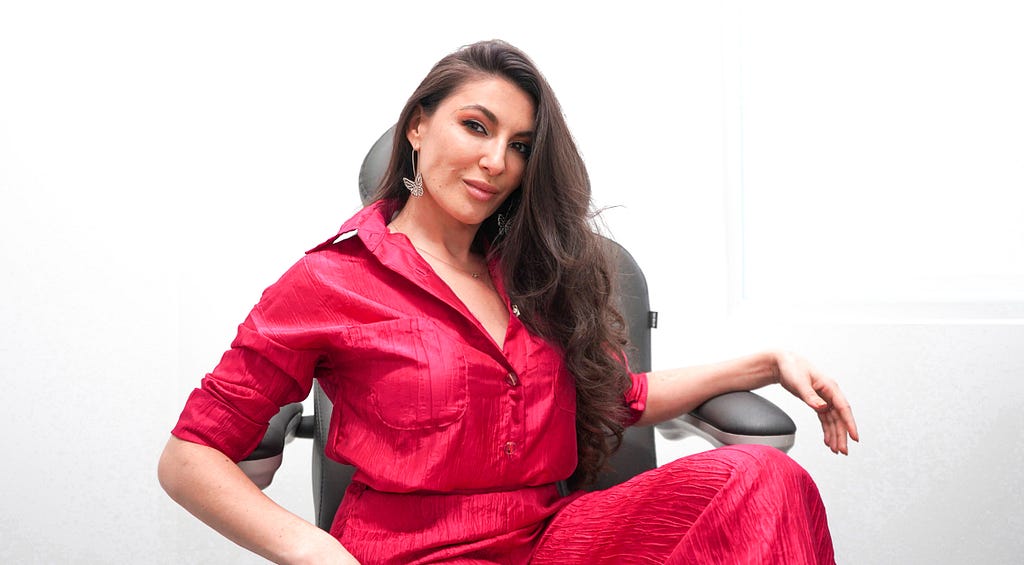
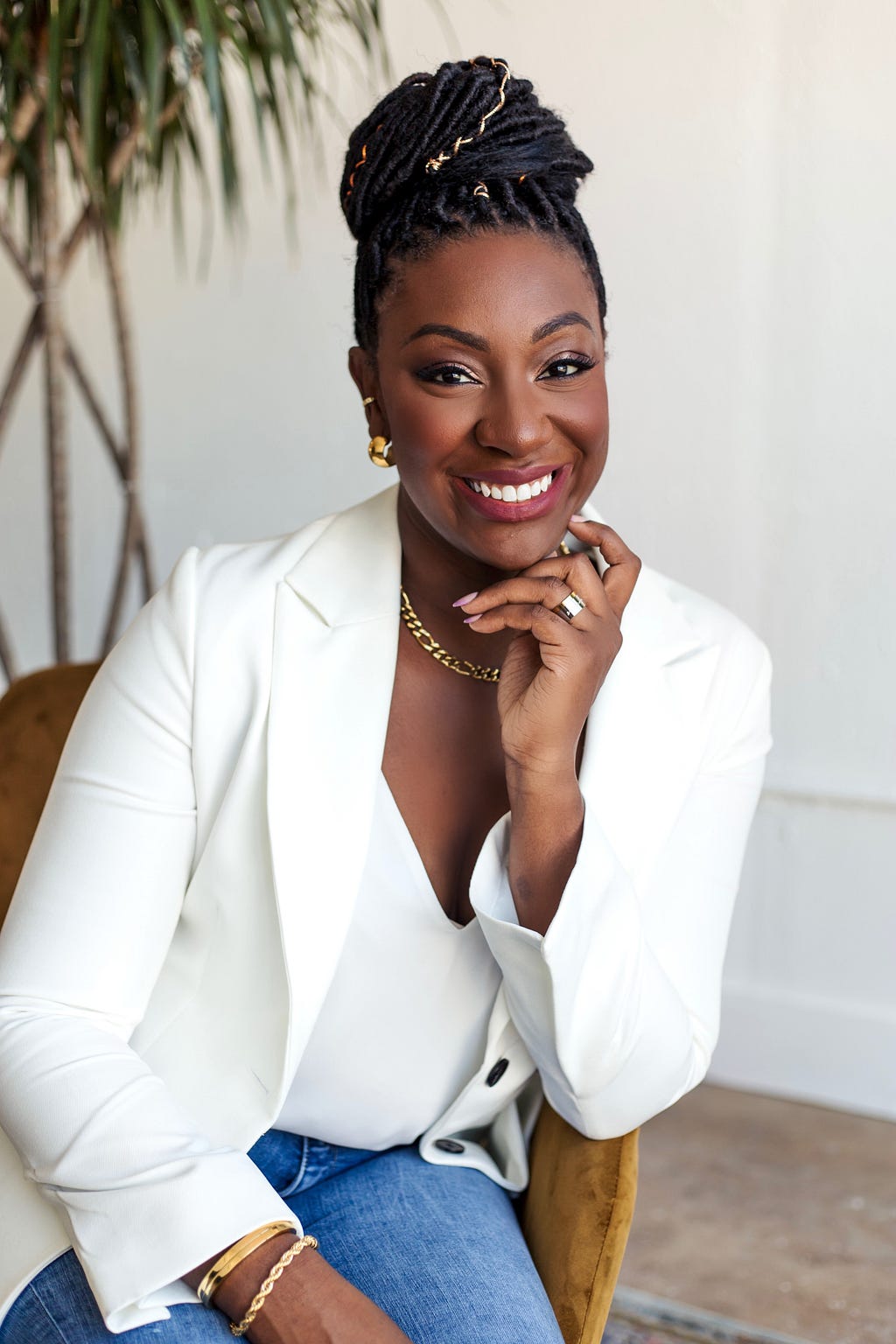
As a part of our series about “Why We Need More Women Founders”, I had the pleasure of interviewing Monique Terry– Founder of Bold by Monique.

Founded by Monique Terry in November 2019. For Monique, the constraints and demands of corporate America left her creative soul yearning to break free. In her free time, she started designing edgy statement pieces with handwritten inspirational messages. The simple words of encouragement or scripture are beautiful reminders to keep pushing forward. Soon after launching her initial line, she uprooted her life in the DC metro area and relocated to Dallas, TX. Why? She still doesn’t know what made her take that initial leap, but it has been the best decision for her and her business. Soon after arriving, her local and national following quickly grew and has turned into a tight knit community. Monique’s wants to encourage others to keep going and not be afraid to take bold steps in life. BLDxMonique fuels her creativity while uplifting and inspiring people all over the world!

Thank you so much for doing this with us! Before we dig in, our readers would like to get to know you a bit more. Can you tell us a bit about your “backstory”? What led you to this particular career path?

Absolutely! I’m originally from the DC area and worked in the Government Defense and Aerospace sector for years. I’ve always been a creative, free spirit and the corporate environment was literally draining every bit of me and honestly, I had fell into a bit of depression. It was the feeling of knowing I was supposed to be doing more, something fulfilling but not knowing what or even how. One day I was at my desk at work and wanted to create a product of positive reminders because I knew I couldn’t be the only one feeling this way. I started designing rings, necklaces, and bracelets with little messages during company time in my cubicle lol. At night I would learn about jewelry making, sourcing the best metals, and then vetting manufactures. I actually put my home up for rent and moved in with my sister to save up the capital to start. Looking back, it was sort of a blurr as my focus was intense but 8 months later, I was able to launch BldxMonique in November 2019.

Can you share the most interesting story that happened to you since you began leading your company?

I would say actually traveling to new cities and meeting strangers who have purchased our affirmation rings. When I first moved to Dallas, I was out to dinner with a new friend, and when the other guests started to arrive, they were all wearing BLDxMonique rings! The same thing happened in Miami last year! Oh, and scrolling on Tiktok I’ll see viral videos and spot a ring. Lol It’s such a cool feeling!

Can you share a story about the funniest mistake you made when you were first starting? Can you tell us what lesson you learned from that?

I believe the first week we launched, a Boutique in Chicago asked if we did wholesale. I eagerly responded “of Course”! I had absolutely no clue what I was doing so I did what anyone would do… I went to Youtube to try to figure it out. Lol! This store actually ending up purchasing 40% of my launch inventory and I literally had no clue how to package and ship it out. It all works out though and she loved the rings.

None of us are able to achieve success without some help along the way. Is there a particular person who you are grateful towards who helped get you to where you are? Can you share a story about that?

I wouldn’t be anywhere without the support of my family and friends from back home in VA. I grew up in a very close-knit community and church. Even though I’m in Texas, they support every single launch, every article, they’ll comment on all my socials, and it feels so good to continually see them order and support the brand and even refer BLDx to all of their friends! There isn’t any particular one person as I’m just so blessed.

Ok, thank you for that. Let’s now jump to the primary focus of our interview. According to this EY report, only about 20 percent of funded companies have women founders. This reflects great historical progress, but it also shows that more work still has to be done to empower women to create companies. In your opinion and experience what is currently holding back women from founding companies?

Owning a business is HARD. There could be a number of reasons but most women I come into are held by fear. The fear of not being able to obtain finances, or the fear that it will actually succeed and providing income just to live in general. Often having the support is a great hinderance on why some women don’t step out there.

Can you help articulate a few things that can be done as individuals, as a society, or by the government, to help overcome those obstacles?

A lot of potential business owners don’t realize that platforms like Shopify and PayPal offer capital for small businesses. You just have to get started and stay true to the course to qualify for these programs.

This might be intuitive to you as a woman founder, but I think it will be helpful to spell this out. Can you share a few reasons why more women should become founders?

If you have the drive and the determination, being a founder is so rewarding. Not just financially but seeing something that you created grow is indescribable and so gratifying.

What are the “myths” that you would like to dispel about being a founder? Can you explain what you mean?

Oh man! I hate when people say “copying is the sincerest form of flattery”- Oscar Wilde. We see brands on Instagram trying to copy our original designs all the time and it’s so frustrating. To create intentional pieces and then have people just try to sell your ideas doesn’t exactly feel flattery! To be completely honest I have to remind myself to not focus on that and to just keep going. At the end of the day, I’ve noticed others can’t sustain a business by copying. They always seem to fall off.

Is everyone cut out to be a founder? In your opinion, which specific traits increase the likelihood that a person will be a successful founder and what type of person should perhaps seek a “regular job” as an employee? Can you explain what you mean?

The greatest trait a founder should have been self-discipline. Growing up I was in so many sports and believe the structure sports provided, absolutely set me up for success business wise. In high school I was used to doing 8 hours of school, then a 2-hour track practice, dinner, homework, and then back to school at 7pm for competitive cheer practice. As an adult, I worked in HR, but was a professional cheerleader for an Arena Football team. I would work 8 hours, then drive 2 hours in Dc traffic just to then have a 3-hour cheer practice and drive an hour home. Those days I wouldn’t see the sheets until 1am. That’s the type of discipline founders should possess. The grinding behind the scenes is what makes one successful! There will be many days where the fruits of your labor won’t be so evident, but if you keep going, it’ll all work out!

Ok super. Here is the main question of our interview. What are your “5 Things I Wish Someone Told Me Before I Started” and why? (Please share a story or example for each.)

Start researching good accountants now.

Always be willing to pivot.

Don’t fall in love with every idea. What you think will work doesn’t always. and what you think won’t work often times does.

Keep the blinders on. Don’t focus on what everyone else is doing

Keep your overhead low and reasonable for as long as you can!

How have you used your success to make the world a better place?

I hope I have! I’ve had customers who’ve emailed that they wear their affirmation rings to dialysis or chemo as a reminder to keep pushing. Some women are leaving relationships and wear our “know your worth” or “you are enough” to replace their wedding rings. That’s what it’s all about right?

We are very blessed that some very prominent names in Business, VC funding, Sports, and Entertainment read this column. Is there a person in the world, or in the US with whom you would love to have a private breakfast or lunch with, and why? He or she might just see this if we tag them

Serena Williams are you reading this?

I absolutely love how she is the brand! Sports, fashion, jewelry, influencer….. she does it all and that’s how I aspire to be!

Thank you for these fantastic insights. We greatly appreciate the time you spent on this.


Female Founders: Monique Terry of Bold by Monique On The Five Things You Need To Thrive and Succeed… was originally published in Authority Magazine on Medium, where people are continuing the conversation by highlighting and responding to this story.

Bryan Post of Major Media League: 5 Ways Influencers Can Monetize Their Brand

An Interview With Candice Georgiadis

Much of my work has been focused specifically on how parents can parent from a place of love rather than fear. Twenty-five years later and I don’t feel like I’ve even scratched the surface. It’s hard work, but it’s the only worthwhile work. I just want to grow love.

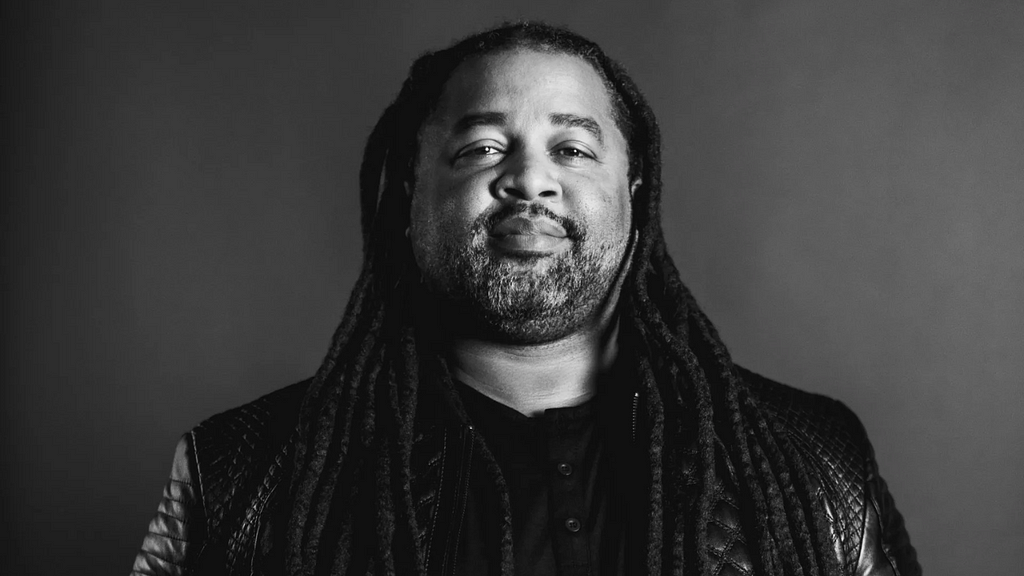
As part of my series about “How Influencers Can Monetize Their Brand”, I had the pleasure of interviewing Bryan Post.

Bryan Post, Founder and CEO of Major Media League, is a superpreneur. Having started twenty companies over a twenty-five-year entrepreneurial career, he has had ten successful exits. His most recent start-up in the social services space grew from 0- 8 figures in three years. A 3-time best-selling author, international speaker, and world-renowned child behavior expert, Bryan has an enduring passion for children, families, and entrepreneurship.

Thank you so much for doing this with us! Before we dig in, our readers would love to get to know you a bit more. What is your “backstory”? What brought you to this point in your career?

Ha! I’m 49 years old so depending on how long of a story you want that could be a loaded question! I am literally an Okie from Muskogee, as Merle Haggard sang. I was born in Muskogee, Oklahoma and shortly thereafter placed for adoption. I was in a couple of different foster homes before being adopted by a beautiful young couple that was unable to conceive. I was raised in a Mountain View, Oklahoma, a small southwestern town. There were so many great things about my childhood: friends, Friday night sports, and girls!

However, there was also a lot of violence in our home. I had a sister who was also adopted and what most people don’t understand about adoption is that it is a traumatic experience. It shapes the brain in a different way. Leading the child to be more stress-sensitive, anxious, and fearful. This can manifest into problematic behaviors because most parents don’t understand that they use traditional parenting techniques like hitting, yelling, shaming etc., which only exacerbate the problem and create more stress. My parents were beautiful, consistent providers, but they were not nurturing and, when stressed by our behavioral problems, they did all the wrong things.

On the other side of idyllic was more trauma. I excelled in school and sports, but my sister struggled. The violence finally diminished around the time I was sixteen because she left home. However, my sister struggled for the rest of her life, and she was later tragically killed in a car accident.

God allows experiences in our lives to happen for what are, oftentimes, mysteries. The struggles related to my adoption, and family struggles propelled a twenty-five-year career being recognized as one of America’s foremost child behavior experts. When I was in college and needed money, I called my mom and asked if she could send me some. A week later I received an envelope from her with four dollars in it. My parents were spending all their extra money on lawyers to help my sister stay out of jail, so there wasn’t much leftover.

More than thirty years later, those four dollars became one of the inspirations for launching the Major Media League. My mission is for every young athlete to have a chance to be a part of a supportive community and to learn how to put a few bucks in their pocket.

Can you share the funniest or most interesting story that happened to you in the course of your career?

As a trauma expert, I’ve traveled around the world providing consultation to struggling families.

I was working with a family in Alaska once and it was getting late. The mom and I were upstairs the boy’s room working with him on settling down for the night. While he was jumping around, without either of us realizing it, he picked up a pair of scissors, slid around behind me and cut one of my dreadlocks in half! They were about halfway down my back then. It was a big cut!

I thought the mom was going to have a heart attack. I am 100% committed to love-based parenting and used the moment of shock to teach the mom a very valuable lesson on how to love when you really would prefer to choke your child. Many years later, my locks now hang to the back on my legs.

How have you used your success to bring goodness to the world?

The famous activist Cornel West once told me that success is not enough. That if I really wanted to do something, that I should work to be great! My entire career working with families has not been merely to be good at what I do but to be great. To create impact and inspiration in all the lives that I touch.

Love is the most powerful force in the world and all I want to do is generate more love in a world of fear. Whether this is by saving a family, inspiring a career, or empowering a community for young athletes to achieve more than they ever believed. I just want to live the life God put me on this earth to live.

You have been blessed with great success in a career path that many have attempted, but eventually gave up on. Do you have any words of advice for others who may want to embark on this career path but know that their dreams might be dashed?

From the time I was in the first grade, the only thing I ever wanted to be was a professional football player. And I mean it was the only thing. I was 100% obsessed and it is the one thing that got me to college.

After a couple of years in college, I simply realized that dream was no longer for me. I fell into social work and then entrepreneurship. It has never been easy, but it has always been worth it. When you are doing what you love, it is not absent pain. Rather, it just means when you encounter the strain, the stress, and the struggle it’s easier to tolerate. Faith, Focus and Perseverance…from these three things comes success. Set goals, big and small, and go after those goals every single day.

I used to write my goals every day for years until they became a part of my very being. My obsession is driven by my goals. Not everything is going to work out, but you have to find gratitude during the struggle and stay focused on the goal. Where one door is closed, another will open. It is a natural law and, most importantly, don’t let negative people drag you down. Cut them loose and protect your heart and your energy.

None of us can achieve success without a bit of help along the way. Is there a particular person who made a profound difference in your life to whom you are grateful? Can you share a story?

My life is a series of blessings from amazing people that God has placed in my life. Starting with my parents who struggled so mightily with us as children! They were always consistent, predictable, and supportive. My parents gave me a foundation of support that let me take the leap.

My father, Billie R. Post, rest his soul, has been gone eighteen years now. I didn’t for one minute like the whippings he dished out as a kid, but he was the single greatest man I’ve ever known. He was an unwavering rock and the best provider. I miss him so much that it still brings tears to my eyes. My mother, Opal Post, is amazing and is still my biggest fan.

Lawrence G. Anderson, rest in peace, set me on the path of entrepreneurship. Lee Nefsky is still my mentor. I can call on him for anything. And have you ever had a friend who literally tells you that you are awesome? That you are inspiring and loved? My best friend, Patrick Watson, says it to me all of the time. We’ve been best friends since the first grade and those are my “in-the-flesh” mentors. I’ve had so many other mentors from books I’ve read and courses I’ve studied. What’s the takeaway here? Find a mentor, it’s one of the best life hacks.

So, what are the most exciting projects you are working on now? How do you think that might help people?

Major Media League is my latest project, and it is going to be a social media and gamechanger in the sports industry. Yet has there been a community for young athletes to connect with one another AND have a place for their friends/family/friends to follow them, donate, and support them. A platform where they can be mentored by masters of the sport, like gold medalist Olympians, and learn how to build their brand, grow their influence, and become brand sponsors.

What we are creating will be the benchmark that other platforms are measured against. I want this community to transcend sports and become a place for inspiration, influence and social impact.

What are your “Top Five Ways That Influencers Can Monetize Their Brand” . (Please share a story or example for each.)

You are a person of great influence. If you could inspire a movement that would bring the most amount of good to the most amount of people, what would that be? You never know what your idea can trigger.

A movement of love. In a society of fear, there just isn’t enough love. Love in all we do, in every breath, and interaction. Love that strengthens relationships, creates understanding, acceptance, and hope.

Much of my work has been focused specifically on how parents can parent from a place of love rather than fear. Twenty-five years later and I don’t feel like I’ve even scratched the surface. It’s hard work, but it’s the only worthwhile work. I just want to grow love.

We are very blessed that some of the biggest names in Business, VC funding, Sports, and Entertainment read this column. Is there a person in the world, or in the US whom you would love to have a private breakfast or lunch with, and why? He or she might just see this. 🙂

I would love to have a conversation with Peyton Manning! When I think of an ambassador for integrity, perseverance, athletic achievement, and success, he immediately stands out. I’ve always respected him as a legendary athlete, and I bet he could likely open any door that the Major Media League and our kids may need.

Call me, Peyton! Let’s do it for the kids!

What is the best way our readers can follow your work online?

I seem to be the most active on Instagram these days, so you can find me @bryanpostofficial (IG) or at bryanpost.com. Also, definitely come check us out @majormedialeague on Instagram, Facebook, Twitter, or YouTube. Thank you for the opportunity!

Thank you for these fantastic insights. We wish you continued success!


Bryan Post of Major Media League: 5 Ways Influencers Can Monetize Their Brand was originally published in Authority Magazine on Medium, where people are continuing the conversation by highlighting and responding to this story.

Women In Wellness: Sarah Brooks Of Brooks Pilates On The Five Lifestyle Tweaks That Will Help…

Women In Wellness: Sarah Brooks Of Brooks Pilates On The Five Lifestyle Tweaks That Will Help Support People’s Journey Towards Better Wellbeing

The best feedback I have received from multiple clients is how I’ve been able to change their perception of fitness. So many workout methods actually increase inflammation and stress on the body, whereas my method of Pilates promotes pain reduction and mobility so you can do it even when you are 8 months pregnant or suffering from chronic pain. Instead of feeling so sore you can’t move a muscle, you feel elongated and strong, so you can work out daily.

As a part of my series about women in wellness, I had the pleasure of interviewing Sarah Brooks.

Sarah Brooks is the founder, owner, and operator of Brooks Pilates. Brooks developed a style of Pilates that incorporates modern cardio while lengthening and sculpting to deliver optimal results.

Thank you so much for joining us in this interview series! Our readers would love to “get to know you” better. Can you share your “backstory” with us?

I was born in the Bronx, NY and was raised between Queens and Westchester. I started practicing Pilates when I was 16 years old with a trainer at Gold’s Gym. We had been lifting weights for about a year before she introduced me to Pilates. After that I never looked back because I just loved how it made my body feel!

Can you share the most interesting story that happened to you since you started your career? What were the main lessons or takeaways from that story?

I started Pilates in high school and knew when I graduated I wanted to move to Miami to become a Pilates instructor. I spent the summer after high school getting my certification, and when I was 19, I moved to Florida all on my own. I decided not to go to college and self-studied anatomy, kinesiology, as well as Pilates. After over 800 hours of practice teaching, I got a job at Equinox and then began my career as an instructor. I think that was a pretty bold move being I was so young and was the only person in my high school to not go to college. My takeaway is that college is not for everyone and I found something I am passionate about and made a career out of it!

Let’s jump to our main focus. When it comes to health and wellness, how is the work you are doing helping to make a bigger impact in the world?

I have worked for corporate gyms and many different studios, but I always wanted to open up my own boutique studio so that I could fill in all of the gaps I saw missing from the method — one being building a community. I am very grateful I have been able to do this with Brooks Pilates. Having opened during a pandemic I have had to pivot many times to make things work, and it’s taken some time to gradually build.

The best feedback I have received from multiple clients is how I’ve been able to change their perception of fitness. So many workout methods actually increase inflammation and stress on the body, whereas my method of Pilates promotes pain reduction and mobility so you can do it even when you are 8 months pregnant or suffering from chronic pain. Instead of feeling so sore you can’t move a muscle, you feel elongated and strong, so you can work out daily.

Can you share your top five “lifestyle tweaks” that you believe will help support people’s journey towards better wellbeing? Please give an example or story for each.

  1. Celebrating your successes daily.
  2. Feeling and expressing gratitude.
  3. Be kind.
  4. Get enough quality sleep.
  5. Focus on your breath for 5 minutes each day.

If you could start a movement that would bring the most amount of wellness to the most amount of people, what would that be?

As a pilates instructor, several clients have escaped wellness and simply accept feeling slow or blow it off to aging. That’s why I envision a movement where people feel good, live their best life and receive incentives to meet goals. Proper food and nutrition, along with other lifestyle behaviors, can help make this change. Because when individuals have the tools and incentives to get back on the path of wellness they would never want to go back.

What are your “5 Things I Wish Someone Told Me Before I Started” and why?

  1. I knew entrepreneurship was all about taking responsibility for your own results; I just did not know that involved many individual decisions. They can really wear you out at the start. So, I wish someone would have told me to learn how to make my best decisions quickly and then get the confidence to stick with them.
  2. Also, I wish someone would have told me before that I am now the person to give myself the permission to do things and waiting on someone else to tell me what to do is not going to work from now on.
  3. Everyone will always “know it better” but you are the one doing it. Don’t take criticism from anyone you would not even be willing to take advice from.
  4. Really start valuing self-care, a schedule, offline times for family and friends as well as going outside is a major point in keeping you with enough energy to keep going.
  5. You don’t have to figure out everything by yourself. Crowd source and hire others to help you.

Sustainability, veganism, mental health, and environmental changes are big topics at the moment. Which one of these causes is dearest to you, and why?

Mental health hands down. Joseph Pilates said “Physical fitness is the first requisite of happiness” and I couldn’t agree more. I feel as though your physical health directly impacts your mental health. All I want is for my clients to be happy, healthy, and pain free!

What is the best way for our readers to further follow your work online?

You can find me on instagram @sarahbrookspilates where I share my love of pilates!

Thank you for these fantastic insights! We wish you continued success and good health.


Women In Wellness: Sarah Brooks Of Brooks Pilates On The Five Lifestyle Tweaks That Will Help… was originally published in Authority Magazine on Medium, where people are continuing the conversation by highlighting and responding to this story.
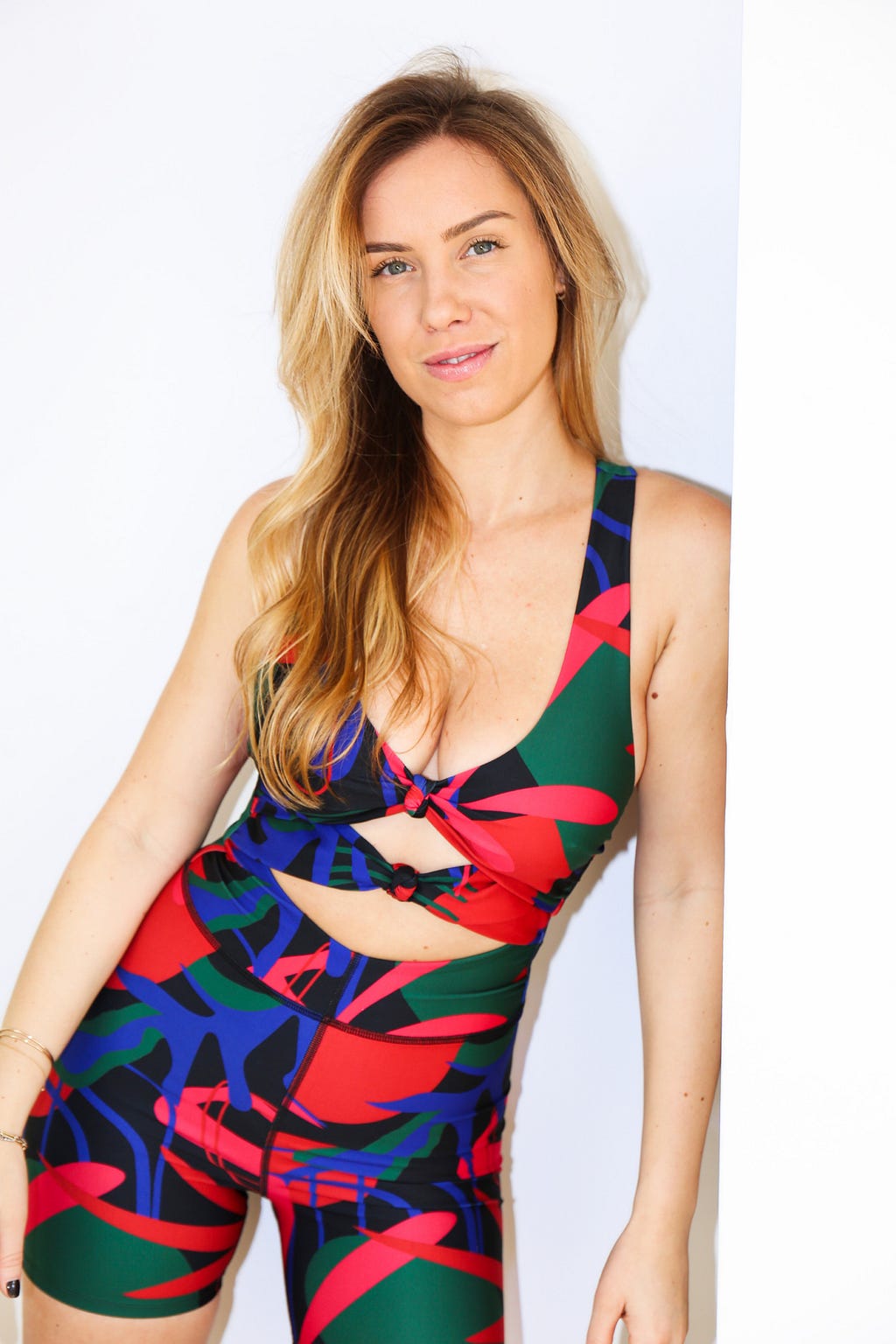
Female Founders: Kristina Thaden, of ‘Thaden’ On The Five Things You Need To Thrive and Succeed as…

Female Founders: Kristina Thaden, of ‘Thaden’ On The Five Things You Need To Thrive and Succeed as a Woman Founder

An Interview With Candice Georgiadis

You are going to lose money: be prepared to make mistakes, including financial ones. This cannot be avoided, do not condemn yourself for it, but learn as much and as quickly as possible from it.

As a part of our series about “Why We Need More Women Founders”, I had the pleasure of interviewing Kristina Thaden.

Kristina Thaden is the founder and creative director of the Swiss Luxury handbag label Thaden. Entrepreneur in life and artist at heart, she divided her career between C-level roles and her creative pursuits in the arts, including acting, singing and ballet dancing.

As a keen observer of nature, architecture, and everything around her, Kristina had the vision to design an object like no other: a bag that would inspire awe as a work of art, a wearable sculpture that adds a new meaning to the word “luxury” and elevates sophistication to a new level.

Thank you so much for doing this with us! Before we dig in, our readers would like to get to know you a bit more. Can you tell us a bit about your “backstory”? What led you to this particular career path?

My life path combines art and business in a beautiful and efficient way. Already at the age of 6 it was clear to me that I needed to express my creativity and that I belonged to the stage.

I started to write plays in primary school, and as I grew I played leading roles, wrote poems, and performed ballet. But most of all I loved to sing and at the age of 14, I got the lead role in one of the first radio sitcoms in Germany. Later, I completed musical education, studying acting and speaking, to then founding and directing with great joy my own political theatre ensemble.

In order to finance my temporarily unprofitable passion, I took a job in a market research company, rose to team leader and offered trainings to business leaders who needed to increase and optimise their performance. This eventually led me to the path of business, while nurturing my artistic activity. At that time, I perfected my skills in project management and did further trainings in organisational development, coaching and HR –particularly for executives. I also worked as a business developer, HR manager and in my latest position I was appointed deputy managing director in a medium-sized construction company in Switzerland. During this time, I continued working on my creations and on my design ideas.

The pandemic gave me the impetus to start the Thaden project, as I was longing for more creativity, more freedom, more artistic expression in my life again. And this is how I started this wonderful journey.

Can you tell us the most interesting story that has happened to you since you started running your company?

It was in 2021 when I was in Paris for the autumn Fashion Week. I was wearing for the first time one of my prototype signature bags: “The WHOLE”. I was so excited to carry my very own creation out in the city and see how it made me feel. What happened a few hours later still leaves me speechless. While walking in the luxury department store “La Samaritaine” I was stopped around 22 times by random people complimenting my bag and asking which brand was it from. Some even requested to take a picture of the bag. I was so surprised and humbled that I did not even say that I was actually the creative designer of it. This went on everywhere I went. That day I realised that the Thaden bag radiates a magical aura that can stop the crowd and capture their attention.

Can you tell us a story about the funniest mistake you made in your early days? Can you tell us what lesson you learned from it?

I am a very self-driven and pragmatic person, particularly in conversations I tend to be direct and goal-oriented. With time and experience I learned the importance of nurturing personal rapport in business. A genuine, informal rapport leads to a better connection with your business co-workers, ultimately resulting in achieved success. The more you get to know each other, the easier to achieve results together. When there is mutual trust, even the impossible becomes possible.

None of us are able to succeed without someone helping us to do so. Is there a particular person you are grateful to because they helped you get to where you are now? Can you share a story about that?

My husband in an inspiration to me, who believed in my idea since the start and always supported me throughout the journey of my entrepreneurship, with its ups and downs.

It all started with a drink in a bar in Palm Springs on a trip a few years ago. The moon was shining round and big. That’s when I first told him about my idea for the Little Rocket bag, inspired by the moon and the female curves — the first bag I had in mind. He was immediately open to the idea, gave it space and pushed me to think about it further.

Being an entrepreneur himself, he possesses a strong business sense. And what I continuously learn and adapt from him is his strong solution-oriented attitude when it comes to changing plans or solving issues.
He has weathered raging storms in his professional life, from the death threats he received while setting up his manufacturing plant in Northern Macedonia up to fundamental business decisions that changed his life perspective. He is also the main investor of Thaden, an important step that was taken after a thorough assessment and scrutiny of the vision I had in mind. I am incredibly grateful to him for his continuous support and professional advice.

Okay, thank you very much for that. Let’s move on to the main topic of our interview. According to this EY report, only about 20 percent of funded companies have women founders. This is a great historical progress, but it also shows that more needs to be done to give women the opportunity to start businesses. In your opinion and experience, what currently prevents women from starting businesses?

This topic is dear to me because prior becoming the founder of my own label, Thaden, I covered an executive position in a Swiss construction company which, as expected, is a men dominated industry.
In my experience there are some behavioural norms that are so deeply rooted in a woman social behaviour that are hard to break and somehow reinforce a stigma about female entrepreneurship. Think about the use of the language, for instance. Women tend to have a softer approach in conversations and in corporate meetings. You would hear them using more words like “maybe”, “would”, “could” and get to the point less quickly, rather than clearly stating their position and stand up for their ideas and their end goal. This is not to be taken as a criticism, instead I believe this is an aspect of the feminine nature that make us incredibly successful in mediating and negotiating, but it could lead to a vicious circle in which women are seen as comparatively less authoritative than men.

During my corporate career I worked with many talented people, both men and women. Women have the great ability to work together and support each other, leaving out forms of unpleasant personal competition that often characterizes the male sphere.

It is for this reason that in my corporate career I have trained and coached female C-level for many years and I have always encouraged female leadership in my teams. Even today, my company consists mainly of women.

I firmly believe that if we had more women at C-level position and more role-models to look at over time, doors would open more easily to the next generations of young women.

Can you name a few things we can do as individuals, as a society or as a government to overcome these obstacles?

I have concrete ideas thanks to my management background. First of all, there should only be mixed-gender teams in corporate offices as they guarantee a balanced environment where ideas can thrive and communication is diversified. Secondly, more opportunities to combine family and work should be guaranteed to both men and women, particularly rethinking the social role of the woman not strictly limited to motherhood, but also as a professional with a career and ambitions. In this regard the governmental regulations are crucial to support the role of those fathers who choose their family over their career, leaving their partners the possibility to advance professionally without the guilt that society somehow instills in women.
Lastly, there should be clear laws (not quotas) for appointments at management level. In my opinion, only certain guidelines can establish a lasting change in thinking.

This may be intuitive for you as a female founder, but I think it would be helpful to elaborate. Can you give a few reasons why more women should start up?

I think women are marathon runners. We are good at pushing through things, even if it is exhausting or uncomfortable. This is inherent to our nature. We are tough, maybe not as loud or as openly self-confident, but when we start up, we do so with enormous drive and potential that is worth investing in. Because by the time women dive in a new project, they have often thought through and doubted their idea so many times, that in the end it makes sense.

What “myths” about being a founder would you like to dispel? Can you explain what you mean?

Being a founder involves a lot of “sitting at a desk” and a lot more management than creativity, particularly in the first years when you are setting up the foundations of your company.

The myth of the glorified designer who draft ideas on paper all day to then magically see them happen is unfortunately a fairy tale. The reality is very different: so many doors are closed, hundreds of emails go unanswered. You must be be able to endure that, or at least learn how to do it. But believing in your success and your product is no myth, it is an absolute necessity.

Is everyone suited to being a founder? What specific characteristics do you think increase the likelihood of becoming a successful founder and which people should perhaps look for a “normal job” as an employee? Can you explain what you mean?

In my opinion, a founder is someone who approaches any matter in a solution-oriented way There are so many hurdles, obstacles and challenges along the way, that if you are problem-oriented, you are at risk of stagnating. Moreover, you should be able to crawl out of every low moments at a certain point. Lows and doubts are normal, but the important is that you are capable to pull yourself up again and seek support in your network. In this regard, it is crucial to have a support system that can help in times of need, both in business and in life.

Okay, great. Here is the main question of our interview. What are your “5 things I wish someone had told me before I started” and why? (Please share a story or example for each).

You are going to lose money: be prepared to make mistakes, including financial ones. This cannot be avoided, do not condemn yourself for it, but learn as much and as quickly as possible from it.

You will cry: don’t expect a smooth road to success. It will be much harder and tougher than you thought and you will think of giving up a few times. But you will never do it.

You will work non-stop: try to build your routines as soon as possible so that you can make the marathon, otherwise you will completely burn yourself out as a founder and you won’t be able to perform at full capacity in the long run.

You need a network: invest time in good, helpful relationships. Ask for support.

You need to ask questions: ask, always ask. Any question that will help you understand your product or collection better. Ask, and never feel stupid about it.

How have you used your success to make the world a better place?

Every single person, every day can make the world a better place. For me, this starts with kindness. I like the saying: “You don’t know what the other person is going through, so be kind” For me, that’s true. Because even if we think we are different, at one point or another we all went through similar feelings like pain, loneliness, fear and sadness.

So, my motto is: “Be kind, don’t be arrogant. Listen. Believe you are great, but not better”. Thaden carries some of these values. We are a luxury brand with outstanding craftsmanship, but we stand for friendliness, closeness and genuineness.

You are a person of great influence. If you could inspire a movement that would bring good to as many people as possible, what would it be? You never know what you can trigger with your idea.

There would be a lot to say here, but I want to keep it simple and concrete. It’s the little things in life that can cause a big ripple. The One Day idea: one day a month, be consciously kind to everyone, no matter how unkind they are to you. One day a month, be non-judgmental about others. One day a month, take care of another person. One day a month, be free from any self-criticism (the hardest task at times).These small actions can have a great impact on everyone’s existence and change the course of our lives.

We are very fortunate to have some very prominent names in business, VC funding, sports and entertainment reading this column. Is there a person in the world or in the US that you would like to have a private breakfast or lunch with one day, and why? Maybe he or she will see this if we tag him or her.

Let me name a few, the idea that they might see is great:

Valter D. Longo — to talk about his latest findings on fasting.

Marina Abramovic — to experience her incredible intensity once and explore her performances.

Andrew D. Huberman — to talk about pretty much anything related to neuroscience.

Selena Gomez — to talk about social media and body positivity.

Teodor Currentzis — to talk about being a conductor and his music performances and interpretations

Juliette Binoche — I love her way of acting.

Thaden can be followed on Instagram @thadenofficial


Female Founders: Kristina Thaden, of ‘Thaden’ On The Five Things You Need To Thrive and Succeed as… was originally published in Authority Magazine on Medium, where people are continuing the conversation by highlighting and responding to this story.
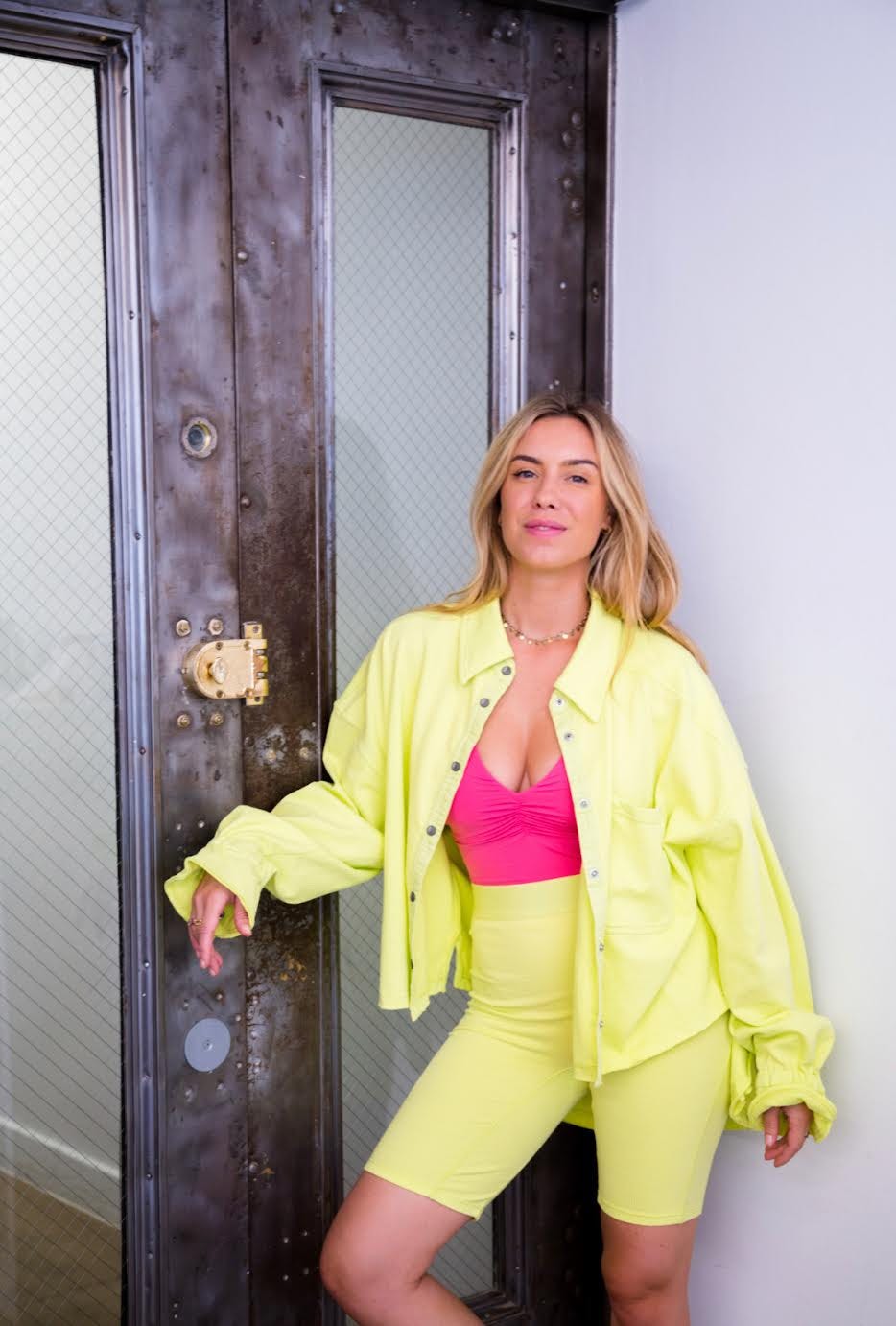
Women In Wellness: Zehra Murhty of Belfiore Herbal On The Five Lifestyle Tweaks That Will Help…

Women In Wellness: Zehra Murhty of Belfiore Herbal On The Five Lifestyle Tweaks That Will Help Support People’s Journey Towards Better Wellbeing

An Interview With Candice Georgiadis

There are two: the first being skin and scalp awareness for overall health, along with rejecting mass marketed chemically produced products. The second would be sourcing ingredients and manufacturing correctly to help those less fortunate (farmers, etc).

As a part of my series about women in wellness, I had the pleasure of interviewing Zehra Murhty of Belfiore Herbal.

Although Belfiore Herbal officially was founded in early 2020, the company was in the works for years beforehand. It’s founder, Zehra Murthy, is a brilliant woman that has been growing and experimenting with the home-grown lavender from her backyard. She began creating one-of-a-kind skincare that was a hit among her family and friends, and would eventually become her business.

The odds of launching a successful business at what would unknowingly be the very start of a global pandemic is not an easy task for any. For Zehra, who is an older woman, it was even more of a challenge. Still, she continued to work hard, striving for the business to launch.

Thank you so much for joining us in this interview series! Our readers would love to “get to know you” better. Can you share your “backstory” with us?

I was born in 1949 in India. I am the oldest of seven children — I have 5 brothers and one youngest sister. My father passed away when I was 13, and since then I was my mothers helper and assistant. We were and still are a very close knit family. I always wanted to learn a lot; I loved to study and work, and always wanted to learn something new. In my curiosity in human and plant development, I studied biology then decided to focus on cell biology and genetics.

I joined UCSD in 1979 as a research scientist and worked on cell and molecular biology along with genetics. I started Belfiore Herbal in 2020 — I had lots of interest in plants and herbs. From 2018–2019, I started to grow lots of lavender and rosemary and started to research scientific papers on the healthcare benefits of these plants. My interest and inspiration to develop skin and hair care products using my own herbs when I started to look and read all the ingredients in these products. Most of them have petroleum based chemicals and synthetic chemicals & in my genetics research, I know how dangerous these chemicals are. As a second inspiration, I wanted to give back to society by using my knowledge of science and plants to make something that would be simple, affordable and work for all skin types to keep their skin truly healthy. My 3rd inspiration is involving my family to make Belifore Hebral a growing family business — we all love to work together.

Can you share the most interesting story that happened to you since you started your career? What were the main lessons or takeaways from that story?

Lesson Learned: How and when to put your foot down.

When I had first started to work in science, I was working long, long hours. Since I enjoyed science I didn’t mind working 12–14 hours a day and producing lots of results, but after a year or so I noticed my work was not appreciated, and instead the directors demanded more and more out of me. That’s when I learned to put your foot down and work in the allotted time to keep a family life balance.

Can you share a story about the biggest mistake you made when you were first starting? Can you tell us what lesson you learned from that?

Biggest Mistake when first starting: ‘Columbia Cosmetics Story’- Before starting Belfiore Herbal, we were cheated by one of the contract manufacturers charging us enormous fees for testing, then not holding up the agreement and not providing proper results. Our lesson learned is to properly research who we work with.

Let’s jump to our main focus. When it comes to health and wellness, how is the work you are doing helping to make a bigger impact in the world?

Belfiore Herbal skin care products are formulated to keep skin healthy at the cellular level, that means keeping every cell in our skin well nourished and healthy to produce lots of collagen and hyaluronic acid to keep our skin well hydrated, free of dark spots and wrinkles. Actually, healthy skin is beautiful skin that brings out or gives self-confidence which can help change the world. We focus on using botanical (vegan) ingredients that are only derived from nature in our formulas. This decreases the amount of chemicals someone will put on their skin.

Can you share your top five “lifestyle tweaks” that you believe will help support people’s journey towards better wellbeing? Please give an example or story for each.

● Here are my 5 lifestyle tweaks;

○ Each morning I give thanks to god for blessings (this is mine, but gratitude overall is important) ○ Meditation for self confidence and mental health

○ Dedicated, consistent exercise for physical health

○ Always allowing time for family and friends, keeping the connections strong. Not canceling plans last minute

○ Being patient and listening well.

If you could start a movement that would bring the most amount of wellness to the most amount of people, what would that be?

There are two: the first being skin and scalp awareness for overall health, along with rejecting mass marketed chemically produced products. The second would be sourcing ingredients and manufacturing correctly to help those less fortunate (farmers, etc).

What are your “5 Things I Wish Someone Told Me Before I Started” and why?

● Here are the 5 things I wish someone told me

○ Be patient, the money will not come overnight

○ Stick to what you know and your expertise and focus on this.

○ Involve the whole family, everyone brings some experience

○ Manage your investments carefully

○ There is a whole world of B2B out there, go to some trade shows!

Sustainability, veganism, mental health and environmental changes are big topics at the moment. Which one of these causes is dearest to you, and why?

Dearest to me is Mental Health, very simply because without a healthy mind one cannot live a truly complete and fulfilling life. Mental health is part of overall health. We already stand on only using vegan ingredients and rejecting animal derived products like retinol or hyaluronic acid.

What is the best way for our readers to further follow your work online?

The best way for readers to follow our work is the blog on our website

(https://www.belfioreherbal.com/blogs/lifestyle) or our social media channels (@belfioreherbal on instagram).

Thank you for these fantastic insights! We wish you continued success and good health.


Women In Wellness: Zehra Murhty of Belfiore Herbal On The Five Lifestyle Tweaks That Will Help… was originally published in Authority Magazine on Medium, where people are continuing the conversation by highlighting and responding to this story.

Women In Wellness: Author Beth Shaw On The Five Lifestyle Tweaks That Will Help Support People’s…

Women In Wellness: Author Beth Shaw On The Five Lifestyle Tweaks That Will Help Support People’s Journey Towards Better Wellbeing

An Interview With Candice Georgiadis

Give up sugar — A diet high in refined sugars can lead to all sorts of health issues like lower immunity, digestive issues, obesity and more serious problems like Type 2 diabetes or heart disease. As the leading cause of inflammation, giving up sugar will increase your overall health by strengthening your immune system, improving sleep quality, and increasing energy levels.

As a part of my series about women in wellness, I had the pleasure of interviewing Beth Shaw.

Beth Shaw is the author of four best-selling books on health and wellness. A pioneer in the Wellness, Yoga & Fitness space in North America, Beth is the CEO and Founder of YogaFit Training Systems Worldwide Inc the global mind-body education school, YogaFit.

Beth is a go-to yoga/mindfulness expert in the media and has been featured in numerous fitness, business, and consumer publications Beth is a frequent speaker at universities, conferences, and Fortune 500 Corporations. Beth educates others on Health & Mindfulness in the workplace and conscious business.

Can you share the most interesting story that happened to you since you started your career? What were the main lessons or takeaways from that story?

I was stranded in Istanbul Turkey doing a YogaFit Training on 9/11 — the experience taught me that life is short and that we should take time in life to make a positive contribution to the planet as that’s what I believe we are here to do. The experience also taught me to be present in the moment and SURRENDER to what is and give up what we cannot control.

Also taking groups of people to India every year to the birthplace of yoga Rishikesh has shown me that when we have expectations in life we often get disappointed, I have learned from taking thousands of people to India every year that life gives us the energy that we give it, I have watched people who had expectations get very disappointed and people who have a positive attitude have a very positive experience while traveling abroad.

Additionally I have learned from traveling to Saudi Arabia and Japan that we must act in accordance with what the local cultures are and adopt a mindset of going with the flow and learning that cultural differences are real and need to be respected.

Can you share a story about the biggest mistake you made when you were first starting? Can you tell us what lesson you learned from that?

The biggest mistake I made when first starting was to not hire a proper business trained COO to handle all business operations so that I could focus on presenting, writing and creating content. Not having a well trained business person was a mistake. I have since spent three years gaining Harvard Business School Alumni status by participating in the Harvard OPM program, I have also joined several business organizations like EO, WPO and done the Goldman Sacks 10k Small Business Program

Also in the early days of starting, I was not strategic — I have since learned to be that person

Let’s jump to our main focus. When it comes to health and wellness, how is the work you are doing helping to make a bigger impact in the world?

I am the founder and CEO of the largest Yoga Mind Body school in the world, YogaFit — We have transformed millions of lives in 25 years — teaching people to take control of the health on every level — We have taught over 250,000 teachers who then share the gifts of yoga and mind body health with many others — We have a robust community service program that gives people a chance to take yoga who normally would not — We have instigated over 3 million hours of community service work teaching yoga to those who are disadvantaged. ADD LINKS TO YOGAFIT COMMUNITY SERVICE

I also host the radio show MAKE AMERICA HEALTHY on Voice America — we cover all topics related to mental and physical health and we have over 30,000 listeners a month. Guests include Dr Pam Peeke, Dr Edward Group, Dr Nick Perricone, Dr Patrick Porter and many others

We empower listeners with simple tools to get their health back on track.

Here are some links to episodes of Make America Healthy

https://www.voiceamerica.com/show/4057/make-america-healthy

https://www.voiceamerica.com/episode/137327/anti-aging-and-longevity

Neuroplasticity & Brain Retraining

Can you share your top five “lifestyle tweaks” that you believe will help support people’s journey towards better wellbeing? Please give an example or story for each.

  1. Give up sugar — A diet high in refined sugars can lead to all sorts of health issues like lower immunity, digestive issues, obesity and more serious problems like Type 2 diabetes or heart disease. As the leading cause of inflammation, giving up sugar will increase your overall health by strengthening your immune system, improving sleep quality, and increasing energy levels.
  2. Give up Gluten — As a common allergen, gluten negatively affects the body by exacerbating arthritis, producing brain fog, inducing bloating, and causing gut issues. Not considered to be nutrient dense, eliminating foods with gluten from your diet will prove to be an essential lifestyle change you didn’t know you needed.
  3. Drink more water — More than half adults in the United States don’t drink enough water. It is recommended that adults drink at least 64 ounces of water throughout their day. By increasing your water intake, you will improve brain function and physical performance by increasing energy and relieving fatigue. Drinking enough water will flush out any toxins in the body, promoting weight loss and improving skin complexion.
  4. Exercise 30 min every day — It’s no secret that there are numerous health benefits to working out. By incorporating at least 30 minutes of exercise into your day you will notice a reduction in stress and fatigue, improved cognitive function, an increase in productivity and a greater self confidence.
  5. Try intermittent fasting — There is a reason why more and more people are trying intermittent fasting to optimize their health goals. Interested in learning more I invited renowned anti-aging doctor, Nick Perricone, onto my radio show Make America Healthy as he went over the vast benefits intermittent fasting has on countering aging and aiding weight loss. When performed correctly, intermittent fasting can regulate insulin and hormone levels throughout the body so you can burn more fat and extrude more waste. Here is a link to my show featuring Dr. Perricone

If you could start a movement that would bring the most amount of wellness to the most amount of people, what would that be?

The entire world should practice yoga and meditation — also everyone should try plant medicine and connect with the divine source of energy.

What are your “5 Things I Wish Someone Told Me Before I Started” and why?

  1. Get a mentor
  2. Join a professional organization
  3. Take a business course for small business owners
  4. Learn to think BIGGER
  5. Hire people smarter than you

Sustainability, veganism, mental health and environmental changes are big topics at the moment. Which one of these causes is dearest to you, and why?

Mental health is my biggest passion now, we are in a dire mental health crisis and people need self directed tools. People need to be empowered to take control of their own physical and mental health.

What is the best way our readers can follow you online?

Instagram: https://www.instagram.com/bethshawhealth/

Instagram: https://www.instagram.com/yogafitinc/?hl=en

LinkedIn: https://www.linkedin.com/in/bethshawyoga/

Facebook: https://m.facebook.com/BethShawWellness/posts/

Facebook: https://www.facebook.com/YogaFitInc/

Thank you so much for this. This was very enlightening!


Women In Wellness: Author Beth Shaw On The Five Lifestyle Tweaks That Will Help Support People’s… was originally published in Authority Magazine on Medium, where people are continuing the conversation by highlighting and responding to this story.
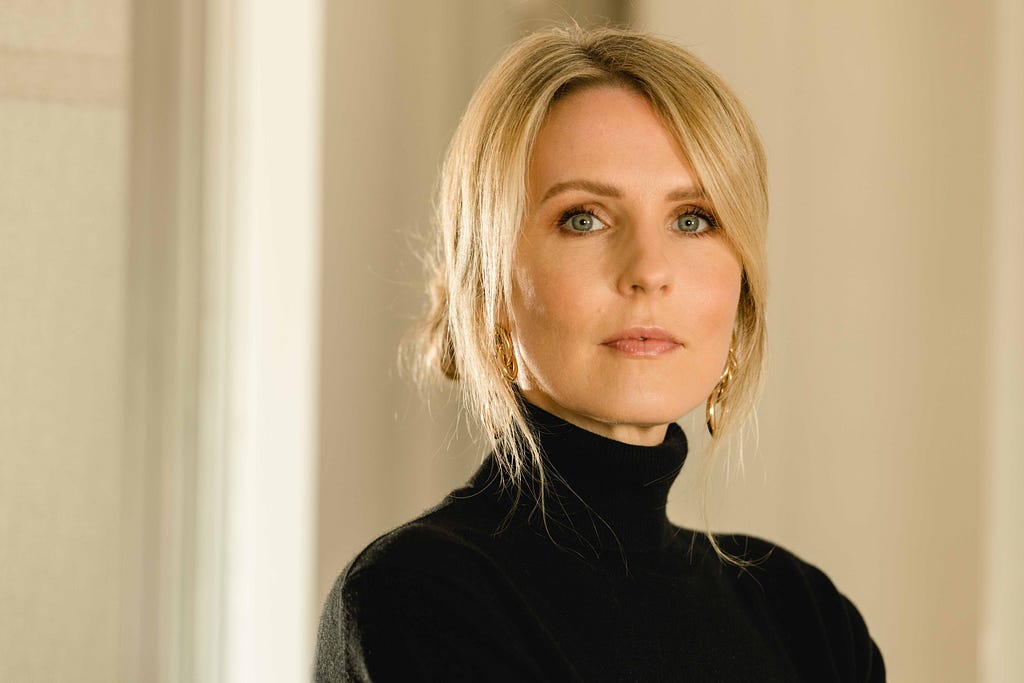
Inspirational Women in STEM and Tech: Eveline Buchatskiy of airSlate On The 5 Leadership Lessons…

Inspirational Women in STEM and Tech: Eveline Buchatskiy of airSlate On The 5 Leadership Lessons She Learned From Her Experience

An Interview With Candice Georgiadis

Be mission-driven. That’s a must. People have choices, so why would they work for anyone without a mission that actually moves the world forward in a meaningful way?

As a part of our series about “Lessons From Inspirational Women in STEM”, we had the pleasure of interviewing Eveline Buchatskiy.

Eveline leads special projects at airSlate, including managing the partner go-to-market programs, as well as corporate and content marketing initiatives. She has worked with fast-growing startups for over 10 years, initially as CEO of a cleantech startup and then as an investor at a seed fund and accelerators, including as Techstars Director for their Boston accelerator. Eveline received a BS in Chemical Engineering from University of California — Berkeley, a master’s in engineering from University at Buffalo, and an Executive MBA from INSEAD.

Thank you so much for doing this with us! Can you tell us a story about what brought you to this specific career path?

I was always passionate about my studies, particularly science. My high school Chemistry teacher in Brazil saw my drive and took interest in the girl that managed to be top of her class. I also worked my way to the top of my Physics and Math classes. But my Chemistry teacher encouraged me to pursue a degree in Chemical Engineering, and that ultimately launched my career trajectory.

I spent the first 10 years of my career as an engineer in the industrial gases industry before moving to Ukraine where the tech talent was prominent. Kyiv was completely new to me at the time, but I was able to make connections right away. My introduction into the tech startup world was with a deep tech company, and I haven’t left the industry since. After moving beyond that role, I launched a startup accelerator that primarily focused on the digital space. Today, I’m the VP of Special Projects at airSlate, a SaaS company, but what that really means is I’m involved all throughout the company.

My love for tech continues decades later because of the talented, innovative people and the ambitious solutions we’re able to share with the public. Not to mention the fact that I still feel a strong connection to that young student who fell in love with science and engineering — my nerdy roots run deep.

Can you share the most interesting story that happened to you since you began at your company?

I don’t know if I would call it interesting as much as surreal. airSlate has a large R&D office in Kyiv, Ukraine, with over 800 people. On February 24, 2022, the lives of these people changed drastically. At 5 AM Kyiv time, I found myself in Boston, going down a spreadsheet of all these people and putting check marks to indicate that I had contacted them to wake them up, one by one, with the news: Russia had declared war against Ukraine, they needed to pack and leave the country. For the following two weeks, I did not sleep (yes, I found it to be biologically possible), working on the evacuation of all of them, together with their spouses, children, extended families, dogs, cats, turtles, all together over 3,000 people in the span of two weeks. We had to make logistics, lodging, and emmigration arrangements, all the while having to predict where the next bombing would strike and how to avoid it. We also had to find cash to pay for all of this because no one would take other forms of payment. All our employees are safe, relatively speaking considering the circumstances, and we have adjusted to normal business productivity despite all the challenges they continue to face daily, for over 120 days of war thus far.

It has been said that our mistakes can be our greatest teachers. Can you share a story about the funniest mistake you made when you were first starting? Can you tell us what lesson you learned from that?

During my first engagement as CEO, I was managing a high-tech ultracapacitor company. This electrical component had many applications, from electrical vehicles to wind turbines, from scooters to mobile phones. We ended up falling in love with one client: Ferrari Formula 1 racing cars. It was cool to tell everyone we were going to be at the next Grand Prix. We were in Bologna, Italy, where they had the wind tunnel tests. There was so much glamor throughout the whole experience and of course I had my nails in bright red for all serious meetings. In reality, it almost killed the company. Ferrari had a very specific set of requirements which made us change the whole production line just for them. Yet, how many of these cars are out there in the races? Two! You can’t build a large business out of a handful of high-performing units for a cool Formula 1 client.

What do you think makes your company stand out? Can you share a story?

airSlate’s modus operandi is to empower teams to digitize workflows of any complexity through no-code technology. We are the only company on the market with a full suite of digital transformation solutions in this space. Our solutions are integrated so customers can combine them or upgrade their existing processes without a hitch. We’re also the largest document workflow platform with over 100 million users.

We recently celebrated becoming a unicorn (reaching a $1 billion+ valuation) as airSlate became the first portfolio company for the newly launched UiPath Ventures initiative. It’s an exciting time for all of us at airSlate. We’re continuing to unlock new opportunities along the way to helping SMBs become automated organizations.

Are you working on any exciting new projects now? How do you think that will help people?

The beauty of tech is that we’re always working on something new. airSlate’s latest round of funding backed by G Squared and UiPath is the catalyst for new projects that will accelerate our growth. More specifically, we’re working on expanding airSlate’s mid-market and enterprise customer base, opening new go-to-market channels and developing new products, as well as onboarding new technical talent to support with all of these efforts. Every day provides something different!

Ok super. Thank you for all that. Let’s now shift to the main focus of our interview. Are you currently satisfied with the status quo regarding women in STEM? What specific changes do you think are needed to change the status quo?

I believe more female representation is needed to change the status quo of women in STEM. We need more role models and mentors embracing future generations. Young girls and women should be able to see STEM as an approachable field and environment — it should feel relatable, which happens when we can see ourselves in a particular role. We can also empower young girls to take an interest in STEM from an early age with their toys and activities and the power of their educators. I feel fortunate to have had educators and mentors along the way who have guided me toward a rewarding career despite a few twists and turns.

In your opinion, what are the biggest challenges faced by women in STEM that aren’t typically faced by their male counterparts? What would you suggest to address this?

Unconscious bias is one of the biggest challenges for women in STEM. Despite having advanced degrees in Engineering and Business, people still question whether I am technical or analytical enough to be leading in my role. I was in a meeting not too long ago with a branding agency I was planning on hiring, but then I was asked if we could bring a decision-maker into the conversation. They didn’t realize I was that person!

The more we interact with female leaders in STEM, the less likely these unconscious biases are to occur. Women in all fields, including tech, need to keep sharing our stories to inspire and encourage future talent.

What are the “myths” that you would like to dispel about being a woman in STEM. Can you explain what you mean?

None of us spend our days dwelling on what our work environment would look like if we had perfectly equal conditions and opportunities. In reality, like any man in STEM, we women spend the vast majority of our time thinking of roadmaps, objectives and key results, KPIs, growing and nurturing our teams, acquiring new skills, building products, services, and experiences that create value for people. We also spend time mentoring up and coming talent so they have a more accelerated path towards their goals. And yes, time allowed, we advocate for some changes either explicitly through activism or subtly, by choosing to bring value to companies and teams that share our vision for such an equal world.

What are your “5 Leadership Lessons I Learned From My Experience as a Woman in STEM or Tech” and why. (Please share a story or example for each.)

Be human. That goes a long way. From putting yourself in your team’s shoes during the lows, to having a genuine desire to help them grow, to celebrating the highs, everyone wants to be around a leader that is above all a good human being.

Be inspiring. As a woman, you jumped through many hoops and yes, you still made it. It’s the leader’s job to continuously show optimism and to exceed expectations with a vision that will make people put all their bets on your game.

Be ambitious. For you and your team. Goals should be set such that everyone should feel at least slightly uncomfortable with the vision, even better if we all feel like there are a million butterflies in our stomach.

Be unique. In short, don’t be boring and lean into your unique story. Create memorable experiences for the people around you.

Be mission-driven. That’s a must. People have choices, so why would they work for anyone without a mission that actually moves the world forward in a meaningful way?

What advice would you give to other women leaders to help their team to thrive?

Tech can be a demanding industry, especially in the startup space. But remind yourself and your teams that it’s rewarding when you’re passionate about what you do and the solutions you’re building together. Have your sights set on a better future, and nothing can get in your way.

What advice would you give to other women leaders about the best way to manage a large team?

The only way to effectively manage a large team is to empower direct reports and nurture a culture of accountability at all levels of the organization. I always tell my team that the best way to get promoted is to make yourself replaceable by building a team that can run without you. This philosophy forces you to work hard to raise the confidence and skill set of your team, and to put in place the right processes for everyone to take ownership of their results at a much deeper level. Your team members should feel you trust they have what it takes to make the right decisions. It’s equally important to clearly communicate and get the buy-in on the vision for the business and how that translates into what is expected from each member of the team.

None of us are able to achieve success without some help along the way. Is there a particular person who you are grateful towards who helped get you to where you are? Can you share a story about that?

That is very true. While there are a handful of people that helped me navigate forks in the road of my professional journey, my parents’ support may have had the most impact on me. You see, I am the second youngest in a family of 15 children, and the first person to go to college. However, everyone in my family — my siblings, my parents and grandparents — were all entrepreneurial in their own right. My parents worked hard to provide opportunities for me to grow, but they didn’t fully understand my obsession with education.

My mom understood that a degree in engineering most likely meant I would be working for someone else, which wasn’t exactly her dream for me. She was supportive, but I still had to pave my own path without a clear example to model. She also helped me understand that above all, I value a civic-minded life and a career that enables me to give back or advance the public wellbeing in some way, shape or form.

How have you used your success to bring goodness to the world?

One of our ongoing focuses is ensuring safety for our community in Ukraine. In 2014, airSlate opened the doors to our office in Kyiv, and we’ve continued to welcome many colleagues in Ukraine since then. The war is incredibly close to our airSlaters and we’ve used our platform to call for contributions that will make an immediate impact. Three of the organizations we’re proud to donate to and support are Nova Ukraine, Razom and Project C.U.R.E.

As an organization, we have provided around $2 million in humanitarian efforts for our Ukrainian team members and their families. We are also happy to share all that we know and our personal experiences from the ground to help others offer much-needed support to those in Ukraine.

If you could inspire a movement that would bring the most amount of good to the most amount of people, what would that be?

I would love to create a “magic wand” that unlocks human potential at scale. During my years as an investor, I lived through these magical moments of removing barriers for entrepreneurs that went on to achieve incredible things. Sometimes even small actions such as an intro to a co-founder became the catalyst to life-changing results. There is abundance of talent within most people, which may be restricted by lack of access to capital, opportunity, education, network, or just plain freedom. I often fantasize about a movement that would ensure each individual is able to fully realize their potential. I would start with unlimited access to education.

Can you please give us your favorite “Life Lesson Quote”? Can you share how that was relevant to you in your life?

Chance only favors the prepared mind, said Louis Pasteur. I love the combination of discipline (always do your homework!) with serendipity (luck matters) of this quote. There were many times in my life when it looked like I was at the right place at the right time. In reality, it was a bit of luck and lots of planning. One good example was when I met Cecile Drucker, daughter of the legendary management guru Peter Drucker. For no obvious reason, for six months we worked diligently on a concept to match tech talent in Eastern Europe with new money in that region to create a world-class startup ecosystem. We designed an accelerator without even realizing that the model had just been launched in Silicon Valley. We were a small team of enthusiasts with a very strong vision, no funding, and no real chance of executing on what we knew could be a transformative project. One day I got a call asking if I knew anything about accelerators. Yes I did! I had a full business plan. When can I start?, I asked. And that marked the beginning of my venture investment career.

Is there a person in the world, or in the US with whom you would love to have a private breakfast or lunch with, and why?

The world is hungry for leadership in the public sector. After a series of unfortunate events of historical proportion ranging from a global pandemic to war in Europe, a select group of women stand out by their strong principled leadership with grace: Estonia’s Prime Minister Kaja Kallas, the President of the European Commission Ursula von der Leyen, and New Zealand’s Prime Minister Jacinda Ardern. I would love to have a girls night out with these honorable ladies to discuss their secret sauce and how we can spread such leadership style across the globe. If I must pick one person only, I would have brunch with Angela Merkel. For all these years, I admired her pragmatism that led Germany’s economy growth by 34% — 15 percentage points more than its nearest EU rival, France. But I have some unresolved business with her. I think she completely miscalculated the relationship with Russia and Germany’s energy dependence. Was being a woman a factor? Was she hoping that graceful (almost motherly) diplomacy through economic ties would tame an aggressive bear? It’s puzzling to me. I would love to find out.

Thank you for these fantastic insights. We greatly appreciate the time you spent on this.


Inspirational Women in STEM and Tech: Eveline Buchatskiy of airSlate On The 5 Leadership Lessons… was originally published in Authority Magazine on Medium, where people are continuing the conversation by highlighting and responding to this story.
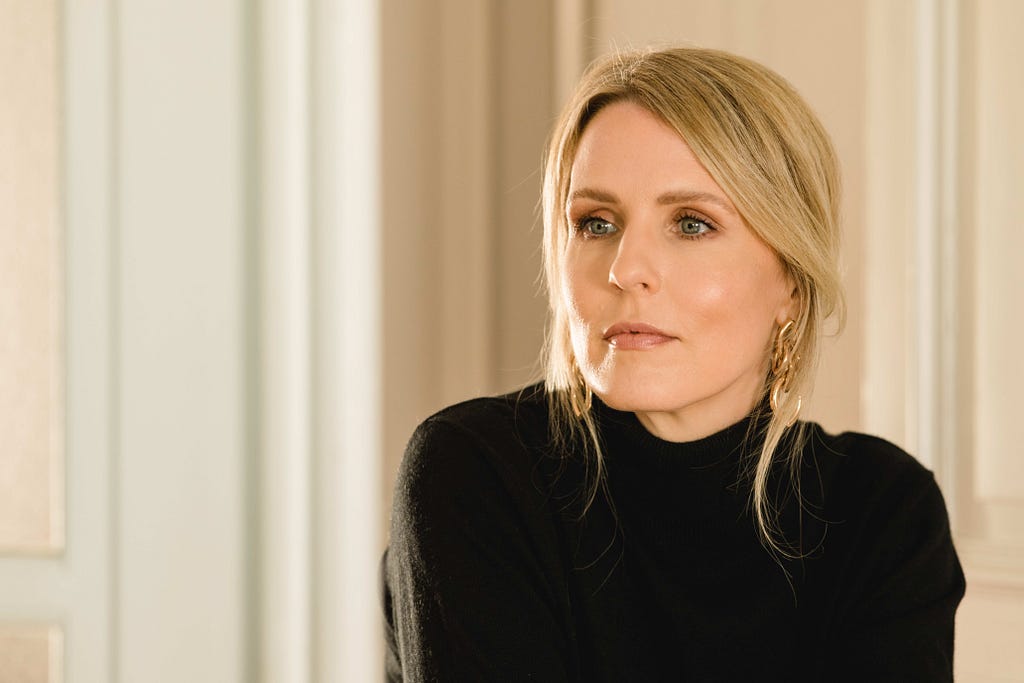
Female Disruptors: Amy Bach of Measures for Justice On The Three Things You Need To Shake Up Your…

Female Disruptors: Amy Bach of Measures for Justice On The Three Things You Need To Shake Up Your Industry

An Interview With Candice Georgiadis

Shrink the change. This is from the Heath brothers’ book Switch. When people face a daunting task and their instinct is to avoid it, you’ve got to break down the task. Shrink the change. In other words: Make the change small enough that they can’t help but score a victory.

As a part of our series about women who are shaking things up in their industry, I had the pleasure of interviewing Amy Bach.

Amy Bach has been the Chief Executive Officer of Measures for Justice since 2011. She founded the organization as a follow-up to her acclaimed book, Ordinary Injustice: How America Holds Court, which won the 2010 Robert F. Kennedy Book Award. In June 2011, Echoing Green, a premier seed investor for social entrepreneurs, selected Amy as a Fellow out of 3,000 candidates worldwide to support the launch of Measures for Justice. Following that, she was named a Draper Richards Kaplan Social Entrepreneur. For her work on Ordinary Injustice, Amy received a Soros Media Fellowship, a special J. Anthony Lukas citation, and a Radcliffe Fellowship at Harvard University. Amy was a Knight Foundation Journalism Fellow at Yale Law School and is a graduate of Stanford Law School. In 2012, she taught Criminal Law during the spring semester at the University of Buffalo Law School as a Visiting Professor. In 2019, she won the Academy of Criminal Justice Science’s Leadership and Innovation Award and the Charles Bronfman Prize. Amy lives in Rochester, NY, where the organization is based.

Thank you so much for doing this with us! Before we dig in, our readers would like to get to know you a bit more. Can you tell us a bit about your “backstory”? What led you to this particular career path?

I went to law school, clerked for a federal judge, and then spent eight years writing a book about criminal trial courts in America. I saw how legal professionals could make the same mistakes over and over. And not realize that anything is missing. Like the public defender who pleaded 48 people guilty in a little over a day. And barely knew their names, much less their cases. Or the prosecutor who had no idea he had not prosecuted a domestic violence case in 21 years. My idea was to measure the delivery of basic legal services. So that everyone could see patterns and then improve their systems. To reach into the heart of courts across America and ask: How are we doing? So that counties could have a yardstick to see how they compare. And the tools to reshape our judicial system via data and hard conversations with communities.

Can you tell our readers what it is about the work you’re doing that’s disruptive?

Pretty much everything! When we got started a little over ten years ago, almost no one was doing this work. No one was talking about the importance of data or performance measurement. It was too hard, it couldn’t be done, don’t even try. That was the message out there at the time. But we pressed on because it was so obvious to me that we can’t change what we can’t see. And we were seeing nothing.

Fast forward a decade and the culture has changed. We’ve been leading this movement to upend how justice gets done in this country by bringing to the table transparency and accountability via data. We’ve worked to develop national data standards and measures. We’ve unlocked 1/3rd of the country’s data in more than 1200 counties. And now we’re bringing new data platforms to police departments and DA offices that depend on real, sustained collaboration between these agencies and departments and the people they serve. When data and collaboration are the centerpiece of how criminal justice gets carried out, transparency and accountability become the norm. Which amounts to more than disruption–it’s a revolution.

Can you share a story about the funniest mistake you made when you were first starting? Can you tell us what lesson you learned from that?

One day I had a meeting in a room with a judge who was supposedly really into data. We showed him some of the initial data that suggested his county had fared quite well with few racial disparities.

“You can’t compare counties,” said the judge.

“Why not?”

“It’s not possible,” he said.

“Don’t all the counties in the state have the same laws? Why can’t you compare two counties?”

“One county is an apple and one’s an orange.”

“Well why can’t you compare an apple and an orange? One is orange and bumpy and one is red and smooth.”

“But I don’t want a tomato in my fruit salad.”

I don’t remember what he said next. I ran over to try and shake his hand. He looked down at my hand. He left me hanging. His legal assistant looked at me with disgust.

What I didn’t understand at the time was how little prepared everyone was for publicly comparable data. But his saying he didn’t want a tomato in his fruit salad really became a metaphor in my head for: Get out of my state.

We all need a little help along the journey. Who have been some of your mentors? Can you share a story about how they made an impact?

So many people have helped me. I am indebted to many of our Board members who guided us and helped us grow. But I would be remiss if I didn’t mention our Board Chair who died this year. Ed Schallert was chair of the Debevoise & Plimpton’s Litigation Department. He clerked for Thurgood Marshall. He gave me a lot of faith that when things were hard, they were just the growing pains every organization has to go through. And he did it in a way that didn’t make me feel judged. At his memorial service I learned that I was not the only one — there were a dozen or so people at his firm who said he mentored them and did it in a funny, honest way. I hope to pass that on one day.

In today’s parlance, being disruptive is usually a positive adjective. But is disrupting always good? When do we say the converse, that a system or structure has ‘withstood the test of time’? Can you articulate to our readers when disrupting an industry is positive, and when disrupting an industry is ‘not so positive’? Can you share some examples of what you mean?

That is a great question. Social media might be a good example. It’s obviously made it possible for many more people to tell their stories. And create relationships with each other. But the relationships are often superficial, and the lack of depth there can and has led to a lot of isolation and loneliness — feelings Hannah Arendt calls the preconditions for tyranny. People need a public square where they can have real interactions. And be drawn into real conversations over facts. That is why I love our work so much: we bring data and facts to places that are often tinderboxed or fractured. People have hard conversations and set data driven goals that generate accountability.

Can you share 3 of the best words of advice you’ve gotten along your journey? Please give a story or example for each.

  1. Shrink the change. This is from the Heath brothers’ book Switch. When people face a daunting task and their instinct is to avoid it, you’ve got to break down the task. Shrink the change. In other words: Make the change small enough that they can’t help but score a victory.
  2. “I am in charge of the butter.” This quote comes from a story one of my board members told me. It’s about a politician who once bragged relentlessly about everything he was in charge of while attending some dinner. But when he asked a waiter for butter, the waiter wouldn’t give it to him. “I am in charge of the butter,” the waiter said. Which just goes to prove that the guy who seems like he has no power can always block you. So don’t be a jerk.
  3. Get a bookkeeper. When we first began I tried to write all the checks myself and it would take forever. I got a bookkeeper and an accountant. It’s a metaphor: You need to have your house in order to be creative. It’s true for the whole organization, really.

We are sure you aren’t done. How are you going to shake things up next?

You’re right, we are just getting started. We plan to bring our newest data platform, Commons, to a large portion of the population. What Commons does is publish recent data people really want alongside policy goals set by local law enforcement and the public they serve. These goals are shared and tracked in service of real transparency and accountability. Which we anticipate will lead to greater demands nationwide for more of same. Which will necessarily lead to better infrastructure, mandates, and legislation to make live data streams just a regular part of how justice gets done in this country. That is the vision.

In your opinion, what are the biggest challenges faced by ‘women disruptors’ that aren’t typically faced by their male counterparts?

Women have to create tracks and then be willing to jump from track to track. I have a large number of women in my organization who are the breadwinners for their families–as spouses or single moms. One woman on my team was writing to me while on a plane to her grandfather’s funeral about a work document, saying she felt better working than not. This is our reality: We multitask more. We love what we do. And trust we will get it all done at the same time.

Do you have a book/podcast/talk that’s had a deep impact on your thinking? Can you share a story with us?

I always think about Simple Justice by Richard Kluger. It tells the story of Brown v. Board of Education that saw the US Supreme Court reverse a long-standing precedent of separate but equal held in Plessy v. Ferguson. How did this monumental change occur in such a glacially paced court? The NAACP used data in its early strategies to show separate is not equal–e.g., how much money Black teachers were paid compared to white teachers. This paved the way to Brown and primed the court to rely on data to make its decisions. So that in the end, the Court zeroed in on data from the “the doll tests,” which demonstrated the psychological effects of segregation on African-American children, to make its choice. Incremental change paved the way for lasting change. And all of it hinged on reliable data.

You are a person of great influence. If you could inspire a movement that would bring the most amount of good to the most amount of people, what would that be? You never know what your idea can trigger. 🙂

I’m lucky to be able to say, honestly, that the movement Measures for Justice has already started to make the criminal justice system fully transparent, accountable, and accessible stands to change millions of lives over time.

Can you please give us your favorite “Life Lesson Quote”? Can you share how that was relevant to you in your life?

There is a very famous saying from Pirkei Avot (Ethics of our Fathers): “You are not obligated to complete the work, but neither are you free to desist from it.” This incremental approach means that the goal cannot be reached in one generation. Each generation will improve the world as much as it can. Then the mission must be passed on to the next generation, until the goal is reached. It’s arrogant to think otherwise.

How can our readers follow you online?

None of what I do is about me–it’s about the work. So follow us here, here, and here.

This was very inspiring. Thank you so much for joining us!


Female Disruptors: Amy Bach of Measures for Justice On The Three Things You Need To Shake Up Your… was originally published in Authority Magazine on Medium, where people are continuing the conversation by highlighting and responding to this story.

Women In Wellness: Dr Angelina Posteov of IBI Healthcare Institute On The Five Lifestyle Tweaks…

Women In Wellness: Dr Angelina Posteov of IBI Healthcare Institute On The Five Lifestyle Tweaks That Will Help Support People’s Journey Towards Better Wellbeing

An Interview With Candice Georgiadis

Move around as much as you can — walking, taking the stairs rather than the elevator, etc. Set small activity goals for yourself each day and increase your goals as you can

As a part of my series about women in wellness, I had the pleasure of interviewing Dr. Angelina Posteov.

Dr. Angelina Posteov, MD is a triple-board certified cosmetic surgeon and the founder of Surgicare Arts & Aesthetics and co-founder of IBI Healthcare Institute. She received her undergraduate degree from Ohio State University, attended medical school at Ross University, ranking in the top five percent of her class, and completed her residency at the Cleveland Clinic. Dr. Angelina and her family reside in the Atlanta, Georgia area.

Thank you so much for joining us in this interview series! Our readers would love to “get to know you” better. Can you share your “backstory” with us?

I grew up with my family in Russia and then when I was 15 years old we moved to the United States. When we arrived in the US I, like all the other members of my family, did not speak English. It was a major challenge to navigate my way through college and medical school with very limited guidance and the language barrier but I never gave up.

My command of the English language improved as I completed my four years of undergraduate education, four years of medical school, five years of residency in general surgery, and a two-year fellowship.

During that time, I met and married my husband who is also a surgeon. We desired to open a private practice that would allow us to use our skills and knowledge while employing the best techniques, surgeries, or medications to do what was best for the patient.

Often, when working for a hospital or large practice, the options for patient treatment are dictated by an entity such as a board, an administration, or a large insurance company. This can sometimes “tie our hands” as surgeons and doctors and we are unable to treat the patient the way we feel would be best for their situation. As doctors we are not trained to be told what to do, we are trained to heal people and make critical decisions that could be life or death in nature.

We moved to Georgia and opened our practice together where we had the freedom to put patient well-being first.

Can you share the most interesting story that happened to you since you started your career? What were the main lessons or takeaways from that story?

I think the way I met my husband and business partner is one of the most interesting stories of my career.

We were both surgical residents at the Cleveland Clinic in Ohio but he was a year ahead of me in his residency. I saw him around and knew he was in the program but we were never really in the same proximity to speak or interact.

About halfway through my second year of residency, we began working together in the critical care unit. He was in his third year of residency and the Senior Resident with me being the Junior Resident. One day while running morning rounds, (which is the time when all the residents and students move from room to room and visit each patient to make plans for the day) there was an incident that kind of put him on the map for me.

There was this one guy in the group that was saying something that made absolutely no sense to me. I began to get irritated and eventually I got mad (It usually takes a lot to make me mad but he succeeded to make me mad that morning) I quickly turned around to get away from this guy and at the same time began saying “a few choice words” under my breath in Russian. The only problem with that was I had completely forgotten that the Senior Resident, my now husband, spoke Russian! He busted out laughing!

We continued to have rotations together but we were also both busy with our own responsibilities, he in the operating room and me running the unit. There was a core group of us that would hang out sometimes after work and we were both involved in this group and became friends.

A few years later we began dating, and then we got married and then opened our practice together. I guess long story short, I not only found an appropriate business partner but I also found a husband and a friend.

Can you share a story about the biggest mistake you made when you were first starting? Can you tell us what lesson you learned from that?

We have learned many lessons since we first started our practice and we faced many challenges. As doctors and surgeons, we understood medicine and how to navigate large trauma centers, perform surgeries and take care of sick patients. But all of our years in school and experience working with people in the medical field never prepared us to start and run our own business.

Most of our challenges starting out were related to running the business side of things. I think the biggest mistake we made when we were starting is not investing more in the real estate side of the business when prices were much lower. (offices and surgical center locations)

We were both just coming out of residency and we could not afford to purchase exactly what we wanted and of course, everything increased in price and now we are paying for that.

The lesson learned is do not procrastinate. If you think it is the right thing for your business, find investors and continue pushing forward.

Let’s jump to our main focus. When it comes to health and wellness, how is the work you are doing helping to make a bigger impact in the world?

Having our own practice, we can treat patients based on what is best for them and are not limited by constraints imposed by a hospital or medical practice. IBI Healthcare Institute consists of a state-of-the-art surgical center, a weight loss/bariatric surgery division, and a cosmetic surgery practice that all work together and can provide patients with an individualized plan and a continuity of patient care not found elsewhere.

For instance, an obese patient may undergo bariatric surgery or a weight loss procedure and lose a significant amount of weight. This loss of weight improves their health and possibly eliminates a weight-related illness they suffered from such as type 2 diabetes. This patient has also received personalized nutrition education, guidance, and support to effectively make lifestyle changes that will help them maintain their health in the future. This patient then passes this mindset and learning experience on to their friends and family who hopefully will live healthier lifestyles.

This same patient, after losing a great deal of weight, may be left with loose sagging skin that can cause medical issues and/or create emotional anxiety. The next step in their continuous plan of care would be to address this excess skin at our Surgicare Arts & Aesthetics division. Cosmetic surgery eliminates the loose skin and the patient is not only pleased with the aesthetic results but the rewarding physical benefits. They can now move around freely; maybe something as simple as playing with their kids on the playground. We continue to support these patients to help them maintain their health and their weight loss indefinitely.

Watching these patients progress and achieve these changes and knowing that we played a small part in helping them get there, makes all of the hard work and hours we put in each day as doctors worth it.

We also have a non-profit organization that helps patients who have no access to medical care, finances, or insurance. By helping these patients and performing what are sometimes life-saving surgeries, we hope they in turn will pay it forward and help someone else. By working together, each doing what we are able to help others, we can make a big difference and it will go a long way in making the world a better place.

Can you share your top five “lifestyle tweaks” that you believe will help support people’s journey towards better wellbeing? Please give an example or story for each.

  1. Wake up early and make a plan for your day
  2. Practice intermittent fasting
  3. Move around as much as you can — walking, taking the stairs rather than the elevator, etc. Set small activity goals for yourself each day and increase your goals as you can
  4. Be proud of all your achievements big and small
  5. Drink more water

If you could start a movement that would bring the most amount of wellness to the most amount of people, what would that be?

As a doctor and a surgeon, I would like to see more responsibility and stricter regulation of ingredients in the food products that are marketed to the American people.

Our Nation’s current obesity epidemic is partly fueled by the increase in additives and unhealthy ingredients that are contained in processed and pre-packaged food. Cancer and other health issues can be directly tied to food additives or the way foods are grown or harvested. The United States has the highest rate of cancer in the world.

The regulations in Europe regarding food additives are much stricter than in the United States and only additives that are proven safe are allowed in Europe. There are also strict regulations regarding genetically modified foods.

Many food additives that are contained in products sold in the United States are illegal in Europe and so companies that sell the same product in both markets alter the ingredients according to the market. The version that is sold in Europe does not include dangerous chemicals, color agents, or artificial flavors. Why are there not the same standards in the United States?

Generally, processed foods are less expensive to buy than whole or healthy foods. Research has proven that obesity levels are elevated among individuals in lower income brackets.

I would like all Americans to have access to healthy foods that are free from dangerous cancer and obesity-causing agents.

What are your “5 Things I Wish Someone Told Me Before I Started” and why?

  1. I wish someone had told me about college scholarships. With no guidance and my lack of English, I did not know about scholarships.
  2. I wish someone would have helped me become financially educated. Planning for retirement early, etc.
  3. I wish I would have understood the benefits of securing real estate for the business sooner rather than later.
  4. Take time to take business and/or marketing classes. They will be useful in any field.

Sustainability, veganism, mental health, and environmental changes are big topics at the moment. Which one of these causes is dearest to you, and why?

I would have to say mental health, especially the mental health of women, and finding a balance in your life that includes time for yourself.

As women, we feel we have to take care of everyone and everything but we rarely even “pencil in” time for ourselves. Living an unbalanced life full of stress can lead to many serious health conditions including high blood pressure, heart disease, stroke, and can contribute to obesity.

Be deliberate in scheduling time for yourself. Maybe it is as simple as 10 minutes of yoga every day guided by Youtube or taking a nice peaceful walk.

It may be a challenge at first and you may have to adjust your plan a few times before you find what works for you. Most of us women need to adjust our thinking to prioritize ourselves and our well-being because we are so accustomed to being last.

Taking time to invest in your own wellbeing will help alleviate stress and benefit your health and wellness long-term. It can be the difference between managing through your life and enjoying your life.

What is the best way for our readers to further follow your work online?

You can take a look at my cosmetic surgery website www.surgicarearts.com and from there you can find the links to follow me on other social media platforms.

From there you can also learn about the line of skincare products that I have developed and find videos and articles that cover a variety of subjects.

Thank you for these fantastic insights! We wish you continued success and good health.


Women In Wellness: Dr Angelina Posteov of IBI Healthcare Institute On The Five Lifestyle Tweaks… was originally published in Authority Magazine on Medium, where people are continuing the conversation by highlighting and responding to this story.

Women in Wellness: Jennifer Marler of Pivot On The Five Lifestyle Tweaks That Will Help Support…

Women in Wellness: Jennifer Marler of Pivot On The Five Lifestyle Tweaks That Will Help Support People’s Journey Towards Better Wellbeing

An Interview with Candice Georgiadis

Learn to say “no.” I still struggle with this, but it is a vital life skill for longevity and sustainability in the workforce. I truly believe this one takes practice, as in practicing what you will say in the mirror several times before delivering it. If you are caught off guard with a suspect request, you can indicate you need to think about it or check your calendar and get back to the requester — then go practice and then deliver your response).

As a part of my series about women in wellness, I had the pleasure of interviewing Jennifer Marler, M.D. Vice President of Clinical and Medical Affairs at Pivot.

Jennifer Marler, M.D. is the Vice President of Clinical and Medical Affairs at Pivot, a digital health company that delivers clinically proven, behavioral science-based solutions that empower people to take control of their personal health.

Thank you so much for joining us in this interview series! Our readers would love to “get to know you” better. Can you share your “backstory” with us?

I grew up in the east San Francisco Bay Area, in Pleasanton. I was lucky to have lots of active outdoor time and grew up in a safe, loving, supportive environment. I am a member of Gen X, and some of what you hear about this generation applies to me: I was a latch key kid as both my parents worked full time. I believe this, along with the unfettered outdoor time and participation in team sports, fostered independence, collaboration, problem-solving, and self-sufficiency. I was a good student, which I primarily chalk up to being conscientious and a people pleaser (more on that later).

I went to UCLA and got my BS in Neuroscience, then on to medical school at the Medical College of Virginia, and then to UVA in Charlottesville for a residency in Radiology. I’ve lived in California, Colorado, and Virginia, and currently call the Monterey Bay Area in California home. I’ve been in the medical device and digital therapeutics fields for the last 15 years. My focus has been designing and conducting clinical studies and then creating and communicating the resultant evidence-based narrative. I currently do this at Pivot, a digital therapeutic company where we help people kick their tobacco addiction.

Can you share the most interesting story that happened to you since you started your career? What were the main lessons or takeaways from that story?

I made a major career change early on. In high school, I decided I wanted to be a physician. I wanted to help people, was a strong student, and liked science — it clearly was the perfect career path for me, right? So, I got on that path, kept my head down, focused, and worked hard, but didn’t check in much with myself along the way. I would characterize this time in my life as being guided by too much head, not enough heart.

That approach caught up with me during my radiology residency. I was unhappy and increasingly felt like this wasn’t due to residency being a tough and stressful time, but rather because I was no longer on the right path for me. I enlisted the help of a career coach who was a radiologist himself and specialized in helping physicians make career transitions. I worked with him for about 12 months to sort things out and develop and execute a plan. I left my residency after the second year. I left on good terms, giving them ample notice and an explanation of what was going on with me that was driving my departure.

I was fortunate to have a soft landing with my family and friends, who were surprised at this out-of-character move but also supportive. I vividly remember the ride home from the airport; I had just turned 30, had walked away from my promising dream career and was moving back in with my parents. My silent tears streamed as I looked out the backseat window and watched the familiar landmarks pass by en route to my childhood home. I appreciate this now as both a low point for me and the necessary starting point from which I would build back up. Painful though they are, these touchstone moments are important.

In another out-of-character move, I gave myself three months to recover and restore, with little to no expectation of jumping right into the next thing, whatever that was going to be. I focused on getting enough sleep, eating well, exercising, and connecting with loved ones. I need to acknowledge that being able to do this was a luxury, but this self-care investment enabled me to bounce back in the healthiest and likely most comprehensive and expedient way possible. And bounce back I did, first with some consulting and then with a medical director position at a medical device company focused on treating precancerous conditions in the GI tract. While I worked hard and soaked up the learning during this transition to a new career, I also benefited from the input and guidance of kind, caring, and wise mentors.

The main lessons I took away from my career change experience are:

  1. It’s OK to change your career path. Most people will have multiple careers over their life, and that’s normal and OK.
  2. When going through a major career or life change, leverage whatever resources you can, like trusted and helpful family and friends, career coaches, and/or mentors. Note that I was able to work with a career coach because he offered a special rate for medical residents that I could afford on my meager salary. Look for such opportunities.
  3. Change is hard and often comes with low points. Know that these points are important and often necessary parts of the process. Appreciate and value their sanctity accordingly.
  4. An upfront investment in self-care may seem like a luxury but can pay dividends in the efficiency and quality of your transition.

Can you share a story about the biggest mistake you made when you were first starting? Can you tell us what lesson you learned from that?

Hmm, there’ve been a few… I’ll go with a general personality trait that has presented challenges at work: people pleasing. Accordingly, I have experienced the following:

  • Being rewarded for good work with more work
  • An inner sense of frustration and lack of fulfillment
  • Being less likely to take risks because I was too scared to fail
  • Caring too much about what others think (or what I thought they were thinking) and the fatigue that comes with it
  • Sacrificing or delaying dreams and experiences that mattered to me because I was trying to make someone else happy

Mistakes I made include:

  • Not saying “no” to projects that were low priority or detracted from more important work.
  • Not setting boundaries for when and how I could help with these secondary projects.
  • Not requiring adequate background, details, and timelines at the outset of a secondary project so I could make an informed decision on my ability to participate.

The result was that I wasted my time and shifted my focus, compromising the most important deliverables.

And work spilled over, frequently, to late nights, early mornings, and weekends. At some point, I realized my co-workers were going home to their significant others and families, exercising, meeting up with friends, or taking on exciting hobbies. I was not. I believe there’s a time and place to throw yourself into your work, particularly when you are starting out. But it must be balanced with some boundaries and punctuated by spells of non-workaholism if your career path is to be sustained.

Let’s jump to our main focus. When it comes to health and wellness, how is the work you are doing helping to make a bigger impact in the world?

Each year, smoking kills almost half a million people in the US and about 8 million globally. And life expectancy for people who smoke is at least ten years shorter than for those who do not. Smoking is still way too big a problem and has been so for too long; it’s unacceptable.

I’ve been at Pivot, a digital health company that empowers individuals to embrace wellness and enables corporations and health plans to improve their population’s health, since its inception. We’ve come up with a better approach to help people quit smoking. I think it’s such an effective solution because it marries tried and true approaches such as behavioral intervention and nicotine replacement therapy (nicotine patches, gum, and lozenges) with more recent technology-enabled capabilities, including sensor technology, smartphone apps, and SMS-based coaching. Between our published clinical research and commercial efforts, our quit rates and user satisfaction are high, which feels incredibly good.

While we all know that smoking is bad for your health, I’m struck by how multi-tentacled and ruthless a problem it is. It harms so many areas of life, including personal finances, relationships, confidence and self-esteem, the health of our loved ones, employability and job opportunities, the environment…the list goes on. Based on this, helping a person achieve their goal of quitting smoking has profoundly positive ripple effects. I honestly can’t think of another single problem that, when you solve it, has so many meaningful impacts. While I cannot deny that tackling tobacco addiction is tough, the reward is immense when you break through and help people kick the habit.

Can you share your top five “lifestyle tweaks” that you believe will help support people’s journey towards better wellbeing? Please give an example or story for each.

Acknowledging that I am forever on the well-being learning curve, here goes:

  1. Some type of meditation — The benefit of a brain reset can’t be overstated. I’ve found that I’m better able to focus and see my tasks through (with less mental and emotional angst too.)
  2. Exercise — This one repeatedly falls down the list for me. So, I upped the ante and signed up to work out with a trainer once a week. A couple of factors at play here hold my feet to the fire: accountability and not wanting to waste money.
  3. Community and self-care — Yep, I linked these two, but hear me out. I struggle with consumerism. I’m increasingly trying to make thoughtful decisions about what I buy and, in general, buy less stuff. And as I mentioned, I support self-care, which I see as an investment in helping me stay functional and on the rails. Accordingly, I’ve shifted to seeking out experiences for self-care. And I’m finding so many benefits to this approach, beyond achieving self-care, that generally fall in with the theme of community. So, I encourage you to get a facial, an art lesson, a massage, a trainer, a pedicure, whatever might bring you a bit of respite or joy, and know that the benefits are multiple. A note about finances: I want to acknowledge that paying for these services is not on the table for everyone, but self-care is. There are free or inexpensive ways to get some self-care in. Examples include taking a stroll in a place of beauty, grabbing a tea with a friend, curling up with a book by the fire, or volunteering somewhere where you receive something that speaks to you in return.
  4. Involvement — I don’t know many people who aren’t affected by the state of affairs in the world today. Personally, I am often cycling between rage, hopelessness, sadness, bewilderment, and a sense of powerlessness. I’ve learned there are more and less productive ways to cope. Less productive (although periodically necessary) is me starting or jumping on a text chain with my friends where we collectively bemoan the state of things. It feels good to commiserate and vent. More productive is channeling those emotions into something productive: peaceful protest, donating or fundraising for a cause you believe in, volunteering, random acts of kindness, or communicating with elected officials. I’ve done at least a little of all these things and find comfort in the fact that these actions yield something meaningful, and I appreciate that they fill my cup a bit and bring me some healing and a sense of control.
  5. Compassion/empathy for numero uno — As a daughter, partner, employee, mom, friend, pet guardian, etc., I often feel like I’m doing lots of things and none of them very well. And when I start thinking about this, the negative self-talk kicks in. Which honestly is not productive or helpful in any way. Even though I know this, it’s a tough habit to break. I like and have been using the advice to talk to yourself like you would to your best friend. Would you say those mean, hurtful things to your friend? Nope. Would you remind her no one is perfect, encourage her, and let her know you care and got her back? Yep.

If you could start a movement that would bring the most amount of wellness to the most amount of people, what would that be?

Other than eliminating smoking, I’d focus on nutrition. The way we currently approach nutrition is at the root of many of our significant public health and environmental issues and, frankly, goes against common sense. Why do we wait to intervene until the health issues associated with poor nutrition develop? And then we intervene with medications and procedures.

Why not avoid or minimize these health issues altogether and focus our efforts further upstream by shifting subsidies to make healthy food affordable and unhealthy food cost-prohibitive? Might such investments be offset by money saved down the line in healthcare expenses? Why not support education that starts at the pre-school and grade school level and focuses on where our food comes from and what healthy choices look like? And not offer unhealthy choices in school-provided meals. What about tackling food deserts and ensuring health care providers are trained and adequately reimbursed for addressing nutrition with patients from infancy through the golden years?

My medical school training on nutrition 20 years ago was negligible. I don’t remember much other than learning about the illnesses associated with vitamin deficiencies like scurvy and vitamin D deficiency rickets. Do you know a lot of people with scurvy? I don’t. I do know a lot of people who struggle with their weight, diabetes, hypertension, heart disease, and cancer — all of which are linked to nutrition and diet. Why are we OK with the destruction of rainforests for cattle grazing when the environmental impact is devastating? And the overfishing of the oceans? Why haven’t we implemented policies that would prevent or limit the financial gains from such practices? I’m no expert on this topic, and it’s incredibly complex, but there clearly is room for improvement and a mandate to act.

What are your “5 Things I Wish Someone Told Me Before I Started” and why?

I actually think someone told me most of these things before or when I started; it’s a matter of to what extent I listened and had to learn some of these lessons firsthand.

  1. Set boundaries. It doesn’t require much explanation but know that it’s best to do it early on when establishing a new role or relationship.
  2. It’s a marathon, not a sprint. My significant other and I frequently nudge each other on this one. We’re both in start-ups and sometimes need a reminder that not everything is urgent all the time.
  3. Start saving for retirement immediately. If your workplace offers a 401k, by all means, take advantage of it. Even if you can swing setting aside 1–2% of your monthly paycheck, do it. Something is so much better than nothing and really adds up over the years.
  4. Make time for life and your dreams today. I remember a talk from a geriatrician during medical school that stuck with me. His job gave him the privilege of being with many when they were at the end of life. He noted that no one had ever said they wished they had worked more during life. He noted that many did say they wished they had spent more time with their loved ones and had taken a shot at their dream. A cautionary tale…
  5. Learn to say “no.” I still struggle with this, but it is a vital life skill for longevity and sustainability in the workforce. I truly believe this one takes practice, as in practicing what you will say in the mirror several times before delivering it. If you are caught off guard with a suspect request, you can indicate you need to think about it or check your calendar and get back to the requester — then go practice and then deliver your response).

Sustainability, veganism, mental health, and environmental changes are big topics at the moment. Which one of these causes is dearest to you, and why?

Well, these causes are all inextricably linked and overlapping, so it’s tough to pick just one. I think I’ll go with veganism as it’s probably the one I know the most about as a vegan myself. I became a vegetarian when I moved out for college. I had always been an animal lover, but it was the drive on I-5 to school, passing a large cattle feedlot that made me sad and uncomfortable, that sealed the deal for me. I became a vegan about nine years ago. I’m pretty sure I was building up to it but made the decision after attending a discussion on factory farms. I unexpectedly walked out of that talk as a vegan, with no ceremonious or multi-step goodbye to my beloved favorite food: cheese. It was like I didn’t have a choice, which actually made the change pretty easy.

I’m a vegan for the typical reasons you hear about: health, environment, animal welfare, and spirituality. For health, I noticed my skin cleared up, and my body just felt better, as in not achy; my take was that I had less inflammation. I’ve also followed with interest the growing and compelling evidence showing that diets high in plants and low in animal products, such as the Mediterranean diet and Okinawa diet, are best for health and longevity.

For the environment, I am not OK with the destruction of rainforests for cattle grazing and the loss of biodiversity due to overfishing. I’m also not OK with and have a hard time seeing the logic in the harmful practice of growing soil-depleting monocrops to feed to factory-farmed animals to then feed to humans. Instead, we could grow rotating crops to feed directly to humans and avoid a lot of wasted resources and suffering in the meantime. I do believe that in the future (likely beyond my lifetime), we will look back on our treatment of animals with a sense of, “I can’t believe we used to…”

Finally, on the spirituality front, I don’t want something that comes from such suffering going in my body; it just feels like bad juju. I see my veganism as an attempt to decrease my contribution to suffering.

I say all this, acknowledging most people contemplating or dabbling in veganism won’t have my binary not-a-vegan/now-a-vegan experience simply after attending that lecture. And I think that’s totally fine. Trading off some meat- and dairy-based meals for plant-based ones is a meaningful change people can make; it doesn’t have to be all or nothing. The impact of many people undertaking small changes (swapping in a few plant-based meals a week) can be profound.

What is the best way for our readers to further follow your work online?

Well…I don’t have the biggest online presence, and I didn’t mention it above, but another well-being hack is limiting my time and presence on social media. But I am on LinkedIn and would love to connect.

Thank you for these fantastic insights! We wish you continued success and good health.


Women in Wellness: Jennifer Marler of Pivot On The Five Lifestyle Tweaks That Will Help Support… was originally published in Authority Magazine on Medium, where people are continuing the conversation by highlighting and responding to this story.