Female Founders: Jillian Bardo of Bay 2 Swimwear On The Five Things You Need To Thrive and Succeed as a Woman Founder
An Interview With Candice Georgiadis
Take everything one step at a time: It’s important to have a vision, but also remember nothing occurs overnight. Taking small steps and continuing to move forward ultimately leads to your vision. There are a lot of moving parts in motion, and I have found that perfecting to small steps is paramount to achieving success.
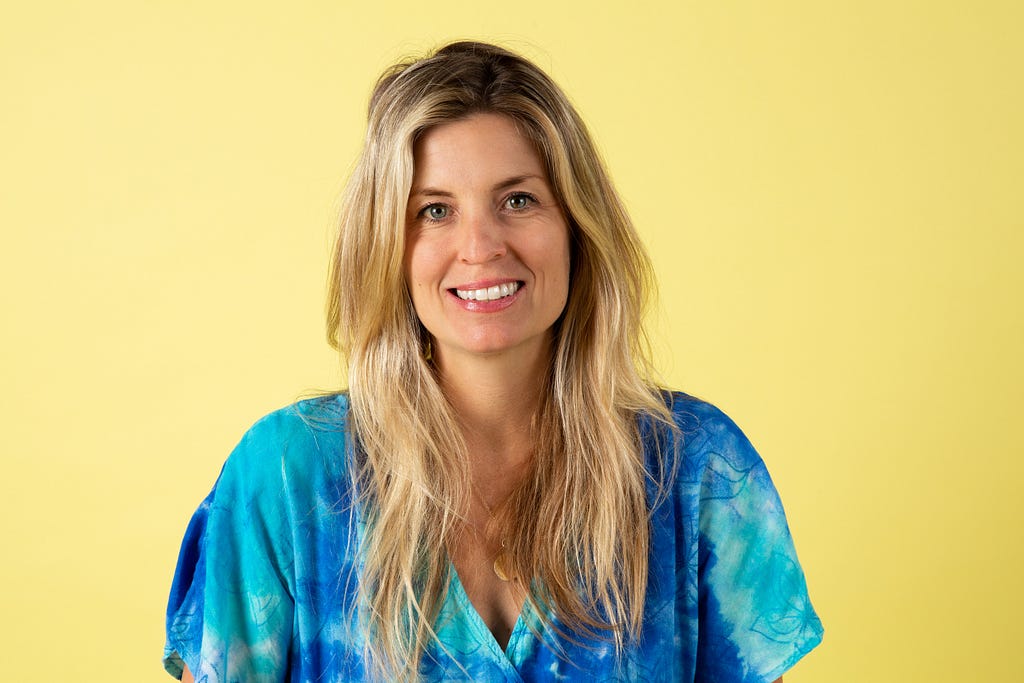
As a part of our series about “Why We Need More Women Founders”, I had the pleasure of interviewing Jillian Bardo, Founder of Bay 2 Swimwear.
An experienced ocean lifeguard and lifelong beach lover, founder Jillian has always been in search of her ideal swimsuit — one that looked and felt high-end, stayed put in the waves, and didn’t cause a maze of tan lines. Her search eventually led her to create Bay 2 Swimwear, a unique swimwear line inspired by her experiences living and working on the beaches of New York City.
Thank you so much for doing this with us! Before we dig in, our readers would like to get to know you a bit more. Can you tell us a bit about your “backstory”? What led you to this particular career path?
I grew up in Brooklyn, NY but my parents had me in the ocean for as long as I can remember. We grew up going to Riis Park and Rockaway during the summer and traveling. My dad owns his own scuba business, so all of our family vacations were usually in desirable dive spots (Cozumel, Turks and Caicos, Palau, Curacao, Bonaire, St. Lucia to name a few). When I was in high school, I got a summer job lifeguarding at Riis Park, and to me there was nothing better than being able to spend your workday on the beach. My job as a lifeguard allowed me to spend most of my time by the ocean and made me think that I wouldn’t mind working at Bay 2 forever, so I guess in some way this is how I am trying to make that happen. My love of the ocean and the beach demanded a top-notch swimwear wardrobe, and I was always very particular about the suits I wore. I would spend a great deal of money and time on swimwear, and little things like cheap lining, awkward padding and unflattering cuts would drive me crazy. In recent years, trends have pushed the swimwear industry in different directions, and I started to feel there were a lack of choices that I felt comfortable and confident in. I decided to create what I loved and what I felt was missing in the market in Bay 2 Swimwear.
Can you share the most interesting story that happened to you since you began leading your company?
Since this is a completely new venture for me, it’s hard to pinpoint one specific story or event that stands out as interesting since every experience has been completely unique to me. One of my favorite moments was a few months before our debut Resort 2022 Collection launched, I used my bachelorette party as an opportunity to gift all of my closest friends with a Bay 2 Swimwear suit. We were all in Isle of Palms for the weekend and seeing the suits on my best friends on the beach was one of the best moments and the first time it really hit me that this was happening.
Can you share a story about the funniest mistake you made when you were first starting? Can you tell us what lesson you learned from that?
Well, after I decided to start this company, I really had no idea what the next steps were to start a clothing brand and get from Point A to Point B. I had been in marketing for ten years and my college degree is in English, so the fashion industry was completely new territory to me. I immediately ordered some fabric and a sewing machine and called my mom asking her to teach me how to sew. In my mind, I would sew all the suits myself with the chosen fabric. Luckily, I did a lot of research and asked the right people a lot of questions, and eventually I learned the process of designing garments (hint: you are not required to make the garments you design). My naivete in the beginning of the process was something that could have been considered a huge flaw, but I really feel like it allowed me to learn so much. Never be afraid to ask questions and don’t let the fear of rejection prevent you from pursuing a dream.
None of us are able to achieve success without some help along the way. Is there a particular person who you are grateful towards who helped get you to where you are? Can you share a story about that?
As I said, although I had a strong idea of the suits I wanted to design and the brand I wanted to build, I really had no idea how to make that happen in the very beginning. I did a lot of research and made appointments with people I thought could help. A lot of the leads I followed in the beginning were not the exact ones that I needed, but almost all of them ended up pointing me in the direction of where I needed to go. I had made an appointment at The New York Embroidery Studio with Michelle Feinberg in the early stages of the process, and I arrived filled with questions for her. Not only did she happily sit down with me and answer everything I asked, she also referred me to a pattern maker in New York City that specializes in swimwear. As I was leaving, I thanked her and her response was “Us girls need to stick together, it’s hard when starting out and trying something on your own”. I will never forget that, it provided me with some confidence at a time that I was really doubting my ability to make Bay 2 happen.
Ok, thank you for that. Let’s now jump to the primary focus of our interview. According to this EY report, only about 20 percent of funded companies have women founders. This reflects great historical progress, but it also shows that more work still has to be done to empower women to create companies. In your opinion and experience what is currently holding back women from founding companies?
From my personal experience, I never felt that starting my own company was an option for me early in my career. It seemed like such a lofty goal that required money I just did not have available coming out of college. There was so much I did not know about how to start your own company, and the answers were not easy to find. There are now some small business loans specifically available for female business founders, but I still think that is not a known option to a lot of women. When I started Bay 2 Swimwear, I was in a position where I could invest my own money and time into founding a company, but it took me ten years to get to that place. There is a lot of pressure early on in your career, especially for women, that can become overwhelming. Entry level jobs are usually time consuming yet relatively low paying, rent is expensive, and most women do not have the option to get out of this cycle.
Can you help articulate a few things that can be done as individuals, as a society, or by the government, to help overcome those obstacles?
I think it would be really helpful to make programs aimed to help women entrepreneurs more accessible, even if it is just by increasing awareness.
This might be intuitive to you as a woman founder but I think it will be helpful to spell this out. Can you share a few reasons why more women should become founders?
Some of the most successful startups in recent years have come from women founders and their ability to pinpoint gaps in the market. A great example is some of the recent developments in the beauty industry. Years ago, you had all these products that were essentially the same, developed by men and large pharmaceutical companies. But women founders of brands such as Drunk Elephant, Huda Beauty and Fenty Beauty were all able to identify what women were not getting from their longtime cosmetic choices, whether it be clean beauty, the appropriate foundation shade, or products that address different areas all together. Women listen to women and know how come up with the appropriate answers, especially since in a lot of cases they are able to tap into their own personal experiences as well.
What are the “myths” that you would like to dispel about being a founder? Can you explain what you mean?
There was always an idea in my mind that I would need outside capital to start my own company. While this is true in some cases, and is even necessary for some companies, it does not apply to all. There are a lot of ways to be creative and in taking small steps, especially in the beginning, you can start to see early on how effective budgeting and planning goes a long way in investing in your own company.
Is everyone cut out to be a founder? In your opinion, which specific traits increase the likelihood that a person will be a successful founder and what type of person should perhaps seek a “regular job” as an employee? Can you explain what you mean?
I would imagine it’s not a matter of whether everyone is cut out to be a founder, but whether everyone wants to be a founder. Traditional jobs provide security, consistency and community, and those qualities may fit some people’s lives more comfortably than the risks and responsibilities that come with being a founder. I think everyone is capable of being a founder to some degree, but that is all relative to what your expectations are and the work your comfortable committing to.
Ok super. Here is the main question of our interview. What are your “5 Things I Wish Someone Told Me Before I Started” and why? (Please share a story or example for each.)
Everything is fixable: Mistakes happen and although they can be upsetting or stressful, there is always a recovery option. The day Bay 2 launched I logged into our website domain to double check everything and accidentally pressed a button that deleted the whole site. I, of course, had a panic attack and thought our launch was completely ruined, but luckily Shopify never deletes anything! After some tech support from our website designer, everything was restored. Stress tends to be more damaging than the actual mistake.
Always maintain some flexibility: Even for the best planners and the most organized people, there are always some factors that just cannot be controlled. I planned my first campaign shoot in Montauk for the end of August 2021, and everything was organized to a tee. However, the date that was planned turned out to be a complete rainout and everything had to be rescheduled. I was so disappointed because there was so much work put into that shoot, but in reality, we were able to reschedule everything and we got our campaign shoot done on a beautiful, September day in Montauk.
Tap into talent you trust: When it comes to building a brand, don’t be afraid to reach out to people you trust and admire for help, advice, or even potential collaboration. My friend Claire Peterson designed our logo, and it was a great process since we already had an established history and we both knew each other’s style preferences etc.
Recognize your weaknesses: Your strengths are obviously to be celebrated, but don’t be ashamed to admit and acknowledge weaknesses. I am terrible at budgeting, and that’s a necessary part of running a successful company. I enlisted my husband to organize our budget, and it has definitely gotten us a lot further than my budgeting skills would have.
Take everything one step at a time: It’s important to have a vision, but also remember nothing occurs overnight. Taking small steps and continuing to move forward ultimately leads to your vision. There are a lot of moving parts in motion, and I have found that perfecting to small steps is paramount to achieving success.
How have you used your success to make the world a better place?
I hope being a female founder further inspires girls and women to pursue their passion and find ways to incorporate doing what they love into their careers. I think women (and people) are always the most successful when their work is also what they genuinely enjoy. I also hope that as Bay 2 Swimwear grows, we are able to do as much as possible to help aid the environment and contribute to a sustainable future.
You are a person of great influence. If you could inspire a movement that would bring the most amount of good for the greatest number of people, what would that be? You never know what your idea can trigger.
I always talk with my mom about how society and the demands of daily life often end up suppressing individual creativity and talent. There is so much raw talent in this country, but not everyone is given the same opportunities. I’d love to inspire a movement that allows all people the platform to have their talents seen and heard effectively despite any of the typical societal deterrents (money, gender, race, education, etc.).
We are very blessed that some very prominent names in Business, VC funding, Sports, and Entertainment read this column. Is there a person in the world, or in the US with whom you would love to have a private breakfast or lunch with, and why? He or she might just see this if we tag them.
Yes, I would love to sit down with Jimmy Buffett. My parents raised me on his music, which reflected my own love of the ocean, adventure, and traveling. I have always admired that he seemed to be doing something he loved very successfully while following his own path and maintaining control and individuality.
Thank you for these fantastic insights. We greatly appreciate the time you spent on this
Female Disruptors: Gabriella Scaringe of Cherri On The Three Things You Need To Shake Up Your Industry
An Interview With Candice Georgiadis
“You can’t please everyone.” Oh boy, is this true. While it’s important to absolutely listen to your customers’ feedback, you still can’t please everyone in the process and it’s best to focus on what the majority of your customers are saying. For example, selling so many different styles was more costly for me to produce. I needed to narrow down my product offering to offer more of my best sellers and in the process I had to cut out some styles. Some people were bummed about some styles not being offered anymore, but focusing solely on my best sellers helped me increase my profit margin so I could re-launch those styles later.
As a part of our series about women who are shaking things up in their industry, I had the pleasure of interviewing Gabriella Scaringe.
Gabriella Scaringe is a New York based lingerie designer, TikTok influencer and founder of her vulva-positive underwear brand, Cherri. With over 410k followers on her TikTok account @gabygabss, she uses her platform to promote Cherri and pioneer the vulva-positivity movement as a subsection of the body-positivity movement.
Thank you so much for doing this with us! Before we dig in, our readers would like to get to know you a bit more. Can you tell us a bit about your “backstory”? What led you to this particular career path?
I went to a performing arts high school in California where creativity was always valued. I furthered my creative education and business education when I moved to New York City to attend the Fashion Institute of Technology. I wasn’t satisfied with how people were designing underwear and knew I had to be a changemaker. I always loved fashion and knew I wanted to have a fashion based company, but lamented the fashion industry as a whole. I didn’t identify with the industry and didn’t want to adhere to common bad fashion industry practices. It is important to me to maintain my core beliefs in my business. Growing up, I always had a soft spot for the underdog, and this strong sense of empathy encouraged me to run my business with integrity.
Can you tell our readers what it is about the work you’re doing that’s disruptive?
I did a survey of over 5000 women and I discovered that the average width of a woman’s underwear gusset is about 1.8 inches but the average width of a woman’s downstairs anatomy is about 2 1/2 inches. That’s about a full inch too short to cover the average person’s meow meow. Cherri makes underwear that actually fits your bits. There is a complete white space around Cherri. I am a leader for my industry and a pioneer for the vulva-positivity movement. I am one of the first influencers to discuss this message and bring body positivity to your nether regions. In 2022 it is shameful that a product women wear every day is still not fitting our bodies correctly. Cherri changes that. 97% felt that the underwear gussets were just too small. Women make up 50% of the population and 97% still feel that the underwear on the market doesn’t suit their needs. This market opportunity has stayed hidden because society has forced women to internalize this insecurity. Cherri offers a friendly face-to-face approach to the intersection of women’s wellness and fashion by making the uncomfortable comfortable again.
Can you share a story about the funniest mistake you made when you were first starting? Can you tell us what lesson you learned from that?
Make sure you have all your meetings planned in writing. One of the funniest mistakes I made was making a lot of agreements verbally. I’d say, “Great, let’s meet tomorrow at 2:00 to review the rest of the patterns and grading” and then I’d show up and no one would be there. I’d laugh at myself every time. Google Calendar has now become my best friend — no one can make the excuse that they didn’t know anymore!
We all need a little help along the journey. Who have been some of your mentors? Can you share a story about how they made an impact?
One of my best mentors is actually my ex-boyfriend. His career is based in helping startups, so he always provided me with lots of assistance early on. Even today he is my go-to person for any Cherri related questions. It is incredibly helpful to have a mentor that you can freely bounce your ideas off of. A lot of being an entrepreneur is not knowing. There is total ambiguity sometimes. Being able to sit in the space of the unknown and not feel judged for not knowing it all gave me a lot of confidence to take risks with my business. One time, I was quite disappointed because I wasn’t meeting my sales goal one month. He encouraged me to push a flash sale, pivot my content strategy slightly, and the next day I met my monthly goal. Easy peasy. And all I needed to do was talk to my mentor about how I was feeling.
In today’s parlance, being disruptive is usually a positive adjective. But is disrupting always good? When do we say the converse, that a system or structure has ‘withstood the test of time’? Can you articulate to our readers when disrupting an industry is positive, and when disrupting an industry is ‘not so positive’? Can you share some examples of what you mean?
Disruption can be an incredible opportunity or it can completely kill your business. The first thing that comes to mind is the decline of print as digital publications rose in popularity. To think that Playboy, an iconic brand, doesn’t have Playmates anymore is devastating! Now, the majority of their revenue comes from merchandise. I hope as I disrupt the lingerie industry, customers will stand up for themselves and demand that their clothing fits as it should. I hope this will create a new demand for better quality garments and improvement for how we treat ourselves and talk about uncomfortable subjects in the public space.
Can you share 3 of the best words of advice you’ve gotten along your journey? Please give a story or example for each.
1.) “You can’t please everyone.” Oh boy, is this true. While it’s important to absolutely listen to your customers’ feedback, you still can’t please everyone in the process and it’s best to focus on what the majority of your customers are saying. For example, selling so many different styles was more costly for me to produce. I needed to narrow down my product offering to offer more of my best sellers and in the process I had to cut out some styles. Some people were bummed about some styles not being offered anymore, but focusing solely on my best sellers helped me increase my profit margin so I could re-launch those styles later.
2.) “People relate to authenticity”. I started making TikToks just about my regular life in addition to the ones promoting my brand. My engagement increased when people saw me as a person with a small business and not just someone trying to force a product down their throat.
3.) “You can’t do everything yourself.” Trust me, I tried. But then it got to the point where I was expanding quickly, and couldn’t function as a fulfillment center, social media manager, content creator, accountant, customer service operator, and designer all in one. Getting help from other people, no matter what stage of your business you’re in, isn’t a sign of failure or lack of ability to do those things. When strategically planned, getting outside help really helps your business grow!
We are sure you aren’t done. How are you going to shake things up next?
I plan on launching swimwear this summer ’22 along with a bodysuit to continue to shake things up and set a precedent for how clothing should fit down there.
In your opinion, what are the biggest challenges faced by ‘women disruptors’ that aren’t typically faced by their male counterparts?
Often, one of the biggest challenges ‘women disruptors’ face is just being heard. For so long, society has put women down for being too emotional or overreacting. How do we convince people that our problems are real problems that need to be heard? And that we actually have valid solutions to solve these problems? This is why the female founder space is so helpful, open, and uplifting for other female entrepreneurs.
You are a person of great influence. If you could inspire a movement that would bring the most amount of good to the most amount of people, what would that be? You never know what your idea can trigger. 🙂
The movement I would like to inspire would be the one I’m currently pioneering — the vulva-positivity movement. After getting some exposure and traction from my viral videos on my TikTok account, @gabygabss, Cherri touched the lives of many. Countless individuals have taken the time to reach out to share that before discovering my product, they thought they were abnormal because they couldn’t fit into anything. Some people were previously considering a medical procedure that cuts off bits of your anatomy called a labiaplasty, but told me they canceled their labiaplasty appointments after discovering Cherri. Cherri is helping people choose self acceptance over body alteration and that feels very powerful to me. No more lip slips, and no more lip snips!
Can you please give us your favorite “Life Lesson Quote”? Can you share how that was relevant to you in your life?
My parents used to tell me that someone will always be better than you. It sounds pretty harsh at first glance, but what they really mean is that you shouldn’t strive for perfection. You cannot always be the best. That’s just the reality. What you can be is the best version of yourself! Comparing myself to other people is the worst thing that I can do for personal and professional growth. As I’ve distanced myself from setting other people’s goals for myself, my career has flourished.
How can our readers follow you online?
Follow me on TikTok @gabygabss and Instagram @shopcherri and shop my brand at shopcherri.com!
This was very inspiring. Thank you so much for joining us!
Women In Wellness: Author Liana Werner-Gray On The Five Lifestyle Tweaks That Will Help Support People’s Journey Towards Better Wellbeing
An Interview With Candice Georgiadis
… I would start a movement with food companies have to label their product if it is anxiogenic and or carcinogenic. I believe it’s only fair to list an ingredient as carcinogenic and neurotoxic if it has been proven so by science. People are eating foods every day that are stripping them of energy and taking away their health and they don’t even realize. The food industry should be more transparent, and it will force many companies to have to do the right thing and then change some of their ingredients and values.
As a part of my series about the women in wellness, I had the pleasure of interviewing Liana Werner-Gray.
Liana Werner-Gray is a Best Selling author of four books, one is the Top 100 Cancer books of all time: Cancer-Free with Food foreword by Mark Hyman, MD. The Earth Diet was her original work followed by Anxiety-Free with Food. She is a Certified Nutritionist and a Natural Food Chef.
Thank you so much for joining us in this interview series! Our readers would love to “get to know you” better. Can you share your “backstory” with us?
In 2009, I had a major wakeup call. Although I was only 21, I ended up in the hospital with a golf ball-sized lump sticking out of the right side of my neck. Looking for appropriate guidance, I saw three doctors in all. After doing a biopsy of this solid mass, I was told I had early stages of cancer and both doctors offered me conventional medical treatment, beginning with surgery.
I was not disheartened, as something in my background gave me confidence that I could heal the tumor on my own. I had grown up in Alice Springs, Australia, an area that’s home to a large community of Aboriginals who eat in a manner that’s unlike the modern American diet: with more plants, less meat, and very little processed food. Largely because of what they eat, these indigenous people enjoy excellent health. They taught me that food is medicine. Knowing it was possible for food to be used as medicine, even as the medical doctors were giving me conflicting opinions, my mind was on the lookout for an alternative approach. Following the third doctor visit, I made a bold decision about my course of action. None of the doctors’ proposed treatments for the lump in my neck sounded appealing. In fact, to me they sounded like torture. I had already put my body through five years of agony by engaging in a self-destructive cycle of binge eating toxic junk food followed by starvation. I had no doubt that my sickness was related to my disordered eating, which had spiraled out of control when I left home. So, I decided to opt out of conventional treatments — at least for several months. Instead I would heal myself using all-natural methods because that was what intuitively felt right for me to do. I met with a naturopath and she also had confidence that I could heal the lump by detoxifying my body. And that is just what I did. I learned how to turn my kitchen into a pharmacy. This strategy was my choice because I wanted to address the deeper causes of my tumor, not just react to the surface-level symptoms. This is something I learned from growing up in Outback Australia at an Indigenous school. The aboriginal people taught me things from age five that I helped form my belief system and knowledge in healing and nutrition. Their philosophy was always that the healthiest way for us to eat is to get food straight from nature, from the ground, water, trees and bushes. I saw the illness as an opportunity to heal myself and become healthy on every level — mind, body, and spirit — in a way I had forgotten or lost.
Instead of conventional treatment, I:
Changed my diet and consumeda lotof nutrients.
Juiced up to six times a day.
Bathed in bentonite clay and used it as a poultice to draw out toxins — also drank it.
Had sessions of alternative therapies, like reflexology and massage.
Received a colonic or a coffee enema every day for two months.
Rested, relaxed, and did everything I could to reduce stress.
The lump started to get smaller and smaller, and within three months of commencing this regimen, it had completely disappeared from my neck. It entirely dissolved. I have been cancer free for thirteen years. One of the things I did to create accountability for my new lifestyle was to start a daily blog. At the end of a year, I collected recipes from the blog and published them in a book, The Earth Diet. This opened doors for me with thought leaders — doctors, nutritionists, healers, natural food purveyors, restauranteurs, and authors — who welcomed me as a fellow traveler and were generous in sharing their expertise. I’ve interviewed these cutting-edge thinkers. I’ve done research. I wrote three more recipe books, 10-Minute Recipes, Anxiety-Free and Cancer-Free with Food (Foreword by Mark Hyman MD) all of which are Best Sellers the Top 100 Cancer Books of all time! The best of what I learned and know as it pertains to cellular health, disease prevention, healing, and supporting the body to cope with the side effects of cancer treatment.
Can you share the most interesting story that happened to you since you started your career? What were the main lessons or takeaways from that story?
My blog going viral and finding out Prince William and Kate Middleton were following my work. When I first started my blog The Earth Diet, I did it to hold me accountable to sticking to my new found lifestyle of only eating foods from nature for 365 days. I did it so I could break the vicious cycle of food addiction that I was in. And I soon had hundreds of other young women writing to me saying they were doing the same binge eating behaviors. We helped each other by taking openly about it, and our solution was eating natural foods to replace cravings instead of processed foods. It was changing our lives! I started my blog in 2009 when blogs were really just beginning, it was an exciting time, and then it ended up going viral through word of mouth, I found that so interesting because I spent nothing on marketing nor had any idea how to turn it into a career. It was my blog readers who suggested I turn the content into a book, which I did by self-publishing. And then I found out Prince William and Kate Middleton bought my book. A year later I signed with a publisher and it was a dream come true. The takeaways I got with this story is to follow your highest passion, because that energy will take you to where you need to go with your career. It just flowed for me and felt very natural, I really felt like it was my purpose and I learned that every single person has a unique gift to share with the world and that we should all offer it through our work.
Can you share a story about the biggest mistake you made when you were first starting? Can you tell us what lesson you learned from that?
The biggest mistake I made was trusting people too easily and quickly. I spent 9k on a photoshoot for my recipes for my first self-published book, looking back now I realized I could have gotten a similar result for 2k. I spent 12k on a website that was horrible, it was slow to function and I lost a lot of subscribers in the meantime. I since have rebuilt it for less than 1k with myself and my employee. There were a lot of people along the way who I gave money or time too that said they wanted to help me but turns out they had other intentions. I’ve learned now to get to know people first, and do thorough research before making a decision of commitment. People have also told me how I should do things, or not do things, and now I will take it and meditate on it to see if it is right for me.
Let’s jump to our main focus. When it comes to health and wellness, how is the work you are doing helping to make a bigger impact in the world?
I have been helping people get back to nature and heal. Nature provides us everything we need to restore health! It is truly remarkable. As a certified nutritionist my clients (and readers) include people who have healed thyroid disorders, hormonal issues, cancer, acne, digestive system issues, anxiety, fatigue and more. There is a natural remedy for everything! And I help people find this with foods they can eat, natural products and particular recipes.
Can you share your top five “lifestyle tweaks” that you believe will help support people’s journey towards better wellbeing? Please give an example or story for each.
CHLOROPHYLL WATER RIGHT AFTER RISING EVERYDAY
I start every day with chlorophyll water, everyday since 2009 when I started The Earth Diet and made a commitment to myself that I would treat and nourish myself to this life changing compound every-single-day. I’ve accidentally only missed 4 days in the last thirteen years. Chlorophyll is a compound found in dark leafy greens like kale, spinach, collard greens, dandelion greens, turnip greens, broccoli, broccoli sprouts, blue-green algae. It’s as easy as adding a few drops into clean filtered water. It is also affordable and cost as little as 20 cents per day. I’ve witnessed chlorophyll transform my own like and there are many other reasons why I believe chlorophyll is the #1 most powerful and transformative health hack known to human kind including that it is: instant energy! Chlorophyll increases flow of oxygen throughout the body which helps our bodies to build oxygen-carrying blood cells. The first thing we put into our body each day is the most important, why? Because the cells are hungry and ready to intake some form of energy to get the day started. Chlorophyll gives a nice boost of energy to start the day. It can also give you energy before a workout, yoga, or hiking. It also helps with chronic fatigue. Chlorophyll also creates healthy blood and is a subtle daily detox as it cleanses the body of toxins, especially the intestines. For people who don’t eat enough dark leafy greens, this is a quick way to get your daily dark leafy greens in. “90% of Americans do not meet that goal” of eating the recommended serving of 2–3 cups of vegetables per day according to Connie Diekman, a St. Louis-based registered dietitian and former president of the Academy of Nutrition and Dietetics. Chlorophyll is an extract from dark leafy greens. I talk to my clients about chlorophyll for hours until they become so aware of all the health benefits that they are onboard with trying it themselves. Of course eat dark leafy greens as well, and drink green juice, but this hack of liquid chlorophyll drops in water just makes it so much easier for people. Lastly chlorophyll is also know to assist with disease prevention, helps to reduce inflammation, can enhance oxidative stress tolerance, helps with anxiety and depression as it calms the nervous system and boosts the mood, stimulates the immune system, helps with weight loss, protects the cells of you eat foods with refined sugars and carbs, preservations or other toxins, creates new cellular memory which helps prevent sugar cravings and it is refreshing and incredibly hydrating.
2. SET YOUR MINDSET ON A HEALTHY FOUNDATIONAL DIET AND FOCUS ON WHOLE FOODS STRAIGHT FROM NATURE, LIVE AS NATURAL A LIFESTYLE AS POSSIBLE
Make a commitment to eat and drink foods that come straight from nature, that is not nontoxic foods and beverages and then observe how eating different foods makes you feel, not just at the moment, but the next hour and the next day. Be sure to buy as much organic and non-GMO ingredients vs packaged food. It is important. Fewer pesticides equal less damage done to our DNA and nervous system. The body cannot process pesticides and herbicides well; we take them in, and the body reacts to them as poisons, which often leads to oxidative stress and inflammation. In my books I list the most carcinogenic and neurotoxic foods in my books which are refined white sugar, trans fats, GMO’s, foods contaminated with glyphosate, preservatives, additives and colorings. Foods on this list are poisons that have been proven to wreak havoc on the body, causing everything from gut imbalance to nervous system damage and inflammation. These foods add stress to the body, and it’s time we let them go. When our foundational diet looks that similar of our paleo ancestors, we would eat vegetables, fruits, nuts, seeds, herbs and spices, and for the meat eaters, wild animals and fish. I also incorporate organic chicken and pasture raised eggs.
3. USE THE UPGRADE SYSTEM FOR CRAVINGS
Food upgrading or swapping is the concept that literally saved my life. I have lived it ever since; it stopped all of my cravings and impulses to eat unhealthy foods, and I am still indulging in the most delicious foods like fried chicken and fries, just in a completely brand-new way.
One approach some may try when a food craving hits is relying on willpower just say no to every craving and impulse. In my experience working with clients and patients over the past decade, this deprivation approach isn’t very realistic, especially for those who struggle with addiction and anxiety. They aren’t able to say no all day — especially for the rest of their lives. I always ask my clients, “Do you think you will never eat a cookie again? Or some cake?” It’s just not realistic! People always fail at giving up bad foods with this approach. I did too. I would say to myself, “On Monday, I will start again, and I will never eat junk foods ever from then on.” Then, Monday would come, and I would have a strong craving for gummy bears. I’d try to ignore it until the urge became so strong that I would give in and binge them. Deprivation backfires in a similar way for most people. God was leading me to something healthy and balanced that I could do for the rest of my life. Food upgrading is it! After seeing thousands of people adopt this strategy over the past 10 years, I promise you that it can lead to the transformation of your body, mind, and spirit. Do not underestimate this approach because of its simplicity. It won’t help you manage your anxiety if you eat foods that trigger chaos in your nervous system. Upgrading can bring you into a state of greater harmony and balance. We can strengthen our bodies with nutrients while enjoying the flavors and textures we love from different foods. Because oftentimes, when we crave certain foods, like fried chicken, for example, it’s a message that the brain is actually craving fat to support its functions. Or if you crave chocolate, it’s a message that your body may be deficient in magnesium. So it’s good to listen to your body and fulfill its needs with wholesome versions of its desires.
When I was working to restore my health and overcome the anxiety I felt, I got the idea to adopt the thought process: Every time I am craving something to eat, I will find a way to eat itin the most natural way possible — in a way that nourishes my body and at the same time tastes really good. I was immediately excited to try to find or invent new, healthier versions of the foods I loved. A huge burden lifted off my body. I felt lighter and more peaceful right away and thought, Wow! Okay! I can eat chocolate for the rest of my life! But I have to find a way to do it with a chocolate that has cleaner ingredients. It was a dream come true because the item I craved most often was chocolate.
This was a decade ago, and there weren’t as many organic choices available to us then. Although I did locate some organic chocolate in a health food store, which was an upgrade from conventional chocolate, it was sweetened with white sugar, an ingredient I wanted to avoid. So I started to make my own chocolate using cacao, almond flour, and honey. I would add peanut butter to make Chocolate Peanut Butter Balls! And I would eat up to 20 of them a day because, for me, this was a major improvement, an “upgrade” from the kind of chocolate I had formerly eaten in one day.
I was blown away by the flavor and texture! The result of making homemade chocolate was like a moist, buttery, delicious chocolate brownie — although it contained no gluten, no dairy, no soy, no preservatives, no GMO ingredients, and no refined sugar. It tasted absolutely delicious, all the while providing my body with protein, fiber, antioxidants, and other nutrients that were healthy and sustaining for my body. Discovering the food upgrade mindset was the best thing that ever happened to me!
When I am doing nutritional coaching, I always tell my clients: Start with your greatest obstacle food first. Replace that food, and the rest of the changes you want to make will be easier. It will also give you a lot of relief to move a huge rock from your path to wellness. For some people, the food blocking the path might be pizza, or pasta, or bread, or cheese, or candy. What is yours?
For years, chocolate was always my biggest weakness and the greatest obstacle to healthy eating. Upgrading is how we can have our cake and eat it too! But — you get it — it has to be a certain type of cake for this to work. I used the upgrade approach to replicate all my favorite foods. I made chicken nuggets with organic chicken and a coating of turmeric, almond flour, and sea salt. I made cheesecake with cashews. I made ice cream with almond milk. I used coconut oil instead of butter. I made cookie dough from almond flour and maple syrup. And I discovered that there is a healthier alternative for absolutely everything that we want to eat.
Upgrading means we can continue to eat the foods we love for the rest of our lives guilt-free! We can eat them and achieve optimal wellness. Truly, it’s worth repeating that it’s not realistic for any of us to think, I will start a new diet on Monday — after which I will never, ever eat cookies again. We are not biologically programmed for deprivation. That’s why millions of people are stuck in an “I’ll start tomorrow” pattern. They are still eating junk food because that way will never work. But when we adopt the approach of asking, How can I eat cookies in a healthy way? and then find a way to do so, we fulfill our cravings and have a pleasurable experience. Because this food tastes good and nourishes the body, it also leaves us with a sense of real satiety, and it calms our nervousness. That’s the key. Flood the body with nutrients at the same time as you are indulging in happy-tasting flavors. I was mind blown to discover this and wished I had learned it before I had first tried processed foods with refined sugars and become hooked on the sugar.
The Upgrade Thought Process
When you have a craving, ask yourself, How can I satisfy this in the best way possible?
Worst-case scenario: Low-quality, fast-food, and conventional options; GMO and nonorganic ingredients; high-sugar, high-fat foods; anything with artificial colors, flavors, and preservatives
Better upgrade: The organic option with clean ingredients
Best upgrade: Something you make yourself with the highest-quality ingredients you can buy
Let’s say, for example, you want some French fries. The worst-case scenario is buying fries at a fast-food franchise made from GMO potatoes cooked in low-quality oil and seasoned with preservative-ridden salt. What is the upgrade in this situation?
The better version is to get them at an organic restaurant where the cook uses non-GMO potatoes and high-quality oil.
4. DETOX IF NEEDED
One powerful healthy strategy that you will never regret is detox. Detox can help with healing and preventing disease, weight loss and even anxiety. Detox is the second principle I write about for healing anxiety in my bookAnxiety-Free with Food. If you know or guess that your body is overloaded with toxins, a detox is a good idea. You would throw out a bucket of dirty water entirely before you began adding clean water to it, wouldn’t you?
I suggest doing a full-body detox, which includes a gut cleanse and liver cleanse, so you can lower the toxic burden in the body, give the lymphatic system a chance to restore itself, and let the gut heal so it can absorb nutrients properly. A toxic buildup can lead to anxiety, depression, and fatigue because your gut can’t properly absorb the nutrients you are giving it.
When I was sick, I underwent a major detox for three months. This was what I needed to heal my gut and restore balance throughout my body, as well as to dissolve the tumor from my neck. Some people need more or less time. I recommend working with an integrative doctor, nutritionist, or naturopath to do this. Detoxification may not be fun initially, but it is worth it ultimately; it is the best feeling to know that your body is pure. Organs of the elimination system that can benefit from detoxification support include the liver, kidneys, and intestines.
These days, I detox only once a year. For this, I use the Aloe and Colloidal Silver Protocol described on my website. You must decide which detox plan is right for you, if any, and if you need to detox, please do a detox. Clean out your “murky water,” so you can add in all the good clean stuff and build yourself a nice new body from the inside out.
If you consume something and feel concerned about toxins afterward (for example, high-mercury seafood, fast food, or alcohol), you can consume a clay drink or chlorophyll water. Bentonite clay is ash that has accumulated from volcanoes over millions of years. It binds with heavy metals in the body and helps us to eliminate them from the body. You simply need to drink 1 teaspoon bentonite clay mixed in 2 cups water. For chlorophyll water, add one serving to a tall glass of water. Both waters are safe enough to incorporate as part of a daily routine.
5. CONSUME ASHWAGANDHA DAILY
Ashwagandha, aka Indian ginseng (Withania somnifera), is derived from the fruit or leaf of a shrub. The name refers to the smell of the root (“like a horse”). In Latin, the species name, somnifera, means “sleep inducing.” Most ashwagandha is cultivated in India, Nepal, and China. This has been used for centuries to alleviate fatigue and improve general well-being. It has powerful antianxiety, antioxidant, and anti-inflammatory properties. It is also an adaptogen, which means it helps the body respond to stress. One study in which people took 300 mg twice daily of high-concentration Ashwagandha root extract found that it “safely and effectively improves an individual’s resistance towards stress and thereby improves self-assessed quality of life.” Study: K. Chandrasekhar, J. Kapoor, and S. Anishetty. “A Prospective, Randomized Double-Blind, Placebo-Controlled Study of Safety and Efficacy of a High-Concentration Full-Spectrum Extract of Ashwagandha Root in Reducing Stress and Anxiety in Adults,” Indian Journal of Psychological Medicine,vol. 34, no. 3 (July 2012), pp. 255–62, doi: 10.4103/0253–7176.106022.
I included ashwagandha as one of the top 10 ingredients that help treat anxiety naturally, and it’s included in my supplement Anxiety-Free www.LianasOrganics.com I take 4 capsules a day and absolutely notice a difference when I miss a couple days! Imagine it as literal food for your nervous system.
If you could start a movement that would bring the most amount of wellness to the most amount of people, what would that be?
I would start a movement with food companies have to label their product if it is anxiogenic and or carcinogenic. I believe it’s only fair to list an ingredient as carcinogenic and neurotoxic if it has been proven so by science. People are eating foods every day that are stripping them of energy and taking away their health and they don’t even realize. The food industry should be more transparent, and it will force many companies to have to do the right thing and then change some of their ingredients and values.
What are your “5 Things I Wish Someone Told Me Before I Started” and why?
That some days will be incredibly hard and awful, that I would feel like you are in a storm, so on those days to keep the movement going forward just do the next best step. I may not be able to dive into a high workload project on these days, so look at your to-do list and just do the one thing next that seems doable.
To always be grateful and content in any situation.
Before I started eating fast foods and processed foods when I was 16 I wish I had known what I know now about you can still eat things you want, but in a healthy way.
To focus the most on my readers and really nurture them, to not just be consumed in “growing” and getting new followers.
To work six days and have one completely rest day every week as to avoid burnout and have a nice work life balance (there have been many years where I worked seven days a week).
Sustainability, veganism, mental health and environmental changes are big topics at the moment. Which one of these causes is dearest to you, and why?
Mental health is close to my heart as it runs in my family, and I have had to overcome severe depression and anxiety myself. It’s been ten years since I was diagnosed. It’s dearest to me because most people don’t understand that a lot of mental health issues is directly connected to the foods we eat. Certain foods are anxiogenic and actually produce anxiety as soon as we eat them. There are also unfortunately a lot of neurotoxic foods in the food industry that are banned in countries such as Australia, Europe and UK but are in the foods here especially the bread, hotdogs and cereals. Understanding the nutritional factors of anxiety is incredibly important. The main dietary issues people with anxiety are facing, I discovered, are likely to be deficiencies in omega-3 fatty acids, magnesium, and amino acids. Without these, your brain won’t function optimally, and you’ll soon begin displaying some symptoms of anxiety — and also depression — everything from irritability and mood swings to insomnia, digestive upset, and a sense of impending doom. I got a blood test done and asked my doctor to check if my omega-3 count was low. Sure enough, I was deficient in fatty acids! The doctor recommended I take fish oil supplements right away. A few days later, I felt better and was sure the fish oil supplements had taken effect. I also started to incorporate more omega-3 fats in my meals, using ingredients like salmon, chia seeds, hempseeds, coconut oil, olive oil, walnuts, and avocado. Also, I dove into researching the role of the nervous system: the brain, spinal cord, and nerves. This is the body’s communication system, which controls much of what your body does. It allows us to do things like walk, speak, swallow, breathe, and learn, and controls how our bodies react in an emergency. I learned that the nervous system can be damaged by diseases; injuries (trauma), especially to the head and spinal cord; blood supply problems (vascular disorders); and mental health problems, such as anxiety disorders, depression, or psychosis. My research also led me to understand that another factor causing anxiety is inflammation. This was fascinating because I already knew that inflammation causes weight gain and difficulty losing weight, arthritis, all major degenerative diseases, including heart disease, cancer, hypertension, and diabetes, fever, chills, fatigue, loss of energy, mood swings, headaches, stiffness, and fatigue. I just did not know that inflammation was a cause of anxiety! There is a promise of a bright future ahead. I hope it excites you to discover that there is much hope for people suffering today. There is a lot of science that explains why certain foods may reduce stress and anxiety. Knowing this should give you confidence and empower you.
What is the best way our readers can follow you online?
Instagram or facebook @LIANAWERNERGRAY @THEEARTHDIET
“If kids can do well, they will.” I treated a child who was having a hard time in school — teachers thought they were a “behavior problem,” It turns out they had visual problems, making it hard to focus on their work. Once we resolved the deficit, the child was much happier in school and no longer considered a “behavior problem.”
As a part of our series about women who are shaking things up in their industry, I had the pleasure of interviewing Lily Baiser.
Lily Baiser is a licensed pediatric occupational therapist and the co-founder of Kinspire, a pediatric support platform that provides occupational therapy through telehealth to best support the developmental needs of children and their families. She is a highly experienced occupational therapist with more than 15 years of experience and is licensed to practice in Florida. She received a B.S. in Psychology from the University of Florida and a M.S. in Occupational Therapy from New York University.
Thank you so much for doing this with us! Before we dig in, our readers would like to get to know you a bit more. Can you tell us a bit about your “backstory”? What led you to this particular career path?
For as long as I can remember I have always had a passion for helping people. I graduated from the University of Florida with a Bachelor of Science in Psychology and went on to receive my Master of Science in Occupational Therapy from New York University. From my first day as a student intern I saw the difference that OT can make for children and families — I instantly knew that this field was where I wanted to build a career and I have not looked back since.
As a pediatric occupational therapist for the past 15 years, I have worked with hundreds of clients in a variety of different settings and states and have continuously witnessed the incredible impact that OT can have on children with developmental delays or disabilities and their families. However, I have also witnessed the major pain points of the industry and have felt frustrated and saddened that the benefits of occupational therapy are often limited due to an archaic system — leading many children to go without essential support. Too many times, I have seen children backslide in their development between sessions due to the restrictions of the traditional session based OT modeI. I knew something had to be done — we needed to build a new approach to OT that helps children and their parents work together every day to overcome development barriers.Two years ago, I decided to build this approach myself and co-founded Kinspire, a pediatric support services platform that provides occupational therapy through telehealth to best support the developmental needs of children and their families.
Can you tell our readers what it is about the work you’re doing that’s disruptive?
Roughly 1 in 6 children in America are diagnosed with developmental delays or disabilities. OT has proven to dramatically improve the physical, cognitive, and behavioral development of a child, ultimately enhancing their future. However, the traditional OT model is antiquated in that the primary mode of support is during infrequent therapist-child sessions that often don’t include the primary caregivers. Kinspire’s disruptive care delivery model supports all caregivers in an on-demand fashion through multiple modalities such as self-serve content, asynchronous messaging, and synchronous sessions.
Kinspire offers children and their families occupational therapy in the most affordable, flexible, and convenient way with our family-centered, tech-based approach. Kinspire therapists work with families to develop a collaborative and personalized Family Action Plan. Our therapists then train parents to be at the center of the therapeutic process by equipping them with the necessary skills, activities, and support that allow for OT to be implemented into already existing schedules — as opposed to traditional session-based OT that limits families to sessions at specific times that require them to commute and disrupt their daily lives. Families pay a $149 monthly membership fee for unlimited on-demand guidance from their provider, which is significantly more affordable than the legacy model of parents paying a hefty fee per session. Kinspire families are always encouraged to reach out to their provider regarding progress or questions, which empowers parents with a critical support system that can be extremely difficult to find. Kinspire’s multi-model approach places families at the center of care, which is in the best interest of a child’s development and future.
Can you share a story about the funniest mistake you made when you were first starting? Can you tell us what lesson you learned from that?
When I first started working on Kinspire there was a big learning curve regarding technology terminology, but now it’s part of my everyday language. I sent a message to a family in our app and told them to click on “the hamburger” to change their settings. I received a frantic message from the family because they couldn’t figure out what I was talking about — technology terminology can create some funny scenarios at times!
We all need a little help along the journey. Who have been some of your mentors? Can you share a story about how they made an impact?
Early in my career, my husband got a postdoc at Harvard Forest (unfortunately not in Boston — a Harvard research station in western Mass), I was dreading this move because it was in the middle of nowhere, but I ended up finding one of the most supportive clinicians in a tiny New England town, Lisa Hamilton-Goscombe.
Lisa was not only an incredible mentor but also one of the most compassionate leaders, working alongside her never felt like work and I was always excited when Monday came around. She shaped how I observe children, my clinical reasoning skills, taught me how to see the “whole child” and the critical importance of the family’s role in therapy.
In today’s parlance, being disruptive is usually a positive adjective. But is disrupting always good? When do we say the converse, that a system or structure has ‘withstood the test of time’? Can you articulate to our readers when disrupting an industry is positive, and when disrupting an industry is ‘not so positive’? Can you share some examples of what you mean?
Our world is constantly changing and disruption is necessary for our society to successfully evolve especially in industries that can be apprehensive to innovation. However, I do think there is a misconception that disruption means that everything has to change. I believe the most disruptive businesses are the ones that can acknowledge aspects within an industry that are working successfully and keep those aspects in place, as the saying goes, “If it isn’t broken, don’t fix it.” At Kinspire, we believe strongly that OT therapy can be transformational — I know that these activities work, the challenge is in how and when they are implemented and that is where the Kinspire approach really upends the traditional OT model.
Can you share 3 of the best words of advice you’ve gotten along your journey? Please give a story or example for each.
“If kids can do well, they will.” I treated a child who was having a hard time in school — teachers thought they were a “behavior problem,” It turns out they had visual problems, making it hard to focus on their work. Once we resolved the deficit, the child was much happier in school and no longer considered a “behavior problem.”
“Every child is different, there is no one size fits all solution.” In my industry, people can often get discouraged when a plan or activity is not working and it has worked for another child. However, I always remind my colleagues, clients and myself that just because something works for one child does not mean it will work for another and that is okay because every child is unique with different needs.
“Be flexible and open minded.” Working with kids keeps me on my toes! I can plan all I want, but if the child has a different plan, I need to be ready to adjust and quickly problem solve. In addition, starting a business brings many challenges and surprises — being flexible is critical and the ability to problem solve on the fly has truly set me up to handle anything that comes my way.
We are sure you aren’t done. How are you going to shake things up next?
Kinspire is just getting started — we currently have providers operating in Florida, New York, Pennsylvania, California, Colorado and Connecticut. However, we are working towards having providers available in all 50 states. We are determined to make Kinspire accessible to all families regardless of their financial situation and are in the process of trying to get Kinspire approved for Medicaid. Additionally, we are partnering with education organizations such as Step Up for Students, a Florida based non-profit that provides students and their families with scholarships for education related needs. Kinspire is now an approved provider for students who qualify for Step Up for Students Family Empowerment Scholarship for Students with Unique Abilities for the 2022–2023 school year.
In your opinion, what are the biggest challenges faced by ‘women disruptors’ that aren’t typically faced by their male counterparts?
I feel there is a double standard for women disruptors in business compared to their male counterparts when it comes to being ambitious and persistent. When women have high ambition and persistence they are often perceived negatively. On the other hand, ambitious and persistent men are viewed as driven and motivated. I, like many women, have experienced this unfortunate reality — it needs to change.
Do you have a book/podcast/talk that’s had a deep impact on your thinking? Can you share a story with us?
The Explosive Child, by Ross W Greene is a great book and is where the philosophy “If kids can do well, they will” comes from. I also really like the book, The Whole-Brain Child by Daniel Siegel and Tina Bryson. It explains the science of childhood emotional and cognitive development and provides supportive parent strategies. Family is such a huge part of therapy, so understanding the psychology of children’s behavior and parenting dynamics is critical to my success with families — this family-centered approach is the paradigm shift that Kinspire is leading.
You are a person of great influence. If you could inspire a movement that would bring the most amount of good to the most amount of people, what would that be? You never know what your idea can trigger. 🙂
I would like to inspire people to celebrate and acknowledge the small victories that occur every day!
Can you please give us your favorite “Life Lesson Quote”? Can you share how that was relevant to you in your life?
“A little progress each day adds up to big results.” This philosophy is at the core of what we believe at Kinspire — we know in therapy and business, massive progress does not happen overnight. We focus on small but consistent progress because we know it adds up over time — patience is not always easy but it is essential to long term success.
How can our readers follow you online?
You can find me on LinkedIn at Lily Baiser and please visit information kinsprehealth.com for all information regarding Kinspire.
This was very inspiring. Thank you so much for joining us!
Notice how different you feel now in comparison to when you started. In addition, you may notice that not only has your body calmed down, but your emotions may feel more peaceful, and your thoughts may have become more positive.
Kate Loree, LMFT, is a sex-positive licensed marriage and family therapist with a specialty in non-monogamous, kink, LGBTQ, and sex worker communities and the author of Open Deeply: A Guide to Building Conscious, Compassionate Open Relationships.
In addition to her master’s in marriage and family therapy, she also has an MBA and is a registered art therapist (ATR). She is an EDSE certified sex educator and an EMDR certified therapist with additional training in the Trauma Resiliency Model (TRM) for the treatment of trauma.
Thank you so much for doing this with us! Our readers would love to “get to know you” a bit better. Can you share with us the backstory about what brought you to your specific career path?
I began my career in 2003 as an art therapist and trauma therapist, but in my private life, I was, and still am, non-monogamous. When I was ready to leave the hospital clinic and open a private practice in 2011, word got out in the Los Angeles non-monogamous community. Immediately, my phone began to ring with potential clients. Non-monogamous people tend to feel much more comfortable with a sex positive psychotherapist who understands this way of life; and it’s not rare for clients to report experiencing judgement from former psychotherapists who are more conservative. So, the community was happy to hear that a sex positive therapist had gone into private practice. I had clients who identified as non-monogamous before I had found an office space, so I had to scramble to find an office quickly.
Can you share the most interesting story that happened to you since you started your career?
Oh, if the walls of my office could talk! Due to confidentiality, I have to choose an off the clock memory. I think one of my proudest moments was speaking on stage with Janet Hardy, co-author of The Ethical Slut and non-monogamous, iconic forerunner. Her book, published in 1997, paved the way for sex positive educators and psychotherapists like me, with its mission to break down sexual shame in our culture. And now the torch is passed to me, and others like me. Hopefully, my book, Open Deeply: A Guide to Building Conscious, Compassionate Open Relationships, will have similar lasting impact. My mission is to work towards a more conscious, compassionate world. I’m committed to shifting our culture’s zeitgeist from seeing sex as shameful, wrong and needing forceful suppression to seeing sex as healthy, beautiful and worthy of open celebration.
What advice would you give to other leaders about how to create a fantastic work culture?
Although I work alone as a psychotherapist, I’m connected to a larger community of sex positive educators and psychotherapists. We are often silenced on social media because our culture takes issue with sex education. It’s our support of each other that allows us to succeed regardless. So, my advice to other leaders is to befriend benevolent leaders in your field, set an intention to lift each other up, and then follow through. The old school method of crushing the competition is part of dominator culture. There is a better and more loving way to succeed.
Is there a particular book that made a significant impact on you? Can you share a story or explain why it resonated with you so much?
Deepak Chopra’s, The Book of Secrets was a godsend when I was first diagnosed with cancer but didn’t know the stage or whether I would survive. Now, I am healthy and fully recovered. But at the time, that book helped me understand that we are all bigger than our bodies. We are part of a grander whole and if we can cultivate a deeper sense of gratitude and love for Mother Earth while being mindful, we can significantly up our chances of getting through the hardest of times.
Ok, thank you for all that. Now let’s move to the main focus of our interview. From your experience or research, how would you define and describe the state of being mindful?
Being mindful is being aware and present in the current moment. It’s being here now. A mindfulness exercise might be to step outside on a beautiful day. Notice your breath. Notice the breeze and sunlight on your skin. See how the breeze gently moves the leaves on the trees and how the sun glistens through the leaves creating a sort of performance art. And then notice what part of your body knows about this beauty you are witnessing. Maybe it’s your heart. And as you focus on your heart, you may notice a warmth expanding within you. As you notice this warmth expanding from your heart outward, you may notice a smile on your face and a sense of peace from within. This is mindfulness. It’s the practice of noticing everything from within and without in the present moment.
I would describe it as being present in the here and now. This state includes being aware of the sights and sounds around you
This might be intuitive to you, but it will be instructive to spell this out. Can you share with our readers a few of the physical, mental, and emotional benefits of becoming mindful?
In our culture, we tend to be goal oriented, driven, and in our heads. This state tends to lead to a mind that races, ruminates and is critical to the self and others. Concurrently, we often discount the wisdom of our body sensations and our emotions. Mindfulness invites us to reconnect to our full internal compass; our thoughts, body sensations and emotions, working in tandem from a grounded, centered place. Once reconnected to our full internal compass in the here and now, we are able to make better choices for ourselves. Our “yes” is much more likely to be a true yes. We are more likely to notice quickly when someone or something isn’t right for us. This practice is key within non-monogamous relationships so that you don’t agree to an activity that actually isn’t right for you or you are not ready for.
As we continue to practice mindfulness, our thoughts, feelings and sensations become a better team. Overtime, we can handle stress much more easily and regulate our system more effectively. This is crucial when having a difficult conversation within a non-monogamous relationship. Non-monogamy often pokes at any unresolved attachment injuries, especially during disagreements. Therefore, a practice of mindfulness is a game changer.
Ok. Here is the main question of our discussion. The past 5 years have been filled with upheaval and political uncertainty. Many people have become anxious from the dramatic jolts of the news cycle. From your experience or research, what are five steps that each of us can take to develop mindfulness during such uncertain times? Can you please share a story or example for each.
For the purpose of stress relief, I’d suggest coupling mindfulness with resourcing. A resource can be anything that gives you a good feeling, like your pet, a loved one, or an uplifting belief.
First, find the resource that you intend to focus on. For the purpose of this example, let’s imagine it’s your favorite beach vacation spot.
Second, imagine this gorgeous beach in as much detail as you can. Imagine the beautiful blue of the ocean, the sound of the seagulls, the feel of the sand in your toes, and the taste of your drink with the little umbrella off to one side. Sense into all of this as much as you can and please take your time. Allow it to come to life in your mind’s eye.
Third, notice any positive changes in your body. Perhaps some tension has melted away. Your breathing might be slower and deeper, and you might sense a warmth in your core.
Fourth, notice what happens when you focus on these positive changes in your body. As you focus, you may notice some of the positive sensations expanding while tension or pain continues to soften.
Fifth, notice how different you feel now in comparison to when you started. In addition, you may notice that not only has your body calmed down, but your emotions may feel more peaceful, and your thoughts may have become more positive.
This is a somatic psychotherapy exercise used by trauma therapists to help trauma survivors. But it’s a powerful exercise for anyone regardless of your life experiences. This technique can also be used in relationships, regardless of whether you are monogamous or non-monogamous, to calm yourself or your partner, if a heated conversation gets to be too much.
From your experience or research, what are five steps that each of us can take to effectively offer support to those around us who are feeling anxious? Can you explain?
First, learn what your loved ones’ positive resources are. It may be a loved one who has nurtured them, protected them or imparted wisdom to them in the past. It may be a pet or loved one. It might be someone from tv or movies. For instance, Mr. Rodgers is a fav for many. If they become emotionally dysregulated, you can help them ground by discussing these resources with them. Encourage them to create a folder on their phone of quotes and pictures that are calming to them. Or they may have a favorite Instagram page of animals or jokes that help them feel better.
Second, learn what sort of touch, if any, calms them. Sometimes holding someone’s hand, petting their head, or rubbing their back can be more powerful than anything that you might say.
Third, focus on slow, deep breathing, slower on the exhale. Our inhale is associated with action. What do you do when a car almost hits your car? A quick breath in, correct? In contrast, the exhale is associated with calm. Furthermore, deep breathing is associated with the parasympathetic nervous system, a place of calm. So, when we purposefully deep breath, it can often trick the body into thinking that all is well.
Fourth, attempt to get them to notice the here and now. They may be worried about what might happen in the future, and yet, in the present moment, they may be completely safe. According to researchers at Penn State University, only about 8% of the things we worry about actually happen.
Fifth, help them focus on what they are grateful for. Many of us are wired for anxiety. It’s what kept our ancestors alive, right? However, now that this focus is grooved into how we operate, it no longer serves us. And yet, anxious thinking is often our default. Therefore, we have to consciously build a practice of gratitude to override it. Luckily, what fires together wires together in the brain. However, a gratitude practice will feel like work at first. But eventually, it will become the new default behavior as time progresses. And finally, it will become a new identity. Anyone can transform into a grateful person. And that is one of the great secrets to happiness.
In relationships, a gratitude practice that extends to your partner is a key to loving well and having a less anxious relationship. If we are wired for anxiety, this translates to noticing everything that is wrong with our partner. This pattern, of course, simply heightens our anxiety and discontent. A practice of gratitude for our partner is powerful. It a key ingredient is any healthy relationship. It can heighten love, build intimacy and strengthen connection.
These five steps are beautiful ways to offer support to those who you love and care for. And if you use these tools, you may notice that you feel more empowered and have a greater sense of agency during hard times. However, if none of these strategies are helping your loved one, don’t hesitate to bring in a mental health professional for support. Sometimes you can’t do it alone and a psychotherapist or psychiatrist is needed. There is no shame in that. And often, it’s part of self-love to know when you or your loved one needs additional help.
What are the best resources you would suggest for someone to learn how to be more mindful and serene in their everyday life?
Here are a few suggestions:
The Calm app
On Purpose podcast with Jay Shetty
The Tara Brach podcast
Holotropic Breathwork by Stanislav Grof, and
The Untethered Soul by Michael Singer
Can you please give us your favorite “Life Lesson Quote”? Do you have a story about how that was relevant in your life?
“Walking, I am listening to a deeper way. Suddenly all my ancestors are behind me. Be still, they say. Watch and listen. You are the result of the love of thousands.”
Linda Hogan
Native American Writer
In my personal life, I have seen visions during holotropic and pranayama breathwork meditations. From these experiences, I believe that we are connected to a larger whole that has both a physical and a spiritual plane. As we connect to both planes concurrently using mindfulness, our focus on social justice and spiritual love combine. And from this place, we amplify our ability to be present, to “be love”, and in turn, reach our human potential.
You are a person of great influence. If you could start a movement that would bring the most amount of good to the most amount of people, what would that be? You never know what your idea can trigger. 🙂
I would encourage more people to try holotropic or pranayama meditations, practice mindfulness, or if you are bold, even experience a plant medicine journey led by a trusted shaman in a beautiful setting. I’ve heard so many stories of emotional break throughs and rapid growth occurring via these practices and experiences. And I have had my own breathtaking, life changing experiences, as well.
What is the best way our readers can follow you online?
Inspirational Women in STEM and Tech: Emily Washington of Precisely On The 5 Leadership Lessons She Learned From Her Experience
An Interview With Candice Georgiadis
Don’t rely on outside influence to open up doors for you. While there are external influences that can help remove barriers for women in STEM, it’s a two-way street. You have to remove barriers too.
As a part of my series about “Lessons From Inspirational Women in STEM and Tech”, I had the pleasure of interviewing Emily Washington.
Emily joined Precisely with the acquisition of Infogix, where she led product strategy. She is responsible for driving enterprise-level product strategy and roadmaps for Precisely’s data governance, data quality, data prep and MDM capabilities. Emily works closely with customers and engineering teams to drive development, introduction, and adoption of all new products within these spaces.
Thank you so much for doing this with us! Can you tell us a story about what brought you to this specific career path?
I originally went to college to be an English teacher and a career in technology never crossed my mind. After school I landed a job in Silicon Valley working in customer support for a dot.com. I loved the team, the energy, and fell in love with the technology space. Eventually, I moved back to Chicago, where I’m originally from, and got a job as an executive assistant for global research and development (R&D) for a HR payroll software company. I was passionate about learning software development and how customers use it and my career evolved from there.
Can you share the most interesting story that happened to you since you began at your company?
The most interesting story is my journey here! If you had told me 20 years ago that I’d still be here and be in this type of role, I would’ve thought you were crazy. I am very proud of where I started, where I am today, and every opportunity I’ve landed along the way. I’m excited to continue down this path to see what else I can accomplish.
Can you share a story about the funniest mistake you made when you were first starting? Can you tell us what lesson you learned from that?
I was scheduled to conduct my very first external presentation to a customer to demo a new product we were developing and I was terrified. I ran around practicing my demo to anyone I could find and easily spent over 20 hours practicing. But I still found myself panicking right before the meeting. I went through my presentation without any hiccups but during the demo, the product stopped working. I was mortified! What’s worse, I realized I clicked the wrong link.
After some fumbling, I got back on track, finished the presentation, and thought it went horribly. I was wrong. The customer purchased the new product based on the demo. This taught me that sometimes things are completely outside of our control: sometimes demos don’t work and that’s ok. What’s more important is to trust yourself and your expertise — confidence can go a long way when building relationships!
What do you think makes your company stand out? Can you share a story?
I’ve been with my company, now called Precisely, for nearly 20 years, but, through M&A, I have seen quite a bit of change. I feel lucky to be working for a company that invests in growth and constantly brings in more rockstar talent and capabilities. Learning new things and feeling like I’m helping make a difference motivates me. Throughout my career here, I have directly been a part of acquiring six companies and selling our company three times. And each time, I have been lucky enough to work with fantastic new teams, learn a new market or capabilities, and have had the full support of my leadership as I expand my responsibilities and personal growth.
Precisely is in one of the hottest technology markets with some of the strongest capabilities available. And I get to help the largest organizations in the world implement data integrity, while working with this incredible team. There’s nothing better than that!
Are you working on any exciting new projects now? How do you think that will help people?
I’m working on a number of exciting projects! Currently, my favorite one involves taking our current product capabilities to a Software-as-a-Service (SaaS) model to set our customers up for future growth. Through this work, we are placing a big focus on an easier user experience and enhanced integration to enable non-technical users to be able to better leverage data.
Ok super. Thank you for all that. Let’s now shift to the main focus of our interview. Are you currently satisfied with the status quo regarding women in STEM? What specific changes do you think are needed to change the status quo?
While we’ve made a lot of progress, we still have a lot of work to do. As someone who’s career path took me to the technology industry somewhat by chance, I wish that when I was younger it was better explained that my grades in math and science classes did not mean I was not necessarily cut out for a job in STEM as an adult. I think there’s more we can do as parents and teachers to break down that stigma.
In your opinion, what are the biggest challenges faced by women in STEM or Tech that aren’t typically faced by their male counterparts? What would you suggest to address this?
The biggest challenge I think we as women face is perceptions of our confidence. I am highly confident in the technology space I’m in. My female and male peers are too. The difference I see is women walk a fine line between confidence and perceived arrogance or difficulty to work with. Continuing to raise awareness of this stigma helps and surrounding yourself with a support system and mentors that provide positive reinforcement goes a long way.
What are the “myths” that you would like to dispel about being a woman in STEM or Tech. Can you explain what you mean?
I think there are two big myths surrounding women in STEM. The biggest is men are automatically better than women at math and science. I never considered a career in STEM as a child because I had zero confidence early on in my math and science skills. I saw boys around me acing those classes. I learned the hard way over the years that this is a complete myth. Today, I manage multi-million dollar budgets, develop software pricing models, and understand software code.
The second is that women are not interested in STEM positions. I fully understand and see the gender gaps, but I do believe the interest and demand for women in STEM positions is there. I work with many women in this field who are elevating their careers in this space and I’m lucky to be working for an organization that is very passionate and invests heavily in Women in Technology. Being around this influence is a constant reinforcement of how many brilliant women are in this field.
What are your “5 Leadership Lessons I Learned From My Experience as a Woman in STEM or Tech” and why. (Please share a story or example for each.)
Don’t rely on outside influence to open up doors for you. While there are external influences that can help remove barriers for women in STEM, it’s a two-way street. You have to remove barriers too.
Building confidence is not always easy, but it’s always achievable. I often am in situations where I don’t think I’m capable of something, but once I do it, I feel fearless.
There is no such thing as “I’m not good at math or science.” I got my degree in English and literature partially because I previously believed I wasn’t good at STEM. I have since learned that couldn’t be further from the truth.
It’s okay to admit when you don’t understand something and ask for help. Reaching out and asking for help when you don’t understand something will not make you look “dumb,” in fact, it can open up new opportunities for you.
Celebrate the accomplishments and don’t over-analyze the failures. Focusing on failures or getting so stuck on doing the next thing makes it easy to overlook how far you’ve come. Every step in my career is attributed to both successes and failures, but sometimes I move too fast to reflect.
What advice would you give to other women leaders to help their team to thrive?
It may seem cliché, but show kindness and empathy. I think being in tune to what individuals on the team are going through, whether in their job or personally, supporting them, and removing any roadblocks, helps make everyone more successful.
What advice would you give to other women leaders about the best way to manage a large team?
My biggest piece of advice is to set clear objectives and trust the team to run. Working my way up through the organization, I’m used to being an individual contributor, so I have to constantly remind myself to step back and empower the team to do what they do best.
None of us are able to achieve success without some help along the way. Is there a particular person who you are grateful towards who helped get you to where you are? Can you share a story about that?
I am lucky to have incredible support from many individuals over the years to help me get where I am. I wouldn’t be where I am today without the support of the global head of development at my first job out of college, where I landed the executive assistant role. As a female leading a large engineering and support team, I saw early in my career that women can be in leadership positions in technology. At that time, I didn’t fully understand the disparity in the field and I came to appreciate how critical that was later in my own career. My boss’ encouragement and support to help me grow as I began my career helped give me the confidence and path I’m still on today.
How have you used your success to bring goodness to the world?
I’d like to think I have! While I don’t know the scale in which I’ve been able to do so, for me, it starts with my 12-year old daughter. When I found out I was going to be a parent, I told myself that if I can positively influence her and encourage her to do anything she wants to do, everything else will fall into place. My daughter sees what I do and I’d like to think that’s one way I’m bringing goodness that she will pass to others as she grows up.
You are a person of enormous influence. If you could inspire a movement that would bring the most amount of good to the most amount of people, what would that be? You never know what your idea can trigger. 🙂
I think we need more kindness and positivity in our work environment. We always hear stories of “simple acts of kindness” that trigger chain events. I’d love to find a way to bake that concept into the remote work culture. It’s so easy to forget the small things — especially now that so many of us aren’t in a physical office.
Can you please give us your favorite “Life Lesson Quote”? Can you share how that was relevant to you in your life?
“Stop being afraid of what could go wrong, and start being excited about what could go right” by Tony Robbins. I have learned that the thing that has gotten in my way more than anything is fear of failure. As soon as I get out of my own way and take risks, I realize how much I can accomplish and how fun it can be.
We are very blessed that very prominent leaders read this column. Is there a person in the world, or in the US with whom you would love to have a private breakfast or lunch with, and why? He or she might just see this if we tag them 🙂
Michelle Obama. I’ve always been in awe of her strength, grace, and intelligence.
Thank you for these fantastic insights. We greatly appreciate the time you spent on this
Women In Wellness: Jenny Gilcrest On The Five Lifestyle Tweaks That Will Help Support People’s Journey Towards Better Wellbeing
An Interview With Candice Georgiadis
Be kind. It’s easy to get angry and frustrated with what’s happening in the world and in day to day situations. You never know what other people are going through and the simple act of being kind to each other can really make a positive difference and support a collective well-being.
As a part of my series about the women in wellness, I had the pleasure of interviewing Jenny Gilcrest.
Jenny Gilcrest is an innovative, female leader who is aimed at disrupting what consumers are used to seeing in the pet care and wellness industries. Gilcrest serves as the VP of Marketing for the fast-growing, award-winning pet specialty brand, Skout’s Honor and is one of the company’s founding team members. Through her work with Skout’s Honor, Gilcrest provides a unique perspective on the explosive growth and momentum building in the pet industry and how current trends in wellness are acting as a catalyst for that growth.
Thank you so much for joining us in this interview series! Our readers would love to “get to know you” better. Can you share your “backstory” with us?
I have a 20+ year background in Public Relations, Branding and Marketing. Over the years I’ve worked in agencies and as a consultant, helping individuals and companies in all kinds of industries uncover and share their unique stories about their business and passions. About 7 years ago I found a home in my current role at Skout’s Honor — it was the perfect place at the perfect time for me — and as a founding team member I was given the exciting opportunity to help create a brand and vision for the company and watch it flourish from an unknown startup to now a leading brand within the very competitive pet industry. Today I am very proud to have been part of building a brand that is relied upon and known for its life-changing pet products.
Can you share a story about the biggest mistake you made when you were first starting? Can you tell us what lesson you learned from that?
When starting out, I believed I needed to watch and learn instead of actively participate in business discussions and client interactions. Luckily, I had an incredible female mentor (and boss) who modeled confidence, authenticity and authority — she also put me in situations where I was ‘thrown out of the nest’ abruptly even when I didn’t feel ready yet. That allowed me to trust my own instincts and kicked off my ability to adapt and eventually shine in situations throughout my career that are unexpected and unrehearsed.
Let’s jump to our main focus. When it comes to health and wellness, how is the work you are doing helping to make a bigger impact in the world?
The beauty of working in the pet industry is that pet parents today are more in tune with their pets’ overall well-being than ever before — and better yet, they are actively seeking natural alternatives to traditional medicated options. Our company is known for seeking out and developing the latest technologies that have performed well on the human side — and seeing how they can play out and benefit the lives of pets (animals) and also the people who love them. Our patent-pending topical probiotic grooming and wellness skin care items for pets are the first of their kind to offer a natural, non-medicated approach to treating pets’ most common skin issues (like itching, odor, shedding, hot spots, etc.). The most amazing thing about this to me is that we are effectively offering a holistic and preventative approach for pet parents who are sick of treating their pets with antibiotics and daily medications. Our goal is to offer a better way of life for pets and their people and we’re doing that through the products we make — which feels really good.
Can you share your top five “lifestyle tweaks” that you believe will help support people’s journey towards better wellbeing? Please give an example or story for each.
Be kind. It’s easy to get angry and frustrated with what’s happening in the world and in day to day situations. You never know what other people are going through and the simple act of being kind to each other can really make a positive difference and support a collective well-being.
Pay attention to how your mind and body reacts to certain foods, environments and even people! Our natural instincts are a powerful thing and too often overlooked or pushed aside.
Do one thing every day — no matter how small — that makes you feel alive in your body. Whether it’s a short walk, deep breathing, a hot bath, stretching, etc.
Surround yourself with people and things that make you feel happy.
Find a career/company/role that matters beyond just a paycheck.
If you could start a movement that would bring the most amount of wellness to the most amount of people, what would that be?
Everyone should have an emotional support animal! I have seen this change lives and company culture first hand. It actually makes a difference! Bring your pets to work! 😉
What are your “5 Things I Wish Someone Told Me Before I Started” and why?
Your first reaction and instinct is usually the right one.
It’s OK (and always a good idea) to ask for help.
Be open to change! Just because things have always been done a certain way doesn’t mean there isn’t a better option.
The biggest opportunities for growth will be unexpected and require you to step outside of what you think your job/role is supposed to be.
Sustainability, veganism, mental health and environmental changes are big topics at the moment. Which one of these causes is dearest to you, and why?
Mental health. The last couple of years put us all through the ringer. Some of us came out OK but most of us have some scars because of it. Mental health is connected to everything — your environment, your community, your work, your diet and lifestyle choices.
What is the best way our readers can follow you online?
Listen non-judgmentally: Offer a safe and supportive space for the person to share what they’re going through. Avoid giving advice or trying to fix the problem.
Mindi Huebner is an Intuitive Mindset Mastery Coach, NLP practitioner, a certified Health, Life and Success Coach, and Clinical Hypnotherapist. Helping women challenge their limiting beliefs, embrace their confidence, and reveal the wildly successful humans they are, takes top priority in Mindi’s world. Mindi assists in the important act of rewiring her client’s brains and unlocking their magic so they can create a soul aligned business and extraordinary life.
Thank you so much for doing this with us! Our readers would love to “get to know you” a bit better. Can you share with us the backstory about what brought you to your specific career path?
After 17 successful years in direct sales with the same company, my division closed. This was my moment, I stepped into the online personal development space, and never looked back. I devoured online coaching programs and gathered several certifications. I started as a health and life coach for female entrepreneurs. It didn’t take me long to realize my obsession with habits, beliefs, and the brain…I received more certifications; NLP, Hypnotherapist, Timeline Techniques and shifted into my sweet spot — Mindset Mastery. Now I am privileged to coach successful female entrepreneurs to reveal and release the limiting beliefs that keep them from creating the soul-aligned business they’ve dreamed of.
Can you share the most interesting story that happened to you since you started your career?
Hands down, it’s the way I’ve developed and grown my intuition and my spiritual practices. I now have a circle of deeply spiritual colleagues and friends who are intuitives, healers, psychics, and more. I read tarot, practice Reiki and tap into my Claircognizance on the regular.
What advice would you give to other leaders about how to create a fantastic work culture?
There are a few key things that leaders can do to create a great work culture:
Focus on communication: Make sure you keep the lines of communication open with your team, encourage and honor feedback. This helps create a more open and collaborative environment.
Promote teamwork: Encourage your team to work together and support one another. Create a sense of community and teamwork.
Celebrate success: Celebrate victories and successes as a team to build morale and encourage collaboration.
Be positive: Be positive and cultivate empowered energy, this will set the tone for your team.
Be flexible: Be willing to adjust and adapt as needed in order to ensure that the work culture is constantly evolving and improving.
Creating a great work culture takes some time and effort, but it’s so worth the outcome.
Is there a particular book that made a significant impact on you? Can you share a story or explain why it resonated with you so much?
ATOMIC HABITS by James Clear! Yes, that’s in all caps, and yes I’m shouting it. It gave me a perspective on achievement that rocked my world. I no longer think in terms of just a goal or outcome, I now find the process to embody the person who…I don’t want to read one book, I want to be a reader. I re-read it every year and reference it constantly. I have rewired my brain to think: habit — process — identity for everything. I love to ask myself and my clients, “Who are you being and who do you want to be?” Run, don’t walk, and get your copy TODAY.
How would you define and describe the state of being mindful?
The state of being mindful is the act of being aware and present in the moment. It is about paying attention to what is happening around you and within you, without judgment. Mindfulness can help you to become more aware of your thoughts, feelings, and actions, and can ultimately help you to make better choices in your life.
Share with our readers a few of the physical, mental, and emotional benefits of becoming mindful.
There are so many benefits of becoming mindful:
Improved focus and concentration
Reduced stress and anxiety
Increased self-awareness
Better decision making skills
Greater clarity of thought
Reduced impulsiveness
Better sleep quality
Improved physical health
What are some of the ways that you can develop mindfulness in uncertain times and integrate it into your daily life?
Some simple steps you can take to start developing and integrating mindfulness include:
Take a few moments each day to sit quietly and focus on your breath. We often forget to breathe, taking shallow breaths instead of deep, chest expanding, or belly expanding ones. Notices how your chest feels right now and inhale the biggest breath you’ve taken all day. Tune in to how that feels, notice your heart rate and the tension in your body.
Pay attention to the sensations/emotions in your body as you go about your day and notice them without judgment. I store stress in my neck and shoulders, as do many other people. When I tune in to the sensations, I can acknowledge them and see if they are sensations I want to keep or shift. It’s okay to feel all the emotions, it makes you human. Mindfulness is presence not pretend happiness.
Take a mindful walk, where you focus on the sights and sounds around you. This is one of my favorite ways to decompress and get present, I love to drink in nature and all the sights and sounds of a bustling city — remember we are looking for presence and awareness.
Putting away your phone and other distractions and simply sitting and being with yourself for a while. This can be challenging, I know — I recently unplugged while on vacation and it was AMAZING. I had several aha moments including embracing the fact that being even more present allows me to be more creative and have more fun.
Take time each day to just be in the moment, appreciate the simple things in life and practice gratitude. Whether you’re grateful for the way the sunlight is streaming through the window, the sound of your pet click-clacking across the floor, or the softness of your favorite sweatshirt; notice, acknowledge, and allow yourself to be enveloped in the moment.
What are five steps that each of us can take to effectively offer support to those around us who are feeling anxious?
Validate their feelings: Let the person know that their feelings are valid and understandable.
Listen non-judgmentally: Offer a safe and supportive space for the person to share what they’re going through. Avoid giving advice or trying to fix the problem.
Acknowledge their courage: Let them know that it takes a lot of courage to face their fears.
Offer encouragement: Encourage them to keep moving forward, even when it feels difficult.
Be there for them: Let them know that you want to be part of their support system.
What are the best resources you would suggest for someone to learn how to be more mindful and serene in their everyday life?
A few great books:
“The Mindfulness Solution” by Ronald D. Siegel
“Wherever You Go, There You Are” by Jon Kabat-Zinn
“The Power of Now” by Eckhart Tolle
And some other options:
Online mindfulness courses like Mindfulness-based stress reduction (MBSR) classes
Mindfulness meditation apps
Guided mindfulness meditation audio recordings
Can you please give us your favorite “Life Lesson Quote”? Do you have a story about how that was relevant in your life?
“Do the best you can until you know better. Then when you know better, do better.” Maya Angelou
As a lifelong learner, and excellence seeker, this quote is a north star. I am so grateful when I recognize how I can be better and when I’m absolutely doing my best. This isn’t about perfection or arrogance or pretending. It is rooted in knowing who I am and loving the journey of who I get to evolve into.
You are a person of great influence. If you could start a movement that would bring the most amount of good to the most amount of people, what would that be? You never know what your idea can trigger. 🙂
That’s an easy one! It would be “Rewire your brain”.
This is my zone of genius and guiding people in how to do it and helping them recognize what will open up for them when they do, is magical.
You get to release the limiting beliefs holding you back and keeping you down in your life. Rewiring your brain allows you to start recognizing and fighting for your limitlessness instead of fighting for your limits, which are only perceptions. You are amazing, you have everything you need inside you. Rewiring your brain allows you to step into the next best version of yourself. The icing on the cake is the ripple effect it has…Each person who rewires their brain gets to influence others and teach them — it’s a movement that deserves to take off!
What is the best way our readers can follow you online?
I’m active on Instagram @mindihuebner and LinkedIn, again Mindi Huebner. I’d love for you to grab my free guided meditation at www.rewireyourbrainclub.com.
Thank you for these fantastic insights. We wish you only continued success in your great work!
Female Founders: Shari Mattingly Bevan On The Five Things You Need To Thrive and Succeed as a Woman Founder
An Interview With Candice Georgiadis
You can’t be everything in your company — When I was starting out, I believed I could take up every role and cut costs. It backfired badly, and I ended up burned out and unproductive. Whenever you can, delegate everything and focus on your core strengths.
As a part of our series about “Why We Need More Women Founders”, I had the pleasure of interviewing Shari Mattingly Bevan.
Shari Mattingly Bevan is an estate planner who doubles up as a wealth advisor. Bevan has helped clients manage millions of dollars in wealth and with a high degree of success in her career. Bevan’s success has a lot to do with her strong skills in finance. She is a Chartered Financial Consultant (ChFC), Chartered Life Underwriter (CLU), and has been practicing for the last 22-years. Besides her proficiency in finance, Bevan is also a trained lawyer. One of her career highlights is helping a lady who had been defrauded $2 million by a close relative. By leveraging her skills and decades of experience, Bevan continues to help clients make the most of their wealth while ensuring that it is done within the confines of set laws and regulations. Besides having a pretty successful career, Bevan is also into philanthropy. Over the years, she has given thousands of dollars to Samaritan Purse, an initiative that helps feed and educate the vulnerable in society. Bevan also believes in the kind treatment of animals and is an active contributor to Greenville County Animal Care, a charity that advocates for the humane treatment of animals.
Thank you so much for doing this with us! Before we dig in, our readers would like to get to know you a bit more. Can you tell us a bit about your “backstory”? What led you to this particular career path?
I am Shari Mattingly Bevan. I always knew that I wanted to work in the legal field from a young age. I developed my passion for law during my formative years, and I would watch all the legal shows that came on TV. I started my career as a retirement planner and offered various insurance-related services. As I gained more experience in the field, I realized that estate planning was a perfect fit for me. It merged both the areas of law and finance, which I was familiar with and interested in. After completing my law degree, I decided to move to South Carolina and pursue a career as a wealth advisor. The rest, as they say, is history.
Can you share the most interesting story that happened to you since you began leading your company?
A lot of interesting things have happened to me since I started. The most interesting one would be realizing that wealth disputes can interfere with wealth generation and growth without proper planning and communication. At one time, I dealt with a $2 million fraud case involving very close relatives. I have also seen cases where family members set out to build wealth together, but it all goes the drain when it comes to managing it in a way that can serve the interests of those involved. This has made me realize that wealth advisors like myself are integral to the delicate balance between wealth creation, propagation, and family ties.
Can you share a story about the funniest mistake you made when you were first starting? Can you tell us what lesson you learned from that?
I’m not sure it’s funny, but I assumed that certain time-tested investment strategies will always work the way they should. This shocked me when they failed, and I had to frantically go back to the drawing board and find ways of saving face with the few clients I had acquired at the time. The biggest lesson I learned is that you have to constantly innovate and rely more on real-time data in decision-making. I also learned to always involve my clients in every step. It may sound crazy, but most people who seek wealth advisory services are pretty well-versed on matters of finance. As such, by engaging them closely, you can learn a lot. It becomes a symbiotic relationship where you all learn from each other.
None of us are able to achieve success without some help along the way. Is there a particular person who you are grateful towards who helped get you to where you are? Can you share a story about that?
Honestly, I have been helped by so many people in my journey, and I wish there was a way to honor them all. However, one person who I will forever be thankful to is my mom. She has always been a pillar since my childhood days. Even when I was at my lowest points, she would push me to get back and fight for success. This has been instrumental in making me the person I am today. Thanks to mom, I never quite, no matter what. I believe the principles instilled in me in youth have got me where I am today.
Ok, thank you for that. Let’s now jump to the primary focus of our interview. According to this EY report, only about 20 percent of fundedcompanies have women founders. This reflects great historical progress, but italso shows that more work still has to be done to empower women to createcompanies. In your opinion and experience what is currently holding back womenfrom founding companies?
A McKinsey report from 2019 showed that women tend to be assessed based on past performance in the workplace, while men are evaluated based on their potential going into the future. The report cited this as a reason why fewer women than men get into entry-level management positions in S&P 500 companies, and ultimately, fewer of them make it to become CEOs. I believe the same dynamics play out in the world of entrepreneurship. Founding a company requires capital, and if the owners of capital want to see what a woman has accomplished in the past, then quite expected, there will be fewer women founders than men. I also believe social responsibilities that society puts on women compared to men has a role to play. Society is still largely patriarchal, and once in the family way, a woman has to stay off work more than a man until children are of a certain age. The result is that men have more time to build themselves and look more competitive in the eyes of venture capital than women. It’s a complexity of issues, but luckily, more women are becoming founders against all odds.
Can you help articulate a few things that can be done as individuals, as a society, or by the government, to help overcome those obstacles?
I believe it will take collective effort between individuals, society, and the government to help achieve gender parity in the entrepreneurship space. For instance, at an individual level, women have to understand that despite the odds, if you become the best at what you do, you will attract capital. As a society, everyone needs to understand that the more women are able to accomplish their true potential, the better. Imagine that there is a woman somewhere who has an idea that can change society in ways never seen before but can’t access funding due to her gender; it would be a waste, right? At the government level, I believe policies and laws that encourage venture capital firms to fund more women entrepreneurs would go a long way in helping society achieve gender parity.
This might be intuitive to you as a woman founder but I think it will be helpful to spell this out. Can you share a few reasons why more women should become founders?
There are lots of reasons but the biggest one is independence. If you are aggressive enough, you will ultimately achieve financial success as a company founder. This means you get to live your life on your own terms, and that’s a beautiful thing. For instance, if you love philanthropy and would love to empower other women to become like you, you can easily do it when you are the boss of your own company.
What are the “myths” that you would like to dispel about being a founder? Can you explain what you mean?
One of the biggest myths about being a founder or entrepreneurship is about reckless risk-taking. There is this notion that a founder is someone who is so obsessed with an idea to the extent that they are willing to lose it all for it. This can’t be further from the truth. Most founders are people who see an opportunity and are smart enough to take a calculated risk to mitigate the risk of loss. If you go all in blindly driven by the myth of reckless belief in an idea, you can easily find yourself homeless and never recover. Things are not always as romanticized in movies.
Is everyone cut out to be a founder? In your opinion, which specific traits increase the likelihood that a person will be a successful founder and what type of person should perhaps seek a “regular job” as an employee? Can you explain what you mean?
I can confidently say that not everyone is cut out to be a founder. Most company founders are people who hate routine and are curious to find out why things work the way they do. They also tend to be comfortable with being uncomfortable, including going without a regular income. If you possess these skills, you are cut out to be a founder. However, if you find that you are comfortable with routine, never care for what happens outside your department, and hate the idea of losing your regular income, then you are likely to be happier working a regular job. There is absolutely nothing wrong with it, though. We can’t all be entrepreneurs.
Ok super. Here is the main question of our interview. What are your “5 Things I Wish Someone Told Me Before I Started” and why? (Please share a story or example for each.)
You can’t be everything in your company — When I was starting out, I believed I could take up every role and cut costs. It backfired badly, and I ended up burned out and unproductive. Whenever you can, delegate everything and focus on your core strengths.
Work with mentors — When starting out, you always feel that you know everything. This is a recipe for failure. I had this know-it-all attitude when starting and it almost cost me a client due to a very silly mistake. Always work closely with those who have been in your industry longer, and take their advice seriously.
Work with people who share your vision — When I first started my firm, I was only focused on hiring for skills. However, it dawned on me that you need to work with people who also share your vision. This plays a big role in driving momentum towards actualizing whatever goals you set.
Pay no attention to naysayers — When you are just getting into business, you will quickly realize that motivation doesn’t come easy. In my case, I had many people, including friends, who told me to take up a corporate job instead of struggling so hard trying to get clients. I ignored them, and here I am today, a success!
Be ready to change constantly — Unlike when employed, entrepreneurship involves constant change, which can be uncomfortable. In my case, I was constantly unlearning what I had learned in school. However, when I finally changed my mindset to take change as a constant, things got better, and growth came faster.
How have you used your success to make the world a better place?
Yes. I am involved in multiple philanthropic activities, and I believe that I am making the world a better place in my small way. One initiative closest to my heart is the Greenville County Animal Care. It advocates for the humane treatment of animals, and for me, that’s a big deal. I am also actively involved with Samaritan Purse, an organization involved in feeding the vulnerable in our society, among other courses.
You are a person of great influence. If you could inspire a movement that would bring the most amount of good for the greatest number of people, what would that be? You never know what your idea can trigger.
Not sure if this cuts it, but that would be to improve the quality of education in the inner cities of major metropolises. There are many kids who would probably change society in a big way, but due to systemic issues that lead to low-quality education, they never amount to much.
We are very blessed that some very prominent names in Business, VC funding, Sports, and Entertainment read this column. Is there a person in the world, or in the US with whom you would love to have a private breakfast or lunch with, and why? He or she might just see this if we tag them.
I would love a private lunch with Elon Musk. The guy has founded multiple companies and they have all attained multi-billion market cap status. I would love to know how he does it and how he manages to stay sane, given how tiresome running a business can be.
Thank you for these fantastic insights. We wish you only continued success in your great work!
Women In Wellness: Nicole D Vick On The Five Lifestyle Tweaks That Will Help Support People’s Journey Towards Better Wellbeing
An Interview With Candice Georgiadis
Be careful who you hire, take advice from, and look up to. There are a lot of people that are out there with the sole purpose of taking advantage of new business owners. They often promise unbelievable results in exchange for your hard-earned money. Check references, do your research, and ask lots of questions. Ultimately, if it sounds too good to be true, it probably is.
As a part of my series about the women in wellness, I had the pleasure of interviewing Nicole D. Vick.
Nicole D. Vick is an author, public health advocate, educator, community connector, and fashion and beauty maven. She’s leveraged her lived experience, academic training, and professional expertise to engage and inspire future leaders of public health in a variety of settings. She is the author of two books. Her latest, “Push Through: 52 Week of Light in Tough Times” is a guided journal for women who want better for themselves and their communities.
Thank you so much for joining us in this interview series! Our readers would love to “get to know you” better. Can you share your “backstory” with us?
I am a native of South Los Angeles. I grew up with my parents and younger brother and had the privilege of spending quite a bit of time with my maternal great grandparents, grandparents, and aunt. I learned a lot from them. They really shaped me into who I am today by exposing me to remnants of Black history. There were tons of old Ebony and Jet magazines in their homes, old photos of them in various settings, awards, books, newspaper clippings, and ceremonial garments. I learned from them that we were so much more than what mass media portrayed us to be. As I got older, I learned that they were Black history. My grandfather was a firefighter and integrated the fire station at Los Angeles International Airport. He’s even featured in a museum.
Professionally I have spent close to 20 years doing public health work at the local level. I love public health so much I also teach it to undergraduate students and have been for the last 14 years.
On top of all of that, I’m a mother of an adult child, an author, a public speaker, creator and host of two video podcasts, a real estate investor, a pop-up shop host, and community activist. I also have a love of nail polish and nail art that has been a source of self-care and mental wellness for me that I am working to share with others.
Someone once called me a multi-hyphenate, and after I Googled the word to learn what it meant, I decided that it was an accurate description of who I am. I have my hands in many different things, but all of it is tied to wellness. My professional work focuses on community wellness and everything else I do is focused on self-care and self-esteem. I feel led to do this work because of my family history and my lived experience.
Can you share the most interesting story that happened to you since you started your career? What were the main lessons or takeaways from that story?
When I first began my freelance career, I watched what other people did and followed their lead. I gave myself a catchy name, joined influencer groups, and followed all the trends. In some instances, following someone else’s lead isn’t a bad thing at all, but in my case, I ended up pigeon-holing myself. It took a while to break from the box that I had put myself in, but I realized it was very important to be myself and not what I thought people wanted me to be. In this era, authenticity is very important to customers.
Can you share a story about the biggest mistake you made when you were first starting? Can you tell us what lesson you learned from that?
One of the biggest mistakes I made early on was worrying about what other people were doing and lamenting that I wasn’t as popular or successful as they were. The biggest mistake any business owner can make is focusing on what other people are doing. I paid too much attention to how many followers they had and how many products they sold and wondered why I didn’t have their level of success. I had to learn to focus on carving my own niche and doing the work to improve my business. Worrying about what others were doing was a waste of time.
Let’s jump to our main focus. When it comes to health and wellness, how is the work you are doing helping to make a bigger impact in the world?
I never thought I’d be able to share my hobby of polishing my nails with the world in a way that could touch on my professional expertise as a public health practitioner. The concepts of self-care and wellness have become so watered down and commercialized, rendering them meaningless. Everyone talks about self-care, but no one really understands what it means to stop and take the time to create a self-care strategy for themselves. Also, for many people, the ideal self-care strategy is a spa day or a trip to a tropical destination, which is unattainable for so many people. Because of this, people don’t even bother integrating self-care into their lives because they feel like they don’t have the money or the time to do so. Not having a self-care strategy in place sets people up for failure because there’s nowhere to place the stress and anxiety that comes with navigating daily life.
I began polishing my nails and sharing my creations on social media back in 2016. At that time, it was just something that I enjoyed doing. There was no larger purpose or goal back then. I come from a family of fashion and beauty experts, and I’m certain my love for nail polish is an extension of that. My great-grandmother was a licensed cosmetologist and co-owned a beauty salon in South Central Los Angeles back in the 1930s. My aunt had an amazing sense of style and had her own indie makeup brand for a short time. My daughter just finished esthetician school. I see the art that I create with nail polish as an extension of my family.
I recently learned that what I am doing has a deeper meaning and the potential for greater impact. I came across two journal articles that focus on self-care for Black women written by Drs. Paris B. Adkins-Jackson, Jocelyn Turner-Musa, and Charlene Chester. They did a study on 223 black women and found that the role of stress on their health can be reduced by self-care strategies. Self-care for Black women can be the difference between life and death, and if I can play some part in helping women learn to take time for themselves, I believe I will be fulfilling my life’s mission.
Can you share your top five “lifestyle tweaks” that you believe will help support people’s journey towards better wellbeing? Please give an example or story for each.
Put yourself first. The most important relationship you will ever have is the one you have with yourself. You are no good to anyone else if your mental and physical health are subpar.
Rest. We have all subscribed to the grind culture. The idea that you always have to be busy in order to be productive was the prevailing thought of the day. I’m so glad we have moved past that way of thinking and have embraced the importance of rest as a self-care strategy.
Allow others to help you. The same grind culture that had us working ourselves to death also made us feel bad if we needed help. We were supposed to be self-sufficient, independent silos. To ask for help was to admit failure. It’s hard to shift from that way of thinking but it’s very important to have a circle of trustworthy friends and family that you can call on for assistance when needed. It’s also good practice to be willing and ready to help others when needed as well so that you’re not always taking from others.
Do the best you can with what you’ve got. Women have an innate ability to make miracles happen with very little resources and time.
If you could start a movement that would bring the most amount of wellness to the most amount of people, what would that be?
Since I’m a firm believer of social justice and public health principles, the biggest movement that would bring the most amount of wellness to the most people, would be to lift people out of poverty. The biggest predictor of poor health is poverty; programs like universal basic income, free health care, and a livable wage would do a lot in helping people have a higher standard of living and be happier and healthier.
What are your “5 Things I Wish Someone Told Me Before I Started” and why?
There will be times when you have no idea what you’re doing and that’s okay because no one else knows either. When I started, I had to create my own website and edit my own videos because I didn’t have money to pay someone. The upside is that I acquired new skills which is always a good thing. As I got more funding, I was able to pay experts to take of those things for me.
Don’t worry about logos or catchy business names, make sure your plan is solid first. I spent a lot of time picking a name for my brand and years later ended up using my own name as my brand. Logos and catchy names should come after your plan is solid and you have the funding to hire experts to create them for you.
Your brand doesn’t have to be one thing. You are the brand and the force that brings everything together. I have so many business interests: public health, social justice, plus size fashion, nail art and nail care, and economic development. They are very different, but if you notice, all are focused on wellness.
Be careful who you hire, take advice from, and look up to. There are a lot of people that are out there with the sole purpose of taking advantage of new business owners. They often promise unbelievable results in exchange for your hard-earned money. Check references, do your research, and ask lots of questions. Ultimately, if it sounds too good to be true, it probably is.
Your friends and family are not your customers, don’t get upset when they don’t buy what you’re selling. Find the people that love your brand and focus on them.
Sustainability, veganism, mental health and environmental changes are big topics at the moment. Which one of these causes is dearest to you, and why?
I’m a vegan and quite passionate about it, but I would say that environmental changes are of most concern to me, particularly because of environmental racism. Issues of climate change, pollution, the global movement of goods, and other environmental issues will be shouldered by communities that are most vulnerable and with less power.
What is the best way our readers can follow you online?
My website is www.nicoledvick.com but I’m most active on Instagram. My main page is @nicoledvick and my nail polish page is @nailedbystylevicksen