Female Founders: Desiree’ Stapleton On The Five Things You Need To Thrive and Succeed as a Woman…

Female Founders: Desiree’ Stapleton On The Five Things You Need To Thrive and Succeed as a Woman Founder

An Interview With Candice Georgiadis

Have a reliable source of income while you’re building so that you aren’t stressed about your livelihood and can afford to pay for marketing so your business can actually grow. There’s nothing worse than being super salesy all the time because you’re not making enough money to live off of.. People can tell when you’re just trying to make a buck and when you really care about what you offer. They want to see your passion– and when you’re struggling to survive, you are passionate about someone buying your product, not about being able to help them.

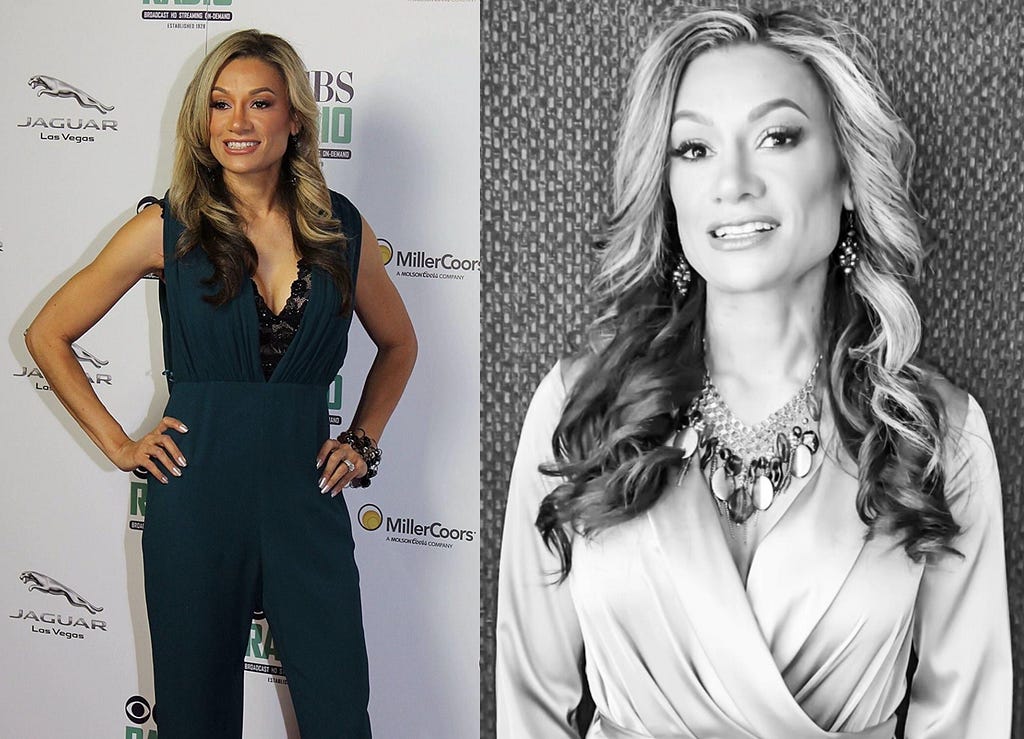
As a part of our series about “Why We Need More Women Founders”, I had the pleasure of interviewing Master Coach Desiree’ Stapleton.

Master Coach Desiree’ Stapleton is the creator of The Self-Help App and is a 2x ’30 Under 30’ honoree and Forbes ‘Next 1000’ nominated master level life coach, author, and CEO who helps women produce and hit more of their goals. She can be found in the 40th annual Forbes 400 magazine, Thrive Global, Business Insider, Entrepreneur, and more!

Thank you so much for doing this with us! Before we dig in, our readers would like to get to know you a bit more. Can you tell us a bit about your “backstory”? What led you to this particular career path?

From suicidal ideation, shrinking myself, and suffering in silence in 2020, to materializing my dreams, I’ve come a long way. Managing to stand out among a sea of mentors from the get-go because of my intimate awareness of suffering and struggles, I became a highly recognized mentor and author that stands at the helm of Desiree’ Stapleton & Company, LLC — a consulting firm designed to provide individuals with the tools and resources needed to enhance their personal growth and development.

The pandemic has been challenging for most, but during this time specifically, I have found a way to help others still be able to move the needle in their lives. Since the start of the pandemic, I have been doing my part in coaching women from all over the globe, including Zambia, Norway, Netherlands, Finland, Philippines, Singapore, Canada, Spain, and Australia on how to mitigate the challenges in their lives so that they can produce and hit more of their goals.

Using the power of my story to highlight the fact that traumas, setbacks, and challenges can be used as stepping stones to success, I’ve been featured in numerous publications such as Thrive Global and the 40th annual Forbes 400 edition of Forbes magazine, I have also had the honor of being 2x ’30 Under 30′ honoree and a Forbes ‘Next 1000’ nominee.

Can you share the most interesting story that happened to you since you began leading your company?

Something I find is interesting, is what it takes sometimes for people to start paying attention to something. Personal development, self- growth, and mental health seem to just now be things that people are starting to take seriously and it’s alarming. Me, being in this sector, it’s alarming how many suicides or rehab visits we have to hear about before we register that there is a problem. I’m glad the world is paying more attention to mental health, but on the other hand: there are more Cheslie Kryst’s of the world.

I bring this up because one of the most difficult decisions I’ve ever had to make was to not let the bad stuff get the best of me. I’ve faced a lot of things that I feel were meant to break me and it takes grit and resolve to keep your essence- to still be optimistic, joyous, humorous, ambitious, or present. And oddly enough, the most important decision I made that contributed to my success was to keep going.

Like I’ve mentioned, I’ve faced a lot of things that I feel were meant to break me and it takes a lot to have resolve and tenacity. It takes a lot to power through situations until what you see in your mind comes to fruition in reality- especially when your current reality is so different from the one that you envision. Imagine only knowing abuse, poverty, or something terrible and working to build a life that doesn’t have those things- it takes a lot to make happen. You’ve got to build yourself to become the person required to get the job done while creating a completely foreign paradigm for yourself.

It’s the reason I created The Self-Help App- because life happens, to ALL of us, and sometimes we need a little extra help. Whether it be to grow or to not be jaded, whatever the personal growth goal is that is tied to a trying experience, sometimes you need a place to go to remind you that things will be okay.

It took some time for me to find that within myself and I want to help expedite and enhance that process for other people.. I know the thoughts that someone could have when their reality isn’t matching up with their desired reality. I know the thoughts someone may have when life throws one too many curveballs or knocks the wind out of them one too many times.

It’s my hope that The Self-Help App helps other people get through the difficult decisions that THEY have to make. Why? Because there are too many people teetering at the edge where it only takes one more situation to happen in order for them to decide to act on their suicidal ideation.

Can you share a story about the funniest mistake you made when you were first starting? Can you tell us what lesson you learned from that?

I think the funniest thing I’ve done is hop on Facebook to do a live video, knowing that I wasn’t good at them at the time, and uploaded it to my page without checking the quality. How is that a funny mistake? Have you ever tried to hype yourself up before you do something, or experience difficulty trying to set something up for the first time? Imagine having it all on camera because you were too nervous to realize that the camera started recording way before you thought it did, and, because you just wanted it to be over, you uploaded the video without watching it yourself to make sure everything was good.

I got some laughs, but as you can imagine, I didn’t sell out of the product/offer I was selling.

None of us are able to achieve success without some help along the way. Is there a particular person who you are grateful towards who helped get you to where you are? Can you share a story about that?

My mum. We had a really rocky start but I got my self-sufficiency and resilience from her. Desiree’ Stapleton & Company LLC and The Self-Help App are, in part, a reflection of the steadfastness she instilled in me– despite our past relationship.

Ok, thank you for that. Let’s now jump to the primary focus of our interview. According to this EY report, only about 20 percent of funded companies have women founders. This reflects great historical progress, but it also shows that more work still has to be done to empower women to create companies. In your opinion and experience what is currently holding back women from founding companies?

I can’t speak for everyone, but from my experience, there is this glaring path that every woman is supposed to take. It involves marriage and children, rather quickly. Society builds women to be the ones that are home, bearing children, and living to support their spouse’s dream. Well, somewhere down the line I guess women decided that their dreams outside the household are worth living as well. No one ever asks a man to choose between home and work, but for women that isn’t the case. If we aren’t home, somehow we are deemed less than a woman.

So, the issue therein lies two things. The first issue being completely societal– women wondering if they will be able to find a partner that is supportive of them thriving and being in their entrepreneurial element, sans domestication if it’s not desired. The second is that it is hard to figure out how to get a “seat at the table” if there 1: aren’t many like you at the table, and 2: there aren’t many at the table that are actually accessible enough to show you the way.

Can you help articulate a few things that can be done as individuals, as a society, or by the government, to help overcome those obstacles?

I think, once society as a whole realizes that women aren’t just lumps of emotions and desirable body parts, we might get somewhere. We’re starting to see a shift in what “traditional” households look like and gender roles are being redefined as each generation discovers more and more what works for them. That is exciting to me. The possibility of seeing more “power couples” or relationships where ambitious women didn’t have to choose between career and family is exciting. Some of us want to stay home, have kids, and just be somebody’s wife. Some want that, plus to have a fulfilling career. And others just want to live the best life that can possibly be presented to them, whether a spouse and family falls into that or not.

I think once we normalize that women have more options than ‘wife’ and ‘mother’, we will progress much, much faster.

This might be intuitive to you as a woman founder but I think it will be helpful to spell this out. Can you share a few reasons why more women should become founders?

We first recognize what’s accessible to us by seeing someone that looks like us doing it. The more women we see crushing it in their professional and personal lives let’s other women know what’s possible. If you have enough examples, what was once an anomaly will then become the new norm.

What are the “myths” that you would like to dispel about being a founder? Can you explain what you mean?

That you will have to choose between your life’s passion/purpose and potentially having a successful relationship and family. For some reason society has told us that we can’t have both. Men do it just fine, that’s how we know it can be done.

The second myth is that “she didn’t make it on her own” which implies that there was significant help from a man that contributed to her success.. There always seems to be shock when a woman tells the story of her success and it’s sans any major contributions from a man.

Is everyone cut out to be a founder? In your opinion, which specific traits increase the likelihood that a person will be a successful founder and what type of person should perhaps seek a “regular job” as an employee? Can you explain what you mean?

I think in order to be a successful founder, you have to have an unshakeable sense of purpose. You’re going to need that sense of purpose when things get hard and aren’t going the way you want them to. Becoming a successful founder takes resilience, resourcefulness, innovation, and an entrepreneurial spirit. Nothing is done for you when you’re starting your own company and when you first start out, most times, you’re doing everything yourself– and you don’t even know what “everything” is yet until you start trying to sell something.

People that want a clear path, certainty, to safely expect a check every two weeks, and really don’t want to stress about whether or not they are going to make it, may probably do best at a job. People that intend to start a business and become a millionaire right away may probably do best at a job. People that intend to quit their jobs and start a business that they think, without any planning, will quickly provide them with income that they can live off of right away, may do best a job.

Entrepreneurship is a lot like sowing seeds. You don’t reap crops in the same season they are sown when you’re just starting out and a lot of people don’t realize that our success is years in the making. Most people are “coming in” after some success has already been made and at that point, it looks easy. Entrepreneurship looking easy is what makes a lot of people quit when they aren’t seeing results in a short period of time.

Ok super. Here is the main question of our interview. What are your “5 Things I Wish Someone Told Me Before I Started” and why? (Please share a story or example for each.)

  1. That it can take a long time to reach the level of success you see “overnight” successes with.

Things tend to look really easy when you walk into the middle of someone’s journey and see everyone jumping all over their offers with excitement. That can lead you to believe that “all I have to do is ________” which more often than not, isn’t all you have to do. These people have been doing this unnoticed for years until they caught their break– but we didn’t know them then because we didn’t yet know that they were noteworthy. See the Catch-22?

2. Hire professionals- sometimes you being able to “pull it off” isn’t going to be enough to get you the results you’re looking for.

Invest in courses and learn from actual experts with actual results. Contract freelance marketing experts and copywriters on places like Fiverr and Upwork to help you with your marketing and your content strategy.

3. Have a reliable source of income while you’re building so that you aren’t stressed about your livelihood and can afford to pay for marketing so your business can actually grow.

There’s nothing worse than being super salesy all the time because you’re not making enough money to live off of.. People can tell when you’re just trying to make a buck and when you really care about what you offer. They want to see your passion– and when you’re struggling to survive, you are passionate about someone buying your product, not about being able to help them.

4. It takes money to run a business.

Now that may seem like common sense but many people think you just hop in and start selling. If you want to grow faster, it’s going to cost. Product creation can cost, hiring people that know the right things to do (marketing, hiring, customer service, copywriting, raising capital) can cost, and gaining the knowledge you need to go to the level, all can- and probably will– cost you. It’s better to know that ahead of time so you can save yourself a lot of time, frustration, and unnecessary feelings of inadequacy and imposter syndrome.

5. People don’t necessarily start taking you seriously until they see you succeeding.

Something that frustrates new business owners is the lack of an interested audience and paying customers. Unfortunately, it’s easier to have success when you’ve already had some. Why? Because there are already eyes on you. When you’re just starting out, no one knows that you’re worth paying attention to yet.. You may come off as just one more person that does xyz. You don’t become “different” or “special” to many onlookers until they start to see things like article features, lots of testimonials, or validation of your credibility by many different people. It helps to know this information upfront because then you know what to focus on. With this information, now you know to do what you need to do to get a bunch of raving reviews– written and video– and to get yourself into some local publications in your town to help set yourself apart, show that you’re the real deal, and help people trust you more.

How have you used your success to make the world a better place?

Desiree’ Stapleton & Company LLC is a consulting firm that provides every-day people with tools and resources to help them achieve their goals and enhance their personal growth and development.

I started Desiree’ Stapleton & Company LLC and created my biggest passion project right now: The Self-Help App, because it’s what I feel I needed when I was struggling alone, trying to manifest my future, and when I felt no one around me could help me get to where I was trying to go.

I’ve been determined for a while to live the life I want to live, and I know I’m not the only one that has taken some hits and experienced things that made them wonder if the life that they envision is ever going to manifest. It will, but we’ve got to work and get through what we need to get through to get here- in our personal lives AND business lives. We’ve got to be a beast in both areas.

So, I created The Self-Help App to help people facilitate their personal growth and development. My goal here is to help people mitigate the challenges they face so that they can produce and hit more of their goals- you know, get their external world to match more of their internal world- and vice versa. So my goal is that for those of us blazing paths trying to get to where we’re going, and those of us just trying to figure it all out- The Self-Help app has a little something for ALL of us.

You are a person of great influence. If you could inspire a movement that would bring the most amount of good for the greatest number of people, what would that be? You never know what your idea can trigger.

I’ve started a WORTHY+FAVORED community designed to not only remind women that they are worthy of living the lives that they envision, but they are favored enough to make it happen.

A lot of people will say “that kind of stuff doesn’t happen for people like me” and we need to change that. The more people we have “winning” the more examples we have that it is possible. So in my WORTHY+FAVORED community I’m coaching these women how to be able to produce the results they are looking to see in their lives and am holding them accountable to achieving those results.

I also have The Self-Help App that’s designed to help give the everyday person a fighting chance at starting their journey of being something great.

I have the slogan “you matter” and I want people to know that they have everything it takes to live the life that they envision. And not only that, but that they are worthy and capable of living it.

We are very blessed that some very prominent names in Business, VC funding, Sports, and Entertainment read this column. Is there a person in the world, or in the US with whom you would love to have a private breakfast or lunch with, and why? He or she might just see this if we tag them.

As of late, it’s been Daymond John.. I’ve been honing in on the Black community and have intentionally been looking to serve more Black women that resemble past versions of myself. I say Daymond John because he created FUBU– For Us, By Us.

I want Black women to see themselves reflected in my work and in my business.. I think sometimes we’re afraid to niche down and focus on one demographic, but Daymond John took a concept and made it for the Black community. Even though it’s accessible to anyone who enjoys the brand, the Black community knows that it was made with them in mind.

I want to be able to do that and have it be as monumental as FUBU. And maybe even do a collaboration with them.

I have a FUBU collab on my list of goals/gifts to give the world before I die.

Thank you for these fantastic insights. We greatly appreciate the time you spent on this!


Female Founders: Desiree’ Stapleton On The Five Things You Need To Thrive and Succeed as a Woman… was originally published in Authority Magazine on Medium, where people are continuing the conversation by highlighting and responding to this story.

Lessons from a Thriving Power Couple, With Megan and Eric DeCrosta

An Interview With Candice Georgiadis

Open lines of communication — Hand in hand with honesty is maintaining open lines of communication in all categories of your relationship: finances, emotions, intimacy, your goals as a couple and as individuals.

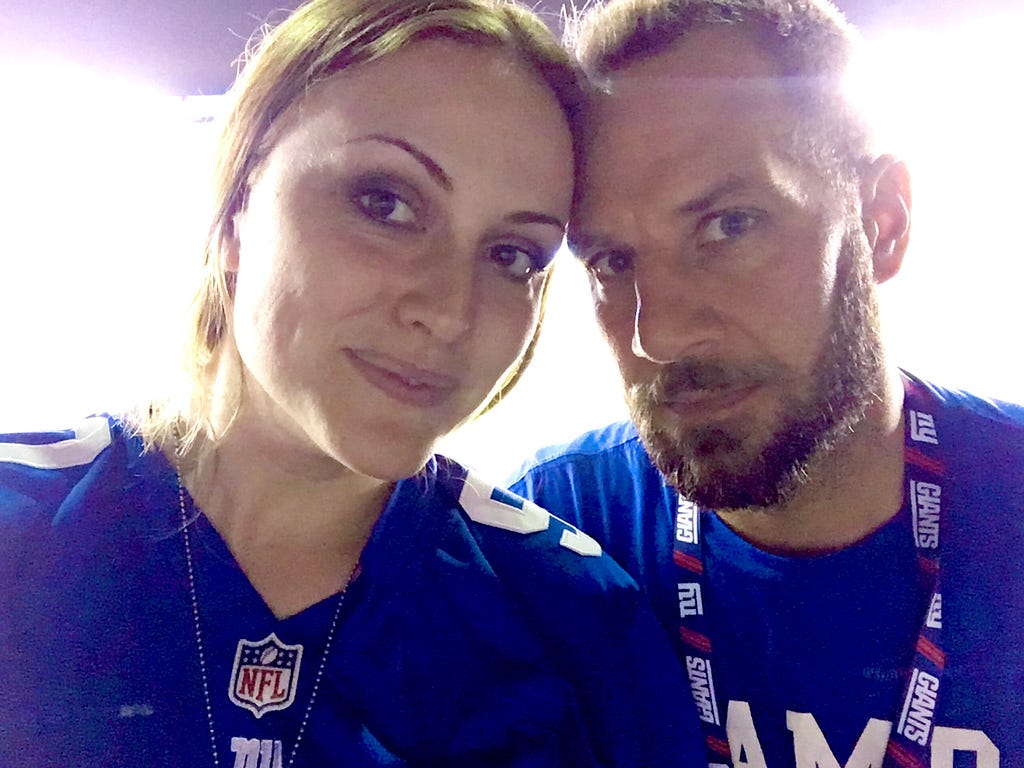
As a part of our series about lessons from Thriving Power Couples, I had the pleasure of interviewing Megan and Eric DeCrosta.

It’s no accident that opposites are drawn to one another. But oftentimes those same qualities you once found attractive can turn to feelings of resentment and create tension in your relationship. Rest assured, no tension here with Megan and Eric DeCrosta! As the spender in the relationship, when Megan met Eric, she learned the number one thing you can do for your relationship is have good lines of communication. Especially about money. As the saver, Eric’s side gig as a real estate agent dealing with first-time homebuyers, the duo discovered an overall lack of knowledge when it comes to credit and finances. So Megan created Cut the Fiscal Fat to teach teens about finances, tips and advice she wished she knew sooner, but you don’t know what you don’t know til someone shines a bright light on it!

Thank you so much for doing this with us! Can you tell us a story about what brought you two to your respective career paths?

Our extreme differences are responsible for the creation of Cut the Fiscal Fat. Eric and I grew up in lower-middle-class families, and we are both Giants fans, but that’s about it. We are a generation apart, have different music and movie tastes, as well as different lifestyles and spending habits. Eric has always been a worker and a saver. And I have always been a worker and a spender. When we first started dating, Eric owned and lived in a three-family investment property, had a .9% auto loan, and an 850-credit score. I had, let’s just say, a less desirable portfolio.

With Eric’s influence, I am now incapable of making a purchase without hearing him in my ear about sale prices, unit prices, discounts, coupons, and credit card rewards. He learned all he knows after having to repair his credit from identity theft and asking countless questions along the way. In the years I have been with him, I have learned so much about credit, finances, budgeting, and saving; I always find myself saying, “I wish I had known this sooner!’

So, I launched Cut the Fiscal Fat and our #12to1million campaign to help kids who grew up like us learn the financial need-to-know early enough to avoid the mistakes many of us have made (and some of us still make).

Can you share the most interesting story that happened to you since you two got married?

When we met, Eric was working a part-time job taking photos for the NFL and the NY Giants. I had been to a few games with him before; he would buy a single ticket in the nosebleeds for me and have me meet him at his cinderblock booth atop section 301that he affectionately dubbed “low-class VIP.” A private, heated concrete box with food delivery at halftime! After the games ended, I would head to the car while he went to the press box to finish his work.

With kids and marriage and virtually no time alone together, Giant’s home games in the low-class VIP suite became our getaway. Once, instead of waiting at the car after a game ended, Eric made me wait in a stairwell next to a press-box entrance. A few anxious minutes passed, the press door opened and Eric popped his head out and whispered, “Get in here and get to work!” I followed him into the press box where he pointed me to fountain sodas and a buffet of fruit, cheese crackers, danishes, and desserts before slipping me his ID. He told me to make a plate and make myself comfortable at one of the tables in the press box lounge area. And then went back to work. I stood frozen for what seemed like five min before grabbing my Pepsi and snacks. On the retreat to the lounge area, a man in a maroon jacket asked for my ID. The question hit me like a linebacker! I reached into my pocket and found Eric’s ID and showed it to the man. He smiled at me and said, “Sorry, thank you” and walked on.

Less than an hour later Eric had finished the data entry work and found me in the lounge. When I told him about what happened he laughed and said, “GREAT!” When I asked why he said, “They can’t forget your pretty face, so they’ll leave you alone next time.” I thought, who is luckier than me?

Can you share a story about the funniest mistake you made when you were first starting? Can you tell us what lesson you learned from that?

We started with YouTube self-help videos and had so much fun doing them. Until we realized nobody was watching and nobody cared! From that, we learned the importance of knowing who you want your target audience to be and changing your approach to reach them.

What do you think makes your company stand out? Can you share a story?

We are focused on teens and getting them the money knowledge they need before they start getting credit cards and student loans. We are here to disrupt the way teens approach money, finances, and credit. We keep it fun and simplistic in order to build confidence and encourage growth.

We know given the opportunity, those teens who truly want financial security will work hard to find it, and we want to show them the way.

Millions of teens graduate high school every year and enter college or the workforce without the proper money knowledge they need to achieve their financial independence. Eric worked since he was a freshman in high school and left college after his sophomore year. He worked multiple jobs to pay off his student and auto loans, but still lacked the necessary knowledge to thrive financially.

He had his identity stolen a few years later and was forced to fix the issue with the credit bureaus himself. This was his catalyst. While on this mission he bought his first investment property and reached a credit score of 850. When Eric and I got together, I had no savings to go with my 17% auto loan and $5,000 in collections.

I know if I had someone like Eric in my teenage years to help educate me about personal finance, I would have made smarter money decisions. Now my mission is to help as many teenagers as possible achieve financial independence.

Are you working on any exciting new projects now? How do you think that will help people?

We are currently working on two projects: our 5-hour defensive finance course and the “Need to Know Life Guide (Level 2).”

“Need to Know Life Guide (Level 1)” is an introductory 45-minute online course covering the five keys to financial literacy: Earn, Save and Invest, Spend, Borrow, and Protect. The 5-hour course will be a more in-depth look at each key.

The “Need to Know Life Guide (Level 2)” will be the next step for those interested in expanding their relationship with money and finances. It will cover the three categories of financial literacy that have the lowest comprehension.

What advice would you give to other CEOs or founders to help their employees to thrive?

Your employees must know you care about them more than profits while helping them understand without profits there are no jobs.

Also, we should always be learning for self-improvement and the betterment of our business. Knowing how someone else’s job is done can help you establish backup coverage (like cross-training) but also a better understanding of what that specific employee is responsible for, how it fits into the business model, and if outside perspectives/questions can help improve the process efficiency, costs, or both. Transparency should be at the forefront of your business model.

How do you define “Leadership”?

Leadership is like being the captain of a ship. The captain is responsible for making all the decisions while keeping his crew’s best interests and safety in mind.

Your crew needs to know you will fight for them and alongside them to make sure your ship never sinks.

None of us are able to achieve success without some help along the way. Is there a particular person who you are grateful towards who helped get you to where you are? Can you share a story about that?

Megan: For me, it is my mom. She has always been the source of profound support and unconditional love, especially after my father’s death when I was 15.

When I was 18, I was competing in the Miss New York U.S.A. beauty pageant, and the final round was held in Albany, NY, which is a 10-minute walk from where I grew up, and most of my family members lived. I had 10 aunts and uncles and one grandmother (plus scores of extended family members) and only my mother and younger brothers showed up to support me. There have been many moments prior to that event, and many after, where my mom has been the only source of support. No matter the endeavor, no matter the path I choose, she will always be there.

Eric: My family and extended family. I would not have accomplished what I have, so far, without the love and support of my parents, my brother, my grandparents, aunts, and uncles. All have played a significant role in who I am today. Each of them has helped me set and reach goals despite life’s unexpected hurdles.

In February 2006, I suffered a grand mal seizure, was diagnosed as a partial epileptic, and was forced to surrender my license for six months. I walked and biked everywhere, but when weather or extreme distance prevented me from doing so, everyone stepped up to help. I feel blessed to know that in my most vulnerable times, I have been the most loved.

How have you used your success to bring goodness to the world?

We will be successful IF we can change the world. Or at least the way teens approach money and finances!

We started in our own community and hope to spread across the state and then the country. Our end goal is to make financial literacy education a main part of the high school curriculum, which would have a direct and significant impact on the wealth gap as more teens equip themselves with the knowledge and protection of their financial futures.

What are the “5 Things You Need To Thrive As A Couple”? Please share a story or example for each.

  1. Honesty — Be honest about who you are and what you want in life. It is important to note that there is a difference between being honest and being mean. Choose honesty!
  2. Open lines of communication — Hand in hand with honesty is maintaining open lines of communication in all categories of your relationship: finances, emotions, intimacy, your goals as a couple and as individuals.
  3. Understanding — “It is good to be loved, but profound to be understood.” Having a true perception of one another is critical to the success of your relationship. This means that you can empathize with your partner and know what is at the core of their actions and reactions.
  4. Unconditional Support — This is a form of support that lacks judgment. Not easy to do and not easy to find, especially in times of grief, loss, trauma, differences of opinions, and beliefs. You need understanding to have unconditional support.
  5. Plans — Creating short- and long-term plans together can help ensure you are both on the same page and headed in the right direction. Having monthly reviews can help you capitalize on your strengths and foresee potential obstacles.

You are people of great influence. If you could inspire a movement that would bring the most amount of good to the most amount of people, what would that be? You never know what your idea can trigger. 🙂

We hope our #12to1million campaign IS what inspires a movement, and the result will be lifting an entire economic class and decreasing the wealth gap. We want to educate young adults and teens on how to beat the “system” that’s programmed to keep them in debt.

By filling the personal finance education gap with our “Need To Know Life Guide”, we are giving every student an opportunity to start off on the right foot.

Can you please give us your favorite “Life Lesson Quote”? Can you share how that was relevant to you in your life?

Megan: “A person who risks nothing, has nothing, is nothing.” — Portia de Rossi

Eric: From Confucius, “Our greatest glory is not in never falling, but in rising each time you fall.”

On Eric’s journey to financial independence, he encountered his fair share of nay-sayers and those who ultimately proved to be disingenuous. Some of these encounters cost him money while others cost him his time and energy. They always cost him emotion.

In our house, and in our relationship, he is infamous for repeating “One step back to take two forward.” He chooses to treat these obstacles objectively and always finds a way to overcome them. Neither the bad encounters nor obstacles have ever deterred him from taking on risks for the betterment of our family or sharing his knowledge with anyone who will listen.

We are very blessed that some of the biggest names in Business, VC funding, Sports, and Entertainment read this column. Is there a person in the world, or in the US with whom you would love to have a private breakfast or lunch with, and why? He or she might just see this if we tag them 🙂

My choice for a male would be Eli Manning. He’s a two-time Super Bowl winner and MVP, and I am a huge Giants fan. Eli is amazing off the field too. He is a businessman, he is a husband and father, a philanthropist, a comedian, and a total class act. For a man who was born into a famous family and blessed with talent and success, he seems just as genuine and relatable as the next guy.

My choice for a female would be Kim Kardashian. As the owner of two, billion-dollar companies, and a current law student, she is the definition of a hustler. While she capitalizes on her image, she uses her celebrity status to raise awareness for social issues and has made sizeable charitable contributions. Her philanthropic efforts are hardly broadcasted by the star. Did you know she charted a plane for an Afghanistan girls’ soccer team and their families to be flown to safety in Britain? That is the Kim Kardashian I would love to have a sit-down with.

How can our readers follow your work online?

https://cutthefiscalfat.com

https://linktr.ee/cutthefiscalfat

@cutthefiscalfat

Thank you so much for joining us. This was very inspirational.


Lessons from a Thriving Power Couple, With Megan and Eric DeCrosta was originally published in Authority Magazine on Medium, where people are continuing the conversation by highlighting and responding to this story.

Women In Wellness: Victoria Thain Gioia Of Perelel On the Five Lifestyle Tweaks That Will Help…

Women In Wellness: Victoria Thain Gioia Of Perelel On the Five Lifestyle Tweaks That Will Help Support People’s Journey Towards Better Wellbeing

An Interview With Candice Georgiadis

Mental health is a cause that is very dear to me. It has certainly been a wild ride these last two years and there has been so much pressure on us all, but especially caregivers, mothers, working parents, and working mothers. It has been a lot to manage and personally I have struggled to find time and space for supporting myself through it all. It is so important to do so, to take care of yourself and your emotional balance. For everyone, no matter what their circumstances, yes, it could always be worse, but it is ok to need support for whatever you’re going through.

As a part of my series about the women in wellness, I had the pleasure of interviewing Victoria “Tori” Thain Gioia.

Victoria “Tori” Thain Gioia is the co-CEO and co-founder of Perelel, the first OB/GYN-founded wellness company that offers women dynamic prenatal vitamins and supplements, resources and community tailored to the varying stages of motherhood.

Thank you so much for joining us in this interview series! Our readers would love to “get to know you” better. Can you share your “backstory” with us?

I grew up as a third child in a very competitive family of four.I was a bit of a nerd growing up, very focused on school and eventually majored in math in college. After graduation I started my career in finance wearing pantsuits every day, consumed by numbers, and working 100 hour weeks. Eventually I realized I wanted to work for an actual brand that resonated with me , and have a real role shaping the business, which led me to startups. I went to business school to make this transition, and used that to land finance, strategy & operational roles at a handful of wellness oriented startups including Olive & June, Honest Co., and Carbon38. Once I became a mom though, I really wanted to work for companies I felt passionate about and eventually my experience through motherhood, fertility and all of the ups and downs of parenthood led me to founding Perelel.

Can you share the most interesting story that happened to you since you started your career? What were the main lessons or takeaways from that story?

When I was working in finance, I interviewed at a fund where I really wanted an investment role. One of the partners told me point blank that if he had two equal candidates, but one was a woman and one was a man, he would hire the man because the woman was likely to take the “mommy track” and need time off. I was infuriated, but from that moment on have sought to prove that moms can still be competitive, MVP employees. Or founders! This comment has come up again and again in different ways over the last two years as my co-founder Alex and I were two pregnant co-founders, launching a brand at the onset of the pandemic, and it continues to fuel our fire. We want to hire moms, give women time off and ultimately know that a mom can multitask like no one else, get their work done, be efficient with time management and ultimately be founders, C-suite executives, and incredible employees for any company.

Can you share a story about the biggest mistake you made when you were first starting? Can you tell us what lesson you learned from that?

I came from and joined a very structured, linear career environment and assumed every career choice had to be part of some resume building narrative. The world has changed so much and there is no such thing as a standard career path anymore. Every experience is important and can be a growing and learning opportunity if you can view it that way. My lesson learned has been to try and take something away from every experience versus putting pressure on yourself to make it fit some ideal narrative on some ideal path because life doesn’t work that way either.

Let’s jump to our main focus. When it comes to health and wellness, how is the work you are doing helping to make a bigger impact in the world?

Our mission statement is to create a world with more healthy, supported women every step of the way. Through our relationships with our customers, building a community of women who are supporting one another through life’s most joyous and sometimes most sobering moments, and through our product donations to underserved women who lack access to high-quality prenatal care, we’re hoping to make an impact.

Can you share your top five “lifestyle tweaks” that you believe will help support people’s journey towards better wellbeing? Please give an example or story for each.

As a mom of three and co-founder of a new business, I have had to focus more on life hacks than lifestyle tweaks, these are a few that I swear by:

  • Taking phone calls as a walk
  • Using calendly to schedule meetings
  • Adding focus work blocks as holds on my calendar
  • Turning lunch pickups into regular catch ups with my co-founder
  • Scheduling my weekly workouts to hold myself accountable and block the time

If you could start a movement that would bring the most amount of wellness to the most amount of people, what would that be?

Self-care and not feeling guilty about it. It sounds trite and it may be a bit overused right now, but ultimately you have to take care of yourself before you can take care of anyone else.

What are your “5 Things I Wish Someone Told Me Before I Started” and why?

  • The lows are never as bad as they seem in the moment.
  • The journey is the destination — you always feel like you’re just trying to get to the next milestone, but really it should be caring about the process
  • You will hear 10 no’s for every 1 yes, but the yes’ are all that matter
  • Lean on your village and don’t feel bad about it
  • Sleep makes a big difference

Sustainability, veganism, mental health and environmental changes are big topics at the moment. Which one of these causes is dearest to you, and why?

Mental health is a cause that is very dear to me. It has certainly been a wild ride these last two years and there has been so much pressure on us all, but especially caregivers, mothers, working parents, and working mothers. It has been a lot to manage and personally I have struggled to find time and space for supporting myself through it all. It is so important to do so, to take care of yourself and your emotional balance. For everyone, no matter what their circumstances, yes, it could always be worse, but it is ok to need support for whatever you’re going through.

What is the best way our readers can follow you on social?

@perelelhealth and @vat26

Thank you for these fantastic insights!


Women In Wellness: Victoria Thain Gioia Of Perelel On the Five Lifestyle Tweaks That Will Help… was originally published in Authority Magazine on Medium, where people are continuing the conversation by highlighting and responding to this story.
Edyta Haligowska of HE Space Design: 5 Things You Can Do To Help Your Living Space Spark More Joy

An Interview With Candice Georgiadis

The first thing that comes to my mind when I think of joyful interiors is color. Color should create natural connection between rooms. However, you can create the unexpected accent room or wall with wallpaper or paint for a pop of color. Pick your favorite color in a subdued palette that seamlessly flows through the room. Another way to introduce color to a neutral or white room is to add accent pieces like colorful pillows, blankets, rugs, and drapes.

As part of my series on the “5 Things You Can Do To Help Your Living Space Spark More Joy”, I had the pleasure of interviewing Edyta Haligowska.

Edyta Haligowska, the CEO and Lead Interior Designer of HE Space Design transforms everyday spaces with an architectural design approach. Edyta works closely with clients, incorporating their vision and personality along with functional solutions into her classic, one-of-a-kind style. Edyta oversees the design process at every stage from selecting materials to meeting with hired contractors for renovations. With previous experience as an AutoCad Engineer, Interior Designer, Project Development Manager, and Design Consultant, Edyta has over 20 years of diverse experience within the interior design sector, empowering her with a wide range of specialized knowledge. Edyta is a certified lighting specialist by the American Lighting Association with additional expertise in space planning, color and finish consultations, and custom furniture design. She received a B.A. in English from Northern Illinois University and then furthered her education by earning a B.F.A. in Interior Design from the International Academy of Design and Technology in Chicago. Inspired by her travels, culture, and passion for design, Edyta brings an experienced perspective and creative vision to all her projects.

Thank you so much for joining us in this series! Before we dive in, our readers would love to learn a bit more about you. Can you tell us a story about what brought you to this specific career path?

When I was growing up there was no profession like interior design so I never thought about it. It’s a relatively new field. After graduating with bachelor degree in English and history I need it to decide what’s next– law or Interior design/architecture. I picked design and know now I made the right choice. My father was an engineer and he designed, drafted and built our house. He had such incredible talent that it was inspiring. I was always around the creative energy of architecture and design growing up. It was a natural trajectory for me to end up as an Interior Designer.

Can you share the most interesting story that happened to you since you started this career?

The job itself is the most interesting. I am learning constantly, and there is never a boring day no matter what I am doing. Interior design has the technical aspects as well as the creative ones, so I get challenged on both. I am always trying to polish the design process of planning and executing with each project. Also, every home and client are different and demands different attention, so it keeps you on your toes. It’s very rewarding when you know your design has captured the energy and essence of the family that lives there.

Can you share a story about the funniest mistake you made when you were first starting? Can you tell us what lesson you learned from that?

The last mistake I made was when I sent the drowning of the backsplash to a fabricator, and I wrote my measurements by hand. The tile specialist read my 7 as 1. We did not know it until we got the tile, and it was not enough. Luckily, the tile was rushed and come within a week. The very important lesson I learn through the years about mistakes is to first check, check and check again before you pass information into production or purchase. Second, when you do make a mistake, it’s all about how your handle it. Be honest and find creative ways to solve it in a timely manner.

What are some of the most interesting or exciting projects you are working on now or recently completed?

I truly loved every project I did because it made me a better designer and the designer I am today. The most exciting project is the project I did last. The last space I design is a first floor of a house starting with a foyer, front room, dining room, kitchen and family room. The house feels open but each room has strong identity and seemingly connects one space to the next. The space turned out to be livable, beautiful, quiet, and refined yet relaxed. It’s pretty with calming effects. It’s rich in layers of texture and pattern with a natural color palette with hues of white and cream. The white walls’ dramatic blank canvases serve as artwork. The artwork offers the rooms the splash of color shades of blue, green, orange and pink.

My favorite quote in my career and life is by Charles Eamer.

“The details are not the details. They make the design.

In personal life, dreams or goals are not achieved in one day, it’s the small steps towards its every day that will bring you there.” In professional life as a designer, it’s the details in space that creates the big picture.

None of us can achieve success without some help along the way. Is there a particular person who you grateful towards who helped get you to where you are? Can you share a story about it?

The people who helped me along my way were my parents. My parents taught me how to be kind, resourceful, driven, and determined. I don’t remember specifically telling me who to be but showing me by their example. They exposed me to art and culture. As a child, they sign me up to ballet school and conservatory school, where I played piano learning the discipline and benefits of its efforts. My parents were always there for me growing up and later in life supported my choices. I moved to the US from Poland and my parents followed me with my siblings, giving up their comfortable life of retirement in Poland. That love, dedication and selflessness motivates me and keeps me going.

I would start a movement that people are conscious to show kindness and compassion to everyone every day.

What are your “5 Things you Can do help your living space spark more joy? And Why? Please share a story or example for each.

  1. Color

The first thing that comes to my mind when I think of joyful interiors is color. Color should create natural connection between rooms. However, you can create the unexpected accent room or wall with wallpaper or paint for a pop of color. Pick your favorite color in a subdued palette that seamlessly flows through the room. Another way to introduce color to a neutral or white room is to add accent pieces like colorful pillows, blankets, rugs, and drapes.

2. Artwork

Artwork inspires, motivates and gives the space character beyond the furnishings. Art is food for the soul and can transform your home by telling a personal story. Invest in a few pieces of art, either from your local gallery (support your local artists!) or online like from 1st Dibs or even Etsy. Or, if you’re feeling creative, make your own heirloom piece that you can pass down to members of your family. Quality is the key as it will grow with you, your family and your home.

3. Be Organized

A joyful home is a well-functioning and well-organized home. We all have a room (or rooms) in our homes that get cluttered with stuff. Fortunately, this is easy to solve by adding stylish storage solutions. If your family room gets overwhelmed with gadgets, kid’s toys, etc., decorative storage, like a bench with a patterned fabric seat cushion, will conceal your clutter while adding an extra seat to the room. Also, get rid of the stuff that you do not need or love. Only keep the pieces that you use often or that mean something personal to you and your family, keeping in mind that space is luxury!

4. Create a photo wall

Create a photo wall in your house to show your family’s life journey. Frame the memories that make you laugh, or a beautiful moment that takes you to a happy place. Choose interesting frames that fit the style of your home.

5. Plants build a sanctuary

Breathe new life into your home, both literally and figuratively, by incorporating houseplants. Not only do plants have positive health benefits by emitting oxygen and increasing a sense of connection with nature (biophilia), they’ve also long been used to enhance even the most stylish of interiors.

Thank you so much for joining us. This was very inspirational!


Edyta Haligowska of HE Space Design: 5 Things You Can Do To Help Your Living Space Spark More Joy was originally published in Authority Magazine on Medium, where people are continuing the conversation by highlighting and responding to this story.

Female Founders: Riham Satti Of MeVitae On The Five Things You Need To Thrive and Succeed as a…

Female Founders: Riham Satti Of MeVitae On The Five Things You Need To Thrive and Succeed as a Woman Founder

An Interview With Candice Georgiadis

Measure. Taking a wrong step can impact your business so building a plan but measuring your metrics allows you to assess risk, come up with a strategy and align your budget to it. We are measuring many factors, from customer success to financial metrics.

As a part of our series about “Why We Need More Women Founders”, I had the pleasure of interviewing Riham Satti.

Riham Satti is a keynote international speaker, neuroscientist and entrepreneur. She co-founded MeVitae in 2014, a deep tech company aimed at solving the biggest recruitment challenges — mitigating algorithmic and unconscious biases from the hiring process. Riham is involved in several initiatives including: Founder of LinkedIn’s Women in Tech group and member of TechUK Diversity and Skills Council. She is a business mentor including the London Business School entrepreneurship course (helping over 20+ early-stage founders who have raised over £1m). Riham holds a Master of Research in Clinical Neuroscience, University of Oxford and a First-Class Honour Master of Engineering in Biomedical Engineering, Imperial College London.

Thank you so much for doing this with us! Before we dig in, our readers would like to get to know you a bit more. Can you tell us a bit about your “backstory”? What led you to this particular career path?

I’m what you would call a Fema-Neuro-Preneur — a female clinical neuroscientist turned entrepreneur in a male dominated start-up field.

My childhood and upbringing has everything to do with who I am. In fact, I went to one of the most under achieving community schools in Westminster (shut in 2006). I never grew up with mentors and hardly knew the importance of them, and was bullied in school. However, I was fortunate enough to be surrounded by friends and family to inspire me in the direction of success and fulfilment. I was always one of those kids that would play with LEGO and a Barbie doll at the same time. I was always curious about the world of tech and my family were also STEM orientated. Therefore, it wasn’t a surprise that I pursued a career in STEM — MEng Biomedical Engineering at Imperial College London and then came to Oxford to study Clinical Neuroscience.

I had my life set; I was going into academia, contributing to science– study for a PhD and then become a Neuroscience Professor. I was determined nothing would change it, until I opened my mouth with an idea. This idea is one that I didn’t know was going to stick with me for life and as I was continuing my journey I fell in love with the startup world and journey. Since then I never looked back.

Can you share the most interesting story that happened to you since you began leading your company?

The most interesting/important one is growing as a person. When first jumping into the business world I was very introverted; shy when talking to ‘strangers.’ Networking was something I completely sucked in. Entrepreneurship means stepping out of one’s comfort zone. I had to build up my confidence and just get out there. I have had to learn fast and take risks. Now, I am more comfortable with networking and giving talks, e.g. giving a TEDx talk to thousands of people. Back then I never thought any of these things would be possible.

Can you share a story about the funniest mistake you made when you were first starting? Can you tell us what lesson you learned from that?

Before co-founding MeVitae in 2014, my co-founder and I were dabbling in entrepreneurship. We built a swapping and trading site for students. At that time, it was my first interaction with investors, and one of the first questions was what is our revenue model, i.e. how will you make money. I kid you not, my answers were along the line of “I do not know. Facebook didn’t make money, and neither did Skype. We will figure it out.” You can easily see the problem with that. It was an immediate learning experience that in fact we had lots to learn. That was 10+ years ago, and now I learnt to surround yourself with people who have done it before

None of us are able to achieve success without some help along the way. Is there a particular person who you are grateful towards who helped get you to where you are? Can you share a story about that?

Everything to do with the world of business has been experimental, from sales strategy to networking. None of what we have achieved at MeVitae would be possible without being surrounded with numerous mentors, such as the co-founder of Shazam, Dhiraj Mukherjee, or development manager at Microsoft, Geoff Hughes. They have shared their wisdom with me and showed me great examples of what life can be like if you work hard at something. An example is that the problem with being a scientist/engineer is that you become very detailed orientated as you are trying to make sure that all your experiments run well, though in entrepreneurship you need to use a lean approach; build quickly, release faster and modify as you go along repeating the cycle. Getting feedback from mentors and investors has quickly taught me when to stop iterating and get out there.

I am going to be cheesy and say my family have been essential, from an emotional support perspective. You learn to develop thick skin in the world of entrepreneurship, and they have always picked me back up when there are days where I could doubt myself.

Ok, thank you for that. Let’s now jump to the primary focus of our interview. According to this EY report, only about 20 percent of funded companies have women founders. This reflects great historical progress, but it also shows that more work still has to be done to empower women to create companies. In your opinion and experience what is currently holding back women from founding companies?

Risk: I believe it’s in our nature to overthink things, and worry if things don’t work out, i.e. what are the consequences. We can often paralyze ourselves by doing that. I know personally for me, I was always worried about failing and I wasn’t much of a risk taker. I wish I knew that Fail=First Attempt In Learning. We sometime need to let go and not overthink. Just do it!

Funding: Another stat that I often see is that only 0.2% of black women founders have raised investment. Of those that have raised money, the average amount of funding its $36,000. Gobsmacked! Speaking as a black entrepreneur, the odds are stacked up against us. That is one of the many challenges female entrepreneurs like myself are faced with. Hence the need for change — great ideas can come from anyone and given circumstances anyone can reach their full potential, irrespective of age, gender, sexuality, religion etc. Hence the need to break glass ceilings. Sometimes we know what to do next, but just need funding.

Can you help articulate a few things that can be done as individuals, as a society, or by the government, to help overcome those obstacles?

A few things:

  • Networking opportunities to share stories and support each other
  • Grant schemes to help de-risk early stage entrepreneurs that need funding to start their business
  • There are some great corporate initiatives such as Oracle for Startups that provide resources to entrepreneurs and open doors. More of these will be great for founders

This might be intuitive to you as a woman founder but I think it will be helpful to spell this out. Can you share a few reasons why more women should become founders?

Simple: If you see a problem or opportunity, why not pave the way and change the world.

What are the “myths” that you would like to dispel about being a founder? Can you explain what you mean?

On the media we often see CEOs and founders such as Jeff Bezos and Steve Jobs that are all powerful founders with powerful personalities. I have seen countless articles of the ‘successful’ daily schedule, such as waking up at 4am, gym at 5am, emails from 6am-7am. You get the point.

We need more representation. I would love to see founders from different backgrounds, examples of how empathy can be an asset in leadership, how being introverted can also be powerful. Everyone has a story to tell and diversity of thought is an incredible thing. We need to see more of that.

Is everyone cut out to be a founder? In your opinion, which specific traits increase the likelihood that a person will be a successful founder and what type of person should perhaps seek a “regular job” as an employee? Can you explain what you mean?

This is a debate I keep thinking about ‘are entrepreneurs born or made.’ I’m a firm believer that founders can be made. There aren’t any specific muscles or bones that you need to succeed. Different successful entrepreneurs have different personalities and traits, therefore, there isn’t a specific characteristic that will result in success. I consider success to be a combination of hard work, luck and timing. A universal acumen that we all need to succeed in our career is passion. Entrepreneurs spend long periods of time on their business, and having self-motivation, passion and drive to succeed is fundamental.

Ok super. Here is the main question of our interview. What are your “5 Things I Wish Someone Told Me Before I Started” and why? (Please share a story or example for each.)

  1. FAIL=First Attempt In Learning. This relates to risk. No point in over worrying about all the different things that could go wrong. Starting a business means that you are always learning.
  2. Having a thick skin. Rejection happens often (e.g. losing a sales deal or investors saying now). Before, I used to be so sensitive to this. I remember during our first investment round, I would spend so much time thinking what’s wrong with me during my train rides back up. It was very draining and I quickly learnt not to take things so personally
  3. It’s who you know, not what you know. This is important for mentoring, networking, raising funding, hiring etc. I wish I learnt this very early on as I truly think it would have helped us scale faster. Networking and having warm introductions was how we initially scaled MeVitae
  4. Storytelling. You are always selling, and you need to be able to communicate your business effectively so that people can resonate. The first time I got up on a stage to pitch MeVitae, it was such as daunting experience. Quickly, I learnt that how we speak, our confidence and our body language makes a huge difference
  5. Measure. Taking a wrong step can impact your business so building a plan but measuring your metrics allows you to assess risk, come up with a strategy and align your budget to it. We are measuring many factors, from customer success to financial metrics.

How have you used your success to make the world a better place?

Our vision at MeVitae is to create fairness in the workplace by helping organisations mitigate algorithmic and cognitive biases. Our offerings are a set of tools that plug into 15+ Application Tracking Systems (ATS) to de-bias recruitment processes. The most popular solution is blind recruiting — redacting 20+ types of personal identifiers (e.g. gender, ethnicity and age) from CVs, application forms and cover letters — with 95% accuracy, and which has proven to increase diversity and inclusion by 30% in firms.

On a personal level, there are a few things that I have been doing:

  • I wanted to build a place where women can connect, and share successes and stories. Therefore, I set up a LinkedIn Group called ‘Women in Tech and Female Founders’ which has 3,000 members and growing!
  • To give back I joined as a mentor at London Business School entrepreneurship course to inspire aspiring entrepreneurs and help them in their own startup journey

You are a person of great influence. If you could inspire a movement that would bring the most amount of good for the greatest number of people, what would that be? You never know what your idea can trigger.

We should teach entrepreneurship at schools. Providing students and children the exposure and skills to building a business would be so eye-opening. The impact this will have on individuals and societies will be huge!

We are very blessed that some very prominent names in Business, VC funding, Sports, and Entertainment read this column. Is there a person in the world, or in the US with whom you would love to have a private breakfast or lunch with, and why? He or she might just see this if we tag them.

Simon Sinek. A true optimist and visionary. His storytelling capabilities are genius, and Starting with Why is such a fantastic concept that truly differentiates businesses.

Thank you for these fantastic insights. We greatly appreciate the time you spent on this!


Female Founders: Riham Satti Of MeVitae On The Five Things You Need To Thrive and Succeed as a… was originally published in Authority Magazine on Medium, where people are continuing the conversation by highlighting and responding to this story.
Women In Wellness: Katie Jackson of FUEL for Impact On The Five Lifestyle Tweaks That Will Help…

Women In Wellness: Katie Jackson of FUEL for Impact On The Five Lifestyle Tweaks That Will Help Support People’s Journey Towards Better Wellbeing

An Interview With Candice Georgiadis

Get ready for highs and lows — There are times where I feel amazing. I’m pursuing a dream of mine. But, in the pursuit, there are learning experiences. I have had days where I question how I’m going to manage operations, finances, and marketing all myself while being the wife and mother I want to be. I wish someone would have told me that this is normal because I have found that all business owners experience those same feelings.

As a part of my series about the women in wellness, I had the pleasure of interviewing Katie Jackson.

Life-long athlete, full-time working mom of two, Katie is on a mission to make a statement that health and wellness not only matter for the individual, but society as well. She has had the privilege to work for companies like Verizon Wireless, Anytime Fitness, Wellbridge Athletics, EXOS, and Ameren UE. Driven to do more for others, she founded her business, F.U.E.L. for Impact, LLC January 31, 2022.

Thank you so much for joining us in this interview series! Our readers would love to “get to know you” better. Can you share your “backstory” with us?

Even though my job description would be ideal for someone who is extroverted, I am a bit of an introvert…and NERD. I grew up playing video games with my brother and sister on the Nintendo 64 and PlayStation 2. My favorite games were Zelda, Ocarina of Time, Mario Kart, and The Lord of the Rings games.

I also LOVE movies, mostly because I love the stories. Some of my favorite movies include the Lonesome Dove series, The Lord of the Rings trilogy (including the two Hobbit movies), and the two latest Wonder Woman movies.

When I wasn’t nerding out, I was playing volleyball, and was able to earn a full-ride scholarship to MSSU. After graduating with a degree in Health Promotion and Wellness and a minor in business management, I married my high school sweetheart and had two girls.

When I’m not taking care of my girls, I mostly work on my business and find time to go horseback riding at Longmeadow Rescue Ranch once a week. I love being around horses. It relieves stress and keeps me centered.

Can you share the most interesting story that happened to you since you started your career? What were the main lessons or takeaways from that story?

There is one major theme that continues to pop up as a coach and trainer: You can be the most knowledgeable trainer in the world, have the best intentions, and be extraordinary in the customer service realm. But if you cannot facilitate behavior change or help the client dedicate more energy towards their well-being, it is difficult to succeed.

It is our jobs as professionals to help the client see the reward in self-care, not in a selfish way, but in the way we are all meant to live and how that not only impacts themselves, but their loved ones, and the community.

It’s difficult to pick a particular story because this has applied to almost all my clients.

Can you share a story about the biggest mistake you made when you were first starting? Can you tell us what lesson you learned from that?

The biggest mistake I made was that I assumed the human body was this perfectly calculated robot. Let’s me explain: Biomechanics will tell you that a push up utilizes the pectoral muscles, deltoids, and triceps. This is correct. However, I find that a lot of clients cannot perform certain movements correctly because of mobility issues.

Incorrect movement doesn’t always have to do with the client’s athleticism, but the neuro-connections formed by our habits each day. If you don’t use them, you lose them! Think of it this way: Hold your hand up and make a fist as tightly as you can like you’re trying to pop a water balloon. Relax and perform the same exercise, only this time, flex your wrist at a 90-degree angle. It is difficult to squeeze at the same strength, right?

We are not robots. Our bodies are continuously adapting to our environments and the habits we form each day. So it is my job to help you feel better physically and mentally while achieving your goals.

Let’s jump to our main focus. When it comes to health and wellness, how is the work you are doing helping to make a bigger impact in the world?

When I think about impacting the world, three things come to mind: Funding, energized people, and community. Think about it: When we hear good news, it’s usually a random act of kindness by someone who is energized by the cause itself or involves someone who was inspired by others to make the kind gesture.

Being a healthy individual mentally and physically assists these acts and characteristics because ‘Energized’ people (as I like to call them) are more positive people willing to do good for others. So, I team up with my clients. Rather than telling them what they should be doing, together, we form a plan that is reasonable for their lifestyle while adding reliable expertise along the way.

Another huge part of our business is that we select registered non-profits to donate to each month. At the end of the month, we calculate twenty percent of each client’s total expenses, adding together the subscription and coaching session costs. Every client is emailed a chart to see how much our company donated according to their expenses.

We select non-profits carefully, including local as well as nationally recognized organizations. So far, we have donated to Grace’s Place Crisis Nursery and The Covering House — STL.

So here we are, working hard to develop healthy, energized human beings while setting the example ourselves by providing funding to those who need it most.

Can you share your top five “lifestyle tweaks” that you believe will help support people’s journey towards better wellbeing? Please give an example or story for each.

To become an energized individual that I described above, consider the following:

1 . DEFINE YOUR WELL-BEING — When you think, ‘healthy’ or ‘weight loss’ do you feel energized? Or do you cringe? Our past experiences, social situations, successes, and failures form our relationship towards health. Let me give you an example:

I worked with a client once who came to me looking to lose weight in a hurry. Let’s call her, Jill. Jill was headed to a beach vacation with her husband.

Part of our game plan was for Jill to snack less and cook more satisfying, nutritionally dense meals. She was to increase her exercise from 10 minutes of walking a day to 20 minutes of brisk walking with hand weights. It not only seemed attainable for her full-time job and lifestyle but was an activity she was comfortable with.

The first week, Jill stuck to our plan diligently, but the second week was a struggle for her, and her attitude seem to shift entirely. I began to wonder what other obstacles Jill was facing. During our next session, I had mentioned that our plan didn’t seem to be working and asked her what she was struggling with. Jill shared she had stepped on the scale at the end of the first week and didn’t see her number budge.

Jill had lost faith in herself at that point. She was clearly frustrated. She also mentioned that she had struggled with weight loss, her body image, and when under high amounts of stress, she grabbed a sugary granola bar as quick snack. Since Jill was so stressed about her goal, she was snacking more, which wasn’t helping the number go down.

Before we made any new plans, we re-defined what well-being meant to her. It was more than just a number. To her it meant having more energy to do the things she wanted, and it also meant being independent and getting involved in community events. We also made a deal that she could not step on the scale for 4 weeks 😊.

Well-being is about ALL things you, not just numbers. Jill not only lost the 15 pounds in time for her beach vacation but was able to achieve her desired lifestyle. Like everyone, she had setbacks, but was able to quickly adapt because of her new view of health.

Establishing a healthy view of well-being provides you with ammunition to be versatile.

2. FAITH that you can achieve it — Here at FUEL for Impact, we say that to begin any journey, you need to have a solid foundation of FAITH that you can achieve something. Faith in your ability to accomplish goals will flourish if you recognize the all-encompassing impact well-being truly has. Whether you have proof that you can achieve something because you’ve accomplished similar goals before, or you have never attempted it, a new goal requires faith to grit through the difficult times.

Working to improve a client’s mobility, I prescribed him a yoga/stretching routine in addition to his strength routine. He wanted to be less susceptible to injury and feel more comfortable while lifting weights. This guy had never attempted yoga before, but through his hard work and perseverance, he was able to master the movements.

He was very muscular, and some wouldn’t suspect him to be good at an activity such as yoga, but he proved many wrong because he had faith that he could accomplish the movements perfectly!

Faith will get you far!

3. UNITE with an expert and your community — When you undertake a new challenge, it can be difficult on your own. I highly recommend contacting a mentor or expert. Someone you feel you can trust and who is just as invested in your goal. This is where FUEL for impact is unique. As a health coach and trainer, I explain to my clients that I do what I love and work hard to help them succeed. Since I’m a bit competitive, I never give up on anyone. It’s my favorite part of what I do.

Since you are dedicating 20% of your monthly expenses to a non-profit, you are uniting with fellow individuals to assist those in need. We give to non-profits centered around veterans, families facing crisis’s, children’s physical and mental health, and more!

Achieving a healthy lifestyle is not a simple task but when you have knowledge and accountability with a cause, you will be unstoppable!

Two clients’ testimonies:

I have worked with Katie for a number of years regarding my mental and physical health. She is an excellent listener, extremely well-educated, and inspiring. One of my favorite things about working with Kate is that she really listens. You can count on Kate to give you one-on-one attention as well as personalized service. She encourages the importance of mental health as well as physical health.

I am a mother of three, wife, teacher, and author. Katie has helped me understand that self-care is vital to my success and happiness in each of the roles in my life. She is also understanding as she is a working mother herself, who is dedicated to her own life’s goals and dreams. Katie not only provides phenomenal service but expects of her clients only that which she expects of herself. Katie lives what she preaches and that is one of the best health — heck, life — coaches, a person could have! She’s an inspiration, and I hope to work with her for a very long time.

-Rachel B.

What stands out about Katie is her insightful, honest and holistic approach to training. Now 65 years old, I have been training with Katie for over 6 years and her program design incorporates everything from high intensity muscle/endurance growth programs to low impact rehabilitation programs, both programs focusing on safe and measured exercises. Katie is responsible for guiding and inspiring me thru recovery from severe spinal stenosis resulting in cervical and lower back surgery. Katie knew when to push always monitoring form and progress. Her approach inspires confidence, and she does it all with a sincere interest in her client’s wellbeing.

Katie has help me achieve a better quality of life thru physical fitness training and nutritional coaching. Part of what motivated me while training with Katie was my fear of disappointing her because she was so invested in helping me. I know Katie worked just as hard planning my training sessions as I did going thru them. We set goals together and at every milestone we achieved those goals.

-Tim R.

4. ENERGIZE from the success you gain — Accomplishing goals gives you energy. You present yourself to the world more positively. Whether it’s your attitude in the grocery store, or you’re giving a presentation to a group of executives at work, it keeps you going! Always be working towards something.

A client of mine wanted to be able to genuflect in church by his daughter’s wedding. When he accomplished that goal, he used that experience to fuel his wellness journey, not to mention his confidence improved!

5. LIVE creating your unique impact — Here’s the final tweak: ALL FIVE OF THESE TOPICS ARE MEANT TO BE USED TOGETHER! To become an energized individual, you must carefully go through all five of these tweaks. Humans are passionate individuals who are meant to be working towards something. When you follow a healthy lifestyle, things begin to fall into place, and that’s not by accident. I have seen confidence increase, courage skyrocket to pursue dreams, and relationships soar. Individuals who take time for their physical and mental health are more likely to succeed or be seen as successful. So, it’s your turn!

If you could start a movement that would bring the most amount of wellness to the most amount of people, what would that be?

I would first look at people’s basic needs. There are many who don’t have food, water, shelter, adequate clothing, etc.

A frustration of mine is that we have all the science and technology to preserve food, and create an abundance, yet we have multiple areas of the world full of starving people. I don’t think there is any excuse for letting people go hungry, poor or not. We have plenty of wealth and resources around the world to pull together and create basic nutritional needs for the poor.

I would love to create a system that feeds those people. There are many wonderful non-profits fighting for this already, but to have a better permanent system, that would really be something!

What are your “5 Things I Wish Someone Told Me Before I Started” and why?

  1. Get ready for highs and lows — There are times where I feel amazing. I’m pursuing a dream of mine. But, in the pursuit, there are learning experiences. I have had days where I question how I’m going to manage operations, finances, and marketing all myself while being the wife and mother I want to be. I wish someone would have told me that this is normal because I have found that all business owners experience those same feelings.
  2. Don’t obsess over your weaknesses. Yes — you should take time to learn how to improve your organization, marketing, etc. but don’t let that consume your time or thoughts. It’s not good for your confidence. Focusing on your weaknesses or challenges squashes your momentum and the passion you have for your business. Certainly, make time to further your business, but don’t stretch yourself thin.
  3. Stay YOU — From an operational standpoint, the ‘see what others are doing’ phrase is good advice, but it’s easy to lose what makes you stand out because of it. When I promote my business to potential clients, I am much more successful about saying what I feel and have experienced rather than saying what I think I should say. Don’t clone another business owner. Stay YOU.
  4. Enjoy the process! — I love what I do, but sometimes I get so focused on what I need to get done, that I forget that this is supposed to be enjoyable! Depending on the week, it can be easy to become overwhelmed and cranky. So always take a step back and put into perspective what you’ve accomplished so far. It not only makes you more productive but improves your attitude 100%.
  5. Set boundaries — Ah yes — this is a challenging one. Sometimes we business owners cannot help it when we receive that email from a concerned customer at 7:00pm. There are times where we need to address it. But I always ask myself, “Will this hurt if I wait until tomorrow to respond? Why do I need to do it now?” If I feel it needs my attention right away, I will respond. If not, I set a reminder in my phone for the morning, so it doesn’t linger in my brain.

Sustainability, veganism, mental health and environmental changes are big topics at the moment. Which one of these causes is dearest to you, and why?

Mental Health is what I hold dearest. One of my blog posts discusses a mental health challenge I was facing during the pandemic and you can read about it here.

Part of it discusses the danger of isolation. The lie that we believe we are alone, and no one has had similar thoughts or experiences. It very dangerous because we go down this rabbit hole of depression and anxiety, which can lead to damaging or even life-threatening behavior if left un-resolved.

If you don’t have your mental health, it’s hard to participate in life. Life is meaningful and filled with purpose. Without mental health, you live in this different perspective, and sometimes, you don’t even realize you’re doing it.

What is the best way our readers can follow you online?

You can read about me and keep up with my blog at www.fuelforimpact.company. I’m also on Facebook, Instagram, LinkedIn.

Thank you for these fantastic insights!


Women In Wellness: Katie Jackson of FUEL for Impact On The Five Lifestyle Tweaks That Will Help… was originally published in Authority Magazine on Medium, where people are continuing the conversation by highlighting and responding to this story.

Women In Wellness: Professor Kathy O’Shea Of Monroe Community College On The Five Lifestyle Tweaks…

Women In Wellness: Professor Kathy O’Shea Of Monroe Community College On The Five Lifestyle Tweaks That Will Help Support People’s Journey Towards Better Wellbeing

An Interview With Candice Georgiadis

Find a new poem you can read and reflect on, even if it’s only for 15 minutes. Give yourself the sanctuary of breathing with works that feed your soul. If you think you don’t like poetry, you just haven’t found the right poem! Go to one of the major poetry sites (poets.org or The Poetry Foundation, for instance), and browse by topic or sign up for an app that brings you a daily poem. Reading poetry forces us to slow down and not be distracted by multi-tasking.

As a part of my series about the women in wellness, I had the pleasure of interviewing Kathy O’Shea.

Kathleen J. O’Shea, Professor of English at Monroe Community College (Rochester, N.Y.) is a 44-year migraine sufferer, has taken her passion for literature and her chronic illness to create So Much More than A Headache: Understanding Migraine through Literature (Kent State University Press, 2020). Kathy has transitioned from being a migraine patient to one who wants to combine her life experience and her professional expertise to help migraine sufferers understand that they are not alone, and for those who are fortunate not to suffer from this condition, to become more empathetic and understanding of those who do. Kathleen lives in Rochester with her husband, two beloved golden retriever therapy dogs, Gretta and Ollie, and their cat, Gato.

Thank you so much for joining us in this interview series! Our readers would love to “get to know you” better. Can you share your “backstory” with us?

My passion for literature and the arts began when I was fifteen years old, taking English and humanities courses. I was very inspired by my teacher and knew then that my life- work would somehow involve these interrelated disciplines. After graduate school and marrying another English professor, I continued to struggle with migraines. I’d been suffering with them since I was 14, but, at that time, so little was known about the disease or how to treat it. I had seen chiropractors, neurologists, and my regular physician and had endured numerous tests and trials of medications created for other illnesses, many of which made me very sick.

Finally, when in my 30’s, I was referred to a headache specialist, Dr. Joseph Mann, in Rochester NY, who was not only up to date on current research but involved in the studies, as well. He expressed great excitement about the development of new treatments and medications that were coming in the next ten years or so. He was also someone who always made his patients feel there were always more options, other things to try if what we were doing didn’t work. That idea had a profound effect on me.

I’ve kept that motto with me for years now, even when my episodic migraine became chronic, even six years after his retirement. I have come to feel so very grateful for the advances, the attention to this disease, and the new medications and treatments that continue to come our way. At some point, I had to join my two life works — literature and migraine.

I have combined my love of literature and my life-long companionship with migraine by thoroughly researching and writing So Much More than a Headache: Understanding Migraine through Literature about authors — poets, fiction writers, essayists, and even playwrights — who also suffer(ed) from migraine and wrote about it, as well.

Can you share the most interesting story that happened to you since you started your career? What were the main lessons or takeaways from that story?

As a 42-year migraineur (54 years old), I found myself in a new, frightening place: my headache specialist for years had recently retired, and I realize now more than ever how much I relied not only on his regular and kind care, but on his constant reassurance that new medications and treatment options, now designed specifically for migraine, were on the horizon.

I decided, at a time when migraine had seemingly taken residence (three months), with a day here and there of relief, I needed to do something positive and productive with this significant dimension of my life. Rather than sinking into the pain, dwelling in what I cannot do, feel, or experience, I found myself turning to what always consoles, informs, and guides me — literature.

Those of us who live with migraine in all of its forms crave to have someone understand, truly understand, what we live with — the often-excruciating pain we think no one else could possibly have endured — the losses, loneliness, and sacrifices directly and indirectly caused by this disease.

Literature captures the essence of all forms of joy and pain, and readers of all ages and backgrounds connect with grief and struggle. Sometimes, it helps us confront fear, hopelessness, and weariness. It cracks open the door on subjects we have buried, rationalized about, or hidden from. It tackles the grey areas of life, grappling with subjects that aren’t black and white, often leaving us in inevitable ambiguity rather than clear resolution.

As with literature, this state of ambiguity is where many migraineurs find themselves. There are no simple solutions for migraine and its complexity of pain and suffering; there is no “cure.” The “answers” come in fits and spurts through the right combinations of treatments, lifestyle, and support. Like my students’ struggles (I’ve been an English professor for 34 years), which are complex and multi-layered, so is life with migraine, but literature speaks to all; it does so in a way that reaches us viscerally.

In addition to providing me with a project that would hopefully create something positive from living with this chronic illness, I found passion in my discipline again and passion in research and writing for a particular purpose. It was so wonderful to completely immerse myself into this work.

Can you share a story about the biggest mistake you made when you were first starting? Can you tell us what lesson you learned from that?

Since I’ve really had two careers, one as an English professor, and one in the world of Migraine, I think I’ll focus on my short “career” in the world of migraine. I think of a couple of mistakes.

My book was released during the first year of COVID, though its original release date was April 2020, but my publisher, Kent State University Press, decided to delay it to August 2020. Unfortunately, as COVID took over our lives, releases of books meant something entirely different from the past — no book readings, signings, no real opportunities to share the product with the audience for whom it was intended.

The biggest mistake I made was to think that all would know and understand that I’m not making a penny on my book; I just want to bring it to the attention of those who might most benefit from it — those suffering with migraine, their family and friends, the medical professionals working with these patients, and the public, all of whom need to be more educated on this disease.

Many, on social media sites and other organizations, argue they don’t want self-promotion for their sites. I certainly understand that philosophy. However, in the case of my book, the permissions to include authors’ works cost me (with the generous assistance of Dr. Fred. Godley, the President of the Association of Migraine Disorders) over $10,000. I can never hope, nor was it my intention to, recoup that money. This is a labor of love and passion.

I have learned that peoples’ instinct is that a writer is trying to advertise and promote his/her book to acquire money from the sales, but I can best educate people in a field like mine by reminding them of the process and the primary goals for initiating a project like the book I compiled.

Let’s jump to our main focus. When it comes to health and wellness, how is the work you are doing helping to make a bigger impact in the world?

So much More than a Headache, edited and with my personal reflections, includes contributions from migraine sufferers from the medieval period through contemporary writers of fiction, drama, poetry, and essays.

The book has a unique non-chronological approach, focusing, instead, on five principal themes around migraine:

  • “The Experience,”
  • “The Invisibility,”
  • the stigma in “It’s Just a Headache?
  • the time, energy, and frustration of finding helpful treatment in “It’s a Life-long, Full-time Job,”
  • and the relief and fear following a migraine attack, as well as the hopeful new migraine treatments in “When It’s Gone.”

The anthology is designed for advocacy, aimed not just to migraineurs but also, and very notably, to family, friends, coworkers, and practitioners who seek a deeper and more visceral understanding of the disease, particularly (but not uniquely) through the chapter, “The Invisibility of Migraine.”

I love the notes I get from readers thanking me for the book, commenting on pieces that particularly moved them, the ones that made them feel less alone. In other circumstances, people have found pieces they can share with family and friends or medical professionals to aid in their development of empathy for this debilitating disease.

Of course, I have been thrilled to be asked to share my work with the community through readings and interviews. I love the opportunity to have a back and forth with others who either suffer with the disease or want to better understand it.

This is not a self-help book. It demonstrates the power of the written word, of literature, to capture what objective scales, and often our own words, fail to.

My bi-weekly migraine blog for psychology.com attempts to touch on the many current difficulties migraine sufferers face living with this disease.

Can you share your top five “lifestyle tweaks” that you believe will help support people’s journey towards better wellbeing? Please give an example or story for each.

  1. Find a new poem you can read and reflect on, even if it’s only for 15 minutes. Give yourself the sanctuary of breathing with works that feed your soul. If you think you don’t like poetry, you just haven’t found the right poem! Go to one of the major poetry sites (poets.org or The Poetry Foundation, for instance), and browse by topic or sign up for an app that brings you a daily poem. Reading poetry forces us to slow down and not be distracted by multi-tasking.
  2. Practice living in the moment; develop mindfulness. The great poet Mary Oliver writes a great deal of her poetry on the importance of being mindful in nature. Look up some of her poems, like “The Summer Day” to see how she can take the most ordinary object and make it extraordinary. Try doing the same with at least one task in the day, even if it’s eating your meal, without any distractions, where you can focus on the taste, smell, textures, and colors of your meal.
    Do you find you become more grateful, for instance, that you are physically able to enjoy the meal and really focus on all it has to offer? Being mindful leads to gratitude. You are living in the present moment, not reflecting on the past or worrying about the future.
  3. Make a list of all that you are grateful for. I know this sounds simplistic, but some days this practice is harder to do than others. I find no matter what mood I wake up in, if I go through the litany of things for which I have gratitude, it can soften the focus on the negative, the hurts, or the anger.
  4. Do (at least) one kindness for someone in the day. Providing a kindness to our friends and family may prove easy, but, in this case, I suggest going out of your way to spread a kindness to someone you don’t know. Feeling some gratitude in the day opens us up to such random kindnesses and gestures. Open the door for someone, pick something up that a person has dropped, say “good morning,” offer your spot in line, etc. You will feel better for it, I assure you.
  5. Get outdoors. I live in upstate New York where our winters can be fierce and our summer’s hot. Though we endure a lot of grey skies, there’s nothing like being outside — walking your dog (or just yourself), exercising, working in the garden — to provide a real “reset” on an otherwise painful, taxing or overwhelming day. Again, be mindful when outside. Stay off the phone; use your senses to take in the sounds, smells, unexpected wildlife, the feel of the breeze, and more.

If you could start a movement that would bring the most amount of wellness to the most amount of people, what would that be?

While I certainly appreciate the need for physical exercise, good sleep patterns, and healthy eating, I believe our spirits/souls need critical attention right now, so I would argue that we can benefit most from practicing mindfulness, as much as possible. With the personal, political, and social issues confronting us at local and global levels, we need to do as much as we can to stay in the present-to see what is in front of us. For instance, I know as a 58-year-old woman with elderly parents and dear friends, I spend too much time projecting and being anxious about the future, which, of course, I cannot control. While doing so I risk losing the moments I am living in now.

Experts from whom I have learned, including Pema Chodron, Deepak Chopra, Jon Kabat-Zinn and Jack Kornfield, have written beautifully on the subject, as have so many great literary figures. From such iconic figures we can learn not only the importance of paying attention but also the need to reject that ever-tempting multi-tasking so prominent in our society.

What are your “5 Things I Wish Someone Told Me Before I Started” and why?

1.Know the trajectory of the “world” you have joined, once you decide to attempt to publish a book.

Until I was 56 years old, I never attempted to create a book, have it published and get it out to the public First, I hope you find that encouraging if you are interested in getting into this publishing world! However, if you jump in as naïve as I was, it is important to recognize the lengthy commitment you are making, the many stages to the proposal, the manuscript, the publishers’ initial responses, the professional readers’ reviews (sometimes hard to hear), the many subsequent drafts, the many acknowledgements and permissions you need to acquire (and, perhaps, pay for), the copy-editing, the cover design, the marketing, and the eventual publication.

2. My book was published during COVID, even though Kent State University Press delayed by several months its official release. Nonetheless, I experienced the difficulty of getting the book “out there,” which I still struggle with, since so many major organizations with conferences remain virtual, which keeps me from networking, meeting other people in my situation as a migraine sufferer or as a writer.

Meeting by Zoom is not the same as meeting people face-to-face. Additionally, there have, for nearly two years, been no opportunities for book readings at bookstores, coffee shops, and libraries. You must be innovative to locate avenues to get the word out about the value of your publication.

3. Many organizations and individuals will think you are attempting to self-promote your work, when only you realize the costs you incurred in creating the book and that you just want the publication in the hands of those who can benefit from it most. I wish organizations associated with reputable research and publishers, particularly those publishing with academic publishers, realized that such authors do not intend, in fact know, they will not even re-coup the funding put into the book’s creation. The reason for writing/editing a text of this kind is to help others realize they are not alone, to educate audiences, and to share experience in hopes of helping others.

4. Once I immersed myself in locating literature by migraine sufferers and their characters/personas who clearly experience migraine, I found myself “locked in,” despite still living every day with the illness I was researching and writing about. Finding this passion helped me immeasurably, as it created a new purpose, joined my love of literature with my struggle for so many years with migraine disease.

I learned that finding some positive outlet from living with chronic illness offered numerous opportunities to not only help myself but others, as well. Perhaps, you want to become an advocate, volunteer for the local, state-wide, or federal efforts to acquire more funding for the illness you suffer with, or maybe you want to start a local support group, either in person or on social media.

5. I know I struggled a lot with patience through the publishing process. There were a lot of “hurry up and wait” periods, times I was given a short deadline but never heard a response for weeks and maybe months. This is a normal part of the process, but I hadn’t the experience. I found myself wanting every stage to move more quickly, but the waiting is one of the most difficult aspects of the process at each stage.

Sustainability, veganism, mental health and environmental changes are big topics at the moment. Which one of these causes is dearest to you, and why?

I care deeply about all of these and have acted in support in varying degrees. I have made significant changes in terms of products I use, given the environmental impact and the danger to wildlife the use of each renders, and I have made some great strides in eliminating the meat I eat, though I confess I remain something of a hypocrite by eating beef and chicken. I have, though, given up pork (since I fell in love with some pigs I’d visit daily on my way to work, naively not realizing their ultimate demise) and veal.

I also have a keen and personal interest in mental health issues, as I have friends and family members suffering in varying degrees with chronic depression, bi-polar disease. I’ve even had my own struggles suffering with depression, as someone struggling with chronic illness (now illnesses, since I was recently diagnosed with POTS).

What is the best way our readers can follow you online?

Please join me on my website, my psychologytoday.com migraine page, my youtube book trailer, or https://www.facebook.com/migrainelit.

Thank you for these fantastic insights!


Women In Wellness: Professor Kathy O’Shea Of Monroe Community College On The Five Lifestyle Tweaks… was originally published in Authority Magazine on Medium, where people are continuing the conversation by highlighting and responding to this story.
Female Founders: Lindsay Bertelli of REACH On The Five Things You Need To Thrive and Succeed as a…

Female Founders: Lindsay Bertelli of REACH On The Five Things You Need To Thrive and Succeed as a Woman Founder

An Interview With Candice Georgiadis

Look at your gender as a benefit, not a hindrance. If you are the only woman in the room, use that as a way to help you stand out, not an excuse to try and fit in. Women have business tools that men don’t have and vice versa, and you should use those to your advantage.

As a part of our series about “Why We Need More Women Founders”, I had the pleasure of interviewing Lindsay Bertelli.

As Owner and President of REACH, Lindsay has 20+ years of in-depth experience in tour/event promotion and production and sponsorship management. Her work with top entertainment and corporate clients has made her a well-known force in the industry with the knowledge and expertise needed to navigate the changing, and increasingly virtual, event and sponsorship environment.

Lindsay began her career as a concert promoter at Moore Entertainment Group, which ultimately affiliated with TBA Entertainment and AEG Live. She managed eleven years of production and sponsorship for CMT On Tour, which involved artists Rascal Flatts, Keith Urban, Sugarland, Brad Paisley, and Jason Aldean.

Other notable career highlights for Lindsay include project management for the Reba McEntire and Kelly Clarkson 2 Worlds 2 Voices Tour, Brooks and Dunn’s Neon Circus & Wild West Show, and Playboy’s 50th Anniversary Club Tour.

With the launch of REACH in 2011, Lindsay combined her years of experience as a concert promoter with progressive experiential marketing methods for clients looking to maximize their visibility and reach in the entertainment and lifestyle landscape.

Lindsay believes that today’s partnerships are more than just the placement of a brand logo on a festival stage or tour marketing materials. Instead, it is discovering, creating, and executing innovative ways to authentically interact with the consumer by providing memorable experiences that bring into sharp focus the desired message of an artist or brand.

REACH has worked for an array of brands since its conception, including Toyota, Norwegian Cruise Line, SiriusXM, Farmers Insurance, Calgary Stampede, ConAgra Foods, Bravo TV, Kretschmar, and more.

A Delaware native, Lindsay loves to travel and explore new places with her daughter. Lindsay is a graduate of Belmont University with a degree in Music Business. Her quick wit and sense of humor stem from her love of great 80’s and 90’s sitcoms like Designing Women and Golden Girls. On the weekends, you’ll likely find Lindsay surrounded by friends hosting a fantastic dinner party at her home in Nashville.

In January 2022, Lindsay was selected as one of the 2022 Board of Directors for the Country Music Association (CMA) and the CMA Foundation. She values the CMA’s dedication to the country music community and looks forward to being a part of its growth.

Thank you so much for doing this with us! Before we dig in, our readers would like to get to know you a bit more. Can you tell us a bit about your “backstory”? What led you to this particular career path?

Like many others, I grew up being surrounded by music. From Elton John or The Moody Blues playing on the stereo at home to singing hymnals in my grandfather’s church, music has been a constant joy in my life since childhood. I knew early on that I wanted a career in the music industry, but my passion directed my path once I landed at Belmont University in Nashville. I took a concert promotion class and fell in love with the combination of the creativity of marketing a show and the logistics of executing and financially selling a show. I was hooked.

Can you share the most interesting story that happened to you since you began leading your company?

I produced and traveled with the 50th Anniversary Playboy Magazine Club Tour in 2004. This tour consisted of events in 50 cities to celebrate the anniversary of the magazine with Playboy playmates, a female DJ, Playboy memorabilia displays and a champagne burlesque performance. The term “interesting” doesn’t even scratch the surface of this experience.

Can you share a story about the funniest mistake you made when you were first starting? Can you tell us what lesson you learned from that?

At age 22, I was asked to fax (yes, fax!) an offer to a booking agent for an artist to play a specific date. I mistakenly faxed the offer to the wrong agent in an entirely different, competitive agency. It caused quite a bit of hassle and turmoil for my boss at the time, and I was humiliated by my mistake. It taught me to slow down. It also taught me that I could get 150% done in a day, but if the extra 50% is sloppy and done wrong, I should have just focused on doing the 100% right.

None of us are able to achieve success without some help along the way. Is there a particular person who you are grateful towards who helped get you to where you are? Can you share a story about that?

My professor at Belmont who taught concert promotion and booking and then became my one and only boss in the music industry, Steve Moore. He gave me my first shot. I worked alongside him and learned from him for 13 years. When I wanted to start REACH, he invested in the company and me. I will be forever grateful because he believed in me and still does.

Ok, thank you for that. Let’s now jump to the primary focus of our interview. According to this EY report, only about 20 percent of funded companies have women founders. This reflects great historical progress, but it also shows that more work still has to be done to empower women to create companies. In your opinion and experience what is currently holding back women from founding companies?

Quite honestly, I believe it is the family/work balance. Running a company requires extremely long hours, and for women who are mothers and/or have a family, this can prove to be very difficult to balance. Although not all women have children or families to provide for, there are many out there who are held back to due the fear of failure. Not everyone is meant to be a founder, but it does help to have the right people around to uplift and support your decisions throughout the journey.

Can you help articulate a few things that can be done as individuals, as a society, or by the government, to help overcome those obstacles?

Champion, support and mentor women. As an aspiring female founder/entrepreneur I encourage women to find a supportive community and to lean into that community to learn from others.

This might be intuitive to you as a woman founder but I think it will be helpful to spell this out. Can you share a few reasons why more women should become founders?

More women should become founders because they have such valuable insight and knowledge to share with the world. Female founders approach business differently and certainly bring their own personal experiences to the table. Women have the power to interpret unspoken cues and body language. When the power of intuition is balanced with emotional intelligence, women have the ability to develop well-rounded employees.

What are the “myths” that you would like to dispel (dismiss) about being a founder? Can you explain what you mean?

Being a founder is far from an easy job. It requires dedication and the willingness to learn from mistakes. However, there are many misconceptions about the entrepreneurial world. People assume that founders are living a plush life, while making the biggest paycheck. This couldn’t be farther from the truth. Founders eat, sleep and breath their company.

Is everyone cut out to be a founder? In your opinion, which specific traits increase the likelihood that a person will be a successful founder and what type of person should perhaps seek a “regular job” as an employee? Can you explain what you mean?

Many people want to start a business, but not everyone is cut out for it. The reality is, there is no single secret to being a successful founder. The best leaders are empathetic and authentic. Empathy allows them to hear others, and by doing so, they build strong relationships with their employees and clients. If you’re committed to always feeling secure in your career, entrepreneurship may not be for you. Risk-taking enables and encourages innovation.

Ok super. Here is the main question of our interview. What are your “5 Things I Wish Someone Told Me Before I Started” and why? (Please share a story or example for each.)

  1. Look at your gender as a benefit, not a hindrance. If you are the only woman in the room, use that as a way to help you stand out, not an excuse to try and fit in. Women have business tools that men don’t have and vice versa, and you should use those to your advantage.
  2. Get used to sacrifice. You can’t always be the best co-worker, boss, mom, friend, spouse, etc. When you are killing it at work, you will feel like you are dropping the ball(s) in your family life and vice versa…you are not, but you will still feel like you are. Let it go.
  3. Recognize your strengths and weaknesses. Find others who excel in the areas where you may be weak and add them to your team. Don’t apologize for your shortcomings, but don’t hide them either. Own who you are: the good and the bad.
  4. Always have humility. No one wants to work with the smartest person in the room who isn’t afraid to tell you over and over again. Humility is a virtue that should be maintained. You can certainly pat yourself on the back for a job well done but make it quick.
  5. Forgive yourself. You are going to make mistakes. Learn from those mistakes and move on.

How have you used your success to make the world a better place?

Personally, and professionally, I have always made it a priority to support various non-profit organizations. Whether it is pro bono work for The Shalom Foundation or The Next Door, we will continue to utilize our tools as a company to benefit non-profits that we truly believe in.

You are a person of great influence. If you could inspire a movement that would bring the most amount of good for the greatest number of people, what would that be? You never know what your idea can trigger.

I want to lift, champion, challenge and applaud women. When I first started my career working in the music industry, it was a male-dominated field. I’ll never forget feeling like I had to prove myself as a young woman starting her career. I never want women in any industry to feel less than men.

We are very blessed that some very prominent names in Business, VC funding, Sports, and Entertainment read this column. Is there a person in the world, or in the US with whom you would love to have a private breakfast or lunch with, and why? He or she might just see this if we tag them.

I would love to have a private lunch with Sara Blakely, the Founder and CEO of SPANX. SPANX is an American undergarment maker focusing on shaping briefs and leggings, founded in Atlanta, Georgia. Spanx’s mission is to help women feel great about themselves and their potential. It mirrors Blakely’s calling to empower, elevate and support women. Her story is fascinating, and she maximizes it. Many ambitious women want to learn from her, including myself, and she’s a relatable yet iconic businesswoman. A mother of four, Blakely has been open about the self-doubt and mom guilt that came with becoming a working mother. As a mother and female founder myself, her authenticity resonates with me, and I believe it all comes back to prioritizing and not being too hard on yourself.

Thank you for these fantastic insights. We greatly appreciate the time you spent on this


Female Founders: Lindsay Bertelli of REACH On The Five Things You Need To Thrive and Succeed as a… was originally published in Authority Magazine on Medium, where people are continuing the conversation by highlighting and responding to this story.

Wisdom From The Women Leading The Cannabis Industry, With Kema Ogden of Top Notch The Health Center

An Interview With Candice Georgiadis

Don’t forget about the cannabis patients. The cannabis industry has been most impactful when it remembers that we are actually helping people. Whether it’s medical or recreational cannabis, our industry helps everyone medicinally. We must remind ourselves that no matter how much success we have or hope to have, we are in business to treat patients through the legal use of cannabis.

As a part of my series about strong women leaders in the cannabis industry, I had the pleasure of interviewing Kema Ogden.

Kema Ogden, a successful entrepreneur and industry leader in the cannabis, health care and nonprofit sectors, is Nevada’s first African American woman cannabis dispensary owner who co-owns Top Notch The Health Center in Las Vegas. She is a board member with Doctors for Cannabis Regulation, the first national organization of doctors to endorse legalization of adult-use cannabis, and currently serves on the Nevada Cannabis Compliance Board’s Cannabis Advisory Commission and its Subcommittee on Social Equity, Diversity and Inclusion. Kema is the executive director of Community Outreach Medical Center, a Las Vegas-based 501(c)(3) nonprofit, fully integrated care, community clinic that serves non-insured and underinsured patients and families throughout the Greater Las Vegas Valley. She is a Leadership Council Member with the National Small Business Association and sits on its Health and Human Resources Committee. A Las Vegas native and UNLV graduate, Kema is the founder of the Ogden Family Foundation, a 501(c)(3) nonprofit organization which provides health, wellness and education programs for the underserved population in Southern Nevada.

Thank you so much for doing this with us! Can you tell us the “backstory” about what brought you to the cannabis industry?

The cannabis industry was built on the backs of minorities and I understand just how important it is for me to lead by example. Being a Black woman in cannabis means that I have to be twice as knowledgeable and more prepared than my counterparts. I saw barriers that needed to be broken down, so I started doing just that in my hometown of Las Vegas, Nevada when I co-founded Global Harmony LLC, the parent company of Top Notch The Health Center (Top Notch THC), in 2014. Since then, I have helped guide our Las Vegas-based dispensary to receive adult-use medical and recreational dispensary licenses along with cultivation licenses. It is a business venture that has connected very well with the local community in a marketplace filled with giant competitors.

Can you share the most interesting story that happened to you since you began leading your company? Can you tell us what lesson you learned from that?

There are many interesting things that I have learned since getting into the cannabis industry. One of the most interesting is regarding the licensing process which is very slow. Once applicants are selected to receive a license (multiple licenses in some instances), lawsuits from unchosen applicants often keep selected license awardees in a holding pattern. Just trying to get started is a challenge. License winners start incurring costs because the rent must be paid, construction must begin right away so that your dispensary is ready to open as soon as possible, state and local licensing fees are due, behind the scenes planning and activities get under way all while significant expenses start adding up before a customer ever steps foot in your dispensary. I recommend a lease-to-buy option for getting started because expenses that you don’t expect will hit you after the first year.

Can you share a story about the funniest mistake you made when you were first starting? Can you tell us what lesson you learned from that?

Everything costs a lot of money. There’s nothing funny about it, early mistakes can cost you big time. We started out as a licensed medical dispensary, and when we expanded to also include recreational cannabis there was an unexpected processing delay. We didn’t get to open on July 1, 2017, when the other recreational dispensaries opened in Nevada. A lot of those dispensaries that opened for business at the same time ran out of inventory. Once we were finally able to open up for recreational sales after everyone else, we still had inventory and Las Vegas area recreational cannabis customers came to our dispensary, Top Notch The Health Center (Top Notch THC), to shop. That delay wasn’t funny at the time when it happened, but it ended up being a positive for us because we had such a large influx of adults age 21+ visiting our store and making purchases while most of the other dispensaries had empty shelves.

Do you have a funny story about how someone you knew reacted when they first heard you were getting into the cannabis industry?

Yes, I certainly do. My dad is a former drug and alcohol abuse counselor and in the past, they were taught that cannabis was a gateway drug, which we know is incorrect. When I decided that the cannabis industry is where I wanted to be, I was originally scared to tell him due to the old teachings and stigmas he still may have believed. It wasn’t something that I looked forward to and I was afraid to have that conversation with him. My dad told me “I think it’s great” and he fully supported my decision. Little did I know, he was also educating himself and his stigma associated with cannabis had changed. It was a total relief and now we have a lot of passionate conversations about how cannabis helps people.

None of us are able to achieve success without some help along the way. Is there a particular person who you are grateful towards who helped get you to where you are? Can you share a story?

Meeting my cannabis business partners has been such an amazing part of achieving success in this ever-expanding industry. I was a successful business owner in the health and fitness world as a former gym owner in Las Vegas. My two business partners had prior experience in cannabis, including the California market, so they were very knowledgeable about cannabis. I combined my business acumen with their cannabis expertise and it helped us all succeed quicker and faster than we ever could have expected. It’s been incredible to be a part of this small group of original owners.

Are you working on any new or exciting projects now? How do you think that will help people?

Cannabis lounges are a big focus for the industry here in Nevada this year. The lounges are an entry way for social inclusion. There are so many barriers to entry, but when it comes to cannabis lounges in the Silver State, that barrier to entry is lower. I was very honored to be appointed to the Nevada Cannabis Compliance Board as a Cannabis Commission Advisory Committee member and assigned to the Subcommittee on Social Equity, Diversity and Inclusion. Our committee was responsible for making recommendations to the board and helping structure social equity and inclusion for lounge applicants. I am very proud to work on this with such amazing community activists on the committee.

Ok. Thank you for all that. Let’s now jump to the main core of our interview. Despite great progress that has been made we still have a lot more work to do to achieve gender parity in this industry. According to this report in Entrepreneur, less than 25 percent of cannabis businesses are run by women. In your opinion or experience, what 3 things can be done by a)individuals b)companies and/or c) society to support greater gender parity moving forward?

Gender parity is a serious concern. Instead of becoming more balanced, it seems like the gender imbalance is growing and that simply must improve. As individuals, we all need to hold our legislative officials accountable for their responsibility to make necessary change. We need to make sure that our tax dollars are being used to fight for programs that improve the cannabis industry and our lives as taxpayers and constituents. Tax dollars that are being collected from cannabis can and should be designated by our elected officials to help fund opportunities for more groups with diverse backgrounds to have a seat at the table. It is time that our government representatives use their elected roles to put their campaign words into action.

You are a “Cannabis Insider”. If you had to advise someone about 5 non intuitive things one should know to succeed in the cannabis industry, what would you say? Can you please give a story or an example for each.

  1. The team that you surround yourself with matters a lot. Surround yourself with people to achieve your desired goals. Your business partners really need to believe in what you believe.
  2. Everything costs more money in the cannabis industry than anything that you have ever been involved with. Whatever you think it will cost you to get into cannabis, you need to know that it will be five times more expensive to actually break into the industry.
  3. Have patience and keep a steady pace. Don’t go too fast and let your cannabis business grow naturally. Be patient.
  4. Stay grounded and connected to the community. Make sure that you understand the needs and wants of the community because you are there to serve them.
  5. Don’t forget about the cannabis patients. The cannabis industry has been most impactful when it remembers that we are actually helping people. Whether it’s medical or recreational cannabis, our industry helps everyone medicinally. We must remind ourselves that no matter how much success we have or hope to have, we are in business to treat patients through the legal use of cannabis.

Can you share 3 things that most excite you about the cannabis industry?

1. Social Inclusion

2. Advocacy

3. Diversity

Can you share 3 things that most concern you about the industry? If you had the ability to implement 3 ways to reform or improve the industry, what would you suggest?

The same three things that most excite me about the cannabis industry also most concern me. Our industry needs legislative support for bills like the MORE Act and SAFE Banking for sure. But we need more of these things to include a structure that supports social inclusion, advocates for improvements to the cannabis industry, and actively promotes participation from communities of color which have been marginalized by failed cannabis prohibition efforts in America. If we actually make significant and measurable progress on these things, then we can move forward as a well-rounded industry that truly understands the unpleasantness of its past, the unfairness of its present, and the potential equality of its future which reflects a cannabis dream that many people have envisioned.

What are your thoughts about federal legalization of cannabis? If you could speak to your Senator, what would be your most persuasive argument regarding why they should or should not pursue federal legalization?

Cannabis should absolutely be federally legalized. The tax money that would be raised through federal legalization can right many wrongs, provide education and support for the community, and create programs for women and minorities that can encourage entrepreneurship in cannabis.

Today, cigarettes are legal, but they are heavily regulated, highly taxed, and they are somewhat socially marginalized. Would you like cannabis to have a similar status to cigarettes or different? Can you explain?

Cannabis is similar to cigarettes but cannabis is more regulated. Unlike cigarettes, cannabis is healthy and so the benefits of using cannabis should be actively promoted to the general public. There should be no marginalizing cannabis consumers or the positive impact that cannabis can have in our country.

Can you please give us your favorite “Life Lesson Quote”? Can you share how that was relevant to you in your life?

“Injustice anywhere is a threat to justice everywhere” — Martin Luther King, Jr. People really should care about other people in our cannabis industry. This certainly applies to women and minorities. The cannabis industry as we know it today was built on the backs of communities of color — Black and Brown people. If even one person is still sitting in jail for cannabis-related offenses while others are getting rich doing that exact same thing today, then the system is unjust. Until cannabis prohibition ends, cannabis-related offenses are expunged and marijuana-incarcerated people in this country are freed, then there remains a threat to justice everywhere.

You are a person of great influence. If you could inspire a movement that would bring the most amount of good to the greatest amount of people, what would that be? You never know what your idea can trigger. 🙂

“When they succeed you succeed” — sharing that message is how I hope to inspire others. It is why I am active as a board member with Doctors for Cannabis Regulation (DFCR), the country’s first national organization of doctors to endorse legalization of adult-use cannabis. It is also why I am on the Nevada Cannabis Compliance Board’s Cannabis Advisory Commission and its Subcommittee on Social Equity, Diversity and Inclusion. I promote and encourage other women and minorities to participate in the cannabis industry. Inclusion is vitally important to the future of cannabis. It matters with business in general, but it really matters in cannabis that women and minorities are included.

Thank you so much for the time you spent with this. We wish you only continued success! Thank you!


Wisdom From The Women Leading The Cannabis Industry, With Kema Ogden of Top Notch The Health Center was originally published in Authority Magazine on Medium, where people are continuing the conversation by highlighting and responding to this story.

Female Founders: Author Deborah Cole On The Five Things You Need To Thrive and Succeed as a Woman…

Female Founders: Author Deborah Cole On The Five Things You Need To Thrive and Succeed as a Woman Founder

An Interview With Candice Georgiadis

Women have a unique ability to collaborate within a company. It has been shown that woman leaders and women owned companies foster greater employee engagement, are the best at identifying potential and supporting that and are keen at creating diverse, well rounded teams which thrive and exceed competitors owned by or only led by males.

As a part of our series about “Why We Need More Women Founders”, I had the pleasure of interviewing Deborah Cole.

Deborah Cole is a visual storyteller, writer and consultant based in Austin, Texas. After 35 years leading teams and managing large projects, the former business owner and leader enthusiastically shares her documentary style photography and stories with others. She has authored 2 books and shown her work in galleries in Texas and New York City.

Thank you so much for doing this with us! Before we dig in, our readers would like to get to know you a bit more. Can you tell us a bit about your “backstory”? What led you to this particular career path?

After finishing a Master of Science degree in landscape horticulture and learning that my dream job would never be available to me until a current employee of the City retired (in decades), I decided to take the easy path and teach school. When my eyes were opened to the fact that administration and I had differing views on education, I eagerly jumped at the chance to start a business with a friend who had the vision, had the education and had the confidence to nudge me toward entrepreneurship. Although our original idea to purchase an ongoing retail establishment did not become a reality (thank goodness!) we forged ahead with our dream of opening a design and construction firm on our own. We never stopped to think that we were dipping our toes into what had been historically a man’s world. We knew we had the education and the enthusiasm to launch this business. In the first two years, we grew beyond our expectations. Grew, in fact, to the point that my original business partner was overwhelmed. I bought her share in the company and took a deep breath. What I didn’t know, I would learn and what I knew I would capitalize on.

Can you share the most interesting story that happened to you since you began leading your company?

I knew that I had all of the technical knowledge to create and advise clients on landscape design and construction. I also knew that I had very little actual business smarts when it came to running a business. I was somewhat intuitive when it came to interacting with vendors and clients and never felt unprepared. But there were definite parts of the business where I was lacking. I began to sign up for every class, course or workshop I could find to fast-track my learning. I was the only woman in the skid steer loader (heavy equipment) class. I was the sole business owner in a lawn mower repair class. I took a night class in business accounting while at the same time I was enrolled in a personal computer use course. I only thought that my education would end with a Master’s thesis and diploma. I was constantly learning. I sought out experts in every field and soaked in as much knowledge as possible. I made a lot of mistakes and learned from them all.

Can you share a story about the funniest mistake you made when you were first starting? Can you tell us what lesson you learned from that?

At each mistake, nothing appeared funny. It is only in retrospect that I can laugh. The mistakes happened daily; however, I consider those to be a valuable part of my on-the-job training. Although we were a landscape design and construction company, I almost never said “no” to any request. I always believed that I would say “yes”, take a breath and then go figure out how to make the project happen. After a couple of years in the business, I decided to dabble a bit in maintenance of landscapes. After doing some very small scale residential and commercial maintenance projects which consisted of weekly care of small gardens, I was approached by a large national hotel with extensive grounds. Having no maintenance equipment, I drove to a local equipment store and bought 1 gas-powered push mower (what was appropriate for a home lawn), one backpack blower and one string edger. I had no knowledge of how to prepare a proposal for these services and am sure that I undercharged them by quite a bit. After their acceptance of my proposal, I sent our two unsuspecting employees to the site to perform lawn and garden care with the ridiculous small amount of equipment. Those poor employees. They worked hard all day with the inappropriate equipment only to complete ½ of the job. We labored in this manner over the course of one year and then let go of the contract although the hotel client was pleased. I remember saying to myself “what was I thinking?” Years later, we picked up the same contract again this time with a full staff of employees, appropriate commercial equipment and STILL with the determination to get the job done.

I learned that enthusiasm is important when tackling a new task, but there is a lot to be said for doing the research and learning about requirements before saying “yes.”

None of us are able to achieve success without some help along the way. Is there a particular person who you are grateful towards who helped get you to where you are? Can you share a story about that?

One of my favorite occasional mentors was actually a real estate developer client who was very kind and supportive of me as my company grew. He continued to support us with new contracts for work as well as advice. As I came to know him (his name is Dan Herd) he would provide business advice, strategic planning advice and even real estate advice. He was never too busy and always treated me as an equal in business. A time came when we wanted to expand into a second location. He helped find a piece of land for us and even helped put together a partnership to purchase the 6 acres of land. Although I am no longer an owner of the landscape business, we still are a part of the same partnership/ownership in the 6 acres of land. His kindness and his support went far beyond what might have been expected.

Ok, thank you for that. Let’s now jump to the primary focus of our interview. According to this EY report, only about 20 percent of funded companies have women founders. This reflects great historical progress, but it also shows that more work still has to be done to empower women to create companies. In your opinion and experience what is currently holding back women from founding companies?

Founding a company is extremely time consuming, exhausting and resources which are often not available to women. It is true that most women must rely on support in terms of time, money and energies when it comes to founding or growing a business. Women are still the primary caregiver in the family unit. A business requires almost a 24/7 commitment and this isn’t always easy for women. Also, those who fund companies are often primarily men and it is a fact that men fund male companies. Historically, women have not been considered as founders or leaders in business. Things are changing, but slowly.

Can you help articulate a few things that can be done as individuals, as a society, or by the government, to help overcome those obstacles?

Women have begun to band together as groups, organizations to target women founders to help. Women helping women is a substantial start to overcoming obstacles. As individuals, women can participate in these groups to fund and support new startups. And as a society, we can also identify woman owned businesses to support through our purchasing power. Women helping women.

This might be intuitive to you as a woman founder but I think it will be helpful to spell this out. Can you share a few reasons why more women should become founders?

Women have a unique ability to collaborate within a company. It has been shown that woman leaders and women owned companies foster greater employee engagement, are the best at identifying potential and supporting that and are keen at creating diverse, well rounded teams which thrive and exceed competitors owned by or only led by males.

What are the “myths” that you would like to dispel about being a founder? Can you explain what you mean?

One myth is that women do not have the fortitude to “stick with the task.” Also I’ve heard that women are too emotional to make the hard decisions that need to be made. I was once asked if I could keep up with the leadership of my organization because I was pregnant. A male who is expecting a child would never be asked this. And the myth that women are too emotional is not true. Women do often bring a kinder perspective to the decision making table. And after all, what is wrong with emotions??

Is everyone cut out to be a founder? In your opinion, which specific traits increase the likelihood that a person will be a successful founder and what type of person should perhaps seek a “regular job” as an employee? Can you explain what you mean?

I do not believe that everyone is cut out to be a founder, just as not everyone is cut out to be an employee with a “regular job.” Founders tend to have focus, determination, a sense of fair play, are highly ethical and curious/creative. We all have our unique talents and the road of a founder is not an easy one. A sense of competitiveness and adventure are certainly important as well.

Ok super. Here is the main question of our interview. What are your “5 Things I Wish Someone Told Me Before I Started” and why? (Please share a story or example for each.)

  1. Founding a business is the hardest, yet most rewarding path to take. It is not for the faint of heart.
  2. One must be willing to sacrifice one’s own desires for the good of the whole (the company and its employees).
  3. It is important to be able to show emotion when the time is appropriate. It is not necessary to never show concern or worry. Being “in the trenches’’ together means a lot to those who are working along side.
  4. Paying attention to every financial detail is critical. Although there are those we hire to manage the finances, the founder must always stay closely involved.
  5. Take time to recharge. There is nothing noble about working oneself beyond exhaustion. Self care is company care.

How have you used your success to make the world a better place?

I believe so. My ultimate exit strategy was to turn the company over to the employees. By developing an ESOP I was able to achieve financial rewards plus provide ownership of the company to the people who had worked so hard to build it. Many individuals have also gained personal rewards that would have been otherwise not attainable.

You are a person of great influence. If you could inspire a movement that would bring the most amount of good for the greatest number of people, what would that be? You never know what your idea can trigger.

I believe in a world where potential and support of that is a multiplier for success, not a divider of resources. I believe in the ultimate good of all and am a firm supporter of those who want a chance to succeed. Currently, I am a writer and speaker focusing on the potential of women in the workplace and in leadership.

We are very blessed that some very prominent names in Business, VC funding, Sports, and Entertainment read this column. Is there a person in the world, or in the US with whom you would love to have a private breakfast or lunch with, and why? He or she might just see this if we tag them.

Yes, Sarah Blakely, founder of Spanx. I would love to learn how she continues to empower people (especially women) after the sale of a portion of her company. I’d love to know what her second act would be. I’m also a huge fan of Abby Wambach and would love to learn more about how teamwork is a critical key for success.

Thank you for these fantastic insights. We greatly appreciate the time you spent on this


Female Founders: Author Deborah Cole On The Five Things You Need To Thrive and Succeed as a Woman… was originally published in Authority Magazine on Medium, where people are continuing the conversation by highlighting and responding to this story.