Fill out your profile. Fully. Spend time going through your profile and fill out everything as fully as you can with the aim of getting ‘All Star’ status. LinkedIn believes that you’re much more likely to be found in searches if you do this, helping you to get seen by the people you want to see you! I personally spent quite a lot of time on this and I have seen more and more profile visits as a result. It also means that if someone finds my profile, they get to find out more about me and can then decide whether or not what I do or who am I is a good fit for them and what they do.
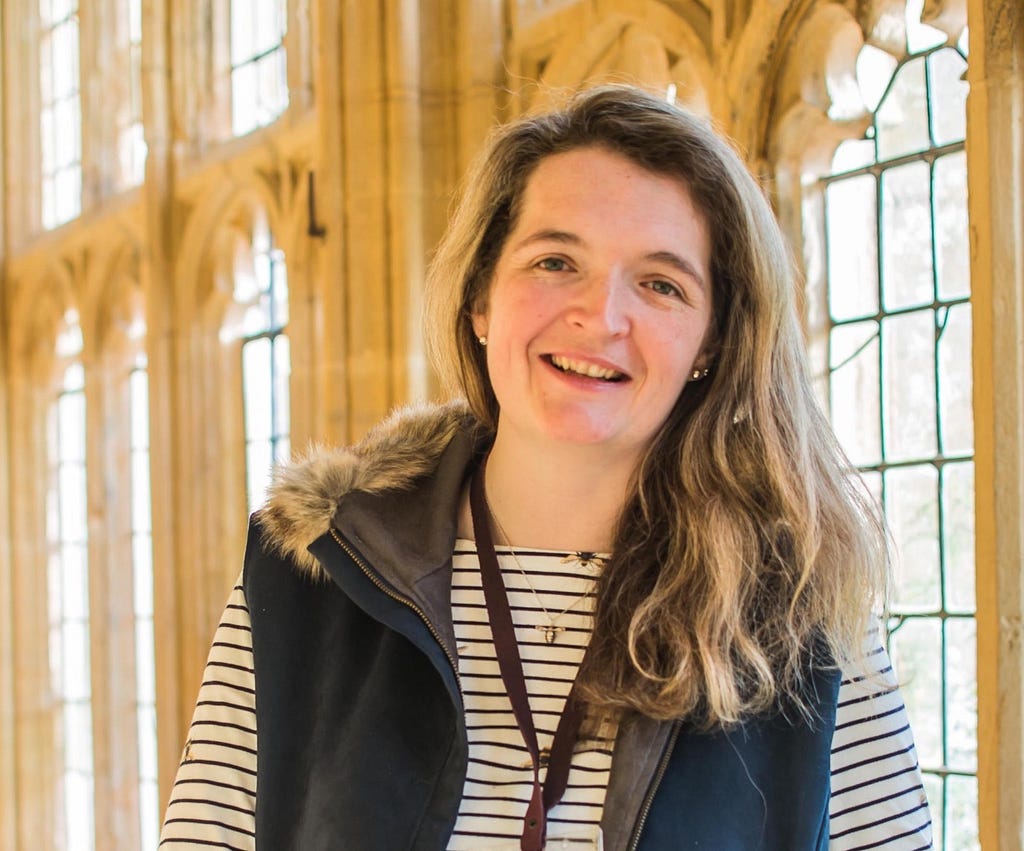
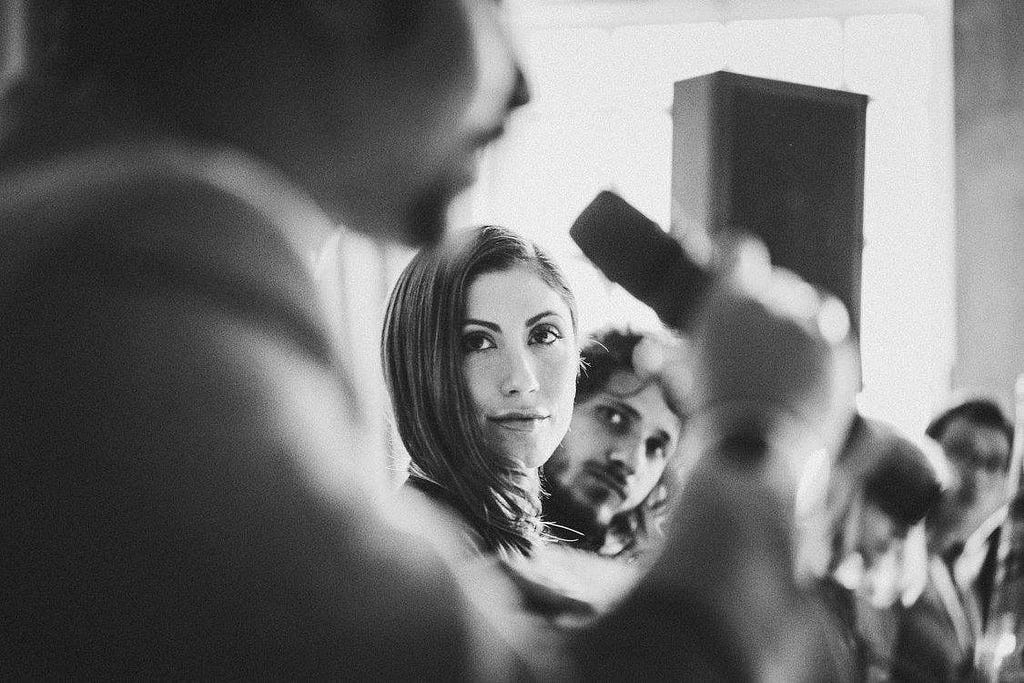
As part of my series of interviews about “How to Use LinkedIn To Dramatically Improve Your Business”, I had the pleasure of interviewing Rhea Freeman.
Rhea Freeman is a social media expert and small business coach based in the UK. In addition to running a membership group, Rhea is also the founder of the Small & Supercharged Podcast and a Facebook group of the same name designed to help small businesses and influencers in the equestrian and rural space. She’s an award winning PR adviser, #SheMeansBusiness accredited trainer and Facebook Certified Lead Trainer.
Thank you so much for doing this with us! Can you tell us a story about what brought you to this specific career path?
I didn’t take the most direct route to get to this point, let me tell you, but equally I think that all the experiences that happen to us are there for a reason! I started off working outside, with horses, and became a riding instructor. This led me to write for magazines around my specialist subjects, which allowed me to write for brands, which led to traditional PR (obviously these transitions took a long time!). Over the years, social media started to provide brands with other ways to reach their target market- and that really interested me as I have always prided myself on being able to help brands promote themselves on a budget. As social media continued to grow, there was a real shift away from spending on traditional media in line with the drop in circulation, and so I started to improve my skills and learn all I could about social media too. And this naturally increased my interest and knowledge around all other forms of digital marketing too. Now, I coach a handful of business owners one to one to help them develop their businesses and grow with help from social media and digital marketing, and I also work with a greater number of small business owners through my groups.
Can you share the most interesting story that happened to you since you started this career?
Ohhh- interesting is funny as I’ve had a lot of interesting experiences! I guess that the last 18 months have certainly been interesting with the huge shift in how we do business and teach! From speaking at in person events to becoming best friends with platforms like Zoom, it’s been a real learning curve! I think one particularly surreal experience was at Enterprise Nation’s awards last year, which was virtual to celebrate the top advisers across the UK. I’d made it to the final few, which was amazing, and was sat in my kitchen with a glass of fizz sent to finalists watching the awards, as my children watched something completely different on the TV. My category came up and I look at all the names and realised that I really didn’t stand a chance of winning. So I started typing my congratulations message to the winner on the Hopin platform. Anyway, next thing, my face is on the screen as the winner. I very quickly deleted my message while struggling to catch my breath from the shock of winning, as the children carried on watching the TV. It was very strange. And interesting. And really is and was a sign of the times.
Can you share a story about the funniest mistake you made when you were first starting? Can you tell us what lesson you learned from that?
I think I have blocked these out! I try really hard to reframe mistakes as learning opportunities to help me deal with them a bit better and find the positives! That’s not to say I haven’t made mistakes- I’ve made a lot!
Which social media platform have you found to be most effective to use to increase business revenues? Can you share a story from your experience?
This is an interesting question as the three I spend the most time on — Instagram, Facebook and LinkedIn- have all helped in different ways. With LinkedIn, I have the opportunity to connect to people that are hard to reach usually, and they get to see my experience, expertise and my connections via the professional content I share. This has opened a lot of doors to me from a teaching and speaking point of view. With Facebook, I’ve been able to create Groups and grow memberships through one Group in particular, which has clearly been very good. And with Instagram, I have the ability to connect with individual business owners better, which helps to grow my one to one side and sell my courses too.
Let’s talk about LinkedIn specifically, now. Can you share 5 ways to leverage LinkedIn to dramatically improve your business? Please share a story or example for each.
Fill out your profile. Fully. Spend time going through your profile and fill out everything as fully as you can with the aim of getting ‘All Star’ status. LinkedIn believes that you’re much more likely to be found in searches if you do this, helping you to get seen by the people you want to see you! I personally spent quite a lot of time on this and I have seen more and more profile visits as a result. It also means that if someone finds my profile, they get to find out more about me and can then decide whether or not what I do or who am I is a good fit for them and what they do.
Post content natively. As with any platform, sharing a link with no context is unlikely to result in the engagement you want on the post. Don’t just share a link- add context that makes that content work as a standalone piece too, and ideally whets people’s appetites to encourage them to take the action you want them to. I’ve had some lovely engagement on many of my posts, but the ones that do the best are the ones that I have tweaked and adjusted to work properly for the platform.
Engage on people’s content. Yes, it’s nice to engage on people’s content as per any other platform, but leaving thoughtful, relevant, useful comments on people’s posts will help increase your visibility with them and their fans and followers too. I’ve had people I’ve connected with mention how they saw how active I was on other posts and that led them to find out more about me.
Ask for recommendations. LinkedIn has a great facility that allows people to recommend you… and the great thing is, you can ask them! Pick people you’ve worked with who can honestly endorse your skills. And why not reciprocate and talk about what that person is like to work with? Recommendations are a great way to build connections, strengthen bonds, and also allow people to see what you’re made of it!
Use Messaging… but use it well. No one likes a spammy message asking them to buy or share something with no intro- so don’t do that to others! However, LinkedIn’s Messaging function allows you to get chatting and deepen connections with people who you’d really like to get to know better. I’ve had some incredibly positive exchanges through Messaging that have led to opportunities and work.
Because of the position that you are in, you are a person of great influence. If you could inspire a movement that would bring the most amount of good to the most amount of people, what would that be? You never know what your idea can trigger. 🙂
I think taking a breath before you message someone through social media with anything less than positive. Many forget that there is a real person at the end of a DM.
Some of the biggest names in Business, VC funding, Sports, and Entertainment read this column. Is there a person in the world, or in the US with whom you would love to have a private breakfast or lunch with, and why? He or she might just see this if we tag them 🙂
Yes! Jasmine Star. I think she’s truly inspirational and I love how she just calls it as she sees it. I have a HUGE amount of admiration for Gary Vee too- the fact he’s a practitioner rather than a preacher really speaks to me.
Thank you so much for these great insights. This was very enlightening!
Female Disruptors: Kim McBee and Carron Harris of Papa Murphy’s On The Three Things You Need To Shake Up Your Industry
An Interview With Candice Georgiadis
Another piece of advice that’s influenced my journey is “It’s the little things that make us big.” Mike Snyder was the CEO and president of Red Robin Gourmet Burgers when I worked for a franchisee and then subsequently at the corporate office. He constantly said that it was us along with a collection of the little things — caring for one another, caring for our guests, going the extra mile without looking for recognition, etc. — that built the Red Robin culture. It’s about rolling up your sleeves, digging in and being part of a team that crosses all levels of the organization. I’m all about removing titles and barriers in the organization. We have goals and objectives — developing a high performing team to get the job done is where I feel my teams thrive. I have taken those things forward in how I approach my career’s work, the team and the culture to make a fun, collaborative and motivating environment.
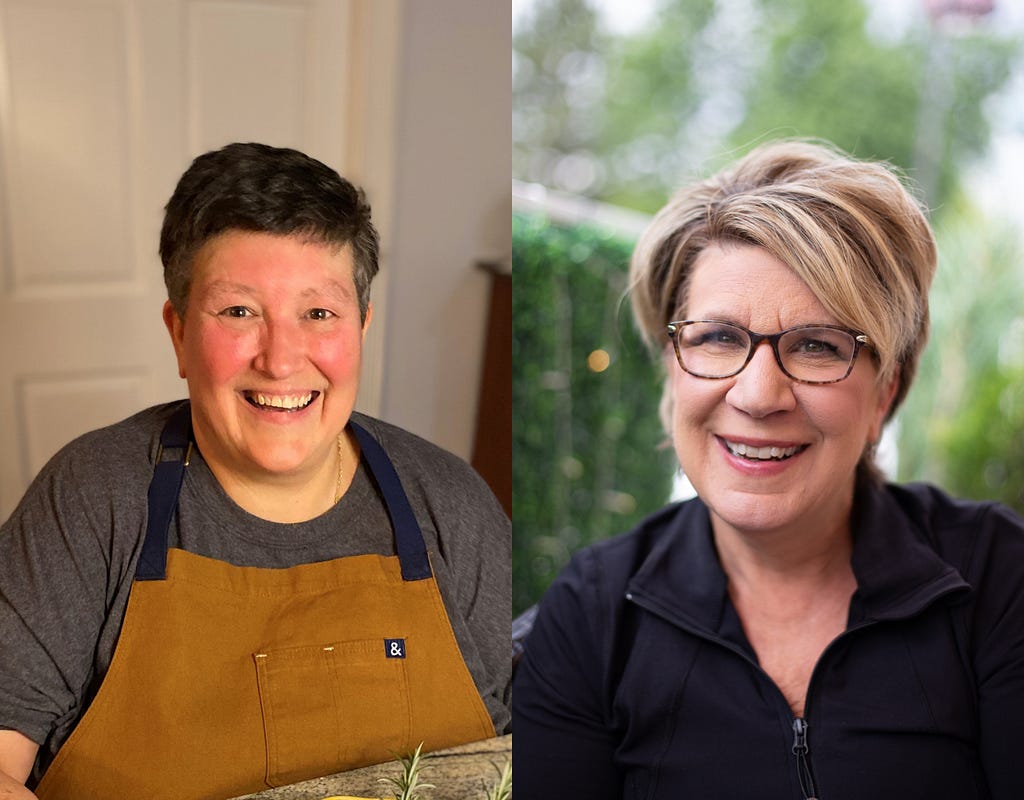
As a part of our series about women who are shaking things up in their industry, I had the pleasure of interviewing Kim McBee and Carron Harris, Papa Murphy’s.
Kim McBee: With a marketing career spanning more than 30 years, McBee joined Papa Murphy’s in October of 2019. She has been a senior executive working across all disciplines of marketing and communications in corporate, agency and franchisee organizations. Her extensive experience in creating impactful, integrated and effective marketing programs have help develop and position major restaurant, retail and consumer brands. Her results-based performance stems from leveraging high-performing teams to grow sales and profits for brands such as Applebee’s Restaurants, Red Robin Restaurants and Big O Tires, just to name a few. McBee received her Bachelor of Arts degree in Journalism and Public Relations from The Ohio State University.
Carron Harris: As the Senior Director of Culinary, Harris oversees Papa Murphy’s product development team responsible for new product ideation, creation, testing and implementation, as well as ensuring product quality and consistency with the vendor partners. She also leads product creation and implementation for our international partners in Canada and the Middle East.
Prior to her position at Papa Murphy’s, Harris was Vice President of Food & Beverage for Buca di Beppo and was responsible for overseeing food and beverage menu strategy, development and execution. The 39-year restaurant and foodservice veteran joined Buca di Beppo in 1995 and went on to become Divisional Vice President of Operations overseeing the daily operations of six markets the Midwest and Southeast before returning to focus on food creation.
Harris was recognized by Restaurants and Institutions magazine as a chef to watch in 2006. She has also been featured in Nation’s Restaurant News and is a member of the International Corporate Chefs Association.
Thank you so much for doing this with us! Before we dig in, our readers would like to get to know you a bit more. Can you tell us a bit about your “backstory”? What led you to this particular career path?
Carron: I went to college to get a computer science degree and ended up working in the food service to earn some money. I loved it so much that, while I went on to get my degree, I’ve never programmed a computer in my life. One night while working at my food service job, I was assigned to make the chili and ended up making a few seasoning adjustments on my own. The woman who was in charge came back and asked what I did to it, so I panicked and stammered, “Nothing!” When she asked again, I fessed up to what I’d done. Then she asked me to write it down because the kids were coming back for seconds and that didn’t usually happen. It was at that point that I realized I had a knack for food, and I’ve been a full-fledged practitioner of food experimentation ever since!
Kim: Meanwhile, I started my career working for a public relations agency in New York City — “small town Ohio girl moves to the Big Apple for first job!” I had no intention to move to New York, not even a thought, but a friend I met at Ohio State University was working for that same agency at the time and said that if I came to visit the city for spring break, he would set me up with some colleagues for practice interviews. So I did it. I interviewed one day and they asked me to come back the next day to interview with some more folks. I panicked because I had only brought one professional outfit and needed to borrow clothes from my friend’s girlfriend! After the second interview, I thanked everyone for the incredible experience and spent the rest of the week enjoying New York. I went back to start my spring quarter of classes the next week and they called and offered me a job for when I graduated in June. I ended up packing up three days after graduation and made the move!
In the agency world, one thing leads to another and after working at two agencies, a client hired me to do marketing for their Applebee’s franchise, which launched decades of working with brands on both the franchisee and franchisor sides of the fence.
Carron: So, both of our backstories contain turning points built on a moment of panic!
Can you tell our readers what it is about the work you’re doing that’s disruptive?
Kim: As the leader in Take ’n’ Bake on a mission to “Change the Way You Pizza,” Papa Murphy’s model is an innovation designed to create unconventional moments. This past summer, we collaborated with Frito-Lay on the first-of-its-kind Fritos Outlaw Pizza — an unexpected (but welcome) clash of Fritos corn chips, Texas-style brisket and sweet BBQ sauce that customers were encouraged to cook on the grill. We were uniquely positioned to include Fritos as an ingredient because of our Take ’n’ Bake model. Our approach allowed us to guarantee that the chip maintains its iconic flavor, texture and integrity — something no one else has been able to do.
Carron: Interestingly enough, Frito-Lay wasn’t even involved in the project at the beginning. It all started in Papa Murphy’s kitchen with me and the rest of our culinary research team. We constantly drive for unconventional flavor and texture mash-ups that encourage curiosity and adventure. We approach the kitchen as innovators, constantly seeking unexpected ingredient combinations that make you ask “What?” before you try it and say “Whoa!” after that first bite. The team locked in the concept through product-forward, data-driven innovation, and plenty of trial and error. Only then did we bring the idea to Frito-Lay — and they were blown away. Since no one else has ever nailed it like this, they championed it as our partner and are already asking “What’s next?”
Kim: Without the research and the data mining we did, we might not have tried to push the envelope quite as much. We’ve found that trusting the numbers as much as our gut gives us a different lens on our audience and what they’re looking for. Thanks to the research team’s dedication and ingenuity, the Fritos Outlaw Pizza was a top selling product since its June launch throughout the month of August, ranking in the top 10 every week.
Can you share a story about the funniest mistake you made when you were first starting? Can you tell us what lesson you learned from that?
Carron: The funniest “mistake” was probably the chili seasoning incident I mentioned before — I learned that it’s okay to take a chance and trust your instincts. It doesn’t always turn out okay, but at the end of the day it’s food. As long as we don’t make people sick, sometimes you’ve got to go with your gut.
Kim: During my first job at the public relations agency in New York, I worked on an account where one of our initiatives was to work with nutritionists and chefs on developing new recipes. We were launching a cookbook and were preparing to send our media kit and the book to food writers across the country. As the entry level agency representative, I was tasked with creating all the pitch materials, as well as printing and assembling the media kits we were mailing. I stayed late into the night stuffing and sealing the packages to hundreds of media contacts. After working for hours in the conference room to put everything together, I wheeled the cart of packages toward the mailroom only to pass by my cubicle to see the boxes of cookbooks stacked there…I never put them in the kits! Luckily I didn’t actually mail them without the cookbook (how horrifying!), I just had to open and reassemble the kits until the wee hours of the night.
We all need a little help along the journey. Who have been some of your mentors? Can you share a story about how they made an impact?
Carron: I had a couple of early mentors in grade and high school in my basketball and softball coaches. In particular, my fifth grade gym teacher was also the basketball coach. Title IX had just passed a year before he added two of us to the boys team (we didn’t have a girls team then). The boys didn’t like it much, but Mr. Gornick kept standing behind us and not only created a community of acceptance for us, but some darn good fun. His lessons continue to shape my thinking about people, acceptance and doing the right thing, even when it is hard.
My grandma was also a mentor to me — she was always willing to try something, even if it challenged her or pushed her comfort zone. We went on a trip to St. Louis and in an effort to do everything, wanted to go to the top of the Gateway Arch. She was afraid of heights, but said, “I have to go, I’m here and there’s nothing else like it.” She taught me to savor life and not miss a moment even if I’m afraid.
Kim: One of my mentors was my college public relations professor and PRSSA (Public Relations Student Society of America) advisor, Llyle Barke. He was an incredible human being with a great career as a general in the Army and was an advisor to former presidents, politicians and corporate executives in communications and public relations. He encouraged us to get involved in PRSSA, internships and community service. I was apprehensive at first, but dove right in after attending a PRSSA meeting my freshman year — I ran for PRSSA board positions, did internships and we also started our own student-run agency that made money doing work for clients. All of this experience gave me a resume that helped launch my career immediately after graduating. Llyle’s calm demeanor and life lessons were paramount in developing my confidence and tenacity to just “do things,” all of which culminates in my personal mantra: every experience is a learning experience.
In today’s parlance, being disruptive is usually a positive adjective. But is disrupting always good? When do we say the converse, that a system or structure has ‘withstood the test of time’? Can you articulate to our readers when disrupting an industry is positive, and when disrupting an industry is ‘not so positive’? Can you share some examples of what you mean?
Kim: As a 40-year old brand, while we certainly have “withstood the test of time,” it’s due to the fact that we are consistently innovating and disrupting our own brand to meet consumers where they’re at. The people who grew up with us are Baby Boomers, Gen X-ers and empty nesters, but we ask ourselves every day how we can be relevant to the next generation of families — Millennials with kids and soon enough Gen Z as well — because they will sustain our brand and inform how it develops for the next 40 years.
Carron: Kids in the past couple of decades have grown up with a much more of a global perspective thanks to things like the Internet, Netflix and all of the food shows and blogs out there. We strive to understand what those kids and families have grown up with and how our brand can change with them. That can also mean making sure we’re taking a forward-looking approach when it comes to consumers’ dietary needs and preferences, whether that means gluten free, vegan or otherwise. We’ve had gluten-free crust for years in the store, and our regular fresh-made dough is vegan. We even have a Keto-friendly crustless pizza. However, disrupting isn’t always good, especially when it isn’t profitable no matter which way you try to bring it to life. At the end of the day, it is about ensuring our franchisees have all of the resources they need to grow, which in turn helps our brand grow.
Kim: Disruption and innovation are a balance. We ask ourselves how we can use ingredients and flavors to make sure that we’re not alienating our current customer while still providing something new and interesting for folks to say “Oh, wow, you know, Papa Murphy’s is really doing something interesting.” There is a lot of thought and research that goes into the development of new menu items, so when we try to disrupt the market with a new offering, we usually feel pretty good about it. We also loop our vendors and franchise owners into those conversations early on given that they’re the ones on the ground driving the business and connecting with our customers on a daily basis. And there is a fine balance to also ensure you are not only providing new and innovative products, but also preserving the heritage of your core items as well as your core values that put you on the map. Providing the highest quality of ingredients, prepared fresh daily, customized to your liking is the soul of our brand.
Can you share 3 of the best words of advice you’ve gotten along your journey? Please give a story or example for each.
Carron: “Don’t sweat the small stuff.” I can hear my Mom in my head asking if it will matter in one month, or one year? If not, then don’t stew on your mistake or decision — save that for the really big stuff. When I was chosen as the senior captain for my college softball team, I worried about whether I would be the right role model or lead well enough. I remember a long conversation where Mom talked me off the ledge and told me to just make a decision or do the right thing in my mind and heart. Even if my decision wasn’t the correct thing the coach wanted to learn, whatever it was wouldn’t likely be relevant over time. She told me to relax and enjoy the moment, and not to let life’s moments be filled with worry. My grandma also told me to always “be kind” because you never know what the other person’s day was like.
Kim: One of the best pieces of advice I’ve received is “You may find the thing you fear the most is something you are the best at.” Public Relations degrees were part of the Journalism curriculum at Ohio State, but I had no desire to get a journalism degree. I panicked thinking about all of the courses, writing for the newspaper, etc. My first journalism class was a trainwreck and I did not do well on my first writing assignment. Then, I talked to the instructor. She was a gem and helped me reframe my thoughts about writing. I ended up with an A in that class, and for the next four years I embraced working at the school newspaper, writing stories, headlines and captions for photos, etc. The newspaper had a circulation of 44,000 due to the size of the campus. The professor that was the advisor for the paper told me I was the best headline and caption writer he had in many years. I laughed thinking how petrified I was at the start.
Another piece of advice that’s influenced my journey is “It’s the little things that make us big.” Mike Snyder was the CEO and president of Red Robin Gourmet Burgers when I worked for a franchisee and then subsequently at the corporate office. He constantly said that it was us along with a collection of the little things — caring for one another, caring for our guests, going the extra mile without looking for recognition, etc. — that built the Red Robin culture. It’s about rolling up your sleeves, digging in and being part of a team that crosses all levels of the organization. I’m all about removing titles and barriers in the organization. We have goals and objectives — developing a high performing team to get the job done is where I feel my teams thrive. I have taken those things forward in how I approach my career’s work, the team and the culture to make a fun, collaborative and motivating environment.
We are sure you aren’t done. How are you going to shake things up next?
Kim: Papa Murphy’s introduces new products several times a year, aimed at attracting new customers and reminding current ones that we have something new. There is always a great amount of research and development that goes behind the products we introduce, which is one of our biggest differentiators.
We want to be innovative and we want to continue to drive our relevancy with the consumers because they are ever changing — you have to look at what they want to eat. We have to understand what kids and families have grown up with and how our brand can change with them. For example, we’re currently testing plant-based proteins and dairy-free cheeses in the market which are both currently resonating with consumers.
Carron: Yes, and we’re also trying to get a bit more adventurous with the flavors we use. Right now we’re testing a pizza that integrates international spices in a way we never previously imagined for pizza. It came about as a result of conversations with our vendors amid the COVID-19 pandemic. We did 12 different virtual vendor ideations last year, asking them to bring ideas to the table that aligned with specific parameters we provided around what we’re trying to develop. This seasoning blend came out of one of those discussions. Not only was there a sales person there, but they brought in their corporate chef or their marketing data analyst if they had one and really said, “This is why we think this flavor is important to you.” When we screened the idea with our consumers, it was a top performer, so we said “Alright, let’s give it a whirl and a market test and see what happens.”
Kim: We’re also exploring what more we can do from a grab-and-go perspective for lunch time. We currently have a three-year road map for innovation, testing things today that will be in store next year and the following year. We have really revved up the rigor to make sure that we’re constantly introducing something.
In your opinion, what are the biggest challenges faced by ‘women disruptors’ that aren’t typically faced by their male counterparts?
Carron: Men have historically been seen as risk takers and therefore it has become more acceptable to disrupt — win or fail. It feels like women have to fail less to be seen as winners more often than men. This also puts women in a place where we think we need to be more sure of the outcome to take the risk. For example, men may take the risk with 50% surety because usually, it’s okay if they fail. With women, it often seems we take the risk with a much higher rate of success.
Kim: The very framing of the broader conversation — “women disruptors” vs. simply “disruptors” — is what I would someday love to see removed from our story-telling as a whole. We should all be able to just do the work, tell the story and be the change without having to call out those accomplishments as being specifically male or female driven. To me, that is the higher order challenge, though it’s of course important to continue to celebrate those milestones given where the world is currently at in the gender equality journey. Papa Murphy’s own leadership team is comprised of four females and one male.
Do you have a book/podcast/talk that’s had a deep impact on your thinking? Can you share a story with us?
Kim: I personally love documentaries, whether they’re on historical figures, pop culture, musicians, sports figures, etc. I love to hear people’s backstory and how and what they went through in life. It is truly fascinating and provides insight and perspective on different cultures, opportunities, challenges, injustices, etc. that shaped our world. People’s stories are amazing!
You are a person of great influence. If you could inspire a movement that would bring the most amount of good to the most amount of people, what would that be? You never know what your idea can trigger. 🙂
Carron: Start with kindness and use that as a foundation for bridging our nation’s current political divide. Doing that gives us a better chance at making the world a better place for everyone.
Kim: Continue to celebrate and tell stories of great perseverance, accomplishment, kindness and world changers by focusing on the how and why. While I understand the disparity in equal pay, opportunities, etc., I’d love a day when we don’t have to call out things like the first female president of “X Company.” They are the president of the company. Yes, it needs to be celebrated because there has been so much injustice and inequality throughout history, but I look forward to the day where we don’t necessarily have to celebrate those things anymore because we’ve done the work to shift toward a clearer picture of equality.
Can you please give us your favorite “Life Lesson Quote”? Can you share how that was relevant to you in your life?
Carron: “Don’t sweat the small stuff” has translated in my 50’s to “it will be fine!” People say I’m so calm under pressure, I guess I learned that from a young age.
Kim: “Dig deep and finish strong.” This can be with anything in your life, and strong doesn’t have to mean “mighty” and aggressive — it’s what it means to you. When there are multiple priorities professionally and personally, balance and perspective are paramount in navigating your day. I not only remind myself to dig deep and finish each day strong, I share it with my family and my team so they know. Nothing we do is more important than taking care of yourself and your family first. Enjoy what you do, life is meant to be lived!
“Up your game” when I shared a pitch deck with a former CEO who tore it apart and gave me some tremendously helpful advice on what investors would expect before writing me a large check!
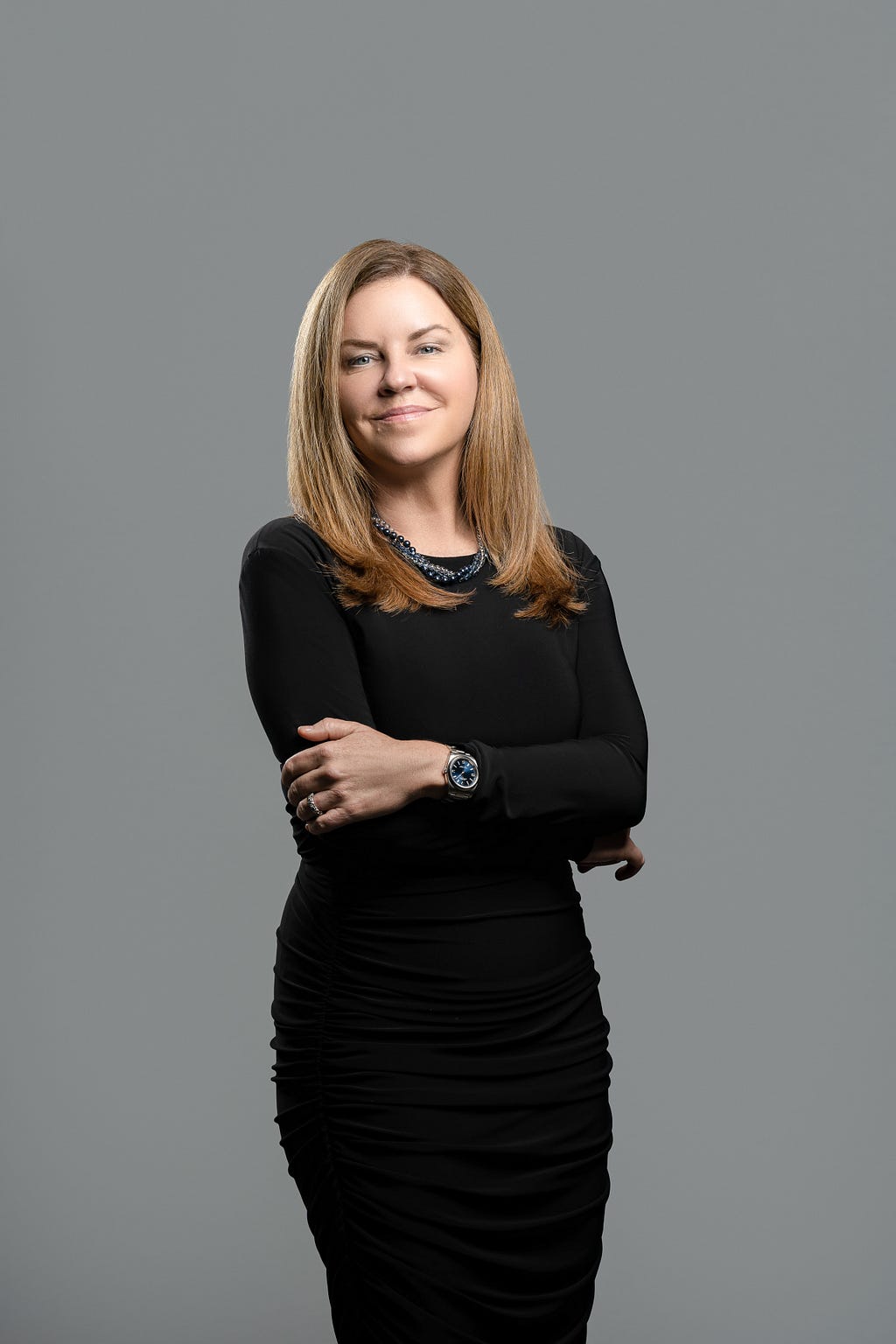
As a part of our series about women who are shaking things up in their industry, I had the pleasure of interviewing Patricia Montesi.
Patricia Montesi is a founder and CEO of Qolo, the omnichannel payments platform for Fintech. An accomplished business executive with over 20 years of global management experience across a diverse set of industries, Montesi sought a better way to serve the payments industry in a meaningful way. Today, Qolo’s investment in infrastructure, streamlined systems, and commitment to its clients powers its innovative approach where they encourage fintech’s to demand more from their payments platforms.
Thank you so much for doing this with us! Before we dig in, our readers would like to get to know you a bit more. Can you tell us a bit about your “backstory”? What led you to this particular career path?
I always admired the entrepreneurs I met and worked with, and honestly, I always wanted to be in control of my own destiny. I have had the good fortune of working for multiple startups at various growth stages along with working for industry titans. I believe that my 15 years in executive roles across all sectors of the payments industry, leading teams to industry firsts, and deploying award-winning technology solutions for clients led me to this particular career path.
I’m fortunate to have founded Qolo with people I admire. They have all been and are incredible thought leaders and payments experts in their own rights. While working together at a previous company, we sought a better way to serve the payments industry. We saw, and still do, many companies who try to cobble together or reengineer their platforms to do what Qolo has built from the ground up.
Can you tell our readers what it is about the work you’re doing that’s disruptive?
I like to say that we have yet to meet a payments model that we can’t power. The pandemic hurled us into this cloud-based and virtually-dependent world. Consumers, vendors, and clients needed payments options to be seamless, and our business model was engineered for that very purpose. If you think about it, fintech is the enabler of today’s economy. The pandemic disrupted the accepted theories of supply chain. Commerce is being forced to pivot (just look at last week’s BBBY results) and rethink how to ultimately deliver goods to consumers. The changes that are coming are going to demand new ways to rapidly and efficiently make payments along the supply chain all the way through the consumer’s final purchase. That’s a big whitespace we think is unmet from legacy payment providers.
Capitalizing on this moment we are rolling out new products following our Series A raise, like the Qolo Accelerator program. Accelerator is a unique engagement model that allows fintech to quickly get to market while maintaining product flexibility, program control, and enhanced economics down the line. A lot of legacy payment providers talk about “Future-proofing” fintech by wrapping APIs around decades old platforms. Qolo is all about present-enabling our clients to win…TODAY.
Can you share a story about the funniest mistake you made when you were first starting? Can you tell us what lesson you learned from that?
Mistakes I equate to market feedback: absolutely invaluable. I’d probably say the “funniest” was when we pitched our first investor for our Series A. . As prepared as we thought we were, I remember saying what I thought our raise was worth. I’m not going to lie, it was hard to say. However, as soon as I put out the number, I thought I actually undervalued our endeavor. As we went through the process all I kept saying was, “thank goodness they didn’t make an offer.” We laugh now because it was really just us putting ourselves out there and plowing through a process that is stacked against the uninitiated. The lesson I learned, or rather reaffirmed…never sell yourself short.
We all need a little help along the journey. Who have been some of your mentors? Can you share a story about how they made an impact?
I look back at the people I have worked with and for, and it’s all about managing conviction and risk. I have worked with people with great ideas that couldn’t make an idea marketable. Others along the way proved that fear can be the the greatest impediment to success. It’s amazing how much you can learn from both. As we started Qolo I had to wrangle my fear of finally putting myself out front and center. While I never doubted that I could do it, I was tasking myself with starting an organization for the first time. My husband, a executive at one of the largest Fintechs in the world, is my closest advisor. He really just broke through my apprehension and said to me “No one has what it takes to do this more than you, so please stop talking about it and just do it”.
In today’s parlance, being disruptive is usually a positive adjective. But is disrupting always good? When do we say the converse, that a system or structure has ‘withstood the test of time’? Can you articulate to our readers when disrupting an industry is positive, and when disrupting an industry is ‘not so positive’? Can you share some examples of what you mean?
I guess that is really a matter of perspective. If you think about it the macro principle of Commerce has stood the test of time. Medieval farmers bartered with the merchant class to procure goods they couldn’t produce such as housing or clothing. However entrenched commerce is to our very essence we evolved from direct exchange, to value exchange based on some type of currency (e.g. silver). It took hundreds of years and acts of Congress to move off those standards into government backed currencies, and now we even have crypto currencies. I would say nothing is sacrosanct. Change agents spur the evolution of efficiency. Whether that’s an online bookseller trying to disrupt global retail or a fintech taking the extreme inefficiencies out of global money movement. The free market will determine if your disruption is valuable.
Can you share 3 of the best words of advice you’ve gotten along your journey? Please give a story or example for each.
“Up your game” when I shared a pitch deck with a former CEO who tore it apart and gave me some tremendously helpful advice on what investors would expect before writing me a large check!
“Stop your Series A and do bridge financing” — before we had enough proof points to demonstrate our ability to execute, a key advisor, now an Independent Board Member, showed me the power of convertible notes.
I will switch it up here and tell you the advice I chose to ignore — “Specialize in one vertical or function so that people can more easily digest what you do” — we doubled down on being the infrastructure layer for all things payments, and because of our platform design, we can power any use case or vertical. Our client base validated that thesis and the VC’s that got it were the ones we were looking for anyway.
We are sure you aren’t done. How are you going to shake things up next?
Our focus is on providing intrinsic value and gaining market share by listening to our clients and prospects. We are solving their needs not ours. We will combine their expression of need with our expertise to enhance our prized asset: the Qolo global omni-channel payments platform. Our platform is purpose built for solving use cases through configuration. Our clients are never limited by our platform.. We aspire to gain new clients and insert ourselves into broader verticals — some exciting ones being international money movement, gaming, and crypto — one deal at a time.
In your opinion, what are the biggest challenges faced by ‘women disruptors’ that aren’t typically faced by their male counterparts?
Hair and makeup in today’s Zoom video world, anyone else long for the occasional old-fashioned conference call! Kidding aside, I think women have been less apt to take the risks that men traditionally have as it relates to founding new start-ups. How many of your readers in the Gen-X age group are reading this thinking, “I wish I had….”? As a mother of an 8 year old daughter, I am especially keen to demonstrate that there are no limits or challenges that we cannot break through.
Do you have a book/podcast/talk that’s had a deep impact on your thinking? Can you share a story with us?
For me it was reading Benjamin Franklin’s autobiography when I was at university. I went into it thinking I would hate it but came away inspired about focusing on oneself and self-improvement above all else — it changed my perspective on life. I was already driven to succeed, but that book became a guiding light for me — to never deflect and to always take accountability for my own circumstances.
You are a person of great influence. If you could inspire a movement that would bring the most amount of good to the most amount of people, what would that be? You never know what your idea can trigger. 🙂
Qolo is an acronym for Quality of Life Organization, which is really the founder’s culmination of a lifelong journey to do what we love with people we respect. We enjoy seeing our offering support that same thesis on a grander scale. Qolo is part of a coalition called PaaL, which stands for Payments as a Lifeline, and we enable getting funds to those in need in a clear, transparent, and reconcilable way which is sorely needed in charitable organizations and government needs based programs.
We also partner with some great clients that are looking to transform banking and payments for the underserved communities by providing access to services like earned wage access and lending products that are not predatory in nature just because you haven’t had the opportunity to build a credit file or have a bank account.
Can you please give us your favorite “Life Lesson Quote”? Can you share how that was relevant to you in your life?
It’s my own interpretation of likely similar quotes that abound, but it is something I always say to my children “There will always be people that have more than you, and there will always be people that have less than you — stay focused on improving yourself”
How can our readers follow you online?
Sure. Readers can follow me on my LinkedIn Page and Qolo’s social media platforms –
Ditch the emails in the evening. I tend to check my email way too often. I used to think everything was important and needed to be addressed right away. This was obviously not true and added to my stress levels. I’d then go to bed wired, thinking about all the things I needed to get done. A practice that helps me is turning off email notifications from my phone so I can rest and recharge.
As a part of my series about the “5 Things Anyone Can Do To Optimize Their Mental Wellness”, I had the pleasure of interviewing Micheline Khan.
Micheline Khan is a mental health advocate, scientist, and CEO and founder of Althea Therapy, an app to connect with culturally responsive mental health and wellness professionals in Canada, to reduce racial mental health disparities and normalize therapy for communities of colour. Micheline has spent over a decade in the scientific field, focusing on climate change and the environment. After witnessing the disproportionate effects of the COVID-19 pandemic on communities of colour, Micheline moved into the technology space to design a digital solution to address a growing challenge in access to mental health support for Black, Indigenous, and racialized communities.
Thank you so much for doing this with us! Our readers would love to “get to know you” a bit better. Can you share with us the backstory about what brought you to your specific career path?
I always thought I’d grow up to be a scientist — which did happen — but I never expected to run a mental health tech business. As a child, I loved the outdoors and always found a deep connection between nature and well-being. I learned to prioritize my mental health through time spent in nature from a young age. After graduating from university, I went on to become an ecologist, studying climate change and biodiversity loss. Witnessing the racial disparities and gender gaps that exist within academia and science, I became an advocate for women in STEM (Science, Technology, Engineering, Math) fields. I wrote blogs, spoke on panels, and joined community groups to enact change. When the pandemic hit, I saw a huge gap in access to mental health support for Black, Indigenous, and racialized communities, so I moved into the health-tech space to understand the tools and software that could help address these gaps. Since launching Althea Therapy, I’ve seen firsthand the massive shift this platform has had in the overall health and wellbeing of so many people across the country.
Can you share the most interesting story that happened to you since you started your career?
After launching the Althea Therapy app, there was a brief moment when I doubted myself. I wondered if I should have gone through with putting this business out into the world with my name attached to it. Would anyone even use it or find it helpful? The next day I received an email from an app user who had agreed to share a quote with me about her experience using the platform. She told me how the app allowed her to find a therapist who could understand and illuminate the nuances of her intersectional and hybrid identity.
Her words gave me the encouragement I needed to push forward. Stories like hers are why I continue to build and grow this platform so that Althea Therapy can continue to be a resource for Black, Indigenous, and racialized communities and all our intersectionality’s.
Can you share a story with us about the most humorous mistake you made when you were first starting? What lesson or take-away did you learn from that?
I kept Althea Therapy a secret when I first started building the platform. I kept it quiet and only shared it with a handful of people while I was conducting beta testing. I felt that it wasn’t yet ready for the world to see. I thought the best approach was to quietly build the platform and wait until it was absolutely perfect before sharing it. Later on, I realized that this might have been a mistake. It seems that people want to feel like they’re a part of the journey and process of creating and growing a community resource, like Althea Therapy. They want to follow along and feel connected to your story and mission. What I learned was to share early and often and have a plan in place to consistently keep the community updated on my journey.
None of us are able to achieve success without some help along the way. Is there a particular person who you are grateful towards who helped get you to where you are? Can you share a story about that?
Many people contributed in different ways to my entrepreneurship journey as I pursued building this platform. I had many discussions with my family on the impact of the pandemic on racialized communities, which provided the motivation I needed to try to address this in a meaningful way. I’m tremendously grateful to have been able to have these conversations with those closest to me, and to recognize how wide and deep these inequities are because this is what motivated me to create meaningful change.
What advice would you suggest to your colleagues in your industry to thrive and avoid burnout?
I’m still struggling with this, but what I’ve learned is to give your mind and body what it needs. Small changes can go a long way, like turning off email notifications on your phone when you’re stressed or taking short breaks during the workday to recharge. As a starting point to reduce burnout, look at your schedule and determine what you can drop, defer and delegate to someone else. You don’t need to handle everything on your own. I also think you should speak to a therapist to allow yourself to step back and explore your thoughts, feelings, and patterns of behaviour so you can better manage daily stressors.
What advice would you give to other leaders about how to create a fantastic work culture?
I recently read a Forbes article that reported that over 50% of the US workforce is unhappy and nearly 70% of employees are disengaged in their work. As leaders, it’s our responsibility to stimulate and inspire the best in our team because studies show that employee satisfaction leads to increased profits and more productive workplaces. So how do we achieve that? Hire with intention, have a strong wellness culture, give everyone the permission to voice their opinions and ideas, and give them opportunities to grow.
Ok thank you for all that. Now let’s move to the main focus of our interview. Mental health is often looked at in binary terms; those who are healthy and those who have mental illness. The truth, however, is that mental wellness is a huge spectrum. Even those who are “mentally healthy” can still improve their mental wellness. From your experience or research, what are five steps that each of us can take to improve or optimize our mental wellness. Can you please share a story or example for each.
Develop a morning routine sans technology. Let the dramas of social media wait at least 20 minutes before you start scrolling. Having a morning routine in place that sets your intention for the day and starts off with gratitude and deep breathing helps to ensure that your mindset is in the right place to have a positive and productive day. I’d also recommend getting a real alarm clock and keep your phone far away from you while you sleep.
Exercise to reduce stress. Since the start of the pandemic, more and more people are glued to their screens and have less opportunities to engage with others and exercise. Instead of staying home to watch Netflix, go for a quick run around the block. Not ready for running? Then, walk and call a friend. Get your body moving!
Breathwork for anxiety. Last year, a friend of mine introduced me to breathwork. I had been hearing the term often at the time, but it’s actually an old practice that has its roots in yoga. It’s a form of controlled breathing used to reduce stress and boost your immune system.
Give therapy a try. Therapy really is for everyone. The biggest advice I can give is to embrace asking for help and be open and honest about your struggles. Sweeping your emotions under the rug doesn’t serve you and isn’t a sign of strength. Those repressed emotions will come back to haunt you later. I learned early on in my therapy journey that trauma gets stored in the body and can trigger physical symptoms. Therapy can help relieve those symptoms, adjust how you react to stress or triggering events, and help you learn more about yourself and others.
Ditch the emails in the evening. I tend to check my email way too often. I used to think everything was important and needed to be addressed right away. This was obviously not true and added to my stress levels. I’d then go to bed wired, thinking about all the things I needed to get done. A practice that helps me is turning off email notifications from my phone so I can rest and recharge.
Much of my expertise focuses on helping people to plan for after retirement. Retirement is a dramatic ‘life course transition’ that can impact one’s health. In addition to the ideas you mentioned earlier, are there things that one should do to optimize mental wellness after retirement? Please share a story or an example for each.
Many of us, myself included, tend to see ourselves as our job title. When we meet new people, we identify ourselves by what we do in our careers first. People can get so wrapped up in this identity that when it’s time for retirement, they don’t know who they are anymore. Retirement is simply another chapter in our lives. Decide what story you want that chapter to tell. What relationships do you want to nurture? What activities bring you the most joy? Give your time and energy to that.
How about teens and pre teens. Are there any specific new ideas you would suggest for teens and pre teens to optimize their mental wellness?
Studies show that 70% of people with mental illnesses notice their symptoms before the age of 18. Developing healthy emotional and social development during childhood can help lay the foundation for mental health and wellness throughout our lifetime. The pandemic has also exacerbated stressors like social isolation, anxiety, and depression. Young people can mitigate this by limiting screen time, spending time in nature, having a daily routine in place, and getting enough sleep. We also need to remember that the youth mental health crisis started well before the pandemic, so the solution has to be more than going back to normal.
Is there a particular book that made a significant impact on you? Can you share a story?
Professional Troublemaker: The Fear-Fighter Manual by Luvvie Ajayi Jones is one of my favourite new books about how to not let fear stop you from living your life authentically by making good trouble.
You are a person of great influence. If you could start a movement that would bring the most amount of good to the most amount of people, what would that be? You never know what your idea can trigger. 🙂
At least one in five Canadians have a mental health condition, yet the cost of treatment and support services remains high for so many. Canada is characterized by its ethnic and racial diversity; however access disparities disproportionately affect Black, Indigenous and racialized communities. On top of the cultural stigma, therapy feels like a luxury for the rich especially since it’s an ongoing process, just like eating healthy and exercising aren’t one-off activities. If I could start a movement, it would be to make mental health care free. We need to transform access to quality mental health care for everyone.
Can you please give us your favorite “Life Lesson Quote”? Do you have a story about how that was relevant in your life?
“Everything is figureoutable” by Marie Forleo is one of my go-to affirmations when I’m having trouble solving a problem or experiencing a setback. It’s become a mindset and mantra for me; a consistent reminder that I can always find a better path forward.
What is the best way our readers can follow you on social media?
You can learn more about us at www.altheatherapy.com. Subscribe to our monthly newsletter for mental health resources, incredible therapists and wellness professionals, and events. To join the community, follow us on Instagram and Twitter @AltheaTherapy.
Thank you for these fantastic insights. We wish you only continued success in your great work!
Liz FitzGerald of Daygold: 5 Things I Wish Someone Told Me Before I Started Leading a Cannabis or CBD Business
An Interview With Candice Georgiadis
Each state that sells cannabis has different laws in place regarding cannabis so it’s important to be aware of these laws as you plan your growth strategies for your business. What you’re able to do in one state is likely very different from what you can do in another and you’ll need to be on top of federal and state laws so you remain compliant.
Liz FitzGerald is a co-founder of Portland-based CBD brand, Daygold. She earned her B.A. in Psychology from James Madison University and has worked in the sports and wellness industries ever since. Most notably, she played a pivotal role as Chief Revenue Officer for Ma Wovens. Now with Daygold, Liz is on a mission to offer elevated and thoughtful CBD tinctures that offer help you enjoy a brighter life, naturally.
Thank you so much for doing this with us! Can you tell us the “backstory” about what brought you to the cannabis industry?
Thank you! This is such a delight for me, I really appreciate it.
As for my “backstory”, for the past fifteen years I’ve been working in the startup world, mostly focused within the health and fitness industry. Prior to that I worked in film, software, and publishing so while I’m new to the cannabis industry, I’ve helped to grow a number of young companies in a variety of industries.
I was looking for my next opportunity and was really focused on finding the right team to be a part of as I strongly believe that people are the most important part of any company.
A friend of mine introduced me to the team behind Daygold and I could tell right away that this was going to be an incredible opportunity to create a positive impact; it’s a really great product, created with a lot of research and care.
Can you share the most interesting story that happened to you since you began leading your company? Can you tell us what lesson you learned from that?
A: The thing I’ve found most interesting since I began leading Daygold, and this isn’t a reflection of the cannabis industry but marketing in general, is how resistant people and systems can be when it comes to marketing to an older demographic. At Daygold, we believe that Baby Boomers and Gen X stand to benefit greatly from cannabis therapies, especially CBD, as many of them are experiencing the aches and pains of an active lifestyle, the stresses of everyday life, and are open to alternative therapies.
CBD has become hugely popular however the biggest consumers up to this point have been people in their 20’s and 30’s. This is great, as CBD offers benefits for people of all ages, however we’re really excited to open this door to older people and to provide them with education about how cannabis works in the body, why CBD can be helpful, the important role of terpenes, as well as what to consider when purchasing cannabis products.
At this stage in our business we’re relying on stock photography for our lifestyle images and it’s been really difficult to find a lot of compelling imagery of older, active people. Not only has it been challenging to find imagery that feels as strong as we’d like it to, but I have found a number of people, outside of our company, to be hesitant to market more directly to older people.
The lesson that I’ve learned is that there’s still a long way for us to all go to embracing older consumers, not just in cannabis but in a wide range of consumer products that are relevant for people of all ages. If we have a product that can help a wide range of people, then let’s speak to a wide range of people in our marketing and have the means to do so.
Can you share a story about the funniest mistake you made when you were first starting? Can you tell us what lesson you learned from that?
Sure, I would say the funniest mistake so far had to do with our packaging design. Our branding agency has done an incredible job with every detail of the Daygold brand, including our packaging. From the bottles, labels, and boxes, each element has been so thoughtful and creates a feeling of uplift and calm- just like Daygold.
Our shipper boxes also have lovely branding elements on each panel: our logo, our website, our tagline (A better life, naturally.) and when we received the prototypes we were just over the moon with the results and loved seeing our logo directly on the top of the box.
It wasn’t until we started to ship Daygold that we realized that our shipping label, which goes on the top of the box, covers our lovely logo completely. It’s one of those examples that you can think things through but it isn’t until you actually are sending the product to your customers that you realize the impact of each detail.
Do you have a funny story about how someone you knew reacted when they first heard you were getting into the cannabis industry?
Well, I live in Portland Oregon which is a super liberal town and very cannabis friendly so I’ve found everyone to be really enthusiastic about my entrance into the cannabis industry. I really didn’t expect any sort of reaction, but people seemed genuinely excited for me. There really seems to be a buzz around the cannabis industry, pardon the pun, that I hadn’t been aware of. Maybe it’s just that so many of my colleagues and friends recognize how beneficial cannabis is, so I didn’t get a reaction that wasn’t entirely positive.
None of us are able to achieve success without some help along the way. Is there a particular person who you are grateful towards who helped get you to where you are? Can you share a story?
There are so many people that I am incredibly grateful to for all the support they’ve offered me, throughout my career. My family, people I’ve worked with, people I’ve come to know along the way; really, the list is so long! But Nina Byrd definitely deserves a shout out as she’s the one who introduced me to the team at Daygold, a fantastic product, team and brand.
The Daygold team was looking for an entrepreneur to launch the new brand and reached out to Nina, who is incredibly smart and thoughtful. She really liked the team but has a thriving consultancy and didn’t feel as though it was the right position for her. When asked if she could recommend anyone she thought of me, for which I will always be grateful. If everyone could have a friend like Nina!
Are you working on any new or exciting projects now? How do you think that will help people?
Yes, launching Daygold is such an exciting new venture. Our tinctures, which are unlike anything else on the market, have the potential to help people feel better, naturally, every day. Daygold is formulated by Dr. Ethan Russo, a board-certified neurologist and plant researcher who is one of the most well respected doctors in the cannabis industry. He drew on his 25 years of research to create our three tinctures (Calm Mind, Easy Relief and Restful Night) and it’s so rewarding to be sharing them with everyone.
Life is really stressful, especially these days, and I’ve always looked for natural ways to try to relieve stress and take care of myself. I’ve found that when I do land on a solution that resonates with me I like to share it with as many people as possible, which is why I enjoyed being a yoga and fitness instructor, and why I’m so excited to share Daygold.
Even though I exercise every day, eat well, sleep well, and follow a whole list of recommendations for de-stressing myself, I often find that I’m fighting back a sense of overwhelm. And I know I’m not alone. Daygold is another tool in my self-care toolkit that helps me to keep perspective, feel more light-hearted, and feel capable of managing my never-ending to-do list.
What I’ve found is that Daygold works well on its own, and even better when I couple it with my other practices. So I’m really excited to share information about Daygold (how our formulas are unique, how our bodies respond to cannabis, what’s important to consider when using cannabis, etc) but I’m also looking forward to sharing other self-care techniques that can help people get the most out of their Daygold (simple breathing techniques, sleep hygiene tips, etc.). We’re building a lot of supportive content that we’ll share through emails, a blog, our YouTube channel, social media posts, and more. We hope to benefit as many people as possible through our product and our information.
Ok. Thank you for all that. Let’s now jump to the main core of our interview. Despite the great progress that has been made we still have a lot more work to do to achieve gender parity in this industry. According to this report in Entrepreneur, less than 25 percent of cannabis businesses are run by women. In your opinion or experience, what 3 things can be done by a) individuals b) companies and/or c) society to support greater gender parity moving forward?
The cannabis industry is not unique in that a smaller percentage of women are at the helm of businesses compared with men. As I mentioned, I’ve been in the startup world for years and am still shocked at how only a fraction of investor dollars go to women-led businesses even though the numbers show that startups led by women have a resoundingly stronger track record of success. There are so many reasons for this imbalance, but unconscious bias is definitely a factor.
We all need to recognize that having biases is part of the human condition. Biases are shaped by our culture and environment and so the first step, on an individual level, is to recognize that we may be operating with an unconscious bias and to look at our own thoughts and behaviors and be aware of the stories we tell ourselves about other people and their capabilities.
Questioning our biases and then creating systems to keep those biases in check is super important. Companies can implement processes that help to remove bias within the interview process, a fundamental part of changing these statistics. Our company, Daygold, and our parent company True Co, started the process of removing unconscious bias by hiring a HR professional, Sara Stowe, getting really clear on our values, and making interview skills training mandatory for every member of the interview committee. This has resulted in our leadership team being 44% women and 31% identifying as other than white. The bottom line is that with the systems she has helped to put into place, we’re hiring the best people for the job and it just turns out that many are women and people of color.
We all can play a role in creating more equal representation within business and when we accept the truth that diverse teams make better teams, it’s in everyone’s interest to implement changes to remove unconscious bias.
You are a “Cannabis Insider”. If you had to advise someone about 5 non intuitive things one should know to succeed in the cannabis industry, what would you say? Can you please give a story or an example for each.
I would say to be prepared to join a very unusual industry. There are unique challenges to the cannabis space because of the fact that cannabis is legal in some instances and illegal in others. For example, any cannabis product with more than .3% THC (the cannabinoid associated with intoxication) is considered illegal on the federal level but is legal in most states.
Each state that sells cannabis has different laws in place regarding cannabis so it’s important to be aware of these laws as you plan your growth strategies for your business. What you’re able to do in one state is likely very different from what you can do in another and you’ll need to be on top of federal and state laws so you remain compliant.
In addition, even though the FDA doesn’t regulate cannabis products at this time, it’s important to be aware of FDA guidelines and to follow them as best as possible. For example, our FDA attorney recommended that we design our packaging to follow the guidelines pertaining to dietary supplements, even though CBD tinctures aren’t officially categorized as dietary supplements at this time. These guidelines dictate the size of our fonts, what needs to be listed and in what order, etc and took us a lot of time and revisions to make sure we had them just right.
These guidelines also pertain to how you market your cannabis product. Even though research has shown the myriad of benefits to cannabis, it is illegal to make any health claims about cannabis in any marketing materials. You’ll see companies making all sorts of health claims, but doing so opens your business up to major consequences. In fact our payment processor asked for us to remove a quote from Nature magazine, one of the most respected science journals, that referenced studies showing the therapeutic effects of terpenes (the aromatic oils in many plants, and a key ingredient in Daygold). Even though the quote referenced medical studies, and was from a reputable source, it was deemed a medical claim that we could not use on our site.
Lastly, creating an advertising strategy for Daygold has been very unusual. The standard platforms for advertising (social media, Google) have policies in place that flag certain keywords (like THC or CBD) and it’s imperative that you stay compliant or run the risk of being shut out of these platforms altogether. So you can imagine the challenge of trying to introduce a new CBD product into the marketplace, without being able to refer to it as such and without being able to cite medical research supporting its benefits.
Can you share 3 things that most excite you about the cannabis industry?
I am most excited to be a part of an industry that is helping so many people feel better! I’ve always wanted to make a positive impact in people’s lives, which is why I became a yoga teacher and a fitness instructor, so being a part of sharing the benefits of cannabis to as many people as possible is very rewarding to me.
I’m also really excited to see what the medical research reveals about cannabis. For example, it wasn’t until the 1980’s that researchers discovered that we have an endocannabinoid system (ECS), an internal system that helps to keep many of our bodily systems in balance. The ECS utilizes endocannabinoids (cannabinoids that we make internally) and phytocannabinoids (cannabinoids from the cannabis plant) to create homeostasis. So, in simpler terms, when we ingest cannabis, we’re introducing a compound into our bodies that mimic what our bodies naturally create, and it’s used to help many of our systems stay in balance. It’s very exciting for me to learn about how our bodies respond to cannabis and I’m looking forward to seeing what else they discover and sharing this information to as many people as possible.
Lastly, I’m really excited about the people I get to work alongside in this industry. They’re passionate about cannabis, they’re hardworking, smart, kind, resilient and non-judgemental they’re just a great group of people!
Can you share 3 things that most concern you about the industry? If you had the ability to implement 3 ways to reform or improve the industry, what would you suggest?
The thing I find most concerning is that we’re building an industry without a lot of acknowledgement of all the people whose lives have been devastated by the US War on Drugs. Thousands of people are still in jail and prison for possessing cannabis, even tiny amounts, while the industry is growing and thriving. I think it would be great if all companies within the industry chose to contribute a percentage of revenue to organizations that are helping to address the devastation from the policies that adversely affect communities of color. Our company has chosen to support the Prison Policy Initiative, however there are many groups (including the ACLU, NAACP, Oregon Justice Resource Center and others) doing important work to repair the generational damage created by the War on Drugs.
Also, while I am a huge proponent of the benefits of cannabis, I feel uncomfortable when I see companies making wide-reaching claims about what their product can do for patients. I’m also concerned with how cannabinoids, like CBD, are used in many products, without terpenes, or without other cannabinoids. The research shows that CBD will have a greater benefit when coupled with other cannabinoids and terpenes (the entourage effect, a term popularized by Dr. Russo). If people are ingesting CBD, without the other components, they may not get much of a benefit and then may dismiss all products as being irrelevant when really they just didn’t get the right dosage or combination of ingredients.
Lastly, Daygold is tested by independent labs to ensure safety and purity but not every cannabis company follows the same high standards and it concerns me that people may be taking supplements for their health benefits but aren’t fully aware of the safety of the product.
What are your thoughts about federal legalization of cannabis? If you could speak to your Senator, what would be your most persuasive argument regarding why they should or should not pursue federal legalization?
Cannabis is a therapeutic plant and is a balm for many common challenges. Of course I believe that it should be federally legalized, it’s an amazing plant!
As an Oregonian, I’m lucky that Ron Wyden is our senator and Earl Blummenauer is our Representative in the House as they have long advocated state’s rights (as Oregon decriminalized cannabis in the 1970’s). Recently Senator Wyden joined a team of legislators to bring forth the Cannabis Administration and Opportunity Act. This legislation aims to end the federal cannabis prohibition and unfair targeting of communities of color.
Wyden and other senators are putting forth important legislation. I would simply encourage them to continue to invite many voices to the conversation, including members of the cannabis industry, and medical researchers, so that many perspectives and voices are taken into consideration as we move forward.
Today, cigarettes are legal, but they are heavily regulated, highly taxed, and they are somewhat socially marginalized. Would you like cannabis to have a similar status to cigarettes or different? Can you explain?
I think that cannabis deserves to be in its own category as it is both a form of medicine and also a tool for recreation. While cigarettes are used recreationally, there are no health benefits to cigarettes, in fact quite the opposite is true. Cigarettes, and alcohol, are subjected to higher taxes due to the health impact that those substances have on our society as a whole.
Cannabis, on the other hand, is not addictive and has been shown to be very effective in dealing with a wide range of health issues. If a pharmaceutical company created cannabis, it would be heralded as one of the greatest inventions ever made!
It has been a decades-long effort on the part of the federal government to stigmatize cannabis but the reality is that this plant has so many benefits to offer us and the thoughtful use of cannabis should be celebrated.
I do believe that safety and purity of any consumable product is incredibly important. Whether it’s the food you’re buying at the store, a vitamin, or cannabis, consumers should be able to trust that systems have been put in place to ensure the safety of what they’re ingesting. While we have chosen to follow high standards with the production of Daygold, and to use independent labs to test for purity, there are no industry standards in place at the moment and there should be. It would be good to formulate standards on a federal level, made from input from many stakeholders including companies within the cannabis industry.
Can you please give us your favorite “Life Lesson Quote”? Can you share how that was relevant to you in your life?
My favorite life lesson quote is from Henry David Thoreau, which I’ve adapted slightly here: “If one advances confidently in the direction of their dreams, and endeavors to live the life which they have imagined, they will meet with success, unexpected in common hours.”
A friend gave me this quote twenty five years ago, when I was living in Boulder, and it has been on my wall in some form or another ever since. I’ve found this quote to be very true- that our mindset and attitude create our reality. It’s almost like magic and yet I can often find myself straying from this truth. Keeping the quote on my wall is a gentle reminder that we are in the driver’s seat and when we believe and are confident in what we’re doing, the universe opens up to support us.
So given my history with this quote, you can imagine my surprise and delight when Nina texted me the job description for Daygold and Thoreau’s words were at the top of the page. I couldn’t believe it, as I’d never seen reference to this quote within a work context before- I took it as a sign that this was likely a great company for me to be a part of, and I was right.
You are a person of great influence. If you could inspire a movement that would bring the most amount of good to the greatest amount of people, what would that be? You never know what your idea can trigger. 🙂
At the risk of sounding far out there, I’m going to speak honestly. If I could inspire a movement in which everyone was able to connect with the fact that we are all one, that each and every one of us, along with everything in our universe, comes from the same source, that would be simply amazing.
Have you seen the motto on Dr. Bronner’s soaps? All One. Have you heard the Buddhist concept of “I am that”? While I have seen and heard these phrases, something shifted within me where I felt, deep down, that we truly are all one and that the divisions we make in our minds between one another, between ourselves and everything around us, are just constructs in our minds.
The reality is that I am that. I am that person who is on top of the world, I am that person who is lost and alone, I am that tree in the forest. I am all that, we are all one. If I could start a huge movement that helped us all to connect to that truth, and we all felt more compassion for ourselves and one another as we’re all fragments of the same whole, then I would feel as though I had made a truly important impact on the world.
And self-care plays a big role in creating compassion and connection. Since I’m more likely to feel compassion for myself and others after taking care of myself- doing the things that help me keep perspective and connected to the moment- then I see the work that I’m doing with Daygold as being a part of building this powerful movement. It is meaningful and exciting work for me and I’m excited to try to share the tools with as many people as possible to create the greatest positive impact.
This was very inspiring. Thank you so much for joining us!
Women In Wellness: Kerry Wekelo of Actualize Consulting on the Five Lifestyle Tweaks That Will Help Support People’s Journey Towards Better Wellbeing
An Interview With Candice Georgiadis
Use Humor: Don’t take life so seriously; take time to laugh. For example, when the pandemic first began, it was an uncertain time for everyone. My team came up with an email chain of memes — a fun way to bring positivity and relieve stress by focusing on lighter topics.
Kerry Wekelo, MBA, is the Chief Operating Officer at Actualize Consulting, a financial services firm. Her book and program, Culture Infusion: 9 Principles for Creating and Maintaining a Thriving Organizational Culture and latest book Gratitude Infusion, are the impetus behind Actualize Consulting being named Top Company Culture by Entrepreneur Magazine, a Top Workplace by The Washington Post, FORTUNE Best Small & Medium Workplaces™, and Best and Brightest ELITE National Winner in Communication and Shared Vision category. In her leadership, Kerry blends her experiences as a consultant, executive coach, award-winning author, mindfulness expert, and entrepreneur. Kerry has been featured on ABC, NBC, NPR, The New York Times, Thrive Global, SHRM, Inc., and Forbes.
Thank you so much for doing this with us! Our readers would love to “get to know you” a bit better. Can you share with us the story about how you first got involved in fitness and wellness?
I grew up playing sports, so I was always active in some regard. Having a slower metabolism, I was encouraged to run and walk to stay healthy. After a while, I noticed the impact it had on my mental health — my mind is clearer when incorporate movement, I feel calmer, and overall, I have more capacity at work and in other areas of my life. Because I’ve reaped so many benefits, I ensure to always keep it a part of my routine.
Can you share the most interesting story that happened to you since you started your career?
When I was working at Accenture, I started a project that involved shiftwork — everyone on my team was putting in 12-hour shifts. That unfortunately didn’t leave too much time for life outside of the workday. As I function better with some form of daily movement, I had to get creative to stay active. Living in a city, it didn’t make sense to run or walk outside at weird hours, so I was often on the treadmill in the early morning or late at night. It was important to me to have that time to take care of myself, so I made that a priority, even if it meant maneuvering my schedule to accommodate odd workouts.
Can you share a story with us about the most humorous mistake you made when you were first starting? What lesson or take-away did you learn from that?
This isn’t overly humorous, but I think it was a good lesson for me. When I first started practicing yoga and attending classes, I never stayed for the savasana pose which is the resting period in a yoga class after completing the majority of the balance and strength poses. I wanted to keep moving and didn’t believe it to be particularly beneficial. I would even walk out of class early to avoid that part of the routine. Funnily enough, it turns out I needed that relaxation to recharge. Now it is arguably something I consider the most important part of the class for me as it helps clear my head and offers time to pause and stay mindful.
Can you share with our readers a bit about why you are an authority in the fitness and wellness field? In your opinion, what is your unique contribution to the world of wellness?
Wellness has been a lifelong focus of mine. Growing up, my parents have always instilled the importance of keeping healthy and lead very healthy lives themselves. As I got older and lived on my own, I found taking care of myself and my wellbeing pivotal to my overall happiness. Incorporating movement, mindfulness, and keeping a healthy diet are something I teach my kids as well. I got involved in children’s yoga, would often teach it at their school, and found incorporating fun activities inspired them to try new foods. Based on the success with my own children, I wrote an activity book titled If It Does Not Grow Say No which provides parents with creative solutions to get their kids to try new vegetables and learn about the different ways the things you eat can influence your health.
When my kids were in elementary school, the traditional time out periods for children in their classes to calm down weren’t very effective. They need a self-soothing technique in order for that quiet time to be successful. I developed stress ball foam cubes with different breathing techniques on each side to offer a new way to teach kids to be self-reliant when facing challenges and incorporate mindfulness. I later developed many other Zendoway cubes, all with different purposes: gratitude, stress relief, and coping strategies to name a few.
At Actualize Consulting, we incorporate wellness year-round; instead of an annual wellness program, we incorporate wellness in some capacity on a monthly basis. With my internal team, we always do an email chain of the things we are grateful for that week. At a firm-wide level, we often have mindful calls where we practice an easy meditation and have various health challenges throughout the year, like participating in Alex’s Lemonade Stand’s Million Mile and weekly workout challenges.
None of us are able to achieve success without some help along the way. Is there a particular person who you are grateful towards who helped get you to where you are? Can you share a story about that?
My dad has been a great role model to me, especially in regard to how he has taught me to take care of myself. He has led by example by always incorporating movement. He is one of the healthiest people I know and has successfully avoided sugar for almost ten years. While I don’t know that I’ll ever cut out sugar entirely, it’s been a great encouragement to find what works well for me and stick with it. For example, when I was pregnant with my daughter, I didn’t consider how my normal exercise routines like running might be challenging. I couldn’t do intense exercise. My dad encouraged me to try out yoga, not only as a way to exercise but also as a way to stay mindful. Since his recommendation, I have learned to love yoga and even got my yoga teaching certification.
Ok thank you for all that. Now let’s move to the main focus of our interview. We all know that it’s important to eat more vegetables, eat less sugar, exercise more, and get better sleep etc. But while we know it intellectually, it’s often difficult to put it into practice and make it a part of our daily habits. In your opinion what are the 3 main blockages that prevent us from taking the information that we all know, and integrating it into our lives?
I think the 3 main blockages that prevent us from integrating healthy choices are patterns, peer pressure, and an all-or-nothing mindset.
Patterns: Often our habits are so engrained in our lives, it can be challenging to make any changes and stick to them. For example, when I am stressed, I like to eat sweets. After recognizing that pattern, I am able to develop a strategy to ensure I am looking after my health. Instead of depriving myself, I focus on eating a full meal with variety instead of just eating the dessert I am craving as a meal.
Peer pressure: When we go out to eat with others or spend time with friends, no one wants to feel like they are the odd one out. If everyone is getting dessert or is drinking, it can be hard to say no. As I mentioned before, being healthy doesn’t mean depriving yourself; just try to be aware of getting enough variety and making conscious decisions. Don’t do things because the group you are with is doing them.
All-or-nothing mindset: Perfection is impossible; there are going to be days where don’t eat as well as we could have, or days where we miss a workout. Instead of striving to have a flawless routine, strive for balance. Do the best you can today because you can always try again tomorrow. Don’t give up after one bad day.
Can you please share your “5 Non-Intuitive Lifestyle Tweaks That Will Dramatically Improve One’s Wellbeing”? (Please share a story or an example for each, and feel free to share ideas for mental, emotional and physical health.)
Use Humor: Don’t take life so seriously; take time to laugh. For example, when the pandemic first began, it was an uncertain time for everyone. My team came up with an email chain of memes — a fun way to bring positivity and relieve stress by focusing on lighter topics.
Focus on Learning: Build your confidence by picking up a new hobby or trying a new activity to help develop self-efficacy. My son and I have been using Duolingo and playing each other to learn Spanish. This has been particularly useful to me as we have opened an office in Mexico, and also allows for healthy competition with my son as we practice vocabulary. It can take your mind off of stressful situations and inspire you to always focus on self-improvement.
Find Gratitude: For me, thisis one of the fastest ways I can shift my mindset to a positive outlook. As a quick pick-me-up, I often mentally denote 3–5 reasons of gratitude or focus on sharing gratitude with others. The more you look for ways to be grateful, the happier you will become. Don’t focus on comparisons — stay present with what is going right!
Breathe: Breathing sends signals to your brain to relax, which in turn gets signaled to the rest of your body. Every exhale triggers the parasympathetic nervous system and the rest and digest response. Take a deep breath before beginning a new task during the day or inhale and exhale a few times before reacting to a situation. It keeps me working at my highest capacity and is an essential self-soothing technique.
Stay Mindful: Stress can make us feel out of control. When you first notice the feelings of stress, take a moment to ground yourself using your senses. Place your feet on the ground and rest your hands in your lap. Notice how it feels in your body. Do you feel tension? Look around and choose one or two objects to mentally describe. Are there any smells in the space? What do you hear? Take a few breaths as you go through your senses to ground yourself in the moment. I often lead this mindfulness exercise at work and many have messaged me saying how effective it is!
As an expert, this might be obvious to you, but I think it would be instructive to articulate this for the public. Aside from weight loss, what are 3 benefits of daily exercise? Can you explain?
Exercise strengthens your mental health, builds confidence, and can help encourage you to live a healthy life overall. I exercise because it helps me clear my head — I find myself spinning less in stressful situations and more swiftly moving forward to positive solutions. As you take care of yourself, this often creates other positive habits; it changes the way you view yourself and can inspire you to take on additional healthy habits as you reap its benefits.
For someone who is looking to add exercise to their daily routine, which 3 exercises would you recommend that are absolutely critical?
In my yoga training, we were always taught that opposites heal — counterbalancing movement can give your body a chance to rest and strengthen other areas. For example, when experiencing carpal tunnel syndrome in my right hand, I switched to a left-handed computer mouse. Not only does it relieve my right hand, but it also helps train my brain and reflexes.
To keep your mind fresh and relieve stress, try a grounding meditation. Close your eyes, put your feet on the ground, and take inventory of your senses. What do you feel? What do you hear? What do you taste? Focus on the present, using your senses as an anchor.
Lastly, incorporate variety into your routine. Doing the same things over and over can lead to burn out. If you always go running on the same path, try a different route. If you are tired of running, incorporate strength training. Doing so can help trick your body and keep interest in healthy habits.
Is there a particular book that made a significant impact on you? Can you share a story?
Louise Hay’s book, You Can Heal Your Life has been a big inspiration of mine. After a tumultuous upbringing, she relied on the power of self-help through affirmations and self-care to keep positive. She discovered a connection between the mind and the body. When she used powerful affirming intentions, her health and wellbeing was strengthened. She was later diagnosed with cancer and instead of opting for traditional medicine, she intensified her self-care routine and practiced visualization; her cancer went away within 6 months. I now incorporate affirmations and set intentions as a way to better lead and take care of myself. She taught me we are all worthy of happiness and health.
You are a person of enormous influence. If you could start a movement that would bring the most amount of good to the most amount of people, what would that be? You never know what your idea can trigger. 🙂
Instead of dwelling in a challenge, find positive ways to move forward as it is much more productive. I coined the 3P Method of Pausing to Pivot to a Positive. In the midst of a challenge, pause to feel your emotions, then pivot out of the negativity to a more positive perspective. In every challenge there are positives, even if it is just a lesson learned. At the end of the day, life goes on, so it is better not to stress.
Can you please give us your favorite “Life Lesson Quote”? Do you have a story about how that was relevant in your life?
Lousie Hay’s affirmations have been really influential to me because they remind me how much of our life is powered by choice. Instead of focusing on what is going wrong, we can remain grateful for what is going right. One of her quotes is, “I choose to feel good about myself each day. Every morning I remind myself I can make the choice to feel good. This is a new habit for me to cultivate.” Positive perspectives are key.
We are very blessed that some of the biggest names in Business, VC funding, Sports, and Entertainment read this column. Is there a person in the world, or in the US whom you would love to have a private breakfast or lunch with, and why? He or she might just see this if we tag them 🙂
Soccer player Abby Wambach — she wrote a book called The Wolfpack. It has been a great inspiration to my son as well, especially as he plays sports. Abby thought she should be benched because she wasn’t playing at her best. She soon discovered it was her attitude that was shaping the way she showed up on the field. When my son was playing baseball, it taught him the importance of having a positive mindset. He ended up spending more time on the field than many of the other players because he always showed up ready to play and very motivated to try his best.
What is the best way our readers can follow you online?
I send out regular tips, stories, and ideas on my email list. If you’d like to be placed on it, you can shoot me an email at kelam@actualizeconsulting.com. You can also use that email to contact me with any questions or comments. Otherwise, you can follow me on Instagram or Twitter @kerrywekelo or LinkedIn at https://www.linkedin.com/in/kerryelam/
Female Disruptors: Otessa Ghadar of 20/20 New Media On The Three Things You Need To Shake Up Your Industry
An Interview With Candice Georgiadis
My Analyzing Diversity and Inclusion in Media project aims to identify the gatekeepers in media, to address the disparities for true representation. My project asks: How can streaming media measure, analyze, and reflect the “unmeasured loss” of a lack — specifically the lack of diversity and inclusion. This is a project to study, understand, and process the barriers to entry, the opportunities, and the erasure of other identities in a toxic culture. Ideally, this will also address a means to re-position and foster the largely excluded contributions of the marginalized makers within media. This is important to know, because excluding people is reprehensible and problematic: it also speaks to failures in supply/demand, representation, and financial opportunities. This study can find the ways and means that exclusions occur, to change how business is done and find more equitable and inclusive models.
As a part of our series about women who are shaking things up in their industry, I had the pleasure of interviewing Otessa Ghadar.
Otessa Marie Ghadar is a true forerunner of digital media. Not only does she have the longest running web series “Orange Juice in Bishop’s Garden,” but she also founded DC Web Fest, a first-of-its-kind digital media festival (now in its 10th year). Otessa is a champion for equality, inclusivity, and diversity in the digital realm, dedicated to empowering creatives and amplifying marginalized voices.
Thank you so much for doing this with us! Before we dig in, our readers would like to get to know you a bit more. Can you tell us a bit about your “backstory”? What led you to this particular career path?
Sure! A good place to start would be in university. I originally chose theoretical physics and math as my initial major, and these are fascinating and excellent subjects in which to be knowledgeable; however, my heart was with storytelling. When we talk about stories and storytelling, we are describing our humanity and what we pass on to represent ourselves.
So, I choose to switch to film and media arts because of my love for storytelling. I noticed how much time my younger siblings were spending in streaming content and noticed that a new trend was quickly emerging and my interest in the web series format sparked. I pitched the idea to my professors for my thesis project, and they essentially told me I was bonkers (during this time the web series format was in its earliest infancy and was not at all popular among filmmakers). Rather than getting discouraged, I let their criticism catapult my passion into producing the thesis, which evolved into one of the longest running web series (Orange Juice in Bishop’s Garden), with viewership in over 150 countries, a 3 x Webby Honoree, 6 Tellys, and was the springboard to follow my dreams and goals. This led to the realization that there was a need for a digital media textbook (which I wrote and published) and a digital media festival (DC Web Fest) that could serve as a platform for web series to showcase their work. I had the desire to help foster this medium for others, not just myself.
Can you tell our readers what it is about the work you’re doing that’s disruptive?
1). Orange Juice in Bishop’s Garden is my web series that details the lives of a group of teenagers as they navigate high school in the 1990s. It disrupted the false claim of the web series format being “illegitimate” or inferior to traditional filmmaking. I was one of the first to do it, and as I suspected from the beginning, streaming trends exploded, then there came Netflix, Hulu, Disney+, etc. Orange Juice in Bishop’s Garden also smashed barriers by proving that quality storytelling and filmmaking is certainly achievable on a lower budget.
2). DC Web Fest is a Digital Media Festival in its 10th year. For us, by us, DC Web Fest is woman and minority owned and led. Our mission is to provide a safe space to share the lens by which we all view the world. All are welcome. Founded in 2013, DC Web Fest serves to entertain, educate and promote the innovative forms and diverse voices in the new media landscape. From web series to apps to games to VR, we celebrate new media in its ever-changing form. Due to the pandemic, we have evolved even deeper into the digital sphere, having just finished our second virtual festival! We are deeply excited for what the future holds for all creators!
Hysterical Womxn Podcast — a direct and personal encounter with peoples’ experience with toxic cultures, done in narrative arcs to address particular areas and experiences. (i.e workplace interactions, micro aggressions, self-care, types of abuse, etc.)
The Wild West of Film — The first industry textbook for digital media.
Can you share a story about the funniest mistake you made when you were first starting? Can you tell us what lesson you learned from that?
My funniest mistake is ignoring my gut instinct, second-guessing myself, and talking myself out of what I know to be true. Also, don’t let teenagers have too much Red Bull. Healthier forms of energy exist and deserve to be promoted!
We all need a little help along the journey. Who have been some of your mentors? Can you share a story about how they made an impact?
One of the greatest mentors, of course, has been my mother. It was one of my greatest joys and inspirations to work with her on my web series. Her kindness, creativity, dedication, compassion and work ethic truly inspired me, and continue to inspire me, and I am forever grateful.
I unfortunately also had a negative experience with an industry exec who set himself up as my “mentor”, however he was a predator who sought to groom, assault, and abuse others. This is too common and I say something in the hopes that transparent conversation can facilitate the change we so desperately need.
In today’s parlance, being disruptive is usually a positive adjective. But is disrupting always good? When do we say the converse, that a system or structure has ‘withstood the test of time’? Can you articulate to our readers when disrupting an industry is positive, and when disrupting an industry is ‘not so positive’? Can you share some examples of what you mean?
Disruption is good when it champions and exhibits accountability. #MeToo and BLM are excellent examples of just this. Disruption is positive when you stay true to your purpose and continue helping others break through barriers. If you’re just making noise for attention and distracting with no true purpose, you may want to shift your focus. Orange Juice in Bishop’s Garden was a catalyst to many professional acting careers, and it explored the marginalized and underrepresented stories that were often shunned and overlooked by mainstream traditions. Creating this show required a lot of courage, as I received death threats by white nationalists and gay-bashers who were angered by the content and representation. I also received letters of courage and hope from teens around the world, who felt less alone, and felt they had found a community, a safe space to come out, a place in which their lived experiences and their identities were validated. It also gave others the courage to tell their stories with confidence. In the end, I choose to focus more on the latter, than the former. However creating and disrupting can be a scary thing.
Can you share 3 of the best words of advice you’ve gotten along your journey? Please give a story or example for each.
The importance of being bold, but not needing to be perfect. Failure can be an excellent teacher. Striving for perfection can clip your wings, but trying, failing, learning from your mistakes, and trying again is really important, and makes room for significant growth.
We are sure you aren’t done. How are you going to shake things up next?
I recently started podcasting, which I absolutely love! I am also about to publish another narrative work, a collection of short stories titled, “Stories of My Life and Other Catastrophes”. I also consider myself a life-long learner and am passionate about education — being both a student and professor (I am currently applying for a PhD program in digital media). Also, I am very excited about my data science project — Analyzing Diversity and Inclusion in Media, which analyzes the lack of diversity and inclusion in various filmmaking/media roles. These inequalities must be addressed, and I am really excited about tackling these things.
In your opinion, what are the biggest challenges faced by ‘women disruptors’ that aren’t typically faced by their male counterparts?
Where do I start? There is still the issue of income disparities between women and men across many industries. Discrimination, exclusion, isolation, and more. Women are still being overlooked and passed up for their male counterparts. We’ve come a long way; I won’t be a pessimist. However, we do have a long way to go. This is why we need as many voices as possible! The systemic issue of trauma and assault is prevalent across all industries. This must stop. Breaking the cycle of this generational and systemic trauma is so important and I wish the women disruptors of the future a safer journey.
Do you have a book/podcast/talk that’s had a deep impact on your thinking? Can you share a story with us?
One of my favorite books is “The Left Hand of Darkness”, an absolutely outstanding 1970s Sci-Fi book by Ursula K LeGuin, which addresses xenophobia and the constructs around gender and identity. Also, when I was struggling with insomnia, after the passing of my mother, I found that the “Sleep with Me” podcast was a much-needed balm and salve. Sleep is an essential part of well-being and self-care and Scooter (the podcast’s creator) is a remarkable creator — his work and his on air presence are marked by sensitivity, compassion and care. I recommend both of these works to others who are looking for recommendations.
You are a person of great influence. If you could inspire a movement that would bring the most amount of good to the most amount of people, what would that be? You never know what your idea can trigger. 🙂
My Analyzing Diversity and Inclusion in Media project aims to identify the gatekeepers in media, to address the disparities for true representation. My project asks: How can streaming media measure, analyze, and reflect the “unmeasured loss” of a lack — specifically the lack of diversity and inclusion. This is a project to study, understand, and process the barriers to entry, the opportunities, and the erasure of other identities in a toxic culture. Ideally, this will also address a means to re-position and foster the largely excluded contributions of the marginalized makers within media. This is important to know, because excluding people is reprehensible and problematic: it also speaks to failures in supply/demand, representation, and financial opportunities. This study can find the ways and means that exclusions occur, to change how business is done and find more equitable and inclusive models.
Can you please give us your favorite “Life Lesson Quote”? Can you share how that was relevant to you in your life?
“I’ve learned more my failures than I have learned from my successes.” If you hold yourself accountable to your failures and learn from them, you grow greatly. Fear of failure can be a hindrance.
Women In Wellness: Jacqueline Reinish of Beaver Box on the Five Lifestyle Tweaks That Will Help Support People’s Journey Towards Better Wellbeing
An Interview With Candice Georgiadis
Become a minimalist. Get rid of your stuff! Live with things you absolutely need so you can spend time living and not spending money on possessions. Give your life a purpose versus defining your life by materialism. While people are paying for fancy cars and big houses, you will be enjoying life, family, travel, and experiences.
Jacqueline Reinish is a spa CEO, author, podcast host, and Founder of Beaver Box. Ready for her newest venture and inspired by the ongoing quarantine due to COVID-19 and her clients’ ample stories about their sex lives, Jacqueline launched Beaver Box, a curated box of luxurious self-care and pleasure products designed to bring play back into the bedroom. The sexy box delivers a selection of high-end items from luxury brands, each hand selected to help both couples and individuals gain a renewed sense of lust, intimacy, and passion. Her first launch, the LUXE Box, is now available, and there are further plans for themed boxes like girls’ night out, date night, and LGBTQ audiences are in the works. For more on Beaver Box, visit mybeaverbox.com, and follow on Facebook and Instagram.
Thank you so much for joining us in this interview series! Our readers would love to “get to know you” better. Can you share your “backstory” with us?
Yes, it’s been quite a journey. I began my career in the 80’s, as a young woman striving to succeed in the insurance world, hitting the glass ceiling, breaking it, and moving on to a successful career in Risk Management. The challenges of the corporate world, trains, planes and automobiles, bi-coastal living ultimately took a toll on my personal life. I would find myself booked in a spa, somewhere, wondering how to transition into this business. After twenty years in the corporate world, I bailed and went to beauty school. It was a breeze. I graduated, passed my state boards, and soon launched a spa business for a salon. After years of being single, I married, and put my career on hold to have a family. During this time, I had thoughts of writing about what really happens behind spa doors. Soon after my daughter was born, my mother-in-law became ill. Four years went by of taking care of her, until she passed. That’s a story that is near and dear to my heart. She was amazing and encouraged me over the years to write a book about my funny, yet cheeky spa experiences. My Mom was my rock. She was always by my side cheering me on, almost daily, to get the book done she could read it! So, I did, Beaver Tales, Stories from Below the Belt. At the same time, I was going through a challenging divorce and had to decide on a career. I opened a Salon and Spa! Just as we passed our one-year anniversary of being open, I finally got divorced, my father passed and then Covid-19 hit, and my business closed. With the uncertainty of re-opening my salon and spa, I had to come up with plan B in the event the business is closed permanently. After many zoom calls, texts, and phone conversations, I had an idea. The feedback was intriguing! Couples worried about intimacy during this time, spending 24/7 with their spouses, partners and alone! So why not bring play back into the bedroom and enrich relationships through personal and sexual wellness? Beaver Box was born! Today I am juggling my two labors of love and the love of my life, my daughter…and of course our rescue pooch, George.
Can you share the most interesting story that happened to you since you started your career? What were the main lessons or takeaways from that story?
There are so many! When my book Beaver Tales was launched, a local PR firm secured me an interview with Jenny McCarthy on her Sirius XM show and asked to wax her assistant producer on air! Good Lord, what do I wear, I have the mom wardrobe? And how am I going to give her producer a Brazilian Wax on air? Exciting, intriguing, and scary at the same time. This is good stress but c’mon I wasn’t a celebrity like her usual guests. My mind raced; why me? The nobody, stay-at-home mom, soon to be divorcee, who wrote stories about vajayjay waxing. Well, Jenny and I had more in common than I thought. The minute they put the headset, I won’t lie, I felt confident, relaxed and a bit nervous. Jenny was so gracious, funny and the conversation was genuine and honest. The interview followed with a comedy of events waxing her assistant on periscope. A day I will never forget for many reasons.
What are the takeaways? Step out of the box even if you are nervous, uncomfortable, and inexperienced. It’s true, it’s ok to fail. Failure does not define you, only makes you work harder. Just because you are not a celebrity, doesn’t mean you don’t have a great story. It’s ok to be you and not someone you think you should be. Go for it, new opportunities, new careers, if you don’t succeed you have your safe place to fall back on.
Can you share a story about the biggest mistake you made when you were first starting? Can you tell us what lesson you learned from that?
I was too confident and assumed the boxes would sell out within weeks after launch. I ordered a few hundred boxes and products, which may not seem like a lot to most, but when you add up the costs as a start up without investors, using your own money, it was a huge expense. As with any start-up you must build buyer confidence, credibility, and buzz. My biggest mistake was jumping in versus wading.
None of us are able to achieve success without some help along the way. Is there a particular person who you are grateful towards who helped get you to where you are? Can you share a story about that?
Tough question. I wish I could say there was one person but there were many because I travel in packs! My family, The Rally Girls, close friends, co-workers, public relation teams and social media followers believed in my new ventures. They supported me emotionally and without them it would be a difficult and unsuccessful journey. Is there a story about these amazing people in my life? Lots of them. I believe individually we drive our own success. It’s the circle of friends and family that provide the simple words that enable you to endure and move forward. It’s not just one moment, its many. When you second guess yourself, they say the perfect words to give you confidence to move forward. Everyone who takes on the journey as an entrepreneur will be successful if they have an onion. Layers and layers of support and guidance.
Ok perfect. Now let’s jump to our main focus. When it comes to health and wellness, how is the work you are doing helping to make a bigger impact in the world?
I always wanted to be a modern-day Dr. Ruth with a focus on personal and sexual wellness. I’m not a doctor, gynecologist, or sex therapist. People confide in me based on experience, conversations, and research. I don’t require a medical designation and degree to reassure people it’s ok to love who you want, when you want, and how you want. The world of sexuality has evolved into many designations. The core of who we are and how we take care of our bodies and share intimacy is universal. However, social media is degrading the art of sex, intimacy, and relationships. I want to change that. There are women who want to speak freely of their wants and needs but are afraid to. The millennials are driven sexually through social media. It would be a major undertaking, but I’m ready to educate them on how to respect sex, love and the value of family and relationships.
Can you share your top five “lifestyle tweaks” that you believe will help support people’s journey towards better wellbeing? Please give an example or story for each.
These are not in order of importance because they are equal in supporting wellbeing.
Become a minimalist. Get rid of your stuff! Live with things you absolutely need so you can spend time living and not spending money on possessions. Give your life a purpose versus defining your life by materialism. While people are paying for fancy cars and big houses, you will be enjoying life, family, travel, and experiences.
Family first. Seems everyone is running in different directions. Family values have disappeared. Everyone is busy, busy, busy. Then someone dies, there is huge regret, and everyone promises to get together often. Doesn’t happen. It’s time for an intervention. Pick someone in the family who is a leader and organizer. All must share in the gatherings. It could even be a weekly zoom call! Start with mandatory monthly Sunday dinner, game, or movie night. No excuses. Go old school with potluck dinners and BBQs. Our lifestyle has resorted to weddings and funerals. Even then we are too busy. Find time, make time. Life is too short.
Sex and intimacy should be a priority. There are so many studies that prove sex and intimacy is attributed to great health, mentally and physically. Stop the infidelity and work at your relationship. We get older, have babies, go through changes and our body chemistry just isn’t what it used to be. Communicate! Talk to one another, tell each other what you like and what you need. Guys, just because she likes to have a pleasure toy accompany you in bed does not mean you are not doing your job. The net of this is do not assume it’s ok to be complacent in a relationship. It is not. You will lose the one you love so find ways to romance, invent foreplay, and spice up your romp under the sheets. Make the effort, don’t just bail and cheat. It’s as simple as a snuggle, a sensual massage, candles, breakfast in bed, whatever it takes to keep the love alive. Just listen.
Pick up the phone. Stop texting and messaging. Verbal communication is critical to a successful relationship and career. We are losing our social skills by relying on texting versus person-to-person communication. Don’t hide behind technology. Expressing emotions and feelings can be misinterpreted via text. Tell them in person or verbally on the phone.
Please yourself. Many of us have struggled to be alone during the pandemic. Many don’t know how to put themselves first, even if they are not alone. Carve out time for you. Workout, cook an amazing meal, take a bath with candles, and spark up the ambiance. Don’t be afraid to explore. It’s normal to pleasure yourself. Don’t be embarrassed or feel shame. Our desires are natural. Studies show it is beneficial to your physical and mental health and personal wellness.
If you could start a movement that would bring the most amount of wellness to the most amount of people, what would that be?
Young girls and boys are being destroyed mentally and physically by social media. A few examples, teens are teaching girls ways to become anorexic, a disease that stays with most girls for a lifetime, or results in death. There are sex videos and commentary about how to give oral sex, how to dress seductively, dance erotically, and the list goes on. This applies to boys as well. I want to start a positive movement to educate parents and their kids on how this is destroying their lives and to eliminate social media until they are considered an adult at 18. I’ve seen things on TikTok that make me sick and cry. Most parents have no idea what is going on and how it is affecting their children, and I mean children! Parents allow their kids on social media in elementary school! Well, when your child gets over 2,000 friend requests from all over the country in a week, I can assure you these are not their friends from school.
What are your “5 Things I Wish Someone Told Me Before I Started” and why?
Build a more diverse focus group and familiarize yourself with all your potential audiences, they will drive your success.
Start small, so that you can manage your own expectations.
Not every business is the same; having one successful business doesn’t mean the next one will be too.
You will spend money before you make money — You must have your arms around your financial portfolio, whether you have investors or use your own money.
Have a plan to expand — If you are successful out of the gate, you need to be able to build on that and scale properly.
Sometimes you have to say no even if you don’t want — It’s hard for everyone, especially when you believe so deeply in your own business.
Sustainability, veganism, mental health and environmental changes are big topics at the moment. Which one of these causes is dearest to you, and why?
These are all dear to me. I wish one of these causes was saving our small business economy. Without a stable economy sustainability, veganism, mental health and protecting our environment will be lost causes. Over 99 percent of America’s 28.7 million firms are small businesses. We are dwindling away because we can’t get people back to work. There are those people who are not mentally ready. Provide counseling, educate them on the benefits of the vaccine and provide job placement. The flipside? There are millions of people who are physically and mentally capable of returning to work. They are taking advantage of the unemployment system and refusing to work because they make more money from the government just sitting at home. This drives up more costs for small business who are trying to stay open. Meanwhile small businesses are closing, losing money and lack staffing to sustain revenue and pay expenses. We should build government programs and technology to assist unemployment centers in capturing job opportunities, pool qualified workers on unemployment, qualify their job searches, and provide job placement. The current system only monitors if you apply for work. People are applying but not interviewing so they can continue to collect unemployment. If we don’t get our arms around this national crisis our economy will fail, and small businesses will become extinct. We need 99% to thrive.
What is the best way our readers can follow you on social media?
Women In Wellness: Stella Rubin of Lure Essentials On The Five Lifestyle Tweaks That Will Help Support People’s Journey Towards Better Wellbeing
An Interview With Candice Georgiadis
Practice Natural Wellness: While we can’t discredit the contributions of science and modern medicine to help us stay healthy, you should never dismiss the “old ways” of natural healing. While doctors will always say they know what’s best, it’s not always the case, and many modern medical treatments come with an increased risk of side effects. Always listen to your body and don’t dismiss the effects of holistic treatments and remedies. Due to increased recognition of the power of these treatments, alternative healing is widely available in most communities today.
Stella founded Lure Essentials in 2014 with a mission to empower consumers to take control of their own health and wellbeing. Dating back to her childhood in the Ukraine, she experienced firsthand a remarkable ‘ancient’ technique called cupping or ‘banki,’ a practice her grandparents skillfully used to relieve common cold and congestion. Conscious of the public’s perception that cupping causes ‘bruising’ marks and relies on fire and glass jars to create vacuum suction, she thought “there must be a better way!” This is when she set out to create user-friendly silicone cupping kits so that anyone regardless of age or experience can enjoy this remarkable holistic modality in the comfort of their home or on the go.
Stella’s entrepreneurial journey started in childhood, and she’s been a serial entrepreneur ever since. Recently, fueled by the success of Lure Essentials, she and her husband Igor, a Brazilian Jiu-Jitsu and Mixed Martial Arts practitioner and athlete, also co-founded a new brand for athletes called GameOn.
Thank you so much for doing this with us! Our readers would love to get to know you a bit better. Can you share with us the story about how you first got involved in fitness and wellness?
My journey started in a very personal place. My husband is an athlete, and throughout our marriage, I watched him suffer numerous sports injuries, not to mention the various aches and pains that come from vigorous activity. It was difficult to see him dealing with so much discomfort, and I started exploring natural pain options. It was difficult to find consistent, effective relief for him, so I became committed to coming up with a solution. My research led me to something my husband and I both experienced during childhood: an ancient, but very powerful modality known as cupping. One of the main goals behind cupping is to target specific areas of pain or discomfort and treat them from the inside out, both to ease pain and promote healing. As children, our parents and grandparents would use cupping on us to battle common cold symptoms, so we were familiar with its effects. Once I started thinking about the many benefits of cupping, I couldn’t stop — I began studying the practice in earnest, learning as much as I could about how cupping works, and how to transform the practice by applying ancient cupping techniques to more modern treatments and applications. I found cupping to be effective for not only pain, but also for maintaining general good health, easing stress and tension, and improving skin health. The more I explored and tested, the more benefits I found, which lead me to create the first ever line of DIY cupping systems on the market for self-care to help address any number of health and beauty goal safely and effectively at home.
Can you share the most interesting story that has happened to you since you started your career?
It was very exciting to discover how many professional athletes, including Olympians, utilize Lure Essentials products! Not only am I thrilled to know that Lure Essentials is able to help provide relief to such top-tier talent, but it really speaks to the fact that cupping can help you maintain good health and ease pain no matter what level of physical exertion you undertake. I couldn’t ask for a better testimonial!
Can you share a story with us about the most humorous mistake you made when you were first starting? What lesson or takeaway did you learn from that?
During the product-testing phase of development, I ended up being the guinea pig quite often, and sometimes I got a little goofy. When we were testing out our conical GLAM facial cups, I had a very silly impulse to attach one of the cups on my forehead, right between my eyebrows, and I left it on for a few seconds. The minute I detached the cup, I realized, much to my horror, that I had given myself a nice red hickey right in the middle of my forehead. As embarrassing as that was, it ended up being a great learning experience. After that little incident, we included a disclosure in all our instructions to always use lots of facial oil and keep those face cups moving at all times so no one else would end up with a surprise hickey.
Can you share with our readers a bit about why you are an authority in the fitness and wellness field? In your opinion, what is your unique contribution to the world of wellness?
To become a wellness specialist, it’s natural to think that you need an advanced degree in nutrition or physical therapy to be considered an expert. But, in truth, there are many ways to educate yourself in the field of health and wellness. I believe that I am an authority because I identified a problem and sought a solution. It was not a hasty solution, and it was not done on impulse. I surrounded myself with experts and mentors in the field, extensively studied the practice of cupping, and kept my ears and my mind open. There’s a famous saying by Malcolm Gladwell that says anyone can become an expert in anything by dedicating 10,000 hours. While formal education is important, I believe that hands-on learning and dedicated research go a long way toward achieving expertise.
Through years of study, practice and research, my contribution is to offer safe and effective natural solutions to people at different stages on their journey towards improving their health and wellness goals. Cupping has been transformational for our family and now it’s my mission to share it with the world. Many consumers are not aware of additional benefits of this remarkable modality that steams from easing pain in back, neck, supporting healthy immune and respiratory function, aiding in digestion to improving aging skin and reducing the appearance of cellulite. I’m proud to offer a line of products that has the potential to help so many.
None of us are able to achieve success without some help along the way. Is there a particular person who you are grateful for who helped get you to where you are? Can you share a story about that?
My first and biggest source of inspiration is my husband, Igor. Igor’s life-long dedication to martial arts is what initially lead me to seek solutions for naturally treating physical pain. Igor holds two black belts — one in Tae Kwan Do and the other in MMA, in addition to being a brown belt in Brazilian Jiu Jitsu. During his athletic career in combative sports, he was no stranger to injuries. Since both Igor and I experienced the benefits of cupping therapy growing up in Ukraine, I suggested he try cupping for his rotator cuff injury. Shortly, Igor discovered that not only did he find immediate relief with simple silicone cups placed around his shoulder, but also that cupping helped speed up his recovery time which got him back on the mats practicing martial arts quicker. At that point, I realized that I may have found a solution that can benefit not only athletes, but also millions of people in search of pain relief. aving experienced results firsthand, Igor was receptive and supportive of my crazy idea to bring a little-known ancient healing method to a modern market.
Though cupping is not a new practice, when I first began to develop Lure Essentials there was very little knowledge of cupping as a solution for general self-care use. It was a long road, and Igor stepped up to the plate and helped tremendously with house chores and carrying for our 3 children, while I spent upward of eighteen hours a day to develop the brand, attend business conferences, trade shows, and travel overseas to visit our factories.
Having Igor’s support was instrumental to my success as an entrepreneur. He gave me confidence and power to build a business from scratch and I am forever grateful for his support. A few years ago, Igor left his corporate job in investment banking to join me in running Lure Essentials. Today, it is our mission to spread the ancient wisdom of cupping and make safe and effective products available to everyone.
We all know that it’s important to eat more vegetables, eat less sugar, exercise more, get better sleep. etc. But while we know it intellectually, it’s often difficult to put it into practice and make it a part of our daily habits. In your opinion, what are the 3 main blockages that prevent us from taking the information that we all know, and integrating it into our lives?
The first, and often biggest, excuse people fall back on is time. There’s not enough time to exercise, prepare healthy meals, or take a moment to de-stress. It’s true that most people deal with a grueling everyday grind, between work and caring for a family, but it’s important to understand, now more than ever, that self-care and self-love are not luxuries. They are necessities for physical and mental well-being.
Procrastination is another blockage we often face. People like to set goals, but it can be difficult to follow through. It’s common to say, “I’ll start my diet on Monday” or “I’ll start running next month.” When you put a delay on your well-being it gets easier and easier to neglect it altogether.
Finally, I find that a lot of people are intimidated by the idea of initiating self-care. They don’t know where to start. They may be eager to eat healthy, but unsure of the best diet plan. Exercise is a common goal but finding a regime you’ll enjoy may seem an impossible task. It may be overwhelming to break an old habit and try something new. Even something as simple as taking vitamins can lead to doubt over making the right choice. My advice for this is to start slowly and make changes that feel right to you. Throw out all your junk food and load up on fruits and veggies. Start a walking routine before you commit to running. Try to limit screen time and go to bed at the same time each night to promote healthy sleep. Remember, a journey of a thousand miles starts with one step.
Can you please share your “5 Non-Intuitive Lifestyle Tweaks That Will Dramatically Improve One’s Wellbeing?” Please share a story or an example for each, and feel free to share ideas for mental, emotional and physical health.
Banish negative thoughts: I have a personal non-intuitive trick I practice often. We all know mindset is the key to achieving our goals. Your state of mind can lead you down the path to success or create roadblocks to prevent you from reaching it. Whenever I doubt myself or start to feel down, I remind myself that negativity has no place in what I’m trying to accomplish. In order to take control of those thoughts, I picture them as a computer program that has gone bad. I imagine myself hitting “DELETE” on my mental keyboard and erasing those negative thoughts. This is very self-soothing, and I will consciously repeat, “DELETE, DELETE, DELETE” until I feel I have purged the negativity and arrived in a better head space. I’ve been using this trick for years, and it has served me well.
Maintain good posture: Good posture is a secret weapon — not only is it beneficial for your body, it can also put you in a better head space. Practice keeping your spine straight and your shoulders relaxed. Good posture prevents tension from building up and will also help you look and feel more confident. The more you practice good posture, the more natural it will become, and you’ll find that your whole body will benefit.
Exercise your facial muscles as much as you exercise your body: People hold a lot of stress in their faces. Clenched jaws, furrowed brows, and a pinched expression are all evidence of tension. It’s important to let that tension go, and once you do you’ll be amazed at how much more relaxed you become. Practice simple facial movements designed to loosen tight muscles and let that tension drain away. Not only does it feel great, your skin will thank you by radiating with youthful glow and a smoother, lifted, and sculpted appearance too!
Stretch your muscles: Stretching isn’t just something you should do before exercise. You should stretch every day to keep your muscles long and limber. Without stretching, you may find that you feel ‘frozen’ in certain areas, and that can lead to stress and even injury. Cupping is a wonderful addition to daily stretching, as it helps lengthen your muscles, release fascial adhesions, promote healthy circulation and lymph flow, all of which are great for general well-being.
Practice Natural Wellness: While we can’t discredit the contributions of science and modern medicine to help us stay healthy, you should never dismiss the “old ways” of natural healing. While doctors will always say they know what’s best, it’s not always the case, and many modern medical treatments come with an increased risk of side effects. Always listen to your body and don’t dismiss the effects of holistic treatments and remedies. Due to increased recognition of the power of these treatments, alternative healing is widely available in most communities today.
As an expert, this might be obvious to you, but I think it would be instructive to articulate this for the public. Aside from weight loss, what are 3 benefits of daily exercise? Can you explain?
-Exercise is essential for good mental health. When your body produces endorphins, you’ll experience a natural lift in mood that can do wonders for both your mental and physical well-being. Regular exercise may help reduce or prevent anxiety, offer relief from depression, improve your mood, and be an overall benefit to your mental health.
-Exercise benefits your organs and physical health. Regular exercise is crucial for a healthy heart, good lung function, bone density, and maintaining muscle mass as we age. There is a proven correlation between muscle mass and healthy aging. Having good muscle mass is crucial to maintaining your strength as you age. The stronger you are, the better your quality of life.
-Exercise may help improve sleep quality. Many people underestimate the role healthy sleep habits play on your mental and physical health. Restful sleep will not only help your body operate without feelings of daily fatigue, it will also help you stay more mentally alert. When you exercise you burn energy, which is a great start to a good night’s sleep.
For someone who is looking to add exercise to their daily routine, which 3 exercises would you recommend that are absolutely critical?
Walking or running. Both are easy to do, require no equipment, and can be implemented into a daily routine pretty easily. Walking is a great way to boost your heart rate and improve your circulation. It also builds up your stamina so you can move on to running, which has incredible cardiovascular benefits. A brisk walk or a light jog each day is a great way to improve your health and help beat stress.
Planks. Planks are another simple, equipment-free option for improving your health. Doing a series of planks each day will help straighten out your posture, increase your coordination and balance, focus your mind, build up your core strength, and improve your overall flexibility.
Strength training with weights. Lifting weights regularly will help you build muscle and strength. You don’t have to be able to bench-press two-hundred pounds, even simple weight training will help you increase your strength. The best part of weight training is that it’s flexible. Start small with lighter weights and work your way up as your endurance increases.
The most important thing to remember about exercise is that it shouldn’t be a chore. Find a physical activity you enjoy, whether it’s dancing, golfing, or Pilates. If you have fun while you’re exercising, you’ll be more likely to stick with it.
Is there a particular book that made a significant impact on you? Can you share a story?
Both Lifespan by David Sinclair and Sapiens: A Brief History of Humankind by Yuval Noah Harari have been tremendously influential. They both speak to the nature of being human, the limitations of the human race, and how we overcome them. Lifespan explores the idea of longevity and poses the question, “is aging necessary?” It offers an alternative view on aging and presents it as an illness rather than an inevitable decline. Sapiens gives a detailed history on humankind, from our physical development to social interactions, and brings up the fascinating idea that humans are rapidly evolving into “gods.” It will leave you questioning whether “humanity” will even exist in the future. It’s a captivating look at the human race, and it offers a great deal of insight as to how we came to be the society we are today.
You are a person of enormous influence. If you could start a movement that would bring the most amount of good to the most amount of people, what would that be?
If I could start a movement, I would create a campaign geared toward teaching the importance of self-care and the power of natural wellness in schools, so children would be able to recognize the importance of a healthy mind and body as early as possible. When self-care becomes a way of life during childhood, the result is healthier adults. We launched the #GetCupped movement to empower people of all ages to take control of their health and well-being. Despite the hashtag, this movement is about so much more than “getting cupped.” It’s an invitation to dedicate time to practicing self-care and also explore a variety of natural modalities.
Can you please give us your favorite “life lesson quote?” Do you have a story about how that was relevant in your life?
“If you think you can, or you think you can’t, you are right.” — Henry Ford. This quote speaks to me because it is succinct and honest: everything is in your hands. You have full control over your life and your goals. With action and a positive mindset, you can make incredible strides. The entire time I was developing the Lure brand, this concept was paramount in keeping me focused, inspired, and on the right track.
Is there a person in the world or in the US whom you would love to have a private breakfast or lunch with, and why?
I would love to share a meal with Dr. Josh Axe who is a certified doctor of natural medicine and a co-founder of Ancient Nutrition, a successful supplement brand. After we watched Dr. Axe’s video presentation and read his blog post praising cupping therapy as an alternative medicine for pain, immunity and digestion, our team reached out to him to review some of the cupping systems we developed to do the same. We were extremely honored to see Dr Axe and his wife Chelsea praise Lure Essentials cupping kits in their Instagram Live, and it would be so interesting to speak with him again about our journey and how this ancient practice has finally hit the mainstream and recently caught on in the United States and other Western countries. I would love to pick his brains about new developments in natural medicine and how alternative medicine brands can stay on the cutting edge.
Readers are invited to join the #GetCupped Movement at LureEssentials.com and follow Lure Essentials on Instagram, Facebook and Youtube at @LureEssentials.
Lessons from a Thriving Power Couple, With Samantha Franklin and Eric Trueheart of Black Yeti Beverages
An Interview With Candice Georgiadis
Samantha: I would say to allow people to have access to their unrestrained creativity. When employees are allowed to infuse their irreverence, magic, and unexpected ideas into their work, that’s when they get really engaged with what they’re doing. Also, pay your employees the top of industry standards!
As a part of our series about lessons from Thriving Power Couples, I had the pleasure of interviewing Samantha Franklin and Eric Trueheart.
Samantha Franklin and Eric Trueheart are co-founders of Black Yeti Beverage, the company responsible for the new cosmically delicious, Ready-to-Drink, canned bourbon and cola cocktail, Grisly’s Cosmic Black. Their experience in their respective creative industries has informed their dynamic approach to crafting the perfect cocktails, made to bring transcendent joy, fun, and flavor to the world.
Thank you so much for doing this with us! Can you tell us a story about what brought you two to your respective career paths?
Samantha: I hail from the music industry. I’m a founding member of an all-female power Pop band called the Holograms. It made its debut in the early aughts. We had a number one song on the Billboard charts! It was bombastic, rock and roll, irreverent, punk music.
On a total 180º turn, I segued into the integrative health care sector. I got my feet wet in product development and released several Nutraceutical lines. I’ve been able to wield that background experience towards our current business venture.
Eric: In terms of my background, I used to write for animated children’s cartoons. They don’t write themselves, contrary to what a lot of people think. (Laughs.) I’ve written scripts at some point or another for just about every kids’ network in town. Cartoon Network, Nickelodeon, Disney, I was on a show called Invader Zim years ago, which, for some reason, still has followers to this day.
I even had a podcast about drinking called The Army of Drunks. So, I guess it was natural for me to go into providing drinks for people.
Can you share the most interesting story that happened to you since you two got married?
Samantha: You know, it’s the craziest thing, there was this global pandemic that hit! We were locked in the house together. We certainly solidified the fact that we liked each other because it was just us nonstop, 24/7. Within that milieu, we created our amazing company. It was the fruit of our pandemic stir crazy.
Can you share a story about the funniest mistake you made when you were first starting your business? Can you tell us what lesson you learned from that?
Samantha: A mistake we made early in the process was not delving deep enough into the arcane laws that are the U.S. alcohol regulation system. It’s so antiquated that it feels like we have gone right back to prohibition. (Laughs.)
We had no idea we couldn’t sell our product directly. We were about 75% of the way through when we discovered that you need the equivalent of a record label to sell your product to stores. You need a distributor. Bit of an oops moment on our part!
Eric: Luckily, we figured that out early. However, there was that moment we were doing our research and tracking down the source of our booze and the flavor companies. Suddenly, Samatha comes running in the room and says, “Did you know if we talk straight to a retailer we could go to jail?!” We researched more, and technically it is illegal to sell alcohol directly to a retailer.
We got a quick education in what they call the “3 tier system of the booze world.” We realized that we probably wouldn’t go to jail, but we did have to contact a few people first!
What do you think makes your company stand out? Can you share a story?
Eric: We have an oddball approach to everything we do. We don’t put a pastoral scene with an image of a lovely sunset on our packaging. No, we decided we want a Space Yeti! When our designer suggested a rock and roll poster artist from Austin we said, ‘Yes!’ When they said things like, ‘You should put the name on the front of the can,’ we said, ‘No!’
We’ve basically approached this whole thing like an art project, and not just the packaging and marketing, but the flavor too. We went through a lot of rounds on the flavor because we really wanted it to be something different and delicious as well.
Are you working on any exciting new projects now? How do you think that these projects will help people?
Samantha: As far as RTD [Ready to Drink] cocktails are concerned, it’s definitely not a health food product, but it’s a happy food product! We wanted to create something that was purely joyful, vibrant, goofy, completely sans of any pretense. We’re in a healing world right now. The scene is right for a great pudgy Space Yeti. We hope people can vibe on the weirdness and enjoy the toasted marshmallow, caramel notes, and aged bourbon. Sensorial fun is what we were going for!
Eric: And we’re definitely not pretentious despite the fact that I just recently said, “We approach everything as an art project.” Maybe we approach everything as an art project that an elementary school kid would enjoy. Well, apart from the alcohol. An elementary school kid should never enjoy alcohol. I want that on the record. (Both laugh).
As far as new projects? We’re working on a couple of new flavors. Cosmic Bliss which is a toasted marshmallow cola flavor. Cosmic Blood is in the pipeline and that’ll be blood orange. We’re thinking about making Cosmic WTF, which is Winter Time Fun. Also, Cosmic STFU which is Summer Time Fun Unlimited. What will those taste like? It’s a secret…
What advice would you give to other CEOs or founders to help their employees to thrive?
Samantha: I would say to allow people to have access to their unrestrained creativity. When employees are allowed to infuse their irreverence, magic, and unexpected ideas into their work, that’s when they get really engaged with what they’re doing. Also, pay your employees the top of industry standards!
Eric: Yes, and fortunately for us, we are our own employees. We’re not paying ourselves top of industry standard, but we hope that day will come, some day…
How do you define “Leadership?”
Samantha: Diving in, rolling up your sleeves, and being enthusiastic. Enthusiasm is contagious. If people see that you’re having light hearted fun, it gives them permission to approach tasks the same way.
None of us are able to achieve success without help along the way. Is there a particular person who you’re grateful towards who helped get you to where you are? Can you share a story about them?
Samantha: We have had so many phenomenal allies since our very first phone call. Everybody has been so generous with their time and enthusiasm. From our accounting company, to our branding company, to our PR firm, to every artist that we’ve worked with, to all of our friends. This is a collaborative effort. It’s an art forward brand. Even the most straight-laced companies we’ve worked with have been able to let their hair down and have fun. We feel their passion and we couldn’t possibly be more grateful. This company was built upon the efforts of really creative, really beautiful people. We’re super happy.
Eric: Everyone we’ve worked with in this industry has wanted us to succeed, which is the opposite of the entertainment business! (laughs) It’s been great! They give us advice or recommend others who can. They help us with anything from basic information to more in depth strategies, like ways to approach sales or flavor creation.
How have you used your success to bring goodness to the world?
Eric: Well, we’re still waiting on the success part. We’re not big philanthropic millionaires just yet. We’re still on the launch pad and we’ve just started launching. The way we make things good in the world is… Being kind to animals and children, calling our parents when we can, letting older people go first in line. The usual stuff so far!
What are the “5 Things You Need To Thrive As A Couple”? Please share a story or example for each.
Samantha: D&D is a good foundation!
Eric: We just introduced her to Dungeons & Dragons. She’s already taken by it which makes my 12 year old self very happy! But it’s all about being kind to each other. Taking time to actually do fun things. We haven’t had a lot of time lately, but we’ve managed to do fun activities related to work so there’s that. Also, you should always respect your partner.
Samantha: We have a lot of fun together. We’re very informal, offbeat and quirky. As long as we’ve got a good Pandora station in the background, everything’s good! As of late it’s been vintage Ska and a lot of The Smiths. You want to underscore all you do with music and creativity and kindness!
Eric: Work in general is a lot of stress. It’s really important to be able to turn that stress off and put it away so you can actually enjoy the other person.
You are people of great influence. If you could inspire a movement that would bring the most amount of good to the most amount of people, what would that be? You never know what your idea can trigger.
Eric: There are so many issues out there it’s hard to know what to choose. Our biggest value is that all people should be treated with respect and the same rights, no matter their race or orientation. We live in a time in particular where there’s been a lot of pushback to that idea. We are all human beings with value and potential. When we donate to charities for millions in the future, it’ll probably be around those areas of equal human rights.
Additionally, we really like animals and already donate money to ‘Best Friends,’ a no kill animal shelter.
Samantha: I’m vying for my psychopharmacological Post Doctoral degree. Behavioral health care is my passion. My dream is that the Black Yeti business will sustain me and enable me to be a practitioner of mental health care to help people. There’s a lot of anxiety, a lot of sadness in so many of us and I’d like to have an impact on helping people feel happy.
Eric: My passion is getting other people drunk. Eh, that’s not really true actually. But I may spend my retirement years as a professional bartender.
Can you please give us your favorite, “Life Lesson Quote?” Can you share how that was relevant to you in your life?
Eric: How about, “When the going gets weird, the weird turn pro,” by Hunter S. Thompson. Or, “Don’t take any guff from those swine.”
Samantha: I also like Mary Shelley’s, “Nothing contributes so much to tranquilize the mind as a steady purpose — a point on which the soul can focus its intellectual eye.”
Is there a person in the world, or in the US with whom you would love to have a private breakfast or lunch with, and why? He or she might just see this if we tag them 🙂
Eric: Elizabeth Warren, because she’s brilliant, tough, ethical, and good with dogs. Niel deGrasse Tyson. He’d be awesome. Or Tim Gunn, because he’s dedicated his life to passing on his passion to people eager to learn, and inspires people to greatness.
Samantha: There are so many! Dolly Parton would be amazing. RuPaul, who forged their own path through a world that didn’t know what to do with them until they showed it. Debby Harry, because she’s an apex iconoclast.
Eric: There’s too many! Bootsy Collins, because he’s Bootsy, baby. Noel Fielding. Bernie Sanders.
Samantha: Oh sweet Bernie!
Anything I haven’t asked you, but feels urgent or important to share?
Eric: We’re at this place where we’re just sort of ramping up our launchpad and just getting out there. Knowledge of our product isn’t really out there yet. So, we just want people to stick their necks out and give us a try!
Thank you for these fantastic insights. We greatly appreciate the time you spent on this. We wish you continued success and good health.