Modern Fashion: Keira Kotler of Everviolet On The 5 Things You Need To Lead a Successful Fashion…

Modern Fashion: Keira Kotler of Everviolet On The 5 Things You Need To Lead a Successful Fashion Brand Today

An Interview With Candice Georgiadice
Clear Point Of View, Aesthetically. These days, there are so many choices when it comes to apparel. Define the look and feel of your brand tightly. Don’t be afraid to commit to a particular style and keep it consistent throughout the collection.

Many in the fashion industry have been making huge pivots in their business models. Many have turned away from the fast fashion trend. Many have been focusing on fashion that also makes a social impact. Many have turned to sustainable and ethical sourcing. Many have turned to hi tech manufacturing. Many have turned to subscription models. What are the other trends that we will see in the fashion industry? What does it take to lead a successful fashion brand today?

In our series called, “5 Things You Need To Lead a Successful Fashion Brand Today” we are talking to successful leaders of fashion brands who can talk about the Future of Fashion and the 5 things it takes to lead a successful fashion brand in our “new normal.”

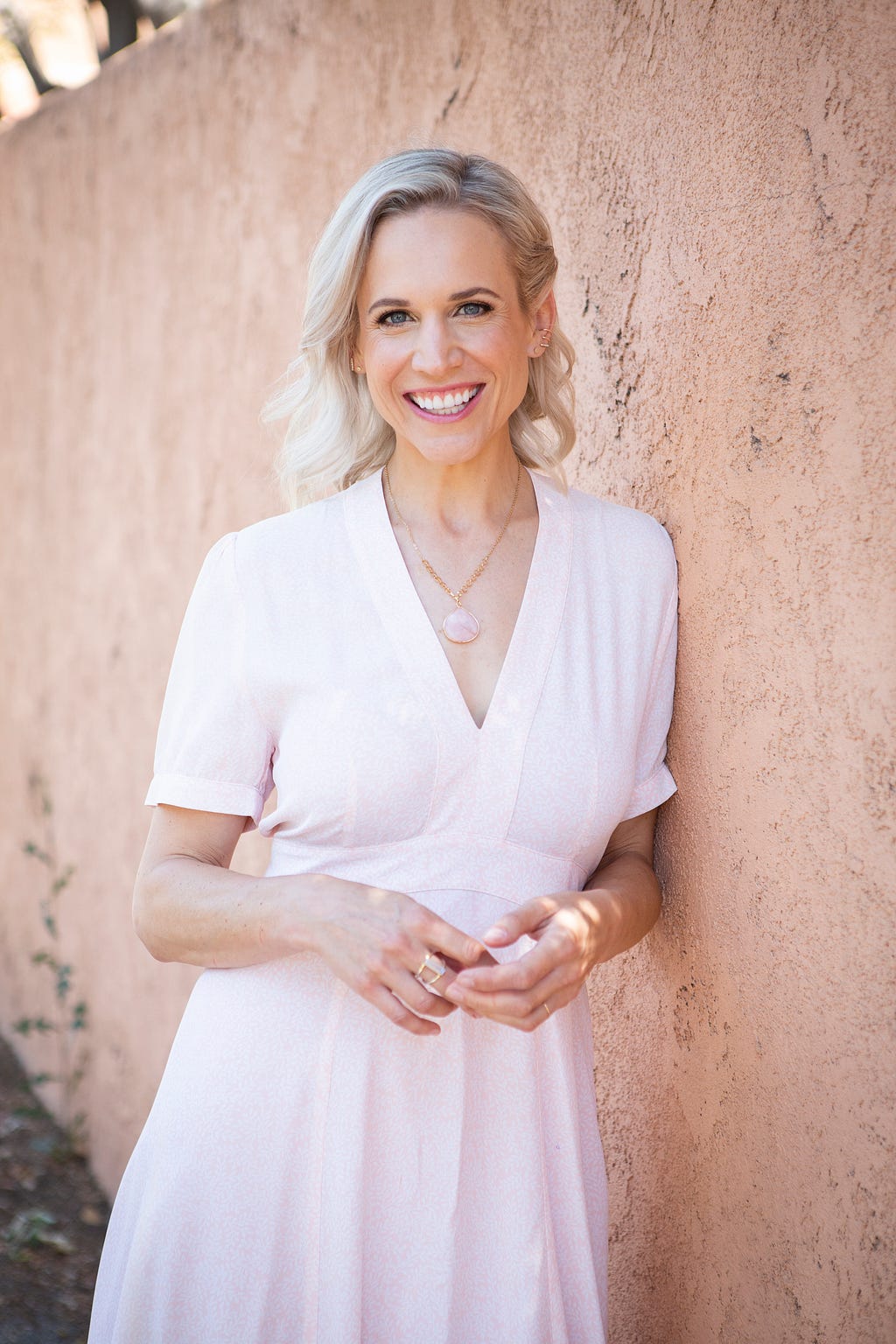
As a part of this series I had the distinct pleasure of interviewing Keira Kotler, founder, and CEO of Everviolet, is changing the adaptive intimate apparel world, creating elegant and functional lingerie for the special needs of women as they navigate life. From cancer to pregnancy, menopause to disability, skin sensitivities to surgery, her mission is to help women renew a sense of self and femininity following change, enabling them to feel comfortable, beautiful, and confident no matter what they are facing. A Boston native, Keira moved to the San Francisco Bay Area in 1999, where she worked as a Brand Director for retail clients in the home design and beauty industries. Leading brands from concept to execution, she managed strategy to design, production to advertising, seamlessly bringing bricks and mortar business into the e-commerce space. Keira is also an esteemed artist whose paintings and photographs are represented in galleries throughout the US and collected internationally. She received a BA with Honors from Columbia University and a MFA from the San Francisco Art Institute.

Thank you so much for doing this with us! Before we dig in, our readers would like to get to know you a bit more. Can you tell us a bit about your childhood “backstory”?

I was born and raised outside of Boston to an entrepreneurial father and a healer mother. I was a social, creative kid and a serious dancer from age 5 to 25. I loved school and working from a young age — first at a local bakery and then for many years, in the marketing department of my father’s company. Getting a chance to watch him grow his business had a profound impact on me and I believe, is much of why I founded Everviolet.

Can you tell us the story about what led you to this particular career path?

Everviolet was born out of my personal experience with breast cancer. I was diagnosed following a routine mammogram, with no family history or known risk factors. The cancer was extensive, so I underwent a bilateral mastectomy followed by reconstruction. Thankfully, though, I was one of the lucky ones, as what my surgeons initially thought was invasive cancer turned out to be early stage. My recovery from the surgeries went as well as could be expected, but I was shocked to discover that getting dressed in the morning became one of my greatest challenges. I tried on over 200 bras in a 6-month period, and nothing offered me the comfort, fit or elegance I wanted. The more women I spoke with about my struggles, the more I learned how universal this issue was — yet not just with newly diagnosed women like myself. Rather, decades-long survivors as well as women facing a myriad of other changes (pregnancy, other illnesses, disability, skin sensitivities, menopause, even puberty) claimed there were no bras that met their evolving needs. So, I founded Everviolet with the mission to help women reclaim or renew a sense of self and femininity following change, enabling them to feel comfortable and confident through all phases of life.

Can you share the most interesting story that happened to you since you began your career?

I’m not sure there’s one story I can recall, but I would say that early on, conducting wear test trials with cancer thrivers was incredibly profound. The stories we shared, the deep connections we felt and the trust we developed for each other, almost immediately, opened my mind and heart to relating on a whole new level. Hearing their exclamations of joy when, upon trying on a sample, they realized they could look and feel feminine and comfortable again was incredibly validating. These experiences made me realize how unnecessarily solitary illness and healing are, and how much better it would be if there was more of an open dialogue around these things. It’s also why I knew that Everviolet would not be solely an apparel brand, but a community and resource for wellness as well.

You are a successful business leader. Which three character traits do you think were most instrumental to your success? Can you please share a story or example for each?

The three traits that have been most instrumental to my success are innovative thinking, drive and grit. Innovative thinking is critical to any business. How products are made and differentiated set them apart from the competition, as does knowing when to pivot the business model or practices. Leaning into innovation has helped us establish a unique position in the market. Drive, energetic vision, motivation and determination, has enabled me to inspire our team and keep advancing the brand. Even when the path forward isn’t crystal clear, I’m a firm believer in taking a step forward regardless. You can always change courses, but progress, momentum and thoughtful action are key. Grit is the courage, resolve and strength of character required to hold true to my vision for Everviolet and keep pursuing my goals. Passion and perseverance define how I lead, and I am never afraid to roll up my sleeves and work hard.

What do you think makes your company stand out? Can you share a story?

I’d say a couple of things. First, the quality of our intimate apparel really sets us apart. From the fabric to the designs to way each piece is constructed, everything is premium and luxe, meant to feel like a hug and endure the test of time. Beyond the product, however, Everviolet is a holistically heathy company. Our commitment to being environmentally responsible is a huge brand pillar, as is finding time for work/life balance amongst the team. As a brand committed to helping women feel their best, I feel it’s important that our team feels the same. When we’re healthy and working together efficiently, we are that much more productive, creative and able to achieve success.

Do you have a favorite “Life Lesson Quote”? Can you share a story of how that was relevant to you in your life?

I’m not sure if this is a life lesson, but the quote I keep taped on my office wall is: “Where your talents and the world’s needs cross, there lies your vocation.” (Aristotle). I have always wanted my career to be connected to with a sense of purpose, and with Everviolet, I now have that. Having a positive impact on others, and the world, is what propels me to do what I do.

Ok, thank you for that. Let’s now jump to the primary focus of our interview. Do you see any fascinating developments emerging over the next few years in the fashion industry that you are excited about? Can you tell us about that?

I think the world today, post-pandemic (hopefully) and facing severe climate change, is becoming more mindful. We’re being forced to consider our health and the health of the earth more. With our customers, I see a priority around shopping sustainably and an informed curiosity about how garments are made. People care who made their clothes, and they want to be sure that no one was hurt or treated unfairly in the process. With the sheer number of brands out there now, I see people being a lot more discerning about how they spend their dollars. This consciousness is a great step forward and will enable other mission-based, impactful brands to rise.

Can you share how your brand is helping to bring goodness to the world?

We’re improving the quality of women’s lives by giving them back comfort and confidence after physical changes or losses. We are also shining a light on real female experiences — pulling back the veil on cancer, menopause and so many other topics that have previously been kept silent. We’re empowering women to stand proud, no matter what they’re going through, and we’re reinforcing the message that real, imperfect bodies are beautiful. Perfection is an unattainable farce, and all of us will encounter change at some point in time. It’s what we do in the face of that change that defines us and impacts those around us.

Can you share with our readers about the ethical standards you use when you choose where to source materials?

We pay attention to how the fibers are sourced and sewn at the mill level, as well as the contents of our fabrics. Our jerseys are certified sustainable and made with the highest quality cotton and modal fibers. This means that the jersey closest to one’s skin is naturally breathable, moisture wicking and cooling — something especially important for those recovering from surgery or with other skin sensitivities.

Fast fashion has an advantage, that it is affordable for most people, but it also has the drawback that it does not last very long and is therefore not very sustainable. What are your thoughts about this? How does your company address this question?

Everviolet is very outspoken about being a slow fashion brand. We participate in Fashion Revolution every year and have built relationships with the people who make our clothes. It’s no secret that the apparel industry is one of the most toxic, detrimental industries for the planet, and from the beginning, I didn’t want Everviolet to be a contributor. I also felt that a brand focused on personal health would be hypocritical if we didn’t also focus on the health of the earth. In this way, we ethically manufacture all our garments in small batches to avoid waste, sell through inventory, include sustainable jersey in all of our garments and use recycled materials in our packaging and shipping containers.

Thank you for all that. Here is the main question of our interview. What are your “5 Things You Need To Lead a Successful Fashion Brand”. Please share a story or example for each.

A Deep Understanding Of Your Customer. If you don’t know who you’re selling to, you won’t know how to attract her or meet her garment needs. Before launch, I created a persona to represent our target market. I defined everything about her — her name, age, career, discretional income, interests, cares, geographical location, etc. So many aspects of a fashion brand stem from understanding your audience — from pricing to design, brand voice to marketing channels, distribution strategy to various corporate policies. Without this deep understanding, you’re likely to miss the mark.

Clear Point Of View, Aesthetically. These days, there are so many choices when it comes to apparel. Define the look and feel of your brand tightly. Don’t be afraid to commit to a particular style and keep it consistent throughout the collection.

Incredible Product. Be sure that what you sell is differentiated from other like product in the market and that it delivers on what it promises to do. It’s hard enough to acquire customers — you want to make sure that when you do, she loves you and wants to keep coming back.

Strong Team. A successful fashion brand requires a wide range of expertise. Build a resilient team by bringing together people with varied skill sets and like values. Practice team building and invest deeply in your brand culture. It will not only make your team stronger, but it will also be a lot more fun as well.

Leadership/Vision For Growth. Even though it’s easy to get stuck in the weeds on the day-to-day tasks of running a business, consciously planning for the greater vision of your brand is essential. Carve out time weekly to focus on where the brand is going and how to lead it there. My favorite saying is “Believing is seeing.” I wholeheartedly trust that if we visualize something, we are that much more likely to manifest it.

Every industry constantly evolves and seeks improvement. How do you think the fashion industry can improve itself? Can you give an example?

I think the fashion industry could improve by becoming more environmentally responsible. Climate change is here, and it’s on us to protect and hopefully, try to repair the planet. There are a lot more practices we can adopt collectively to contribute to this process. We need to remember that as fashion designers and manufacturers, we are leaders, selling product to customers who trust us. It’s up to us to educate them on important values of quality over quantity, earth-friendly sourcing, and ethical business practices.

You are a person of great influence. If you could start a movement that would bring the most amount of good to the most amount of people, what would that be? You never know what your idea can trigger.

I often refer to Everviolet as a movement, actually! A movement that is changing the ways we approach and discuss aging, illness, disability, and other meaningful life events. We, as a culture, put so much stock into how we look that oftentimes, our happiness is derived by how others perceive us. But I strongly believe that the time is now to lean into what matters most — kindness of spirit, generosity, community, health, family, and friends. It’s time to let our life experiences positively impact others, to communicate our truths safely with heart, compassion, and realness. Everyone is dealing with something, and the more open we can be around these experiences, the better and more connected the world will be.

How can our readers further follow your work online?

Please visit everviolet.com to find our beautiful lingerie and loungewear collection and read our inspiring Journal. Subscribe to our mailing list to receive amazing health content weekly and be the first to learn about product promotions and releases. Please also join our amazing community on Facebook — Beauty of Change — to be part of a supportive, empowered female collective. All are welcome!

Thank you for these fantastic insights. We greatly appreciate the time you spent on this.


Modern Fashion: Keira Kotler of Everviolet On The 5 Things You Need To Lead a Successful Fashion… was originally published in Authority Magazine on Medium, where people are continuing the conversation by highlighting and responding to this story.

Female Founders: Julie Burleson of Young Chefs Academy On The Five Things You Need To Thrive and…

Female Founders: Julie Burleson of Young Chefs Academy On The Five Things You Need To Thrive and Succeed as a Woman Founder

An Interview With Candice Georgiadis

Even if you’re in a fun business, you need to be prepared for some not-so-fun times. Haters are real, but so is earned success. Don’t lose sight of why you started!

As a part of our series about “Why We Need More Women Founders”, I had the pleasure of interviewing Julie Burleson, Founder and CEO of Young Chefs Academy.

Julie owned and operated two culinary businesses before launching the Young Chefs Academy model and setting out to build a franchise network dedicated to teaching children the joy and value of cooking. Julie is the recipient of a Best Feasibility Plan award from Baylor University’s John F. Baugh Center for Entrepreneurship and has been a panelist for IFA Convention events.

Thank you so much for doing this with us! Before we dig in, our readers would like to get to know you a bit more. Can you tell us a bit about your “backstory”? What led you to this particular career path?

I was always an entrepreneur at heart. When I was in college, I started a business making homemade gingerbread houses for the holidays. I can credit my mother for my love of food and cooking. I spent so much time in the kitchen with her, but I always knew I wanted to open my own business that I was passionate about. I started off about 20 years ago selling culinary herbs in a co-op space and eventually started a business selling home-cooked meals for busy working moms, well before home delivery meal kits were introduced. Business was booming and I was finding ways to include my children in the kitchen with me as I got busier and busier. My son was having a blast helping me with the cooking and I had a lightbulb moment to open a children’s cooking school. We opened up and it took off. We were holding parties and classes and it wasn’t until customers had asked when we were going to open additional locations that I considered franchising the brand. Now more than 30 locations later, I’m so proud of the progress we’ve made for Young Chefs Academy.

None of us are able to achieve success without some help along the way. Is there a particular person who you are grateful towards who helped get you to where you are? Can you share a story about that?

It’s so important to find mentors whose values align with your own. I made relationships with people in franchising, veterans in the industry who I could turn to and trust. Additionally, the leadership team at Young Chefs Academy, Shelly Young and Jamie Skinner. In addition to being incredibly genuine and loyal, they’ve always had my back in terms of helping to see who has our brand’s best interest at heart. I also owe so much to the YCA employees who care about the brand as much as I do. The success of this company wouldn’t be the same without the people who choose to be involved and I am eternally grateful for my team.

Ok, thank you for that. Let’s now jump to the primary focus of our interview. According to this EY report, only about 20 percent of funded companies have women founders. This reflects great historical progress, but it also shows that more work still has to be done to empower women to create companies. In your opinion and experience what is currently holding back women from founding companies?

Why wouldn’t women want to found companies? I don’t think anything should hold them back. If a woman is being held back from their dream, their inner voice is to blame. The world isn’t holding you back, it’s either you or somebody you’re doing business with. My best advice would be to get out of your own head, because the time to act on that dream is now. Maybe a male counterpart tried to hold you down, but so what? Don’t give them the gratification. There are people who adhere to the older ways of thinking, but that system is outdated. They will try to find your weaknesses to discourage you- it happened to me. It didn’t hold me back completely, but it did stall my progress. If you get into a culture or system that wants to do things the old way, recognize it, learn from it and move on to something better.

Can you help articulate a few things that can be done as individuals, as a society, or by the government, to help overcome those obstacles?

Goes back to what we should have all learned in grade school- the golden rule; treat people how you want to be treated. It’s that simple! Standing up for yourself and for someone who you see as a victim of being bullied should be the standard. Be aware and be willing to have courage to stand up for what’s right. We need stronger support systems in the workplace.

This might be intuitive to you as a woman founder but I think it will be helpful to spell this out. Can you share a few reasons why more women should become founders?

Culture, culture, culture. Everyone is becoming very aware that culture matters- and it matters a lot! I believe women have that innate sense of relationship building, which is what companies thrive on. You can have the best business model or product, but without a healthy culture your company will not succeed to its fullest. Women are more nurturing, it just comes naturally. Female founders have the opportunity to build that nurturing, caring culture within the workplace, and I hope to see more women taking on that role.

What are the “myths” that you would like to dispel about being a founder? Can you explain what you mean?

Not all founders are naturally-born leaders. Founders are dreamers, they have big dreams, but founders and leaders they don’t come as a package deal. I loved the idea of starting a business and making a positive impact, but leadership skills have to be learned along the way. We are champions of our dreams but we have to grow into our role as a leader. You have to learn to lead, and it’s not easy.

Is everyone cut out to be a founder? In your opinion, which specific traits increase the likelihood that a person will be a successful founder and what type of person should perhaps seek a “regular job” as an employee? Can you explain what you mean?

I think successful founders know they are only a piece of the puzzle. However, founders are not any more important than the ‘regular jobs’ as employees. Successful founders stay humble and know their place in the world. Not to mention, we can’t all be founders. If we were all founders the world would crumble in on itself. It’s been a humbling experience for me to learn firsthand that I’m not any more important than the operators in a company. Founders know the right people to include in their business, but operators are who make their dreams come to life. A specific trait to being a successful founder would be staying humble in your position.

Ok super. Here is the main question of our interview. What are your “5 Things I Wish Someone Told Me Before I Started” and why? (Please share a story or example for each.)

  1. There are so many different opinions out there on how to approach franchising the right way. Make sure you build a trusted franchise support system before diving into franchising as a business model.
  2. Understand that there are very tough decisions to make as a leader. You won’t always have the luxury of making decisions based on convenience, and sometimes the decisions you make may affect personal relationships. It’s no longer about you; it’s about your company!
  3. Anything worth building is going to take a long time.
  4. If you don’t establish a culture from day one, the culture will establish itself. If you fail to articulate it and make it very clear from the beginning, it will take a long time to turn that ship around.
  5. Even if you’re in a fun business, you need to be prepared for some not-so-fun times. Haters are real, but so is earned success. Don’t lose sight of why you started!

How have you used your success to make the world a better place?

Young Chefs Academy’s mission adds so much value to children’s and families lives. Our whole purpose is making people’s lives better through teaching the joy and value of cooking. In addition to our brand’s purpose, being a franchisor and providing opportunities for franchisees to fulfill a dream that they otherwise would not have been able to achieve without our support is invaluable. And the best part is watching it come full circle! Through enhancing a franchisees life, they are able to make a difference in other people’s lives. One of our company promises is that we expect our franchisees to support the communities in which they do business. We provide a platform for owners to give back to organizations that they are passionate about. It’s a wonderful experience to watch franchisees become involved philanthropically in their own way.

Just as well, Young Chefs Academy has partnered with several national and international brands. We enjoy incorporating philanthropic efforts into our business, especially when it aligns with our mission. For example, we include ways to encourage students and families to donate to World Central Kitchen, and hold events such as “Cookies for Kids Cancer,” where our students bake the goods for the cancer drive. It’s important to empower our students and involve children in the act of giving back. We enjoy watching them find joy in being an active participant in philanthropy.

You are a person of great influence. If you could inspire a movement that would bring the most amount of good for the greatest number of people, what would that be? You never know what your idea can trigger.

I lost my mother to Alzheimer’s last year. Going through that experience has inspired my next project where I hope to impact the lives of senior citizens. I’m currently working on a model where our Young Chef Academy students can be paired up with individuals at senior living centers. Through my mother’s diagnosis, I learned there are a lot of lonely people out there who weren’t blessed with grandchildren, or maybe their grandchildren live far away. Pairing two different generations together through cooking could really bring those two groups of people together in a beautiful example of mentorship. The idea is to bring the seniors to YCA and pair them up on a one-on-one basis where they share recipes or participate in a class together. The older generations are living longer and they have so much to give back and share with today’s youth, and we would be remiss to miss out on an opportunity to share those experiences before it’s too late.

We are very blessed that some very prominent names in Business, VC funding, Sports, and Entertainment read this column. Is there a person in the world, or in the US with whom you would love to have a private breakfast or lunch with, and why? He or she might just see this if we tag them.

Sara Blakely, Founder and CEO of SPANX, is a female leader that I have always admired. Sara personifies the female founder of doing it right. I’m continually inspired by her leadership style and the confidence she holds to stay true to herself. The journey she took to build her business independently set a tremendous example for aspiring entrepreneurs everywhere. Sara is a great representation of authenticity and humbleness.

Thank you for these fantastic insights. We greatly appreciate the time you spent on this.


Female Founders: Julie Burleson of Young Chefs Academy On The Five Things You Need To Thrive and… was originally published in Authority Magazine on Medium, where people are continuing the conversation by highlighting and responding to this story.

Women In Wellness: Dr Doni Wilson On The Five Lifestyle Tweaks That Will Help Support People’s…

Women In Wellness: Dr Doni Wilson On The Five Lifestyle Tweaks That Will Help Support People’s Journey Towards Better Wellbeing

An Interview With Candice Georgiadis

Better Sleep Hygiene: There are many ways to improve sleep but today, especially with the push for work-from-home during the pandemic, you may find the distinction between relaxation and work slipping. It’s okay, it happens even without a work from home mandate, but let’s change that. If you have the option, then keep your bedroom a place that is naturally associated with rest and relaxation (not work), and to prioritize getting at least 7.5 hours of sleep each night.

As a part of my series about women in wellness, I had the pleasure of interviewing Dr. Doni Wilson.

Dr. Doni Wilson, ND, CPM, CNS, is a health visionary, researcher, bestselling author, and international speaker. Through her research and clinical experience, she developed her Stress Recovery Protocol, which takes stress management to the next level by utilizing epigenetics to individualize the optimization of cortisol, adrenaline and neurotransmitters. Dr. Doni earned her doctorate degree in naturopathic medicine from Bastyr University where she also completed her residency. She is also a certified professional midwife, a certified nutrition specialist, and has degrees in both nutrition and science. For more than 22 years, Dr. Doni has helped thousands of patients overcome health challenges that are considered irreversible.

Thank you so much for joining us in this interview series! Our readers would love to “get to know you” better. Can you share your “backstory” with us?

My father is a pharmacist and the intention was for me to follow in his footsteps and go to pharmacy school after I graduated with my science degree. When the first day of pharmacy school came, I had a strong feeling that it wasn’t the right decision for me. I wanted to study medicine that uses food as medicine and to help people who aren’t being helped by the standard of care. I found that in naturopathic medical school.

I also trained to be a midwife, and as part of that training, I studied how stress affects women in labor, especially women with a history of abuse. What I found through this research is that what helps labor progress most efficiently is an optimal amount of stress hormones, not none. While we often wish we could have zero stress, that is actually not optimal for our bodies or our health.

So when I graduated, finished my residency, moved to New York, and started seeing patients traumatized by 9/11, I had the thought that they too need help to re-optimize their stress hormones. I kept on researching cortisol and adrenaline — our stress hormones — found a way to test them, and effective ways to rebalance them, even after severe stress. I started publishing articles and giving lectures at professional conferences — in the U.S. and internationally.

Meanwhile, I was suffering from debilitating migraines. No matter where I turned, no doctor, pill, nor specialist could solve my seemingly unrelenting pain which made me feel defeated, exhausted, and overwhelmed. At the same time, I felt ashamed to tell anyone because I felt I should be able to solve them, which pushed me to continue my research. Through years of implementing what I discovered on myself, including amino acid therapy to balance my neurotransmitters, identifying gluten sensitivity and leaky gut and how to recover from them, as well as adrenal distress, I was able to decrease the frequency of the migraines. But it wasn’t until I diagnosed myself with hypermobility and toxicity from flame retardants, and addressed those issues successfully, while also experiencing an emotional-spiritual transformation, that I completely stopped my migraines.

Now, I am so grateful for the migraines because they led me to develop my Stress Recovery Protocol which identifies how stress uniquely affects each individual (what I refer to as Stress Types) and then uses epigenetics to reoptimize health. It’s about finding out how stress has specifically affected you and your body. We can do specialized testing to find out what is out of balance, and then use diet, stress recovery, nutrients, herbs and other natural approaches to rebalance what was disrupted by stress exposure. I help people of all ages understand their bodies and what they can do to feel their best and how to be healthy while stressed.

I am now the bestselling author of five books about the ways stress affects us, and how to recover from it so that we can live our healthiest lives.

Can you share the most interesting story that happened to you since you started your career? What were the main lessons or takeaways from that story?

In 2000, when I graduated from naturopathic medical school and was finishing my midwifery certification, I went to Manila in the Philippines. I delivered 100 babies in 4 weeks in the community hospital. I really enjoyed getting to know the culture and people and even had a chance to travel around the Philippines. I didn’t know if I would ever be back in the Philippines again in my life, but I knew that I was helping women there to bring their babies into the world safely. Then in 2018, I was invited to go back to Manila by a health food store. I was flown there to train their staff with my approach to stress recovery, to be on radio and TV, and to speak at a large public event. It was such an amazing, surreal moment to be back there. During my presentation, when I told the audience how I had delivered babies there 18 years ago, they all knew about the community hospital and were so excited to hear that I had worked there. I had probably delivered some of them! It was a full-circle moment to be able to go back and share what I’ve learned and teach them my findings.

Can you share a story about the biggest mistake you made when you were first starting? Can you tell us what lesson you learned from that?

It wasn’t so much a mistake as a lesson on how I wanted to operate my business. The first five years in practice, my daughter was young so my mindset was more concentrated on being a doctor while letting someone else run the business. When my daughter was around five-years-old and my marriage was ending, I realized that I was ready to take on being both a business owner and a doctor at the same time. That transition pushed me to meet with a lawyer and incorporate my business and then hire my own bookkeeper and staff to assist with scheduling. I also had to decide what to do about where my office(s) would be located.

While most people just have one single office location, I decided that I wanted to have three locations even if it seemed like a lot. My staff worked virtually while I would rotate between the offices. At that same time, I was offered a full-time position with a successful, well-established company so I had to make a decision of whether I would take this role with benefits or continue with my own practice? One important factor that influenced my decision was knowing that I wanted to represent my own ideas and be under my own business. It was a challenge to go between two different states (New York and Connecticut) and deal with different taxes and different scopes of practice. However, I would say that I wouldn’t have done anything differently. Being in different offices was exciting and challenging.

Let’s jump to our main focus. When it comes to health and wellness, how is the work you are doing helping to make a bigger impact in the world?

We are taught that there is nothing we can do about stress, but “manage” it. We are led to believe that we are supposed to be able to eliminate all stress. The work I do is to help people take a much more compassionate and realistic approach to stress, which is to embrace the fact that we, as humans, actually NEED to be stressed. We need a healthy amount of stress hormones — cortisol and adrenaline — in order to survive and thrive. And the more we put expectations on ourselves to push through or to take on more stress, we are only perpetuating the effects of stress. Instead, we need to shift our perspective on stress to mastery. We need to understand how stress affects us as individuals and give ourselves and our bodies the support we need to recover from stress each day. That is how we will be able to prevent health issues caused by stress, of which 90% of health issues are caused by stress, so that is a huge impact.

Can you share your top five “lifestyle tweaks” that you believe will help support people’s journey towards better wellbeing? Please give an example or story for each.

  1. Better Sleep Hygiene: There are many ways to improve sleep but today, especially with the push for work-from-home during the pandemic, you may find the distinction between relaxation and work slipping. It’s okay, it happens even without a work from home mandate, but let’s change that. If you have the option, then keep your bedroom a place that is naturally associated with rest and relaxation (not work), and to prioritize getting at least 7.5 hours of sleep each night.
  2. Cut Out Sugar: Our blood sugar levels can affect everything from our immunity to our mood and sleep. For example, if you find yourself waking up due to hunger in the middle of the night, you might need to reflect on what you are eating during the day. Avoid heavy carbs and sugar at night, best is to have your last meal at least 2 hours before bed, and make sure each meal contains protein.
  3. Identify Inflammation: If you have not yet been tested for food sensitivities (IgA and IgG is what I recommend), now is the time. This will tell you whether there are foods you are eating that are triggering inflammation throughout your body. This test will also give you a better sense of whether leaky gut is present so you can start healing it, which will help decrease inflammation.
  4. Drink More Water: Drink a small amount of water — 4 to 6 ounces — every hour or two to help beat dehydration. You can add a pinch of sea salt for electrolytes.
  5. Exercise: Exercise provides benefits including stress reduction and increased insulin function to help manage blood sugar levels. Start with small amounts, including core strength. Then gradually increase it based on how you feel and where you are in the stress recovery protocol for your stress type.

If you could start a movement that would bring the most amount of wellness to the most amount of people, what would that be?

The movement I have started is to understand the effects of stress on us as individuals, based on your stress type, and the potential to recover from the imbalances caused by stress, also based on your unique stress response. All humans are exposed to stress, more so after coming through the pandemic. We need stress recovery more than ever.

Stress increases infertility, miscarriages, cervical cancer due to HPV, other forms of cancer, autoimmunity, dementia, fatigue, anxiety, depression, and many other health conditions. If we don’t start prioritizing ourselves and outsmarting stress by ensuring that we get adequate anti-stress, then health issues will continue to skyrocket.

I want everyone to know their stress type and how to take better CARE of themselves based on their stress type, using the acronym I developed — C for clean eating, A for adequate sleep, R for recovery activities and E for exercise.

What are your “5 Things I Wish Someone Told Me Before I Started” and why?

  1. Network: Take advantage of opportunities to meet new people and put your name out there. When I moved from the West Coast to New York and didn’t know anyone, it became crucial to make those connections.
  2. Take every opportunity: Even if it seems scary or outside of your comfort zone, push yourself beyond what you think is possible. I had never spoken at a conference or written a book, and even though it seemed like it couldn’t be done, I learned how to and woke up each day following my desire to help more people.
  3. Don’t give up: Even when it seems difficult, you are stronger than you think! I took on the challenge of operating three office locations which had me running back and forth between states. But, I knew that was what I wanted to do and I persevered.
  4. Listen to your intuition: I listened to my inner self and went against what was intended for my career and said that I wanted to study medicine that uses a natural and preventive approach instead.
  5. Market yourself: Understand the importance of a great website and social media. Get your name out there and let others know your capabilities with a strong web presence. During the pandemic I started my own podcast — How Humans Heal — even though I was so afraid I would fail.

Sustainability, veganism, mental health, and environmental changes are big topics at the moment. Which one of these causes is dearest to you, and why?

Mental health is a topic I talk a lot about! There are millions of people who suffer with anxiety and depression. Suicide rates are soaring, and yet, the conventional medical system is only offering prescription medications, which in some cases help, but in many cases, lead to dependency and worsening side effects. I see that the mental health system is severely lacking in its ability to help people with stress and the effects of stress.

Meanwhile, thousands of research studies and years of clinical experience show there are so many more options available. I experienced so much stress, anxiety and depression over the years myself. Starting back in 2001, I started testing cortisol and neurotransmitter levels and trained myself in amino acid therapy so that I could use clinical nutrition and biochemistry to rebalance neurotransmitter levels. I performed a research study in my practice to identify the 5 common stress patterns (stress types) and developed a protocol to address each individually. This approach has helped thousands of patients with mental health issues, and I hope to help millions more.

What is the best way for our readers to further follow your work online?

Readers can visit my website at www.doctordoni.com where I post weekly blogs and my podcast How Humans Heal. They can also find me on social media on Facebook at www.facebook.com/drdoniwilson, Twitter at www.twitter.com/glutenfreedoc and Instagram at www.instagram.com/drdoniwilson. I also post videos on YouTube at www.youtube.com/user/DoniWilsonND.

Thank you for these fantastic insights! We wish you continued success and good health.


Women In Wellness: Dr Doni Wilson On The Five Lifestyle Tweaks That Will Help Support People’s… was originally published in Authority Magazine on Medium, where people are continuing the conversation by highlighting and responding to this story.

Female Founders: Gina Rivera of Phenix Salon Suites On The Five Things You Need To Thrive and…

Female Founders: Gina Rivera of Phenix Salon Suites On The Five Things You Need To Thrive and Succeed as a Woman Founder

An Interview With Candice Georgiadis

It’s okay not to have the answers to everything! I had to learn where my strengths and weaknesses were. This helped me to determine where I needed more training as well as who I needed to surround myself as a team that could assist me in areas where I needed assistance.

As a part of our series about “Why We Need More Women Founders”, I had the pleasure of interviewing Gina Rivera.

Gina Rivera is a well-known icon in the world of beauty. Rivera skyrocketed to success when the company she founded, Phenix Salon Suites became the fastest growing salon suite company in the beauty industry. PSS is the only salon suite company to be named to Entrepreneur Magazine’s Top 500 Franchise List. The company has now been named five times to the list and was recently ranked in the Top 25 out of 500. Rivera is the only female that serves as a company president in this elite group. Her company continues to flourish with more than 300 locations nationwide and a growing international expansion starting in Europe.

Thank you so much for doing this with us! Before we dig in, our readers would like to get to know you a bit more. Can you tell us a bit about your “backstory”? What led you to this particular career path?

I remember as a child I would watch my dad and mom for hours in awe as I swept hair from their salon floor. I loved how people felt after they left the salon. I also remember knowing that I was going to be different. My family has been in the beauty business since 1929. They have owned everything from salons to beauty schools and I currently have 25 salon professionals working in my immediate family. I always loved both the business side and the artistry of the industry. Both of my parents were hairstylists, and they owned their own salon.

I recall my first day of Kindergarten, I noticed that all the other little girls had beautiful long flowing hair. I was too self-conscience to remove my hat and display my short “Tenile” haircut I pretended to tug, and pull, at the hat so that it would appear to be stuck on my head, simultaneously the teacher repeatedly asked me to take off the hat. When I did, the laughter erupted. At first, I was embarrassed, but within seconds embarrassment turned to anger. Afterall, who were they to laugh at my stylish new look. As I walked to the carpet through roars of laughter, I turned to my classmates just as my teacher spun to write on the black board, and I did something that wasn’t very politically correct for a six-year-old. I shot them the bird!

Today, when I look back at that event, I realize that it was my first step towards establishing myself in the world of beauty. In some respects, this story reflects my career. Along the way, there have been many naysayers. I recall opening the first Phenix Salon Suites. Many people thought the concept was strange. Interestingly, I could have listened and deep down inside my six-year-old self still wanted to shoot the naysayers the bird. However, with time we grow and for me this meant learning how to be humble. So, I remained humble, and I focused on my goal, even though our concept was different. I forged ahead.

Can you share the most interesting story that happened to you since you began leading your company?

Early in my professional life I worked as a stylist in a salon. I was so excited about the job and felt I was doing well. One day I was called to my boss’s office, and I just knew that she was going to offer me a promotion or a raise. However, instead she proceeded to tell me that I didn’t have what it takes to make it in the beauty industry and that it would be best if I sought a different career. Today, I realize that if I had listened to her, there would not be over 10,000 beauty and appearance professionals operating their businesses under the Phenix Salon Suites brand.

Many people also don’t realize that I was a high school dropout at age 17. While I later went back to school, I think it’s important to acknowledge that each person must establish their own path to success.

Can you share a story about the funniest mistake you made when you were first starting? Can you tell us what lesson you learned from that?

I had just finished beauty school and started my first salon job when I had a dark brunette client come in who wanted her hair to be highlighted. She was requesting a lot of highlights. This was the old days, and I had to pull her hair through a cap. I was mixing toners and trying to create a platinum toner for her hair as she wanted a platinum blonde. I applied the toner to her hair. However, when I removed the cap, her hair was a murky blue, green, dark, muddy colour. She ended up having to leave with a mohawk long before they were popular. The moment that she left I knew that I wanted to master colour application. If I hadn’t experienced that situation, I probably would have never developed my professional colour line.

None of us are able to achieve success without some help along the way. Is there a particular person who you are grateful towards who helped get you to where you are? Can you share a story about that?

Above all I am thankful to God for always being by my side and walking with me on my journey. Without his strength and grace, I would be nowhere. I am also extremely thankful to both of my parents who were stylists and huge mentors to me. I can remember being 7 years old and attending my first hair show. I remember the lights and the runway, and the hair flying. I will never forget sitting in the front row and knowing inside that this was the industry that I wanted to be a part of in every way possible.

Then, there is my husband, Jason Rivera, who has worked side by side with me and been with me every step of the way when building this company. He has embraced my dream and my vision and helped everything that I envisioned for this company to come to fruition. I am also extremely grateful to my amazing executive team. I am blessed to have surrounded myself with a team that has been instrumental our growth. This team provides strength and knowledge in areas that I need support, knowledge, and insight which is key to the success of any company.

Ok, thank you for that. Let’s now jump to the primary focus of our interview. According to this EY report, only about 20 percent of funded companies have women founders. This reflects great historical progress, but it also shows that more work still has to be done to empower women to create companies. In your opinion and experience what is currently holding back women from founding companies?

I believe that the fear of failure and the fear of being in a leadership position plays a big role for many women when it comes to achieving success. I also believe that it’s easy to talk ourselves out of things before we even try them if we’re not careful. In addition, I think possessing the confidence to make hard decisions is instrumental for women in leadership.

Can you help articulate a few things that can be done as individuals, as a society, or by the government, to help overcome those obstacles?

As a society we have come a very long way. We are seeing more female entrepreneurs and women in leadership roles. This is opening doors for generations of the future. It’s become more accepted to be a female leader, executive and businesswoman.

I believe courage breeds courage and we see this in female leadership. Our current female leaders can serve as both role models and mentors to leaders of the future. Women empowerment is bigger than it’s ever been, and we need to continue to foster this in the workplace and in society in general.

This might be intuitive to you as a woman founder but I think it will be helpful to spell this out. Can you share a few reasons why more women should become founders?

Women are naturally nurturing, and they can channel this towards taking care of their business as well as to taking care of their employees. This is a natural and normal function for women which makes leadership roles ideal for them. When something is nurtured; it’s loved and taken care of; the details are important, and it’s given the right amount of TLC to thrive. These are all characteristics that are required for a successful business.

What are the “myths” that you would like to dispel about being a founder? Can you explain what you mean?

Sometimes when you’re in a high position of leadership, people tend to think you work less and have a lot more disposable time on your hands. What people fail to realize is that my working days are very long. I seldom have a vacation that is not intermingled with a work trip. Much of the time, I make sure to bring family on the road so that I can spend time with them as I work to balance the demands of running a large company and being a mother and wife.

Is everyone cut out to be a founder? In your opinion, which specific traits increase the likelihood that a person will be a successful founder and what type of person should perhaps seek a “regular job” as an employee? Can you explain what you mean?

Everyone has it in them to be a leader at some level. The sky is the limit. Each person has their own unique character traits, but they must know how to tap into them. Being a leader is not a one size fits all. While there are characteristics that are important, everyone has different gifts that can be impactful professionally depending on what industry they are in. Some items a leader must be able to deal with include facing failure and being able to get back up and move forward. Sometimes failing is the best learning opportunity available. It takes drive, perseverance, and a thick skin at times.

Ok super. Here is the main question of our interview. What are your “5 Things I Wish Someone Told Me Before I Started” and why? (Please share a story or example for each.)

  • It’s okay not to have the answers to everything! I had to learn where my strengths and weaknesses were. This helped me to determine where I needed more training as well as who I needed to surround myself as a team that could assist me in areas where I needed assistance.
  • Don’t be so hard on yourself! In the beginning I would internalize my failures. Now, I realize that there will be times that I fail. This is part of the learning process and how I improve. I had to take the lesson, learn to dust myself off, and keep moving forward.
  • It’s okay to step away during the day periodically! It took me 15 years to realize that I was healthier when I stepped back and took time for myself. I am a much better leader when I take even 30 minutes for myself to take a walk, play tennis or just have some time to decompress. I am much better for it.
  • It’s imperative to have a daily routine that begins with filling your spirit! For me this is my daily Christian devotionals. This fills me up and gives me fuel to face whatever lays ahead in my workday as well as my personal life.
  • Stop and smell the roses! Learn to laugh at yourself. I can’t tell you how many times I crack myself up. In the early days if I was tongue tied or made a mistake, I was very upset about it. Nowadays, when I stumble over my words or do something foolish, I have learned to laugh at myself and not take everything so seriously. Laughter really is the best medicine!

How have you used your success to make the world a better place?

What I do is not about me. I am in the business of changing lives and giving entrepreneurs the opportunity to own their own business and become their own boss. It just doesn’t get any better than that.

You are a person of great influence. If you could inspire a movement that would bring the most amount of good for the greatest number of people, what would that be? You never know what your idea can trigger.

I feel like I am living the movement that I would want to inspire which is providing an affordable avenue for entrepreneurs to own their own businesses and become their own boss.

We are very blessed that some very prominent names in Business, VC funding, Sports, and Entertainment read this column. Is there a person in the world, or in the US with whom you would love to have a private breakfast or lunch with, and why? He or she might just see this if we tag them.

I would love to have lunch with Dana White. I really respect what he has accomplished with the UFC, both the brand he has built and the culture he has created. I admire his tenacity, his perseverance, and his ability to continue to grow and move forward.

Thank you for these fantastic insights. We greatly appreciate the time you spent on this.


Female Founders: Gina Rivera of Phenix Salon Suites On The Five Things You Need To Thrive and… was originally published in Authority Magazine on Medium, where people are continuing the conversation by highlighting and responding to this story.

Burton Kelso of Integral On How to Use LinkedIn To Dramatically Improve Your Business

An Interview With Candice Georgiadis

Use Your Profile to Tell Your Story. People do business with people they know like and trust which means you need to create a LinkedIn profile that helps people get to know who you are. You might be tempted to put a lot of information showing off your achievements and awards, but you should avoid doing that. Focus on sharing your personal and professional journey when filling out your profile. Make sure you have a professional headshot for your main photo and create a banner for your profile that let’s people know what you do and how you can help them.

As part of our series of interviews about “How to Use LinkedIn To Dramatically Improve Your Business”, I had the pleasure of interviewing Burton Kelso.

Burton Kelso is the owner and Chief Tech Expert at Integral, an on-site and remote computer and laptop repair service company for consumers and businesses. He is also a national keynote and technology speaker, a YouTube personality, and a TV Tech Expert regularly appearing on ABC, CBS, FOX, NBC, News Nation Now, The Black News Channel,Talk.TV and Newsmax offering viewers easy tips on computers, technology, Internet lifestyle, and gadgets. As computers and their related gadgets become more and more part of our everyday lives, he’s here to help you get the most out of your devices. His vision is to remove the frustrations and complexity of computers and technology and open people up to a world of new ideas, experiences, and opportunities. He loves technology, he’s read all of the manuals, and he’s serious about making technology fun. safe, and easy to use for everyone!

Thank you so much for doing this with us! Can you tell us a story about what brought you to this specific career path? Thanks for having me!

I’ve already been a fan of computers and technology since I was a tween. My mother was the one who introduced me to computers as she somehow saw it was the way of the future. Sure I loved playing video games, but I loved how computers and technology offered you a way to accomplish everyday tasks such as creating documents, maintaining spreadsheets, working on your accounting and communicating with people across the globe. Plus, I always love helping people. Technology always has a way of making people feel as if they aren’t part of the cool kids. As someone who always felt like an outcast, I wanted to make people feel included and there’s where my love of helping people with technology came alive.

Can you share the most interesting story that happened to you since you started this career?

One of the most interesting stories I can share in being the the computer break/fix managed services business is working on the computers and internet service for Johnathan Badeen, co-founder and former Chief Strategy Office at Tinder father. Johnathan called our offices when he was in visiting home because his father was having issues with spotty wifi. He was one of the down to earth people I’ve met and it was interesting to see he was willing to seek help for issues over his head. He obviously has knowledge about technology, but not when it came to troubleshooting hardware issues.

It has been said that our mistakes can be our greatest teachers. Can you share a story about the funniest mistake you made when you were first starting? Can you tell us what lesson you learned from that?

Years ago when working on a computer, I failed to put my anti-static strap on to prevent from zapping computer parts. The family I was working for had a very friendly dog that kept wanting attention. They put the dog away, but it kept getting out. At one point during the appointment, the dog brushed past me and zapped me which zapped the computer. I took responsibility for the issues and got the computer up and running. The lesson I learned that day was to always be prepared for any scenerio that can arise when you’re in the progress of working onsite at appointments and in life.

Which social media platform have you found to be most effective to use to increase business revenues? Can you share a story from your experience?

Facebook continues to be slightly ahead of Linkedin when it comes to increasing our business revenues. Facebook is the perferred and most popular social media out there. There are more people who use it day to day and for the most part it’s one of the most visited websites on the Internet. It’s the go to for people looking for a variety of things including business services.

Let’s talk about LinkedIn specifically, now. Can you share 5 ways to leverage LinkedIn to dramatically improve your business? Please share a story or example for each.

  1. Use Your Profile to Tell Your Story. People do business with people they know like and trust which means you need to create a LinkedIn profile that helps people get to know who you are. You might be tempted to put a lot of information showing off your achievements and awards, but you should avoid doing that. Focus on sharing your personal and professional journey when filling out your profile. Make sure you have a professional headshot for your main photo and create a banner for your profile that let’s people know what you do and how you can help them.
  2. Connect with Your Offline Connections on LinkedIn. We all have that stack of business cards we collect at business events that are laying there doing nothing. Most people would tell you that you need to enter them into your database or CRM. That’s true, but you need to also look for those people on LinkedIn and connect with them. Why? Well a quarter of the planet is on LinkedIn. When you connect with people on LinkedIn, you’re connected forever. When you rely only on business cards for your connections you only get half the picture. People are constantly changing jobs which means if you only rely on information gathered from a business card, you only have the information of where they were. What you want when building relationships with people is where they are. When someone makes a career change, they first thing they are going to do is update their LinkedIn profile. If you’re looking to play the long game and develop solid relationships, it’s going to take multiple touches or interactions before they even begin to look at you to work with.
  3. Your posts Need to focus on Entertaining, inspire and educating people. Nurturing relationships on LinkedIn doesn’t involve pushing your products and services in the faces of your connections. Just think of all those spam messages when you connect with someone on LinkedIn. You hate them and people will hate you if you start spamming them. Nurturing relationships on LinkedIn works best when you are focused on posts that will entertain, inspire, and educate you connections. People gravitate to LinkedIn for business, but they are on there for things that will take them away from the daily grind of life. Think about the accounts you follow. I know you love to see those motivational posts from your connections that inspire you to continue you on your business journey. There are those go to posts that you seek out that will make you laugh when you need a good chuckle. Finally, when you need a solution to a problem, there are those connections you will look to for help. People are more focused on looking for the solutions to the problems they face daily. Be the answer to they question they are looking help for when you create posts for LinkedIn
  4. It’s okay to share content from other social media platforms. Everyone on Linkedin is probably familiar with the old ‘LinkedIn isn’t Facebook’ that has circulated for a while. Social media can take up a lot of your time everyday. It’s not just the scrolling and staying in contact with your connections, it’s coming up with content to share on your feed everyday. Most people are usually killing it on other platforms like Facebook, Instagram and even TikTok. Why not save some time and share those same posts on Linkedin? Consistent content is important when you’re on LinkedIn and pulling from other social media platforms is okay.
  5. Remember, it’s a marathon! When you’re on LinkedIn, you need to learn how to play the long game. Understand you’re not going to get everyone to like you or listen to you when you connect with them on LinkedIn. It take many posts and interactions to start to gain traction. LinkedIn works best when you plan ahead as far as what type of posts you will make every day. When posting always remember to find content that people overall are looking for. Focus on posting on things that are trending such as holidays, local, nation and international events. It may take a while to get into the habit of remembering to post which is where tools like Hootsuite can help as far as scheduling posts weeks or months in advance. If you get bored with your posts, remember to change up what you’re posting … and yes that means try to use video in your posts. If you need inspiration to post, always remember McDonalds and Walmart consistently advertise and share content despite being billion-dollar corporations.

Because of the position that you are in, you are a person of great influence. If you could inspire a movement that would bring the most amount of good to the most amount of people, what would that be? You never know what your idea can trigger. 🙂

About 10 ten years ago a movement called the Cash Mob swept the country with a goal of helping small businesses out. The goal was to gather a crowd a likeminded, friendly people to go with cash in hand to help a small business. Think of it as a surprise party for small businesses. It would be nice to take it a step further and make a single day celebration for a small mom and pop business.

Some of the biggest names in Business, VC funding, Sports, and Entertainment read this column. Is there a person in the world, or in the US with whom you would love to have a private breakfast or lunch with, and why? He or she might just see this if we tag them 🙂

Would like to have a private meeting with Gary Vaynerchuk. Why? He’s the king of branding and empowerment. Who wouldn’t want to be around someone who is constantly being a go-giver and a inspiration to all.

Thank you so much for these great insights. This was very enlightening!


Burton Kelso of Integral On How to Use LinkedIn To Dramatically Improve Your Business was originally published in Authority Magazine on Medium, where people are continuing the conversation by highlighting and responding to this story.

Female Disruptors: Jennifer Meyer of DispatchHealth On The Three Things You Need To Shake Up Your…

Female Disruptors: Jennifer Meyer of DispatchHealth On The Three Things You Need To Shake Up Your Industry

An Interview With Candice Georgiadis

“The only thing you have to gain in opposing new ideas is that you may be right,” meaning why to be a naysayer, you are only serving to poison a creative process that could turn out a solution for one of the world’s most pressing problems.

As a part of our series about women who are shaking things up in their industry, I had the pleasure of interviewing Jennifer Meyer, MBA.

Jennifer is a transformative executive with a long history of driving industry shifts that elevate healthcare and translate into better, more affordable medical attention for the masses. As chief development officer at DispatchHealth, Jennifer supports the organization’s mission to transform the industry by building a comprehensive system of care in the home. In her role, she drives meaningful partnerships with many of our nation’s leading health plans to implement solutions that give members options for convenient, quality healthcare at home.

Thank you so much for doing this with us! Before we dig in, our readers would like to get to know you a bit more. Can you tell us a bit about your “backstory”? What led you to this particular career path?

Thanks for having me. Right out of college, I began consulting work across various industries. Consulting was a good fit — strategy has always drawn me — I am one of those people who thrive on searching for new and better ways of doing things. While I loved the variety, I quickly became hungry to focus my attention somewhere I could make significant, prominent, and impactful changes — the type of change that would better people’s lives. But what would that be? Like many young adults, the realization that healthcare in America is expensive became apparent. In my circle of friends, I began to see the struggles that mounting medical bills produce. And my emerging stress and anxiety over needing to secure and maintain quality health insurance spoke to me — having good health insurance is a significant driver for many Americans. My aha moment soon followed — healthcare offered that “Big Opportunity” to drive strategy in an area where people were struggling and in an industry that touches everyone. Finding innovative ways to deliver high-quality healthcare at lower cost would become my mission, and with that, set the stage for my life’s work.

Can you tell our readers what it is about the work you’re doing that’s disruptive?

I have a dollar figure that will likely shock readers — $4 trillion. That’s how much we spend on healthcare in America, and it’s unsustainable! Roughly $1.3 trillion of that is spent on emergency room visits, hospitalizations, and post-acute stays — think “facility-based” care. However, advancements in technology now make it possible to move a sizable portion of that care, probably more than $433 billion worth, out of traditional brick and mortar settings and into the home, where we can care for qualified patients at a fraction of the cost, and often produce better outcomes.

DispatchHealth, the organization I work with, has built a scalable system of care in the home that did not exist in America before our inception — we’re creating the world’s first distributed healthcare system. Out of necessity, we have worked hard to develop a reimbursement mechanism for the entirety of our services that aligns patient, payer, and provider.

To answer your question specifically, as the chief development officer, I’ve led disruption in the healthcare industry by building high-value partnerships with risk-bearing entities, including large provider groups and health plans, like Aetna, United Healthcare, and more. Without the ability to rely on a health insurance policy for payment, our unique model of care wouldn’t be accessible to the masses; more than 100 million lives across the country today can thankfully take advantage of advanced medical care at home. Most recently, I brought to fruition the country’s first hospital-level care-at-home alternative, backed by a national payer, Humana. And our program remains the only community-based model to offer consumers advanced medical attention at home. By developing this innovative reimbursement structure, a large population of high medical needs patients now have access to hospital-quality care in the comfort and safety of home. It brings me immense joy and personal fulfillment to have touched 500,000 Medicare Advantage lives, giving them access to our novel programs — it feels impactful, with just enough disruption.

Can you share a story about the funniest mistake you made when you were first starting? Can you tell us what lesson you learned from that?

Early in my career, I felt the need to spell out every last detail of the things I was involved with, so much so that for a meeting I was coordinating, I told the two CEOs in attendance where to sit — I got some funny looks. But, I’ve learned that you don’t always have to be so prescriptive, that as long as you have the core pieces, a little balance, nuance, and fluidity is OK.

We all need a little help along the journey. Who have been some of your mentors? Can you share a story about how they made an impact?

My first job post-MBA was with the global management consulting firm McKinsey & Company. The firm works across all industries, with corporations, governments, and other organizations. I worked as an associate principal of healthcare services and systems practice — we were responsible for addressing some of the healthcare industry’s most challenging problems. One of my most influential mentors was one of the healthcare growth leaders at McKinsey, who gave me and others the freedom to think big! The other thing this mentor instilled in me was to take a global approach to problem-solving — meaning look outside your field of work to find best practices elsewhere that you may be able to adapt.

And in healthcare, adaptability is key especially over the last couple of years. Fun story to share related to this — at the start of the pandemic, personal protective equipment (PPE) was in short supply. A member of the supply chain team at a partner health system produced an ingenious solution for making disposable isolation gowns, and it was an application used in the publishing industry. He purchased rolls of quality plastic, created a pattern that he cut pieces from, and then used a thermal binding machine to secure everything — thermal binding is the process used to secure pages of a book to adhesive binding strips. DispatchHealth helped in the creative process, and thousands of gowns were made, which offered medical teams the necessary protection at the height of the pandemic!

Regarding problem-solving, fighting the existing reality only leads to frustration. The impact of this influence on me and my career has been significant — supporting the process of running towards big ideas, with the permission to think about and try untested, new strategies, is the only way to make significant, impactful contributions. I appreciate it can feel scary and risky, but permission to take that risk, even if you fail, is essential and something I’m grateful to have instilled in me.

In today’s parlance, being disruptive is usually a positive adjective. But is disrupting always good? When do we say the converse, that a system or structure has ‘withstood the test of time’? Can you articulate to our readers when disrupting an industry is positive, and when disrupting an industry is ‘not so positive’? Can you share some examples of what you mean?

The simple answer is disruption for disruption-sake only causes chaos. Take the example of Coca-Cola; in the early 80s, the company unsuccessfully attempted to disrupt the soft drink industry with a new, sweeter version of its original recipe. The public freaked out, PepsiCo took out a full-page ad in The Wall Street Journal declaring it had won the cola wars and Coca-Cola retired their failed take on a classic.

Positive disruption occurs when you’re solving a big problem or roadblock. Take my industry, healthcare; the United States spends an unsustainable $4 trillion on medical care. The founders of DispatchHealth saw the opportunity to move advanced levels of healthcare into the home where providers can care for complex patients at a lower cost and, in the process, solve other issues like traditionally low patient satisfaction, provider fatigue, hospital capacity issues, and more. Need is the caveat to positive disruption.

Can you share 3 of the best words of advice you’ve gotten along your journey? Please give a story or example for each.

  1. “The only thing you have to gain in opposing new ideas is that you may be right,” meaning why to be a naysayer, you are only serving to poison a creative process that could turn out a solution for one of the world’s most pressing problems.
  2. “There’s little to no benefit sitting in status quo.” My mentors pushed this concept of never being comfortable riding the wave and instead jumping off to look for something bigger or better.
  3. To get buy-in on complex ideas and big projects, “Always think about how stakeholders are impacted and try to solve their concerns from the start.” And similarly, it is critical to break down complex projects and simplify the value before asking for adoption. “People must get your idea quickly and understand how it will impact them, ahead of buying in — make that process simple.”

We are sure you aren’t done. How are you going to shake things up next?

Understanding the realities of social determinants of health is easy. There is no arguing that where one lives, the conditions of their environment, availability of quality food, transportation, and more directly impact their overall health. Where there is a disconnect is that solving these shortcomings benefits healthcare’s entire ecosystem. For example, a patient who requires oxygen, if they live through periods with no electricity, which means no oxygen, repeat visits to the hospital for related illnesses aren’t surprising. But considering this, solving the lack of electricity not only improves the patient’s health, but by reducing hospitalizations, we positively impact the financial bottom line of that patient’s insurance provider. Of course, this is a simplistic example of a complex issue. Still, it gives you a feel for how and why the healthcare industry benefits from getting involved in social determinants of health work.

Where I’m shaking things up next is in this space. By visiting our patients in their environment, DispatchHealth is uniquely qualified to identify these social determinants of health. And what I’m doing is creating pathways to share these details with the appropriate people and organizations to develop solutions. The missing link has traditionally been the ability of the caregiver, someone who isn’t in healthcare, to connect these dots in a meaningful way and we have a first-of-its-kind solution. I’m excited to lead this essential work for DispatchHealth and ultimately patients across the country.

In your opinion, what are the biggest challenges faced by ‘women disruptors’ that aren’t typically faced by their male counterparts?

I wouldn’t say women disruptors face different or more significant challenges than our male counterparts. I would say that some of the qualities it takes to be the voice behind disruption are traditionally more characteristic of men. Leading change takes thick skin and the confidence to bring new, maybe unpopular, ideas to the table. Back to the influence of my mentor — in the workforce, if we foster creative thinking and supportive environments, big things are possible.

Do you have a book/podcast/talk that’s had a deep impact on your thinking? Can you share a story with us?

I listen to many things, but the podcast “How I Built This” with Guy Raz is a staple. Guy dives into the stories behind some of the world’s most influential companies and explores the back stories of the innovators, entrepreneurs, and idealists behind the movements they built — the segments are always fascinating and feed my need to hear about grandiose ideas and out of the box concepts that worked!

You are a person of great influence. If you could inspire a movement that would bring the most amount of good to the most amount of people, what would that be? You never know what your idea can trigger. 🙂

Honestly, I don’t feel like I can answer this one without sounding a bit self-serving. I passionately believe the movement that will bring the most good to the most significant number of people is supporting the revolutionary movement for more, higher acuity healthcare in the home. As I mentioned, Americans spend $4 trillion on our healthcare system today, and $1.3 trillion is on “facility-based” care. We believe at least one-third of those patients could be cared for in their own homes, where it’s easier to identify and address social determinants of health. By doing this, we cut the cost of care significantly while improving outcomes and reducing the need for overall utilization.

Can you please give us your favorite “Life Lesson Quote”? Can you share how that was relevant to you in your life?

“You never change things by fighting the existing reality. To change something, build a new model that makes the existing model obsolete.” — Richard Buckminster Fuller

How can our readers follow you online?

linkedin.com/in/jenniferannmeyer

This was very inspiring. Thank you so much for joining us!


Female Disruptors: Jennifer Meyer of DispatchHealth On The Three Things You Need To Shake Up Your… was originally published in Authority Magazine on Medium, where people are continuing the conversation by highlighting and responding to this story.

Anna Peterson Macsalka of Zenimal On How To Develop Mindfulness During Stressful Or Uncertain Times

An Interview With Candice Georgiadis

Recognize that you don’t have to know exactly where you are going and how you are going to get there to feel at peace. Try to get clarity on one goal you have, then construct one single step towards that goal. After that, things might start falling into place. Don’t let the enormity of the goal paralyze you. Breathe into what you can do in this very moment and let that be enough.

As a part of my series about “How To Develop Mindfulness And Serenity During Stressful Or Uncertain Times”, I had the pleasure of interviewing Anna Peterson Macsalka.

Anna is a mom entrepreneur who wanted to help people lead healthier, more joyful lives through mindfulness and meditation. After suffering from severe anxiety as a child and finding solace in a mindfulness practice at an early age, Anna wanted to give this gift not only to her own children but to all beings everywhere in a way that doesn’t require a stress-inducing screen. Unable to find any tools that met this criteria, Anna created the Zenimal.

Thank you so much for doing this with us! Our readers would love to “get to know you” a bit better. Can you share with us the backstory about what brought you to your specific career path?

When I was six years old, I started having night terrors. I would fall asleep but after about 20 minutes, I’d wake up in an inconsolable panic and cold sweat. My dad would sit in my room and talk to me until I finally fell back to sleep, which sometimes would take hours. This worked for a while, but as I got older, slumber parties and overnight field trips were impossible for me and resulted in me being made fun of by other kids. Eventually, it amplified into everyday anxiety as soon as the sun would set. This was the point that my parents turned to a pediatric psychologist for a solution. She taught me how to control my breath, relax my body, and visualize my happiest place whenever I felt uncomfortable. Meditation was still considered a bit “crunchy” back then, but that’s ultimately what she empowered me to do. I no longer needed my dad to get me through the night. Finally, I had the power and it changed my life forever. I eventually realized it was my calling to find a way to empower other children with this gift after I had my first kid. I thought there must be a way for a kid to press a single button for relief on something that doesn’t require a screen and that they can have in their control. Thus, Zenimal was born. I began recording meditations that I felt most kids could invest their time in and take them to their happy place. It brings me so much joy knowing that my job is to bring peace, ease, and happiness into people’s lives.

Can you share the most interesting story that happened to you since you started your career?

In May of 2018, my perfectly healthy dad was unexpectedly hospitalized. I felt helpless watching him suffer. Here was my superhero that spent years and endless nights helping me in my worst of times and I couldn’t help him for a single moment. While sitting with him in the ICU, my stepmom mentioned that he really liked the meditations I had started recording for Zenimal, so she suggested I play them on my phone for him. I pressed play and immediately the energy in the room seemed to soften and his breathing seemed to ease. It was so simple, yet so moving. It was at that moment that I realized that Zenimal is not just for kids, but for everyone. My dad passed away the next day. He was a beautiful human that helped hundreds of people in his lifetime. It’s now my mission to use this company to multiply his hundreds of people into millions.

What advice would you give to other leaders about how to create a fantastic work culture?

The means of work culture has drastically changed and continues to change with remote work becoming so common. My advice for other leaders would be to support and promote your employees as they are key to your success. Encourage them to take time off to allow a mental break and reset. This time off is ultimately beneficial to the company’s performance and success. Another tip I would give is to be flexible and understanding, when things may not fall into place as expected you need to make adjustments and pivot with the tide.

Is there a particular book that made a significant impact on you? Can you share a story or explain why it resonated with you so much?

I have two favorite books that have had a significant impact on me. The first book is The Alchemist by Paulo Coelho. I read this book every year because it reminds me of my ability to fulfill my life’s purpose and that challenges that arise are simply hurdles, not barriers. The second book is The Boy, The Mole, The Fox, and The Horse by Charlie Mackesy. This book is a beautiful reminder of the power of friendship and loving who you are at your core because you are always enough just as you are.

Ok, thank you for all that. Now let’s move to the main focus of our interview. From your experience or research, how would you define and describe the state of being mindful?

The state of being mindful derives from being present in the moment and being aware of your body, surroundings, thoughts, and emotions. Find a quiet area, close your eyes, and bring your attention to controlling your breath. By focusing on your breathing, and nothing else, your attention will drift away and then back again without prejudice, providing your body and mind with the reset it needs. This mindful and meditative practice is able to promote a state of calm and it’s something that can be enjoyed by anyone, regardless of age or experience.

This might be intuitive to you, but it will be instructive to spell this out. Can you share with our readers a few of the physical, mental, and emotional benefits of becoming mindful?

Beyond finding a sense of calm in everyday life, being mindful has several other tangible benefits including physical, emotional, and social improvements in our lives. One benefit of being mindful is improvement in sleep. Sleep is vitally important for the body and mind, and yet so many people struggle with it. According to a study done in 2015, participants put in a mindfulness program had significant improvements in sleep quality with a secondary outcome that showed decreases in “sleep-related daytime impairment” such as “depression, anxiety, stress, and fatigue”. Another benefit of being mindful is increased attention span. Today we are more stimulated than ever, and this has ultimately led to difficulties with focus. Mindfulness acts like a windshield wiper to provide a clearer view on life. It allows people to feel grounded and able to process the overwhelming world around them. It ultimately allows for brief but effective resets to improve focus and decrease mental frustration. Practicing mindfulness has also been linked to building a greater capacity for kindness as it builds self-appreciation and develops a healthy relationship with one’s own emotions. With this comes the ability to emphasize on a deeper level and to help others cope with suffering or pain. One last benefit of mindfulness is an improved sense of well-being and satisfaction with life. A study in the Netherlands by Esther I. de Bruin showed that children and adolescents who underwent a mindfulness program showed improvements in “happiness, self-regulation, and quality of life.” It’s the ability to change the brain’s neural pathways in a direction that enriches the human experience. All in all, there have been countless amounts of studies conducted to prove the benefits of mindfulness and its effects on our physical, mental, and emotional well-being.

Ok. Here is the main question of our discussion. The past 5 years have been filled with upheaval and political uncertainty. Many people have become anxious from the dramatic jolts of the news cycle. From your experience or research, what are five steps that each of us can take to develop mindfulness during such uncertain times? Can you please share a story or example for each.

  1. Make it a daily priority. For me, this means getting up 30 minutes earlier than I normally would.
  2. Minimize expectations. Some days you’ll feel great about your mindfulness practice and other days will feel like a flop. The important thing is to just be aware of it and continue to make it a habit.
  3. Realize that everyone else is also walking around with an entire universe living in them. Sometimes we feel like the only ones struggling or feeling out of sorts. Know that when you graze past someone while grabbing something off the shelf at the grocery store that they, too, have some level of trauma, anxieties, or sense of unworthiness. This can increase your compassion which can ease the feeling of being alone in the world and give you a feeling of purpose and understanding.
  4. Recognize that you don’t have to know exactly where you are going and how you are going to get there to feel at peace. Try to get clarity on one goal you have, then construct one single step towards that goal. After that, things might start falling into place. Don’t let the enormity of the goal paralyze you. Breathe into what you can do in this very moment and let that be enough.
  5. Pat yourself on the back when you recognize when you aren’t grounded in the present moment. Yay! You’re building your awareness which is a key foundation to becoming a more mindful person.

From your experience or research, what are five steps that each of us can take to effectively offer support to those around us who are feeling anxious? Can you explain?

  1. Never force a conversation, but rather offer this person your support. Reassure them you are open and willing to talk whenever they are ready. If they don’t feel comfortable being vulnerable with you, offer them help to find someone they are willing to talk to that will help them.
  2. Provide validation by reassuring the person that it is ok to be feeling anxious and you are there for them. When and if they are ready to talk, ask them how you can provide support during these challenging moments.
  3. Actively listen. Sometimes all someone needs is someone else who is willing to just listen to them talk or express what is causing them to be anxious.
  4. Express concern once you start noticing a difference in behavior or actions in those around you. You can express concern by approaching the person in a positive and uplifting way by asking them to share with you why something may have changed. Reassure them you are just checking in with them and that you are there for them if they ever need help.
  5. Encourage them to change their perspective by asking them these three questions: what is the worst that could happen?, what is the best that could happen?, and what is the most realistic thing to happen?. By asking these questions, you can reassure the person that the worst possible outcome they may be worried about will most likely not occur. Rather, have them focus on a positive or more realistic outcome.

What are the best resources you would suggest for someone to learn how to be more mindful and serene in their everyday life?

A few resources for people to learn how to be more mindful and serene in their everyday life are the Thich Nhat Hanh Foundation, Eckhart Tolle, and Mindful.org. Also, I encourage you to start by first limiting expectations on what is required to be a “mindful” person. A mindfulness practice can look different for everyone. Some people will have a formal daily two-hour meditation ritual and others will simply be fully present while washing the dishes or brushing their teeth. Find what works for you and stick to it for two to three weeks. See if you can notice any changes in your experience as a human. Is your ability to focus better? Are you more empathetic? Do you feel more at peace? At that point, you can evaluate if it’s making a difference or if you need to make adjustments.

Can you please give us your favorite “Life Lesson Quote”? Do you have a story about how that was relevant in your life?

My favorite “Life Lesson Quote” was told to me by my dad. It is, “Surround yourself with people who you want good things for and who want good things for you.” Living by this has never once failed me. It allows you to build this beautiful cocoon around you so you can grow into your most fulfilling self.

You are a person of great influence. If you could start a movement that would bring the most amount of good to the most amount of people, what would that be? You never know what your idea can trigger. 🙂

If I could start a movement that would bring the most amount of good to the most amount of people, it would be to have a Zenimal in every school, hospital, and in the hands of those who are struggling. Whether it be a child who is struggling with big emotions in the classroom, a patient who is about to undergo an invasive procedure, or an individual who is struggling with sleep, anxiety, or just finding a sense of calm, being able to have a Zenimal to ease any of these tensions would make this world a better place. It is my mission to give the gift of mindfulness to every child and adult in need.

What is the best way our readers can follow you online?

We can be found on IG/Facebook/Twitter/TikTok/Pinterest/LinkedIn @thezenimal.

Thank you for these fantastic insights. We wish you only continued success in your great work!


Anna Peterson Macsalka of Zenimal On How To Develop Mindfulness During Stressful Or Uncertain Times was originally published in Authority Magazine on Medium, where people are continuing the conversation by highlighting and responding to this story.

Women In Wellness: Karen Lynn Robinson of Heal Thrive Dream on The Five Lifestyle Tweaks That Will…

Women In Wellness: Karen Lynn Robinson of Heal Thrive Dream on The Five Lifestyle Tweaks That Will Help Support People’s Journey Towards Better Wellbeing

An Interview With Candice Georgiadis

Prioritize your health by scheduling your workouts, meals, and medical appointments in your calendar FIRST before work and client appointments. Your clients want you to be at your best.

As a part of my series about women in wellness, I had the pleasure of interviewing Karen Lynn Robinson.

Karen Robinson is a licensed clinical social worker in the State of Virginia with 24 years of experience. Her expertise includes recovery from trauma, post-traumatic stress, depression, and anxiety. Karen founded “Heal Thrive Dream, LLC” with her daughters, to create more impact for trauma survivors globally. Karen provides coaching and counseling services as well as runs a full-service digital agency, and ecommerce stores with inspirational products. To learn more about Karen, her company, and her services, please go to healthrivedream.com

Thank you so much for joining us in this interview series! Our readers would love to “get to know you” better. Can you share your “backstory” with us?

My family tells a story about my kidneys failing before I was one year old, and my grandmother had a priest complete the last rites ritual. There is no known record of this, and the priest is deceased. I was also told a doctor from another hospital came to get me and saved my life. When I asked more questions, I think my family transferred me which makes more sense right? Imagine doctors going to hospitals to transfer babies! Even in the 70s, I can’t imagine this happening. Getting accurate information about my youth has not been the easiest as my family has trauma, poverty, domestic violence, and child abuse. As with most misfortunes in life, I was able to overcome a great deal (I’m still healing and working on wellness) and have become a social worker as well as a Trauma Recovery Expert.

Can you share the most interesting story that happened to you since you started your career? What were the main lessons or takeaways from that story?

To be effective in my work, I need to be fully present with clients as they share the most painful pieces of their lives. I need to listen to dark stories, validate their experiences, and provide seeds of hope they will overcome and can work on holistic healing while becoming better versions of themselves. I pride myself for being very good at my work.

I have found the most interesting stories in my career being the times crises have broken out in our country or in our world. My responses have been all over the place! The good news is I can see my growth and I’m able to tolerate crisis responses more effectively. On 911, the school I worked for in the Metro Capital area went on lockdown, overnight helicopters were actively buzzing overhead, and I couldn’t calm my anxiety. My flight was cancelled to attend a friend’s wedding for the following weekend. I had leave from work and knew I could not sit in my condo. Thus, I jumped in my car and drove to the wedding of a dear friend. I beat myself up for not rushing to the Pentagon to be of service. I didn’t have the inner strength then. What is interesting is I became a federal social worker a few years later. I ended up working with survivors from the Pentagon and with our troops before and after their deployments to Iraq as well as Afghanistan. The work has not been easy, but I’m proud I took a weakness/limitation and turned it into service.

Can you share a story about the biggest mistake you made when you were first starting? Can you tell us what lesson you learned from that?

One of the early mistakes I made in my first years as a social worker was pushing trauma survivors to get through their stories too fast. One client had a panic attack when telling me she had been buried lengthwise underground. The story is intense, and I want to protect readers by not sharing too much here as it can be quite triggering. My client got the message to not report her ongoing sexual abuse. Unfortunately, the client had never told anyone this story, and I was the first to hear. She was 53 years old. She reported to me after disclosing she couldn’t continue therapy. My mistake was not going slow. If I could turn back the clock, I would have encouraged her to take all the time she needs before telling me. I would have double down on her coping skills, support system, and making sure her health was stable (she had a heart condition and worried about therapy making it worse). I now know to start with emotion regulation, physiological monitoring, and embodiment work for deep trauma wounds. I still think of her to this day and hope God provided her with other healers on her path.

Let’s jump to our main focus. When it comes to health and wellness, how is the work you are doing helping to make a bigger impact in the world?

My approach in therapy or as a trauma recovery coach is to teach, train, and guide my clients to take better care of themselves. I provided one-to-one therapy sessions and small groups utilizing many different therapy modalities over the years. Now, I want to truly make the work I do accessible to women anywhere in the world. I have launched a virtual, global membership for survivors of childhood abuse, sexual assault, domestic violence, toxic work environments, or any other traumas.

Trauma can impact every single area of a survivor’s life. Survivors are often not initially concerned about their wellness; they are on autopilot trying to get through each day trying to understand why everything hurts in their body and why they feel anxious or on high alert. They often wonder why their relationships aren’t thriving and why everything seems to be overwhelming whether it is work, raising children, or both.

My program, Healing from Trauma Together, offers a community forum for survivors to connect, wherever they live in the world. They are encouraged to help each other, take bite size action steps in their healing, learn new skills, and be held accountable in their progress with coaching calls. Wellness in every aspect of their lives is the primary focus.

Can you share your top five “lifestyle tweaks” that you believe will help support people’s journey towards better wellbeing? Please give an example or story for each.

I may approach this question differently than most. My recommendations are based on when people are feeling their worst. When they are grieving a loss, experiencing fierce emotional or physical pain, feeling despair due to a break-up, divorce, or rejection. These tweaks are also written with the survivor in mind. If we can focus on these five areas on our hardest days, they will likely be easier to accomplish on our lighter days.

  1. Water — If you don’t feel like you can eat, at least get your water in. Think of yourself as a withering plant that can’t spring back to life without hydration. If drinking water is even difficult, think about how to make it more enticing. Maybe a slice of lemon, lime, mint leaves, or a piece of fruit.
  2. Sleep — without sleep, everything can seem irritating. Don’t go too long without sleep. By the third night it is time to call your doctor for a temporary sleep aid. Before then, try sleep hygiene techniques by keeping your room cool and dark. Try aromatherapy and guided meditation. Shut down electronics a couple of hours before bed. Explore having a sleep study completed if insomnia is chronic as you may have sleep apnea.
  3. Nutrition — it is common to struggle to eat anything, let alone anything healthy during or after a crisis. Consider making the decision making simple when under duress. Some of us emotionally eat and again may not reach for food filled with vitamins and nutrients. Your appetite may wax and wane, this is common when we feel overwhelmed. Focus on healthy choices if you can tolerate food. When you can’t, try protein shakes or meal substitutes like Ensure for example. Not eating at all will throw your glucose levels off which will create even more havoc on your mood and lowers energy.
  4. Movement — it isn’t necessary to do hard core workouts when you are feeling emotionally and physically depleted. Just move your body. Go for small walks. Being outside and getting Vitamin D will do you good. As your strength builds up, you can walk a little further or at a brisk pace. Another idea is yoga stretches. Yoga Nidra or restorative yoga poses will help you release both physical and emotional tension. It will also help you to feel more centered and more connected spiritually.
  5. Relaxation skills — There are many ways to build relaxation skills in your life. The four main skills are deep breathing, progressive muscle relaxation, visualization, and meditation. Having several skills to pick from can provide variety as when skill doesn’t seem to be working for you, you can try another. The best source to learn more about these techniques is YouTube. You can search until you find a trainer whose style appeals to you.

These lifestyle tweaks are helpful for those struggling right now or not. These can be considered basic skills that can be improved upon as we build a more committed action plan to invest first in our wellbeing.

If you could start a movement that would bring the most amount of wellness to the most amount of people, what would that be?

The big dream would be to institute one large global wellness center to implement health care for all citizens, global awareness and prevention of trauma, ongoing research to end world hunger, disease, mental health issues, trafficking and any major problems impacting our collective global citizenship. Our country and our world are deeply divided. It is unfortunate as our collective brains working together would solve the biggest problems more quickly. It would mean more women stepping up to the table. It would mean letting go of pride and greed. It would mean investing in products and services that give back instead of lining the pockets of the rich. My part of this dream is to continue to build platforms and safe places for survivors to gather for comfort, community, education, training, healing, and inspiration. What is your part?

What are your “5 Things I Wish Someone Told Me Before I Started” and why?

  1. Prioritize your health by scheduling your workouts, meals, and medical appointments in your calendar FIRST before work and client appointments. Your clients want you to be at your best.
  2. True work and life balance doesn’t exist. Doing the best, you can by being fully present when at one place or the other is about all you can do.
  3. Prep for your workday consistently. Clothes out including your workout clothes, meals for the day prepped beforehand, everything is ready to go. The less time to think and worry about these things during the workday, the more energy you can save and use on the things that matter.
  4. Don’t sit too much. I wish I knew back then that sitting would become the new smoking in terms of what sitting so much does to our health.
  5. Embodiment work — During my early trauma recovery training, embodiment work wasn’t discussed or as prolific as it is today. Emphasis of most treatment was on mental and emotional health. I wish I knew back then that trauma literally makes people sick with chronic pain, compromised immune symptoms, and inflammation throughout the body. Once I witnessed these problems in survivors, I started to research and learned this connection was also discovered during the ACE (adverse childhood events). Our mind is powerful and tries to help us by not remembering traumatic events. Our bodies forget nothing. Our cells, tendons, muscles, bones, and our soul never forget.

Sustainability, veganism, mental health, and environmental changes are big topics at the moment. Which one of these causes is dearest to you, and why?

While all these causes are of great importance, the issue closest to my heart is mental health. After working in the mental health field for 24 years, I can’t imagine doing anything else. Has this been an easy career? Absolutely not. Suicides, overdoses, sexual assaults, war, gun violence, divorce, are not easy for therapists and their clients to muddle through. The last few years with the isolation, political divide, and other struggles, our collective mental health has plummeted. Despite all of this, I can’t imagine working in any other field. I love connecting with clients and working with them towards a more hopeful future.

What is the best way for our readers to further follow your work online?

Karenrobinson360.com is where you can find my blogs, boutiques, and resources.

Thank you for these fantastic insights! We wish you continued success and good health.


Women In Wellness: Karen Lynn Robinson of Heal Thrive Dream on The Five Lifestyle Tweaks That Will… was originally published in Authority Magazine on Medium, where people are continuing the conversation by highlighting and responding to this story.

Female Disruptors: Rapha Araujo On The Three Things You Need To Shake Up Your Industry

An Interview With Candice Georgiadis

I believe “consistency is key” is an extremely powerful phrase. Consistency is the key to success when it comes to anything. Whether that is building the body of your dreams or building a business or having a healthy relationship, consistency is key! It’s the little things that you do day in and day out that give you the bigger picture results that everybody is looking for.

As a part of our series about women who are shaking things up in their industry, I had the pleasure of interviewing Rapha Araujo.

Fafa Araujo also known as @Fafafitness11 on social media has become an Internet sensation known for her crazy physique and life story. Fafa was born and raised in Rio de Janeiro, Brazil and is now currently living in Miami, FL pursuing her career as a Fitness celebrity!

Thank you so much for doing this with us! Before we dig in, our readers would like to get to know you a bit more. Can you tell us a bit about your “backstory”? What led you to this particular career path?

Of course! And thank you very much for having me on the interview, I appreciate it!

So I was born and raised in Brazil and fitness has always played a key role in my life. My mother was in great shape and went to the gym all the time. When I was a little child I would go there and watch her and could not wait until it was my day to start!

I moved to the United States 10 years ago and was a part owner of a gym where I would train clients and help with whatever was needed. Right when it started is also the exact time that Nick (my boyfriend) and I started dating! Nick has always been very into social media and encouraged me to start an Instagram page and told me he would help me with everything because he saw a lot of potential in me and all of the fitness knowledge that I provided got him! So we started a page and within a week the page gained thousands and thousands of followers! So we both decided this was what we were going to pursue and put all of our time and energy into. Fast forward two years and here I am today doing what I love and motivating people through my social media platforms on Instagram, Tiktok, YouTube and Twitter.

Can you tell our readers what it is about the work you’re doing that’s disruptive?

I think the aspect that I don’t compete is very disruptive in the fitness industry. One of the first things people ask me when they meet me is “do you compete?” And “what do you take?” Well the answer is I don’t compete and I have no aspirations to compete. I just love being in shape and motivating other people to get in the gym and achieve the best version of themselves. And as far as taking enhancements I don’t use any steroids or performance-enhancing drugs. I use a natural muscle building product that I created, it is called Brazilian Shredz. The thing people don’t understand is that performance enhancing drugs will not make you a new person. To achieve a top tier level physique requires hard work and dedication over a long period of time. I have been consistent with exercising and eating properly for over 20 years!

Can you share a story about the funniest mistake you made when you were first starting? Can you tell us what lesson you learned from that?

Oh this is definitely a funny question! I’ve made more mistakes in my life than you can imagine. And that’s normal, we were all brought onto this world to make mistakes and find solutions to make the world a better place. When it comes to the gym almost anything you can think of has happened to me. I have dropped weights, I have fallen to the ground while working out, I have almost passed out, but what I learned from it is that to reach my dreams and goals I had to just keep pushing forward and stay focused on what is important.

We all need a little help along the journey. Who have been some of your mentors? Can you share a story about how they made an impact?

I believe we all need help when it comes to reaching our goals! Even as little as somebody believing in you or telling you you can do it goes a long way. When it comes to business my mentor for sure is my boyfriend Nick! He has been the most supportive person throughout this journey helping me with everything that I do! None of this would be possible without him. If it wasn’t for him motivating me to start a page I would not be here today.

In today’s parlance, being disruptive is usually a positive adjective. But is disrupting always good? When do we say the converse, that a system or structure has ‘withstood the test of time’? Can you articulate to our readers when disrupting an industry is positive, and when disrupting an industry is ‘not so positive’? Can you share some examples of what you mean?

Sure! So what I believe is that publicity is publicity. But with that being said you don’t want to spread negativity to the world. Energy is one of the most powerful and influential things out there and I do believe that you are what you attract! If you are a very negative person always looking at the glass half empty then that is probably what your life is going to reflect. If you are a positive and optimistic person that has a good head on their shoulders and will put in the work that is necessary to achieve their goals, I believe you can do anything you set your mind to! But remember at the end of the day we are all humans, we all make mistakes. So I do believe in second chances, nobody is perfect especially when it comes to social media there are tons of eyes on you at once and eventually you will make a mistake and I believe if you prove to yourself and other people that you deserve a second chance and you are a good impact to society then you will be gifted that second chance! At the end of the day love wins and nobody wants to be around negativity. Look at the glass half full instead of half empty. and be the best version of yourself every day and nothing will be able to stop you!

Can you share 3 of the best words of advice you’ve gotten along your journey? Please give a story or example for each.

I believe “consistency is key” is an extremely powerful phrase. Consistency is the key to success when it comes to anything. Whether that is building the body of your dreams or building a business or having a healthy relationship, consistency is key! It’s the little things that you do day in and day out that give you the bigger picture results that everybody is looking for. A perfect example is me building my physique! Most people would say it can’t be done unless you take performance-enhancing drugs or that it’s genetics. But the reality is it is possible to not use performance-enhancing drugs and instead use a little tool called consistency. I’ve been dedicated to this lifestyle for 20 years. And the problem with social media nowadays is everybody wants instant gratification. They want to be famous overnight, they want to have an amazing physique overnight, they want to make a bunch of money, but the reality is the world does not work like that. Consistency is the key to life

We are sure you aren’t done. How are you going to shake things up next?

Oh no I’m not done at all… We are actually just getting started! The focus was to move out of Chicago and into Miami Florida to take everything to the next level! The focus of this year and next year is to continue creating high-quality content for my supporters and helping and motivating as many people as I possibly can! As far as what’s coming next. I can’t fully talk about that right now because it is in the beginning stages, but just know that it is going to be big! and if you are interested in hearing more about it check out my social media platforms on Instagram, Tiktok, YouTube and Twitter because I will be announcing it there sometime next year!

In your opinion, what are the biggest challenges faced by ‘women disruptors’ that aren’t typically faced by their male counterparts?

I think it really depends on what industry you are in. I can’t speak for others but something I have noticed in the fitness industry is “fit shaming.” I don’t believe in shaming anyone whether they are fit or not. Everybody was brought on this earth to be happy and find happiness. I have gotten tons of support over the last two years but I have also gotten a lot of hate simply for the way I look. People don’t even know me and will comment mean things on my pictures and videos simply because of the physique that I have built. But thankfully the support has been positive for the most part and that holds so much more value than the negative comments! So just remember if you got into the social media industry you are going to have love and hate from other people but at the end of the day you have to just stay focused and stay consistent and do what makes you happy.

Do you have a book/podcast/talk that’s had a deep impact on your thinking? Can you share a story with us?

To be honest not really. I am actually not a huge content consumer. I am an old soul. I was raised by my mother and my grandmother in Brazil and I love the way they raised me I always try to be a great person and help others and live a very simple life believe it or not. Just recently I have started consuming more Content but it’s not much fitness related stuff, it is more motivational stuff and business advice as I get more into my career and build my brand

You are a person of great influence. If you could inspire a movement that would bring the most amount of good to the most amount of people, what would that be? You never know what your idea can trigger. 🙂

I would say getting out of your comfort zone and trying things that you want to try! And what I mean by that is I have tons and tons of people that tell me they want to start creating content and they want to be a social media influencer and they look up to me And they wish they could do what I do but the reality is anyone could do what I do! Like I’ve said throughout this entire interview it comes down to consistency, if you want something bad enough you will make it happen! So try things, if you want to be a fitness influencer start posting content, start providing value to the world and spreading positive energy and do this time and time again and I’m sure you will see traction. Same thing comes to building a physique, so many people say they wish they look like me, etc. the reality is you can look like me if not a lot better! just focus on what makes you happy and what your goals are and go after them! There are a lot of distractions in today’s society that drag people down but find things that motivate you and keep you pushing forward and that will ultimately bring you happiness and success throughout your life.

Can you please give us your favorite “Life Lesson Quote”? Can you share how that was relevant to you in your life?

“Together we are stronger” for those of you that know me and have been a part of this journey since the start know that this is the quote that I live by! I say it all the time and I mean it from the bottom of my heart! Together we are stronger, I would not be here if it wasn’t for the support I get day in and day out. Count on me because together we are stronger!

How can our readers follow you online?

You can find me on all of the social media platforms such as Instagram, Tiktok, YouTube and Twitter @Fafafitness11

Thank you for these fantastic insights. We greatly appreciate the time you spent on this.


Female Disruptors: Rapha Araujo On The Three Things You Need To Shake Up Your Industry was originally published in Authority Magazine on Medium, where people are continuing the conversation by highlighting and responding to this story.

Inspirational Women in STEM and Tech: Kinnari Patel of Rocket Pharmaceuticals On The 5 Leadership…

Inspirational Women in STEM and Tech: Kinnari Patel of Rocket Pharmaceuticals On The 5 Leadership Lessons She Learned From Her Experience

Trust your instincts and your experience, especially when you’ve done your homework. Being confident in decisions that are based on science, data and feedback from experts.

As a part of our series about “Lessons From Inspirational Women in STEM and Tech”, we had the pleasure of interviewing Kinnari Patel.

Kinnari Patel is President & Chief Operating Officer for Rocket Pharmaceuticals, a premier biotech company seeking cures for rare, life threatening diseases through gene therapy. As one of the early leaders of Rocket, Kinnari has led clinical execution globally and regulatory affairs, among other responsibilities.

Kinnari is an industry veteran with over 15 years of experience in rare disease Research & Development and is a leading advocate for the rare disease community. Prior to Rocket, Kinnari has held positions in some of the world’s leading healthcare and pharma companies including Novartis, AstraZeneca, and Bristol-Myers Squibb among others, where her experience spanned areas as wide ranging as Regulatory Science, Pharmacovigilance, Policy and Quality Compliance.

Among her extensive education, Kinnari has dual degrees of a B.S. in Biology and a Doctorate of Pharmacy from the University of the Sciences in Philadelphia, PA; a two-year Postdoctoral fellowship in Regulatory Affairs; and an Executive MBA from the NYU Stern School of Business.

Thank you so much for doing this with us! Can you tell us a story about what brought you to this specific career path?

During Pharmacy school, I spent time in the FDA’s Office of Orphan Products Development. This was an incredibly moving experience, as I heard firsthand from parents about the devastating and life-threatening impact that rare diseases can have on patients and their loved ones. I recall one parent stating that clinical research for her son’s disease was showing early promise. However, the company opted not to pursue further clinical development because pursuing a treatment for the disease wasn’t financially viable.

The family was understandably upset, and I couldn’t stop myself from questioning why a therapy with promising early data would not be developed further because it might not make the company enough money to overcome the R&D costs. So that really became the reason I pursued a path in the healthcare industry with a passion for bringing potential therapies to the rare disease community. I also recognized that it wasn’t just about getting drugs approved, it was about how you do it efficiently. And at the same time, how do you shorten the typical drug development timeline that can take 15–20 years from concept to approvals? I wanted to make drug development less burdensome, nimbler and navigate a more efficient process overall. At Rocket, we have incorporated our learnings to enable products to go from first-in-human in late 2018 to now having topline data read out (just 4 years later!). We hope to apply this efficient drug development model for other devastating diseases. My motivation is saving one patient’s life and then expanding to the point where we have the ability to do this for hundreds and then thousands. But even making things work for a single patient is a humbling experience.

Can you share the most interesting story that happened to you since you began at your company?

One night, my husband and I were home in New York City watching the news while having pizza and a glass of wine. Alicia Keys’ song ‘Empire State of Mind’ had just come out and the newscaster mentioned that the lights on the Empire State Building had been coordinated along with the music for her new video. And it made me wonder, “Why does the Empire State Building do this?” So, I googled it and discovered they do it for football games, high-profile events, music videos, etc. And I thought, “Why aren’t they doing this for nonprofit organizations? Could this be done for rare diseases?” That off-hours idea led to the start of a campaign called, “Light Up For Rare” that is active today, and championed by Rocket and collaborating patient advocacy organizations for rare diseases. Now, we have over 100 monuments around the world participating in the movement on Rare Disease Day, held annually on the last day in February.

It has been said that our mistakes can be our greatest teachers. Can you share a story about the funniest mistake you made when you were first starting? Can you tell us what lesson you learned from that?

When I first started out in corporate America, I had five years of postgraduate education under my belt. But as a 5-foot tall, Indian-Asian woman who looked even younger than my age, people would not take me seriously. One colleague suggested that if people perceived me to be older, it might help. At the time, my nieces — who I love dearly — were 1 and 3 years old. I brought in a picture of them and put it on my desk. People automatically assumed I was older because they thought I had two kids. Another piece of advice I got was to wear glasses and smile less. So I did all of those things at my first job because I wanted to be impactful. I felt like I had to be “older” to be “wiser.” That used to be the norm in pharma. Aside from feeling like I was not being myself, I kept getting asked about my kids and found myself wearing my glasses at all the wrong times! Since then, I’ve come to learn that your content should speak for itself. When you’re surrounded by the right people, they’ll see the value you bring to the table. And if you’re at a place where you have to misrepresent who you are, that’s not the right job for you. This is one of the reasons I am so proud of what we have built at Rocket — we consciously promote an environment where every individual can thrive while just being themselves.

What makes your company stand out? Can you share a story?

In addition to our innovative approach to seek gene therapy cures for rare and devastating diseases, one of the things that makes Rocket so special is our diversity. The range of our employees’ ages, gender, ethnicities and educational backgrounds makes it a melting pot where people can be their best selves, and diversity of thought leads to great results. This diversity also extends to how we are organized. We’re not a deeply hierarchical company. Instead of having an org chart, we have an accountability chart. As a result, it becomes about the people and responsibilities, and less about position and title. And finally, our family environment and culture is such that we celebrate people’s whole lives — we don’t just have birthday parties, we also do baby showers! We also have our share of brilliant science leaders who are also musicians. It’s not unusual for them to take a seat at the piano or pick up another instrument. This combination of science and diversity of background and culture really has made Rocket unique at every level, and helps us in our mission to seek gene therapy cures.

Tell us about the most exciting new projects you’re currently working on? How will they help people?

Never in my life did I think there could be a “one and done” cure for a genetic form of heart disease. Like many people, I have family members with severe heart diseases. One of the most exciting programs at Rocket is our work on a gene therapy for Danon Disease — a rare, pediatric heart condition. Boys with Danon Disease typically pass away around the very young age of 19. The only treatment is a heart transplant that comes with a number of complications and limited long-term survival.

Based on our early clinical data, Danon patients in our investigational gene therapy program seem to be living normal lives. I never fathomed we’d be at a place where we can actually treat the disease at its core cause to hopefully save people’s lives. If we can do this for Danon disease, we can potentially do it for other monogenic cardiac diseases.

Are you currently satisfied with the status quo regarding women in STEM? If not, what specific changes do you think are needed to change the status quo?

Oh my goodness, no! First, we still don’t have enough young girls and women in STEM — we need to close the gender gap so everyone is equally encouraged to be scientists, engineers, coders and so forth. I was fortunate to have parents who encouraged me, but we need more of that. Second, what I didn’t understand or fully appreciate early in my career — and what I’m now working to change — is the widespread issue of salary inequality among women in STEM. I learned in a former company I worked at that females were being paid 30–40% less than males who held the same titles, including myself. At Rocket, employee compensation is equal without regard to gender or ethnicity. And every six months, we take the time to complete a comprehensive compensation review of employees. No employee, regardless of their gender, should be undercompensated just because they’ve been at the company longer and the market value has gone up since they joined. It takes a lot of time and a lot of effort, but I believe it’s something every company should do.

Another big aspect of this inequality for women is representation. When I became a C-level executive before I turned 40, there were not that many women in the C-suite at publicly traded companies. I remember going to banker and investment meetings and seeing that there were very few women I could look up to and ask for their advice. I found that to be incredibly disappointing, because I’d thought we’d made so much progress, but at the boardroom level, we still hadn’t. Fortunately things are changing for the positive. The biggest change I think biotech companies are slowly making is getting female scientists from the labs into managerial roles. This is going to fundamentally alter the status quo for women in STEM as more leadership roles are filled by women who appreciate this experience. I think these are active things companies and we as female leaders in STEM have to do in order to give people equal opportunities and change the status quo.

In your opinion, what are the biggest challenges faced by women in STEM or Tech that aren’t typically faced by their male counterparts? What would you suggest to address this?

Early in my career, unless I knew something 100% and really did my homework, I was afraid to go with my gut instinct and express my opinion. And I’ve seen this happen with lots of other women in the sciences. One of the biggest challenges faced by women is the generations old perception that STEM is not cut out for women. As a result, women are often forced to work harder to prove themselves versus their counterparts, and thus often are forced to be more cautious and guarded. We need to create an environment that acknowledges that capabilities in STEM have nothing to do with gender, so women can have the same confidence in expressing their opinion and are empowered to share their instincts– which is essential even in STEM.

These challenges often surface in more subtle ways. I remember answering questions in an external meeting earlier in my career and the other party dismissing my responses. Yet when my male colleague said the same exact thing, the other party was supportive and took detailed notes. This disparity in treatment is something we have to keep fighting. At Rocket, the leadership works hard to find the best people for the job, period. I am proud that we have female leaders across the organization. As female leaders in STEM we need to encourage this in everything we do.

What “myths” you would like to dispel about being a woman in STEM or Tech. Can you explain what you mean?

As a woman, people have often said to me early in my career, “Don’t talk about the science or the data and don’t geek out, because it will make it seem like you can’t see the big picture.” The idea that a woman can’t know the science and think strategically is a myth that needs to be broken. As a scientist in drug development, talking about the science helps me form the basis for the strategic decisions I need to be making. Much of this goes back to the earlier point about the perception that one gender is more predisposed to STEM than the other. This myth, above all, needs to be broken. I was fortunate my parents encouraged me into STEM — we need parents, educators and society as a whole to do this, at the very earliest age so girls and boys are viewed as equally capable. To be clear, to bust these myths, you need everyone — ourselves as females in STEM but also our male counterparts to not only recognize these biases, but to be part of the change as well. The more companies and leaders in STEM that do that, the quicker these myths will be in the past, and the more progress we’ll make as a corporate and scientific community.

What are your “5 Leadership Lessons I Learned From My Experience as a Woman in STEM or Tech” and why. (Please share a story or example for each.)

1. Trust your instincts and your experience, especially when you’ve done your homework. Being confident in decisions that are based on science, data and feedback from experts.

2. It’s OK to say “I don’t know:” “I don’t know” is actually a sign of truth, trust, and strength. Step up, take responsibility, and give credit where it is deserved.

3. Ask for help. It’s impossible for one person to know (how to do) everything and be able to do it. There may be a better, faster and easier way to do things. Leaders need to ask for help as role models that lead by example and promote collaborative culture, therefore better productivity.

4. Self-care matters. It’s not selfish for you to take time out for your own health and wellness, whether that means going to the gym, taking a lunch break or even to get coaching. Your well-being leads to your team’s well-being. In this busy world, you should actually schedule in time for yourself: 5–10 min of reflection, a lunch break, a short walk, exercise, no-tech time in the evening, etc. Doing this could help you become even more impactful.

5. “You are not selling ice cream.” While doing so would be a sweet position, being a biotech executive means challenging the status quo and making important decisions that may not always be popular. Keep the end goal in mind — helping patients.

What advice would you give to other women leaders to help their team to thrive?

First, set a great example for your team by trusting yourself and not being shy to own the work you do. Be a good role model by having confidence and showing other women how to advocate for themselves. Most importantly, create a culture that welcomes diversity of thought process, clear career ladder pathways and celebration of authentic leadership. If your team can see paths for success for women being themselves, they will thrive.

What advice would you give to other women leaders about the best way to manage a large team?

Remember that every single person is unique. You need to tailor how you work with each team member based on their personality, cultural differences and experience. Everything should be personalized. And as a leader of a team, you want to hire people better than you, people that one day you want to report to. Then, you can actually learn from them and grow together.

None of us are able to achieve success without some help along the way. Is there a particular person who you are grateful towards who helped get you to where you are? Can you share a story about that?

Of course, my biggest early supporters were my parents who really pushed and supported my passion for science from age 6 or 7. But for the past twenty plus years, it’s been my husband. Not only has he moved around the country for my life’s work, he’s made more personal sacrifices that I can imagine. To have a partner who understands and appreciates your work passions — as frustrating as that can be at times — and to see your strengths and gaps, and give you unconditional support when you need it has been really essential to my being where I am today. I’ve been very lucky in that way.

How have you used your success to bring goodness to the world?

From the beginning, my work has always been about helping others, and part of that today is paying it forward. If we can share our mistakes, learning, as well as our best practices, we can really make the world a bit better. I recently got on a call with someone who was starting his own lab to salvage drug products that might otherwise go under due to stresses on the healthcare industry. This is critical work, because if no one pursues these particular drugs, patients won’t have access to treatments that could save their lives. I shared my knowledge and talked about mistakes I’ve potentially made — or think I’ve made — so he doesn’t make the same ones. To me, knowledge is only powerful if you share it. Personally, I continually strive to be a role model in the biotech field by sharing what I can, following the example of every single person who has helped me along the way. As companies, the more we can share about our successes and learning in STEM, the better we will leave the world.

You are a person of enormous influence. If you could inspire a movement that would bring the most amount of good to the most amount of people, what would that be?

I don’t know if I would say I have had “enormous” influence in the world, but with the influence I am fortunate to have provided… in a word, it would be equality. I want all kids to have equal access to education and basic healthcare. That’s really critical as millions of kids are prevented from reaching their potential by not having access to these basics. I would also advocate for equality in opportunities based on race, culture or gender preference.

In our own field of rare disease, for patients with rare diseases, it’s very unfortunate that in this day and age, only 5% of the approximately 7,000 identified rare diseases have an FDA-approved treatment option. This is something we are working day and night to change.

By addressing equality on all these fronts, I feel this will do the greatest good for the most people and create a new world for so many people. I’m striving to make a difference in humanity one day at a time.

Can you please give us your favorite “Life Lesson Quote”? Can you share how that was relevant to you in your life?

“Nothing is permanent.” Try not to stress too much about any one particular thing, because no matter how bad a situation is, it will change. When I find myself in a bad place, like we all do from time to time, I try to refocus on the good in my life and appreciate what I have. I always remember that life is full of ups and downs so I remind myself to never give up. I’ve found this to be a very effective rule in my life.

Is there a person in the world with whom you would love to have a private breakfast or lunch with, and why?

My idol is Mother Teresa so if I had a chance to privately share a meal with anyone, it would be with her. Of course, we have lost her in this life, but I’ve long admired what she did in giving up the life and luxuries she had to selflessly help humanity, by enabling kids to have better education and by bringing food and healthcare to underserved populations. She did that all her life and it was never about her. It was just about being her best self, which meant helping other people be their best selves.

Thank you for these fantastic insights. We greatly appreciate the time you spent on this.


Inspirational Women in STEM and Tech: Kinnari Patel of Rocket Pharmaceuticals On The 5 Leadership… was originally published in Authority Magazine on Medium, where people are continuing the conversation by highlighting and responding to this story.