Shelby Milhoan On How To Develop Mindfulness During Stressful Or Uncertain Times

An Interview With Candice Georgiadis
Step 1 is finding what works for you. If you know you can only do 1 minute of mindfulness of your breath, do it. If you don’t know what works for you, try different types of mindfulness activities, such as mindfulness of sipping water, watching the wind blow the curtain, a visualization exercise found on the internet, or washing the dishes! That can look like focusing on the warmth of the water, the smell of the soap, or the movement of your hands. You can also practice with guided exercises found on apps such as HeadSpace or on YouTube.

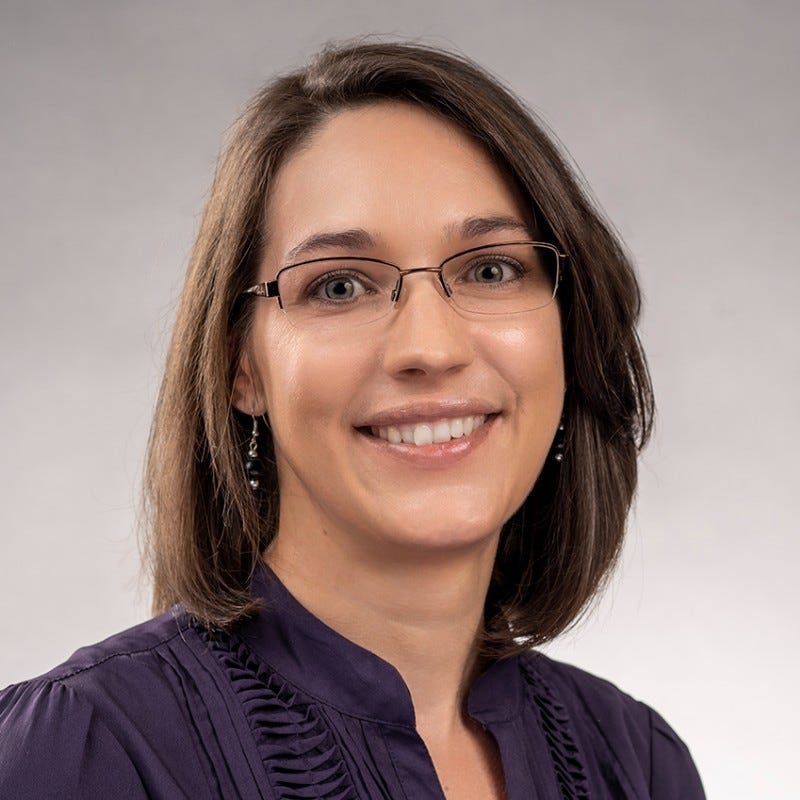
As a part of my series about “How To Develop Mindfulness And Serenity During Stressful Or Uncertain Times”, I had the pleasure of interviewing Shelby Milhoan, LCPC.

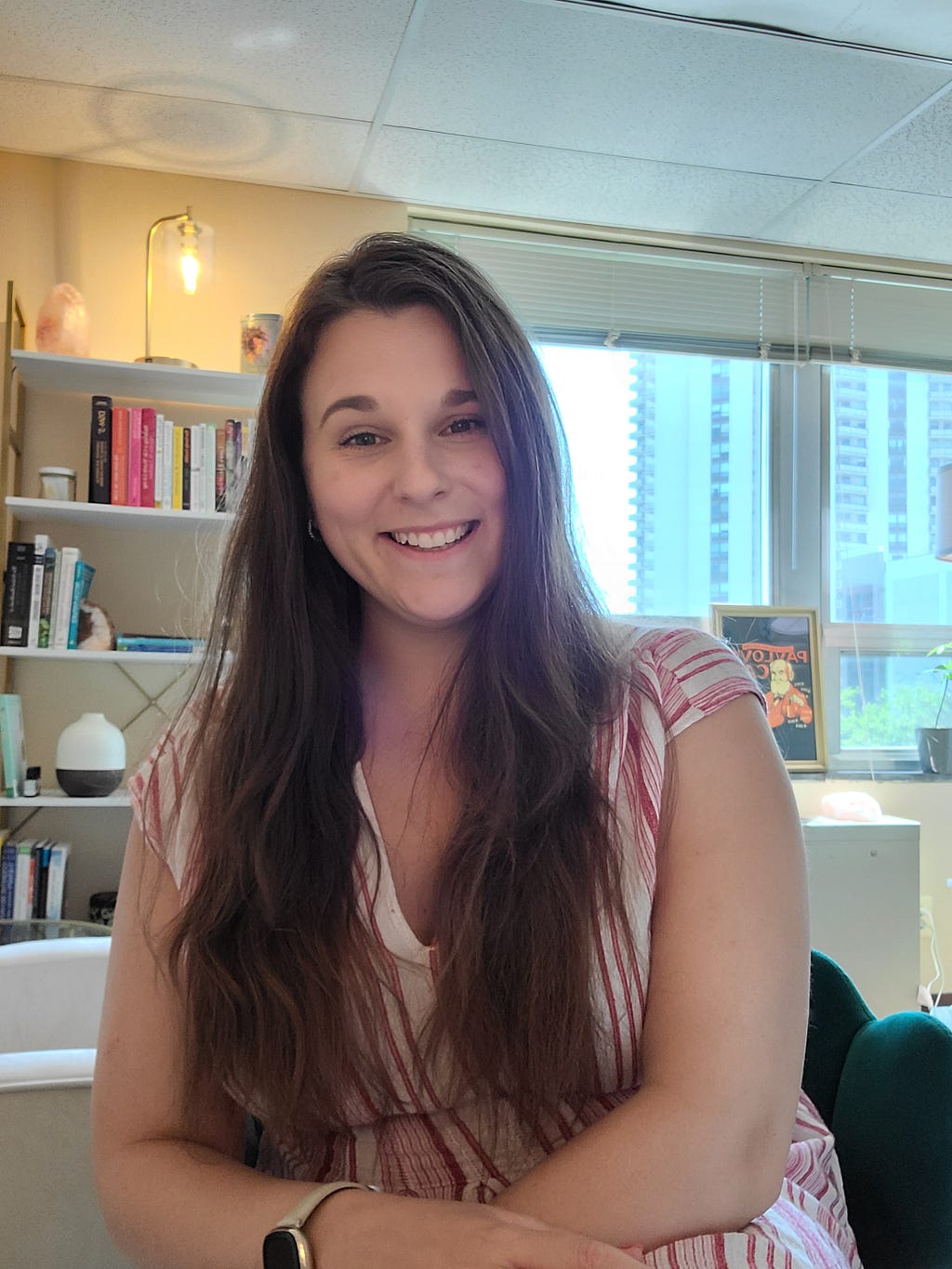
Shelby Milhoan is a licensed clinical professional counselor providing psychotherapy in Towson, Maryland. She specializes in helping burnt out individuals stop prioritizing others’ needs above their own and become badasses in all areas of their lives. She also loves working with individuals who don’t fit into “traditional” roles within society. To find out more about her practice go to www.growithshelby.com

Thank you so much for doing this with us! Our readers would love to “get to know you” a bit better. Can you share with us the backstory about what brought you to your specific career path?

I grew up in the upper Ohio River Valley in a town of about 600 people. Growing up in a small, rural area had an impact on how I saw the world, though I knew from a young age that I thought and felt a bit differently than others. Around age 12 my parents finally divorced, and my father thought it would be a good idea for myself and my two younger siblings to see a therapist because he was worried about our behavior. I remember going into the first session, looking at the therapist, and saying “F*** you. I’m not talking to you” and she didn’t budge. She wasn’t shaken by this young teen yelling profanities in her office, and I was kind of taken aback. I was so used to seeing adults yelling and being horrible to each other, that I guess I expected her to react with anger. I didn’t talk during the first session, but I kept going back. I quickly realized that she was the very first person who I could trust with my emotional experiences and my thoughts. I knew within the first year of seeing her that I wanted to be that person for others, no matter how hard I had to work to be that person. I worked hard during high school to do everything I needed to do to get into college. That included extracurriculars on top of working at a restaurant. Even though I wanted to study psychology, it wasn’t easy for me to do that. In college, I first studied music and teaching. I was a vocalist, and I was told I needed to study something that would lead to a definite job in which I could make money, which was teaching. I gained some independence and clarity in college and allowed myself, with help from my therapist, to push for something I wanted. I stopped listening to those voices who thought they knew what was best for me and thought I was incapable. I switched tracks to psychology, and I loved it. I don’t think there was a psych class I didn’t like. My professors were great and so encouraging, and I really began to believe that I could go to graduate school. Though, like with my undergraduate degree, others didn’t think it was a good idea for me to attend graduate school. Can you believe that? People in your life telling you, “Do you have to go to graduate school? Isn’t that a waste money? Why can’t you just find a job and get married here in the valley?” “That’s unrealistic.” Once again, I decided to push back against those voices and what others wanted for me and set out to build my own life. I moved to Maryland, attended grad school while working, ended relationships with some and set boundaries with others who doubted me and caused me unnecessary pain, and graduated with a 3.9 GPA from Loyola University Maryland. I am one of only a few people in my family with a degree, let alone an advanced degree.

Can you share the most interesting story that happened to you since you started your career?

I think one of the most interesting stories that has happened to me since starting my career was the story of how I had to get a second job after I graduated from graduate school. I realized that even though I had this advanced degree and could get a job in my field that I could barely make ends meet on that salary alone, and I didn’t have any help. So, in addition to working at my full-time salary job, I worked part time as a cocktail waitress at a club. I was lucky to be in my 20’s at the time and had the energy to do it all. Looking back, I have no idea how I would work somedays until 3 am and then get up at 6 to work in the field. It was madness. I do believe that through those experiences I became a better therapist, especially to individuals who have been counted out or are burnt out from having to grind in our society.

What advice would you give to other leaders about how to create a fantastic work culture?

DO NOT assume that just because you or some others within your company can do certain tasks, projects, or work with certain people that others in your company can do the same. As a clinician in the mental health field working for a company or clinic, you will often come across jobs that require you meet a certain amount of “billable hours” per week. Therapists are in a unique role in which we must hold others’ emotions and traumas and provide a safe environment for insight and growth. Some clinicians can see 35 clients per week, and some can see 10 clients per week before their physical and mental health begin to decline. Add on top of this the paperwork, meetings, and the constant trainings we must attend, we can burn out quickly. To create a fantastic work culture, you must learn your employees’ strengths and find a way to utilize them within your company. Stop attempting to hold everyone to a certain standard that is unattainable for some without allowing space to recover (i.e., mental health days, maternity and paternity leave, paid time off and insurance). I guess in other words, treat your employees like human beings and not like robots that produce for your company.

Is there a particular book that made a significant impact on you? Can you share a story or explain why it resonated with you so much?

Building a Life Worth Living by Marsha Linehan. Her memoir takes you through her life, from her struggle with her attempts at suicide at a young age to the vow she made to herself that she would help individuals in a similar situation to hers. She speaks about the struggles she faced into adulthood while creating the modality of therapy that is used to treat individuals who were at one time deemed “untreatable.” Overall, this memoir gives a lot of hope to those who are struggling with thoughts of death and constant invalidation from their environments.

This might be intuitive to you, but it will be instructive to spell this out. Can you share with our readers a few of the physical, mental, and emotional benefits of becoming mindful?

The state of being mindful is simply a state of focused attention on the now. Mindfulness is paying attention to the moment in a particular way, whether that be paying attention to a sensation that is welling up inside of you as you are speaking about a loved one or focusing your attention on a cat as it scurries by while you are on a walk. Being mindful and utilizing mindfulness isn’t about sitting on a cushion for 20 minutes listening to an audio on YouTube (though that is a form of mindfulness and can be helpful!) Mindfulness is about bringing awareness to what is happening in the now.

We can be mindful of the now as it’s happening inside of us or outside of us. Being mindful of what is happening inside of us may look like observing and focusing on your breath as it comes through your nose, travels down your throat into your chest and stomach, and as it travels back through your nose on an out breath. That is mindfulness of the physical sensations of the breath. We can be mindful of our emotion and thoughts as well, and that can be a bit trickier, especially for those who have a history of trauma or mental illness. For example, I may be walking through Target and notice my ex-boyfriend walking in the aisle adjacent to me. I can stop an observe that a feeling is coming up, label it as excitement or fear or dread or disgust, and that is technically mindfulness of our emotional state. Being mindful of our reality outside of us may look like me focusing on the sensation of my fingers hitting the keyboard as I am typing this. It may look like focusing on the smell of the coffee I just brewed or paying attention to and focusing on how my cat looks as she sleeps in my windowsill. These instances described may only last seconds to minutes, however, it is still considered being mindful of the present moment.

The physical, mental, and emotional benefits to becoming mindful are astounding, though the journey to becoming a mindful person and reaping those rewards can be difficult. To begin to see the benefits of mindfulness, you must practice daily. You can think of it as strengthening your ‘mindfulness muscle.’ Like with strength training or learning an instrument, practicing daily is the only way to reap the benefits. Now, this doesn’t mean you have to sit and meditate to the sound of the universe for an hour, but it does mean that you must set aside even just 3 minutes a day to focus on the smell of coffee or the feel of a blanket or the flame of a candle or your breath coming in and going out of your body. If you can do 1–3 minutes daily, that is still mindfulness. If your mind wanders during that time and you bring your mind back to focus on whatever you were focusing on, that is still mindfulness!

A consistent mindfulness practice has been shown to improve resting heart rate and blood pressure, decrease mood swings, increase focus, and even better relationships with others!

Ok. Here is the main question of our discussion. The past 5 years have been filled with upheaval and political uncertainty. Many people have become anxious from the dramatic jolts of the news cycle. From your experience or research, what are five steps that each of us can take to develop mindfulness during such uncertain times? Can you please share a story or example for each.

Step 1 is finding what works for you. If you know you can only do 1 minute of mindfulness of your breath, do it. If you don’t know what works for you, try different types of mindfulness activities, such as mindfulness of sipping water, watching the wind blow the curtain, a visualization exercise found on the internet, or washing the dishes! That can look like focusing on the warmth of the water, the smell of the soap, or the movement of your hands. You can also practice with guided exercises found on apps such as HeadSpace or on YouTube.

Step 2 is setting up a time to practice mindfulness. Like scheduling time to hit the gym or practice learning a language, putting time in your schedule to practice mindfulness can be important. That can mean saying to yourself that you are going to practice mindfulness for 3 minutes while driving to work while focusing on the sole activity of driving without music or talking, or you are going to practice 5 minutes of mindfulness right before you go to sleep at night while lying in bed.

Step 3 is actually doing the mindfulness we say we are going to do! This can be the most difficult part. Setting a reminder in your phone or a sticky note on your desk to help remind you to practice is a great idea.

Step 4 is doing it again. And again. And again. Make it a goal for yourself to do mindfulness for 1 minute for 4 days. When you have met that goal, try 2 minutes of mindfulness for 4 more days, then 3 minutes of mindfulness for 7 days, and so on. If you want to actually gain the benefits from practicing mindfulness, you will have to practice daily. It’s like eating well for your health. You can’t just eat those greens for 4 days and say, “Well, I’m healthy now!”

Step 5 is getting back on the horse when you fall off. All of us fall into and then out of practicing mindfulness from time to time. Maybe you went on a vacation, or your schedule has been packed and adding that 5 minutes of mindfulness to your schedule went out the window. That is okay! It is easier to get back into mindfulness if you don’t judge yourself (or reframe that judgement) and jump back in. Maybe you will have to begin at practicing mindfulness for only 2 minutes a day. 1 minute is more than 0 minutes. Remember that mindfulness is really just paying attention to the moment in a particular way, so if you can do this daily, you are cultivating a mindfulness practice.

From your experience or research, what are five steps that each of us can take to effectively offer support to those around us who are feeling anxious? Can you explain?

Step 1 is clarification. Perhaps a friend or family member may look anxious to you, though they are experiencing something different. Check-in with that person. Ask, “Hey, you seem anxious, is that right?” When we misread cues and go off our own assumptions, it can be invalidating to that person.

Step 2 is acknowledging and validating. If your assumption is correct, ask this person, “Is this something you want to speak about right now?” Sometimes we dive into trying to comfort the person or problem solve. They may need time and space to process themselves before receiving help and support and that is okay!

Step 3 is asking if they want someone to listen or someone to help problem solve. As stated above, we can go into problem-solving mode which can make a person even more overwhelmed. We are simply just asking what they need right now.

Step 4 is listening and validating. Active listening includes body language like eye contact, facing toward the person you are speaking with, not being involved in other things in the moment (phone, TV, reading), and nodding and having an open, neutral stance. Validation, specifically of the emotion, sounds something like this: “Wow, that sounds tough.” Or “This sounds like something that is painful and confusing.” Try not to turn what they are experiencing into a moment in which you speak about yourself (“Well when I was anxious, I felt terrible, and this is what I did, and I felt better).

Step 5 is helping with problem solving and skills (if wanted) as well as regulating your own emotion. Have you ever been in a situation in which a friend or spouse or child is so upset that it makes you upset too? This is what we are talking about managing. When you act on your own emotions that come up as a result of this person’s emotional distress, it does not help. Take a step back if needed, utilize breathing yourself, and remind yourself that you are safe where you are, and your focus is helping this person. That is mindfulness. If this person asks for problem solving or help, try breathing with the person (breath in for 3, breath out for 6), grab this person an ice pack from the freezer to put on their neck or face, or even hug (ask first). A 7 second hug can actually regulate the nervous system.
What are the best resources you would suggest for someone to learn how to be more mindful and serene in their everyday life?

Mindful.org has some great mindfulness exercises that individuals can enjoy. Headspace, Calm, and Insight Timer are all good apps that you can download to listen to mindfulness audio or videos. You can also go to dialecticalbehavioralthearpy.com to learn the ins and outs of mindfulness through a DBT lens. In addition to your own work, you can look for mindfulness centers or mindfulness groups near you that can assist in your mindfulness journey. Some great mindfulness books include Mindfulness for Beginners by Jon Kabat-Zinn and The Miracle of Mindfulness by Thich Nhat Hanh.

Can you please give us your favorite “Life Lesson Quote”? Do you have a story about how that was relevant in your life?

“It is what it is” It can sound cliché to some, though everything that happens in a moment is everything that happens in a moment. We can look back on our life and place blame on others for why things turned out the way they did for us, and that is valid. I have been there, and I know at one point or another we all have. Though if we want to move forward and not get stuck in our past, replaying what has happened to us again and again, we must acknowledge that it is what it is; that it has happened in the past and now in the present we can make small changes in the moment to change our trajectory. It isn’t easy, especially for individuals with trauma and other mental illness, and it is possible.

You are a person of great influence. If you could start a movement that would bring the most amount of good to the most amount of people, what would that be? You never know what your idea can trigger. 🙂

I would start a movement to make healthcare and housing affordable for everyone in the US. Healthcare, food, water, and shelter are all BASIC necessities for human life to survive and thrive. We constantly hear stories about how people are being charged hundreds of dollars for medical care even though they have insurance, or how it costs over 10 dollars for a pound of chicken, or how people can’t even drink the water out of their own facets because it is contaminated, and they have to buy bottles! We live in the “greatest country in the world” and we can’t even afford to house homeless children and veterans. I would start with healthcare, challenging the bureaucracy in the billon dollar pharma and healthcare industries, because that is my industry. I think it takes a village to challenge the standards, so I couldn’t do it alone. I do have hope for millennials and gen Z coming into office. We are sick and tired of seeing and being a part of the struggle, and you can only push millions of people so far.

What is the best way our readers can follow you online?

You can follow me on LinkedIn at www.linkedin.com/in/growwithshelby and my website at www.growwithshelby.com Blogging and social media coming soon, so please stay tuned!

Thank you for these fantastic insights. We wish you only continued success in your great work!


Shelby Milhoan On How To Develop Mindfulness During Stressful Or Uncertain Times was originally published in Authority Magazine on Medium, where people are continuing the conversation by highlighting and responding to this story.

Female Founders: Mallory Gott of G+A On The Five Things You Need To Thrive and Succeed as a Woman…

Female Founders: Mallory Gott of G+A On The Five Things You Need To Thrive and Succeed as a Woman Founder

An Interview With Candice Georgiadis

Take a dang vacation. In my first year of entrepreneurship, I had to physically write on my to-do list, “Do not work today.” I was such a nutter butter that my brain could only acquiesce to time off if it was a task. At the time, I told myself that unless I didn’t work on a given day, I failed that day. It was extreme for sure, but I needed (and still need) time to live all aspects of life, not just work. I’ve spent a lot of time relinquishing the martyr complex I thought was essential to success. Next up? Leaving my computer at home on an upcoming vacation in 2 months!

As a part of our series about “Why We Need More Women Founders”, I had the pleasure of interviewing Mallory Gott, Founder of G+A | An Experiential Design Firm.

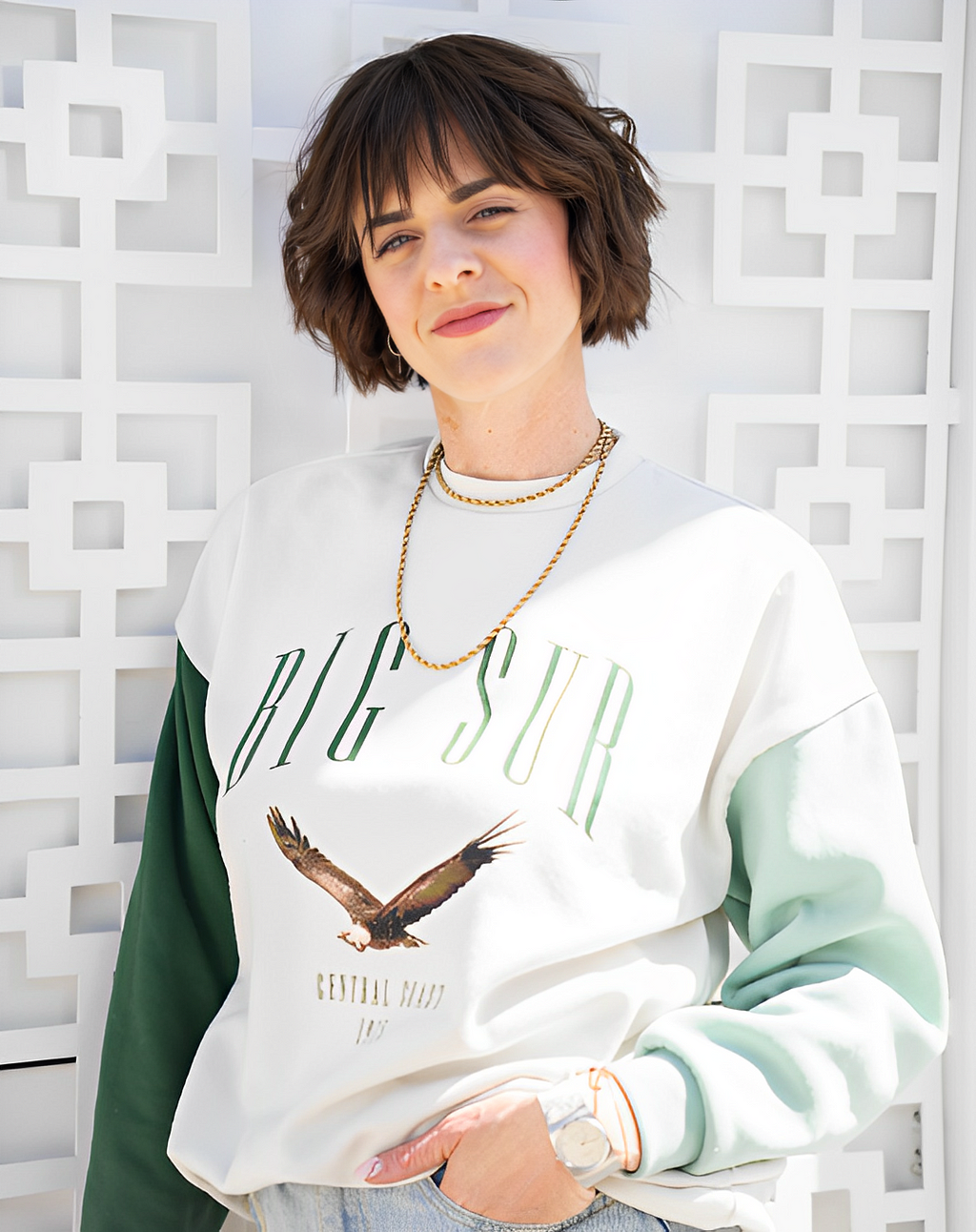
Mal Gott is the owner and creative director of Las Vegas-based G+A | An Experiential Design Firm, creators of incredible event and brand experiences for bar, restaurant, and boutique hospitality clients since 2019. Since her firm’s inception, Mal’s business has grown over 100% per year annually, and her team has drawn on decades of event, marketing, branding, and space design expertise to define and design dream experiences for clients such as the Hofbrauhäus Las Vegas and Velveteen Rabbit. After nearly two decades conceptualizing global event and brand experiences for some of the most discerning audiences in Western Europe, North America, and Asia, Mal began creating and rejuvenating brand experiences for her clients, resurrecting events deemed unsavable, and breathing new life into spaces, places, and concepts that had long been discarded as past their sell-by date. Mal’s most recent accomplishment is for her and her partner’s win in the Great Las Vegas Coffee Shop Giveaway organized on by Dapper Companies. Their concept, Winnie & Ethel’s Downtown Diner won the million-dollar grand prize and will open in early 2023.

Thank you so much for doing this with us! Before we dig in, our readers would like to get to know you a bit more. Can you tell us a bit about your “backstory”? What led you to this particular career path?

I grew up in suburban Chicago, the oldest of four and daughter of two public school educators. At the ripe age of 8, I asked my mom to buy me a beret and told her I knew I needed it to go to Paris. Fast forward 10 years when I took my first trip overseas to — you guessed it, Paris! Fast forward a few more and I was working first abroad and then in the US as part of event design teams creating and producing experiences around the globe for brands and their consumers. In 2019, I launched G+A | An Experiential Design Firm where we focus on design brand experiences for independent bar and restaurant, luxury boutique hotel, and mixed-use development clients all centered around how they want experiences to feel for their customers and themselves.

Can you share the most interesting story that happened to you since you began leading your company?

Well, there’s been a global pandemic, that was certainly an unexpected twist! But beyond that, the day that I pitched my first 6-figure project to an international restaurant brand head was particularly magical because I happened to be on vacation at a friend’s home overseas. I was talking to the head of this globally recognized brand while her 2-year-old was napping in the next room, and when I closed the deal via video call (this was pre-pandemic by the way), we celebrated with hamburgers and milkshakes. It was the most surreal experience, and I wouldn’t have changed a single moment of it!

None of us are able to achieve success without some help along the way. Is there a particular person who you are grateful towards who helped get you to where you are? Can you share a story about that?

Not surprisingly, there are so many people to thank, but one that I always brag on is a dear friend of mine who did me the best service I never would have asked for when she lovingly told me the truth in ways that helped kick my butt into gear. As it turns out, I didn’t leap from full-time employment with a golden parachute tied to my back. I was unexpectedly let go from my job 10 days before Christmas. As in, I returned from Europe on a Monday evening flight, got up Tuesday and worked for 3 hours, logged into what I thought was my annual performance review conversation where I was anticipating a raise, and logged off 7 minutes later unemployed. As you might guess, the blues found me in pretty short order and after about a month I was talking with this friend bemoaning my perceived lack of prospects when she looked me square in the eyes and said, “Mal, you’re 35, single, unemployed, and have no mortgage, pets or family to provide for. There is no better time to launch your own business than right now.” I was stunned but not the least bit offended because I’d never considered those circumstances as an advantage. Once she helped to open my eyes, my first paying client showed up less than 30 days later and the business was officially born.

Ok, thank you for that. Let’s now jump to the primary focus of our interview. According to this EY report, only about 20 percent of funded companies have women founders. This reflects great historical progress, but it also shows that more work still has to be done to empower women to create companies. In your opinion and experience what is currently holding back women from founding companies?

Ourselves, at least that was the case for me. I believed I need investors, an in-depth business plan, extensive branding, marketing, and the like for a very long time, which simply wasn’t (and isn’t) true. A product is nothing more than a good or service that someone pays another someone for, and a company is the legal shell that houses that product. By that definition, anyone can sell a product and create a company in very little time at all. Instead, I incorrectly believed that a product had to be “the” product that everyone and their mother was clamoring after, and a company had to look like the stuff of business school textbooks to be effective. Neither of which is true. As soon as I examined what I knew how to do based solely on my individual experience, education, and interests (and that last part is key), and began offering to do those things for others, I had developed a rudimentary product. As soon as someone purchased my services and I opened an LLC online using free templates from reputable websites and friends who’d done the same before me, I founded a company. It’s as simple as that.

Can you help articulate a few things that can be done as individuals, as a society, or by the government, to help overcome those obstacles?

Two of the best tactics I’ve used to date are both simple, cost nothing, and allow me to be the solution to the problem, overcoming my own fear of inadequacy. First, instead of selling to prospects, I began by calling friends or colleagues with a genuine interest in learning what they were doing and sharing what I was doing. Instead of asking whether they would be interested in my service, I asked whether they knew of anyone who might be, and then I followed up with those people and the people I originally called. I got to catch up with friends; there was no pressure on them or me to buy or close a sale; and it was an easy step I felt immediately comfortable with. Second, I focused on the easiest thing I could do to make any progress on days when there was no well of motivation to draw from. The only sure ways to fail are to give up or never start. Even miniscule progress on tough days was progress and that made (and still makes) a world of difference in staying the course.

This might be intuitive to you as a woman founder but I think it will be helpful to spell this out. Can you share a few reasons why more women should become founders?

Because why shouldn’t they! There’s simply no reason why a woman shouldn’t found a business. Think you don’t have skills? Wrong! Think you don’t have time? Tell even one friend or close confidant what you’re endeavoring to do and ask for ideas about how to create more time. Watch what they come up with! Think you need money, a business degree, the next TikTok? No, no, and on everything that’s holy, definitely no! Start where you are. A free Gmail account, online templates for most basic business documents and your local library or SBA office can set you on your way. As for TikTok, I’m a believer that the world needs more of what women have to offer based on our perceptions and experience with the communities around us — not only more brain-zapping, dance-mania apps.

What are the “myths” that you would like to dispel about being a founder? Can you explain what you mean?

It’s lonely at the top. Sure, there are things others may not understand, but everyone is familiar with stress, uncertainty, and trepidation. Don’t fall into the trap of chronic uniqueness. Seek out peers, of course, but take advantage of the wisdom of good people who surround you right now. Their experiences can be every bit as helpful and valuable. Plus, they want to see you succeed which means they are invested in helping you in any way they are able to — often with no strings attached.

It’s a grind and you have to hustle if you want to make it work. Yes, founding and nurturing a business requires a level of discipline and persistence, but the idea that it also requires lashing yourself to a wheel of entrepreneurial death, working 16 hours a day 7 days awake, or subsisting on energy drinks and coffee are just that — myths. If you love working long hours, do it. If you genuinely enjoy getting wired on caffeine and burning the midnight oil, good for you. If you’re content working 30 hours a week (or even 5 if you’re still at a full-time job) making demonstrable progress while also having a life, that doesn’t mean that you aren’t or will not be successful as you grow your business.

Is everyone cut out to be a founder? In your opinion, which specific traits increase the likelihood that a person will be a successful founder and what type of person should perhaps seek a “regular job” as an employee? Can you explain what you mean?

I think a better question is why we as a community venerate the entrepreneur and measure ourselves against the yardstick of “what’s your side hustle or your self-made story?” Anyone could become a professional clown or a librarian or any number of things. If they chose not to, we (society I mean) don’t assess whether they had what it took to go into that profession but chickened out, yet somehow with entrepreneurship we do. If I tried to found a company in an area I abhorred, I would fail for sure. Similarly, if I tried to become a librarian, clown or any number of other job roles, I would likely also fail. I have nothing against clowns or librarians, those interest just aren’t a part of the fabric that makes up my interests in life. If you have an interest in something and the idea of trying your hand at it as an owner or founder piques your curiosity, go for it. If not, don’t. Be open to either path or some blend of both because there’s nothing inherently better or worse about working for others or yourself — even the most well-known founders (in the conventional sense) answer to shareholders, a board of directors, employees or customers. At the end of the day, we all work for someone, right!?

Ok super. Here is the main question of our interview. What are your “5 Things I Wish Someone Told Me Before I Started” and why? (Please share a story or example for each.)

  1. It can be fun. You don’t, and shouldn’t, have to struggle through every minute of every day to start and grow a successful business. Once I began to realize I could have fun at the earliest stages just by choosing to do so, things got a lot easier overall. Sometimes I still forget that, so thanks for the reminder!
  2. It’s going to change — a lot. I had one vision for my business when I began about four years ago. It’s evolved, and I imagine four years from now, it will look different than it does today, both in composition and focus. That’s alright, and it’s natural, so don’t beat yourself up when it happens!
  3. You don’t get ready until you’re done. Do the thing you’re confident you’re not ready for because of inexperience. You’ll be so prepared for the challenge after you succeed that you won’t remember why you were just sure you were going to fail.
  4. Get grocery delivery and a subscription to Instacart, and make friends with your dry cleaner and housekeeper. Stop telling yourself you can’t afford to give up tasks (literally or figuratively). Don’t overextend yourself, but it’s okay to pay $60/year to save yourself hours at the store or $100 a month, so your day off isn’t consumed with laundry or house cleaning (unless you love both). Rewrite the story about the value of investing in yourself, and don’t wait for a hundred commas in your bank account to do it.
  5. Take a dang vacation. In my first year of entrepreneurship, I had to physically write on my to-do list, “Do not work today.” I was such a nutter butter that my brain could only acquiesce to time off if it was a task. At the time, I told myself that unless I didn’t work on a given day, I failed that day. It was extreme for sure, but I needed (and still need) time to live all aspects of life, not just work. I’ve spent a lot of time relinquishing the martyr complex I thought was essential to success. Next up? Leaving my computer at home on an upcoming vacation in 2 months!

How have you used your success to make the world a better place?

I employ some amazing people and I do my best to make their experience positive and uplifting whenever I can. I strive to do the same for the clients and vendors we work with too. Why not be the people others are excited to speak — who’s name on a calendar invitation is a joy not a drag? At G+A, we also have both Client and Team WOW budget line items and they have funds budgeted to them just like utilities or office supplies. If I’m not committed to wowing the people who have entrusted me to help their businesses grow or who share their time and talent with my business as team members, what does that say about my priorities? “Show me your checkbook,” as one friend of mine says, “and I’ll show you what you care about.”

You are a person of great influence. If you could inspire a movement that would bring the most amount of good for the greatest number of people, what would that be? You never know what your idea can trigger.

I read an article in either Architectural Digest or Vogue within the past year about a once-great, now defunct mid-century luxury hotel in central Africa that had become a de facto refuge for people in and around that community. It would be my great joy to take properties like those, restore and adaptively reuse them, and employ people in those communities to run the re-developed spaces. I love the idea of infusing beauty into once great places that have fallen on hard times, imbuing them with unique attribute specific to their locations around the world and working with the communities rather than displacing them to create a virtuous rather than vicious cycle of renewal.

We are very blessed that some very prominent names in Business, VC funding, Sports, and Entertainment read this column. Is there a person in the world, or in the US with whom you would love to have a private breakfast or lunch with, and why? He or she might just see this if we tag them.

I would like to sit down over a nice cup of coffee and dessert (specific, yes, but I love sweets) with Elaine Wynn to discuss how to fund and launch the program above. Elaine, I’ve got a slew of good places here and in New York whenever you’re free!

This was really meaningful! Thank you so much for your time.


Female Founders: Mallory Gott of G+A On The Five Things You Need To Thrive and Succeed as a Woman… was originally published in Authority Magazine on Medium, where people are continuing the conversation by highlighting and responding to this story.
Female Disruptors: Virginia Frischkorn of Partytrick On The Three Things You Need To Shake Up Your…

Female Disruptors: Virginia Frischkorn of Partytrick On The Three Things You Need To Shake Up Your Industry

An Interview With Candice Georgiadis

Take care of yourself first. As a woman and mother, I’ve struggled to constantly remind myself that if I am not taking care of myself (physically, emotionally, spiritually, and intellectually), then I cannot take care of others. If I don’t take care of myself, I cannot lead and inspire others the way I would like to and cannot perform at the caliber I expect of myself.

As a part of our series about women who are shaking things up in their industry, I had the pleasure of interviewing Virginia Frischkorn.

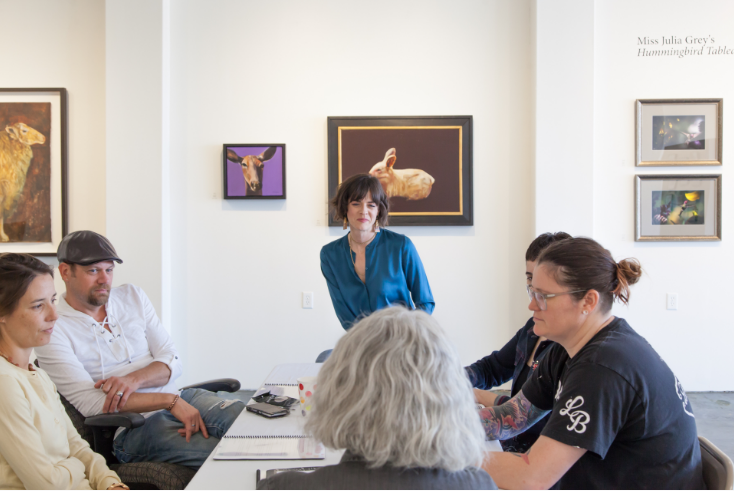
Virginia Trafton Frischkorn is the founder and CEO of Partytrick, a tech platform disrupting the event industry. She is also the founder of luxury event production company Bluebird Productions, Something Blue, and the Aspen Picnic Company. Throughout her 14-year career in the event industry she has gained prestige among her peers as one of the top event planners in the country. She has been named best wedding planner by Vogue, Brides, & Over The Moon, and was also recognized as one of BizBash’s Must-Know Event Pros.

Thank you so much for doing this with us! Before we dig in, our readers would like to get to know you a bit more. Can you tell us a bit about your “backstory”? What led you to this particular career path?

I grew up in a family that loved to throw a fabulous party. Some of my earliest memories were hiding at the top of the stairs in the house I grew up in and watching the festivities pan out in front of me. Other times, I’d find myself hiding behind my mother’s skirts at the party itself while my little sister, the theatrical one, amused our guests. One might say that connecting others and curating memorable experiences is in my blood — it’s certainly my passion.

In college, I started my involvement with a larger variety of organizations and assisted planning gatherings of all types. Following a short stint as a ski bum/instructor in New Zealand and Aspen, I settled into a job at The Little Nell in Aspen (in 2008) as a catering and events manager. It was a crash course in luxury event sales and production during a tumultuous time with very high-profile clients. I learned more about events, human psychology, and large amounts of money spent at events during that time.

In 2010, I founded Bluebird Productions, my event planning, design, and production company. Over the last twelve years, I’ve planned countless weddings, corporate events, social events, brand activations, and more for some of the most influential and prominent people in America and their friends and clients. In the years that followed, I launched and ran two other event-related companies (Something Blue by Bluebird and Aspen Picnic Company) focusing on more “normal” weddings and luxury picnics. While it has been an honor and a privilege to have had this experience, I am currently being drawn down a new path that will allow me to impact a larger population.

Partytrick is my latest venture and has the power to bring a luxury service to the masses in an affordable and accessible way, while also remaining aspirational and well-curated. Giving the gift of empowering others to have memorable experiences and foster connections with others is beyond thrilling.

Can you tell our readers what it is about the work you’re doing that’s disruptive?

I recall a section of the book “Zero To One,” where the author describes an entrepreneur vs business person using the analogy of an explorer vs traveler. Both require resourcefulness, hustle, and gumption. However, when you go to explore, you set out for the unknown. To make change. To make impact. You’re charting uncharted territory. That is what I believe we’re doing with Partytrick and why I believe it to be disruptive. There is nothing like Partytrick currently on the market, and I see this style of planning becoming a major part of the event industry in the years to come.

The events industry, and specifically event planning, is one that relies heavily upon the human touch. Event planning services are discretionary and are often seen as a luxury service. We’re rewriting the script as we launch Partytrick. We are able to bring the skills I’ve perfected after years in the industry to the masses by leveraging technology (while not forgoing fabulous design). This has not been done before. While some businesses may solve a piece of the puzzle (beautiful tabletop rentals for instance), finding a way to use technology to bring curated, semi-customizable and customizable event planning services to the masses in a holistic fashion is a new concept.

In short, we are here to remove the limiting belief that you can’t host an amazing party. We’re providing peace of mind and empowering our users in a way that has never been done.

Can you share a story about the funniest mistake you made when you were first starting? Can you tell us what lesson you learned from that?

Well, isn’t this a challenging question?! When I first started my business with Bluebird Productions I was 24 and made mistake after mistake. While I struggle to see any of them as “funny” per se, I learned more through every mistake and hiccup than I did from our successes or moments of luck.

As I’ve leapt into the tech industry, I’ve struggled and made more mistakes than could have been imagined as I use my vocabulary and knowledge in hospitality and events vs tech. To me an “event” is a party or gathering, right? Well, my tech team doesn’t see it this way. Who knew a 5 letter word could cause so much confusion? My “product” is about the physical products we recommend, but, again, my counterparts don’t see it that way. Learning their language has resulted in more laughs than I could imagine.

We all need a little help along the journey. Who has been some of your mentors? Can you share a story about how they made an impact?

My father was and is my mentor, personally and professionally. He taught me to be curious, to know that I am unstoppable and have no limit. He bred the belief in me that if I want something badly enough and can be resourceful enough that I am capable of anything I set my mind to. He encouraged me to dream bigger. Despite all those grandiose statements, he also poked holes in all of my lofty dreams to help me see my blind spots and emboldened me to learn from the mistakes he had made.

As a child, my relationship with my father was rather minimal. My mother and “other mother” figures raised me, my brother, and my sister. My mother inspired us to explore our passions and if she wasn’t well equipped to support us, she’d find the right coach/teacher/support for that particular pursuit. My father provided for our family and was relatively absent focusing on his own business endeavors. When my father “tapped’ in after a large professional setback, he took the opportunity to impart his wisdom to coach and guide us. The time and lessons learned guide me daily. He passed in the summer of 2020. There isn’t a day that passes that I don’t call upon the lessons he taught me. So many of my professional endeavors and personal relationships are guided by his principles and values.

In today’s parlance, being disruptive is usually a positive adjective. But is disrupting always good? When do we say the converse, that a system or structure has ‘withstood the test of time’? Can you articulate to our readers when disrupting an industry is positive, and when disrupting an industry is ‘not so positive’? Can you share some examples of what you mean?

I love the saying, if it isn’t broken, don’t fix it…I love it because I wholeheartedly disagree. There is almost always room for improvement and betterment of everything, if even just a shift in one’s mindset towards “whatever doesn’t need to be fixed”. Being dismissive or meddling for the sake of meddling isn’t productive or helpful…but, improving and enhancing something from the place and intention of curiosity and seeing what someone may not have seen is, in my mind, innovation in its truest sense.

Our efforts to disrupt the event and hosting industry by empowering all people to gather and celebrate life’s little moments can only be seen as positive. By providing tools to remove the limiting belief that “i just can’t throw a great gathering,” “I don’t know where to begin,” and to remove the various stressors related to hosting, we offer peace of mind and connection to the masses.

Years ago, the widespread culture of entertaining and art of hosting a gathering was disrupted as special events that are wildly unattainable by the masses became the norm. This disruption helped businesses in the special event industry. Ultimately though, the rise of these excessive and over-the-top gatherings sparked a competitiveness, lack of inclusivity, and caused many to stop gathering with others in casual setting because their events “weren’t good enough” or “ didn’t rival what they saw on social media.” And now, we have a population of people more disconnected than ever. While it’s “just a party,” the reality is that connection with others is a basic need of humans and we need to bring gatherings back.

Can you share 3 of the best words of advice you’ve gotten along your journey? Please give a story or example for each.

  1. Dream Bigger. My dear friend Mark and I were talking about a business idea I had several years ago. He shared that I wasn’t dreaming big enough and helped me reset the bar I’d set for myself even higher. Dreaming and dreaming big are core to who I am now.
  2. Take care of yourself first. As a woman and mother, I’ve struggled to constantly remind myself that if I am not taking care of myself (physically, emotionally, spiritually, and intellectually), then I cannot take care of others. If I don’t take care of myself, I cannot lead and inspire others the way I would like to and cannot perform at the caliber I expect of myself.
  3. Start every day with movement and gratitude. I start nearly every day with a gratitude practice and then get my body in motion (running, pilates, and yoga are my go-to’s). While I hated it when I was told that logging onto my computer first thing or checking my phone/emails from bed wasn’t a good way to start the day, I started performing better personally and professionally when I incorporated these habits into my daily routine. When I slip back into bad habits, I see how these words of advice truly are so impactful as my ability to show up how I want to degrades.

We are sure you aren’t done. How are you going to shake things up next?

We’ll see 😉 As I mentioned, my father has been the key mentor in my life. As a female who spent her early career in a female-dominated industry — and let’s be honest, a kind of catty one at that — I didn’t have other mentors. I definitely didn’t have mentors in the event planning and production professions.

I want to figure out a way to support women in business, and particularly these highly creative fields, better, as that’s something I haven’t had. Although some “networks” exist, I have yet to find one that supports me in a way that fills me up. While I have no idea how this will take shape (yet), I have a sneaking suspicion that my next step will be to find a way to elevate how to better support women in creative businesses.

In your opinion, what are the biggest challenges faced by ‘women disruptors’ that aren’t typically faced by their male counterparts?

Have I mentioned the challenges of “single mom” status yet? Resourcefulness, creativity, and resilience are superpowers I’ve had to cultivate that have led me to disrupt and create. While I cannot say the same for all females, I’d be willing to bet that women disruptors vs male disruptors are juggling a lot more on their plate with regard to domestic responsibilities. Because of these demands, there is less personal time, less work time, and much less flexibility to prioritize a career above all else.

Do you have a book/podcast/talk that’s had a deep impact on your thinking? Can you share a story with us?

The Power of Moments by Chip Heath and Dan Heath. This book has impacted how I think about the significance and meaning of almost every interaction, personal and professional. The book explores why certain experiences can elevate and change our lives and how we can learn to create these moments.

You are a person of great influence. If you could inspire a movement that would bring the most amount of good to the most amount of people, what would that be? You never know what your idea can trigger. 🙂

If I could inspire a movement that would bring a lot of good to others I would find a way to encourage people to enjoy the moment so much that they put away their phones and are lost in the beauty of that moment. Brene Brown’s definition of play (def: anything that makes us lose track of time and self-consciousness, creating the clearing where ideas are born) strikes this at its core and I would love to inspire play for the sake of connection and mental wellbeing of all.

Can you please give us your favorite “Life Lesson Quote”? Can you share how that was relevant to you in your life?

While there are so many, gotta love a good motivational quote, this one comes to me every single day: Just Do It: the slogan or tagline of Nike. There is never a right time to do “it.” That “it” may be having a baby, starting a business, leaving a toxic relationship, taking the leap on a person or idea… But, if you wait and never get into motion, the desired result will never happen.

How can our readers follow you online?

www.virginiatrafton.com

www.instagram.com/virginiafrischkorn

www.linkedin.com/in/virginiatfrischkorn/

This was very inspiring. Thank you so much for joining us!


Female Disruptors: Virginia Frischkorn of Partytrick On The Three Things You Need To Shake Up Your… was originally published in Authority Magazine on Medium, where people are continuing the conversation by highlighting and responding to this story.

Wisdom From The Women Leading The Cannabis Industry, With Katie Enright of Lavinia

An Interview With Candice Georgiadis

Take responsibility for your own pleasure, your own life, your own passions and your own ideas. There are a million reasons why we can remain stagnant or remain safe and the narratives and conditioning around that is real. But ultimately, if you want something and you aren’t willing to give up when it gets hard, you can find a way there.

As a part of my series about strong women leaders in the cannabis industry, I had the pleasure of interviewing Katie Enright.

Never in her wildest dreams did Katie expect to create a community like Lavinia.

Katie’s original plan in life was kind of the opposite — specifically, she believed her calling in life was to be a nun and prepared for a life of study, reflection, and celibacy…

Until, like one does, Katie met a “Francois” during study abroad… and then priorities changed.

In stepping away from nunhood and into a life where sexuality is expected, Katie felt behind the eight ball relative to her peers in sexual experience. As a result, she began to research methods and products that would help her feel empowered, pleasured, and promote access to better, more powerful orgasms. Unfortunately, she never found the exact product she was looking for…

So she made it herself.

Through her research, Katie found that cannabis can enhance orgasms and create a better sexual experience. When correctly applied, cannabis dilates blood vessels, which increases blood flow — this makes achieving an orgasm easier and more intense while making multiple orgasms more accessible. Katie started making it simply for herself, then for friends who would ask for it, then friends of friends, and then friends of friends of friends…

From this community came Lavinia.

Lavinia’s mission is to enhance peoples sex lives through cannabis and to normalize two historically taboo subjects (sex and cannabis). Lavinia wants to empower people to live life to the climax!

Thank you so much for doing this with us! Can you tell us the “backstory” about what brought you to the cannabis industry?

My path to the cannabis industry has been completely unexpected and organic. A few years ago, I was training for my second marathon. My first marathon had left me injured, beat up and I didn’t want to go through that again, so I experimented with different products to help my recovery. Cannabis balms were the most effective by a long shot. I came back from a two-hour run sore and exhausted one day, used a cannabis balm on my muscles and within a matter of minutes all of my pain was gone. I was blown away. This led me to start researching and experimenting with cannabis balms. I made my own balms in my kitchen and in my research I read that cannabis can be used to enhance sexual experiences, so I made myself a balm that I used as lube. It was amazing, but I was using coconut oil as my base and coconut oil gave me yeast infections. I went on a mission after that to find lubes that didn’t have a coconut oil base and I couldn’t find one anywhere, so I started making my own silicone-based lubes in my kitchen.

At the time, I was working as a bartender and started giving my homemade balms away to friends with no intention of starting a company — I was just excited to share something that I created that had such a profound impact on my own sex life. One day, someone I had never met walked into my bar and asked if I was the girl who made the cannabis lube, they wanted to buy some, and I realized that this wasn’t just a personal product, this was a business. My progression into the industry felt so natural. I went into the industry as a consumer, making products that I wanted to see on the market and I found that others wanted those products as well. My needs matched the needs of others and once I realized that, my mission and motivation for starting a company snapped into place.

Can you share the most interesting story that happened to you since you began leading your company? Can you tell us what lesson you learned from that?

I’ve been surprised and amazed by the impact that this product has had on women. The amount of women who have told me that they were able to experience their first orgasm ever because of my products or that they finally feel empowered to talk about pleasure with their partner and take ownership over their own sexual experiences is incredible.

I created this company when I started meeting my own needs. Following the truth of my own needs connected me to other people’s needs as well. It’s a way for women to take control of their sexual pleasure and that came from first me taking control of my own sexual pleasure. I strongly believe that if you honor and follow your own needs and desires, you will not only liberate yourself but it will lead you to a place where you are able to liberate others as well. This company reinforces that truth every day.

Can you share a story about the funniest mistake you made when you were first starting? Can you tell us what lesson you learned from that?

If you own your own business, you know that every day, you make a million mistakes. It’s not about not making mistakes, it’s about learning from those mistakes quickly and continuing on. Some of the best and most ridiculous examples of some early mistakes were around honing in on the recipes for the lubes. Because I started this project in my kitchen, I was my own guinea pig. I tried every variation of lube and tried every recipe on my body.

I put peppermint in one batch of lube. When you first apply it, and especially if someone blows on it, the warming and tingling effect of the peppermint feels otherworldly. But the second there’s penetration of any kind, it burns horribly. It was awful! Another recipe worked well but tasted really bad. I used it while having sex with my partner and although the sensations were great, we both stopped midway through sex to brush our teeth to get the taste out of our mouths. Luckily, we’re past that point and the bulk of the science is behind us but man, did I put my body through the ringer in order to come up with the recipes we have today.

Do you have a funny story about how someone you knew reacted when they first heard you were getting into the cannabis industry?

It’s been a surprise to everyone, myself included! I haven’t had a straightforward path. I grew up religious, studied theology and was actually intending on becoming a nun until I had a come-to-Jesus moment, so to speak, and discovered that I actually wanted to become a mother, an experience I obviously wouldn’t be able to have if I were to have gone down that path. But it was in my investigation of that path that I ended up meeting people and having experiences that changed my mind. Fast forward several years and I moved from the Midwest to Los Angeles to, of course, become an actress. I bartended on the side and that’s where I ended up meeting my future business partners. So along my path, some people have known Religious Katie, some people have known Actress Katie, and now I guess I’m Cannabis Lube Katie! Those who have been in my life for a long time have watched me follow my path to some pretty unexpected places. Not everyone from my religious upbringing even knows what I’m doing now and I’m okay with that. You never know where your path is going to take you and in retrospect, for most of us, it’s always a surprise where we end up.

None of us are able to achieve success without some help along the way. Is there a particular person who you are grateful towards who helped get you to where you are? Can you share a story?

My business partners have been amazing. I partnered with people who were involved in startups long before I was so any time we come across a roadblock and I think it’s game over, they have the perspective to know that it’s no big deal and they have comfort navigating it.

Our Chief Science Officer in specific deserves a shoutout. His name is Dr. Paul Lessard. I call him the Walter White of Weed. We did a year and a half of R&D together and came up with 25 different iterations of recipes before finding the mix that we work with today. We also work with a board-certified dermatologist, Dr. Kristina Collins, who is incredible. She went to Harvard and is truly an expert in her field. She’s able to explain exactly what’s happening in the body when it comes in contact with cannabis products. I’m often humbled and amazed by how much talent we now have on our team.

Are you working on any new or exciting projects now? How do you think that will help people?

Yessss. The whole goal of our company is to enhance people’s sex lives through cannabis so we’re currently in R&D for a whole host of additional products that are aimed towards enhancing people’s sexual experience. But if I told you the details, I’d have to kill you. All I can say is, stay tuned…

Ok. Thank you for all that. Let’s now jump to the main core of our interview. Despite great progress that has been made we still have a lot more work to do to achieve gender parity in this industry. According to this report in Entrepreneur, less than 25 percent of cannabis businesses are run by women. In your opinion or experience, what 3 things can be done by a) individuals b) companies and/or c) society to support greater gender parity moving forward?

This is a huge question and one that can easily become very political and divisive. There are always going to be tremendous hurdles to climb to start your own business, especially in a field that’s so new, rapidly evolving and still relatively fringe. So here are my tips:

Don’t allow fear of failure to steer you away from your goals. Don’t let imposter syndrome hold you back. Be humble, be willing to learn, fail, listen, pivot and go into something with very little preparation and knowledge and don’t stop when it gets hard.

Ask for things. Use your network, however untraditional it may be. Success doesn’t have to look a certain way and you don’t need to be an expert to dive into a field and play with the big kids. Everyone’s just figuring it out. The network through which I distributed my first products and eventually found my business partners was the network surrounding the bar I tended. I made friends with regulars and built relationships with the people who were around me and those were the people who I eventually asked for mentorship from. Not only did they offer mentorship, they also offered funding and collaboration.

Take responsibility for your own pleasure, your own life, your own passions and your own ideas. There are a million reasons why we can remain stagnant or remain safe and the narratives and conditioning around that is real. But ultimately, if you want something and you aren’t willing to give up when it gets hard, you can find a way there.

You are a “Cannabis Insider”. If you had to advise someone about 5 non intuitive things one should know to succeed in the cannabis industry, what would you say? Can you please give a story or an example for each.

Many of the stories behind these lessons have spanned years, but here are some lessons that I have worked very hard to learn:

When it gets really hard, keep going. I remind myself of this all the time. I learned this from my partners, who have more experience in the startup world than I do. They know that starting a business is a process of overcoming hurdles every single day, meaning that when you approach a hurdle, it’s not a sign that you did anything wrong, it’s just that day’s hurdle. Expect failure, expect challenges and when they come up, don’t let them knock you off balance. Roll with them and keep going. You’re the only one who’s going to prevent you from being successful and if you fail, it will be because at some point, you decided to quit. So just, you know: don’t quit.

Cannabis is a tough industry. There are high taxes, it’s very regulated and to make it worse, the rules and regulations are constantly changing. So put a good amount of time into educating yourself. That’s half the battle. Know what you’re up against.

Invest in a great attorney who can help you get through the red tape — of both this industry, and of the startup world in general. It’s more money upfront but believe me, it will save you money in the long run.

Relationships are very important. Not just with your investors but also with all the people who you work with on a daily basis. Our products are sold at dispensaries so that means that whether or not it sells is partially based on whether or not the employees at the dispensary are recommending it and have good things to say about it. Every dispensary is different and every person is different and in order for your product to succeed, you have to connect with the people who put it into the hands of the consumer.

Can you share 3 things that most excite you about the cannabis industry?

Oh man. There are so many things.

First of all, cannabis changed my life. As an athlete, it completely changed my game, allowing me to run marathons without destroying my body. And now, it has revolutionized my sex life. I’m fully convinced that cannabis is a miracle plant and because legalization is new, I feel like I’m on the cutting edge of cannabis’ potential.

Despite all of its benefits, cannabis is only barely becoming normalized. I think CBD is a great gateway for normalizing other forms and parts of cannabis, meaning that it’s becoming accessible and welcoming to people who normally wouldn’t turn to cannabis but are now finding entry points to it. I’m just excited that it’s getting to a place in society where more people have access to it.

The history of cannabis in the US is super cool! Cannabis as a medicinal plant has been around for thousands of years and used to be prescribed by doctors in tinctures for therapeutic reasons. But when it was first used for this reason, we didn’t have the science and tools to regulate the dosage so doctors turned to pharmaceuticals that were more easily dosed. When prohibition was ending in the US, the Alcohol Beverage Control (ABC) turned their attention toward cannabis as the evil that would replace alcohol. It was entirely marketing. They rebranded cannabis as “marijuana,” which felt more dangerous and elicit, and branded it as the gateway drug to street drugs that were actually dangerous. Knowing the history of cannabis shows us that the way that we frame something determines so much about how we, as individuals and as a society, approach and experience it.

Can you share 3 things that most concern you about the industry? If you had the ability to implement 3 ways to reform or improve the industry, what would you suggest?

As of now, unfortunately, cannabis is still pretty expensive. Part of this is taxes and part of this is just because it’s such a new industry. The fact that these products are cost prohibitive to a lot of people who could use them is a shame and I really hope that changes over time.

The fact that cannabis products can still only be sold at dispensaries is a huge barrier to entry for a lot of people.

There’s still a ton of stigma around cannabis. Even CBD products for sports recovery and chronic pain with no psychotropic effects whatsoever still have stigma because they’re connected to marijuana, which has been framed as an illicit substance.

What are your thoughts about federal legalization of cannabis? If you could speak to your Senator, what would be your most persuasive argument regarding why they should or should not pursue federal legalization?

I would love to see cannabis products being completely federally legal. I’m not a lobbyist and have no intention of becoming one but on a legal note, I would argue that there’s a historical precedent for cannabis being used in medical and therapeutic environments with very positive proven results.

Today, cigarettes are legal, but they are heavily regulated, highly taxed, and they are somewhat socially marginalized. Would you like cannabis to have a similar status to cigarettes or different? Can you explain?

I actually think that cannabis has a similar status to cigarettes in a lot of ways. It’s highly regulated, highly taxed and socially marginalized. There are a lot of differences though too. Just in terms of ingestion, I know that I personally have trouble inhaling smoke into my lungs. I don’t find it to be a pleasant experience and in my marathon days, it hurt my performance. Cannabis is unique in that there are more and more ways to ingest cannabis so everyone can find a way that works for them. As for the health effects, positive or negative, they’re pretty different. I don’t know the science behind tobacco but I’m deeply immersed in the science behind cannabis and there are a lot of studies out there that show extraordinary health benefits of cannabis, both physically and mentally. As for where these products should be sold and to whom is a larger question of lobbying, legality, education and regulation, but I do believe that cannabis should continue to be normalized in its many uses.

Can you please give us your favorite “Life Lesson Quote”? Can you share how that was relevant to you in your life?

Yes! Live life to the climax.

This is our company’s motto but it has a lot of meaning to me personally as well. Climax means a different thing in every different context and for every different person. Every day, living life to the climax is going to be different. Some days, it will mean staying in bed all day catching up on rest. Some days, it will mean going on a hike. Some days, it will mean making inroads on starting the business of your dreams. It just means that every day, you should do what makes you incredibly happy and satisfied.

You are a person of great influence. If you could inspire a movement that would bring the most amount of good to the greatest amount of people, what would that be? You never know what your idea can trigger. 🙂

My big mission in life would be to improve sex education. Coming from a religious background, my sex education wasn’t great, and this is a very common experience. Religion aside, the sex education I got in school had nothing to do with intimacy, consent and comfort, and was completely detached from bodies and emotions. It was a purely physical education about the mechanics of sex and the science of physical development.

What this means is that the way that a lot of kids and teens today get educated about what sex actually looks like or what it means in their life is through porn. And while porn can be fun to watch, it shouldn’t be the basis of your education around sex. Porn is watching two paid performers engage in acts that are not motivated by pleasure but are motivated by profit. It’s also important to note that in most scenarios, the actors will have met just an hour before filming, leaving little to no time to build the intimacy, relational dynamics and vulnerability that are foundational to many of our sex lives. Porn is only about the physical act and doesn’t factor in intimacy, vulnerability and connection. If someone uses porn as the basis of their sex education, when they actually experience a sexual encounter, it will be very different which can lead to sexual disappoint, frustration and feelings of inadequacy.

I think sex education should not just speak to the mechanics of sex but also to communication, intimacy and consent.

Thank you so much for the time you spent with this. We wish you only continued success!


Wisdom From The Women Leading The Cannabis Industry, With Katie Enright of Lavinia was originally published in Authority Magazine on Medium, where people are continuing the conversation by highlighting and responding to this story.
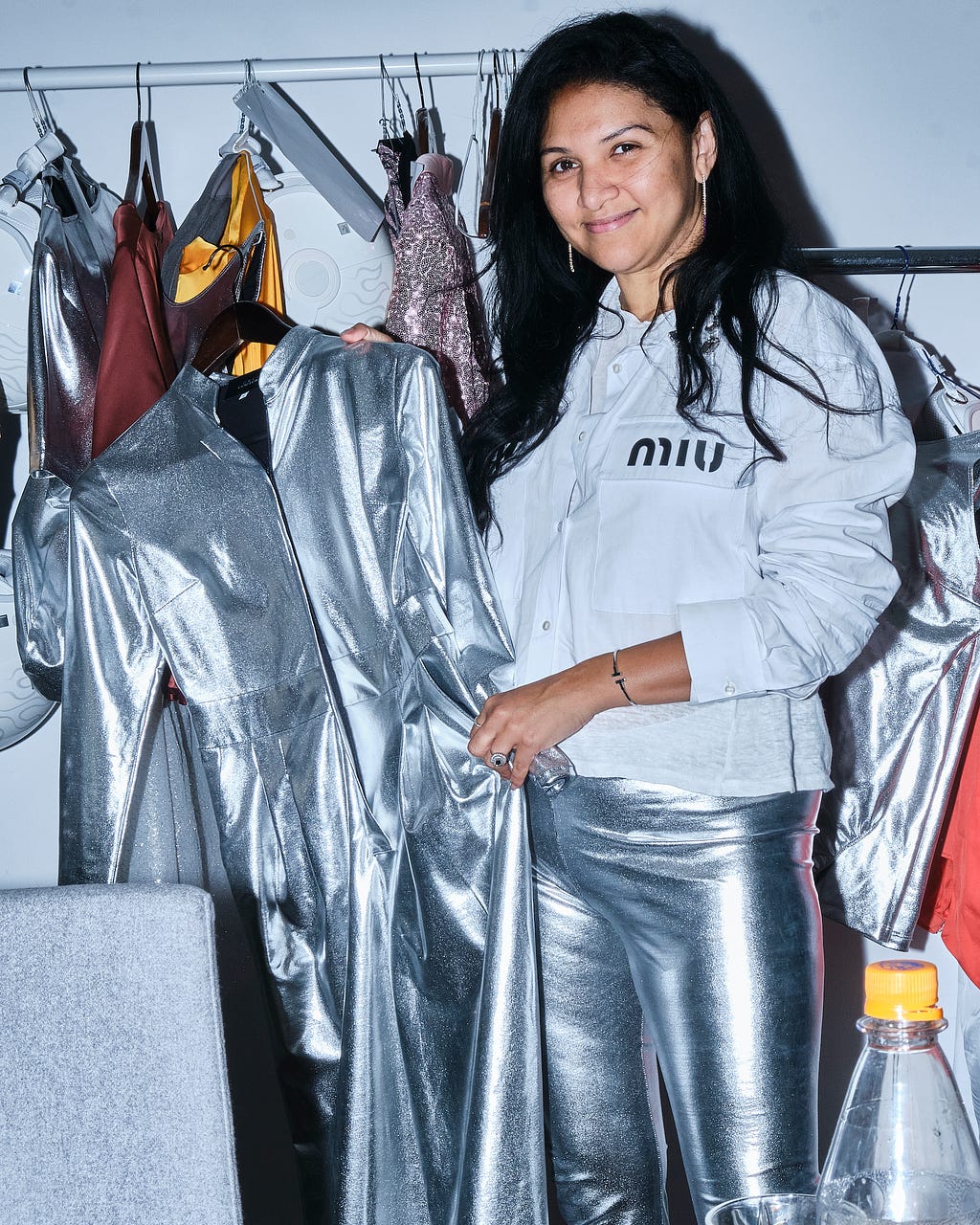
Modern Fashion: Aline Celi On The 5 Things You Need To Lead a Successful Fashion Brand Today

An Interview With Candice Georgiadice

Goals: Know what you want get and how your vision can become true. Goals can make your ideas closer to becoming true and every time you achieved them is a victory.

Many in the fashion industry have been making huge pivots in their business models. Many have turned away from the fast fashion trend. Many have been focusing on fashion that also makes a social impact. Many have turned to sustainable and ethical sourcing. Many have turned to hi tech manufacturing. Many have turned to subscription models. What are the other trends that we will see in the fashion industry? What does it take to lead a successful fashion brand today?

In our series called, “5 Things You Need To Lead a Successful Fashion Brand Today” we are talking to successful leaders of fashion brands who can talk about the Future of Fashion and the 5 things it takes to lead a successful fashion brand in our “new normal.”

As a part of this series I had the distinct pleasure of interviewing Aline Celi.

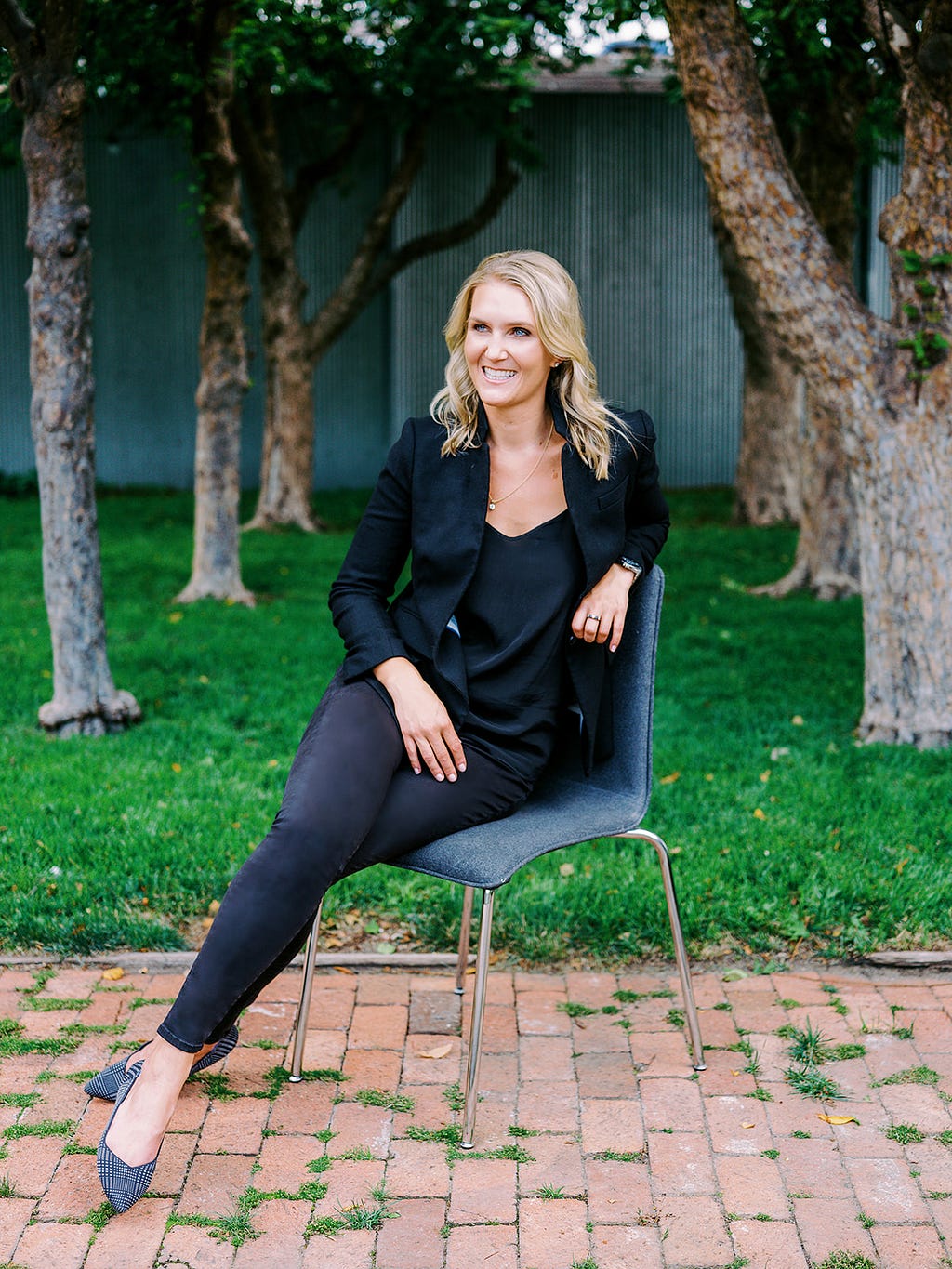
Aline Celi is a Brazilian designer who has conquered the German fashion scene with her personality, minimalist designs and commitment to the environment. With the brand CELI, founded in 2015, Aline has managed to quickly establish herself and her thoughts in the Berlin fashion scene.

Under the brand CELI, she creates carefully handcrafted pieces made in the EU under the strictest ethical and social guidelines. She gives back with the organization “Goal For Life” in Brazil. Here, soccer is used as a community-building team activity to give children and young people from socially disadvantaged backgrounds a stable community, a safe place and opportunities.

Thank you so much for doing this with us! Before we dig in, our readers would like to get to know you a bit more. Can you tell us a bit about your childhood “backstory”?

I grew up in Brazil, in a small state in the northwest. My loving family always supported me in all my wishes, but I had to face the culture that always wants you to be a doctor or a lawyer.

Following my heart and going to study abroad alone at 16 years old really formed the person that I am today.

Can you tell us the story about what led you to this particular career path?

Always seeing the way that the strong women that I grew up around dressed and also being around nature all the time has profoundly molded my way of seeing how fashion should work. My whole life I spent imagining a future where we could dress comfortably without letting go of our femininity and glamour.

Brazil is a country with a lot of colorful clothing, I try to translate this energy into my collections by always inserting some bright color in the day-to-day of my dear clients.

Can you share the most interesting story that happened to you since you began your career?

The most interesting story is the longest one. How me and my best friend Uanderson as two young creatives decided to unite our talents and really face the world with nothing to lose. It still amazes me to this day how we can still keep going strong.

You are a successful business leader. Which three character traits do you think were most instrumental to your success? Can you please share a story or example for each?

All three traits can really be united into one example. Every day I try to be my best self with everyone I know. When leaving to study in another country at such a young age I always kept thinking about what the future was holding for me, but growing and observing that focusing on one day at a time is really what makes me… me! So to answer the three traits I would say: Determination, Selflessness and Kindness.

What do you think makes your company stand out? Can you share a story?

We stand out because of the way we connect with our customer. There are many stories but we can summarize all by the everyday chats with the people that come to our showroom. They almost always come not knowing what sustainable fashion is but they always leave wanting to know more and paying more attention to what they’re investing their money in.

Do you have a favorite “Life Lesson Quote”? Can you share a story of how that was relevant to you in your life?

“Simplicity is the keynote of all true elegance.”

Not only when it comes to my brand this is important but also in my personal life. Coming to Europe at such a young age can really change you. Sometimes when feeling I had to do more to fit in I remembered this quote. Staying simple helped me to stay being myself.

Ok, thank you for that. Let’s now jump to the primary focus of our interview. Do you see any fascinating developments emerging over the next few years in the fashion industry that you are excited about? Can you tell us about that?

The use of animal fur and leather is decreasing in haute couture and I think that’s very exciting.

I see the use of recycled fabrics growing and hope that this way of thinking and producing can be reflected into the mind of the average person, making an impact in our society as a whole in the future.

Can you share how your brand is helping to bring goodness to the world?

Our fair production and recycled materials are helping the world to breathe a little bit better. Those products also hold great quality to them, making the disposal of the pieces much more rare because the customer can wear the pieces for many years without changing the look and feel of the fabric.

Can you share with our readers about the ethical standards you use when you choose where to source materials?

All of our pieces are made with fair production and following strict government guidelines. That means that everything we make is respectful to the environment and also to the people in the factories.

We choose our sources thinking of the best material that reflects what we are as a brand. One of our most sold pieces is made with polyester made with 100% PET bottles. You may think that would be ugly or unflattering but is one of the most soft and beautiful materials.

Fast fashion has an advantage, that it is affordable for most people, but it also has the drawback that it does not last very long and is therefore not very sustainable. What are your thoughts about this? How does your company address this question?

As a brand we see this as something that puts us in a different standard. Other brands can choose to produce in the fast fashion style and sell more clothes by a smaller price but we KNOW our product’s quality is what makes people comeback every time.

Investing in a durable piece can be better for you because you’ll not be needing to buy a new one every year, but consumerism and our materialistic society has formed the idea in our minds that “More is better”, and we need to fight that.

Thank you for all that. Here is the main question of our interview. What are your “5 Things You Need To Lead a Successful Fashion Brand”. Please share a story or example for each.

Determination: Things will not work if you don’t put work into it. I really hustled to be where I am and thinking that building yourself doesn’t take work is a huge lie.

Vision: I saw what I am today before I started working towards it. Write down what you want and take small steps every day until you get there.

Good people around you: When I see myself struggling I know that I have great people with me. Believe me, networking is the best thing to build a caring community for your brand.

Studying: I don’t even mean going to university. Of course that is great, but trying to learn something new about the world or yourself can be inspiration for the future.

Goals: Know what you want get and how your vision can become true. Goals can make your ideas closer to becoming true and every time you achieved them is a victory.

Every industry constantly evolves and seeks improvement. How do you think the fashion industry can improve itself? Can you give an example?

Even in the 21st century the industry still does not understand that all bodies are different. An example is stores that only sell ridiculously small sizes and exclude people with different body types from purchasing their items.

We have to improve the way fashion is produced by stopping to impose a “pattern to follow” in the public. Inclusiveness is the key to the future.

You are a person of great influence. If you could start a movement that would bring the most amount of good to the most amount of people, what would that be? You never know what your idea can trigger. 🙂

I would definitely start a movement to stop the climate crisis in the world. We know that the individual use of natural resources is not what is causing all these problems. Big companies by big corporations have to take responsibility for the damage.

The earth is all we have, we have to care for it with love! My movement would be to make sure all types of production do not harm the environment and, if it does, a compensation has to be made.

How can our readers further follow your work online?

You can follow us on our instagram @celi.fashion where we are posting everything that you need to know about us and all the events we are in! Our website is alineceli.com.

Thank you for these fantastic insights. We greatly appreciate the time you spent on this.


Modern Fashion: Aline Celi On The 5 Things You Need To Lead a Successful Fashion Brand Today was originally published in Authority Magazine on Medium, where people are continuing the conversation by highlighting and responding to this story.

Inspirational Women in STEM and Tech: Amanda Glosson of AppTech Payments Corp On The 5 Leadership…

Inspirational Women in STEM and Tech: Amanda Glosson of AppTech Payments Corp On The 5 Leadership Lessons She Learned From Her Experience

An Interview With Candice Georgiadis

Be the level head in a moment of crisis. Production fires will happen, and those around you will benefit from keeping your cool. I was often sought out to manage issues in production because I stayed calm, found the problem, and got to work on a solution.

As a part of our series about “Lessons From Inspirational Women in STEM and Tech”, we had the pleasure of interviewing Amanda Glosson.

Amanda Glosson is a software engineer, and recently joined AppTech Payments Corp. with 14 years of payments engineering experience at Blackbaud, where she held several positions focused on a future-driven approach to solutions. In her new role, she is an integral part of the AppTech engineering team responsible for developing the organizations core payments and digital banking solutions to enable omni-channel commerce experiences for customers that propel business growth.

Thank you so much for doing this with us! Can you tell us a story about what brought you to this specific career path?

My journey in tech began in high school when I started taking classes at a local community college on computer science. Like most kids from my generation, I grew up with Super Nintendo and it really started out as wanting to create video games like the ones I loved playing. From there, I completed my undergrad degree at North Carolina State University in computer science with a game development concentration. This was a truly cool program. Within it, I got to work with multiple disciplines within game design as opposed to just working in engineering. I got to see the graphic design and creative aspects that can be part of this discipline, along with gaining an understanding of the technological and scientific principles associated with design and development of games and applications. It showed me the variety that exists and is possible within computer science.

My experience at NC State University also opened my eyes to career possibilities outside of gaming, such as positions in engineering that are situated for the greater good and aim to help those in need. Once I graduated, I started my career at Blackbaud so I could use my skills to give back, as the software they write is targeted towards nonprofit organizations and works to support their needs.

Can you share the most interesting story that happened to you since you began at your company?

I joined a meeting once and was greeted by the lovely sounds of my colleague strumming his guitar while he waited for the meeting to start. We let him play for a while before we told him he wasn’t on mute.

It has been said that our mistakes can be our greatest teachers. Can you share a story about the funniest mistake you made when you were first starting? Can you tell us what lesson you learned from that?

There were a few “teachable moments” in the early part of my career but, one that has stuck with me is a story about not being too hard on yourself. I had just started on the new payments team at Blackbaud and had been helped by several team members to get my local dev environment all set up and configured. It was an intricate system, and I was still learning how all the pieces worked together. I was working on fixing bugs to get familiar with everything when somehow, I had gotten myself into a state of configuration where payments wouldn’t process anymore. I felt like I really screwed up. I retraced my steps and couldn’t get it back to a working state. I asked for help from Larry Mishkin, my manager at the time and one of the primary engineers of the system I was working in. He could tell I felt bad that not only had I somehow broken this thing but couldn’t figure out how to fix it either. I will always remember what he said to me, after he fixed it (in like 3 seconds), he said, “Don’t be so hard on yourself, you’re doing a great job.” I felt like he really cared about my success, and he was always someone I looked up to for career advice.

What do you think makes your company stand out? Can you share a story?

I’ll be honest, I was a little hesitant about joining a small team at AppTech Payments Corp. after spending years working for a much larger company on a much bigger team, but thankfully that dissipated nearly immediately when I joined AppTech. Working on a smaller team has given me the chance to have a much more significant impact on our development and what we’re working on; my hands are all the way in it, so to speak. I have the opportunity to learn, grow, and expand my horizons so much more since I am actually building something from the ground up as opposed to just entering laterally into an existing project.

This is truly rare to find in tech right now because so much infrastructure already exists within this industry that a lot of the time, projects are focused around building on, altering or enhancing what is already there. I have an exceptional chance to make my own mark on a brand-new project here, which I am incredibly excited about.

Are you working on any exciting new projects now? How do you think that will help people?

Here at AppTech, I was chosen to help build a brand-new payments team. Payments is fast-paced and challenging within software development in general since the field is changing so quickly; it really is an area that is entirely bypassing legacy methods of operation and giving us developers a chance to change the world. Within that, I see an opening to do away with these legacy systems that have previously held some individuals back. All of the new tech stacks we are working on within payments provide so much more accessibility for the underbanked and unbanked, a gamechanger that will change the system for the better, for good.

Ok super. Thank you for all that. Let’s now shift to the main focus of our interview. Are you currently satisfied with the status quo regarding women in STEM? What specific changes do you think are needed to change the status quo?

No, I wouldn’t say I am satisfied with the status quo, there are still too few of us out there in the industry. We need to encourage and support young women to become involved in STEM-related fields. I believe change is going to need to begin at the education level with more females being willing and excited about pursuing a career in the field. If we can increase the number of women being educated in the field, we increase the likelihood that more young women will follow in their footsteps. In the past, I’ve been involved with STEM mentorship groups working with middle school kids in robotics, as well as college level outreach and recruiting.

In your opinion, what are the biggest challenges faced by women in STEM or Tech that aren’t typically faced by their male counterparts? What would you suggest to address this?

I often see that women can be faced with an imposter syndrome within the tech field. We have every right to be here and have earned our seat at the table, but I see how being in a male-dominated space can make us feel like we don’t belong. I want to remind all women that our skills are legitimate, and we deserve to be where we are in the tech industry.

My advice to women in this field is to boost your confidence in whatever way works for you. For some, finding a mentor can help you realize your self-worth, become more confident, and feel more at ease stating your opinions. It can be so valuable and helpful to have someone to bounce ideas off of, to validate what you have to say and provide a safe space in which to brainstorm and get comfortable.

While it may not seem like such a great system from the outside, something that has really worked for me to boost my own confidence has been choosing to take on a project that I knew nothing about in the beginning, and then finishing the process to completion successfully. It is the greatest confidence builder and has made me feel like I can do anything. This does not just apply to work-related tasks, either; it can apply to hobbies, home projects, or anything new to you. Don’t ever be afraid to take-on or try new things, you don’t need prior experience to become an expert. It’s important to remember that at one point, every expert was new to what they now excel in.

What are the “myths” that you would like to dispel about being a woman in STEM or Tech. Can you explain what you mean?

I think that sometimes we get caught up in nomenclature and labels when trying to assert ourselves. To me, it’s a myth that we have to be known as “women in STEM”, or really any label within the field. I don’t label myself as a “female engineer”, I simply AM an engineer, and I have an equal seat at the table as my teammates. I want all women in tech, and really any career, to remember that their opinions matter just as much as anyone else’s — every single person in the room earned their spot the same way.

What are your “5 Leadership Lessons I Learned From My Experience as a Woman in STEM or Tech” and why. (Please share a story or example for each.)

  1. Be the level head in a moment of crisis. Production fires will happen, and those around you will benefit from keeping your cool. I was often sought out to manage issues in production because I stayed calm, found the problem, and got to work on a solution.
  2. Say yes to that big project. Even if you don’t know how you are going to pull it off yet, if you are being offered the opportunity then they already see the potential in you. I took on my first mobile app project, knowing nothing about mobile apps. I learned, I grew, and I completed that project. I also found that I really enjoyed working in the space of mobile apps.
  3. Leadership is about curating relationships, not pushing your opinion onto others. I recall a time when a proposed architectural solution to a problem was contested by several members of the team. I brought everyone together to discuss it and we compromised on a solution that both mitigated risk and moved us forward in an innovative way.
  4. Your team will learn from your example. Be the team member you want them all to model after. I participate in the shared responsibilities of the team including on-call rotations and client reported issue investigations. I became a better leader because I shared their experiences, and they saw how I handled difficult situations and learned from me.
  5. Make time for feedback and words of encouragement. As a leader we are busy, our schedules are usually full of meetings, and we still have work to do outside of those meetings; but I make time to pause and reflect on everyone’s progress. I have a personal conversation with new members of my team after they’ve settled in. They appreciate my taking the time to offer them feedback, and it gives me an opportunity to ask for feedback from them.

What advice would you give to other women leaders to help their team to thrive?

Don’t mute or otherwise water down yourself for fear of being seen as a woman — use your unique characteristics to your advantage. Women, generally, have a greater attention to detail than men do, and we shouldn’t be afraid to lean into that. You aren’t being nagging by paying attention to details that matter in the larger picture, especially in a field like tech where every single small detail matters. As leaders, in particular, we need to make sure every part of the project is perfectly in tune.

I also believe it is important as a leader to challenge yourself often. Your team will want to do the same when they see you doing so, and it helps to foster a sense of community where all team members are not only challenging themselves but supporting each other within those challenges. This makes not only the individual stronger but builds up the entire team.

What advice would you give to other women leaders about the best way to manage a large team?

Active listening is extremely important to me for a leader. It’s all well and good to be able to lend an ear or allow individuals their chance to speak, and there will always be a lot of opinions flying around. However, being in tech where things change so quickly and we are always under such tight deadlines, sometimes we don’t have time to listen, think, and then choose a course. Practicing and acting as you work with your team will always earn you the most respect. You have to be willing to be a professional and a student at the same time to set the best example for your team that you can.

None of us are able to achieve success without some help along the way. Is there a particular person who you are grateful towards who helped get you to where you are? Can you share a story about that?

I am very grateful for the time I was able to spend with Mary Beth Westmoreland while at Blackbaud. She fostered my growth there, and I really valued her insights as a CTO and fellow female engineer at the company.

What resonated with me the most about working with Mary Beth was how she was such a big champion of trying to grow the representation of women in tech and women in the company. She was always on the front lines in recruiting, she hosted a women in tech summit for the company, and was a founding member of the Women in Tech in Charleston group. I think it’s so important to have someone like her who wants to be out in front, as visible as possible, and openly encouraging women to join us in this field.

How have you used your success to bring goodness to the world?

I love that I began my tech career working on nonprofit programming within Blackbaud. I know that tech can get a bad rep of being cutthroat and kind of single-minded, and we all sometimes need a reminder that we can use these advancements for good, for charity as opposed to just for earning companies profit, increasing productivity, and closing sales.

You are a person of enormous influence. If you could inspire a movement that would bring the most amount of good to the most amount of people, what would that be? You never know what your idea can trigger. 🙂

In addition to my passion for the tech industry, I also have a love for animals. I’ve personally gotten two dogs through adoption and think that anyone who is considering adding a pet to their family should consider fostering or adopting one from their local animal shelter.

Can you please give us your favorite “Life Lesson Quote”? Can you share how that was relevant to you in your life?

Never let “perfect” get in the way of “good enough”.

When working on a piece of functionality or a new feature, it’s important to remember to try and step back make sure you’re not going down a rabbit hole or over-working an angle. Your time and energy are precious — don’t waste them chasing an end that is not feasible. I often need to switch tasks in order to stay focused, and that switch can reorient your focus and make you realize that you’ve done this task perfectly, but you were too busy beating yourself up to see that.

We are very blessed that very prominent leaders read this column. Is there a person in the world, or in the US with whom you would love to have a private breakfast or lunch with, and why? He or she might just see this if we tag them 🙂

I would have to choose Melinda Gates. The Gates Foundation does great work all across the globe, but I would like to chat with her specifically about the foundation’s work in the K-12 sector in the U.S. I am fascinated by their work to bring equity to our early education systems, a need that will benefit many sectors including women in STEM.

Thank you for these fantastic insights. We greatly appreciate the time you spent on this.


Inspirational Women in STEM and Tech: Amanda Glosson of AppTech Payments Corp On The 5 Leadership… was originally published in Authority Magazine on Medium, where people are continuing the conversation by highlighting and responding to this story.

Female Disruptors: Sharonette Briggs On The Three Things You Need To Shake Up Your Industry

An Interview With Candice Georgiadis

Enjoy the mini successes. When you overcome a challenge that has been set against you, or you accomplish a goal that was so hard to do, find a way to smile when you’re on the other side of it. Find a way to breathe and lift your spirit up and allow it to give you the fuel you need to keep going.

As a part of our series about women who are shaking things up in their industry, I had the pleasure of interviewing Sharonette Briggs.

Sharonette is the Co-Founder of the Finding Erotica (www.FindingErotica.com ) literary series, website and YouTube “Skin Anthology Series.” She is a mother and grandmother who is a pole and fitness instructor as well as a lover of the outdoors. Her goal with her platform is to support, and educate mature individuals in their sexual, intimate, and relational journeys.

Thank you so much for doing this with us! Before we dig in, our readers would like to get to know you a bit more. Can you tell us a bit about your “backstory”? What led you to this particular career path?

Yes. Having given my younger years over to being a single parent of two, working a full and two part time jobs and experiencing a devastating loss in my life, I had just hit rock bottom. It was a battle to receive any form of promotion or increase in pay at two of the jobs that I worked at over a period of 10 years. I was muddling through pain, anger, guilt, and disappointment after my loss. I was awake in the night hours with questions that always went unanswered.

Shortly thereafter, I came in contact with an old friend of mine, who is now my business partner, Thomas McKenna. He was dealing with prostate cancer. This all became overwhelming and too much to bear. I needed an escape. As he and I started sharing about what we were going through in our lives, he began to share with me about writings he did for his ex. Of course, it was centered around intimacy and relationship. I loved them. I told him that I had read some erotic literature and thought that his was so fascinating that he/we needed to share them with the public. Out of this was born Finding Erotica.

Can you tell our readers what it is about the work you’re doing that’s disruptive?

The work that the Finding Erotica platform does brings disruption by jarring individuals who might be narrow minded in their thinking and way of life when it comes to sex, intimacy, relationships, taboos, and sexual diversities. At times we can be so judgmental against another in the way that they practice or live out their intimate journeys. And while being judgmental, have yet to explore our own desires that are safely hidden in our hearts.

Can you share a story about the funniest mistake you made when you were first starting? Can you tell us what lesson you learned from that?

Yes, one of the funniest mistakes that we made when we first started was with a photo bomb done by a dog. In the beginning our website contained risqué pictures and audio. In one of the photos, we pretended that cum was dripping in my mouth while I lay on my back. I was lying on a table with my head resting over the edge at the time we did this pic. We tried to crack eggs above my head and to let the egg white drip slowly out of the shell onto my bottom lip. It took several times to crack it just right without me per se’ looking directly at the egg. I had to look sensual in my face with my mouth open, hold the cracked egg, while Thomas took the photo. We thought the photo was great until we realized that his dog was underneath the table peeping his head out licking up the residue of the egg white on the floor. His nose, tongue, and face peers out from the side of my head. That was a very difficult picture to get only to not be able to use it because of his dog.

The lesson learned is to never have dogs around when doing an amateur photo shoot.

We all need a little help along the journey. Who have been some of your mentors? Can you share a story about how they made an impact?

Oooohhh, hmmm, well it doesn’t go without saying that my business partner and friend Thomas Mckenna made the greatest impact of all. I would also add Napoleon Hill, Neville Goddard, David Goggins, T.D. Jakes, Florence Scovel Shinn and Sara Blakley just to name a few people that I’ve been encouraged by along the way. There have been many dynamic platforms that have inspired me as well i.e. Recession Money, Black Entrepreneurship, Impact Theory.

I’ve not really had a specific person who was with me side by side to help me navigate this kind of road outside of Thomas. Trying to create an educational platform when it comes to sex and relationships has been quite challenging. In the beginning most thought I was doing porn. There are people out there doing pieces of what we do, but nothing on the scale of what we’re doing and where we’re going. All of the individuals who might have been able to provide support in some way or another are at a distance i.e. E.L. James, Esther Perel, Joan Price, etc.

Yes, they have discussions around sex and intimacy, but lack in one or more of the areas that we focus on, which is mature adults, post-illness/post-intimacy and a big one, people of color. Having tread a road that has not yet been done before, I hope to be a mentor to others who decide to jump out and do something that has not been done before.

In today’s parlance, being disruptive is usually a positive adjective. But is disrupting always good? When do we say the converse, that a system or structure has ‘withstood the test of time’? Can you articulate to our readers when disrupting an industry is positive, and when disrupting an industry is ‘not so positive’? Can you share some examples of what you mean?

I believe that disruption can always be good if it means that a person has an opportunity to grow. When that disruption occurs, it’s usually not at a time that we like, but in the long run, it is a good thing. So, disrupting an industry, well in our case, is positive.

Finding Erotica is meant to act as a bridge from the unaware to the well experienced sexual human. We want people of all groups to have a place to learn about all sexual identities as well as discuss real life matters such as physical and aging challenges. You can be well experienced and open to other human explorations but need to access experts that are not afraid to speak on health issues that you or a loved one might be dealing with. One thing that we challenge is the whole notion of what is Erotica. Where porn uses sex to simply stimulate viewers/readers, we explore sexuality as an important part of the human experience. Sex is not gratuitous, instead it is essential.

I think that if our platform was not in pursuit of bridging the gap and was set out to compete, put down or hate on other businesses, all the way from the porn industry to having a miniseries on Netflix about sex and relationships, our disruption would be negative. And I believe, in the end we would lose.

Can you share 3 of the best words of advice you’ve gotten along your journey? Please give a story or example for each.

  1. Stay the course. Stay focused. When the road gets tough you get tougher. Do not give up on your dreams despite what you see and don’t see. You will have many different obstacles, hills, valleys, mountains, oceans and everything else that you can think of that will come your way to get you to quit. Know that for each barrier you encounter there will be (not many) supportive resources (people, businesses, etc.) that will be there to let you know that your dream is alive and to continue the course until you see it come to pass. Allow those moments to resonate inside of you more than the negative. It’ll be hard, but you can do it.
  2. Enjoy the mini successes. When you overcome a challenge that has been set against you, or you accomplish a goal that was so hard to do, find a way to smile when you’re on the other side of it. Find a way to breathe and lift your spirit up and allow it to give you the fuel you need to keep going.
  3. Love. Be sure you love your yourself, your dream, and people while you’re in pursuit of something that doesn’t exist yet.

We are sure you aren’t done. How are you going to shake things up next?

Whew…well, since I am a 51-year-old poler and dancer, I’d like to join forces with certain industries that give room for mature artistic adults to showcase their beauty and sensuality through visual art form. We’ve already started this with our “Skin Anthology” series on YouTube, Vimeo and IG. I’d like to introduce “us” to other mainstage arenas that have overlooked our maturity and consider the young first. Examples would be being a backup dancer to an artist or music group in our age bracket; dating shows that feature people over 50 because as singles, we still want to have companions; or with myself, offer pole and fitness training to mature women and men. There are other things that Finding Erotica has on the horizon and will be disclosed at a later time…lol.

In your opinion, what are the biggest challenges faced by ‘women disruptors’ that aren’t typically faced by their male counterparts?

Well, first you said “women.” That word alone can be a disruptor. Then throw in being a Black woman and disruption often gets dismissed by being called “an angry Black woman.” We’ve been pushed to the margins for too long and we’re seeing that women’s voices and Black women’s voices are at the heart of every overdue progressive change. So, I’d say that some of the challenges faced are people taking you serious about what you’re trying to do.

Do you have a book/podcast/talk that’s had a deep impact on your thinking? Can you share a story with us?

The book “In Pursuit of Purpose” by Dr. Myles Munroe. Dr. Munroe shares that the largest place where you will find the greatest number of unfinished works, unknown visions and incomplete missions would be the cemetery. This place is full of unborn dreams and unfilled purpose. When reading that I knew that I did not want to die without fulfilling my purpose. So, I knew that when the time came, I would pursue this until I understood what mine was and I set out to accomplish it. The time came when I was at my lowest point in life. Sometimes when you’re at your lowest, you’re more open to hear…in whatever way that is.

You are a person of great influence. If you could inspire a movement that would bring the most amount of good to the most amount of people, what would that be? You never know what your idea can trigger. 🙂

If I could inspire a movement, it would be “The mature are not dead, we can still pursue our dreams.” After the age of 50, it seems like society has given up on us, heck, we’ve given up on ourselves. We’ve either married, had children, lived the fast life, traveled and our bodies and minds reflect that. We stop living life. It becomes very hard to reset and start at a new beginning to know that we can start living life for ourselves.

Some mature understand it, but most do not. I want to influence the mature, specifically mothers, and encourage them that their beauty, sensuality, dreams and dating life can began anew. I can only do this if I’ve done it myself. I can be their example. I made the decision to start taking care of my body once my children left the house, I began to gain confidence in my own beauty and understood who I was when I started poling, competing and then became a pole and fitness instructor and I am now pursuing my dream of having an interactive website that provides information, resources and discussions centered around sex, intimacy and relationships for the mature, post-illness/post-intimacy and people of color.

Can you please give us your favorite “Life Lesson Quote”? Can you share how that was relevant to you in your life?

My favorite life lesson quote would be “Just Keep Living”, this was something that my grandmother said all the time. This is applicable to every area and at every stage of life. This could apply to gaining wisdom, going through challenges, learning lessons, aging, understanding yourself and people.

How can our readers follow you online?

Yes, I’m on Instagram as @Xquzit.ladeepole, my Facebook is under my name Sharonette Briggs and my work can always be followed through FindingErotica.com.

This was very inspiring. Thank you so much for joining us!

Thank you for having me. Yes, I hope that I can be an inspiration to someone!


Female Disruptors: Sharonette Briggs On The Three Things You Need To Shake Up Your Industry was originally published in Authority Magazine on Medium, where people are continuing the conversation by highlighting and responding to this story.
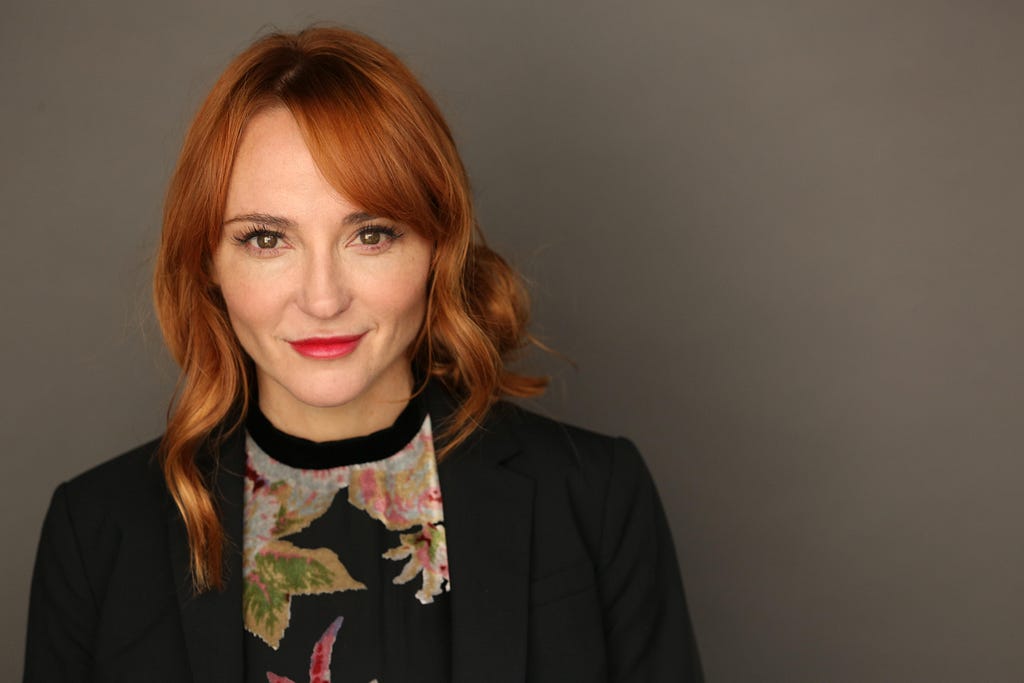
Burton Kelso of Integral: Five Ways To Leverage Instagram To Dramatically Improve Your Business

An Interview With Candice Georgiadis

Show Your Industry Expertise. People love people who can help them solve the problems they may encounter in life. Can you help people making awesome meals and desserts, do? DIY videos? Not only for YouTube anymore. When you show off how you or your business can be a help to your connections builds trust and opens doors to business connections and more profits.

As a part of our series about How To Leverage Instagram To Grow Your Business, I had the pleasure of interviewing Burton Kelso.

Burton Kelso is the owner and Chief Tech Expert at Integral, an on-site and remote computer and laptop repair service company for consumers and businesses. He is also a national keynote and technology speaker, a YouTube personality, and a TV Tech Expert regularly appearing on ABC, CBS, FOX, NBC, News Nation Now, The Black News Channel,Talk.TV and Newsmax offering viewers easy tips on computers, technology, Internet lifestyle, and gadgets. As computers and their related gadgets become more and more part of our everyday lives, he’s here to help you get the most out of your devices. His vision is to remove the frustrations and complexity of computers and technology and open people up to a world of new ideas, experiences, and opportunities. He loves technology, he’s read all of the manuals, and he’s serious about making technology fun. safe, and easy to use for everyone!.

Thank you so much for doing this with us! Can you tell us a story about what brought you to this specific career path?

Thanks for having me! I’ve always been a fan of computers and technology since I was a tween. My mother was the one who introduced me to computers as she somehow saw it was the way of the future. Sure, I loved playing video games, but I loved how computers and technology offered you a way to accomplish everyday tasks such as creating documents, maintaining spreadsheets, working on your accounting, and communicating with people across the globe. Plus, I always love helping people. Technology always has a way of making people feel as if they aren’t part of the cool kids. As someone who always felt like an outcast, I wanted to make people feel included and there’s where my love of helping people with technology came alive.

Can you share the most interesting story that happened to you since you started this career?

One of the most interesting stories I can share in being in the computer break/fix managed services business is working on the computers and internet service for Johnathan Badeen, co-founder and former Chief Strategy Office at Tinder father. Johnathan called our offices when he was in visiting home because his father was having issues with spotty wifi. He was one of the down to earth people I’ve met, and it was interesting to see he was willing to seek help for issues over his head. He obviously has knowledge about technology, but not when it came to troubleshooting hardware issues.

Can you share a story about the funniest mistake you made when you were first starting? Can you tell us what lesson you learned from that?

Years ago when working on a computer, I failed to put my anti-static strap on to prevent from zapping computer parts. The family I was working for had a very friendly dog that kept wanting attention. They put the dog away, but it kept getting out. At one point during the appointment, the dog brushed past me and zapped me which zapped the computer. I took responsibility for the issues and got the computer up and running. The lesson I learned that day was to always be prepared for any scenerio that can arise when you’re in the progress of working onsite at appointments and in life.

Ok. Let’s now move to the main focus of our discussion. For the benefit of our readers, can you explain why you are an authority about Social Media Marketing?

I’ve been on Linkedin, Facebook and Twitter since 2009. I originally used these platforms to show pictures of my sons, but soon discovered it was an excellent tool that I could use to promote myself and my business. While I’m more of a nano or micro influencer, I’ve found that at any level you can create a tribe of followers that will help you grow your business. Like many social media marketers, I’ve delivered presentations to help businesses of any level use social media to tell their story which helps build brand recognition and profitability in business.

Which social media platform have you found to be most effective to use to increase business revenues? Can you share a story from your experience?

Instagram, LinkedIn and Facebook have all been effective in increasing business revenues. Most businesses focus on these platforms to connect with the people to interact with other people. With my technology-based company Integral and in my speaking business, there isn’t anywhere I can go in the country without being recognized. It’s a good problem to have but can be a bit intimidating having people you think are strangers tell you aspects of your life and your company you forgot you shared on social media. The goal is to never have to be introduced when you walk into rooms.

Let’s talk about Instagram specifically, now. Can you share five ways to leverage Instagram to dramatically improve your business? Please share a story or example for each.

  1. There are Four Parts to Instagram, Use Them All. Even though it’s one social media platform, there are Four parts to Instagram, and they all have their place to the Instagram Algorithm and your connections. There’s Standard Instagram, Stories, REELs and IGTV. You want to focus your posts on Reels, Stories, and standard Instagram posts. IGTV which is Instagram’s on version of YouTube, not so much. However, keep in mind that wherever you post on Instagram, you will get high SEO or search engine optimization which means if you choose to have a public Instagram account, you posts will be picked up on Google and other search engines. Make sure you don’t spend a lot of time trying to recreate posts for each different parts of Instagram, share the same content as much as possible to reach a wider audience.
  2. Create a Strong Hashtag Strategy. You can use up to 30 hashtags per post on Instagram. That may sound like a lot but you want to use the ones that are going to connect you with the right follows. On Instagram like LinkedIn, you can follow specific hashtags. If you’re looking to connect with a specific audience, you need to figure out which hashtags they are following. Always start using hashtags that are close to your brand, as well as your geographic location. If you’re looking for broader audience, you need to discover what the top 10 or 20 hashtags are and include those in all of your posts. This means you need to include them in the descriptions of your REELs post.
  3. Always focus on telling your story. Relationships are nothing more than two people relating to each other as people. Remember that people do business with people and of course, they will want to do business only with people they trust. Relationships don’t happen immediately. You build them over time. The best way to make that happen is to share your story on Instagram. Doesn’t matter if you’re sharing what you’re eating, where you’re traveling to or who you know, people want to feel as if they know you. The main key is making sure you’re creative in sharing your story. Video and the creative tools in Instagram Stories and Reels can make your story pop out and bring people more into the chapters of the story you’re trying to share Instagram.
  4. Show Your Industry Expertise. People love people who can help them solve the problems they may encounter in life. Can you help people making awesome meals and desserts, do? DIY videos? Not only for YouTube anymore. When you show off how you or your business can be a help to your connections builds trust and opens doors to business connections and more profits.
  5. Remember, it’s a Marathon. Think of Instagram as the ‘Never Ending Story’. Not ever post you make on Instagram is going to be a home run and that shouldn’t stop you from posting. Focus on posting on things that are trending such as holidays, local, nation and international events. It may take a while to get into the habit of remembering to post which is where tools like Hootsuite can help as far as scheduling posts weeks or months in advance. If you get bored with your posts, remember to change up what you’re posting … and yes that means try to use video in your posts. If you need inspiration to post, always remember McDonalds and Walmart consistently advertise and share content despite being billion-dollar corporations.

Because of the position that you are in, you are a person of great influence. If you could inspire a movement that would bring the most amount of good to the most amount of people, what would that be? You never know what your idea can trigger. 🙂

About 10 ten years ago a movement called the Cash Mob swept the country with a goal of helping small businesses out. The goal was to gather a crowd a likeminded, friendly people to go with cash in hand to help out a small business. Think of it as a surprise party for small businesses. It would be nice to take it a step further and make a single day celebration for a small mom and pop business. Show up and buy things, but also leave positive reviews on social media and on Google. Have each person share to their community how great and special this business is. All businesses need a boost from time to time and it would be great to show our mom-and-pop businesses how much we love them.

Thank you so much for these great insights. This was very enlightening!


Burton Kelso of Integral: Five Ways To Leverage Instagram To Dramatically Improve Your Business was originally published in Authority Magazine on Medium, where people are continuing the conversation by highlighting and responding to this story.

Modern Fashion: Léa Daaboul of Léa The Label On The 5 Things You Need To Lead a Successful Fashion…

Modern Fashion: Léa Daaboul of Léa The Label On The 5 Things You Need To Lead a Successful Fashion Brand Today

An Interview With Candice Georgiadice

There is so much pressure for designers to launch their greatest collection season after season. It’s always challenging being a slower and emerging brand in a fast-moving industry. As the brand evolves it’s a priority to take a step back, slow down and stay true to yourself to maintain the ethos of the brand and allow room for creativity and inspiration. We believe in quality over quantity.

Many in the fashion industry have been making huge pivots in their business models. Many have turned away from the fast fashion trend. Many have been focusing on fashion that also makes a social impact. Many have turned to sustainable and ethical sourcing. Many have turned to hi tech manufacturing. Many have turned to subscription models. What are the other trends that we will see in the fashion industry? What does it take to lead a successful fashion brand today?

In our series called, “5 Things You Need To Lead a Successful Fashion Brand Today” we are talking to successful leaders of fashion brands who can talk about the Future of Fashion and the 5 things it takes to lead a successful fashion brand in our “new normal.”

As a part of this series I had the distinct pleasure of interviewing Léa Daaboul, of Léa The Label.

Founded by Léa Daaboul, with a deep-rooted connection to the wonders of the ocean, influenced by the holistic beach culture of wellbeing and wide visions of sustainability, it was surrounded by the harmonious energy of the sea where Léa the Label was born. Travel, nature, architecture and interiors helped fuse their passions of wellness and design to create minimalistic chic swimwear designed in harmony with the planet.

Léa the Label exudes an ethereal sense of understated elegance by offering timeless collections designed with intention.

Thank you so much for doing this with us! Before we dig in, our readers would like to get to know you a bit more. Can you tell us a bit about your childhood “backstory”? Can you tell us the story about what led you to this particular career path?

Growing up during my childhood between the Mediterranean and the West and brought up in an entrepreneurial family, travel plays a dominant role in my inspiration from the design process to shooting our campaigns. I am inspired by my travels and experiences having lived around the world with an appreciation for culture, art, style and yoga, as I have also been an instructor for many years now, something I am very passionate about, all of which have played a part in the birth of the brand. We currently manufacture responsibly in Bali, one of my preferred serene islands to unwind and recharge, a place where the yoga, beach culture and sustainable visions are widely common.

Can you share the most interesting story that happened to you since you began your career?

During my university years in Paris, I worked and interned in tradeshows and showrooms representing multiple brands. It was a proud moment to be back in Paris this summer and represent my own brand for the first time after all these years.

You are a successful business leader. Which three character traits do you think were most instrumental to your success? Can you please share a story or example for each?

Passion — I strongly believe that passion is the definition of success. It’s about absolutely loving what you do and enjoying the journey instead of only the result and this will be the motivation every day to naturally succeed as it is almost manifested in a way.

Perseverance — Perseverance takes practice as it is challenging to build confidence in such a competitive industry. It’s important to take in criticism, learn from the failures and not give up, which brings me to my next character trait: Consistency.

Consistency — Consistency is key especially for a fashion brand. It’s the only way consumers will really get to know what your brand ethos is all about and begin to connect with you on a personal level season after season.

Do you have a favorite “Life Lesson Quote”? Can you share a story of how that was relevant to you in your life?

I will keep this as simple as possible as I am strong believer in manifestation for anything you desire in life.

“If you can envision it and believe it, you can have it”

Ok, thank you for that. Let’s now jump to the primary focus of our interview. Do you see any fascinating developments emerging over the next few years in the fashion industry that you are excited about? Can you tell us about that?

Absolutely, many brands are now making the conscious effort to shift to more sustainable fabrics and packaging especially in the swim industry as the supply of eco-friendly fabrics is available now more than ever.

Can you share how your brand is helping to bring goodness to the world?

Fashion is growing rapidly, and new collections are created weekly, while this inexpensively increases brand profits, the amount of waste is substantial. Our concept is more focused on supporting the slow fashion movement with minimal and timeless collections and avoiding fast-fashion and mass production to allow more time for creativity and construction. We want to focus more on ethical fashion using the highest luxury eco-friendly Italian fabrics for a reasonable price and offer staple and unique pieces to ensure our consumers that their swimwear is still durable and in style seasons on end. These timeless designs can also be worn from day to night, beach to resort and mix and matched from season to season. While taking a more positive approach on sustainability, we focus on less waste, environmental concerns and help reduce toxic working conditions. We also love to support small family businesses; our recent eco-conscious resort collection is atelier made locally. Most of our packaging is also made in Lebanon to give back to our community of origin. We also have recently created a gift with purchase with natural soaps made by local artisans in Lebanon, you can see more details in the following link; https://leathelabel.com/blogs/blog/lea-soap-an-exclusive-wellness-gift-to-celebrate-you-this-holiday Léa the Label is not just a swim and resort brand it’s a lifestyle. (More answers in question 8)

Can you share with our readers about the ethical standards you use when you choose where to source materials?

In an effort to reduce our carbon footprint, we created all of our Léa the Label premium swimwear with the highest luxe eco-friendly Italian fabrics in collaboration with ECONYL®

Reducing global warming impact by using ECONYL® regenerated nylon. ECONYL® yarns are regenerated endless times preserving the same quality and improving the elasticity and efficacy of the fabrics essentially making our swimwear last for reasons on end.

All our swims are sustainable and created from post and pre-consumer waste. Our resort ready to wear and sarongs are created from natural, biodegradable and certified organic fabrics.

Fast fashion has an advantage, that it is affordable for most people, but it also has the drawback that it does not last very long and is therefore not very sustainable. What are your thoughts about this? How does your company address this question?

There is so much pressure for designers to launch their greatest collection season after season. It’s always challenging being a slower and emerging brand in a fast-moving industry. As the brand evolves it’s a priority to take a step back, slow down and stay true to yourself to maintain the ethos of the brand and allow room for creativity and inspiration. We believe in quality over quantity.

Thank you for all that. Here is the main question of our interview. What are your “5 Things You Need To Lead a Successful Fashion Brand”. Please share a story or example for each.

-Passion

-Mentorship

-Leadership

-Supportive team

-Innovation

Every industry constantly evolves and seeks improvement. How do you think the fashion industry can improve itself? Can you give an example?

Sustainable visions and supply are more common now and they are available to help brands and consumers make small changes that could improve their carbon footprint. I also believe that everyone in the industry should have brand awareness and do proper research about who they dive into business with, whether they are suppliers, photographers, pr agencies etc. to make sure they are supporting original businesses as many brands are being copied by companies focused on fast fashion.

You are a person of great influence. If you could start a movement that would bring the most amount of good to the most amount of people, what would that be? You never know what your idea can trigger. 🙂

I wouldn’t start a new movement; however, I would strongly continue supporting existing organizations and collective movements in regards to cleaning up our oceans that currently still lack awareness and education.

How can our readers further follow your work online?

We are available online on www.leathelabel.com and you can keep up to date with us regularly on social media @lea_thelabel

Thank you for these fantastic insights. We greatly appreciate the time you spent on this.


Modern Fashion: Léa Daaboul of Léa The Label On The 5 Things You Need To Lead a Successful Fashion… was originally published in Authority Magazine on Medium, where people are continuing the conversation by highlighting and responding to this story.
Inspirational Women in STEM and Tech: Merck KGaA’s Renee Connolly On The 5 Leadership Lessons She…

Inspirational Women in STEM and Tech: Merck KGaA’s Renee Connolly On The 5 Leadership Lessons She Learned From Her Experience

An Interview With Candice Georgiadis

Be both reliable and surprising. When you’ve been at a company for a long time, most of your colleagues will assume that they basically know what they’re going to get from you. A better idea: Keep them on their toes. As admirable as consistency is, don’t forget to surprise yourself — and others — every now and then. If you don’t usually make much of an impact at meetings, for example, practice speaking out and taking a stance. Getting out of your comfort zone can ensure you keep things interesting, maximize your growth and are not taken for granted.

As a part of our series about “Lessons From Inspirational Women in STEM and Tech,” we had the pleasure of interviewing Renee Connolly.

Renee Connolly is Chief Diversity, Equity & Inclusion Officer and Head of Innovation HR Engagement & Inclusion for Merck KGaA, Darmstadt, Germany. In this current role, Renee drives the strategic advancement and cultural implementation of the company’s global DE&I efforts at an enterprise level. A journalist by education, working mom by choice, and change-maker by nature, Renee enjoys contributing to organizations focused on building better communities, supporting early-in-career women professionals, nurturing cultures where everyone belongs to bring greatness to their work and encouraging the next generation of scientists, engineers and data analysts. Today, Renee is a board member for the International Women’s Forum — Massachusetts, American Cancer Society’s New England Region, Massachusetts Conference for Women and Home for Little Wanderers.

Thank you so much for doing this with us! Can you tell us a story about what brought you to this specific career path?

My original plan was to host a talkshow, hence the background in journalism. But like many, life’s circumstances — in my case, the unfortunate loss of my mom when I was only a senior in college — shed light on a world of “simplifying science” for general audiences to understand. I dedicated my career to putting my curiosity to work and have carried my communications competency and love for community involvement to joining the fields of public relations, corporate social responsibility and now diversity, equity and inclusion. I learned that I am deeply committed to “greatness” and bringing out the best in a person, in a company, in my team and in myself. The work I do both in the office and in the charity area provides me with the capacity to ensure I am staying true to my commitment to simplify science so that we can all not only share in the amazing advancements that are driving human progress but have a broader sense of understanding.

Can you share the most interesting story that happened to you since you began at your company?

I have always been taught that anything is possible if you put your mind to it. One of my most precious moments was when we brought together a well-known children’s choir with our company’s orchestra (yes, a company orchestra — one of the few) in celebration of our 350th anniversary and they performed together in front of hundreds of people. It was one of those WOW moments. A person told me always treat every experience, every person, every event like it is “opening night.” Well, that was literally an opening night, and to all who said it couldn’t be done — we did it!

It has been said that our mistakes can be our greatest teachers. Can you share a story about the funniest mistake you made when you were first starting? Can you tell us what lesson you learned from that?

I had a sign hanging in my office that someone gave me early in my career which said, “mistakes are welcome, we can’t learn without them.” For me, it is calculating the risk and empowering people to fly — but knowing when the “caution lights” are on and they need a wing person to balance and support. Based on my experience, I don’t pounce on a mistake that one of my team members makes. I ask clarifying questions and give them space to share their thought process and use follow-up questions to help them connect the dots and understand the ‘why’ behind the mistake and what we can collectively learn from it. I instituted “MISS” meetings as part of my monthly updates with the teams where we review what the “miss” was in the execution, or the creation — it’s kind of funny now that they joke and say — ‘we don’t want a “miss”’ — so they have them before the meetings or programs even start!

What do you think makes your company stand out? Can you share a story?

I know it is cliché, but my company stands out because of the people — that’s why I have journeyed through various responsibilities for nearly 20 years here. We have individuals whose rich experiences and differences weave a tapestry of individualism, support and common mission that I embrace every day. I am a relationship person and the other day I received one of the nicest notes from a person who is now on my team. Following the public announcement of a promotion of a colleague who I am super proud of, she texted me and said, “Renee I just wanted to let you know how heartwarming it was to see you so genuinely pleased and excited about the new appointment. You looked so proud, and it reinforced to me how much you love to see people succeed. Thank you.” That sums it up: I love to see others succeed and be a part of their journey and nurture them — and I’m proud to work with many people who share this same cause.

Are you working on any exciting new projects now? How do you think that will help people?

We are in the midst of launching a proprietary enterprise-wide program called Inclusive Leaders Workshop (ILW) to all our people managers around the globe. This workshop is facilitated by one of more than 100 volunteer employees who embrace inclusion, with the goal of fostering discussions around six real-life company “case studies” and having a conversation on how we can be more inclusive colleagues and build a culture of greater belonging. I love it because the discussions are rich in insights — and seeing the light bulb go off for even the simplest of things is very rewarding. We are on a journey in the DE&I space no matter where you are in a company or in the world and that journey is a mind-shifting exercise for people to see things they may not have seen or considered before.

Ok super. Thank you for all that. Let’s now shift to the main focus of our interview. Are you currently satisfied with the status quo regarding women in STEM? What specific changes do you think are needed to change the status quo?

The short answer is no, but I am encouraged by the progress. I think we need to look at STEM with multiple lenses — those of data analytics and bench science and engineering — and continue to help young students see opportunity for them. This is why I love our Curiosity Cube®, which is a shipping container that has been retrofitted as a mobile science lab. We take “the Cube” to schools in underserved communities across the U.S. and Europe as a vehicle for sparking interest in science. My nine-year-old daughter has been telling me she wants to go into some sort of service job when she get older, then the other day out of the blue she said “mom, I want to be an engineer.” I asked why the switch. We had been renovating our kitchen and she saw the plans and it sparked an interest in architecture. I think the lesson is the consciousness of every exposure matters so we need to have meaningful exposure to the sciences and technology that grabs their interest and then keeps them engaged. Helping the next generation see practical application is key.

In your opinion, what are the biggest challenges faced by women in STEM or Tech that aren’t typically faced by their male counterparts? What would you suggest to address this?

There are challenges at various levels, but perhaps a delineating factor is the support or executive sponsorship of women in STEM. In a sector that has not traditionally seen women in roles at all levels, we need to engage more effectively both men and women throughout their development journeys, giving them exposure to the training required to grow in their STEM field as well as providing opportunities for people in other roles and functions to make a career pivot in a STEM field. We must both nurture and lead by example in this space. I am proud that we have appointed Laura Matz as our Chief Technology Officer and she is bringing new thinking about our approach to recruiting, training and embedding a technology mindset in our everyday business.

What are the “myths” that you would like to dispel about being a woman in STEM or Tech. Can you explain what you mean?

One myth that I want to dispel is that, as a woman, you’re here to be a sponge and not to lead the conversations. You can do both — and you should do both! As a communicator at heart, I am the first to admit that I don’t come from a scientific background and likely not the STEM expert at any given table. But I am an expert In what I do, and that’s what I’ve earned to have my seat at that table. It’s something I’ve seen in the DE&I space as well. There are so many perspectives to listen and learn from. Having the mindset of continuous learning is so critical to making progress In this space. But It’s also important to take a stand and lead the discussion where you know you offer expertise and a perspective that others need to learn from. Also important is to remember that give-and-take is a two-way street — and sometimes you have to be strong about reminding people why you’ve earned your place.

What are your “5 Leadership Lessons I Learned From My Experience as a Woman in STEM or Tech” and why. (Please share a story or example for each.)

  1. Be both reliable and surprising. When you’ve been at a company for a long time, most of your colleagues will assume that they basically know what they’re going to get from you. A better idea: Keep them on their toes. As admirable as consistency is, don’t forget to surprise yourself — and others — every now and then. If you don’t usually make much of an impact at meetings, for example, practice speaking out and taking a stance. Getting out of your comfort zone can ensure you keep things interesting, maximize your growth and are not taken for granted.
  2. Let go of the idea that everyone must like you. If you’re an authentic person, what people see is what they get with you. When you stop trying to toggle back and forth between several different versions of yourself to please various audiences, it’s possible you will be somewhat polarizing. There will be people who both love you and hate you. The trick is to become okay with that. By being authentic, people may not like you, but they will trust that what you say is the honest truth.
  3. Believe that anything is possible. Be the person in your company who believes that there is no mountain that’s too big to climb with the right resources, the right thinking and the right people. The best way to do this is to nurture an inclusive environment where everyone is given the opportunity to excel, not only within the company but within their careers.
  4. Make yourself proud. Consider your actions when you’re all alone, when no one’s there to catch you doing something right and to praise you. Make sure you respect yourself when no one’s watching just as much as you do when you’re commanding a boardroom full of executives. That is what true character is: how you show up when no one is watching.
  5. Leave a mark. When I think about the legacy my father continues to create, I can see so clearly that it’s focused on the power of humility, the importance of hard work and the benefits of unconditional love and family. It’s a worthwhile exercise to think about what you want your own legacy to be. If it’s not something you can accomplish solely through your career or your relationships, seek out other ways to make an impact. For example, find a nonprofit where you can give your time, talent and treasure to a cause that aligns with your life’s purpose.

What advice would you give to other women leaders to help their team to thrive?

Forget leading and try guiding instead. To guide a team through a veritable mountain of changes and obstacles, consider ways you can help walk alongside them instead of in front of them, lightening their load where you can and reminding them often of the end goal. Anticipating that there will be twists and turns along the way, learn to read your employees well enough that you can discern whether it’s time to encourage them to take a breather or to drive them further.

What advice would you give to other women leaders about the best way to manage a large team?

In my experience, a “mountain guide” style of leadership is just as effective in a corporate setting (where tasks can sometimes feel simply insurmountable) as it is along a snowy mountain path. It’s a leadership style that balances creativity and empathy with boundless drive. To help your employees reach their highest potential:

  1. Make it about them. While it can be tempting for leaders to reflect fondly on their own career paths, this has little bearing on how your employees can or will perform. Keep your focus on your direct reports’ improvement versus your own story. By all means, use relevant teaching stories, but make them brief and be sure to connect the dots between the story you’re telling and your employee’s situation.
  2. Listen up. When an employee says something isn’t working, listen carefully so you can provide relevant feedback and finetune your understanding of each person’s expertise and personality. This will help you to more easily create an environment where everyone can bring their best thinking to the table, dividing and conquering here and working together as a team there.
  3. Be a confidence creator. Treat everyone with respect regardless of where they are in the corporate ‘food chain.’ Listen carefully and be intentional. Invest in understanding their interests and passions and helping them along. If you pull out the best in people, you can drive them to believe they can achieve the impossible — and that gives them the resilience to keep learning, keep growing and keep tasking risks to advance their career.

When guided by this sort of leader, employees often don’t even realize they’re being led until they turn around to find they’ve achieved new heights — both in their career and for the company.

None of us are able to achieve success without some help along the way. Is there a particular person who you are grateful towards who helped get you to where you are? Can you share a story about that?

I’m most grateful for my husband who has celebrated every career milestone by my side and has been a true partner in terms of how we manage our family and household. And I’m grateful to my children because they’ve always appreciated the passion I have for my work and also have been my biggest cheerleaders. We tease that I am the CMO in our household — meaning Chief Mom Officer — my proudest job.

How have you used your success to bring goodness to the world?

Growing up, I disliked math and science. I would have even told you I “hated” it, much to my engineer father’s chagrin. Now that I work for a top life science company, I have come to love what science can do to impact people’s lives.

When I reflect on my aversion to math and science during those formative years, I attribute it to feeling discouraged very early on. Because I didn’t easily understand certain concepts, I simply thought I wasn’t good at these subjects.

With this in mind, with the partnership of an amazing team we spearheaded an initiative at our company to provide our youth with hands-on learning opportunities across different disciplines and make science more interesting and exciting to them. I also challenged my team to focus our efforts on schools with large concentrations of low-income students. The outcome of this effort was to launch a mobile science lab — The Curiosity Cube® — that could bring the experience of science to children around the U.S.

My favorite thing to observe is the change in a child’s demeanor from the beginning of an experiment, when they’re clearly feeling apprehensive and tentative, to when they realize, “I can do this!” You can see their confidence building right before your eyes. For those who really love math and science, this confidence might materialize within the first five minutes. But for someone like me, who preferred reading and history, it might not happen until the last five minutes. No matter when it happens, if we can get a child just that much more excited for science class the next day, I truly believe it can have a domino effect.

Since launching The Curiosity Cube in 2017, we’ve visited more than 300 communities across the U.S. and Canada and just launched our inaugural tour in Europe. And what I find most gratifying is that 95% of students said their understanding of science improved after visiting The Cube.

You are a person of enormous influence. If you could inspire a movement that would bring the most amount of good to the most amount of people, what would that be? You never know what your idea can trigger. 🙂

For me, it would be to establish a “pro bono” corporate pipeline. Sometimes money is the answer — but oftentimes I think donating our skills is an even better contribution to a good cause. When you’re gifted at something that can help elevate a meaningful mission, your expertise can go a long way for smaller nonprofits and grassroots community initiatives. I think that’s important to incorporate in large corporations or teams where you have the people resources to not just “do well” but “do good” by extending a helping hand to others.

Can you please give us your favorite “Life Lesson Quote”? Can you share how that was relevant to you in your life?

You get what you give. I have seen it play out in my own life and career and really believe that you must put forth what you hope to receive from others. I have a stand for myself this year especially — “I am a treasured magnet” — which helps me to instill confidence in myself and those I encounter to reinforce the magic is in the relationship.

We are very blessed that very prominent leaders read this column. Is there a person in the world, or in the US with whom you would love to have a private breakfast or lunch with, and why? He or she might just see this if we tag them 🙂

Well, my family and I are huge America football fans so top of my list if I was bringing them with me would be someone who is making a difference not just because of their athletic skills but also their off-the-field work to help local causes and communities. However, in recent weeks as I have watched the passing of the “Queen of England,” I must admit that I would have loved to have a private meeting with her. By what has been portrayed she was an amazingly resilient woman who was far beyond her age and time in the mature impact she brought to tradition. I could have listened for hours to her stories of what she endured and how she pushed forward.

Thank you for these fantastic insights. We greatly appreciate the time you spent on this.


Inspirational Women in STEM and Tech: Merck KGaA’s Renee Connolly On The 5 Leadership Lessons She… was originally published in Authority Magazine on Medium, where people are continuing the conversation by highlighting and responding to this story.