Female Disruptors: Maya Nijhawan Of Finch On The Three Things You Need To Shake Up Your Industry

An Interview With Candice Georgiadis
“Don’t focus on climbing the ladder, instead prioritize gathering the tools” — The worst job decision I made early in my career was accepting a role for the title. This advice led me to find roles that allowed me to surround myself with incredible people and opened the doors to countless learning opportunities.

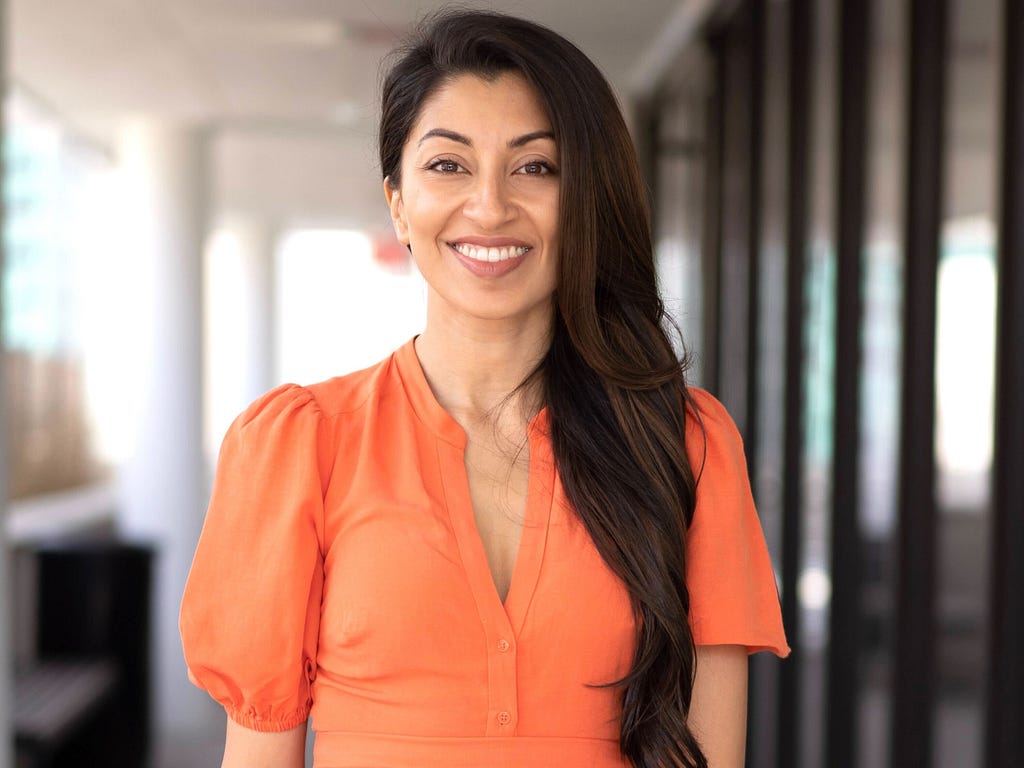
As a part of our series about women who are shaking things up in their industry, I had the pleasure of interviewing Maya Nijhawan.

Maya Nijhawan is the Co-Founder & COO of Finch. Finch supercharges your existing checking account, by letting you earn rewards, auto-invest, and build credit without debt — all without the need to switch bank accounts. Maya is a personal finance expert and co-founded Finch to spread financial literacy and build the tools to help people put their money to work in a meaningful way to live their best lives. Maya is a certified Chartered Accountant with over ten years of experience across professional services and corporate strategy. She is passionate about financial access and is motivated to help to close the gender, generational and racial wealth gaps. https://finchmoney.com/

Thank you so much for doing this with us! Before we dig in, our readers would like to get to know you a bit more. Can you tell us a bit about your “backstory”? What led you to this particular career path?

My path to entrepreneurship has been a convergence of my life experiences, values, and passions.

Growing up as part of an extremely hardworking first-generation immigrant family, I learned the value of a hard-earned dollar early in life. My parents worked tirelessly to give my sister and me access to opportunities and resources they didn’t have. Thanks to them, I had a wonderful childhood — the only times I remember being unhappy is when I saw my parents under financial burden.

From a young age, it became hardwired in me to think about how I could make the most of my money and help myself and my family live life in a way where we’re not limited by our finances.

This mindset shaped my career path — I have a background primarily in Finance and Accounting; I’m a Certified Chartered Accountant and spent the first ten years of my career across professional services and corporate strategy at consumer and tech companies.

Ultimately, I had the realization that at the core of each of my roles, I’d been tasked with helping to convince people to spend more money, where my values and interests aligned with empowering people to be smarter with their money.

Recognizing the financial obstacles that hold people back from achieving their goals, I became motivated to spread financial literacy and build the tools to help people put their money to work in a meaningful way. That’s exactly what we’re doing at Finch.

Can you tell our readers what it is about the work you’re doing that’s disruptive?

Finch has built the first and only Rewards Card that helps you invest & build credit without debt.

Our rewards card links to your existing checking account earn you up to 5% cashback on all purchases (anywhere!), and auto invests it to help your money grow! When you spend, we spot you and automatically pay ourselves back with the cash in your linked checking account. We report all your spending as credit-worthy payments to the credit bureaus so you build credit, debt-free!

The Finch Rewards Card is a card that anyone can access and equally benefit from. A card where no one has to worry about credit checks, hidden fees, and predatory APRs — ever!

We’re changing the game.

Can you share a story about the funniest mistake you made when you were first starting? Can you tell us what lesson you learned from that?

It’s funny now, but at the time, I was mortified! When we first started, we named our company “Trio” (based on the three basic types of financial investments — cash, stocks, and bonds). Embarrassingly, a customer let me know they tried to look us up on the app store, only to find adult entertainment apps. Whoops!

We had discussed and agreed on the name amongst our team and this association never occurred to us! The lesson I learned was to speak to your customers early and often — they’re smart and bring great perspectives.

We all need a little help along the journey. Who has been some of your mentors? Can you share a story about how they made an impact?

Mentors and coaches have played an important role in most aspects of my life.

My recommendation to entrepreneurs starting out is to surround yourselves with supportive founder friends and get yourself a coach. The last couple of years have been a rollercoaster and having a support system that understands the process I’m going through and that I can turn to for advice and pep talks has been invaluable.

In today’s parlance, being disruptive is usually a positive adjective. But is disrupting always good? When do we say the converse, that a system or structure has ‘withstood the test of time’? Can you articulate to our readers when disrupting an industry is positive, and when disrupting an industry is ‘not so positive’? Can you share some examples of what you mean?

In the context of financial services, there has been a ton of innovation and disruption over the last 10 years. This innovation has offered numerous benefits for customers (e.g., lower costs, personalized services, increased access to investment opportunities and insurance products, and alternative payment options).

That said, these advances have come with some unintended consequences. For example, while increasing access is important, making potentially risky financial investments (e.g., options) available to customers without them being fully aware of the consequences of their actions can be damaging. Amidst ‘meme stock’ mania, many investors using commission-free brokerages unknowingly risked their financial livelihood, as the proper education and safeguards were not in place.

For me, the disruption that forces incumbent players to change their business models is a signal of progress. Will these changes stand the test of time? Yes — but only until they are disrupted again in the future!

Can you share 3 of the best words of advice you’ve gotten along your journey? Please give a story or example for each.

  1. “Don’t focus on climbing the ladder, instead prioritize gathering the tools” — The worst job decision I made early in my career was accepting a role for the title. This advice led me to find roles that allowed me to surround myself with incredible people and opened the doors to countless learning opportunities.
  2. “Focus on things you can control” — As caring individuals, we can sometimes get consumed with trying to help, fix, or change people and situations that we have no control over. These things can take up a significant portion of our headspace and lead to self-neglect and emotional exhaustion. This advice reminds me that just because you limit the amount of headspace you give a situation or individual doesn’t mean you don’t care. Choosing to spend your positive energy and attention on things you can genuinely control is one of the best things you can do for your mind and productivity.
  3. “Give yourself pep talks” — Over the recent years, I’ve learned the power of self pep-talks. When self-doubt Pacman’s its way to the front of your mind, a little pep from a friend or guidance from someone you trust can go a long way, but sometimes what you really need the most is reassurance from within.

We are sure you aren’t done. How are you going to shake things up next?

Oh, I’m just getting warmed up. Watch this space!

In your opinion, what are the biggest challenges faced by ‘women disruptors’ that aren’t typically faced by their male counterparts?

There is an epic gender funding gap in venture capital. A lack of funding is one of the greatest challenges for women disruptors. In 2021, Female founders secured only 2% of venture capital in the U.S — 2%!!

Do you have a book/podcast/talk that’s had a deep impact on your thinking? Can you share a story with us?

There are soooo many. I’ll share my latest and most loved addition from someone I look up to dearly. Payal Kadakia, Founder of Classpass, recently published her book Lifepass and I’ve already read it cover to cover twice.

There are soooo many. I’ll share my latest and most loved addition from someone I look up to dearly. Payal Kadakia, Founder of Classpass, recently published her book Lifepass and I’ve already read it cover to cover twice.

As an entrepreneur, when you’re so passionate about what you’re building, you can become highly consumed and let other parts of your life slide — something I’m personally working on.

Payal is somebody that authentically models what it means to live a holistic life of passion and purpose. In Lifepass, Payal shares raw and vulnerable insights into her life, her personal struggles, and advice on various topics using anecdotes from her time building Classpass. She shares her personal system and goal-setting method for living a full life on your terms. It’s an inspiring read, and I highly recommend it!

You are a person of great influence. If you could inspire a movement that would bring the most amount of good to the most amount of people, what would that be? You never know what your idea can trigger. 🙂

A movement to get personal finance taught as part of our school curriculum. Financial literacy is relevant for all students, irrespective of the career they pursue. It’s our responsibility to help students acquire the crucial life skills to be confident, empowered, and self-sufficient members of society.

I want to see young folks as excited about investing as they are to get their driver’s license — they both give you freedom in their own ways.

Can you please give us your favorite “Life Lesson Quote”? Can you share how that was relevant to you in your life?

Life Quote:

“Here’s to the crazy ones, the misfits, the rebels, the troublemakers, the round pegs in the square holes … the ones who see things differently — they’re not fond of rules, and they have no respect for the status quo. … You can quote them, disagree with them, glorify or vilify them, but the only thing you can’t do is ignore them because they change things. … They push the human race forward, and while some may see them as the crazy ones, we see genius, because the

people who are crazy enough to think that they can change the world, are the ones who do.” — Steve Jobs

How it is relevant to my life:

Objections, rejections, and judgments from preconceptions come hand in hand with entrepreneurship. For me, this quote is a daily source of inspiration and a reminder never to let anyone’s doubts stop you from seeing things differently and dreaming big because you might just change the world! 🙂

How can our readers follow you online?

You can follow me on TikTok at https://www.tiktok.com/@mayanijhawan and on LinkedIn https://www.linkedin.com/in/mayanijhawan/

Our website is finchmoney.com

This was very inspiring. Thank you so much for joining us!


Female Disruptors: Maya Nijhawan Of Finch On The Three Things You Need To Shake Up Your Industry was originally published in Authority Magazine on Medium, where people are continuing the conversation by highlighting and responding to this story.

Women In Wellness: Olivia Wu On The Five Lifestyle Tweaks That Will Help Support People’s Journey…

Women In Wellness: Olivia Wu On The Five Lifestyle Tweaks That Will Help Support People’s Journey Towards Better Wellbeing

An Interview With Candice Georgiadis

Be around people who wants to see you succeed — I wish I had learned the importance of this in my earlier years and cherished those who offered honest and constructive feedback. The people who cheer for your wins but at the same time calls you out are special. Keep them around! As entrepreneurs, we all at times feel overwhelmed, that we are alone trying to figure it all out. Your supporters are going to be your pillars keeping you motivated and lifted in moments when you doubt yourself.

As a part of my series about the women in wellness, I had the pleasure of interviewing Olivia Wu.

Olivia Wu is a writer, certified meditation teacher, and creator of Soulove — a wellness community focused on personal development, authenticity, emotional mastery, spirituality, social issues, and featuring experts who share their personal transformation stories. Olivia left her full-time job in advertising after 20+ years to pursue a career more aligned with her desire to inspire a heart-based society through her work. She believes who we are at our core defines our capacity for joy and purpose, and who we are collectively sets the fate of our planet and the future of humanity.

Thank you so much for joining us in this interview series! Our readers would love to “get to know you” better. Can you share your “backstory” with us?

Well, I have always been drawn to ancient literature and spirituality since accidentally picking up one of my grandfather’s books when I was 8 years old. I remember it vividly. It was a rainy afternoon in Shanghai, where I was born and raised, and I was bored out of my mind not being able to play outside and looking for anything to do. When I went through my grandfather’s bookshelf and started reading classic Chinese literature, I couldn’t put it down. I was particularly drawn to the Buddhism and Daoism aspects of it. Before you know it, I went through all of his books and began to expand my interest for more knowledge and connection.

Then my whole family moved to Los Angeles when I was 11 years old, with $60 and 3 suitcases of our belongings, and my world was turned upside down. We had a rough time adjusting to the vastly different culture here in the U.S. We have gone through confusion, frustrations, turmoil, individuality and as a family. Life suddenly was about survival and it felt as we threw everything we used to know out the window. I struggled with my identity, as well as loneliness and depression for a long time.

Fast forward 20 years, I graduated college and pursued a career in graphic design and art direction, working for corporations and advertising agencies. At last, I thought, a successful and stable career would resolve all my problems and past traumas, but I was deeply unhappy. It was around that same time I was going through divorce and realized how much my mental health was neglected and how important it is for my overall well-being. That’s when I first began practicing meditation. It would take me another decade to work through some of the deeper wounds that was never processed.

After much personal growth over the years, I feel I have not only comfortably integrated my Eastern and Western thinking and ways of life, I also feel resilient to life’s ups and downs and far less prone to emotions spirals. All I want to do now is inspire others to do the same by teaching the techniques I’ve acquired from my long search for happiness.

Can you share the most interesting story that happened to you since you started your career? What were the main lessons or takeaways from that story?

To me, the most interesting (and surprising) thing was that I started writing. I had never written anything before other than advertising copy. Being that English is my second language, I had never planned or desired to write, nor did I feel I would ever be good enough to write anything worth reading. At the same time, I felt there was a tremendous amount of information as well as personal stories I needed to share, so I started a blog.

Through the help and encouragement of a writer friend, I began my writing journey. My blog community Soulove is almost a year and half old now, filled with articles about healing, self-growth, and have attracted many successful entrepreneurs in sharing their personal transformation stories!

In all honesty, it took me a while to get comfortable with writing — it did not come naturally and easily to me like my other gifts. I had wanted to give up a few times and still doubt myself from time to time if my writing is of any value, but whenever I receive a message from a reader saying, “You will never know how much I needed to hear this… thank you!” is when I feel the purpose to keep going, keep writing.

What I’ve learned through this experience is that there is no wrong way to discover your purpose. Most of us, because of various circumstances, don’t just have our life purpose fall into our laps. In many cases, we become it, starting with an impulse, then feelings of being magnetically pull towards it, and then through consistently doing.

Can you share a story about the biggest mistake you made when you were first starting? Can you tell us what lesson you learned from that?

Well off the top of my head, and I don’t really consider it a big mistake rather than a “D’OH!” kind of moment, LOL. I remember teaching one of my very first group meditation classes online by myself, logging on with 25 others who signed up for the class. I felt excited at the turn out, and without much thought, I said hello, asked how everyone’s doing, then jumped right into the meditations. After the class, which went well, except people were not as engaging as I thought they would be, I suddenly realized that I had forgotten to introduce myself! On top of that, I had given no background of what we were going to do and how the class will progress. There were several other disadvantages I hadn’t considered that comes with hosting a virtual class — people not being able to see my space and the tools I’m using and that they relied on my verbal cues to guide them along. It is no wonder there was not a whole lot of engagement.

I established some important reminders for myself that day, to be mindful of my teaching environment; to put myself in the shoes of beginner meditators who are still learning and looking to me for step-by-step guidance; and to assume a mixture of levels is in attendance in a group classe and give as much details as possible.

Let’s jump to our main focus. When it comes to health and wellness, how is the work you are doing helping to make a bigger impact in the world?

Other than writing about my personal story and showing my readers that personal transformation for the better is indeed possible, I am passionate about spreading meditation. To say meditation saved my life is not an exaggeration. I had so much internalized anger and confusion, was struggling with chronic depression, and felt like anything I do was hopeless. Over the years, through different techniques I’ve acquired from different teachers, I was able to do the healing and growing I needed.

It was through engaging with my readers and other writers I realized I was never alone like I thought I was. So many of us are wounded whether from childhood or relationships or career, and we feel stuck with our incessant thoughts or emotions. It’s one of the reasons, I believe, why our world is in such turmoil right now. There are so much unregulated emotions and lack of clarity evident even in those who are world leaders. I believe if everyone meditated, we would all live in a more peaceful environment and make better decisions in life. So I hope to help more people develop a consistent mediation practice, or heal, grow and succeed with the practice of meditation.

Can you share your top five “lifestyle tweaks” that you believe will help support people’s journey towards better wellbeing? Please give an example or story for each.

Without getting too deep into developing habits and mindsets, here are 5 of my favorite simple lifestyle “tweaks” anyone can make to live healthier and happier.

  1. Find time to connect with nature — We are typically surrounded by positive ions in our modern daily lives. Exposure to excess can have poor health consequences. When our environment and body are out of balance we experience fatigue, allergies, infections, and in severe cases, diseases. Positive ions are mostly concentrated indoors and are associated with household electronics, fluorescent lighting, metal, plastics, carpet, air pollution, etc. whereas negative ions are found in natural elements. High concentrations of negative ions can be found in areas of mountains, ocean, waterfalls, lakes, streams, dirt/earth, etc.
    Here are a few quick and easy ways to connect with nature every day:
  • Gardening — handling soil
  • Walking barefoot in a grassy park
  • Walking barefoot on a sandy beach, or swimming in a lake
  • Hiking in a nature trail
  • Breathing deeply in fresh air
  • Soaking in sunshine

2. Smile often — Smiling actually does wonders for our mental health, even if it’s a little forced. Neuroscience has said the pleasure we get from smiling is equivalent to eating 2,000 chocolate bars or receiving $25,000. Reason being our smile is directly linked to the brain signaling us to do so when we receive stimuli of pleasure, amusement, or excitement. The reaction is autonomic ― we can’t help ourselves. When we smile, even if it’s forced, we signal back to the brain that we’re enjoying ourselves and prompting the release of feel-good neurotransmitters such as dopamine, not to mention the feel-good responses we usually get from others from our smiles. Next time you walk by a mirror, give yourself a big smile and observe how that makes you feel ☺

3. Move your body — Don’t sit for too long, don’t stand for too long. Basically don’t lock yourself in one position for a long period of time. Every hour or so, look into the distance, move a different part of your body so that oxygen flows, your energy does not become stagnant, and your muscles will not develop atrophy.

4. Breathe deeply — Sounds almost silly, doesn’t it? The truth is, most of us take shallow and rapid breaths. We can even catch ourselves holding our breaths throughout the day. Most of us actually don’t really know how to breathe. If we take a moment and think about what keeps us alive, we’d take breathing more seriously. Breathing deeply will maximize our lung capacity and oxygen intake — our vital life force. Breathing deeply will also slow down our heart rate and reduce stress almost instantly. Breathing exercises such as Box Breathing or Diaphragmatic (yogic) Breathing are great ways to regulate breathing and develop mindfulness at the same time.

5. Meditate — You knew that was going to be one of my answers!

Many people have meditated or are curious about meditation but have not locked down a consistent daily practice. The number one reason I keep hearing is “I can’t meditate, I think too much.” or “I can’t even sit still for 2 minutes.” And then there are “crisis meditators” who only meditate when they are stressed or when life gets hard but drop their practice when they feel things are back to normal. I also don’t think most people are aware of the scientific studies on just what meditation does for our overall wellbeing. Stress relief and relaxation usually comes to mind first, but there are other astounding scientific proof on benefits such as lowering blood pressure, anti-aging, boosts immunity, and improving memory and concentration with consistent practice. These health benefits alone are enough for me to want to commit to meditation.

The common misconception is that meditation is hard, and people think they must sit still and not have any thoughts, otherwise they’re doing it wrong. But the most important part of meditation is just doing it, even if it’s just for 30 seconds.

If you could start a movement that would bring the most amount of wellness to the most amount of people, what would that be?

I wanted to jump to my most expected answer, which is meditation, but it really is about mindfulness. Every aspect of our wellness comes down to how much attention we give to selfcare and care for the environment around us, which includes relationships, living space, our own energy, and so much more. This may all sound complicated and burdensome, but when we realize how interconnected we all are to each other and all living things around us, we start to understand how much our thoughts, words, and actions affect one another, and in turn, affect ourselves. That is fundamentally my definition of Karma, Law of Attraction, and Fengshui.

The reason why I keep going back to the practice of meditation is because all of the mindful habits and so-called responsibilities all starts within ourselves. We are only capable of caring for others as much as we care for ourselves.

What are your “5 Things I Wish Someone Told Me Before I Started” and why?

Transitioning to an entrepreneur from a 20-year history of full time jobs, I would say:

  1. Be around people who wants to see you succeed — I wish I had learned the importance of this in my earlier years and cherished those who offered honest and constructive feedback. The people who cheer for your wins but at the same time calls you out are special. Keep them around! As entrepreneurs, we all at times feel overwhelmed, that we are alone trying to figure it all out. Your supporters are going to be your pillars keeping you motivated and lifted in moments when you doubt yourself.
  2. Let go of your past versions of self — When we set out on a new endeavor, it’s hard to let go of the familiar, especially the identity of who we are, who we have been. This is actually hard work, but necessary. If we want to go where we haven’t gone before, we have to become who we’ve never been before. That includes doing things differently, adopting a new thinking pattern, and let go of the old voices in your head telling you how things “should” be done.
  3. When things are not working, slow down and get clarity — I have always been a bit of an overachiever, wanting to move at 100mph, otherwise I feel unproductive. But as I learn and grow, I see more and more how sprinting in zigzags is in fact, a much slower way than taking small, decisive steps in a straight line toward my destination. I don’t feel guilty anymore for taking time off to get crystal clear on what it is my heart truly wants before leaping forward. So when you are just doing busy work and your efforts are going nowhere, instead of getting frustrated with yourself, tell yourself it’s okay to take a step back and think about what you’d rather be doing.
  4. Honor your own body’s rhythm — This came to me when I realized I am now an advocate of wellness, and in a position to lead by example. I believe many of us are passionate about wellness because we’ve seen or experienced what stress and burnout does to a human body, and we don’t want to live that way. It’s important that we listen and respect what our own body is trying to tell us, since no two bodies are the same. That includes both processing and releasing emotions and attending to discomforts in the body.
  5. At the end of the day, trust your own instinct — When I first started, I was quite unsure of myself. I was starting something completely new and different; I felt a bit like fish out of water, going from being an industry expert to not knowing how anything worked. As much as I believed in my own heart’s guidance, I wanted advice from everyone and anyone who would offer it. I did lots of research, read, listened to podcasts, talked to friends, and tried many of the suggestions from those resources, even when I didn’t feel like they necessarily aligned with my ideas or direction. In hindsight, this experience further affirmed how important it is to trust and stay true to my own visions.

Sustainability, veganism, mental health and environmental changes are big topics at the moment. Which one of these causes is dearest to you, and why?

While sustainability and environmental changes are topics I follow, mental health is by far the topic I am most actively involved in, on a daily basis. It is a topic very close to my heart, from painful personal experiences to witnessing others around me who have suffered as well. The majority of my work now including my writing and meditation teaching revolve around the topic of mental health and personal transformation. Seeing all that’s happened in the world the past 2 years have also opened my eyes to just how much suppressed hurt there is in the world.

Growing up in the Chinese culture, mental and emotional health were not topics of discussion in communities. They were considered unimportant. Most discussions were about money and education. Traumatic events in life are usually swept under the rug and never brought up again within each family. It is also unacceptable to talk about it with other people because it brought shame to the family. So I’ve always felt alone with my emotional struggles growing up and even as an adult. As I got older, many have revealed to me their struggles with mental health, or that of a family members’, sometimes resulting in tragedy. It made me realize that it’s not that I was weird and alone, it’s that no one felt it safe enough to talk about these struggles. That they were too, judged and dismissed whenever they tried. Having realized that further makes me want to hold spaces, create workshops, and share stories to help those who want to heal.

What is the best way our readers can follow you online?

They can follow me on Instagram or Facebook @soulovestudio for quotes, insights, stories, and upcoming events. They can also visit my website and subscribe to my newsletter, or get in touch with me at contact@soulovestudio.com.

Thank you for these fantastic insights!


Women In Wellness: Olivia Wu On The Five Lifestyle Tweaks That Will Help Support People’s Journey… was originally published in Authority Magazine on Medium, where people are continuing the conversation by highlighting and responding to this story.

Female Founders: Dayna Pereira of The Entertainers Network On The Five Things You Need To Thrive…

Female Founders: Dayna Pereira of The Entertainers Network On The Five Things You Need To Thrive and Succeed as a Woman Founder

An Interview With Candice Georgiadis

Work to live, don’t live to work. Remember that there is so much more to life than how you make money. You can be passionate about your business, but remember that that is only a small portion of you. Don’t forget to take the time to experience the world, your family, friends, and every other part of what lights you up.

As a part of our series about “Why We Need More Women Founders”, I had the pleasure of interviewing Dayna Pereira

Dayna Pereira is a self proclaimed Participation Trophy Wife and mother of four. She runs her business as the Celebrity CEO of The Entertainer’s Network. She’s also the on-air Host of two popular podcast series’ and a Social Media and YouTube personality.

Thank you so much for doing this with us! Before we dig in, our readers would like to get to know you a bit more. Can you tell us a bit about your “backstory”? What led you to this particular career path?

Yes! I started a show a few years ago and I had to grow it myself. I did everything from editing, to writing, to social media posting and learning how to do graphics and video! The show grew over time but I realized how tight to the chest everyone kept their “growth secrets”. After successfully launching two shows and growing on social media, I decided to start The Entertainers Network as a way to help other entertainers get a leg up in the industry.

Can you share the most interesting story that happened to you since you began leading your company?

I got the idea when someone jokingly asked if I wanted to buy THEIR company! Their company was different, but it really got the wheels spinning in my head. I started to think about all the possibilities and things I would change had I actually bought it. That company no longer exists, but it was the catapult of The Entertainers Network! Since then, I have interviewed several leaders in the industry and have grown my company in a short amount of time@ I am really looking forward to what we can do in the future!

Can you share a story about the funniest mistake you made when you were first starting? Can you tell us what lesson you learned from that?

Oh boy! So many mistakes! The funniest was on social media. I have two other shows, my personal social media, AND my company all on my phone. I completely forgot to switch to The Entertainers Network and ended up posting and tagging a bunch of people on That Trophy Wife Life’s social media page. I got so many messages asking me what they were being tagged in before I realized it was the wrong social media profile. MOM BRAIN.

None of us are able to achieve success without some help along the way. Is there a particular person who you are grateful towards who helped get you to where you are? Can you share a story about that?

I’ve gotten amazing advice from people in the Industry. Brimstone, my Cohost on The Dirty Little Secrets Club, has been in the entertainment industry for decades. He is always sharing his insight and giving me stellar advice and support. My husband is another one. Although he is not in the entertainment industry, he runs a very successful business and has been such an incredible help when it comes to the business side of things. Also, there have been a handful of celebrities that have contributed to make The Entertainers Network stand out and some of that is coming soon!

Ok, thank you for that. Let’s now jump to the primary focus of our interview. According to this EY report, only about 20 percent of funded companies have women founders. This reflects great historical progress, but it also shows that more work still has to be done to empower women to create companies. In your opinion and experience what is currently holding back women from founding companies?

In my opinion, I think it may be because women are expected to do it all. We are the caretakers, the chefs, the drivers, the housekeepers, the nurses, the snack holders, the cheerleaders, etc.. Running a family, being the perfect wife, the perfect mom, AND running a business can be overwhelming. It can feel like there are not enough hours in the day and that we are dropping the ball in other places. The mom/wife guilt is real! Todays society puts so much pressure on women to be perfect at everything and leaves very little wiggle room for mistakes. We are told we’re bad moms if we don’t have time to volunteer in the classroom, or we’re bad wives if we aren’t measuring up to our 20yr old selves in the bedroom after taking care of everyone else all day. We’re selfish if we want to do something for ourselves, but the same societal pressures aren’t applied to men. I’m not saying men don’t have pressures, of course they do, but they are different. Men aren’t expected to take such an active role in the family after working all day. However, I think that we have been evolving! At least I hope!

Can you help articulate a few things that can be done as individuals, as a society, or by the government, to help overcome those obstacles?

As individuals, it is so important to have a partner that supports your dreams. Like, REALLY supports them. Allows you the time and space to work toward them, and doesn’t mind picking up the slack when you can’t do it all. I think as a society, we should stop glorifying working ourselves to death. So often you hear about a woman that “does it all”, but doing it all is not healthy! We all need time to recharge. Let the laundry go, skip that 4 yr olds birthday party you’ve been dreading, and take time off! I have had to remind myself several times that the only person that cares if I don’t get something done for MY company is ME! And if I allow myself to do it tomorrow, the world is still going to turn. If I keep doing things every day, I will reach my goals. I don’t have to do it all in one day.

This might be intuitive to you as a woman founder but I think it will be helpful to spell this out. Can you share a few reasons why more women should become founders?

Woman are so extraordinary. We are strong, and we are soft. Women have a unique way of being successful because we can be fierce, while also having empathy and understanding. Being firm in your beliefs and in your goals with a flexibility that allows for mistakes and for roadblocks is a unique formula for women to be successful in business.

What are the “myths” that you would like to dispel about being a founder? Can you explain what you mean?

Myth: there is only room for a few at the top. I think a limited mindset leads to limited success. I will cheer on other women in their business. I will help when I can and I will clap when they succeed. I like to think with an abundance mindset. Our potential and our successes are limitless and there is enough out there for us all!

Is everyone cut out to be a founder? In your opinion, which specific traits increase the likelihood that a person will be a successful founder and what type of person should perhaps seek a “regular job” as an employee? Can you explain what you mean?

I do think that everyone can be cut out to be a founder… with the right tools and mindset! Unfortunately, we have things that are “taught” to us that are beyond our control. We think small because we are told that is what we should do by people we trust. However, there are people that are happy to not worry about running a company. They enjoy doing their part and going home, and that is lovely too! It really boils down to what lights a person up. Everyone has something different and all of the roles are equally important.

Ok super. Here is the main question of our interview. What are your “5 Things I Wish Someone Told Me Before I Started” and why? (Please share a story or example for each.)

  1. Rome wasn’t built in a day: I am a fairly impatient person. If I have an idea in my head, I want to see it come to fruition yesterday. I worked tirelessly to get it started, and I wish someone would have told me that “faster doesn’t mean more successful”. I could have taken a break, thought things over more, took some time to recharge. It probably would have led to less mistakes and do-overs had I taken my time more.
  2. Ask for help from a coach or mentor! The best way to become successful is to ask successful people! Most successful people are happy to tell you what they learned along the way. Asking someone you look up to can save you a lot of time, mistakes, and headaches in your own business journey! Asking my mentors really helped to put some things in perspective and it also showed me that I am not the only person that went through certain obstacles on my journey!
  3. Don’t compare your day one to someone else’s day one hundred. Actually, don’t compare at all! You are uniquely you which allows you to put your own unique spin on your business. You will reach the people that you are supposed to, and whether that is 100 people are 1,000,000 people, your journey and business are still relevant and important.
  4. Slow growth is still growth! As long as you are continuously working toward your goal, you will grow. Your business will grow. There is no such thing as an overnight success. They only call it that because they didn’t see the time and hard work that came before the success.
  5. Work to live, don’t live to work. Remember that there is so much more to life than how you make money. You can be passionate about your business, but remember that that is only a small portion of you. Don’t forget to take the time to experience the world, your family, friends, and every other part of what lights you up.

How have you used your success to make the world a better place?

I use my social media presence to spread kindness, laughter, and help organizations that are close to my heart! MuttScouts is a great southern CA organization that rescues dogs and I love to support them. I also support Entertainers in all genres by supporting their dreams and lifting them UP. I use my business to feature them, publish, educate, and inspire. There are so many talented and exceptional entertainers out there and I am so proud to be a person that assists them on their journey.

You are a person of great influence. If you could inspire a movement that would bring the most amount of good for the greatest number of people, what would that be? You never know what your idea can trigger.

I would inspire people to always lead with love. No matter the circumstance. That guy cut you off? Lead with love. Maybe he had an emergency he needed to get to. That waitress was rude? Lead with love. Maybe her grandma is sick and she’s stuck at work. You never know what people are going through and I think the world would be infinitely better if we all chose to lead with love.

We are very blessed that some very prominent names in Business, VC funding, Sports, and Entertainment read this column. Is there a person in the world, or in the US with whom you would love to have a private breakfast or lunch with, and why? He or she might just see this if we tag them.

Kandee Johnson! I follow her social media and she truly is beautiful inside and out. She’s creative, talented, self built, and spreads so much love and kindness. I admire the way she handles adversity and loves on her family. There is so much that I would pick her brain about. She genuinely seems fun and like she would use her powers for good. Kandee, hit me up! I’ll buy you lunch!

Thank you for these fantastic insights. We greatly appreciate the time you spent on this


Female Founders: Dayna Pereira of The Entertainers Network On The Five Things You Need To Thrive… was originally published in Authority Magazine on Medium, where people are continuing the conversation by highlighting and responding to this story.

Female Founders: Harmony Pilobello and Shilpa Iyengar of Alterre On The Five Things You Need To…

Female Founders: Harmony Pilobello and Shilpa Iyengar of Alterre On The Five Things You Need To Thrive and Succeed as a Woman Founder

An Interview With Candice Georgiadis

It will always take more time than you think. We originally started Alterre thinking it would take us 6 months to get working samples and a factory secured. We even signed up for a tradeshow and had to postpone it because we had paid the deposit! In the end, it took us 2 years to launch Alterre.

As a part of our series about “Why We Need More Women Founders”, I had the pleasure of interviewing Harmony Pilobello and Shilpa Iyengar.

Harmony and Shilpa are the Co-Founders of Alterre, a modular footwear brand that emphasizes comfortability and sustainability. Using a patented stud technology, Alterre offers footwear that maximizes your style while reducing waste through interchangeable straps and high quality, thoughtfully-chosen materials. Also valuing fair factory worker conditions and female-empowerment initiatives, Shilpa and Harmony have thoroughly vetted the factories they work with to ensure fair labor practices, and donate 5% of all Alterre proceeds to Restore NYC, a nonprofit organization that provides long-term rehabilitation for survivors of sex-trafficking; additionally, the pair serve as Entrepreneurs-in-Residence, providing peer-to-peer counseling for survivors who are founding their own businesses.

Thank you so much for doing this with us! Before we dig in, our readers would like to get to know you a bit more. Can you tell us a bit about your “backstory”? What led you to this particular career path?

[Shilpa] It all happened fairly organically. We met each other while studying fashion at Parsons the New School for Design and bonded over our love for Victorian cemeteries (specifically, Greenwood Cemetery in Brooklyn, New York). After graduating, I recruited Harmony to join me on a potential licensing project and from there, the magic kept on rolling. We started testing market viability with capsule collections and eventually landed on footwear. At the time, both of us loved traveling, lived in tiny apartments, and commuted predominately by foot around NYC. It felt like a natural progression to use my background in footwear and Harmony’s background in sustainability to build something for people like us — not just city dwellers, but career-driven women who want it all (family and a career).

Can you share the most interesting story that happened to you since you began leading your company?

[Harmony] Oh! That’s a tough one. There’s so many. If anything it’s been interesting seeing how small the world can feel at times. We did this winter show once as our first foray into trying a pop up store. It was located in midtown across from Carnegie Hall in New York. One day, this woman who had been working one of the booths next to us asked if we knew someone named Kiko (last name kept anonymous), who is our lead research and development person in Brazil. After some initial awkwardness of thinking “how does this person know who we know in a completely different country?”…it turned out she was his daughter! We had no idea at the time that one of his kids was based in New York or that she would take a sales job by chance.

Can you share a story about the funniest mistake you made when you were first starting? Can you tell us what lesson you learned from that?

[Harmony] Oh wow. I’m trying not to laugh just talking about it, but at the very beginning of starting our business we overcompensated for being as frugal as possible. To save money on shipping, we decided to buy a giant roll of corrugated cardboard because we thought we would cut all the shipping boxes out ourselves. It was huge! I mean, literally wider than either of us could carry alone and we had to roll it around to move it anywhere. When we finally had our first order, we sat there cutting out a box shape and thought “why the heck are we doing this again?!” We have a saying now that we repeat to ourselves when we think we’re going to make the same mistake of The-Giant-Cardboard-Dilemma-2015: Work Smarter, Not Harder. Our time is just as valuable as the money spent to run a business.

None of us are able to achieve success without some help along the way. Is there a particular person who you are grateful towards who helped get you to where you are? Can you share a story about that?

[Harmony] You know that saying “it takes a village to raise a child?” That’s what it really feels like, but the child is Alterre. We’ve been very fortunate to meet several people along the way who believe in us and help us however they can. We’re recently feeling blessed for our consultants Helaine Suval and Laura Hall. They brought their insider knowledge after decades of experience in the fashion industry to help us navigate the pandemic and come out even better than we were before. We couldn’t have made it through the past two years without them.

Ok, thank you for that. Let’s now jump to the primary focus of our interview. According to this EY report, only about 20 percent of funded companies have women founders. This reflects great historical progress, but it also shows that more work still has to be done to empower women to create companies. In your opinion and experience what is currently holding back women from founding companies?

[Harmony] Oof. There are so many layers as to what could be holding women back including the recent she-cession. If I had to list it, I would say 1) childhood conditioning to nurture others first 2) pay gap, and 3) lack of funding and/or underfunding compared to male counterparts.

Can you help articulate a few things that can be done as individuals, as a society, or by the government, to help overcome those obstacles?

[Harmony] As a society, I think we need to reframe our educational system and the way we raise our daughters. Instead of placing emphasis on nurturing activities like baking parties or sleepovers, help her make a business like a lemonade stand or give her an allowance for investing time on something she is interested in. I’d like to think that if I have a daughter one day, I would give her the financial support to spend time on her interests over doing chores around the house. For individuals able to invest, making capital as accessible as possible to women would be a game changer. The same goes for the government offering more small business grants for female founders, or low interest loans. As a boss, I would say be aware of the tendencies and pay your employees equally. The wage disparity between men and women puts us in a vulnerable financial place before we even reach other milestones, like starting a family or buying a home. As a result, we (women) have less of a cushion to bet on ourselves early in our career. Overall, we need more streams of initial capital and it needs to be accessible.

This might be intuitive to you as a woman founder but I think it will be helpful to spell this out. Can you share a few reasons why more women should become founders?

[Shilpa] I think the business world would generally benefit from more women founders! Having a female founder brings much more empathy to a company’s culture. I think toxic workplaces are the reason people prefer to work from home or switch jobs so often. It’s definitely not the way forward to retain talent. I think women can empathize with having obligations at home more, and needing a more flexible schedule. Basically, treating the people in the company as individuals instead of cogs in the machine. Other than empathy, having more women founders can help further raise the standard for what companies should do for women in order for them to remain in the workforce; such as equal pay, extended maternity/paternity leave, or help with childcare. A female founder normalizes women as leaders and inspires the next generation of girls to reach for the stars.

What are the “myths” that you would like to dispel about being a founder? Can you explain what you mean?

[Shilpa] I think one of the biggest myths is the “visionary founder” as just the executive head of a company, taking meetings and making deals. In reality, founders are really in the weeds, and involved with every aspect of the business! I like to tell people that I’m the janitor and the CEO. Being a founder really means that you are doing 10 peoples’ jobs at once. You kind of have to be a jack-of-all-trades while learning on the job, and having doubts about whether or not what you are doing is right. It’s a lot of hard work to create something out of nothing and the successes are a series of small achievements over time. It’s not as glamorous or simple as thinking of an idea, raising money, and being the boss of a large company within a year.

Is everyone cut out to be a founder? In your opinion, which specific traits increase the likelihood that a person will be a successful founder and what type of person should perhaps seek a “regular job” as an employee? Can you explain what you mean?

[Shilpa] It’s definitely not the right path for everyone. As I said before, it isn’t as glamorous as it sounds and sometimes it is better to be able to leave work at work instead of being consumed by it. There is absolutely nothing wrong with taking a “regular job” in favor of a more steady life! A job is the right path for someone who wants a bit more structure and is risk-averse (and especially someone who needs a guaranteed steady income). This all being said, I think a successful founder needs to be passionate about what they will do. It will become your whole life, so you should really want to work on whatever it is all the time. They should be self-motivated because you will be working on your own schedule. No one will give you a deadline and only you can move your company forward. They should be very confident because you have to convince everyone that your idea is worth their time and money. I like to say that there are no gold stars for excellence when you are a founder — sometimes you work hard and make something great, but it isn’t a market fit. In these cases, you have to be confident enough to keep going. Finally, they have to be someone who can take risks, because nothing is guaranteed when you found a business.

Ok super. Here is the main question of our interview. What are your “5 Things I Wish Someone Told Me Before I Started” and why? (Please share a story or example for each.) [Both]

1. It will always take more time than you think. We originally started Alterre thinking it would take us 6 months to get working samples and a factory secured. We even signed up for a tradeshow and had to postpone it because we had paid the deposit! In the end, it took us 2 years to launch Alterre.

2. Don’t jump at every opportunity, because each one has an opportunity cost. We once did a month-long holiday show by the Park Central Hotel in Manhattan because it was a new extension of an established downtown pop-up company. It sounded great in theory, but was probably one of the worst decisions we ever made because we didn’t ask enough questions ahead of time. There was no real support to gain traffic and we were definitely underprepared to staff it ourselves. By doing this we lost out on online holiday sales because we were overextended and couldn’t run effective marketing for our main sales channel.

3. Evaluate the entire picture of the business. Look beyond just designing and producing the product. In our case, shoes are very tricky because you need so many sizes, and that is a lot of inventory you have to buy/keep just to offer one style. They also can’t be shipped flat and weigh more than a garment, so offering the expected free shipping will eat into your profits. Having a new concept will take you longer and cost more to communicate and create awareness for, and sometimes a great “simple solution” is not so simple at all.

4. Make the right connections. Nothing gets your foot in the door more than a great connection. People don’t like to be cold emailed/cold called, but they love to help out a friend of a friend. This has helped us in every facet of our business from sales to marketing. For example, one introduction to a store in Portland led us to being in another store in Seattle, and finding the type of wholesale salesperson we had been looking for for years (no trade show we ever did gave us that).

5. Hire experts. As they say, “you get what you pay for.” Hiring someone unqualified or trying to do it yourself to save money not only wastes time, but it also doesn’t allow your business to grow. Don’t be afraid to outsource something you are not an expert in, because otherwise, you’ll end up wasting money just doing work that doesn’t bring any return. For example, we grew our sales by 50% just by hiring an effective marketing/advertising firm.

How have you used your success to make the world a better place?

[Harmony] I’d like to think we’re paving the way for other brands to pursue sustainable fashion in a 360 degree kind of way. You can be sustainable, ethical, and still scalable, because slow growth is still positive growth. In a more direct way, we’re actively engaged with Restore NYC, a non-profit providing long-term rehabilitation for survivors of sex-trafficking. We have been donating 5% of our profits to the organization since the very beginning and are now Entrepreneurs-in-Residence, or “EIR” members. As EIR’s, we individually dedicate time each month to provide resources and skill sets to clients starting their own business. It’s been so fulfilling to support other women on their entrepreneurial journey as a path to freedom.

You are a person of great influence. If you could inspire a movement that would bring the most amount of good for the greatest number of people, what would that be? You never know what your idea can trigger.

[Harmony] Honestly, there’s already a movement I’m part of as an ambassador for Remake, and I’m passionate about it. If I had the influence to magnify it, I would want every household in the northern hemisphere to change our collective consumption of fast fashion. If we all made the changes, it would not only end the exploitation of factory workers in the fashion industry, who are predominantly women of color, but would also hold the largest fast fashion companies accountable for their actions. I’d like to think the ripple effect of change would be better for the environment, too.

We are very blessed that some very prominent names in Business, VC funding, Sports, and Entertainment read this column. Is there a person in the world, or in the US with whom you would love to have a private breakfast or lunch with, and why? He or she might just see this if we tag them.

Oh man! Only 1?! If it had to be for both of us, then Diane Von Furstenberg.

[Harmony] I would 100% want to meet Jennifer Hyman, the co-founder of Rent the Runway.

[Shilpa] I would love to have lunch with Meryl Streep!

Thank you for these fantastic insights. We greatly appreciate the time you spent on this

Thank you for having us!


Female Founders: Harmony Pilobello and Shilpa Iyengar of Alterre On The Five Things You Need To… was originally published in Authority Magazine on Medium, where people are continuing the conversation by highlighting and responding to this story.

Siobhan Alvarez of She Shines Media: Five Ways For Influencers To Monetize Their Brand

An Interview With Candice Georgiadis

By far the easiest way to monetize your brand no matter the size of your following is through affiliate marketing. Affiliate Marketing allows you to generate income by selling someone else’s product to your audience. You earn a commission when someone makes a purchase through your affiliate link.

As part of my series about “How Influencers Can Monetize Their Brand” I had the pleasure of interviewing Siobhán Alvarez.

Siobhan Alvarez is a mom to two young sons living just outside of Atlanta, GA, who shares her motherhood journey on her successful blog Mimosas & Motherhood, where she shares easy recipes, DIY projects, pregnancy advice, parenting tips and more. After teaching herself how to tackle SEO and generate an income with her blog, Siobhan now teaches other women how to launch their own websites that can generate a real, meaningful income for their own families, too.

She is also the Executive Director of the Atlanta Autism Consortium, a nonprofit organization that provides free educational programs and events for the autism community both in Atlanta and across the country.

Thank you so much for doing this with us! Before we dig in, our readers would love to get to know you a bit more. What is your “backstory”? What brought you to this point in your career?

I started my blog and Instagram platform as a hobby while pregnant with my first child in 2018. I needed a creative outlet that had nothing to do with my full-time job, and also wanted to find a way to connect with other moms-to-be at the same time.

For the next few years, my major focus was growing the community on my social media platforms, and the idea of making it into an actual business really hadn’t crossed my mind… until the pandemic happened. My husband and I watched as friends lost their jobs, and I was faced with the very real possibility that we could end up in the same position, with two young children to take care of.

I decided to throw myself into learning as much as I could about blogging and monetizing both platforms, just in case one or both of us lost our job, too. By the end of that year I had quadrupled my website traffic and was consistently making a full-time income as a content creator, in the part-time hours I had left after working my full-time job and wrangling my two toddlers.

I never expected to be an influencer or blogger, but it’s been such a fun and unexpected journey to creating my own business, and I’m loving the adventure along the way!

Can you share the funniest or most interesting story that happened to you in the course of your career?

I would say for sure the funniest thing that’s ever happened was when I was approached by a company who was convinced that our family had pet squirrels, and could use them to help promote their products. No matter how many times I tried to explain that when I called my children “wild animals” on social media they were still human children, they were pretty persistent!

How have you used your success to bring goodness to the world?

Blogging and influencing has been transformational for our family’s lives. I have loved creating my business, and along the way I realized that truly anyone could have this same kind of success. You just need a little help finding the right education, resources and plan. With that in mind, in 2020 I created a 100% free course to teach other women how to launch their own blogs that are set up for success, and am proud to share that I’ve taught more than 300 women through it. I now also teach content creators how to grow their income through affiliate marketing and paid partnerships, and am excited to continue to expand what this level of support looks like for creators of all different sizes.

You have been blessed with great success in a career path that many have attempted, but eventually gave up on. Do you have any words of advice for others who may want to embark on this career path but know that their dreams might be dashed?

My biggest piece of advice is to take creating a successful online business as seriously as you would preparing to start any other small business. Be prepared to invest in the courses and extra education that will teach you how to grow the right way.

When I decided to get serious about growing my blog and social media platforms into a business, I spent a few months researching what I needed to do to get there, and where I could learn how to do this. I invested in two relatively inexpensive courses that were transformational. I learned so much information that I was able to put into practice right away, and saw a huge amount of growth very quickly.

However, if I had been hesitant about investing in this type of education, I might not have ever learned these types of things, and would probably still only have a hobby blog.

None of us can achieve success without a bit of help along the way. Is there a particular person who made a profound difference in your life to whom you are grateful? Can you share a story?

The person who has been absolutely instrumental in my success with growing the blog and our social media platforms has been my husband. He is such a fantastic cheerleader and motivator and incredibly supportive of my goals. He’s swooped in to help care for our boys in a bigger way, and has shown in so many ways his belief in what I’m doing. I’m so grateful to have a partner who supports and believes in me the way that he does.

So what are the most exciting projects you are working on now? How do you think that might help people?

Right now I’m excited to be working on an expansion of my free blogging course. I’ve heard from so many students over the years that they have learned so much by taking that course, but would love to have a really robust roadmap for success as their websites continue to grow.

With this new course, I’ll teach content creators not only how to get their blogs off the ground the right way, but also help them map out how to be successful and grow it into a business, focusing on SEO, landing paid partnerships, maximizing affiliate links, growing an audience and more!

What are your “Top Five Ways That Influencers Can Monetize Their Brand” . (Please share a story or example for each.)

While there are many ways to monetize your brand, these are my top 5 that I’ve found can work for nearly any influencer or content creator in any niche.

1 . By far the easiest way to monetize your brand no matter the size of your following is through affiliate marketing. Affiliate Marketing allows you to generate income by selling someone else’s product to your audience. You earn a commission when someone makes a purchase through your affiliate link.

The opportunities for affiliate commissions are endless. There are businesses that will pay you directly a percentage of sales; companies that can give you access to hundreds of retailers you can promote; and even opportunities for making an affiliate commission for promoting courses and other services!

Affiliate commissions can really vary, from a few cents up through a few hundred dollars per sale. However, if you do your research and find the right products and services to market to your audience, it can translate to a sustainable and consistent form of income for many influencers. If you need some help creating your plan for affiliate marketing, I created a free resource you can find here.

2. Next up is sponsored posts, also known as paid partnerships. Brands love working with influencers of all different sizes to promote their products or services to their target audiences. The audiences that we grow on social media are typically really niched down, making them a great marketing tool.

For example, if you’re a mom influencer who posts heavily about your elementary school-aged children, you are in a unique spot to share the newest fun activity center that’s opened in your town, or learning app that’s geared towards 6–10 year-old kids.

Keep in mind that rates can be all over the map for sponsored content, and thankfully unlike in the past, it’s no longer tied so heavily to the number of followers you have. Brands want to see real, authentic engagement on accounts, because that’s what translates to sales (their end goal).

Knowing your audience and being able to paint the picture of why you’re the best person to help a brand reach their goals is key. If you need some help, I’ve created a free resource on pitching paid partnerships here.

3. Course Creation/Digital Product Creation is a growing market. If you have a dedicated social media following and something unique to teach, this might be a lucrative path to look into.

For example, if you’re a food influencer who is known for creating the most amazing desserts, you could create a course that teaches students step by step how to make them on their own. Or, you could offer an eBook with all of your sought-after “baking secrets” that’s available only if they purchase it.

4. Opening a shop is another option for many influencers with a dedicated following. Unlike in the past, there are now so many options that allow you to create and sell physical products without having to have physical inventory on hand!

Drop-shipping options have really expanded in the past few years. Now you can host a shop online where the product design, marketing and checkout is managed on your end, but the physical creation and shipping of the product is handled by a third-party company. While profit margins are lower, it’s a great way to explore offering physical products without having to shell out a lot of money up front on inventory.

5. Finally, I am a BIG believer in the power of diversifying your platforms, and recommend to every influencer that they also create a website. Website content can translate to true passive income: you write a post once, insert your affiliate links or links to your products, and make sales over and over again as new readers find your content.

You can also monetize your website through ad revenue, which is again another completely passive form of income! Use your existing social media platforms to help drive traffic to your website for an additional source of revenue.

While the 5 ways I just mentioned are all fantastic ways to monetize your brand, you need to first be sure that you’ve covered the fundamentals of creating a strong base for your business. First, you need to define and target your key audience. If you aren’t doing this, your efforts will end up scattered. You need to understand who your audience is and what they need in order to monetize!

Second, it’s incredibly important to diversify your streams of income. When it comes to your income streams, you often find that some better than others, and this can also vary during different times of the year, too. For example, you might find that you land some great sponsored posts, but not consistently every month. Take a look at your other monetization options, and decide what to invest more time in to help balance it out. Could you create more affiliate content? Point your followers in the direction of a new eBook?

And finally, remember: there will be setbacks. It happens to every single influencer along their business journey! Learn to adapt and pivot when it does.

You are a person of great influence. If you could inspire a movement that would bring the most amount of good to the most amount of people, what would that be? You never know what your idea can trigger.

I would want to inspire a movement around random acts of kindness. We live in a world where lately it feels like there’s so much pain and negativity. Little acts of kindness can truly make a big impact on someone else. Whether it’s paying for the car behind you in the drive thru line, surprising a neighbor with cookies, or just plain opening the door for someone, the world needs more random acts of kindness.

We are very blessed that some of the biggest names in Business, VC funding, Sports, and Entertainment read this column. Is there a person in the world, or in the US whom you would love to have a private breakfast or lunch with, and why? He or she might just see this. 🙂

I really admire Marie Forleo. She’s grown an incredible business that is not only extremely successful, but also has a focus on helping others achieve their goals, too.

What is the best way our readers can follow your work online?

Read along with the blog at www.mimosasandmotherhood.com, and follow me on Instagram at www.instagram.com/simply.siobhan, TikTok at https://www.tiktok.com/@simply.siobhan and Facebook at www.facebook.com/mimosasmotherhood!

This was very inspiring. Thank you so much for joining us!


Siobhan Alvarez of She Shines Media: Five Ways For Influencers To Monetize Their Brand was originally published in Authority Magazine on Medium, where people are continuing the conversation by highlighting and responding to this story.

Female Disruptors: Yahoo’s Joanna Lambert On The Three Things You Need To Shake Up Your Industry

An Interview With Candice Georgiadis

Build high impact teams that are focused on outcomes, not features. If you structure around features, you continue to perpetuate features whether they are awesome or not.

As a part of our series about women who are shaking things up in their industry, I had the pleasure of interviewing Joanna Lambert, President and GM of Consumer, Yahoo.

New York-based Joanna Lambert is responsible for driving business strategy and growth priorities across Yahoo’s consumer portfolio of properties including Yahoo Mail, commerce, sports and finance products, engaging its 900 million unique global viewers per month. Joanna joined in 2018 as general manager, overseeing strategy and operations of various brands including Yahoo Finance, Tech Crunch, Engadget and Autoblog as well as leading member services. Currently, she also oversees Yahoo’s immersive content and innovation efforts including an NFT experience in collaboration with Rebecca Minkoff at New York Fashion Week.

Prior to Yahoo, Joanna led consumer financial services at Paypal with a mission to democratize financial services for millions of people worldwide. Before PayPal, she was Chief Product Officer and head Operational Excellence for a division at American Express focused on next-gen banking solutions. Joanna holds a Bachelor of Business from Queensland University of Technology in Australia.

Thank you so much for doing this with us! Before we dig in, our readers would like to get to know you a bit more. Can you tell us a bit about your “backstory”? What led you to this particular career path?

I started my career in corporate communications in Australia. An opportunity with American Express led me to move to the U.S. with my family and we now live in New York City. I was very fortunate at American Express to gain different experiences and move into the business side of the company where I focused on product, strategy, development and design. It was here that I really developed my passion for developing purpose driven, digital consumer products. I then moved to a role leading consumer financial solutions at Paypal.

Working with two of the biggest financial companies was a great experience, but when the opportunity came to work at Yahoo, I could not turn it down. The opportunity to lead one of the world’s largest, trusted sources of content and product on the internet, and the challenge to expand into new industries was very exciting.

Can you tell our readers what it is about the work you’re doing that’s disruptive?

Over the past 18–24 months, Yahoo has been focused on laying the foundation and building a mobile forward, next generation platform that not only provides users with news and information, but immerses them in the content they consume by really thinking about a 360 experience for consumers and fans across categories like News, Sports and Finance. We have seen our Gen Z audience grow and have risen to become the fifth-largest company in the US for Gen Z in terms of reach, now reaching almost two thirds (68%) of Gen Z audiences in the US. With this growth we have been focused on TikTok as we know this is a platform predominantly used by this age group and keen to ensure we are creating relevant content that reaches younger audiences.. We knew we could be a differentiator on TikTok as a place for younger audiences to access trusted content. Yahoo News was an early breakout success on TikTok, growing to 1.7 million followers in less than two years and setting the standard for how news organizations can inform audiences and successfully create hard news content on the platform.

With the rapid growth of our followers, our Yahoo News TikTok has tapped into an audience of users who are well-versed with new technology, likely skew younger and are actively engaged. Establishing ourselves as an unbiased, trusted brand for timely, accurate news, particularly politics and breaking news, is valuable to our growth, particularly among a younger demographic. Our strategy has really resonated with our audience. In fact, Yahoo News’s recent TikTok coverage of the Ukraine-Russia conflict has resulted in over 10M views, with over 295K unique users tuning in to live streams in just one week and engaging in posts for breaking news, explainers and human interest posts. We added 20K new followers to our TikTok audience and that’s just the start.

Yahoo has also been focused on building an incredible immersive production house and platform, which is renowned for its groundbreaking technology. In February this year, Yahoo partnered with Maisie Schloss, Gen Z fashion prodigy and apprentice to Kanye West, and her label, Maisie Wilen, to present her Fall-Winter 2022 collection to the fashion industry as a digital-first immersive experience at New York Fashion Week (NYFW). Yahoo’s vision for NYFW was to design a digital shopping experience that spoke to the next generation of fashion fans whose wardrobe is made for both the digital and real world, understanding that Gen Z is highly into fashion and curious about the metaverse. The pandemic has increased the desire for a combination of both digital and physical engagement and Yahoo’s industry-leading technology and creativity helped Maisie Schloss to reimagine the consumer journey for her fans by immersing them in the collection, deepening that connection with an experience that made her collection feel fun and cutting-edge.

Can you share a story about the funniest mistake you made when you were first starting? Can you tell us what lesson you learned from that?

Yes, I was trying to hold it together as a new mother, while my husband was away at sea with the Australian Navy and working full-time in corporate affairs at a financial services company. It was my first interstate business trip and I assumed it would be easy. On the afternoon of travel, I leave work, pick up my daughter from daycare and find her sitting in a plastic highchair covered head to toe in green paint after having a fabulous time finger painting. It sounds silly now but at the time I was so stressed out and super concerned about missing the flight, taking a green baby on the plane and being judged by everybody on the way.

The lesson was living through the moment and realizing this was not within my control. You can’t control everything and when stuff happens, stay calm and do what you can. Looking back, I was way too focused on what people might think and put unnecessary additional pressure on myself. Now, when I am coaching new parents I find stories like these really resonate and they appreciate the need to be zen in uncontrollable moments and forget what others think. By the way — today I remember the feelings and the pressure and the stress of that day, but I could not recall what the business meeting I was traveling to was about.

We all need a little help along the journey. Who have been some of your mentors? Can you share a story about how they made an impact?

I have several amazing mentors and sponsors that have helped challenge me to step outside of my comfort zone, advocate for me to try new positions or roles that I hadn’t done before, and were willing to put their brand and reputation on the line to take a chance on me. It has been a combination of people who I have worked closely with who were willing to be advocates and sponsors, as well as people who I worked to build relationships with who provide great external advice. My sponsors or mentors were catalysts that led my move from Sydney to New York City and who led my decision to shift my career focus from Corporate Communications and Financial Relations to being deep in the business of building and growing consumer products at scale.

In today’s parlance, being disruptive is usually a positive adjective. But is disrupting always good? When do we say the converse, that a system or structure has ‘withstood the test of time’? Can you articulate to our readers when disrupting an industry is positive, and when disrupting an industry is ‘not so positive’? Can you share some examples of what you mean?

Put the customer first and focus on the overall mission to serve them and then determine the ratio of disruption and new ideas to challenging and fixing the status quo of long standing platforms and products.

An example from the pandemic was our Yahoo Finance team noticing a trend of young consumers turning to social media to learn about cryptocurrency like Bitcoin and Ethereum, which is inundated with inaccurate financial information. These new investors are arming themselves with information and taking a nontraditional approach to their investment strategies, moving away from legacy stocks in favor of crypto and meme stocks. We offered a fresh perspective on money management and innovative tools to help these younger consumers navigate their finances. Given it is Finance Literary Month, Yahoo Finance is focused on doubling down on our trusted platform with news and information to help our readers make smart financial decisions, while showcasing and providing information on new asset classes like cryptocurrencies. We also are committed to serving our audience for the current tax season and will provide our Tax Day special on April 12.

Can you share 3 of the best words of advice you’ve gotten along your journey? Please give a story or example for each.

  • Build high impact teams that are focused on outcomes, not features. If you structure around features, you continue to perpetuate features whether they are awesome or not.
  • Don’t just manage up and don’t just manage your team, make sure you really build your network and relationships with your peers and cross-functional colleagues because that’s the most important thing.
  • We are sometimes bound by what we know and our perspective. Get outside your frame of reference and push yourself beyond what is familiar to you. This is why diversity is so important, it helps teams to consider issues from different perspectives and step away from your day to day to identify and solve global consumer opportunities.

We are sure you aren’t done. How are you going to shake things up next?

We have been disrupting the financial, media and tech spaces for over 20 years and certainly not done yet! We are focused on continuing to innovate and create experiences that really resonate with the youth zeitgeist as we continue to see strong growth with Gen Z. We are constantly thinking about how we can create formats for future generations and how best we can help brands connect to their consumers. We see tremendous opportunities to bring emerging technology to all our Yahoo brands. Right now, we are doubling down on our strategy to keep growing our Gen Z audience ensuring we are creating content and immersive experiences that help inform and engage. Watch this space!

In your opinion, what are the biggest challenges faced by ‘women disruptors’ that aren’t typically faced by their male counterparts?

As someone who has worked in the financial and technology industries for many years, I have been accustomed to seeing very few women leaders at the table. According to a recent study, as career levels in finance rise, female representation declines, with only 18% of women holding executive-level positions. We have all heard of the ‘confidence gap’ in women and being a disruptor needs confidence and a huge amount of self belief. Not all decisions are going to be popular at first as disruption means change. I have followed the advice of many great leaders I respect, including:

1) Be willing to take risks and step outside your comfort zone, that is when what seems impossible becomes possible.

2) Make sure you share with your leader, your sponsors, your network and your peers what you are trying to do and ask for help.

3) Do the groundwork and gain support *before* the presentation or boardroom meeting. I have observed that a lot of colleagues are really good at pre-briefing and socializing concepts ahead of the decision-making meeting, whereas others are so focused on perfecting their presentation and materials that they miss this vital and very persuasive step.

Do you have a book/podcast/talk that’s had a deep impact on your thinking? Can you share a story with us?

I love podcasts and listen to the full range from storytelling to news to motivation and meditation. Particularly in the last few years, podcasts have been a source of escapism and motivation while working from home. A favorite of mine is actually someone who we have partnered with on a few occasions and I went on the podcast last year — “Super Women” with Rebecca Minkoff. There are some really interesting conversations with such a diverse range of inspirational women. I also really enjoyed recording the show as it was the first time I had spoken on a podcast, and thought it was so interesting having a long conversation about topics that you care about deeply about.

When I want to hear more about current affairs I really enjoy listening to The New Yorker’s “Radio Hour” and then of course, for finance, Yahoo Finance Daily.

You are a person of great influence. If you could inspire a movement that would bring the most amount of good to the most amount of people, what would that be? You never know what your idea can trigger. 🙂

Set an intention every morning for the day and just do it. Change and transformation does not happen overnight — whether it is personal, professional or societal. Breaking down what your goal or aspiration is into daily manageable steps forward can help you overcome procrastination, stop feeling overwhelmed, and make progress towards your goals.

At Yahoo, we are focused on delivering trusted content and product experiences to our global audience. In 2020, when we shifted to work from home across our editorial, product and engineering teams, having a consumer centric mission was critical. Setting daily intentions across the team helped us make monumental shifts from producing live events to online segments, shifting in studio production to producing real-time from our living rooms, through to pivoting our entire product roadmap to support the shifting needs of consumers globally. We all adapted to new ways to work, shop, socialize and our physical and mental health.

This was very inspiring. Thank you so much for joining us!


Female Disruptors: Yahoo’s Joanna Lambert On The Three Things You Need To Shake Up Your Industry was originally published in Authority Magazine on Medium, where people are continuing the conversation by highlighting and responding to this story.

Female Founders: Jessica Cordova Kramer & Stephanie Wittels Wachs of Lemonada Media On The Five…

Female Founders: Jessica Cordova Kramer & Stephanie Wittels Wachs of Lemonada Media On The Five Things You Need To Thrive and Succeed as a Woman Founder

An Interview With Candice Georgiadis

Steph: Have a support system. Again, with two small children at home who have lots of needs, I need to lean on my network of helping hands constantly. From partners to parents to childcare providers. Wouldn’t be able to do this work without tons of help and support

Jess: Health first. If you feel like crap, everything will feel like crap. You have to take care of yourself physically and mentally before anything else.

As a part of our series about “Why We Need More Women Founders”, I had the pleasure of interviewing Jessica Cordova Kramer and Stephanie Wittels Wachs.

Jessica Cordova Kramer is co-founder and CEO of the award-winning podcast network Lemonada Media. She began her professional career as a Wall Street lawyer who moonlighted on pro bono domestic violence and refugee cases, then worked for Teach For America and Teach For All for more than a decade. Cordova Kramer lost her younger brother, Stefano, to a long battle with addiction, subsequently co-creating Lemonada with Stephanie Wittels Wachs, who also lost her brother to an overdose.

Stephanie Wittels Wachs is co-founder and Chief Creative Officer of Lemonada Media. She co-created and hosts Last Day, Lemonada’s award-winning flagship show confronting massive epidemics with humor, compassion, and a quest for progress. Its first season focused on the opioid crisis, which took the life of her brother, writer-producer-comedian Harris Wittels (Parks & Recreation, Master of None). A well-known voice actor appearing in countless anime series and movies, she founded Lemonada Media with Jessica Cordova Kramer, who also lost her brother to an overdose.

Thank you so much for doing this with us! Before we dig in, our readers would like to get to know you a bit more. Can you tell us a bit about your “backstory”? What led you to this particular career path?

Jess: Well, our brothers both died, two years apart, from accidental overdoses. They were our best friends. Steph wrote a best-selling book about losing her brother Harris Wittels, a beloved comedian and writer, and I heard her talking about it on a podcast. At the time, I was working for Crooked Media, and my brother had recently passed away. I was rocked by grief, and Steph was the first person who made me feel like I might make it through.

Steph: A few months before meeting Jess, I received an orange envelope in the mail and inside was a three-page letter. I can’t find the strength to mail a letter on my best day, but this woman managed to do all of this while she was in the throes of grief over the loss of her son to an opioid overdose. In her letter, she told me how her world had come crashing down. How her family was broken. How she’s been crying every single day non stop. But she read my book, and for the first time, she felt hope. When Jess reached out to me, another perfect stranger, and said the exact same thing — ”heard you on the podcast, saw myself in your story, felt hope for the first time” — it was as close to a lightning bolt moment that I’d ever experienced. People are struggling and feeling really alone. The mission for Lemonada was born. Our desire to make the hard things easier combined with my background as a theatre director, voiceover actor, educator, and writer all brought me to where I am today.

Can you share the most interesting story that happened to you since you began leading your company?

Steph: While we were in the midst of Season 2 of Last Day, I got a tweet from someone that essentially said, “I was considering ending my life and heard your show and made a different choice.” This was a hugely monumental moment. When we started, I would always say, “Our goal is to save lives.” Seeing actual evidence of it was a profound moment. Keeps you going, even when you’re working on difficult material.

Jess: All of that and then what happened after. People heard Last Day, they started to learn about Lemonada, and decided they wanted to be a part of it in their own way. Andy Slavitt emailed us early in the pandemic and asked us to help him make a podcast that would help people through the pandemic. It was up a week later. Kulap Vilaysak and SuChin Pak had a specific idea about a show about what we buy and what we buy into, and they wanted to do it with us. Our staff too: they care about the world and want to make it better. Sponsors want to align with our content and audience. It’s the best part of all of this, building a community of talent, team members, audience, brands, foundations and other partners who want to make the world suck less together.

Can you share a story about the funniest mistake you made when you were first starting? Can you tell us what lesson you learned from that?

Steph: One of the funniest moments was literally the day before we officially launched. Jess and I had worked so incredibly hard to nail the roll out. All of our market research, positioning, branding, assets, newsletters, talking points — everything was super strategic. And then, the night before we’d planned to launch, I posted the announcement video at like, 10pm. TOTALLY BLEW IT. This was our first lesson of many in: We are human! We make mistakes! You can plan and plan and plan but sometimes things won’t go according to plan, and that’s okay! Glad Jess didn’t murder me, and we lived to tell a very hilarious tale.

None of us are able to achieve success without some help along the way. Is there a particular person who you are grateful towards who helped get you to where you are? Can you share a story about that?

Jess: Wow. We think about how this all sprung out of the worst thing that ever happened to each of us and our families. So, our brothers and our families.

Steph: 100% agree. We owe everything to our brothers and families.

Let’s now jump to the primary focus of our interview. According to this EY report, only about 20 percent of funded companies have women founders. This reflects great historical progress, but it also shows that more work still has to be done to empower women to create companies. In your opinion and experience, what is currently holding back women from founding companies?

Jess: Someone sent us a congrats email and shared this article from Pitchbook that said 2% of VC funds went to women-led companies last year. I forwarded it to Steph and was like, “so glad we didn’t know this when we went for it!” It’s discouraging, and the real headline is how few dollars are going to companies led by women of color. I think women have plenty of ideas and solutions and the reorientation is how to ensure that venture funds are able to look at the value women can create for the problems they uniquely experience. From science (better breast pumps!) to tech (apps that help us manage our incredibly busy lives) to media (content that caters to the reality of our lives and makes us feel better, not worse)… there’s such a huge demand for women for products and solutions and women ought to be at the helm of creating more of them.

Steph: When we started Lemonada, I had a baby who was less than a year old and a daughter who was entering Kindergarten. I have an extremely hands-on partner, but regardless, it’s difficult to strike a good balance between caregiving and career. Founding the company with another working mom who also understands the complexities of grief and all that life can throw at you unexpectedly was revolutionary. As the company has grown, we’ve integrated our understanding of all that we’re balancing as humans into our core values. We want to make life suck less for our listeners but also for our staff. We lead with empathy. We have a generous PTO and paternal leave policy along with bereavement leave. We want people to know that they can work really hard here and still have thriving lives outside of the workplace.

Can you help articulate a few things that can be done as individuals, as a society, or by the government, to help overcome those obstacles?

Steph: So much of this is systemic. As we tackle in our show No One Is Coming to Save Us about the childcare crisis, we have failed working parents and caregivers in this country. Childcare is infrastructure, and until we implement institutional support for working parents and caregivers, including paid parental leave and universal early childcare, we will not be able to overcome these obstacles.

This might be intuitive to you as a woman founder, but I think it will be helpful to spell this out. Can you share a few reasons why more women should become founders?

Steph: If more women became founders, I have to believe that more companies would be motivated to implement policies that support working families. The culture of work could change fundamentally.

What are the “myths” that you would like to dispel about being a founder? Can you explain what you mean?

Jess: Gosh, that you can do it alone. I am so lucky I have a business partner. And we take care of our working relationships first, before anything else, because it’s the most important part of our success.

Steph: It’s so true. The most important part of our founder titles is the “co” part. We are co-founders and that has made all the difference in the world. I think there’s this myth of the individual founder as visionary. That’s not been the case with us. Our superpowers come from collaboration. First with each other, and as we’ve grown, with our teams. There’s no possible way I could have done any of this on my own. Many hands make light work!

Is everyone cut out to be a founder? In your opinion, which specific traits increase the likelihood that a person will be a successful founder and what type of person should perhaps seek a “regular job” as an employee? Can you explain what you mean?

Jess: I think I could have founded 100 companies that didn’t thrive. This idea, this moment, this business partner, it worked because all the pieces fit, we worked hard and deliberately to build it. If you are sitting on an idea and it’s the right moment, go for it. Ask for support, ask for advice, and bring people along who share your vision to help along the way. Not everyone is cut out to found something, but anyone can help build the right thing for them.

Steph: Jess and I had an idea that was keeping us awake at night and that was a podcast about the opioid crisis. We wanted to know what we could have done differently to save our brothers and we were highly motivated to do it. It was personal and critical. When we started pitching the concept, we kept getting the feedback that it was too “niche.” But we’d done the research. We knew that millions of people were struggling with issues related to addiction for themselves or their loved ones. So we took a chance on ourselves and went out on our own. Once the podcast became a success, we thought, “Wait a minute, we’re on to something here. What if we created content and community around all the things that are keeping people up at night — not just drugs.” And it worked. We’ve carved out real space in a saturated market because we did the work and knew we had what people needed. If you feel that strongly about your thing, go for it!

Here is the main question of our interview. What are your “5 Things You Need To Thrive and Succeed as a Woman Founder” and why? (Please share a story or example for each.)

Steph: I’ll do three… 1) Have a support system. Again, with two small children at home who have lots of needs, I need to lean on my network of helping hands constantly. From partners to parents to childcare providers. Wouldn’t be able to do this work without tons of help and support. 2) Move your body every day. I am adamant about this one. Every morning, I do 15 minutes on the yoga mat. Even when I’m traveling. Even when I’m slammed. Even when I don’t feel like it. It’s been deeply grounding to be able to establish this as a daily practice in the midst of the start-up chaos! Highly recommend it. 3) Therapy! We talk a lot about mental health at Lemonada. For me, therapy has been critical. This work is hard and kicks up tons of emotional dirt at all times. Put your own oxygen mask on first: therapy.

Jess: I’ll finish this out. 4) Health first. If you feel like crap, everything will feel like crap. You have to take care of yourself physically and mentally before anything else. 5) Have 5–10 people from different sectors with different, diverse backgrounds who you can call for help at any time.

How have you used your success to make the world a better place?

Steph: We’re in the midst of this right now! The more ears we have on Lemonada, the more lives we hope to save. As a mission-driven company, making the world a better place is literally our biggest priority.

Jess: We have, we’re still midstream.

You are a person of great influence. If you could inspire a movement that would bring the most amount of good for the greatest number of people, what would that be?

Steph: We just launched a weekly iteration of our limited run series, No One Is Coming to Save Us, which is all about the childcare crisis. We need federally funded childcare in this country and we are ready to tackle it head on. So this is a big one. We’re also doing Season 3 of Last Day on gun violence in America. We need to treat this like what it is: a public health crisis and we need to find solutions.

Jess: What she said.

We are very blessed that some very prominent names in Business, VC funding, Sports, and Entertainment read this column. Is there a person in the world, or in the US with whom you would love to have a private breakfast or lunch with, and why?

Jess: Mackenzie Scott.

Steph: Oprah Winfrey! She’s the absolute Queen of the interview. Listens attentively, pushes gently, and remains compassionate always. I’ve been watching her my entire life. I used a quote of hers as my senior quote in my high school yearbook. Let’s have breakfast, Oprah!

How can our readers further follow you online?

Jess: @lemonadamedia across platforms! But you can find me @jjcordovak on twitter.

Steph: I’m @wittelstephanie on Twitter and IG.

Thank you so much for these excellent stories and insights. We wish you continued success on your great work!


Female Founders: Jessica Cordova Kramer & Stephanie Wittels Wachs of Lemonada Media On The Five… was originally published in Authority Magazine on Medium, where people are continuing the conversation by highlighting and responding to this story.

Women In Wellness: Ashley Sumner Of Quilt On The Five Lifestyle Tweaks That Will Help Support…

Women In Wellness: Ashley Sumner Of Quilt On The Five Lifestyle Tweaks That Will Help Support People’s Journey Towards Better Wellbeing

An Interview With Candice Georgiadis

… Be honest with yourself about what you love doing and what you hate doing. At the beginning, you’ll probably have to do it all, but when you can, hire people to do the things you hate doing.

As a part of my series about the women in wellness, I had the pleasure of interviewing Ashley Sumner.

Ashley Sumner is the CEO & Founder of Quilt, an uplifting social app to find community through fun, genuine conversations. Her startup career began 12 years ago in NYC as a community builder, connecting people through experiences. She now lives in Los Angeles, like every other New Yorker.

Thank you so much for joining us in this interview series! Our readers would love to “get to know you” better. Can you share your “backstory” with us?

My passion has led me to a career in connecting people through experiences. I’ve been a performer, a matchmaker, and a community builder at NeueHouse and Wanderlust. All of this paved the way for me to launch my company, Quilt. Quilt is an uplifting social app that welcomes people to jump into conversations in a fun and creative way, and find their community.

Can you share the most interesting story that happened to you since you started your career? What were the main lessons or takeaways from that story?

At the end of last year, I got sick. As a result, my capacity to work and my usual working hours decreased. While I was still the hopeful, curious person I naturally am, I also experienced a tidal wave of fearful emotions that were distracting. My first instinct was to keep my illness to myself; not tell investors, advisors, or my team. I realized this was something I didn’t want to perpetuate in my company, so instead, I opened up and allowed the people closest to me to step in and support.

The takeaways? Not only did I get to rewire my understanding of what support could look like, but my company thrived in a way it wasn’t before. I was able to focus on the most important aspects of my business and lean on my team to do the things they are already talented at.

Letting go of control is a difficult thing for us to do. For me, it’s been a mechanism I developed to survive and I want so much more than survival in my life.

Can you share a story about the biggest mistake you made when you were first starting? Can you tell us what lesson you learned from that?

It’s less of a story and more of a growth journey to get to where I am today. As a community builder, I assumed I’d be great at hiring my team at Quilt. Early on, I didn’t get some things right like being specific in who I needed to hire in order to achieve company goals. Some of that was from not knowing enough about a certain role like engineering or meeting people who I wanted to be the right fit and moving too quickly.

The lesson I learned is to hire slowly: ask advisors for support to interview candidates, call more references, and explicitly state what success looks like when someone joins my team. Going the extra length and moving slower can feel risky, but now have an amazing team so it’s all been worth it.

Let’s jump to our main focus. When it comes to health and wellness, how is the work you are doing helping to make a bigger impact in the world?

As a society, most adults don’t have support in life’s most stressful moments whether at work, in love, in health, with our identity. As a child, I went through a lot alone. I spent my teens and 20s searching for ways to feel better — yoga, meditation, journaling, all of it. It wasn’t until I found myself in community, having supportive conversations and having fun with others, that I started to actually feel better.

When we start to feel good, we show up differently for ourselves, others, and our planet. I created Quilt so that people can be in constant community and feel better, together.

Can you share your top five “lifestyle tweaks” that you believe will help support people’s journey towards better wellbeing? Please give an example or story for each.

  1. Take calls instead of zoom meetings if you can. It’s often easier to let ideas flow while you walk and talk. If you can’t, make time to walk — even if it’s only around the block.
  2. Set an intention each morning and check in with yourself throughout the day.
  3. Pull a card — tarot, oracle, inspirational quotes, whatever you like as a prompt to get creative, or have a good laugh. I was given this deck called Spiritual AF and they are so fun to read.
  4. Listen to your body. If you feel something is off, listen and dig deeper.
  5. Hop on Quilt and listen in to a conversation! I find my days feel more fulfilling when I quilt than when I don’t.

If you could start a movement that would bring the most amount of wellness to the most amount of people, what would that be?

I’d like to start a movement around the statement crying is cool. I’m someone who proudly cries a lot. I feel like we’ve been told that crying is weak and only happens when we’re sad, but that’s not true. I’ve laughed so hard I started crying, I’ve cried happy tears. Openly shared tears bond us and I think that’s kinda cool.

What are your “5 Things I Wish Someone Told Me Before I Started” and why?

  1. Take time daily to be in nature or get creative. It helps you and also helps your company. You need this in order to think and feel, exponentially.
  2. Get comfortable having direct conversations. You can be compassionate, while still being direct.
  3. Be honest with yourself about what you love doing and what you hate doing. At the beginning, you’ll probably have to do it all, but when you can, hire people to do the things you hate doing.
  4. Perfection is not real, execution is.
  5. If you’re not sleeping well, make that your top priority. It has a trickle-down effect on everything you do in your day.

Sustainability, veganism, mental health and environmental changes are big topics at the moment. Which one of these causes is dearest to you, and why?

I’ve always been an advocate for mental health and am passionate about increasing access to support and resources for all people. There’s a stigma around mental health that I’m starting to see lessen as more people become aware of their own mental health. At large, the world is disconnected and lonely. If we heal humanity, we heal the planet.

What is the best way our readers can follow you online?

You can follow @wearequlit on Instagram or TikTok.

Thank you for these fantastic insights!


Women In Wellness: Ashley Sumner Of Quilt On The Five Lifestyle Tweaks That Will Help Support… was originally published in Authority Magazine on Medium, where people are continuing the conversation by highlighting and responding to this story.

Female Founders: Michelle Gilmore of A R Z É On The Five Things You Need To Thrive and Succeed as a…

Female Founders: Michelle Gilmore of A R Z É On The Five Things You Need To Thrive and Succeed as a Woman Founder

An Interview With Candice Georgiadis

It takes time to grow a business. For most like me, it can take years to become established and known. Enjoy the journey of learning along as you go, sharing your product or service with others, and really appreciate every success or win!

As a part of our series about “Why We Need More Women Founders”, I had the pleasure of interviewing Michelle Gilmore, Founder of A R Z É.

Michelle is a Latina powerhouse that runs A R Z É — a plant-based skincare and natural wellness company with the help of her 11-year-old son, Ezra. Michelle was diagnosed with cancer when she was three months pregnant with Ezra and decided to go the natural and holistic path which led her to create organic, vegan skincare and remedies for all. Website: arzeoils.com IG: @arzeoils

Thank you so much for doing this with us! Before we dig in, our readers would like to get to know you a bit more. Can you tell us a bit about your “backstory”? What led you to this particular career path?

It started back when I was in law school. I got married then shortly after found out I was three months pregnant with my son and was also diagnosed with CML Leukemia at the same time. It was both heartbreaking and life changing news. I decided to focus all my time and energy on educating myself on holistic options and remedies, which led me to choose the natural path during pregnancy. I went into remission and also gave birth to a healthy and amazing son, Ezra. This life challenge opened the door to a more natural and non-toxic lifestyle for both my son and I.

Can you share the most interesting story that happened to you since you began leading your company?

I started this business back in 2014 when my son was just 4 years old. As a single mom, he grew up watching me be a one woman show doing everything for the businesses myself and over time he took a deep interest in helping and sharing the brand with others. Today, he has so many ideas and is super helpful in all aspects of the business. I never thought my business would bloom into a mom and son team.

Can you share a story about the funniest mistake you made when you were first starting? Can you tell us what lesson you learned from that?

I don’t have a funny story, but I can say I had wrong expectations when I first started out. I thought that when I started my business I would have the support of most of my friends and family. The reality was that only a few really helped me and supported me which I am forever grateful for. The lesson I learned is that you have to fully believe in yourself one hundred percent and keep going no matter who is or who isn’t supporting you.

None of us are able to achieve success without some help along the way. Is there a particular person who you are grateful towards who helped get you to where you are? Can you share a story about that?

I have poured all my time, energy and money into A R Z É over the years, and there was a time when it financially didn’t make sense for me to keep going and I had a lot of fear about it. So I got on the phone with my mom and stepfather to get their perspective on it and the love and support I felt through the phone was all the motivation I needed. They told me to do whatever I needed to do to keep going. They told me they had my back 100% in any area and strongly believed in me to make it happen. This was all the encouragement I needed to take the risks that needed to be taken in order to keep going!

Ok, thank you for that. Let’s now jump to the primary focus of our interview. According to this EY report, only about 20 percent of funded companies have women founders. This reflects great historical progress, but it also shows that more work still has to be done to empower women to create companies. In your opinion and experience what is currently holding back women from founding companies?

I can say for me it was fear. Fear of not being able to do it all. Fear of failure. There are so many pressures put on women, wives and especially working mothers that there is an unspoken thought for some that it’s just easier sometimes to not even start something else like a business.

Can you help articulate a few things that can be done as individuals, as a society, or by the government, to help overcome those obstacles?

I believe, just like with everything else, when there is more representation and coverage of women founders and their businesses that’s where we can start to ease some of the fears and pressures while showing to others it can be done.

This might be intuitive to you as a woman founder but I think it will be helpful to spell this out. Can you share a few reasons why more women should become founders?

I feel we should write our own stories and really get to do what we love and are passionate about. The norm and expectations of women will shift as more and more businesses are founded by women, which in turn, will inspire and motivate other women to do the same.

What are the “myths” that you would like to dispel about being a founder? Can you explain what you mean?

I think some people believe that a founder doesn’t do anything other than be the face of a business. In my case, that couldn’t be further from the truth. I do anything and everything for my business. I work more hours now on my business, then I ever did as an employee of a large corporation.

Is everyone cut out to be a founder? In your opinion, which specific traits increase the likelihood that a person will be a successful founder and what type of person should perhaps seek a “regular job” as an employee? Can you explain what you mean?

I think anyone can choose to be a founder, but it does take dedication, time, energy, sacrifices, patience, and so much work. The passion for the product and/or service has to be so much stronger than any doubts or fears in order for it to succeed.

Ok super. Here is the main question of our interview. What are your “5 Things I Wish Someone Told Me Before I Started” and why? (Please share a story or example for each.)

  1. It takes time to grow a business. For most like me, it can take years to become established and known. Enjoy the journey of learning along as you go, sharing your product or service with others, and really appreciate every success or win!
  2. Get a mentor. I would say the biggest challenge when I first started was not having mentorship. Not knowing anyone personally doing what I was doing or having anyone pave the way for me forced me to figure it out all on my own. There were many trials and errors. The actual business side of running a business can be overwhelming and challenging at times, but now there are more resources, videos, books and support from other women. Find a mentor.
  3. Allow others to help you. To this day, it’s still hard for me to allow others to help out since I don’t want to burden others or I feel like I should just do it myself since I know what I want the outcome to be. This is something I am working on, since I know first hand the business will not grow without help. You cannot do it all yourself. There comes a point when you just have to take a deep breath and tell yourself that it’s ok to let go and appreciate all the help you can get in order to scale!
  4. Your business is like a relationship that you have to pour into. Like in any healthy relationship you have to give your time, energy and love for it to thrive. A positive attitude, making sacrifices, being dedicated and being flexible is helpful. Being honest with yourself about the strengths and weaknesses and checking in to see what needs to be adjusted or changed is important. A business is always evolving and there are ups and downs, but working through challenges and staying committed is key! And remember to celebrate all the growth and good along the way!
  5. Just start. Start anywhere at any time. You can do it! I started this brand back in 2014 as a single mom recovering from cancer when there weren’t many natural and non-toxic skincare products on the market. People rolled their eyes at being vegan and thought everything on the shelves at their shops or grocery stores was safe and healthy. I had lots of push back. I experienced the power of plants firsthand and wanted to share it with whoever was willing to receive it. I believed in myself and in my products. I learned the business side as I went along. Don’t give your energy to fear or to the opinion of others. Write your story. Just start!

How have you used your success to make the world a better place?

I am being the mentor that I needed when I first started, but most importantly, I created a brand that does not harm animals and one that is not filled with toxic and harmful substances. Instead, I created a brand that is safe, toxic-free and is helping so many people!

You are a person of great influence. If you could inspire a movement that would bring the most amount of good for the greatest number of people, what would that be? You never know what your idea can trigger.

If I could I would ban any product that is toxic or harmful. That would include bad ingredients that can be currently found in: food, makeup, skincare, bodycare, toothpaste, cleaning supplies… on and on the list goes. Selling products with harmful ingredients should not be allowed.

We are very blessed that some very prominent names in Business, VC funding, Sports, and Entertainment read this column. Is there a person in the world, or in the US with whom you would love to have a private breakfast or lunch with, and why? He or she might just see this if we tag them.

When I was eleven years old, I was diagnosed with Vitiligo. I didn’t know anyone else that had it and there wasn’t any representation of anyone with Vitiligo on tv, movies or in magazines. I was embarrassed and not comfortable in my own skin. I remember I used to cover it up with makeup, self tanner or wore clothes that limited showing off my skin. It had a huge impact on my life and who I became, but after fighting cancer and with the birth of my son, I started to let go of the embarrassment and started to love all of myself, which included my skin. I started to embrace all of myself. Taking care of my skin became a priority since it was neglected for so long. Today, I rarely wear makeup or wear just a little and most days all I use is my skincare products on my face and I feel free and grateful for my skin. I just want people to experience the power of pure nature and all its amazing properties and benefits. I want vegan, plant-based and safe products to be the norm in our society. I also want people to know there are people like me who push through despite circumstances and challenges and are proud to have a different backstory. I would like to inspire others with A R Z É and my story.

So I am grateful to anyone who will read this interview. I can’t say there is just one person I would love to connect with, but I do want to inspire at least one person from this interview! Thank you!

Thank you for these fantastic insights. We greatly appreciate the time you spent on this!


Female Founders: Michelle Gilmore of A R Z É On The Five Things You Need To Thrive and Succeed as a… was originally published in Authority Magazine on Medium, where people are continuing the conversation by highlighting and responding to this story.
The Future of Beauty: Molly Colabuono On How Whatskin’s Technological Innovation Will Shake Up The…

The Future of Beauty: Molly Colabuono On How Whatskin’s Technological Innovation Will Shake Up The Beauty Industry

An Interview With Candice Georgiadis

Beauty is such a subjective thing and feeling beautiful is a state of mind. So do things that make YOU feel good, even if it’s not what someone else would do. Feel free to reinvent yourself every so often; change hair colors, hairstyles, push yourself out of your comfort zone. Accept compliments and believe them!

As a part of our series about how technology will be changing the beauty industry over the next five years, I had the pleasure of interviewing… Molly Colabuono.

Molly Colabuono is Whatskin’s Chief Executive Officer bringing more than 20 years of advocating for the beauty industry as a licensed esthetician, national educator, published writer and an award-winning salon & spa director. Molly’s passion for skincare and business operations ensure every day is smooth sailing at Whatskin. You’ll catch her filing orders, chatting with customers, building on our vendor relationships; no job is too big or too small for our spirited operations guru! Molly also has a deep commitment to serving those struggling with a variety of skin issues. From acne to anti-aging, she wants to help everyone achieve their best skin health! When she’s not obsessing over skincare and operations, she loves car dancing to 80’s music and never passes up the chance to karaoke!

Whatskin is skincare shopping made easy. The app offers an innovative built-in skin analysis from LIVE Estheticians, then curates a beauty shop specific to your skincare needs.

Thank you so much for doing this with us! Before we dive in, our readers would love to learn a bit more about you. Can you tell us a story about what brought you to this specific career path?

I’ve been obsessed with all things beauty since I can remember. My aunt was an instructor at a beauty school when I was little and being there surrounded by incredible artists who had creative freedom and made people smile and feel good about themselves, I knew I wanted to emulate that and make an impact on people’s lives the same way.

Although I swayed into another path and pursued a career in Advertising, it always led me back to the beauty industry. While working for a magazine company, I met a woman who was an esthetician that helped me overcome my own skin battles with rosacea and inspired me to finally go to beauty school. You just can’t fight what is meant to be!

Can you share the most interesting story that happened to you since you began your career?

Working as an esthetician, every day is different and I have stories that could turn your stomach but at the same time warm your heart. I’ve met thousands of people over my 20-year career and the intimate relationships you build with clients is the whole reason why we do what we do. From helping clients overcome issues with acne, rosacea, even cancer; that’s the impact I wanted to have in the world; one face at a time!

Are you able to identify a “tipping point” in your career when you started to see success? Did you start doing anything different? Are there takeaways or lessons that others can learn from that?

When I left my corporate job in advertising and started working as an esthetician full-time, I knew I wanted to learn everything about the beauty business. I gave myself a 5-year goal to becoming a spa director and then another 5 years to become a business owner. I networked with industry leaders, attended local beauty events, and took business classes. I never stopped learning about what it takes to be successful in this business. Through that education and networking, I became an award-winning salon and spa director in just 4 years and 5 years later started my own business; The Makeover Studio, Inc.
My advice to anyone in any industry is to keep learning. I’m a huge proponent of education. I’ve had the opportunity to speak to future beauty professionals at area schools and that’s what I always start and end with, education. It also inspired me to become a licensed continuing education sponsor so I can pass on the knowledge and experiences I’ve learned along the way to help other beauty professionals set goals and get to where they want to be!

None of us are able to achieve success without some help along the way. Is there a particular person to whom you are grateful who helped get you to where you are? Can you share a story about that?

I’m grateful to so many people along the way. From my clients to employees — they’ve all taught me valuable life lessons that I’ve been able to apply to business success. Ultimately, I do have to thank my co-worker at the magazine company. If she hadn’t offered to lend her expertise to help me with my skin struggles at the time, I would have never known that I could find the perfect industry for me that let me use my right and left brain at the same time and be able to help people feel beautiful and confident in their skin.

Ok super. Let’s now shift to the main part of our discussion. The beauty industry today has access to technology that was inconceivable only a short time ago. Can you tell us about the “cutting edge” (pardon the pun) technologies that you are working with or introducing? How do you think that will help people?

The skincare sector is seeing this shift to personalization. With the use of AI technology, you can answer a few questions, submit photos, and get a skincare routine in minutes! It helps to take the guesswork out of what to use for your skin since the options in today’s market can be completely overwhelming. What we are doing different with Whatskin is taking away AI and making your skincare selection experience real. What I mean by that is, we have real estheticians that analyze your skin profile and selfies to give you a completely personalized skincare shop with products to help with your specific skin concerns and conditions. No two skincare shops are the same! We took the personalized skincare shopping experience to a whole new level. No one is doing what we are doing by bringing the esthetician and beauty store together with over 50 different skincare brands to choose from — not just from one skincare line. It’s customized options for the customer but they know what ever product they purchase, it was chosen just for them by a skincare professional.

Keeping “Black Mirror” and the “Law of Unintended Consequences” in mind, can you see any potential drawbacks about this technology that people should think more deeply about?

The biggest concern with this technology is privacy. This has come up with major skincare brands who implemented this technology without having policies and safeguards in place. We’ve more than done our homework and make sure our customers information is secure and remains private. We’re transparent with our privacy policy and have a dedicated section on our Whatskin App about it.

Can you share 3 things that most excite you about the “beauty-tech” industry?

1.) Making professional skincare advice accessible to everyone.

2.) Creating more jobs for beauty industry professionals.

3.) Marrying the creative and scientific worlds of the beauty industry.

Can you share 3 things that most concern you about the industry? If you had the ability to implement 3 ways to reform or improve the industry, what would you suggest?

1.) Diversion is still a major problem in the beauty world. To stay safe, purchase straight from manufacturers or authorized sellers. With majority of our shopping done on-line always be weary of deeply discounted items or unfamiliar sources.

2.) Create a living wage and benefits for beauty professionals. Living in the service industry is challenging in regular times alone but the pandemic rocked the beauty world. It hurt me to see friends and colleagues lose their businesses, clientele, and livelihoods. Our industry needs to establish a unionized approach to protect our workers and allow them to build a scalable career path in good and bad times.

3.) Education for beauty professionals. It breaks my heart to hear technicians struggling to find education and training on new techniques and trends. I’d love to see more affordable and hands-on training centers for beauty professionals at all stages of experience so they can continue to grow and help even more people.

You are an expert about beauty. Can you share 5 ideas that anyone can use “to feel beautiful”? (Please share a story or example for each.)

Beauty is such a subjective thing and feeling beautiful is a state of mind. So do things that make YOU feel good, even if it’s not what someone else would do. Feel free to reinvent yourself every so often; change hair colors, hairstyles, push yourself out of your comfort zone. Accept compliments and believe them!

You are a person of great influence. If you could inspire a movement that would bring the most amount of good to the most amount of people, what would that be? You never know what your idea can trigger. 🙂

I feel like Whatskin is starting a movement all its own. We can bring professional skin therapists to everyone; even people who may not have the access to that kind of help and advice. We all have skin, but we all don’t have our own esthetician. We’re making that possible! The fact that you have professional skincare advice, for free, and get products chosen just for you from well known drug-store brands to clinical professional brands really gives customers control of their budget but still knowing whatever product they purchase, it’s the best choice for them.

Can you please give us your favorite “Life Lesson Quote”? Can you share how that was relevant to you in your life?

I never get tired of sharing this quote “If you think you know everything, find something else to do.” I remind myself of this often, so I make sure that I stay focused on not only sharing knowledge but also receiving it because with this mindset I’ve learned so much more.

How can our readers follow you online?

You can visit our website at www.whatskin.com or on IG: Whatskin_official and FB: Whatskin? Download the app on the App store or Google Play: Whatskin? and get your free skin analysis and personalized skincare shop today!

Thank you so much for joining us. This was very inspirational.


The Future of Beauty: Molly Colabuono On How Whatskin’s Technological Innovation Will Shake Up The… was originally published in Authority Magazine on Medium, where people are continuing the conversation by highlighting and responding to this story.